
An island cake has two jobs that pull against each other. It should look like it belongs on a beach or under a lanai, with tropical flowers and clean white frosting, and it should still be standing upright after an hour of warm, salty air. Flavour is the easy part: coconut cream, lilikoi curd, guava, pineapple and macadamia all taste of Hawaii. Design and decoration are where I spend most of my time with couples, so the twenty cakes below focus on how each look is built and where it works best, from a single tier to a tall floral cascade.
Ordering an Island Cake From the Mainland
Many couples planning a Hawaiian wedding live thousands of miles away, and a tiered cake doesn’t fly well. In practice you’ll be working with a baker near your venue, and that changes how you plan. I’d book them as early as your other key vendors, because popular resort bakers fill their wedding weekends well ahead.
Tasting from a distance
Some bakers ship tasting boxes; others will hold a tasting a few days before the wedding once you arrive. If the tasting has to wait, settle the design and structure early and leave only the final flavour choice for the visit. Send photos of your flowers, linens and dress so the baker can match the palette.
Questions about the venue itself
Ask where the cake will be set up and when. A beach site often has no shade, power or flat surface, so the baker may want to deliver to an indoor or covered space close by. Ask if the venue lets outside bakers in at all, since some resorts require their own pastry team. And find out who cuts and serves it, because that decides if you need a separate sheet cake in the kitchen.
1. Hawaiian Wedding Cake With Plumeria
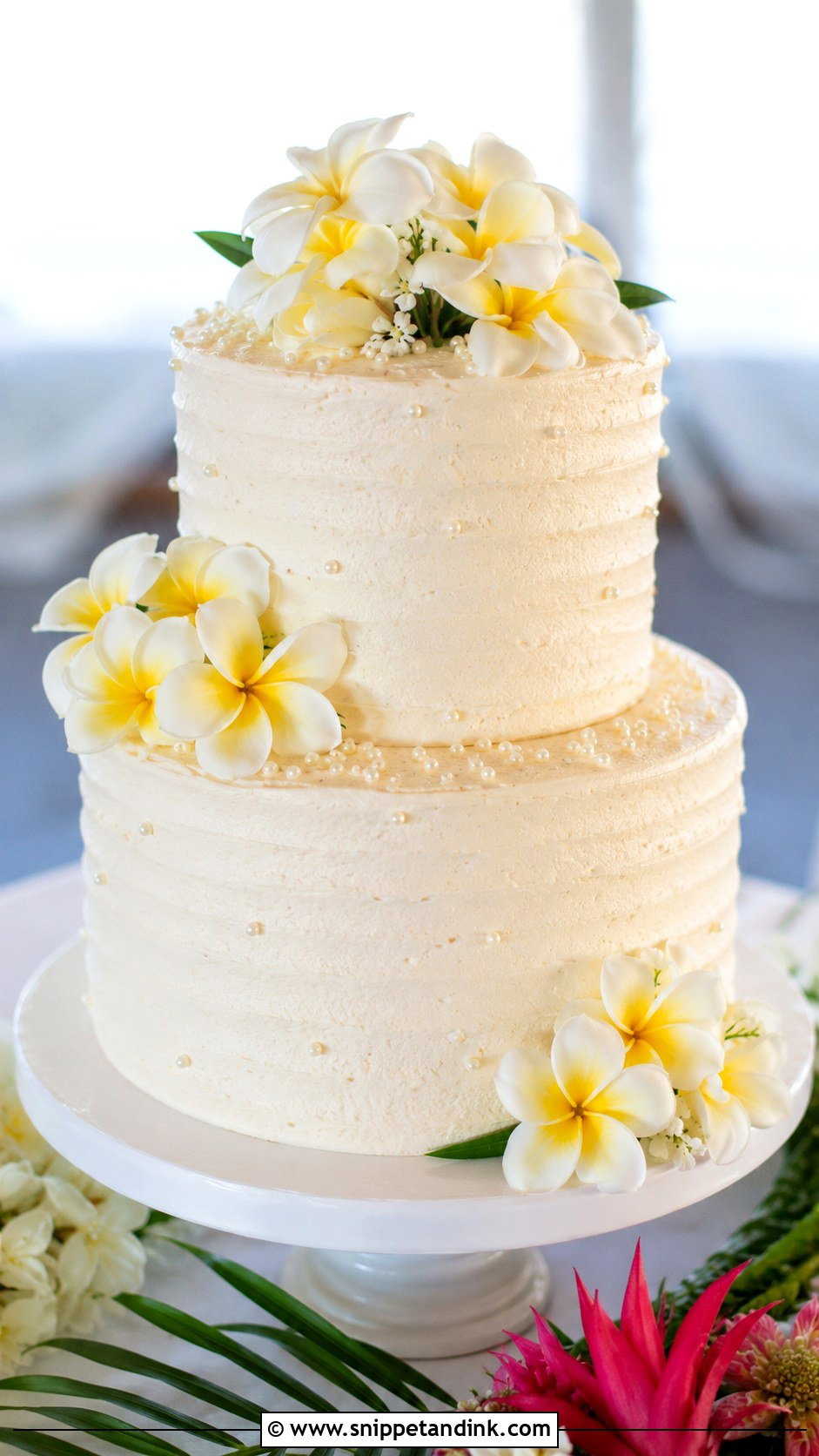
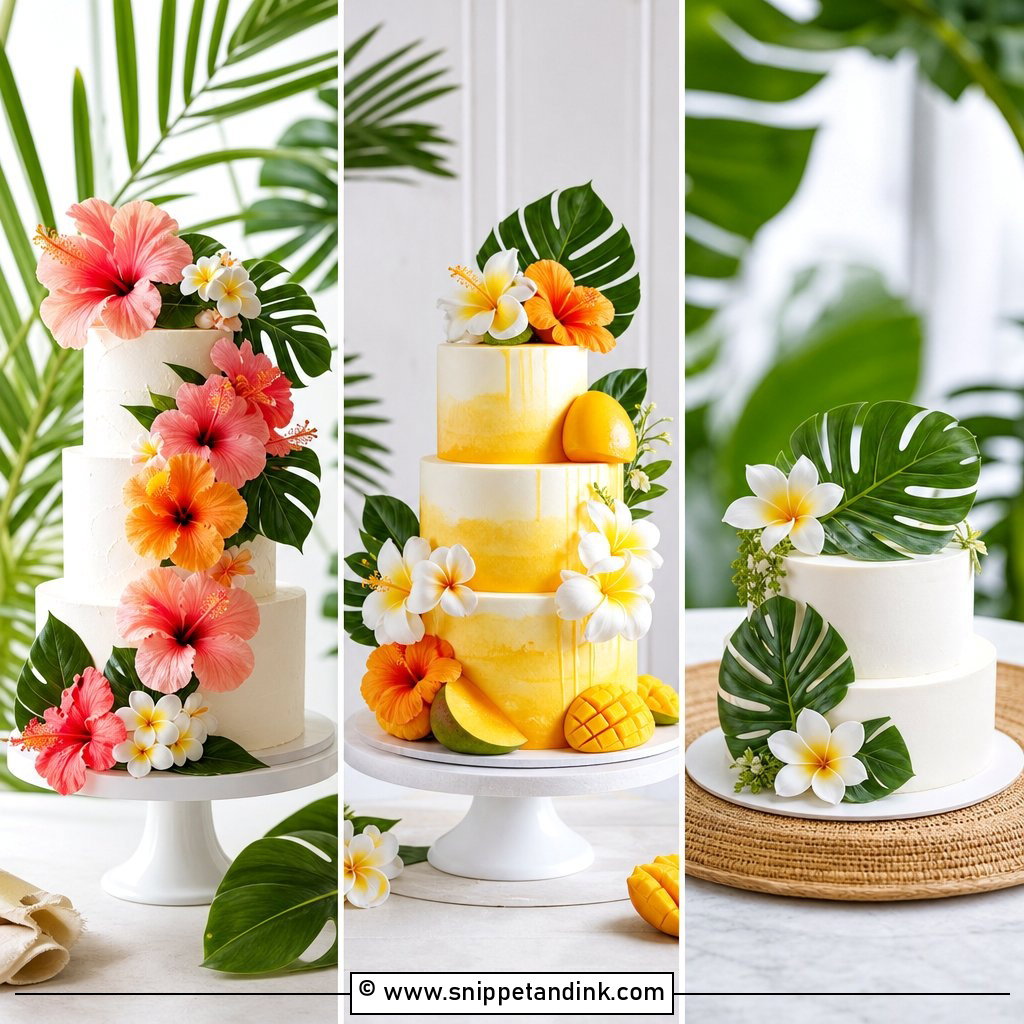
Plumeria is the flower most people picture at a Hawaiian wedding, and a small cluster on a plain white cake says island without trying hard. I place them at the front, on one side or tucked between tiers, in white, yellow or soft pink. Fresh plumeria bruise easily and brown at the edges within hours, and the stems bleed a milky sap that shouldn’t touch frosting. For that reason I often make them in sugar or wafer paper instead. Vanilla coconut sponge with coconut cream or lilikoi buttercream keeps the inside as light as the outside.
2. Hawaiian Wedding Cake With Orchids
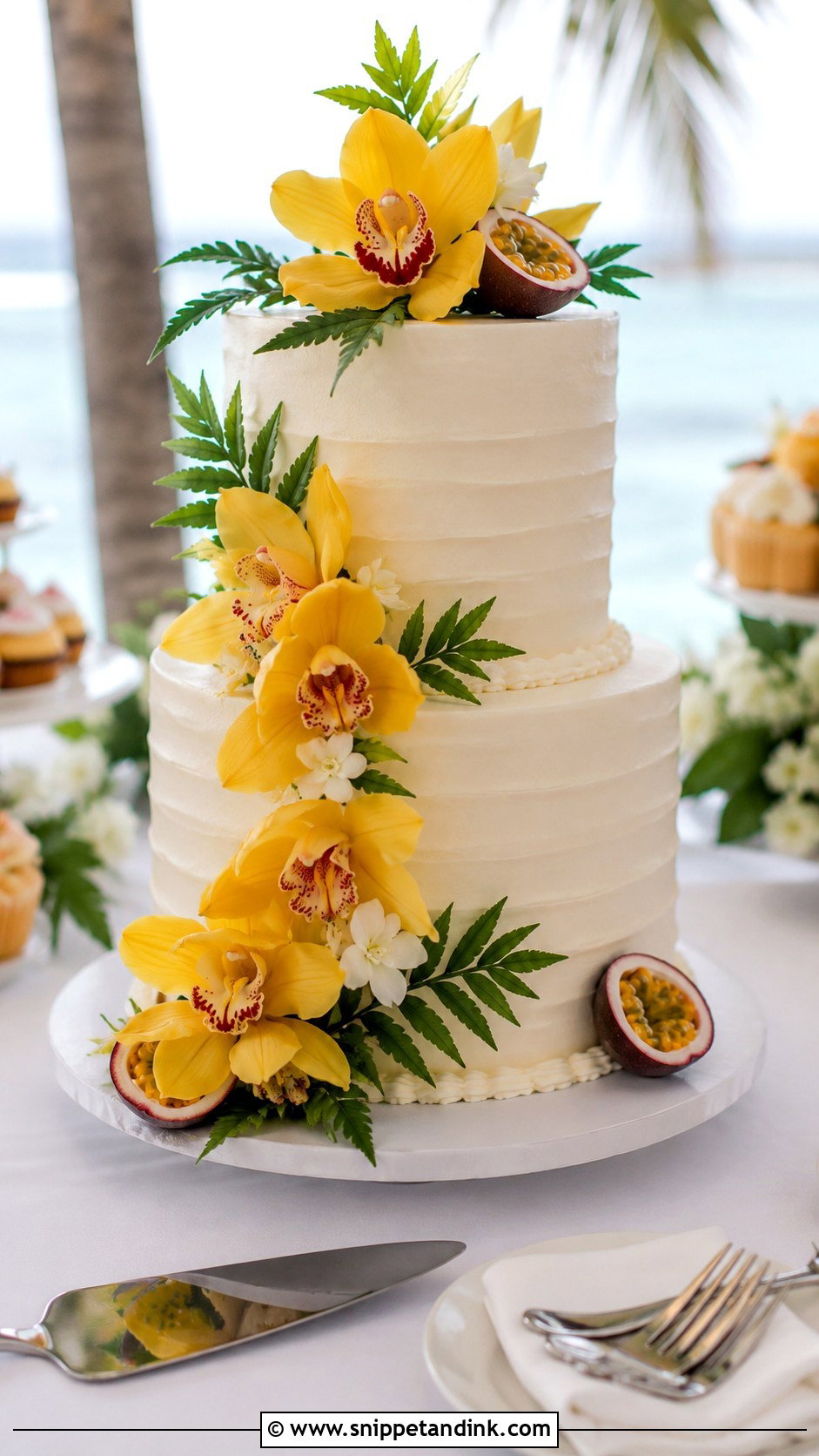
Orchids are the flower I’d pick for a tall cake, because sprays hang naturally and make the tiers look longer. A cascade of cascading purple, white, or fuchsia flowers down one side looks graceful; dotting them all around looks busy. Inside, coconut, vanilla, guava or passion fruit all suit. Buttercream reads fresh and modern, fondant more formal. Orchids hold up in warmth better than most tropical blooms, which is one reason they turn up at so many resort receptions.
3. Hawaiian Wedding Cake With Hibiscus
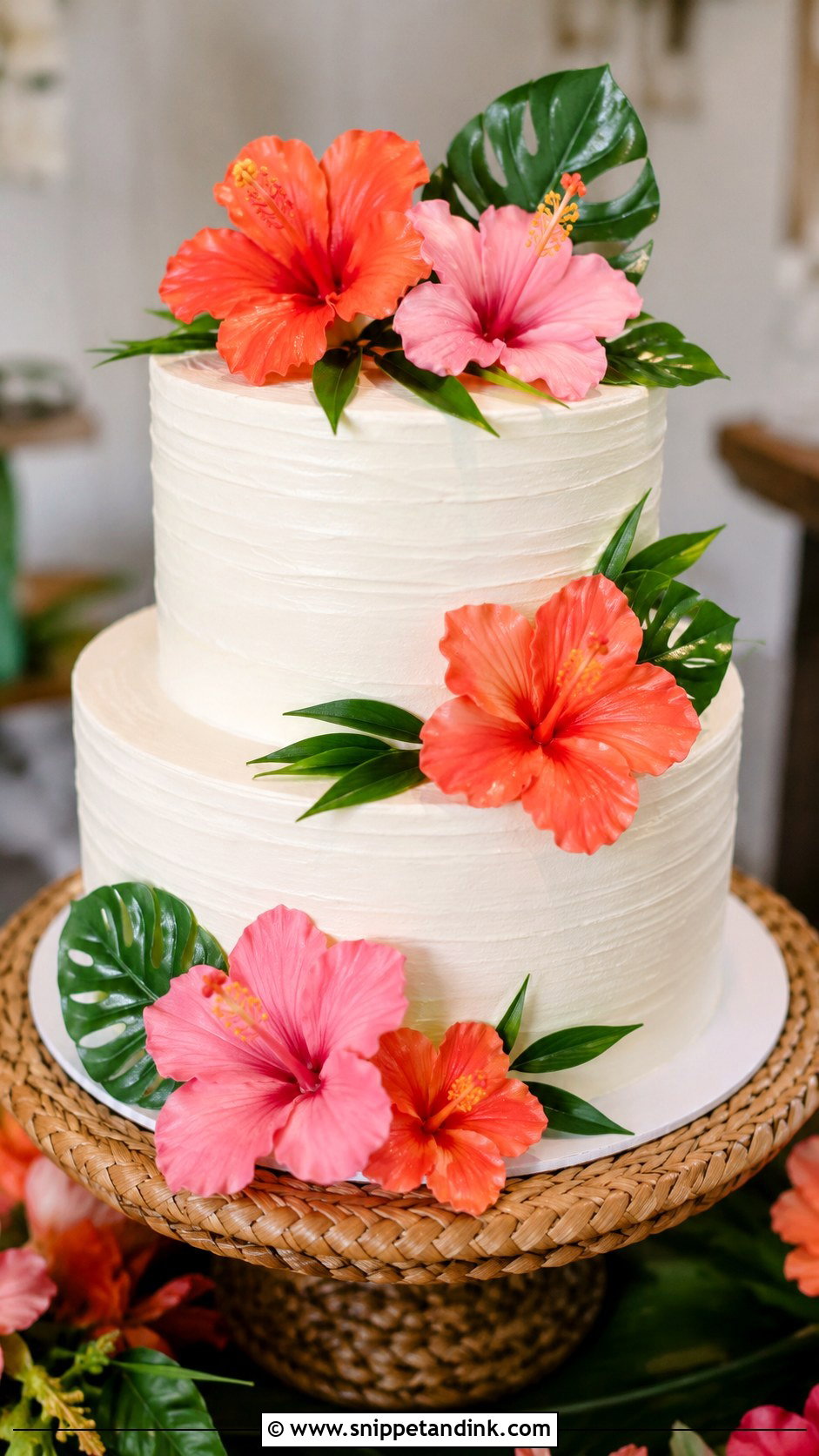
Hibiscus is loud, and that’s its charm. A red, coral or yellow bloom against white or ivory frosting gives strong contrast, so I keep everything else simple. A real hibiscus flower lasts only about a day and starts closing by evening, so for a reception I make them in sugar or paint them watercolour-style onto fondant. Pineapple sponge with coconut frosting, mango filling or guava cream suits the colour. It’s a fun choice for a sunset party in a garden.
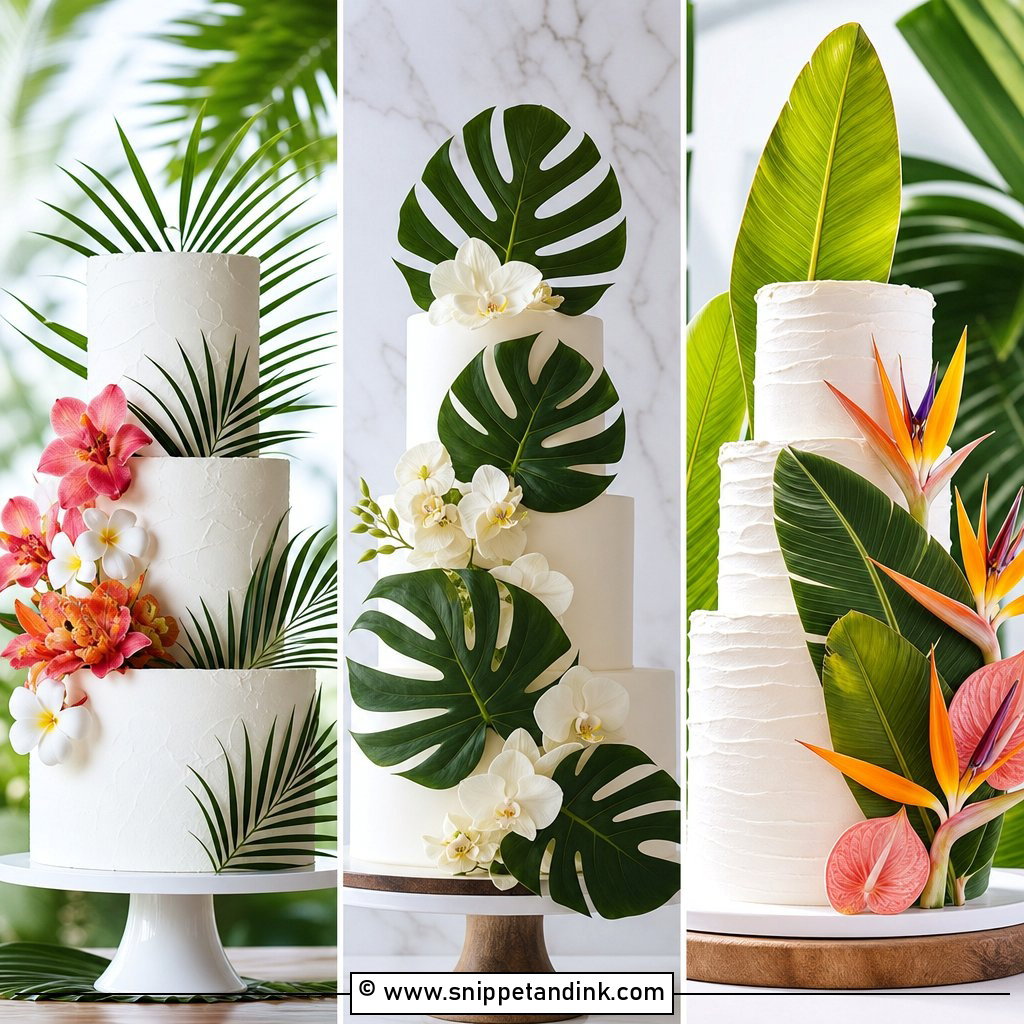
4. Hawaiian Wedding Cake With Monstera Leaves
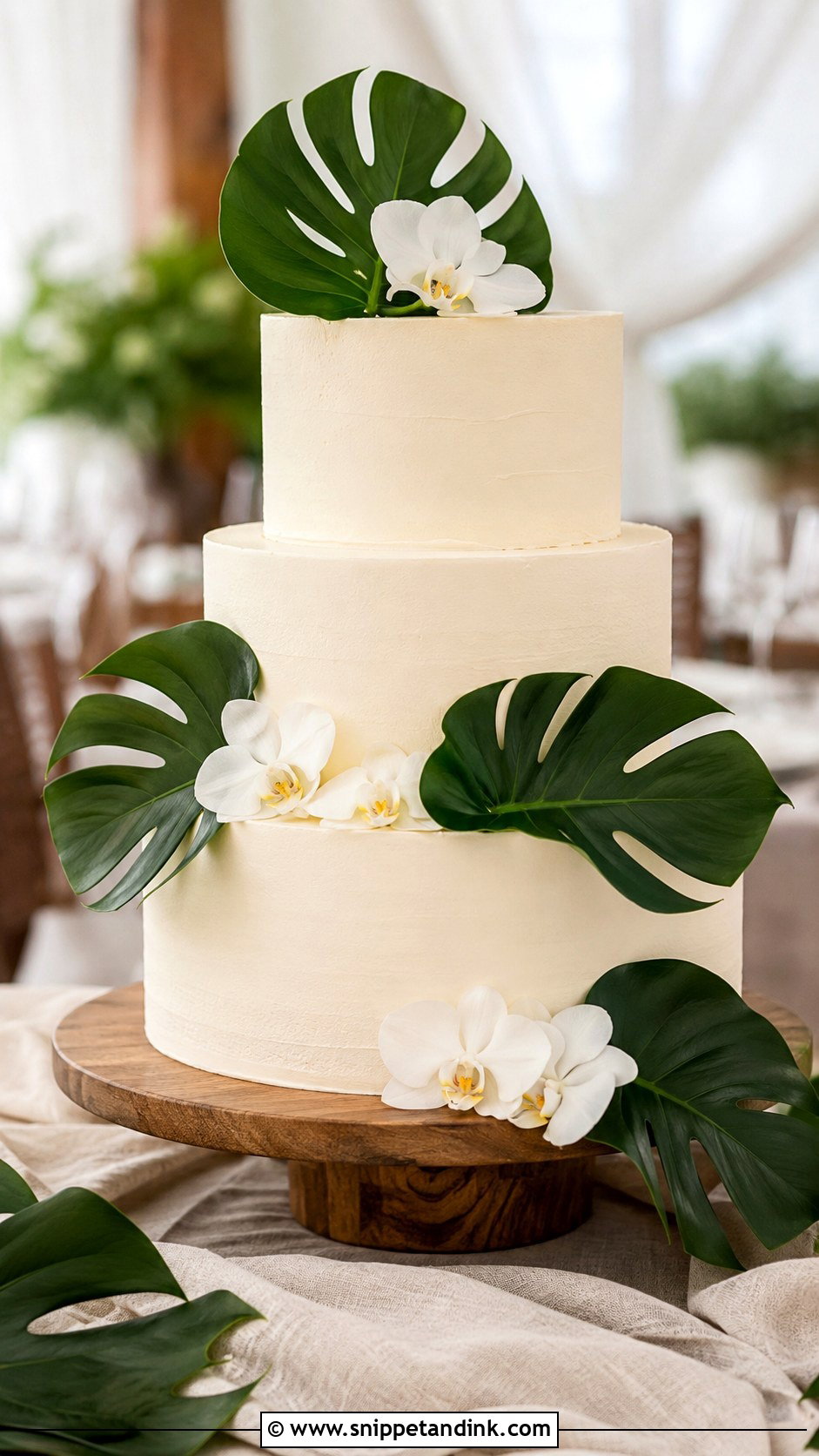
Monstera leaves give a lush, graphic look that reads modern rather than kitschy. Real monstera isn’t food-safe, so I never press it into frosting; I cut the leaves from wafer paper, or paint them onto buttercream in two shades of green. White, ivory or very pale green frosting lets the shapes stand out. Coconut sponge with lime curd, guava mousse or passion fruit filling keeps the flavour bright. Wooden stands and neutral linens suit it best.
5. Hawaiian Wedding Cake With Pineapple
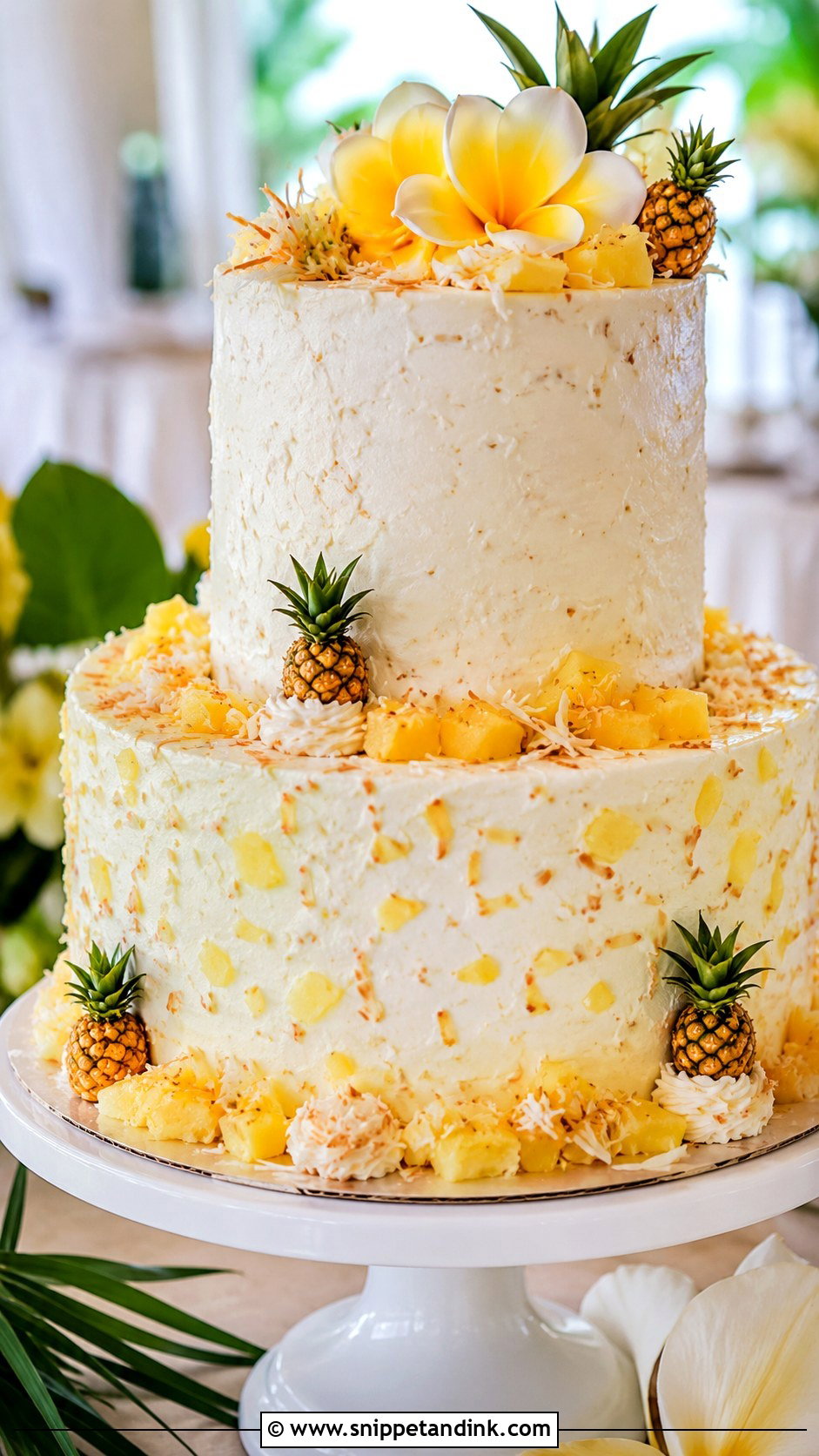
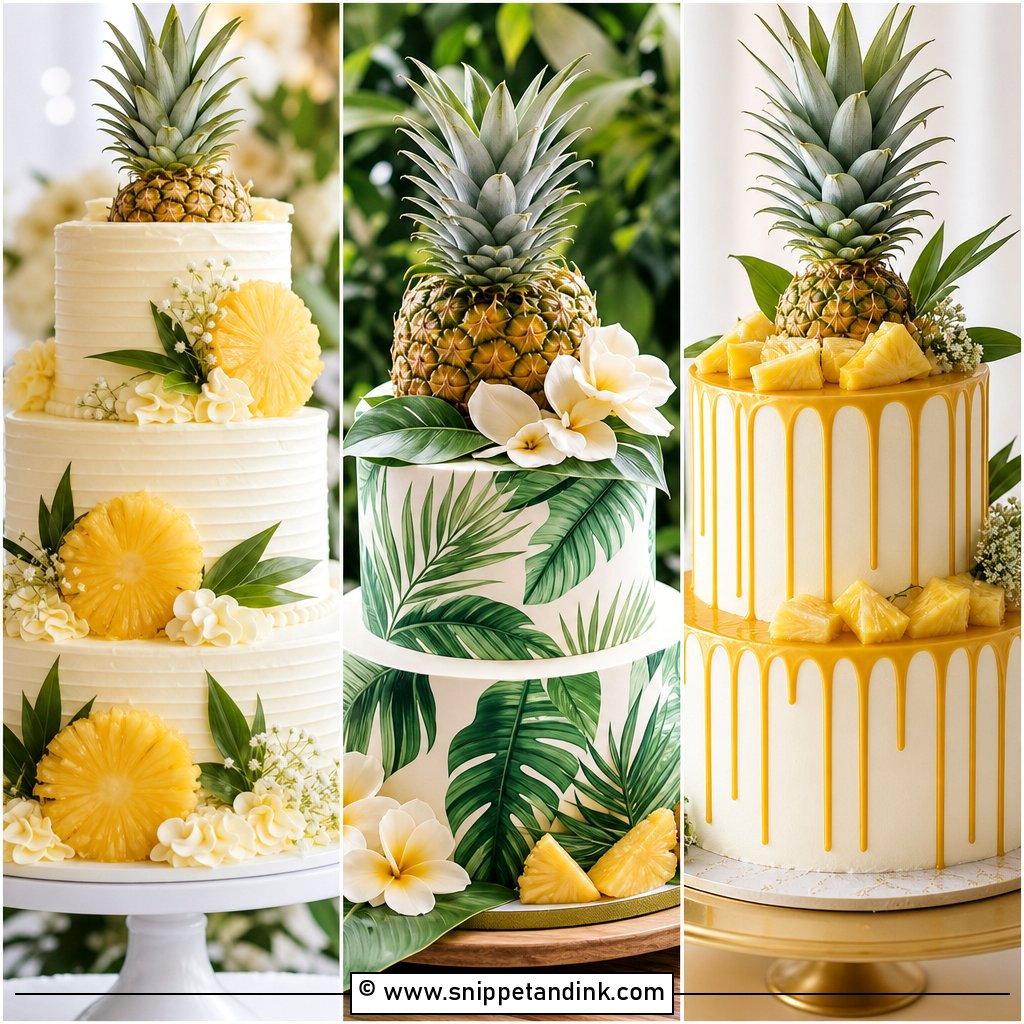
Pineapple can go inside as curd, compote or roasted fruit, or on top as a few small pieces. Coconut sponge or vanilla butter cake balances its sweetness. I always use cooked or roasted pineapple inside cream-based fillings, because raw pineapple contains an enzyme that can thin out dairy. Smooth coconut buttercream and toasted coconut flakes are the finish I’d choose. A little lime or passion fruit stops it from tasting sugary. It suits a luau or a warm afternoon reception.
6. Hawaiian Wedding Cake With Coconut
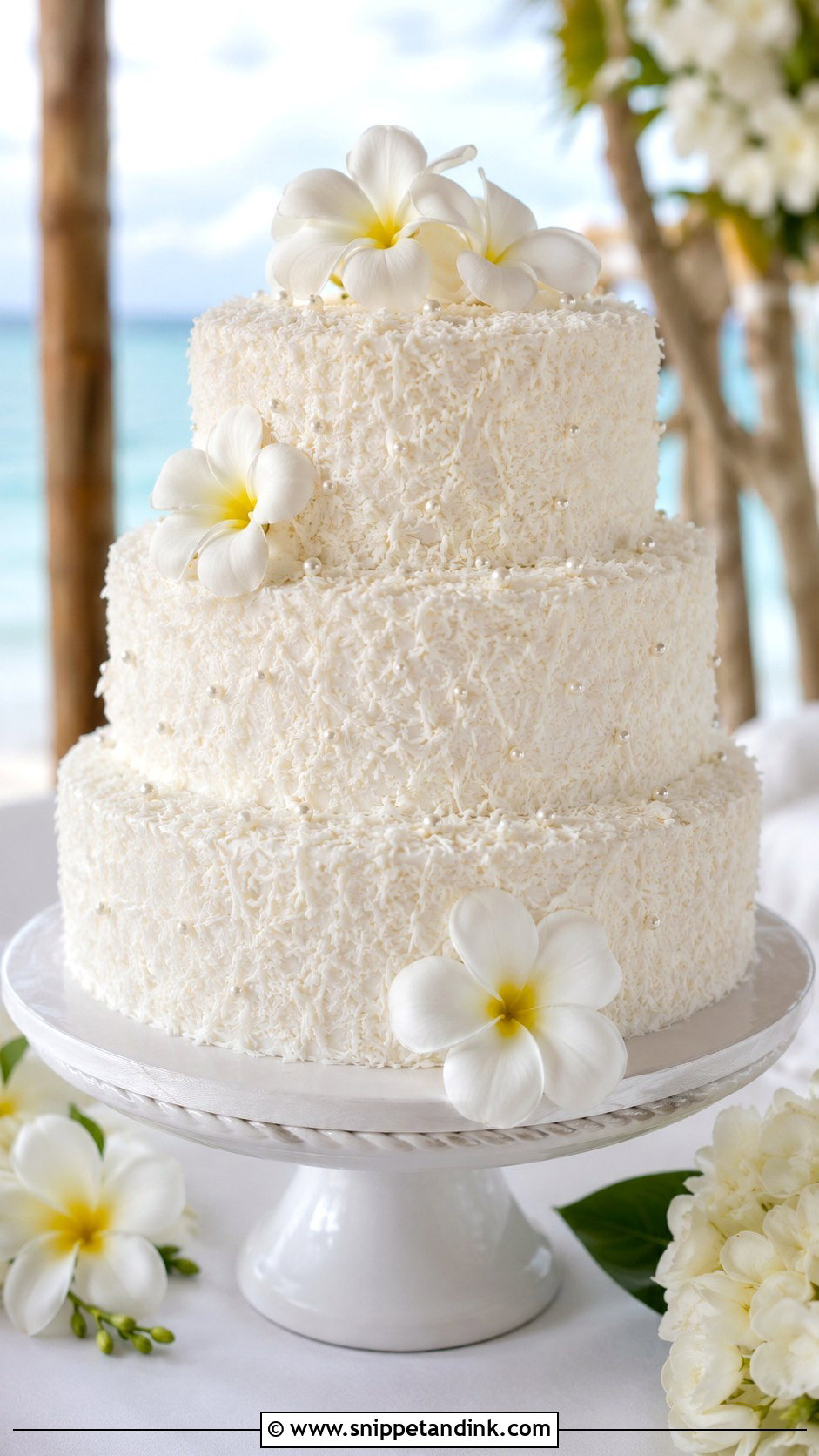
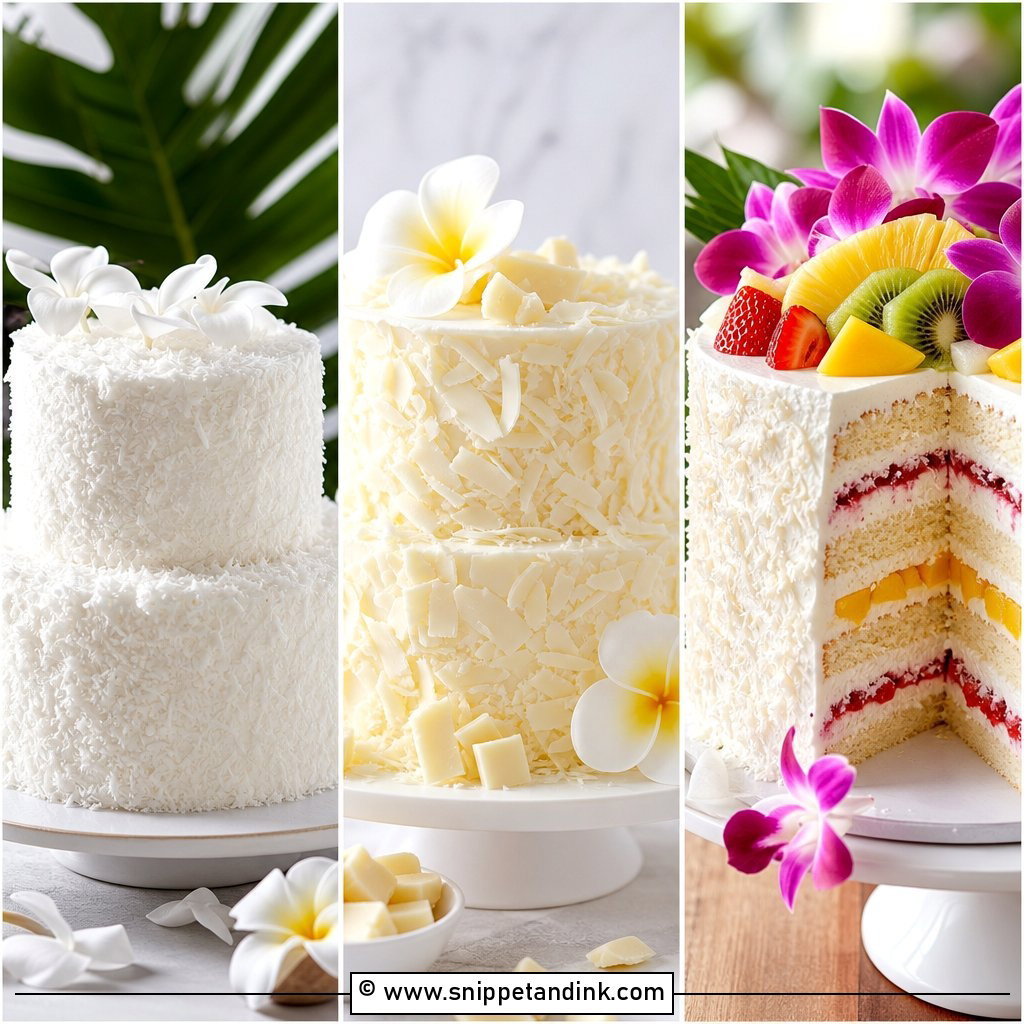
Coconut is the safest island flavour on any guest list, and one of the prettiest. Fill a coconut cake with coconut cream, pineapple curd, guava jam or lilikoi mousse, and finish the outside with smooth white buttercream or pressed shredded coconut. That shredded coat is also the most forgiving finish here, since it hides every flaw. It’s the cake I suggest when a couple wants an all-white design and still wants the flavour to say Hawaii.
7. Hawaiian Wedding Cake With Lilikoi
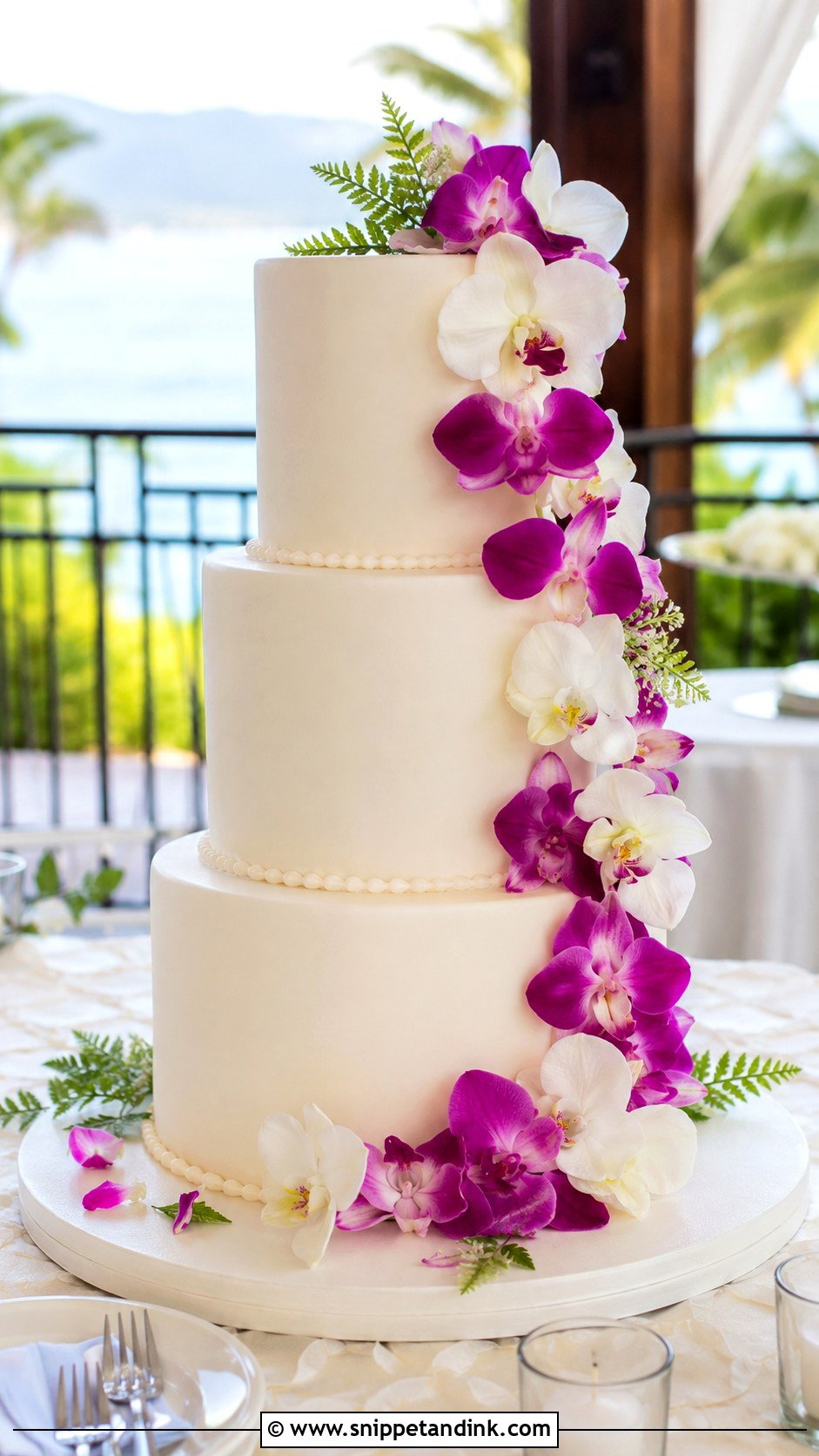
Lilikoi is passion fruit, and its tartness is what makes people go back for a second slice. I pair it with vanilla, coconut or almond sponge, as curd or mousse. Curd needs a buttercream dam around each layer, or it pushes out the sides as the tiers settle. Keep the outside white and soft, with yellow flowers or orchids, and a thin glossy lilikoi glaze on top if you want the colour to show. Beach and summer weddings suit it best.
8. Hawaiian Wedding Cake With Guava
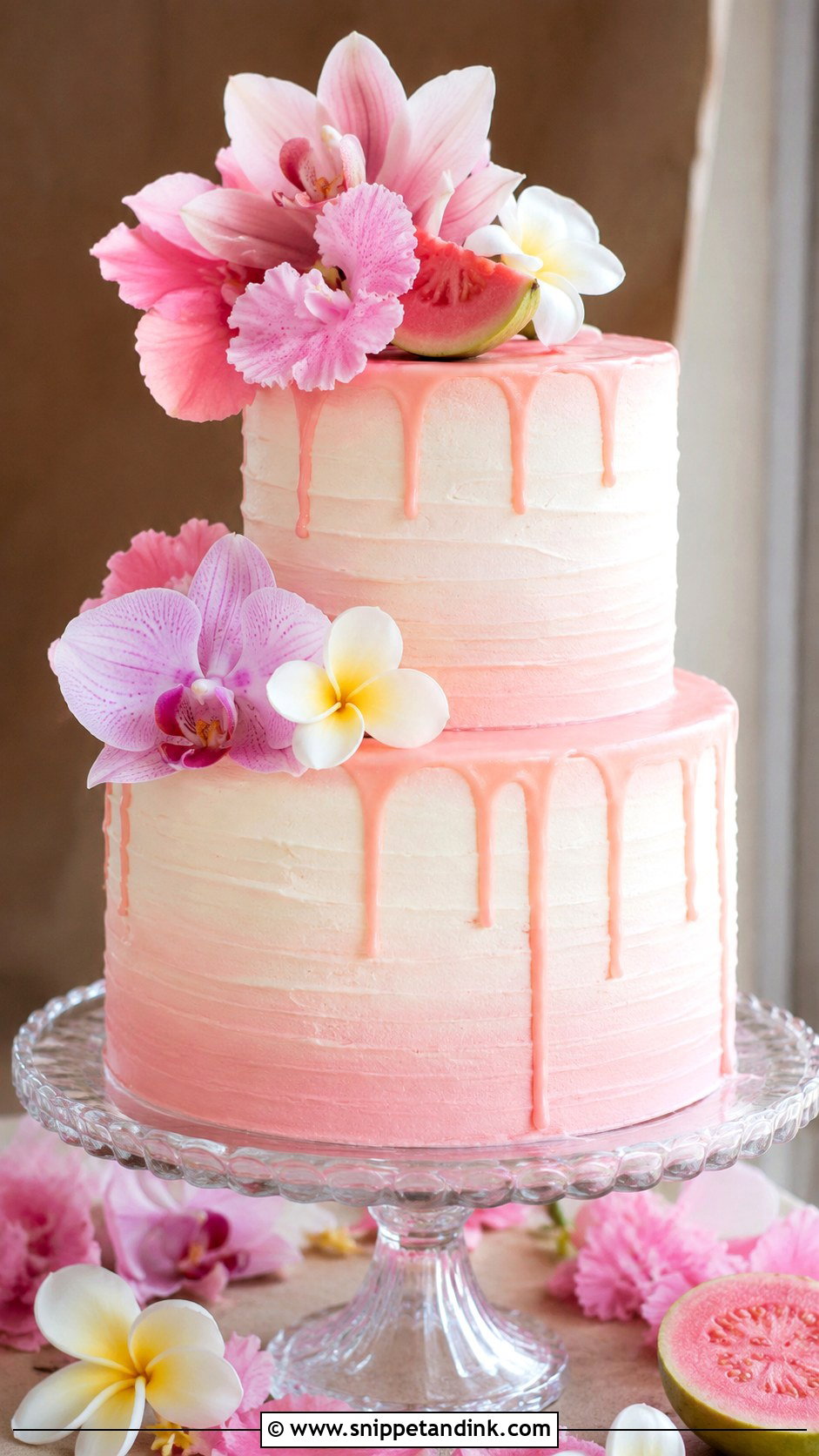
Guava gives you pink without food colouring, so I use it whenever a couple has pink in their flowers. Pink sponge, guava cream filling or guava glaze between white layers all work. Outside, white buttercream with a blush drip or a soft pink ombré looks current. Guava glaze is thin, so I thicken it slightly before using it as a drip; otherwise it runs straight down to the board. Orchids, plumeria or a touch of gold finish it.
9. Hawaiian Wedding Cake With Mango
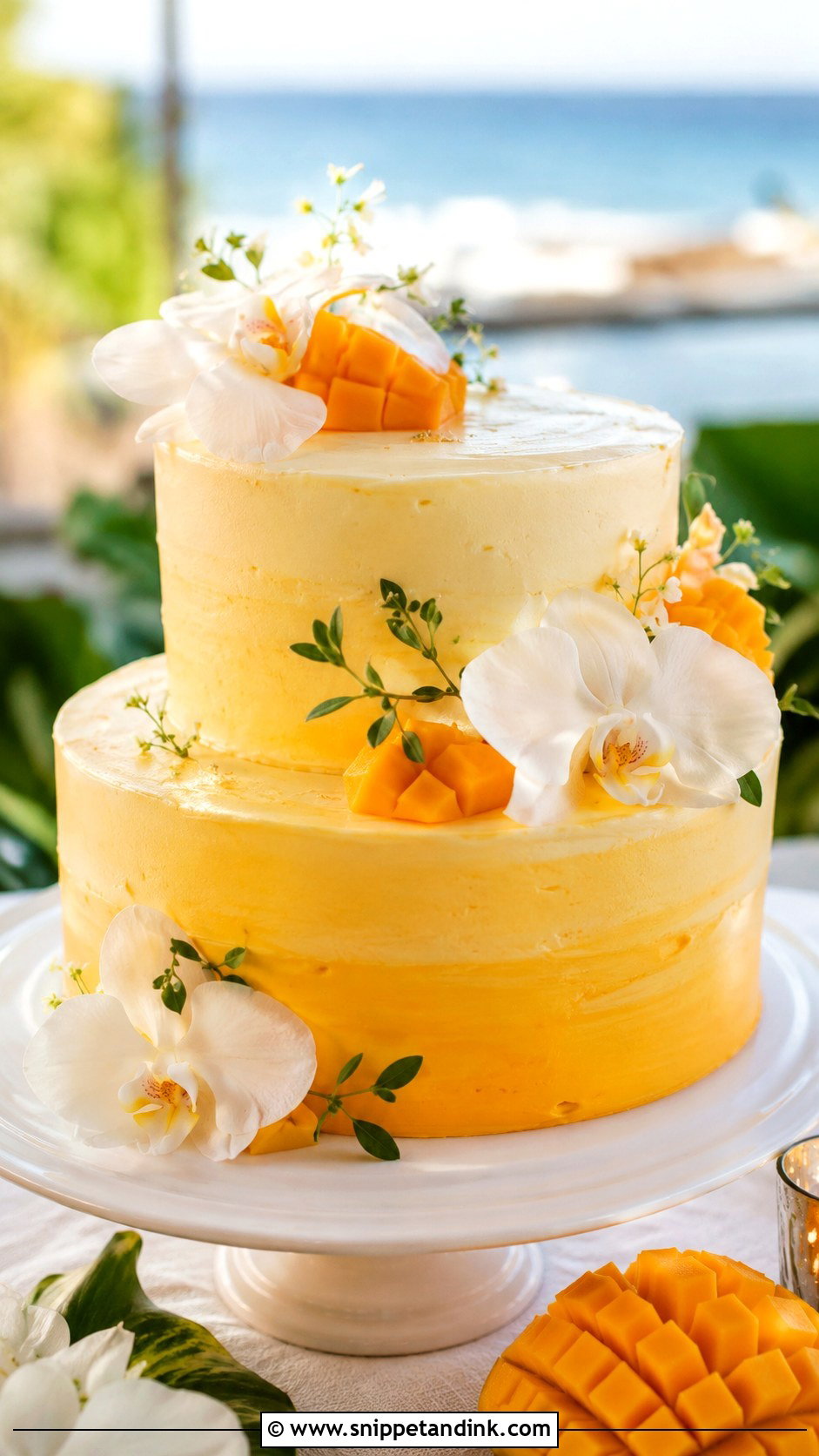
Mango tastes rich without being heavy. It goes into vanilla or coconut cake as mousse, curd or jam; fresh slices weep juice, so they belong on top rather than between layers. I add lime, passion fruit or coconut to cut the sweetness. A soft yellow ombré is the colourful option; white buttercream with a few mango-coloured flowers is the quieter one. A daytime garden wedding suits it.

10. Hawaiian Wedding Cake With Macadamia Nuts
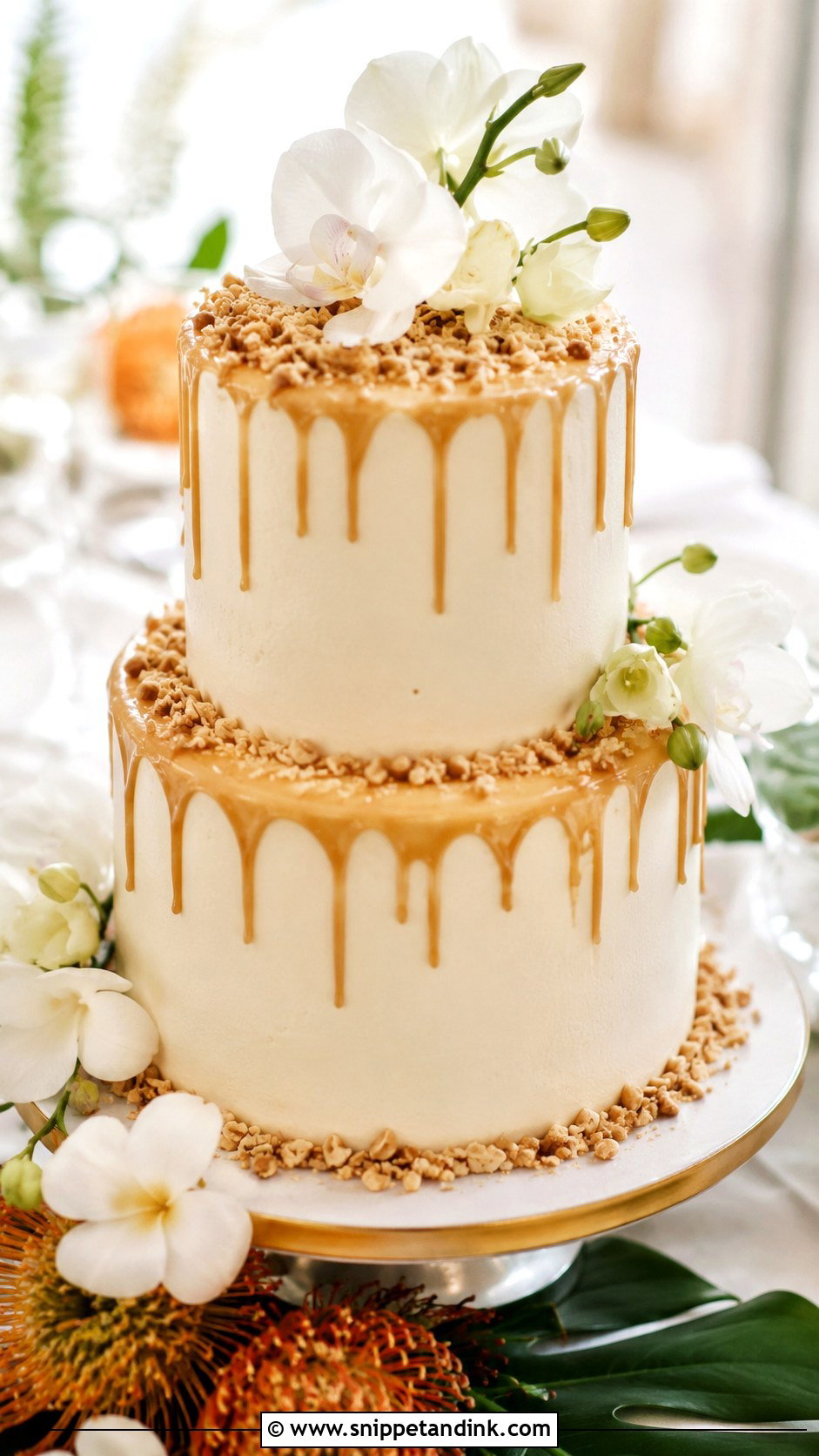
Macadamias are the island ingredient for couples who don’t want fruit everywhere. Fold toasted nuts into the sponge, scatter them between layers or press them around the base. They suit vanilla, coconut, caramel, white chocolate or pineapple fillings. A thin caramel drip makes it richer. Do check for nut allergies on your guest list; with nuts in every tier, there’s no slice an allergic guest can have.
11. Hawaiian Wedding Cake With Tropical Fruit
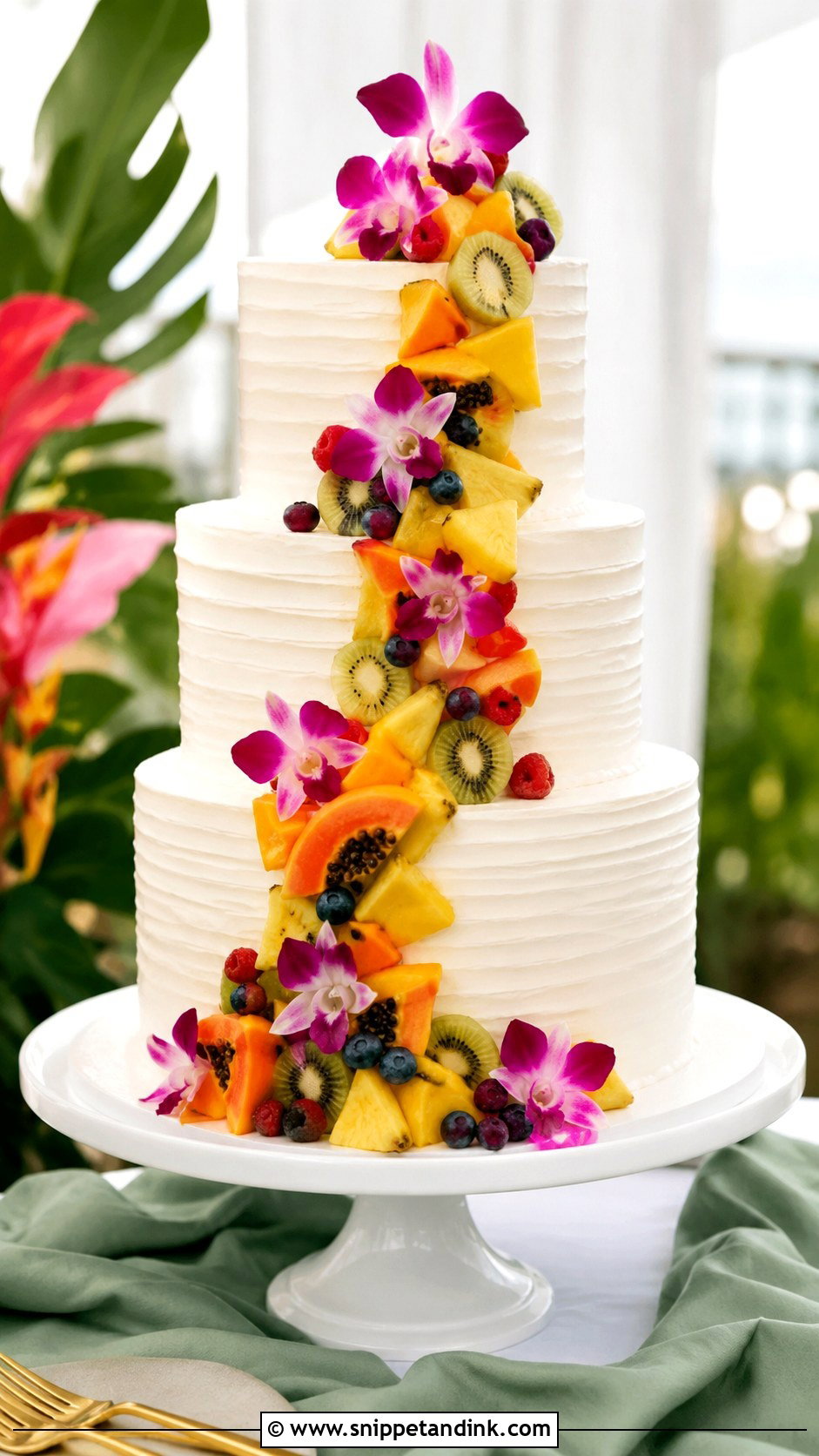
Fruit decoration looks wonderful for about two hours. Mango, pineapple, kiwi, papaya, guava, passion fruit and berries can cascade down the tiers, crown the top or ring the base of the stand, but cut fruit dries at the edges and leaks juice onto the frosting. I prep it close to service and brush it lightly with a clear glaze to slow that down. Vanilla or coconut cake with whipped frosting keeps it light, as long as the whole cake stays cool until it’s set out.
12. Hawaiian Wedding Cake With Tiers
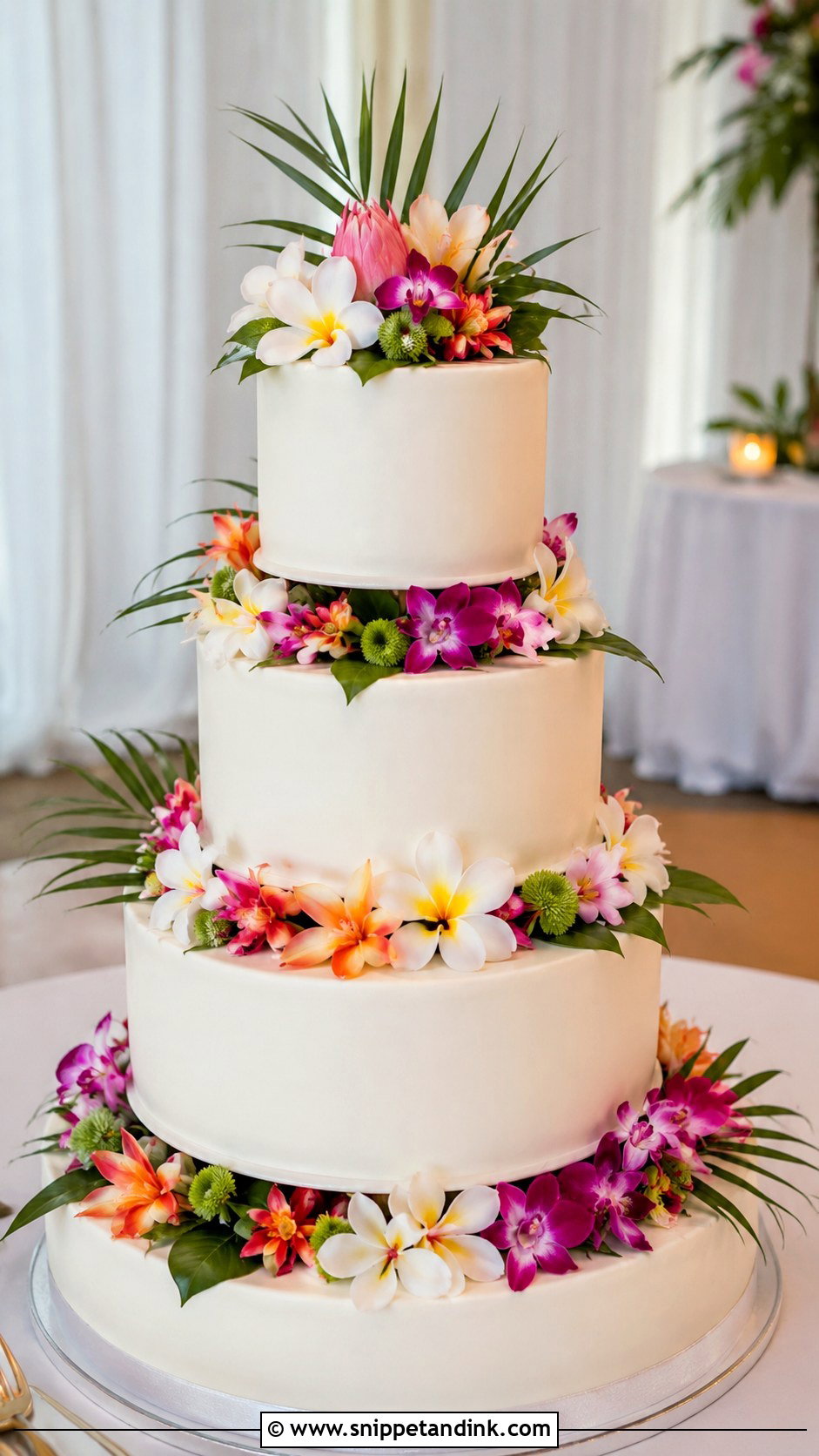
Tiers let you give guests more than one flavour: coconut on the bottom, guava, lilikoi and pineapple above. I put the densest sponge and firmest filling in the bottom tier, which carries the weight, and the softest at the top. Every tier above the base needs dowels underneath it and a cake board. Flowers between the tiers or down one side keep it cohesive. A tall tiered cake suits larger weddings, a resort ballroom or a beachfront reception.
13. Hawaiian Wedding Cake With Buttercream
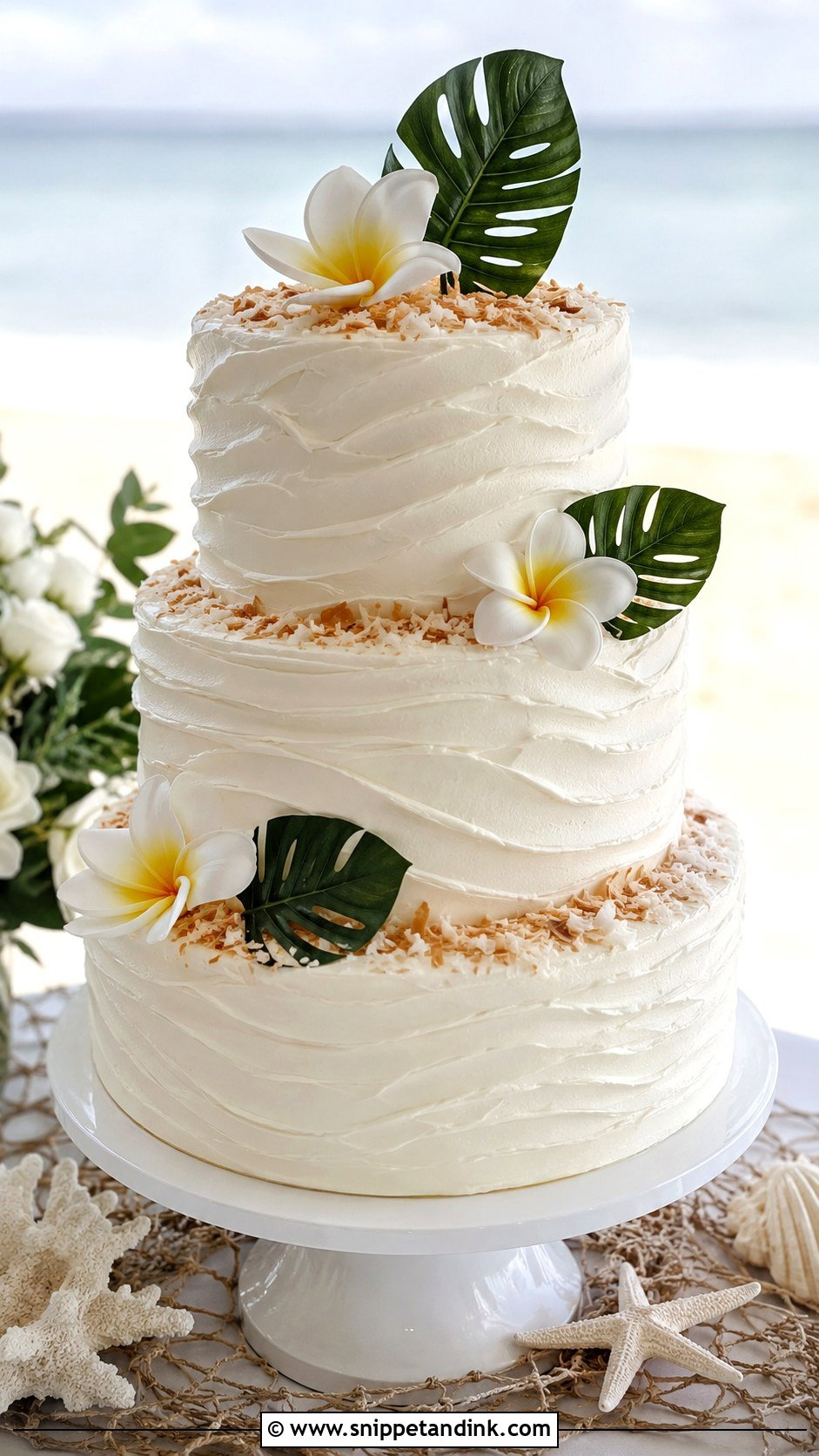
Buttercream looks softer and more inviting than fondant, and it tastes better to most guests. It can be smooth, lightly ridged or swept into wave shapes. The downside is heat: buttercream softens in warm air, so for an outdoor island wedding I’d ask your baker which recipe they use in summer. Some bakers add a little shortening for stability; meringue-based buttercreams taste lighter but soften sooner. Fresh flowers, tropical leaves or toasted coconut finish it.
14. Hawaiian Wedding Cake With Fondant
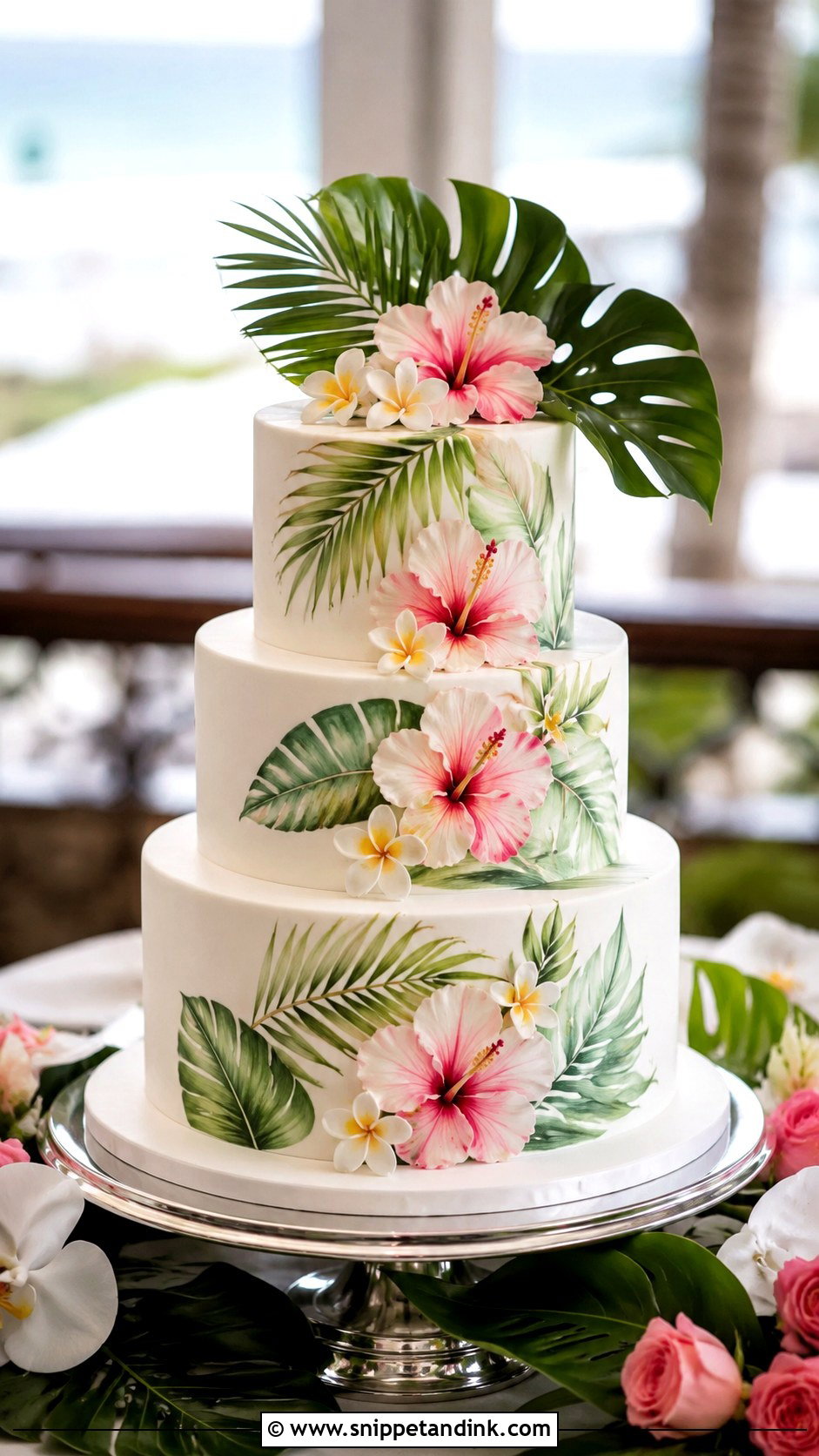
Fondant gives the sharpest edges and the best surface for detail: painted hibiscus, sculpted plumeria, leaf patterns or a bamboo texture. Inside, the cake can still be soft and tropical, coconut with lilikoi curd or vanilla with guava. Fondant has a weakness in humid air, though: it can turn sticky, and if it comes from a cold fridge into a warm room it beads with condensation. I let it adjust in its box before setting it up.


15. Hawaiian Wedding Cake With Watercolor Flowers
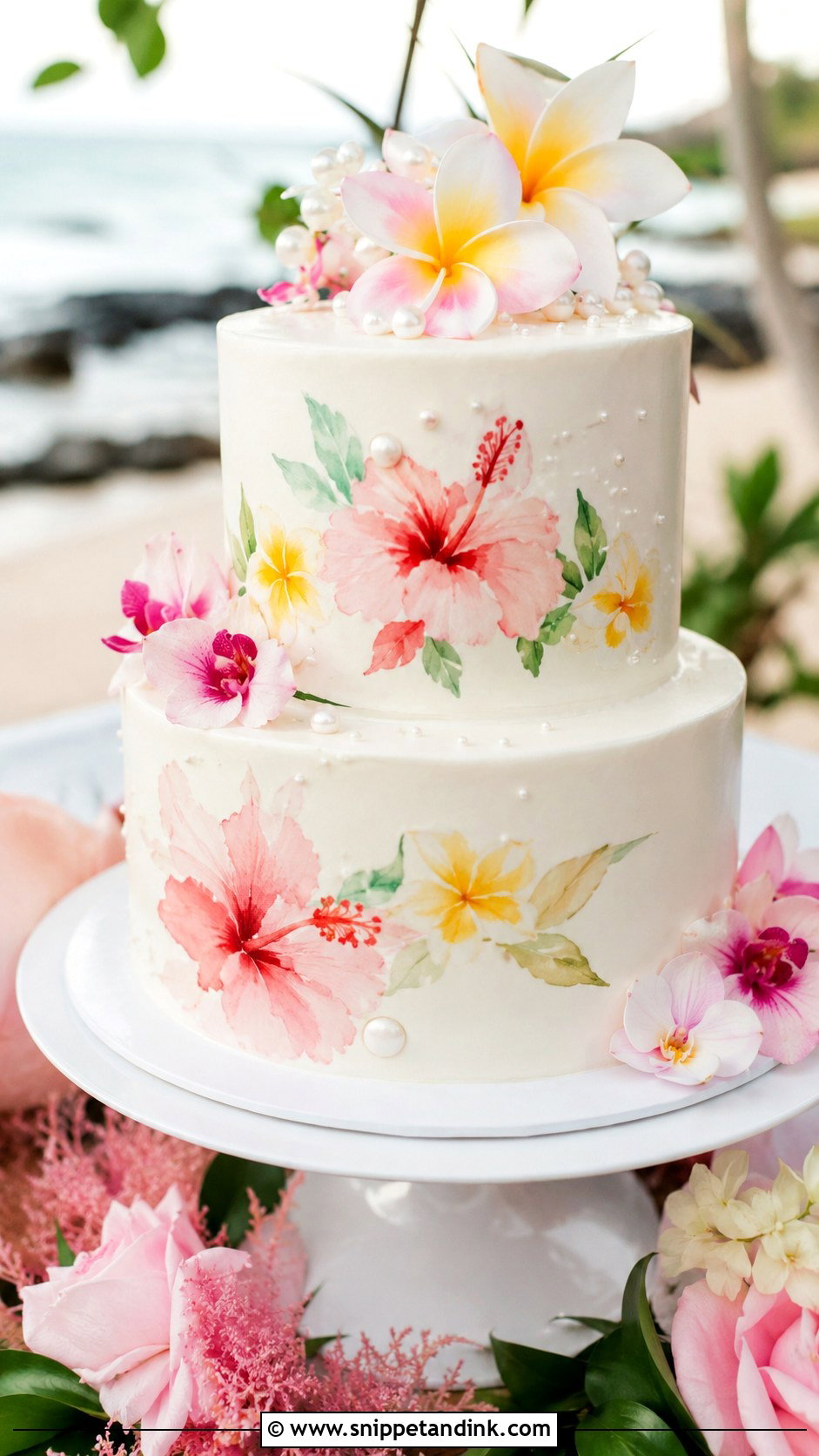
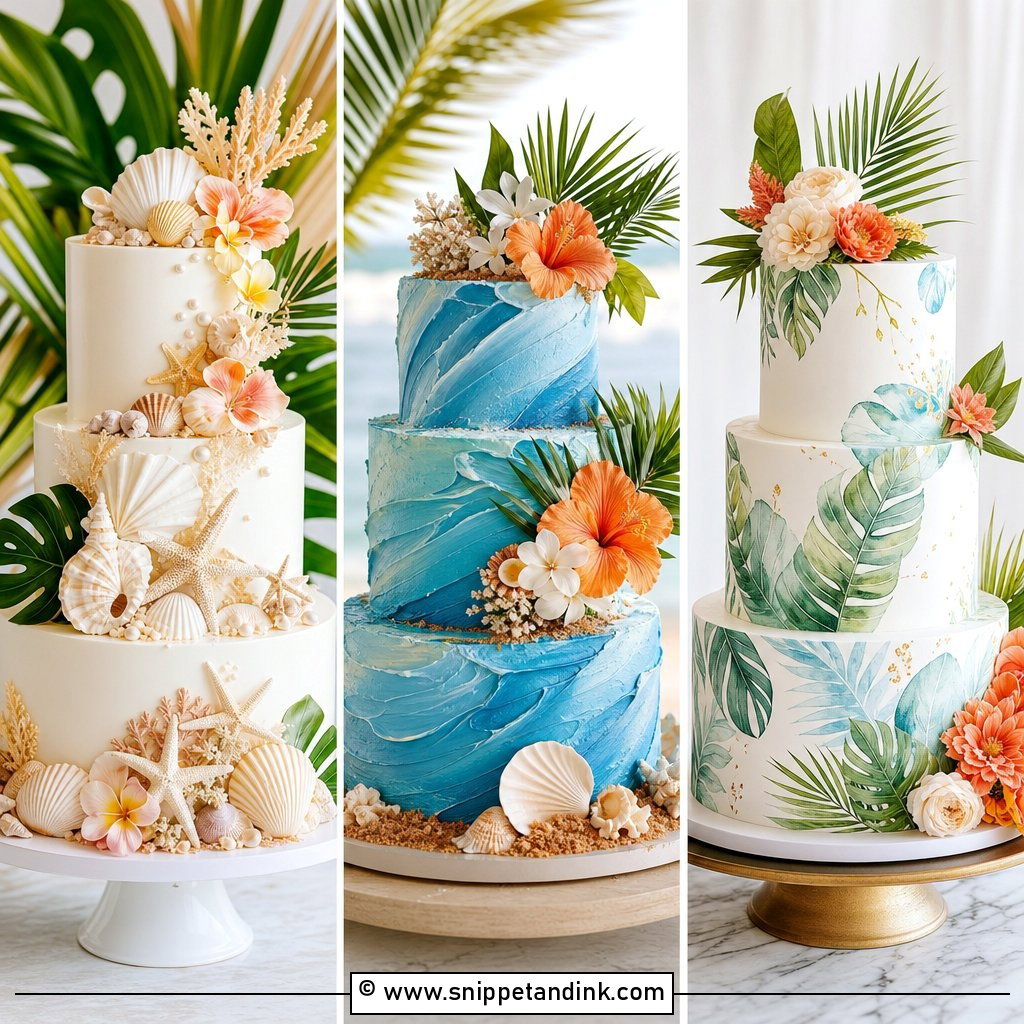
Painted flowers are my favourite way to get colour on a cake without a pile of fresh blooms. I paint hibiscus, plumeria, orchids or palm fronds straight onto fondant or a very smooth chilled buttercream with food colouring thinned in a little alcohol, which evaporates and leaves the colour. It brings tropical details without any florist involvement. Vanilla coconut, mango, guava or passion fruit suit the soft palette. It looks personal, almost like your invitation suite on a cake, and suits a small wedding or a beach elopement.
16. Hawaiian Wedding Cake With Gold
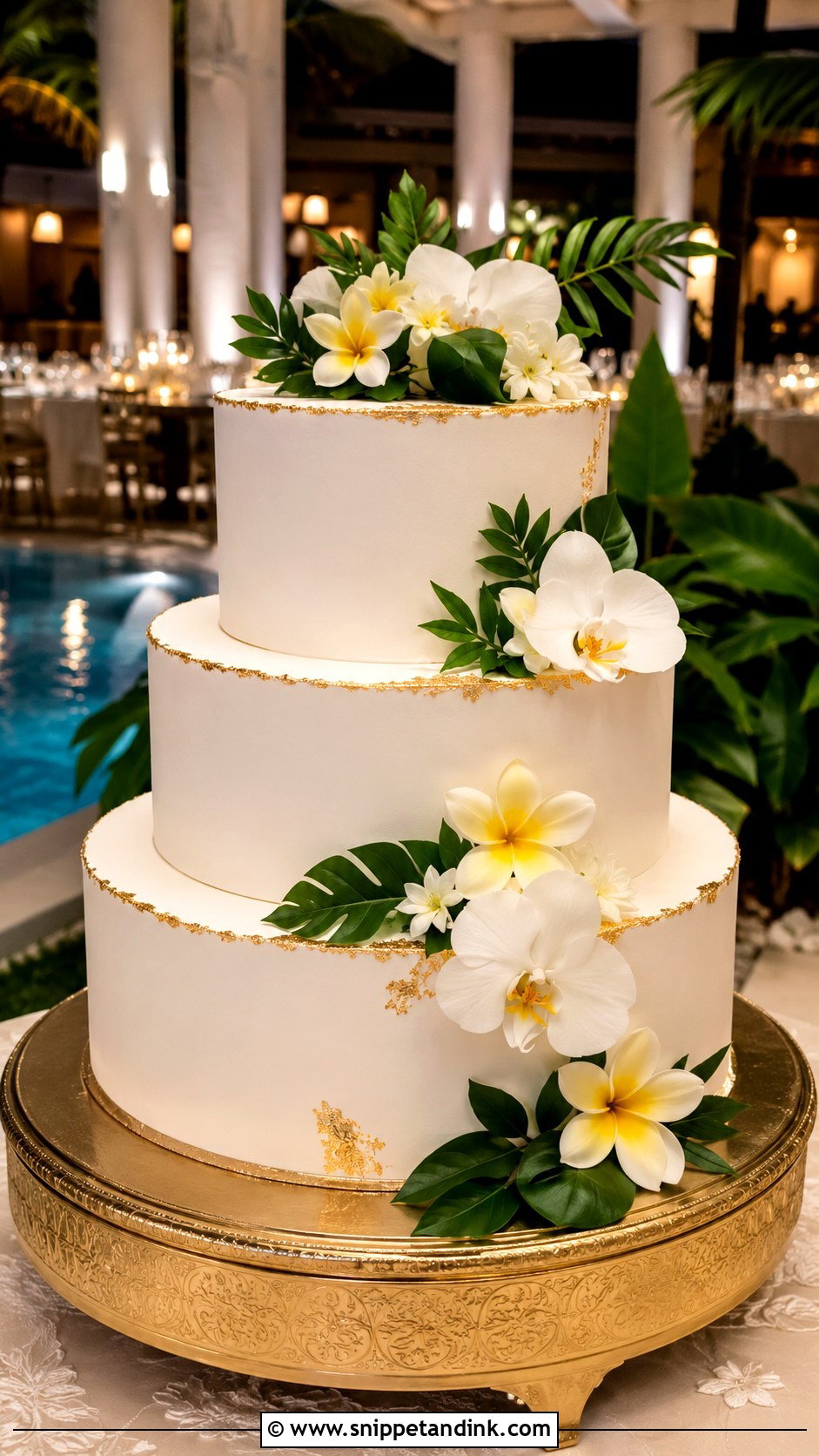
Gold works best as a supporting detail here: painted tier edges, gilded leaves, a thin drip or a few touches around the flowers. I use edible gold leaf or a paint labelled edible, not lustre dust marked only as non-toxic. Paired with white buttercream or ivory fondant, orchids and tropical leaves, it suits an evening resort reception. Coconut, macadamia, vanilla and passion fruit all feel rich enough to match. Use less than you think.
17. Hawaiian Wedding Cake With Beach Theme
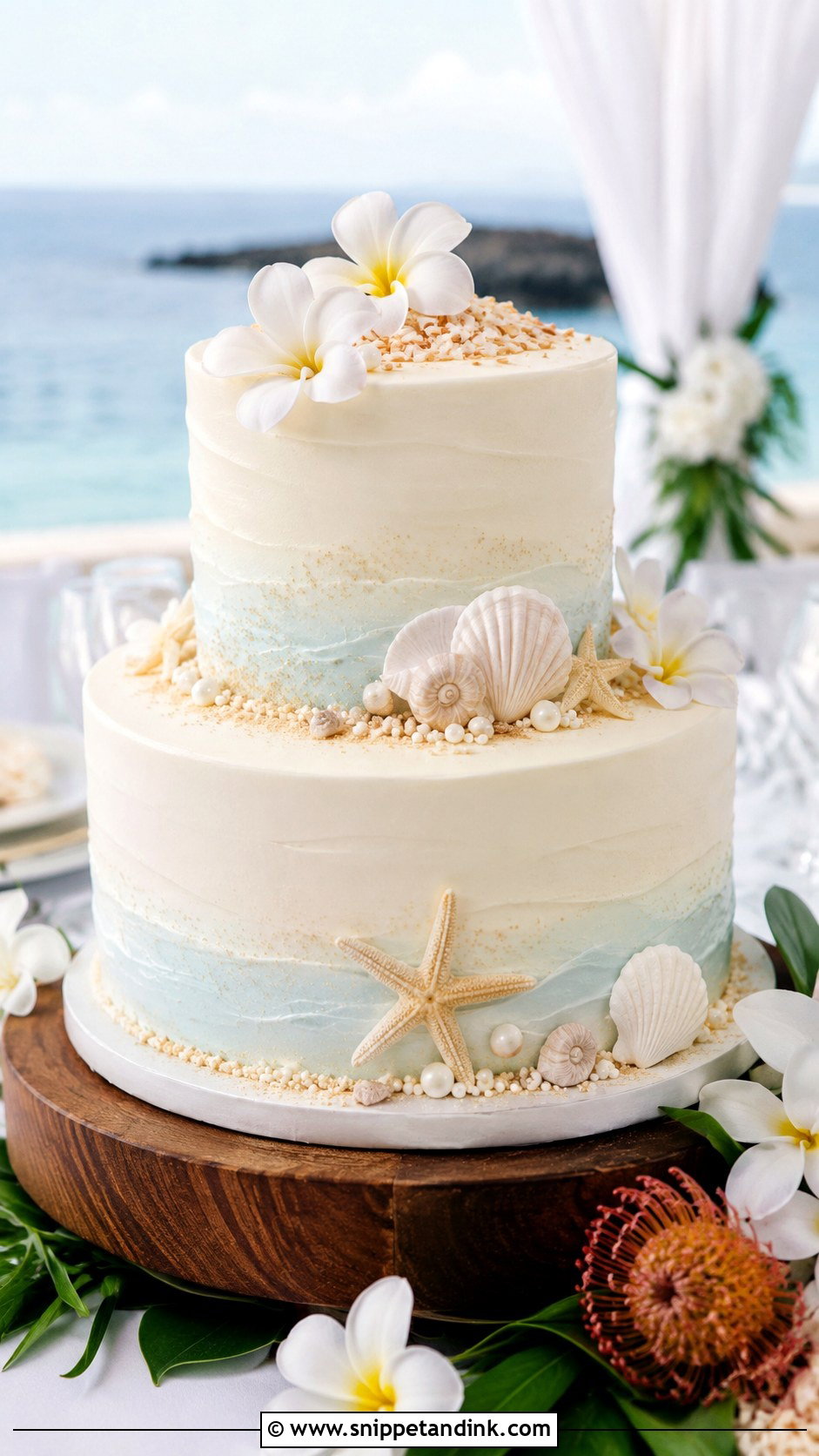
Beach cakes go wrong when they become a sandcastle. I keep the frosting ivory, add a band of sandy texture from toasted coconut or crushed biscuits at the base, a few white flowers and small sugar shells, and maybe a soft blue line. Coconut cake with pineapple filling or vanilla with lilikoi curd fits. A two or three tier cake on a wooden or white stand looks natural by the water. One practical note: a cake table on sand needs a level base, because a slight tilt is enough to make tiers slide.
18. Hawaiian Wedding Cake With Palm Leaves
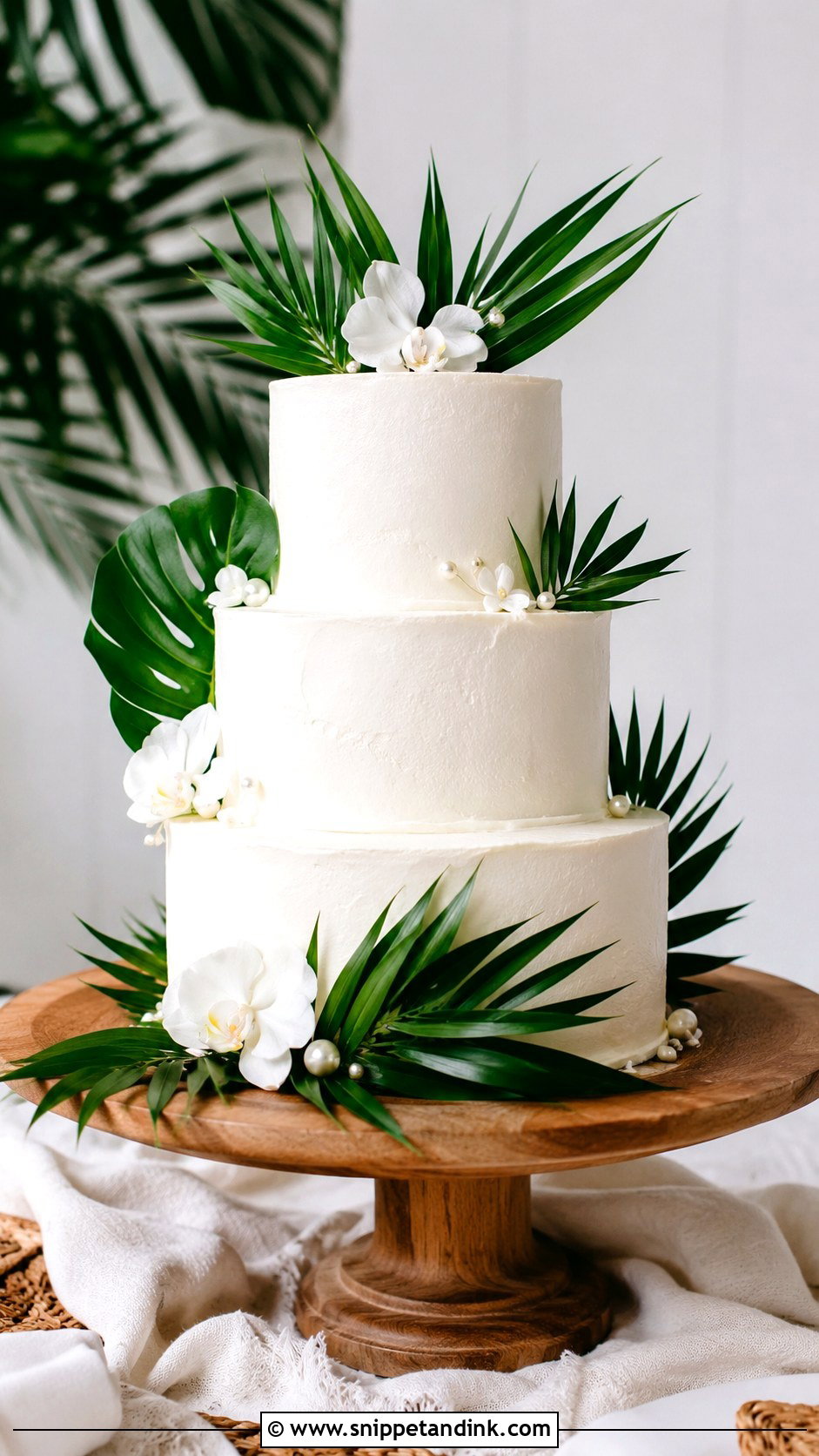
Palm leaves frame the cake rather than sit on it. Big real fronds can stand behind the tiers or around the base on the table, with nothing touching the frosting; on the cake itself I use painted or wafer paper leaves. Keep the cake plain so the leaf shapes do the work: white buttercream, coconut frosting or pale green fondant. Coconut lime, pineapple vanilla or guava cream suit it. It sits well among rattan décor, wooden stands, linen and tropical arrangements.
19. Hawaiian Wedding Cake With Fresh Flowers
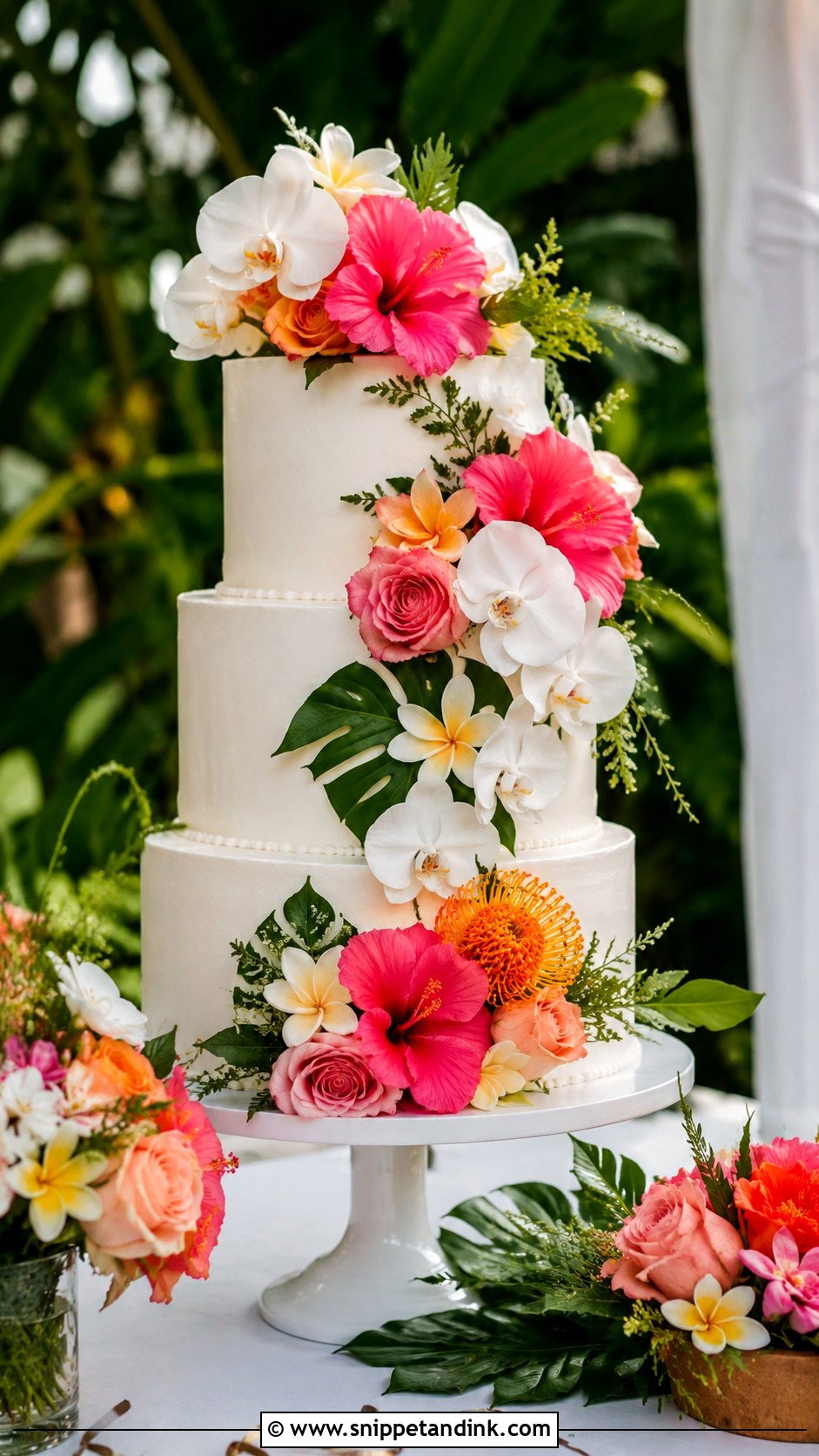
Fresh flowers tie the cake to the bouquet and tables, and I coordinate with the florist so they match. Orchids, plumeria, hibiscus, roses and tropical greenery are all common choices. Not all of them are safe against food, so stems get wrapped or put into flower picks, and anything treated with pesticides stays off the cake entirely. A white buttercream or fondant base keeps the blooms as the focus. Coconut, lilikoi, guava, mango or pineapple fillings carry the theme inside.


20. Hawaiian Wedding Cake With Sheet Cake
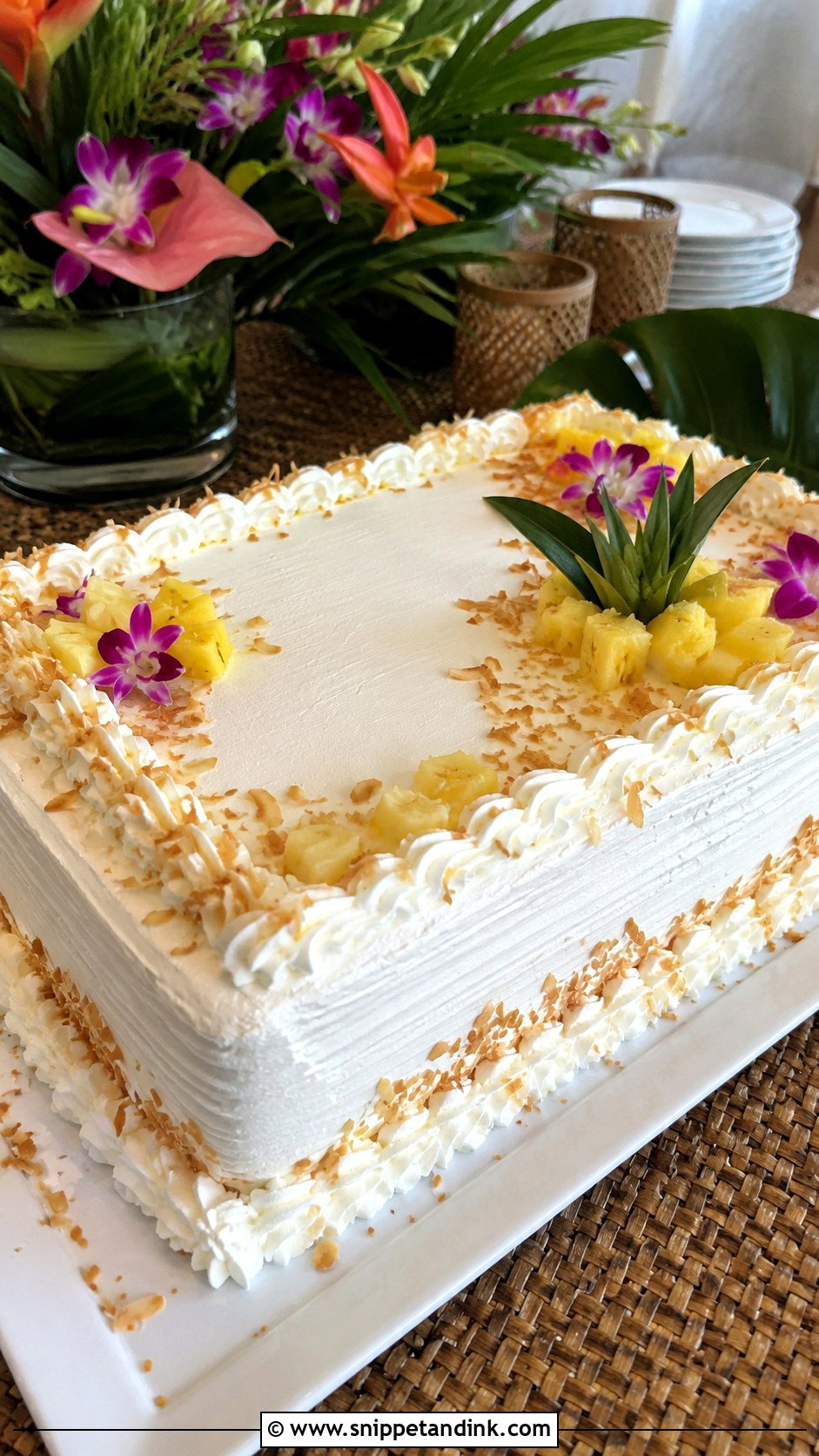
A Hawaiian wedding sheet cake is the practical answer to a big guest list and a tight budget. I often pair one with a small decorated cutting cake for the photos, while the sheet cake is sliced in the kitchen and served quickly. Pineapple coconut, guava cream, lilikoi mousse, mango and macadamia all work in a sheet. The top can still be piped and finished with flowers or toasted coconut. It’s how many backyard weddings and luaus on the islands feed everyone.
Which Tropical Flowers Can Touch the Frosting?
Almost every cake in this list leans on island flowers, and this is where I’m strictest. Many tropical plants are not food-safe, and blooms bought from a florist are usually grown for looks, not for eating, which means they may have been sprayed. So I treat all fresh flowers as decoration only and keep a barrier between them and anything a guest will eat.
- Hibiscus petals are edible, but buy them unsprayed, and expect them to wilt by evening.
- Orchids hold their shape well in warmth; I still wrap the stems and remove the flowers before cutting.
- Plumeria and anthurium are popular and photograph well, but their sap can irritate, so they should never sit directly on frosting.
- Monstera and many decorative leaves are not food-safe. Keep real leaves on the table around the cake, or use wafer paper copies on it.
Where a stem goes into the cake, it goes into a food-safe flower pick or is wrapped in floral tape first. Flowers lying on top sit on a small disc of parchment or wafer paper. Before the cake is cut, someone on the catering team lifts all the fresh flowers off, so nobody ends up with a petal on their plate.
One Strong Island Detail Is Usually Enough
An island cake can be simple, colourful, elegant or bold, but it works best when it feels tied to the couple and the place. Coconut, pineapple, guava, mango, lilikoi and macadamia give the flavour; flowers and greenery bring the look. Before you settle on a design, think about the venue, the weather, how many guests you’re feeding and how much decoration you really want. In my experience a clean cake with one strong feature photographs better than one with five competing ideas.
You'll Like These Ideas:






Leave a Reply