
Fall cakes give me more to work with than any other season. Spiced layers, caramel, figs, pears, pomegranate, burgundy dahlias and copper accents all arrive at once, and textured frosting looks its best by candlelight. The trick is picking a few of those things, not all of them. A cake that suits the season also has to suit the room it sits in, from a barn to a ballroom or a lodge, and the people eating it. Below are twenty autumn cakes I’d happily make, with the decorating and flavour notes that matter once you’re ordering one.
Ordering Around the Harvest Calendar
Many of the cakes below lean on fruit, and fruit has a season even within autumn. Figs are at their best in late summer and early fall and get harder to find as the weeks go on. Apples and pears run right through autumn. Pomegranates arrive later and last into winter. If your design depends on one fruit, ask your baker whether it’ll be good on your date, and agree on a backup in sugar or chocolate if not.
October is also one of the busiest wedding months of the year, so cake calendars fill early. I’d reach out to bakers as soon as the date and venue are settled, and book the tasting in season if you can, so you’re tasting the real fruit rather than a substitute.
1. Autumn Wedding Cake With Caramel Drip
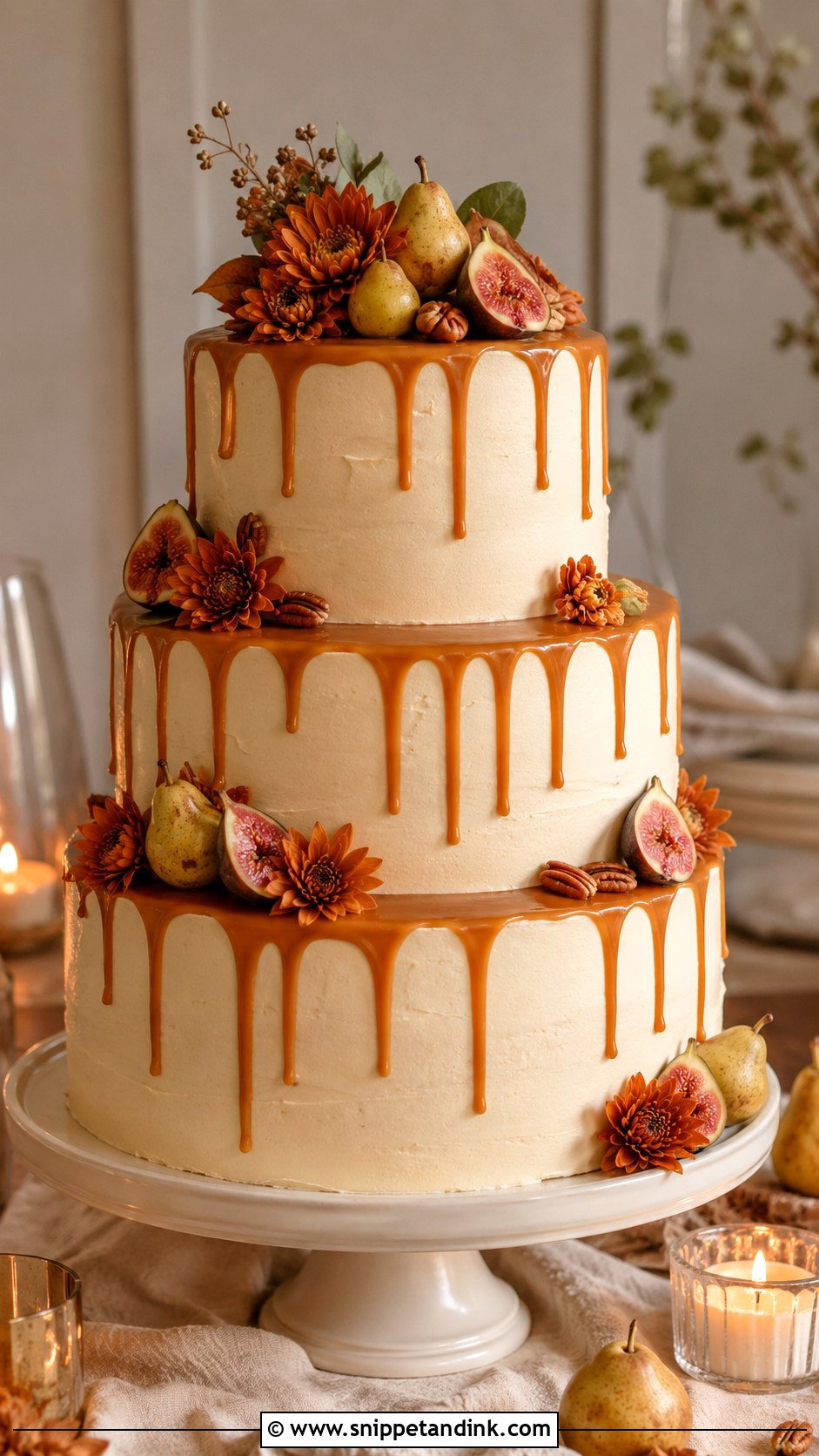
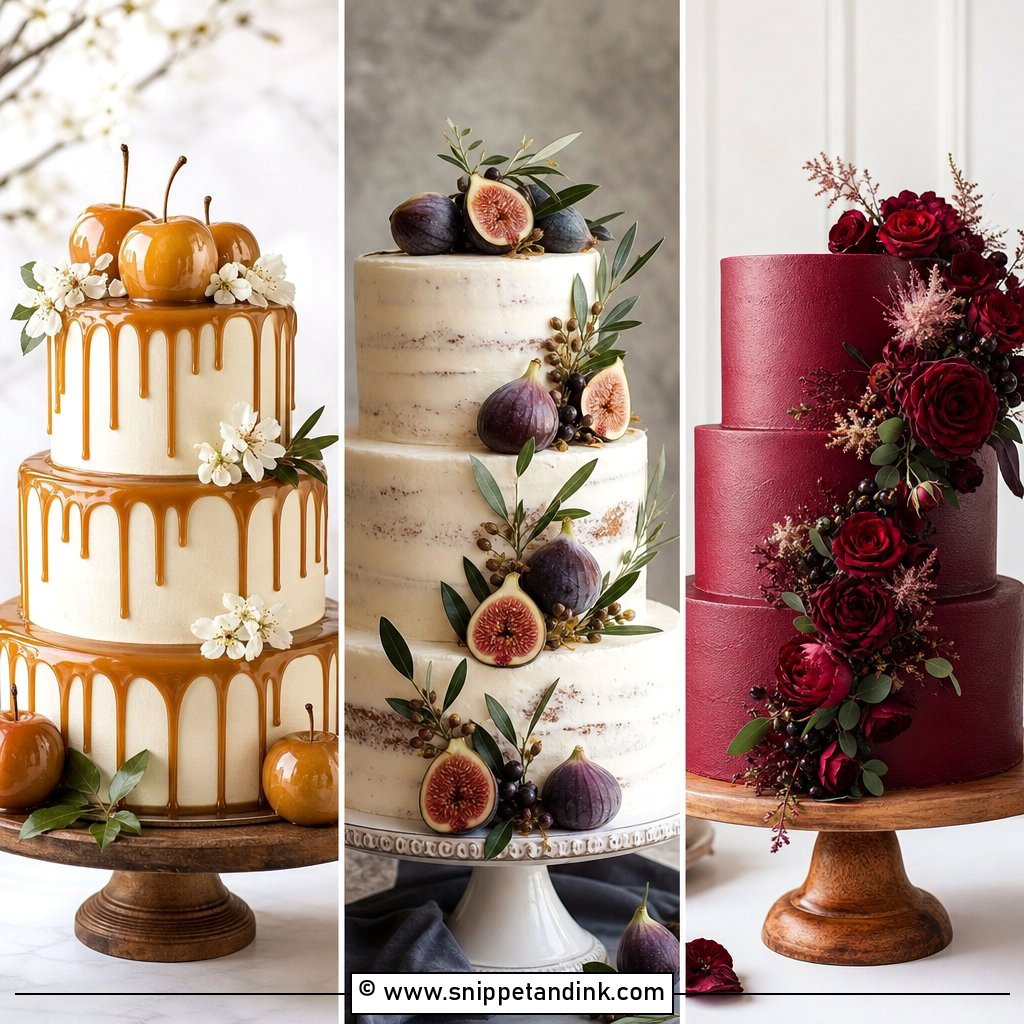
Caramel brings colour and flavour in a single step. An amber drip runs softly down two or three ivory buttercream tiers, over vanilla spice, apple cinnamon or brown butter cake. Figs, tiny pears, toasted pecans and a few muted orange flowers finish the top. Caramel stays slightly soft, and on a humid day it can keep creeping down the tier long after you’ve poured it, so I make it a little thicker for autumn weddings with the doors open. Barns and outdoor receptions suit it.
2. Autumn Wedding Cake With Burgundy Flowers
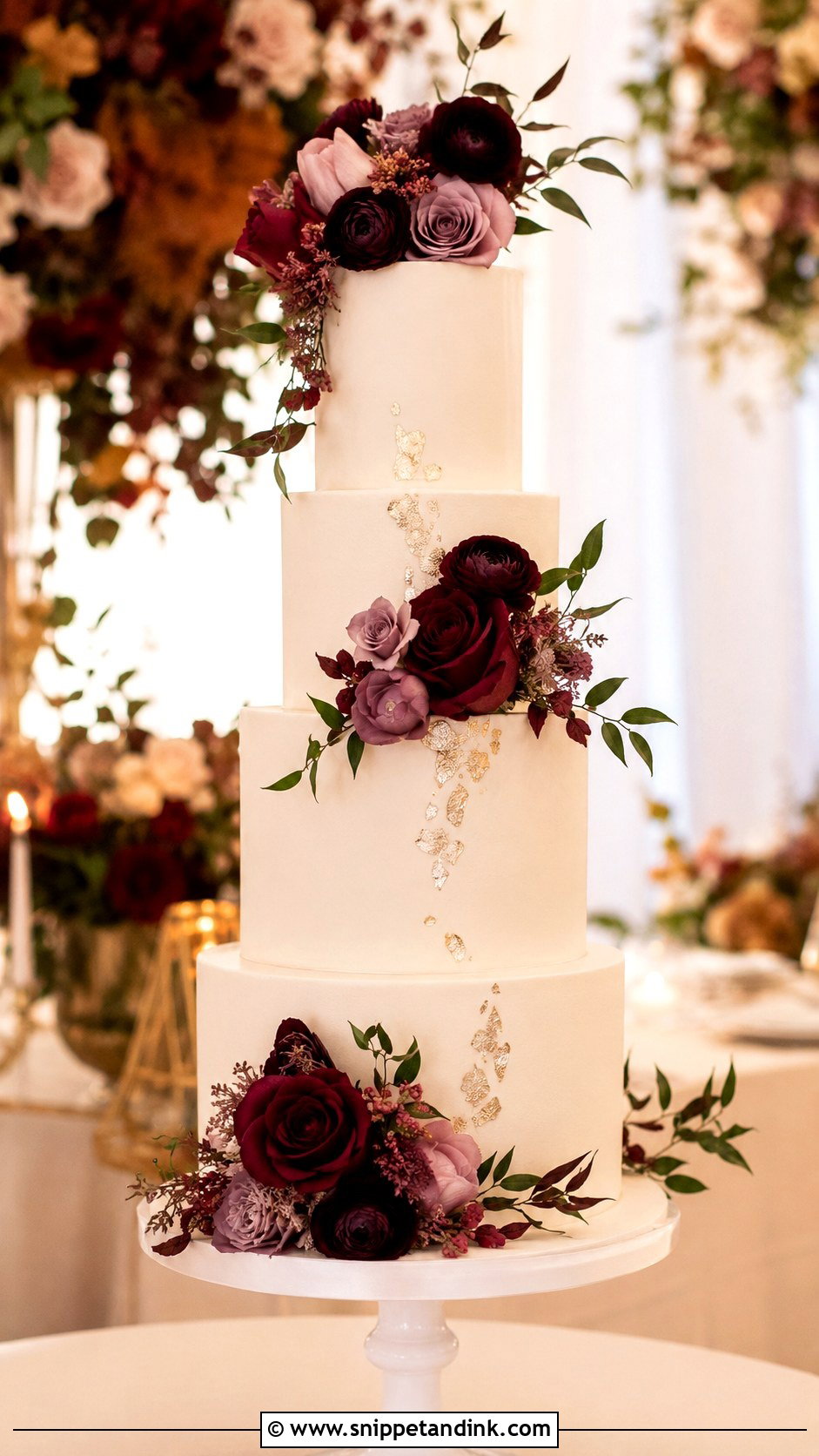
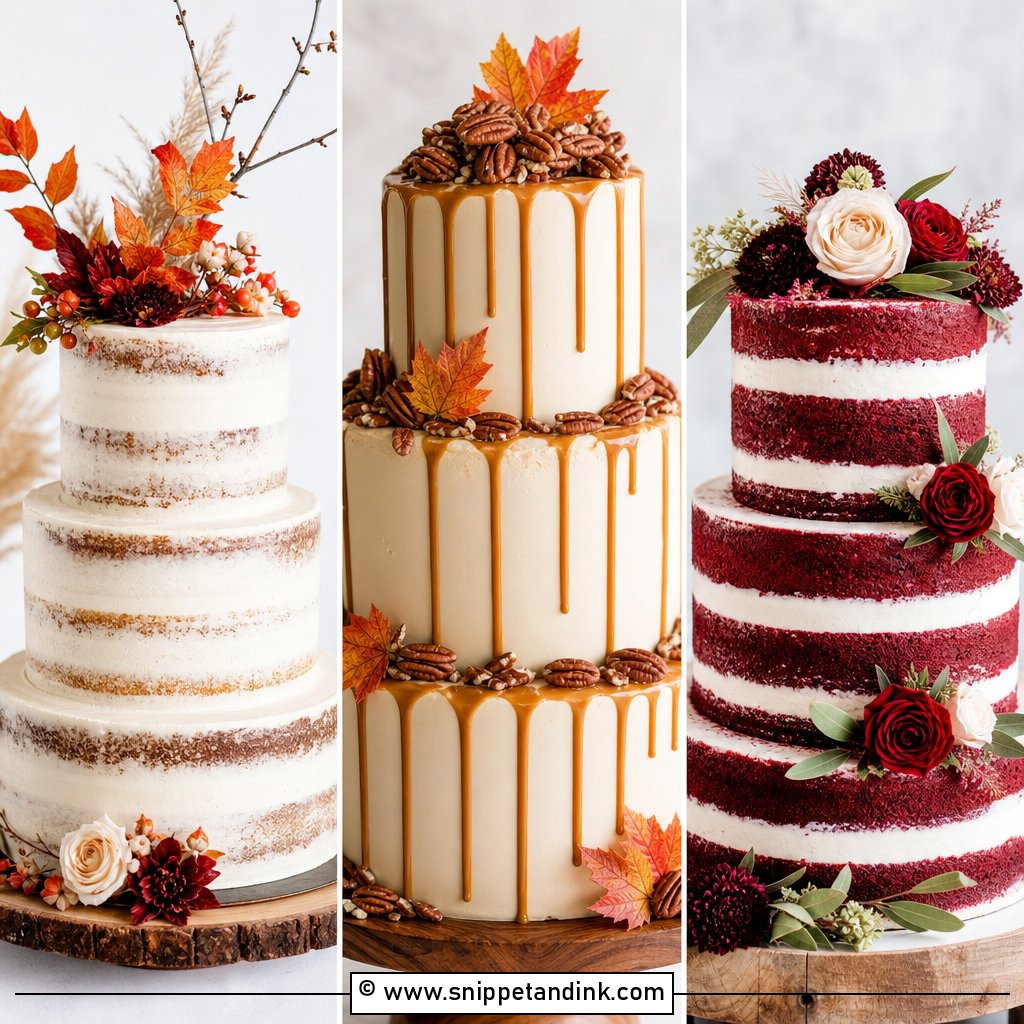
Dark blooms read rich and romantic against a smooth ivory or champagne cake, and they stand out without swamping it. I use roses, dahlias or ranunculus in burgundy, plum and dusty mauve, or sugar flowers if the couple wants them kept forever. A little greenery keeps it fresh; gold leaf or a gold base makes it formal. Red velvet, almond, vanilla bean or spiced chocolate suit it. Dark fresh petals bruise and can mark pale buttercream where they’re pressed, so I place them with a light touch and never move them once they’ve touched the frosting.
3. Autumn Wedding Cake With Fresh Figs
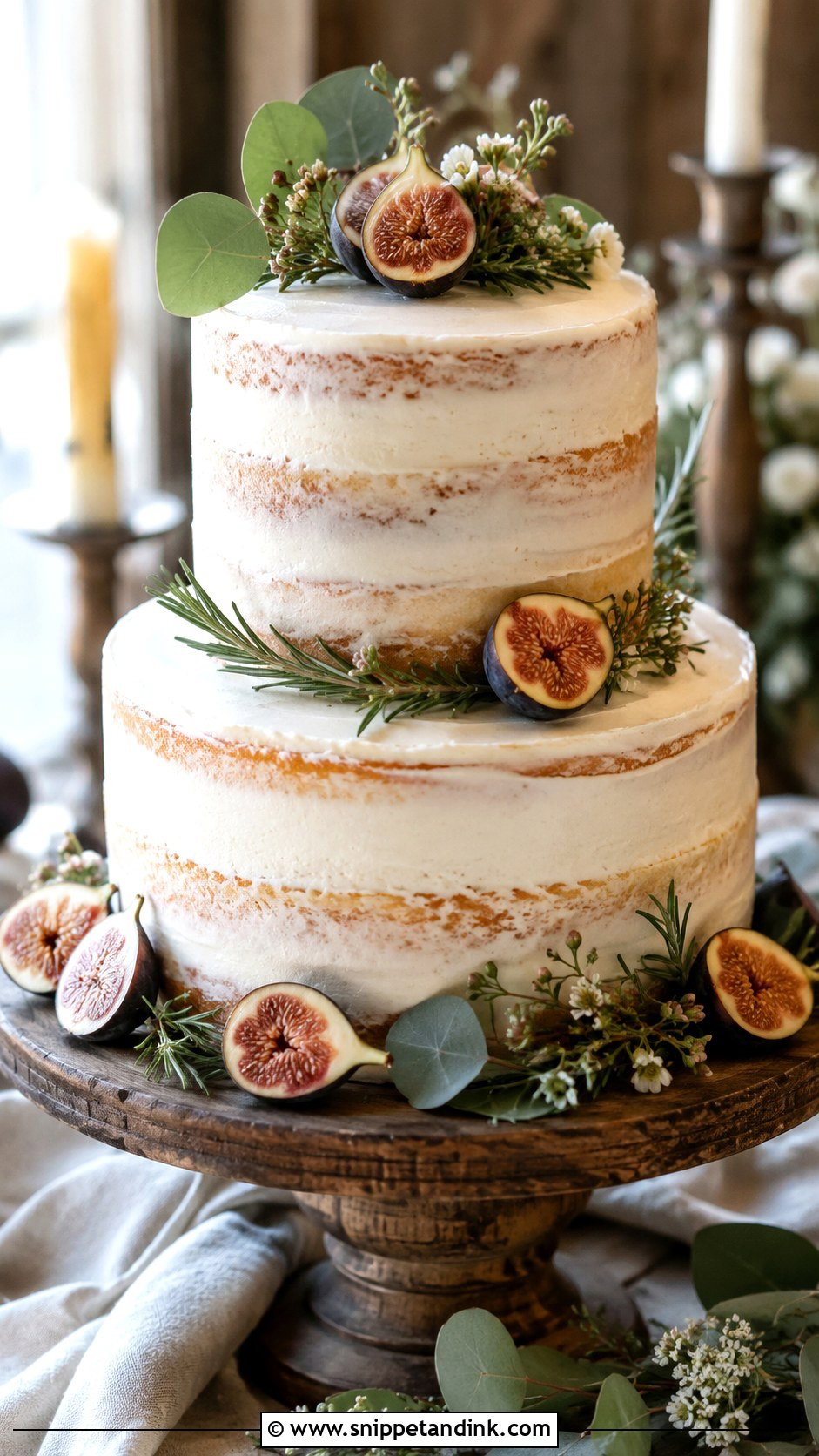
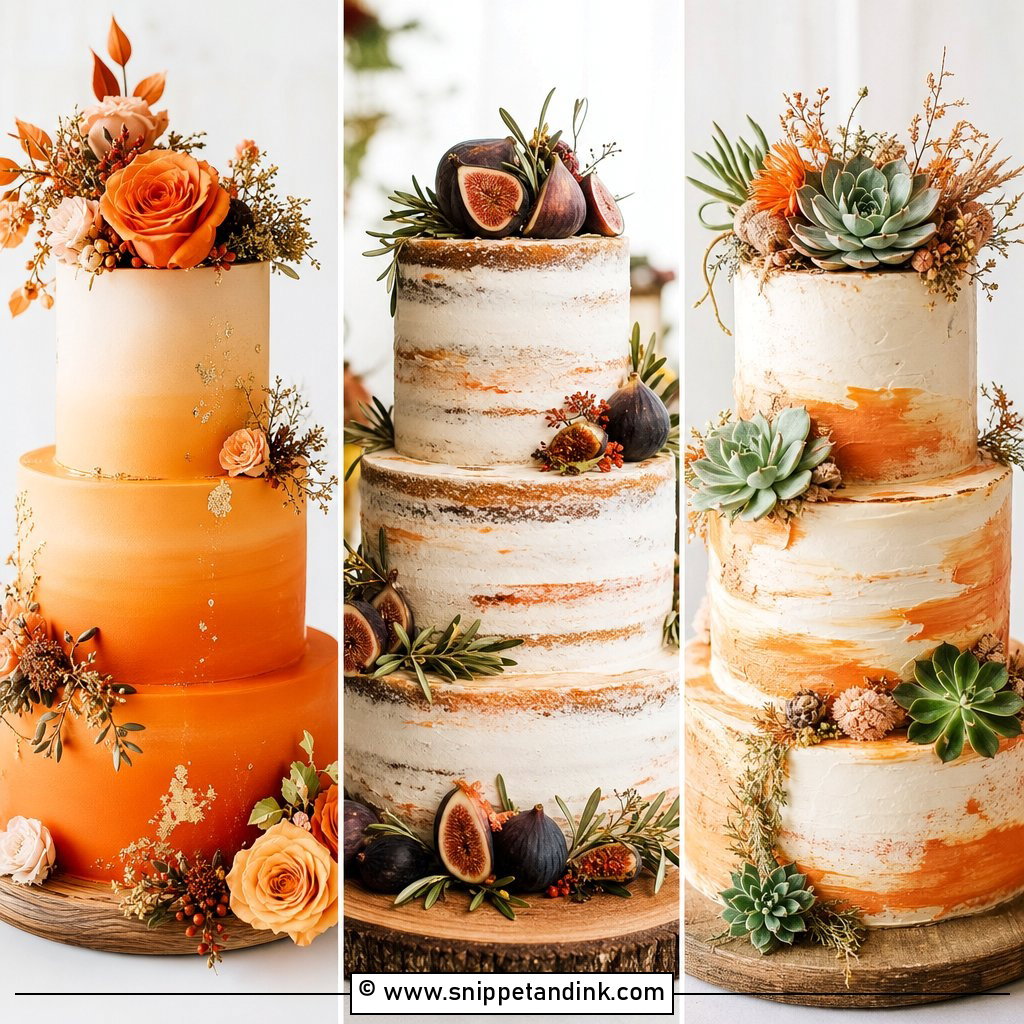
Figs look more refined than most fruit decorations, with deep purple skin and a soft pink centre doing the colour work for you. Honey buttercream, vanilla sponge, almond or brown sugar layers suit them, and a semi-naked finish keeps the whole cake relaxed. Rosemary, eucalyptus or small ivory flowers balance the fruit. Fresh figs are mostly a late summer to early autumn fruit, so for a late November wedding I’d confirm availability early or plan sugar figs as the backup. Farm-style and harvest-table receptions suit this cake.
4. Autumn Wedding Cake With Pressed Flowers
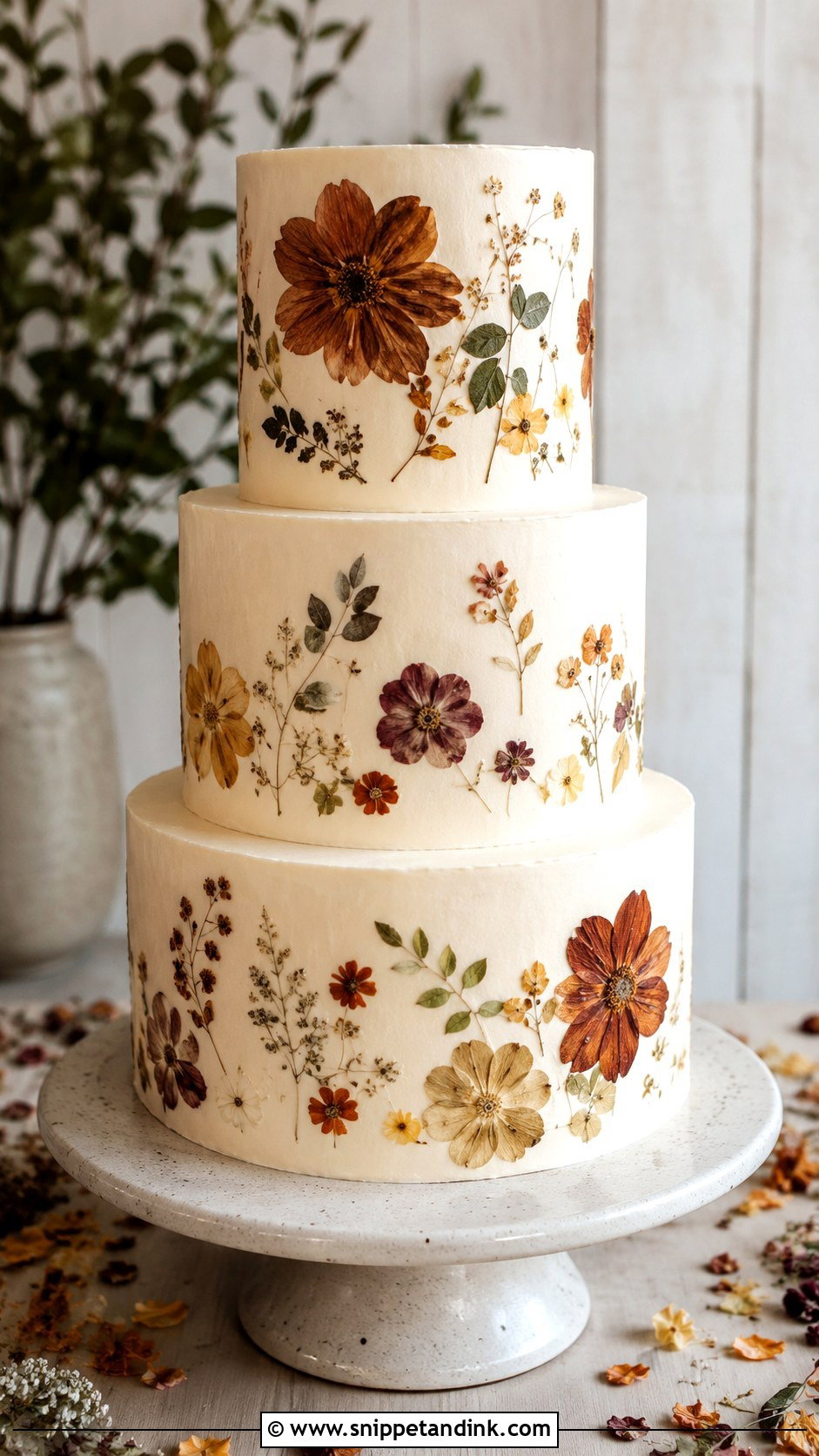
Pressed flowers look painterly against smooth buttercream, and autumn shades of gold, rust, mauve and soft brown suit the technique. The design is romantic but not stiff. I use only edible flowers or blooms prepared for food, and I press them thin; anything thick curls away from the cake as it absorbs moisture. Lemon, vanilla, honey or almond cake keeps the flavour light. A plain white stand with candles and scattered petals around the base is all the styling it needs.
5. Autumn Wedding Cake With Pumpkins
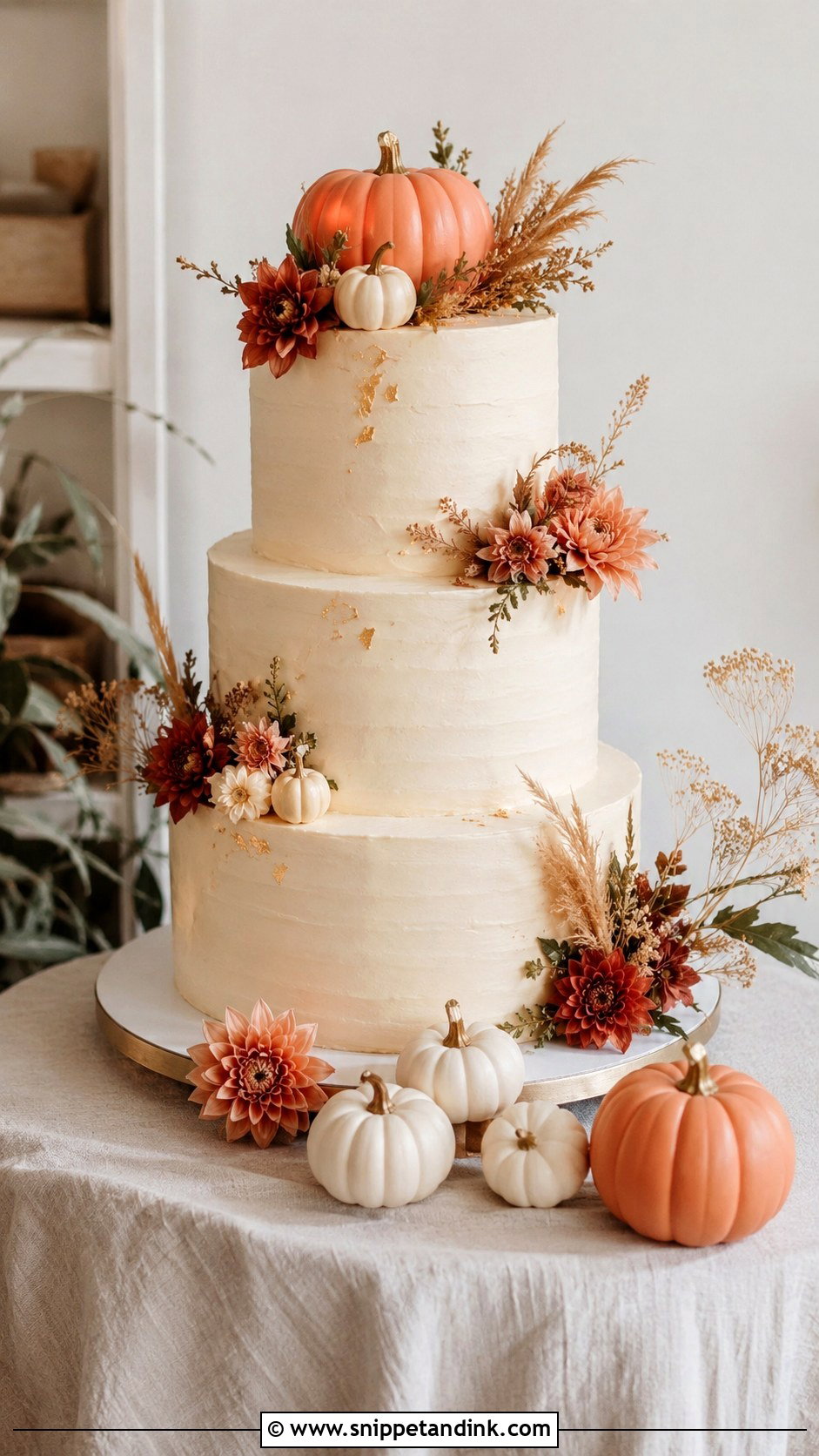
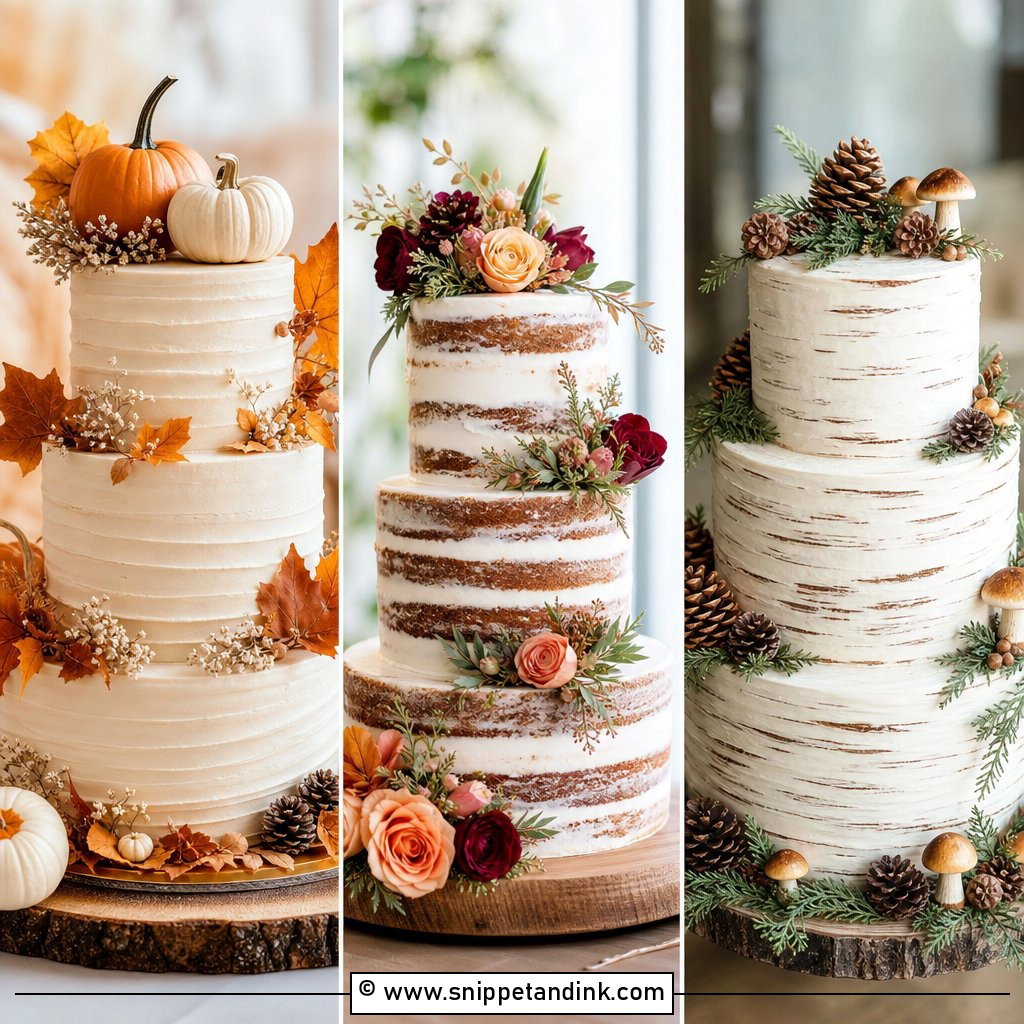
Pumpkins can look grown-up on a wedding cake, but only in soft colours. I’d choose mini white pumpkins, muted peach ones, or hand-painted fondant pumpkins in cream and terracotta over bright orange novelty pumpkins. Real mini pumpkins are heavy and not food-safe on the surface, so they sit on the stand or a separator board, not on the frosting. Smooth buttercream, dried grasses, gold accents and small flowers complete it, over pumpkin spice, brown butter, vanilla cinnamon or carrot cake with cream cheese frosting. October and November barns and estates are its natural home.
6. Autumn Wedding Cake With Gold Leaf
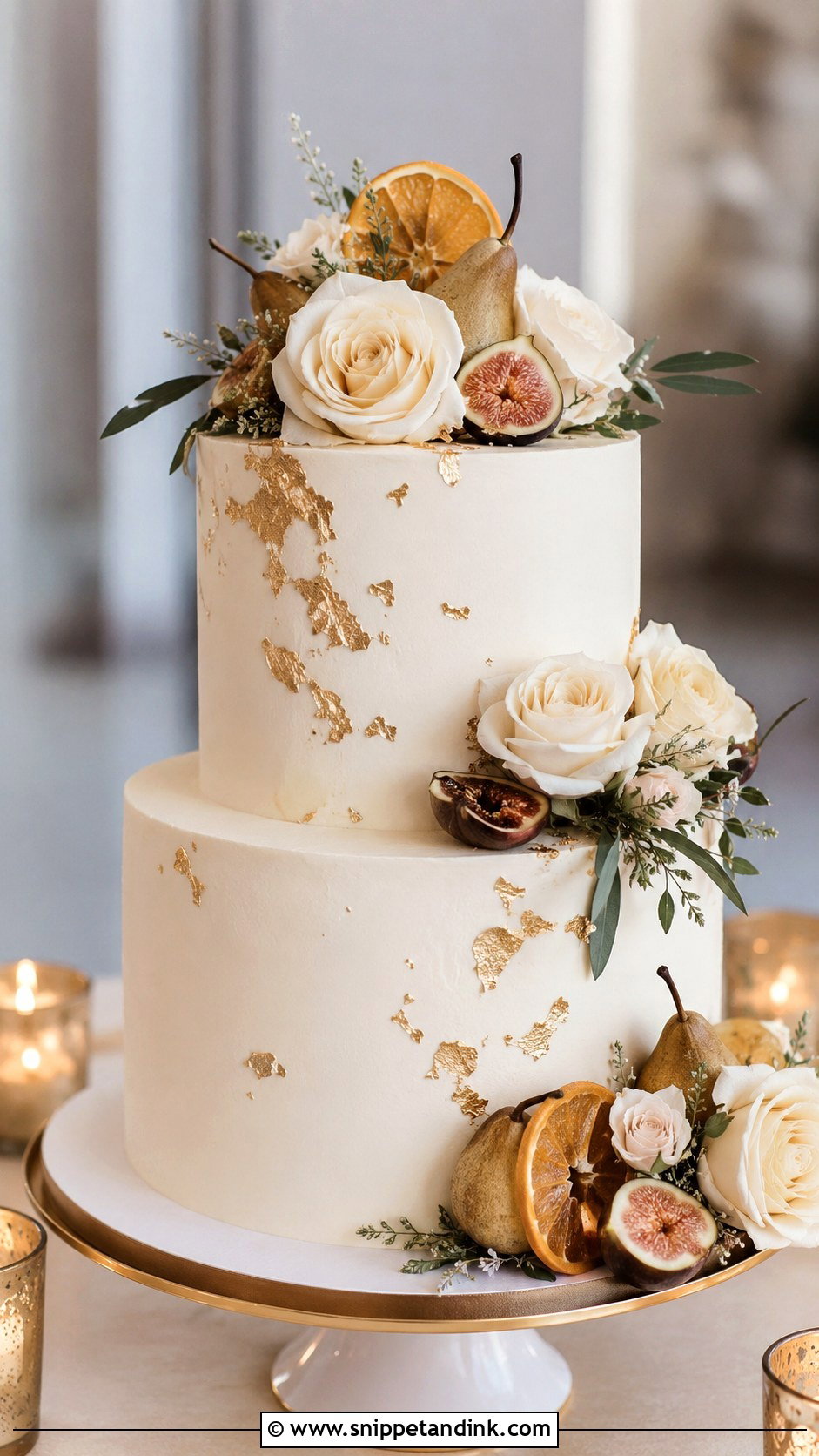
Small, uneven touches of gold leaf look elegant; whole tiers can look like a trophy. Gold suits ivory buttercream, dark ganache, burgundy fondant or terracotta frosting, alongside figs, pears, dried orange slices, roses or sugar flowers. Make sure your baker uses edible gold leaf, which is high-karat and sold for food, not craft leaf, which is not. Salted caramel, almond, chocolate espresso, or vanilla bean with maple filling suit the luxurious feel. In a ballroom under warm lights, the gold catches every candle.
7. Autumn Wedding Cake With Pears
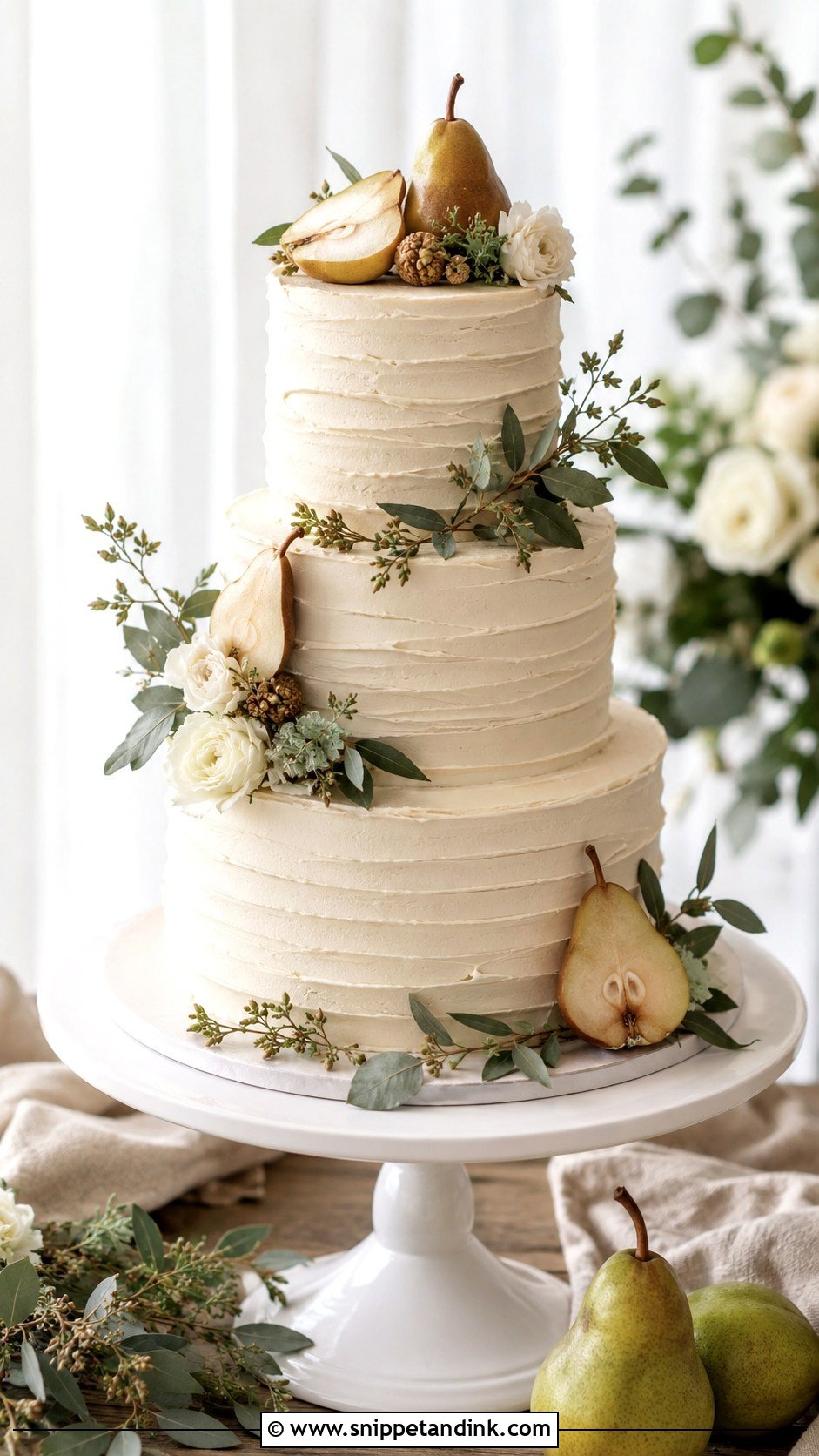
Pears are graceful decorations in pale green, gold or russet. Small fresh pears, poached pears or sugar pears go around the tiers with cream frosting, caramel accents and ivory flowers, plus a few sprigs of thyme or dried grass for texture. Inside, brown butter, honey, ginger or almond fillings continue the flavour. Poached pears taste wonderful but are sticky, so I dry them on a rack for hours before they go anywhere near buttercream; otherwise the syrup pools at the base. Intimate weddings with natural styling suit it best.
8. Autumn Wedding Cake With Pampas Grass
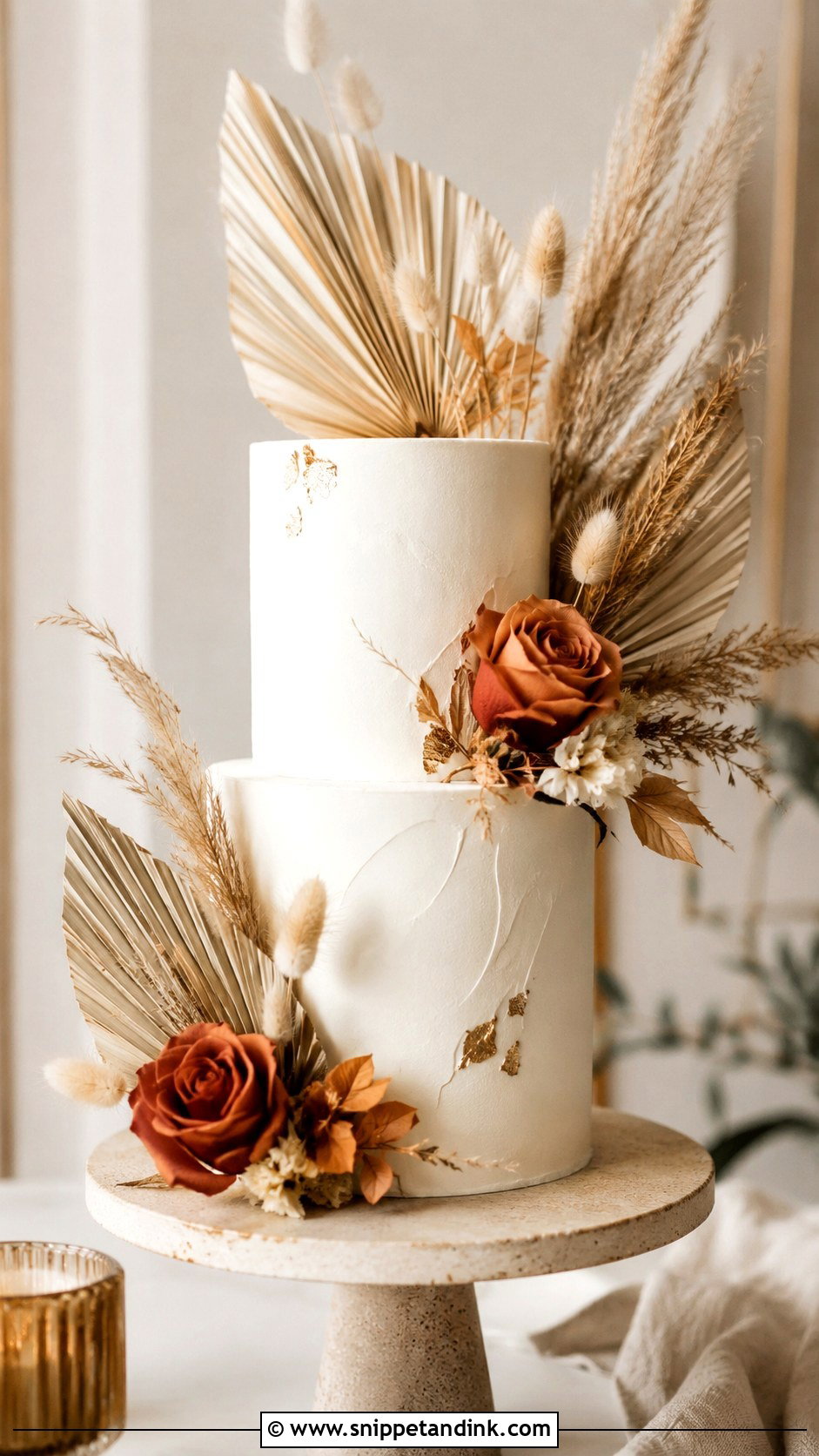
Use pampas as an accent, not a covering. It gives an autumn wedding cake soft boho texture next to white buttercream, tan fondant, terracotta flowers and dried palm, and one bold arrangement on a smooth two- or three-tier cake looks modern and airy. Pampas sheds fine fluff and is often dyed or sprayed with fixative, so I keep it in a wrapped bundle on a separator or tucked behind the cake rather than in direct contact. Vanilla chai, honey, pumpkin spice or almond cake suit the palette, at outdoor and desert-style weddings especially.
9. Autumn Wedding Cake With Chocolate Ganache
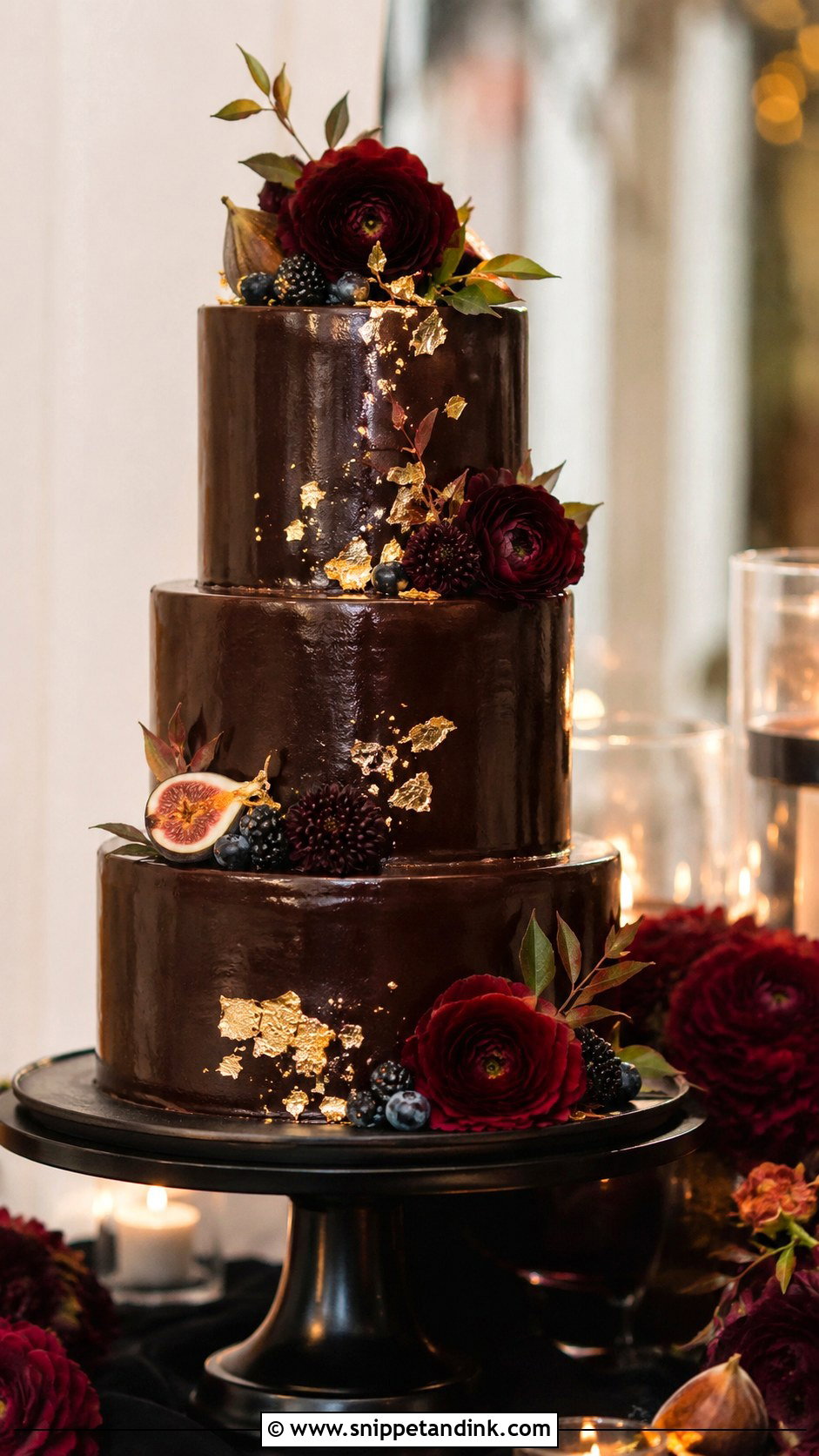
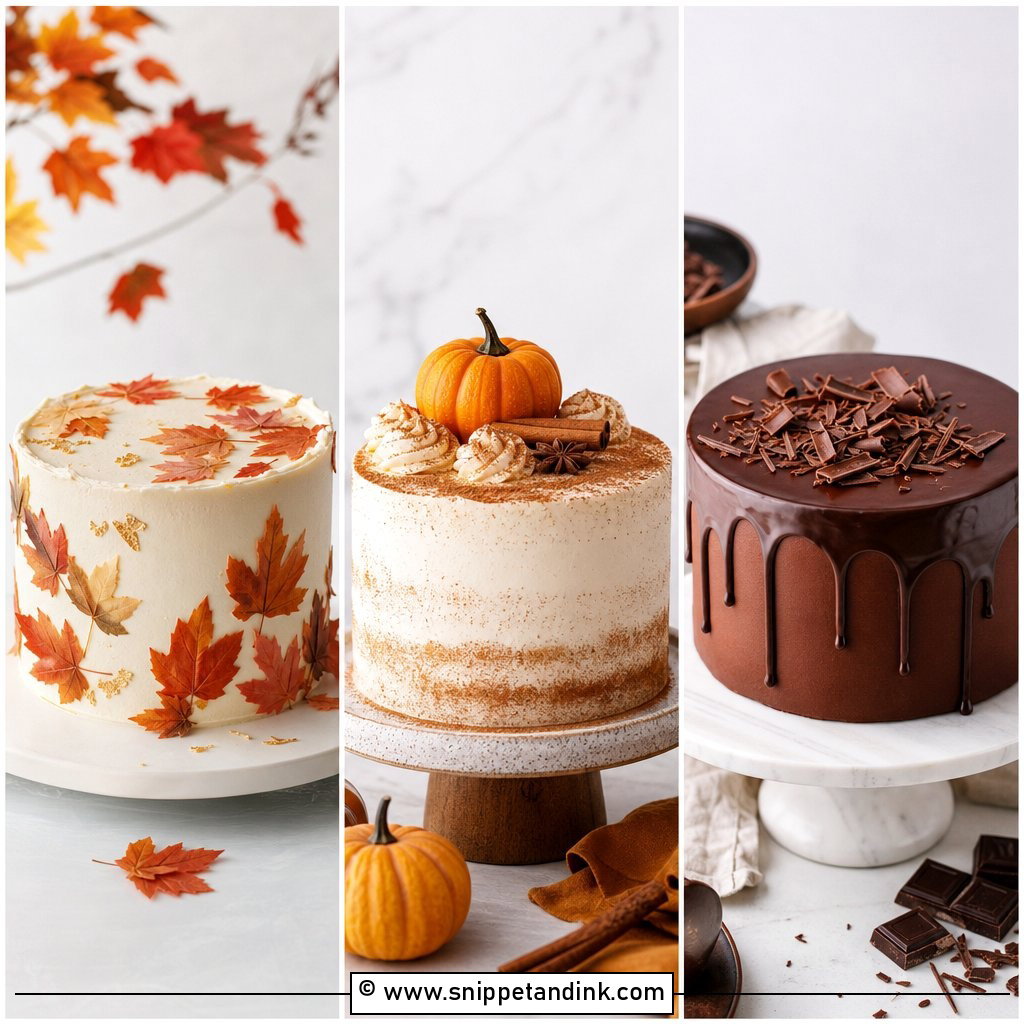
Ganache gives a glossy, dark finish that suits cool weather and candlelight. It can be sleek and smooth or roughly textured, and it carries burgundy flowers, figs, blackberries or gold leaf well. Fudge, mocha, hazelnut or salted caramel layers make it indulgent. It’s also practical: a firm dark chocolate ganache sets harder than buttercream, which means sharp edges hold longer in a warm room. For a couple who’d rather not have a white cake, it’s my first suggestion.
10. Autumn Wedding Cake With Apple Cider Flavor
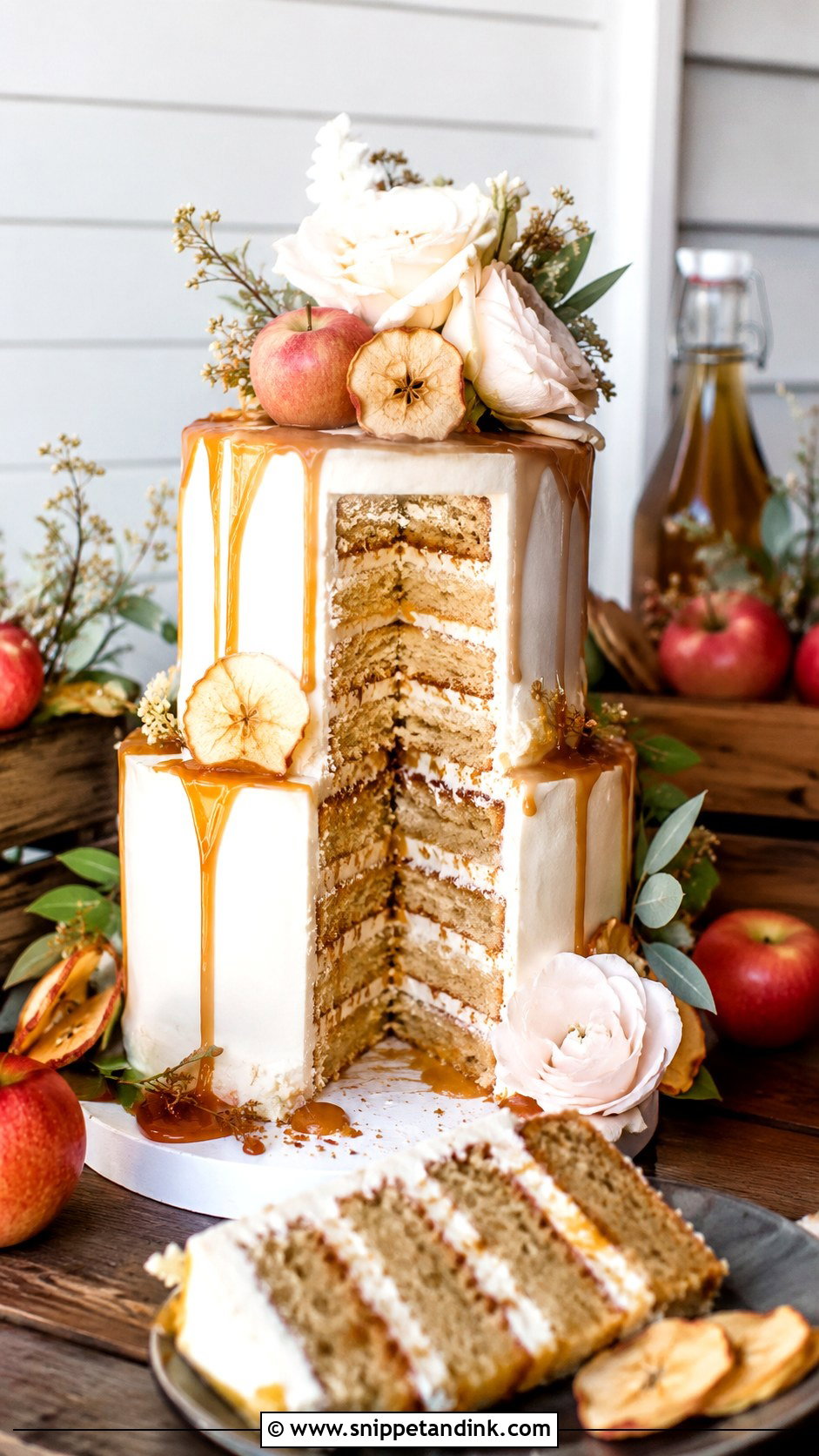
Apple cider brings fall flavour without needing elaborate decoration. The layers can carry apple butter, cinnamon cream cheese, caramel or brown sugar buttercream. Outside, soft ivory frosting gets a caramel drip, thin apple slices, tiny apples or dried apple chips, with cinnamon sticks kept to the table styling. I reduce the cider until it’s syrupy before it goes into the batter; straight cider just makes the sponge wet without much flavour. Orchard and barn weddings, and guests who like familiar flavours, are where it fits.
11. Autumn Wedding Cake With Terracotta Flowers
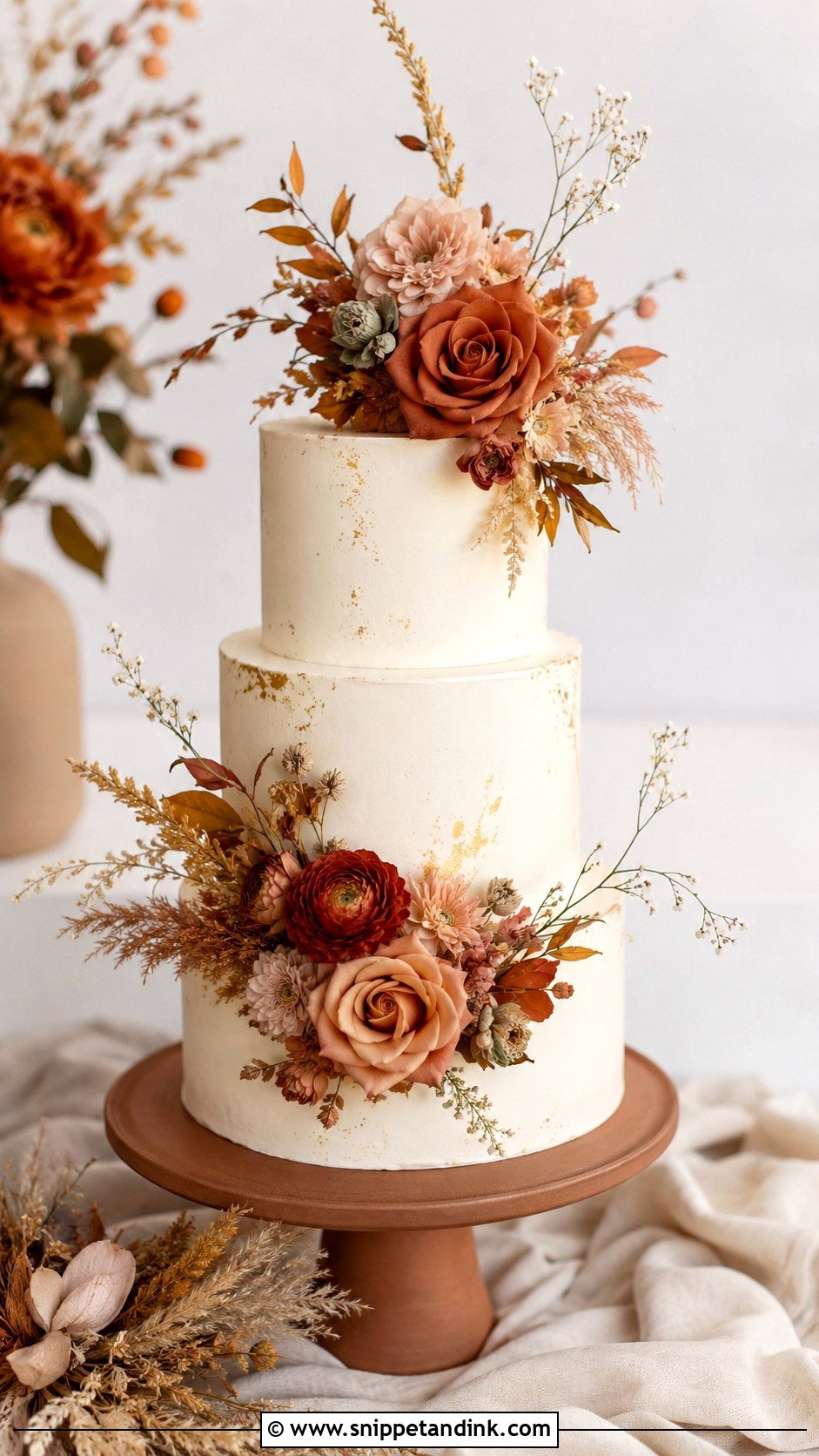
Terracotta flowers bring warmth without shouting. The colour sits happily with cream, taupe, blush, rust and muted peach, as fresh, sugar or dried flowers around smooth buttercream tiers. Vanilla bean, spice, almond or caramel cake supports the palette, and a few gold details tie the cake to a linen-covered table. Fresh terracotta-toned roses vary a lot from one delivery to the next, so I see the florist’s actual stems before matching any sugar flowers to them. Boho weddings and outdoor venues suit this softer kind of fall colour.
12. Autumn Wedding Cake With Naked Layers
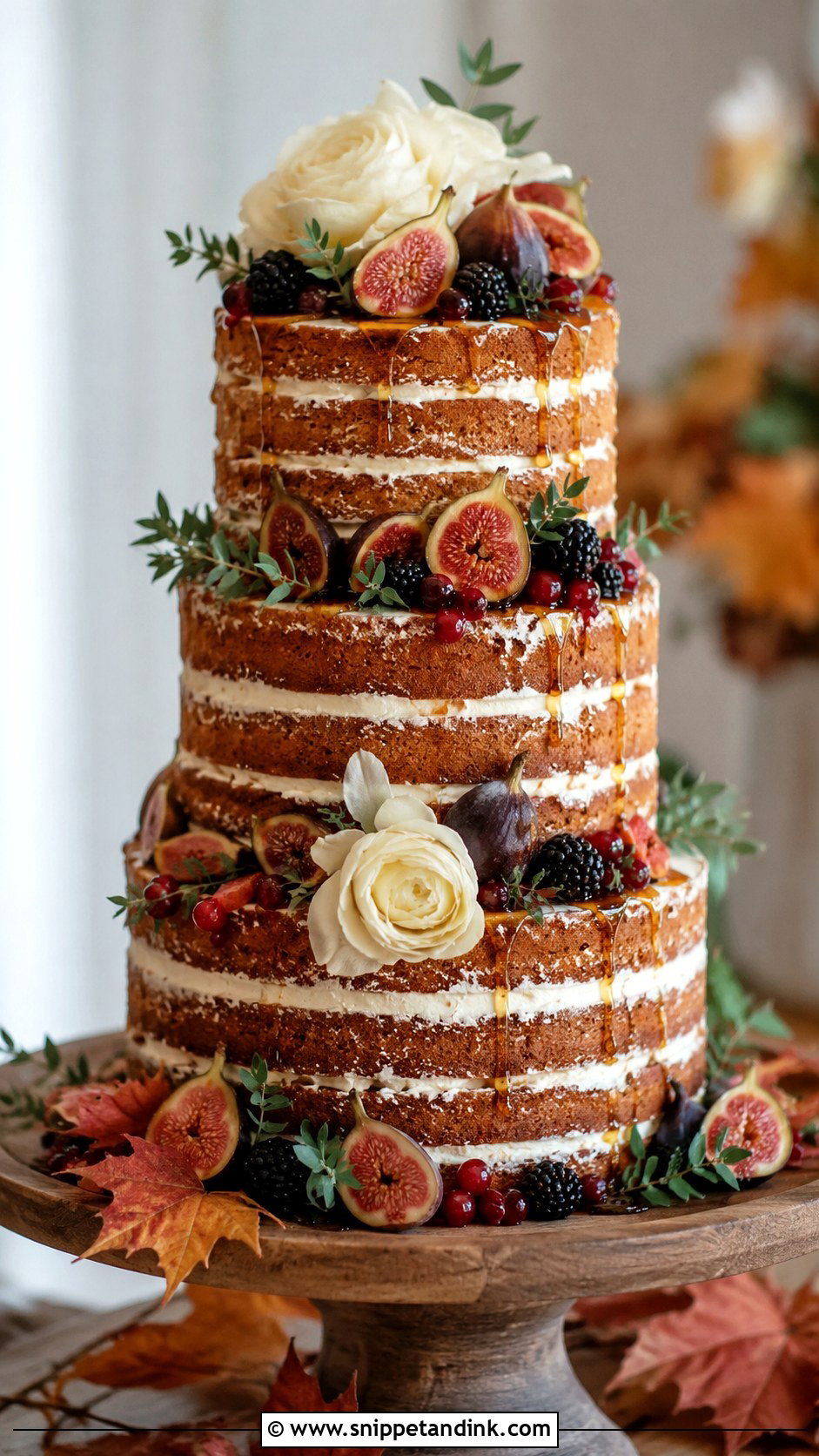
Exposed layers give warmth and texture, with cream cheese, vanilla buttercream or maple filling between them, and fruit, small flowers, berries, figs or a light caramel drizzle on the tiers. The cake must still look like a wedding cake, which comes down to neat edges and even layers. I give naked cakes a thin crumb coat scraped back almost to the sponge; it seals in moisture while keeping the look. Carrot, apple spice, pumpkin and vanilla chai flavours suit it at barns and backyard receptions.
13. Autumn Wedding Cake With Rust Orange Flowers
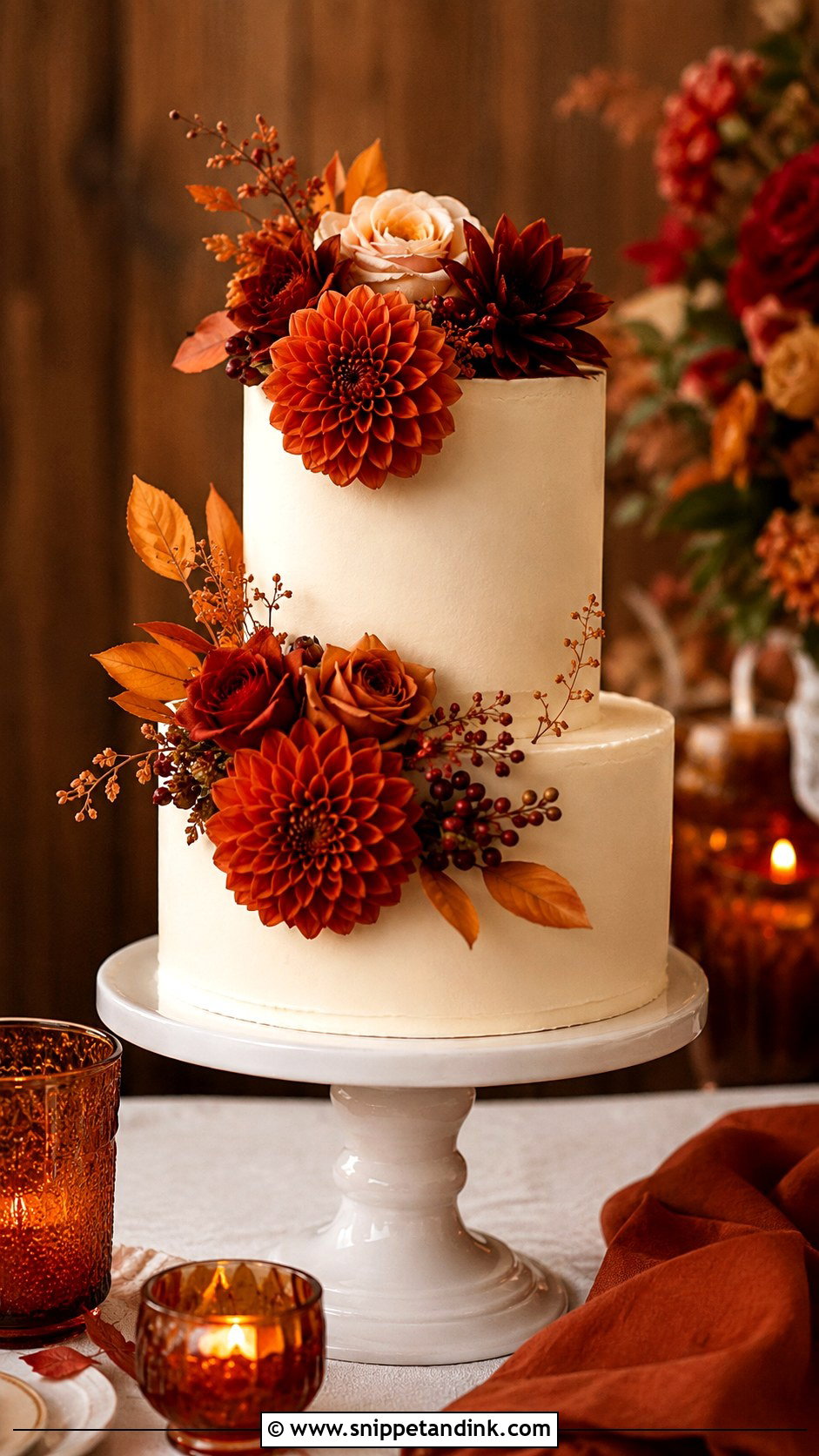
Rust orange is unmistakably autumn and still elegant on white, cream, beige or pale peach frosting. Roses, dahlias, mums or sugar flowers in rust, burnt orange and copper are joined by a few leaves, small berries or dried grasses. Mums hold up well, but they aren’t edible, so if they’re on the cake, they go on with wrapped stems and come off before cutting. Cinnamon vanilla, carrot, pumpkin spice or maple pecan fit the colour. Warm wood tables, amber glass and candles set it off.
14. Autumn Wedding Cake With Maple Buttercream
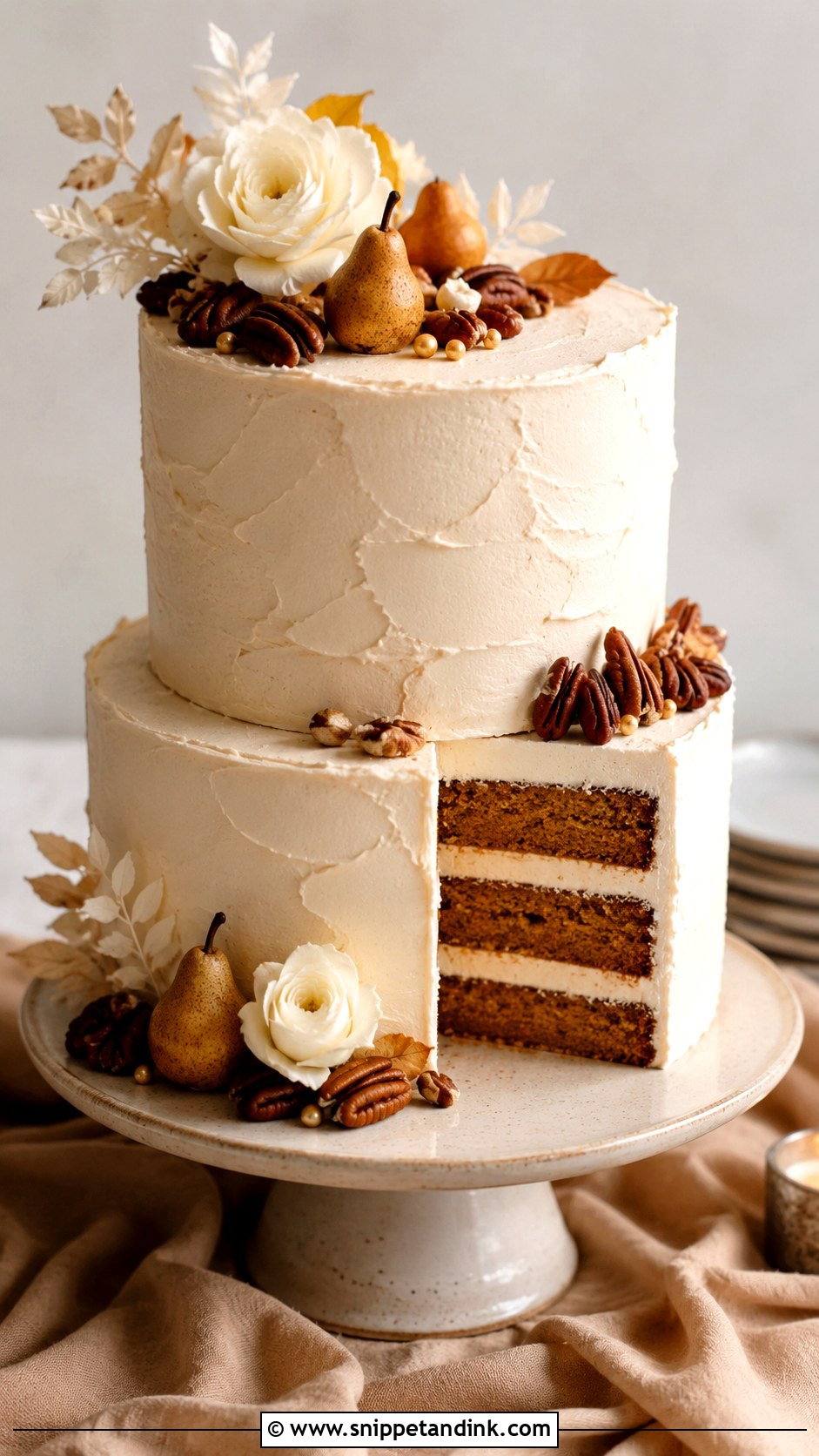
Maple buttercream gives soft fall flavour without darkening the palette. It suits vanilla, brown butter, spice, carrot, apple and pecan layers, with a smooth or lightly textured finish and toasted pecans, tiny pears, caramel accents or ivory flowers on top. Maple buttercream comes out a pale beige rather than white, which I mention at tastings so nobody is surprised on the day. Late September through November receptions suit its gentle warmth.


15. Autumn Wedding Cake With Dried Florals
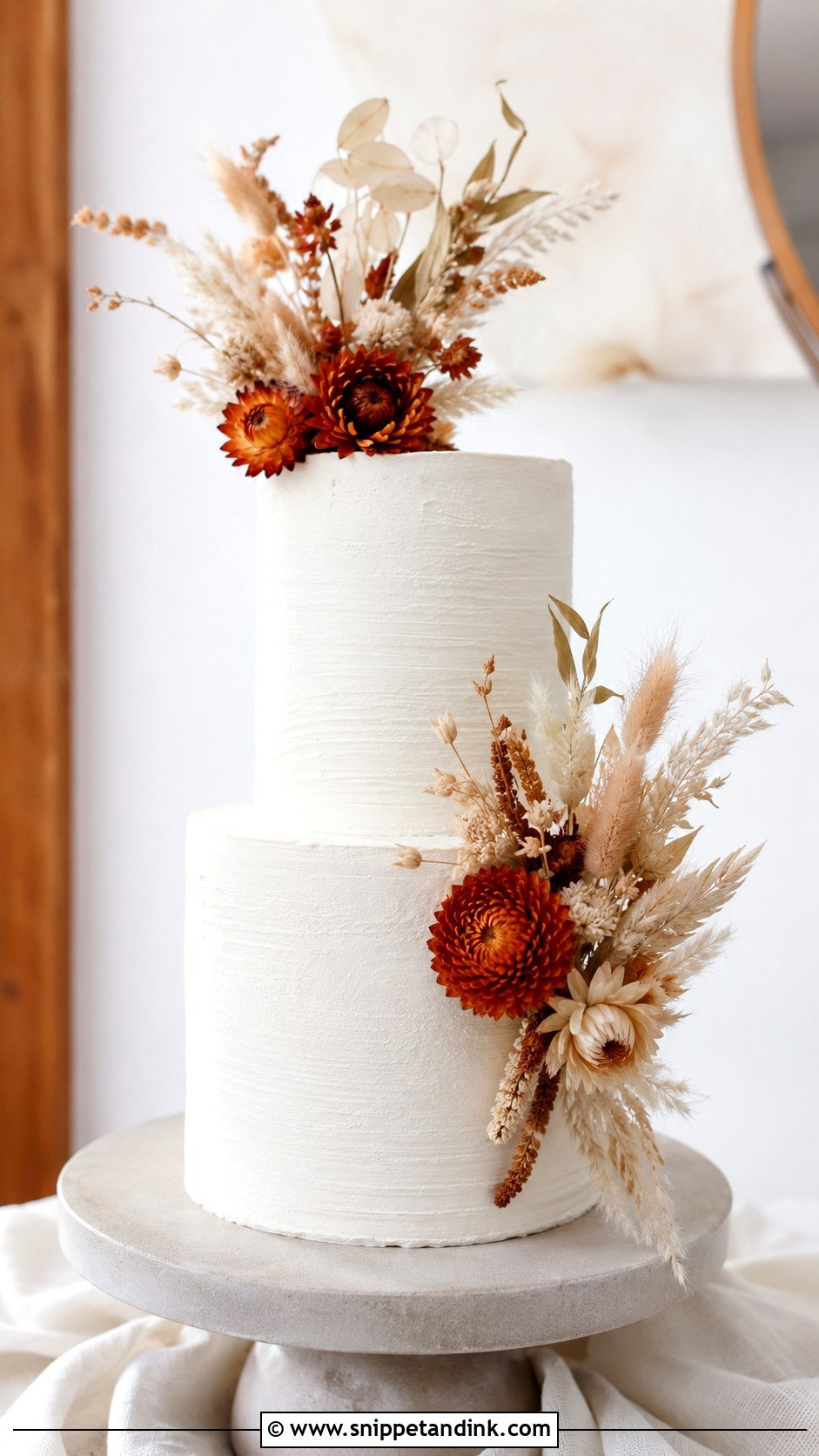
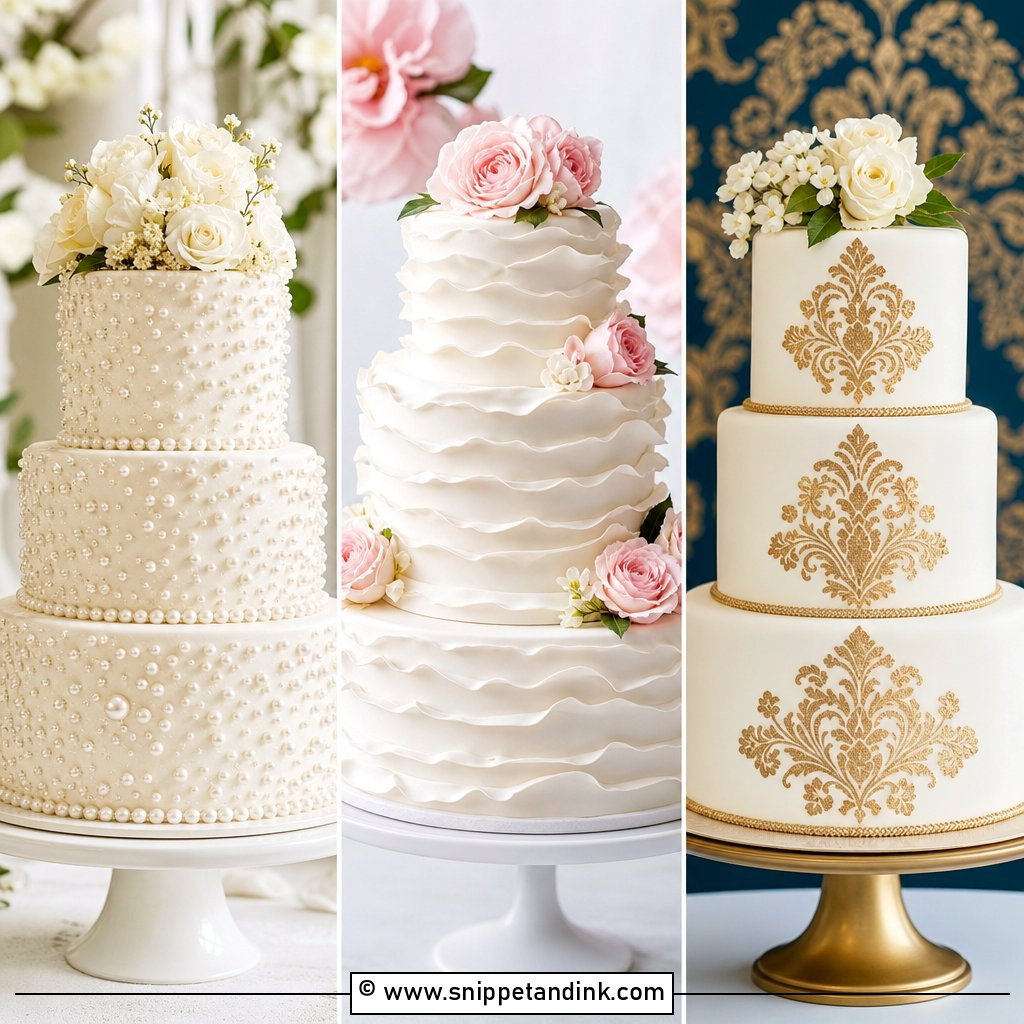
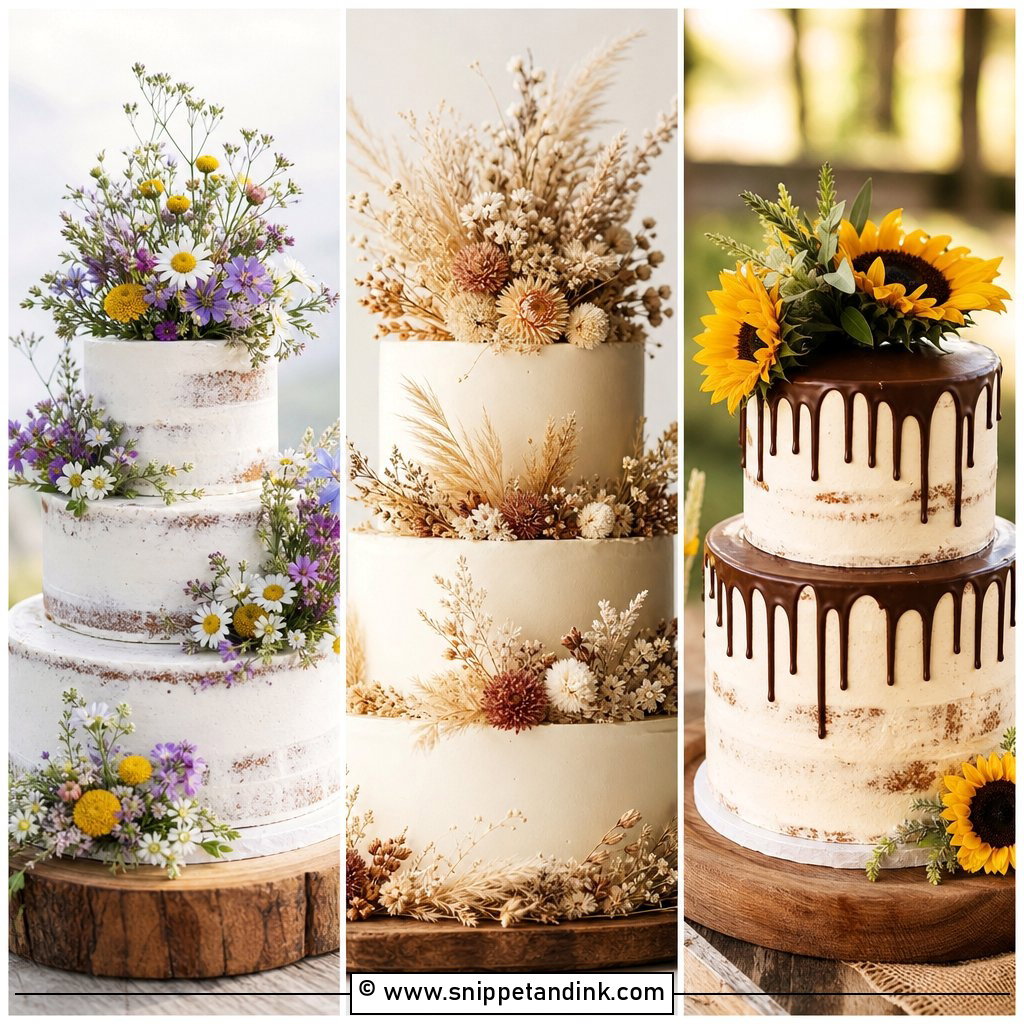
Dried grasses, strawflowers, bunny tails, preserved leaves and small neutral blooms in beige, rust, cream and taupe give a cake a quiet, natural texture. They stand out best on simple buttercream, arranged on one side, around the base or as a small crown. Honey vanilla, chai spice, almond or caramel cake suits the earthy look. Many dried stems are dyed or bleached, which is fine for decor but not for food contact, so every stem gets wrapped and they sit on top of a barrier rather than pushed into the cake.
16. Autumn Wedding Cake With Pomegranate
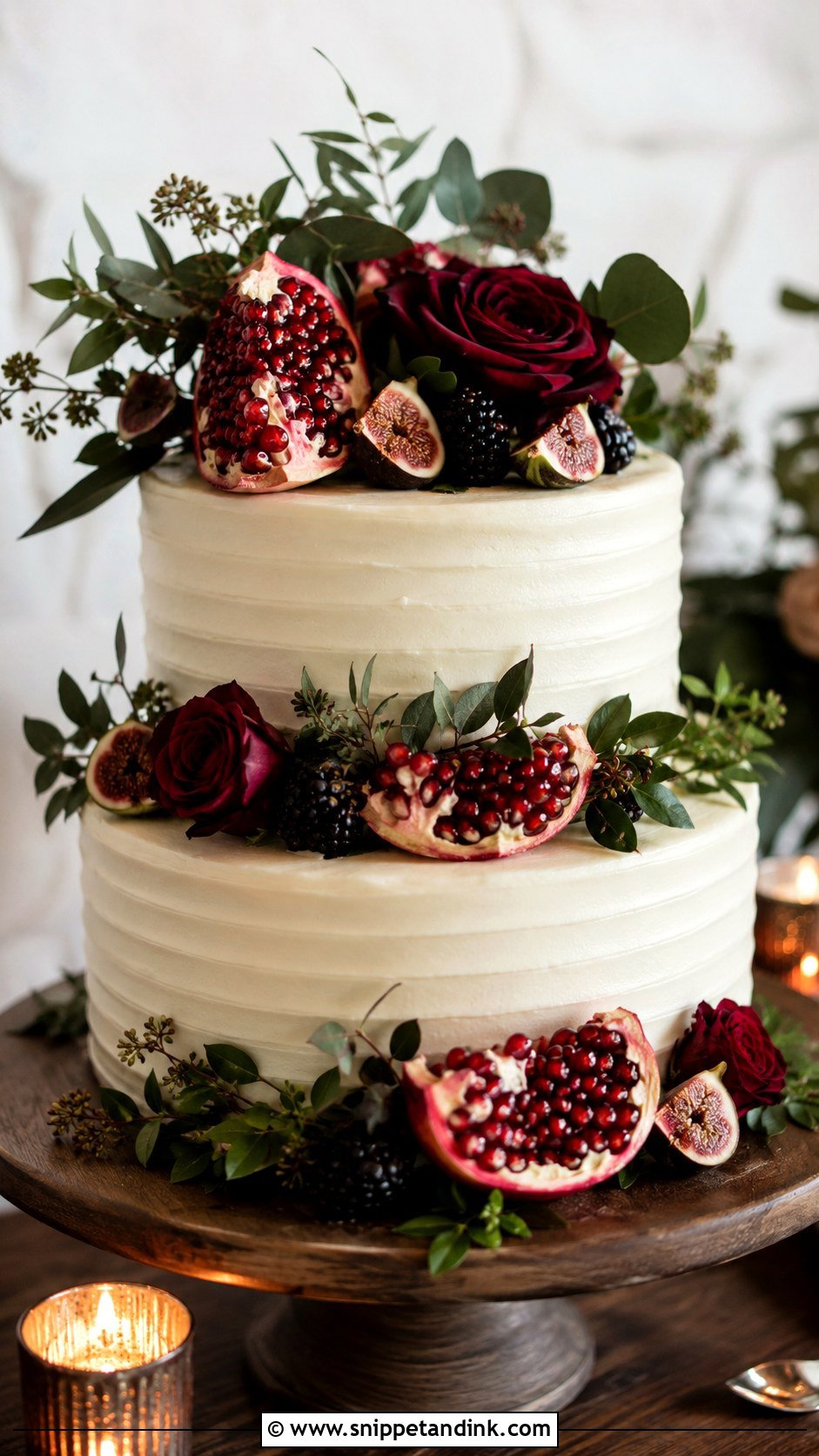
Pomegranate brings jewel colour beyond the usual pumpkins and leaves. Its red seeds and glossy sections look rich against ivory frosting, ganache or pale blush buttercream, alongside roses, figs, dark berries or greenery. Orange almond, vanilla bean, chocolate, honey or spice cake suits it. Pomegranate juice stains almost everything it touches, including white linen and pale frosting, so I place the arils at the last minute with tweezers and keep a cloth handy. A dark wood table with candles makes the most of the colour.
17. Autumn Wedding Cake With Cinnamon Spice Layers
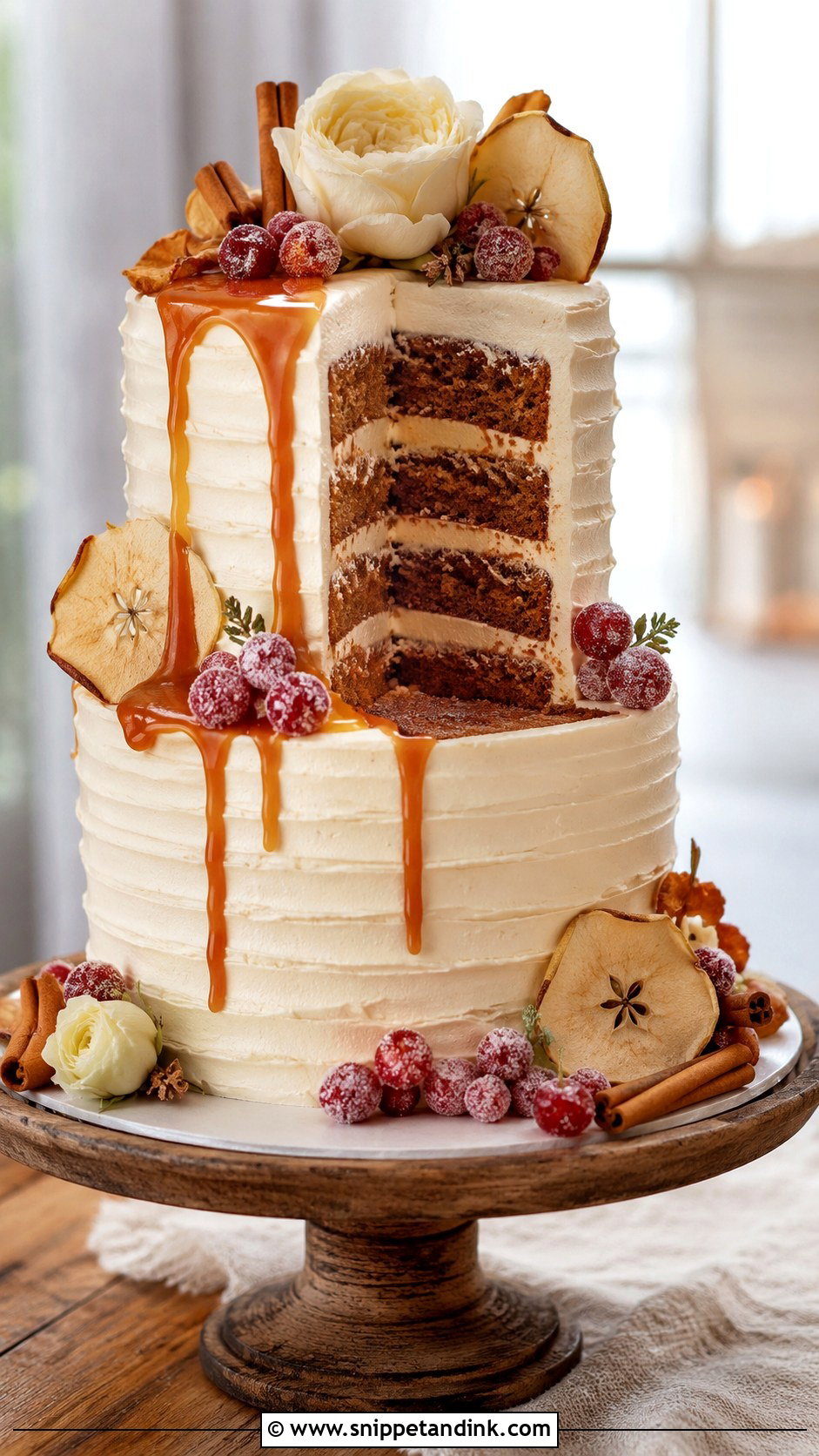
Cinnamon spice cake is the autumn flavour fewest guests turn down. It pairs with cream cheese, vanilla buttercream or brown sugar filling, under soft ivory frosting with textured sides, caramel accents and seasonal flowers, or sugared cranberries, toasted nuts and dried apple slices. Sugared cranberries go glassy and weep in damp air, so I make them the day before and add them close to display time. The outside can go casual or formal, which makes it an easy cake to fit to any venue.
18. Autumn Wedding Cake With Dark Green Frosting
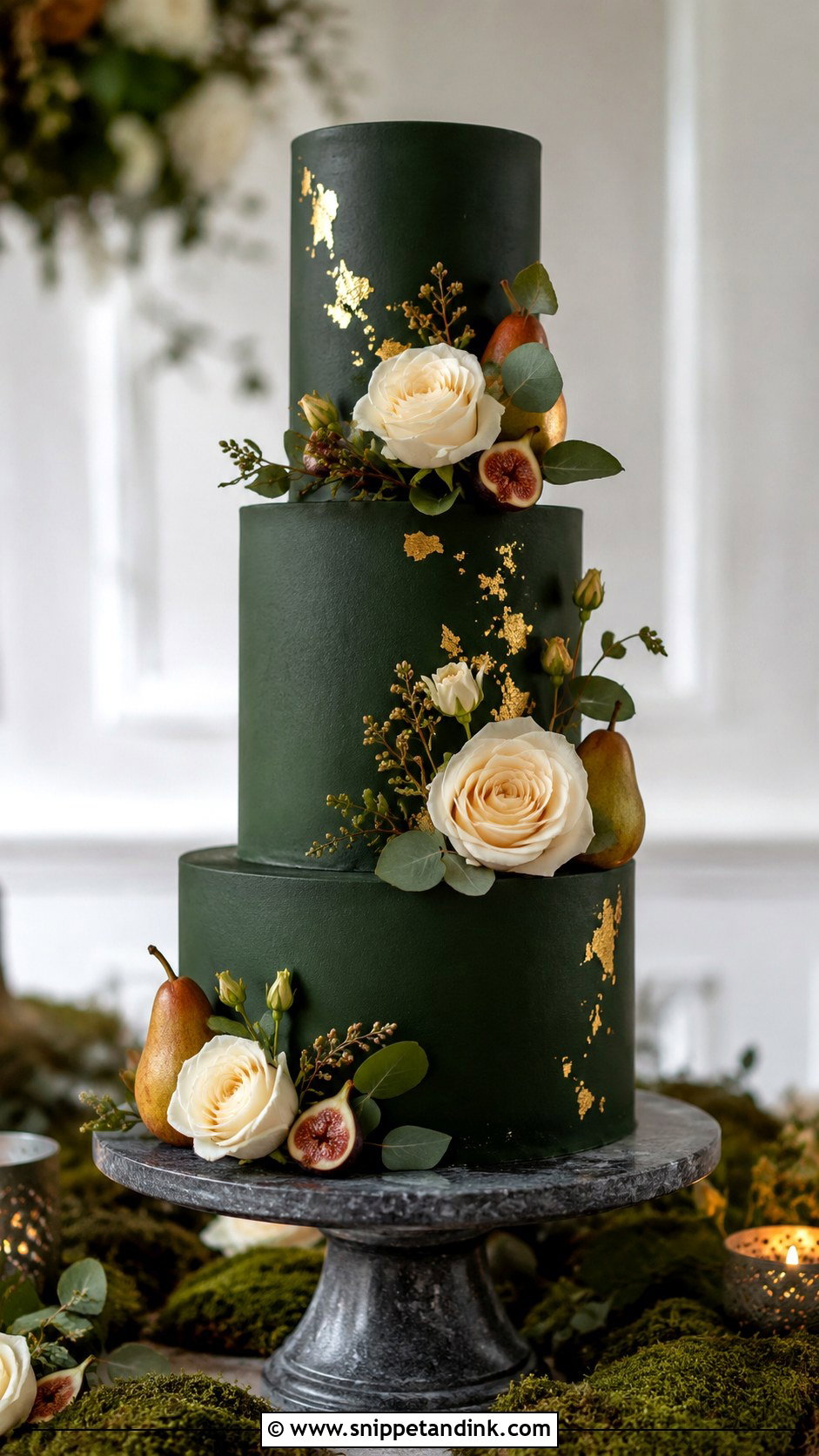
Forest green feels earthy and modern, a change from the usual orange and burgundy. Green buttercream or fondant suits gold leaf, ivory flowers, figs, pears and soft greenery, over chocolate, pistachio, vanilla bean, almond or spiced pear cake. Very deep green buttercream needs a lot of colouring, which can affect the taste and stain mouths, so for a full dark green tier I’d usually suggest fondant or a ganache-based green. Keep the design clean so the colour looks deliberate. Woodland weddings and greenhouse receptions suit it.
19. Autumn Wedding Cake With Vintage Piping
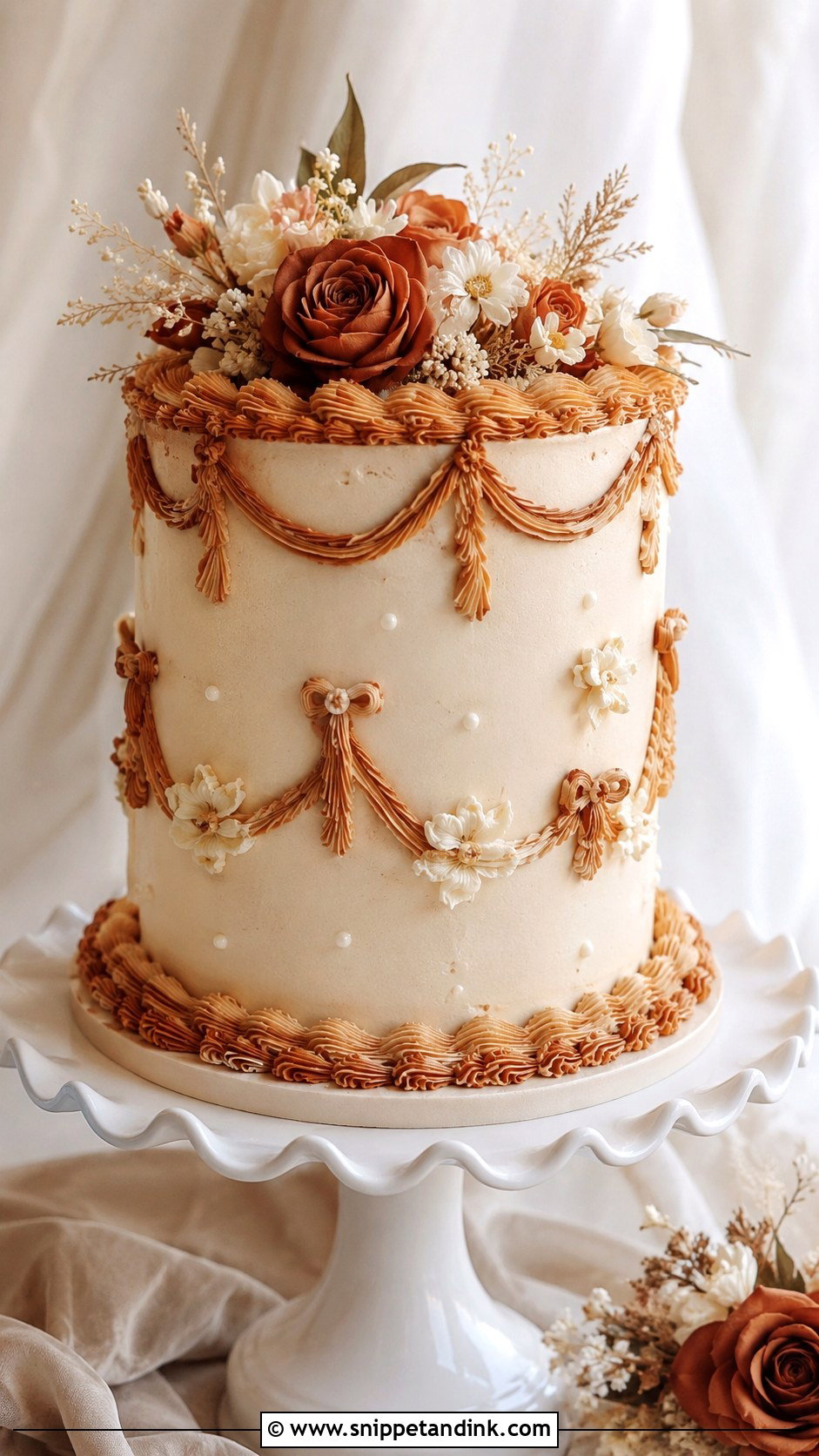
Vintage piping is back, and in autumn it works best in warm, quiet colours: cream, champagne, caramel borders, pearl details and piped swags, or ivory, blush, mocha and muted terracotta rather than retro brights. Almond, vanilla, brown butter or spice cake with smooth buttercream filling sits underneath, as a single tier or a tall two-tier. Layered over-piping uses a stiffer buttercream and a lot of hours, so I’d plan it as the cake’s main feature and keep everything else on the table simple.


20. Autumn Wedding Cake With Woodland Style
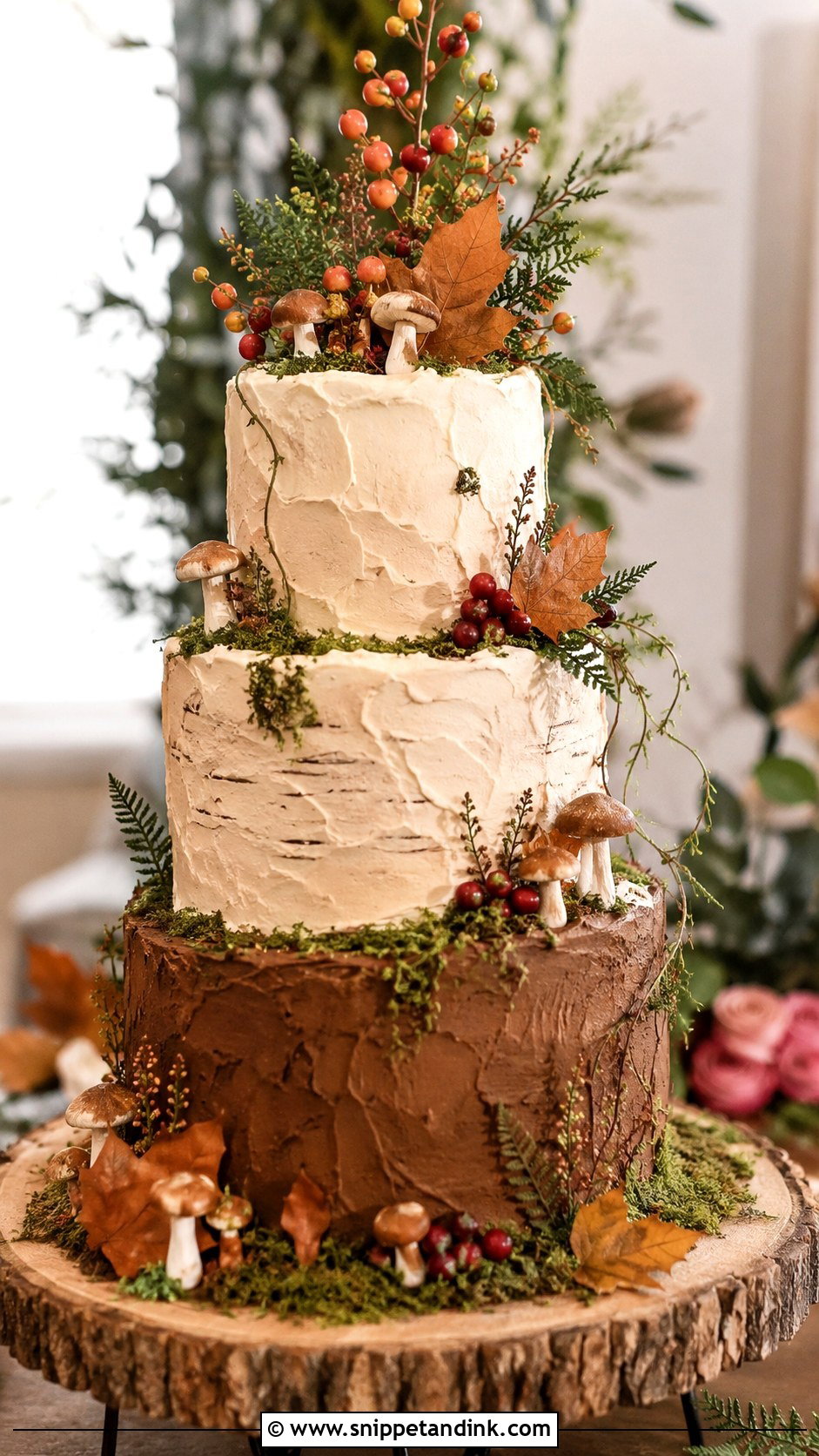
A woodland wedding cake echoes a fall forest with bark-textured buttercream, moss effects, sugar mushrooms, small leaves, berries and greenery, in ivory, brown, sage, rust and deep red. Chocolate, hazelnut, maple, spice or vanilla chai fit the look. Meringue mushrooms are a classic, but they soften in humid air, so on a damp day I switch to fondant or chocolate ones. Leave space between the details or the tiers look crowded. Mountain lodges and forest venues suit it naturally.
Cutting a Cake Covered in Fruit and Flowers
A decorated fall cake takes more work to serve than a plain one, and it helps to plan for it before the day.
- Tell the caterer which decorations are inedible. Flowers, wrapped stems, dowels and separator boards all have to come out before slicing.
- Ask how many portions the cake gives at the slice size your venue uses. Wedding slices are usually smaller than dessert-plate slices, so the numbers differ.
- Keep dark fruit away from white linen during cutting. Pomegranate and blackberry juice leaves marks that are hard to wash out.
- Make sure someone brings a long, sharp knife and a jug of hot water; a warm, wiped blade cuts clean slices through soft fillings.
Will the Top Tier Survive a Year in the Freezer?
Saving the top tier is a lovely tradition, but not every autumn cake freezes well. Buttercream-covered butter cake, spice cake and chocolate cake freeze fine when wrapped tightly. Fresh fruit, cream fillings and sugared decorations don’t; they weep or go soggy when thawed. I’d remove all fruit and flowers, chill the tier until firm, then wrap it in several layers and freeze it. Honestly, most cakes taste best within a few months, so many couples ask me to bake a small fresh replica for the anniversary instead.
Fig, Pear or Pomegranate? Let the Venue Decide
Autumn cakes are among the most fun to plan, because there’s so much colour, texture and flavour on offer. Naked layers and figs feel rustic; burgundy flowers feel romantic; dark green feels modern; gold leaf and pears feel elegant. I always come back to the room: how the cake will look on that table, in that light, and what the guests there will want to eat. Choose the frosting, filling and two or three finishing touches with that in mind, and the cake will feel like part of the day rather than an add-on.
You'll Like These Ideas:






Leave a Reply