
A bridal look is the dress plus everything that has to work with it for ten or twelve hours: the shoes that set the hem, the veil that has to sit on your hair, the bouquet that sits against the bodice in every photo. The twenty outfits below run from big ballroom gowns to modern separates, beach dresses, modest silhouettes and a couple of reception changes. For each one I’ve noted the accessories I’d actually pair with it and the practical catch I’d warn a bride about at her first appointment, because that catch is usually what decides whether a look works on the day.
The Order I Build a Bridal Outfit In, and Why Shoes Come Early
Most brides buy the gown, then hunt for shoes, then think about a veil a few weeks out. That order causes most of the last-minute problems I see. The hem of a floor-length dress is cut to a specific heel height, so if you change shoes after the final fitting the skirt either drags or shows your ankles. The veil length depends on the train and the hairstyle depends on where the veil sits.
This is the sequence I work through with a bride:
- Gown or main outfit, ordered with enough lead time. Many made-to-order bridal gowns take several months to arrive, so order roughly eight to ten months out if you can.
- Shoes, bought before the first alteration appointment and worn to every fitting.
- Undergarments: the bra, shapewear or slip you’ll actually wear, also brought to fittings.
- Veil or headpiece, chosen against the finished length and train.
- Hair and makeup trial, ideally wearing the veil or a similar weight piece.
- Jewellery and bouquet last, once the neckline and colour of white are fixed.
Take the dress fabric swatch, or a photo in daylight, to the florist and jeweller. Ivory, diamond white and champagne look very different beside pure white flowers or silver metal, and a mismatch is easy to miss in a shop and obvious in photos.
1. Classic Satin Ball Gown Bride Look
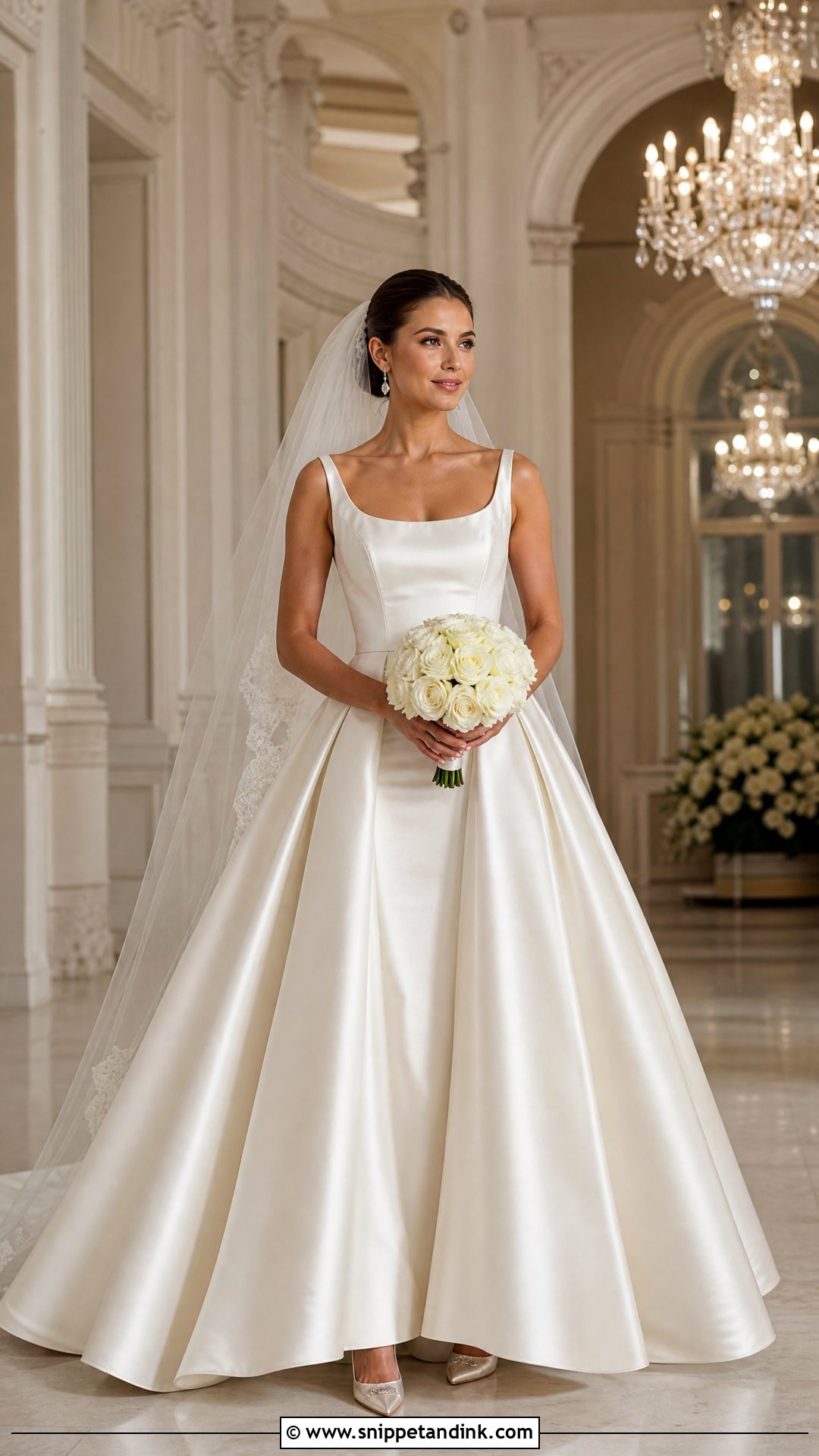
Satin is the least forgiving bridal fabric I fit, and that’s exactly why a satin ball gown looks so finished when it’s right. Every pull across the bodice shows as a shine line, so I want the corset boning sitting flat before anything else gets pinned. Keep the accessories plain: pearl drops, a cathedral veil with a cut edge, ivory pointed pumps. A low chignon leaves the shoulders clear. Choose one sparkle point only, a bracelet or a crystal pin, since satin already throws light. A small bouquet of white roses or calla lilies suits the scale better than a cascade that fights the skirt. Ballrooms and hotel ceremonies are its natural home.
2. Lace A-Line Wedding Dress Look
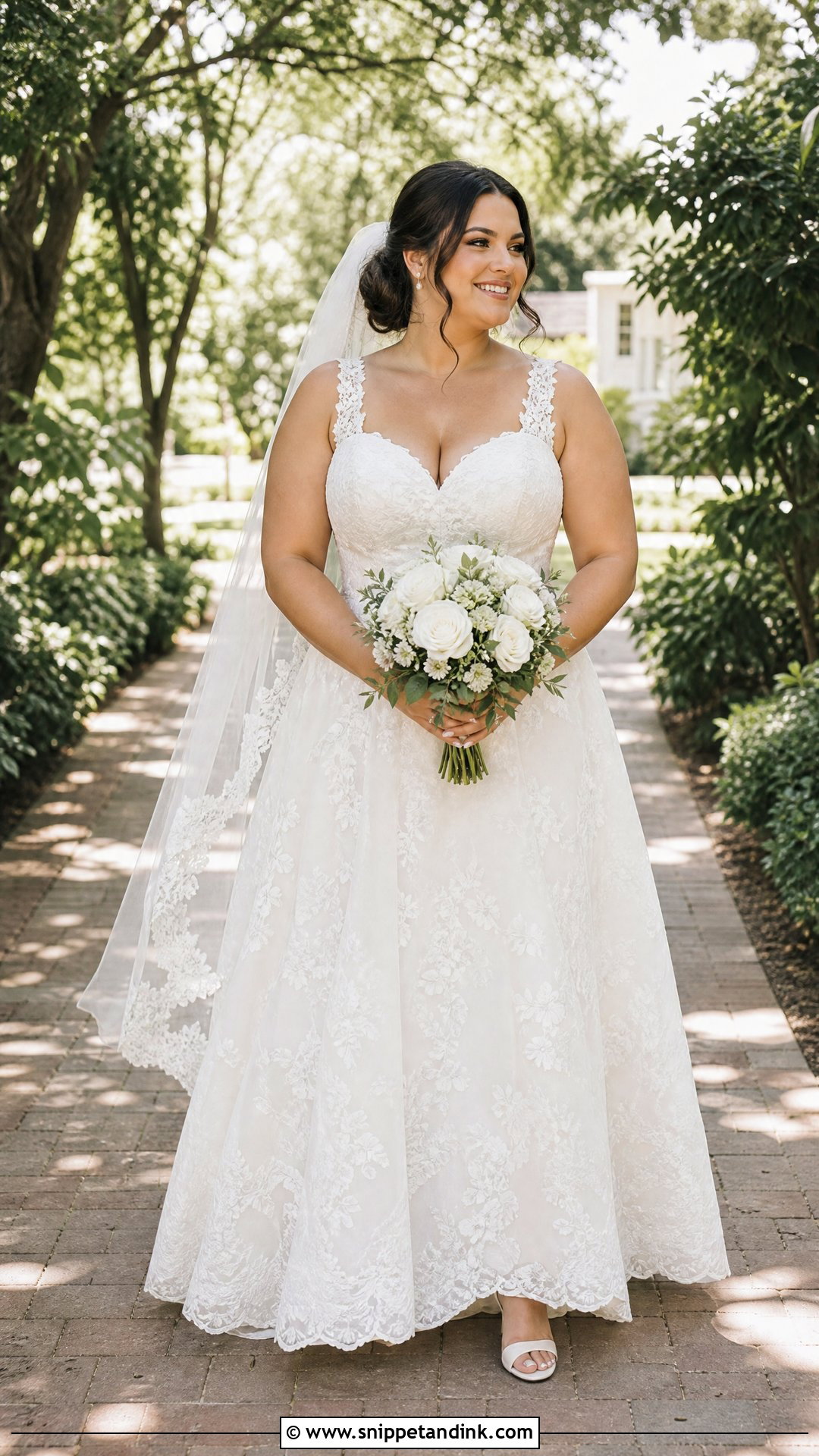
Lace on an A-line is the gown I see suit the widest range of bodies, because the skirt releases at the natural waist and doesn’t cling below it. The thing I check first is the weight: a heavily beaded lace can drag the bodice down by the end of the night, so lift the skirt in the fitting room and feel it. A lined sweetheart with lace straps gives coverage without bulk. Block-heel sandals, pearl studs and a fingertip veil edged to match are the pairing I’d reach for, with loose waves or a soft half-up. If the aisle is gravel or grass, ask for a shorter sweep train; long lace trains snag on anything rough.
3. Minimalist Satin Slip Dress Bride Look
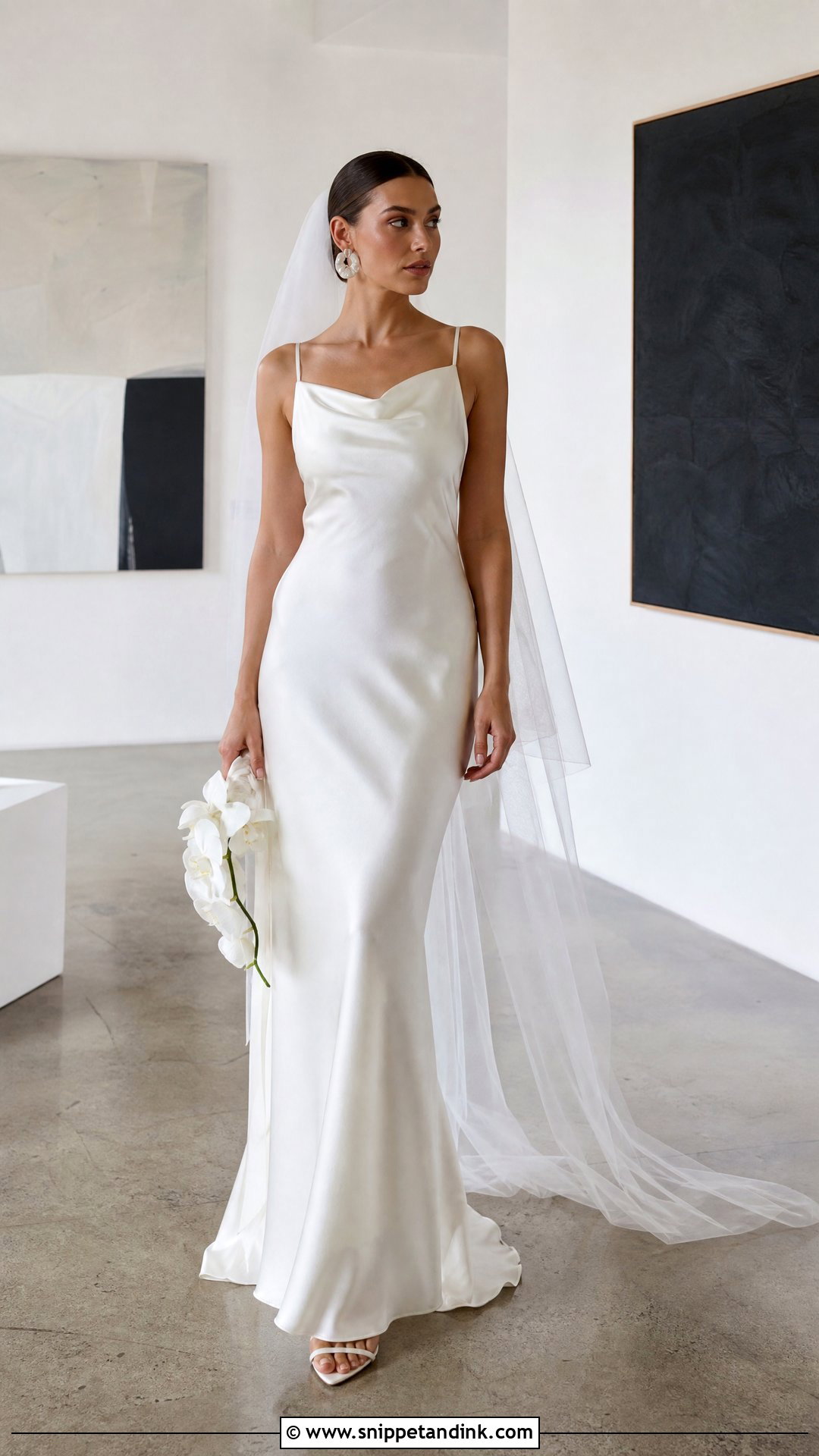
A bias-cut slip dress hides nothing, so this is the look where alterations decide everything. Bias satin grows on the hanger and drops unevenly at the hem, which is why I never let the final hem be marked until the dress has hung for a while and you’re standing in your actual shoes. Underwear lines and a slightly loose seam show immediately. Slim ivory sandals, sculptural earrings and a plain floor-length veil give it a little drama. Hair can go sleek or into a neat bun. A single stem or a small orchid arrangement keeps the line clean. It suits galleries, restaurants and destination ceremonies where you want to move freely.
4. Basque Waist Wedding Gown Look
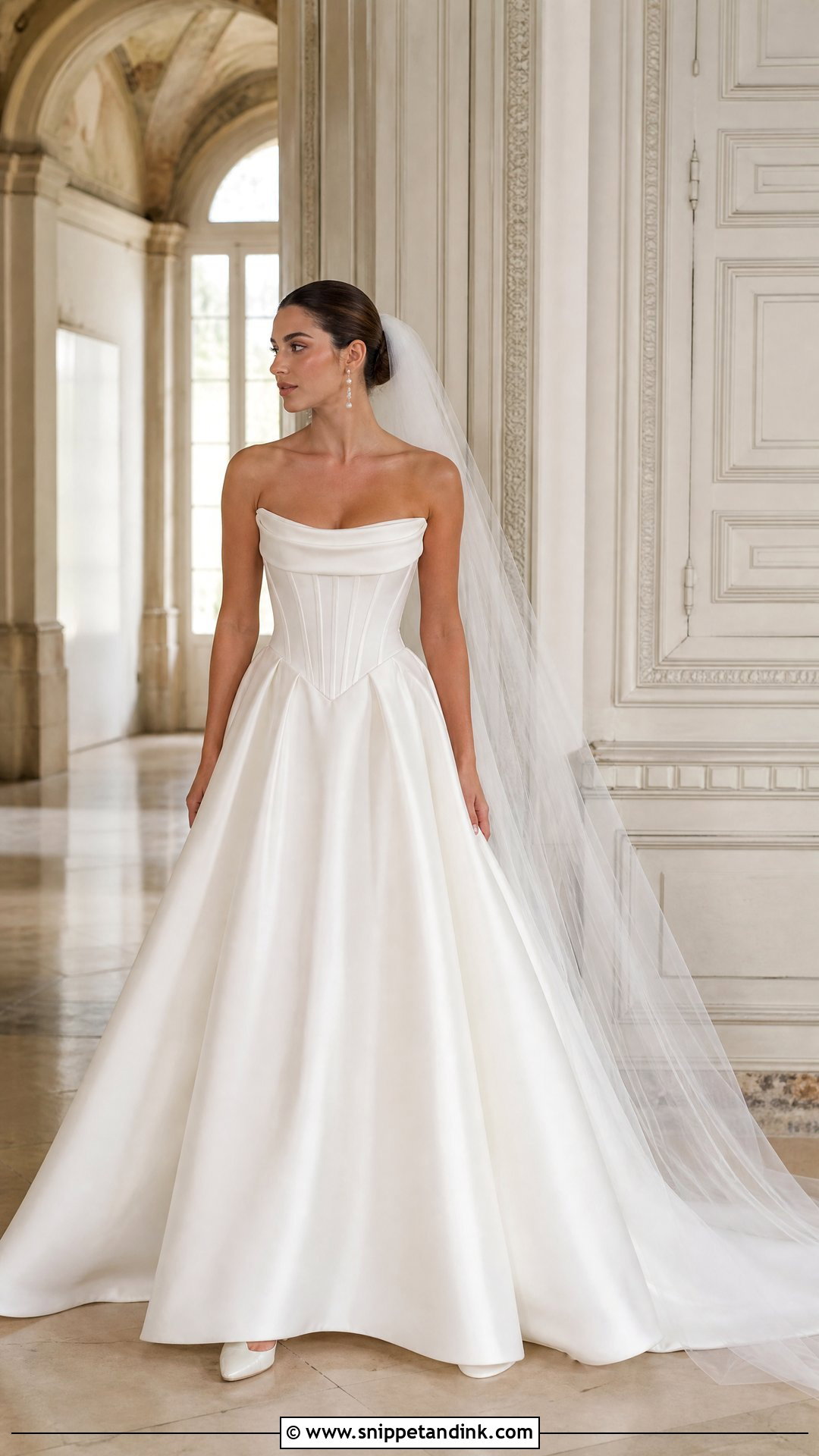
The dropped V of a basque waist sits below the natural waist and pulls the eye down the centre of the body, which lengthens a short torso nicely and can over-stretch a long one. I try it in the fitting room with a few heights of point before committing. Internal corsetry matters here; without it the point collapses when you sit. Pair the full tulle or satin skirt with drop earrings, a long plain veil and closed-toe heels that won’t show under the hem. Never belt it, since a belt cuts straight through the point. If you want detail, covered buttons or a fine necklace do the job without breaking the shape.
5. Off-Shoulder Wedding Dress Look
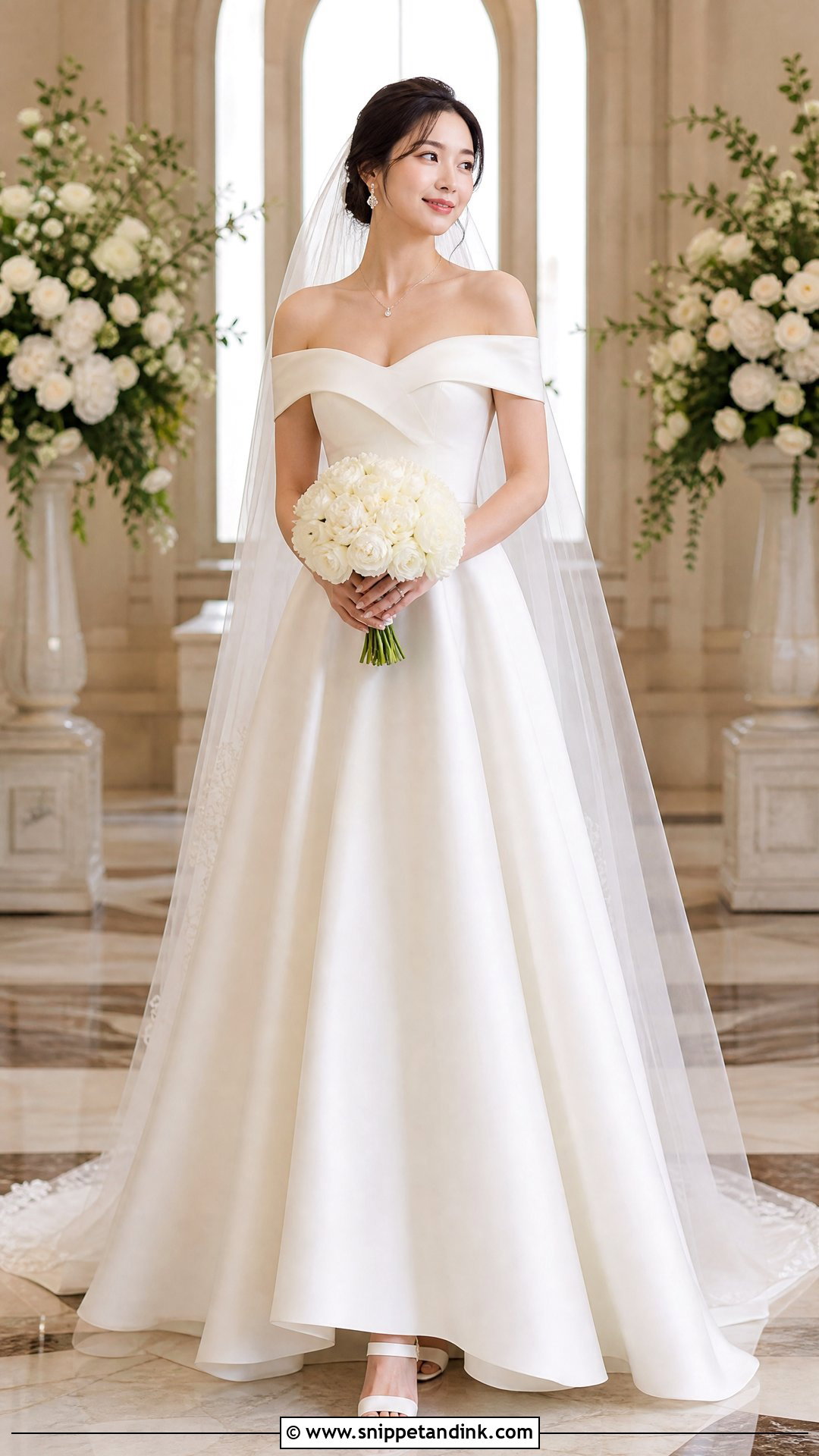
My worry with off-shoulder necklines is always the hug test. Ask the bride to raise both arms and wrap them around me in the fitting room, and you’ll see straight away if the band rides up or the bodice gapes. A good one has silicone gripper tape and enough structure that it doesn’t depend on the sleeves for support. With a fitted bodice and an A-line or soft flare, add a fine pendant, small crystal earrings and a sheer chapel veil set under a low bun. Pointed pumps indoors, block heels outside. Rounded flowers echo the neckline. Detachable off-shoulder straps give you more arm freedom once the dancing starts.
6. Long Sleeve Lace Bride Look
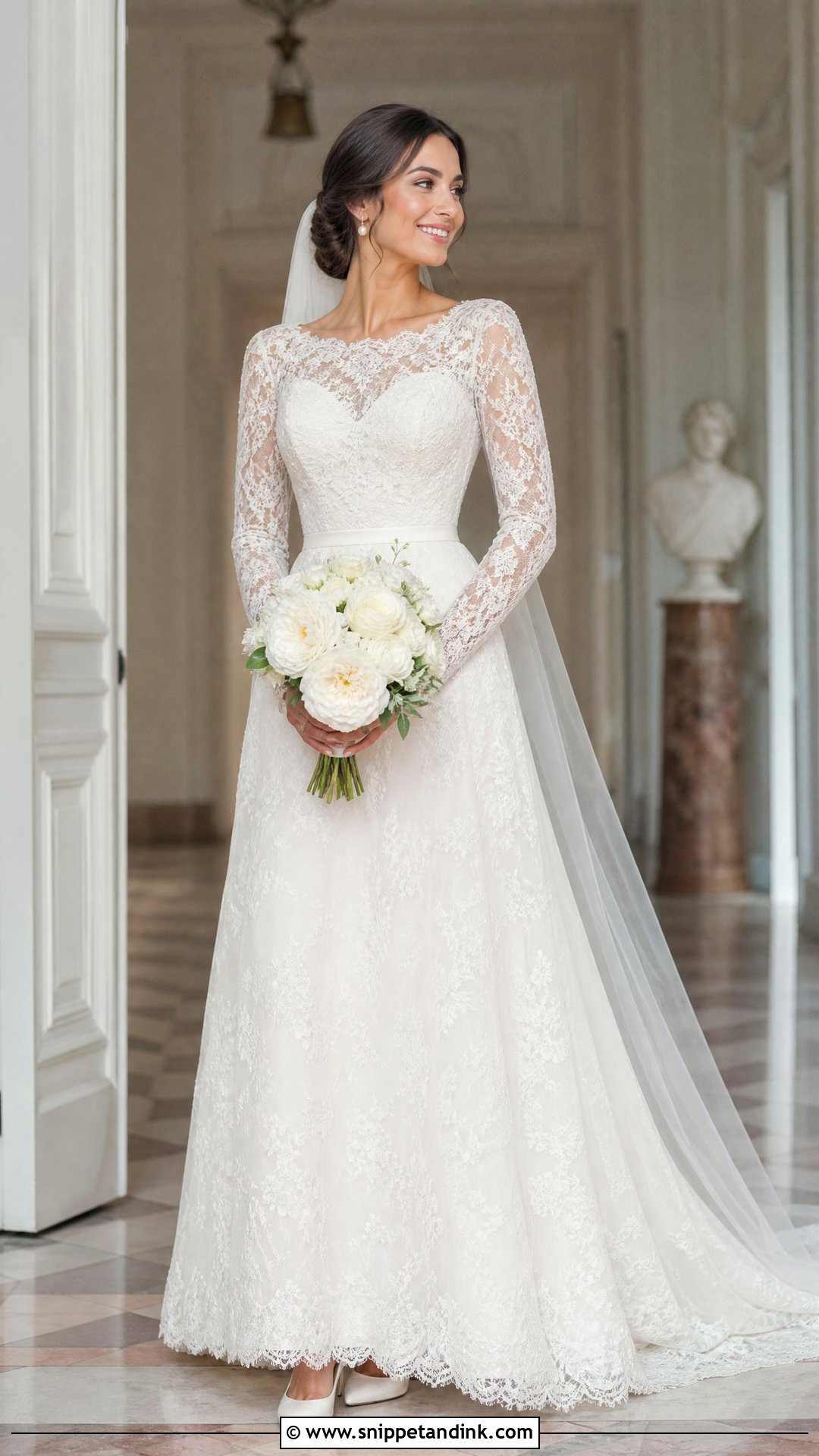
Long lace sleeves are lovely until the elbow seam starts to rub, which is why I have brides bend and lift their arms repeatedly before we sign off the fit. Ask for lightweight lace and a sleeve cut with a little ease at the bicep; a sleeve fitted like a second skin will restrict hugging and the first dance. A fitted bodice over a soft skirt keeps the coverage from feeling heavy. Pearl earrings, ivory pumps and a sheer veil with no thick border let the lace pattern carry the look, and a low twisted bun shows the back. For cooler days, a lined cape covers the trip between venues.
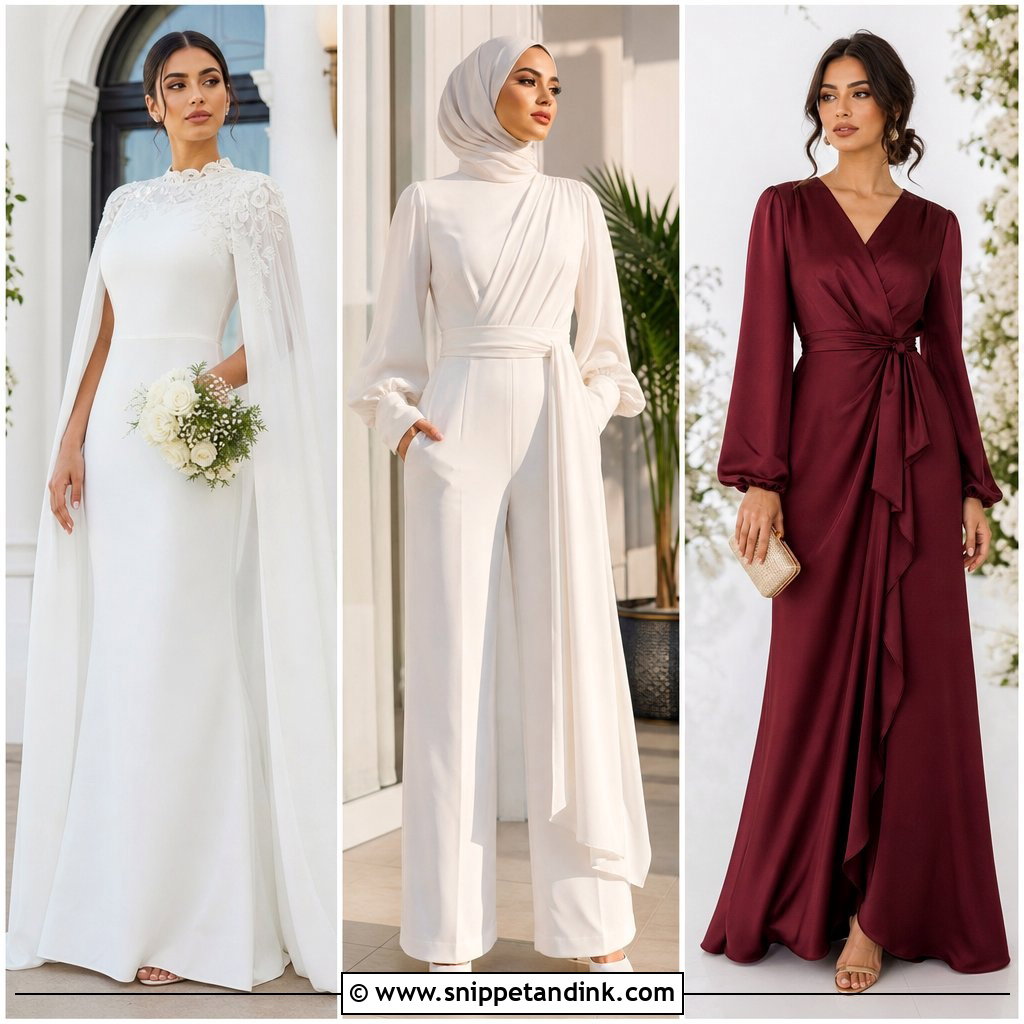
7. High Neck Wedding Dress Bride Look
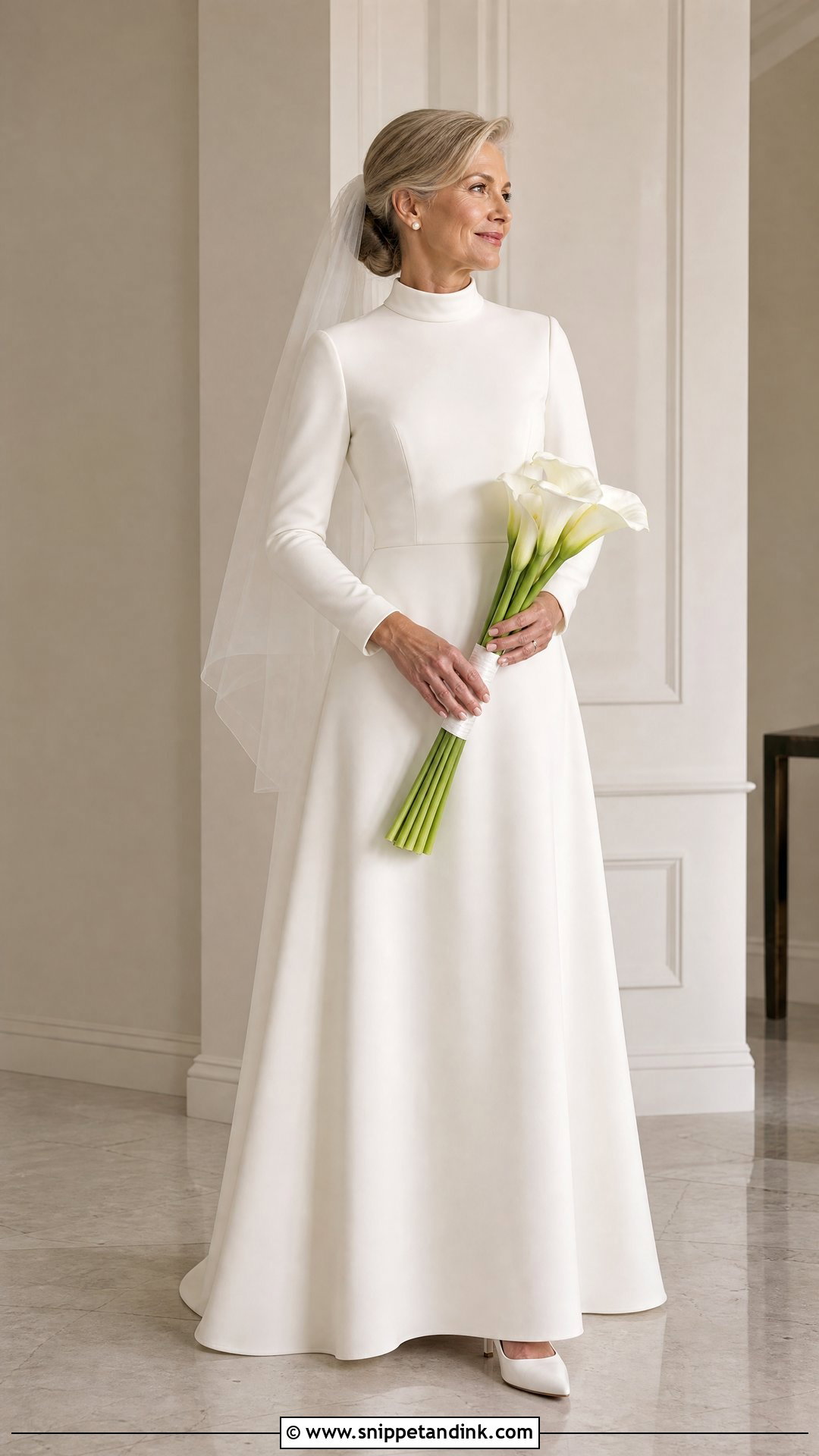
With a high neck, the collar line has to sit exactly at the base of the throat. A few millimetres too high and it chokes; too loose and it folds over itself when you look down. I fit this one standing and then seated. Crepe, chiffon or soft lace keeps it from looking stiff. A column skirt reads modern, an A-line more traditional. Skip the necklace altogether and go with studs, slim drops or a comb. An updo stops loose hair catching in the collar fastenings. Closed pumps, a veil set under the hairstyle and long-stemmed calla lilies follow the vertical line.
8. Strapless Column Wedding Gown Look
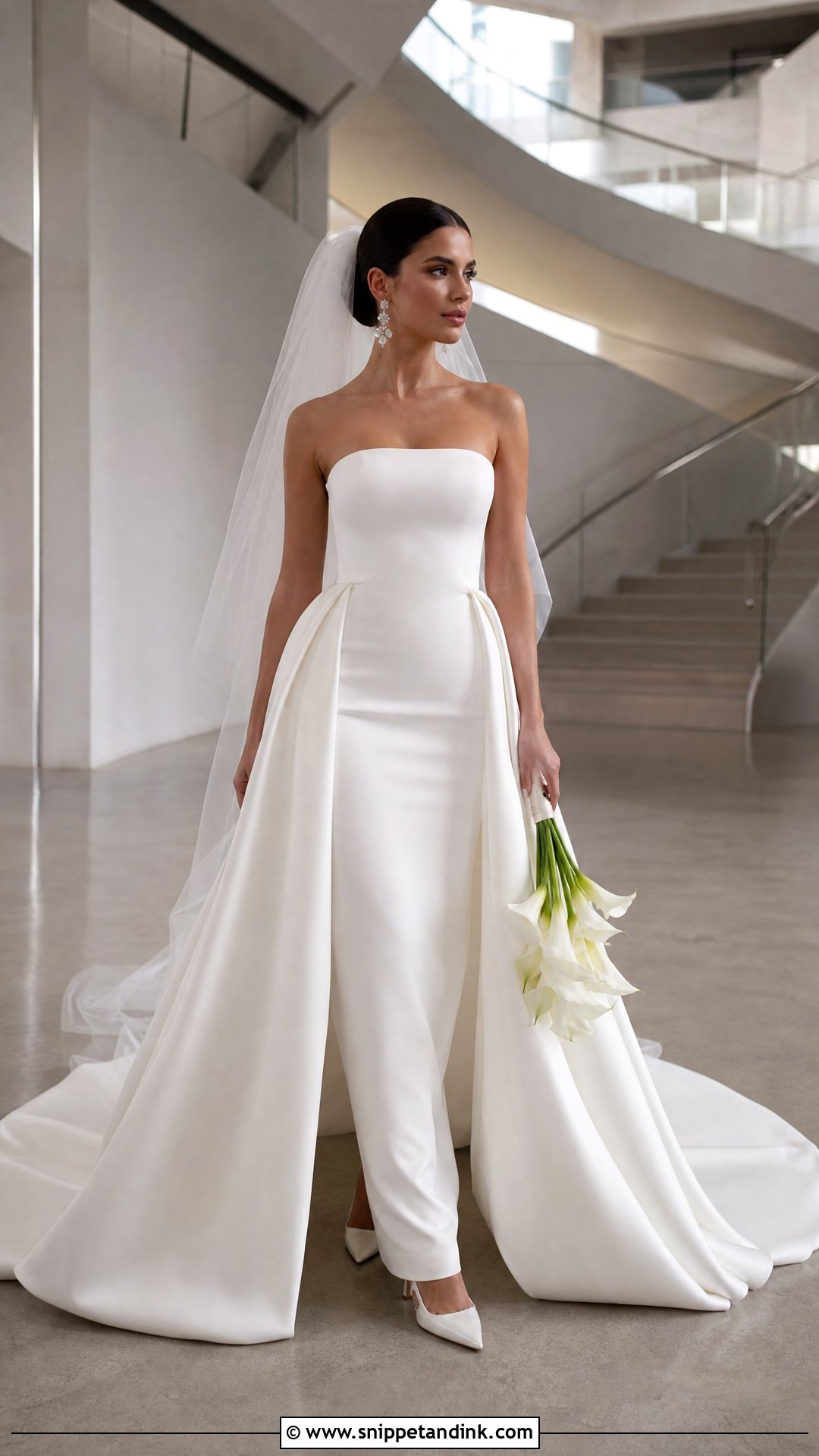
Strapless column gowns photograph clean but punish poor support. The bodice should hold itself up through boning and a waist stay, not through tightness at the top edge, so I check that the bride can breathe out fully and nothing pinches under the arms. The skirt needs enough room to climb a step without hitching. A detachable overskirt adds ceremony volume and comes off for dinner. Finish with a structured veil, statement earrings and pointed slingbacks. Keep the bouquet narrow so the column line isn’t hidden, and choose smooth waves for softness or a sleek bun for something sharper.
9. Bridal Pantsuit With Veil Look
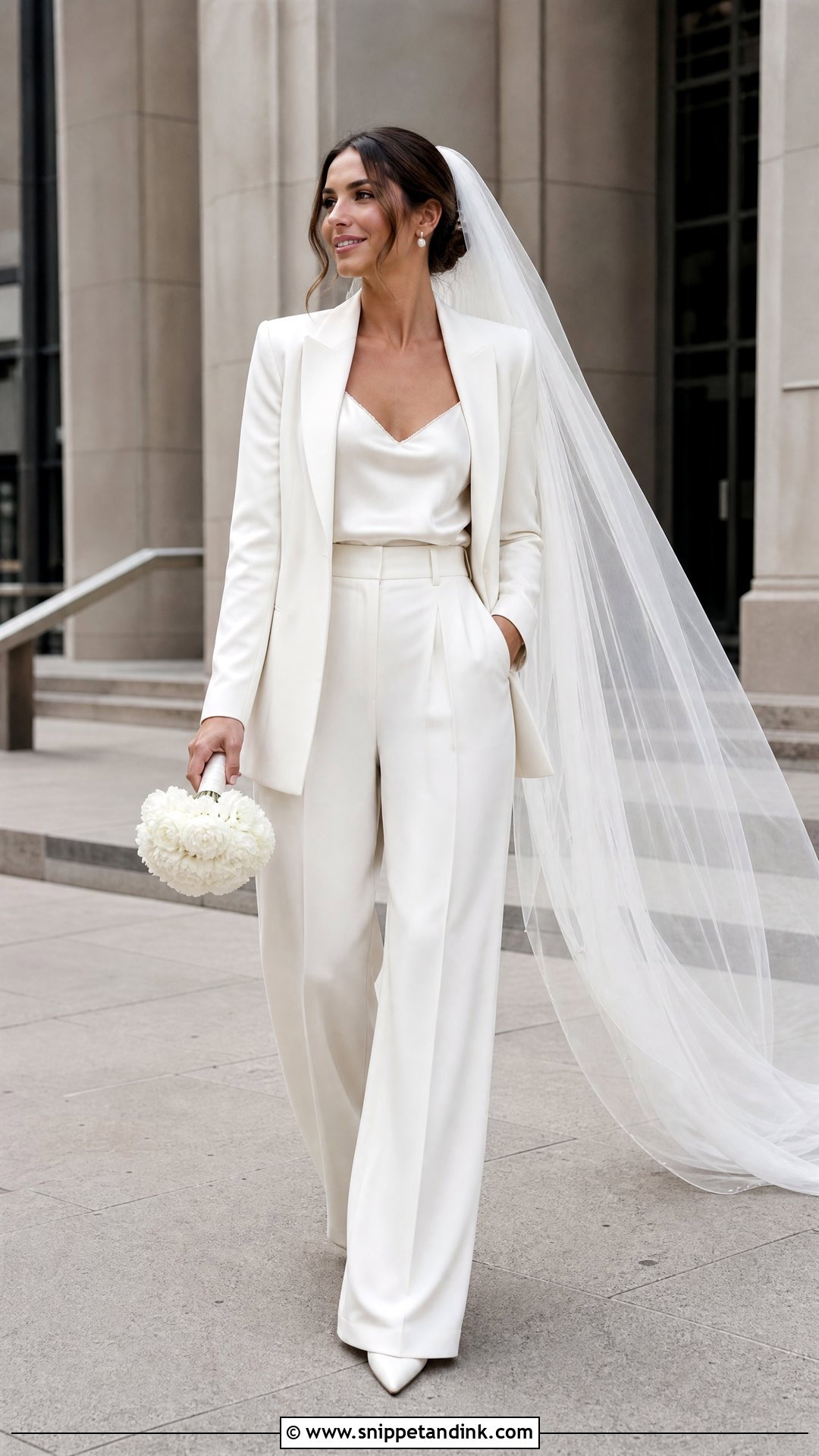
A tailored bridal pantsuit lives or dies at the shoulder seam. If the jacket shoulder doesn’t end at your own shoulder bone, no amount of tailoring later will make it right, so that’s the first thing I check on the rack. High-waisted trousers with a fluid leg hang best; hem them for the exact heel you’ll wear, with a slight break over the shoe. Under the blazer, a silk camisole or soft corset top in the same white tone. Pointed pumps, pearl earrings and a long veil make it unmistakably bridal, and the veil can come off for the reception. A sleek ponytail or low bun keeps the tailoring sharp.
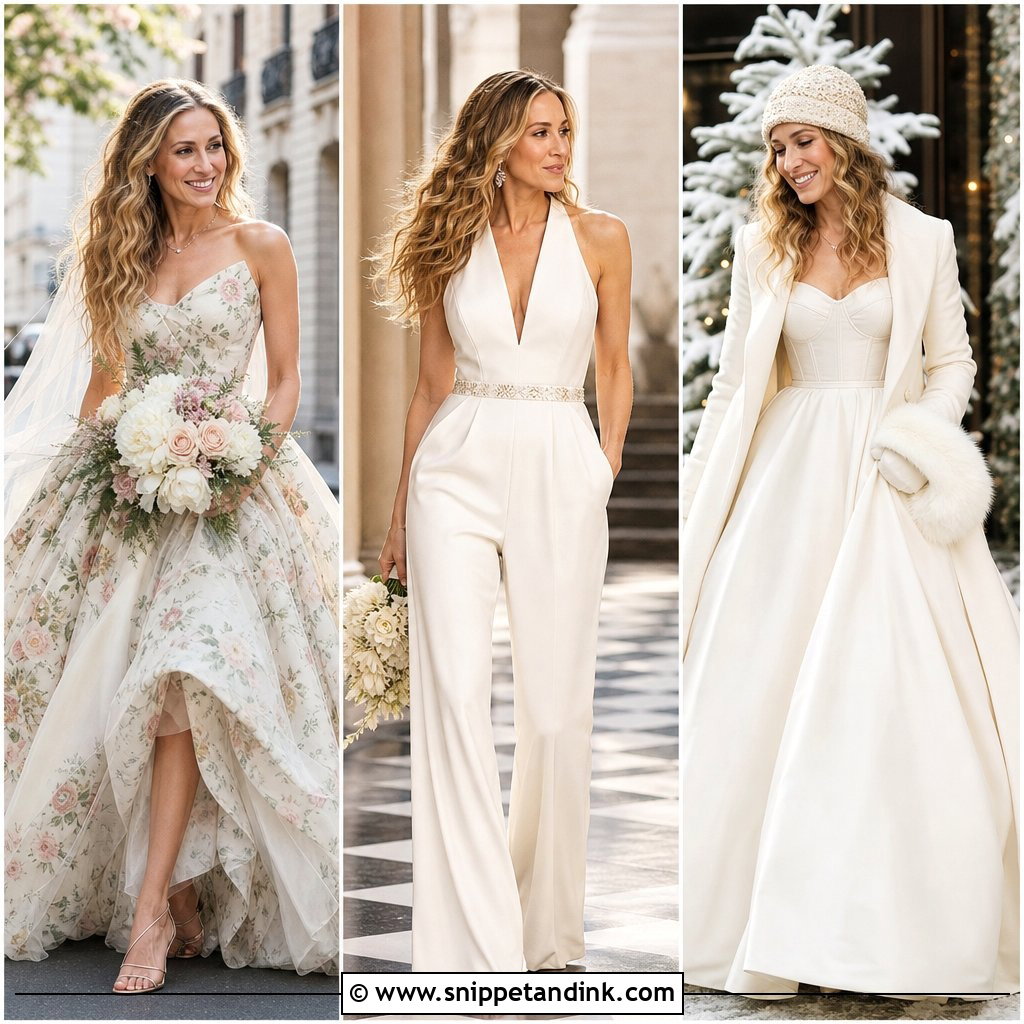
10. White Bridal Jumpsuit Look
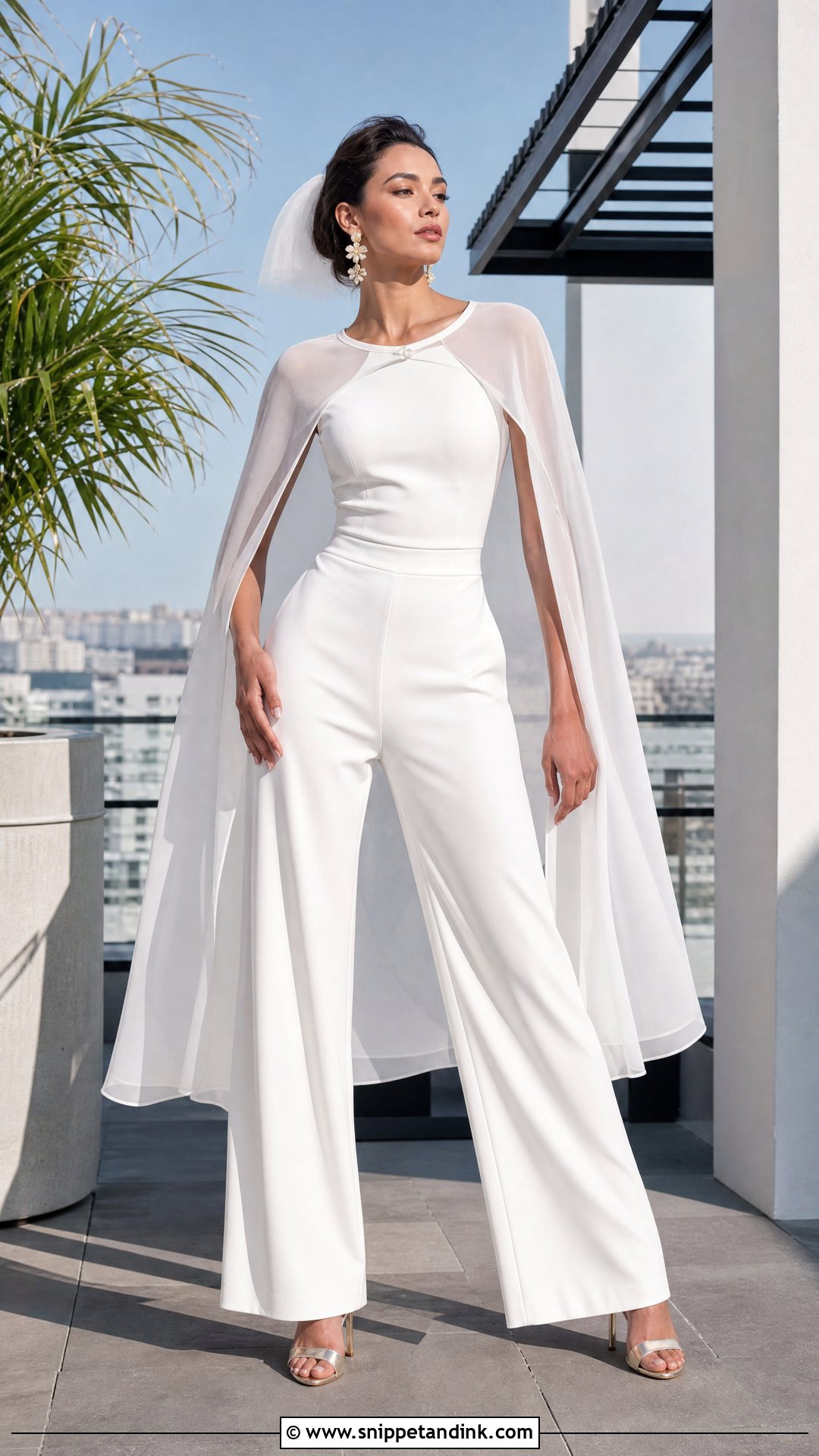
The test I give every bride considering a white jumpsuit is the bathroom test: try it on, then think through getting it off in a small stall wearing a veil. If the zip is at the back, you’ll need help each time. That’s not a deal-breaker, but plan for it. Beyond that, look for a defined waist, a torso length that doesn’t pull when you sit, and legs that fall cleanly over the shoe. Crepe stays smooth, satin adds evening shine. Pair with metallic heels, a short veil and bold earrings; a removable cape or sheer overskirt adds ceremony drama without a second outfit.
11. Tea Length Wedding Dress Bride Look
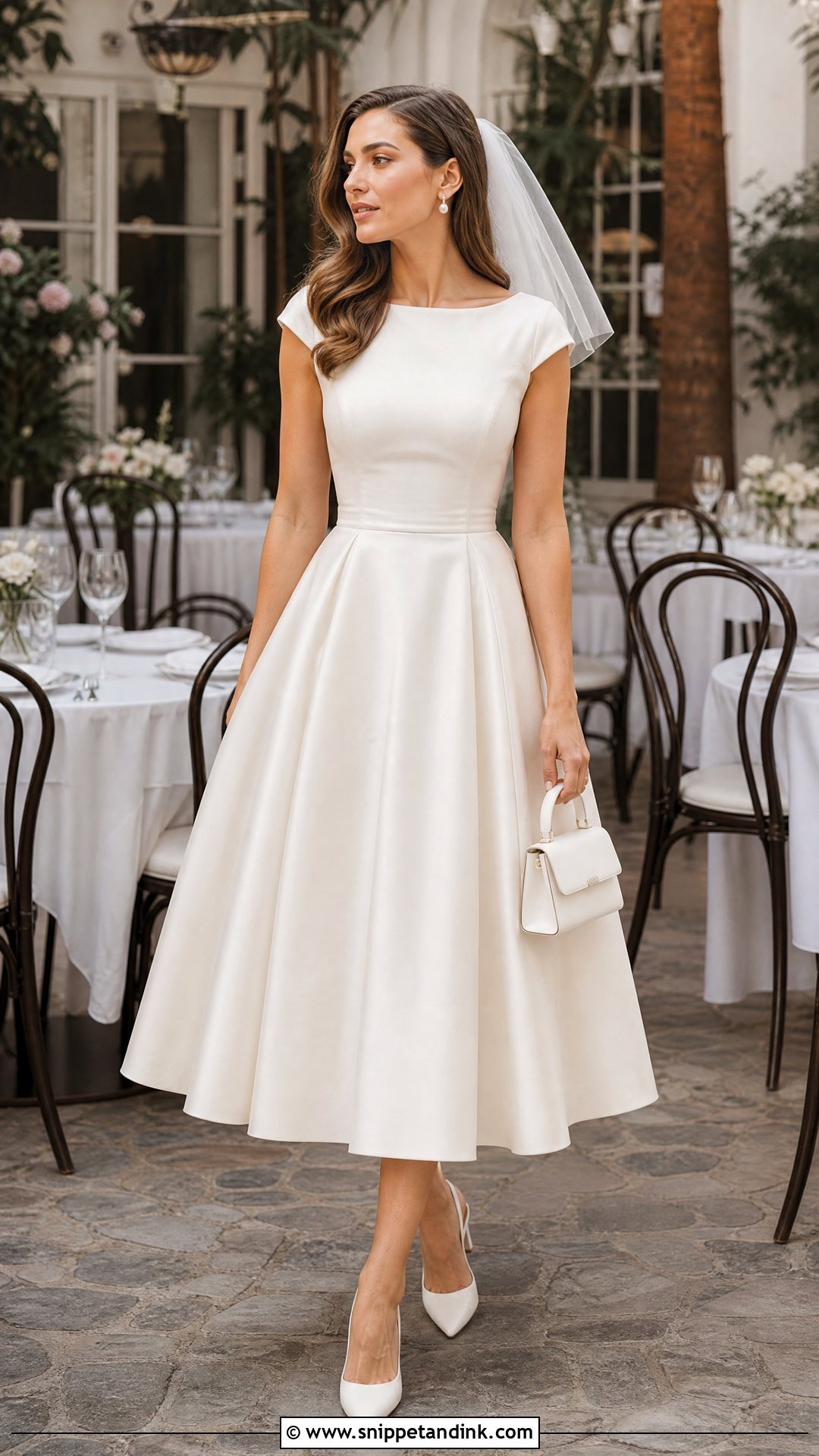
Tea length puts the shoes on show, so I’d plan the pair before the dress is hemmed, not after. The skirt should end somewhere between mid-calf and ankle, and that exact point depends on the shoe strap, since an ankle strap cutting across the leg just under a hemline can shorten you. pointed pumps, slingbacks, or embellished flats all suit the proportion. A long cathedral veil looks wrong here; go for a birdcage, a short tulle veil or a bow headband. Pearl earrings and a small structured bag finish it. Soft waves or a neat set updo nod to the mid-century look without tipping into costume.
12. Bridal Mini Dress Reception Look
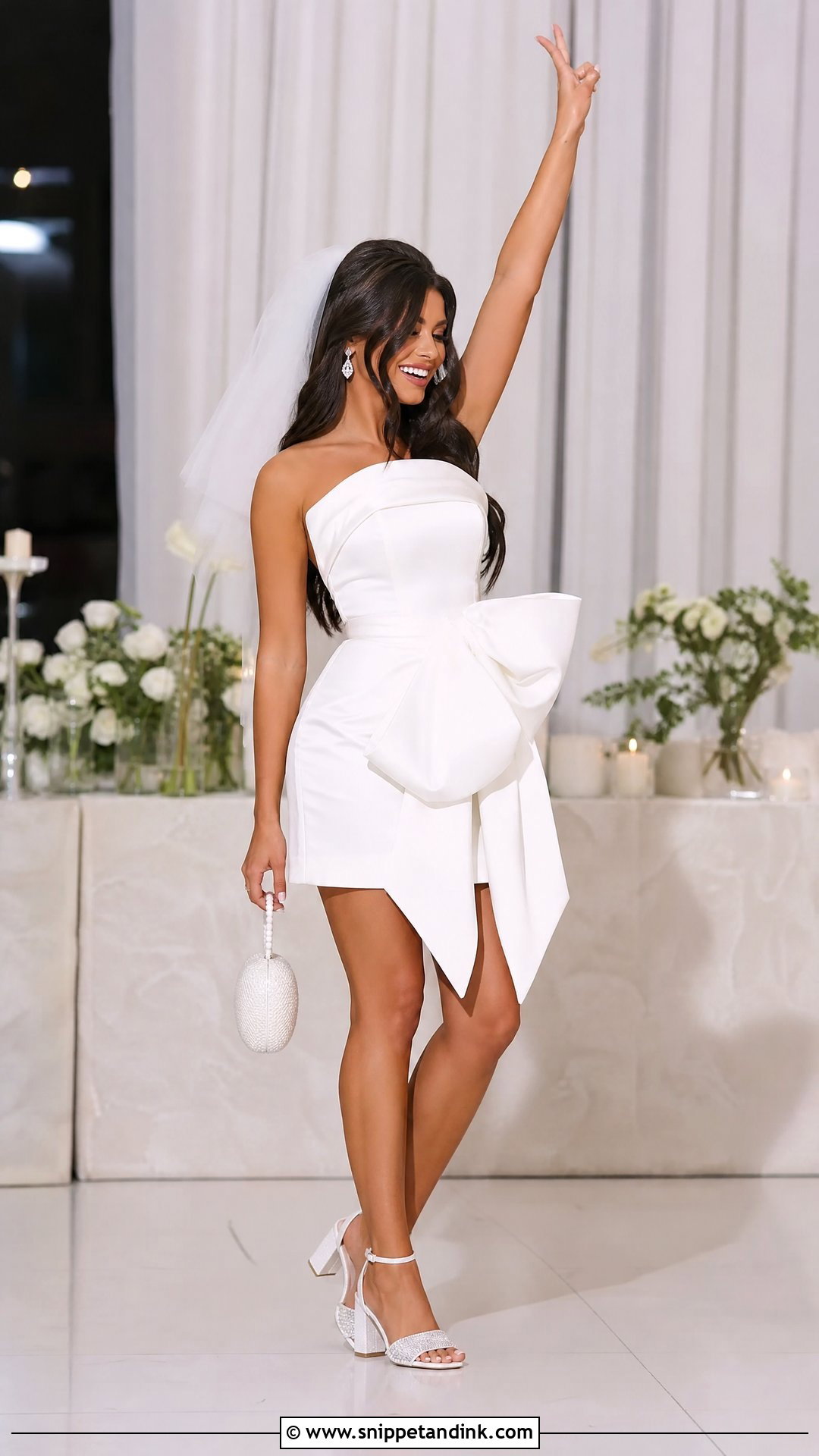
I mostly fit bridal mini dresses as a second look, and the fitting is all about sitting down. A hemline that’s fine standing can ride up several inches on a low banquette, so we test it on a chair before deciding the length. Lining should be smooth and the neckline secure enough for dancing. A bow, feather trim, pearls or a dramatic sleeve gives a short dress enough presence. Block heels or flats suit a long dance floor; a short veil, headband or crystal clip replaces the long veil. It works best as a reception or exit ensemble, though a small civil ceremony can carry it too.
13. Boho Lace Wedding Dress Look
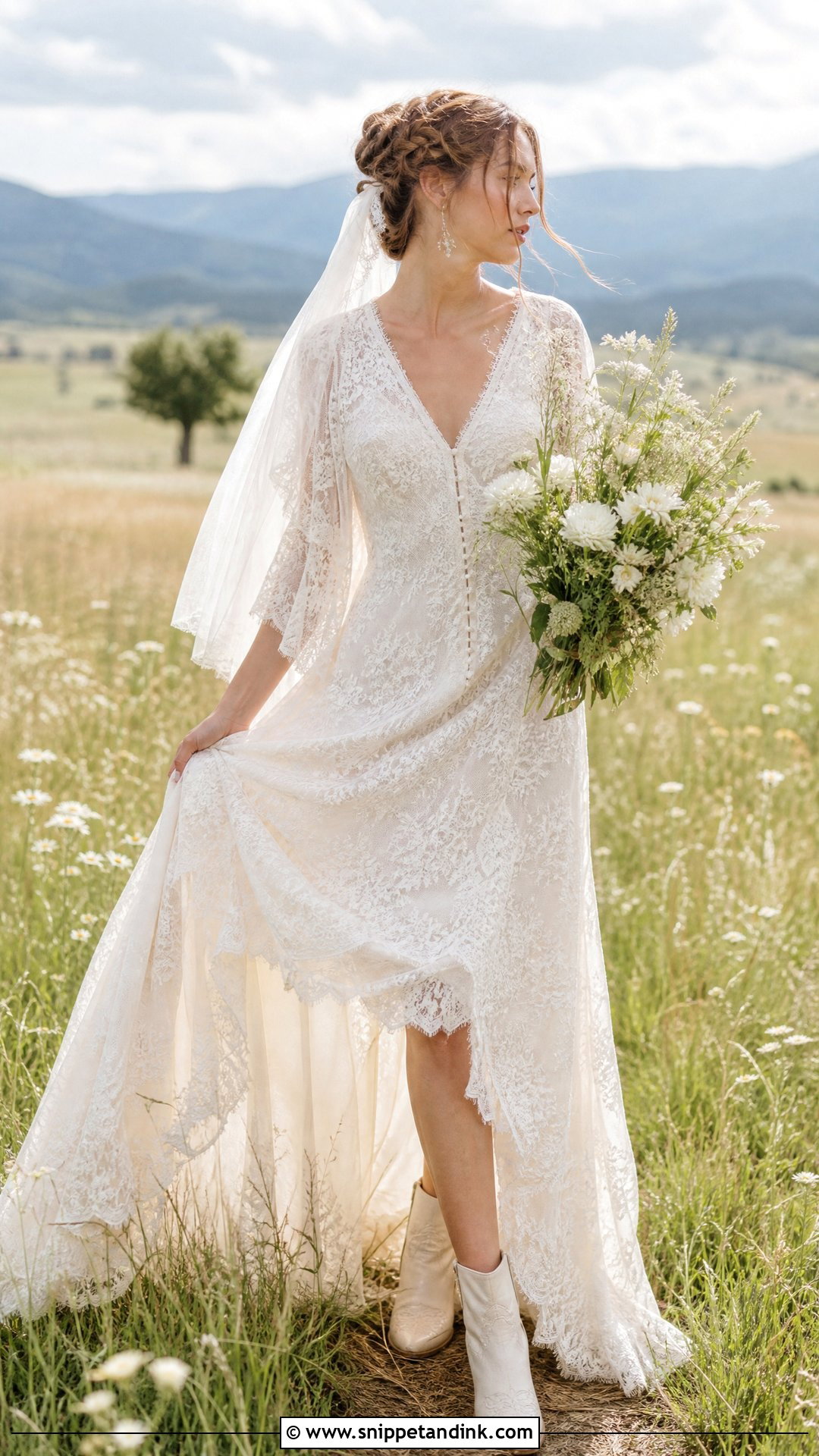
Boho looks get messy fast, so I edit them hard. One main texture should lead: if the lace is busy, keep the sleeves plain, and the reverse. Avoid stacking fringe, crochet, and floral details on the same outfit or nothing reads clearly in photographs. A flowing lace gown with an open back or soft sleeve is the base. Ankle boots or low block heels handle grass and uneven ground. A loose braided updo holds better outdoors than fully loose hair, and a light veil won’t drag. Keep the bouquet’s grasses and greenery controlled rather than wild.
14. Beach Wedding Bride Look
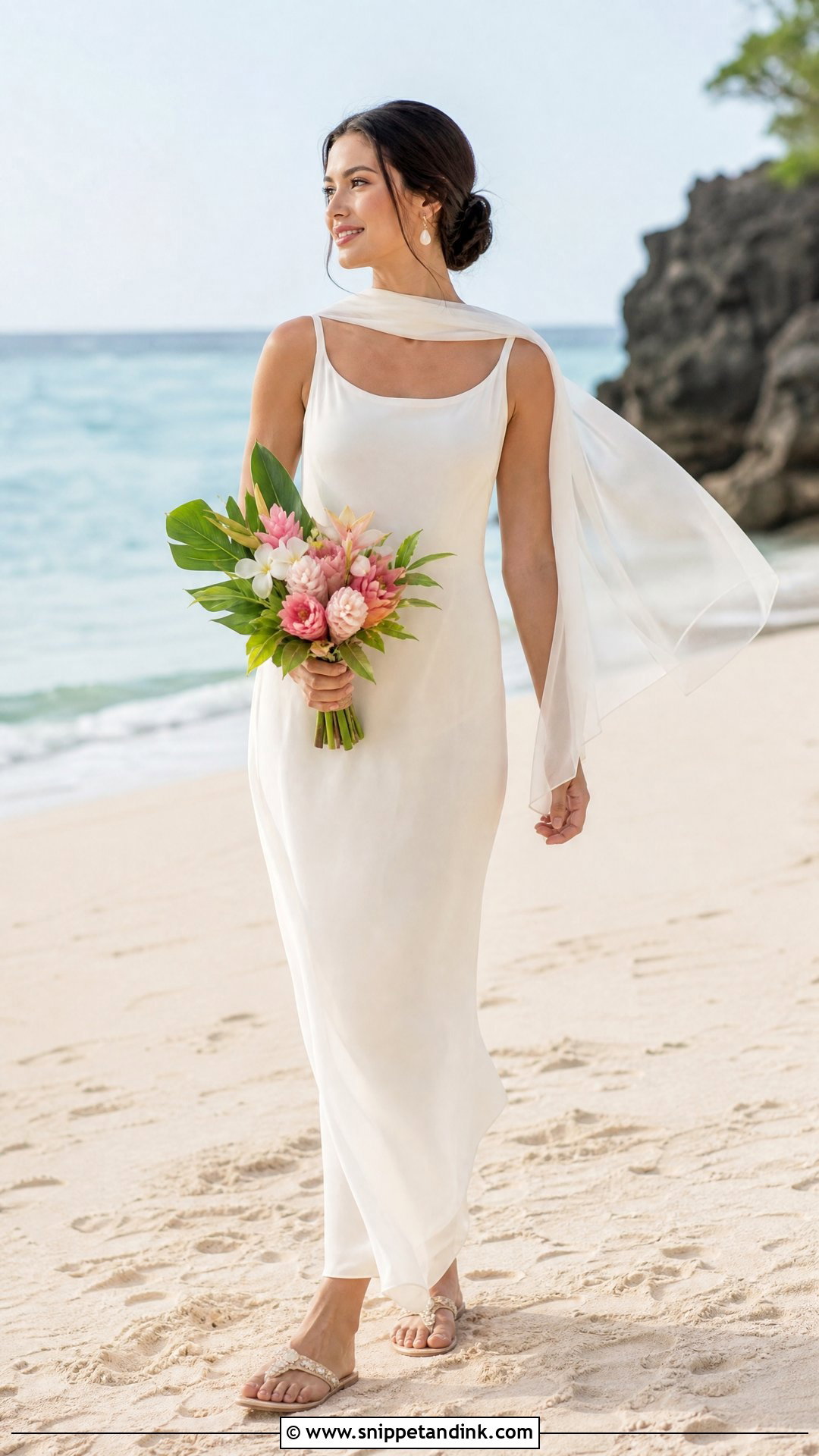
Wind is the problem at the beach, more than sand. A full tulle veil will wrap around your face in a sea breeze, so I usually suggest a short veil, a soft cape or no veil at all. Chiffon, crepe and silk in a simple A-line or column move well and dry quickly if they catch spray. Skip the long train; it drags wet sand behind you all evening. Flat embellished sandals or barefoot jewellery are practical. Hair needs real anchoring: a low bun, braid or pinned half-up survives better than loose curls, which drop in salt air. A compact white and green bouquet won’t fight the breeze.
15. Garden Wedding Bride Look
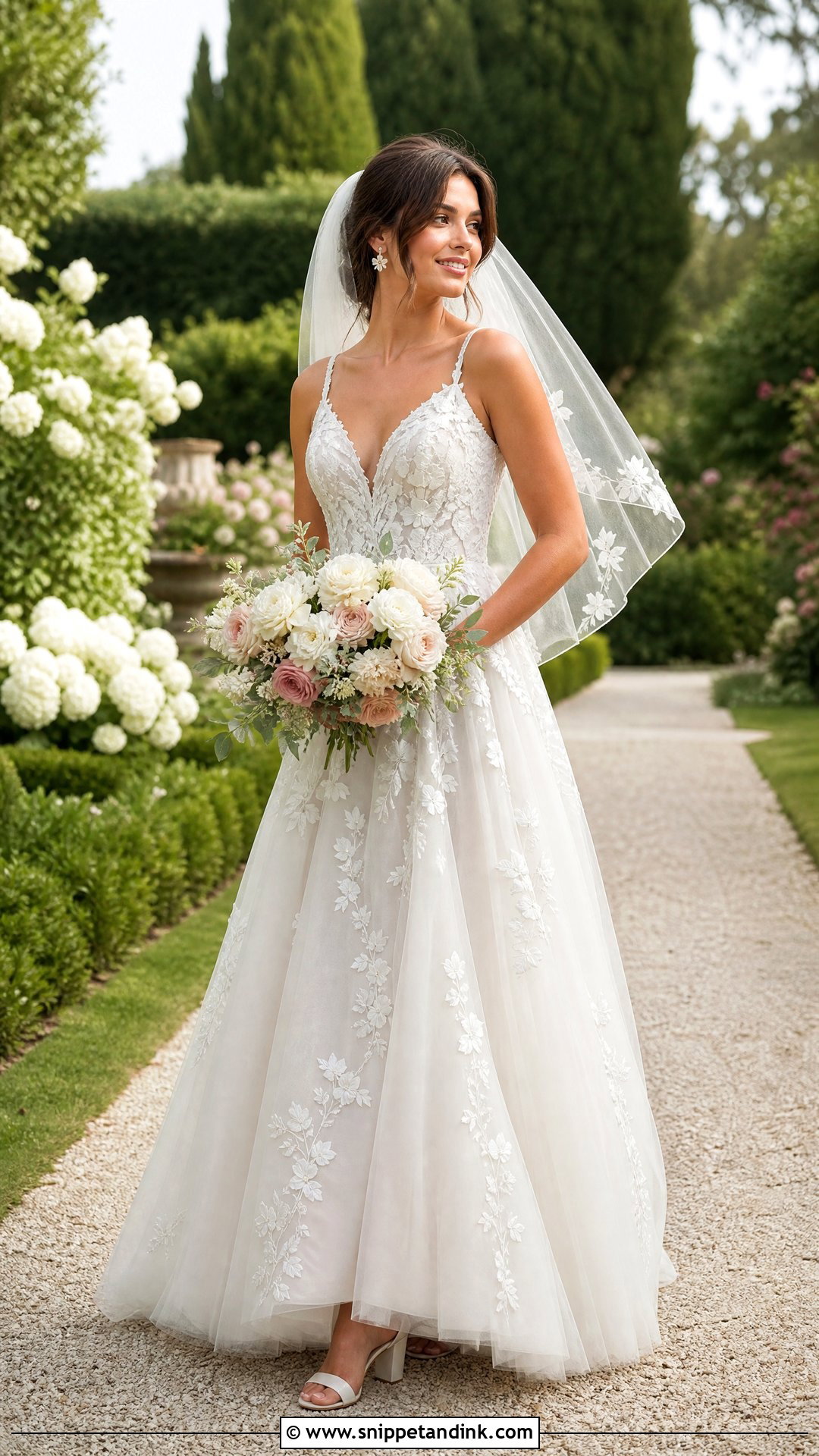
Garden ceremonies are hard on hems. Grass stains and soil marks show worst on matte ivory, so I steer brides towards a skirt length that clears the ground slightly in their shoes, or a train they’ll bustle right after the vows. Botanical lace, embroidered flowers or raised appliqué suit the setting; keep the lining plain so the surface detail leads. Block heels keep you from sinking into the lawn, and a fingertip veil won’t catch on hedges. Small floral earrings, a loose updo and a bouquet that picks up a few venue colours rather than all of them finish it. A tulle wrap covers your shoulders once the evening cools.
16. Courthouse Wedding Bride Look
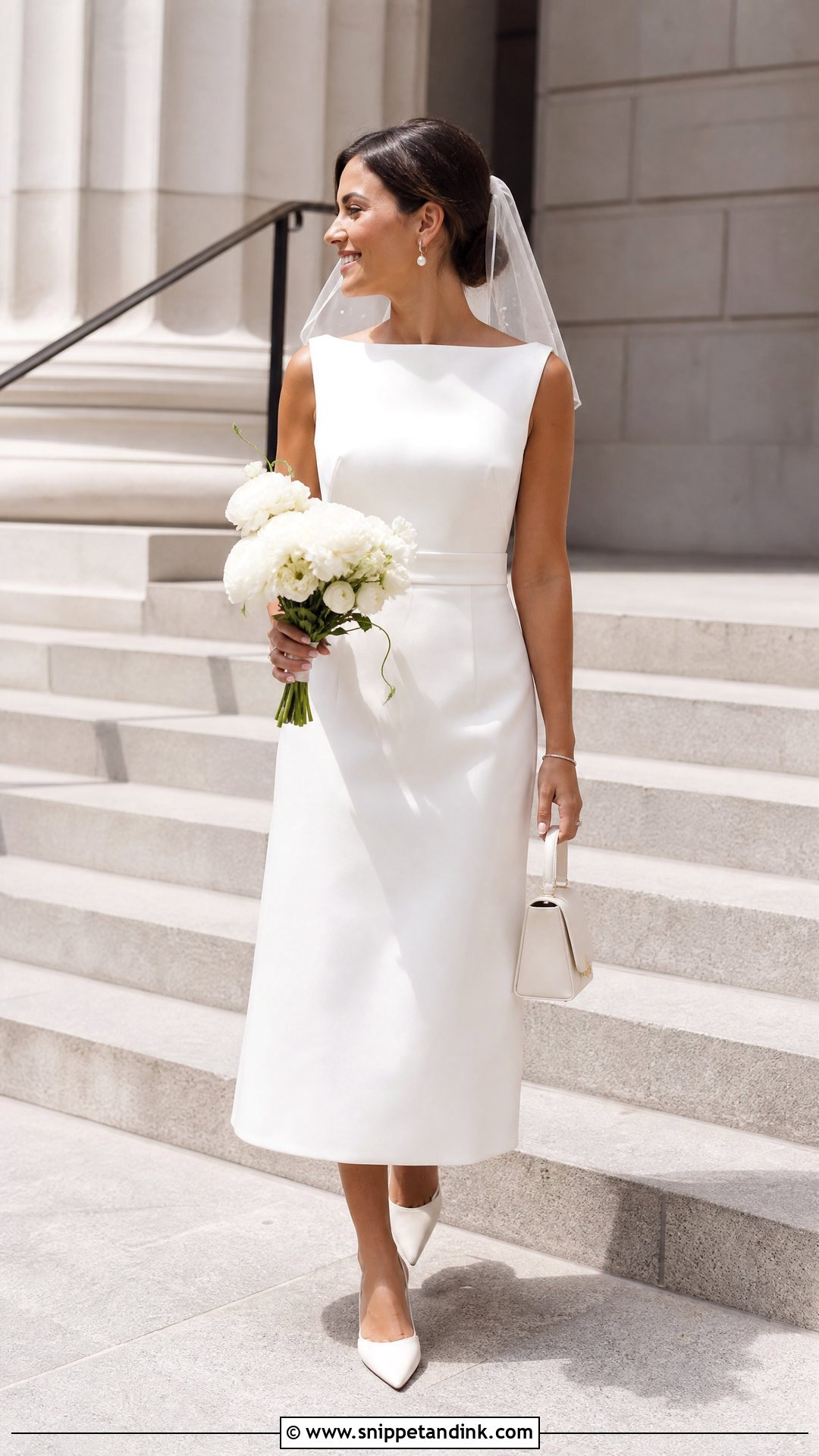
For courthouse weddings I dress brides for the whole day, not just ten minutes in front of an officiant, since you’ll walk, wait in a corridor, sign papers and probably go for lunch after. A white midi with a tailored waist and clean neckline does all of that. Slingback pumps, pearl earrings and a small top-handle bag keep it polished. A short veil or padded headband marks you as the bride without feeling overdressed in an office. A cream suit over a silk shell is just as appropriate. Keep the bouquet small enough to hold while signing, and bring a coat if it’s cold.
17. Winter Wedding Bride With Cape Look
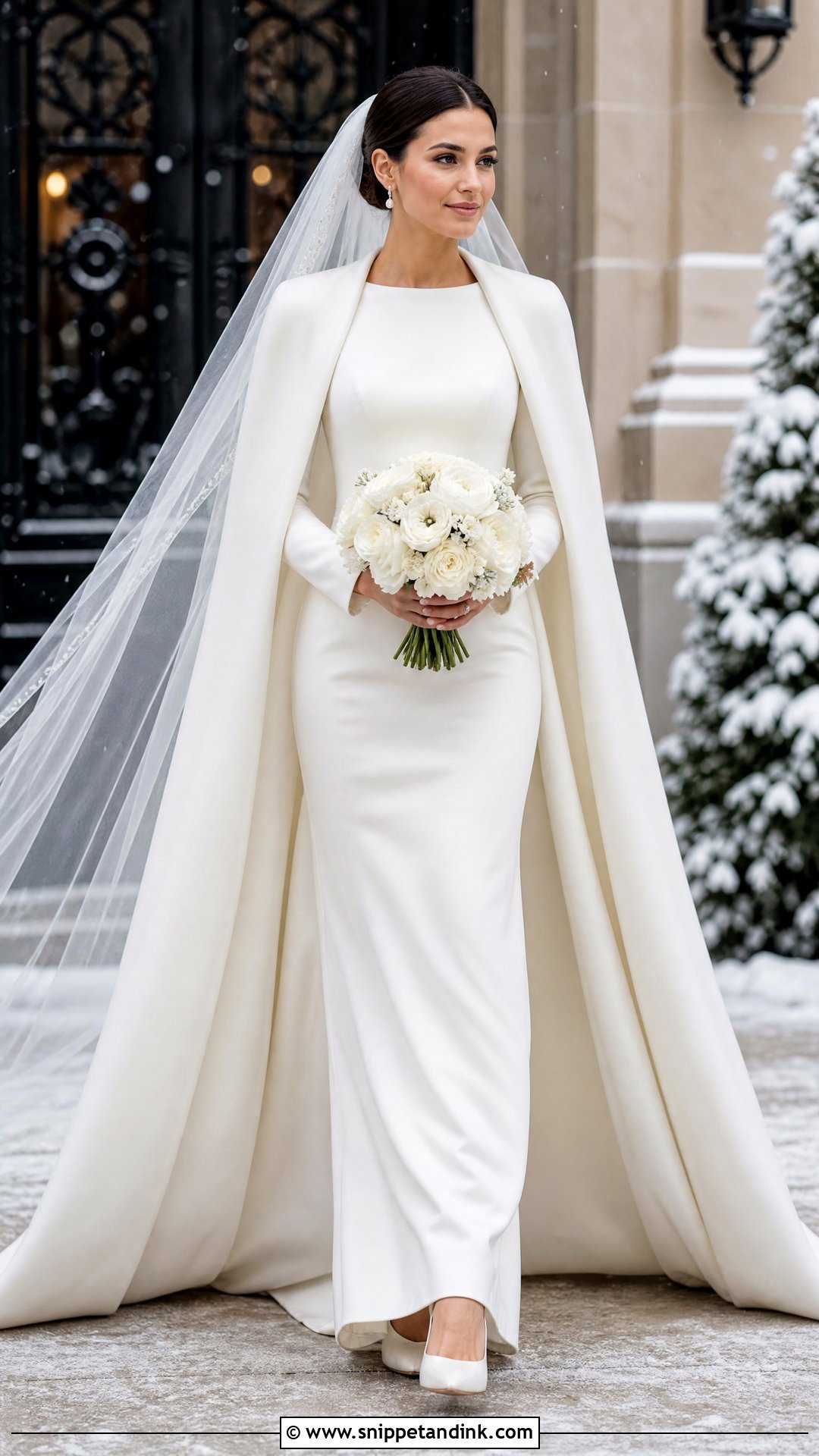
A winter cape needs to sit on the shoulders without pulling the gown neckline back, which is the fault I see most. I fit the cape over the actual dress, never on its own. Start with a long-sleeve satin, crepe or lined lace gown, then a floor-length ivory cape with a plain neckline and hidden hook closure. Keep the gown’s sleeves smooth so the shoulders don’t bulk up under the cape. Closed pumps or dressy ankle boots for outdoor portraits, pearl earrings, a low bun and a cathedral veil worn under the cape. Structured white flowers with a little seasonal green suit the colder light.
18. Plus Size A-Line Bride Look
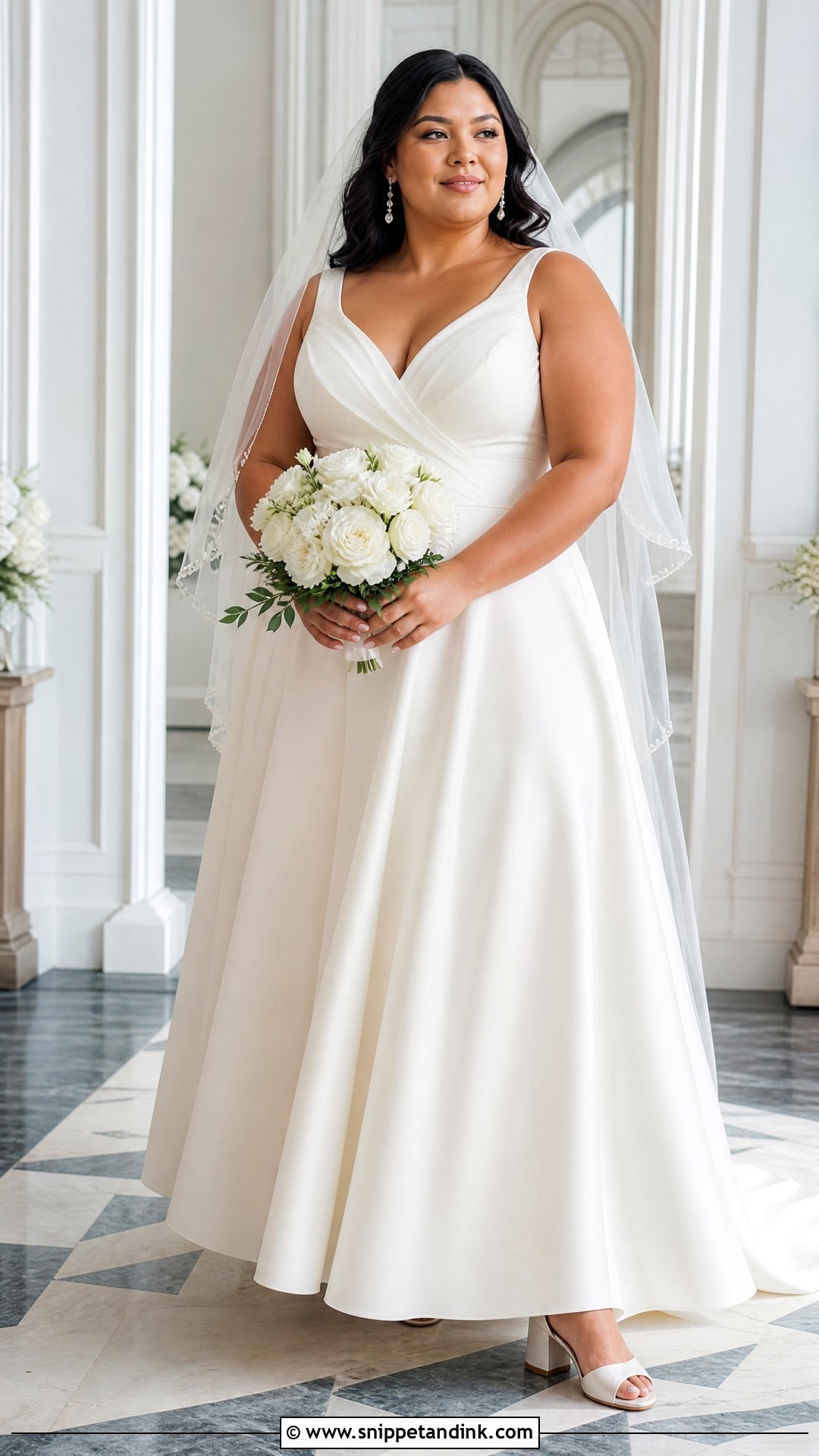
For plus-size brides I start with support, then shape. A structured bodice with built-in cups or boning and straps wide enough to carry weight comfortably makes more difference to how an A-line looks than any neckline does. The skirt should fall from the waist, not add gathers at the hip. A soft V, square neck or off-shoulder all work; try each, because they frame the bust very differently. Stable block heels, drop earrings and a veil anchored into a secure updo. Fit the undergarments before the first alteration appointment, not after. Size labels in bridal run small, so ignore the number entirely.
19. Modest Wedding Dress Bride Look
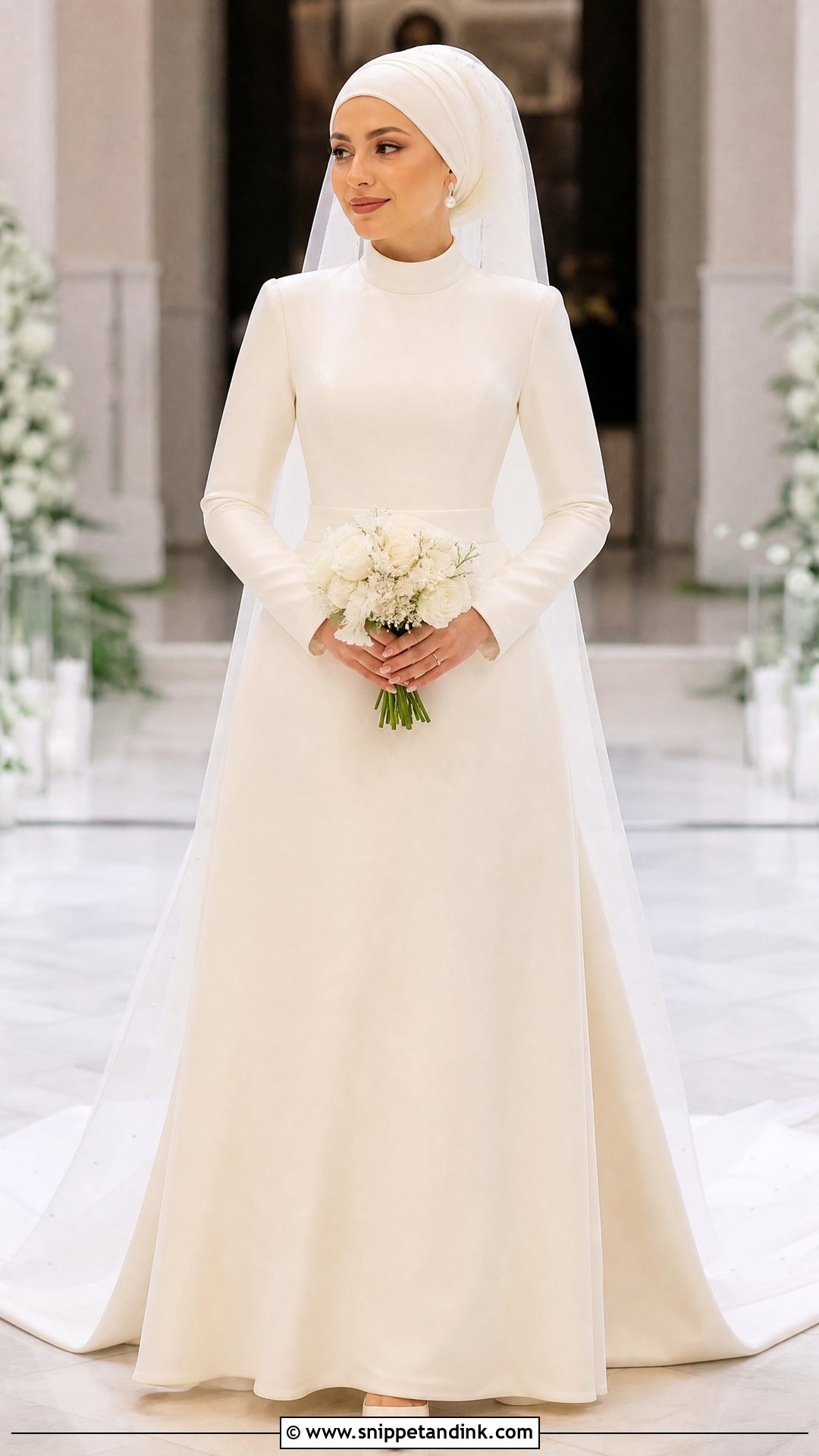
Modest gowns need opacity checked under daylight and camera flash, because some ivory crepes and lined laces that look solid in a shop turn see-through in photos. I always ask to see the fabric near a window. Long sleeves, a higher neckline and a clear waist keep the shape. Crepe gives a smooth finish, lined lace adds texture. Closed pumps, pearl or crystal earrings and a veil sized to the gown. A neat bun, braided updo or head covering, set according to your own practice. For extra coverage, have a skilled seamstress add matching fabric inside rather than pinning visible inserts at the last minute.
20. Detachable Overskirt Bride Look
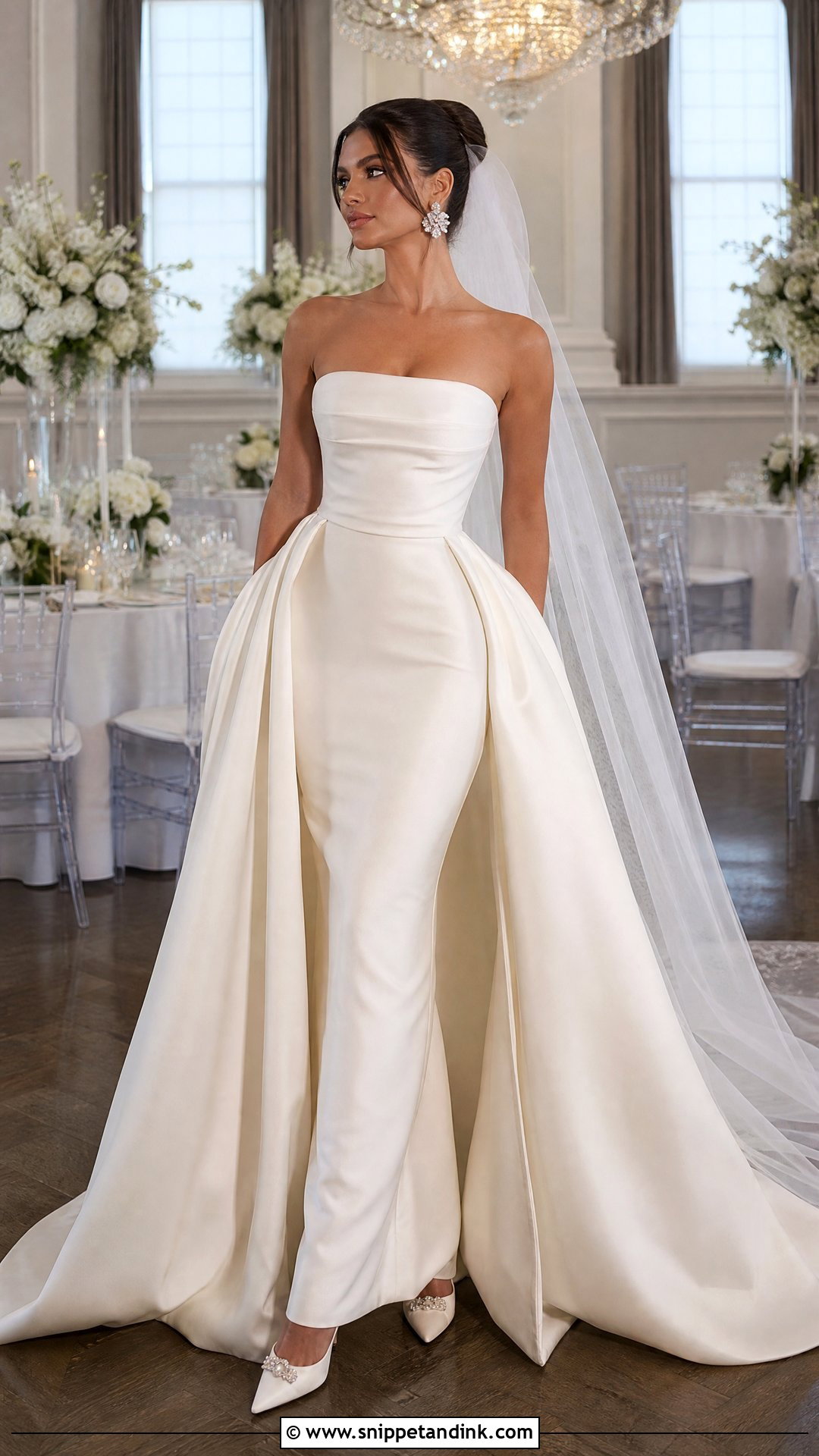
An overskirt is only as good as its fastening. Most attach with hooks, snaps or a hidden zip at the waist, and I want to see it come off in under a minute with one helper, standing in the gown. Practise this before the day. Under it, a fitted column, mermaid or straight gown; over it, full tulle or satin for the ceremony. Match the whites exactly, since two ivories side by side never look the same. Pointed heels, statement earrings and a long veil for the vows, then a hair comb and flatter shoes later. It gives you two silhouettes without buying and altering a second dress.
Three Fittings, a Bustle and a Dress Rehearsal at Home
Alterations usually start about two to three months before the wedding, with two or three fittings and a final one a couple of weeks out. Lose or gain weight between fittings and the timeline shifts, so tell your seamstress if you’re planning either. Bring the same shoes and undergarments every time.
Bustles for long trains
Any gown with a train needs a plan for the reception. An over bustle lifts the train up onto the back of the skirt with hooks or buttons; an under bustle, sometimes called a French bustle, tucks it underneath with ribbon ties. Ask for the ties to be colour-coded or numbered, and get a bridesmaid or your mother to the final fitting to learn it. I’ve watched a lot of guests struggle with a bustle at ten at night that nobody practised.
Wear the whole thing once before the day
Once the dress comes home, put on everything: gown, shoes, veil, jewellery. Walk up and down stairs, sit on a dining chair, lift your arms, and pick up something from the floor. You’ll find the strap that slips, the earring that catches the veil, the shoe that pinches after twenty minutes. Fixing those a week ahead is easy; on the morning itself it isn’t.
Planning a Second Look Without Missing Your Own Reception
Several looks here, like the mini dress, jumpsuit and detachable overskirt, assume you’ll change at some point. A full change takes longer than people expect, often twenty minutes once hair pins, a veil and a corset back are involved. Schedule it during a natural lull, such as after dinner and before the first dance, and tell your planner so speeches don’t start without you.
I’d pack a small bag in the changing room with the second shoes, a hanger and garment bag for the gown, and safety pins. Assign one person to carry the gown away safely; satin creases badly if it’s left in a heap on a chair.
Shoes, Fit and One Strong Detail on the Day
The right bridal outfit looks good at the altar and still works when you’re walking, sitting through dinner, hugging relatives and dancing. Use these looks as starting points for silhouette and pairing, then adjust fabric, coverage, shoes and accessories to your venue and how you move. In my experience the gown that gets tailored properly will always beat a more expensive one that doesn’t quite fit. Settle the shoes early, rehearse any change of look, and keep one strong detail rather than five competing ones. If the finished outfit feels like you on a very good day, you’ve got it right.
You'll Like These Ideas:


Leave a Reply