
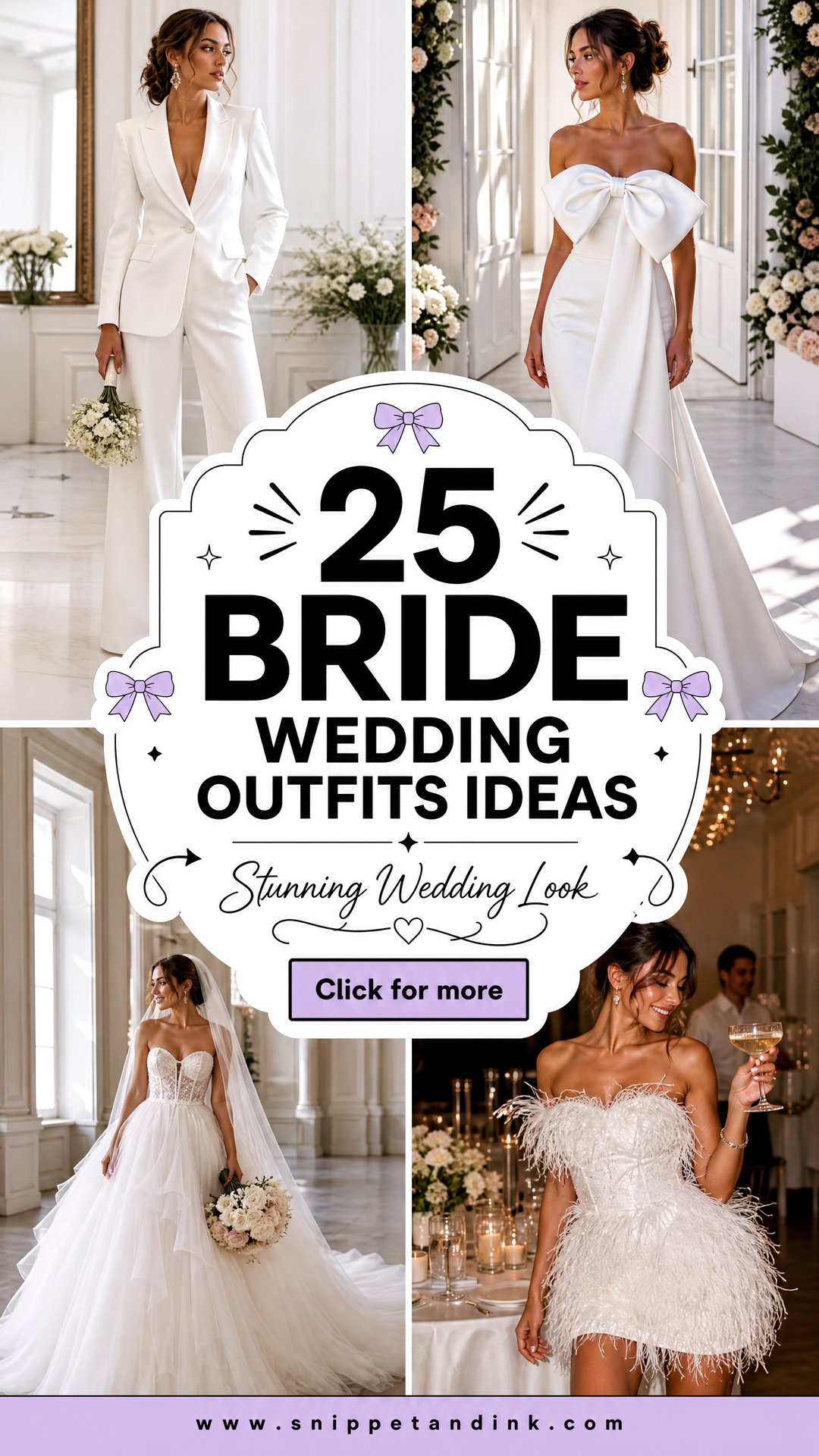
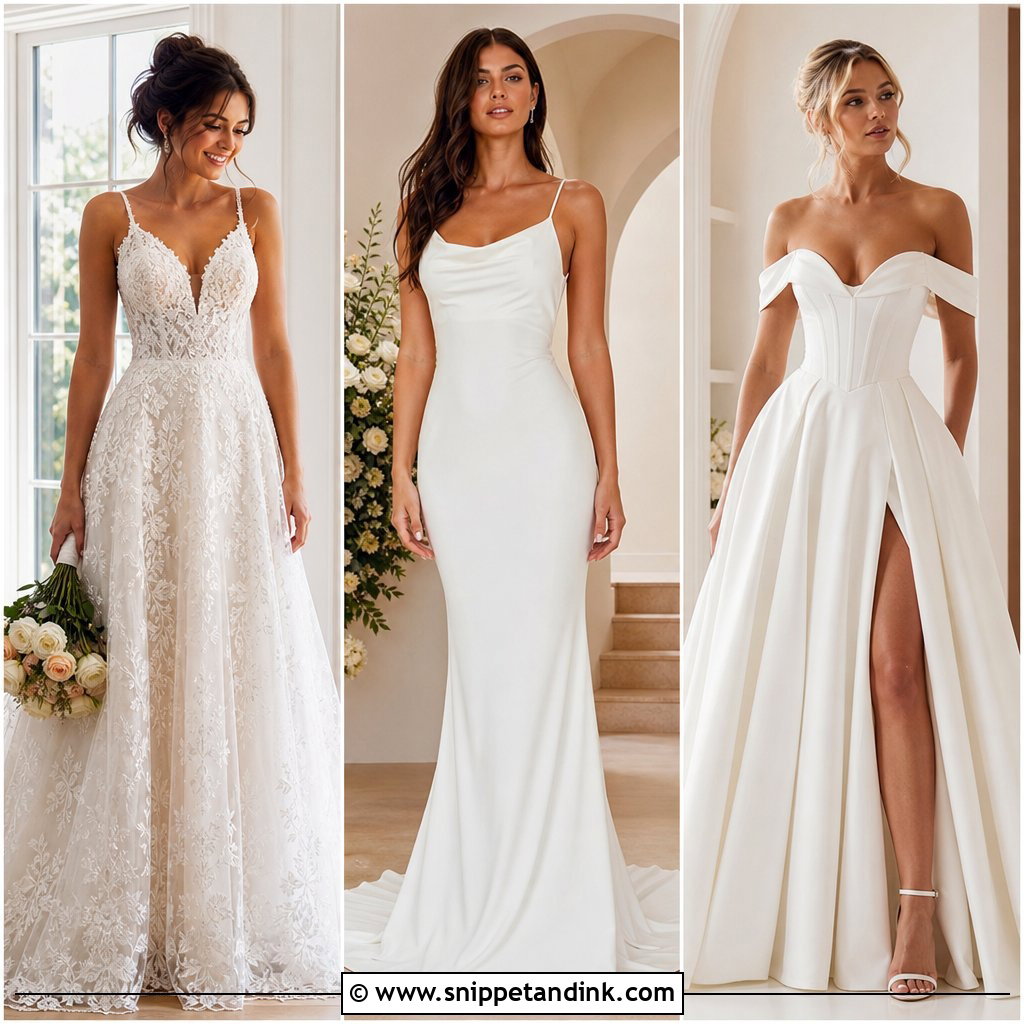
Fewer brides wear a single gown from start to finish these days. Many build a small wedding wardrobe instead: one look for the ceremony, something lighter for the reception, maybe a third for the after-party or a courthouse signing the week before. When I work with a bride, I don’t start with trends. I start with the schedule, the venue floor and the weather, because a cathedral train on a beach or a heavy ball gown in August decides the day for you. The 25 outfits below run from satin A-lines and lace sleeves to suits, jumpsuits, tea lengths, minis and soft color, each with the styling and the practical catch that comes with it.
Ordering a Gown on a Timeline That Won’t Panic You
Most bridal gowns are made to order rather than pulled from stock, and that surprises a lot of brides. Exact timings vary by designer and season, but this is the rhythm I plan around:
- Start shopping around nine to twelve months out. Many made-to-order gowns take four to six months to produce.
- Order by about six to eight months before the wedding. Later than that, many shops charge a rush fee or limit your choice to stock gowns.
- Begin alterations two to three months out. Most gowns need two or three fittings.
- Hold the final fitting two to four weeks before the day, when your weight and shape are settled, and bring your shoes and undergarments.
Suits, jumpsuits, minis and reception dresses are usually ready to wear, so they can be bought much later. Leave six to eight weeks for their alterations.
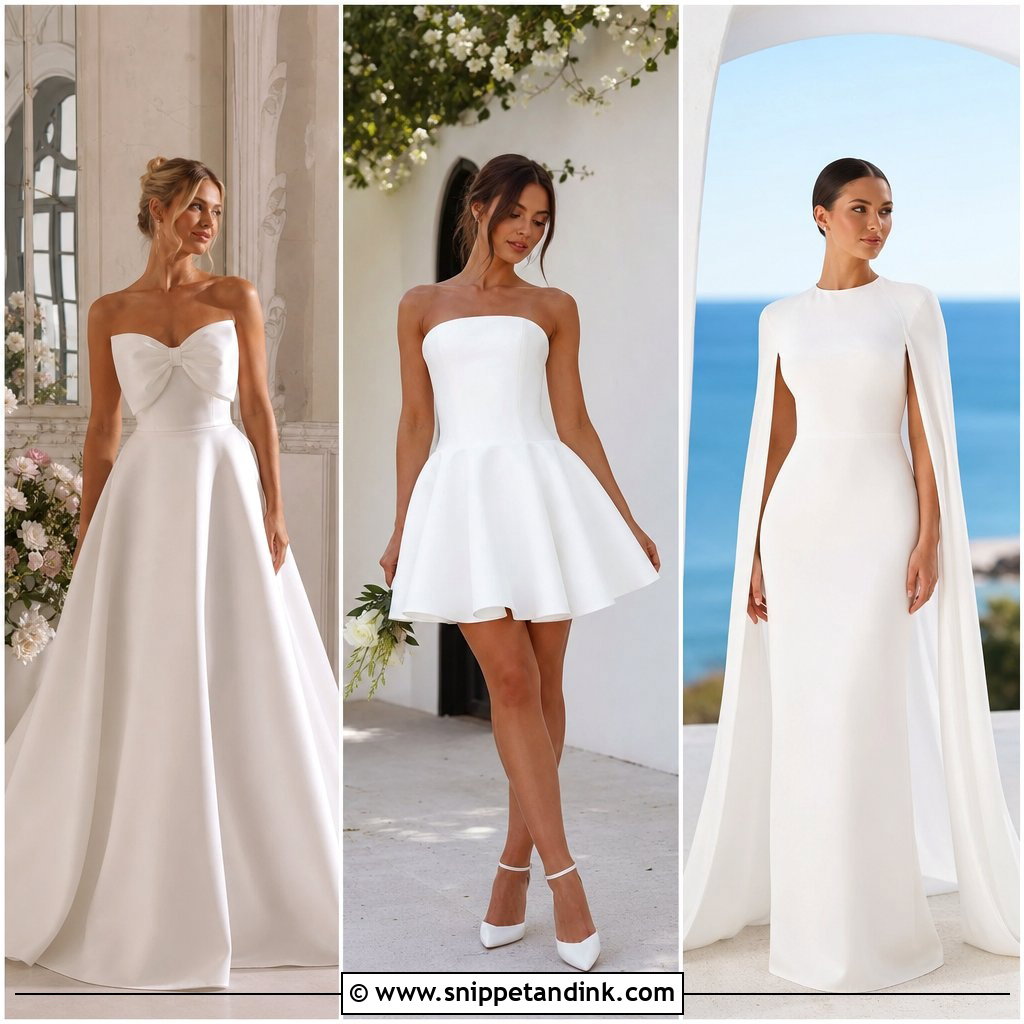
1. Satin A Line Wedding Dress Outfit
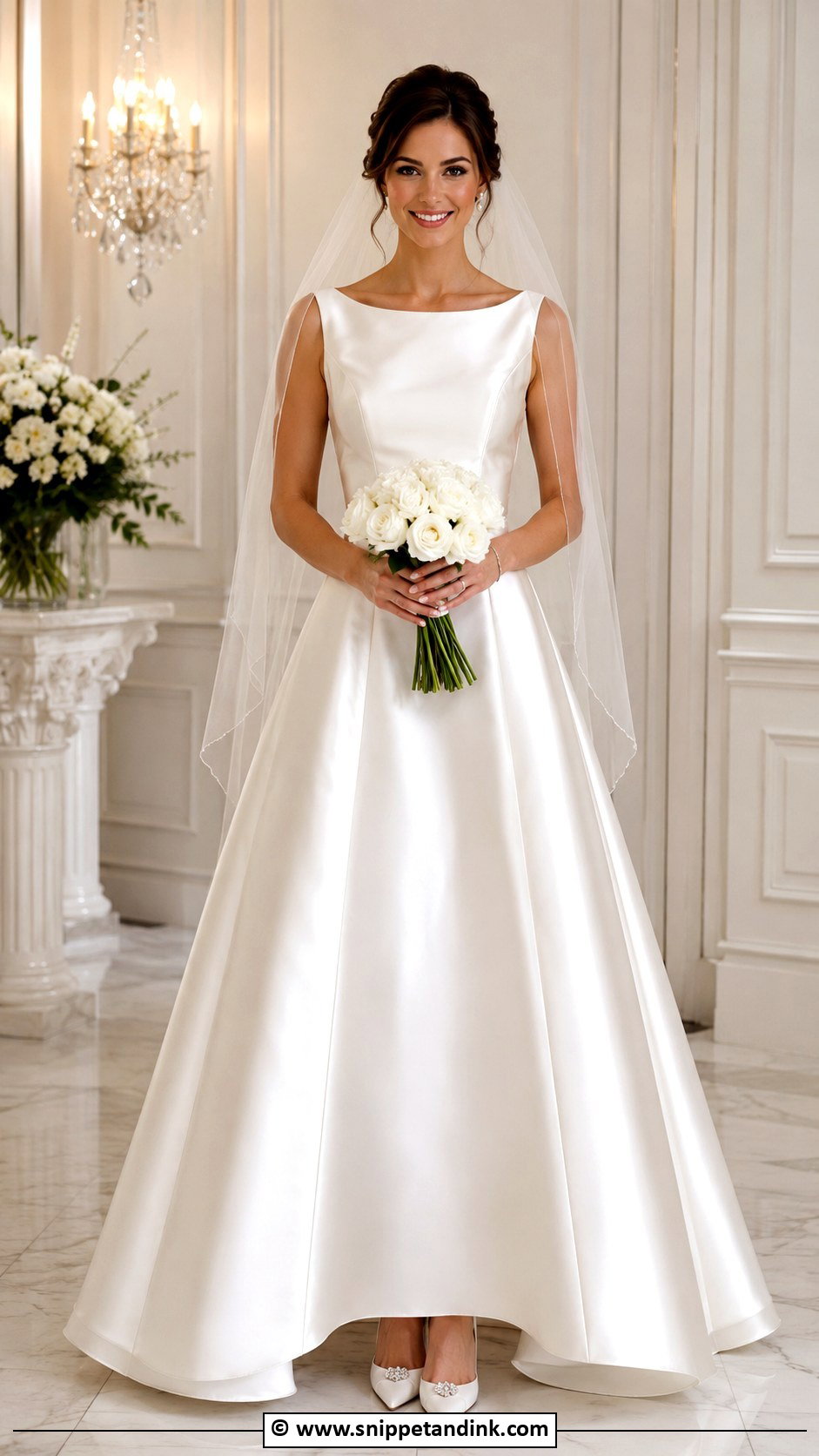
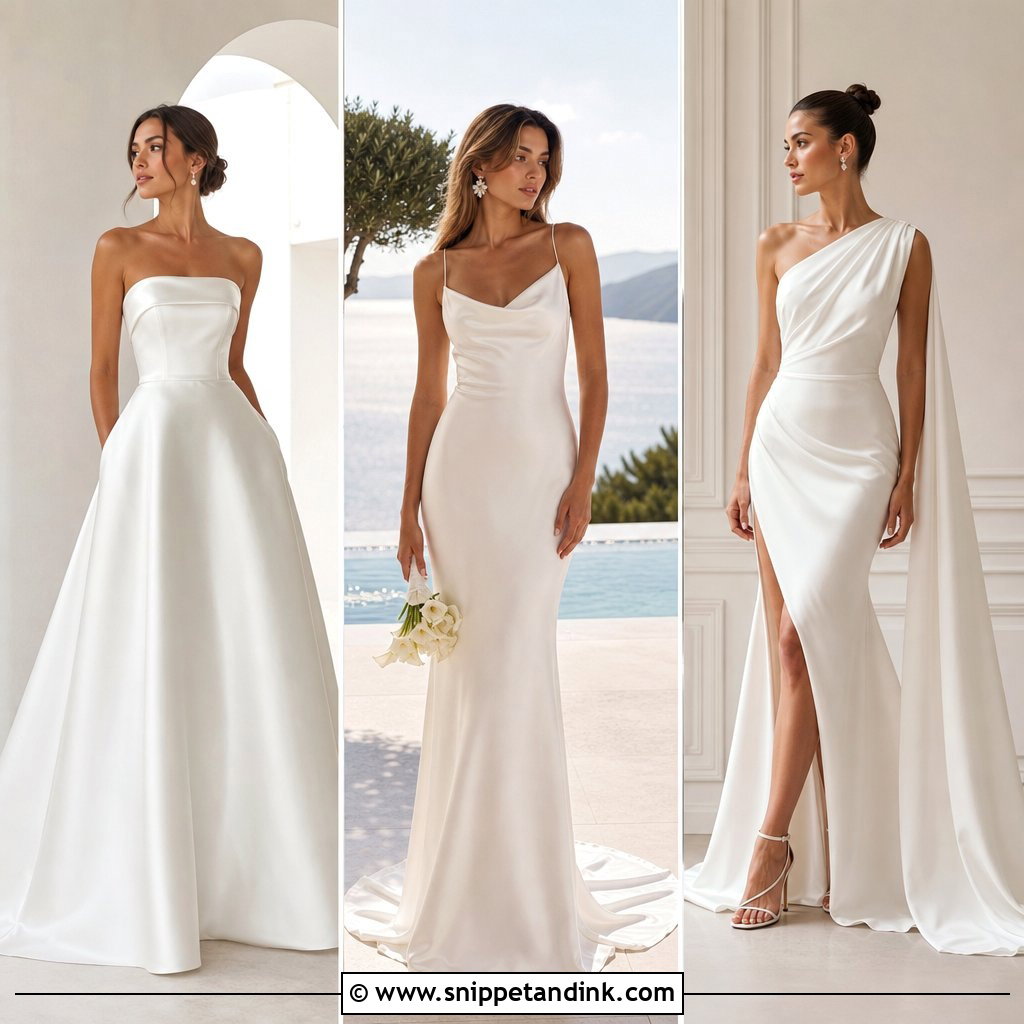
Satin A-lines suit more body shapes than any other gown I fit, because the skirt releases at the waist and skims everything below it. The catch with satin is creasing. Thin satin wrinkles across the lap during a long ceremony; a heavier duchess or crepe-backed satin holds its line far better. Pointed ivory heels, pearl earrings, a low bun and a plain cathedral veil keep it classic. With a strapless or square neckline, a fine tennis necklace is enough. Ballrooms, gardens and hotel ceremonies all suit it.
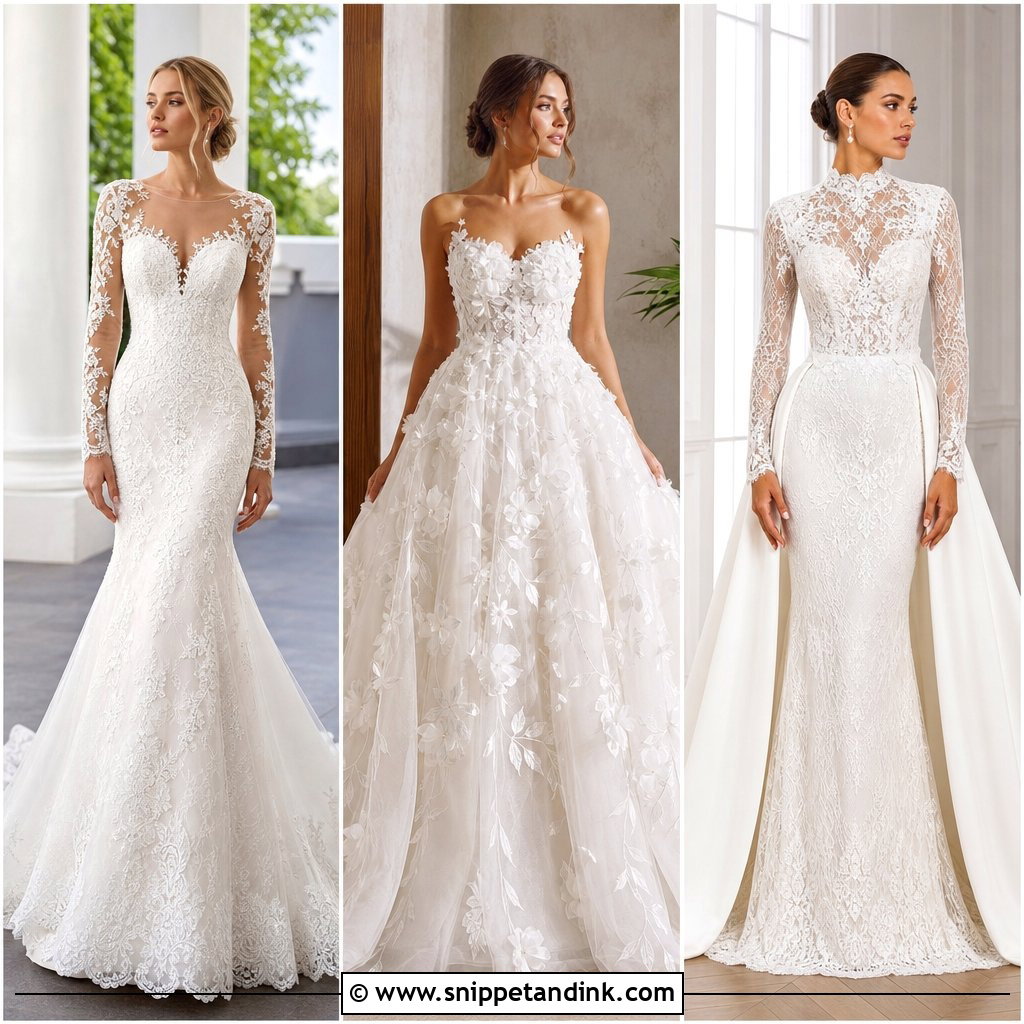
2. Lace Long Sleeve Wedding Dress Outfit
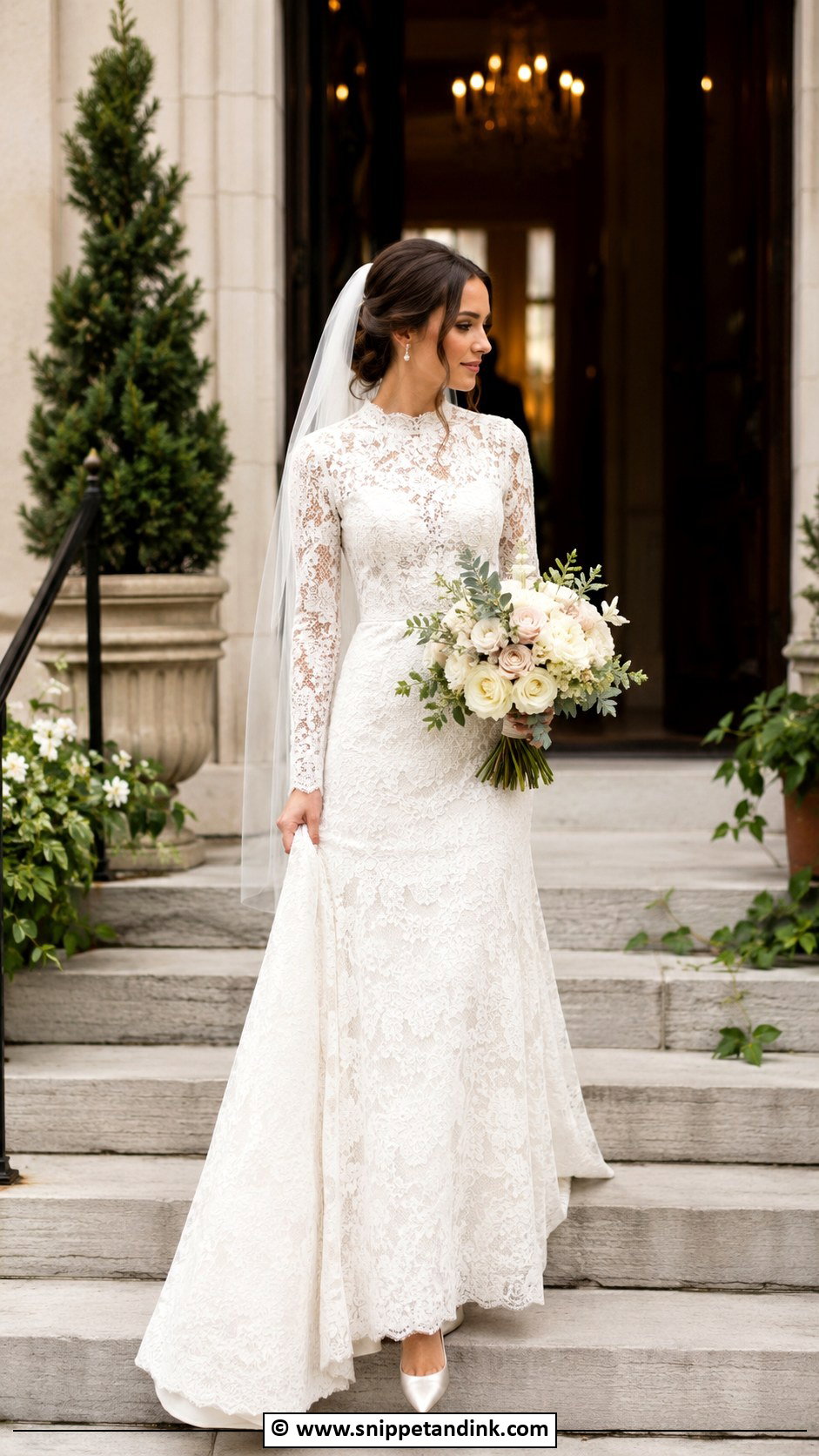
Long lace sleeves need movement built in. Non-stretch lace cut close to the arm looks lovely standing still, but you can’t hug anyone or raise a glass without the seams straining, so I ask brides to cross their arms and reach forward at every fitting. A fitted lace bodice over a flowing skirt is the easiest balance; an allover lace sheath reads more vintage. Satin pumps and pearl drops sit well with it. Choose a veil with a plain or very fine edge, since a second busy lace pattern next to the sleeves just fights. Fall weddings and estate venues suit it.
3. Strapless Ball Gown Wedding Dress Outfit
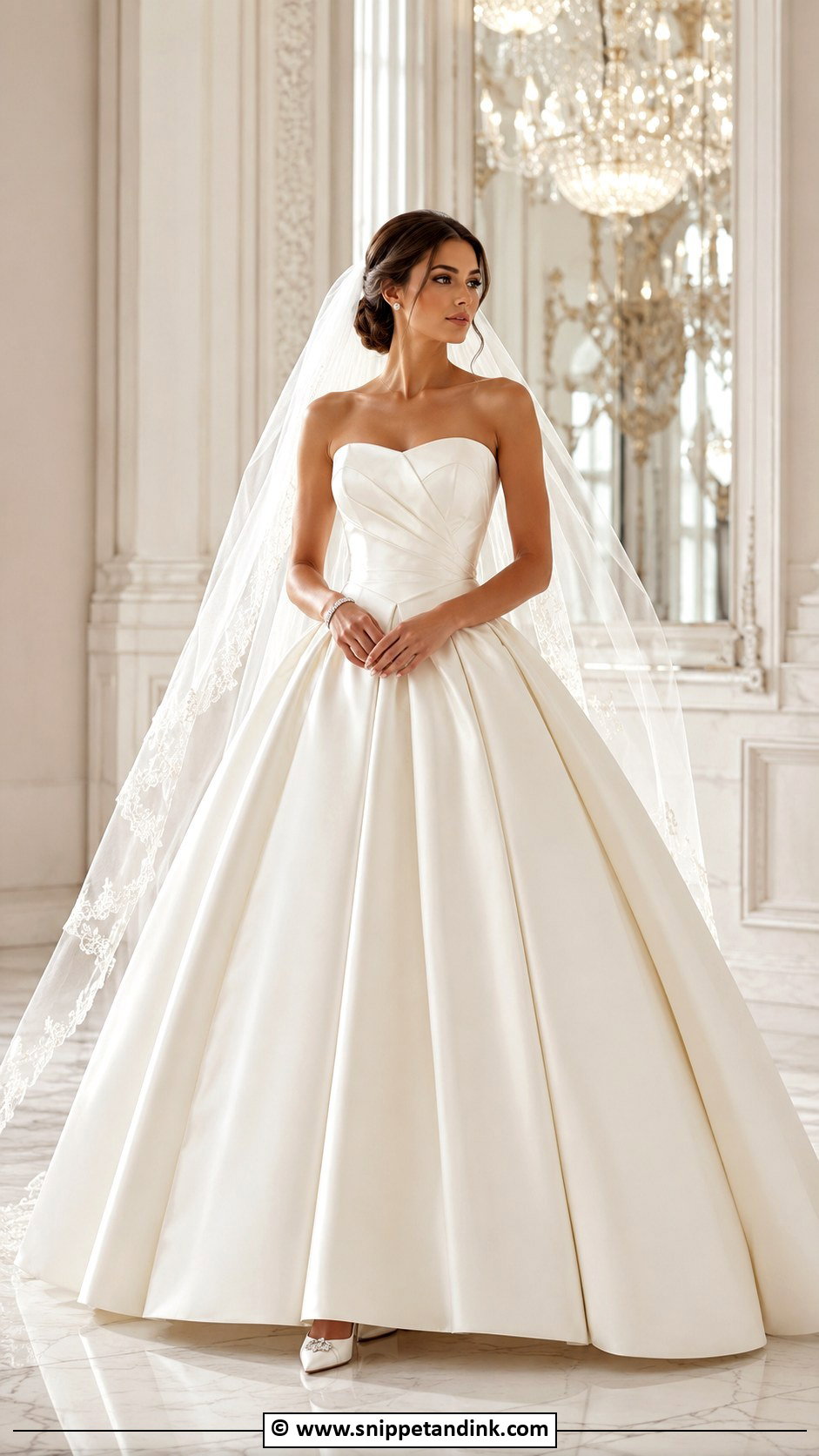
Ball gowns get their volume from layers and a petticoat underneath, which means real weight and real width. Check that your venue’s aisle, doorways and car can take the skirt before you fall for it. Mikado, satin or organza look modern, and smooth fabric keeps the size from looking fussy. A strapless bodice on a heavy skirt needs internal boning and a waist stay that does the holding, so you’re not hitching it up all night. Keep the rest small: a bracelet, studs, ivory heels or embellished flats, and a structured veil framing the face.
4. Minimalist Crepe Wedding Dress Outfit
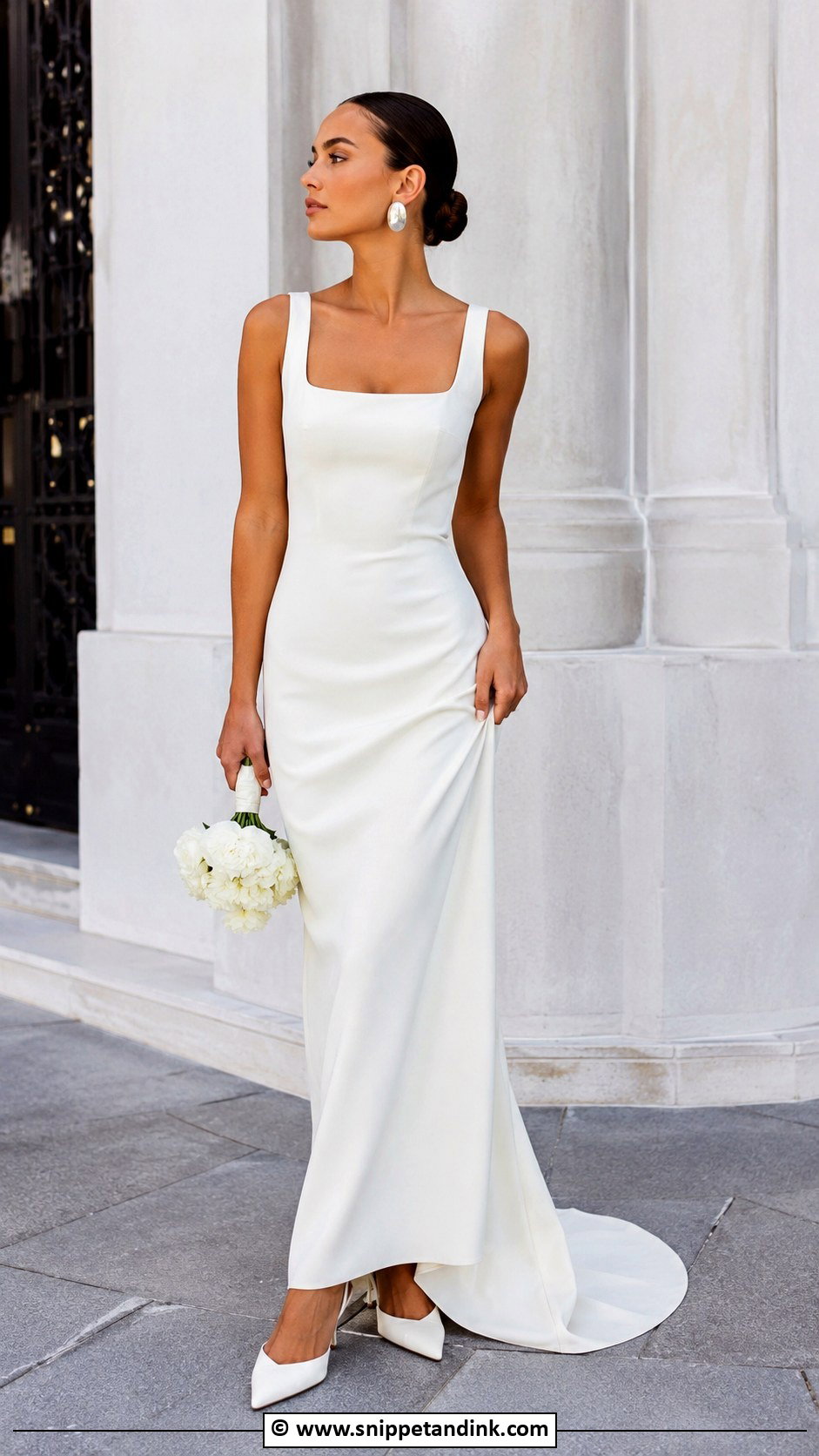
Crepe is the least forgiving fabric in bridal. It’s matte and fluid and photographs cleanly, but it shows every bump of underwear and every seam that pulls. A minimalist crepe dress needs the most precise fitting of anything on this list, and smooth, skin-tone shapewear tried on at the first appointment. Square, bateau or halter necklines suit the clean lines. Slingback heels, sculptural earrings and a low bun or smooth waves keep it spare. A long sheer veil adds softness without adding clutter. City halls, galleries and museum venues suit it.
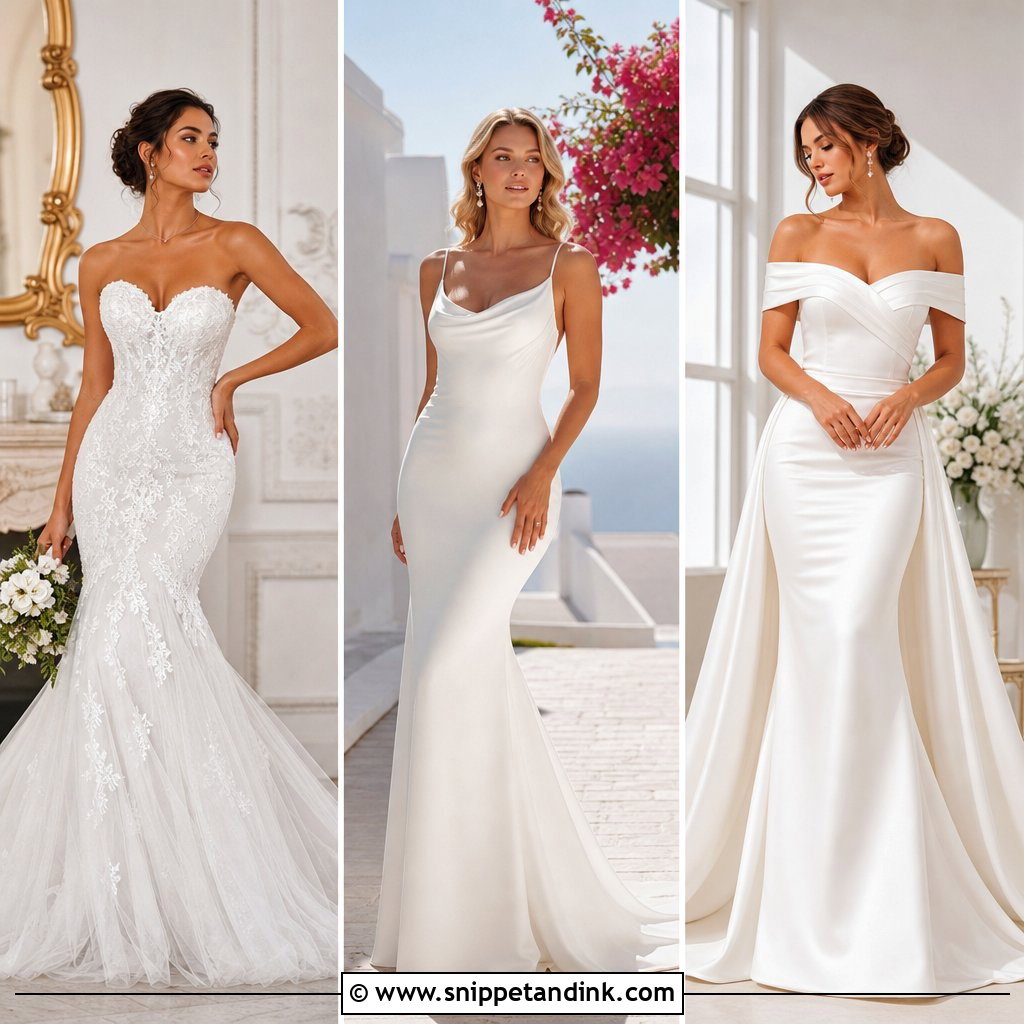
5. Off Shoulder Wedding Dress Outfit
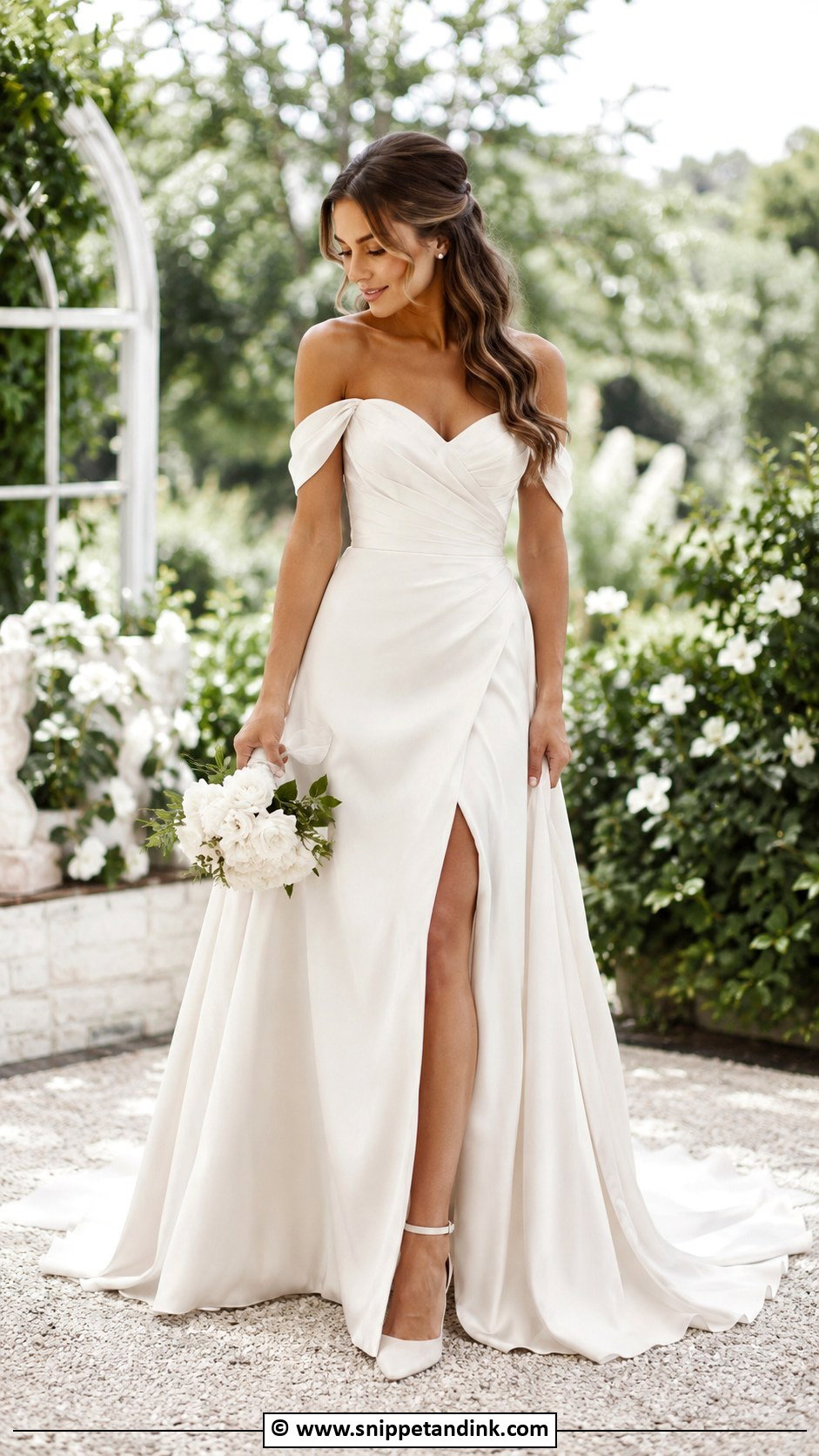
Off shoulder necklines frame the collarbones, but they restrict your arms. Lift them and the neckline rides up, so watch for that if you plan big hugs or a lively first dance. Elastic or stretch-edged bands move with you; structured ones hold their shape but hold you still too. A fitted bodice with a flowing skirt balances the bare shoulders, and a mermaid or sheath looks more formal. Pearl studs, a fine bracelet and curls pinned back keep the neckline clear. Gardens, coastal venues and candlelit rooms suit the soft line.
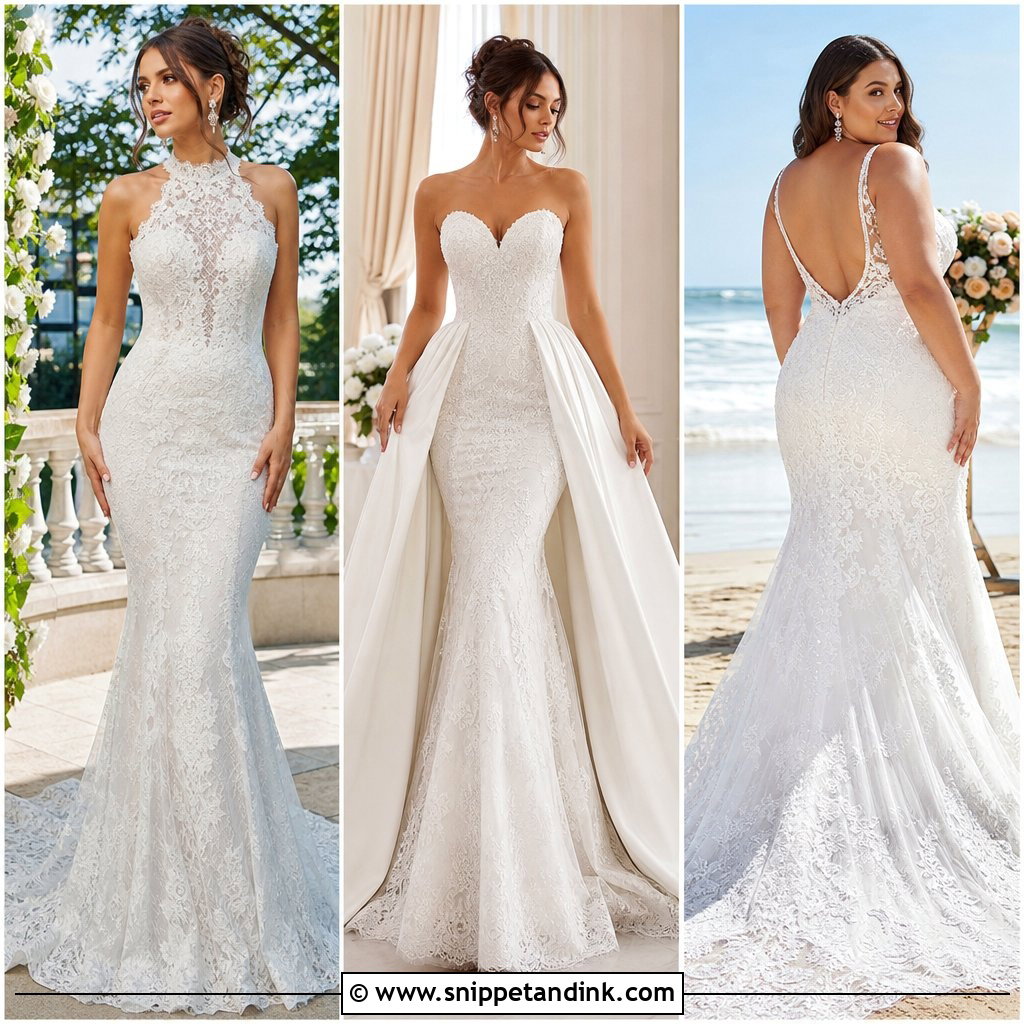
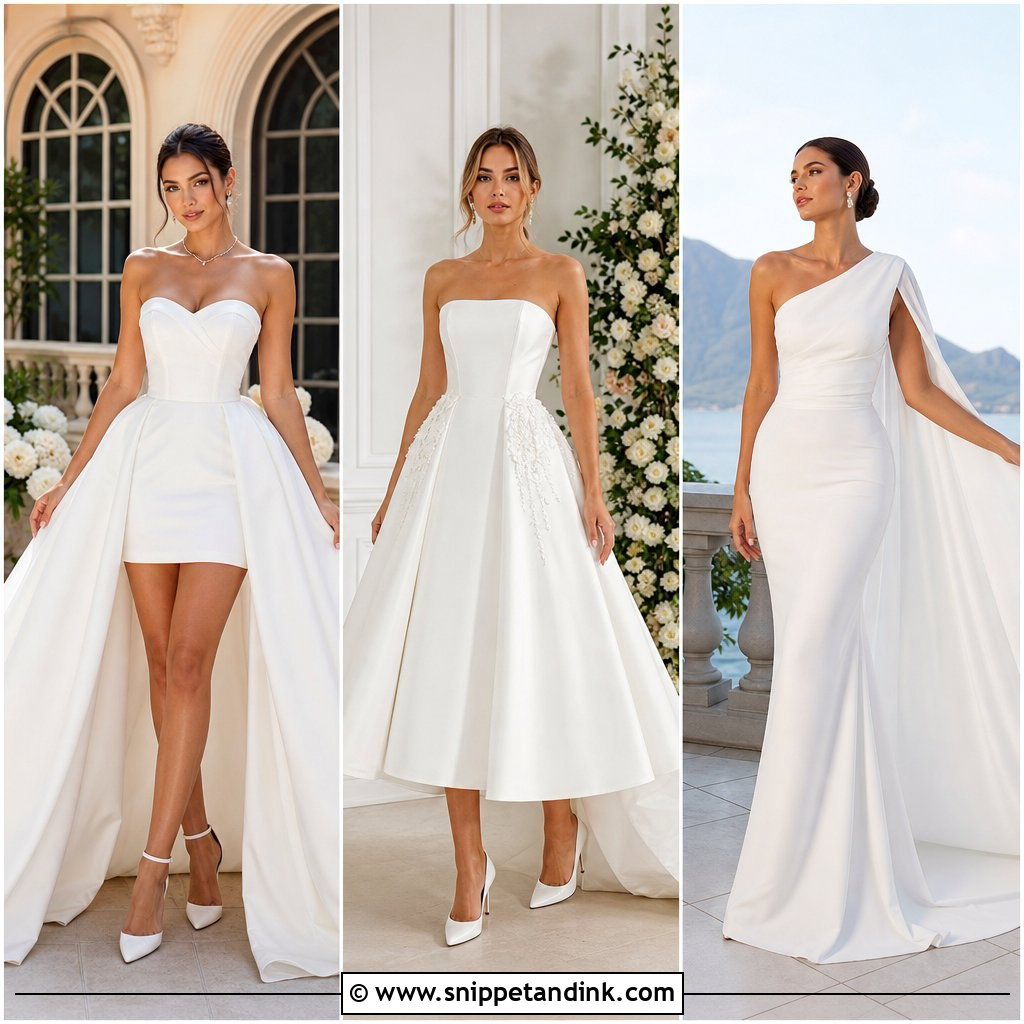
6. Detachable Overskirt Wedding Dress Outfit
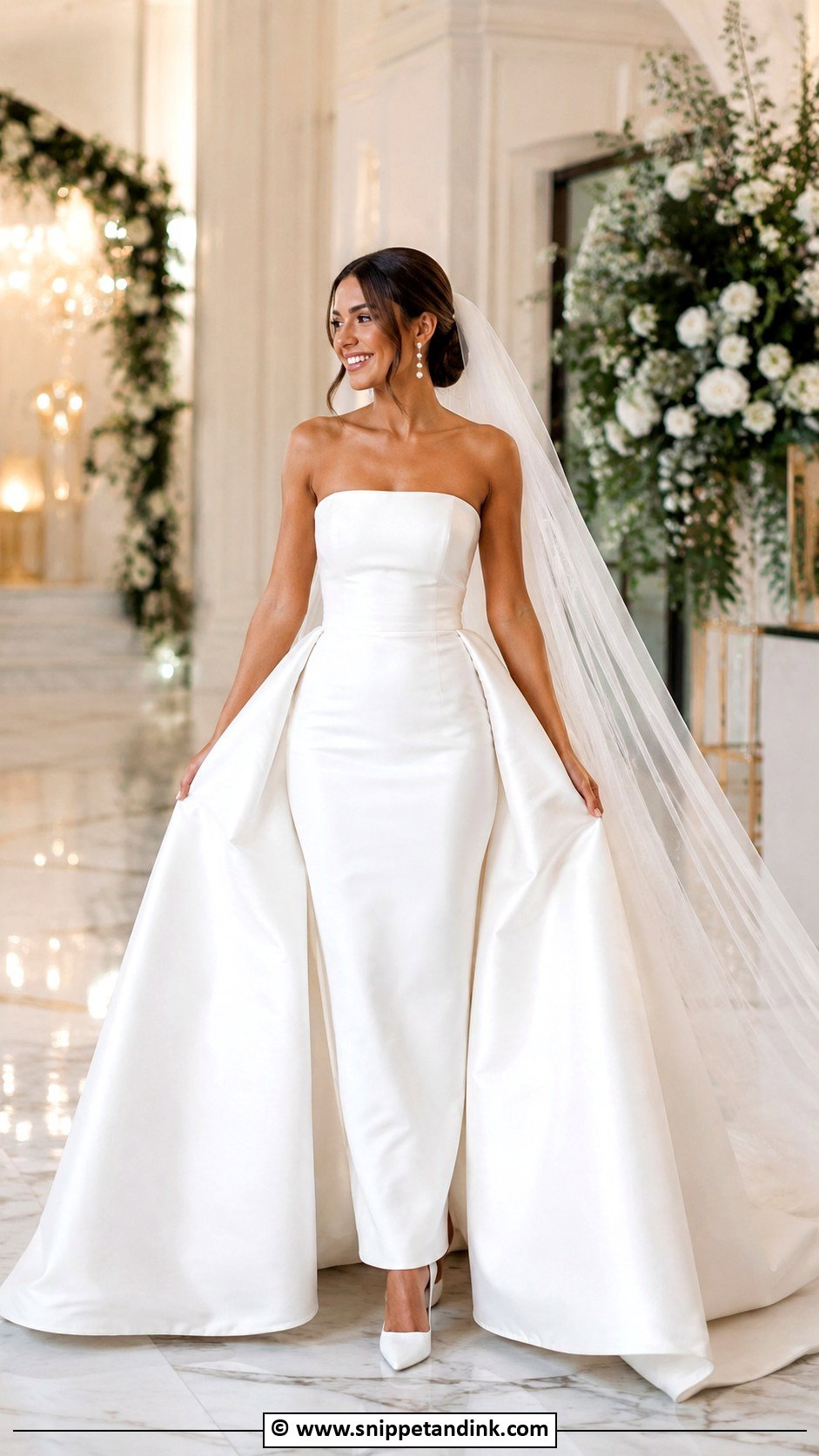
Two looks, one dress. The overskirt gives volume and drama on the aisle, then comes off to reveal a slimmer dress for dinner and dancing. Ask how it attaches before you buy. Hidden hooks or snaps come off in a minute, while buttons or ties need a helper and somewhere private. A strapless column, a fitted crepe gown or a lace mini all work underneath. Wear a long veil and classic heels for the ceremony, then swap to statement earrings or a bow clip once the skirt is off.
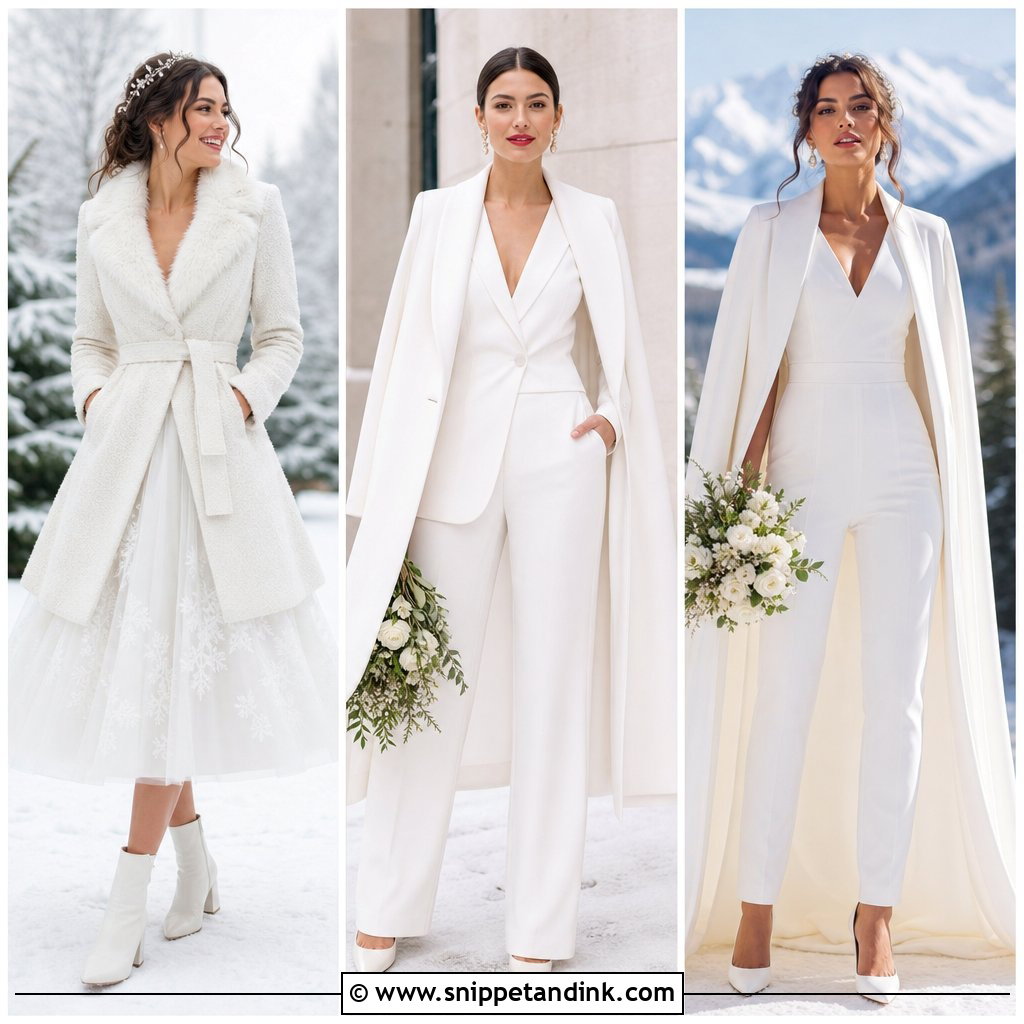
7. Bridal Pantsuit Wedding Outfit
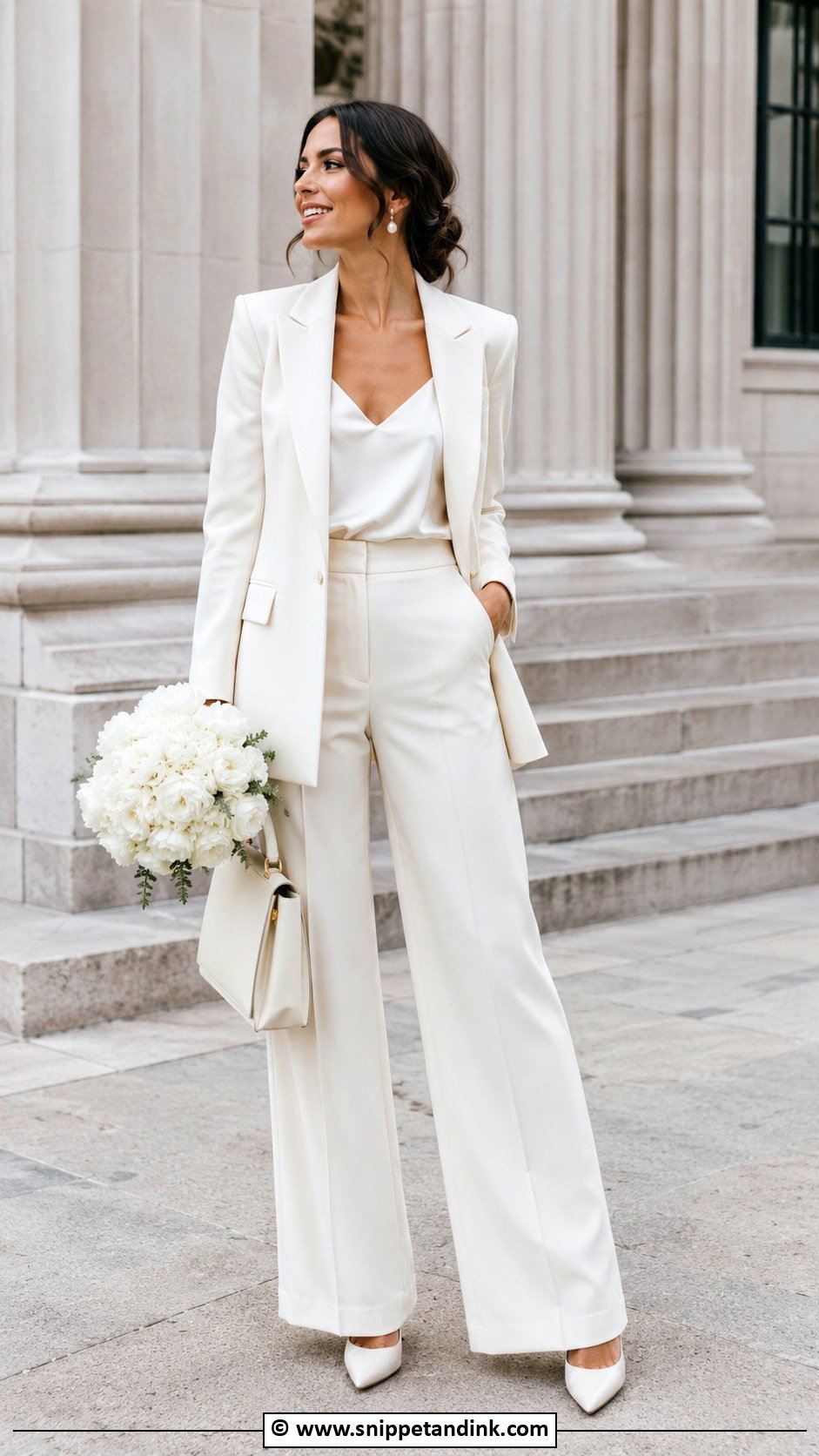
I’d build a bridal pantsuit wedding outfit around the trousers first, since the hem length and the drape decide the whole line. Have them hemmed with your wedding shoes on. Then choose a white or ivory blazer that fits at the shoulder, and a silk camisole or structured corset underneath. Pointed pumps, a top-handle bag and pearl or crystal earrings finish it. A short veil, a wide-brim hat or a sleek headband tells everyone it’s a wedding suit. Satin lapels or a waist belt make it more personal.
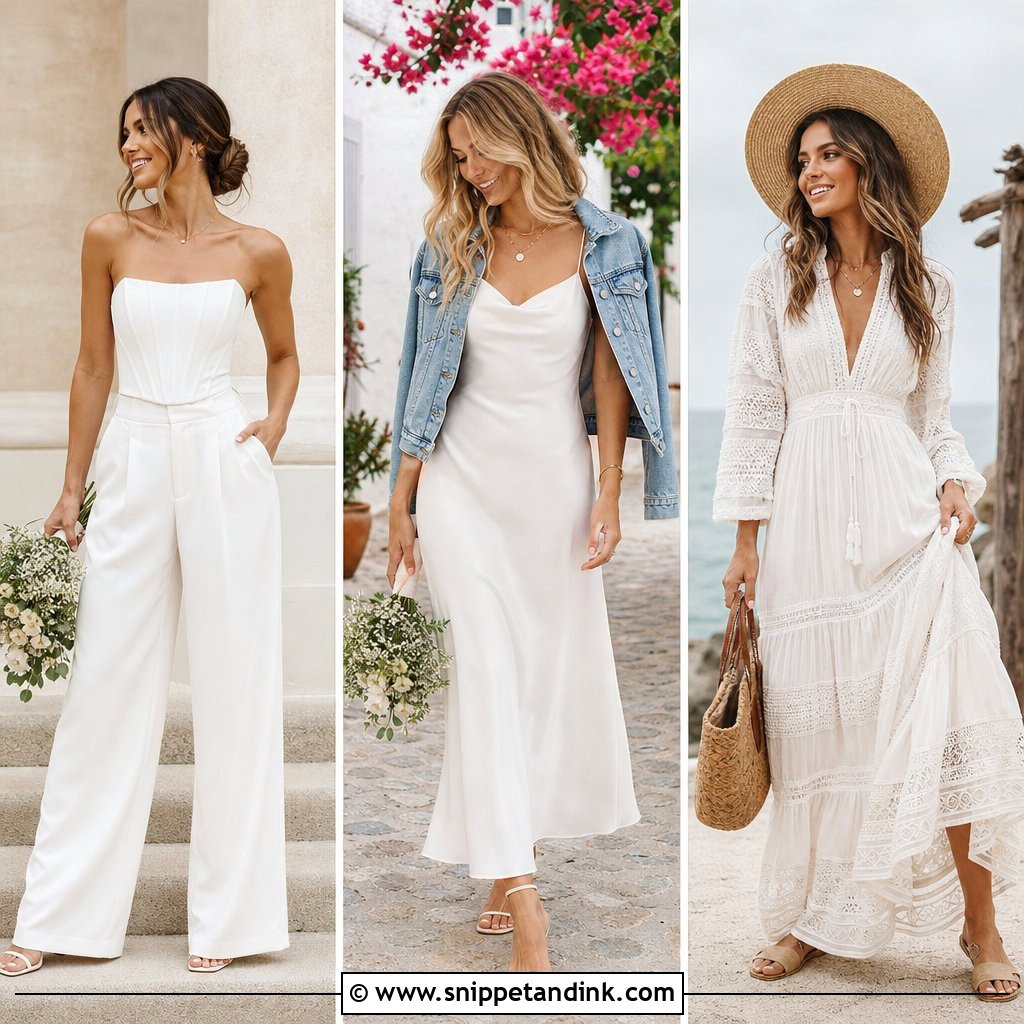
8. Bridal Jumpsuit Wedding Outfit
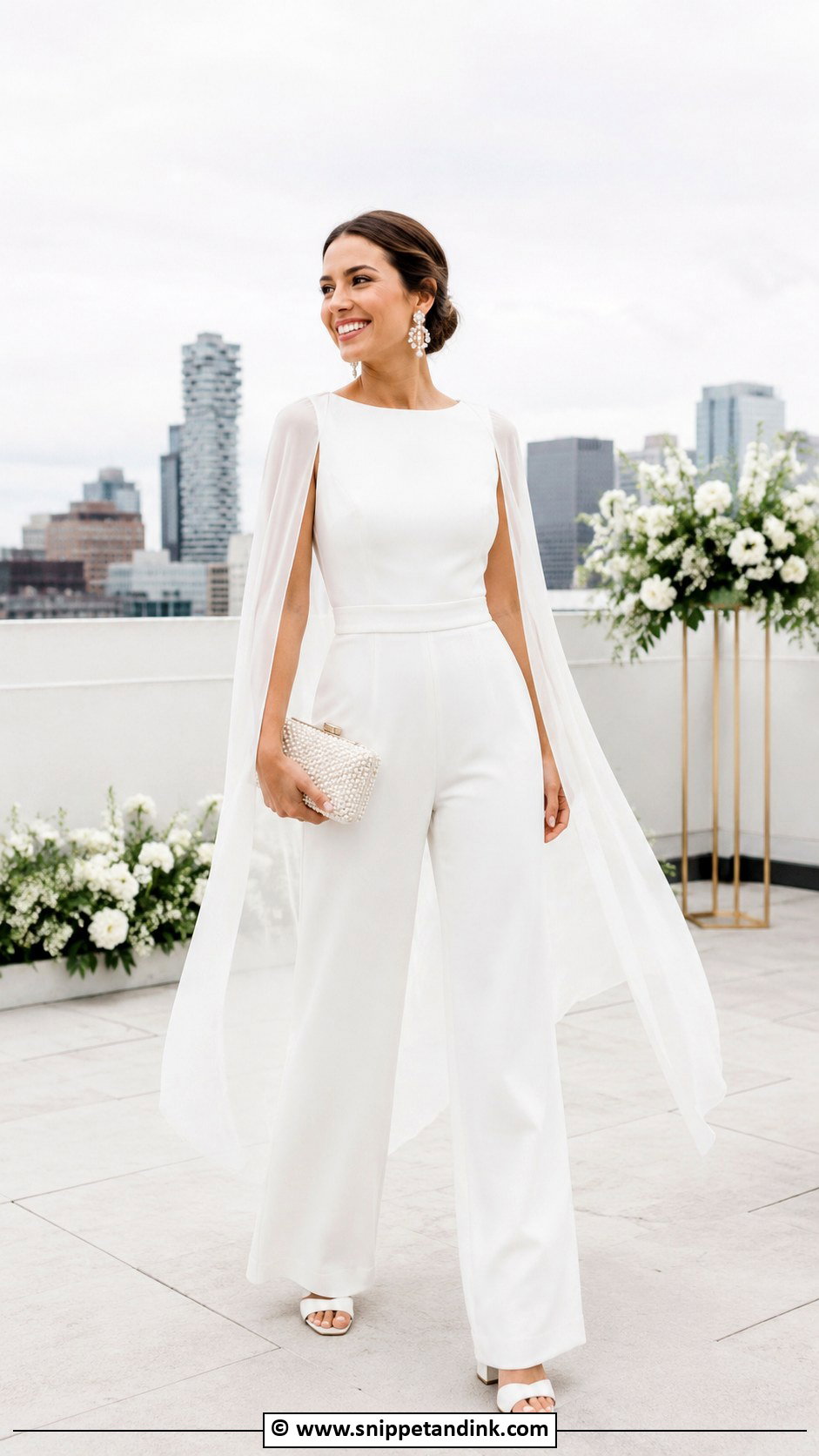
A bridal jumpsuit wedding outfit gives you the most freedom of anything here, provided the torso length fits. Too short in the body and it pulls between the legs every time you sit, so try it seated. Wide legs and a fitted waist look most bridal. A halter, one-shoulder, square or off shoulder neckline makes it feel special. Crepe or satin keeps it clean; lace sleeves soften it. A cape veil or a detachable train adds ceremony drama. Block heels, a pearl clutch and statement earrings finish it for a civil wedding or rooftop reception.
9. Tea Length Wedding Dress Outfit
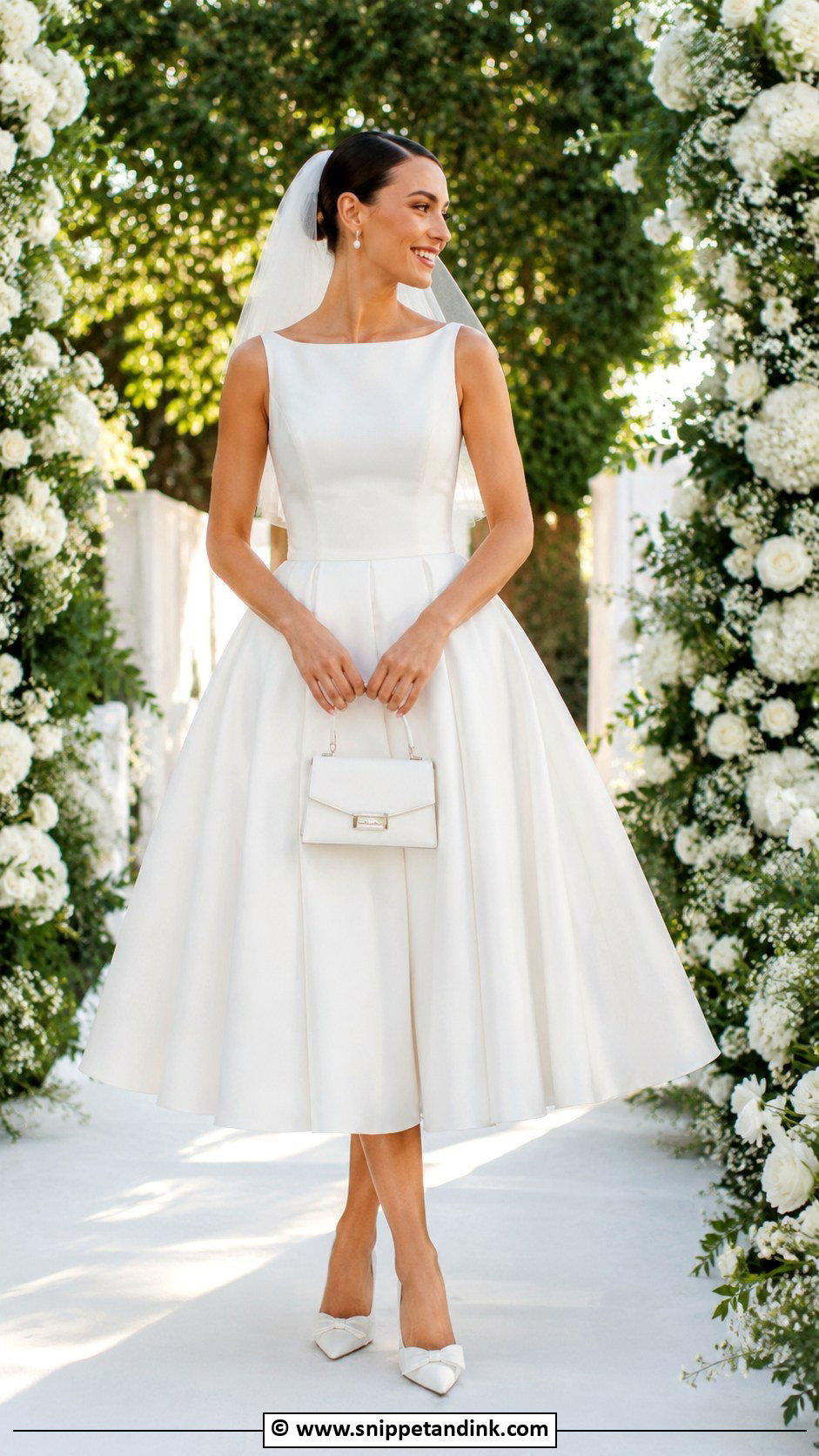
Tea length falls between the knee and the ankle, so your shoes are on show all day. That makes them a real part of the outfit, and worth the budget. A full skirt with a petticoat looks vintage; a cleaner A-line looks modern. Try pointed pumps, bow heels or pearl-embellished sandals. A short veil, pearl earrings and a small structured bag finish it. It’s lighter than a floor-length gown and easier to dance in, which makes it a natural fit for courthouse weddings, garden ceremonies and daytime receptions.
10. Bridal Mini Dress Outfit
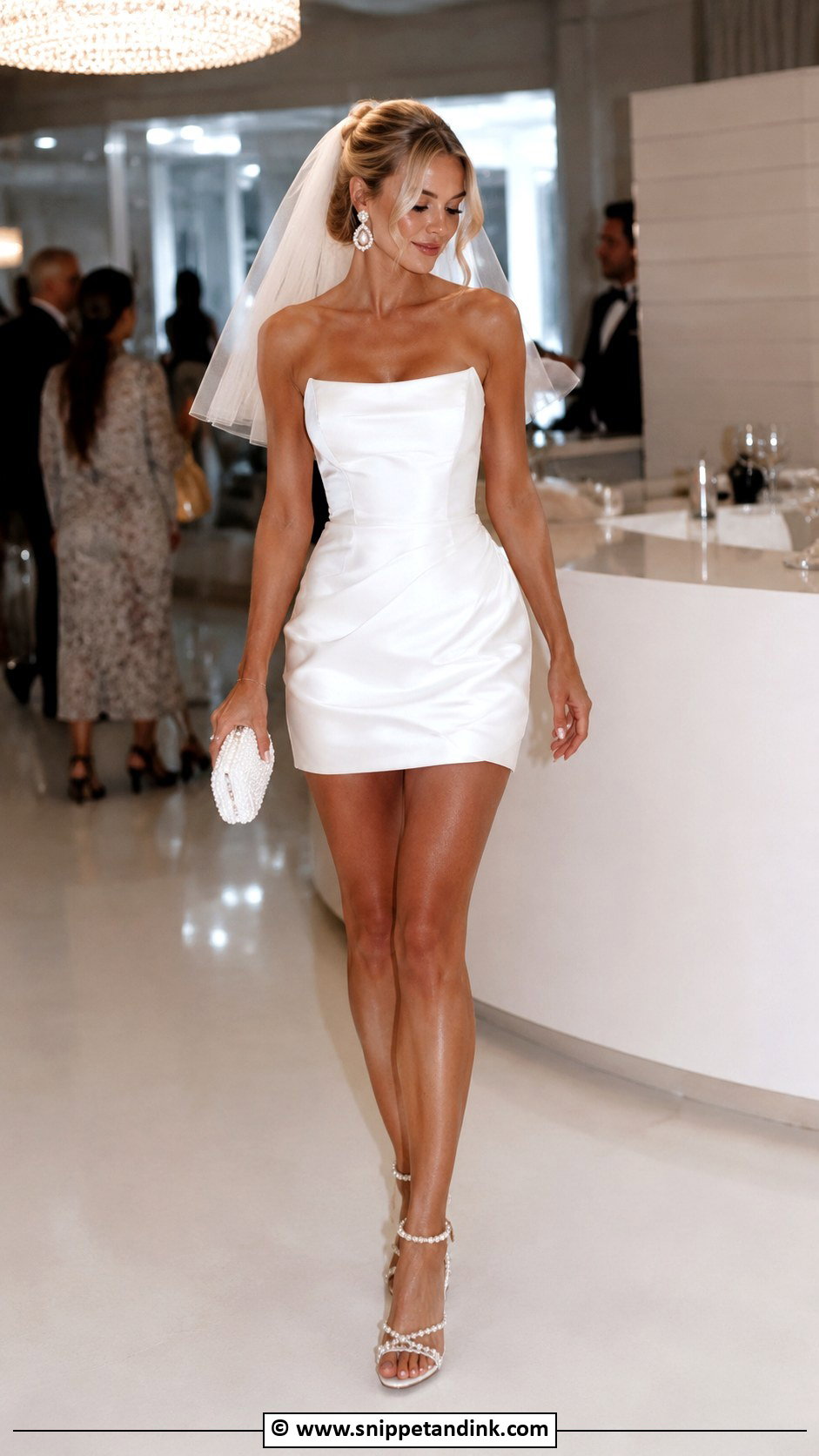
A mini can slide into casual very quickly, so the fabric and finish have to work harder than they would on a gown. Structured satin, pearls, bows, feathers, beading or sharp tailoring keep it bridal. White pumps, embellished slingbacks or platform sandals lengthen the leg. Add one focal accessory: a mini veil, a pearl choker or statement earrings, not all three. At a formal ceremony I’d save it for later in the evening. For the dancing and cake cutting, though, nothing on this list moves better.
11. Pearl Embellished Wedding Dress Outfit
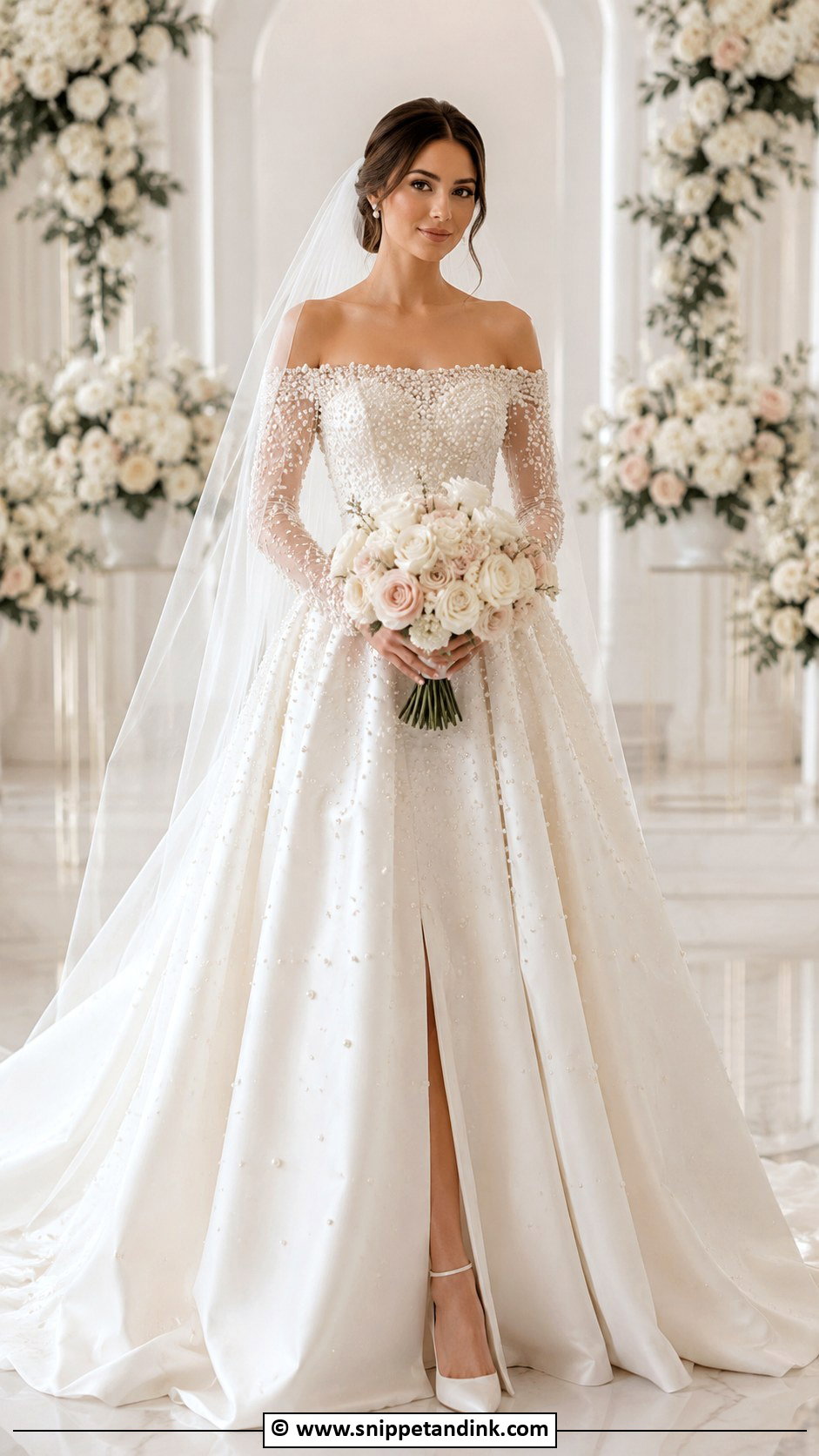
Pearls give a soft shine that glitter can’t. They work on tulle, crepe, satin and sheer sleeves, either scattered lightly or covering a bodice for more impact. The thing to check is the stitching. Hand-sewn pearls on a well-made gown stay put, but glued or loosely tacked ones pop off when you sit and bend, so tug one gently at the appointment. Keep accessories simple, with pearl studs, satin heels and a plain veil. Pearls catch soft light without flaring, so they look good indoors and out.
12. Bow Detail Wedding Dress Outfit
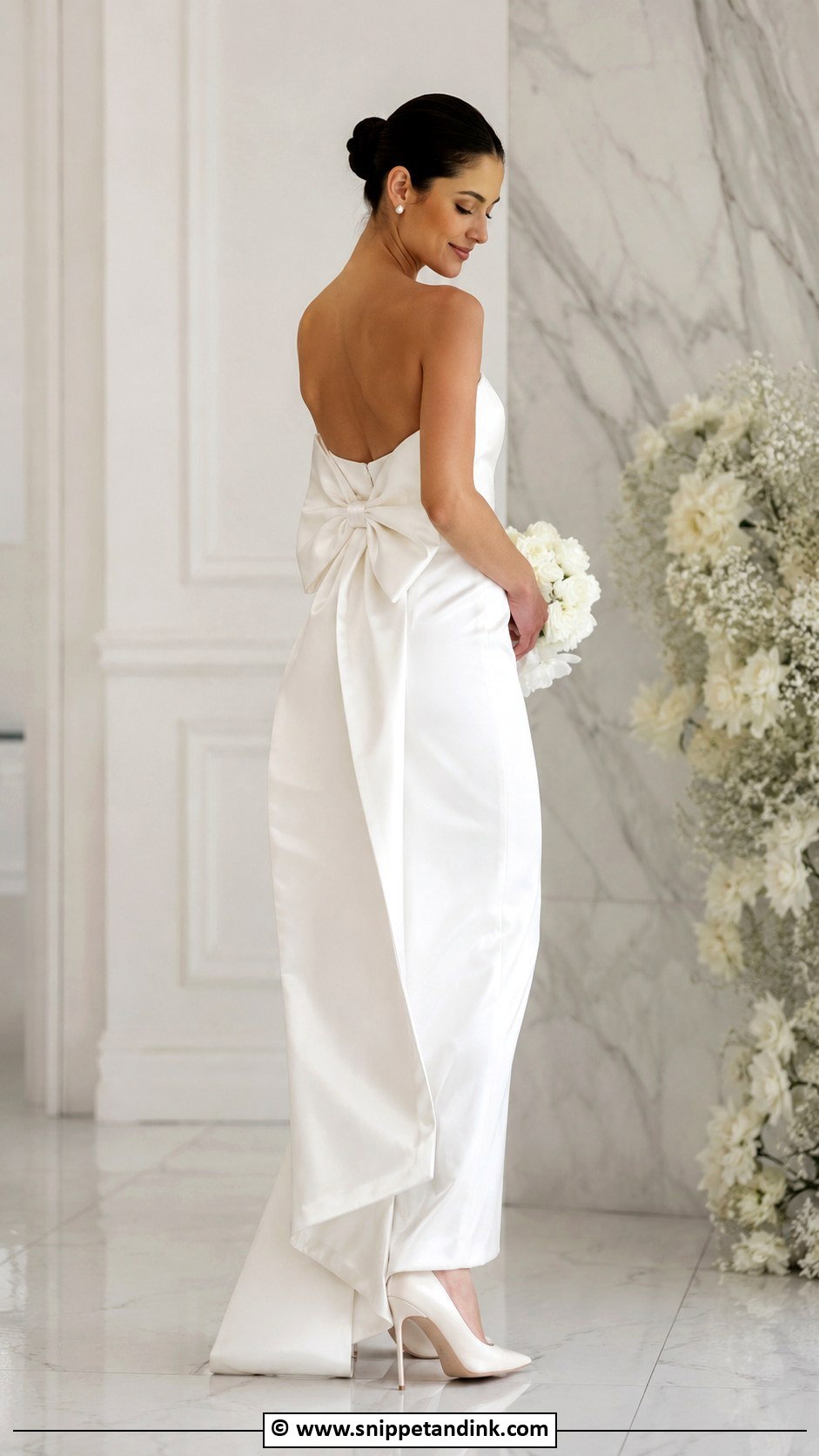
One strong bow beats several small ones. It can sit at the back of the waist, on a shoulder, at the neckline or as part of a removable train, and satin or mikado holds the shape crisply. A big back bow and a heavy veil compete for the same space, so I’d pair an oversized bow with a plain tulle veil or none at all. Pointed heels, pearl earrings and a smooth updo keep the focus on the bow. Check it after sitting, too, since a soft bow flattens against a chair back during dinner.
13. Corset Wedding Dress Outfit
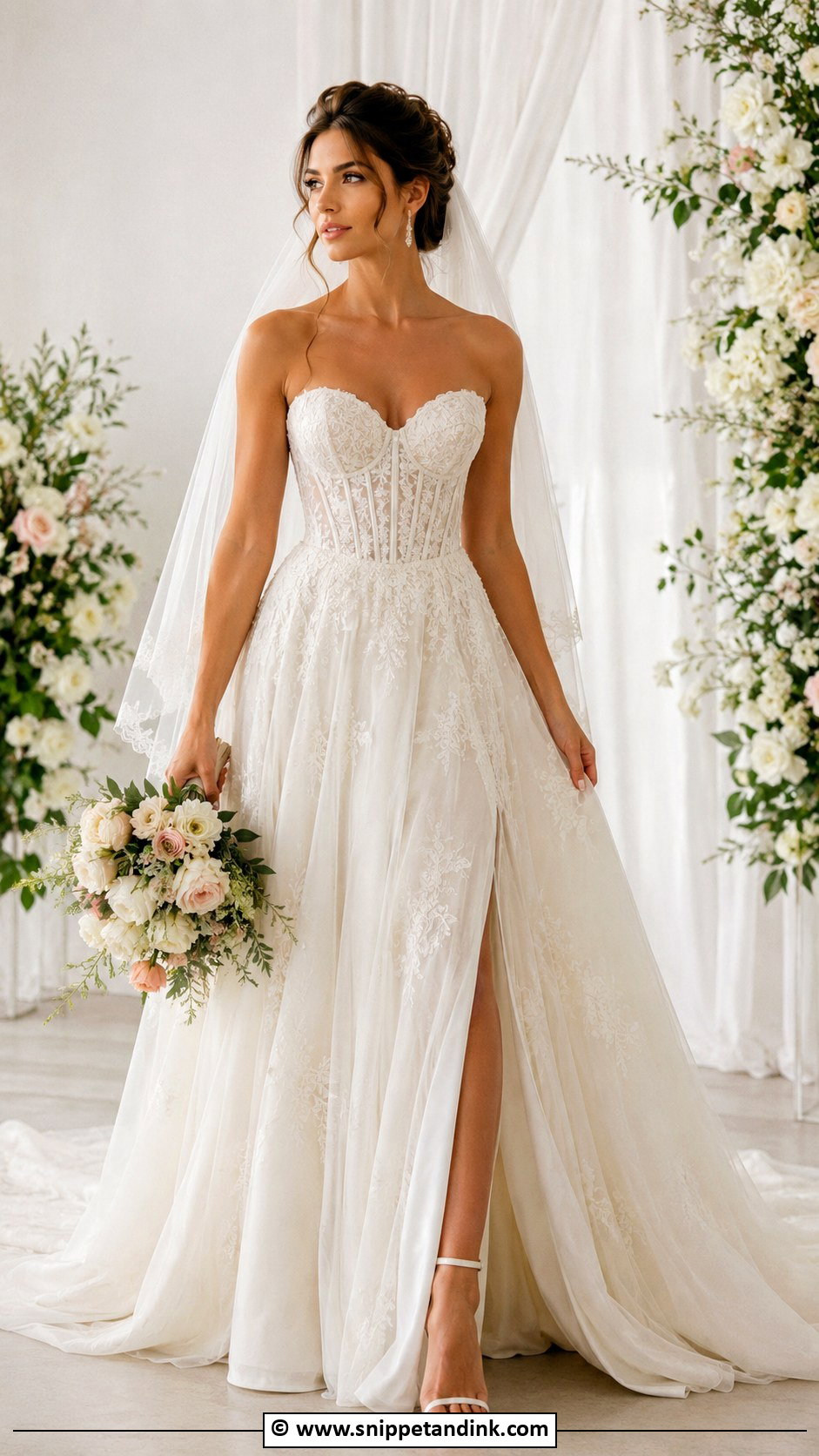
Modern corset bodices are built to support, with boning and often an internal waist tape that takes the strain off the zip or laces. Fit is everything. Too tight and you can’t eat or breathe comfortably; too loose and it slides down. A corset with an A-line skirt feels classic, and with a satin column skirt it looks more fashion-forward. Detachable sleeves or a sheer bolero add coverage for a religious ceremony. Delicate heels, drop earrings and a soft veil balance the structure, and the bodice usually needs no changes for the reception.
14. High Neck Wedding Dress Outfit
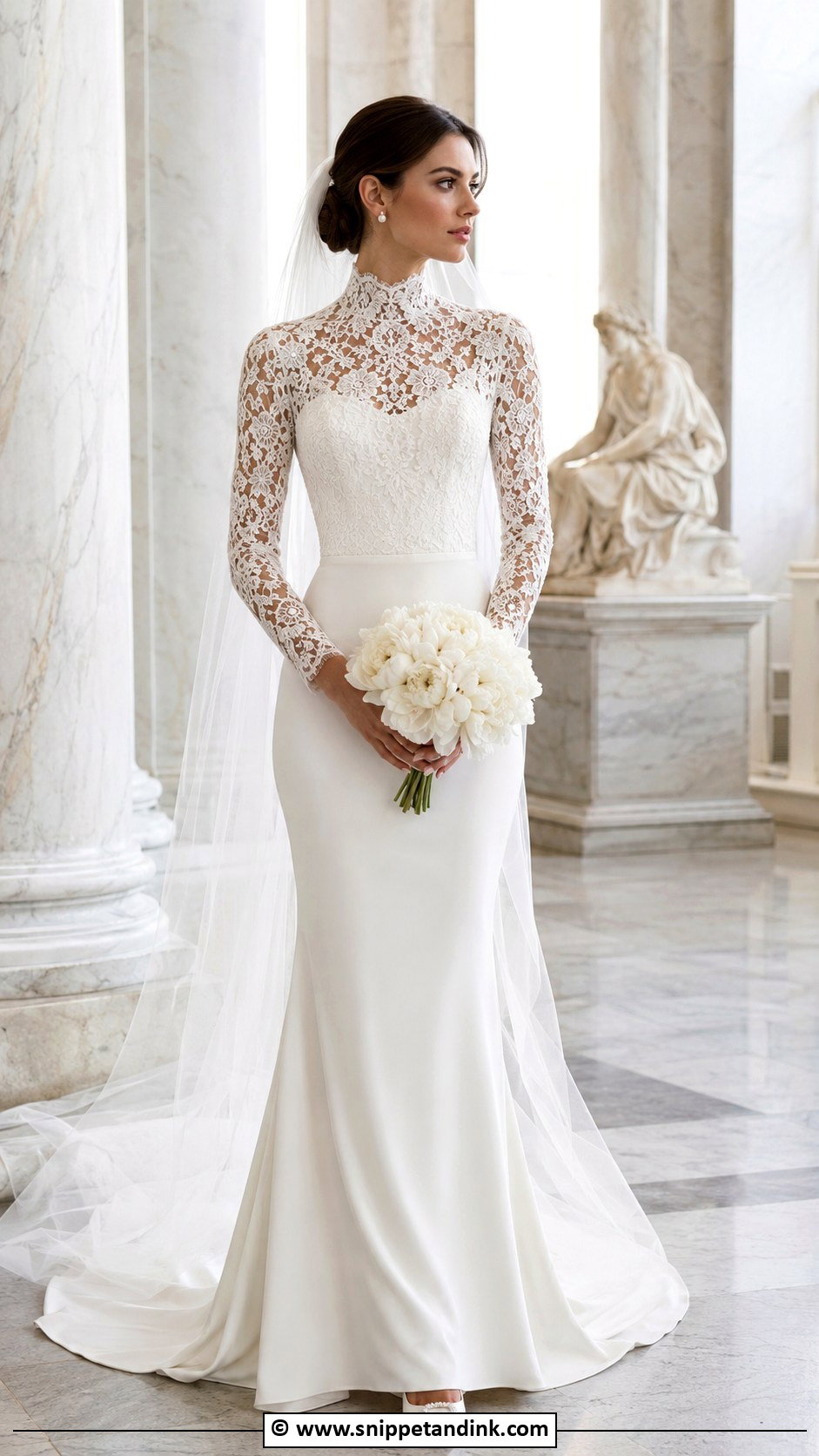
With a high neckline, the neck itself becomes the frame, so I keep hair up and jewelry off. A low bun shows the line, and a veil placed under the bun rather than at the crown sits cleanly against it. Lace, crepe, satin or soft tulle all work. A high neck in a heavy fabric can feel warm by the afternoon, so for a summer wedding choose an open back or lace. Pearl studs, pointed heels and a small bouquet balance it at a formal ceremony or a winter wedding.



15. Square Neck Wedding Dress Outfit
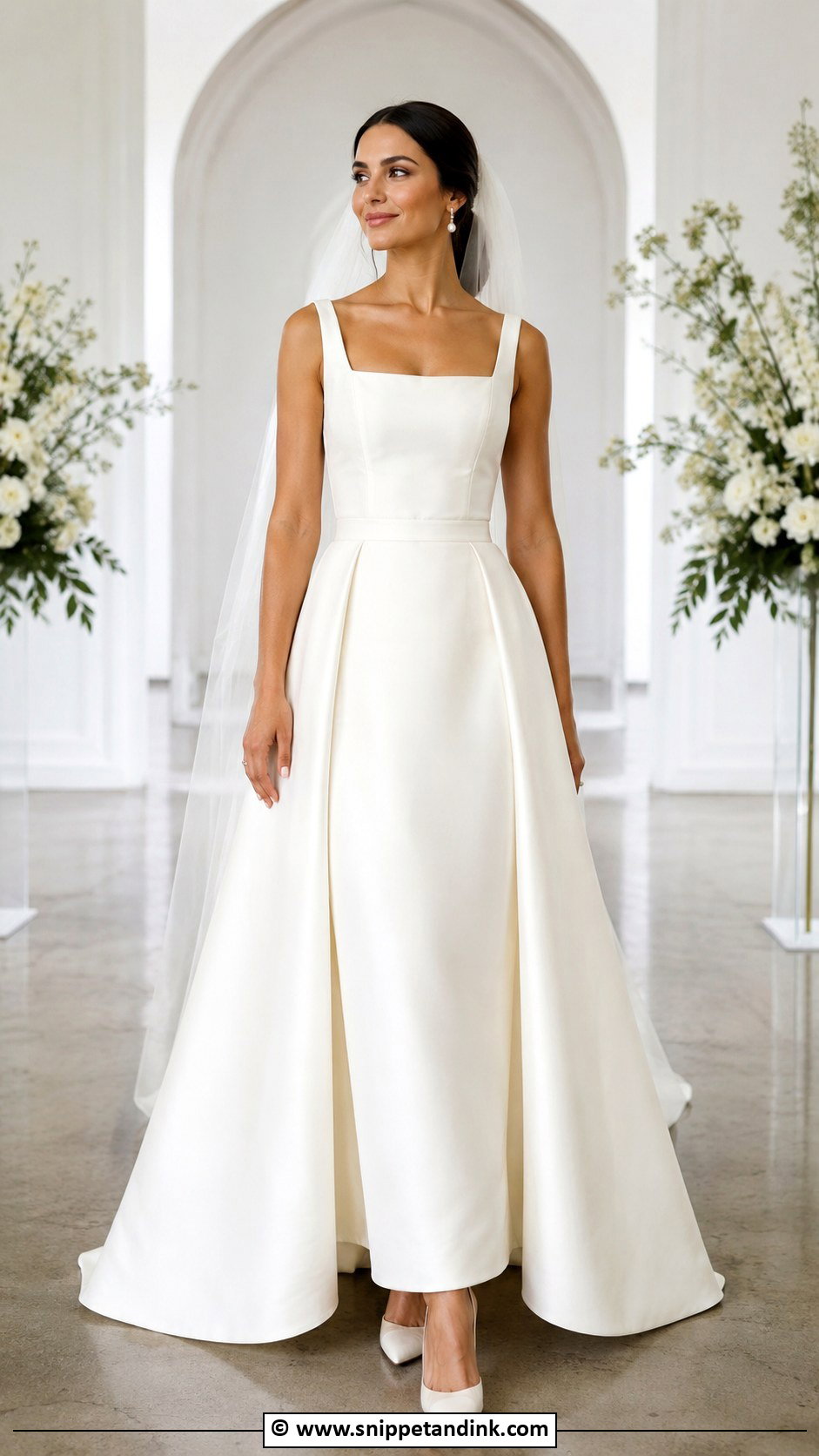
The square neck is the least fussy neckline I style. It frames the collarbones, works on fitted crepe and full satin skirts alike, and doesn’t date quickly. The fit point is the corners: they should sit flat against the chest, not gape when you lean forward. Pearl drops, a soft veil and sleek heels suit it. A low bun, smooth ponytail or brushed waves all work. If the dress is very plain, a textured veil or a bigger bouquet gives the eye something to land on.
16. Halter Wedding Dress Outfit
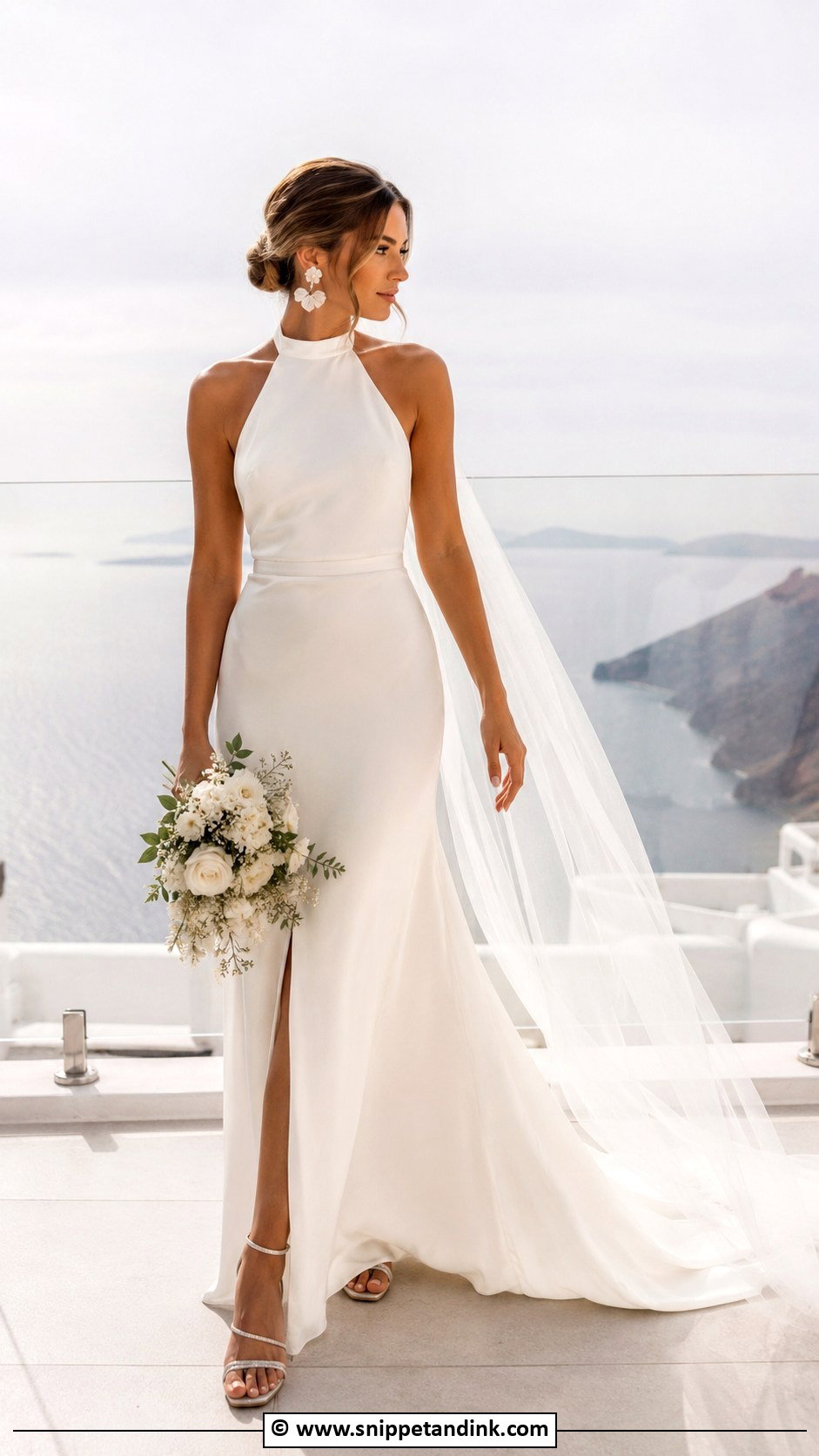
Halters show the shoulders and usually the back, so the back view matters as much as the front. A long veil against an open back gives real contrast. Satin, crepe and silk keep the neckline sharp. A fitted column feels urban, while a flowing skirt suits a beach. The strap carries the bodice weight from the neck, so heavier fabrics can pull by evening; ask whether the bodice has internal support. Skip the necklace, wear earrings, and keep the bun low. Rooftops and beach ceremonies suit it.
17. Slip Wedding Dress Outfit
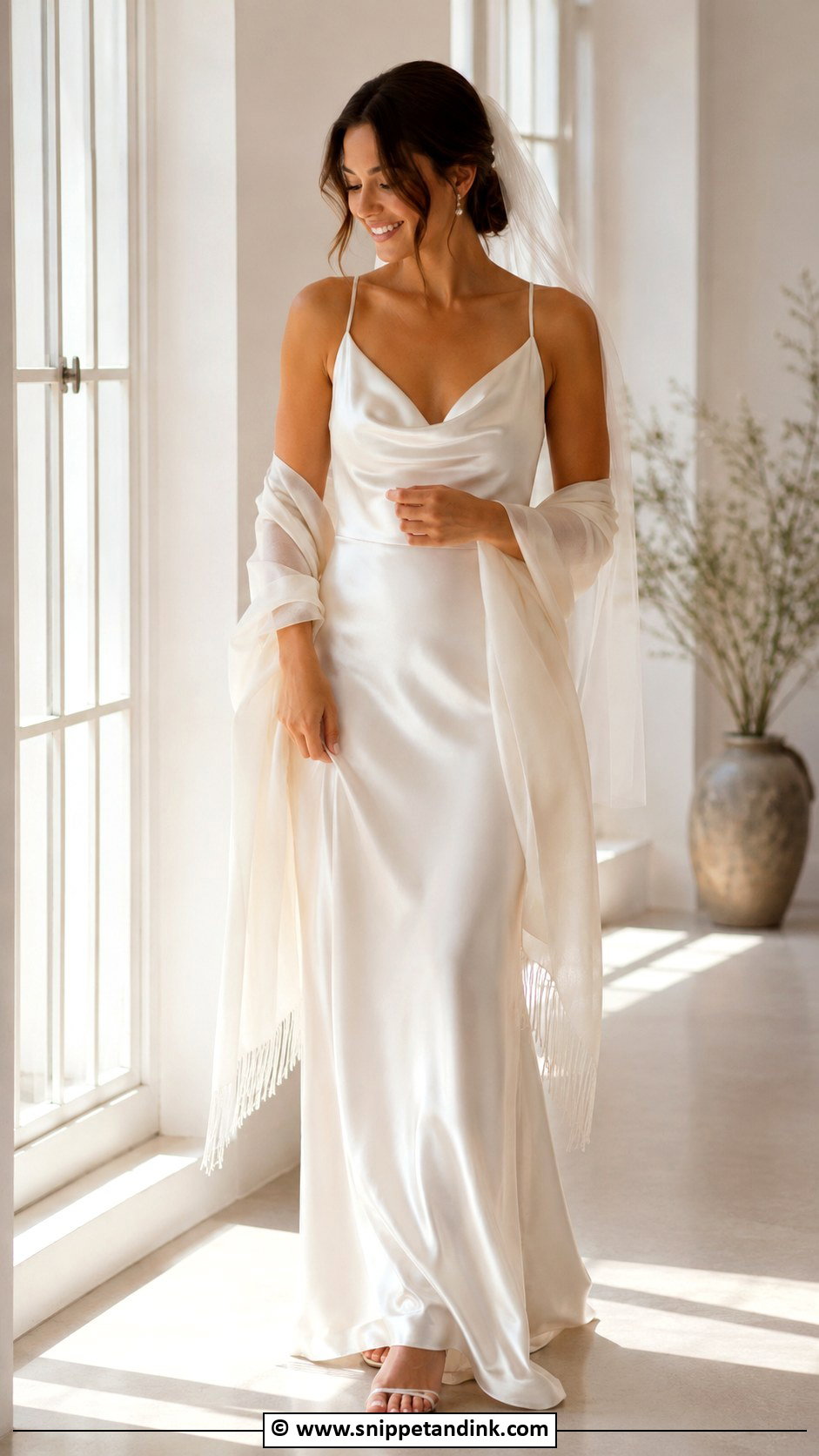
Slip dresses look simple and are anything but. Bias-cut silk or charmeuse clings to every curve and shows every line underneath, so I’d try it with the exact underwear you plan to wear, or choose a heavier satin slip with a lining. A bias cut moves beautifully; thicker satin gives more structure. Barely-there sandals, pearl earrings and a long veil suit the ceremony. In cool weather, a tailored bridal coat or a cropped cardigan works for portraits. It suits intimate ceremonies and destination weddings.
18. Two Piece Bridal Set Outfit
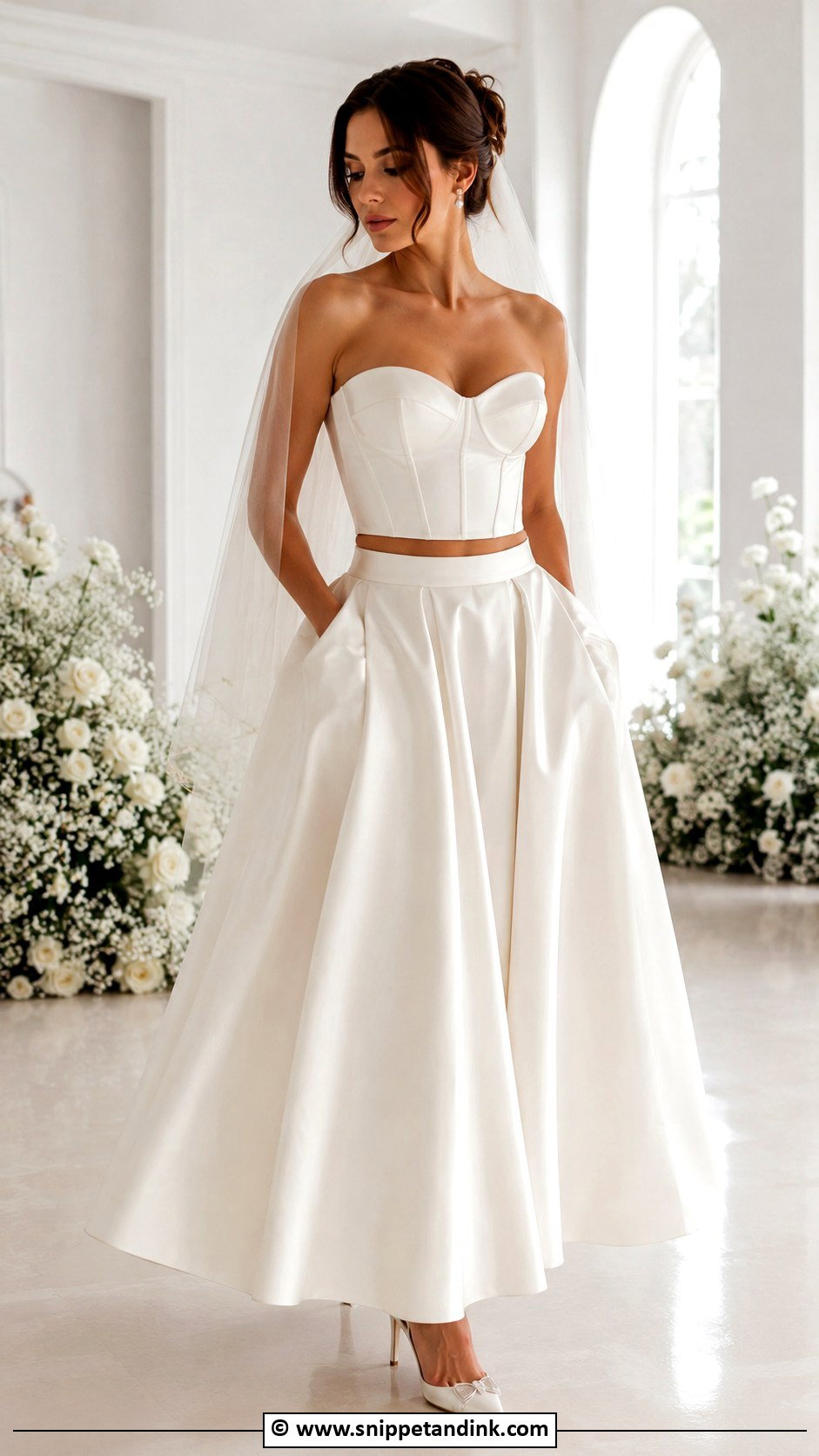
Two pieces let you fit each half separately, which helps brides who are a different size above and below the waist. A corset top with a full skirt feels romantic, a silk crop top over a column skirt reads modern, and a lace blouse with a satin skirt sits in between. Keep the whites in the same tone. A bright white top on an ivory skirt looks like two outfits in photos. A veil ties the pieces together. You can also rewear the top or skirt later, and changing for the reception becomes simple.
19. Bridal Blazer Dress Outfit
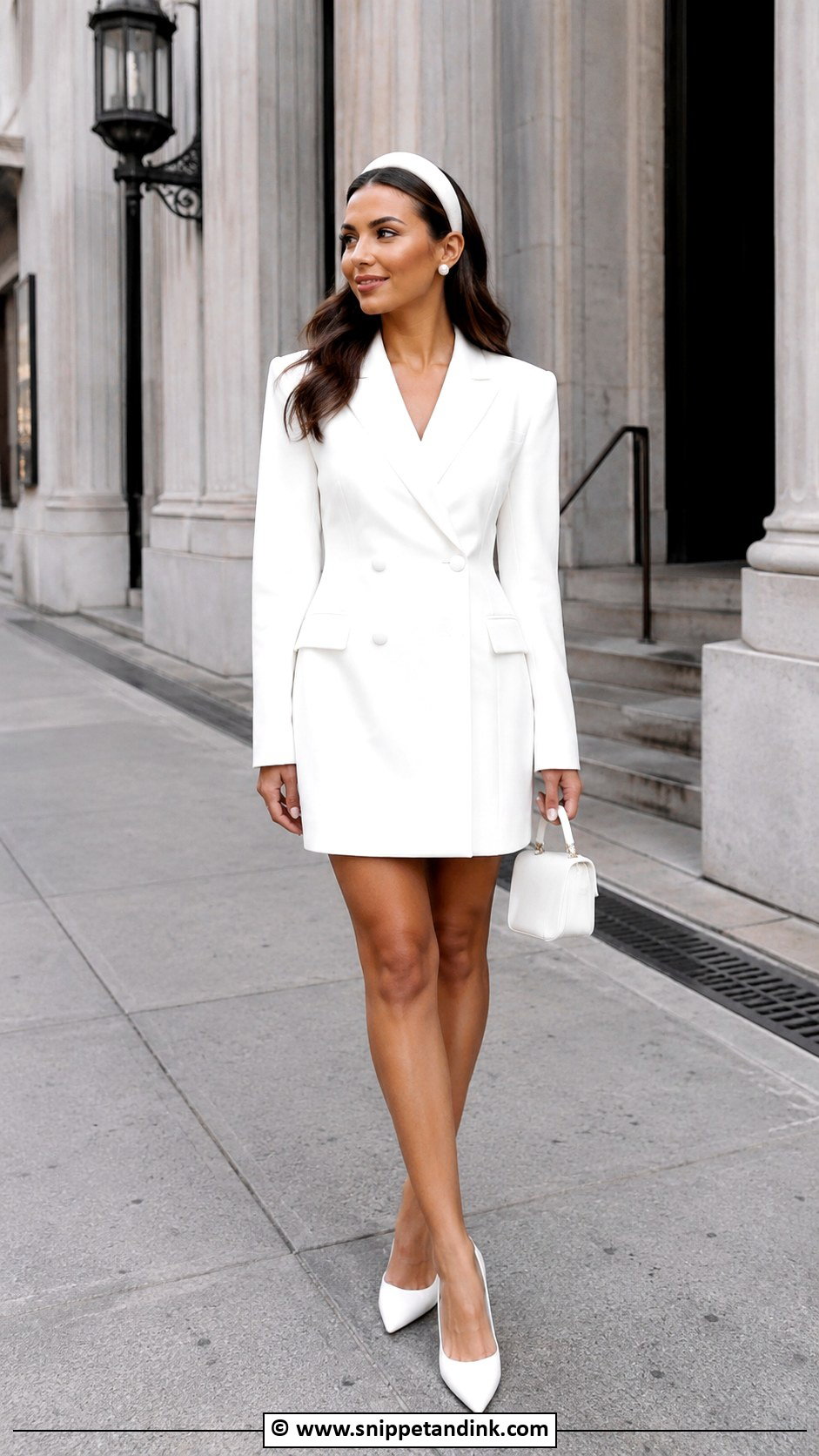
Blazer dresses look sharp in person but can ride up when you sit. Choose a slightly longer length with a defined waist, strong shoulders and clean buttons, and sit down in it before buying. Pointed pumps, sheer tights if needed and a structured mini bag keep it tailored. Pearl earrings, a short veil or a satin headband soften it. City weddings, registry office ceremonies and modern receptions all suit it, and it will come out again for future events.


20. Tulle Wedding Dress Outfit
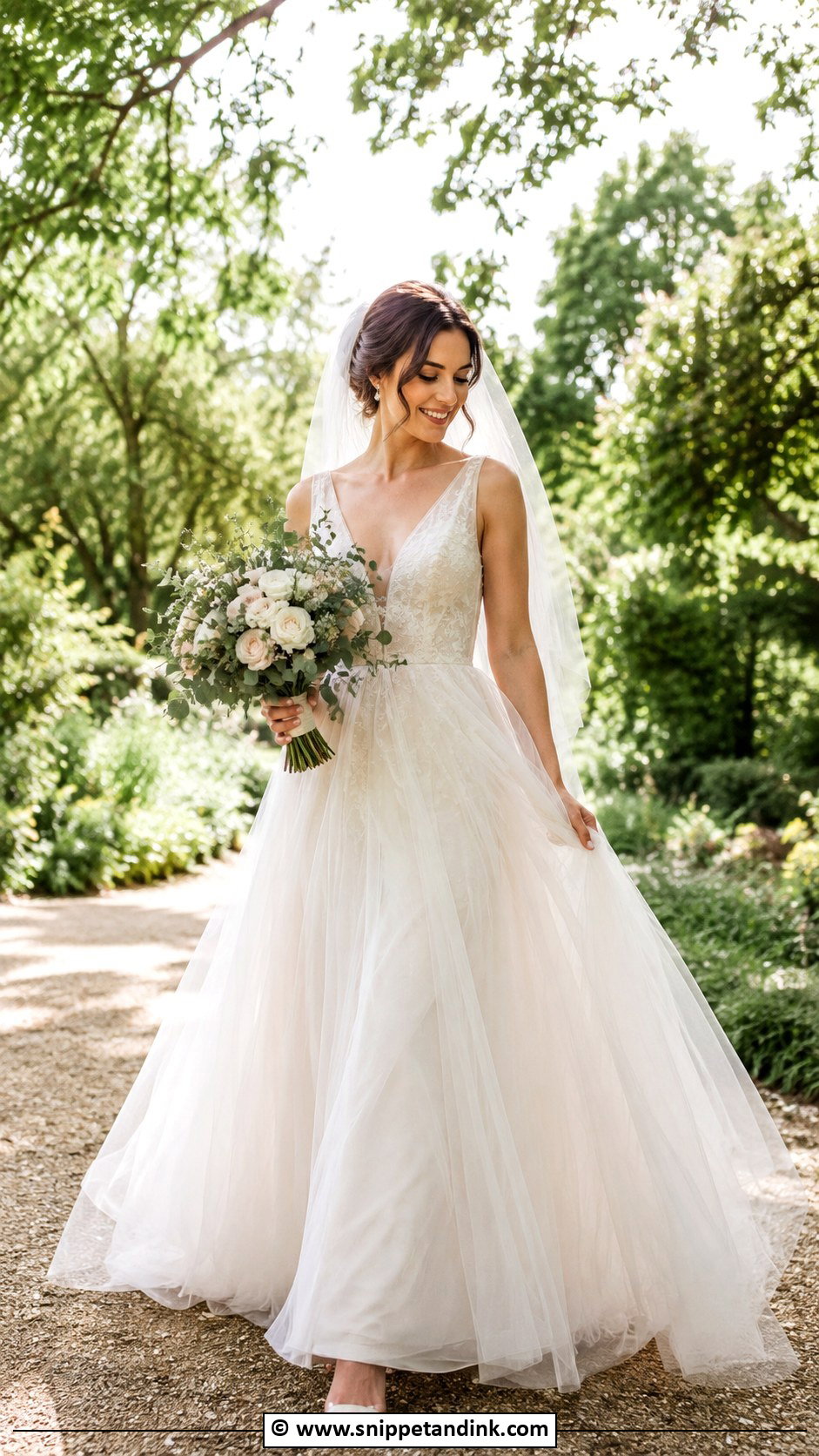
Tulle is light and airy, but it snags. Rough stone walls, bouquet wire and chunky bracelets all pull threads, so I keep jewelry smooth around a tulle skirt. A tulle A-line looks classic; a tulle skirt with a fitted bodice looks more modern. Choose a veil in the same tulle so the two blend. Light layers keep it from looking heavy. Gardens and outdoor portraits suit it best, and it’s far cooler to wear than satin of the same volume.
21. Floral Applique Wedding Dress Outfit
Appliqué flowers are stitched onto the dress, often by hand, which gives them a raised, crafted look that flat lace can’t match. Subtle white-on-white appliqué feels fresh; high-contrast designs can look busy at a distance. A sheer veil lets the flowers show through it. Simple earrings and satin heels keep the rest quiet, with a loose updo or brushed waves. Ask about cleaning before you buy, since raised appliqué needs specialist care afterward. Spring gardens and outdoor venues show it best.
22. Bridal Cape Wedding Dress Outfit
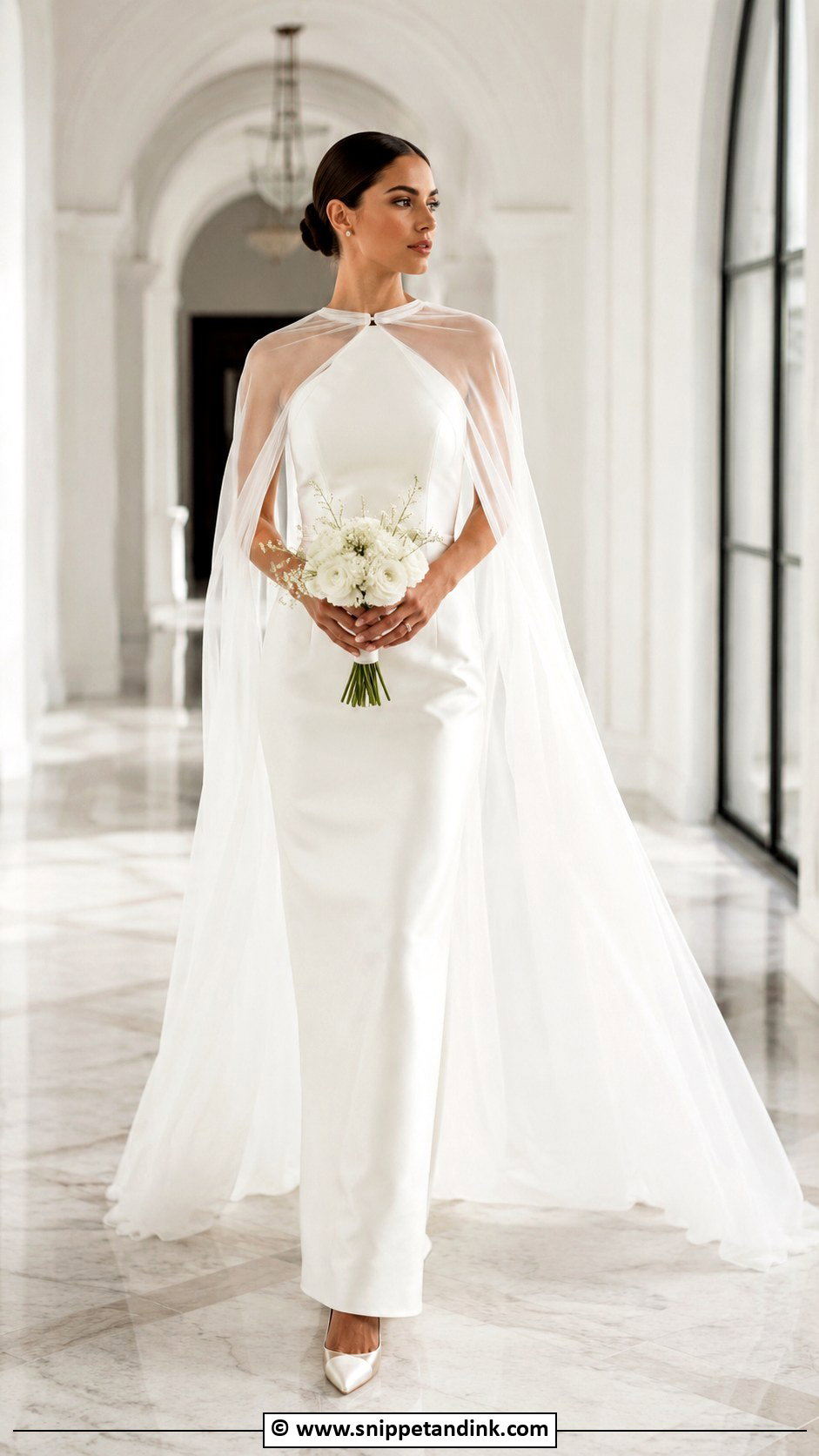
A cape can replace a veil, add coverage for a religious ceremony or turn a simple dress into something ceremonial. Sheer tulle is softest, a pearl cape adds texture, and clean crepe looks minimal. Under it, a column gown, slip dress, jumpsuit or fitted sheath lets the cape flow without fighting the skirt. Check where it fastens. Capes clipped at the shoulders slide unless they’re anchored to the bodice. Simple heels and small earrings keep the focus on the movement, which suits formal ceremonies and winter weddings.
23. Bridal Separates Skirt Outfit
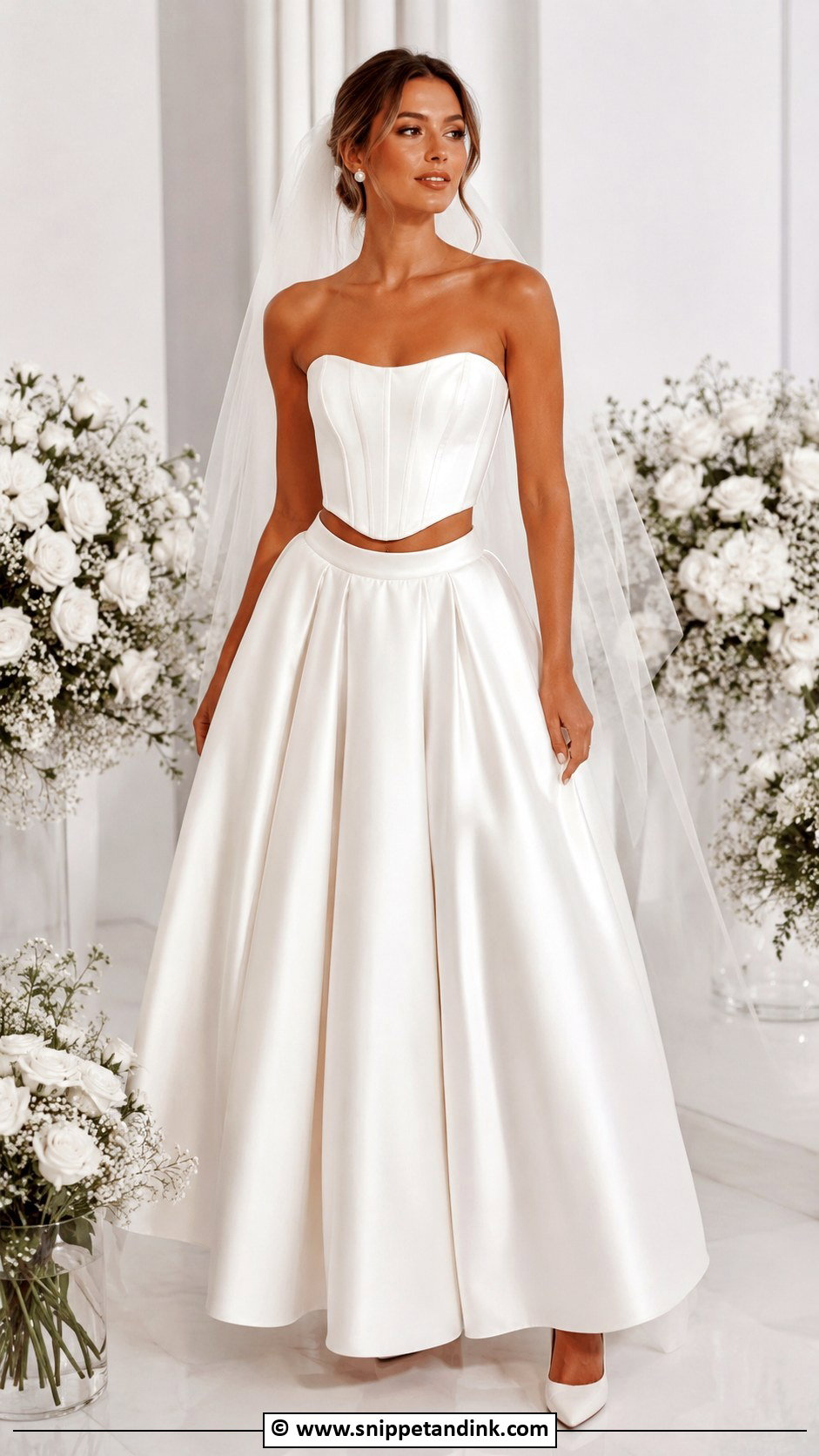
Separates give you control over every piece. Start with a full satin, tulle or lace skirt, then add a fitted corset, a silk blouse or a structured crop top. The waist seam is the risk: tops ride up when you raise your arms, so the top needs to sit inside the waistband or be cut long enough to cover it. A veil matching the skirt’s mood ties it together. For the reception, change the top or drop an overskirt. Creative brides and destination weddings suit this best.
24. Soft Blush Wedding Dress Outfit
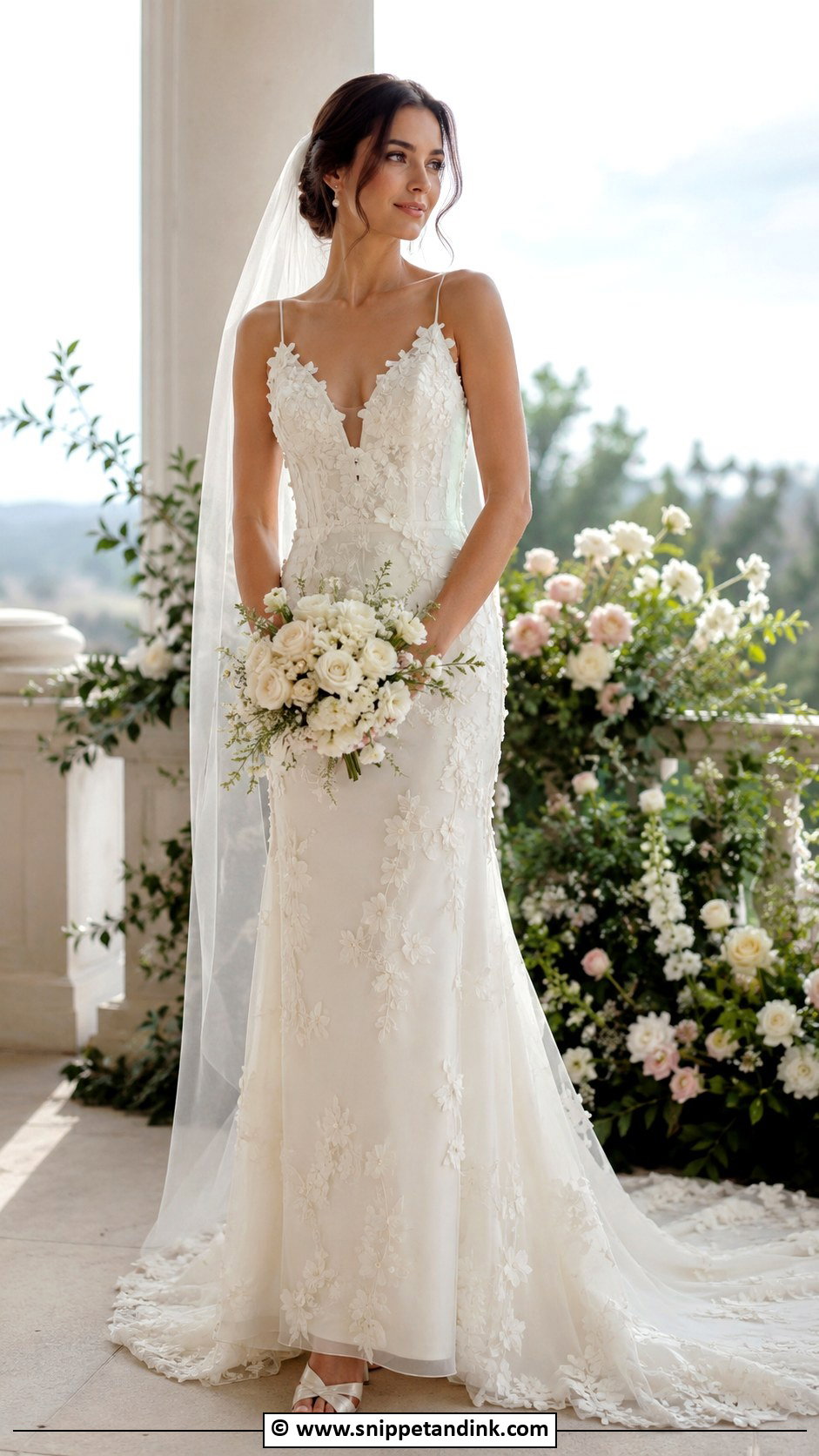
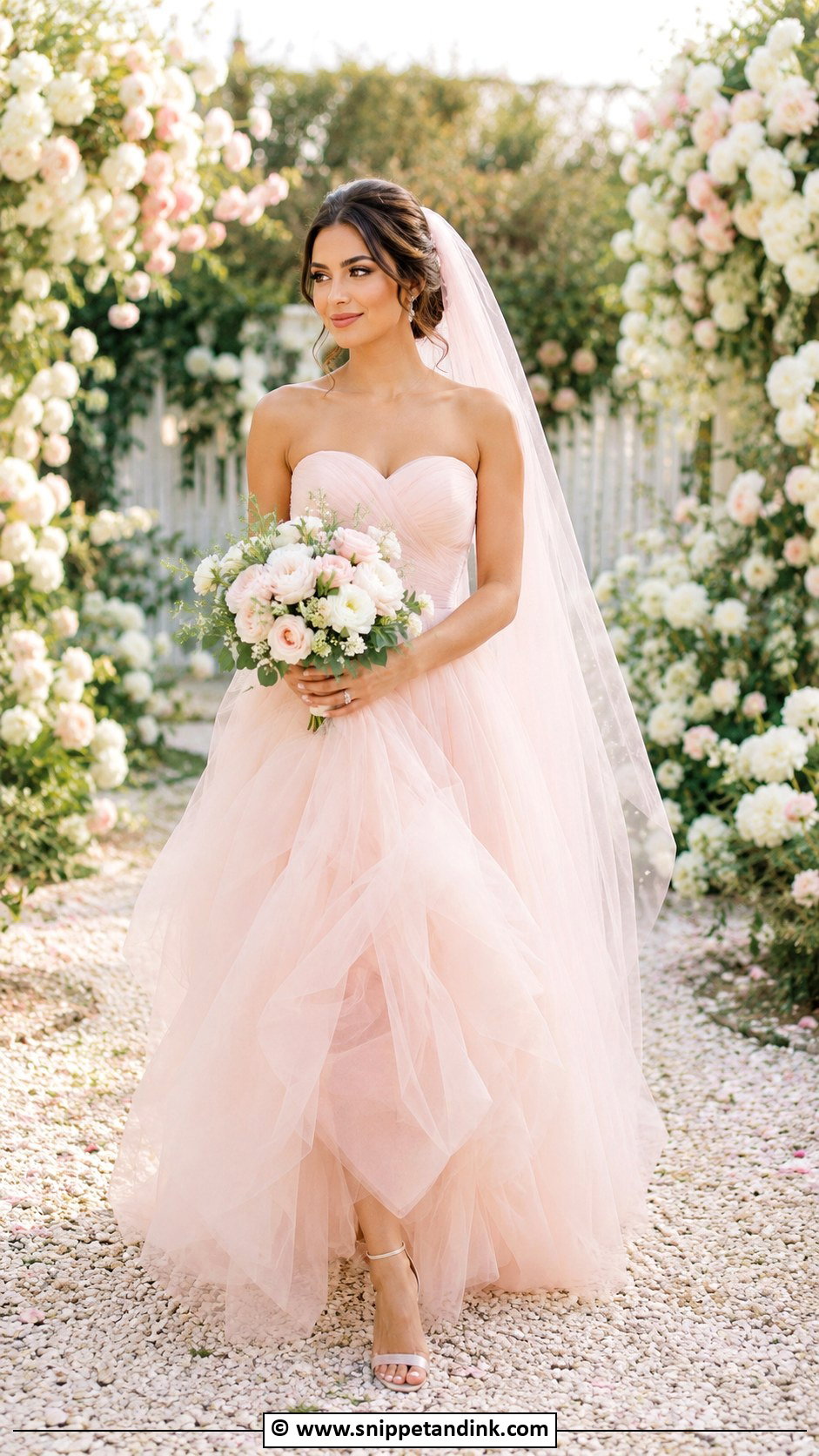
Blush warms the face where bright white can look stark, especially on fair or olive skin. The shade varies hugely between labels, from barely tinted to clearly pink, so always see the fabric in daylight. Tulle, satin or chiffon keep the color soft, and a simple silhouette lets the color carry the look. A blush or soft ivory veil, nude heels and pearl earrings complete it. A bouquet of white and pale pink flowers ties it together at a spring or garden wedding.

25. Reception Feather Mini Dress Outfit
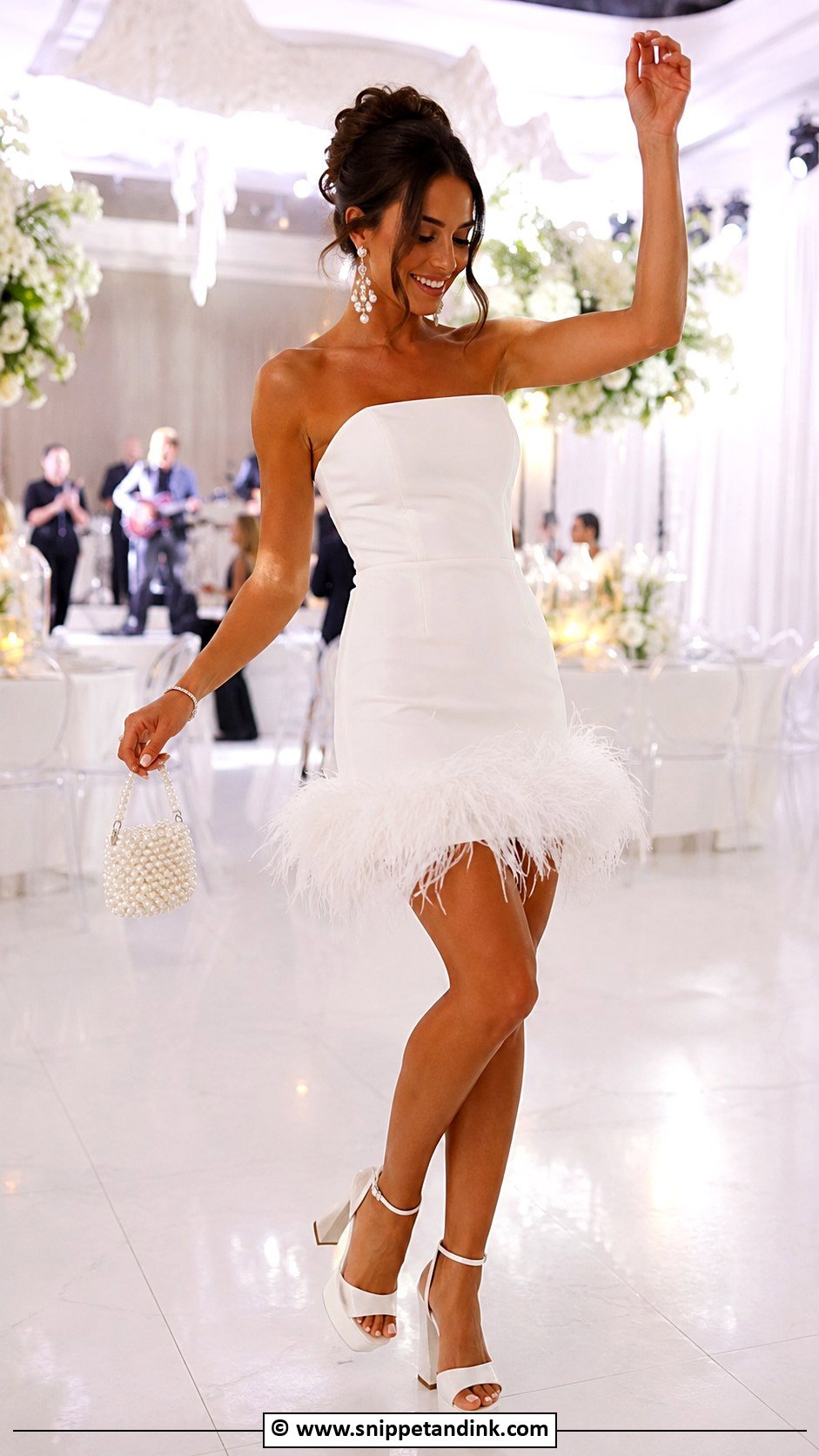
A reception feather mini dress is built for the dance floor, where feathers move with every step. Trim at the hem or cuffs is easier to live with than at the neckline, where it brushes your makeup. A structured white or ivory mini keeps the base polished. Platform heels, a small pearl bag and statement earrings suit it. After a classic gown, the contrast is the fun of it. Secure your hair well, because you’ll be moving a lot.
Bustling the Train So You Can Dance
Any gown with a train needs a bustle for the reception, and it’s added during alterations, not at the shop. There are a few common types:
- Over bustle: the train hooks up onto buttons at the back of the waist. It’s quick and suits lighter skirts.
- Under bustle, sometimes called French: the train folds under and ties inside with ribbons, creating soft scoops. It suits heavier satin.
- Ballroom bustle: the train lifts all the way to the hem so the skirt looks floor length. It takes the longest to set up.
Bring the person who’ll do it on the day to your last fitting, so the seamstress can show them. Colour-coded ribbon loops save a lot of guessing in a dim room. A full bustle can take ten minutes, so build it into the timeline straight after the ceremony.
Getting the Most From a Bridal Appointment
Appointments are short, and shop samples rarely come in your size, so the gown will be clipped to fit. Wear smooth nude underwear and bring shoes close to your wedding heel height. Bring photos of your venue, not just of dresses. A ballroom and a barn ask for very different skirts. Keep the group small; three or four opinions is plenty. And try at least one shape you’d never pick. Brides often surprise themselves.
One Ceremony Look, One Party Look, or Both?
No single outfit suits every bride. Some feel most like themselves in a ball gown, others in a pantsuit, a slip or a two-piece. Many now plan two looks: one for the ceremony and one for the party. Start with your schedule, your venue and how much you want to move, then judge every dress on fit, fabric and how it behaves when you sit, hug and dance. The outfit that survives that test, in whatever shape, is the one to say yes to.
You'll Like These Ideas:



Leave a Reply