
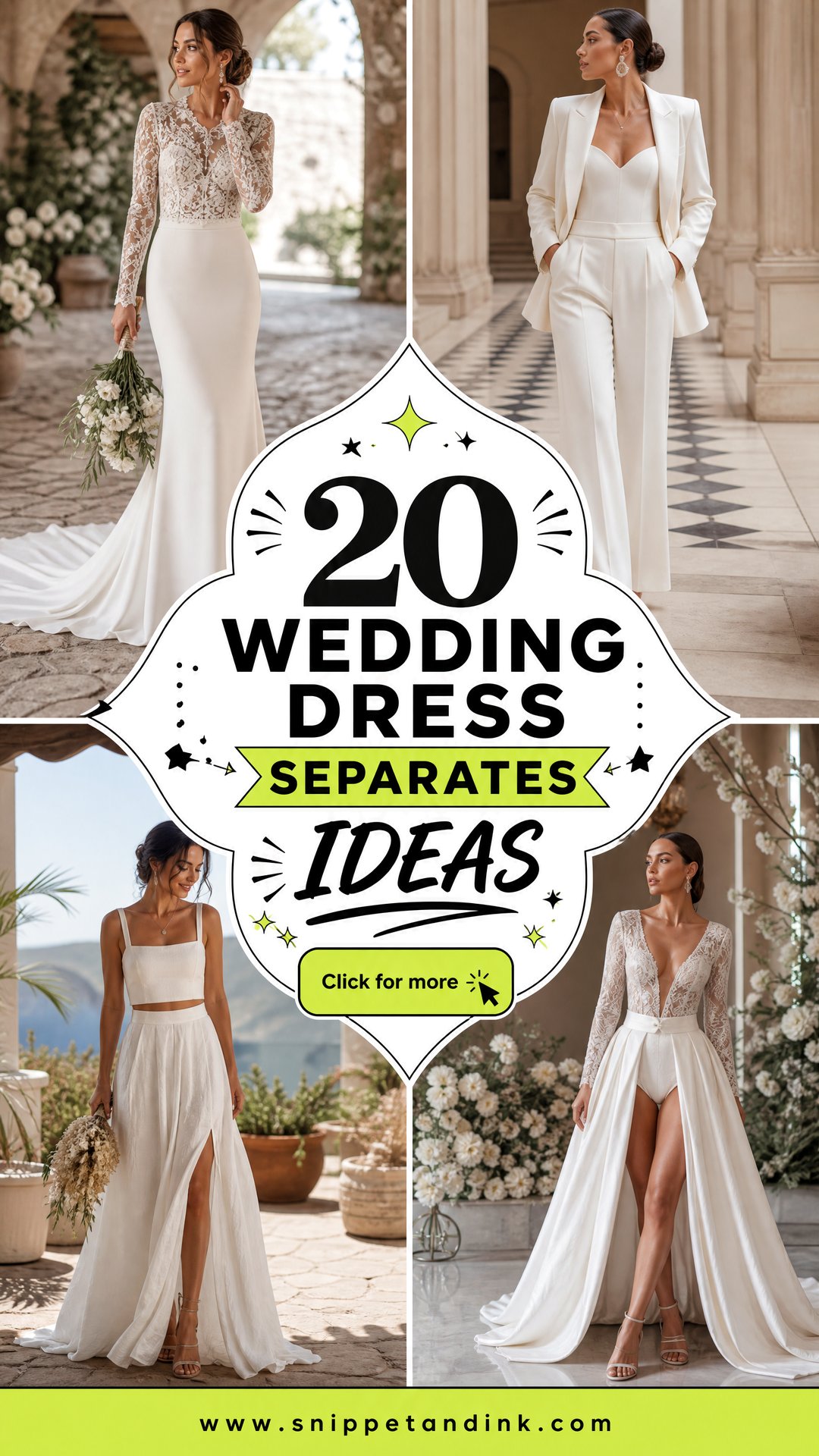
Separates solve a fitting problem that one-piece gowns can’t: plenty of brides are one size on top and another on the bottom. Buying a top and skirt (or trousers) lets each piece fit properly, and it lets you change the mood completely. A lace top with a tulle skirt reads romantic; a corset with tailored trousers feels sharp and modern. Bridal designers now sell removable sleeves, overskirts, toppers and swap-in bottoms, so you can have a ceremony look and a reception look without buying two dresses. What makes it work is matching colour, fabric weight, waistline and proportion between the pieces. Below are twenty complete outfits, from soft tulle to structured suiting, with the styling and fitting notes I’d give at an appointment.
Why Do Two Ivories Never Quite Match?
This is the question I get most from brides building separates. Bridal white comes in dozens of shades, and two makers’ ivory can differ visibly: one leans yellow, one leans pink, one is closer to grey. Fabric changes it too, since satin reflects light and makes a shade look brighter, while crepe and lace absorb it and look warmer.
- Order swatches of both pieces before buying either, and hold them together in daylight, not under shop lights.
- If one piece is bought, take it with you when shopping for the other.
- Match the undertone first, then the fabric weight. A heavy Mikado skirt under a fine chiffon top can look mismatched even in the same shade.
- Buying both from one designer is the safest route, since they’re usually dyed to match.
Where the two pieces meet
The waist join is where separates go wrong. I want the top either tucked under the skirt’s waistband or finishing exactly on it, and I ask the tailor to add a few hidden hooks or a small elastic waist stay to keep them together. Without that, the top slides up whenever you lift your arms, and a heavy skirt slowly drags down. A dancer’s trick that works here too: a short length of silicone grip tape inside the skirt waistband stops a smooth top from slipping.
1. Lace Crop Top And Tulle Skirt Wedding Dress Separates
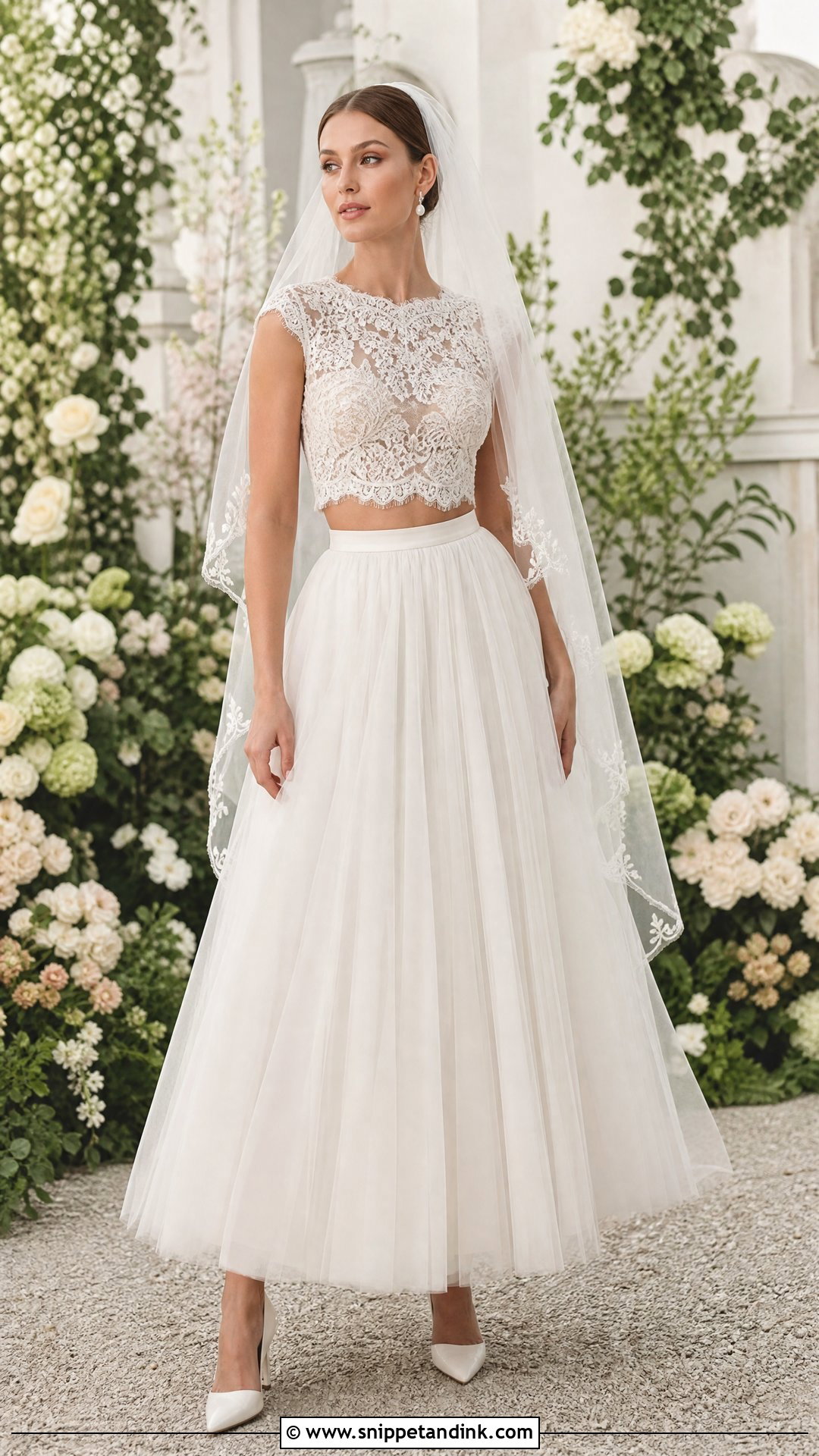
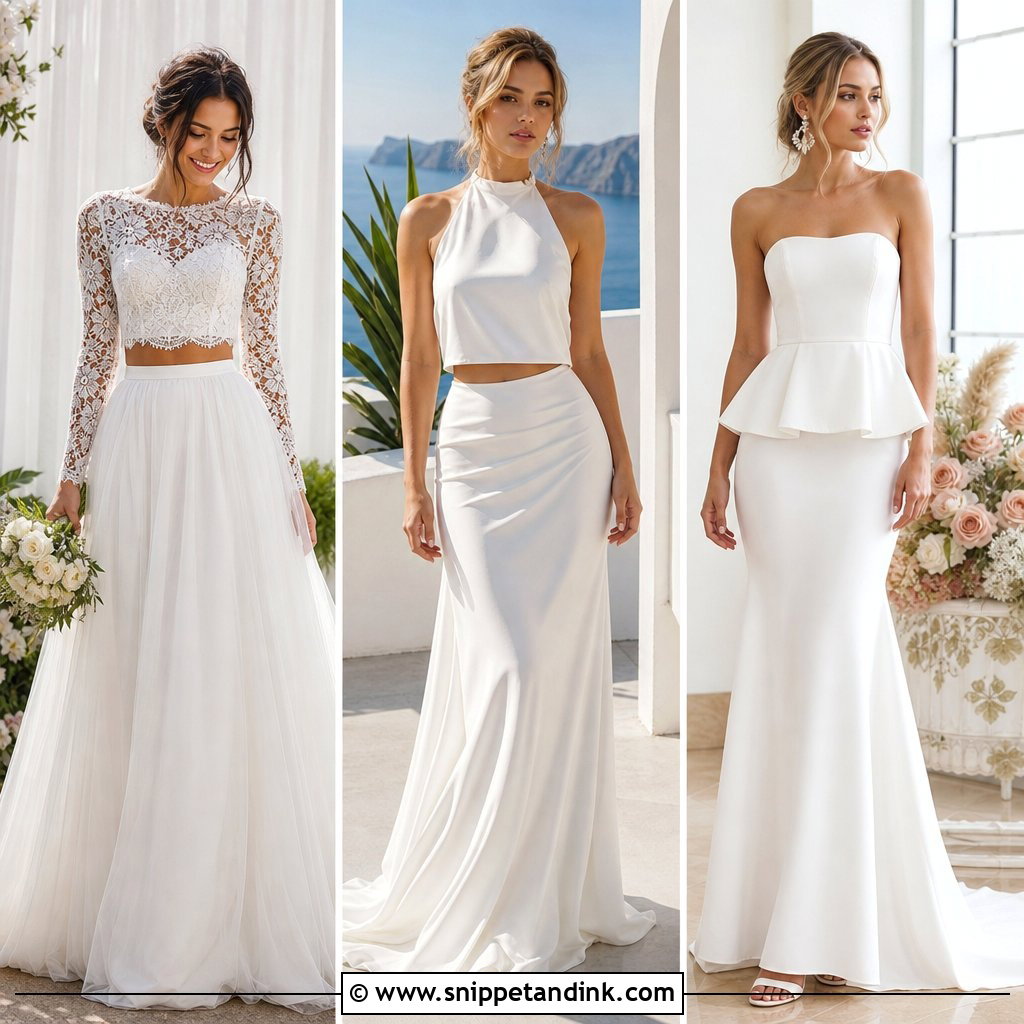
Lace crop top, tulle skirt: probably the most requested pairing I see. The top should finish right at the skirt’s waistband so only a sliver of skin shows; a high-waisted A-line skirt covers the rest and moves softly. Ivory lace over a neutral lining keeps the two pieces looking related. Pearl drops, a fingertip veil and pointed satin pumps suit indoors, and embellished flats or block-heel sandals take over on a lawn. If you’d rather not show skin at all, a sheer lace panel can bridge the gap. One fitting note: when you raise your arms, a crop top rides up, so check the gap with your arms up, not just standing still.
2. Satin Corset Top And A-Line Skirt Wedding Dress Separates
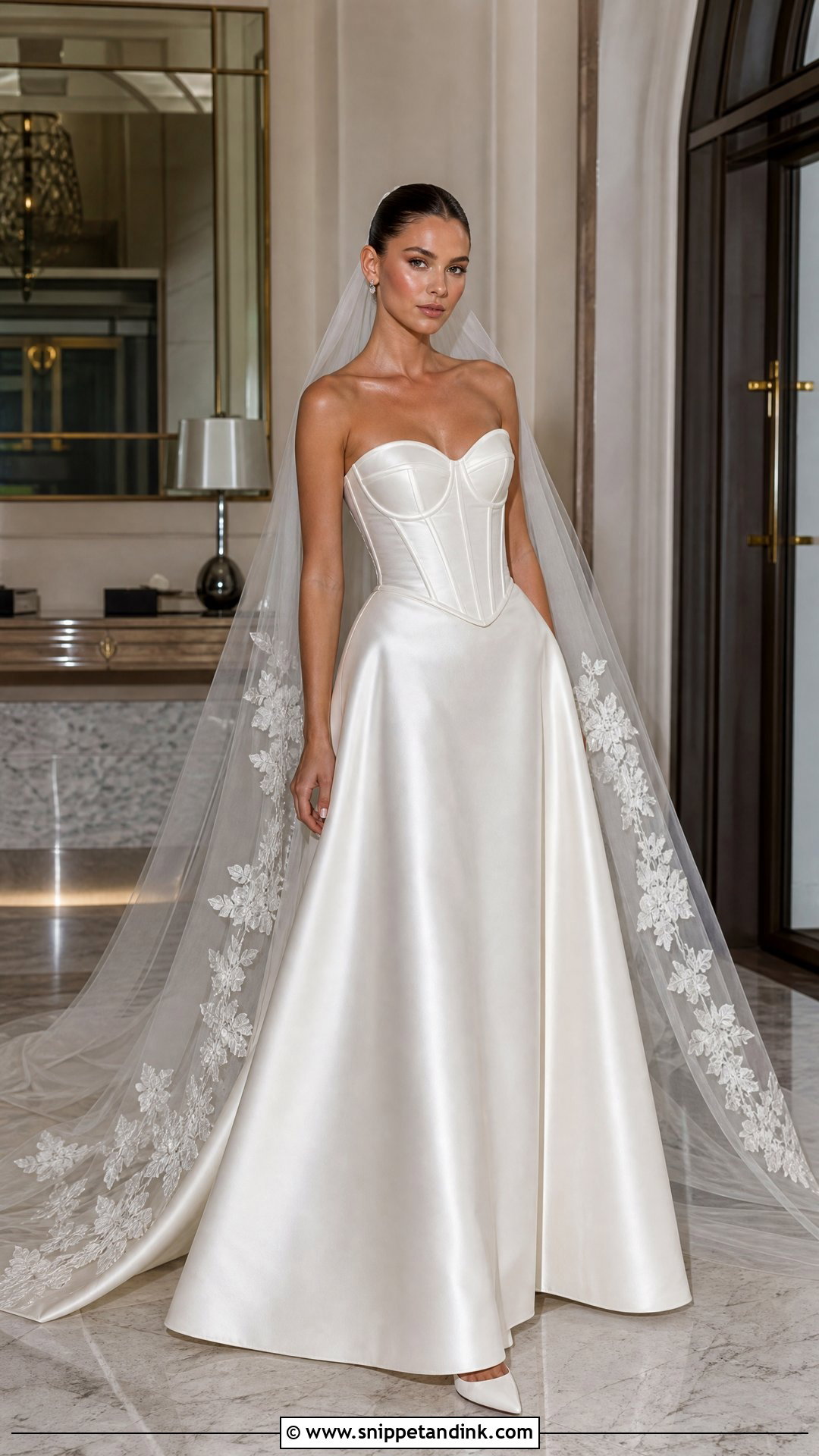
When top and skirt are cut from the same satin, most guests won’t know you’re wearing two pieces. I’d start with a boned corset top and a gently curved neckline, then a high-waisted A-line that skims the hips before widening. A cathedral veil, crystal studs and sleek pointed pumps finish it, with a low bun to keep the neckline clear. If the corset is detailed, the skirt should be plain, no gathers or beading. Satin from different dye lots can differ slightly in shade, so I always buy both pieces from the same maker or order them together. Formal ballrooms and evening ceremonies suit it.
3. Long Sleeve Lace Top And Crepe Skirt Wedding Dress Separates
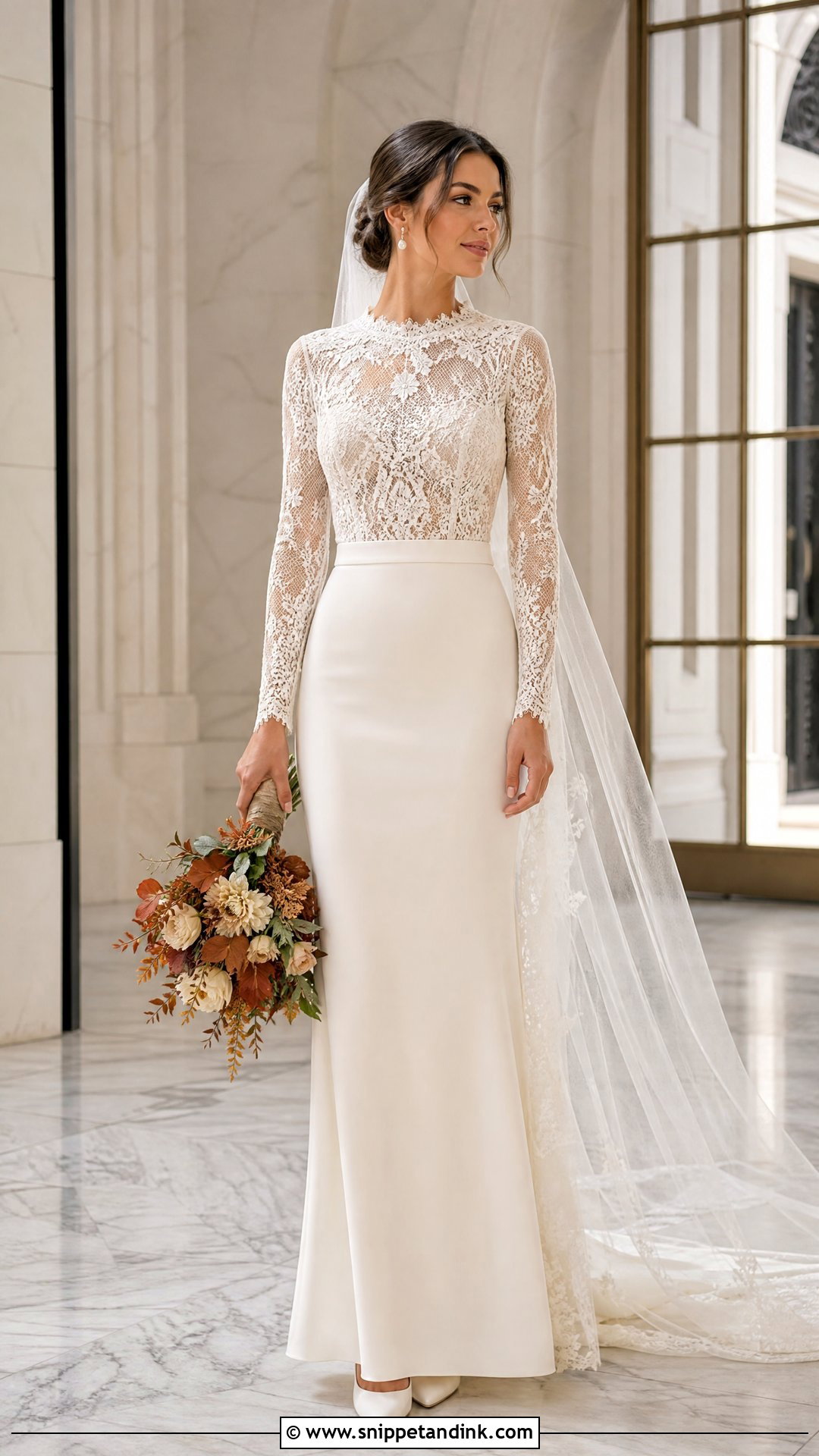
Lace against crepe is a contrast I like because each fabric makes the other look better: the lace looks finer, the crepe looks crisper. Choose a fitted long-sleeve lace top with a lined bodice, sheer sleeves and covered buttons down the back, then a high-waisted crepe skirt, straight, A-line or a soft fit-and-flare. The undertones have to match. Bright white lace next to a warm ivory crepe looks like two different outfits. Pearl earrings, a comb veil, closed pumps and a bouquet of clean greenery complete it. It gives arm coverage without weight, so autumn ceremonies, cool spring days and traditional churches all suit it, and the fabric contrast keeps each piece distinct in photos.
4. Silk Camisole And Bias Cut Skirt Wedding Dress Separates
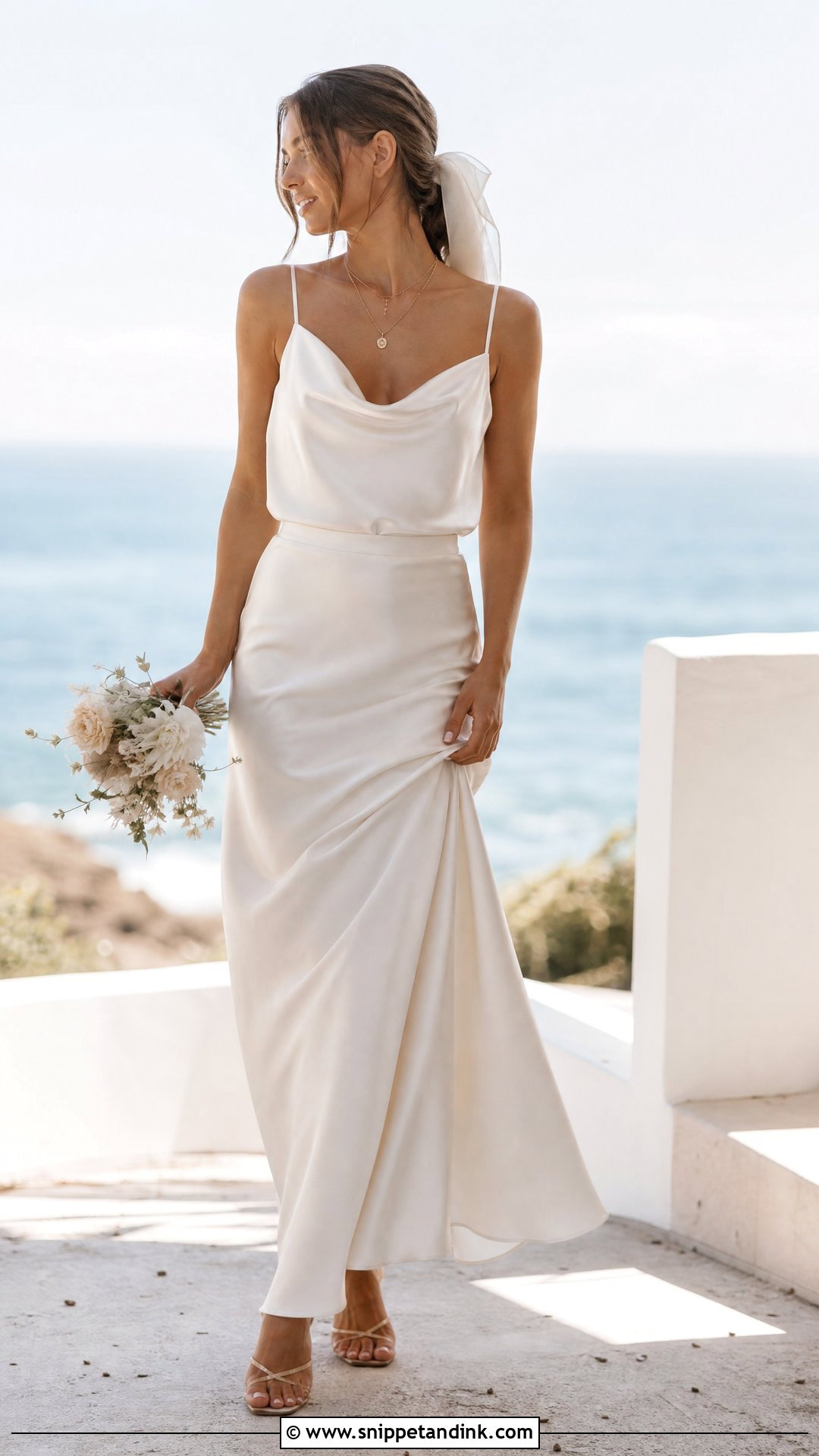
Silk camisole plus bias-cut maxi skirt is the easiest outfit here to wear, and the hardest to fit well. Cutting on the bias makes the fabric follow the body closely, which also means it shows every line underneath. Choose a cami with wider straps, a soft drape or a low cowl back, and a skirt that sits firmly at the natural waist and falls smoothly over the hips. Layered fine jewellery, low strappy heels and a light veil or a ribbon in the hair suit it. A silk shawl helps if an outdoor ceremony turns cool. I insist on smooth, invisible underwear and a daylight check before alterations begin. Beaches and small modern weddings suit it best.
5. Off Shoulder Top And Chiffon Skirt Wedding Dress Separates
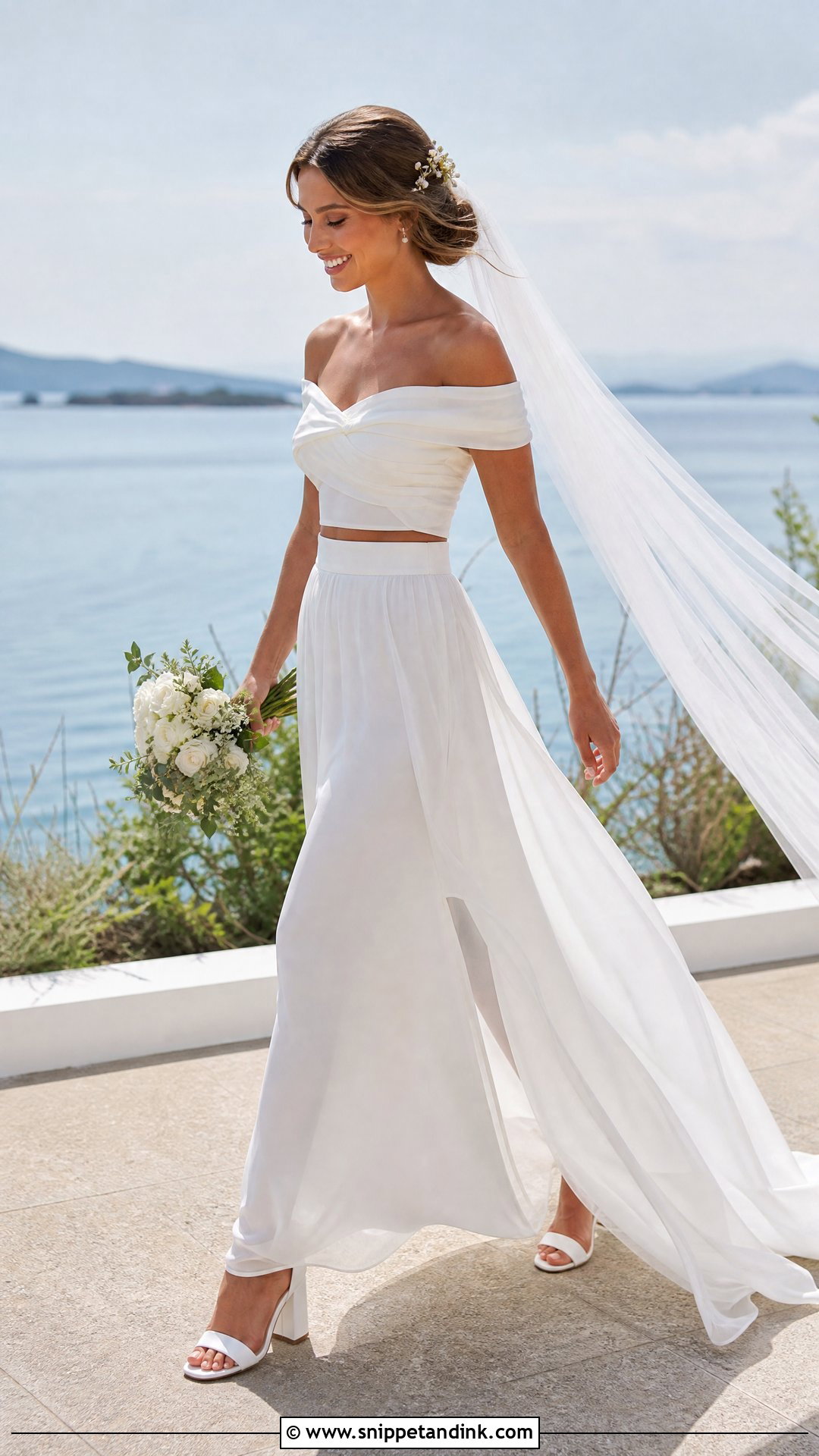
Off-shoulder tops need structure underneath or they’ll keep sliding down. A folded neckline, short draped sleeves or an inner boned bodice all help. Pair it with a high-waisted chiffon skirt lined in light satin or crepe; gathered feels romantic, A-line looks cleaner. A small pendant, floral pins and block-heel sandals keep it light, and a chapel veil adds some ceremony drama. Lift your arms at the final fitting. If the neckline moves, the top needs more support before the wedding, not more tape on the day. Summer, waterfront and garden weddings with lots of dancing are where this one belongs.
6. Beaded Top And Satin Skirt Wedding Dress Separates
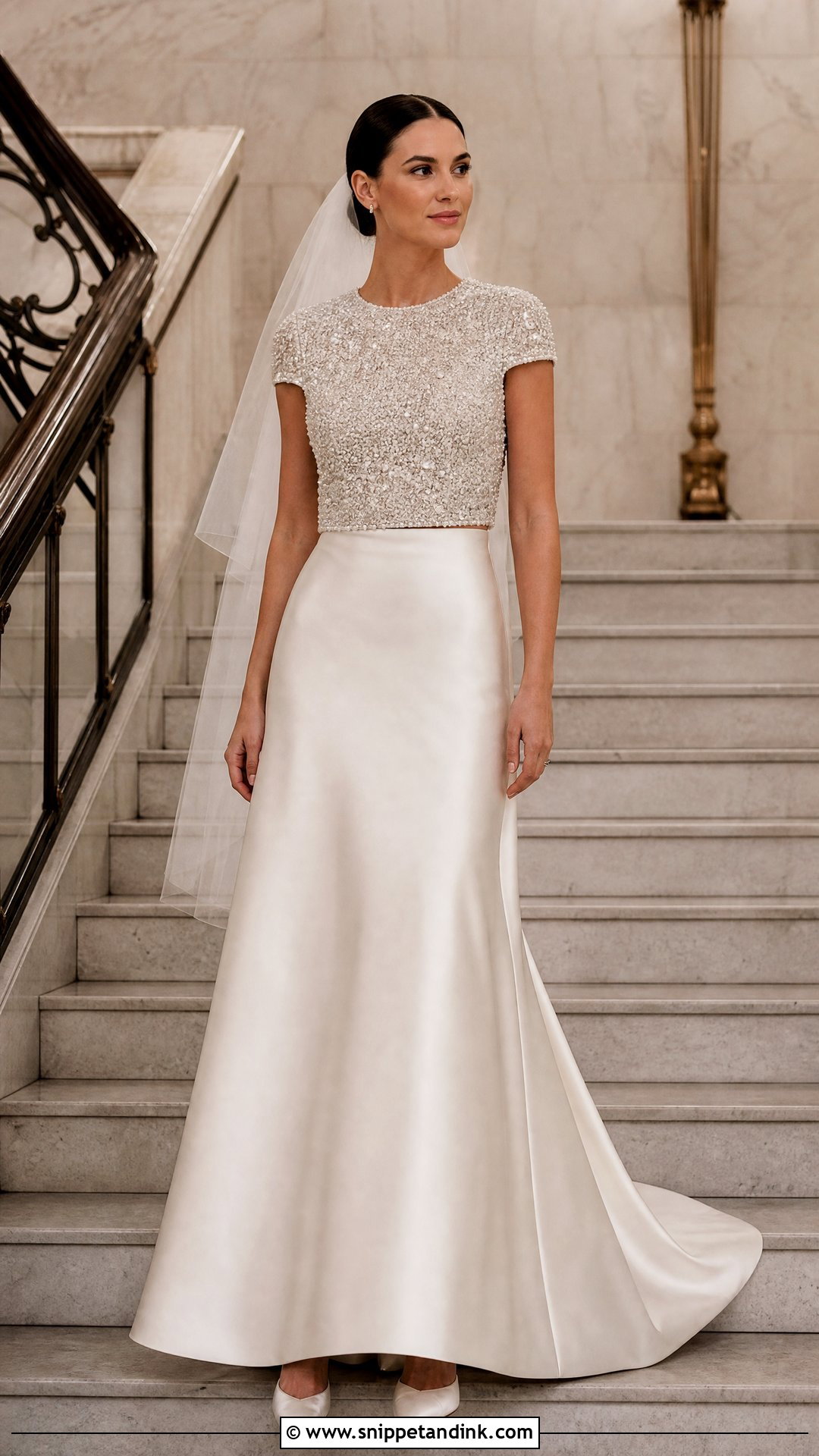
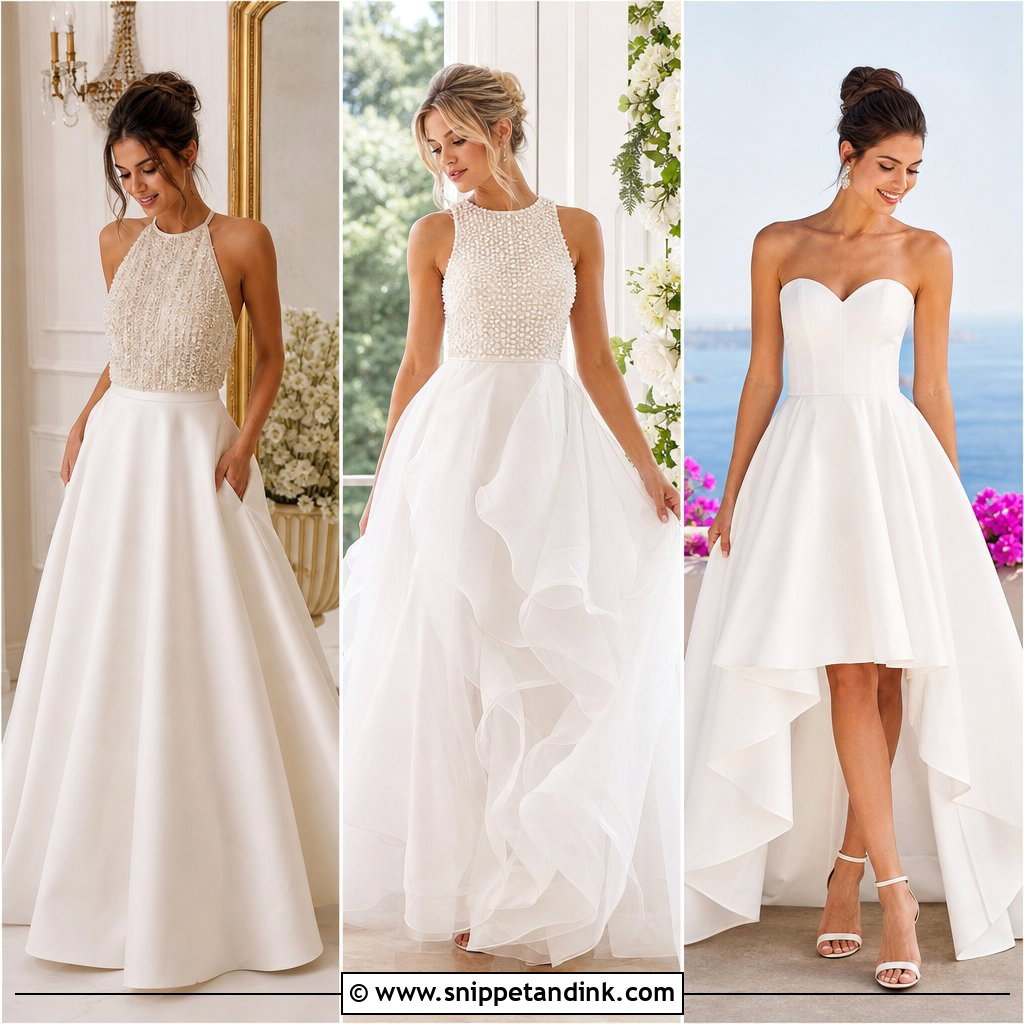
Putting all the sparkle on top and keeping the skirt plain looks formal without the weight of a fully beaded gown. I look for crystal, pearl or tonal beadwork concentrated around the neckline and bodice, over a smooth A-line or column skirt. Both pieces need the same undertone: ivory, cream or champagne, not a mix. Plain studs, satin pumps and a single-layer veil are enough, and I’d never add a busy necklace against the beading. A small metallic clutch suits the reception. Heavy beading drags a separate top downward, so check that it has a firm waist tape or hooks to anchor it to the skirt. Glamorous hotels and lofts suit this best.
7. Halter Top And Wide Leg Pants Wedding Dress Separates
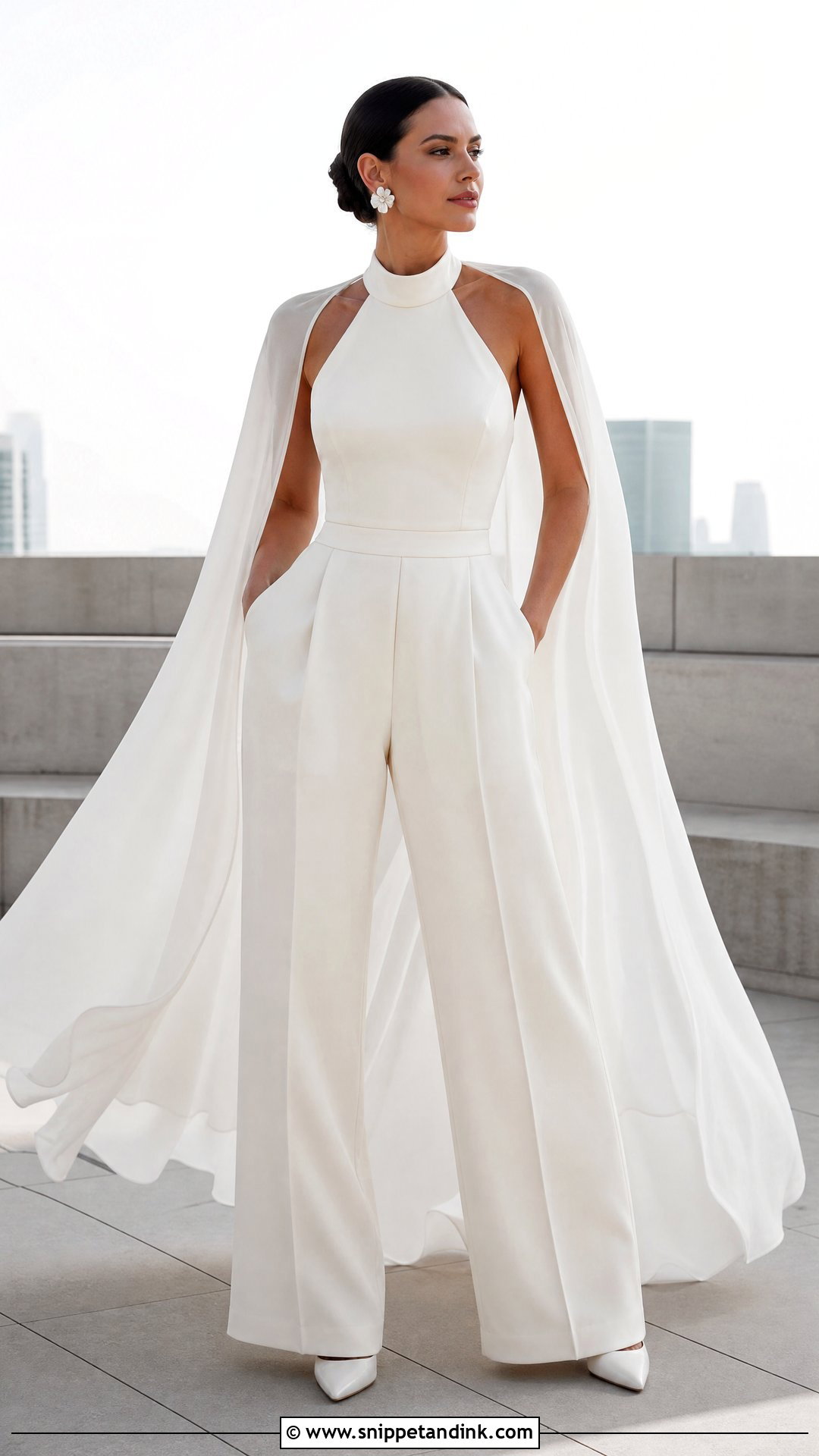
Trousers with a halter top look modern and still special enough for an aisle. A structured halter with a high neck, open back or soft drape at the front sits well over high-waisted trousers with a pressed crease and a full-length leg. The hem is critical: it should almost brush the floor in your chosen shoes, so get the shoes first. Platform sandals or pointed pumps, sculptural earrings, a sleek clutch and a low ponytail or bun finish the look. Add a detachable chiffon cape if you want movement as you walk. City halls, rooftops and destination weddings suit it, and so does any bride who simply feels like herself in trousers.
8. Bridal Blazer And Tailored Pants Wedding Dress Separates
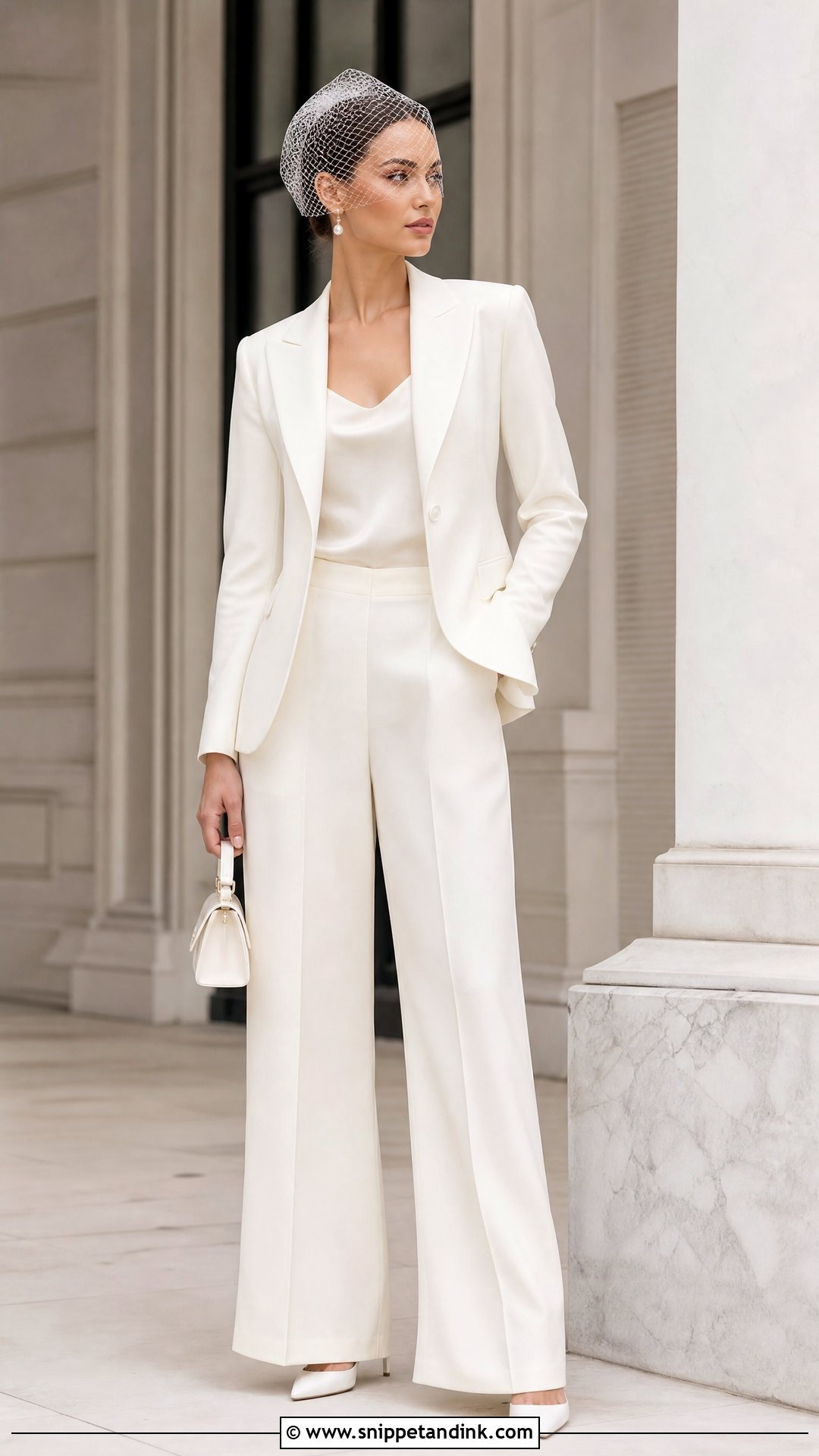
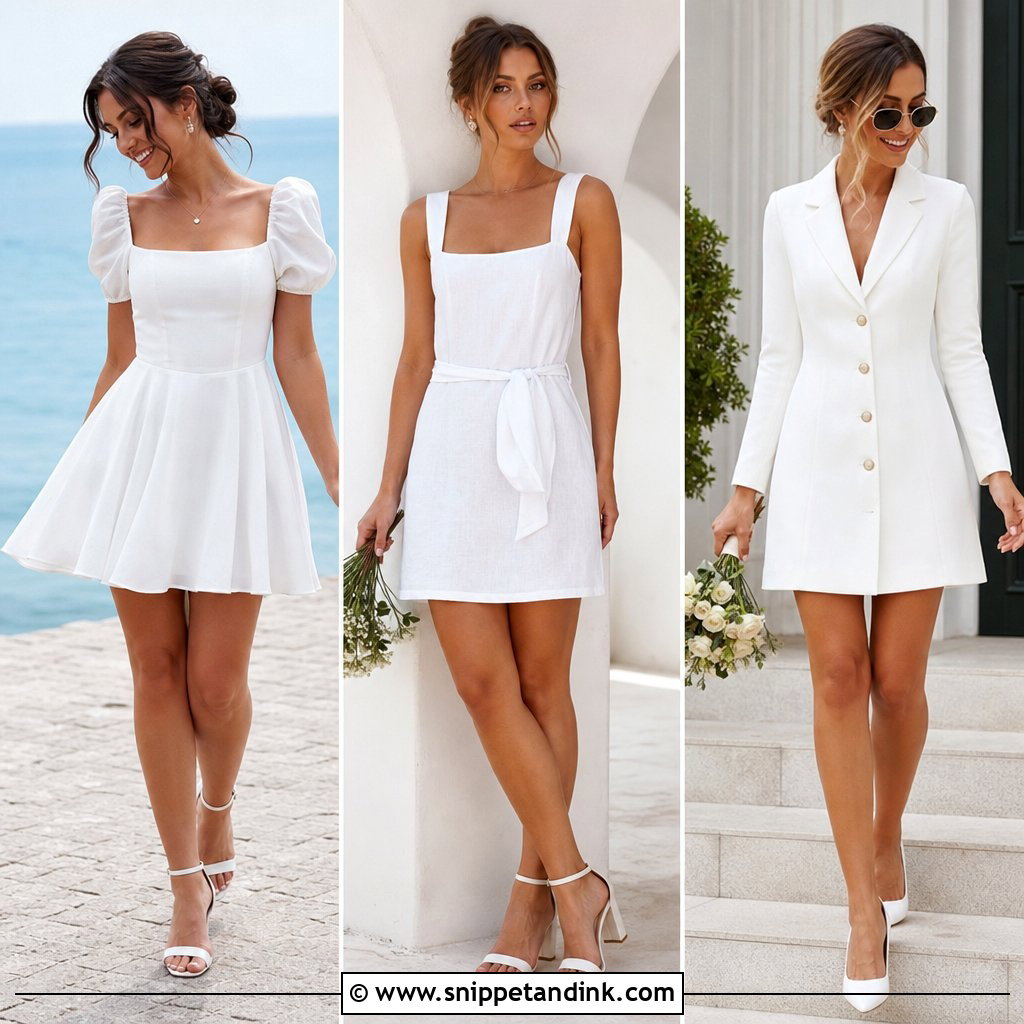
A bridal suit lives or dies on the shoulder fit of the blazer, since that’s the one thing a tailor can’t really change. I’d start with a single-breasted ivory blazer and matching high-waisted straight or wide-leg trousers. Underneath, a silk cami, a fitted corset or a satin bandeau sets the level of coverage. Sharp shoulders look defined; a longer jacket feels more relaxed. Pointed pumps, pearl earrings and a structured mini bag work well, and a birdcage veil or sleek headband keeps it recognisably bridal. Take the blazer off for the reception and the base layer becomes your party outfit. City halls, galleries, restaurants and minimalist formal ceremonies suit it.
9. Strapless Bustier And Ball Gown Skirt Wedding Dress Separates
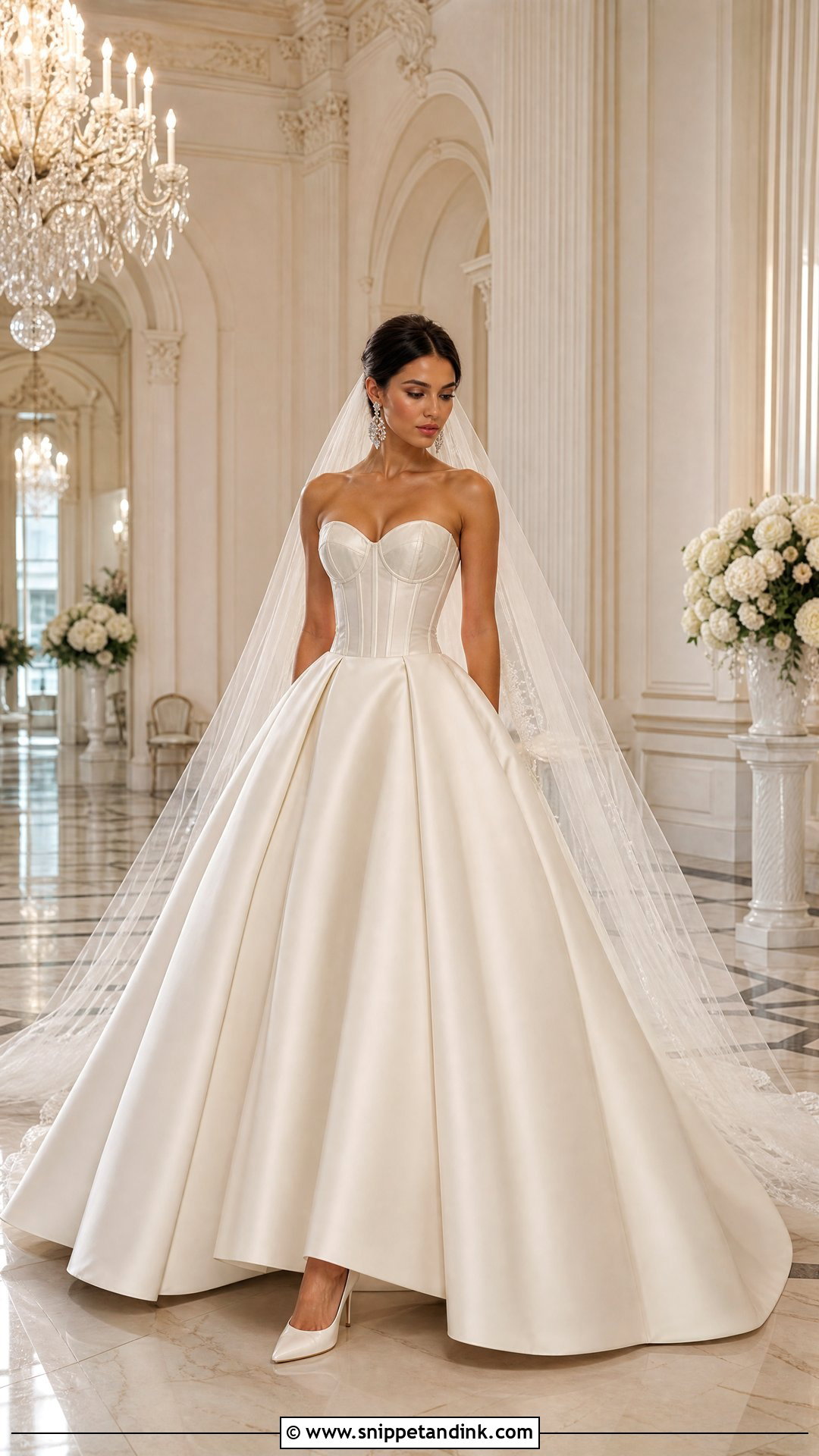
A strapless bustier with a full ball gown skirt gives the drama of a traditional gown, fitted in two pieces. I choose a longline bodice that reaches the skirt waistband so the line looks nearly continuous, over a structured Mikado, satin or layered tulle skirt. A defined waist keeps the volume in proportion. Add a cathedral veil, crystal earrings and pointed satin shoes. For the reception, swap the big skirt for trousers or a shorter satin skirt. The thing I always ask a tailor to do is secure the bodice to the skirt with hidden hooks or a waist stay, because a heavy skirt will otherwise pull the two apart as you walk.
10. High Neck Top And Pleated Skirt Wedding Dress Separates
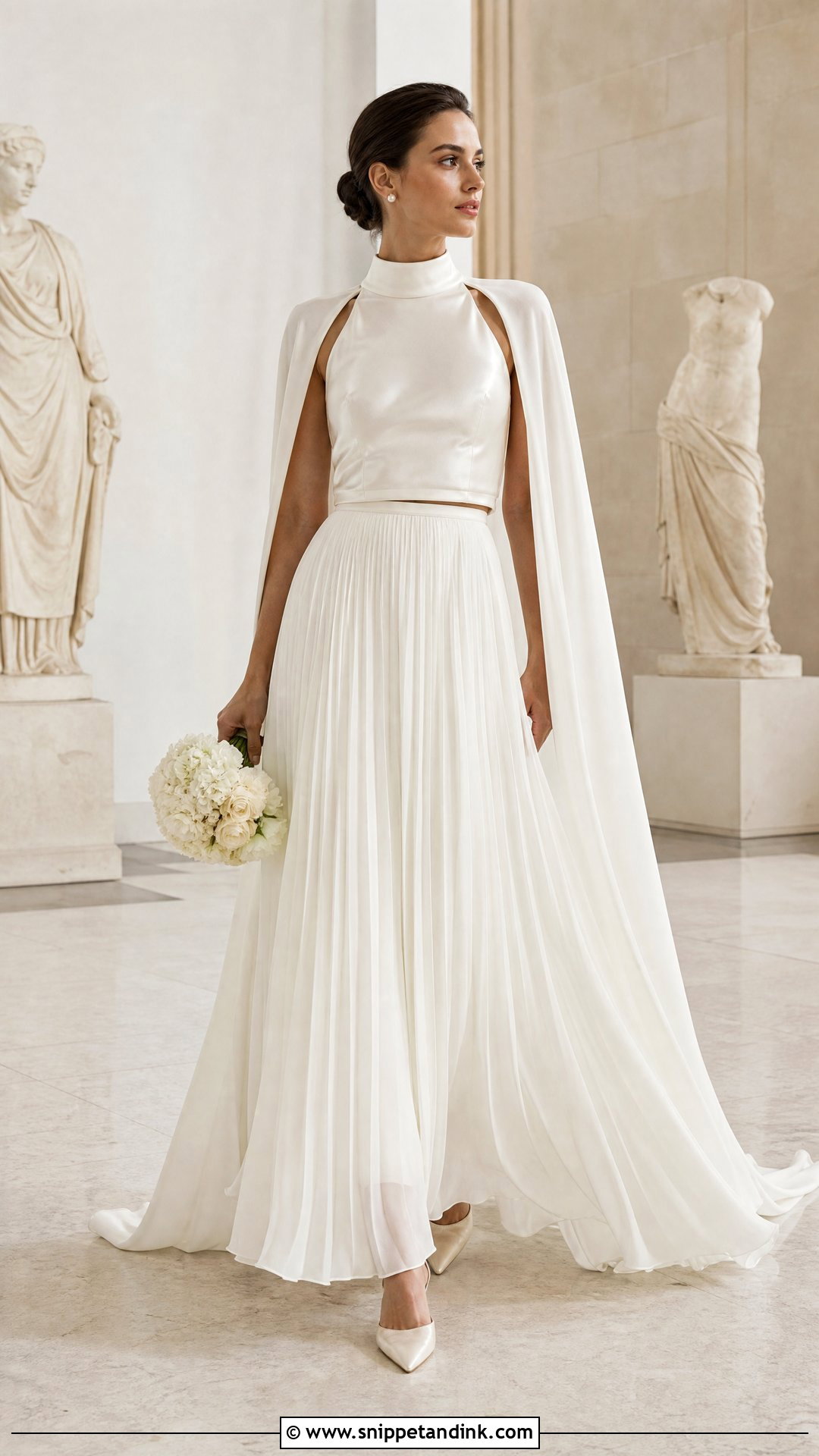
High necks with pleats feel modest and quietly fashionable. A sleeveless satin top looks clean; a lace version with sheer sleeves softens it. A floor-length pleated chiffon skirt adds movement without bulk at the waist, as long as the waistband is narrow and flat. Pearl studs, a polished bun and kitten heels or flats keep it simple. Instead of a veil, I like a long chiffon cape fixed near the shoulders, which echoes the pleats as you walk. Pleated chiffon needs careful steaming; press it flat and the pleats are gone for good. Museums, historic buildings and formal restaurants suit it.
11. Puff Sleeve Top And Column Skirt Wedding Dress Separates
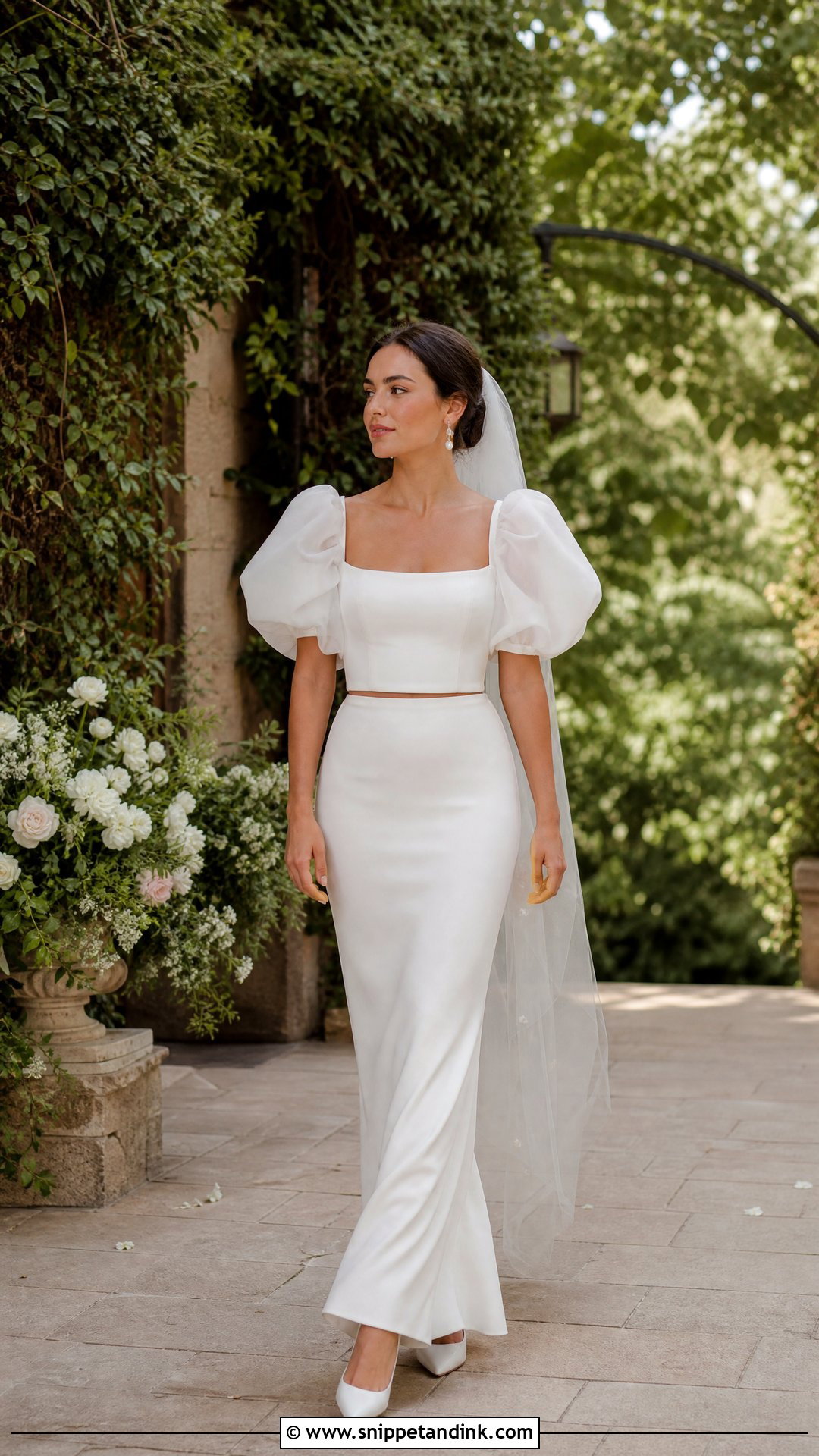
Puff sleeves on top balance best with a slim column skirt below; put them over a big skirt and the whole outfit gets wide. Organza or chiffon with controlled shoulder volume and a fitted waist works well, and a square, sweetheart, or gently scooped neckline stops the sleeves overwhelming you. The crepe skirt should fall straight from the hips with a back slit so you can actually walk. Drop earrings, pointed pumps, a fingertip veil and smooth or loosely pinned hair finish it. On a petite frame, I’d scale the sleeve down. Romantic indoor rooms and gardens both suit it.
12. One Shoulder Top And Draped Skirt Wedding Dress Separates
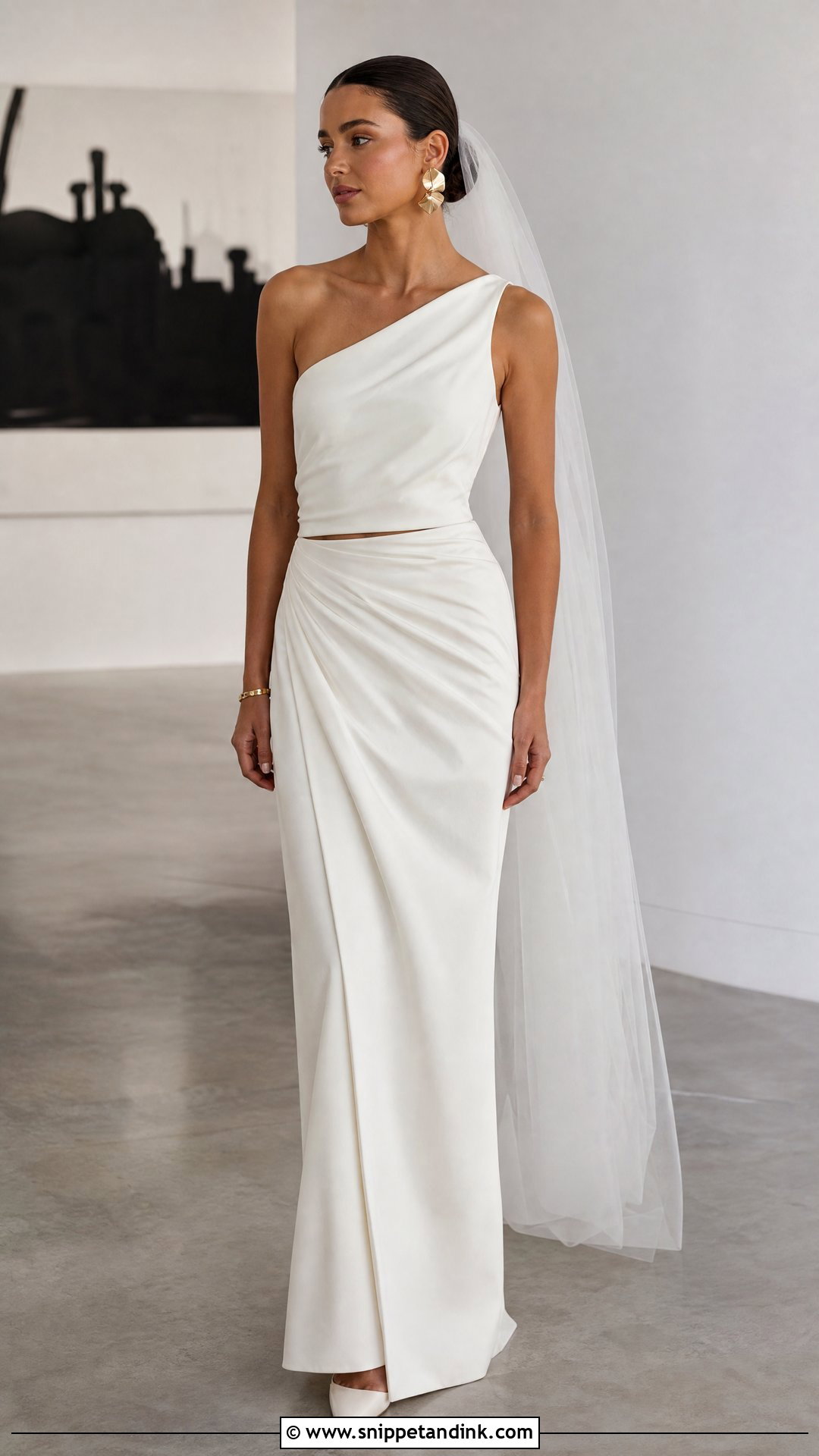
One-shoulder tops look sculptural, and the trick is making the diagonal line agree with the skirt. Pair an asymmetric crepe or satin bodice with a high-waisted skirt draped at the hip, ideally on the opposite side so the eye travels across and down. Column, trumpet or soft A-line all work depending on how much you want to move. One statement earring, a slim bracelet, sleek pointed shoes and a clean ponytail keep the neckline visible. Skip a veil that covers the shoulders; a low-set tulle veil or a small comb is better. Modern hotels and gallery spaces suit it.
13. Peplum Top And Pencil Skirt Wedding Dress Separates
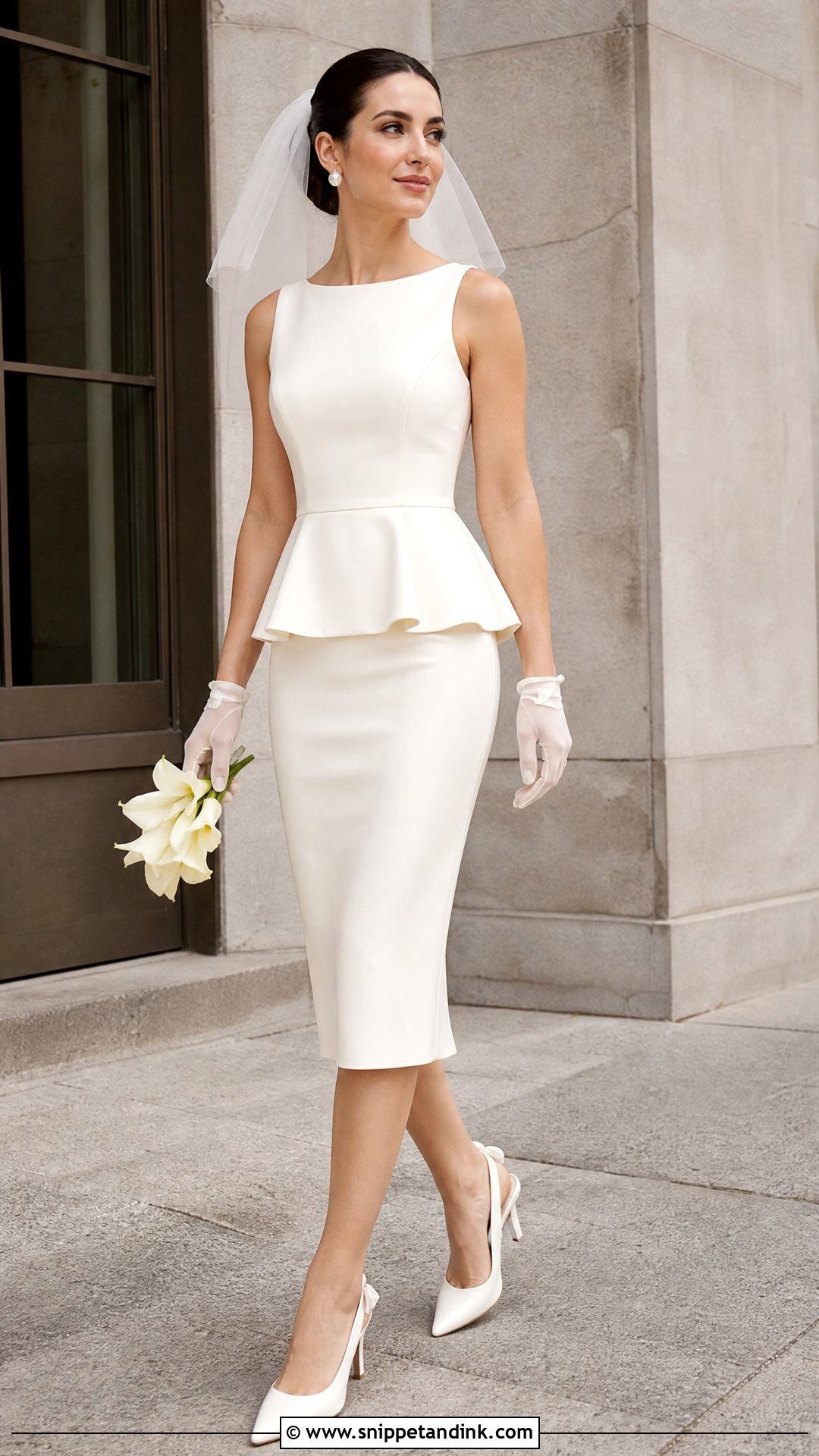
A fitted peplum top with a pencil skirt has a strong mid-century feel. The top should fit closely through the bodice and flare gently at the natural waist, over a high-waisted pencil or narrow column skirt, either below the knee or to the floor. Soft fabric collapses a peplum, so I steer brides toward structured crepe, Mikado or satin. Slingbacks, pearl button earrings, a compact bouquet and a short veil or pillbox-style headpiece suit the tailoring. Check for a slit or a stretch lining in the skirt, otherwise steps and car doors become a struggle. Courthouses, restaurant receptions and small formal weddings are a natural fit.
14. Cape Top And Straight Leg Pants Wedding Dress Separates
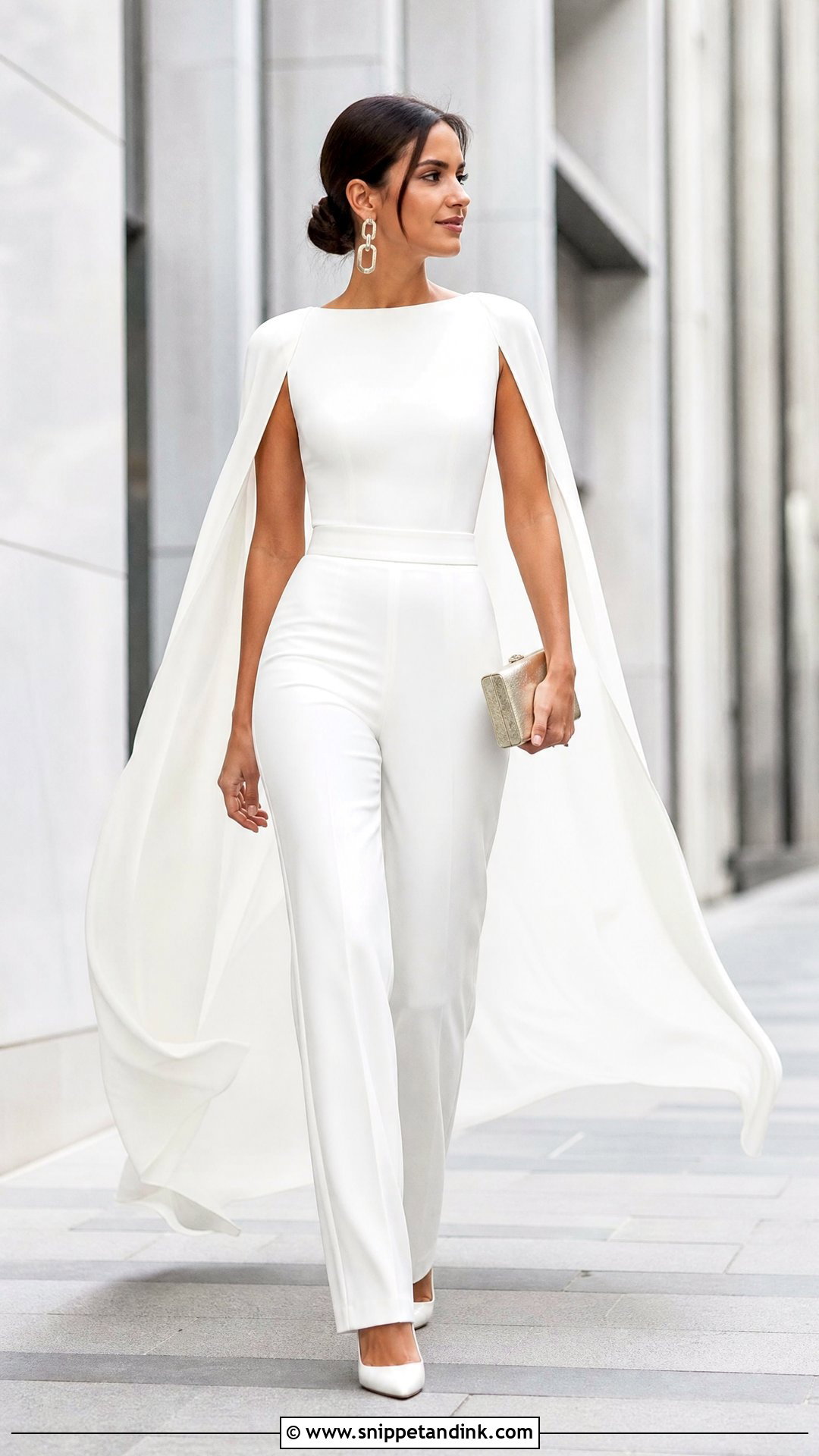
Capes give you movement without a long veil or train. A fitted crepe blouse or sleeveless bodice with a light cape falling from the shoulders works over tailored high-waisted trousers, and matching both pieces in one ivory makes you look taller. Pointed pumps, geometric earrings and a slim clutch are enough; with a cape already doing the drama, I keep necklaces and hair accessories out of it. Ask the tailor to set the cape length so it clears your hands and bouquet, or you’ll be pushing it out of the way all day. City ceremonies and outdoor portraits suit it.

15. Embroidered Top And Tea Length Skirt Wedding Dress Separates
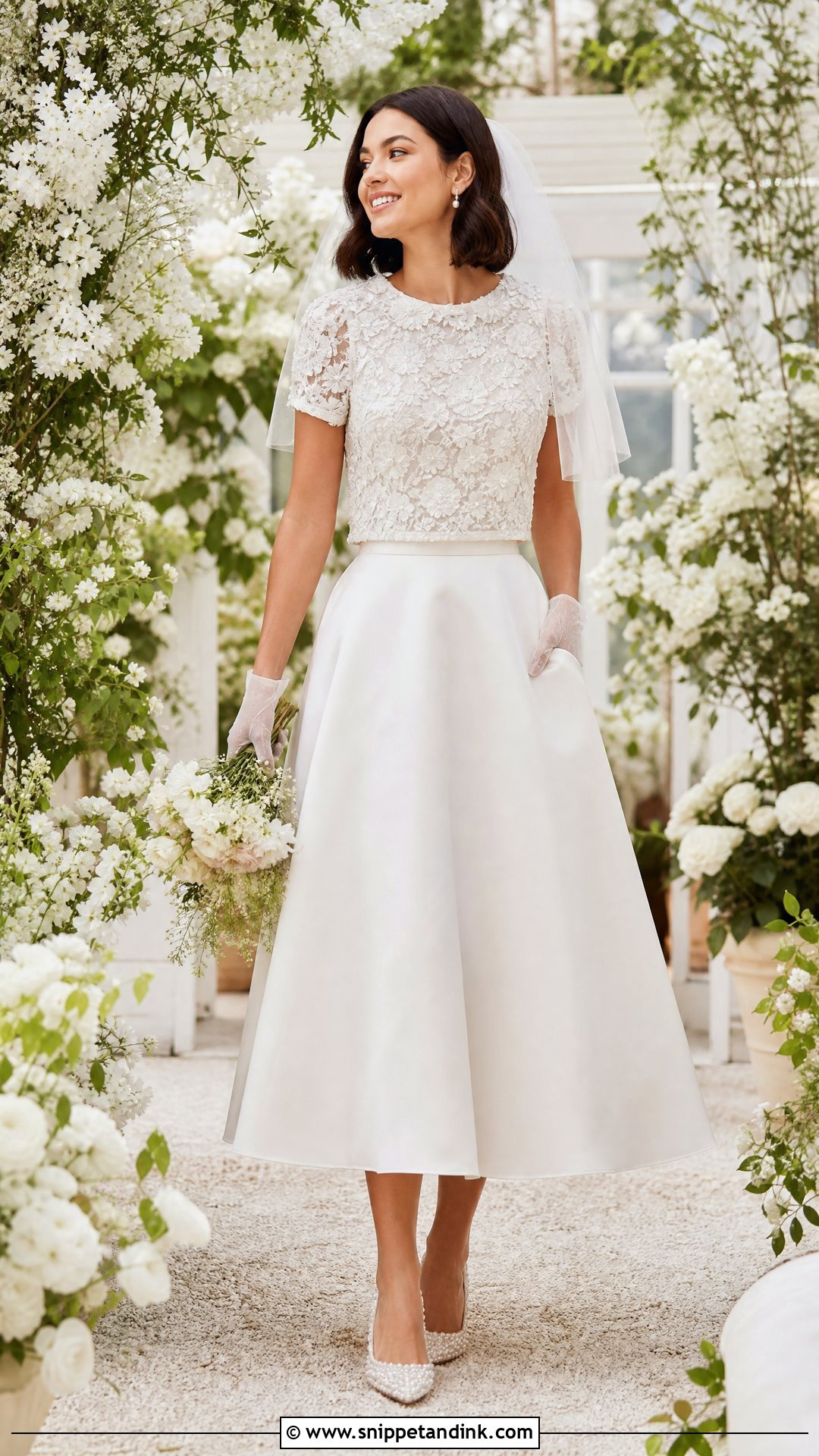
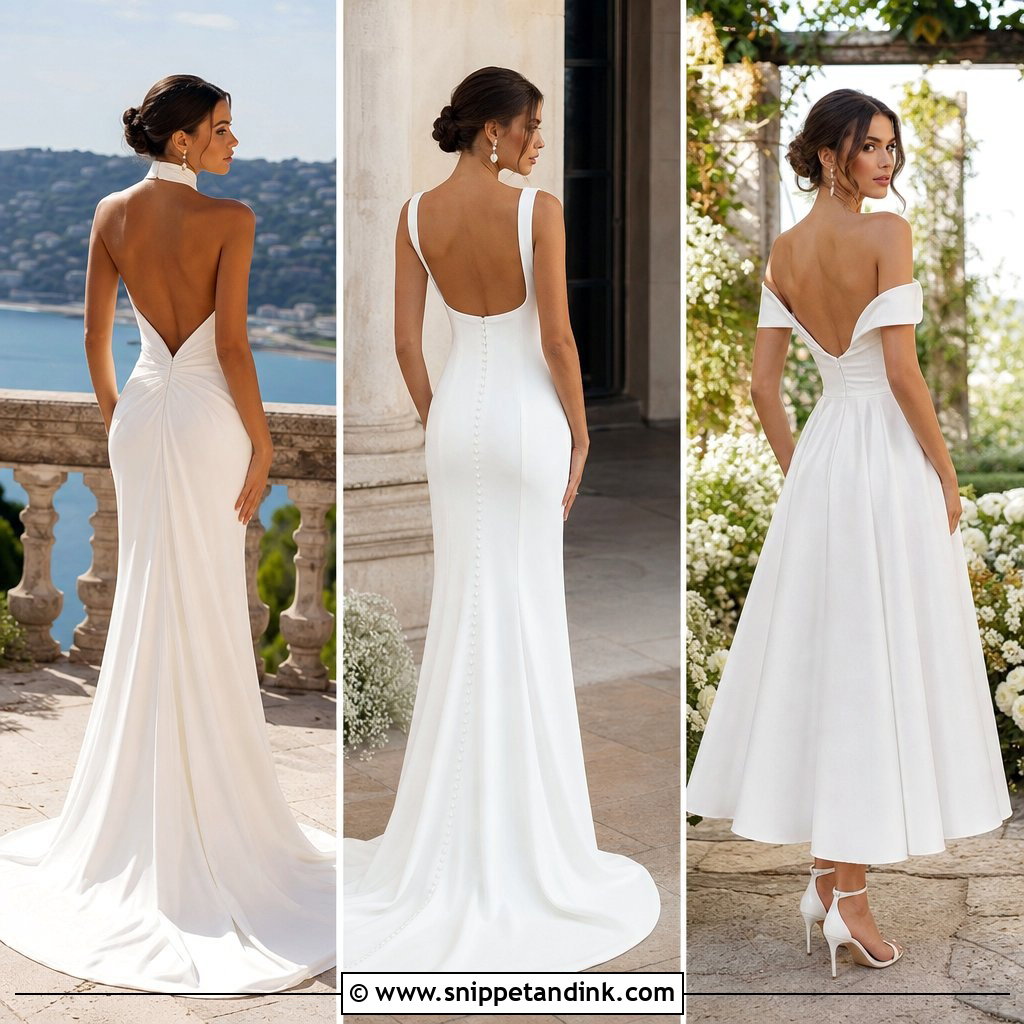
Tea length feels lighter and more playful than a floor-length skirt. A fitted top with floral embroidery, appliqués or subtle beading pairs well with a smooth Mikado or layered tulle skirt ending between knee and ankle. Because the shoes are on show, they become part of the outfit: pearl-covered pumps, satin slingbacks or embellished flats. Small earrings, short gloves and a shoulder-length veil complete it. I’d keep the skirt plain so the embroidery stays the focus. Tea length needs a petticoat cut to the same length, or the skirt hangs flat and the hem looks uneven. Daytime, garden and courthouse weddings suit it.
16. Square Neck Top And Linen Skirt Wedding Dress Separates
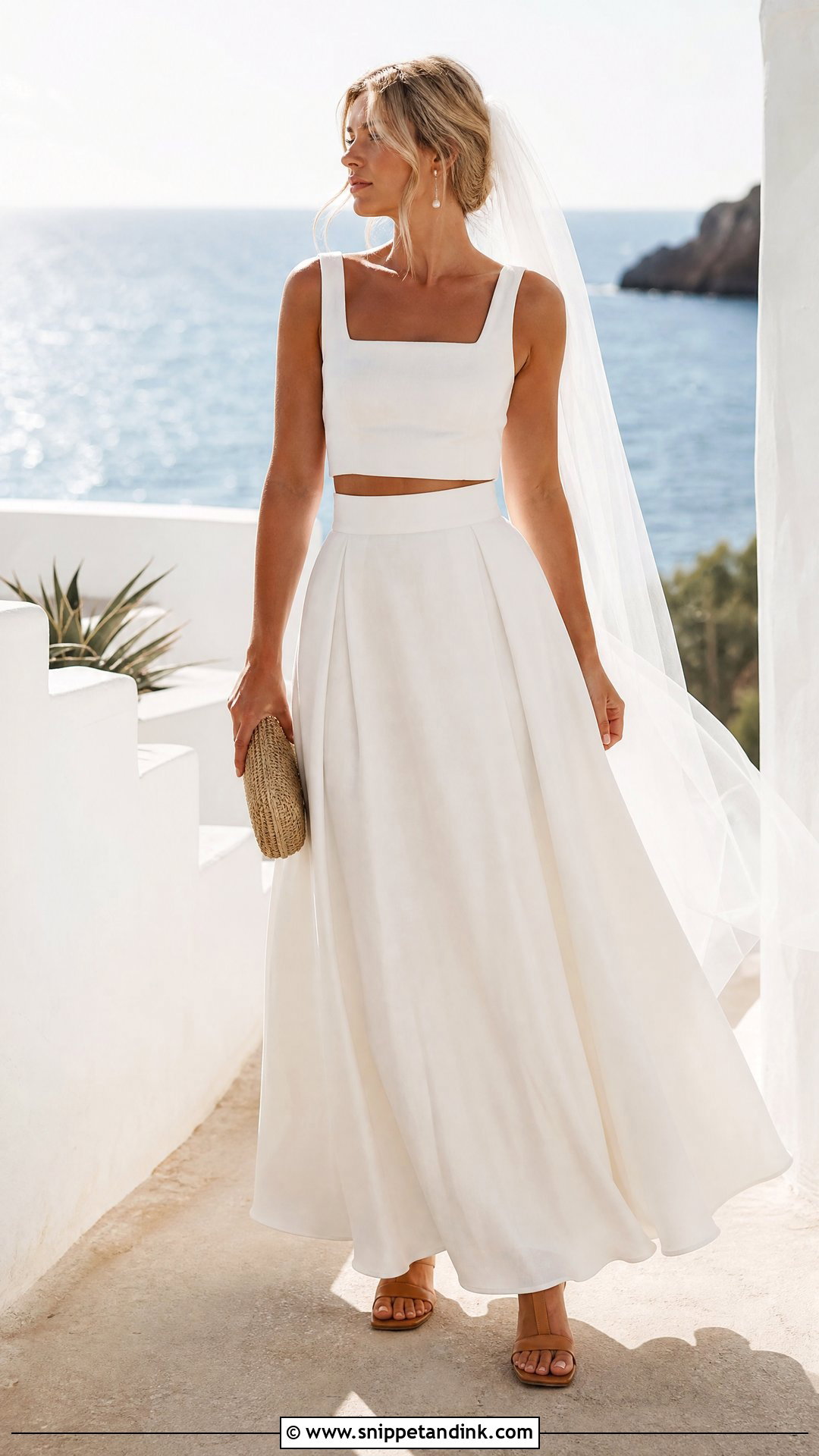
Linen breathes, which is why I suggest it for hot weddings, but pure linen creases the moment you sit. A linen-silk blend keeps the texture with far fewer wrinkles and a smoother drape. Pair a lined square-neck top with wide straps and a fitted waist with a high-waisted A-line or softly gathered linen skirt. Leather block-heel sandals, small gold or pearl earrings, a light veil and a woven clutch suit it. Buy both pieces from the same bolt or maker if you can, since linen shades vary a lot. Coastal and destination weddings, and relaxed outdoor ceremonies, are where this one fits.
17. Bridal Bodysuit And Detachable Overskirt Wedding Dress Separates
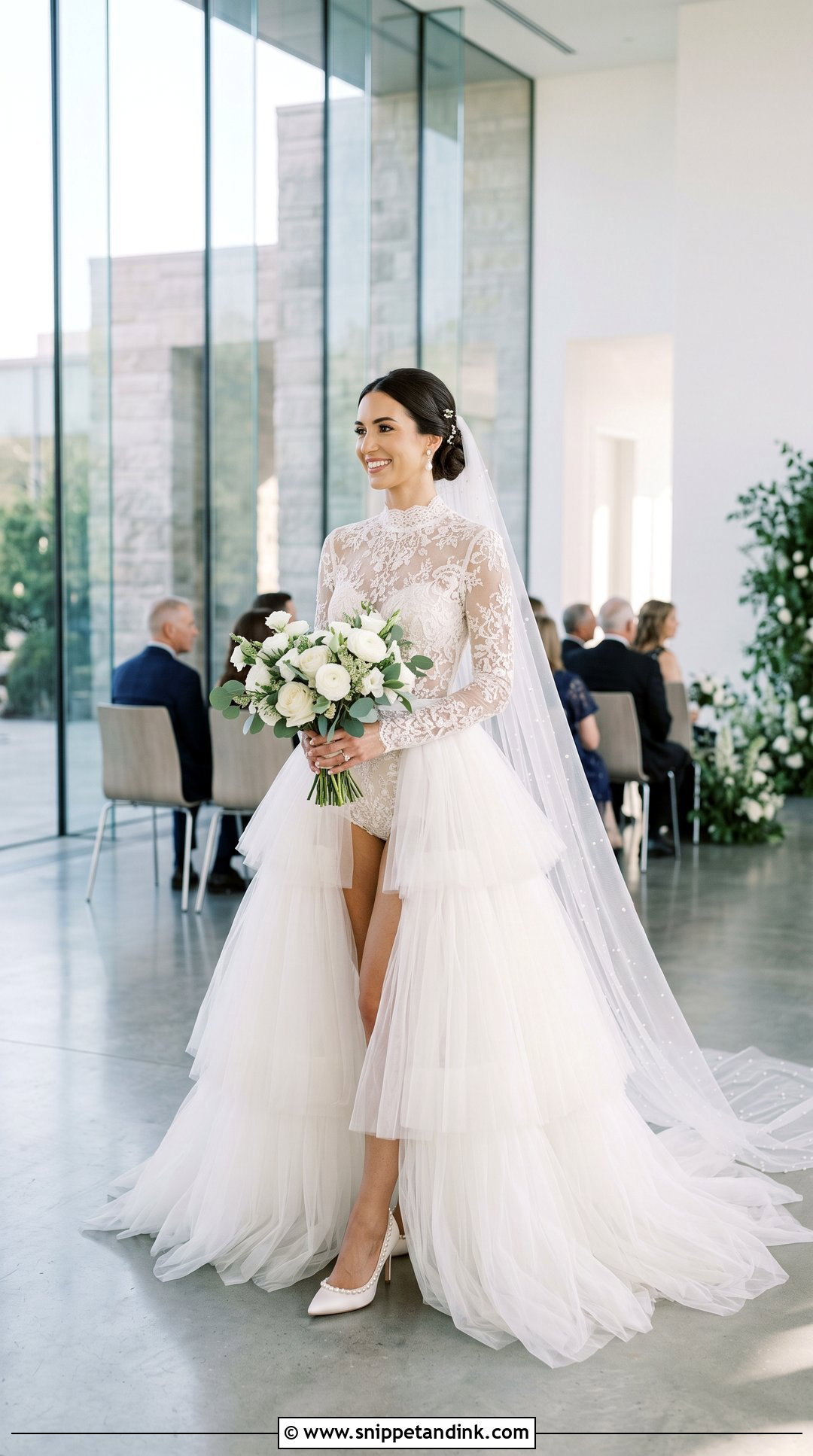
A bridal bodysuit with a detachable overskirt gives you two looks without a full outfit change. Lace, crepe or beaded bodysuits all work, as long as the support is secure and the leg openings are comfortable for ten hours. A voluminous tulle, organza or satin overskirt goes on for the ceremony; its waistband should sit flat over the bodysuit. Long veil, drop earrings and elegant pumps for the aisle; trousers, a fitted maxi or a short skirt later. I test every combination at alterations, because each bottom can sit at a slightly different waist height. Also check the snap closure at the crotch is easy to manage in a bathroom.
18. Sequined Top And Satin Mini Skirt Wedding Dress Separates
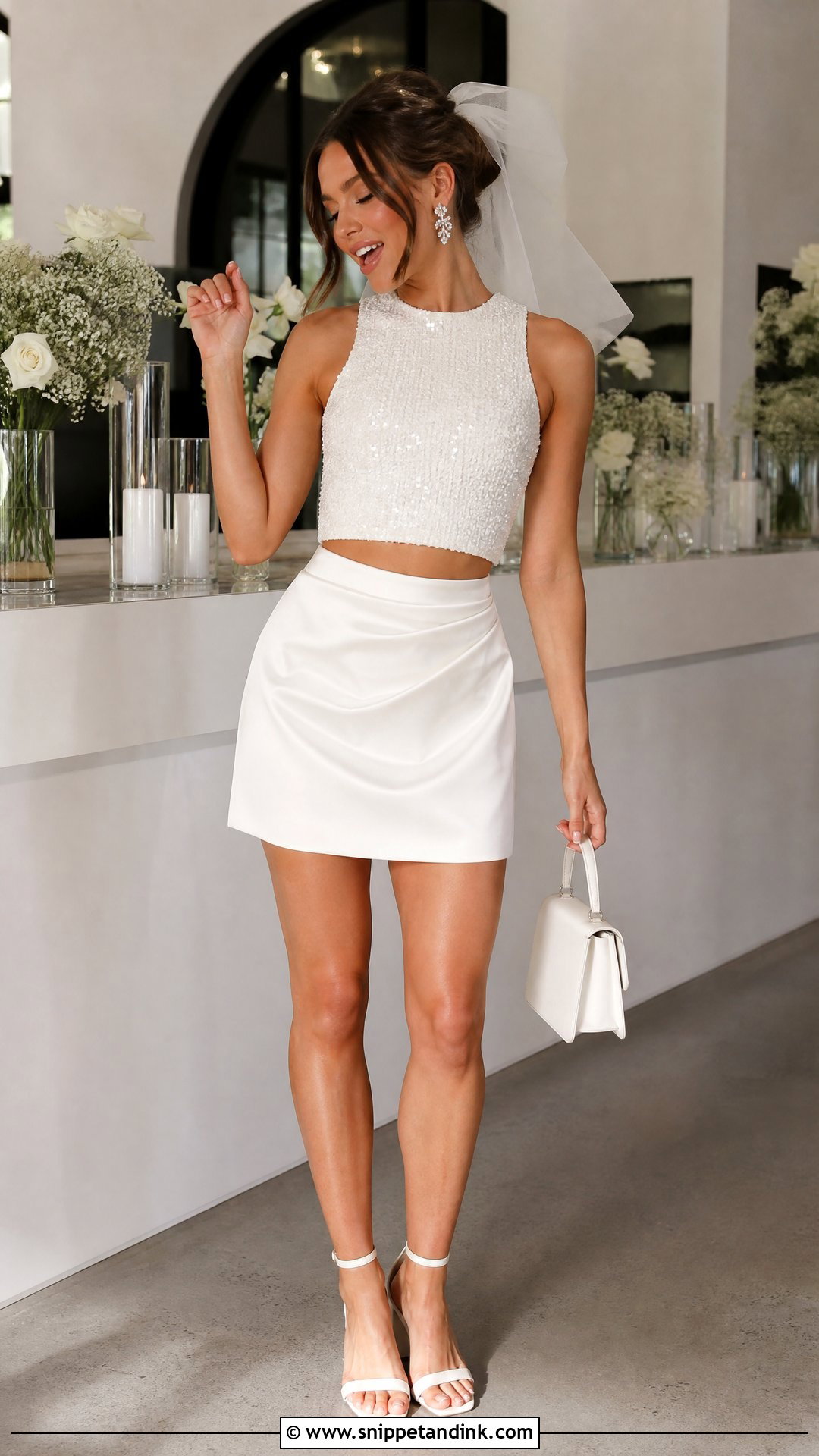
Sequins and a satin mini make a fun reception, elopement or casual ceremony outfit. I prefer tonal sequins to contrasting metallic ones, over a structured high-waisted mini in satin or Mikado; a slightly longer back hem gives a bit more coverage. Block-heel sandals, crystal earrings, a small top-handle bag and a bow or short tulle veil keep it bridal. For a more covered ceremony look, layer a removable organza overskirt on top. Sequins scratch the inside of the arm, so check the side seams of the top are lined. It’s an easy outfit to dance in.
19. Knit Top And Bias Cut Skirt Wedding Dress Separates
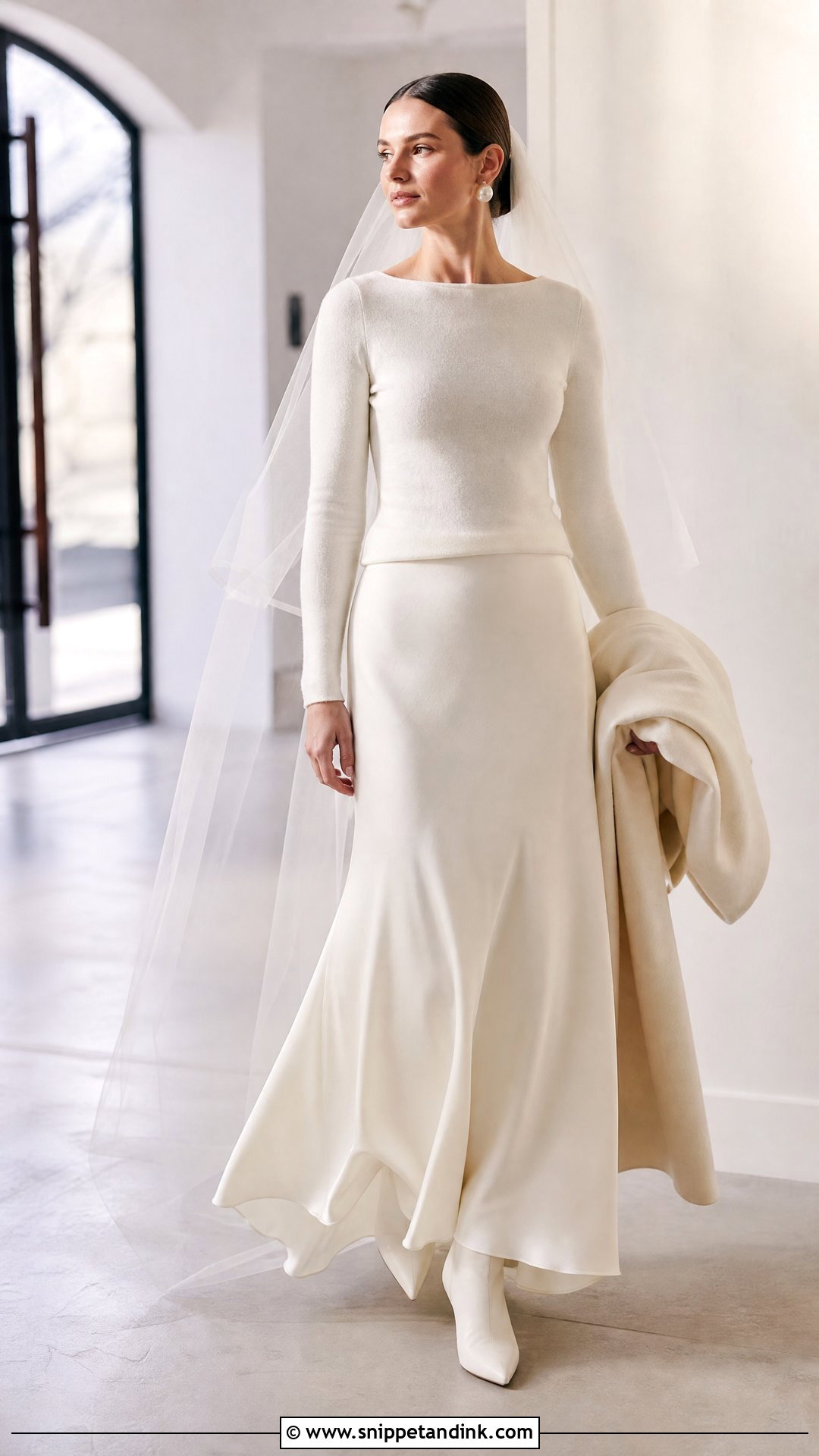
A fine knit is the warmest top you can wear and still look bridal. Choose a fitted ivory sweater in soft merino, cashmere or a smooth light blend, with a bateau, mock or softly draped neckline. A high-waisted silk or satin skirt that falls close to the body contrasts nicely with the knit. Pointed ankle boots or closed pumps, pearl earrings and a long wool coat for outdoor photos keep it practical, with a low bun and fingertip veil. The usual problem is the knit bunching at the waistband. I’d have it cropped to finish exactly at the waist. Autumn, winter and mountain weddings suit it.


20. Floral Top And Blush Skirt Wedding Dress Separates
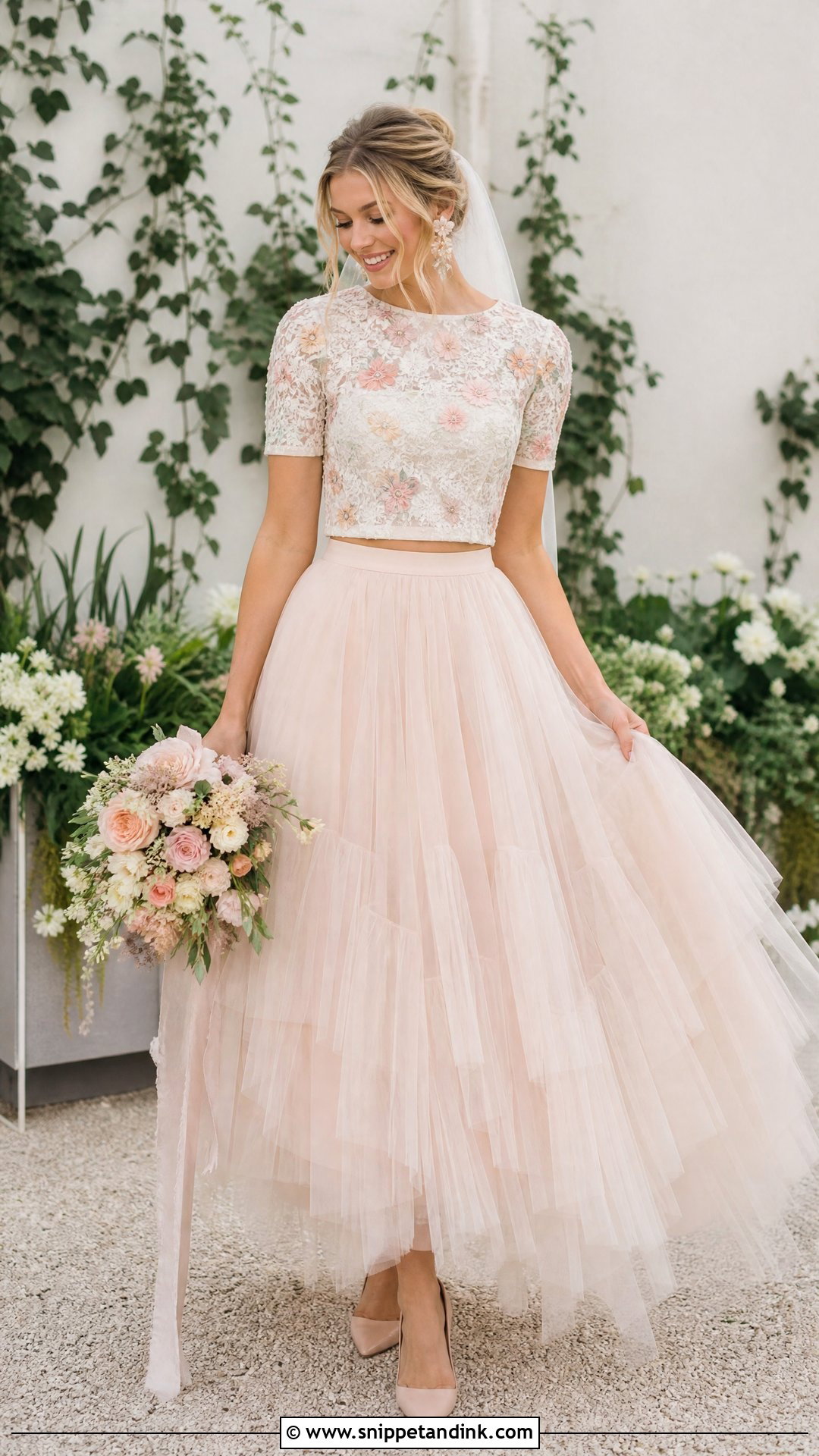
Blush on the bottom with flowers on top brings colour in softly. An ivory top with embroidered flowers, pastel appliqués or fine botanical beading pairs with a blush, pale champagne or muted rose skirt in layered tulle or chiffon. The step that pulls it together is picking one shade from the embroidery and matching the skirt to it. Nude or ivory heels, small floral earrings and a veil with minimal edging finish the outfit, and a bouquet with similar pastels completes the palette without looking matchy. For less colour, use an ivory skirt with a blush lining. Spring gardens and artistic venues suit this pairing.
A Second Life for the Blazer, the Camisole and the Skirt
Separates are much easier to wear again than a gown, which is one of the honest reasons I like them. Some pieces work straight away; others need a small change first.
Ready to rewear
Ivory blazers, tailored trousers, silk camisoles and fine knits all fit back into an everyday wardrobe. Wear the blazer with jeans, or the camisole under a jacket, and nobody will think of a wedding.
Worth a small alteration
A long satin or crepe skirt can be shortened to midi length for parties. Silk and other natural fibres can often be dyed a darker colour, though synthetics and blends may not take dye evenly, so ask a specialist dyer first. Beaded tops are best left as they are, since dyeing or heavy alteration can damage the beadwork.
Before you put anything away
Have every piece cleaned soon after the wedding, even if it looks spotless. Sugary drinks and sweat dry clear and turn yellow months later. Store tulle and big skirts loosely folded in acid-free tissue in a breathable box, and hang tailoring on a padded hanger in a cotton bag rather than plastic.
Build Around the One Piece You Can’t Give Up
Good separates look coordinated and feel comfortable, and that starts with one piece you truly love. Build around it with a second garment of compatible fabric weight, undertone and waist height. Then try the whole outfit, with shoes, underwear, jewellery and veil, before the final alterations, because that’s when gaps, bunching and slipping show up. The other advantage is what happens afterwards: you can swap a skirt for trousers, take off an overskirt or wear a piece again. Lace, tailoring, silk or tulle, use these outfits as starting points and adjust them until they suit you.
You'll Like These Ideas:









Leave a Reply