
Not every bride wants a white gown, and plenty never did. A suit, a red dress, a sequin mini or a lehenga can be just as ceremonial, as long as the outfit is finished with the same care a traditional gown would get. When I style an alternative bride, the question isn’t whether it’s allowed. It’s whether the look holds up for a long day of standing, sitting, hugging and dancing, and whether it reads as the bride in a crowded room. Here are twenty complete looks, from black lace to tailored separates, with the fit and fabric notes I’d give you before you buy.
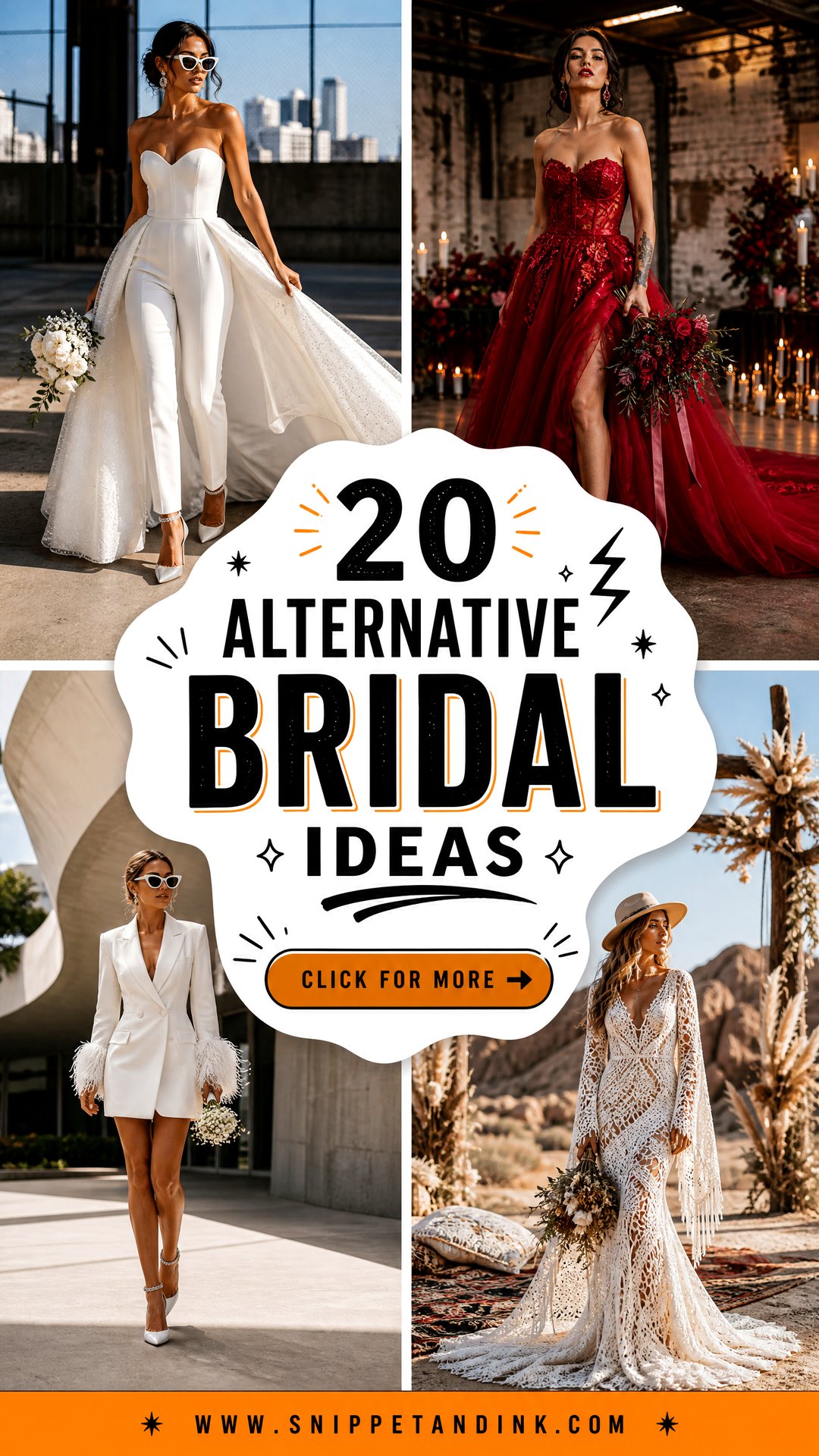
Giving an Unconventional Outfit One Clear Bridal Signal
The trouble with a non-traditional outfit isn’t that it looks wrong. It’s that, without one clear signal, the bride can look like a well-dressed guest. I build every alternative look around a single bridal cue, and only one, so it still reads clearly in a group photo.
- A veil of any length, from a birdcage to a cathedral. Nothing else says bride as quickly.
- A cape or long train that no guest would wear.
- One white or ivory element on a coloured outfit, such as a jacket, shoes or a hair bow.
- A bouquet that is noticeably larger or more structured than the bridesmaids’ flowers.
Pick the one that suits the outfit and do it properly. A veil, a cape and a giant bouquet together pull the look back towards a traditional gown, which defeats the point.
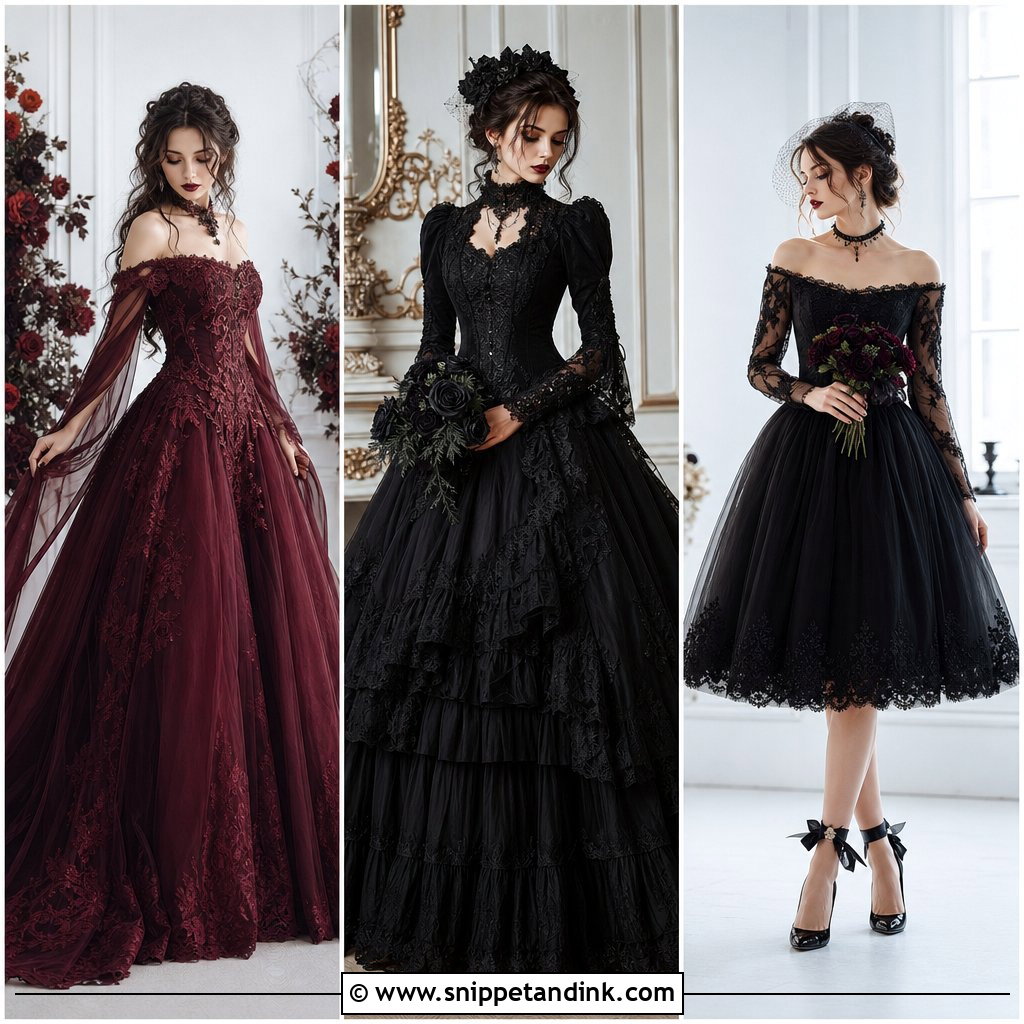
1. Black Lace Bridal Gown
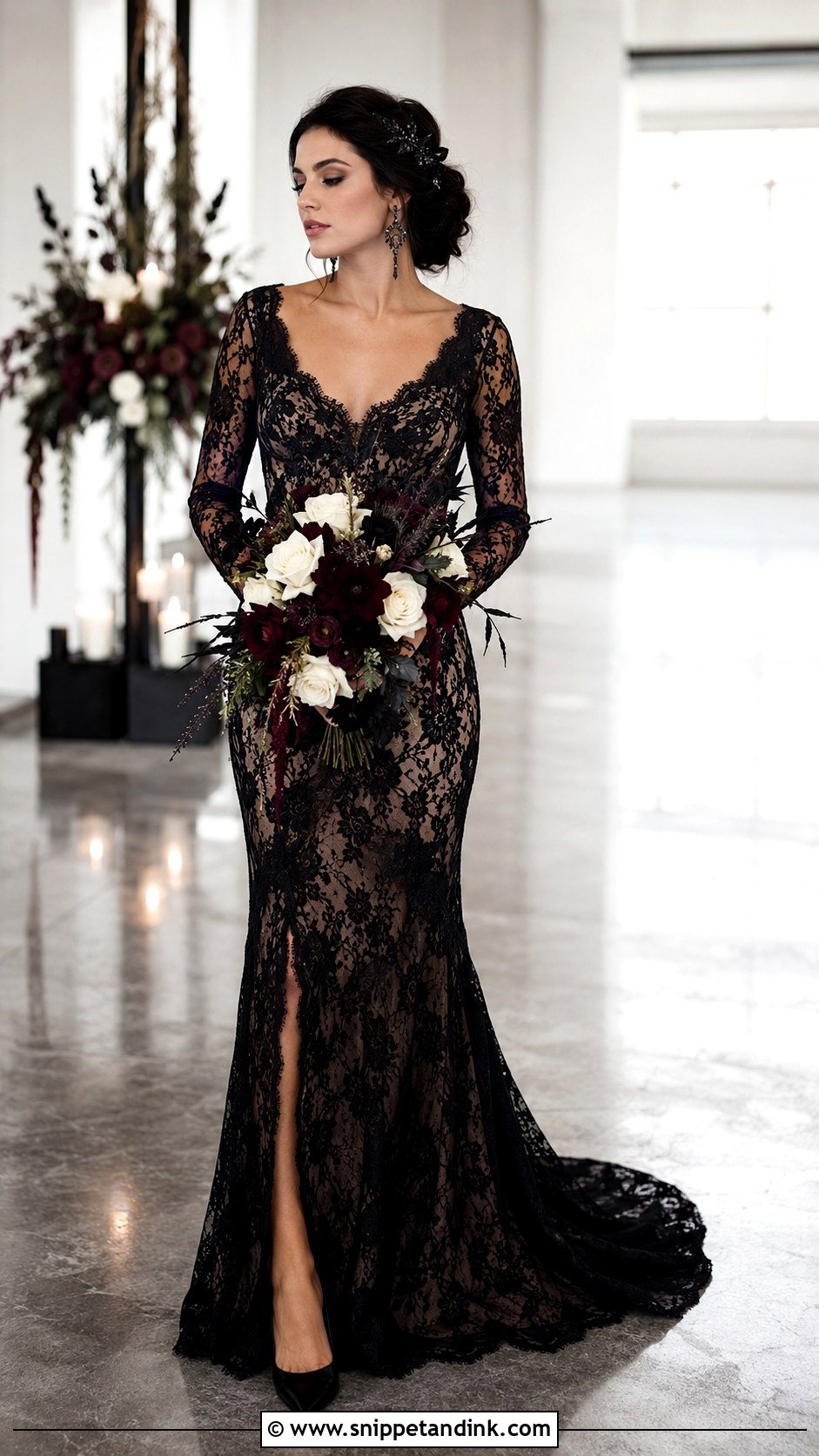
Black lace is dramatic and still romantic, and it suits a winter evening or a candlelit venue better than any other colour here. Pick a mermaid for formality or an A-line if you plan to dance. My main note is about contrast: a black dress with a dark bouquet turns into one flat shape in photos, so carry ivory, burgundy or blush flowers. A narrow velvet belt adds definition at the waist. Black pointed heels, silver drops and a plain black comb are enough. I’d keep the makeup soft skin and a muted berry lip, because heavy smoke around the eyes tips the look into costume.
2. White Tailored Bridal Suit
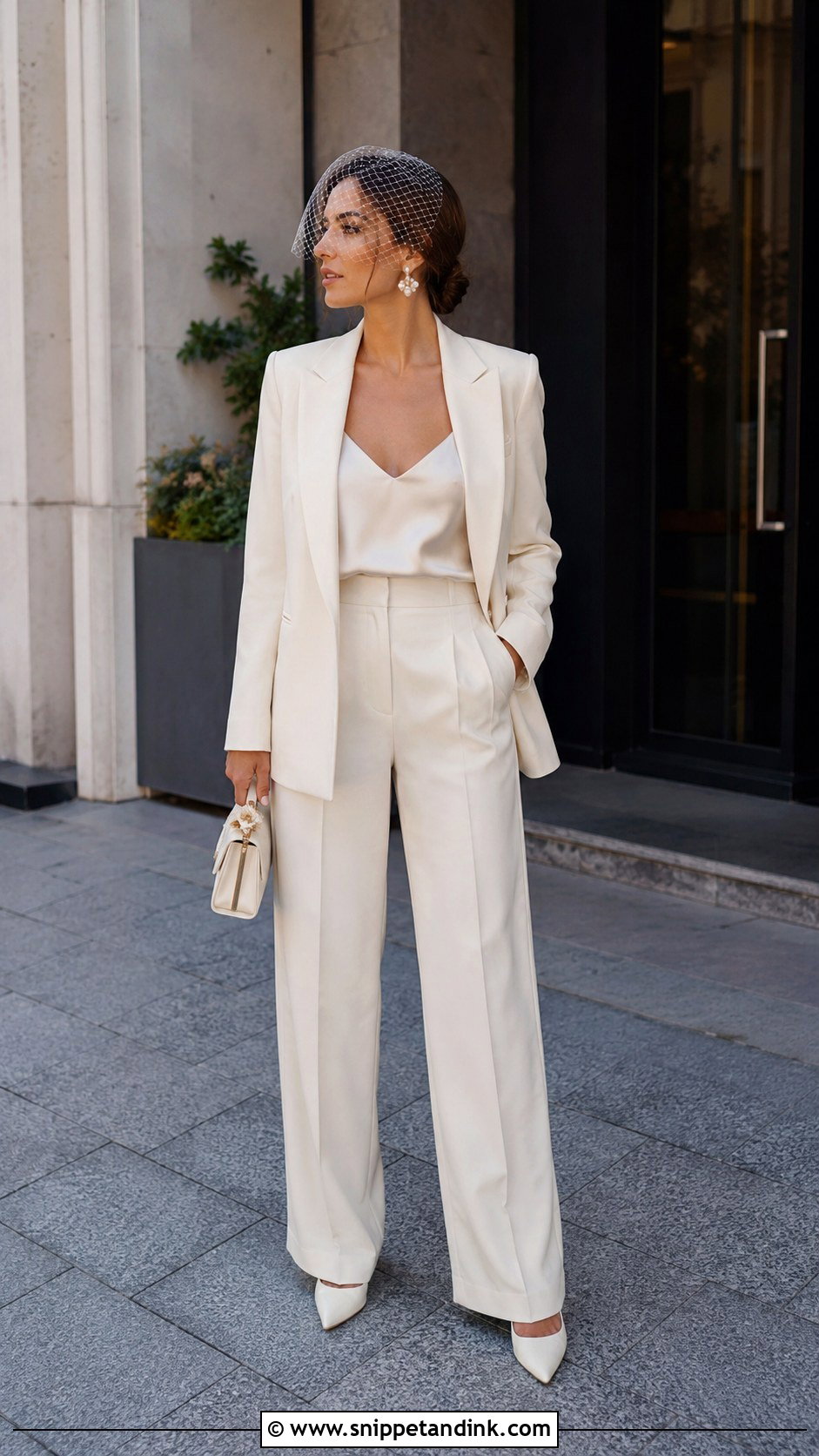
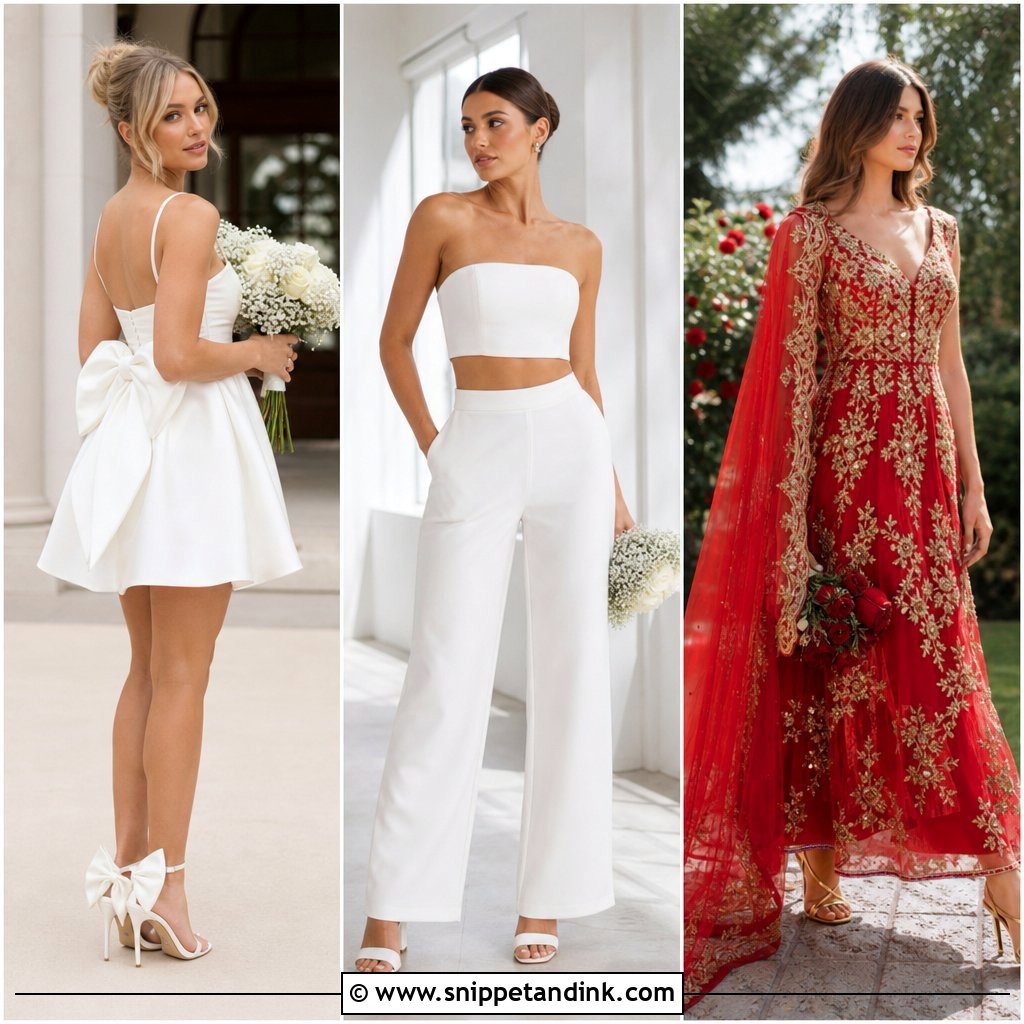
A sharply tailored white bridal suit lives or dies at the shoulder. If the jacket seam sits past your shoulder bone, no tailor can fix it cheaply, so buy for the shoulders and alter everything else. High-waisted trousers lengthen the leg. Petite brides often look better in a cropped trouser than in a wide leg that swamps them. Under the jacket, a silk camisole or fitted waistcoat. A birdcage veil or sleek low bun tells everyone who the bride is. Pure white can look harsh against some skin tones, so try ivory or pale champagne side by side.
3. Bridal Jumpsuit With Detachable Train
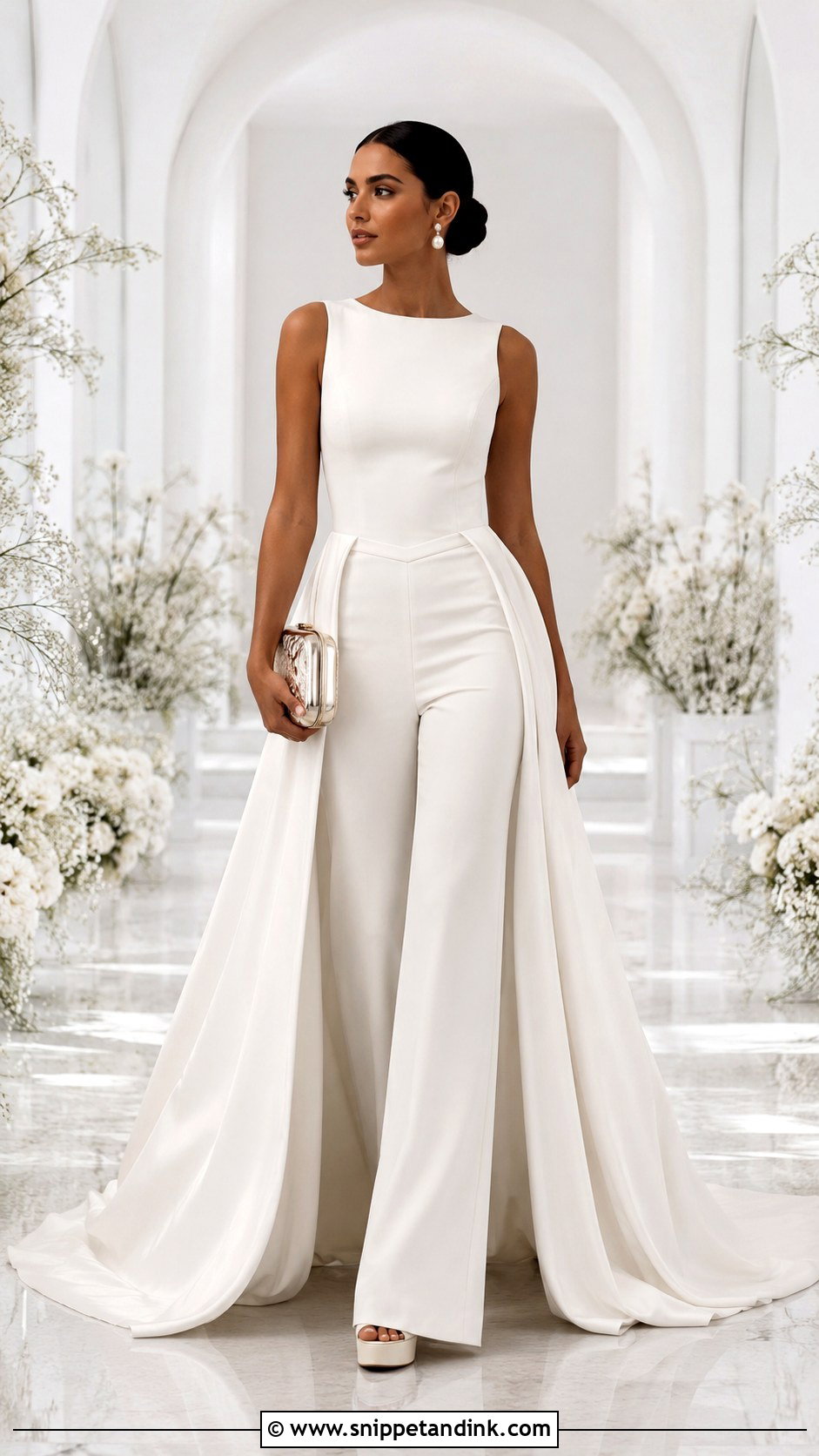
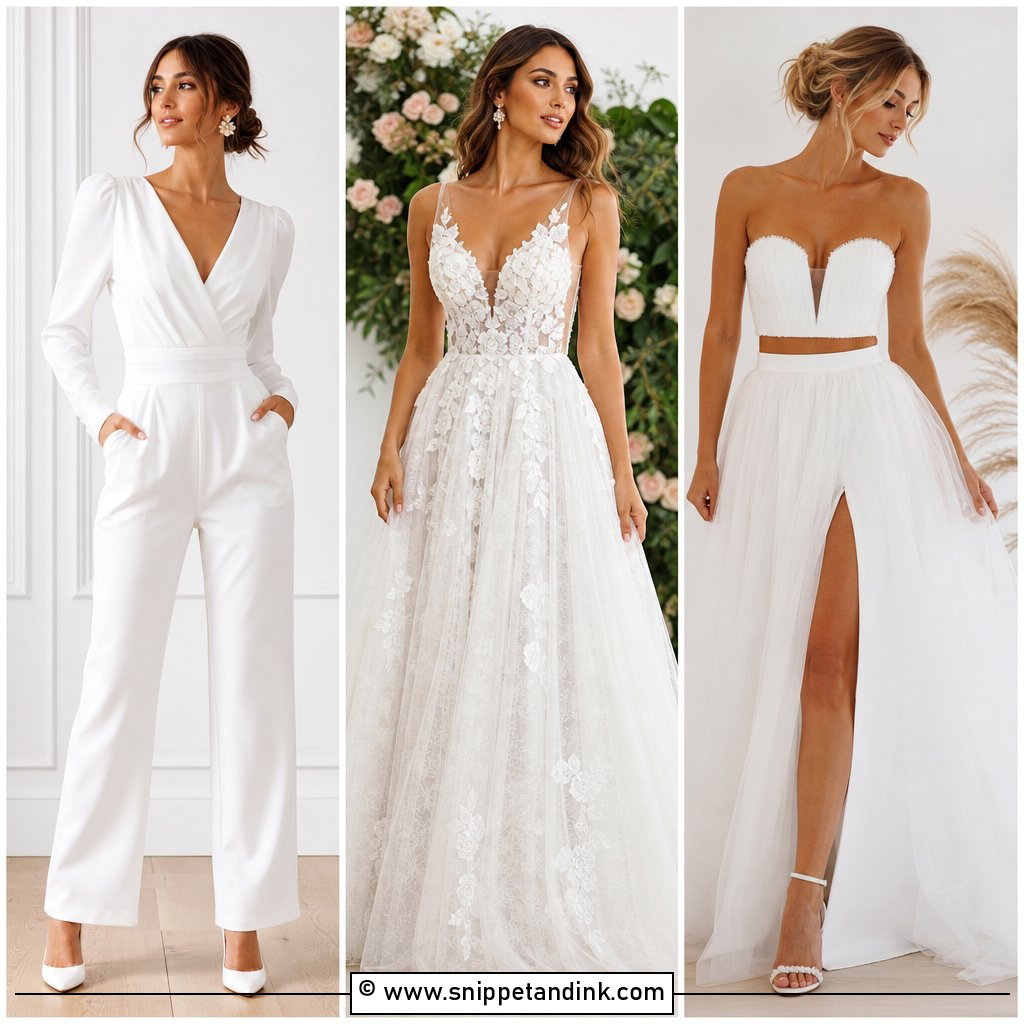
A wide-leg jumpsuit with a detachable overskirt or train walks in like a gown and dances like trousers. The fabric needs weight: crepe, satin or lined chiffon, because thin fabric shows every crease at the hip. The real risk is the torso length. A jumpsuit that is even slightly short in the body pulls up at the crotch when you sit, and it’s one of the hardest things to alter. I have brides sit, crouch and walk before they commit. A defined waist, platform heels and pearl earrings finish it.
4. Colorful Floral Bridal Gown
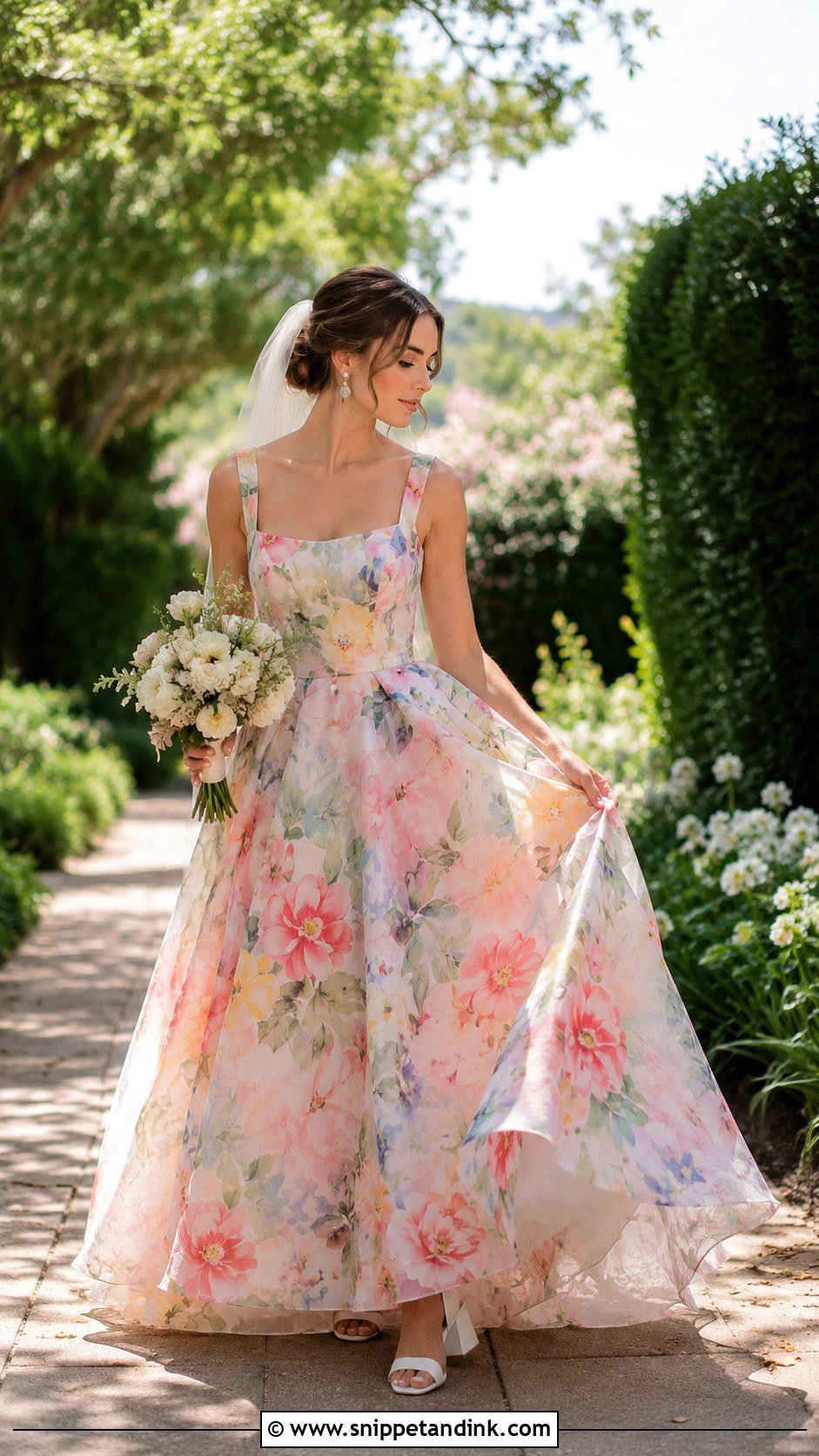
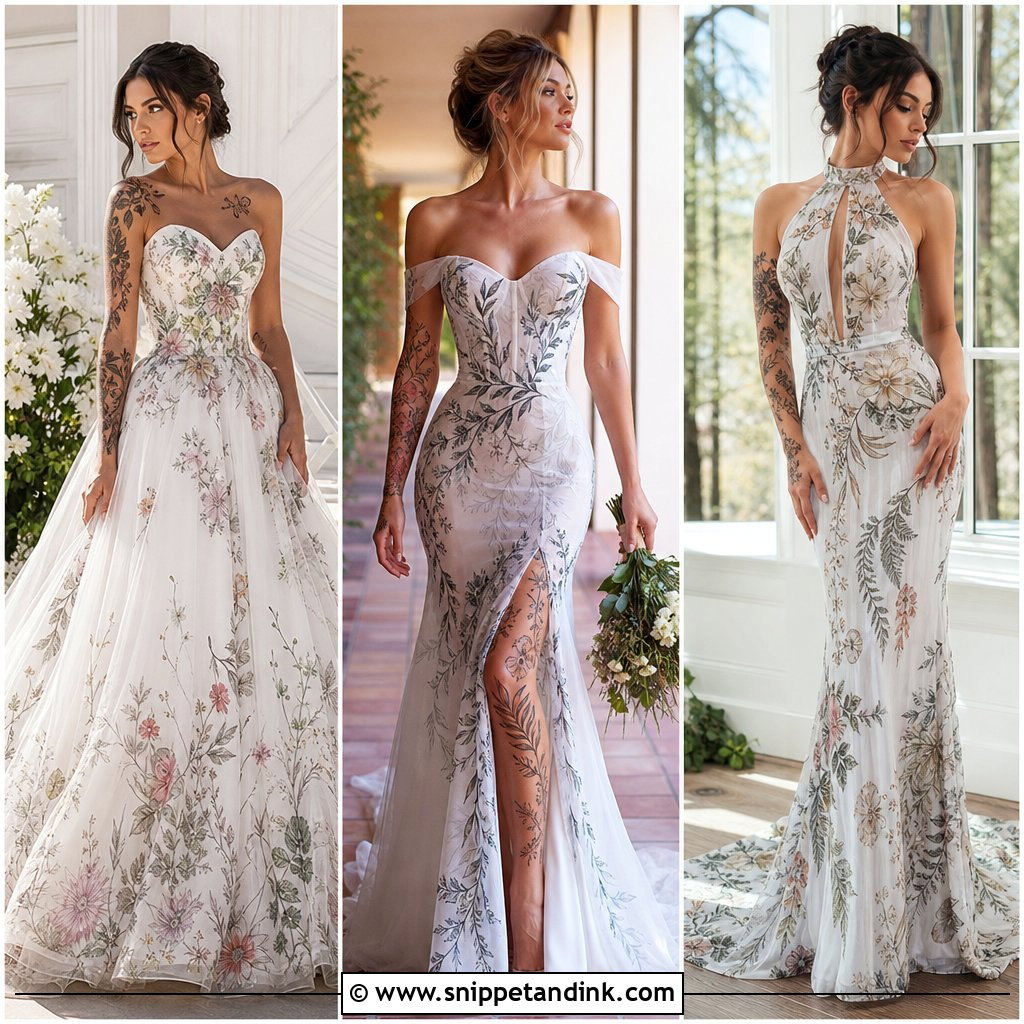
A floral gown gives softness without traditional white. Large botanical prints on a light background feel bold; scattered small flowers stay quiet. A fitted bodice and full skirt keep the print ceremonial, while a slim cut can look like a summer party dress. I pull one of the quieter print colours into the shoes and leave the bouquet restrained, a single repeated flower and greenery, because two busy florals side by side cancel each other out. Airy organza suits a garden. Embroidered tulle or jacquard gives the same idea a more formal finish.
5. Silver Sequin Bridal Mini Dress
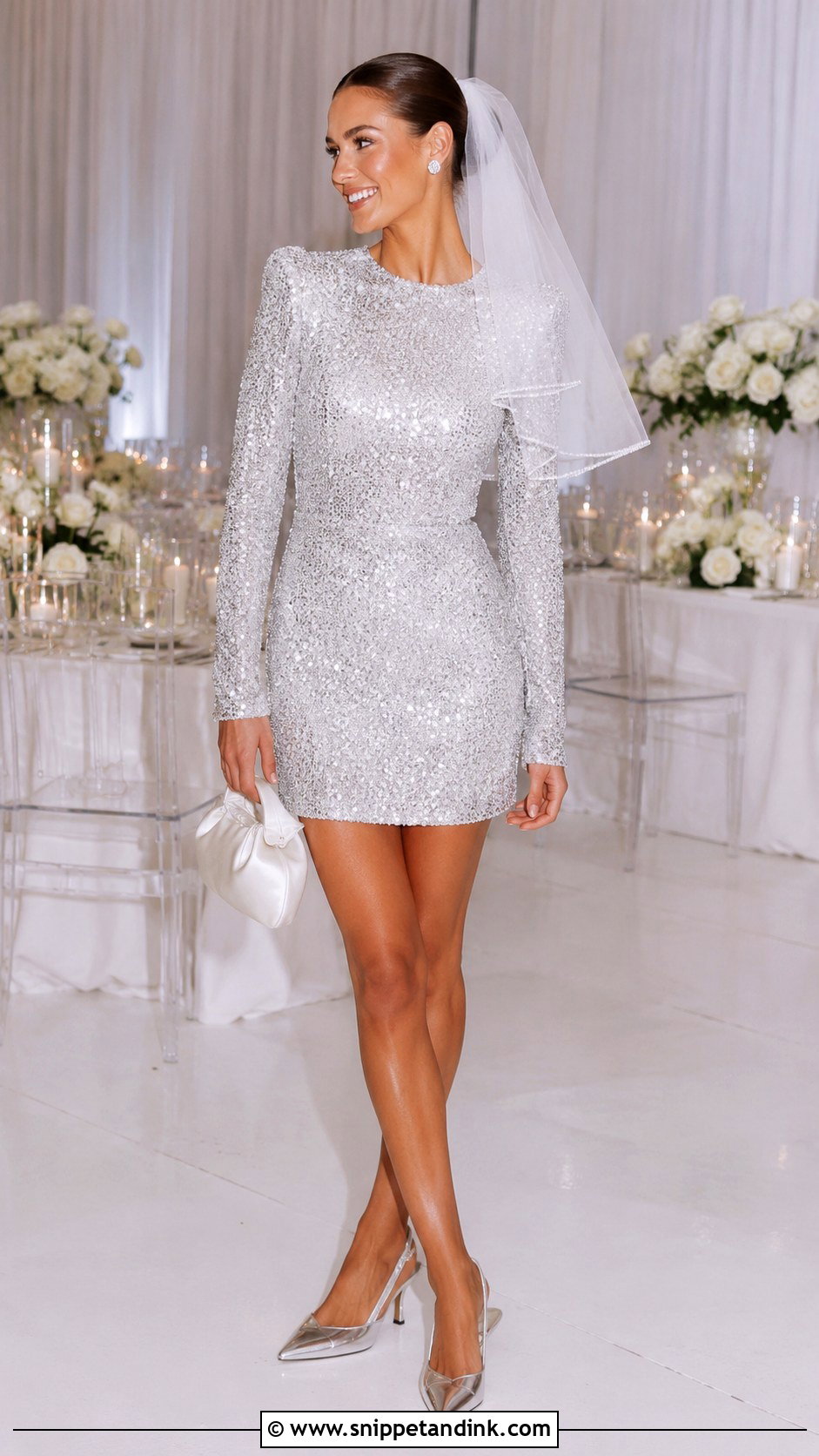
Silver sequins bring energy to a courthouse ceremony or an after-party. Sequins are stitched onto a backing, and on a stiff mini they scrape the inside of your arms by the end of the night, so I check the underarm and the seat when the bride sits. Make sure the hem still covers you seated. Sheer tights in cold weather, metallic slingbacks and a small satin bag work well, and a short veil adds the bridal note. Keep jewelry to studs and a bracelet. Ask the photographer about flash, since reflective sequins can bounce it straight back.
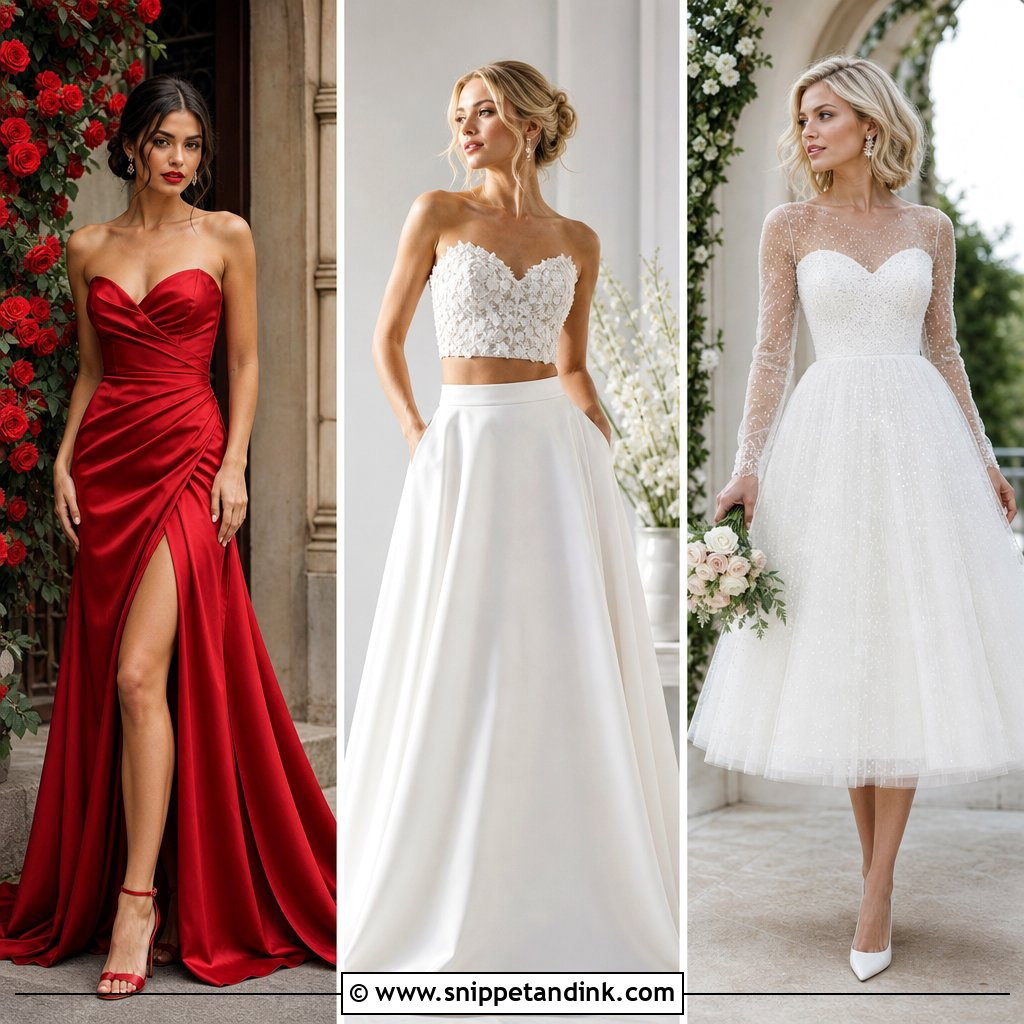
6. Bridal Crop Top And Tulle Skirt
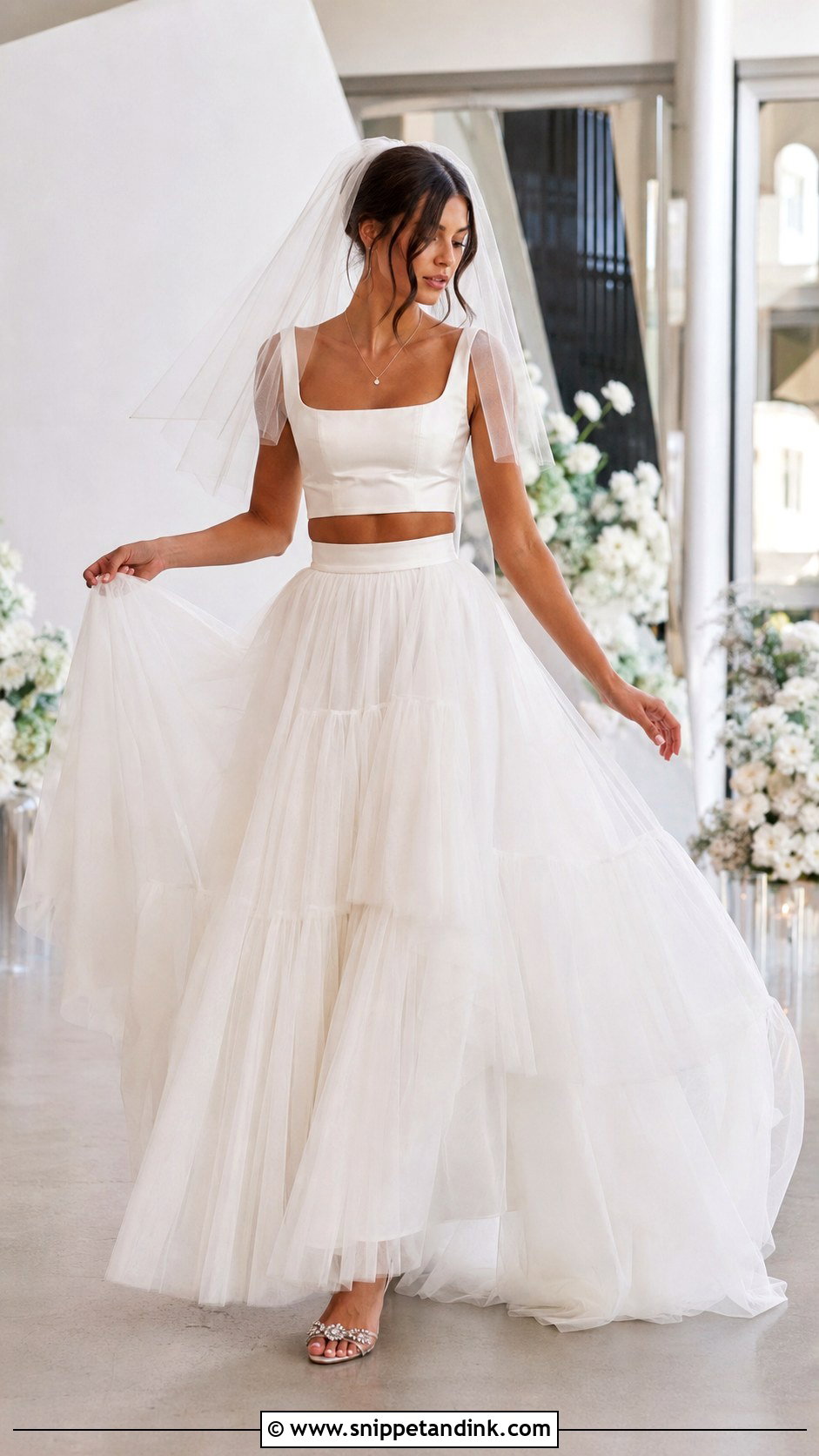
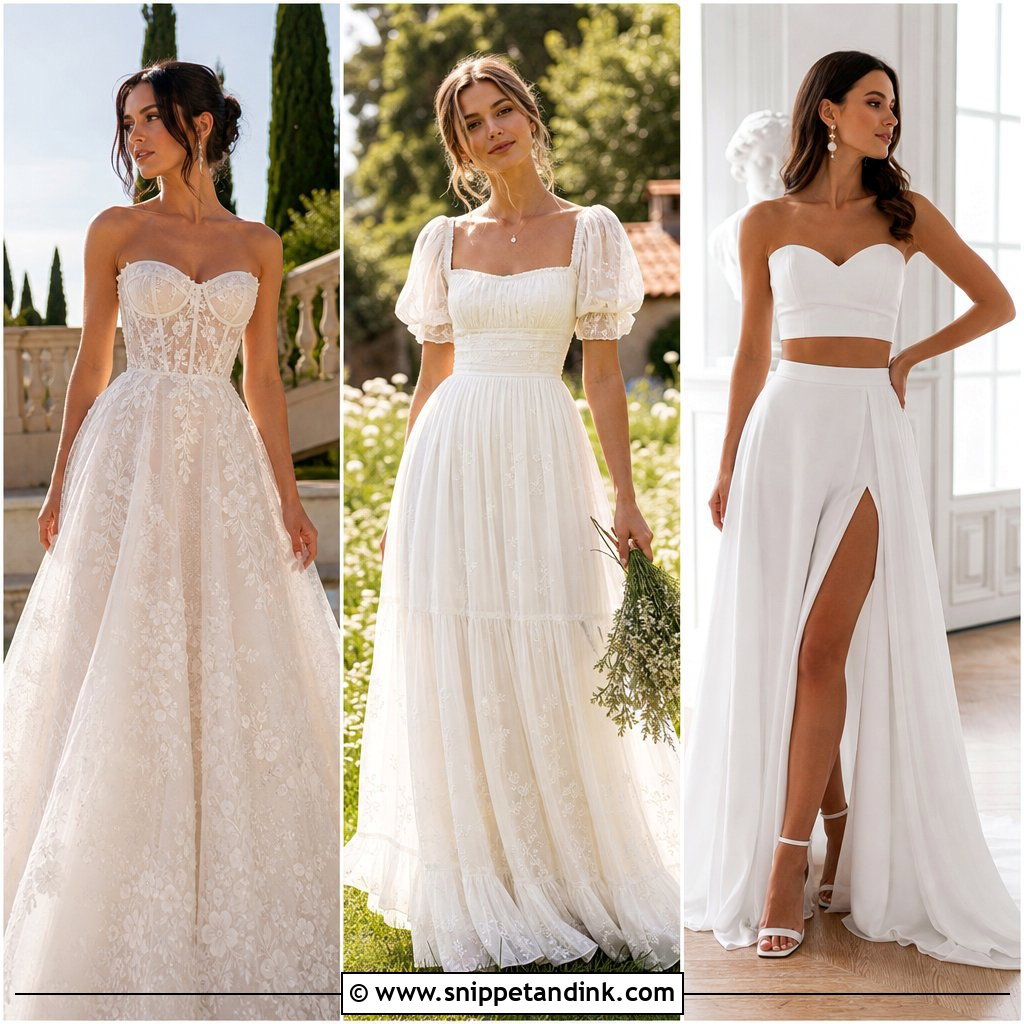
A crop top and tulle skirt give you a gown’s drama with the freedom of separates, and you can wear either piece again. Keep the gap of skin narrow, just at the natural waist, so the proportions stay connected. A structured corset top or lace blouse works better than a soft top, which tends to ride up when you raise your arms. My strongest advice: buy both pieces from the same maker or bring them together in daylight, because two different whites placed side by side always look mismatched in photos. A fingertip veil and embellished heels balance a full skirt.
7. Vintage Tea-Length Bridal Dress
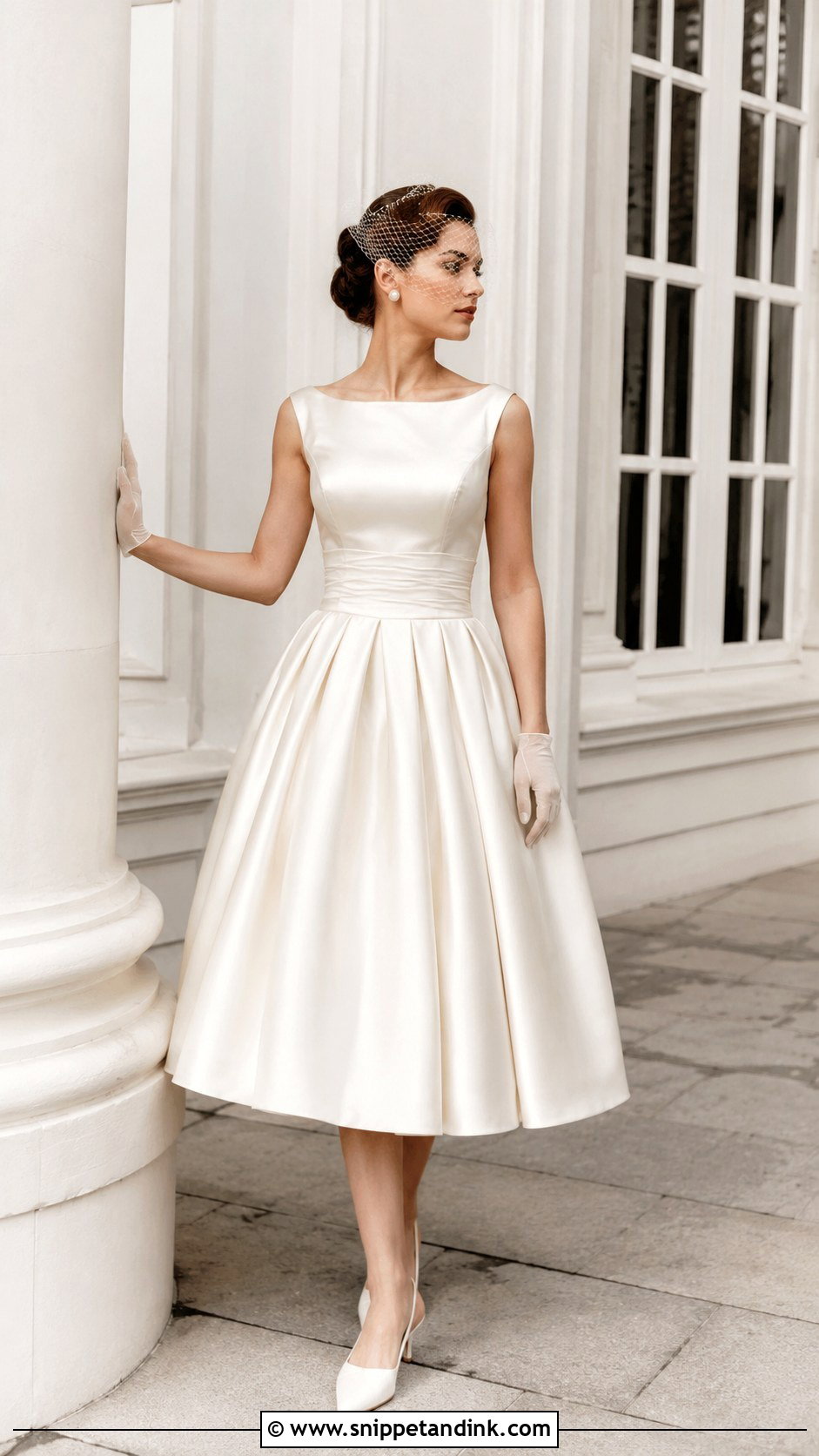
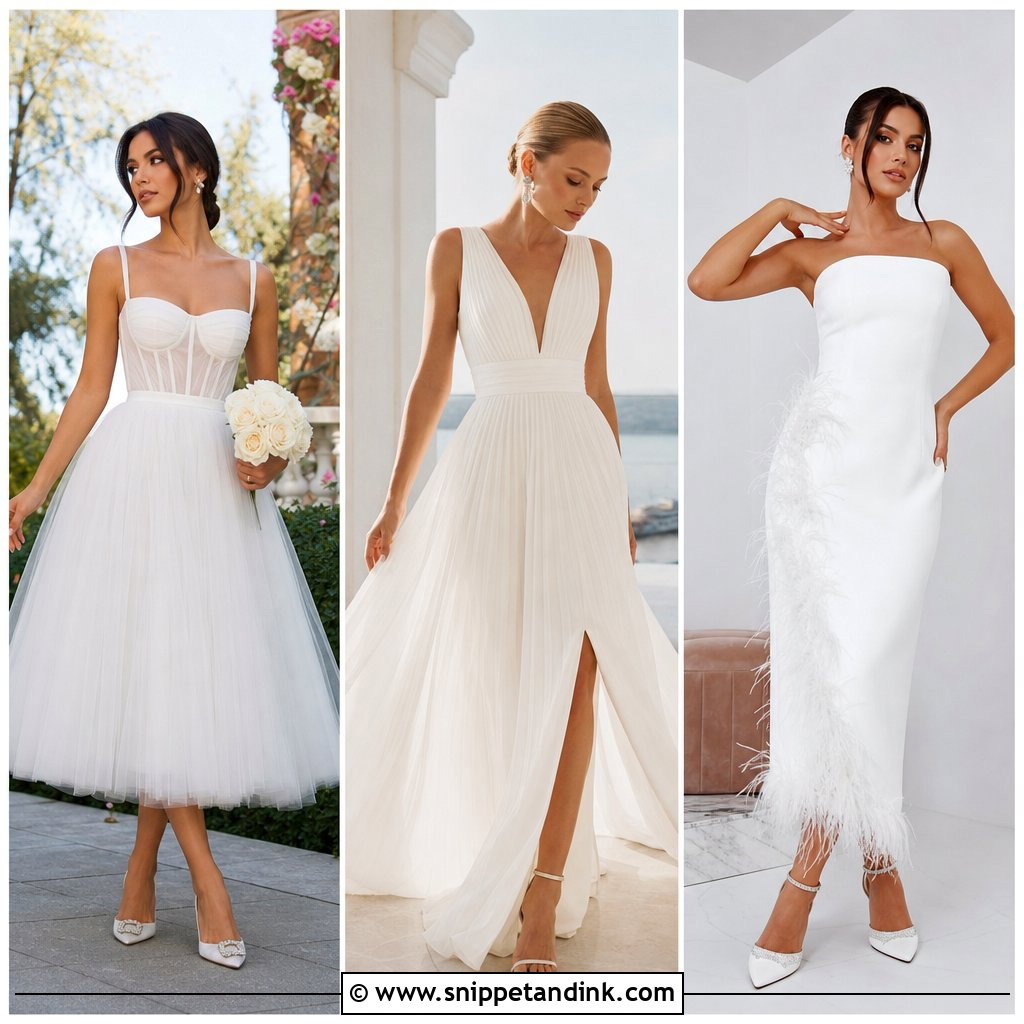
Tea length is the most practical bridal hem there is. It never drags, never needs bustling and shows off your shoes. A fitted waist and structured bodice give the vintage line, in satin, lace, mikado or layered organza depending on the season. Because the shoes are on display, choose pairs that look finished from the side too. Kitten heels, short gloves and a birdcage veil suit it. The hem is the alteration that matters: I set it just below the widest part of the calf, never across it. A soft petticoat adds lift without pushing it into full retro.
8. Satin Bridal Slip Dress With Leather Jacket
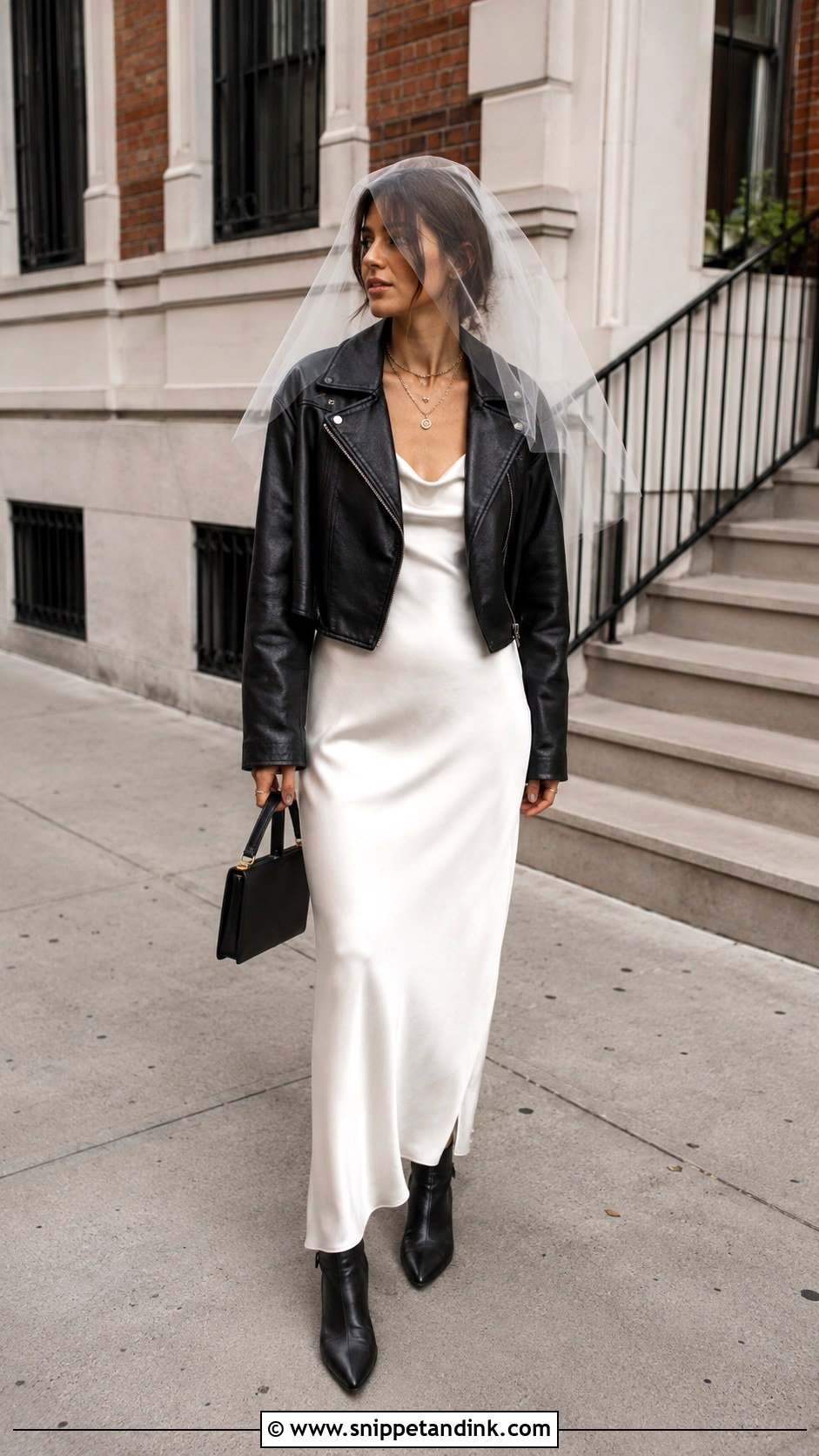
A satin slip dress paired with a fitted leather jacket keeps one foot in bridal and one out. Bias-cut satin skims the body, which also means it shows every seam beneath, so a smooth lining and seam-free underwear are essential. Ivory keeps the base bridal; black or burgundy leather adds the edge. The jacket should be cropped near the waist. An oversized one hides the dress entirely. Wear it for outdoor portraits or a cooler evening, then take it off. Ankle boots, layered necklaces and a fingertip veil hold the two moods together.
9. Red Alternative Bridal Gown
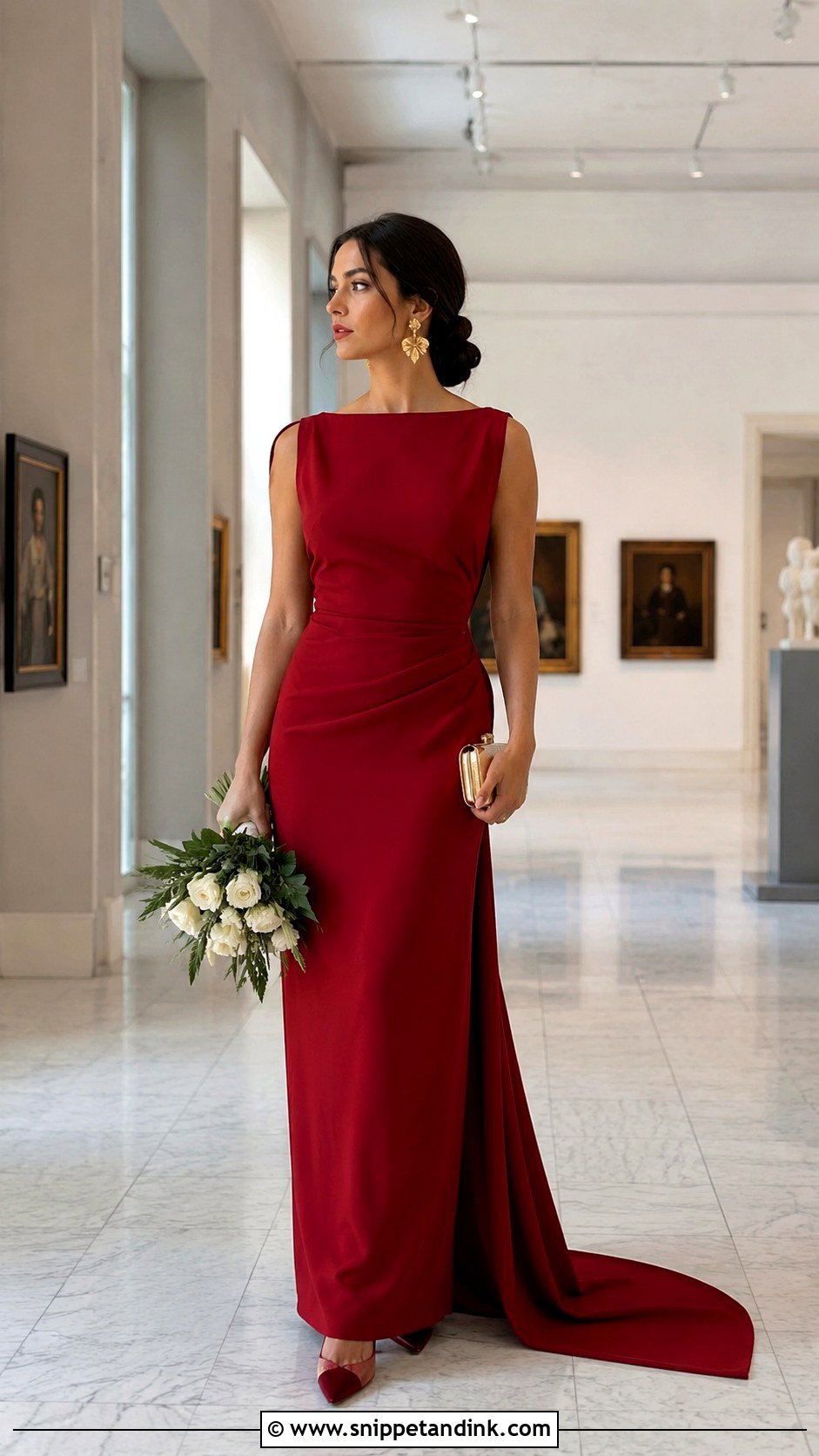
Red carries real meaning in many wedding traditions, and for some brides it’s the obvious choice, not the alternative one. Shade matters more than style. Crimson is vivid, burgundy is formal and tomato red looks fashion-led, and each one sits differently against skin. I hold fabric under the chin in daylight before anything else. A column lets the colour carry the look, while a layered ball gown doubles the drama. Gold earrings and neutral or matching heels suit it. Red dyes can shift on camera, so look at the fabric under both natural and indoor light.
10. White Bridal Blazer Dress
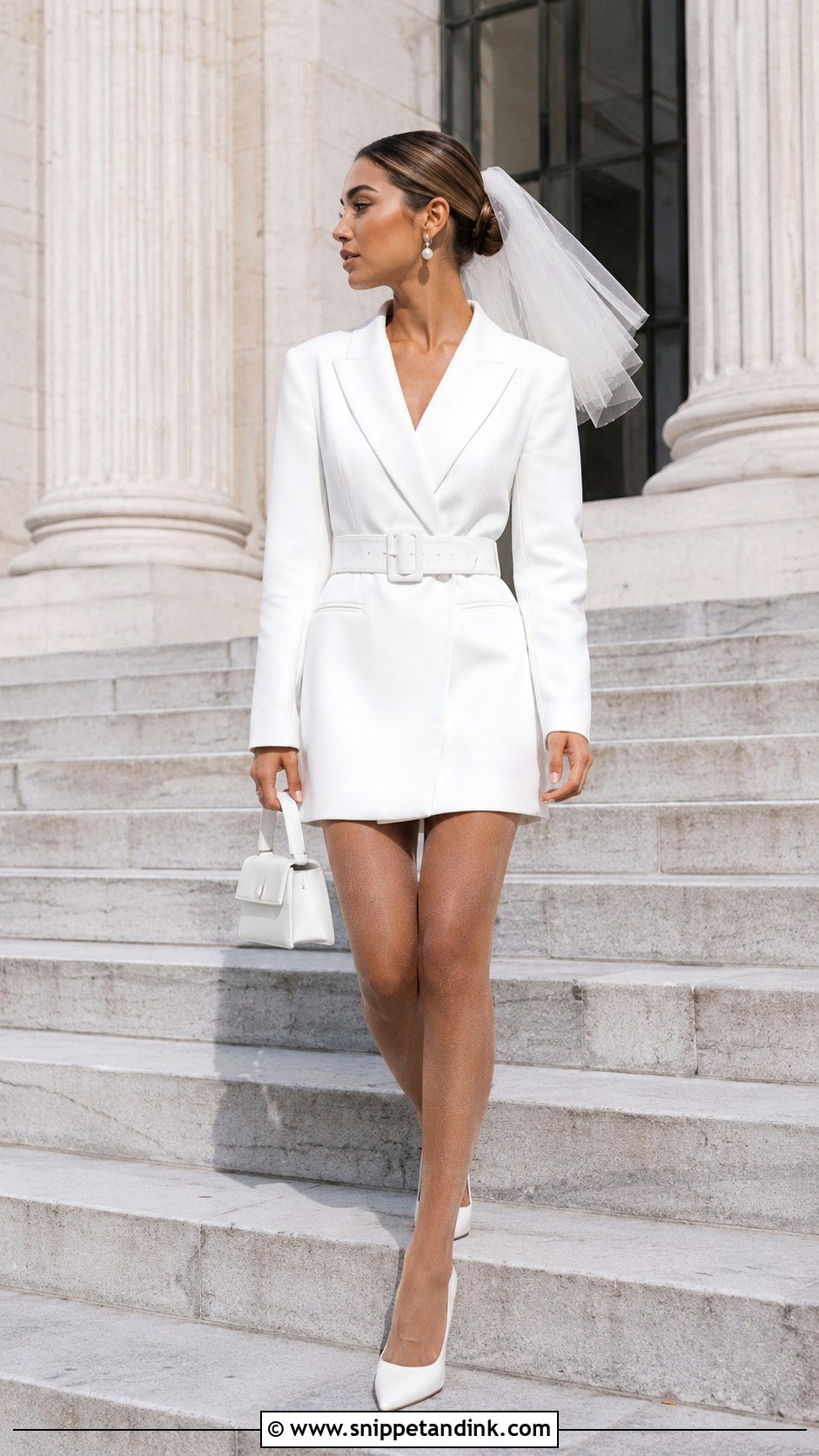
A white blazer dress gives you tailoring in a single piece. Look for a fully lined, structured design. Unlined, it creases at the waist and clings. The front closure is the weak spot, especially on a double-breasted cut, so I add fashion tape or a hidden snap at the neckline to stop it gaping when you lean in for photos. A belt shapes the waist. Sheer tights and ankle boots suit cold weather; pointed pumps suit a city hall. If it feels too short for the ceremony, layer tailored shorts underneath or look for a longer tuxedo version.
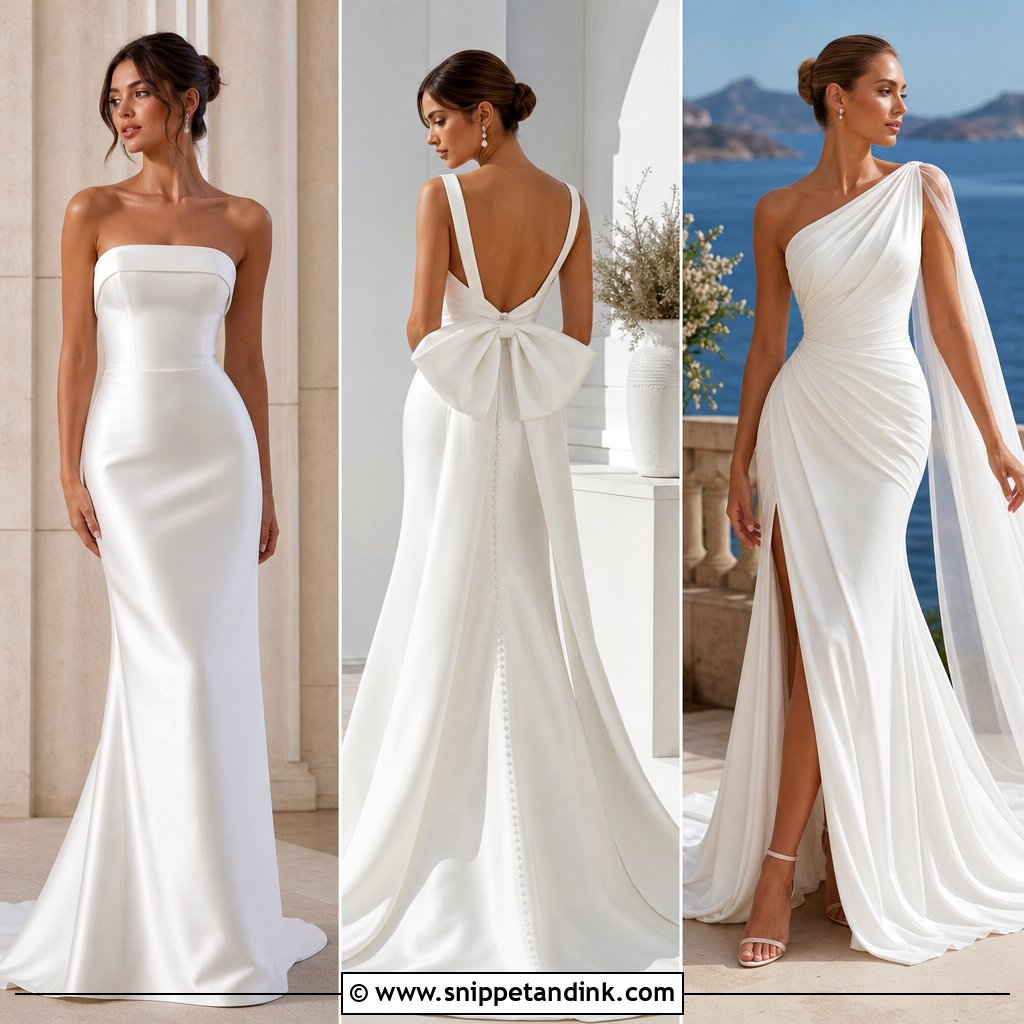
11. Bridal Column Gown With Cape
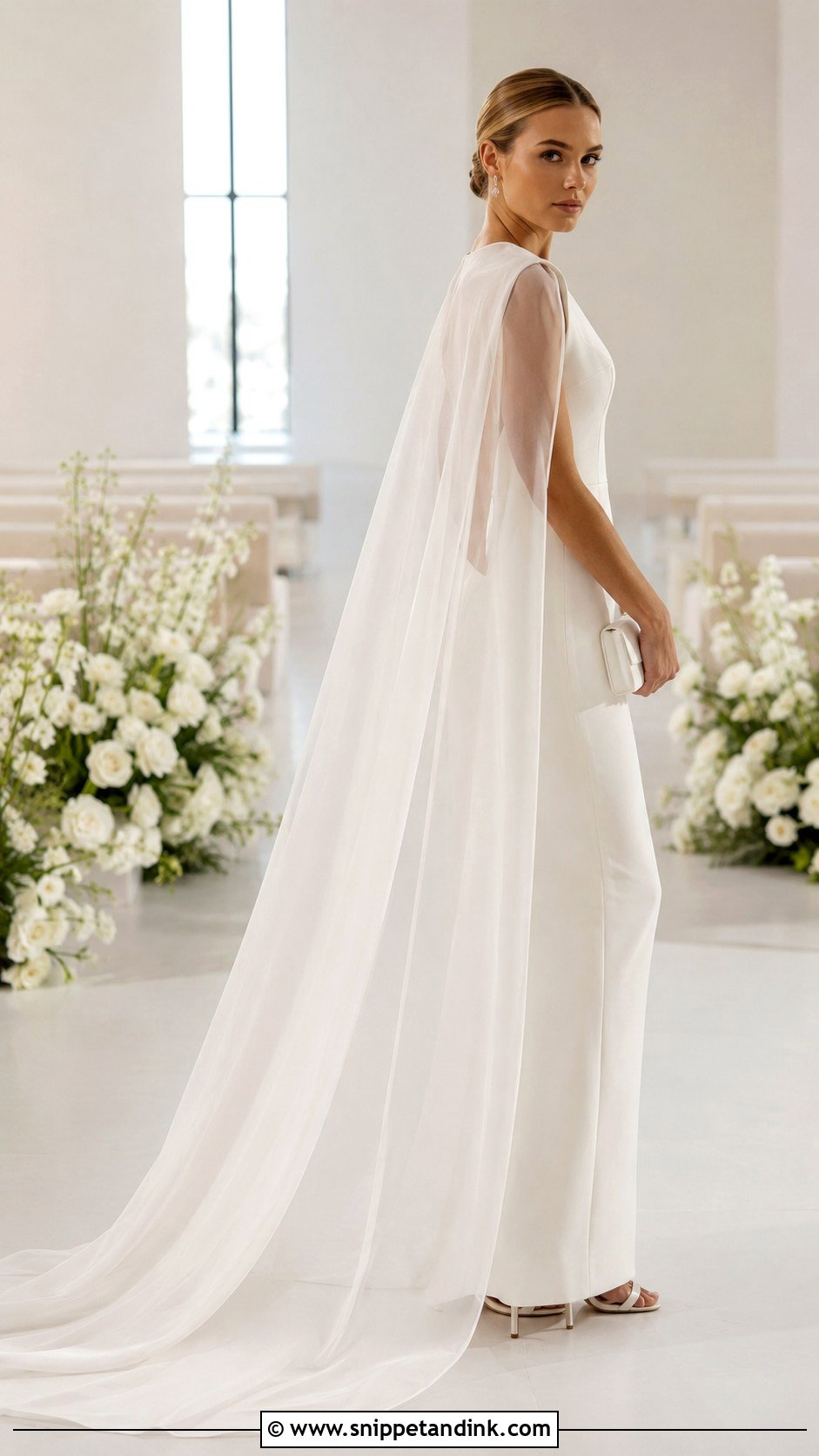
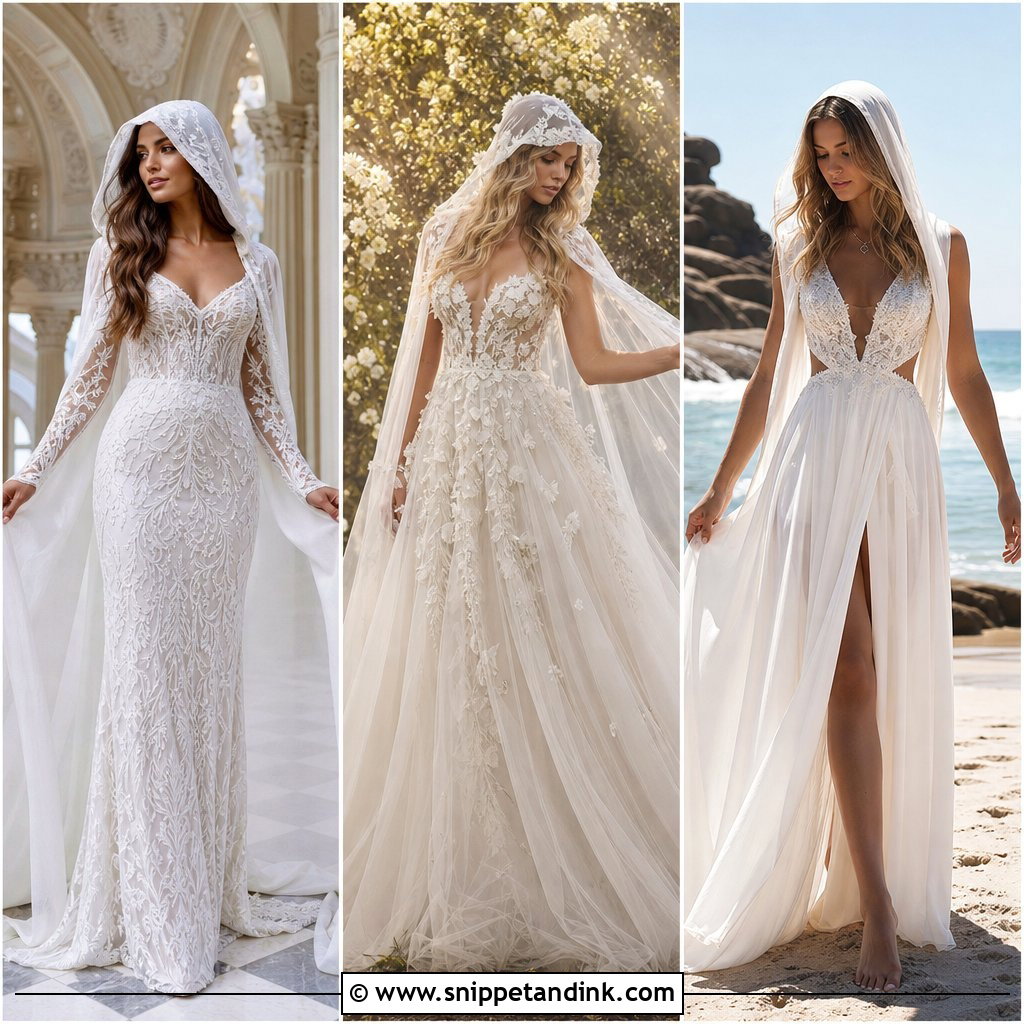
A plain column gown with a cape is quiet from the front and striking from behind. Start with crepe or satin that follows the body without gripping it, then choose the cape: a short capelet, a sheer floor-length layer or a structured cape with a train. It can stand in for a veil, which suits brides who don’t want anything covering their hair. The fastening is what I test. A hidden hook at the shoulders should hold through a hug and release in seconds. Keep earrings small so they don’t catch on the cape, and take it off after the ceremony for dinner.
12. Embroidered Bridal Pantsuit
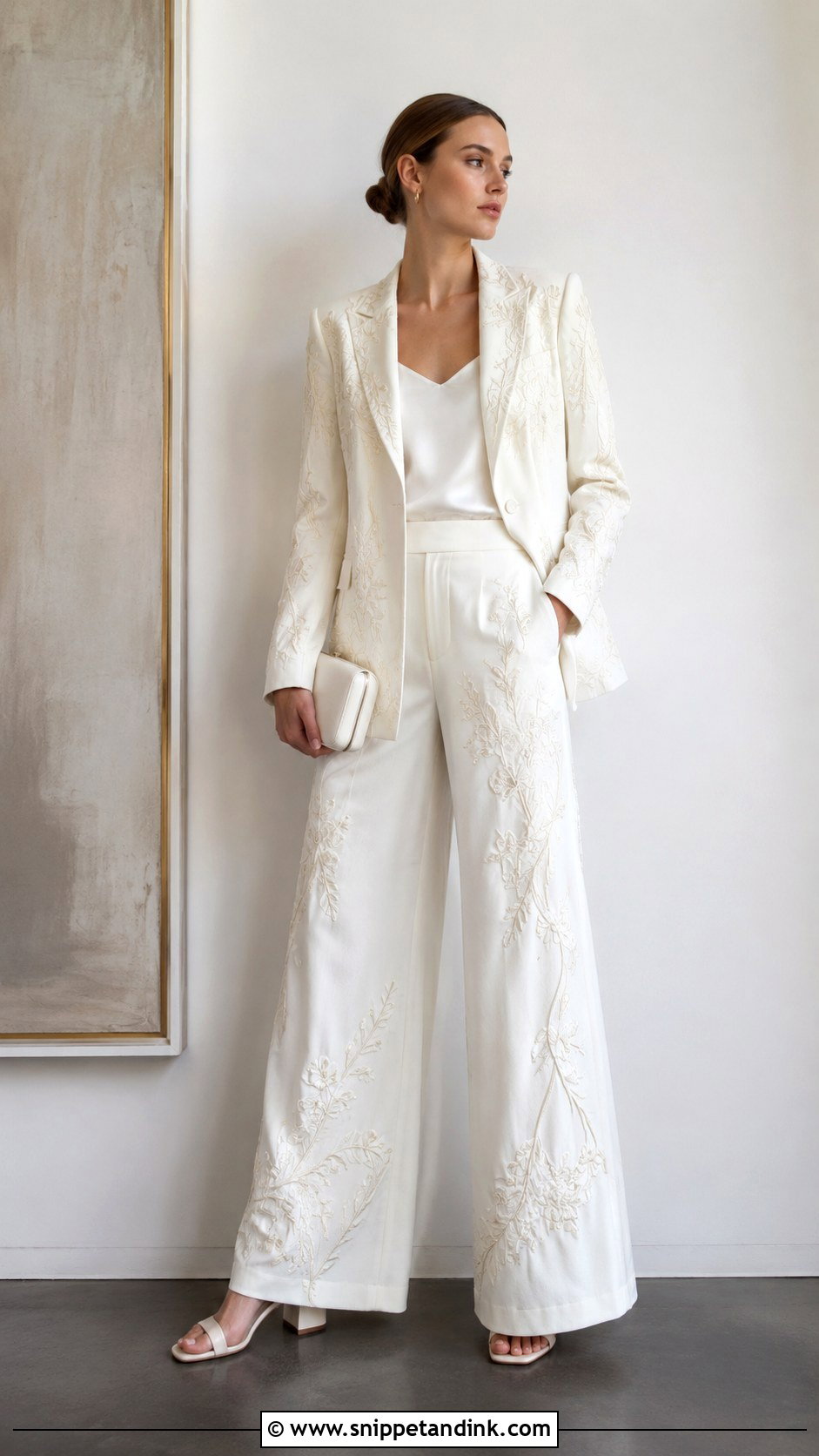
An embroidered bridal pantsuit puts the detail into the surface, whether that’s botanical stitching, metallic thread or tonal appliqué. If the whole suit is embroidered, keep the layer underneath plain, a silk shell or a clean bandeau. Here’s the catch I always warn about: shortening sleeves or trouser legs can cut through the embroidery, so check where the pattern ends before you buy the length. Subtle versions keep the stitching to lapels and cuffs. Low block heels, small hoops and a low ponytail let the jacket lead.
13. Bridal Corset With Wide-Leg Trousers
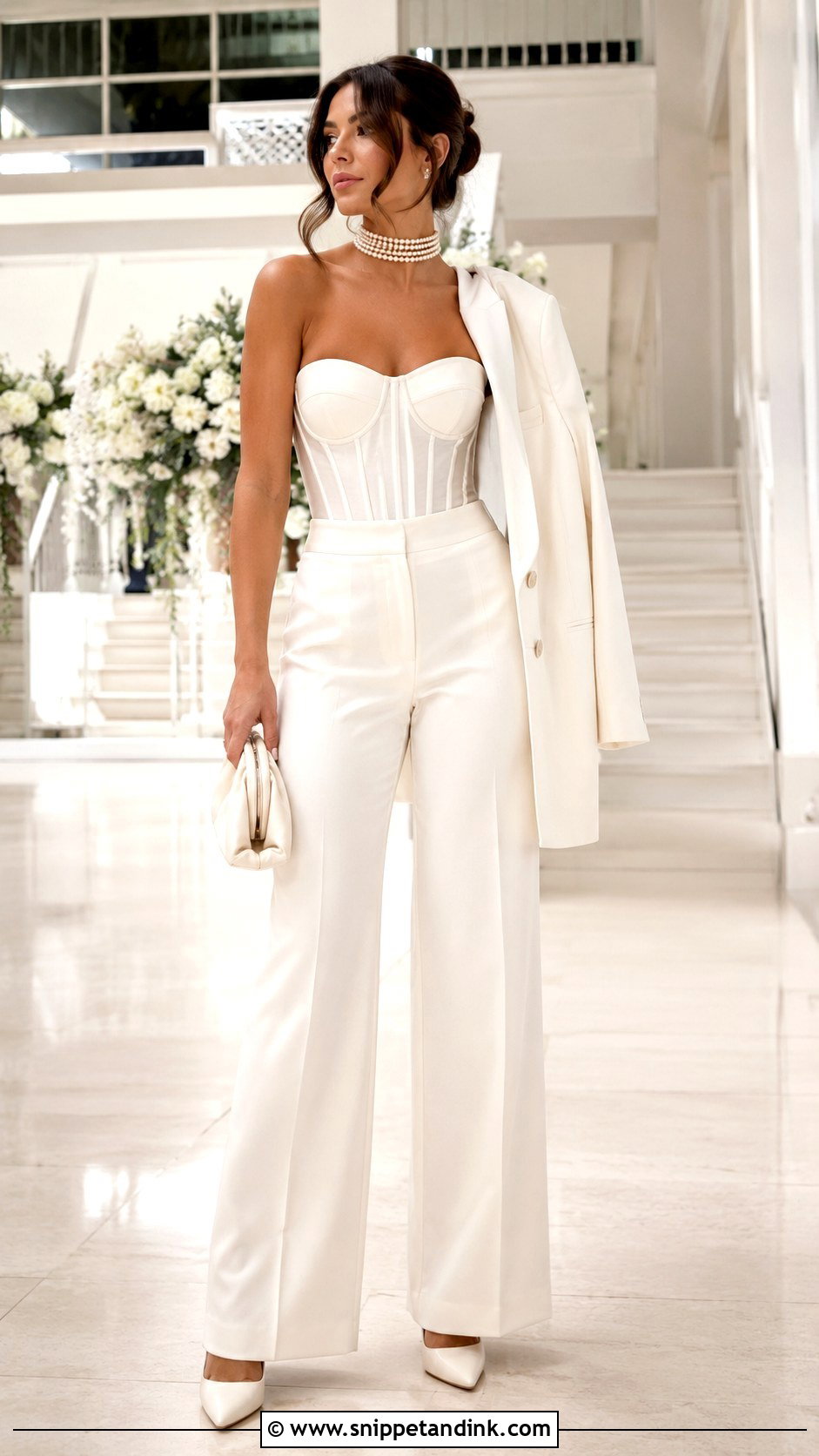
A corset with high-waisted wide-leg trousers can feel as ceremonial as a gown when both pieces match in tone. The trousers should skim the hips and fall clean over the shoes, so take the shoes to the hemming. Add a blazer, sheer gloves or a removable overskirt for more coverage at the ceremony. I test the corset in three positions: sitting, bending to pick something up and reaching overhead. If it rides up in any of them, it isn’t fitted at the waist correctly. A pearl choker and pointed heels finish it.
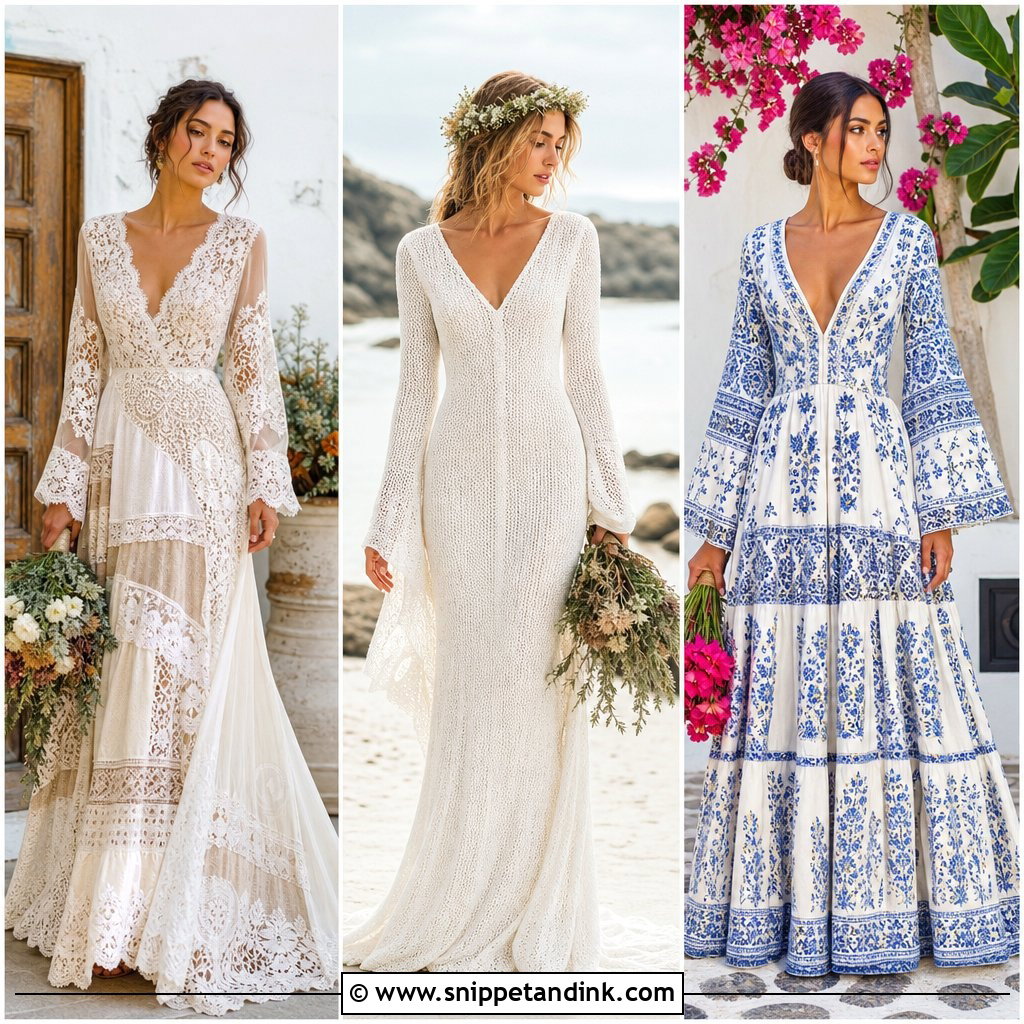
14. Boho Crochet Bridal Dress
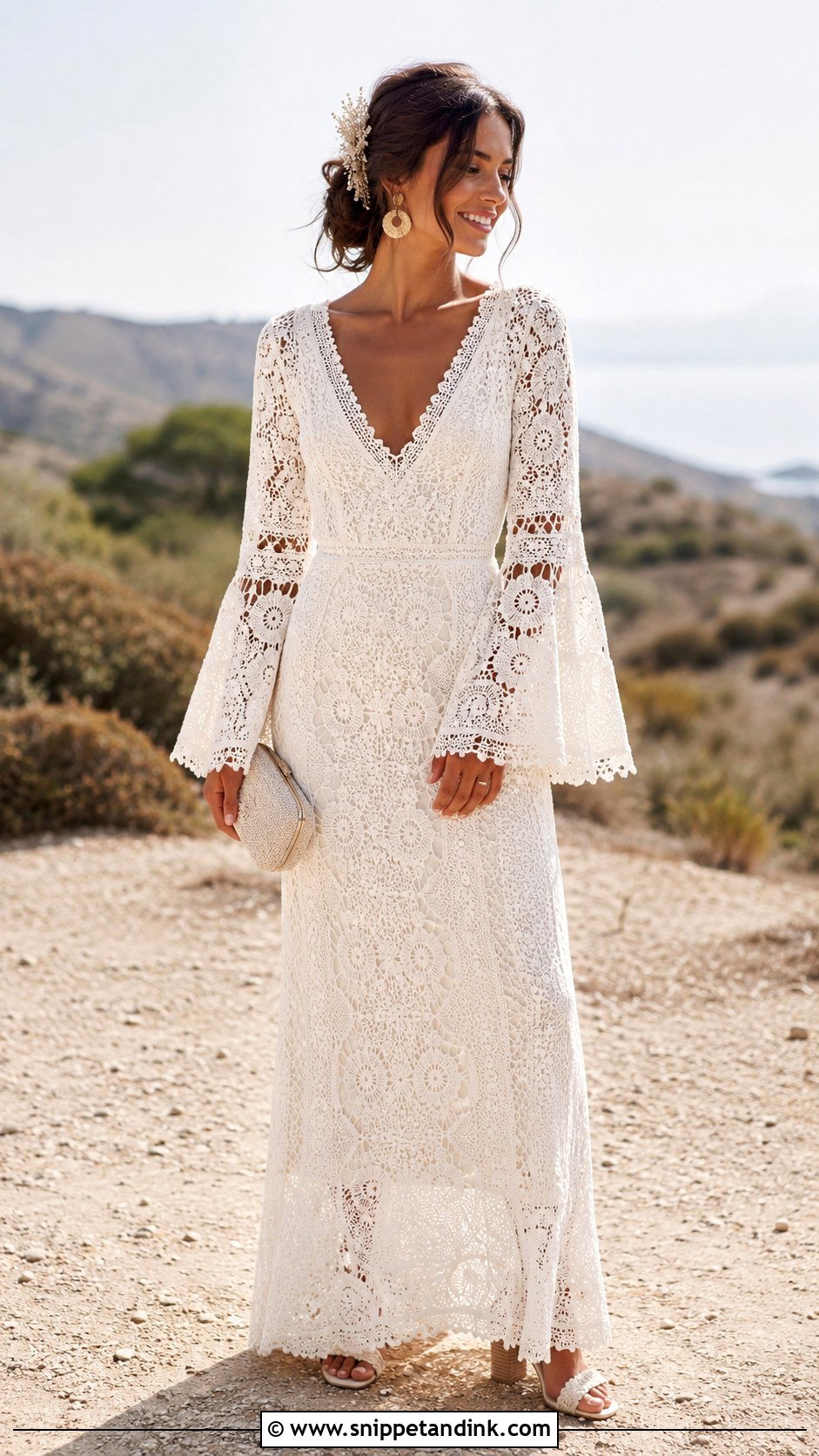
Crochet looks handmade and relaxed, which is exactly why it suits an outdoor or destination wedding. Loose crochet stretches as the day goes on, though, and can lose its shape by evening, so I only recommend a fully lined dress with real shaping at the bust and waist. Check the lining in bright daylight to be sure it covers what you want covered. Bell sleeves add movement. Leather or woven sandals and hammered gold earrings fit the mood, but stop there: three rustic accessories at once start to look casual rather than bridal.
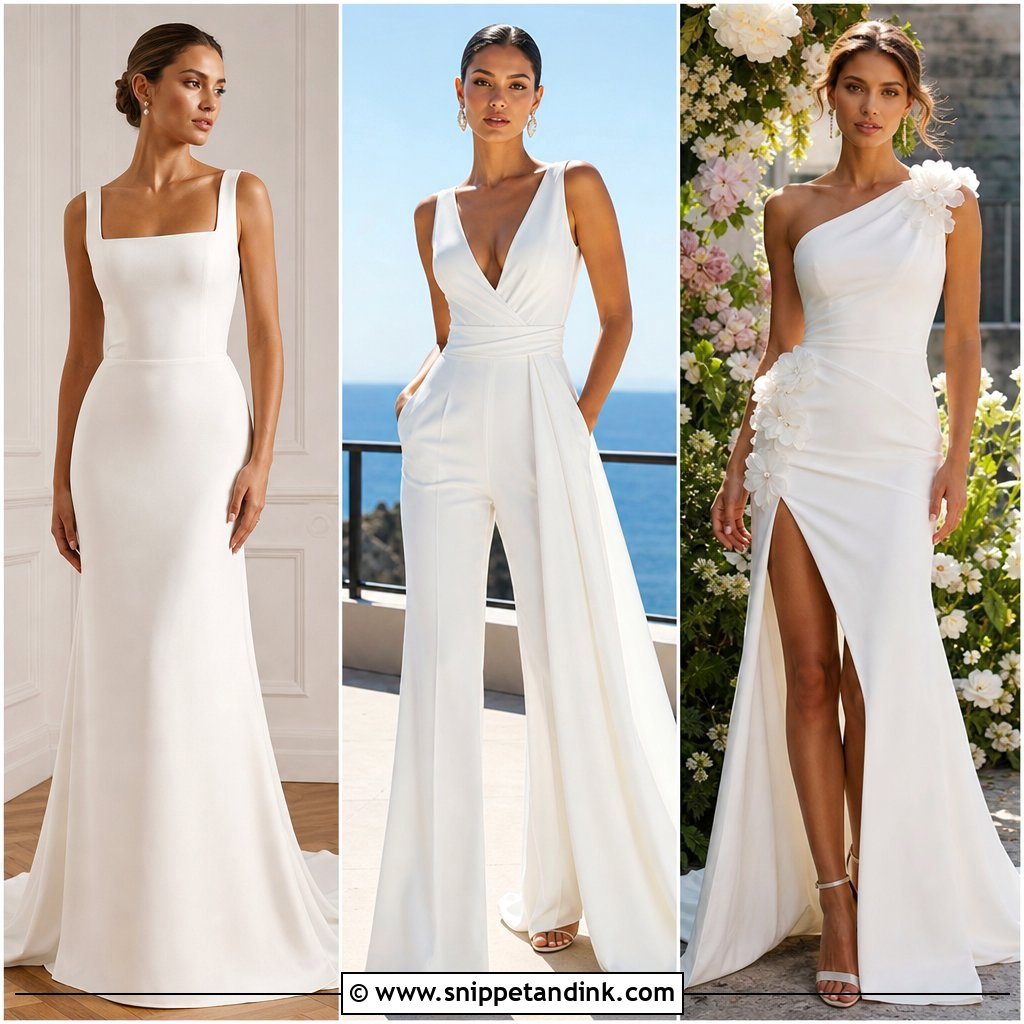

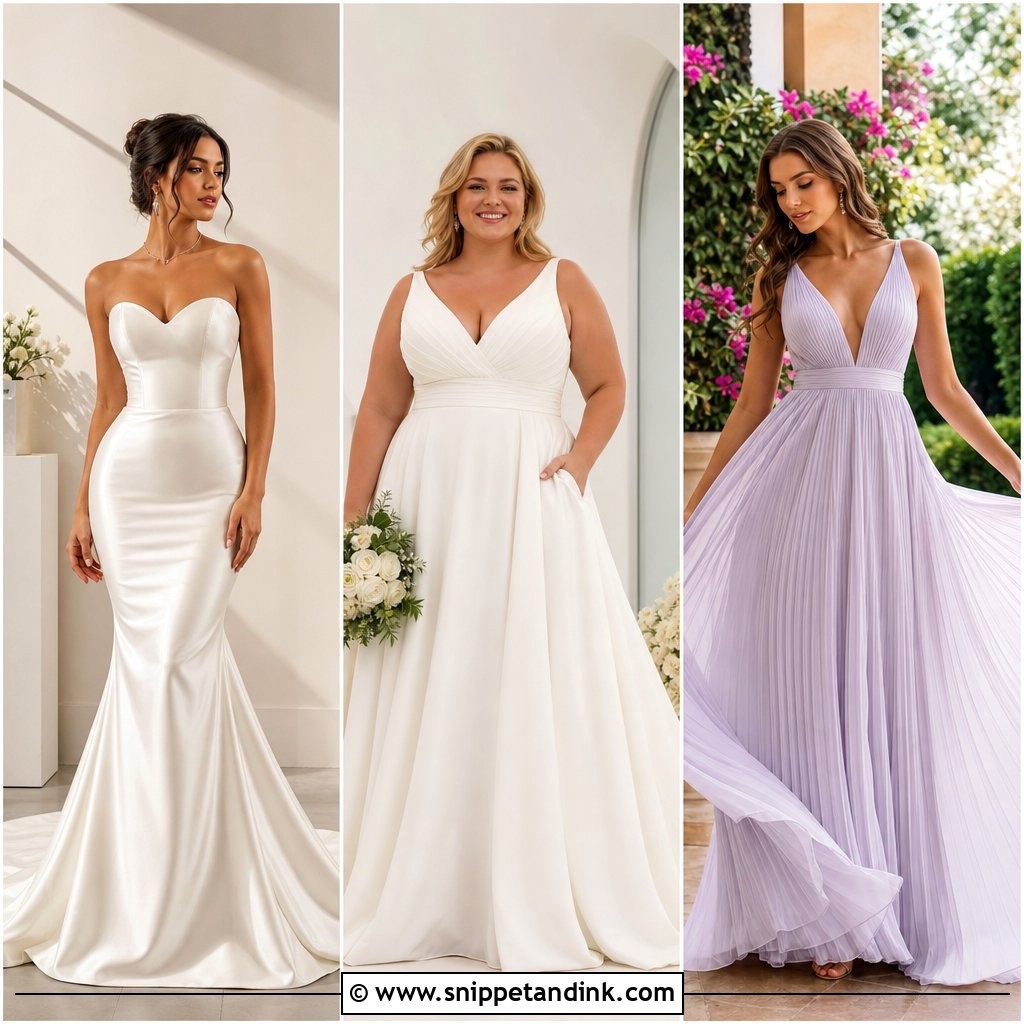
15. Asymmetrical Bridal Midi Dress
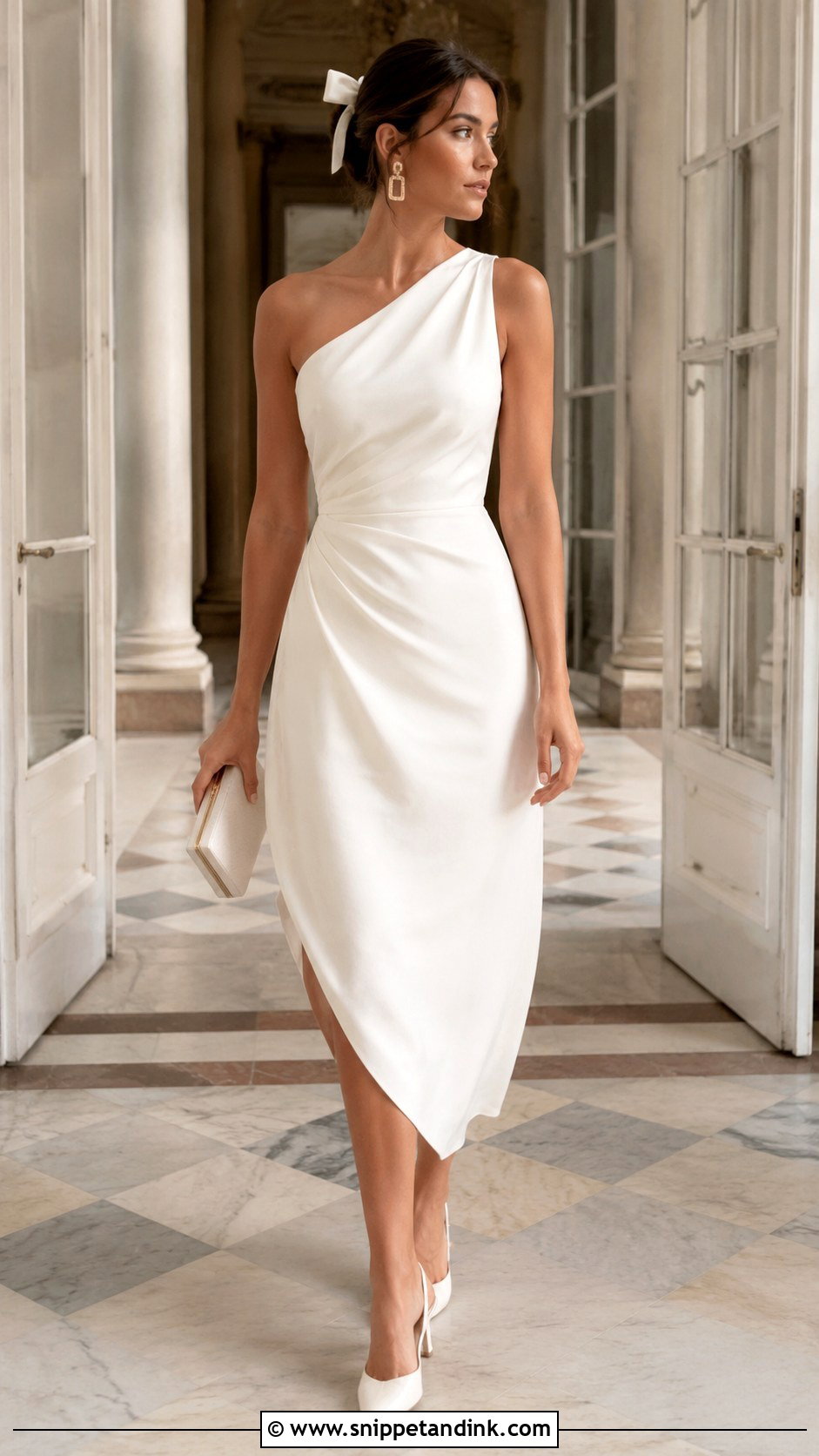
One asymmetric detail is a design choice. Two or three start to look like a mistake. A one-shoulder neckline, an angled hem or a folded side panel each work alone. Midi hems draw the eye to the lower leg, so the length should be set with your actual shoes on. A narrow skirt may need a side slit to walk freely. Crepe and mikado hold sharp angles well, while satin softens them. Minimal slingbacks, geometric earrings and a sleek bun suit the clean lines, and a small veil or bow brings back a little softness.
16. Feather Trim Bridal Mini Dress
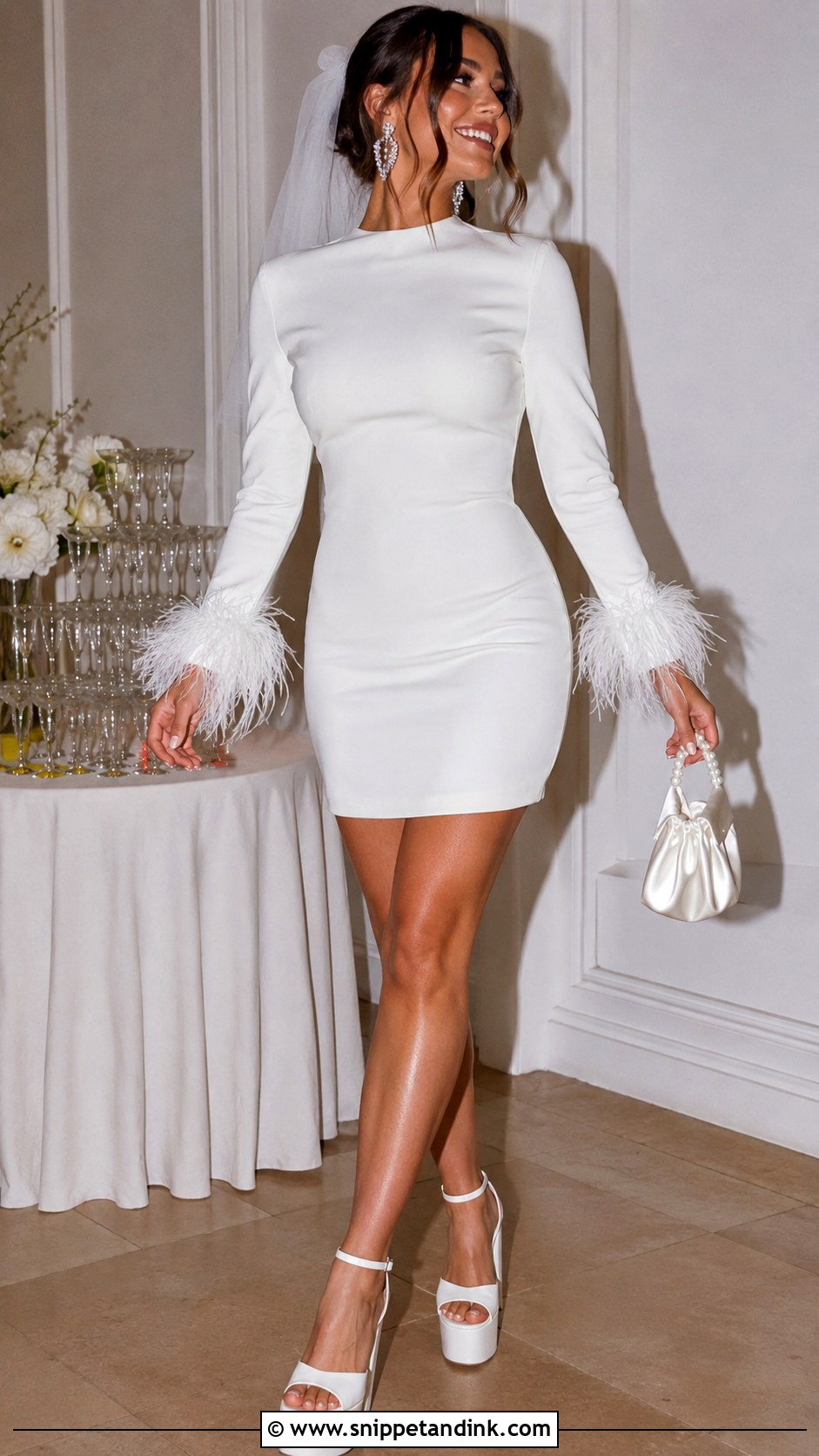
Feathers turn a simple mini into a party outfit, but they’re delicate. Keep them to the cuffs, the neckline or the hem rather than covering the whole dress, which also keeps the shape clear. I always ask whether the trim sheds before a bride buys, because ostrich feathers in particular leave strands on everything near them. They also catch on rings and bracelets. Store the dress on its own and pack a fabric-safe lint roller. Platform sandals, crystal earrings and a plain short veil make it an easy look to dance in once the formal moments are over.
17. Denim Bridal Jacket And Satin Skirt
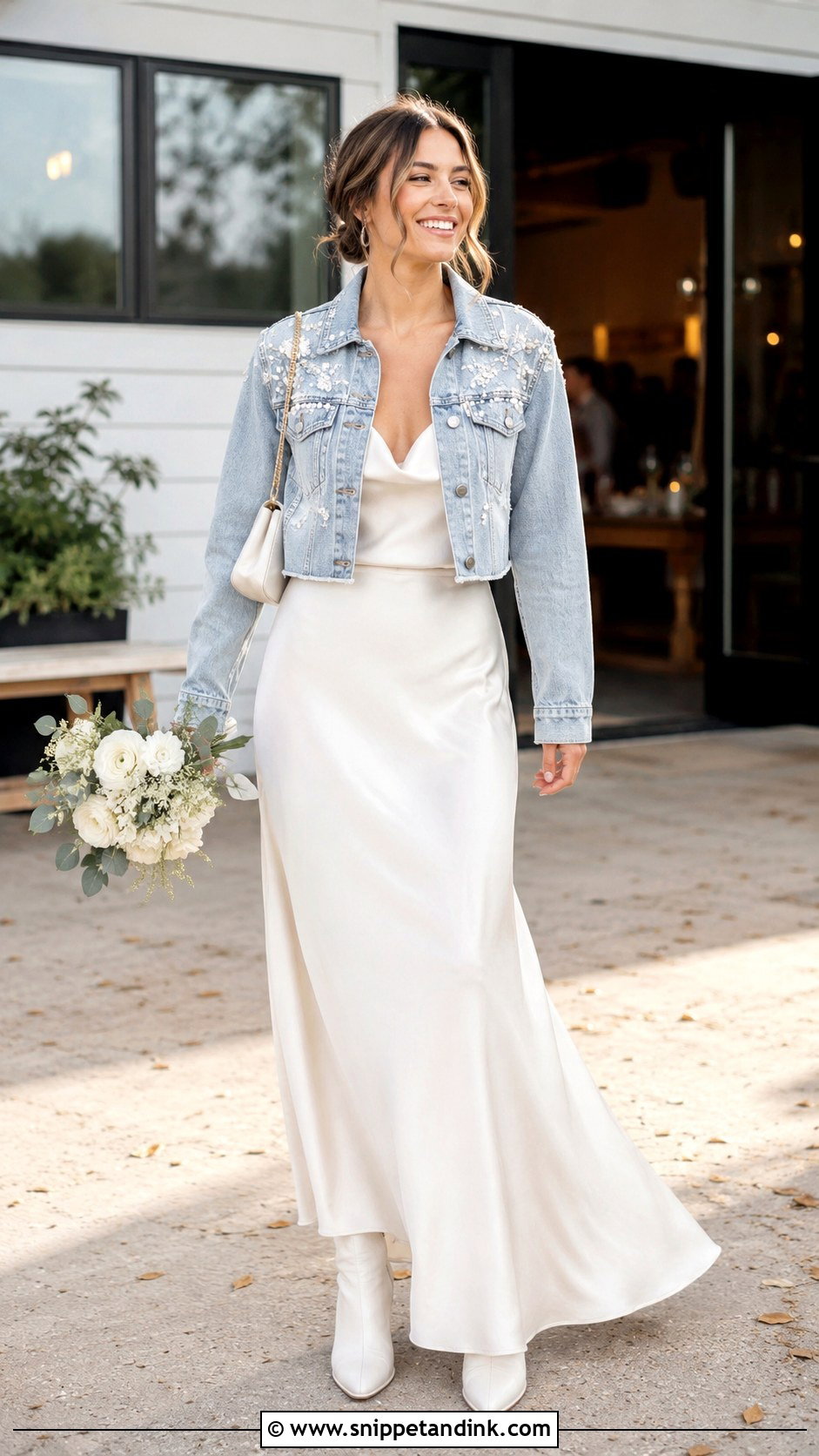
A personalized denim jacket over a satin skirt gives you a layer for outdoor portraits and a practical way to stay warm. Tuck a silk camisole or fitted bodysuit into a full-length bias-cut skirt. Keep any pearls or stitching on the jacket light so you’ll actually wear it again. I match the undertones: a cool light-wash denim sits better with a cool white satin, and a warmer denim with ivory. The jacket should end near the waistband so it marks the waist instead of cutting the body in half. White boots and simple hoops suit it.
18. Pastel Blue Bridal Gown
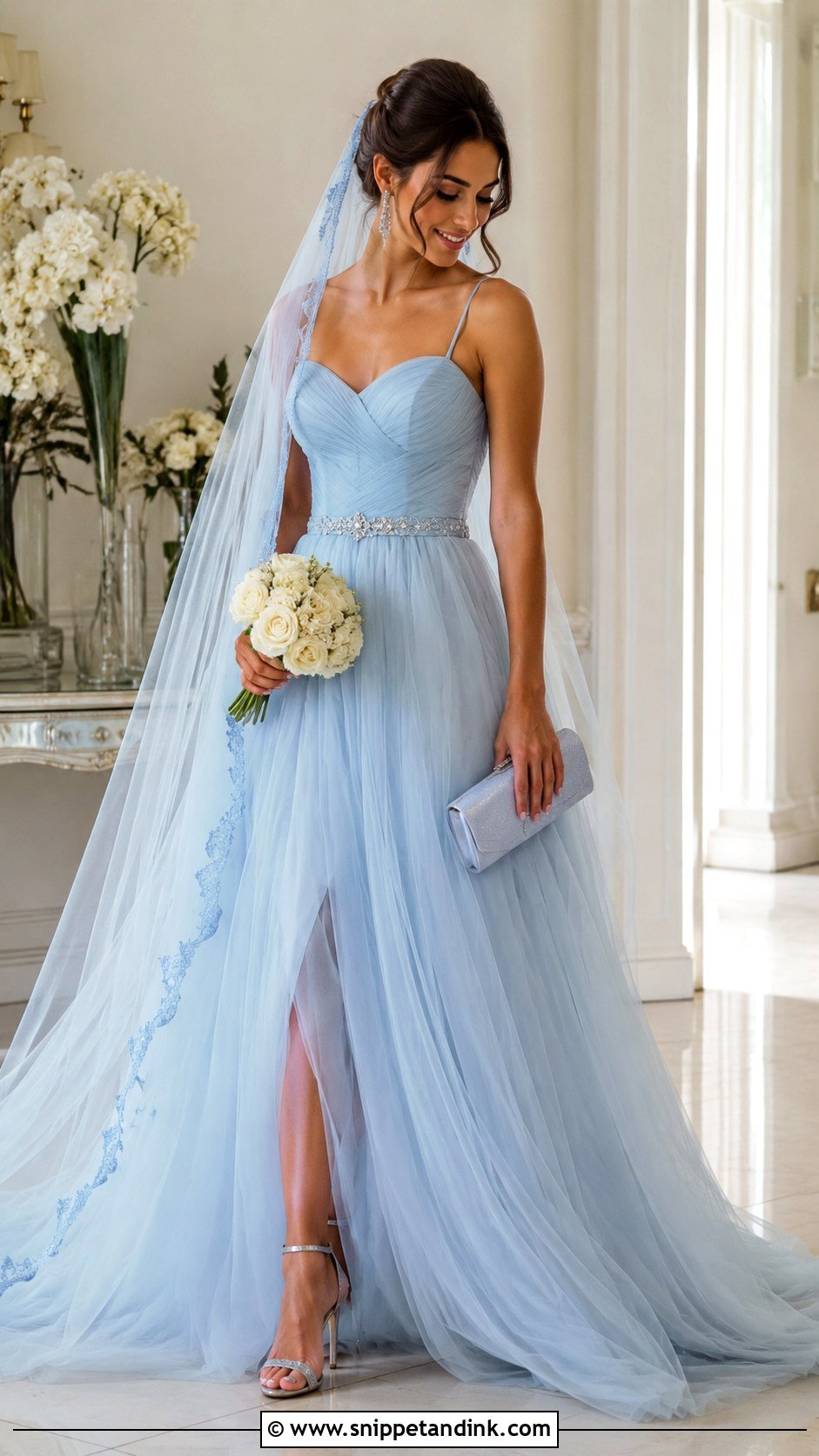
Pastel blue keeps a gown soft while adding colour. Powder blue tulle looks airy, blue-grey satin looks quieter and embroidered organza adds texture. A fitted bodice and flowing skirt keep it recognisably bridal. Pale blue fabrics carry undertones of green, grey or lavender, and the wrong one can make skin look sallow. I photograph swatches against the bride’s face in daylight before she orders. Silver heels and crystal drops suit it. Keep flowers white or cream so the colours don’t compete, and a veil with a faint blue edge can tie everything together.
19. Sculptural Bridal Gown
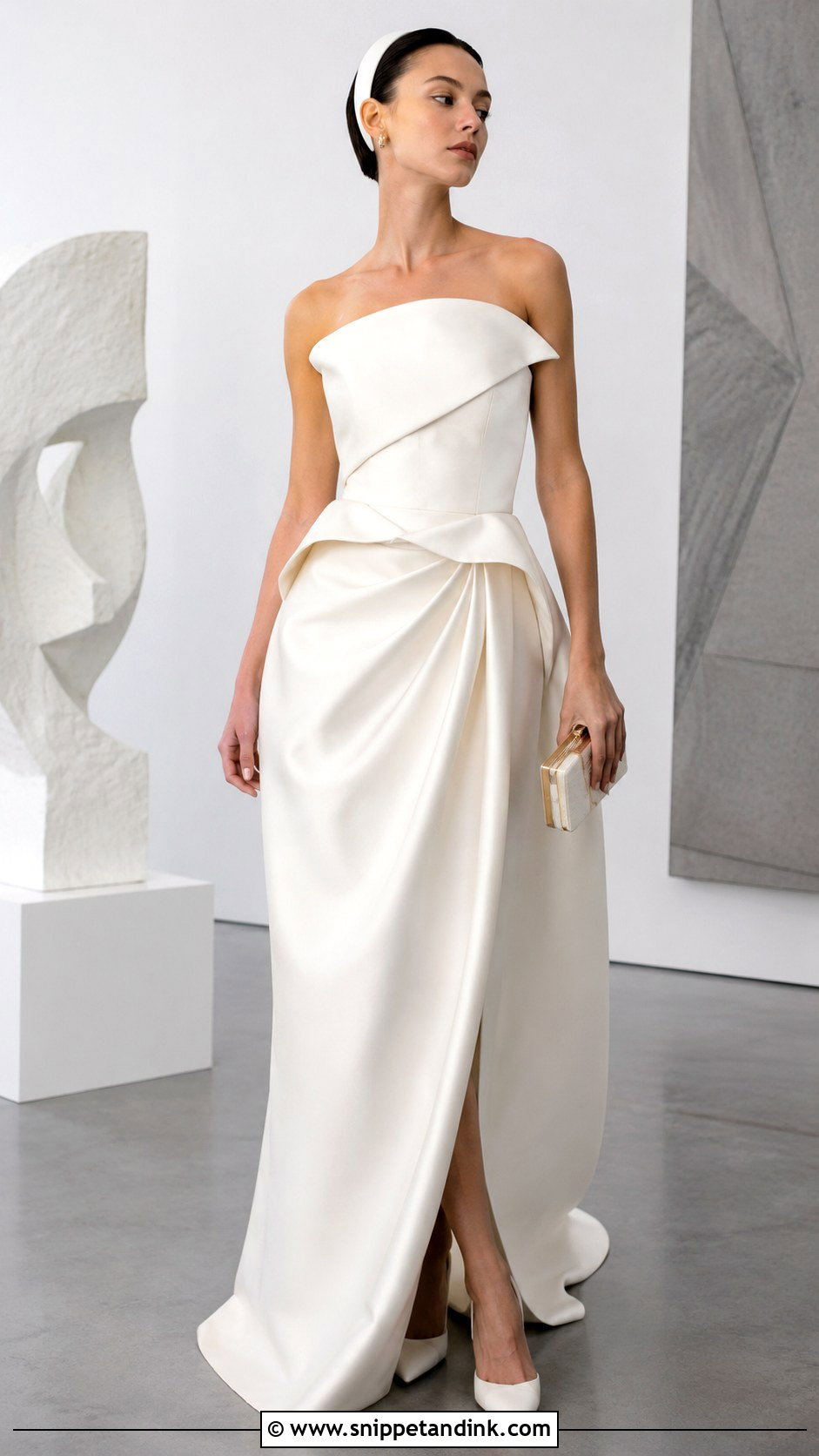
A sculptural gown treats the dress as a piece of design: an architectural neckline, a folded peplum, a bubble hem or a dramatic drape. Because the shape is the statement, I keep it to one colour with no extra embellishment. Structured mikado, faille and bonded crepe hold a shape; light fabrics collapse. The practical tests matter more here than anywhere else. Walk through a doorway, sit in a car and turn around in it at the fitting. If any of those crushes the design, it won’t survive the day. A smooth headband instead of a decorated veil keeps the lines clean.
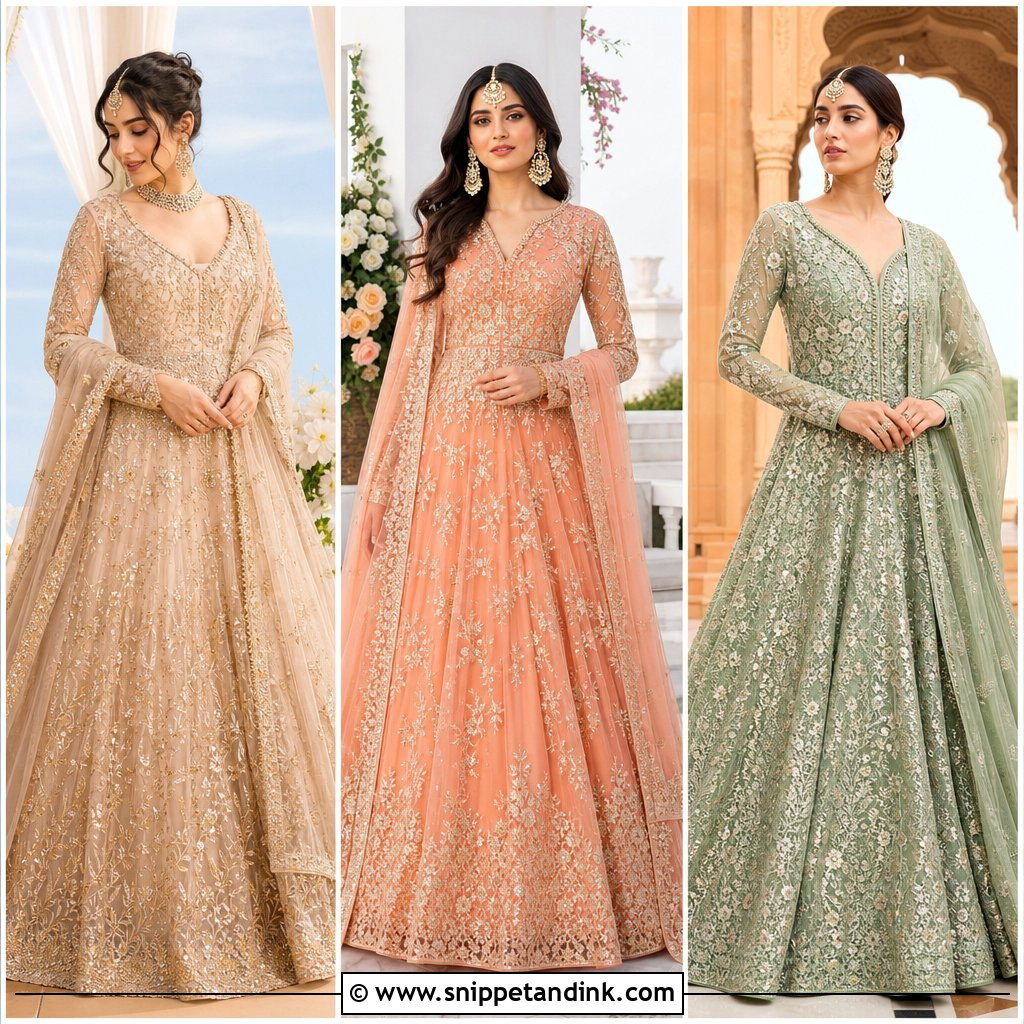
20. Modern Bridal Lehenga
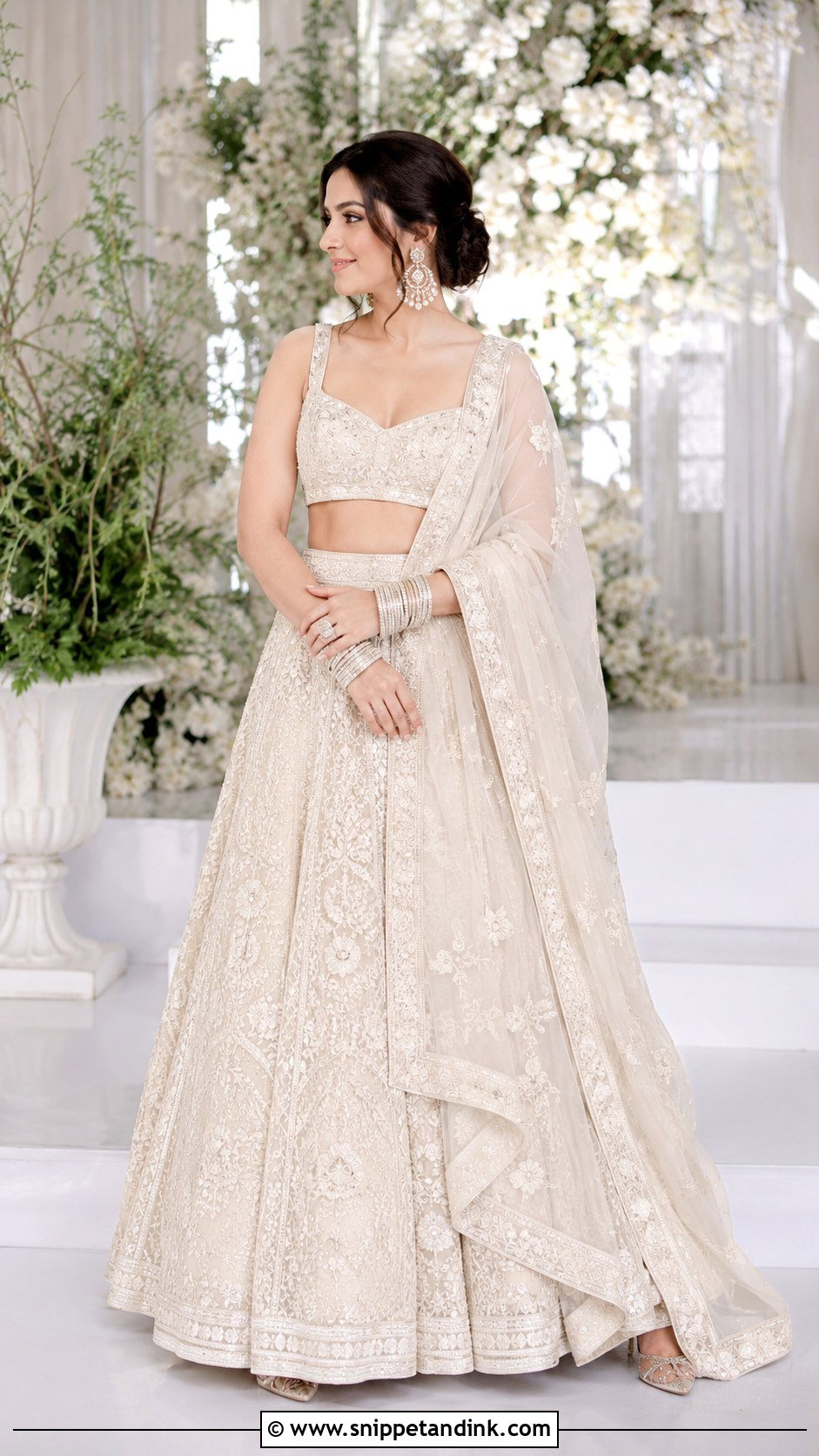
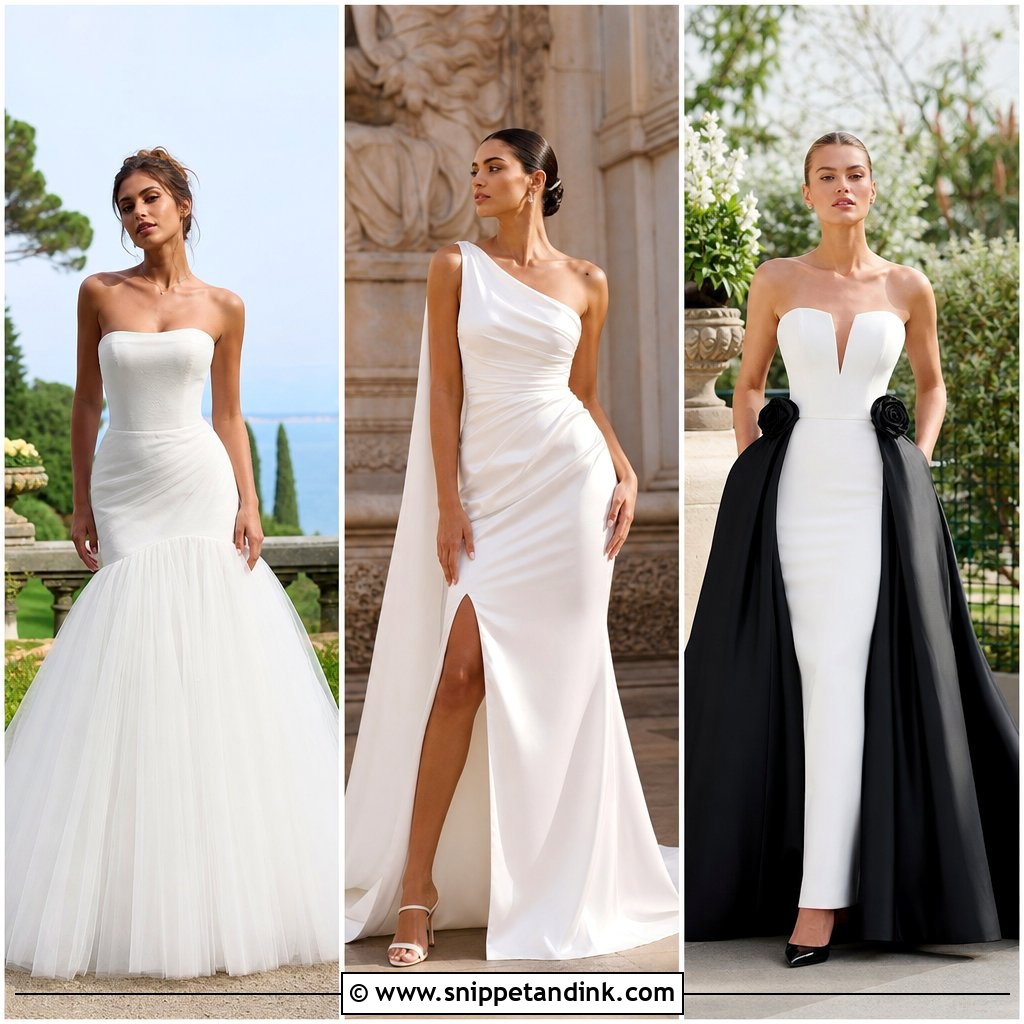
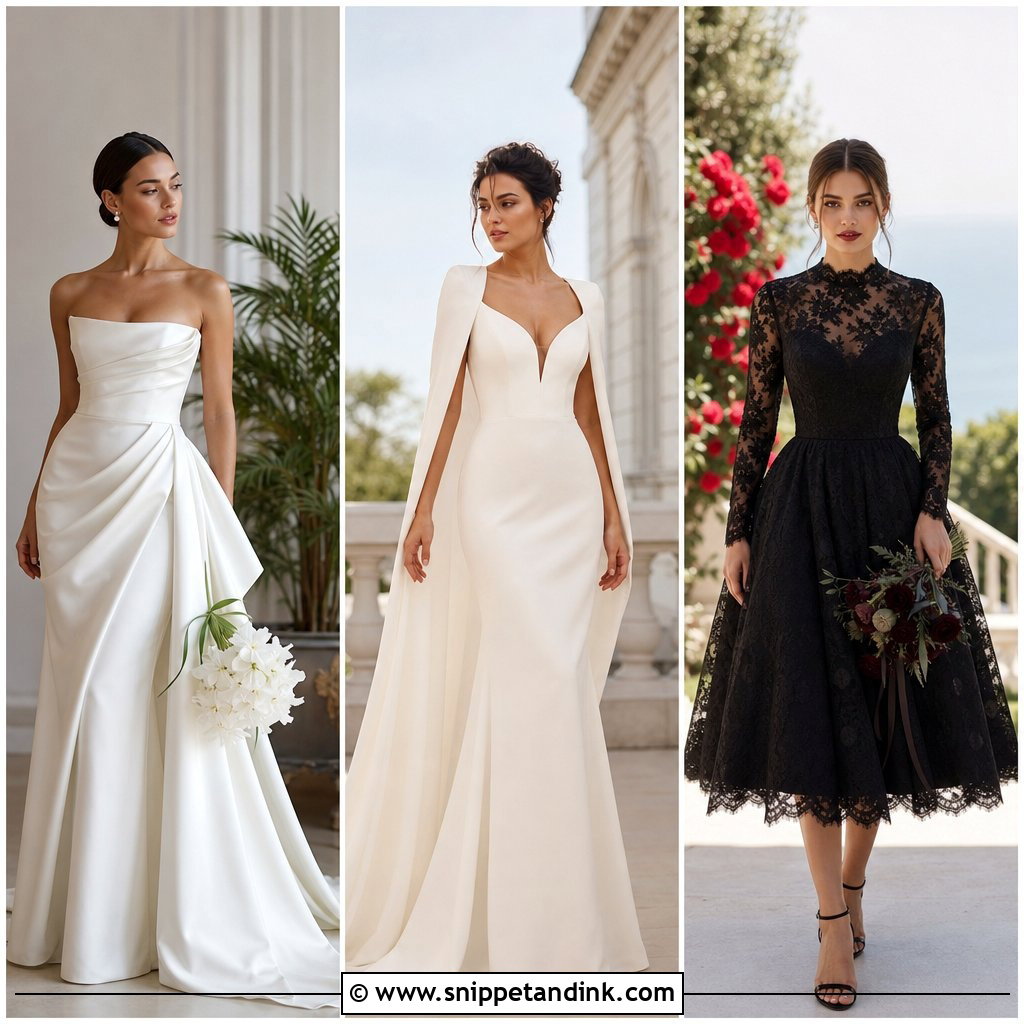
A modern lehenga can update the styling while keeping its traditional character. Ivory, blush, red or emerald each carry different meaning depending on family and culture, so that choice belongs to the bride and her family. A clean neckline on the blouse or tonal embroidery feels current. Heavy embroidery adds real weight, sometimes enough to tire you by the evening, so I ask about the skirt’s weight and the waistband’s support early. Pin the dupatta firmly before the ceremony and walk, sit and turn in the full outfit. A tailor who knows the garment helps keep both the detail and the comfort.
Where Alternative Brides Actually Shop
Bridal boutiques carry some suits, jumpsuits and coloured gowns now, but most of the looks on this list come from elsewhere. Each route has different timing and different risks.
Eveningwear and ready-to-wear
Sequin minis, red gowns, slip dresses and blazer dresses are often found in eveningwear departments. They arrive fast, but returns windows are short and stock sells out. I’d order two sizes, keep the better one, and get it to a tailor at least a month before the day. Check the fabric content too, because a polyester satin will crease and shine very differently from silk.
Tailoring and made-to-measure
Suits, corsets with trousers and embroidered separates fit best when they’re made or at least heavily altered. A tailor needs time for a toile or a first fitting, then corrections, so start this route several months out and ask for their timeline before committing.
Cultural and specialist designers
Lehengas and heavily embroidered pieces are often made to order, and hand embroidery takes time. Book the first appointment well ahead and confirm the delivery date, and allow a final fitting after the piece arrives.
Whichever route you take, buy the shoes before the first fitting. Trouser hems, tea-length skirts and jumpsuit legs are all set to a heel height, and changing shoes later means paying for the hem twice.
Does It Still Feel Like You at Midnight?
An alternative outfit still has to do everything a gown does. It needs to stay put for hours, survive a meal and a dance floor, and look like you in every photo. Start with the shape that already feels natural, whether that’s a suit, a jumpsuit, a coloured gown or a lehenga, then refine it with tailoring, shoes and a single bridal cue. Test each piece by walking, sitting and reaching before the day. Black lace or a minimal white suit, the outfit should feel deliberate and unmistakably yours.
You'll Like These Ideas:


Leave a Reply