
Shorter hair puts an updo in a different position than long hair does. There’s less length to wrap, so the shape has to come from texture, placement and pins rather than sheer volume. That’s good news, honestly: a shoulder-length bun is lighter, sits closer to the head and rarely gives you the headache a heavy chignon can by the speeches. Below are twenty shapes I’d put on a bride with hair between the chin and the collarbone, from a messy low bun to a quick and easy style you could set before the photographer arrives. With each one I’ve noted what it needs from your hair and where it tends to struggle.
How Much Length These Updos Really Need
Most of the styles below need hair that reaches past the bottom of the ear at the nape and touches the shoulder at the sides. Shorter than that and I stop relying on buns and start using twists, knots and ponytail bases instead. Layers matter as much as length. Long layers wrap well, but short choppy layers spring out of every roll and need more product and more pins.
Prep that gives short hair some grip
- Wash the day before, not the morning of. Second-day hair holds pins far better than clean, slippery hair.
- Work a light mousse or volumizing spray into the roots while blow-drying, so the base of the updo has something to hold.
- Curl even the styles that end up sleek. A curl adds bend, and bend is what stops sections slipping out of their pins.
- Finish with a dry texture spray rather than oil or serum, which makes short ends slide.
If you’re planning a cut before the wedding, get it done a few weeks ahead and tell your stylist you want to keep length for an updo. A fresh blunt trim is lovely worn down, but it takes off exactly the ends you’ll be pinning.
1. Messy Low Bun for Short Hair
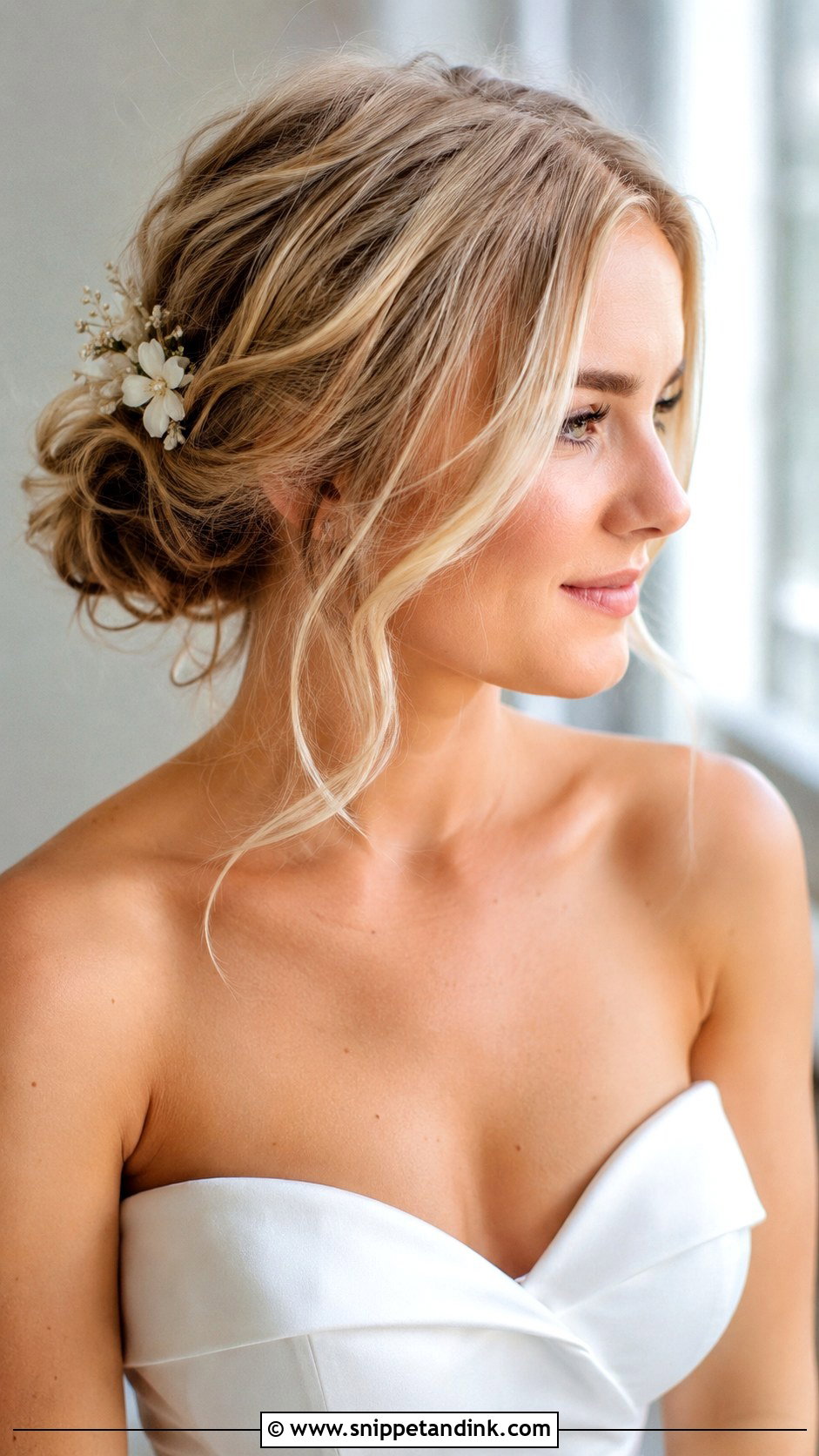
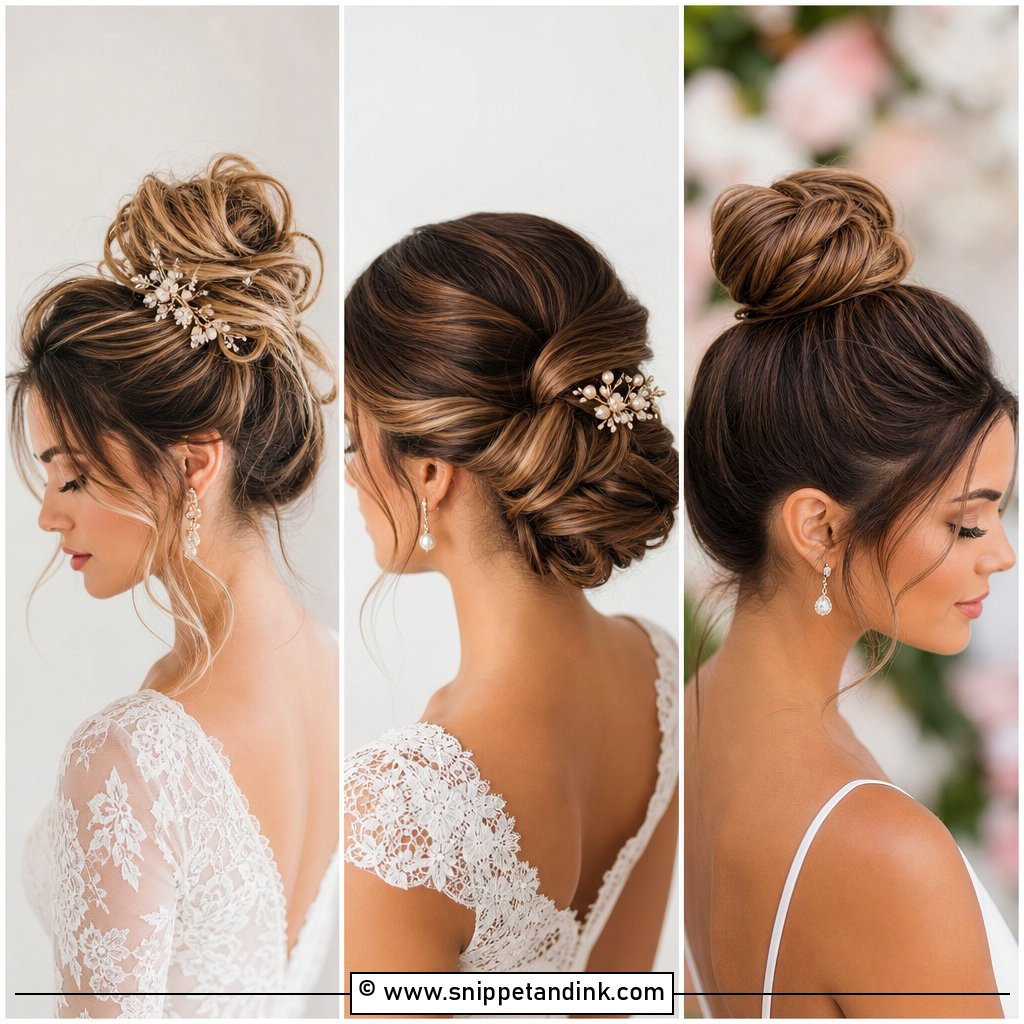
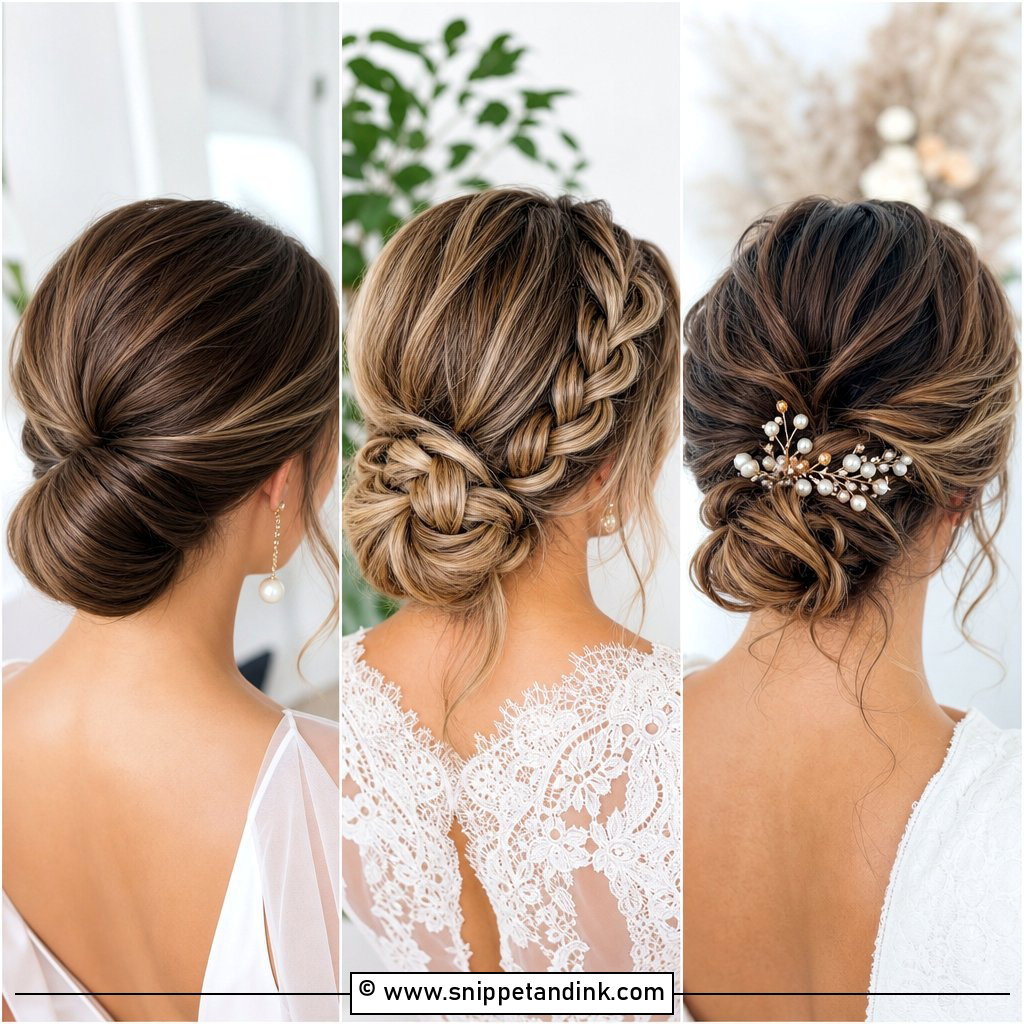
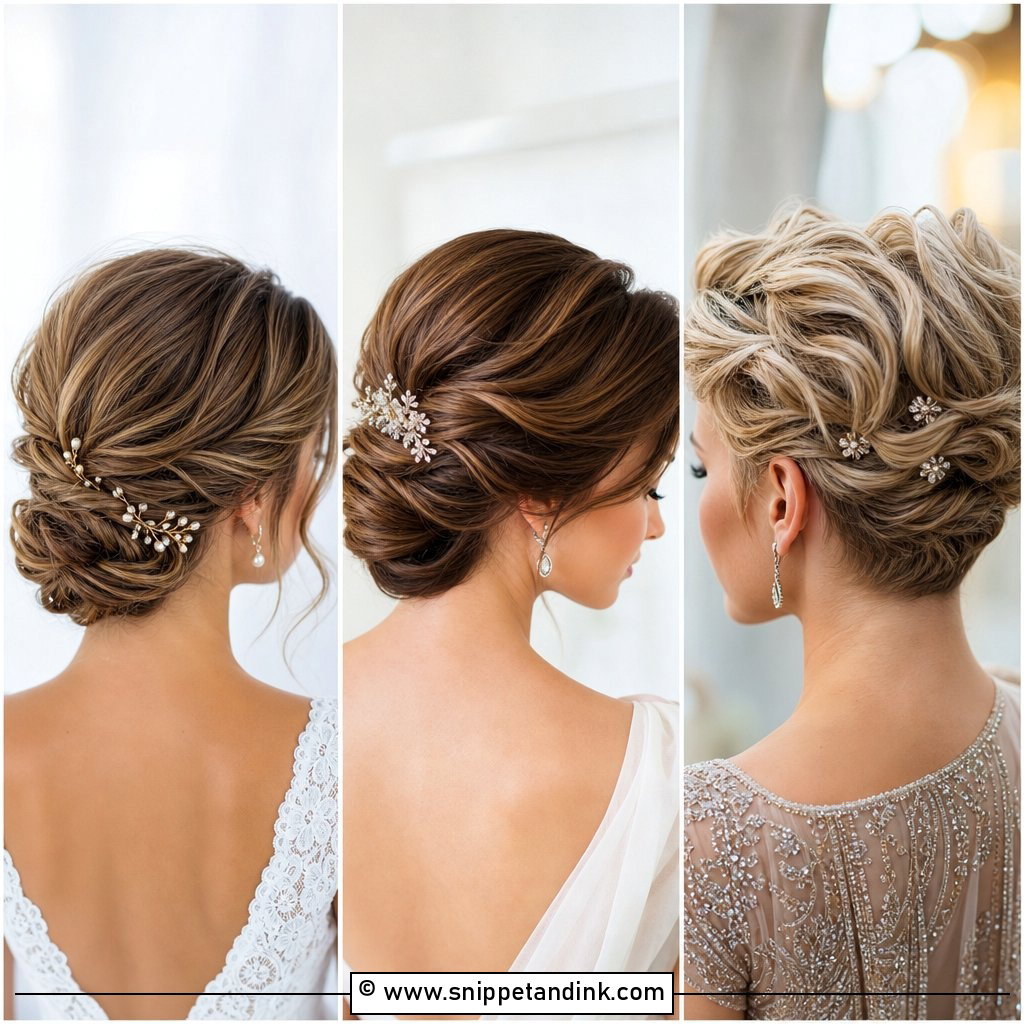
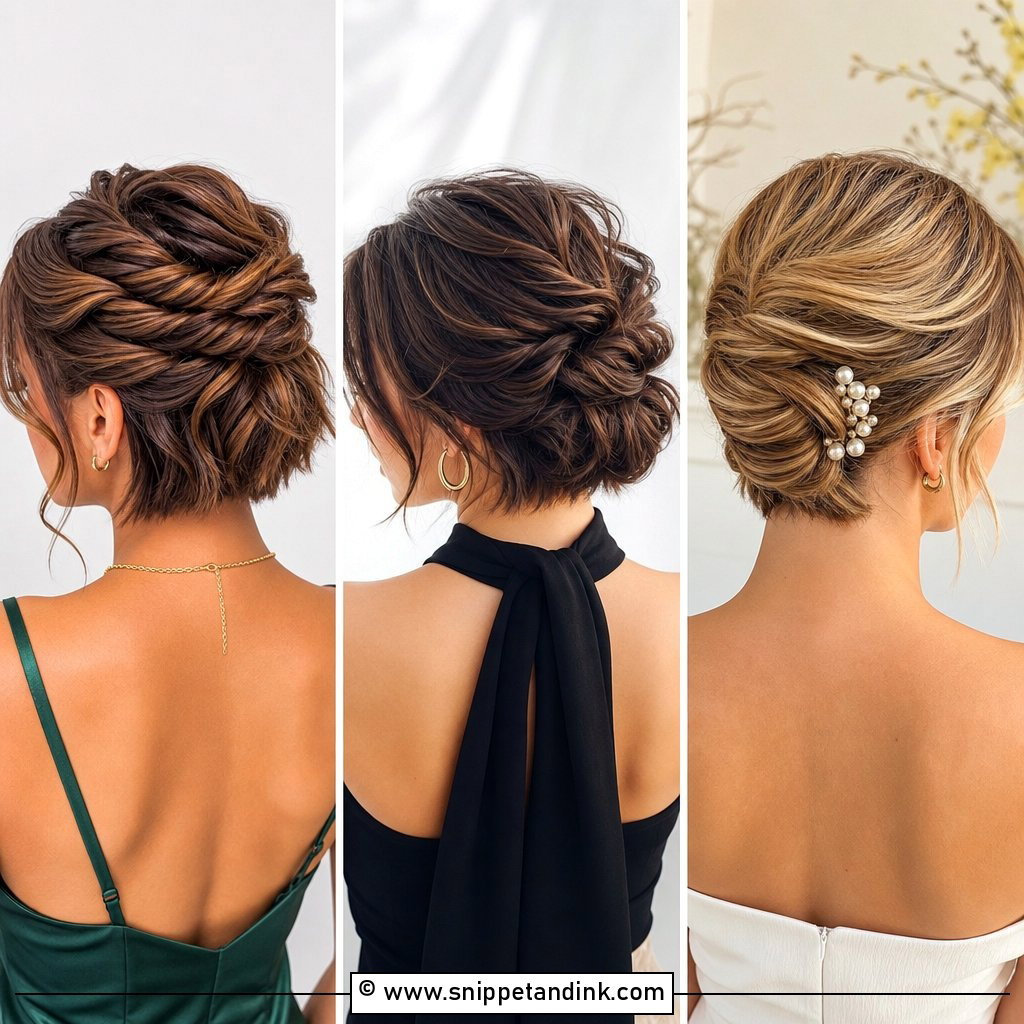
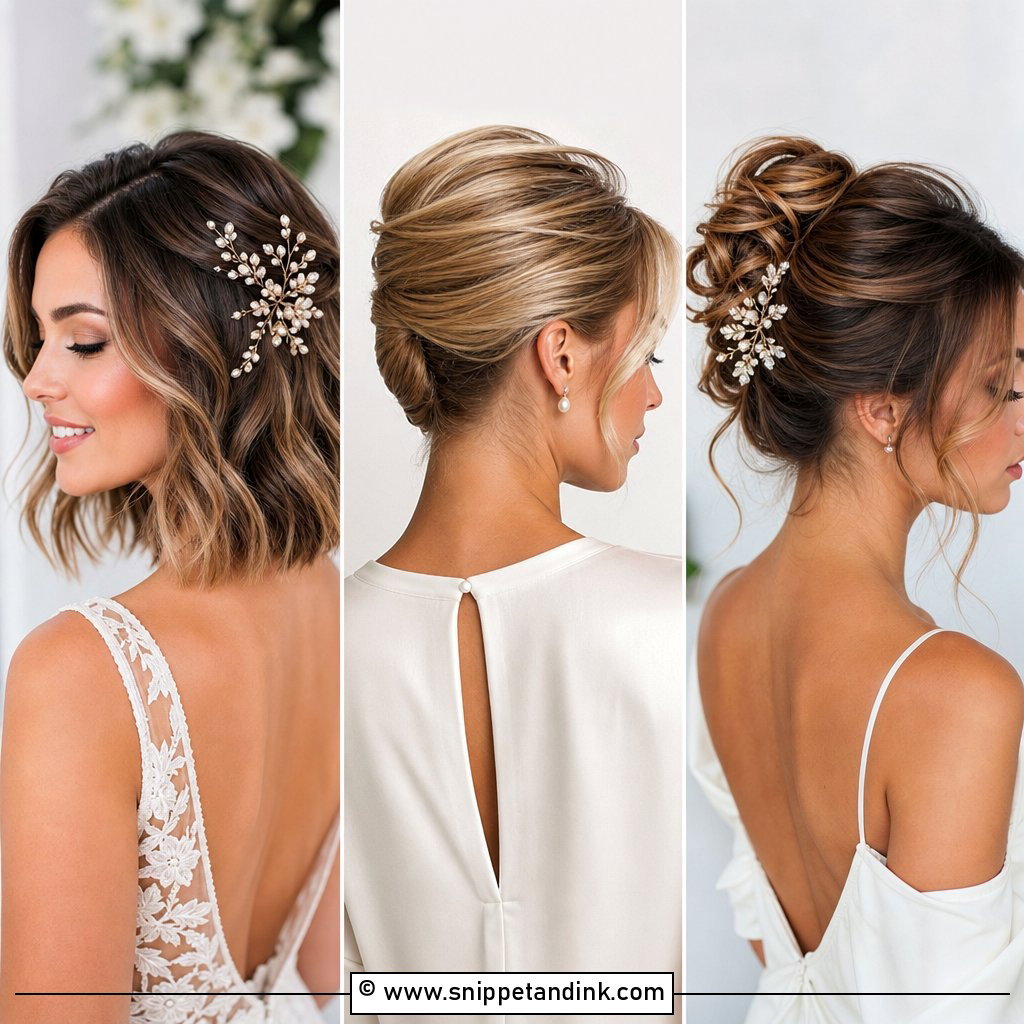
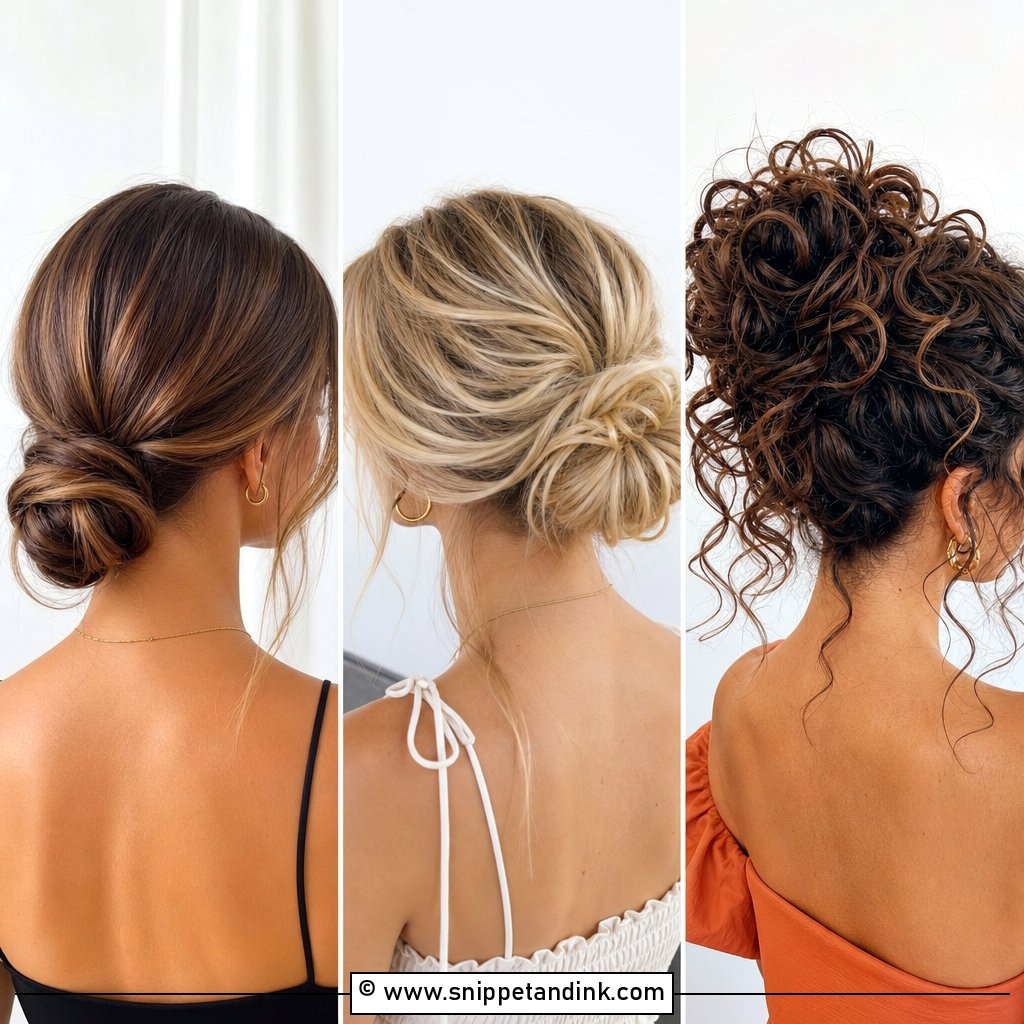
This is the one I reach for most with shoulder-length hair, because the loose texture hides the uneven ends that a neat bun would expose. I curl the hair first and brush the curls out, so the bun has some grip. Gather it at the nape, twist loosely, and pin against the direction of the twist rather than with it; that’s what stops it sliding. Pull a few pieces free only after it’s secure. A small comb or floral pin beside the bun covers any pin ends that show.
2. Twisted Half Up Half Down
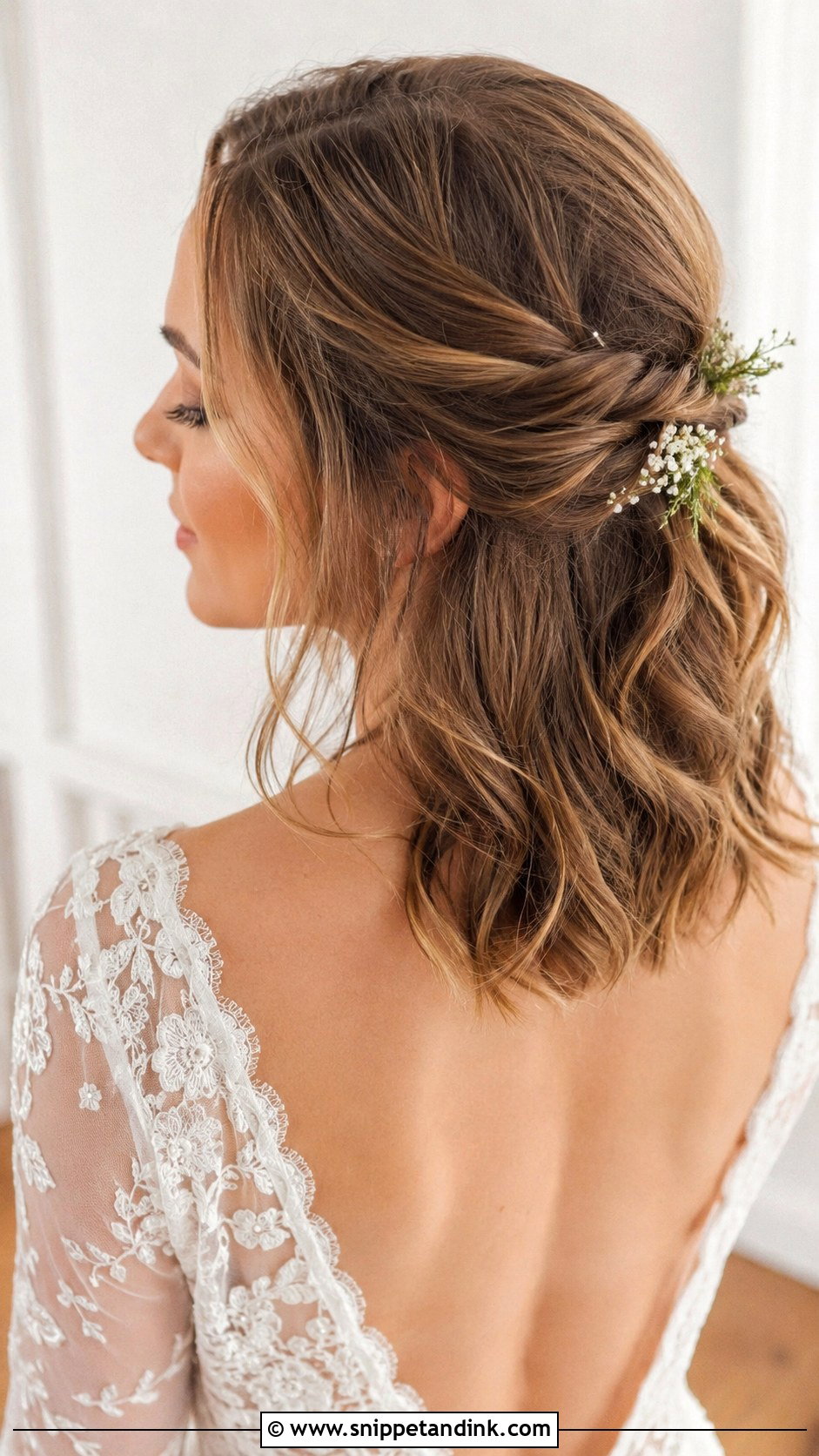
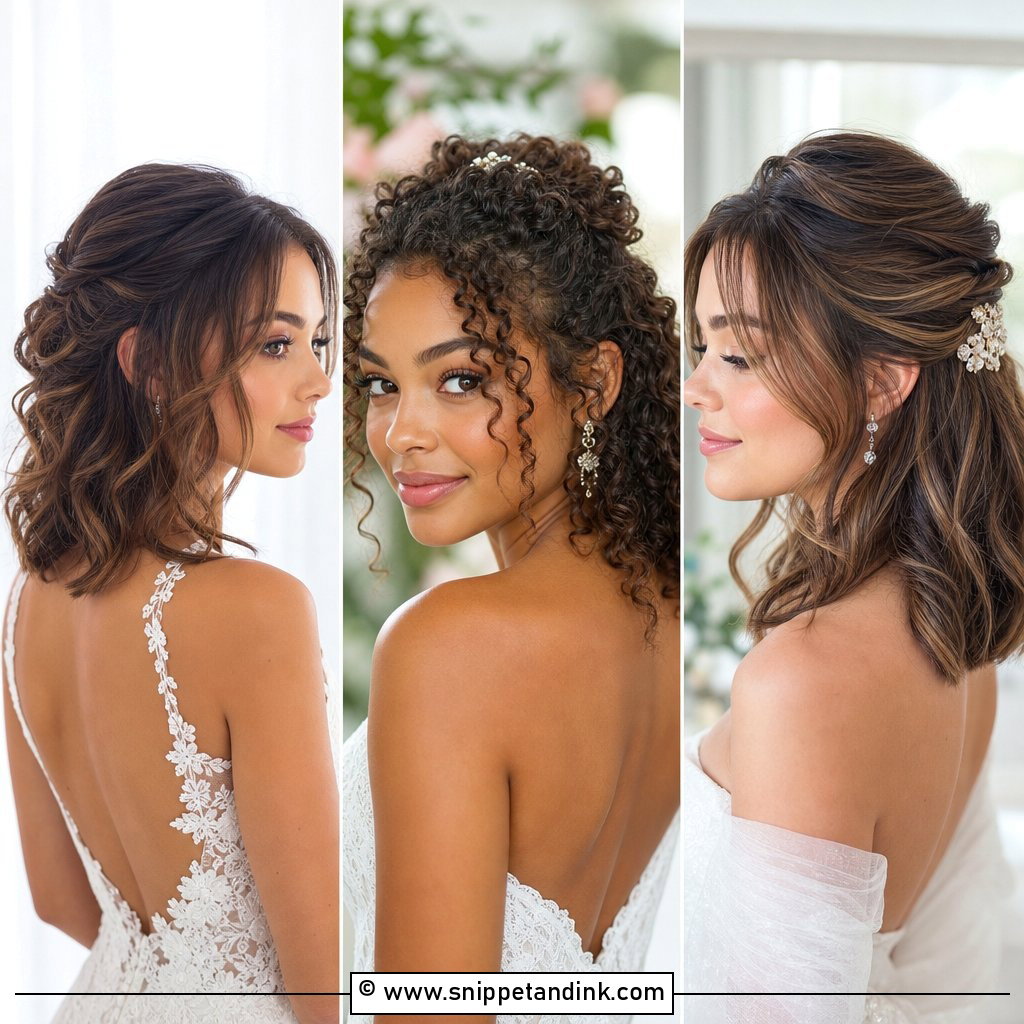
The trouble with half up on shorter hair is that the down section can look thin once you’ve borrowed the top for the twist. I take the two twisting sections from no further back than the temples, so plenty stays below. Twist each one back toward the crown and cross-pin them where they meet. Waves in the loose length give it movement, and the open sides leave room for earrings. Expect those waves to relax a little by evening; the twist itself won’t budge.
3. Low Chignon Updo
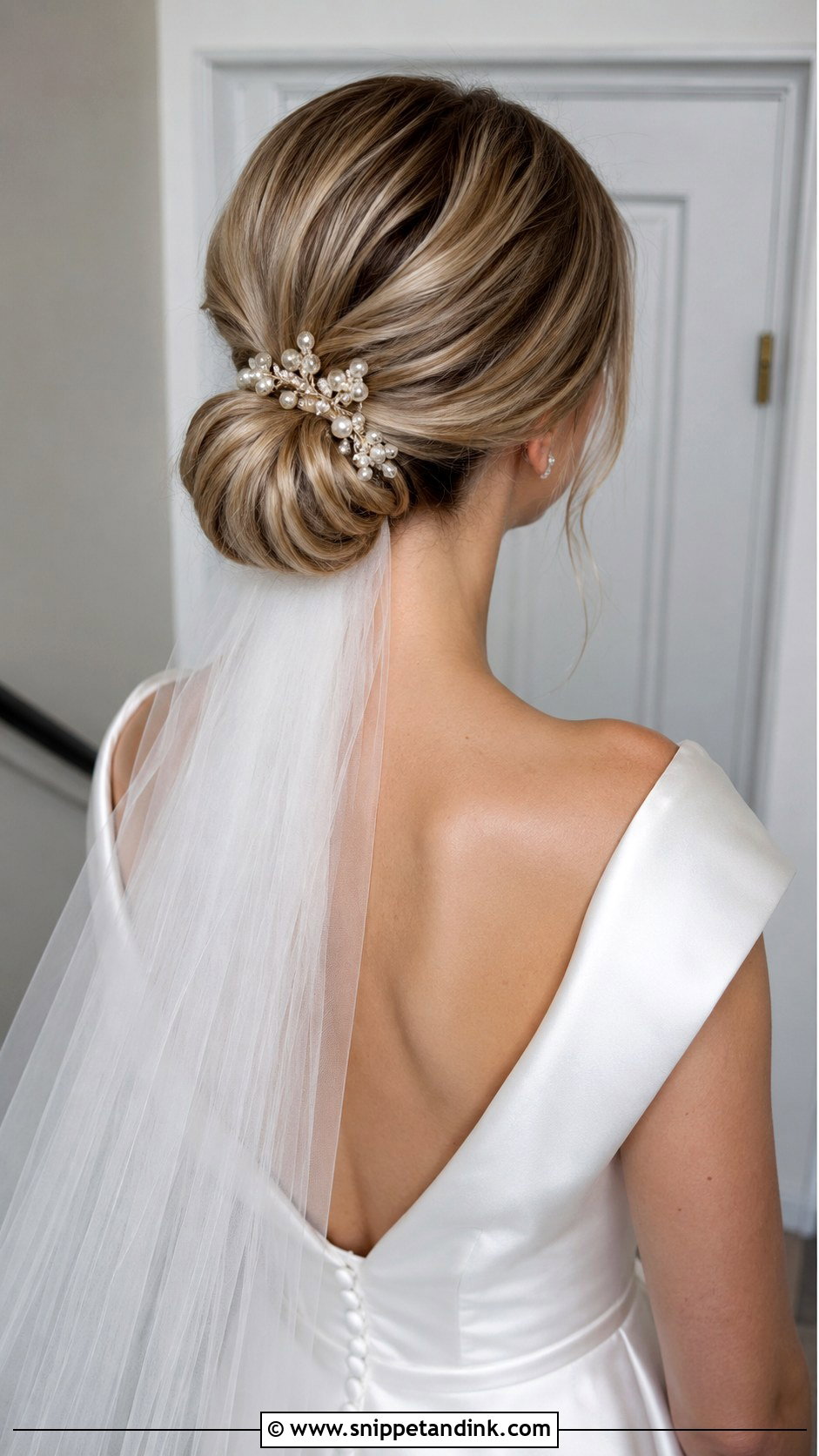
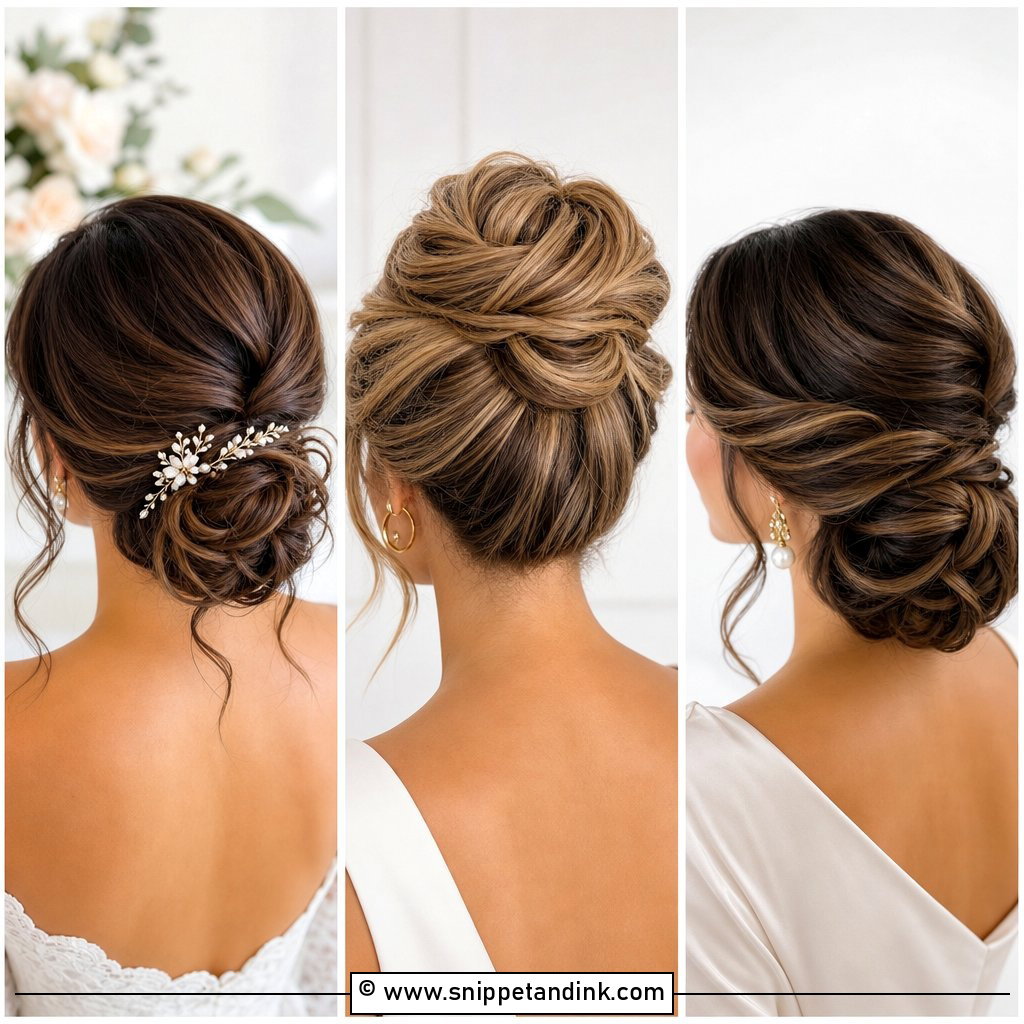
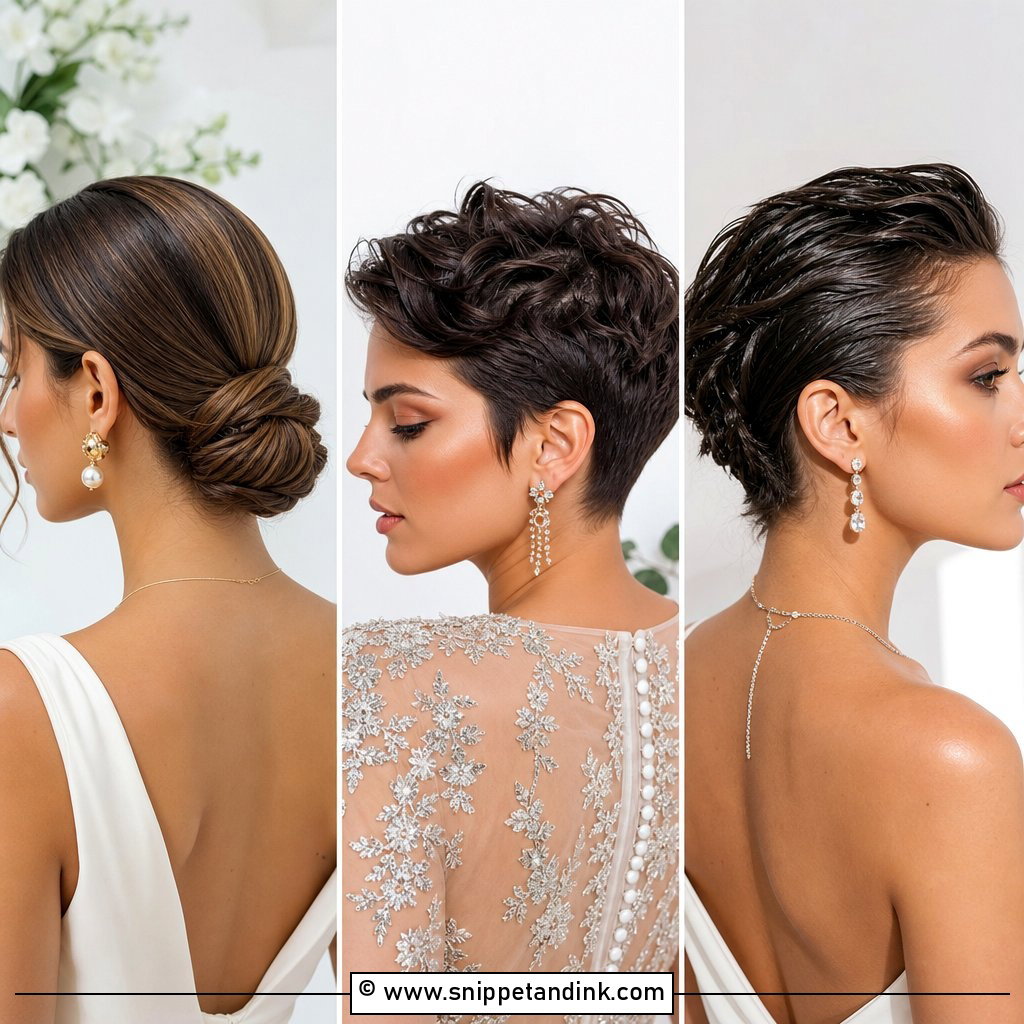
A smooth chignon is the most honest test of length. Hair that reaches past the shoulder rolls under easily, while chin-length hair usually needs help. I backcomb the underside lightly before rolling, and on finer hair I’ll slip a small padding piece inside the roll so it looks full without needing much hair. Pin the roll from underneath so nothing shows on the smooth side. It sits well under a cathedral veil because the comb has a solid base just above it, and two loose tendrils by the ears stop it looking severe.
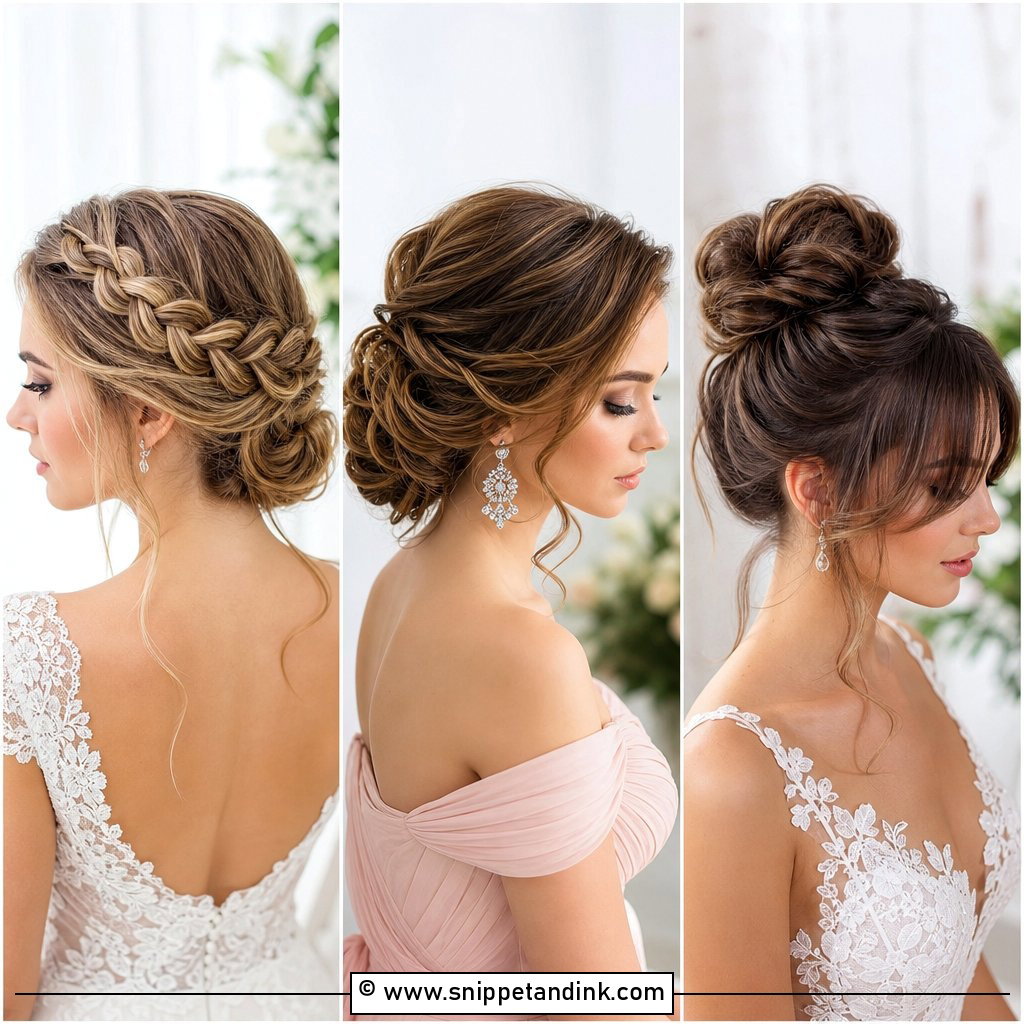
4. Braided Crown Updo
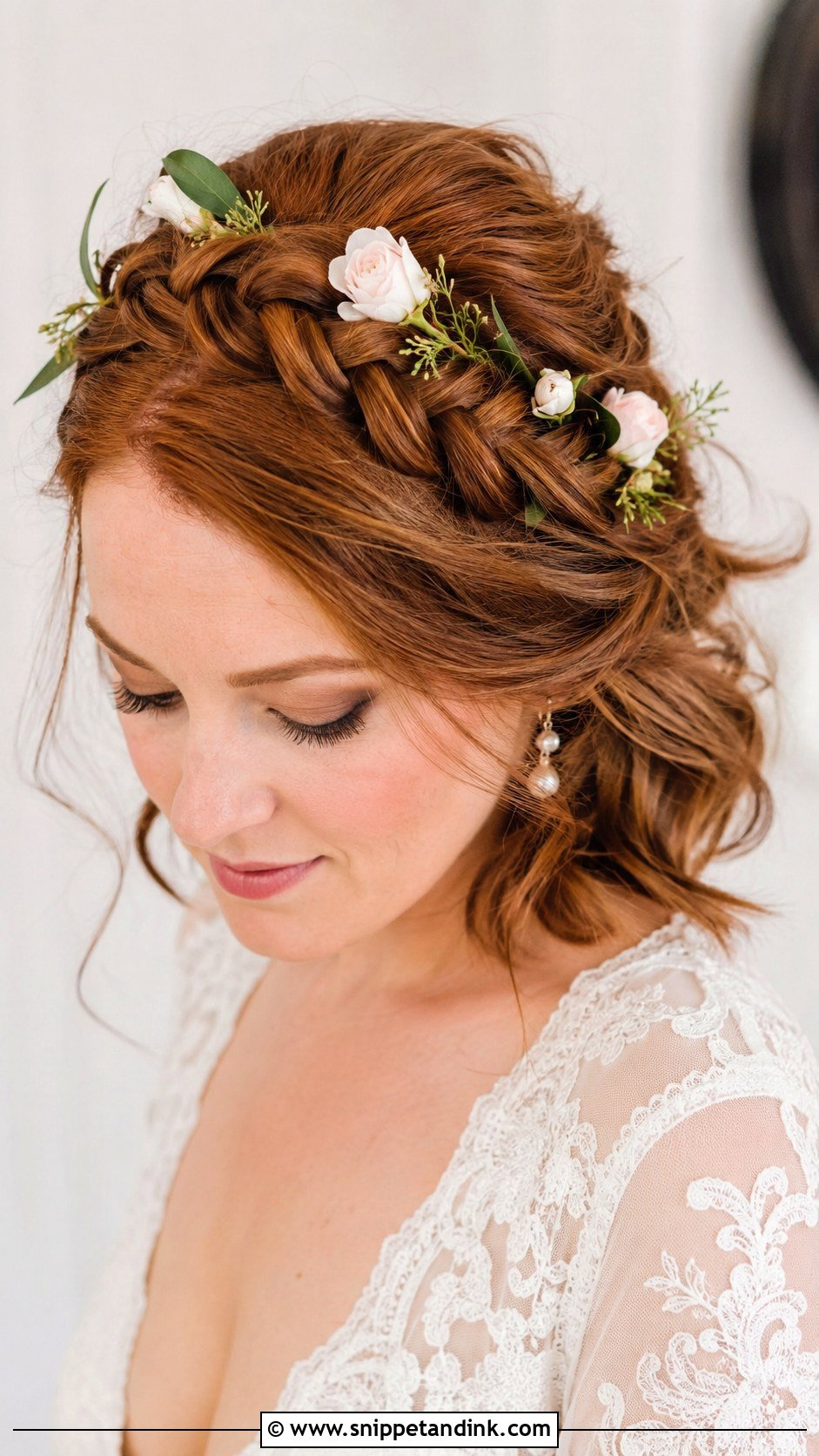
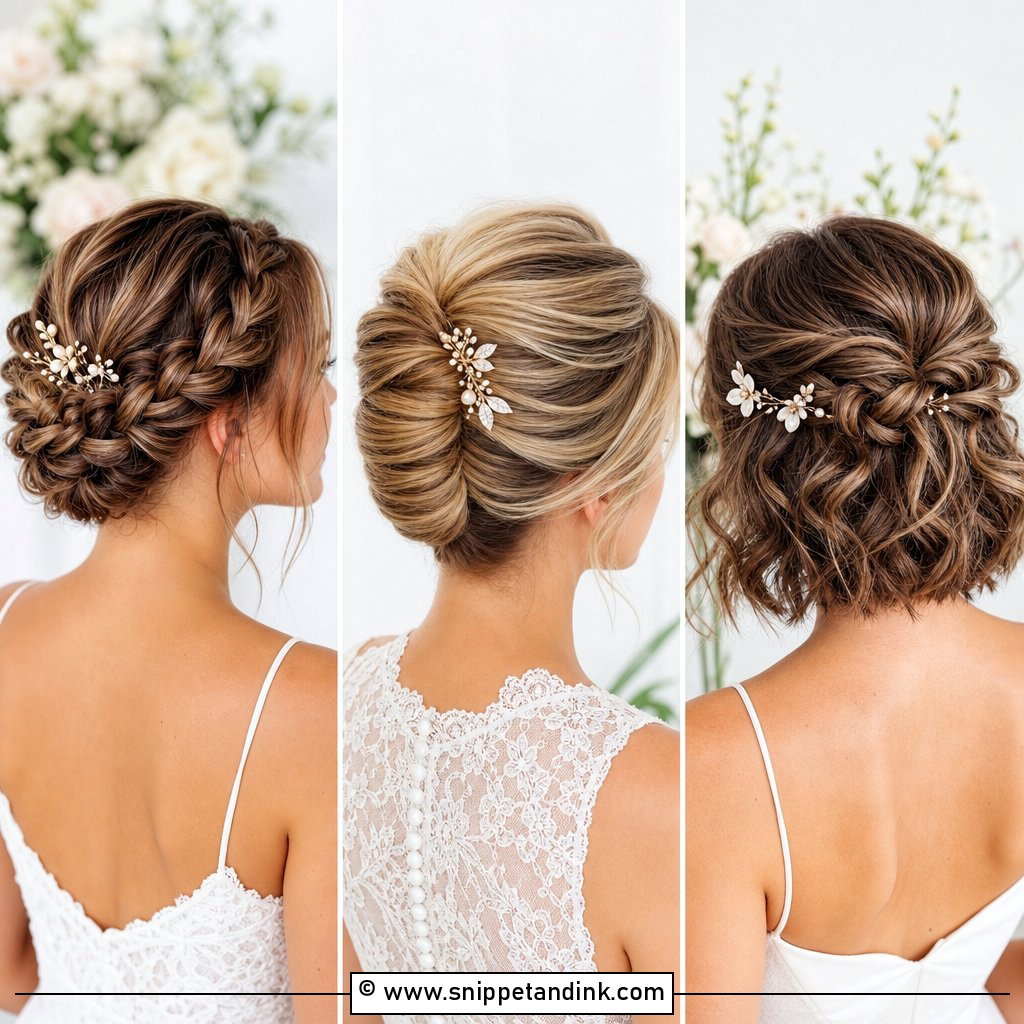
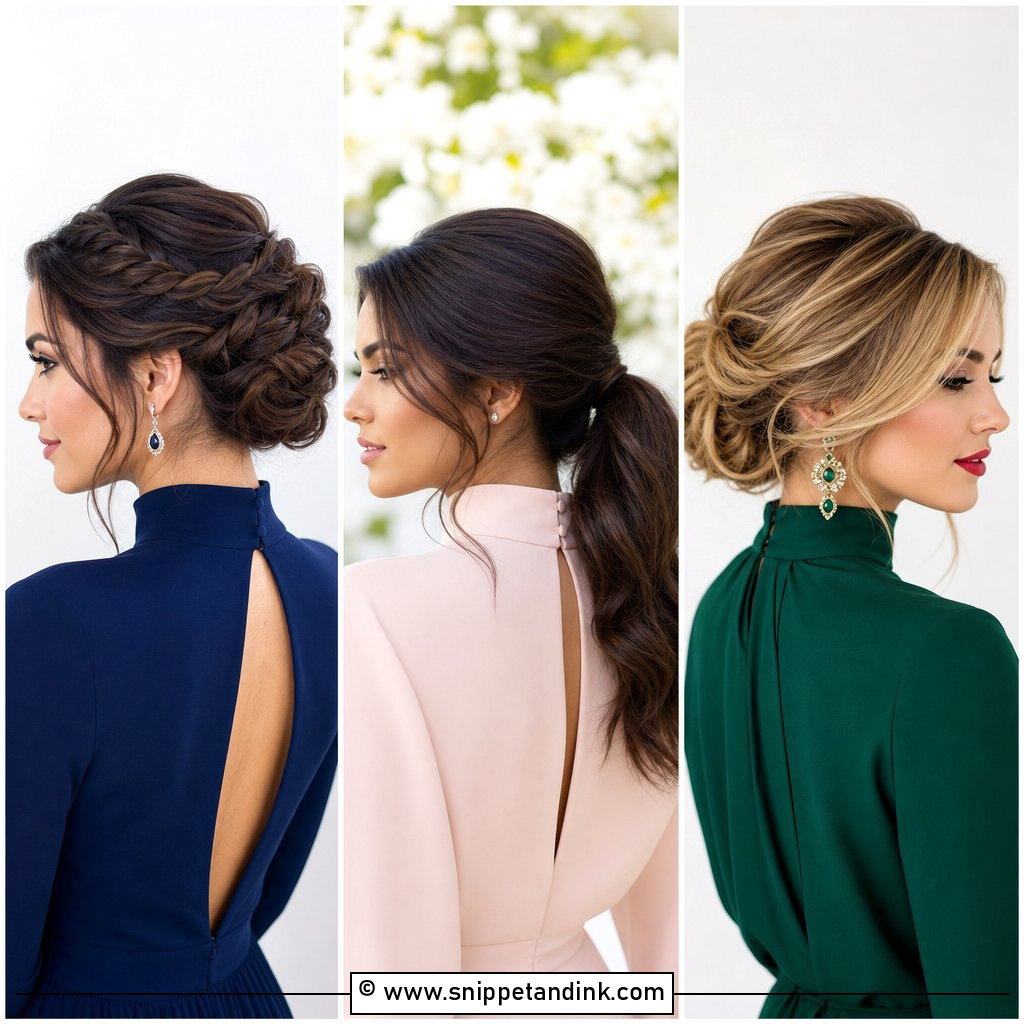
Crowns need more length than people assume, because each braid has to travel across the top of the head. On shoulder-length hair I braid two sections from behind the ears, take each one over the top and pin them where they meet, tucking the ends under the opposite braid. Anything that won’t reach goes into a low bun at the back. Layered hair pokes out of braids, so I run a little wax through each section first. It holds fresh blooms well, since the braid gives every stem something to grip, and once it’s set it asks almost nothing of you all day.
5. Sleek Slicked Back Bun
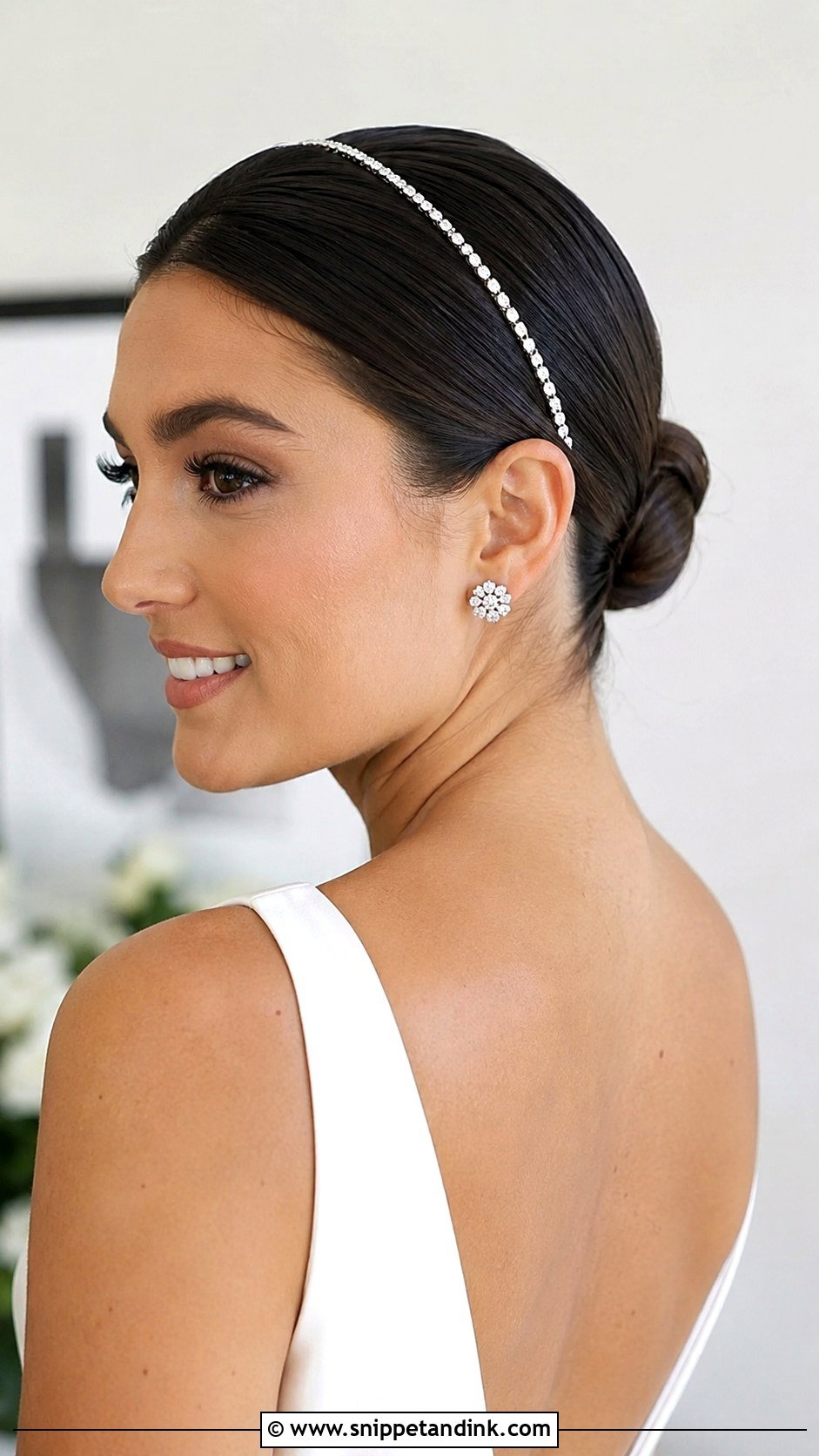
A slicked-back bun shows everything, so I only suggest it when the hairline and the bride both agree. On short hair the nape pieces are the real problem. I smooth everything back with gel while the hair is still damp, set it with a small clear elastic, and hit the nape with firm hold spray before pinning the bun with small hidden pins. Satin gowns and statement earrings suit it, and a thin jeweled headband can sit in front if bare feels too stark. One warning: a high-gloss finish can start to look greasy under flash after hours of dancing, so bring blotting papers for your hairline.
6. Soft Curled Updo With Tendrils
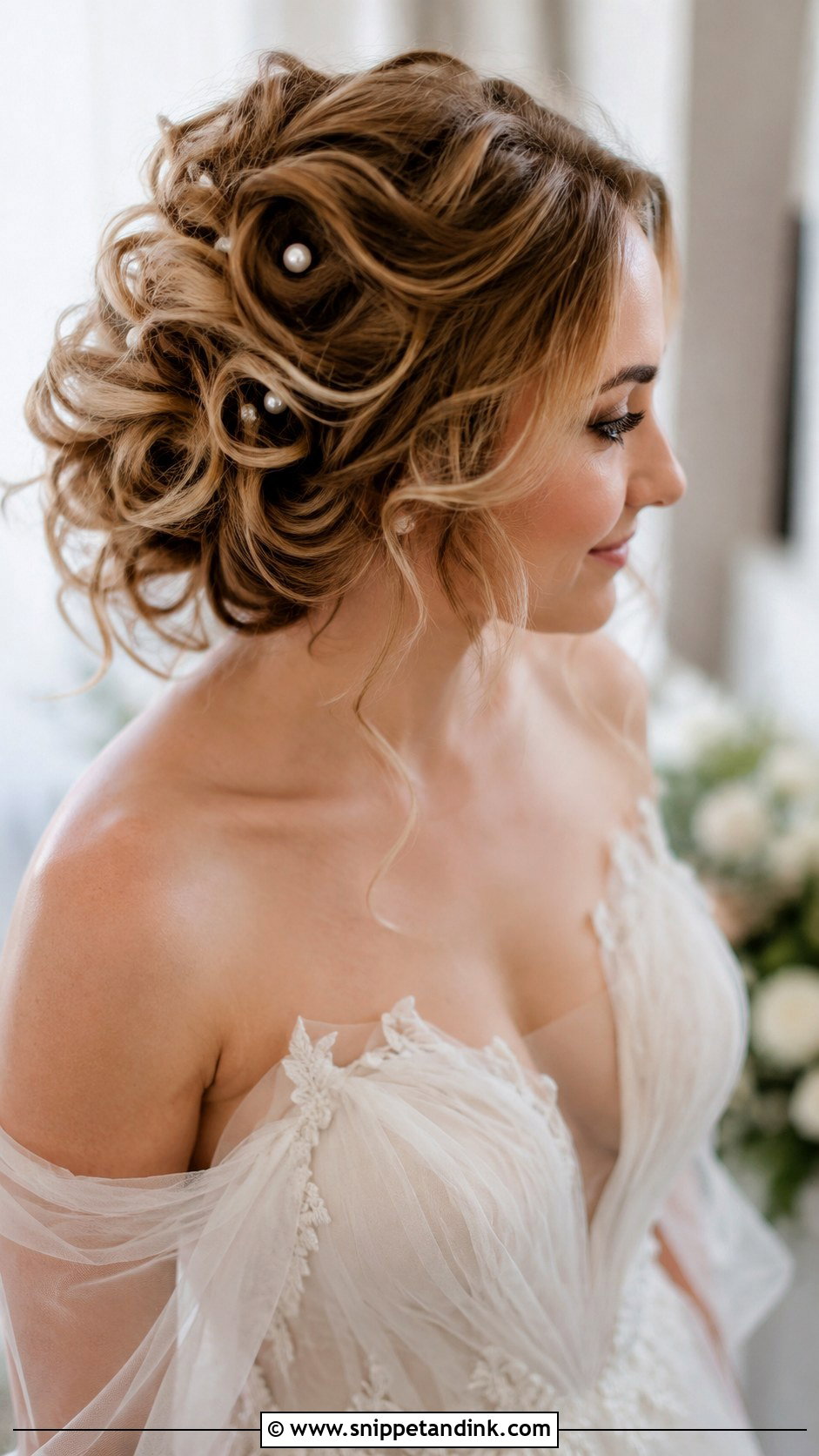
Curls are how shoulder-length hair gets the volume an updo needs. I set every curl, let it cool completely before touching it, and only then pin each one up toward the back and crown, so the ring keeps its shape inside the style. Fine hair drops curls fast in humidity, which is why I put mousse and a light spray in before the iron, not after. Leave a few tendrils loose at the face. Pearl pins or baby’s breath slot into the gaps between curls without any fuss.
7. Twisted Side Updo
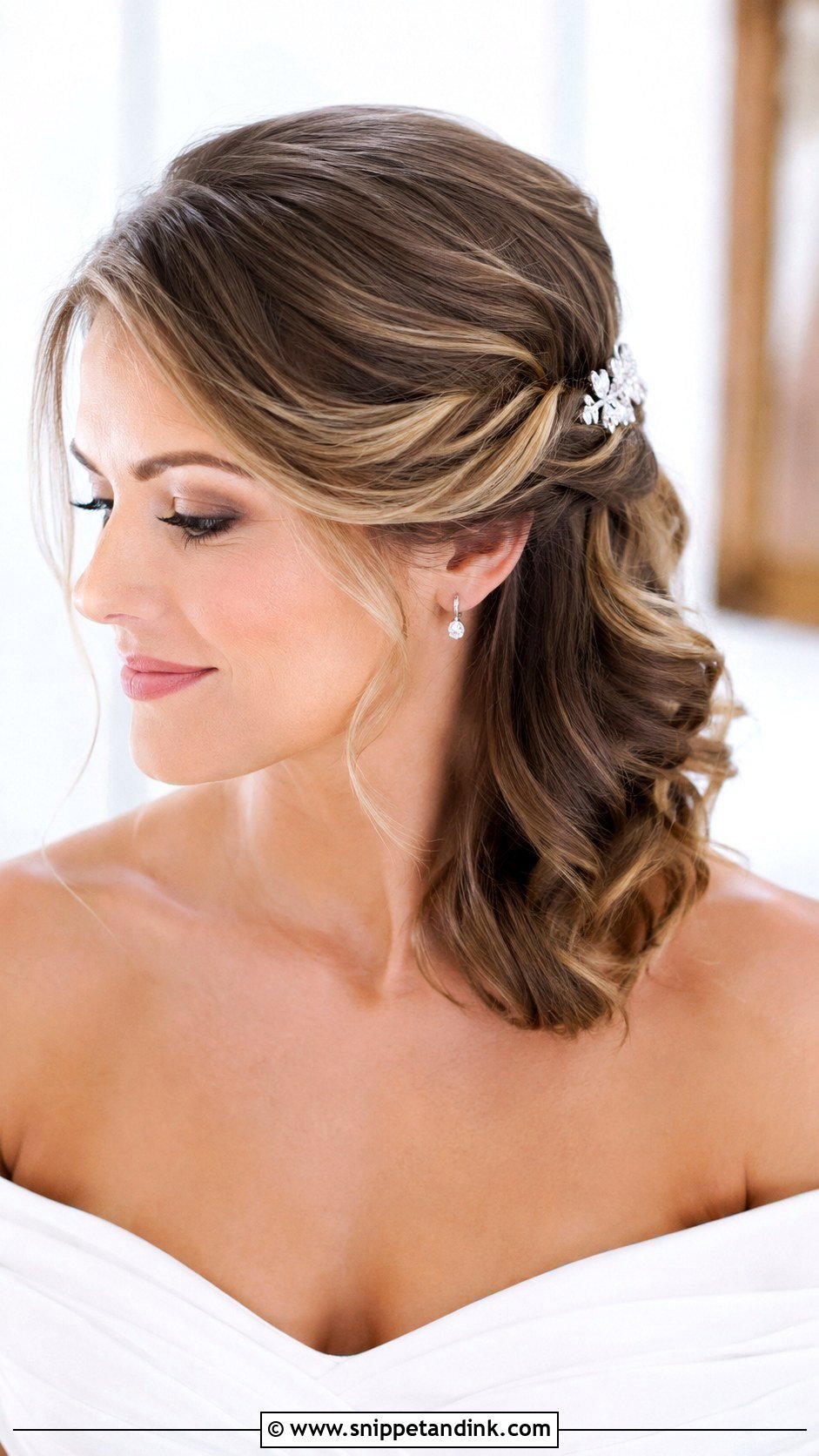
Side styles are where shorter hair often does better than long hair, because there’s less weight dragging the twist down behind the ear. Sweep everything to one side, twist toward the ear and anchor it with crossed pins into a small hidden braid underneath. Let a few waves show. This asymmetrical style leaves one shoulder bare, so I pair it with off-shoulder or one-shoulder gowns, and it puts a clip or flower in clear view. Do check which side of you faces the guests at the altar, so the ceremony photos catch the styled side.
8. Boho Braided Bun
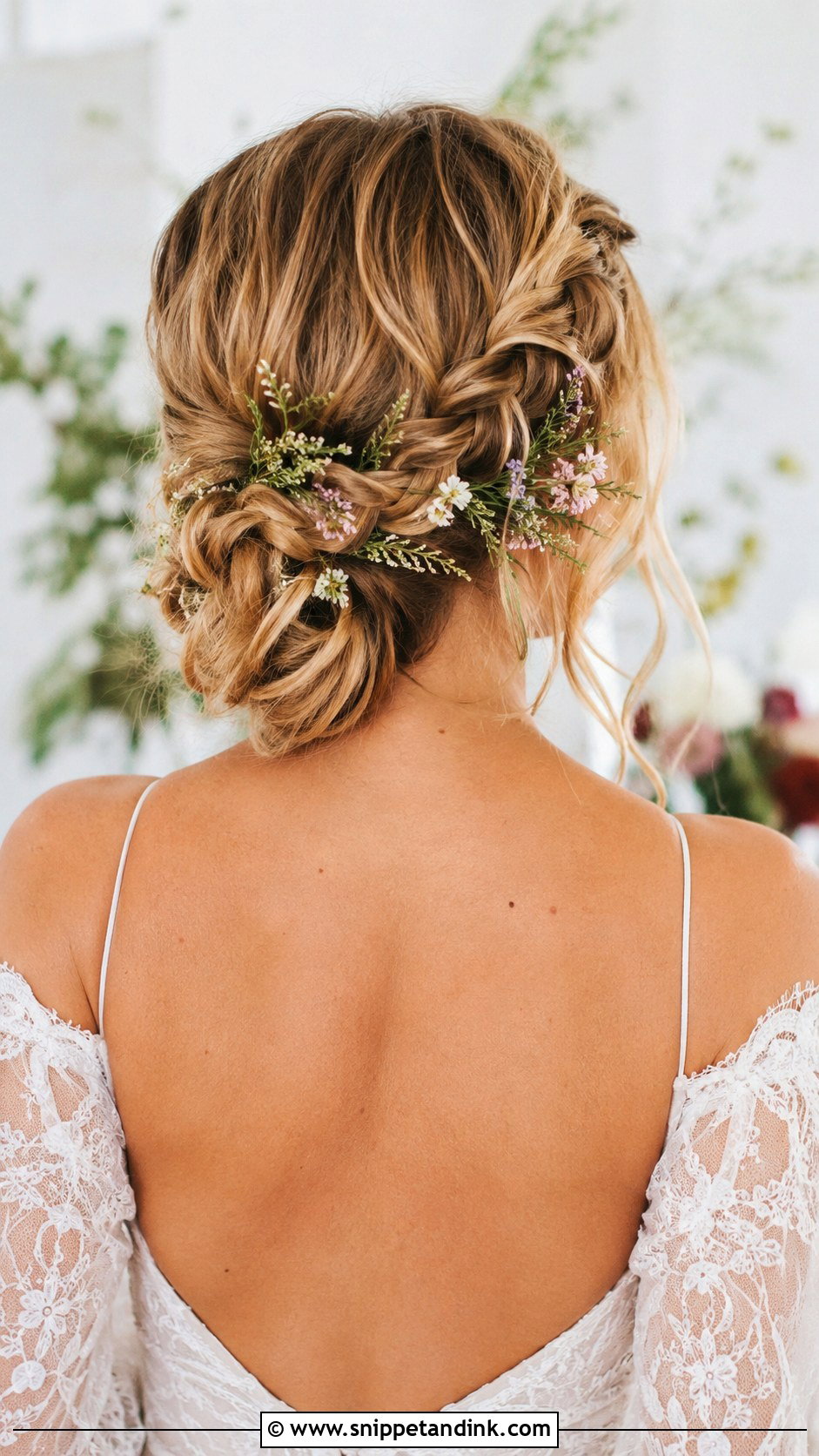
Several small loose braids give short hair more bulk than the hair alone would have, which is why this bun looks fuller than its length suggests. I braid three or four sections, tug the edges of each to flatten and widen it, then gather everything low and pin the braids around the bun. Leave some pieces out. Wildflowers and greenery suit it, though I’d skip anything that wilts quickly if the ceremony is outdoors at midday. Blunt one-length cuts are the hardest to braid neatly here, so give yourself a practice run.
9. Half Up Top Knot
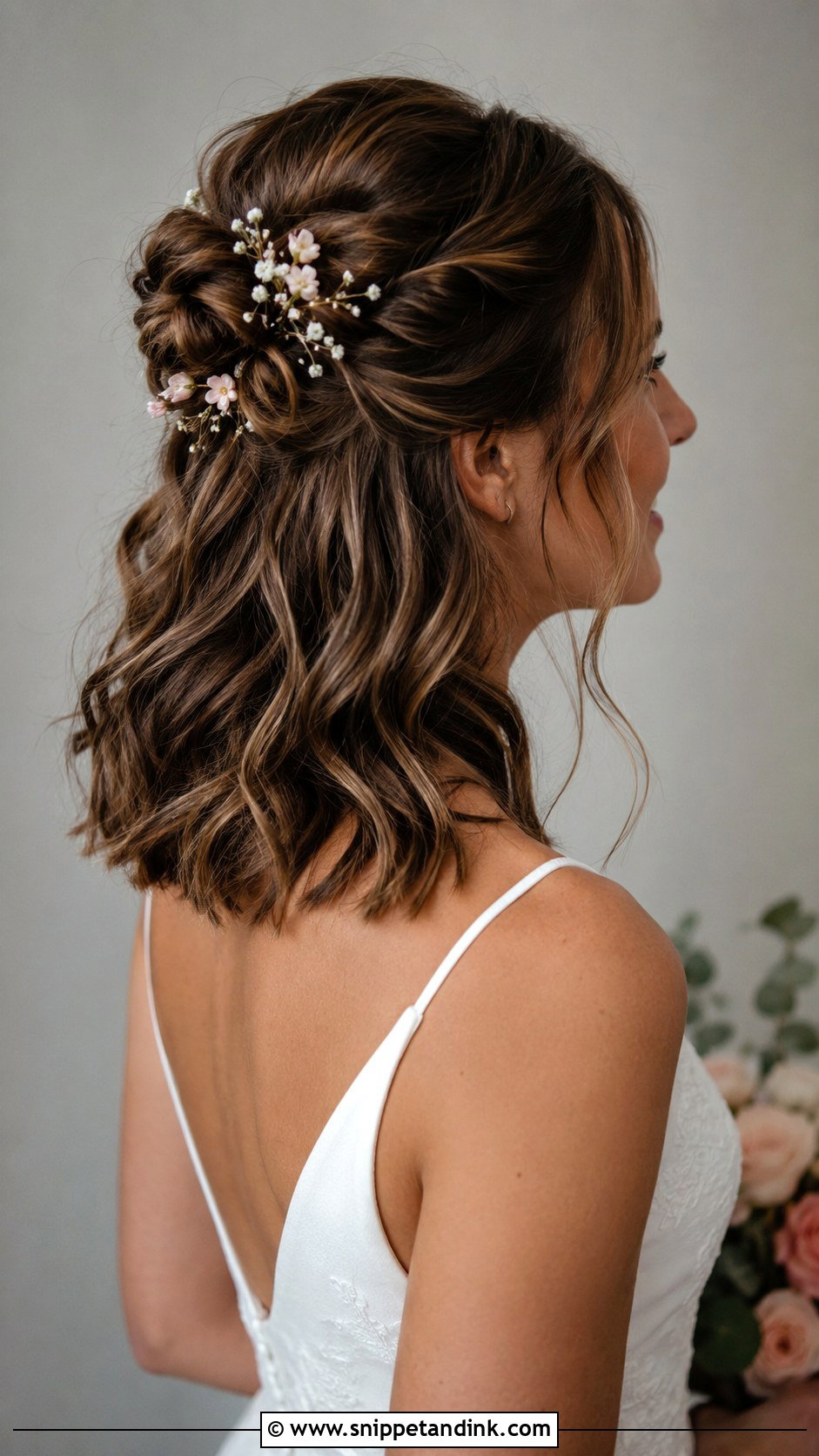
The half up top knot is the quickest style on this list, and it reads younger than most of them. Gather only the top section, twist it into a small knot at the crown and pin straight through the base. Shorter hair makes a smaller knot, so I’ll often tease the section first to give it some size. The waves underneath keep it bridal, and a ring of tiny flowers around the knot hides the elastic. For a formal black-tie wedding I’d steer you toward something lower.
10. Rolled Updo With Flowers
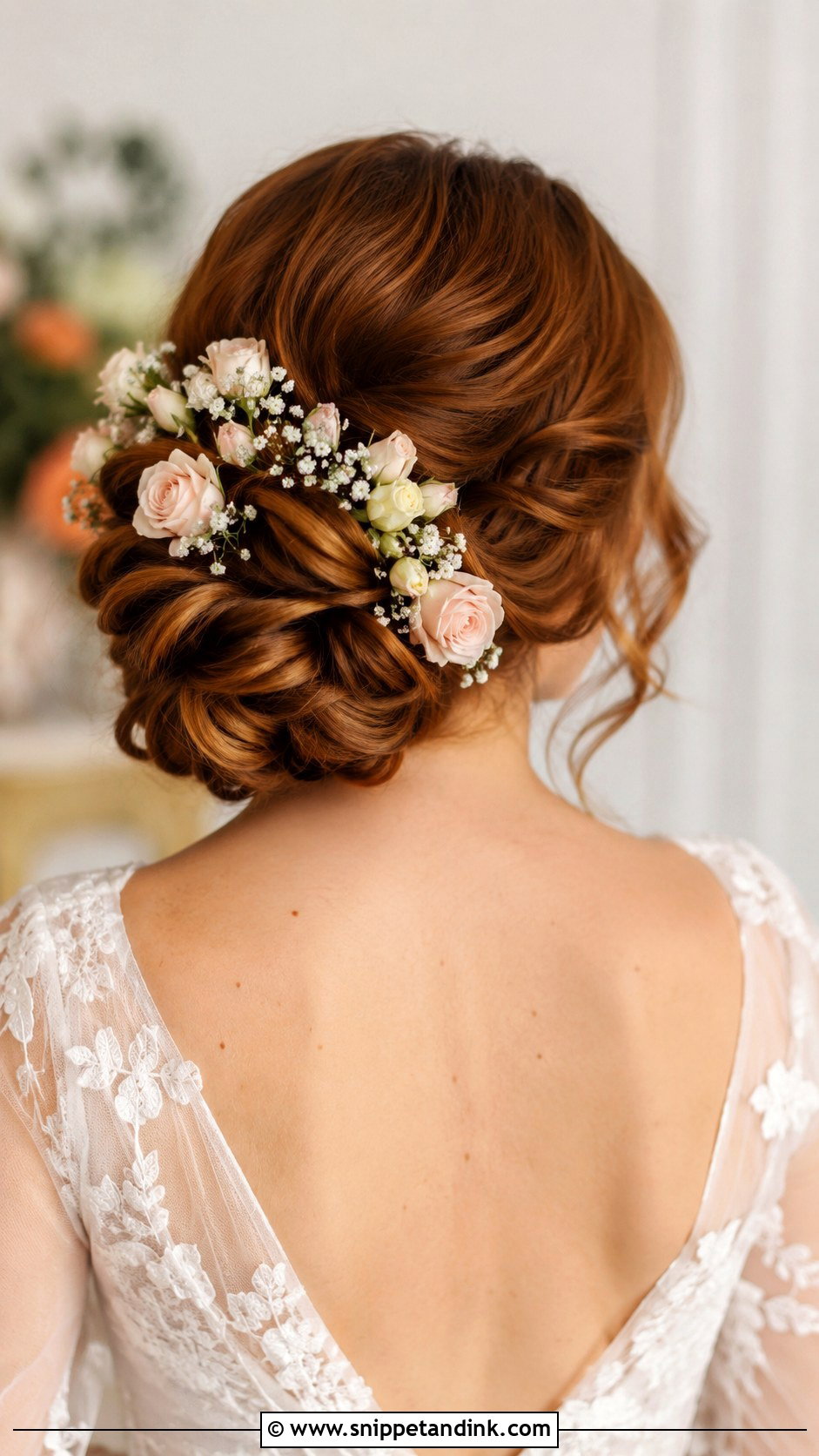
A rolled updo works on short hair because you roll several small sections instead of one long one. Twist each section upward, pin it, and repeat until everything is tucked. The flowers go into the seams between the rolls. Pick hardy stems: spray roses and greenery last the day, while thin petals bruise against the pins and brown by the reception. Faux stems are lighter and won’t wilt at all, which matters more than people expect over ten or twelve hours.
11. Pinned Back Waves
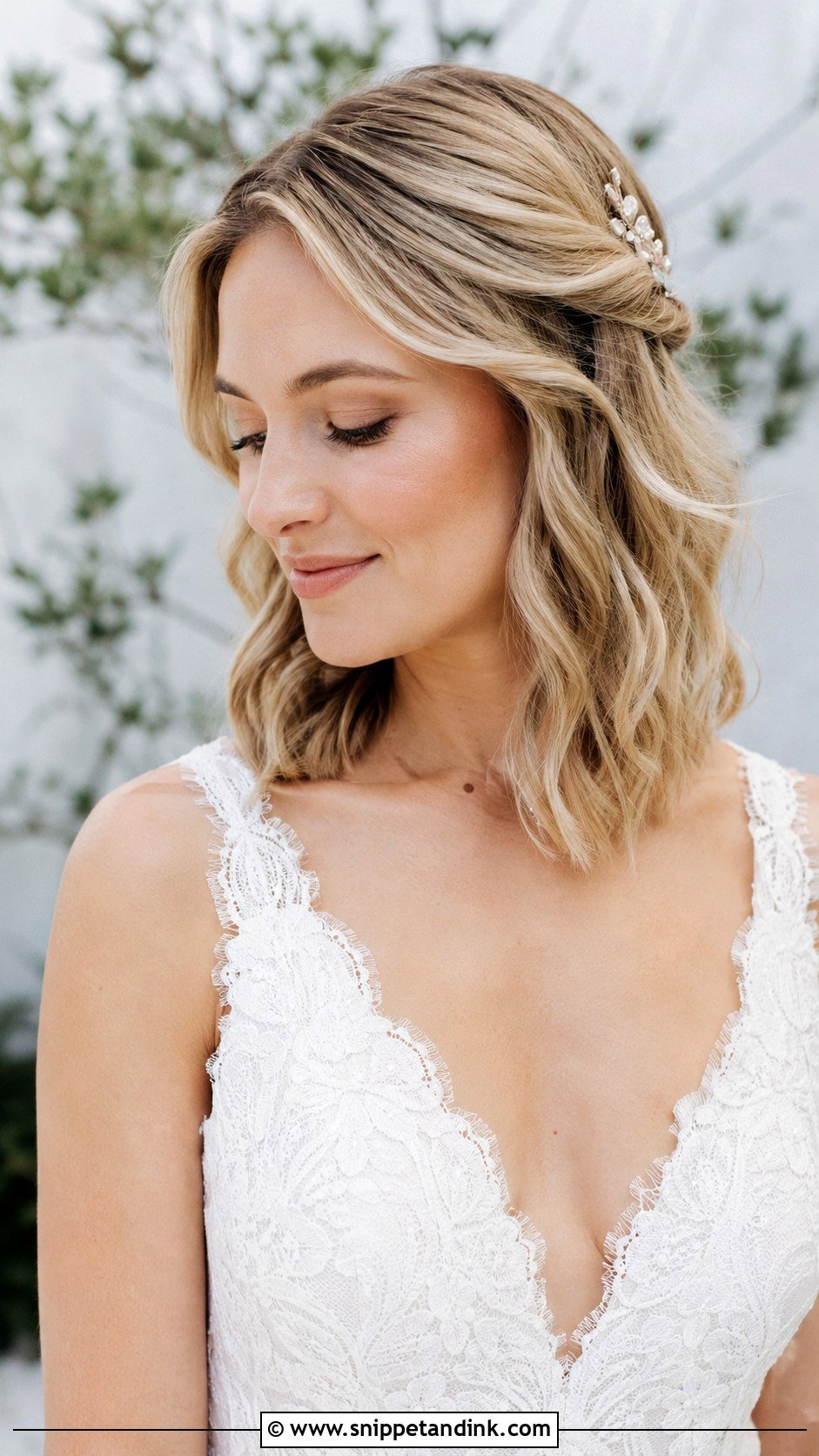
Pinned-back waves barely count as an updo, yet it’s the style that forgives short hair the most. Curl everything, brush the waves out, then pull the front sections back and pin each with two crossed pins. The rest stays down. Its weak spot is the waves flattening by the reception, especially on fine hair, so I mist the curls with spray before brushing them out. Wherever you pin is where the clip or flowers go. It sits naturally at a casual or outdoor wedding.
12. French Twist Updo
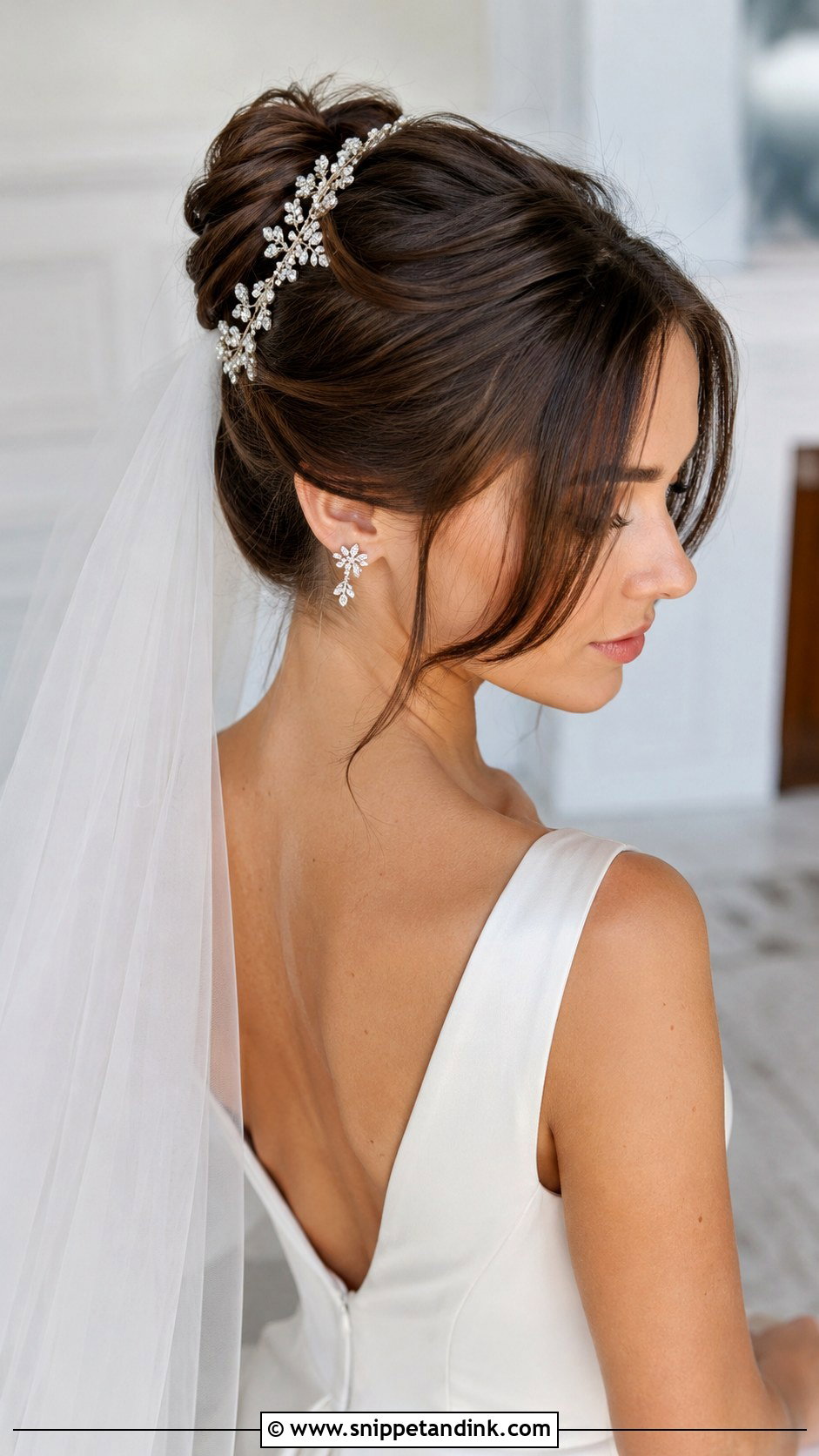
A French twist on shoulder-length hair comes out shorter and narrower than on long hair, and I think it looks sharper for it. Gather the hair to one side, twist it vertically up the back, tuck the ends into the fold and pin through the seam with long pins pushed in at an angle. A line of crossed pins laid under the twist first gives it something to grab. Lots of short layers will spring out of the seam, so a little pomade on the ends helps. It sits neatly under a veil and leaves the neck clear for a necklace.
13. Twisted Low Ponytail Updo
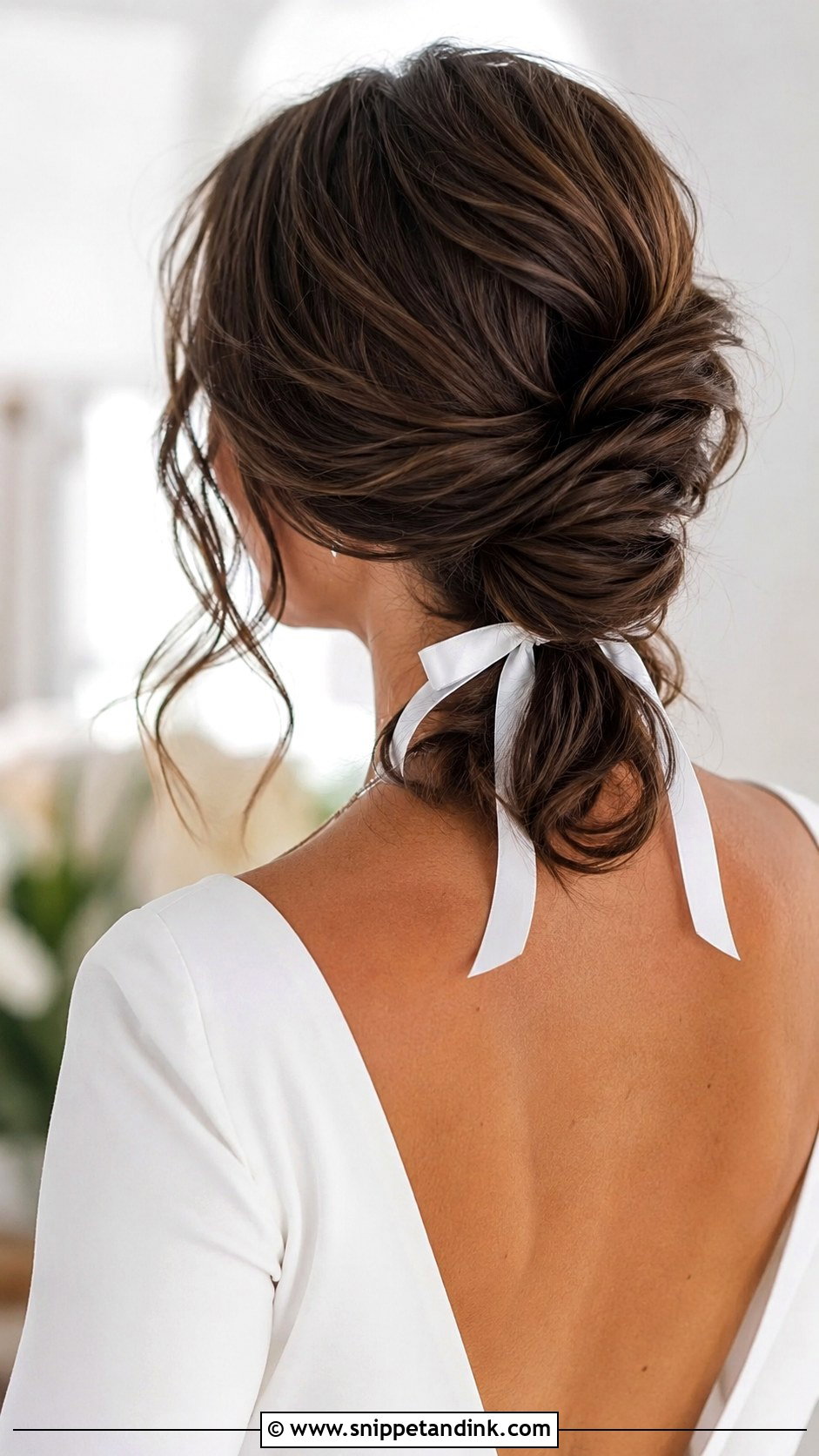
My fallback when hair is just too short for a bun. A low ponytail locks everything down first, then the length gets twisted, looped back on itself and pinned, so from the front and side it reads as a full updo. Because the elastic is doing the anchoring, it’s one of the most secure styles here for dancing. A ribbon wrapped over the elastic hides it, and a few loose pieces at the face go in last.
14. Accessorized Half Updo
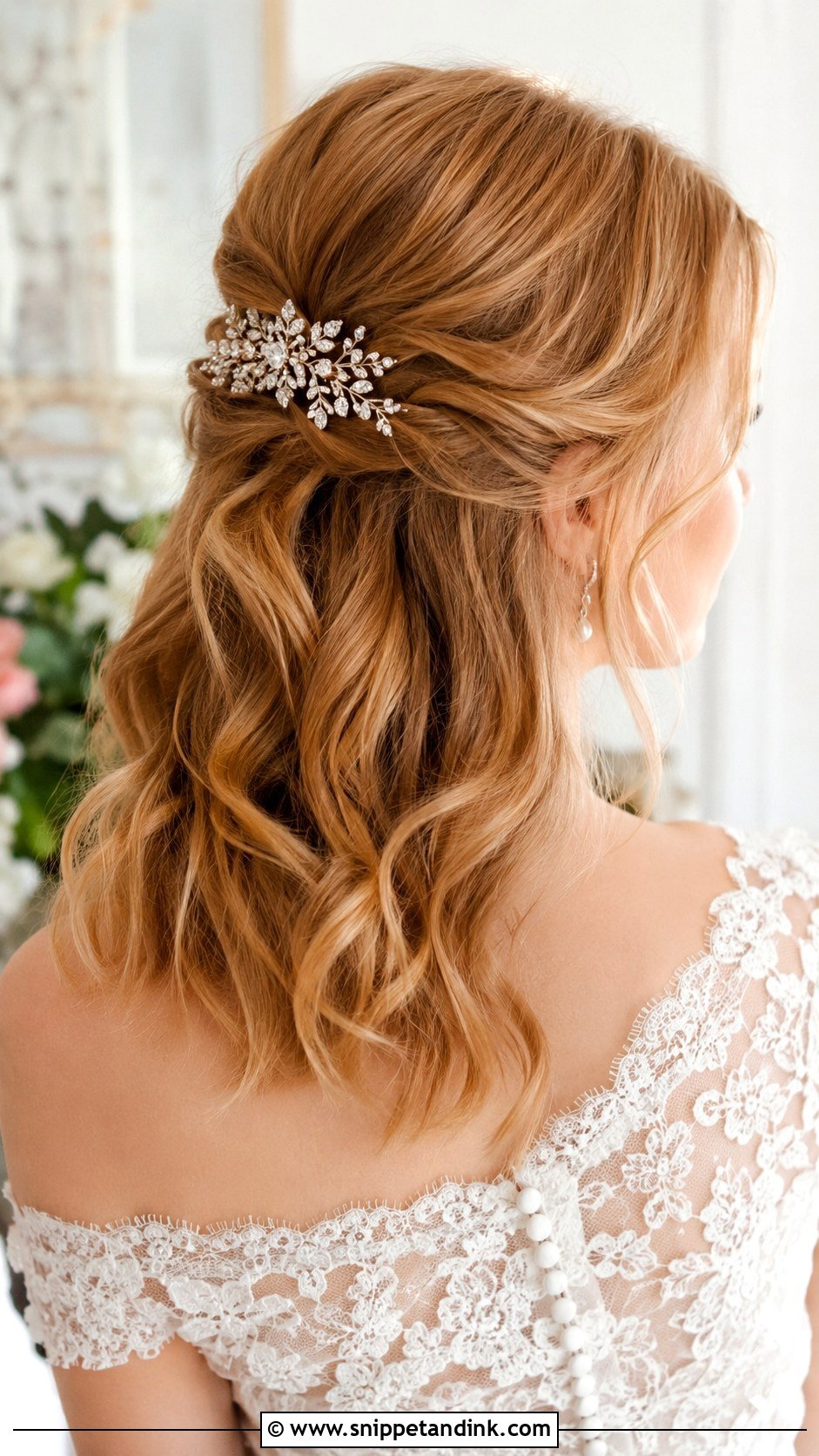
Here the accessory carries the look, so I pick the piece before I plan the hair. Pin the top half back, wave the bottom, then set a jeweled comb, pearl pins or a small tiara along the pinned section. Heavy combs need a base: I’ll build a tiny hidden braid or a crossed-pin anchor right where the comb will sit, otherwise it slides out of shorter hair within an hour. If the hairpiece is busy, keep the earrings quieter.
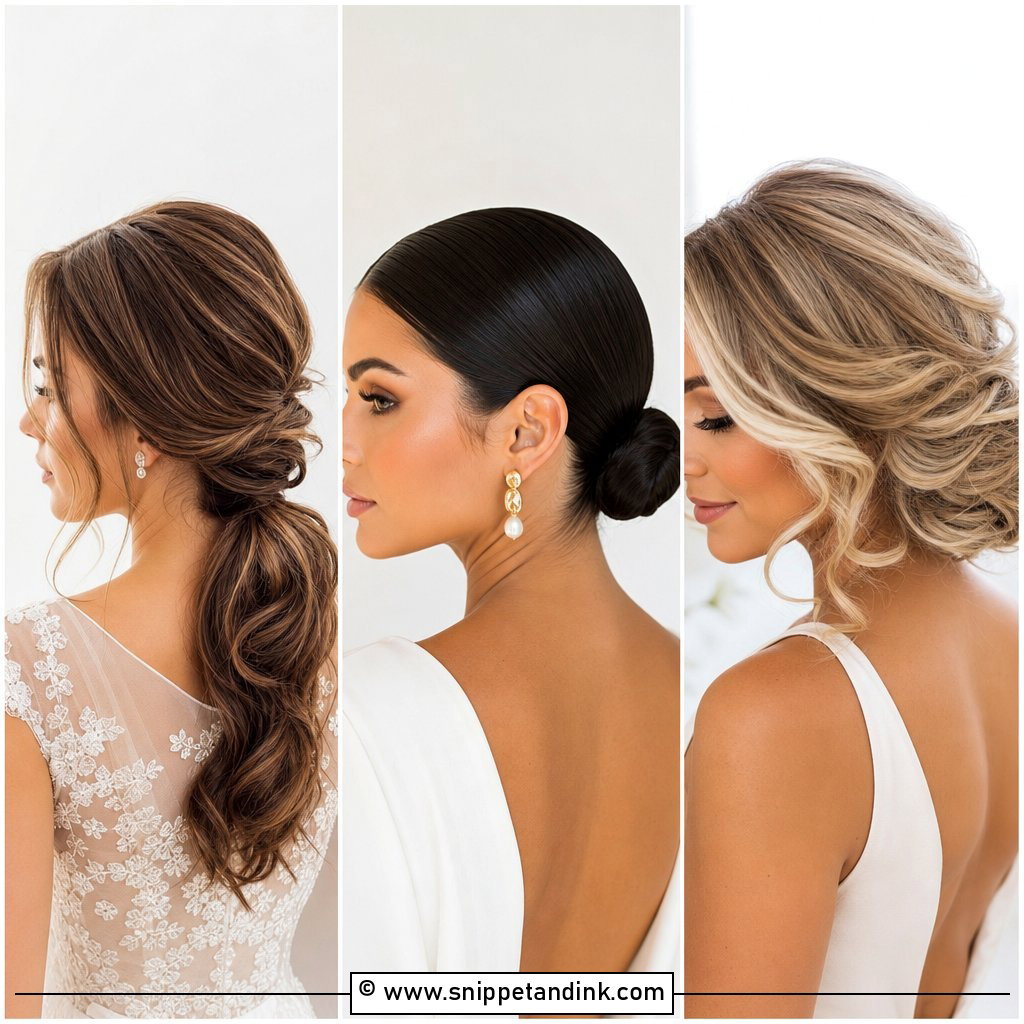
15. Curly Pinned Updo
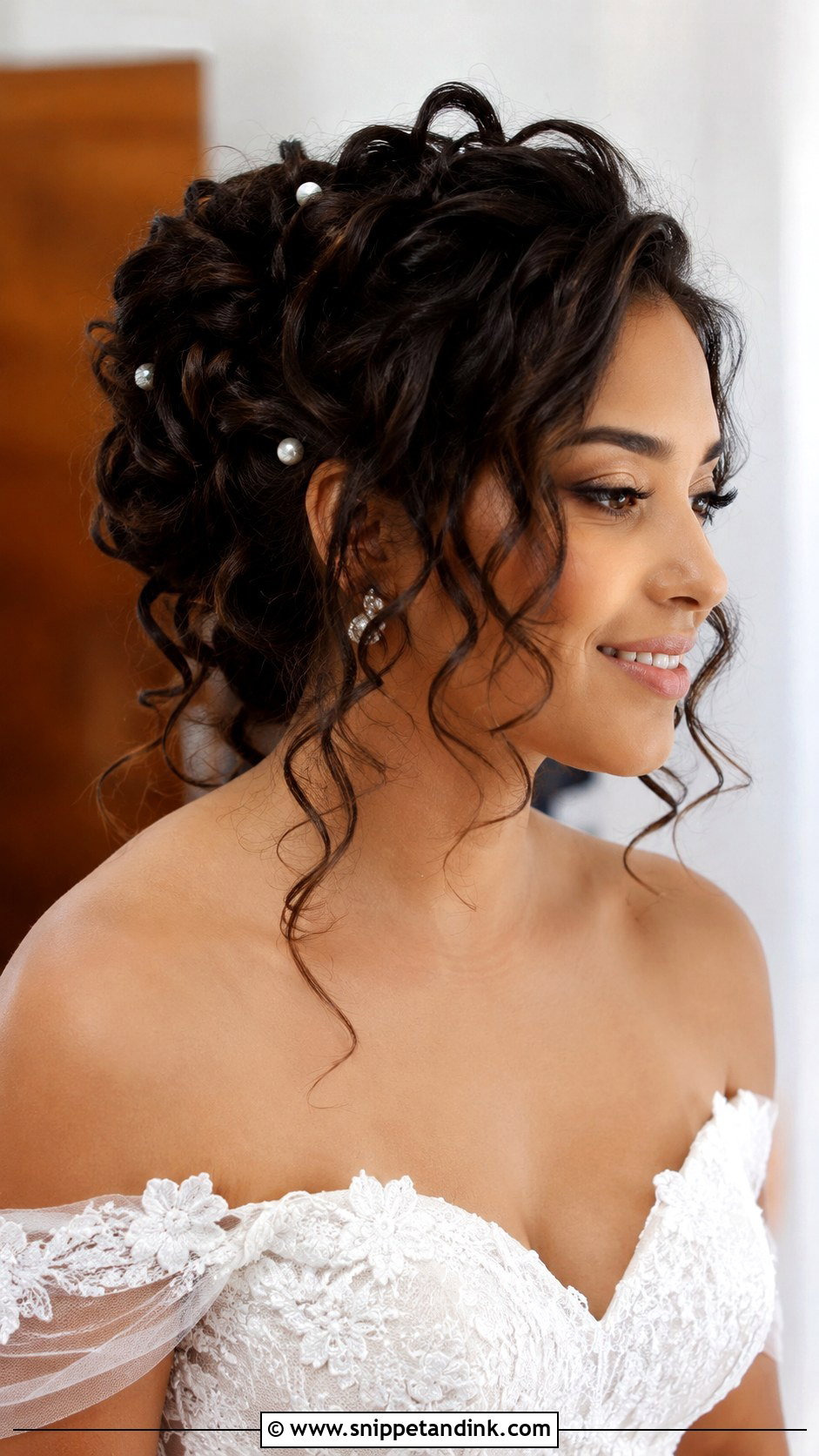
Natural curls give short hair a head start, because they already carry the volume an updo needs. I work with the curl pattern rather than stretching it: gather the curls loosely toward the back and crown and pin each cluster from underneath so the pins disappear. Never brush dry curls, which only turns them to frizz. I refresh them with a water and leave-in mist and scrunch before pinning, then leave a few loose by the face. Curly and coily textures grip pins well, so this one stays put through the whole day.
16. Twisted Updo With Veil
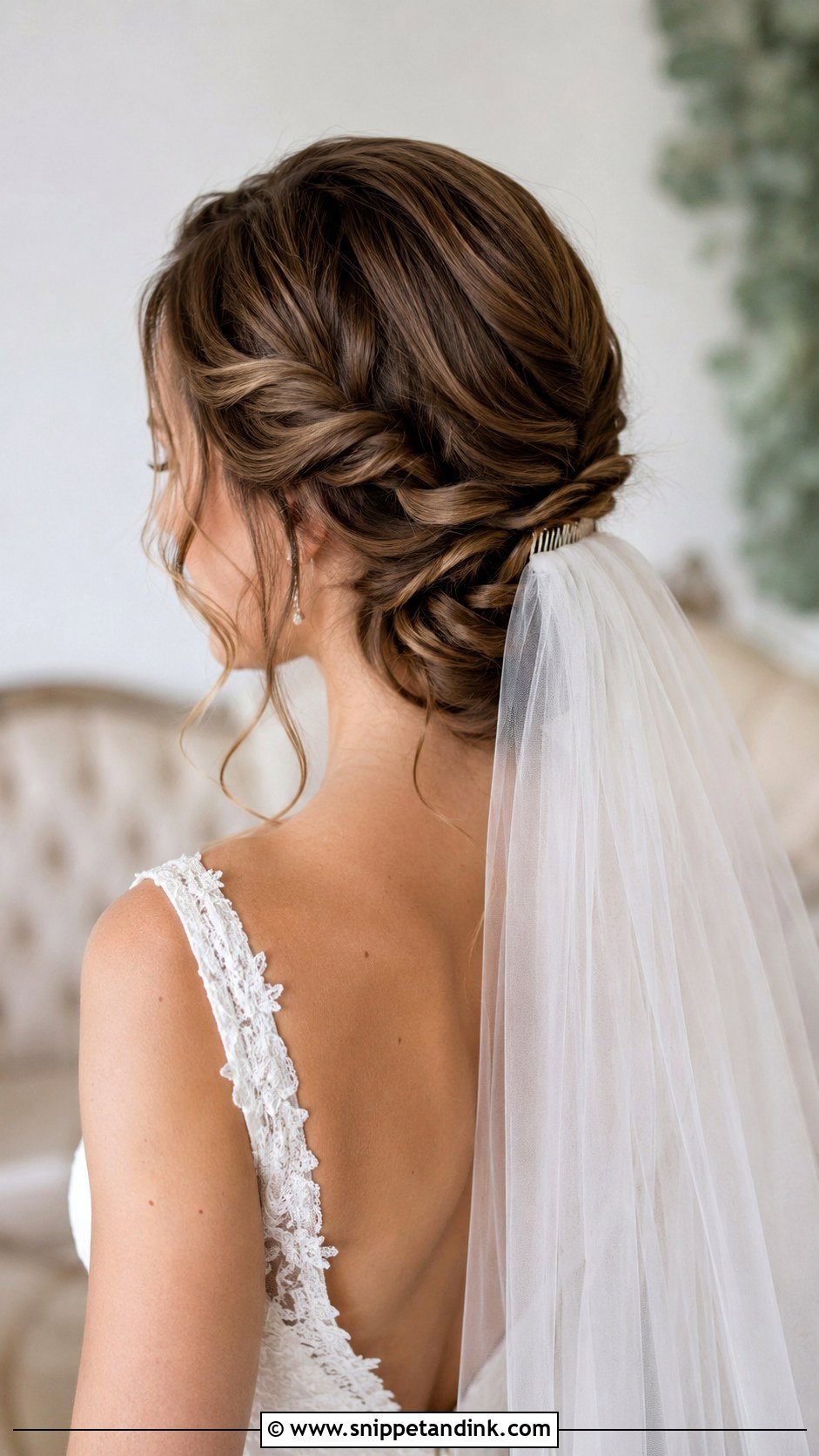
Most veil trouble with short hair comes from the comb having nothing to bite into. This twisted updo solves that by gathering the twists into a dense shape at the nape. Twist sections back and pin them together, then slide the veil comb in just above or below the twist and lock it with two crossed pins over its spine. Leave a couple of tendrils. When the veil comes off for the reception, the updo underneath still looks finished, which is exactly why I like it for a traditional ceremony.
17. Low Knotted Bun
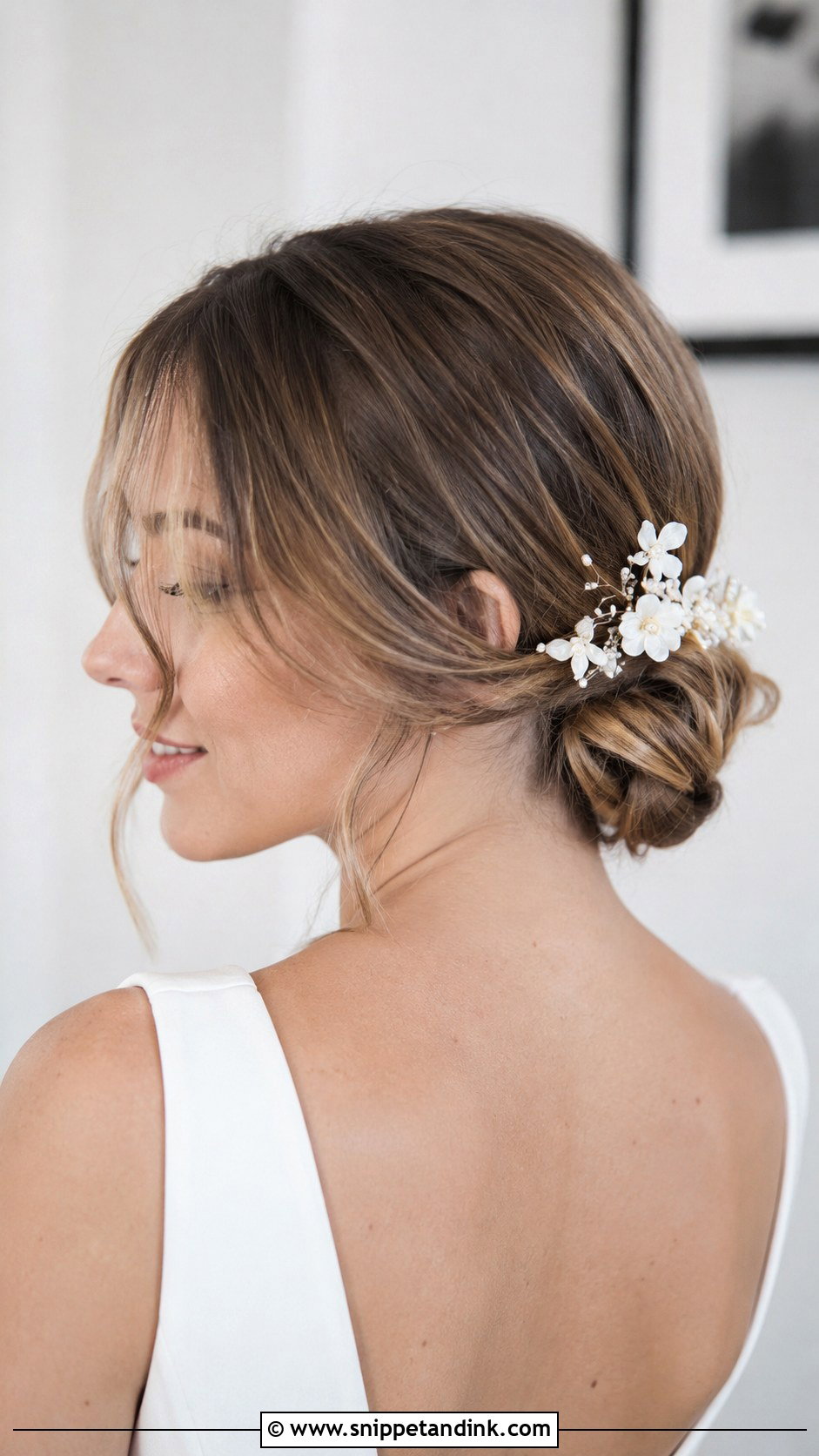
The low knotted bun is cleverer than it looks. Split the hair into two sections, tie them in a knot at the nape, then wrap and pin the ends. The knot is its own anchor, so shorter hair stays in better than it would in a plain bun. Very short or heavily layered hair won’t knot cleanly, though; the two sections need to reach well past each other. A small pearl pin sits nicely right on the knot.
18. Braided Half Up Style
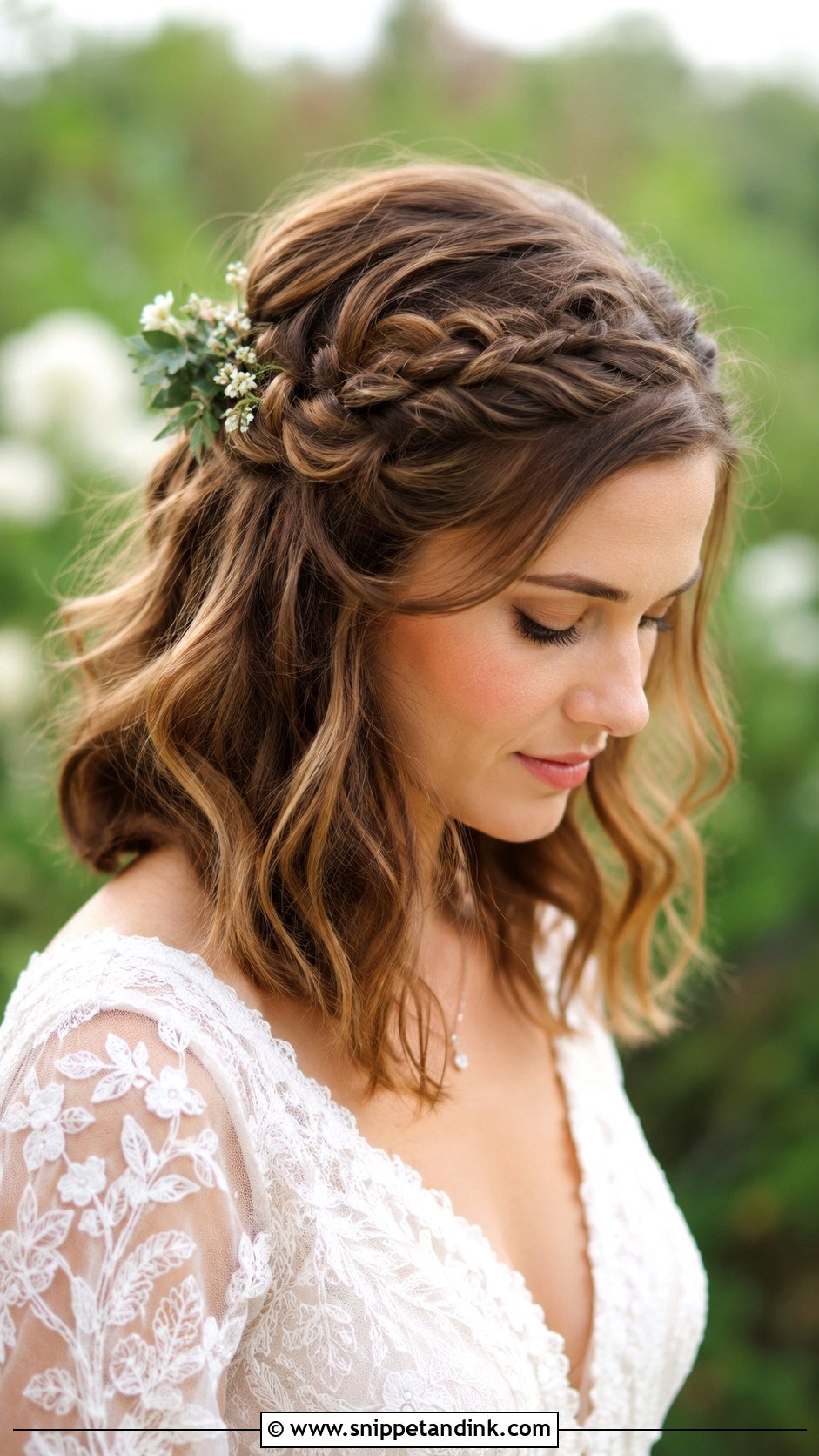
On shoulder-length hair I keep these braids small and close to the face, so the hair below stays full. Braid two front sections, take them back to the crown, pin them, and let the rest fall in waves. Greenery or small flowers slide into the braids easily. Freshly washed, silky hair loosens braids fast; second-day hair, or a dry texture spray on clean hair, holds far better.
19. Sleek Side Part Updo
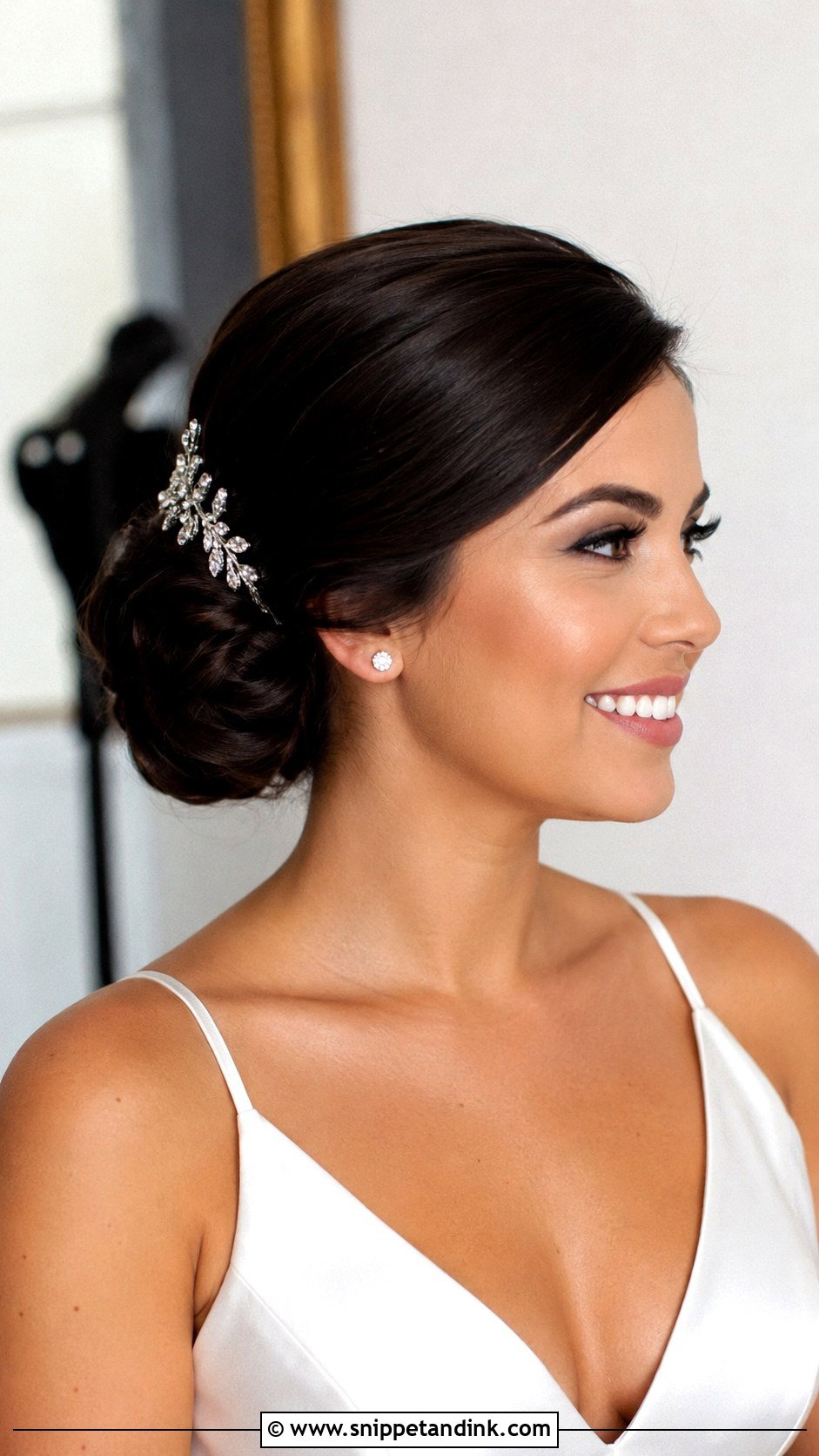
A deep side part changes the whole face, so I test it at the trial rather than springing it on you that morning. Smooth the hair down with styling cream, then gather everything into a low bun or twist on the side opposite the part. The defined line gives an editorial finish and shows off the earrings, and a jeweled clip along the part adds shine. Cowlicks at the front fight a deep part. If yours keeps flipping back, blow-dry it in the new direction the night before.
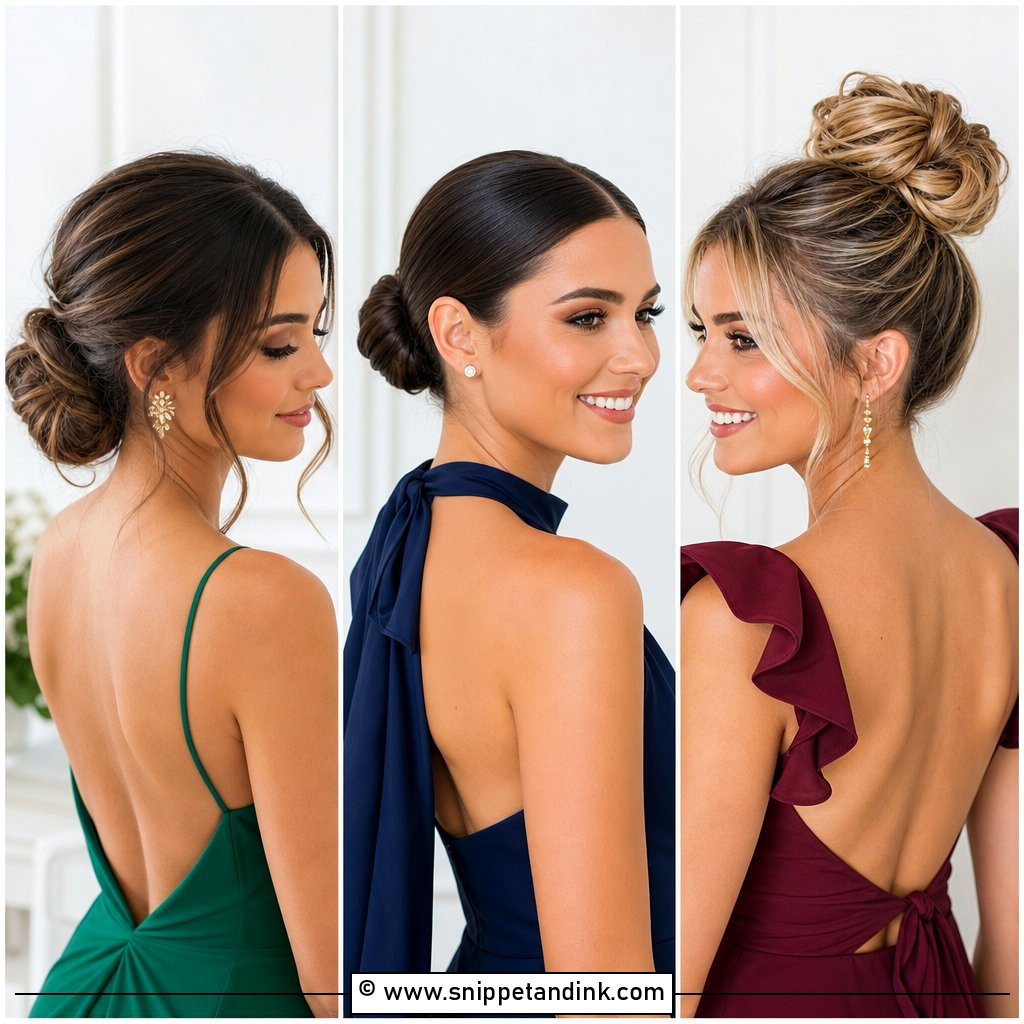
20. Tousled Updo With Baby’s Breath
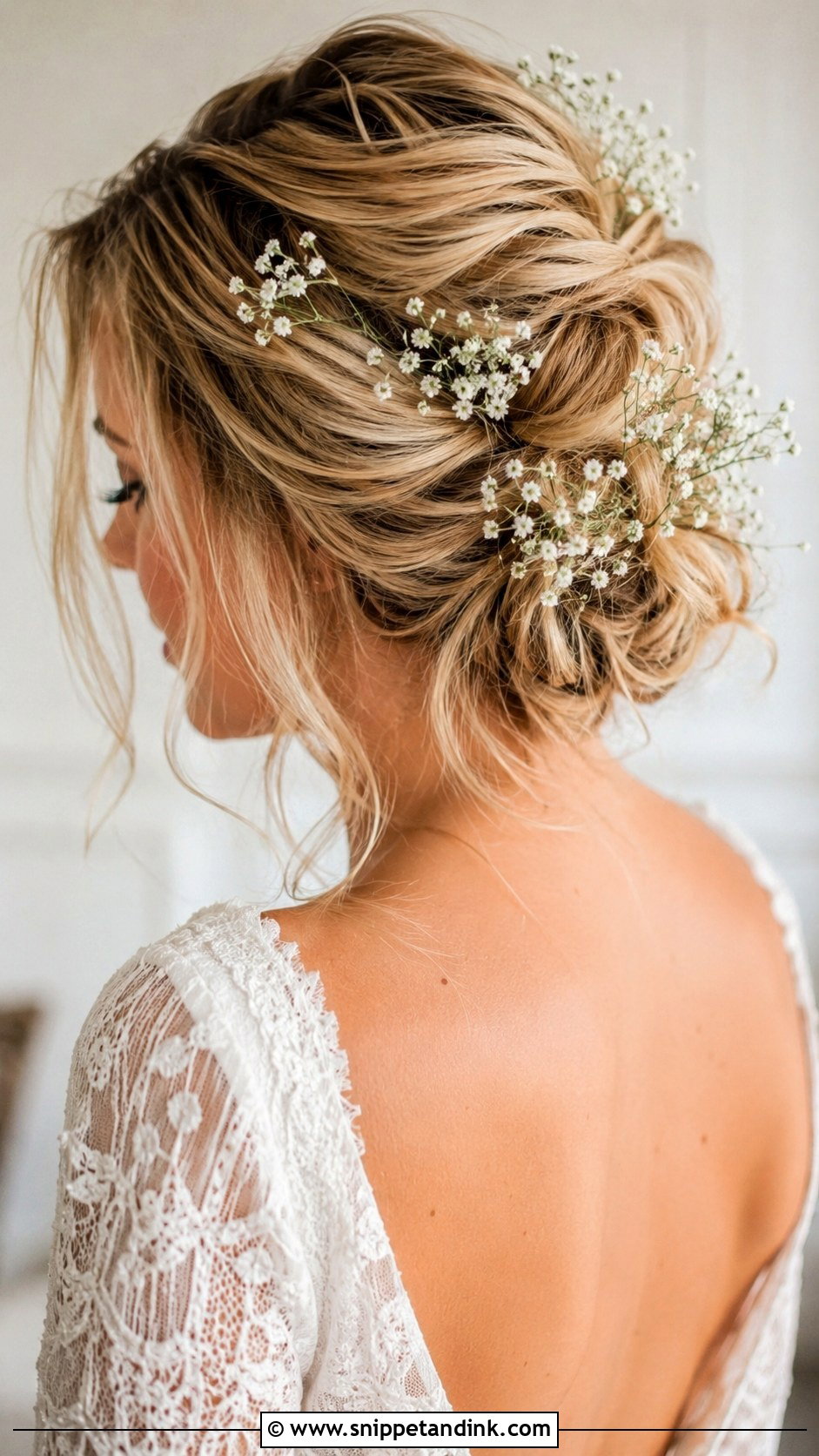
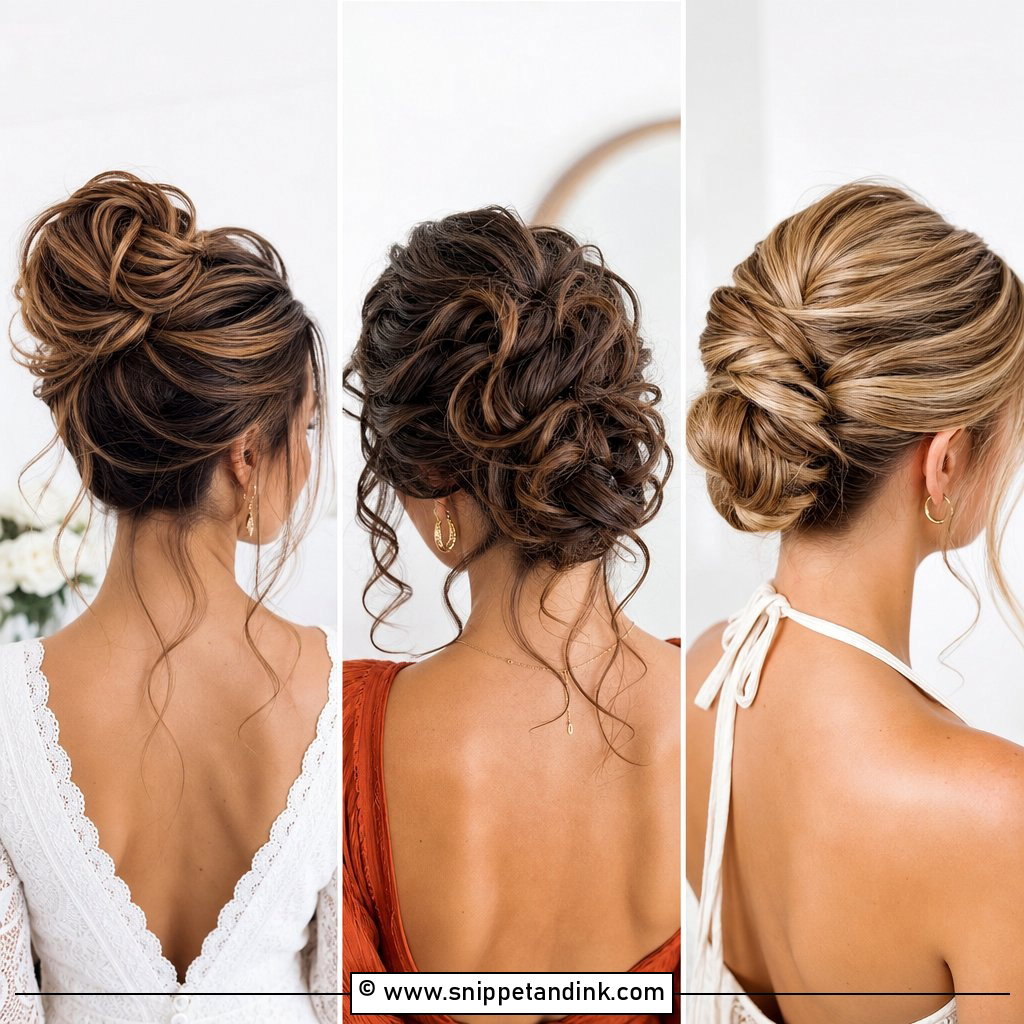
I’d finish with the most forgiving style here, a dreamy tousled updo dressed in baby’s breath. Pin the hair loosely toward the back with plenty of texture left in, pull pieces free at the face, then tuck sprigs of baby’s breath through it. Fresh baby’s breath holds up well out of water for a day, but it has a distinct smell some people dislike, so sniff a bunch before you commit. It’s light to wear, and any imperfect pin just adds to the look.
The Pins and Pieces I Carry for Short Updos
Short hair is a pinning job more than a styling job. Standard bobby pins slide in fine hair, so I match pin color to the hair and use them in crossed pairs, an X that locks into itself. U-shaped pins do the softer work of shaping rolls and catching curls without flattening them.
- Small clear elastics, to make a hidden anchor before a bun or twist goes on top.
- A little padding, or a cut section of a hair donut, for chignons on finer hair.
- Firm-hold spray for the nape and a flexible spray for the finished shape.
- A tail comb to tuck an escaped end back in without taking anything down.
When the Nape Pieces Start Slipping Out
They will, a little. The shortest hairs at the back of the neck are always the first to drop, usually once you’ve warmed up on the dance floor. Give your maid of honor four or five pins in your hair color and a travel-size spray.
A loose piece can be twisted once and pinned flat under the style, and a sprig of flowers will cover a section that’s lost its shape. Resist re-curling in the venue bathroom. A pin and a light mist fix the problem without making one section look different from the rest.
Wear Your Trial Updo Home Before You Decide
Shorter hair asks more of the prep and the pinning, and less of your neck and scalp by the end of the night. Have your trial at the length you’ll actually have on the day, keep the style in for a few hours afterward, and notice which pieces escape first. Those are the ones to fix with spray or an extra pin. Match the shape to your dress line and your hair’s texture, and let the accessory be your one bold choice.
You'll Like These Ideas:


Leave a Reply