
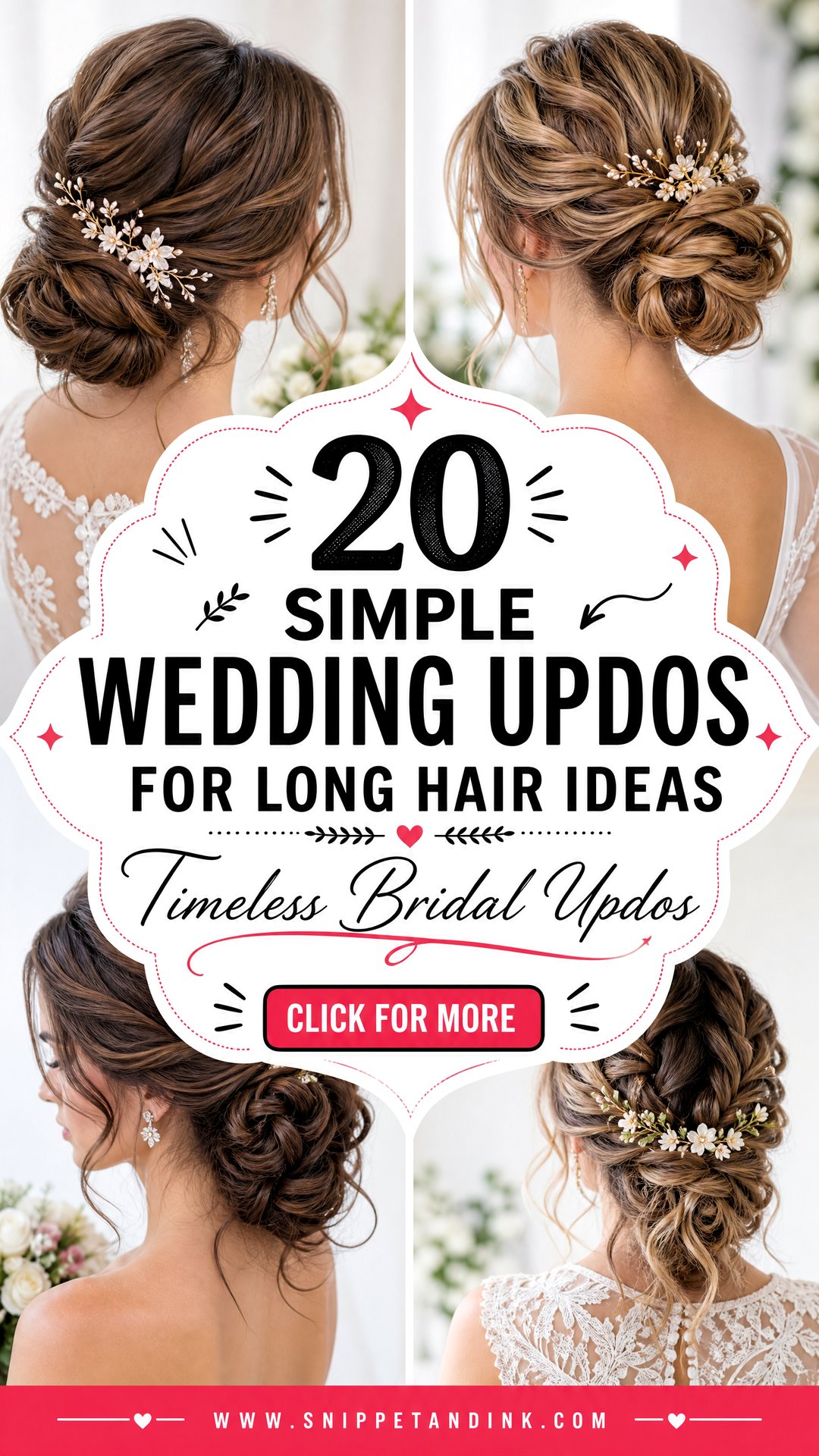
Long hair gives me more to work with than any other length, and more to hold up. A waist-length ponytail weighs far more than people expect, and that weight decides whether an updo still looks crisp during the speeches. The styles below run from low buns and French twists to braided crowns and floral knots. A few you could manage with a patient friend; others really need a stylist’s hands. For each one I’ve noted how it’s built, who it suits and what tends to slip, so you can walk into your trial knowing what to ask for.
Why Heavy Lengths Pull an Updo Down by Evening
When a long-haired bride tells me her updos always fall out by dinner, the style is rarely the problem. The foundation is. Pins alone can’t carry a heavy mass of hair for twelve hours, so almost every updo I do for long hair starts with something for the pins to grip: a ponytail, a pair of crisscrossed pins, or a small braid hidden at the base.
Very thick hair
I split the hair into two or three sections and build smaller shapes rather than one big bun. It looks neater, sits closer to the head and spreads the weight, so you don’t end up with a headache by the reception.
Fine hair that grows long
Long fine hair is slippery. A grippy texture spray on dry hair before styling makes a real difference, and so does curling first, because curled hair holds pins better than straight hair. A clip-in piece in your exact shade can add bulk to a bun without anyone spotting it.
Long layers
Shorter layers tend to poke out of buns and twists. I curl them inward and pin them into the shape individually, or leave the shortest ones around the face on purpose.
1. Classic Low Bun Wedding Updo
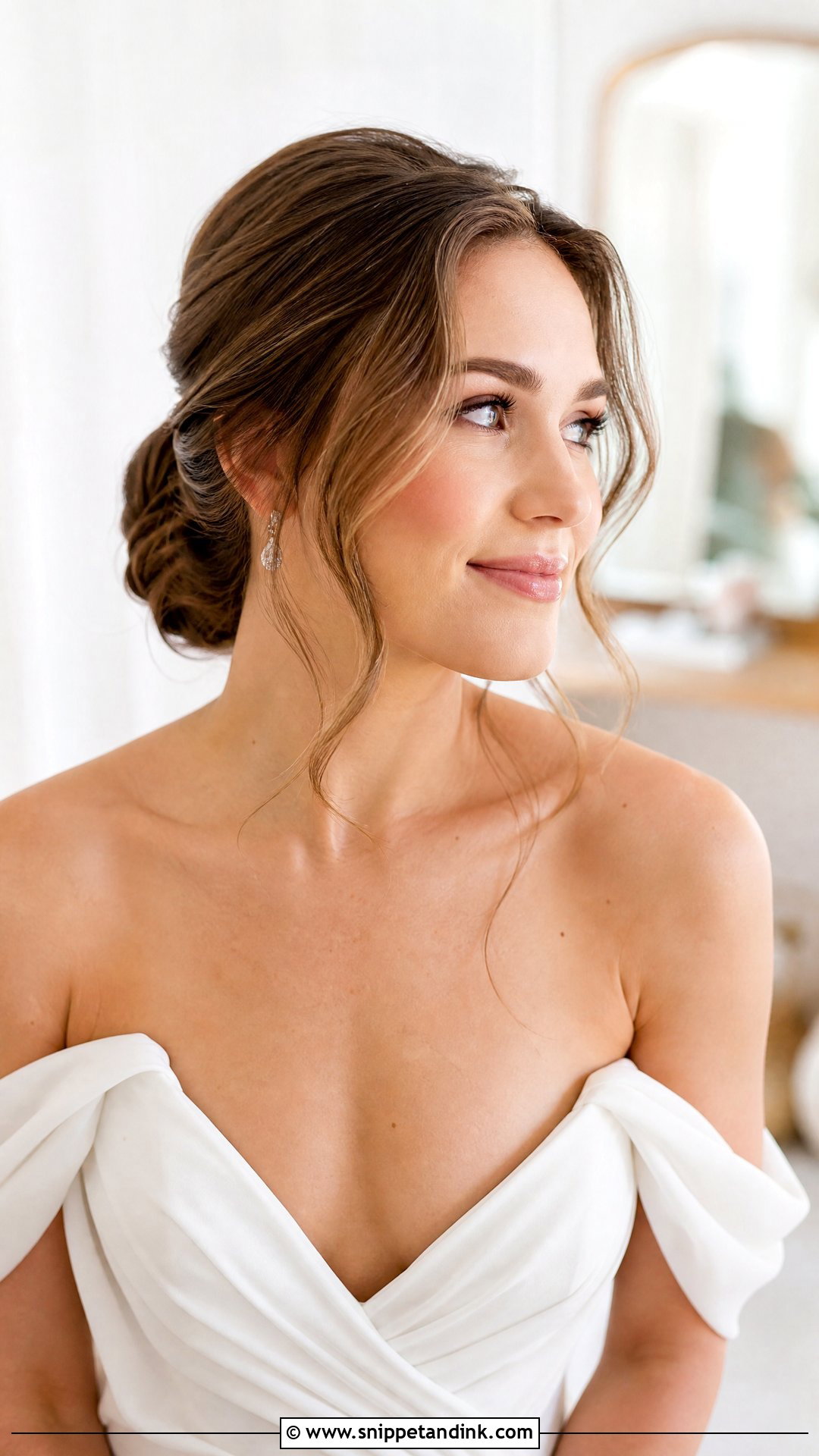
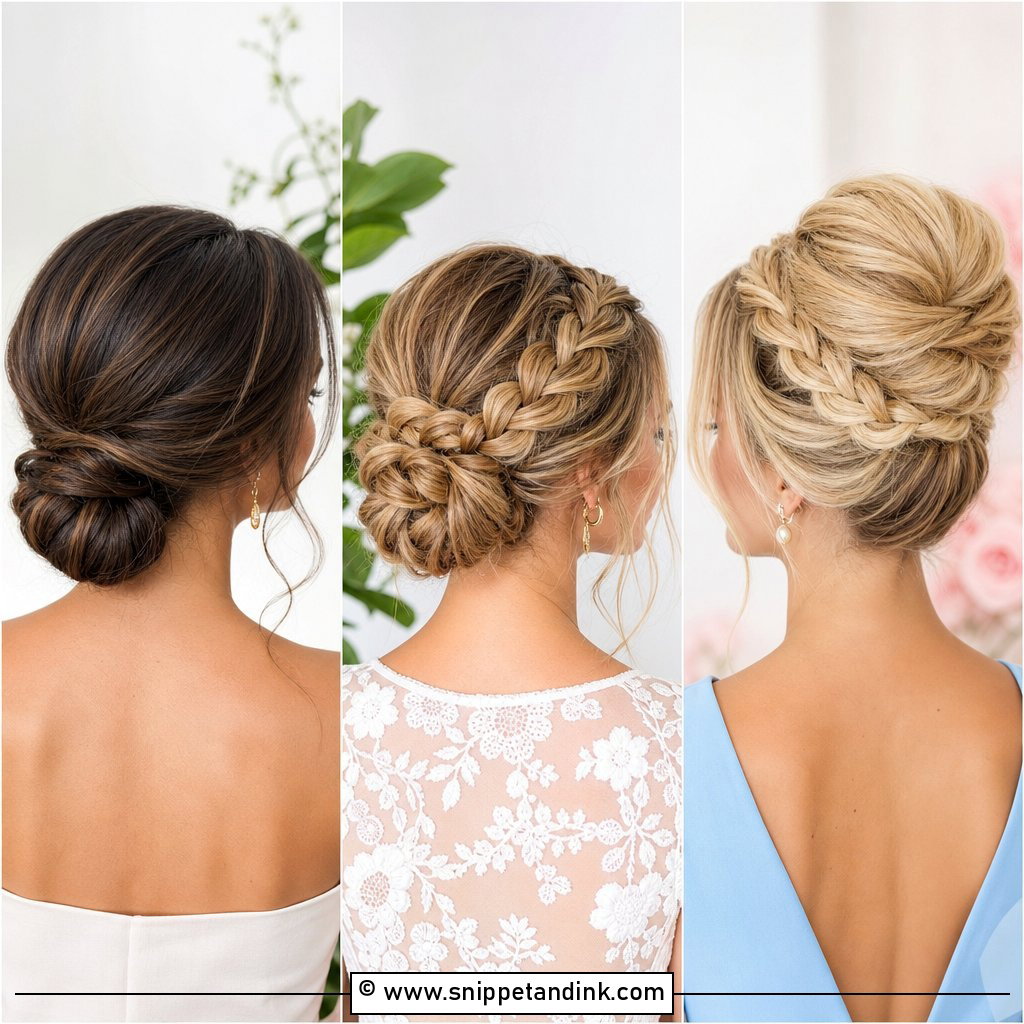
The low bun is the style I build most often, because it sits under almost any veil and looks right with nearly every neckline. I set it on a secure base just above the nape, either a ponytail or a crisscross of pins, then wrap the lengths around it. A little lift at the crown stops it looking flat from the side, and a couple of soft tendrils at the temples keep it from feeling severe. If your hair is very long and thick, I split the bun into two smaller coils so it doesn’t drag.
2. Romantic Low Chignon for Long Hair
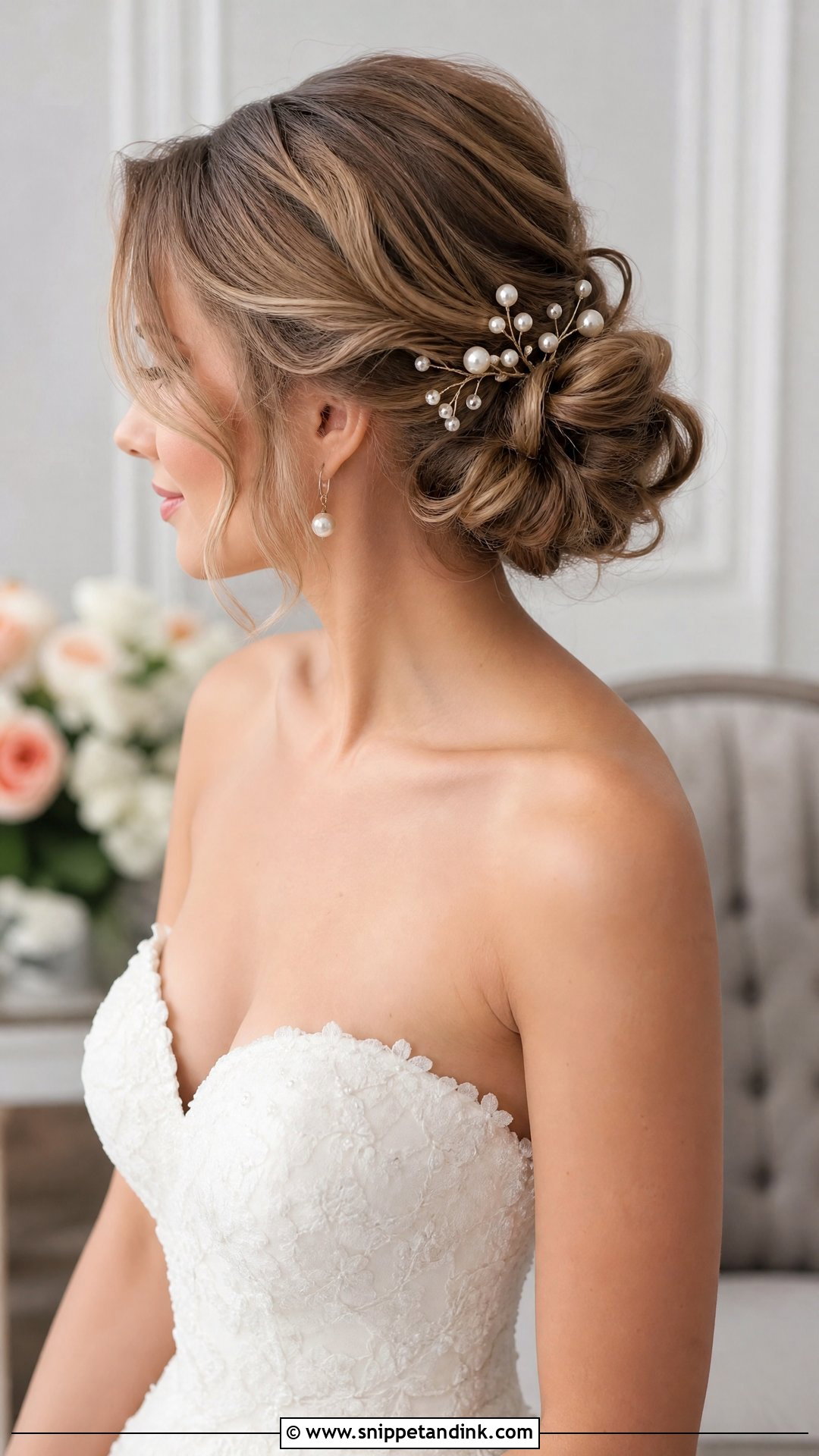
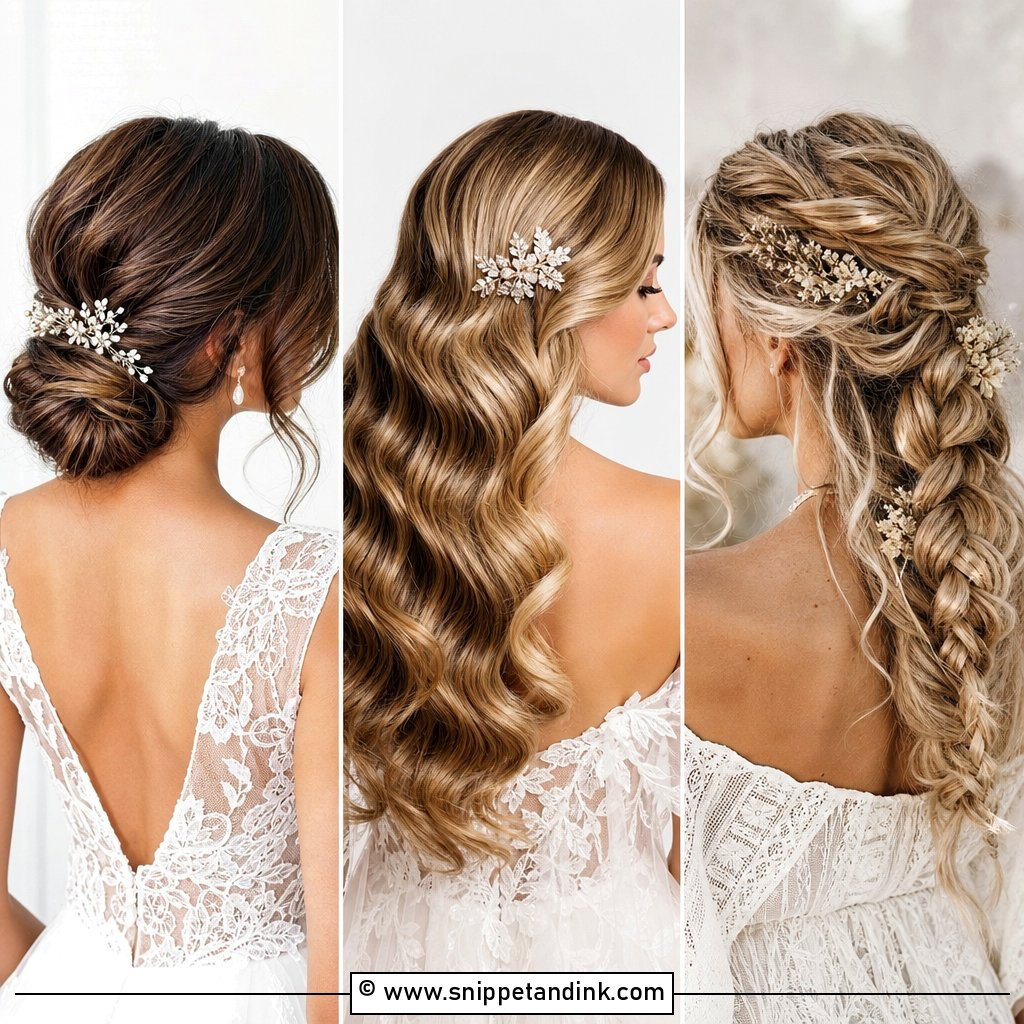
A chignon is fuller and rounder than a bun. I usually build it by rolling the hair over a padded base or teasing the inside for volume, then smoothing the surface with a brush. That fullness looks right with a sweetheart or off-shoulder neckline, where the neck and shoulders are on show. Keep it sleek for a modern gown, or pin loose waves into the shape for something softer. Fresh flowers can go at the side, as long as the stems are wired and tucked firmly into the base.
3. Timeless French Twist Updo
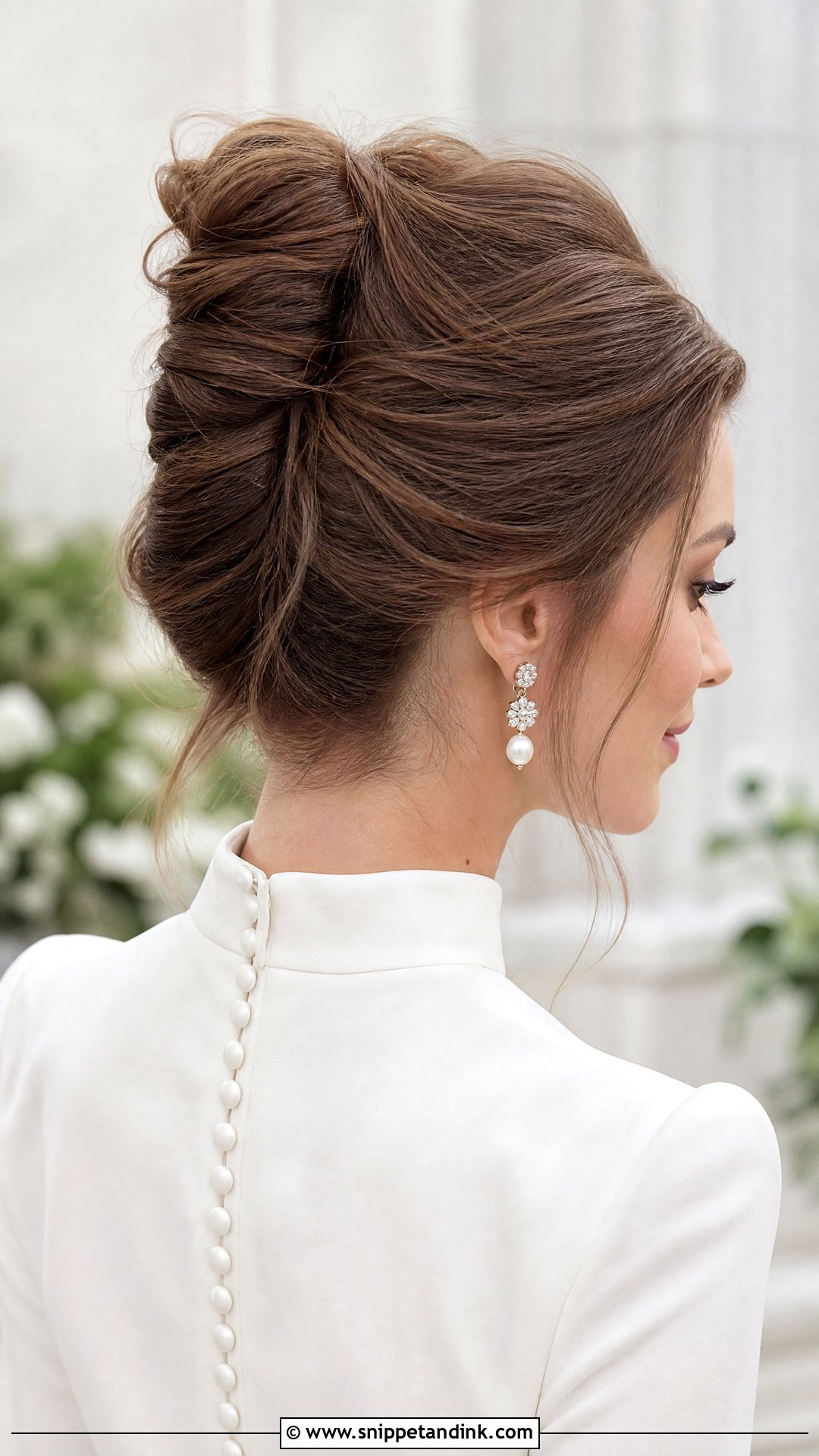
The French twist folds the hair vertically against the back of the head, and on long hair that’s both a gift and a challenge. There’s plenty of length to form the roll, but all the extra has to be tucked inside it, which makes the twist heavy. Before I twist, I set a column of crisscrossed pins underneath so the fold has something to lock onto. It looks sharp with a high neckline and statement earrings, and a touch of softness at the crown keeps it from looking stiff.
4. Half-Up Half-Down Bridal Style
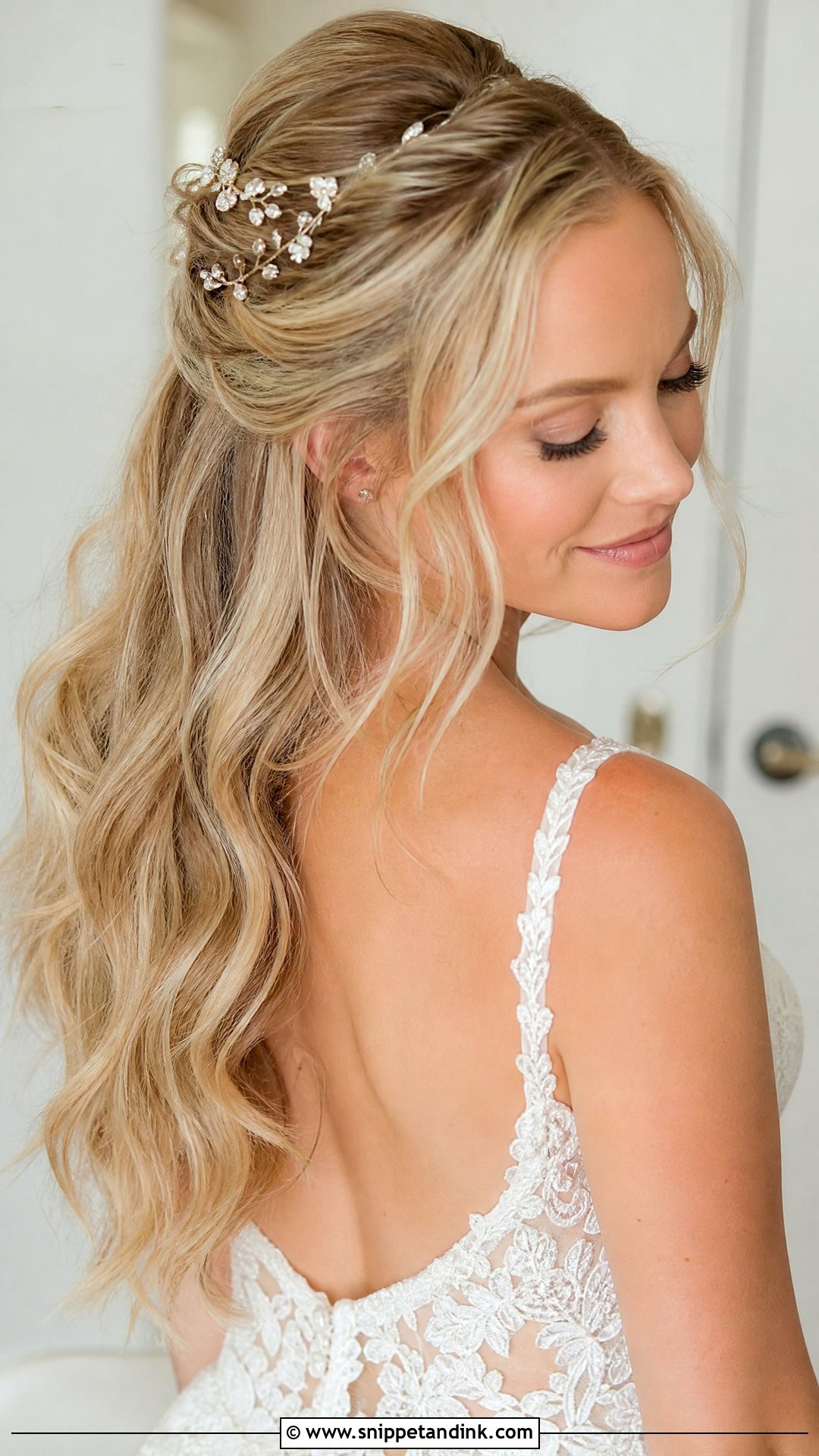
Half-up is the answer when you can’t choose between an updo and wearing it down. The honest catch with long hair is that the loose lengths carry a lot of weight, so curls drop faster than they would on a shoulder-length cut. I set the waves with a larger barrel and pin each curl to cool before brushing it out, which buys hours. Floral vines and a simple veil both sit well along the pinned section.
5. Braided Low Bun Updo
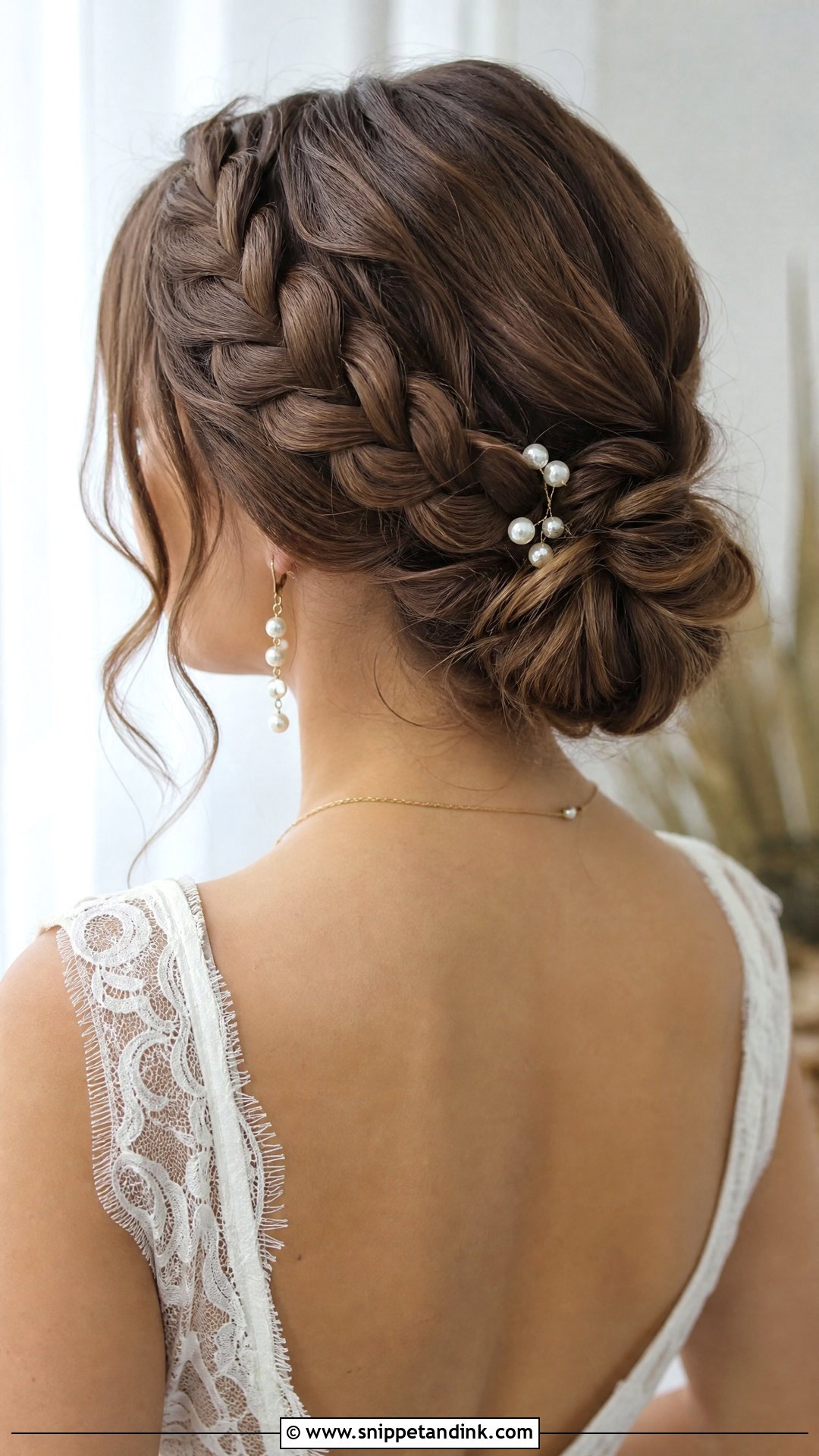
Braiding the lengths before coiling them into a bun adds texture and, more usefully, grip, because a braid holds pins far better than smooth hair does. A three-strand braid looks classic; a fishtail reads finer and more detailed. I gently pull the edges of the braid outward before wrapping it, so the bun looks fuller in photos. This one stays tidy through hours of hugging and dancing, which is why I suggest it to brides worried about their hair falling.
6. Twisted Bun Updo for Long Hair
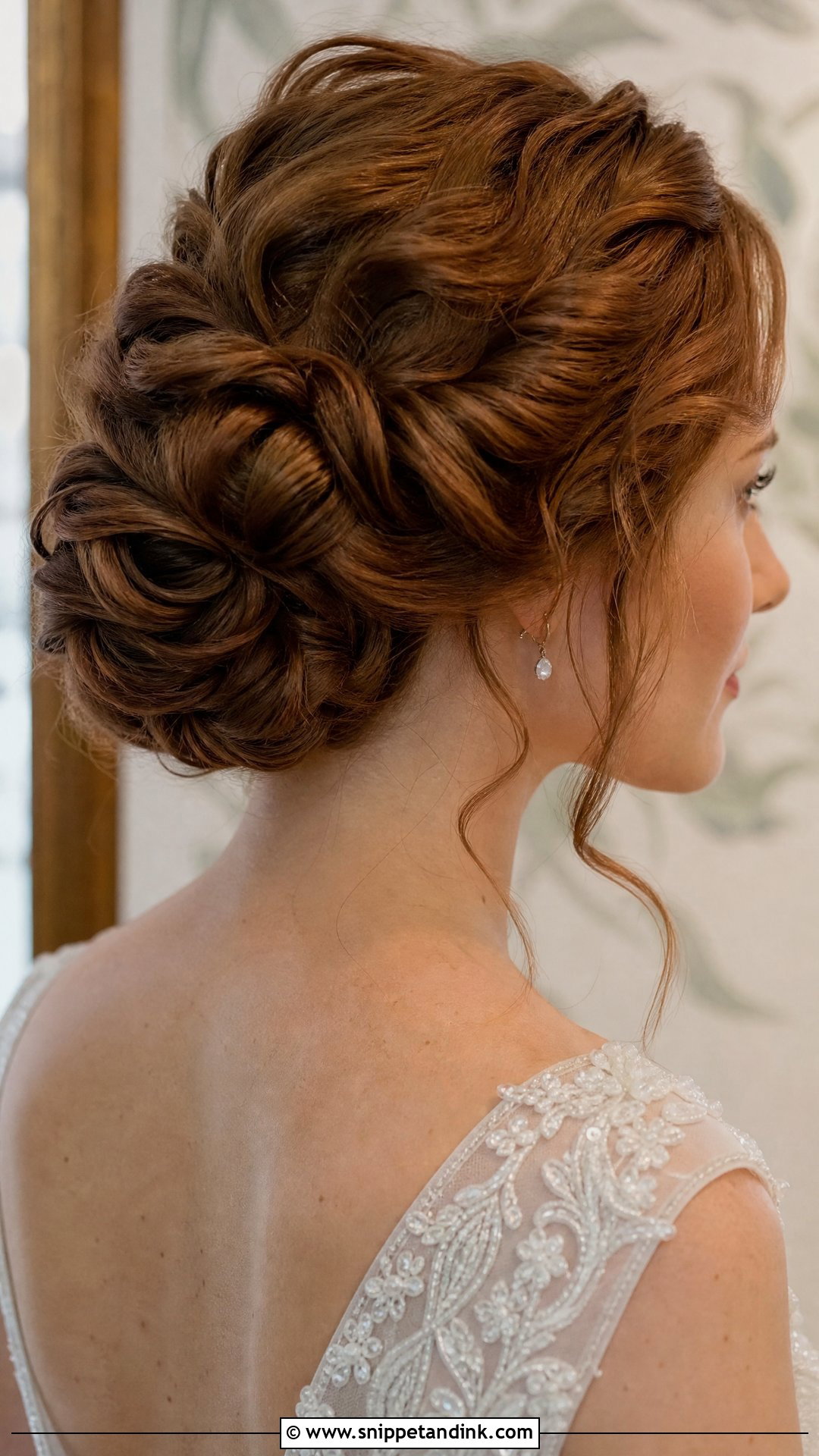
Twisted sections give a bun dimension without the precision a braid needs. I twist two or three sections in the same direction, wrap them around each other, and pin each one through the twist rather than over it. A few loose strands at the face keep it relaxed. It sits easily with vintage or modern gowns, and a sparkling clip at one side breaks up the texture. It’s also quick, which helps if you find long chair time hard.
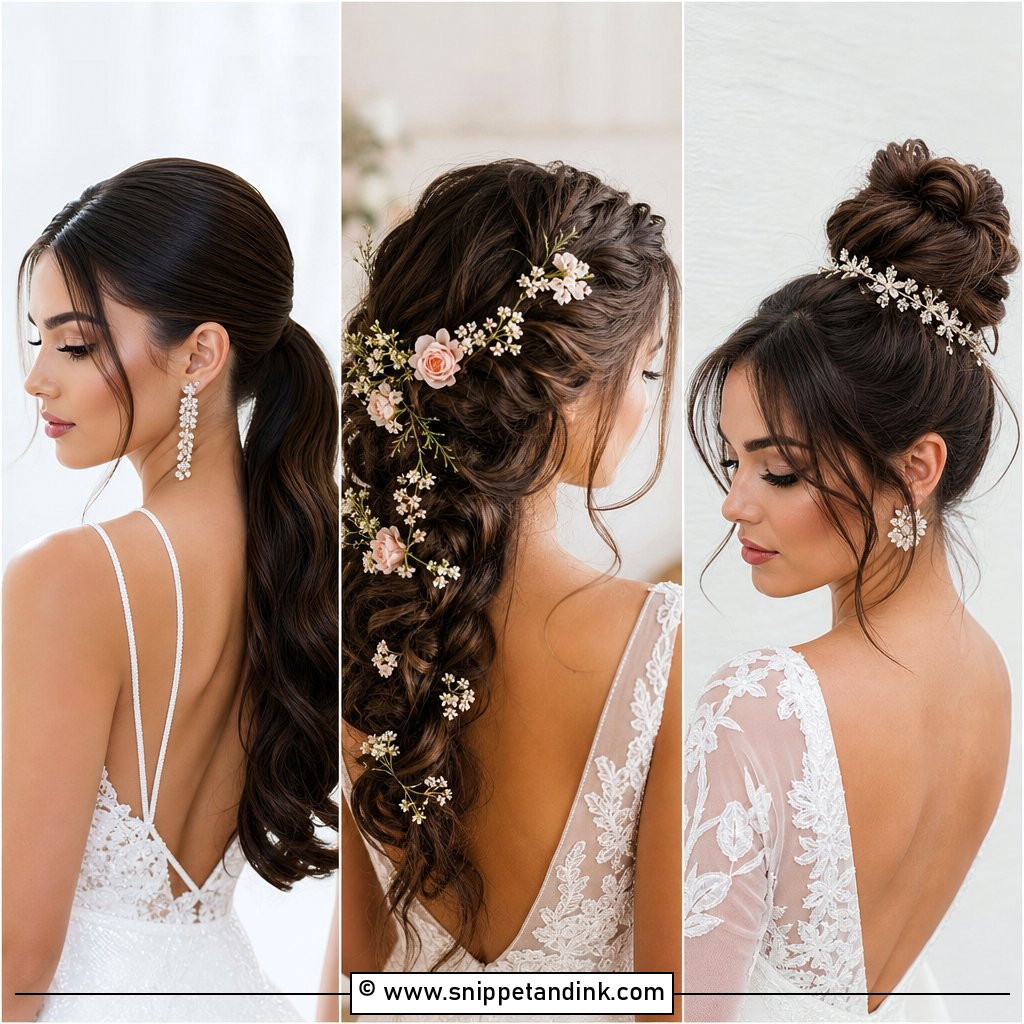
7. Sleek Slicked-Back Bun
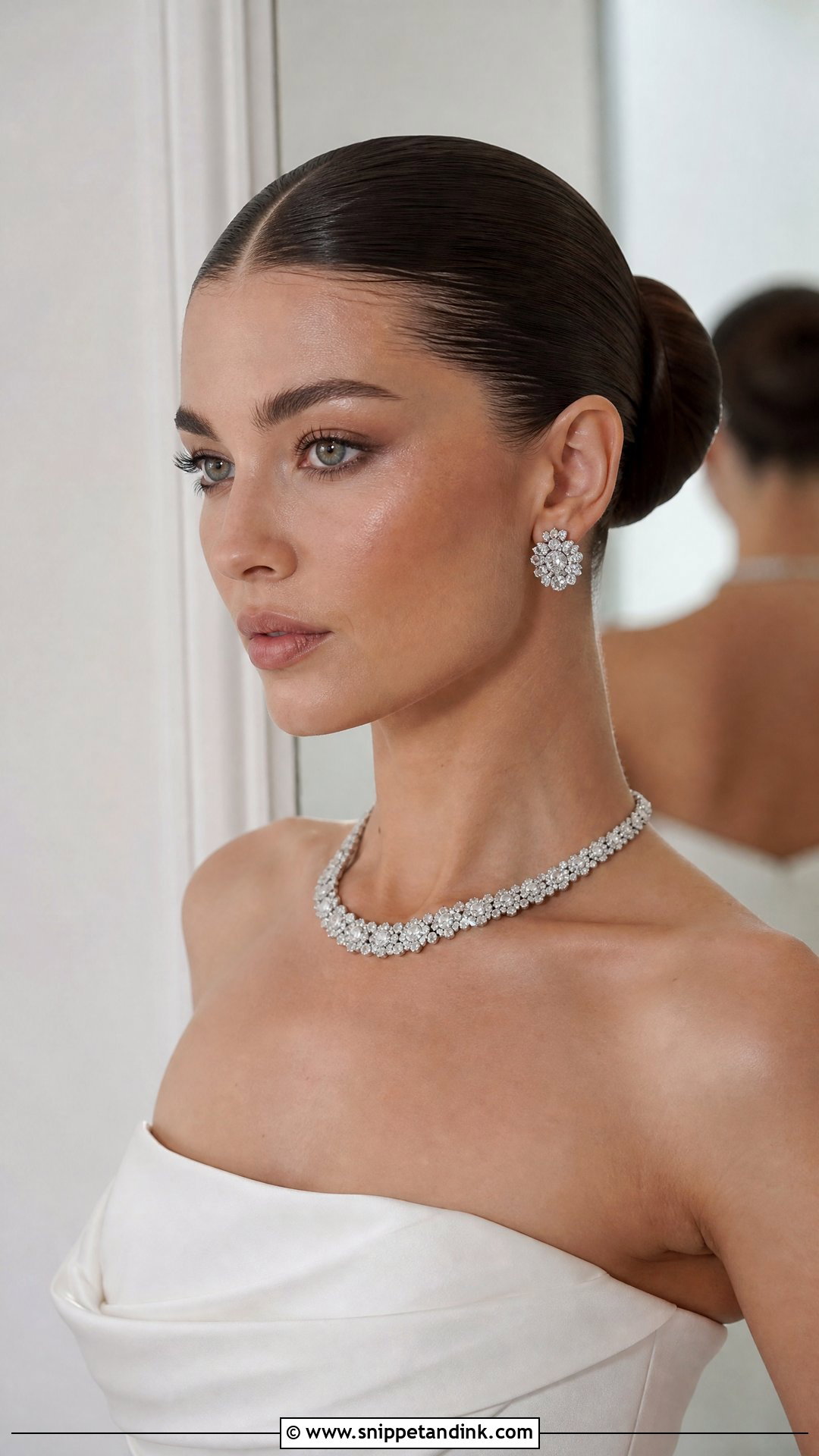
A slicked-back bun looks simple and leaves nowhere to hide. Every flyaway, kink or crooked part shows. I work a smoothing cream through freshly blown-out hair, brush it into a ponytail with a boar bristle brush and finish the hairline with a light wax stick. Long hair makes the bun big, so I usually wrap it flatter and wider. If your hairline has short baby hairs that refuse to lie down, raise it at the trial; some brides are happier with a soft side part than a full slick.
8. Messy Updo with Loose Tendrils
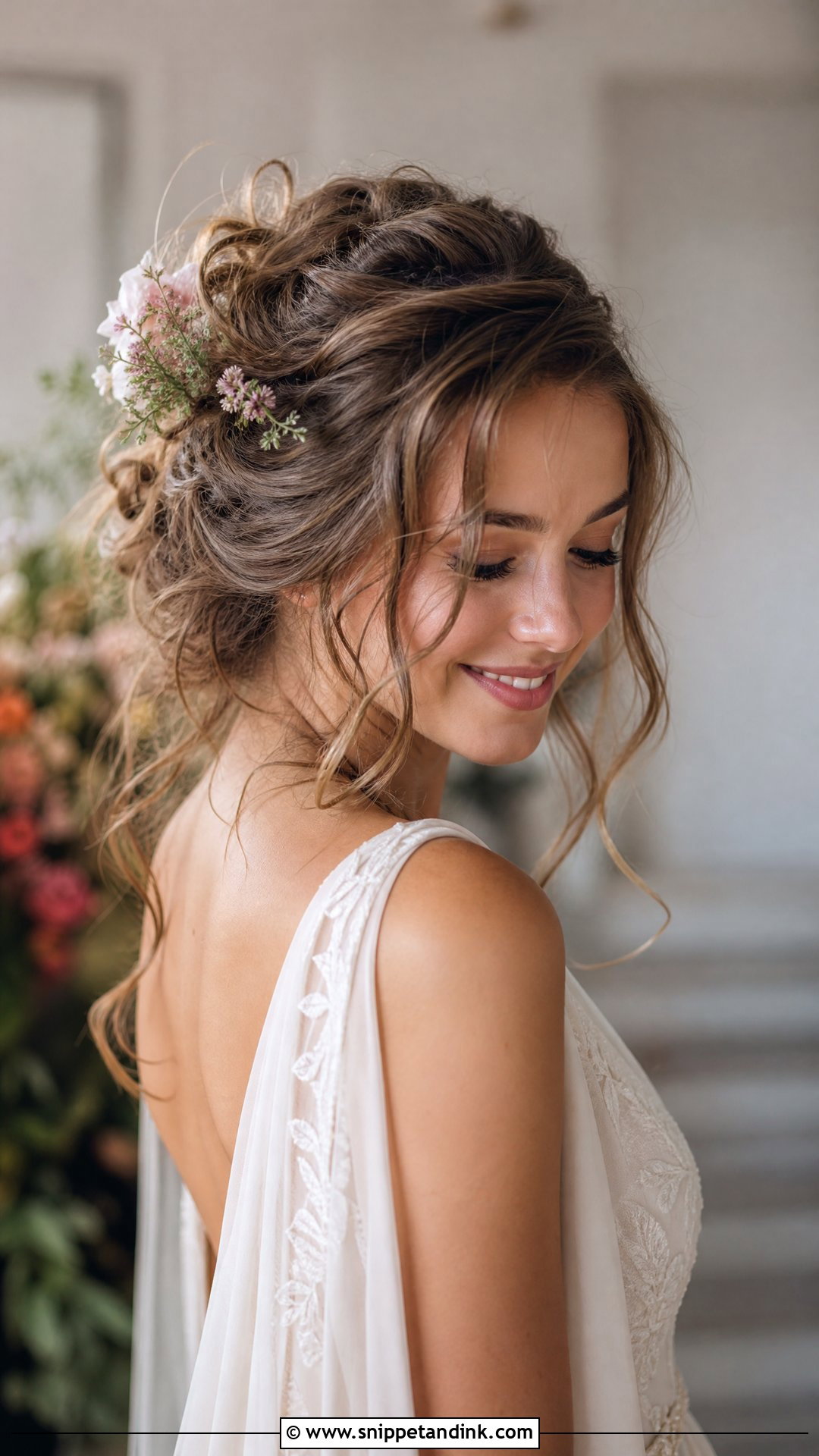
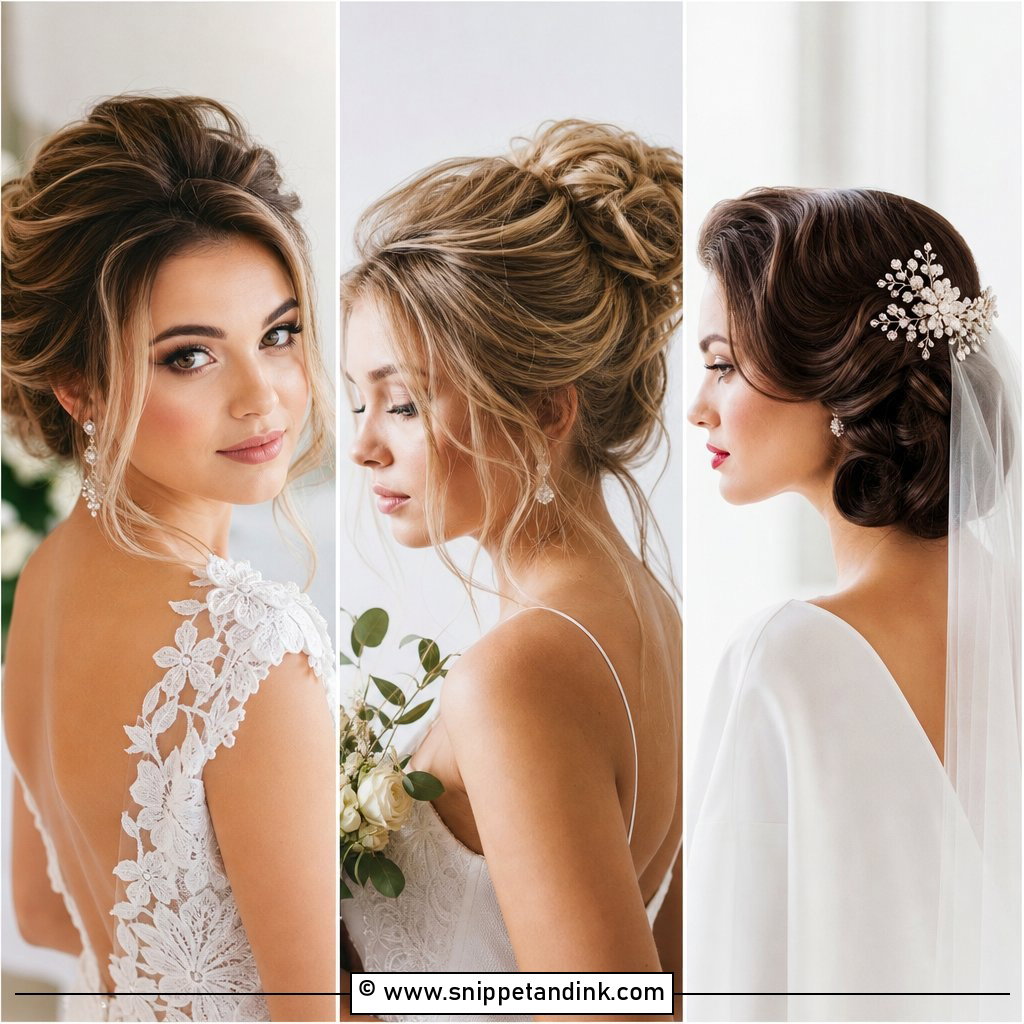
Undone updos are the hardest to build so they look casual and still last. They need texture underneath. I curl the whole head first, add texturizing spray, then pin loosely in sections with every pin crossing another, which is how it survives a breezy outdoor ceremony. Tendrils get curled separately so they look placed rather than fallen. A few small flowers suit it at outdoor and bohemian weddings.
9. Low Bun with Face-Framing Curls
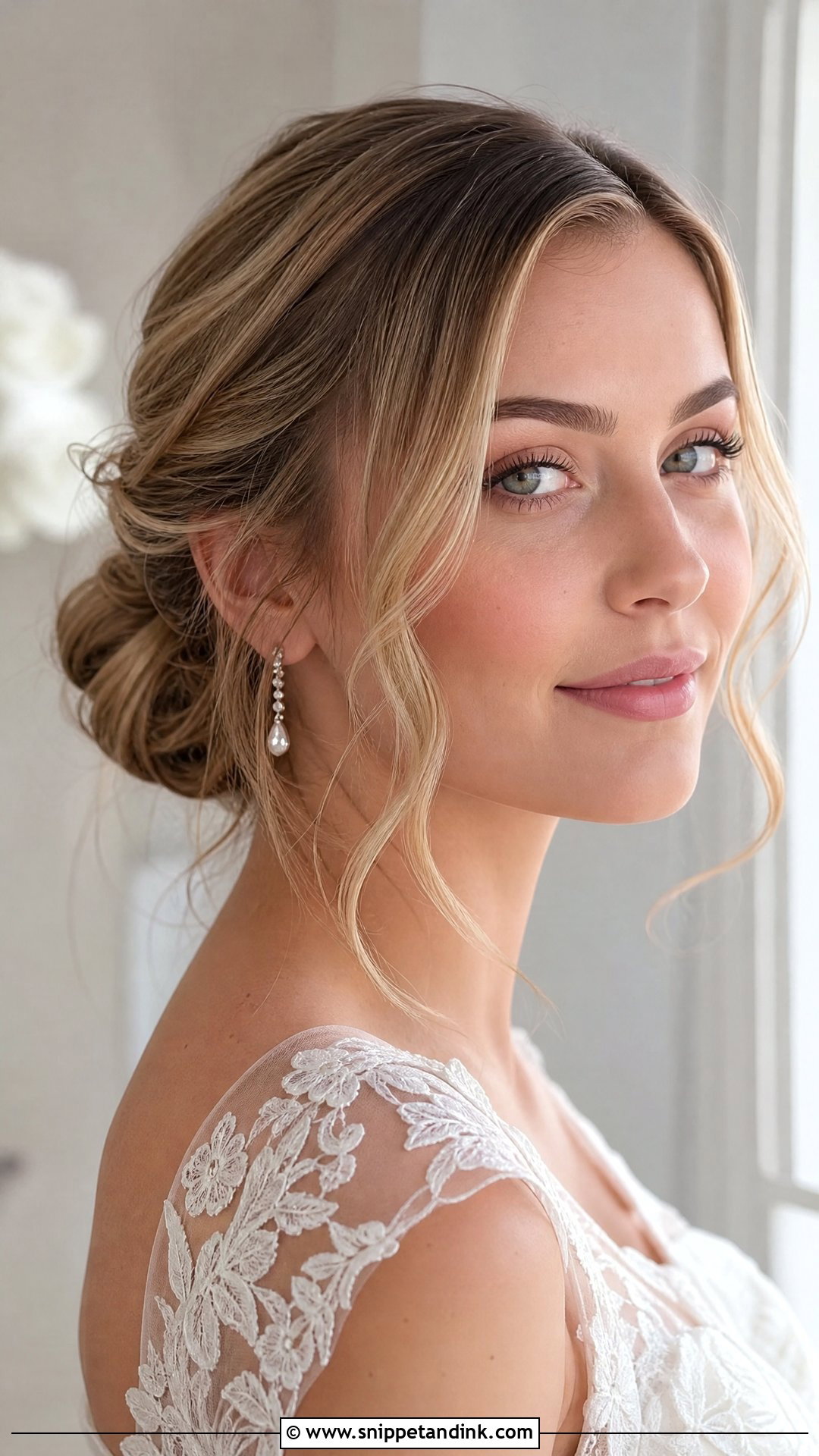
This is the low bun’s softer cousin: the same secure base, plus curled pieces at the face. What I watch is how many strands come out. Too many and they stick to lipstick and lashes all day, so two or three each side is usually right. I curl them away from the face so they open up as they relax. Delicate earrings and a long veil both sit well with it.
10. Vintage-Inspired Victory Rolls Updo
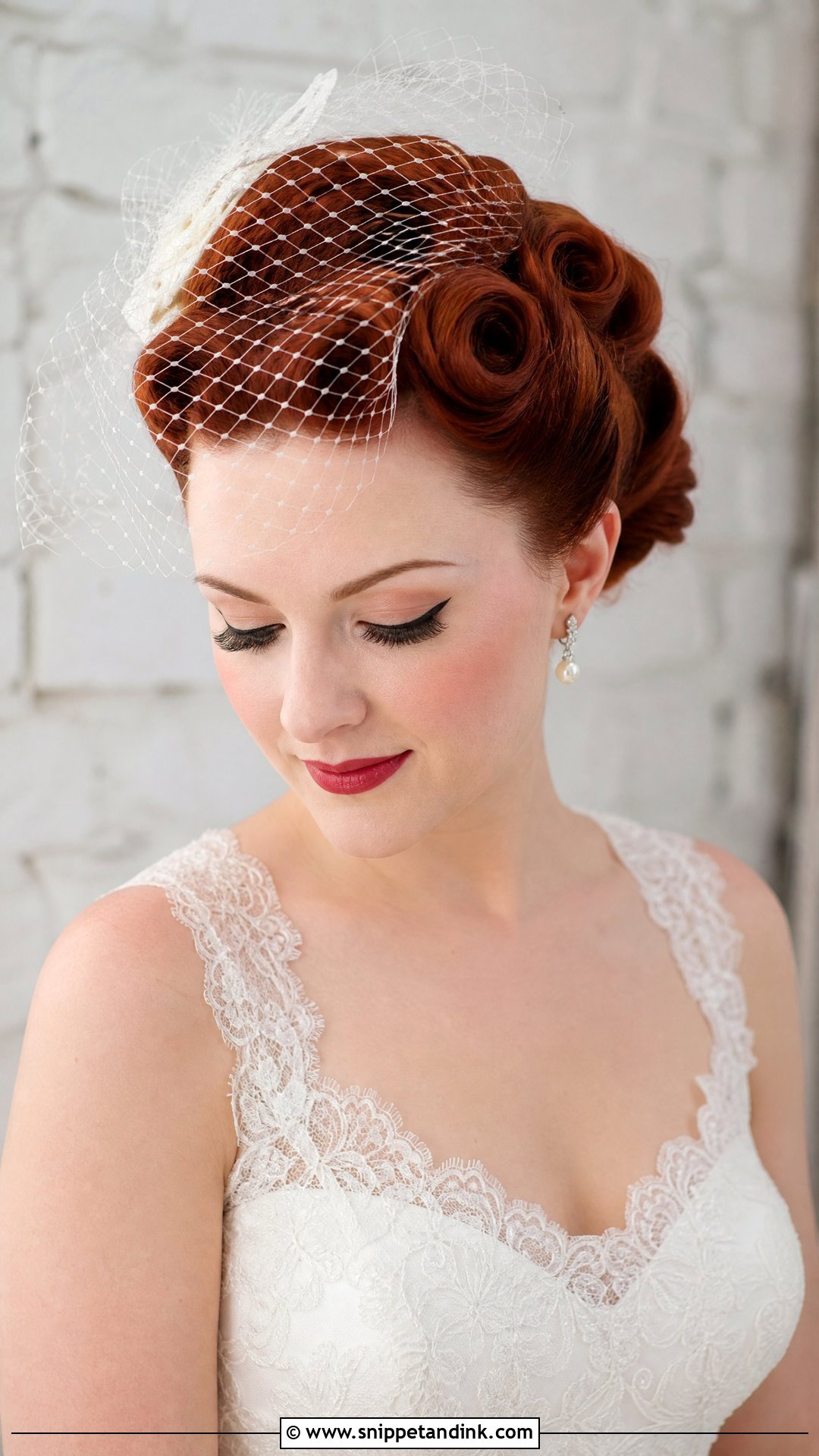
This look takes its cue from Old Hollywood, with sculpted rolls at the front and soft waves pinned behind. Victory rolls add height and drama, and long hair gives enough length for full, glossy rolls. I set the sections with heat first, roll each one around two fingers and pin it from underneath. It suits a birdcage veil, a vintage clip, and lace or structured gowns. On very heavy hair the rolls can slacken by evening, so I hide extra pins inside each one.
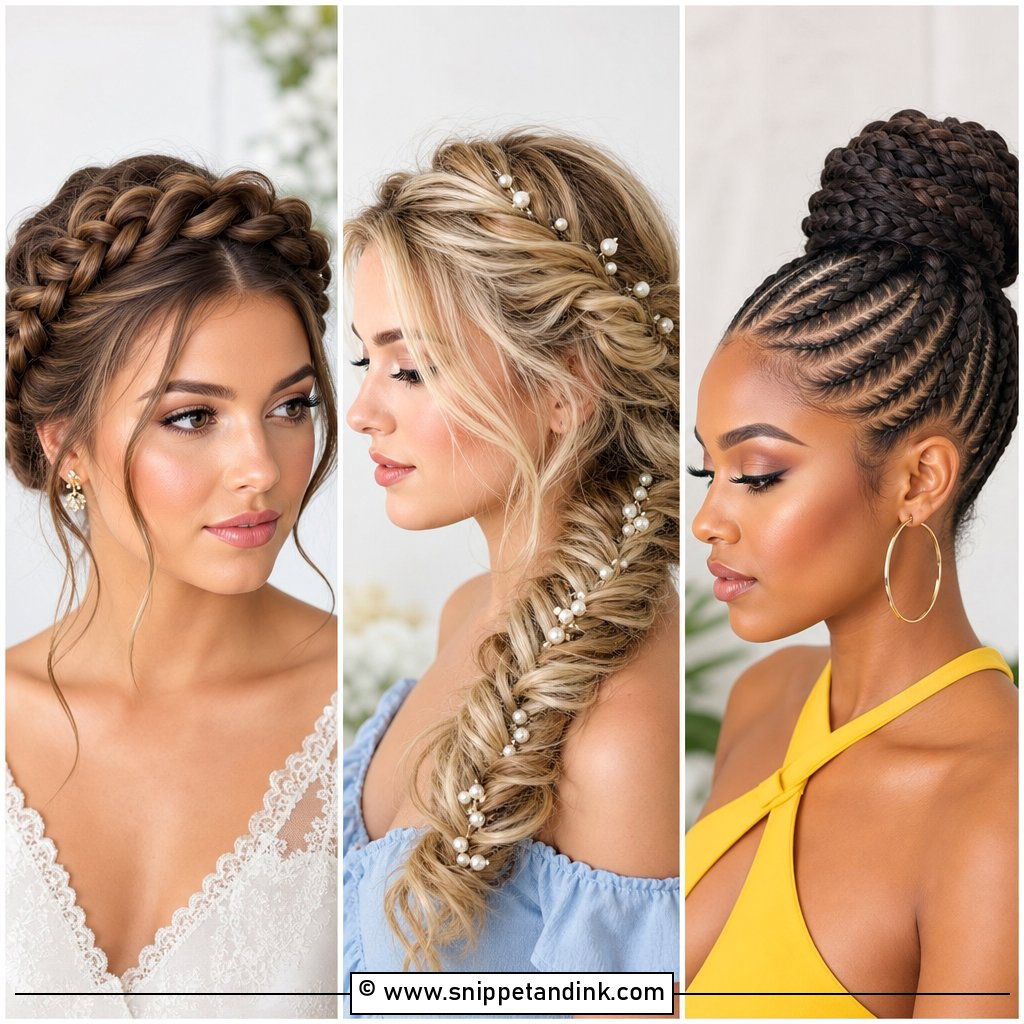
11. Crown Braid Wedding Updo
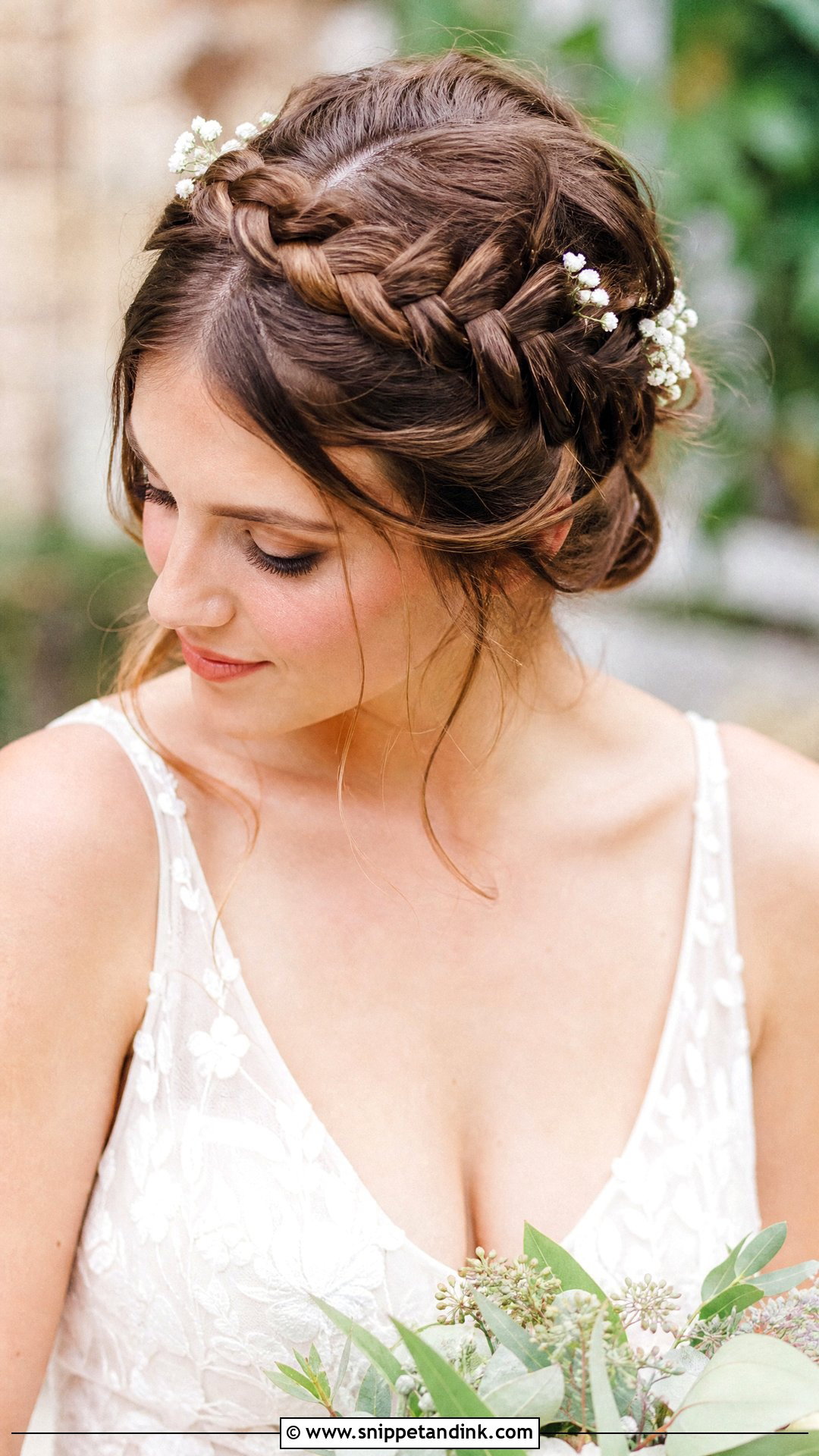
A crown braid wraps all the way around the head, and long hair is what makes it possible without added pieces. I braid from one ear around the back and over the top, then tuck the tail beneath the starting point so nobody can see where it ends. Kept tight it looks neat; loosened, it looks softer. Tiny flowers along the braid suit outdoor ceremonies, and it lies flat enough that a veil comb fits behind it easily.
12. Side Swept Updo for Long Hair
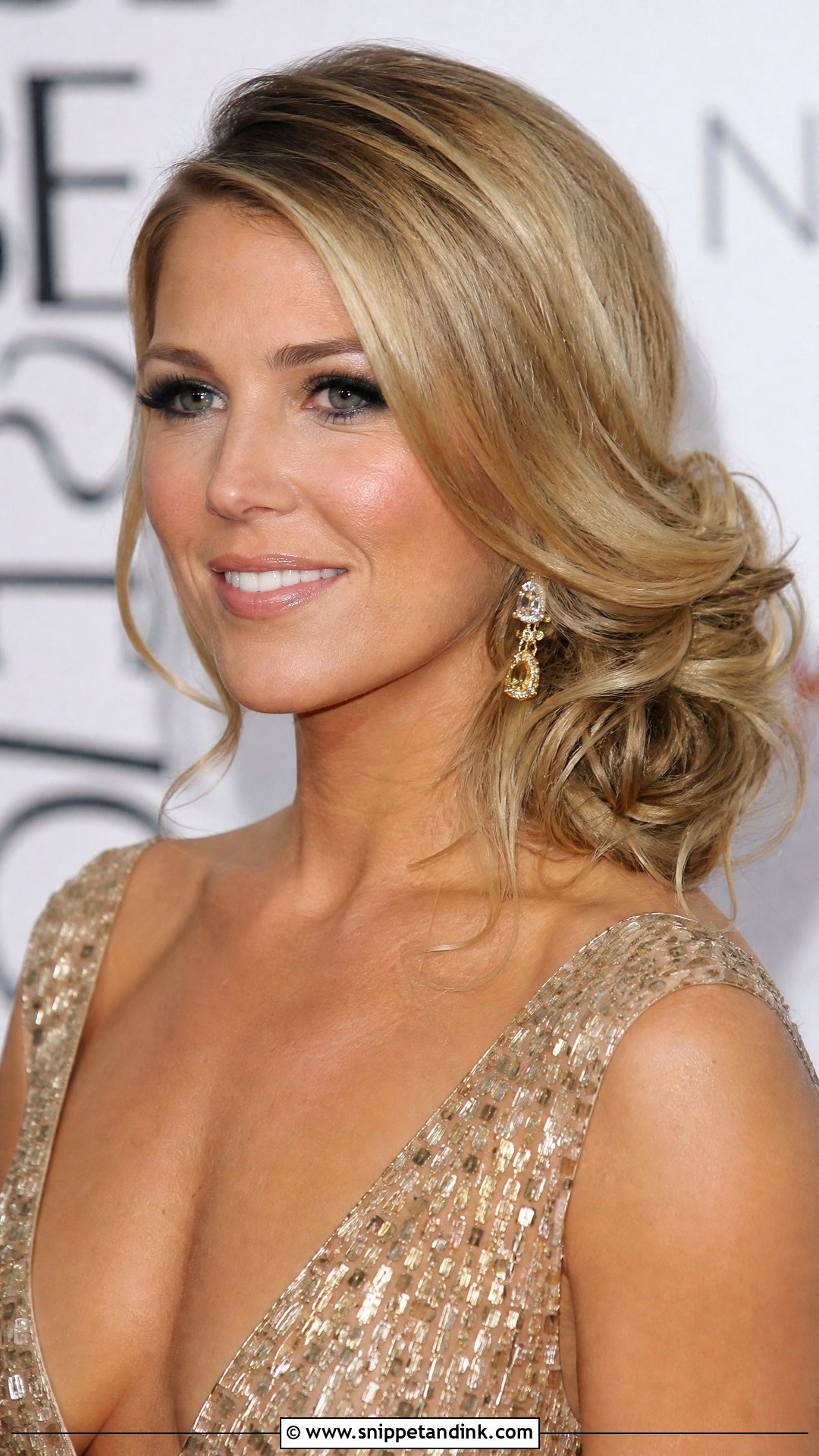
Gathering the hair to one side shows off one ear, one earring and a sweep of neckline. I start with a hidden anchor of pins behind the ear on the side the hair falls toward, because without it the weight swings back to center within the hour. Waves or a twisted bun can then rest over the shoulder. It works especially well with an asymmetric neckline. I’d avoid it under a heavy cathedral veil, which tends to drag the style back to the middle.
13. Braided Crown with Low Bun
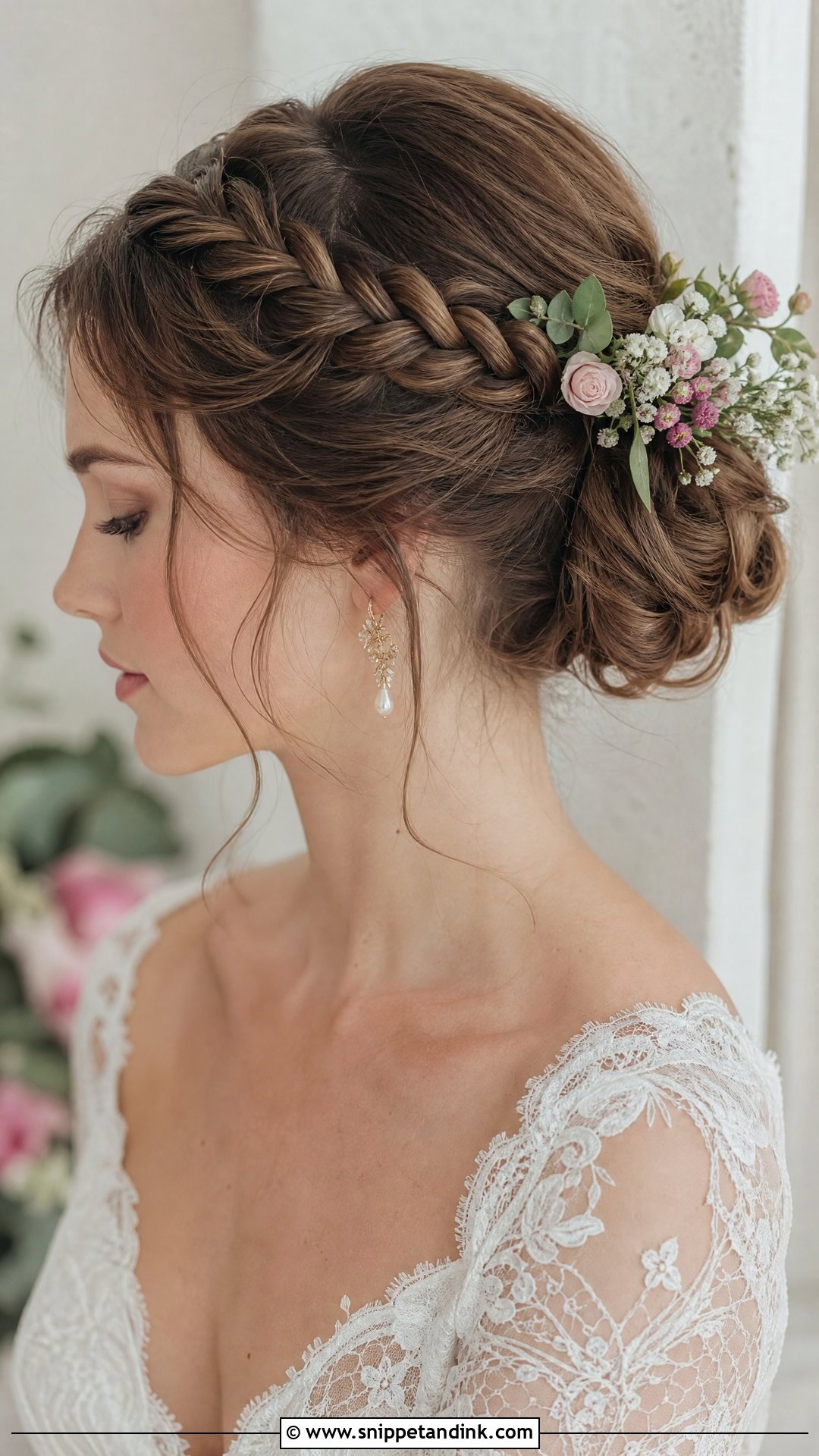
Pairing a braid with a low bun gives you detail at the top and security at the back. I braid from the hairline back along one side, then gather the rest into a bun at the nape, so the braid carries texture and the bun does the holding. Flowers or a few sparkling pins along the braid personalize it. It’s one of the steadiest choices here for a long day of photos.
14. Soft Voluminous Updo with Crown Height
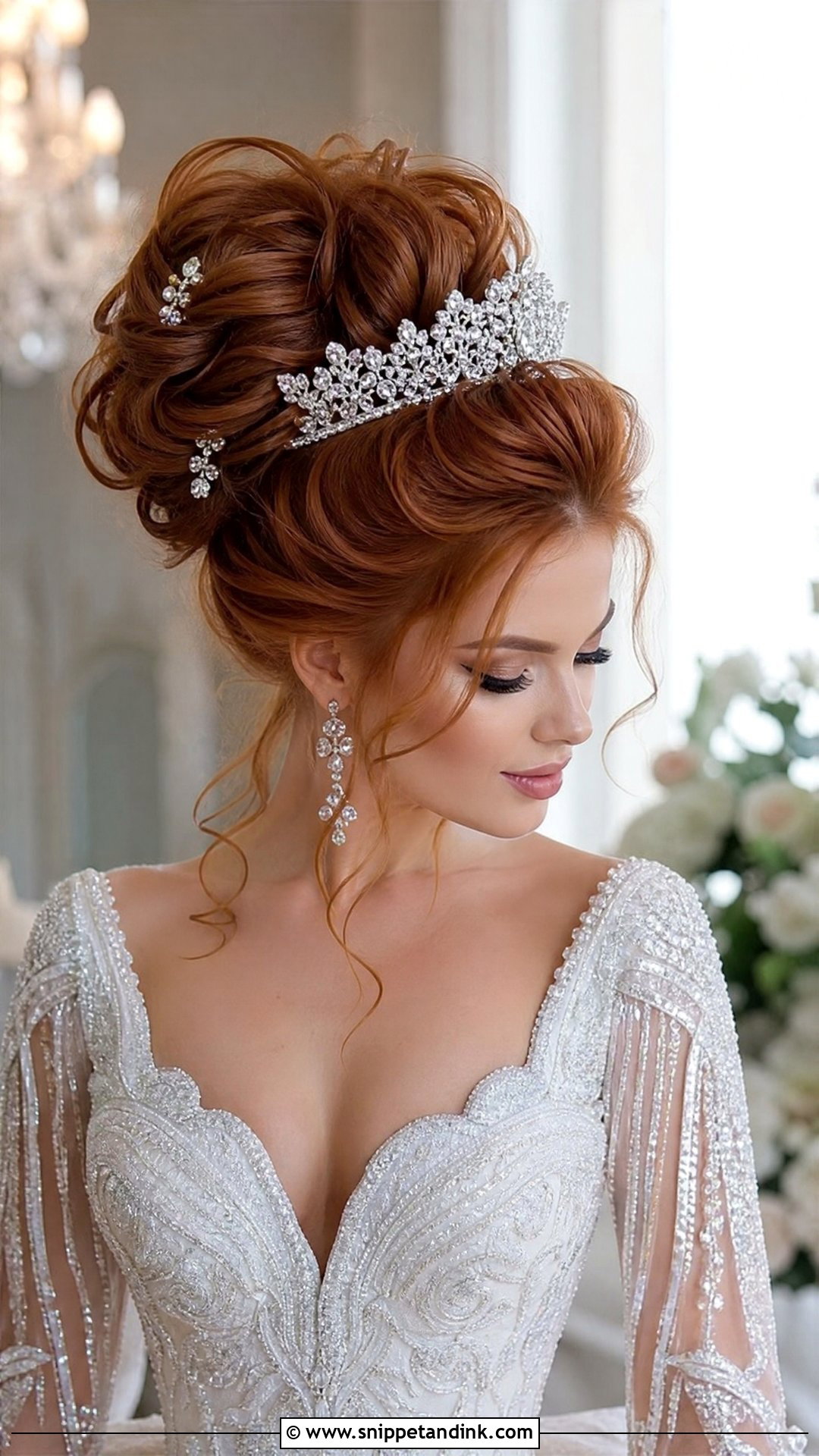
Drawing from Edwardian and Victorian beauty, this updo puts its volume at the crown instead of the nape. I backcomb in small sections at the root, then smooth the top layer over so the teasing doesn’t show. Long hair has enough length to form a full rounded shape without padding, and the result suits dramatic gowns and a tiara. On fine hair, I tuck a small padding piece in your shade underneath to keep the height from collapsing.
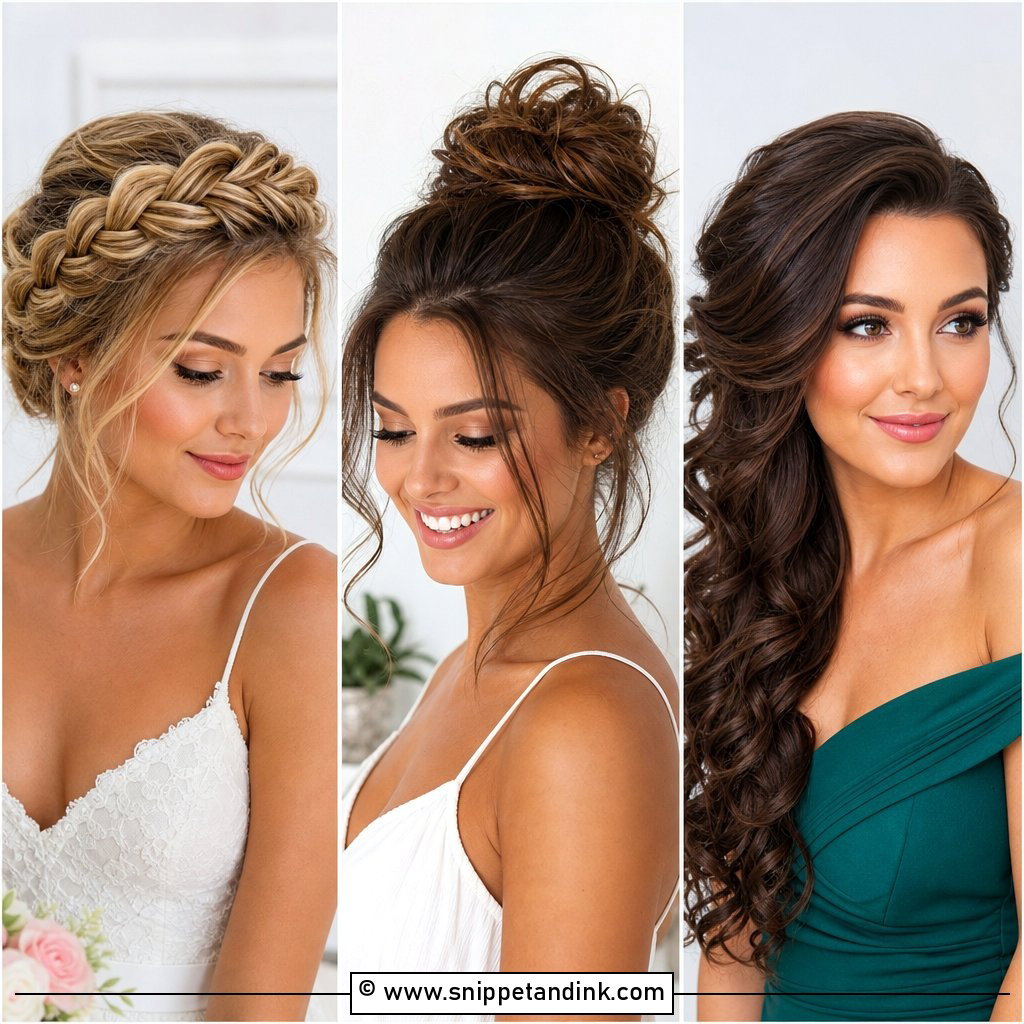
15. Knotted Bun Wedding Updo
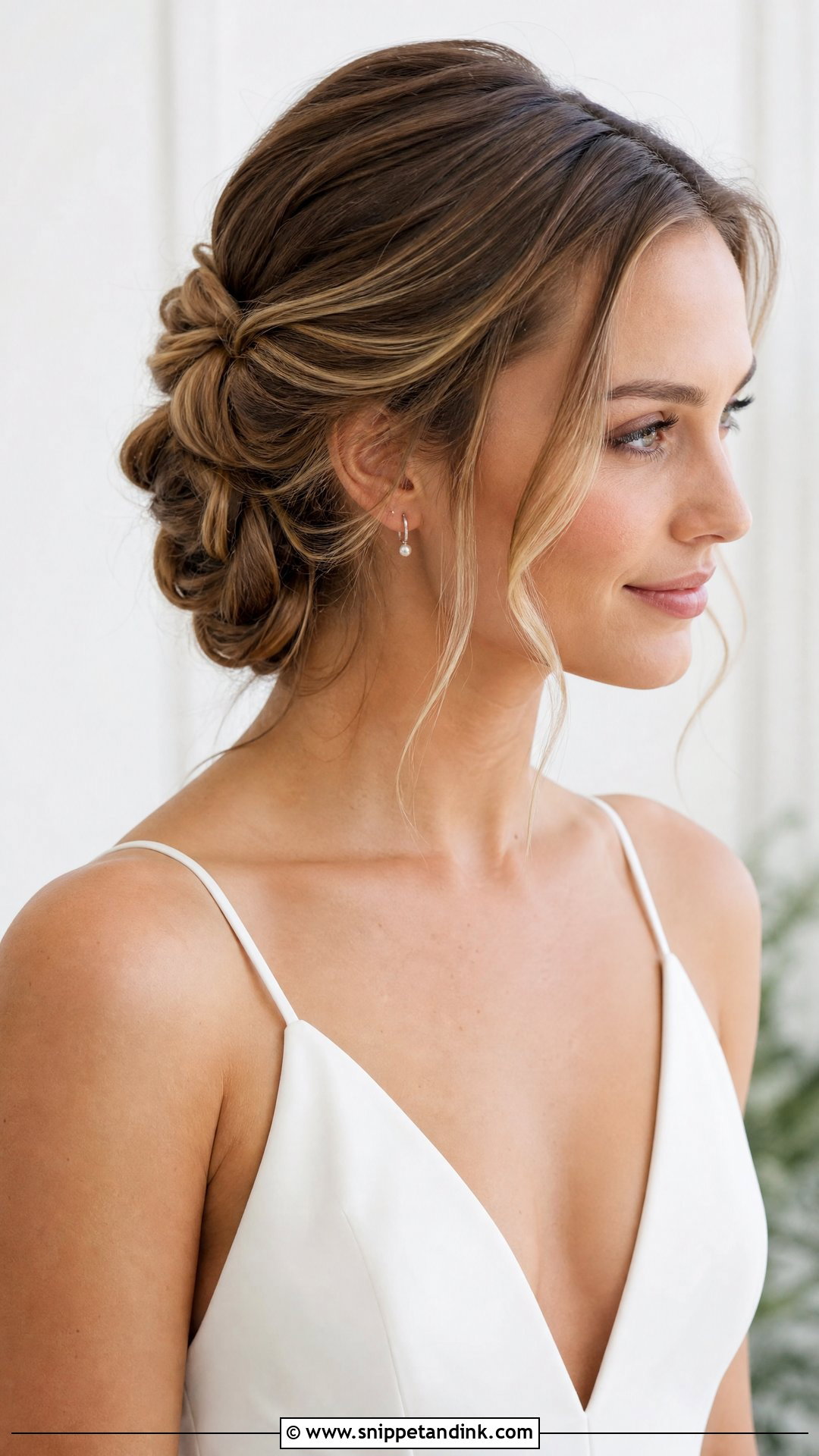
Knotting sections of hair before pinning them together creates a sculptural shape, and it’s more secure than it looks, because each knot locks itself. It does need real length; shoulder-length hair usually won’t knot cleanly. Pull a couple of face-framing pieces loose for softness. It suits modern and minimalist gowns, and a small hairpiece on one side adds polish.
16. Twisted Halo Updo
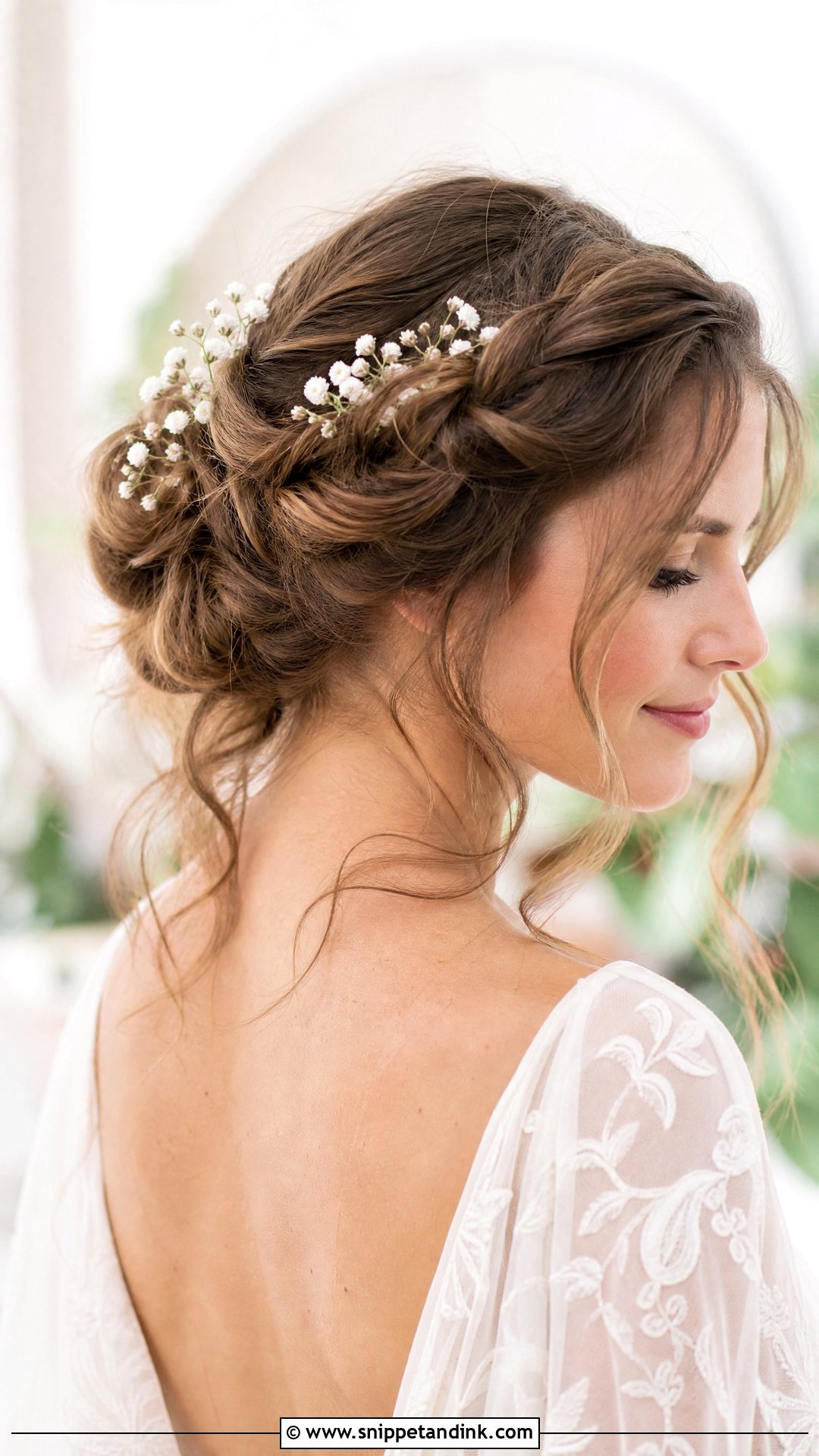
A twisted halo uses rope twists around the crown instead of a braid, so it feels lighter. I twist from each side toward the back and pin the twists over one another. Twists unravel more easily than braids, so each one gets a mist of spray before it’s pinned. Baby’s breath or small blooms tucked in suit garden ceremonies and flowing gowns.
17. Pearl-Accented Low Updo
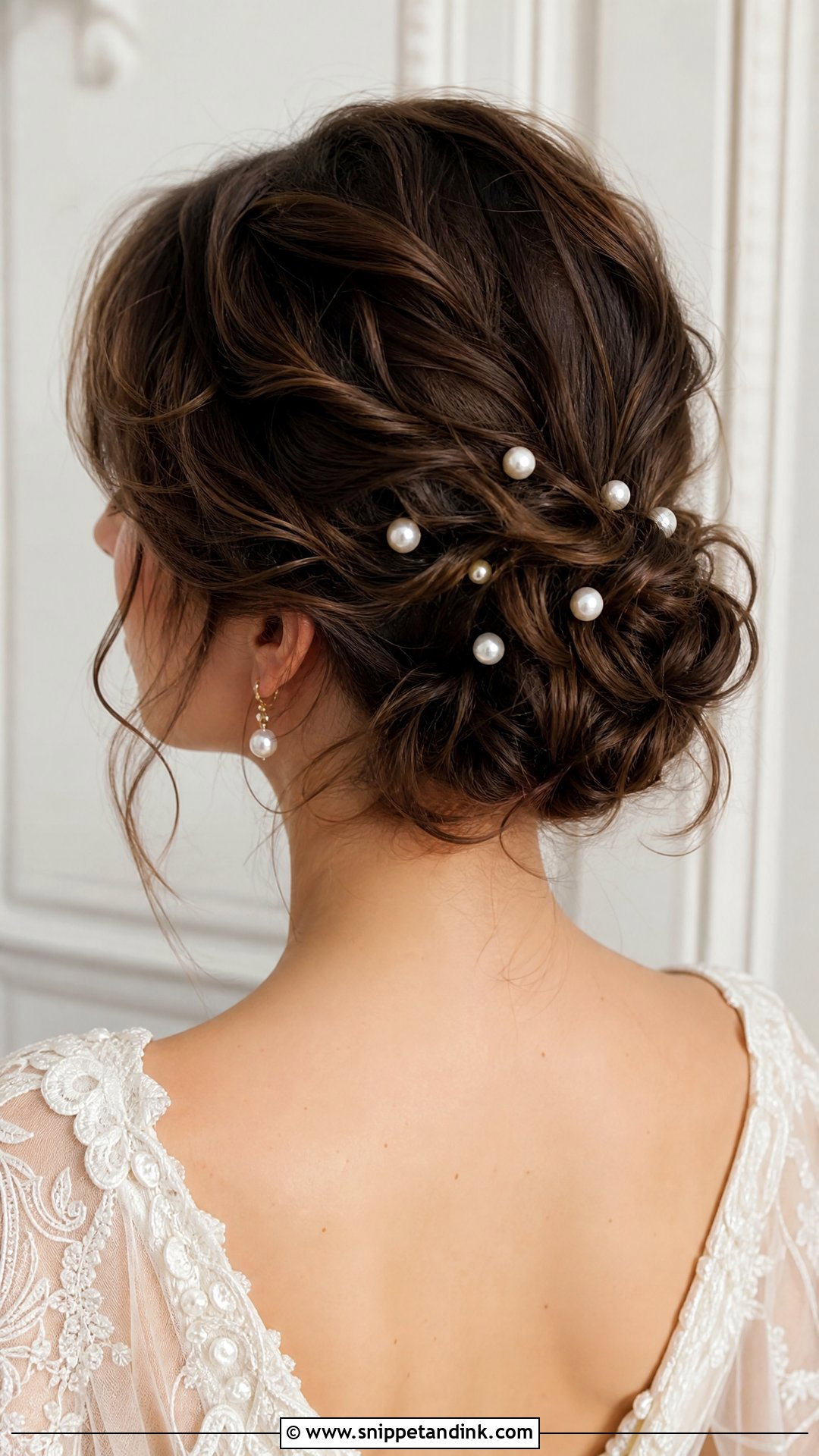
Pearl pins dress up a plain low bun or chignon without adding weight. I scatter them unevenly, mostly along the upper edge of the bun, because a straight row of pearls looks stiff. Choose pins with a slight wave or spring in the shaft so they grip instead of sliding out. The style suits vintage and modern gowns, and the pearls read well in close-up portraits.
18. Loose Braided Updo with Waves
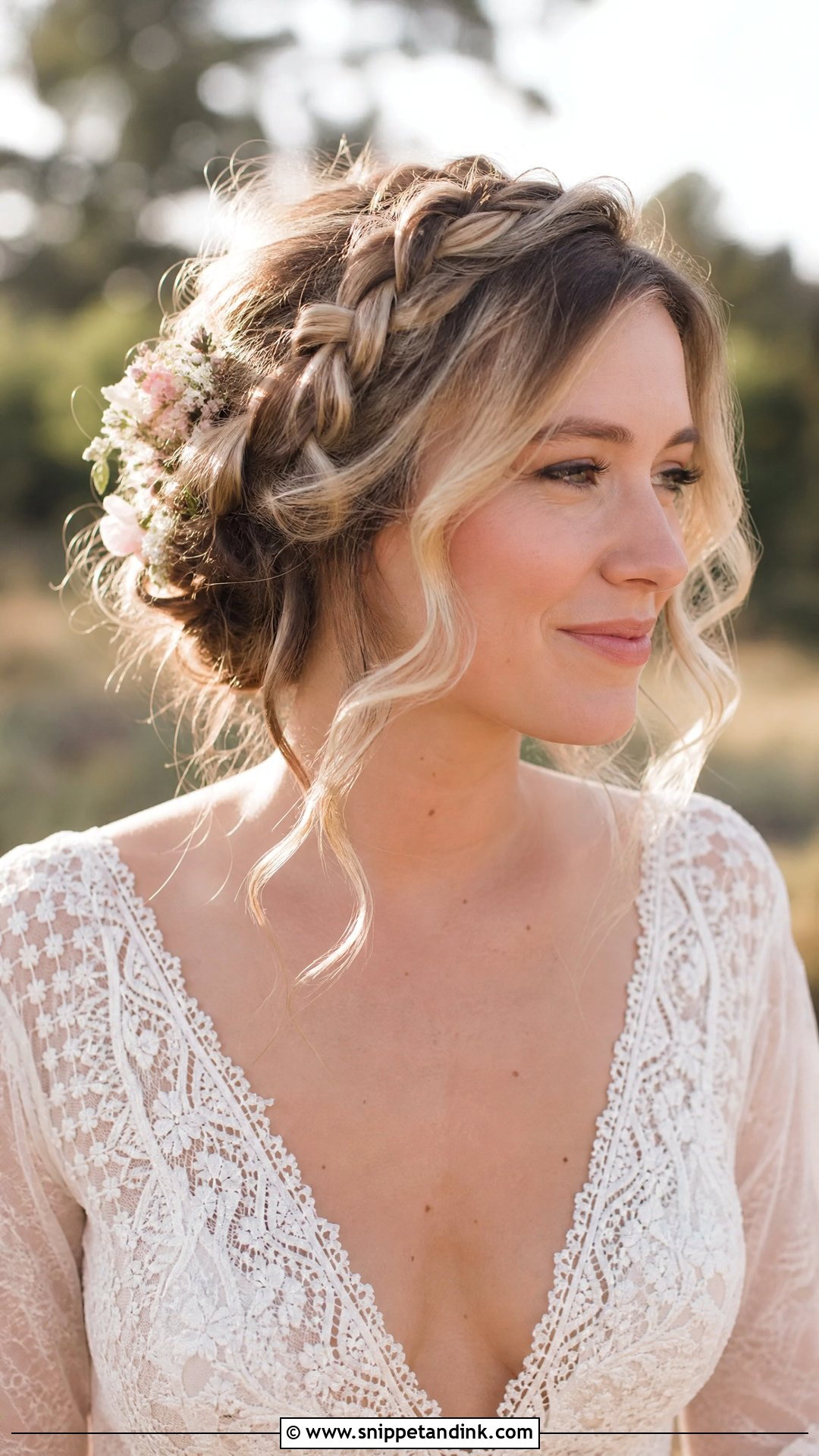
A loose braid wrapped among waves is the most relaxed style here, and it needs the best prep. I curl first, braid loosely, then wrap and pin, so the waves keep their texture inside the braid. Pieces left at the face keep it soft. Small flowers or pins add detail, and outdoor or boho weddings are its natural home.
19. Elegant Rolled Updo
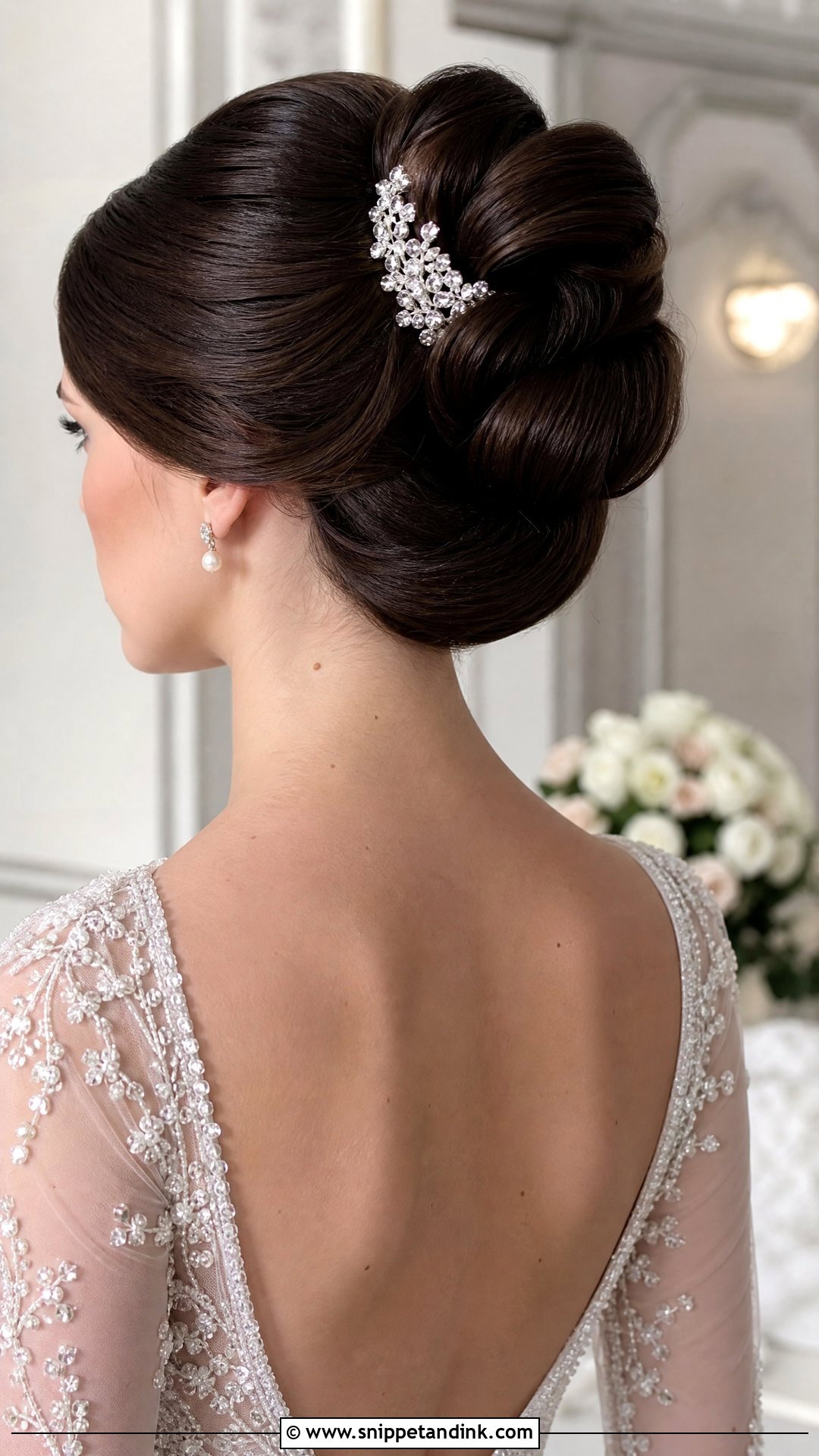
A rolled updo tucks sections under and pins them into a smooth, structured shape. Long hair rolls well, but each roll swallows more length, so I take thinner sections than I would on medium hair. The finish is formal and suits ballrooms and classic receptions, with a jeweled comb at the edge of the rolls. Pinned from underneath, it’s one of the most secure styles you can choose.
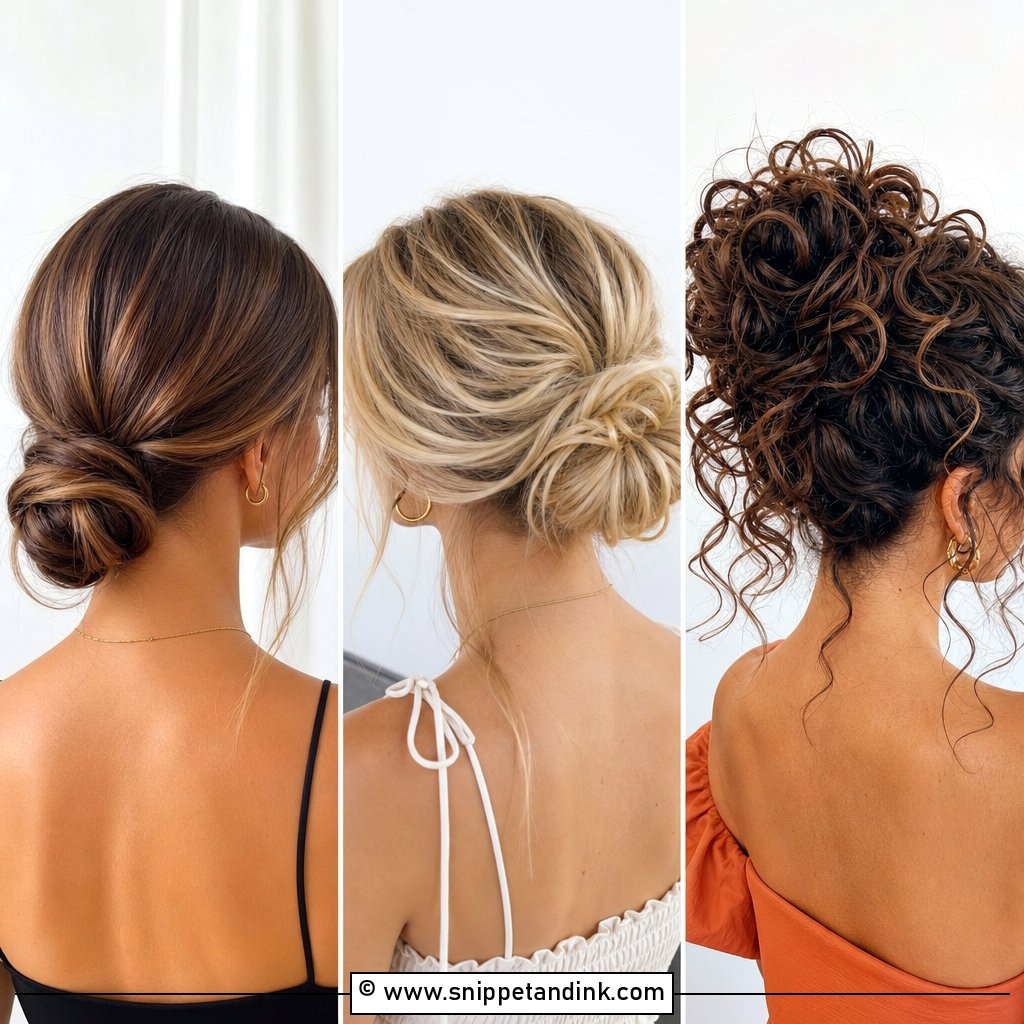
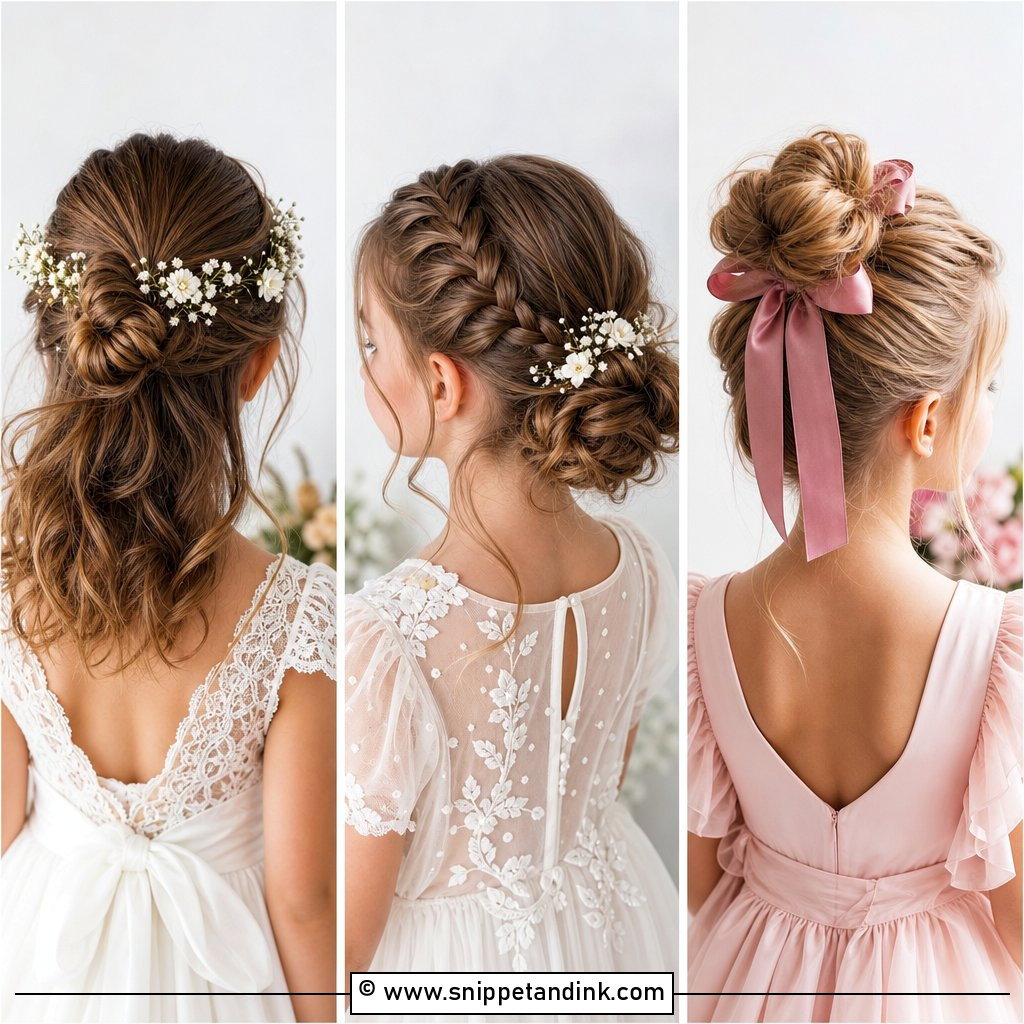
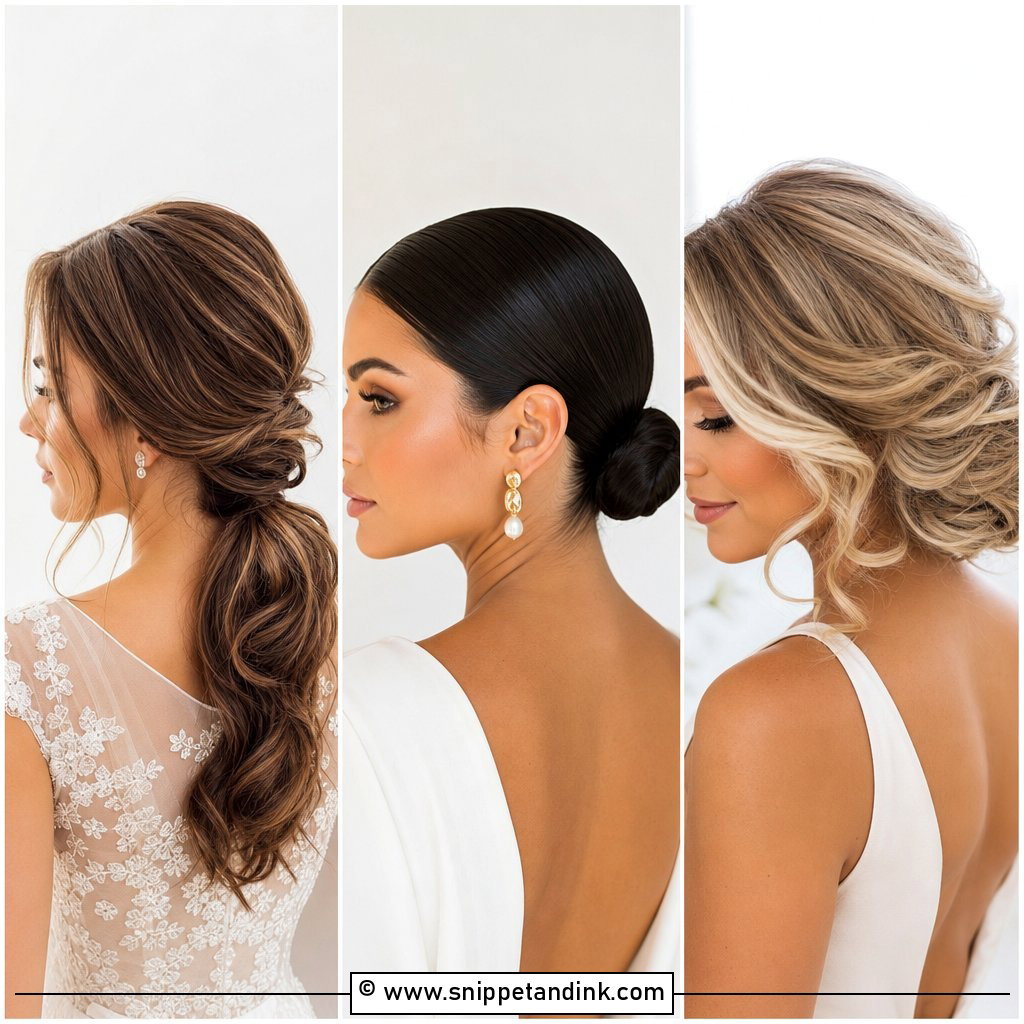
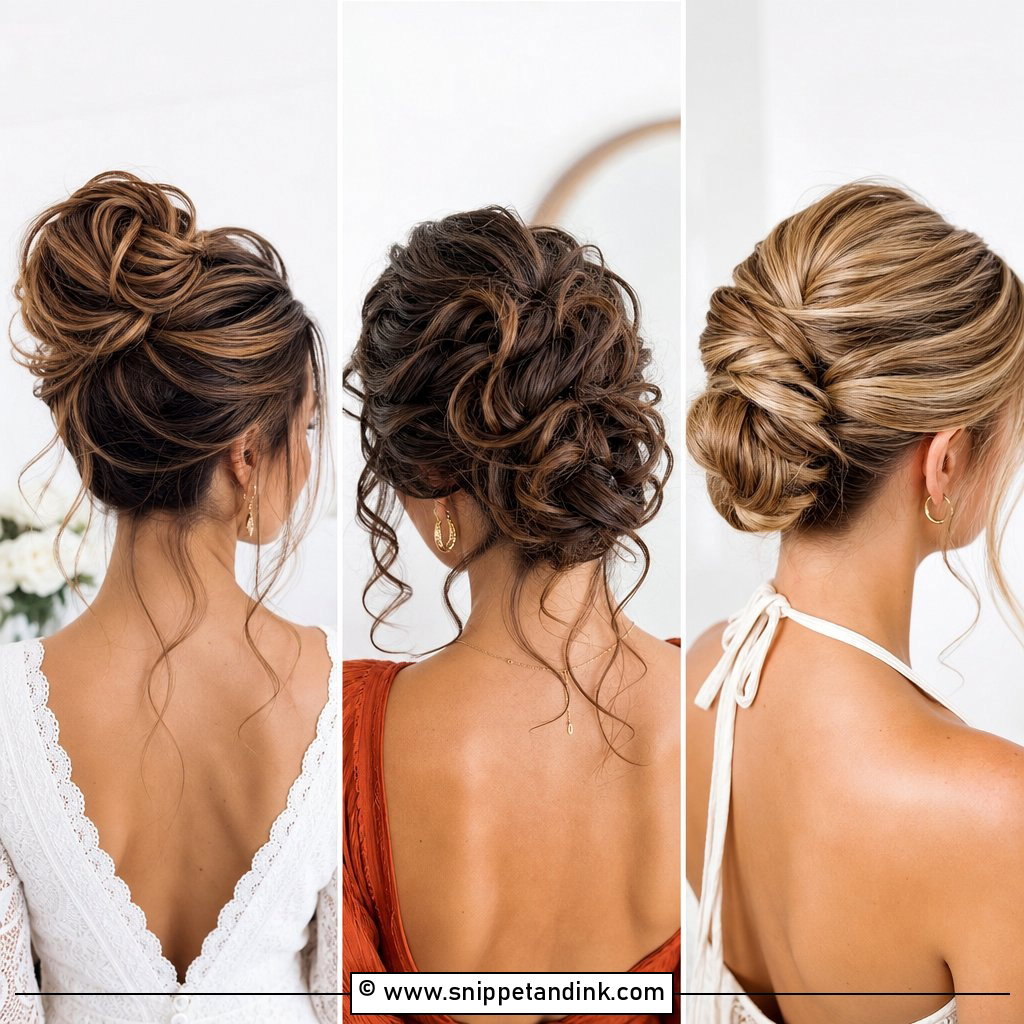
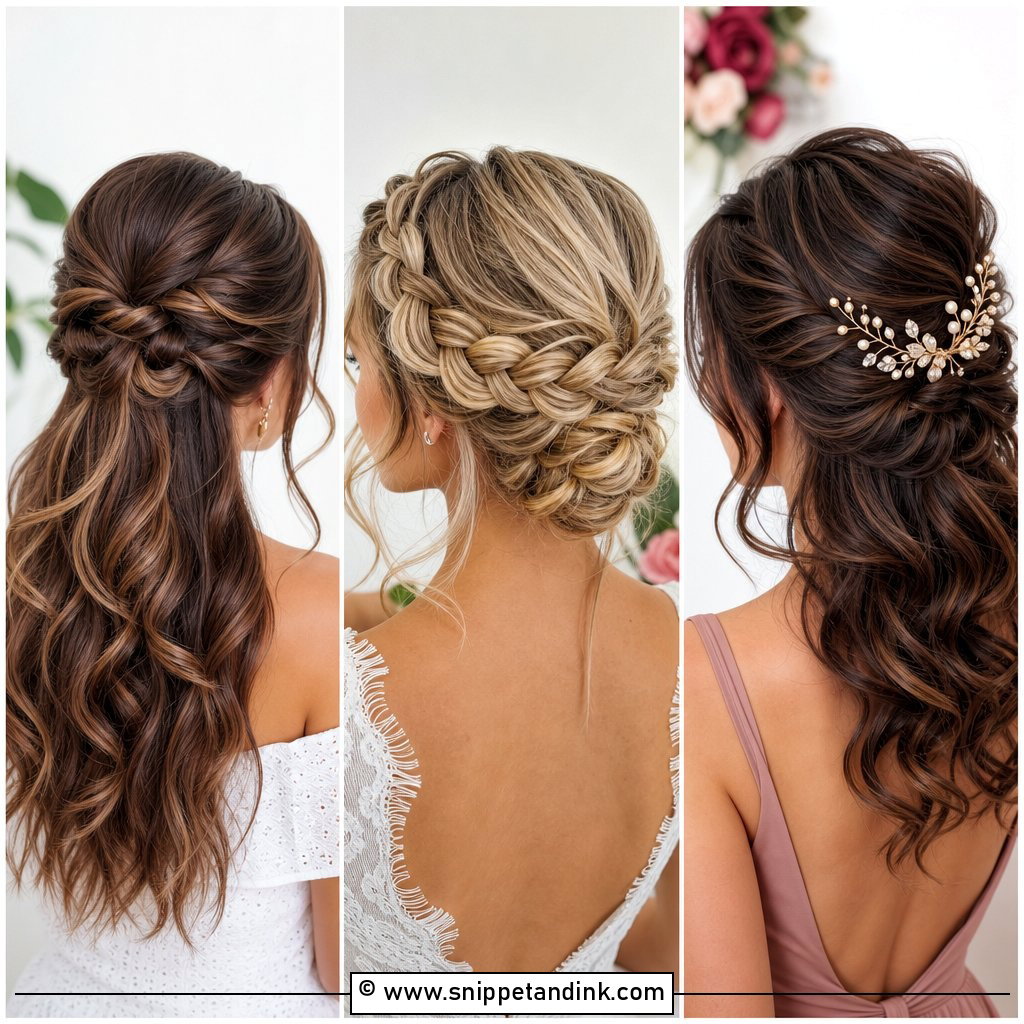
20. Floral-Adorned Bun Updo
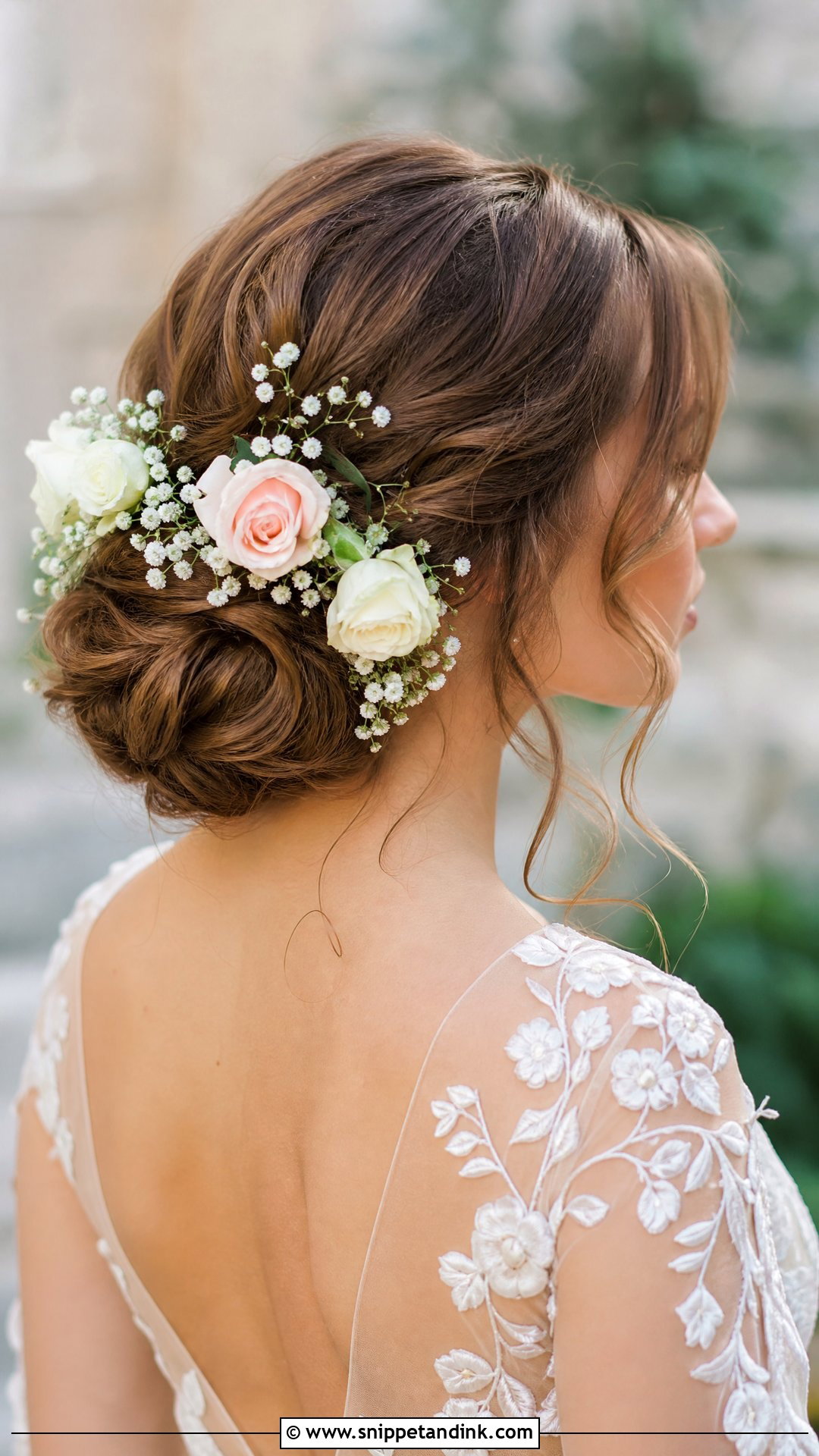
Fresh flowers turn a simple bun into something personal. I start with a soft low or mid bun and add blooms the florist has wired, usually matching the bouquet. Small, hardy flowers like spray roses, waxflower or baby’s breath last far longer out of water than delicate ones. The bun does the holding while the flowers sit on top. For a garden or spring wedding, the floral-adorned bun is an easy way to tie your hair to your bouquet.
Arriving at the Chair With Hair That Will Hold
Freshly washed, conditioned hair is silky, and silky hair lets pins slide. Most of the updos above hold better on hair washed the night before or the day before, though very oily or very fine hair may need a morning wash. Ask your stylist which suits your hair type rather than guessing.
- Shampoo as normal but keep conditioner on the ends only, away from the roots.
- Skip hair oils and heavy serums the night before; they make the hair too smooth to grip.
- Dry it completely. Damp roots drop curl and loosen pins faster than anything else.
- Wear a button-front top so you can change without pulling anything over your head.
- Bring the veil, the comb or hairpiece, and a photo of the back of the dress.
Fresh Flowers and Pearls That Last Until the Last Dance
Accessories are the part of a long-hair updo that most often lets go first, usually because they’re added last and pinned only into the surface. I place them into the structure itself, through the base of the bun or behind a braid, so they’re held by the same pins that hold the hair.
With fresh flowers, ask your florist for hair-ready pieces: wired, taped, and sized small. Spray roses, waxflower and baby’s breath stay fresh out of water for hours, while gardenias bruise brown at a touch and hydrangeas can wilt quickly in warm air. Keep the pieces in the fridge until the last moment, and have a spare or two in a damp tissue for touch-ups after photos.
Wear Your Trial Updo Through a Whole Afternoon
An updo for long hair should look composed at the ceremony and still be standing at the last dance. A French twist, a low chignon or a floral bun can all get there, as long as they’re built on a secure base and pinned for the real weight of your hair. Bring your veil, any accessories and a photo of your dress to the trial. Then keep the style in for an afternoon afterward, so you see how it settles before the wedding.
You'll Like These Ideas:


Leave a Reply