
I love building a French roll for a bride because it does so much with one movement. The hair is swept to one side, folded back on itself and pinned into a vertical seam, which leaves the neck, shoulders and earrings completely clear. People also call it a French twist. It can be glass-smooth or deliberately loose, it can sit high at the crown or low at the nape, and it takes a veil, flowers or jewels without complaint. Below are twenty versions I’d happily put on a bride, with notes on the hair each one needs and where each tends to go wrong.
How I Anchor a French Roll So It Lasts All Day
A French roll looks like a single twist, but it holds because of what’s hidden underneath it. Get the base right and the outside can be as sleek or as loose as you like.
Hair that grips
Washed the night before is ideal. Very clean, conditioned hair is slippery, and pins slide straight out. I prep with a light mousse or volumising spray at the roots, blow-dry smooth, then mist a dry texture spray through the lengths. If your hair is very fine or very straight, a little backcombing at the base of the twist gives the pins something to lock into.
The pins underneath
- Brush all the hair to one side and secure a column of crisscrossed bobby pins up the back of the head, slightly off centre. This is the anchor.
- Fold the hair back over the pins and roll it inward so the ends tuck inside the twist.
- Close the seam with long U-shaped hairpins, pushed in and then turned back into the anchor so they hook it.
- Tuck the ends at the top in and finish with a flexible spray, not a crispy one, so the roll can move without cracking.
Two things decide whether a roll is realistic for you. Your hair needs to reach at least the base of the neck, and very thick hair may need two smaller folds instead of one large one, or the roll gets too bulky and heavy to pin securely.
1. Classic Sleek French Roll
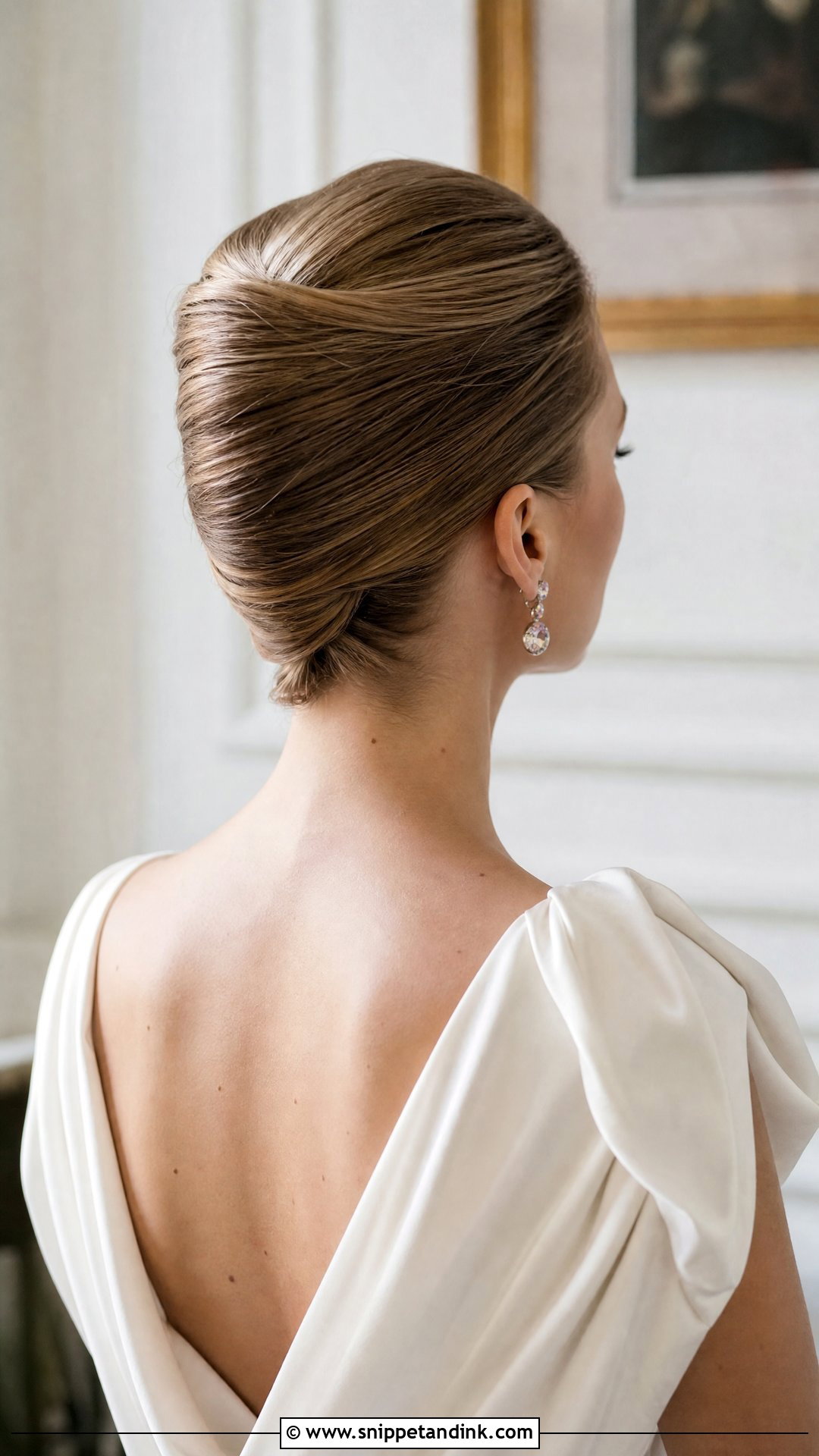
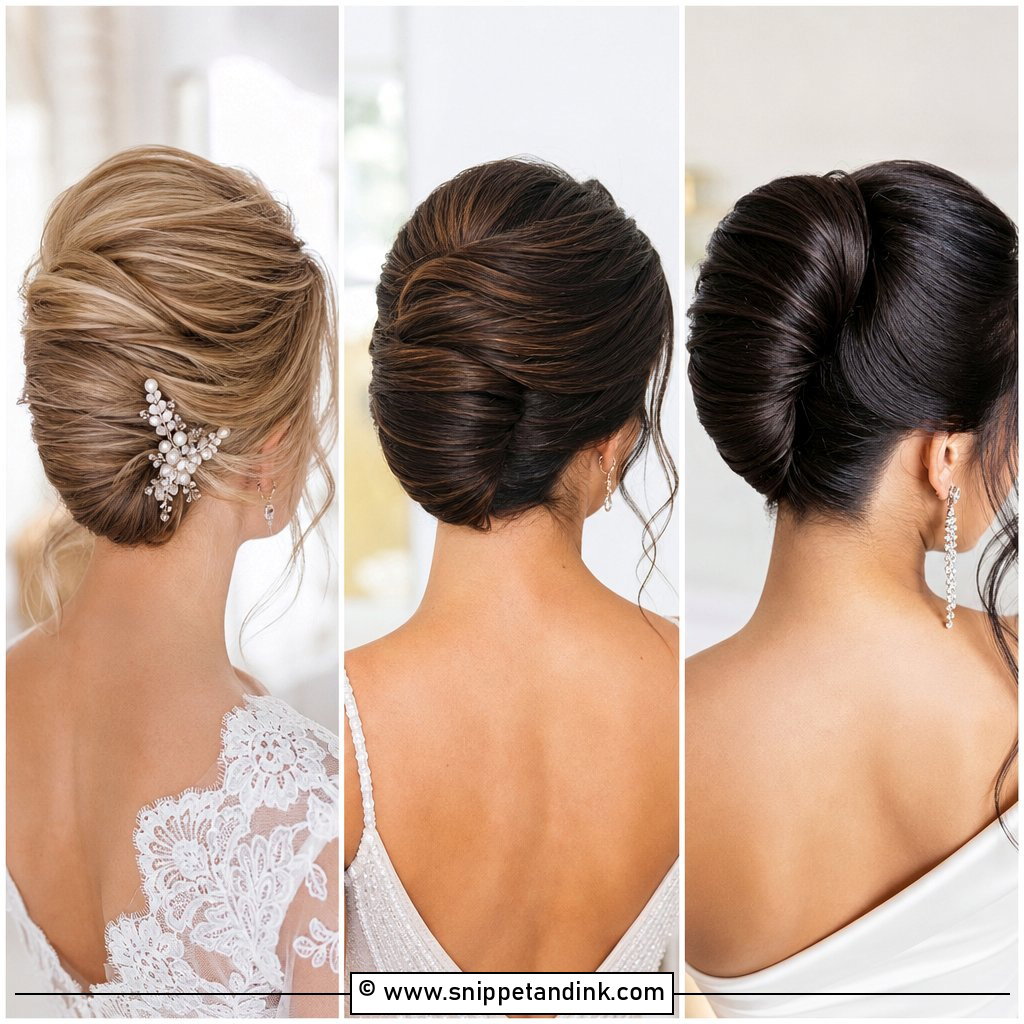
Not a strand out of place. The sleek version is smoothed back, gathered to one side and folded into a clean vertical roll, with every section lying flat. It suits structured gowns and statement earrings. Under the fold I put a row of crisscrossed bobby pins down the centre of the head; the roll then gets pinned into that anchor with long hairpins, so nothing relies on hairspray alone. One honest warning: freshly washed, silky hair fights this style. Day-old hair, or a light texture spray first, gives the pins something to grip.
2. Textured French Roll With Loose Waves
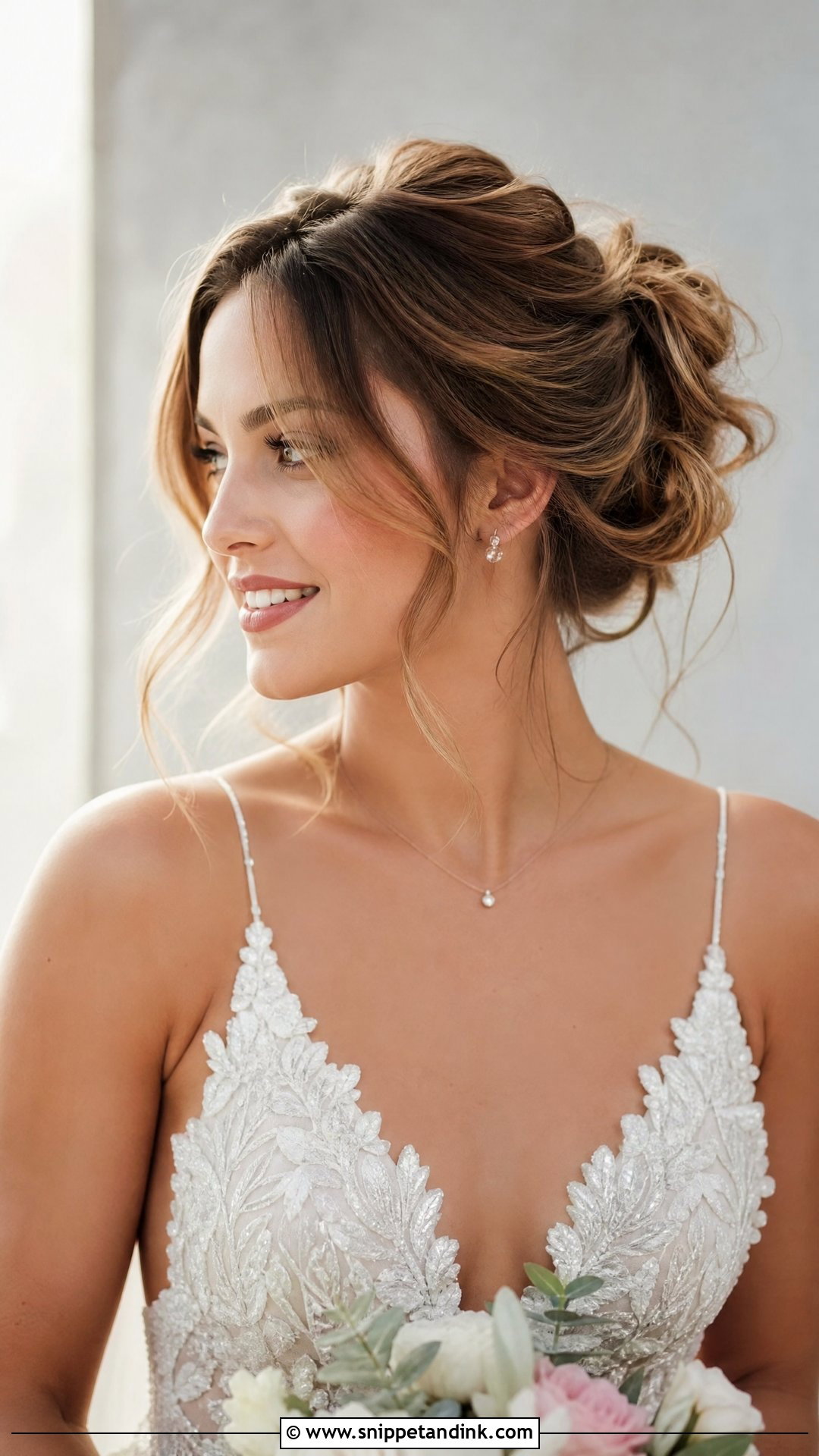
Here the hair keeps its waves before it’s folded, so the roll looks soft and slightly lived-in, with a few strands left loose around the face. Because the finish is meant to be imperfect, a little movement during the reception doesn’t spoil it. Barn and outdoor weddings suit it, as do flowing gowns. I curl the hair first and let the curls cool fully before brushing them out; folding warm curls into the roll makes the texture collapse within an hour.
3. Low French Roll With Face-Framing Pieces
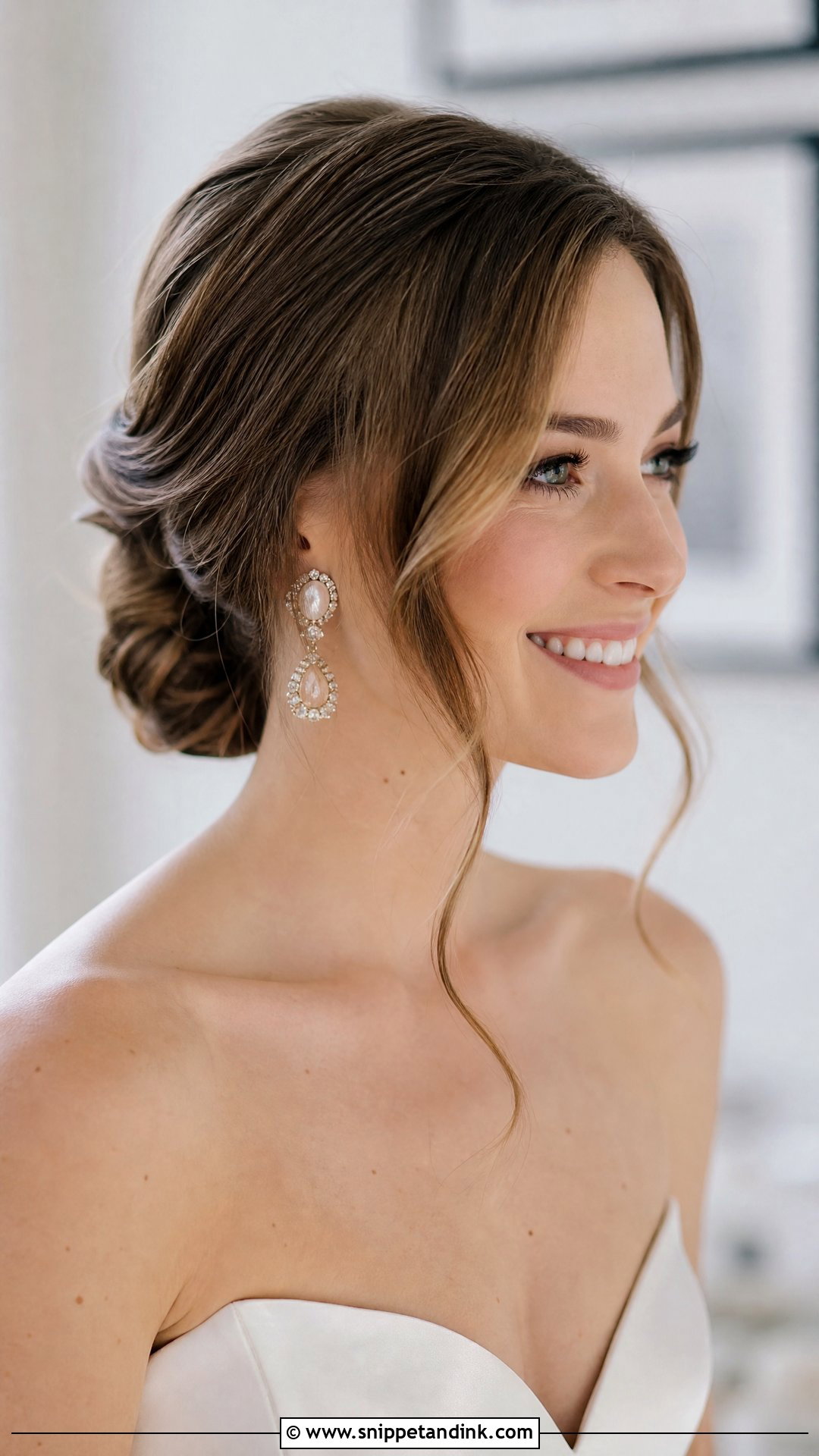
The low French roll sits close to the nape, which gives a gentler outline than a high twist, and a few fine pieces stay loose at the front to soften it. It flatters bare necklines and lets earrings show. I cut those face-framing pieces from the hairline rather than pulling out random strands, and I curl them away from the face so they don’t fall into the eyes or stick to lip gloss. A low roll also sits comfortably under a veil comb and doesn’t press when you lean back in a chair.
4. High Voluminous French Roll
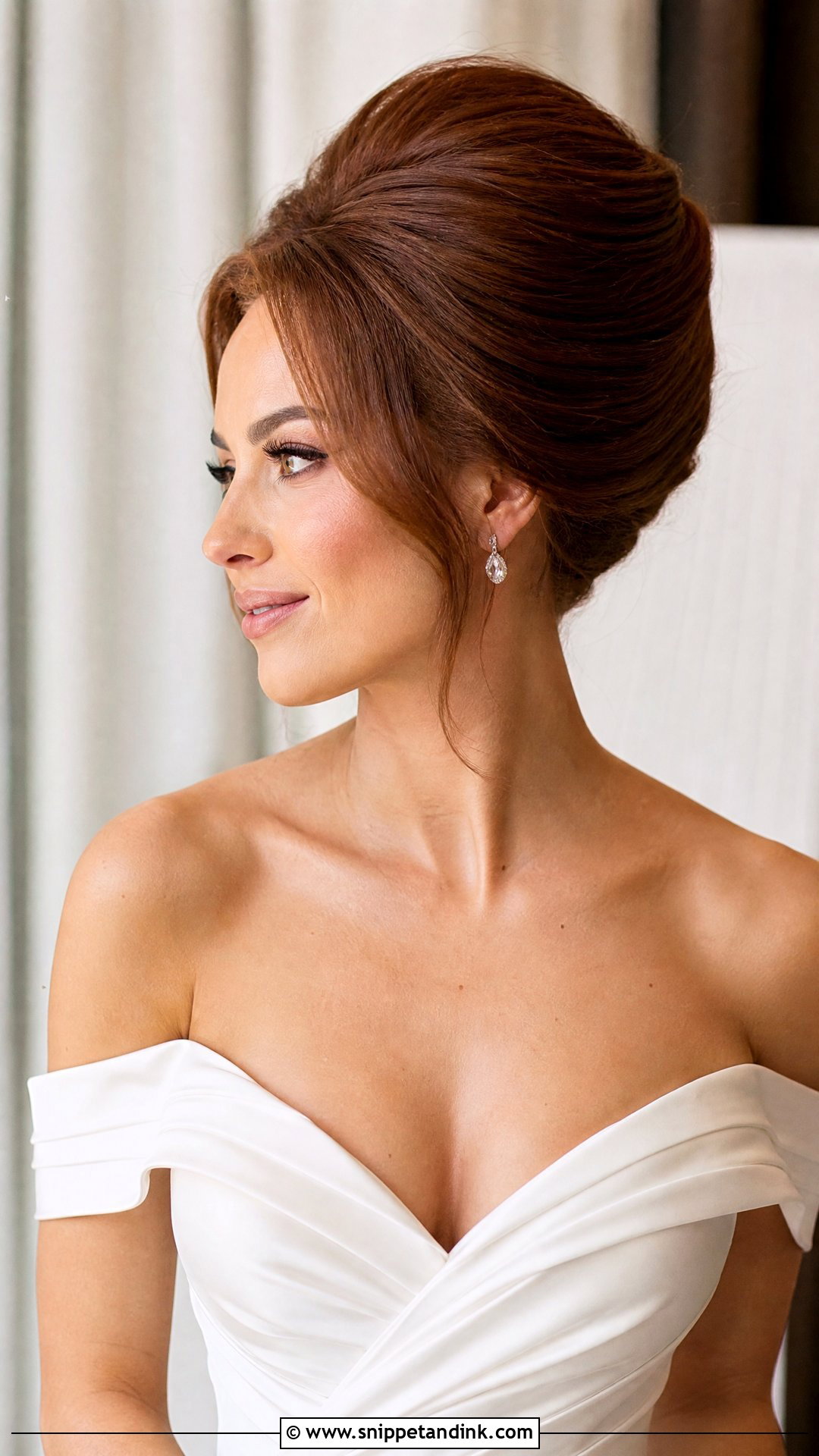
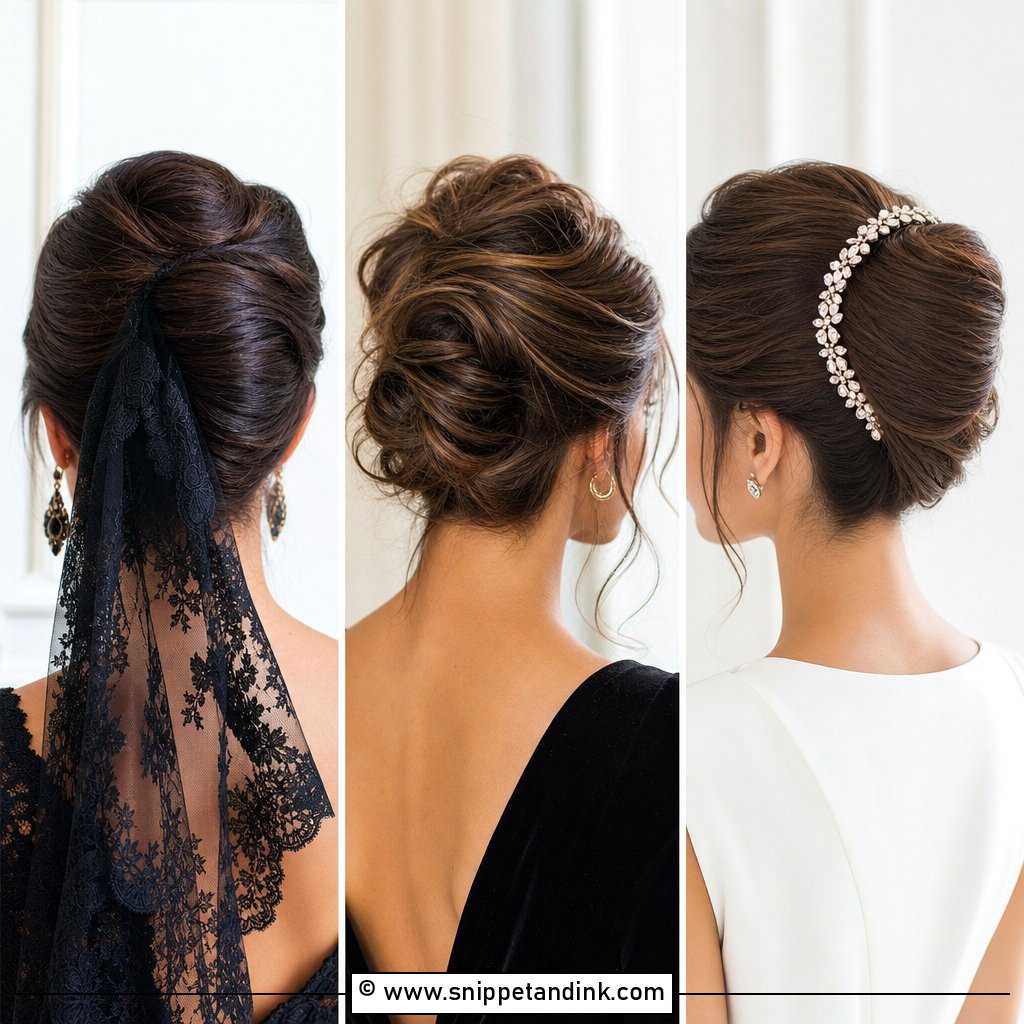
Height is the point here. Backcombing at the crown builds lift, and the hair then folds into a tall twist that shows off the neck and shoulders, very much in the old Hollywood spirit. Off-shoulder gowns balance it well. Teasing is what holds the shape, so I tease underneath in small sections and smooth only the top layer, rather than teasing the surface you see. A few soft tendrils stop it looking stiff. If your hair is very fine, a small padding piece under the crown gives the same height with far less backcombing to brush out the next day.
5. Messy French Roll For A Relaxed Bride
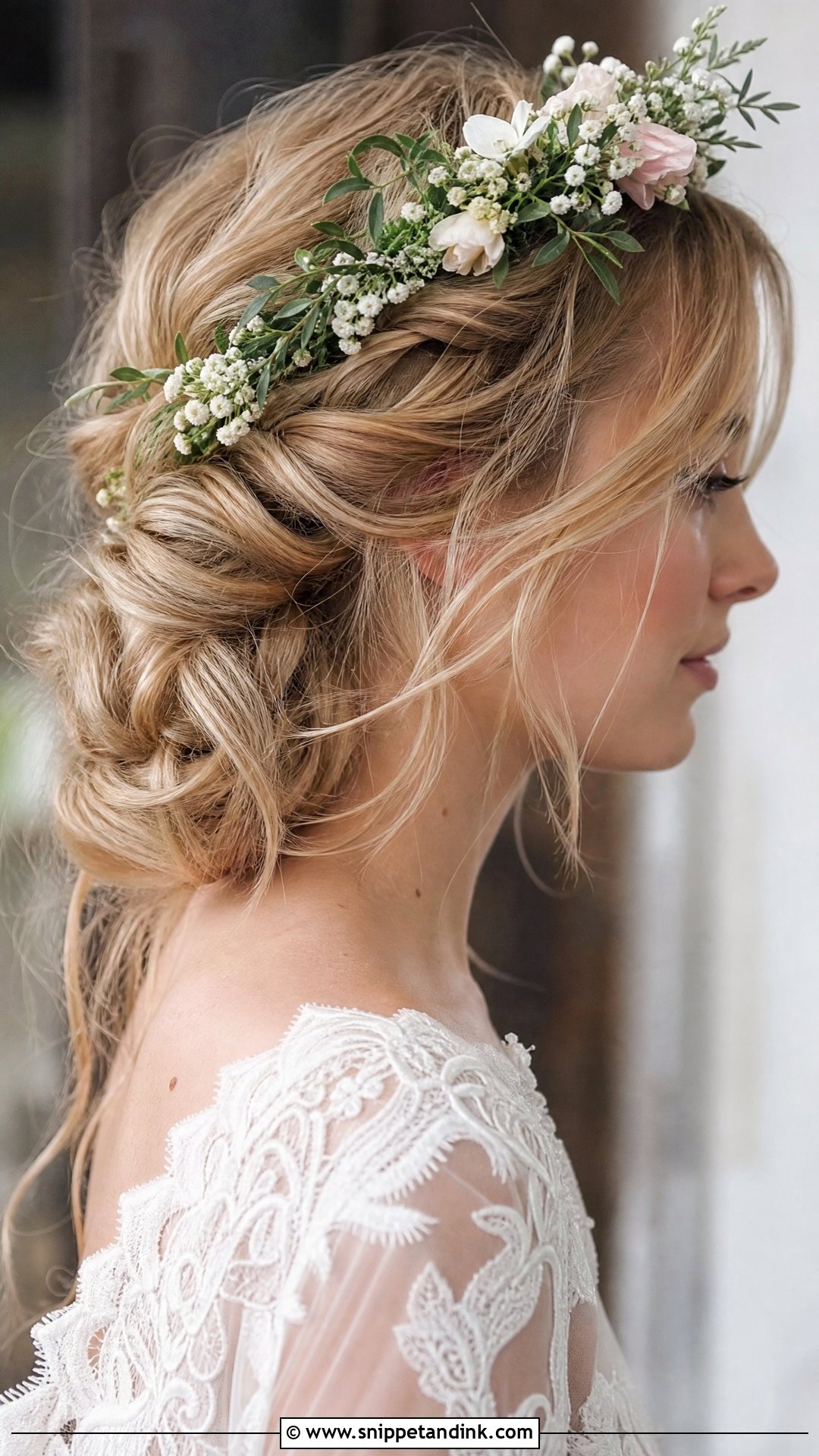
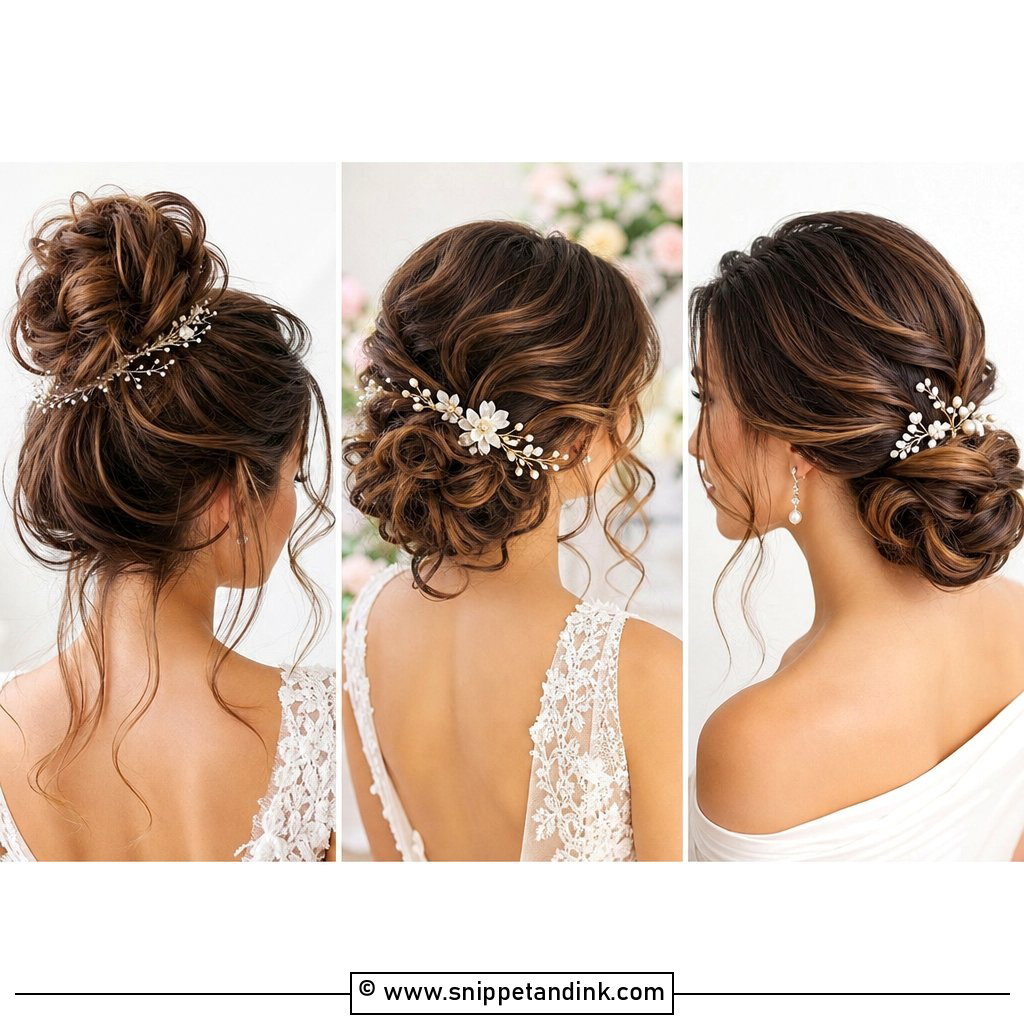
The messy roll is teased, swept back and gathered into a chunky, deliberately undone twist, with wispy pieces falling around the face. It’s my go-to for beach and bohemian weddings, and it sits naturally under a flower crown. The trick is that messy still needs structure. I pin it just as firmly as a sleek roll and pull the texture out afterwards, otherwise it doesn’t loosen, it falls. It also forgives the wind and the hugging, since a bit of extra tousle only adds to it.
6. French Roll With Pearl Accessories
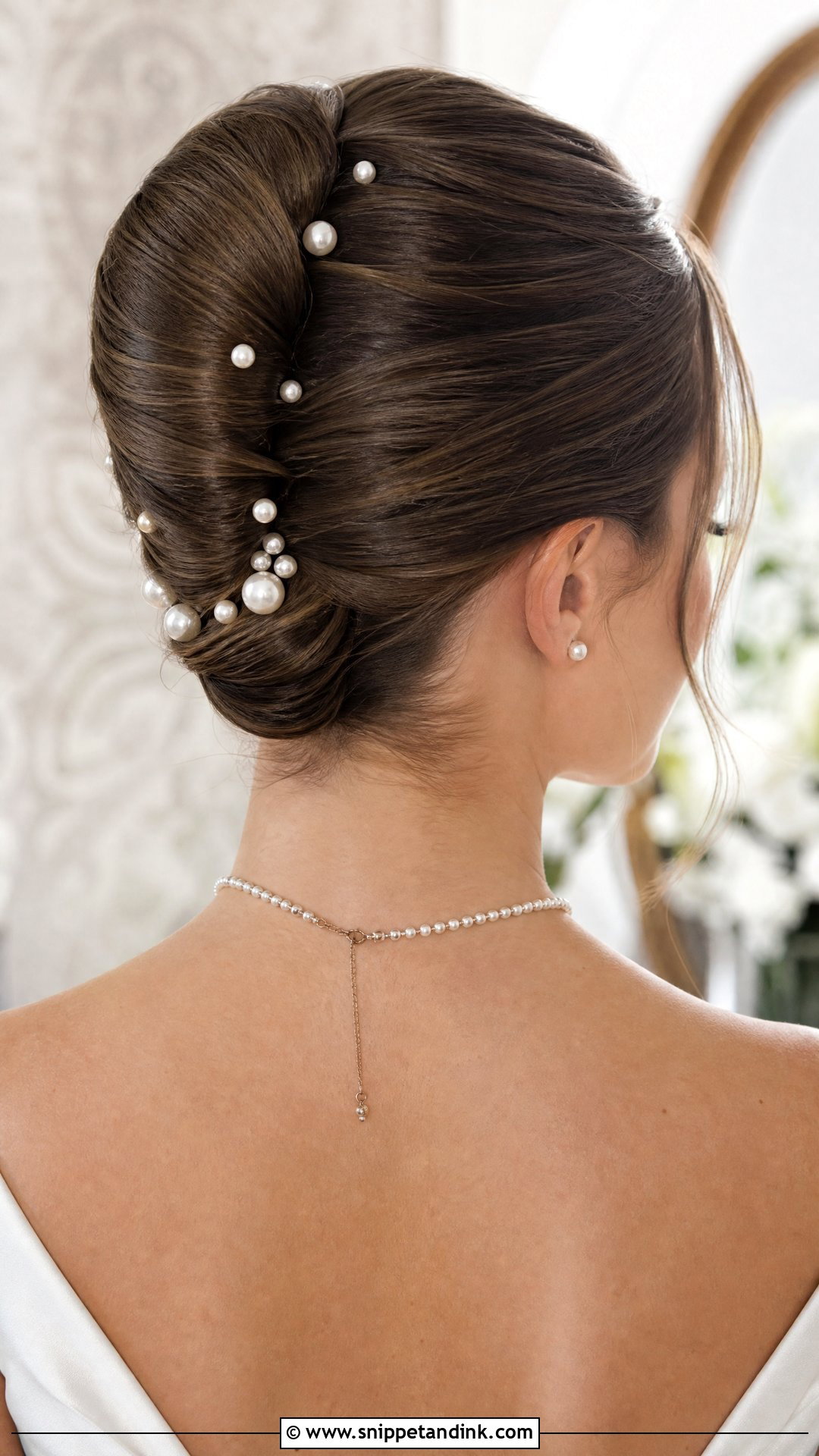
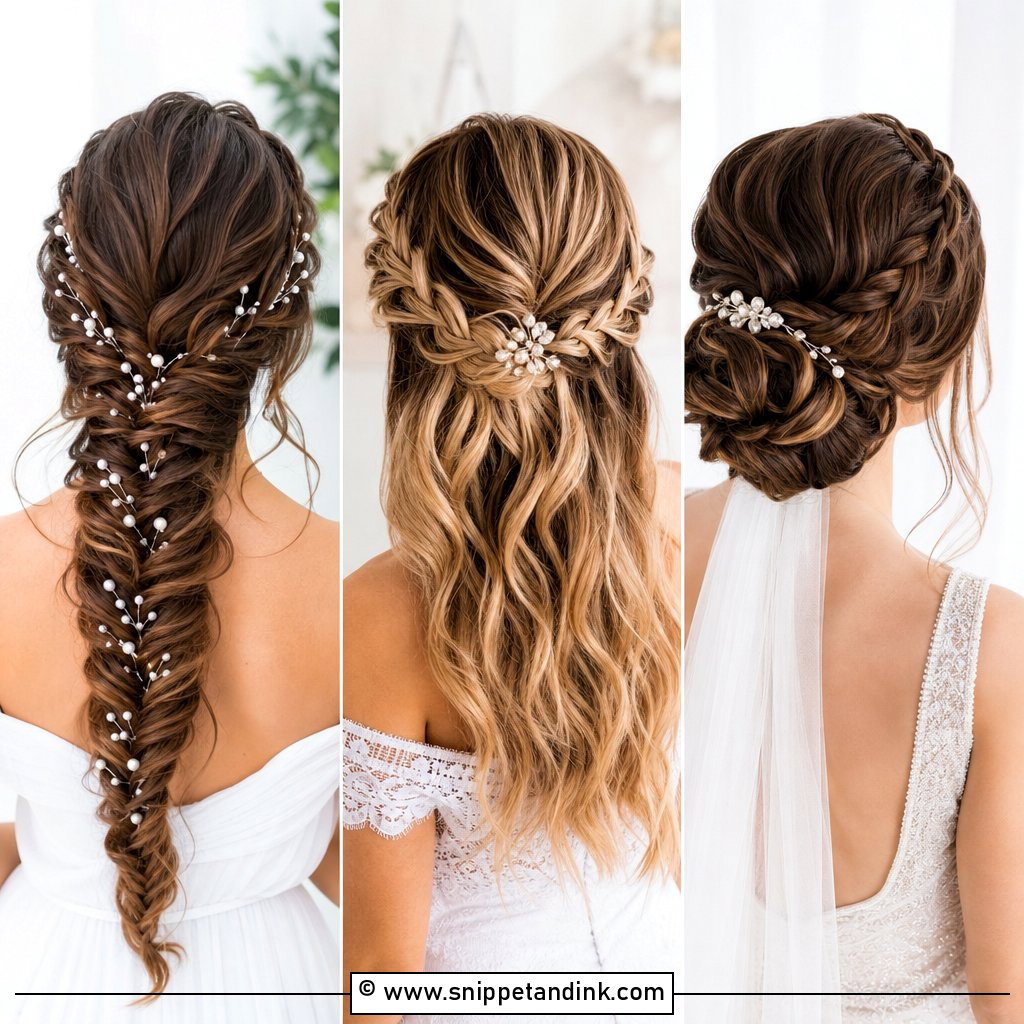
Smooth hair is what lets pearls show, so this roll stays sleek, with pearl pins scattered along the seam or grouped in one cluster. The finish reads vintage and fresh at once and works with classic gowns and bare necklines. Pearl pins come in two kinds: decorative bobby pins and spiral or U-shaped pins. Spirals twist into the roll and hold best. I place them after the hair is set and sprayed, because sliding them in early drags the smooth surface out of line.
7. Braided French Roll Updo
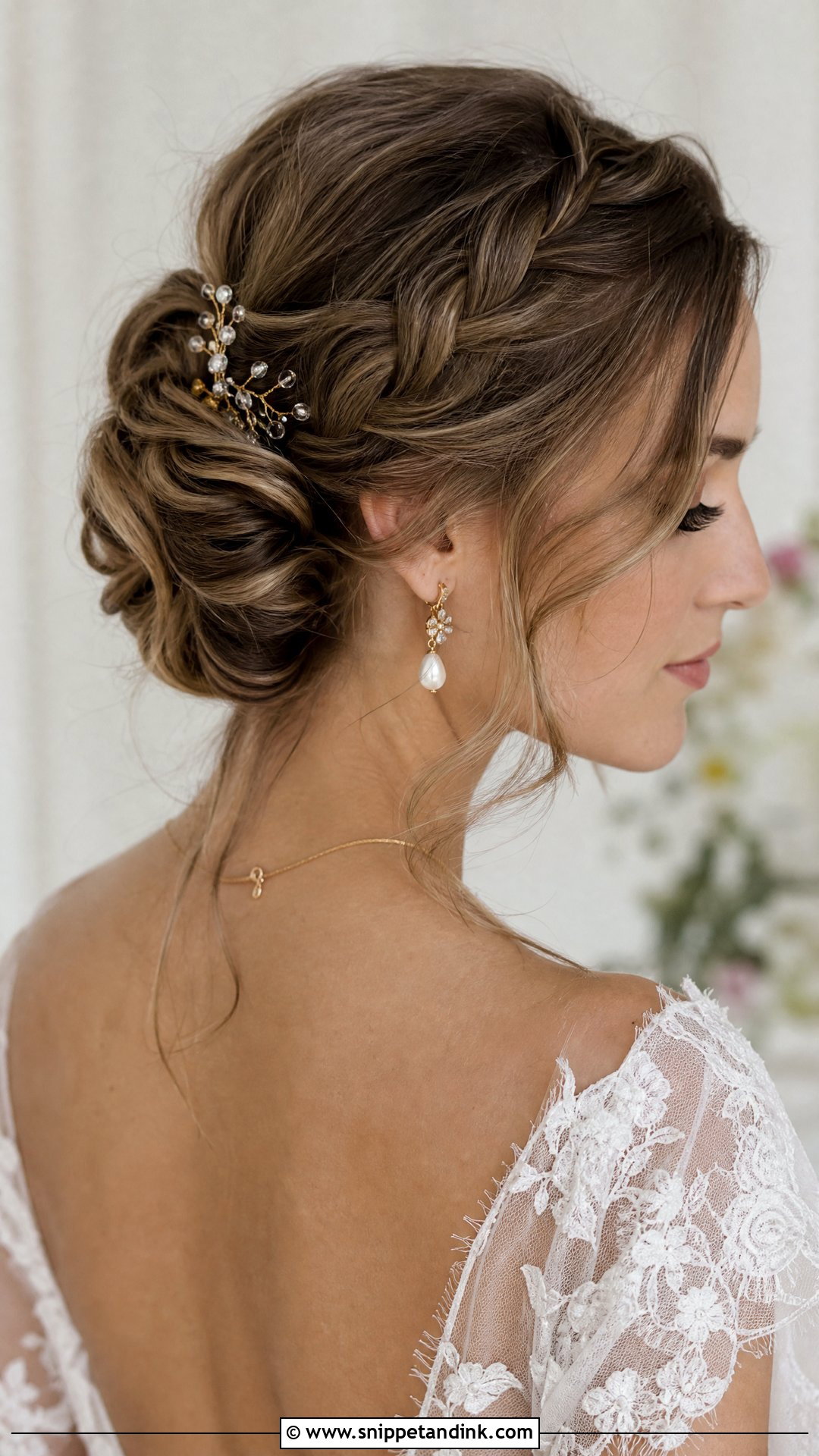
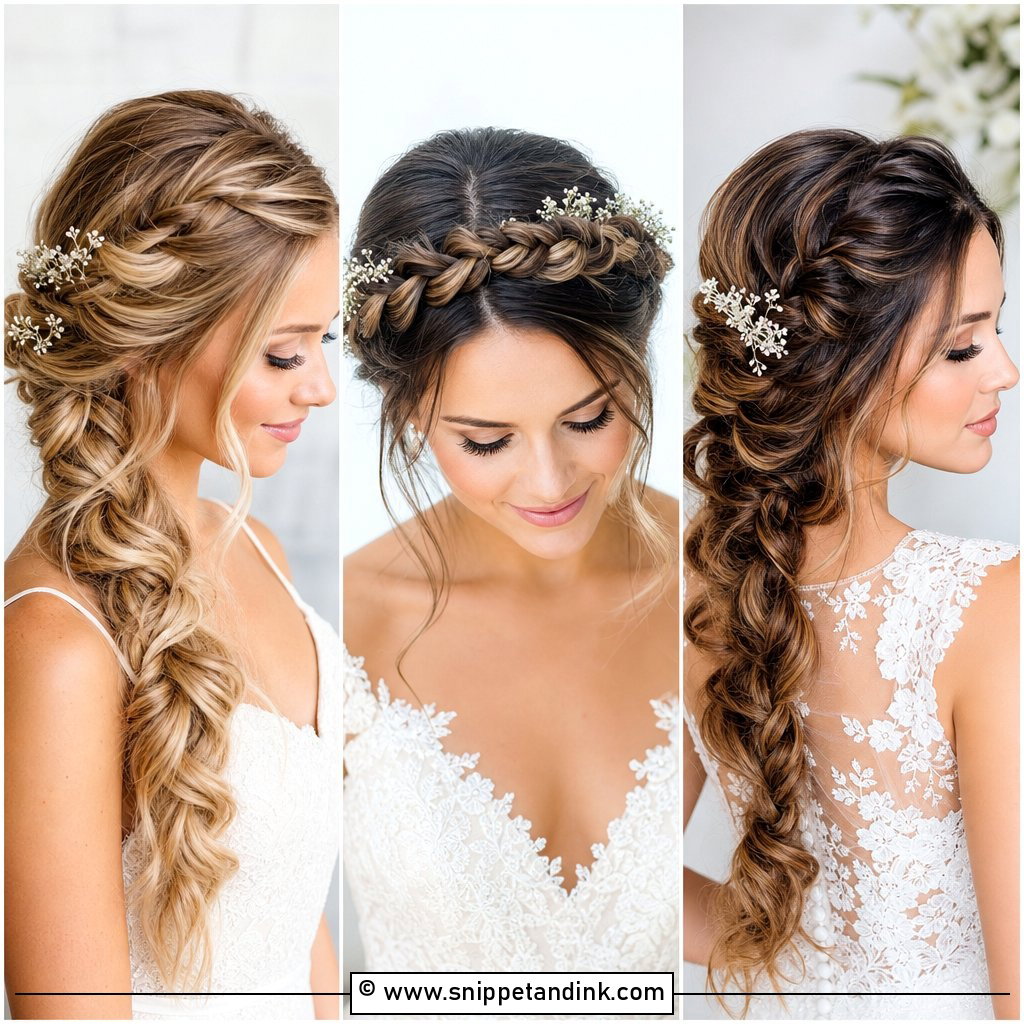
A braid running along one side and disappearing into the fold gives the roll detail from the side and back, which matters because guests at a ceremony mostly see your back. It suits rustic and romantic weddings and anyone who wants a bit more artistry. I braid first, pancake it gently to widen it, then build the roll so the braid’s tail tucks inside. Thick hair makes this easy; on fine hair a Dutch braid shows up better than a French one because it sits on top of the hair.
8. French Roll With Side-Swept Bangs
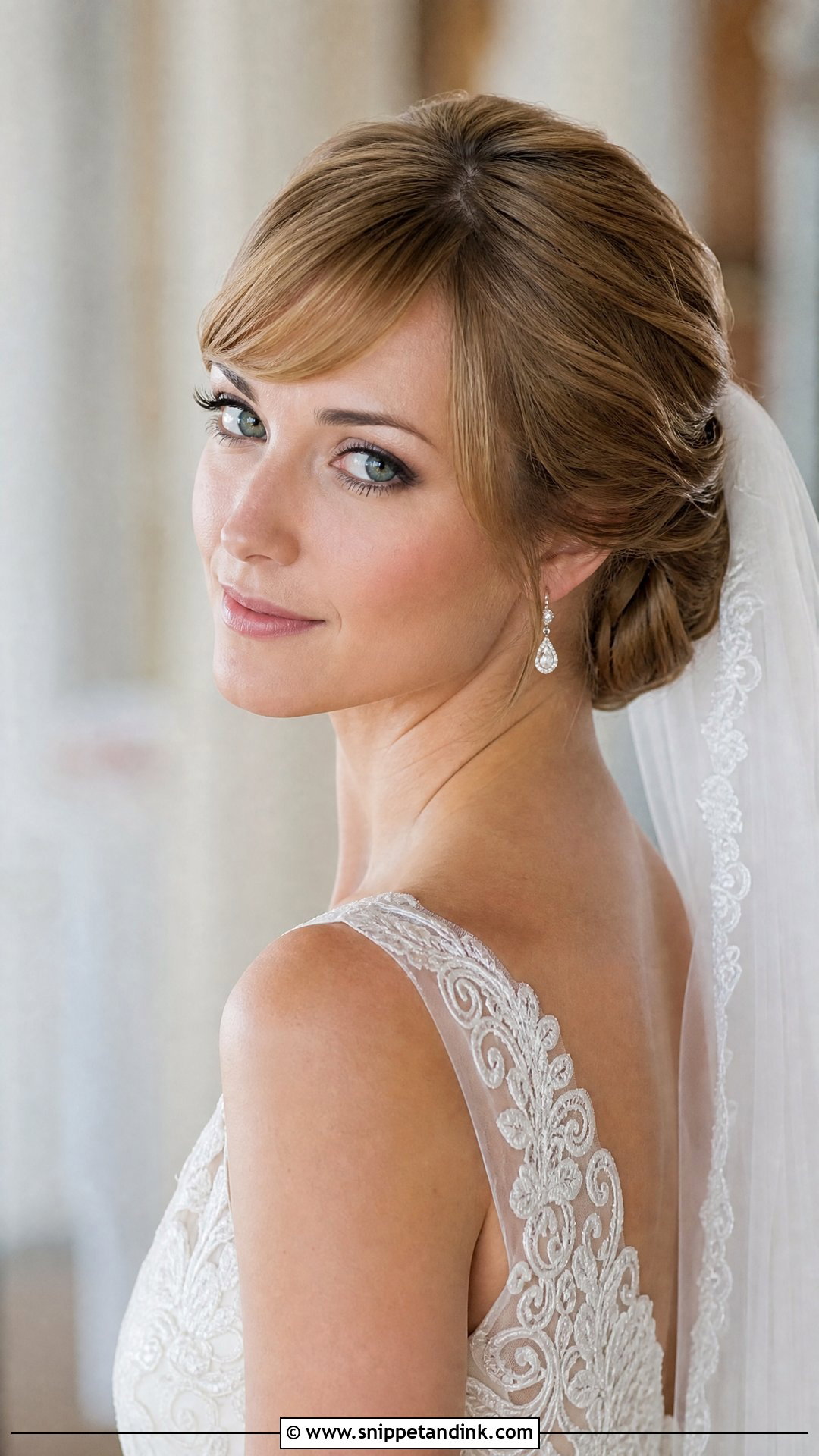
Side-swept bangs cut a diagonal across the forehead and soften a sleek roll. They’re natural for brides who already wear a fringe, and they pair nicely with vintage-inspired gowns and fine veils. The fringe needs its own attention, though. I blow-dry it into direction with a round brush and set it with a pin until the last minute. If you’re growing out bangs, get them trimmed about two weeks before, not the week of, so a fresh cut has time to settle.
9. Vintage French Roll With Finger Waves
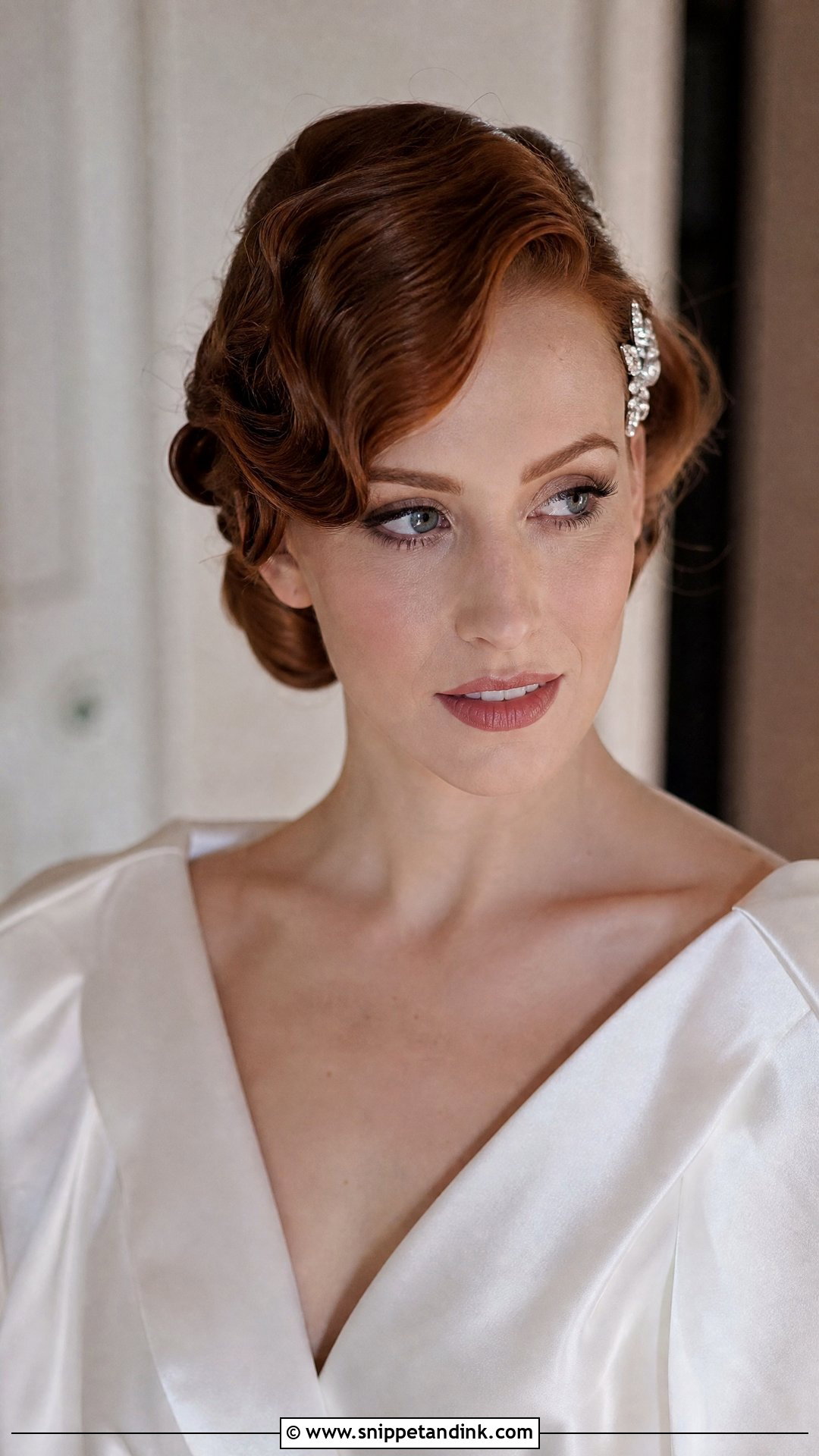
Finger waves shape the front into sculpted ripples before the rest sweeps into a classic roll, a look borrowed from vintage 1920s and 1940s elegance. It suits retro-themed weddings, satin gowns and jeweled hairpieces. This is the slowest style in this list to do properly. Real finger waves are set with gel and clips and need time to dry, or they’re faked with a flat iron, which looks softer but holds less well. Book a trial for this one; I’d never attempt it cold on the morning.
10. French Roll With A Bouffant Crown
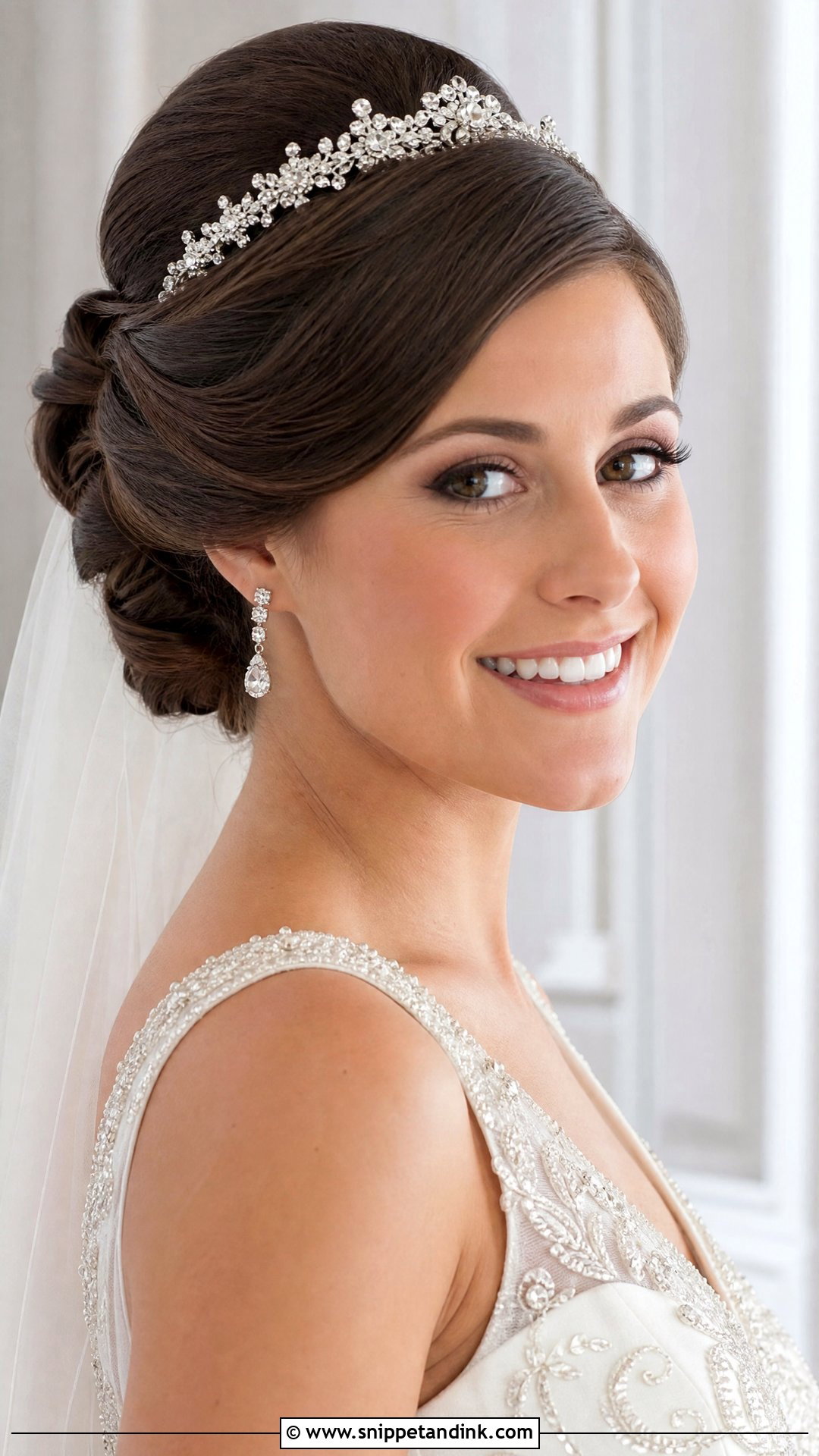
A bouffant crown lifts the top before the hair folds into a smooth roll below. The extra height lengthens a round face and gives a formal, upright outline. It takes a tiara well, as long as the tiara sits just in front of the bouffant so it doesn’t flatten it. Leave soft face-framing pieces or the whole look can turn severe. If you’re wearing a long veil, place it below the bouffant at the top of the roll, not in it.
11. French Roll With Flowers Tucked In
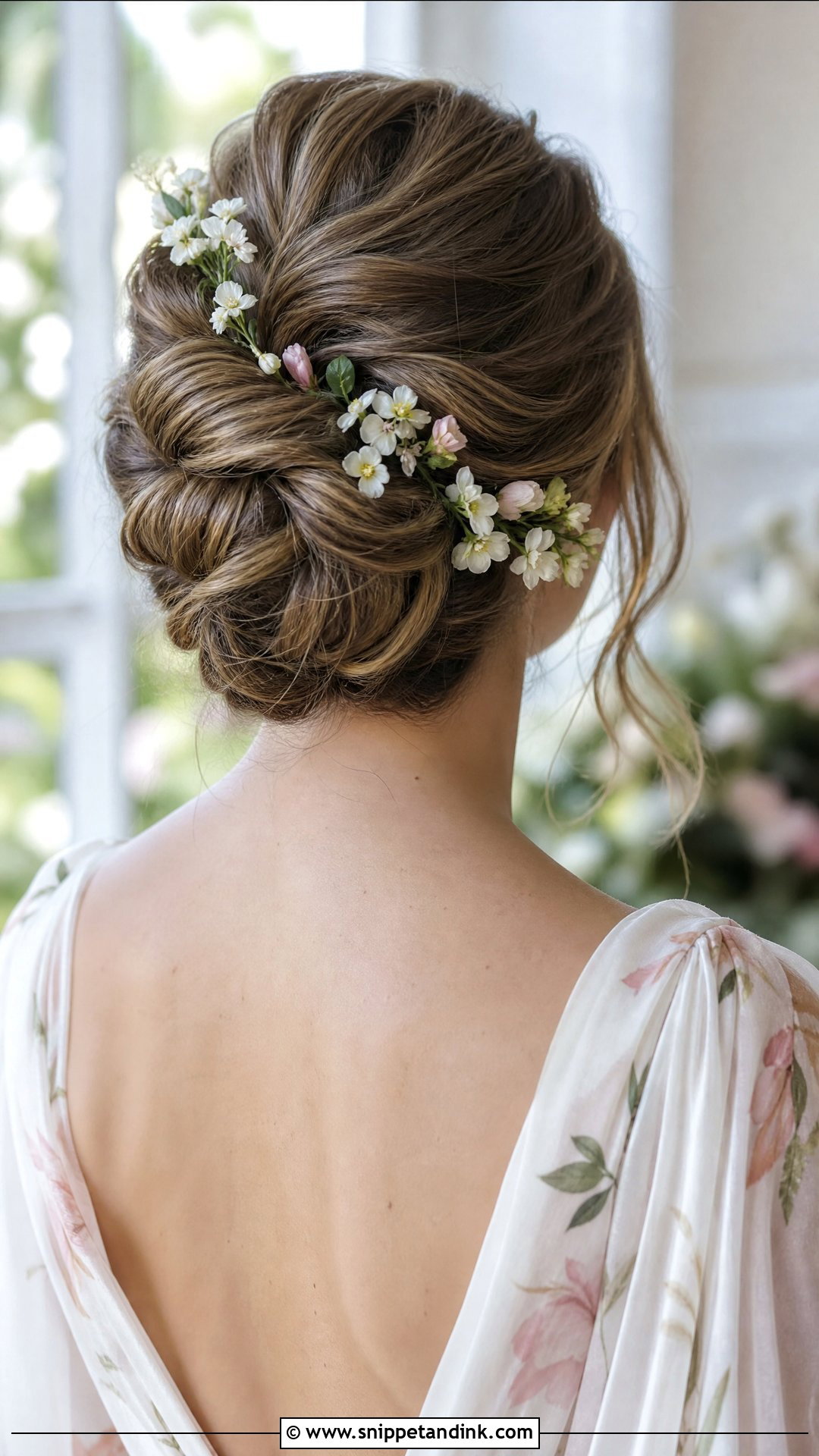
Small blooms tucked along the seam give the roll a garden feel. Matching them to your bouquet ties everything together, and Baby’s breath, roses, or delicate wildflowers all sit well along the twist. I ask the florist for flowers already wired and taped, because a cut stem pushed straight into hair wilts within hours and can leave water marks on the fabric of a dress. Spring and summer weddings suit it. In heat, silk flowers are the safer choice.
12. Sleek French Roll With A Veil
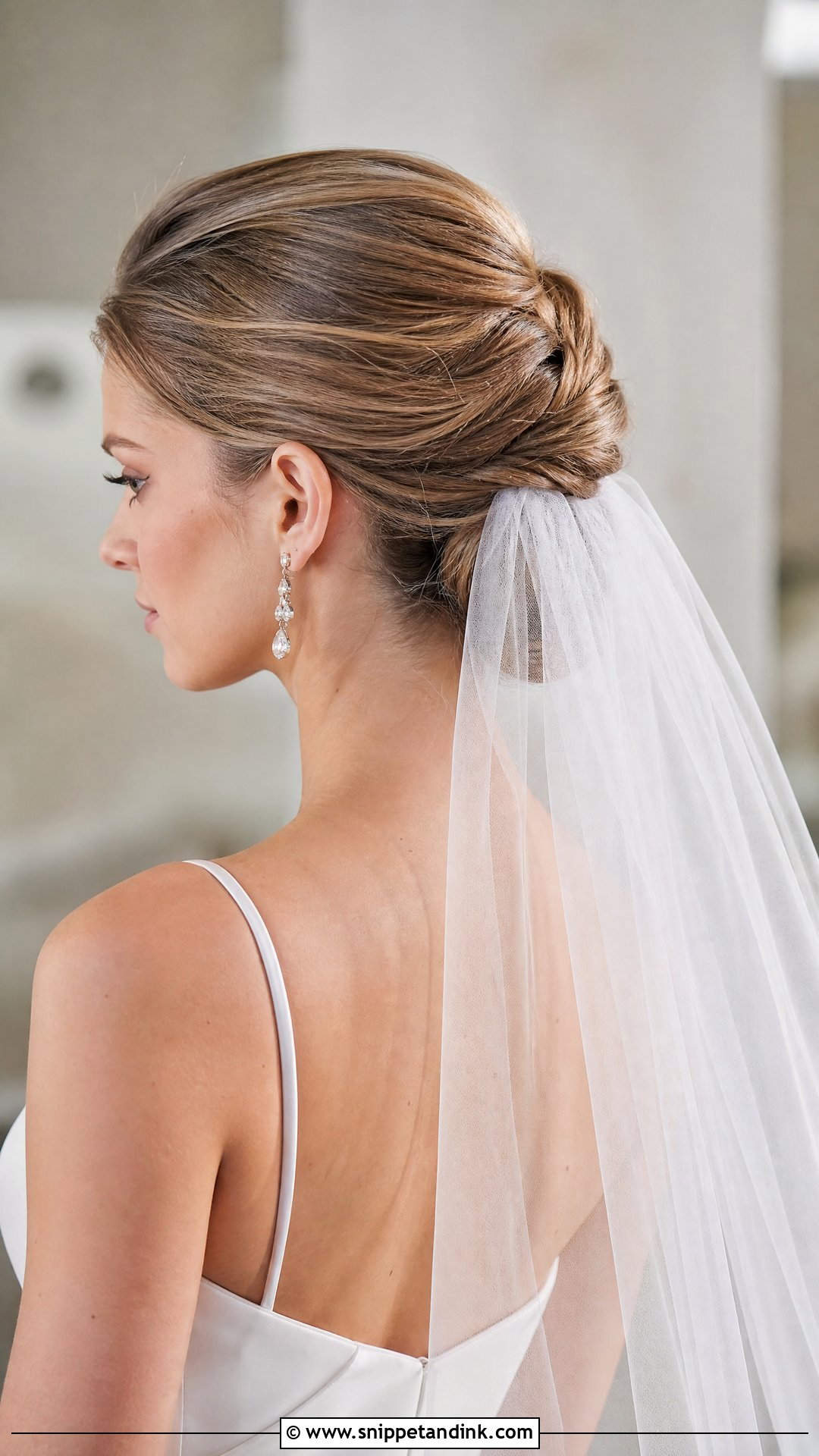
A sleek French roll makes a reliable anchor for a veil. The hair is smoothed into a clean twist, and the comb slides in just above or into the top of the seam, where the pins are densest. Once the veil comes out for the reception, the roll still looks finished on its own. Formal ceremonies suit it best. The mistake I see most is putting the comb into loose hair above the roll, where there’s nothing to grip; the veil’s weight then tilts it backward during the ceremony.
13. French Roll For Short Hair
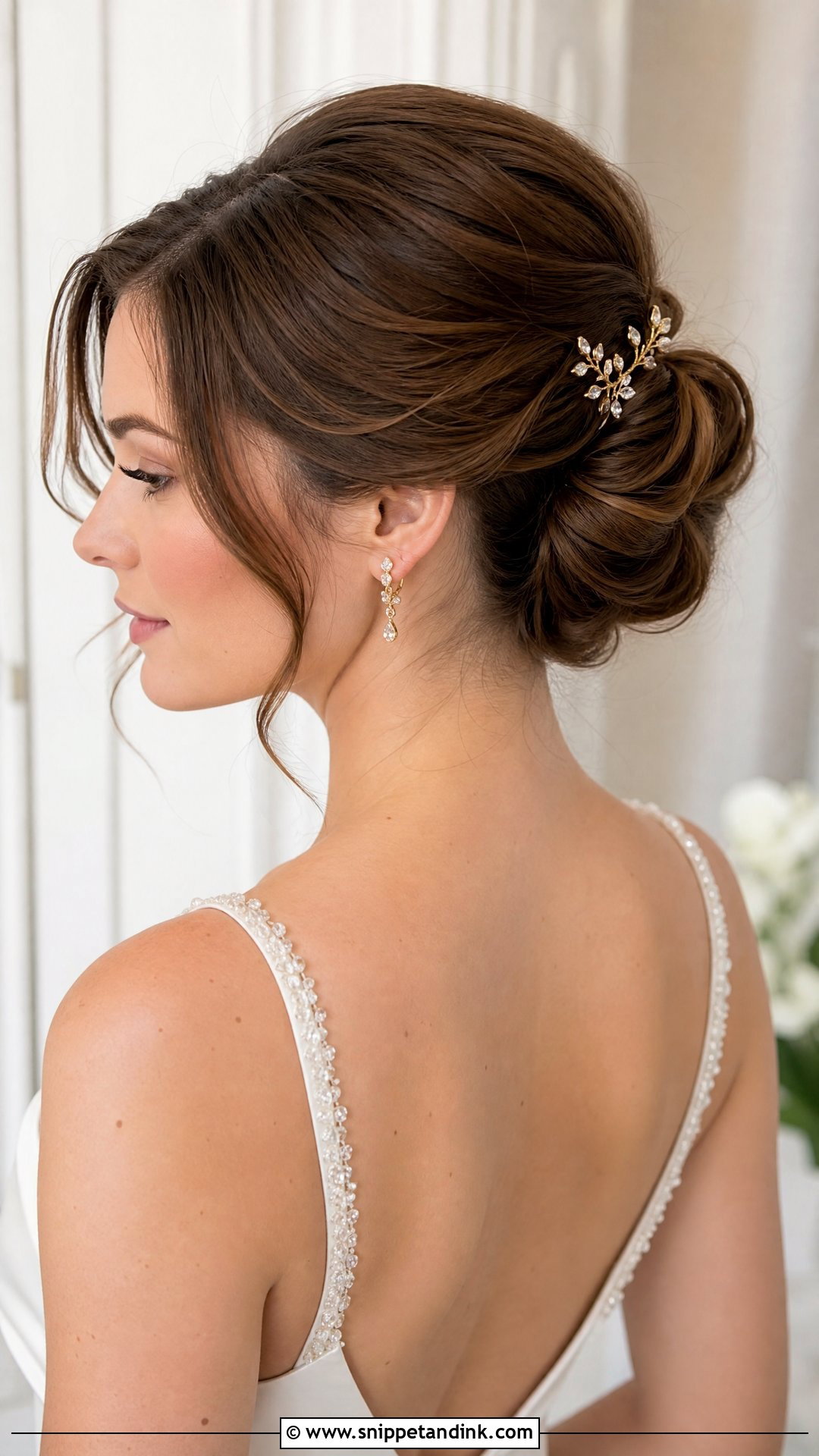
Short hair can wear a French roll, just a smaller one. I twist and pin the back sections upward and leave loose pieces at the front for balance. The practical limit is length at the nape. Hair shorter than about chin length usually won’t stay in the fold, and the short layers at the back are the first thing to fall out. Bobs and lobs that reach the shoulder work well. Small decorative pins can hide the ends, and statement earrings fill out the look.
14. Romantic French Roll With Curls
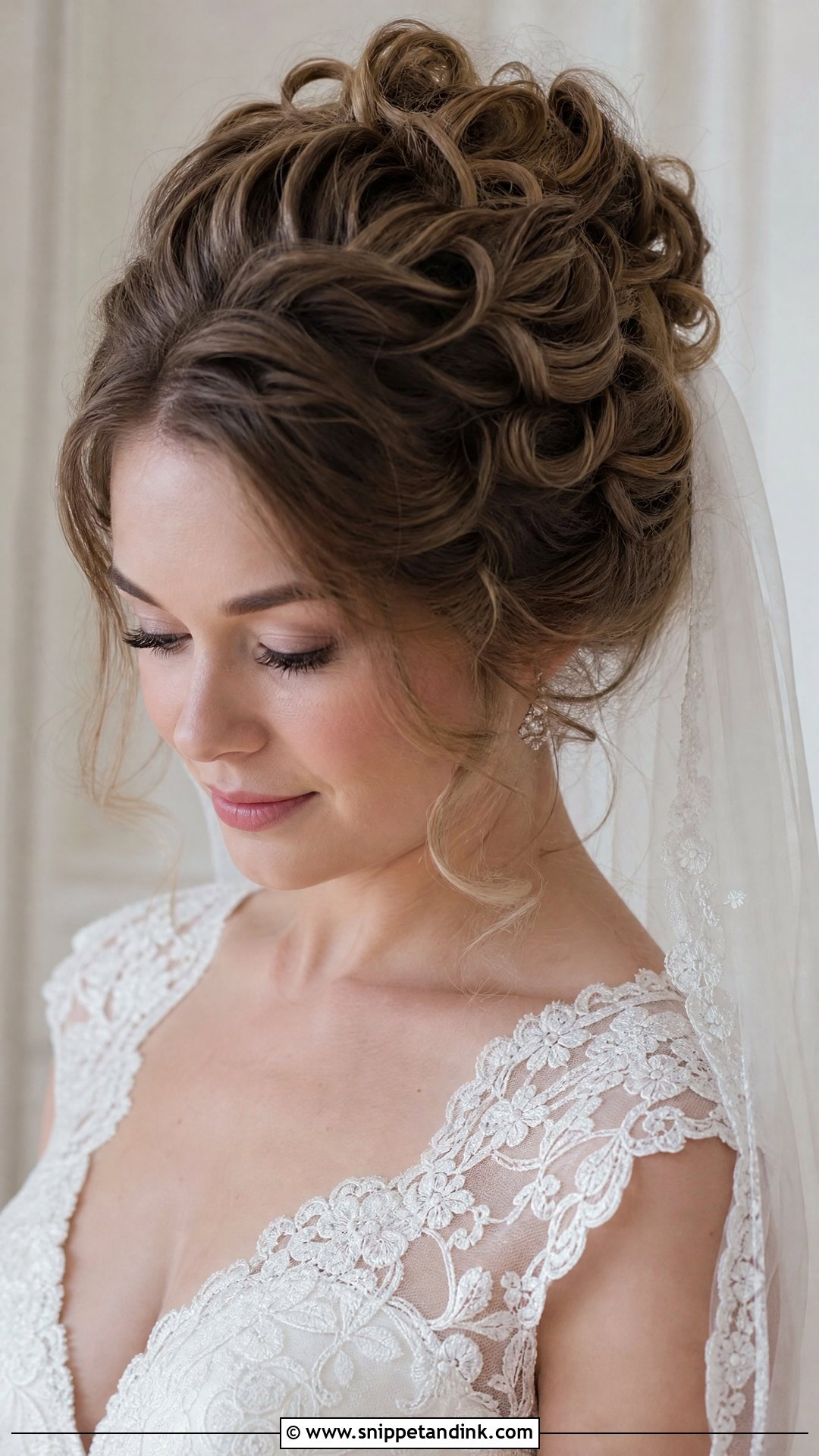
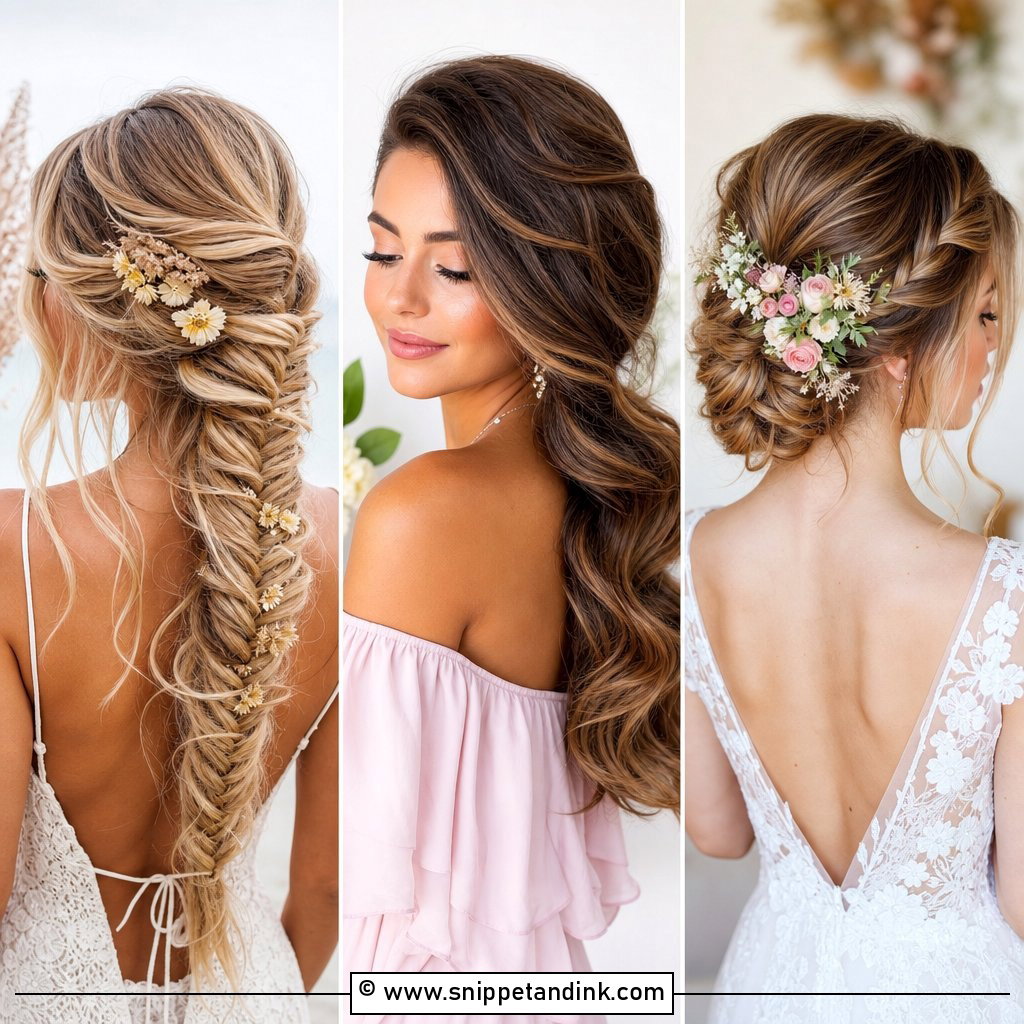
Here the hair is curled first, then gathered and folded, with a few curls left loose around the face. The curls add bounce that a flat roll can’t, and the mix of smooth fold and loose curl reads soft. Lace gowns and delicate veils suit it. The loose curls are the part that drops as the day goes on, so I pin-curl them while the rest of the style sets and release them at the very end. Humid days soften them faster; a light flexible spray helps, but nothing will stop humidity completely.
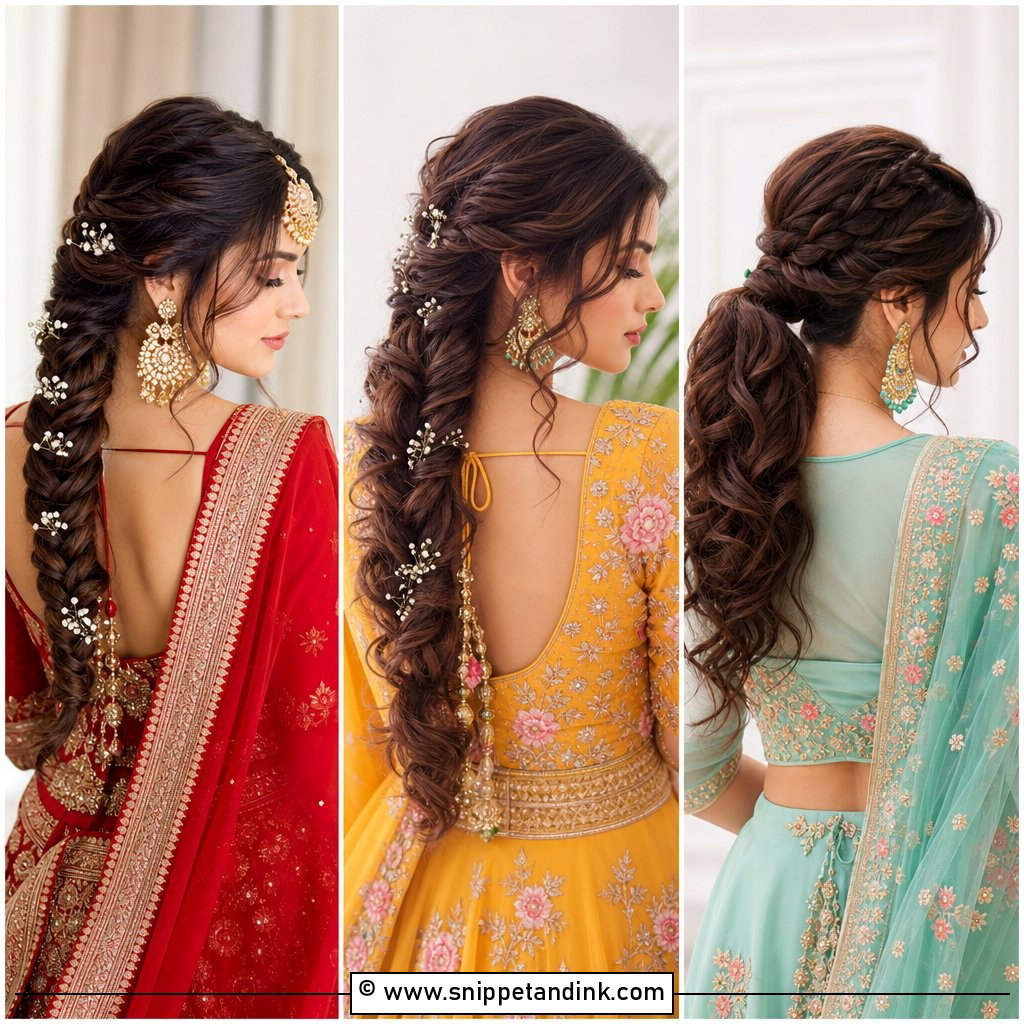
15. French Roll With A Jeweled Headpiece
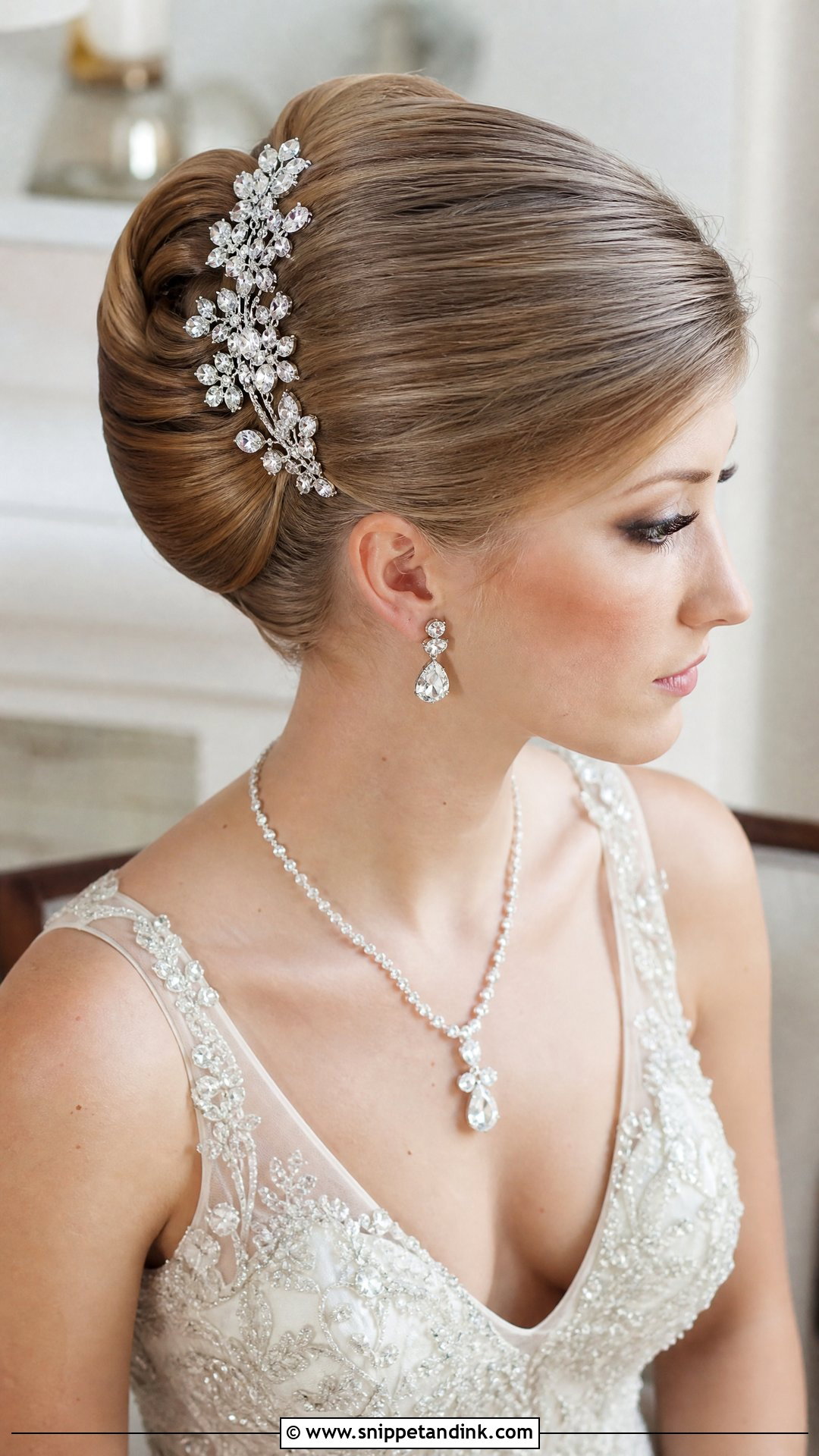
A jeweled comb, vine, or headband gives the sleek roll a bit of sparkle and a vintage feel, and the smooth hair behind it lets the stones show. The piece can sit at the crown or run down the side of the twist. Heavy headpieces need structure underneath, so I build a small pin base exactly where the comb will go before the roll is finished. Bring the headpiece to your trial; weight and fastening change everything about how I build the style.
16. Twisted French Roll With Side Detail
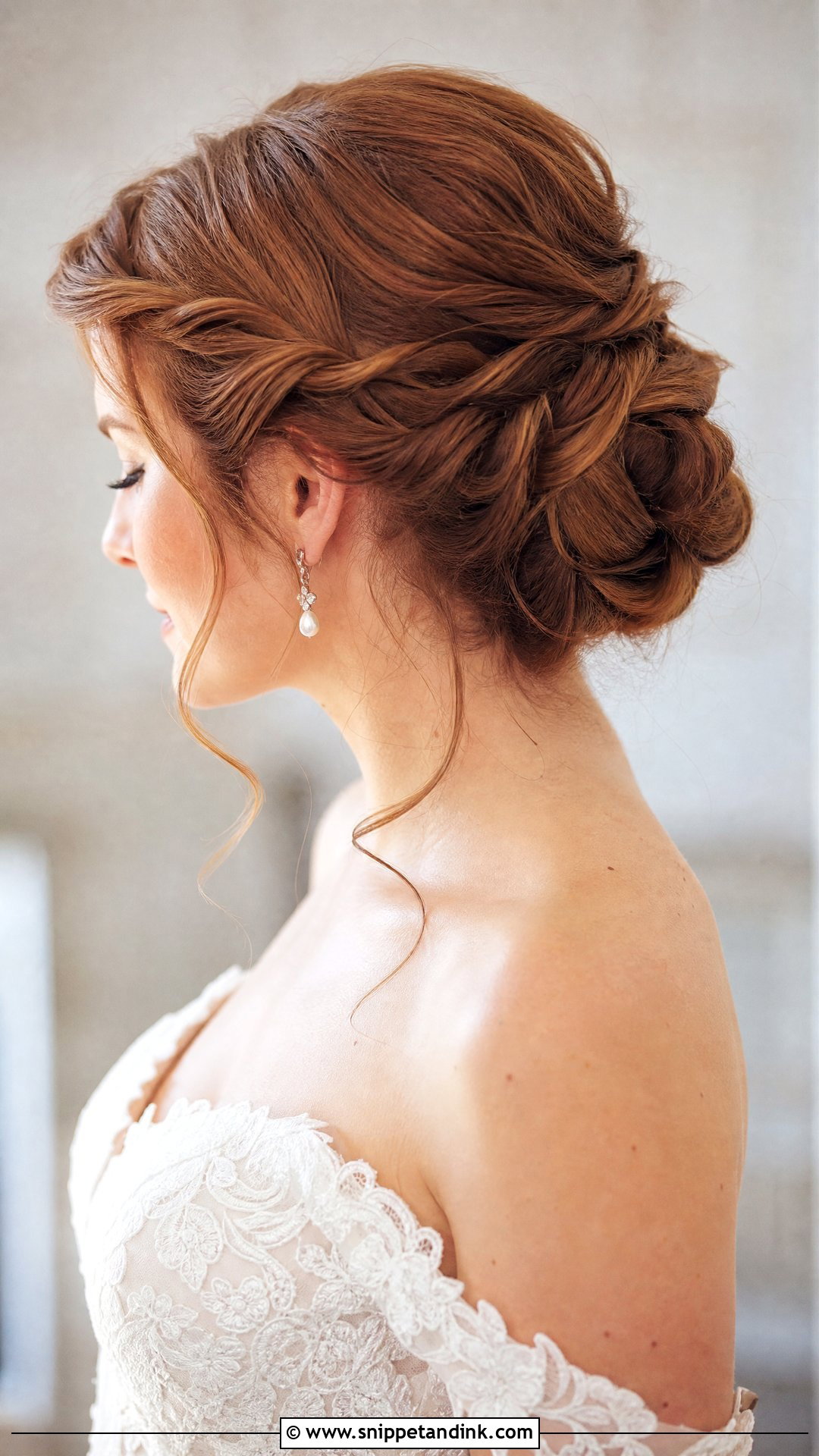
Small twists at the front sweep back and disappear into the main roll, adding texture along one side and drawing the eye upward. It’s a bit more intricate than the classic version and suits both modern and romantic weddings. Each twist needs to be pinned where it meets the roll, otherwise it unravels as the hair relaxes. Loose tendrils soften the finished shape. It also hides a cowlick or uneven hairline better than a sleek sweep.
17. French Roll For Curly Hair Brides
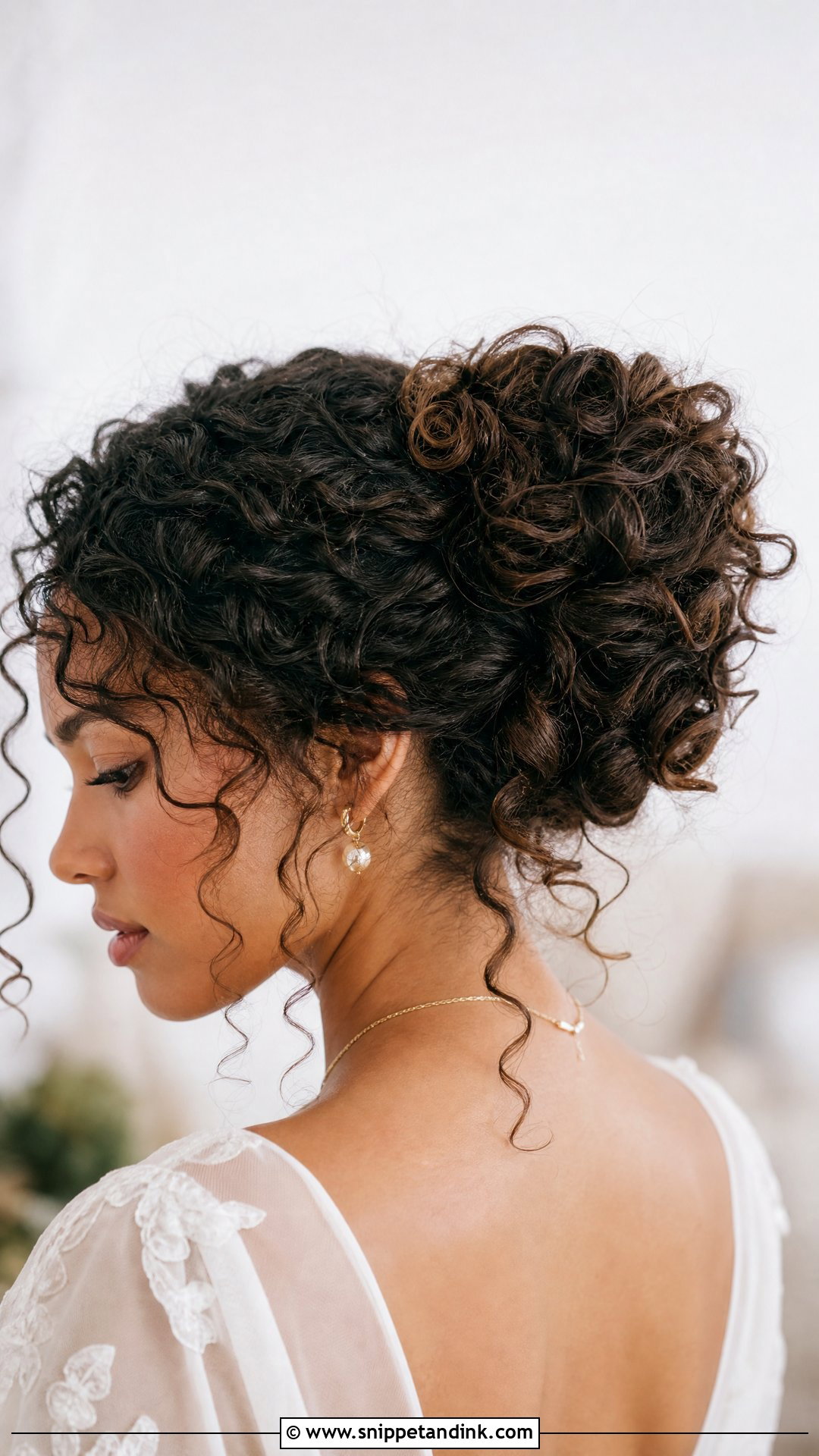
Natural curls can form a full, rounded French roll without being straightened first. The curls give body that smooth hair has to fake with padding, and a few loose ones around the face keep it soft. I usually work on curls that have been stretched or set the night before, because tight wash-day curls shrink and pull the fold out of shape. Use your usual leave-in and a light gel, not a heavy spray that leaves them crunchy. Bohemian and outdoor weddings suit it, and it lets you look like yourself.
18. Low French Roll With A Center Part
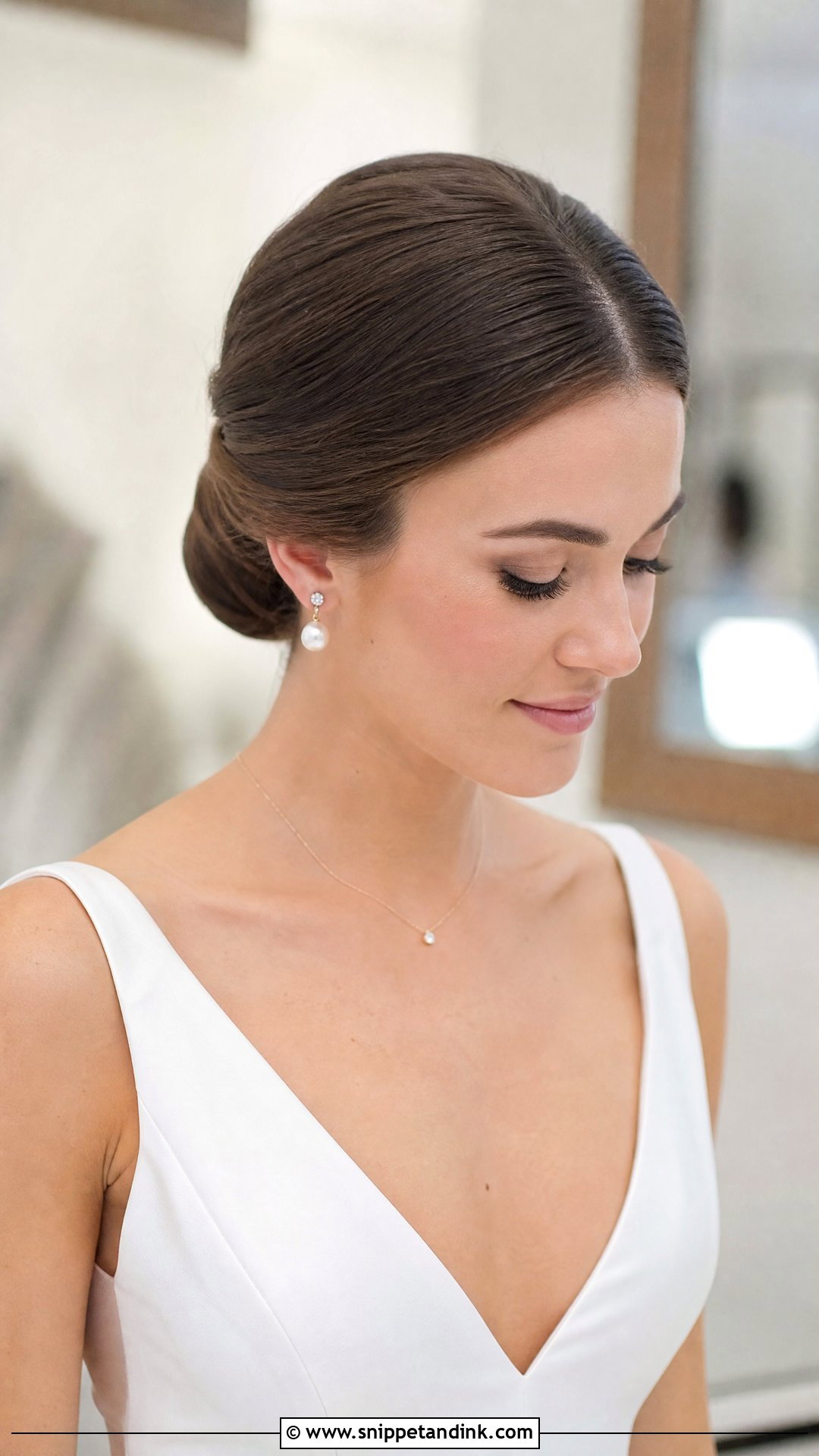
A centre part, both sides smoothed back and a low roll at the nape: it’s symmetrical, quiet and modern. Oval and heart-shaped faces carry it best; on a long face I’d shift to a slight side part to soften it. Simple modern gowns and fine jewelry are its match. The part has to be dead straight, so I mark it with a tail comb and check it in a mirror from the front before I start the twist. Any wobble shows, especially in top-down photos.
19. French Roll With Bouquet Of Baby’s Breath
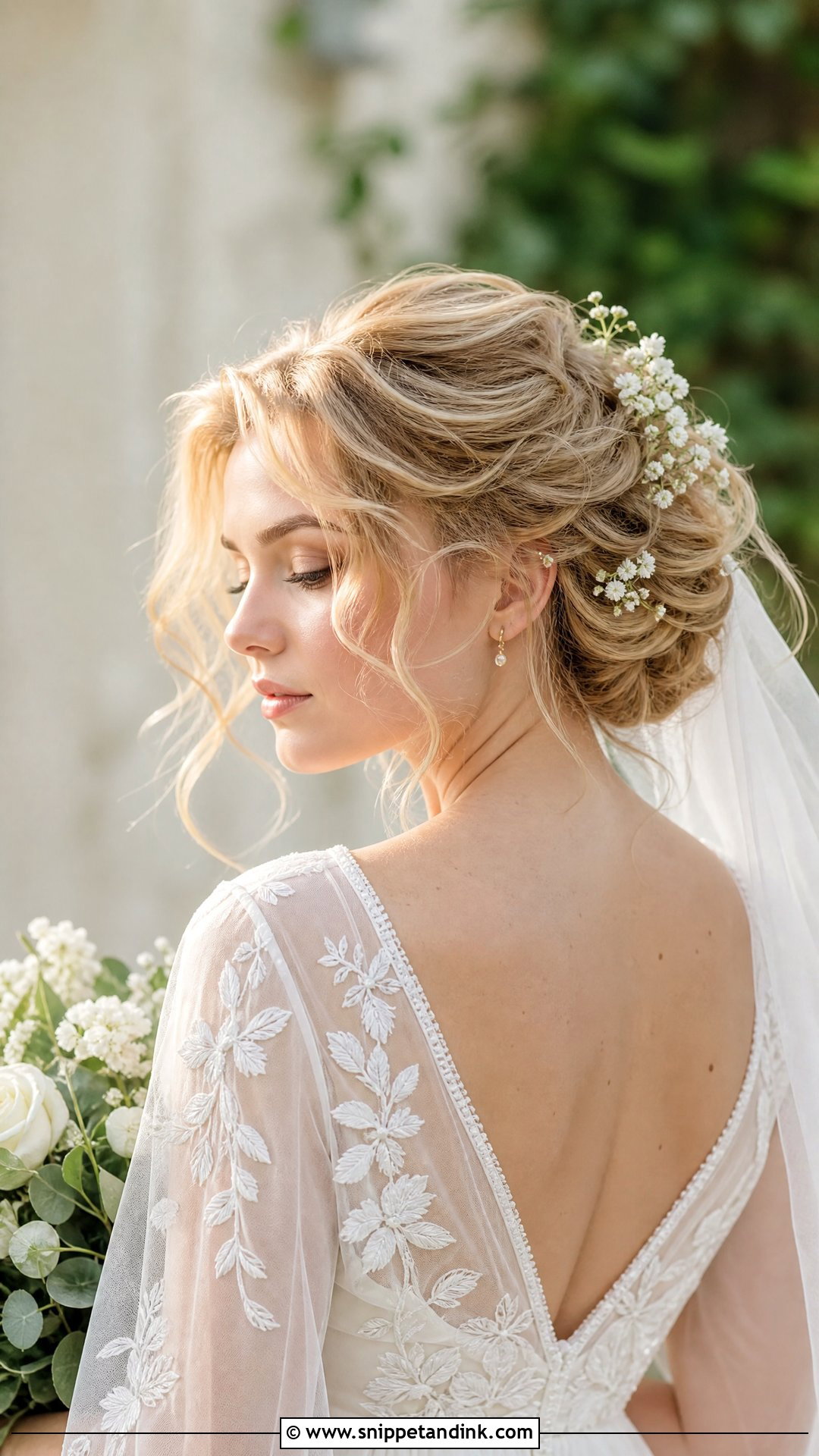
Tiny sprigs of baby’s breath tucked throughout the twist look like a scatter of small white flowers. They add texture without weighing the hair down. Spring, summer and bohemian outdoor weddings suit it, with flowing gowns and light makeup. Baby’s breath copes better out of water than most flowers, which is one reason florists like it for hair, but it still browns at the tips in strong heat. Ask for a few spare sprigs so someone can replace any that wilt before the evening photos.
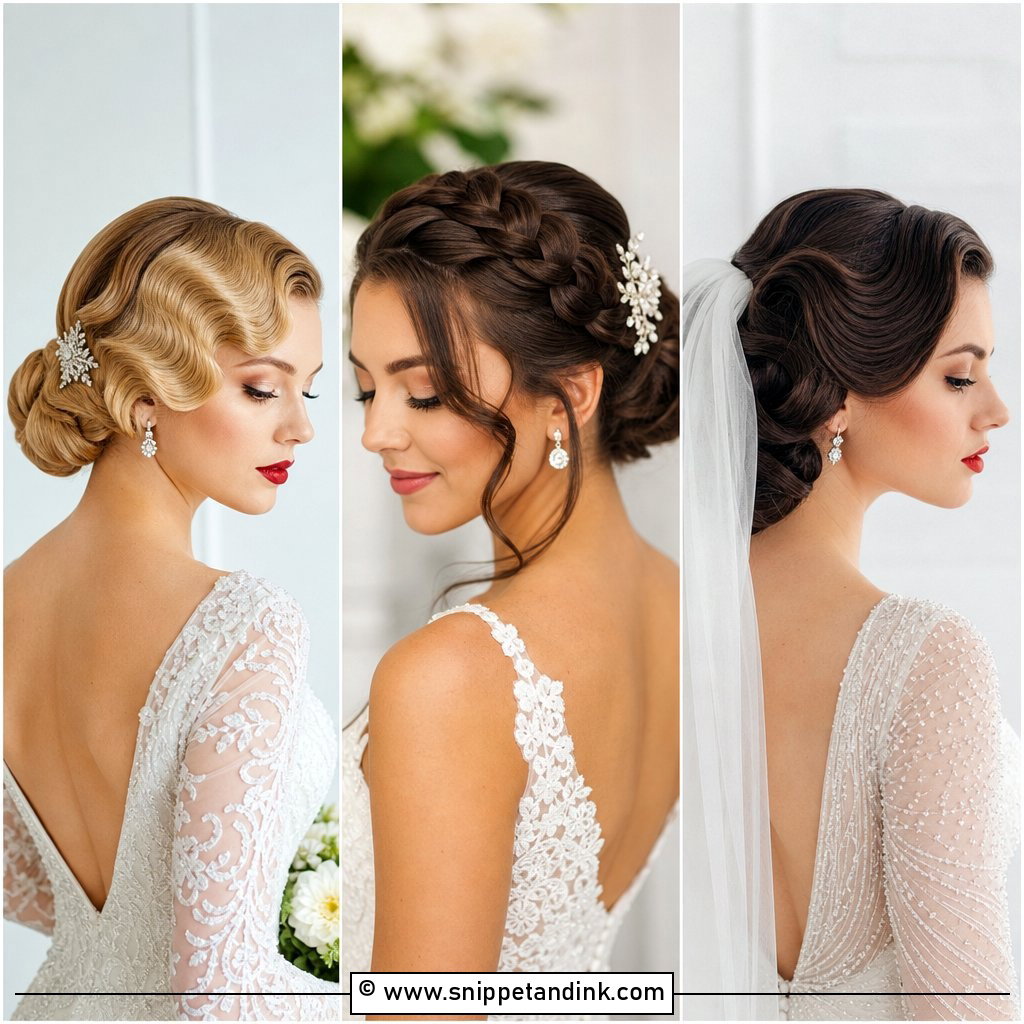
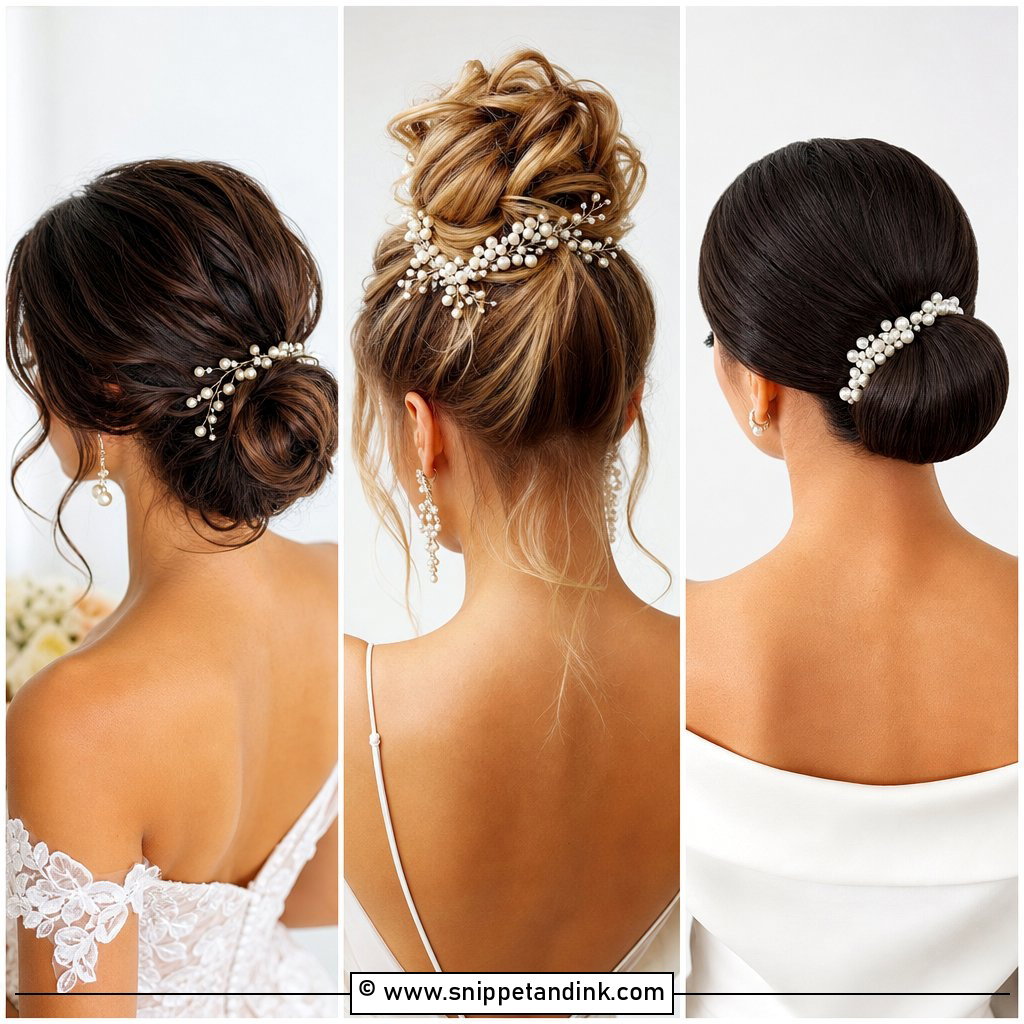
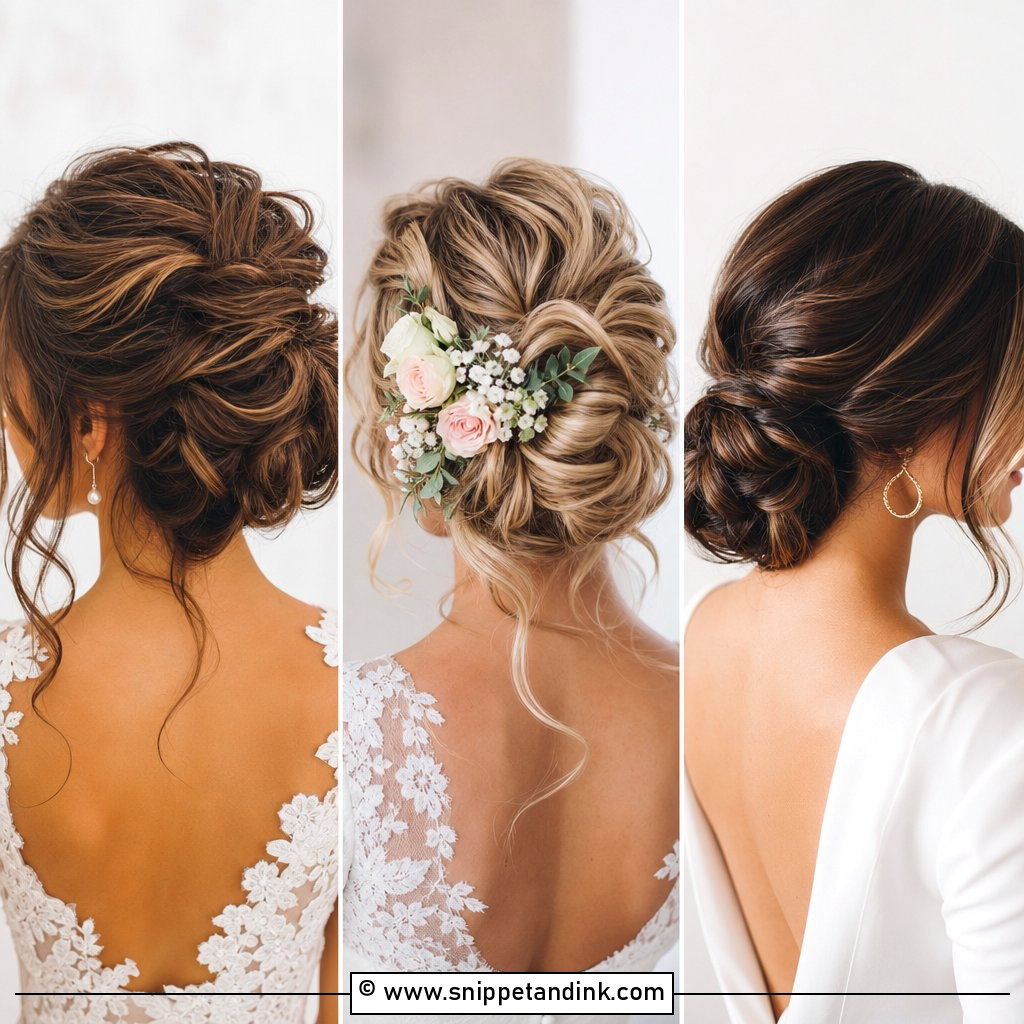
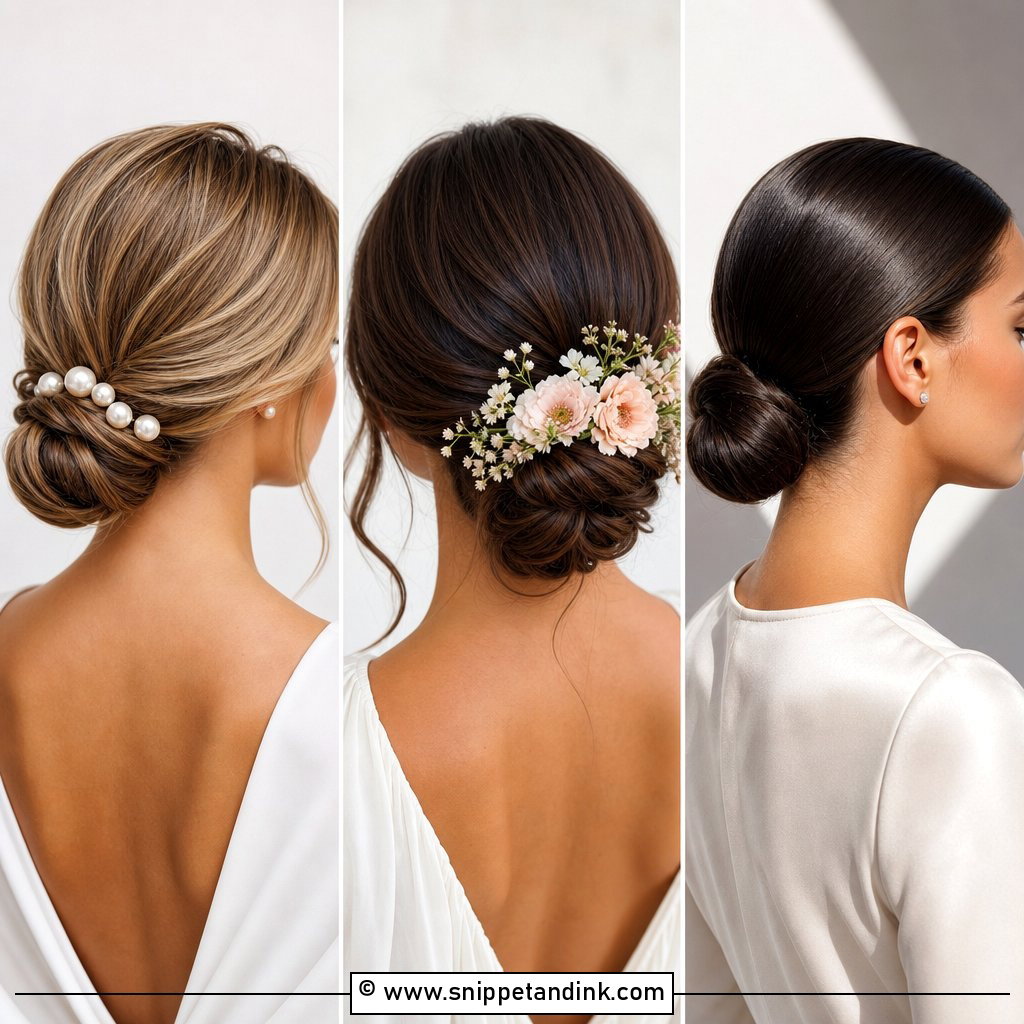
20. Modern Asymmetrical French Roll
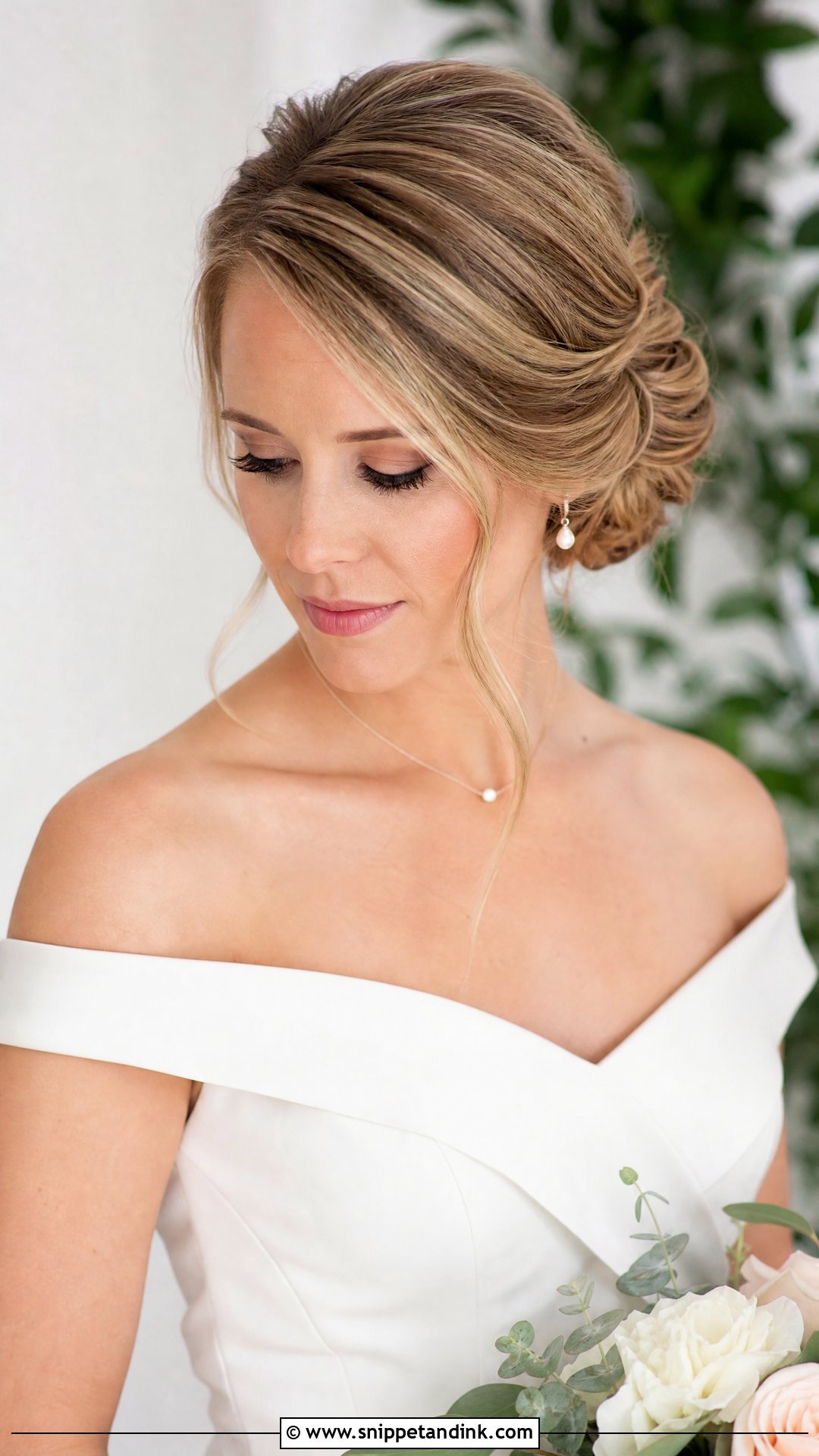
The asymmetrical roll is set off to one side instead of down the centre, which looks deliberate and fashion-led, with loose strands on the opposite side to balance it. Modern gowns and minimal jewelry suit it best. Check which side you want before the day: I usually put the roll on the side that faces the guests during the ceremony, or on your better profile, so it shows in the photos that matter. It’s the most individual version here and the one least likely to look like anyone else’s.
Fixing a Roll That Starts to Slip by the Evening
Most French rolls don’t fall apart. They loosen at the top, where the ends are tucked, or at the nape, where shorter layers escape. Both are easy to fix if someone in your bridal party knows what to look for.
- Pack a dozen bobby pins in your hair colour, a few long U-pins, a small travel spray and a tail comb.
- If the top opens up, tuck the ends back inside the fold and push a U-pin in from the top, angled down into the roll.
- Stray nape layers can be twisted flat and pinned upward into the base of the roll. Don’t just spray them down; they spring back.
- When the veil comes out, slide it out the way it went in. Pulling it straight back drags the pins with it.
- Heavy accessories cause most late-evening slipping. If something feels like it’s pulling, take it out and pin the roll again before the reception.
Taking it down at night is the other half. Find and remove every pin before you brush, then work out any backcombing from the ends upward with a wide-tooth comb and a little conditioner. Pulling a brush straight through a teased roll is how hair snaps.
Same Fold, Twenty Moods
The French roll covers almost every type of bride, from sleek and formal to loose and romantic. Pearls, fresh flowers, braids or a sparkling headpiece change its mood without changing what holds it together. Most hair types and lengths can wear one, as long as the hair reaches the nape. Bring your favourite of these twenty to your trial, along with your veil and any accessories. A roll that’s anchored properly will be in the same place at your last dance as it was at the ceremony.
You'll Like These Ideas:


Leave a Reply