
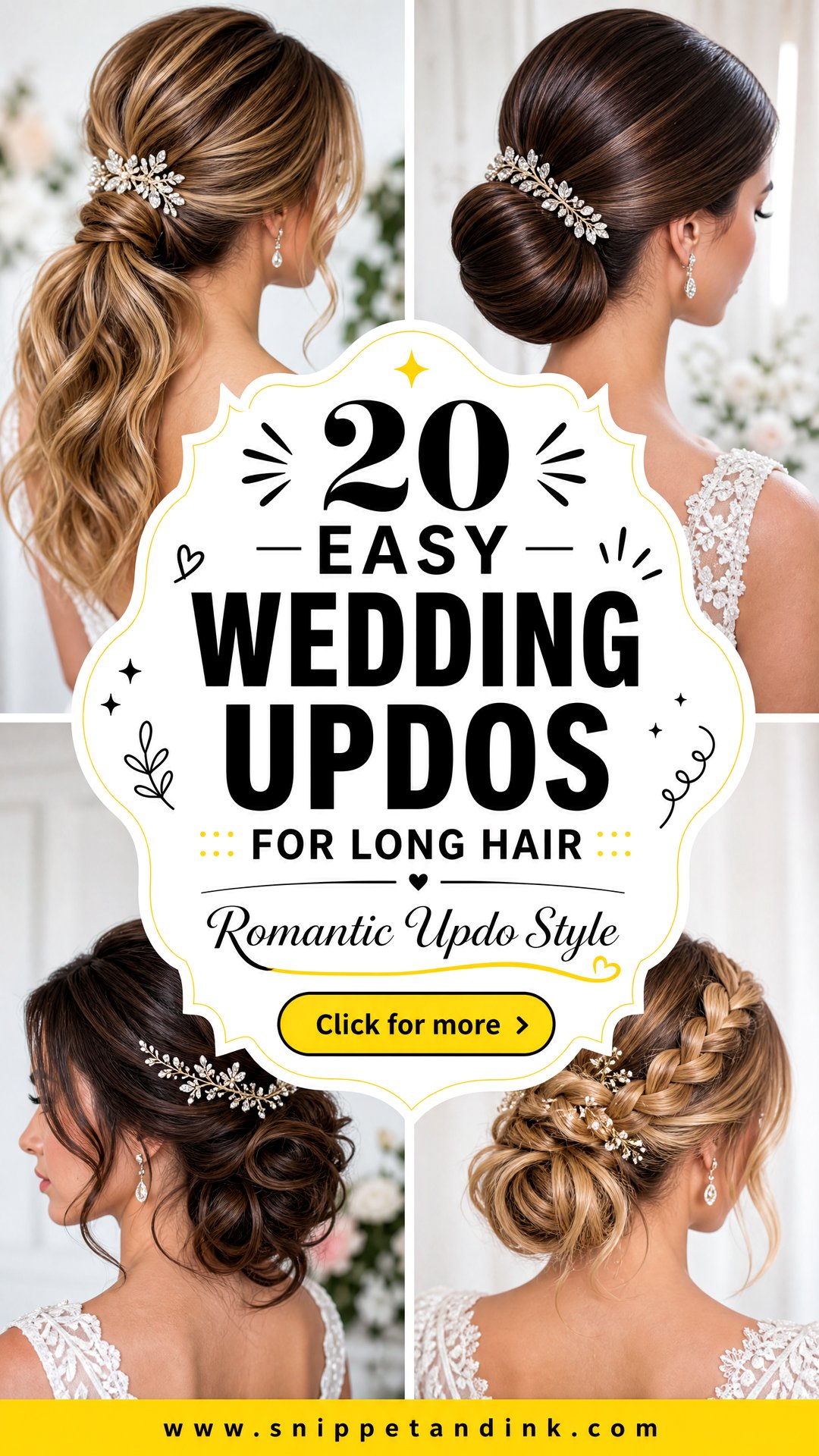
Long hair gives you more updo options than any other length, and also more weight to hold up for twelve hours. That’s the part brides rarely think about until a bun starts sagging during the speeches. The styles below range from sleek knots to loose braided crowns, and none of them needs advanced skill, though a few are much easier with a second pair of hands. I’ve noted which ones stay put, which ones relax as the day goes on, and what I do at the chair to keep each one where it belongs. They work for brides, bridesmaids and guests alike.
The Weight Problem, and How I Pin Around It
Long hair is heavy, and gravity does most of the damage to an updo. A bun that feels tight at nine in the morning has usually dropped half an inch by the first dance. What holds it is preparation done before any styling begins.
- Wash the day before. Hair washed that morning is slippery and pins slide out. If your roots get greasy quickly, use a dry shampoo or texture spray instead.
- Build an anchor. A ponytail elastic or a small hidden braid gives the pins something to grip. Pins pushed into loose hair hold the hair only by friction.
- Use the right pins. Bobby pins lock sections in place; U-pins shape without flattening. Matte pins that match your hair color grip better than shiny ones.
- Let curls cool. A curl that’s set while still hot falls as it cools. Pin it in a loop and leave it until it’s cold.
If you wear clip-in extensions, they add more weight to an updo. Clip them in at the trial too, so the stylist can see how heavy the final style will be.
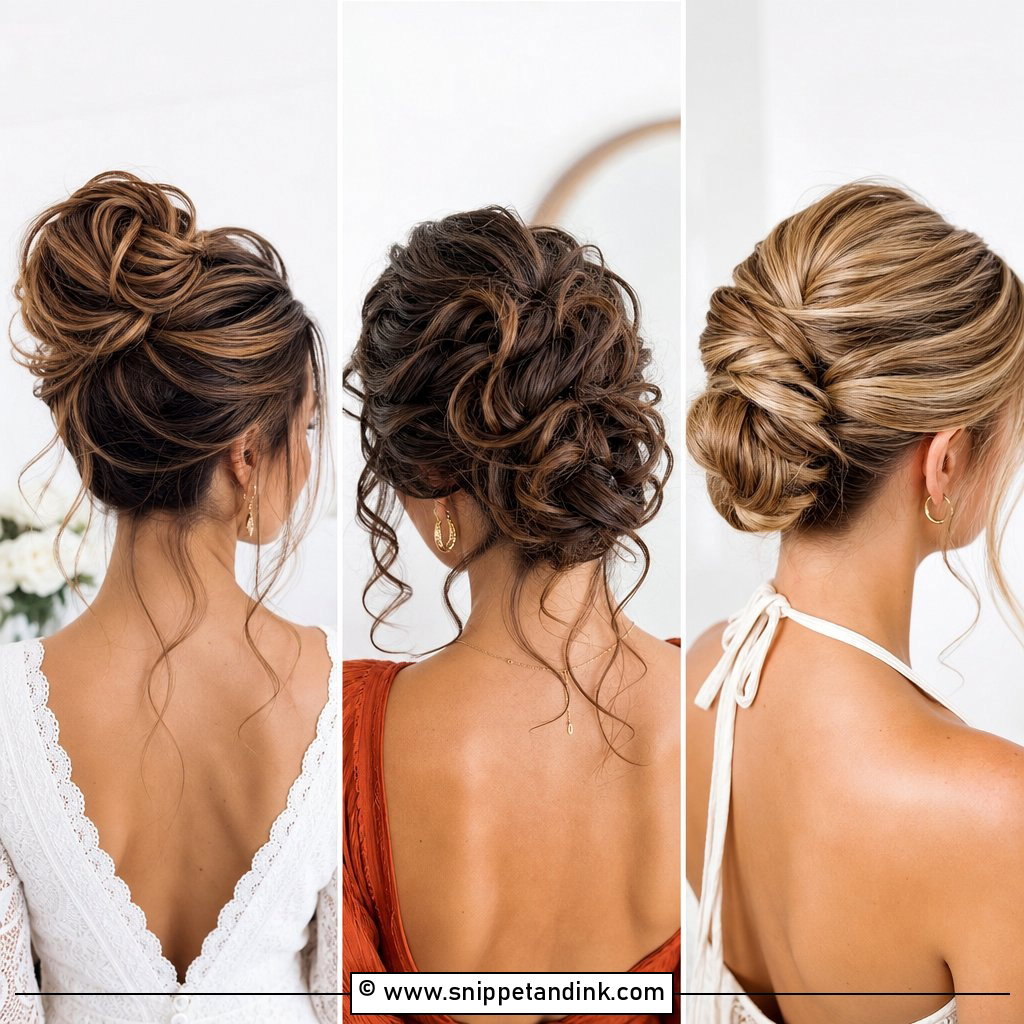
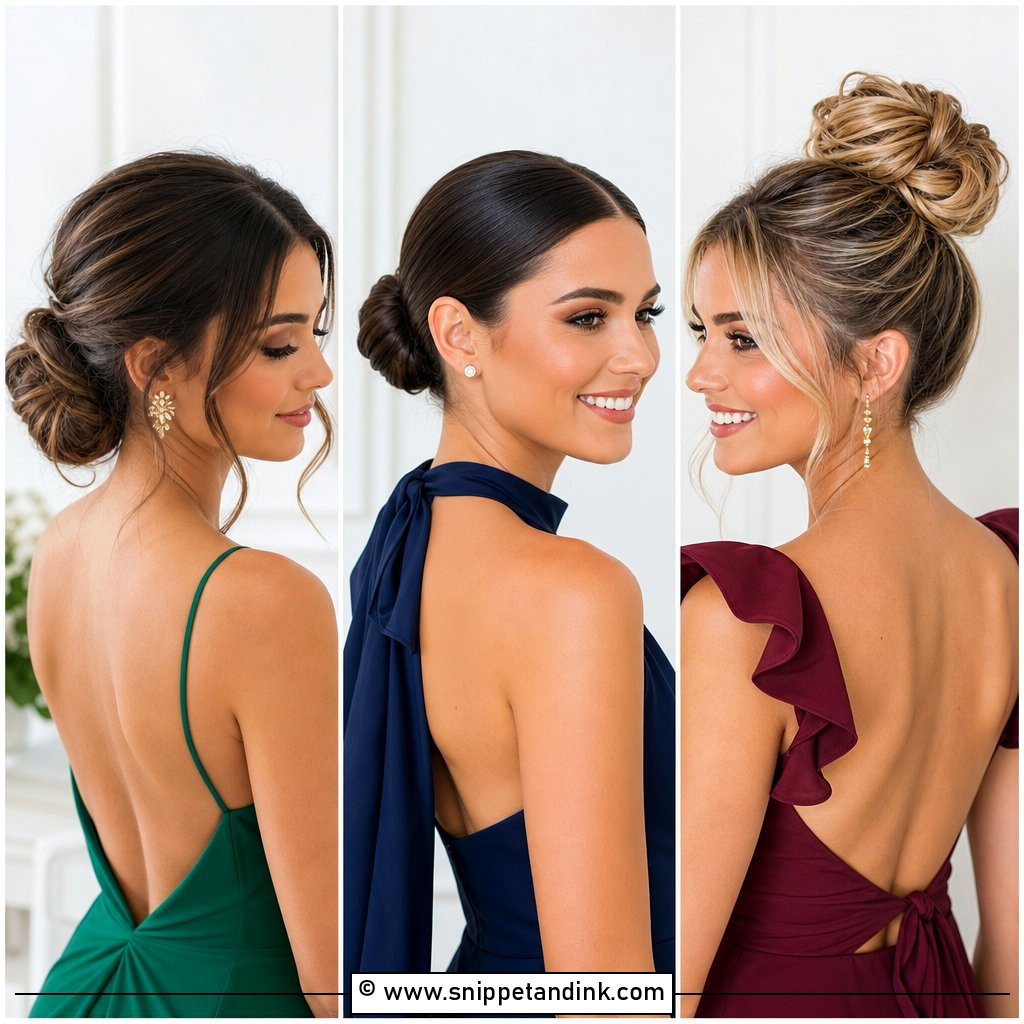
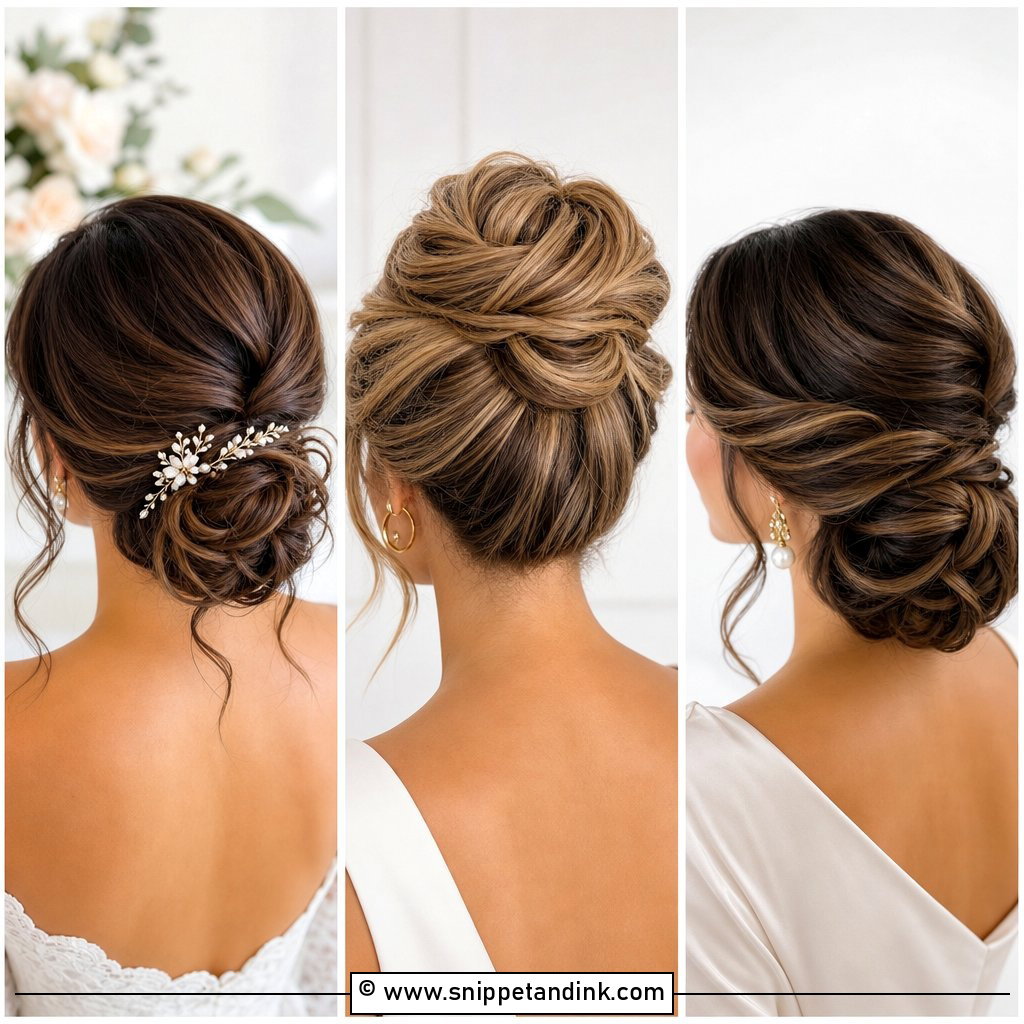
1. Low Bun Wedding Updo
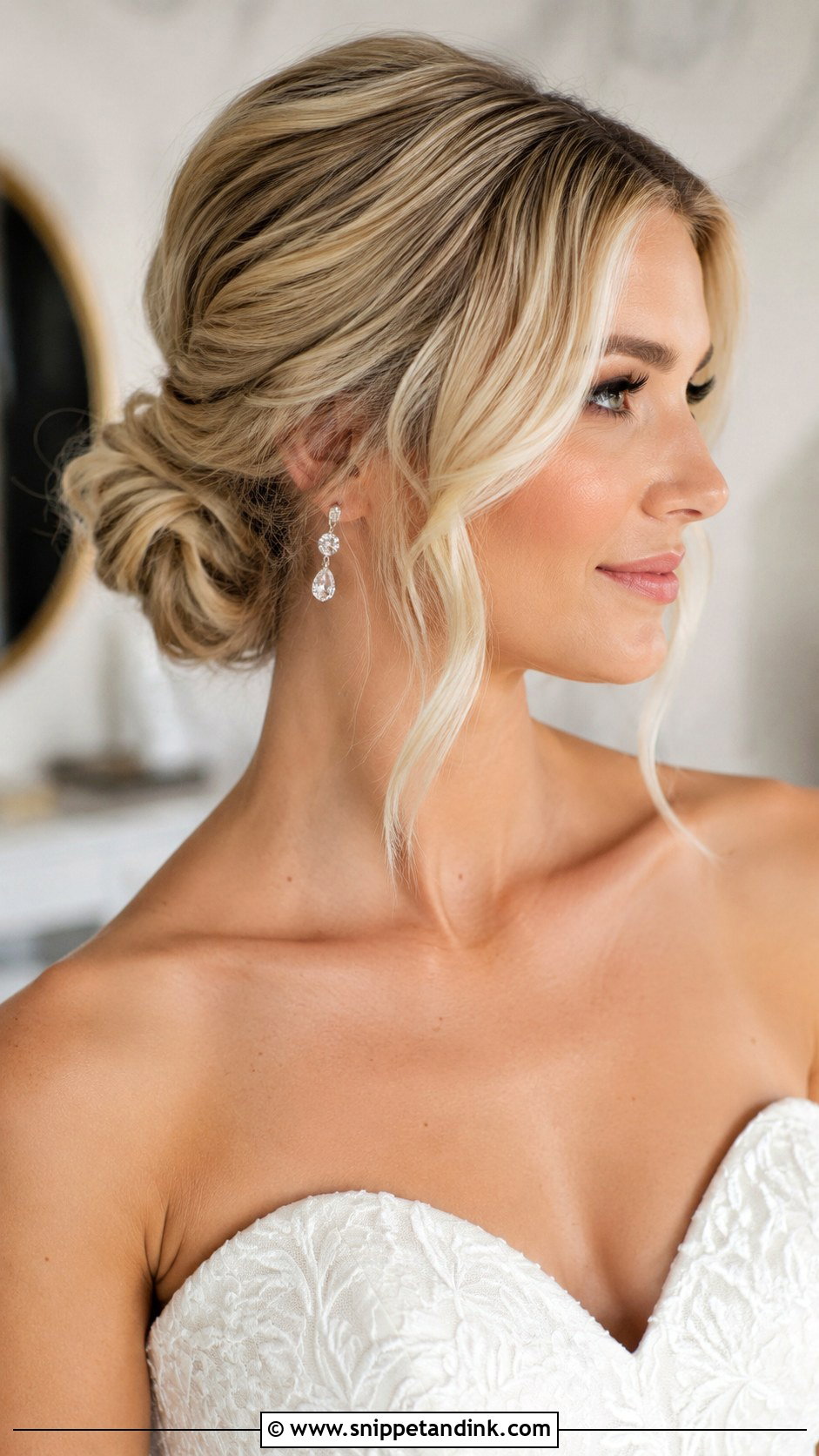
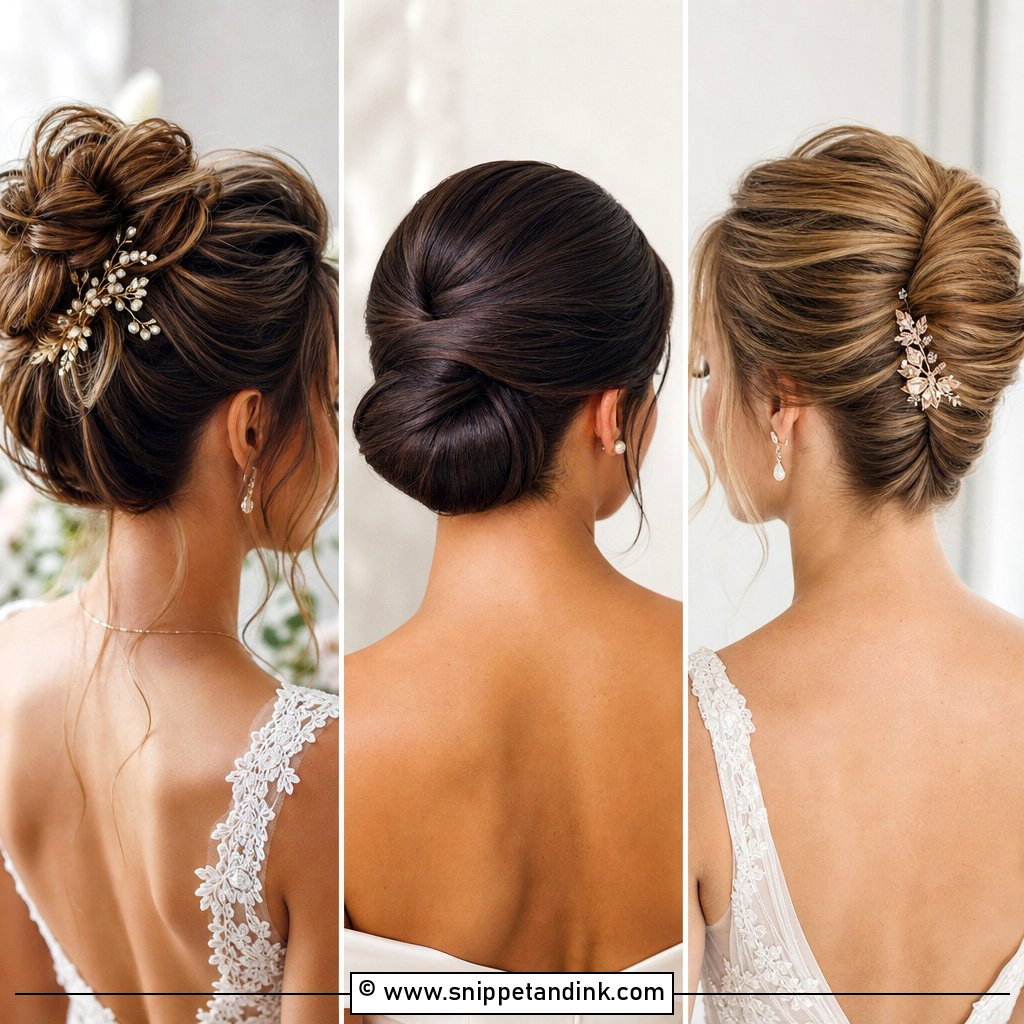
A low bun at the nape is the style I set first on a long-haired bride when she can’t decide, because it suits nearly every neckline and veil. To soften it, I add a little lift at the crown with backcombing at the roots, then pull out a few face-framing pieces after the bun is fully secured, never before. The trick to keeping it up is an elastic base: a low ponytail first, then the bun wrapped and pinned around it. Pins alone in heavy hair will slide by evening.
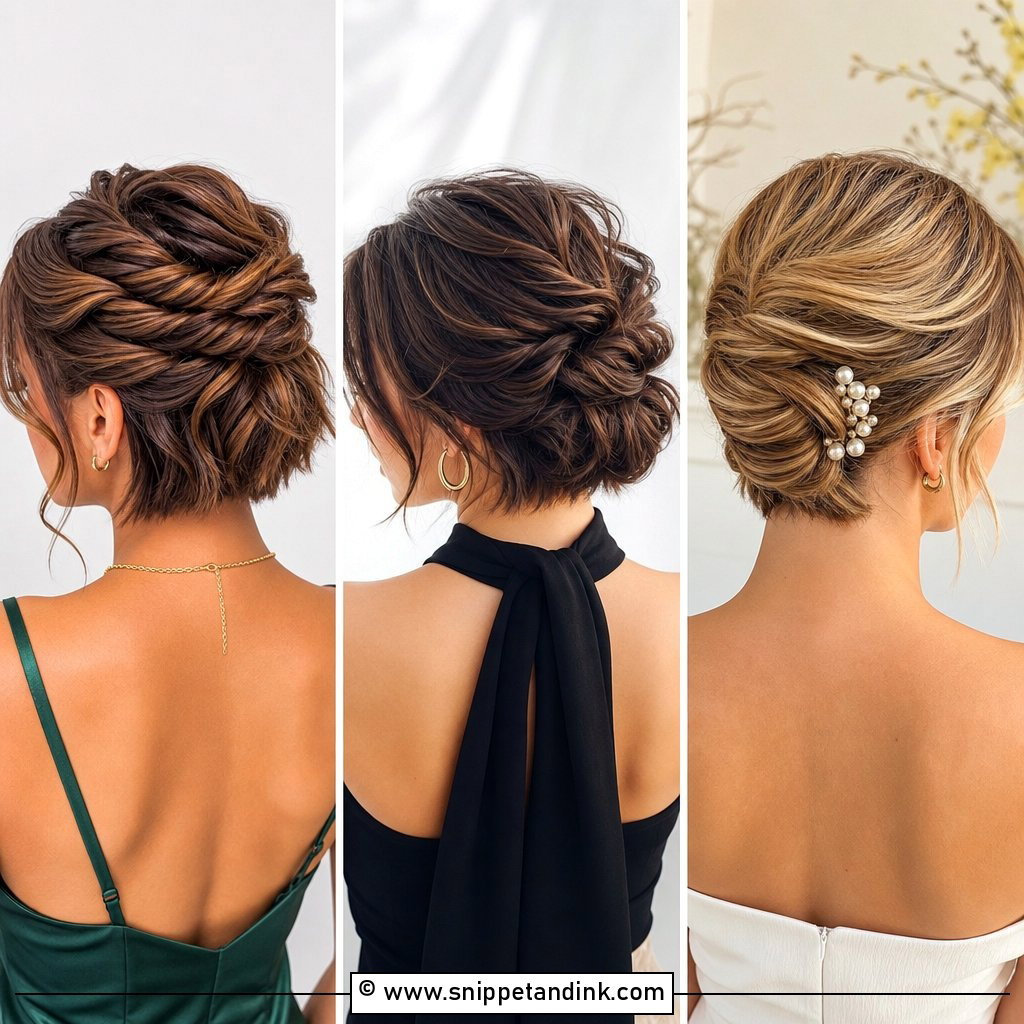
2. Twisted Low Chignon
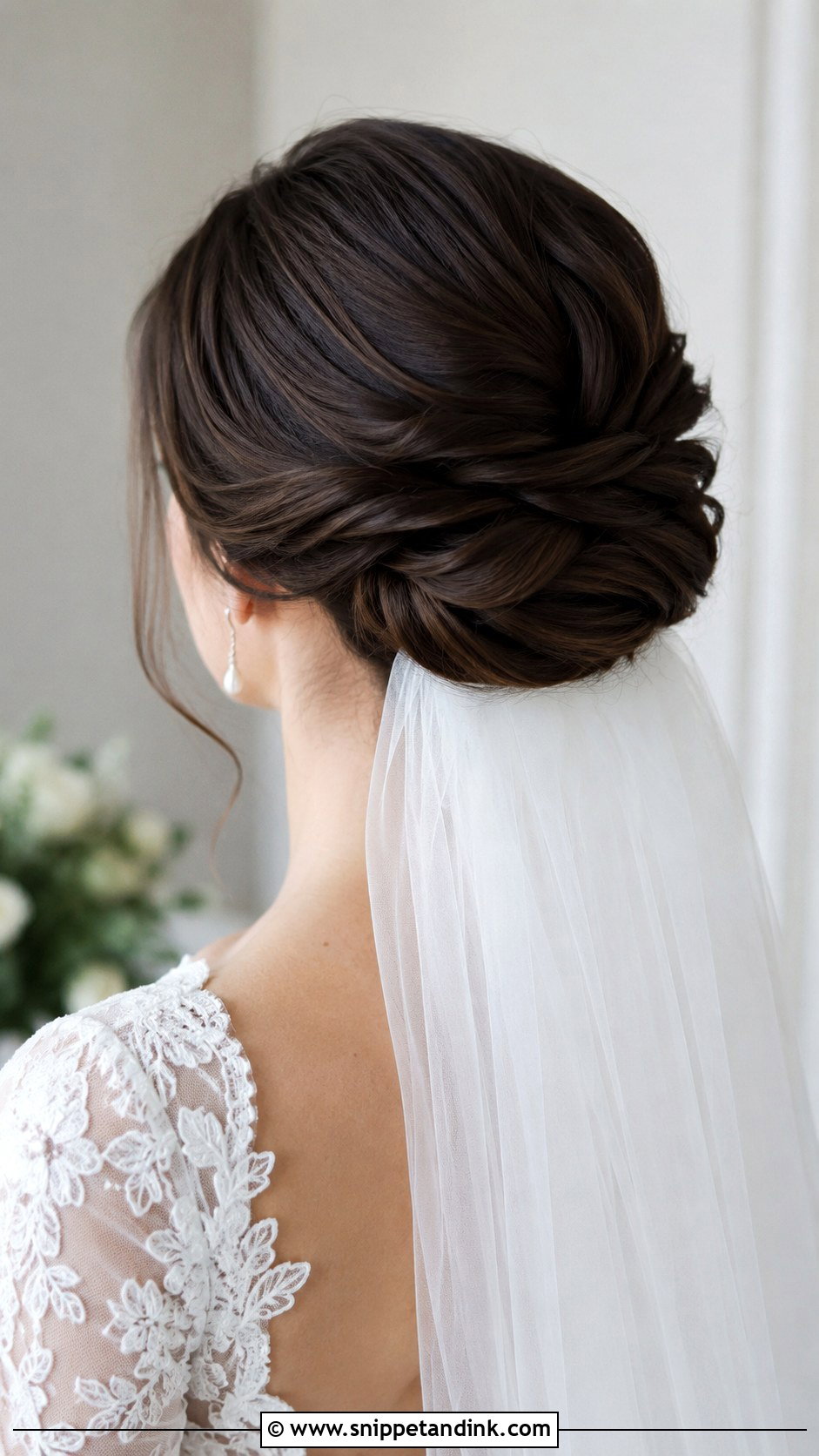
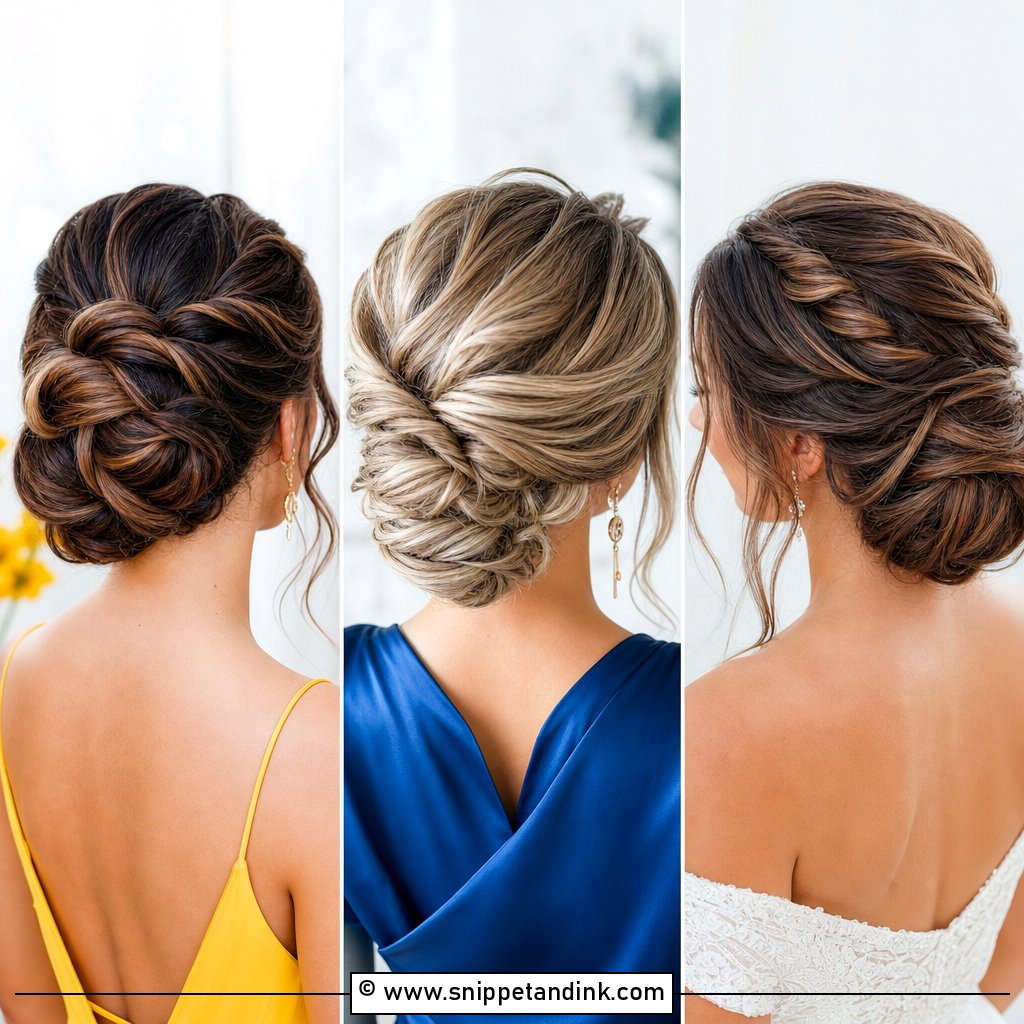
The twisted chignon gathers the hair into soft rope twists before tucking them into a rounded shape at the back. It’s kind to fine or slightly wavy long hair, since the twisting adds visible bulk without needing extensions. I pin each twist as I go rather than at the end, which keeps the shape from collapsing inward. A veil comb slides in neatly underneath. Black-tie and traditional ceremonies suit its quiet, refined shape.
3. Messy Bun With Face-Framing Tendrils
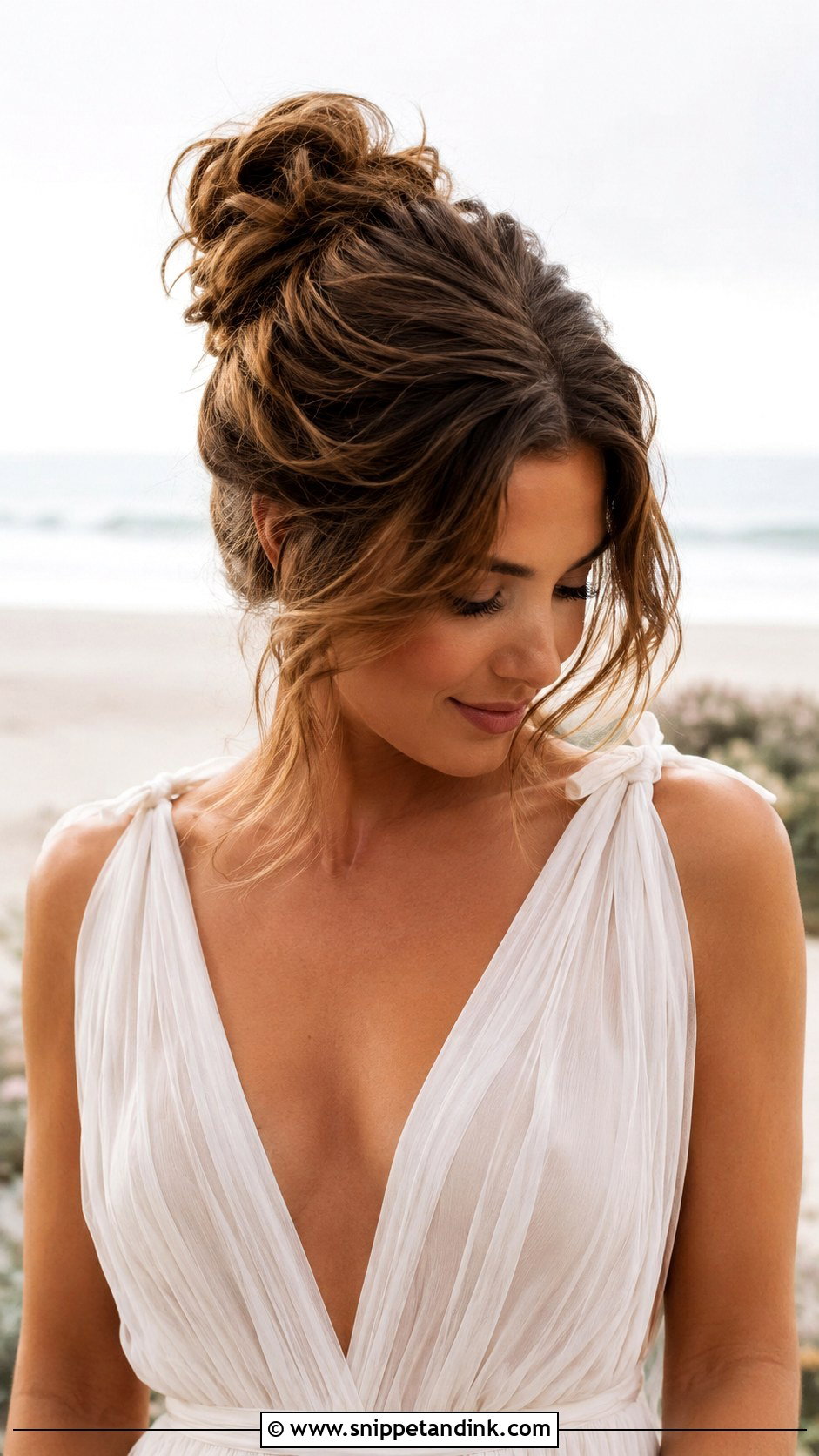
A messy bun with loose tendrils is less messy than it looks; the loose pieces are placed, not accidental. I curl the whole head first with a medium barrel, let the curls cool completely, then twist and pin the bun loosely and pull out a few strands at the temples and behind the ears. On beach and destination days this one can drift into genuinely untidy in wind or humidity, so I set the bun with a flexible spray rather than relying on texture alone. It sits easily beside flowing dresses.
4. Braided Crown Updo
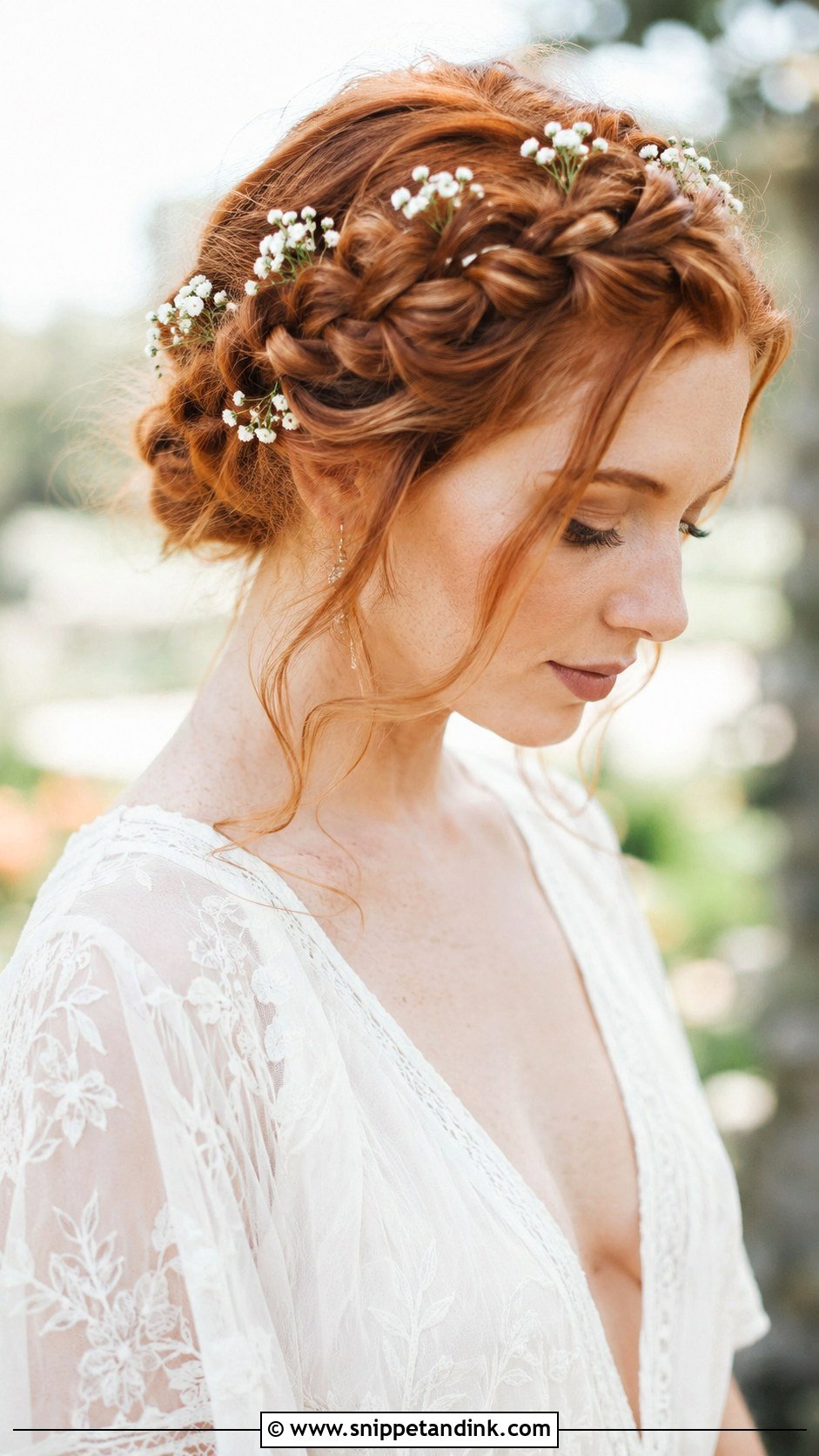
A braided crown wraps braids across the top of the head in a halo, and long hair gives you enough length to make it full rather than thin. I braid each side separately and cross the ends at the back, pinning with U-pins so the braid stays rounded. It’s a natural fit for outdoor and garden weddings, with small flowers or greenery tucked into the braid. On very fine hair the crown can look sparse, so I pancake the braid gently to widen it. It sits well alongside flowy gowns and light makeup.
5. French Twist Updo
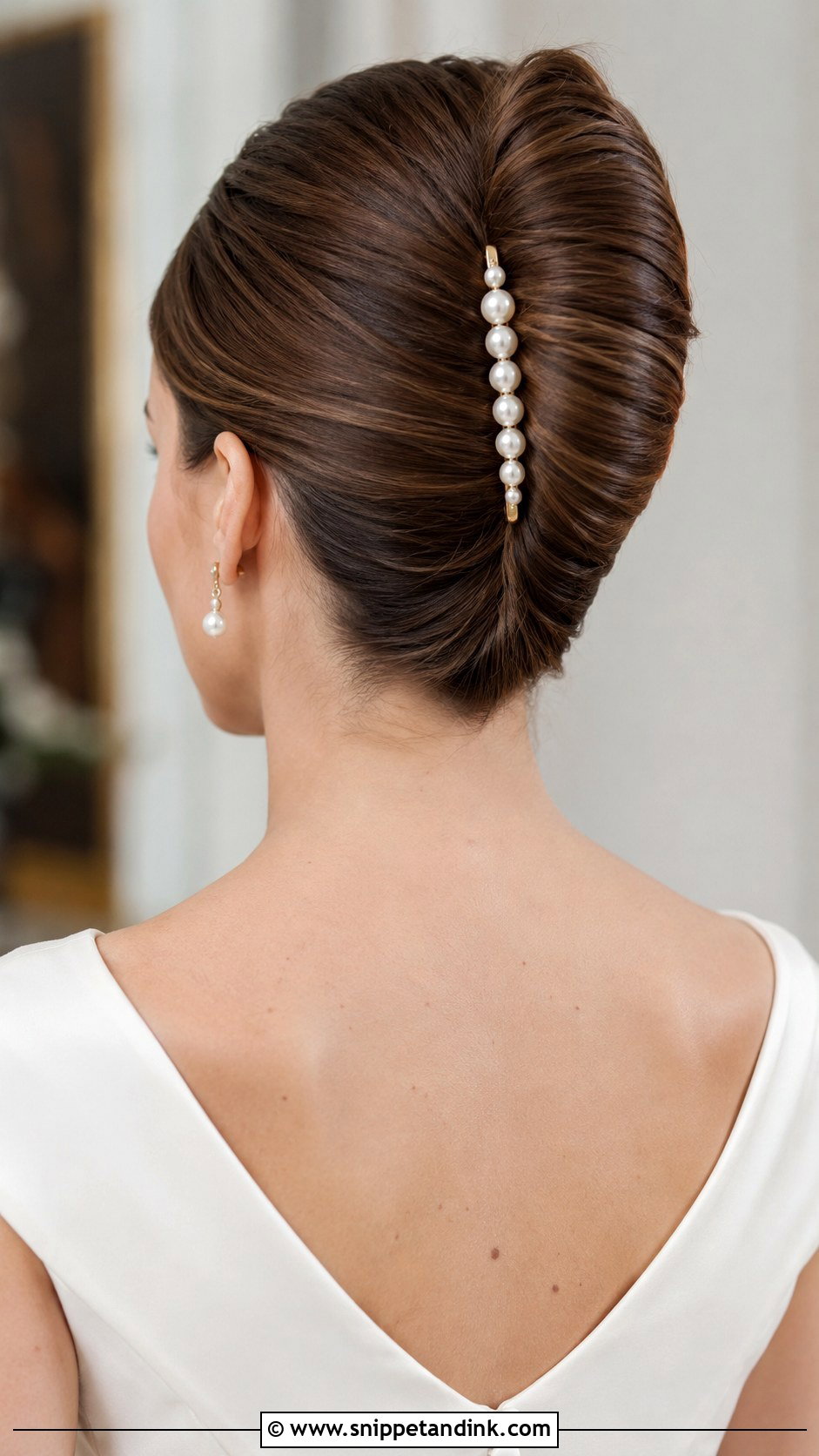
A French twist rolls the hair vertically up the back of the head and tucks the ends inside. It’s the most structured style here and works best on smooth, medium-thick hair. Very long, heavy hair can make the roll bulky at the bottom, so I sometimes trim the bulk by tucking part of the length into a small hidden bun first. A decorative comb or a few pearl pins add detail. Keep it sleek for a formal evening or loosen a few pieces at the hairline if it feels too strict.
6. Low Ponytail Wedding Updo
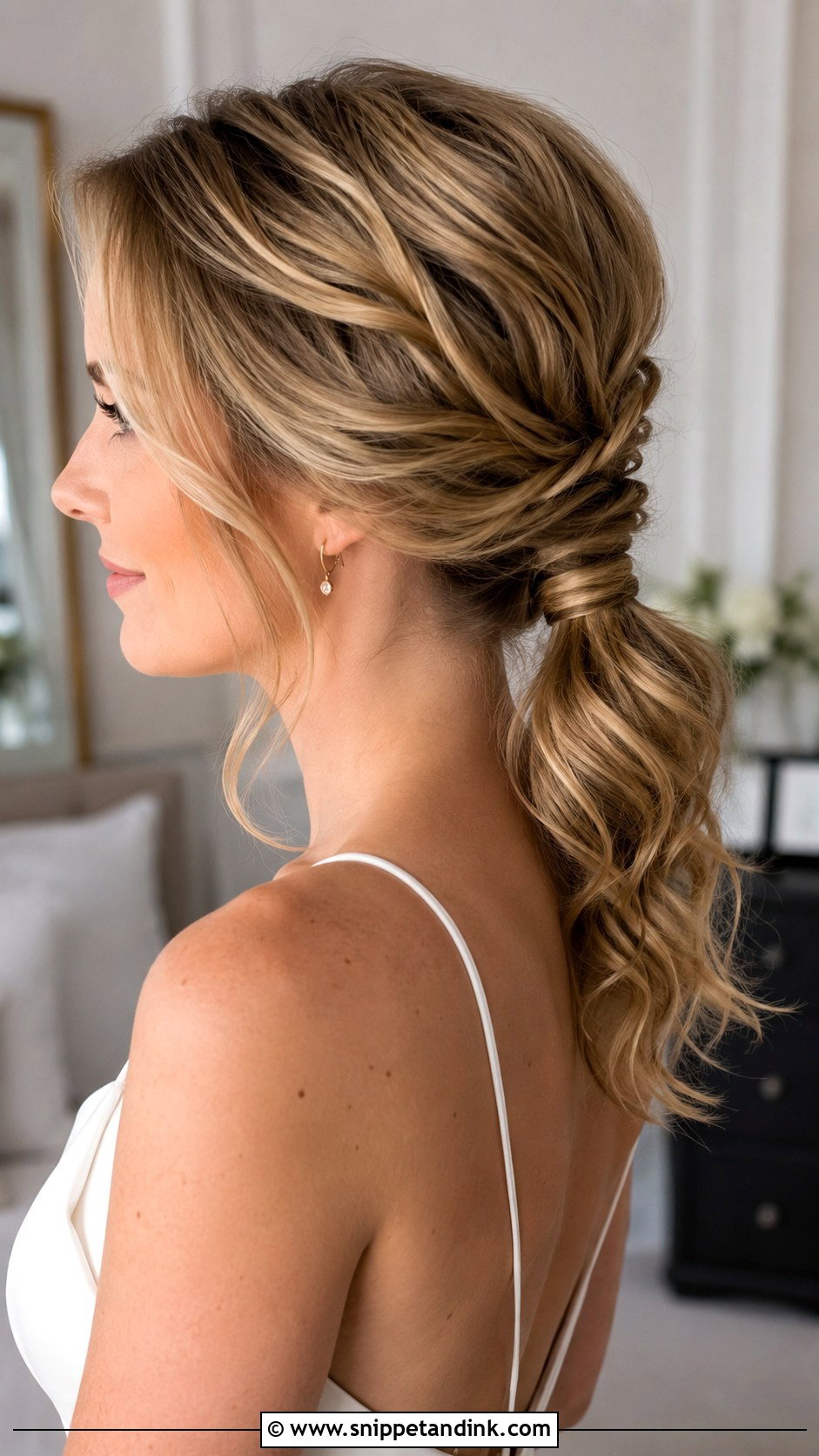
A low ponytail can be every bit as bridal as a bun when it has texture. Curl the hair first, gather it loosely at the nape and wrap a small section around the elastic to hide it, pinning the end underneath. I tie in a second clear elastic just below the first; a heavy ponytail drops at the base otherwise, and you’ll see a gap by mid-afternoon. Pull out a few pieces at the face. It’s the most comfortable option here for a bride who hates the feeling of pins against her scalp.
7. Half-Up Half-Down Bridal Style
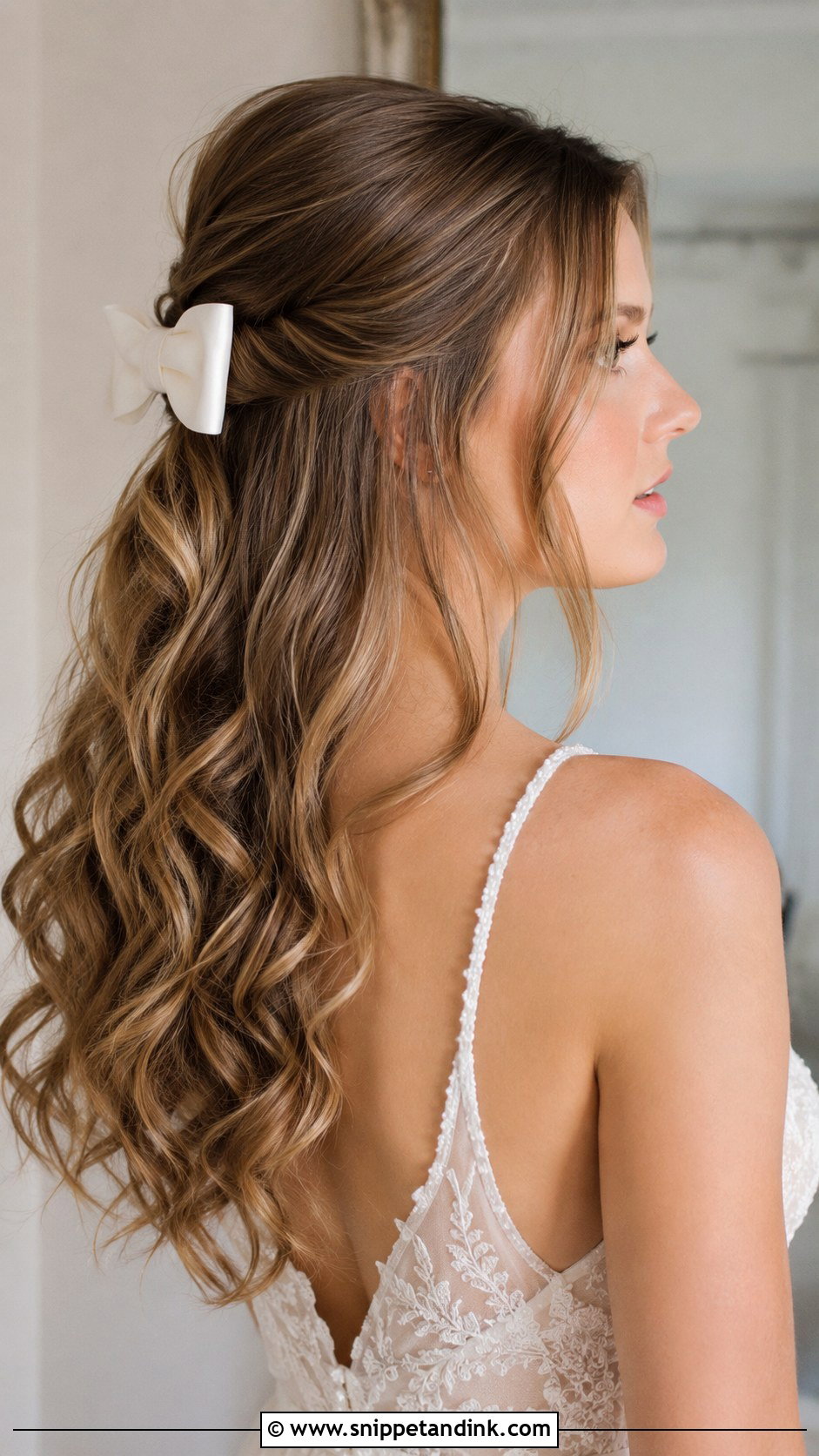
Half-up, half-down shows off length while keeping hair off your face. Gather the upper section, secure it at the back of the crown and let the rest fall over your shoulders, curled for body. A bow barrette, a decorative clip or a few small flowers can cover the join. The loose lengths are what to watch: on fine hair, curls in the hanging section drop fastest, so I curl them tighter than the final look and brush them out just before the ceremony.
8. Braided Bun Updo
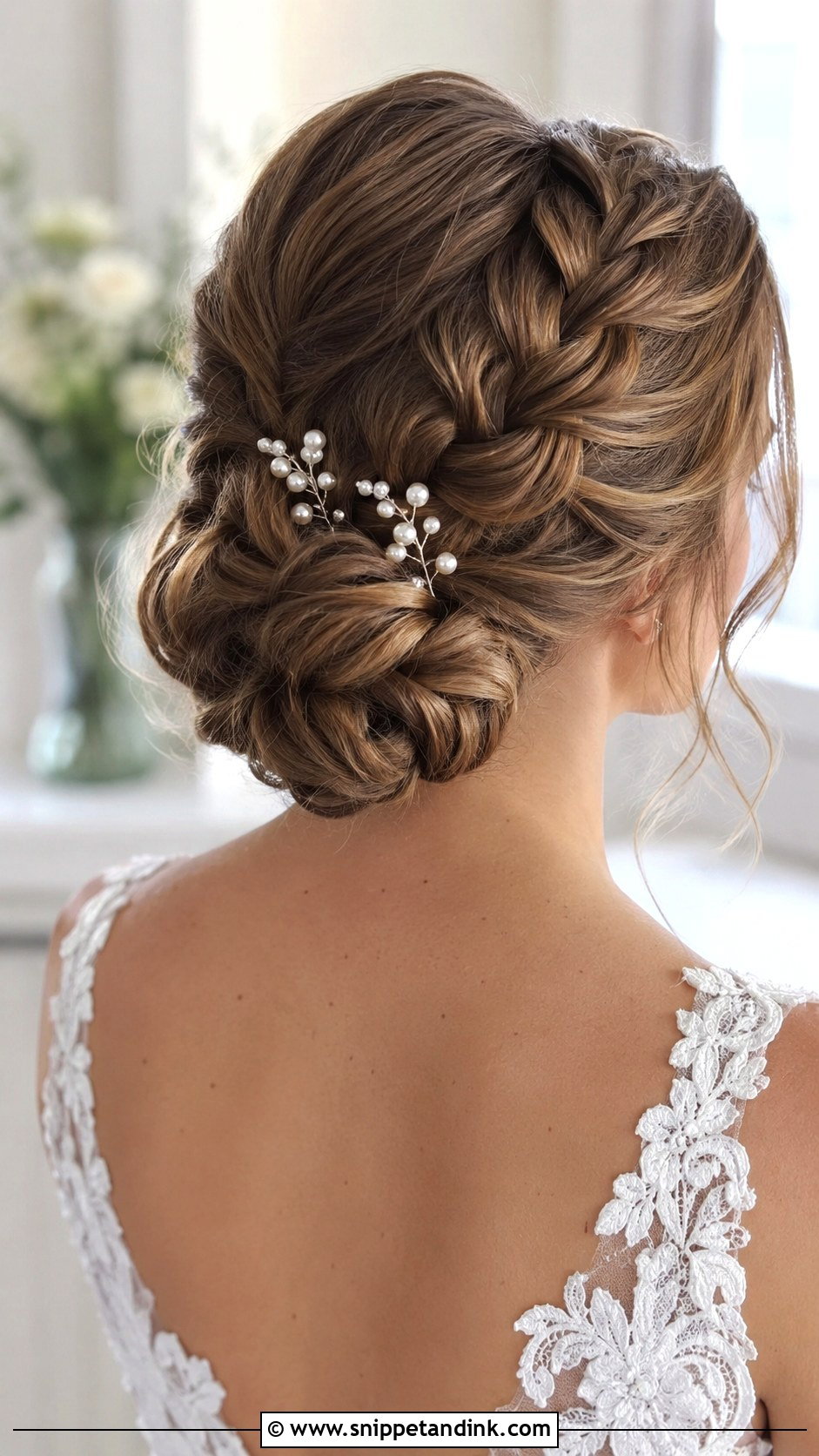
A braided bun starts with a French or Dutch braid that’s coiled and pinned into a bun at the back. For thick, long hair this is my most secure option, because the braid itself grips every pin and spreads the weight out. Keep it tight for a formal evening or loosen the braid for something softer. Small flowers or pearl pins tuck into the plait easily. It lasts through dancing with almost no touch-ups.
9. Twisted Updo With Pins
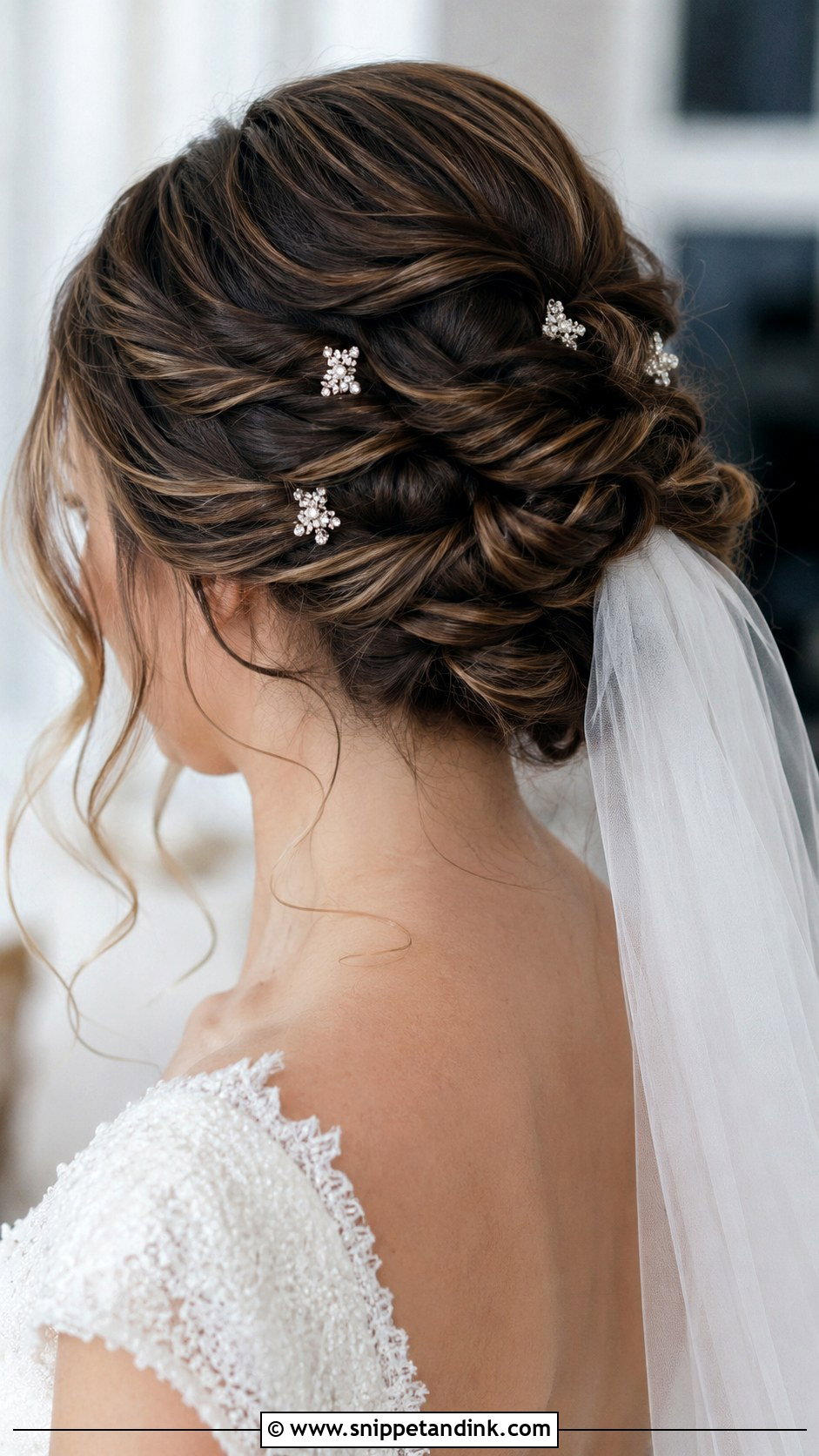
This updo builds texture from many small twisted sections, each pinned up separately. Because every twist carries its own pin, it holds well and needs little skill, which makes it a good choice if a friend is doing your hair. Long hair makes the twists fuller. Decorative pins can hide the working ones. I cross pins in an X over each twist on silky hair, as single pins slip on smooth strands. It suits a long veil or can be worn on its own.
10. Sleek Low Bun
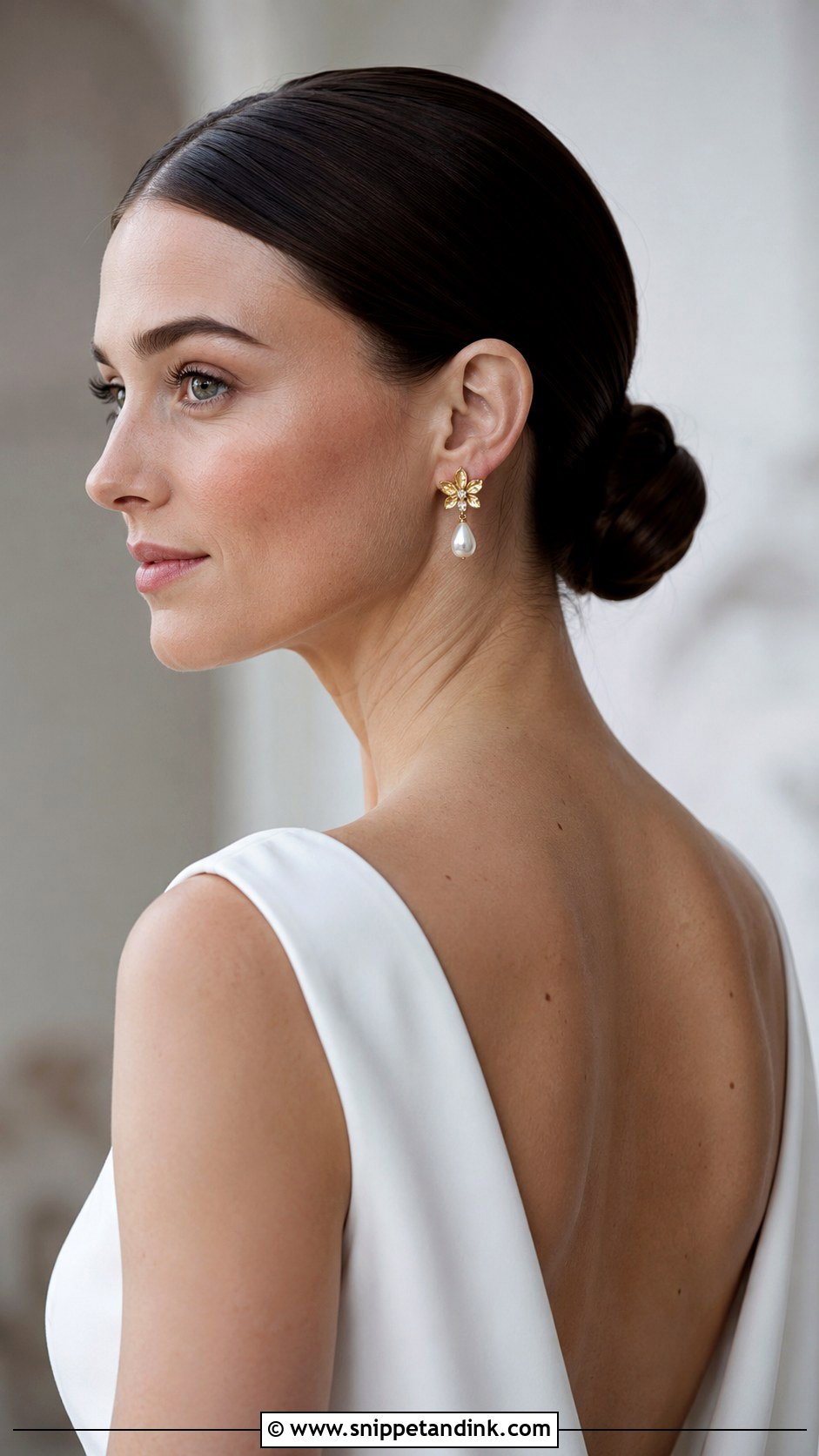
A sleek low bun smooths everything back into a glossy knot at the nape, with no loose pieces. It looks modern and lets statement earrings and stronger makeup take the attention. Sleek styles are the least forgiving of humidity: flyaways show immediately along the parting and hairline. I use a smoothing cream on damp hair and a fine-toothed brush, then finish with a light wax stick along the hairline. Minimalist dresses and modern venues suit it best.
11. Loose Braided Updo
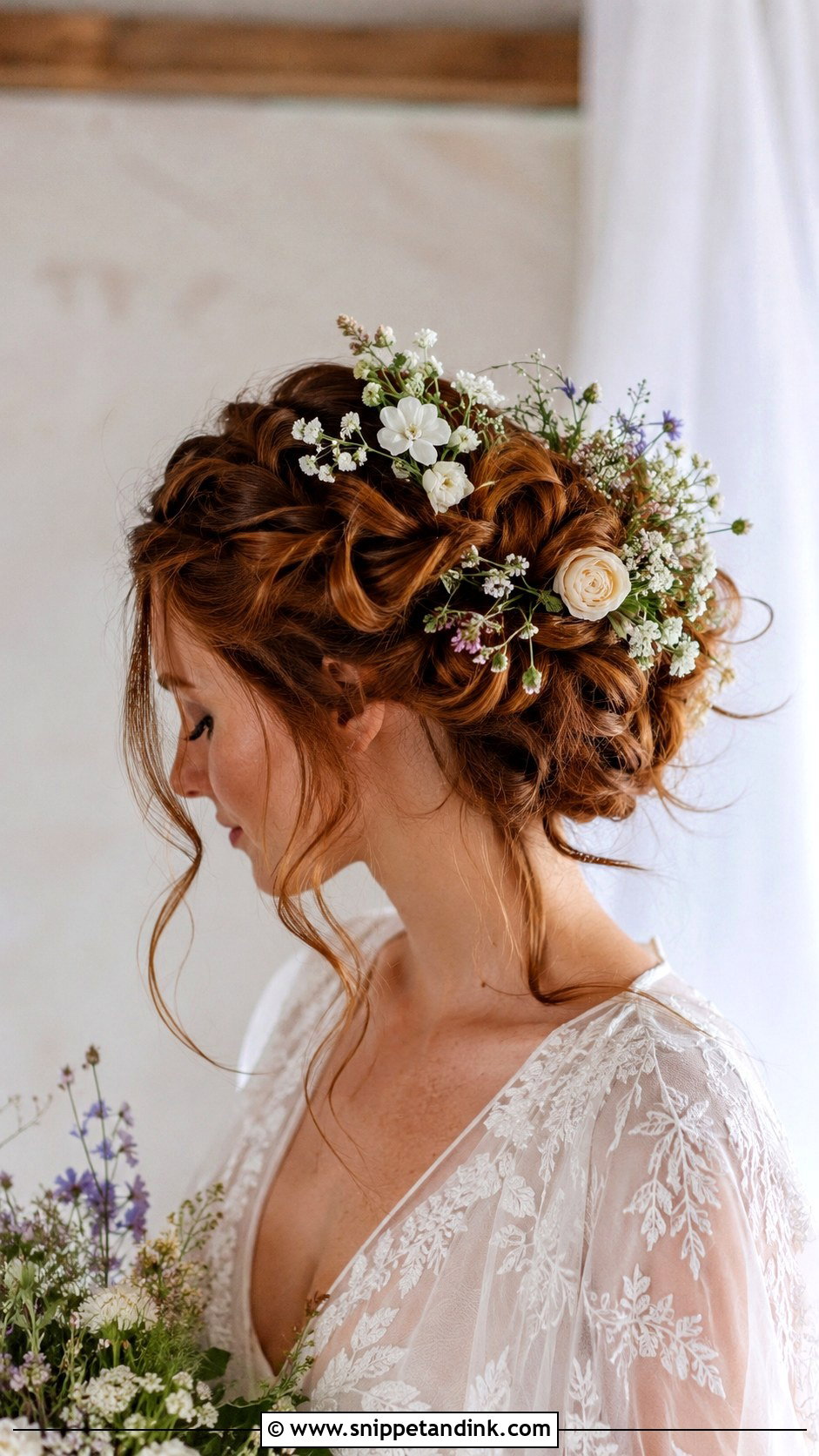
This loose braided updo has a relaxed shape that suits bohemian brides. Relaxed braids are woven loosely and pinned into a soft updo, then pulled gently to widen them and add volume. Greenery, wildflowers or a ribbon can be woven through. In my chair, the risk with a loose braid is that it loosens further as the day goes on, so I braid tighter than the finished look and only pancake it once it’s pinned. Garden, beach and outdoor weddings are where it feels most at home.
12. Vintage Roll Updo
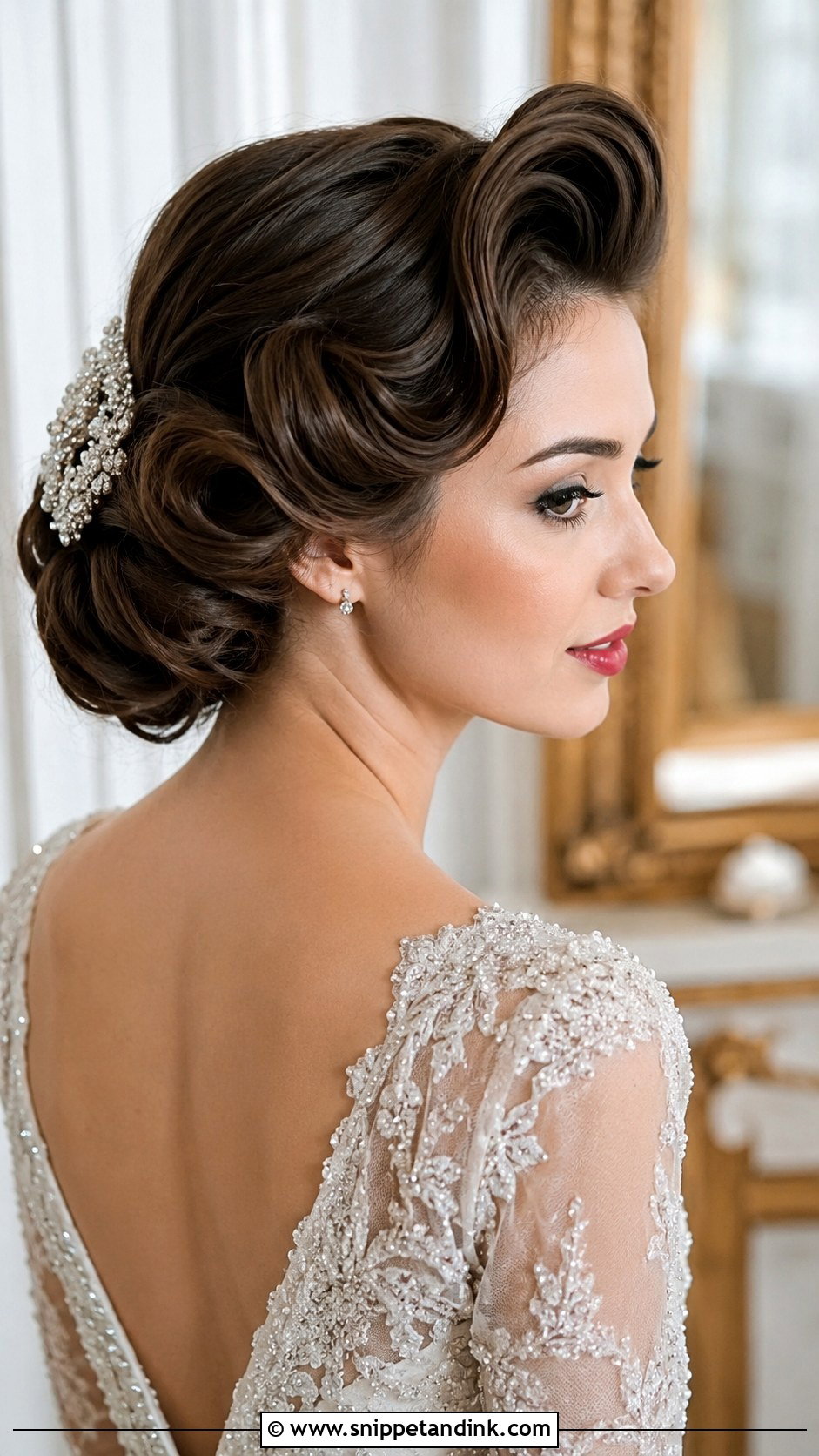
A vintage roll updo uses sculpted rolls that frame the face and gather into a defined shape at the back, an old Hollywood look. The rolls are set on hot rollers or a large curling iron and pinned while still warm, so they cool in place; that’s the step home attempts usually skip. Long hair gives the rolls their fullness. A decorative comb or sparkling clip adds a retro finish, and it pairs naturally with a red lip and statement earrings. It needs a firmer hold spray than the softer styles here.
13. Knotted Low Bun
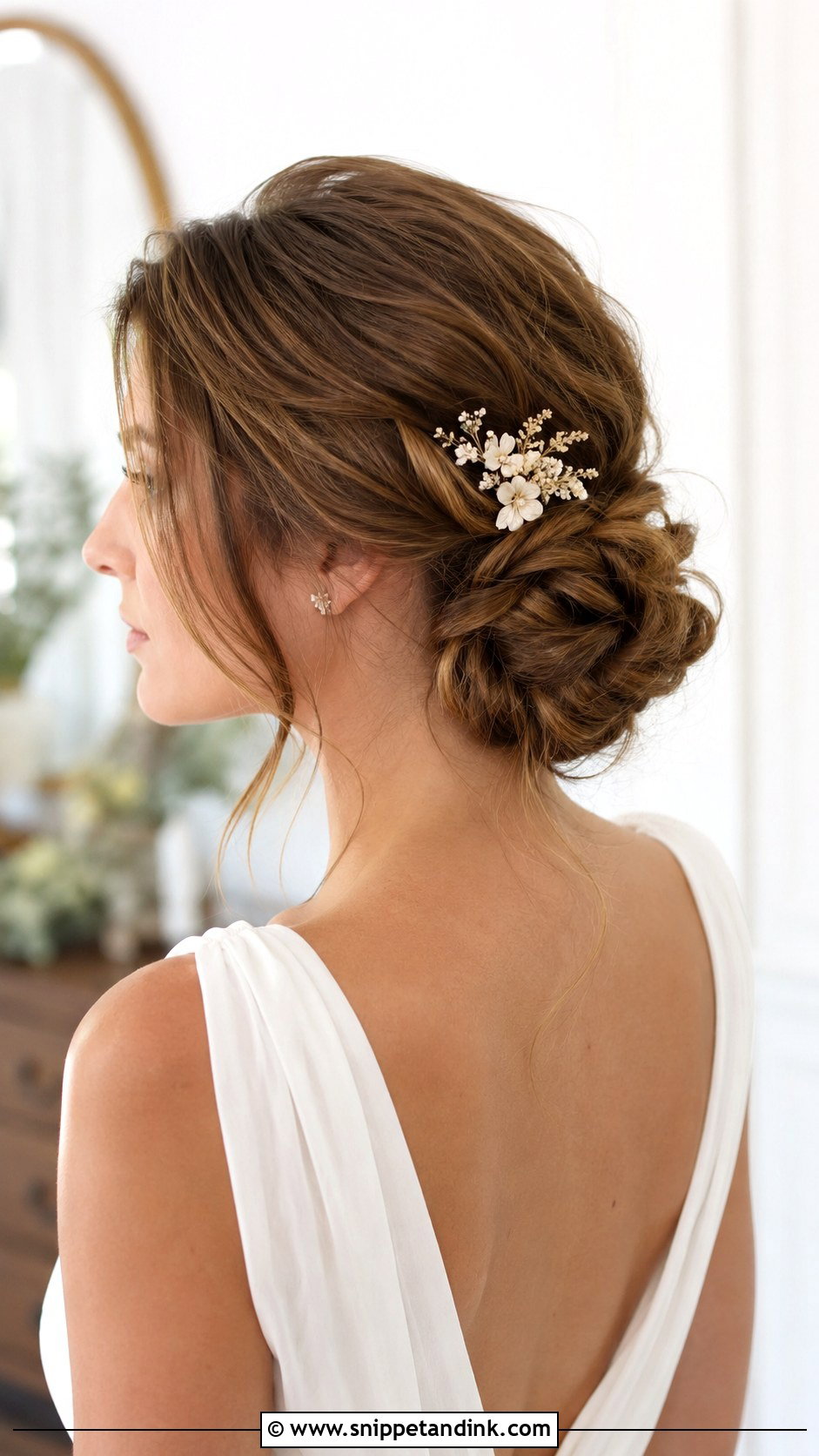
The knotted low bun ties sections of hair into soft knots before gathering them into a low bun. The knotting creates texture on its own, so you don’t need as much curling beforehand, which saves time on a busy morning. It’s quicker than it looks and a little different from the usual bun. Leave a few face-framing pieces loose, and add small floral pins or pearls if you like. Knots grip better on hair that wasn’t washed that morning; very clean hair slips out of them.
14. Side Swept Updo
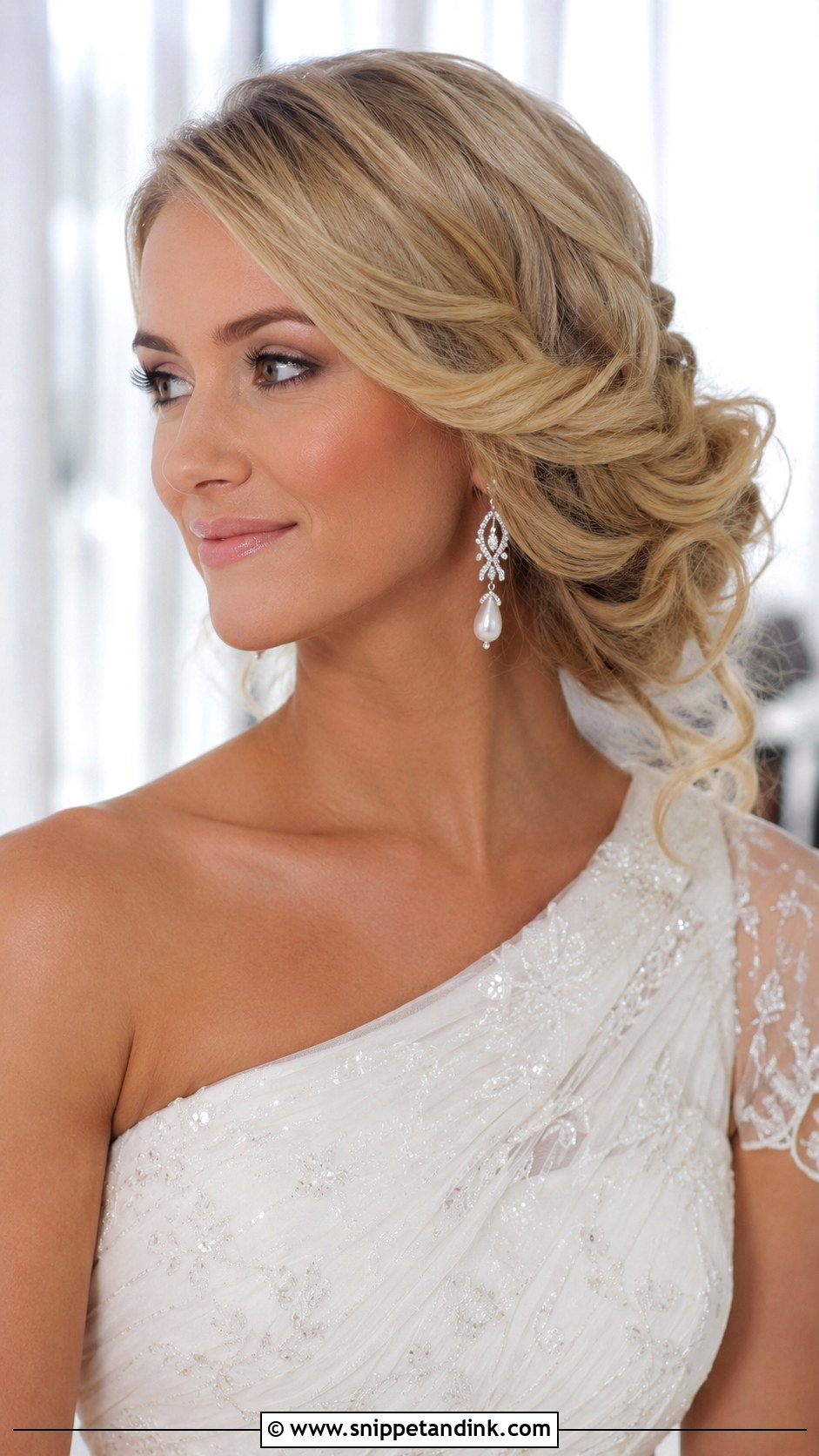
A side swept updo gathers the hair to one side for an asymmetrical shape that shows off one earring and one shoulder of the gown. I decide the side at the trial by checking which way the hair naturally falls and which side of you the photographer will mostly shoot during the ceremony. Waves or curls add movement through the swept section. Pin a few flowers or a clip at the base. One practical note: the hidden side is anchored with crossed pins behind the ear, and that’s the part that loosens during hugs.
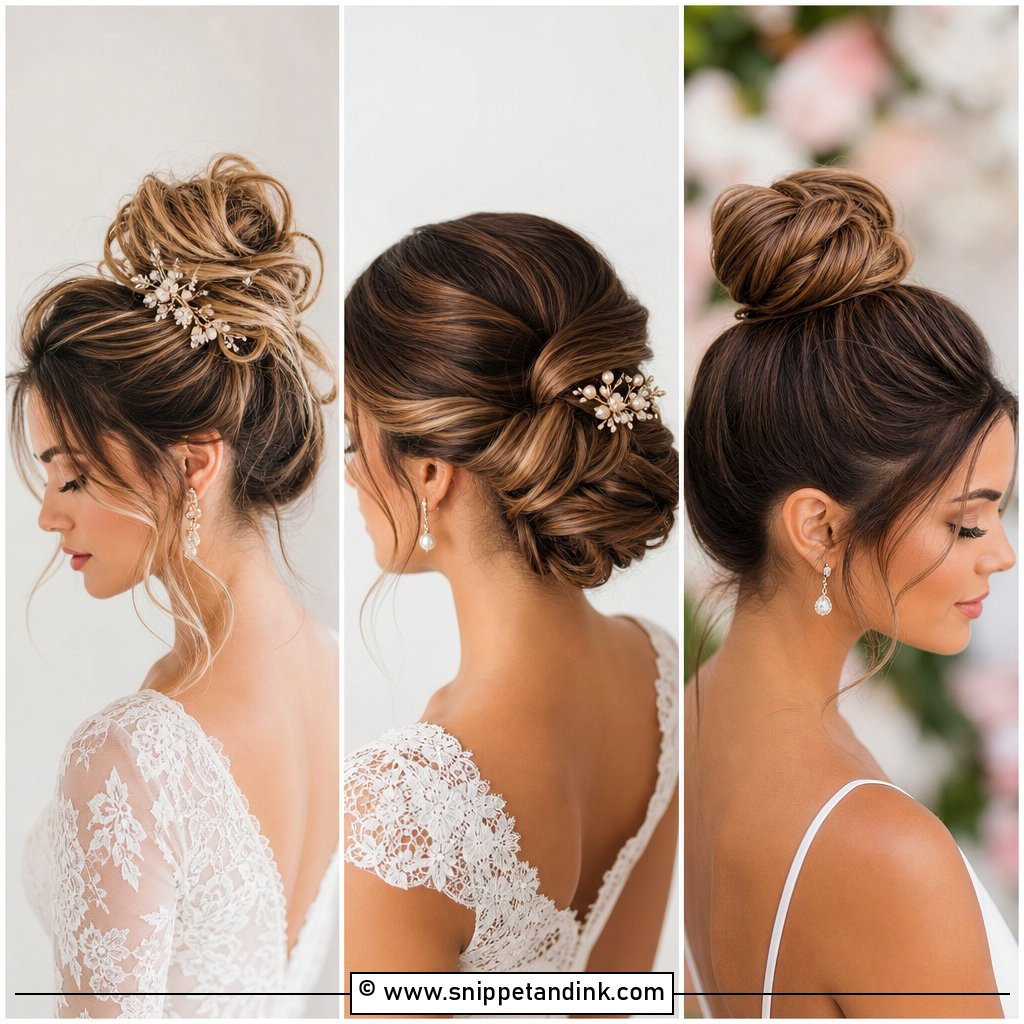
15. Floral Accented Updo
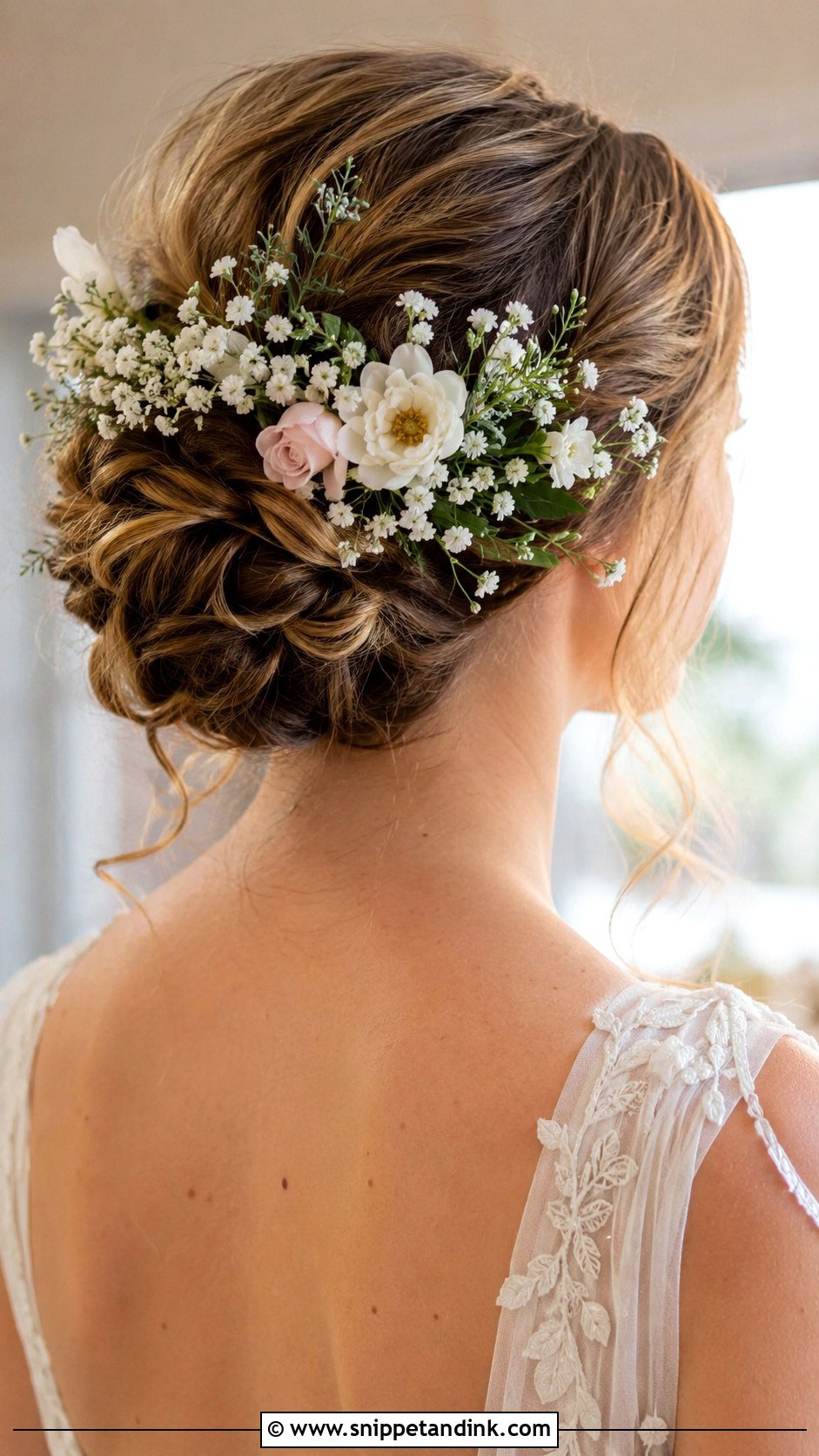
Fresh flowers woven into the hair turn a classic bun or twist into something seasonal. Tuck in small blooms, baby’s breath or greenery, ideally matched to your bouquet. Choose flowers that tolerate hours without water: baby’s breath, waxflower, spray roses and small orchids last, while gardenias brown at the edges quickly once they’re handled. I ask the florist to wire and tape the stems, which makes them far easier to pin securely. Long hair gives a fuller base to hold them.
16. Twisted Halo Updo
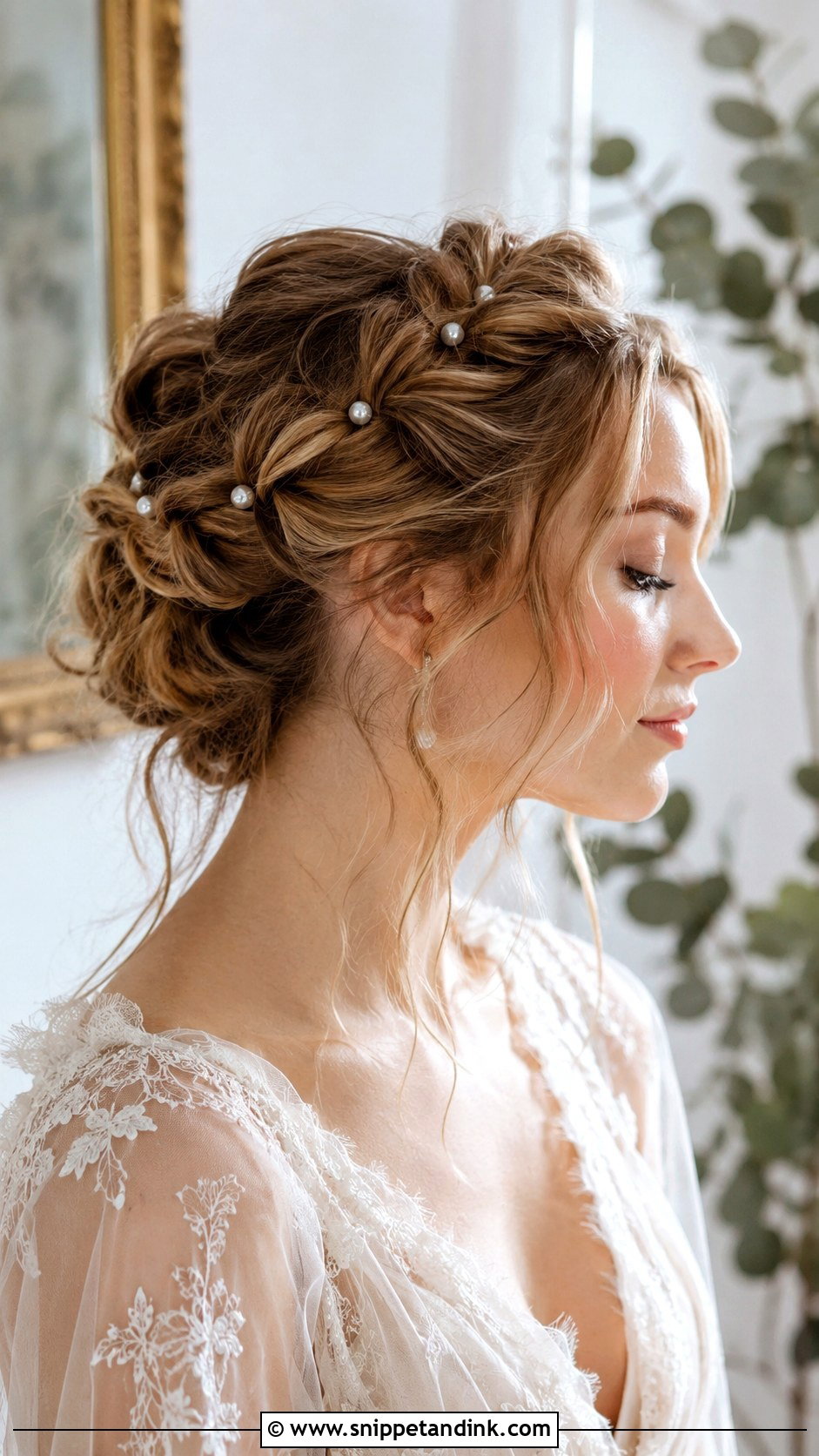
A twisted halo pins twisted sections around the whole head in a circle. It frames the face and keeps hair secure all day. Long hair creates a fuller halo, and a few tendrils left loose soften it. I start the twists slightly behind the hairline rather than right at the face, so the halo doesn’t look severe from the front. Pearl pins or small flowers can be added. Boho and garden weddings suit it best.
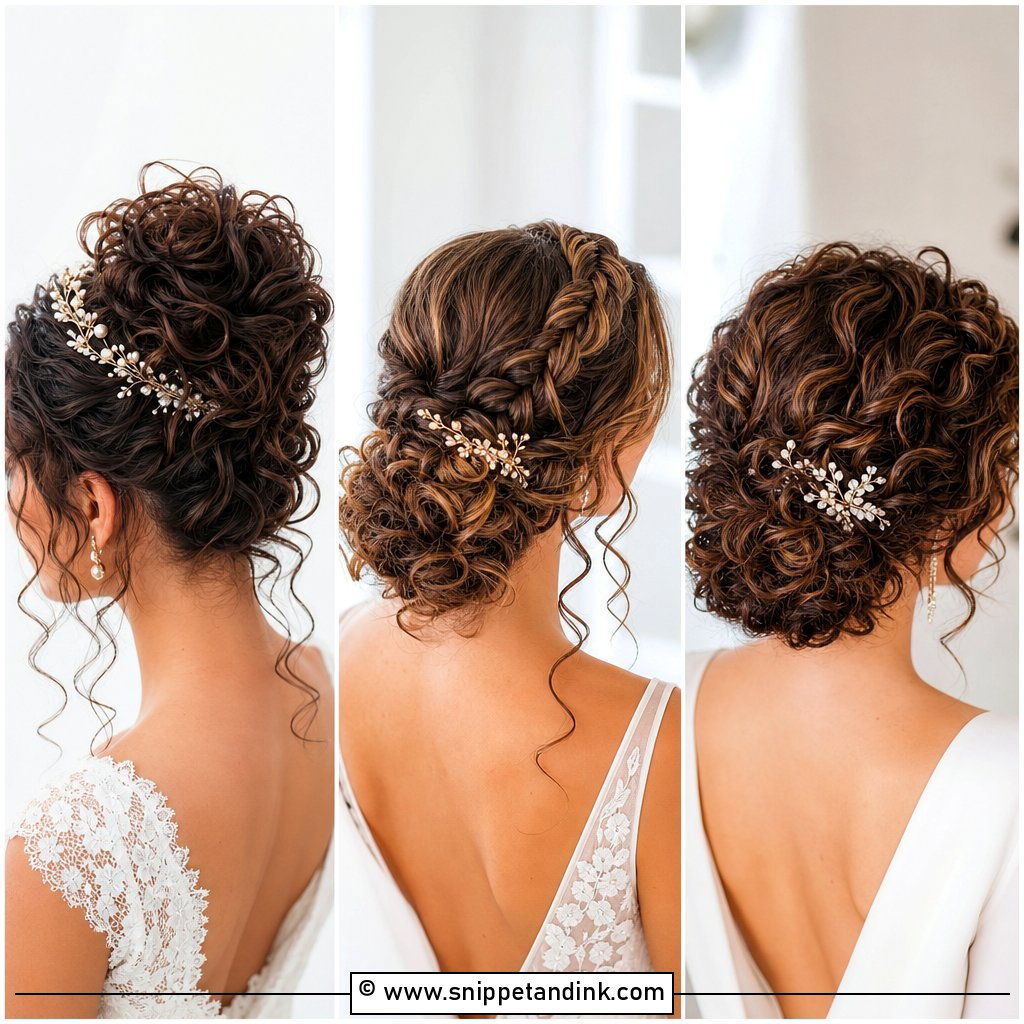
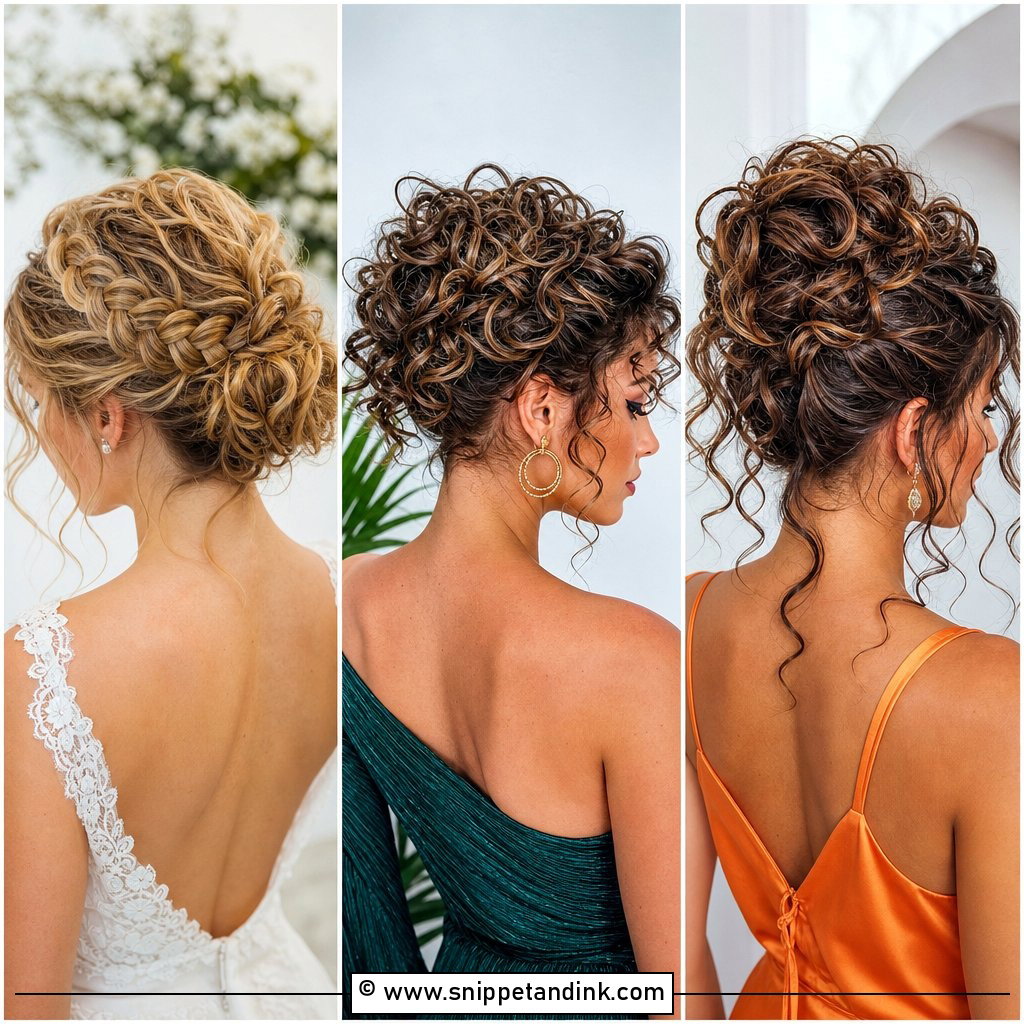
17. Curly Updo With Volume
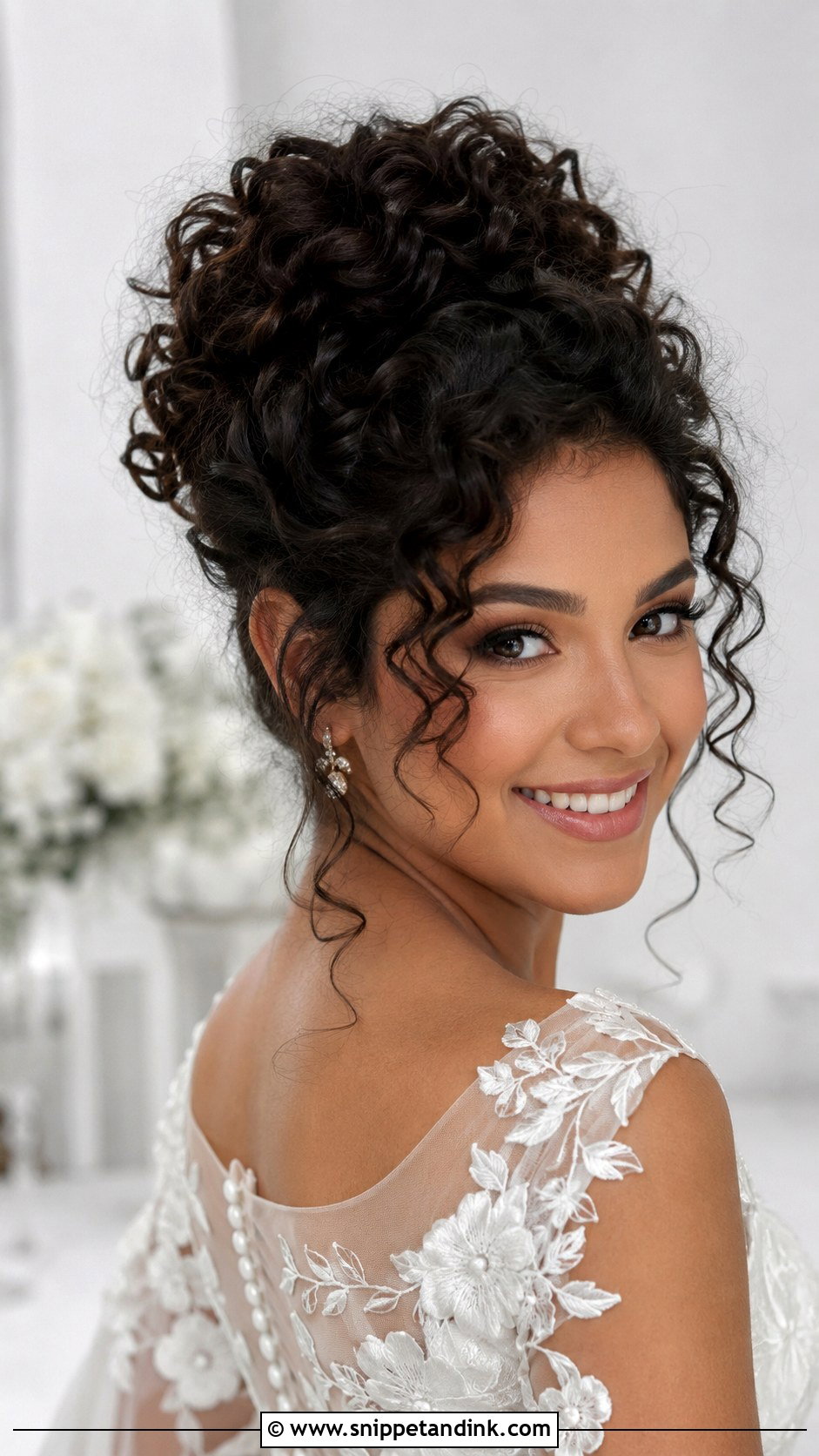
For natural curls or voluminous texture, a curly updo gathers the curls into a full shape that keeps their own pattern. I pin curls loosely and in clusters rather than one by one, so the definition stays intact, and I avoid brushing them at any point because that turns curls into frizz. Leave a few framing the face. It works across curl types; the only adjustment is moisture, since curly hair needs a leave-in or cream to keep definition through the day. A sparkling pin or fresh flowers finish it.
18. Braided Ponytail Updo
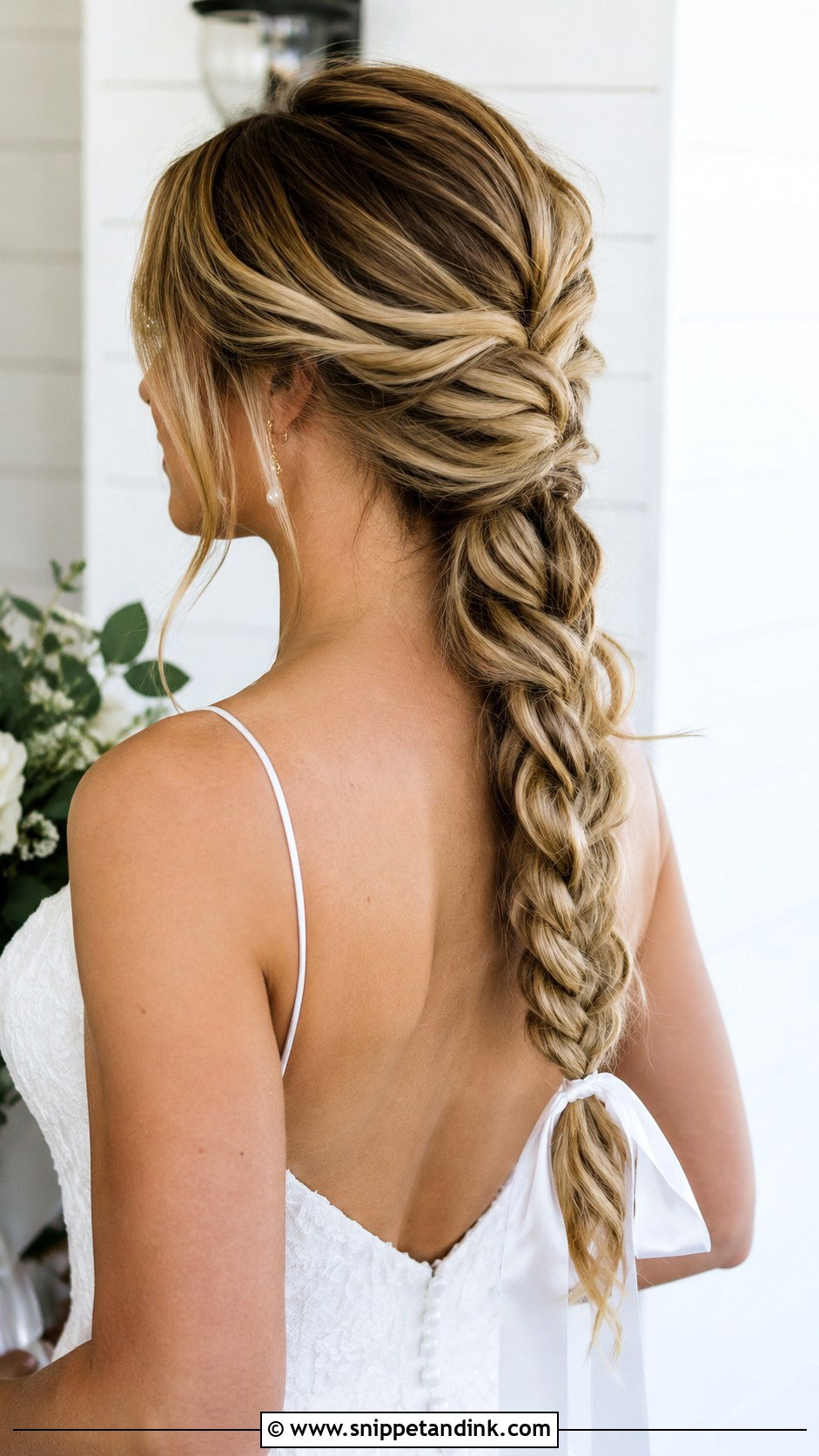
A braided ponytail braids the length of a low or mid ponytail. It’s simple, holds up well to dancing and suits a modern or relaxed wedding. Long hair makes the braid fuller and longer. Pull the braid looser for softness, or keep it neat for a cleaner shape. A few small pins or a ribbon at the base add detail. I secure the end with a clear elastic and wrap a thin strand around it, because the braid’s end is what catches on a dress back or lace.
19. Pinned Back Waves Updo
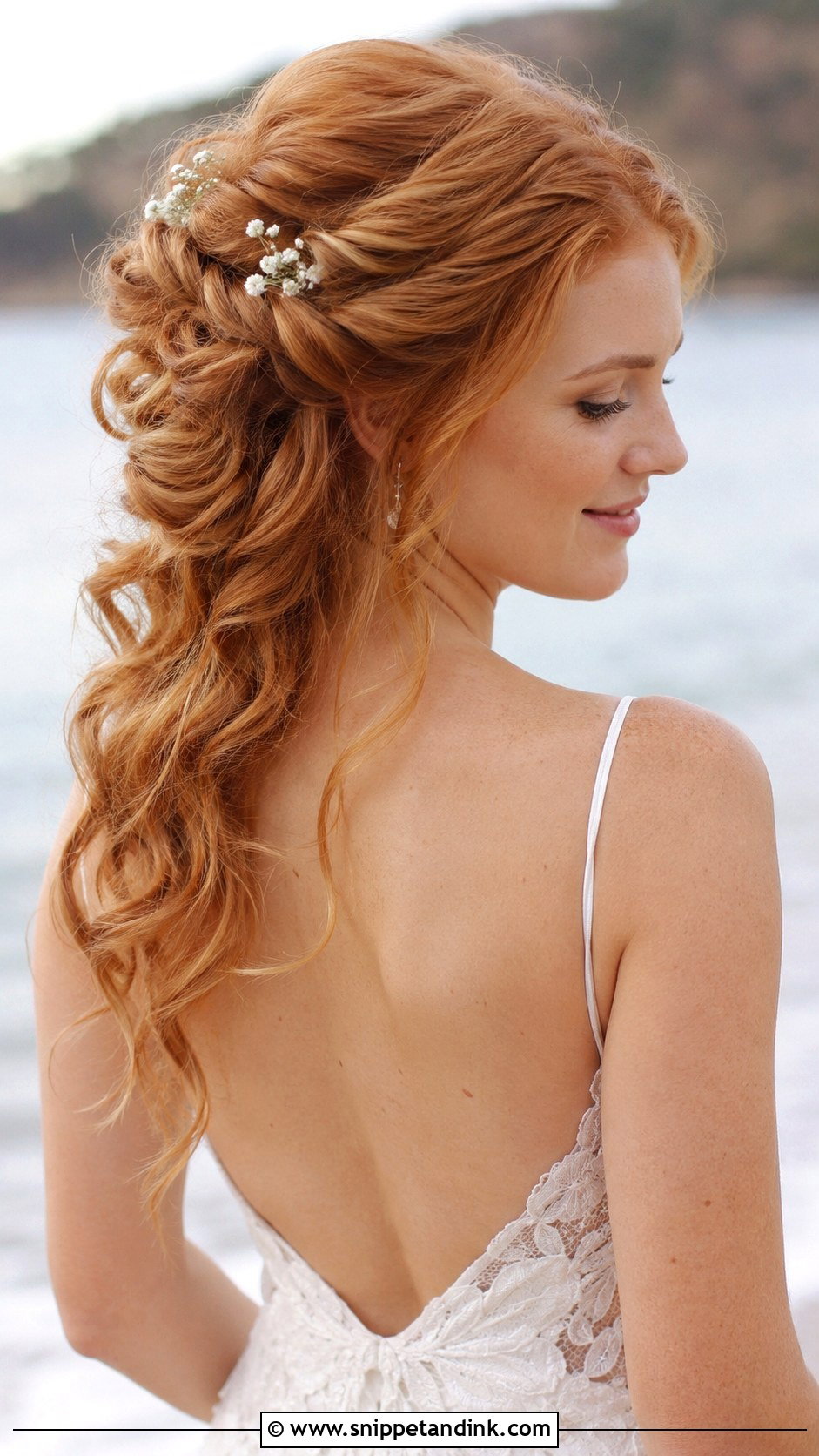
Pinned-back waves keep the hair mostly down with sections pinned back for structure. Curl the hair into loose waves first, then pin back sections at the sides and crown. You get movement rather than a fully finished updo. The waves drop the most of anything on this list, especially on fine hair, so I set each curl in a pin curl to cool and only release them at the last moment. Decorative pins or small flowers can sit at the join.
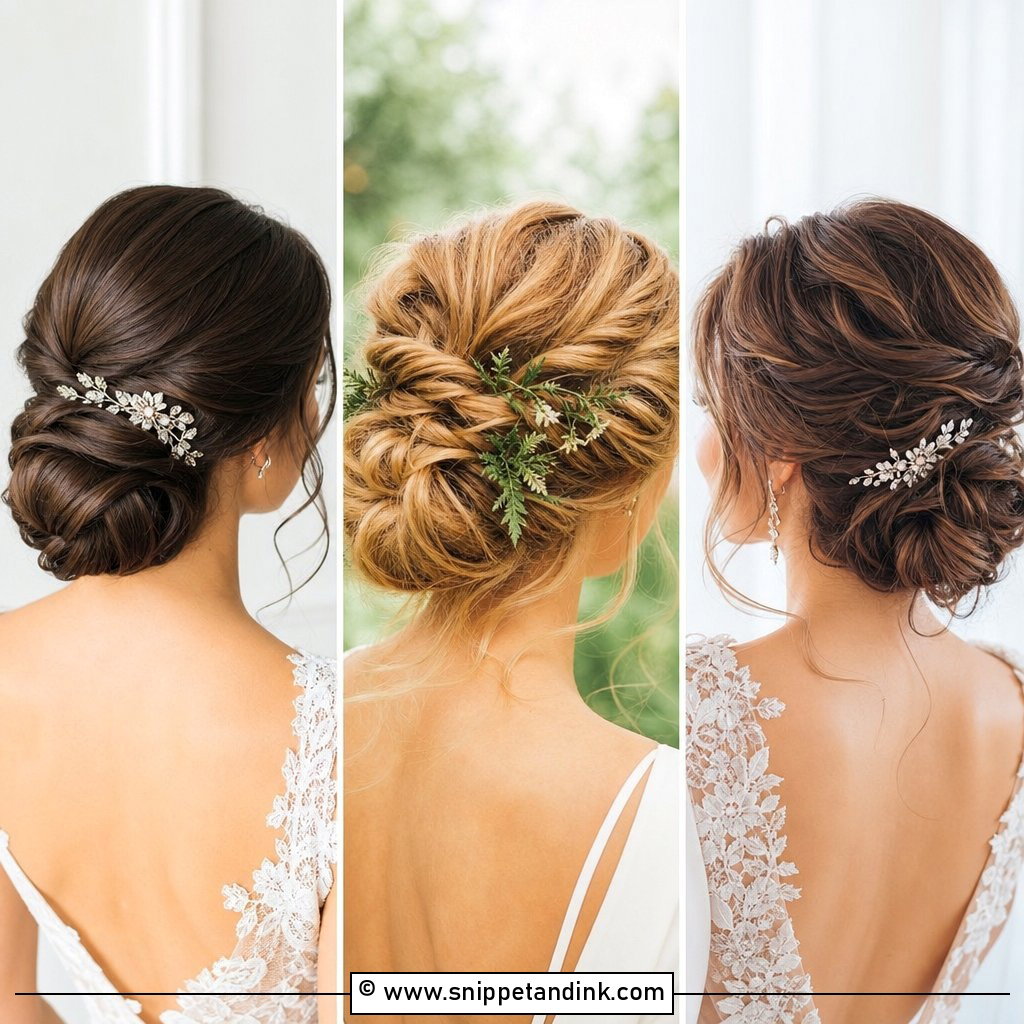
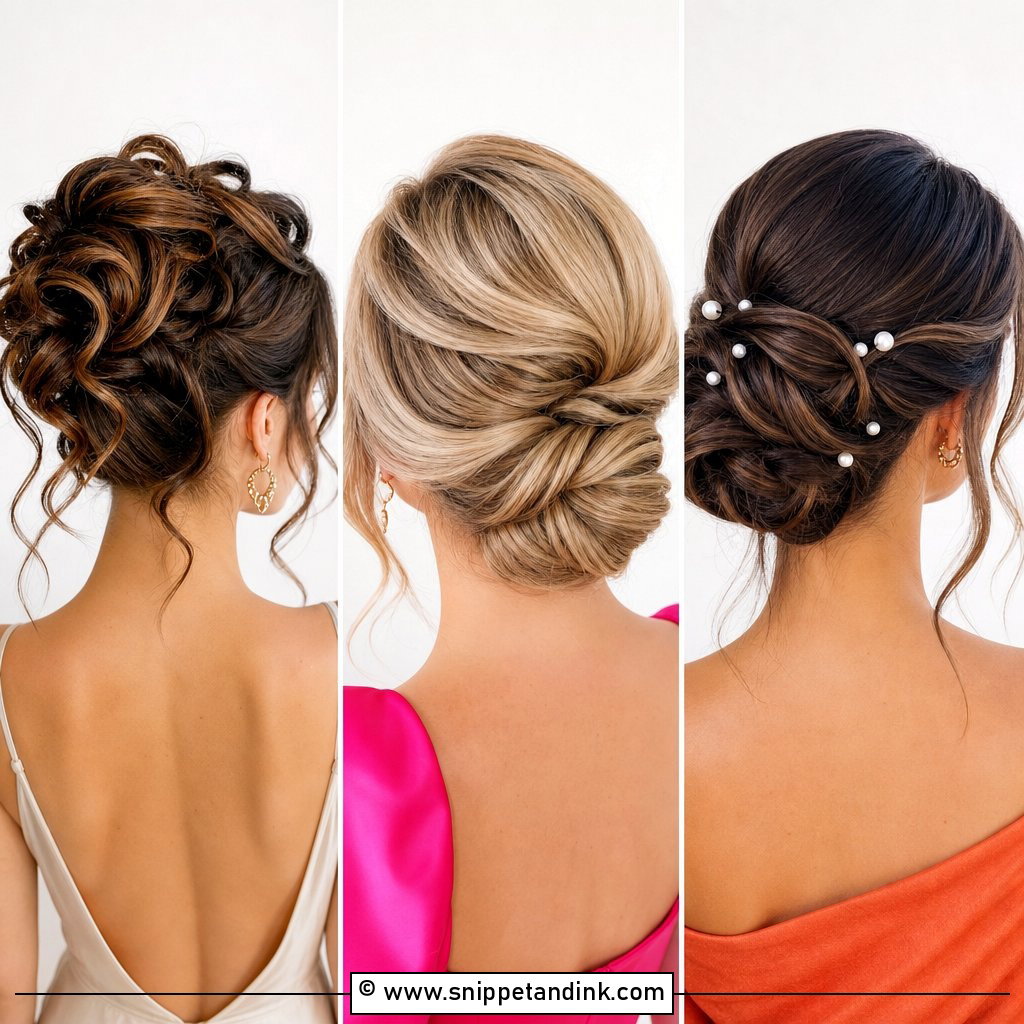
20. Elegant Bun With Veil
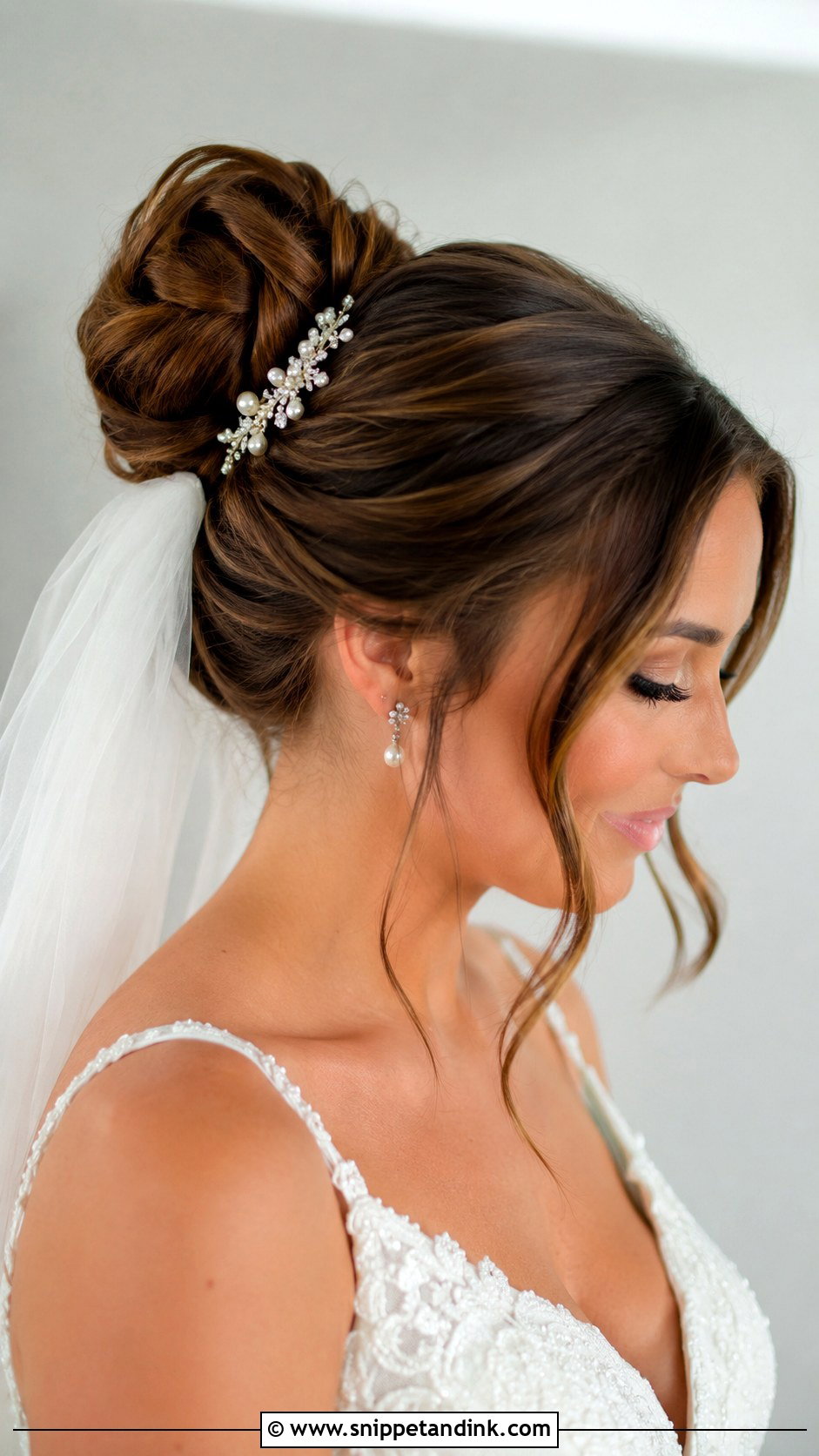
A smooth bun with the veil pinned underneath is the most traditional pairing here, and it complements any dress. The bun is what anchors the veil, so it has to be solid: I place it slightly higher than a nape bun if the veil is long and heavy, which keeps the comb from pulling the bun downward. Long hair tucks into a full bun easily. Pull out a few face-framing pieces and add a decorative comb or pearl pins. It suits traditional and formal ceremonies best.
Romantic Styles That Drop by Dinner, and the Fixes
The loose, pulled-apart looks in this list photograph softly at the start of the day, but they’re the first to lose shape. That doesn’t mean avoid them; it means plan for it.
Humidity and outdoor heat
Curls in fine hair loosen fastest in damp air. If your ceremony is outdoors in summer, ask for a slightly tighter version of the style at the start, knowing it will relax by the reception. Sleek styles go the other way, and frizz shows along the hairline.
A small kit for a bridesmaid
Ten spare bobby pins in your hair color, a travel-size hairspray and a small comb are enough. A loose section can be twisted and repinned in under a minute in a mirror, without restyling the whole thing.
At the End of the Night, Unpin Slowly
An updo can contain thirty or more pins, and pulling the hair down quickly snaps strands. Take them out one at a time, starting from the last ones put in, usually around the face and crown. Don’t brush through the hairspray; work a little conditioner or oil through the ends first, then comb from the bottom up. Sleeping in an updo leaves sore spots on the scalp and tangles that are much harder to work out the next morning.
Secure at the Base, Soft at the Edges
Long hair lets you go sleek or loose, but every one of these updos depends on the same thing: a solid foundation that the softness is built on top of. Get the base right with an elastic or braid and pins placed correctly, and the face-framing pieces, flowers, pearls or veil can do the rest. Bring photos of styles you like to your trial, and show your stylist pictures of your dress too, so the shape at the back suits the neckline.
You'll Like These Ideas:


Leave a Reply