
A reveal cake has two jobs. From the front it has to pass as a proper wedding cake, and from the back or side it shows something only the two of you would choose: a shared hobby, a film you love, a pet, a cultural detail, or a burst of colour behind a peeled-back fondant curtain. When I design one, I sketch both faces at once, because the reveal only lands if the calm side is genuinely calm. Below are twenty directions, with notes on how each is made and where they tend to go wrong.
Inside the Peel: How a Fondant Curtain Is Built
Most reveal cakes rely on the same trick: a panel of icing that looks as if it has been peeled back to show a second design underneath. It’s made in two layers, and knowing that helps you plan.
- The reveal design is decorated first, directly on the tier, whether that’s painting, a printed panel or small sculpted pieces.
- The outer covering is rolled from fondant stiffened with a little tylose so it can hold a curl. I shape the peeled edge and let it firm up before attaching.
- The curl is attached last, with edible glue, so it frames the reveal without hiding it.
Peeled edges soften in humidity, and a heavy curl can droop in a warm room. For a summer or outdoor reception, I’d make the curl thinner and keep the cake cool until it’s set out. If you’re set on a buttercream finish, the peel can still be fondant or modelling chocolate; it just needs a chilled cake underneath so the join stays clean.
Character Cakes, Team Logos and What a Baker Will Copy
Many of these ideas touch a film, a team or a game. Most bakers won’t reproduce trademarked logos or characters exactly, and some can’t print them on an edible image either. That’s rarely a loss. I work from colours, silhouettes and symbols that guests recognise straight away, and the result usually looks more grown-up than a printed logo. Bring three or four references and tell your baker which detail matters most to you.
1. Classic Reveal Wedding Cake
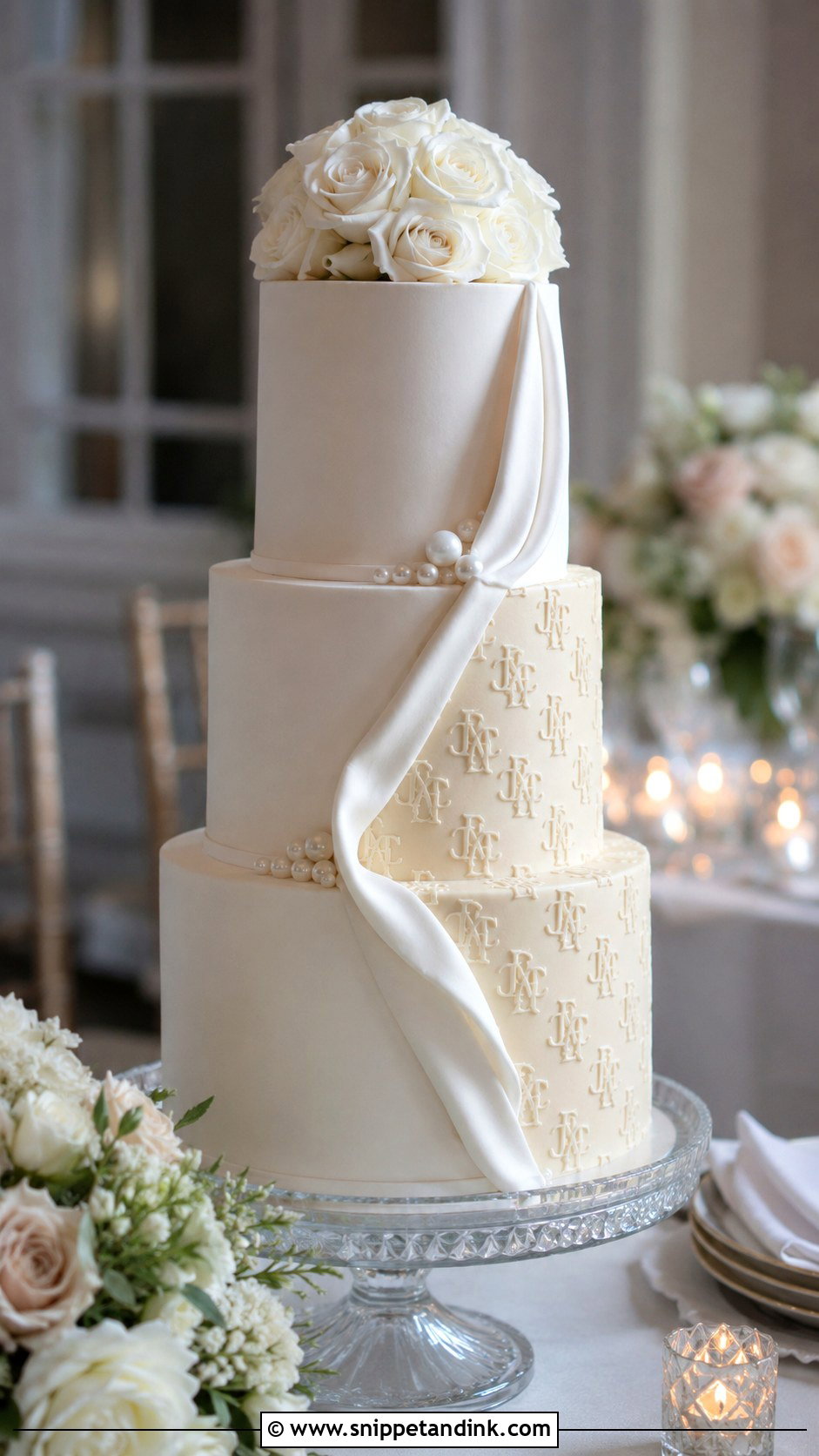
The classic reveal is the one I suggest when a couple is unsure. The front is a traditional white tiered cake with smooth fondant, piped pearls and sugar flowers. Around the back, one or two tiers open to a monogram pattern, your palette or a few small sculpted details. I keep the reveal to two tiers at most; past that, the cake starts to look like it has two fronts. It’s also the easiest to photograph, since both sides read clearly.
2. Floral Reveal Wedding Cake
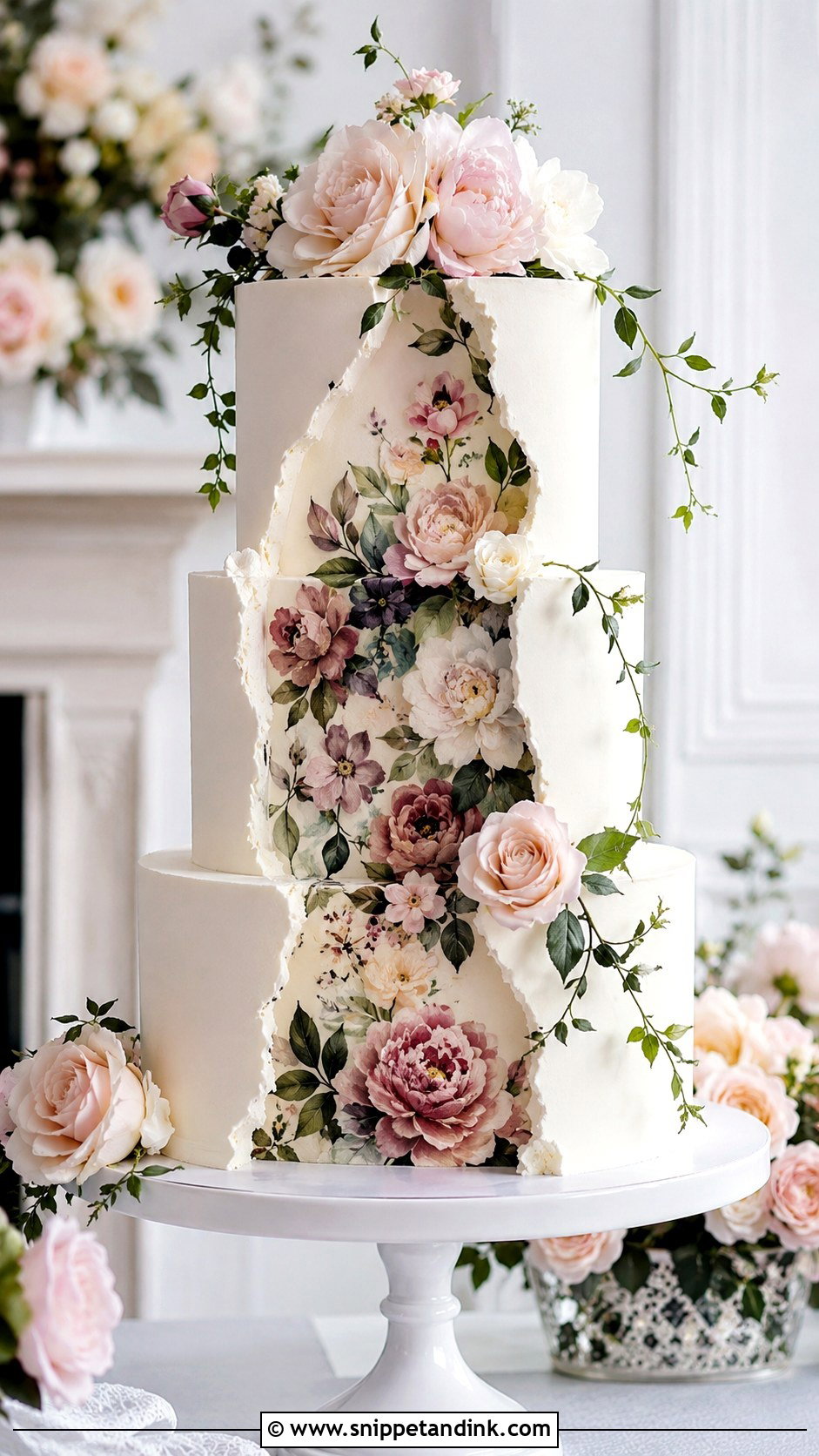
Floral reveals blend into nearly any reception. I put ivory buttercream, sugar roses and greenery on the front, then open the back into a garden: pressed-style sugar flowers, painted blooms or a bold pattern in your colours. Sugar flowers are made days or weeks ahead and dried, so they cost time rather than skill on the day. Keep the reveal to flowers alone. Mixing in butterflies, birds and lettering is where these cakes lose their grace.
3. Rustic Reveal Wedding Cake
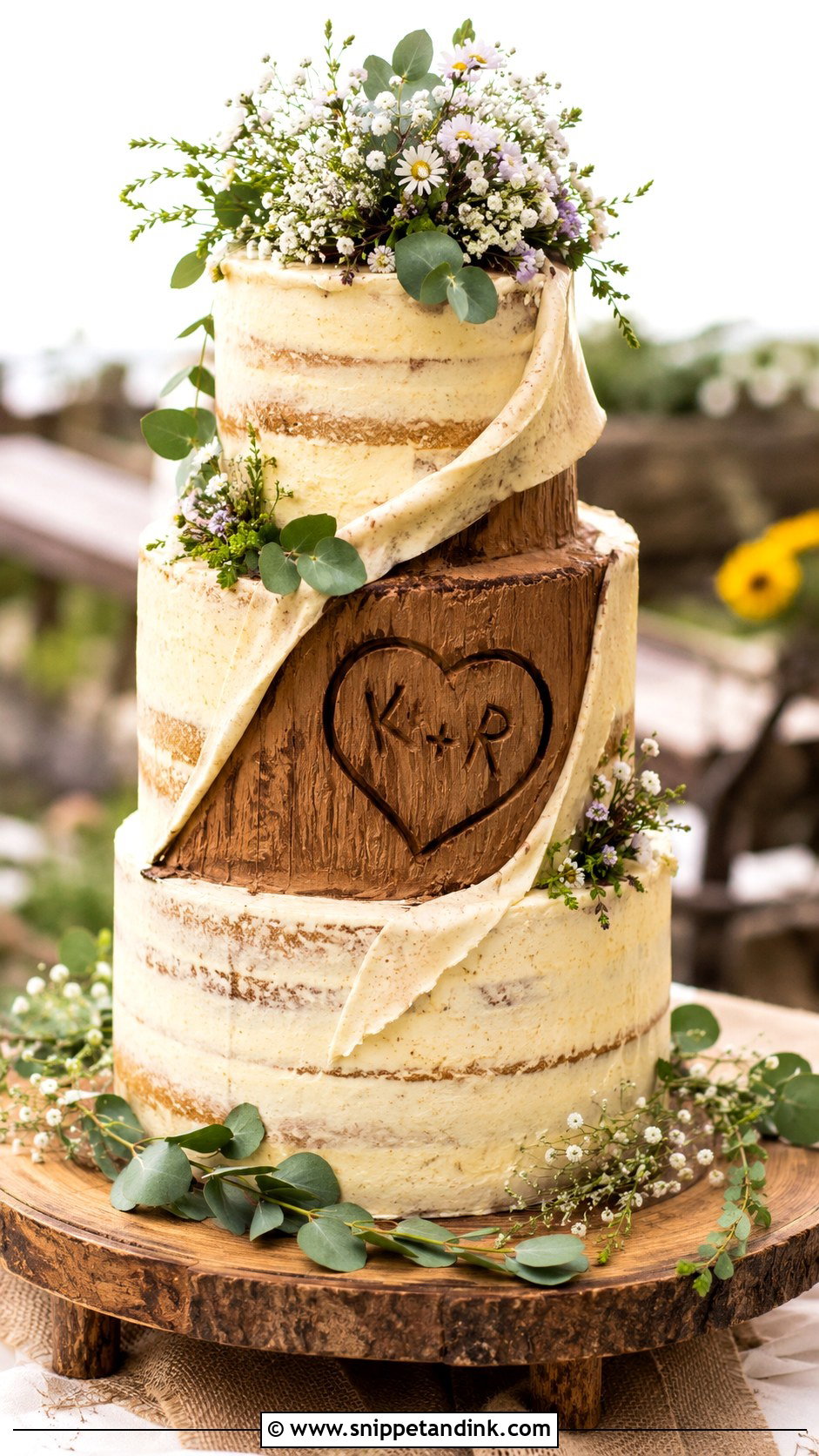
Rustic reveals suit barns and relaxed outdoor parties, though I’d be careful with the semi-naked finish outdoors. Thinly iced sponge dries out quicker than a fully coated cake, so I brush the layers with syrup and keep it in the cool until the last moment. The reveal behind a fondant peel can show woodgrain, carved initials, small mountains or wildflowers. A wooden stand and candles do the rest. One detail tied to your venue or story is enough.
4. Modern Reveal Wedding Cake
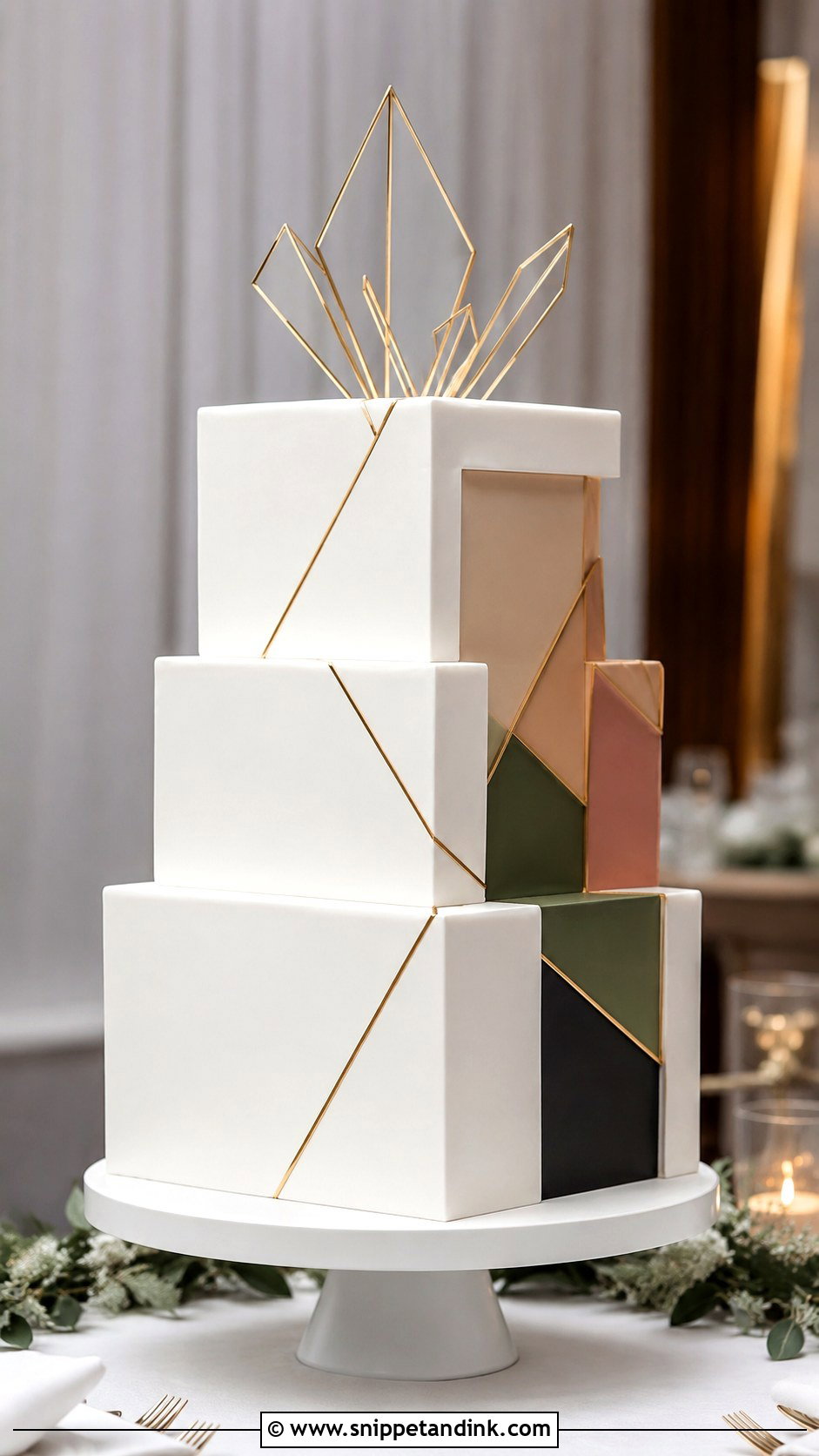
Modern reveals depend on sharp edges, and sharp edges depend on what’s under the icing. I coat the tiers in ganache before the fondant goes on, which sets firm and gives those clean corners. The front stays white, champagne or soft grey. The back takes colour blocks, metallic accents, geometric shapes or a marbled panel. Hold the palette to white, gold and one accent so the contrast does the work.
5. Elegant Reveal Wedding Cake
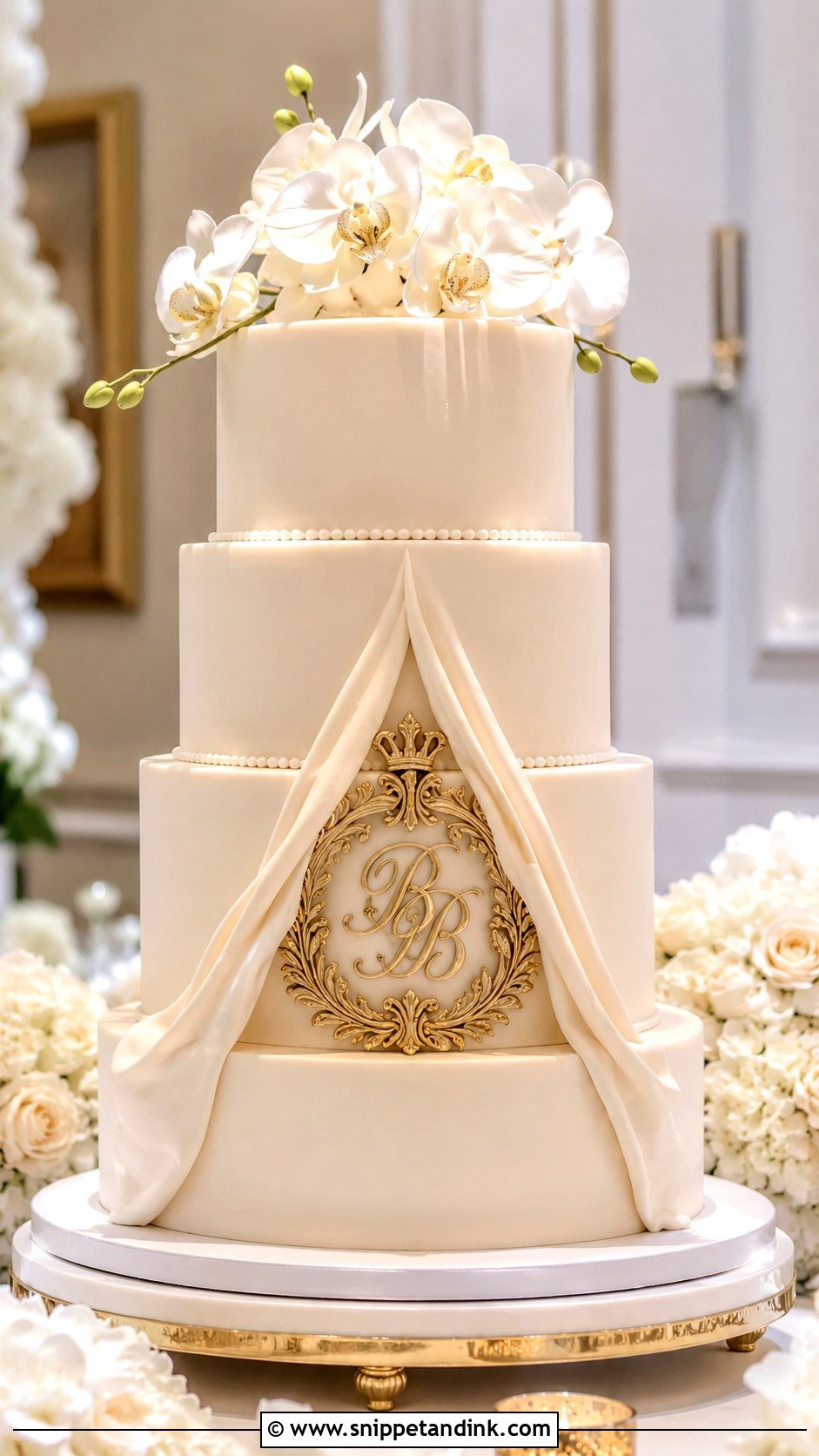
An elegant reveal is refined first and surprising second. Tall tiers, smooth fondant, pearl detail, lace-style piping and sugar flowers on the front; behind the fondant curtain, a gold pattern, a crest or a soft colour panel. Restraint is everything here. I’d pick fine detail over large decorations every time, as small work looks expensive while big pieces look heavy. Ballrooms and historic venues suit it.
6. Beach Reveal Wedding Cake
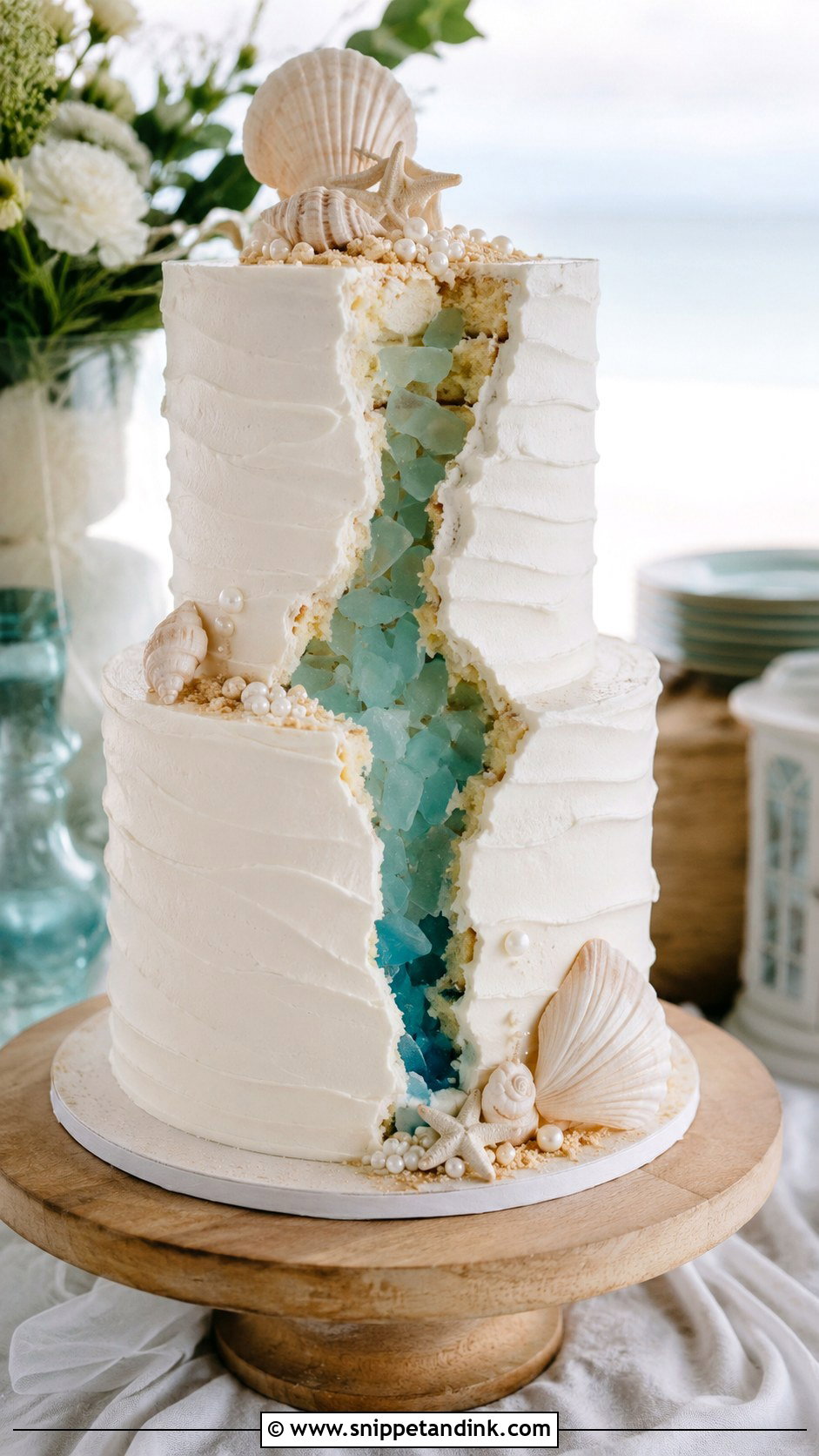
A beach reveal wedding cake keeps the front bridal: white buttercream, a soft wave texture and pearl accents. The back opens into sea-glass colours, sugar shells and sandy texture. I make sea glass from isomalt, a sugar substitute that sets clear and resists humidity better than ordinary sugar work. The biggest risk is heat, not design. Buttercream at a beach reception should stay out of direct sun and be set out as late as your venue allows.
7. Disney Inspired Reveal Wedding Cake
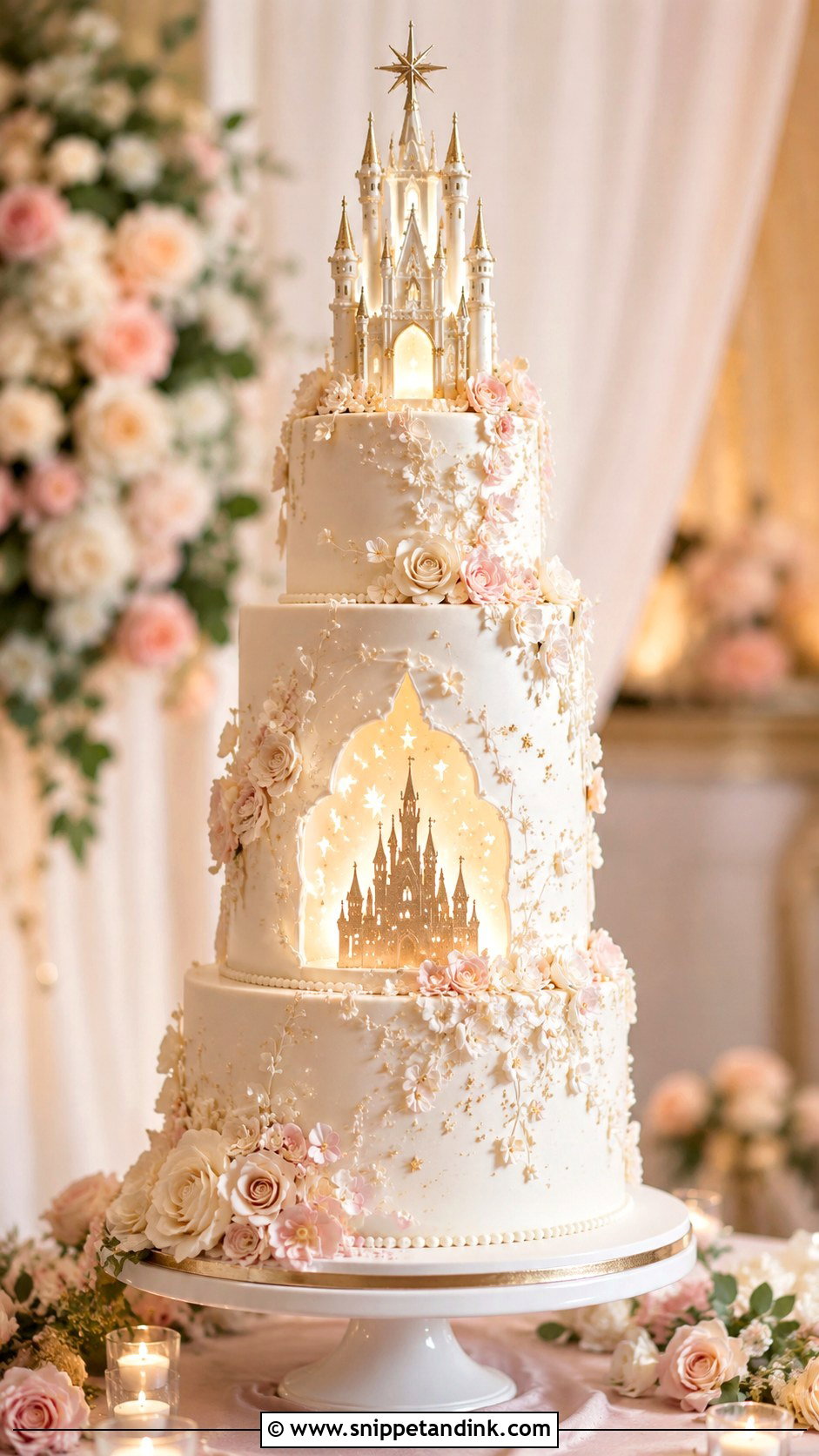
A Disney inspired reveal wedding cake works best when the inspiration is hinted rather than printed. The front is a classic white tier with soft florals and a little shimmer. The back holds castle silhouettes, stars, a carriage or a fairytale palette. I suggest shapes and colours guests will recognise instead of characters, partly for taste and partly because many bakers won’t reproduce trademarked characters. It stays grown-up and still personal.
8. Sports Reveal Wedding Cake
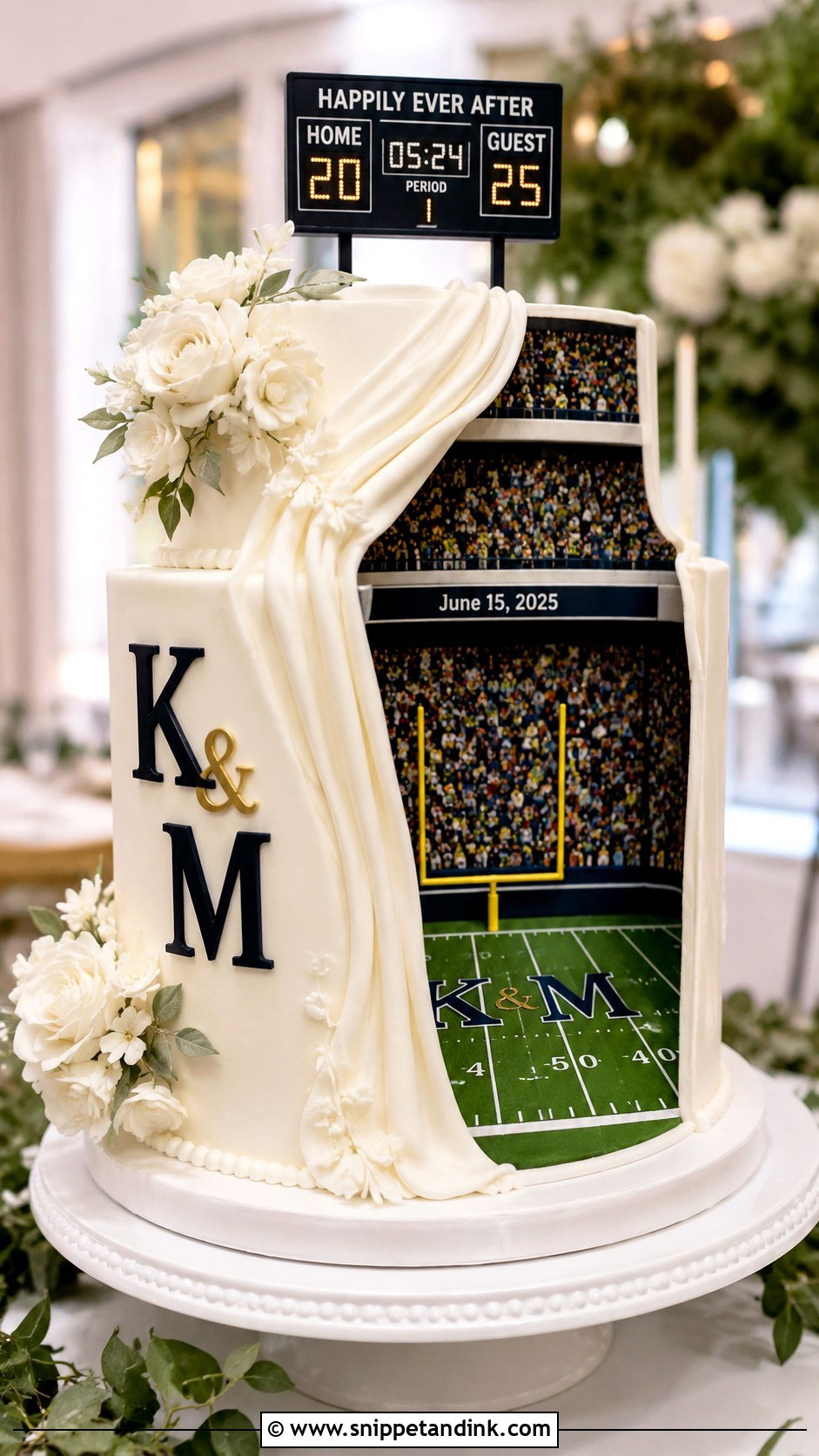
Sports reveals are a good way to include a team without the cake feeling like a match-day bake. The formal side has white fondant, clean piping and flowers. The hidden side shows team colours, jersey-style initials, a small pitch or a scoreboard with your wedding date. I keep the theme inside one section so the main photo angle stays bridal. Team colours can clash with your palette, so I usually use them as stripes or trim rather than whole tiers.
9. Travel Reveal Wedding Cake
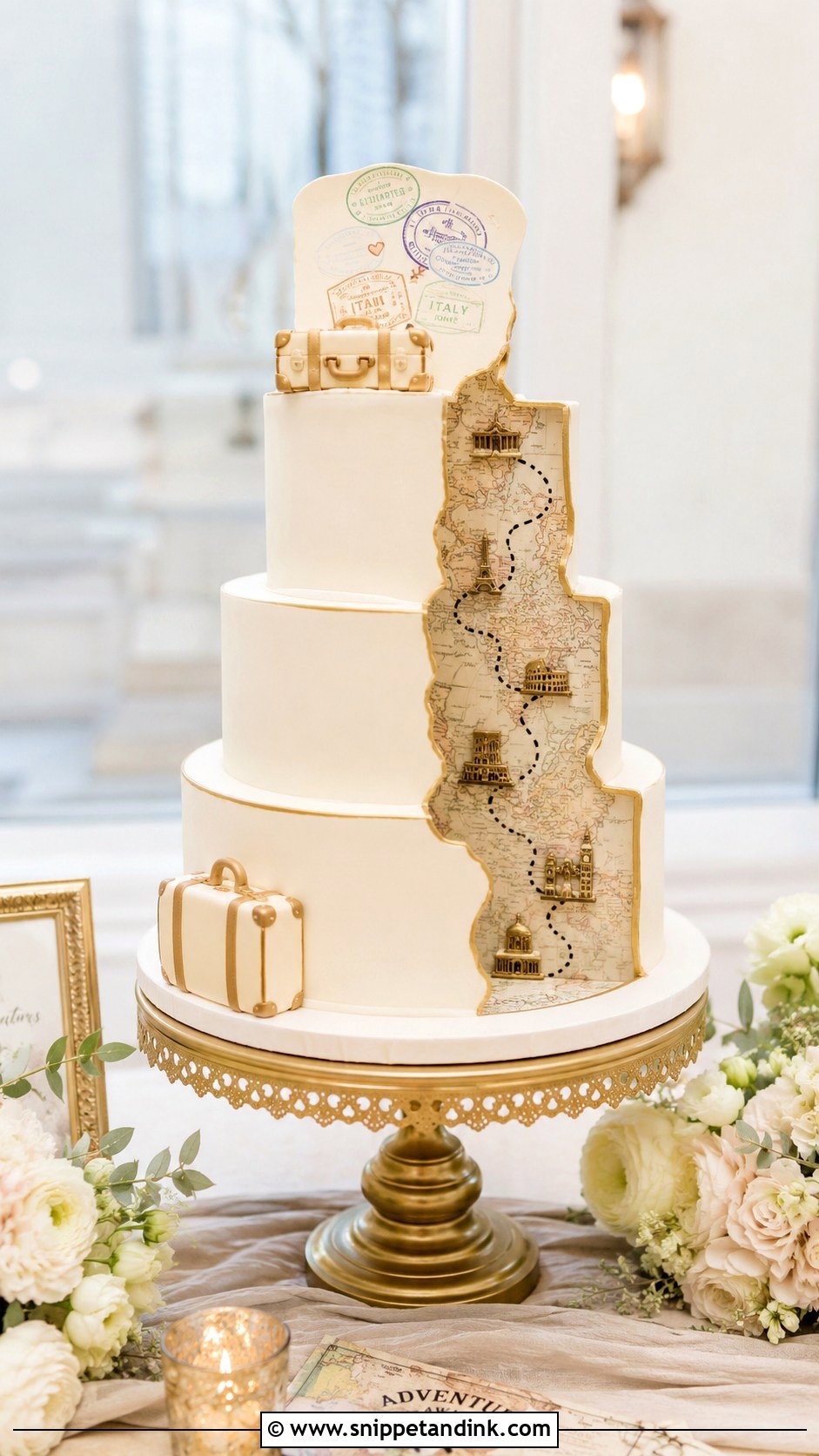
A travel reveal tells a story without many words. The front has ivory fondant, flowers and gold trim; the back shows a map, a few small landmarks, suitcase texture or a dotted route between meaningful places. Maps are usually printed on wafer paper or a sugar sheet with edible ink, then layered onto the fondant. Pick two or three places, such as where you met, got engaged and will honeymoon. More than that and the route becomes a tangle.
10. Pet Reveal Wedding Cake
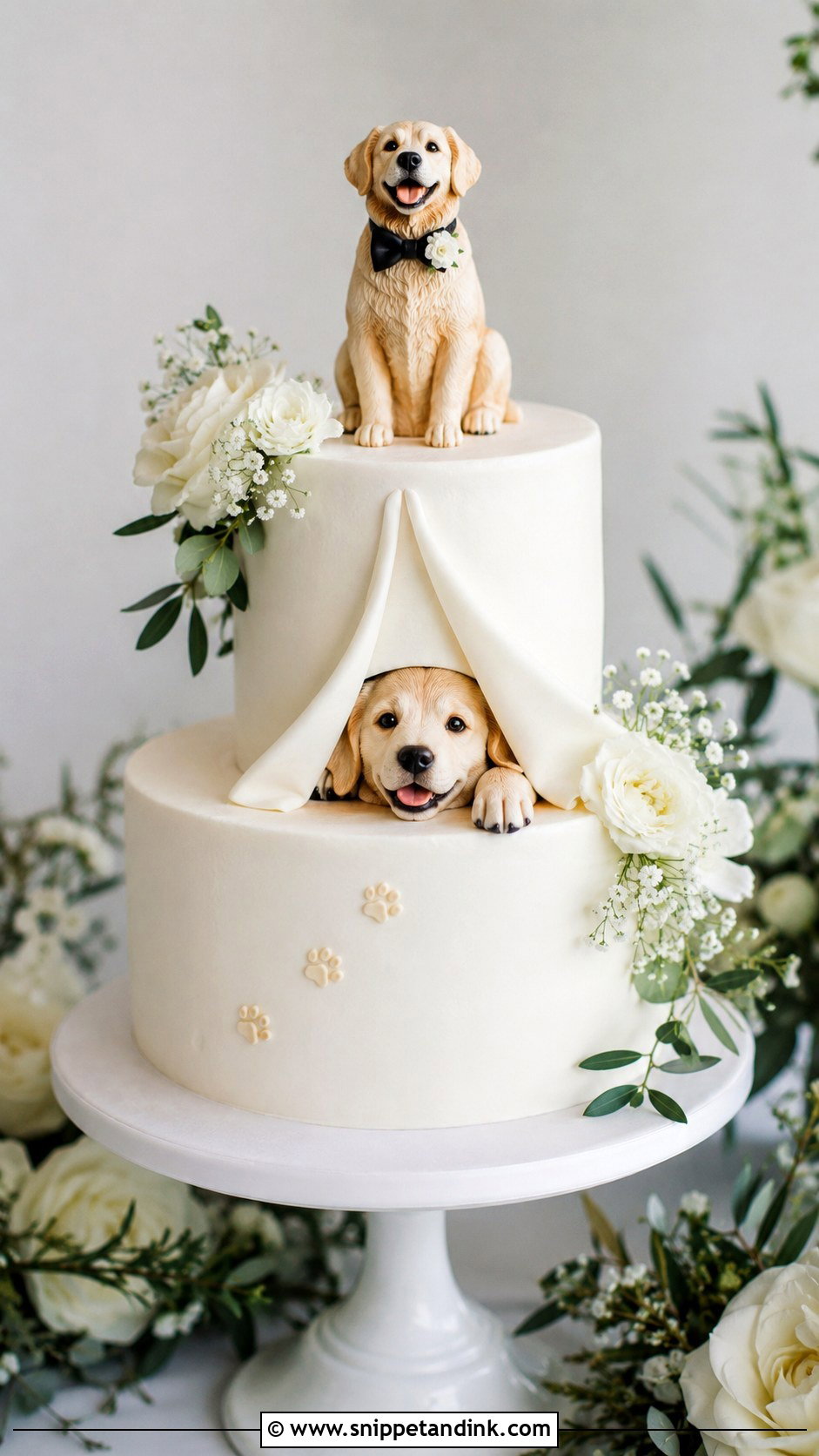
Pet reveals get the biggest reaction from guests. The front is traditional: smooth buttercream, fresh flowers, a clean topper. Around the back, your dog or cat is pet peeking from behind a fondant peel, sitting by a tiny tier or leaving paw prints. I model pets in modelling chocolate or fondant, and they’re only recognisable with good references. Send clear photos from the front and both sides, plus one showing any markings.
11. Superhero Reveal Wedding Cake
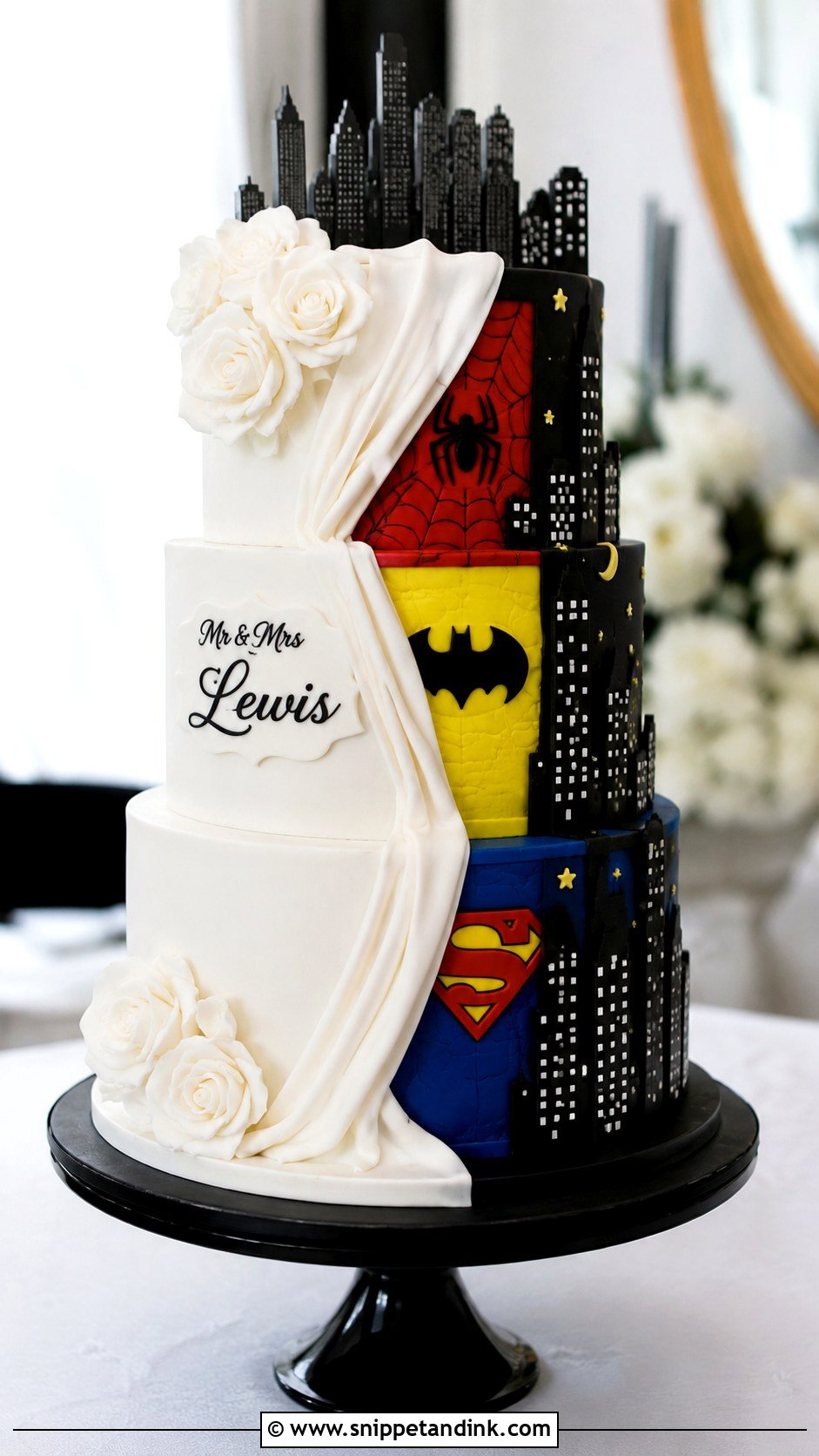
A superhero reveal wedding cake keeps the playful side to the back or to one vertical slice of the tiers. The front can be a classic white cake with flowers or lace piping; the reveal shows comic colours, bold symbols, a skyline or a split effect under a peeled panel. I balance two or three bright colours with white or black. Strong reds and blues need a lot of gel colour, so I often use a ready-coloured fondant to keep the taste clean.
12. Gaming Reveal Wedding Cake
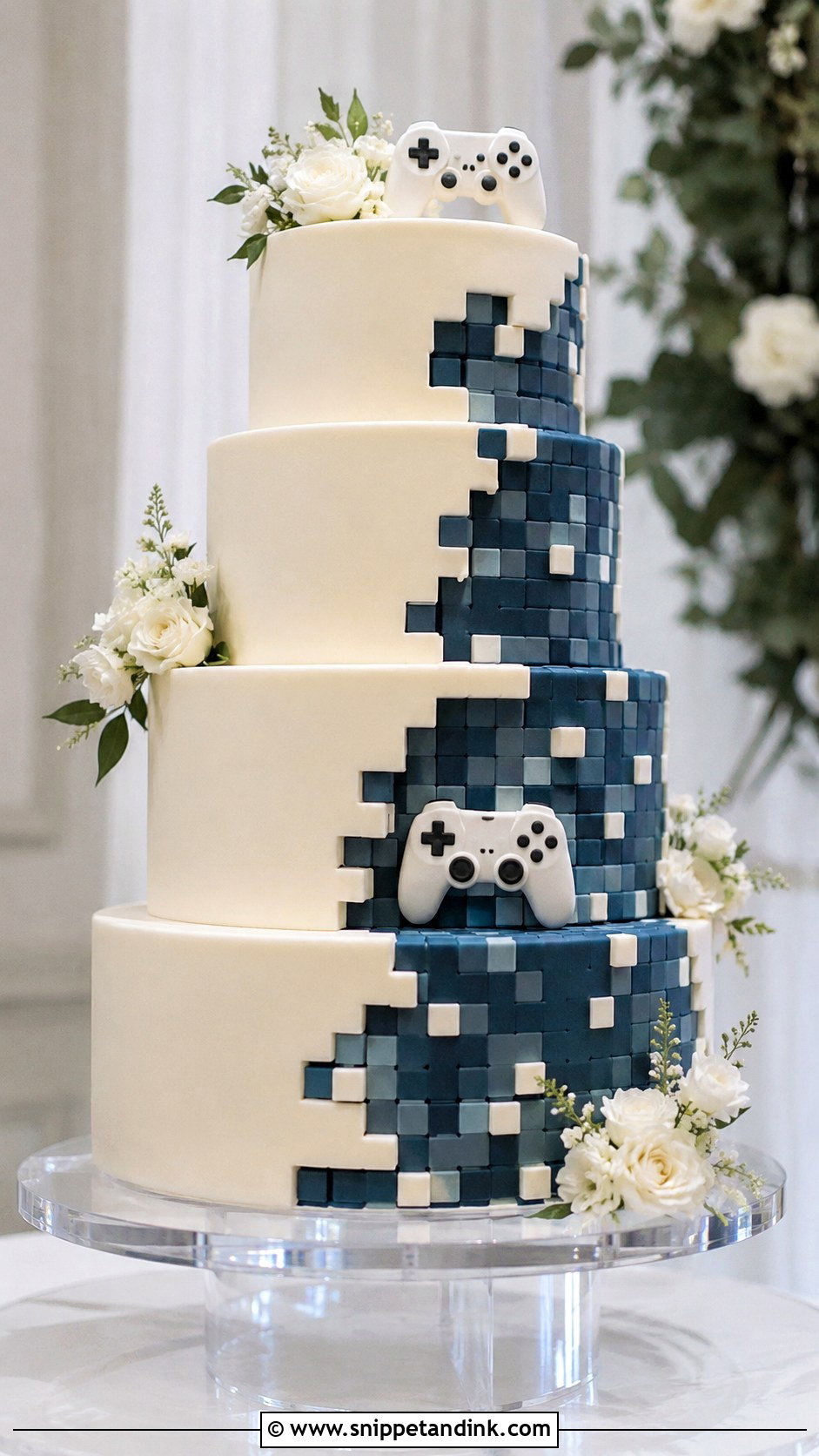
Gaming reveals look stylish when the design is clean. Ivory frosting and flowers on the front; pixel patterns, controller shapes, game colours or a small level-up message on the back. Pixels are a gift for a cake designer: small squares of fondant cut and laid in a grid look crisp and photograph well. A black, white and single bright accent scheme stops it from tipping into a kids’ party look.
13. Music Reveal Wedding Cake
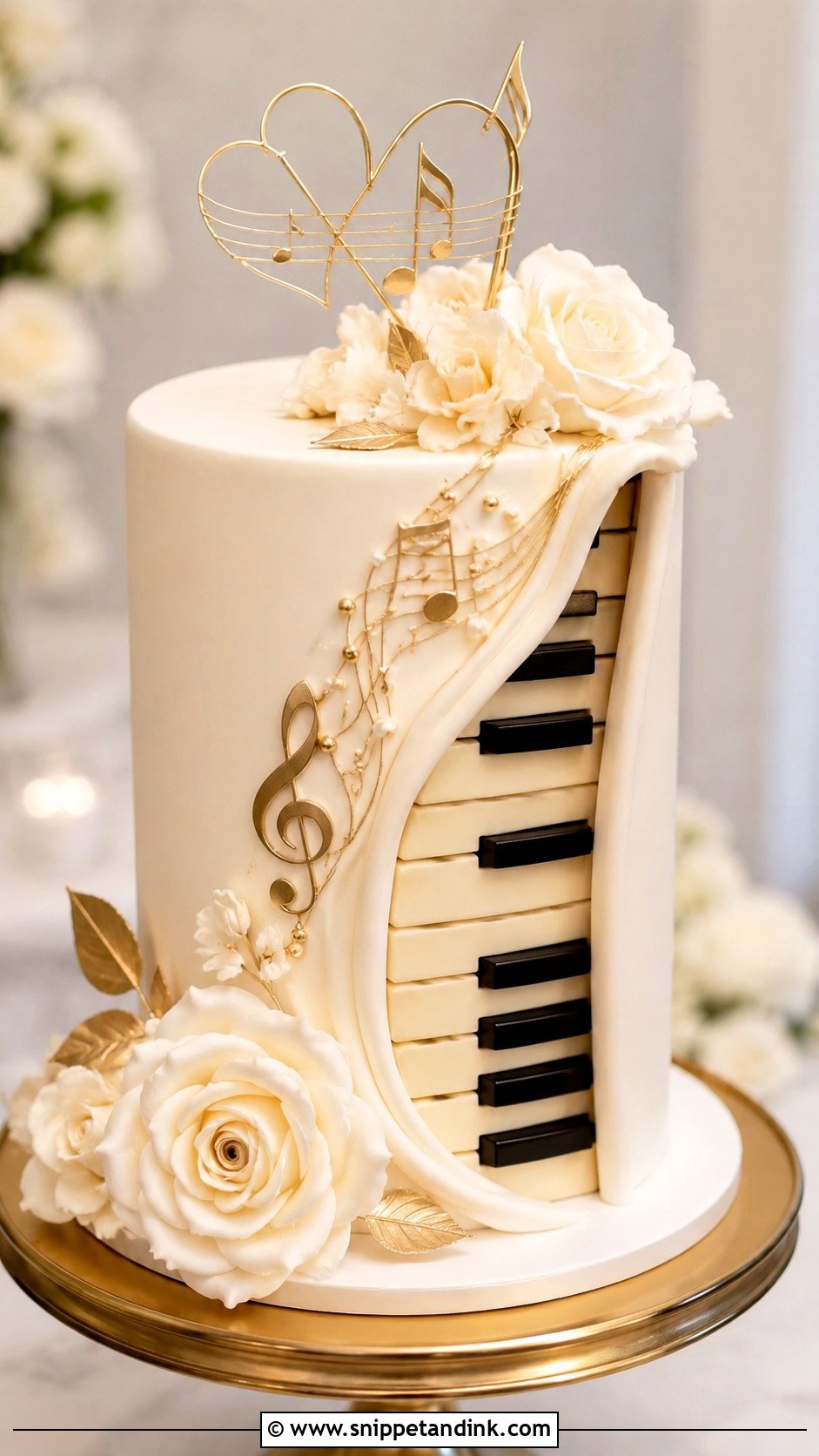
Music reveals look elegant in ivory, black and metallic gold. The front stays romantic with white buttercream and pearl piping; the back opens into sheet music, piano keys, vinyl texture or gold notes. One musical element is plenty. Lyrics are best avoided unless you have permission to reproduce them, but notes, instruments and patterns carry the same feeling. Sheet music sits well as a printed wafer paper panel, which bends nicely around a round tier.
14. Book Reveal Wedding Cake
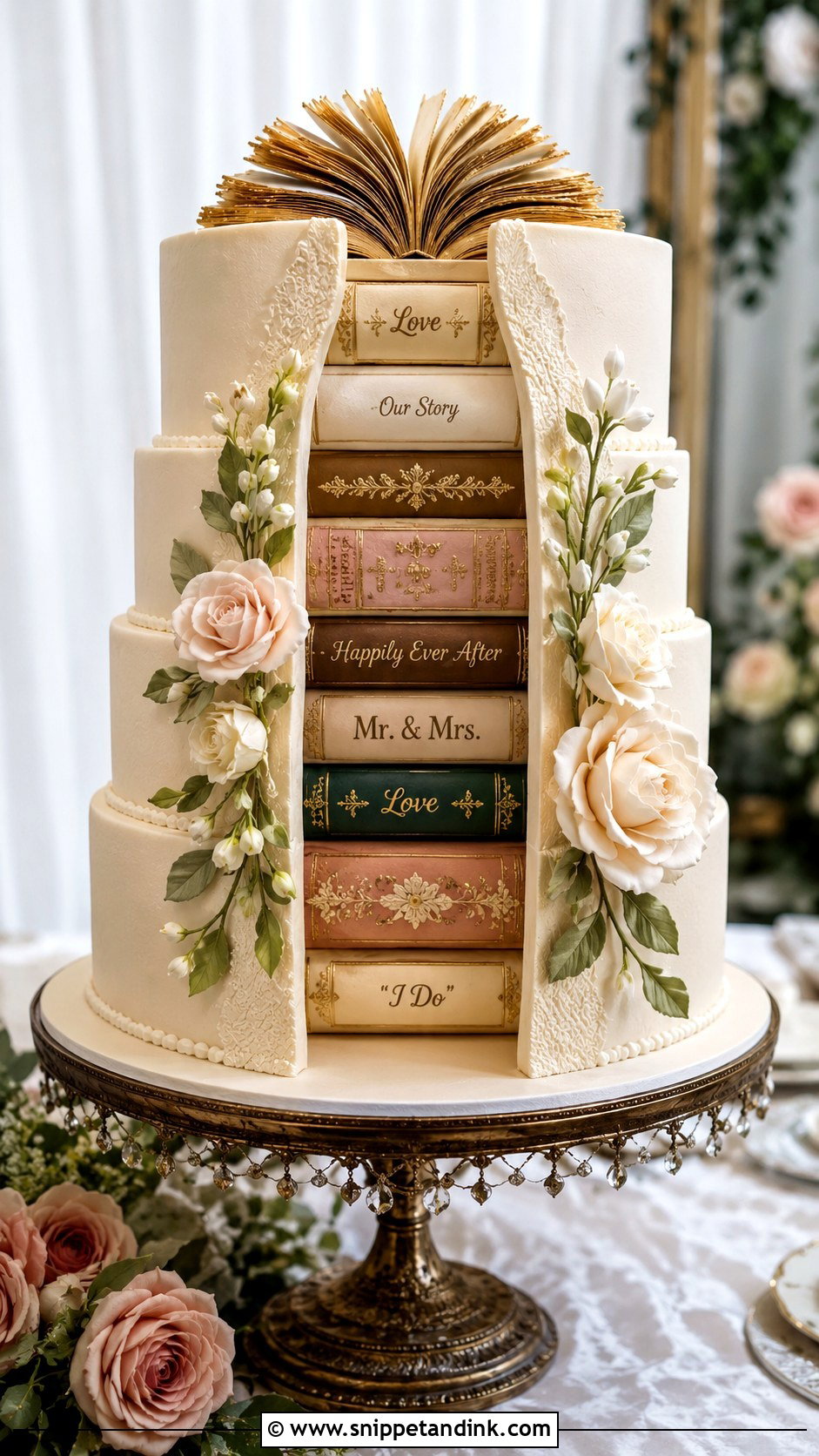
A book reveal wedding cake works well for couples who read together. The front looks traditional; the reveal side shows stacked spines, a shelf texture, genre colours or an open-page effect. I write your names and wedding date on the spines rather than real titles. Spines are made from modelling paste, which holds a crisp edge, and painted lettering keeps them readable. Warm ivory, sage, blush and gold keep it romantic.
15. Movie Reveal Wedding Cake
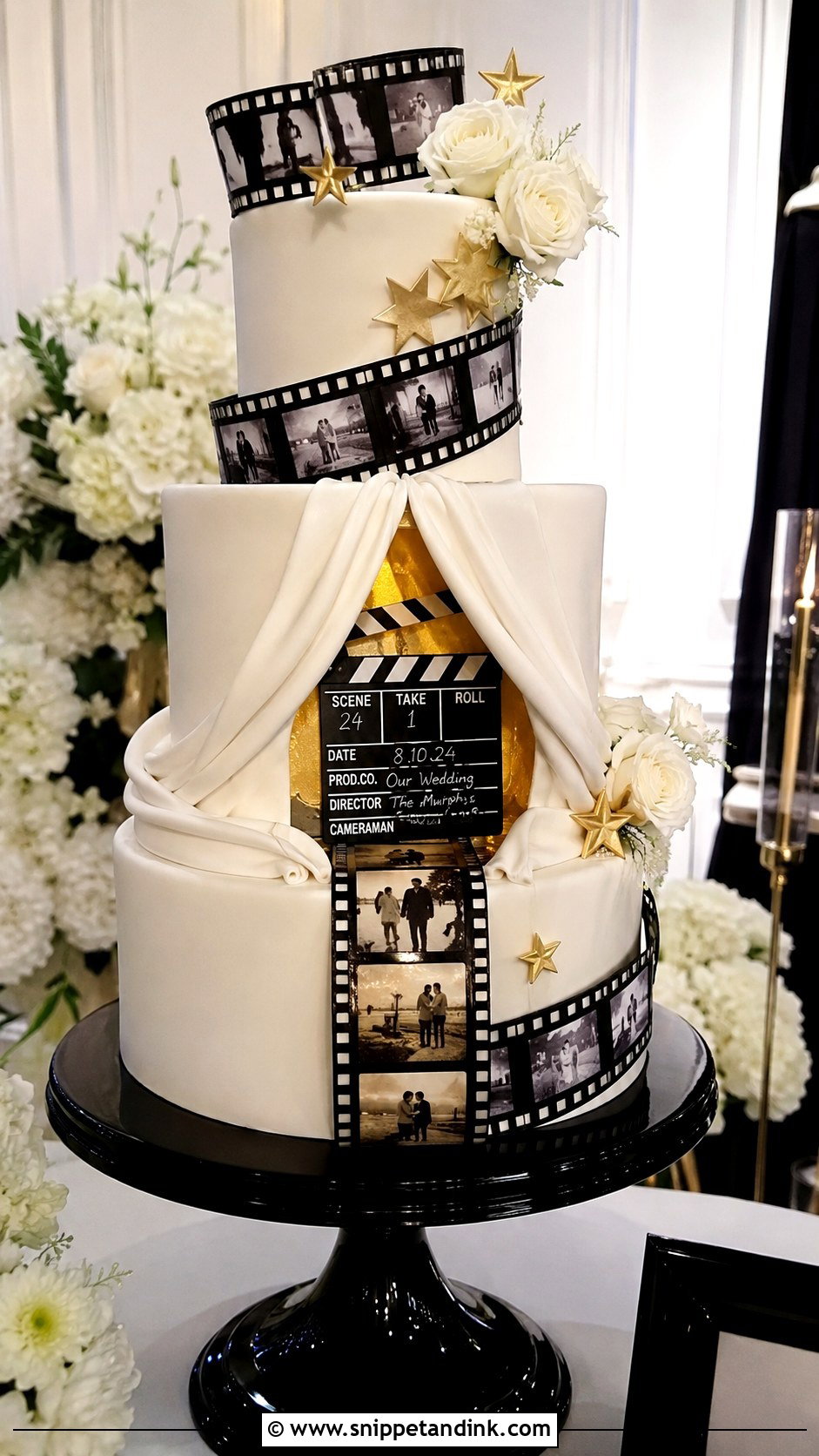
A movie reveal shouldn’t look like a prop. The front is white and simple, with smooth frosting and flowers. The back shows filmstrip texture, marquee initials, a clapperboard or colours from a favourite genre. I keep the symbols clean and few. Marquee lights can be made with small sugar pearls painted gold. A black, ivory and gold palette keeps it cinematic and formal.
16. Vintage Reveal Wedding Cake
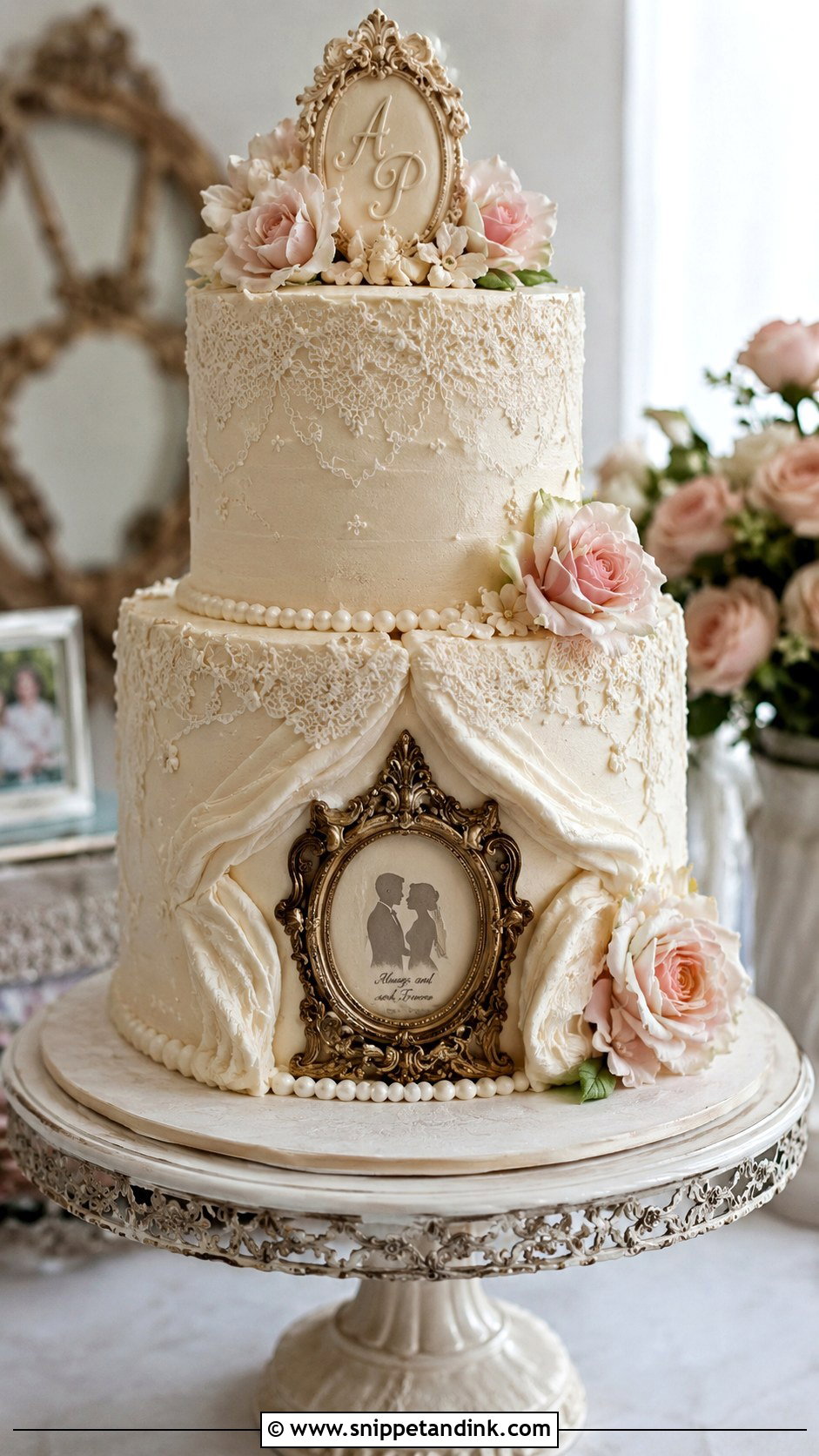
Vintage reveals use soft colour and refined texture. Ivory buttercream, lace piping, sugar pearls and blush flowers sit on the front. Behind the reveal, I add antique frame detail, cameo initials, pressed florals or a muted panel like old wallpaper. Cameos are made in a silicone mould, then dusted; they set firm and look like real carved shell. Bright shades break the mood, so I avoid them. It should look like a keepsake, not a novelty cake.
17. Black And White Reveal Wedding Cake
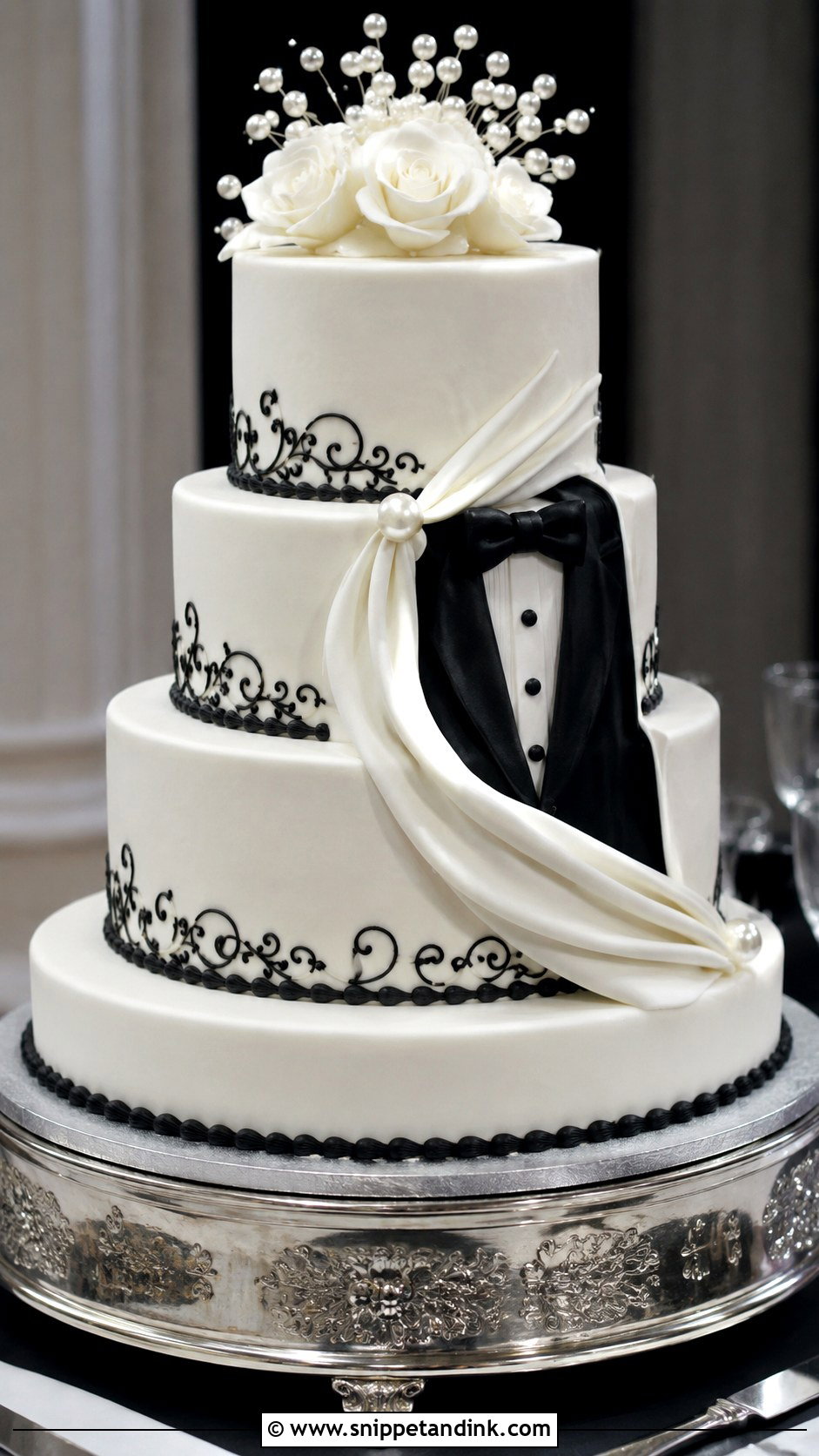
Black and white reveals are graphic and formal. The front is mostly white with black piping or ribbon; the back shows a black fondant panel, a checker pattern, tuxedo texture or a monochrome illustration. Black fondant is heavy with colour and can stain teeth and fingers, so I limit it to panels and details and keep whole tiers white. Every line must be crisp, because the contrast shows any flaw. A small touch of silver softens it if you want.
18. Watercolor Reveal Wedding Cake
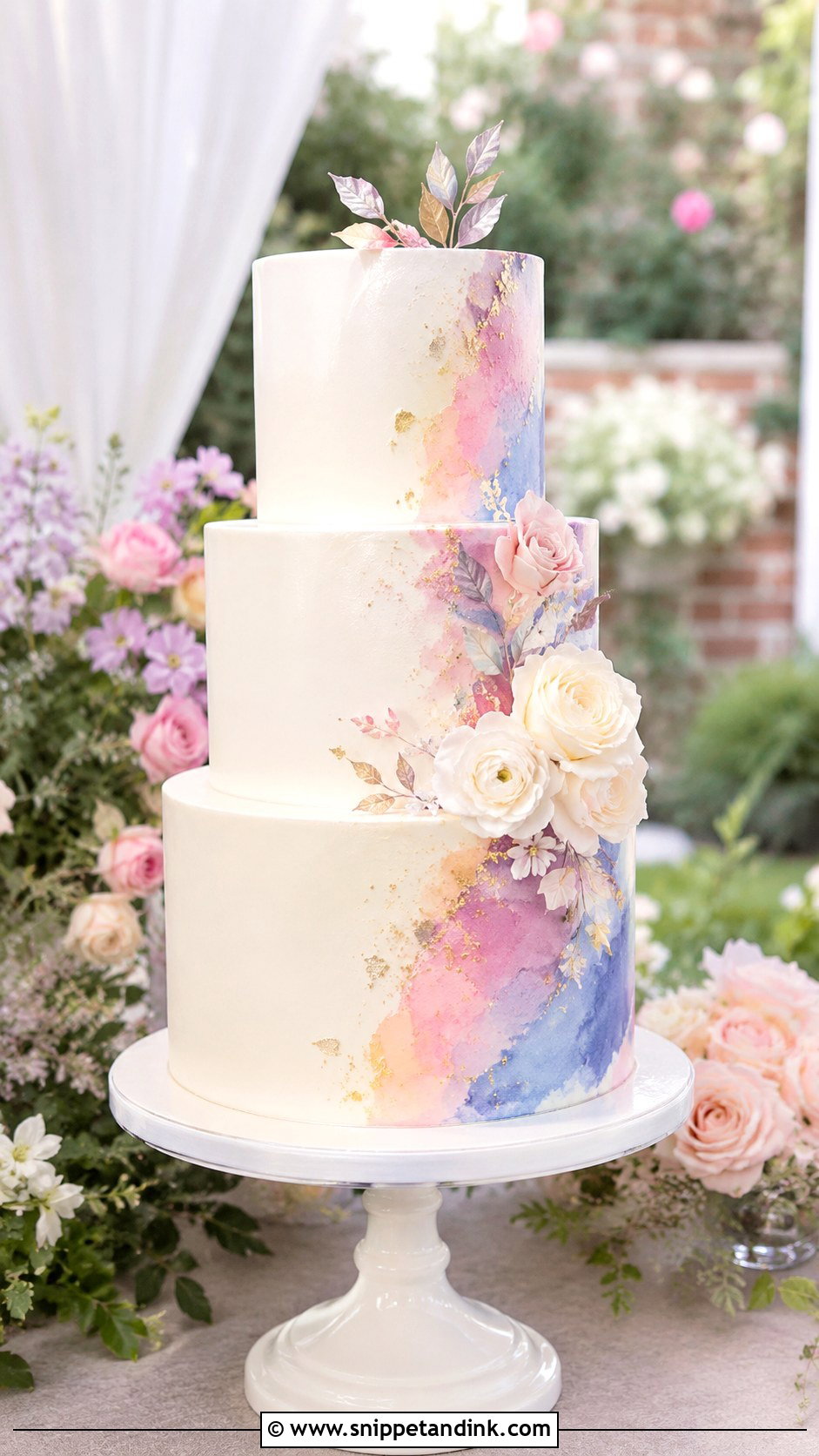
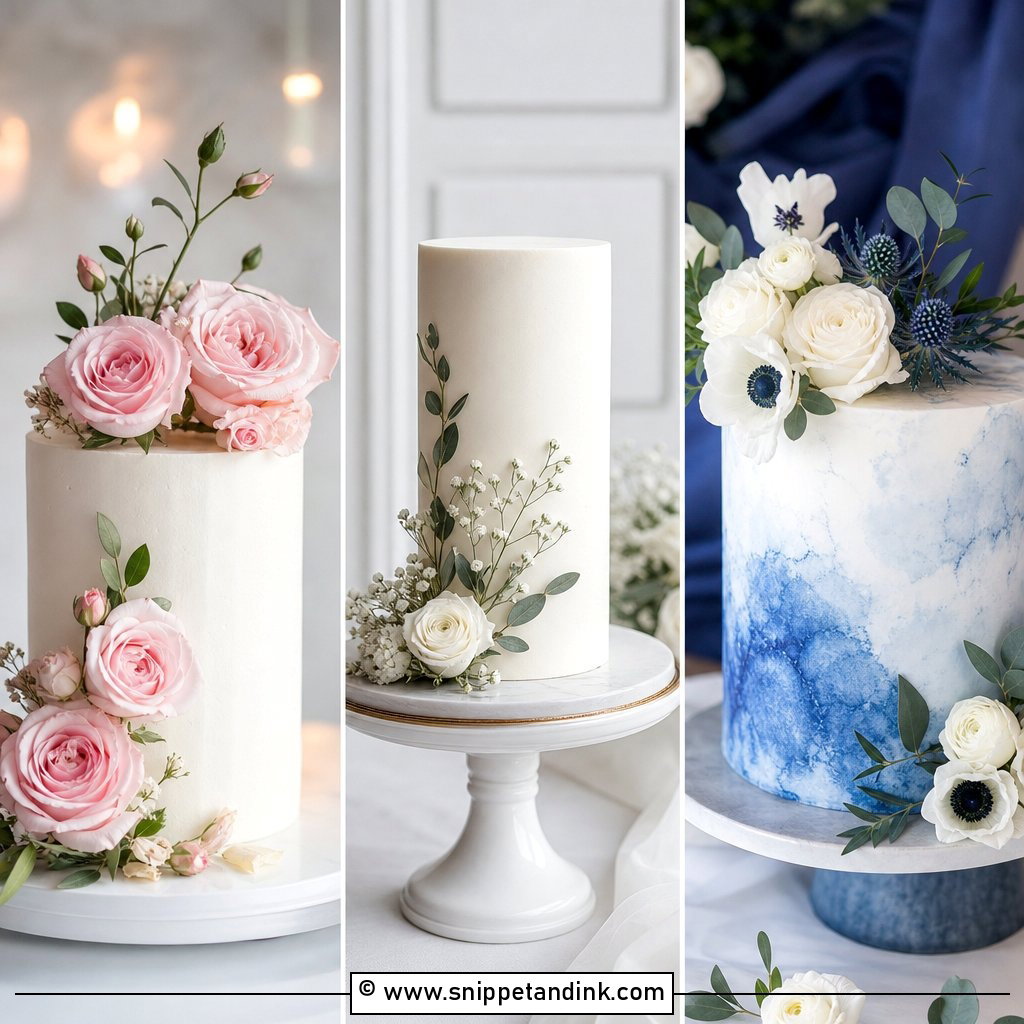
A watercolour reveal keeps a calm front and a painted back. On fondant, I paint washes of blush, blue, lavender or sage with diluted gel colour; on buttercream, the effect comes from coloured buttercream smoothed on with a scraper. Sugar flowers, gold flecks or painted leaves add depth. Matching the colours to your invitations or flowers ties the room together. Spring weddings and airy spaces suit it.
19. Garden Reveal Wedding Cake
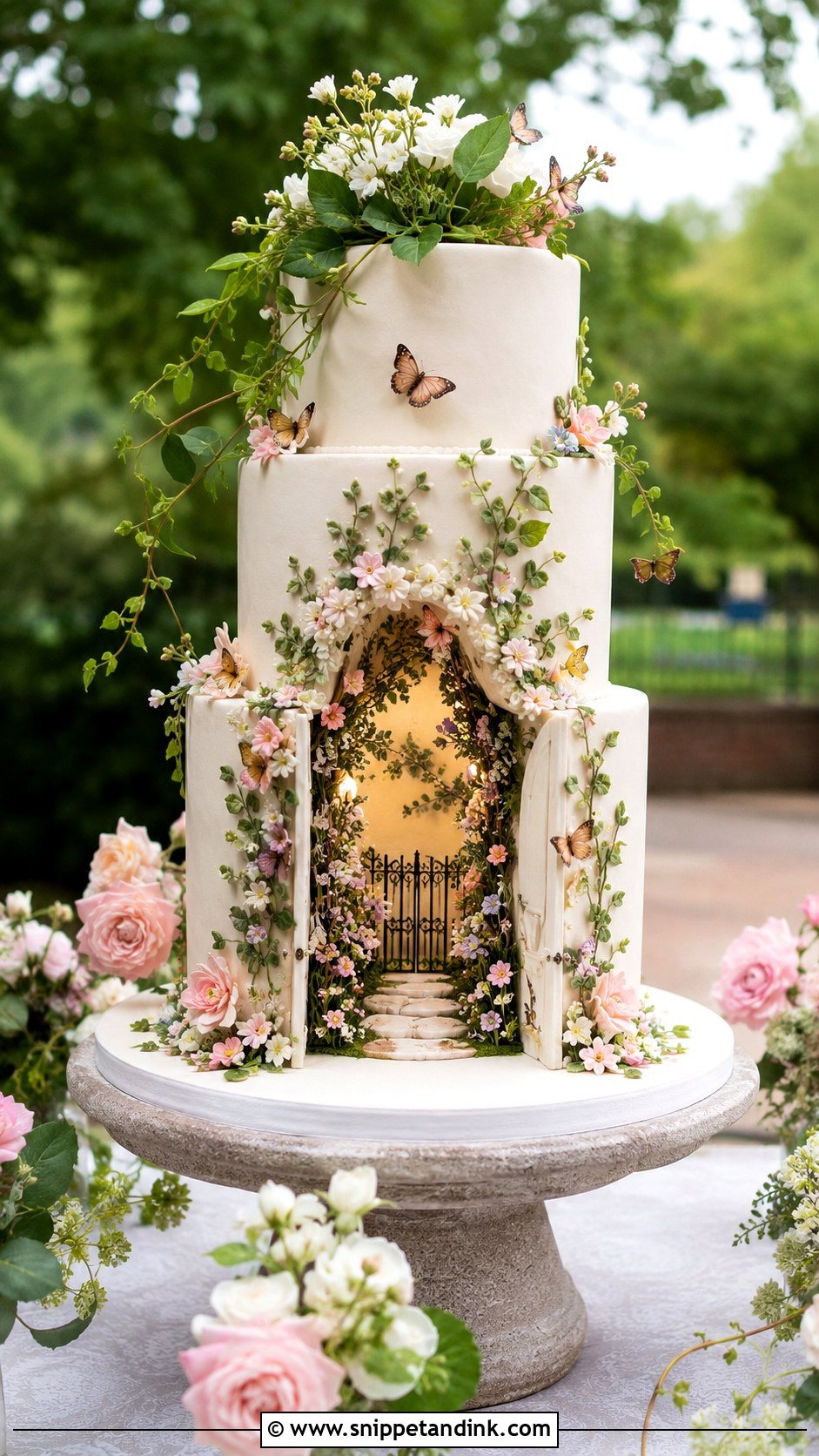
A garden reveal shows vines climbing through a peeled panel, small sugar flowers, butterflies or a gate. The front is classic, with white frosting and cascading blooms. On flowers: real ones must be pesticide-free and non-toxic, and the stems wrapped or placed in a barrier so they don’t touch the cake. Sugar flowers are usually the better choice for detailed reveals, since they can be shaped to fit. Keep the colours to ivory, green, blush and soft yellow.

20. Luxury Reveal Wedding Cake
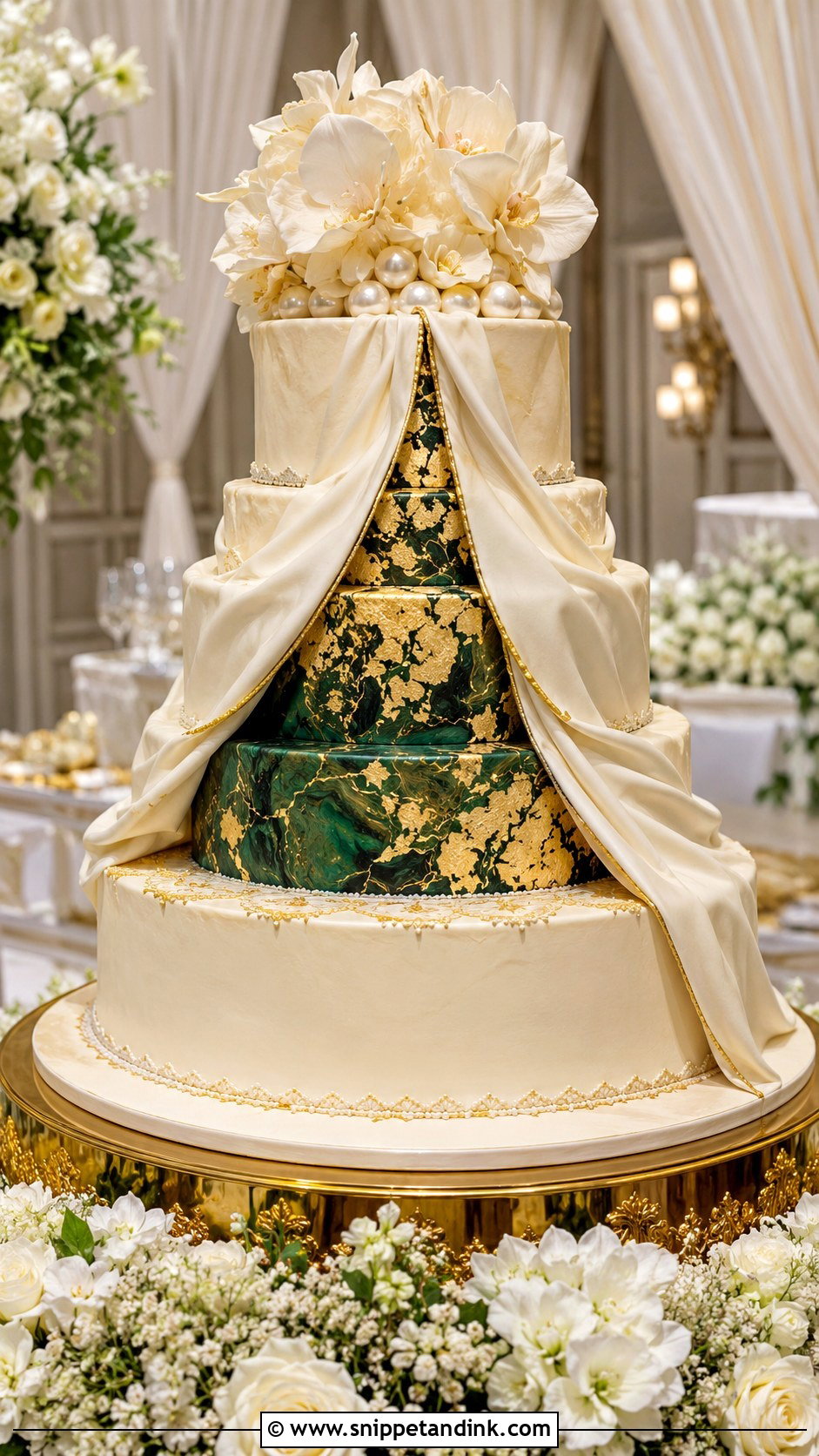
Luxury in cake comes from focus, not quantity. Tall tiers, smooth fondant, gold trim, pearl texture and sculpted sugar flowers make the front; behind a fondant drape, I add metallic marbling, a crest, lace texture or a jewel-tone panel. Pick one main feature, such as gold leaf or deep emerald marble, and repeat it lightly. Edible gold leaf is the real thing; many shimmer dusts are labelled non-toxic but not edible, so ask your baker which they use.
Where the Cake Table Goes When the Best Side Is the Back
A reveal against a wall is a reveal no one sees. Plan the display with your venue before the day.
- Place the table where guests can walk all the way around it, or angle it so the reveal faces the room and the formal side faces the photographer.
- A mirror behind the cake shows both sides at once without turning anything.
- Ask your photographer to shoot the back before the cutting, when the cake is still whole.
- Some couples turn the cake on its stand during the cutting as the moment itself. A turntable stand makes this easy and steady.
Sculpted details and sugar flowers add time, so book your baker several months ahead for a reveal design rather than weeks. The structure is the same as any tiered cake, with dowels in each tier, but the extra pieces need to be made, dried and packed separately and fixed on at the venue.
Two Faces of the Same Cake
Reveal cakes honour tradition and personality at the same time. The front stays formal for photos, and the back surprises guests with something true to you. Start with your wedding style, then pick one reveal, whether pets, travel, music, florals or a colour story, and let it be the only one. Bring your baker clear references for anything personal, and agree early where the cake will stand so the back can be seen.
You'll Like These Ideas:






Leave a Reply