
Handing someone the cake turns dessert into a portrait. Instead of a cake sitting on a table across the room, you get hands, a sleeve, a ring, a bit of veil and the cake in one frame, usually in the softer light of a portrait session. From the baking side, I treat these cakes differently from ones that never leave the stand: they need a stiffer board, a firmer finish and a size an adult can carry without their wrists shaking. Small cakes, elopement cakes and courthouse cakes suit the idea best. The twenty below are the ones I’d happily send out of my kitchen knowing someone will be holding them.
Tell Your Baker the Cake Is Going to Be Carried
Most cakes travel from the van to a stand and never move again. A cake that will be lifted, tipped toward a lens and passed between people needs a few changes, and I’d want to hear about it at the first consultation, not the week before.
The board underneath
I use a thick cake drum, roughly half an inch deep, cut an inch or two wider than the cake. Thin cardboard rounds bend when someone holds them from the sides, and a bending board cracks the frosting right at the base. If the cake will also sit on a stand for the shot, the drum still goes underneath.
Weight and height
A single six-inch round with three or four layers is comfortable for most adults to hold for a few minutes. Each extra tier adds a few pounds and raises the center of gravity, which is what makes holders wobble. Two short tiers is where I stop for portraits, and both get internal supports.
Finish and temperature
- Ask whether the cake can stay chilled until shortly before photos. Cold buttercream resists fingerprints far better than soft.
- Fondant over a cold cake can bead with condensation when it moves into humid air, so for summer portraits outdoors I let fondant cakes come up to temperature in the shade first.
- Fresh flowers and cut fruit go on as late as possible, ideally on site, so they don’t wilt or weep before the camera arrives.
1. Small White Wedding Cake
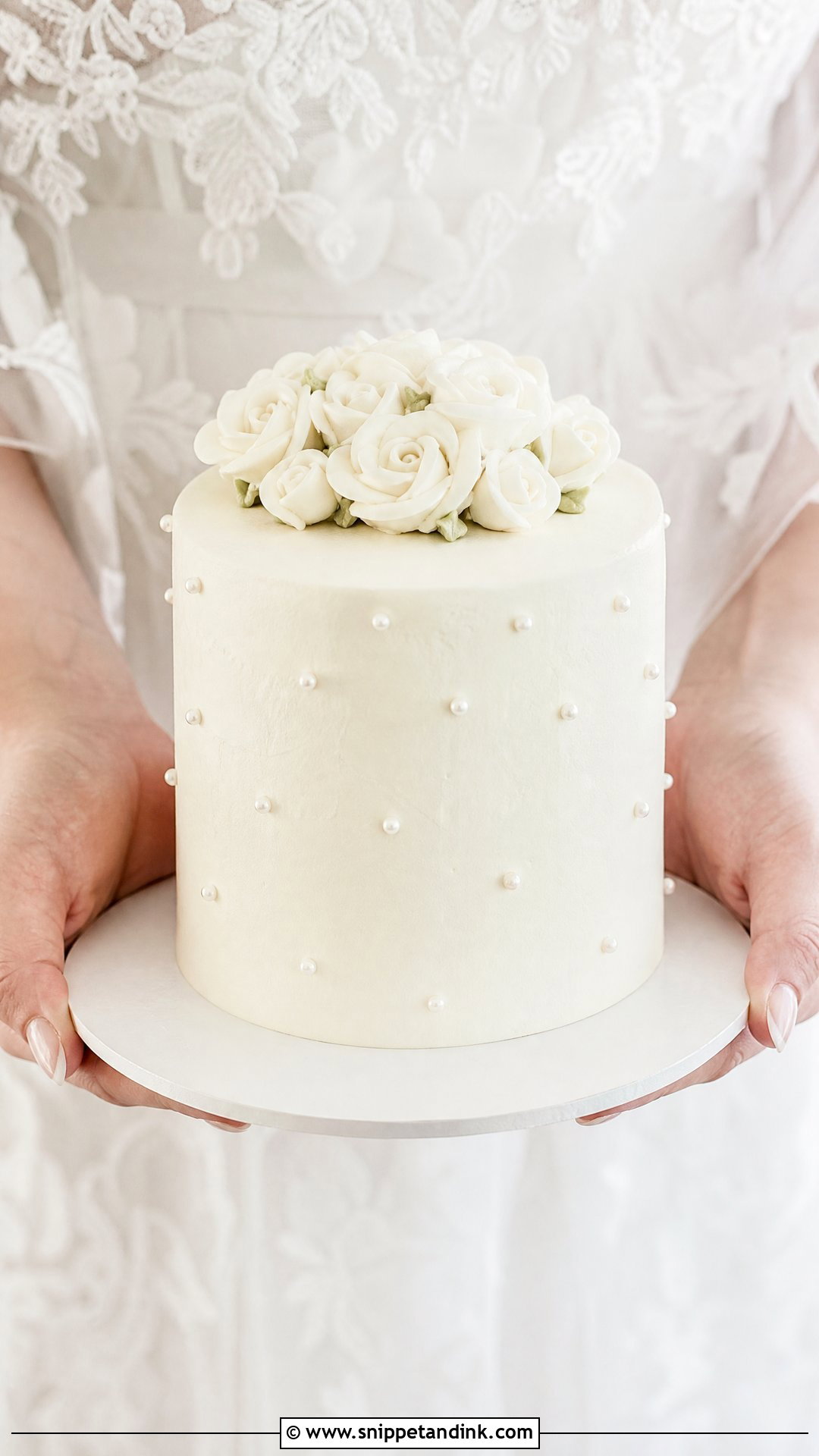
One tier, or two very short ones, is about the limit for a cake someone holds at chest height, and white is the most forgiving color I can send out because it bounces light back onto faces. I finish these in smooth buttercream with a few pearl dots or a single flower so the camera has one place to land. The part nobody sees matters most. I set the cake on a board at least an inch wider than the base, so fingers grip the board and never the icing. Bride, groom or a grandmother can hold this one without any coaching.
2. Two Tier Wedding Cake
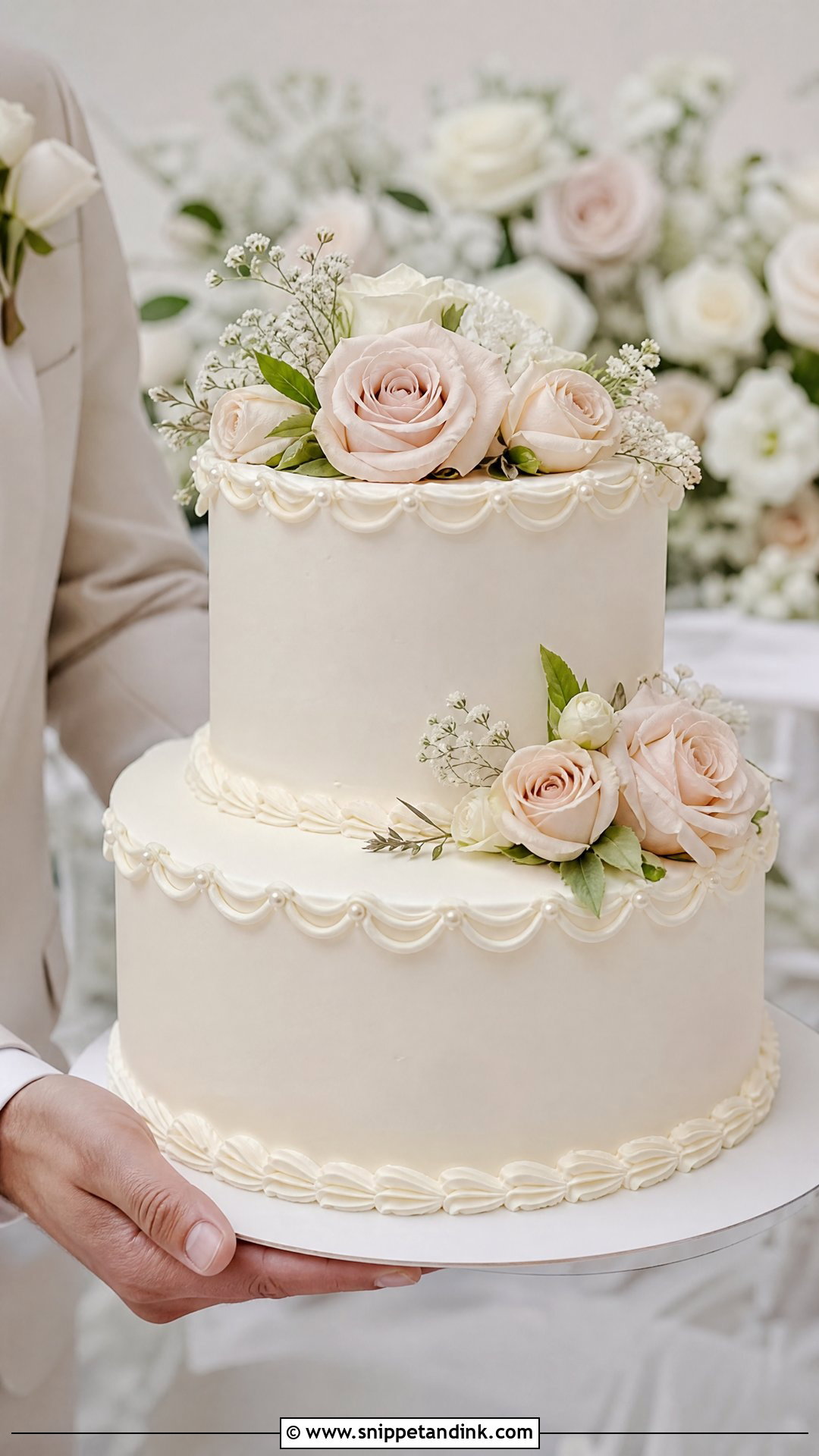
Two tiers give height, but they also create a load problem. Even a six-inch tier on an eight-inch base needs dowels in the lower tier and a central rod through both, or the top can shift when the cake tips toward the camera. I keep both tiers short and send the cake cold so the buttercream or fondant stays rigid. Fresh flowers, a ribbon or fine piping can tie it to the wedding colors. The holder should take it from underneath with both palms flat, never by the board edges alone, because a two-tier cake will flex a thin board.
3. Floral Wedding Cake
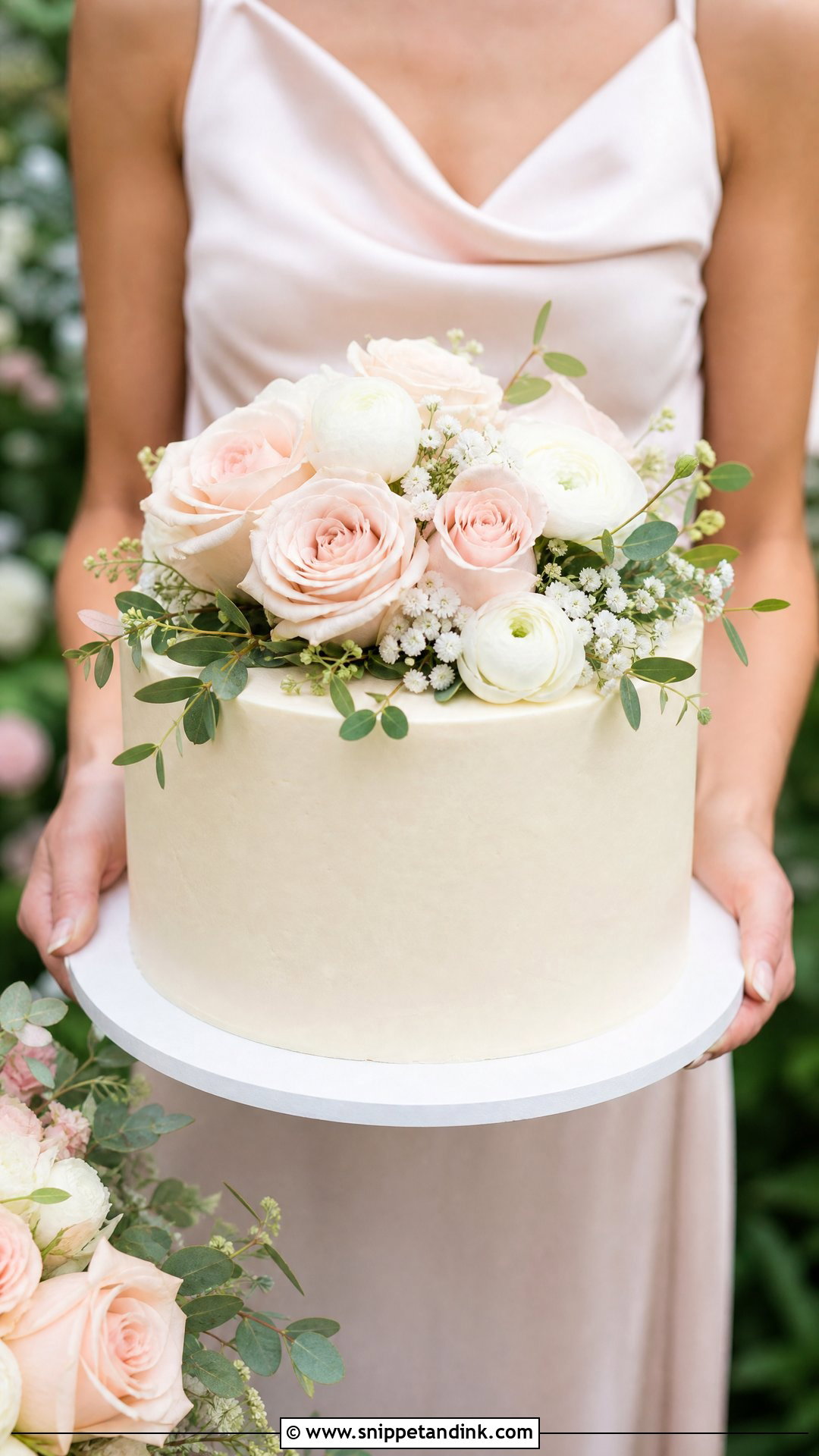
Fresh flowers do most of the decorating here, which means the florist and I need to talk early. I ask for blooms that match the bouquet and arrive unsprayed, then I wrap the stems in floral tape and set them into straws or behind a small barrier so no sap reaches the cake. Blush roses, ivory ranunculus and soft greenery sit well on plain white buttercream. Baby’s breath is pretty but isn’t food safe, so I keep it on the board rather than pushed into the icing. Outdoor portraits suit this cake because the flowers echo the garden behind you.
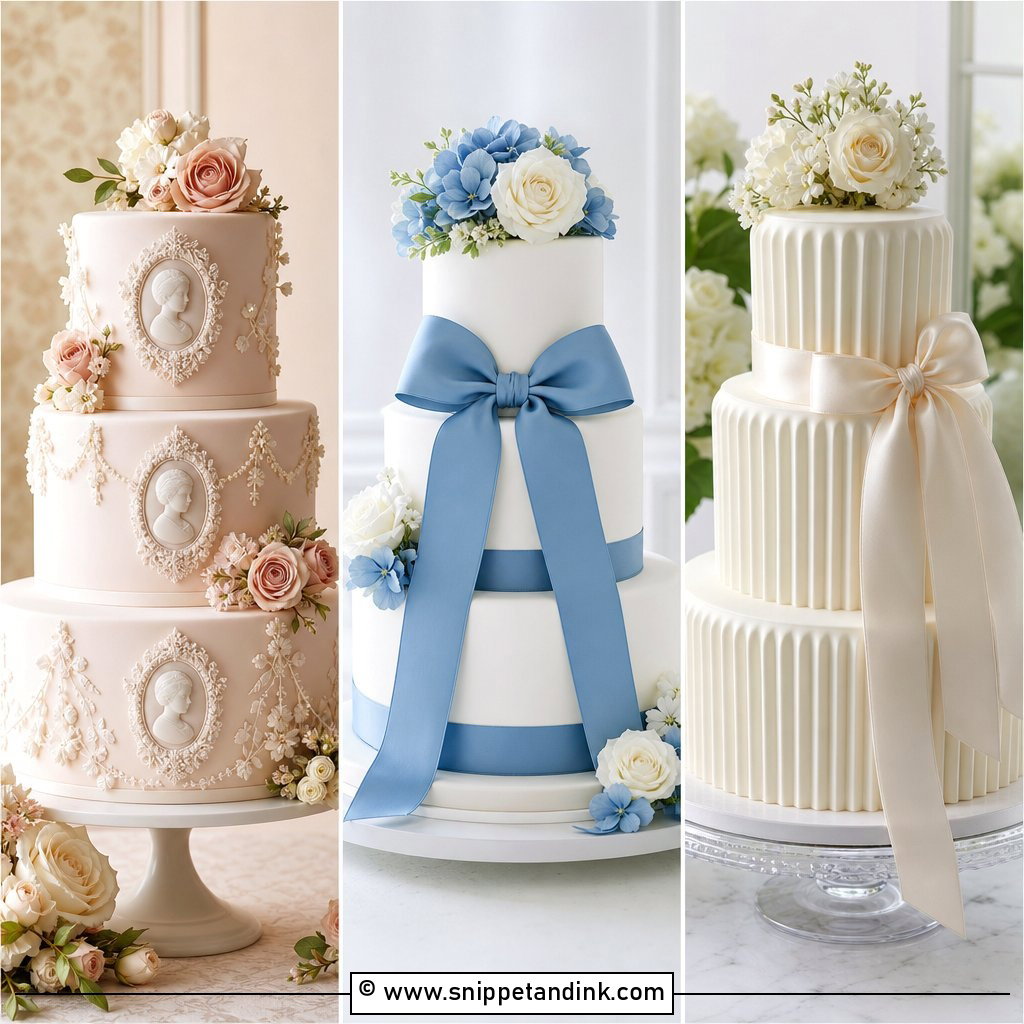
4. Vintage Wedding Cake
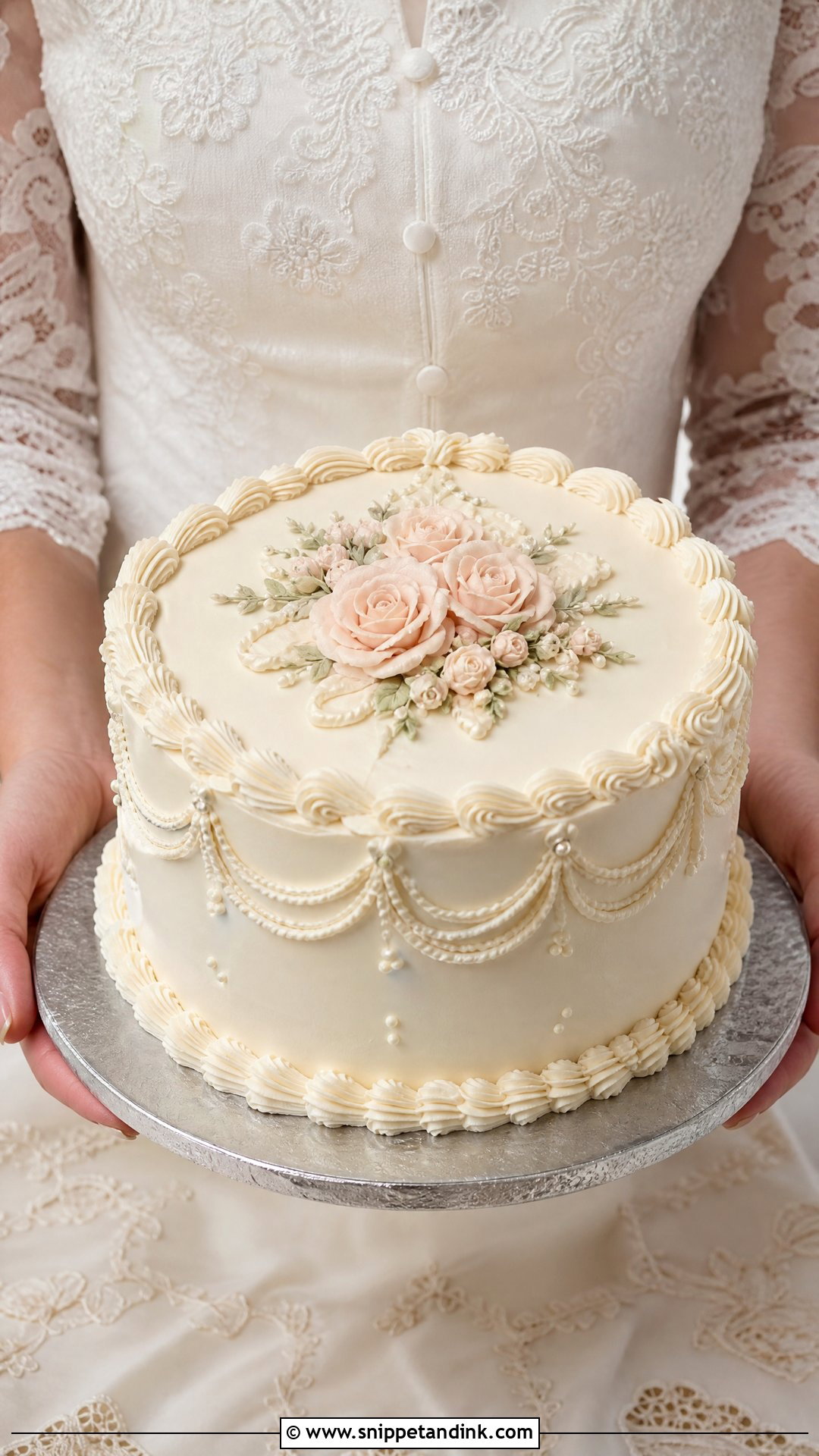
Tall vintage piping reads best when the person holding it wears lace gloves or a puffed sleeve, since the textures answer each other. Expect scalloped borders, shell work and pale tints of blush, ivory or powder blue. I pipe these in a stiffer buttercream than I’d use for a smooth finish, so the shells keep their ridges in a warm room. A small round cake carries plenty of texture on its own. Set it on an heirloom plate if your family has one, but weigh the plate first, because porcelain plus cake gets heavy fast.
5. Heart Shaped Wedding Cake
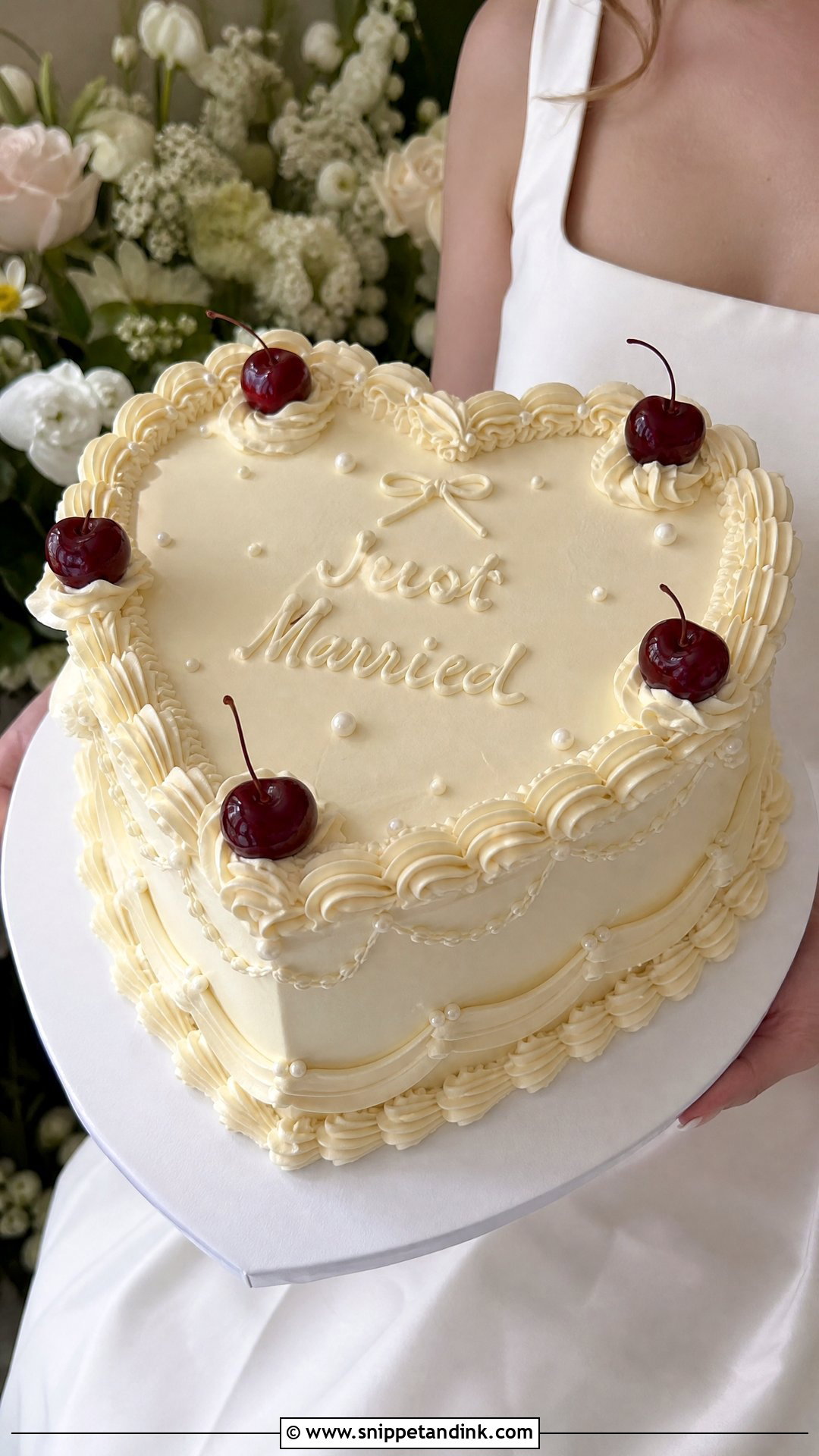
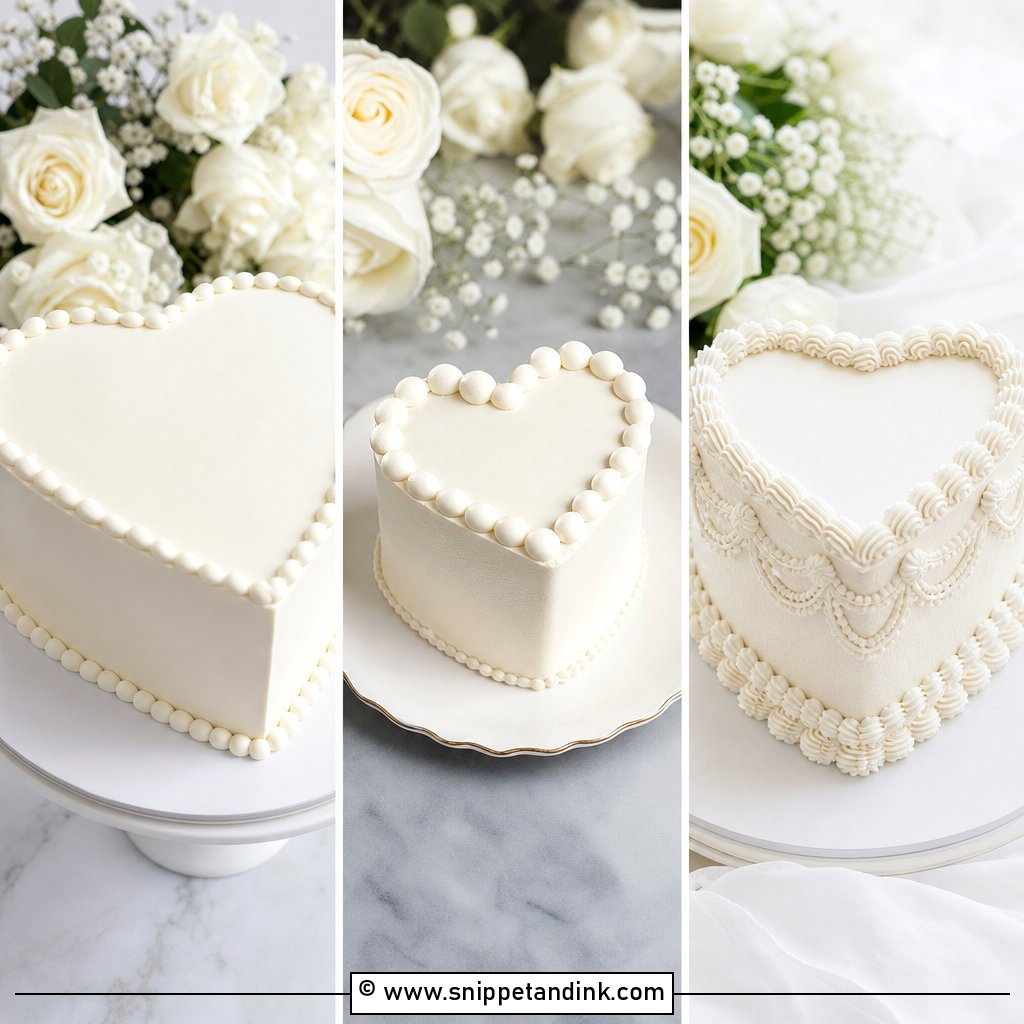
A heart shaped wedding cake reads as romantic before anyone looks closely, so I keep the decoration fairly light: a piped border, a few cherries or pearls, maybe some tiny flowers. Courthouse weddings and elopements are where I see it most. One tier is the sensible size. The point of the heart is the weakest part of the cake, and a tall heart tends to crack there when it’s lifted. If you’d like “Just Married” written on it, ask for the lettering across the widest part of the heart, where it has room.
6. Lambeth Wedding Cake
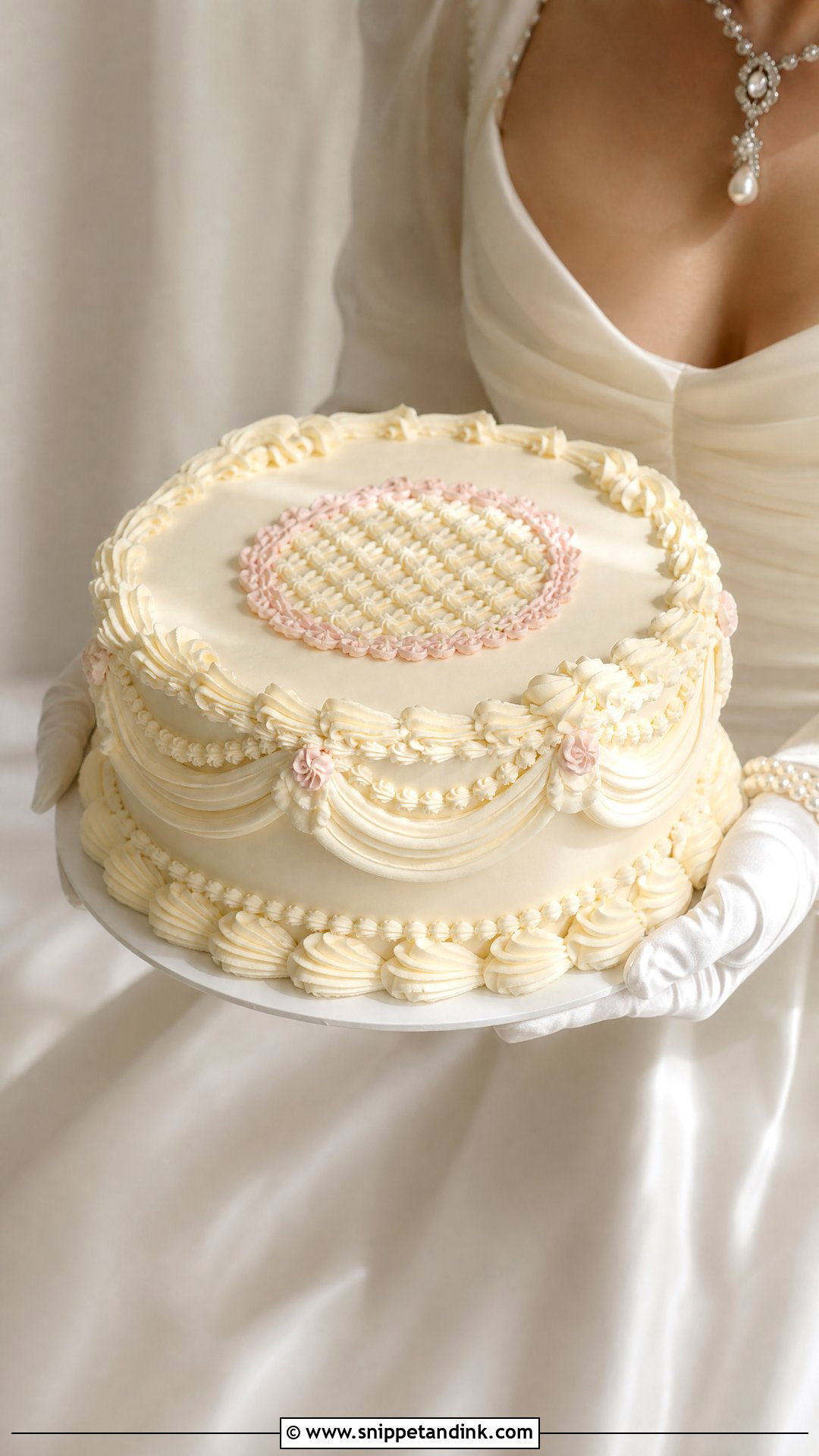
Lambeth work is layer upon layer of overpiped shells, swags and ruffles, and it takes hours to do well. It’s also heavy for its size, because all that buttercream sits on the sides. That’s why I only build it as a single small tier for a holding shot. Ivory or white keeps it bridal, and pale pink, sage or soft blue accents can pick up the wedding palette. Gloves, pearls and satin all suit it. I cut the board noticeably wider here, since the outer swags stick out and there’s nowhere else for fingers to go.
7. Pearl Wedding Cake
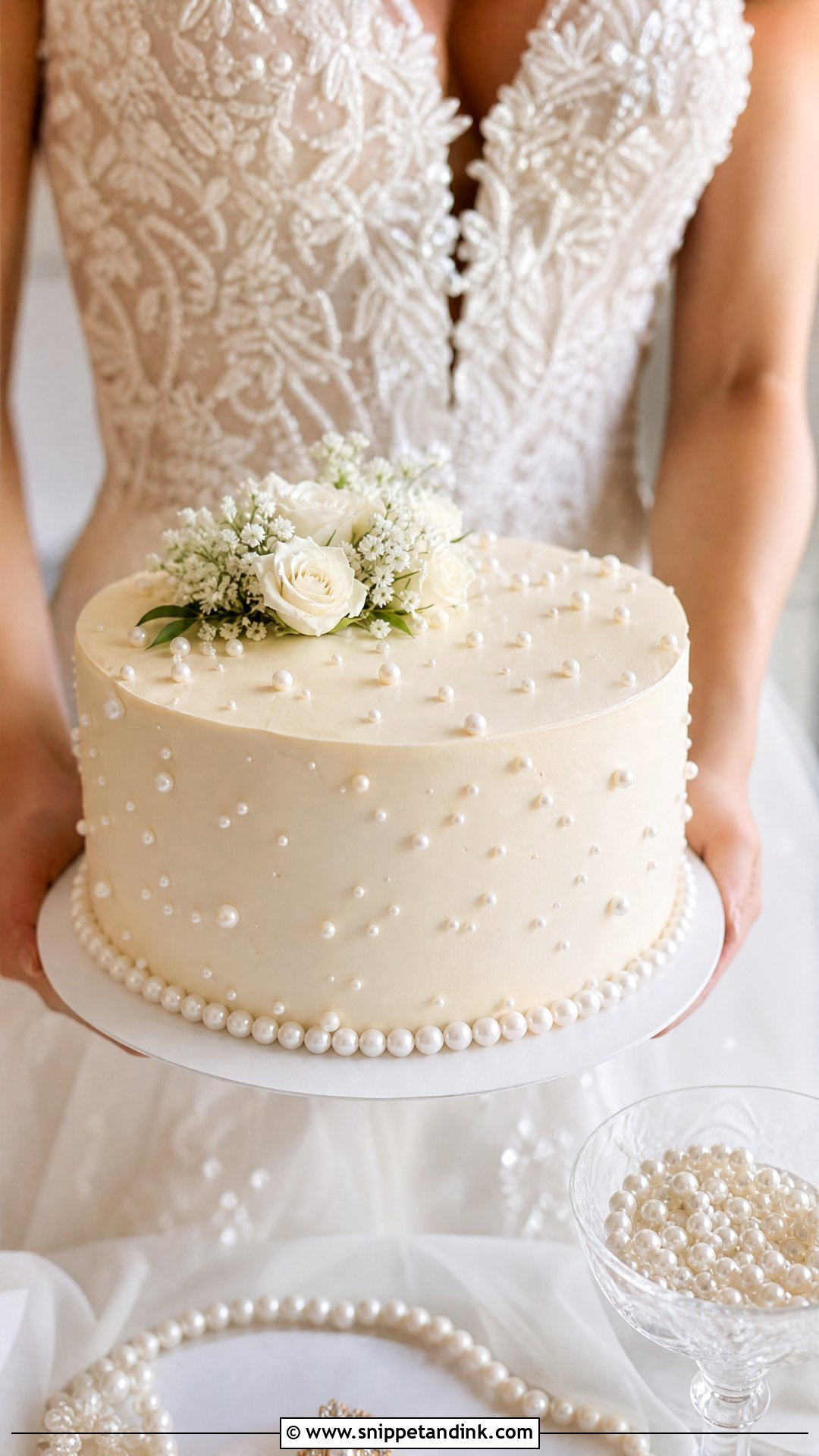
Edible pearls are sugar, and they fall off if they’re added to set icing. I press them into buttercream while it’s still soft so they lock in place, either scattered or in neat rows. Champagne, ivory or white frosting gives them something quiet to sit against, and pearl earrings or a pearl-edged veil carry the idea through the outfit. One tier holds enough detail. For the photo, keep hands low and relaxed under the board; tense fingers creep up toward the bottom row of pearls.
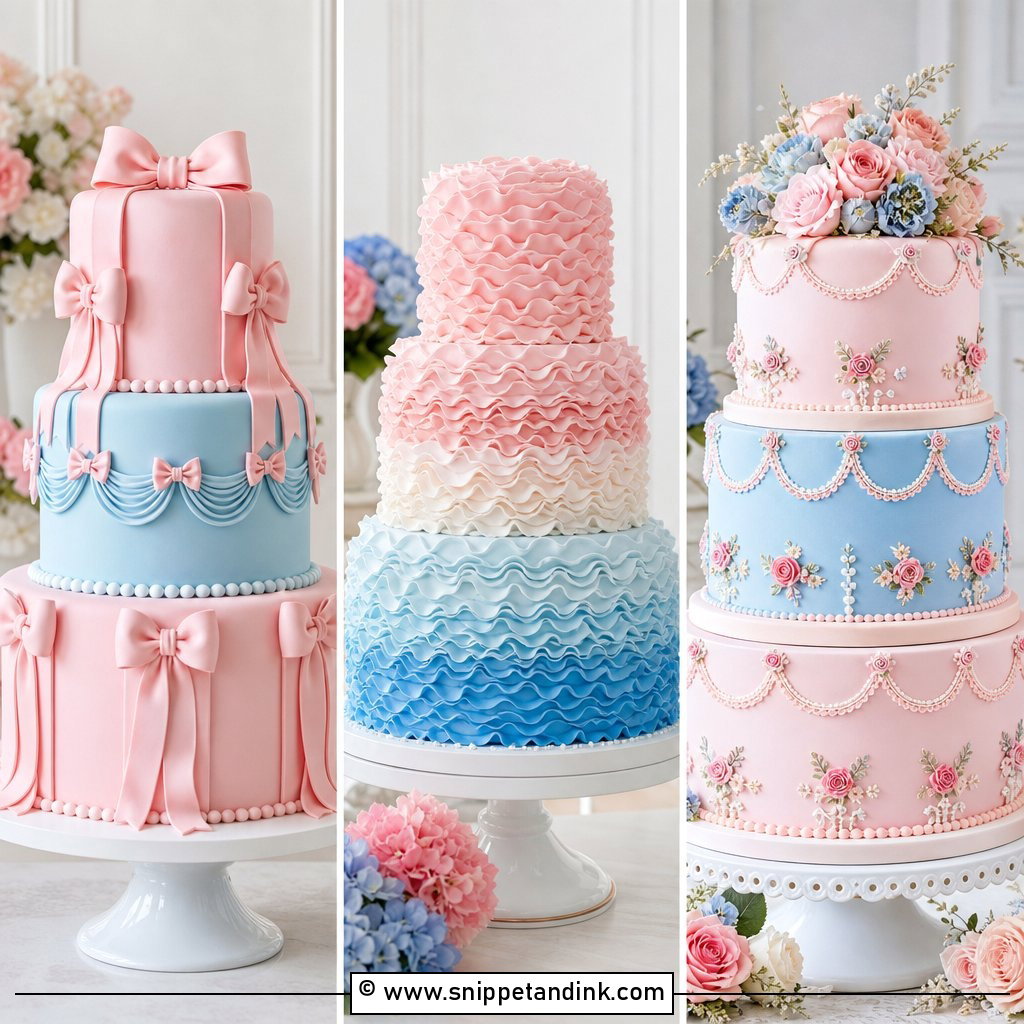
8. Bow Wedding Cake
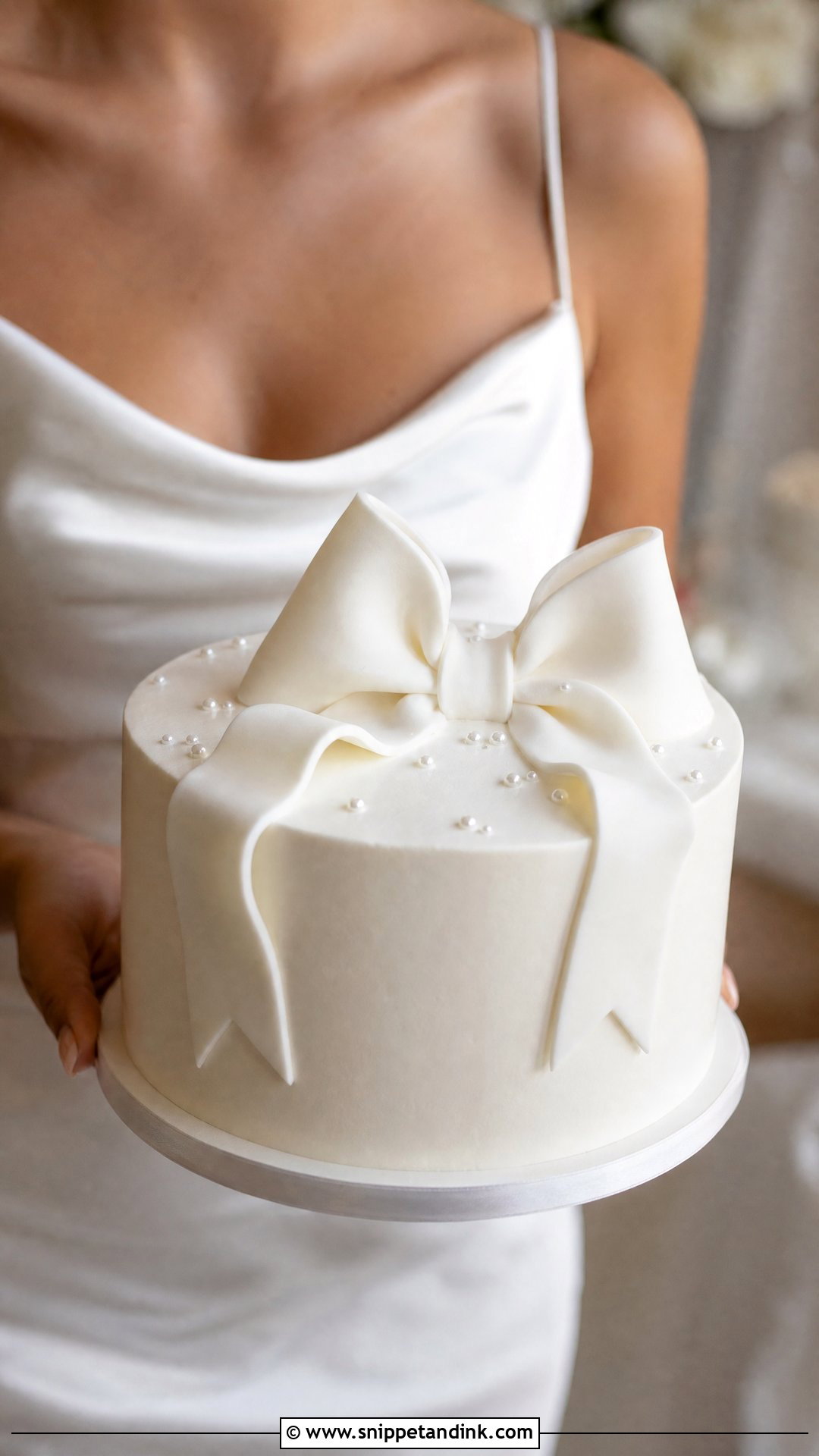
A bow wedding cake comes down to one decision: a single oversized bow or several small ones. The big bow looks editorial, while small bows read softer. Silk ribbon is quickest, but butter seeps through fabric and leaves dark grease spots, so I either back the ribbon with a strip of fondant or make the whole bow in sugar. Smooth frosting makes any bow look sharper on camera. Match the ribbon to the dress, the bouquet wrap or the bridesmaid color.
9. Mini Wedding Cake
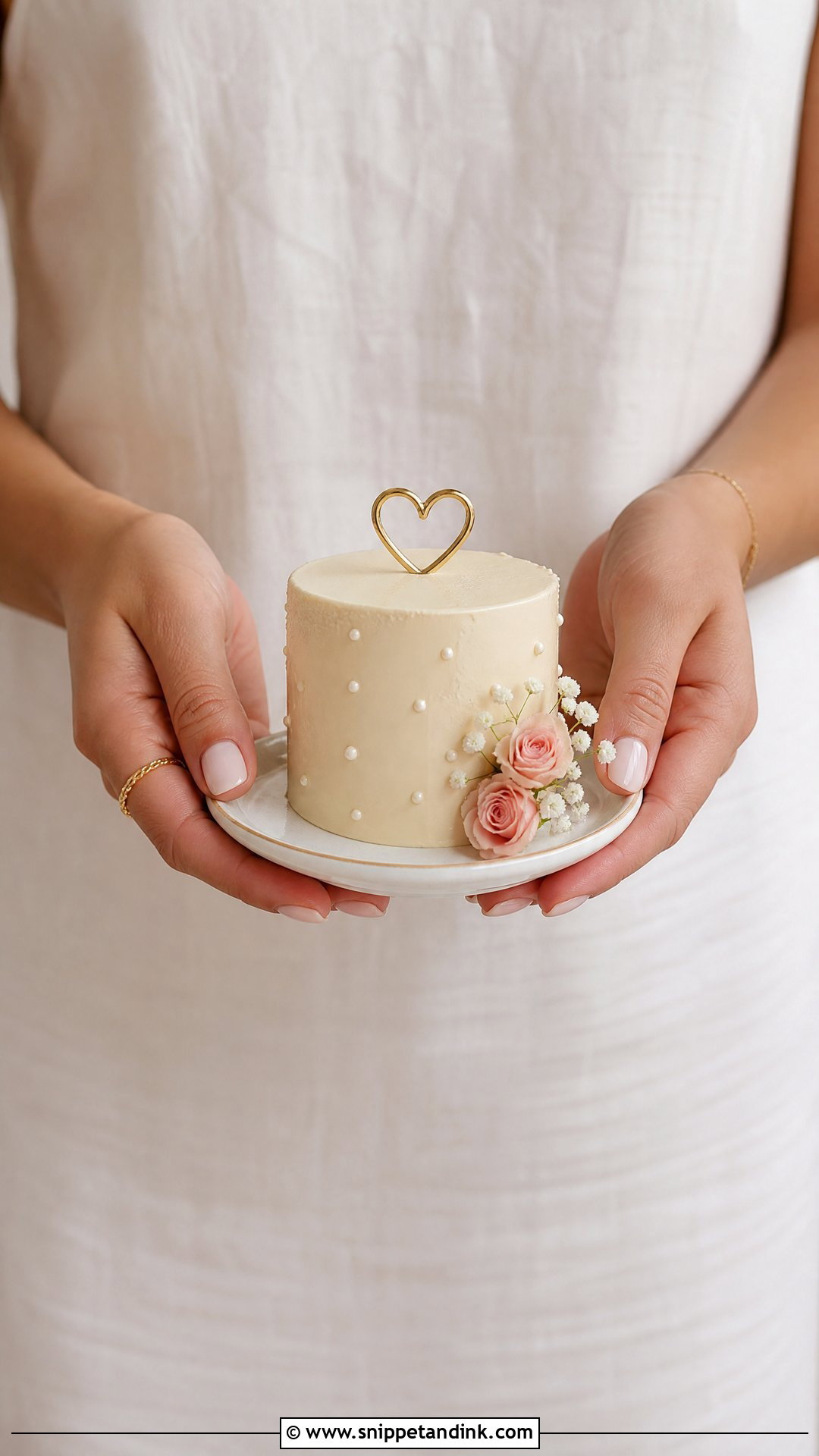
A four- or six-inch cake is the easiest thing on this list to hold, and the easiest to make look underdressed. With so little surface, I’d add one decisive detail rather than a scatter of small ones, such as a cluster of flowers on one side or a ring of berries around the top. Elopements, micro weddings and couples serving another dessert suit it well. A compact stand or a pretty plate helps it look finished in the frame.
10. Square Wedding Cake
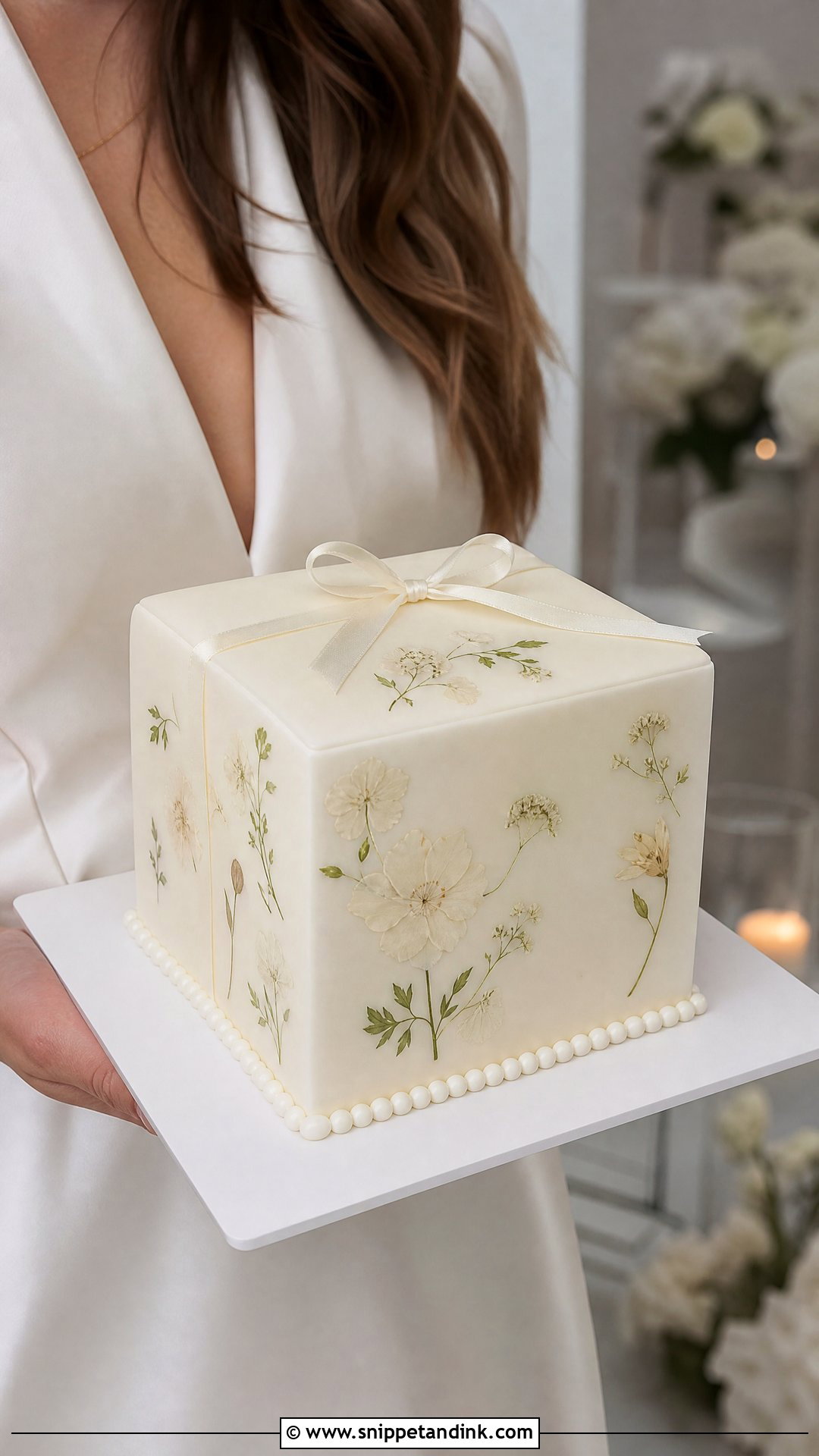
Square cakes look modern because the corners draw clean lines in a close-up, and that’s exactly why they’re unforgiving. Every corner has to be sharp and every side flat, so I either cover them in fondant or chill the buttercream hard and scrape it with a bench scraper. Decorate lightly with pressed flowers, fine piping, pearls or a ribbon at the base. City venues and courthouse days suit the shape. Hold it with one corner toward the camera for depth, or straight on for a flatter, graphic shot.
11. Naked Wedding Cake
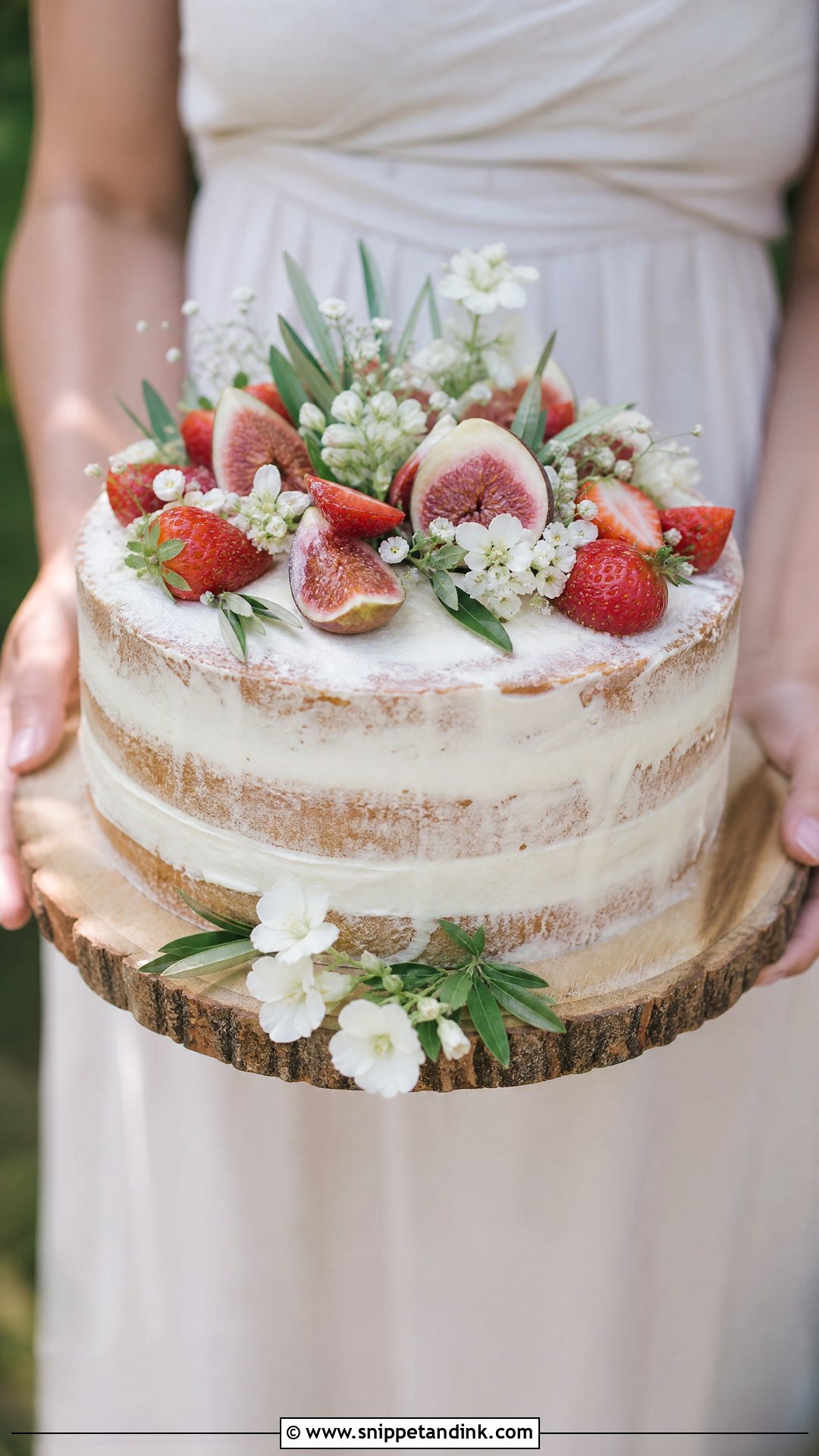
A naked cake shows its layers, so the layers have to be good: even sponge, level filling and a thin coat scraped back to let the crumb show. Fresh berries, figs, flowers or greenery bring the color. The catch is that exposed sponge dries out quickly in open air, so I keep it wrapped until shortly before photos. Rustic receptions, gardens and outdoor elopements are its natural home. Keep it cold for the picture, because a warm naked cake starts to slump at the filling line.
12. Buttercream Wedding Cake
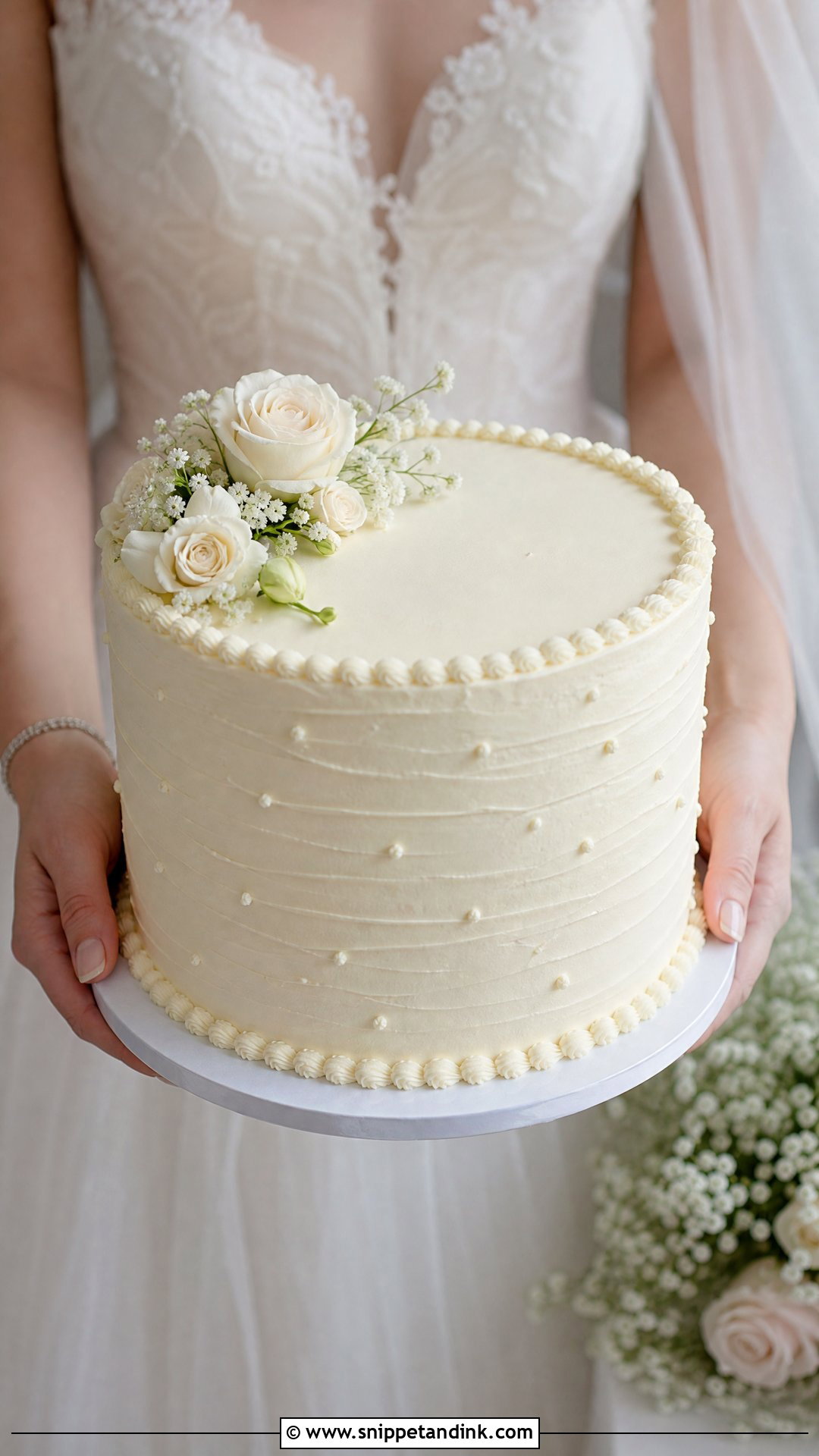
Buttercream is the finish I reach for first for a holding photo, partly because it reads soft and handmade against fabric and partly because I can smooth a small dent on site in seconds. It can be glassy, lightly textured or swept with a palette knife. Keep it to one tier or a small two-tier cake so the weight stays comfortable. Heat is the trade-off. A crusting American buttercream holds up better in a warm room, while Swiss meringue buttercream tastes lighter but softens sooner, so ask your baker which one they use.
13. Pressed Flower Wedding Cake
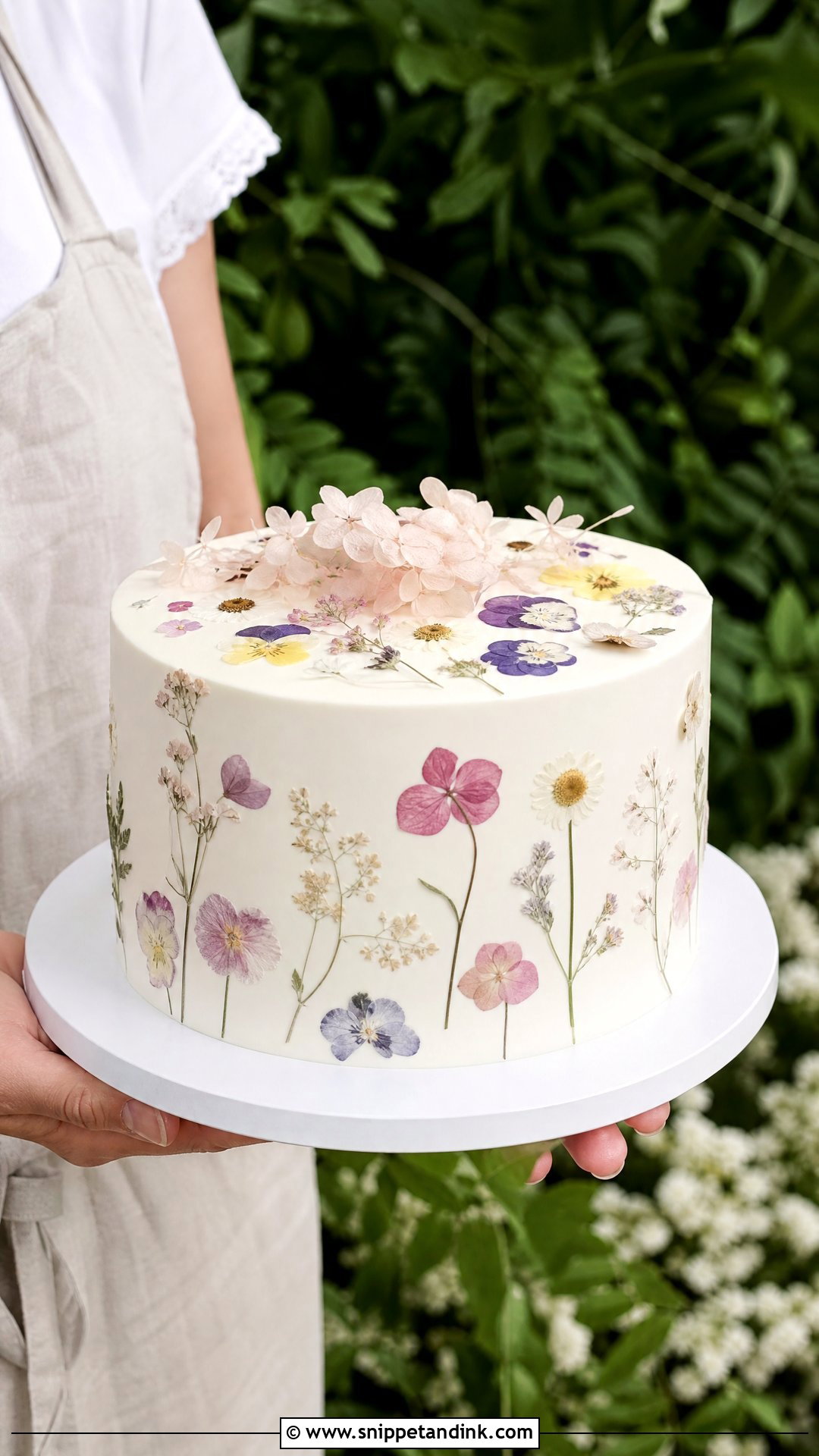
A pressed flower wedding cake is decorated flat, which makes it one of the lightest to carry and the easiest to photograph straight on. The flowers show best on smooth buttercream or fondant, where every petal is visible. I only use blooms grown for eating, pressed at home or bought already pressed for food, because florist stems are often sprayed. Lavender, blush, yellow and pale blue suit spring and garden weddings. Leave space between the flowers; crowded pressings start to look like a sticker sheet.
14. Garden Wedding Cake
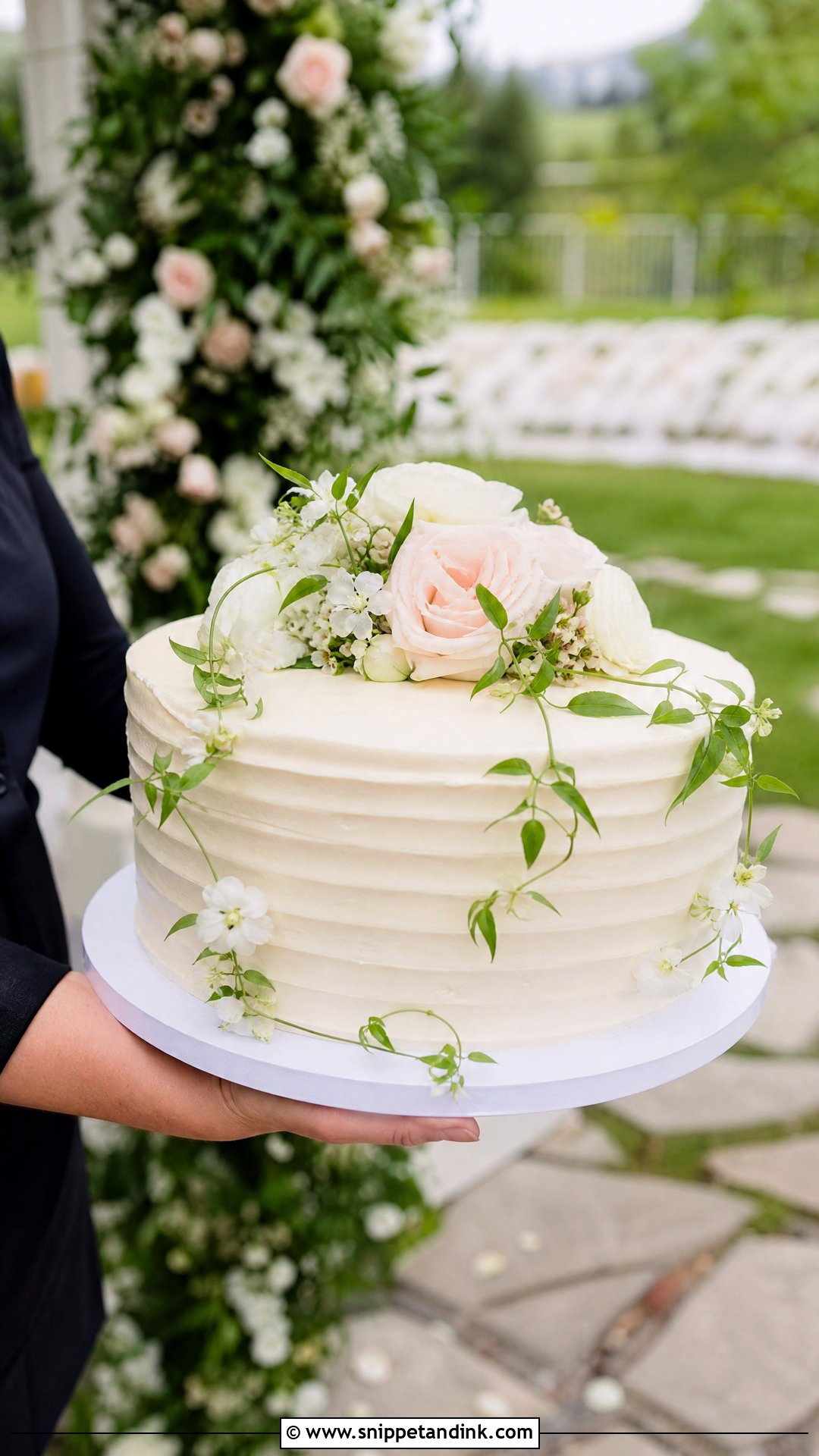
This is the cake I’d plan around the venue. Buttercream texture, loose floral clusters, sprigs of rosemary or thyme and trailing greenery look right when the background is green too. Pale green, ivory, blush and cream sit comfortably together. A small round cake is plenty. Herbs hold up longer than many cut flowers out of water, which helps if portraits run late. I place the arrangement off-center so the cake doesn’t look like a table centerpiece someone has picked up.
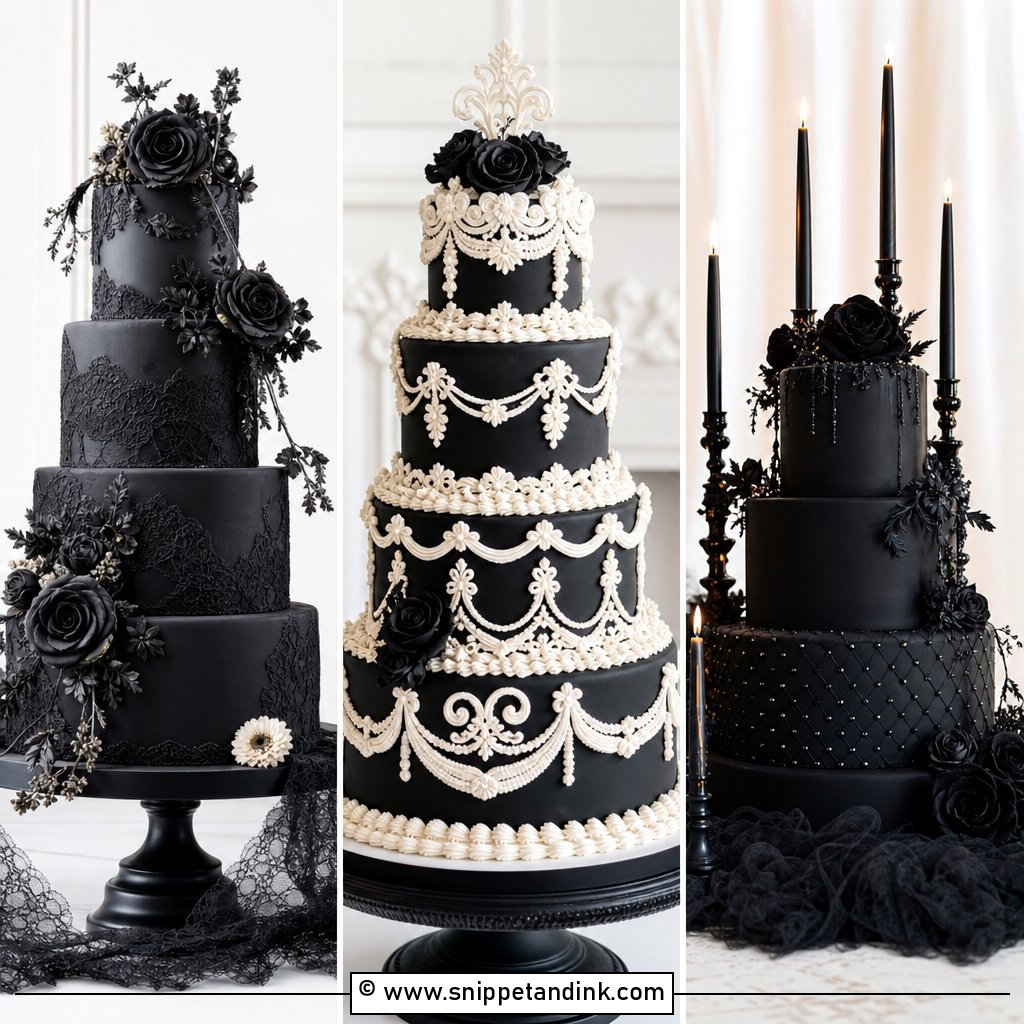

15. Gold Wedding Cake
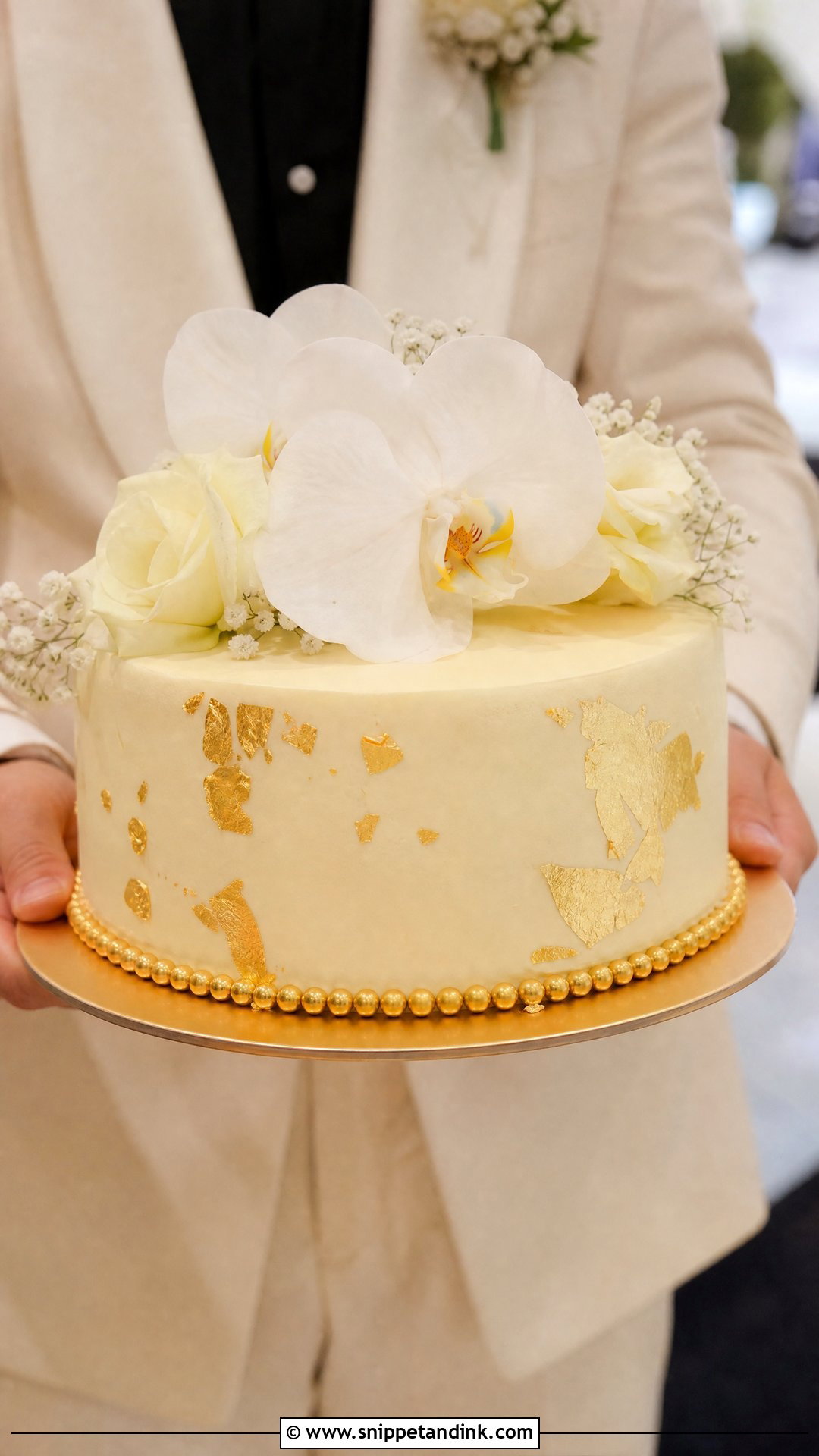
Gold leaf is so thin it moves when you breathe on it, so I apply it in a still room and handle the cake gently afterward; outdoors, loose flakes can lift in a breeze. Painted gold edges or a thin metallic ribbon are sturdier choices for a holding shot. Keep the cake underneath plain white, ivory or champagne. Ballrooms and evening receptions show it at its best, since warm indoor light makes gold glow while hard midday sun can make it look brassy. Against a dark suit, a painted gold edge stands out clearly.
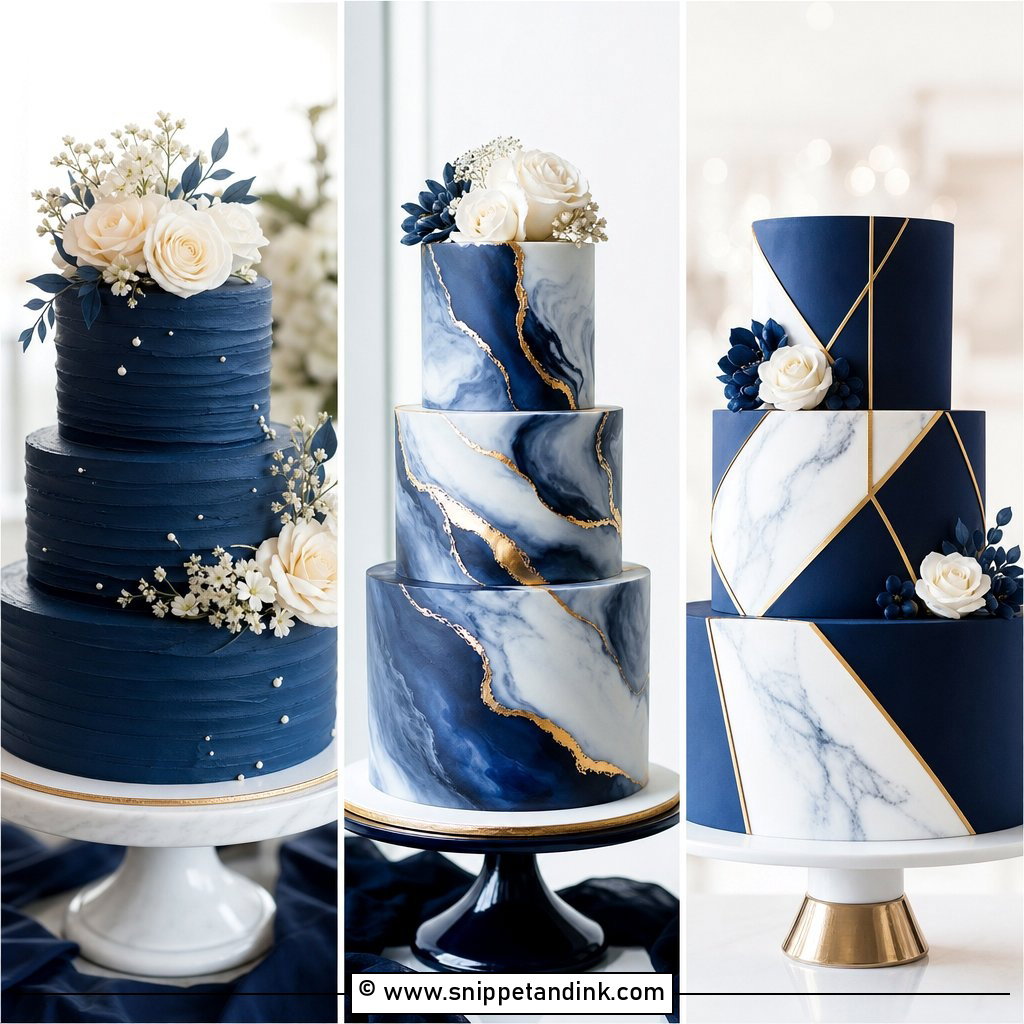
16. Blue Wedding Cake
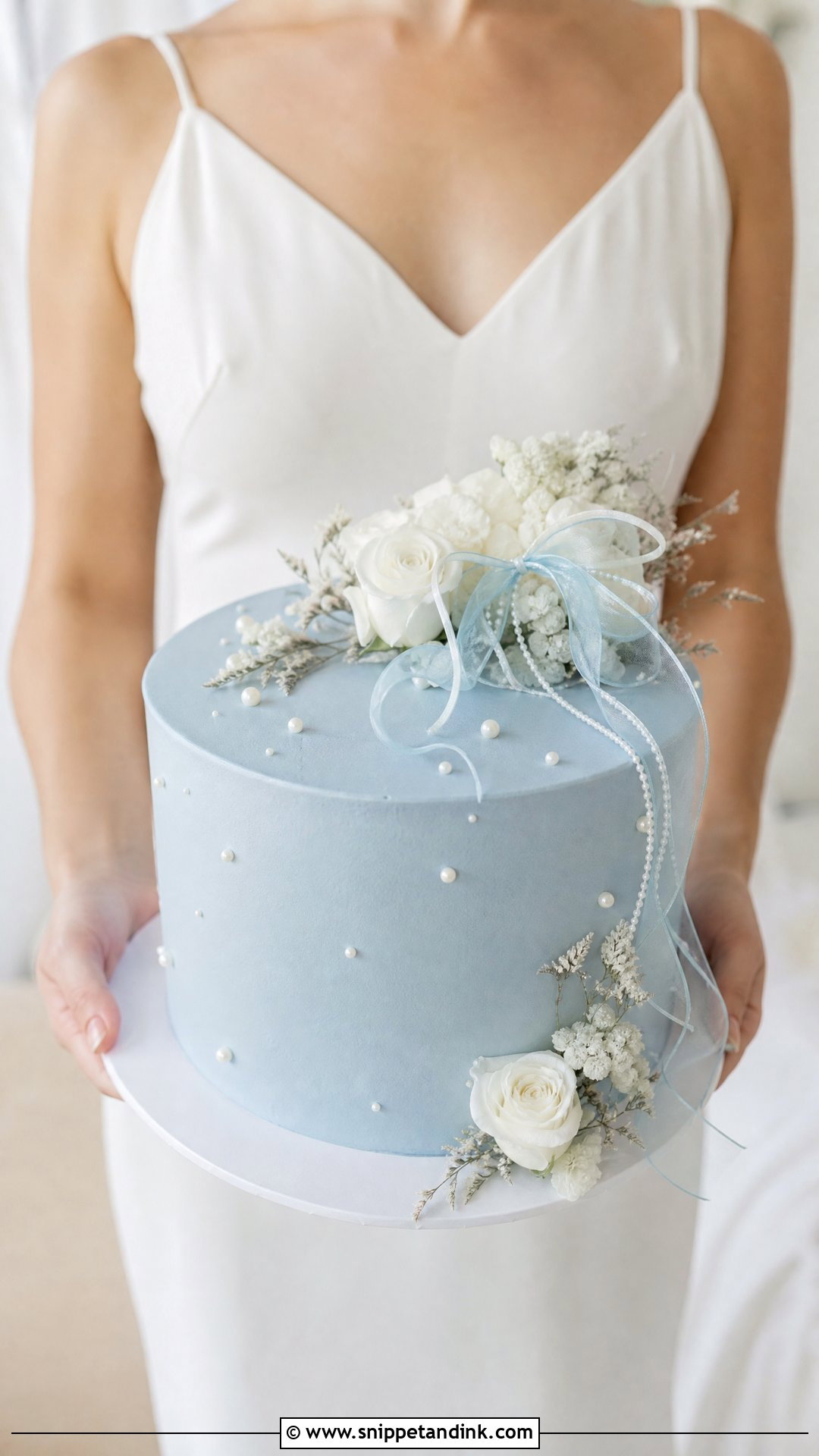
Tinting buttercream blue is harder than it looks, because the yellow of the butter pushes pale blue toward green, so I whiten the base before adding color. A blue wedding cake in a pale shade reads soft, and dusty blue looks grown-up next to white flowers and pearls. Coastal and spring weddings, or a palette with blue linens or invitations, suit it. Against white bridal fabric the contrast is clean. Keep the shape plain, a single round tier, and let the color carry the design.
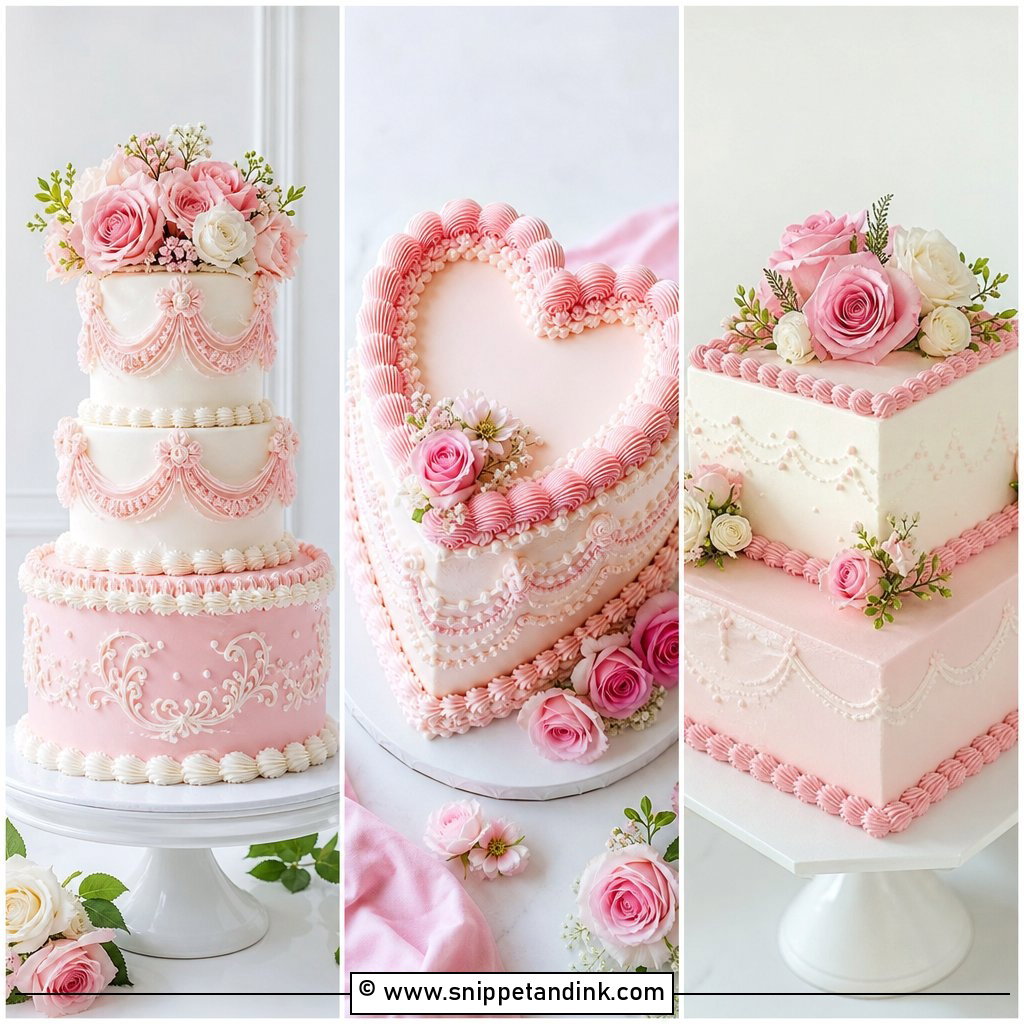
17. Pink Wedding Cake
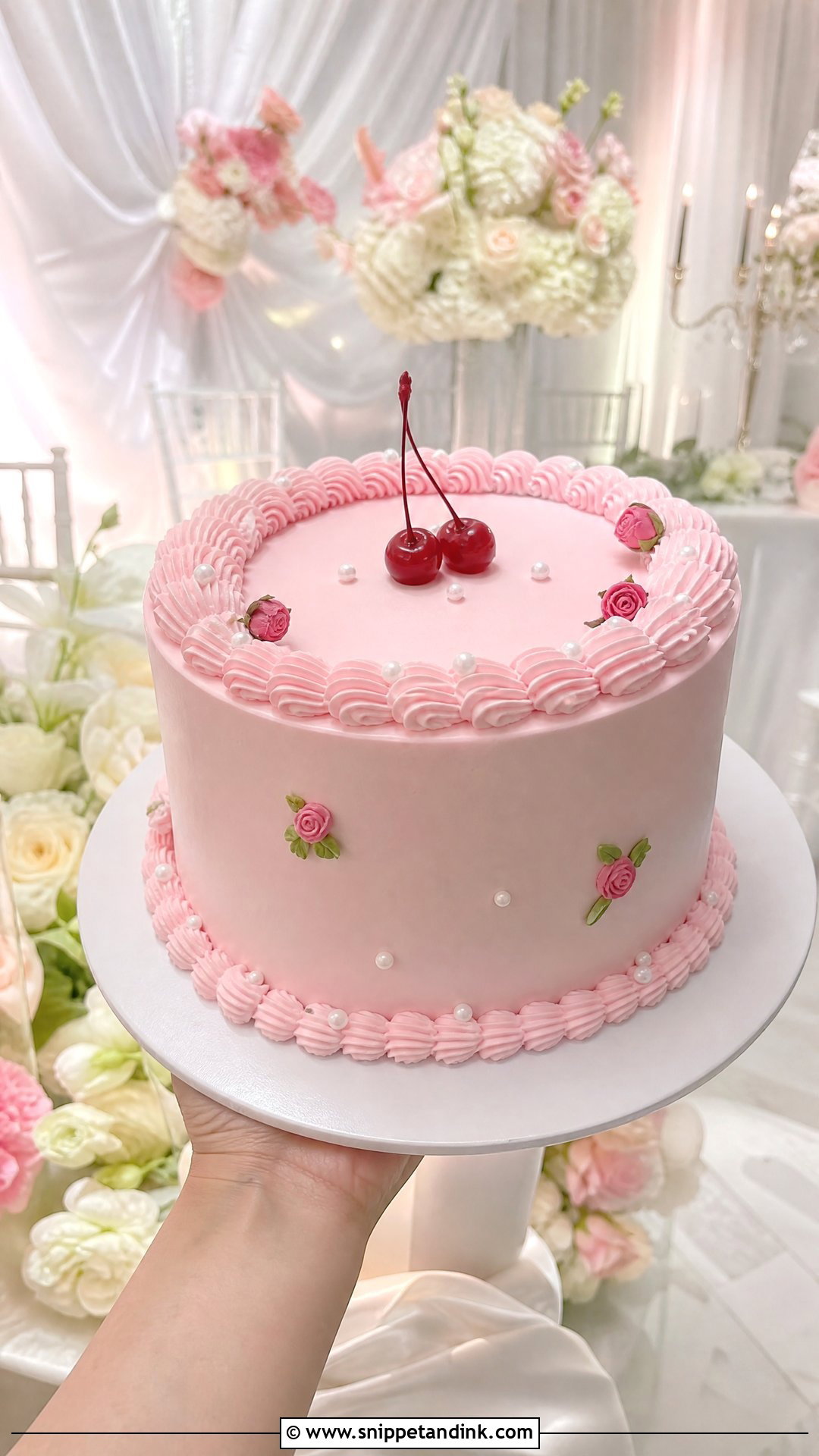
Pink icing fades in direct sunlight, sometimes within a few hours, so for outdoor portraits I’d keep the cake shaded until the moment of the shot. Blush is the most bridal shade, and dusty rose or peach-pink work too. Piping, small flowers, pearls, cherries and a satin ribbon all suit it. Stand near flowers or a plain wall so the color holds the eye. I’d lean toward a muted pink, because a bright one can throw a pink cast onto skin in a tight close-up.
18. Fruit Wedding Cake
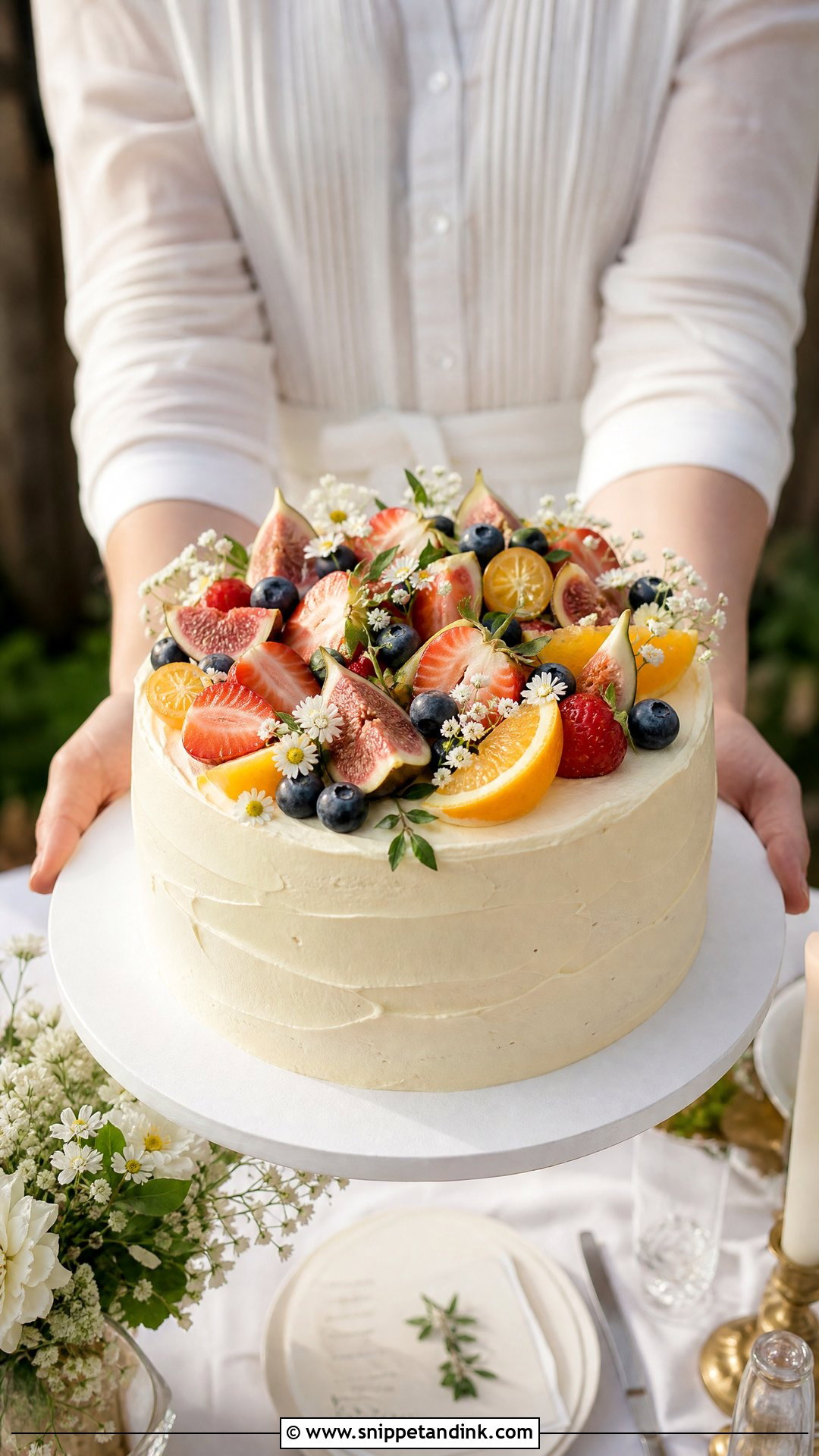
Fruit is the heaviest topping on this list, and the wettest. Berries, figs, citrus slices, grapes and small stone fruit look generous, but cut fruit weeps juice into frosting, so I add cut pieces last and use whole berries wherever fruit touches the icing. Light buttercream or a smooth cream finish works underneath. Whipped cream is the riskiest choice for holding, because it softens fastest once it leaves the fridge. Stick to one tier, and save this one for brunch receptions or a shaded outdoor setting.
19. Sheet Wedding Cake
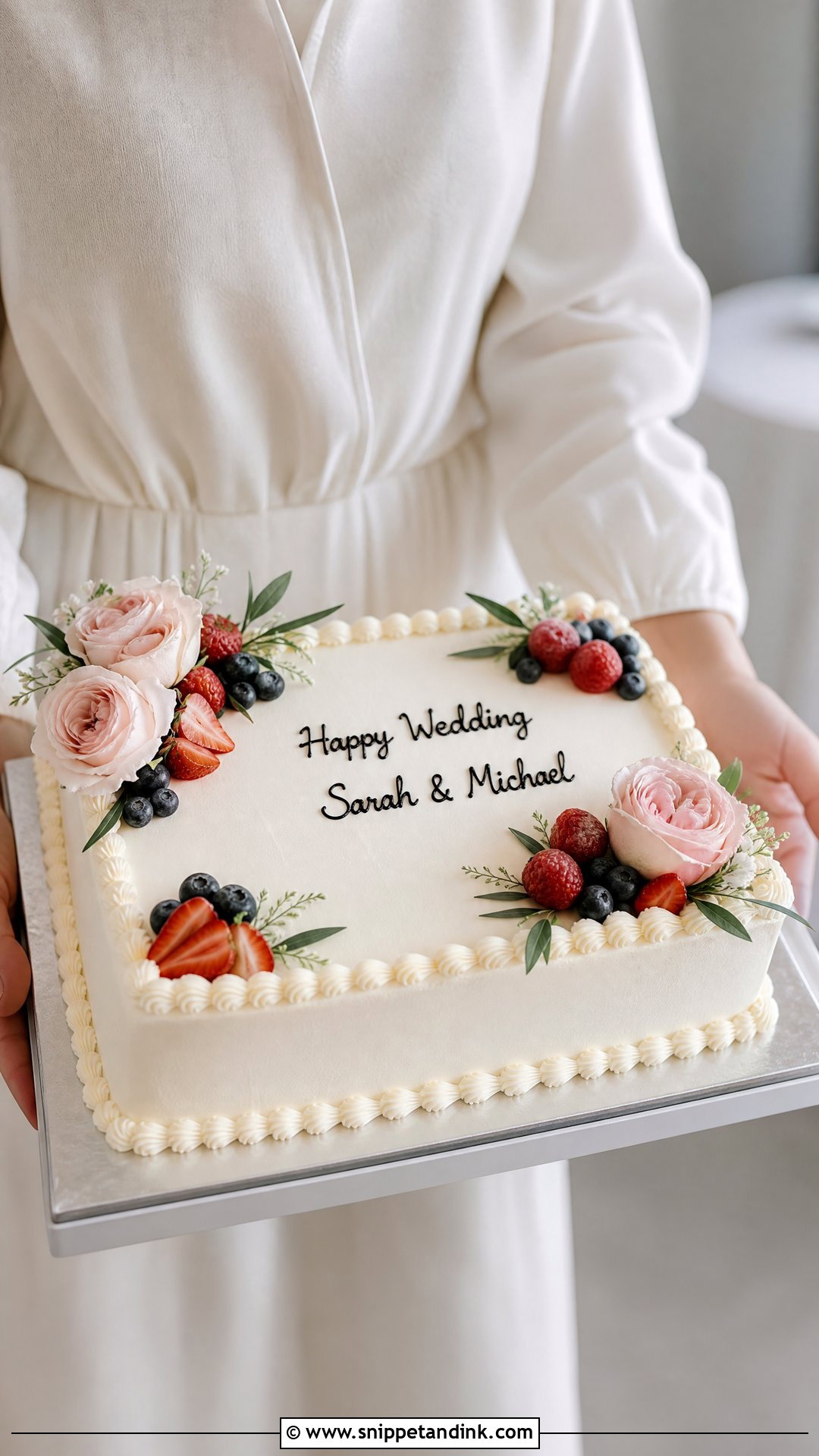
A small sheet cake can look smart when it’s finished with care: straight sides, a piped border, flowers or fruit, maybe a short message. It fits relaxed receptions and family-style dinners, and low, wide cakes are having a real moment. Width is the problem. A rectangle flexes in the middle when it’s held from the ends, so I put it on a rigid tray or a doubled board, and I tell the holder to carry it with forearms underneath rather than fingertips at the corners.

20. Just Married Wedding Cake
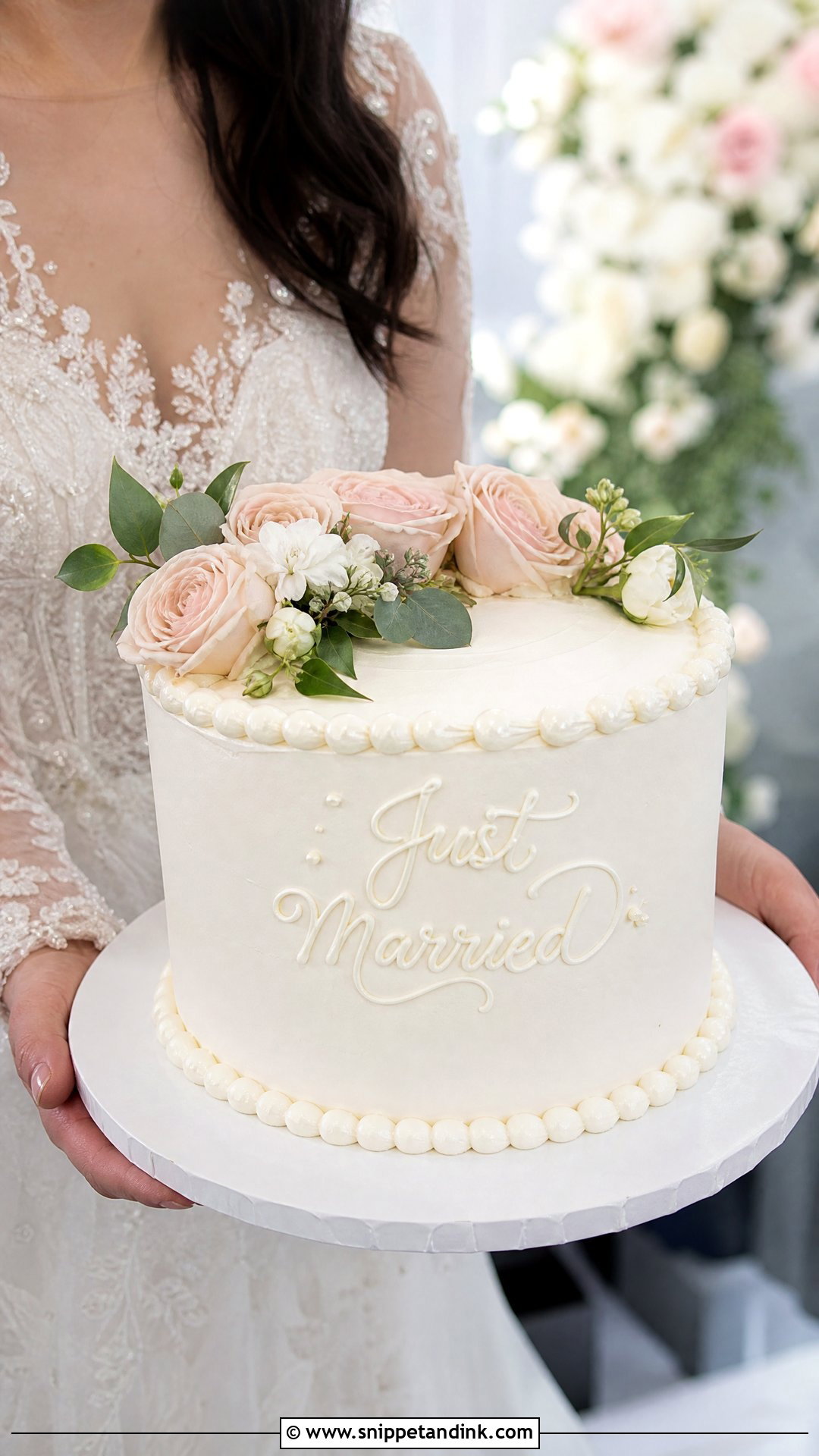
The lettering does the storytelling on a Just Married wedding cake, so it has to be legible from where the camera stands. The cake can be round, heart, square or mini; the phrase should be centered and sized to fill the top. I pipe in a contrasting buttercream or cut fondant letters, and I write a little larger than feels natural, because script letters soften and blur slightly as buttercream warms. White frosting with a few flowers, pearls or a ribbon keeps it bridal. Use it right after the ceremony, during portraits or at the reception entrance.
Hands Under the Board, Never on the Sides
How someone holds the cake decides whether the photo looks relaxed or tense. I always show the holder before the photographer starts shooting.
- Slide both palms flat under the board with fingers spread, and keep elbows close to the body. Locked, straight arms start shaking within a minute.
- Hold the cake somewhere between waist and lower chest. Up near the chin it hides faces, and arms tire quickly.
- Tilt toward the camera only slightly. Past a small angle, toppers and upper tiers begin to slide.
- Walk slowly and watch the ground, not the cake. When handing it over, the next person’s hands go under the board before you let go.
- Keep a small offset spatula and a damp cloth close by. A fingerprint in buttercream smooths out in seconds if someone catches it early.
The Twenty Minutes Between Fridge and Frame
Buttercream begins to soften as soon as it’s warmer than a cool indoor room, and direct sun speeds that up a lot. For an outdoor holding shot in summer, I’d schedule it early in the portrait session, keep the cake in shade or a cooler until the photographer is ready, and bring it back inside between setups. A few minutes in full sun is usually fine. Half an hour can mean drooping piping and a soft base.
If something goes wrong, stay calm and keep the board level. A dented side can face away from the lens, a lost flower can be replaced from the bouquet once its stem is wrapped, and a small crack on top usually disappears behind a sprig of greenery. If this is also the cake you’ll cut later, ask the venue to move it straight back to a cool spot after portraits.
So Which Cake Gets Handed Over?
A cake for a holding shot has to look good and also be built for hands. Mini cakes, hearts, vintage piping, pressed flowers, pearls, bows, fruit and soft color all give the camera something to look at without a big dessert table. What decides whether the photo is easy is size, support, the frosting and where the decoration sits. A tall or delicate cake makes the holder nervous, and that tension shows on camera. Tell your baker early that it will be carried, then pick the design that matches the rest of your wedding.
You'll Like These Ideas:






Leave a Reply