
A cake by the sea is a lovely idea and a real engineering problem. Heat softens buttercream, humidity makes sugar decorations droop, and wind carries sand onto anything left uncovered. The coastal cakes that work are the ones designed for those conditions first and decorated second. Below are twenty designs, from ocean ombre and edible sand to sugar coral, driftwood texture and tropical flowers, with light flavors like coconut, lemon, mango and passion fruit. For each, I’ve added what I’d watch as the baker, so you know which ones need shade, a cooler or a careful conversation.
Buttercream in Sea Air: What Softens, What Sweats, What Holds
Before you choose a design, it helps to know what’s underneath it, because the frosting decides how a cake copes outdoors.
- Meringue buttercreams, Swiss or Italian, are silky and less sweet, but they’re mostly butter, so they soften quickly in heat.
- American buttercream sets with a slight crust and handles warmth a little better, especially when the baker uses some shortening in the recipe.
- Chocolate ganache is the firmest base. Many bakers put a ganache layer under fondant for exactly this reason.
- Whipped cream, cream cheese frosting and fresh custard fillings need refrigeration and don’t belong on an outdoor display table in summer.
Fondant has its own problem. A fondant cake kept in a cold fridge and carried into warm, humid air collects condensation, and the surface looks wet and blotchy. It dries if left alone, but it’s a reason I bring fondant cakes up to room temperature indoors before they go anywhere near the beach.
If your reception is outside in the afternoon, tell your baker the expected temperature and how long the cake will be on display. That one conversation changes the recipe.
1. Beach Wedding Cake With Seashells
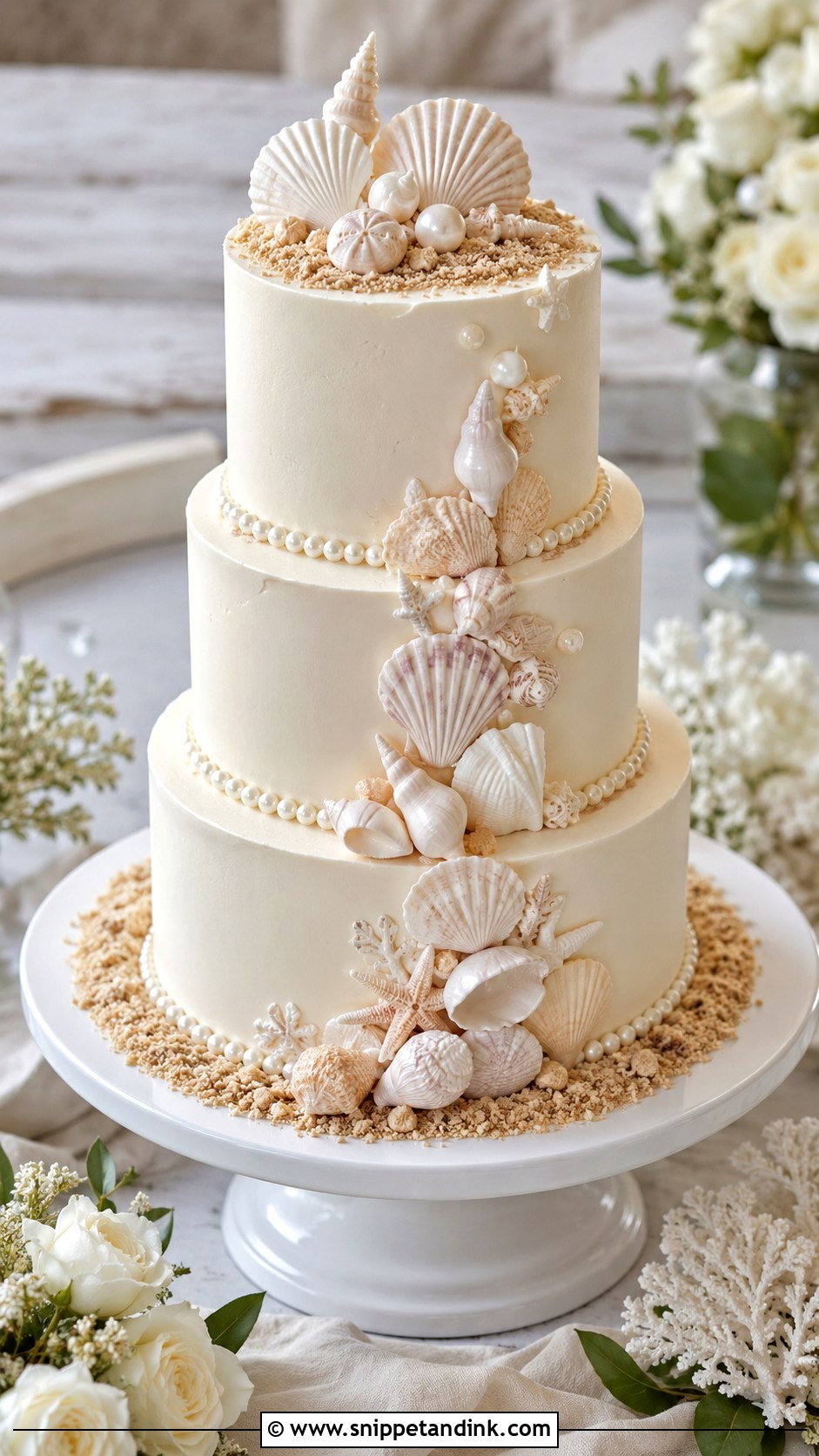
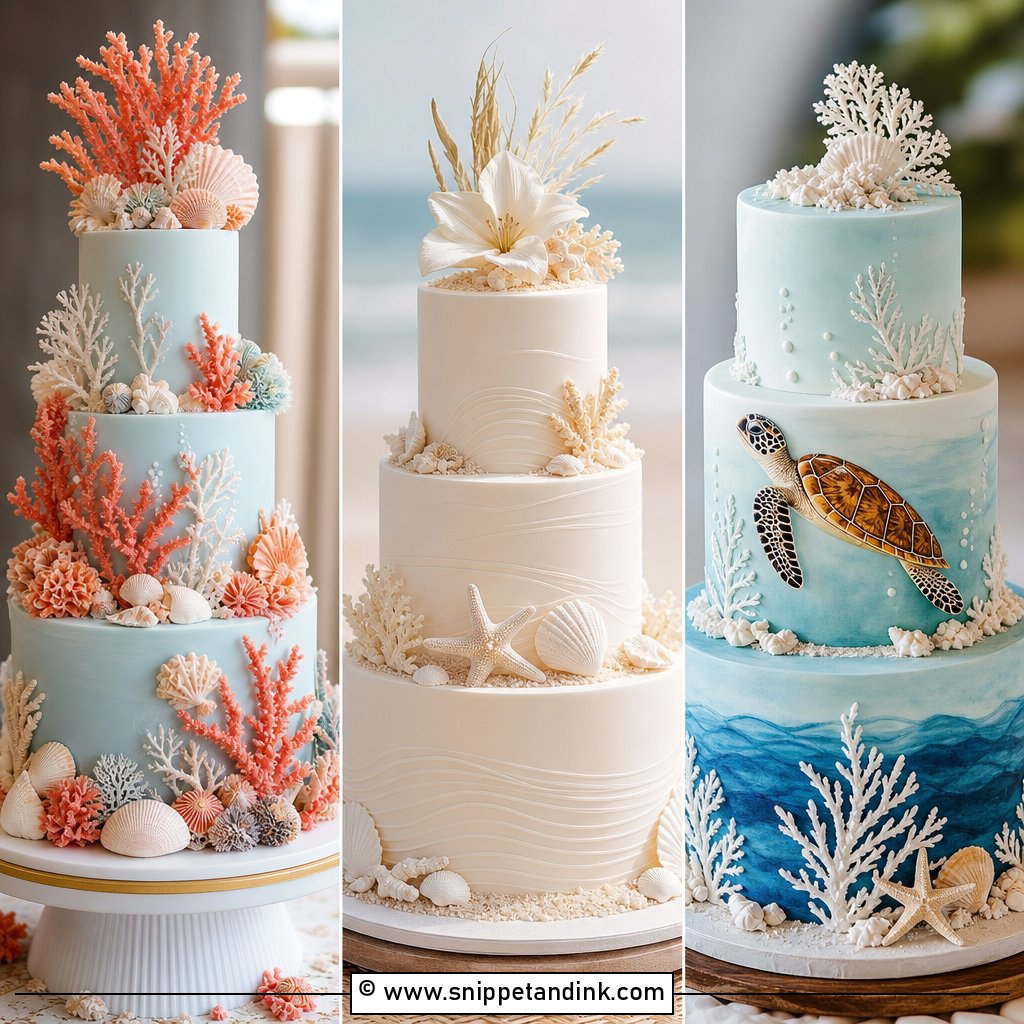
Shells are the obvious beach cake, and the version that works is the edited one. I’d pipe ivory or sand-colored tiers, then cluster sugar shells of varied sizes along one side or around the base rather than spacing them evenly, which tends to look like wallpaper. Pearl piping, crushed cookie sand and one starfish finish it. Real shells shouldn’t touch frosting unless they’ve been cleaned and sit on a food-safe barrier; sugar or chocolate shells are safer and lighter. Vanilla bean, coconut, almond or lemon suit the setting.
2. Ocean Blue Ombre Beach Wedding Cake
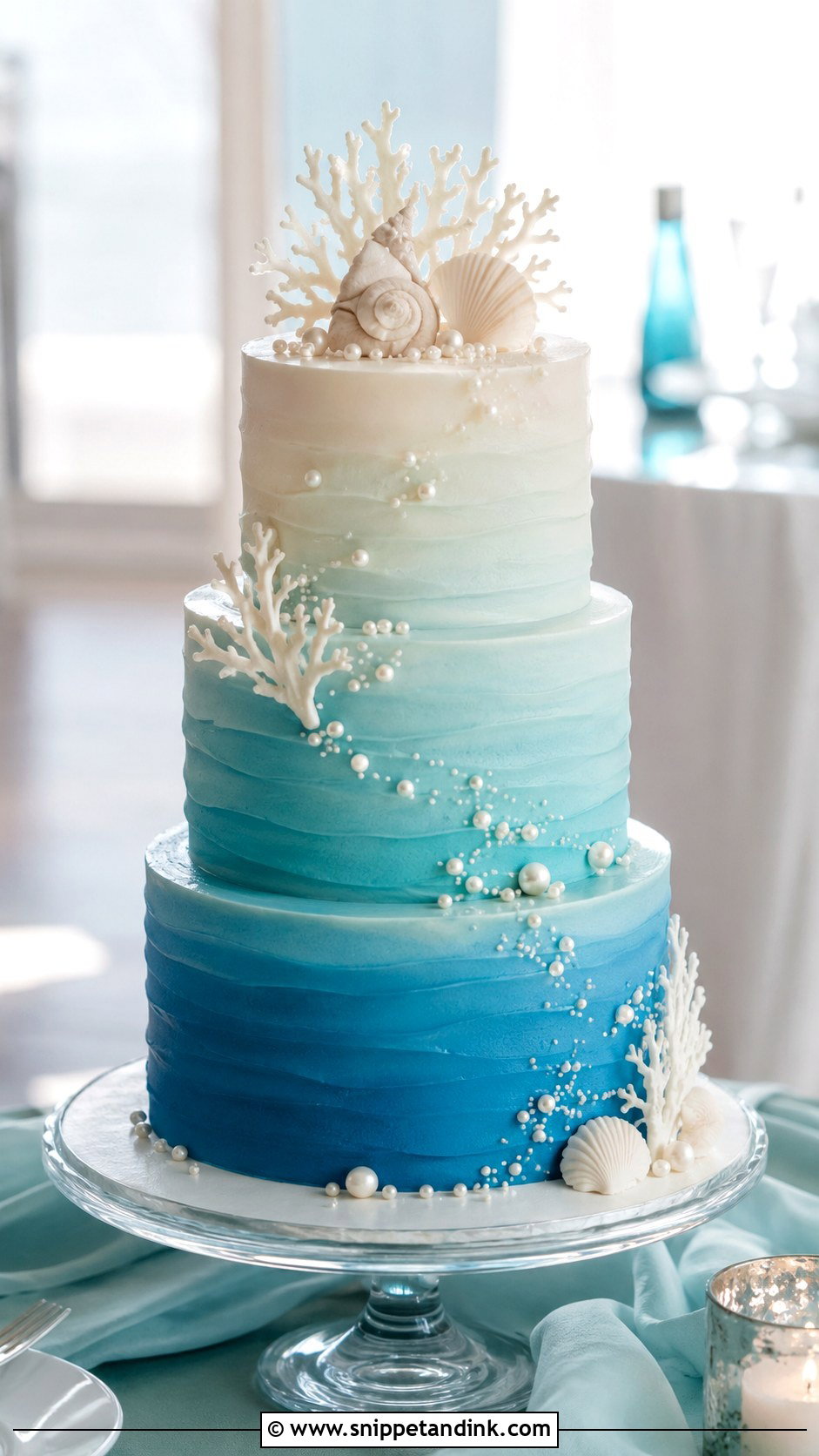
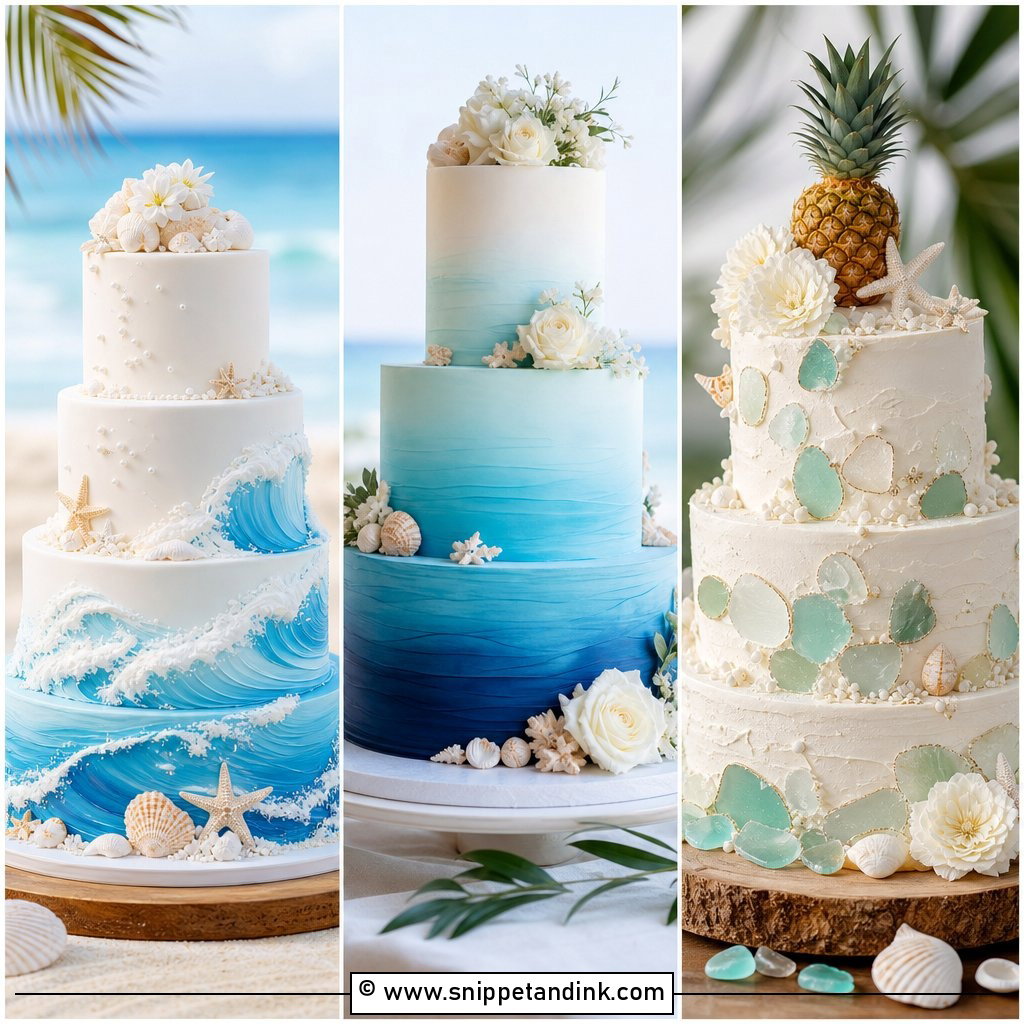
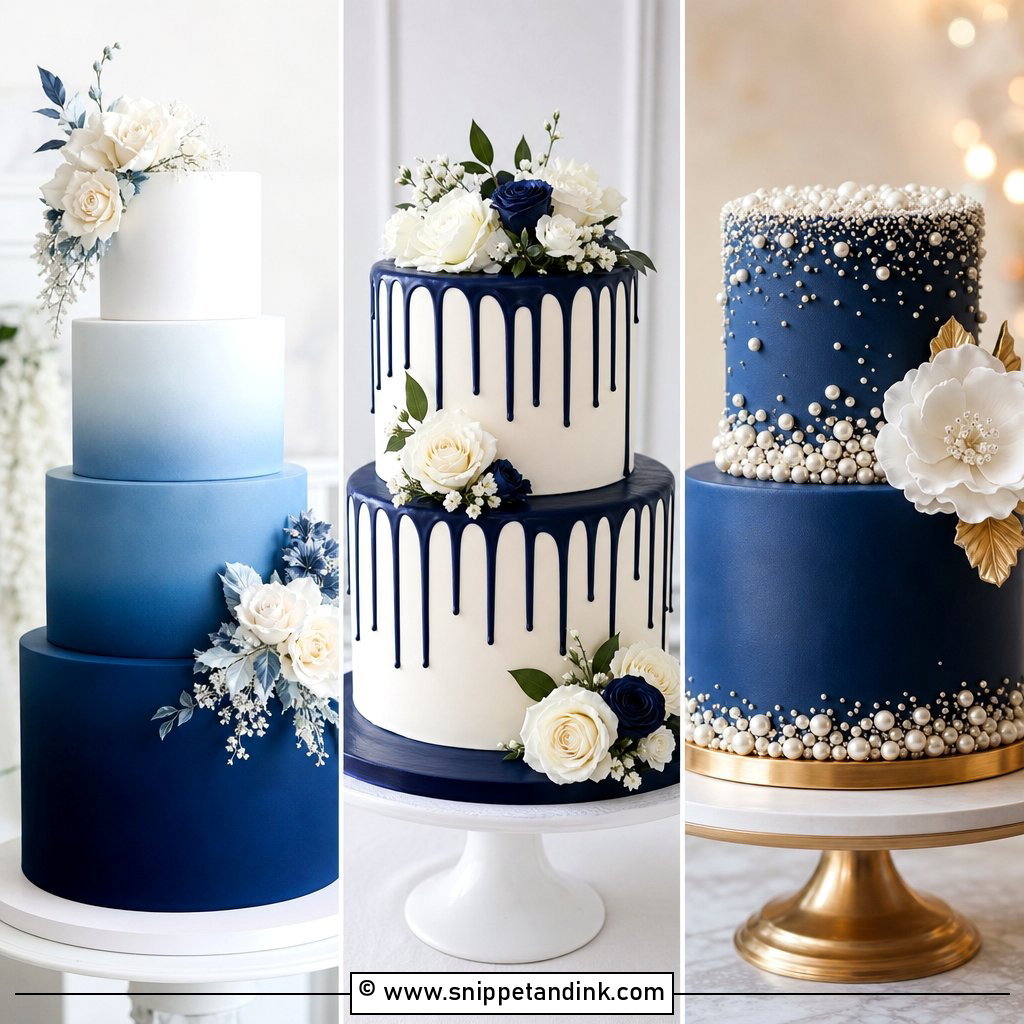
Ombre from navy at the base to pale aqua at the top does the coastal work on its own, so the cake needs little else. Deep blues take a lot of coloring, and a heavily tinted buttercream can taste slightly bitter and stain teeth, so I keep the darkest band thin and at the bottom. Smooth sides look modern; a textured finish looks relaxed. Edible pearls, a little white sugar coral or a single flower topper keep it bridal. Lemon raspberry, coconut cream or vanilla with passion fruit filling all suit it.
3. Tropical Beach Wedding Cake
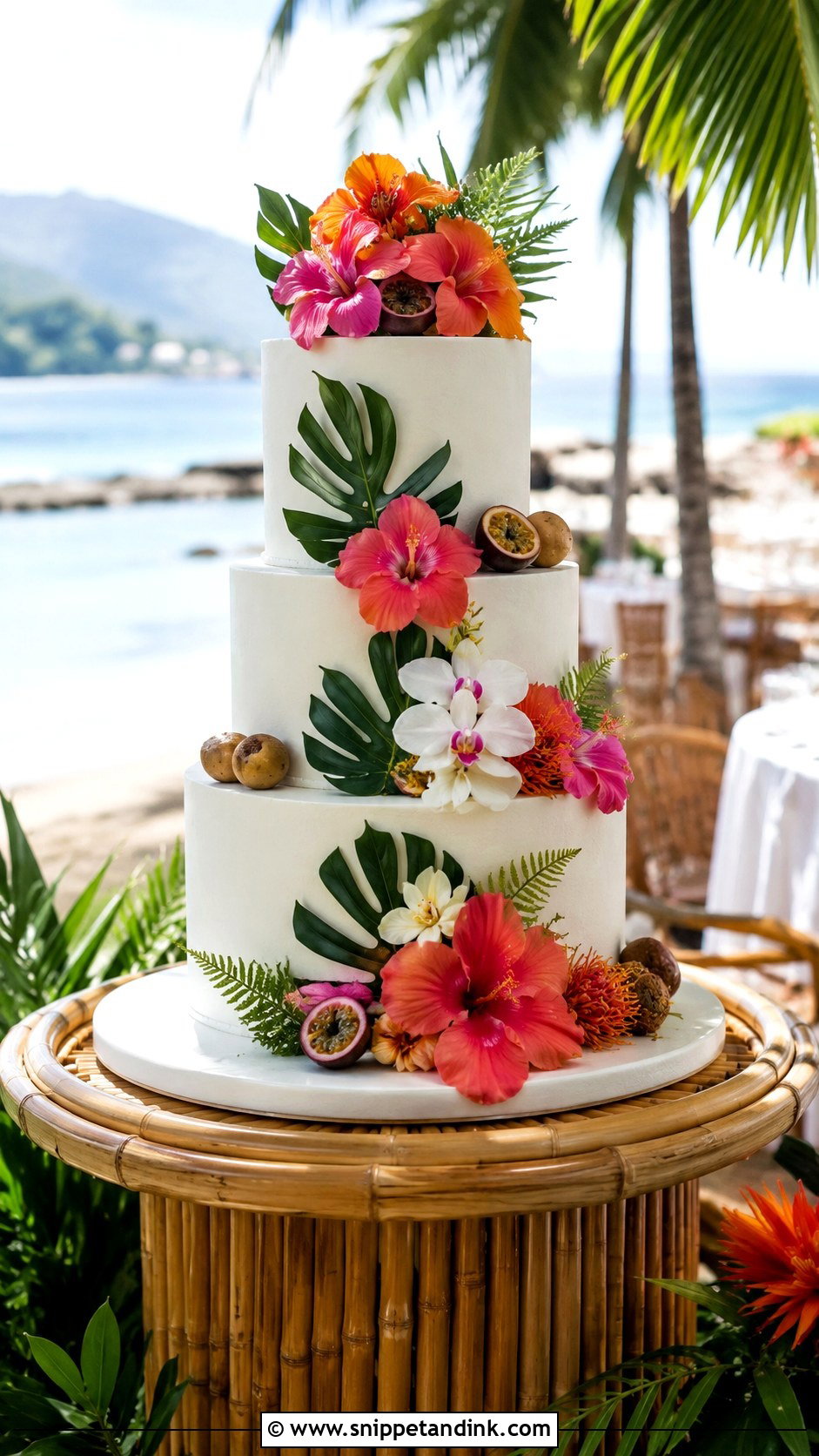
A tropical beach wedding cake belongs at island receptions and destination weddings. White or ivory tiers with hibiscus, orchids, monstera or palm leaves can be clean or lush. Fresh mango slices look great but weep juice within an hour or two, so I add them right before the cake goes out, or use sugar fruit. Coconut, pineapple, guava, mango and lime flavors fit. Outdoors, choose a firm frosting. And let the blooms frame the cake rather than bury it.
4. Beach Wedding Cake With Starfish
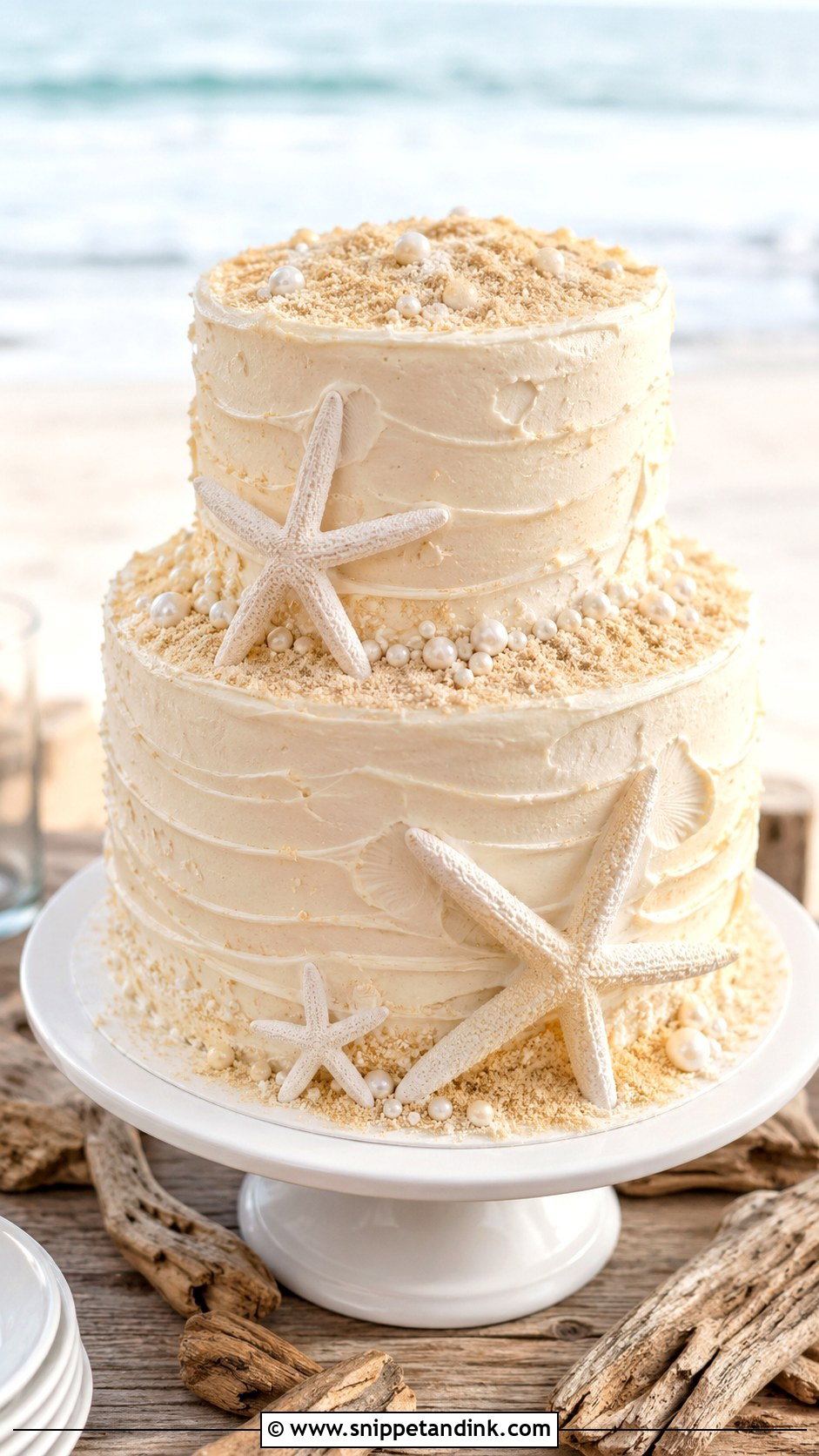
Starfish give a casual, sand-and-boardwalk feel. I set two or three edible starfish on a diagonal across a two or three tier cake, with white buttercream and a sandy beige texture, so the eye travels down the cake. Tiny shells, pearl beads or a soft blue watercolor brushstroke can join them. It’s relaxed rather than formal, which suits small weddings. Vanilla, coconut or almond with a citrus filling keeps it bright.
5. Coral Beach Wedding Cake
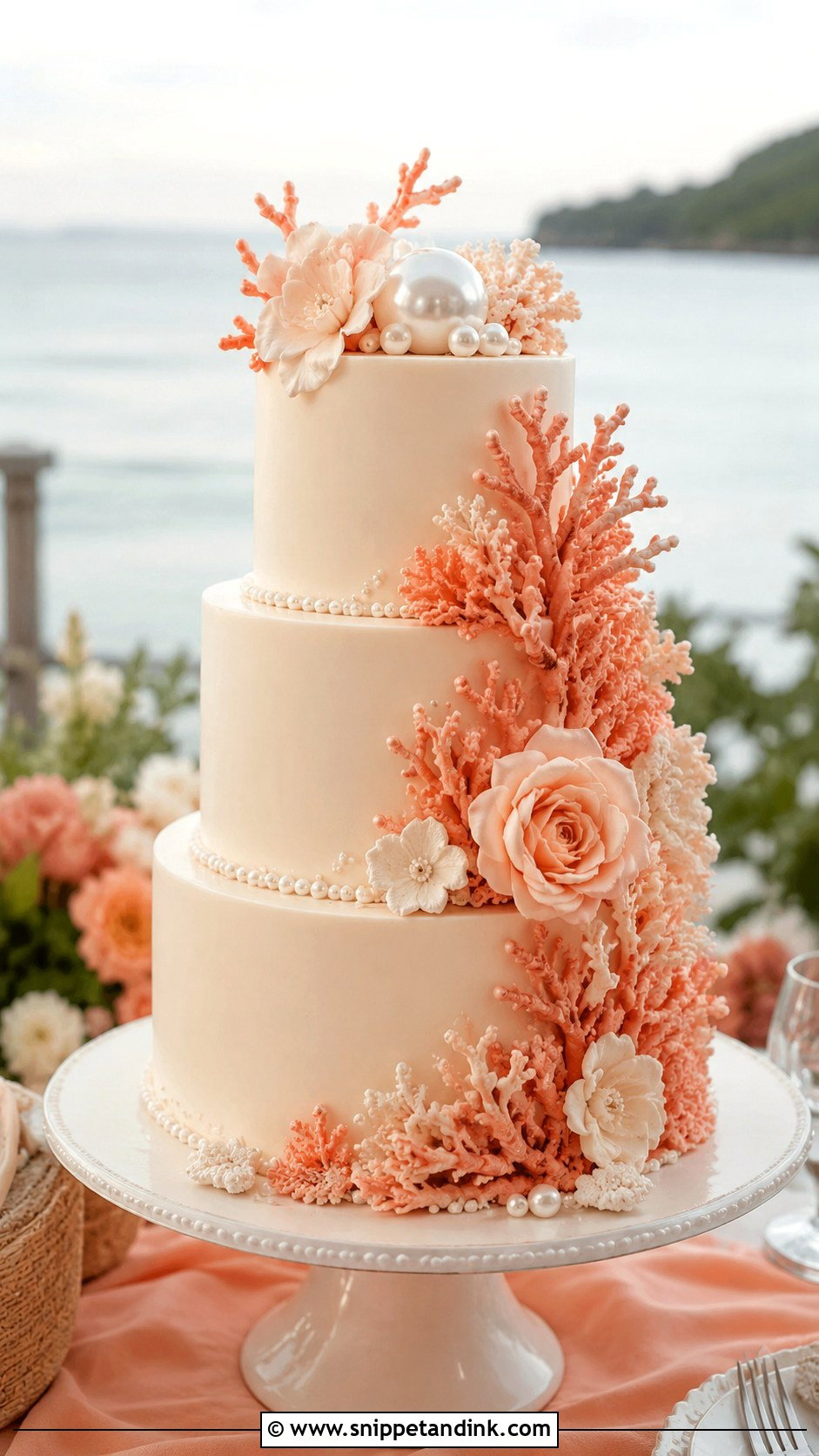
Coral can look cartoonish fast. The answer is a muted palette: soft coral, ivory, blush and pale peach, never bright orange. Sugar coral pieces climbing one side read as sculpture; piped coral texture over smooth fondant is gentler. Sugar pieces are fragile and soften in humidity, so I add them on site. It suits sunset palettes and warm metallics. Try coconut cake with passion fruit curd, vanilla with guava filling, or lemon with raspberry.
6. Sea Glass Beach Wedding Cake
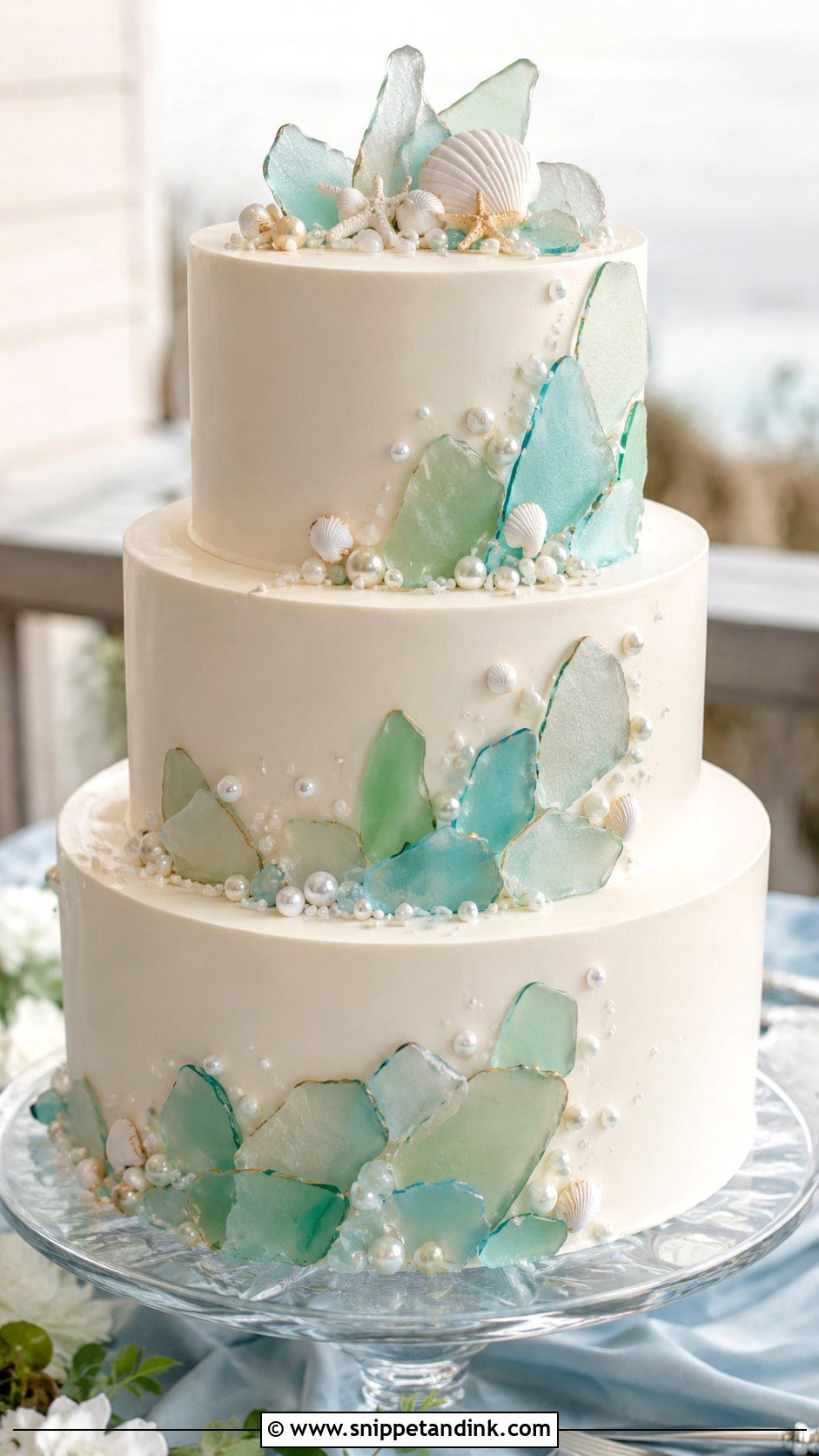
Sea glass is made from poured isomalt or cooked sugar, tinted aqua, pale blue, mint or frosted white, then broken into frosted shards. It’s the most subtle beach theme here. The catch: isomalt draws moisture, and in sticky air the shards turn tacky and lose their frosted look. I keep them sealed until setup. A smooth white buttercream or fondant base lets the colors show. Vanilla bean, almond, coconut or lemon sit underneath well.
7. Sandy Beach Wedding Cake
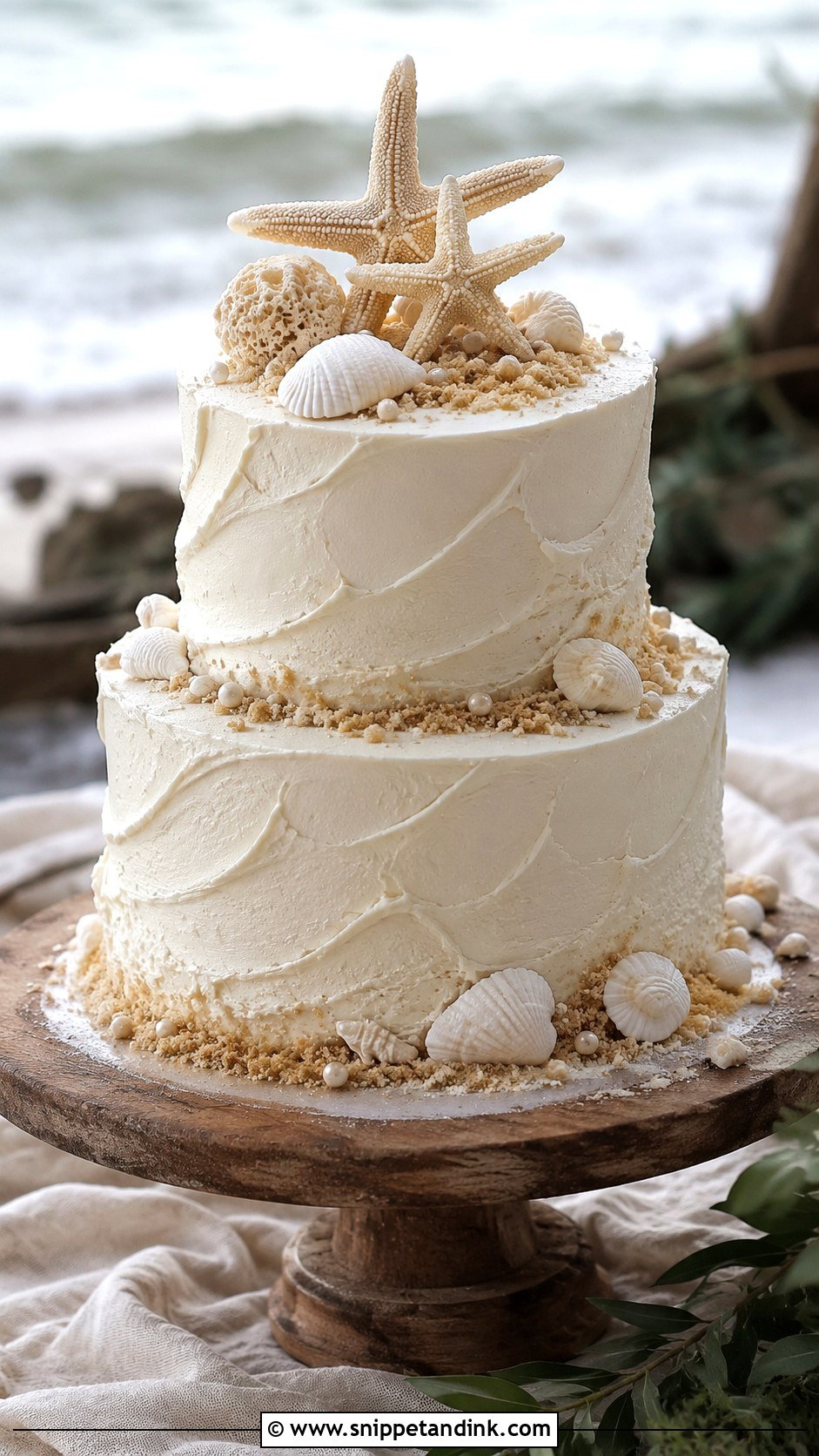
Edible sand is usually crushed graham crackers, cookie crumbs, toasted coconut or finely ground cake, pressed around the base or across one tier. Pair it with ivory buttercream, soft wave piping and a few sugar shells. Crumbs pull moisture from frosting, so the sand goes on the day of the wedding, not the day before. Barefoot weddings and casual receptions suit it best. Vanilla coconut, lemon, or brown sugar cake with salted caramel keep it simple.
8. Nautical Beach Wedding Cake
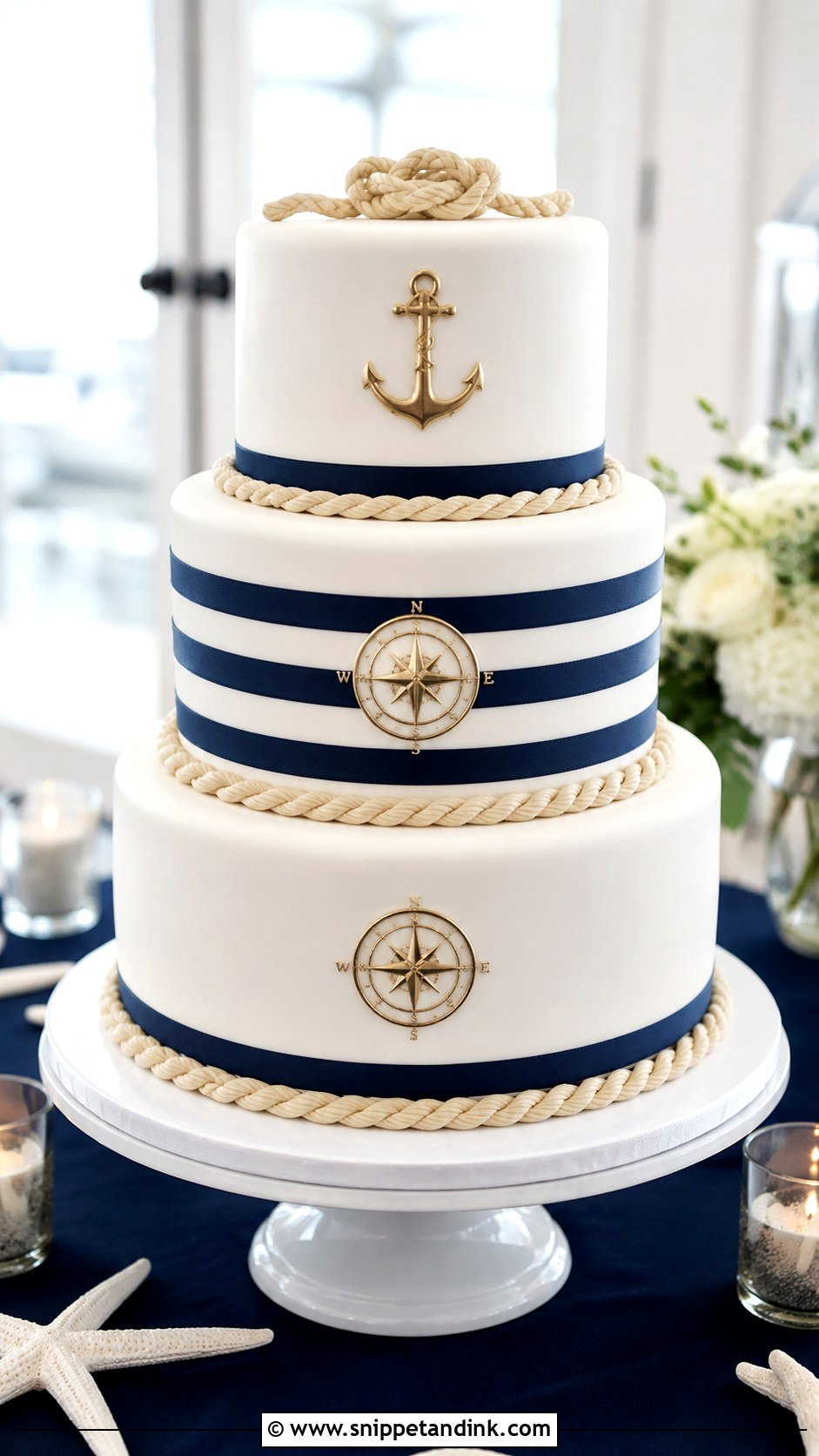
Nautical suits sailing couples and marinas: crisp white tiers, navy stripes, rope piping, a compass or anchor, small gold touches. It reads slightly preppy, so it fits yacht club and formal seaside venues. My rule is restraint. One rope border and one anchor feel like a wedding cake; stripes plus anchors plus a ship’s wheel feel like a birthday party. Almond, vanilla bean, lemon, or dark chocolate with sea salt caramel all work.
9. Driftwood Beach Wedding Cake
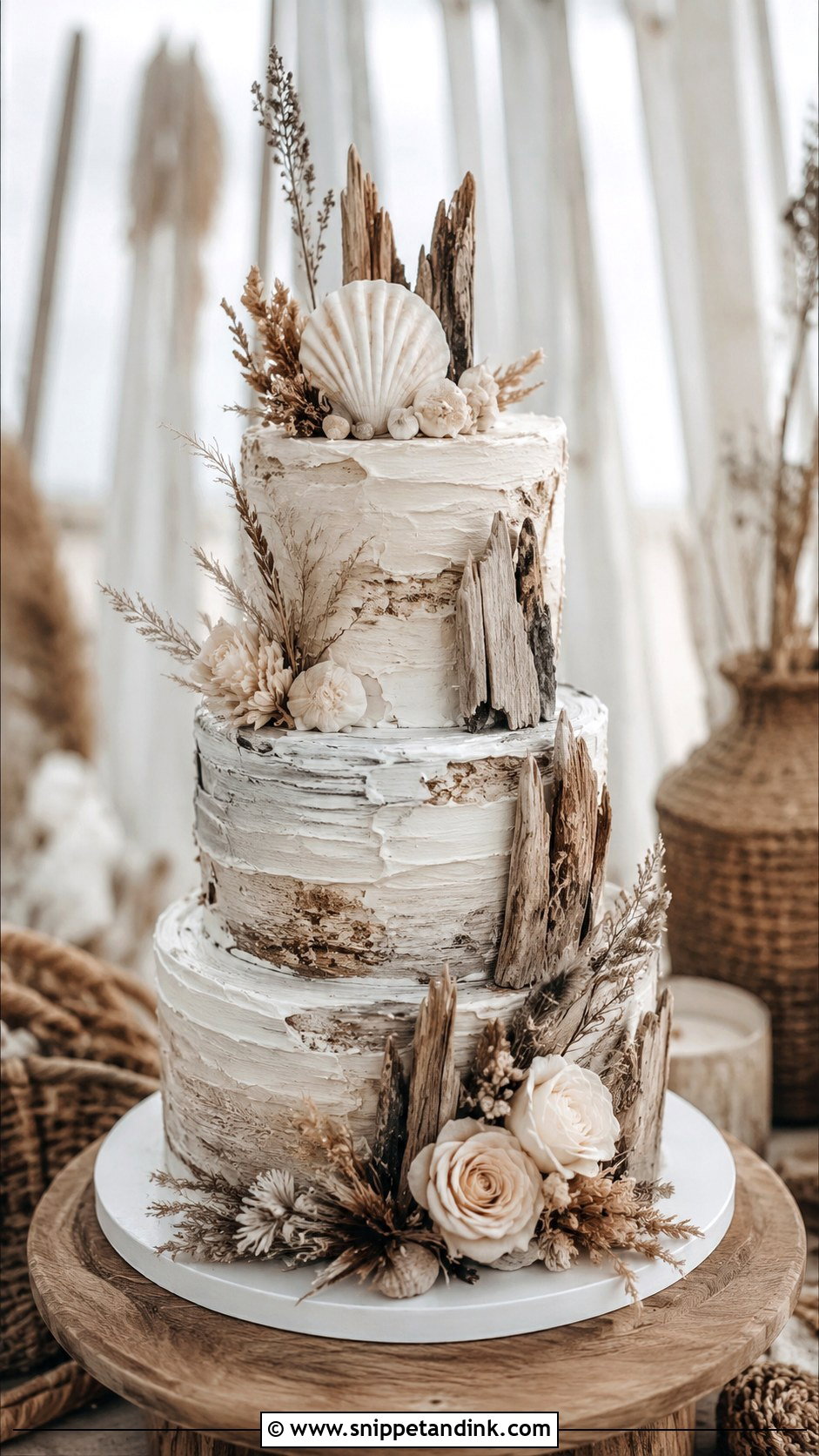
Driftwood texture is done with palette-knife strokes in ivory, taupe and soft gray buttercream, often with sugar driftwood pieces, dried grasses or neutral florals. Dried grasses should never sit directly on frosting; I wrap the stems or set them on a small disc. It looks best on a wooden stand with linen and candles nearby. Brown butter vanilla, spice cake or almond with caramel suit the warmer palette. It’s the right choice for a couple who want beachy without blue.
10. White Beach Wedding Cake
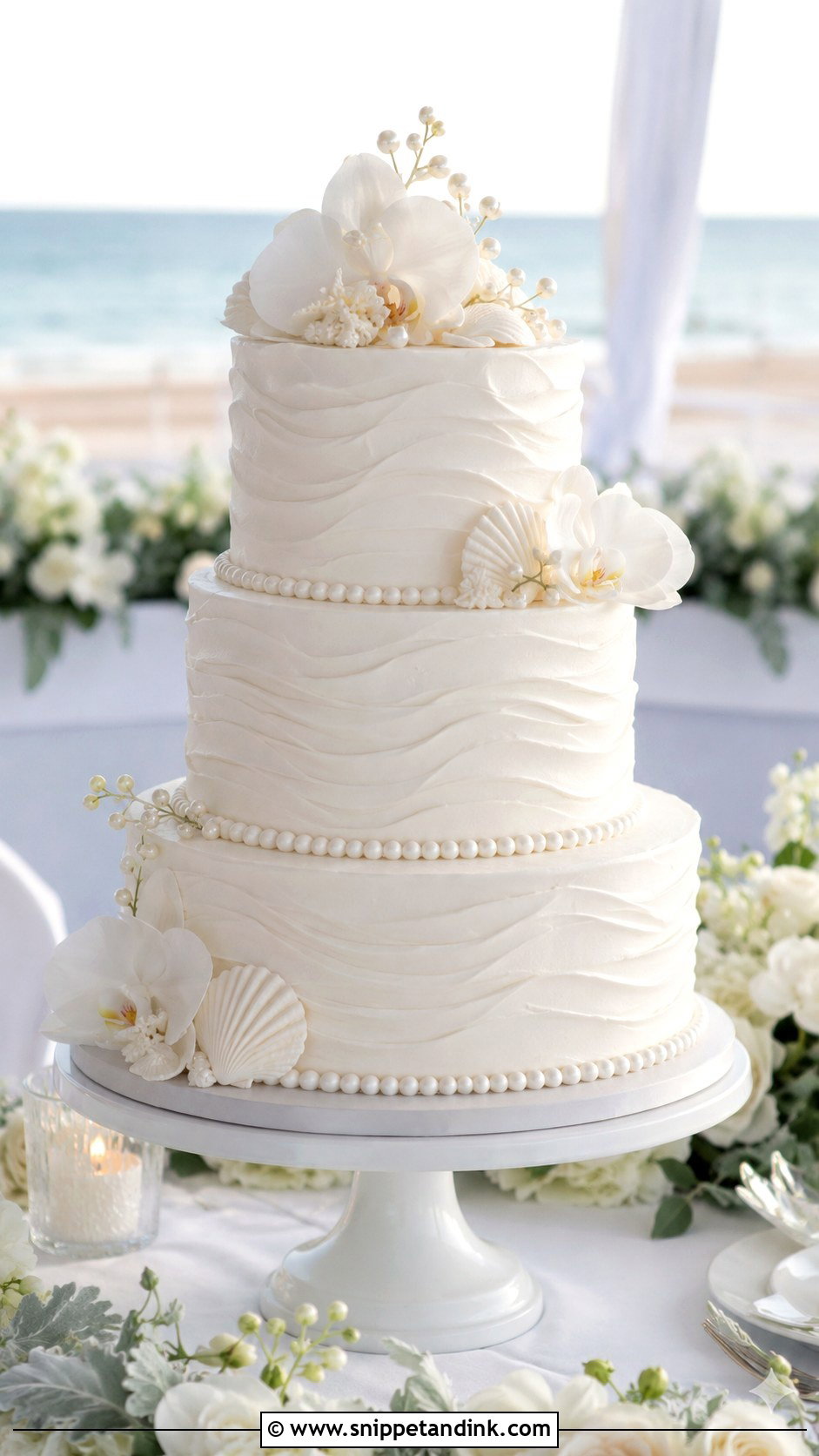
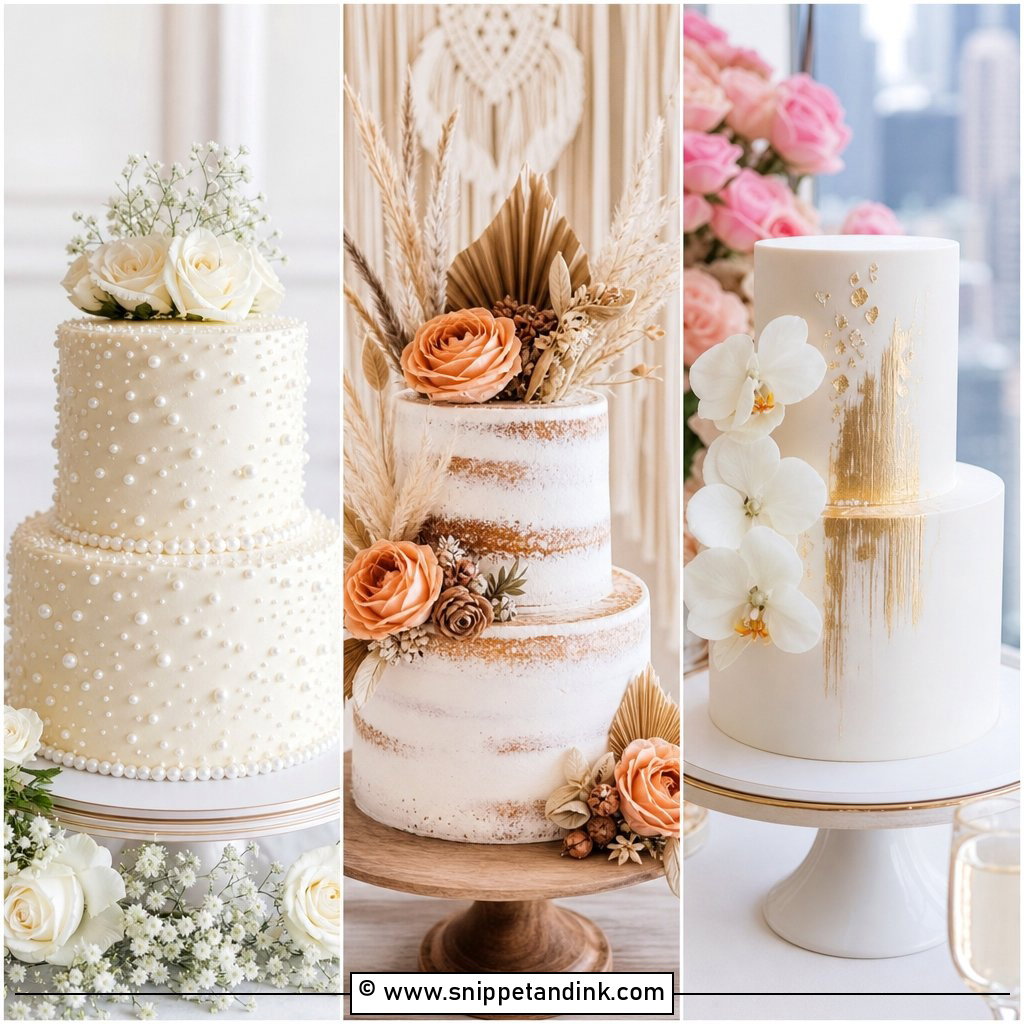
An all-white cake adapts to any venue, and it’s my suggestion for couples who can’t settle on a theme. Smooth white buttercream or fondant, with pearl piping, white sugar shells, white orchids or a faint wave texture, gives a refined coastal hint. Pure white buttercream needs a touch of violet coloring to cancel butter’s natural yellow, which matters under bright sun. Formal resorts and tented receptions suit it, and the simplicity lets flowers and the ocean view do the rest.
11. Boho Beach Wedding Cake
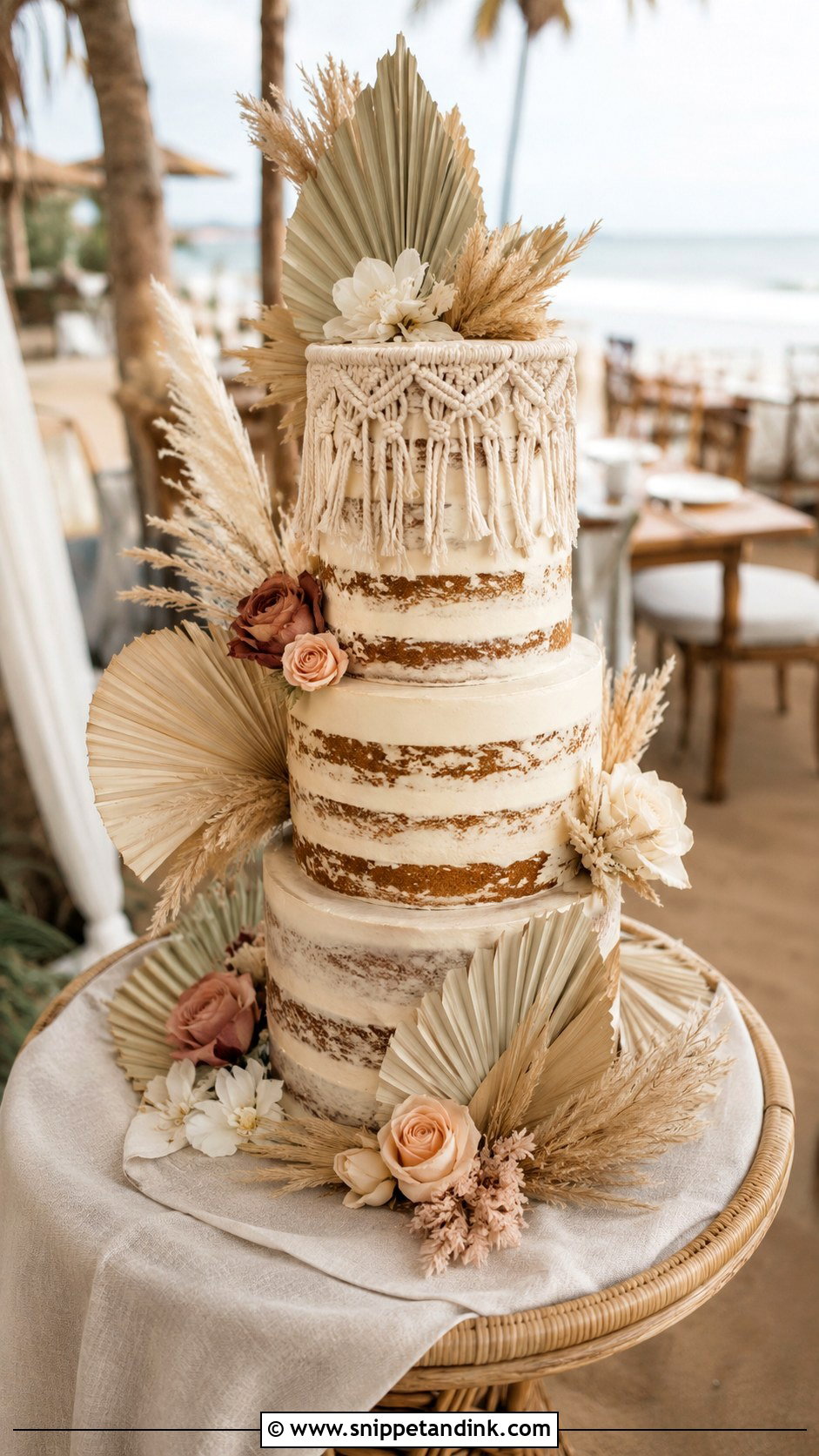
Semi-naked frosting, where the cake layers show through a thin coat, is the heart of a boho beach wedding cake. Add dried palm leaves, pampas grass, beige florals or macrame-style piping. Semi-naked cakes dry out faster because so little frosting protects the sponge, so I brush the layers with syrup and assemble them close to the event. Coconut buttercream with caramel filling feels warm. Rattan, linen and woven lanterns suit it.
12. Beach Wedding Cake With Fresh Flowers
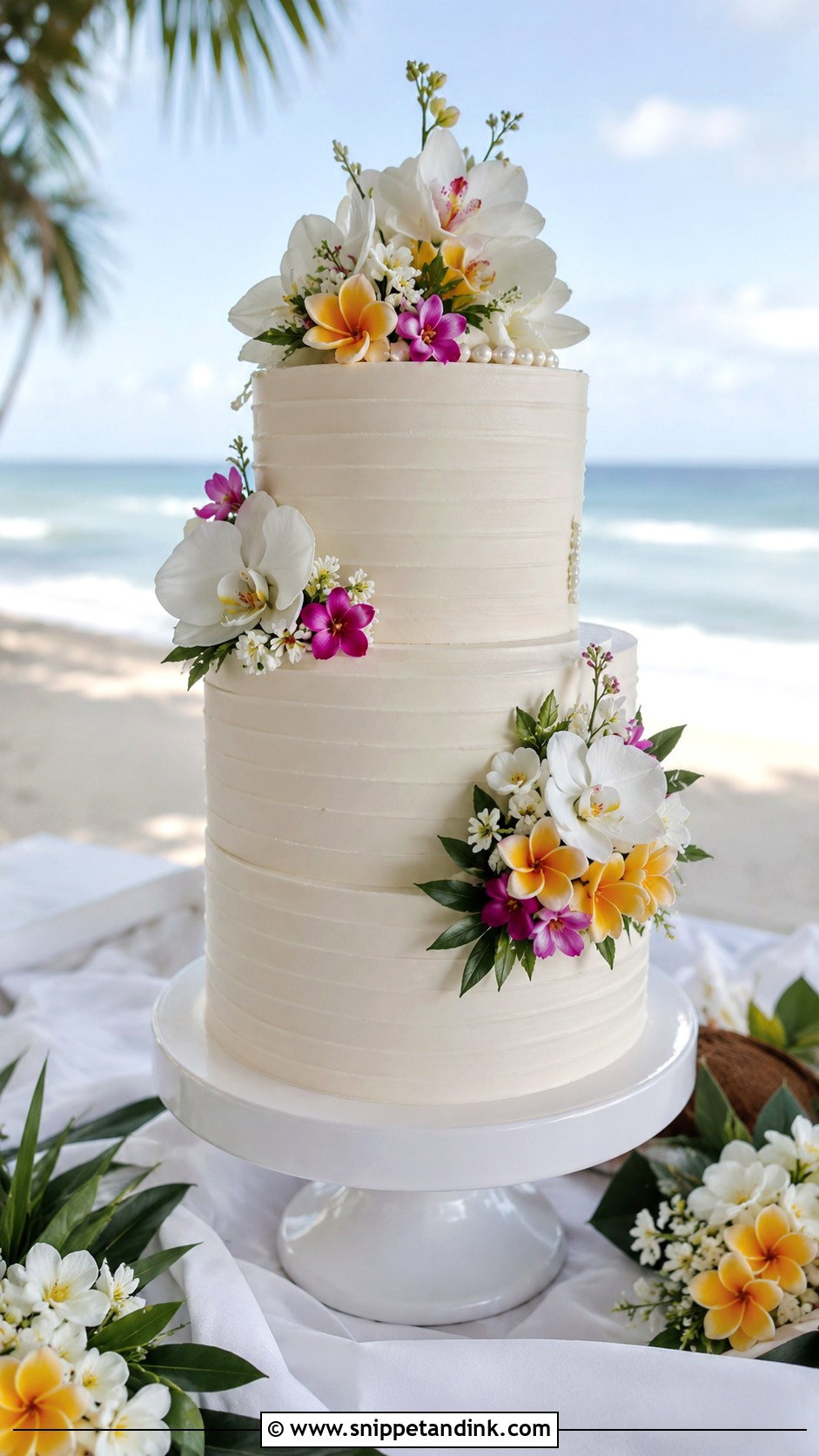
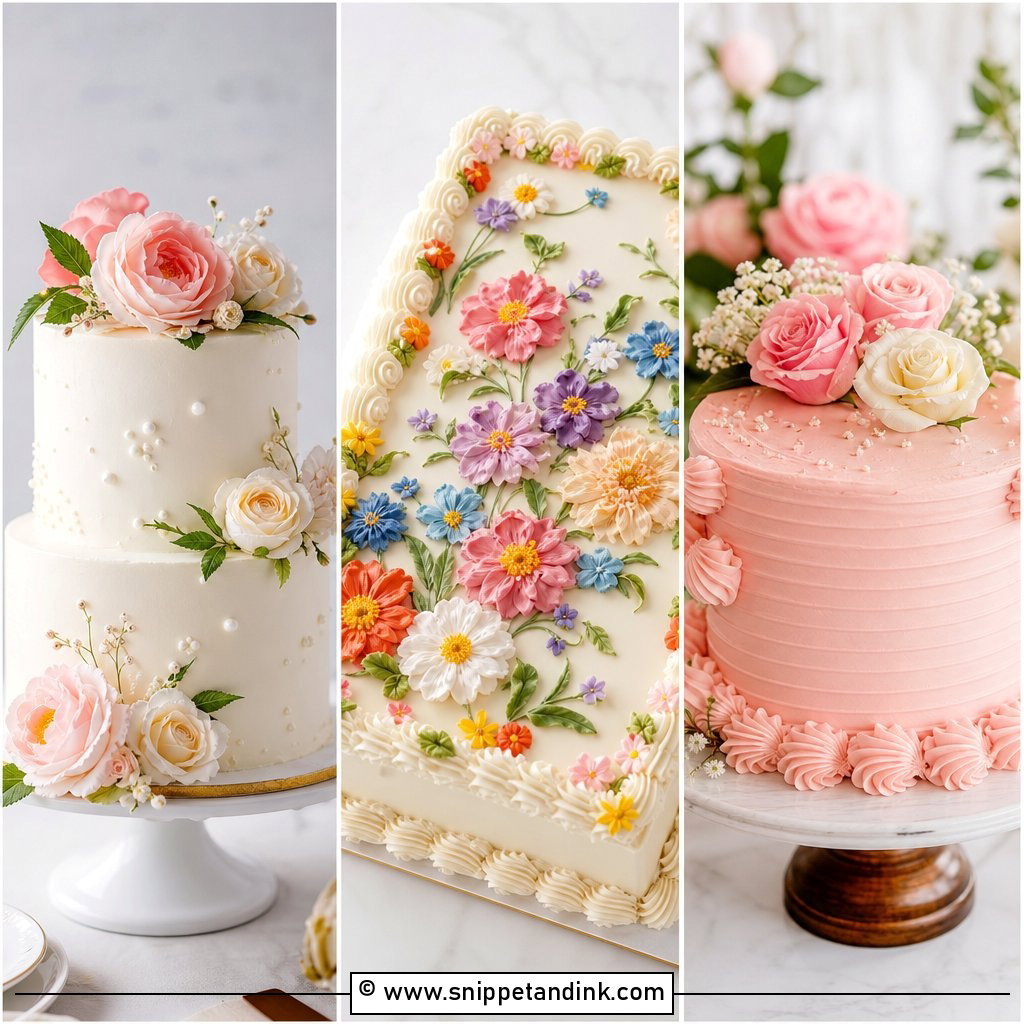
Fresh flowers change a cake’s mood more than any frosting. White orchids on ivory look quiet; bright pink, coral or orange blooms say destination. Not every flower is safe near food, and some common ones, such as hydrangea and lily of the valley, are toxic. I wrap stems in floral tape and set them into food-safe picks, and I always agree the flower list with the florist ahead of time. Coconut, lemon, vanilla and passion fruit suit the look, and the blooms can echo your bouquet.
13. Minimal Beach Wedding Cake
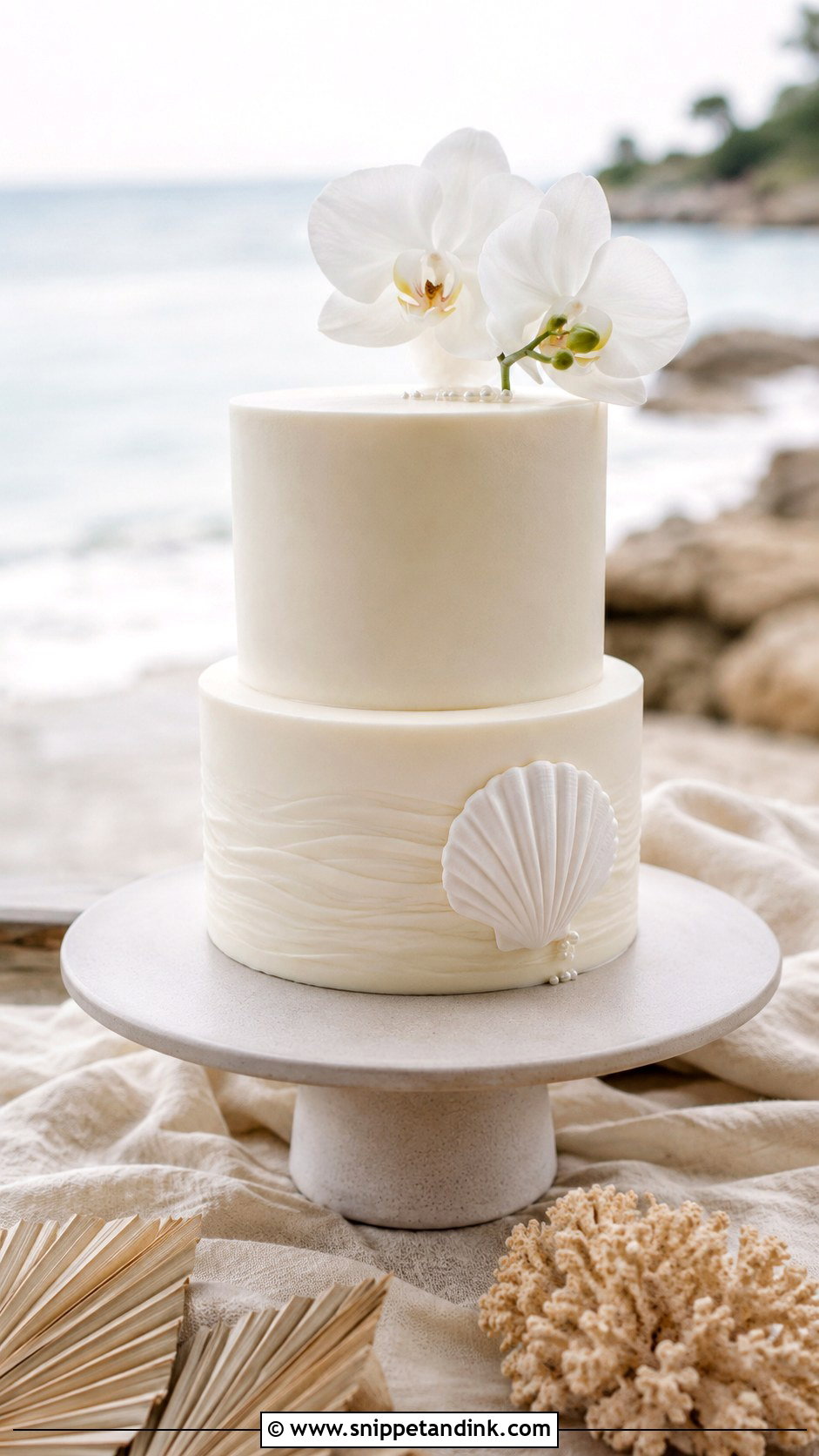
Minimal cakes rely on finish, so there’s nowhere to hide. Smooth buttercream in soft ivory, sharp top edges, and one coastal detail: a single sugar shell, a thin wave texture, one orchid or a small cluster of pearls. Placement does all the work, so I mark it on a sketch before decorating. Intimate weddings and elopements suit it. Vanilla bean with lemon curd, coconut with lime, or almond with raspberry keep it light, and a ceramic or white stand completes it.
14. Sunset Beach Wedding Cake
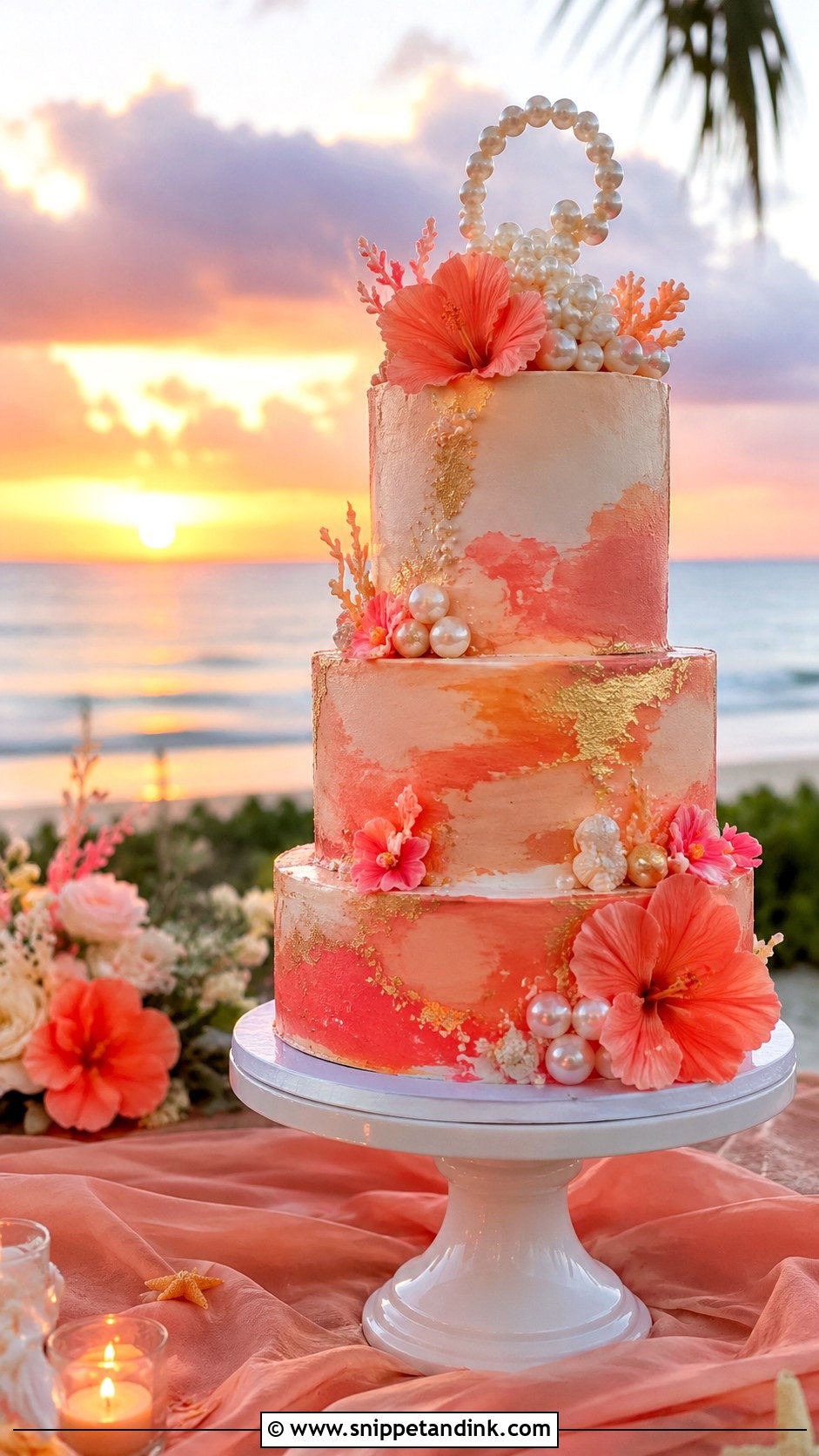
A sunset cake fades from coral through peach, blush and soft orange into creamy ivory. Airbrushing gives the smoothest gradient; watercolor fondant and ombre buttercream look more handmade. Gold leaf, fresh flowers or tiny pearls finish it. It’s at its best for evening receptions, when golden light hits the cake. Mango, passion fruit, vanilla, coconut or lemon raspberry suit the colors. Keep decoration soft and let the color lead.


15. Palm Leaf Beach Wedding Cake
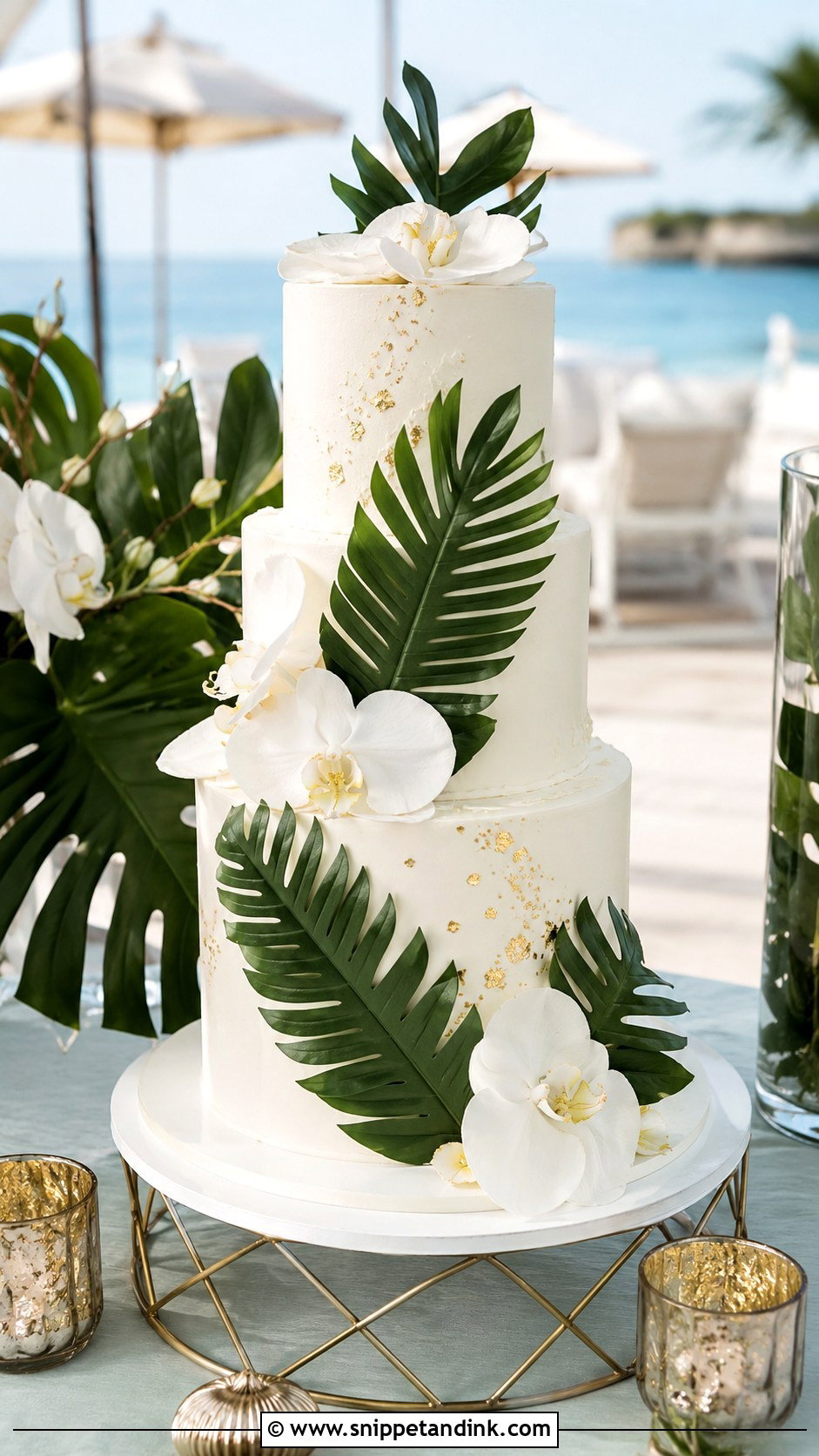
Palm leaves look graphic on a white or pale green base. They can be real food-safe greenery, painted buttercream, wafer paper or sugar; wafer paper is light and holds its shape, but it curls in high humidity, so I’d choose sugar for a muggy venue. Coconuts, orchids or small gold accents add detail. Coconut with lime curd and vanilla with mango work well. Pineapple cake with cream cheese frosting is delicious, though cream cheese frosting must stay chilled and isn’t one for a long display in the sun.
16. Pearl Beach Wedding Cake
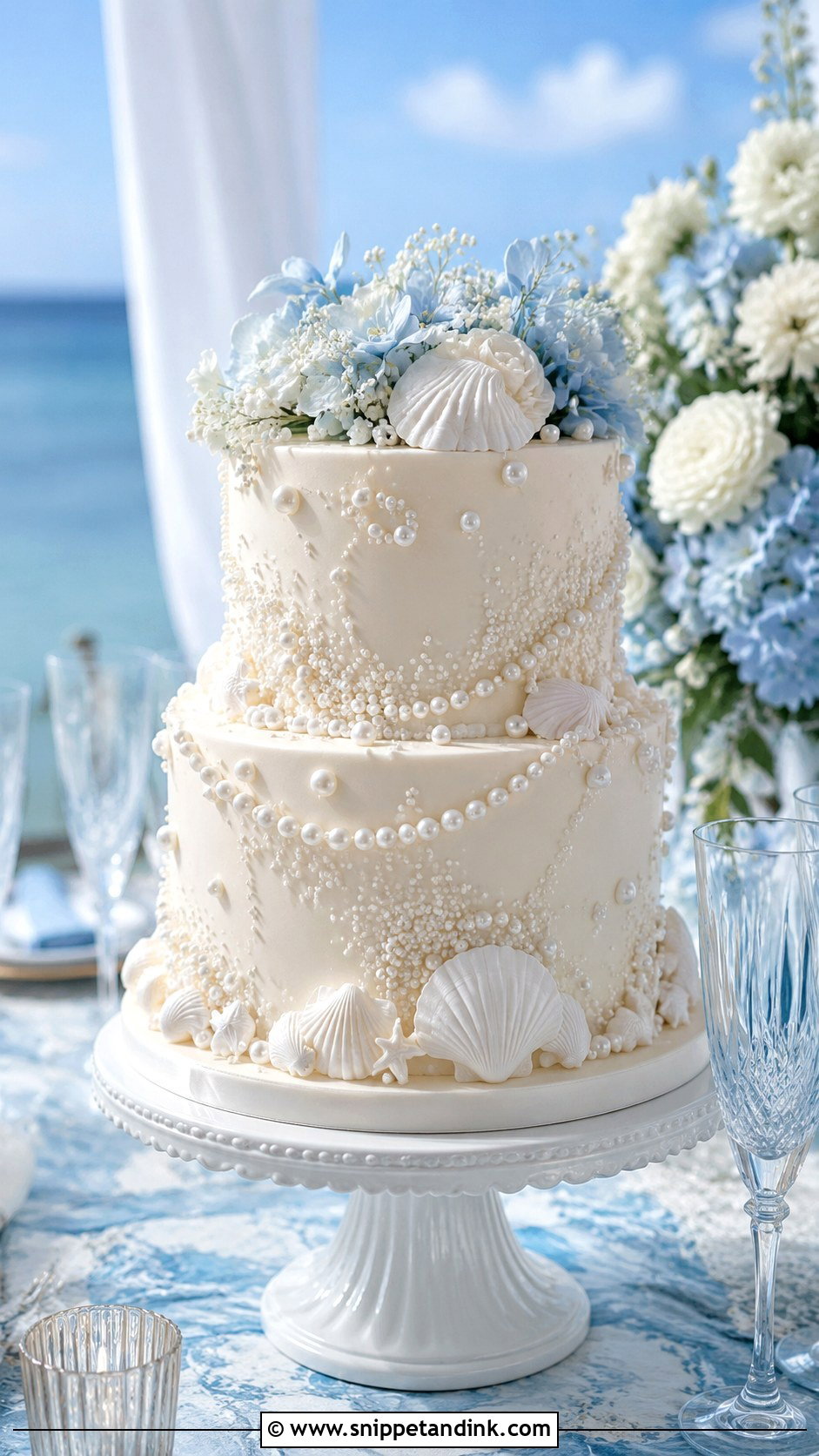
Pearls tie a beach cake to bridal tradition. Edible pearls can form delicate borders, scatter over smooth frosting or gather around sugar shells. I set them with a small dot of piping gel so they don’t roll off when the cake is moved. Keep the base white, ivory, blush or pale blue. Satin linens and candlelight suit it, as do almond, vanilla bean, coconut or lemon with elderflower.
17. Wave Texture Beach Wedding Cake
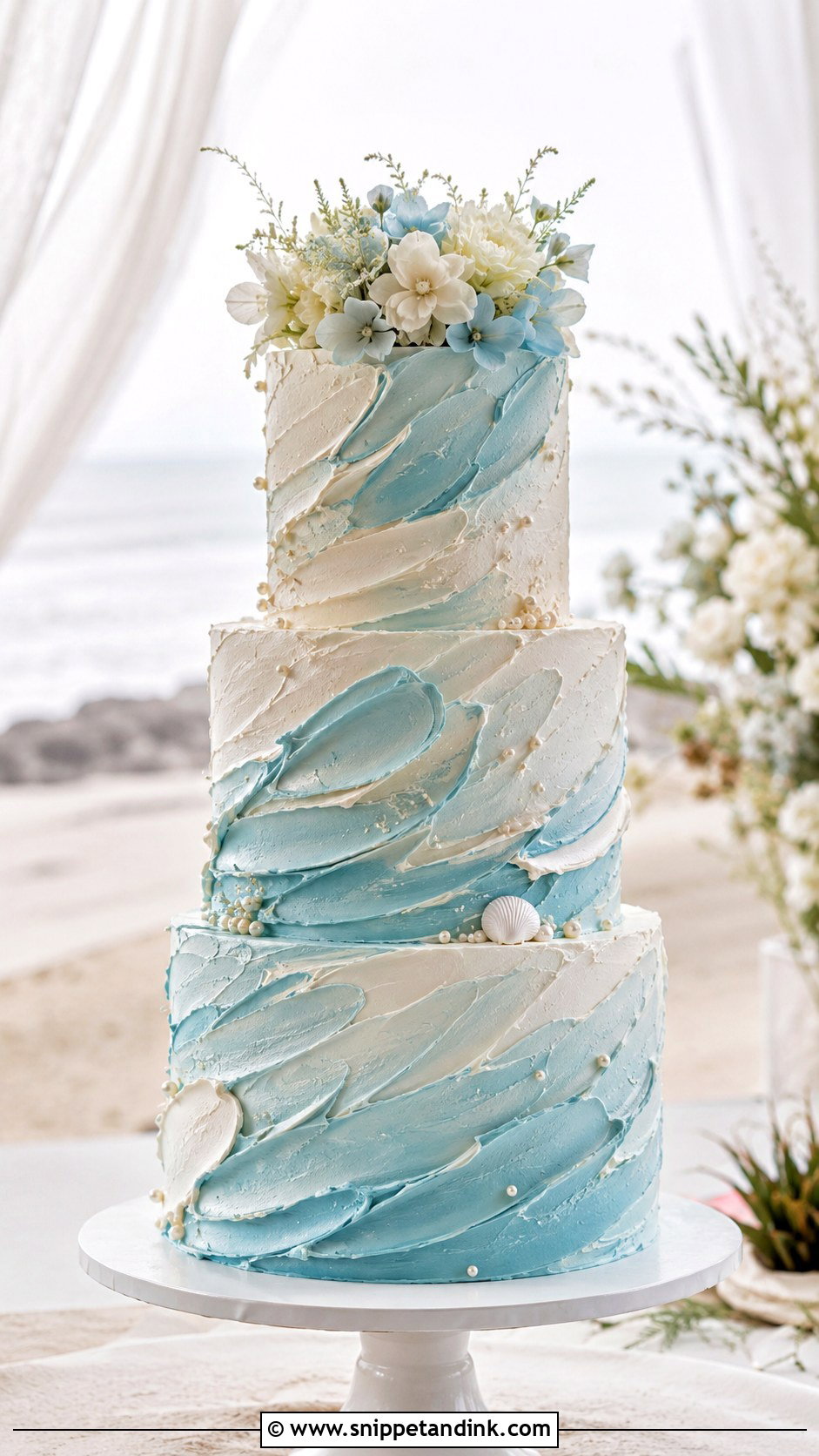
On a wave texture cake, the frosting is the decoration. Palette-knife strokes, ribbed combing or curved fondant folds suggest moving water, usually in white, aqua, seafoam and pale blue. Textured buttercream is forgiving in warm weather, since small softening doesn’t show the way it would on a sharp, smooth edge. A few pearls, one sugar shell or a small flower cluster finish it. Lemon, coconut, vanilla and passion fruit fit.
18. Small Beach Wedding Cake
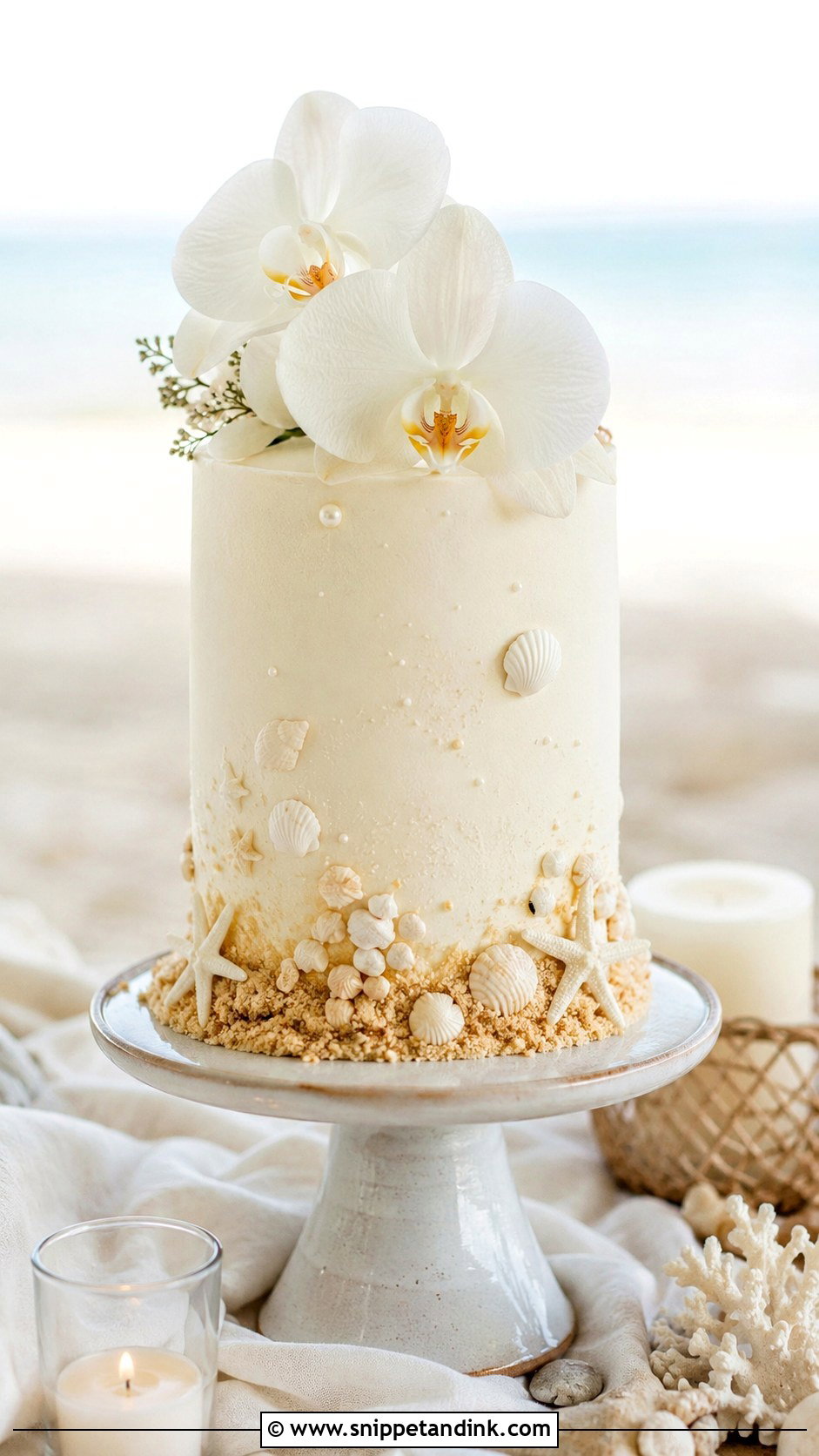
One or two tiers suit elopements, micro weddings and receptions where a dessert table carries the sweets. A smaller cake frees up budget for better flavors and finer detail. Smooth buttercream with edible sand, tiny shells, a single starfish or fresh tropical flowers is plenty. Coconut, lemon, vanilla bean and almond please most guests. Raise it on a tall stand with candles or greenery nearby so it has presence in photos.
19. Beach Wedding Cake With Gold Accents
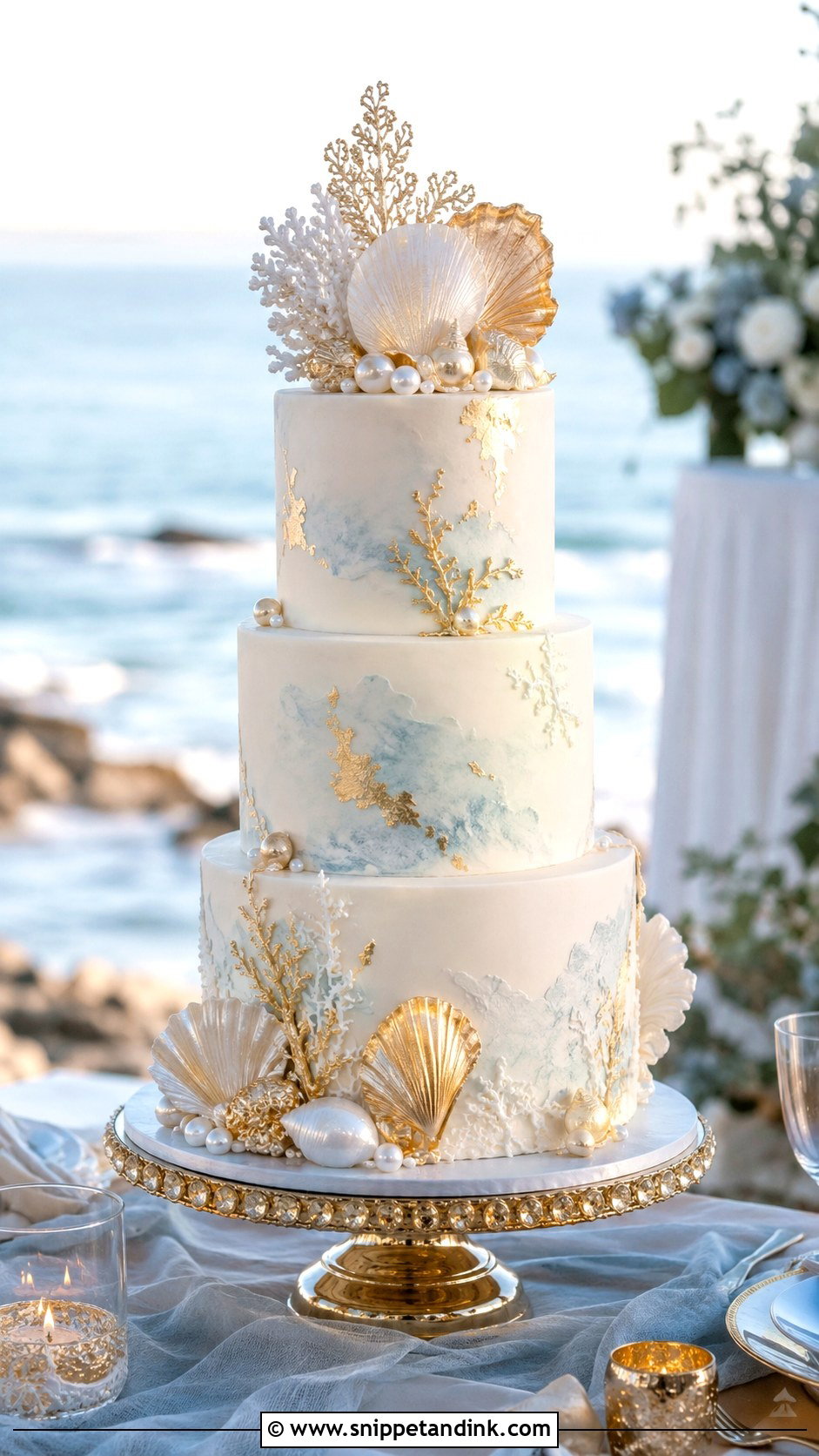
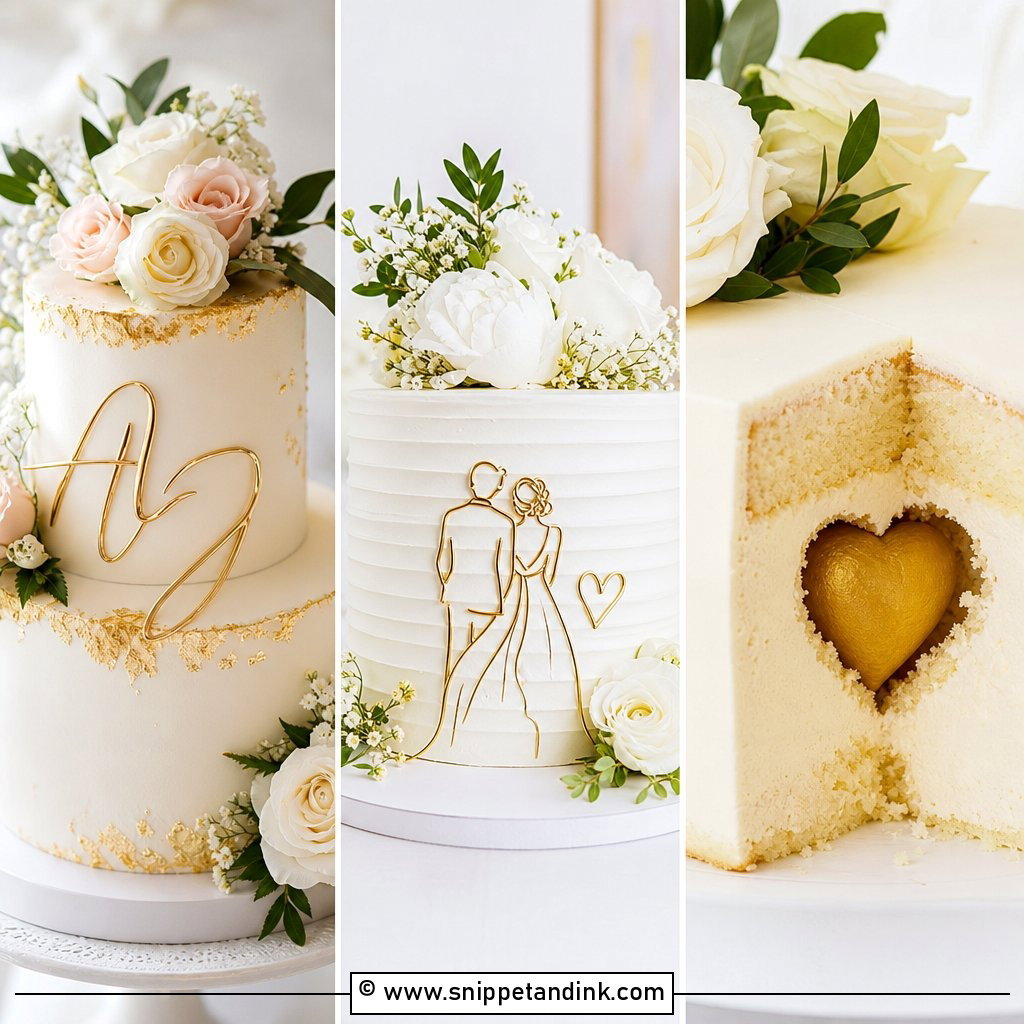
Gold accents add warmth to a coastal cake. Gold leaf, thin painted lines, metallic shells or a subtle topper suit resort weddings and evening receptions. Edible gold leaf is fragile and lifts in wind, so I apply it with a soft brush and keep the cake covered until it’s displayed. Pair gold with ivory, sand, blush, seafoam or pale blue, and keep it light so it reads refined. Vanilla caramel, coconut, almond, lemon, or chocolate with salted caramel match the richness.
20. Beach Wedding Cupcake Cake
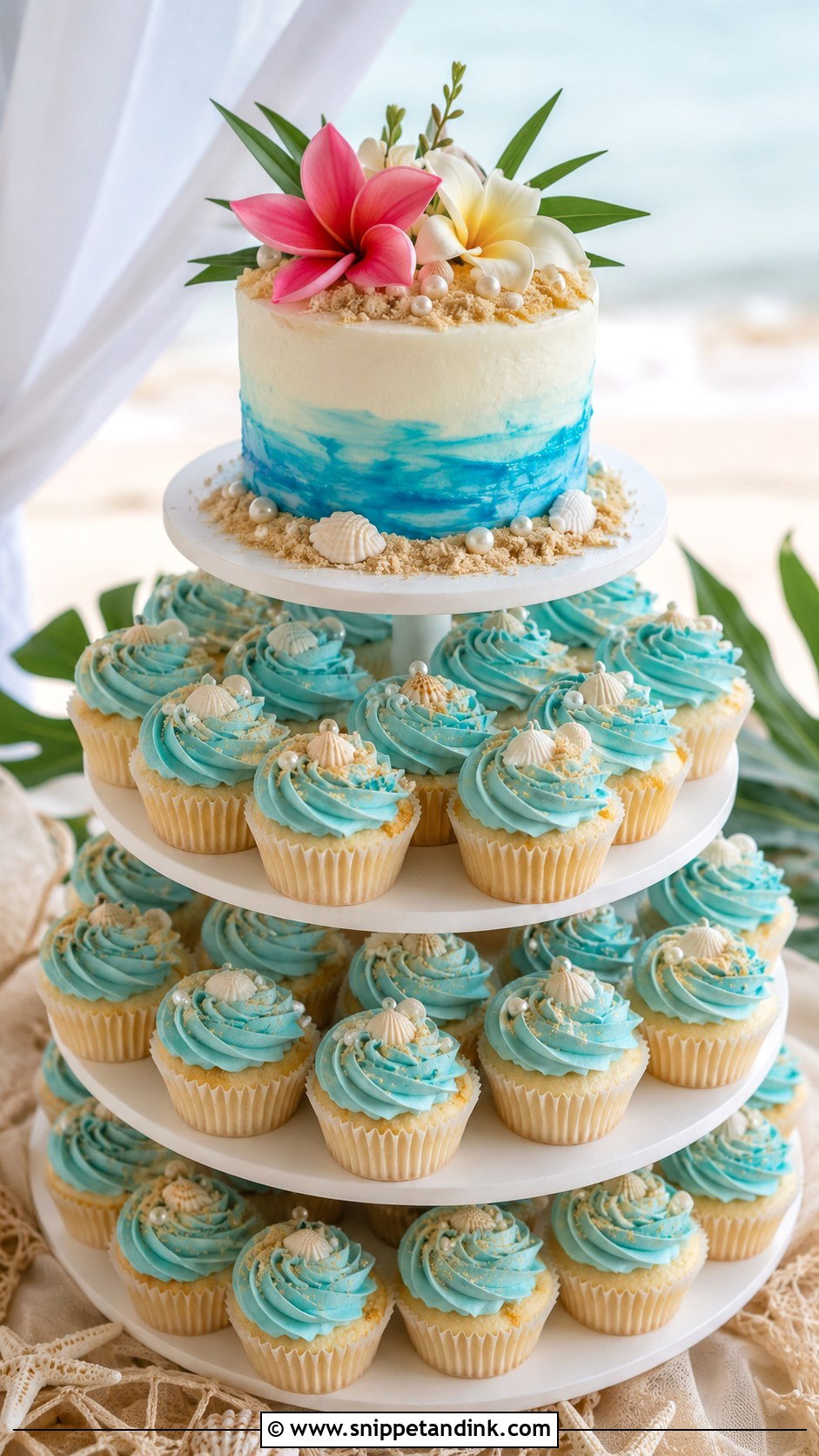
A beach wedding cupcake cake is the most practical design for an outdoor reception. Cupcakes on tiers around a small cutting cake mean no slicing, several flavors and individual portions that survive a breeze. Each can carry ocean blue frosting, edible sand, tiny shells, pearl sprinkles or a little flower. Mix coconut, lemon, vanilla, chocolate sea salt and mango. Matching liners and one color palette keep it cohesive, and greaseproof liners stop the butter from staining through in heat.
The Cake’s Last Hour: Delivery, Shade and Cutting on Sand
Most damage happens between the van and the table, not in the kitchen. A few arrangements make that hour safe.
Where the table goes
Put the cake in full shade, on a level, sturdy table, ideally indoors or under a tent until the cutting. Sun moves, so check where the shade will be at cutting time, not at setup. Sand underfoot is rarely level; a cake table on uneven ground can tilt a tiered cake enough to crack it, so ask the venue for a flat surface or boards beneath the legs.
Timing the reveal
I prefer to set a beach cake out as late as possible and cut it early in the reception rather than leaving it on show for hours. If you want it visible all evening, a small display cake with a kitchen sheet cake for serving is a sensible compromise. A mesh cake dome keeps insects and blown sand off between photos.
For a destination wedding, ask whether your baker delivers or whether a local baker should make it. Tiered cakes travel badly, and a long drive in heat is the riskiest part of any beach cake.
Design for the Weather, Then Decorate
Beach cakes range from tropical and rustic to formal and minimal, and the best ones pull color, texture, flavor and decoration in one direction. A formal wedding suits white tiers, pearls, sugar shells or gold. A relaxed one suits semi-naked frosting, edible sand, driftwood or cupcakes. Destination weddings can lean on tropical flowers, palm leaves, coconut, mango and passion fruit. Whatever you choose, talk to your baker early about heat, humidity, transport and food-safe decoration, because those decide whether the cake still looks right when you cut it.
You'll Like These Ideas:




Leave a Reply