
Lettering is my trade, and a cake is one of the strangest surfaces it ever lands on: curved, soft, lit from odd angles and read from six feet away by people holding a drink. Get it right and a short phrase, a shared surname, a vow line or a single word like “Forever” makes the cake feel written for you. Get it wrong and it’s a smudge in the cutting photos. What follows are 25 ways couples put words on a wedding cake, from piped buttercream script to fondant calligraphy, edible paper and raised gold letters, with my notes on legibility, layout and which wording survives the trip from your invitation to the icing. Save the ones you like and bring them to your baker.
Counting Letters Before You Fall for a Phrase
When I lay out a line of text, the first thing I do is count characters, and it’s the most useful habit to bring to a cake. Only the front third or so of a round tier faces the room; the rest curves away. On a typical tier, that front stretch holds a name or two short words at a size people can read from a few steps back. Anything longer has to shrink, wrap around the side or move to a plaque or topper.
- One to eight letters: can be large and decorative. Initials, a surname, “forever.”
- Two to four short words: fits one front tier at a readable size, in a script that isn’t too ornate.
- A full sentence: plan it as a wrap around a tier, on edible paper or on a topper, not across the front.
- Taller tiers give you more room for a second line than wider ones do.
A quick test I give couples: print your wording at the size you have in mind, tape it around a mixing bowl or cake tin of roughly the same width, and step back across the kitchen. If you can’t read it there, guests won’t read it at the reception.
1. Wedding Cake With Calligraphy
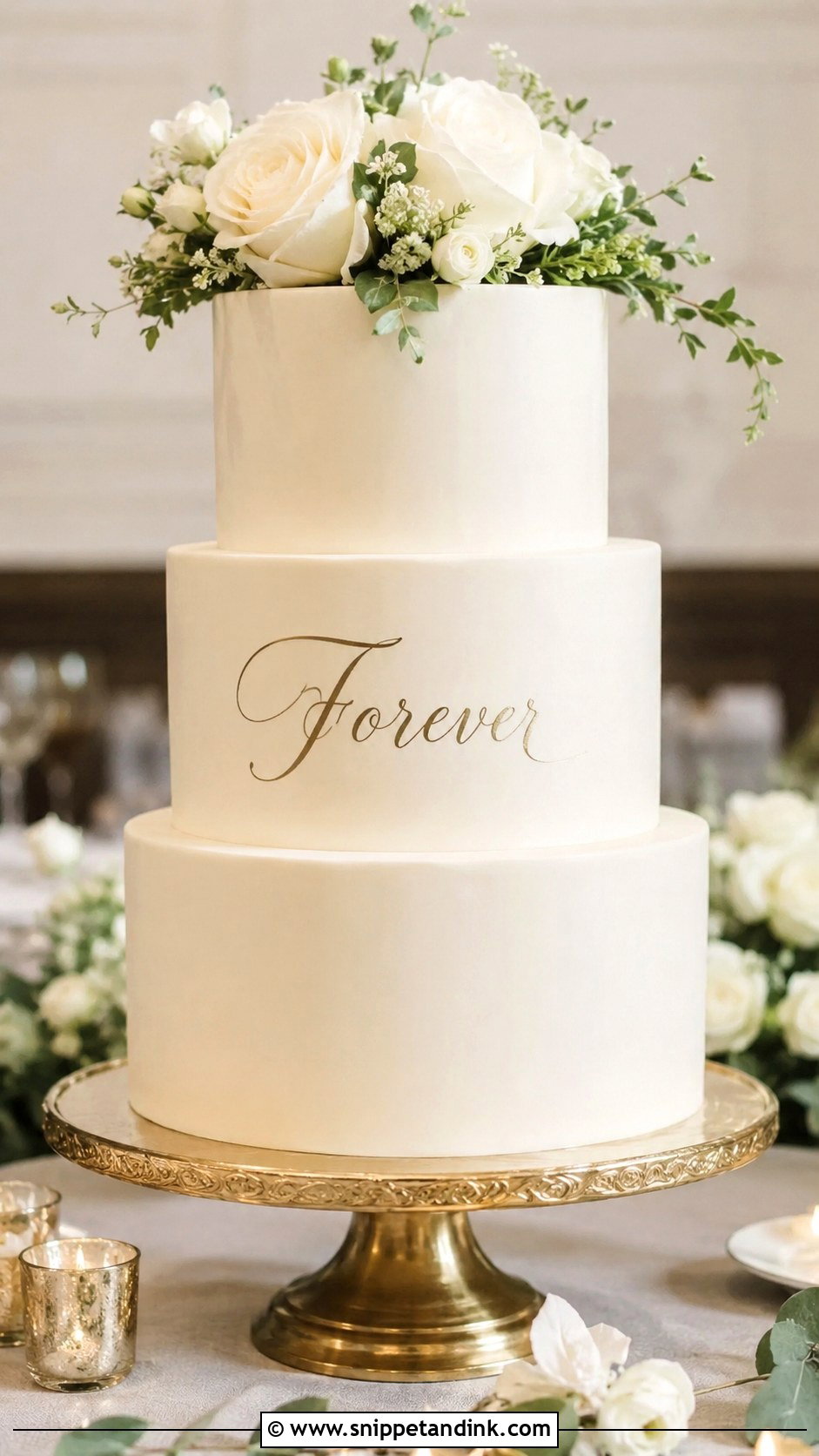
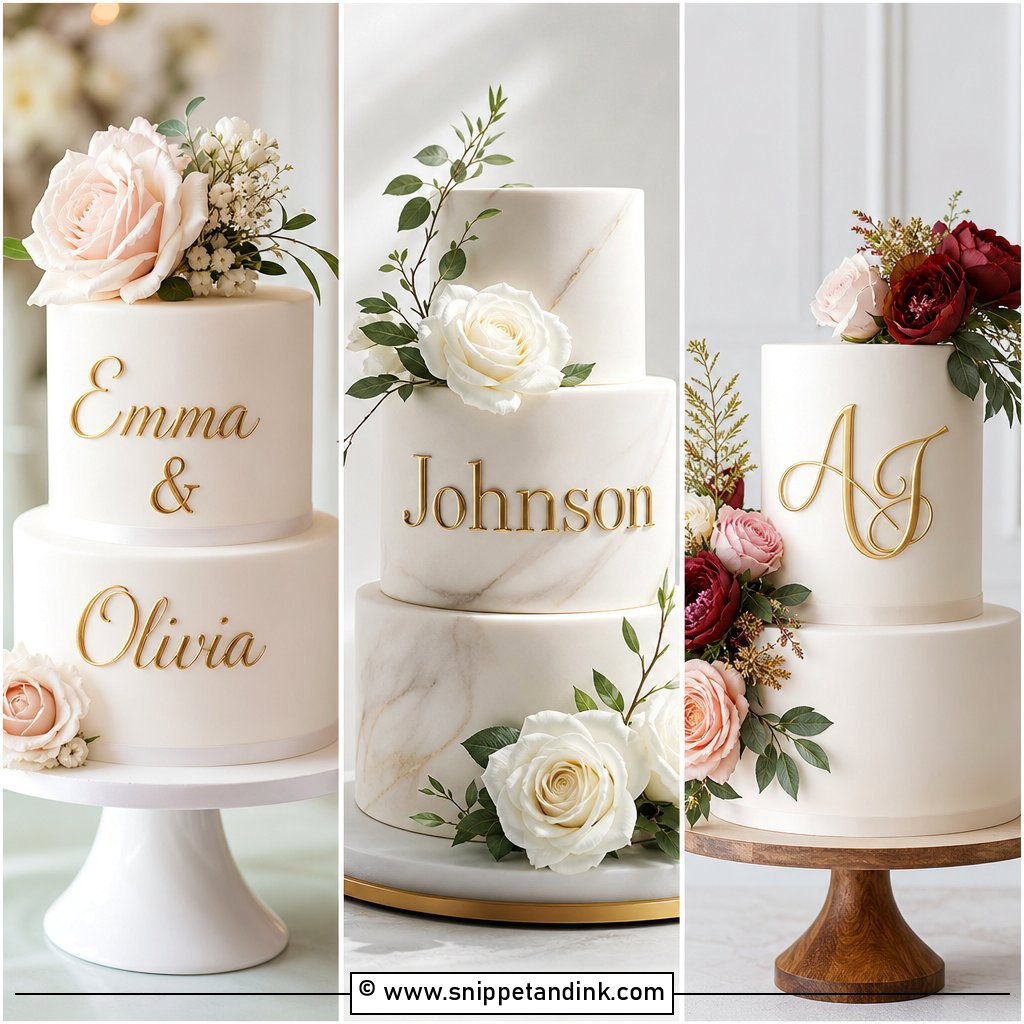
Calligraphy is the classic route, and it needs a smooth buttercream or fondant surface so the strokes stay clean. Keep it short: “always,” “forever” or your married name across the front tier. The thing I watch for is contrast between thick and thin strokes. Pointed-pen scripts with hairline upstrokes look gorgeous on paper but those hairlines either vanish or thicken in icing, so choose a script with a steadier line. Thin black, soft taupe, champagne gold or dusty blue all photograph well. Set the flowers to one side so they frame the words rather than cover them.
2. Wedding Cake With Piped Lettering
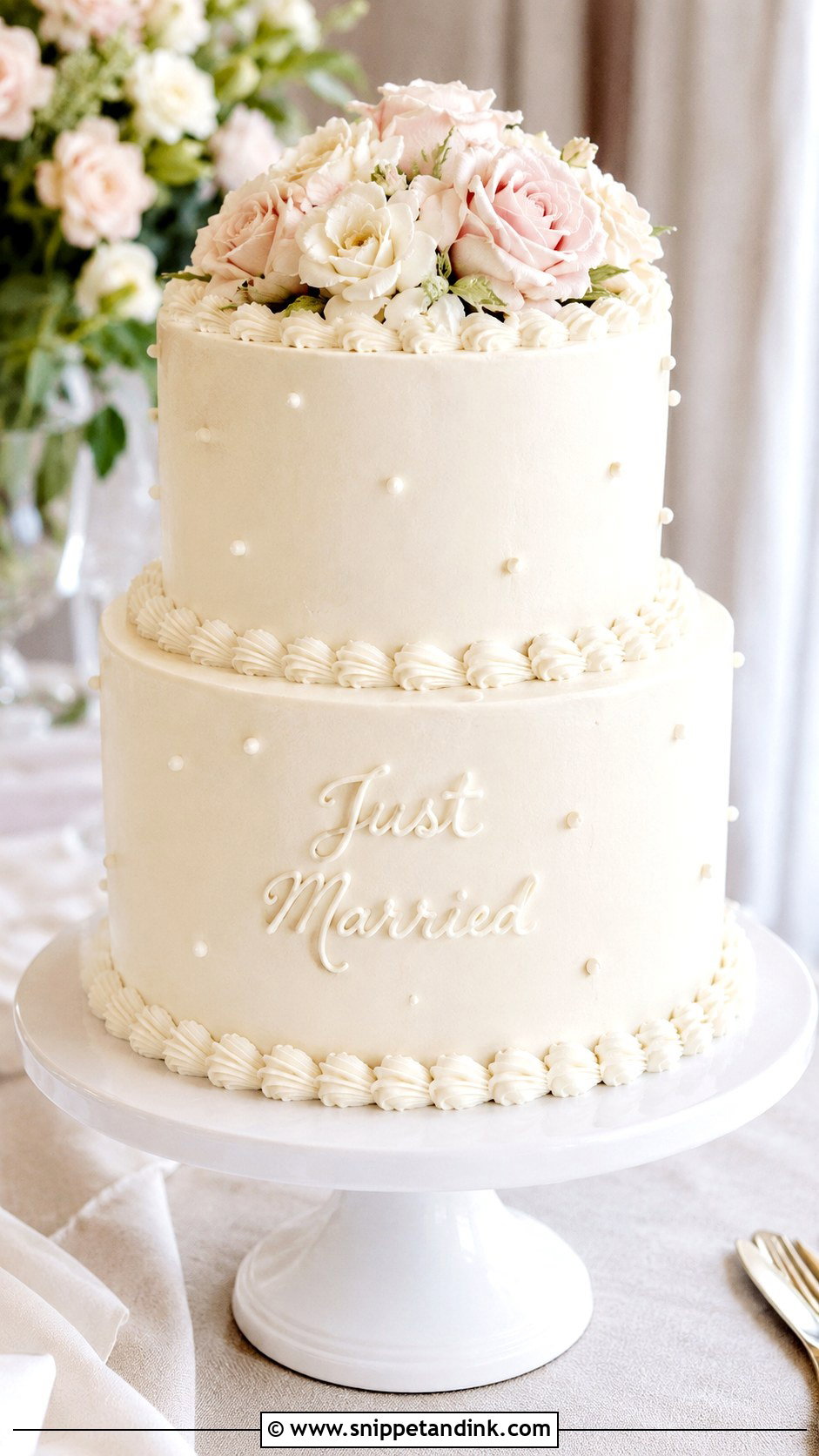
Piped lettering has that bakery warmth, and it’s one of the oldest ways to write on a cake. Piping is done freehand through a fine tip, so short phrases come out cleanest, especially on soft buttercream: names, initials, a date or “just married.” Long words drift and lose their baseline. On a tiered cake, the middle tier usually sits nearest eye level, which makes it the best line for the message. Soft borders, pearl dots or small buttercream flowers finish it in a traditional way.
3. Wedding Cake With Vows
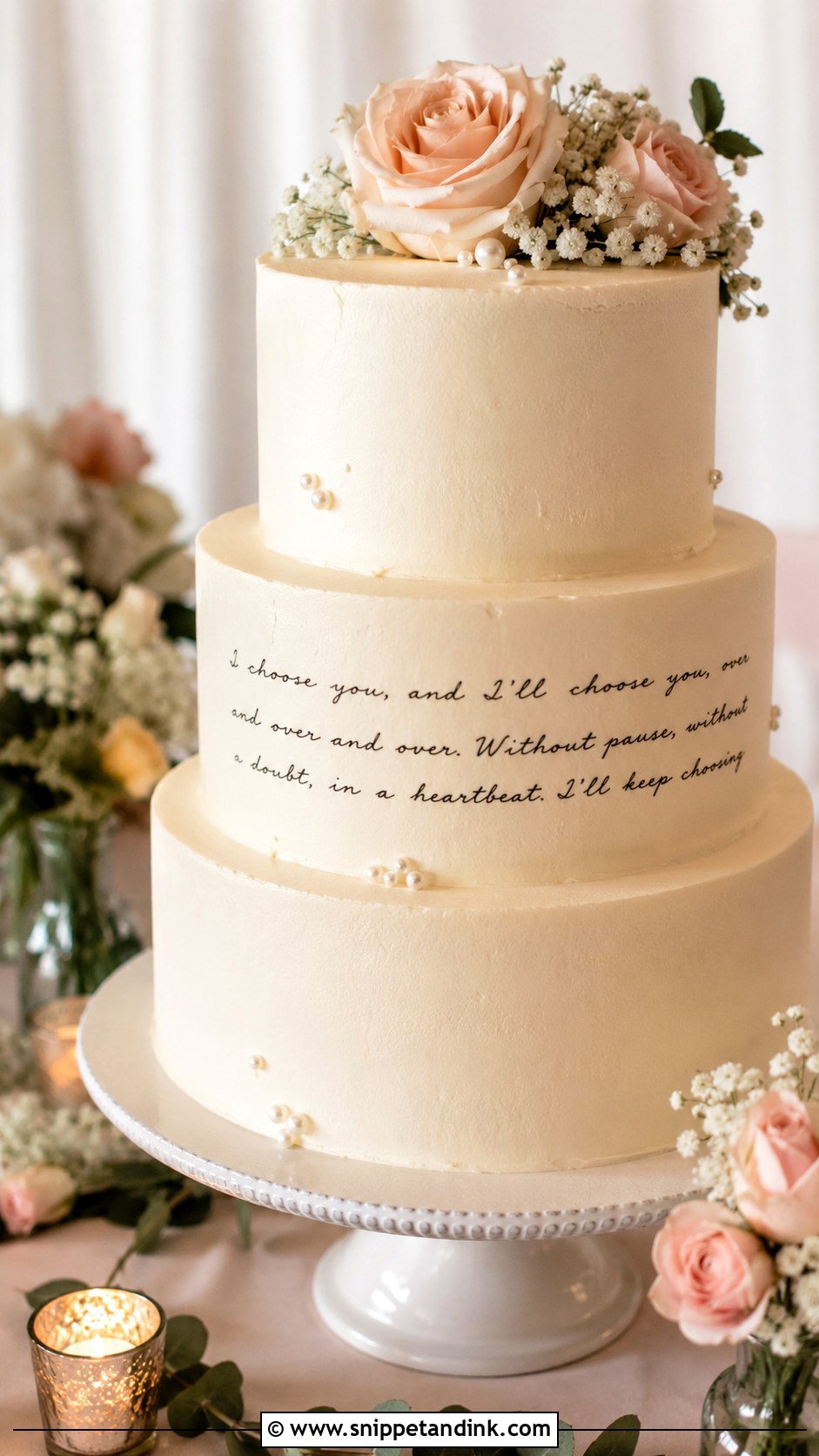
Vows on a cake can be very moving, provided the line is short enough to read. Rather than one phrase on top, the words can wrap around a tier like a ribbon of handwriting. I’d pick a single line, such as “I choose you,” “from this day forward” or one sentence from your own ceremony, because a wrapped line can only be read a few words at a time as people walk around it. Keep the icing ivory, cream or pale blush so the words stay clear, with flowers, tiny pearls or a satin ribbon in a supporting role.
4. Wedding Cake With Initials
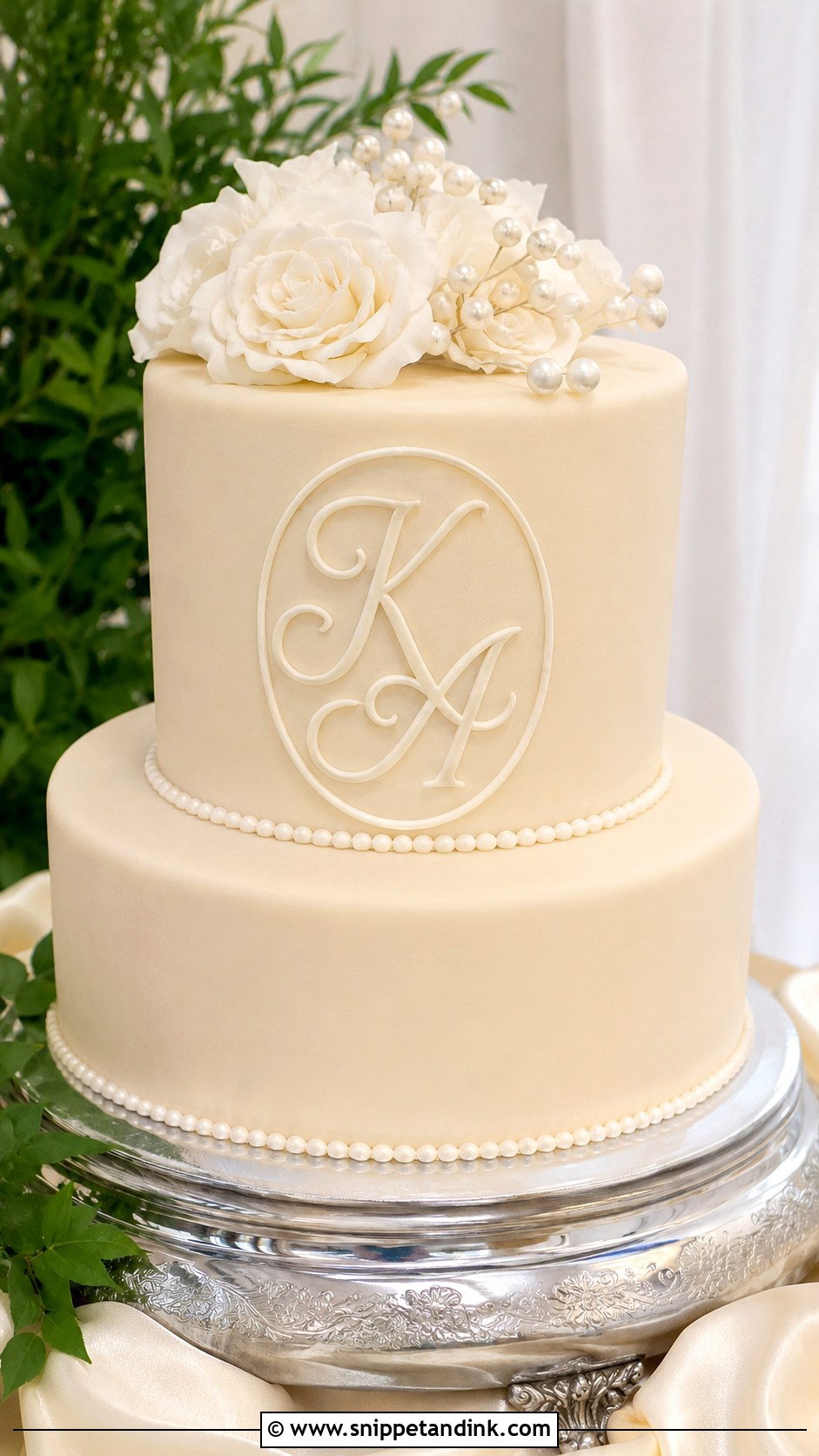
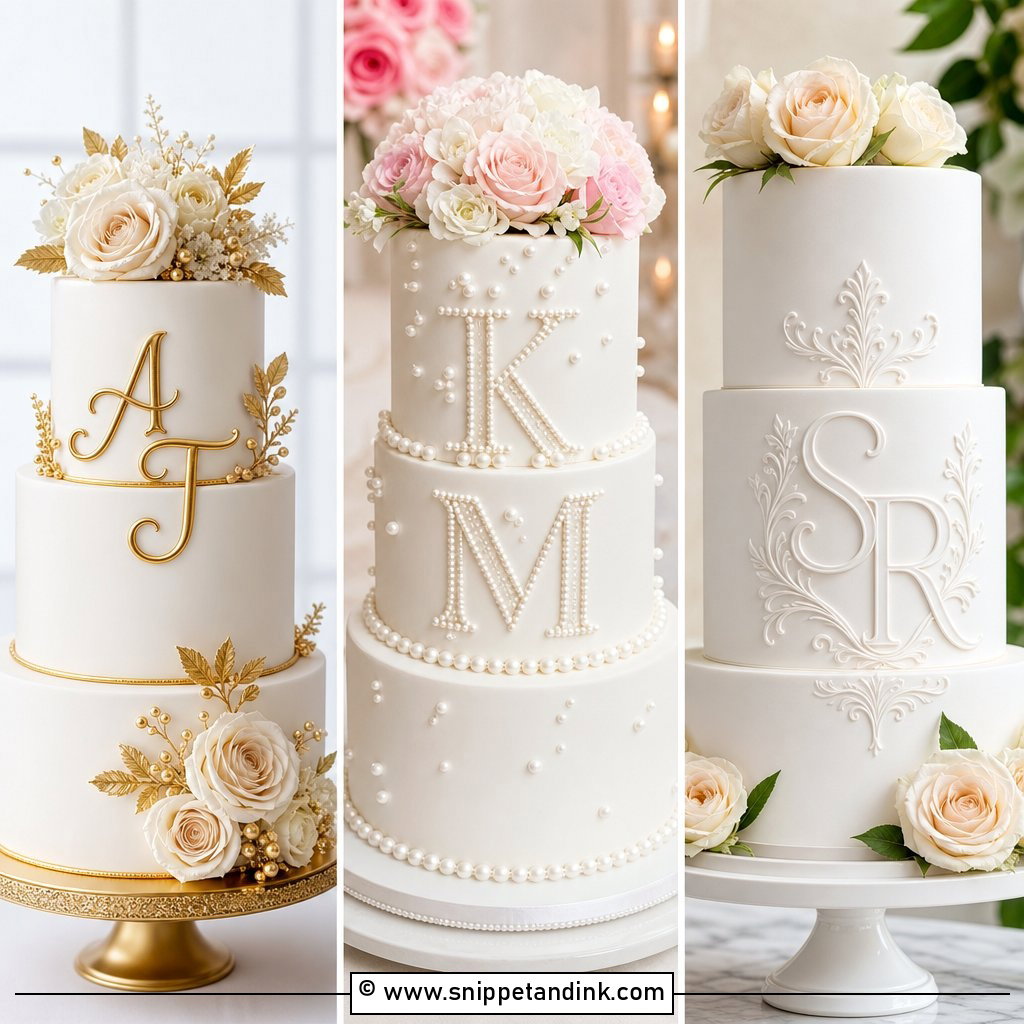
Initials are the tidiest way to personalize a cake. The couple’s initials can be piped, painted, embossed or cut as small raised fondant letters, set on the front of a clean tier, above a floral cluster or inside a thin oval frame. If you have a monogram from your invitations, send the actual file to your baker rather than a photo of the card; it can be scaled and traced accurately. Gold, white on white or soft gray initials look refined, and they suit a formal reception where a full phrase would feel too chatty.
5. Wedding Cake With Last Name
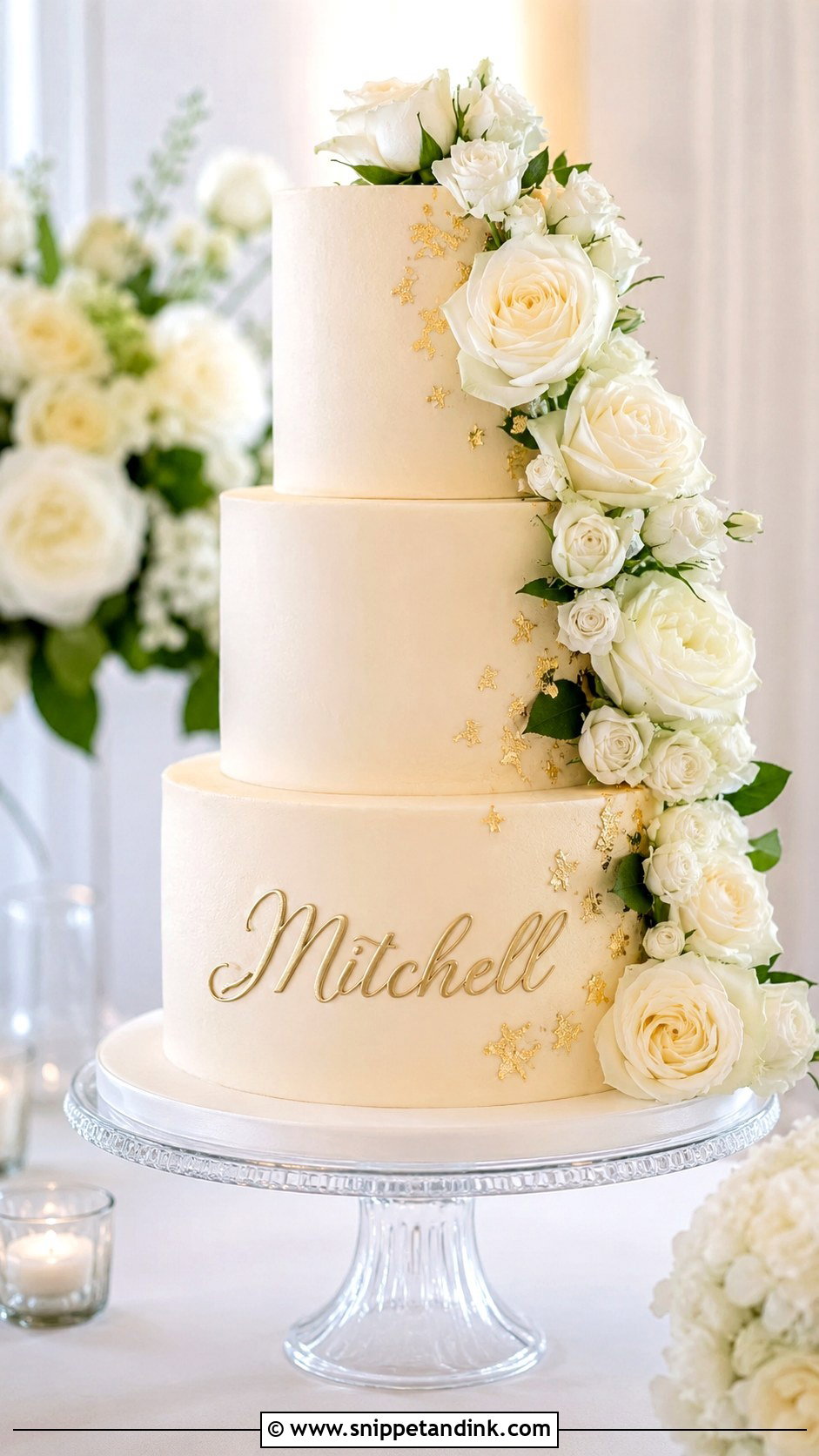
A surname says “new household” clearly. It can go across the front tier in sweeping script or sit on top as a topper in acrylic, fondant or chocolate. Spell-check it the way you would an invitation, including the plural: a cake for the Johnson family reads “The Johnsons,” never “The Johnson’s,” and names ending in s take “es,” as in “The Joneses.” Keep it to one focal point. Smooth ivory, white roses and neat gold lettering give a classic result; muted icing and delicate flowers soften it.
6. Wedding Cake With Wedding Date
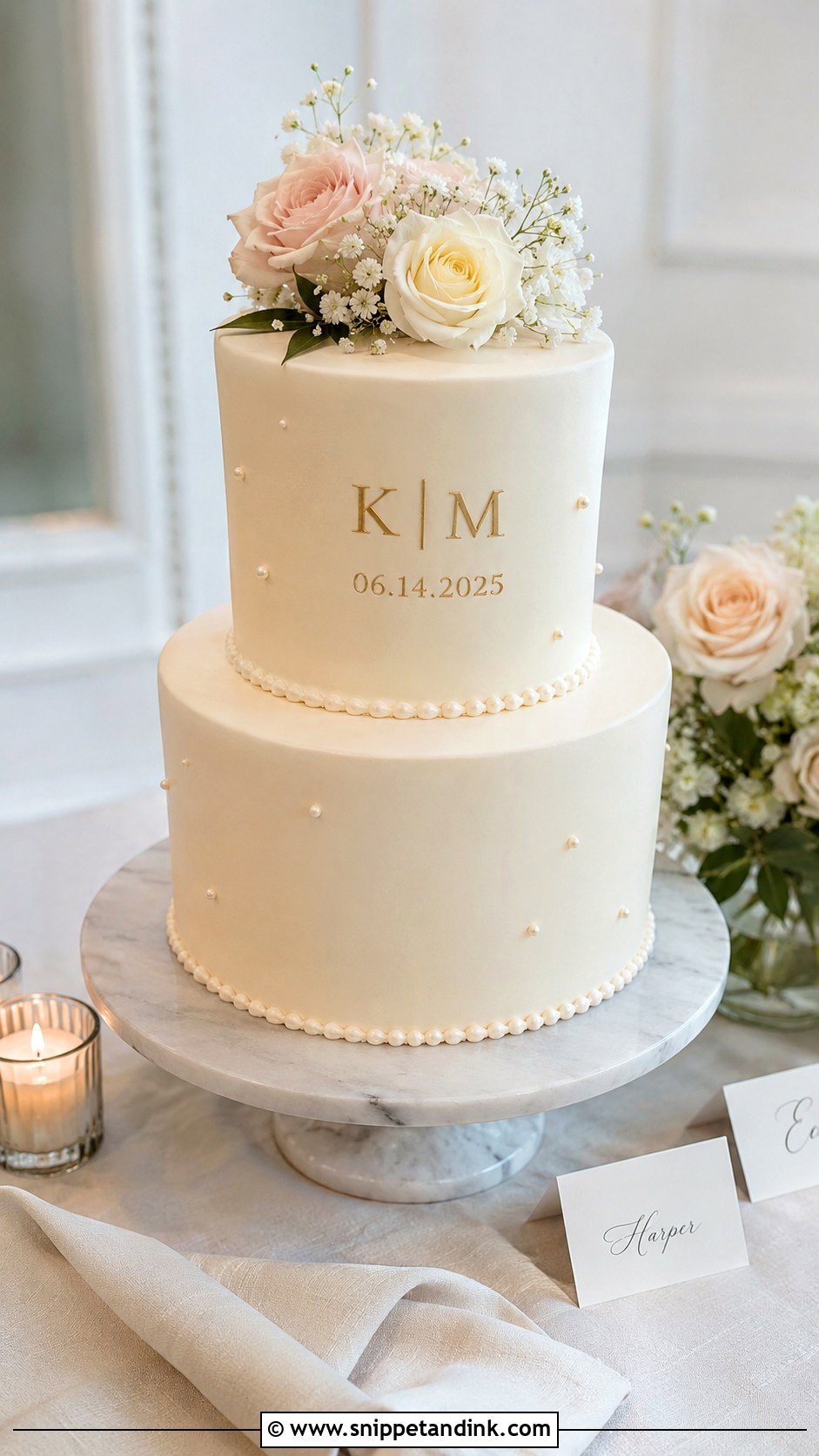
Dates make good keepsake details, set in small script under your names, around the base of a tier or on a tiny edible plaque. Numerals look modern; a written-out date looks romantic. Be careful with all-numeral formats if your guests come from different countries, since 06.07 means June to some and July to others; writing the month as a word avoids that. Ivory buttercream with champagne lettering or white fondant with raised pearl numbers both work. Ask your baker to put it where it shows in the cutting photos.
7. Wedding Cake With Love Quote
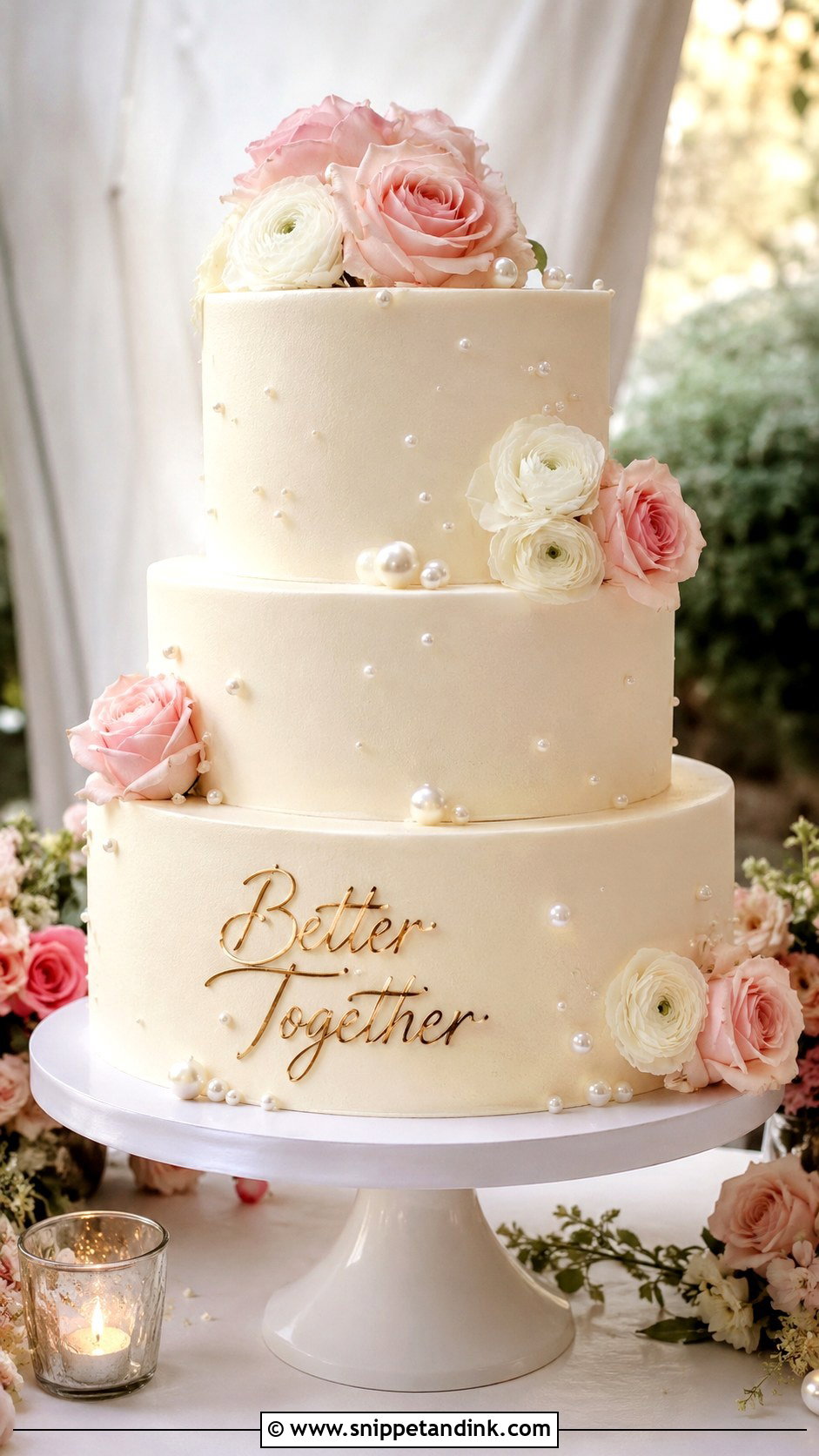
Quotes let the cake sound like you. Short is everything here: “better together,” “all my heart” or “love always wins” fit comfortably on one tier, while a twelve-word quotation becomes a paragraph nobody reads. Script feels romantic; clean block capitals feel modern and stay legible at a distance. Keep decoration light around the words. Fresh flowers, small pearls or soft icing texture can add depth without crowding them.
8. Wedding Cake With Song Lyrics
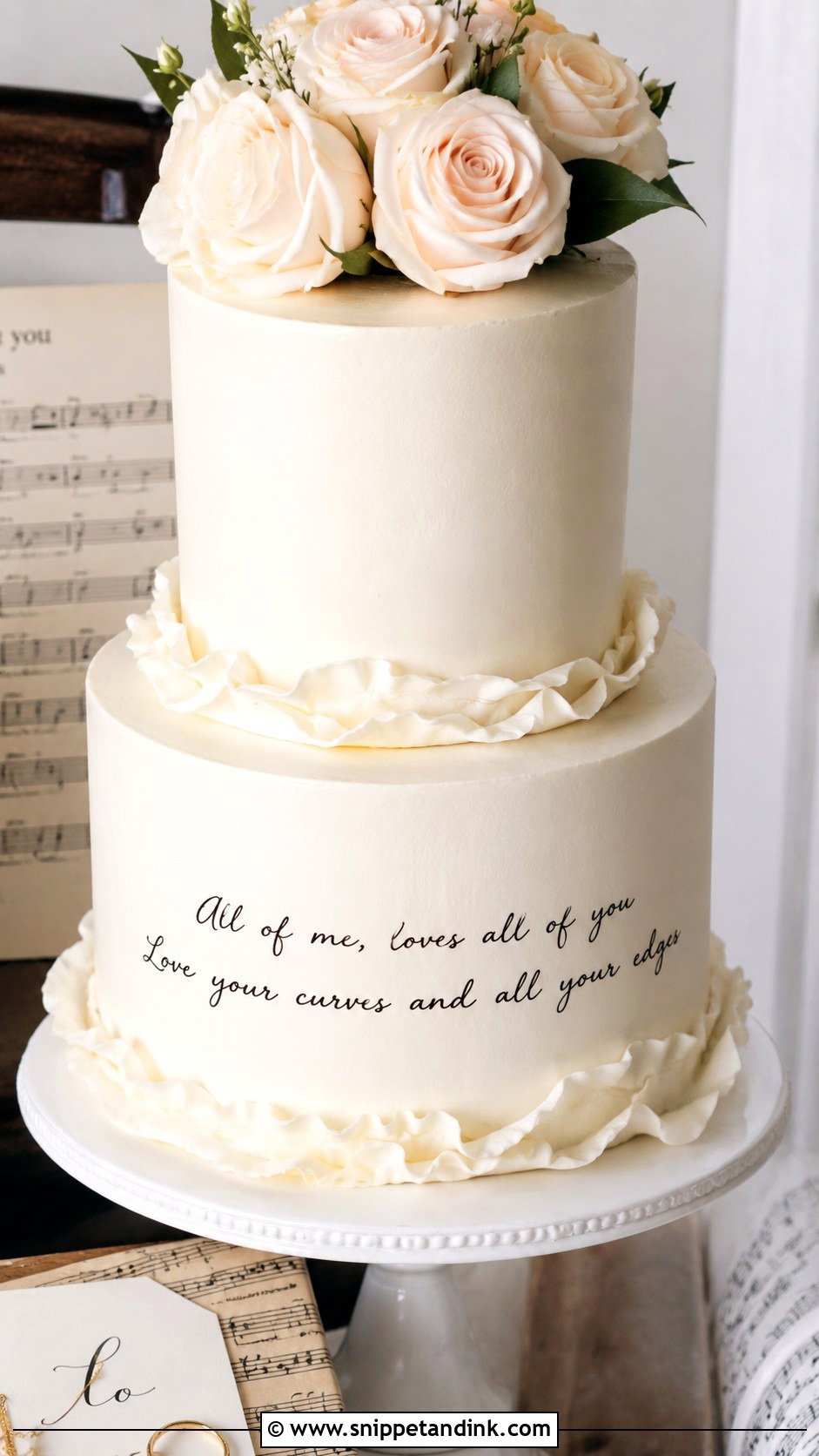
Lyrics from your first dance can be the most personal line on the cake. Use a short, recognizable phrase, or just a few words of it, wrapped around one tier, printed on edible paper or painted in a delicate script. Letter size is where couples go wrong: on a cake, anything under roughly a finger’s width tall is hard to read from a normal standing distance. Roses, soft ruffles or a candlelit table suit the mood.
9. Wedding Cake With Bible Verse
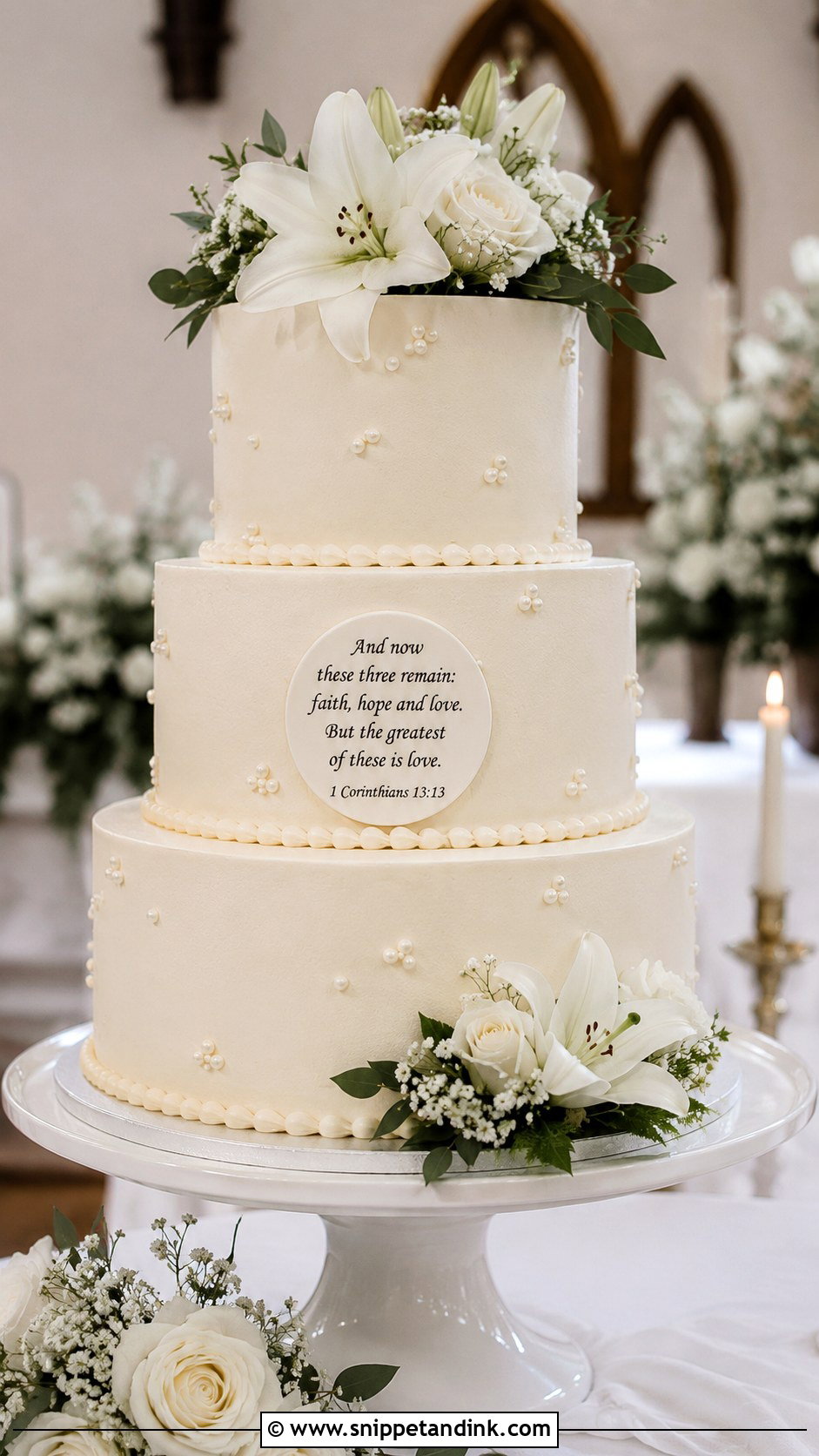
For a faith-centered wedding, a verse can be the heart of the cake. Most verses are long, so I’d use the reference alone, such as 1 Corinthians 13:4, or a brief phrase from it. A fondant plaque, a line around the base or a clean front tier all work. Check the wording against the translation you used in the ceremony, since translations differ, and match the citation format to your program. Soft ivory icing, white flowers and gold accents keep it graceful. Keep the text clear of greenery.
10. Wedding Cake With Poem
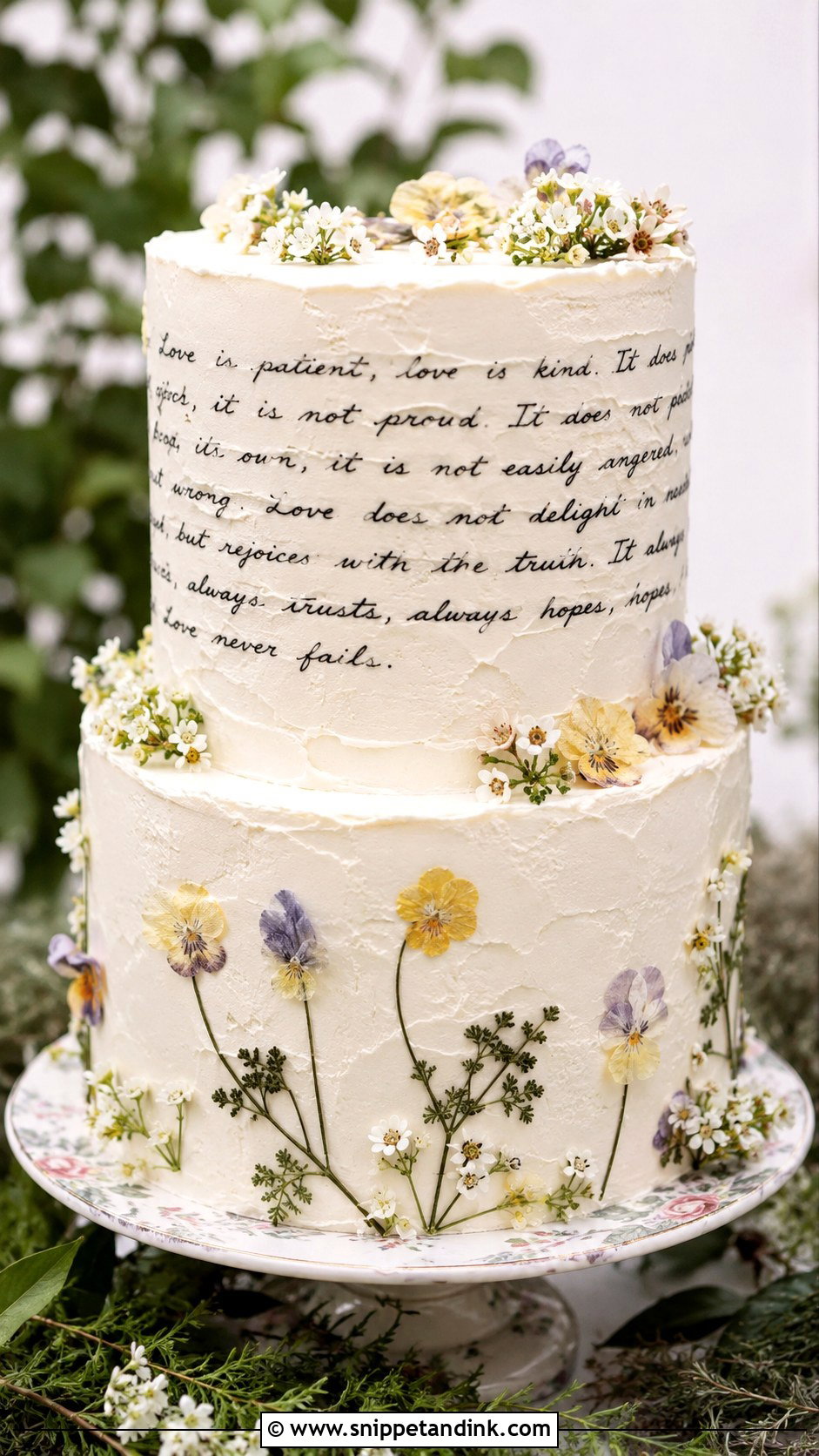
One line of poetry can turn a tier into something like a love letter, especially in a wraparound script. Choose a single line, or write your own. Pale buttercream, textured edges and pressed edible flowers give it a storybook feel. If the words are private, put them on the back or side and reveal them in photos later. In layout terms, a line that wraps should be broken at a natural pause, so the part guests see from the front still makes sense on its own.
11. Wedding Cake With Handwritten Notes
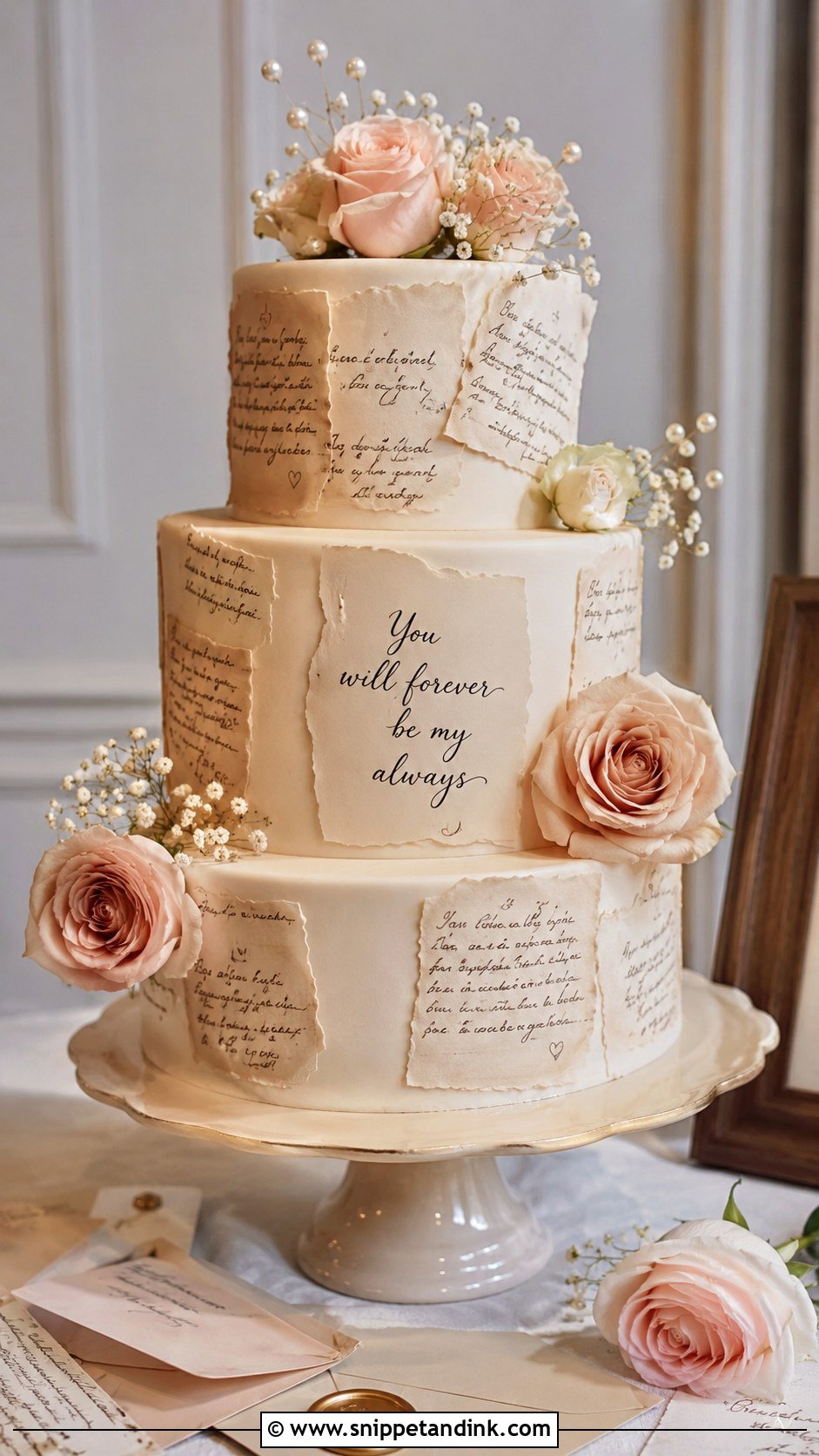
Real handwriting, copied from notes, vows or letters, can be transferred onto fondant or printed on edible paper. I’d treat most of it as texture and pick out a few clear words in front, because a page of genuine handwriting at cake scale is rarely legible, and that’s fine. Scan the original at high resolution so the baker gets clean lines. Ivory, parchment or light blush tones suit it, with small flowers, delicate piping or torn-edge edible paper for a handmade finish.
12. Wedding Cake With Edible Paper Writing
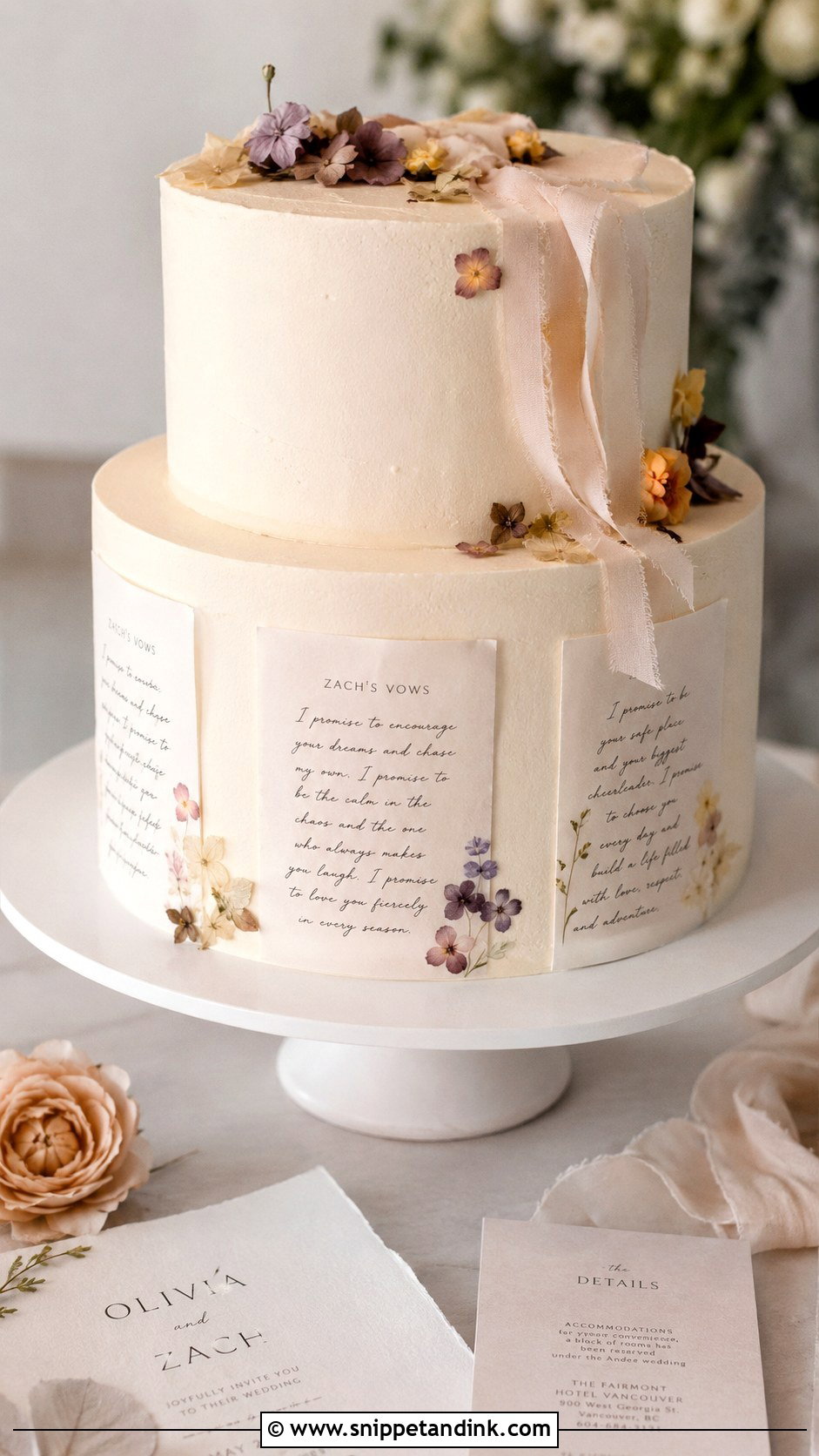
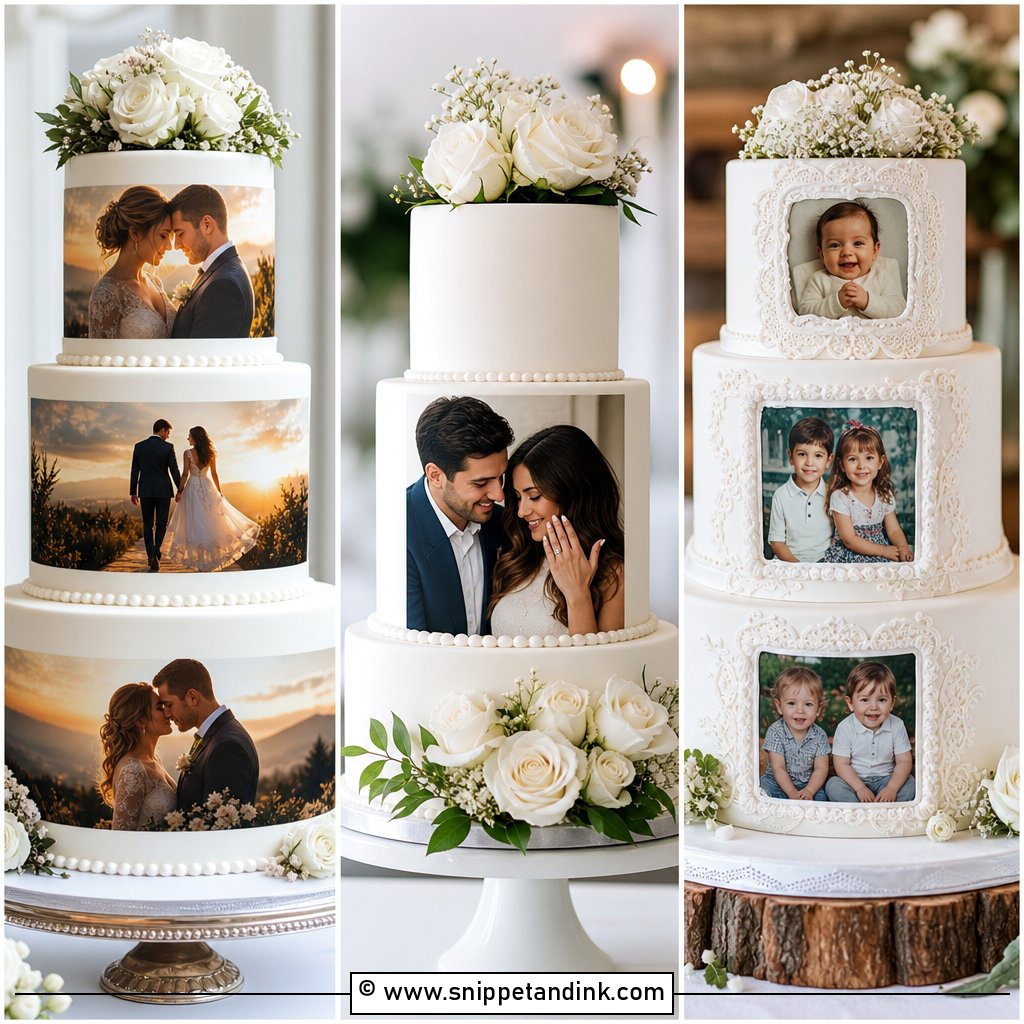
Edible paper gives you crisp text without depending on a steady piping hand. It can carry vows, names, a short quote or a full letter-style design, and it’s the one method that handles detailed fonts and longer phrases. There are two kinds. Wafer paper is matte and papery but curls if it gets damp; printed frosting sheets blend into the icing and look smoother. Either needs a smooth buttercream or fondant base. Soft florals, ribbon or pressed petals make the paper look planned. It suits couples who want a scrapbook feel.
13. Wedding Cake With Gold Writing
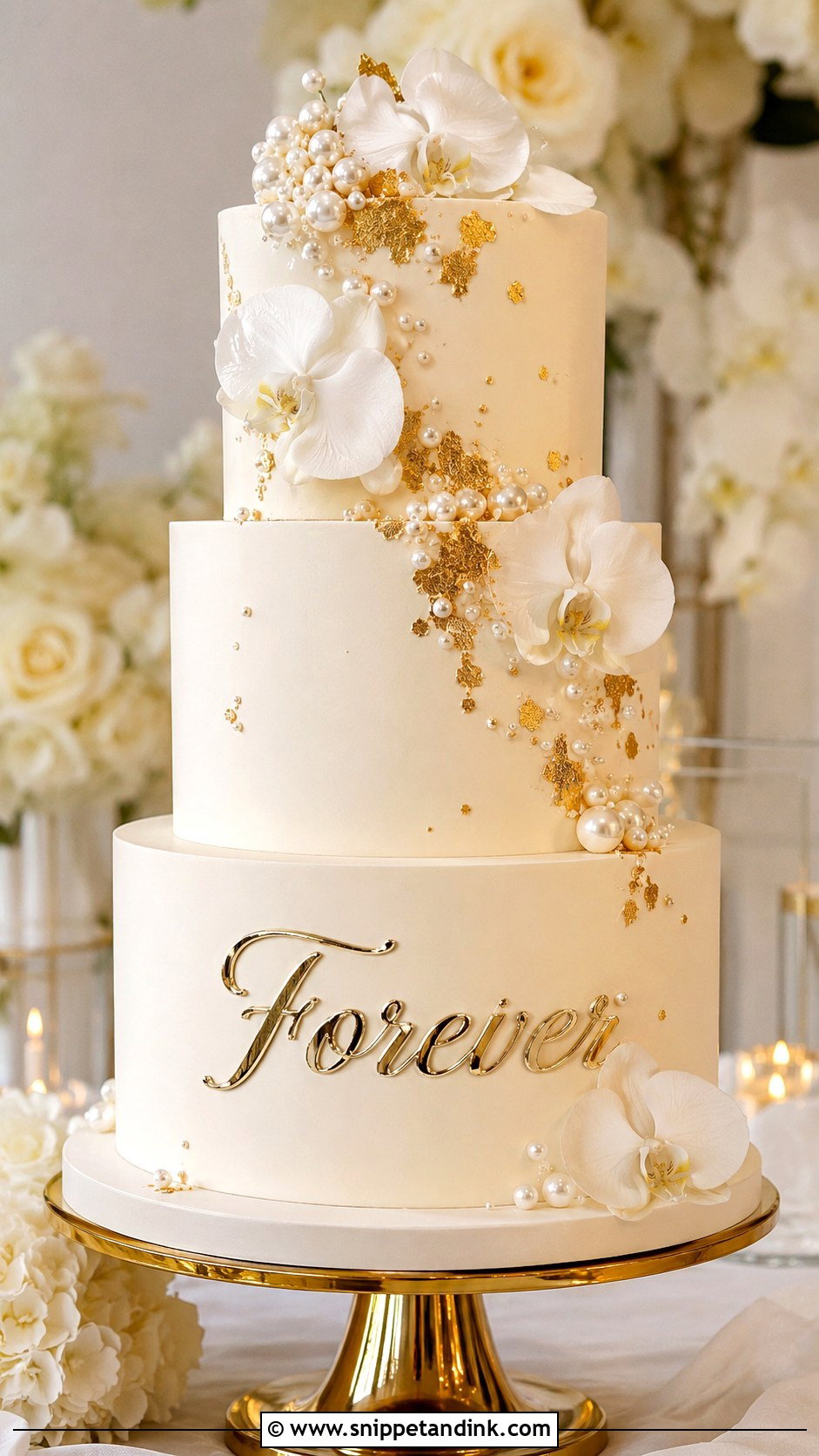
Gold lettering reads warm and celebratory, but it relies on contrast. On white or ivory it can look pale under some lights, while on sage, blush or black it glows. Metallic paint, edible leaf or raised fondant letters all work; painted gold behaves best on fondant or crusted buttercream, because soft icing drags under the brush. Use it for names, initials, “forever” or a short vow. Balance it with white roses, orchids, pearls or soft greenery. Ballrooms and formal receptions suit it.
14. Wedding Cake With Black Writing
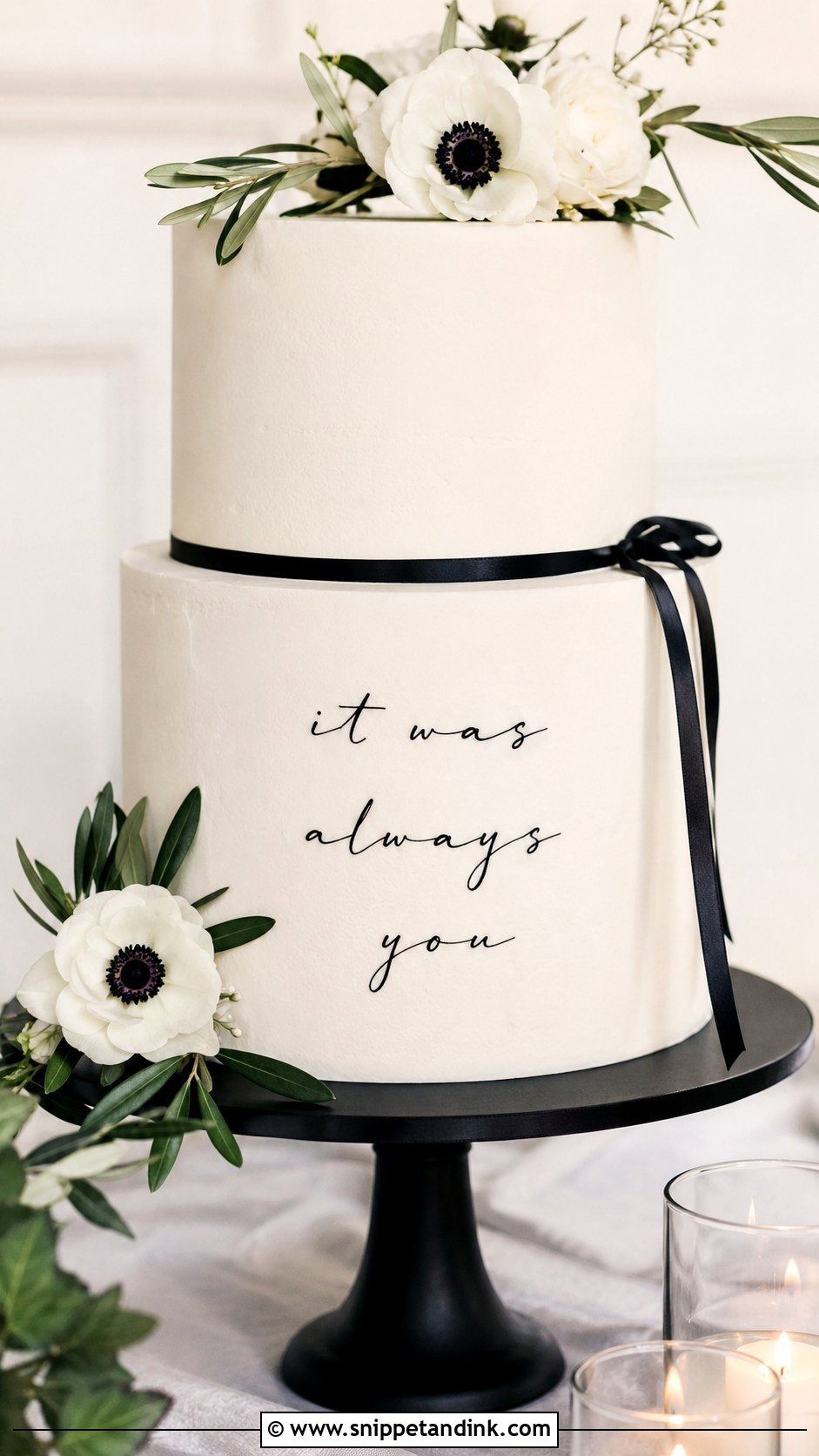
A wedding cake with black writing is the most legible option there is, especially on white buttercream or smooth fondant. Simple phrases, handwritten-style script or a bold surname all work. To keep it from feeling stark, add soft flowers, ribbon or textured icing. I’d ask for thin lettering rather than heavy text: dark color in buttercream can bleed slightly at the edges in warm, humid rooms, and fine lines hide that better than thick ones. It suits minimal, monochrome styling.

15. Wedding Cake With White Writing
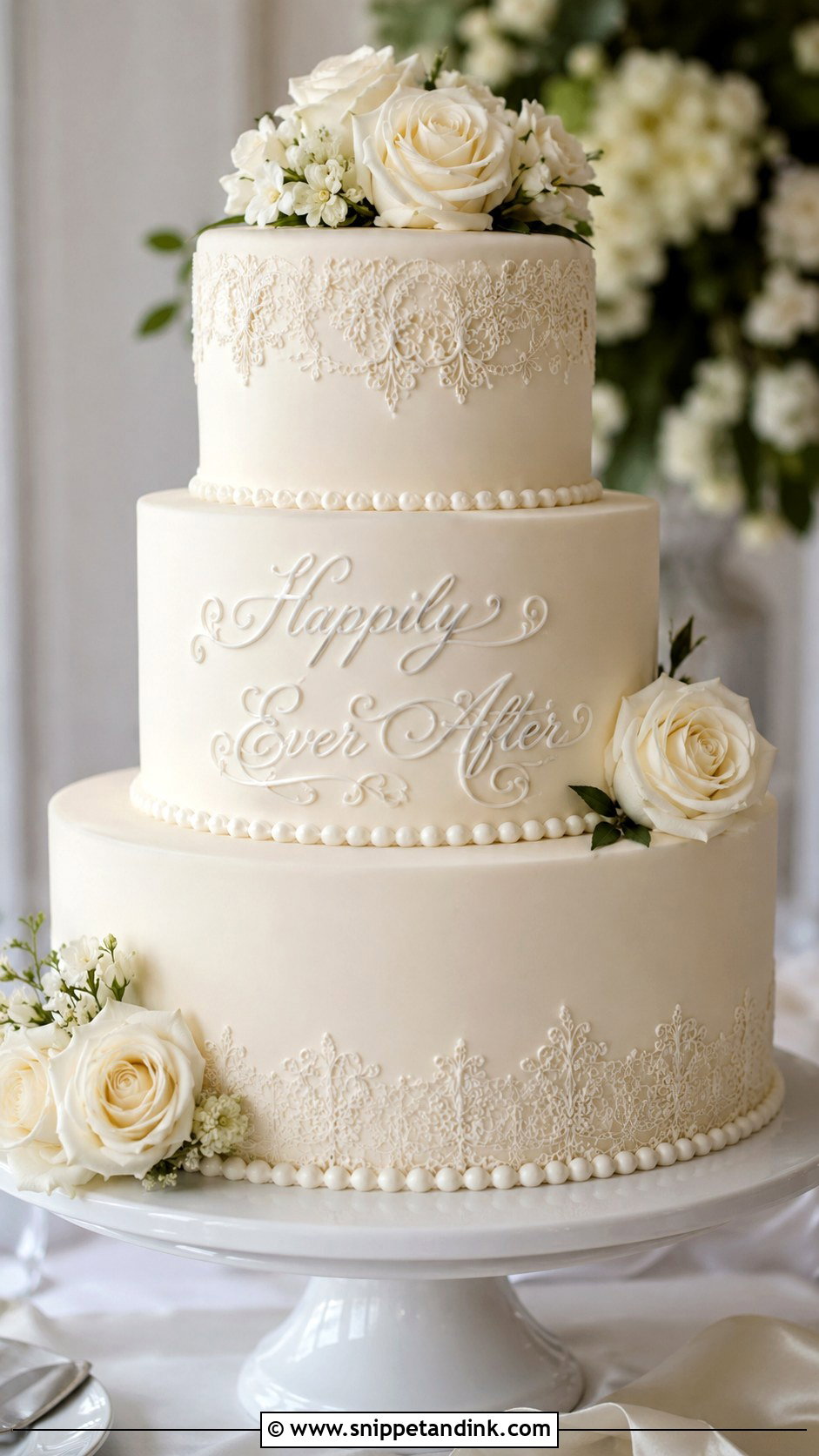
White on white is the most subtle choice, and it’s read through shadow, not color. It’s usually raised piping, embossed fondant or white royal icing on a white or ivory cake, so lighting matters more than anything else. Side light from a window or candles makes the letters stand out; flat overhead light makes them almost disappear. Go a size larger than feels natural and keep the words simple. Pearls, sugar flowers or a satin ribbon suit the quiet style, and the effect is at its best in close-up photos.
16. Wedding Cake With Raised Letters
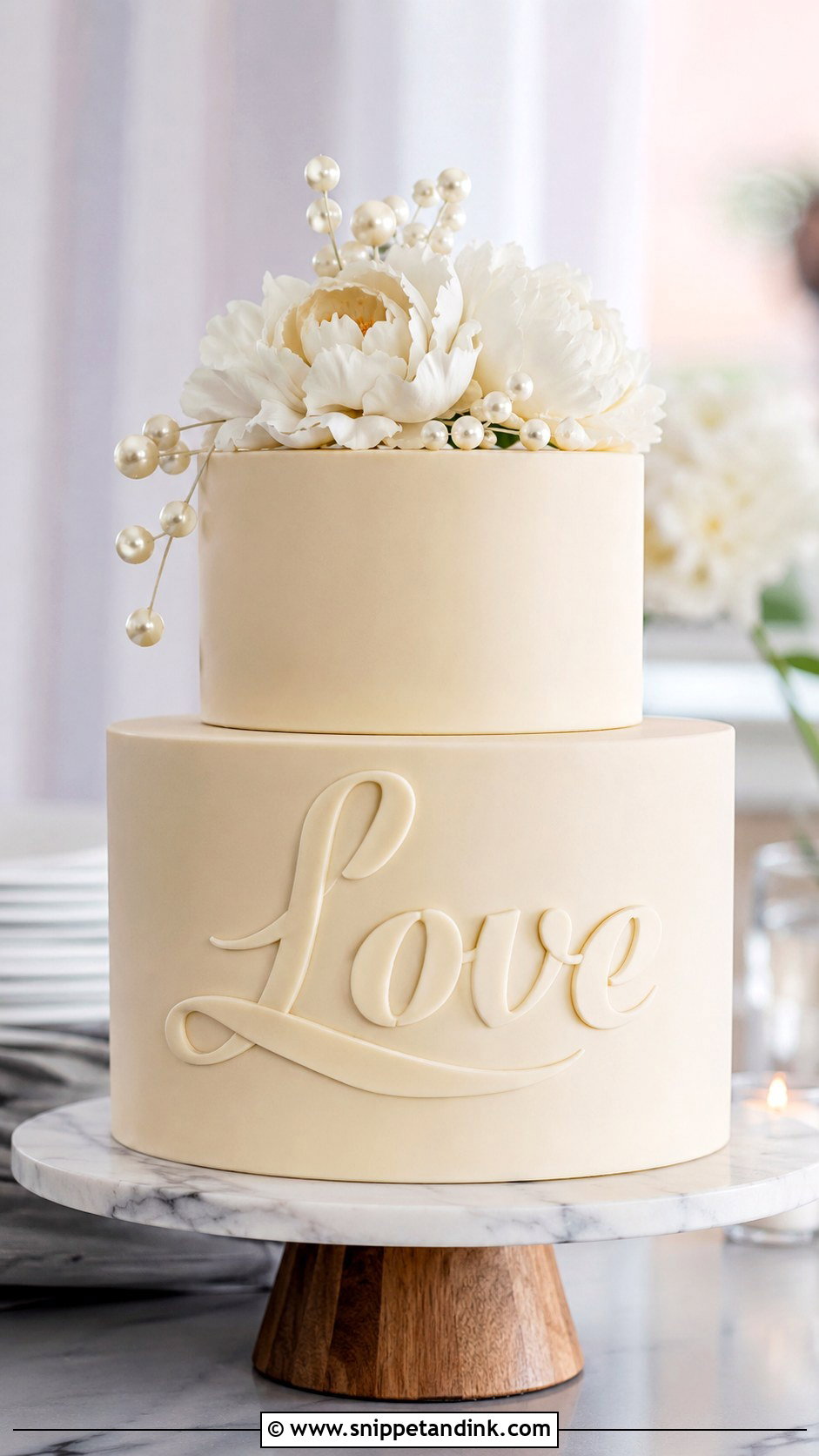
Raised letters give clean, dimensional type that’s consistent from letter to letter. They’re cut from fondant, gum paste or molded sugar, or piped in chocolate and left to set, then attached to the surface. A surname, initials or one word like “love” across the main tier suits them. They look sharpest on smooth fondant; on buttercream, the surface needs to be firm enough to hold them. Spacing is the detail people miss. Cut letters need their gaps adjusted by eye, just as I’d adjust them on an invitation, or certain pairs look like they’re drifting apart.
17. Wedding Cake With Script Topper
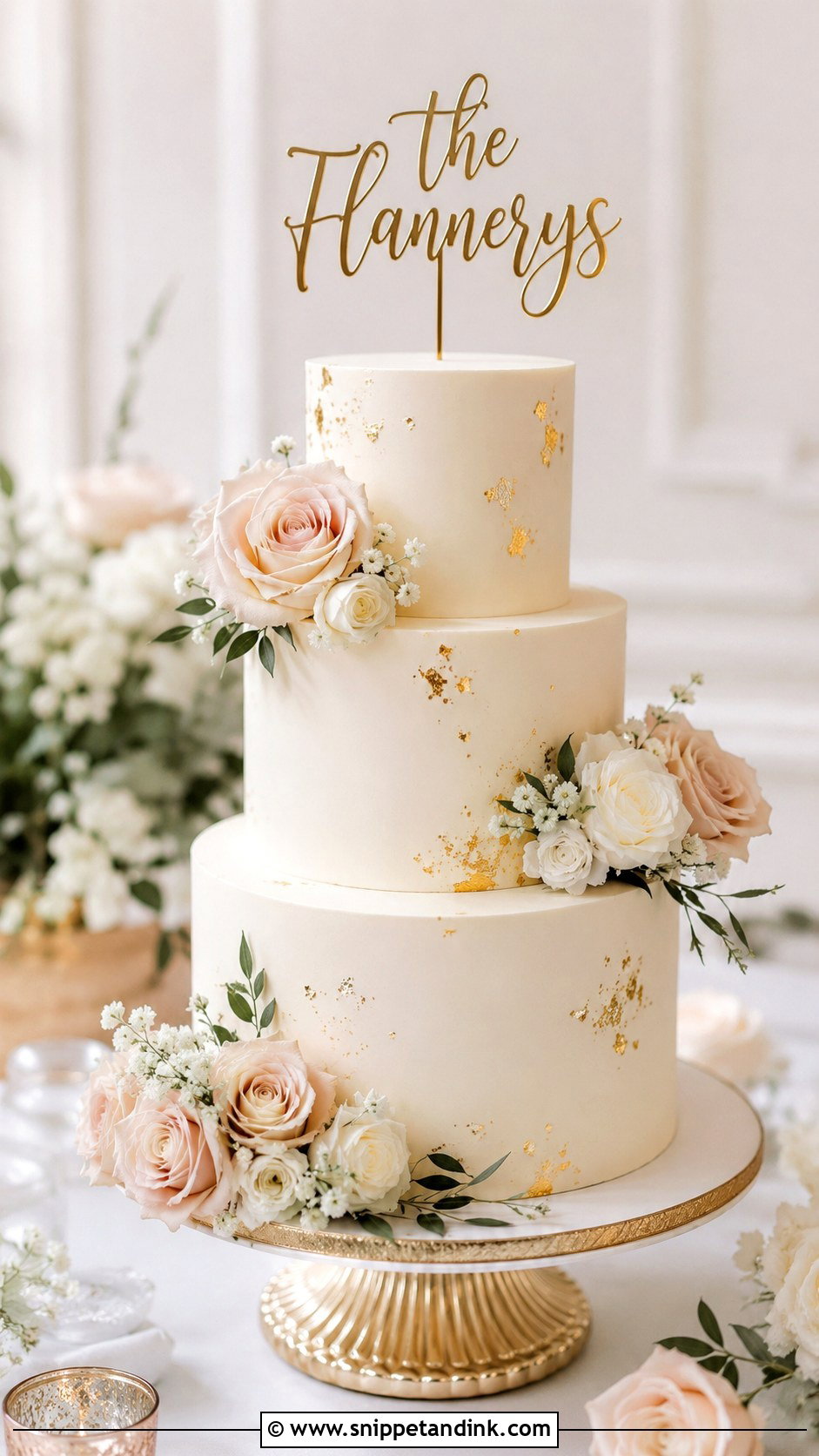
A topper keeps the writing off the cake, which leaves the icing clean and the words removable. A surname, “just married,” initials or a single word can be cut in acrylic, wood, metal or sugar. Size it to the top tier; a topper wider than the tier it stands on always looks oversized. The stakes that go into the cake should be food safe or wrapped. Smooth icing, soft flowers or a few pearls finish it, and the material decides whether it reads rustic, modern or formal.
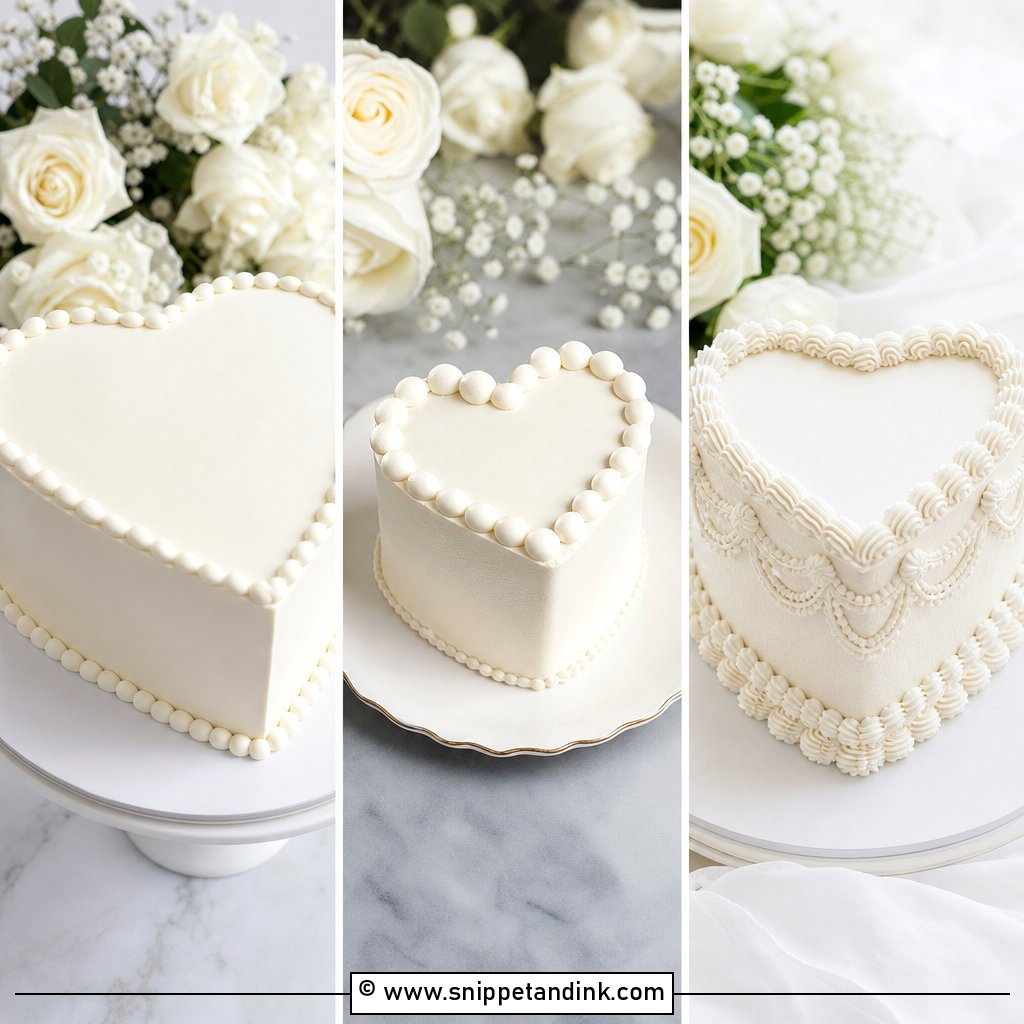
18. Wedding Cake With Just Married
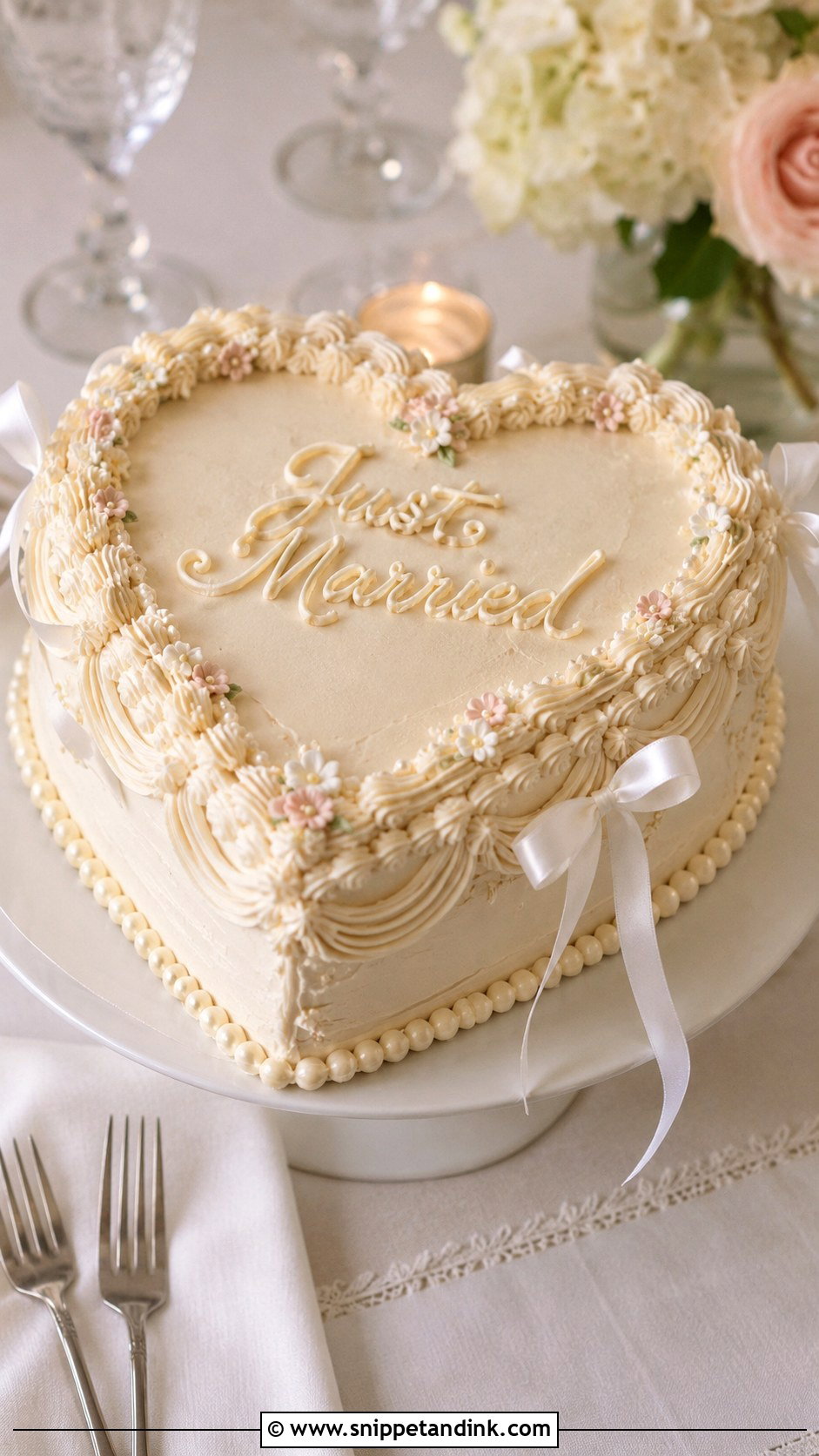
A cake with “just married” writing is cheerful and impossible to misread. It works on a small cutting cake, a heart cake or the front of a tall tiered one. Soft piping looks vintage; clean raised letters look modern. Keep the rest light, with fresh flowers, small bows or simple border piping. Two short words leave room to make the lettering large, which is exactly what makes it read so well in photos.
19. Wedding Cake With Forever
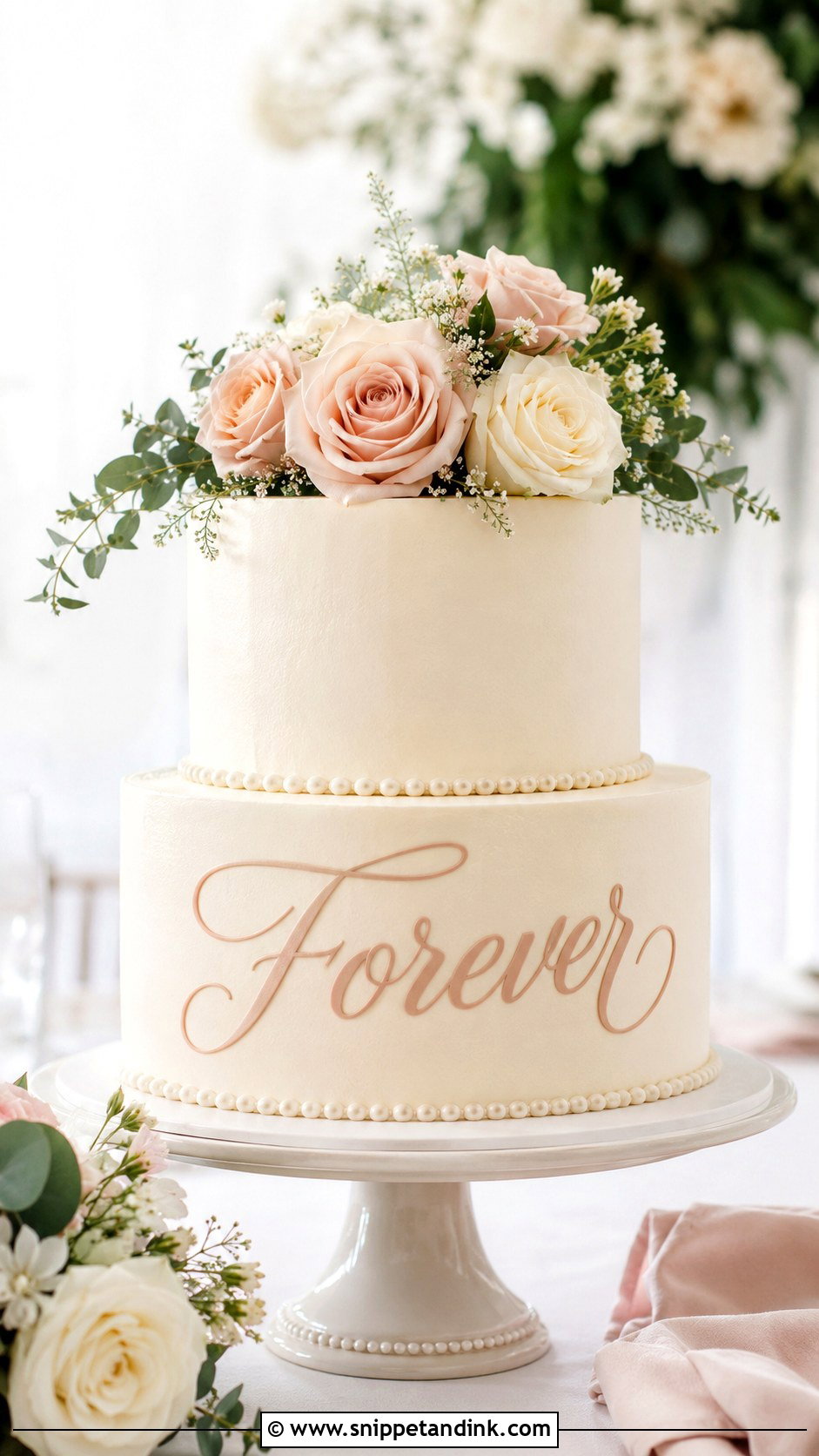
One word is the easiest brief a baker can get. Because “forever” is short, it can be written larger and with more flourish than any phrase. It sits across a smooth front tier, around a cake band or on a topper. Flowing script reads soft; thin block letters read modern. Ivory buttercream, blush flowers and pearl details suit it. My only note: a word with lots of loops like this one needs a script where the r and e stay distinct, or it can look like a squiggle from a few steps away.
20. Wedding Cake With Mr And Mrs
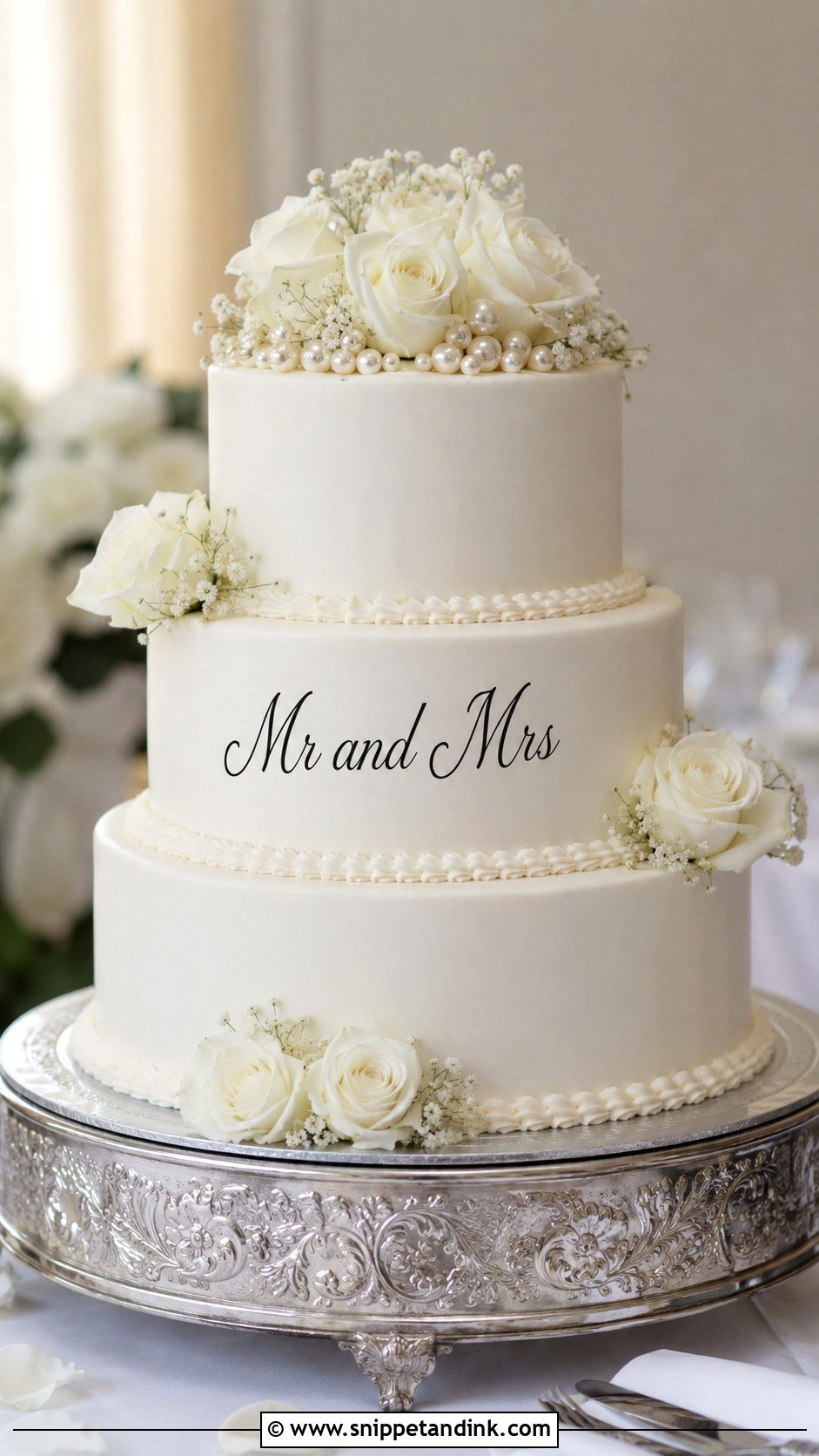
“Mr and Mrs” is a classic that still charms when it’s styled with care. It can be piped across the front, printed on edible paper or set on a topper. Choose one placement and one clean font. Traditional white tiers, buttercream borders and fresh roses suit it; for a modern take, use a smooth cake with gold or black lettering and minimal flowers. If the titles don’t fit your marriage, “Mr and Mr,” “Mrs and Mrs” or simply your two first names work in exactly the same layout.
21. Wedding Cake With Names
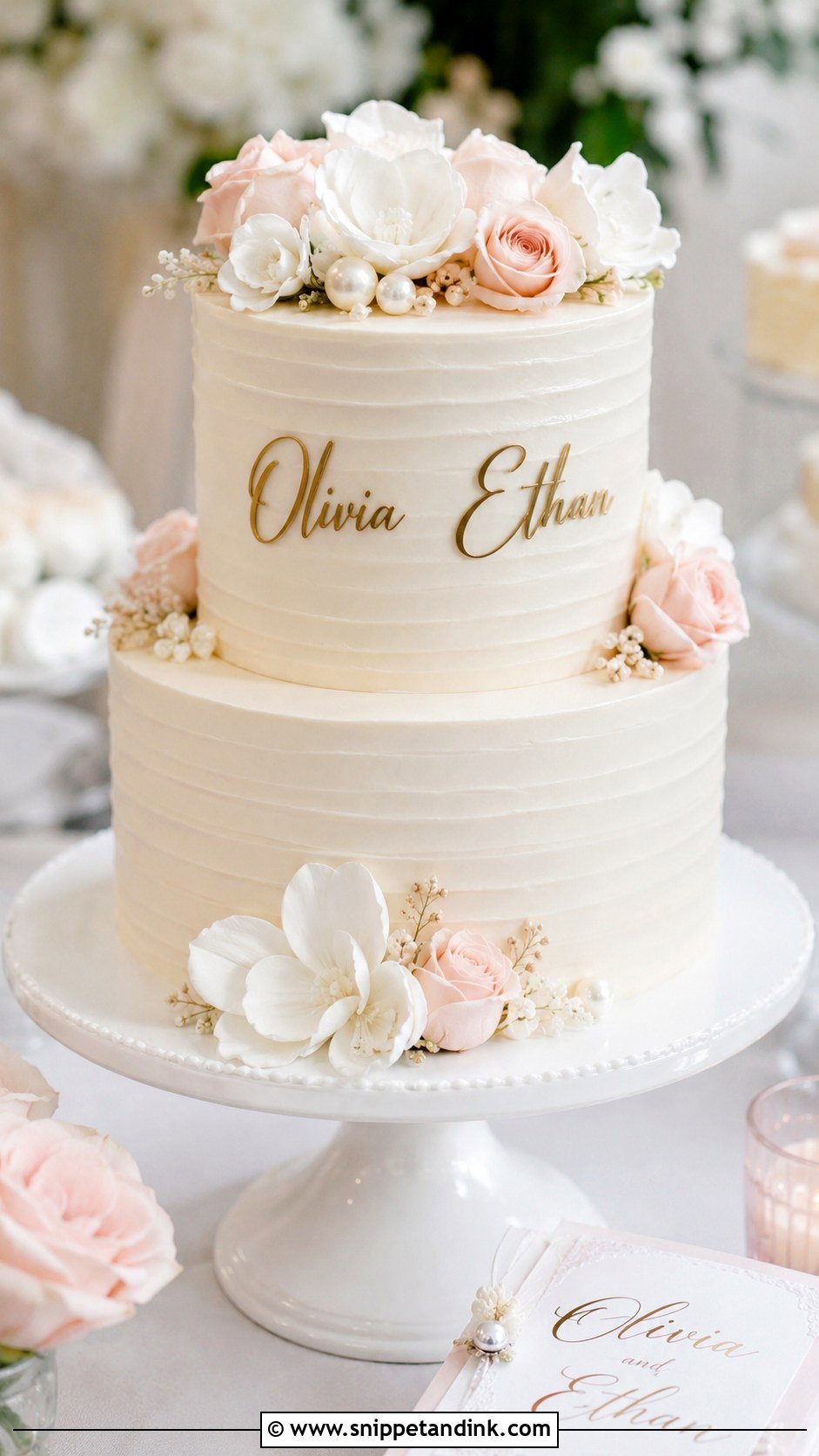
A wedding cake with names makes the cake obviously yours. Names can sit side by side, stack like a monogram or wrap gently around a tier, in a font that stays readable rather than ornate. Long names need room, so put them on a wider tier, or use initials with the full names on a small edible plaque. Check accents and special characters carefully, since they’re easy to drop when wording is typed into a message. Flowers, lace-style piping or soft texture can frame them.
22. Wedding Cake With Romantic Message
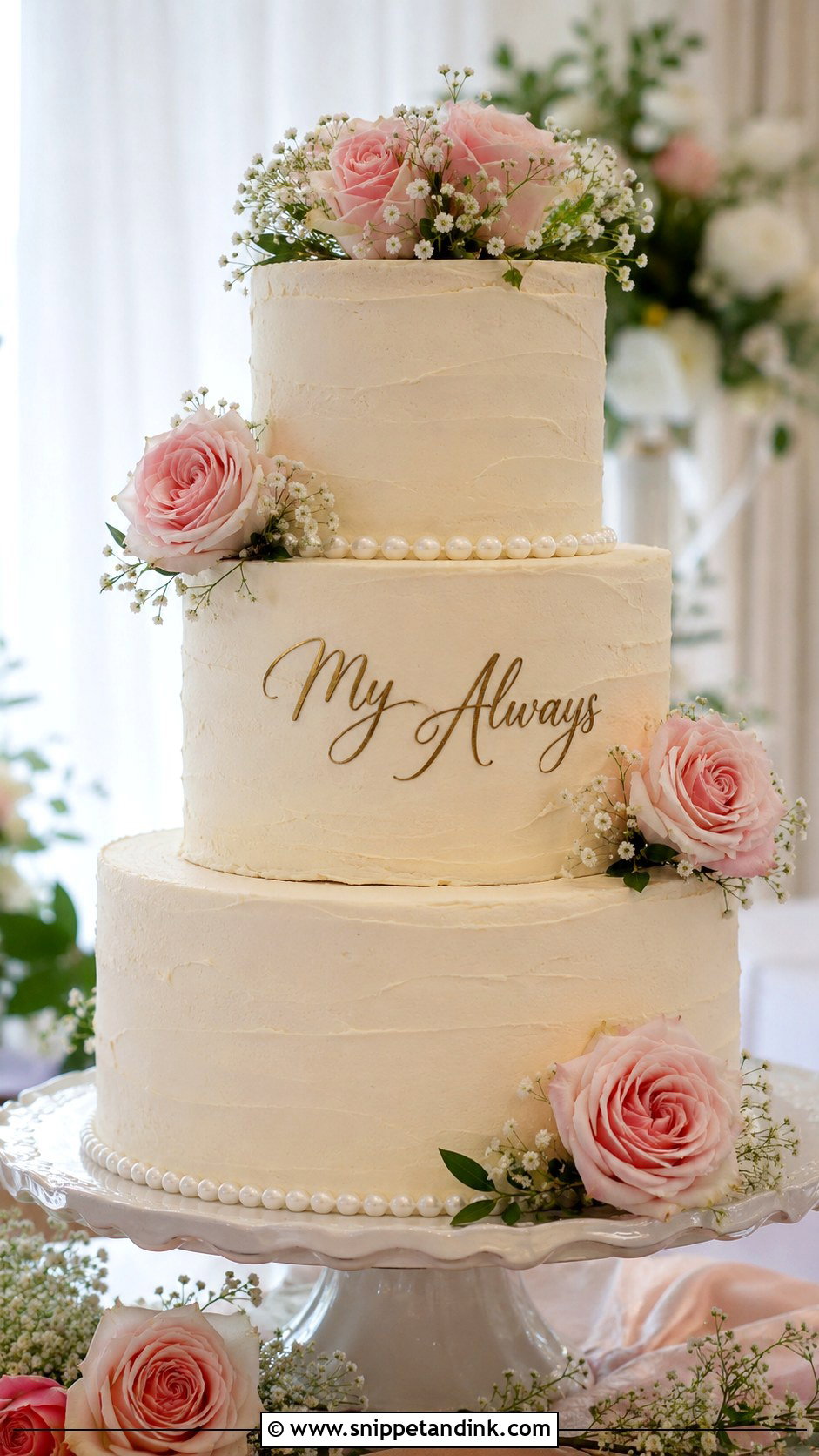
Short private messages like “my always,” “our beginning” or “love you most” give the cake your own voice. Put the message on the front of the main tier where guests can see it, with smooth icing, soft colors and fresh flowers keeping it warm. If it’s a joke between the two of you, the back of the cake is a good place for it. A message of three or four words is about the limit before it starts reading like a card.
23. Wedding Cake With Minimal Writing
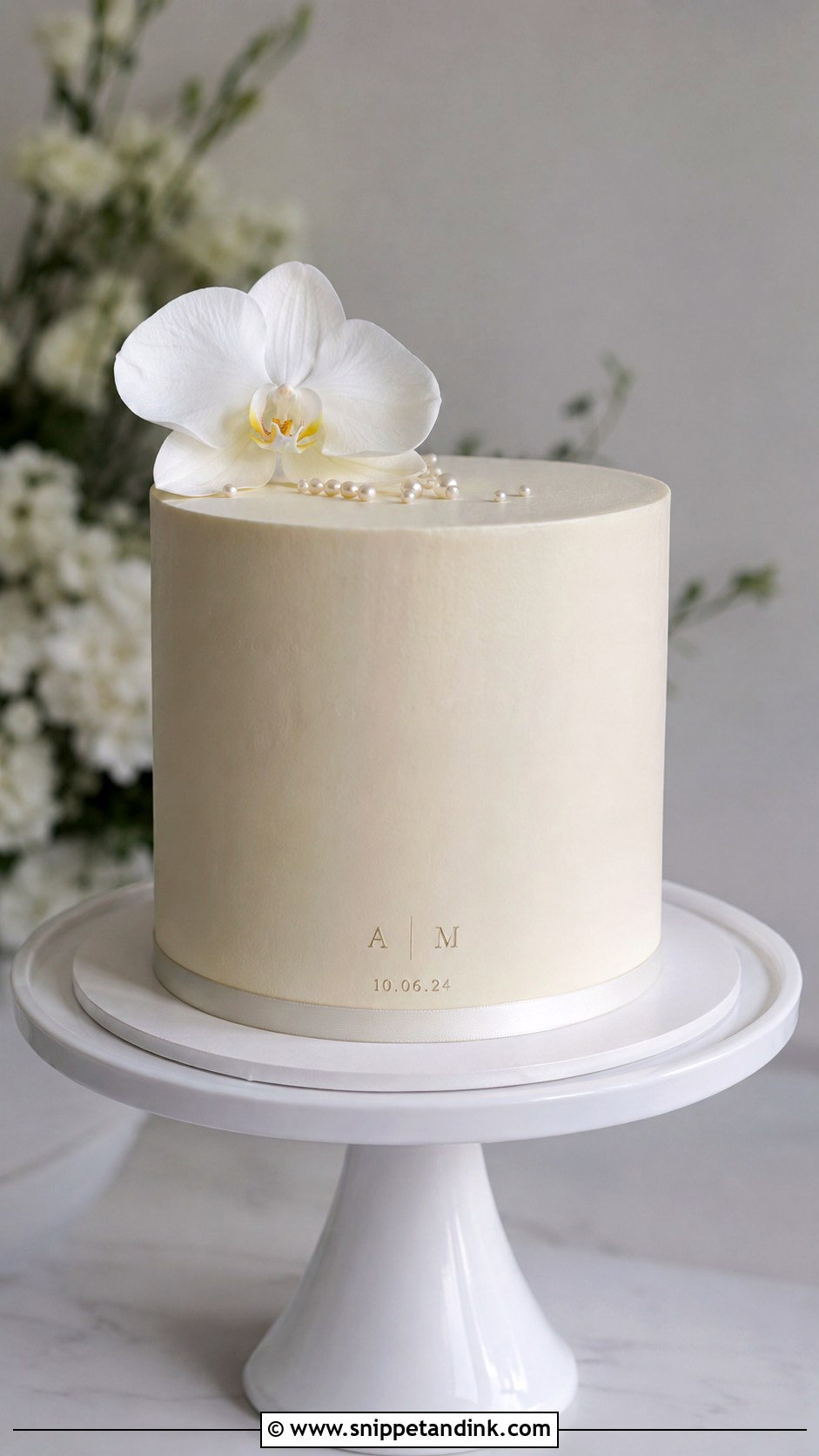
Minimal writing, like one word, one date or tiny initials placed low on the cake, only works if everything around it is precise. Smooth buttercream, sharp fondant edges and a limited palette give small lettering the clean background it needs. Add one floral cluster, a ribbon or a thin border, and nothing more. Small type has one risk: below a certain size it stops being writing and becomes a mark, so test the size on a printout held against a cake tin of the same width.
24. Wedding Cake With Vintage Writing
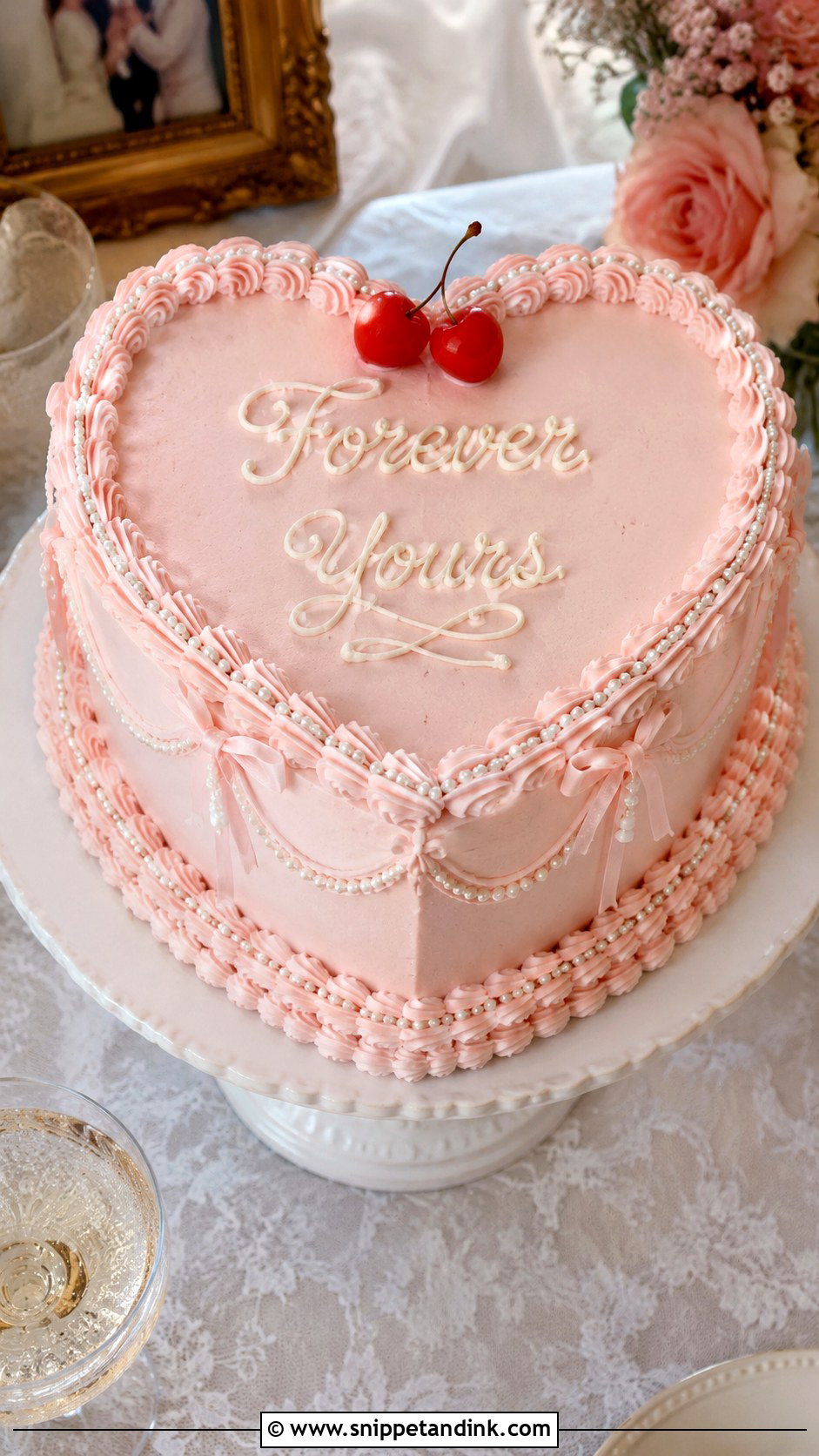
Vintage writing comes with piped script, shell borders, ruffles and soft pastels. “Just married,” “forever yours” or initials sit in a curved layout, especially on heart cakes, oval cakes and two-tier buttercream cakes. Keep the piping in the same color family as the writing so the cake feels of a piece. Cherries, bows, pearls or small sugar flowers add nostalgia. The lettering should look handmade, with a little natural wobble, rather than machine perfect.
25. Wedding Cake With Hidden Writing
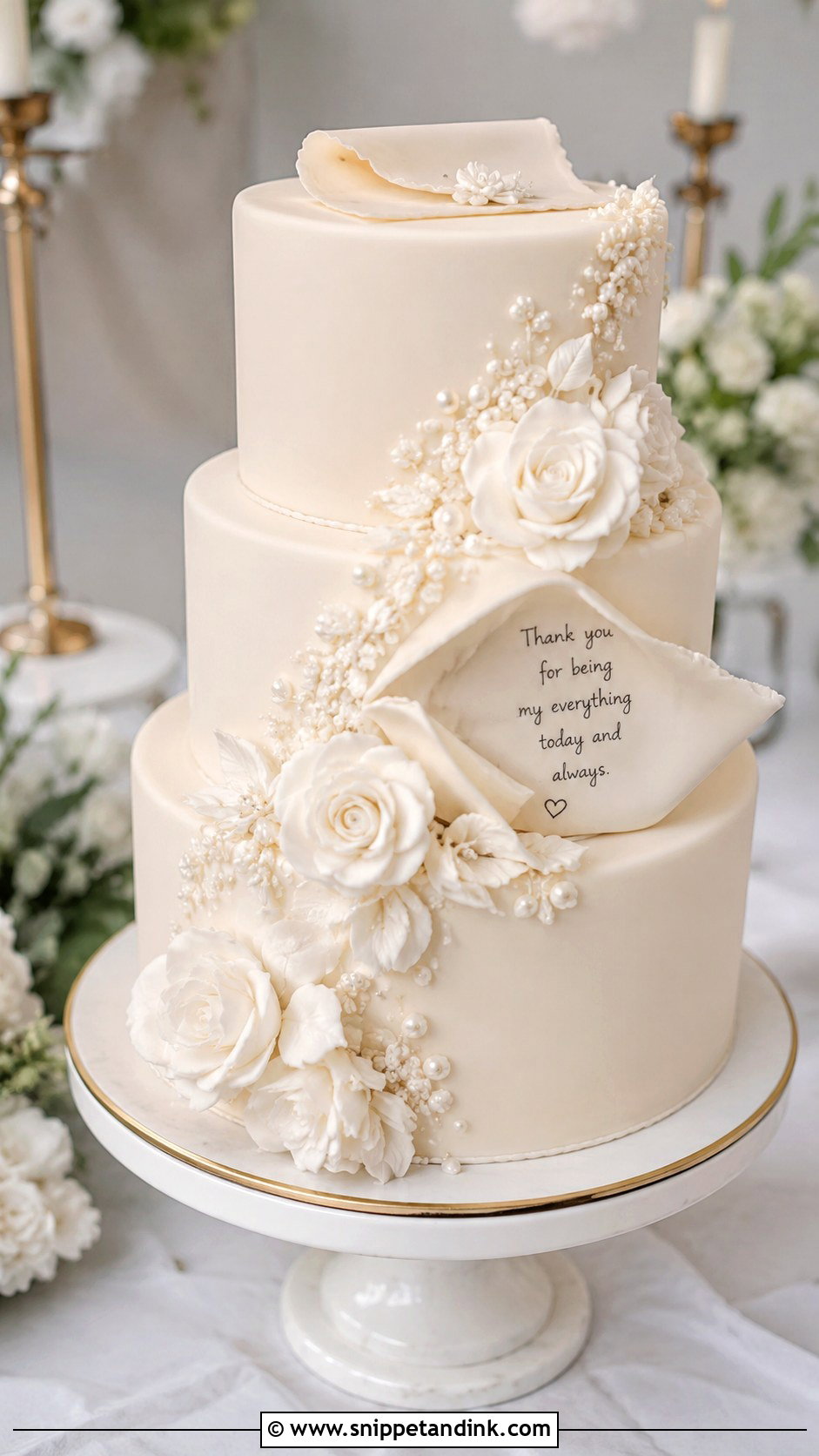
Hidden writing keeps a message private until you choose to show it. It can sit on the back, under a sugar flower, inside a fondant fold or on a small edible note revealed in photos. Vows, nicknames and private jokes suit it. From the front, the cake looks classic; from behind, it says something only you understand. Tell your photographer where it is, or nobody will ever capture it, and keep it to one message so the reveal is clear.
Your Invitation Font Will Change on Icing
Couples often want the exact typeface from their invitations, and it’s a lovely idea, but the cake can’t copy it perfectly. How close it gets depends on the method.
- Printed edible paper reproduces any font exactly, including fine hairlines.
- Cut letters can follow the font closely if the baker has a stencil or a cutting machine, though very thin strokes may need to be thickened.
- Piped and painted lettering is drawn by hand, so the baker interprets the style rather than copying it. Expect the spirit of the font, not a replica.
Send the font name or the design file, not a photo of your invitation, and ask for a sketch or a sample word before the wedding week.
Proof the Cake Wording the Way You’d Proof Invitations
In stationery, nothing goes to print without a proof, and cake writing deserves the same care because you can’t reprint it on the day. Send your wording in writing, never only by phone, and ask your baker to read it back to you.
- Spell every name exactly, with accents and capitals, and check the plural or possessive of your surname.
- Write the date with the month as a word if guests come from different countries.
- Copy quotes, verses and lyrics from the source you actually used, not from memory.
- Say which tier the words go on and which side faces the room.
- Approve one final version, and tell your baker that version replaces every earlier message.
Fewer Words, Bigger Letters
Good cake lettering is personal, readable and planned with the rest of the design. A few words do more than a crowded paragraph, because a cake has to read from across the room and up close. Before you settle on wording, think about your venue, the cake’s size, its icing and the feeling you want guests to have when they see it. Bring your baker real samples of fonts, colors and placement. Vows, initials, lyrics or one simple word all work when they’re short enough to read and set where people will look.
You'll Like These Ideas:



Leave a Reply