
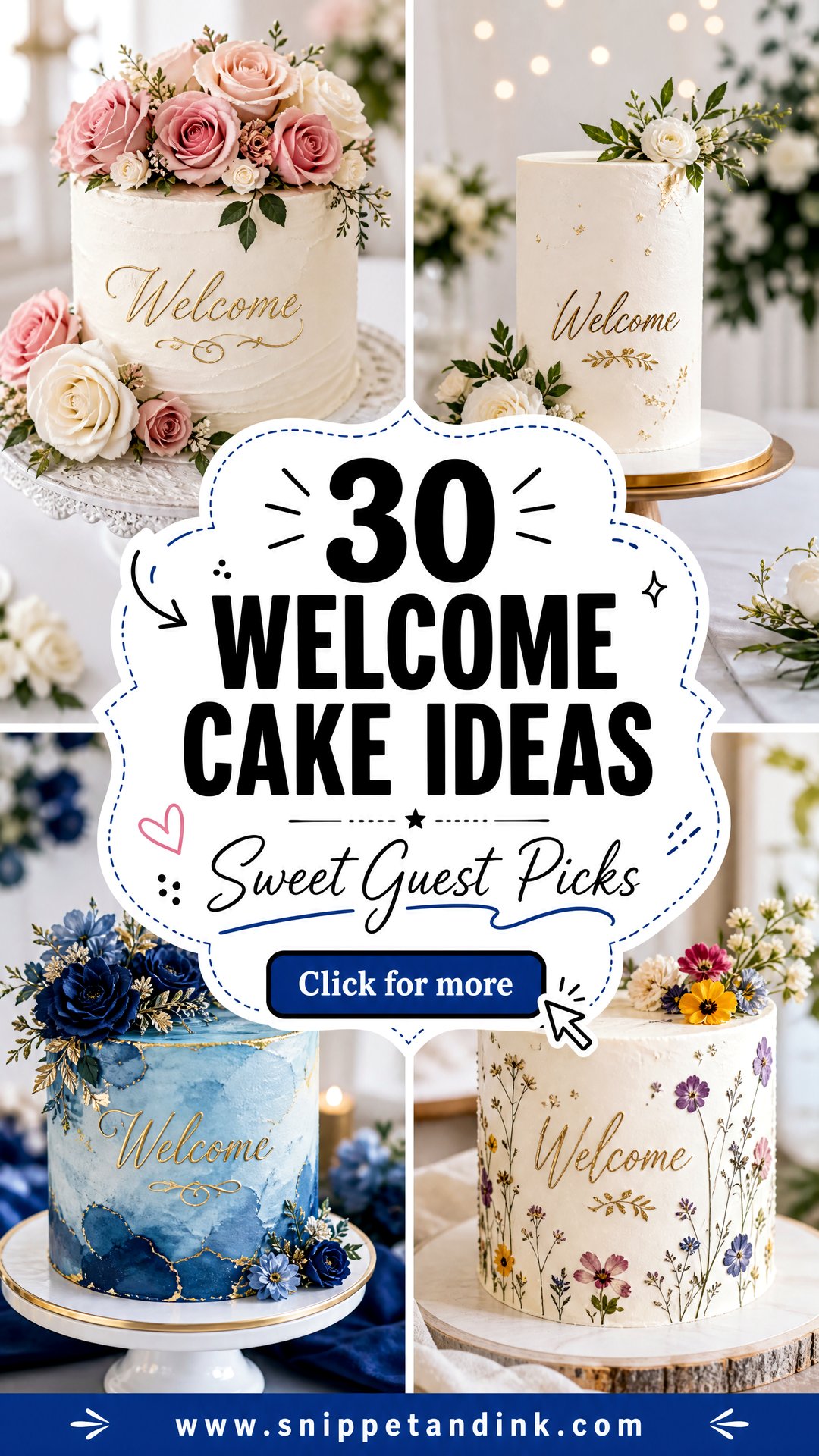
A welcome cake does a different job from the cake you cut later. It greets people at the door or holds the middle of a dessert table, and it usually sits out longer than any other cake at the wedding, often from the first arrivals until well after dinner. That changes how I build it. The finish has to hold up in a warm room, the message has to read from a few steps away, and the decoration has to make sense at a glance. Below are thirty designs I’d happily put on a welcome table, from heavy vintage piping to a plain tall tier, with notes on what each one asks of the room and the baker.
Planning for a Cake That Stands Out for Hours
A cake cut after dinner may be out of the fridge for an hour. A welcome cake can be on display for four or five, often near a door that lets in sun, wind or heat. That one fact shapes most of my decisions, and it is the first thing I ask about when a couple books this kind of cake.
- Ask the venue where the cake will stand and whether that spot gets afternoon sun. A shaded wall a few steps inside is better than a table right by the entrance.
- American buttercream softens quickly in a warm room. Swiss meringue buttercream pipes well but is also butter-heavy. For long, warm displays I lean on ganache under the final coat, or fondant over ganache, which holds sharp edges far longer.
- Fillings such as fresh cream, mousse and cream cheese should not sit unrefrigerated for hours. If the cake is out from arrival onward, choose jam, curd kept chilled until setup, or ganache.
- Fresh flowers need food-safe handling: taped stems, picks or straws, and only non-toxic varieties near the icing.
If the plan is to display the cake for hours and then serve it, tell your baker. Some couples use a decorated dummy tier for height and a separate kitchen cake for slicing, which removes the worry about warm frosting entirely.
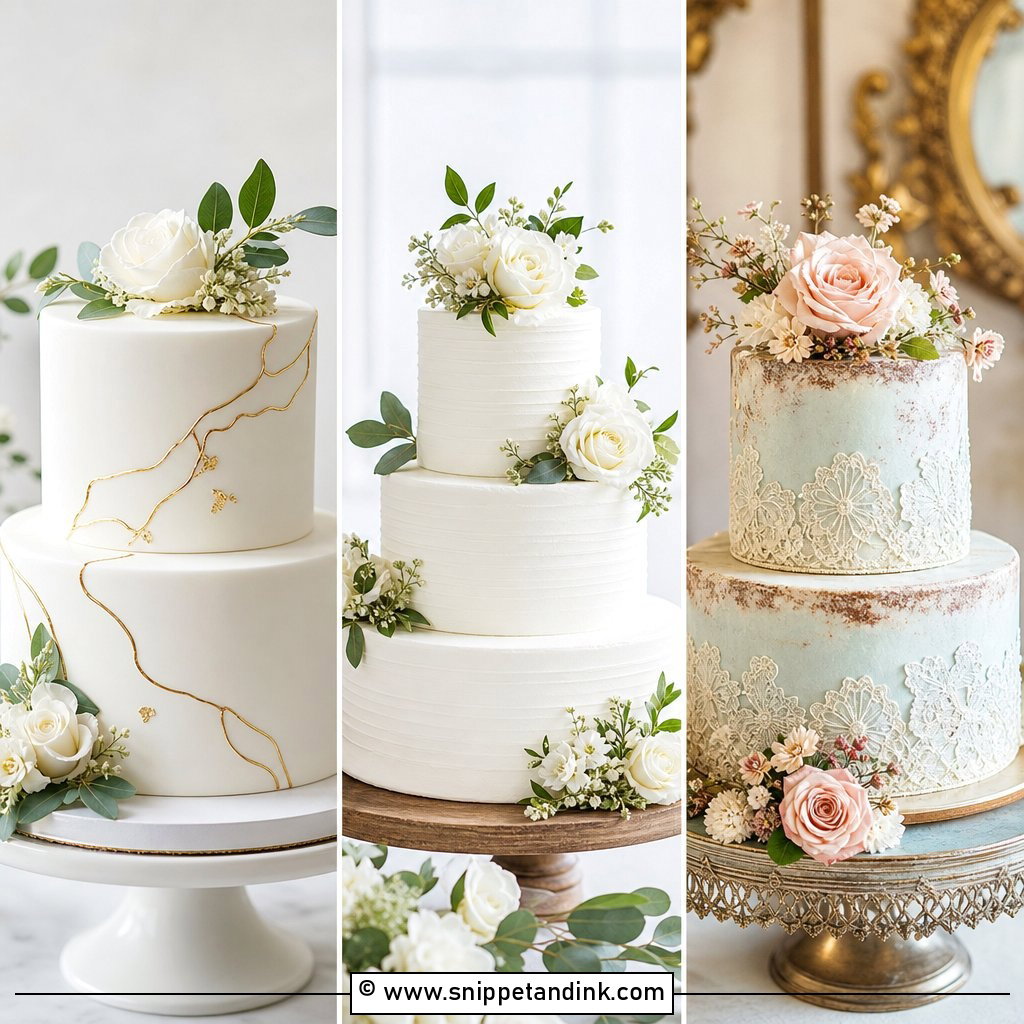
1. White Floral Welcome Wedding Cake
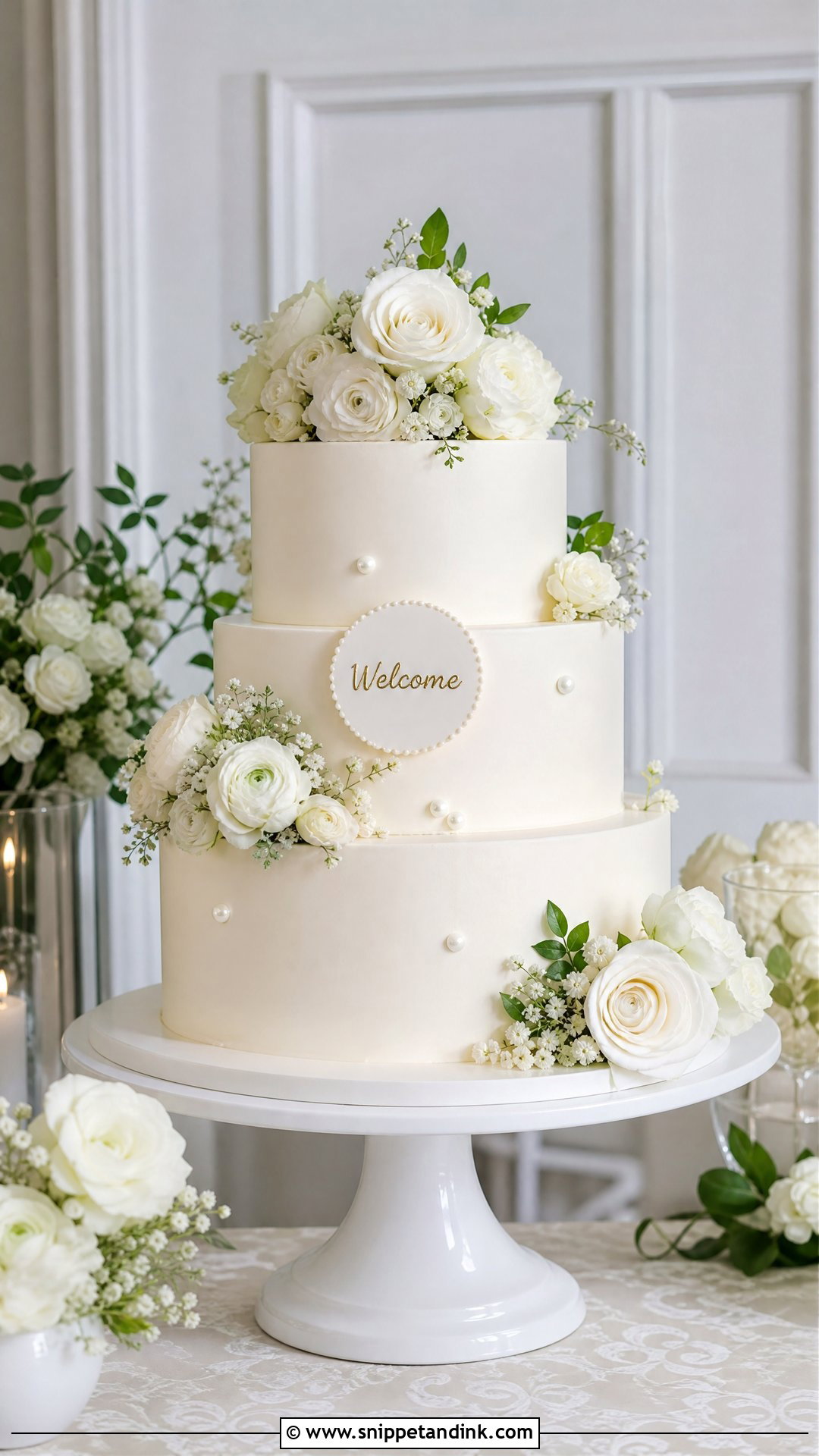
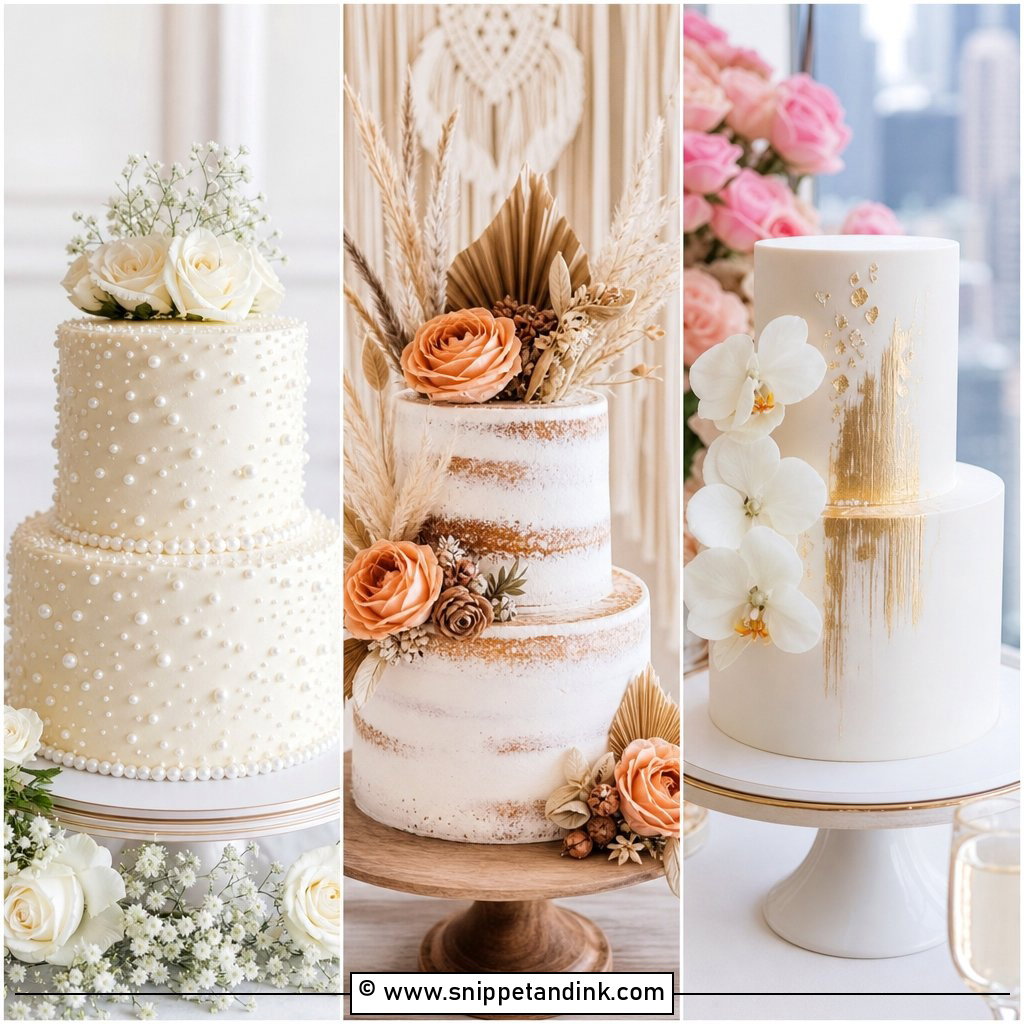
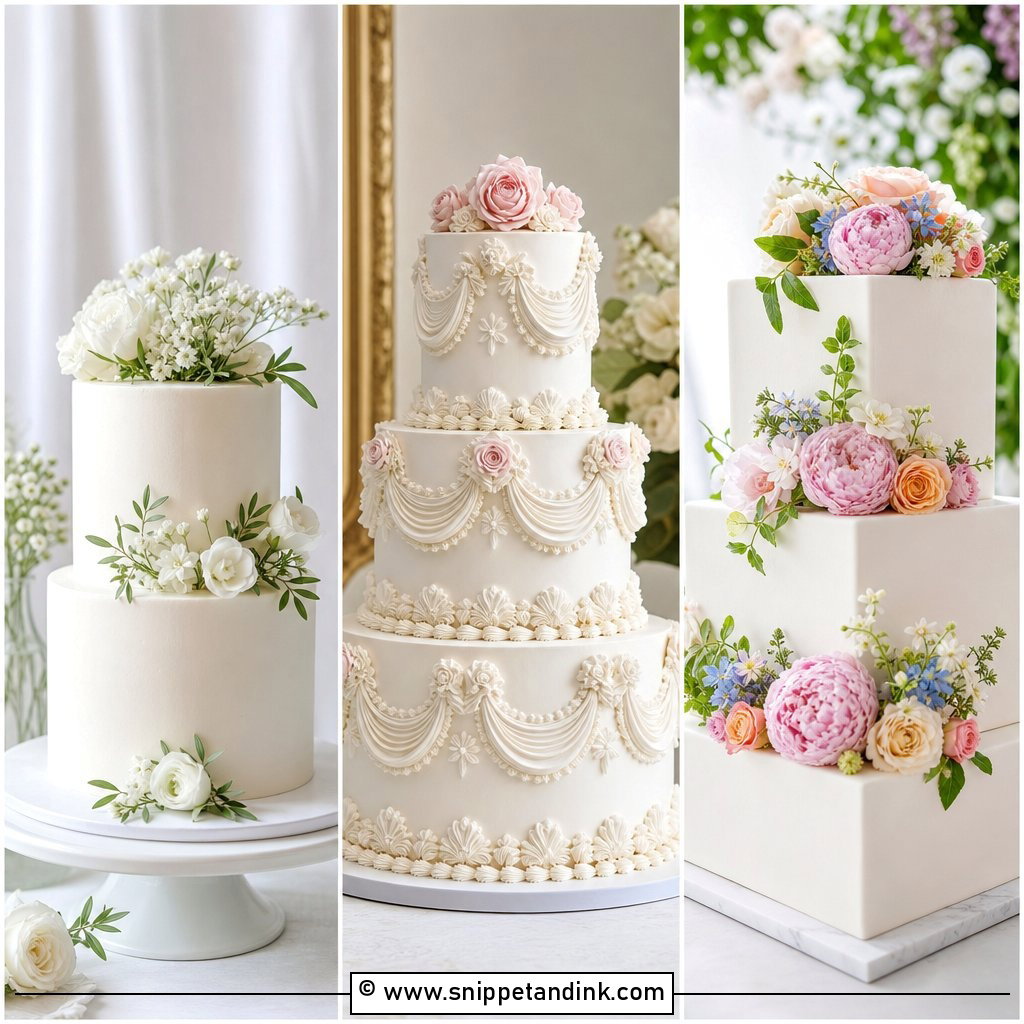
White with flowers is where most couples start, and it earns that spot because it forgives almost any venue. Ivory buttercream or fondant gives a clean base, and roses, orchids, ranunculus or sugar flowers bring the movement. My one firm rule is placement: gather the blooms in a single corner or let them fall down one side, never dotted evenly around every tier, which reads as cluttered from the entrance. If fresh stems touch the cake, I wrap them in floral tape and insert them through a straw or pick so no sap or wire meets the sponge. A small “Welcome” plaque or gold monogram finishes it.
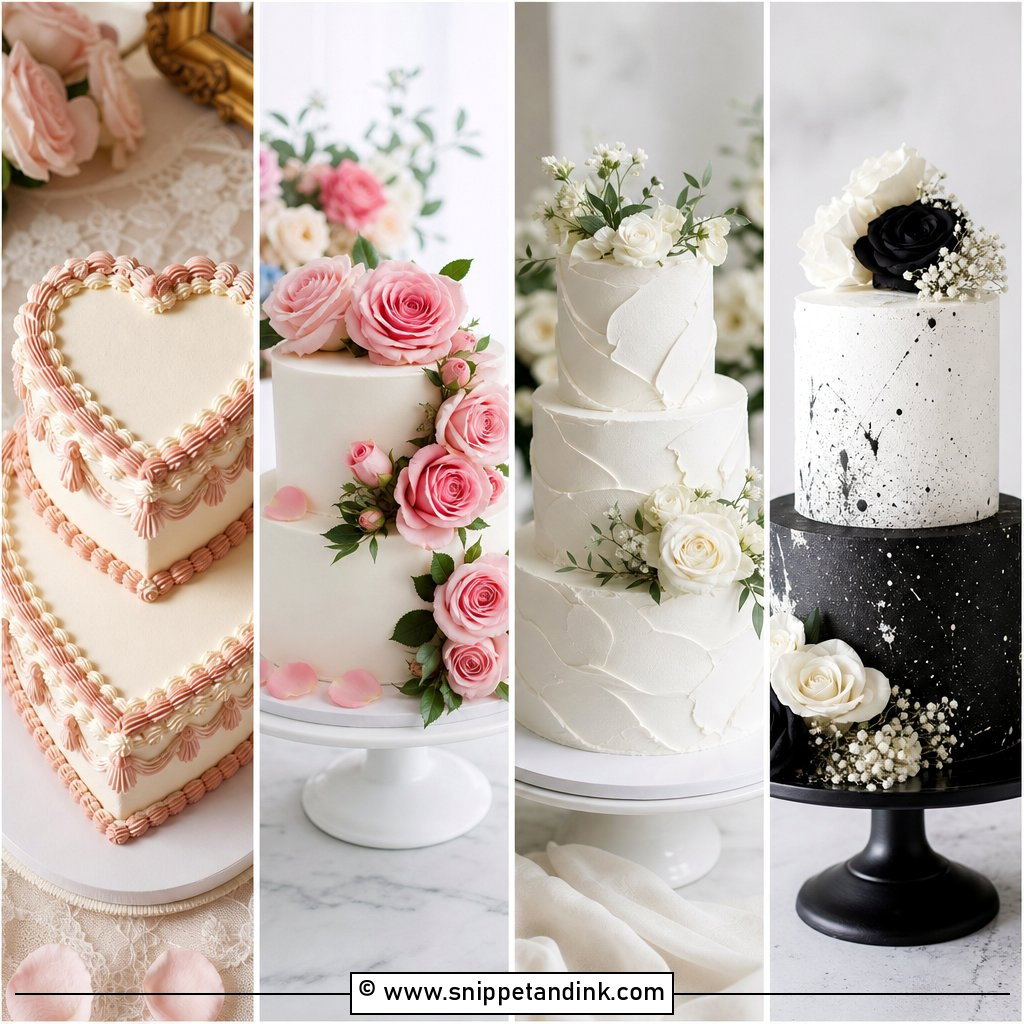
2. Vintage Lambeth Welcome Wedding Cake
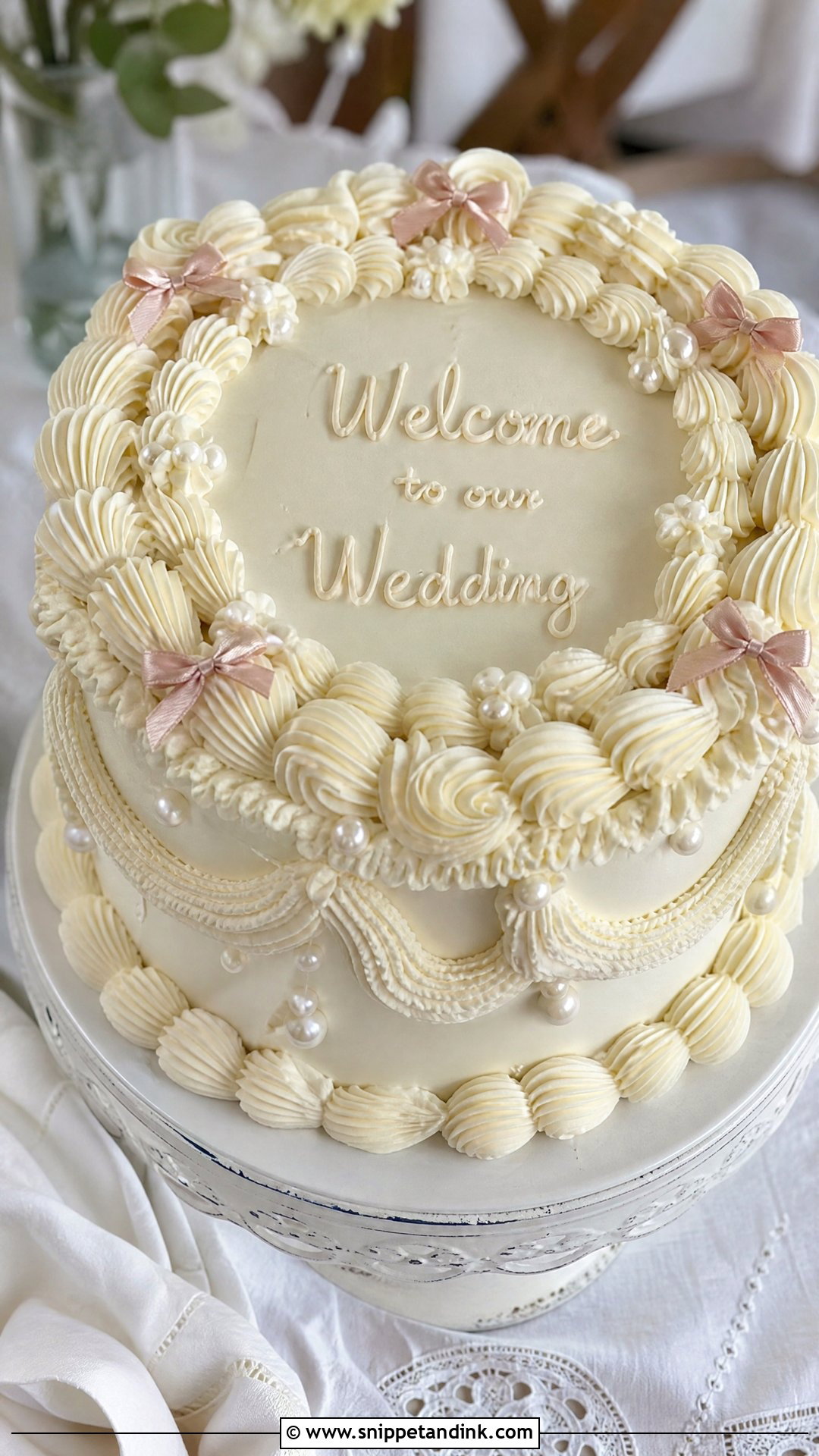
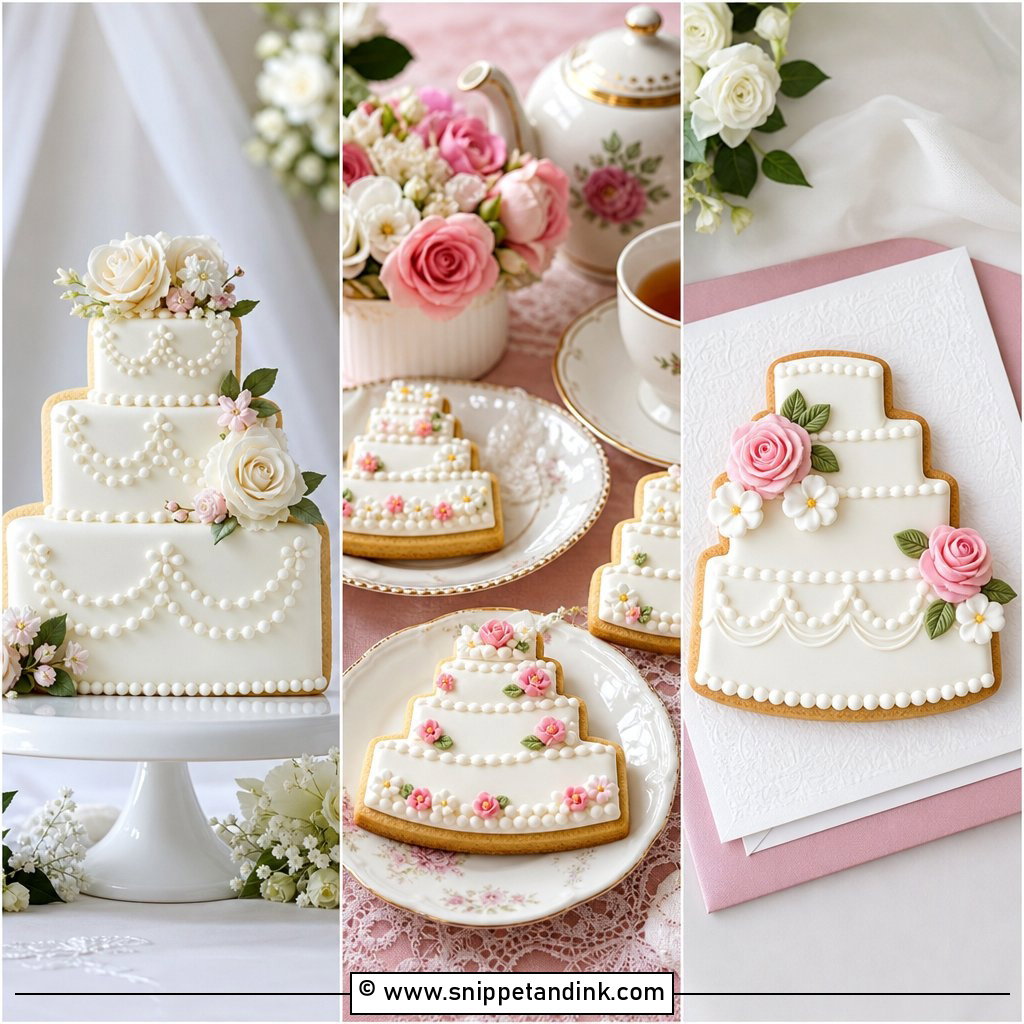
Lambeth is slow work. Every shell, swag and scroll is piped by hand in overlapping layers of layered buttercream piping, so this design takes noticeably more bench time than a smooth cake and most bakers price it that way. It shows best in ivory, blush, baby blue or butter yellow, and piped cherries or tiny bows push it toward a playful retro mood. Because the piping is the whole point, the welcome message has to stay small and centered. A note from experience: heavy buttercream piping softens in heat faster than flat icing, so this one belongs indoors or under real air conditioning.
3. Pearl Welcome Wedding Cake
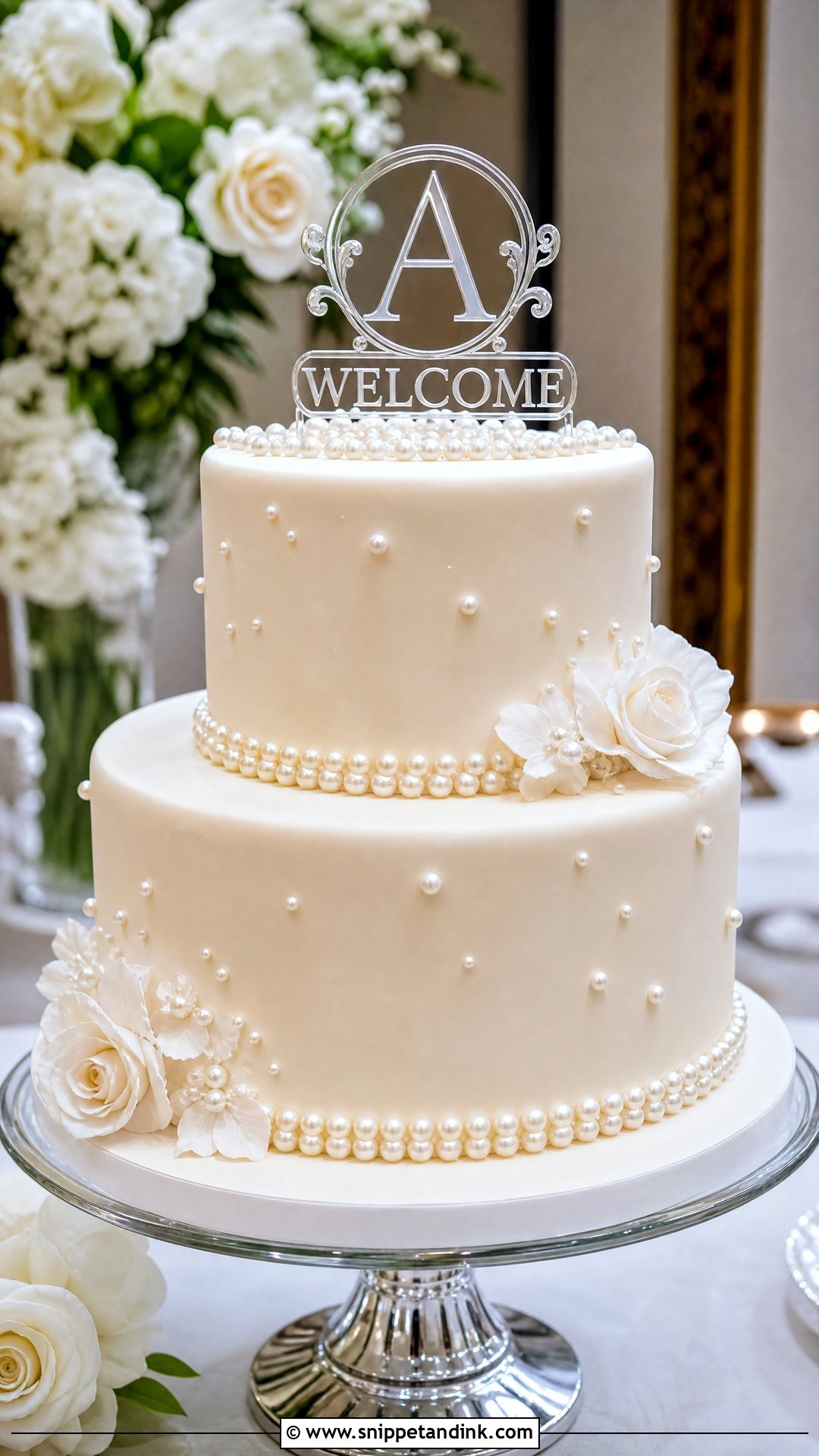
Edible pearls give a polished finish without any color, which suits ballrooms, hotel weddings and formal receptions. I set them while the buttercream is still slightly tacky, either scattered lightly, ringed around each tier base, or lined up in neat verticals for a modern look. Pearls that go on after the crust forms tend to roll off in transport. Ivory, champagne or pale blush frosting keeps the shine soft, and a small acrylic or fondant sign on top leaves the texture uncrowded.
4. Bow Welcome Wedding Cake
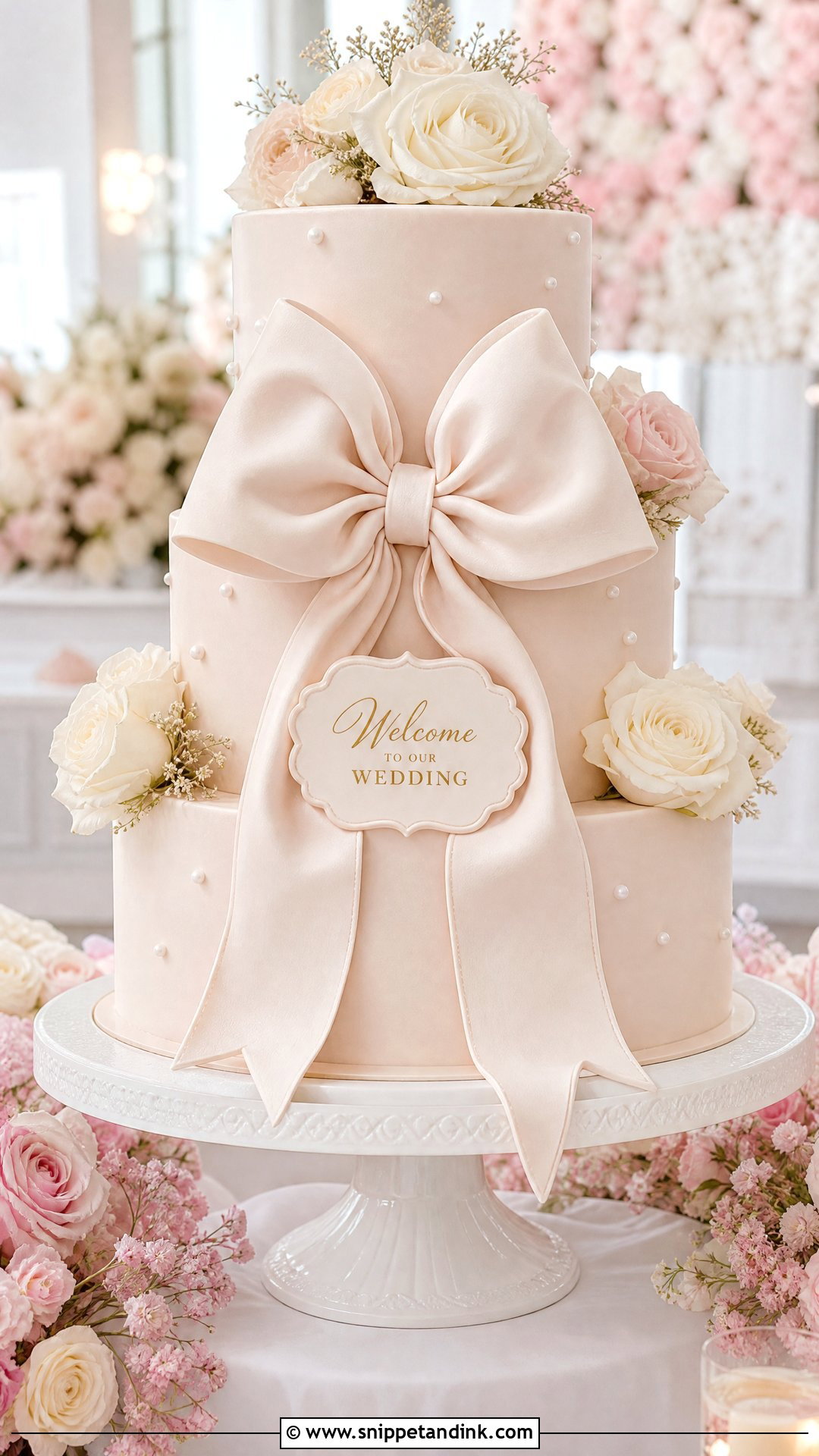
A bow can be fondant, sugar paste, buttercream or real satin ribbon, and the choice matters more than people expect. Real ribbon laid straight onto buttercream will soak up grease and leave a dark line, so I back it with a strip of acetate or tape first. A large bow at the middle tier makes the cake look like a wrapped gift; small piped bows feel more vintage. White, ivory, blush and pale blue all work. Keep every other surface smooth so the bow stays the focus, then add initials or a short welcome line.
5. Monogram Welcome Wedding Cake
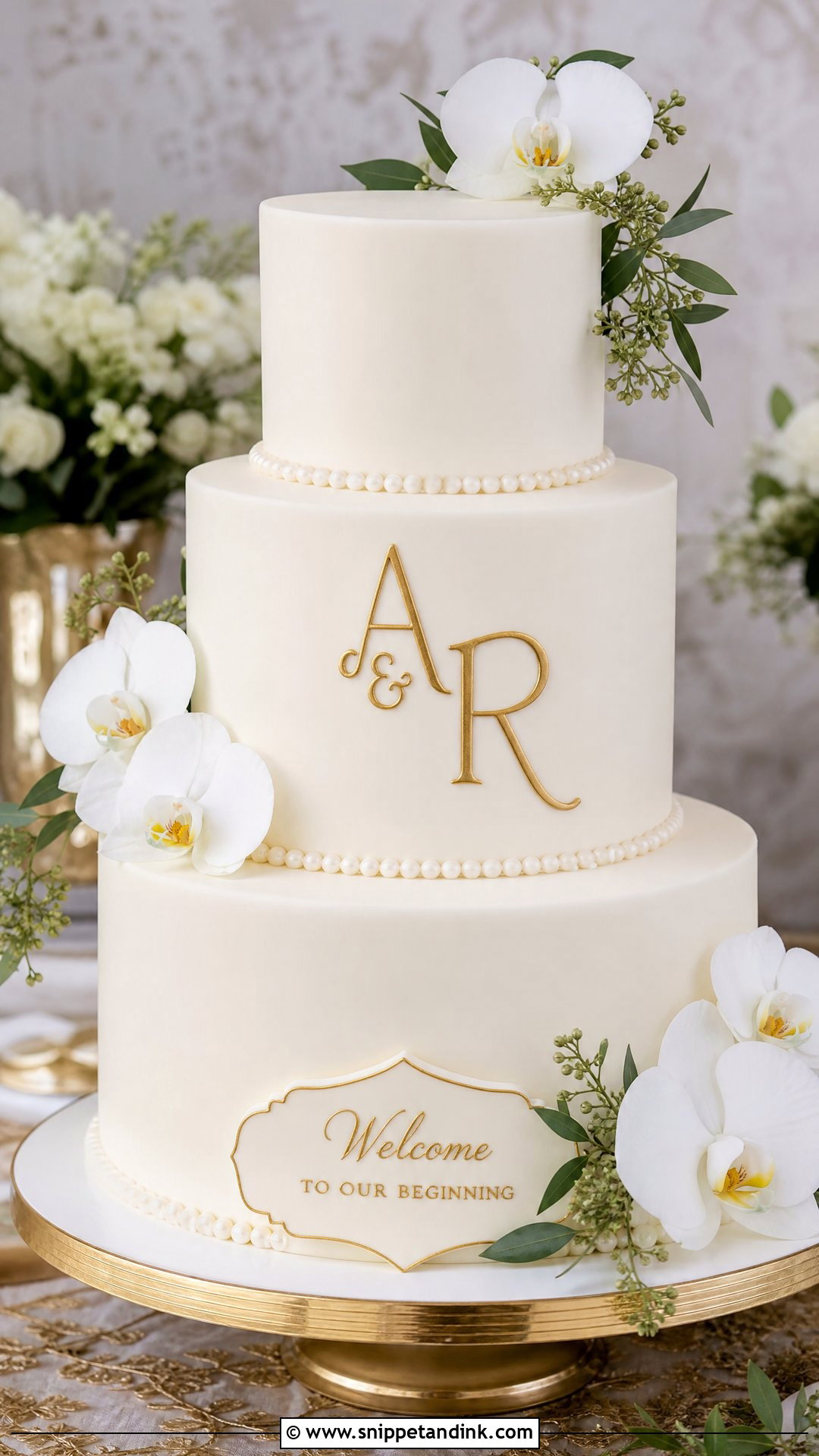
Monograms are the quickest way to make a plain cake feel made for one couple. The couple’s initials can be piped, painted in edible gold, embossed into fondant or set as a topper. Embossing only works on fondant or a firm crusted buttercream, so if you want soft icing, ask for a painted or topper version instead. I keep the welcome wording off the monogram tier and put it on a small front plaque, which stops the two pieces of text competing.
6. Gold Accent Welcome Wedding Cake
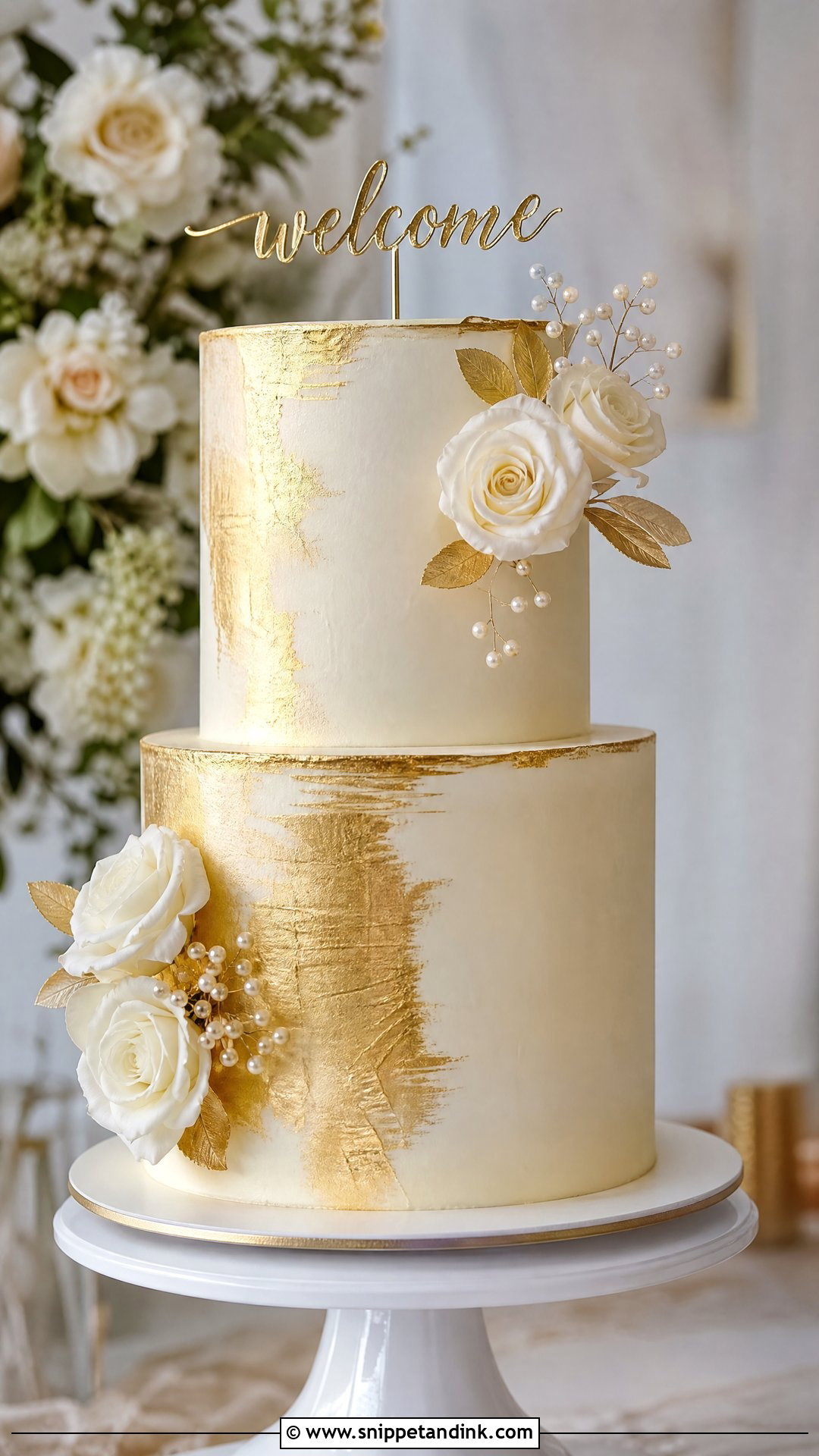
Gold leaf, painted edges, metallic pearls or a brushed monogram can lift a simple cake, but gold is easy to overdo. On a modern cake I limit it to one tier or a few uneven patches; on a formal one I’ll pipe a fine gold line around each base. Leaf applies best to fondant or very cold, smooth buttercream, and it catches light only when the room has some, so a dim reception will flatten it. Ivory frosting, cream roses and white orchids sit well beside it. Keep the welcome message clean so the metal does the talking.
7. Garden Flower Welcome Wedding Cake
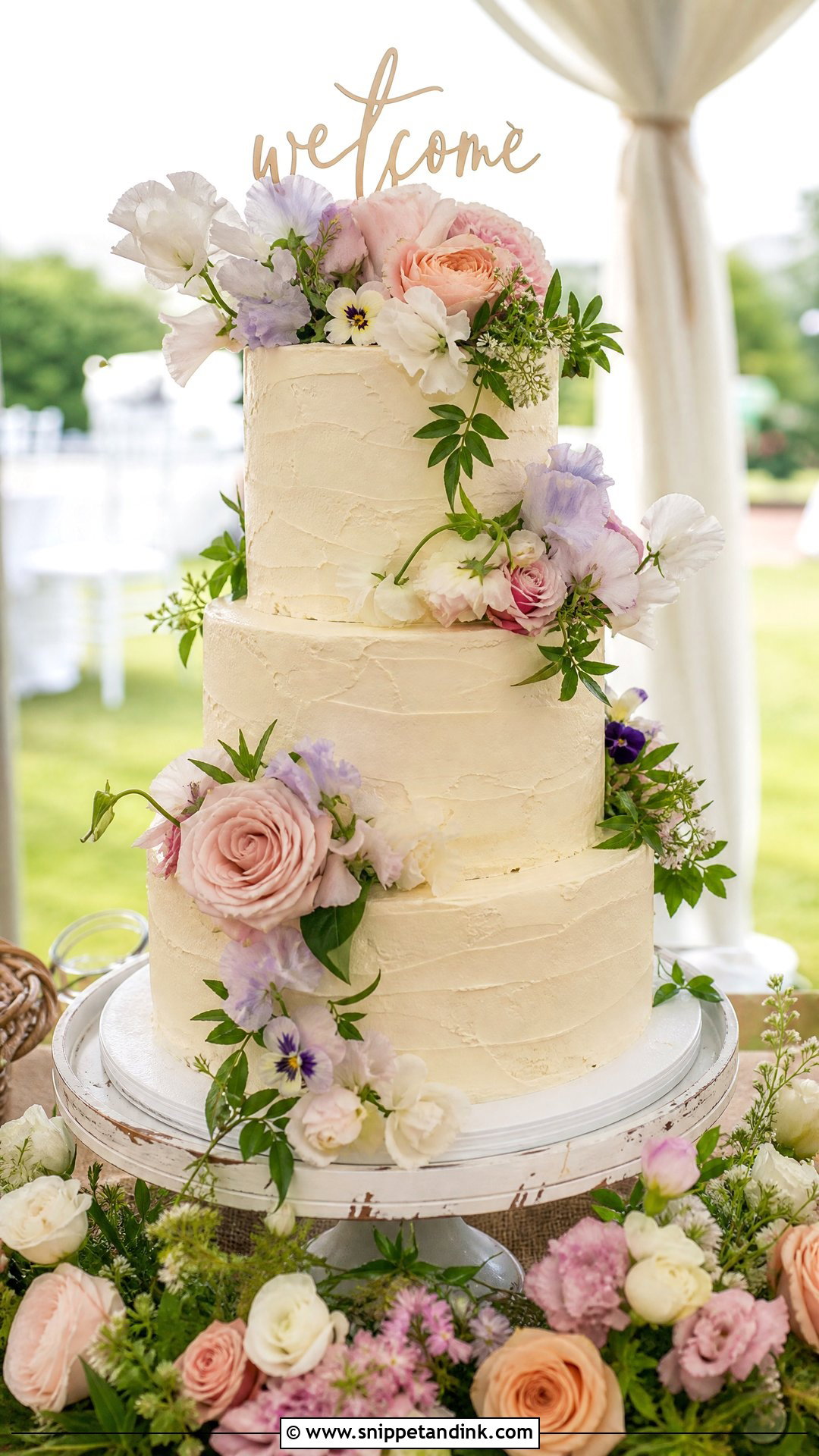
This is the cake I picture under a tent in late spring: soft buttercream with loose sweet peas, roses, lisianthus, pansies and small greenery stems that look freshly picked. I’d talk to your florist before your baker here, because the stems should come from the same order as the bouquet so the colors actually match. Two or three tiers is plenty. Outdoors, buttercream needs shade and a short display window, since direct sun will soften it within the hour. A handwritten-style welcome topper suits the looser mood.
8. Minimal Welcome Wedding Cake
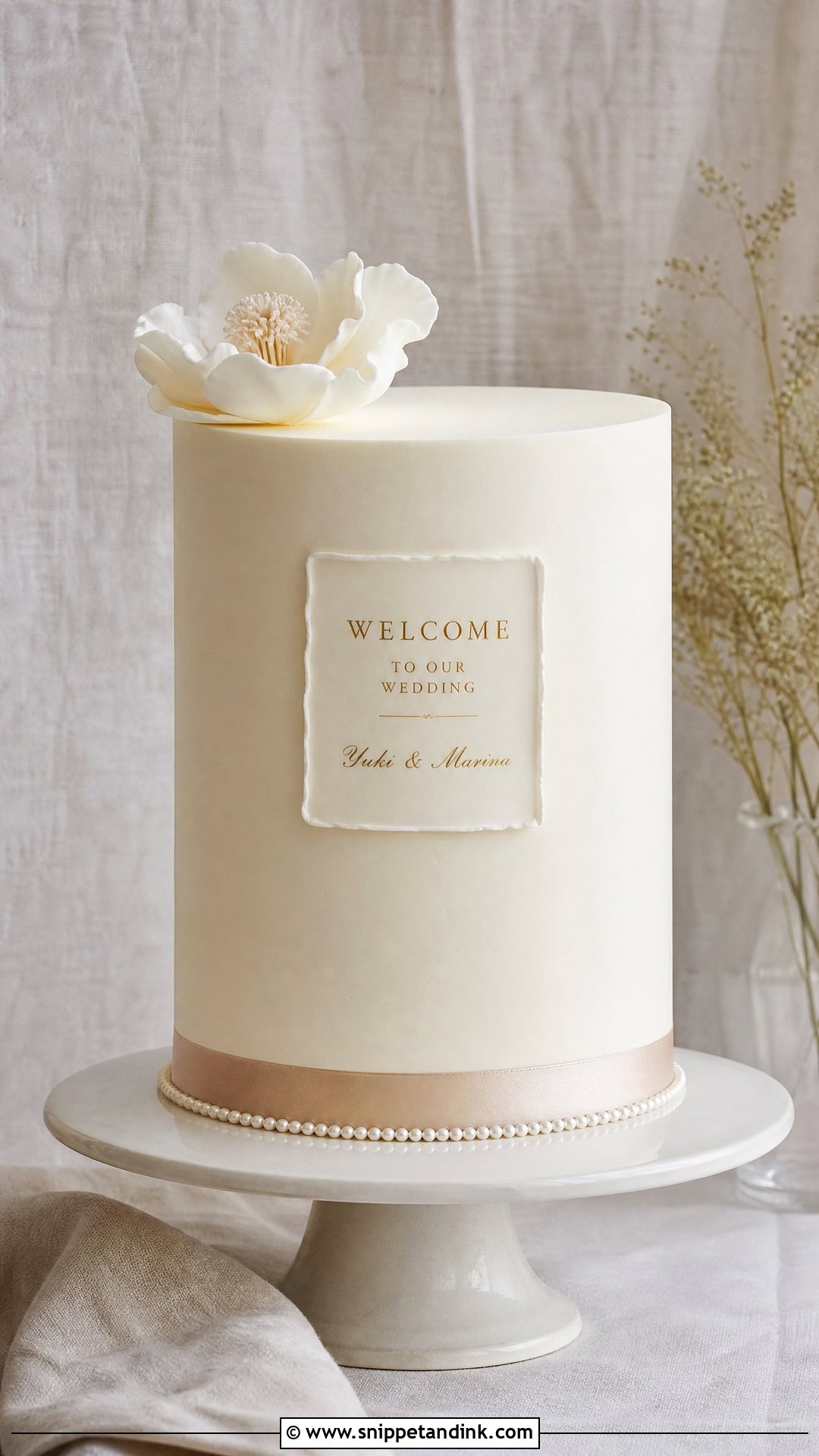
A minimal cake has nowhere to hide. Sharp edges, smooth sides and one detail, whether a single sugar flower, a thin ribbon or a neat welcome plaque, mean any dent or bulge from transport shows immediately. That is why I usually build these on firmer buttercream or ganache under the final coat. White, ivory, taupe and soft gray all suit it. Put it on a plain stand against an uncluttered background, because busy linens or props undo the restraint the cake depends on.
9. Textured Buttercream Welcome Wedding Cake
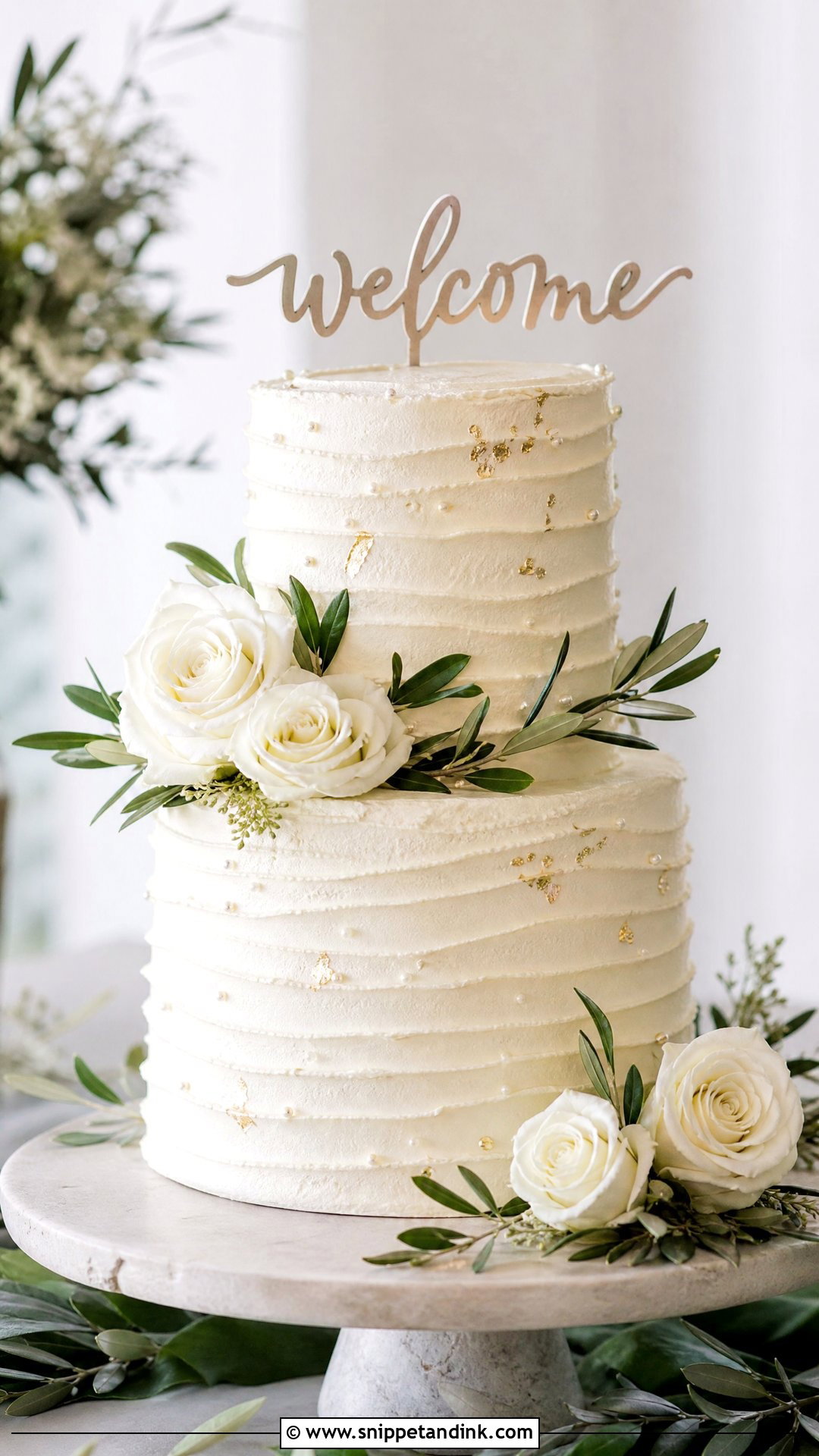
Texture is the friendliest finish for a welcome cake. Combed ridges, brushed strokes, waves or visible spatula marks hide the small bumps that travel causes, and guests who come close get something to look at. Ivory and white are the classic colors, while pale blush or champagne add warmth. I’d keep lettering small, as a topper rather than piped text, because a large message on a ridged surface looks wobbly. It’s also a good route for couples who don’t want fondant.
10. Watercolor Welcome Wedding Cake
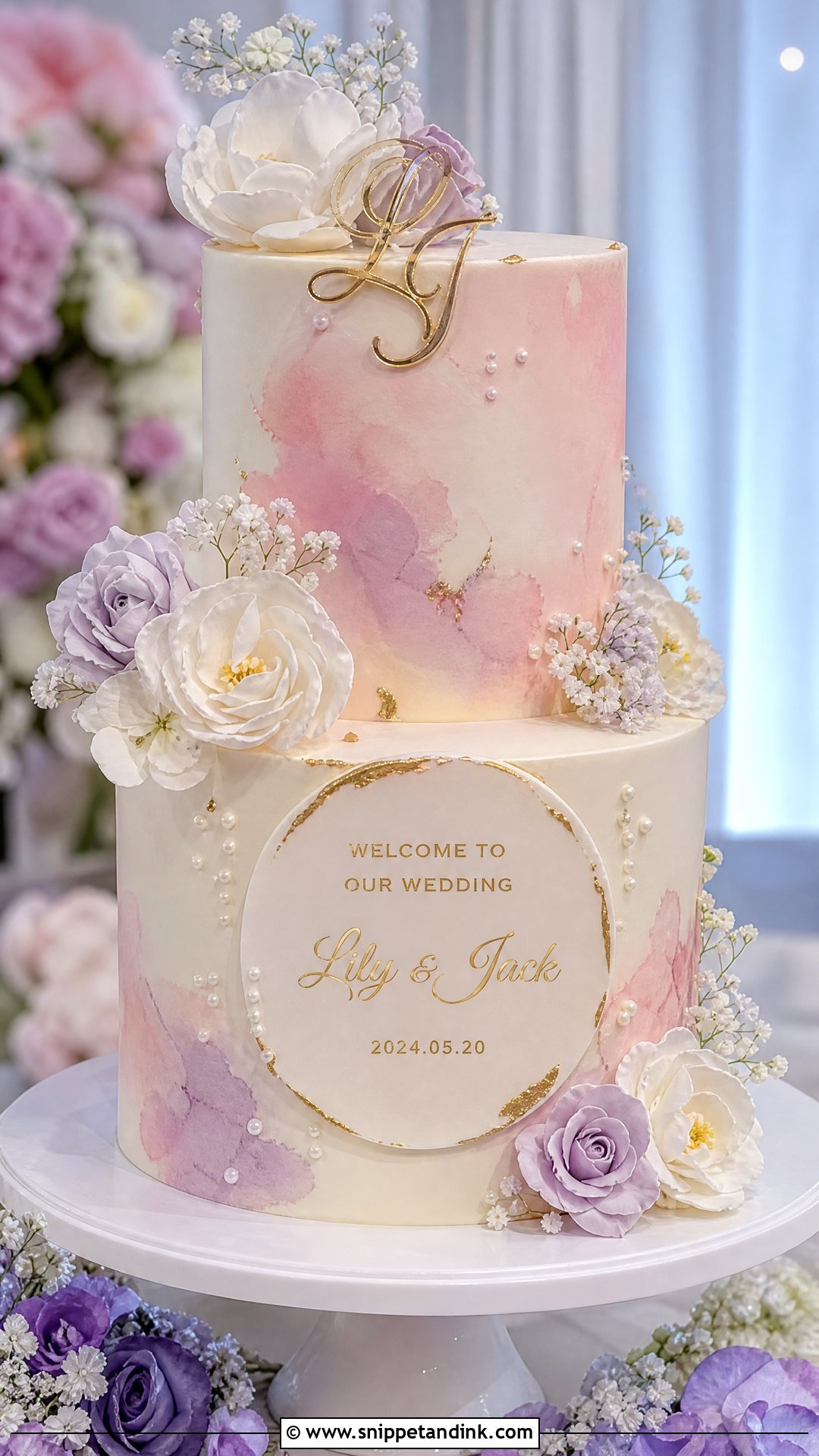
Watercolor effects come from edible paint brushed on, airbrushed color, or two buttercream shades blended on the turntable. The blended buttercream version is softer and the painted version is more controlled, so bring your invitation suite to the tasting if you want the cake to echo it. Blush, dusty blue, lavender, sage and peach are the usual shades. Keep the color cloudy and pale; once it gets saturated, it reads as busy from across the room. A white plaque or simple gold monogram gives the eye somewhere to land.
11. Marble Welcome Wedding Cake
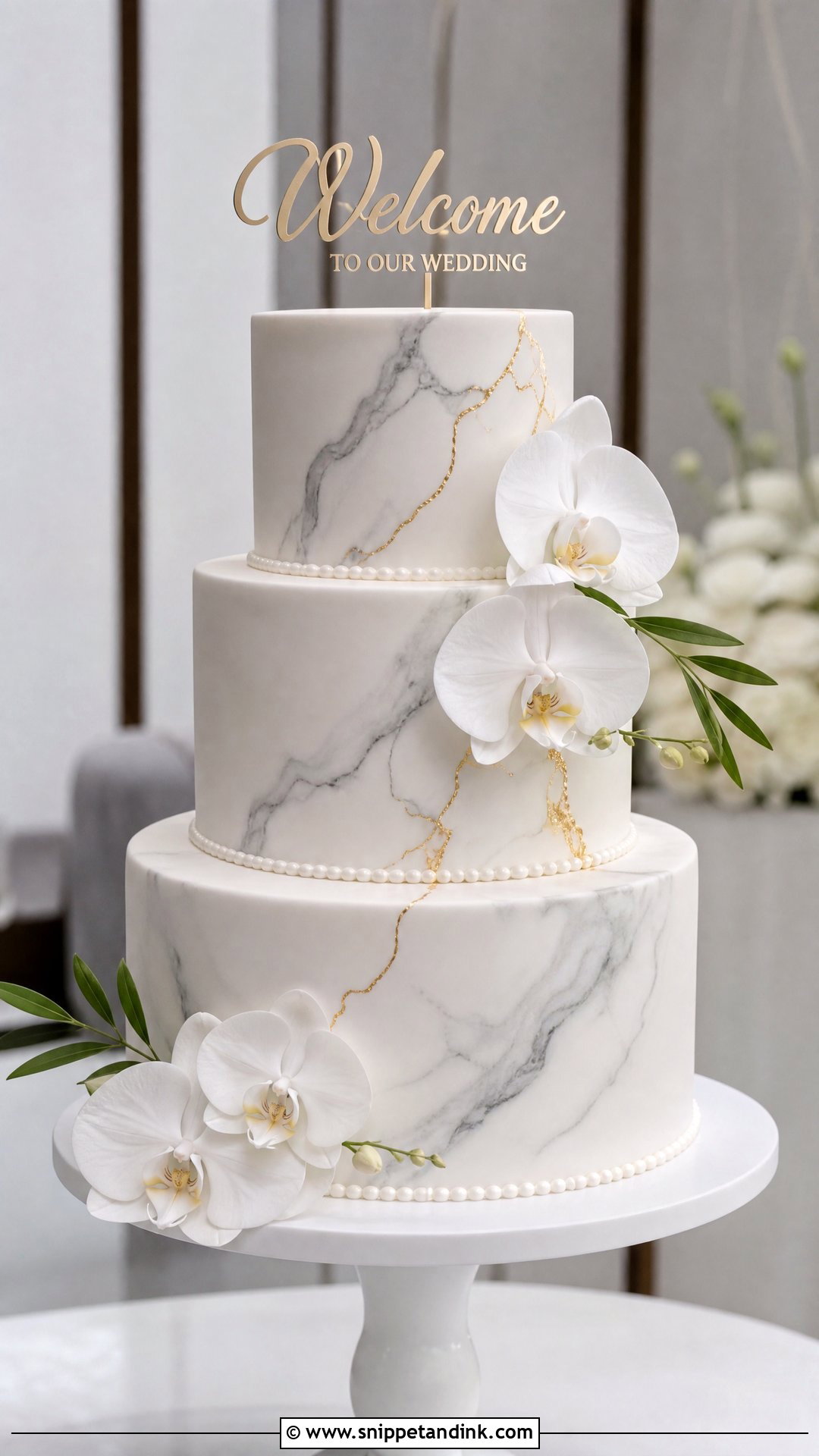
Marble is usually swirled fondant, or gray and beige veining painted over smooth buttercream, sometimes with fine gold lines for a refined finish. It suits city venues and black-tie receptions. The pattern carries the design, so I’d add one thing at most: a few orchids, white roses or a clear acrylic welcome topper. Ask to see the baker’s previous marble work, since veining that is too regular looks printed rather than stone-like.
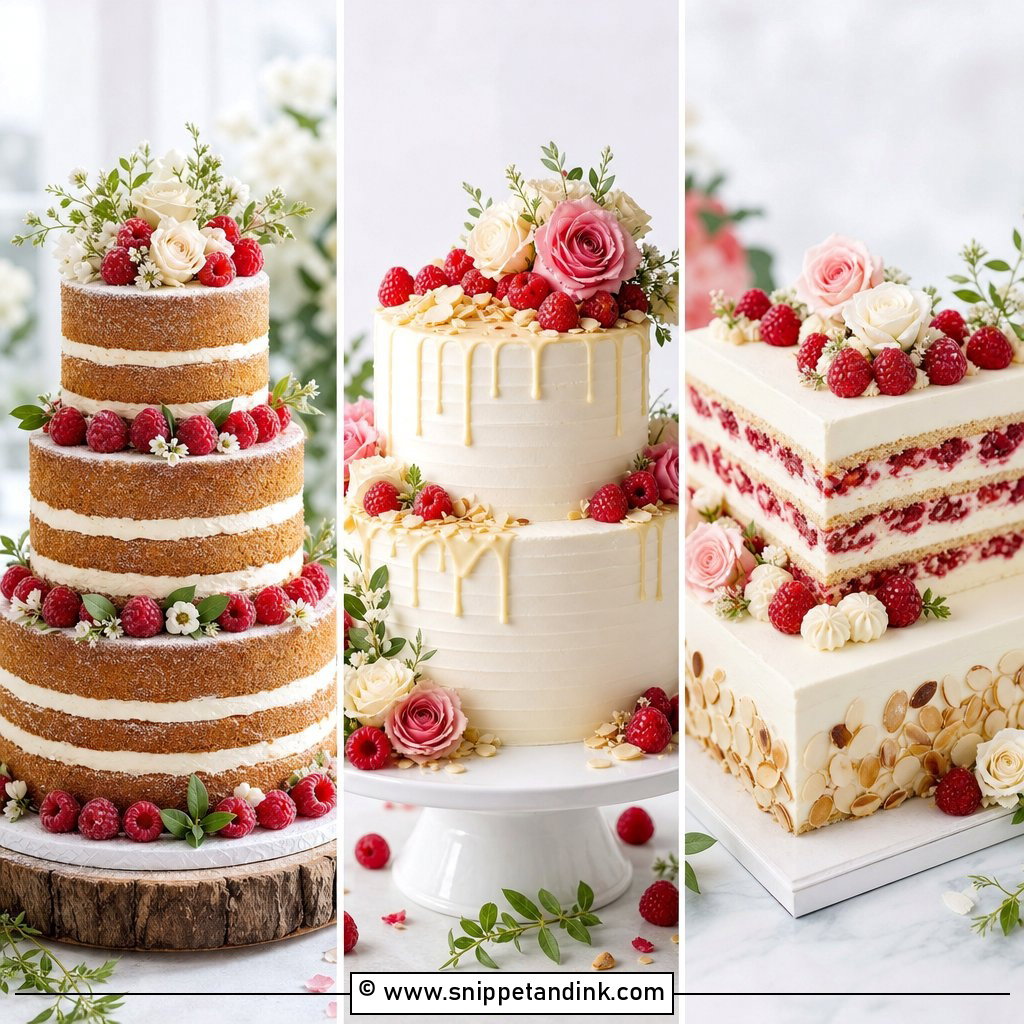
12. Fresh Fruit Welcome Wedding Cake
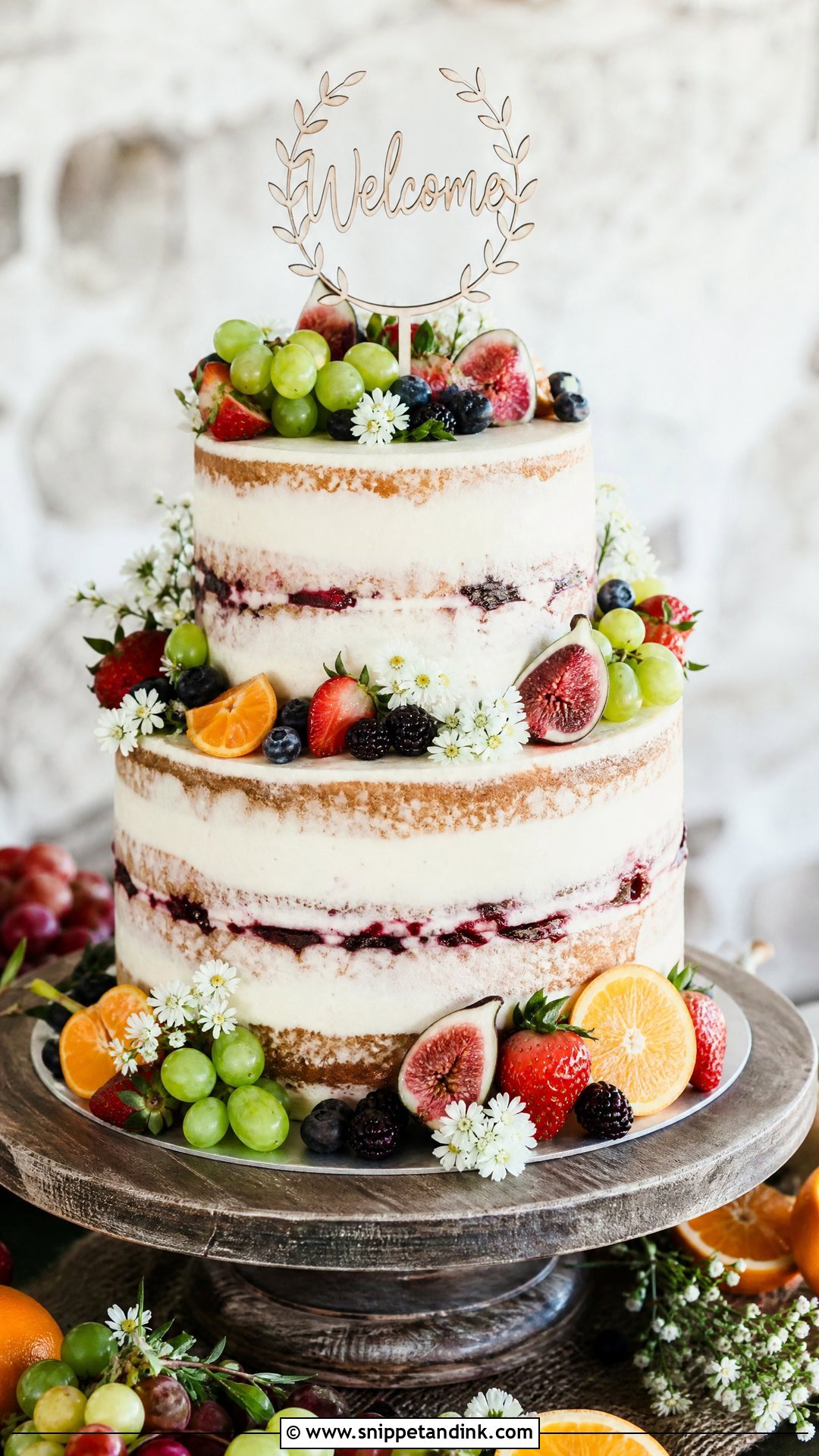
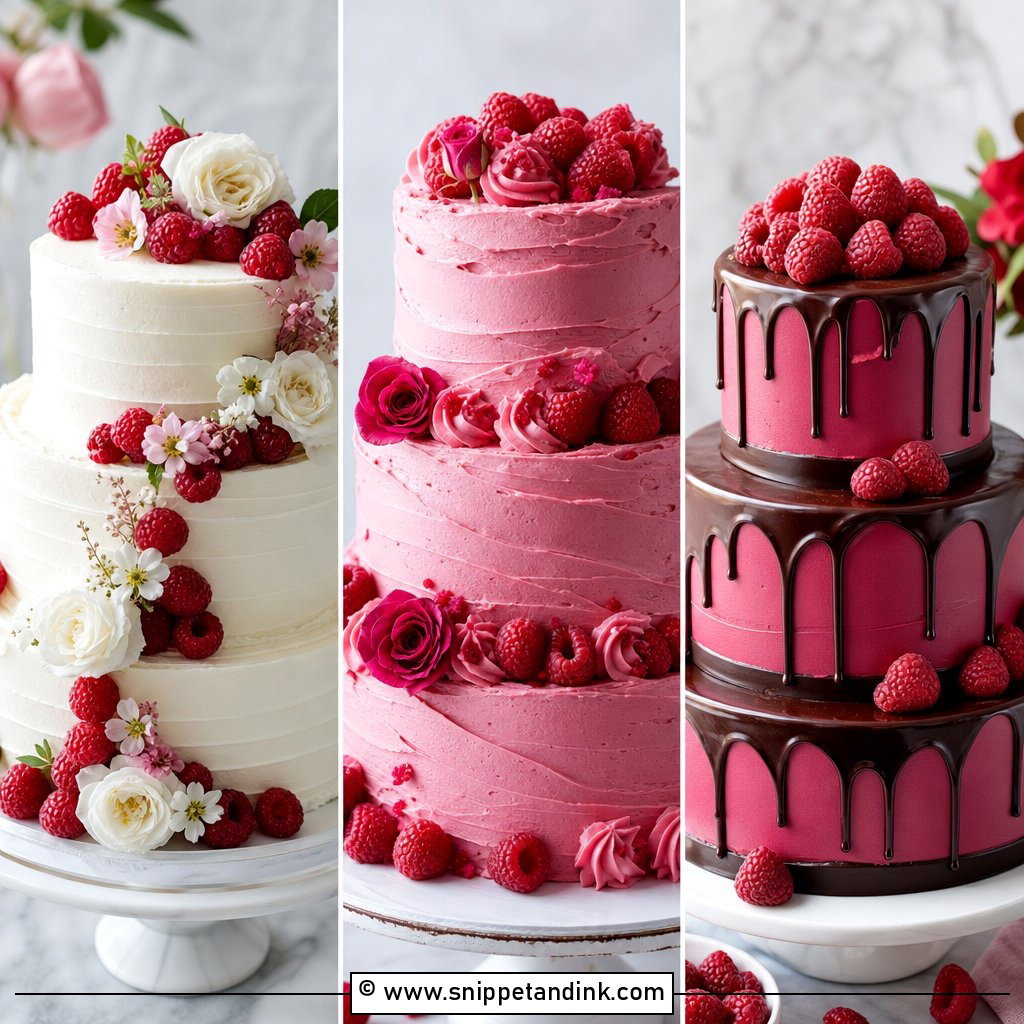
Fruit is the most demanding decoration on a cake that sits out. Berries, figs, citrus slices, grapes and cherries look glossy at setup, then dull and weep as the hours pass. I wash and fully dry every piece, add the fruit as late as possible, and brush it with a thin apricot glaze to slow drying. Cut fruit like citrus should sit on a barrier rather than straight on the icing. For brunch receptions and warm daytime weddings it’s worth the effort, especially with vanilla, lemon or almond sponge. Tuck a small welcome sign into the top tier and keep the arrangement balanced rather than piled.
13. Lemon Welcome Wedding Cake
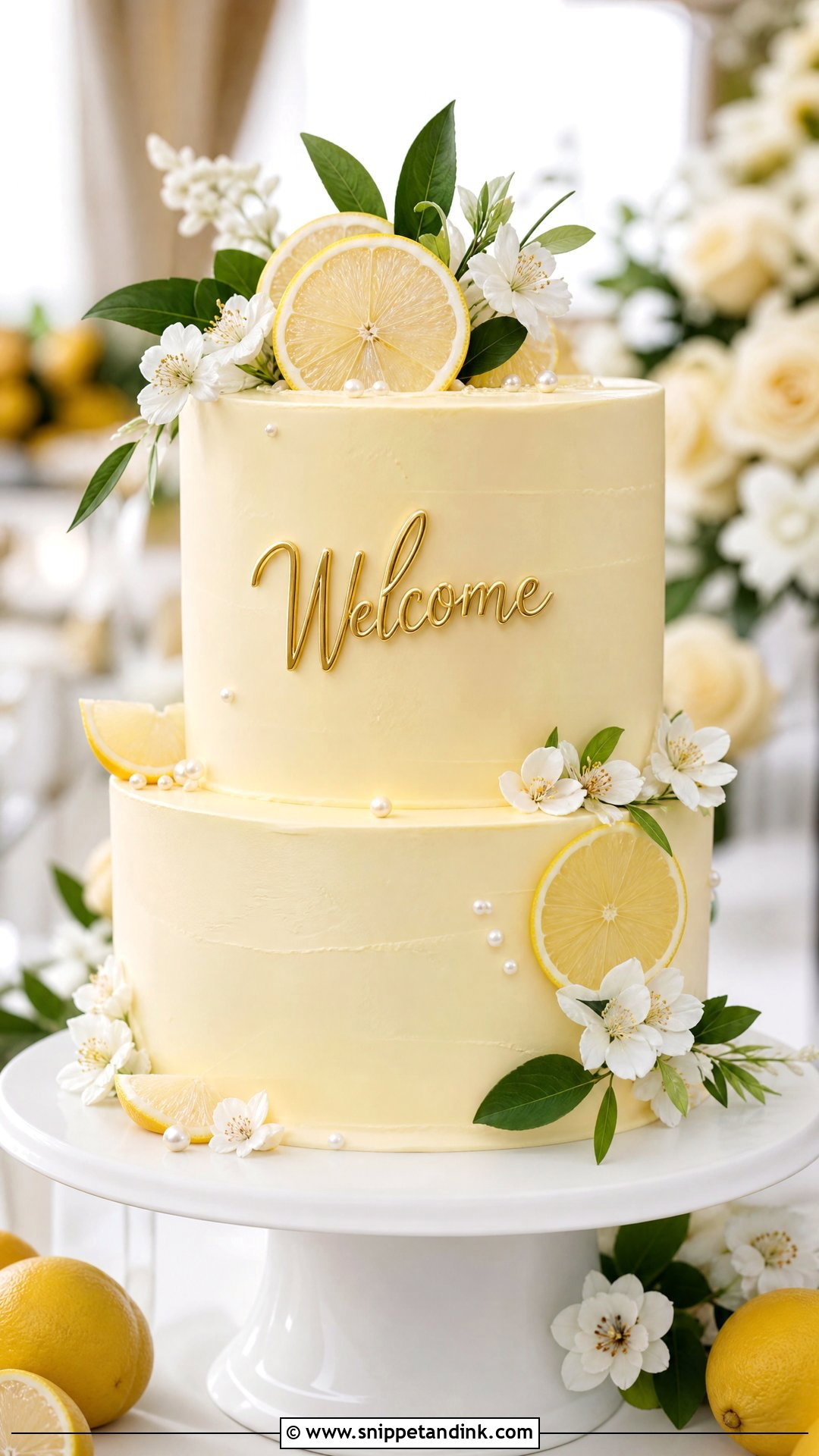
Lemon is the flavor I recommend most for warm-weather weddings, because a curd filling and light buttercream taste fresh even after the cake has been sitting out. Pale yellow sponge, white or soft yellow frosting, a few lemon slices, white flowers and small green leaves keep it bright without going neon. Lemon curd does need refrigeration until close to display time, so check that the venue has fridge space. A gold or white “Welcome” topper finishes it on a garden or coastal table.
14. Rose Welcome Wedding Cake
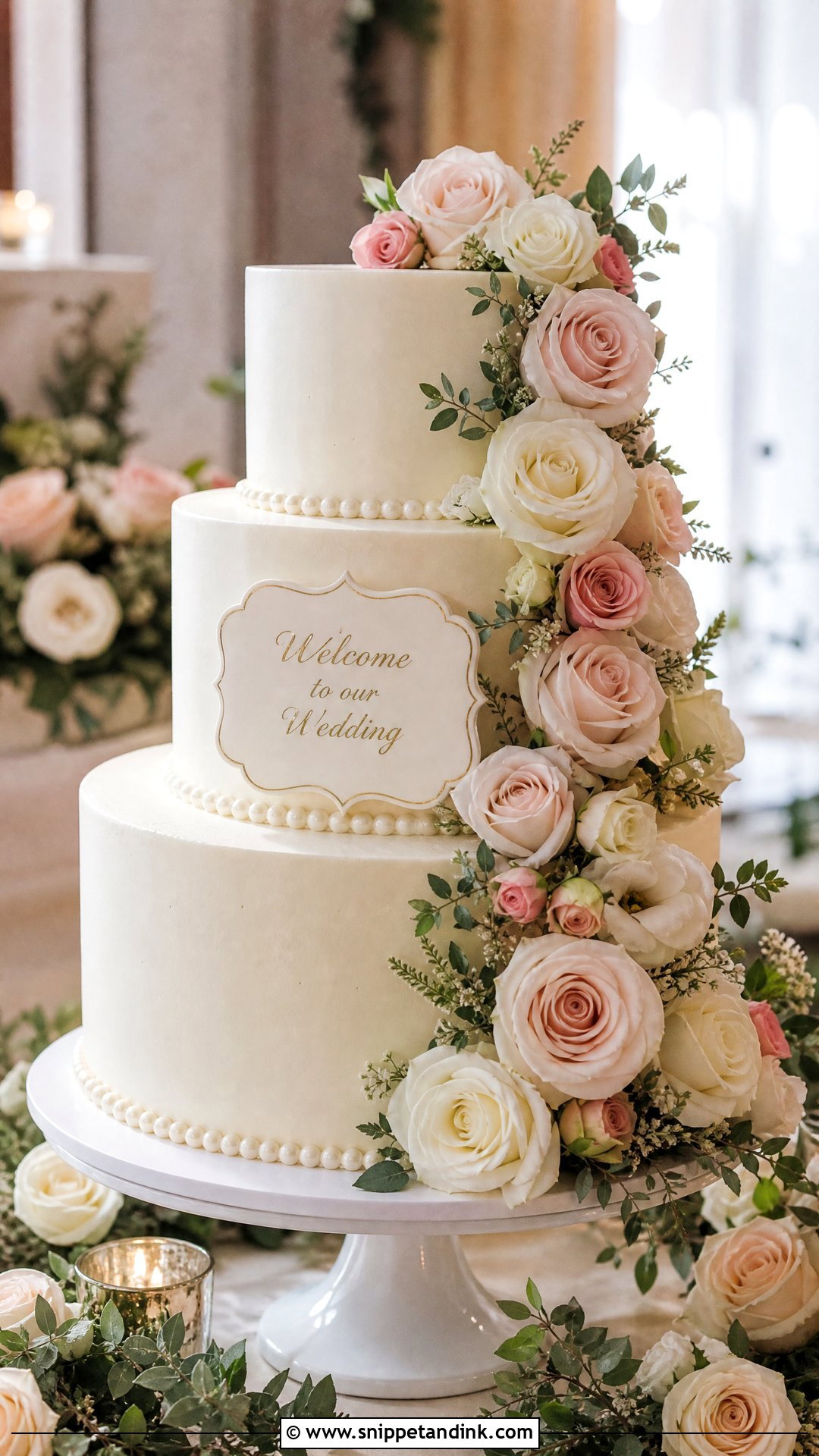
Roses change character with color and placement more than any other flower. White on ivory is the bridal classic; blush or mauve brings warmth. Sugar roses keep their shape for the whole night, which matters on a welcome table, while fresh roses can start to droop at the edges after several hours in a warm room. I usually suggest a cascade down one side of a tiered cake and a small plaque or topper for the message. Most venues and seasons suit this one.

15. Orchid Welcome Wedding Cake
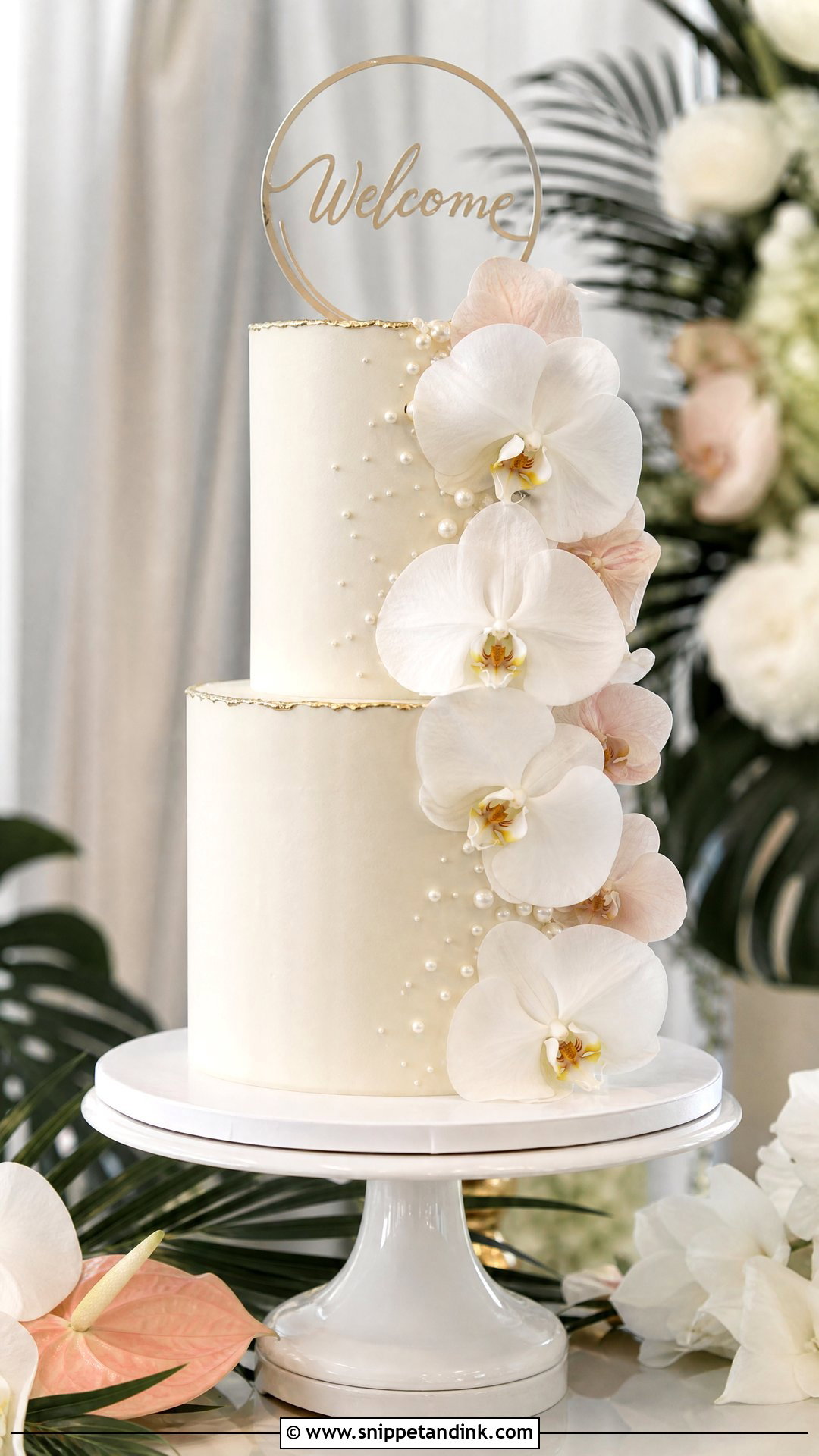
Orchids are sculptural, and they need very little support from anything else. White phalaenopsis against smooth fondant is the cleanest version; blush, lavender or pale yellow orchids add a soft tint. They suit modern hotels, tropical venues and evening receptions. Because orchids are wide and flat, a cluster on the top tier works better than a long cascade, which can look like the cake is wearing a scarf. Finish with a thin gold rim or a simple monogram and stop there.
16. Greenery Welcome Wedding Cake
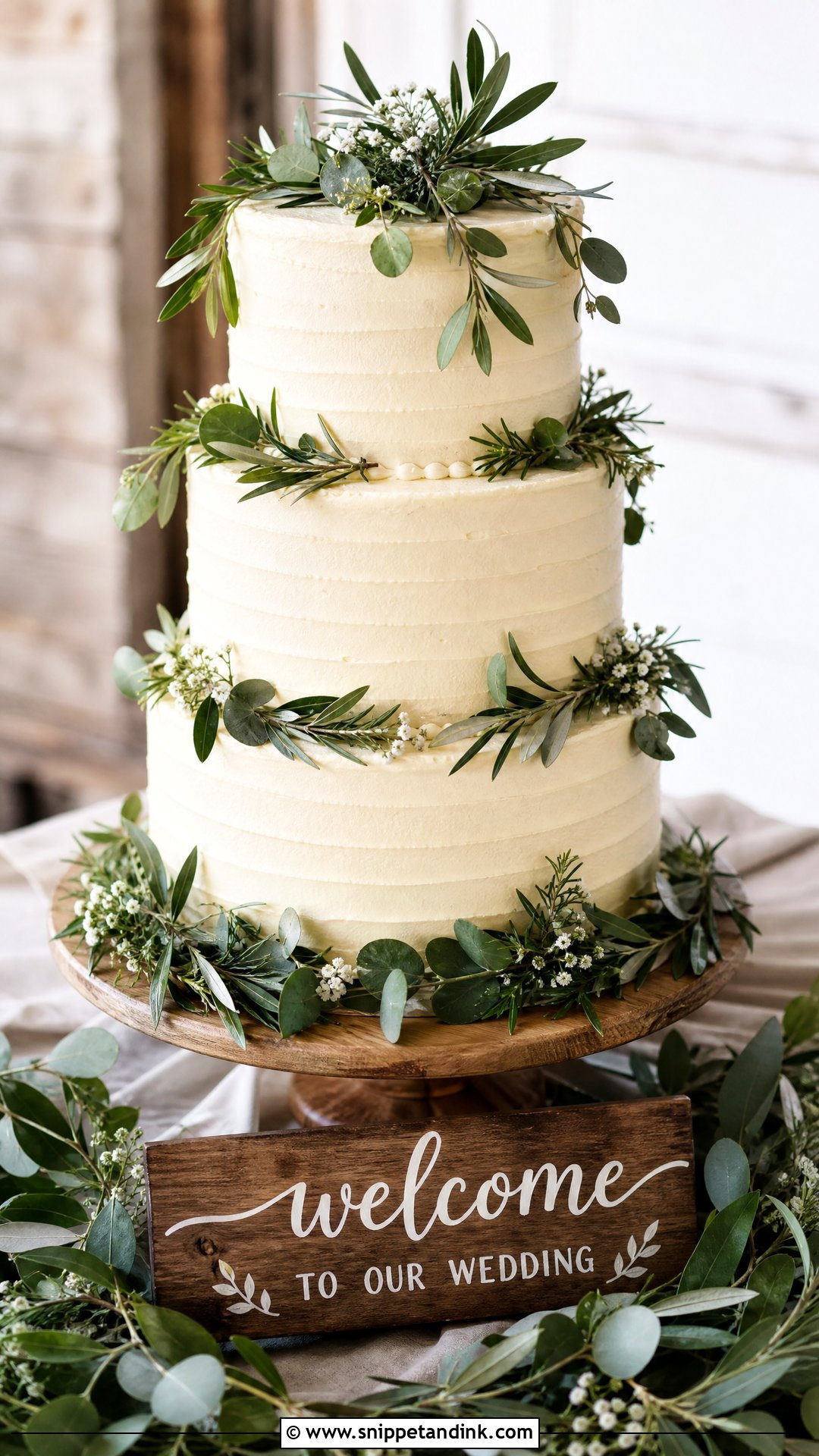
Greenery is the safest decoration for a cake that will sit out, since olive, ruscus and rosemary stay fresh longer than most blooms. Be careful with eucalyptus, though. It isn’t food-safe, so I always wrap the stems or keep the leaves from touching the icing. White buttercream, semi-naked frosting or textured icing all pair well. Place the sprigs so plenty of cake still shows; wrapped too heavily, the greenery hides the cake. A wooden, acrylic or fondant sign can match the venue’s mood.
17. Heart Welcome Wedding Cake
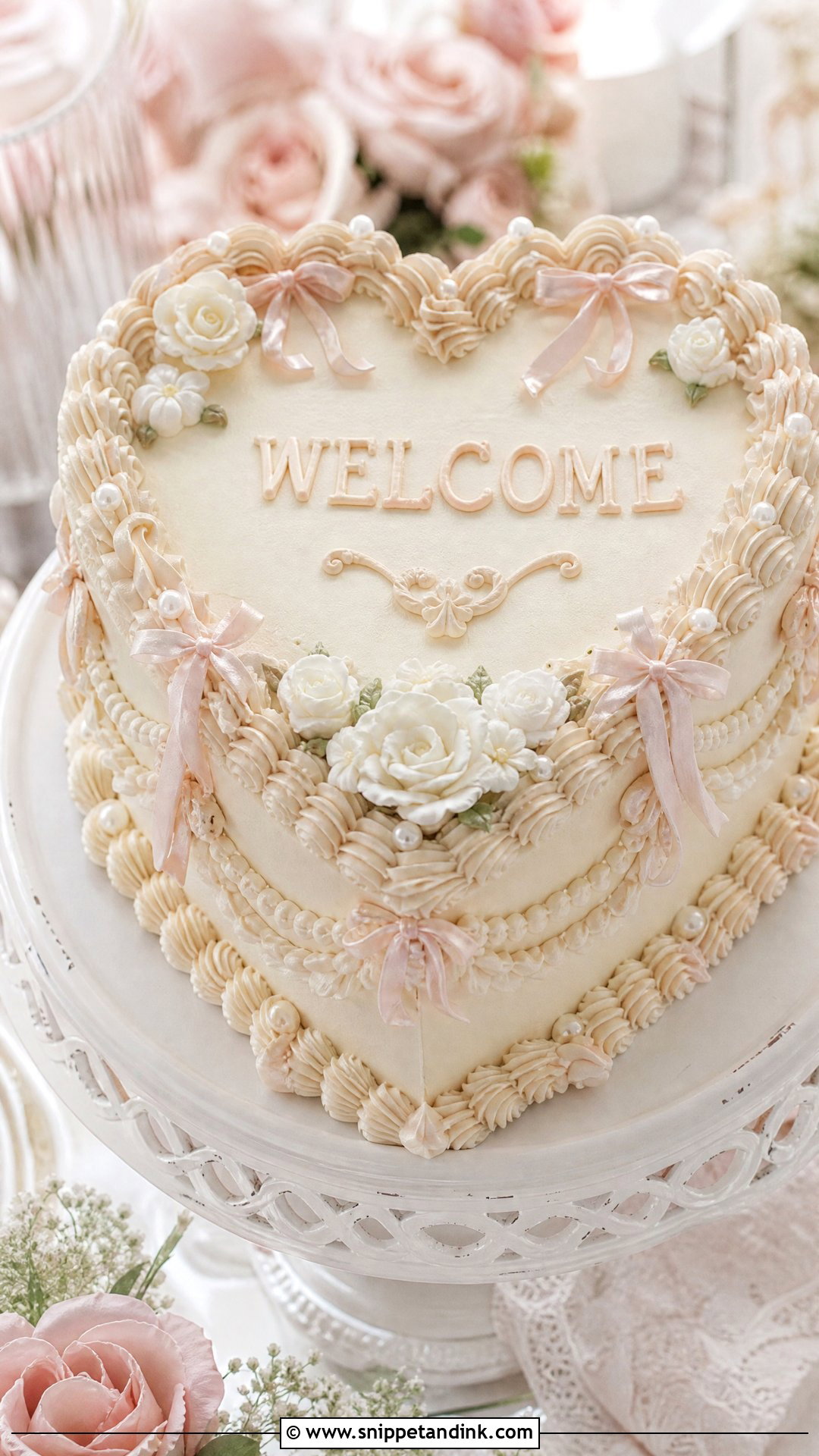
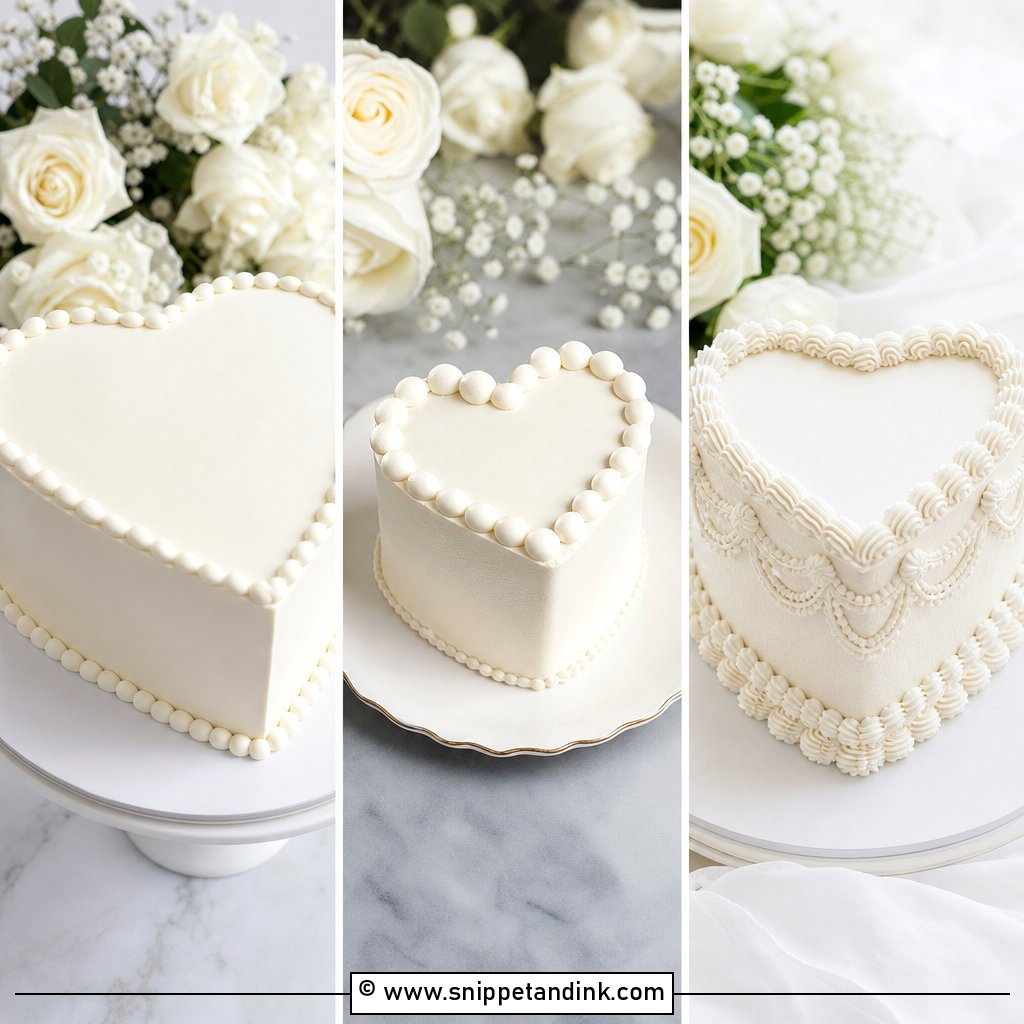
A heart welcome wedding cake can be a single heart tier, stacked hearts, or a heart top tier on a round base. The shape is harder to cover neatly than a round, especially at the point and the dip, so vintage piping is the natural finish: it follows the curves and hides small flaws. Ivory, blush, pale blue and soft pink suit it. Add pearls or tiny bows and keep the welcome message in the center, where the shape frames it.
18. Sheet Welcome Wedding Cake
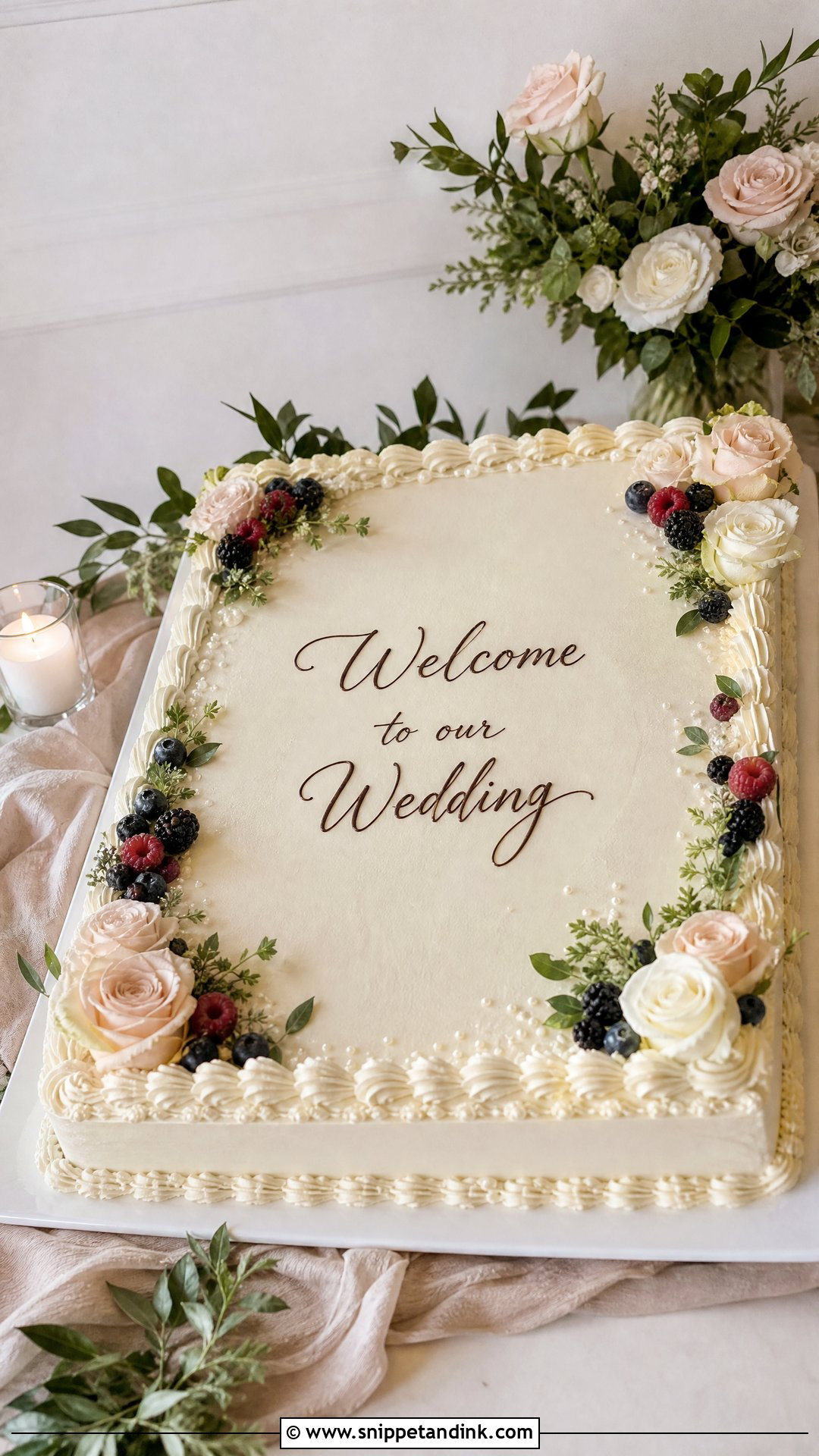
I’ll defend the sheet cake every time. A long, low cake with piped borders, fresh flowers, fruit, pearls or custom lettering can look as considered as a tiered one, and it is far easier to cut and serve, which suits couples who want the welcome cake to feed guests. The flat top is also the best surface for a written message. Set it on a long table with candles or linen so it has presence, and center the welcome wording.
19. Tall Single Tier Welcome Wedding Cake
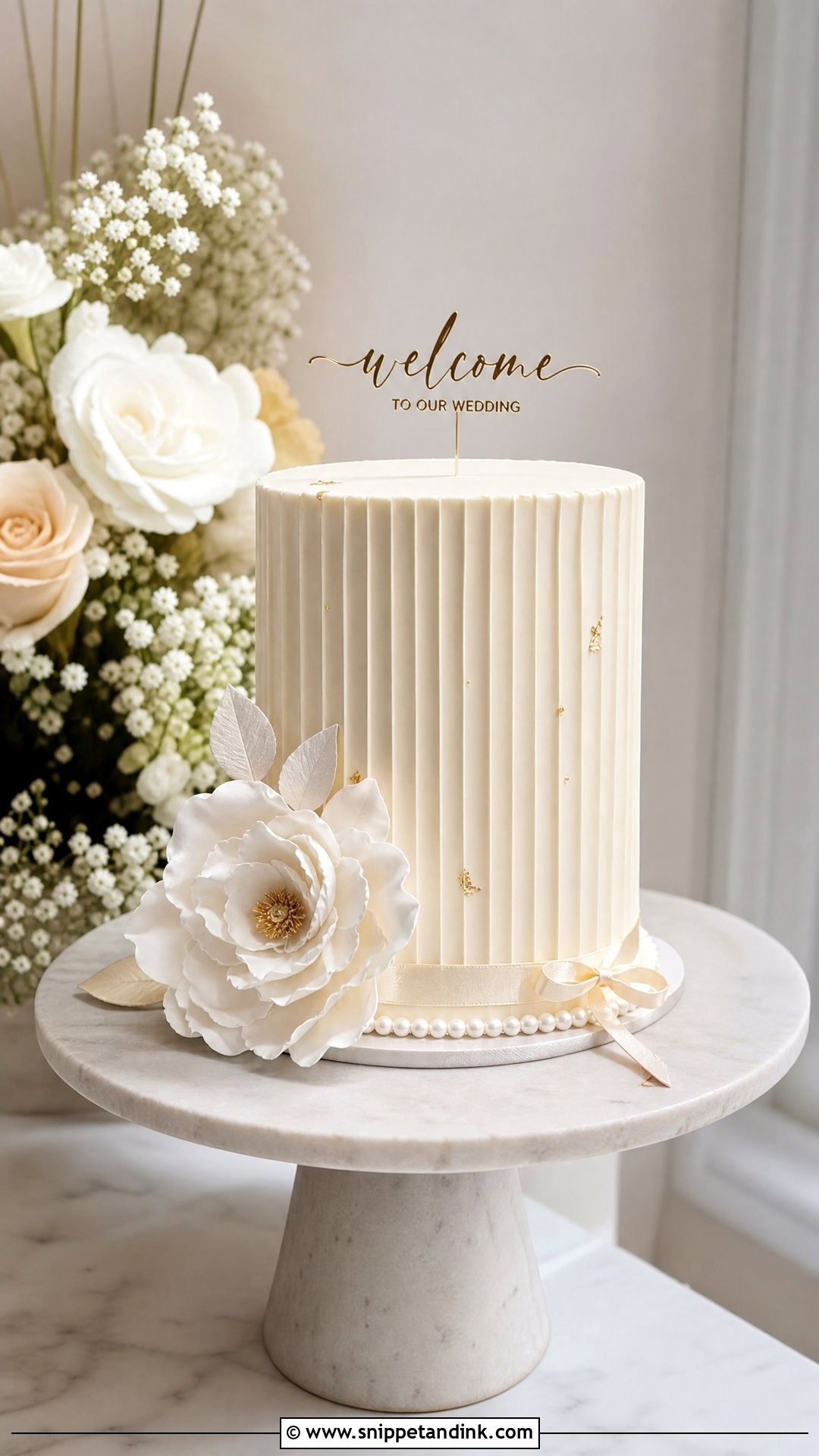
A tall single tier welcome wedding cake is usually two cake layers stacked inside one tier, so it needs internal dowels and a board in the middle even though it looks like a single piece. Without them, a tall tier can bulge at the base by late evening. The height gives it presence on a crowded dessert table, and it’s easier to move than a tiered cake. Smooth buttercream, vertical texture, pressed flowers or pearls all work. Keep the message to a front plaque or a slim topper.
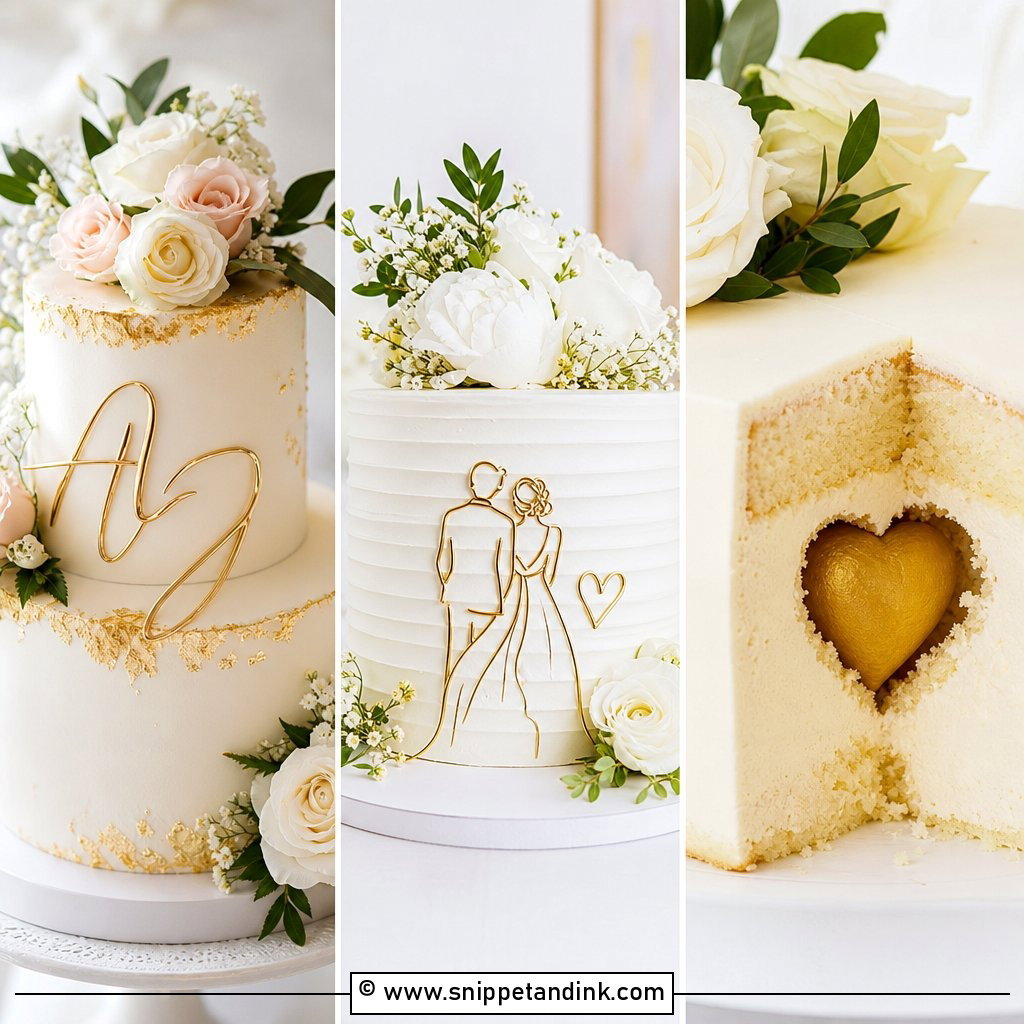
20. Three Tier Welcome Wedding Cake
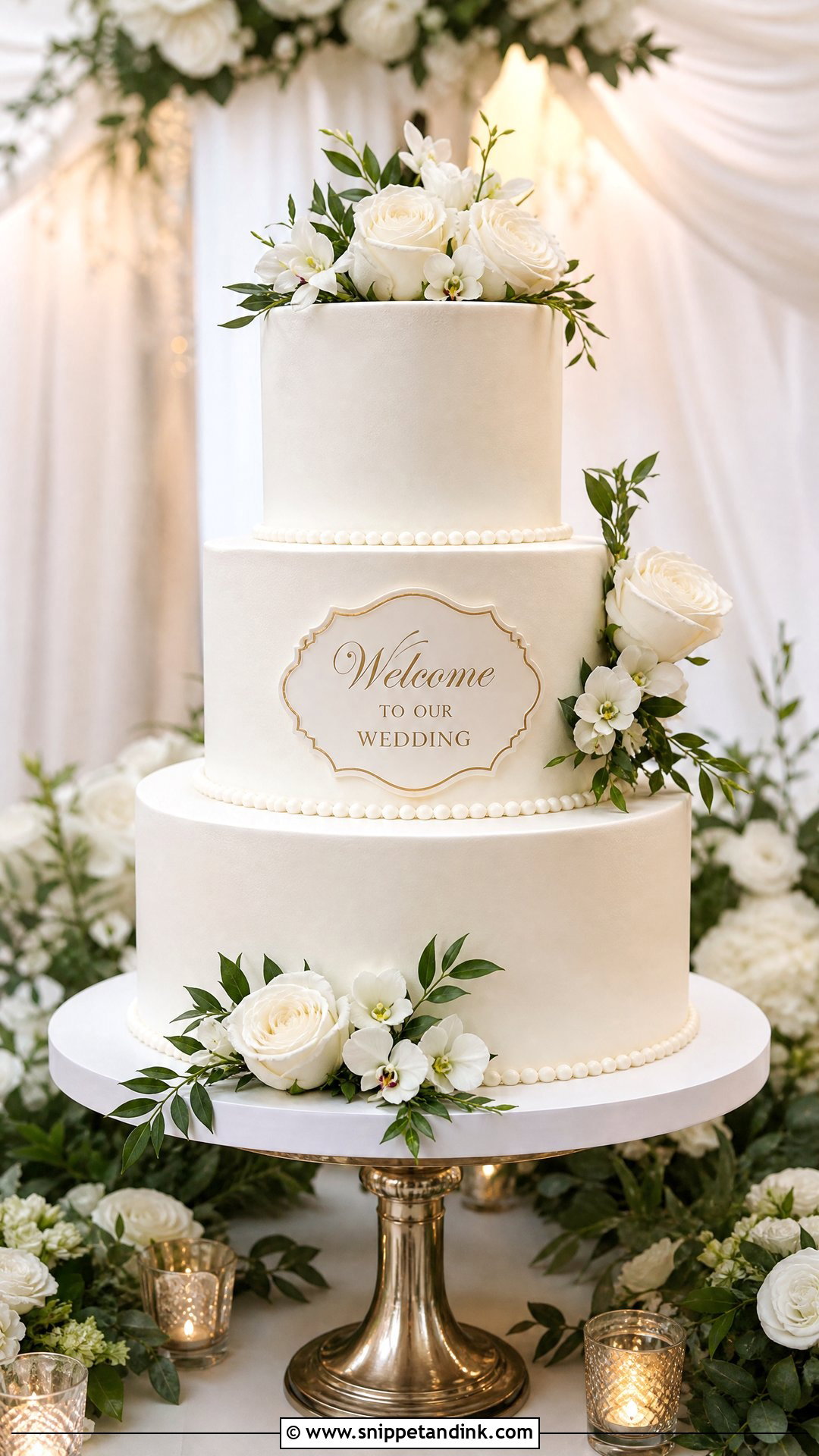
Three tiers give the classic silhouette and serve a medium to larger guest list. Each tier needs its own dowels and board, and I deliver tiers separately and stack on site whenever the cake is heavy or the drive is long. For a welcome display, a tall stand near the flowers or against plain fabric helps. Put the message on the middle or top tier, at eye level for most people. Smooth frosting, delicate piping, flowers or pearls all suit this shape.
21. Black And White Welcome Wedding Cake
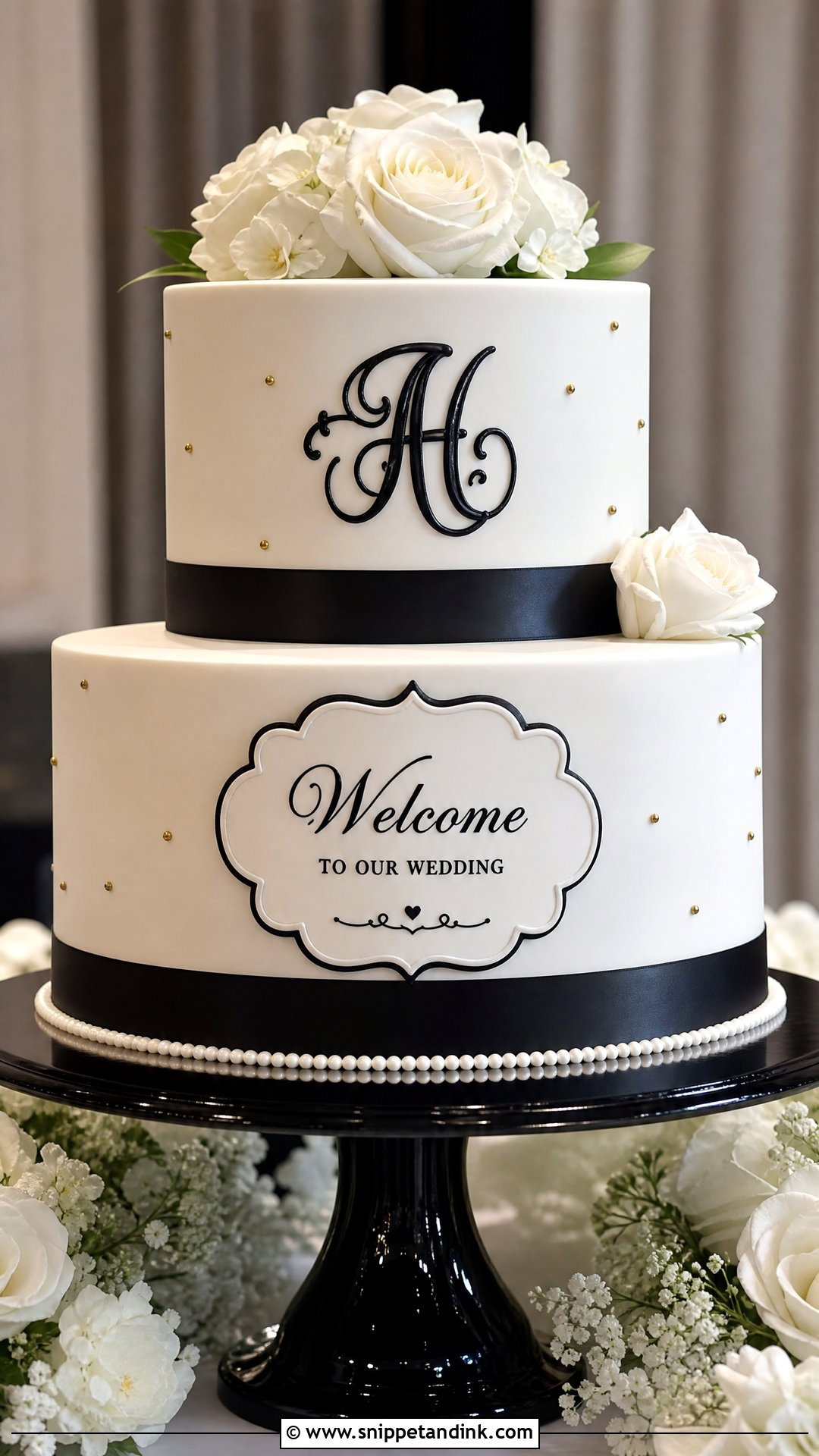
Black and white works only when it is restrained. Black ribbon, black piping, a black floral silhouette or a black monogram on white frosting can look sharp, but large areas of black icing need a lot of coloring, which stains teeth and tongues and can taste slightly bitter. I steer couples toward black details rather than black tiers. It suits evening and formal receptions, and a few white flowers, pearls or a thin gold line soften it. Black script on a white plaque is easy to read from across the room.
22. Blush Pink Welcome Wedding Cake
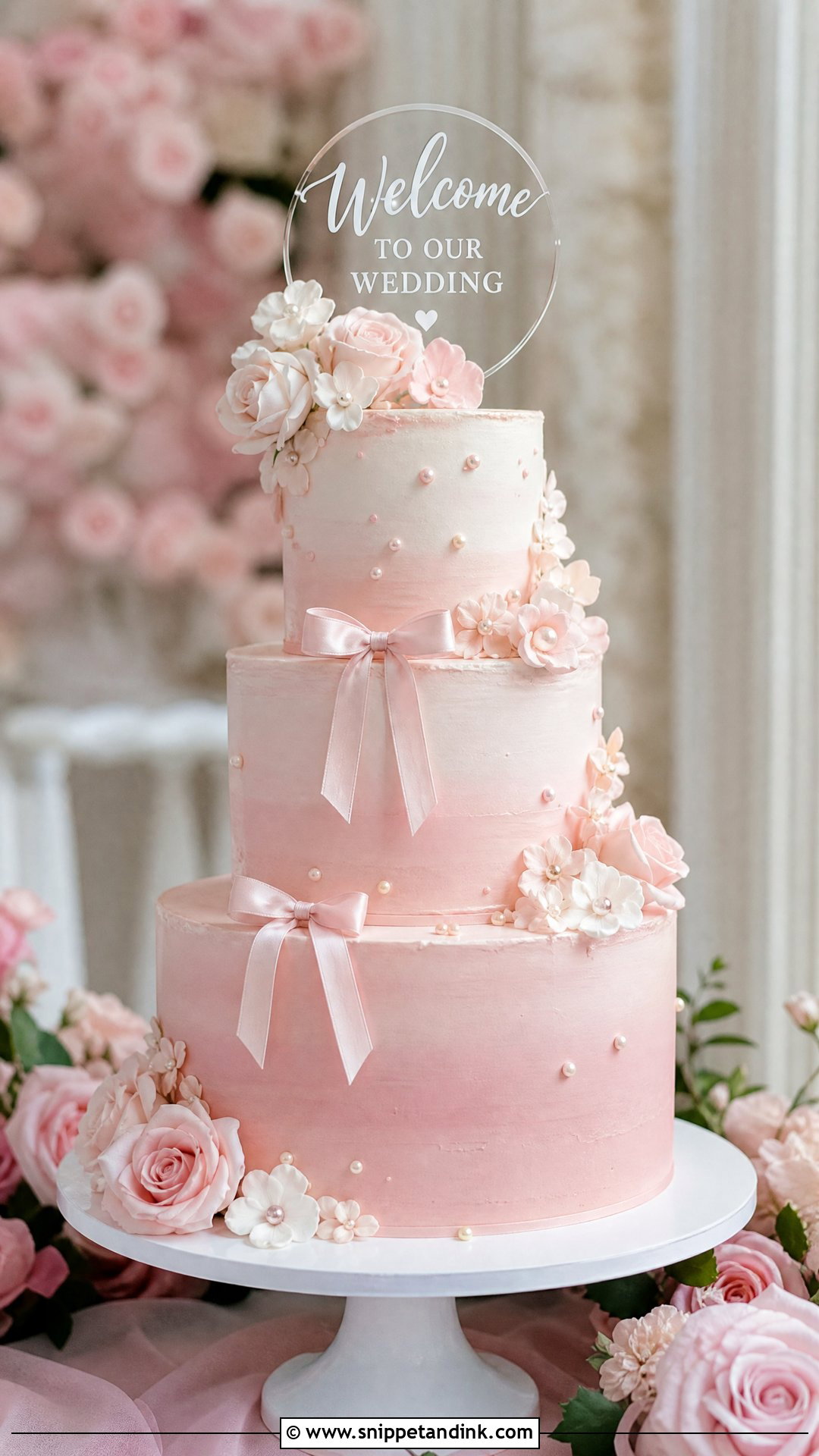
Blush can cover the whole cake or fade into ivory as an ombré. The trick is keeping it muted, more dusty than candy, so it reads grown-up. Pinks shift under warm venue lighting and can look peachy in photos, so I test the shade under the reception’s light if I can. White flowers, rose gold details or delicate piping all pair with it, and a white, gold or clear acrylic topper blends in quietly.
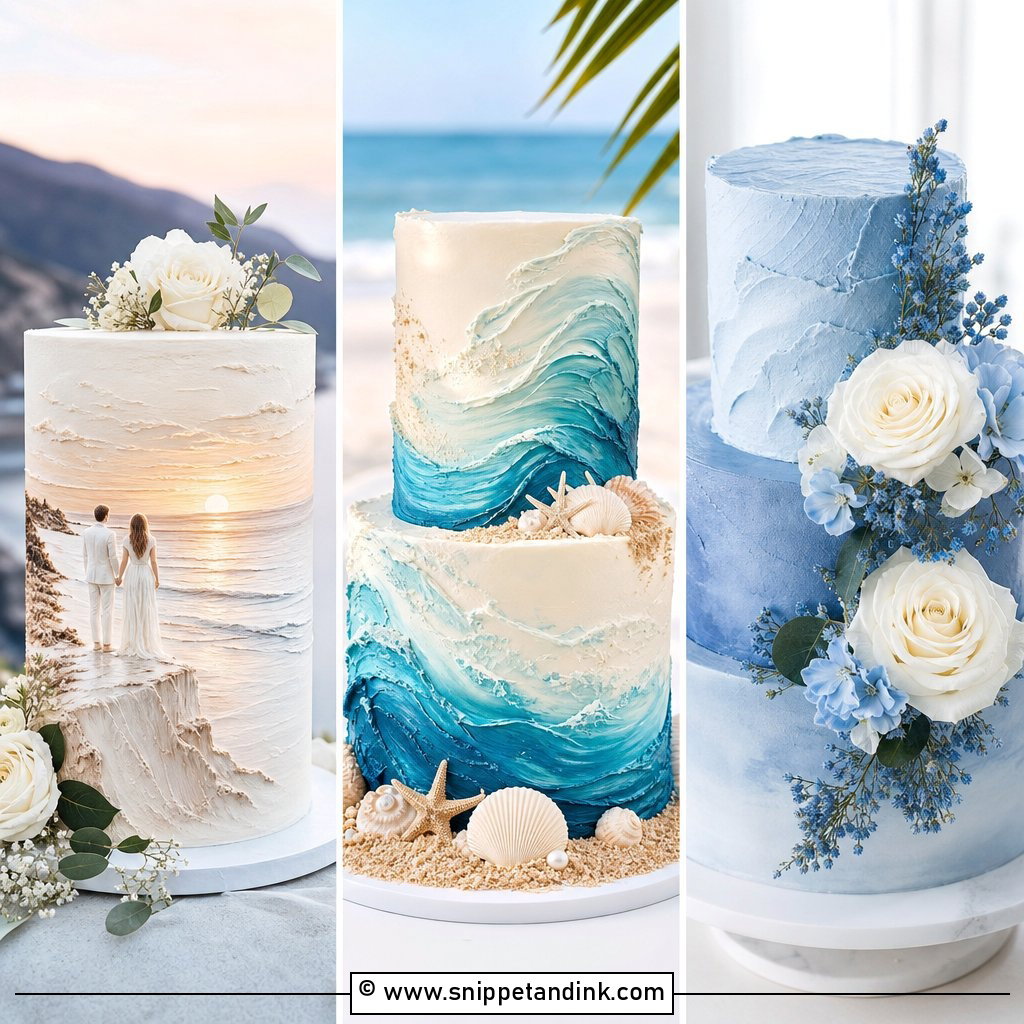
23. Blue Welcome Wedding Cake
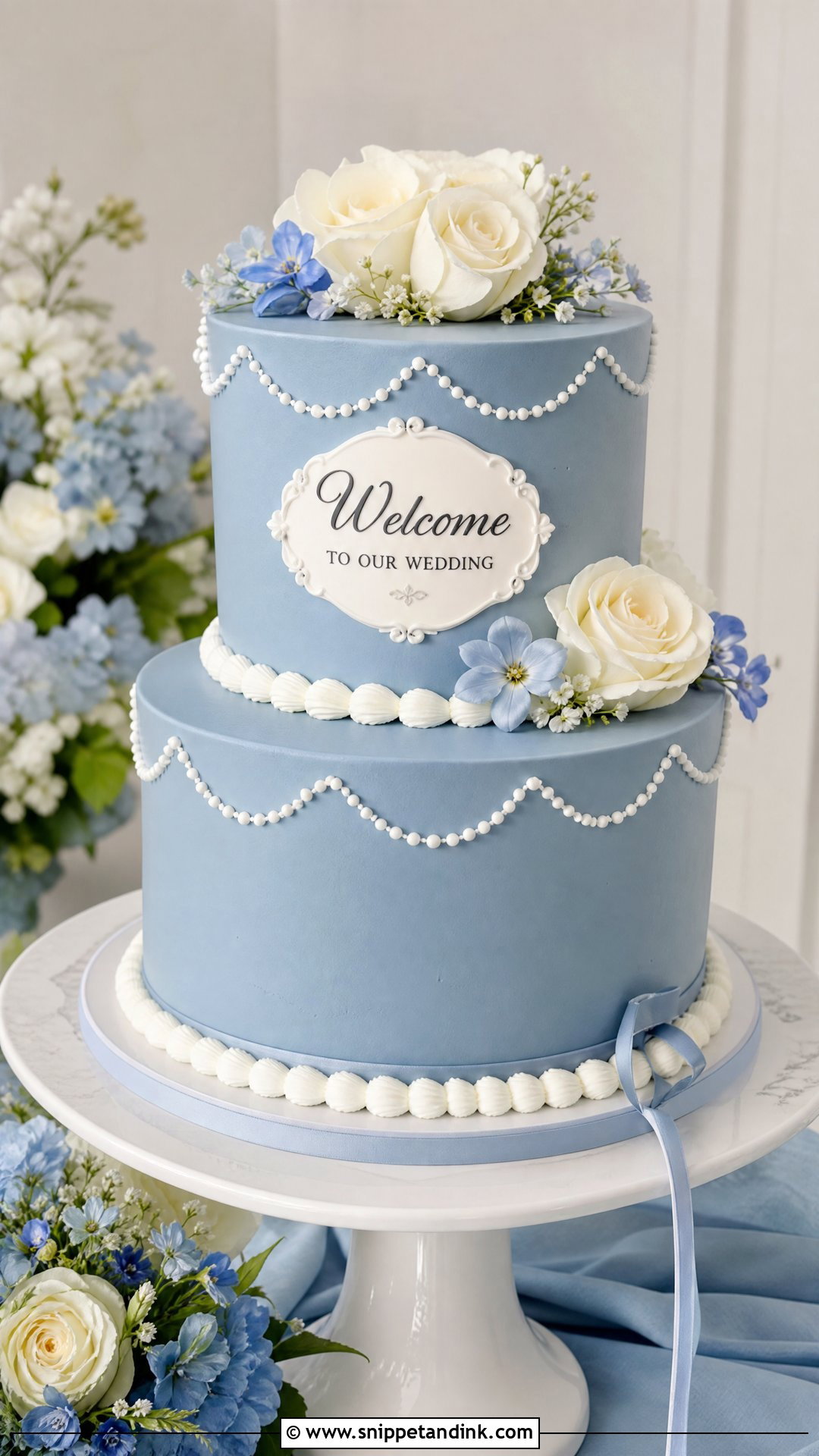
Blue is harder to mix in buttercream than it looks. Butter’s natural yellow pushes blue toward teal, so for a true soft or dusty blue I use a very pale, almost white butter base or a tiny touch of violet to cancel the warmth. Once the shade is right, white piping, sugar flowers, pearls or a thin ribbon add detail. It suits coastal and garden weddings and classic blue-and-white palettes, and a white or gold welcome message keeps it crisp.
24. Sage Green Welcome Wedding Cake
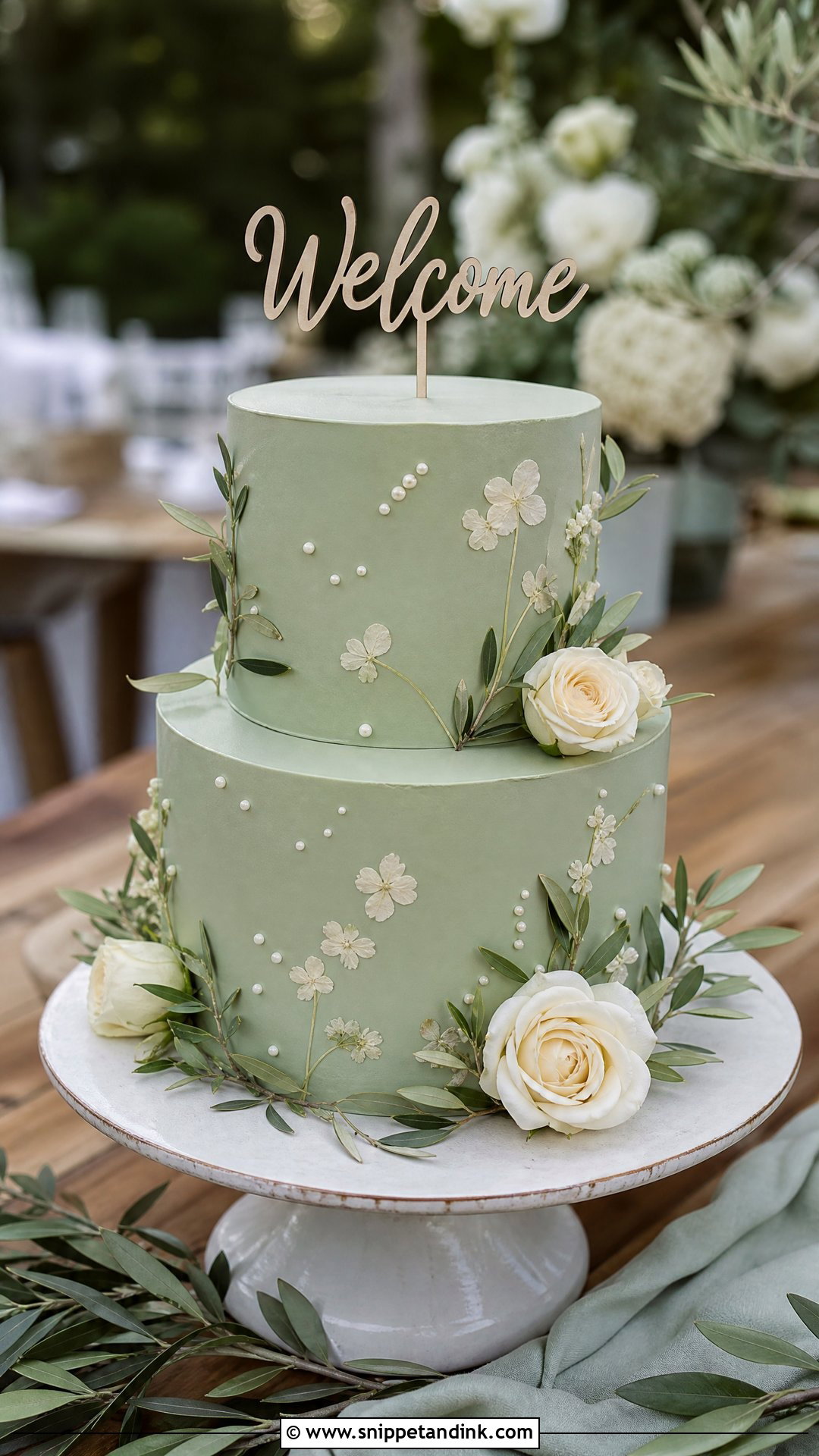
Sage pairs with cream, white, blush, terracotta and gold, which is why it has stayed popular for outdoor and greenhouse weddings. I nearly always finish it matte, because a shiny sage looks synthetic next to real foliage. Pressed flowers, white roses, olive leaves or a few pearls are enough decoration. Let the color be the statement and keep the welcome wording short.
25. Lavender Welcome Wedding Cake
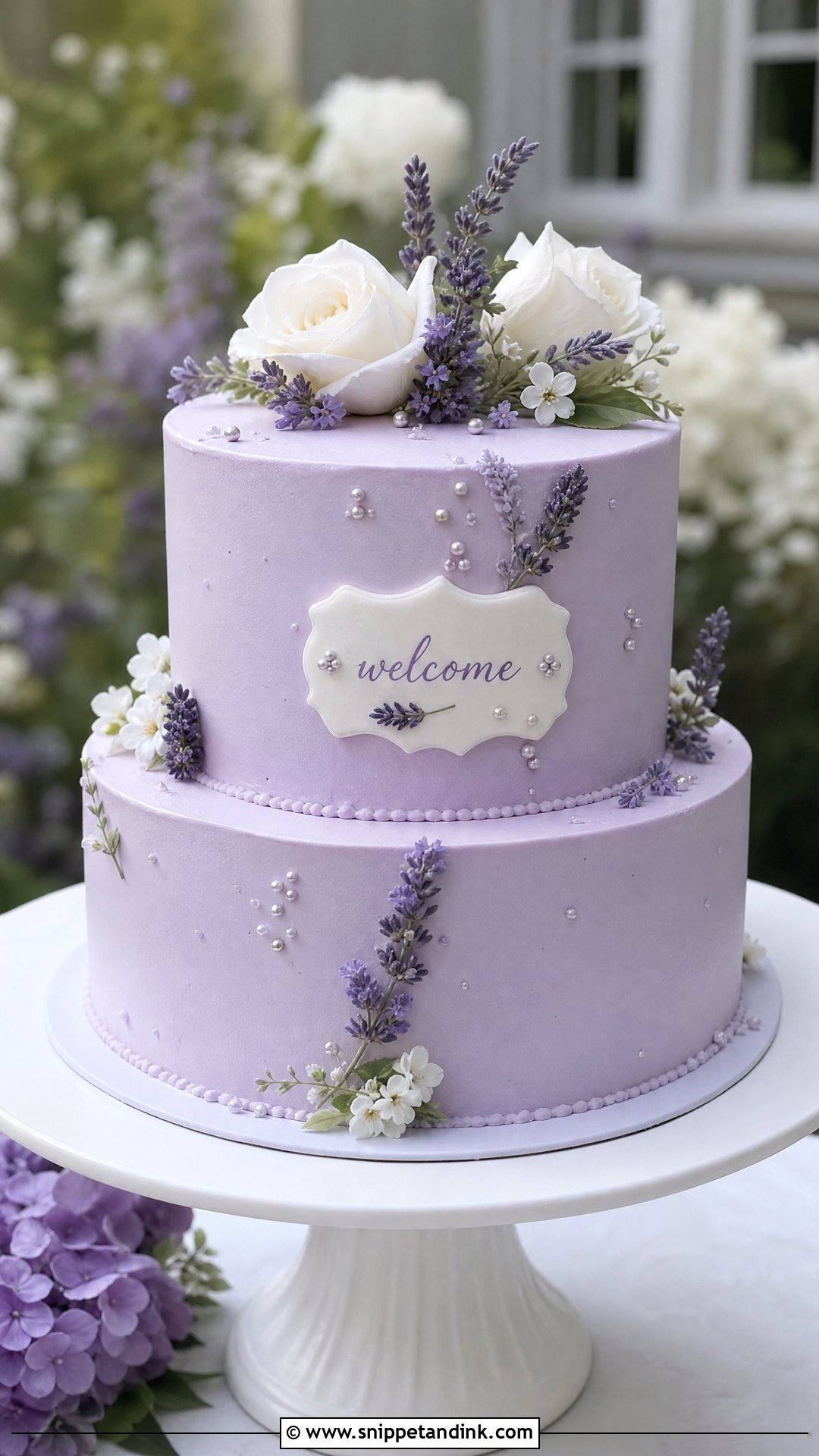
Lavender can be a color, a flavor or a decoration, and I treat those very differently. Pale lavender buttercream is easy. Lavender in the cake itself needs a light hand, ideally paired with honey, because too much tastes soapy. Dried culinary lavender on top looks charming but sheds tiny buds, so I keep it to a few sprigs. White details or silver accents finish it, and a small welcome topper keeps it tidy. It sits naturally at spring and garden weddings.
26. Pressed Flower Welcome Wedding Cake
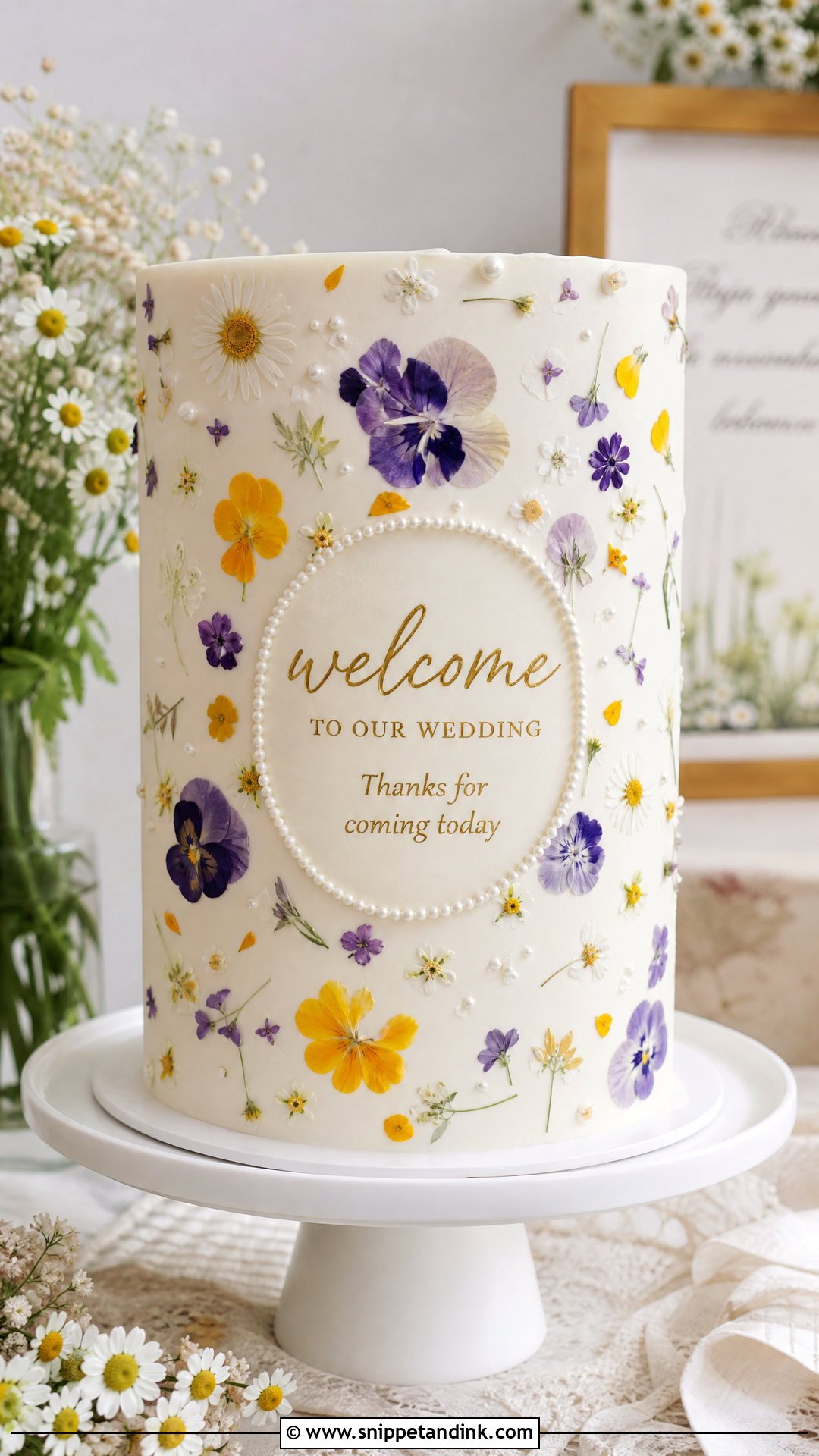
Pressed flowers are pressed flat and dried, so they lie against smooth buttercream like a printed pattern or a frame around the welcome message. Small, thin blooms such as pansies, violas and chamomile press best. They must be edible varieties grown without sprays, and I buy them from an edible flower supplier rather than picking them. White or ivory frosting shows them most clearly. Apply them close to the event, since moisture from the icing slowly darkens the petals.
27. Ruffle Welcome Wedding Cake
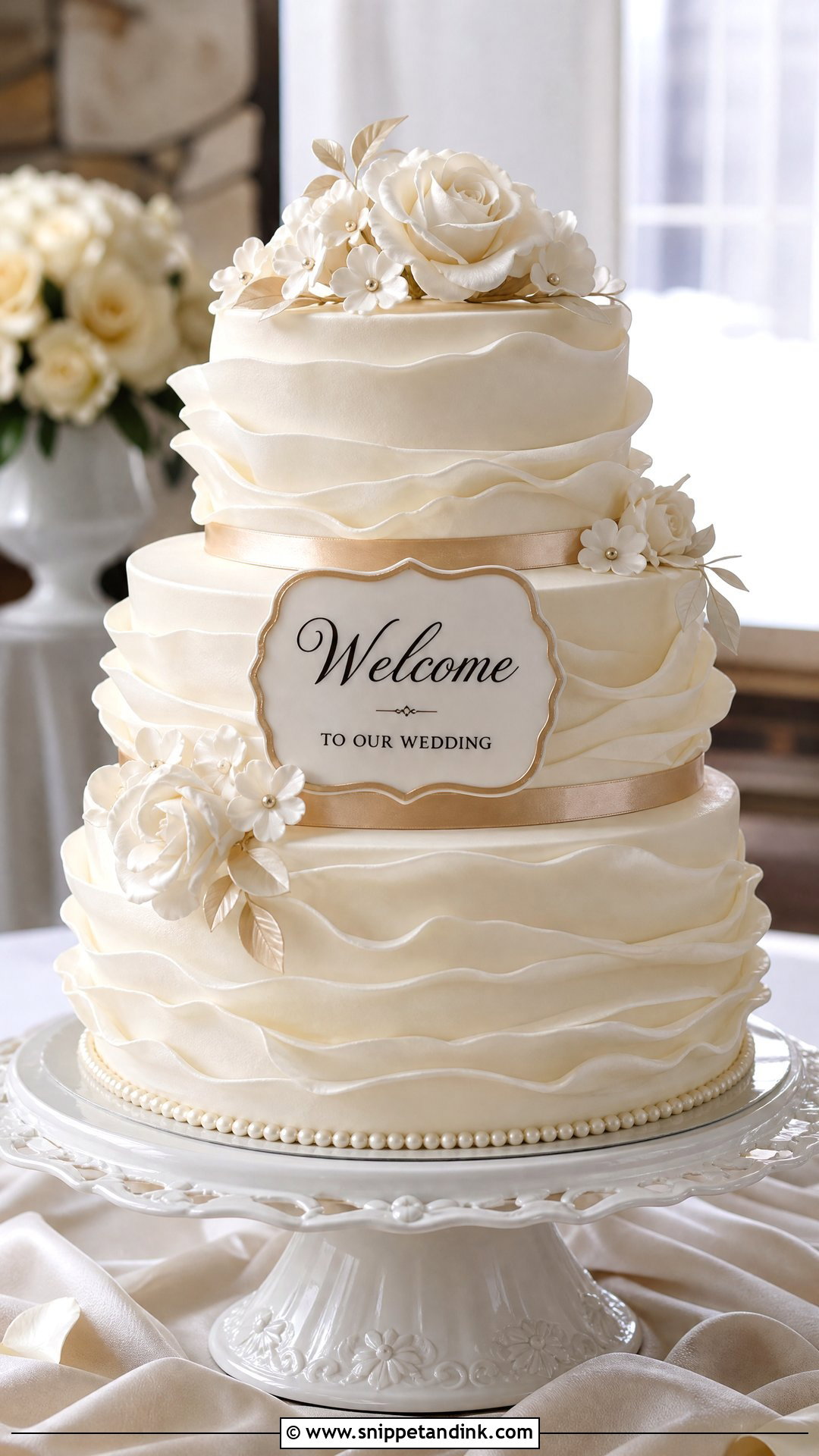
Ruffles add movement, whether they cover one tier, wrap the whole cake or fall like draped fabric. Fondant ruffles hold their shape; buttercream ruffles are softer to eat but can sag in heat, so I’d only use buttercream ruffles in a cool room. White, ivory, blush and champagne suit them. Since the ruffles already carry the drama, keep flowers to a minimum and put the welcome plaque on a smooth tier where it can be read.
28. Floral Cascade Welcome Wedding Cake
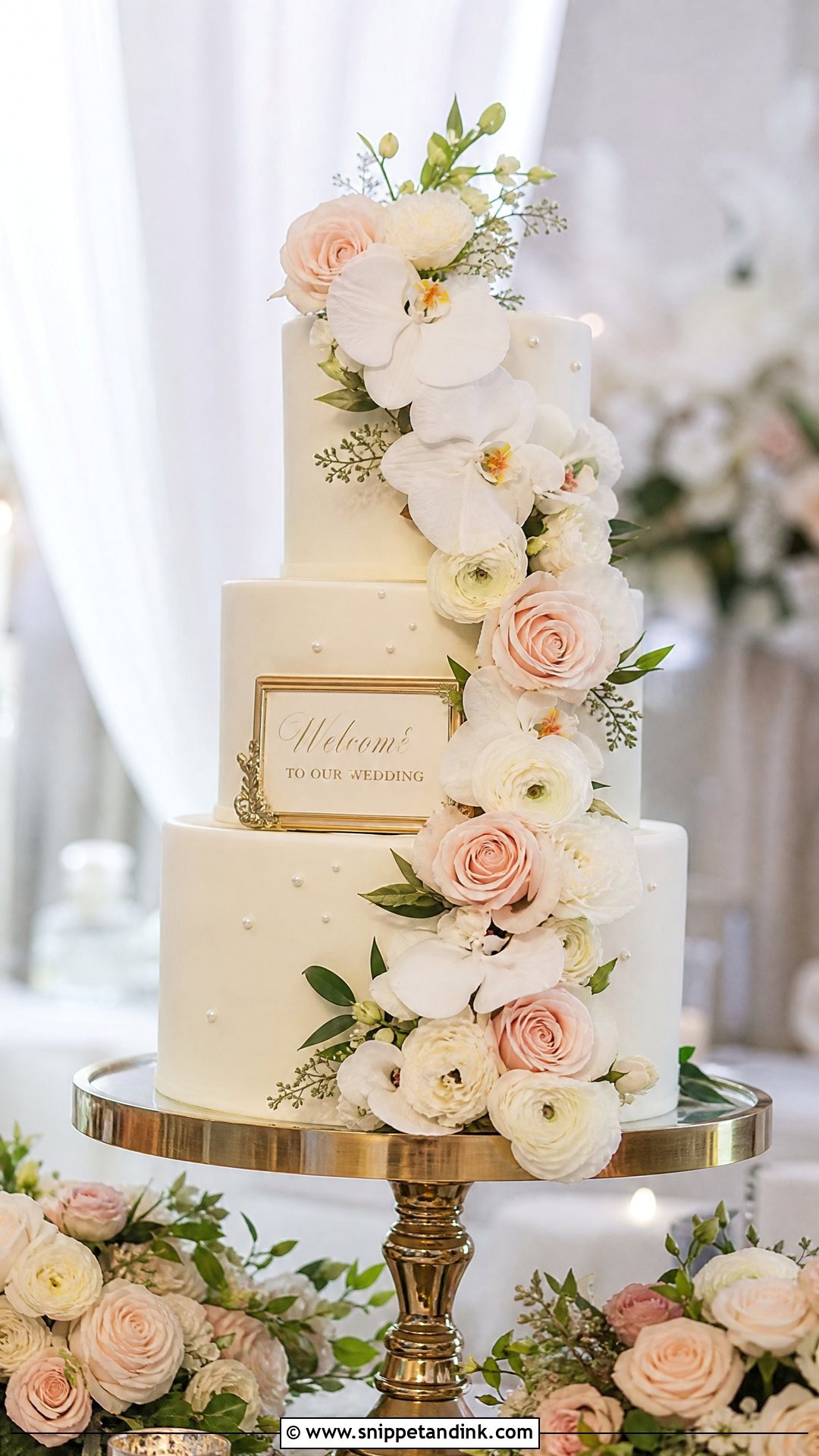
A cascade gives a cake height and color in one move, with flowers running from the top tier down one side. White and blush roses keep it soft; seasonal colored blooms make it bolder; orchids and greenery make it formal. The base should be smooth buttercream or fondant so the flowers stand out. Fresh cascades are heavy, so I anchor them with picks pushed into the dowels, not the sponge, and I place the welcome message on a clear tier away from the flowers.
29. Semi Naked Welcome Wedding Cake
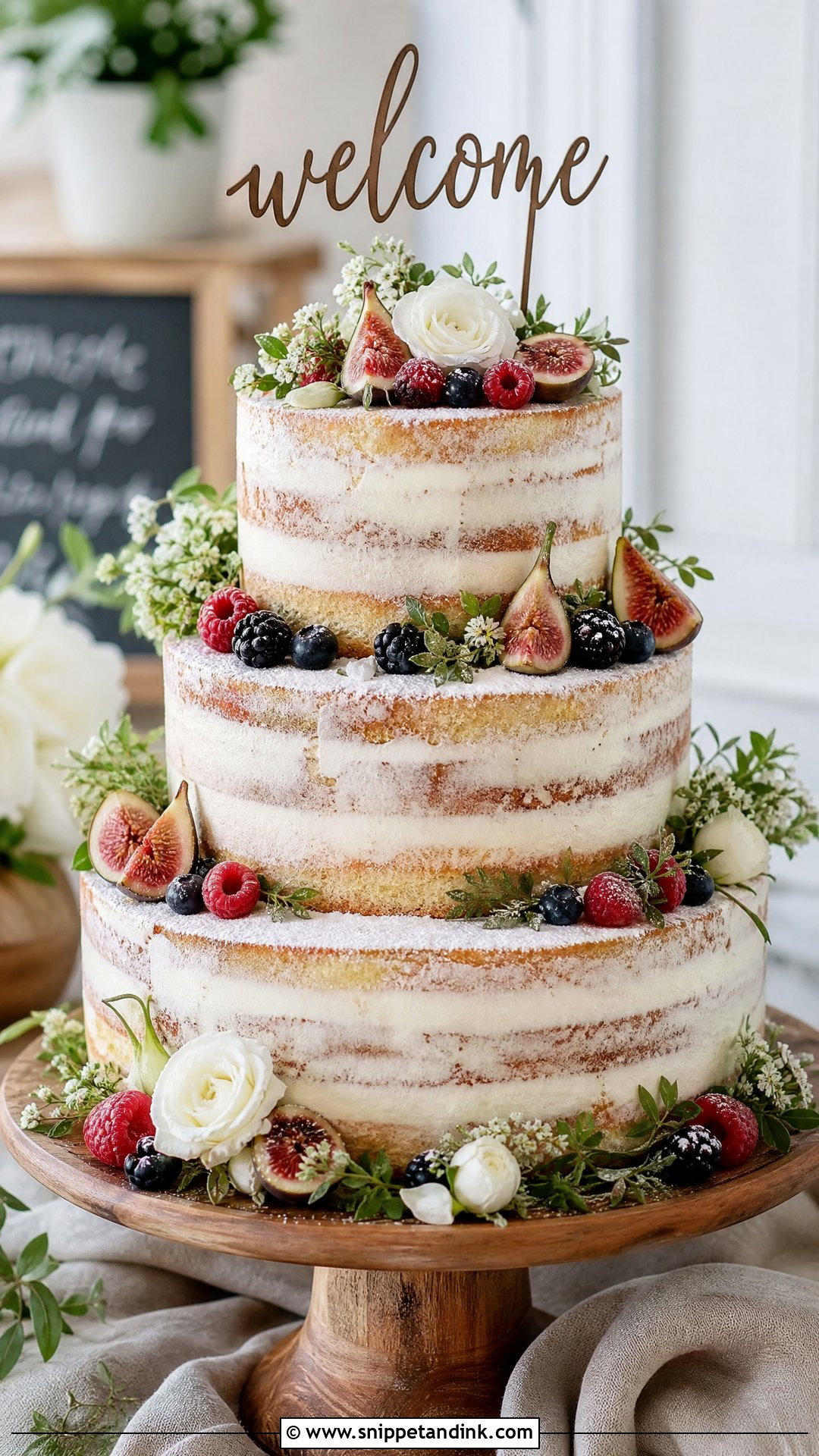
A semi naked welcome wedding cake has only a thin scrape of buttercream, so the layers show through. That thin coat protects the sponge less than full icing, which means it dries out faster on display. I brush every layer with syrup before stacking and keep the display window as short as the day allows. Vanilla, almond, lemon and berry suit it, and fresh flowers, berries, figs or greenery finish it for barn weddings and garden receptions. Let the texture do the work.
30. Dessert Table Welcome Wedding Cake
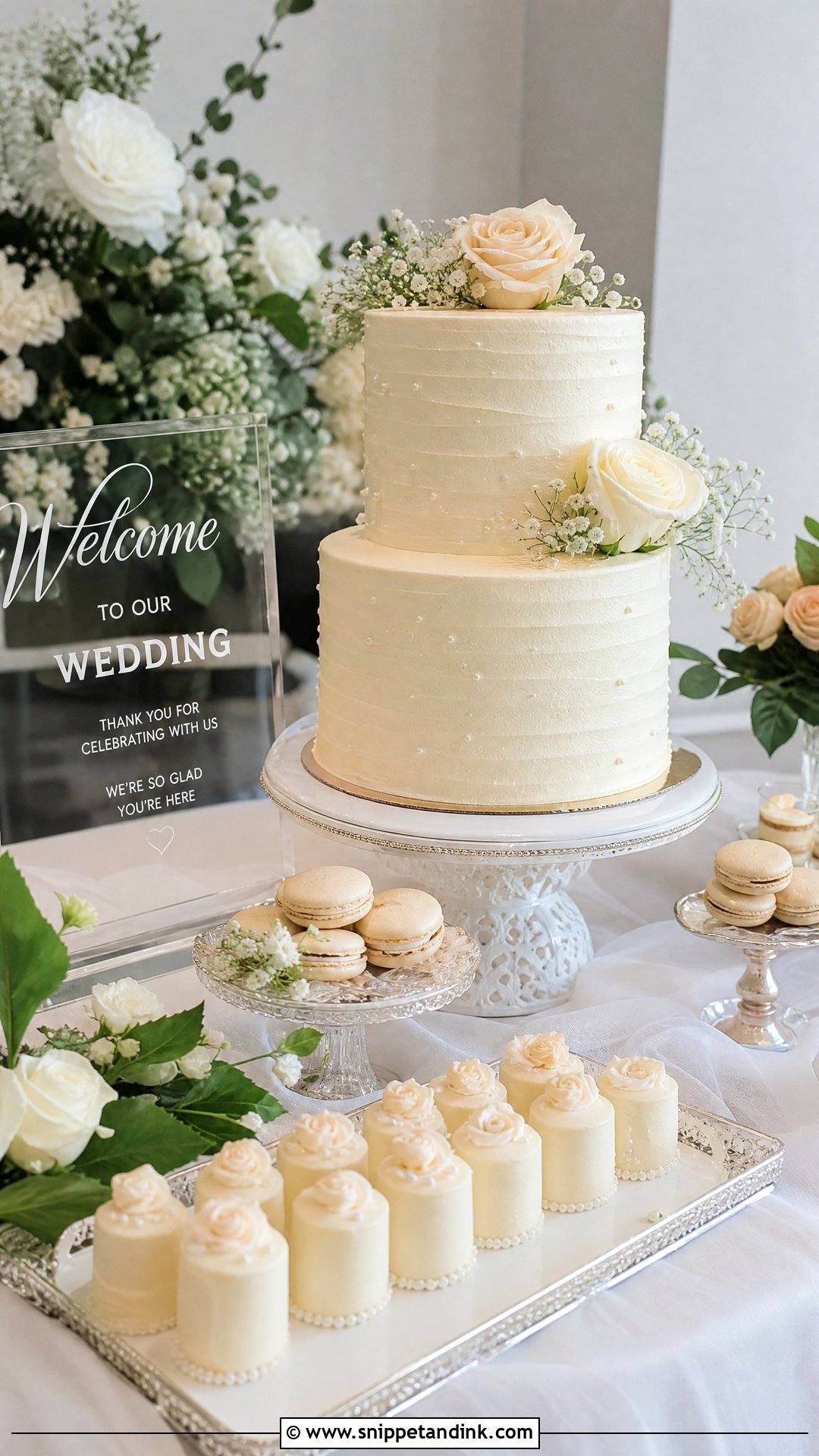
Here the welcome cake leads a larger display: one or two tiers surrounded by mini cakes, cupcakes, macarons, cookies or small plated desserts. I make the main cake slightly taller or more decorated than everything around it so the eye goes there first. Match the frosting, flowers and colors across the table, and if several bakers are involved, share one palette with all of them early. A dessert table welcome wedding cake with a clear sign nearby makes the whole spread look planned.
Wording a Welcome Message People Can Read From the Door
The message is the one part of this cake guests actually read, and it is also the part most often squeezed onto a tier at the last minute. A few habits make it work.
Keep it short
“Welcome” plus your names or initials is plenty. Long phrases force tiny lettering, and tiny lettering disappears from more than a couple of steps away. If you want a longer line, put it on a printed sign beside the cake and keep the cake itself clean.
Pick the lettering method for the surface
Hand-piped script looks best on smooth fondant or chilled, crusted buttercream. Textured or ruffled finishes need a plaque, topper or acrylic sign instead. Edible-ink printing gives exact fonts that match your stationery, though it can look flat beside handmade piping.
Send it in writing
Email the exact spelling, capitalization and any accents in your names a few weeks before the date, and ask the baker to confirm it back to you. A misspelled name on a welcome cake can’t be quietly hidden, and it is the easiest mistake in the whole order to prevent.
A Cake That Still Looks Right After Dinner
A welcome cake is judged in the first few seconds someone sees it and then again hours later, after it has stood through the cocktail hour and dinner. Plan for both moments. Pick a finish your room can support, keep the message short and readable, and match the flowers and colors to the rest of the day. Done that way, even a single plain tier can feel like it belongs to your wedding and no one else’s.
You'll Like These Ideas:



Leave a Reply