
Japanese bridal makeup sits closer to skincare than to stage paint, even when the outfit is formal. The faces I build for a shiromuku, an iro uchikake or a Western gown share one rule: the fabric is loud, so the skin should look calm and finished. That means a smooth base, eyes defined with a fine line rather than heavy shadow, blush placed with intent and a lip chosen to answer the robe, whether that robe is white shiromuku, colorful iro uchikake or a modern dress. Some brides want the ceremonial red lip and a hint of red at the eye. Others are happier in peach, rose or a blurred nude. Below are twenty directions, from shrine-traditional to soft modern and seasonal, with notes on how each one behaves once you’re actually wearing it.
Planning One Face for the Oiro-Naoshi Outfit Change
Many Japanese weddings include an oiro-naoshi, the change from the white shiromuku into a colored iro uchikake or a gown partway through the day. I plan the makeup for that moment from the start, because a face that sits right under all-white silk will look underdone next to red and gold embroidery.
What stays and what gets added
Base, brows and liner get built once, to last the whole day, and they don’t change. What I leave room for is a second layer. At the change I deepen the blush, add warmth to the crease, switch a rose lip to red or coral, and sometimes add a couple of lashes at the outer corner. Building up takes a few minutes. Taking makeup off and starting again in a dressing room does not, and it rarely looks as clean.
- Ask your planner how long the change actually takes. Dressing in an uchikake and resetting the headpiece eats most of the window, so the makeup update has to fit into what’s left.
- Do both faces at your trial, in order, with photos or swatches of both robes held next to your face.
- Give the second lip and blush, in a small labeled pouch, to whoever is helping you, so nothing has to be hunted for in a hurry.
- If you’re switching to a Western gown instead, the update usually runs the other way: soften the red lip and bring a little glow back to the cheeks.
No outfit change? Skip all of this and pick one direction from the list below that suits your main outfit.
1. Traditional Japanese Wedding Makeup With Red Lip
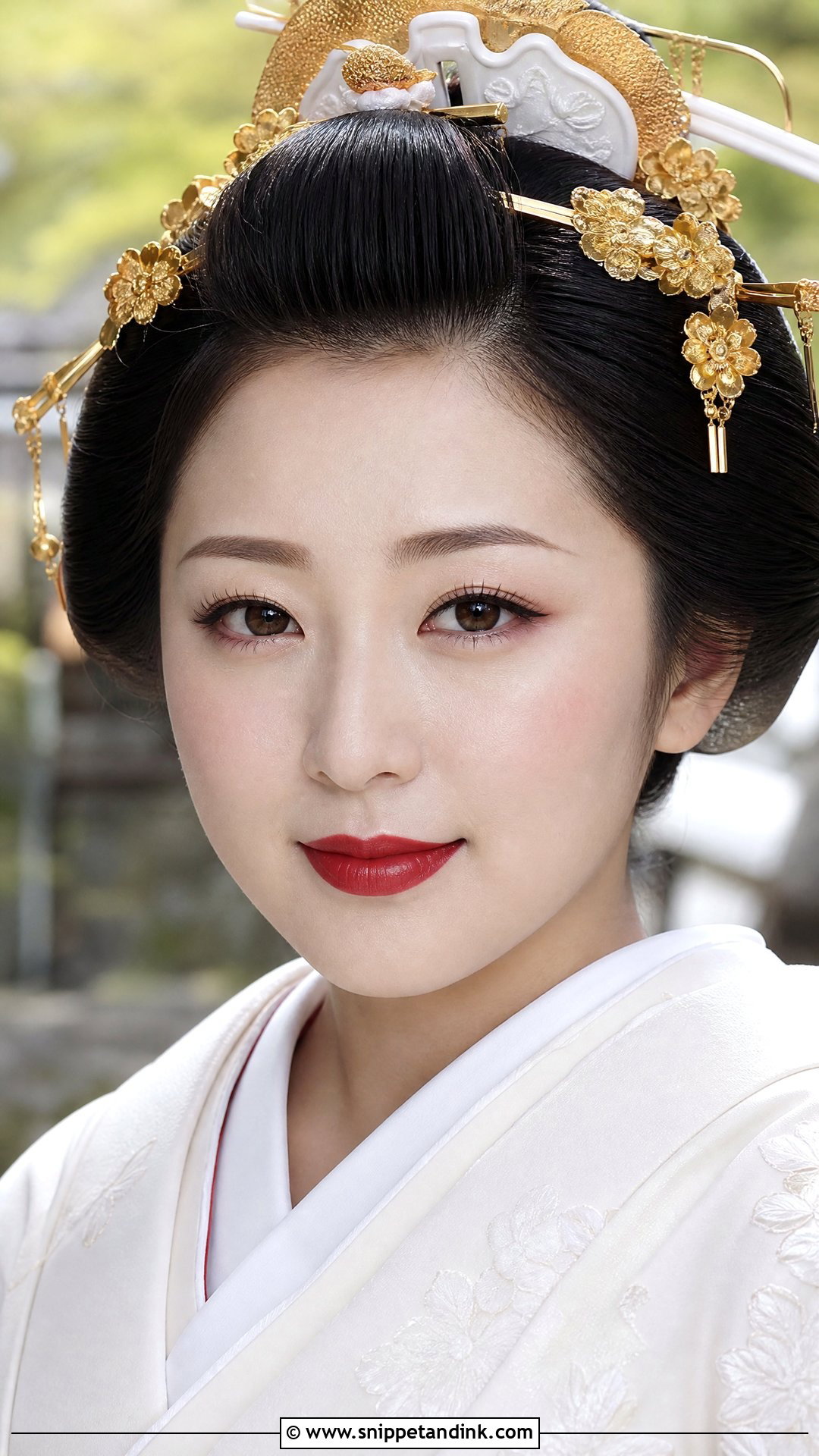
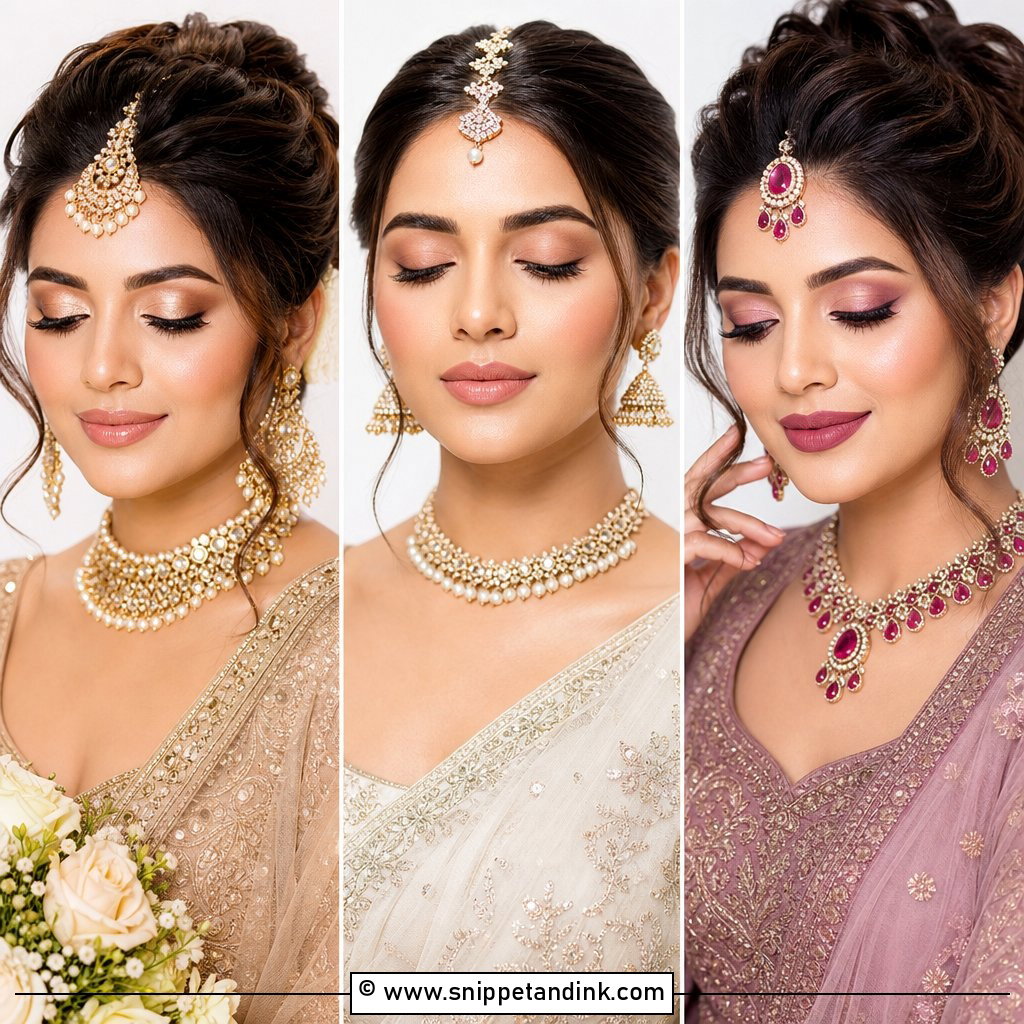
The red lip is the anchor here, and everything else stays quiet so it can be. I keep the complexion soft matte and bring light only through the center of the face, because a white wataboshi bounces light back up onto the cheeks and makes any shine look greasy in portraits. Brows stay neat and fairly straight. On the eyes I use ivory and beige with a whisper of red or muted plum tucked into the lash line, then a thin black liner and natural lashes. For the lip, I line first and press a satin red in with a brush. A fully matte red tends to crack in the center during a long ceremony when there’s no chance to reapply. A touch of rose blush stops the red from looking pasted on.
2. Shiromuku Japanese Wedding Makeup
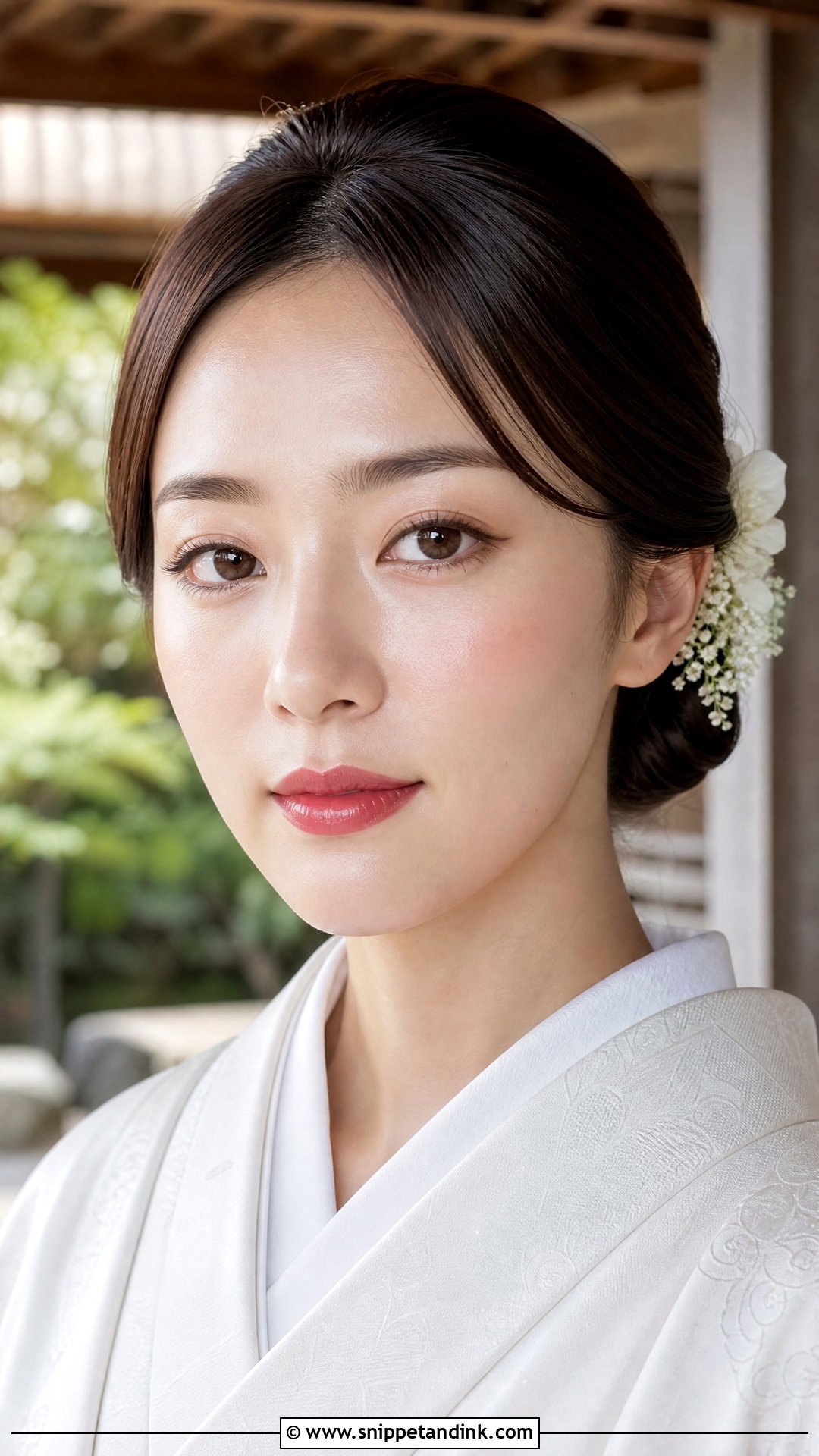
All that white is the real challenge. Under a shiromuku, a bare-looking face goes flat and slightly grey in photos, so I add more warmth than the bride usually expects. The base is satin rather than dewy, with peach or soft pink blush set a little higher on the cheekbone than usual so it still reads when the hood shades the face. Eyes stay simple: champagne lid, soft brown crease, a thin line and fluttery lashes, with brows filled into a natural straight shape. Red, rose or muted berry all work on the lip. I let the bride’s comfort decide, because a red she keeps blotting nervously looks worse than a rose she forgets about.
3. Iro Uchikake Japanese Wedding Makeup
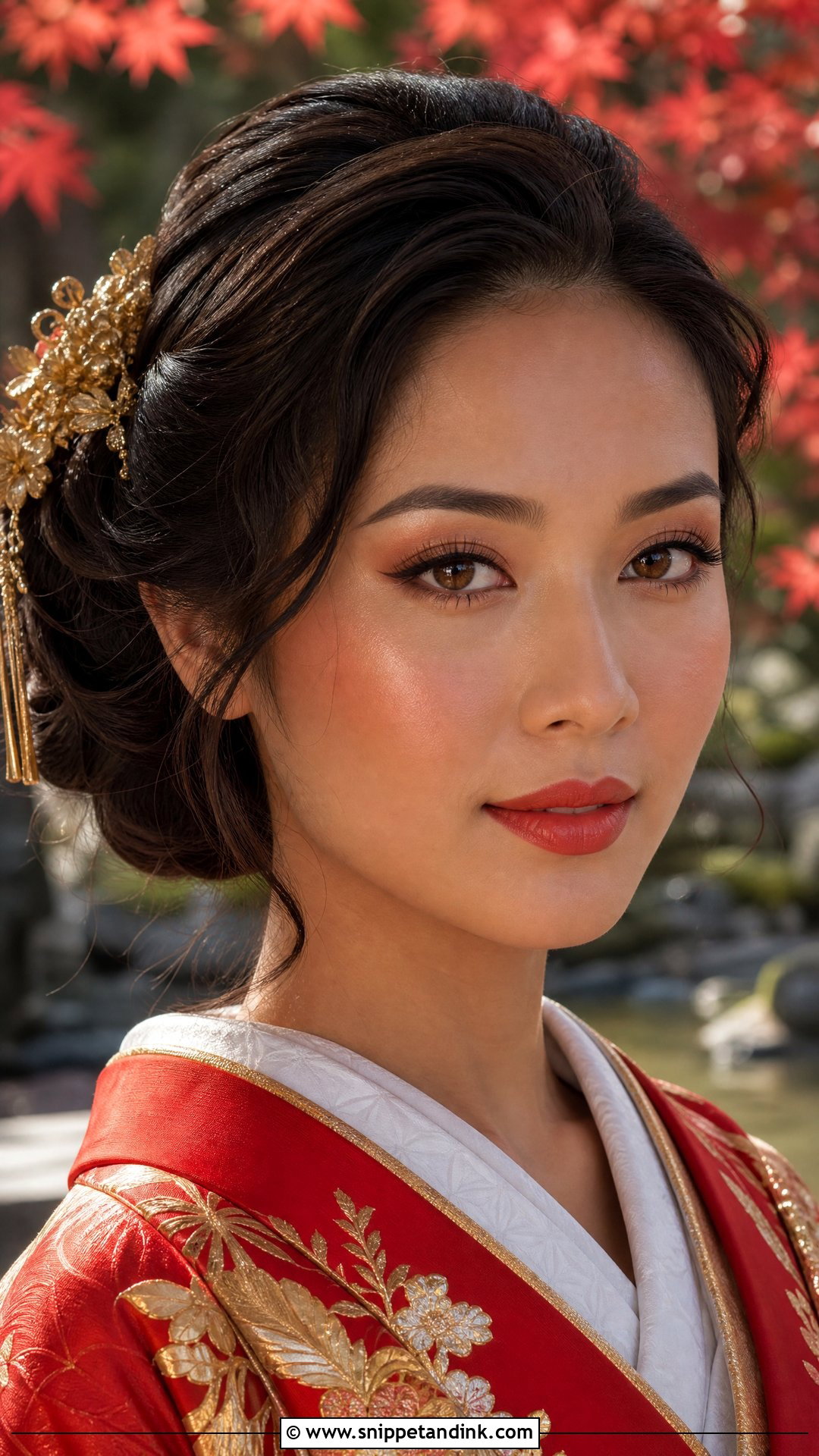
Next to a colorful bridal kimono, a face that was right for shiromuku suddenly looks washed out. Embroidery in red, gold, orange and green pulls the eye, so the makeup needs more warmth to hold its own without competing. I go to a radiant satin base, warm peach blush and a soft gold highlight on the cheekbones. Copper, rose brown or warm taupe goes on the lid with a slightly lifted liner, then individual lashes rather than a strip so the eye stays defined from the side. I pick the lip last, holding the actual robe up to the face: classic red if the kimono is red-dominant, warm coral or deep rose if it leans gold or green.
4. Modern Japanese Bridal Makeup
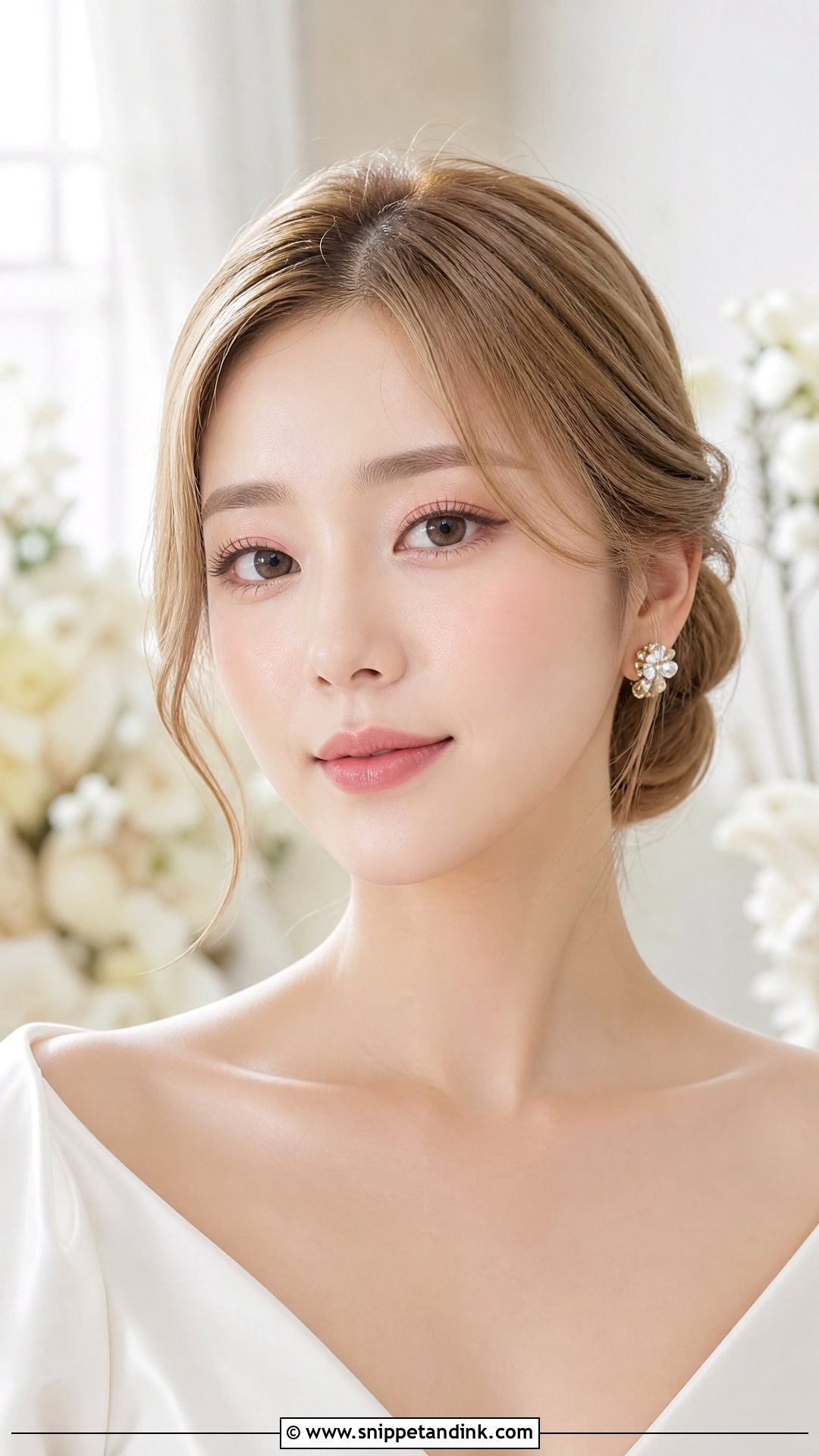
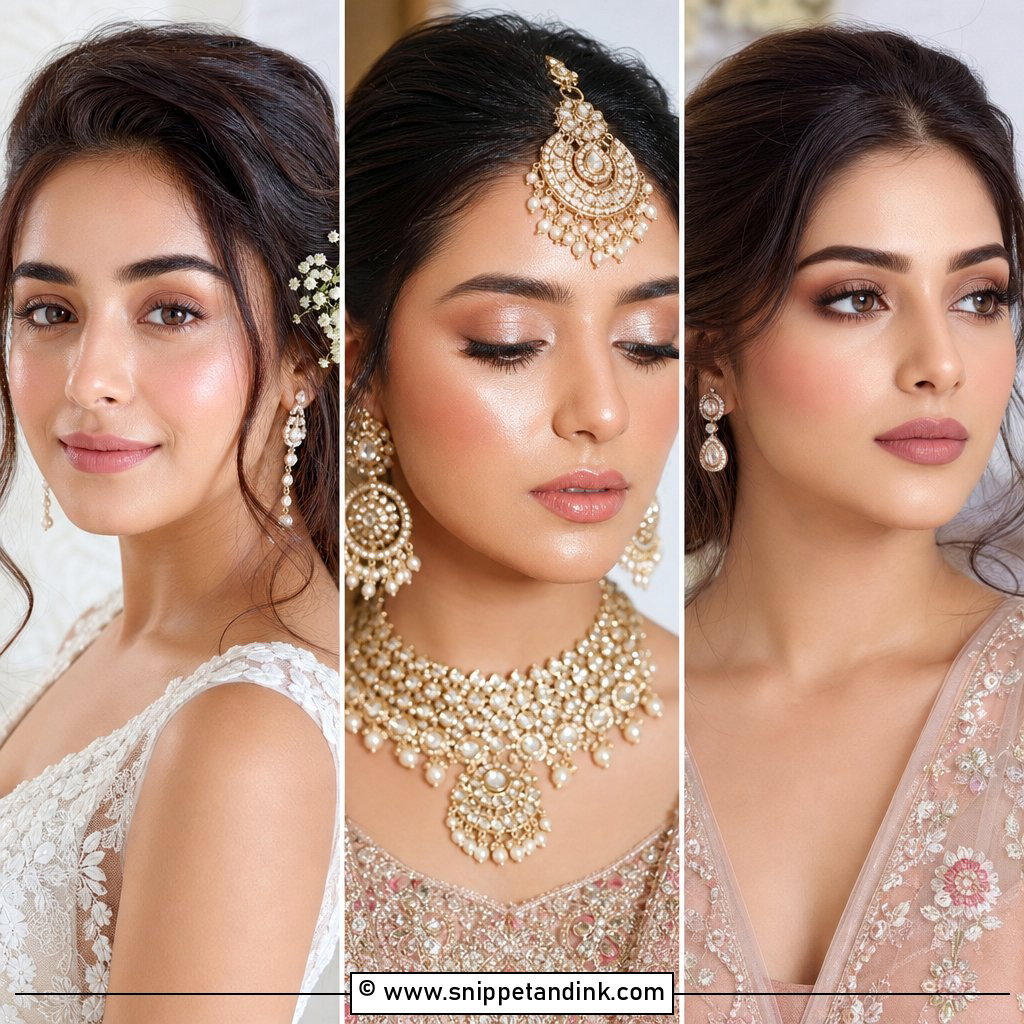
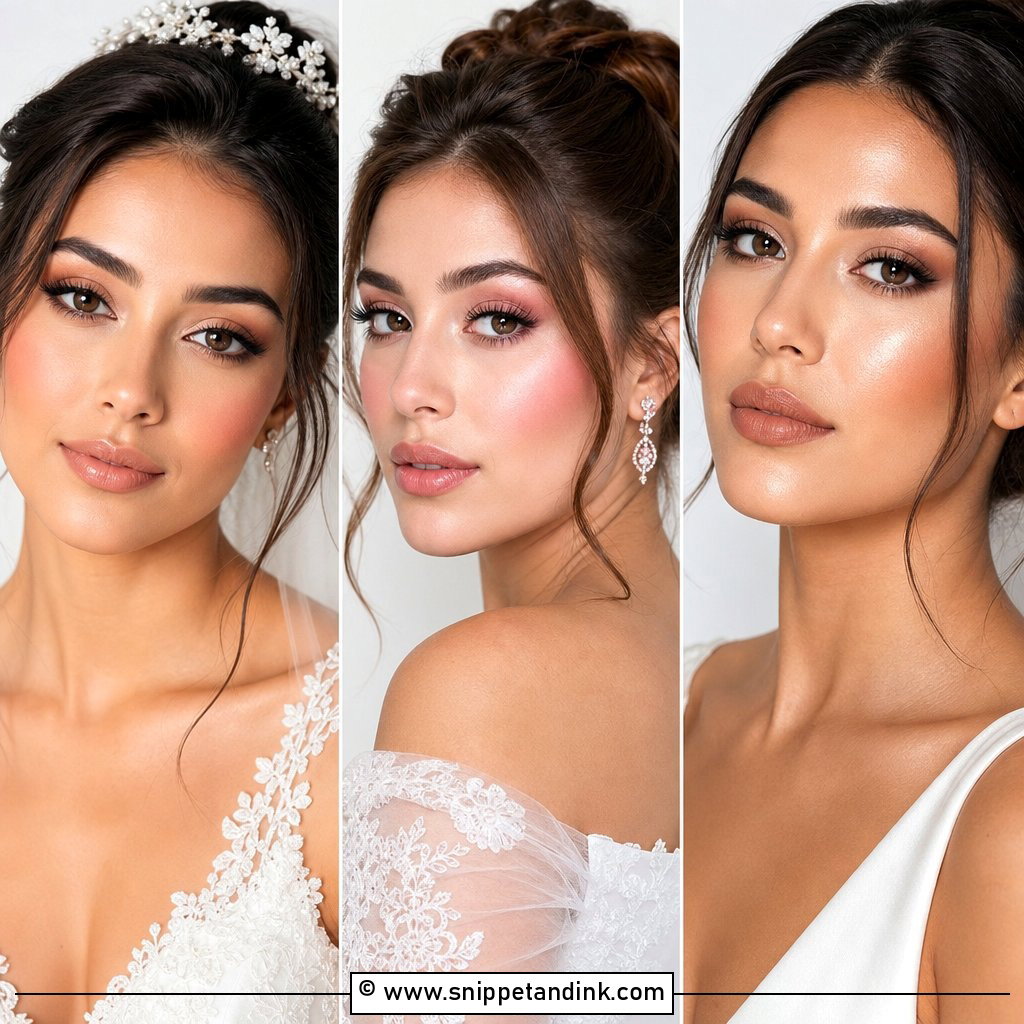
Skin carries this whole look, which is why the prep matters more than the products. I spend most of the time on hydration, then use a sheer foundation, brighten under the eyes and set only the areas that actually get shiny. Cream blush in peach pink or muted rose, beige or pink champagne on the lids, a thin brown liner and lashes separated and lifted. The lip is a blurred rose stain or creamy nude pink. It sits comfortably with a kimono or a Western gown, so it’s my usual suggestion when a bride is wearing both on the same day.
5. Natural Japanese Wedding Makeup
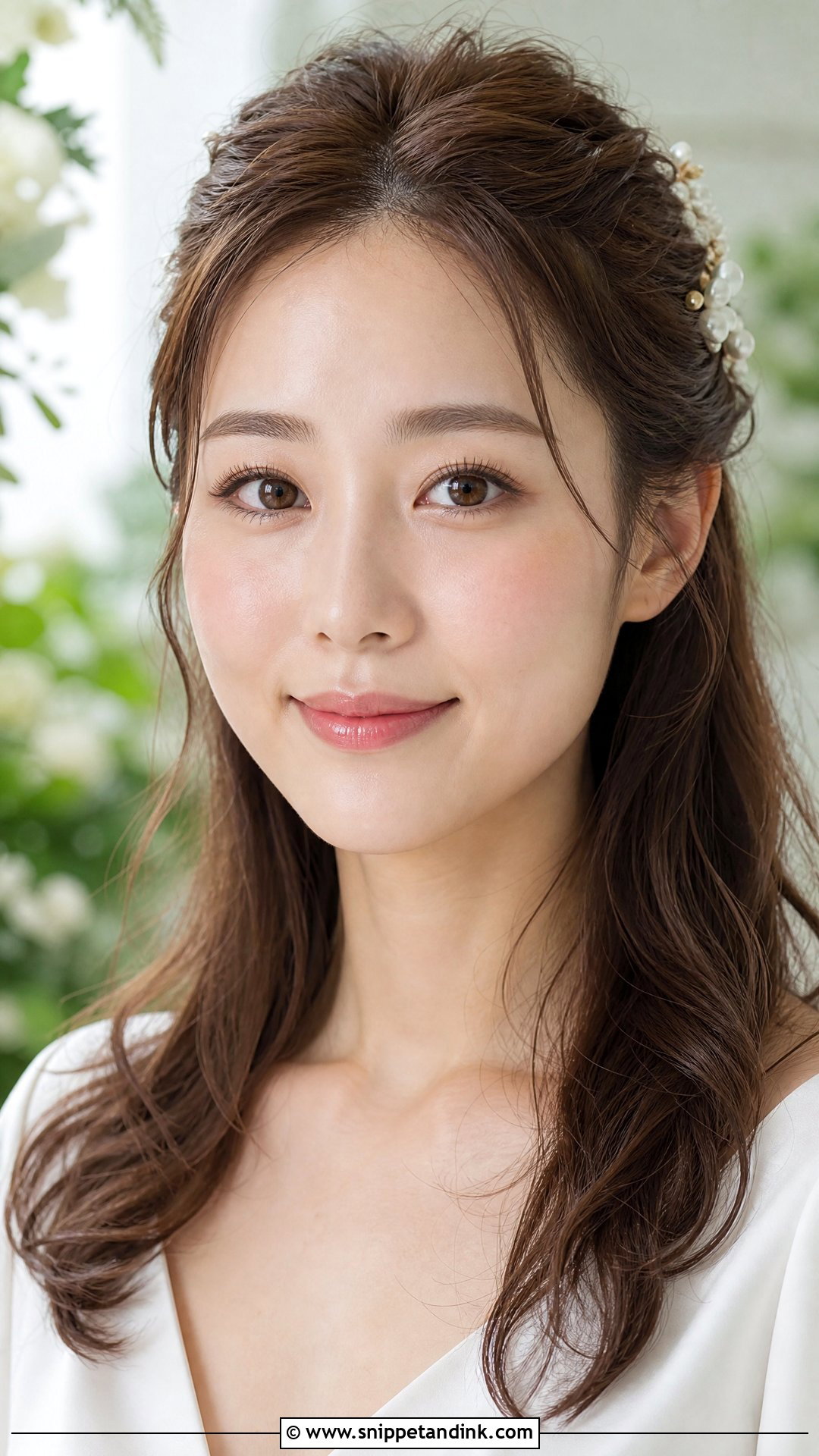
Natural doesn’t mean bare. Brides who ask for this usually want to look like themselves on a good day, and getting there takes careful, targeted work. I use a skin tint, conceal only where it’s needed and blend a soft peach or rose blush wide across the cheeks. Taupe shadow, tightlined brown liner, curled lashes, softly straight brows and a sheer pink or coral tint finish it. Where it goes wrong is hydration: if the skin is dry, a light base clings to texture and shows every flake under a flash, so I start skincare the moment you sit down.
6. Soft Glam Japanese Wedding Makeup
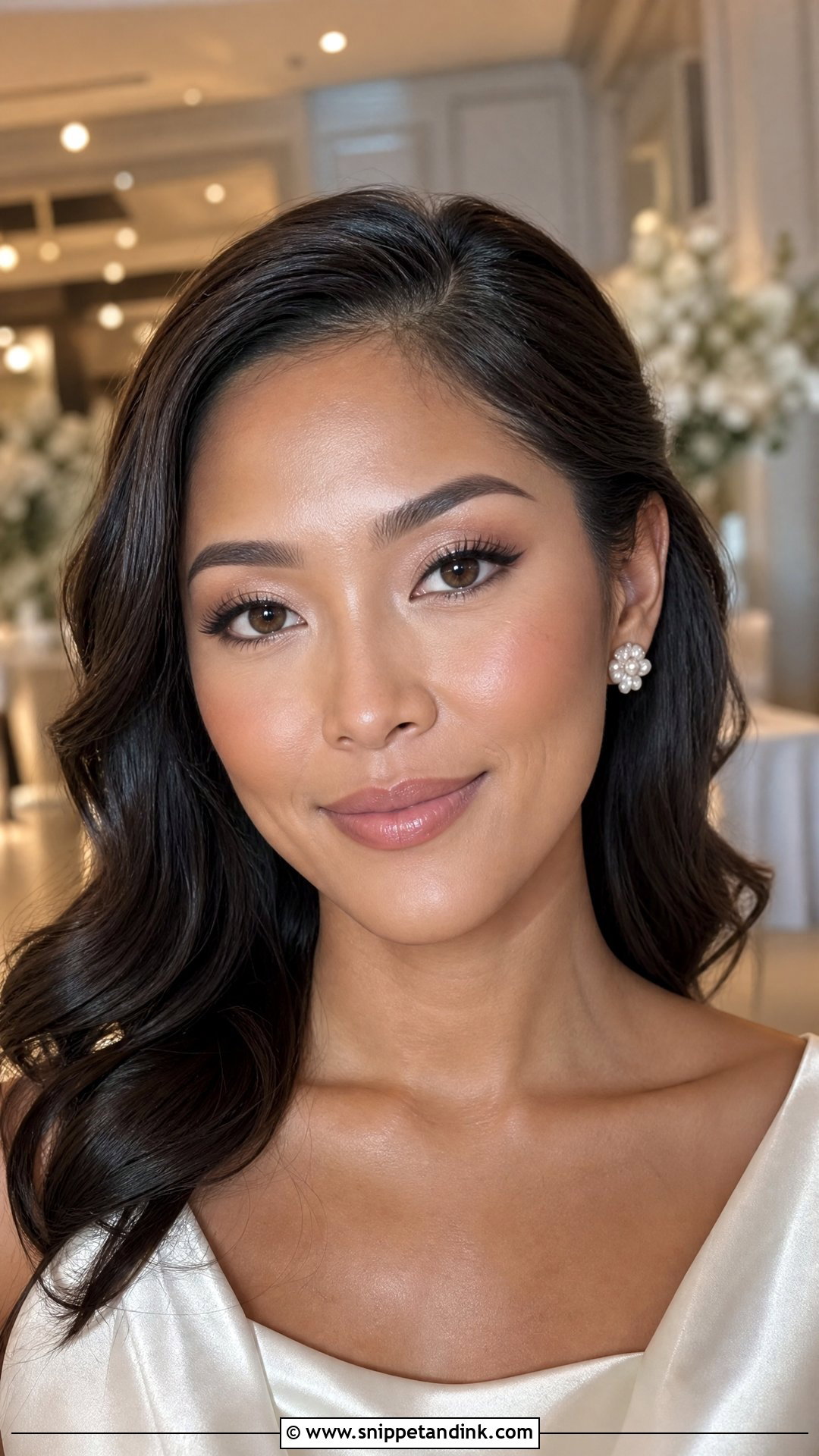
Evening receptions, hotel ballrooms and posed portraits are where I reach for more definition. Medium-coverage satin foundation, soft contour under the cheekbones and a warm rose blush set the base. On the eye, champagne goes on the lid, taupe in the crease and dark brown pressed close to the lashes, with a small wing to lift the outer corner. Lashes can be fuller here, but I trim them so they don’t extend past the natural lash line, since a long outer flick can look droopy when the eyes are lowered in ceremony photos. The lip stays balanced in nude rose or muted mauve satin.
7. Dewy Japanese Wedding Makeup
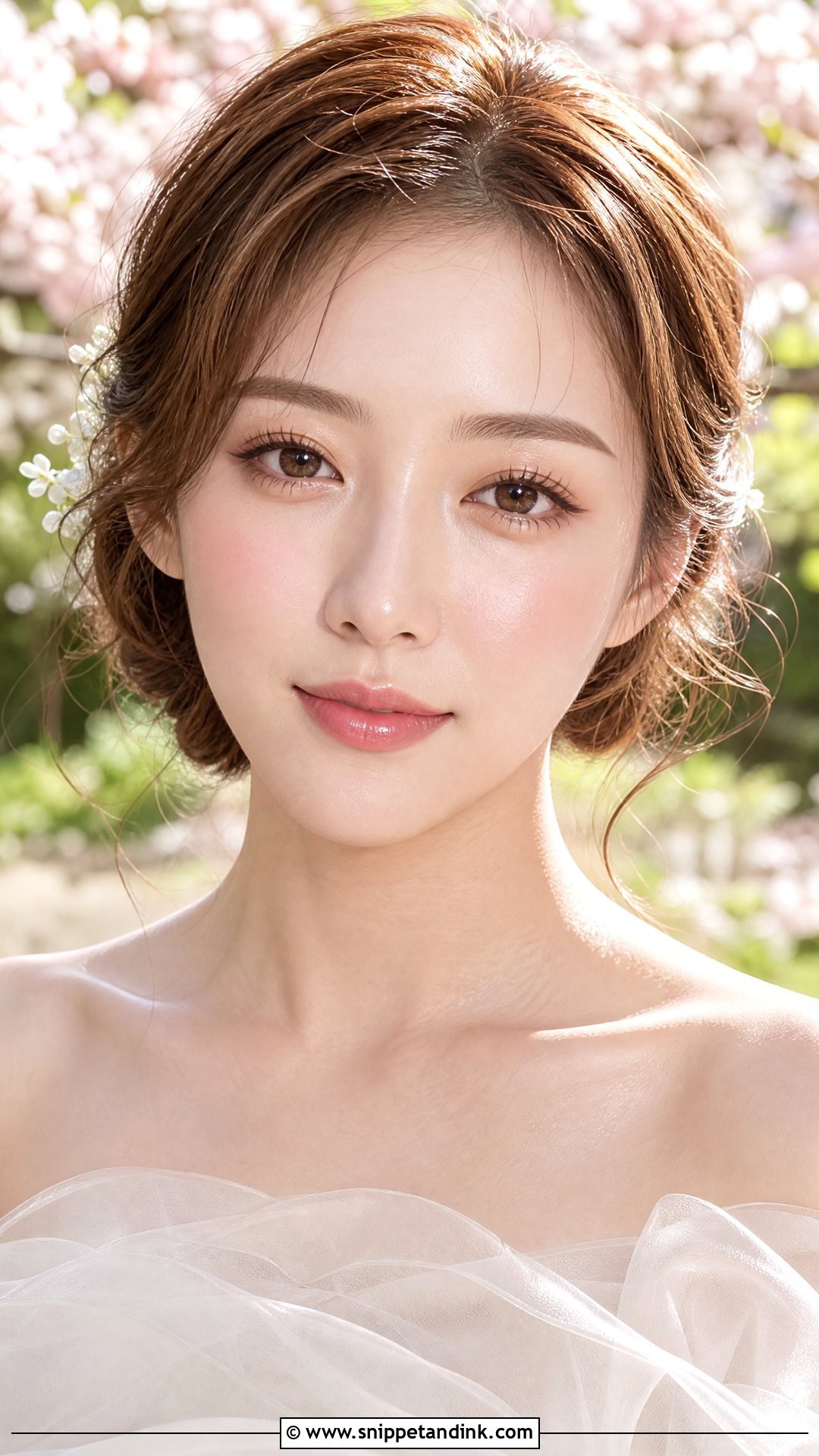
Glow is easy for the first hour and hard for the ninth. I build it with hydrating skincare and a luminous primer, keep foundation sheer and spot-conceal. Cream blush in peach or rose adds warmth from within, and I use a fine, smooth highlighter rather than anything with visible glitter, which reads as sweat in flash photos. A touch of pearl in the inner corner, brown liner, wispy lashes and a glossy rose lip complete it. The step people skip is setting the T-zone lightly. Without it, by the reception the glow has spread to the forehead and nose. Spring ceremonies and garden portraits suit it best.
8. Matte Japanese Wedding Makeup
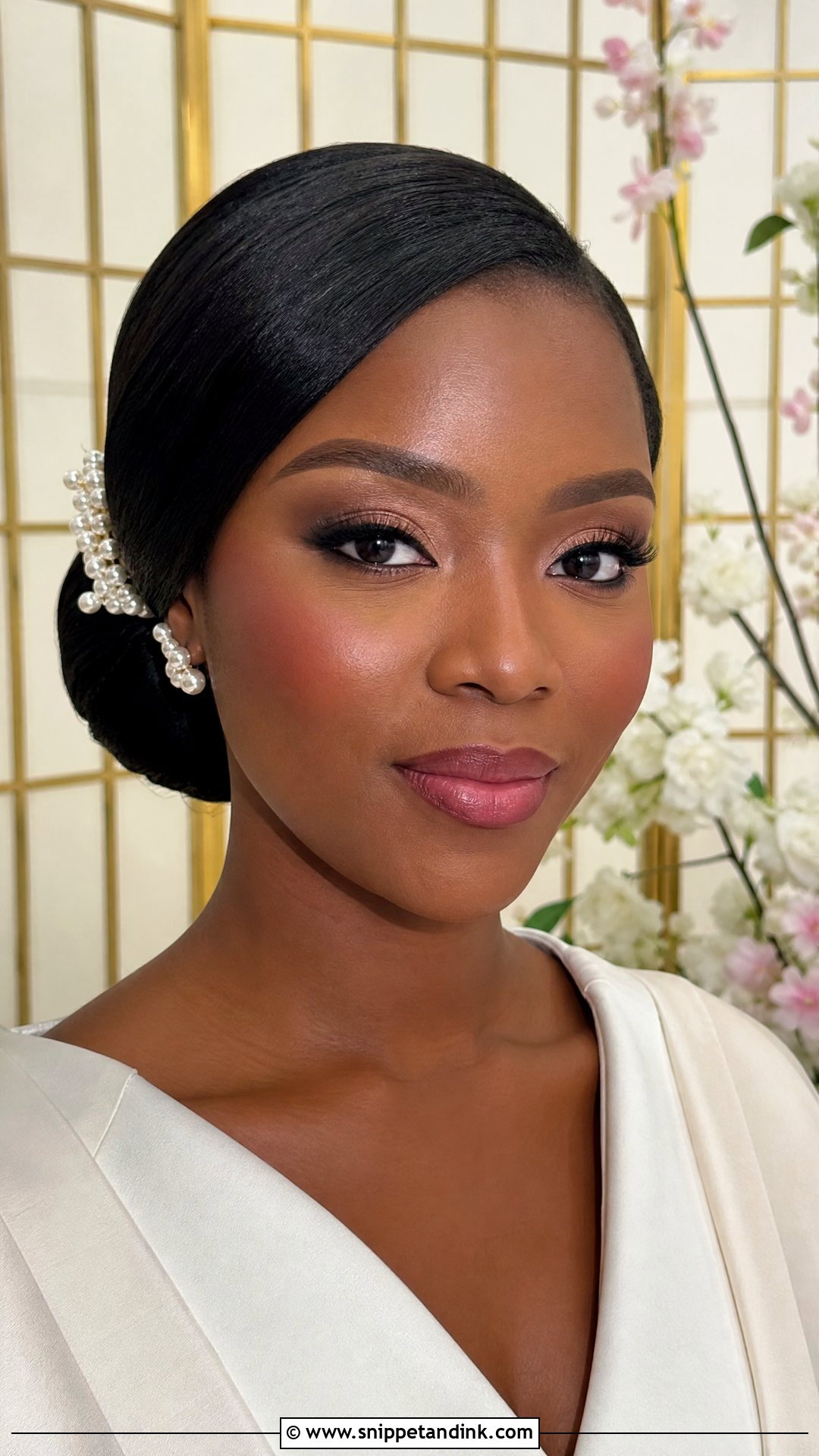
Humid summers, long ceremonies and oily skin are the reasons I lean matte. The aim isn’t a flat face but a blurred finish that holds. I use a pore-smoothing primer and a long-wear foundation that still looks like skin, then soft contour, muted pink blush and a satin highlight only on the top of the cheekbone so there’s some dimension left. Matte taupe and brown go on the lids with a thin liner, and lashes add length rather than bulk. A soft-matte rose, red or peach nude finishes the lips. On very dry or mature skin I’d steer away from full matte, because it settles into fine lines by the afternoon and a satin base serves better.
9. Peach Japanese Wedding Makeup
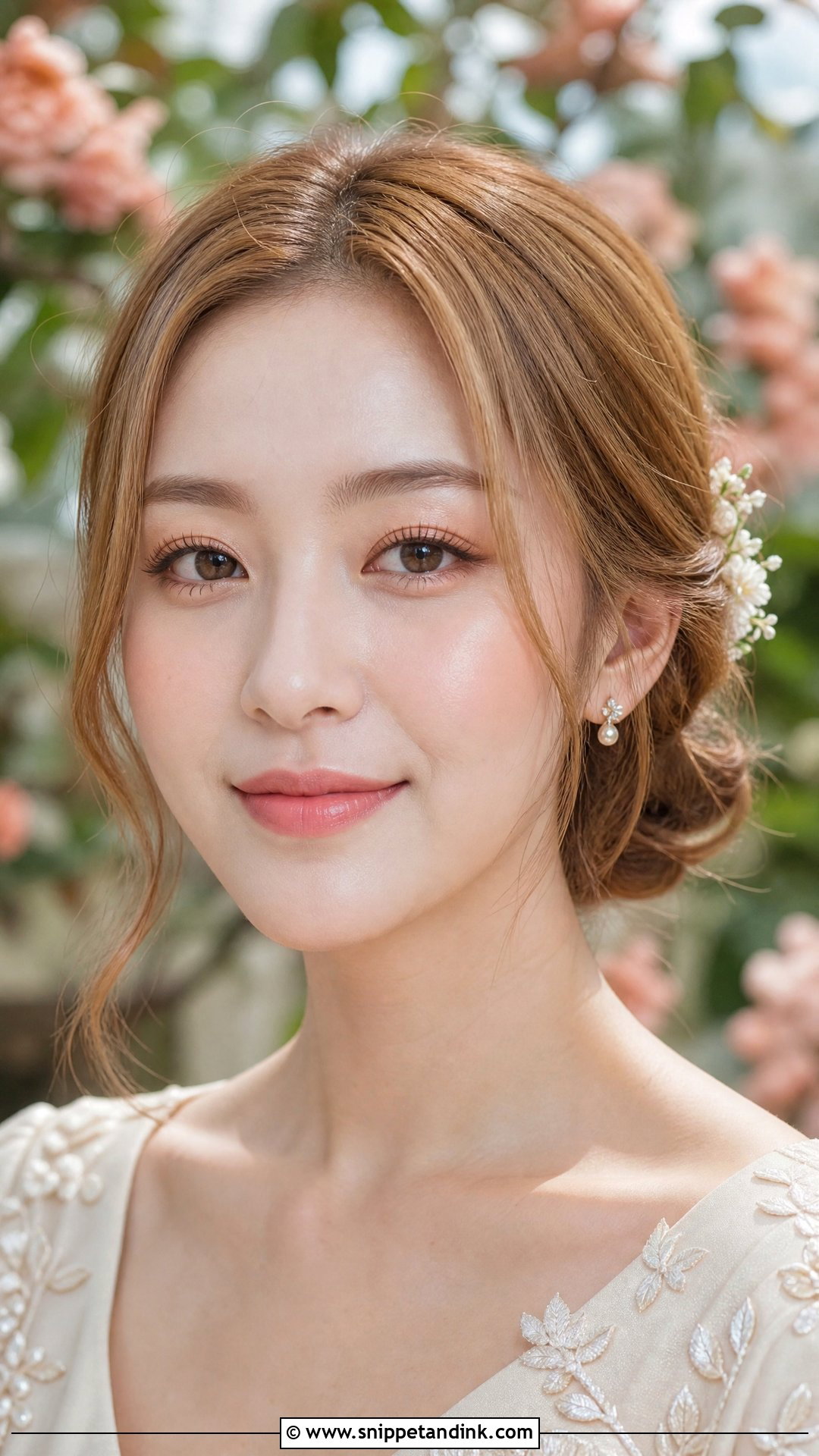
Peach flatters a wide range of undertones, which is why I use it so often for daytime ceremonies and brides in ivory, blush or warm-toned kimono. Fresh satin base and soft concealer, then peach blush as the main color, swept from the apple slightly upward. Peach beige and warm champagne on the lids, soft brown liner, lifted natural lashes and a peach pink or coral nude lip. The trap is going too orange. On cooler skin I mix a little pink into the peach so it doesn’t look like sunburn in photos.
10. Rose Japanese Wedding Makeup
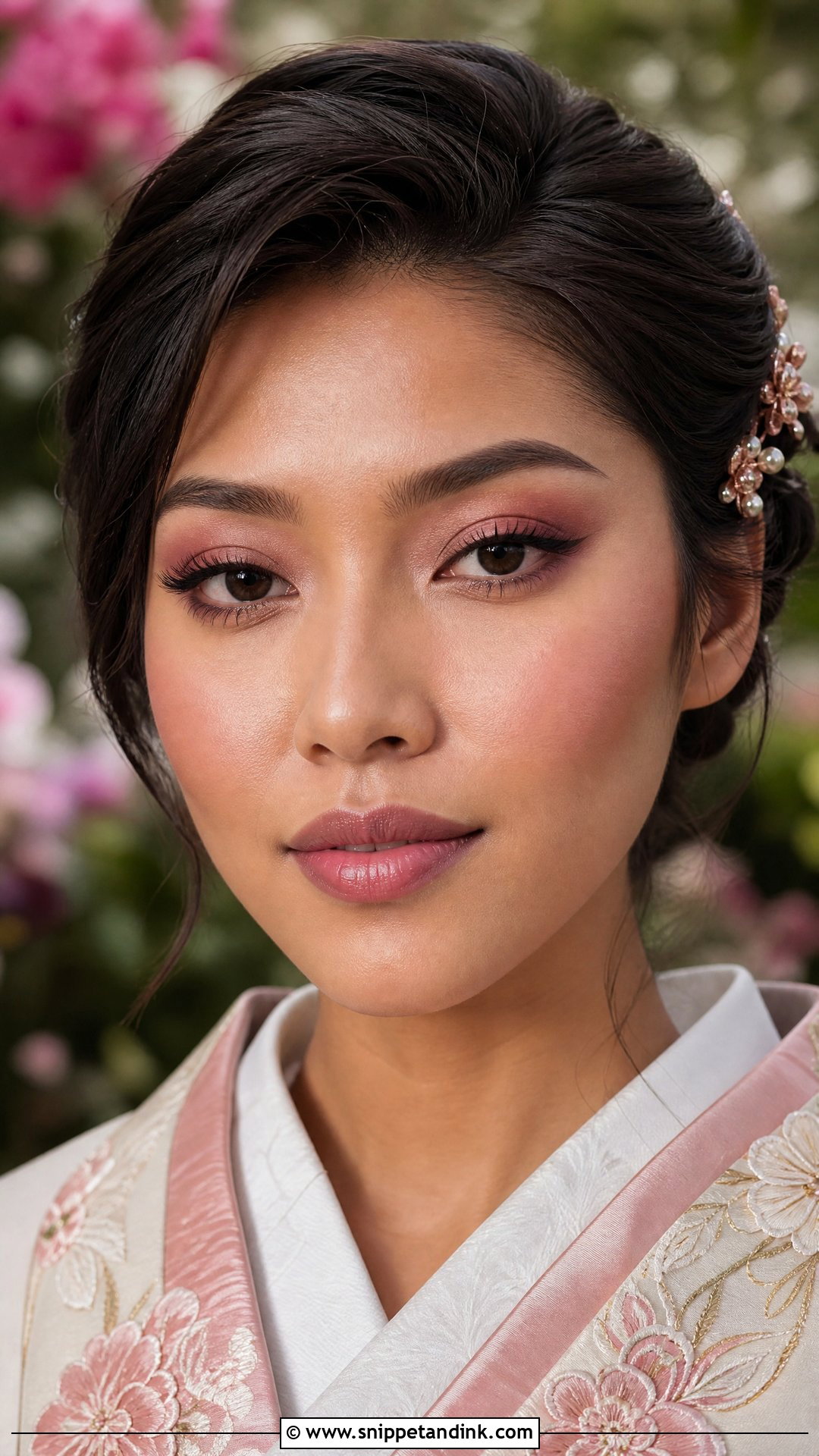
Rose sits between romantic and bold without tipping into either. Rose Japanese wedding makeup works with traditional robes and modern dresses alike, and I build it on a smooth, luminous base with a cool or neutral rose blush diffused until it reads as a natural flush. Dusty rose, mauve brown and pale champagne shape the eyes, with brown liner for gentle definition. I scale the depth of the rose to the skin: softer tones on very fair skin, richer berry rose on deeper skin, where a pale rose can turn chalky. A rose satin lip or blurred stain finishes it, and it holds up well in close-ups.
11. Red And Gold Japanese Wedding Makeup
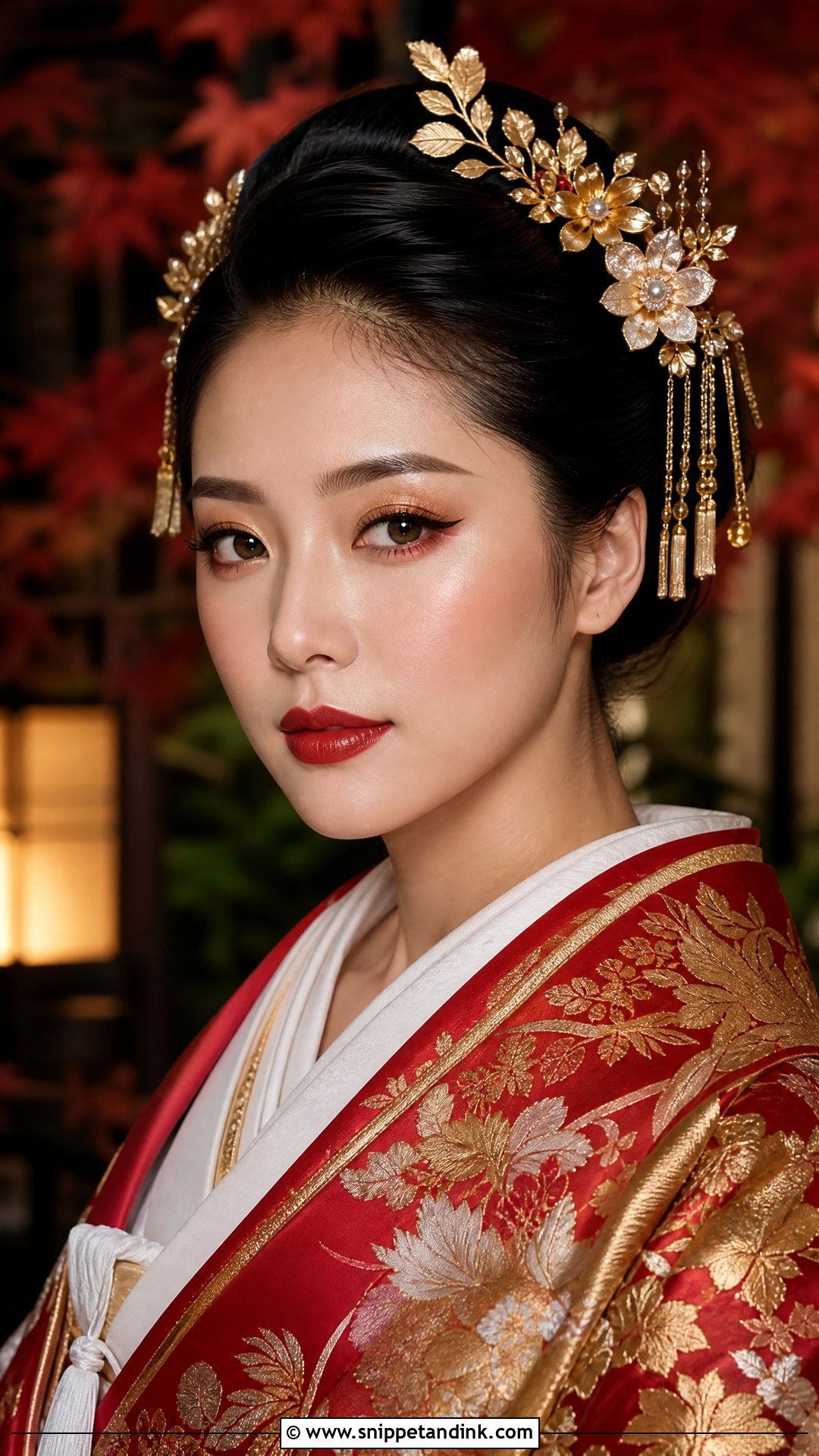
This one belongs with a bold iro uchikake or an ornate reception outfit, and it needs restraint to stay refined. Satin base, soft contour and a warm blush that doesn’t fight the eyes. Pale or antique gold goes on the lid, deepened with warm brown at the outer corners, plus a small red accent under the outer lower lashes as a nod to traditional eye makeup. I keep the liner clean and slightly lifted. Classic red on the lips is the obvious partner, though a deep rose red is kinder if the bride rarely wears lipstick. Watch the gold: a yellow gold shadow can look brassy next to cooler metallic thread, so I match it to the actual embroidery.
12. Plum Japanese Wedding Makeup
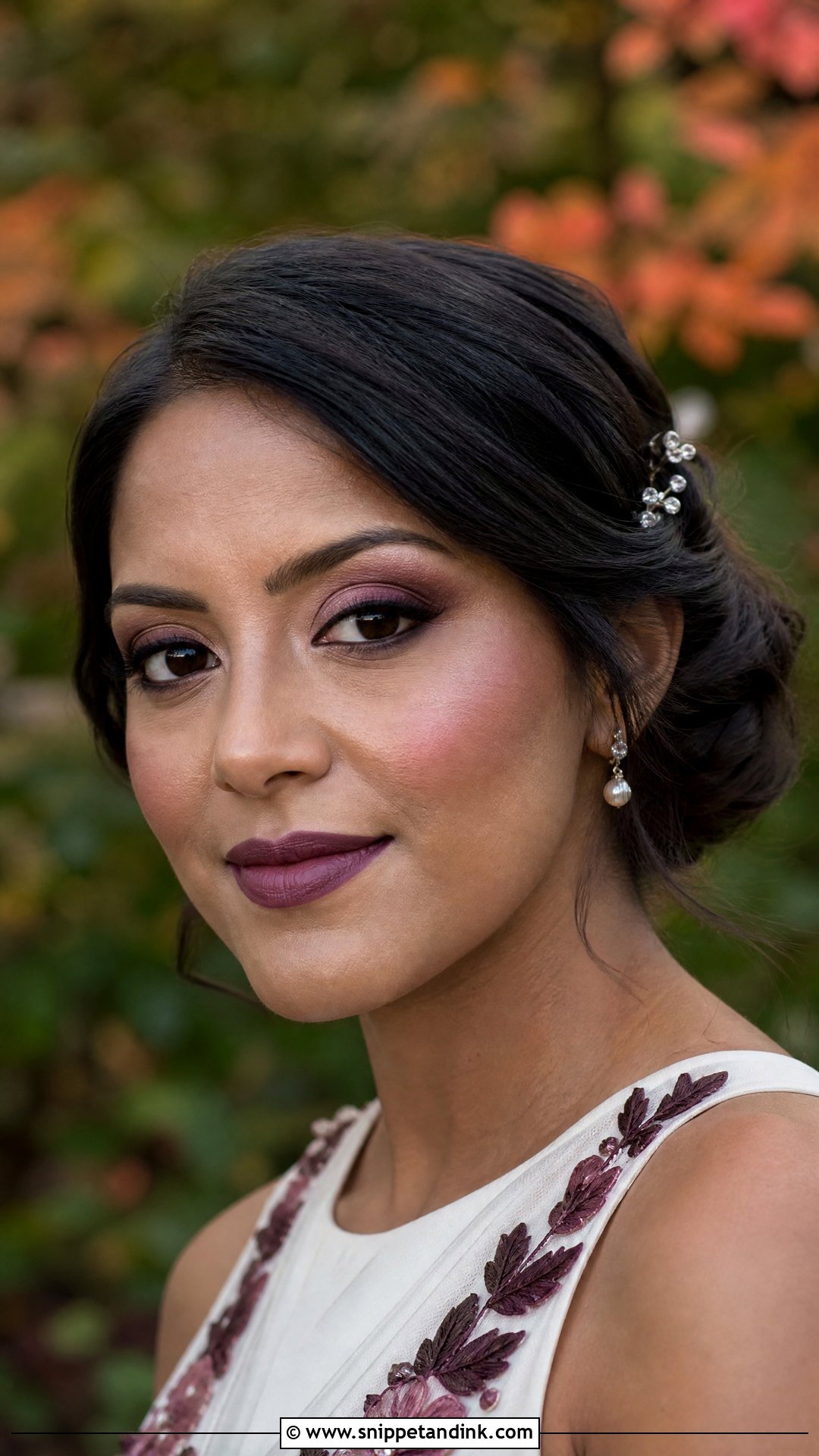
Plum gives you color without bright red, and it suits fall weddings and evening receptions. I start with a polished satin base and a muted mauve or rose blush. Soft plum, brown plum and champagne go on the eyes, blended carefully, because plum turns bruised-looking fast if it’s packed under the lower lashes. I keep it mostly on the lid and outer corner. Dark brown liner instead of black keeps it soft, and lashes with more length at the outer corners give a graceful lift. Finish with a plum rose, berry stain or muted wine lip, edges slightly diffused for a modern feel.
13. Pink Japanese Wedding Makeup
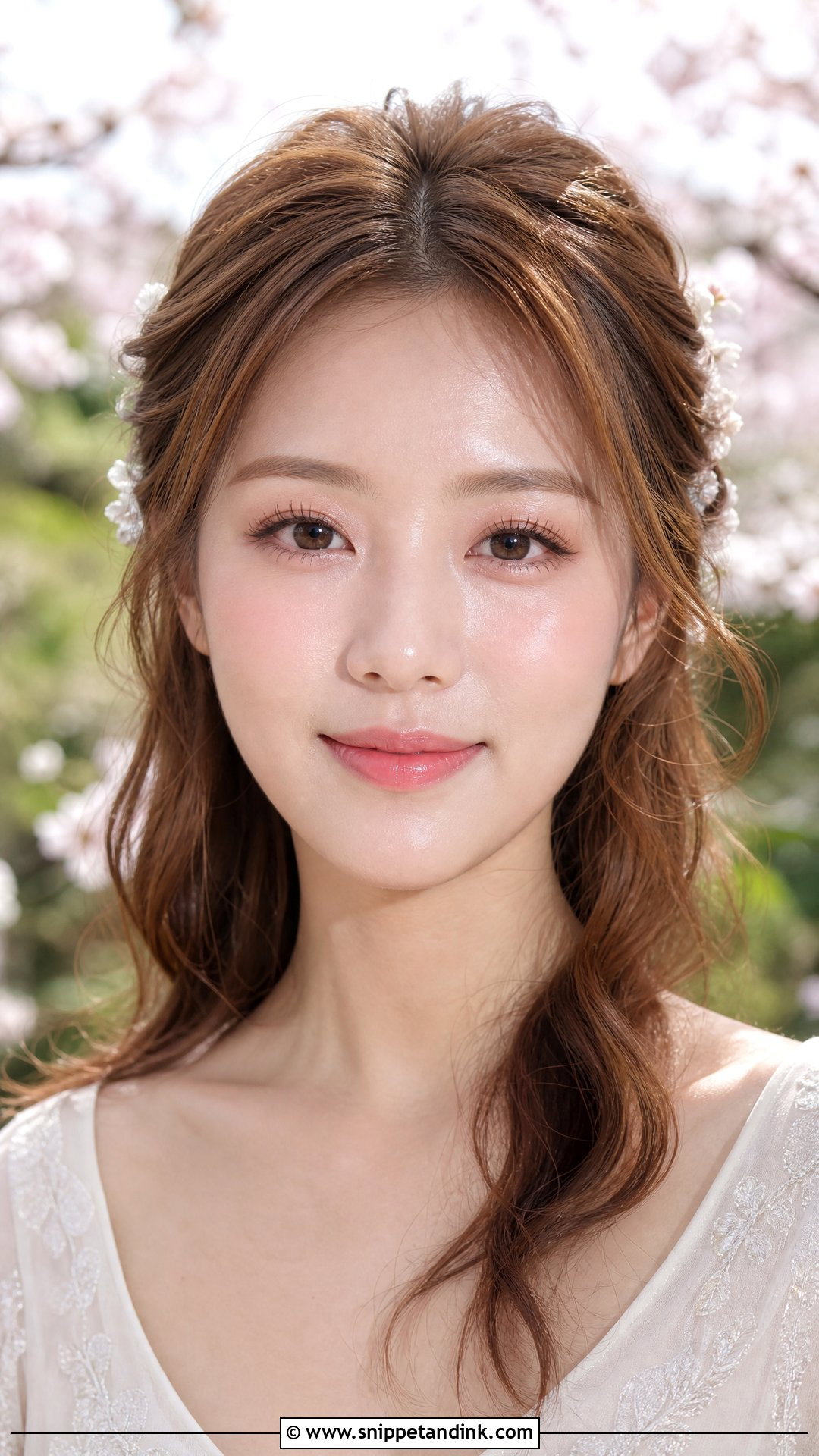
The pinks I use here are soft and wearable, never candy bright. A hydrated base and light-reflecting foundation come first, then baby pink or warm pink blush high on the cheeks, blended until it melts into the skin. Pink beige and champagne on the lids with soft brown for shape, a thin brown liner and curled lashes open the eye. Sheer pink, rose pink or a soft gloss on the lips. My one caution: on brides whose eyes go red when they cry, pink shadow can make them look tired, so I add more brown and keep the pink to the center of the lid. Spring ceremonies and cherry blossom portraits are its natural home.
14. Nude Japanese Wedding Makeup
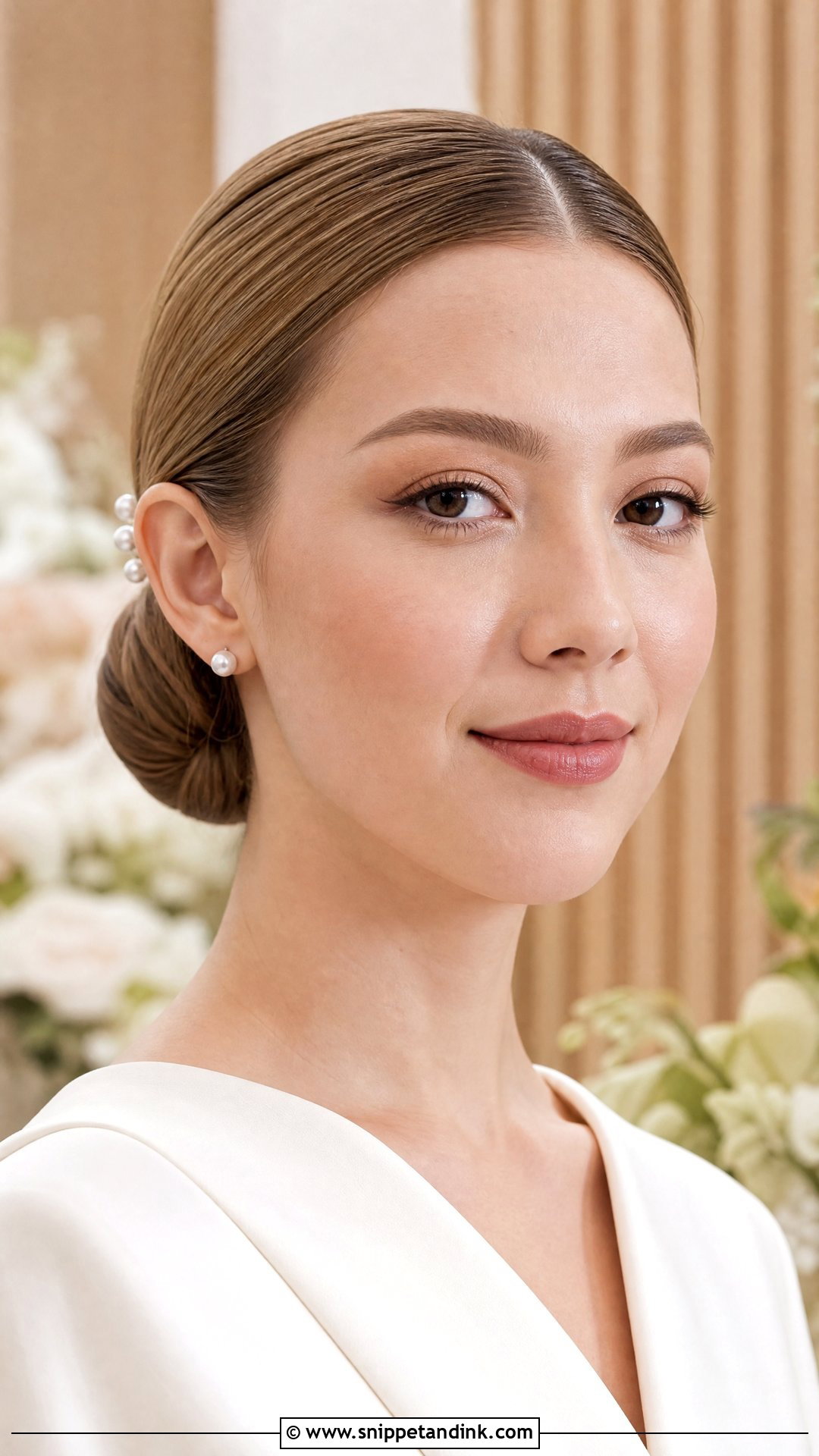
Nude looks simple and is the hardest one here to get right. The shade has to match the undertone, or it washes the bride out against white silk. I use a natural satin base, light contour and a soft beige peach blush, with cream, taupe and soft brown giving the eyes gentle dimension. Upper lashes get tightlined, natural lashes go on, and brows are groomed softly straight. For lips I pick between nude rose, beige pink, caramel or warm brown nude depending on skin depth, then add a little gloss or satin so the mouth doesn’t disappear in photos.
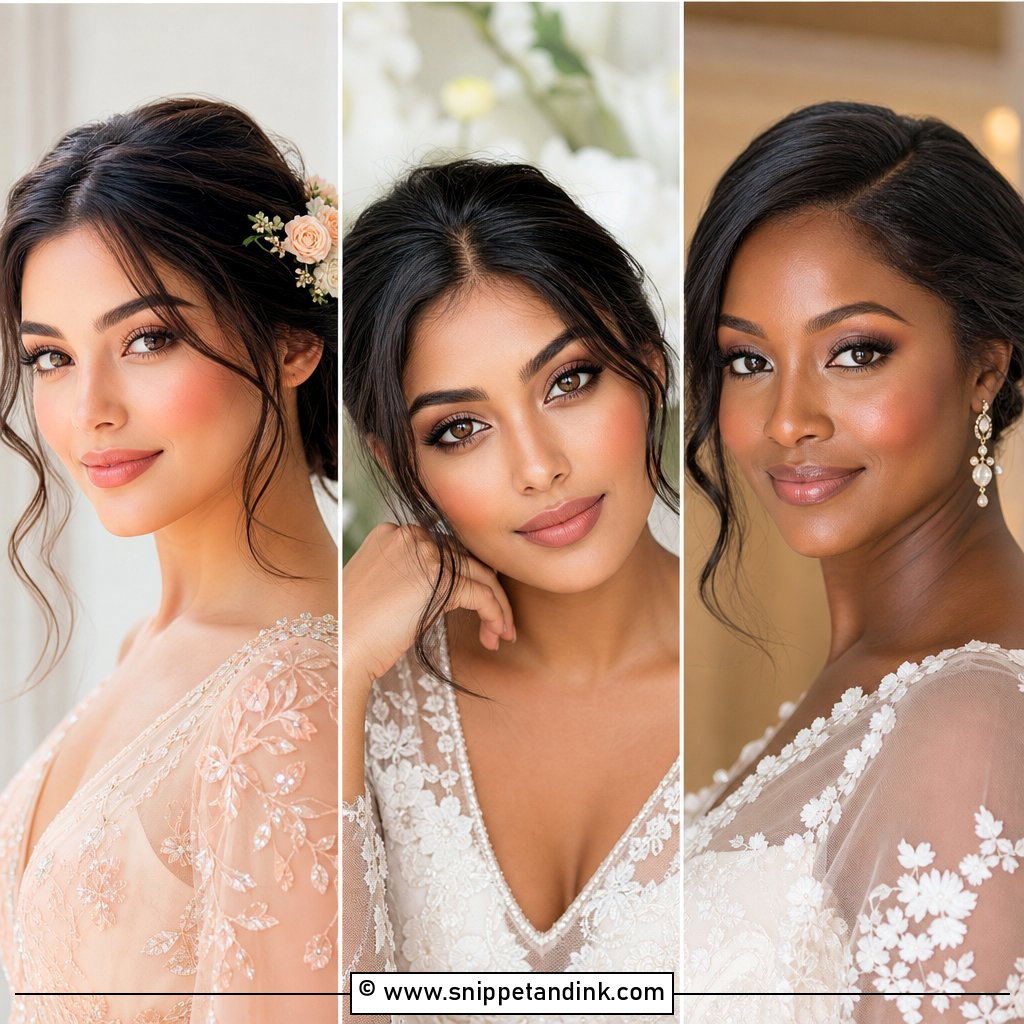
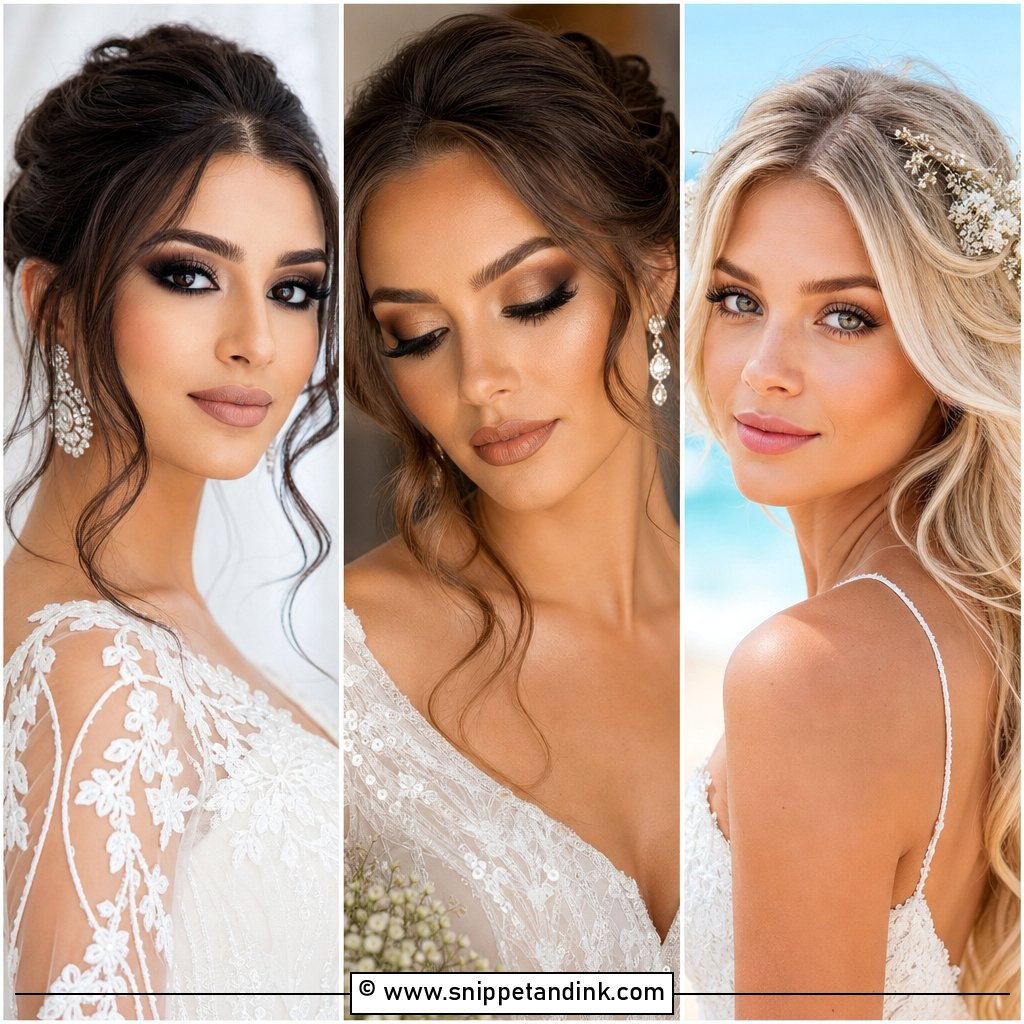
15. Smokey Japanese Wedding Makeup
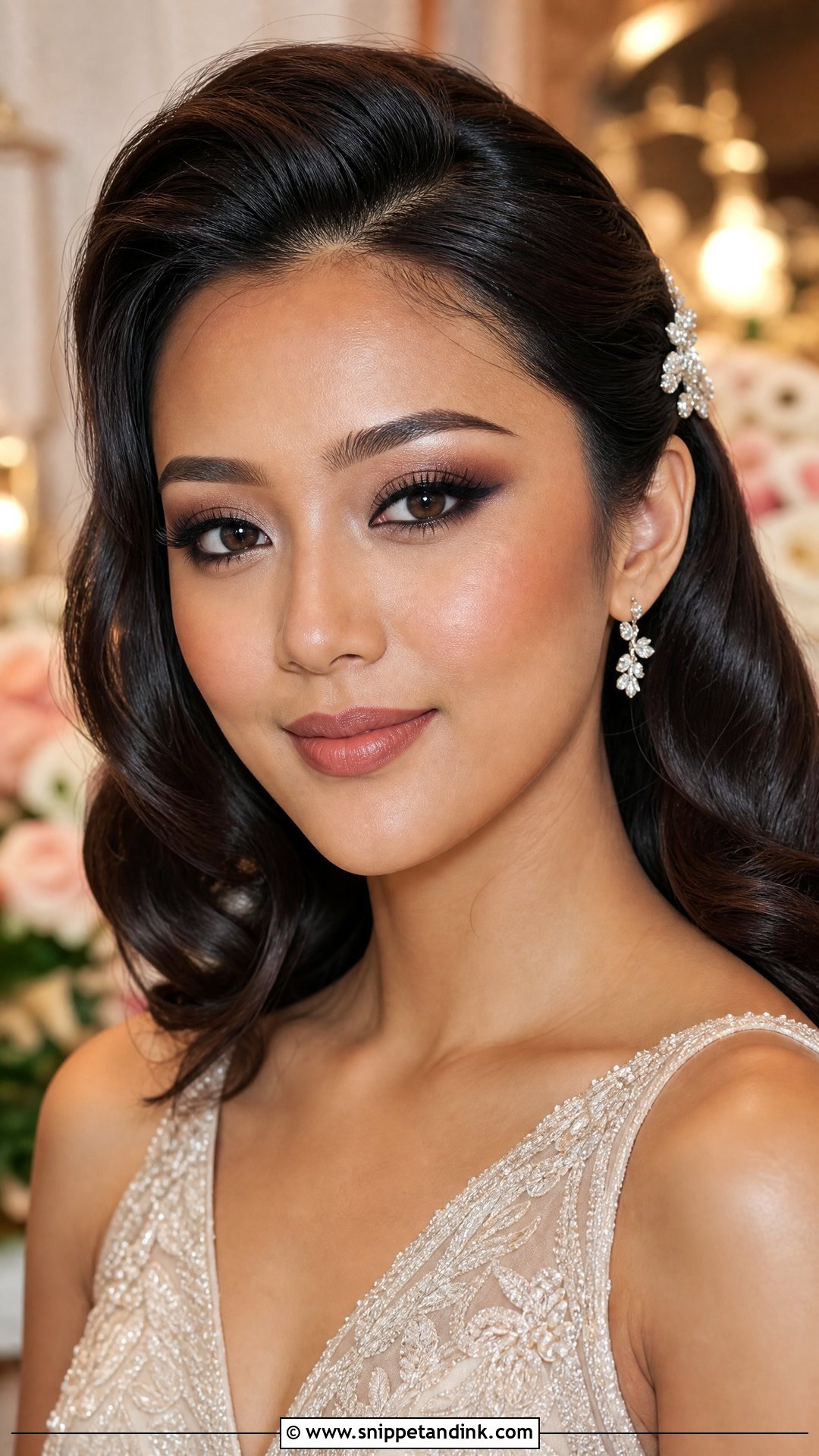
A smoky eye can be bridal if it’s soft and controlled. I avoid heavy black and work with taupe, brown, plum or charcoal brown, placing the deepest color right at the lash line and blending upward. Satin foundation, soft contour and neutral blush keep the rest of the face balanced. Clean liner, lashes that lift without hiding the shadow and a quiet lip in nude rose or muted mauve finish it. I’d skip it for a daytime ceremony under a hood, since the headpiece already casts shade around the eyes and smoky shadow on top can read as tired. It belongs to evening weddings, reception gowns and brides who want their eyes to lead in photos.
16. Minimal Japanese Wedding Makeup
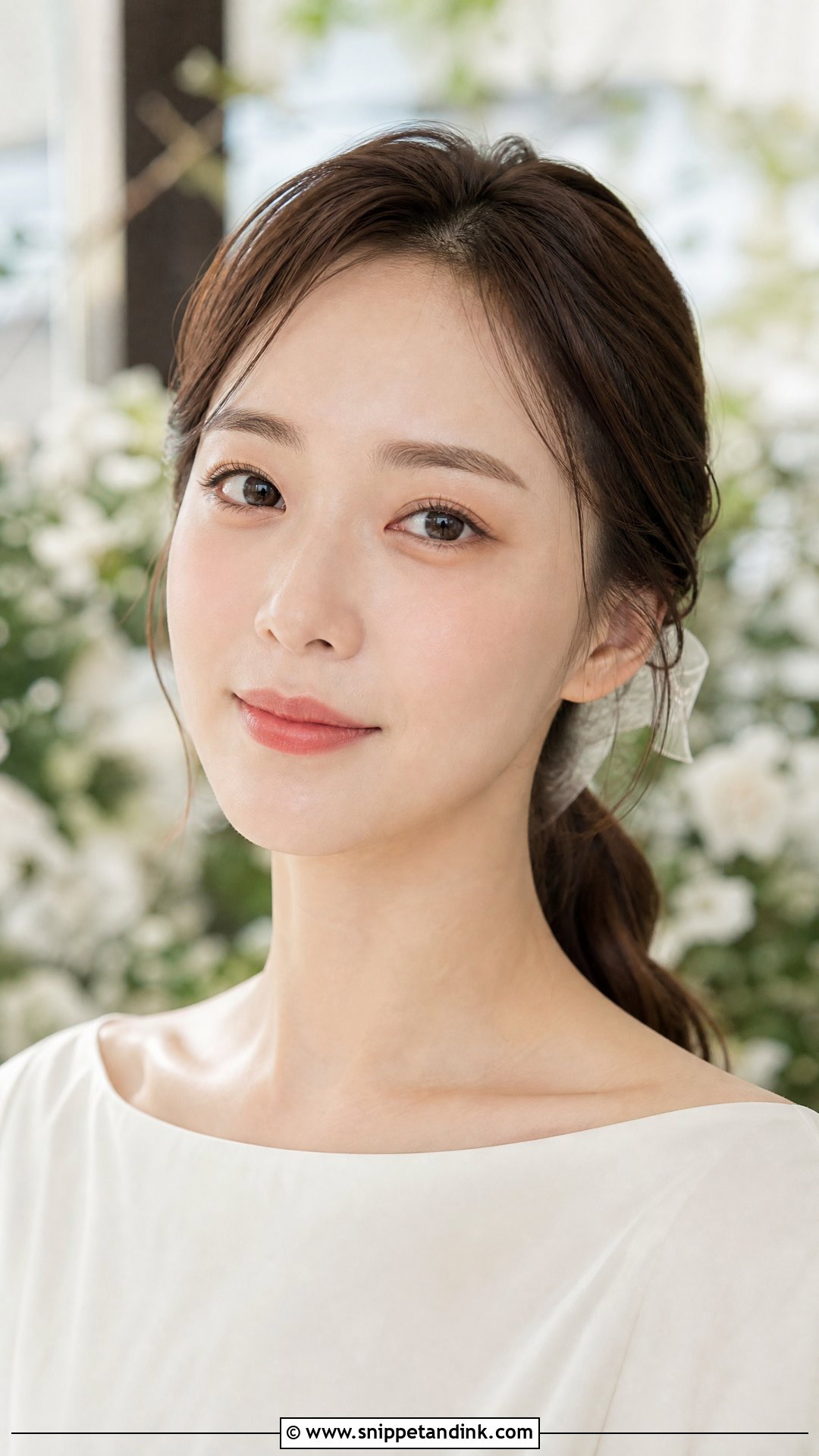
Minimal still needs planning, or it simply vanishes on camera. I use a skin-like base, light concealer and the softest powder only where shine needs control, then a sheer cream blush in peach or rose pressed in with fingers. Beige shadow, curled lashes and a tiny amount of brown liner at the outer corners keep the eyes bright, and brows are just brushed up. A sheer rose or soft coral tint goes on the lips. The one thing I won’t let a minimal bride skip is mascara. Without it, eyes read as closed in group photos taken from a distance.
17. Luxury Japanese Wedding Makeup
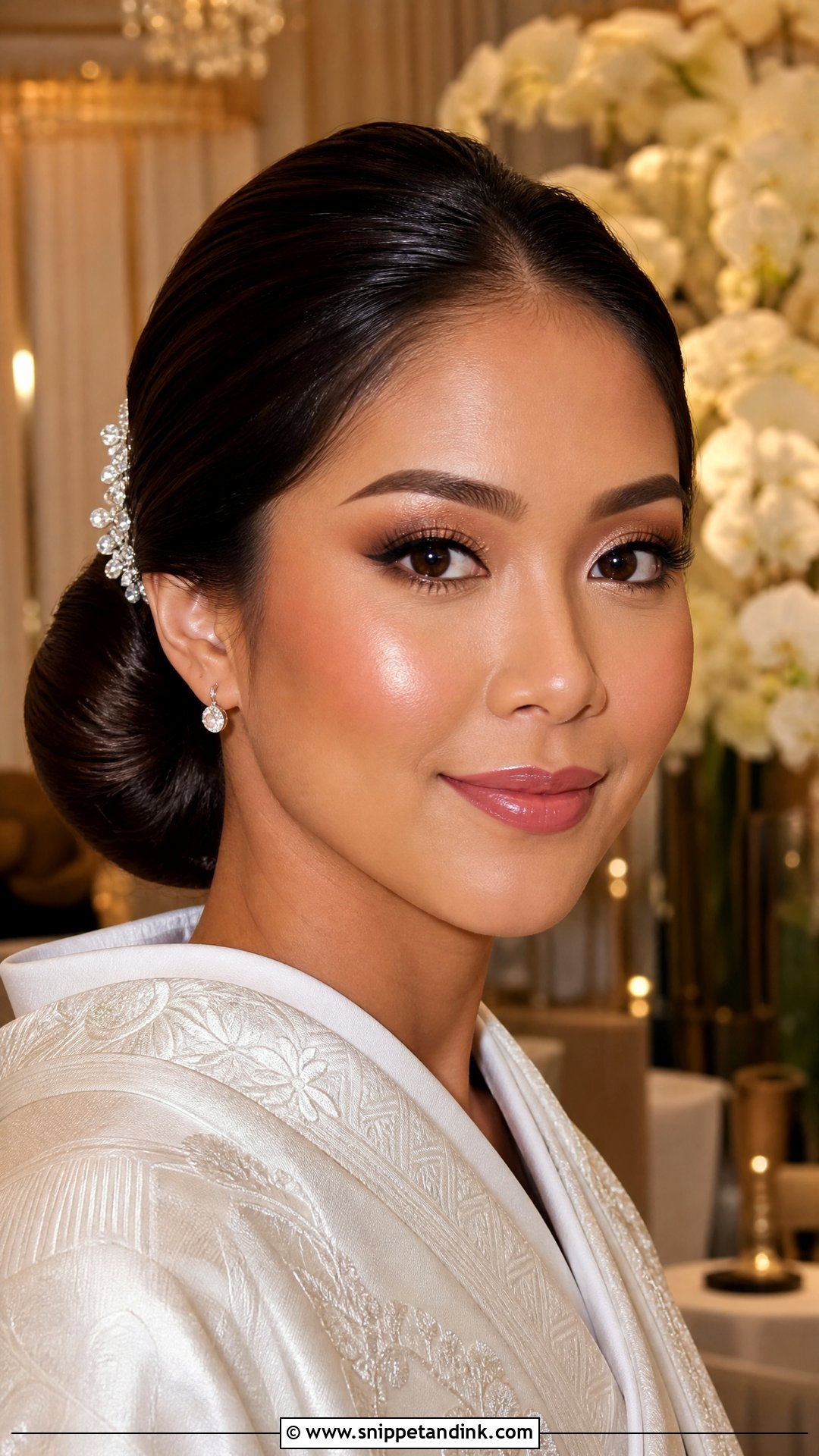
Here the finish is sculpted and precise without looking heavy, which suits formal venues, designer gowns and high-end portraits. I perfect the skin with satin foundation and careful concealer, then contour softly around the cheekbones and jaw. Blush comes in rose beige, muted peach or soft terracotta. Champagne, bronze taupe and deep brown go on the eyes, blended until there are no hard edges, with a thin lifted liner and individual lashes placed to suit the eye shape. Satin rose, soft red or nude mauve on the lips. Most of the time goes into blending, and I check every edge in daylight before the bride leaves the chair.
18. Summer Japanese Wedding Makeup
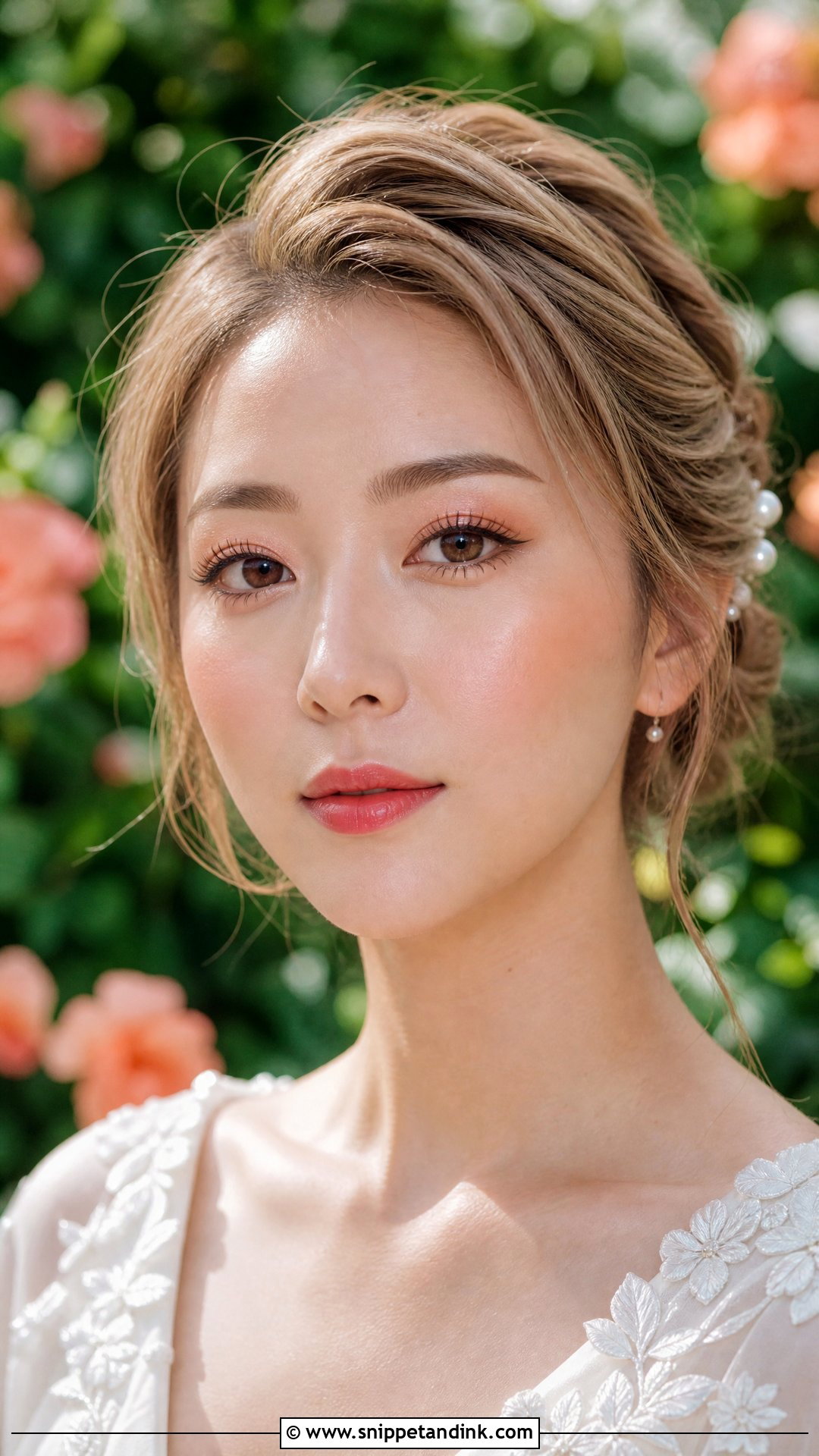
Heat changes how I build everything. Lightweight skincare first, then a gripping primer and a long-wear foundation or skin tint thin enough to breathe. I set the center of the face and leave the cheeks softly glowing, with coral, peach or warm pink blush that looks right in summer light. Champagne, bronze beige or soft peach on the eyes, with waterproof brown liner and waterproof mascara, because layered robes in summer are warm and sweat plus tears will move anything that isn’t waterproof. I avoid glossy lids completely, since they crease within the hour in heat. A peach rose stain on the lips wears down evenly instead of leaving a ring.
19. Winter Japanese Wedding Makeup
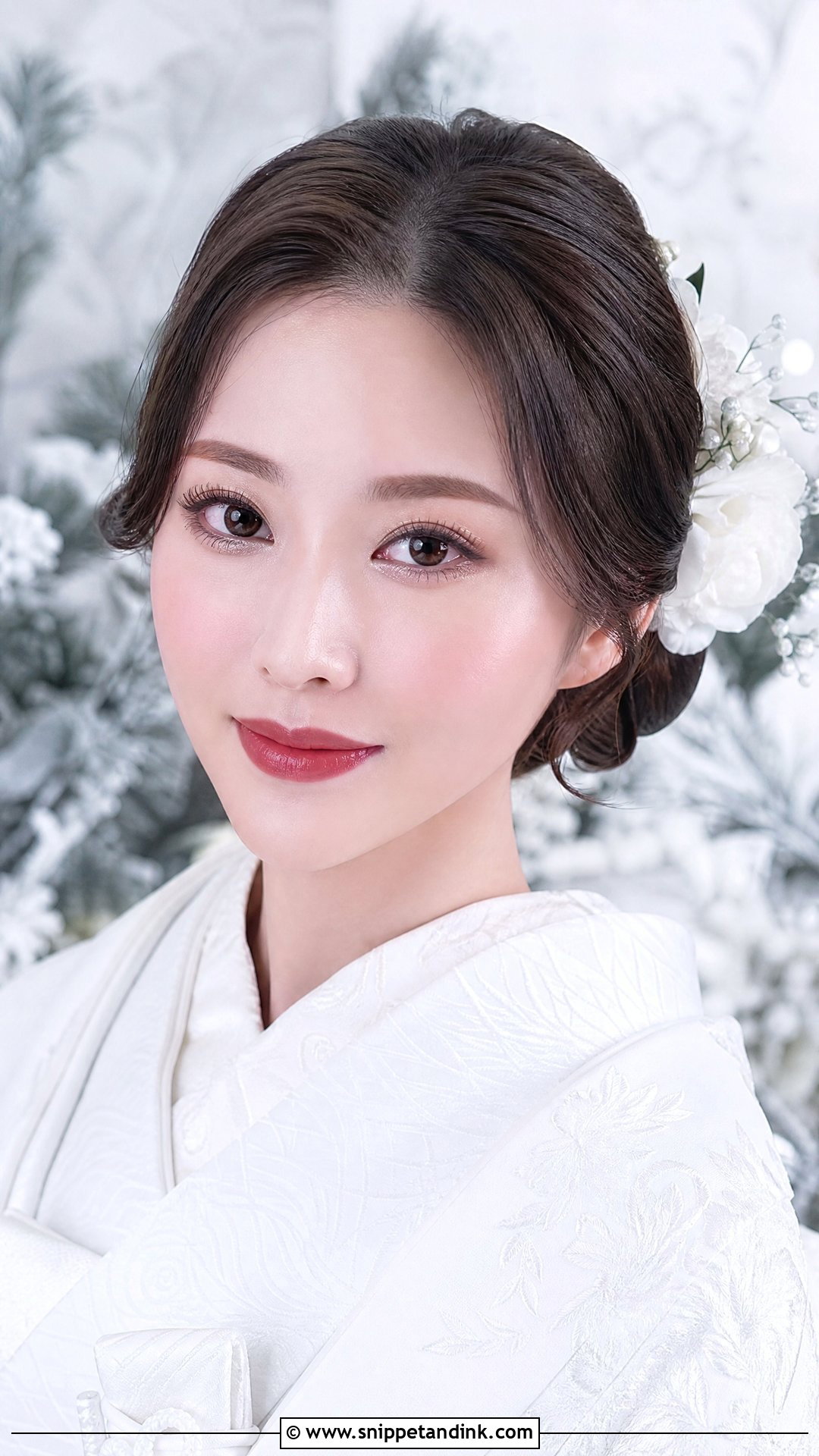
Cold light and heavier fabrics let me go slightly richer. Winter Japanese wedding makeup sits well on a smooth satin or velvet base, with rosy, mauve or soft berry blush to bring back the warmth cold air takes out of the face. Pearl champagne, cool taupe or plum brown on the lids with a fine black-brown liner, and lashes kept lifted and defined. Lips go rose red, berry rose or soft wine. A delicate highlight on the cheeks and inner eyes catches candlelight at evening receptions. Winter skin is often dry, so I prep with a richer moisturizer and use less powder than I would in summer.
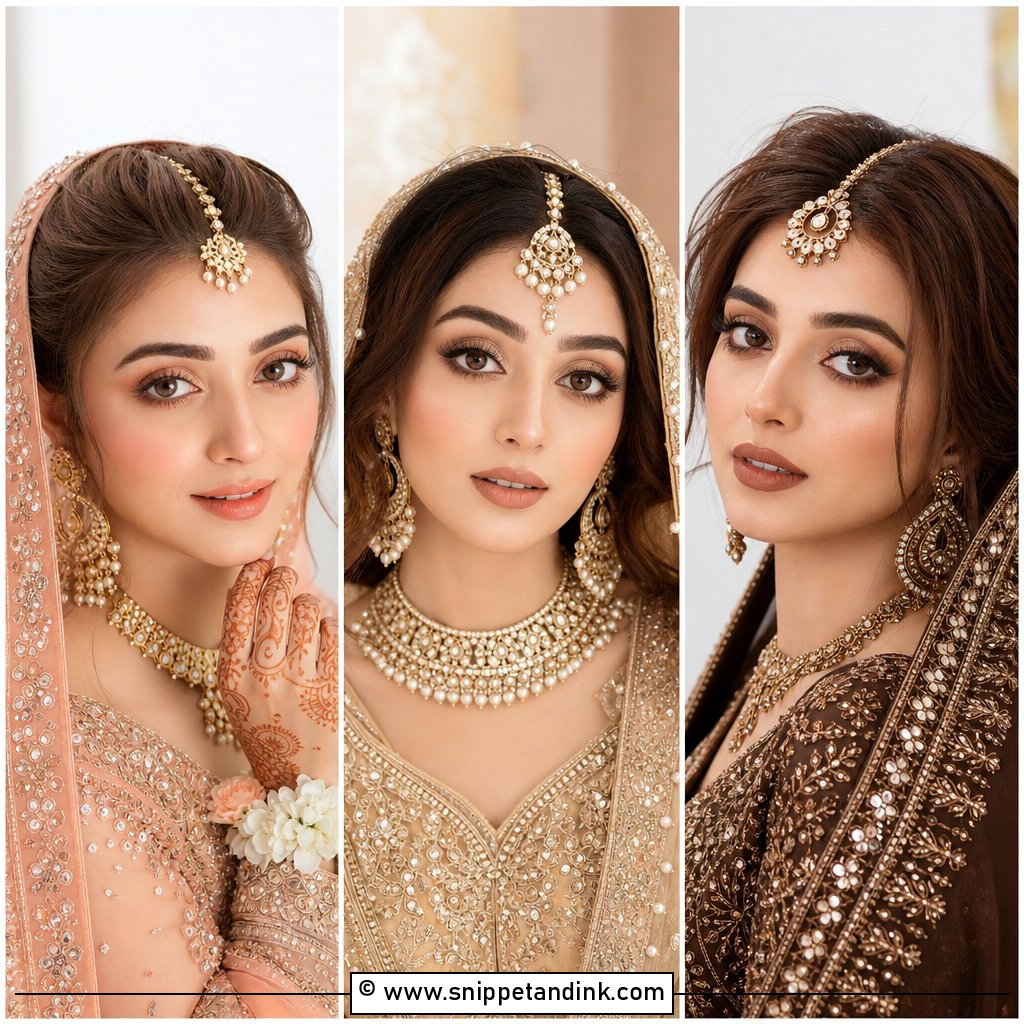
20. Japanese Wedding Guest Makeup
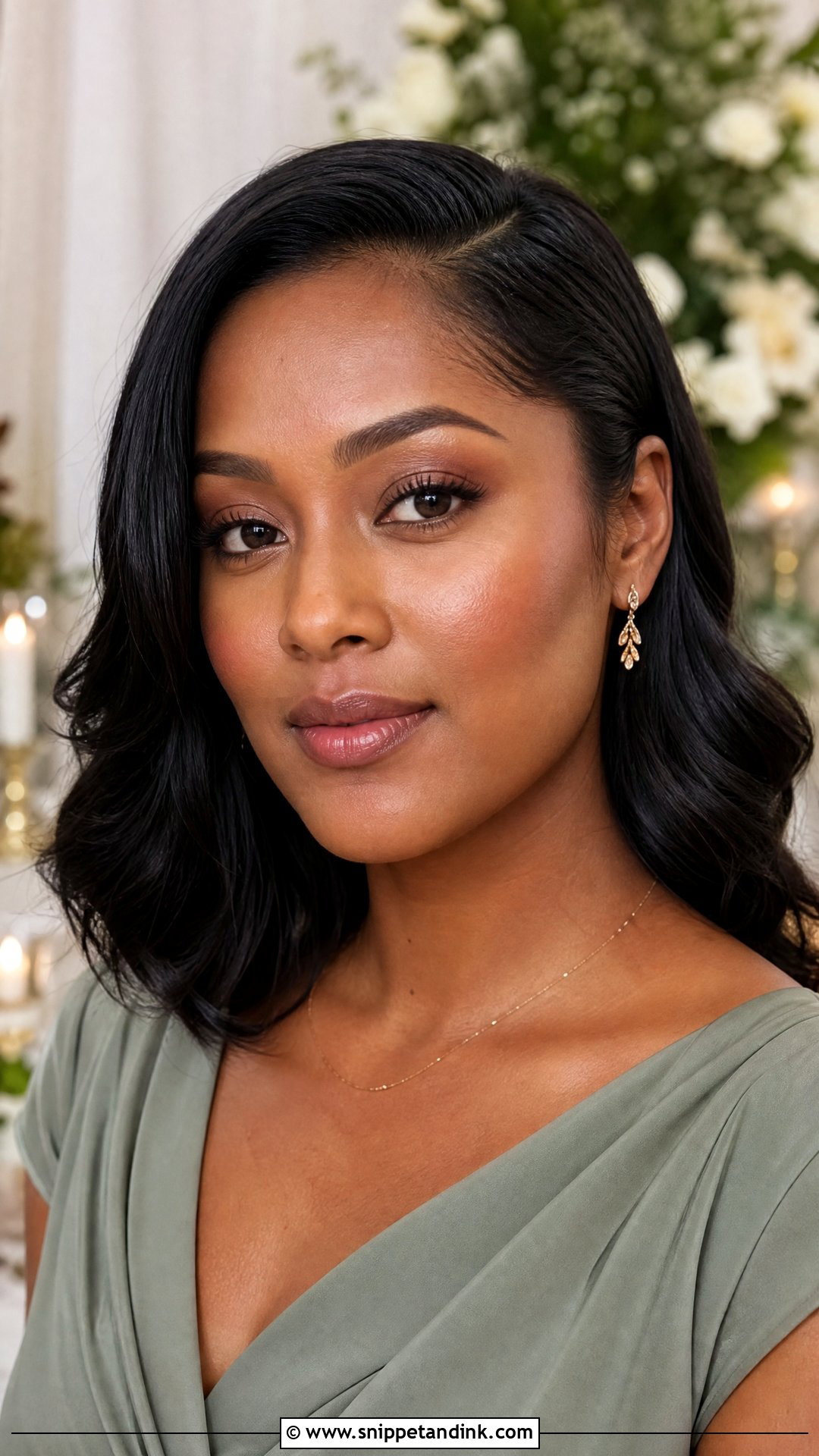
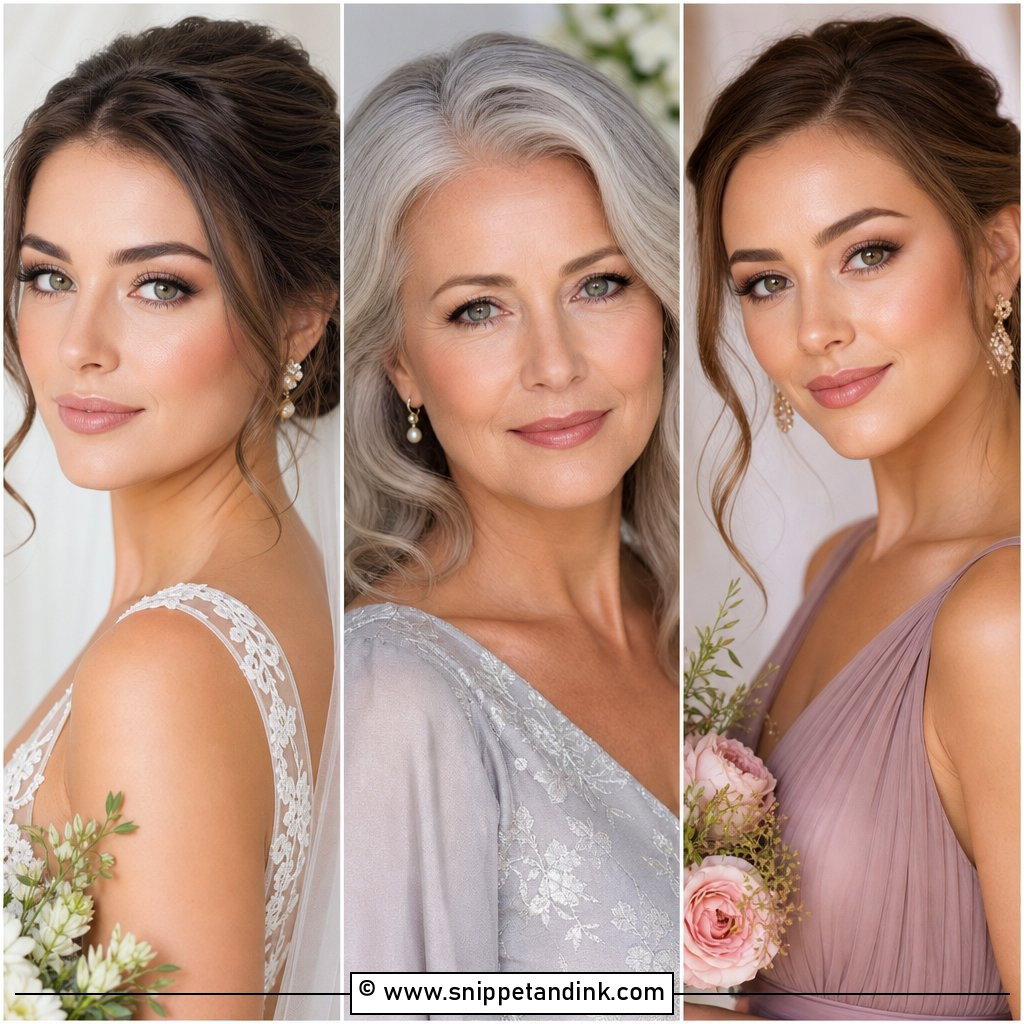
Guests should look polished without pulling focus from the bride. I’d keep the base soft satin because it reads refined in photos, with gentle contour, peach or rose blush and a small amount of highlighter. Neutral brown, champagne or soft rose on the eyes with clean liner and natural lashes. Unless the dress code is formal evening, hold back on drama. On the lips, rose beige, muted coral or a sheer red stain all wear well for hours. If the bride is wearing a classic red, I’d keep a guest’s lip softer so the two don’t read as matching in group shots.
Protecting a White Silk Collar From Foundation
A kimono collar sits close to the jaw at the front and is pulled away from the neck at the back, which leaves the nape on show. That creates two jobs most Western bridal makeup ignores: matching the neck and nape to the face, and stopping foundation from rubbing onto white silk. A smudge of beige on a shiromuku collar shows in every portrait and is very hard to lift from the fabric on the day.
How I set the jaw and neck
I keep foundation thin along the jawline and blend it down rather than building coverage there. Then I press translucent powder into the jaw, under the chin and anywhere the collar will touch, and give it a minute to settle. If your robes are rented, ask the studio or dresser what they allow, since rental pieces often come with rules about makeup marks.
The nape is part of the face
The back of the neck shows clearly in side and back portraits. I even out the tone there with a light layer of the same base, so the face doesn’t look like it stops at the jaw. Full traditional white makeup is a separate specialist art, and if you want it, book someone who does it regularly rather than asking a general bridal artist to improvise.
Finally, ask your dresser to put the robes on after the makeup is finished and set. Dressing over a fresh, tacky face is how most collar marks happen.
Your Kimono Sets the Palette, Your Skin Sets the Finish
The robe usually decides the palette and the skin decides the finish. A shiromuku leans toward smooth skin and a classic red lip, an iro uchikake can carry warmer eyes and richer color, and a modern gown opens the door to dewy skin and blurred lips. Guests do best with neutral eyes and polished skin. Whichever direction you take, test it at your trial in window light and with a flash, since the same face can look right in a mirror and flat in a photo. Choose textures that will last through the ceremony and any outfit change, and colors that still feel like you when you look back at the pictures.
You'll Like These Ideas:


Leave a Reply