
Minimal bridal makeup is the hardest kind I do, because there is nowhere to hide. With full glam, a heavier base covers a rough patch of skin; with a bare look, the skin itself has to be ready. What I’m after is a face that reads as you on your best morning, with enough shape that it doesn’t wash out under a photographer’s flash or a white veil. The twenty looks below run from almost nothing to a soft, neutral glam, and I’ve added notes on who each one suits, where it tends to fail, and what I’d adjust at a trial.
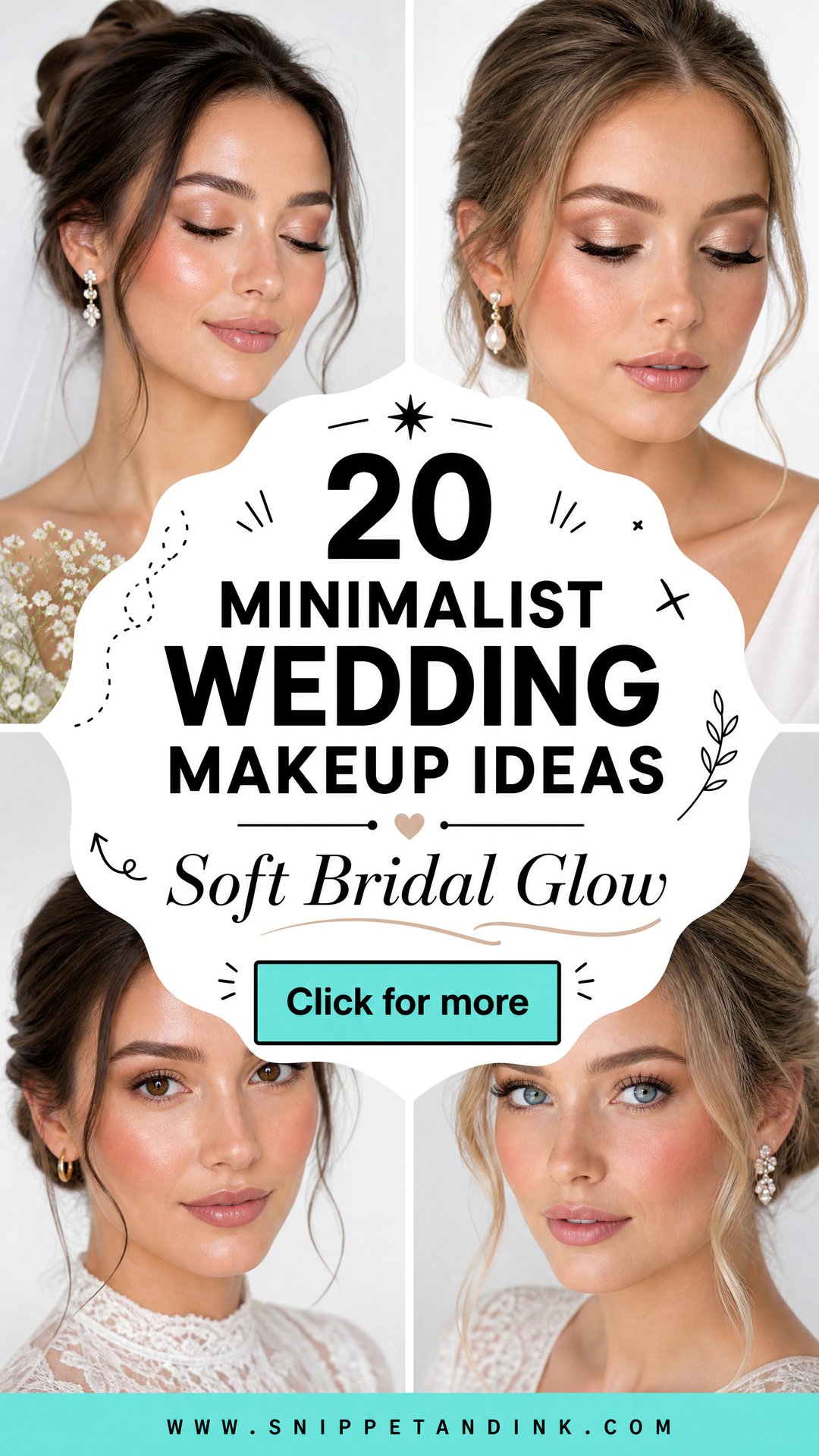
Why Bare-Looking Makeup Starts Weeks Before the Trial
With so little coverage, the skin you bring to the chair is the base. I ask minimal brides to settle their routine about six to eight weeks out and then leave it alone. A new acid, a facial with extractions or a first-time peel in the final fortnight is the most common reason I end up adding more foundation than either of us wanted.
- Keep to products your skin already knows in the last month. Purging and irritation show straight through a sheer base.
- Book any facial at least a week before, and ask for a calming treatment rather than extractions.
- Exfoliate gently two or three days before, not the night before, so lips and any dry patches are smooth but not raw.
- Brows tidied about a week out. Fresh waxing leaves redness that concealer only partly hides.
- Drink water and sleep properly the two nights before. It sounds trite, but dehydrated skin grabs onto base unevenly.
Saying How Much Is Too Much at Your Trial
Every bride’s idea of minimal is different, and the word alone doesn’t tell me much. The most useful thing you can do is bring two or three photos of yourself, not of models, where you liked how you looked: a friend’s wedding, a holiday, a good selfie. I read the finish and the depth of colour from those far more reliably than from a description.
During the trial, speak up early. If the base feels heavy at the first layer, say so then rather than after the lashes are on, because every later step is built around it. Ask me to show you the face in daylight and in a phone photo with flash. A look that seems strong in the mirror often reads just right on camera, and seeing that side by side usually settles the debate about whether to add a little more.
1. Natural Bridal Makeup
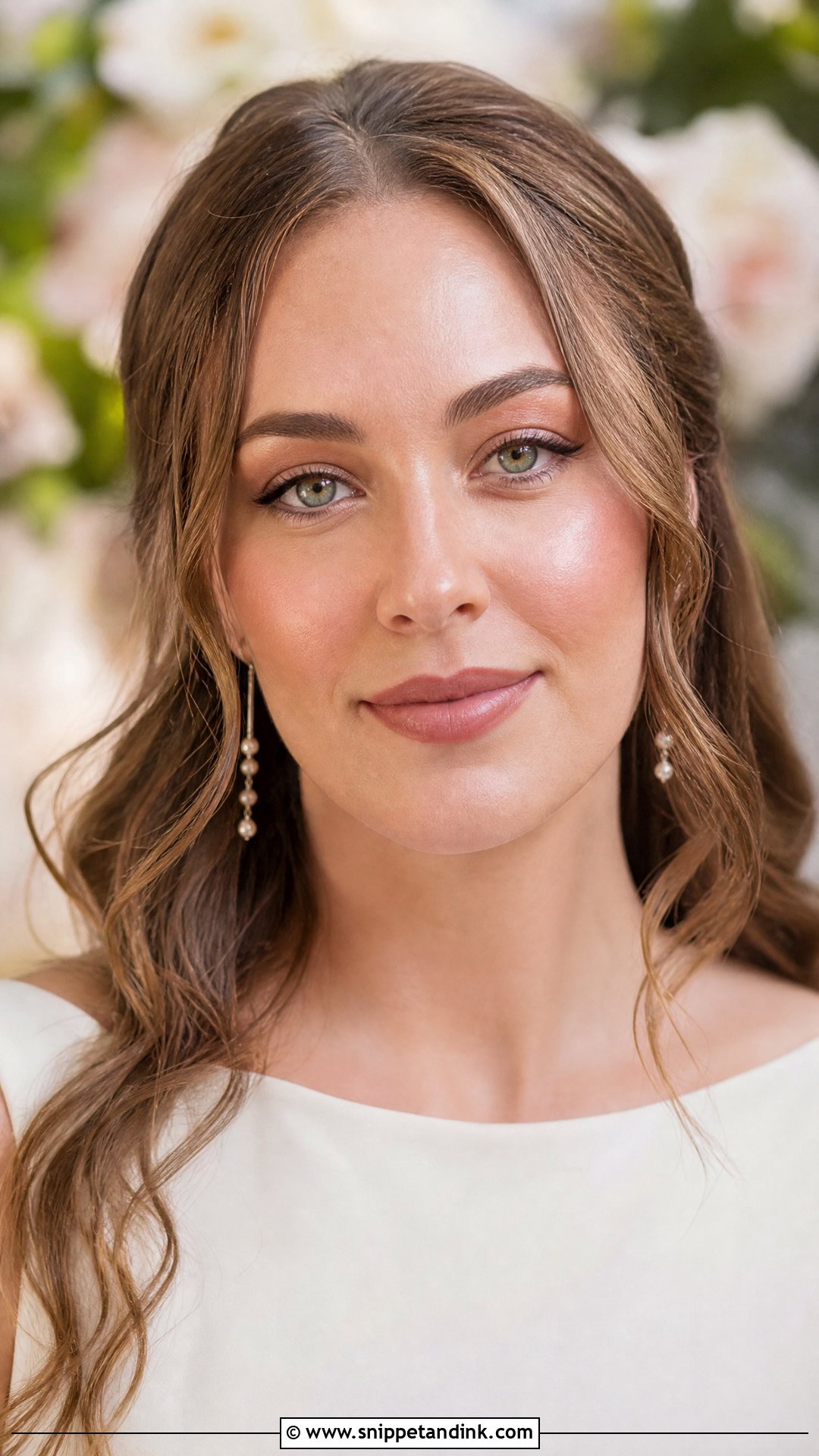
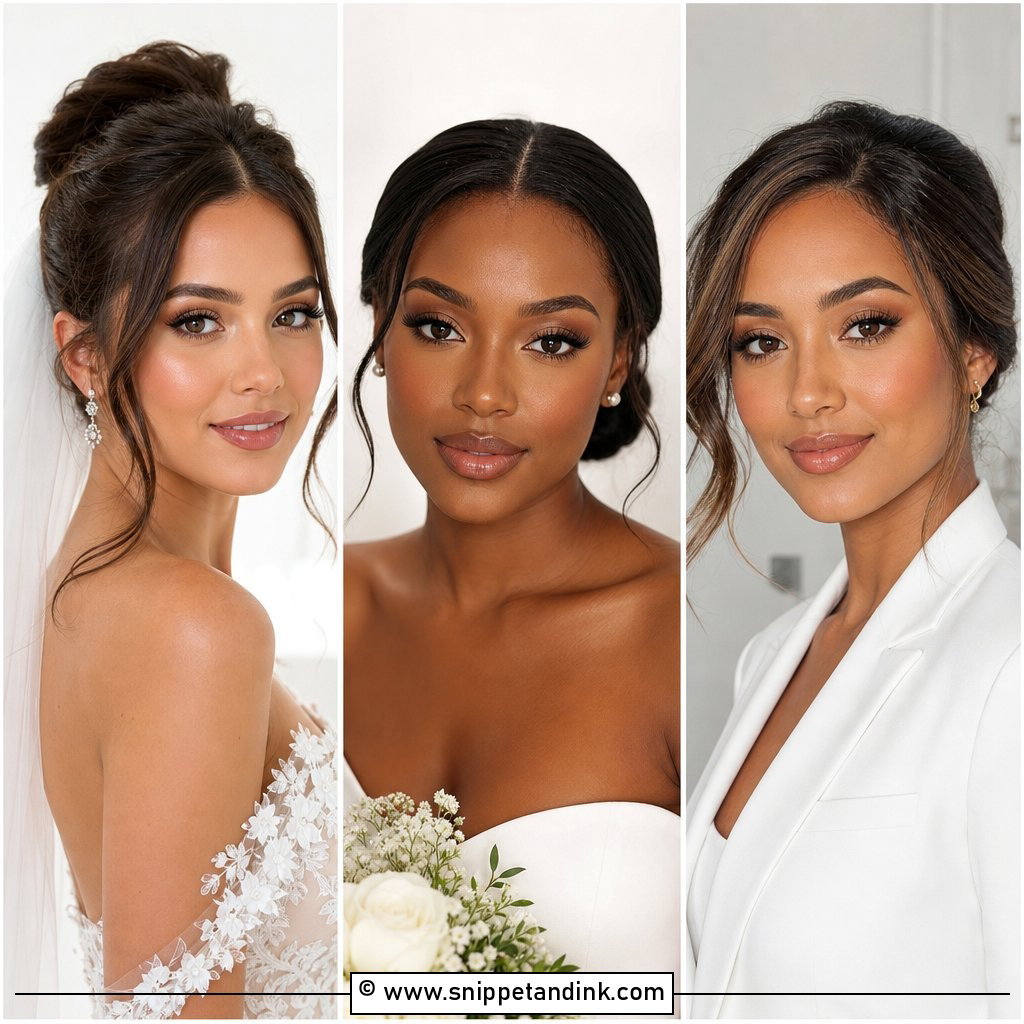
This is the look I’d start most minimal brides on, then adjust from. I even out redness around the nose and chin with a sheer base, and conceal only the spots that still show afterwards, since concealer everywhere is what makes skin look done. Eyes get a beige or soft taupe wash and a thin brown line pressed into the lash roots rather than drawn on top. Lifted lashes, brushed brows, peachy-pink blush and a satin nude lip finish it. Because nothing on the face is loud, it sits happily next to a sleek bun or loose waves and lets the dress do the talking.
2. Dewy Bridal Makeup
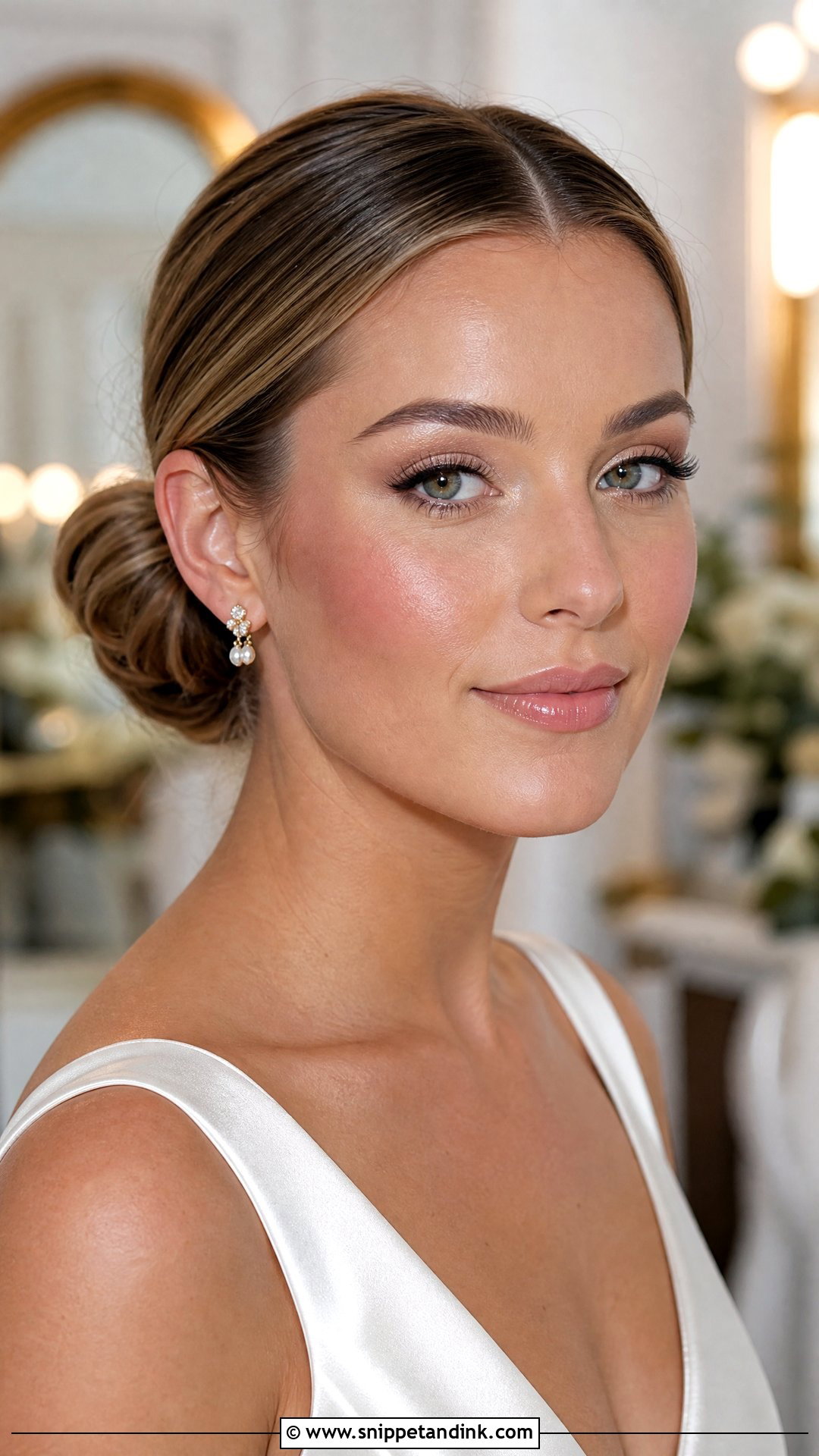
Dew is about placement. I keep the radiant base and any glow product to the high points (cheekbones, the bridge of the nose, the cupid’s bow) and press a fine powder through the T-zone and around the nostrils, because that is where real oil shows up by the speeches. Cream blush in rose or soft coral goes on before any powder so it melts in. Champagne shimmer on the lid, brown or soft black mascara, and a glossy nude-pink lip. I’d hold back if your skin runs oily by midday; dewy on oily skin turns into shine in about three hours.
3. Soft Glam Bridal Makeup
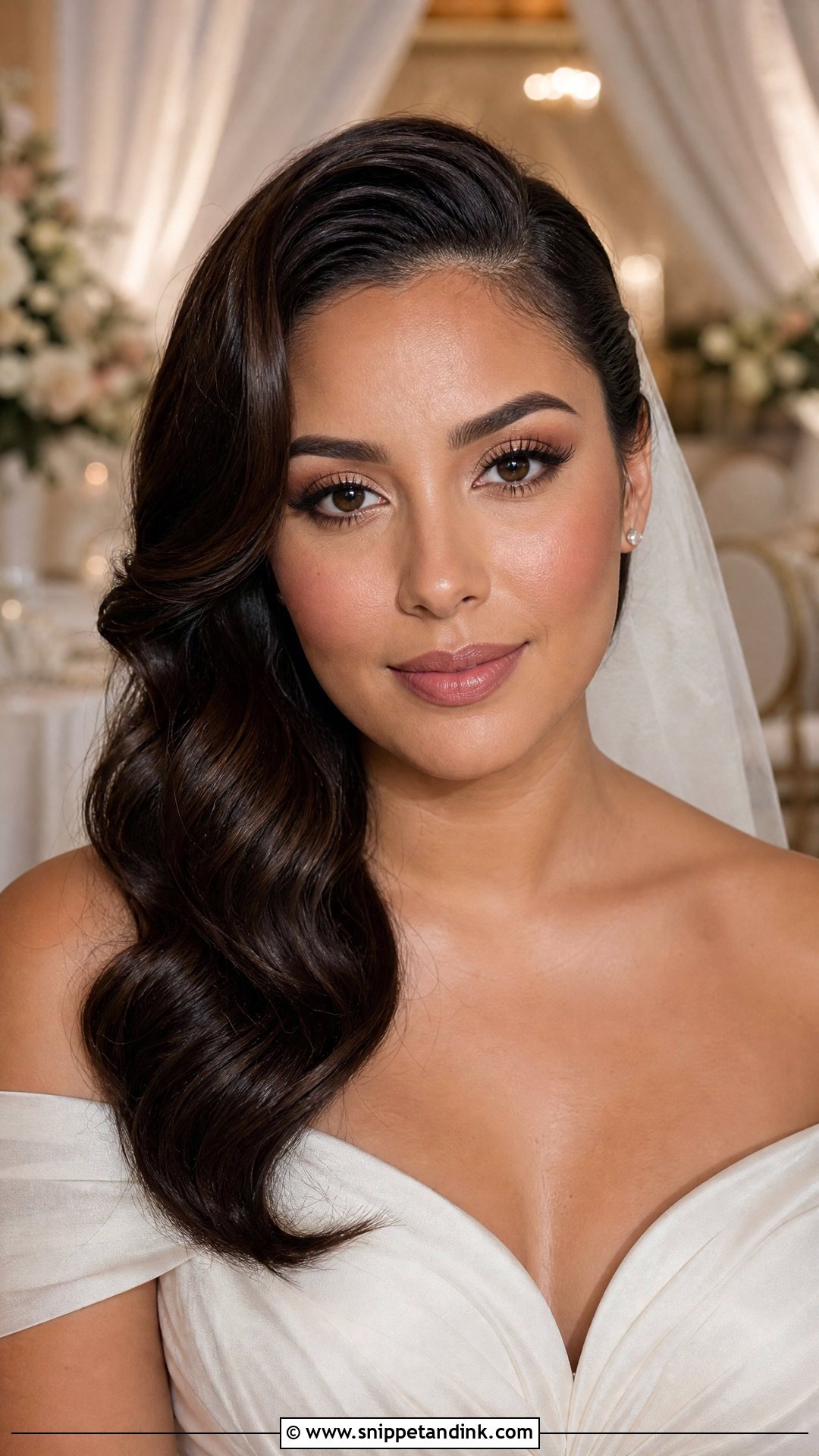
Soft glam stays minimal as long as the palette stays neutral and nothing has a hard edge. A satin foundation, a warm brown shadow blended past the crease, a fine liner and a few individual lashes at the outer corners give shape without the weight of a strip lash. Muted rose blush and a creamy nude lipstick keep the mouth calm. I fill brows with hair-like strokes rather than a block of powder. It’s the version I suggest for evening receptions, because dim, warm room lighting flattens a bare face and this extra definition holds the features in place.
4. No Makeup Bridal Makeup
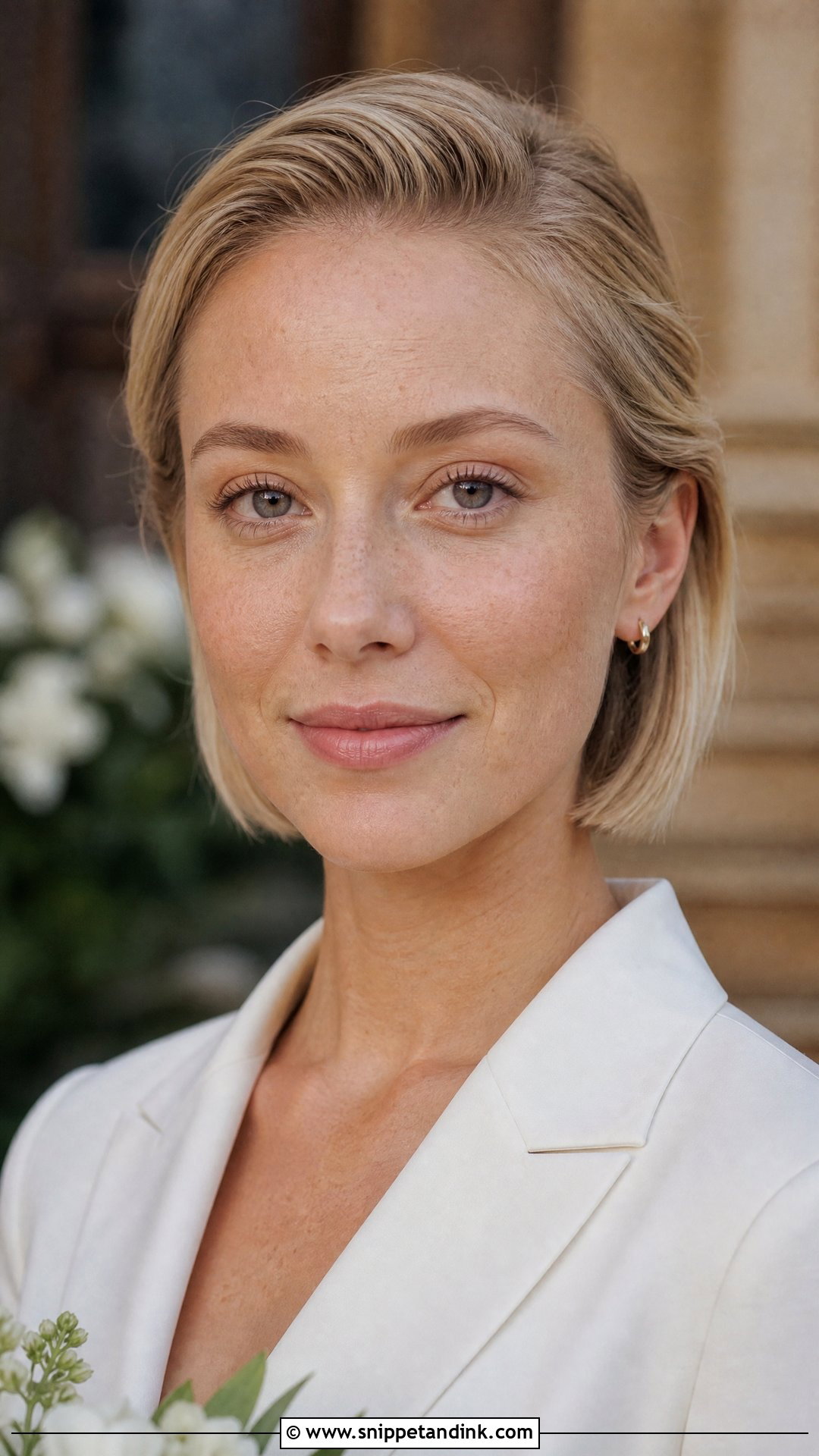
No makeup bridal makeup takes the most product discipline of anything here. I use a sheer complexion layer, a little concealer, tinted brow gel and cream blush, then a matte beige shadow just to cancel the purple on the lids. Lashes get curled and one or two light coats of mascara. A tinted balm or stain keeps the lips defined without a lipstick edge. I’ll be honest that a fully bare look can photograph flatter than it looks in the mirror, so I always shoot test photos with flash at the trial before we commit.
5. Minimalist Matte Bridal Makeup
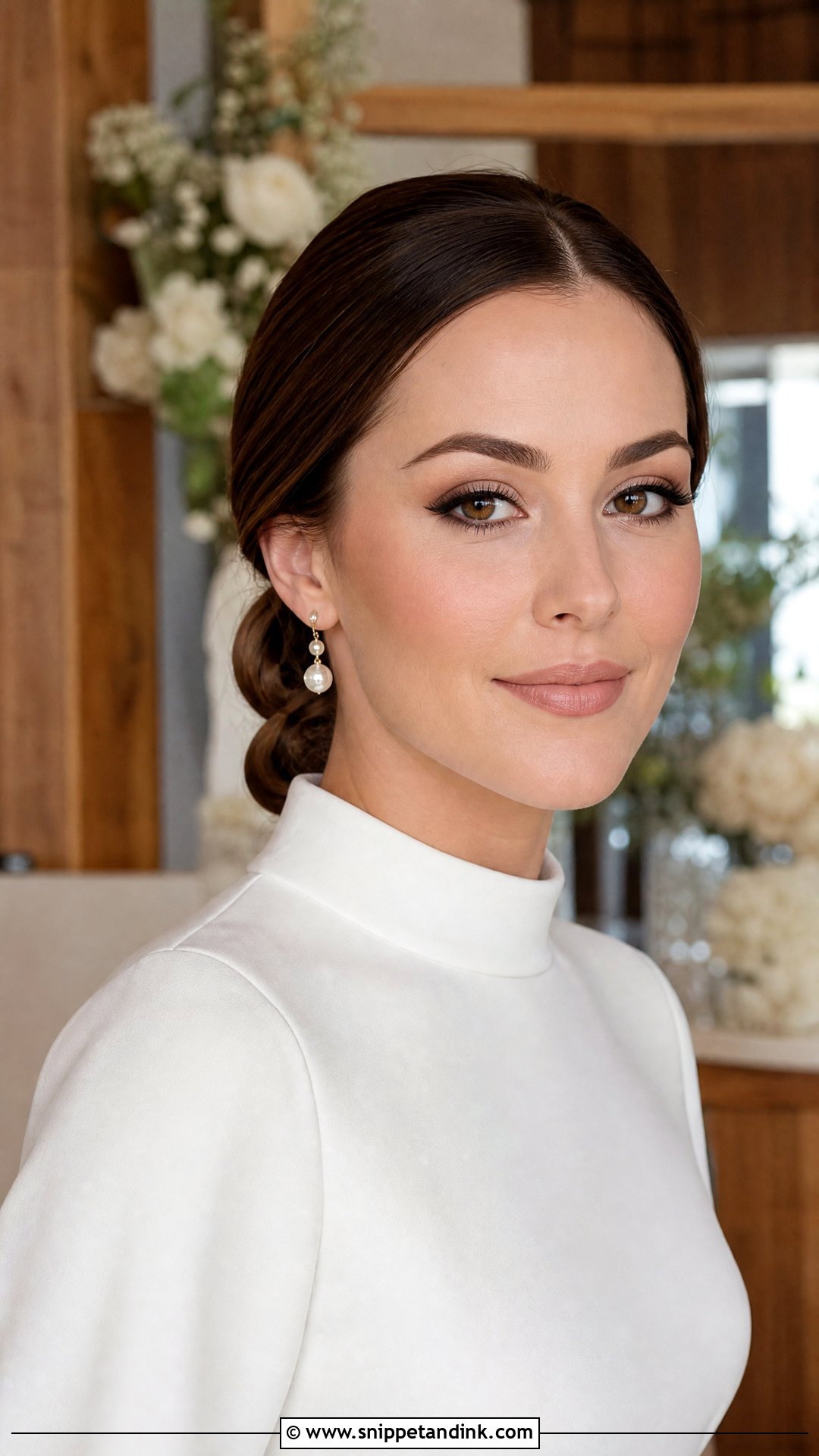
Minimalist matte bridal makeup earns its place on oily and combination skin, and on anyone marrying in heat. The mistake I see is matte meaning dry: I pick a foundation with a soft-matte finish that still moves when you smile, then powder only where shine actually appears. Taupe or warm brown shadow, a thin black-brown liner, dusty rose blush and a velvet nude lip. If your skin is dry or textured, I’d steer you elsewhere, because a flat finish settles into every flake and fine line by the afternoon.
6. Fresh Pink Bridal Makeup
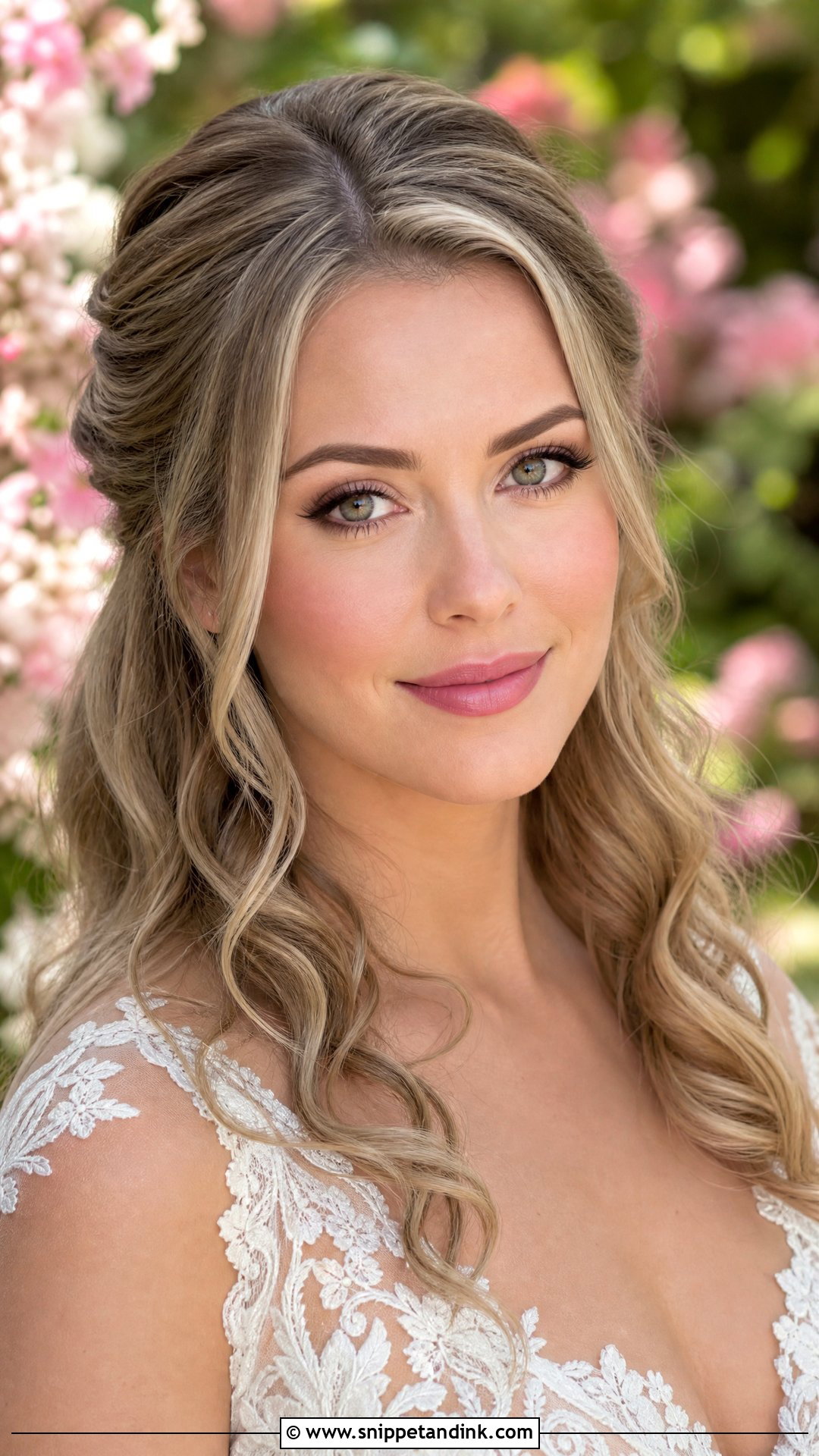
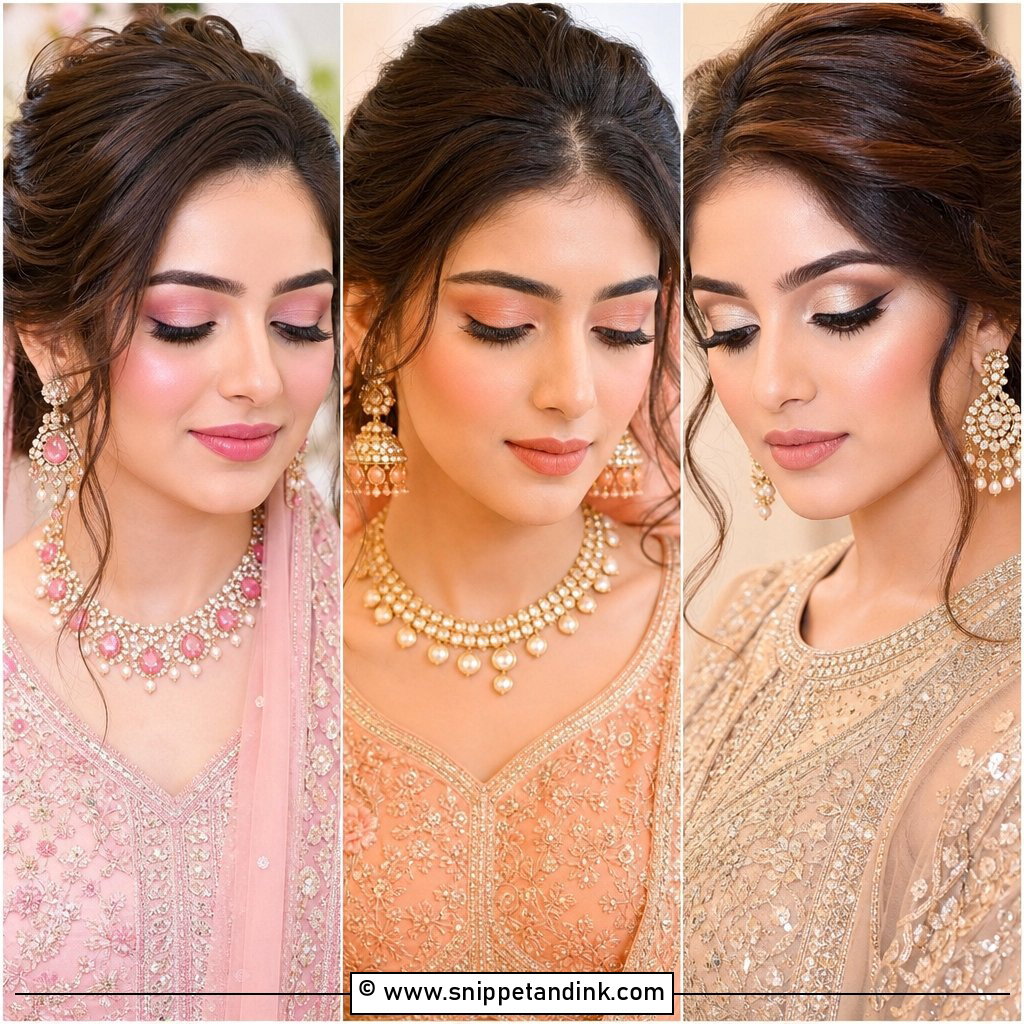
Pink reads young and fresh, but only if it’s spread thin across the whole face. I put a cool or neutral rose blush high on the cheeks, a pale pink-beige wash on the lids with a soft brown close to the lashes, and skip liner in favour of fluttery mascara. A pink satin lipstick or tinted balm ties it together. On fair skin a pastel pink works; on medium, tan and deep skin I move to a deeper rose-pink, because a pale pink on richer skin sits on top and looks chalky in photos.
7. Peach Bridal Makeup
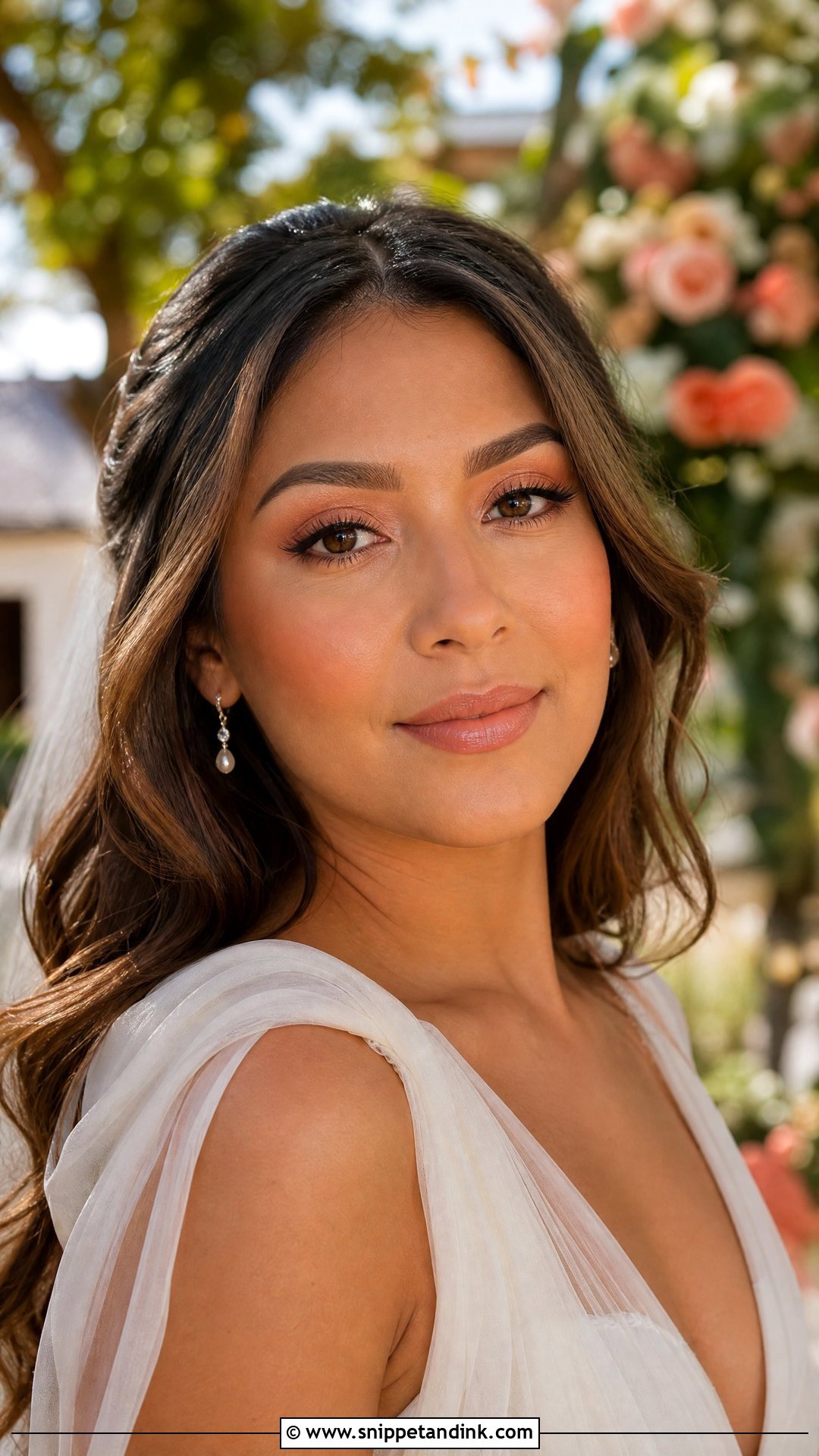
Peach is my go-to when a bride tells me pink feels too sweet. A light bronzer at the temples, peach cream blush on the apples, apricot or warm champagne on the lids, brown mascara and groomed brows, then a peachy nude lip. It’s especially kind in golden-hour portraits because the light is already warm. The one thing I check first: on very pale skin with pink undertones, peach can look orange in daylight, so I mix it with a little rose.
8. Brown Eyeliner Bridal Makeup
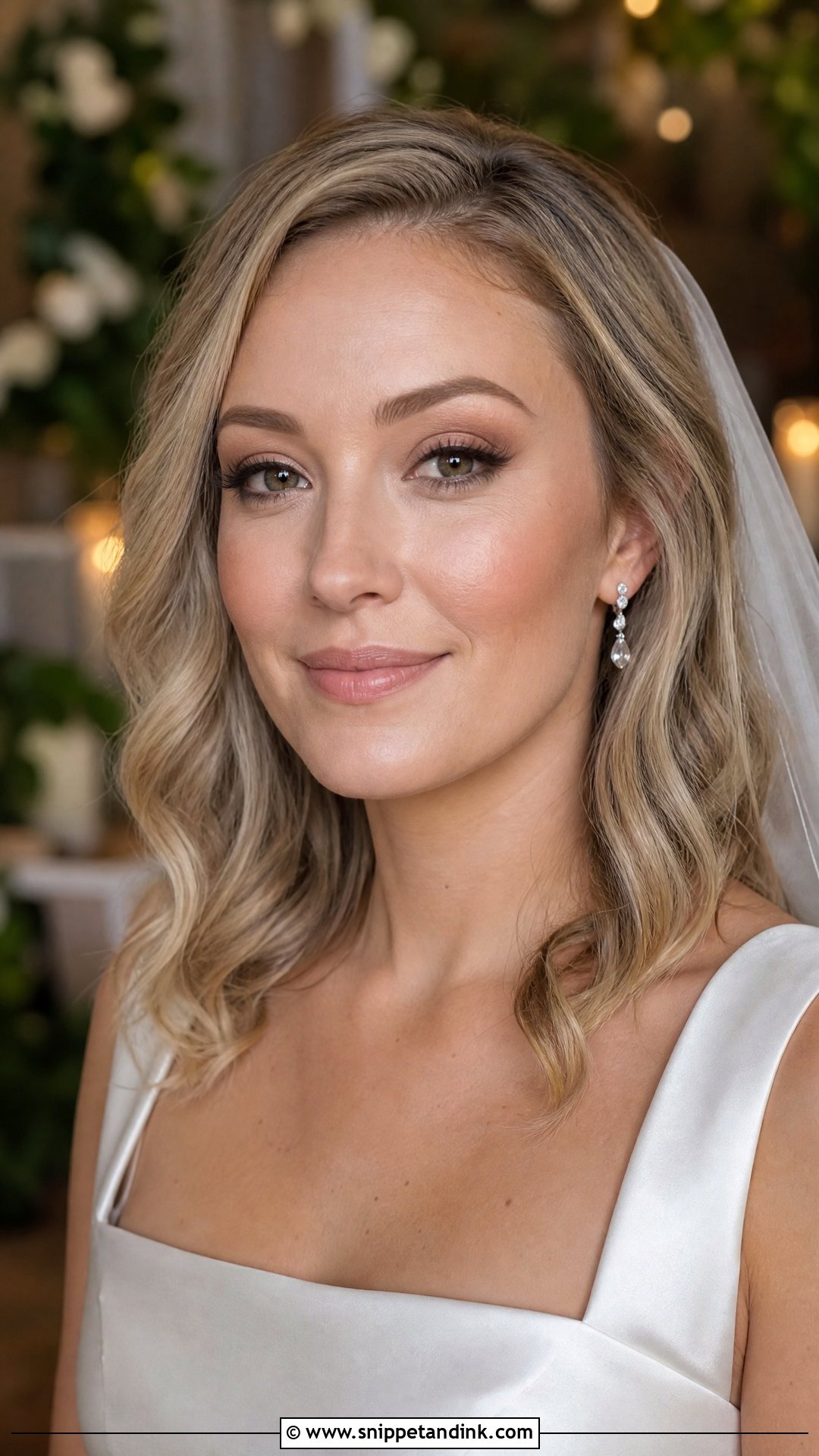
Swapping black liner for brown is the single easiest change I make for a minimal bride. Black at the lash line looks sharp in daylight and harsh in close-ups, while brown gives the eye a frame without a visible line. I smudge a brown pencil or gel into the upper lash roots over a beige or taupe lid, keep the lower lash line clean or add a whisper of shadow on the outer third, and finish with lengthening mascara. Base, blush and lip stay quiet so the eyes lead.
9. Soft Brown Smokey Bridal Makeup
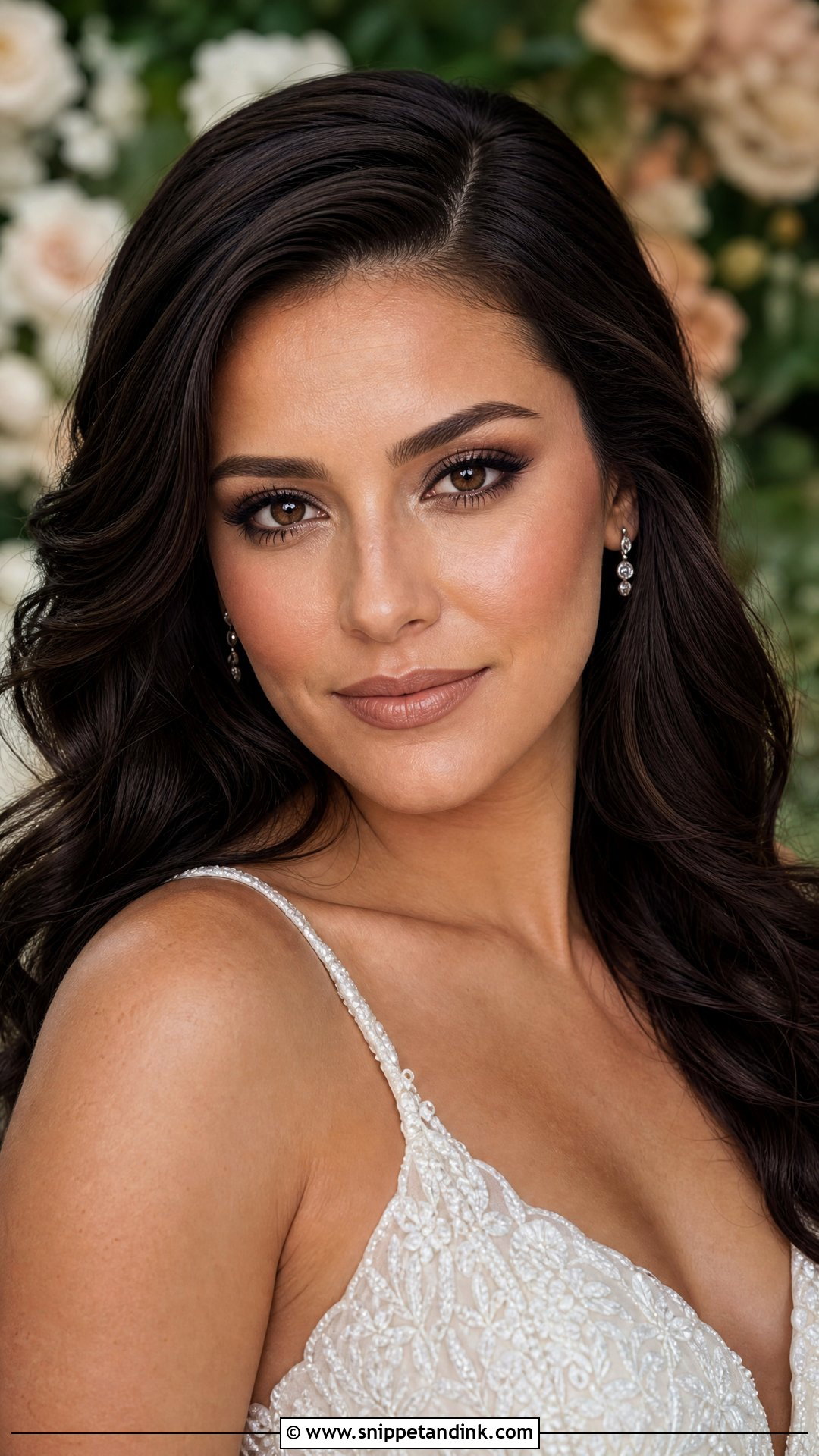
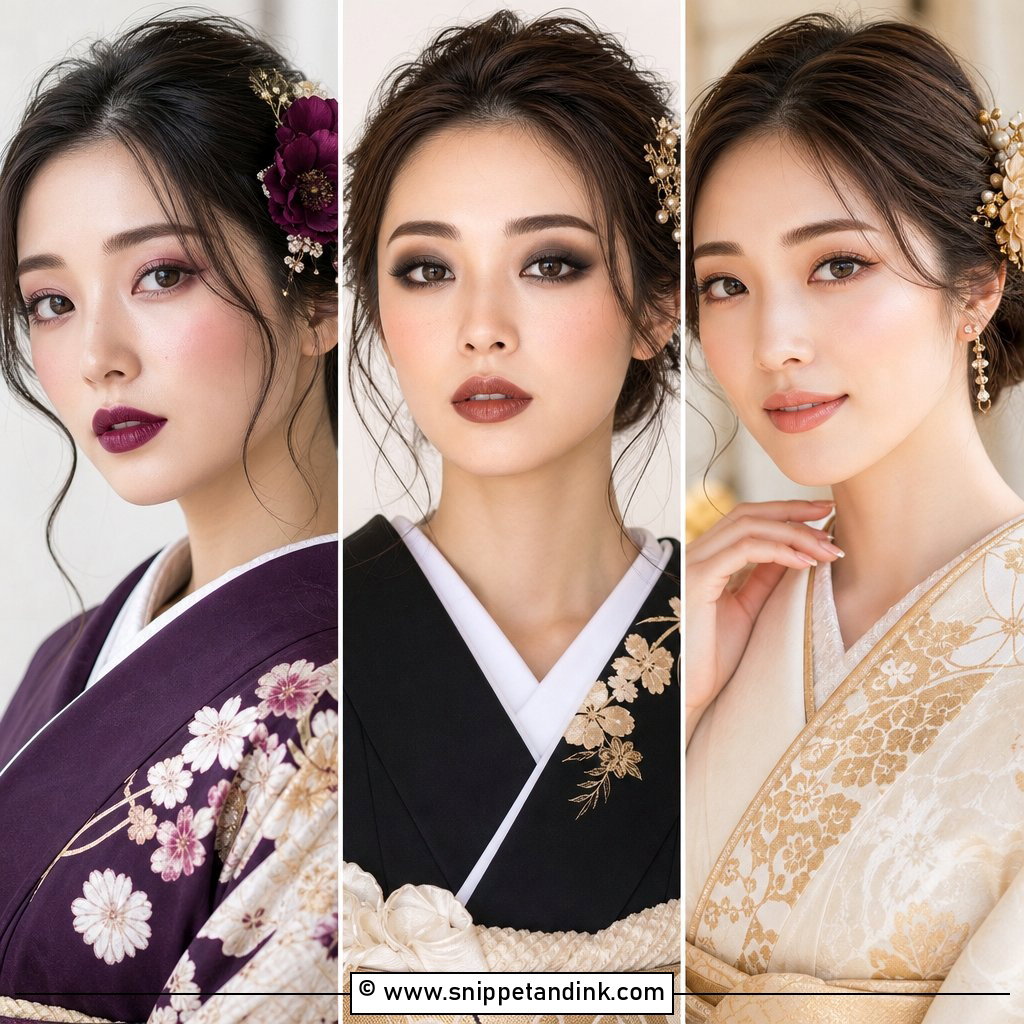
Soft brown smokey bridal makeup uses light brown, taupe and cocoa where an evening smoky eye would use charcoal. I keep the darkest shade tight to the lashes and blend upward until there is no line you could point to. Hooded lids need the smoke taken slightly above the natural crease, or it disappears when your eyes are open. With natural skin, a little bronzer and a nude-pink lip, it gives depth to every eye colour and suits autumn weddings and indoor receptions.
10. Glowy Skin Bridal Makeup
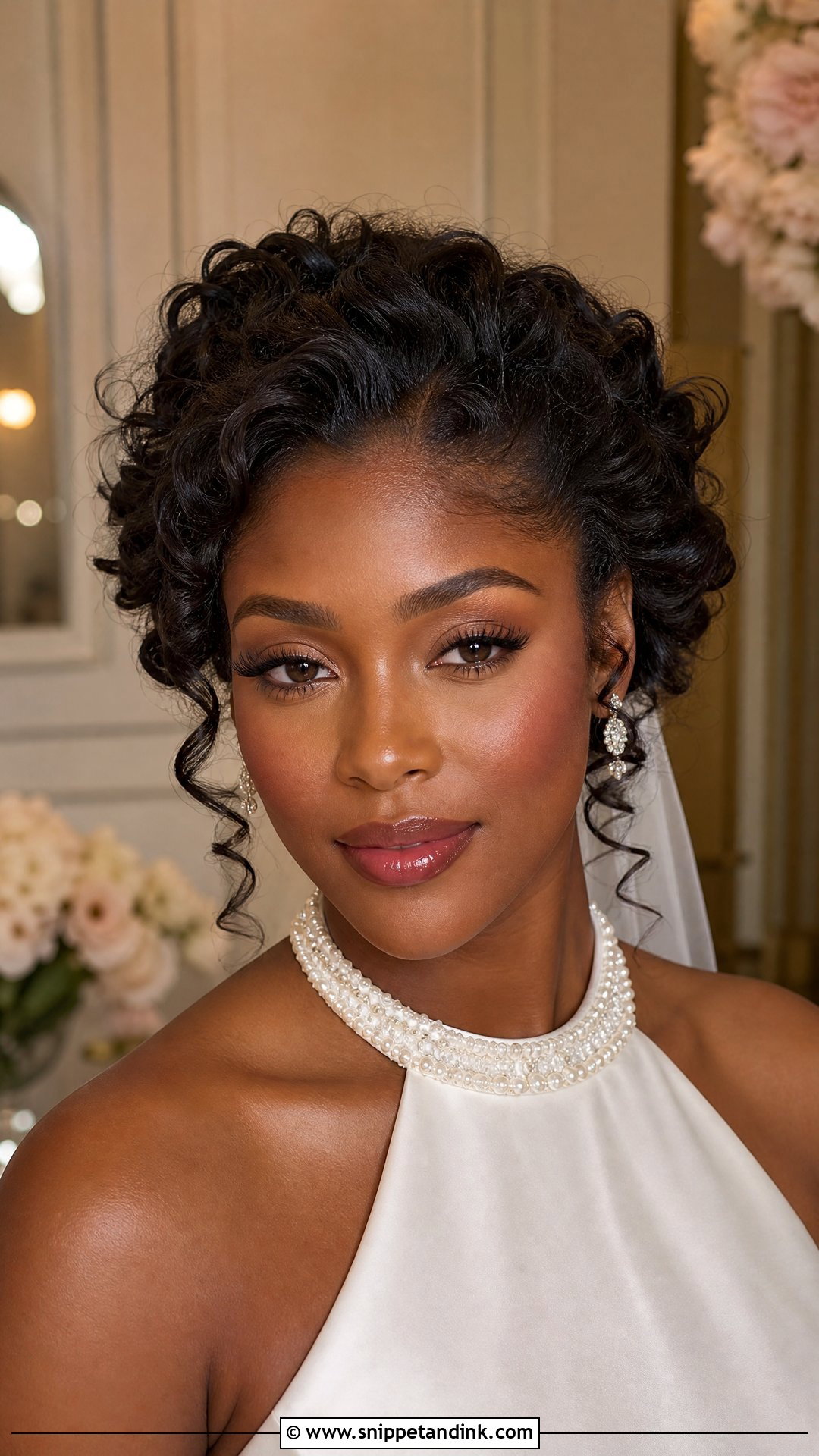
Here the skin is the whole point, so prep decides everything. I hydrate, let it sink in for a good ten minutes, then use a luminous base or mix a drop of liquid glow into foundation. Highlight goes only on the top of the cheekbones, the inner corners and the bridge of the nose. Beige shadow, natural lashes, cream blush, a sheer lip. Powder only where skin creases or gets oily. If you have visible texture or enlarged pores across the cheeks, glow will magnify them, and I’d swap to a satin finish.
11. Rosy Nude Bridal Makeup
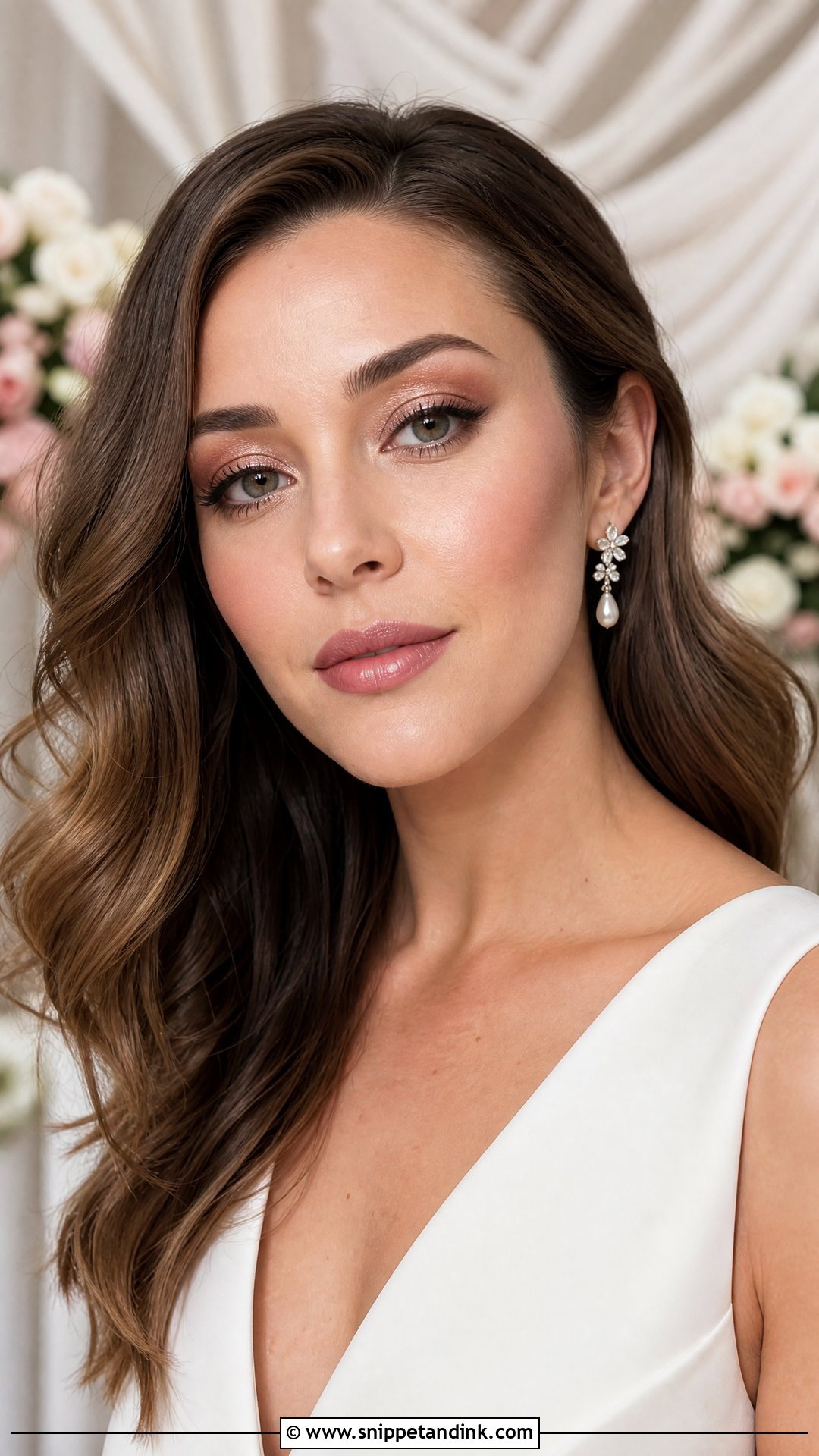
Rosy nude copies the colour your face goes when you’re warm, which is why it looks natural even though it’s a deliberate palette. Rose, mauve and nude tones, a skin-like base and softly defined brows. A matte or satin rose-brown on the lids, mascara, and a very thin liner only if your lashes are fair. I choose a lipstick a shade richer than your own lip, because your natural colour disappears completely in group shots taken from a few metres back.
12. Champagne Eye Bridal Makeup
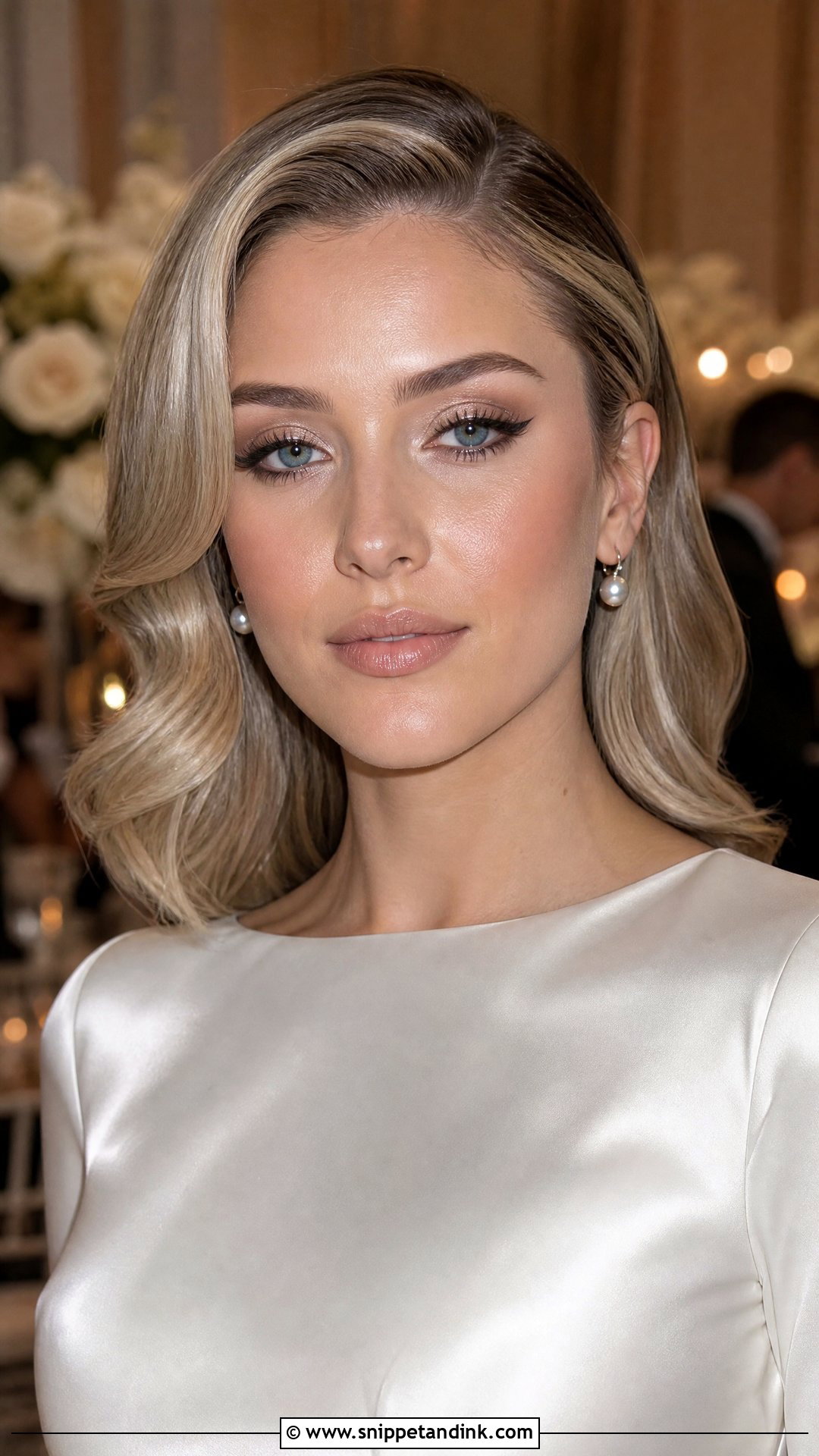
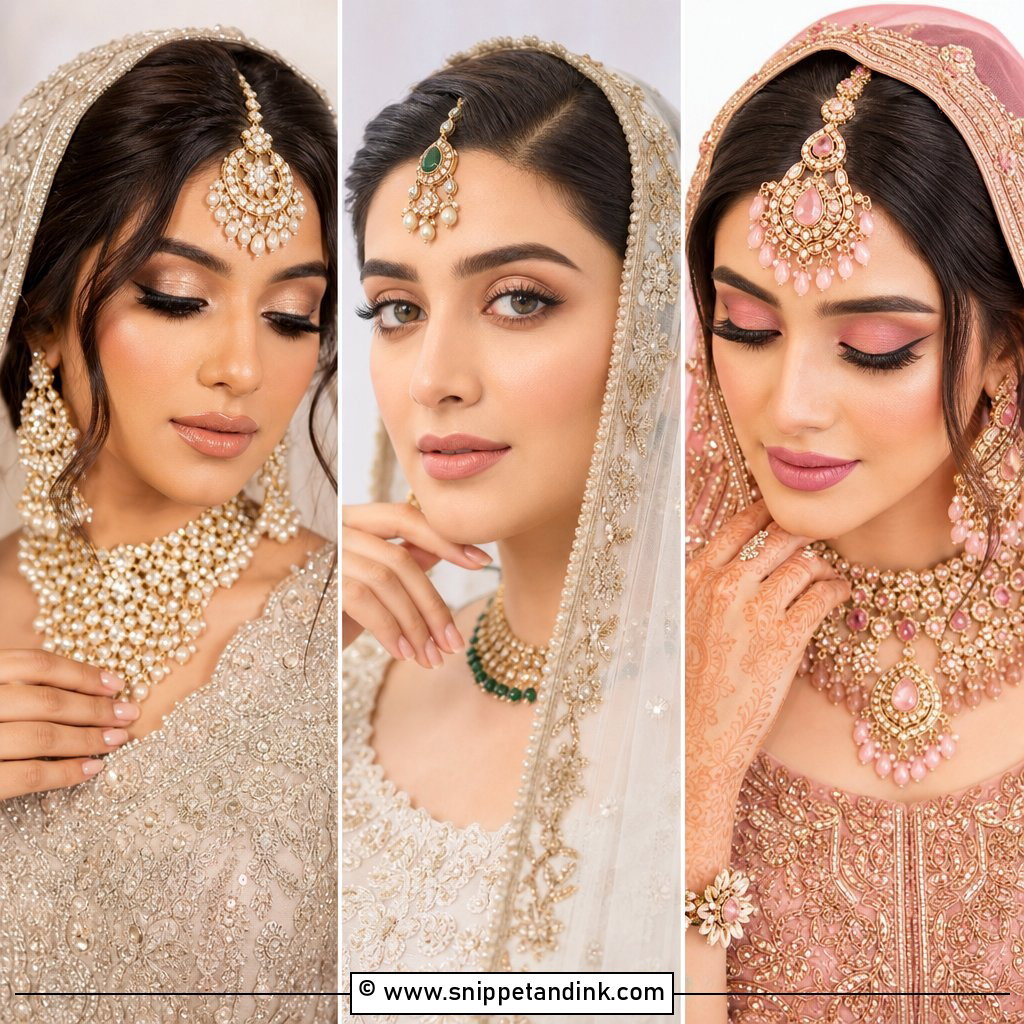
Champagne lids add light without making you look sparkly in person. The shimmer has to be fine; chunky glitter scatters onto the cheeks and catches flash as white dots. I lay a champagne wash across the mobile lid, a light taupe in the crease, and concentrate mascara on the outer lashes so the eye lifts. Peach or rose blush and a nude gloss or satin lip balance it. It suits ballroom and rooftop evenings, where candles and string lights pick up the lid.
13. Cream Blush Bridal Makeup
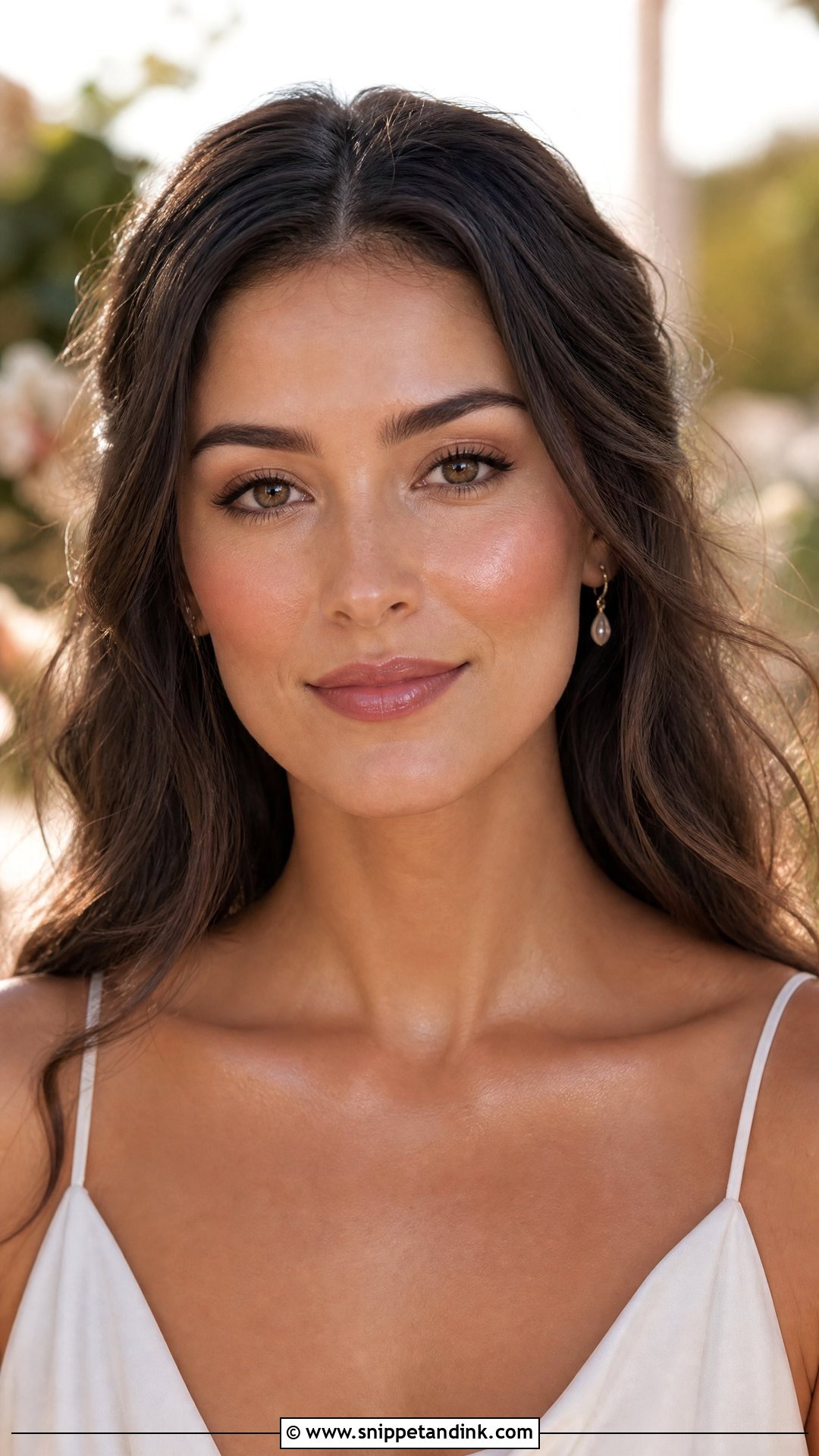
Cream blush melts into skin in a way powder never does, so it’s the first product I reach for on a minimal face. I use a long-wear formula in pink, peach, rose or berry chosen against your skin depth, tap it onto the cheeks with fingers and blend upward. Eyes stay simple and the lips sit in the same colour family. The catch is longevity: cream alone fades by the reception, so I set it with a sheer layer of matching powder blush on top.
14. Tinted Lip Bridal Makeup
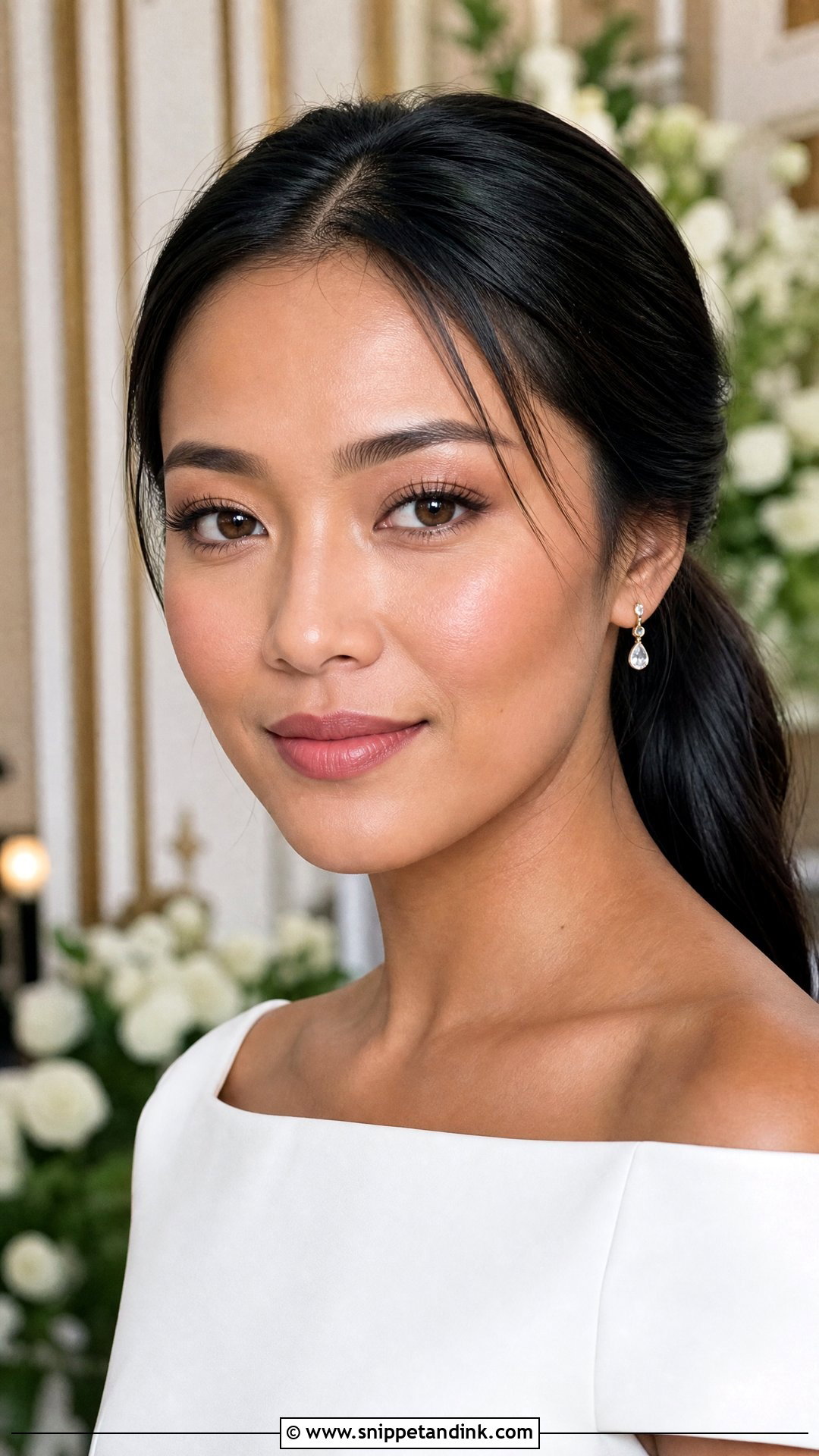
Tinted lip bridal makeup suits brides who hate the feel of lipstick or know they’ll forget to reapply. A stain or sheer long-wear tint fades evenly from the centre out instead of leaving a ring around the mouth. Clean skin, soft blush, light bronzer, a neutral lid and a thin line at the upper lash roots keep the rest balanced. As a starting point, I’d test rose on fair skin, peachy nude on warm skin, mauve on olive and berry-brown on deep skin. Stains do dry lips out, so I prep with balm and blot it off before applying.
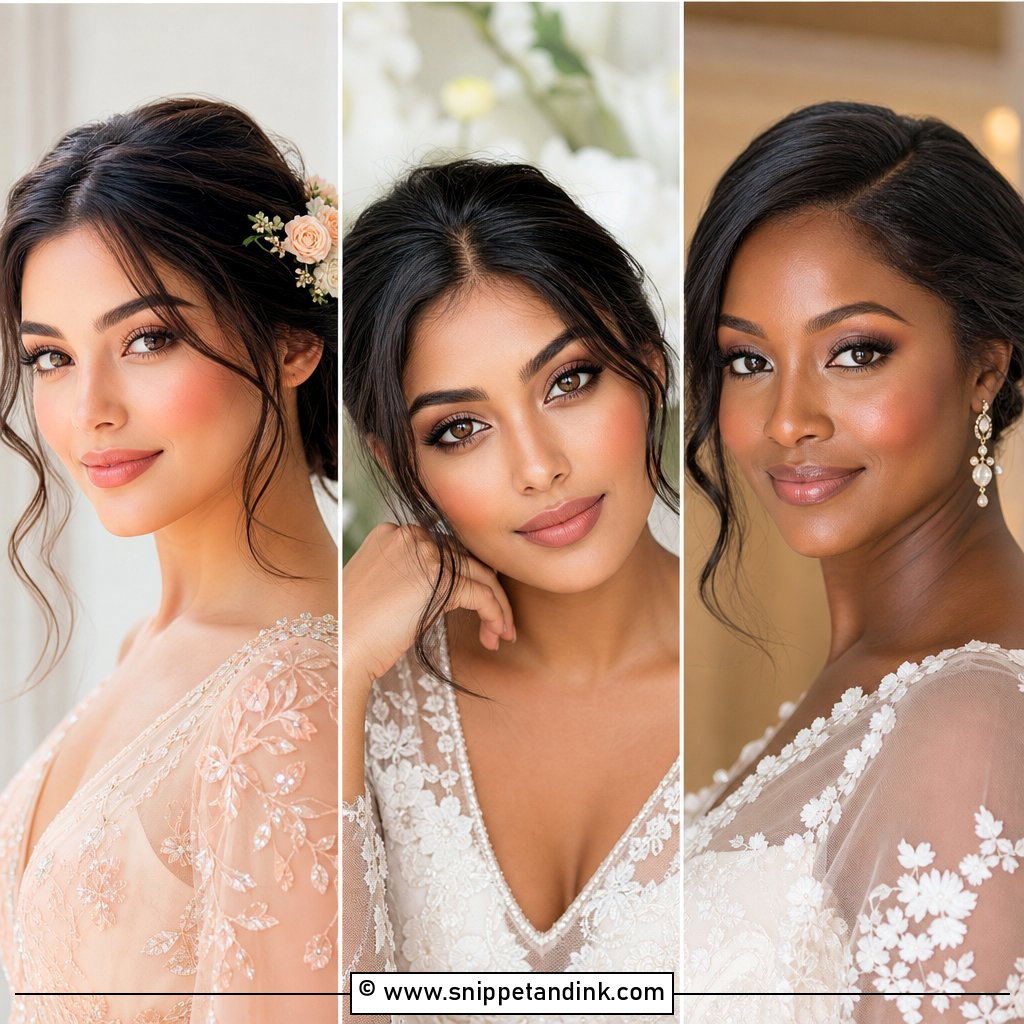
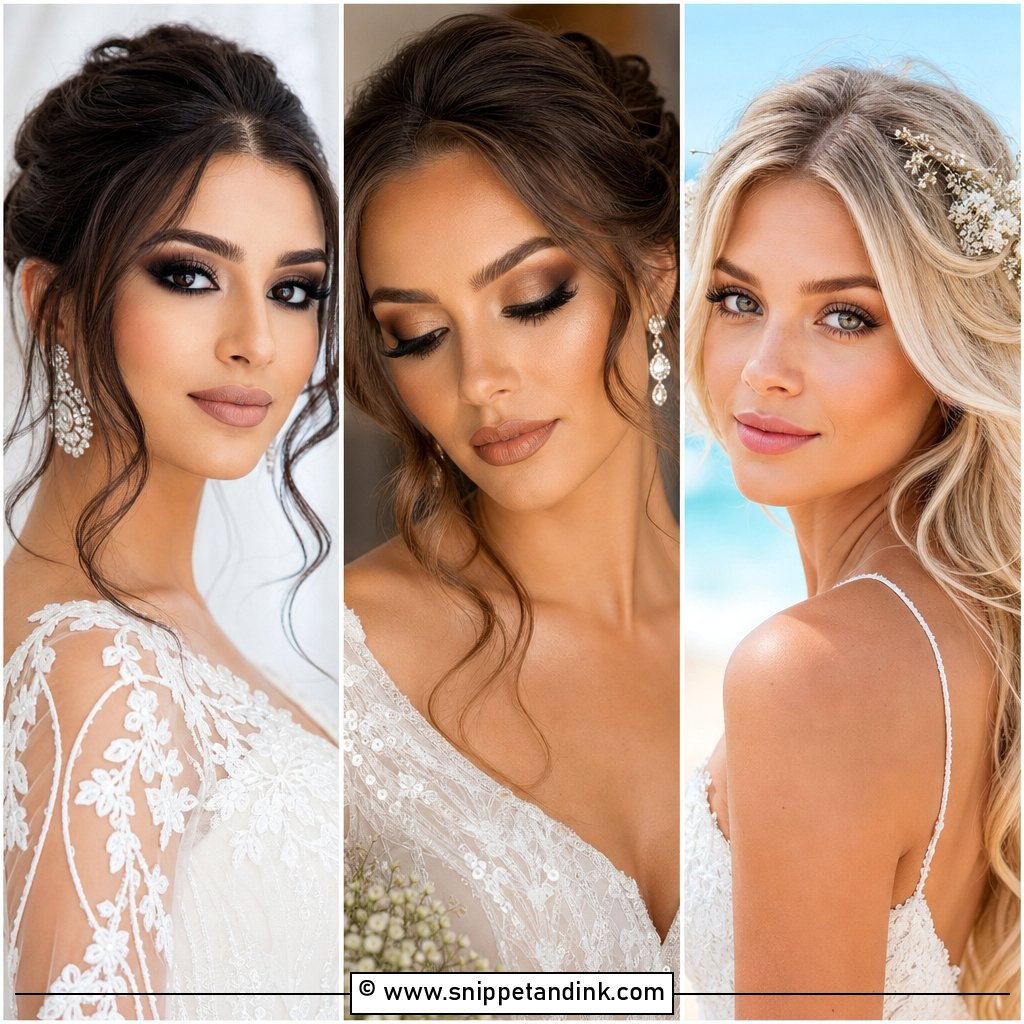
15. Clean Girl Bridal Makeup
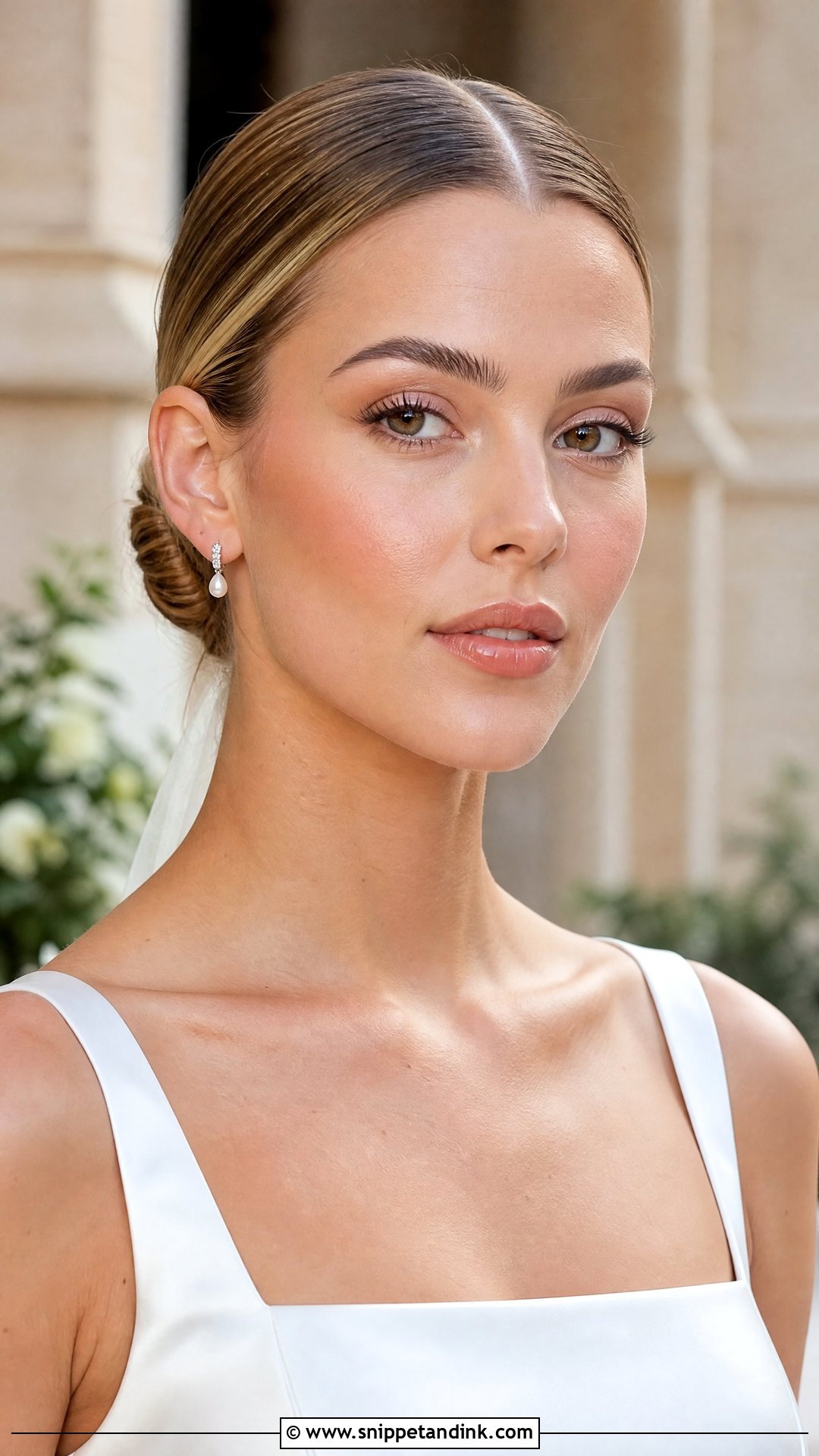
Clean girl bridal makeup is groomed rather than bare. Smooth skin prep, a light base, brows brushed up and set, cream bronzer and soft blush, curled lashes with lengthening mascara, a neutral lid and a clear or barely tinted gloss. It depends heavily on a sleek hair partner, usually a slick bun, low ponytail or smooth waves, and on simple dress lines like a slip or square neckline. If your skin is having a breakout, this look is harder to pull off, because the whole idea relies on minimal coverage.
16. Bronzed Bridal Makeup
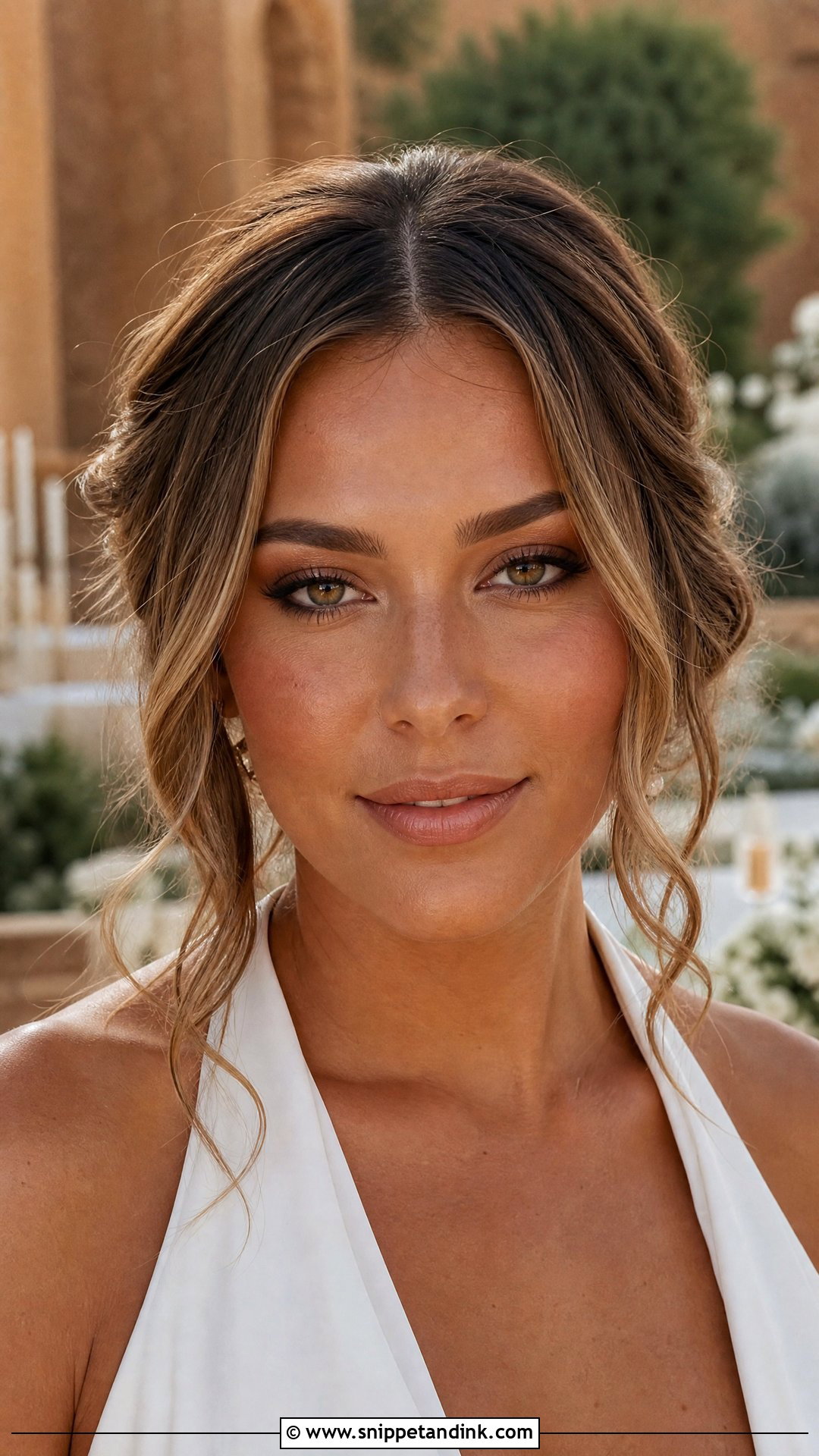
Bronzed makeup gives warmth without the stripes of contour. I sweep bronzer where the sun would actually hit (forehead edges, cheekbones, jawline) and blend until there is no start or end. Warm beige or caramel on the eyes, brown liner, natural lashes, peach or terracotta blush, and a nude beige or warm rose lip. It’s a good match for outdoor, beach and late summer weddings. Watch bronzer near the neckline of a white dress; it transfers, so I set the jaw and neck with powder.
17. Classic Minimal Bridal Makeup
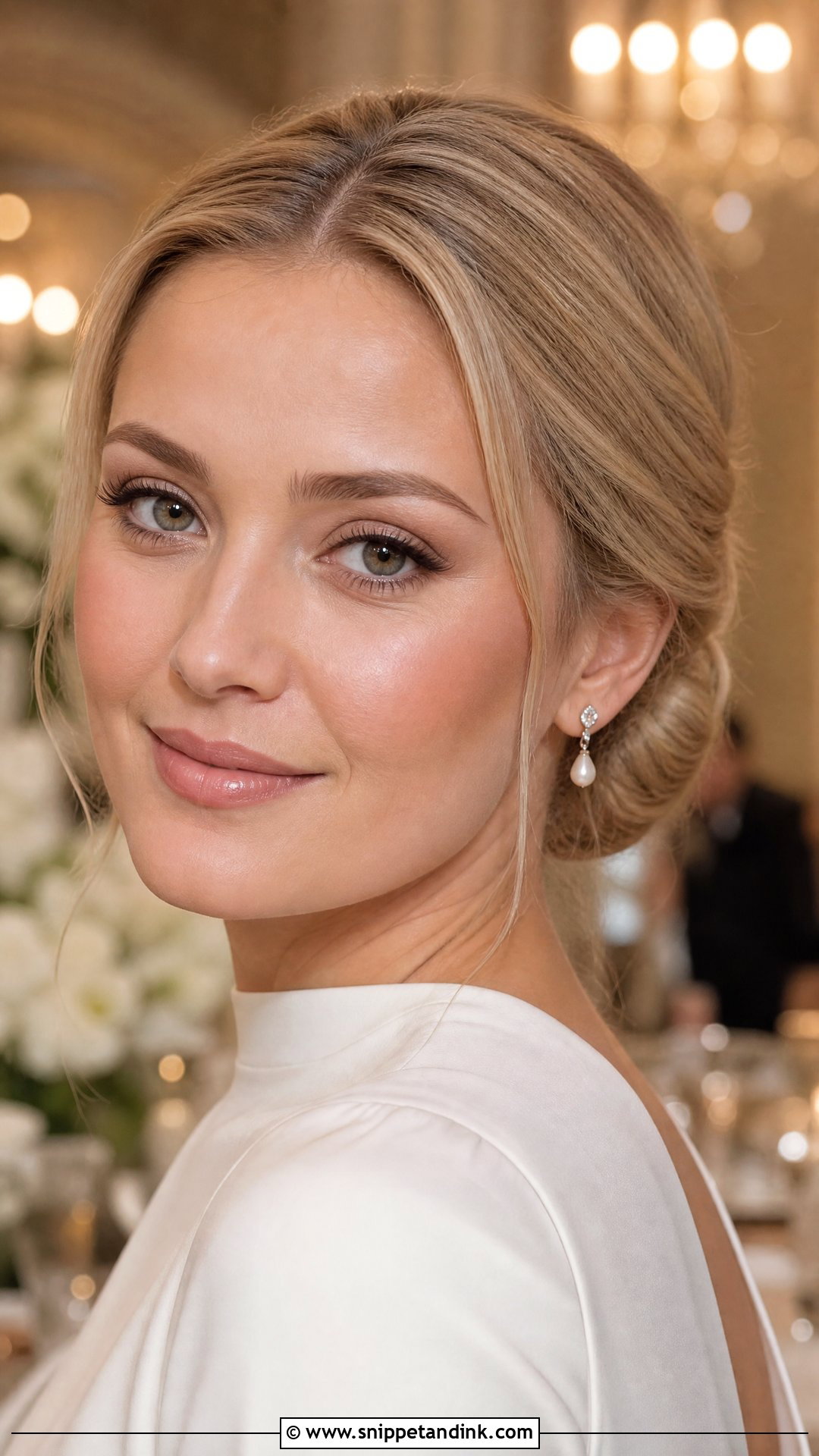
This is the version I’d point you to if you want photos that won’t date. Softly perfected skin, brown or taupe shadow, a delicate liner, natural lashes and blush that looks like a real flush. I apply blush in thin layers and step back after each one, since a visible stripe is the fastest way to make a classic face look dated. A nude rose lipstick gives the lips enough shape for photographs. It suits almost any dress, venue, season and age, which is exactly why so many brides end up here.
18. Minimalist Bridal Makeup For Brown Eyes
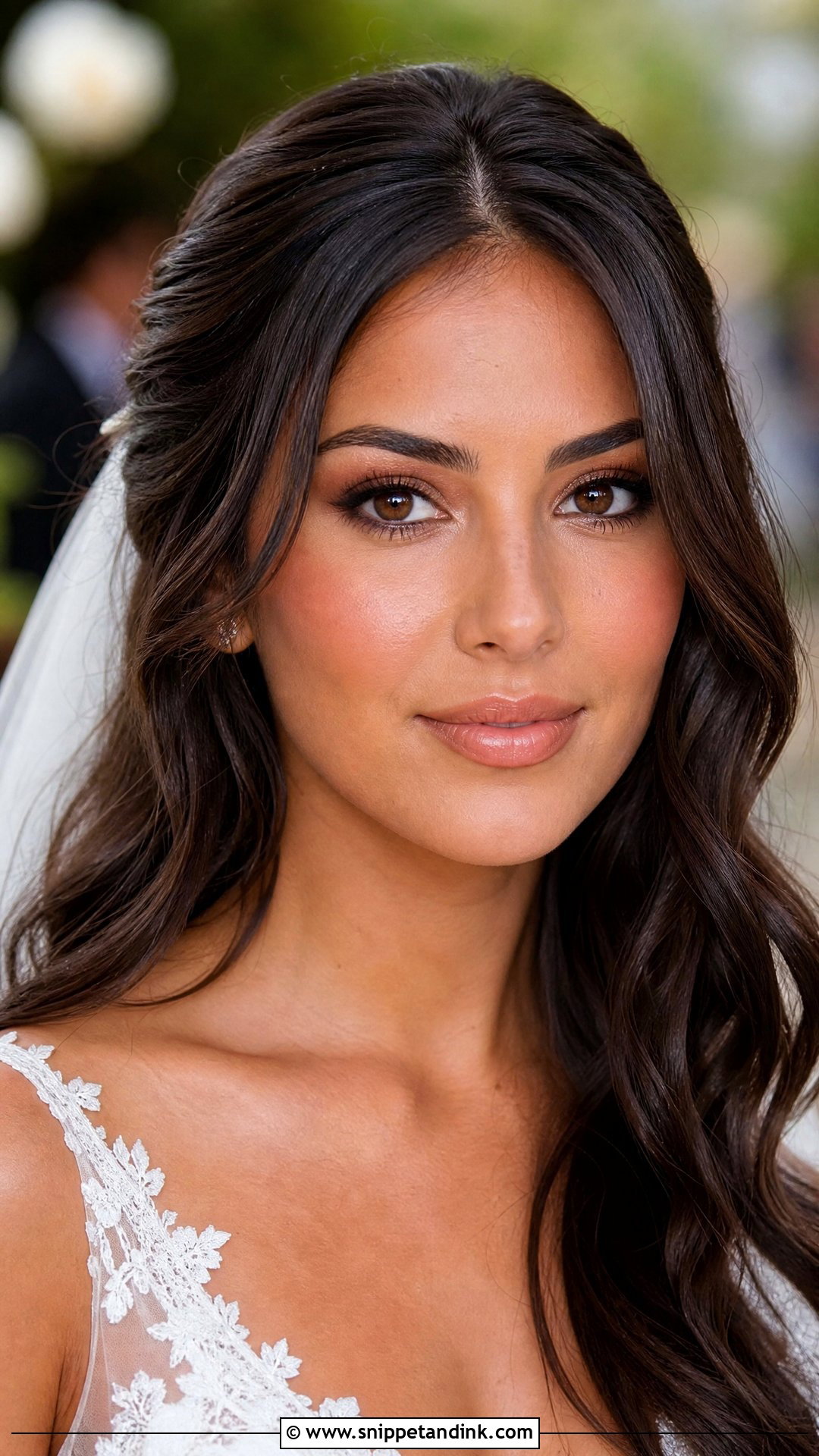
Brown eyes take warm neutrals well: soft bronze, rose-brown and champagne all brighten the iris without fighting it. I keep the base fresh, pick a warm blush that echoes the eye shadow, and run a thin brown liner along the upper lashes for framing. Lips in nude rose, peach nude or soft caramel depending on undertone. Cool grey shadows are the one thing I’d skip here; they make warm brown eyes look tired rather than smoky.
19. Minimalist Bridal Makeup For Blue Eyes
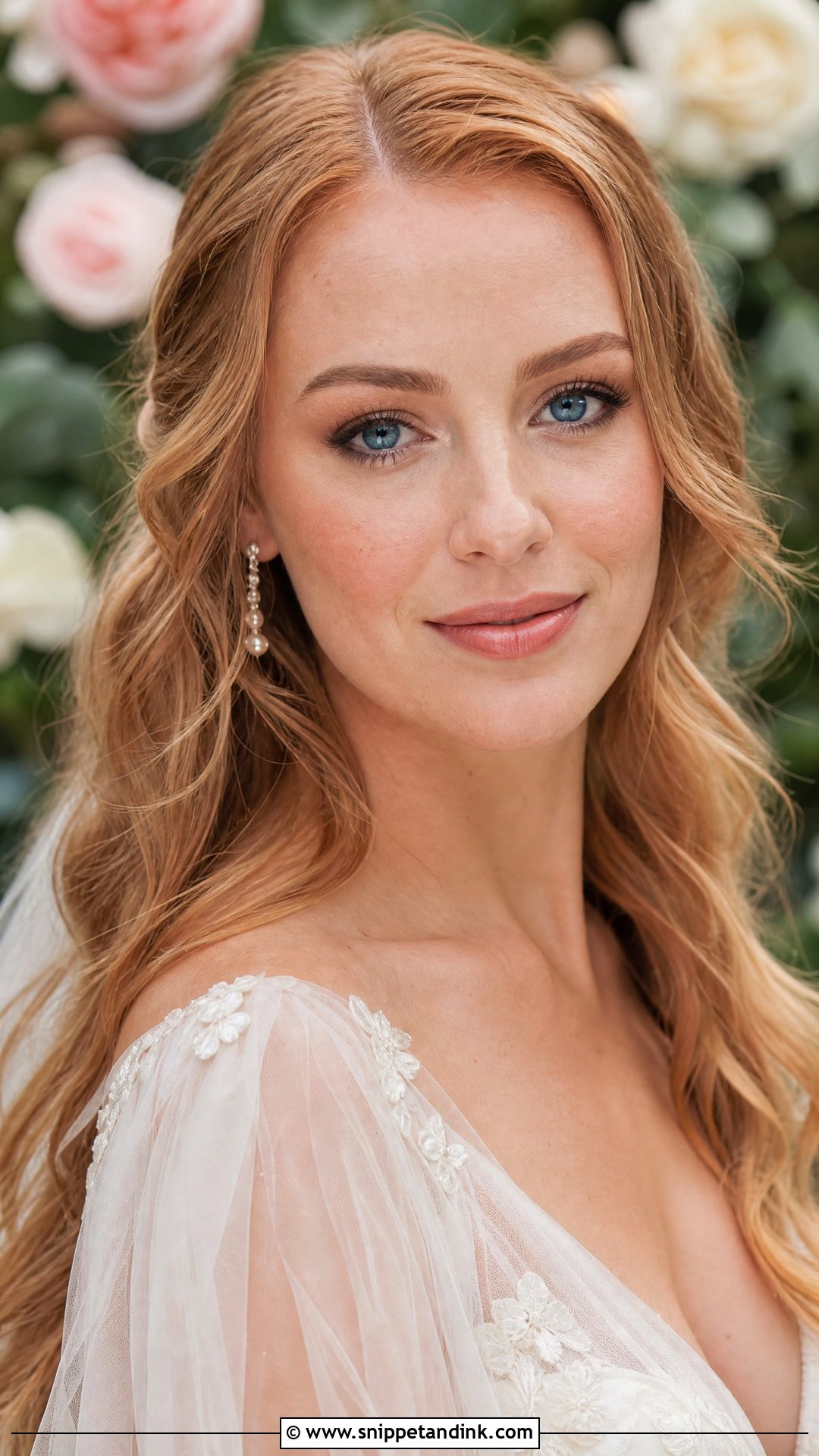
Minimalist bridal makeup for blue eyes works on contrast. Blue sits opposite orange on the colour wheel, so warm taupe, peach, champagne and light bronze make the iris look brighter with no strong colour on the lid. I blend a neutral matte through the crease, add a light shimmer to the lid, and use brown mascara or brown-black liner for a softer frame than black. Pink or peach blush and a pink-nude lip finish it, and outdoor light shows the effect best.
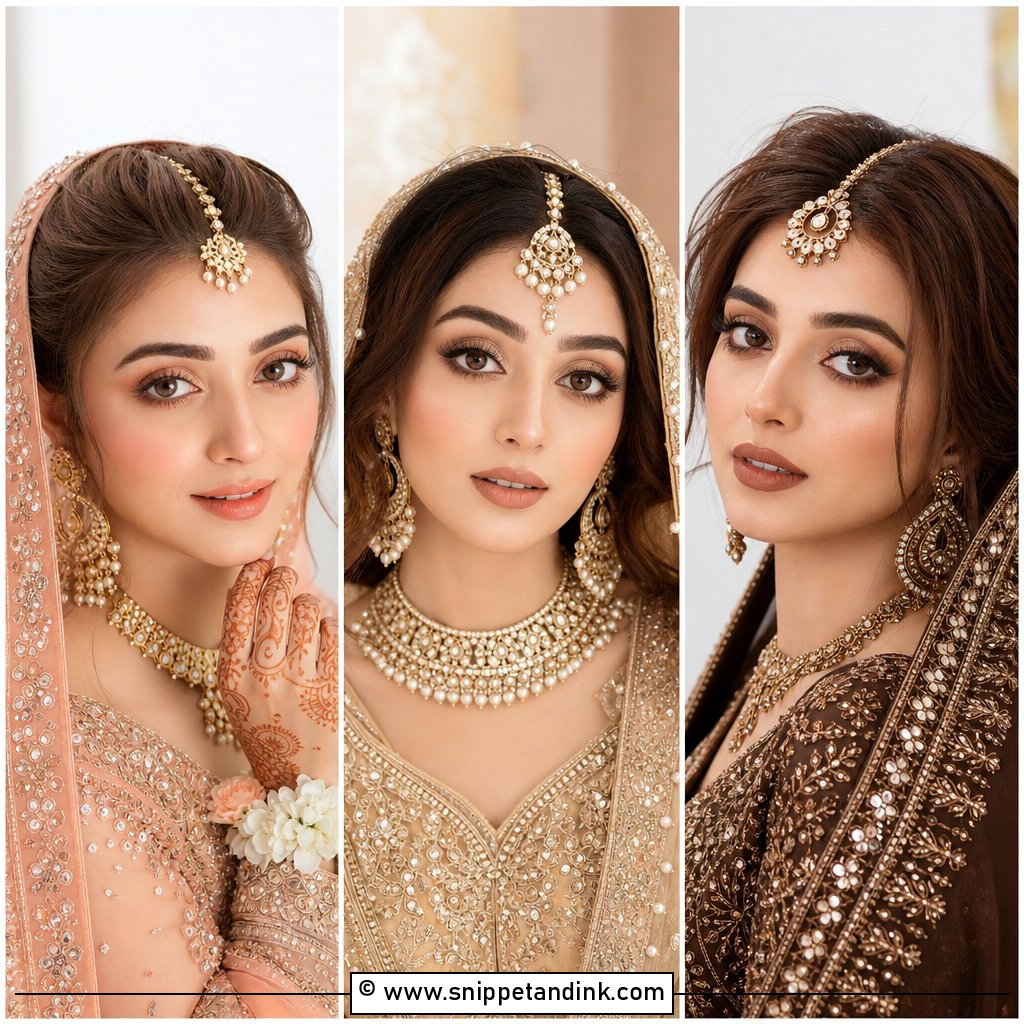
20. Minimalist Bridal Makeup For Green Eyes
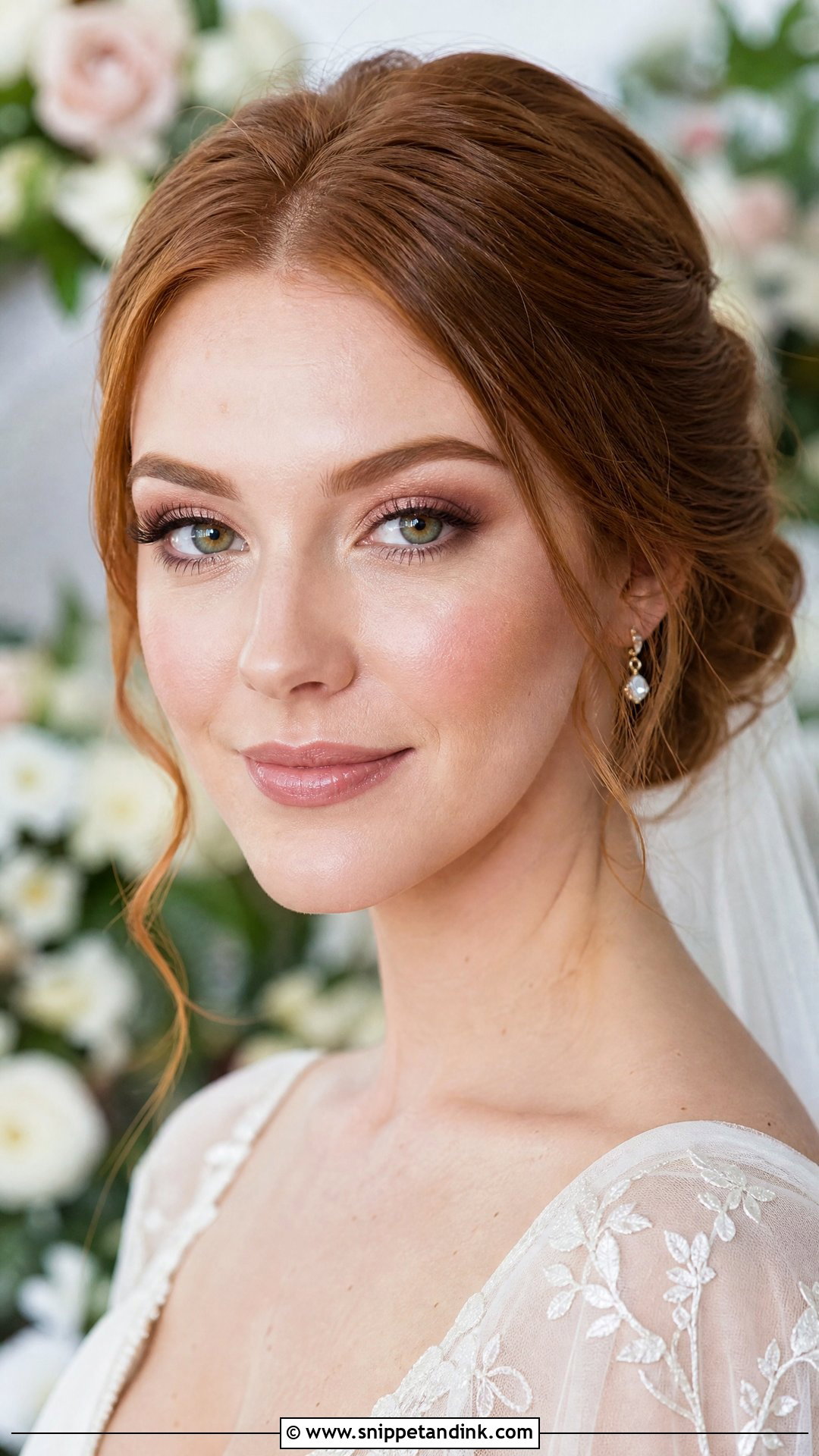
Green eyes respond to anything with red in it, which is why rose, mauve and plum-brown make them pop. I keep the complexion clean and softly radiant, use a light taupe in the crease, a pale champagne or rose-gold wash on the lid and a smudged brown liner at the roots. A muted rose blush ties the face to the eyes, and a mauve-nude lip completes it. I’d avoid going too dark in the crease if the goal is truly minimal; a deep plum quickly turns it into evening makeup.
How Little Makeup Lasts Through Tears, Heat and Ten Hours
Light makeup does not automatically mean short-lived makeup, but it does wear differently. A thin base rarely cracks or cakes the way full coverage can. What fades first is colour: the blush softens, the lip wears off at the centre, and shine creeps through the T-zone. I build for that rather than adding coverage.
- Primer only where it’s needed. A gripping primer on oily zones, a hydrating one on dry cheeks, not one product everywhere.
- Thin layers set as I go. A cream blush topped with a sheer matching powder outlasts a single heavy layer of either.
- Waterproof mascara on the top lashes for the ceremony, and nothing smudgy on the lower lash line where tears run.
- A setting spray misted from arm’s length, so it doesn’t spot the base.
For the bag a bridesmaid carries, keep it small: blotting papers (not powder, which builds up and turns cakey by evening), your lipstick or tint, a cotton bud for under the eyes, and a few drops of eye drops. Blot first, then reapply lip before the reception entrance and again before the first dance. That’s genuinely all a minimal face needs.
One camera note: avoid daytime sunscreens and setting powders heavy in zinc oxide, titanium dioxide or silica on the face itself if flash photography is planned. They can bounce flash back as a white cast. Wear your SPF earlier in the morning under a moisturiser and let it settle, or use one you’ve already tested in flash photos.
Testing the Look by a Window, Then Under Flash
Minimal makeup works when each product has a job and nothing is there out of habit. Book your trial for the same time of day as the ceremony if you can, look at your face by a window, then have someone take photos with flash and without. Those pictures tell you more than any mirror: whether blush needs one more layer, whether the liner reads at all, whether the lip disappears. Make the small adjustments then, and on the morning itself you’ll only be repeating something you already trust.
You'll Like These Ideas:


Leave a Reply