
Wearing your hair down for the wedding sounds like the easy option, and it’s actually the one I plan most carefully. Loose hair has nothing pinning it in place, so the cut, the curl set, the weather and the dress all show up in the result. Done well, it frames your face, moves when you walk and looks like you on a very good day. Some brides want polished Hollywood waves, others want their own curls or a soft blowout. Save the ideas below that feel closest to how you already wear your hair, and take them to your stylist with a note on your dress neckline and venue, because those two decide more than the photo does.
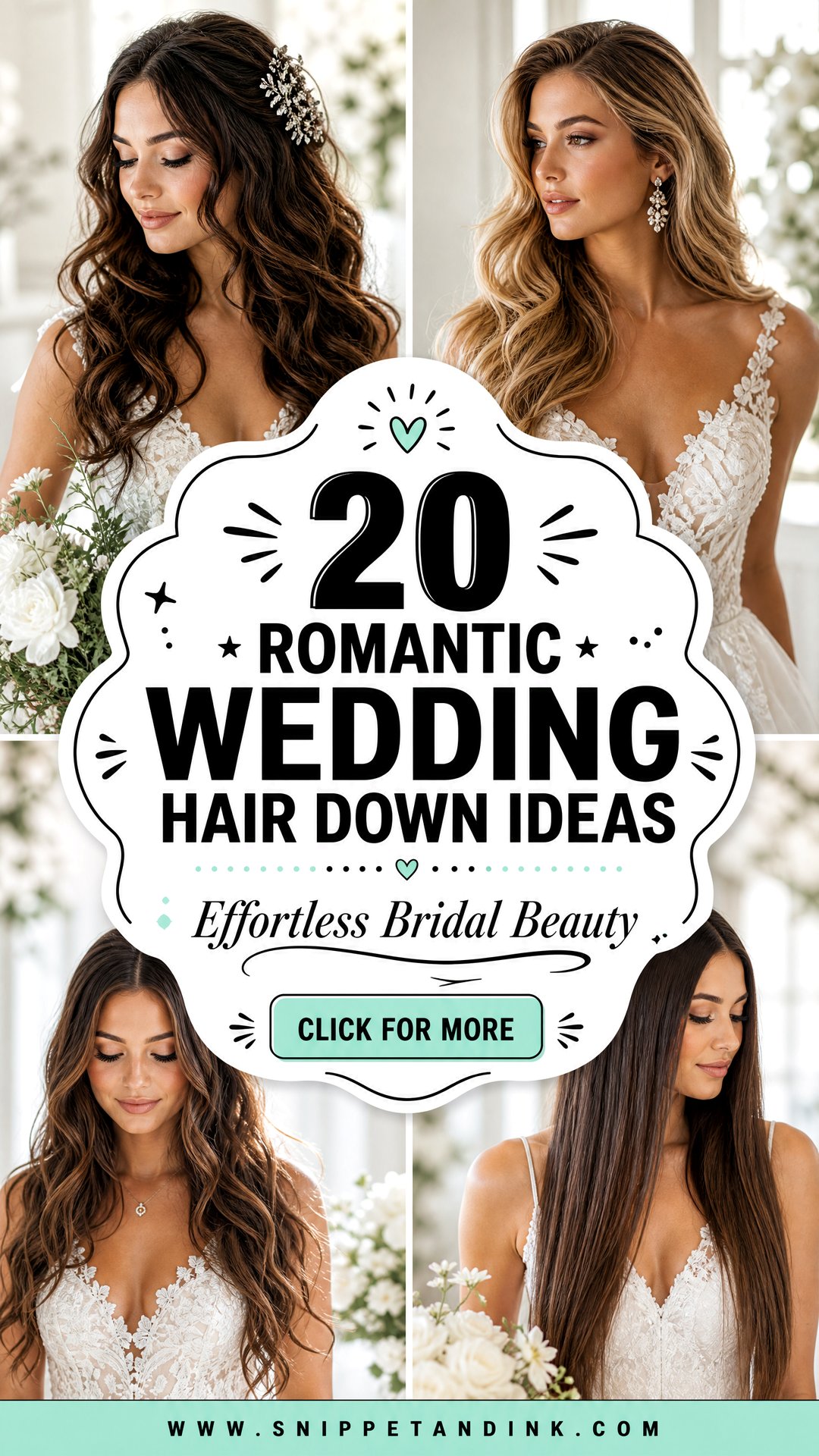
Your Neckline Decides Where Loose Hair Should Fall
Before I pick a wave or a part, I ask to see the dress, because loose hair and fabric touch all day. Hair that lands in the wrong place either hides the best part of the gown or gets tangled in it.
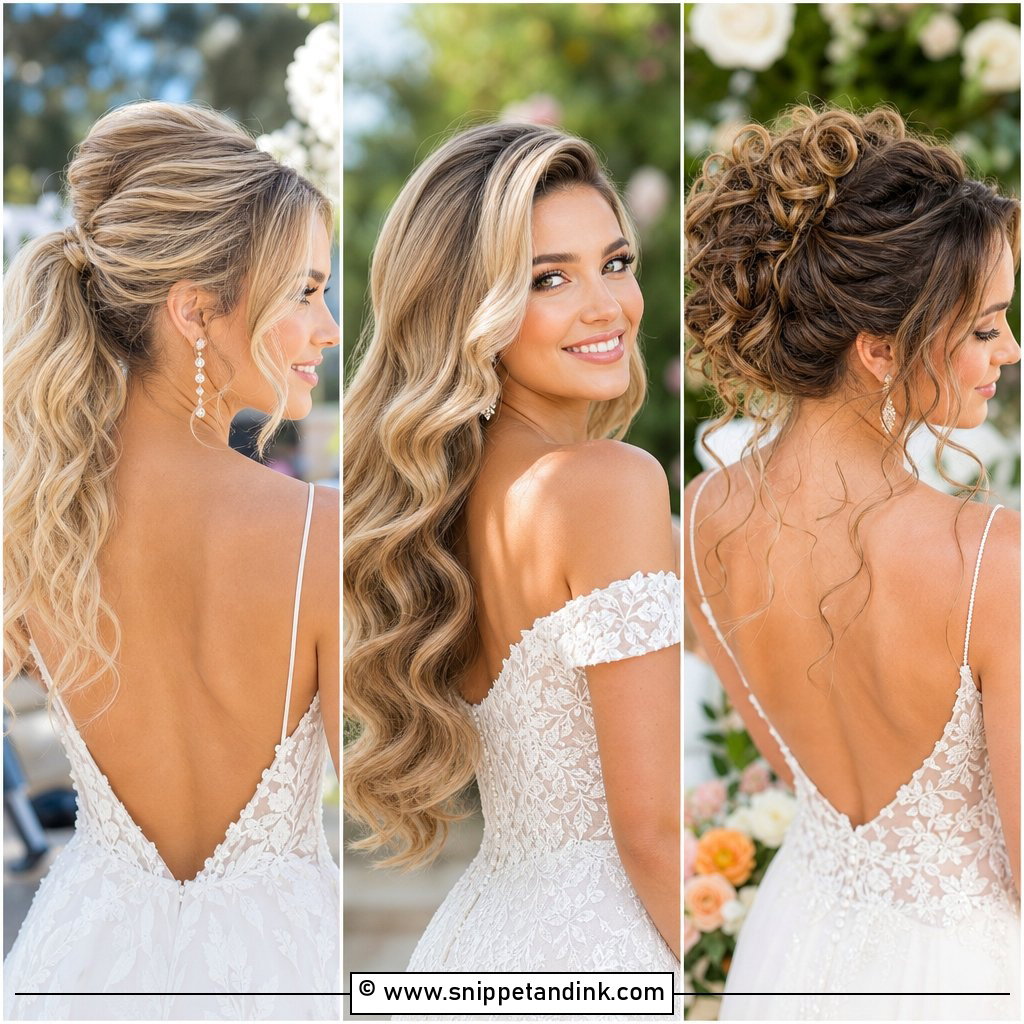
- Open backs and low backs: I sweep most of the hair over one shoulder, or the back detail disappears in every aisle photo.
- Beaded or heavily embroidered bodices: beads catch hair and fray the ends of curls, so I keep the length off the shoulders or smooth the underside with a little serum.
- High necklines and lace collars: long hair can look heavy over them. I take a few inches of volume off the bottom with a bend instead of a curl.
- Strapless and off-the-shoulder: almost anything works, and this is where Hollywood waves earn their place.
Bring a photo of the back of the dress to your trial, not just the front. I’ll check how the hair sits with you seated and standing.
1. Wedding Hair Down With Soft Waves
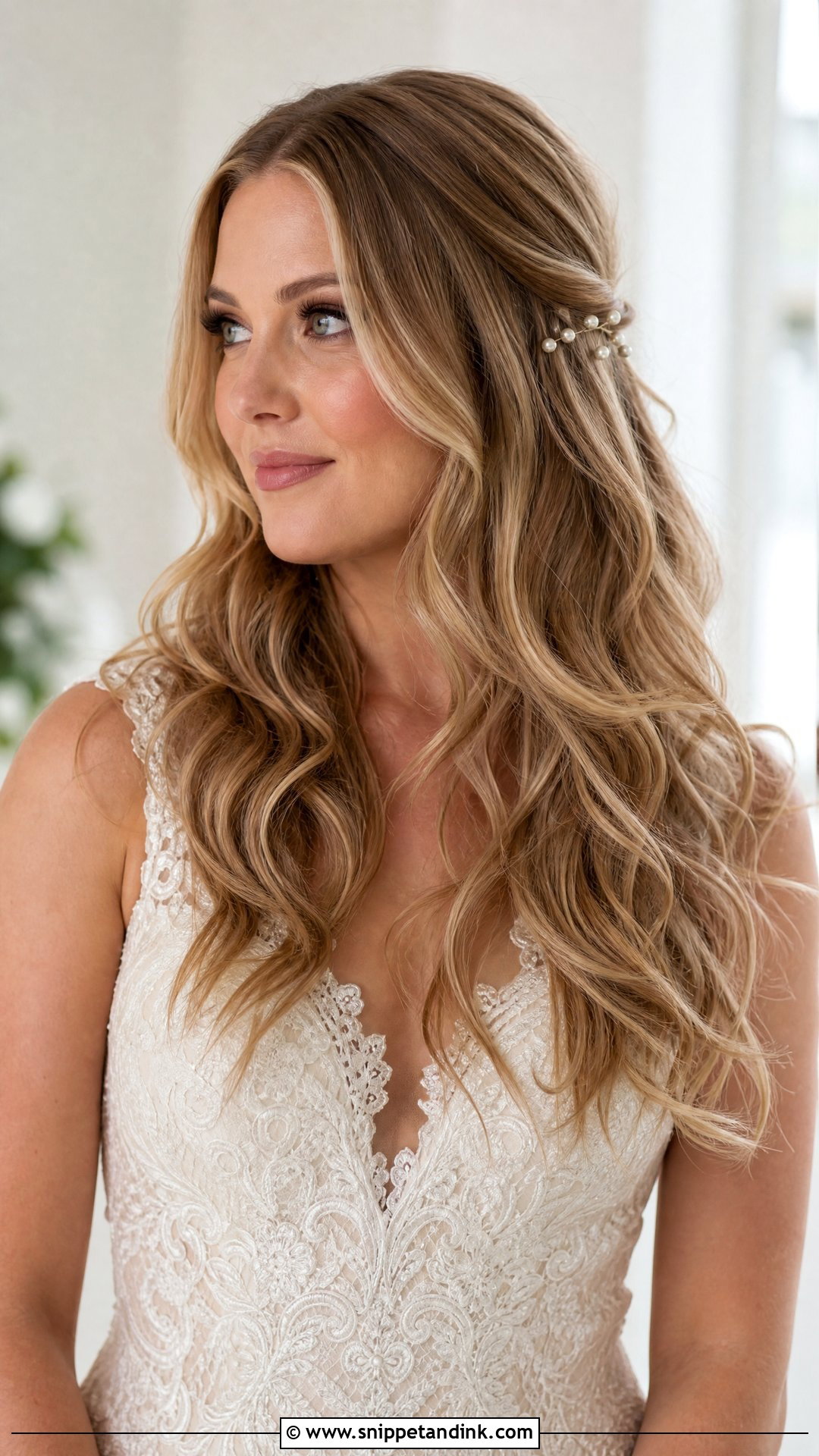
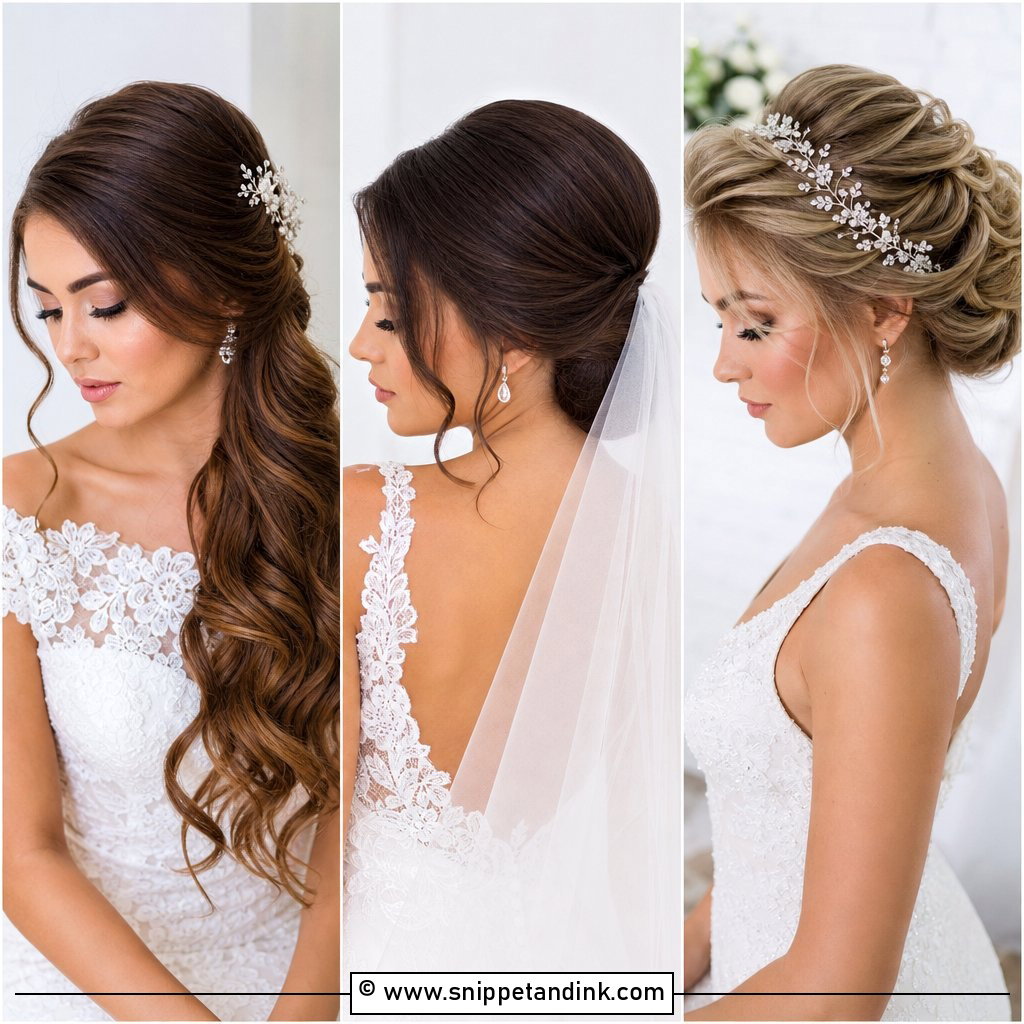
Soft waves are the look I’m asked for most, and the detail that makes them work is where the bend starts. I begin the waves around the cheekbones or lower, so the top stays smooth under a veil and the face isn’t crowded with curl. Long layers help, since each layer gets its own movement and the ends never look like one heavy block. I curl, let everything cool fully, then brush out with a paddle brush and finish with a flexible spray that still lets the hair move. Pearl pins on one side are optional.
2. Wedding Hair Down With Hollywood Waves
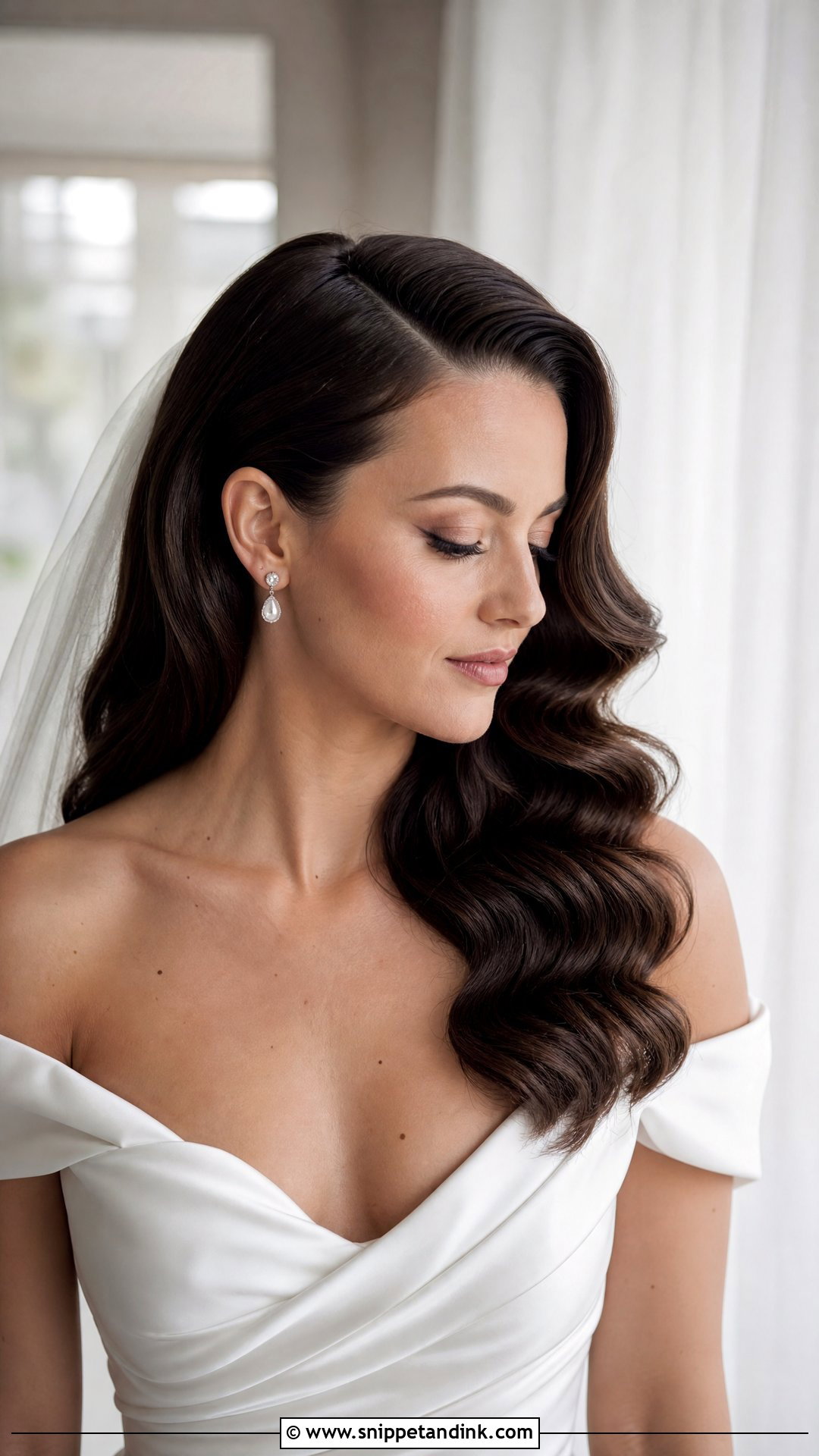
Hollywood waves are the glamorous end of hair down: one smooth, glossy S-shape running in the same direction from root to tip. I set them with every curl wound the same way, pin them while they cool, then brush them into a single wave and use clips along each ridge to sharpen the shape. Strapless, off-the-shoulder and vintage gowns suit it because the waves frame the collarbone. It needs medium to long hair with some density, though extensions can add fullness where yours is thin. A deep side part reads classic; a center part reads current. Keep accessories minimal so the wave itself does the work.
3. Wedding Hair Down With Loose Curls
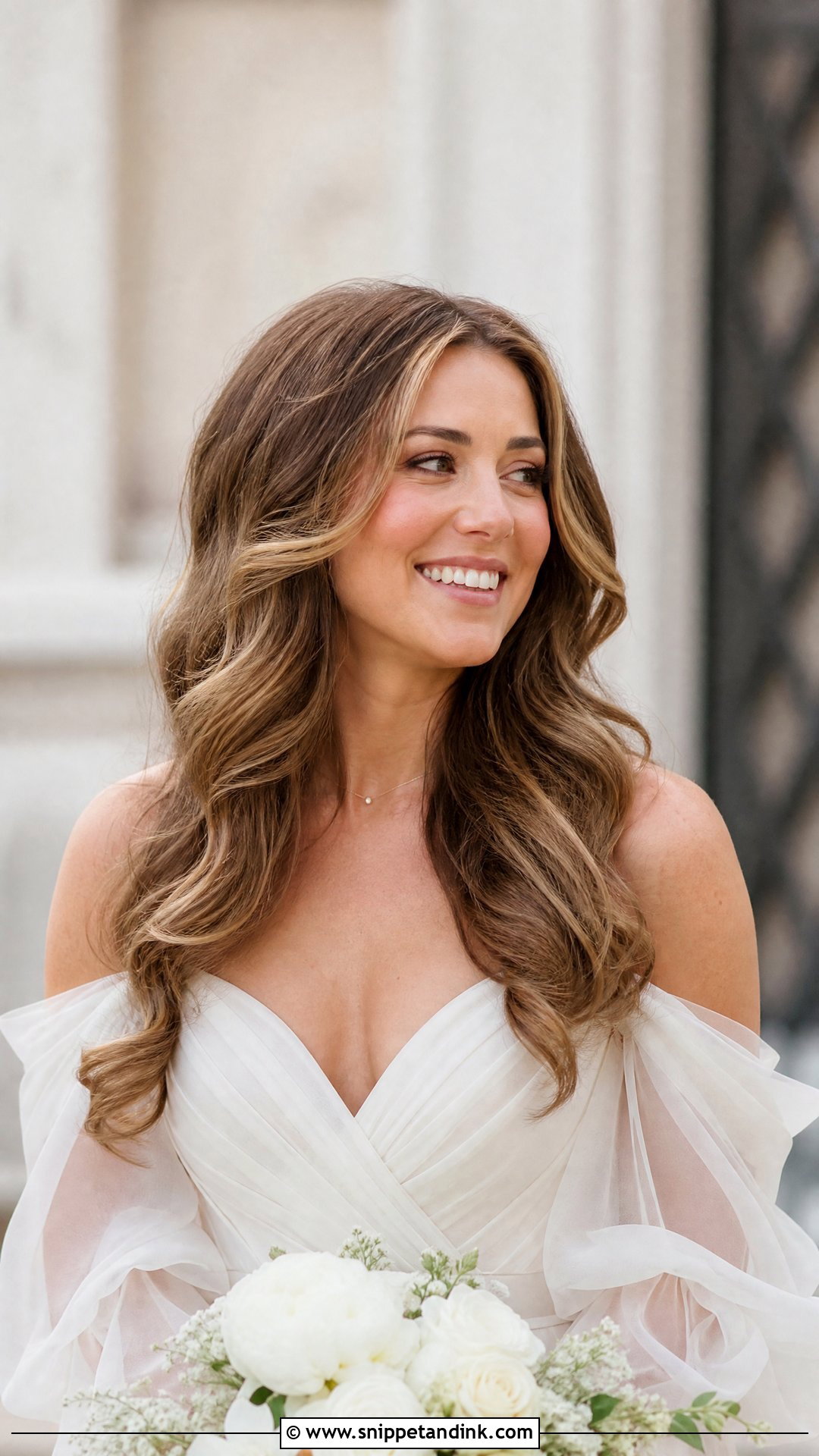
Can you picture soft curls moving as you walk down the aisle? To get that airy feel, I curl smaller than the finished look and brush through once the curls have cooled, so they open up instead of sitting tight. Crunchy curls usually mean too much product too early; I’d rather spray lightly before curling than heavily after. Medium and long hair with layers suits this best, because every layer drops into its own curl and the volume collects at the ends. A light veil or a small comb is all it needs.
4. Wedding Hair Down With Curtain Bangs
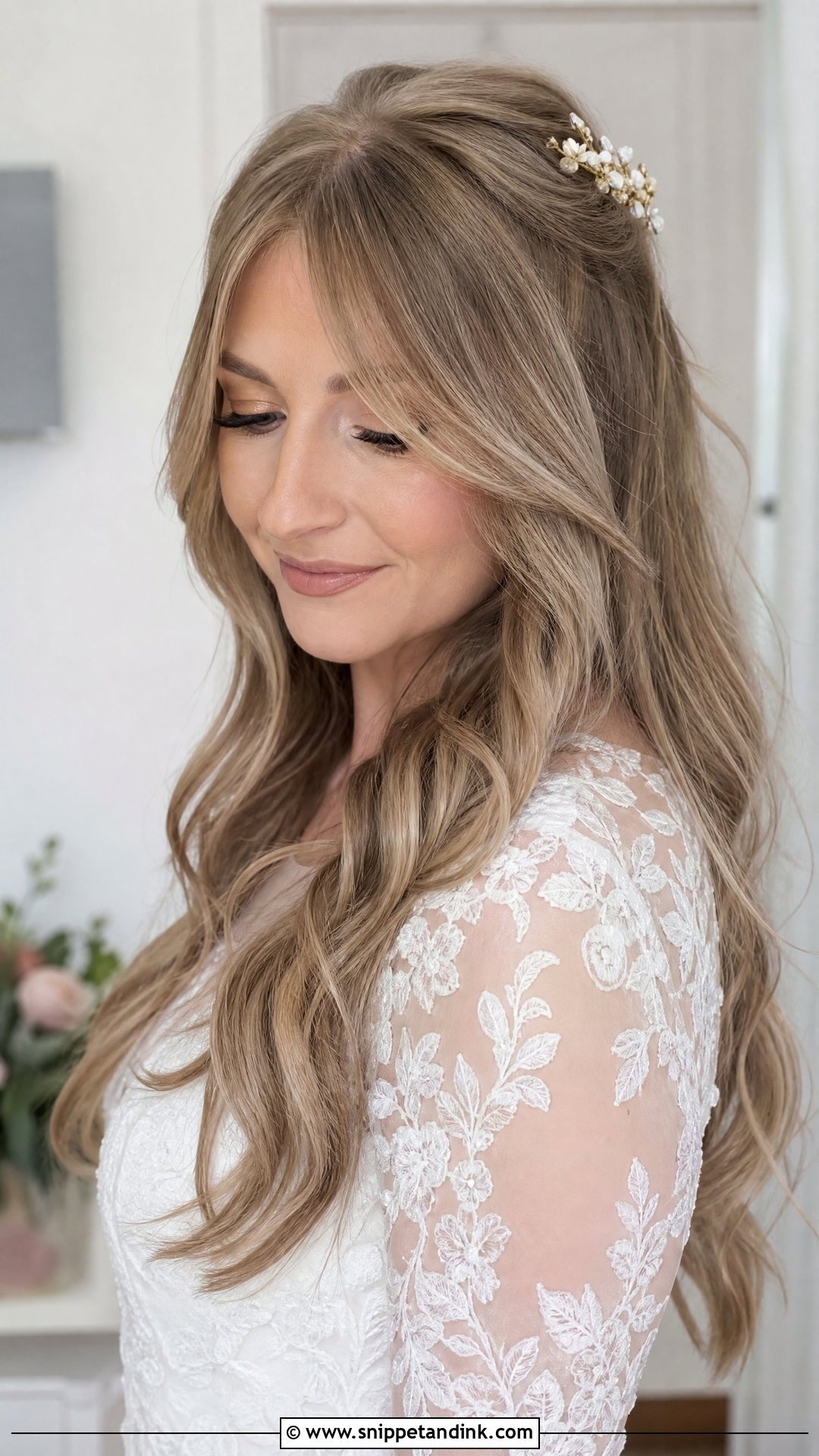
If you live in your curtain bangs, don’t pin them back for the wedding; you’ll spend the day feeling like someone else. I blow them out over a round brush so they curve away from the cheeks, then blend them into the waves or curls through the length. The fringe area separates fastest, especially when you touch it or get warm, so I set it with a light spray and ask you to keep your hands off it. A small floral comb or a veil set behind the crown keeps the front clear.
5. Wedding Hair Down With Side Part
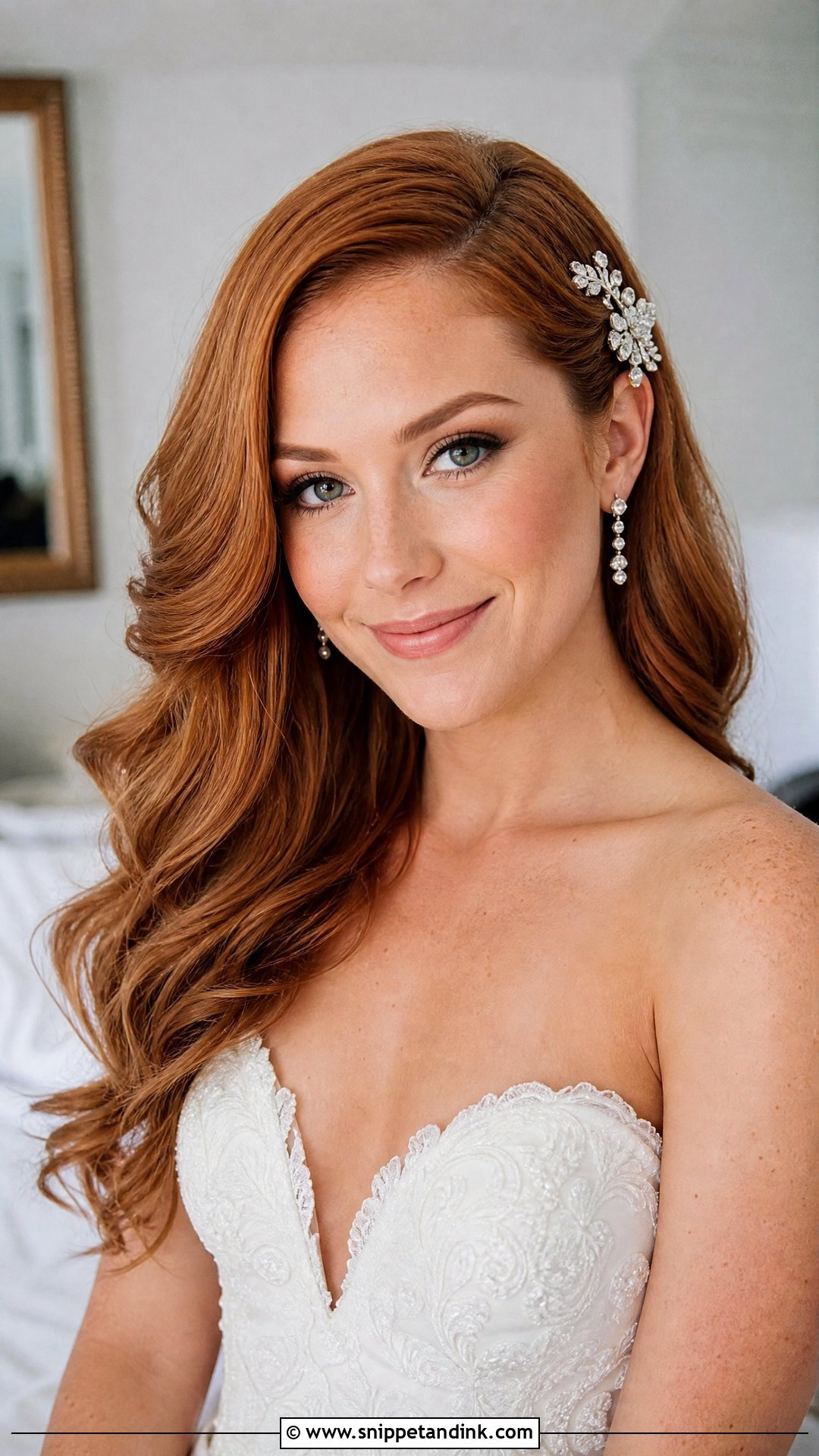
A side part instantly adds shape around the face. I tuck one side lightly behind the ear and let the other fall forward in waves, which creates a soft asymmetry that sits well with one-shoulder gowns, sweetheart necklines and plain bodices. It’s also my quiet trick for fine hair: flipping the part over adds the look of root volume without backcombing. Keep the part clean but not razor-sharp. A jeweled clip or pearl barrette on the tucked side keeps that ear-tuck from falling forward during hugs.
6. Wedding Hair Down With Middle Part
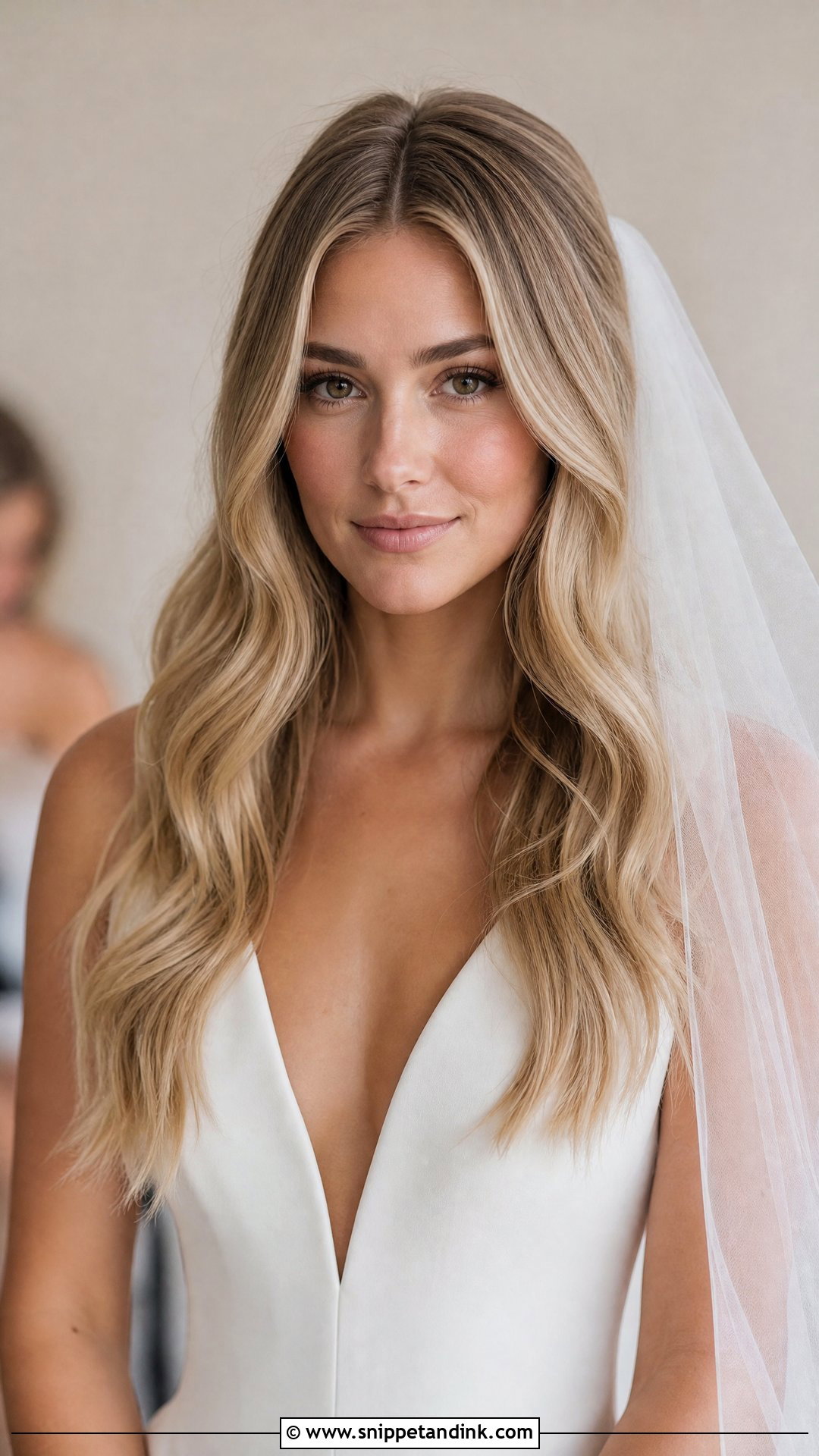
A middle part looks modern and simple, and it’s less forgiving than it seems. Both sides have to frame the face evenly, so I check the part in the mirror and in a phone photo, because a part that looks straight from the front can drift at the crown. Then each side falls into waves or smooth bends through the ends. It suits clean makeup and minimal gowns, and long hair looks extra fluid from behind. If your roots go flat by lunchtime, a little texture spray hidden underneath the top layer helps without breaking the line. A veil set behind the crown won’t disturb the part.
7. Wedding Hair Down With Floral Pins
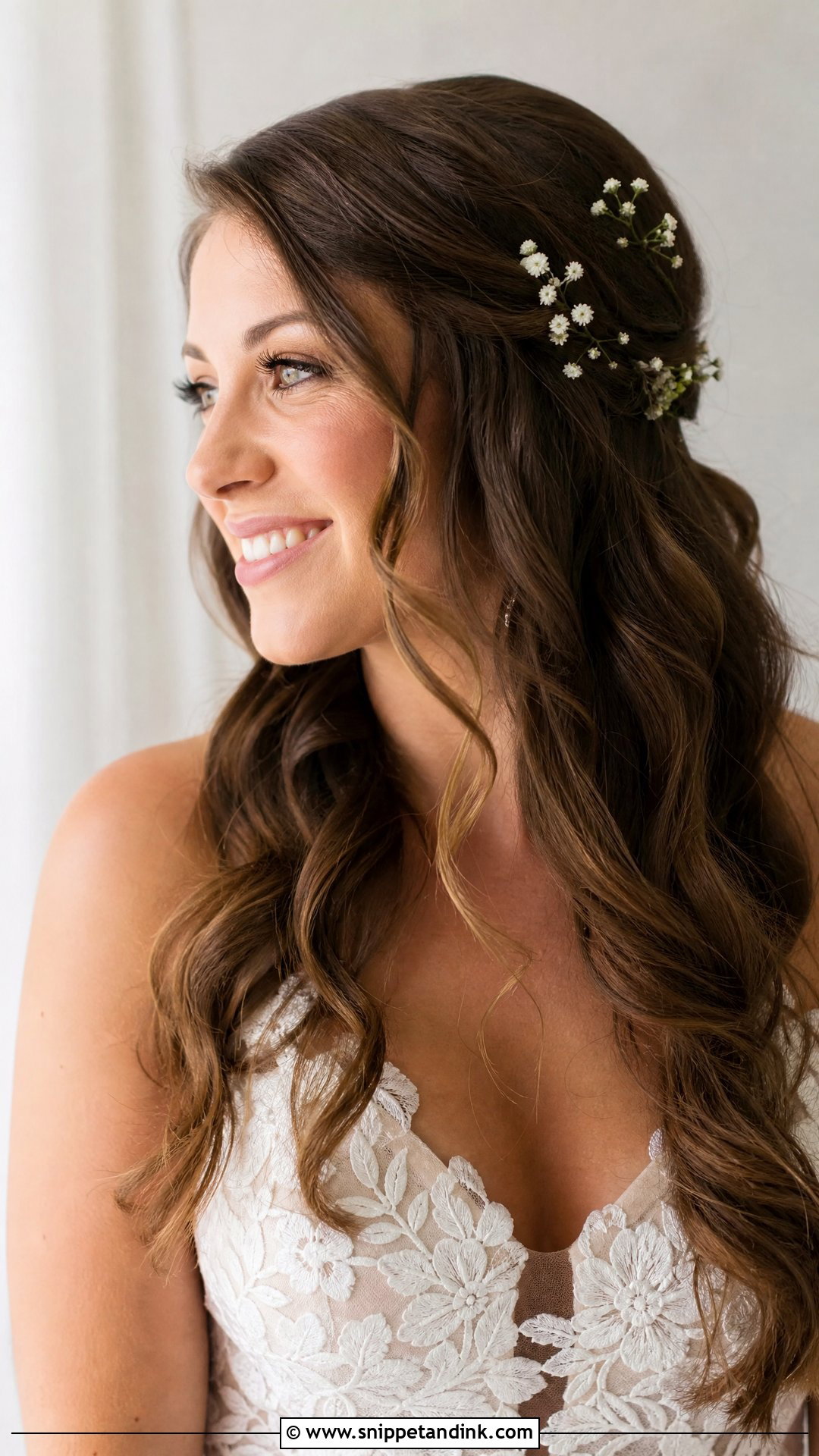
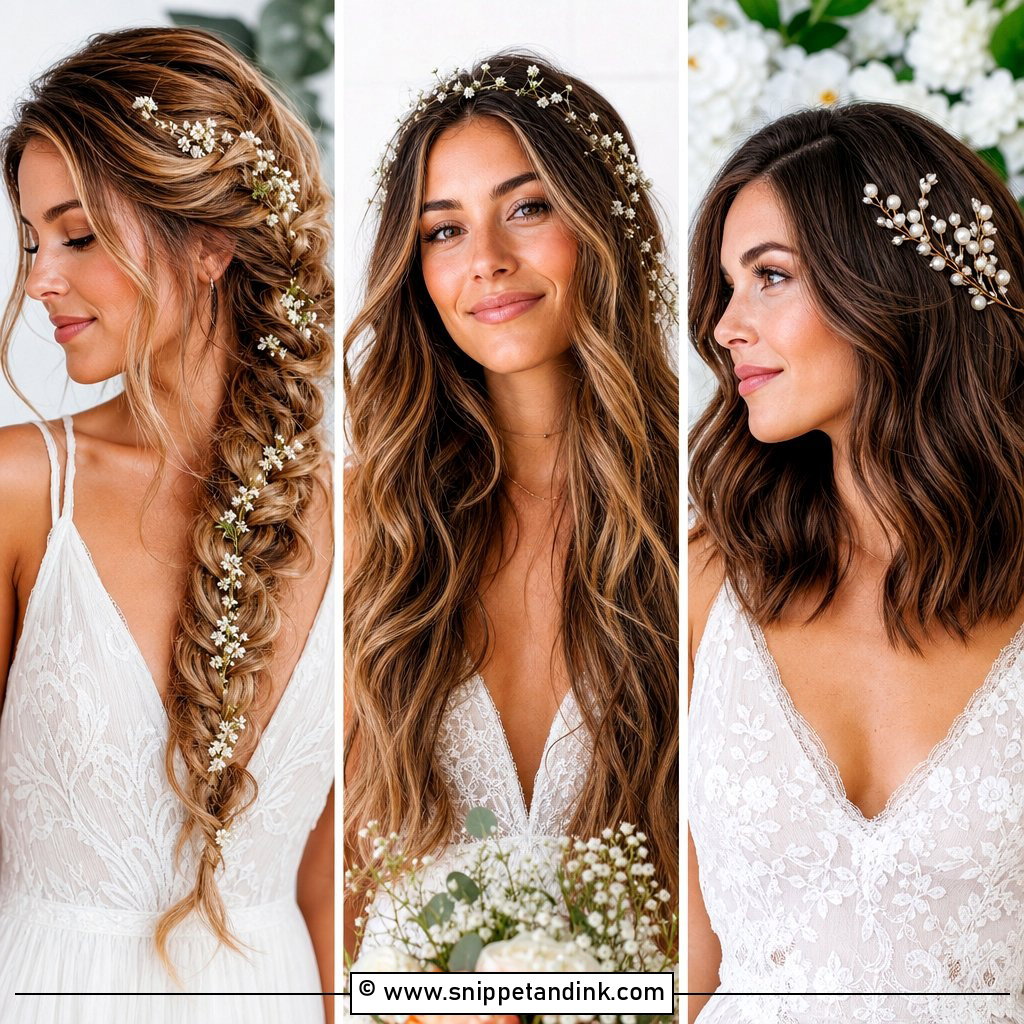
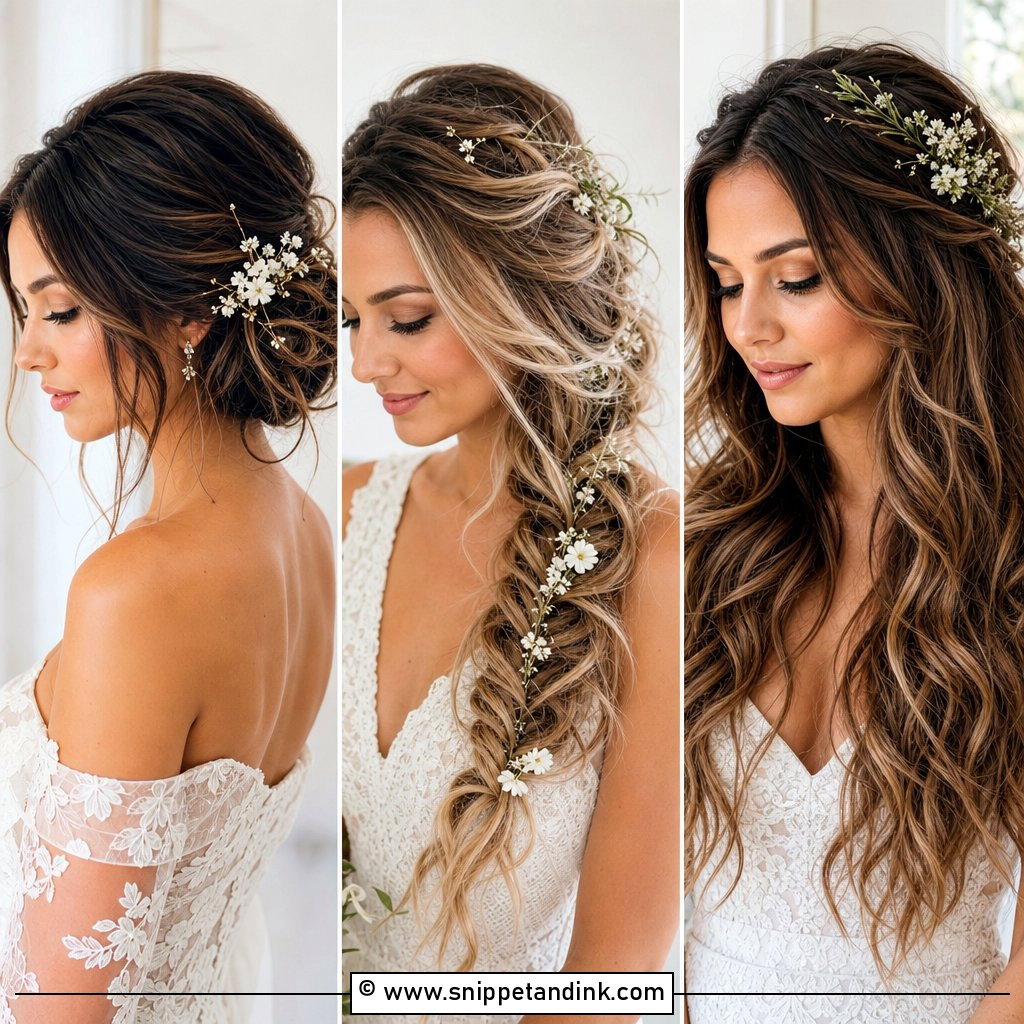
Flowers in loose hair need something to hold on to, so I place them where there’s a twist, a small braid or a pinned tuck behind the ear rather than on smooth, hanging hair. A few tiny blooms grouped along one side look deliberate; scattered ones look like they fell in. Ask your florist to wire the stems and choose hardy flowers that won’t wilt off the vase. Keep them in the same family as your bouquet, and small, so they don’t crowd your face. Waves or natural curls give the stems the grip they need.
8. Wedding Hair Down With Pearl Pins
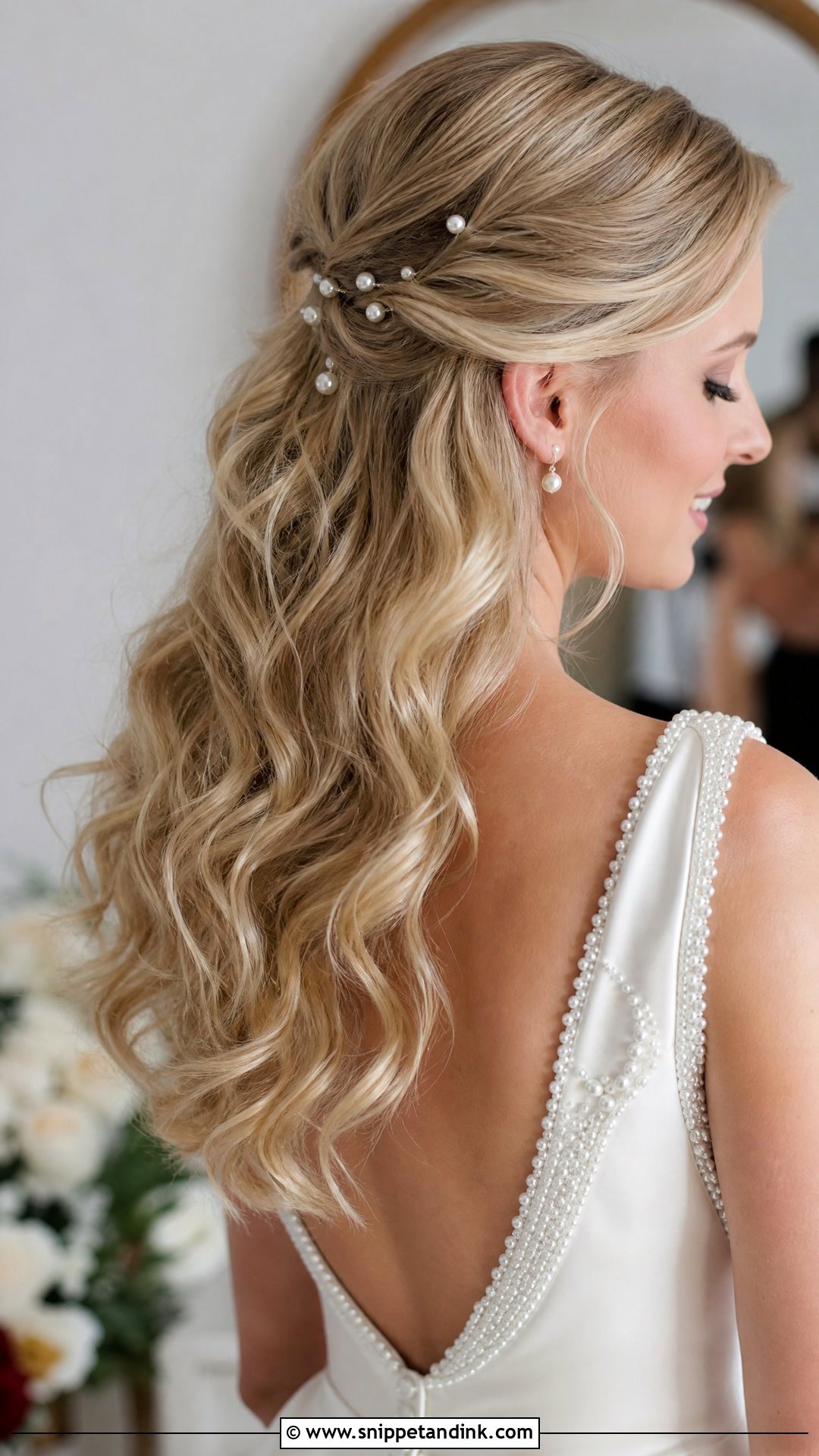
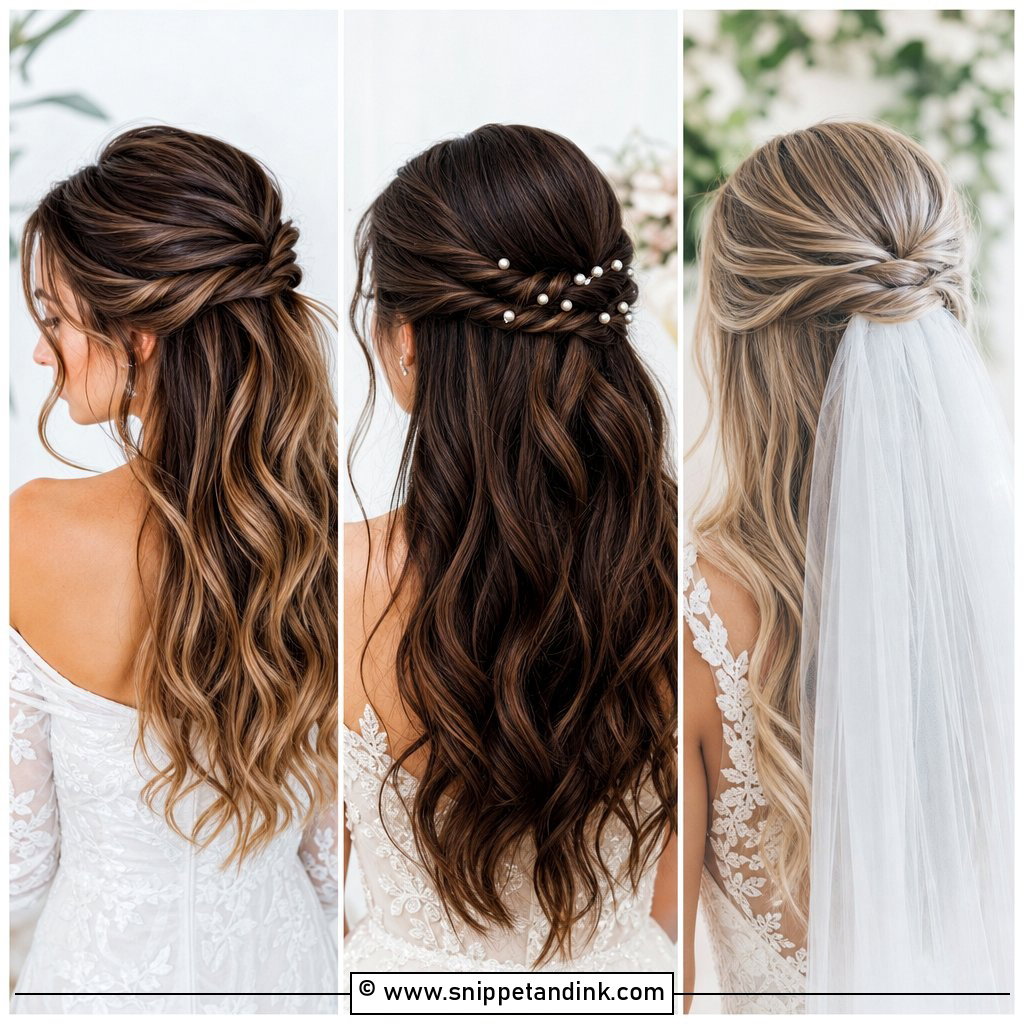
Pearl pins add detail to loose hair without making it look done up. I place them on one side for an asymmetric accent, scatter a few through the back for over-the-shoulder photos, or use one pearl comb near the crown. The pins I use for this are decorative only; they sit in hair that is already secured underneath with a hidden bobby pin, so nothing drags or slides. They go with classic gowns, modern dresses and simple veils. Soft waves, sleek bends and textured natural hair all show pearls well.
9. Wedding Hair Down With Veil
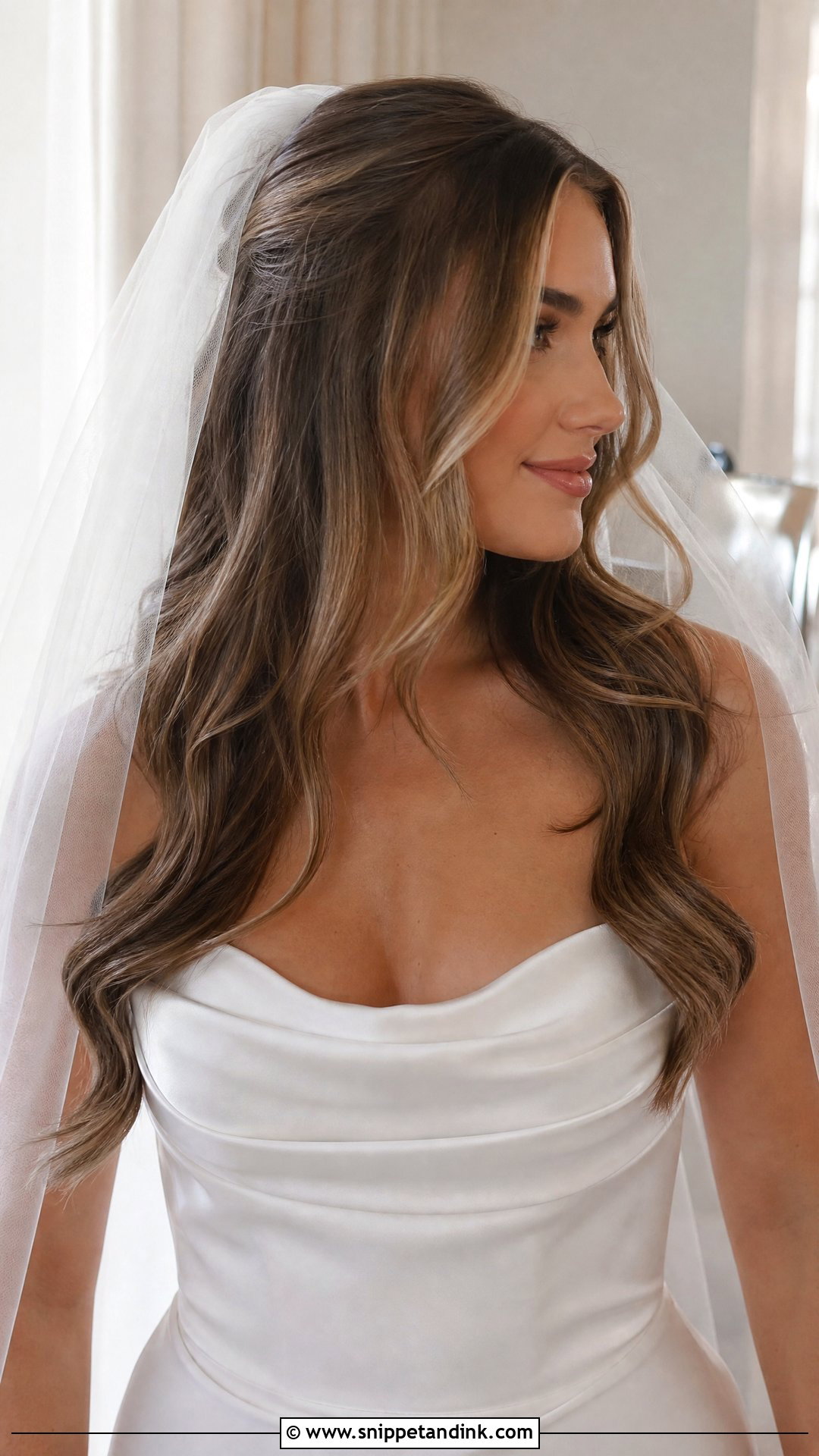
There’s something classic about a veil flowing over soft waves, and the whole look depends on where the comb sits. At the crown it feels traditional; below the crown it feels softer and frames the face less. The problem with loose hair is that a comb has nothing to grip, so I build a tiny hidden base first: a small section twisted and cross-pinned, or a clear elastic under the top layer. Slide the comb in against that and it survives hugs, photos and the first dance. Keep the face-framing pieces light so the tulle doesn’t catch on them.
10. Wedding Hair Down With Hair Vine
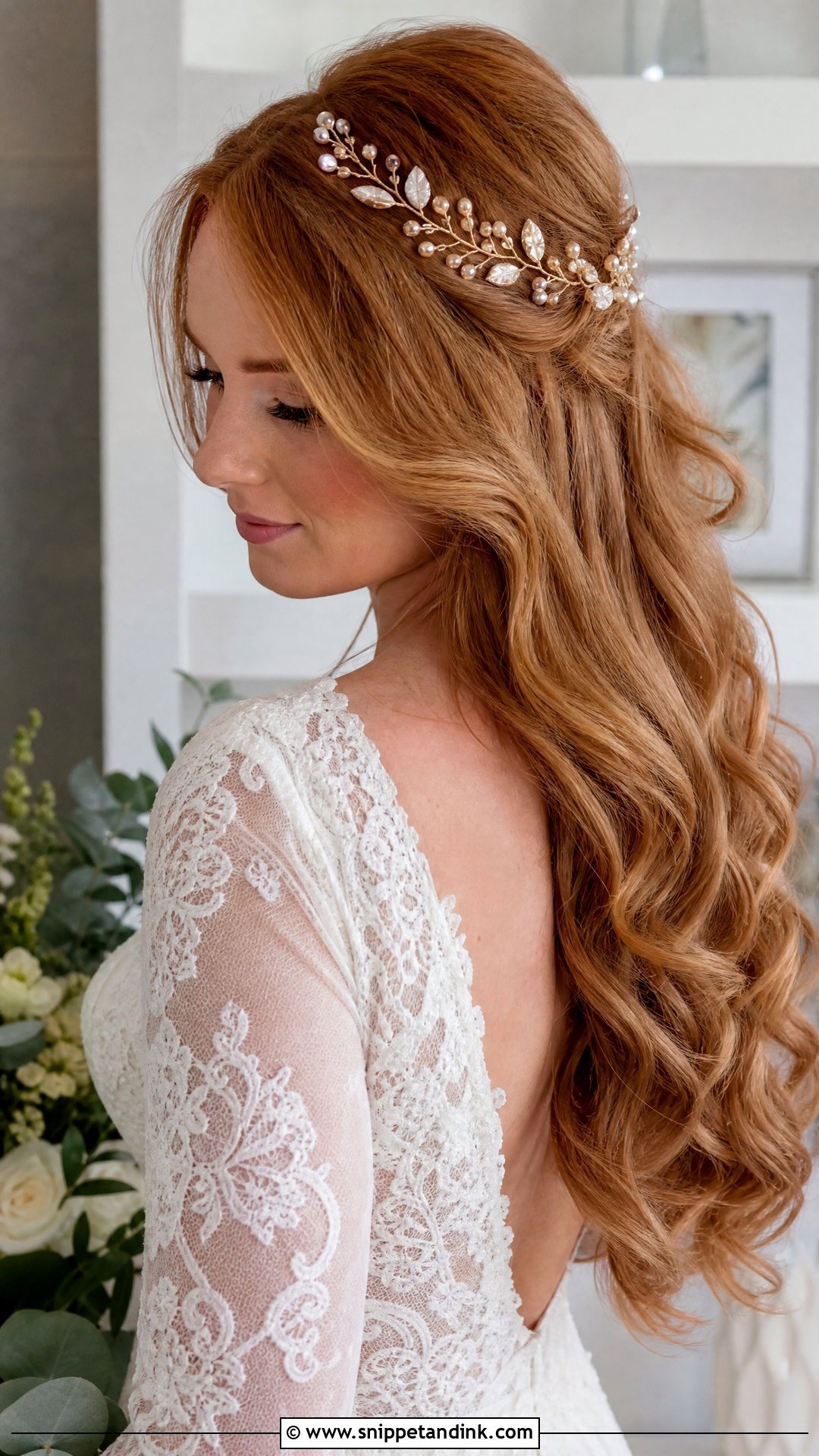
A hair vine is a flexible strip of wire with pearls, crystals, leaves or flowers, and you can bend it around the side of the head, across the back or along a soft twist. It suits outdoor and garden weddings, boho dresses and woodland venues. I stitch it in with bobby pins through the loops in the wire every few inches, not just at the ends, so it doesn’t sag. Pin-straight hair doesn’t grip a vine well, so I add some wave or texture first. Keep the rest of the styling light so the vine is the one detail.
11. Wedding Hair Down With Half Up Twist
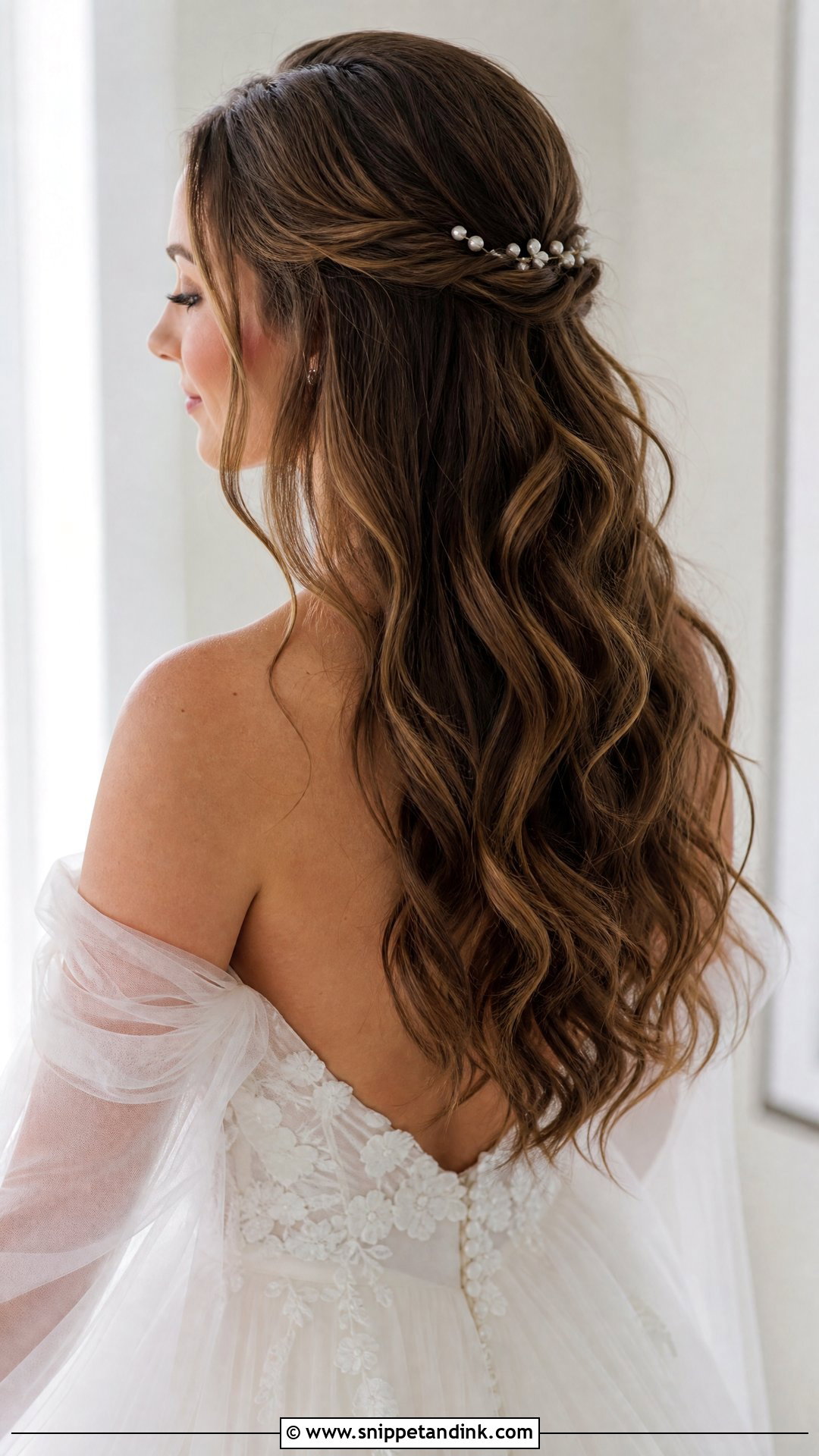
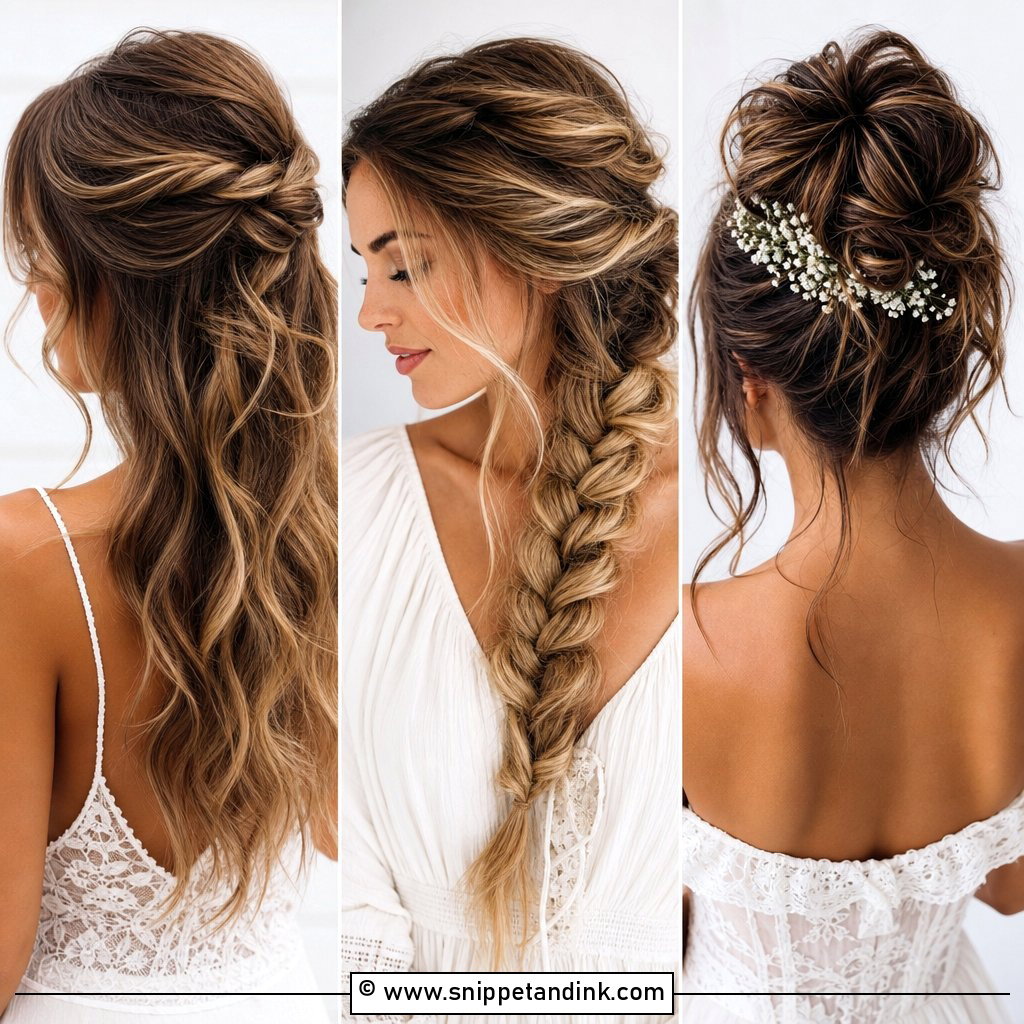
Here the front pieces are twisted back and pinned, and the rest flows down the back. I suggest it when a bride wants her face open for photos but still wants the length. The twist can be loose, smooth or textured. It also gives a veil comb or a few flowers a secure place to sit. Keep the crown volume gentle; overly teased crowns look dated quickly in photos. If you go this route, give the twist a gentle tug after pinning to soften it.
12. Wedding Hair Down With Braided Crown
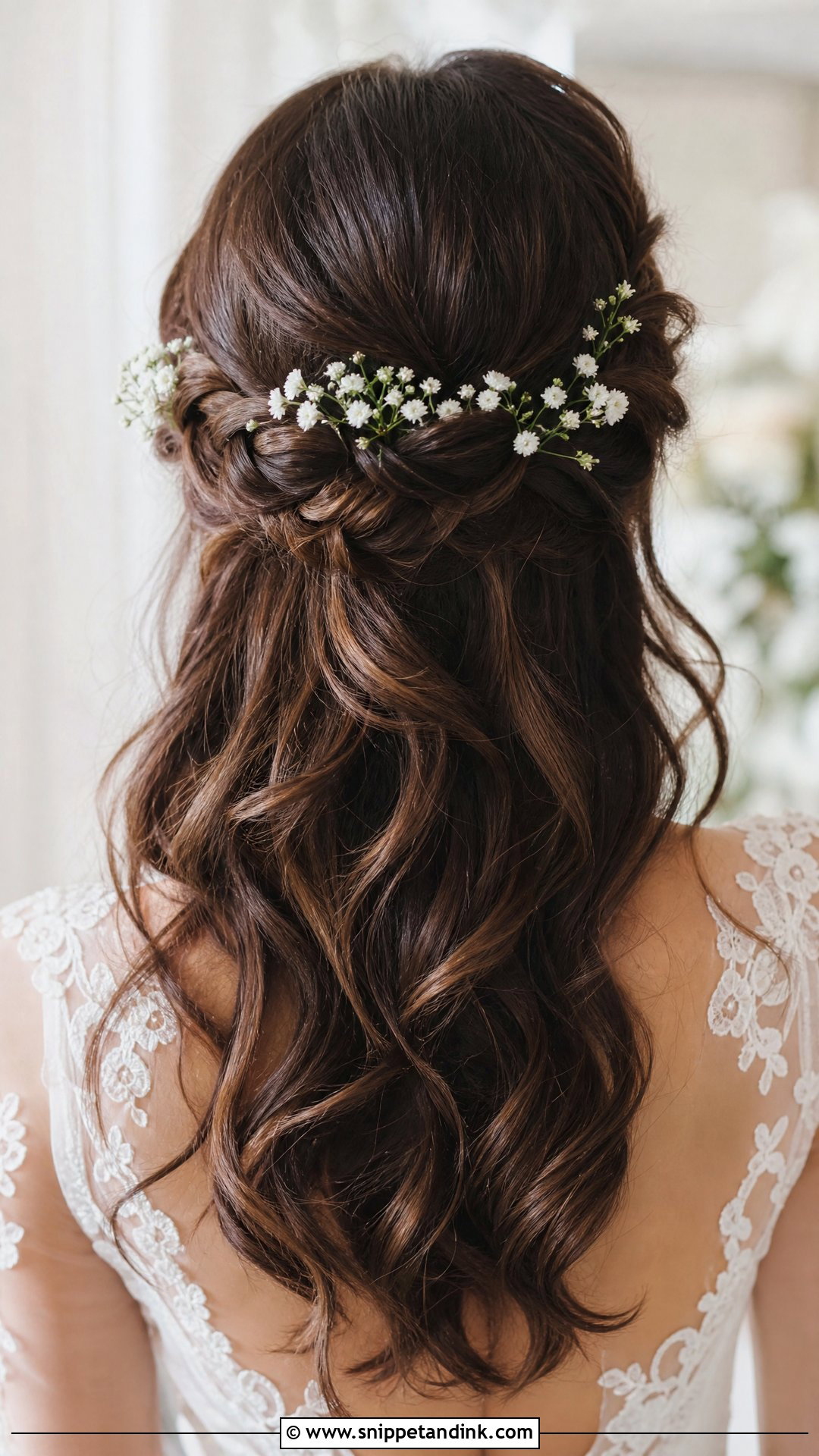
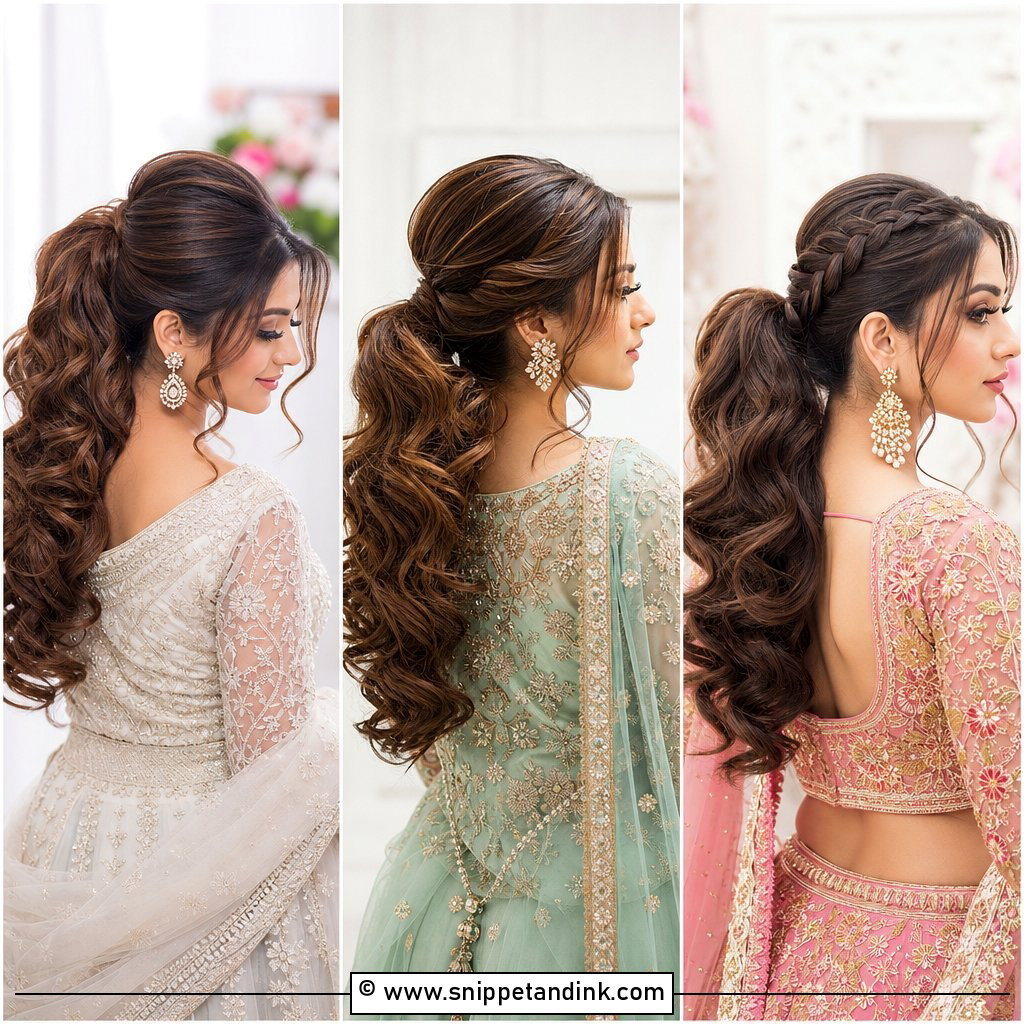
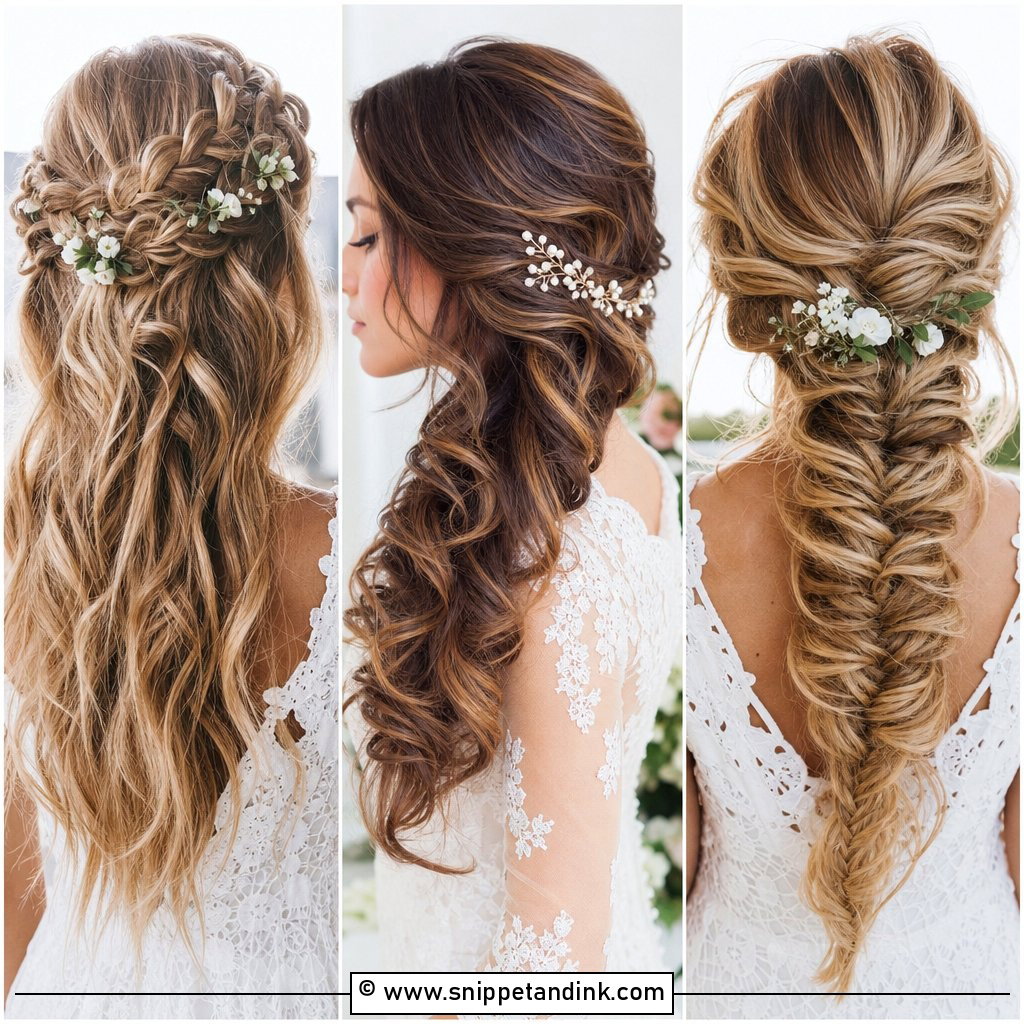
A braided band across the back of the head does a practical job: it stops front pieces blowing into your face when you’re outdoors. The rest falls into curls or waves. The braid also gives accessories a strong base, so flowers, pins or a veil anchor into it securely. I keep it soft and slightly loosened rather than tight to the scalp, because a tight braid pulls at the hairline and starts to ache by evening. It works on long and medium hair, and on shorter lengths if I add texture first.
13. Wedding Hair Down With Waterfall Braid
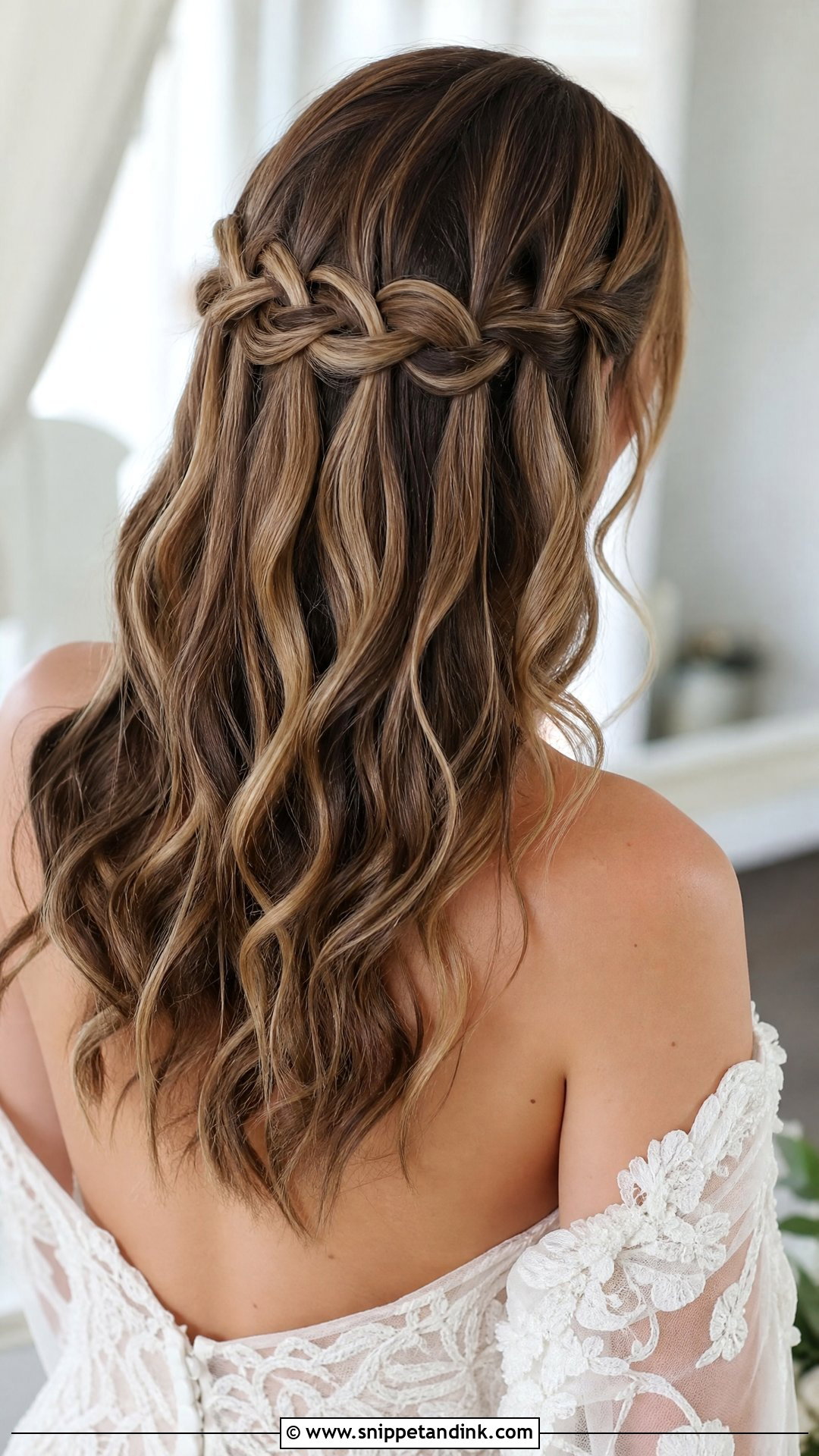
A waterfall braid runs across the side or back while small sections drop through it like ribbons. It’s the braid I recommend most for balayage or highlighted hair, because the dropped strands show off the different tones. Loose curls help those falling pieces blend into the rest. Keep the braid relaxed and wide so it reads bridal rather than school photo. Pearl pins along the line are optional, and a few hidden pins along the back stop it from slipping lower through the day.
14. Wedding Hair Down With Boho Waves
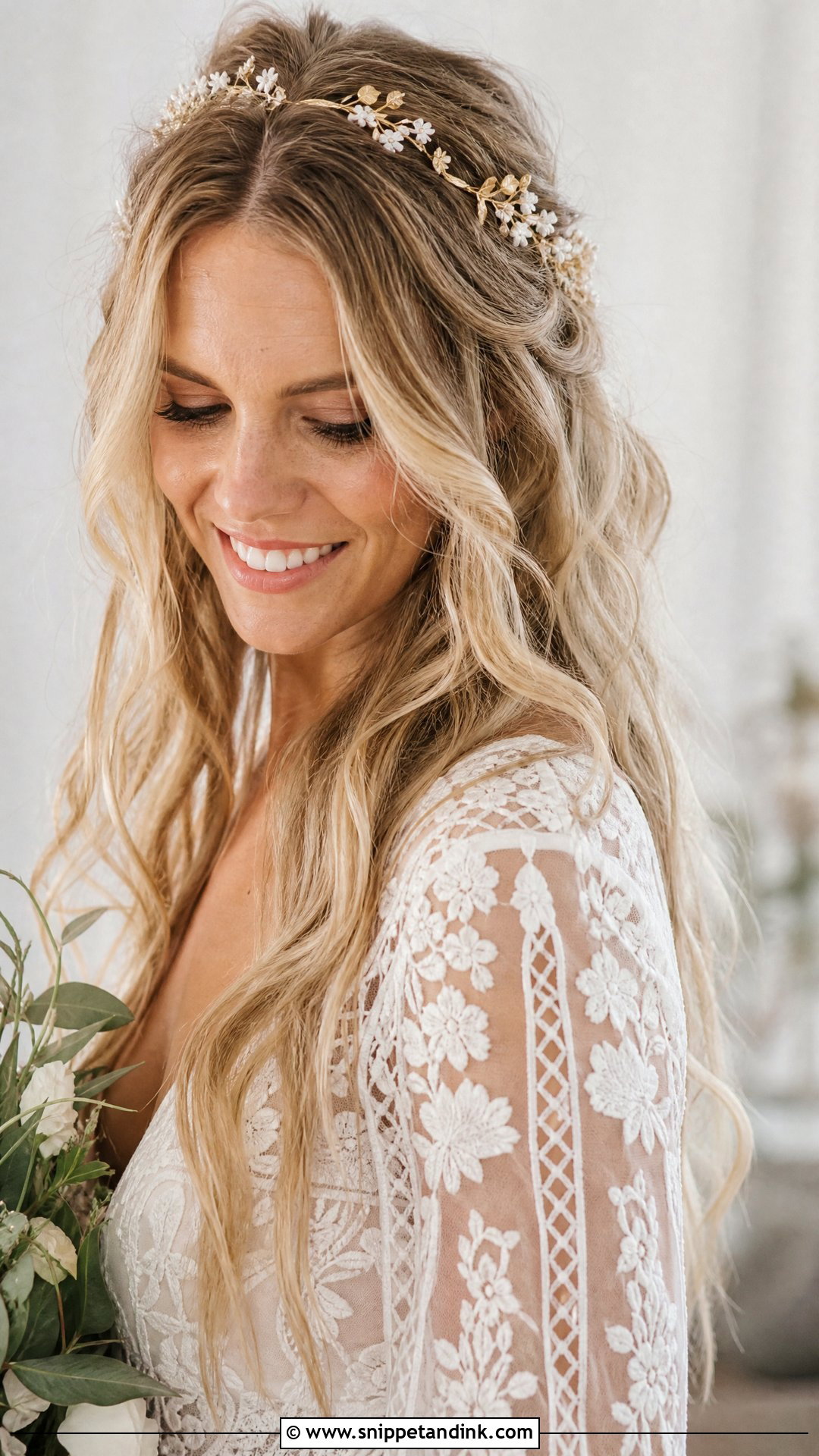
Boho waves are meant to look lived-in: bent rather than curled, with texture through the mid-lengths and ends. I usually make them with a flat iron twisted through the hair, which gives a flatter, more natural bend than a curling wand. They sit well at beach, desert and barn venues, under floral crowns and vines, and with lace or flowing sleeves. The challenge is making them look intentional, so I keep a little polish at the root and around the face. Flexible hold matters most; stiff spray kills the movement.
15. Wedding Hair Down With Natural Curls
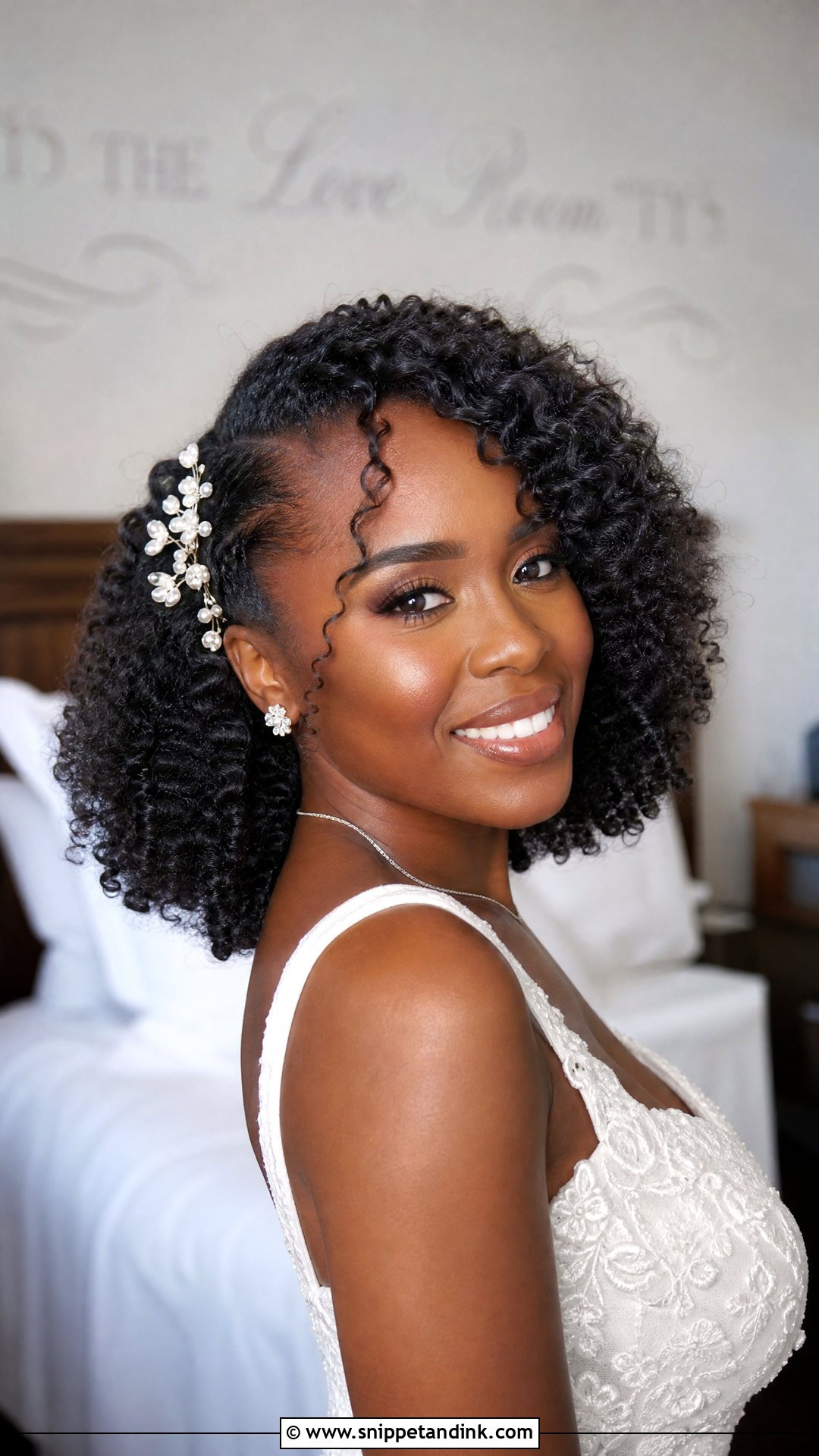
Natural curls don’t need reshaping, they need definition. I start with hydrated, freshly styled curls, then refine the shape curl by curl, adding light-hold product and choosing face-framing pieces carefully. The aim is to show off your volume and pattern, not force a different texture. If you wear your curls every day, this is the version where you’ll recognise yourself in every photo. Accessories should sit on top of the curls, not flatten them: a side comb, small floral pins or a veil anchored firmly at the crown.
16. Wedding Hair Down With Long Layers
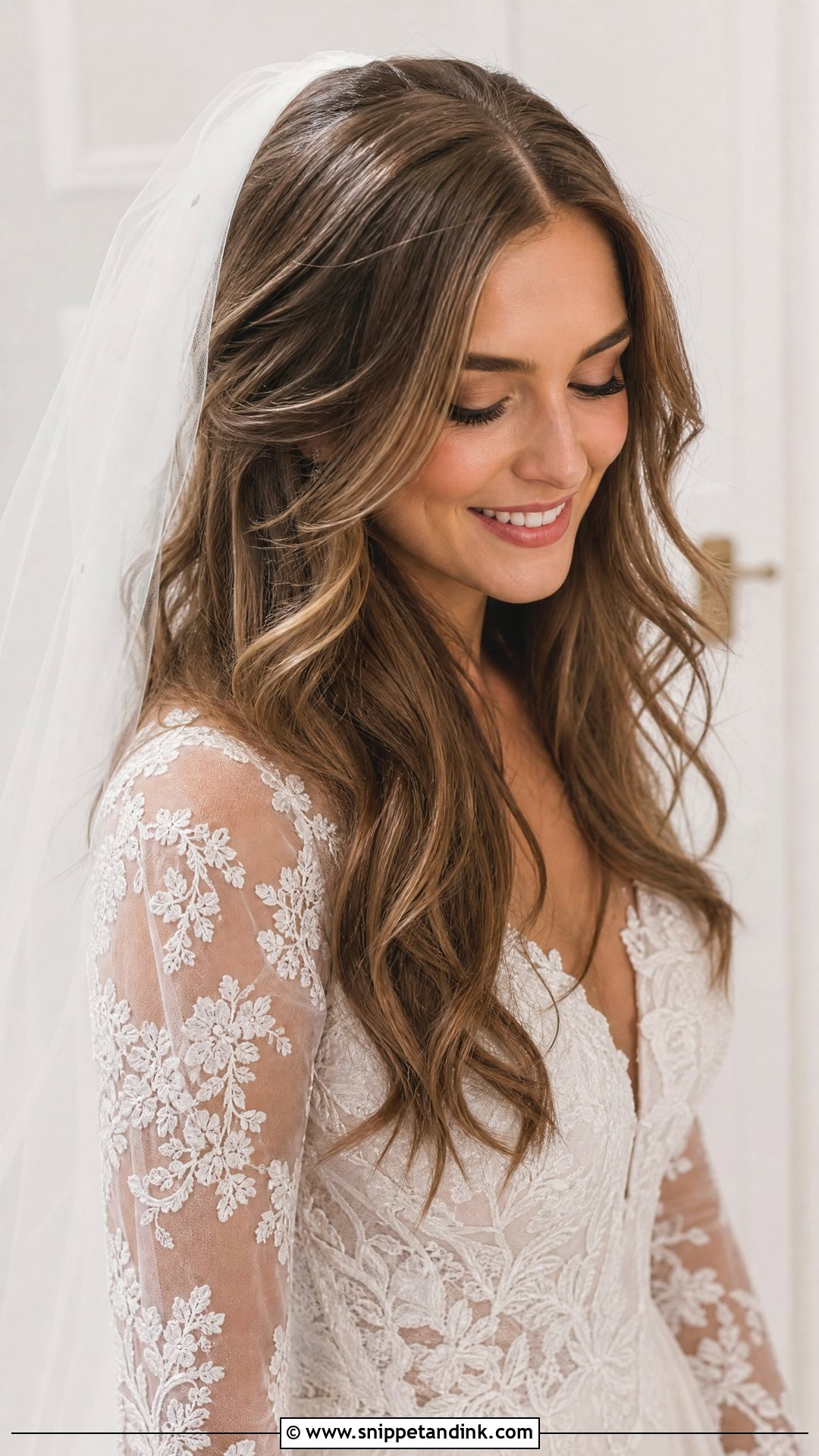
Long layers are the haircut that makes hair down work. They take weight out of thick hair, so curls and waves cascade instead of collapsing under their own weight. They also show off balayage or highlights, because each layer catches light differently. If you’re planning a cut, get it about six weeks before the wedding so the layers settle and the ends don’t look freshly snipped. I add smooth volume at the crown and soft bends through the ends, with face-framing pieces blended in.
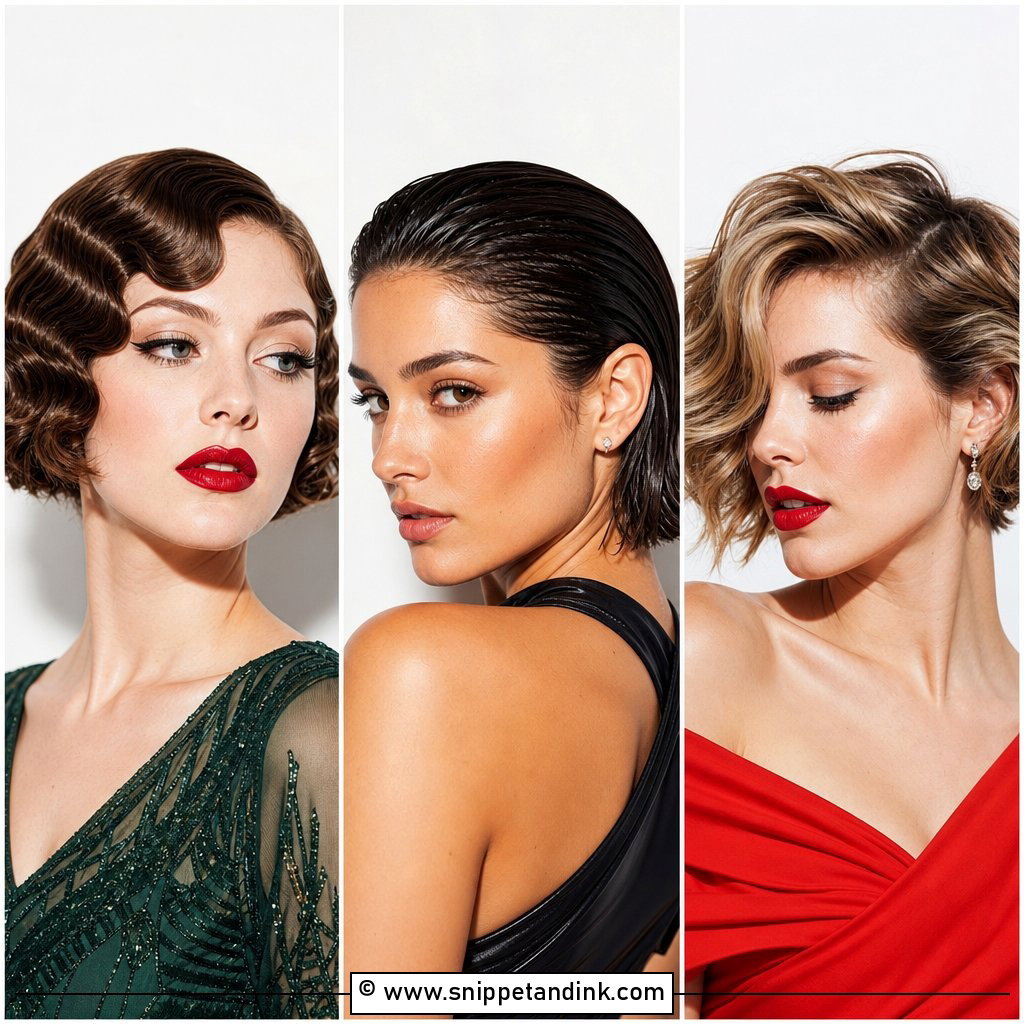
17. Wedding Hair Down With Short Hair
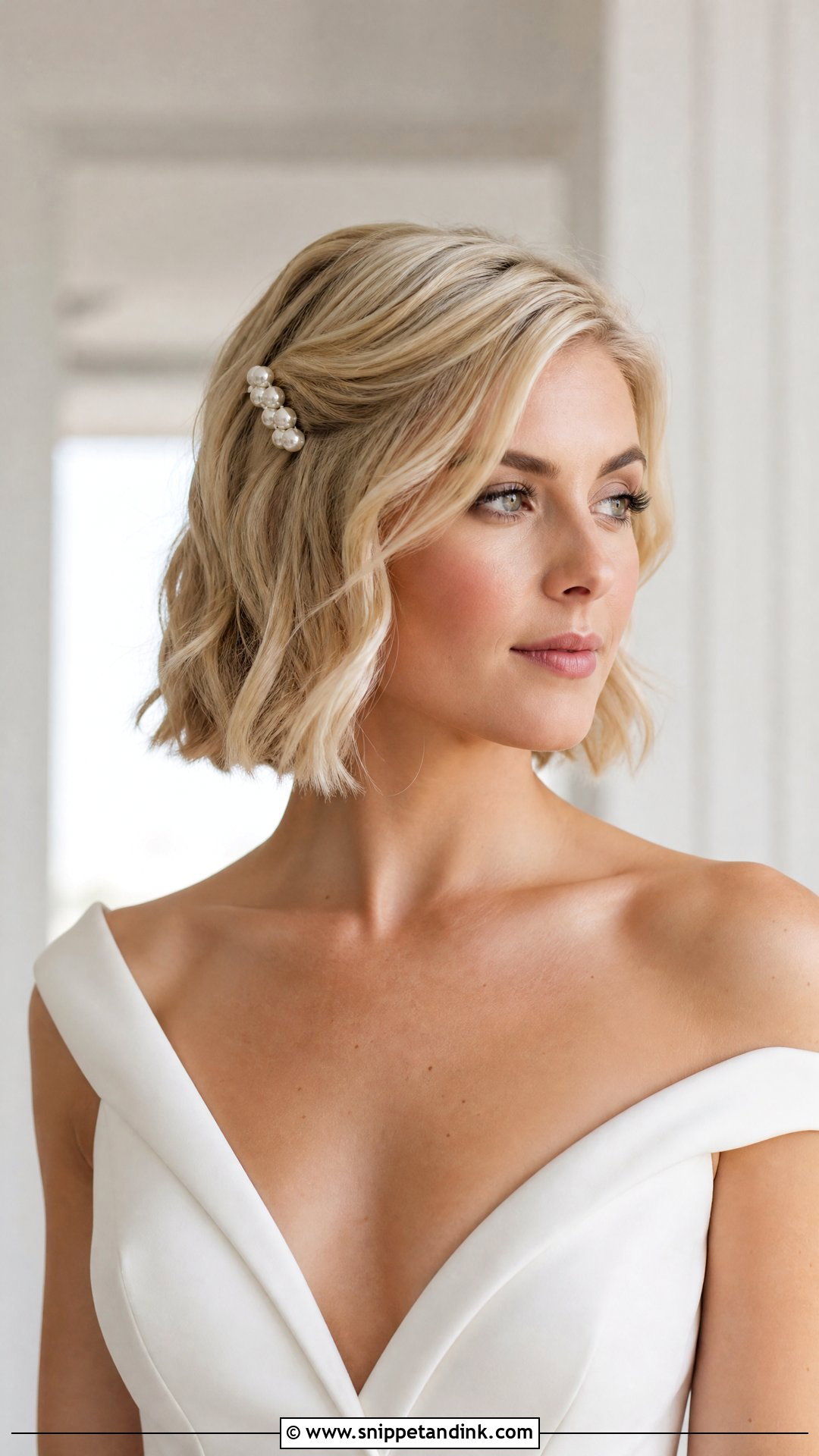
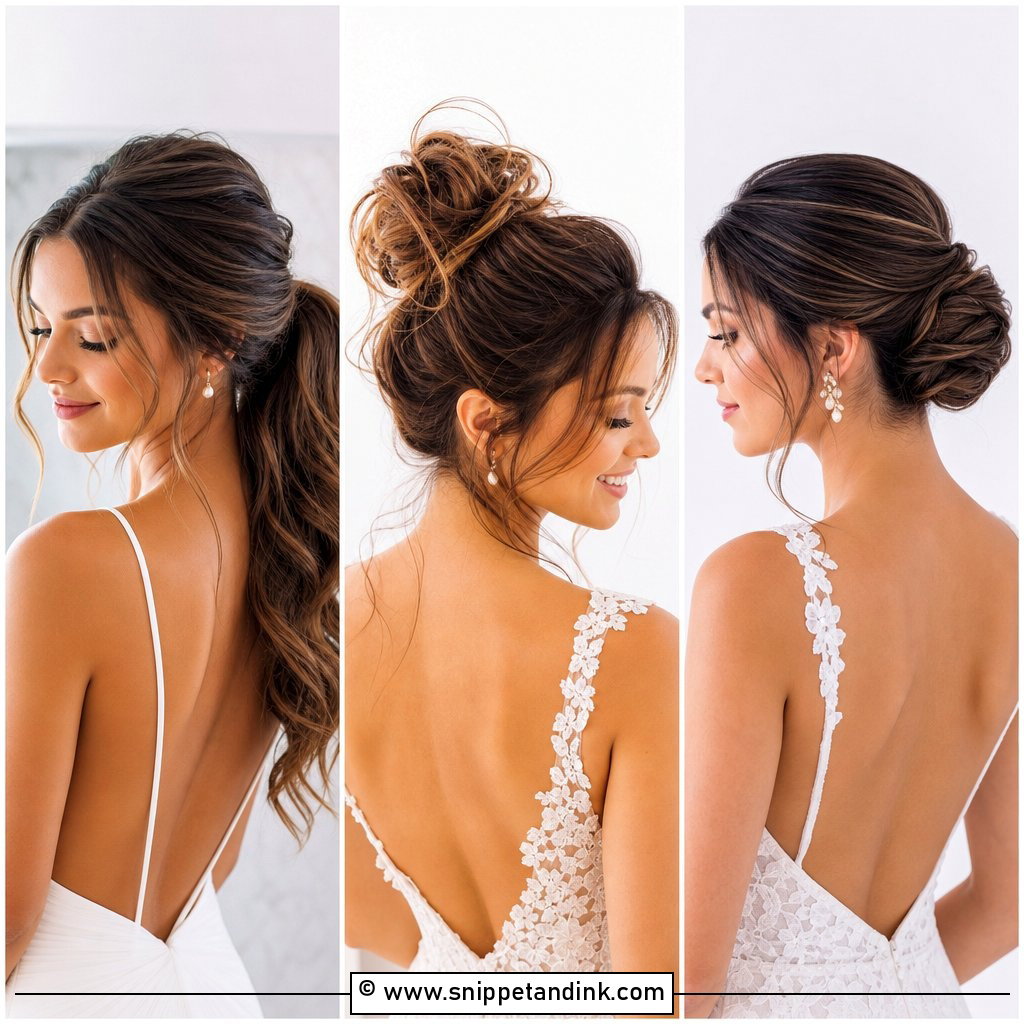
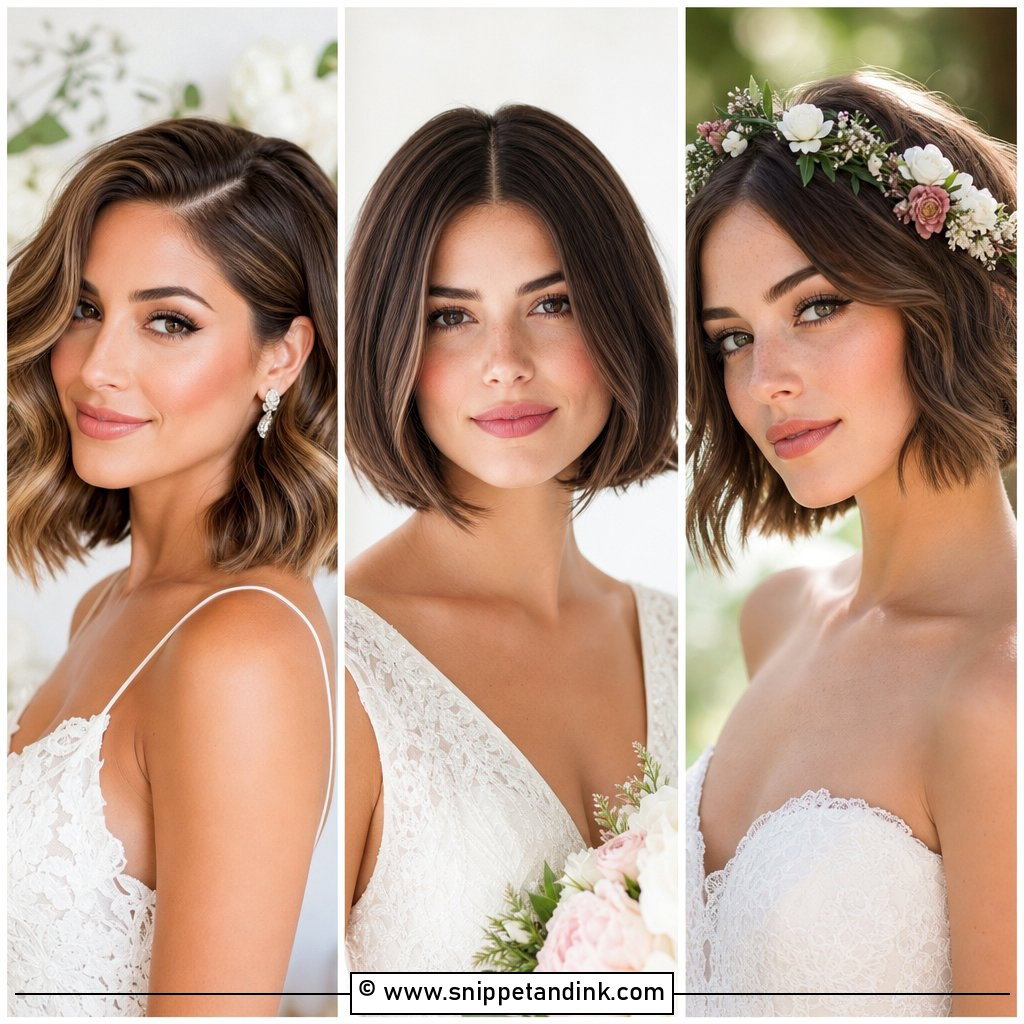
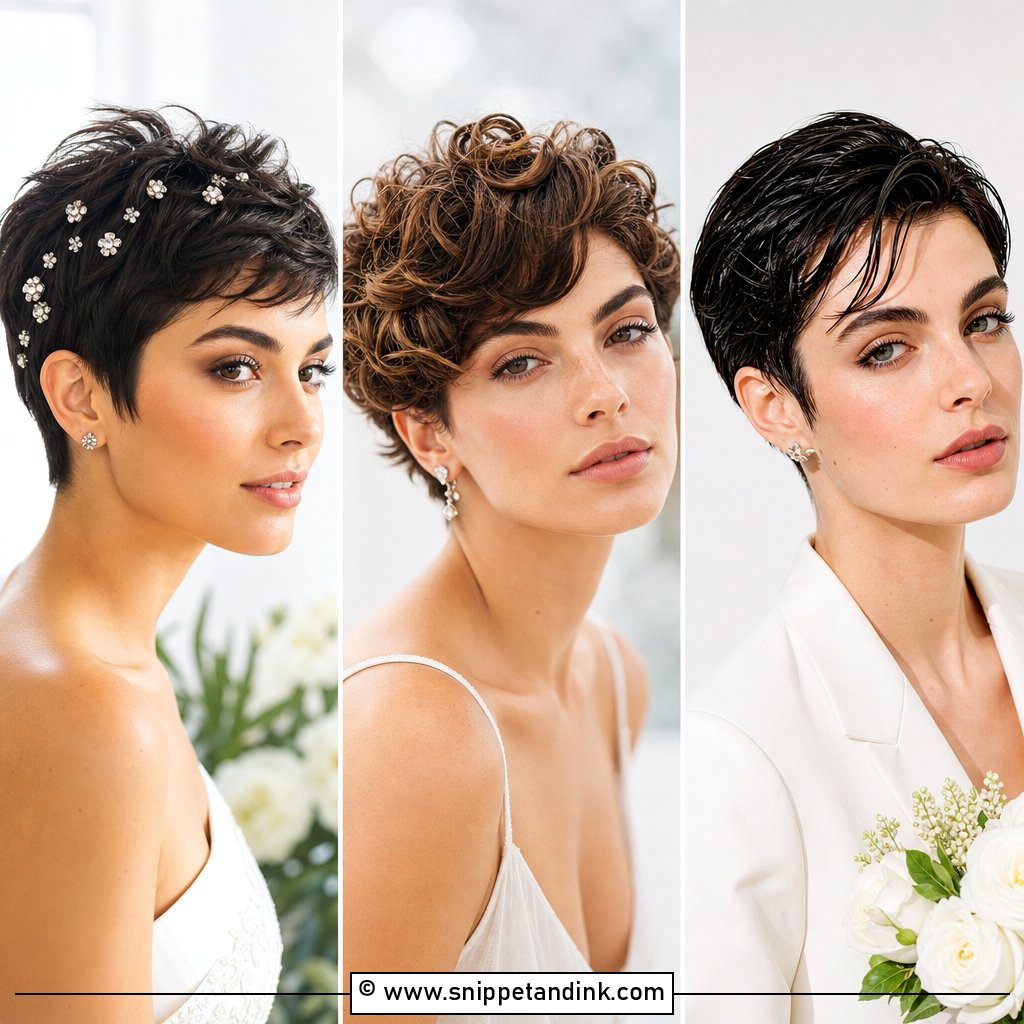
Short hair can absolutely be worn down for a wedding. A bob, lob, or shoulder-length cut looks bridal with soft bends, polished curls or a sleek tucked side. The key is that the ends look intentional, so I smooth or bend each section and finish with a little shine. On short hair, an accessory does a lot of the work: a pearl clip, a floral comb or a slim headband. Keep the product light; short hair goes stiff fast.
18. Wedding Hair Down With Side Swept Curls
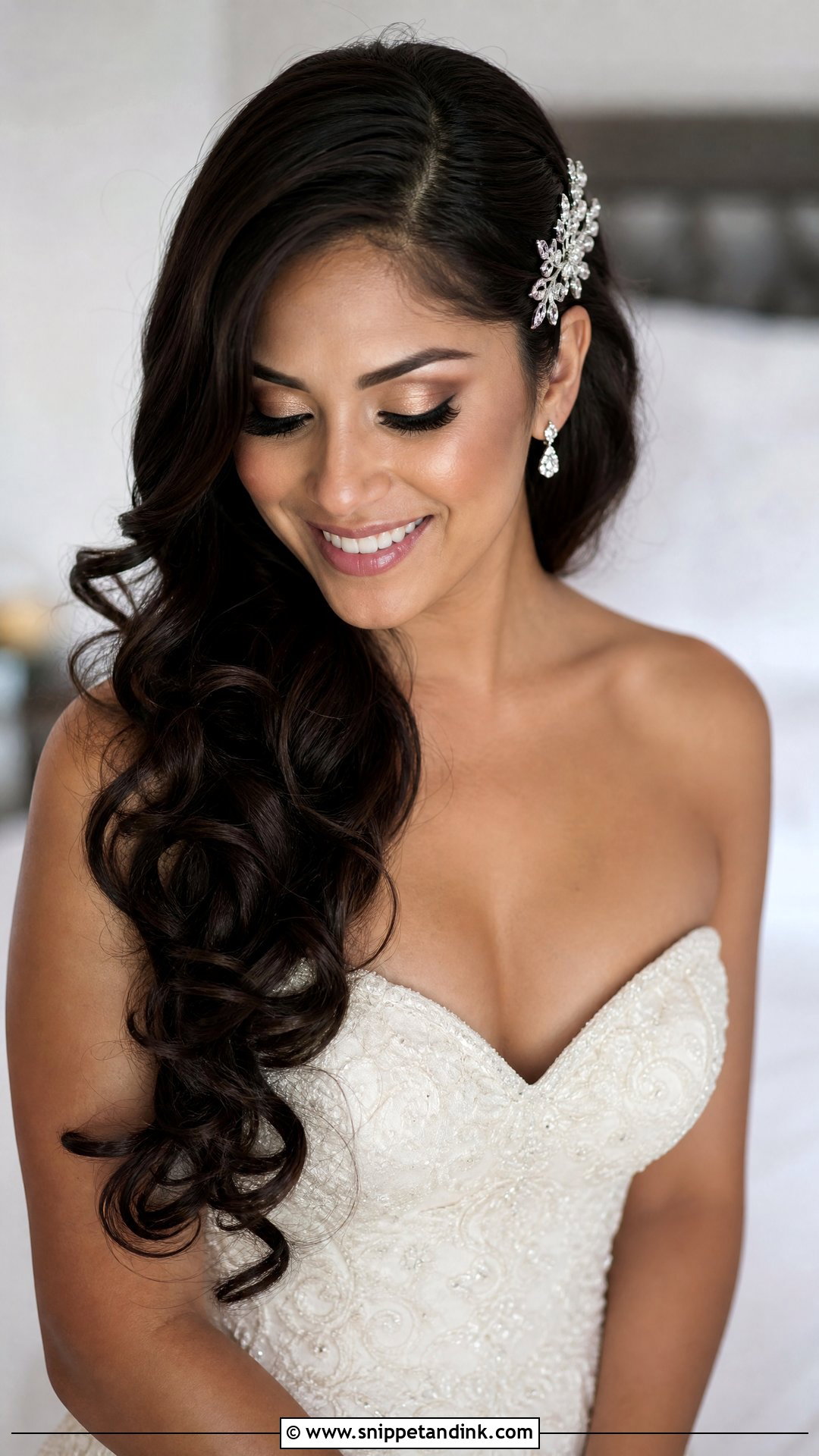
Side-swept curls are guided over one shoulder, with the other side tucked or pinned softly. It suits statement earrings, strapless dresses and open-back gowns, because the back detail stays visible. The pinned side needs to be secure, so I criss-cross bobby pins in a line behind the ear and cover them with the curl that sweeps over. A decorative comb at the sweep adds a finishing touch. Loose, airy curls or more polished ones both work.
19. Wedding Hair Down With Sleek Straight Hair
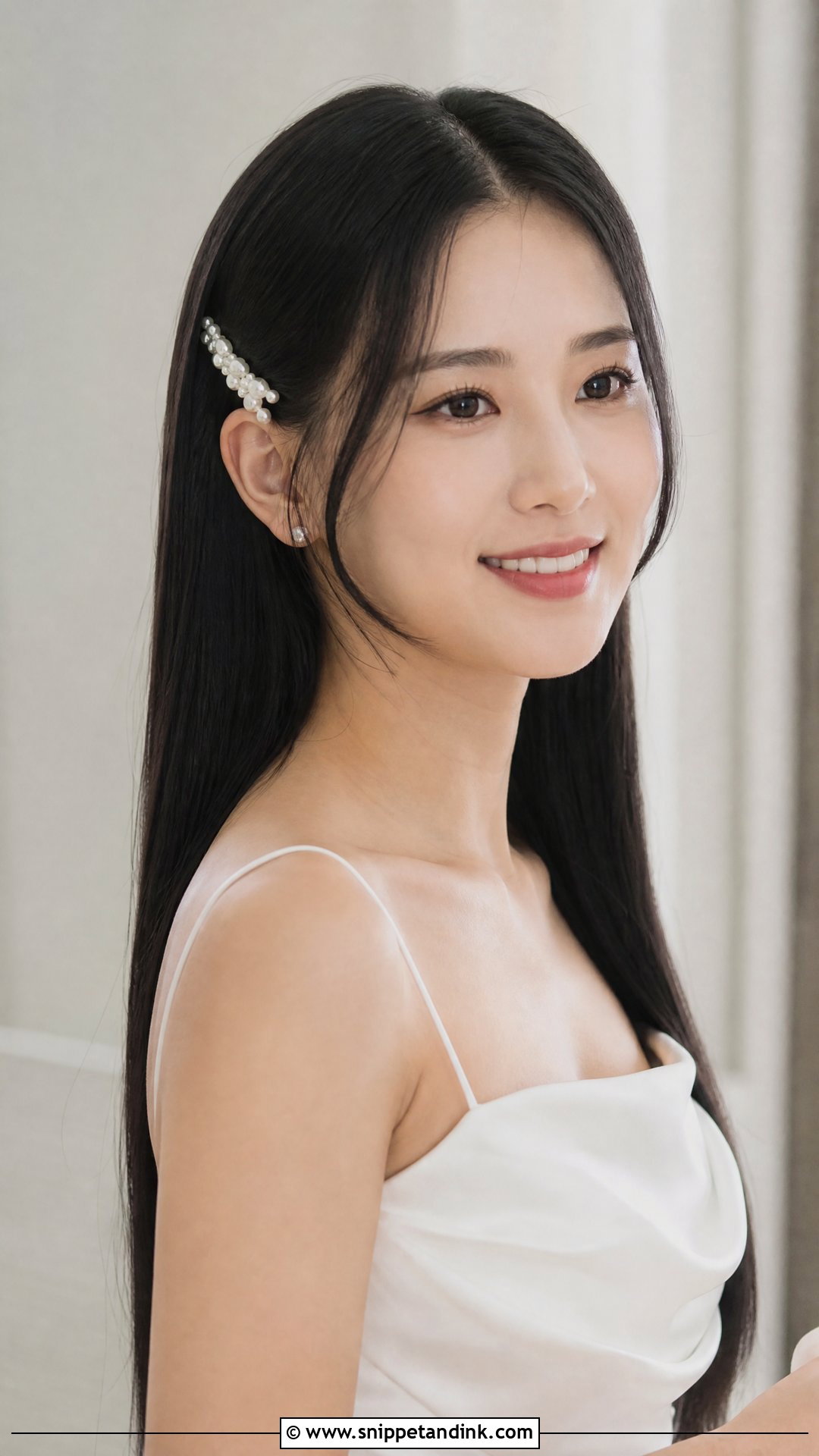
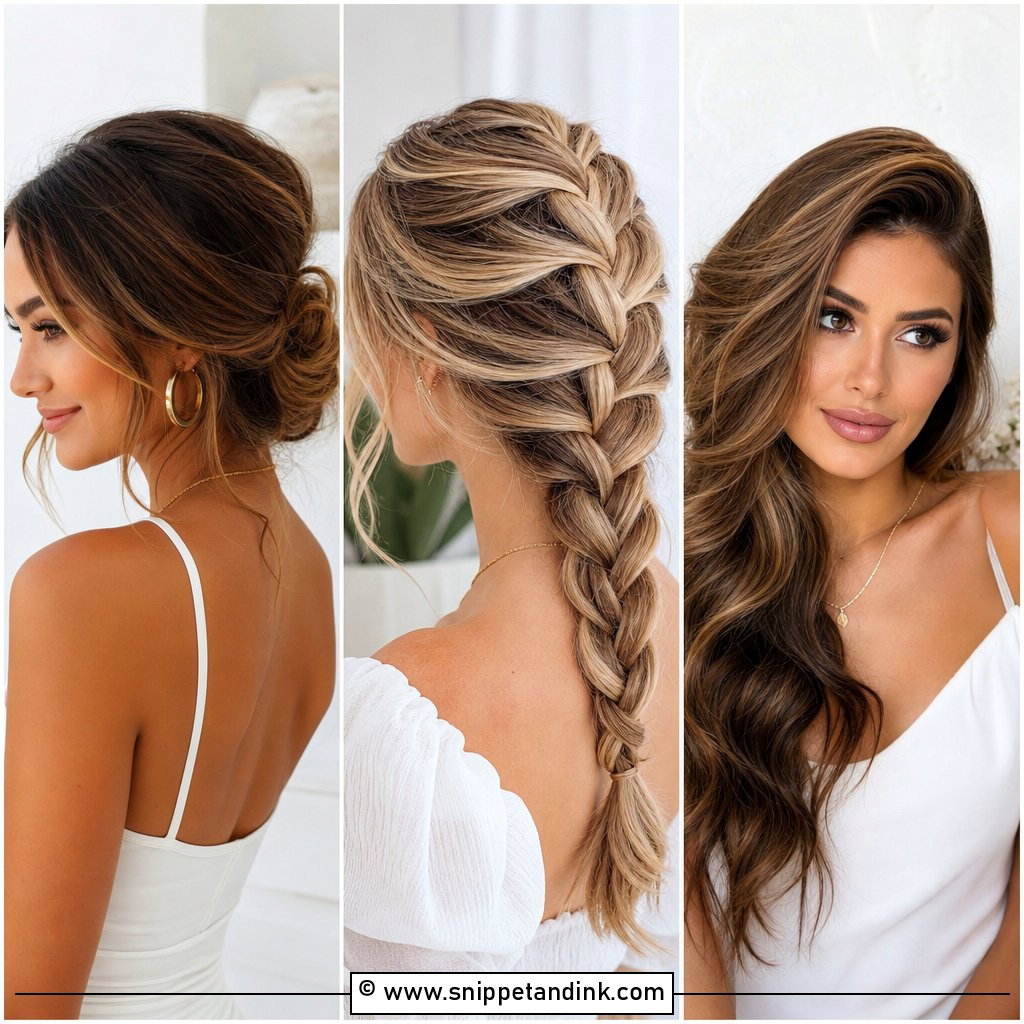
Sleek straight hair is underrated for weddings, especially for brides who never wear curls. The finish should be smooth and glossy with clean ends and slight movement around the face. I flat iron in thin sections and bend the ends very slightly, so the hair moves rather than hanging flat. It pairs well with minimal gowns, high necklines, city venues and modern veils. Shine serum needs a light hand; too much makes hair look greasy under flash. A pearl clip or simple veil completes it.
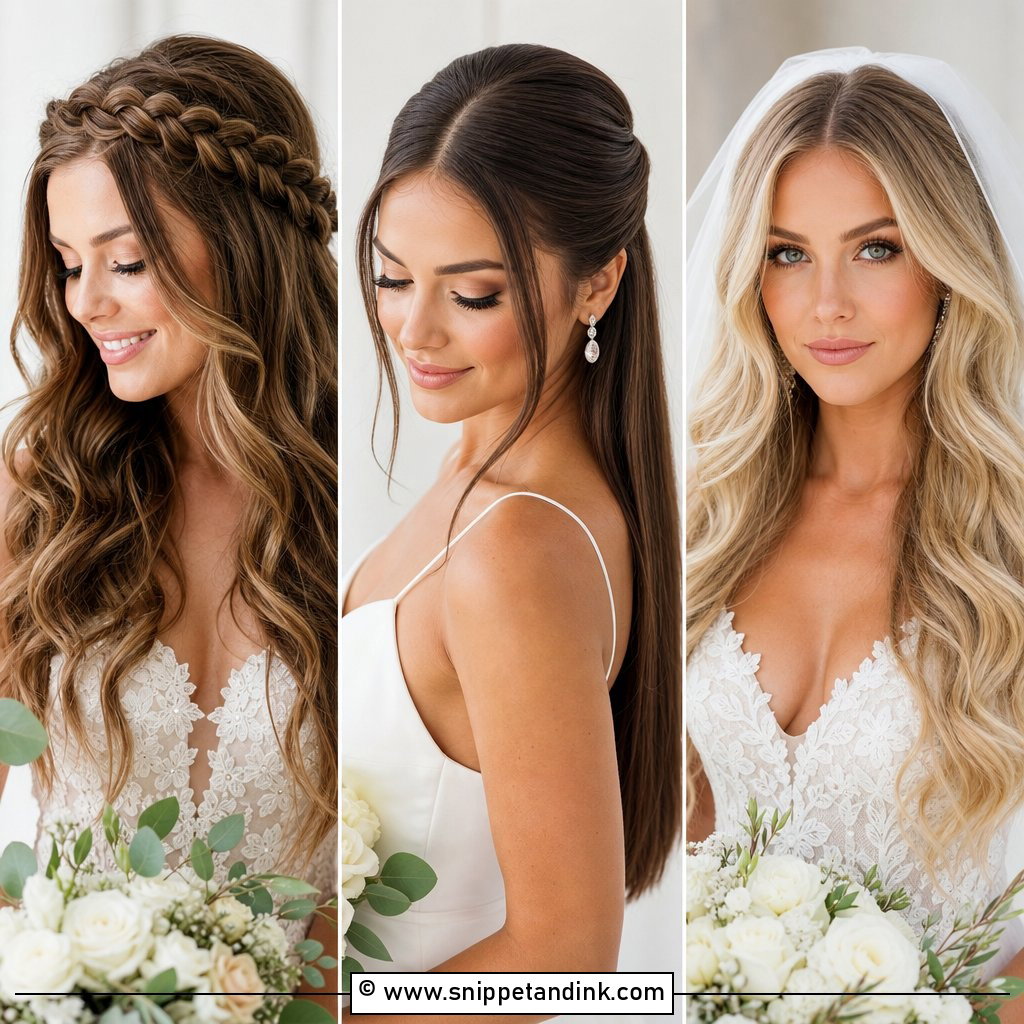
20. Wedding Hair Down With Soft Blowout
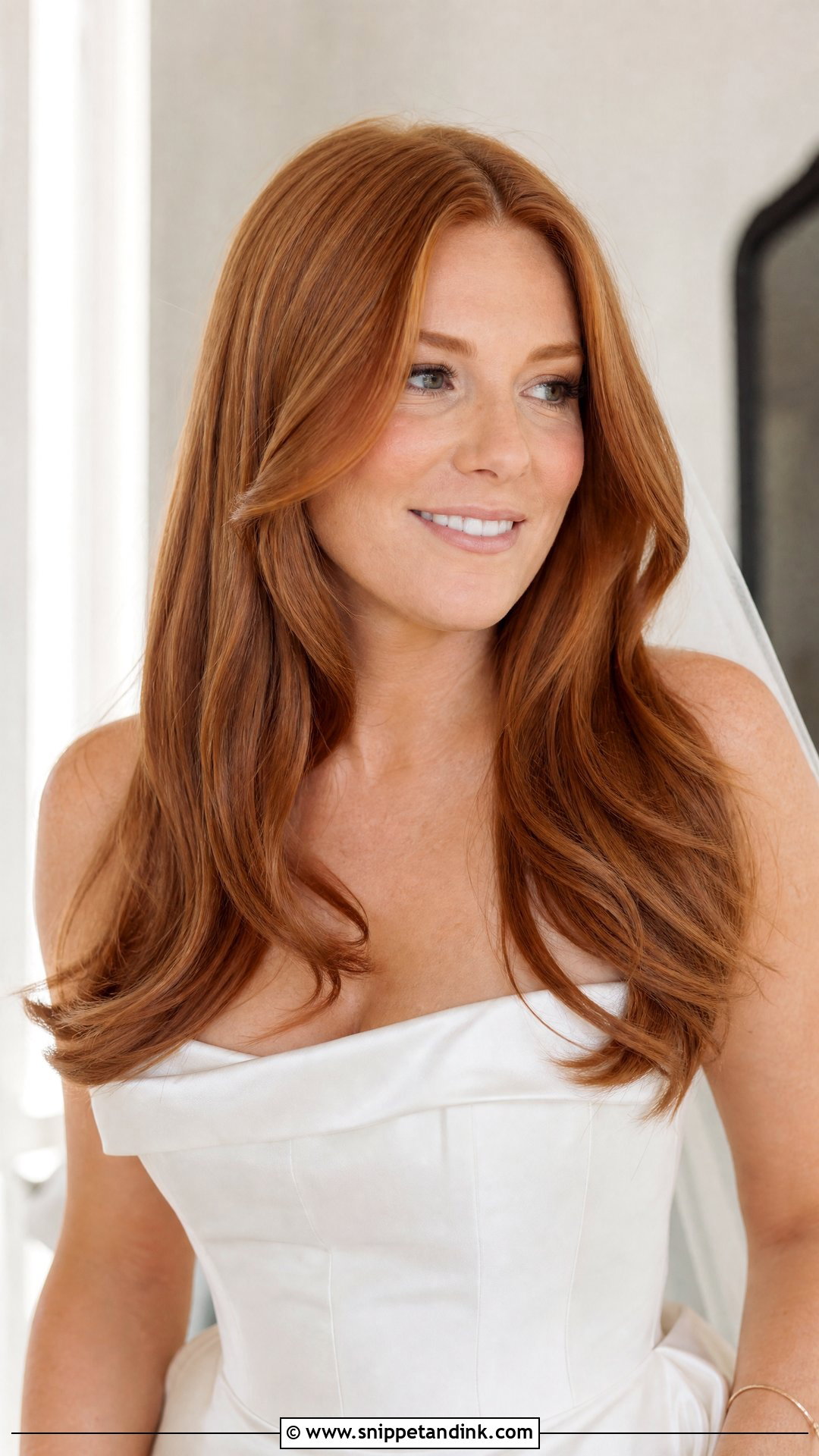
A soft blowout has lift at the roots, smooth volume through the sides and softly curved ends. It’s the look for a bride who wants her hair to look healthy and full rather than styled. I use a large round brush and finish with velcro rollers set in the crown while you do your makeup, which keeps the lift through the ceremony. Because it’s simple, the finish has to be clean. It can be customized with a middle part, a side part, curtain bangs or subtle layers. Add a veil, pearl comb or small flower for a bridal accent.
Hour Eight: What Loose Hair Actually Goes Through
An updo can sit untouched until midnight. Loose hair gets hugged, leaned on, blown about and pushed behind ears for photos. That’s why I set it a little more than looks right in the mirror. The curl will soften by the reception, and if it starts soft, it ends flat.
Is it too humid to wear it down?
Sometimes, yes. On a sticky summer day outdoors, curls drop and fine hair clings to the neck. I’d still keep your length, but suggest a looser half-up or a pinned side so the weight is off the nape. If your hair frizzes easily, a smoothing treatment a couple of weeks before helps, but trial it first.
What should go in the touch-up bag?
- A small travel hairspray and a few bobby pins in your colour.
- A wide-tooth comb, never a brush, so curls separate instead of puffing up.
- A soft scrunchie for the meal, so hair stays out of the food and off a sweaty neck.
- Blotting papers, for the hairline as much as the face.
Five minutes after the formal portraits is the best time for a quick refresh. I lightly re-curl two or three pieces around the face, and that’s usually all it takes.
Loose Hair Works When the Prep Underneath Is Solid
Hair down is the most personal choice you can make for your wedding, because it looks most like you. Waves, curls, natural texture, braids, pearls, flowers and veils all keep your length on show. Book a trial and bring a photo of your dress, your veil, any accessories and the venue, so your stylist can plan from every angle. Tell them about the weather, the timeline and how much dancing you plan to do. Hair down that’s built well should still be moving and framing your face at the end of the night.
You'll Like These Ideas:


Leave a Reply