
Wearing your hair down to get married keeps your own length, texture and movement in every photo, which is why so many brides end up there after flirting with updos. What I’m asked for most now is soft rather than stiff: brushed-out waves, a bit of Hollywood polish, half-up details, natural curls and face-framing pieces that still feel touchable at midnight. Classic, coastal, garden, courthouse or black-tie, there’s a version below for each, with notes on what makes it last.
Matching the Wave to the Venue, From Clifftop to Ballroom
The same set of waves can hold all day in one setting and go limp in another, so I let the place decide how much structure your hair needs before you fall for a particular photo.
- Beach or clifftop: wind is the real problem, not heat. A half-up section or braided crown keeps hair out of your mouth during vows, and beachy texture forgives far more than polished curls.
- Garden or barn: loose waves and natural curls suit the setting, but sun and long outdoor portraits flatten roots. Ask for a little backcombing under the crown.
- Ballroom or black-tie: air conditioning and indoor light are kind to hair, so this is where Hollywood waves and glossy blowouts last longest.
- Courthouse or city hall: a short ceremony and street-style photos favour sleek straight hair or a clean blowout that survives a walk outside.
- Church or temple with a long service: you’ll be seated and photographed from behind, so think about the back view and whether a veil needs a firm anchor.
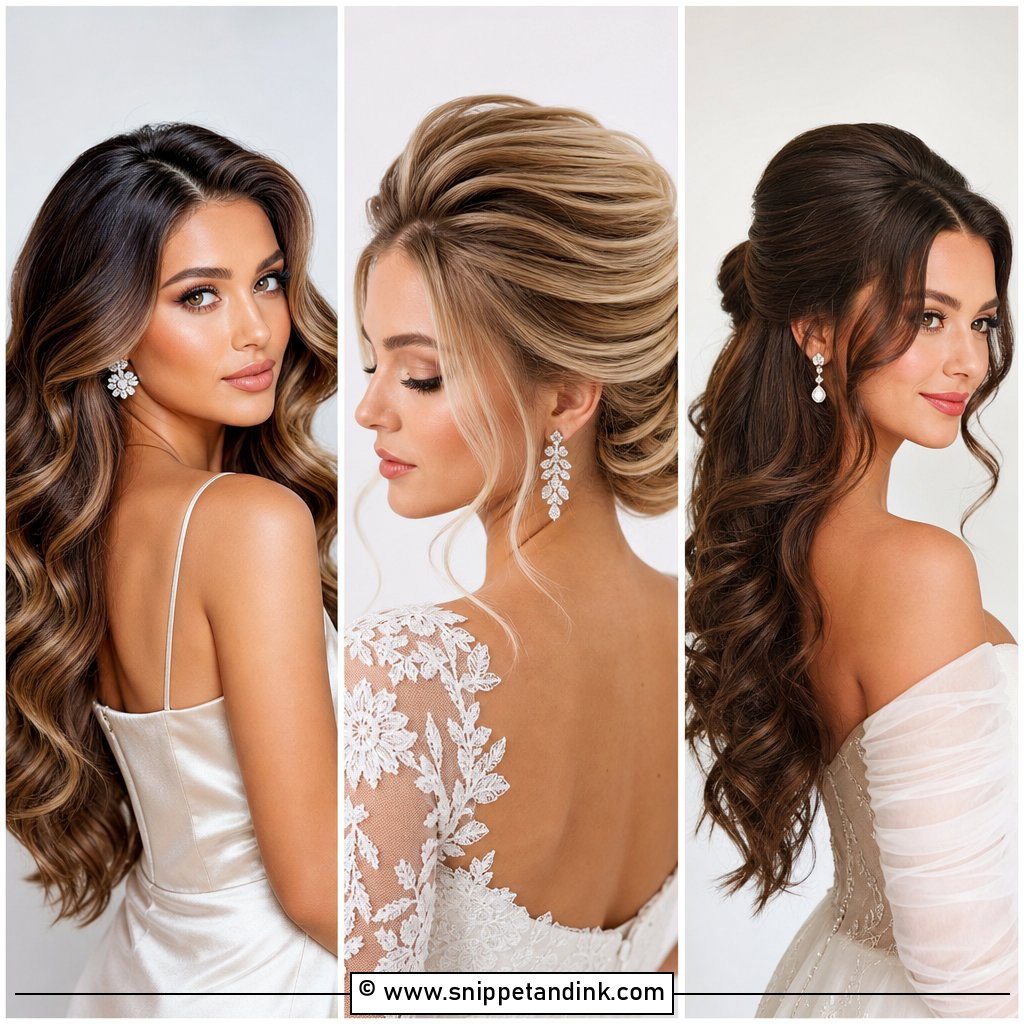
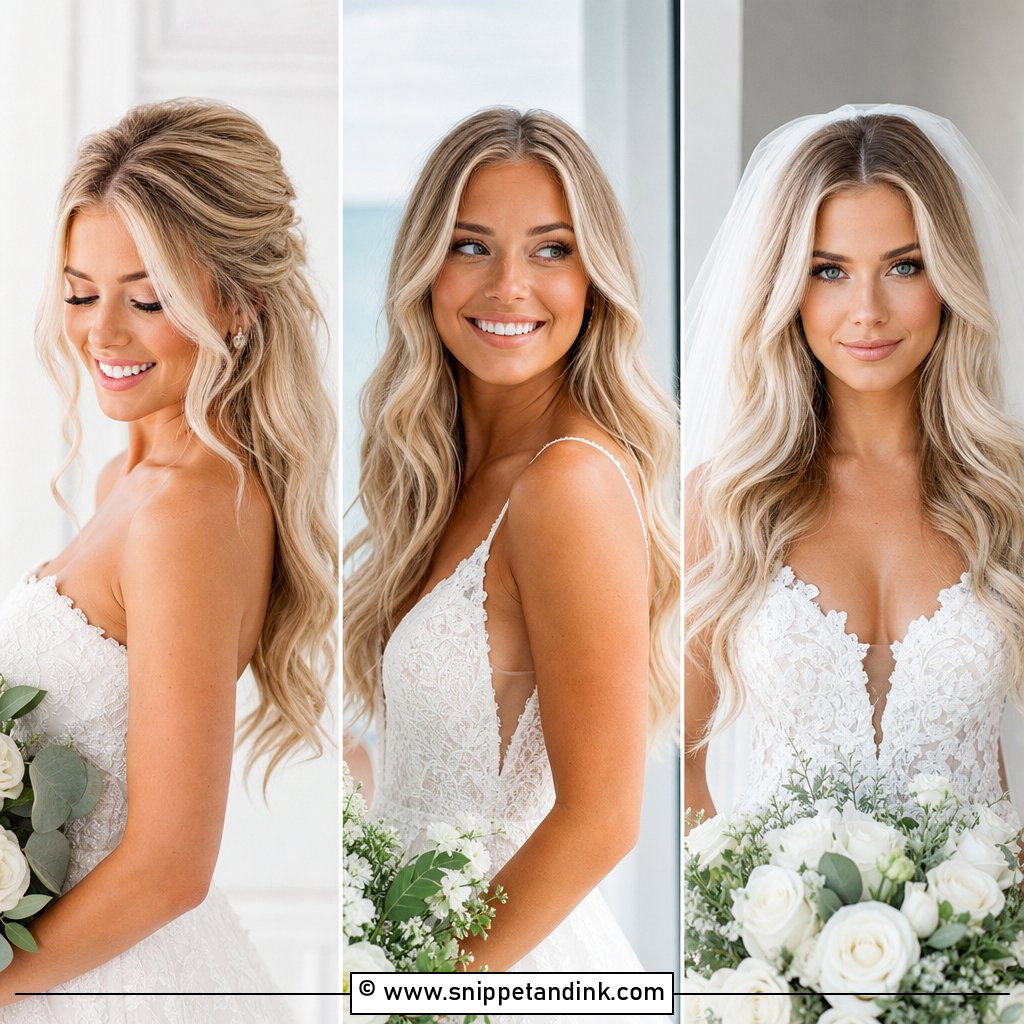
1. Brides Hair Down With Soft Waves
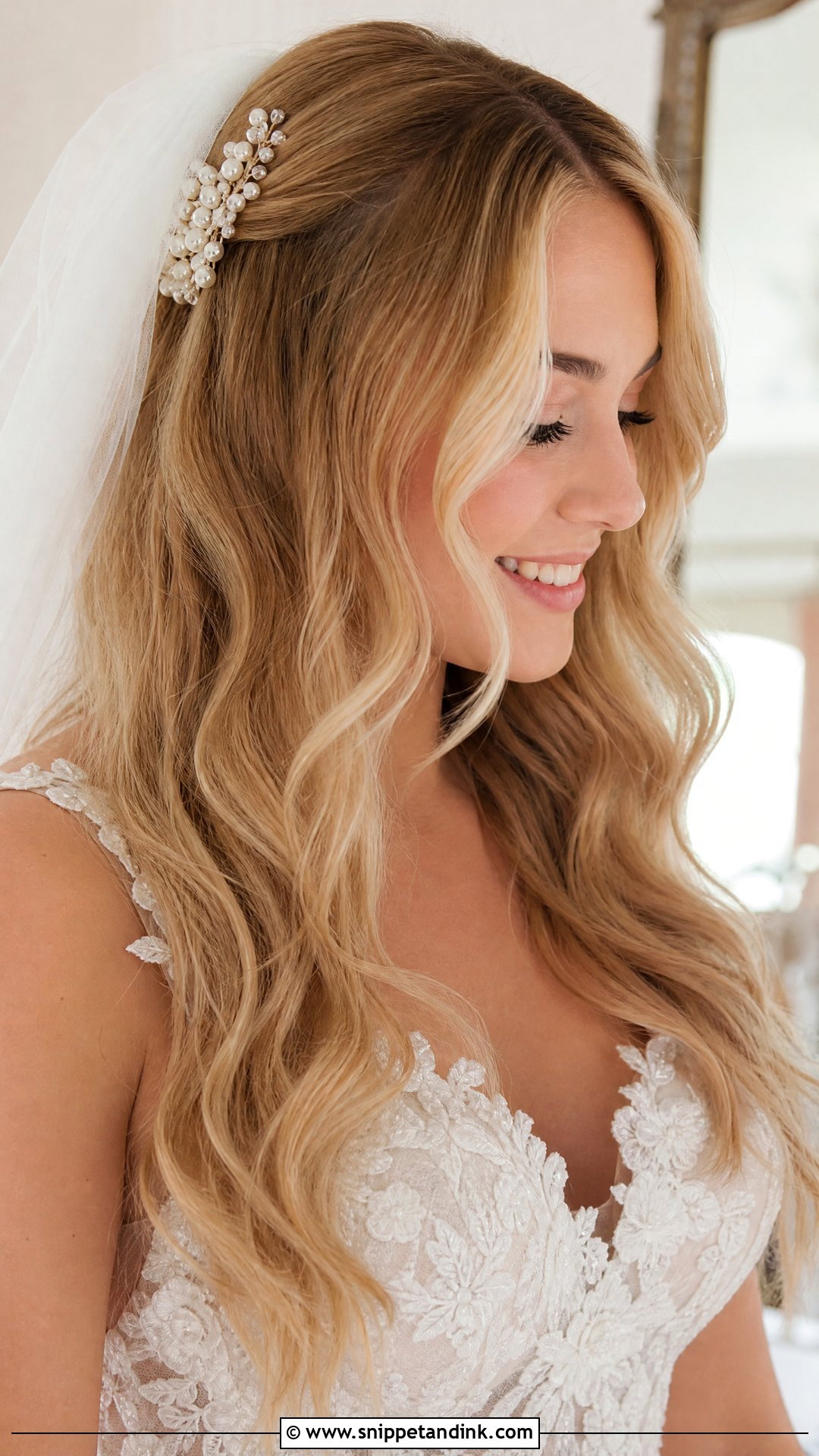
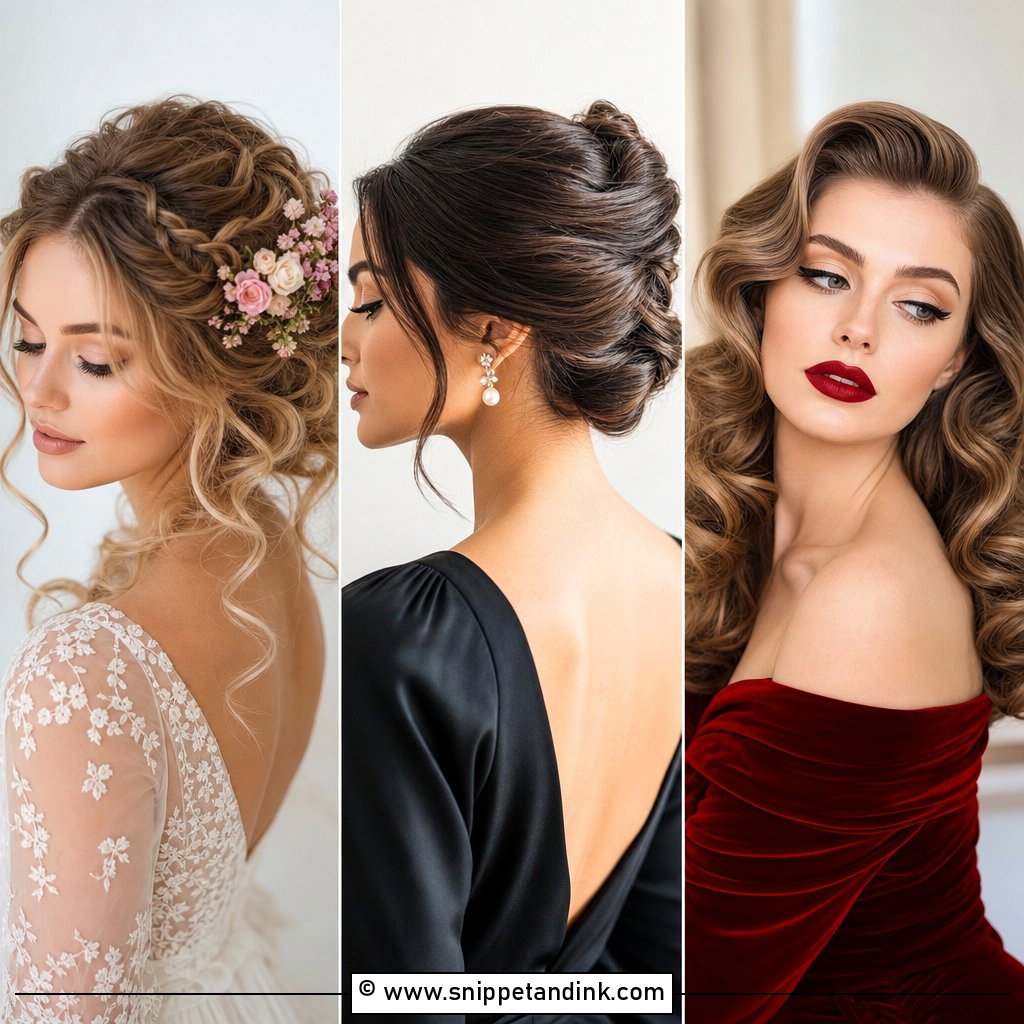
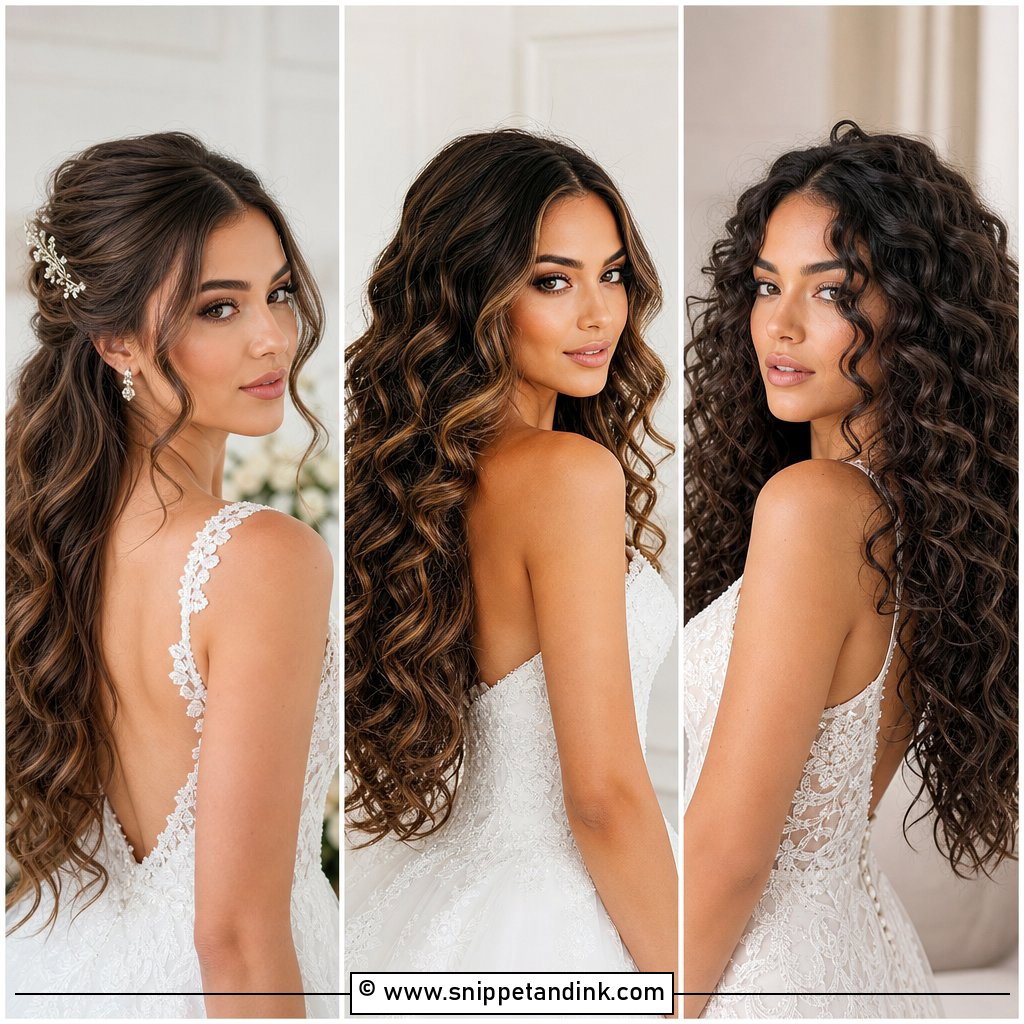
Smooth root, loose bend, soft ends. That’s the whole recipe, and the ends are where most waves go wrong, because curling them to the tip makes them look like ringlets. I stop the iron a few centimetres short and let the ends stay straighter. Waves this soft suit medium to long hair best and leave room for the dress and veil. A floral comb or a veil tucked at the crown is all they need.
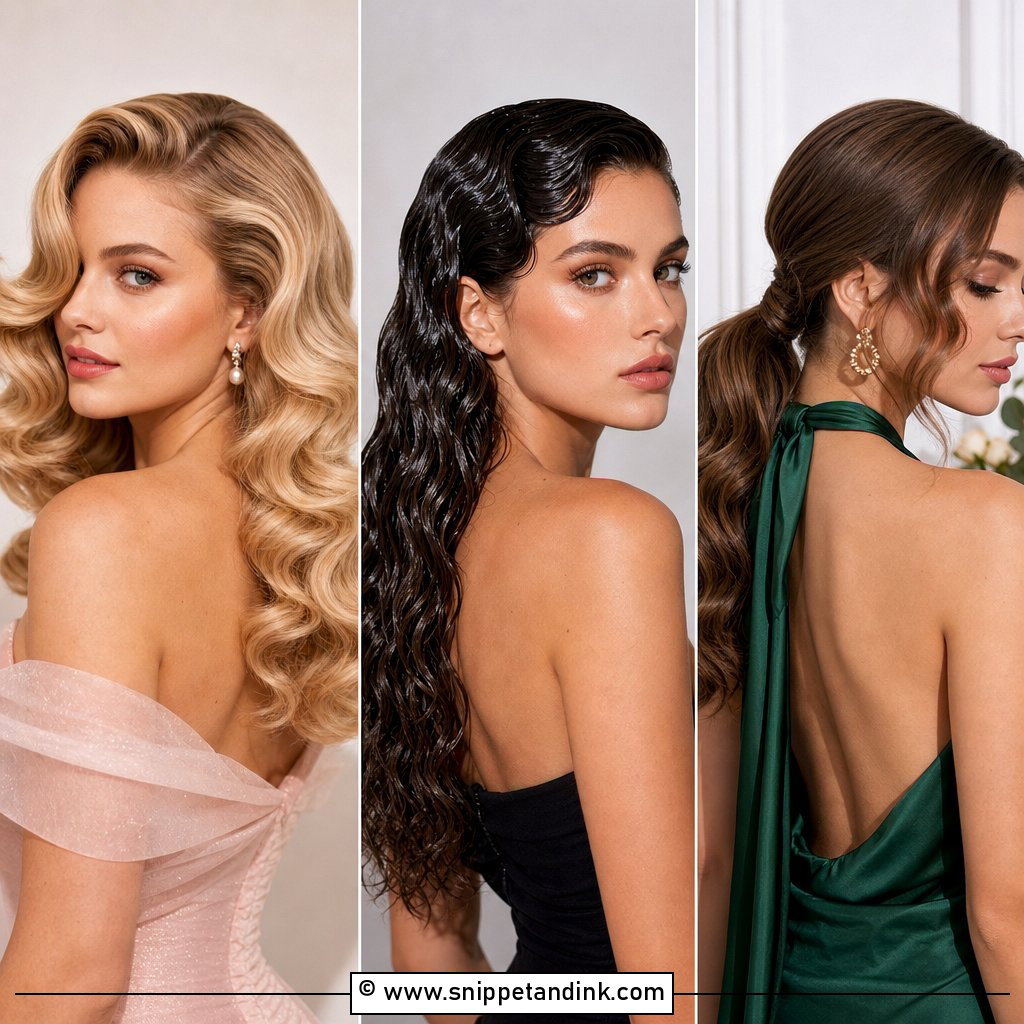
2. Brides Hair Down With Hollywood Waves
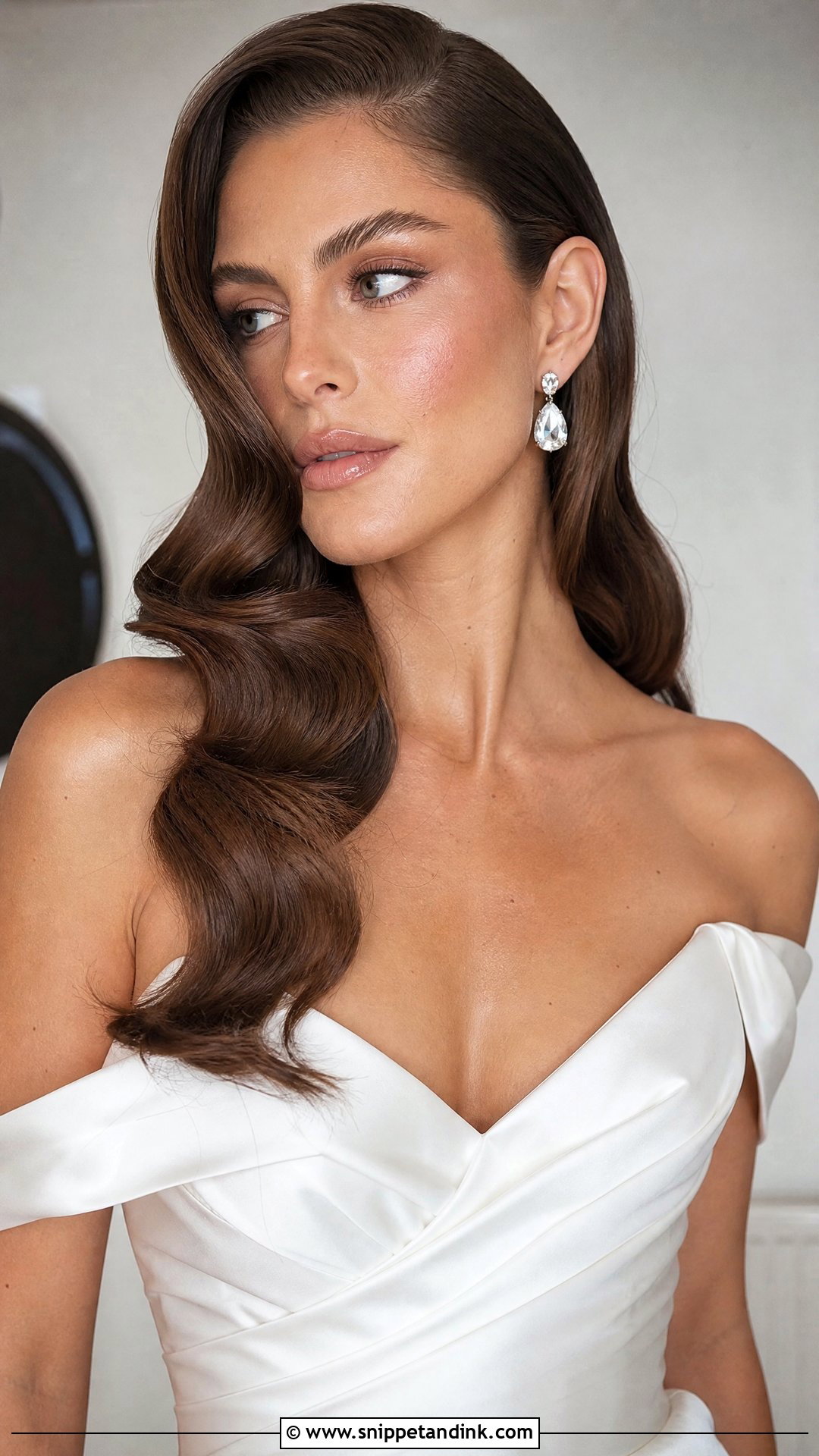
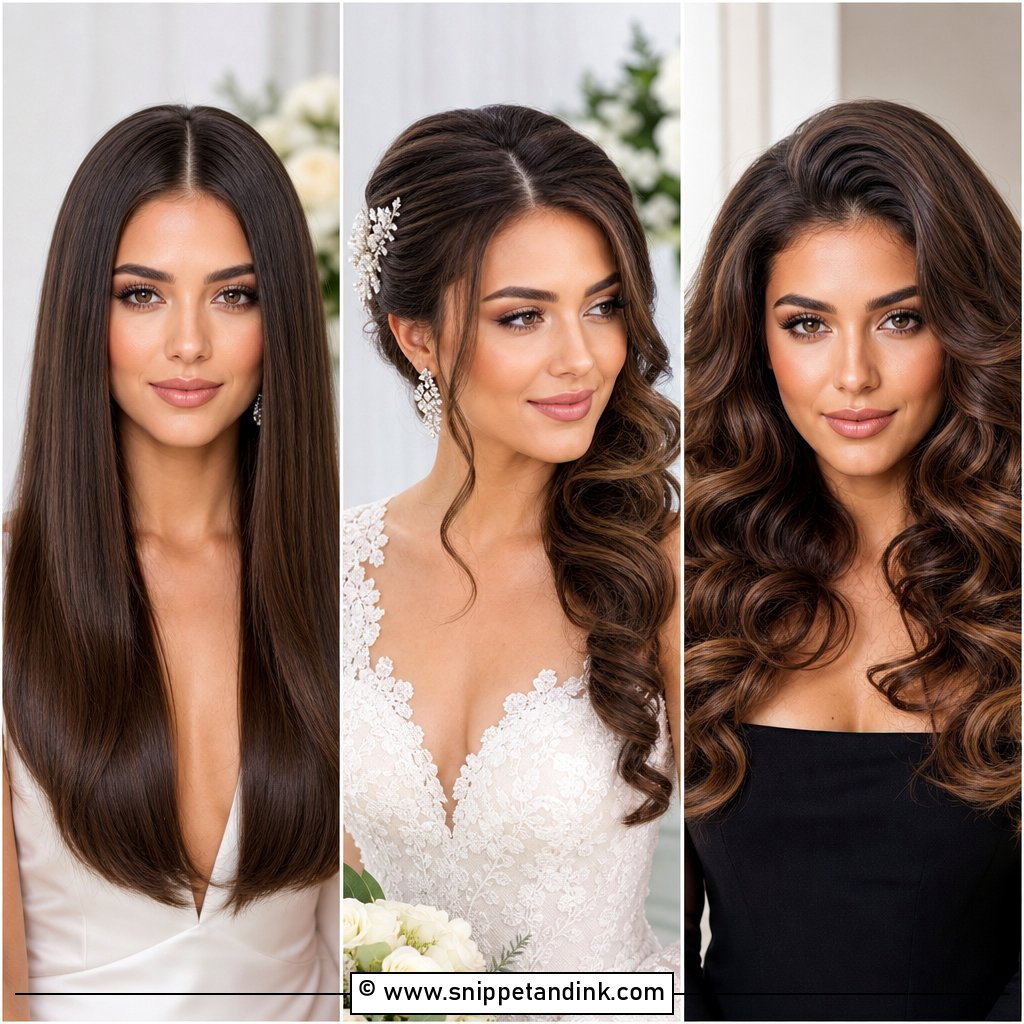
For that red-carpet feeling, every section has to be smoothed first and curled in one direction, then brushed into a single pattern. Curls going both ways won’t merge. A deep side part leans vintage; a centre part looks newer. The style is heavy on shine, so I keep it for strapless or satin gowns with clean makeup. Fine hair rarely holds this shape for a full day on its own. A few wefts of extensions give it the weight it needs.
3. Brides Hair Down With Loose Curls
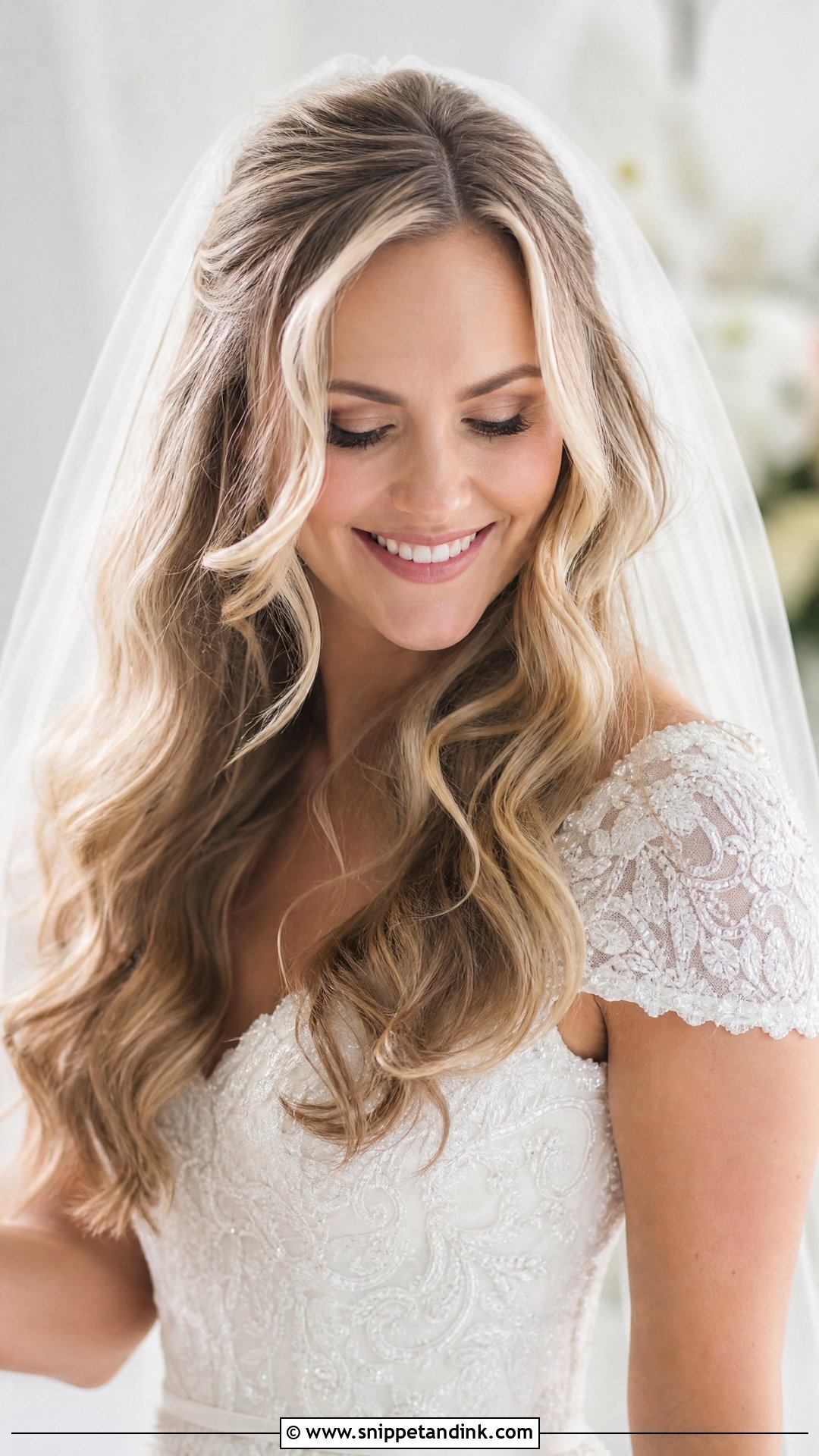
Loose curls give more bounce than waves, and they’re kinder to fine or flat hair because the volume starts at the root. I alternate the curl direction section by section so the pattern doesn’t line up like a row of springs. Leave them open and airy. Freshly coloured hair can be slippery and drop curl faster, so if you’ve just had a colour, mention it at the trial. A veil, a few jeweled pins or nothing at all; they hold their own in a ballroom or a chapel.
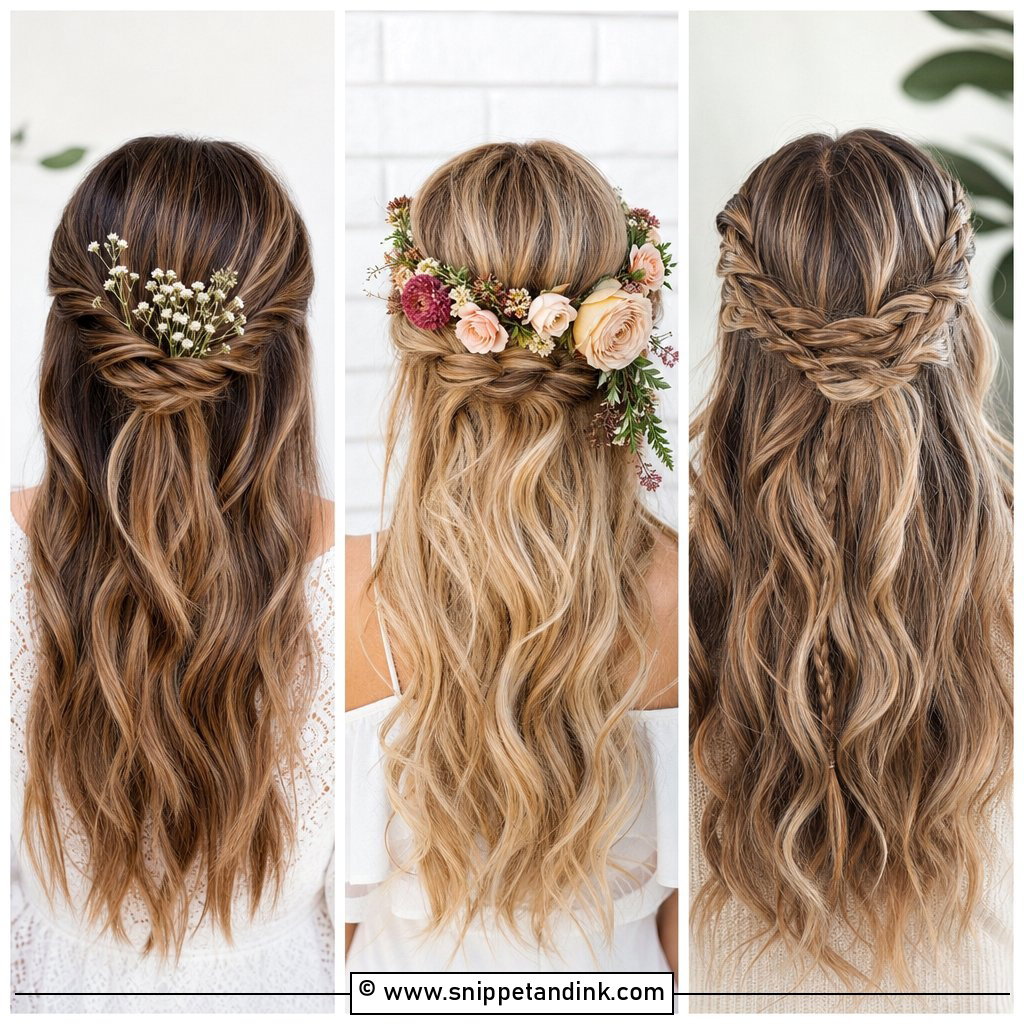
4. Brides Hair Down With Half Up Waves
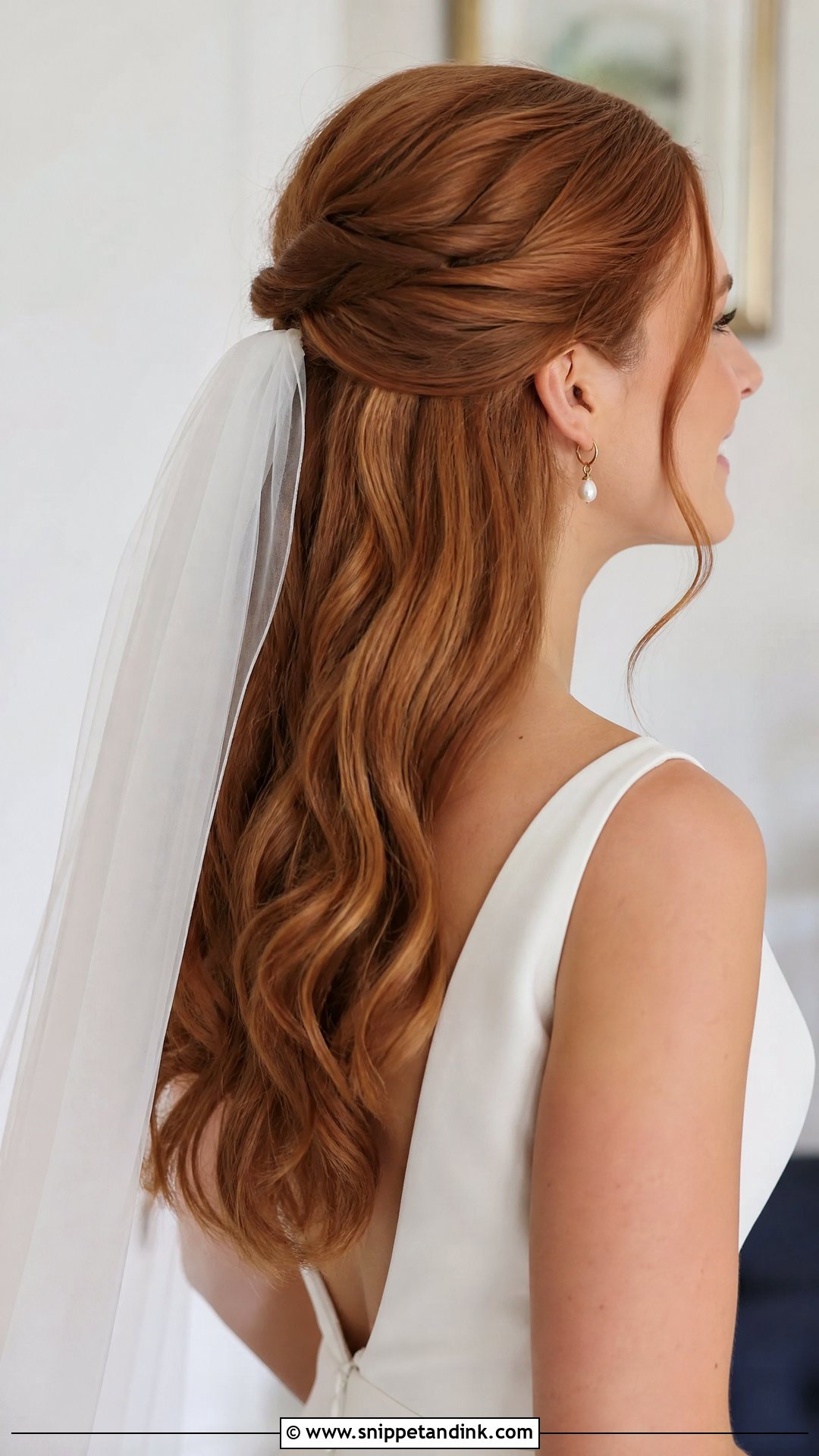
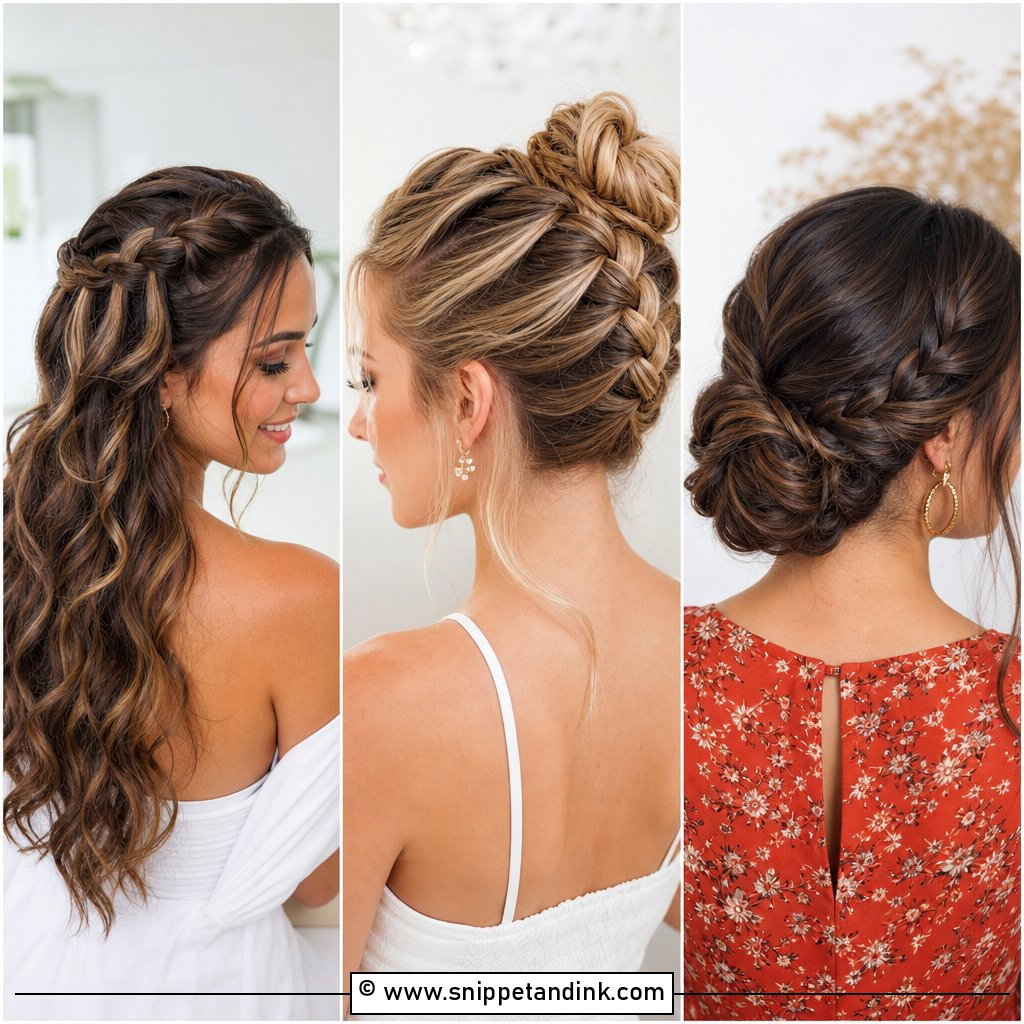
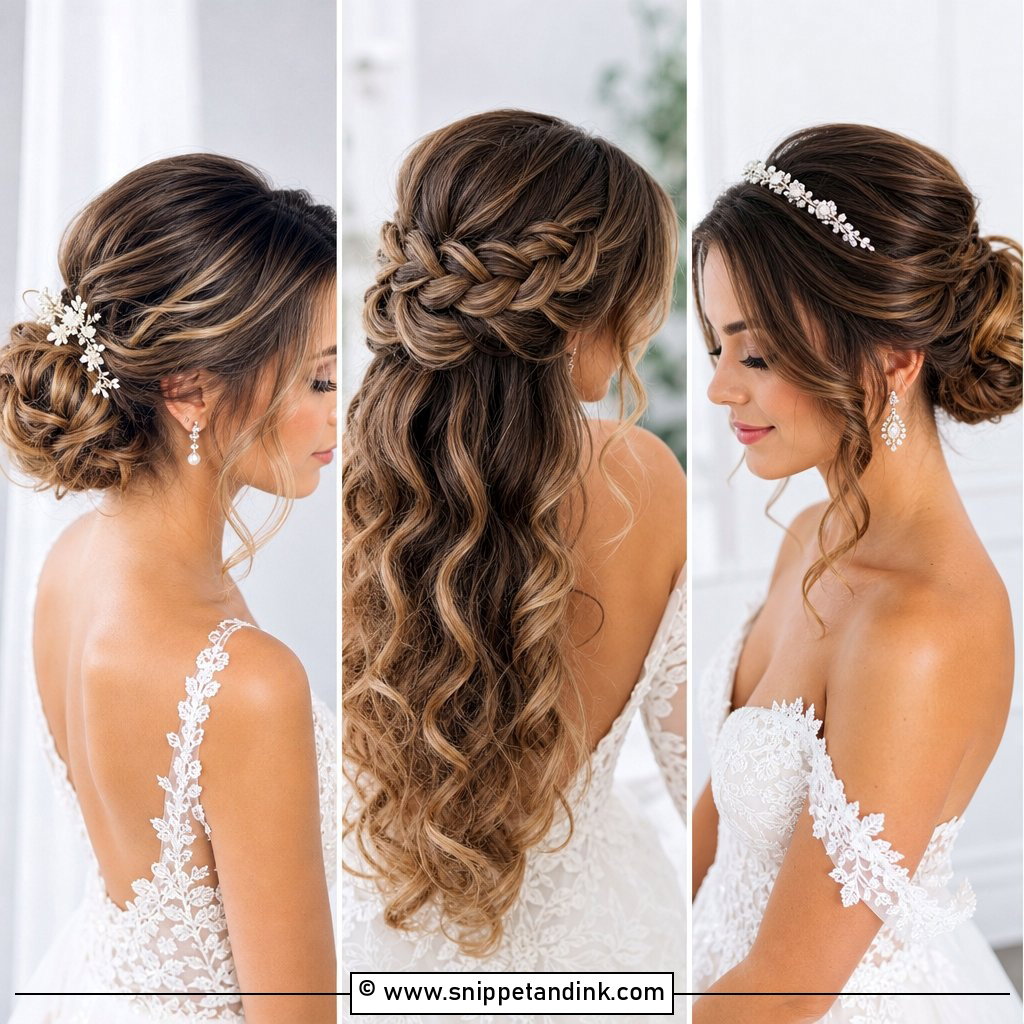
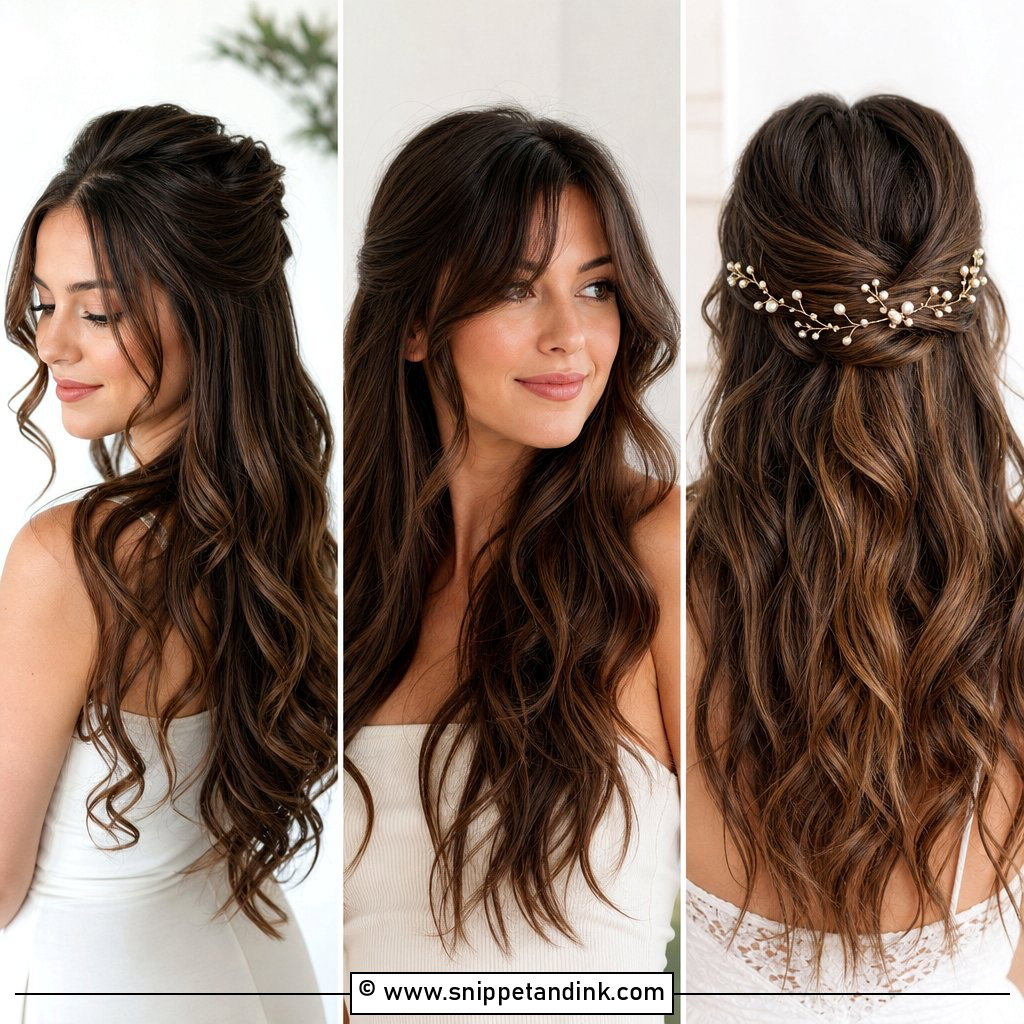
Half up waves are what I’d suggest to a bride who loves her hair down but hates it in her face. The top section is pulled back softly while the rest falls over the shoulders, so hugs and dancing don’t wreck the front. Twist, braid or pin that section; whatever you choose, it gives a veil comb something secure to sit in. The one thing to agree on is height. Pinned too high, it looks youthful; at or just below the crown, it reads grown-up.
5. Brides Hair Down With Braided Half Up Hair
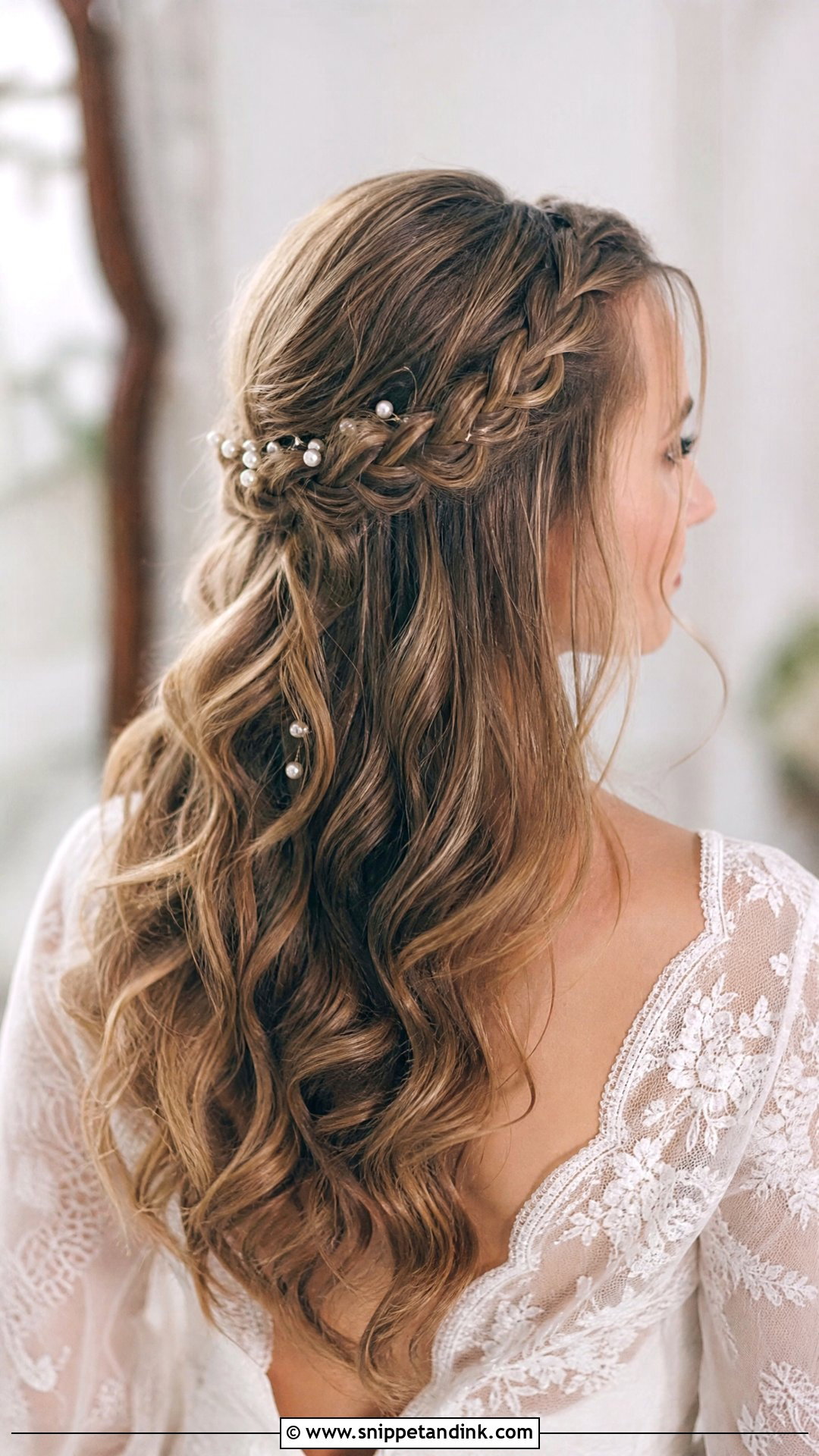
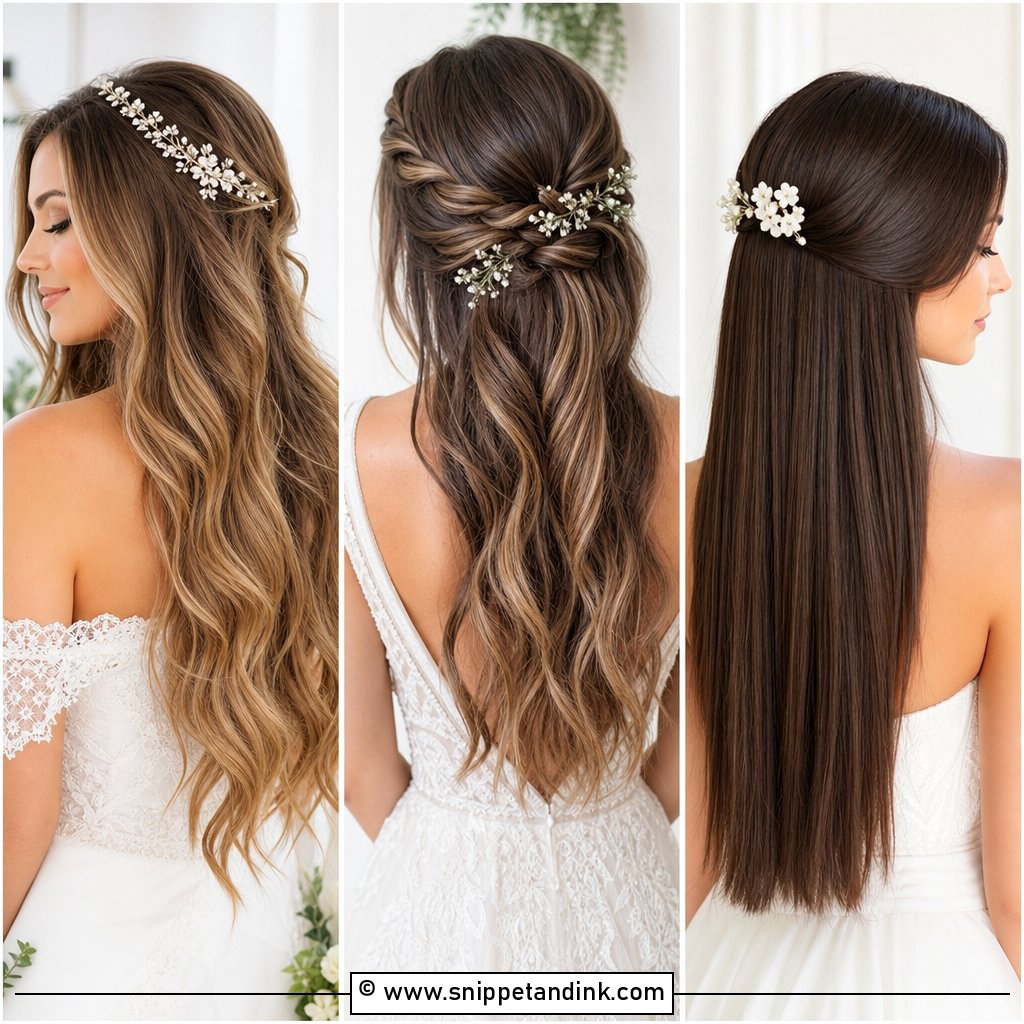
Braids keep the top section in place outdoors far better than pins alone. Small side braids, a loose crown braid or two plaits joined at the back all frame the face. I braid snugly and then pancake the edges so they look full, since a braid started loose slips apart in wind. The rest can be waves, curls or your natural texture. Lace dresses and boho gowns sit naturally with this one.
6. Brides Hair Down With Side Part Waves
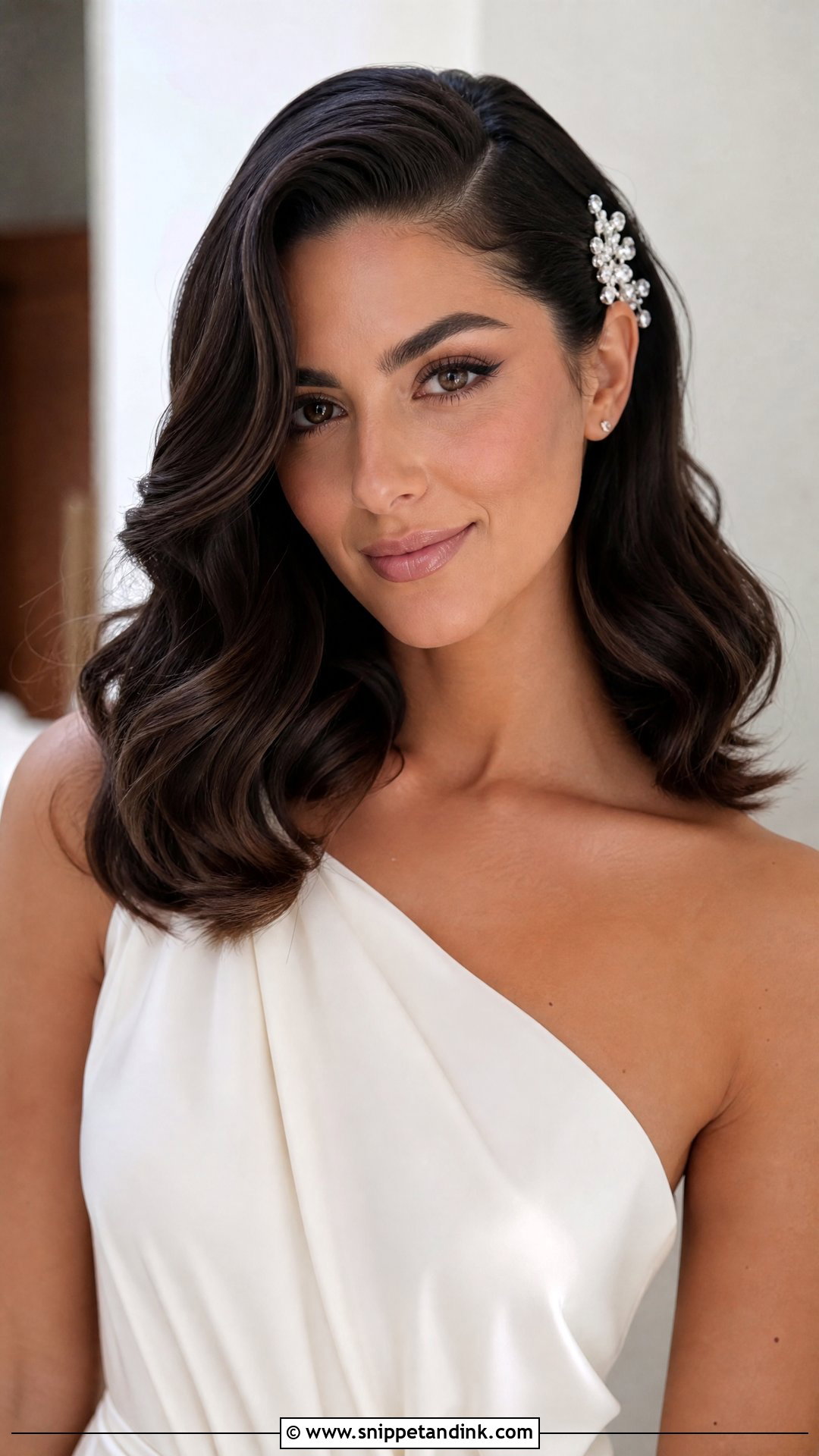
A side part sweeps one side of the face and adds instant lift at the crown, which is handy for hair that falls flat. It’s the part I’d pick to show off one earring or a one-shoulder neckline. The waves can be loose and beachy or polished. Layered cuts blend especially well, since the shorter pieces fall into the sweep. Pin the heavier side discreetly behind the ear for the ceremony, then let it fall forward again for the party.
7. Brides Hair Down With Center Part Waves
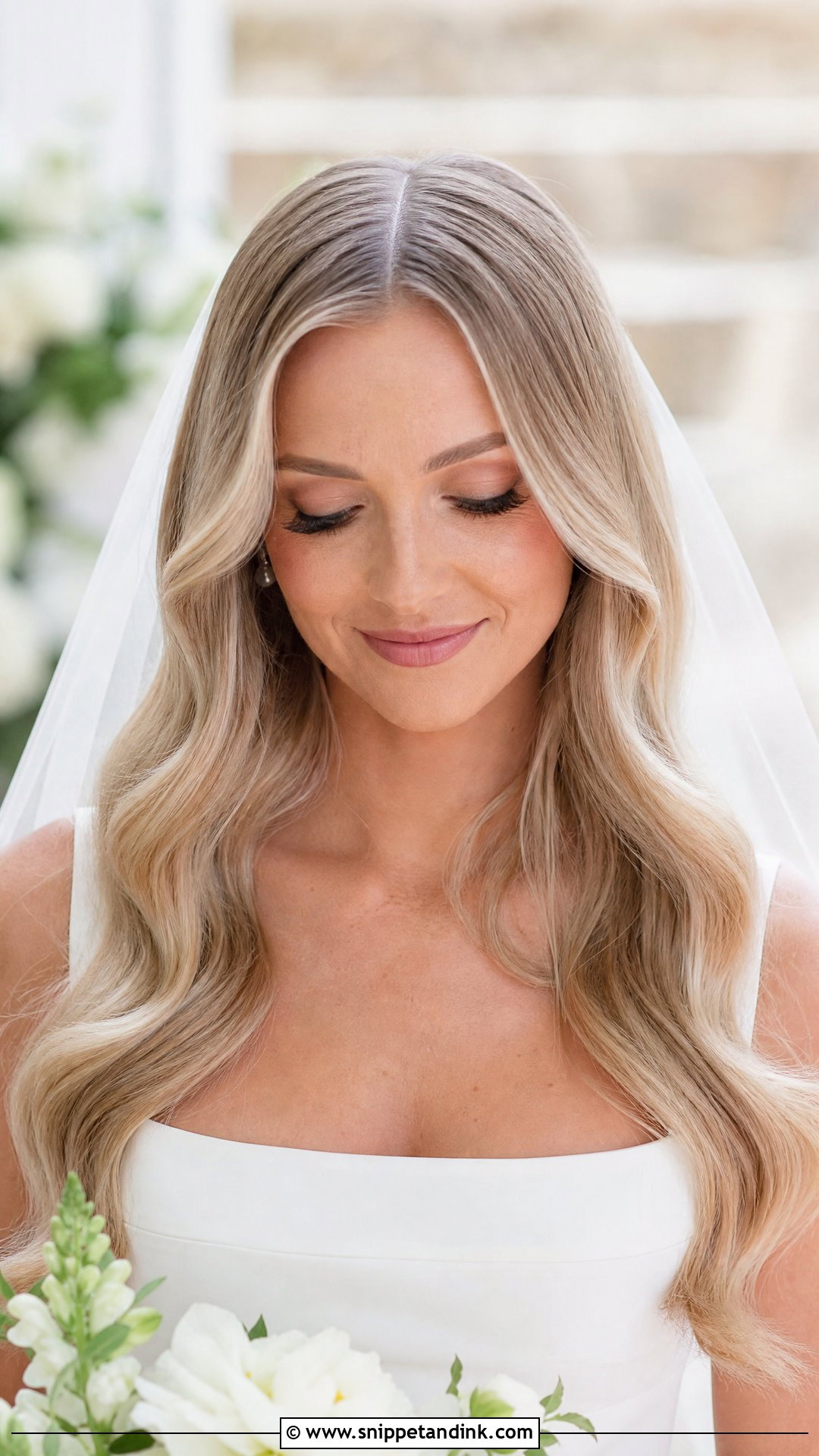
Symmetry is the point of centre part waves, so I start the waves lower, around the cheekbone or jaw, and keep the top flat and smooth. Waves that start right at the root look busy around a centre part. Long layers help, because the movement falls evenly down both sides. Soft glam makeup and a minimal gown suit it. If the look feels too strict at the trial, a pair of face-framing pieces curled away from the face softens it straight away.
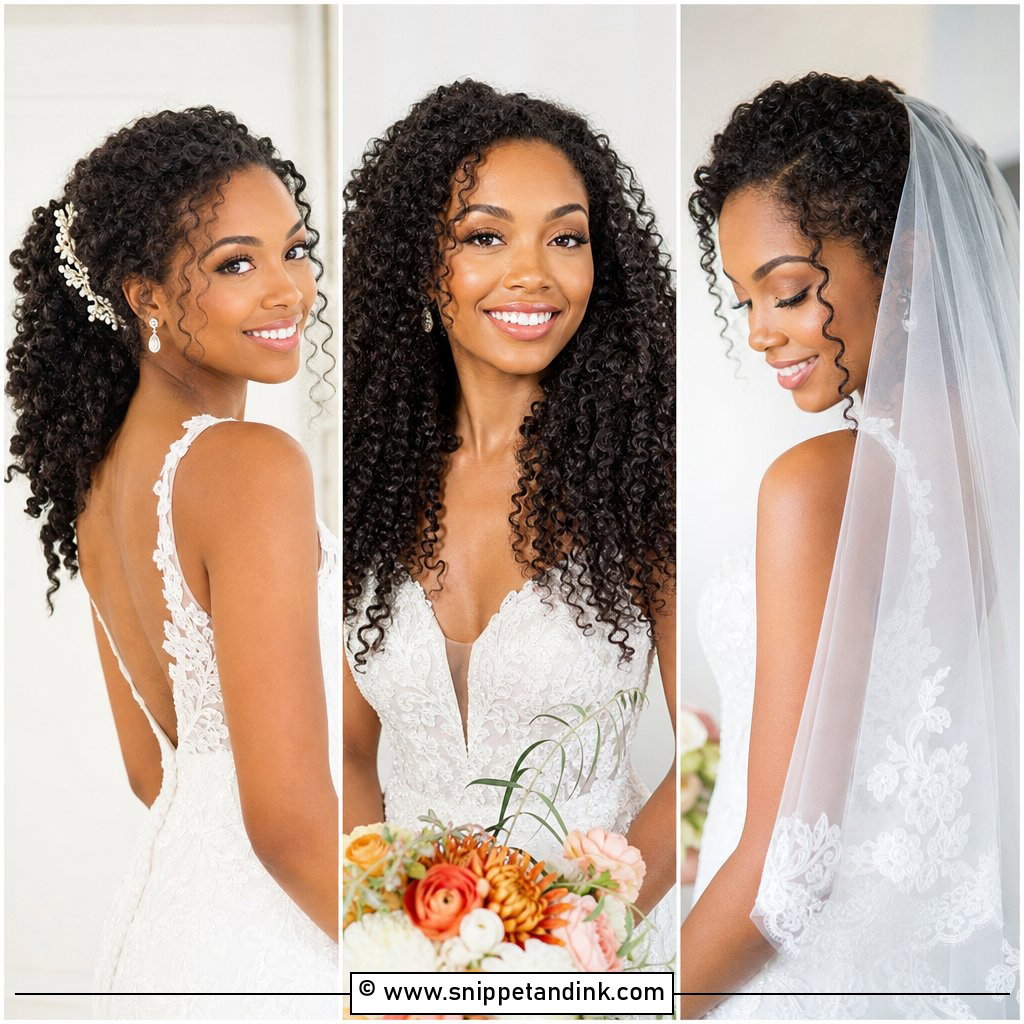
8. Brides Hair Down With Natural Curls
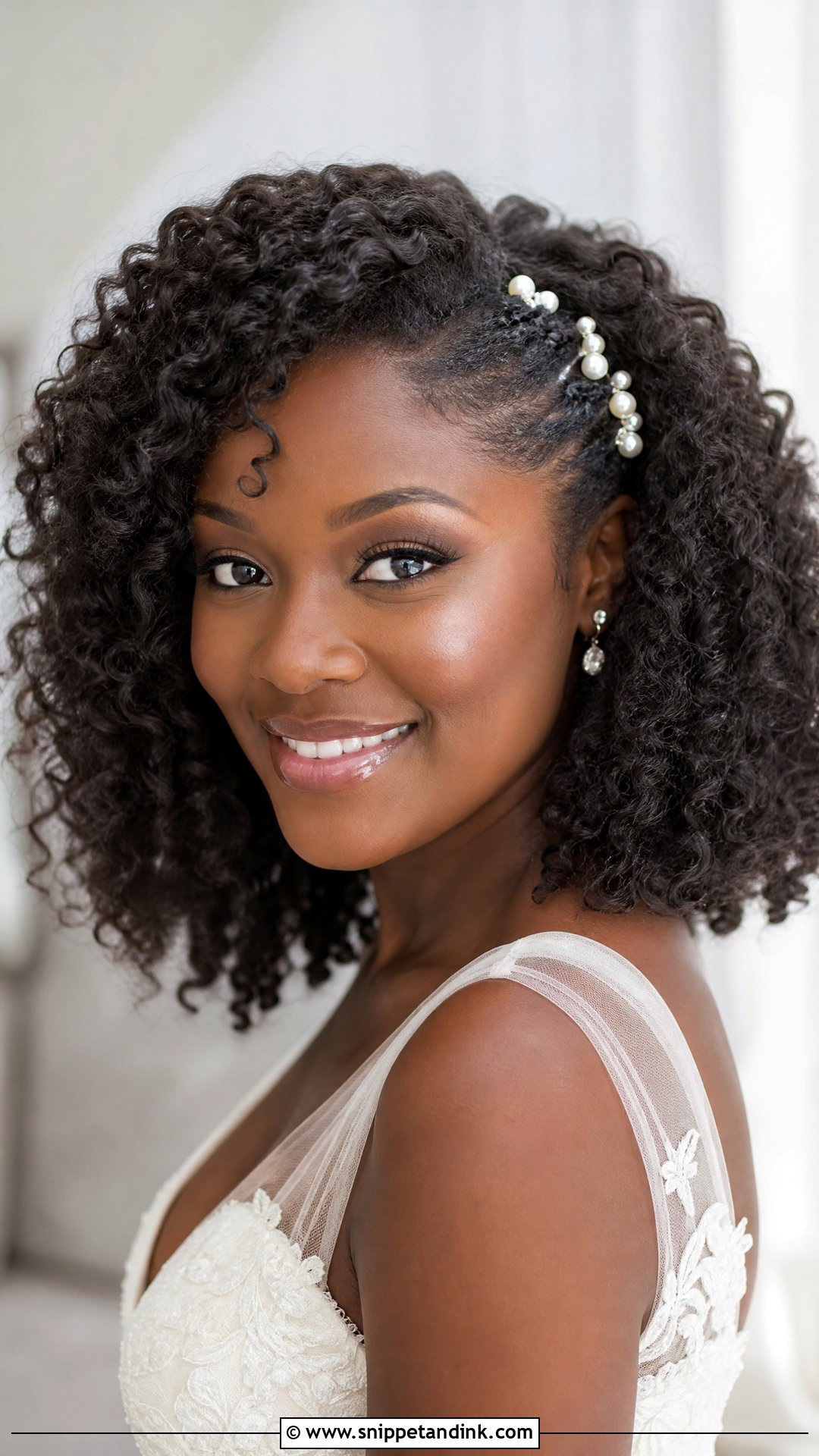
Your curls already know what they want to do; my job is to define them, not change them. Book a cut with a curl specialist about a month ahead, so the shape has time to settle. On the morning I’d rather work from your usual wash-day routine, with a leave-in, a defining cream or gel and a diffuser, than introduce new products. Let the curls dry completely before touching them. Floral pins, pearls or a crown-placed veil all sit nicely, and tight, soft and mixed patterns all work.
9. Brides Hair Down With Long Layers
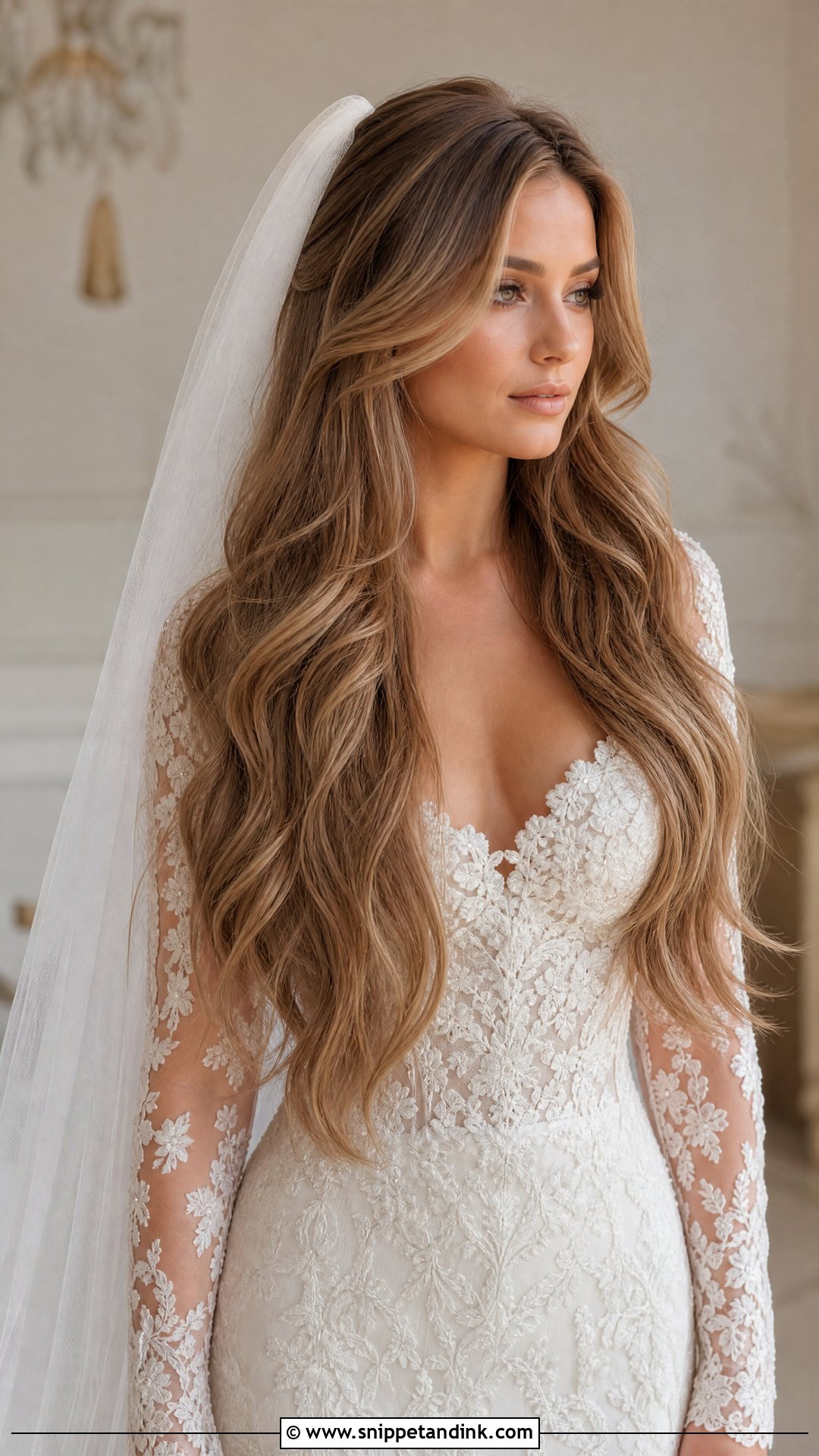
Thick, long hair without layers can look heavy and flat in photos, even when it’s been curled. The weight pulls the curl straight. Soft long layers take that bulk out of the ends, so waves and curls sit better around the shoulders. Have them cut a few weeks before the wedding, never the week of. Long layers also hold up well under a veil, since there’s still shape left when it comes off.
10. Brides Hair Down With Face Framing Layers
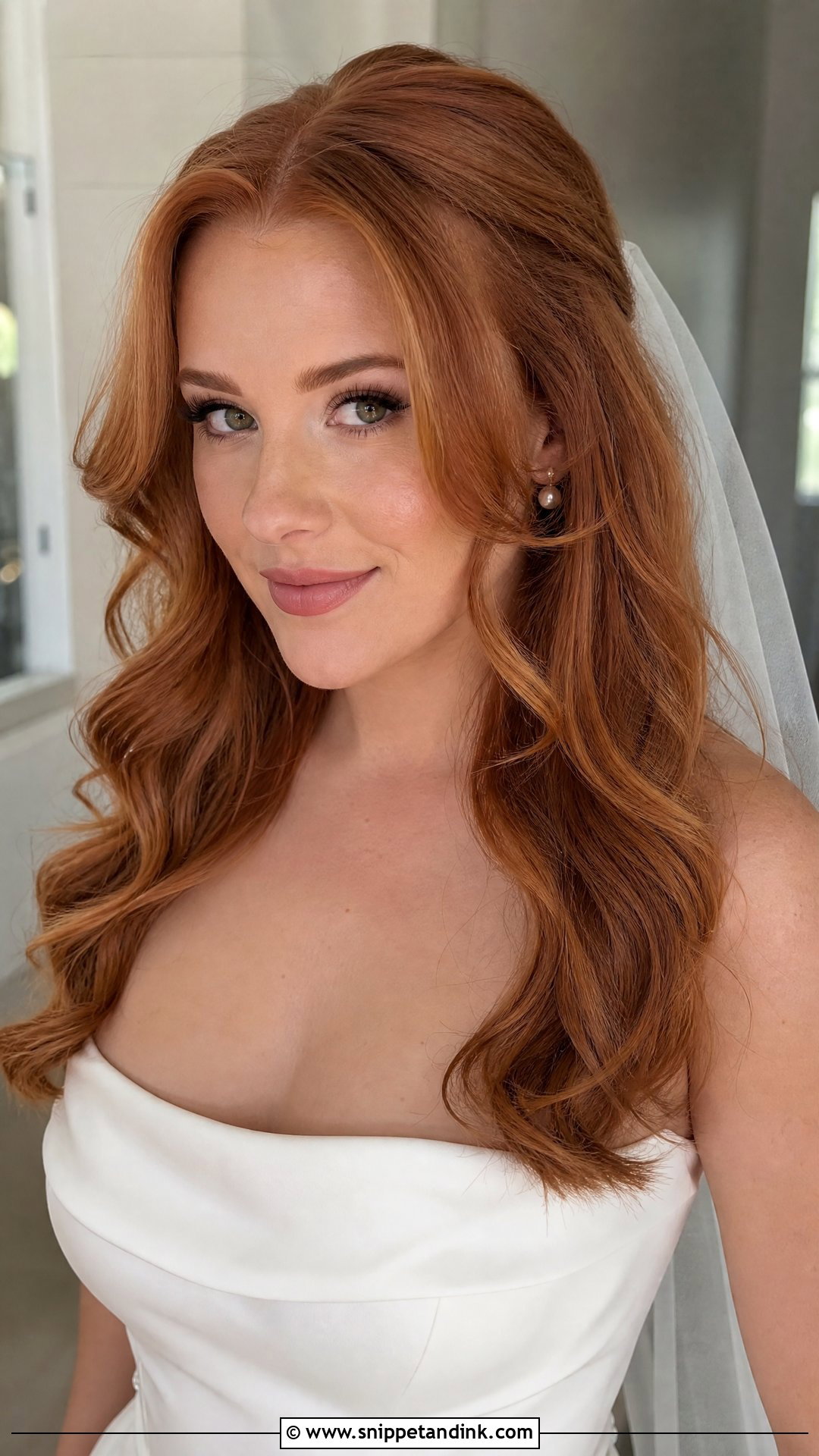
Face framing layers do a lot of quiet work in close-ups. They soften the cheekbones and jaw and stop down hair from looking like a curtain. I usually curl them away from the face, which opens it up; curled inward, they’re more romantic. With strapless gowns they add movement around bare shoulders. Make sure the shortest layer can still tuck behind your ear, because you’ll want it out of your eyes when you read your vows.
11. Brides Hair Down With Veil
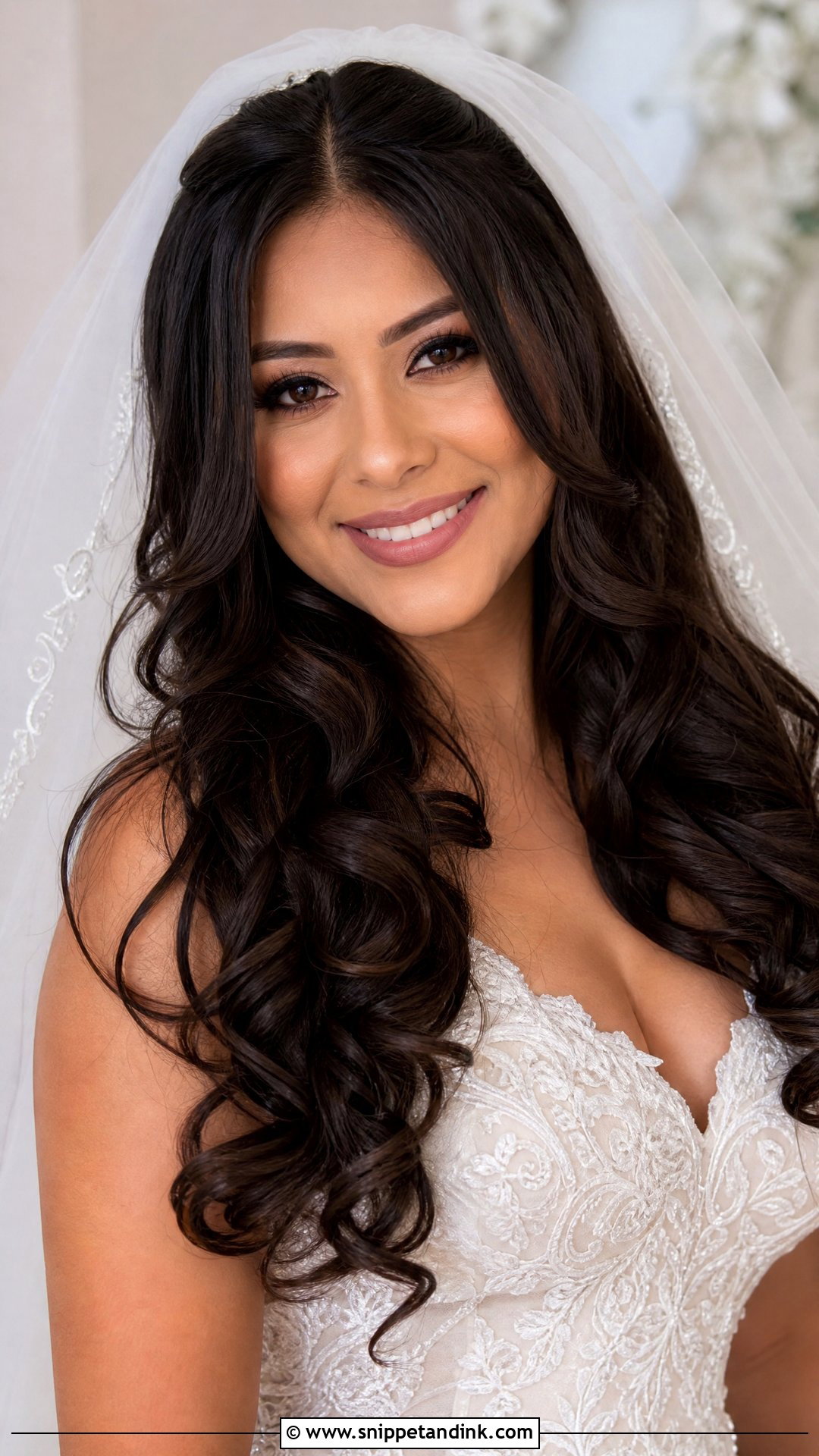
Plan veil placement at the trial, with the veil there. On fully down hair, the comb slides unless it has a base, so I hide a small anchor braid or a few crossed pins under the top layer. Under a half-up section is the most secure spot of all. Match the finish to the gown: soft tulle with waves, a plain cathedral veil with sleek hair. Heavy beaded veils on fine hair will drag backward, so I’d steer you toward a lighter edge.
12. Brides Hair Down With Pearl Pins
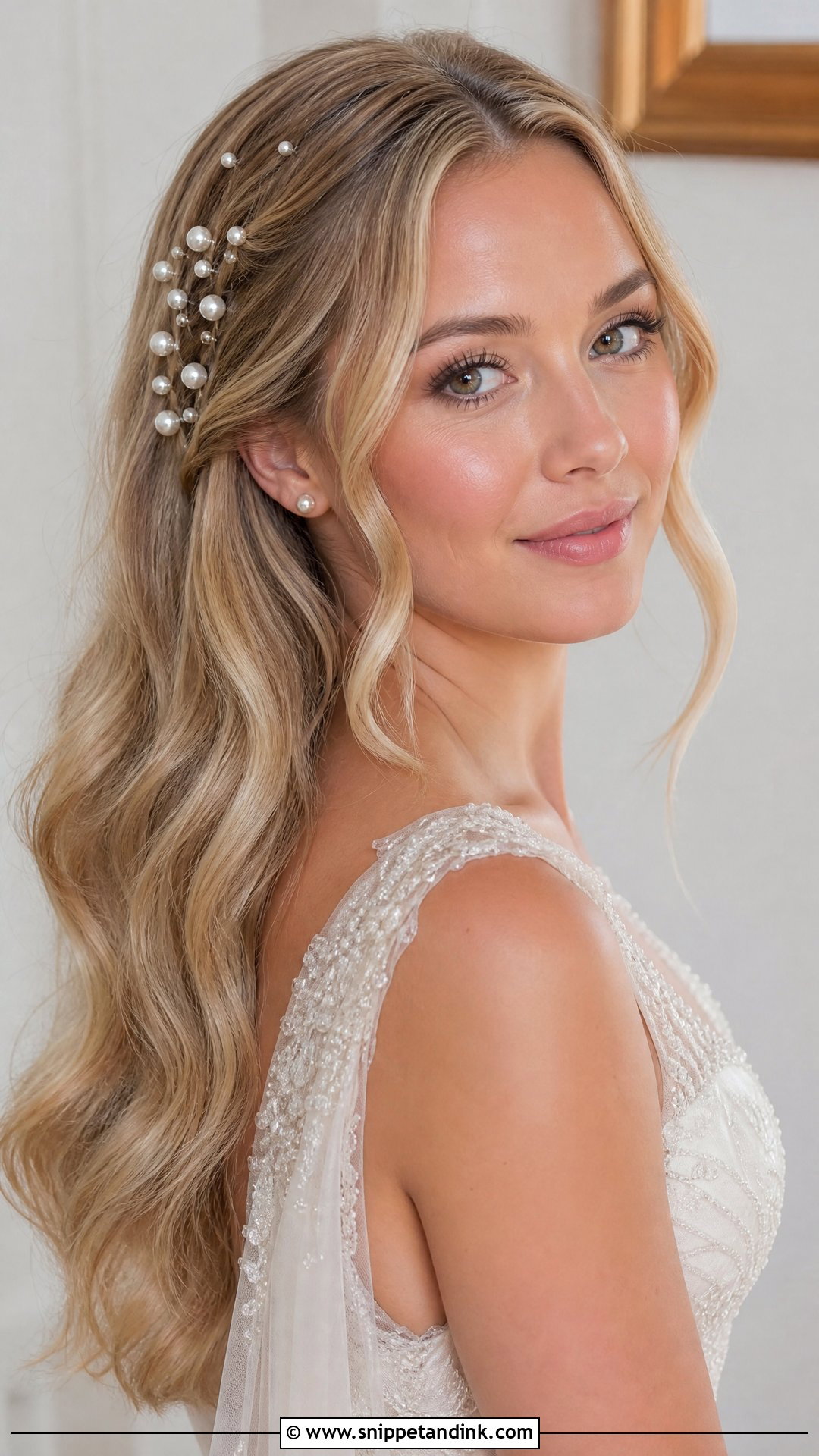
Pearl pins are what I recommend when someone wants a detail but not a tiara or a large comb. They’re light, they don’t pull, and you can scatter them through waves, line them down one side or tuck them into a half-up section. On smooth hair they show cleanly; on very textured hair they can get lost, so I go a size bigger. Count on five to seven pins, placed at slightly different heights so they look natural instead of in a straight line.
13. Brides Hair Down With Floral Hair Piece
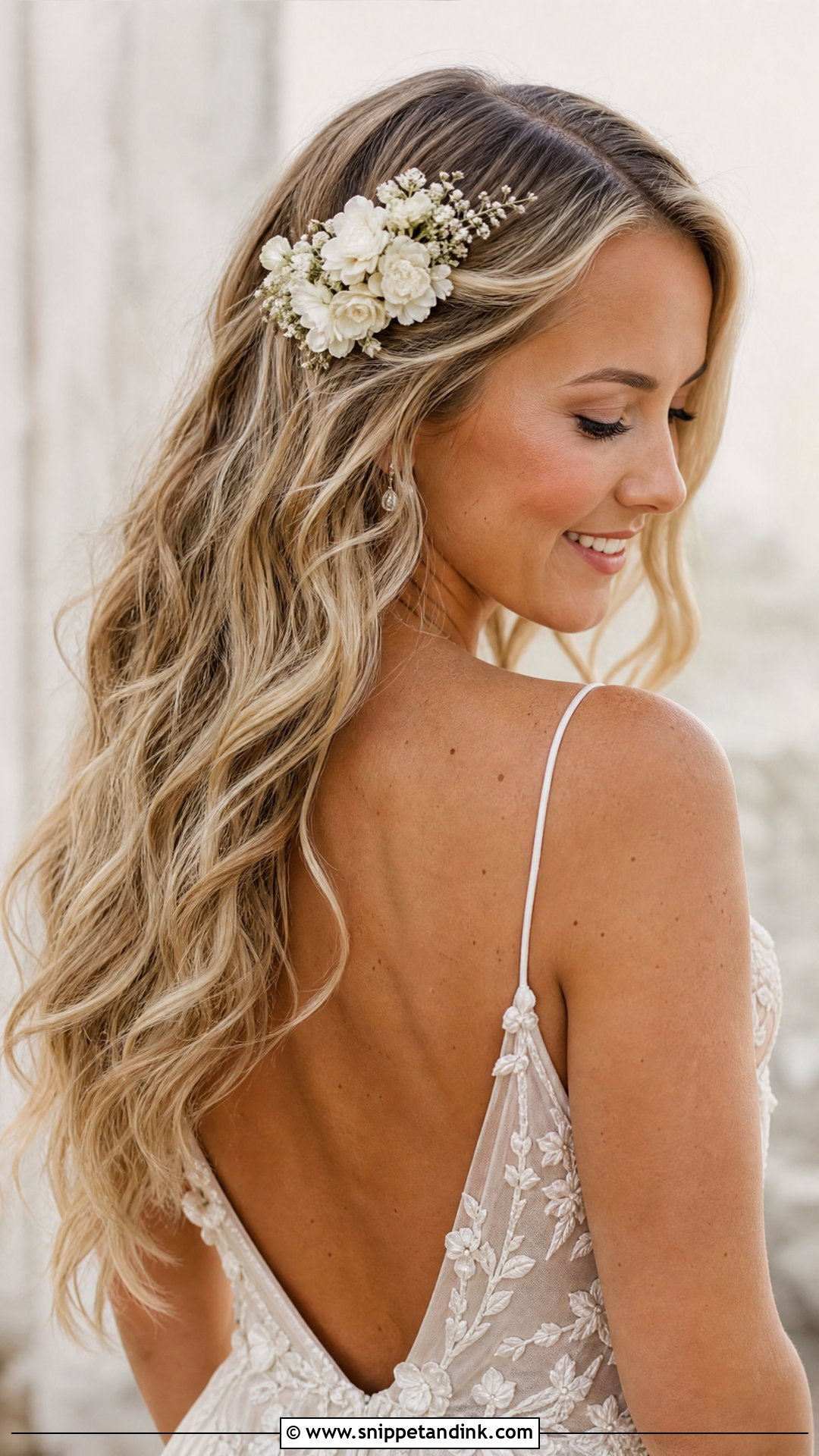
Scale is the thing to get right with flowers. Tiny blooms look delicate scattered in loose waves; a larger floral comb can anchor one side or sit above a veil. The flowers can be real or silk, but real stems wilt against a warm scalp, so I ask the florist for hardy varieties wired onto a comb and put them in last. Hair needs some texture to grip the wire. Silky, freshly washed hair lets heavy pieces slide.
14. Brides Hair Down With Sleek Straight Hair
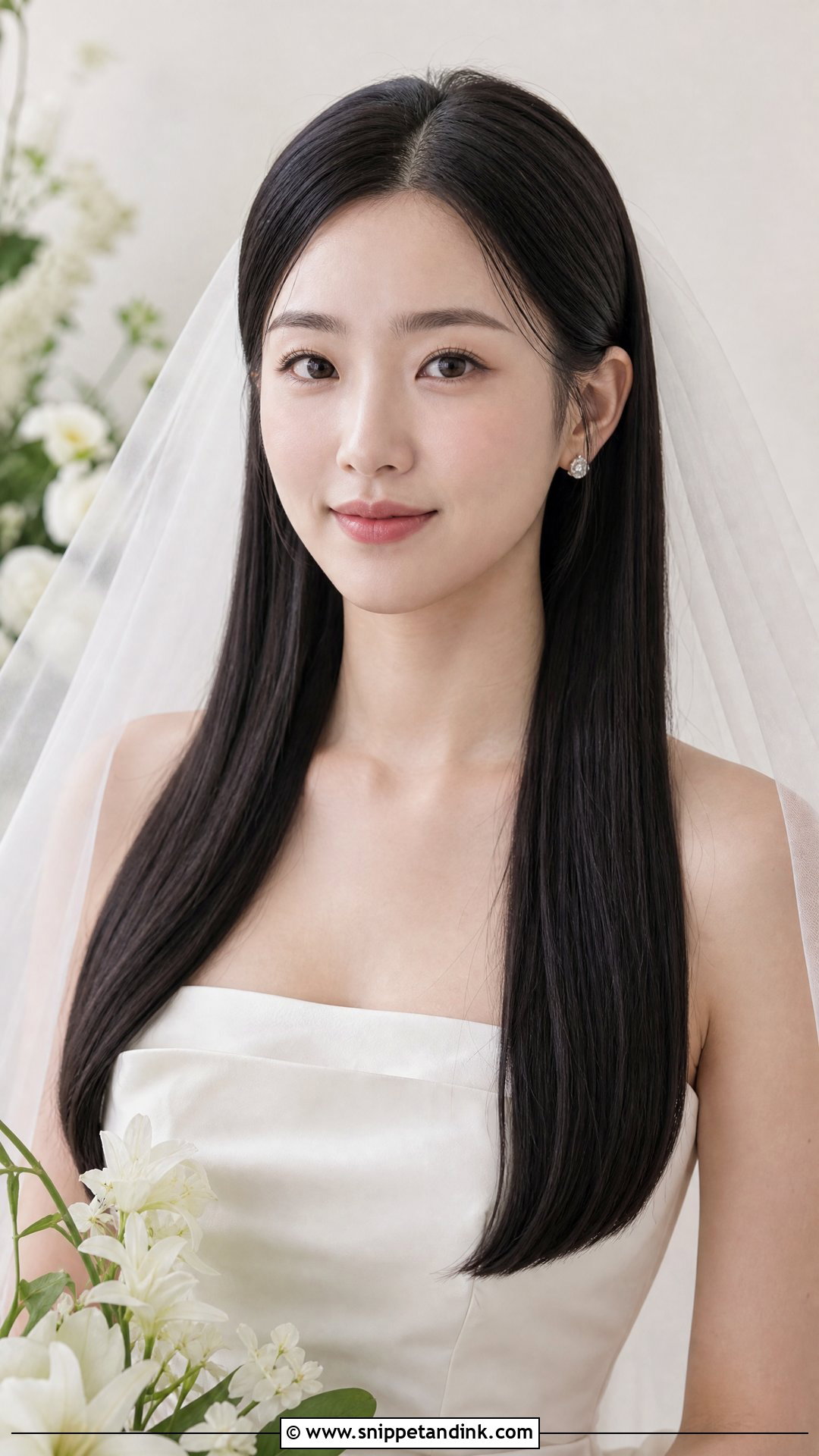
Straight hair proves that bridal hair doesn’t need curls to feel dressed up. Shine, a clean part and healthy ends do the work. Middle part reads fashion; side part reads softer. Because every flaw shows, get a trim and smoothing treatment in the weeks before, and use a light anti-frizz finish rather than a heavy oil that turns greasy under flash. With a structured gown, a high neckline or bold earrings, it looks deliberate rather than plain.
15. Brides Hair Down With Bouncy Blowout
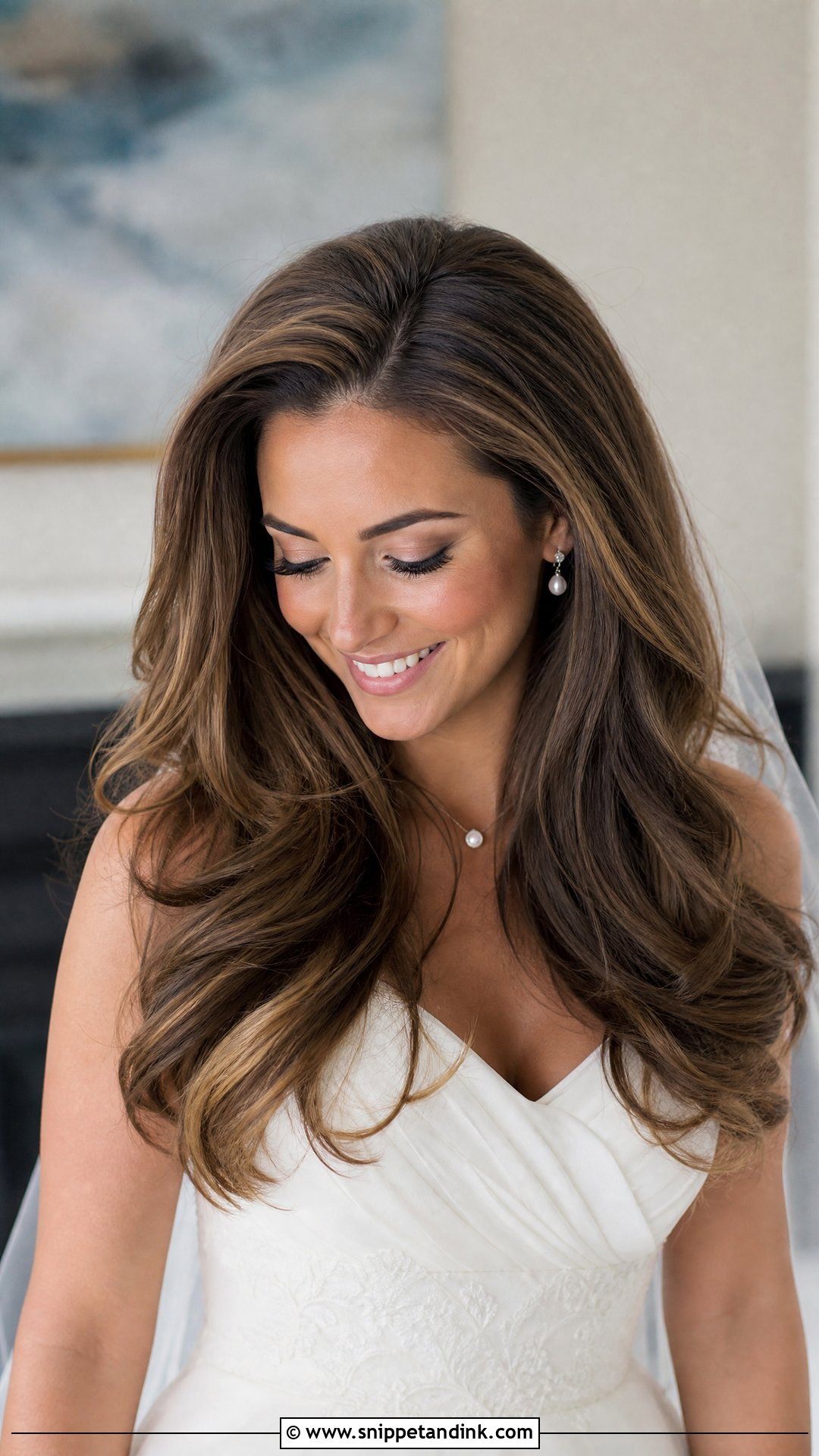
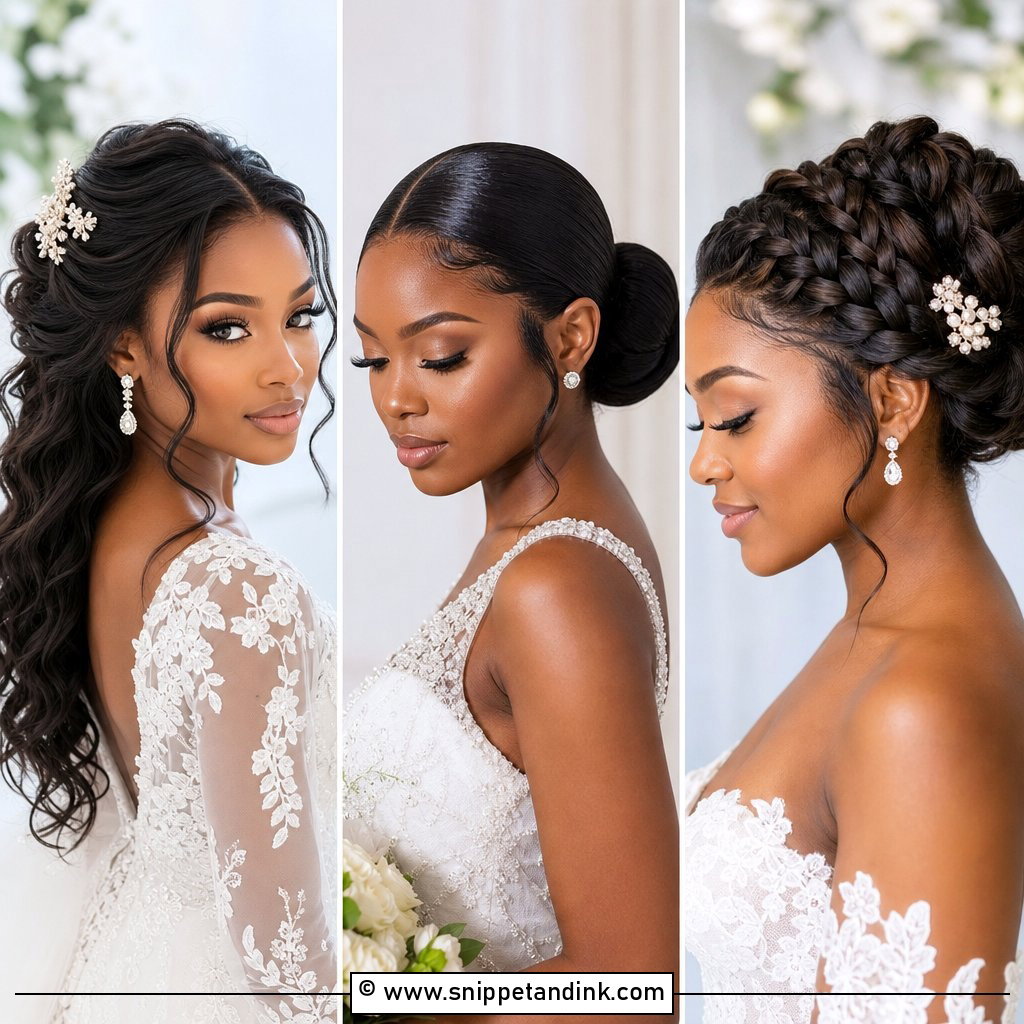
A bouncy blowout is the closest thing to your everyday hair, just bigger and glossier. Lift at the roots, rounded ends, smooth movement. I set the crown and the face-framing sections in Velcro rollers while you’re in makeup, then take them out last, which keeps the volume for hours longer than a blow-dry alone. Medium to long layered hair suits it best. If you wear your hair down most days and don’t want to look like someone else, start here.
Thin Ends? Extensions That Disappear Under Waves
Many of the fullest down styles in bridal photos have help. Extensions add weight that holds a curl longer, fill out see-through ends and give the back view presence. Done well, nobody can tell. Done in a rush, the line where your hair stops shows the moment the waves loosen.
Getting them to blend
- Choose human hair if your look involves curling. Most synthetic pieces can’t take heat and won’t hold the same pattern as your own hair.
- Match the colour in daylight, to your ends rather than your roots, since that’s where the wefts sit.
- Clip-ins can go in on the morning. Tapes or bonds are usually fitted a week or two ahead so they can settle.
- Bring them to the trial, so your stylist knows how many wefts you have and where they’ll sit around the veil comb.
One honest caution: extensions add weight at the crown, and so does a veil. If your scalp is sensitive or your hair is very fine, ask for fewer, lighter pieces and plan to take the veil off after the ceremony. Slightly less fullness beats a headache by the first dance.
Waves, Curls or Glass-Straight?
Loose hair can be every bit as lasting as an updo when the shape and hold are planned rather than hoped for. Start from your own texture, then factor in your neckline, where the veil sits and what the venue throws at you. Soft waves are romantic, Hollywood waves glamorous, natural curls personal, sleek straight hair modern. Pearl pins, a floral piece or a half-up twist add the bridal touch without changing who you are. Book the trial, bring every accessory, and go with the version that makes you relax the moment you see it.
You'll Like These Ideas:


Leave a Reply