
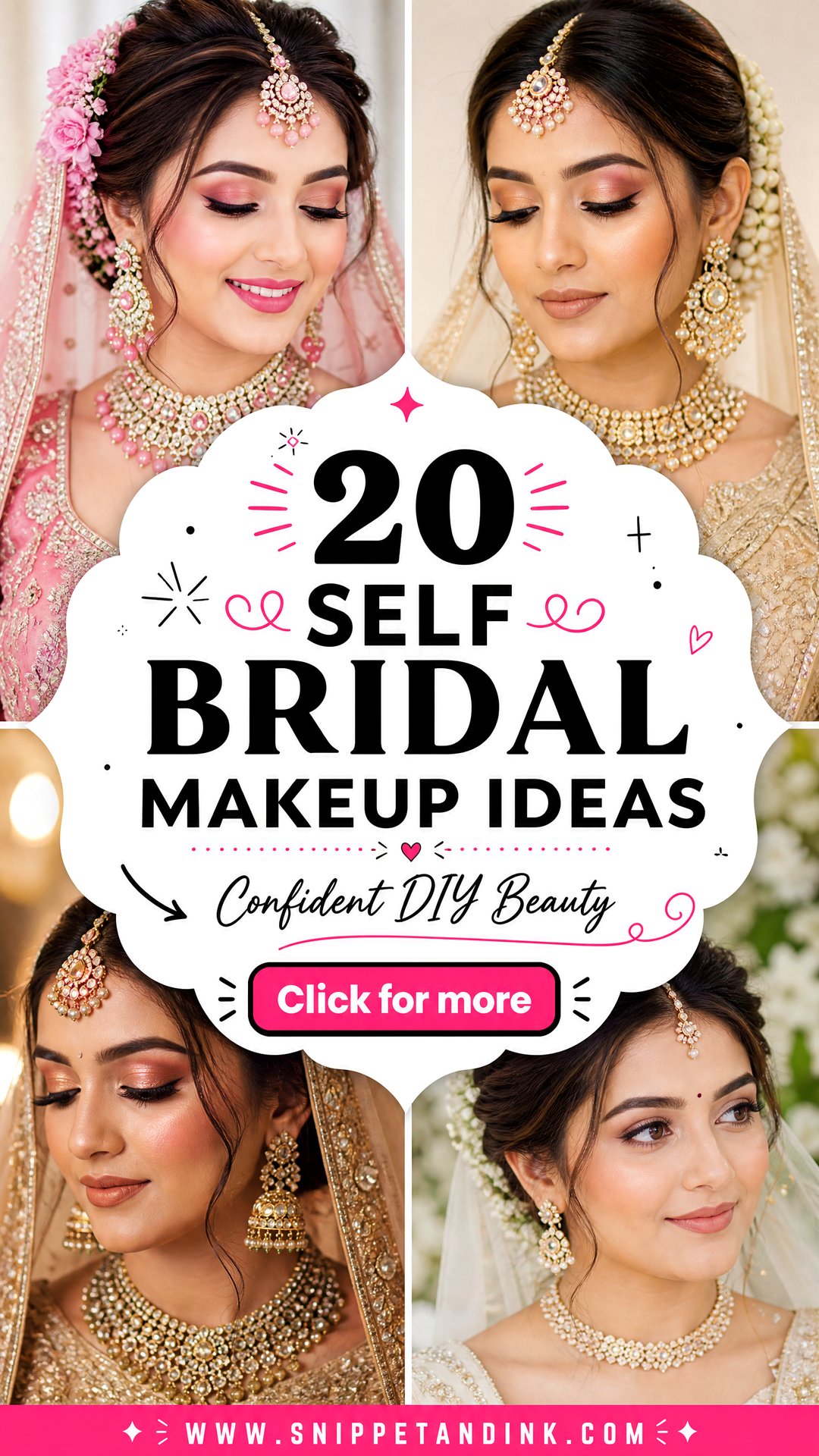
Doing your own wedding makeup is very doable, and I’d say that even as someone who does it for a living. The brides who pull it off don’t copy a complicated artist routine. They pick one complete look within their skill level, practice it until it’s boring, and plan for touch-ups. Bridal makeup right now leans toward skin that looks like skin, with thin layers, defined eyes and lips you can actually reapply. Below are twenty looks I’d hand to a DIY bride, each with the steps that matter most and a note on who it suits, from a courthouse ceremony at noon to a formal evening reception.
Setting Up a Makeup Station at Your Getting-Ready Venue
When I arrive at a bridal suite, the first thing I do is move a chair and a table to the window. Light decides everything. Do the same for yourself: face a window with daylight falling evenly on both sides of your face, never with the window behind you or overhead light alone. A cheap standing mirror on the table beats a bathroom mirror every time.
Lay out every product in the order you’ll use it, the night before. Put a hand mirror, cotton buds, micellar water and a clean towel within reach for corrections. Then block out your time honestly. A look you’ve practiced in forty minutes will take longer on the day, because you’ll be interrupted, nervous and talking. Give yourself about double, and start before hair if your stylist agrees, since hairspray can settle on fresh foundation.
1. Natural Bridal Makeup
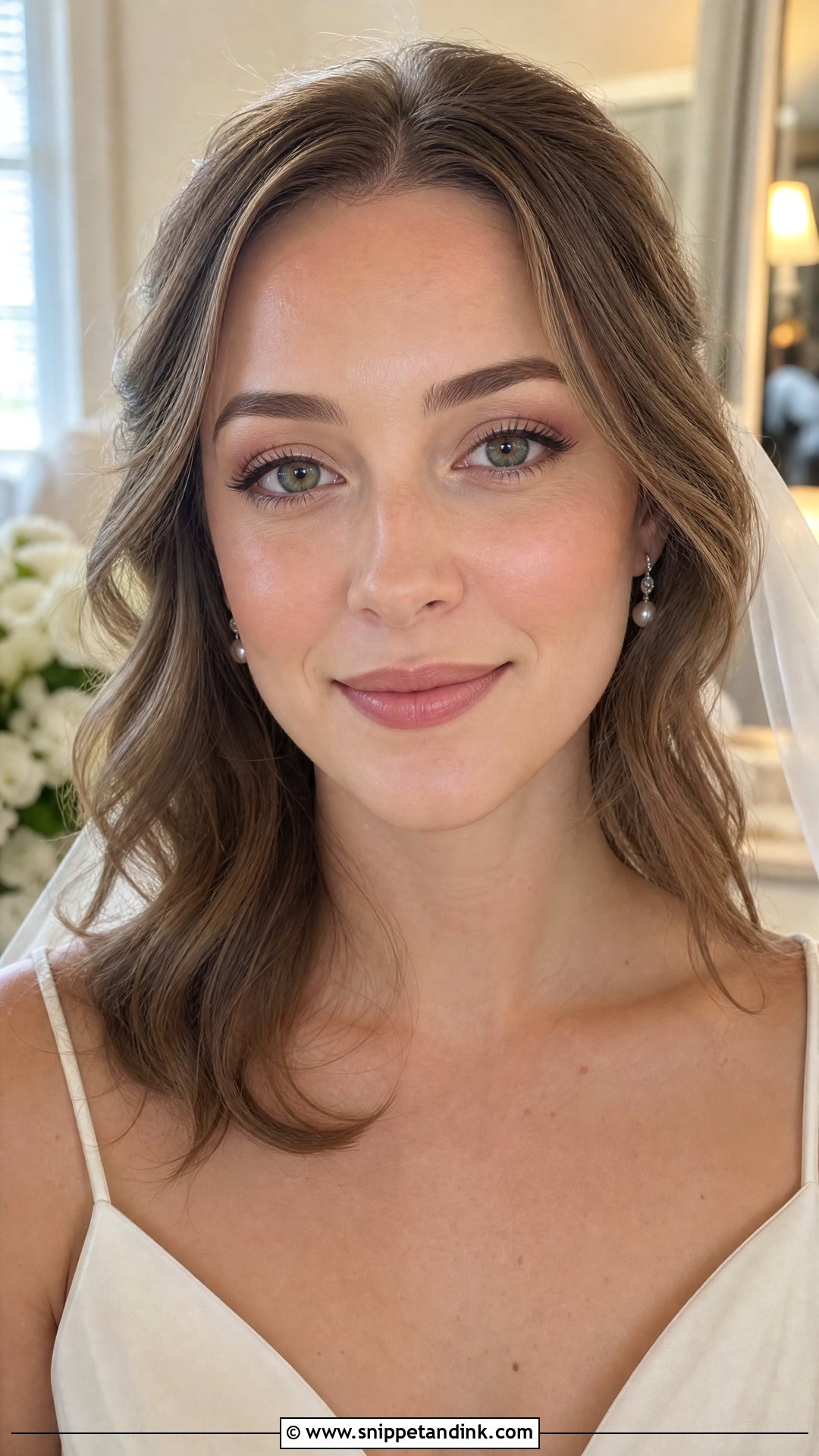
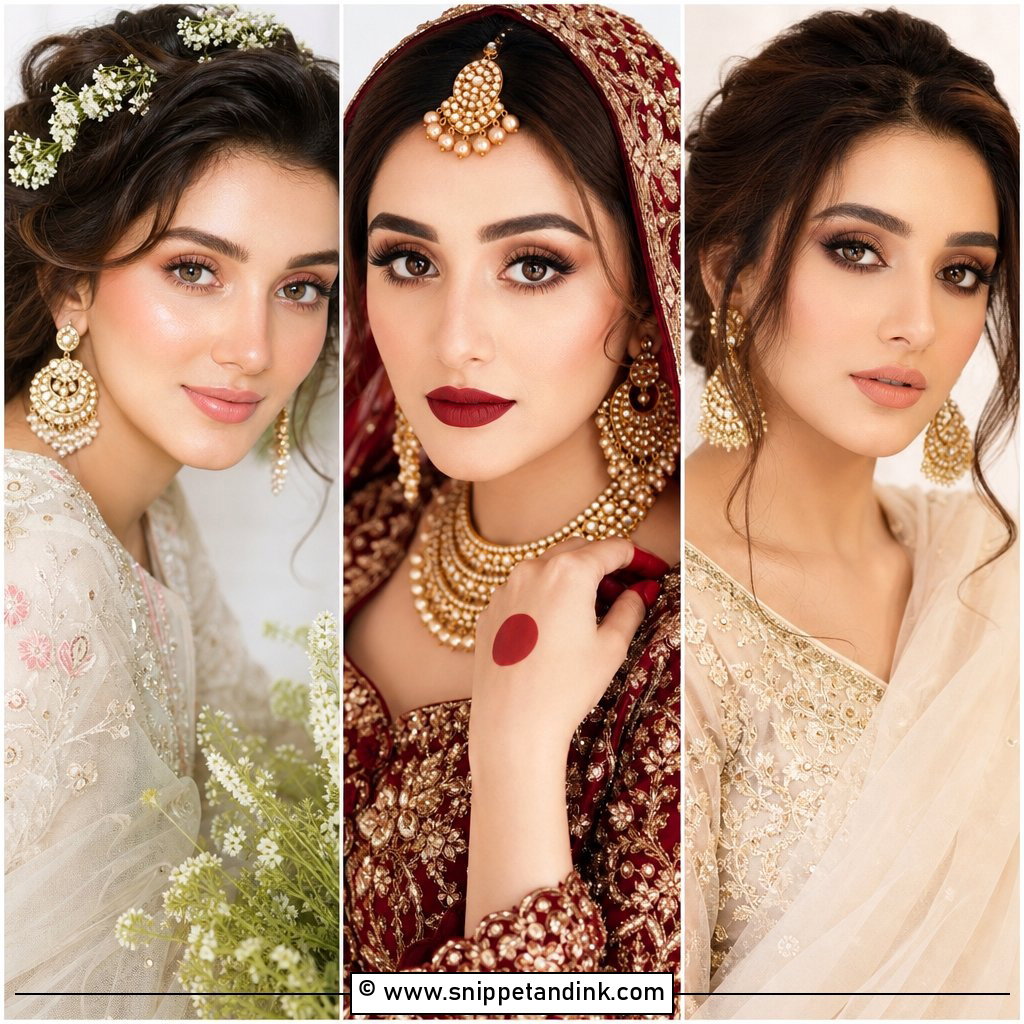
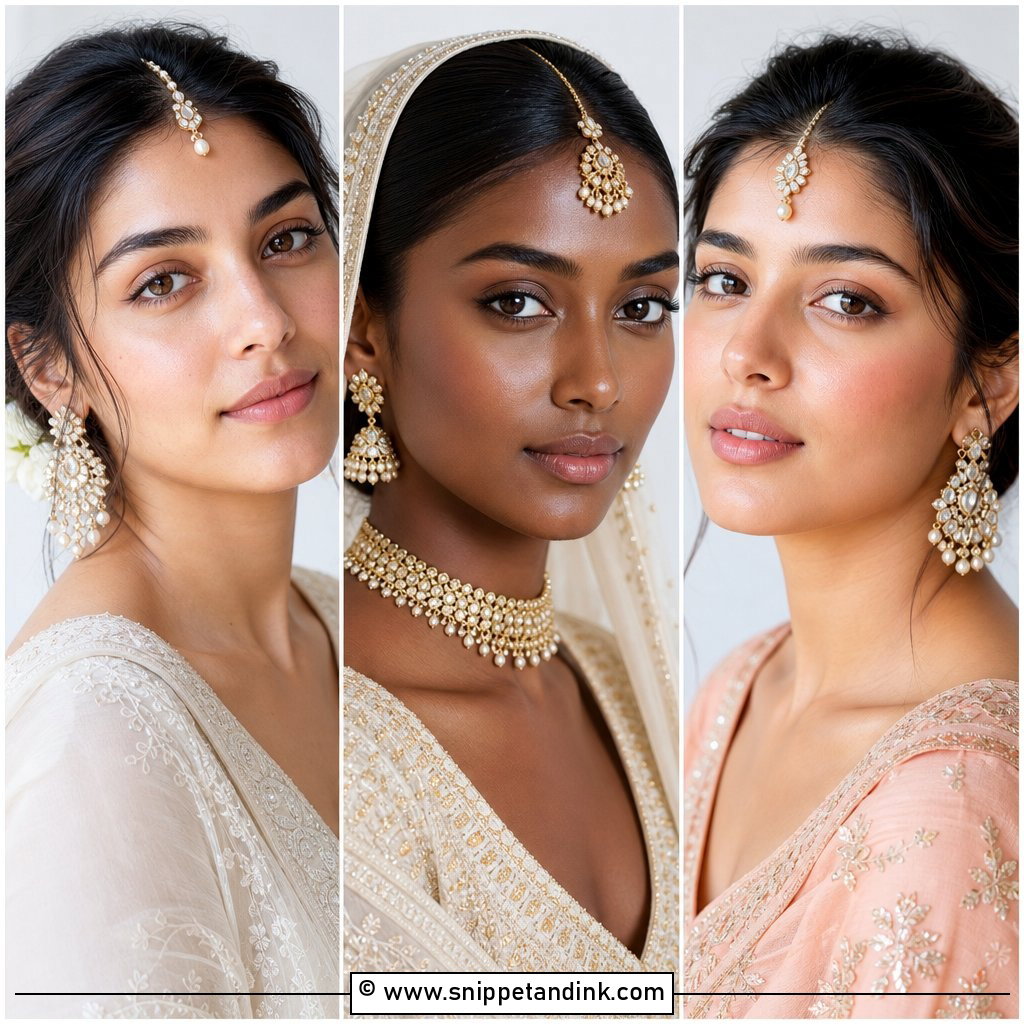
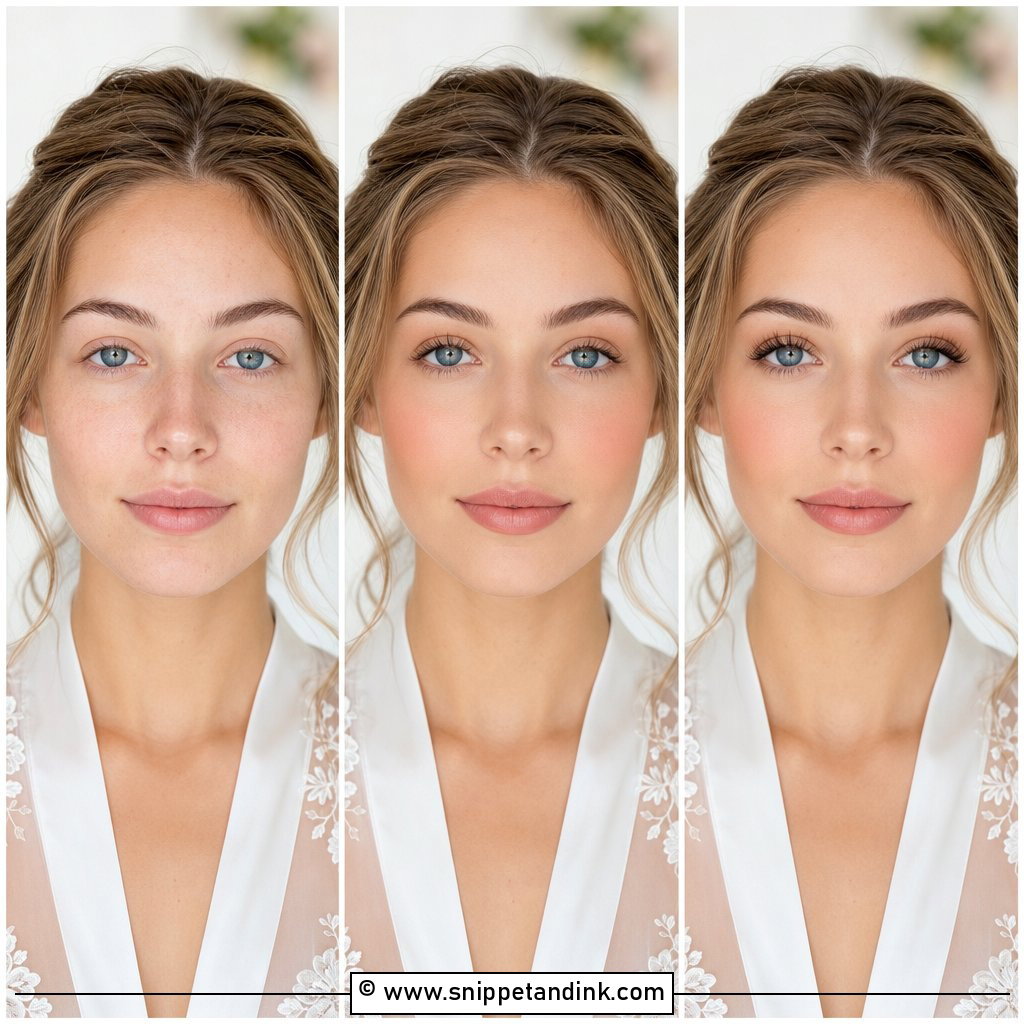
Natural is the hardest look to fake and the easiest to wear. It works only if the skin underneath is calm and hydrated, so prep matters more than product. A smoothing primer, a thin layer of long-wear foundation or skin tint, concealer only where you need it, and a light dusting of powder through the center of the face. Beige or taupe shadow, tightlined upper lashes and waterproof mascara keep the eyes open. Cream blush in pink or peach and a satin nude-pink lip finish it. Daytime and outdoor ceremonies suit it, since daylight is kind to light coverage.
2. Soft Glam Bridal Makeup
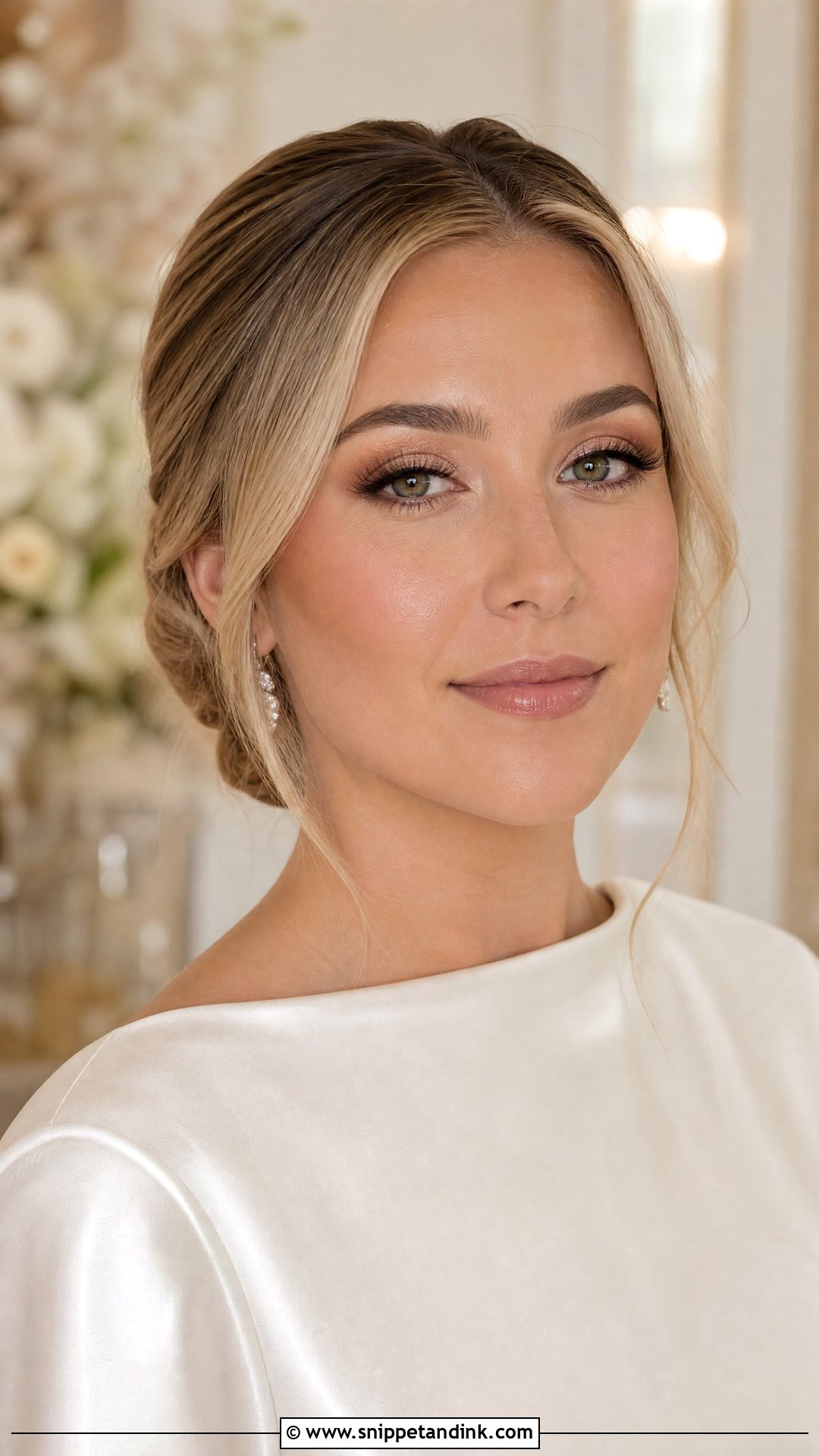
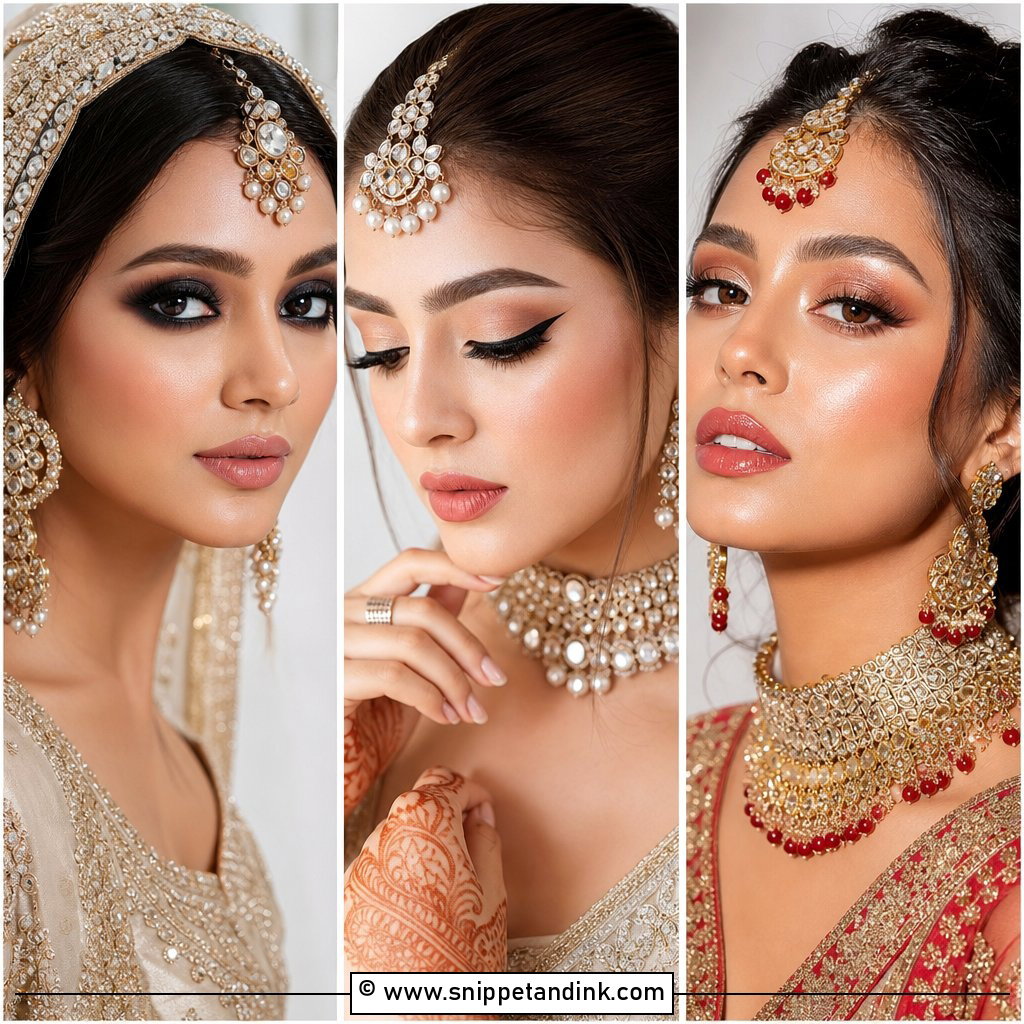
Soft glam is what most of my brides end up wanting once they see natural makeup in flash photos. It adds just enough shape: medium-coverage foundation, cream contour blended under the cheekbones, along the jaw and at the temples, champagne or rose-gold shimmer in the center of the lid, warm brown in the outer corner, and fluffy lashes. Keep the liner thin and close to the lash line. A rosy nude lipstick in satin or soft matte holds up through a long day better than a gloss would.
3. Dewy Bridal Makeup
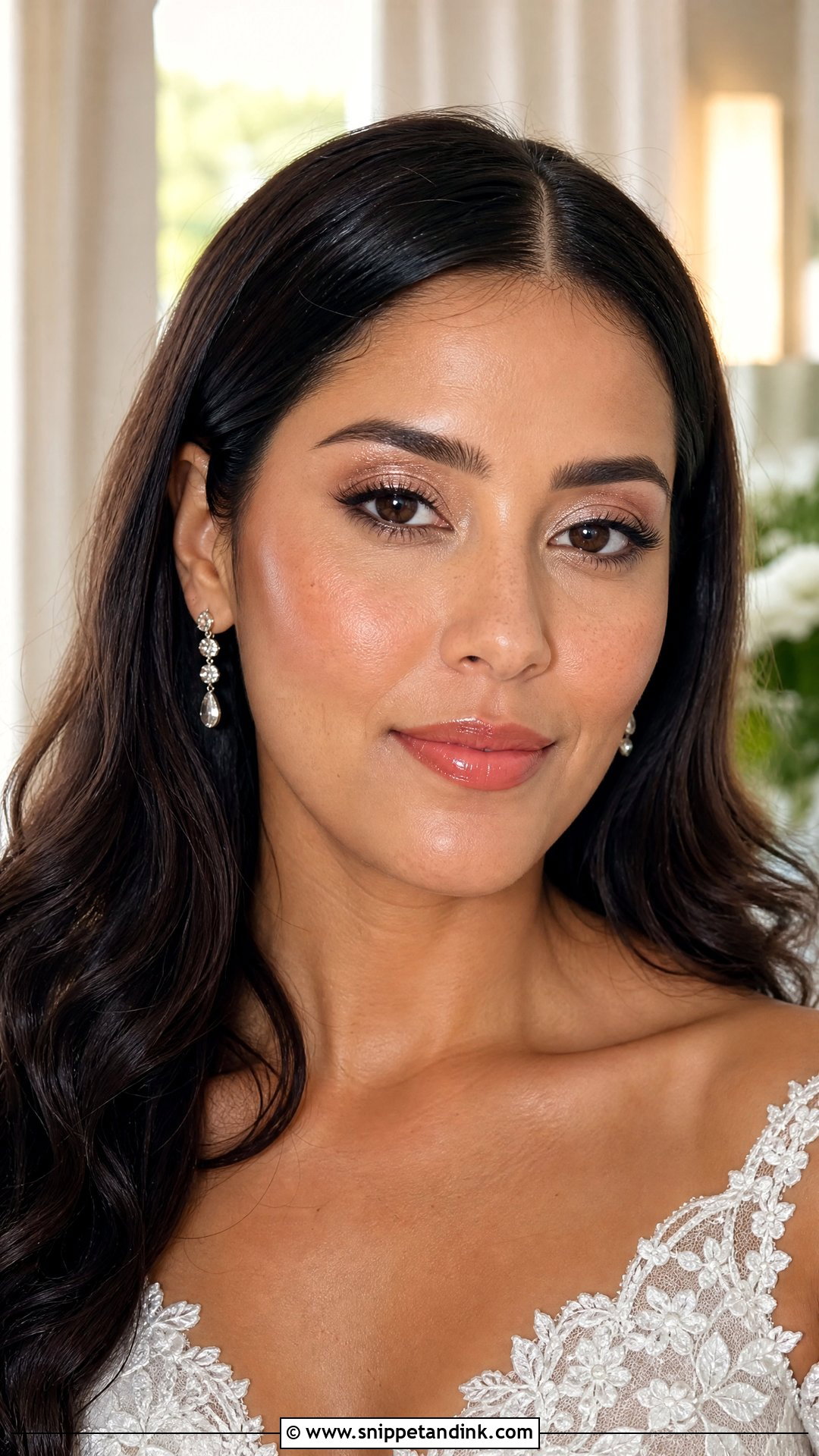
With dewy skin, the trick is controlling where the shine goes. I put radiant primer only on the high points of the face and use a natural-finish foundation everywhere, never a glossy one all over. Cream blush and a liquid highlighter on top of the cheekbones give the glow. Then I powder the T-zone, because shine on the nose and forehead reads as oil in photos, while shine on the cheekbones reads as health. Light eyes with champagne shadow and a glossy rose or peach lip complete it. Very oily skin will struggle to keep it controlled past a few hours.
4. Matte Bridal Makeup
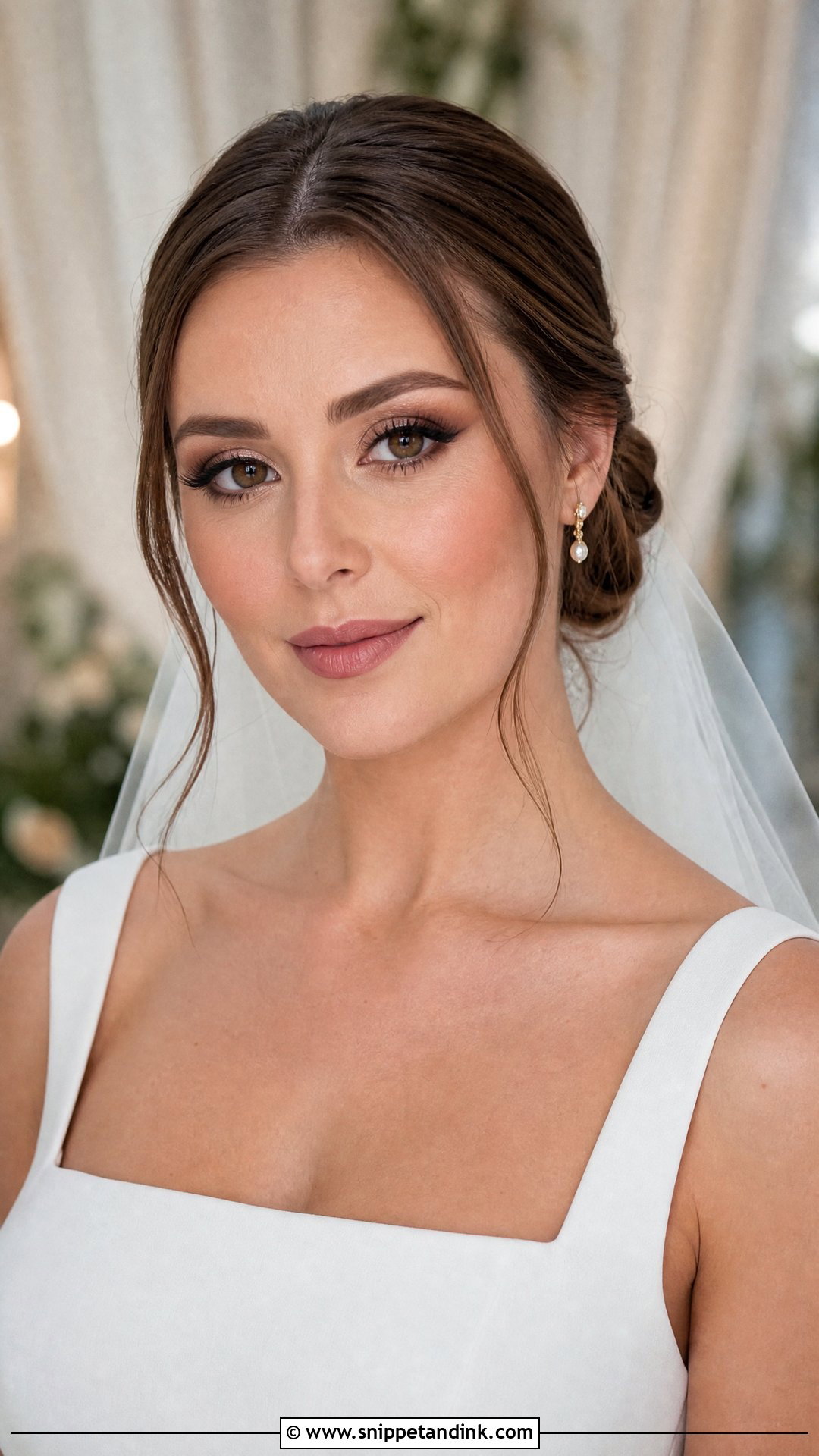
Oily skin, humid weather or a fourteen-hour day: these are the brides I steer toward matte. Matte shouldn’t mean flat, though. Mattifying primer goes only on the T-zone, and the foundation should still be long-wear but skin-like. Finely milled powder pressed (not swept) around the nose, chin and forehead does the setting. Matte taupe and deep brown shadows create definition; powder blush in rose or warm peach adds life. Dry skin should avoid this one, since matte formulas cling to flaky patches.
5. Simple Bridal Makeup
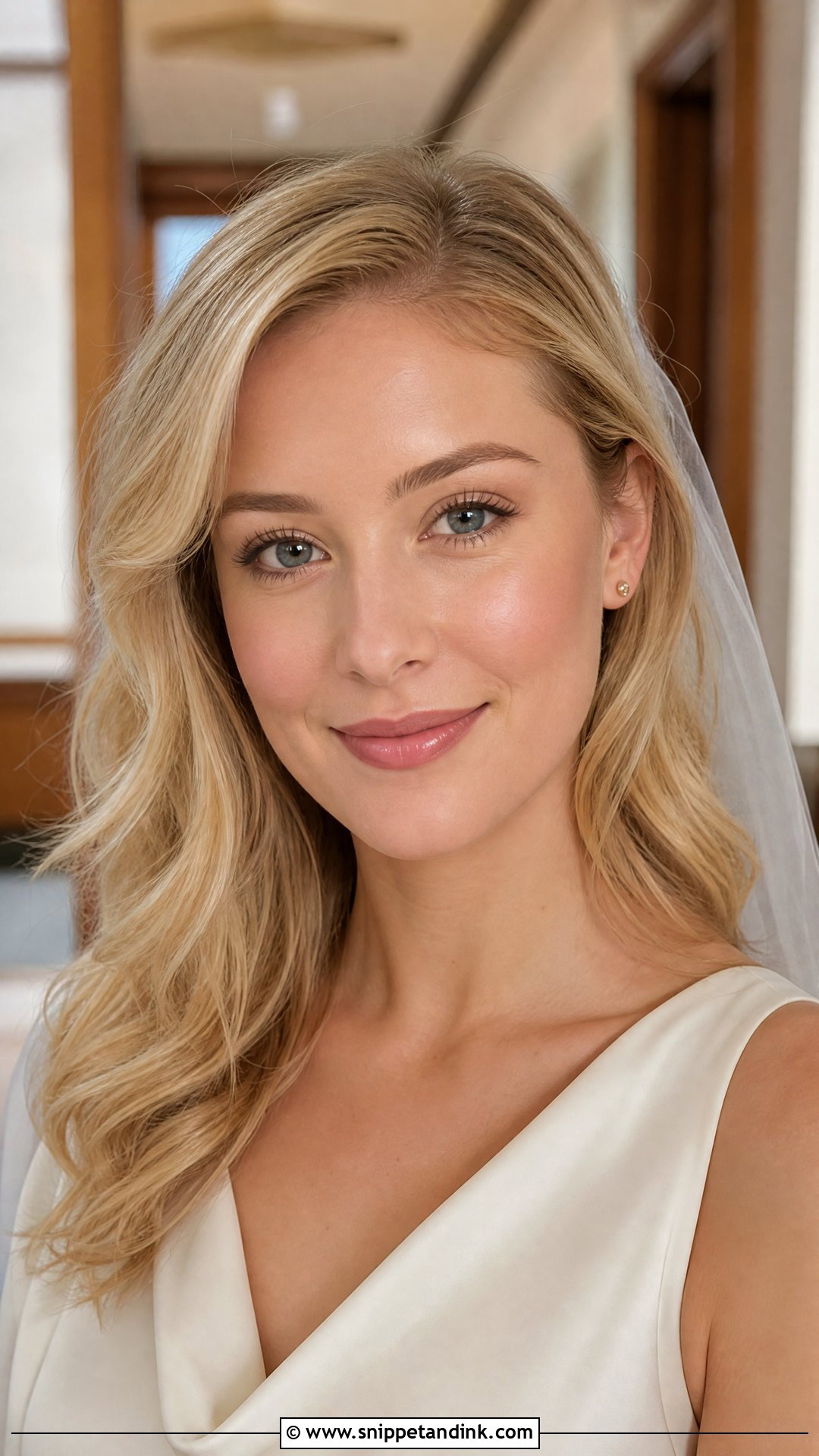
If you hardly wear makeup day to day, keep the routine short enough to repeat without thinking. Tinted moisturizer or sheer foundation, concealer under the eyes and round the nose, tinted brow gel, one neutral cream shadow, waterproof mascara. One cream product on both cheeks and lips gives a matching flush. A little powder through the center keeps it neat. The fewer steps, the fewer things go wrong on a nervous morning, which is why this suits courthouse weddings and small ceremonies so well.
6. Classic Bridal Makeup
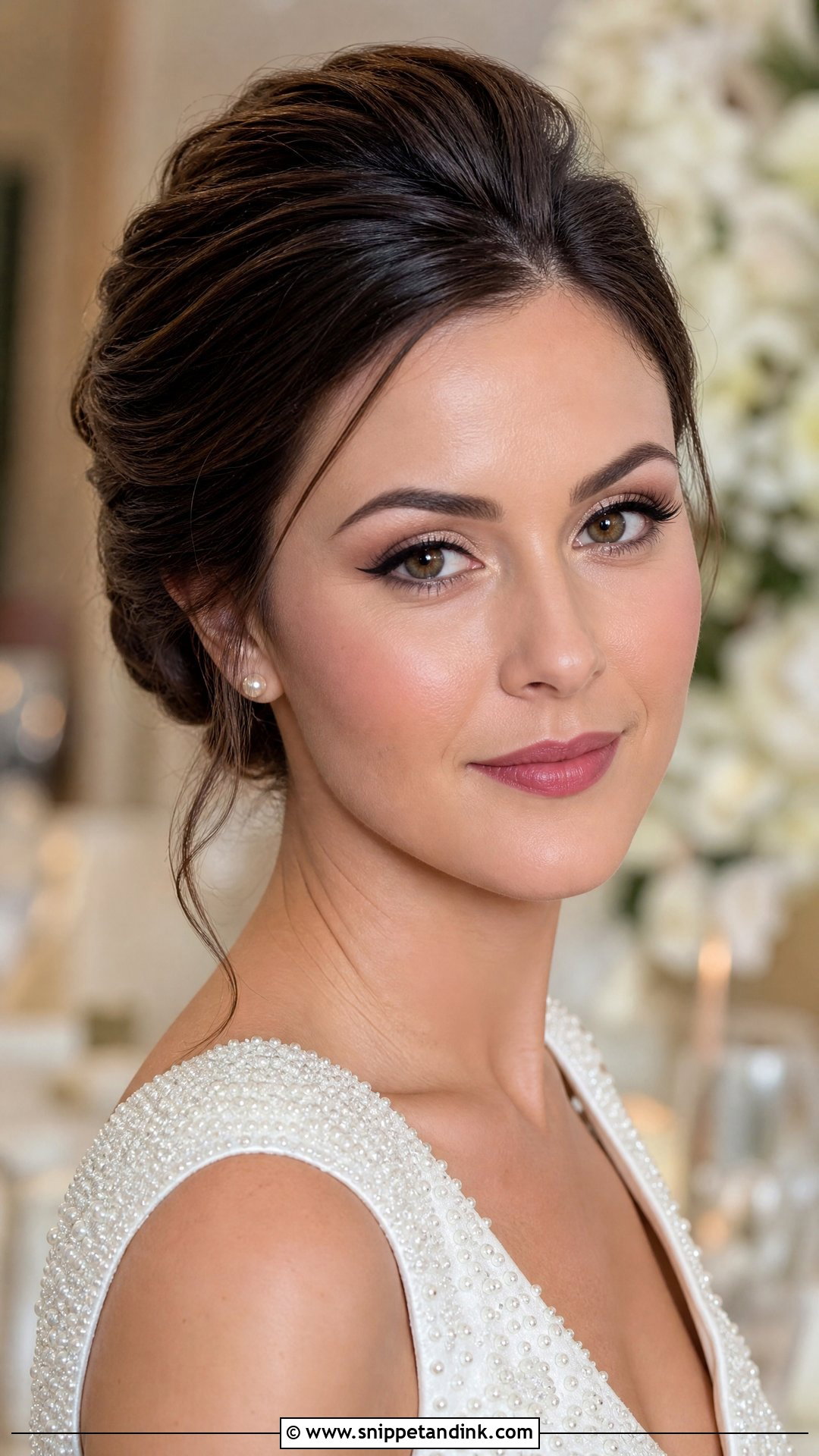
Classic makeup is satin skin, softly defined eyes, sculpted cheeks and a polished lip, and it will look right in photos for decades. Blend the foundation down onto the neck, since a jawline mismatch is the first thing that shows in pictures. Neutral brown through the crease, a lighter shade on the lid, a small wing or soft pencil liner, and either individual lashes or a natural strip. Rose blush, a little bronzer and a refined champagne highlight give dimension. A pink-nude or soft rose lipstick ties it together.
7. Glowy Bridal Makeup
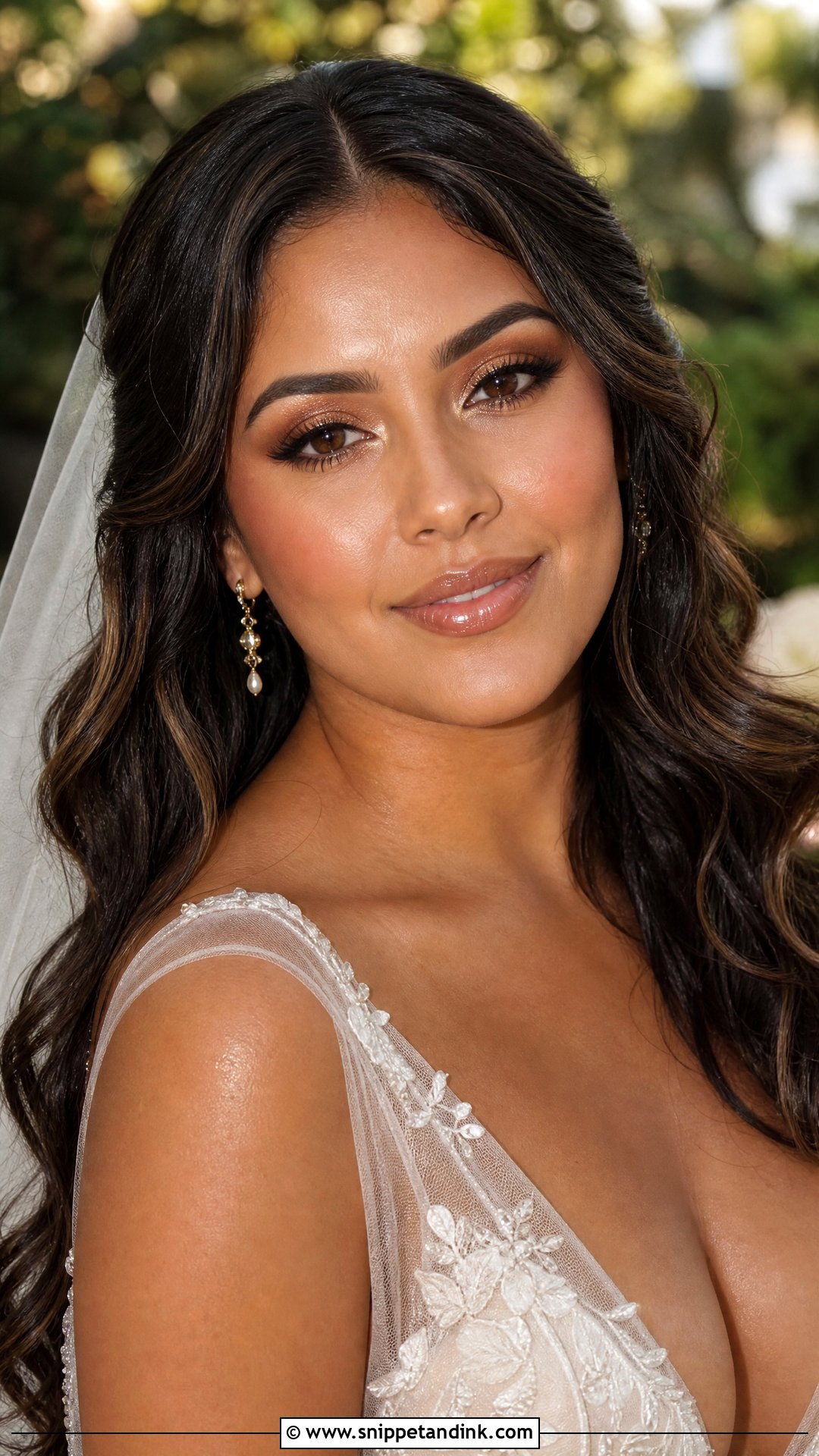
Glowy bridal makeup differs from dewy in one way: the glow is placed, not spread. Satin foundation that won’t slide, then highlighter only where light naturally lands, on cheekbones, brow bone, inner corners and the bridge of the nose. Warm bronze or soft gold shadow brightens the eyes. Peachy blush and a touch of bronzer add dimension. A nude gloss or creamy lipstick finishes it. Golden hour and beach weddings love this, since the warm light picks up the placed highlights and leaves the rest of the face matte.
8. Pink Bridal Makeup
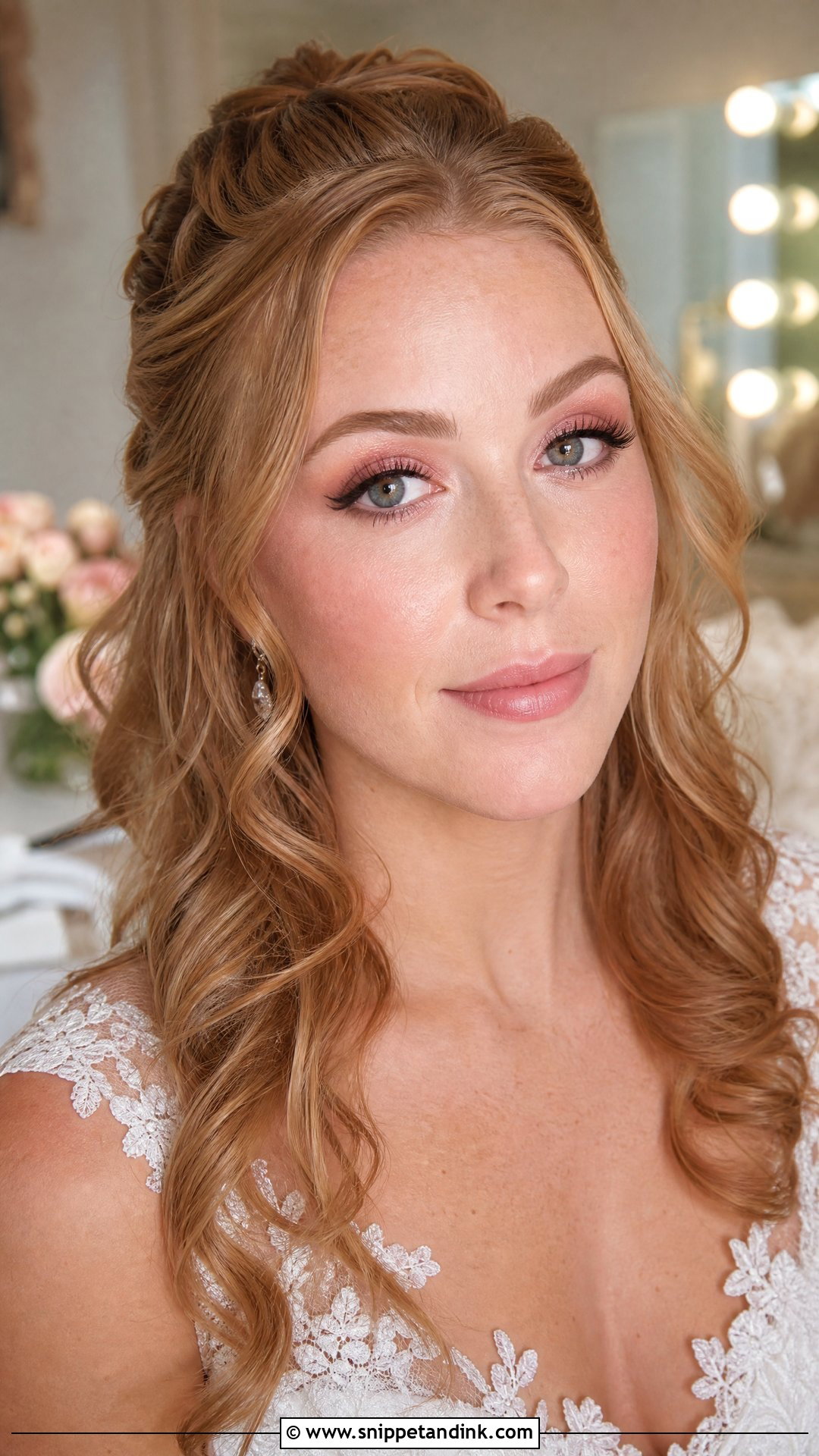
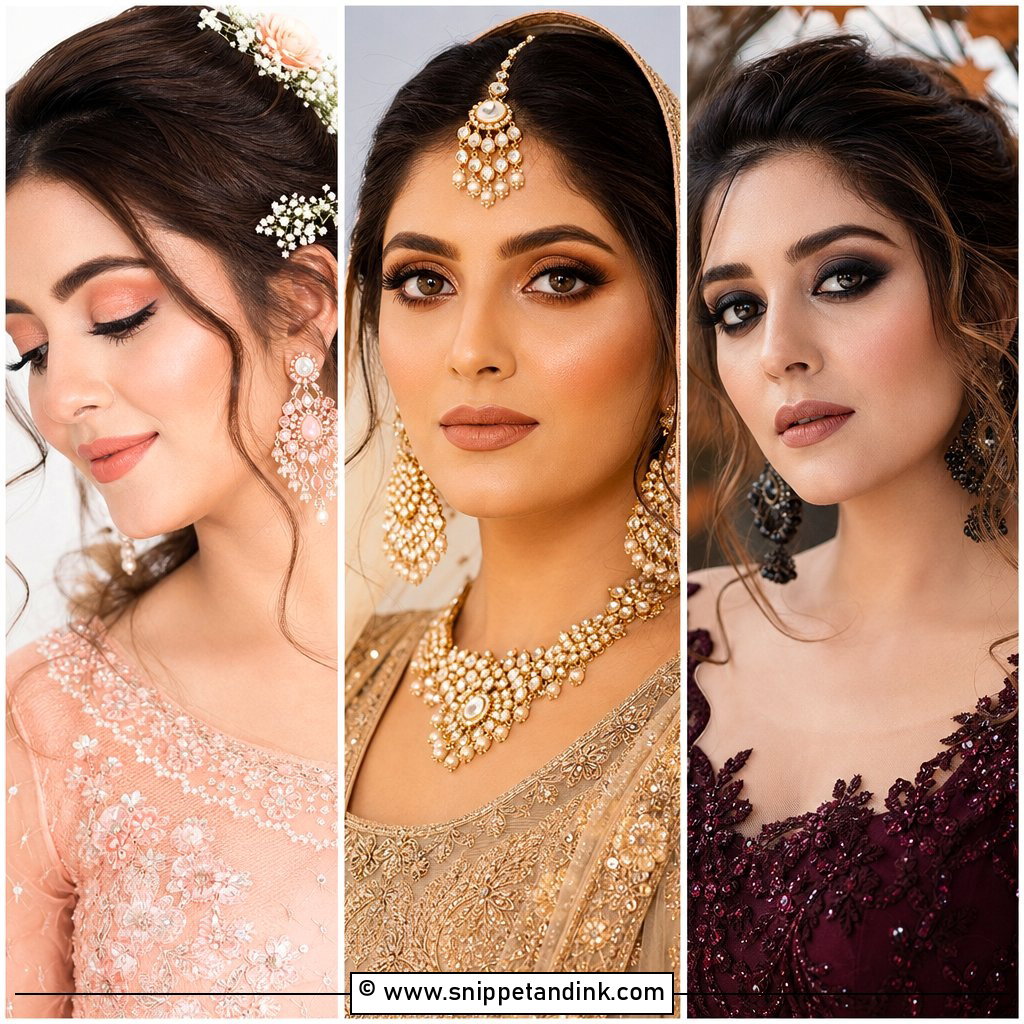
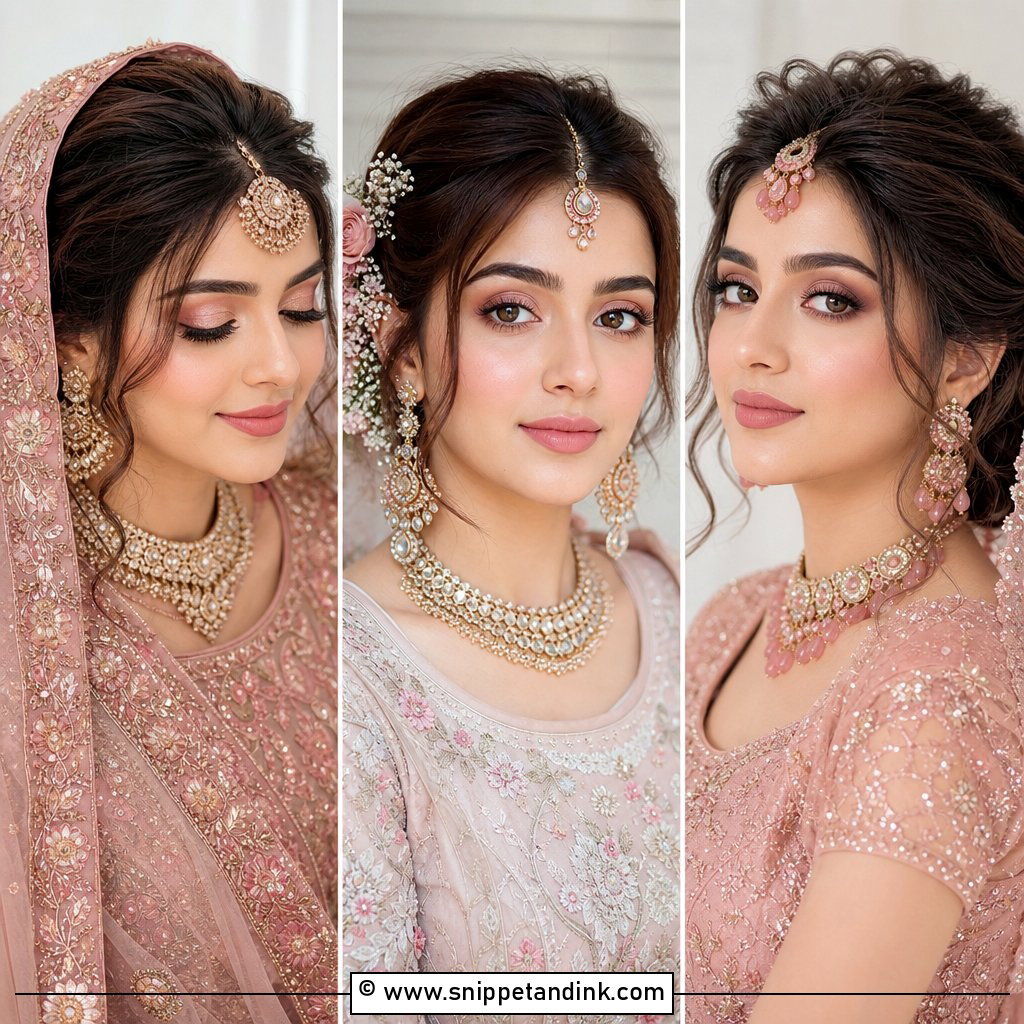
Pink needs balancing to avoid looking sweet or tired. Pink shadow directly on the lid can make some eyes look puffy or irritated, so I blend a warm beige through the crease first and keep the pink to the center of the lid. Brown liner rather than black keeps it soft. Build a pink flush on the cheeks, choose wispy lashes and match the lip to the blush family. Keep the brows groomed but not heavy.
9. Peach Bridal Makeup
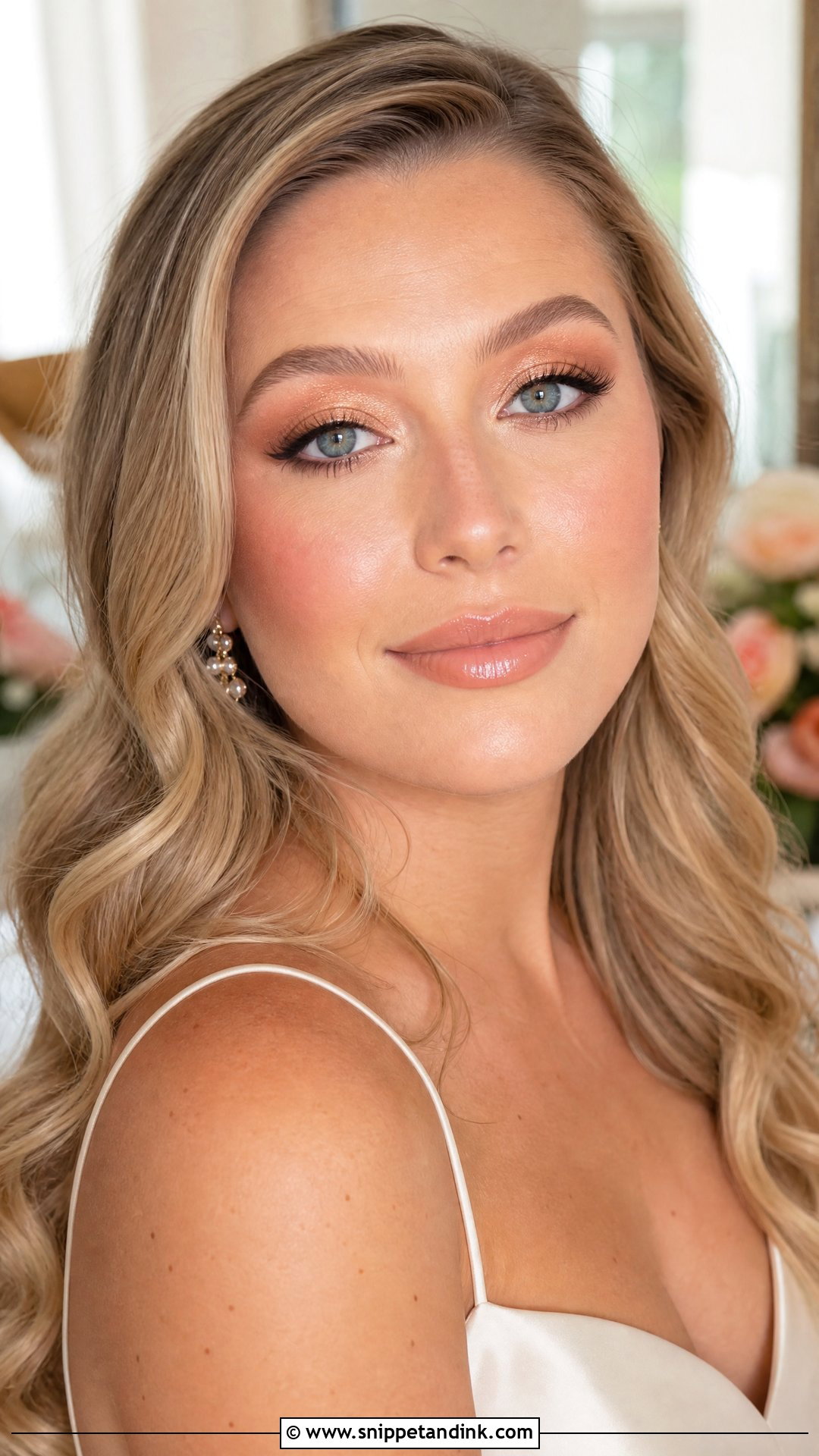
Peach is my usual answer when a bride says pink looks cold on her. Warm peach cream blush placed high on the cheeks, caramel or apricot shadow, brown liner and fluttery lashes. A touch of bronzer around the temples keeps the peach from looking flat. Peachy nude lipstick or gloss completes it. It’s especially pretty for spring and summer weddings outdoors, and it flatters warm and olive undertones.
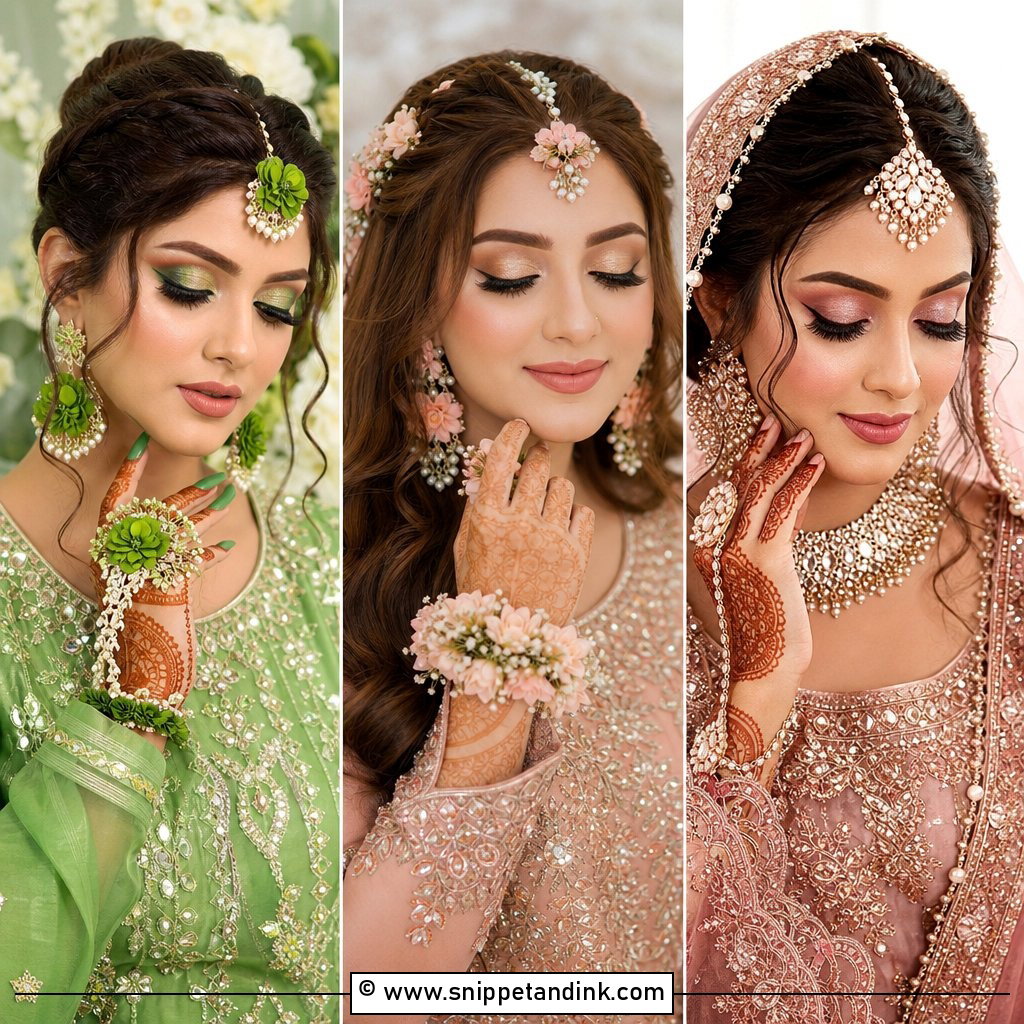
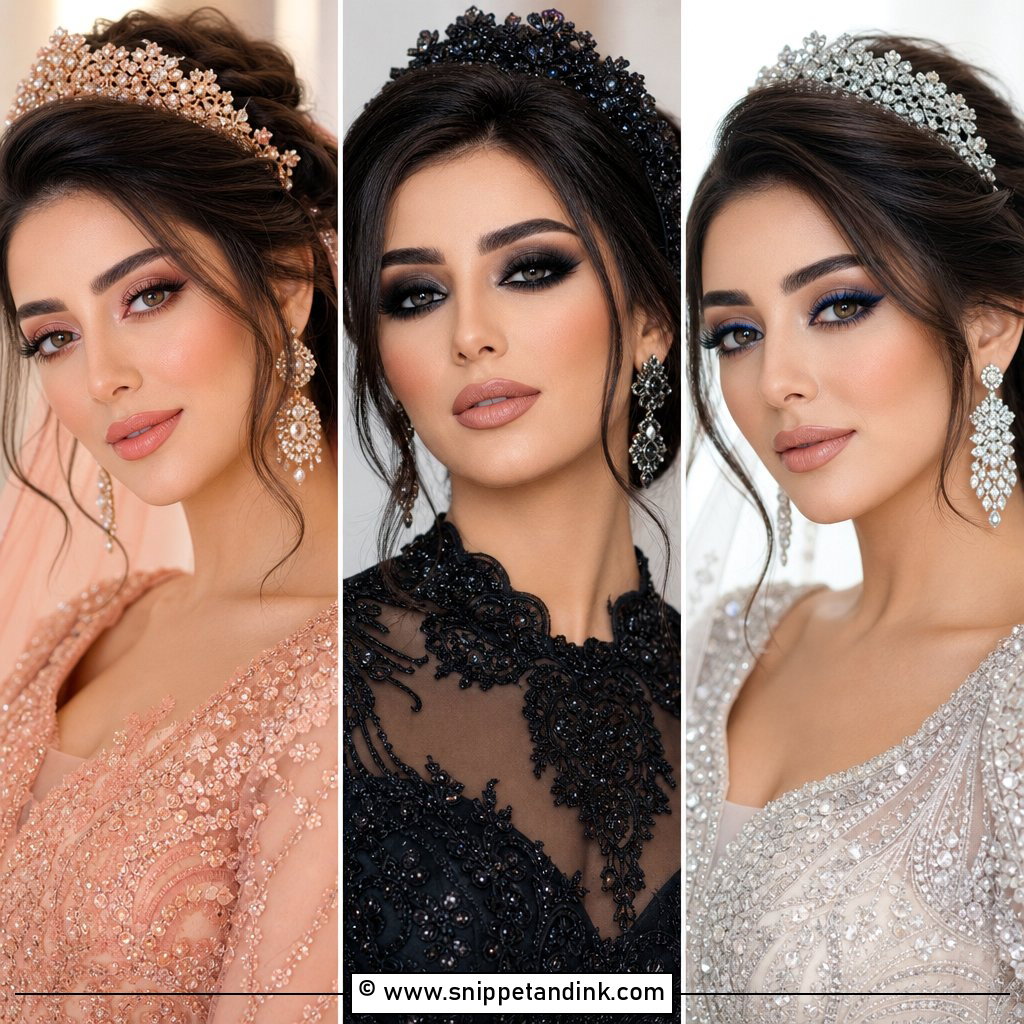
10. Rose Gold Bridal Makeup
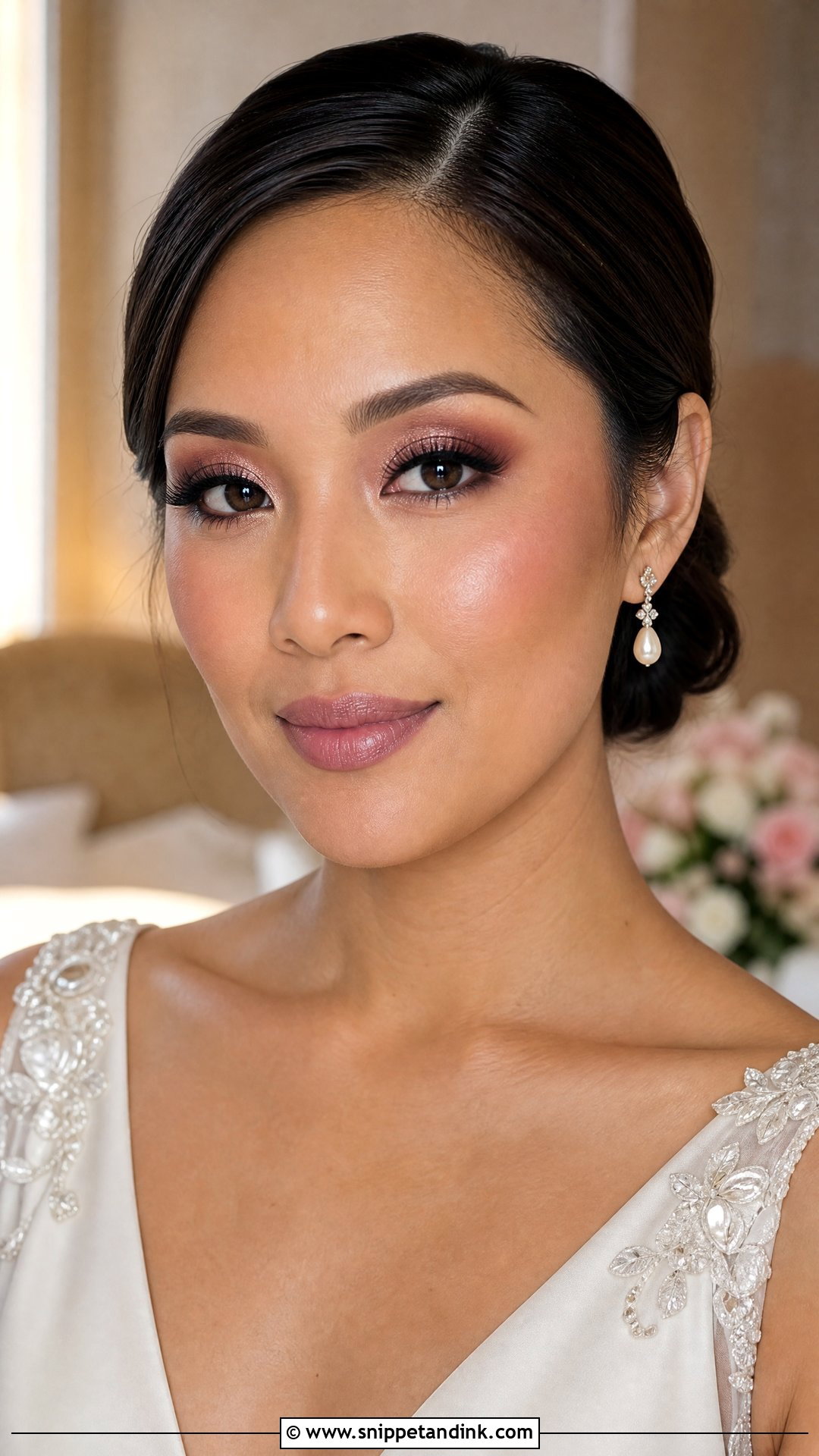
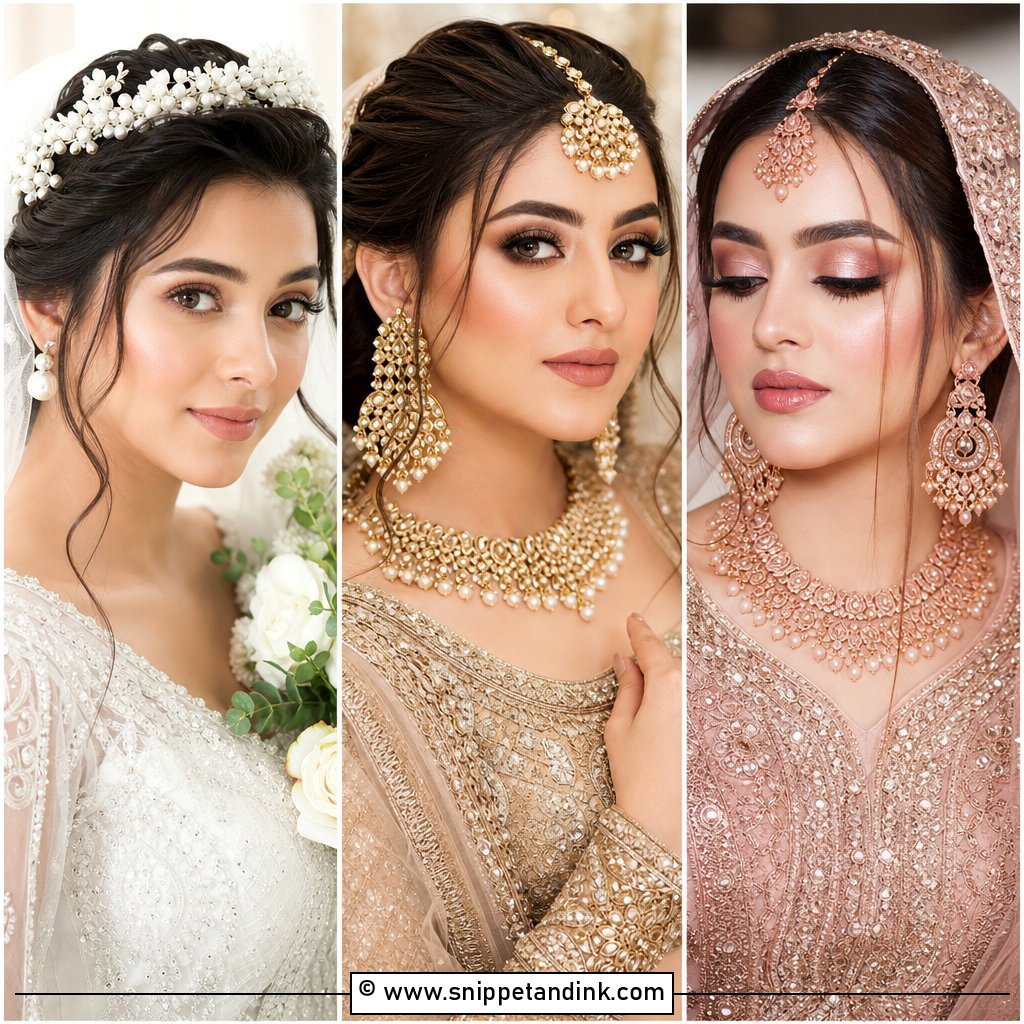
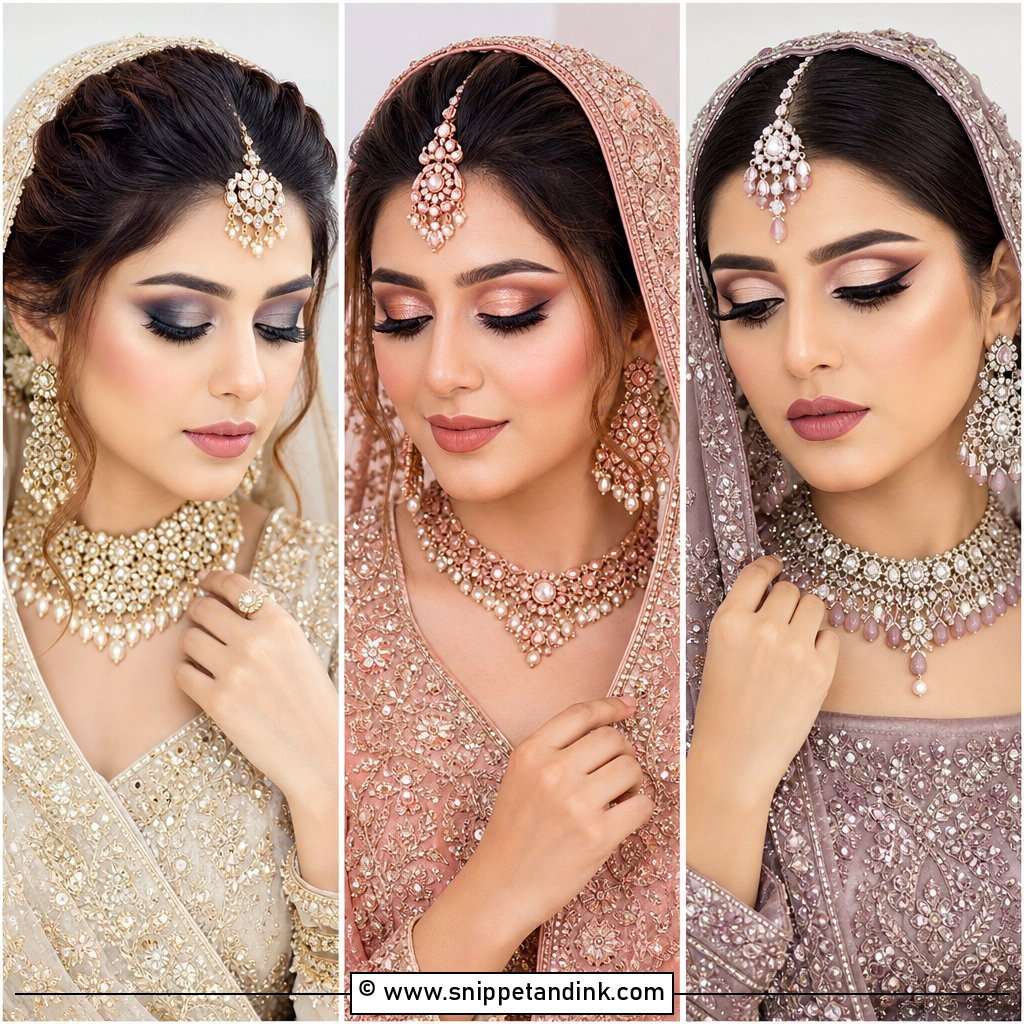
Rose gold bridal makeup catches light in close-ups without looking too bold. Neutral matte shade through the crease first, then rose-gold shimmer pressed onto the center of the lid with a fingertip. Fingers give better control and less fallout than a brush, which matters when you’re doing it yourself. Deepen the outer corner with soft brown or plum-brown. Rosy blush and a mauve-nude lip keep the whole look in one color family.
11. Champagne Bridal Makeup
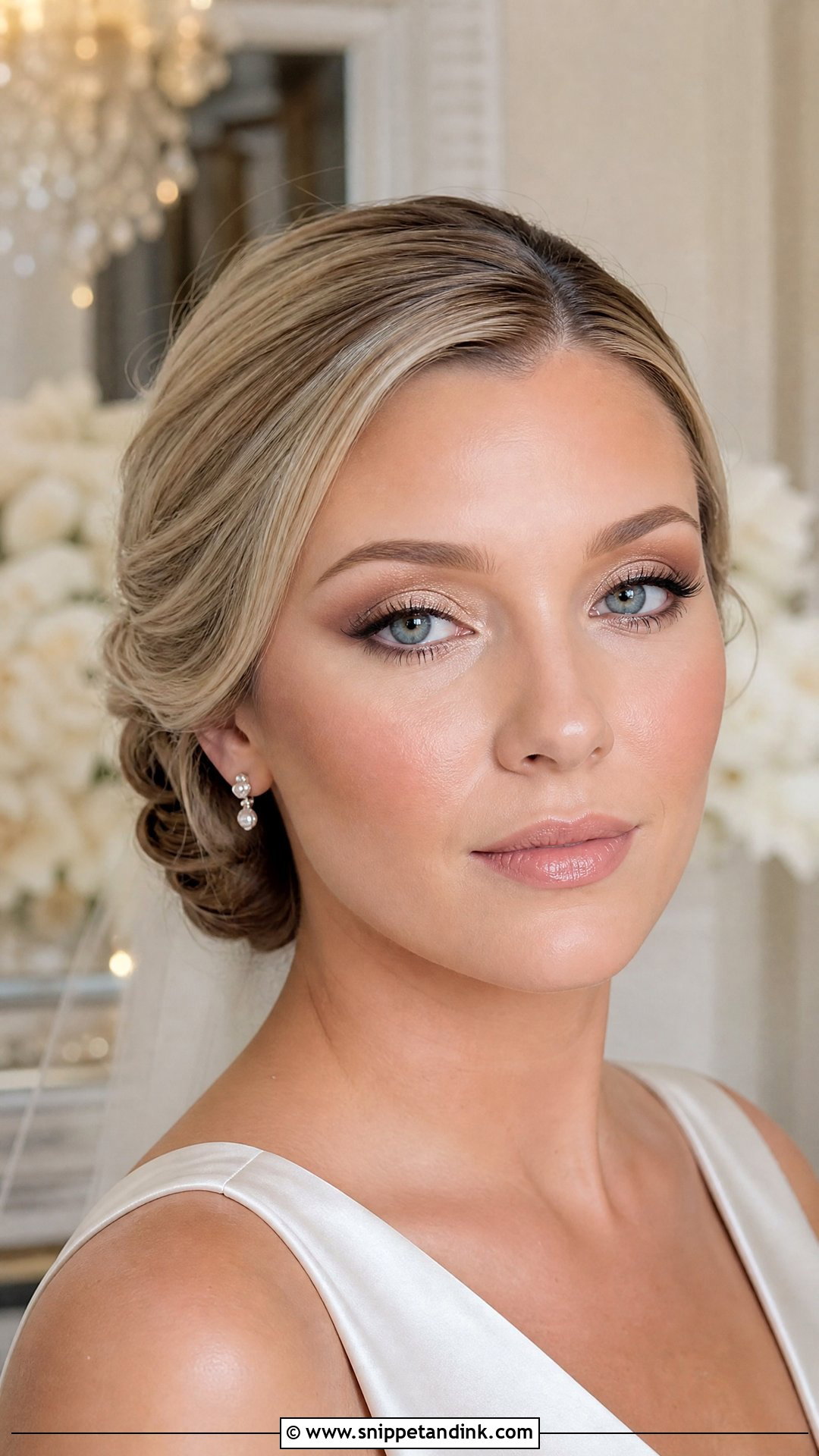
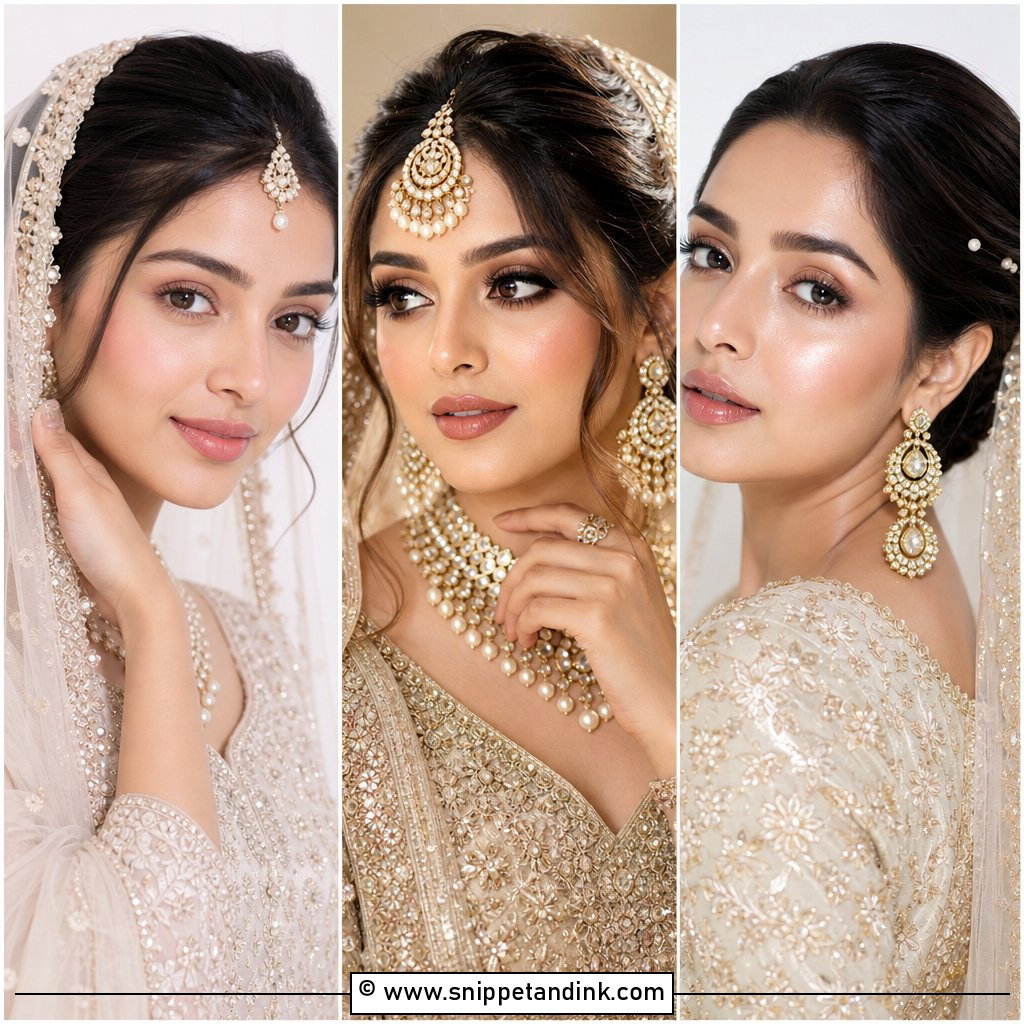
Champagne shimmer on the lid and inner corner brightens the eyes on almost every skin tone. Taupe or soft brown in the crease adds shape, and a thin brown or black line along the upper lashes defines without weight. Long-wear foundation with a natural finish and a soft contour keep the skin refined. A neutral pink blush and beige-pink satin lipstick finish it. If your dress has sparkle, satin or pearls, this is the look that sits comfortably beside it.
12. Brown Smokey Bridal Makeup
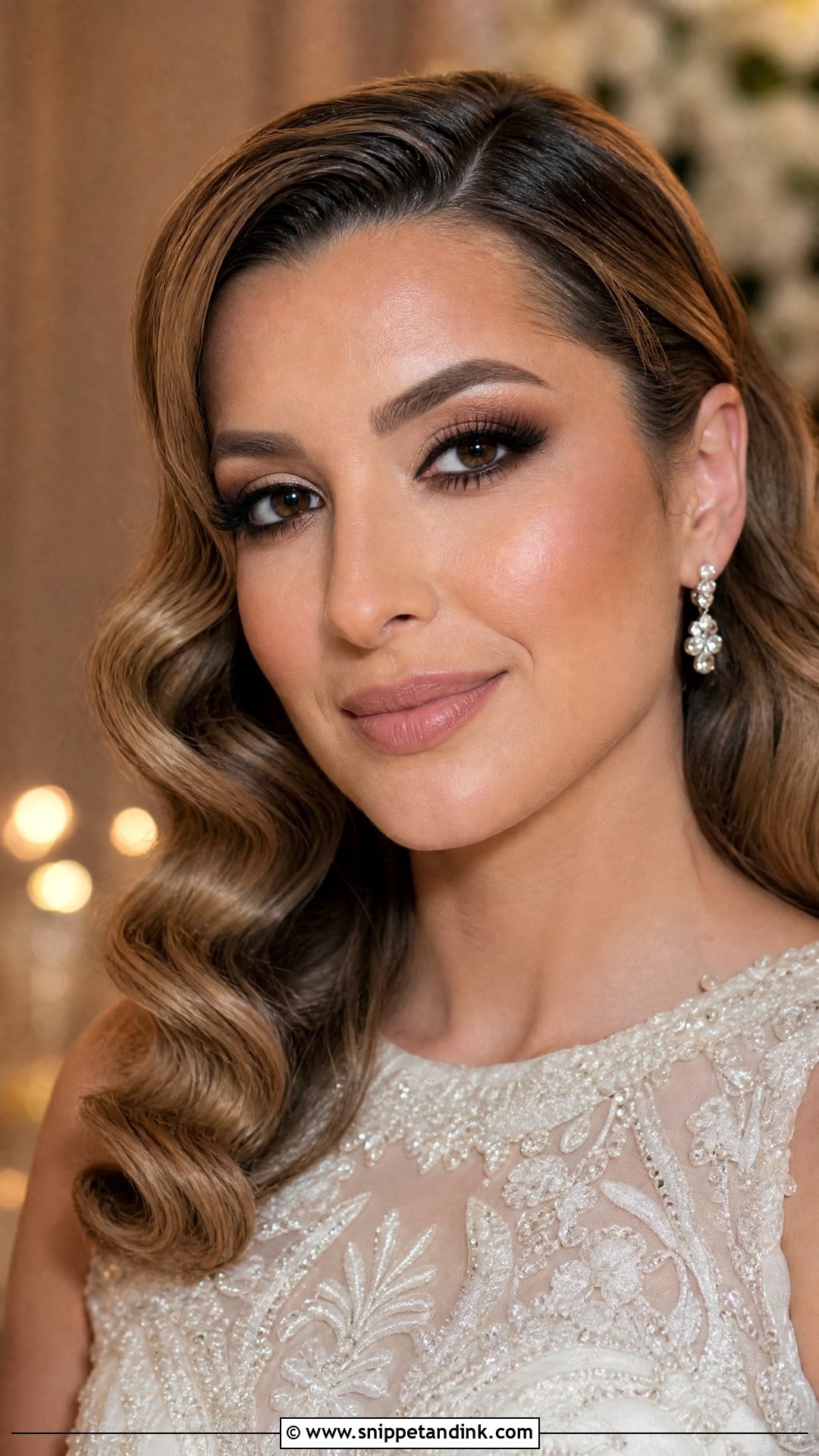
Brown smokey bridal makeup gives depth without the harshness of black. The DIY risk is fallout, so set the under-eye area lightly with powder before you start; you can sweep away any dropped shadow afterward. Blend medium brown through the crease, then espresso in the outer corner and along the lash line. Smudge a waterproof pencil before it sets. Keep the rest of the face quiet with nude blush and a pink-nude lip. Evening weddings suit it best.
13. Winged Liner Bridal Makeup
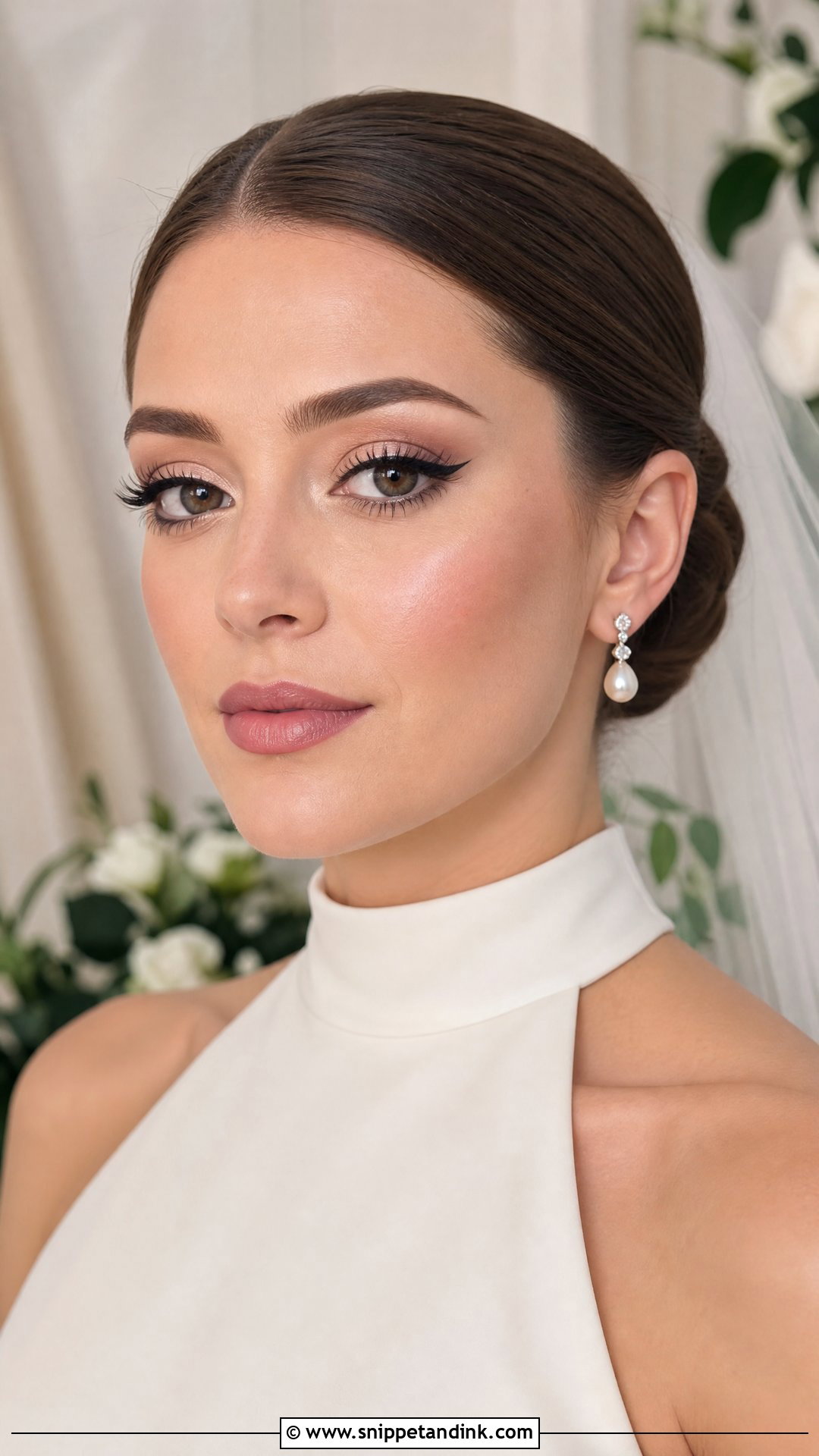
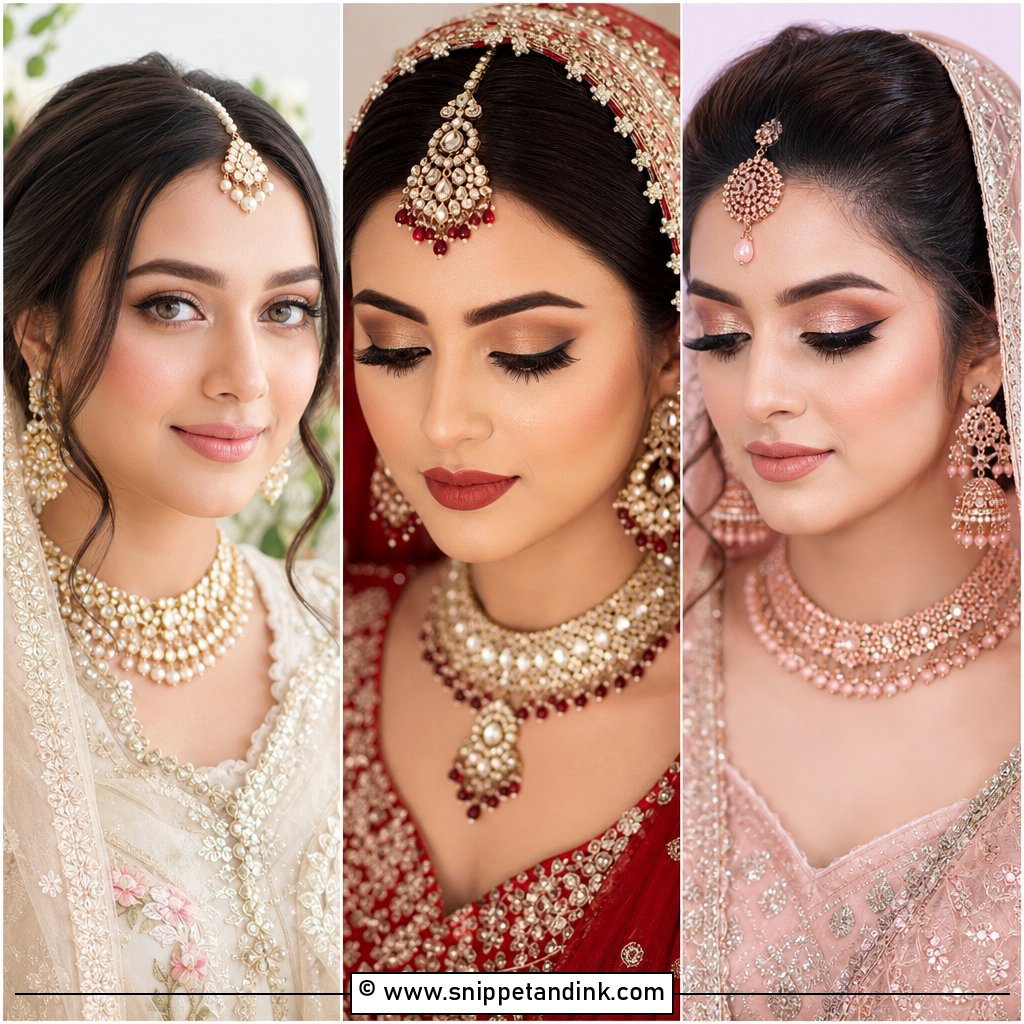
A wing is the step DIY brides worry about most, and with reason: under nerves and a deadline, matching both sides is hard. Practice it until it’s routine. I’d map the wing with a few small dots first, then connect them. Waterproof gel or liquid liner holds best at the outer corner, where the skin creases. Simple lids, individual lashes on the outer third, satin skin and a fresh blush keep it balanced. Rose, nude or soft red lips all work.
14. Red Lip Bridal Makeup
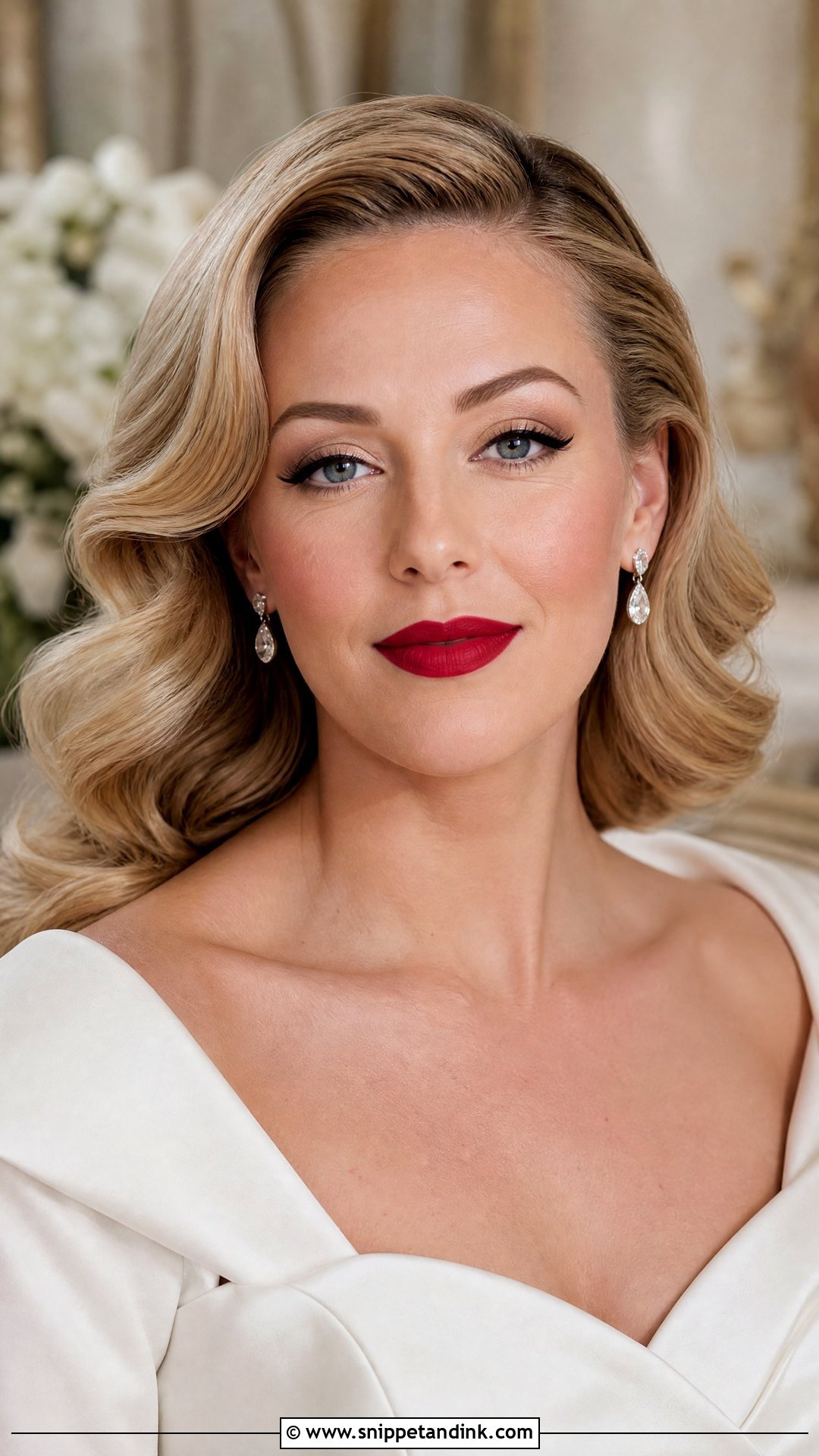
A red lip is simpler than it looks, provided the rest of the face is clean and you’re already comfortable wearing color. Choose by undertone: blue-red for crisp contrast, brick red for warmth, soft cherry for freshness. Line the lips fully, apply in thin layers and blot between them. Lightly powder round the mouth so the red doesn’t bleed into fine lines. Neutral eyes, thin liner and defined lashes let it lead, and keep blush gentle.
15. Nude Lip Bridal Makeup
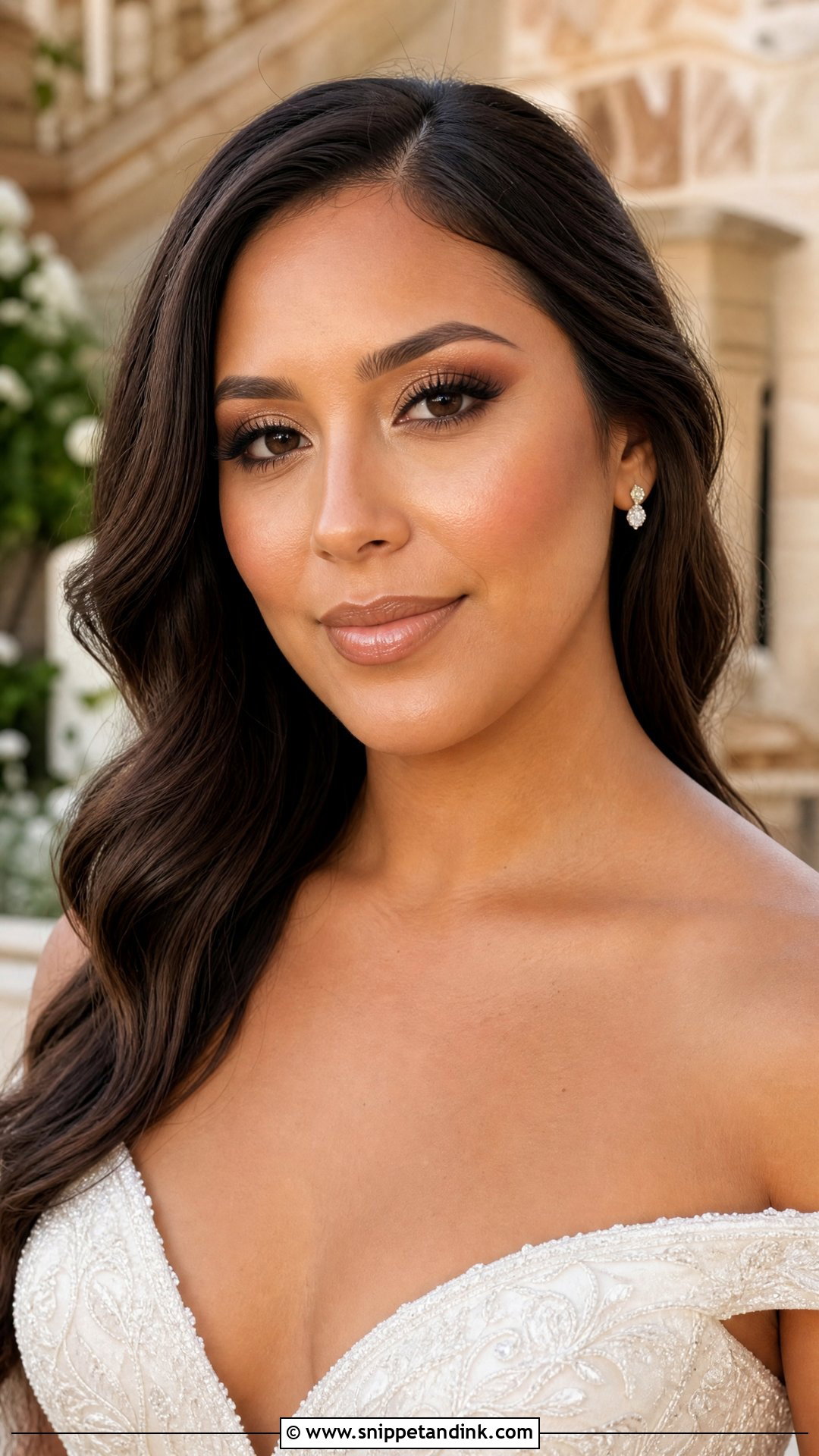
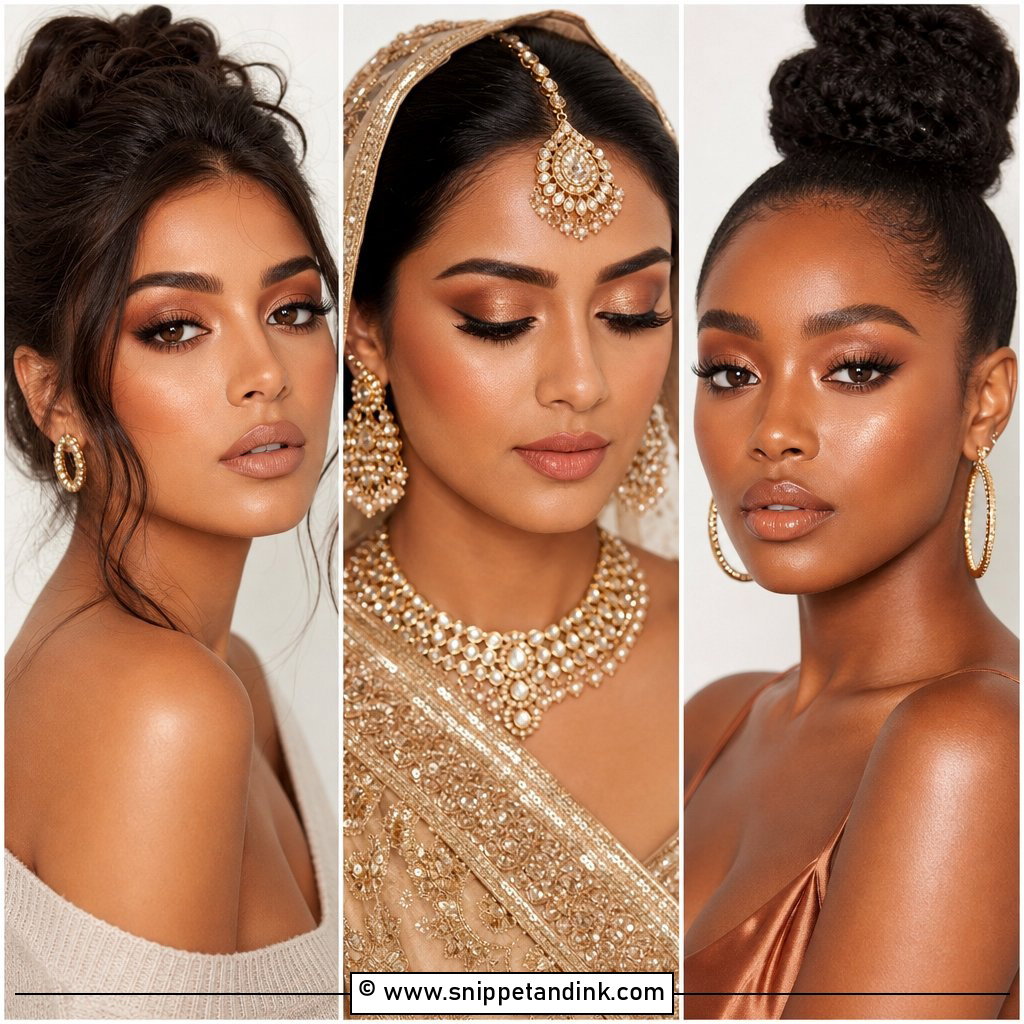
Nude lip bridal makeup lives or dies on the depth of the nude. Choose one slightly deeper than your natural lip, or the mouth disappears in photos and the whole face looks washed out. Liner first, lipstick second, a dab of gloss in the center last. Defined eyes with beige, taupe or bronze shadow, liner close to the lashes and waterproof mascara give the face its structure, with balanced blush and a little bronzer. It works with simple and detailed gowns alike.
16. Berry Bridal Makeup
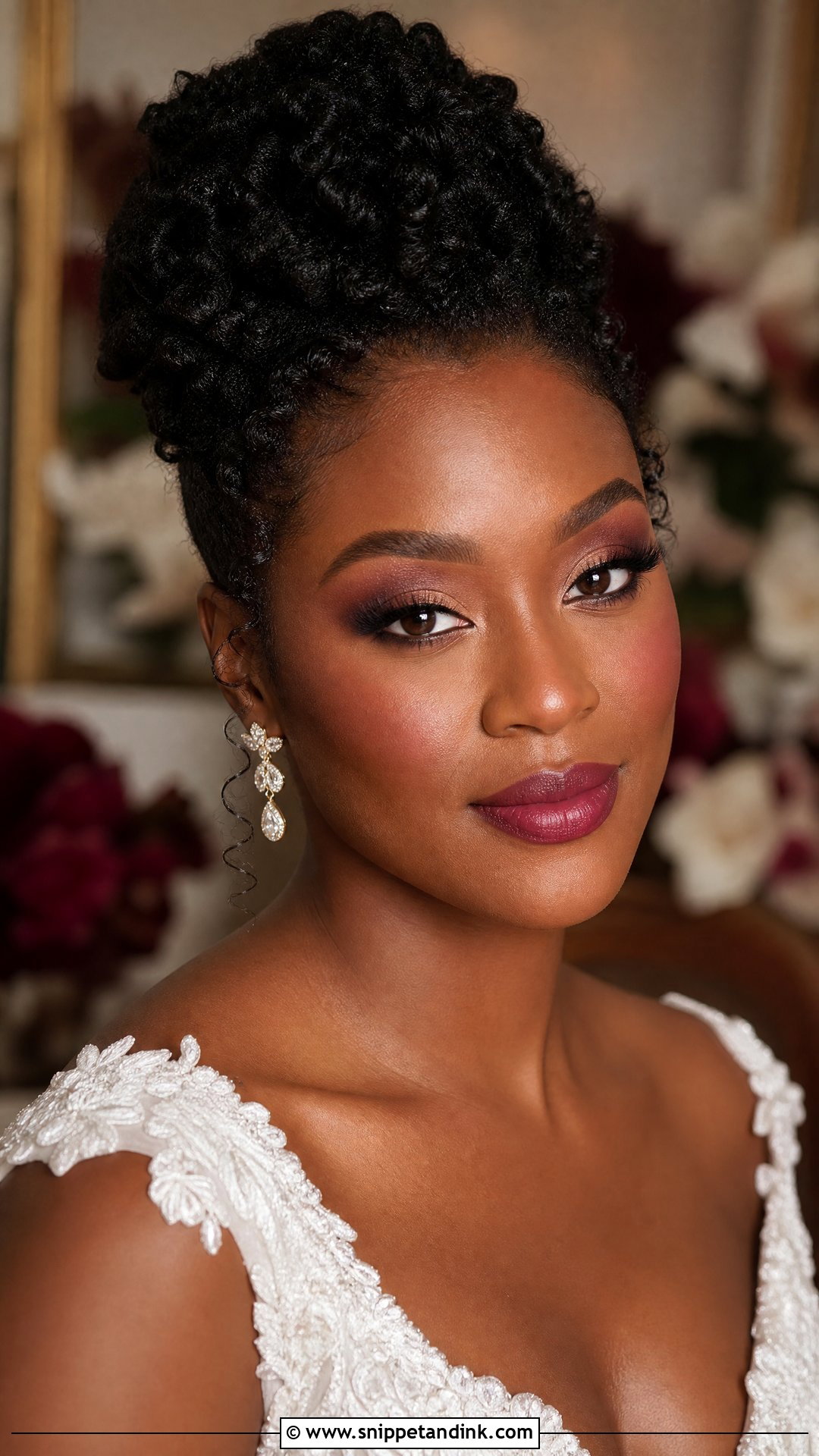
Berry adds richness without going as bold as red, which makes it a good fit for fall, winter and evening weddings. Satin foundation and powder only where needed keep the skin polished. On the eyes, neutral taupe, bronze, or muted plum-brown connect to the lip. The lip itself can be a stain, a soft matte or a blurred tint; stains are the easiest for beginners because they wear down evenly rather than leaving a ring. Mauve or rose blush, blended lightly, completes it.
17. Bronze Bridal Makeup
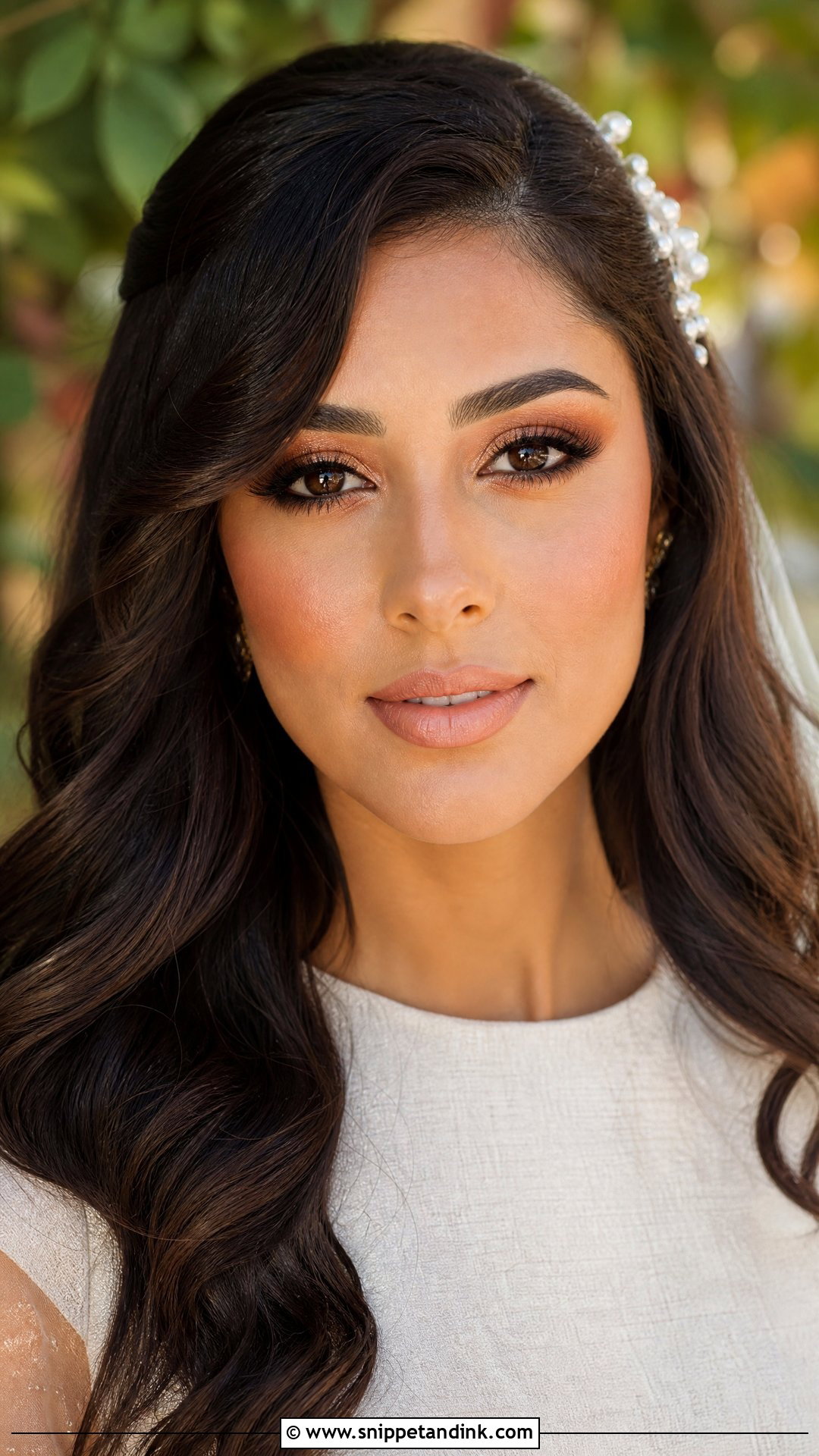
Bronze bridal makeup starts with a base that matches your current skin, especially if you’re using self-tanner in the lead-up. Match the foundation after the tan has developed, not before. Bronzer along temples, cheekbones and jaw, peach or warm rose blush, and copper or golden brown shadow with deeper brown at the lash line. Keep the highlight subtle. Don’t over-bronze the forehead or neck; natural light shows the line where bronzer stops.
18. Minimal Bridal Makeup
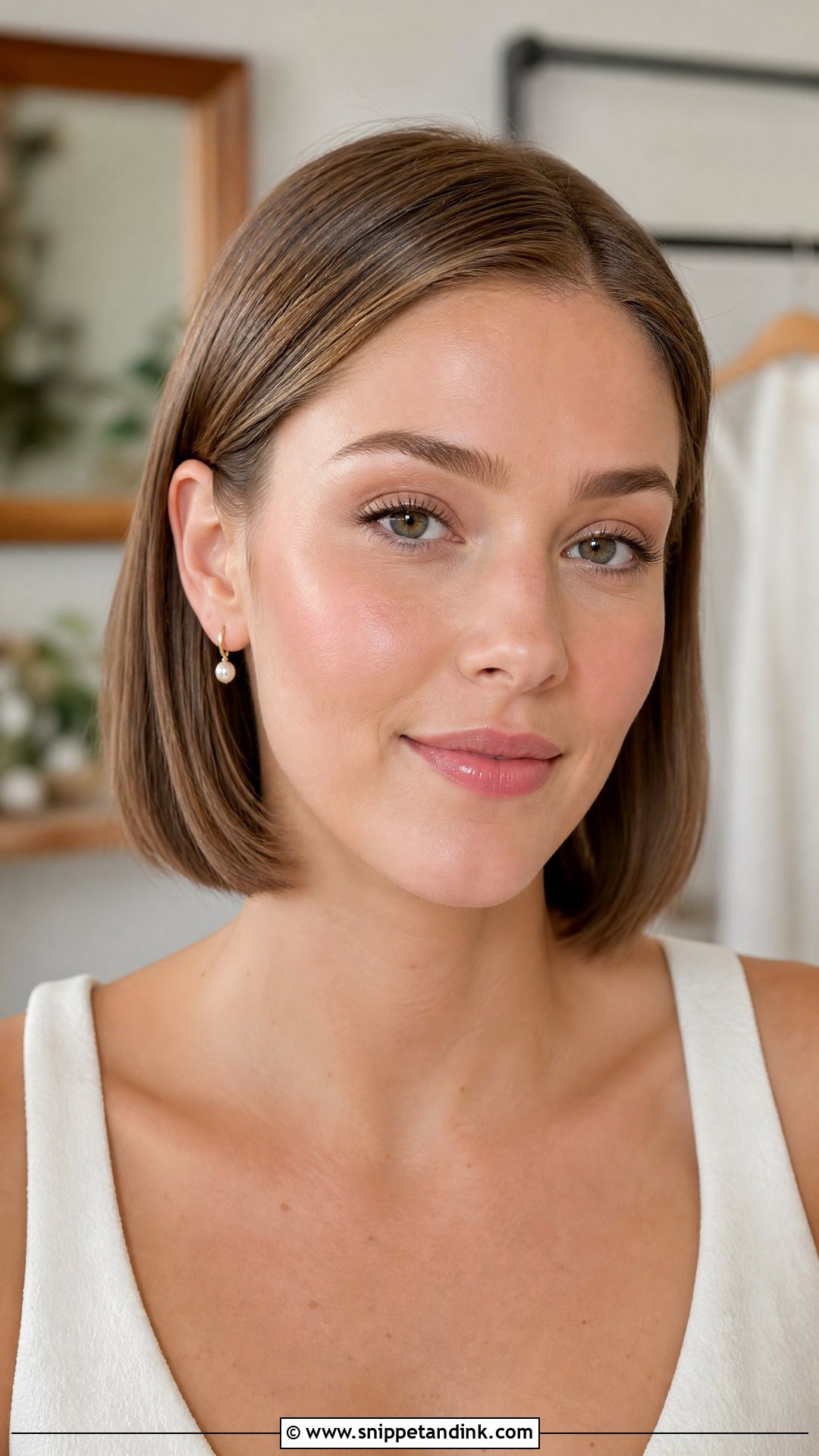
Minimal makeup is mostly skin prep and precision. Gripping primer, sheer foundation, careful concealer, brows brushed up and filled only where sparse, well-curled lashes and waterproof mascara. A wash of cream blush and the smallest touch of highlighter. Shadow close to your skin tone, beige, tan or soft cocoa. Tinted balm, a lip stain or a natural satin lipstick finishes it. The risk is that it vanishes in photos, so test it under flash before you commit.
19. Full Glam Bridal Makeup
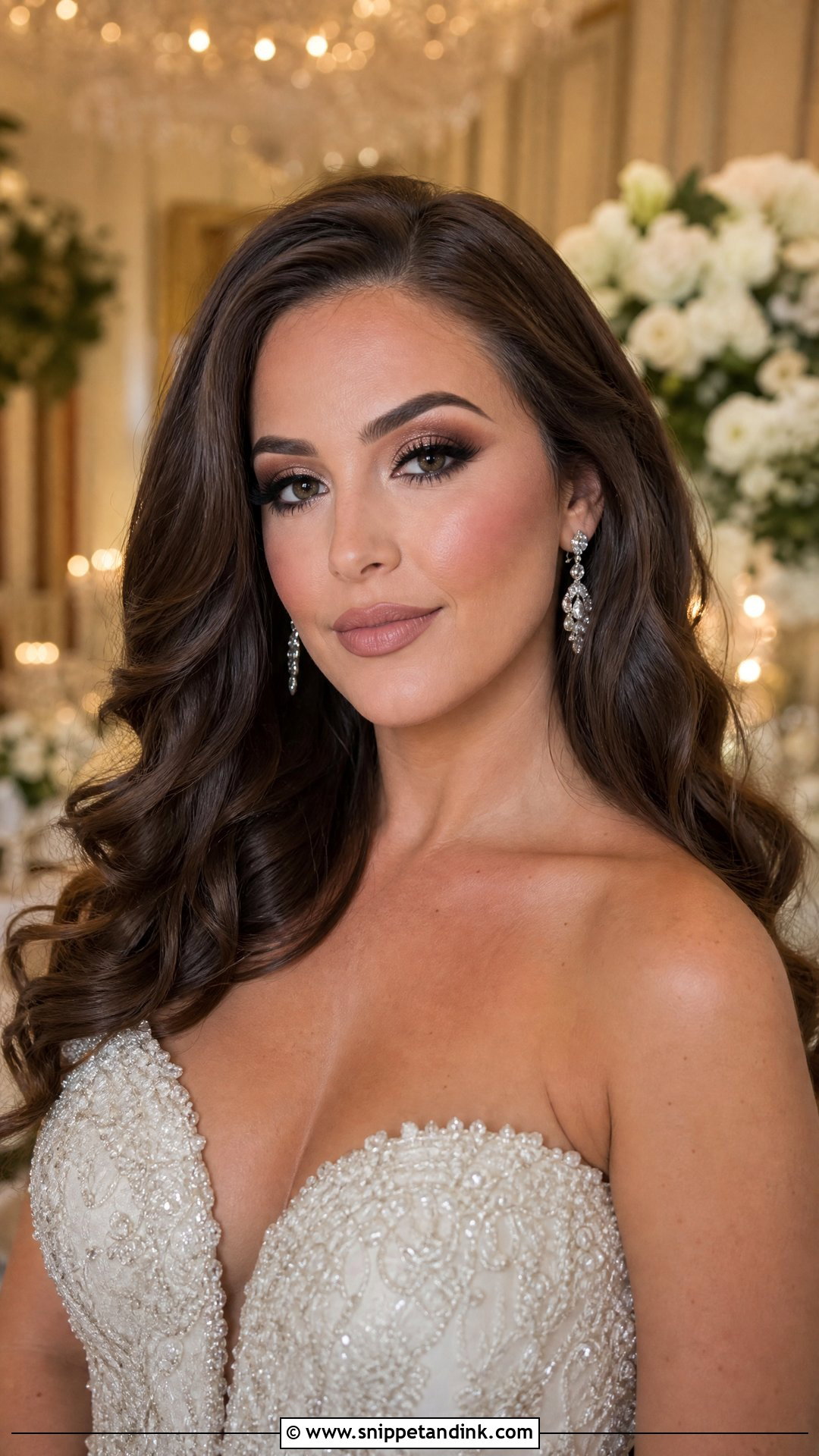
Full glam is layered: long-wear primer, full-coverage foundation, brightening concealer, cream contour, powder and a mist of setting spray between layers so it melts together. Deeper matte browns shape the eyes, with shimmer on the lid, bold liner and fuller lashes. Sculpted cheeks, a glowing highlight and a defined lip in nude, rose or mauve. It reads strongly in photos and formal receptions, but it’s the hardest look to blend well yourself. Practice the whole routine at least twice and check it in flash photos for texture and color match.
20. Waterproof Bridal Makeup
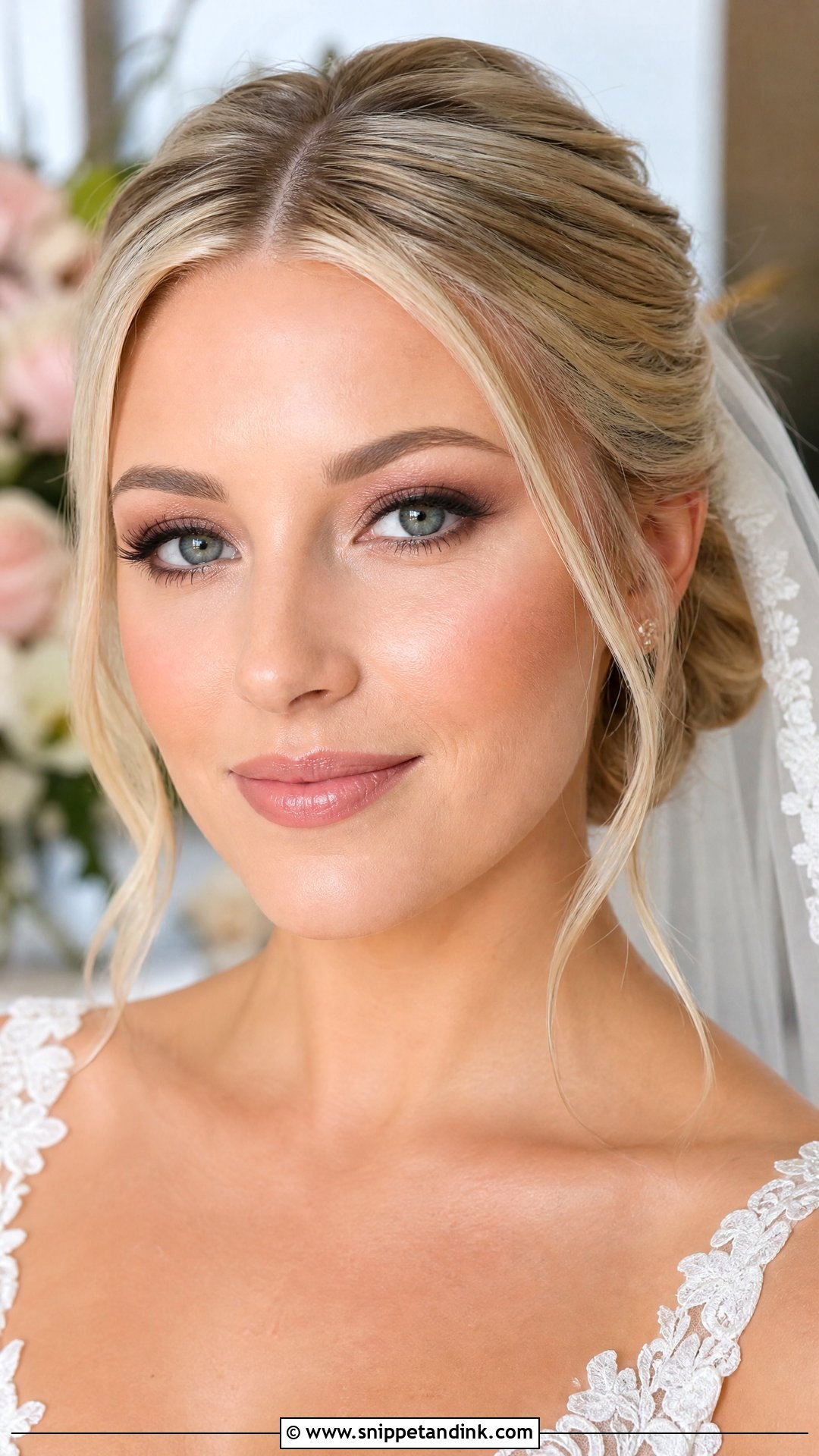
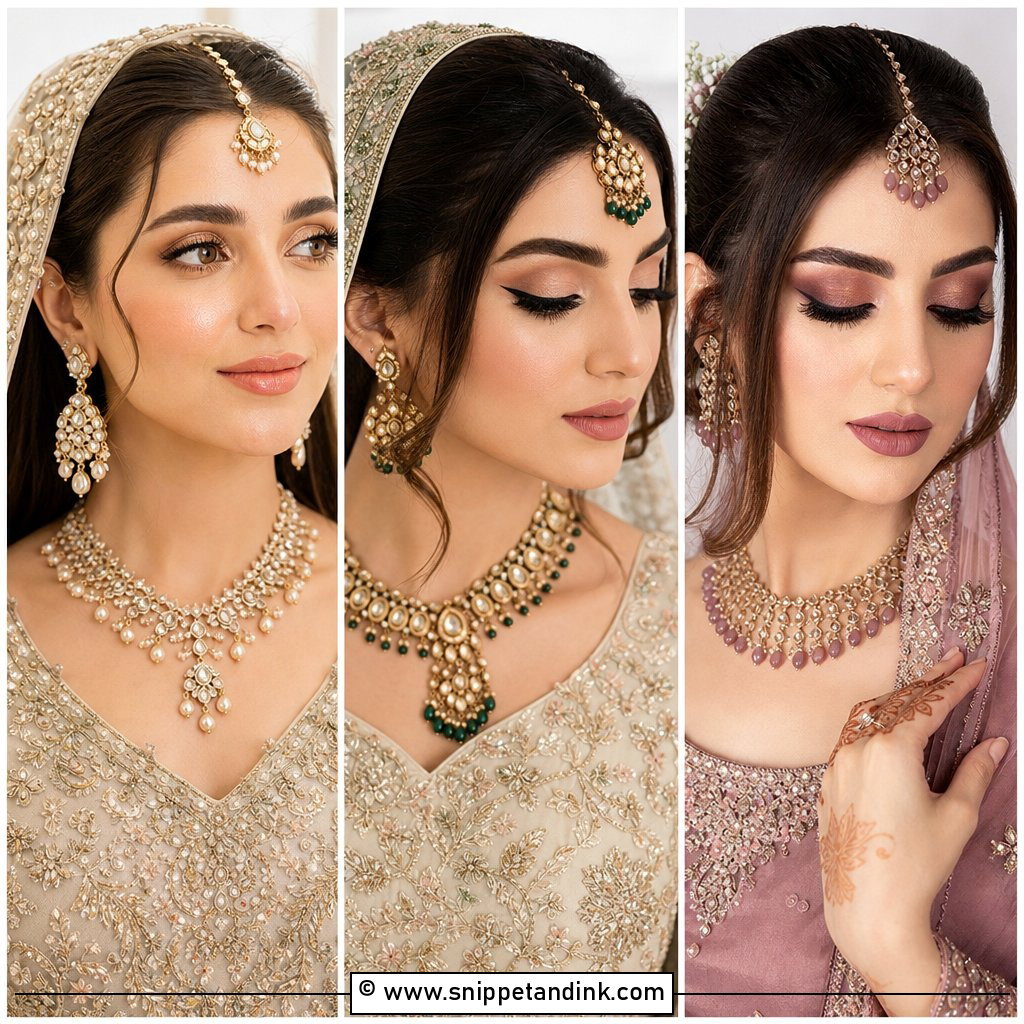
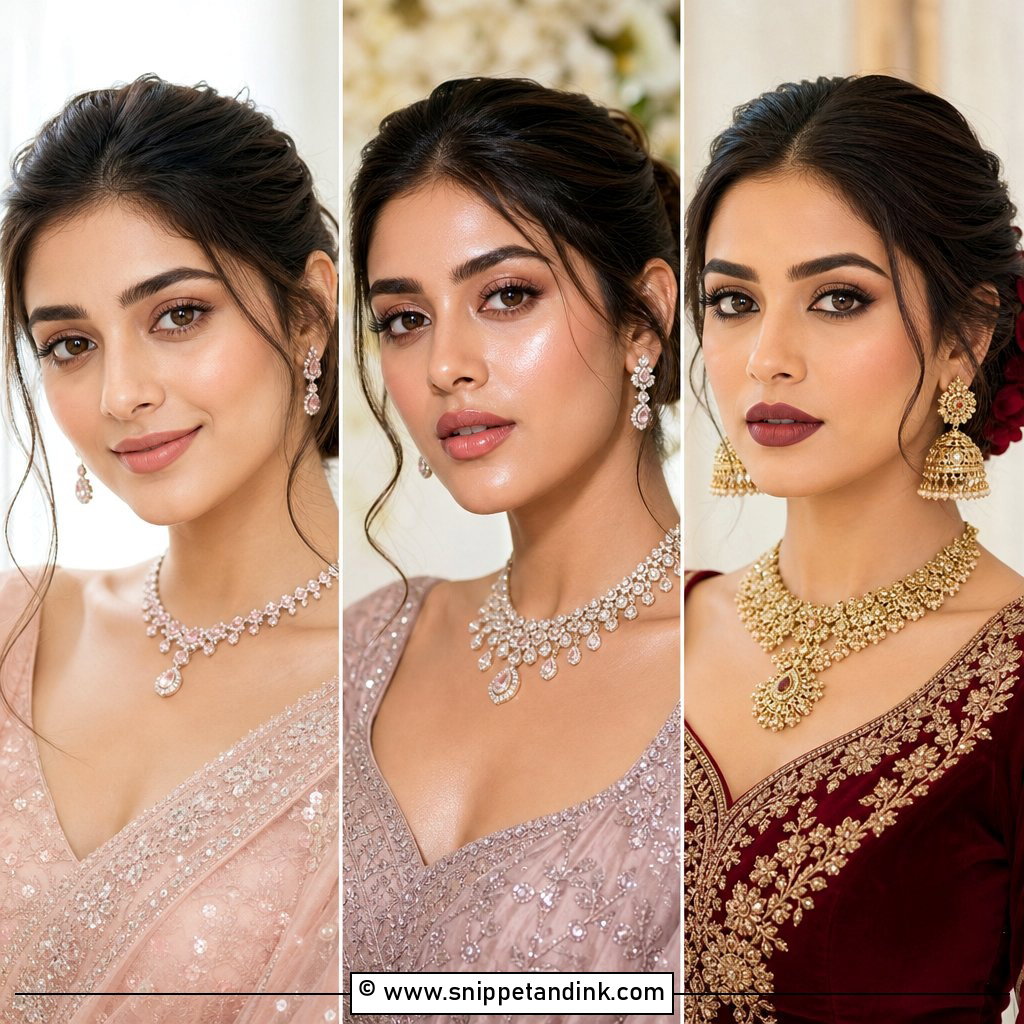
Waterproof is a strategy, not a style. Long-wear primer and foundation in thin layers instead of one heavy coat. Waterproof mascara and liner, plus budge-resistant brow products. Cream blush topped with powder blush holds color longest. Lightly set the under-eyes and smile lines, then mist with setting spray. Lining the whole lip before lipstick gives it something to cling to. Pack blotting papers, powder, lash glue and your lip color for touch-ups. Any of the looks above can be built this way when you expect tears, heat or a long day.
A Practice Calendar From Two Months Out
- Two months: settle your skincare. Any new active ingredient, peel or facial needs time to show how your skin reacts.
- Six to four weeks: first full trial. Photograph it in daylight and flash, then adjust shades.
- Three weeks: second trial, worn for a whole afternoon. Note where it fades or creases.
- One to two weeks: brow shaping or tinting, so any redness settles.
- The week of: no new products at all. Do one last run-through with the exact kit you’ll use.
Fixing the Usual Morning Disasters
Every wedding morning I’ve ever worked has had at least one small slip. They’re all fixable if you stay calm.
Mascara smudge on the lid: let it dry fully, then lift it with a cotton bud and a touch of concealer rather than rubbing it wet. Foundation looks cakey: mist setting spray over the face and press with a damp sponge, which melts the layers together. A lash strip lifting at the corner: a dot of glue on a pin, wait until it turns tacky, then press. Uneven wings: make the smaller one match the bigger one, never the reverse. And if your eyes water during the ceremony, press a folded tissue under the lashes instead of wiping across.
Can You Do It With Shaking Hands at 8 a.m.?
The look to choose is the one you can apply well with shaking hands at eight in the morning, then wear without thinking about it. Test it in daylight, indoor light and flash, wear it for several hours, and notice what fades, creases or shines. Keep products thin and long-wearing, and pick one focus, glowing skin, defined eyes or a stronger lip, rather than all three.
You'll Like These Ideas:


Leave a Reply