
Dressing a groom is a balancing act between what the family expects, what he can comfortably wear for twelve hours and what he actually likes. The twenty outfits here are complete, head to toe, and cover daytime ceremonies, evening weddings, destination events and receptions: ivory and gold, pastel pink, sage, navy, velvet, florals and clean Indo-Western cuts. I’ve said what I’d pair with each and where it can go wrong. Two habits run through all of them. Coordinate with the bride’s palette without copying her, and judge length, shoulders, trousers, shoes and accessories as one outfit, never one piece at a time.

One Groom, Several Functions, How Many Outfits?
Most South Asian weddings run over several events, and the sherwani is usually only one outfit among three or four. Planning them together saves money and stops the main look feeling like a repeat. This is roughly how I map a groom’s wardrobe, though every family’s events differ.
Haldi and mehndi
Turmeric paste stains silk and fine embroidery permanently, so the haldi outfit should be a simple cotton kurta you won’t mind losing. Yellow or white is customary. For mehndi, a light kurta set in a print or pastel is plenty.
Sangeet and reception
This is where Indo-Western cuts, mirror work, black or charcoal usually fit better than at the ceremony. A Jodhpuri or bandhgala also works for a reception, and many grooms re-wear one later as formal wear.
The ceremony
Save the most formal colour, the safa, the stole and the heaviest embroidery for this. If budget is tight, I’d rather a groom spends on one excellent ceremony sherwani and keeps the other outfits simple than spreads it thinly across four.
1. Ivory Groom Sherwani With Gold Churidar
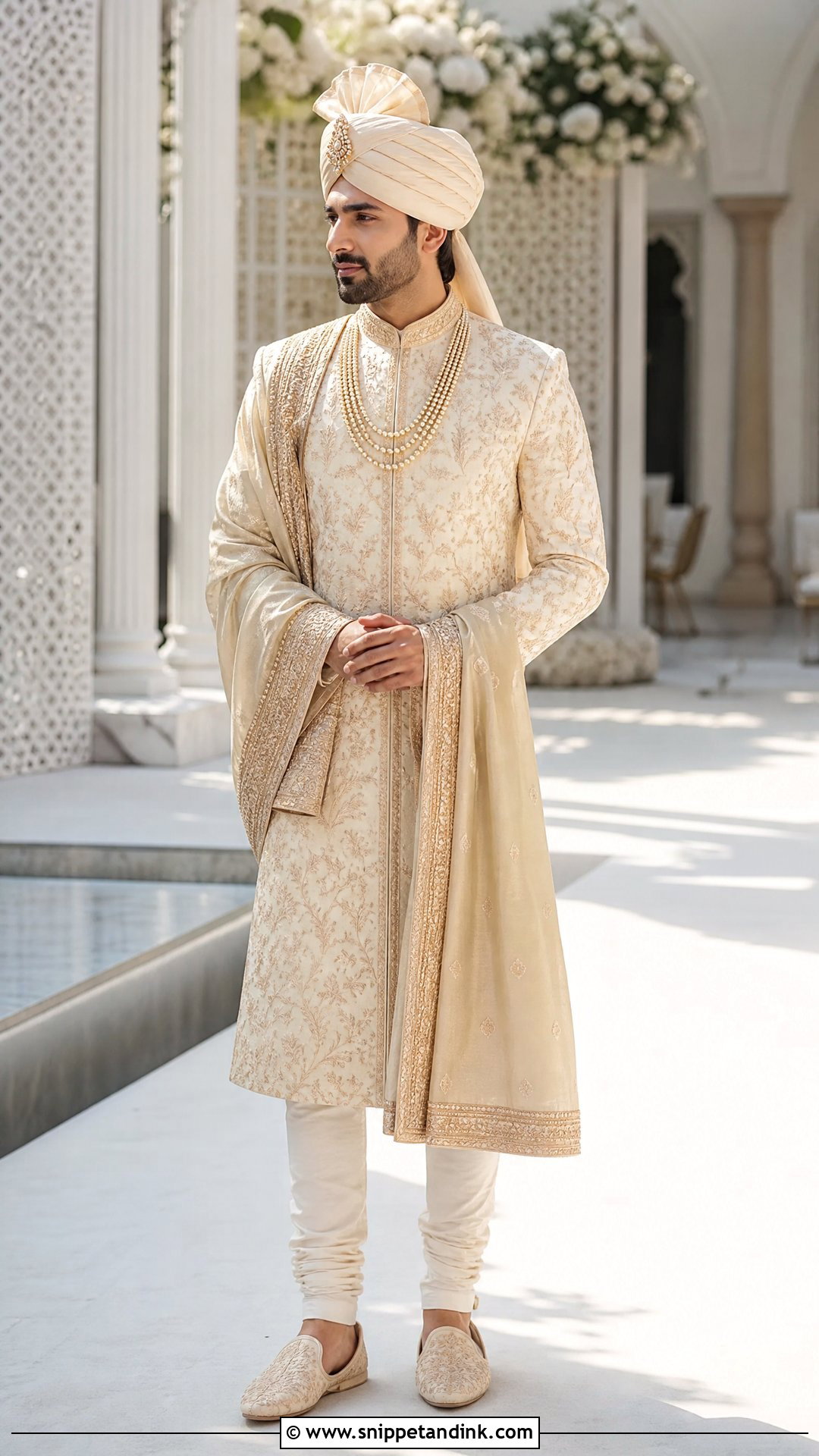
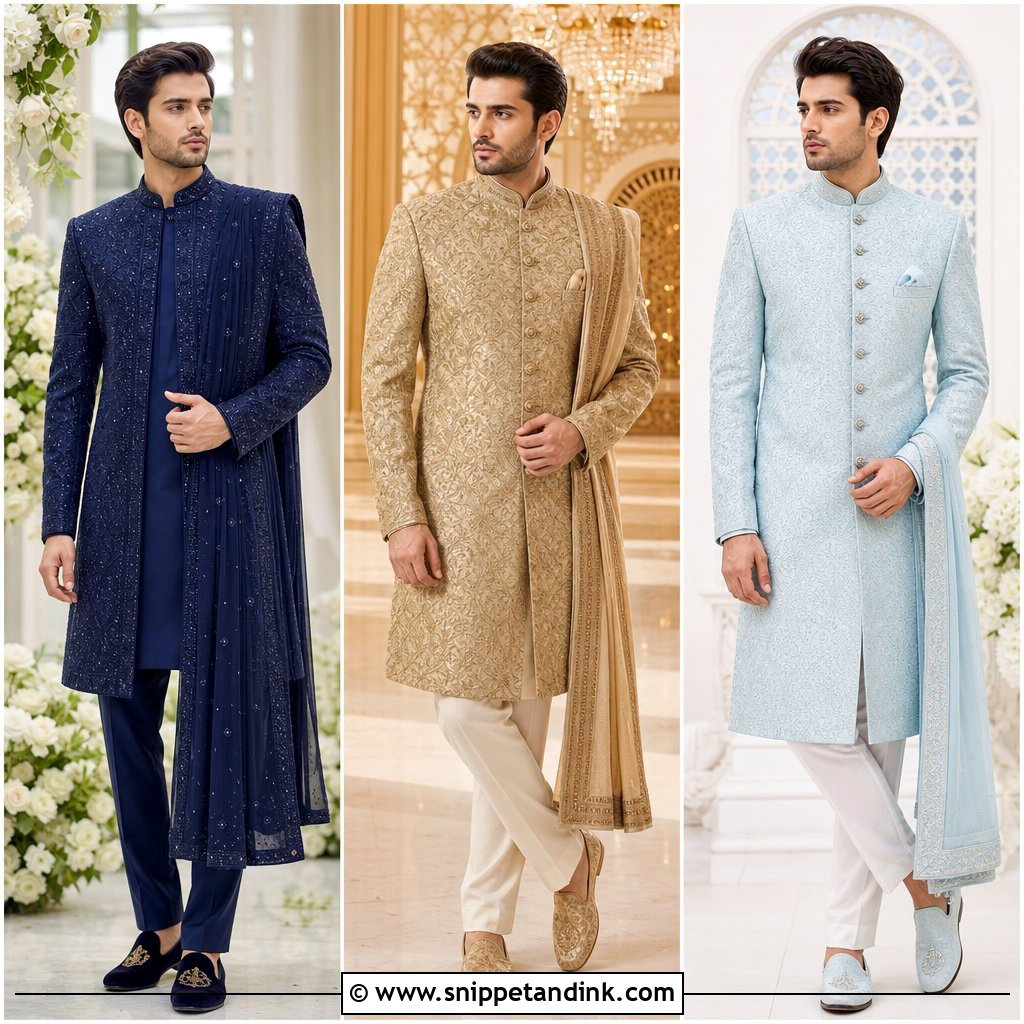
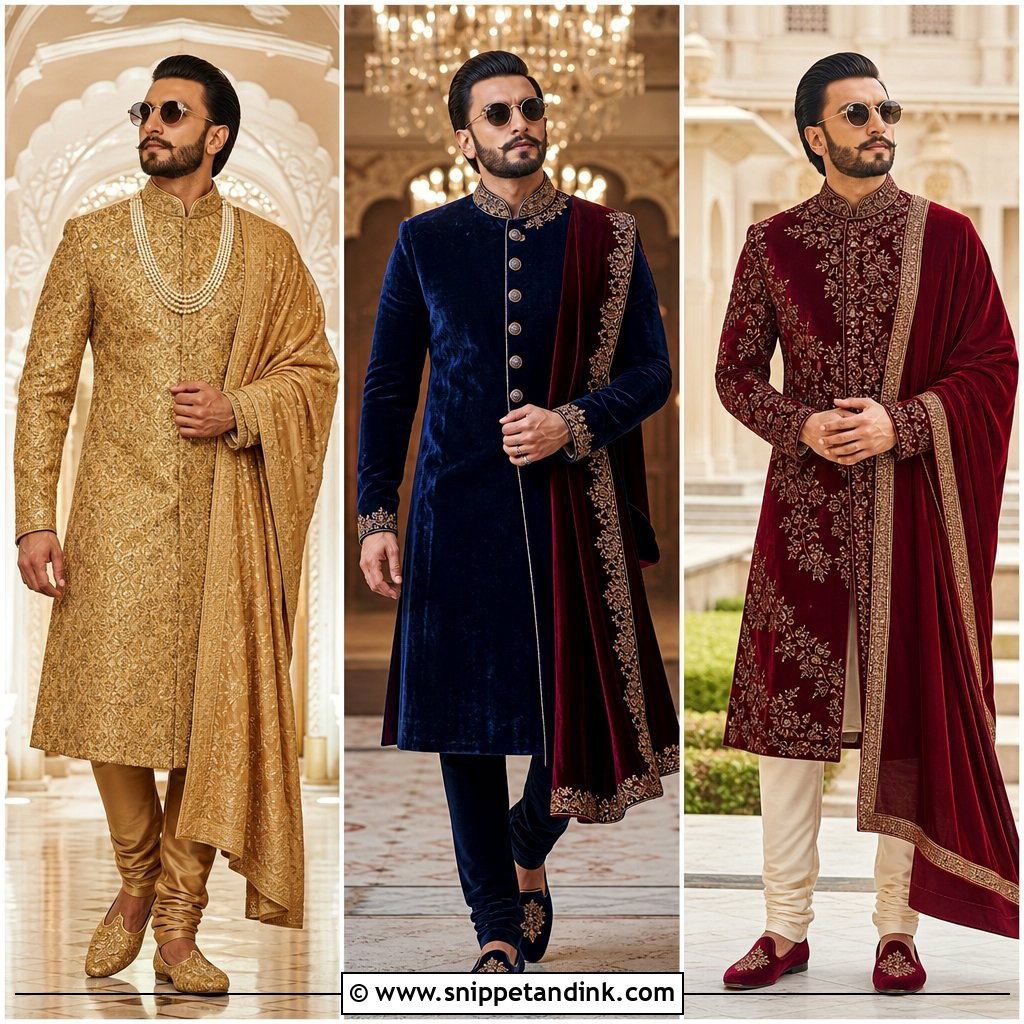
Start with fabric. Ivory in raw silk has a slight slub that catches light; jacquard has a woven pattern; smooth silk looks dressier but shows every crease from the car ride. I’d go for silk or raw silk with fine gold zari at the collar, cuffs and button placket. A fitted gold or cream churidar keeps the jacket the focus. Embroidered ivory mojaris, a muted gold stole and a coordinating safa complete it, with either a pearl necklace or a brooch. Ivory sits with red, maroon, pink, green or gold bridal outfits, which is why it’s such a safe first choice outdoors or indoors.
2. Maroon Velvet Sherwani With Cream Churidar
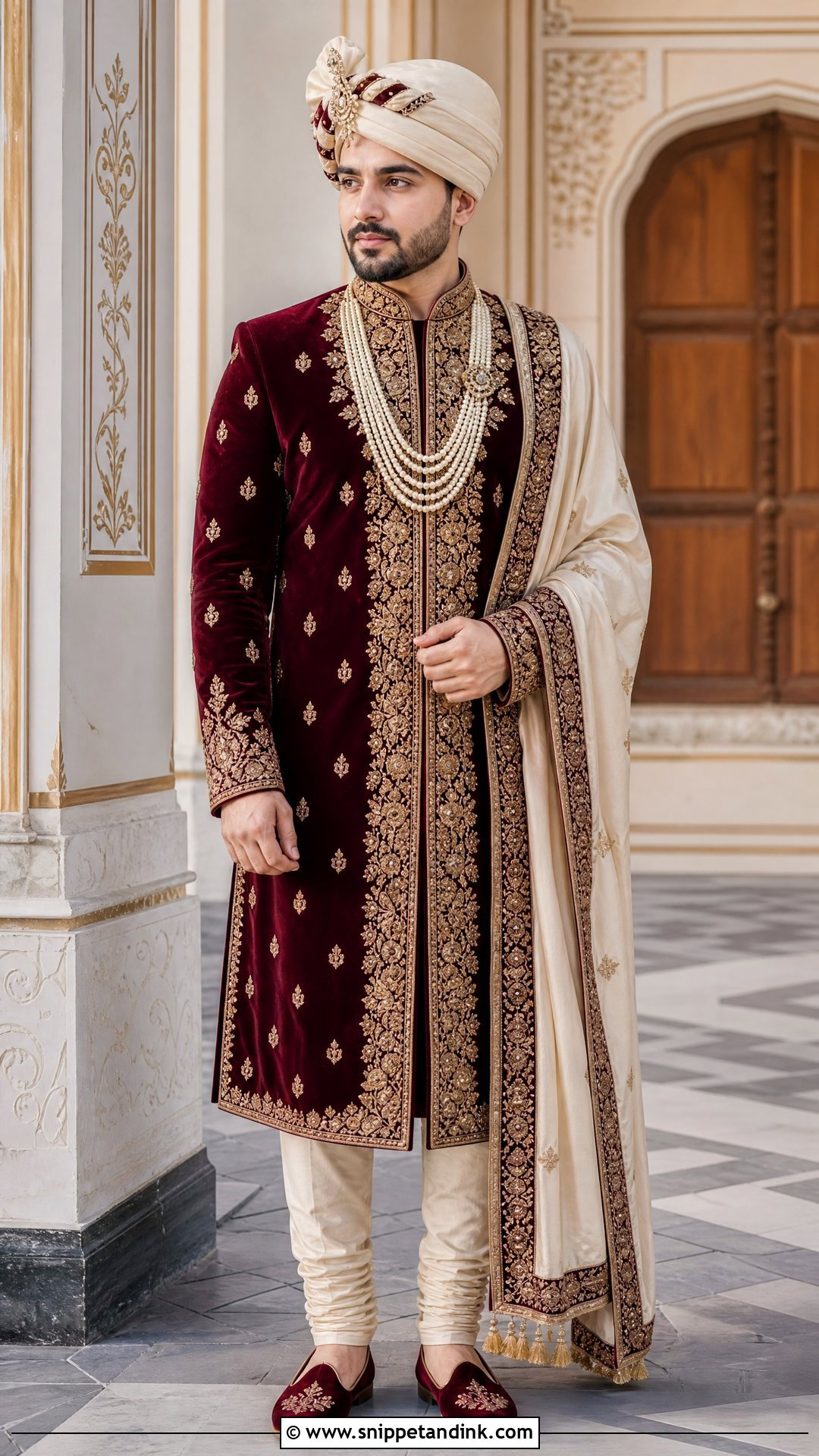
Velvet makes a winter groom look grand with very little effort, and it is warm enough that I would never put it in front of a summer afternoon sun. Since the pile already has depth, antique gold embroidery at the collar, cuffs and buttons looks richer than covering the whole jacket. Keep the shoulders clean; velvet adds bulk wherever the cut is loose. A cream churidar stops the outfit from looking too dark, with gold or tan mojaris, a cream stole edged in maroon and a matching safa. One layered pearl necklace softens the colour. Heritage hotels and winter ballrooms suit it.
3. Pastel Pink Sherwani With Ivory Trousers
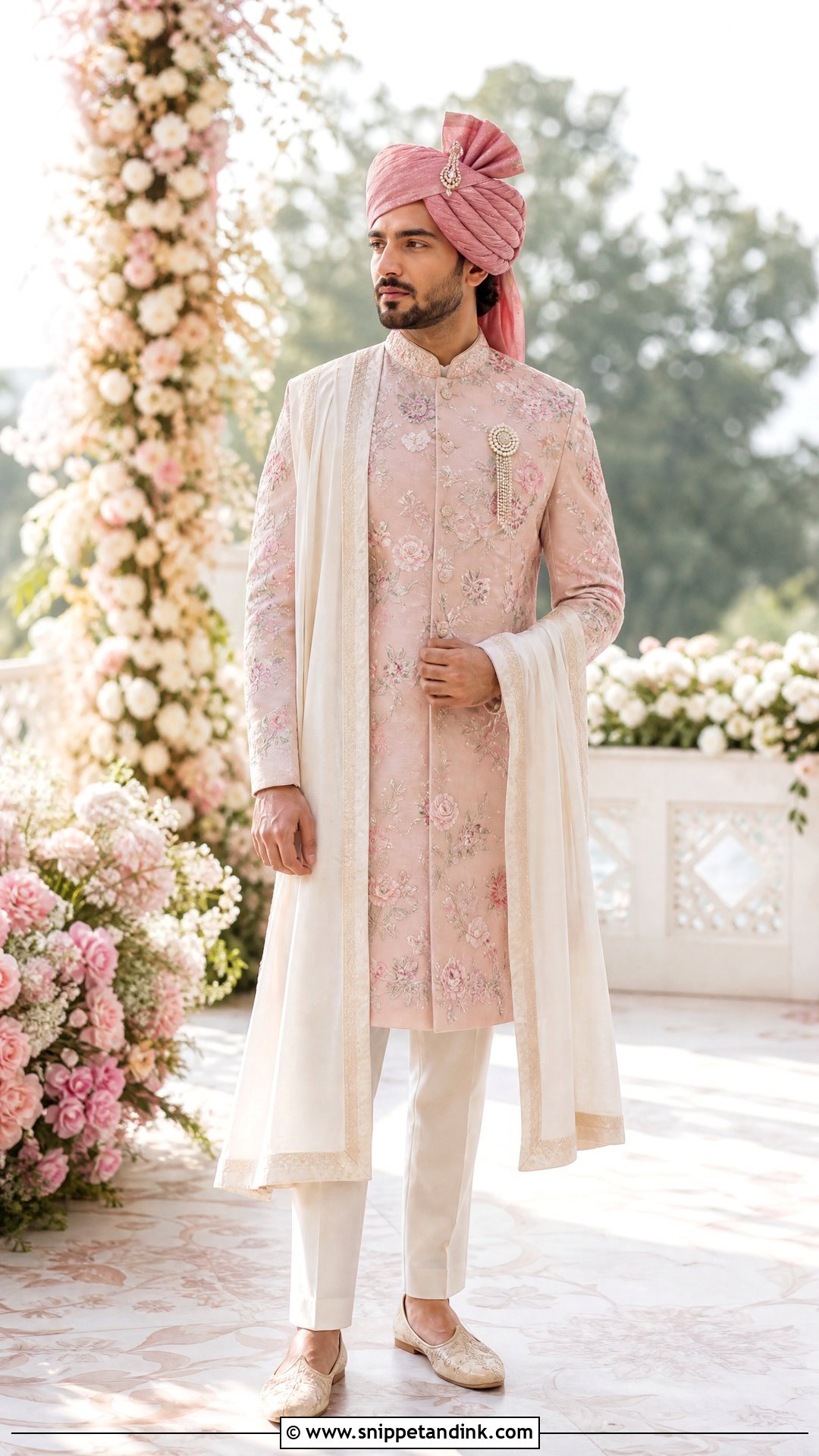
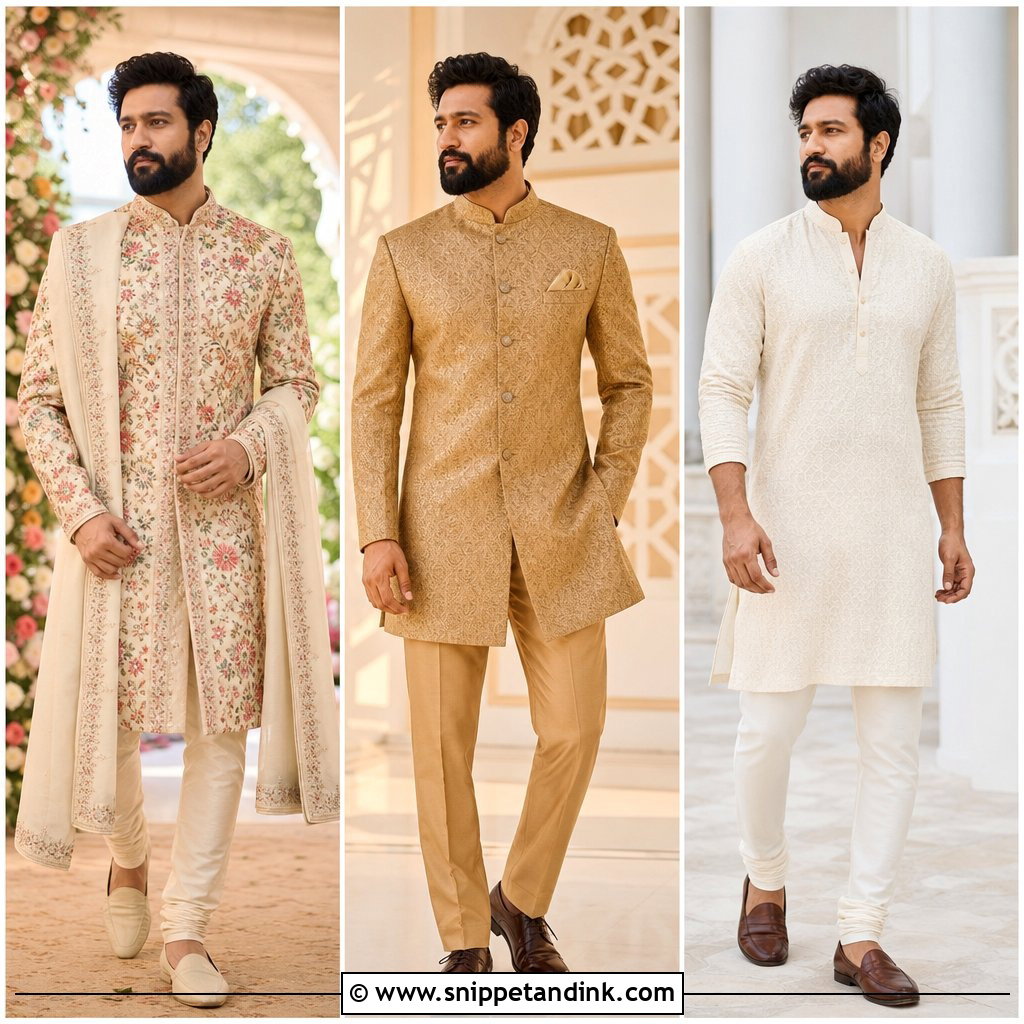
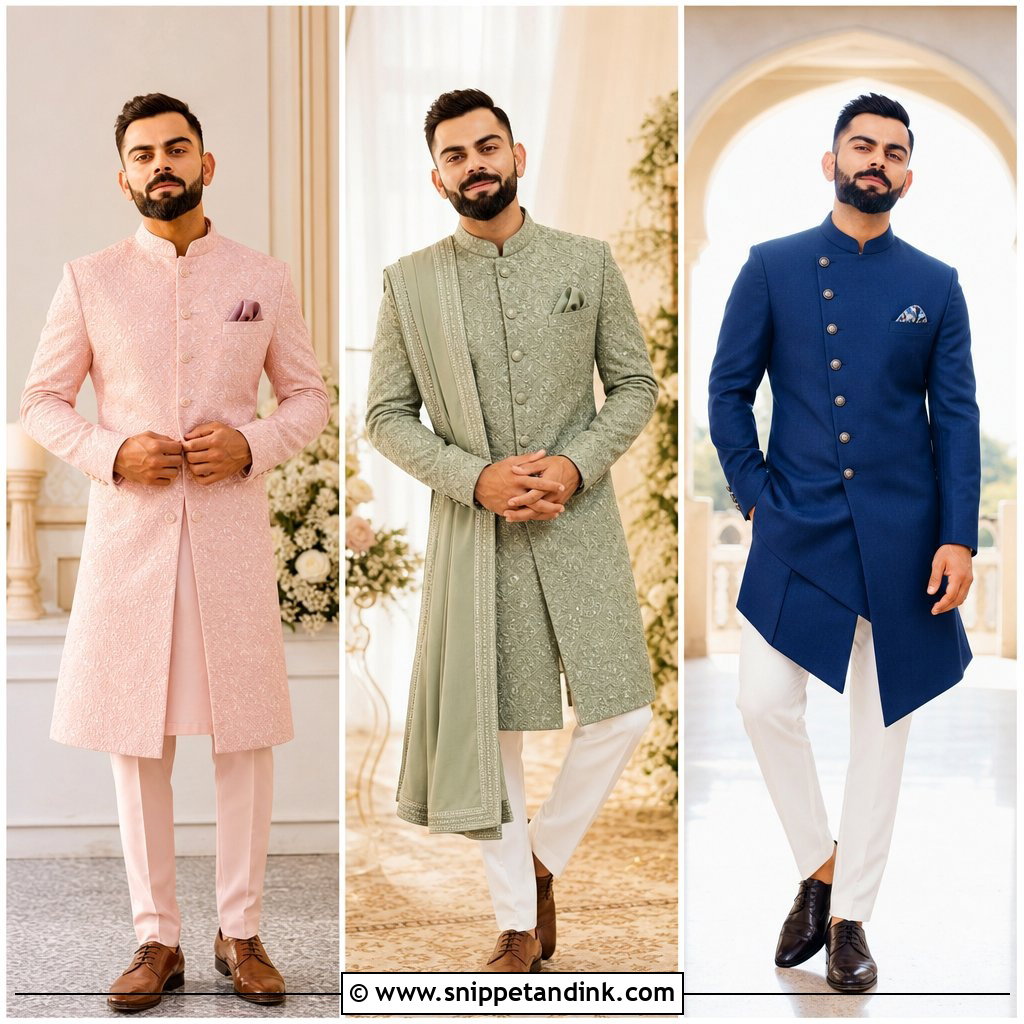
Pastel pink is a daylight colour, and I keep the decoration tonal: pink-on-pink threadwork, small florals or a few pearls rather than contrasting embroidery. Straight ivory trousers look more current than a gathered churidar here. Cream loafers or embroidered mojaris, a light ivory stole and a safa a shade deeper than the jacket give definition. If the bride wears blush, lavender, peach or ivory, borrow one of her colours for the stole border or pocket square and stop there; more than that and the couple look like a matched set. Spring gardens and bright halls flatter it.
4. Navy Blue Sherwani With Gold Stole
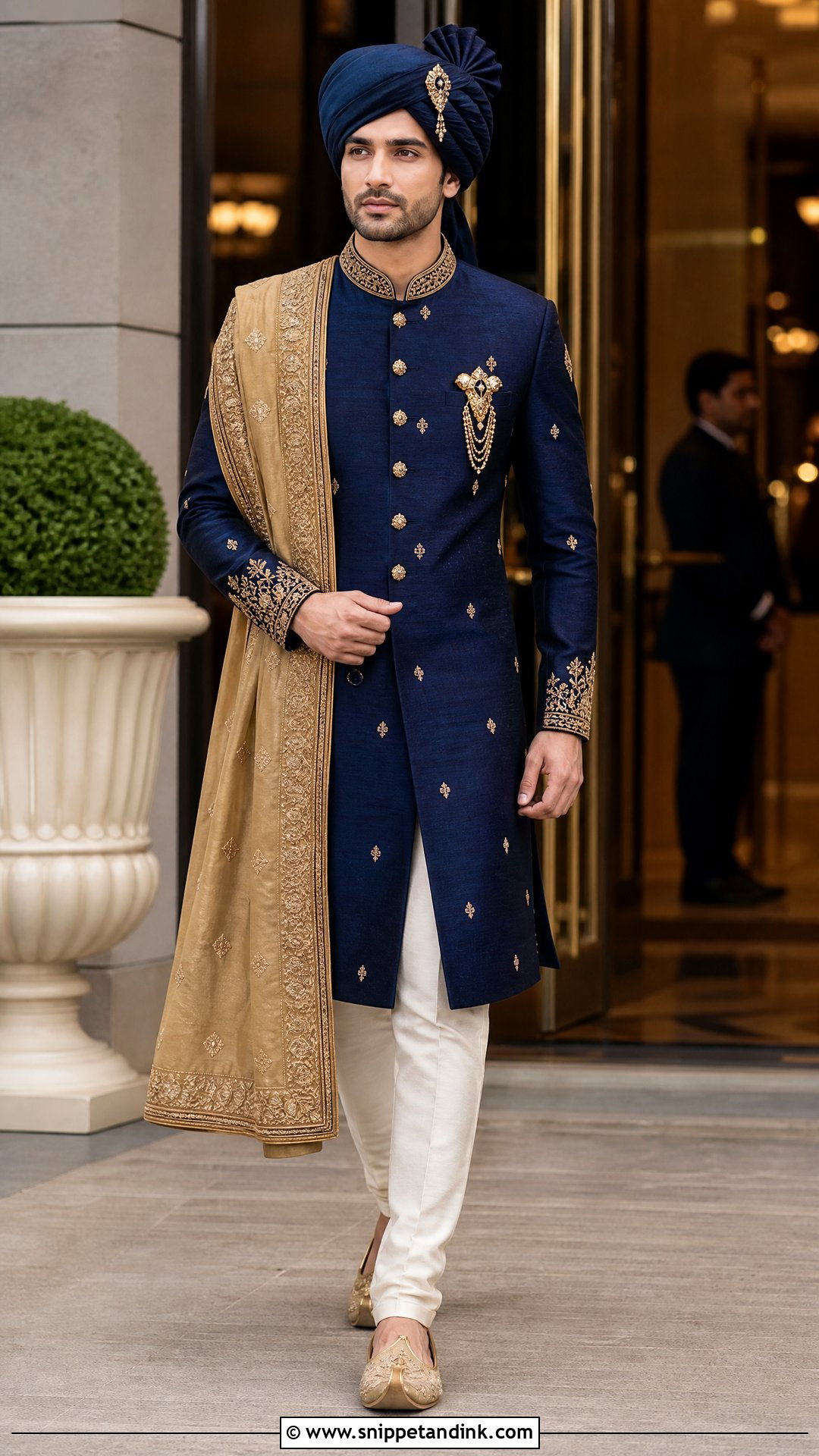
Navy suits grooms who don’t want cream or maroon. Raw silk or textured jacquard with restrained gold embroidery at the collar, chest and cuffs looks refined under evening lights. Slim cream trousers or a tailored ivory churidar lift the outfit, and a gold stole over one shoulder gives ceremony contrast. Dark brown or antique gold mojaris suit it. Pick one accessory from brooch, pocket square or short pearl necklace, not all three. I find navy one of the easiest colours to place next to a bride in red, champagne, dusty pink or metallic gold.
5. Emerald Green Sherwani With Beige Churidar
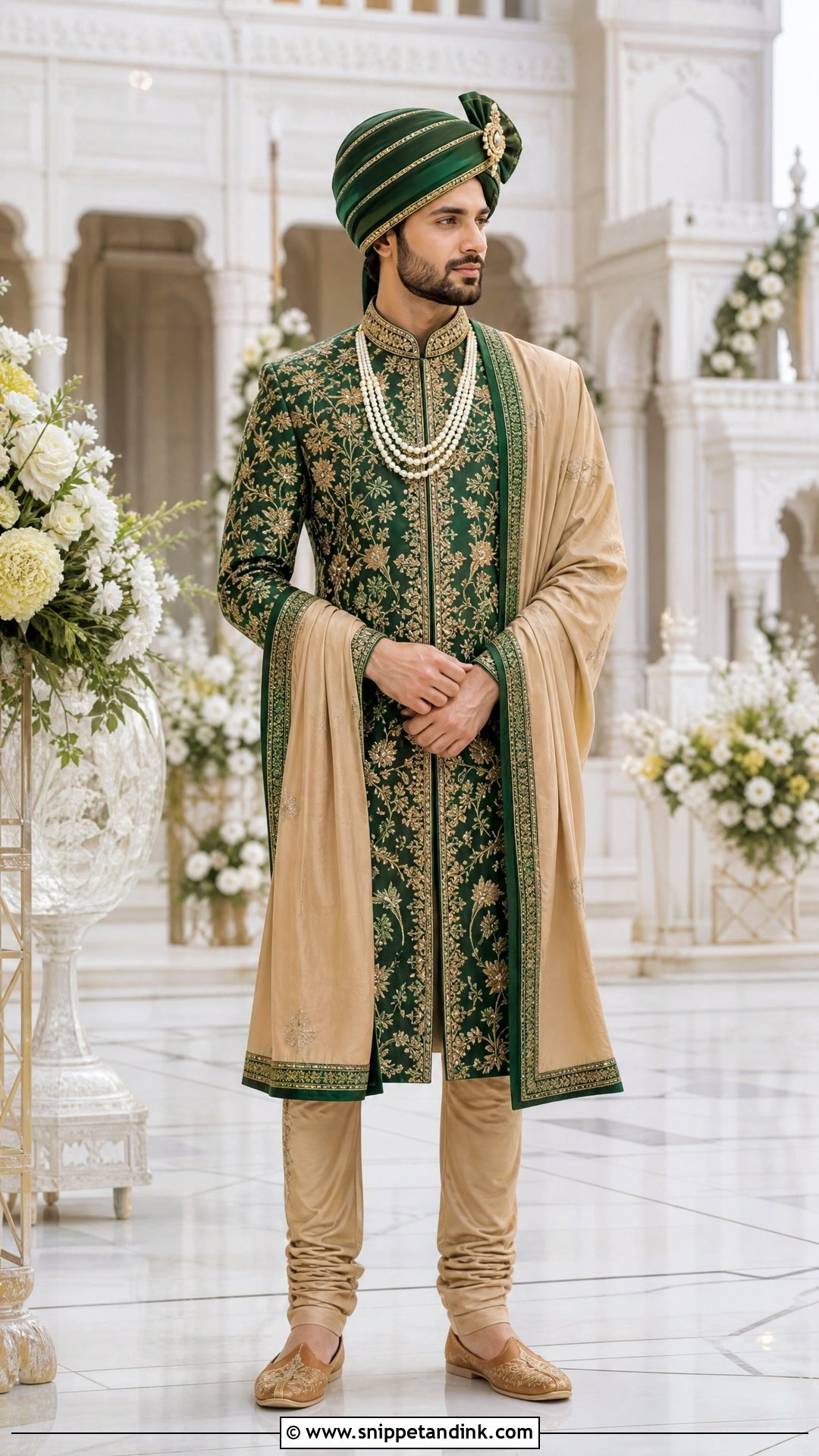
Emerald is bold but still sits within traditional wedding colours. Silk or velvet with antique gold botanical embroidery suits a formal evening. A beige or champagne churidar warms it up, with tan mojaris, a beige stole bordered in green and a coordinated safa. If the embroidery is heavy, one accessory is enough. The fit point I’d stress: keep the shoulders structured and the body gently tapered. A sherwani pulled tight at the waist creases across the stomach every time you sit. Emerald sits well beside red, ivory, gold, blush or a contrasting pink.
6. White Chikankari Sherwani With Pastel Safa
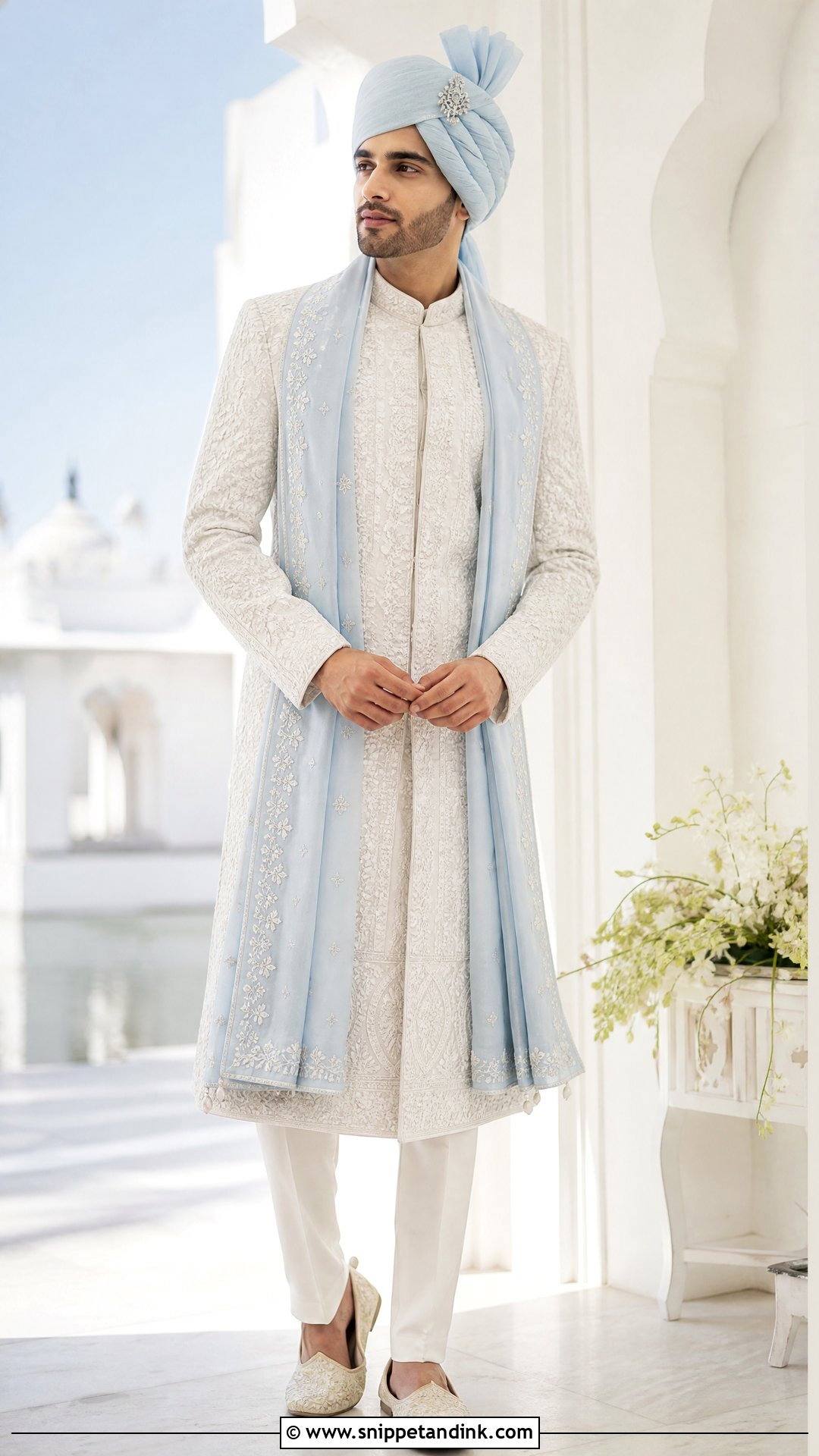
Chikankari is hand embroidery traditionally from Lucknow, worked in fine white thread, and on a hot day it’s one of the coolest things a groom can wear. Choose georgette, cotton-silk or a light blend, and check the embroidery is dense enough to show in photos, because very fine tonal work can disappear in bright sun. White or soft ivory straight trousers and neutral embroidered mojaris keep it clean; colour comes from a powder blue, blush, peach or mint safa. White means different things in different families, so I’d always have the groom confirm the colour at home first.
7. Black Sherwani With Metallic Embroidery
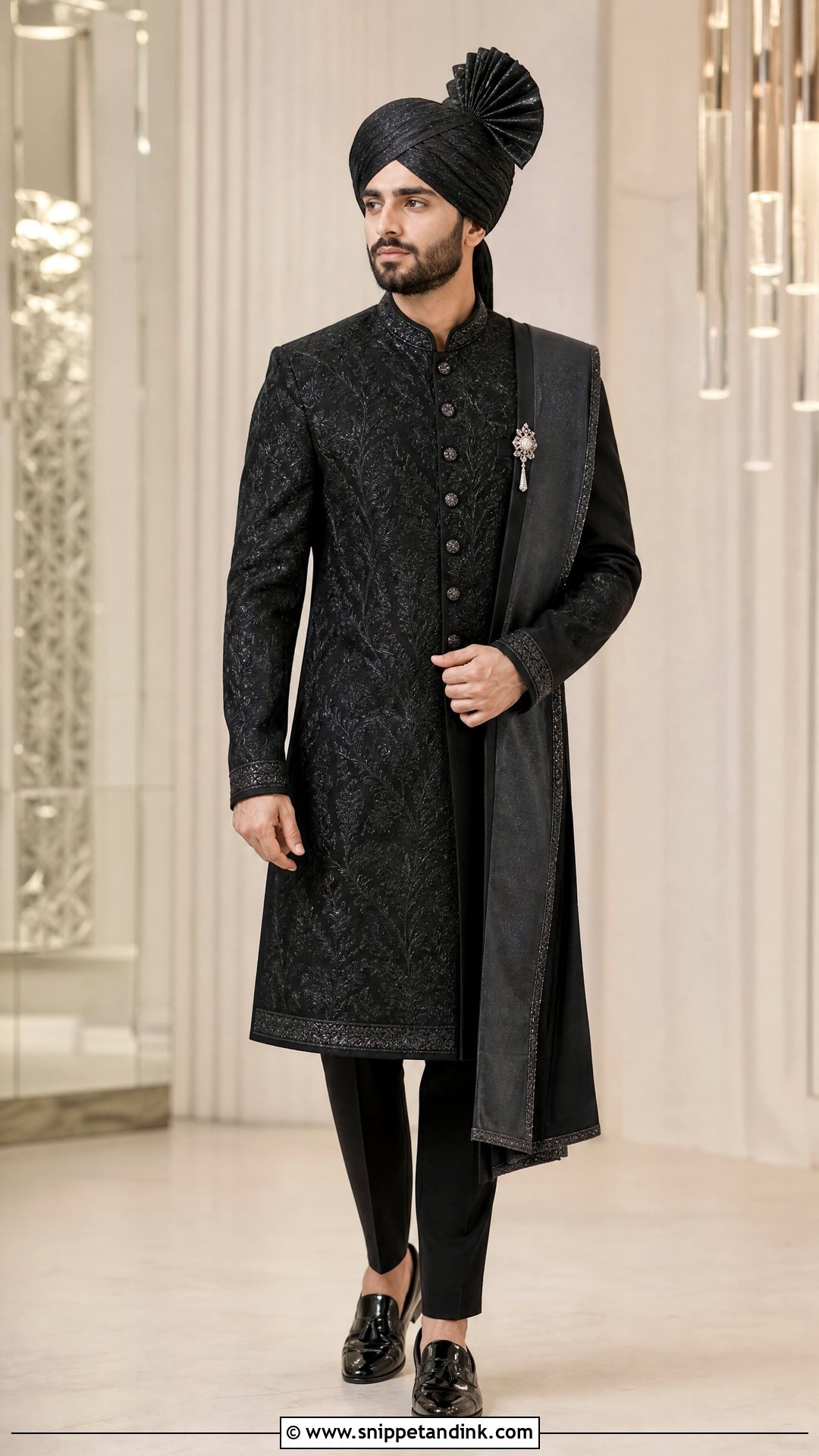
Black is a reception colour in many families and avoided for the ceremony itself, so check before you buy. Where it’s welcome, a tailored sherwani with gunmetal, silver or muted gold embroidery looks sharp without glitter. Fitted black trousers make a sleek monochrome line; ivory pants soften it. Polished black loafers look modern, embroidered black mojaris more traditional. A metallic brooch and a charcoal or silver stole are enough, with no heavy necklace. Black shows lint and dust under flash, so keep a lint roller with the best man.
8. Gold Brocade Sherwani With Maroon Stole
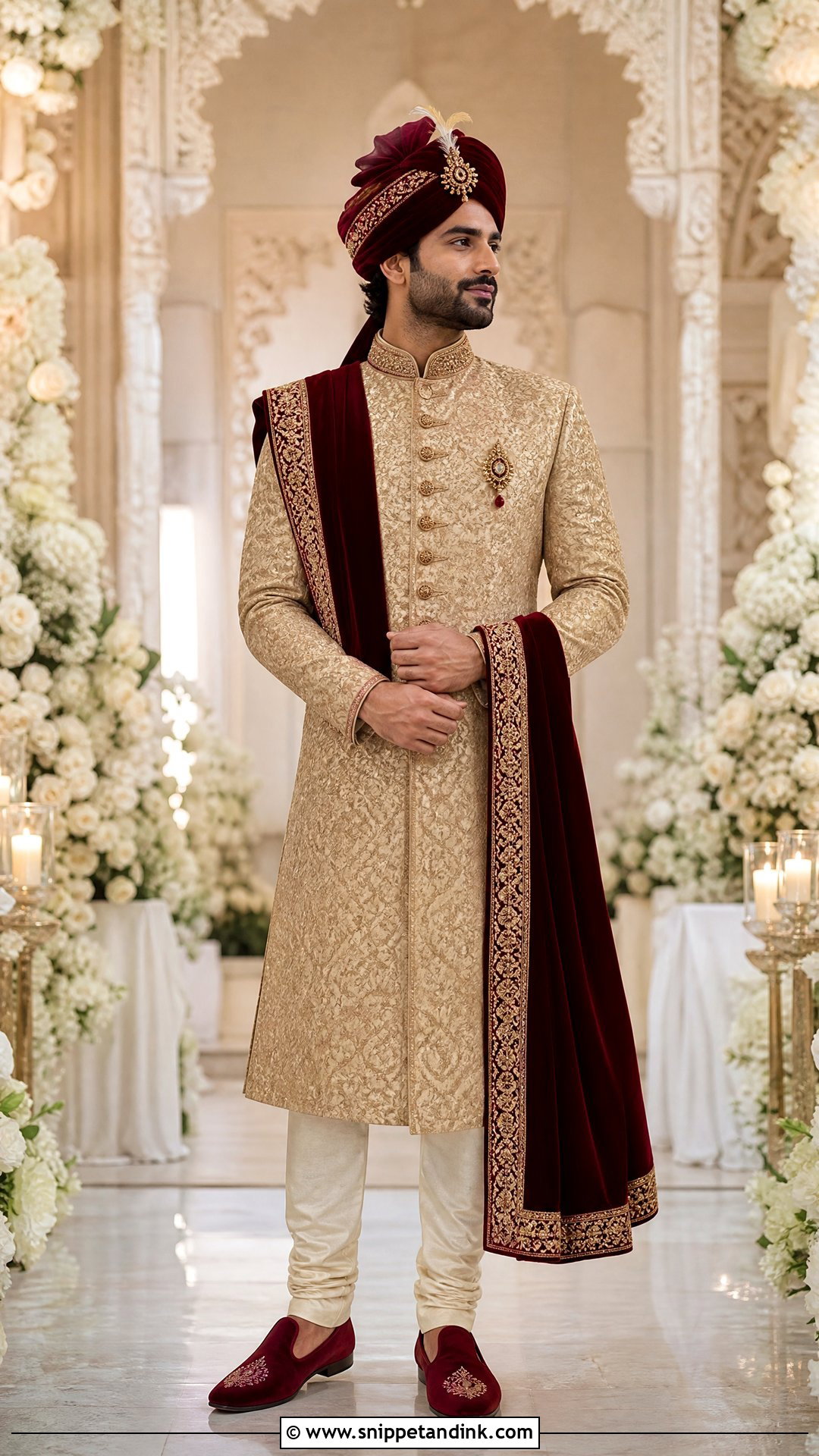
Brocade has a woven shine, and the amount of shine is what I check under a phone flash before ordering. Too reflective and a gold brocade sherwani turns into a bright patch in photos. Choose one with texture first and sheen second. Cream or ivory churidar calms it. Maroon velvet mojaris, a maroon stole with a gold border and a coordinated safa make the full traditional look, with a short pearl necklace or one antique brooch. It suits a formal ceremony beside a bride in red, maroon, bottle green or ivory.
9. Powder Blue Sherwani With White Pants
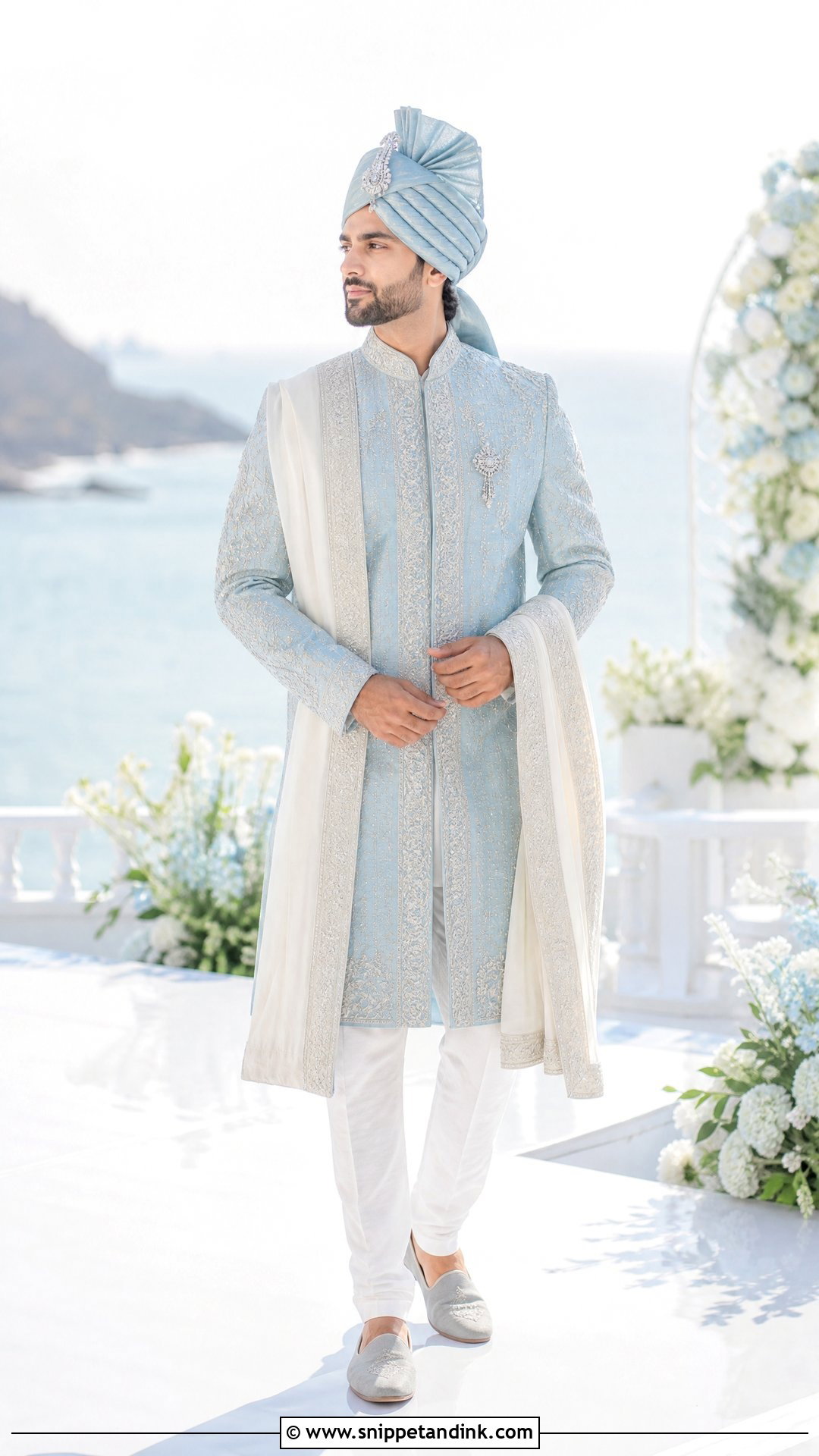
Powder blue gives colour without the weight of a jewel tone. Silver threadwork, white florals or a little beading keep it fresh, and silver accents suit this cool shade better than yellow gold. Tailored white trousers hold a crisp line, with white or pale grey mojaris and a silver brooch. Wear an ivory stole with a powder blue safa, or reverse them for more contrast. Light colours show sweat marks at the collar and underarm in heat, so a cotton vest underneath is worth it. Coastal and garden daytime weddings suit it best.
10. Sage Green Sherwani With Floral Stole
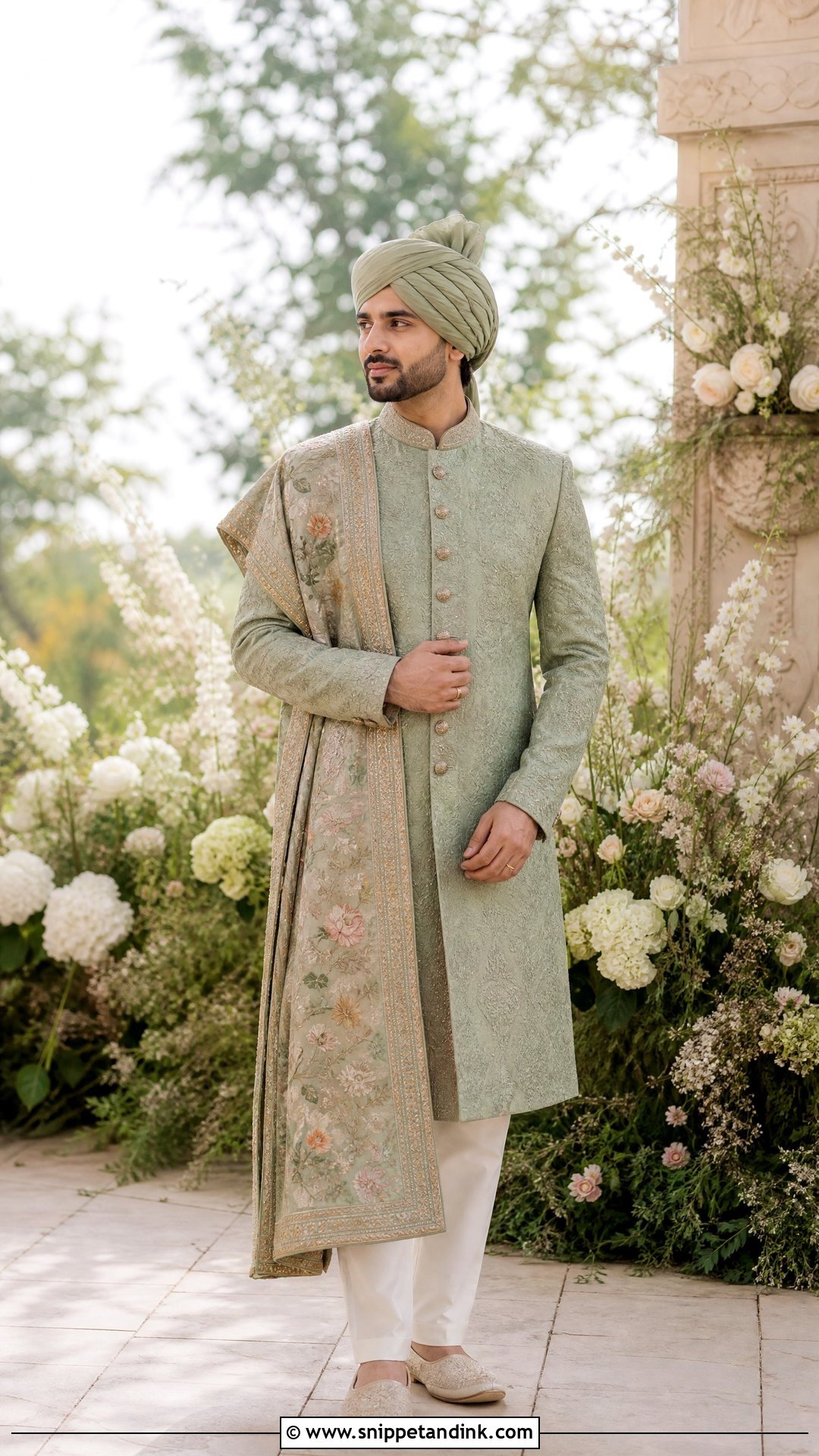
The floral stole does the work here, which means the sherwani itself can stay quiet. A matte silk or textured jacquard sage jacket with tonal embroidery, small gold buttons and a firm band collar is the base. Ivory straight pants and tan or cream mojaris add warmth. The stole should carry small touches of sage, blush, ivory and gold, so the outfit has pattern without heavy embroidery. Top it with a plain sage safa or an ivory one edged in green. Sage sits beside dusty rose, peach, ivory, gold, plum or deep green bridal outfits.
11. Peach Sherwani With Ivory Churidar
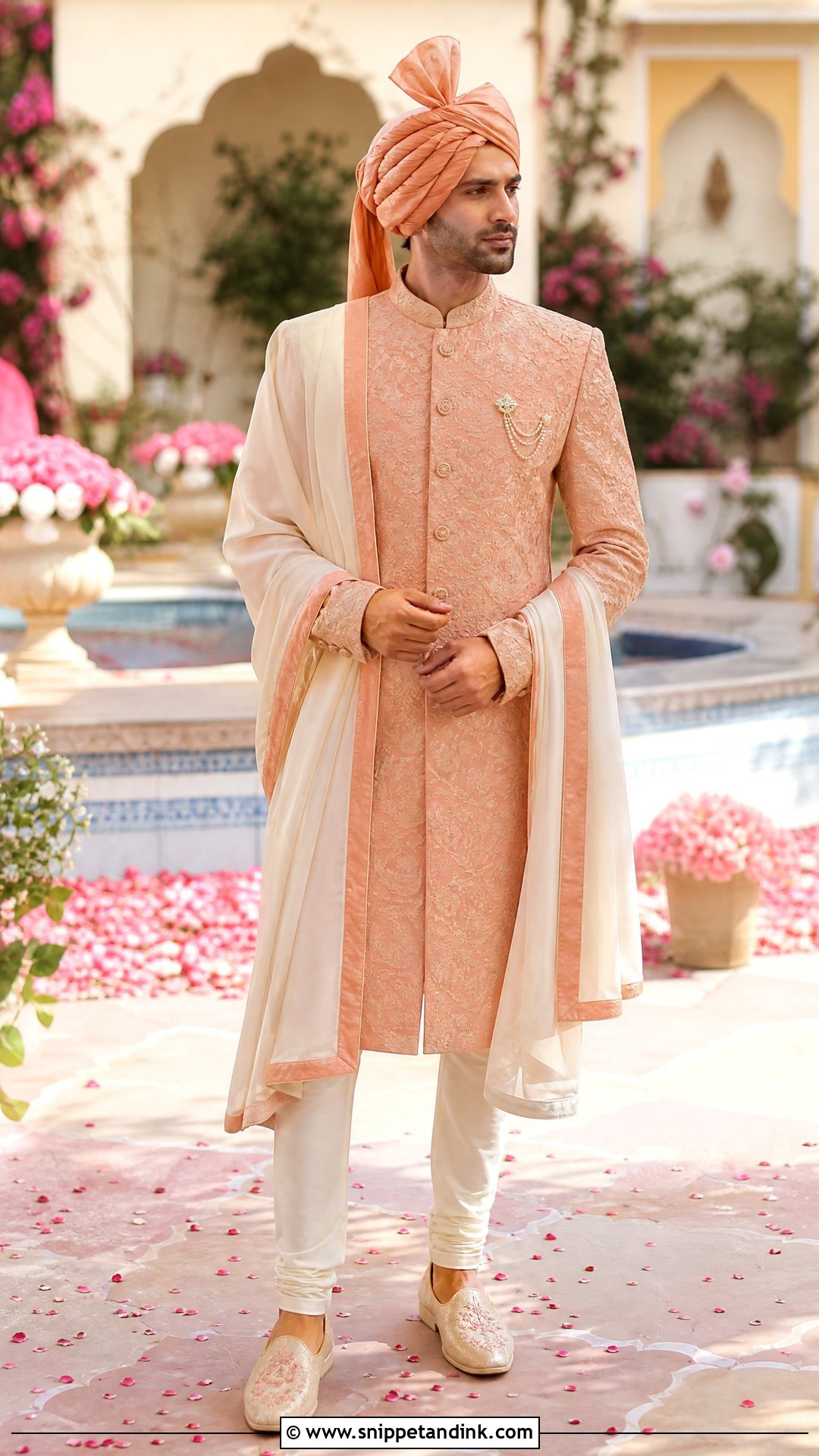
Peach is warm and friendly, and I keep its decoration delicate: tonal florals, small gold motifs or a light scatter of sequins. An ivory churidar gives the traditional shape, and cream mojaris stitched with a little peach link top and bottom. Add an ivory stole with a narrow peach edge and a safa slightly darker than the jacket, so the head doesn’t fade into the body. Pearls make it formal; a small gold brooch is cleaner for a minimalist groom. Peach pairs with coral, blush, red, mint, lavender or champagne, and it glows in morning light.
12. Angrakha Sherwani With Dhoti Pants
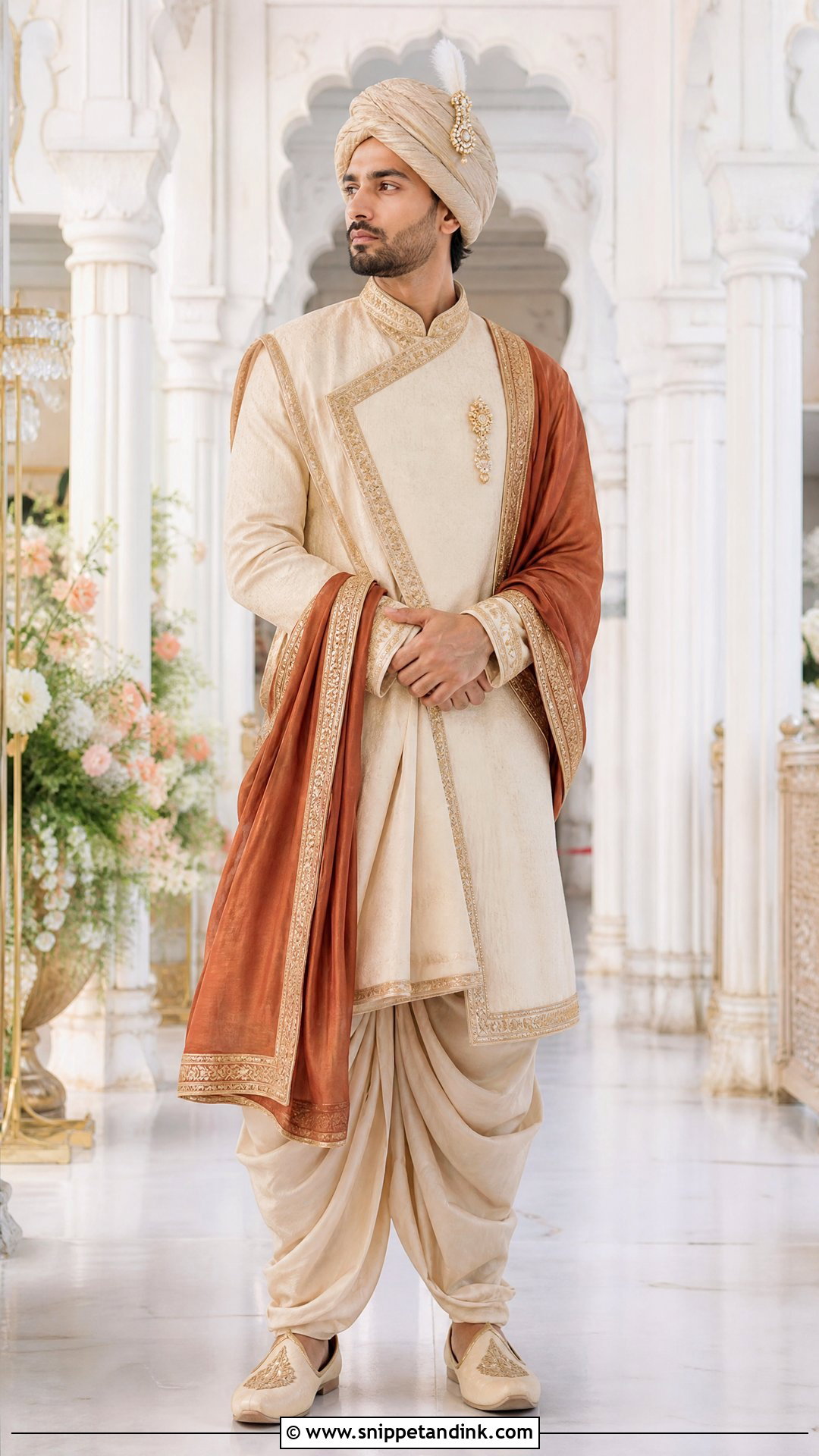
The angrakha closes with an overlapping diagonal front tied at the side, rather than a straight button placket. That angle is the whole point of an angrakha sherwani, so embroidered borders that trace it look best. Ivory, beige, rust or muted gold over draped dhoti pants in a matching or soft contrast shade works well. With volume both top and bottom, the jacket must fit closely through the shoulders and chest. Classic mojaris, a light stole and a simply wrapped safa complete it. Skip long necklaces, which fight the diagonal; use a brooch or short pearl strand.
13. Asymmetric Sherwani With Tapered Trousers
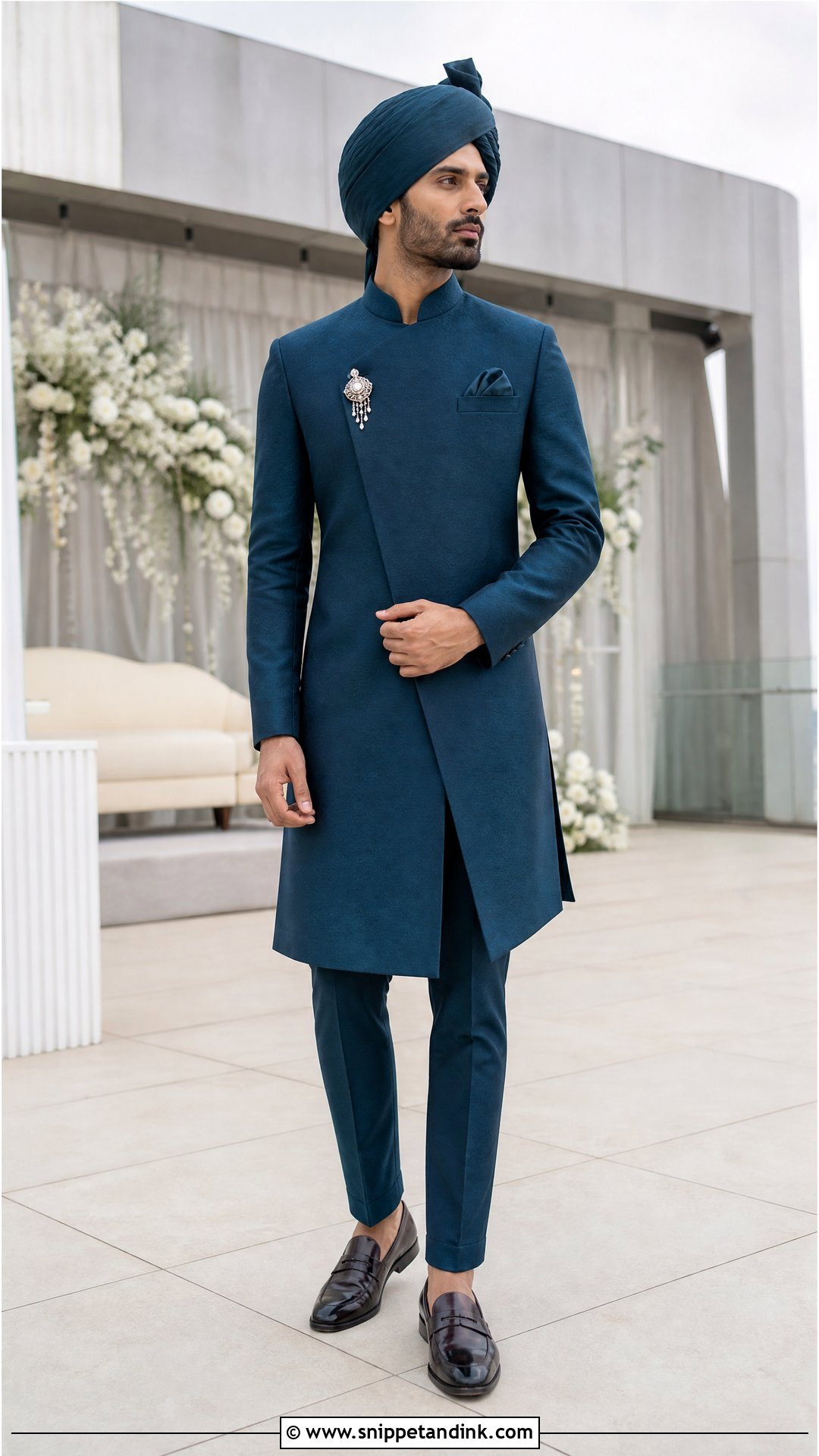
Asymmetric cuts need the most precise tailoring of any sherwani. If the shoulders aren’t level or there’s spare fabric at the hem, the angle reads as a mistake. Choose a charcoal, navy, deep teal or ivory jacket with an angled hem, hidden closure and minimal embroidery. Tapered trousers in the same colour let the cut lead. Polished loafers, a small metallic brooch and a folded pocket square are enough, and I’d skip the stole if it covers the asymmetric line. A simple safa can go on for the ceremony. Rooftops, modern hotels and evening parties suit it.
14. Jodhpuri Sherwani With Tailored Breeches
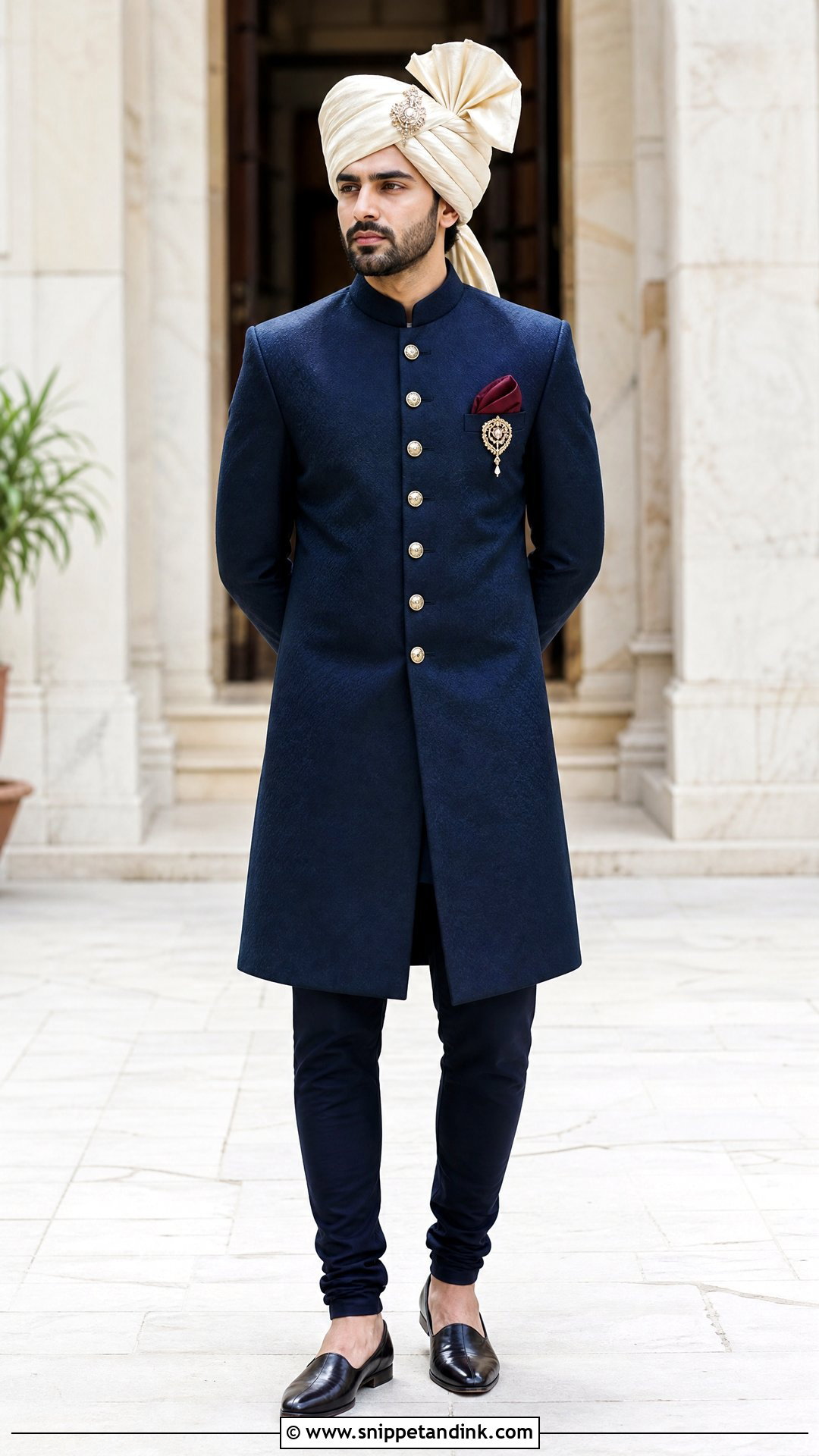
Grooms who live in suits usually feel most at home in this one. A Jodhpuri-inspired sherwani is cut shorter, to the hip or mid-thigh, with a high collar and metal buttons, in navy, ivory, charcoal or deep green. Jodhpuri breeches are roomy at the thigh and narrow at the calf; tapered trousers are the easier option if you’ve never worn breeches. Polished leather juttis or formal loafers keep it tailored. Add a pocket square, a vintage-style brooch and a simple safa for the ceremony. A stole is optional and should be light.
15. Floral Sherwani With Plain Churidar
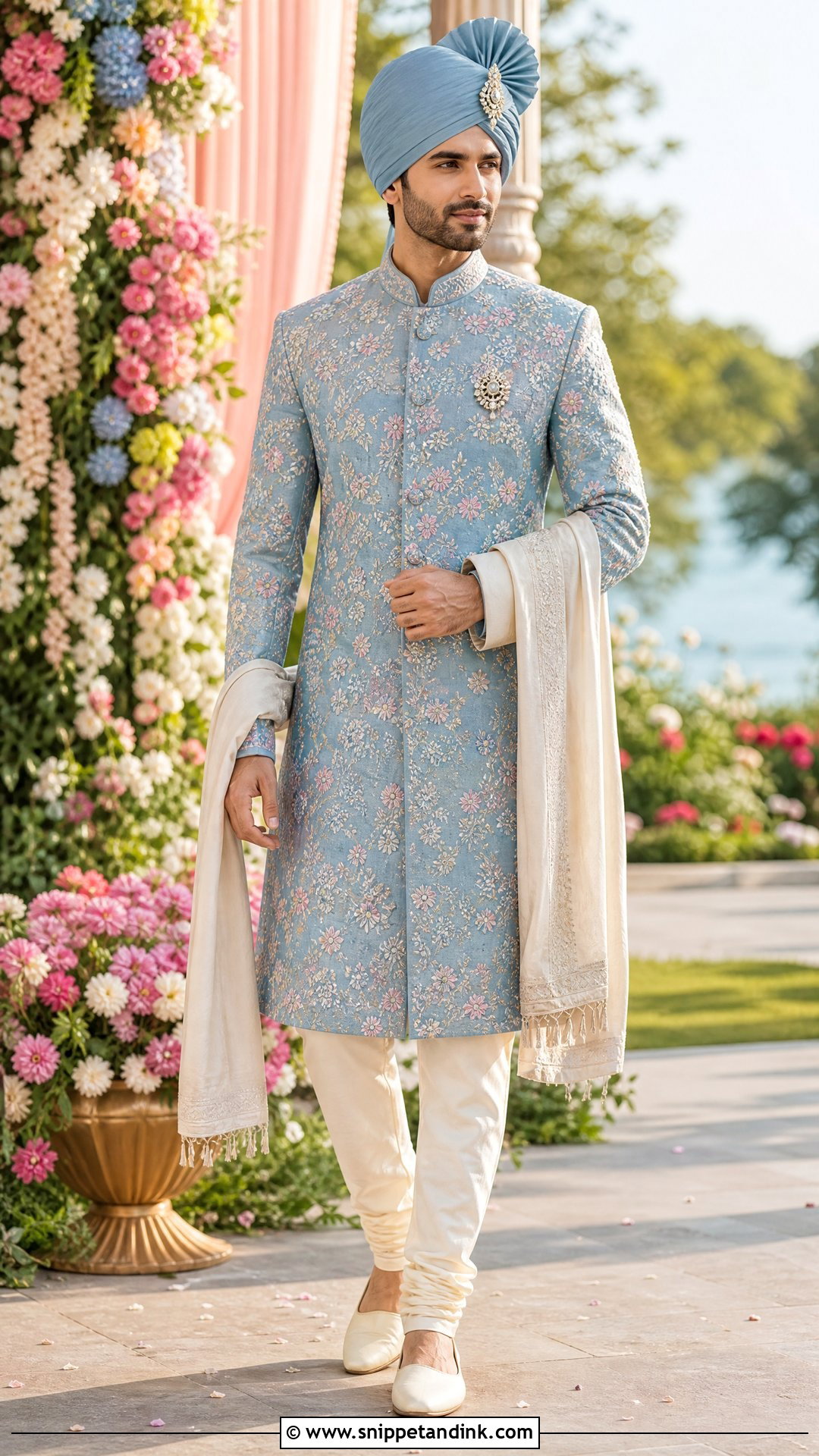
Scale is the first thing I look at with florals. Small motifs read quiet and suit a slim groom; big blooms are louder and need a broader frame to carry them. Dusty blue, sage, ivory, peach and muted rose all work, printed or embroidered. Keep the churidar plain ivory or beige and the mojaris solid. Lift one colour from the print for the safa, and choose a neutral stole with minimal edging. Busy surfaces don’t need a necklace; one brooch is plenty. Daytime, garden and destination ceremonies suit a floral sherwani.
16. Mirror Work Sherwani With Tonal Trousers
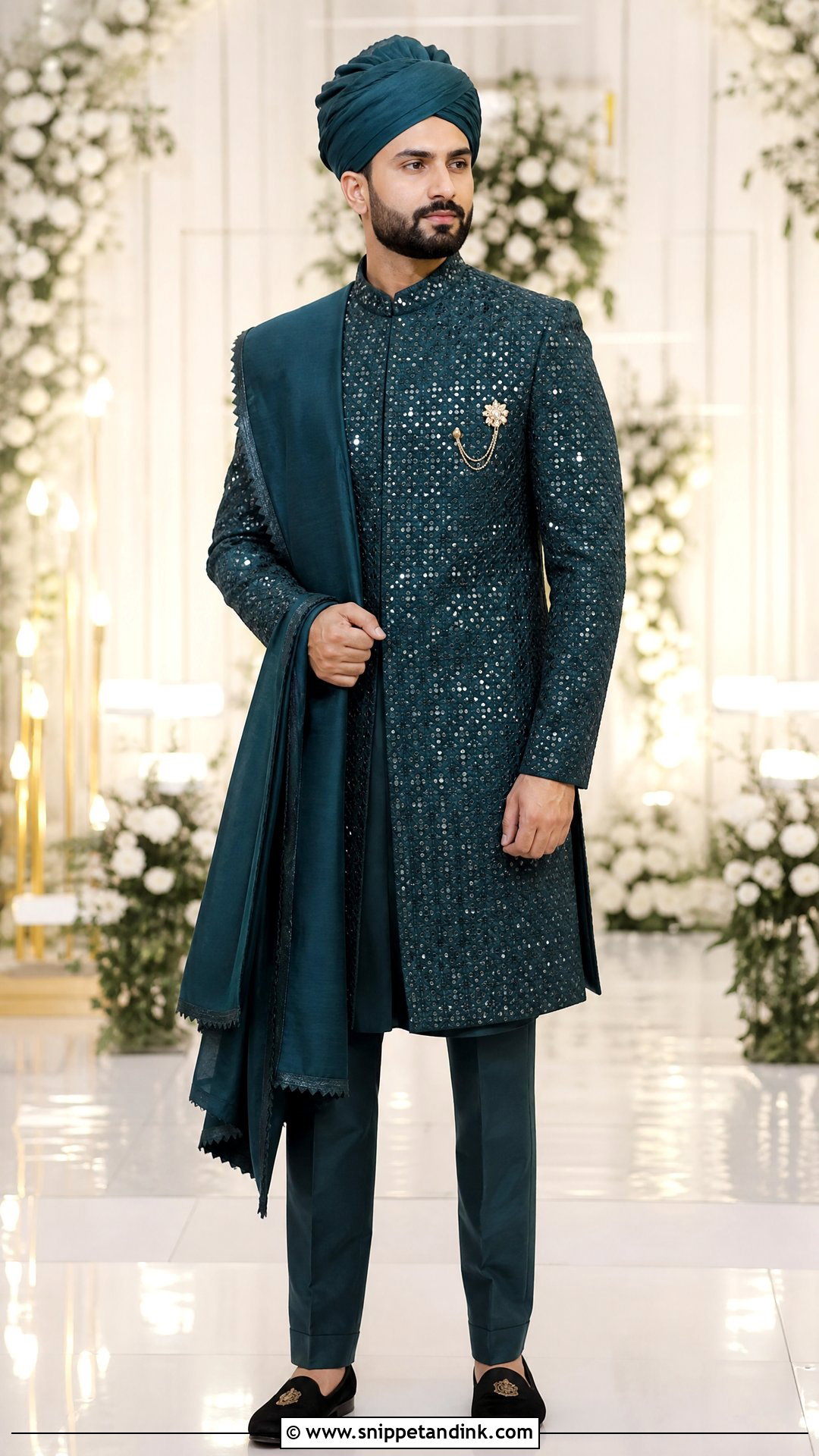
Mirror work belongs where there’s movement and light. Small, firmly stitched mirrors on ivory, dusty blue, sage or deep teal look polished; big mirrors take over every photo. Before the event I run a hand over the inside: stitched mirror backs can catch on a kurta or scratch through thin fabric during a long night of dancing. Tonal straight trousers avoid breaking the colour, with plain mojaris, a plain stole and a solid safa in the jacket’s shade. Keep jewelry to one brooch or pearl strand. I’d wear it to sangeet celebrations and receptions with decorative lighting.
17. Beige Sherwani With Straight Trousers
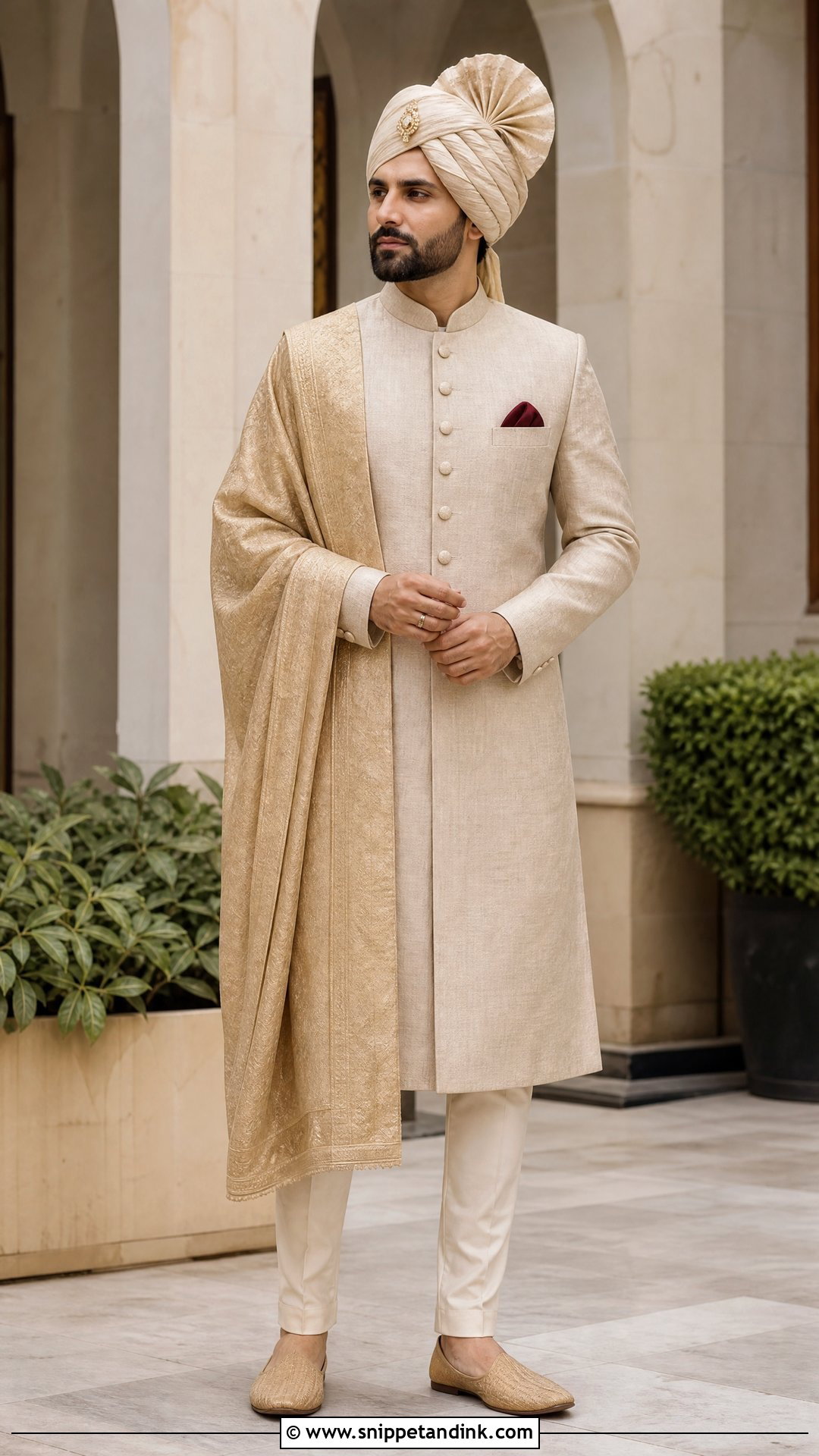
Precise tailoring makes plain beige look as formal as heavy embroidery. Raw silk, jacquard or linen-silk with tonal buttons and light work at the collar is the base, with straight cream trousers for a modern, comfortable line. Linen-silk wrinkles, so I’d only choose it if you’re happy with a slightly lived-in look by evening. Tan mojaris, a soft gold stole and an ivory safa add depth. Bring in one richer wedding colour through a pocket square, brooch or stole edge: burgundy, forest green, dusty pink or navy. It frames a heavily decorated bridal outfit well.
18. Red Sherwani With Gold Embroidery
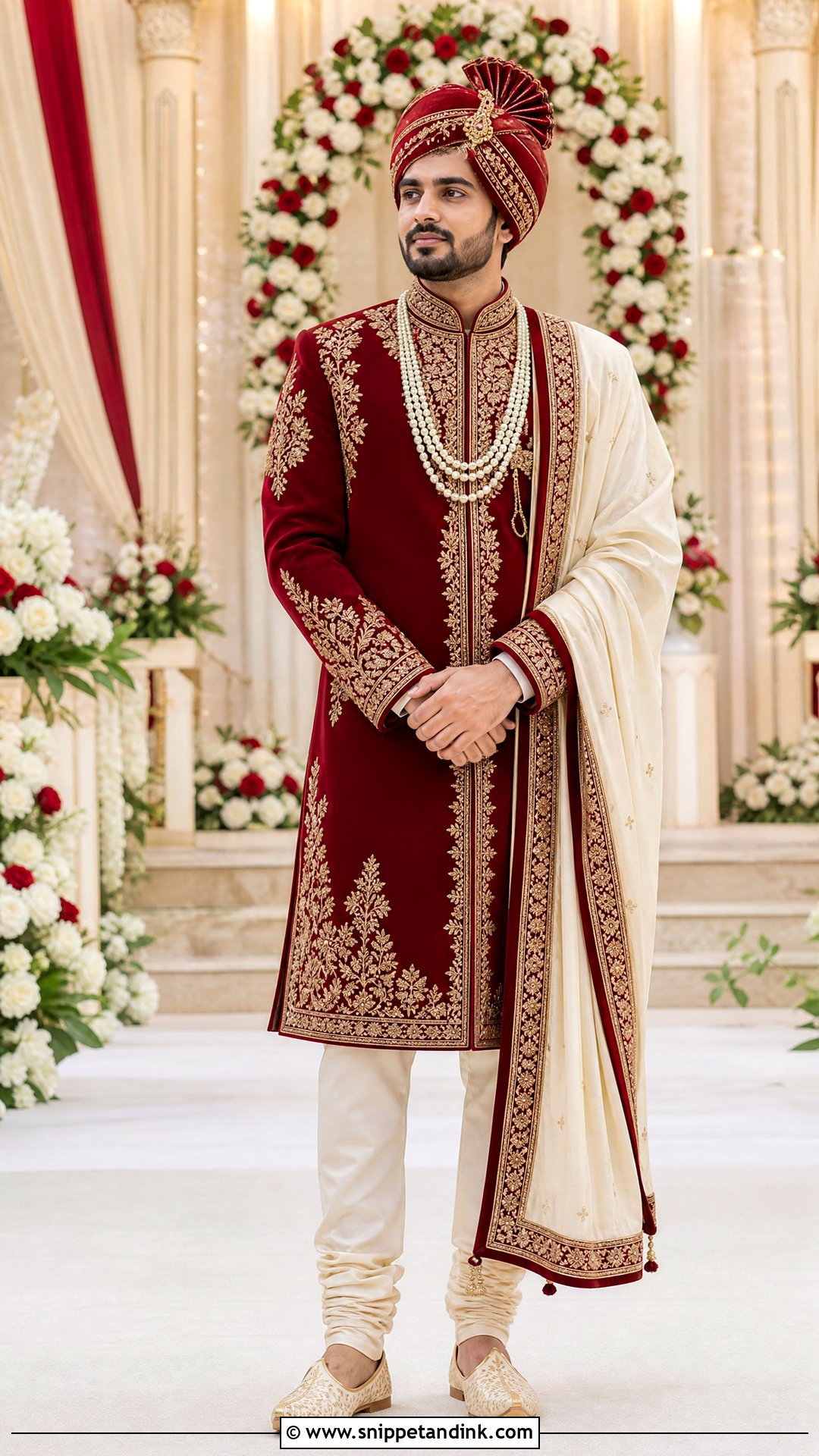
Red with gold is the most traditional groom’s look there is. I’d choose a deep ruby, crimson or muted red over a bright one, especially with heavy gold work, because bright red and gold together glare under flash. An ivory churidar balances the strong top half. Gold or cream mojaris, an ivory stole with a red border and a coordinating safa complete it. If the bride is also in red, vary the shade and embroidery pattern so each outfit holds its own. Pearls soften it; an antique brooch makes it more structured.
19. Charcoal Sherwani With Silver Details
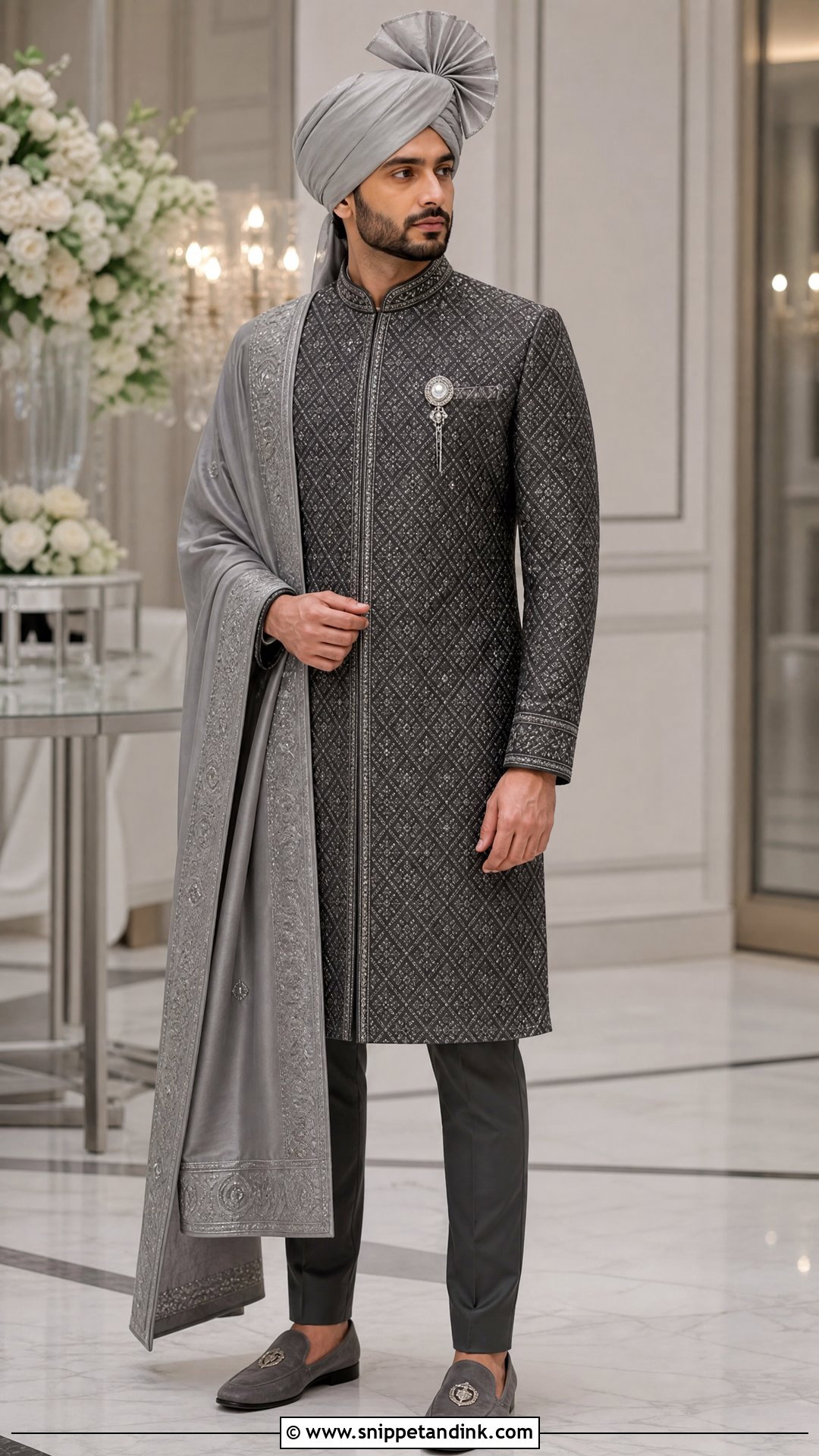
Charcoal is the modern groom’s alternative to black: dark, but not as stark, and more widely accepted at a reception. Silver threadwork, tonal geometric embroidery or a fine diamond pattern suits it. Matching charcoal trousers create one long column, with black or dark grey loafers for a modern feel or embroidered mojaris and a muted silver stole for something more traditional. A metal brooch, a pocket chain or silver buttons give enough decoration. Add a light grey safa for contrast, or charcoal for full monochrome. It pairs with silver, lavender, icy blue, burgundy, ivory or jewel green.
20. Coordinated Couple Sherwani With Contrasting Accessories
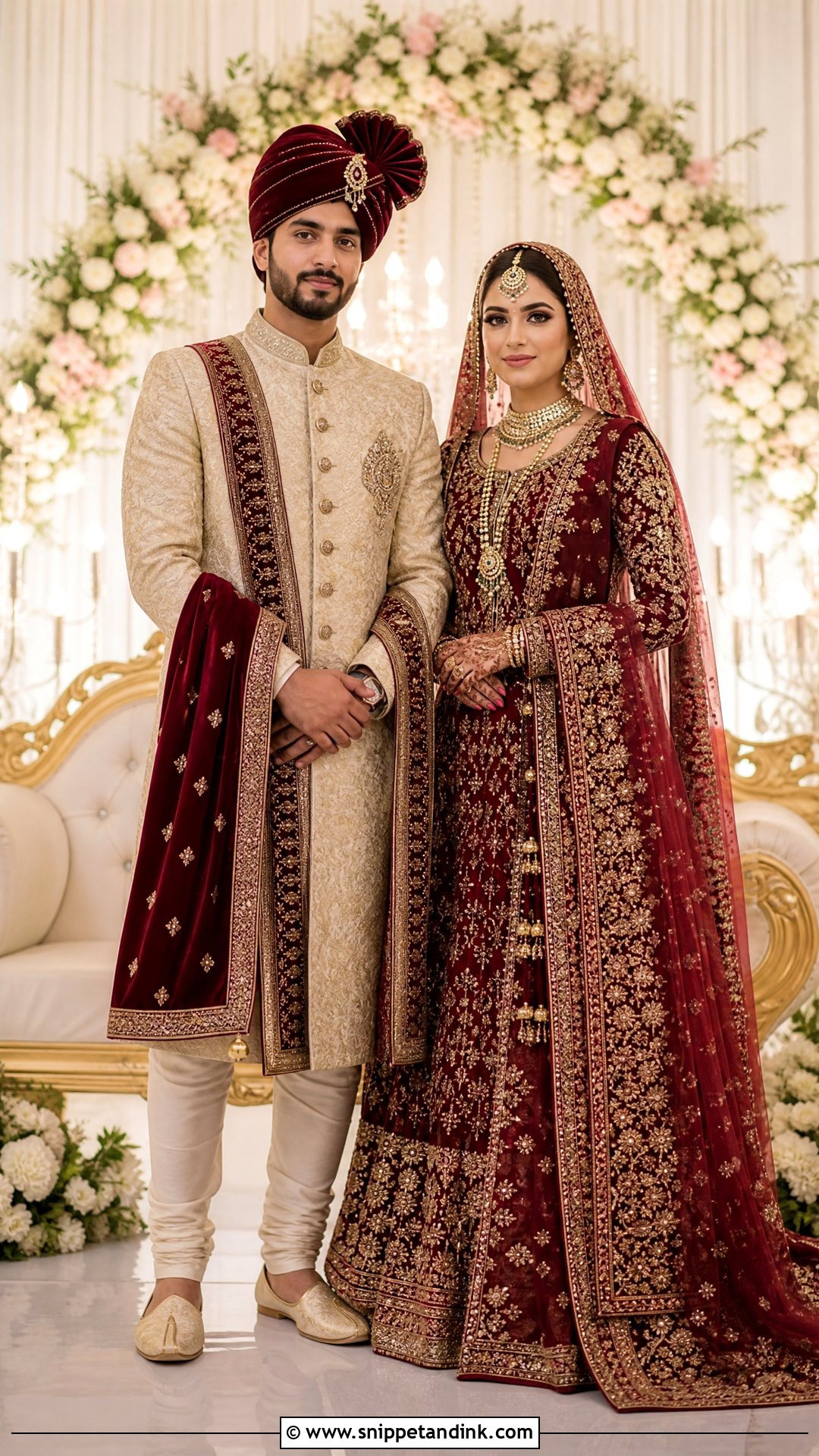
Couple coordination works best when the groom borrows one secondary shade from the bride, not her main colour. I start him in a neutral ivory, champagne, beige or soft grey sherwani, then bring her accent in through accessories. With a maroon lehenga, that might be a maroon stole border, pocket square or safa, not a maroon sherwani. Matching churidar and neutral mojaris keep it balanced, and embroidery can echo her metal finish, antique gold or silver, in a different pattern. That gives cohesive couple photographs where both outfits still stand alone. Lay fabric samples side by side in daylight before deciding.
What Happens to the Sherwani After the Wedding
An embroidered sherwani is often the most expensive thing a man owns, and it’s usually stuffed into a plastic cover the morning after. That’s the worst place for it. Plastic traps moisture, which yellows ivory and dulls metallic thread.
- Have it dry cleaned by someone who handles embroidered and zari garments, and point out any food or haldi stains.
- Store it in a breathable cotton or muslin bag, folded with acid-free tissue between the layers so embroidery doesn’t press into itself.
- Hang velvet only on a broad padded hanger, or lay it flat, to avoid crushed pile at the shoulders.
- Air it out and refold it along different lines every few months; zari can crack along a permanent fold.
Don’t leave it hanging forever. A sherwani jacket worn open over a plain kurta and straight trousers makes a good outfit for a sibling’s wedding, Eid or Diwali. Plain colours like navy, beige and charcoal re-wear best; a heavily embroidered red one is usually kept for the memory.
Respect the Ceremony, Then Dress for Yourself
A good sherwani respects the ceremony and lets the groom forget he’s wearing it. Classic ivory, traditional red, velvet, pastels, florals and modern asymmetric tailoring all have a place, and the right one depends on the venue, season, family custom and formality. Buy the sherwani, trousers, shoes, stole, safa and jewelry as one outfit. Book fittings early and test everything sitting, walking and bending. Coordinate with the bride through one shared shade or a matching metal, and let the rest be his own.
You'll Like These Ideas:


Leave a Reply