
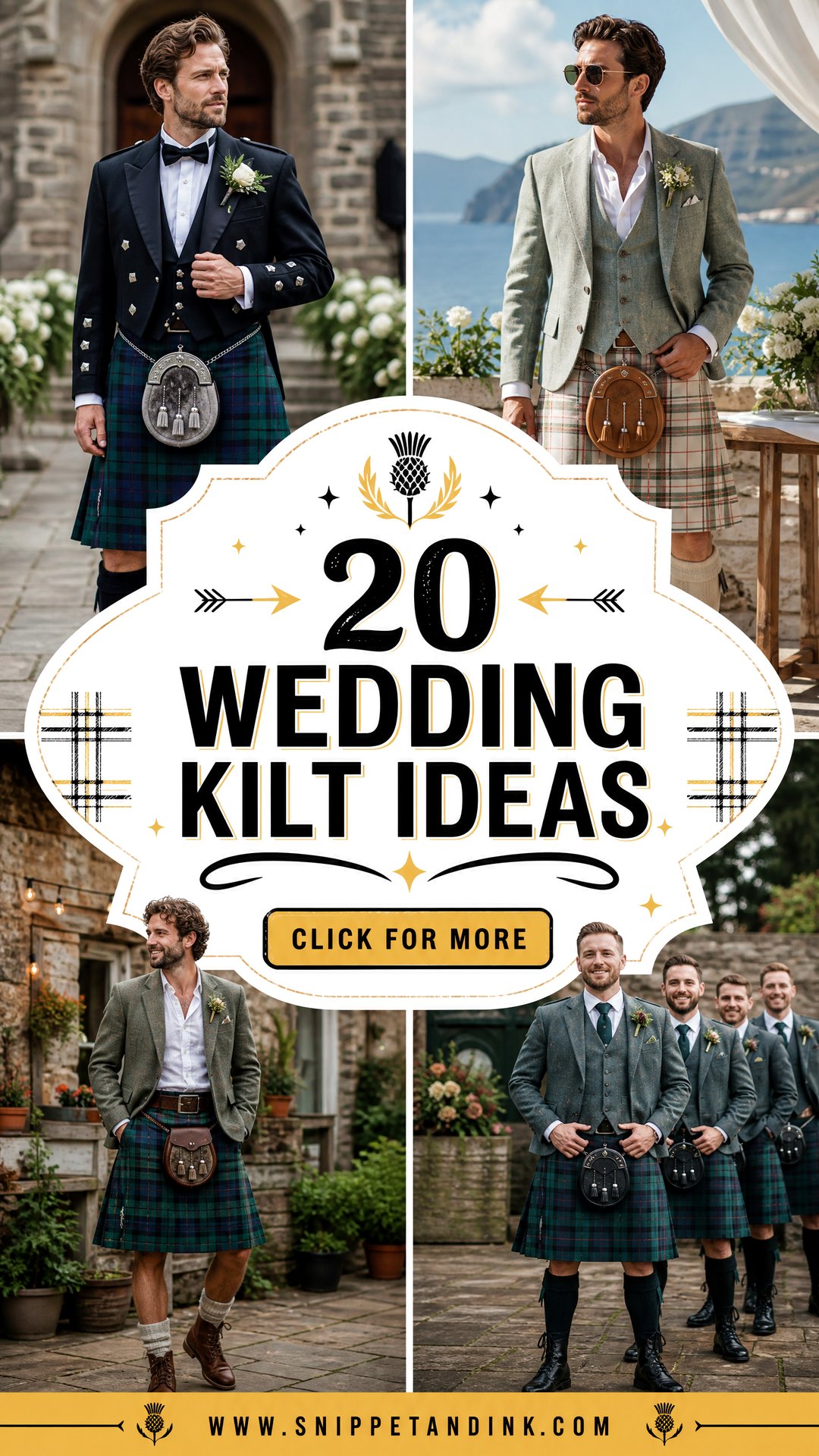
A kilt changes character completely with what you put around it. The same tartan reads as black tie under a Prince Charlie jacket and as a country wedding under tweed. The outfits below cover grooms, groomsmen, best men and guests, across venues and seasons. The rule I start every fitting with is simple: match the jacket to the formality of the event first, then build down. Prince Charlie is evening wear; Argyll and tweed are the daytime jackets. Hose, flashes, neckwear and sporran then tie it together, and the fewer competing details, the better it looks. You might be honoring family heritage or you might just love Highland dress; either way, start with the jacket.
Measuring for a Kilt Is Not Measuring for Trousers
The most common fitting problem I see is a groom who gives his trouser waist size. A kilt sits higher, at or just above the navel, so the measurement is taken there and is usually larger than your jeans. Measure in a shirt, standing relaxed, and don’t hold your breath.
Length is measured from that same point down to the middle of the kneecap. A quick check at the fitting: kneel upright on the floor and the hem should just about touch it. Hose are folded down so the top sits a few fingers below the knee, with the flashes showing on the outside of each leg.
Hire or a kilt of your own
- Hire is the practical option for a wedding party. Outfits usually arrive as a full set a few days before the wedding, and the shop needs everyone’s measurements weeks ahead in busy months.
- A made-to-measure eight-yard kilt in your own tartan often takes two to three months or more, and longer if the tartan has to be woven. Order early.
- If you’re buying, the kilt is the investment; the jacket, sporran and hose can be hired or bought later.
- Ask what happens if a piece doesn’t fit when it arrives. Good hire shops keep spare sizes for exactly that.
1. Prince Charlie Wedding Kilt Outfit
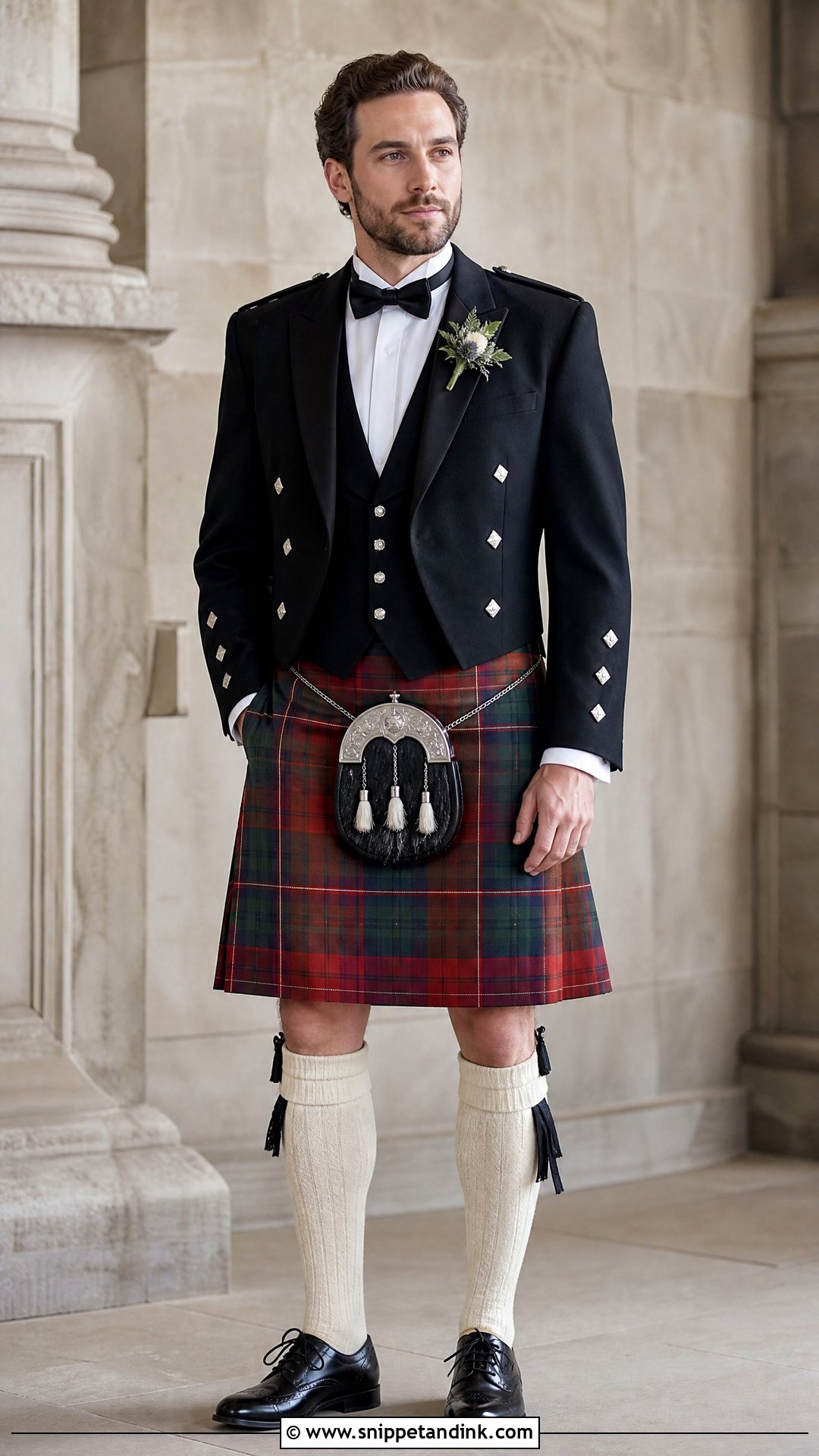
This is the Highland answer to a dinner suit. An eight-yard tartan kilt, in a clan, family, district or universal tartan, goes under a black Prince Charlie jacket with its short front and tails, plus a matching three-button waistcoat. The shirt is a white wing collar and the tie a black bow. Add a dress sporran, cream or off-white hose, coordinated flashes and polished black brogues. A fly plaid pinned at the left shoulder sets the groom apart at a castle or black-tie event. The jacket buttons and tartan carry plenty of detail, so stop there. One fitting note: the Prince Charlie is cut short at the front to sit above the sporran, so a jacket that covers the sporran top is the wrong size.
2. Argyll Jacket Wedding Kilt Outfit
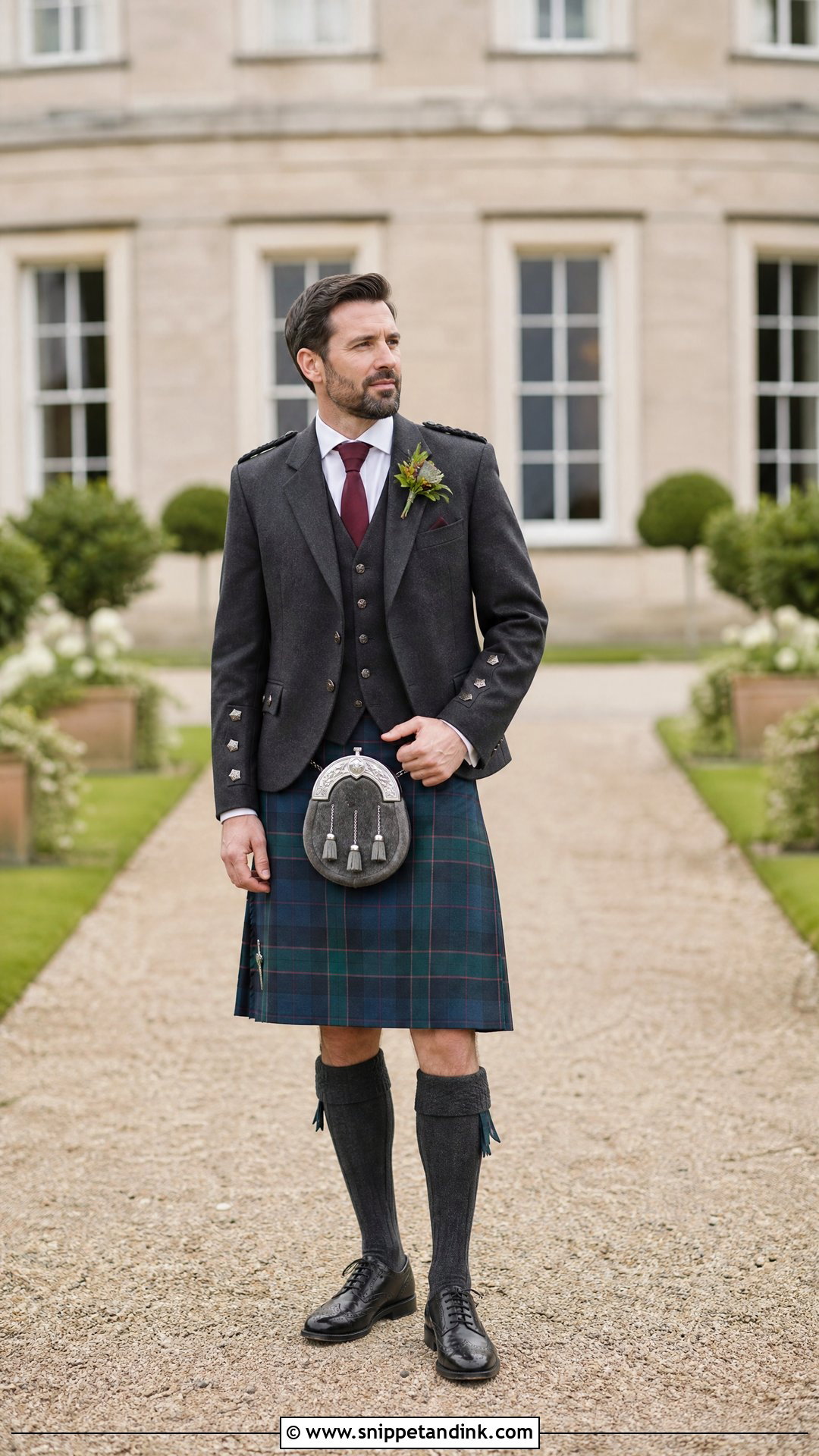
Formal but not evening dress? This is the jacket. A charcoal or black Argyll with a matching waistcoat, a white spread-collar shirt and a plain tie pulled from one of the quieter colors in the tartan, usually burgundy, forest green, navy or grey. Semi-dress sporran, neutral hose, simple flashes and black brogues. The Argyll’s straight hem and plainer buttons carry from the ceremony through to the reception without looking out of place at either. It suits daytime weddings, hotels and country estates. One kilt pin and understated cuff links; more metal than that starts to rattle.
3. Tweed Jacket Wedding Kilt Outfit
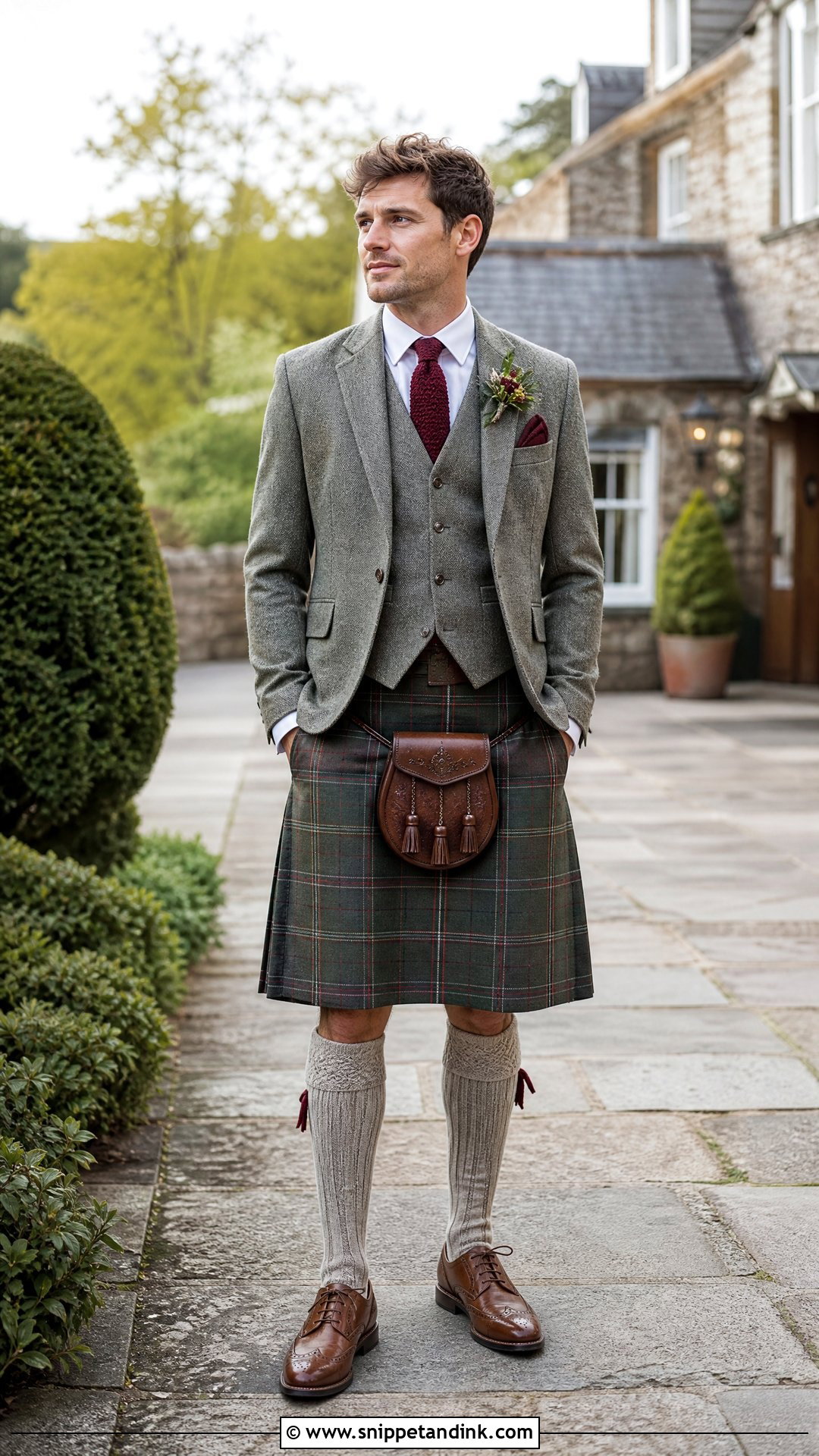
Tweed is the most forgiving jacket on a kilt because its texture hides creases from a long day. Choose grey, moss, oatmeal or brown by looking for the dominant ground color in your tartan, not the brightest stripe. Add a matching waistcoat, a white or light blue shirt and a matte wool or knitted tie. A leather day sporran, hose in charcoal, lovat green or oatmeal, and brown brogues complete it. This is my pick for barns, woodland and historic estates. Don’t match every piece exactly. Repeat two shades from the tartan across jacket, tie and hose and it looks put together rather than bought as a kit.
4. Black Watch Wedding Kilt Outfit
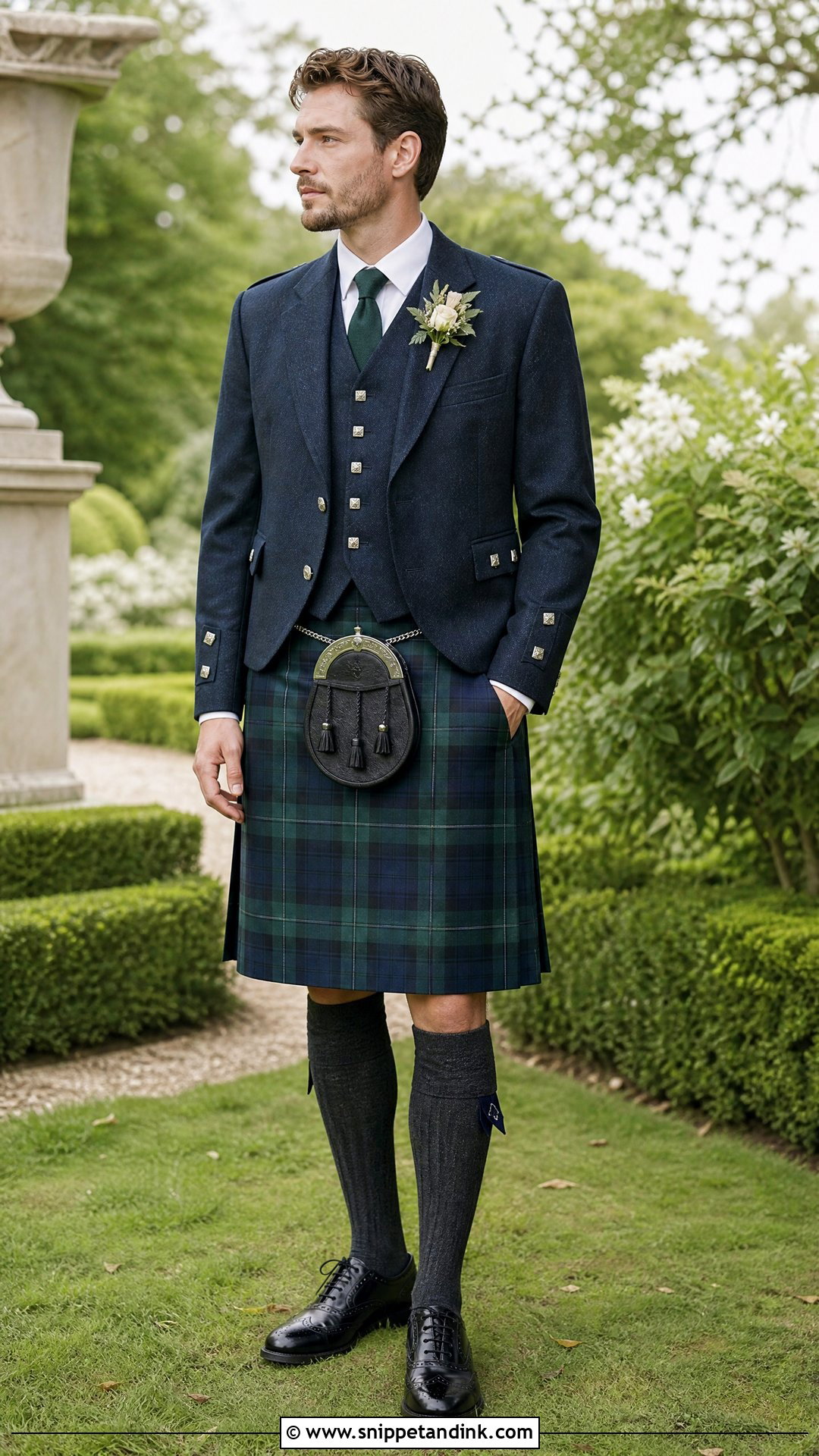
Black Watch is dark enough to wear almost anywhere, which is why so many hire shops stock it. Its navy and green read as one deep tone from a distance. Style it with a navy Argyll jacket, matching waistcoat and white shirt. A dark green tie keeps it tonal; burgundy adds a little contrast. Black leather or semi-dress sporran, charcoal hose, navy flashes and black brogues. Because it is dark, it needs a light shirt and a bit of silver at the cuffs to keep it from looking heavy in photos. It also makes the wedding party easy: groomsmen in grey jackets and plainer sporrans, the groom in navy with the dressier sporran.
5. Clan Tartan Groom Wedding Kilt Outfit
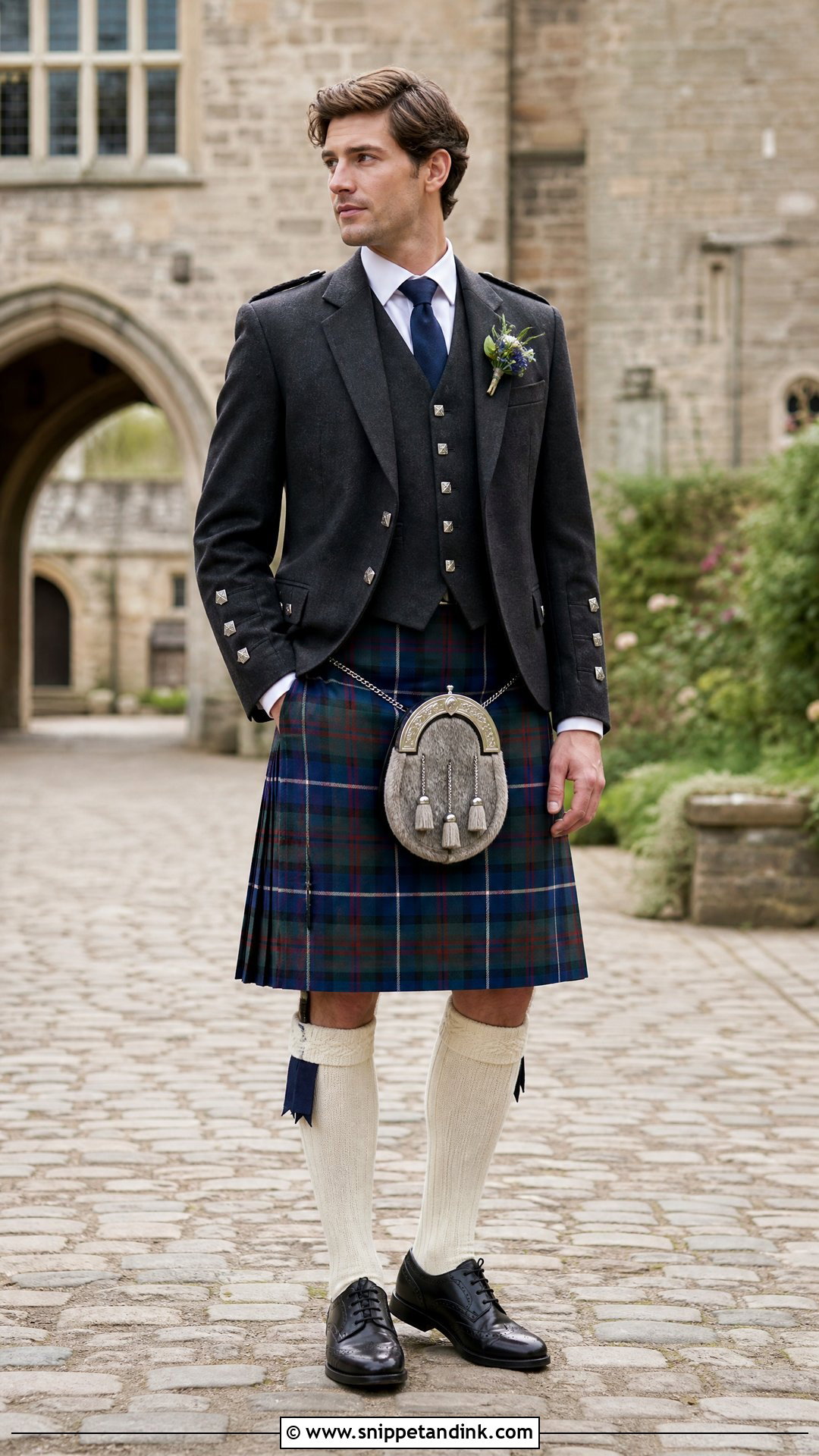
Wearing your own clan tartan is the strongest reason to choose a kilt at all, and it should drive every other color decision. A dark Argyll and matching waistcoat frame a busy tartan without fighting it. White shirt, a plain tie in one of the secondary colors, dress or semi-dress sporran, solid hose and black brogues. If your clan tartan is hard to source, or clashes badly with the wedding palette, a family, district or universal tartan is a perfectly proper alternative. Clan tartans can have several setts too, ancient, modern and weathered, which change the colors a lot, so ask to see each. Keep the groom’s accessories one step dressier than his groomsmen’s.
6. Charcoal Wedding Kilt Outfit
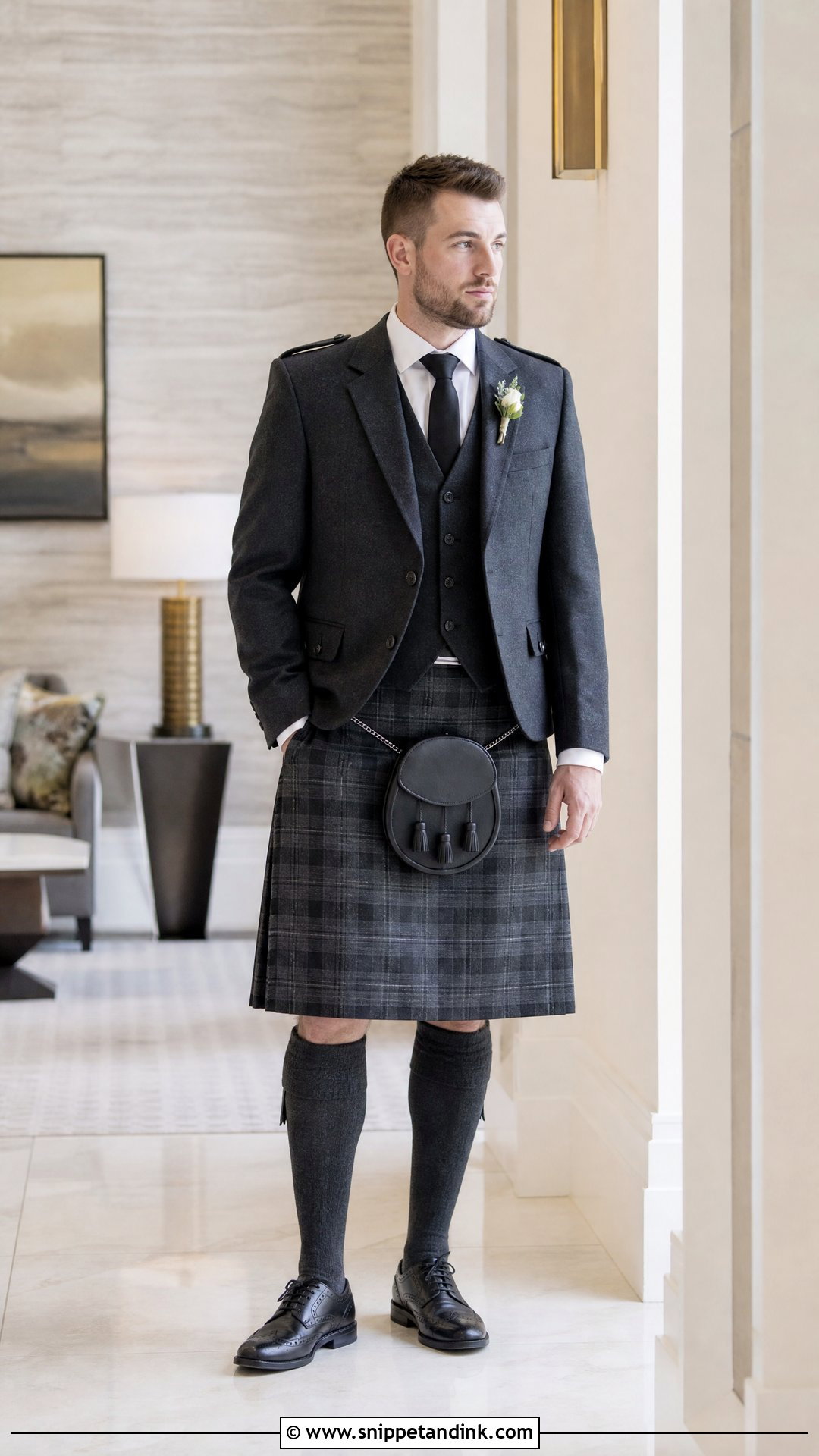
Charcoal is how you make Highland dress feel current. Start with a muted grey, blue or weathered tartan, then a fitted charcoal Argyll, matching waistcoat, white shirt and slim charcoal or black tie. I’d choose a plain leather sporran over a fur front. Charcoal hose, black flashes and black brogues continue the palette, with a brushed-metal kilt pin. Modern hotels and converted industrial spaces suit it. The pieces should be close in tone but not identical; slight differences in the wool’s texture are what stop an all-dark outfit going flat in a photograph.
7. Navy Wedding Kilt Outfit
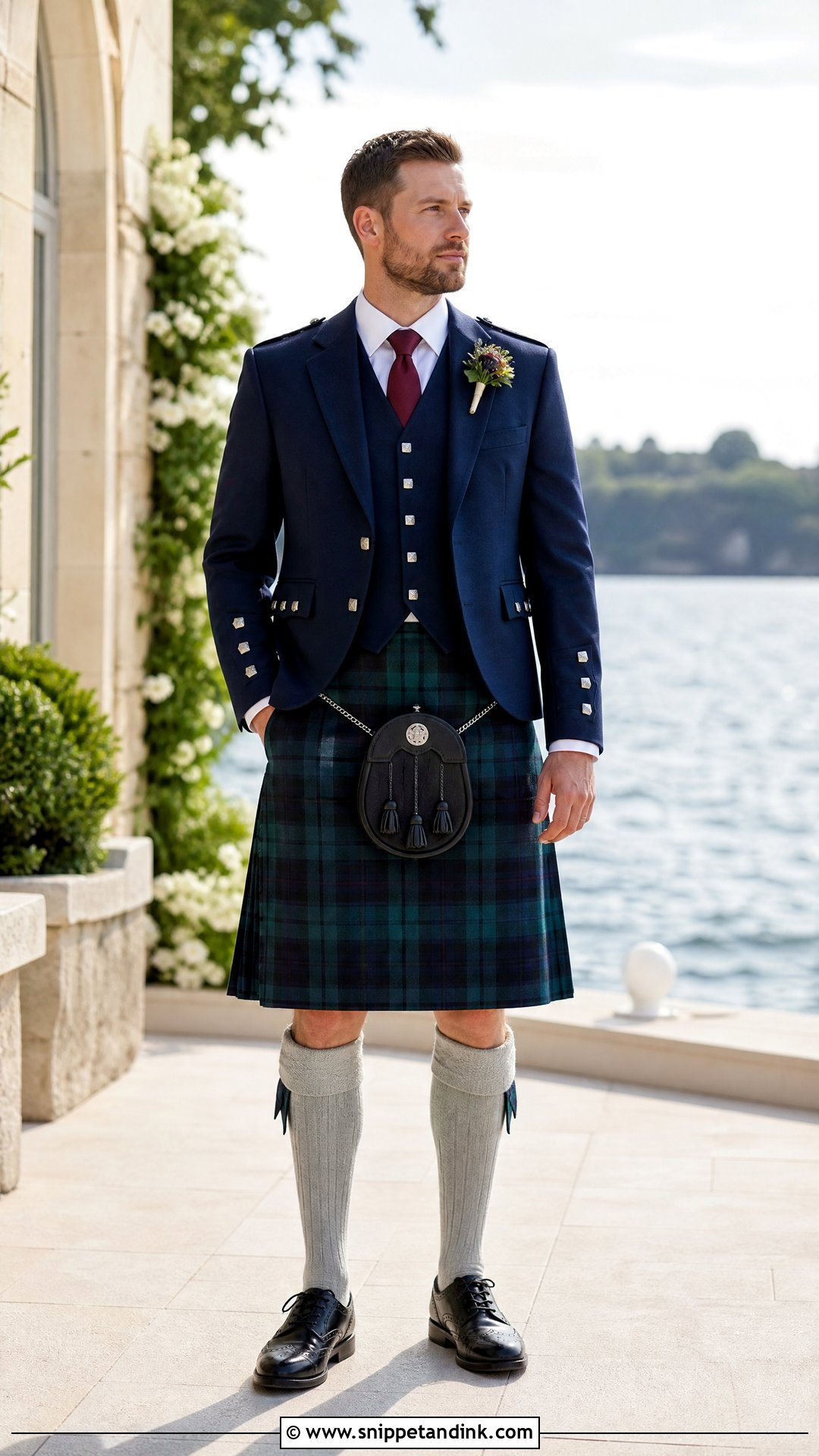
Navy is a softer alternative to black, and it suits tartans with blue, green or grey in them, with a small amount of red at most. A navy jacket and matching waistcoat over a white shirt, with a navy, sage or burgundy tie. Black semi-dress sporran, light grey hose, tartan flashes and black brogues. I like the lighter socks here because they separate the kilt from the shoes, so in a full-length shot you can read every part. It suits waterfront venues and daytime ceremonies. For the party, keep the navy jackets and kilts the same and give the groom the only dress sporran.
8. Brown Tweed Wedding Kilt Outfit
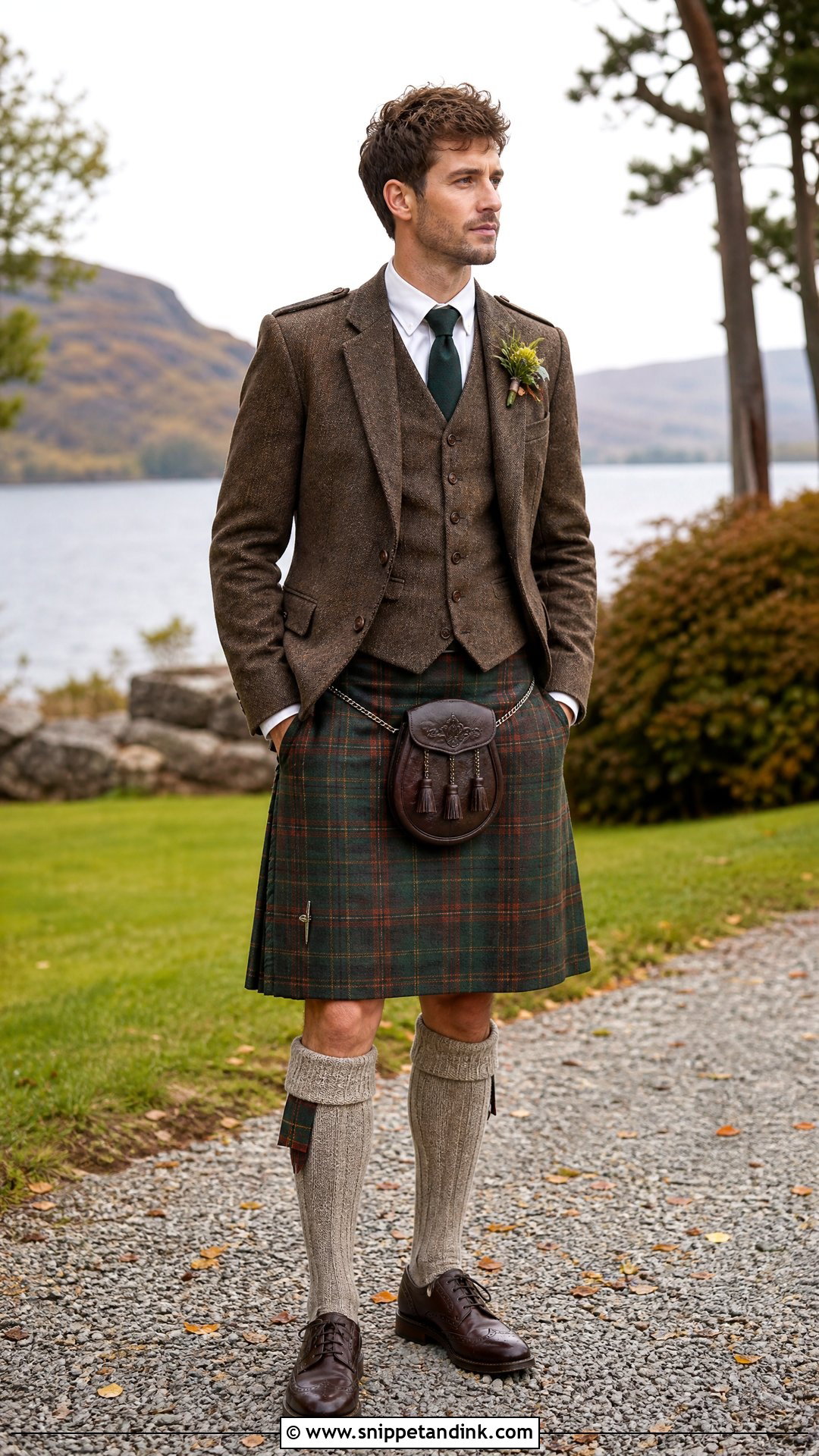
Brown tweed belongs among wood, stone and autumn leaves. Pair the jacket and waistcoat with a green, rust, navy or weathered tartan and an ivory shirt, and deepen it with a forest green, copper or burgundy wool tie. Brown leather sporran, oatmeal hose, muted flashes and dark brown brogues. A cream pocket square works; another tartan in the pocket doesn’t. Relaxed is not the same as rumpled, so the kilt pleats still need a proper press. Fall weddings and lodges suit it best, especially anywhere full black Highland dress would feel severe.
9. Summer Wedding Kilt Outfit
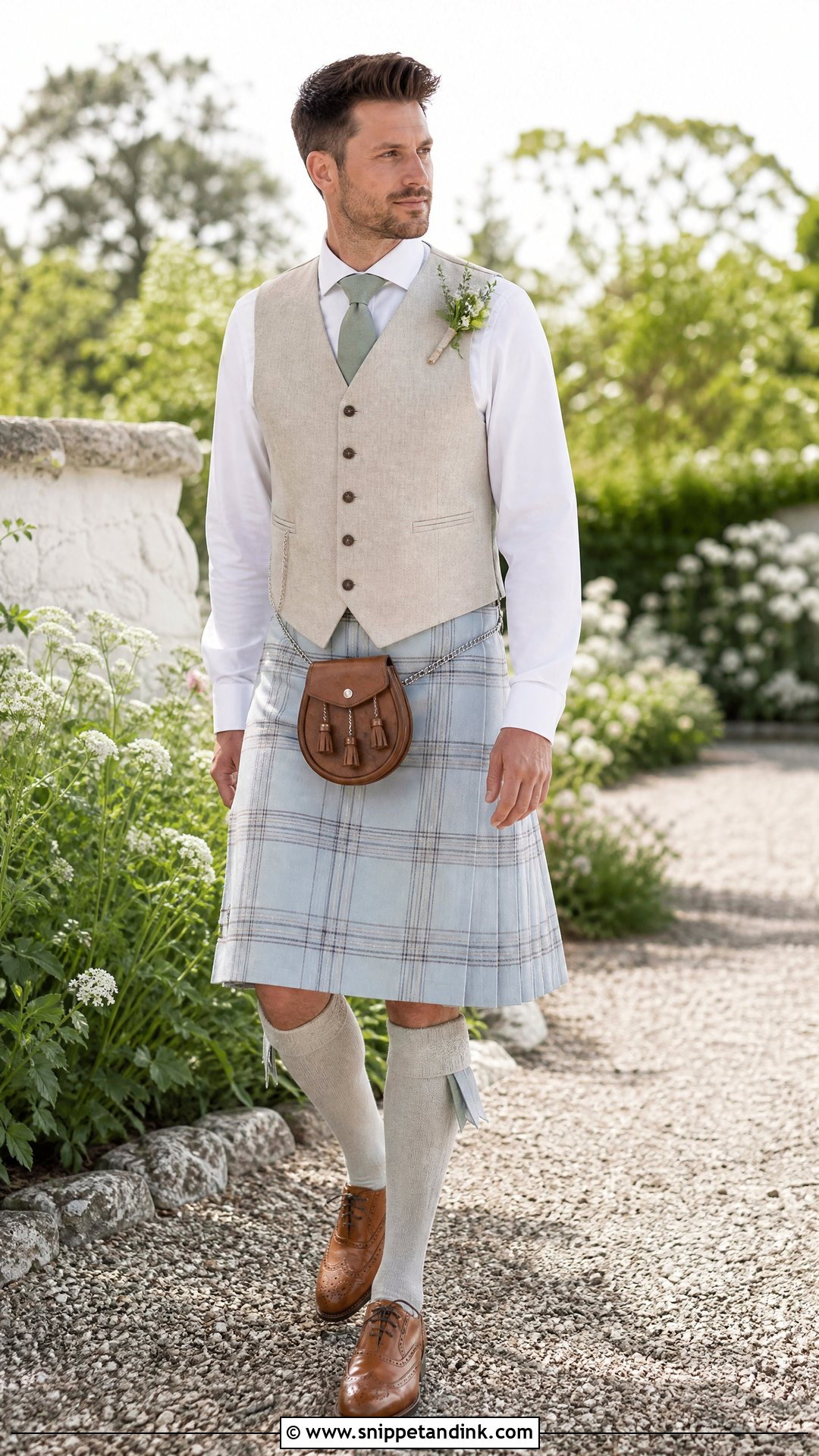
Eight yards of heavy wool in July is a lot of cloth to wear. A five-yard or lightweight tartan kilt has fewer, shallower pleats at the back, so it is lighter and cooler, though it swings less. Wear it with a white cotton shirt, a tailored waistcoat and a neat tie, and keep the jacket for formal photos or the cool part of the evening if the dress code allows. Compact leather sporran, light cream or pale grey hose, flashes and comfortable brogues. Pale blue, sage, heather and weathered tartans sit well in bright light. A breathable shirt and a properly fitted waistcoat look far better than rolled sleeves halfway through the vows.
10. Winter Wedding Kilt Outfit
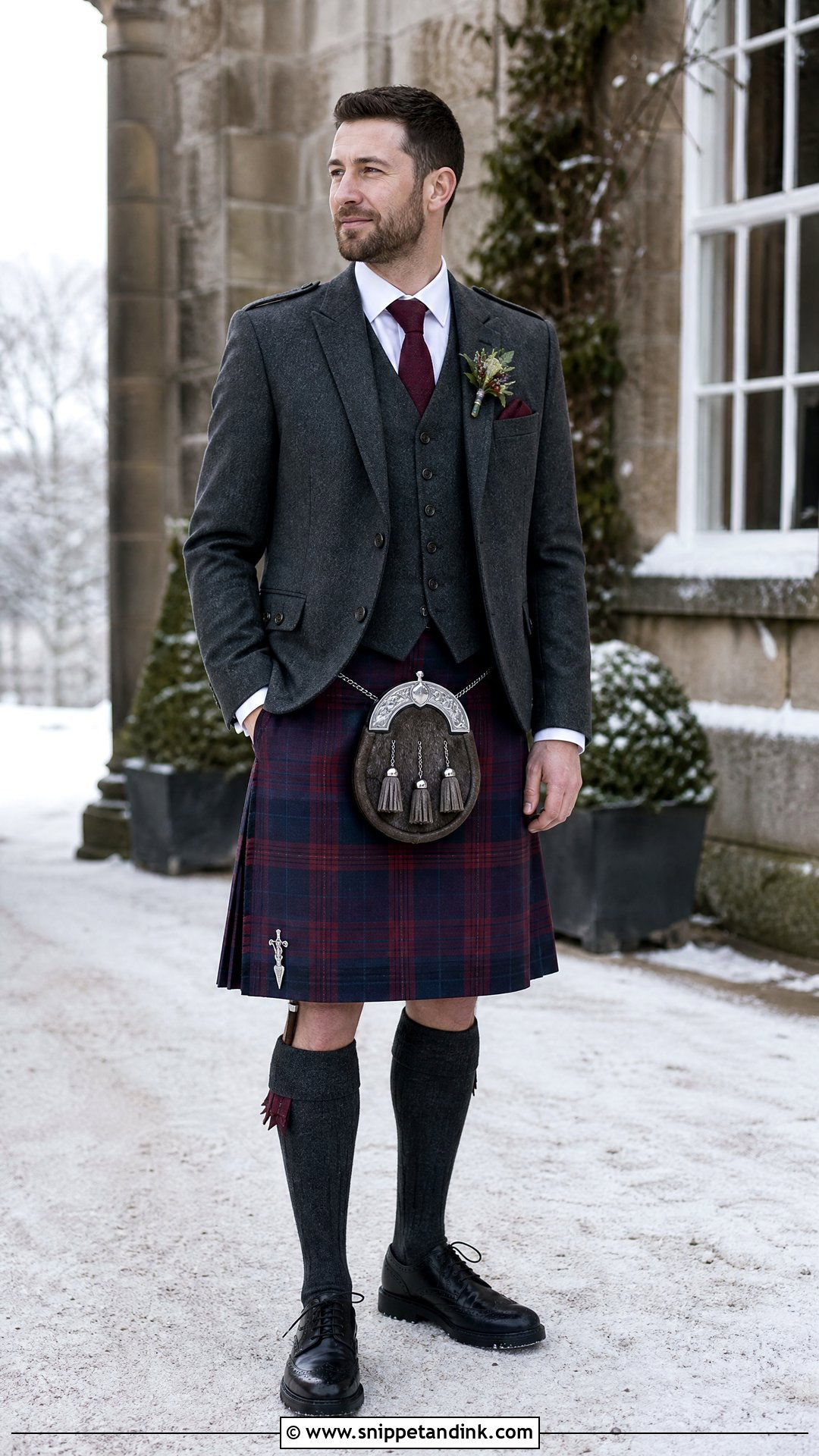
Winter is when the eight-yard wool kilt earns its weight. Pick a rich tartan in navy, forest green, burgundy or charcoal and add a substantial tweed or formal black jacket, matching waistcoat, white shirt and wool tie. A full dress or semi-dress sporran balances all that cloth. Thick charcoal or cream hose actually keep your legs warm, and sturdy brogues with good soles handle wet stone. For outdoor shots, layer a tailored wool overcoat or a Highland-style coat over the lot, and check it ends above or well below the kilt hem, not right on it. Gloves and scarf stay neutral.
11. Castle Wedding Kilt Outfit
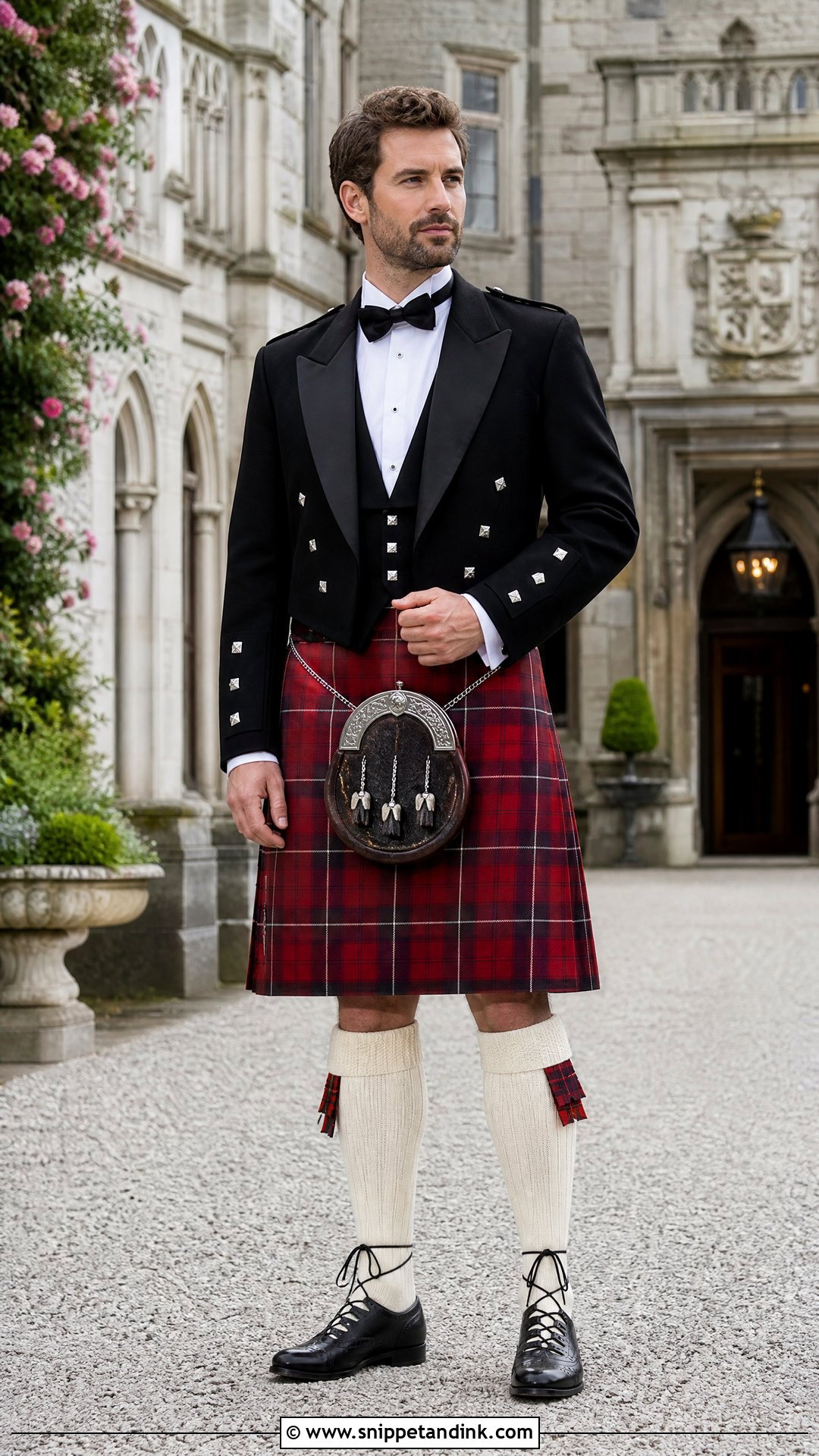
Castles call for the full formal outfit, and for proportions that hold up in a big room. A richly colored tartan with a black Prince Charlie, matching waistcoat, white wing collar and black bow tie. Polished dress sporran, cream hose, flashes and ghillie brogues or classic dress brogues. A fly plaid brings more tartan into full-length shots on a staircase. Give the groomsmen Argyll jackets or leave off their plaids so the groom stands out. The hem is what I check first here: it should sit around the middle of the kneecap. Too long looks like a skirt, and too short looks borrowed.
12. Outdoor Wedding Kilt Outfit
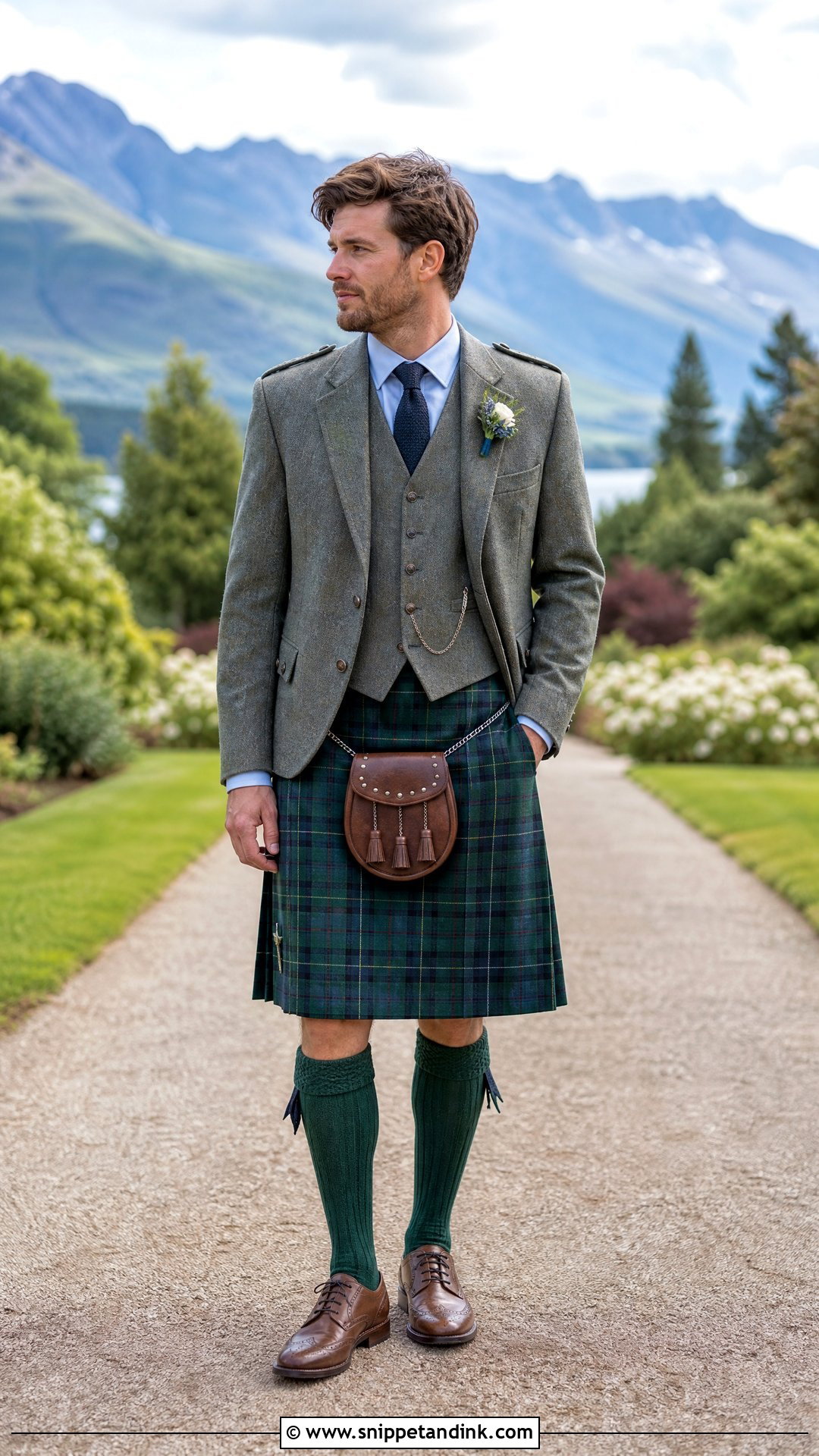
Soft ground and changeable weather need a kilt outfit built for walking. A medium-weight tartan with a grey or green tweed jacket and waistcoat, a white or pale blue shirt, a textured tie, a leather day sporran and charcoal hose. The shoes matter most: brown brogues with grippy soles, broken in before the day. Earthy colors sit naturally in woodland, mountain and garden settings. Very pale hose show mud within minutes, so mid-grey or lovat green is more forgiving. A water-repellent spray on the jacket can help, tested on a hidden patch first. Make sure the jacket lets you raise your arms for the group hug shots.
13. Beach Wedding Kilt Outfit
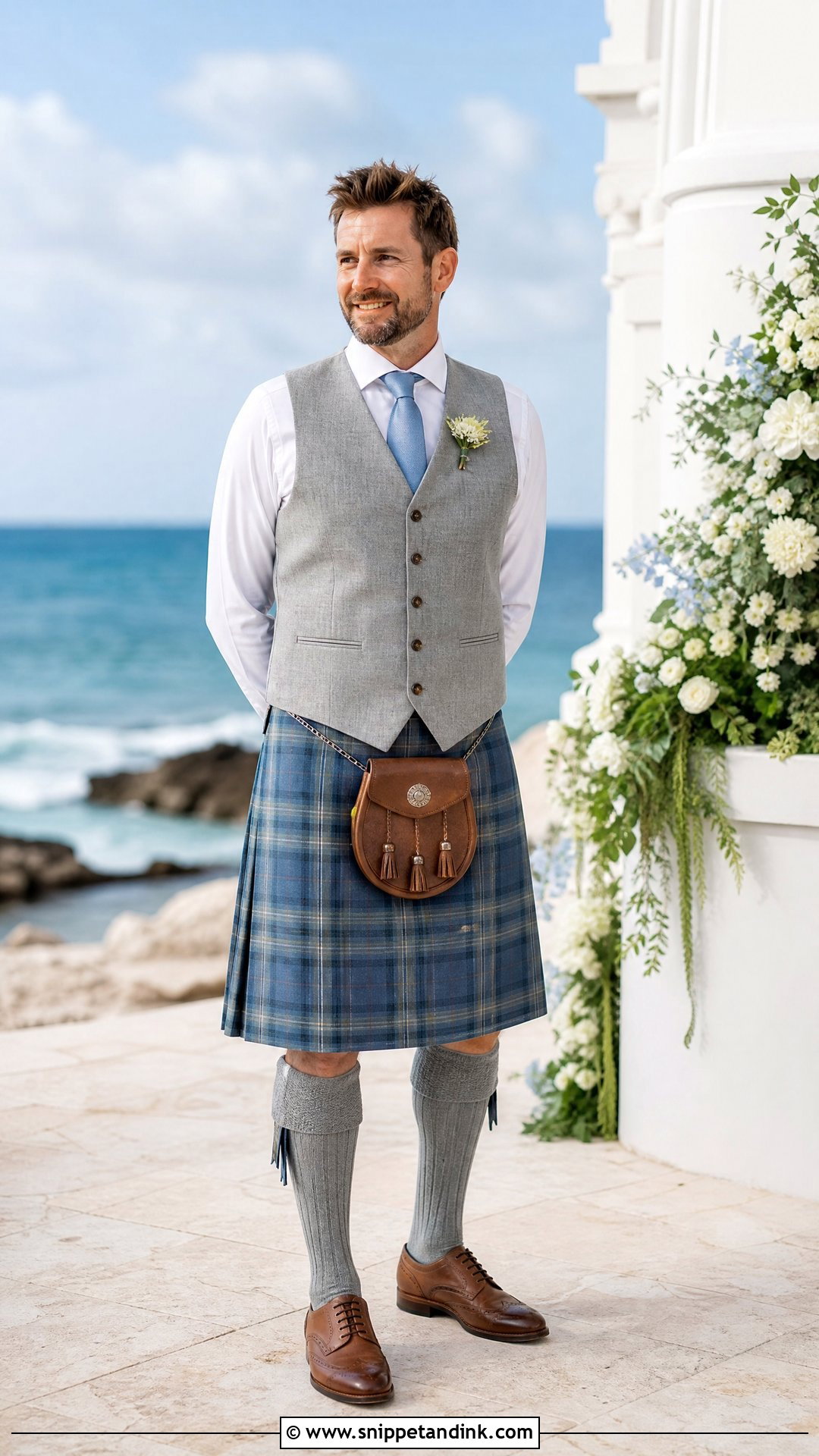
A kilt works on a beach if you strip it back. Choose a lightweight weathered tartan in soft blue, sand, grey or muted green, with a breathable white shirt and a pale grey, oatmeal or navy waistcoat. A jacket can come out for the ceremony, though heavy formal layers look odd in warm sand. Compact leather sporran, light grey hose and subtle flashes. I’d skip ghillie brogues here; their long laces are a nuisance in sand, and plain leather shoes are more practical. Sand also works into pleats and hose, so shake out the kilt before it goes back in its bag. Keep a simple tie on for the formal photos.
14. Formal Evening Wedding Kilt Outfit
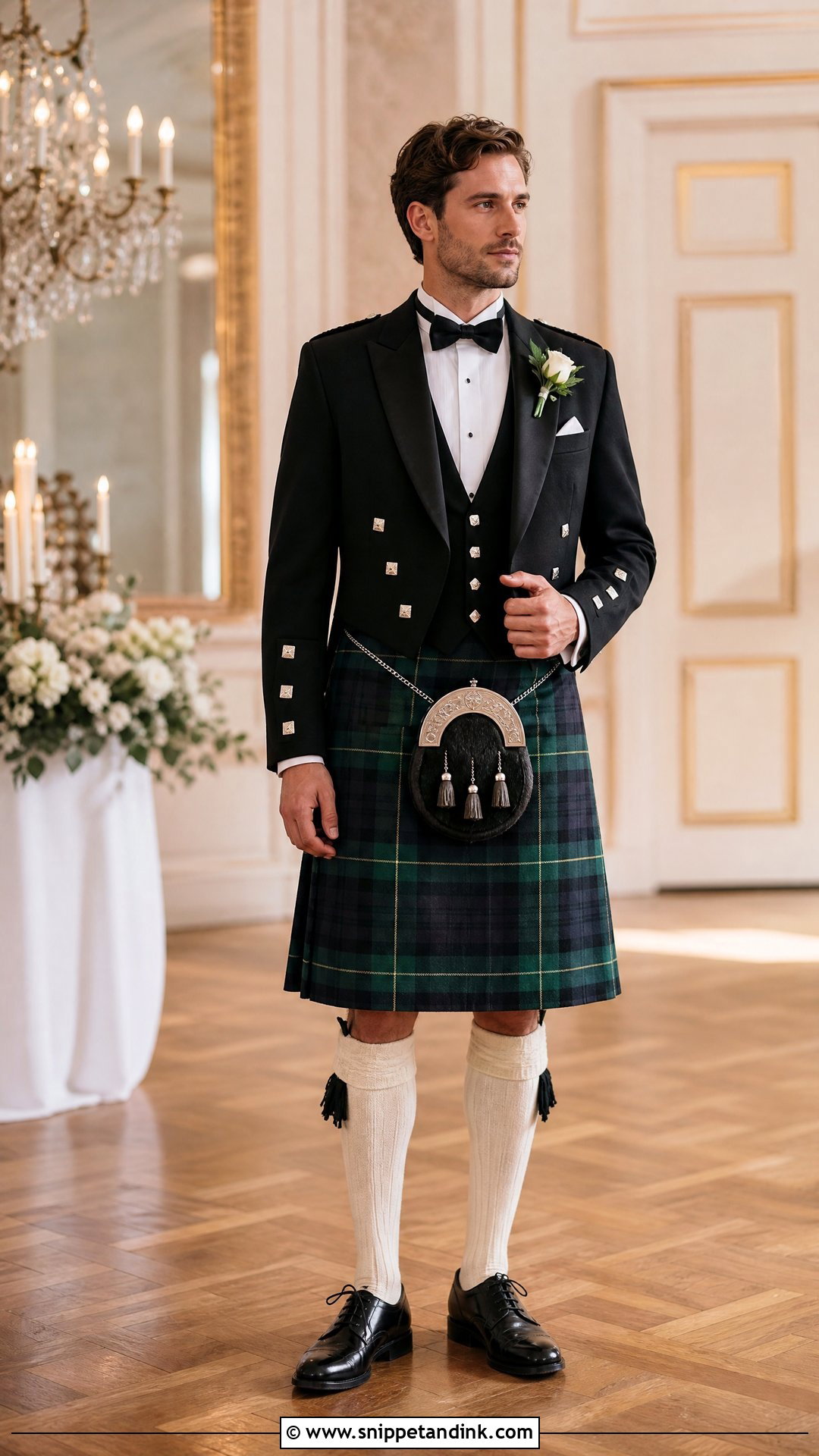
When the invitation says black tie, Highland dress has its own exact equivalent. A dark tartan kilt, Prince Charlie jacket, matching waistcoat, white wing collar and black bow tie, with a silver-trimmed dress sporran as the focal point. Cream or off-white hose, dark flashes and highly polished black brogues. The groom may add a fly plaid; guests and groomsmen are better without one. Leave daytime tweed, casual boots and bulky leather sporrans at home for this dress code. In a room full of tuxedos, the kilt outfit holds its own as long as it is just as formal.
15. Casual Wedding Kilt Outfit
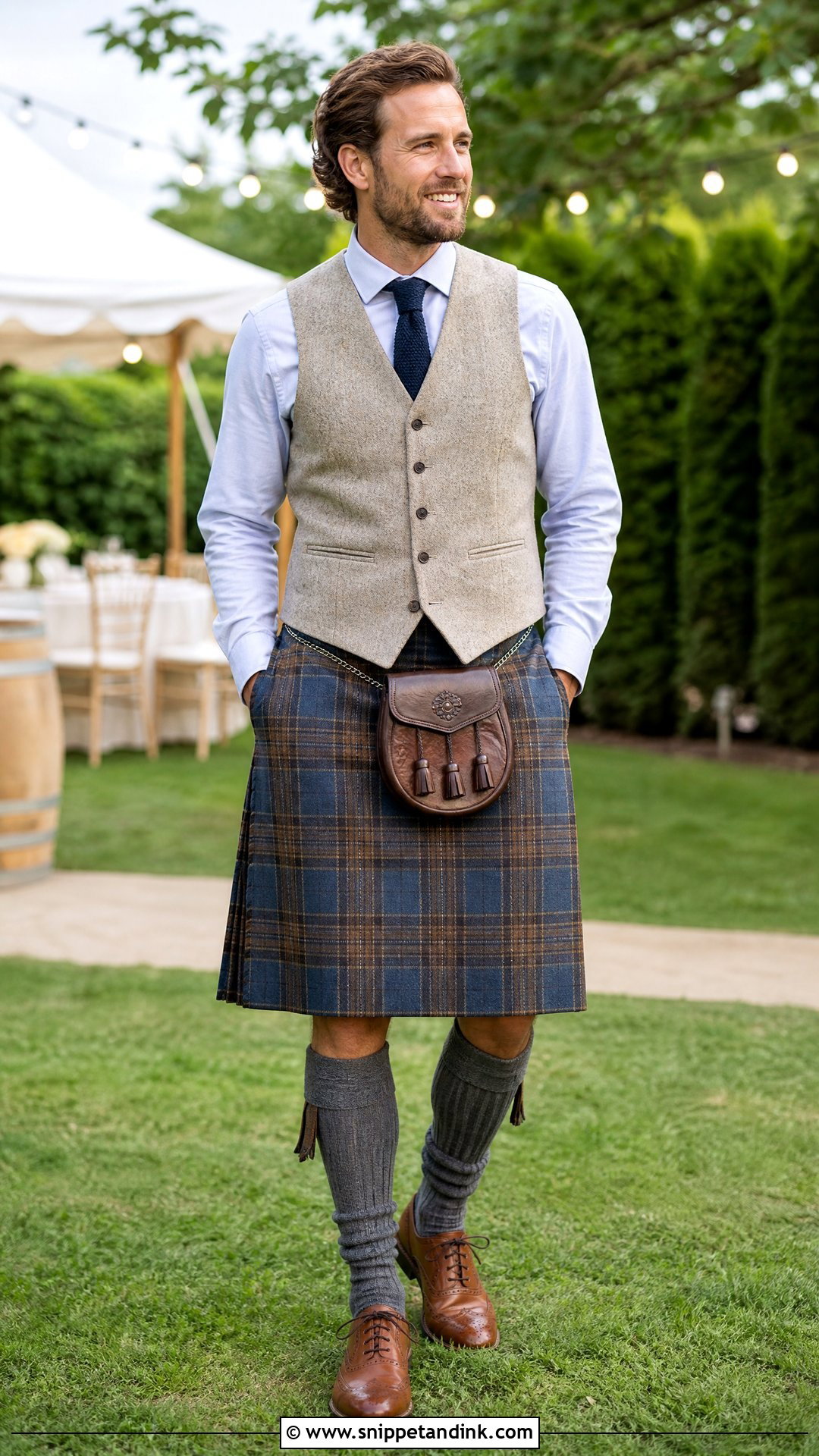
Plenty of weddings don’t need a jacket with ornate buttons at all. For a relaxed one, a five-yard kilt, a crisp white or pale blue shirt and a well-fitted wool waistcoat do the job, with a plain knitted tie, leather day sporran, neutral hose, flashes and brown brogues. Keep sleeves down and shoes polished through the ceremony, which is what stops it sliding into too casual. Have a tweed jacket nearby for group photos or a cold evening. Backyard receptions and small civil ceremonies suit it. A graphic T-shirt or trainers only belong if the couple has asked for that.
16. Groomsmen Wedding Kilt Outfit
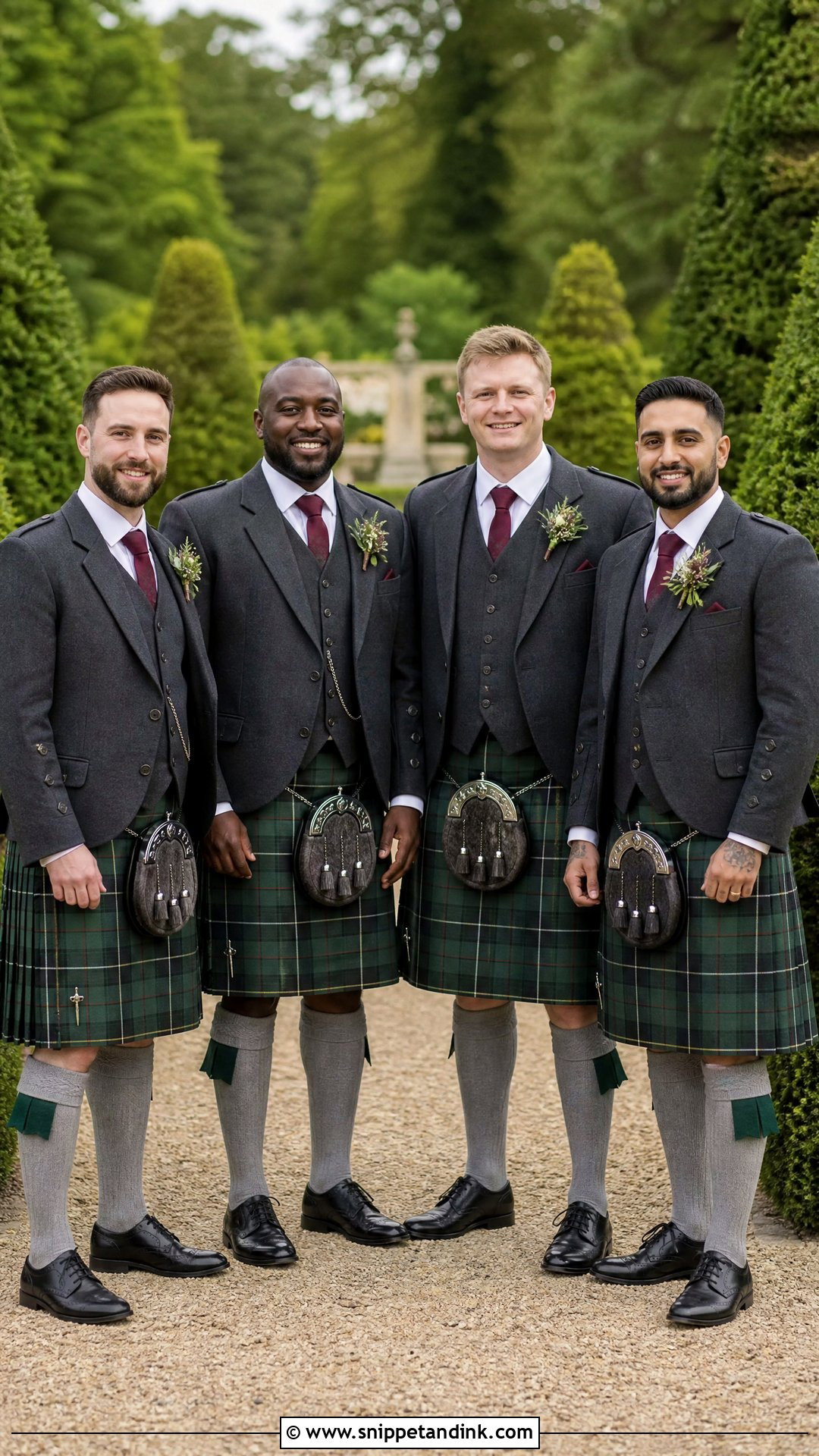
Groomsmen frame the couple, so the lineup needs to read as one group. Matching tartan kilts, charcoal Argyll jackets, waistcoats, white shirts and plain ties in the wedding colors, with the same semi-dress sporrans, hose, flashes and black brogues. The groom stands apart through his tie, a dress sporran, a fly plaid or a more formal jacket; pick one or two, not all. If each man wants his own family tartan, let the kilts differ and keep jackets, shirts, ties and hose identical. I try to get everyone fitted at once. Kilt length, sleeve length and hose height vary between men, and in a lineup any difference shows.
17. Best Man Wedding Kilt Outfit
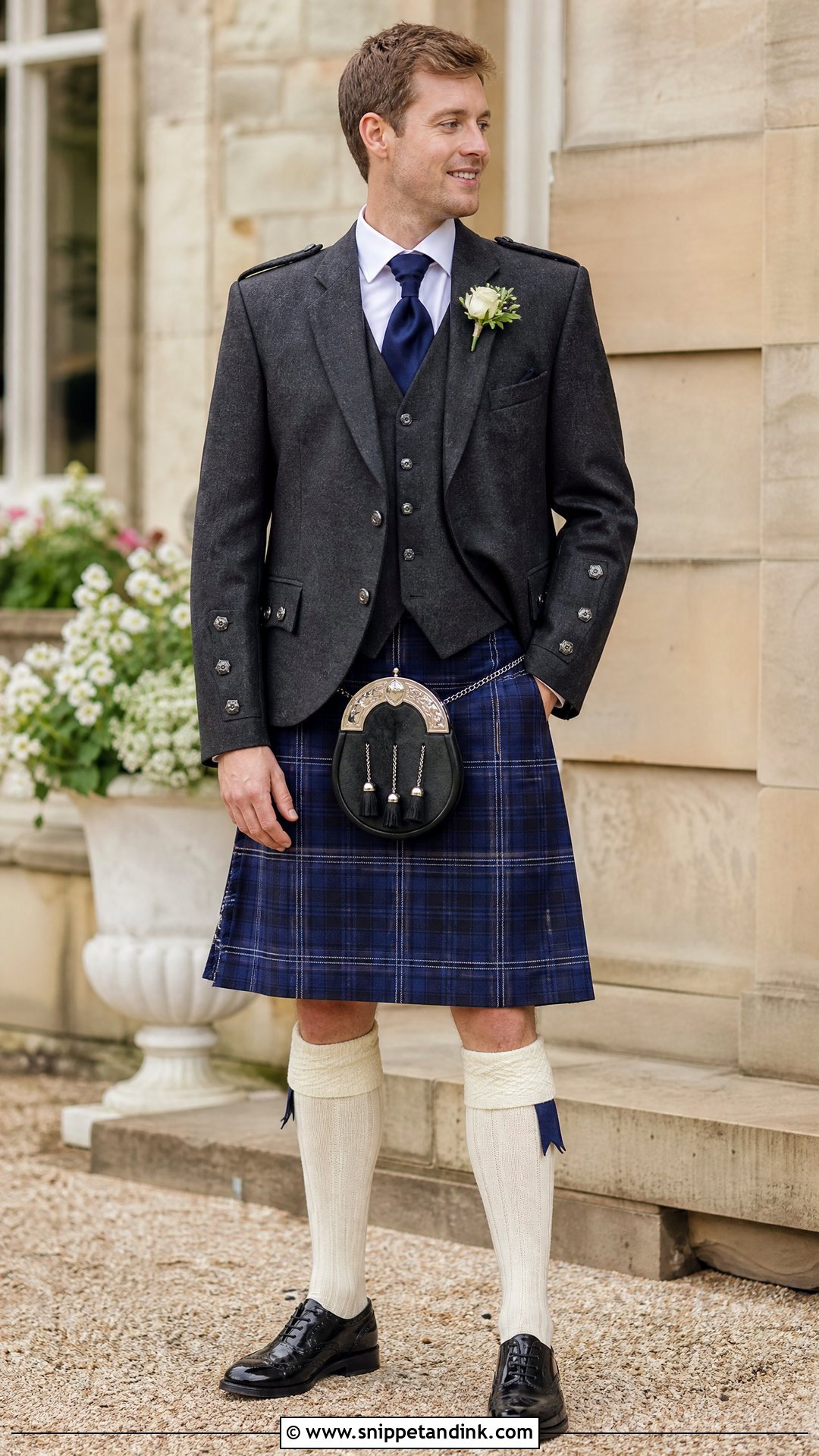
The best man should look connected to the groom and one step quieter. Start with the wedding tartan or one that sits well beside it. An Argyll jacket, matching waistcoat, white shirt and a plain tie in the wedding color, with a semi-dress sporran, grey or cream hose, flashes and polished brogues. If the groomsmen match exactly, set him apart with a different buttonhole flower or a slightly darker tie. He shouldn’t wear a fly plaid or a dressier sporran than the groom unless the two of them have planned it.
18. Wedding Guest Kilt Outfit
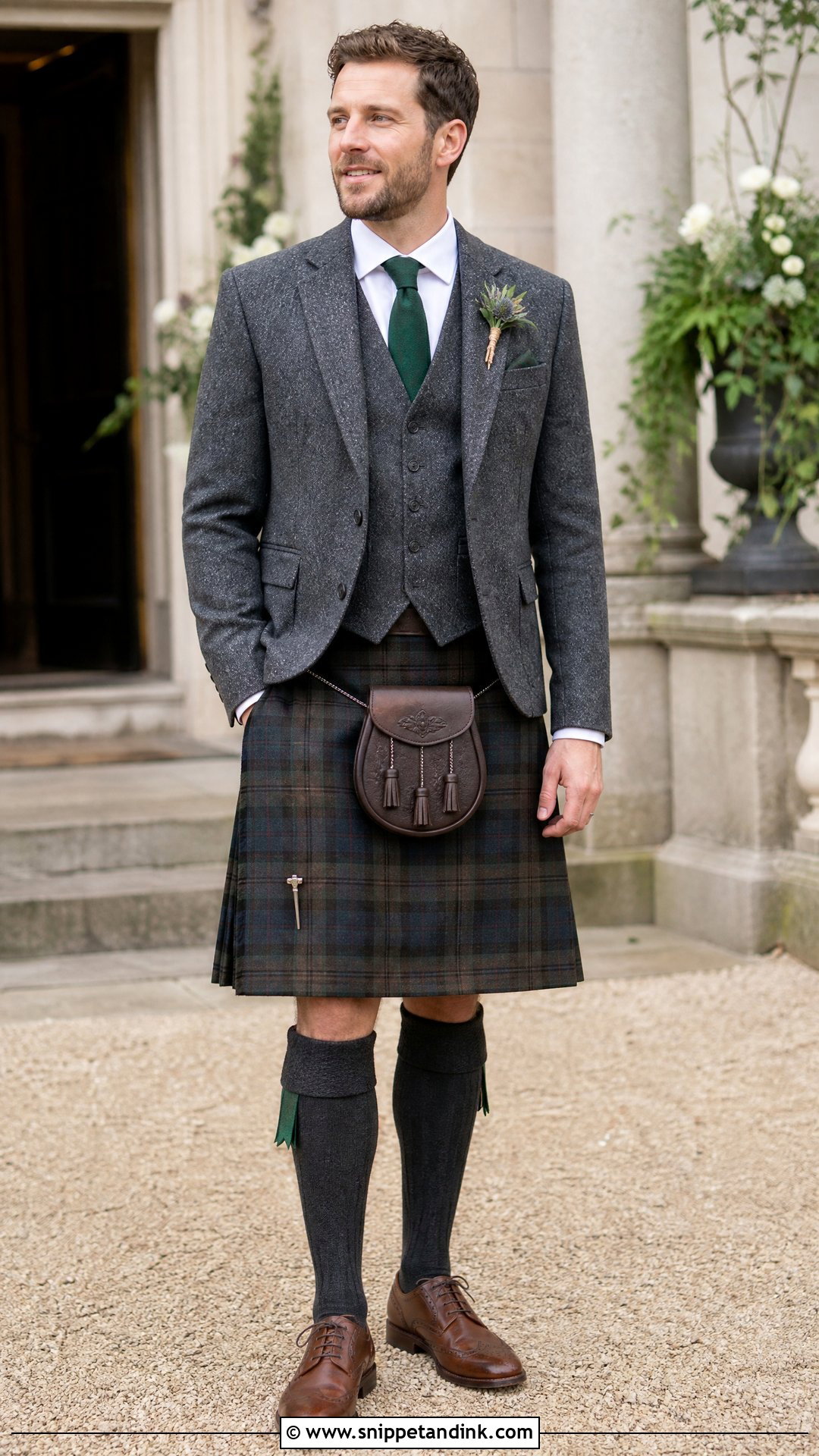
As a guest, your kilt outfit follows the invitation and stays out of the wedding party’s lane. For daytime, a tartan kilt with a tweed or Argyll jacket, waistcoat, white shirt, plain tie and semi-dress sporran, plus neutral hose, restrained flashes and polished brogues. A Prince Charlie is right only when the invitation actually says black tie. Don’t wear a fly plaid or anything that copies the groomsmen’s coordinated details. If you’re unsure whether Highland dress is welcome, ask the couple. Nobody minds the question, and it saves you looking like an extra groomsman in every photo.
19. Irish Wedding Kilt Outfit
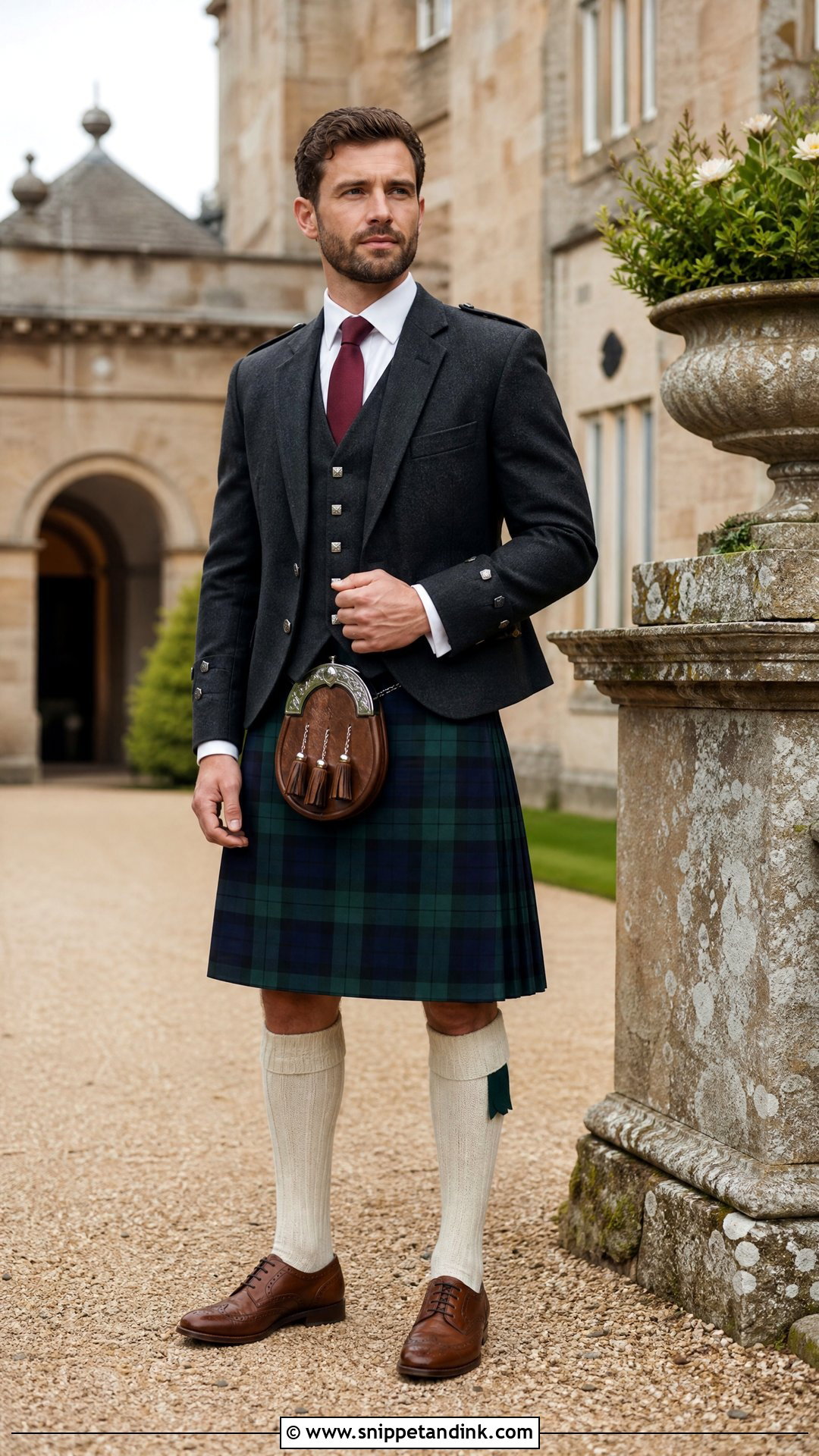
Irish kilts draw on county, family and heritage tartans, or a solid color. The traditional option is the saffron kilt, a plain mustard-toned one. Pair either with a charcoal, navy or green Argyll, a matching waistcoat, white shirt and a plain tie in forest green, deep blue, or burgundy. Brown or black leather sporran, cream hose, flashes and brogues. Saffron is a strong color, so everything else should be quiet; one green accent is plenty. A groom blending Irish and Scottish family can wear the tartan that matters most and keep the accessories in the wider wedding palette.
20. Waistcoat Wedding Kilt Outfit
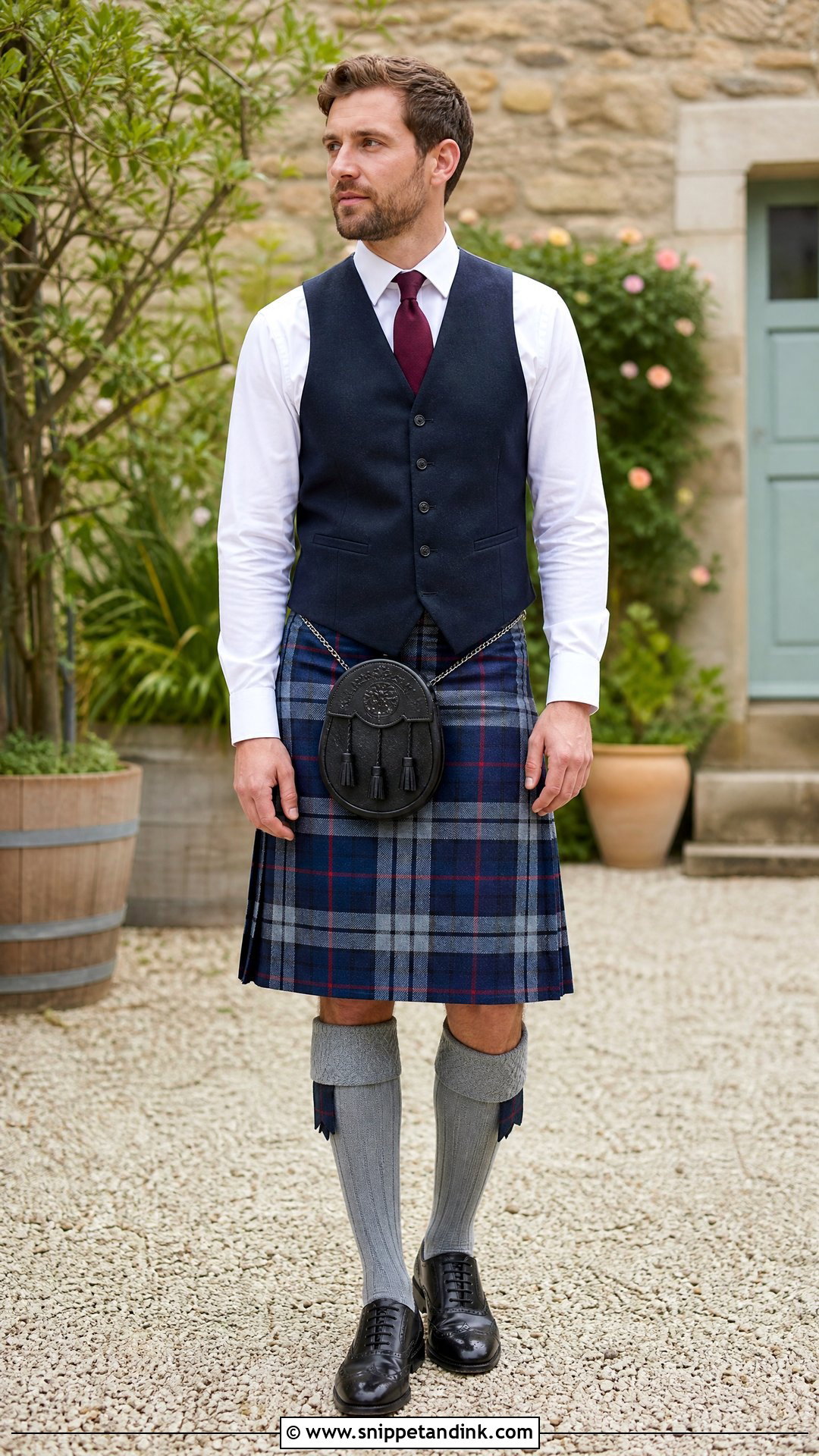
Dropping the jacket and keeping a waistcoat gives you comfort and still looks finished. Choose a tailored charcoal, navy, brown or oatmeal waistcoat over a crisp long-sleeve shirt, with a plain tie or bow tie to suit the formality, a leather sporran, hose, flashes and polished brogues. The waistcoat should lie flat with no pull lines at the buttons; if it gapes when you sit, it is too tight. Tuck the shirt in firmly, because a kilt waistband sits higher than trousers and a loose shirt untucks when you dance. It suits summer ceremonies and elopements. At a formal wedding, wear the jacket until the photos are done.
Sporran Height, Pin Placement and the Sgian Dubh
Most kilt outfits that look slightly off in photos are fine garments worn a little wrong. These are the details I check on every man before he leaves the dressing room.
- The sporran sits centered, about a hand’s width below the kilt buckle, with its chain or strap hidden under the belt loops at the back.
- The kilt pin goes through the front apron only, near the lower corner on the right. Pinning both layers together stops the kilt moving and can tear it.
- Pleats are at the back and the fringed edge sits on the right side. Hire kilts are sometimes put on backwards in a rush.
- The sgian dubh goes into the top of the hose on your dominant side, with just the hilt showing.
On the sgian dubh: it is still a blade. If you’re flying, it travels in checked luggage, never in your cabin bag, and it’s worth asking the venue whether they have a rule about it. Many hire shops offer a blunt or decorative one for exactly this reason.
After the wedding
Hang a kilt by the waist with the pleats falling straight, never folded across them. Spot clean marks gently, let it air overnight before storing, and send wool kilts to a cleaner who presses pleats, since a normal press can flatten them for good.
Start With the Tartan, Finish With the Hose
Get the tartan right first, because it is the one piece you can’t easily change. Then let the venue and season choose the jacket, waistcoat, shirt and neckwear, and finish with the sporran, hose, flashes and shoes that match that level of formality. Prince Charlie and dress sporrans are for evening and black tie; Argyll and tweed are for daytime and outdoors. Groomsmen and guests coordinate without outshining the groom. And book fittings early. See every piece on together at least once before the wedding, sitting, standing and walking, so nothing about the outfit surprises you on the morning.
You'll Like These Ideas:


Leave a Reply