
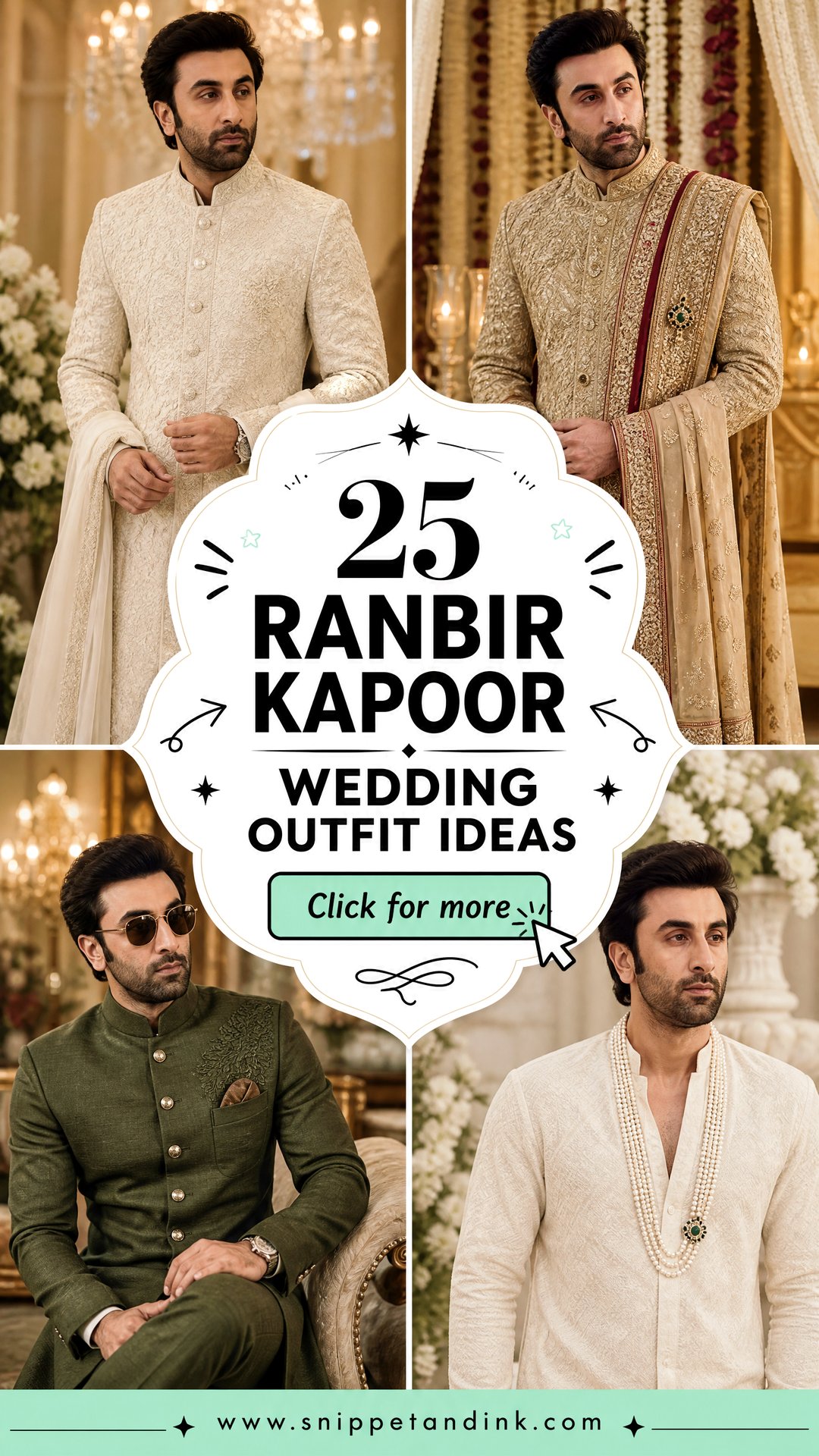
Ranbir Kapoor’s wedding wardrobe is the reference I hear most from grooms who want to look polished without turning into a walking jewelry display. His approach leans on ivory sherwanis, clean bandhgalas, rich kurtas and sharp tailoring, with one small statement at a time: pearls, embroidered buttons or a good pair of mojaris. That restraint is why it adapts so easily to grooms, brothers, guests and every function in between. You can go grand for the ceremony, relaxed for mehendi, sleek for cocktails and classic for the reception. The 25 head-to-toe outfits below follow that same thinking.
Planning One Outfit per Function Across the Wedding Week
Indian weddings run over several events, and the biggest mistake I see is a groom spending everything on the wedding-day sherwani and scrambling for the rest. I plan the week as a set, so the outfits build toward the ceremony.
- Haldi: cheap, light cotton you don’t mind staining. Turmeric doesn’t wash out.
- Mehendi: color and comfort. A pastel or printed kurta, maybe a Nehru jacket, nothing heavy.
- Sangeet: you’ll dance, so choose a bandhgala or kurta set with room in the arms and back.
- Wedding ceremony: the richest outfit, usually a sherwani with a stole and safa. Comfortable mojaris matter, as you’ll stand and sit on the floor for hours.
- Reception: sleek and darker. A bandhgala, Jodhpuri or tuxedo.
Keep one thread running through all of them, such as a color family or a style of button, so the week’s photos look connected.
1. Ivory Sherwani Wedding Outfit
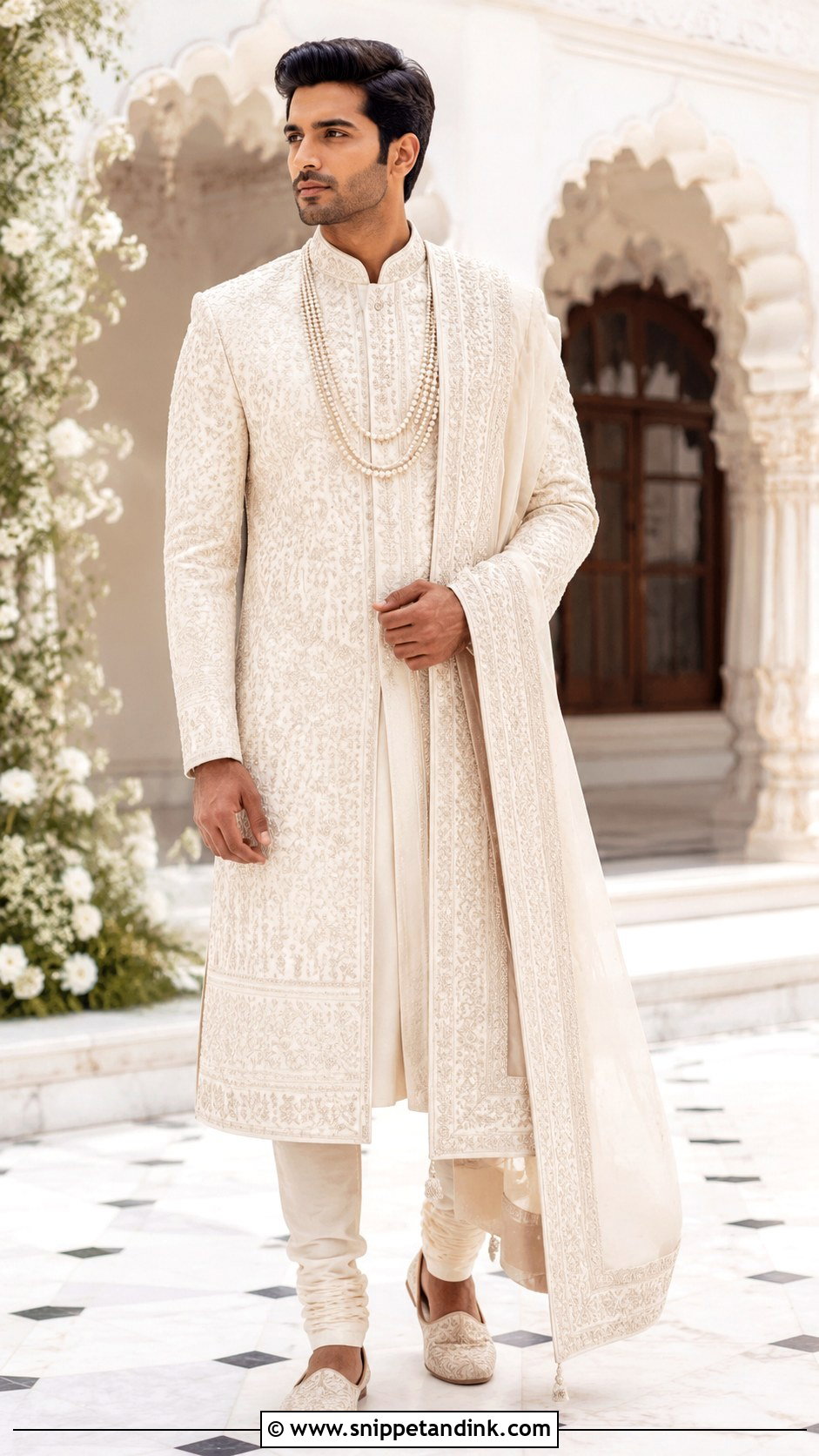
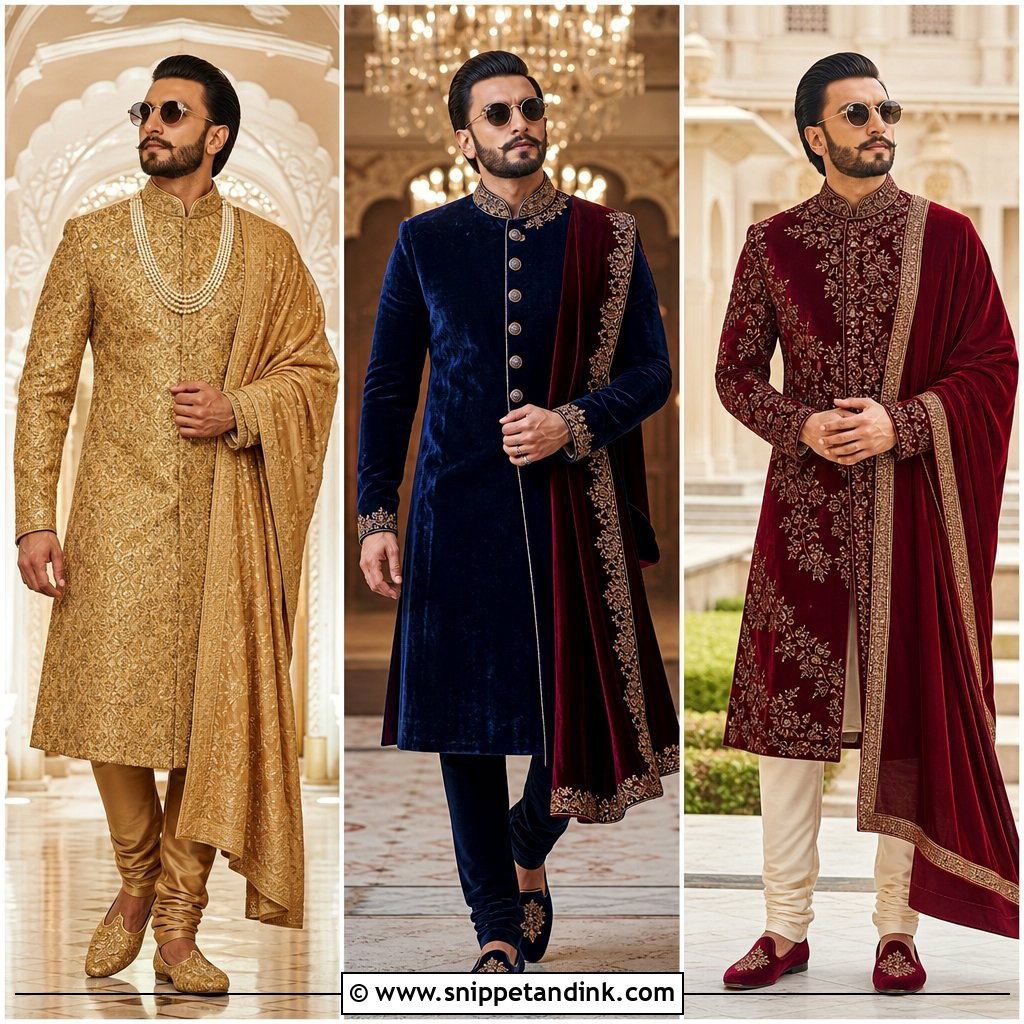
An ivory sherwani is the look most people picture when they think of his wedding style, and it’s royal without being loud. A finely embroidered ivory sherwani, a straight kurta, slim churidar and cream or gold mojaris form the base; a pearl mala finishes it for the groom. Ivory is unforgiving about shade, so I lay the sherwani, kurta and stole side by side in daylight before the final fitting. Three slightly different whites look like a mistake in photos. Guests should go lighter on embroidery and skip the heavy jewelry.
2. White Silk Kurta Sherwani Outfit
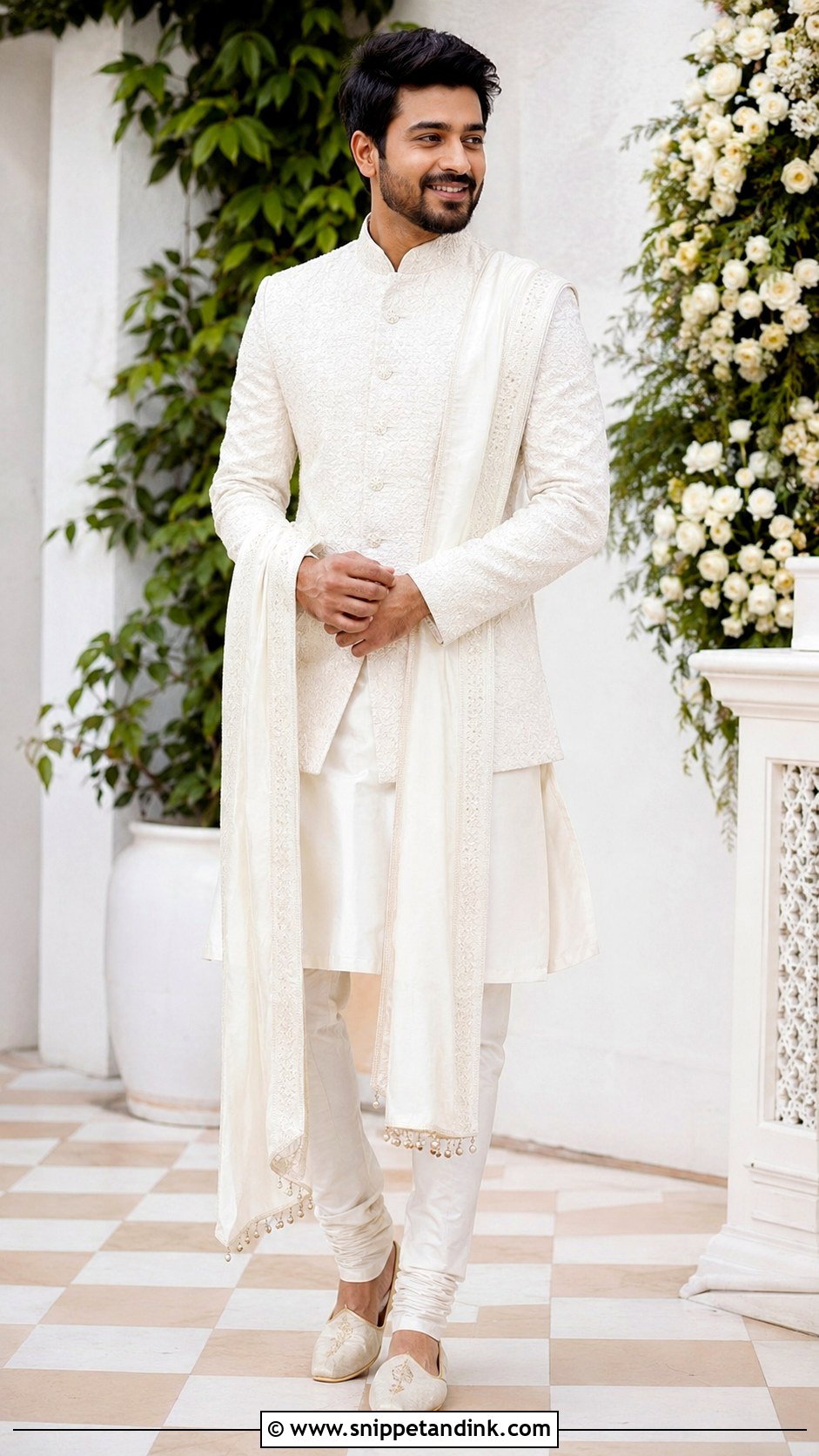
A white silk kurta under an embroidered sherwani jacket is lighter than a full sherwani, which makes it a good summer choice. Pearl-white or lightly brocaded jacket, slim churidar and ivory mojaris, with a light stole for movement. If you want detail, ask for tonal embroidery rather than contrast thread; it shows up close but keeps the outfit calm from across a courtyard. White silk shows sweat marks quickly, so I’d suggest a thin cotton vest underneath for an outdoor daytime ceremony.
3. Beige Bandhgala Wedding Outfit
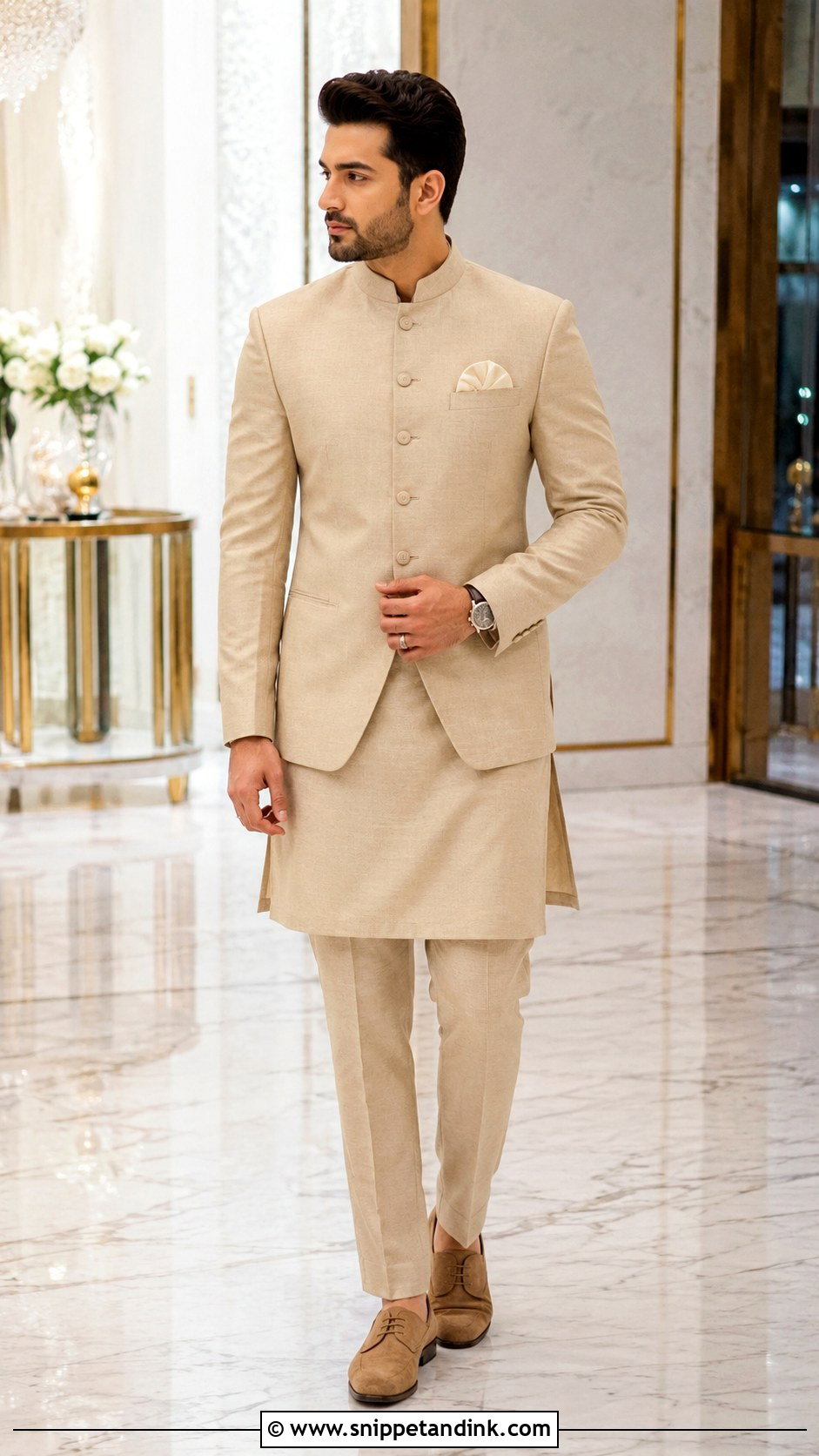
Beige tailoring is understated without looking underdressed. A beige bandhgala with a matching kurta and trousers creates a clean, single-color base. Tan loafers, beige mojaris or suede shoes depend on the event. The trap with beige is that it can look flat in photos, so I look for a fabric with some texture, like a raw silk or a fine weave, and add a champagne or soft gold pocket square. A watch and neat hair are enough for a sangeet, engagement or daytime reception.
4. Black Bandhgala Wedding Outfit
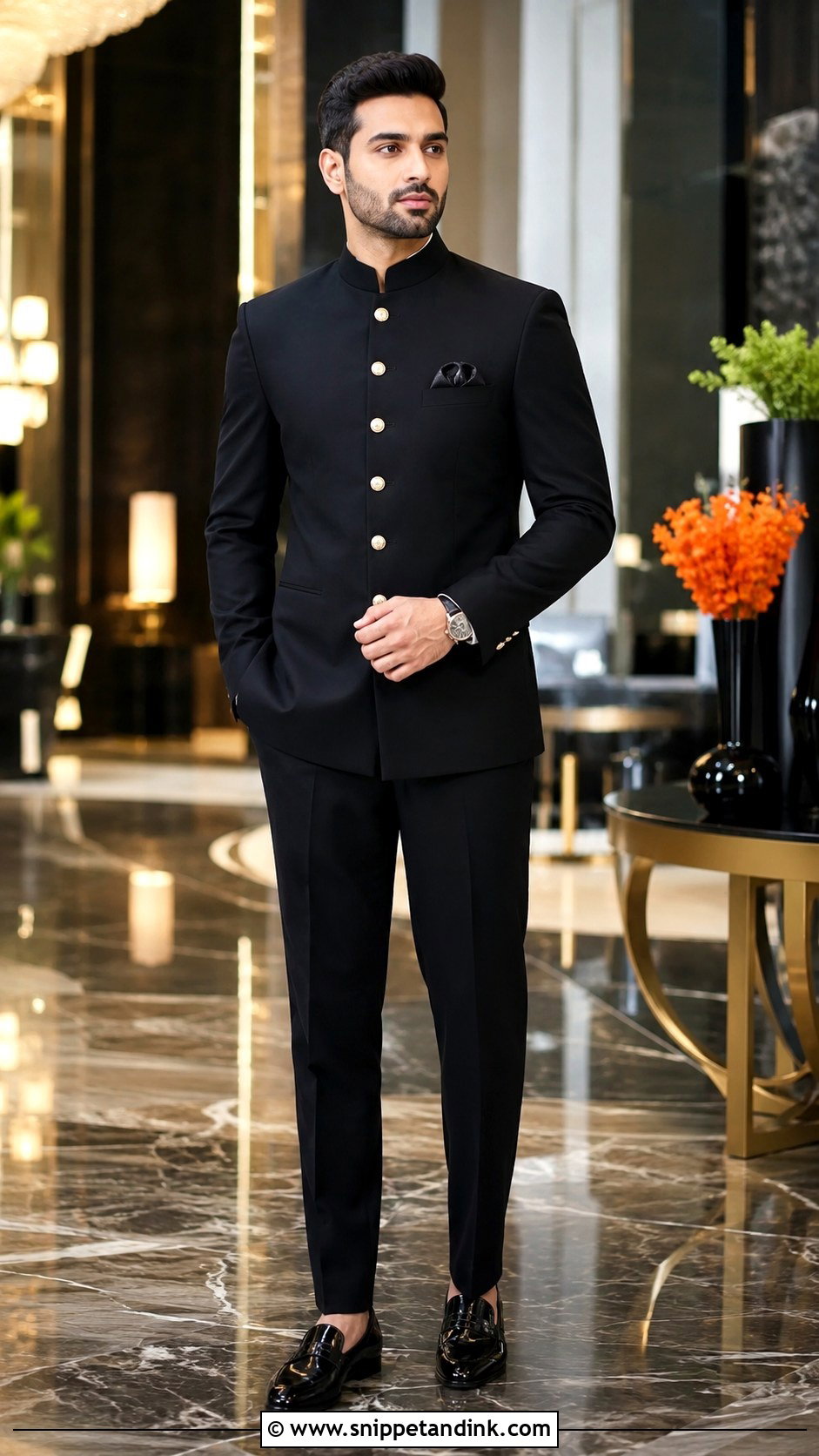
A black bandhgala has the polish of a suit and the roots of ethnic wear, which makes it the safest smart choice for evening functions. A fitted jacket with matching trousers, or over a kurta and trousers, is the base. Statement buttons, textured fabric or tonal embroidery make it special. The collar is the part I check first: it should sit flat against the neck without gaping or choking, because a bandhgala collar can’t be fixed easily later. Black loafers or velvet slippers suit a cocktail night or reception.
5. Royal Blue Sherwani Wedding Outfit
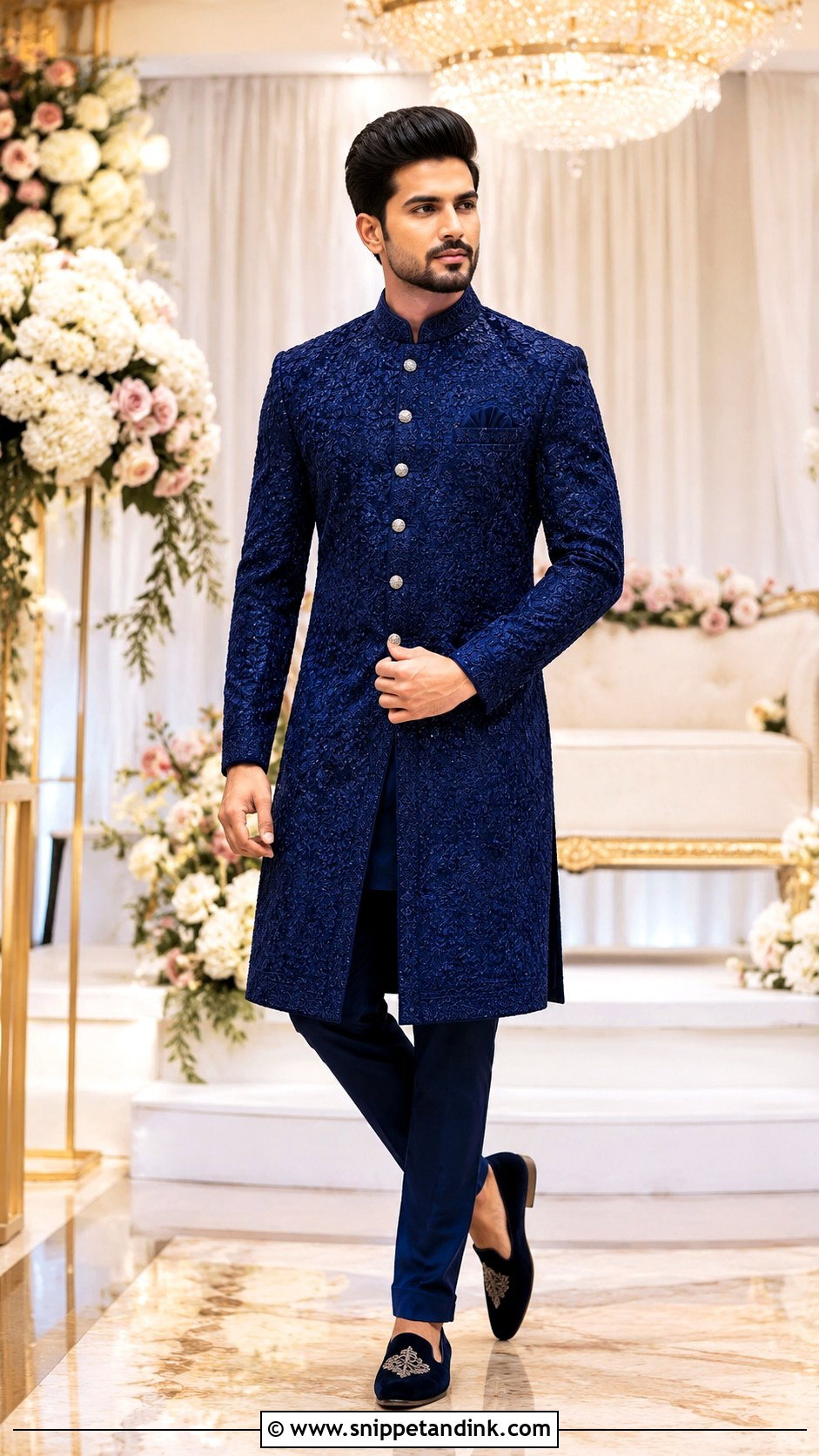
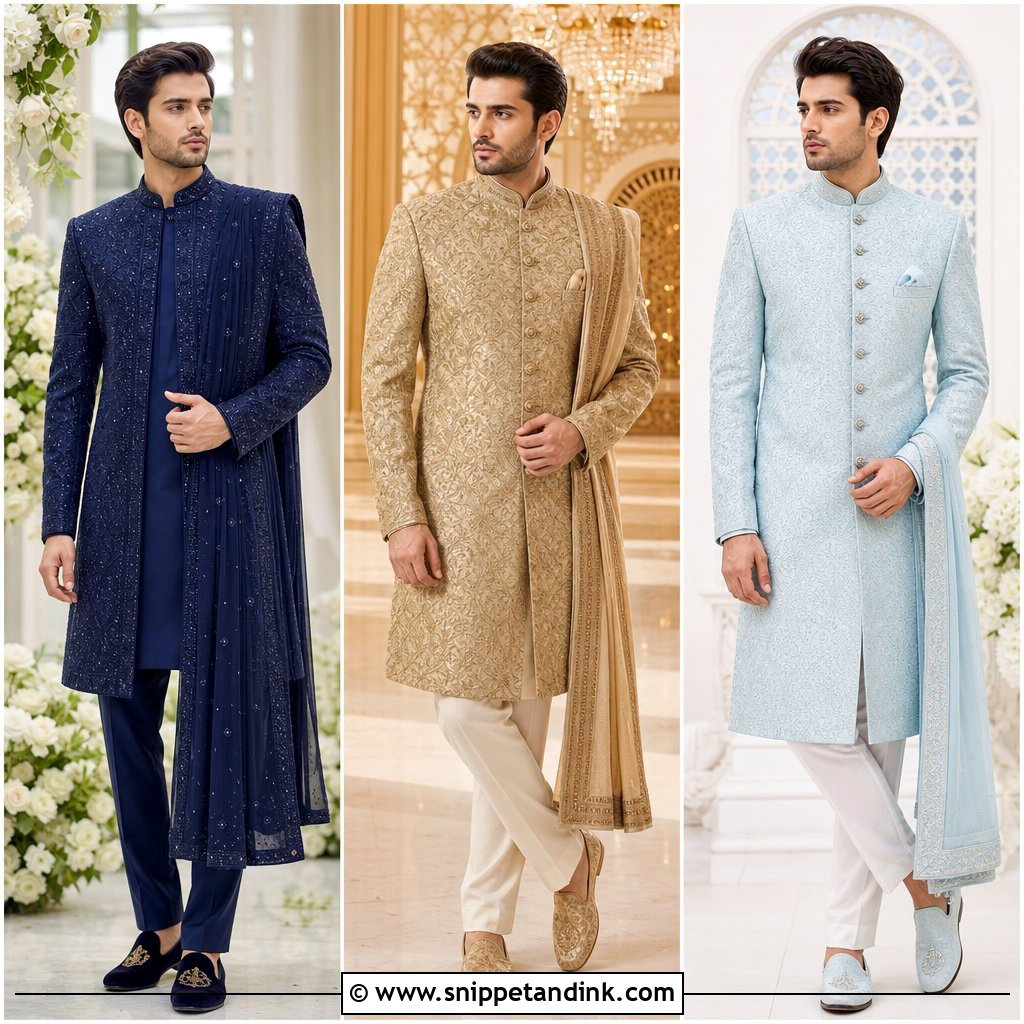
Royal blue gives you color without flash. A royal blue sherwani with tonal embroidery, slim trousers and dark mojaris looks confident on a groom or a guest. Keep the kurta plain underneath so the sherwani stays the focus. Silver buttons or navy threadwork add depth; gold tends to look busy against bright blue. A deep blue stole works for formal functions. Neat hair, a trimmed beard and very few accessories let the color carry it at a reception or sangeet.
6. Grey Kurta Bandhgala Outfit
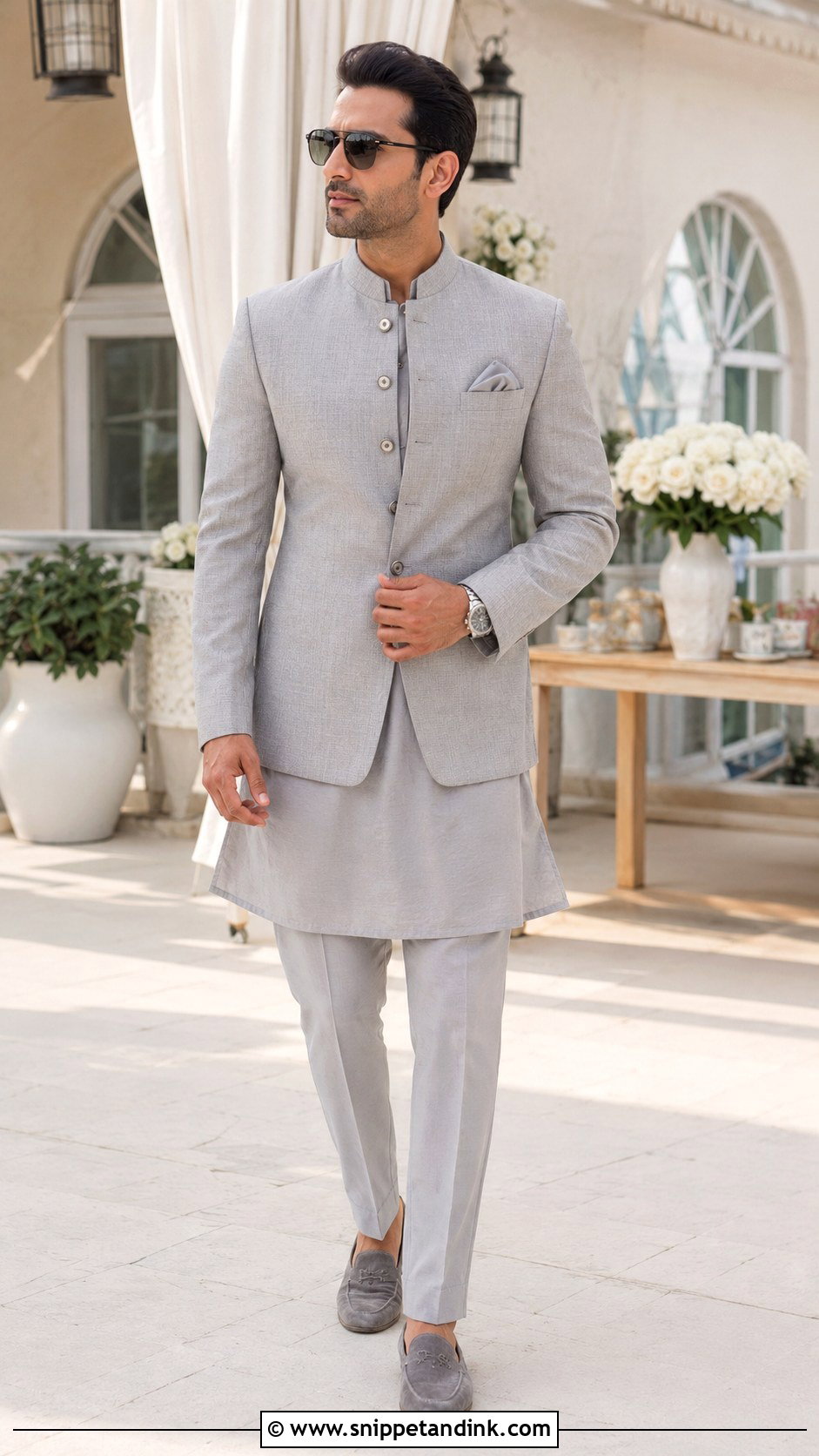
Grey is for the man who wants to look dressed without being the center of attention. A soft grey kurta, a structured bandhgala and slim trousers or churidar in the same tone, with brown, tan or grey suede shoes. For summer, choose cotton silk or a linen blend; pure polyester grey looks shiny and traps heat. A pocket square helps if the jacket is plain. It suits daytime ceremonies and pre-wedding functions, and you’ll wear the pieces again.
7. Maroon Sherwani Wedding Outfit
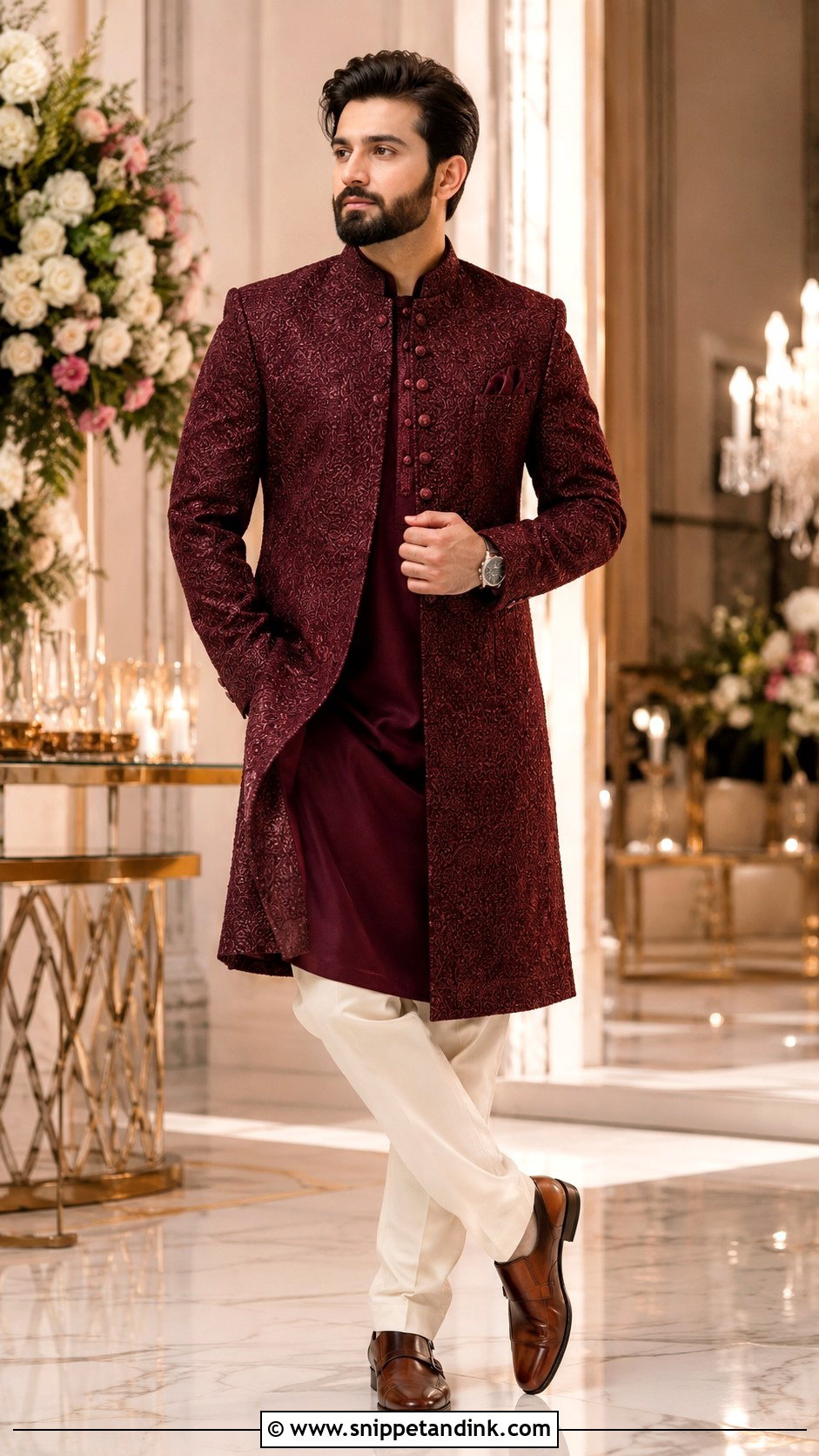
Maroon brings richness without needing shine, which is why I recommend it for evening events and winter weddings. A maroon silk kurta, a maroon embroidered sherwani and ivory or cream churidar is the classic pairing. Brown oxfords, monk straps or traditional mojaris finish it. When the sherwani is heavily embroidered, keep the stole plain or skip it. Maroon also sits well beside red and gold bridal outfits, which matters if you’re the groom standing next to a bride in red.
8. Black Kurta Wedding Guest Outfit
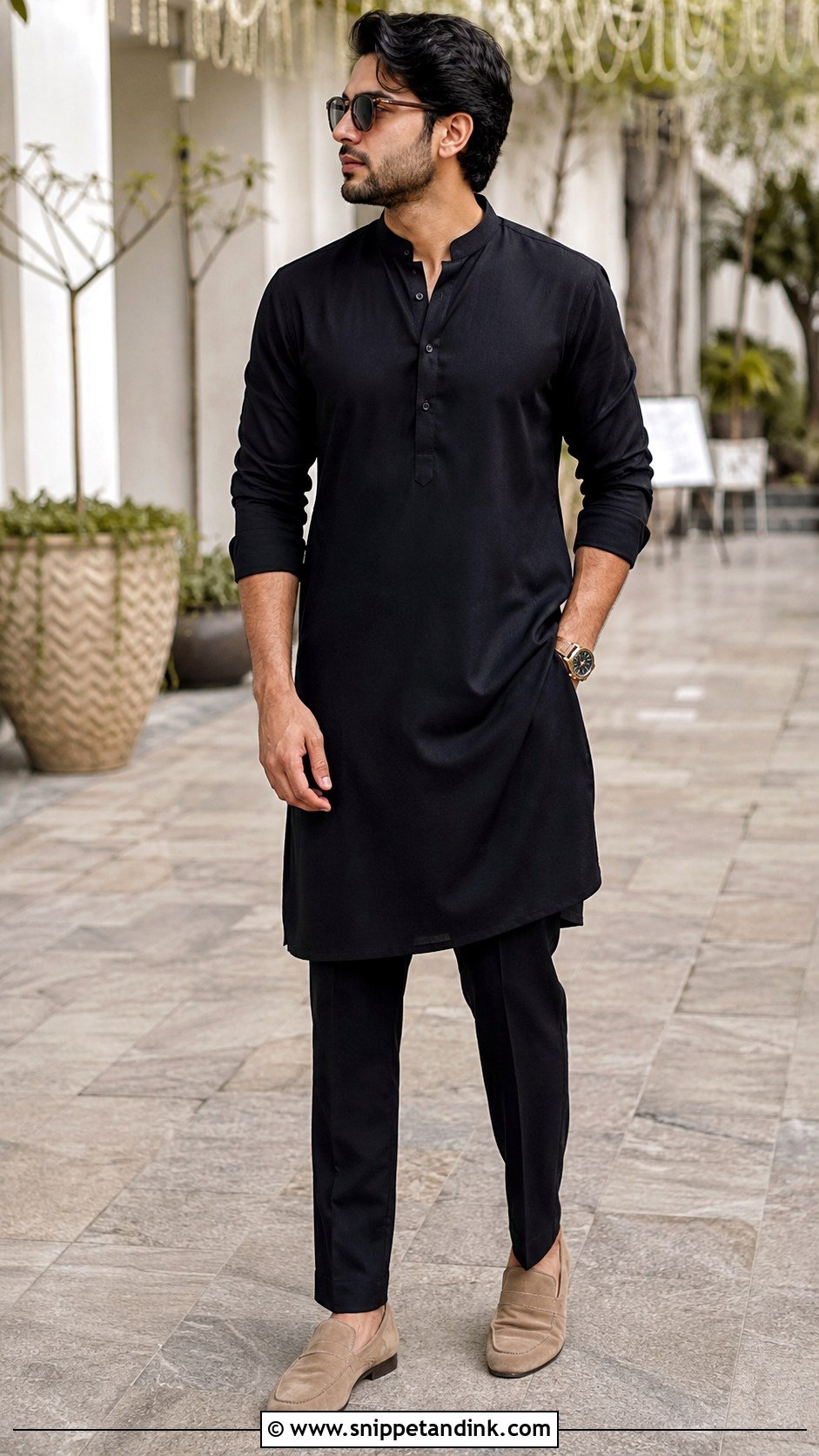
A black kurta is one of the easiest guest outfits, provided it fits properly. A well-cut kurta with straight pants, beige suede shoes and sunglasses works for daytime; switch to black loafers or embroidered mojaris at night. Black cotton fades after a few washes, so buy it new or dyed recently for the wedding. Add a Nehru jacket if the function is formal, or a textured stole and a good watch. It suits smaller ceremonies, family gatherings and mehendi.
9. Floral Chikankari Sherwani Outfit
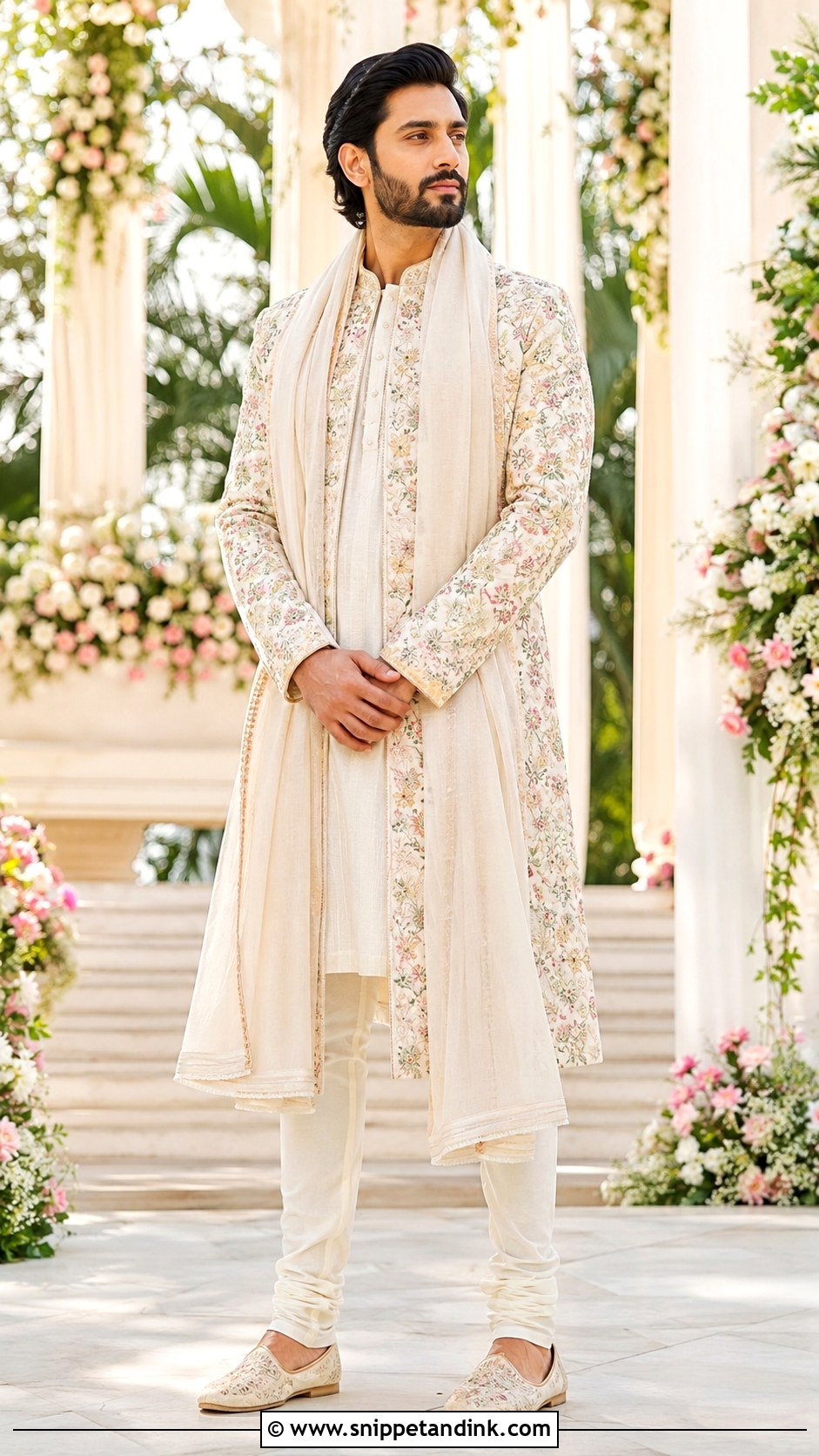
Chikankari is fine hand embroidery from Lucknow, traditionally white thread on light fabric, and it gives a sherwani softness without shine. Ivory, beige or pastel with floral chikankari work, a plain kurta, churidar and cream mojaris make a calm daytime look. Real hand chikankari has slight irregularities, which is how you tell it from machine copies. Keep jewelry minimal, and choose a slightly structured shoulder and clean mandarin collar if you want it modern. It’s at its best in natural light at engagements and destination functions.
10. Embellished Sherwani With Dupatta Outfit
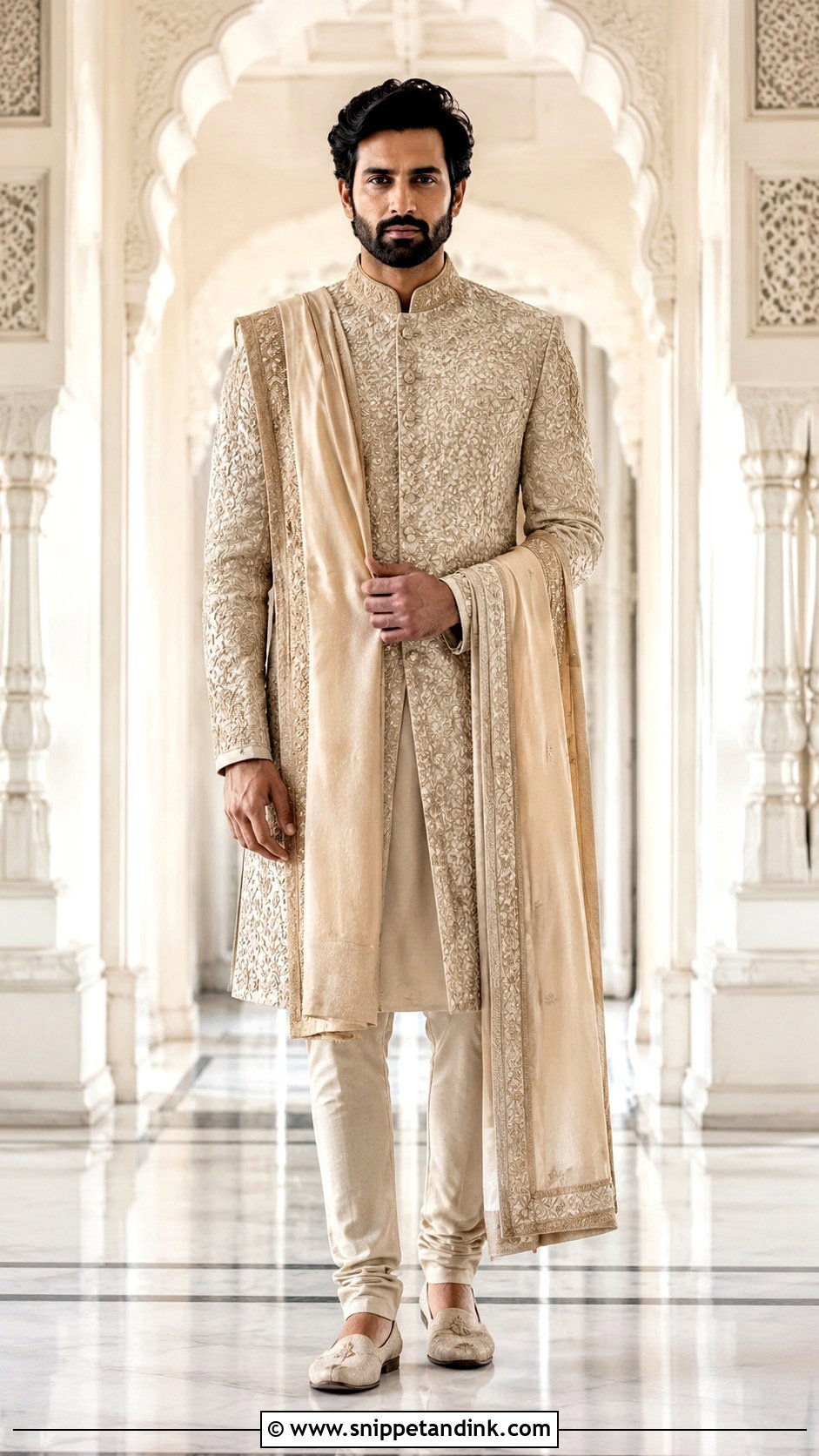
An embellished sherwani with a dupatta is for the grand entrance. Detailed embroidery, beadwork or tonal sequins, with a coordinated dupatta over one shoulder, a kurta, churidar and mojaris. It suits grooms, brothers of the bride or other close family roles. Pin the dupatta at the shoulder with a small brooch or safety pin under the fold; unpinned, it slides off every time you bend to touch someone’s feet. Keep the palette to ivory, champagne, beige or soft gold, and add a safa for the ceremony.
11. Black Jodhpuri Wedding Outfit
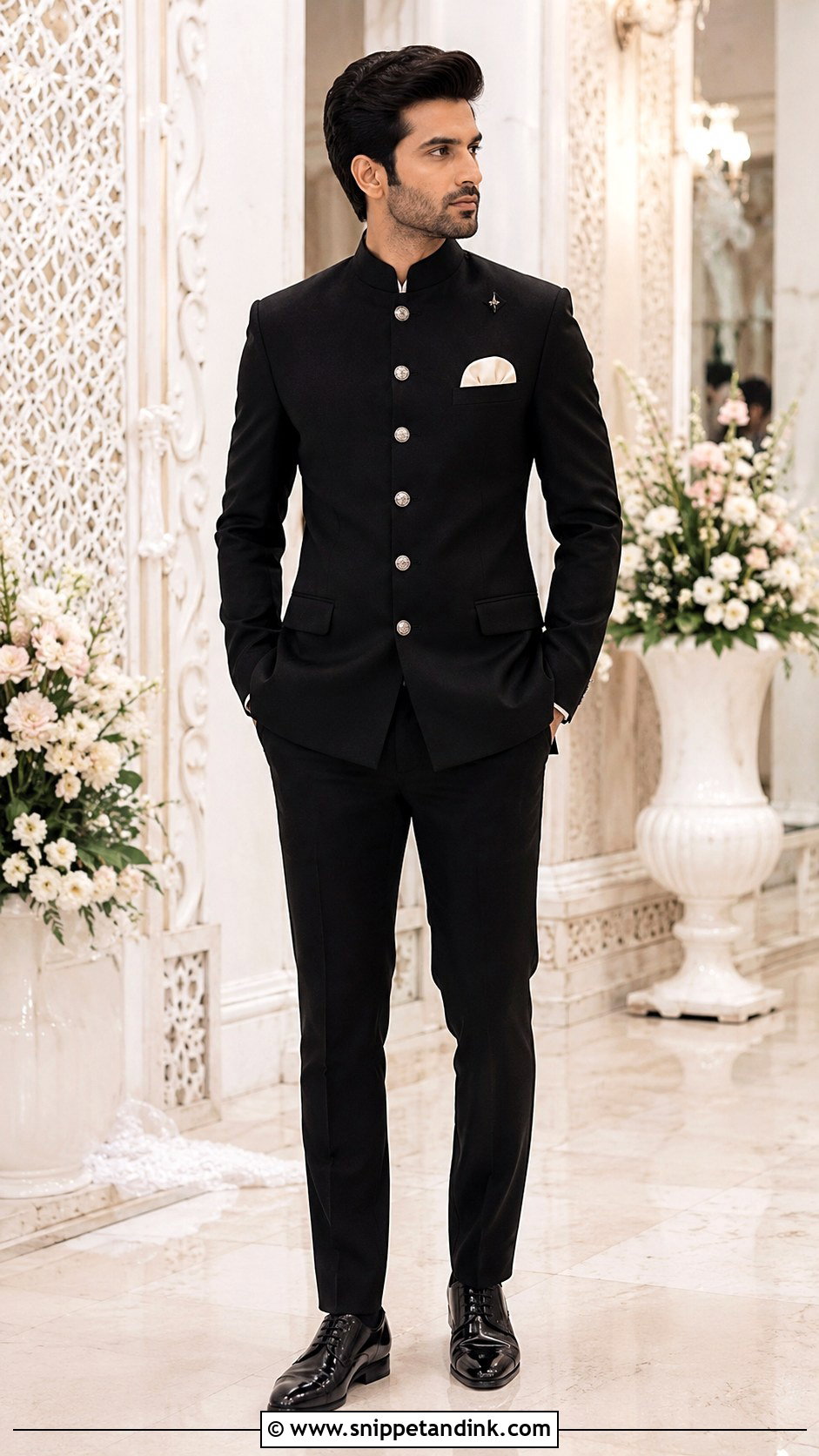
A black Jodhpuri jacket with statement buttons, fitted trousers and polished black shoes gives you a formal look with Indian roots. The structure is what makes it work, so the shoulders and chest must fit closely. Velvet for winter, a lighter textured fabric for warmer weather. If you’re having it made, ask for a little ease in the sleeves, because a tight Jodhpuri restricts your arms when you dance at the reception. An ivory or silver pocket square adds contrast; let the jacket shape do the rest.
12. Champagne Kurta Jacket Outfit
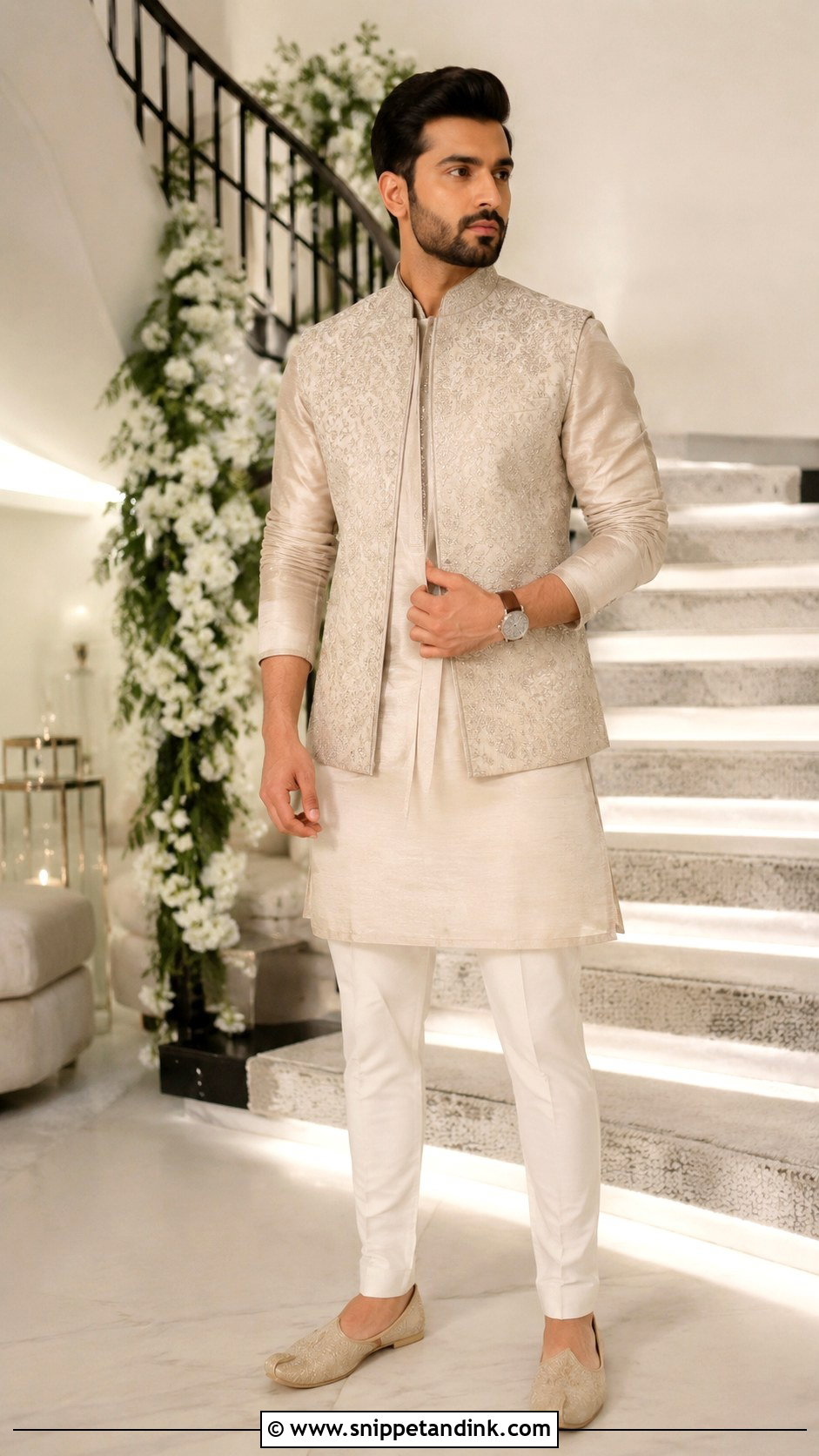
Champagne is festive without shouting. A champagne silk kurta with a matching embroidered jacket and slim ivory trousers, finished with beige mojaris or tan shoes, catches light softly for an engagement, sangeet or day reception. Champagne can wash out very fair skin, so check it against your face in daylight first. A simple watch or a pearl bracelet is enough. Avoid heavy contrast colors; this outfit looks best in tones close to one another.
13. Pastel Pink Kurta Wedding Outfit
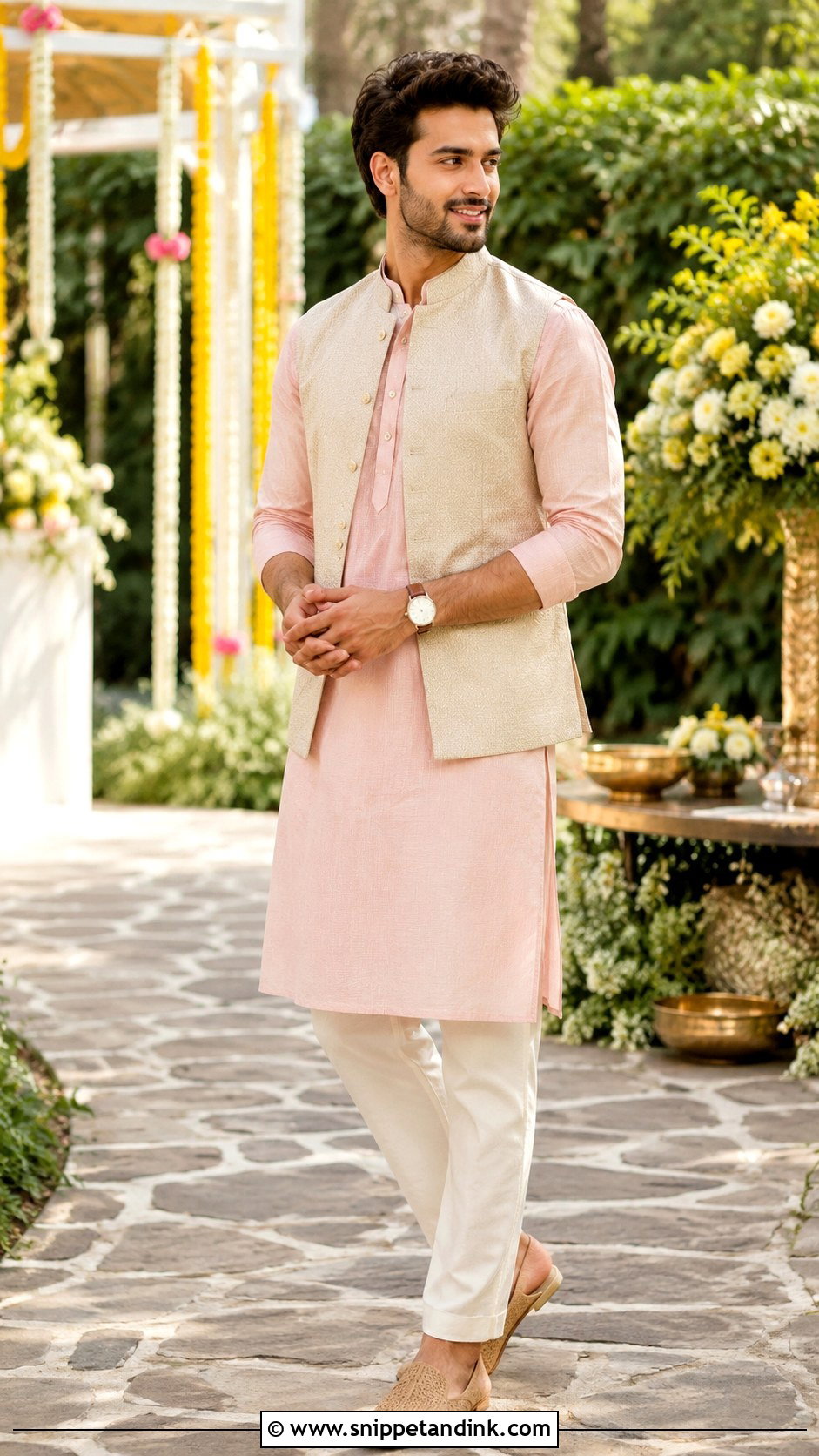
Pastel pink is fresh for mehendi, haldi and daytime celebrations. A soft pink kurta, ivory pants and a beige or white Nehru jacket, with tan mojaris or suede loafers. Keep the pink muted rather than bright. Pale pink shows sweat at the underarms in summer heat, so I’d pick cotton or cotton silk over polyester. A little embroidery at the collar or cuffs makes it feel festive. Pink sits well beside ivory, mint, peach and gold for family photos.
14. Olive Green Bandhgala Outfit
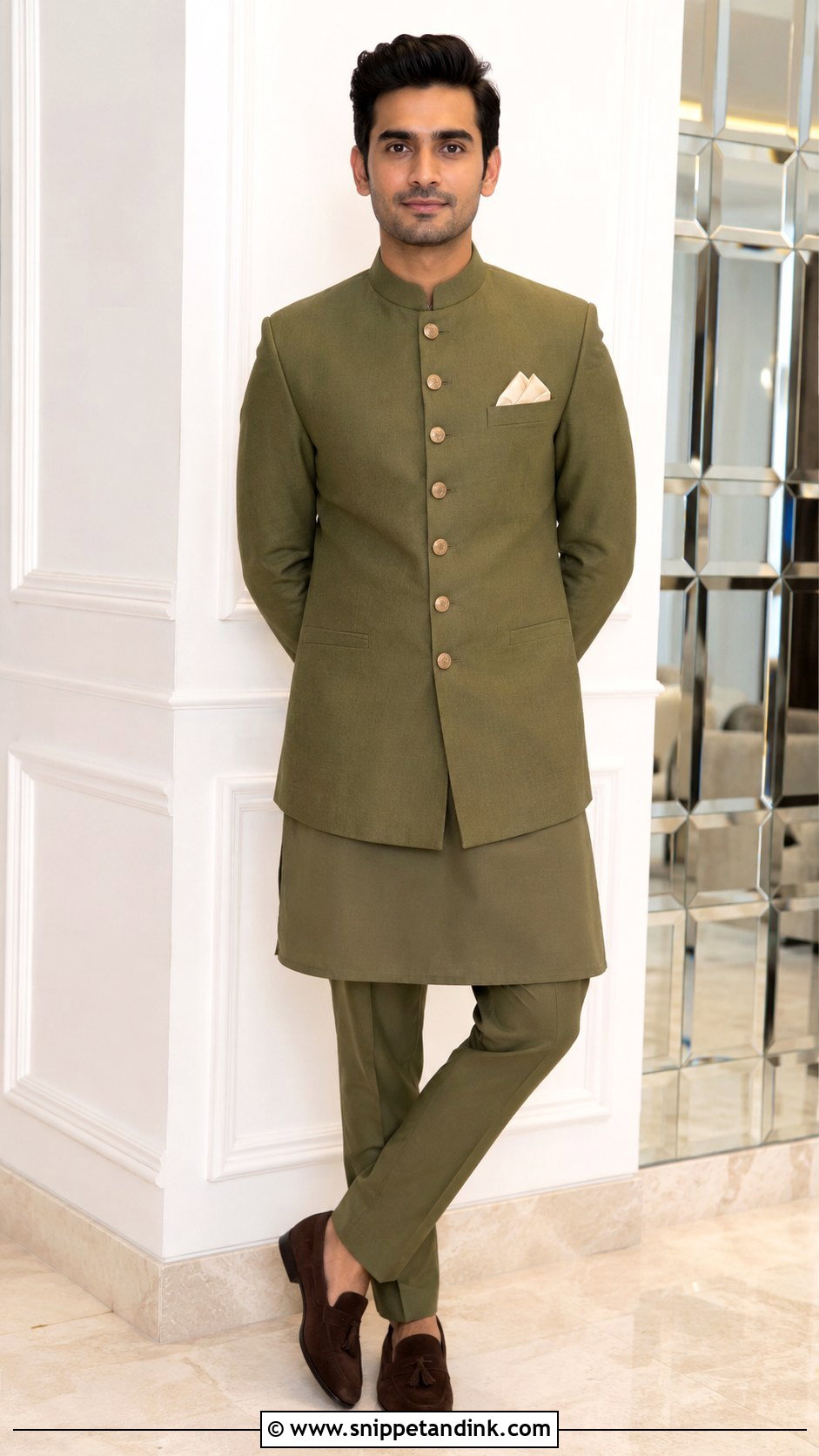
Olive is a smart alternative to black, navy or beige. An olive bandhgala jacket with a matching kurta and slim trousers, plus brown leather shoes, tan mojaris or suede loafers, keeps the palette warm. Matte fabric for day, silk blend for evening. Olive takes gold buttons or antique metal. It flatters warmer and deeper skin tones particularly well. An ivory or champagne pocket square adds just enough contrast for a sangeet or semi-formal dinner.
15. Navy Blue Bandhgala Outfit
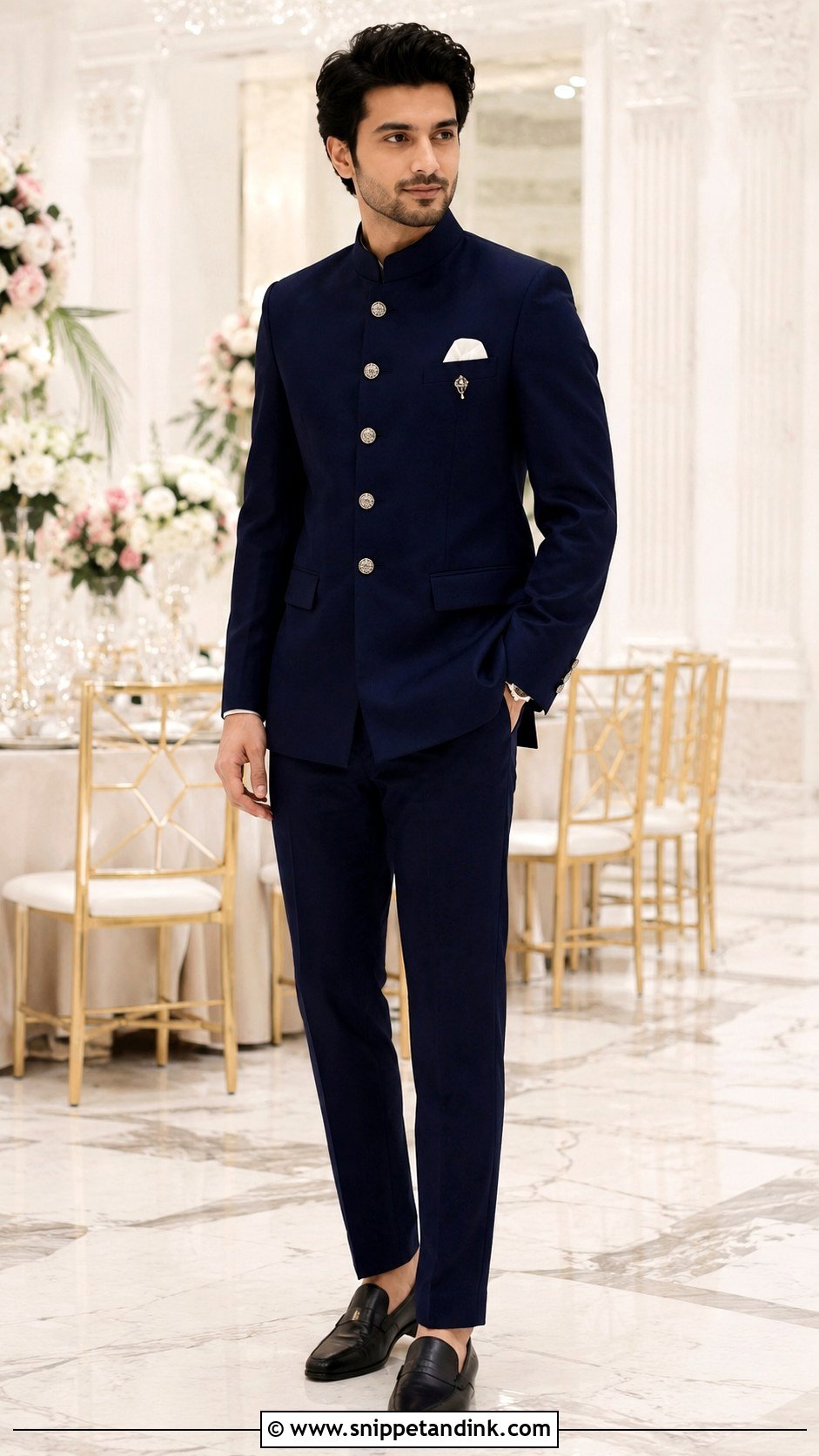
Navy is formal, flattering and a little less expected than black. A tailored navy bandhgala with matching trousers and a simple kurta or shirt underneath, black loafers or velvet slippers. Keep the fit sleek and the accessories few. Navy looks almost black at night, so if you want the color to read under reception lighting, choose a slightly brighter navy or a fabric with sheen. A brooch or subtle buttons add detail, and it pairs easily with silver, ivory and jewel tones.
16. Ivory Kurta With Pearl Necklace Outfit
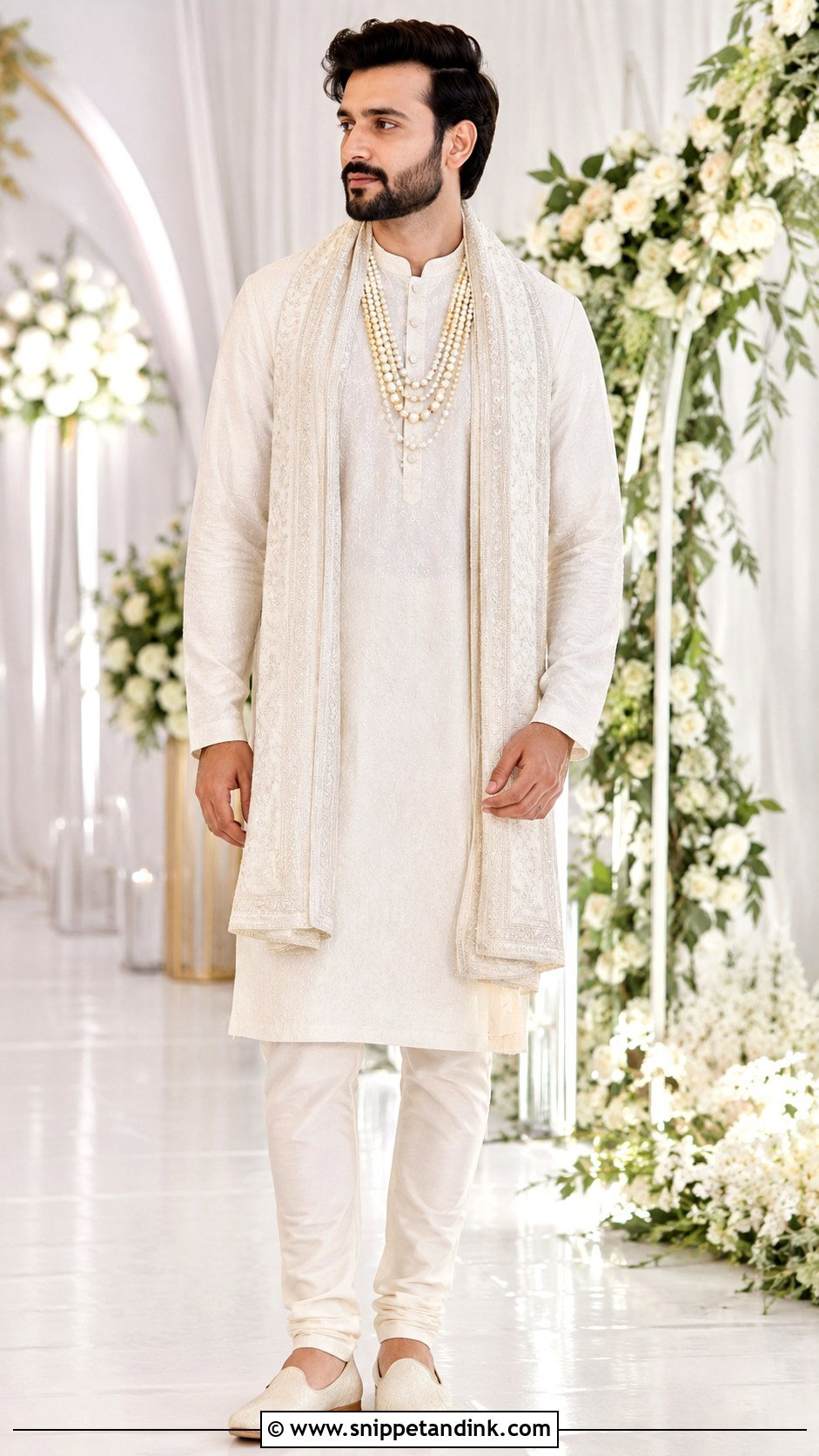
A plain ivory kurta becomes wedding-ready with the right finishing pieces: matching churidar, cream mojaris and a layered pearl necklace. It’s a softer option for men who don’t want a heavy sherwani. Fabric matters more than anything here; a good silk or fine cotton drapes cleanly, while cheap fabric creases at the elbows by lunch. Add a light embroidered stole for formal events. Guests should keep the pearls simple to avoid looking like the groom.
17. Cream Achkan Wedding Outfit
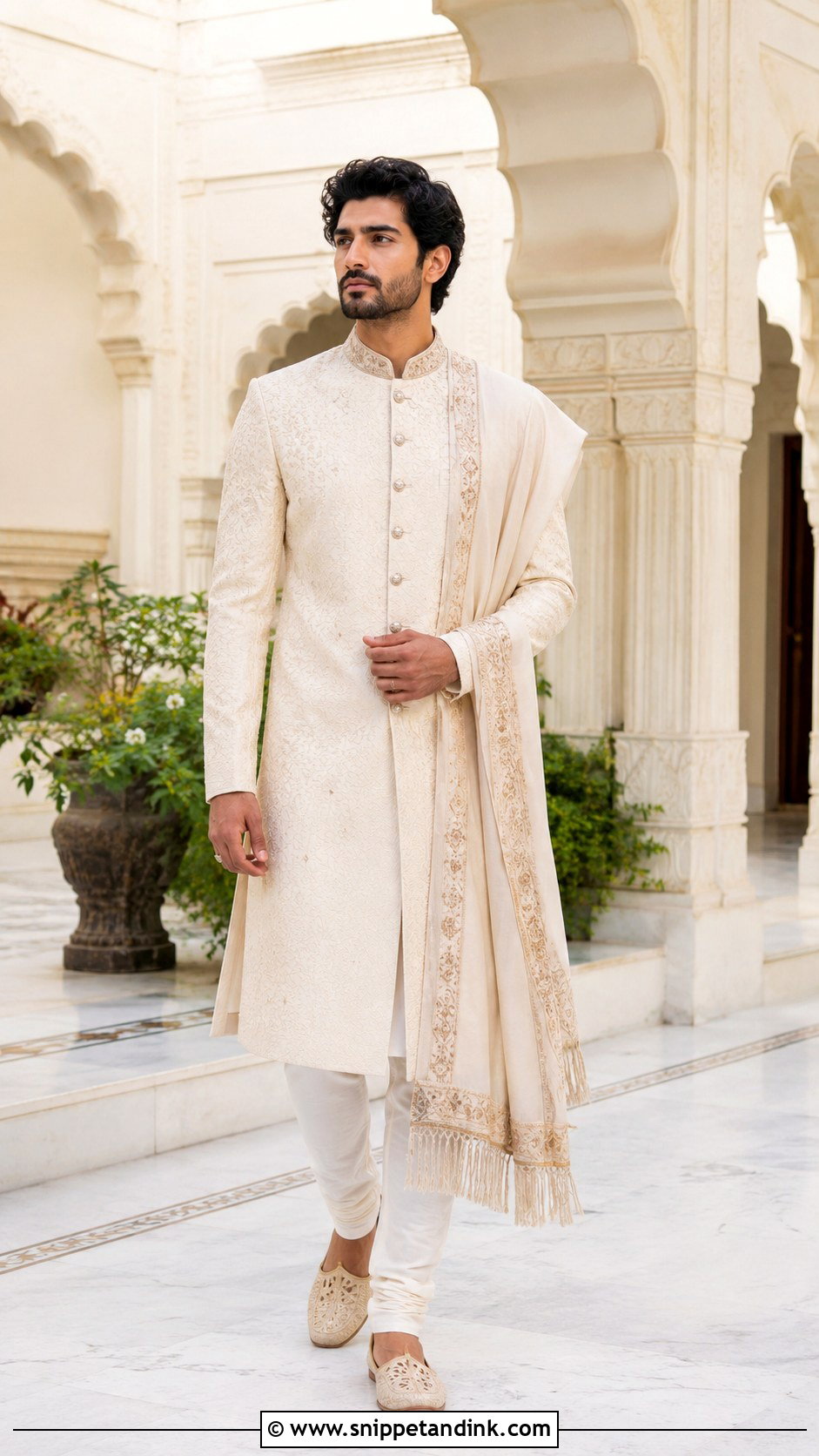
The achkan is longer and fuller than a sherwani, often reaching the knee, and it gives a very traditional structured look. A cream achkan over a matching kurta and churidar, gold or beige mojaris and a stole for ceremonies. It should fit close at the shoulders and fall cleanly through the body. If it pulls across the front buttons, it’s too tight, and it will only get worse when you sit. Light embroidery suits guests; heavier detail suits the groom.
18. Black Kurta With Nehru Jacket Outfit
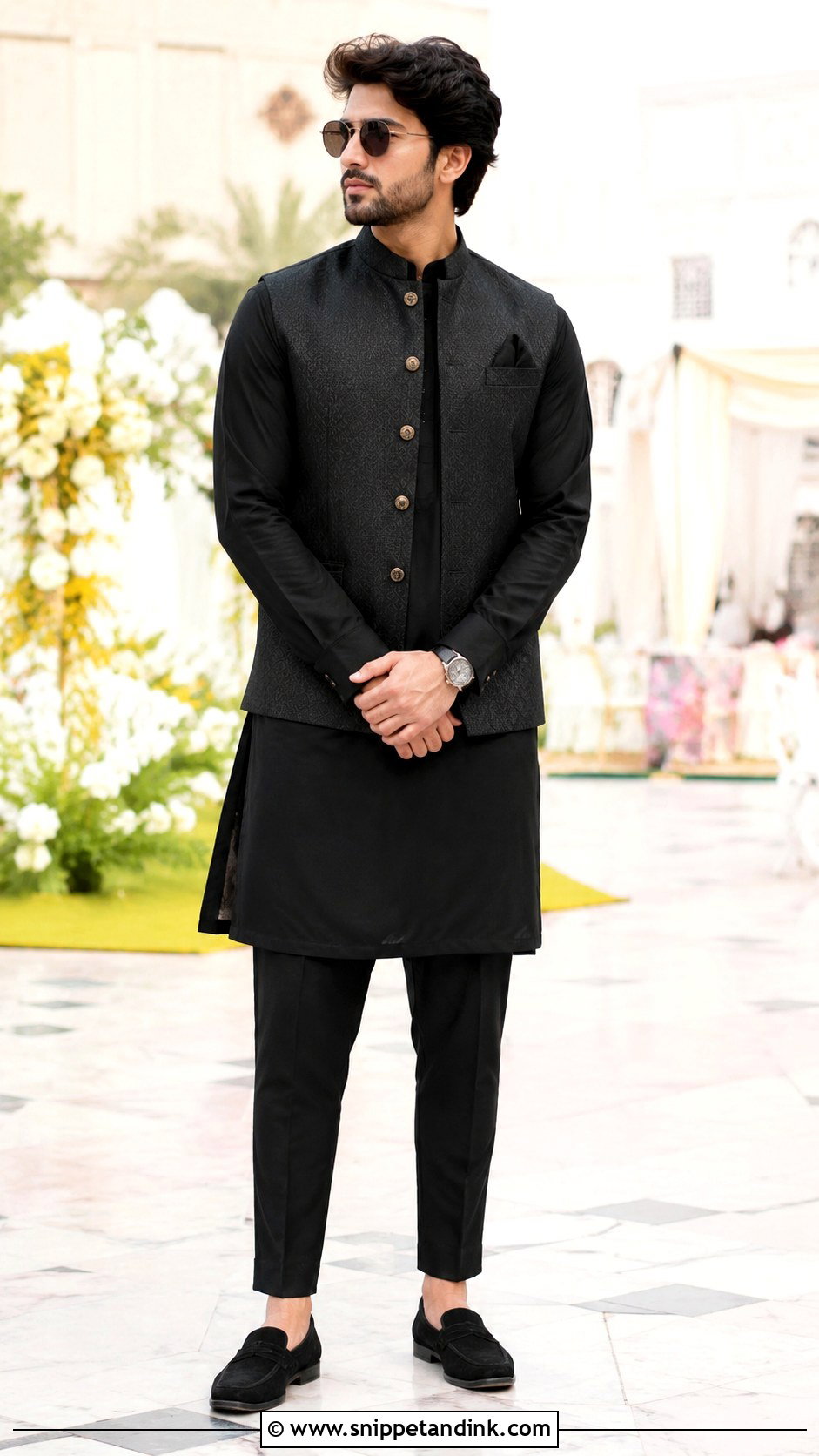
A black kurta under a Nehru jacket is a quick way to look put together. Black or charcoal kurta, slim trousers and a textured Nehru jacket in black, grey or deep blue, with suede shoes, mojaris or loafers. The kurta should end around mid-thigh to the knee; longer kurtas peek out awkwardly below a short jacket. Sunglasses by day, a watch by night. It suits mehendi, family dinners and smaller pre-wedding functions.
19. Gold Sherwani Wedding Outfit
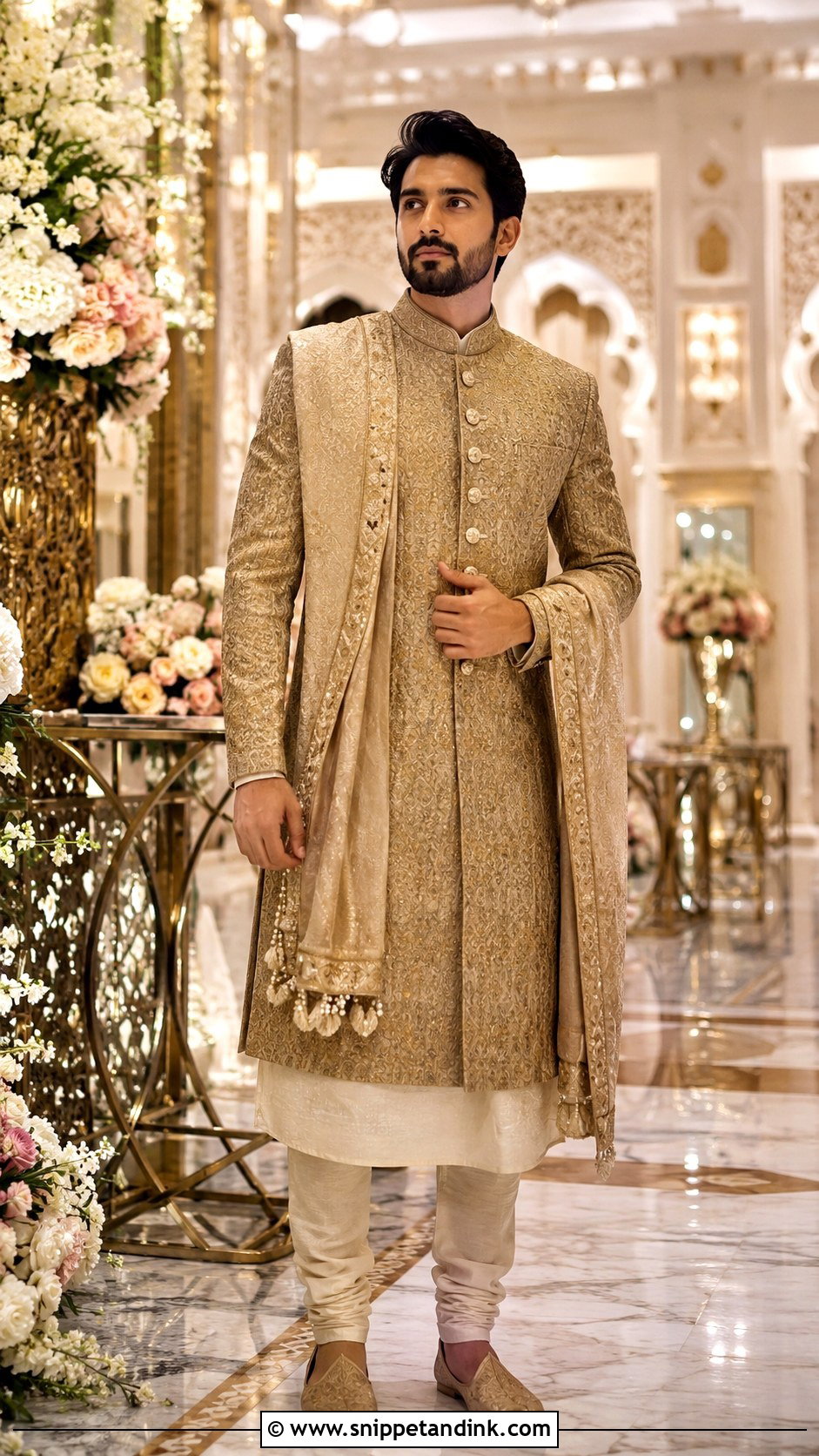
A gold sherwani belongs to the groom or a very formal role. Choose antique gold rather than bright yellow gold, which can look brassy in photos. Ivory kurta, cream churidar and gold or beige mojaris; pearl or polki-style buttons add luxury. Metallic embroidery is heavy, so check the sherwani’s weight at the fitting and make sure it’s lined to stop zari scratching your neck and wrists. Avoid competing accessories. Keep grooming neat and the cut slim.
20. Blue Kurta With Yellow Pants Outfit
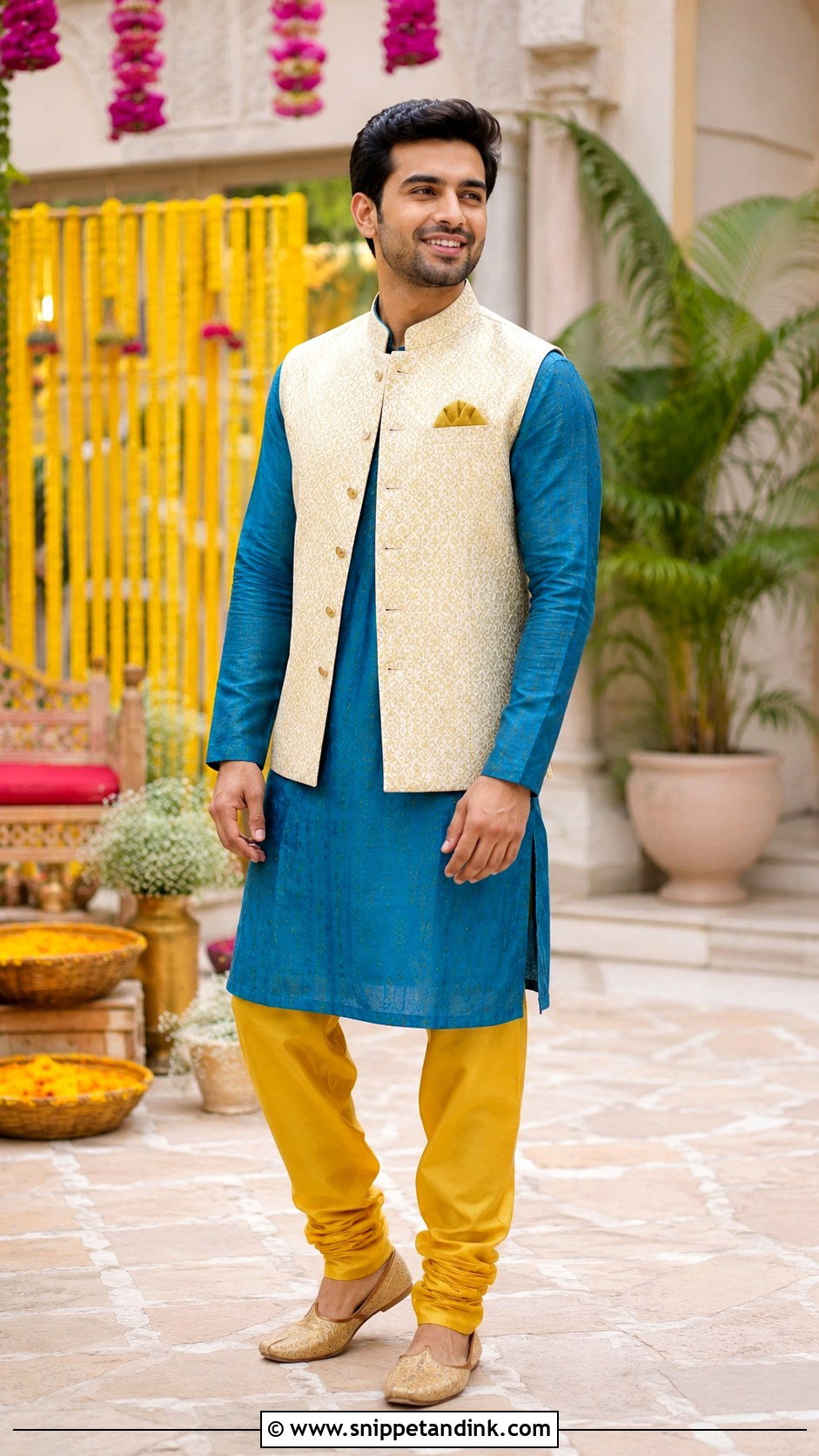
A blue kurta with yellow pants is playful and colorful, best for mehendi, haldi or a relaxed daytime celebration. Medium blue with mustard or soft yellow, tan mojaris or brown sandals. A light beige Nehru jacket adds polish. The colors are bold, so keep accessories to almost nothing. Breathable cotton silk or a linen blend stops you overheating at an outdoor daytime function. This isn’t a formal look, and that’s the point for pre-wedding events.
21. Velvet Bandhgala Reception Outfit
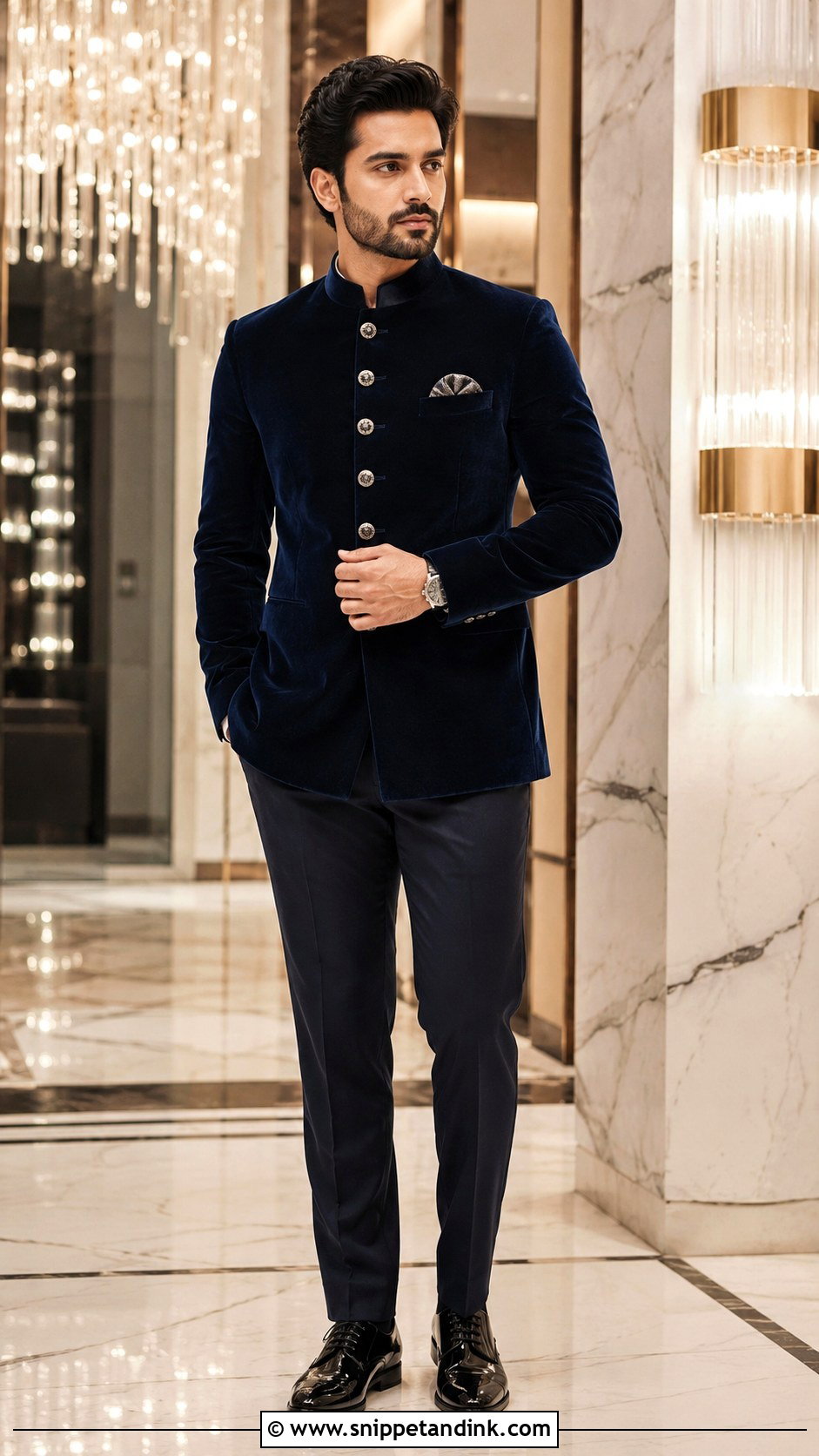
Velvet makes a bandhgala reception-ready. Deep black, navy, bottle green or burgundy velvet with tailored trousers and polished shoes. Velvet adds bulk, so the fit around the shoulders and chest must be clean; an oversized velvet jacket looks heavy and borrowed. It’s hot, so I’d only recommend it for winter weddings or air-conditioned indoor receptions. A pocket square, watch or small brooch is enough decoration.
22. Angrakha Kurta Wedding Outfit
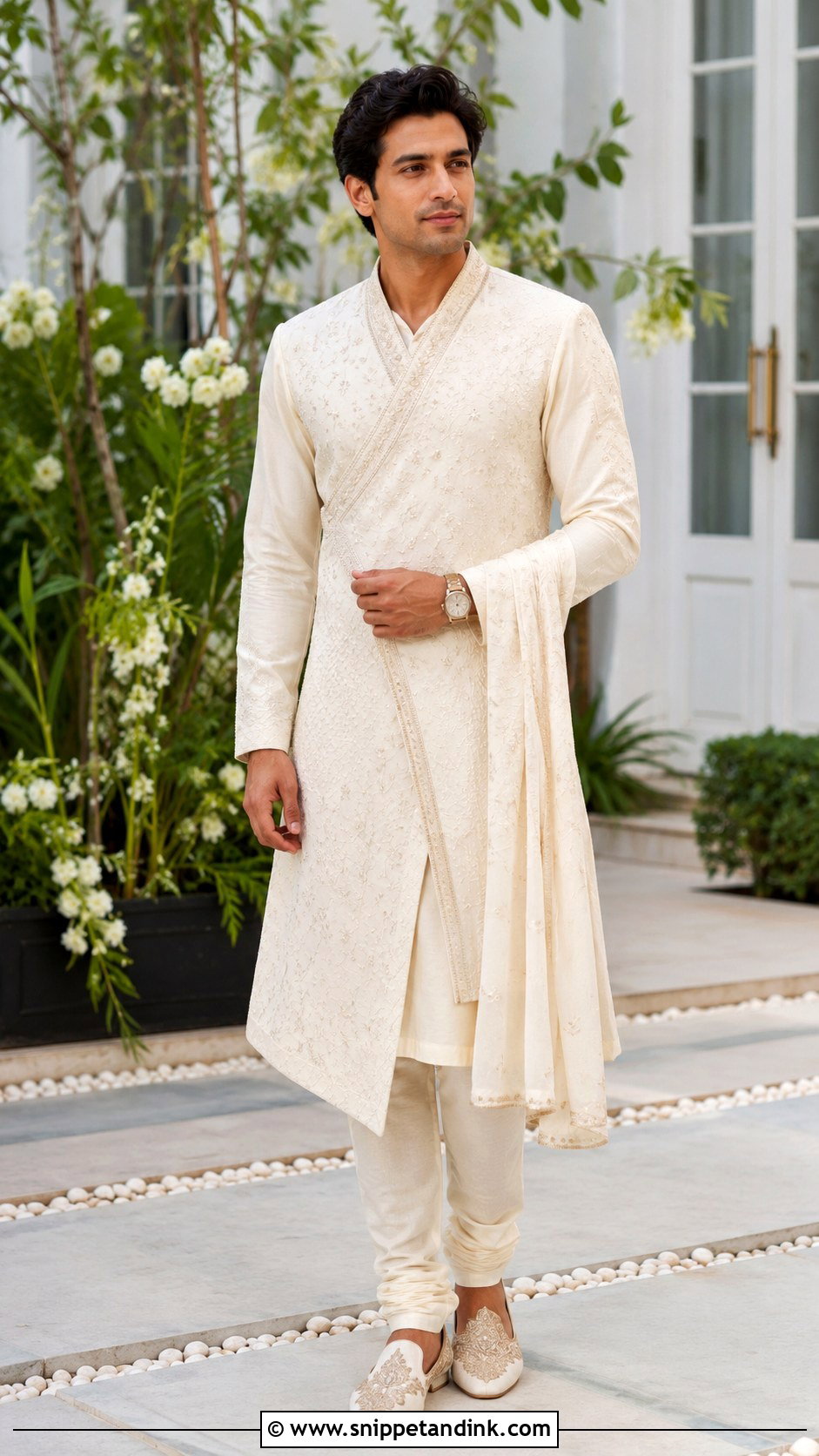
The angrakha has a wrap-style front that ties at the side, and it’s an easy way to look different from a regular straight kurta. Grey, ivory, beige or pastel with slim churidar and embroidered mojaris. Add a short jacket for formal functions or keep it simple for mehendi. The ties can loosen through a long day, so ask your tailor to add a hidden hook under the wrap. Soft fabric and an easy fit suit it best, and a subtle stole adds movement.
23. Printed Kurta Jacket Outfit
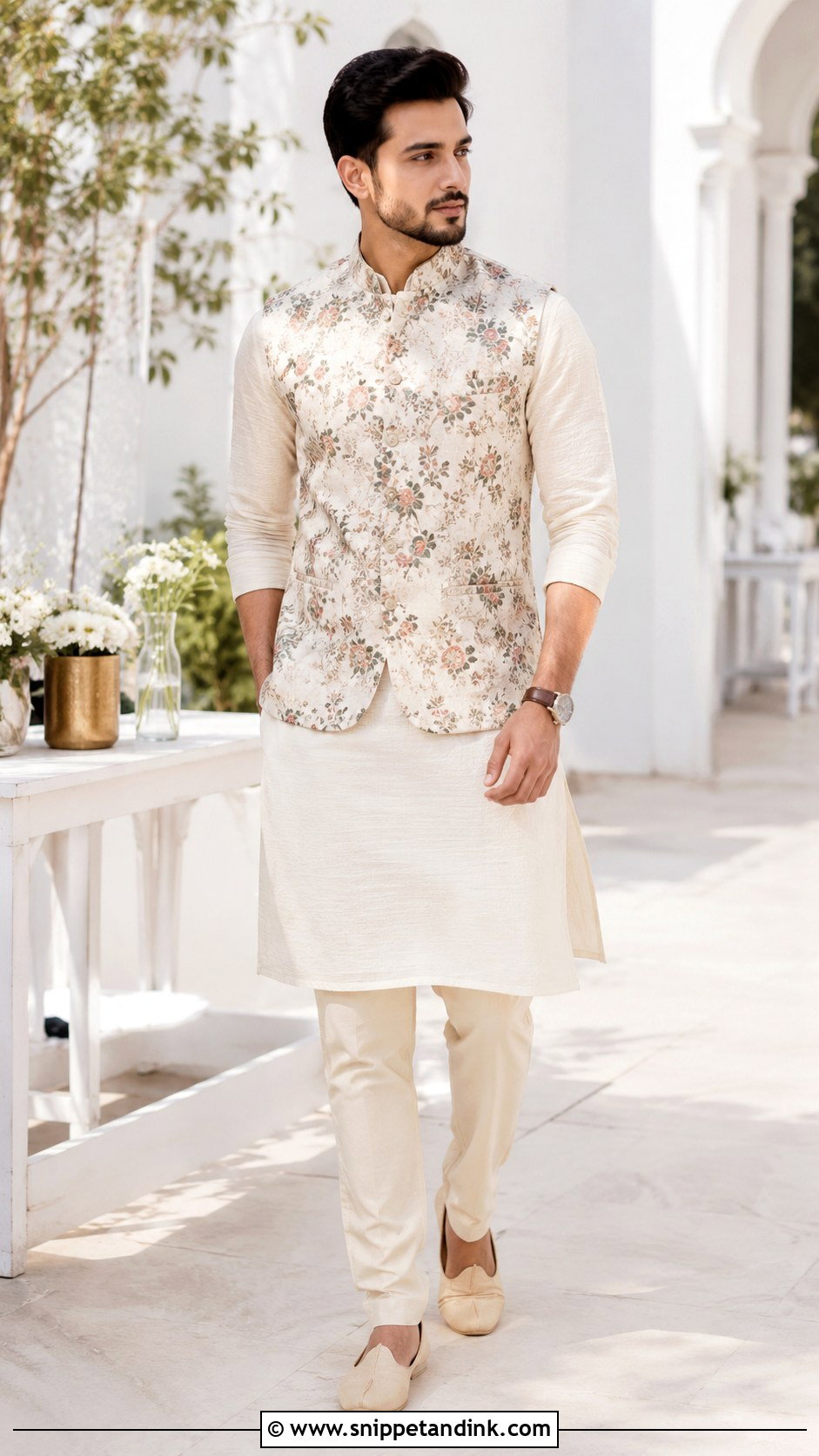
A printed jacket brings personality without heavy embroidery. A plain kurta with a printed Nehru jacket in floral, geometric or paisley motifs, slim trousers and neutral mojaris is right for mehendi, haldi or a wedding lunch. Choose muted colors, like ivory, beige, olive, navy or soft pink, rather than very loud prints. The jacket should be the only pattern, so keep the kurta and pants plain. It’s comfortable and easy to wear for hours.
24. Tuxedo Reception Outfit
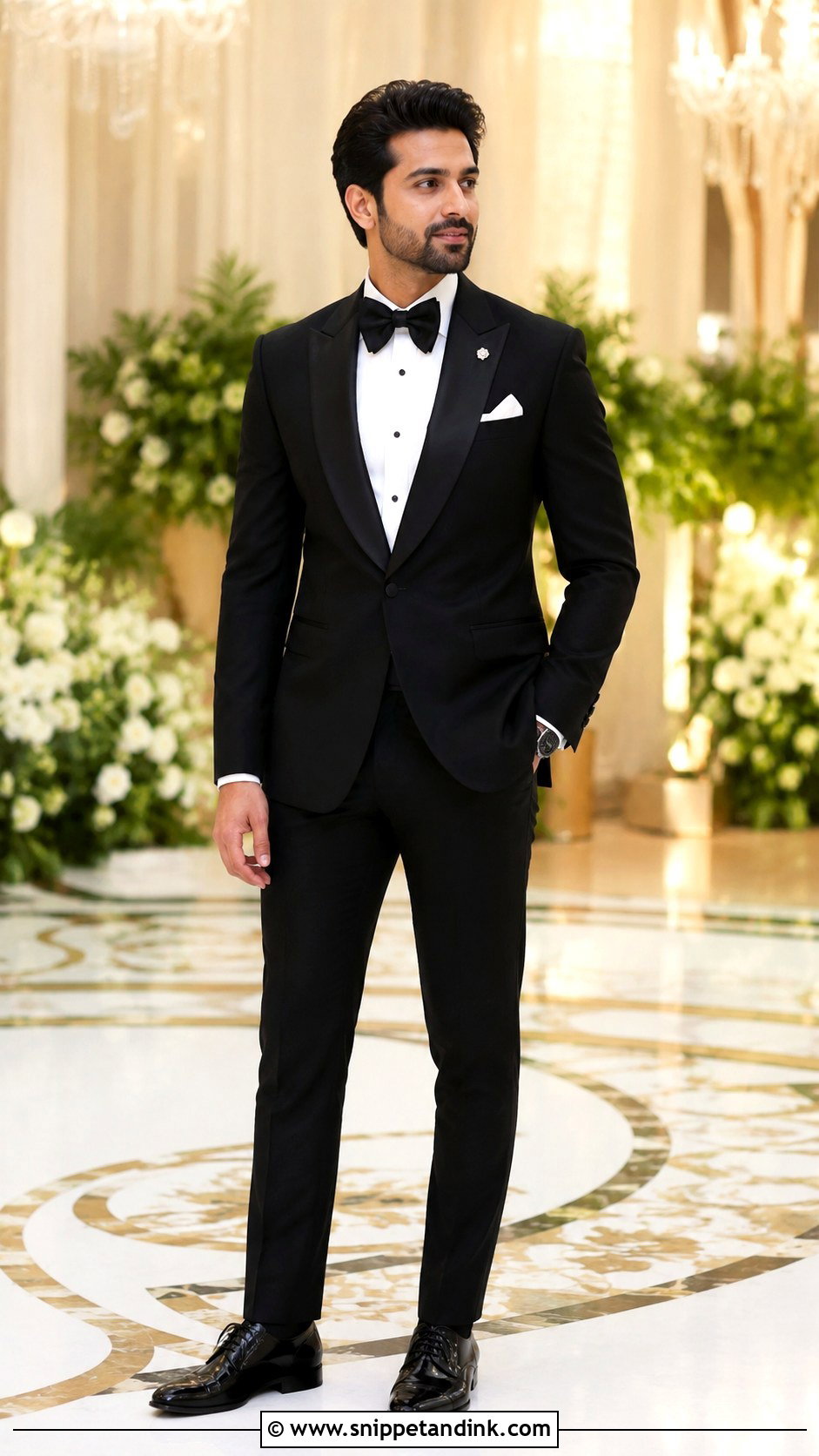
A tuxedo suits a formal or Western reception. Black or midnight blue with a crisp white shirt, black bow tie and polished shoes. Midnight blue actually reads richer than black under artificial light. For an Indian reception, a subtle lapel pin or pocket square adds a festive touch. Keep the fit close but comfortable, and have the trousers hemmed with a slight break over the shoes. It works for a cocktail night or after-party where traditional wear is optional.
25. Minimal Beige Kurta Wedding Outfit
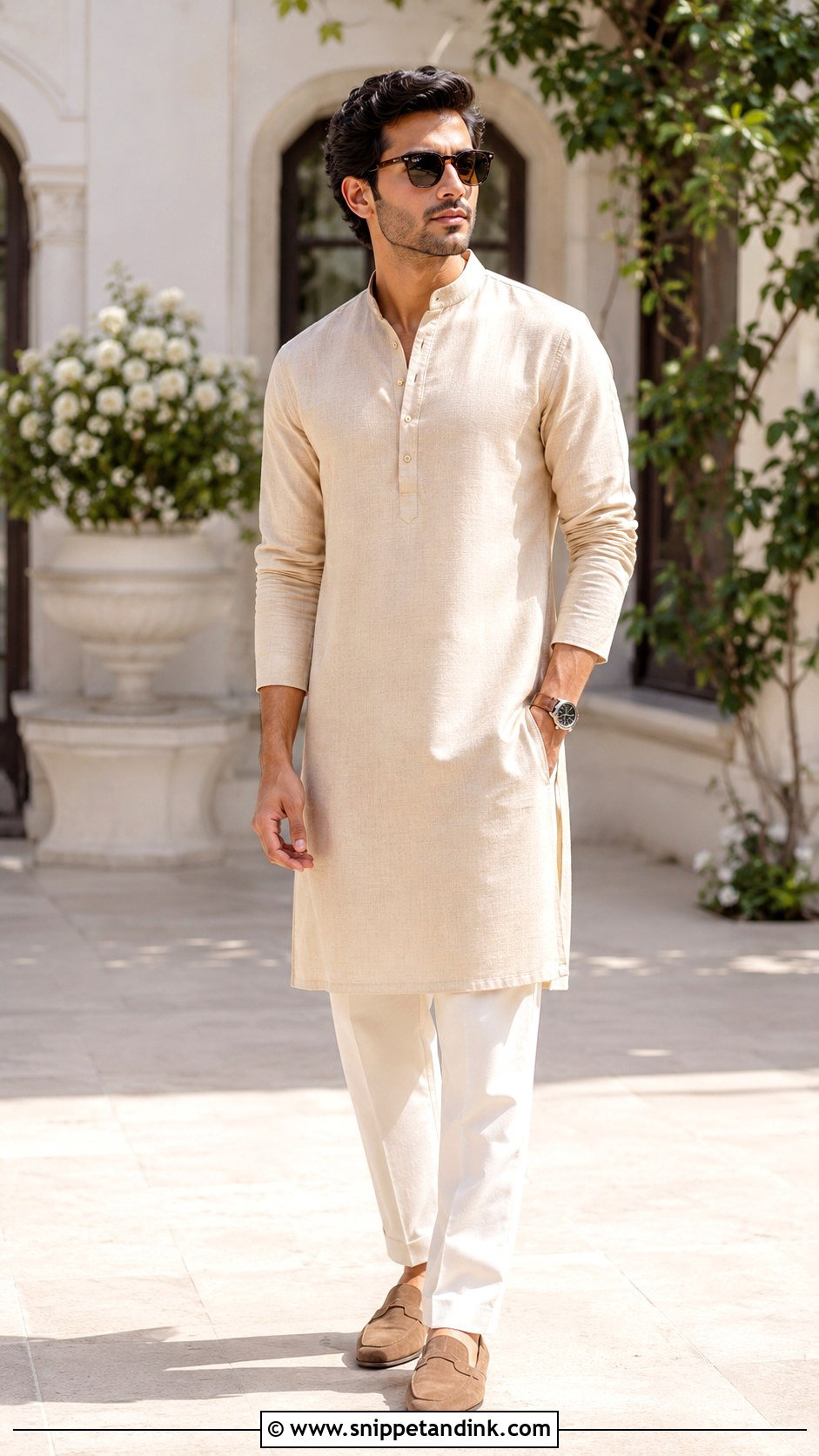
A beige kurta with white or ivory pants is the quietest outfit here and one of the hardest to get right, because it depends entirely on fit and fabric. Tan suede shoes or mojaris, sunglasses and a watch finish it for daytime; a tonal waistcoat or Nehru jacket adds formality. Steam it on the day rather than ironing it the week before, since linen and cotton crease in the suitcase. It suits intimate ceremonies, family functions and summer weddings.
How Long a Made-to-Measure Sherwani Really Takes
A stitched sherwani with hand embroidery takes far longer than most grooms expect. Many designers ask for three to four months for a custom piece, and busy wedding seasons push that further. Timings vary between tailors, so confirm a delivery date in writing.
Buying ready-made instead? Leave at least three to four weeks for alterations. Sleeve length, kurta length and the fit across the back are the usual changes, and an off-the-rack sherwani nearly always needs the churidar adjusted at the ankle so it gathers neatly rather than bunching.
- First measurement and fabric choice, with your shoes and the kurta you’ll wear underneath.
- A trial fitting before embroidery is finished, when the cut can still change.
- A final fitting two to three weeks before the wedding, wearing everything: mojaris, stole and safa.
Mojaris, Stoles and the Safa on the Day
New mojaris are stiff and rub the heel. Wear them around the house for a week before and put a strip of soft tape inside the back. Practise draping the stole once with whoever will dress you, and have the safa tied by someone experienced. A loosely tied safa slips by the end of the pheras, so pin it to your hair at the back if needed.
Restraint Is the Part Worth Copying
These looks work because they combine tradition, comfort and modern polish. Ivory sherwanis with pearls, black bandhgalas, beige kurtas, royal blue sherwanis and velvet for the reception all give you ways to dress well across a wedding week. Don’t copy every detail. Choose the mood that fits your role, venue, season and comfort. Grooms can go richer with embroidery and stoles; guests should stay lighter. Get the fit, fabric, shoes and grooming right and the outfit will hold up in photos for years.
You'll Like These Ideas:


Leave a Reply