
Virat Kohli’s wedding clothes keep coming up in my fittings because they solve a problem most grooms have: how to wear traditional pieces without feeling like you are in costume. What he gets right is restraint. The textiles are rich, the embroidery stays near the collar and cuffs, and the accessories are few. I never suggest copying one of his outfits stitch for stitch. Take the principle instead, pick the base garment that suits your build (sherwani, bandhgala, kurta set or a Western suit) and let your venue, the season and your partner’s colours decide the rest. Fit matters more than fabric here. I have seen expensive raw silk look cheap on a groom whose shoulders were cut an inch too wide. The twenty head-to-toe looks below run from haldi to reception, each with the detail I’d check before you commit.
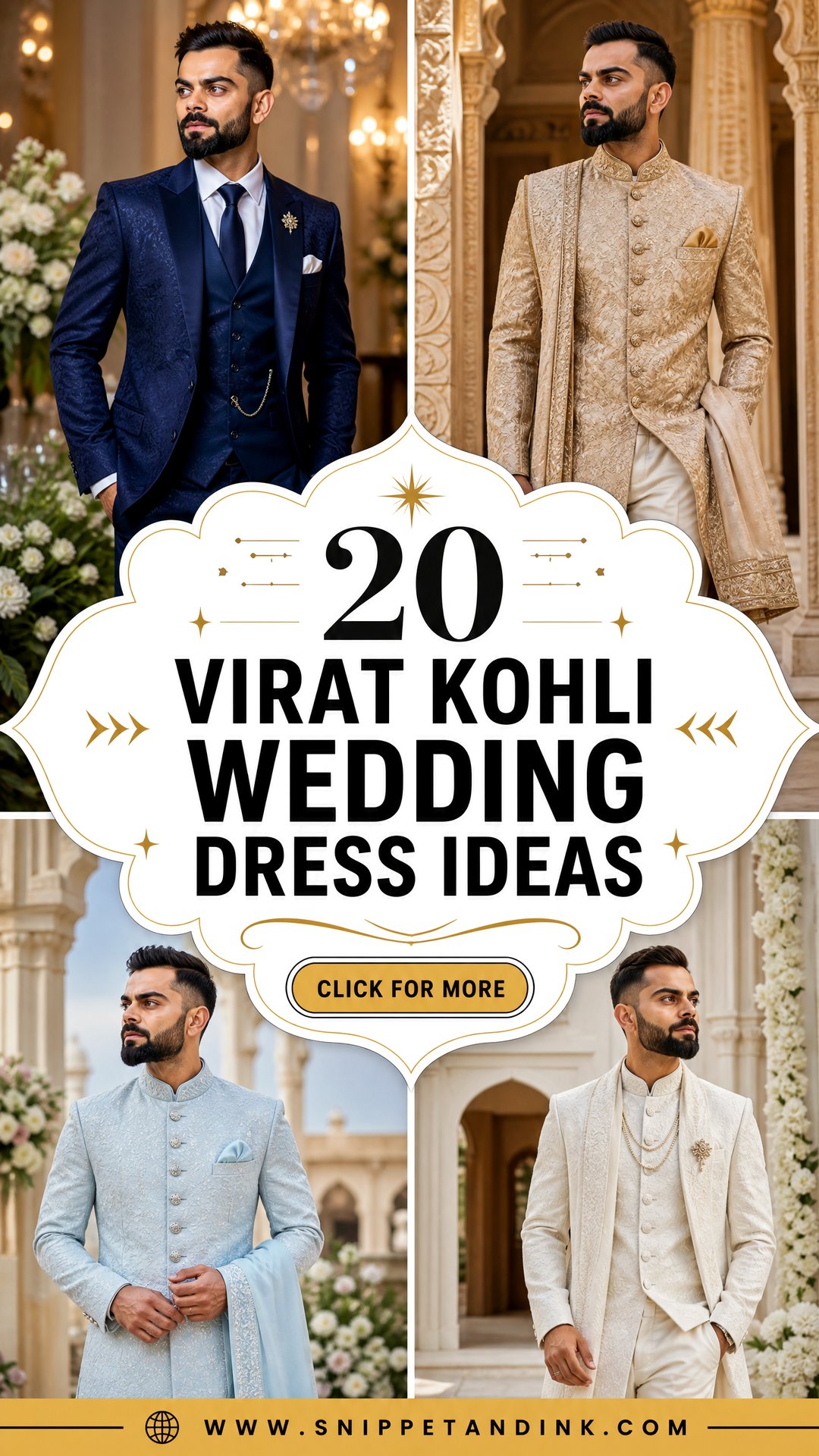
Getting a Sherwani Cut So It Survives Sitting at the Mandap
Grooms try sherwanis on standing in front of a mirror, and then spend most of the ceremony seated, often low or cross-legged at the mandap. That gap is where fit problems appear. A made-to-measure sherwani usually needs somewhere around two to three months from first measurement to final fitting, longer in wedding season, so I’d start well before the invitations go out.
At each fitting, I run the same checks:
- Sit down on a low stool and stay there for a minute. The front panels should fall open slightly at the side slits, not pull tight across your thighs.
- Raise both arms as if you are adjusting a turban. If the whole jacket lifts with you, the armhole is cut too low.
- Look at the sleeve: it should end at the wrist bone so your watch and kada show, never over the knuckles.
- Check the churidar gathers at the ankle. You want soft folds, not a tight cuff that strains every time you bend.
- Bring the actual juttis or shoes you will wear, because the hem length is set against them.
One more thing I’d ask for: a final pressing done the day before, and the outfit hung, not folded, in a breathable cover. Embroidered silk creases along fold lines that a quick steam on the morning won’t fully remove.
1. Ivory Virat Kohli Wedding Sherwani
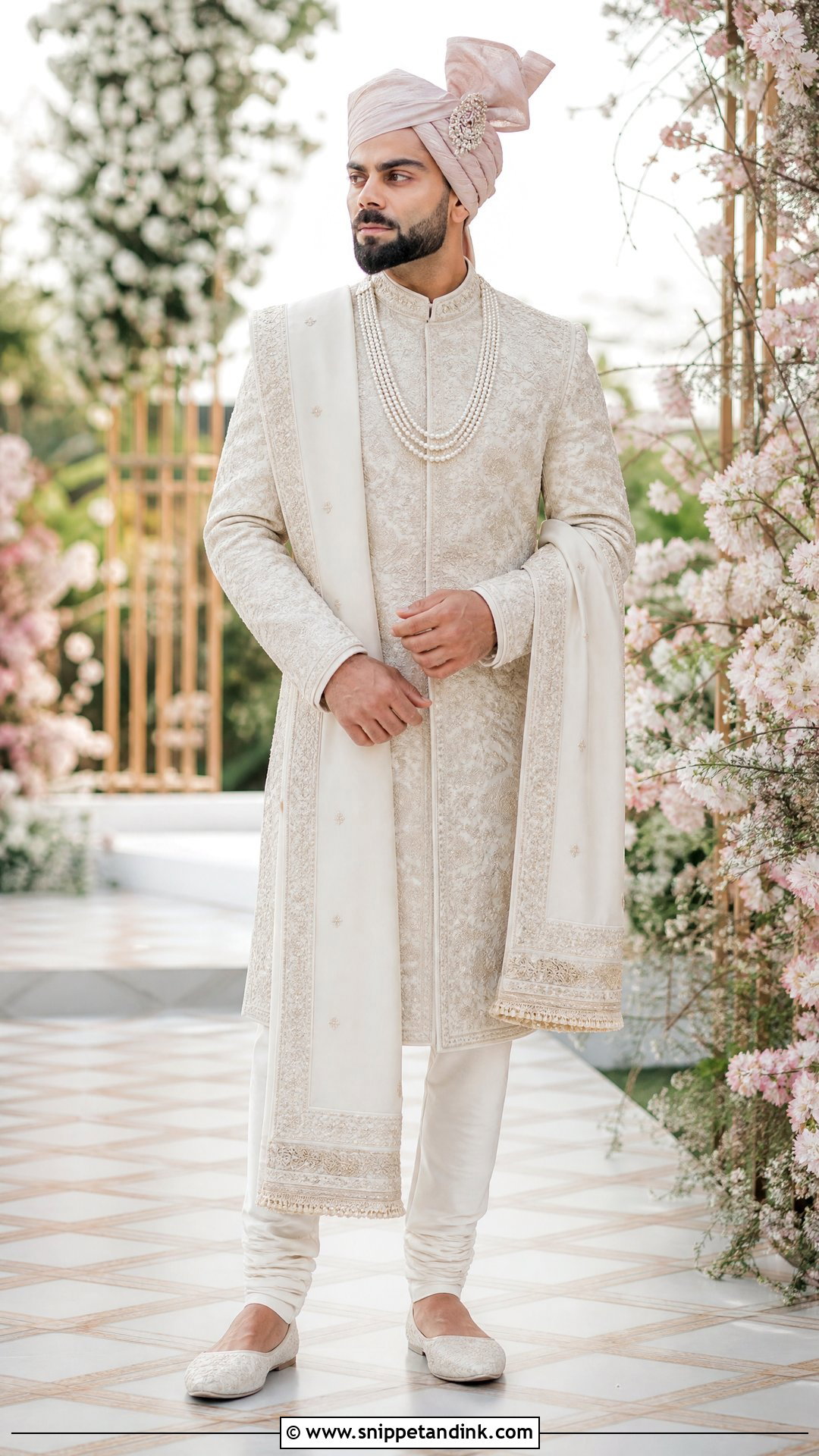
Ivory with gold floral embroidery is the look most people picture first, and it is the hardest to get right because pale fabric shows every wrinkle and every fit fault. I lean toward raw silk or a firm jacquard here; a soft silk blend starts to crease across the lap after the first hour of sitting. Fitted ivory churidar keeps the line traditional, while straight trousers read more current. The pale pink turban does a useful job: it breaks up all that cream around your face so you don’t wash out in daylight photos. Add a cream stole with a narrow border, a couple of pearl strands and ivory or tan juttis, and stop there. Anything brighter pulls the eye away from the embroidery.
2. Pink Turban And Ivory Sherwani Outfit
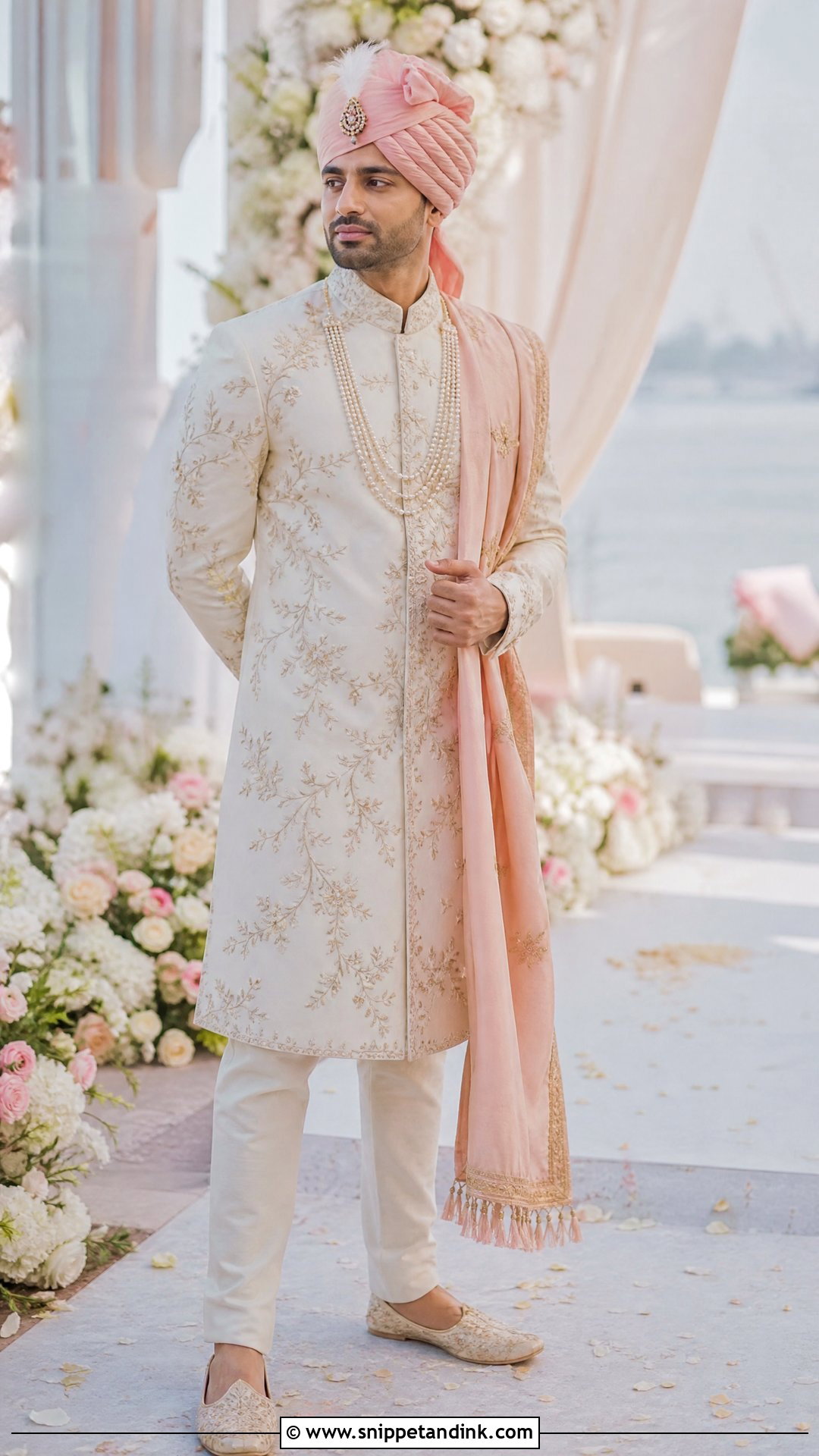
Blush and ivory is a daytime pairing that leans romantic, so the sherwani itself has to stay disciplined. Start with an ivory sherwani where the tonal threadwork or antique-gold embroidery sits only at the collar, placket, cuffs and hem. That placement keeps the chest clean, which is what makes a groom look broad and calm on camera. Slim churidar and embroidered ivory juttis give you one unbroken line from shoulder to floor. The dusty pink turban carries the colour, and a small vintage brooch is enough on it. Carry the stole loosely over one shoulder. Wrapped tight, it bunches at the waist and hides the tailoring you paid for.
3. Black Bandhgala Reception Outfit
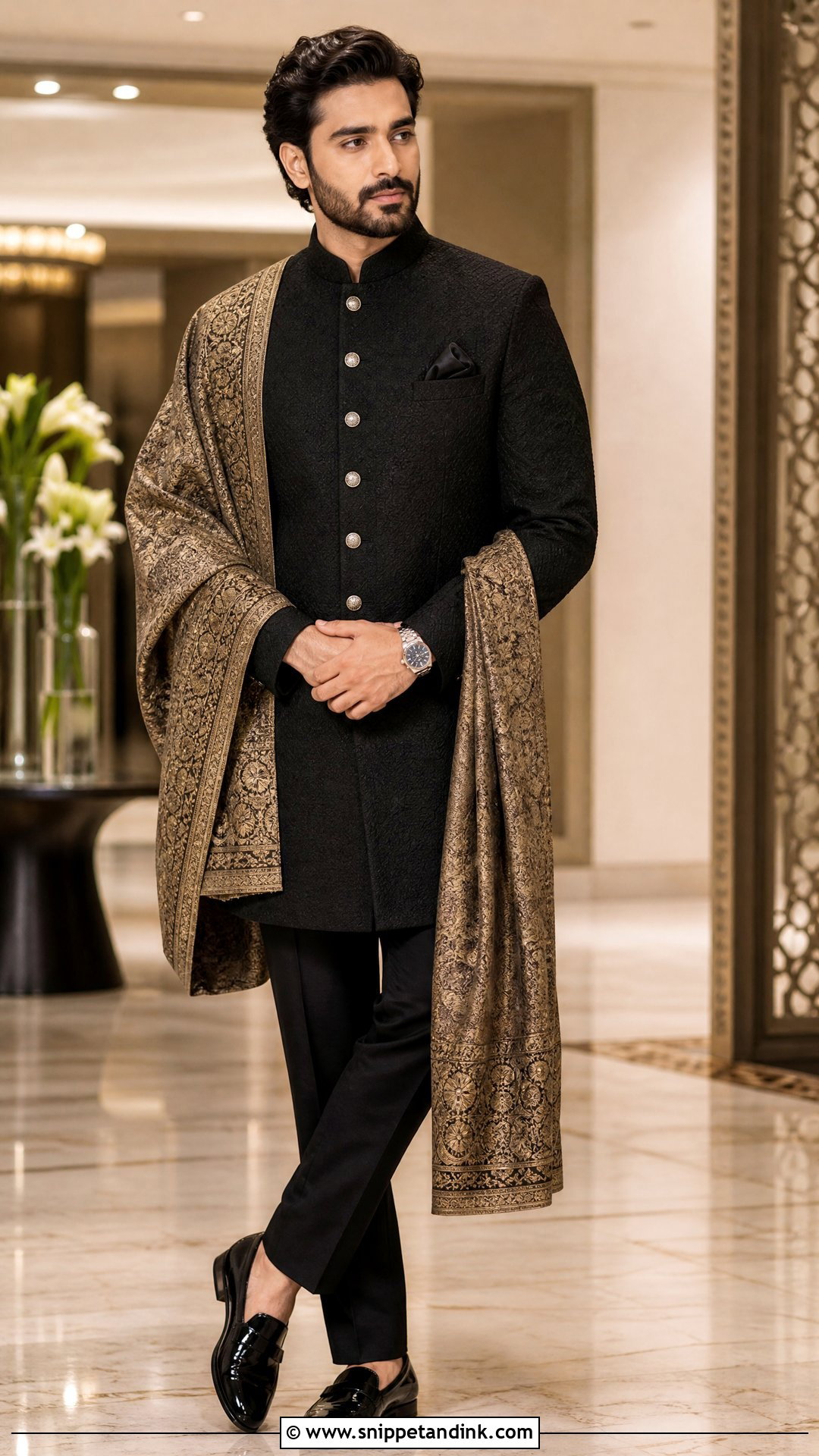
Black is the evening fabric I trust most for a groom who is nervous about colour. Choose textured silk or velvet, and insist on a close fit across the shoulders and a straight, uninterrupted line down the front; a bandhgala has no lapels to hide a loose chest. Matching black trousers and polished loafers or formal shoes keep it modern. The antique shawl in muted gold or brown supplies the traditional depth, draped over one shoulder so the jacket’s structure still shows. A metal watch and a pocket square finish it. If the shawl is heavily embroidered, skip the necklace altogether. Velvet in a warm ballroom gets hot fast, so for a summer reception I’d move you to silk.
4. Navy Blue Bandhgala Reception Outfit
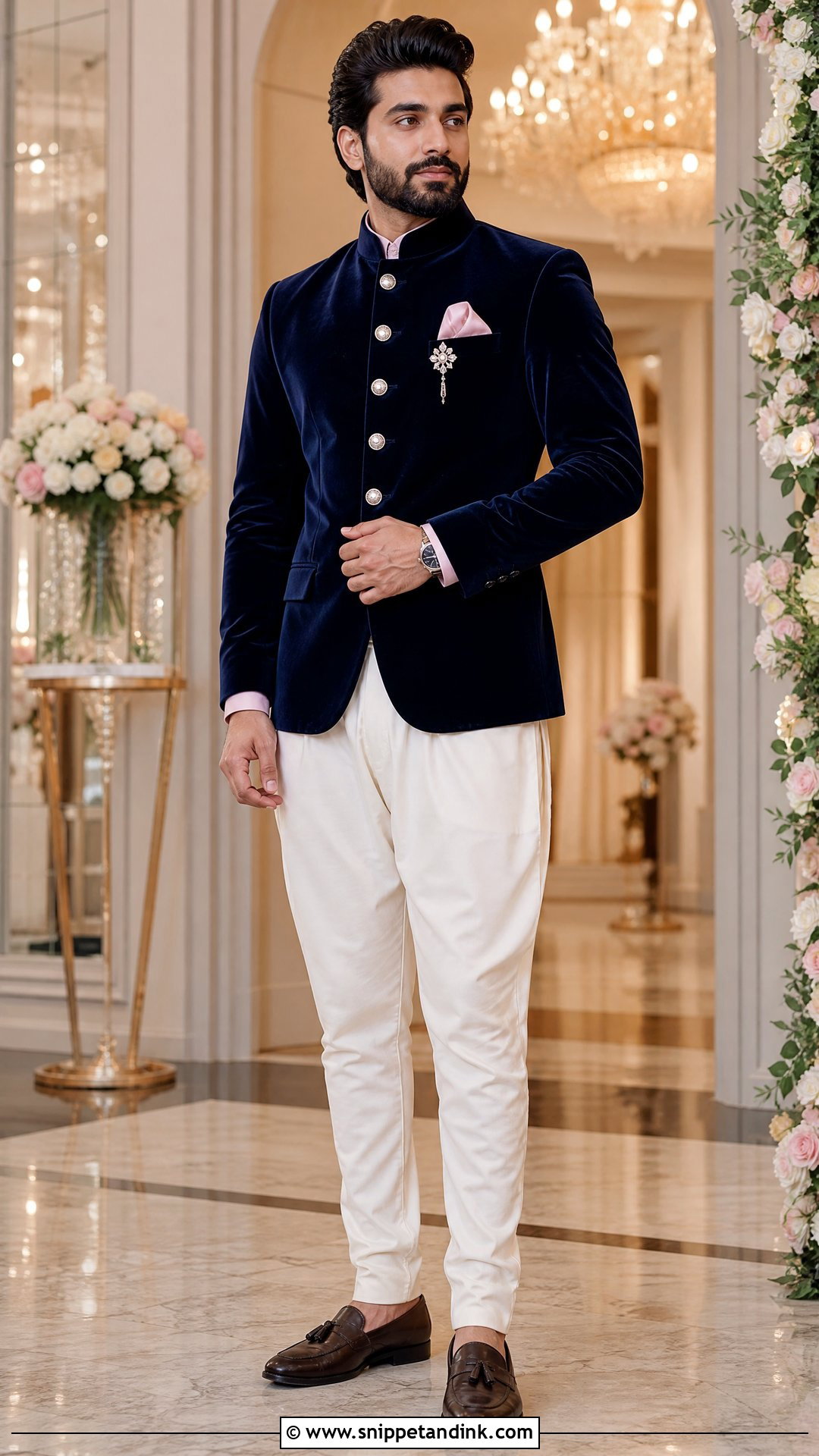
Navy is my usual answer when a groom wants the formality of black but finds it harsh against his skin. A velvet or silk-blend bandhgala with covered buttons and a neat stand collar does the work. Ivory Jodhpuri breeches or tapered trousers sharpen the contrast and show off the jacket’s shape; breeches need a proper fitting at the knee, though, or they balloon when you stand. A pale pink shirt or pocket square can tie you visually to a partner in blush or gold. Dark brown loafers, a classic watch and one discreet brooch at the collar are plenty. Resist adding several bright accents, because navy only looks expensive beside quiet neutrals.
5. Navy Three-Piece Engagement Suit
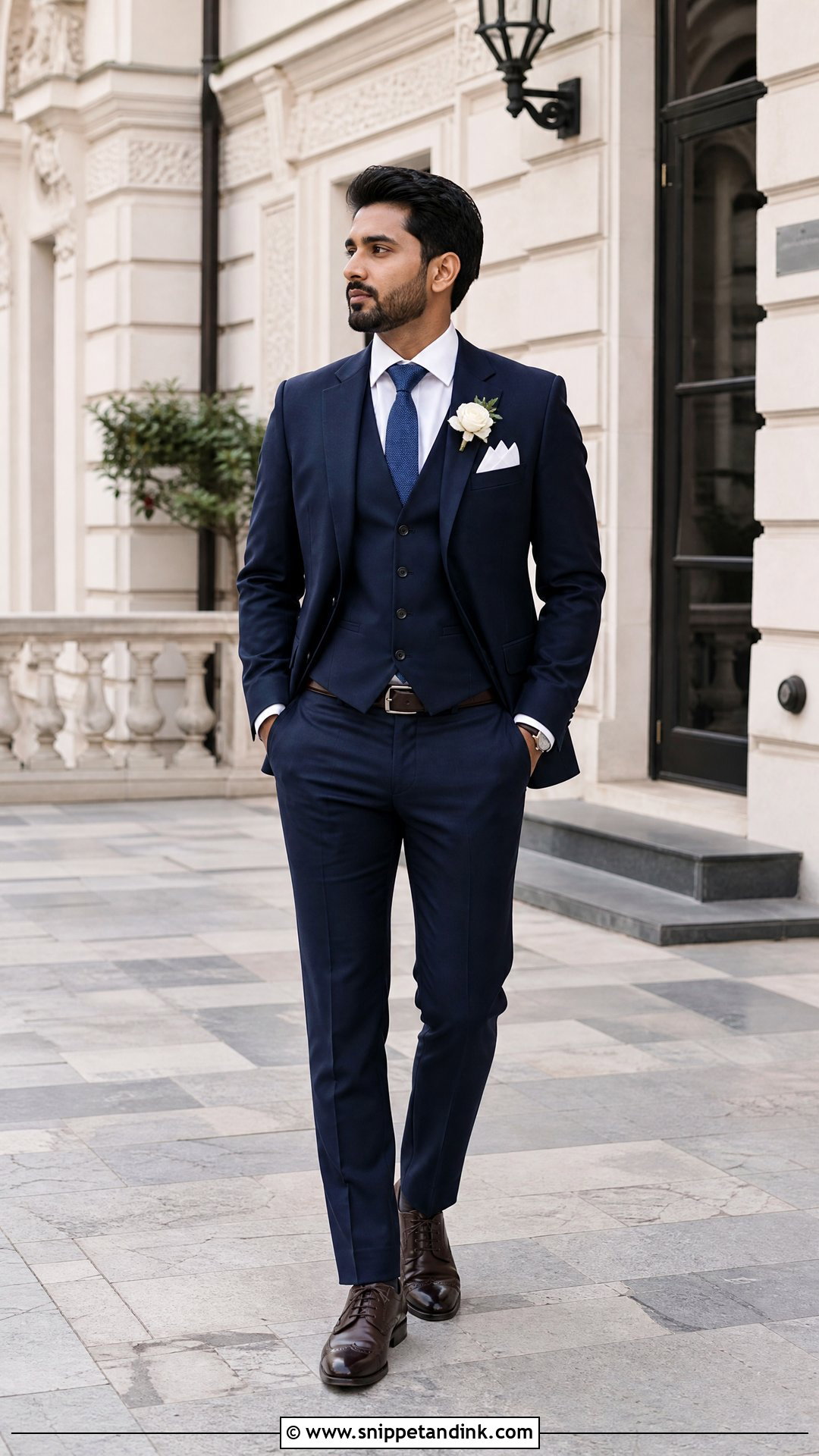
For an engagement with a Western or formal dress code, a navy three-piece is the safest suit you can own, and the waistcoat is where it usually goes wrong. At the fitting I button everything and ask the groom to sit: if the waistcoat pulls across the buttons or rides above the trouser waist, it needs letting out before anything else is touched. A crisp white shirt, a navy or quietly patterned silk tie and a white floral lapel pin give it the occasion. Add a folded pocket square, dark brown Oxfords with a matching belt and keep the trouser break minimal. It sits comfortably beside a gown, a sari or a contemporary engagement lehenga, and you will wear it again long after the wedding.
6. Pink Nehru Jacket Mehendi Outfit
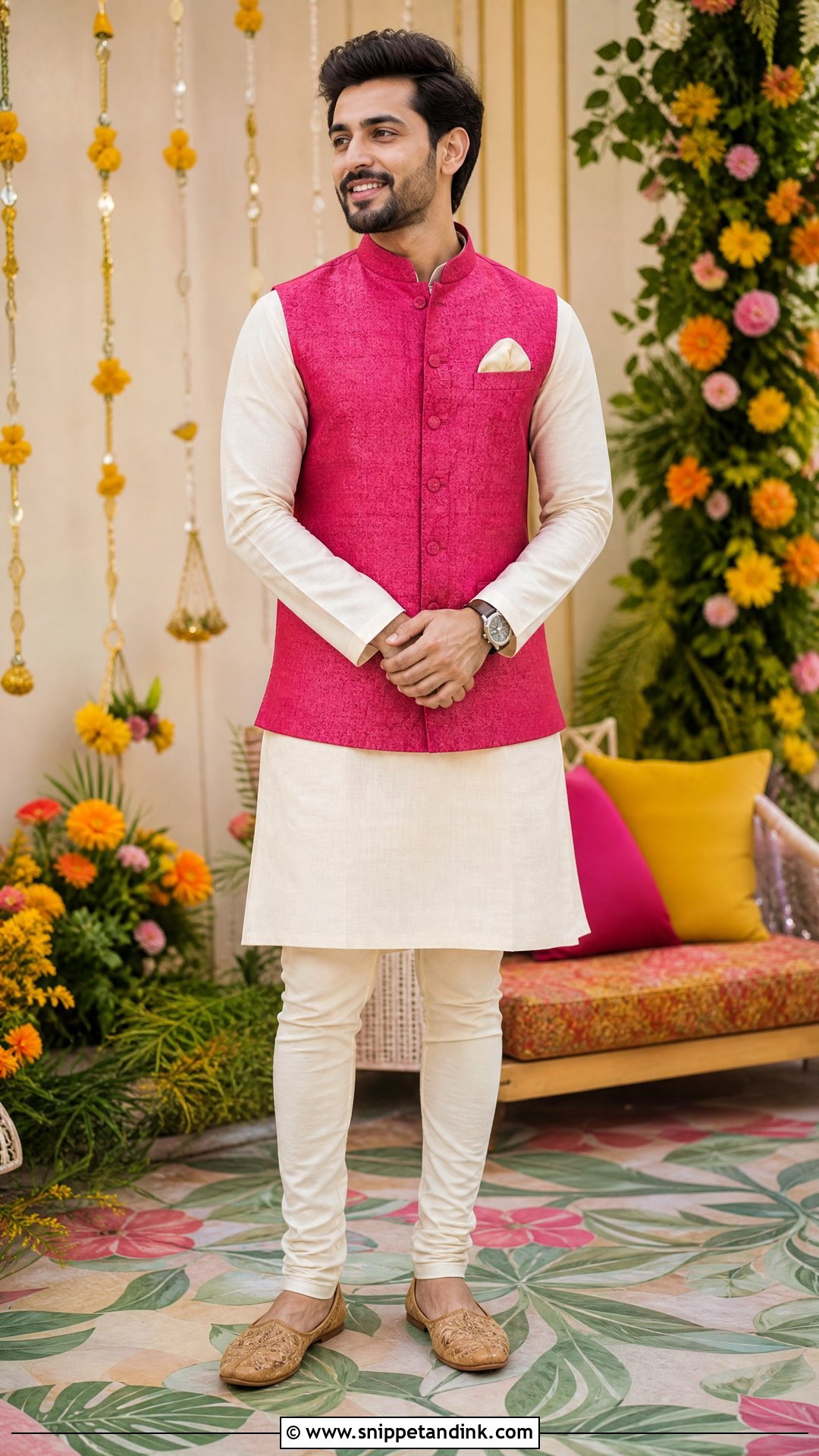
Mehendi is the one event where a groom can wear proper colour, and a bright pink Nehru jacket does it without the whole outfit shouting. The trick is a quiet base: a white or cream khadi kurta to the knee, kept plain so the jacket does the talking. Choose slim churidar for a traditional finish or tapered pajamas if you expect to dance. Tan juttis with light embroidery ground the bright top half and suit most outdoor decor. One thing I always mention: henna gets everywhere at a mehendi, and fresh paste will stain silk brocade permanently, so keep your hands and sleeves clear until the paste on the bride’s side has dried. Skip the necklace and let the pink stand alone.
7. White Kurta And Floral Nehru Jacket Outfit
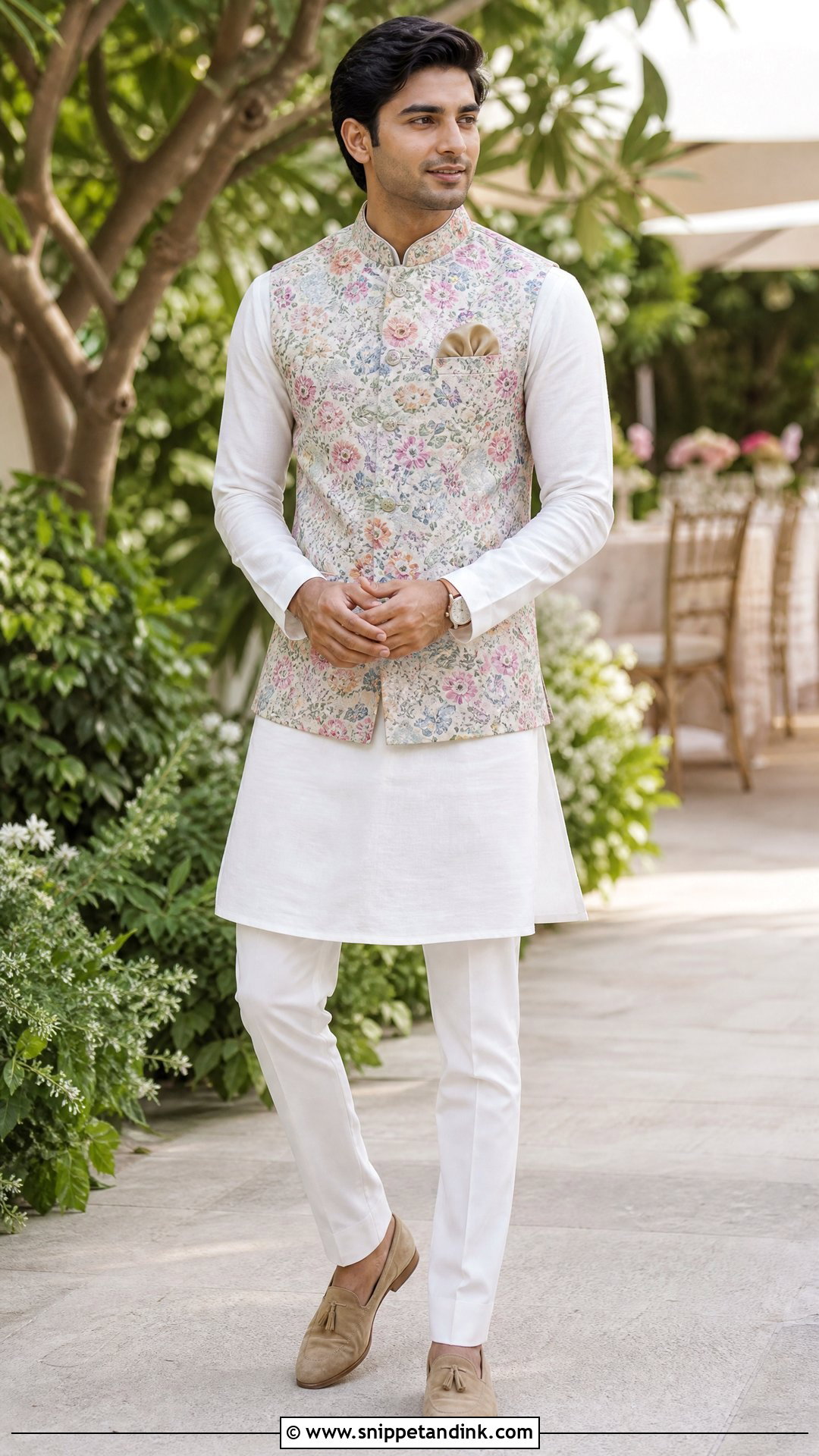
Florals on a groom are easy to overdo. Small motifs on a fitted Nehru jacket, in two or three soft colours like pink, sage or muted yellow, look deliberate; a large high-contrast print looks like upholstery from ten feet away. Underneath, a crisp white kurta and straight pajamas in breathable cotton silk keep you cool through a garden mehendi or a welcome lunch. Beige suede loafers suit a relaxed brunch, embroidered juttis suit anything with a priest present. A minimal watch and a coordinating pocket square are all the decoration it needs. I’d steer very formal grooms away from this one; it belongs to the lighter daytime events.
8. Yellow Kurta Haldi Outfit
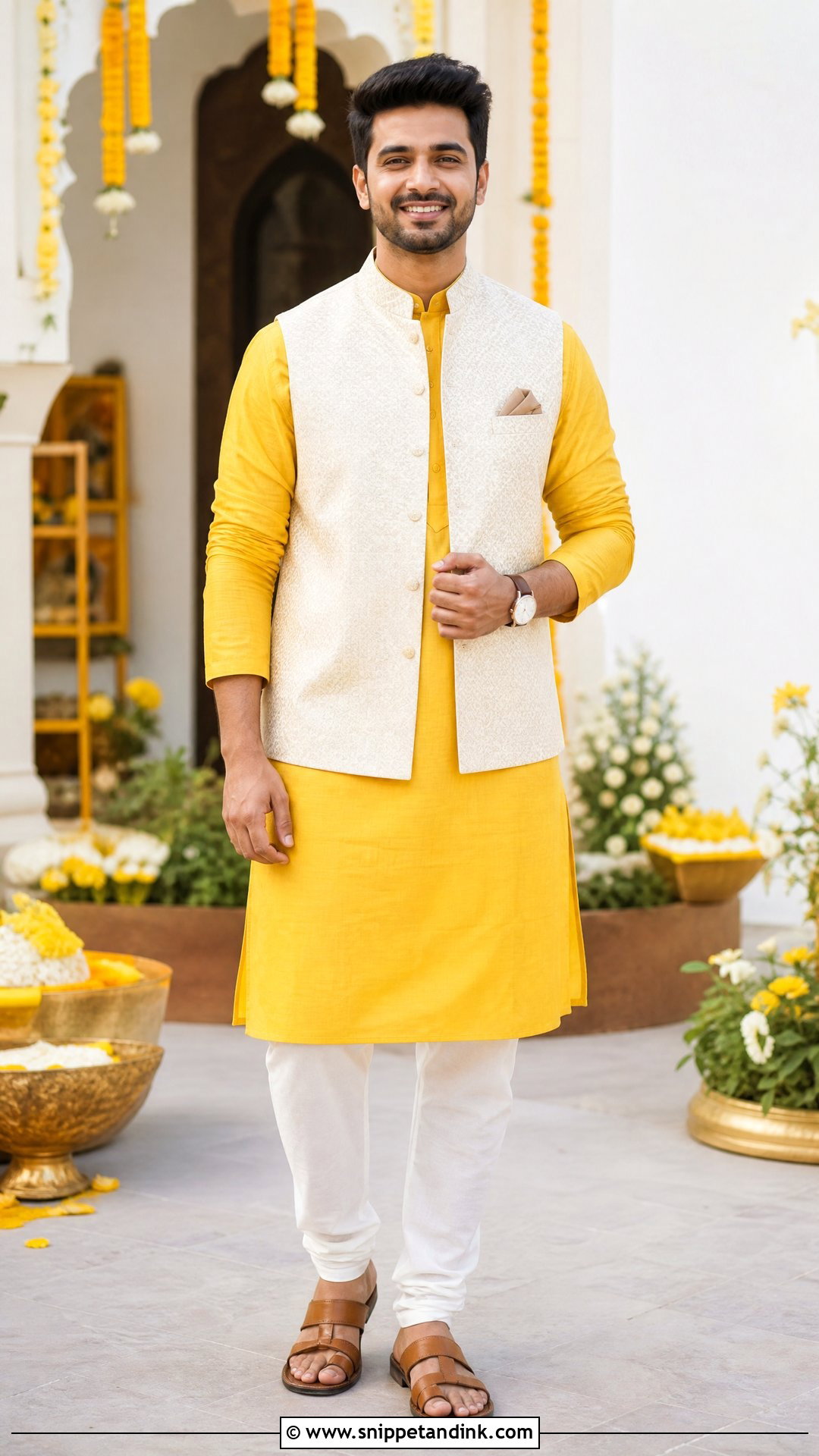
Golden yellow gives you a celebratory haldi look that sits happily with marigold decor, but treat this kurta as disposable. Turmeric paste stains cotton silk for good, and families rarely go gently with it. Go for a breathable kurta with a band collar, side slits and minimal tonal embroidery, with white tapered pajamas underneath. A short ivory or printed Nehru jacket is useful for the photos before the ritual starts; take it off before the paste comes out. Tan sandals or simple juttis cope with a wet floor better than anything delicate. Leave the heavy embroidery and complicated draping for the evening.
9. Sage Green Sherwani Wedding Outfit
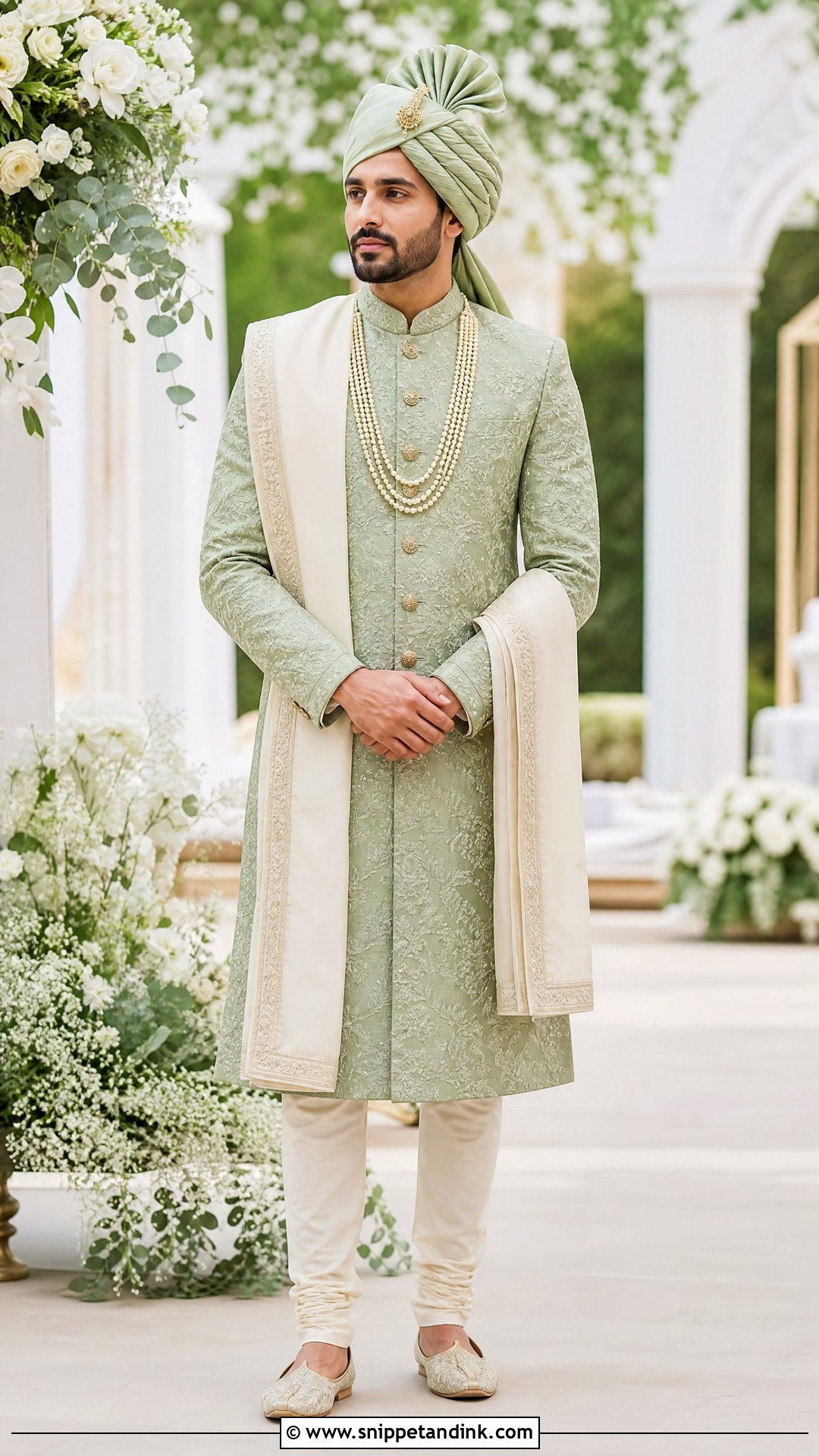
Sage is the colour I suggest to grooms who like Kohli’s soft palette but feel invisible in ivory. A silk sherwani with tonal botanical embroidery and antique-gold buttons carries it best, over cream churidar so the look stays light. A matching sage turban keeps everything coordinated, and the ivory stole stops the green from taking over. Layered pearls and cream juttis with minimal gold finish it. Sage changes a lot between shade and full sun, so ask to see the fabric outdoors before you order. It sits well next to ivory, blush, dusty rose or a deeper green on the bride’s side.
10. Pastel Pink Sherwani Wedding Outfit
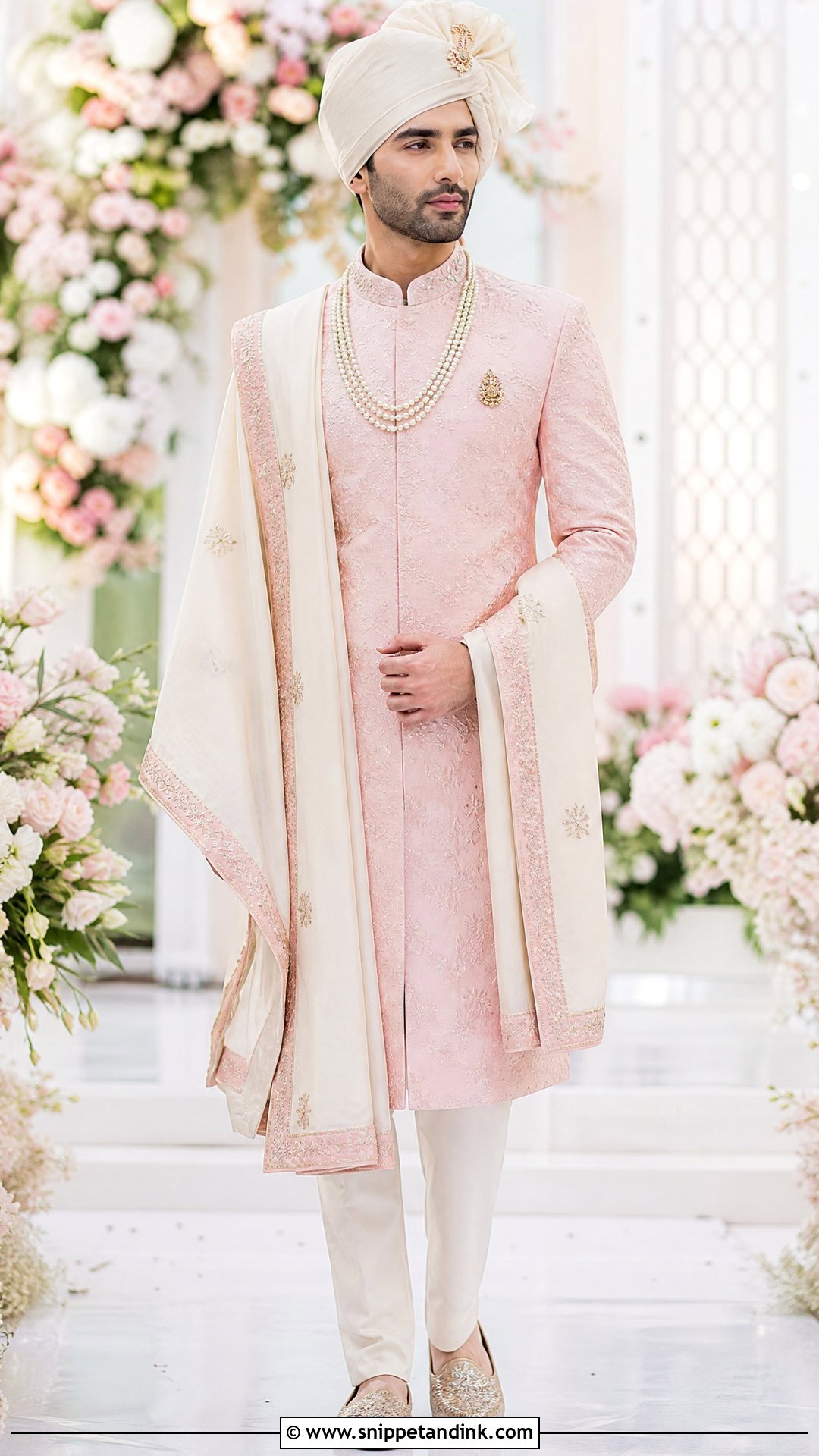
Pink on a groom stops looking soft the moment the tailoring is sharp. Choose dusty rose, muted blush or a soft salmon over a saturated pink, which can go almost neon under stage lighting. Tonal or antique-gold threadwork adds dimension without tipping into fussy. Ivory trousers and an ivory stole edged in pink balance the colour; a cream turban calms it further, while a tonal pink turban makes the outfit more coordinated and more noticeable. Pearl strands, a small turban brooch and ivory juttis complete it. I find this one suits spring ceremonies, gardens and destination weddings where the bride is wearing pink florals or champagne embroidery.
11. Cream Sherwani And Red Turban Outfit
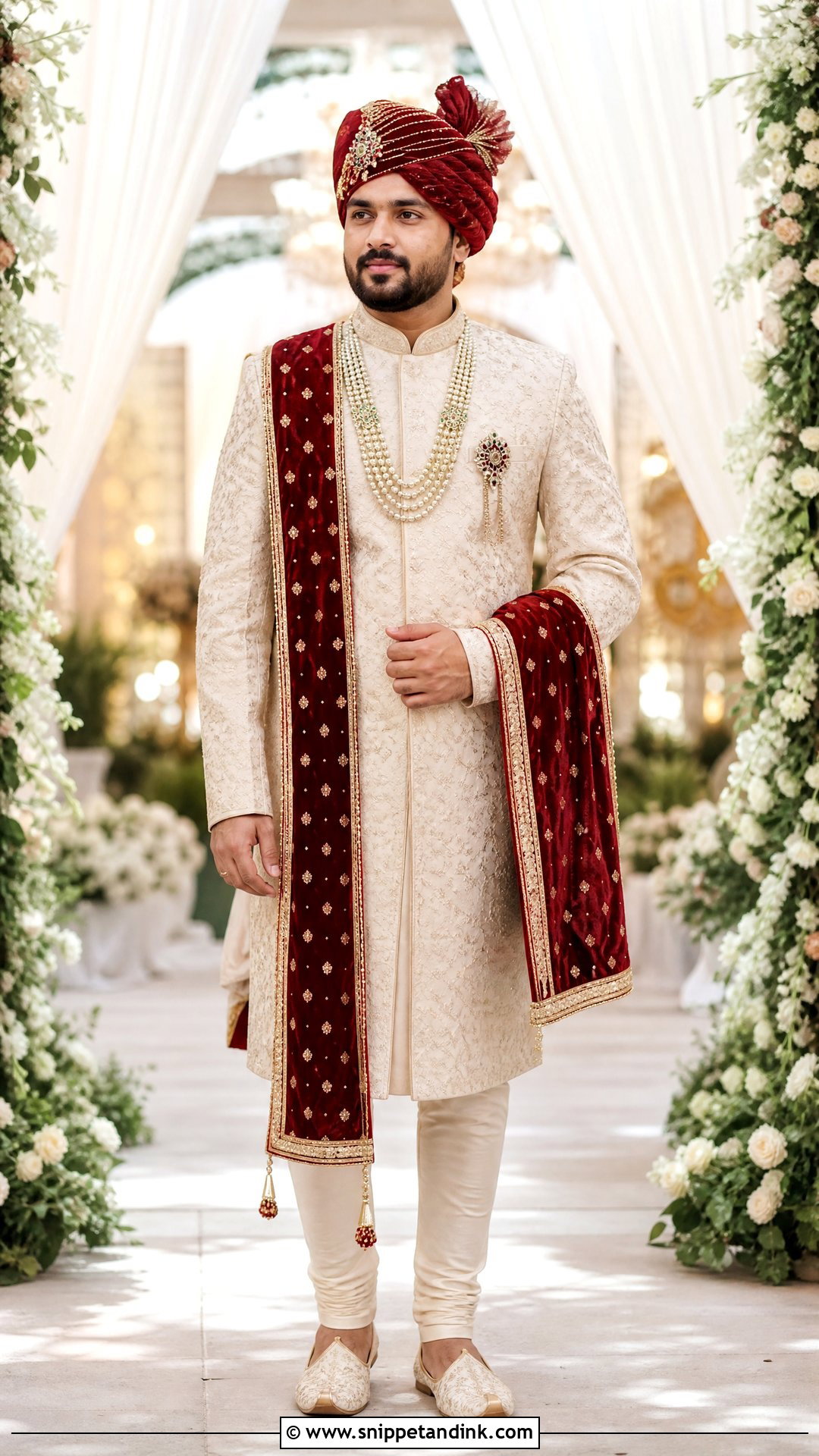
Cream with a deep red turban is the classic North Indian ceremony combination, and the balance comes from keeping the sherwani light. Fine gold embroidery, decorative buttons and a structured band collar are fine, as long as the base stays pale enough to hold its own against the red. Cream churidar and embroidered juttis continue the neutral foundation. A red stole with a narrow gold border can drape over one shoulder or rest across the arms for the procession. Pearls bridge the cream and the red nicely. Keep the turban brooch small. A red safa already pulls every eye in the room, and a big kalgi on top of it starts to compete.
12. Gold Sherwani And Ivory Trousers Outfit
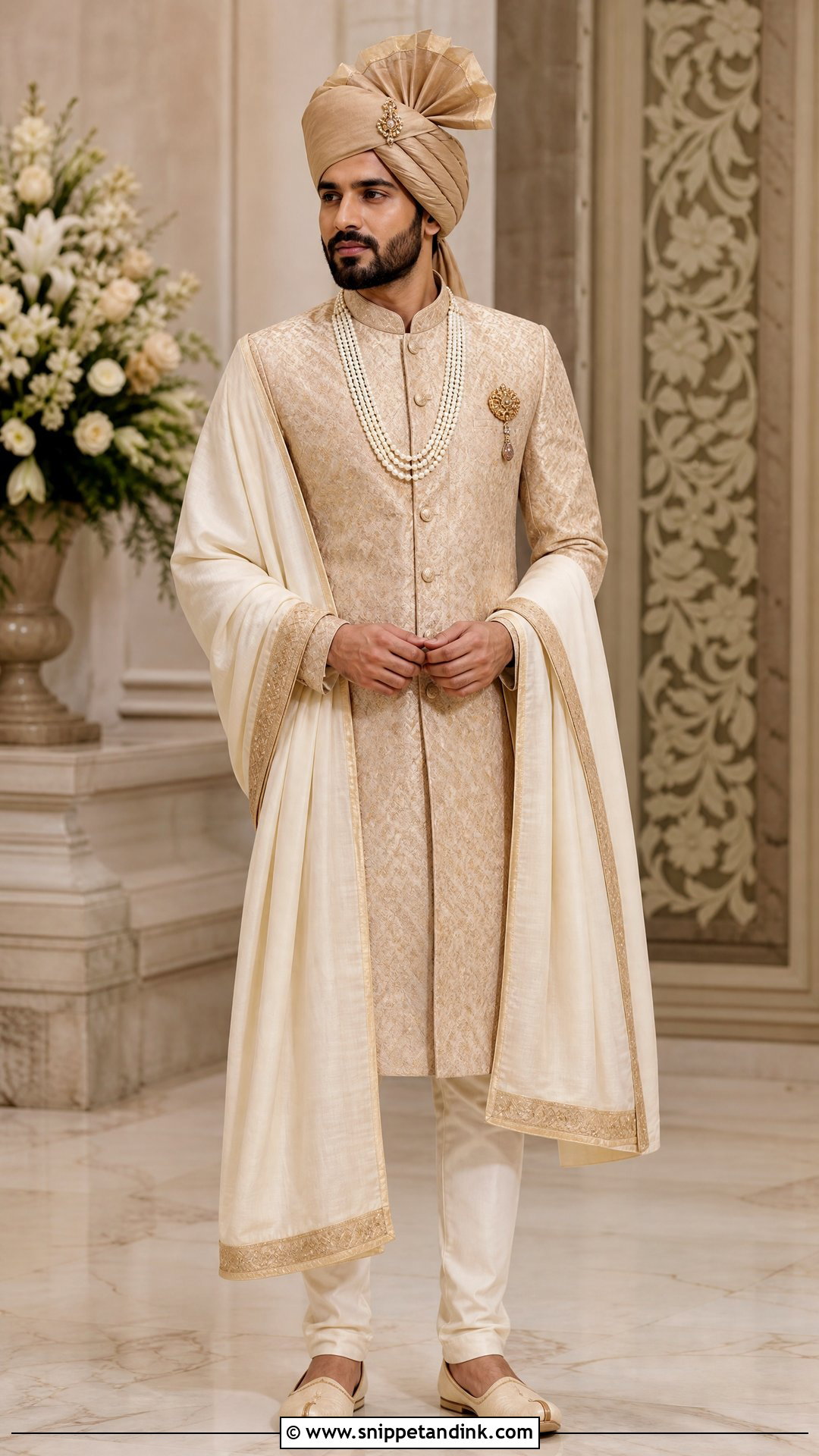
Gold reads elegant or flashy depending almost entirely on the shine of the weave. I pick a muted champagne gold with woven texture or small vintage motifs, and I hold the fabric under a phone flash before ordering, since high-shine lame can blow out completely in flash photos. Plain ivory churidar or tailored trousers give the eye somewhere to rest. An ivory silk stole with a narrow gold edge holds the look together without adding a new colour. Cream juttis, one pearl necklace and a small antique-gold brooch are enough. A beige or ivory turban looks more considered than matching everything in metallic gold. Save this for evening ceremonies and warm-toned indoor venues.
13. Burgundy Bandhgala Sangeet Outfit
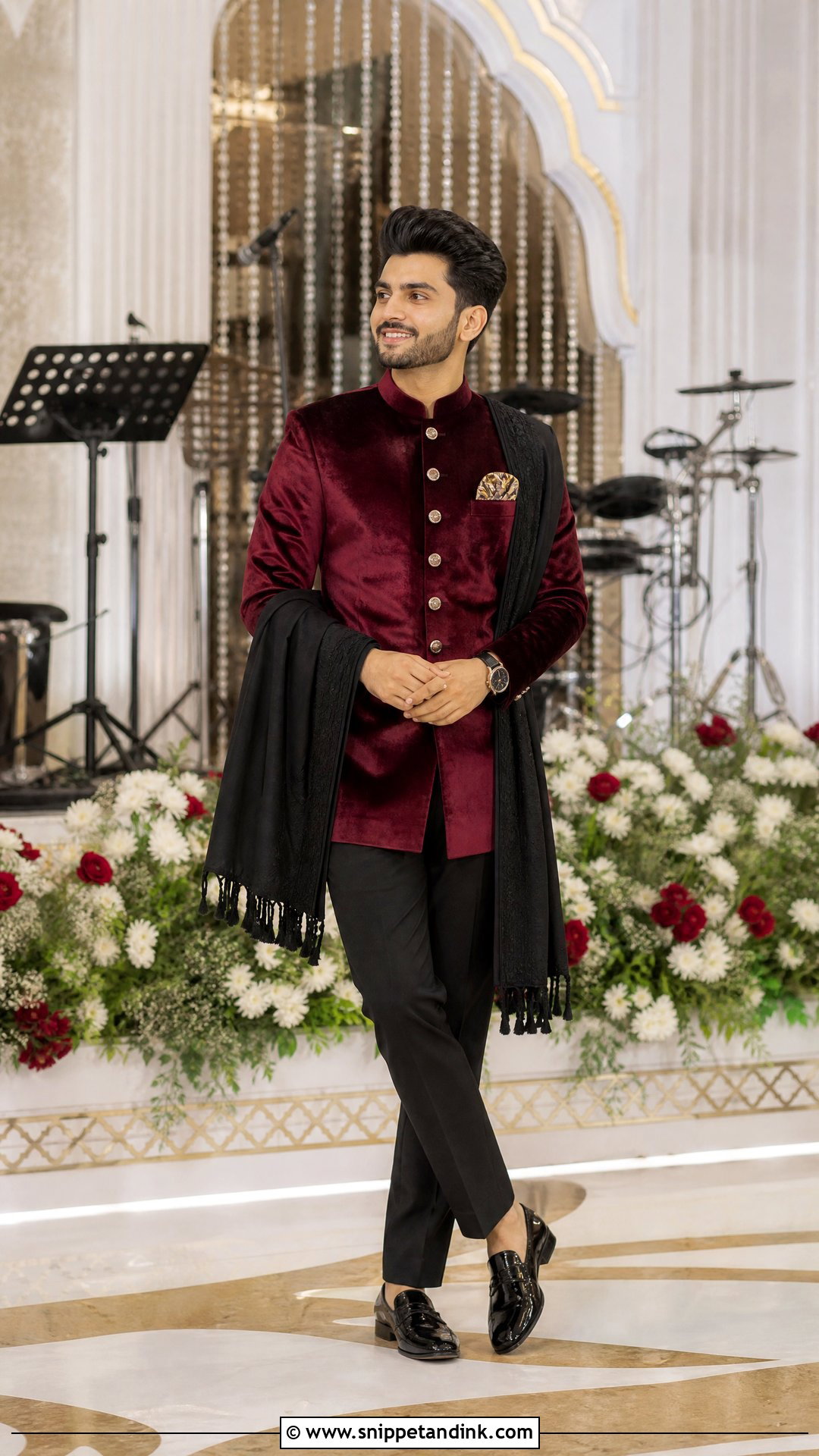
Burgundy brings depth to a sangeet without the severity of black. Velvet suits winter; textured silk is lighter and easier to move in if you are performing. Look for a fitted waist, a clean stand collar and understated antique-gold buttons, then pair it with black tapered trousers and polished black loafers. A printed or embroidered pocket square adds movement. For extra tradition, a narrow black shawl with a burgundy border works, though I’d take it off before any choreography. Keep jewellery minimal, since the colour already carries the outfit. Check the arm hole height when you fit it: a bandhgala cut too low under the arm locks your shoulders the moment you raise your hands to dance.
14. Emerald Green Sherwani Sangeet Outfit
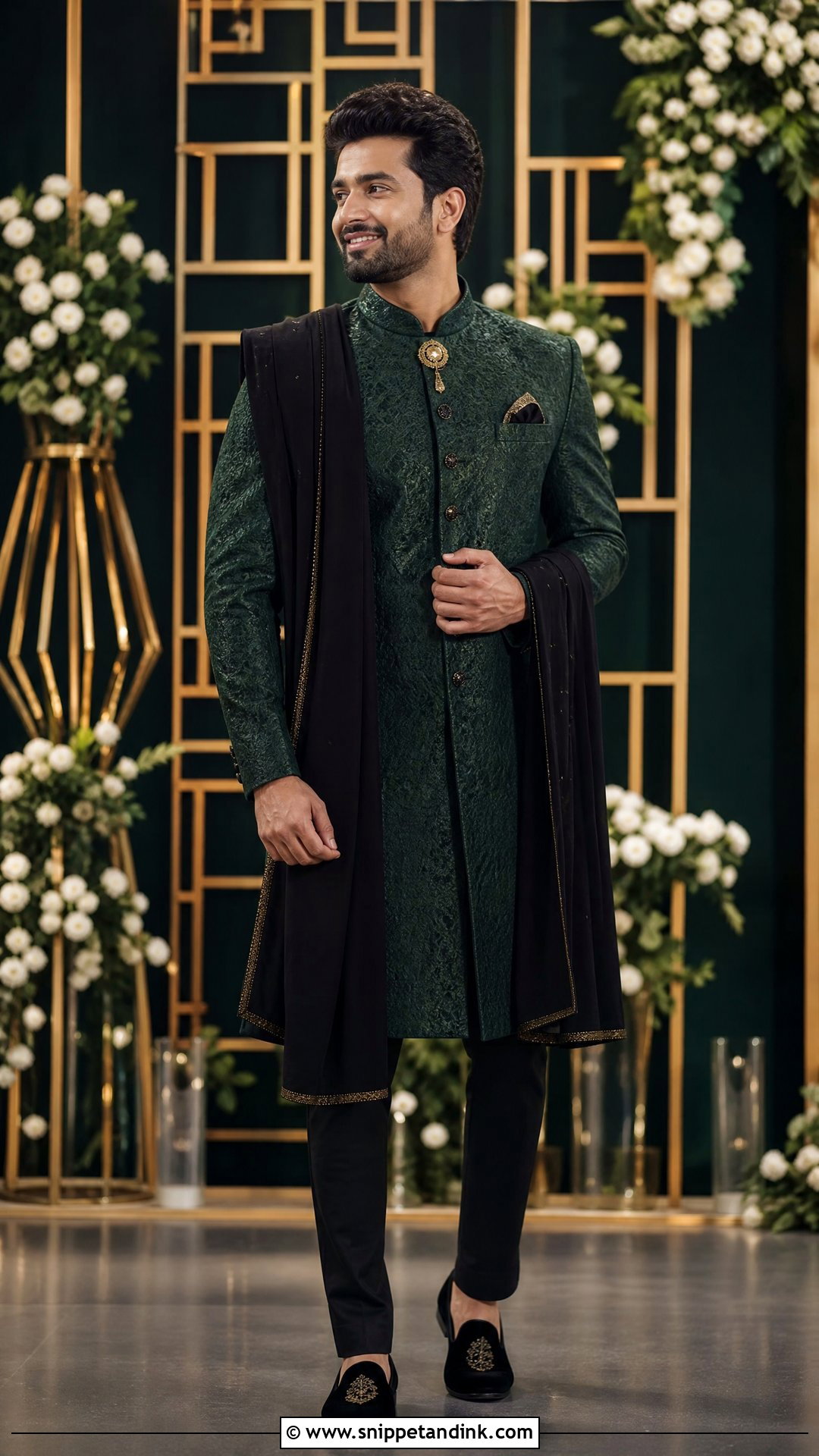
Emerald is a confident sangeet colour, and jacquard or silk with restrained gold embroidery catches event lighting without glaring. Black or deep green tapered trousers decide how formal it reads; matching green feels more monochrome and dressier. Black velvet loafers, a simple gold-toned brooch and a neatly folded pocket square are enough. A lightweight black stole adds drama for photos, but take it off for performances or it ends up on the floor. If the sherwani already has heavy metallic work, leave the pearls out. Emerald pairs well with a partner in gold, ivory, champagne or another jewel tone.
15. Powder Blue Achkan Wedding Outfit
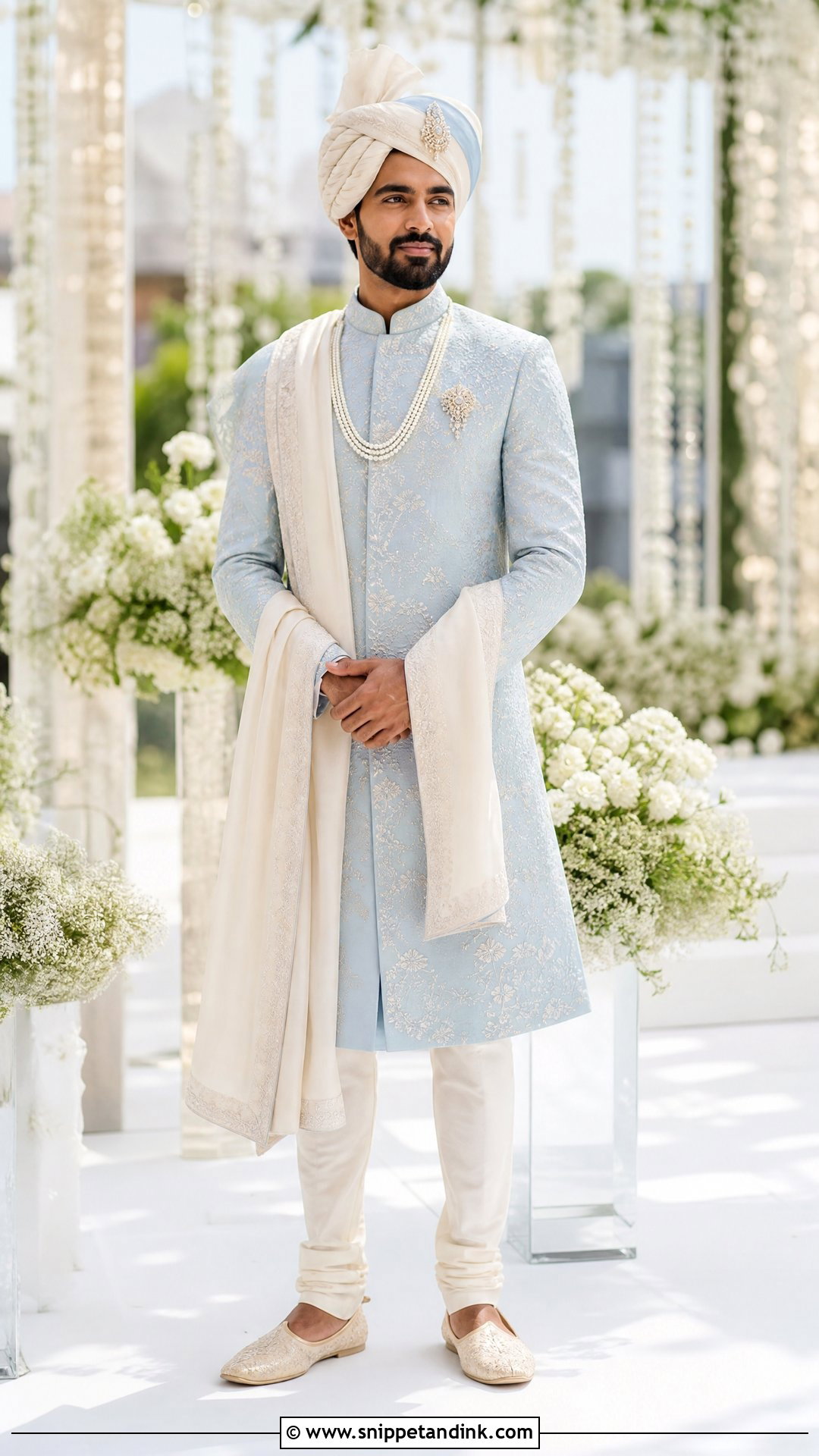
Powder blue is the colour I suggest for summer day weddings where ivory feels expected and gold feels too hot. A knee-length achkan with tonal embroidery, covered buttons and a sharply fitted shoulder is the right base. Ivory trousers give soft contrast. You can choose an ivory turban with a blue band or a matching blue turban; the matching version reads more unified, the ivory one gives your face more light. Cream juttis, a silver-toned brooch and a single pearl strand are all it needs. Pale blue shows sweat marks under the arms on a hot day, so I’d ask your tailor about a lining or have dress shields stitched in.
16. White Kurta And Beige Waistcoat Outfit
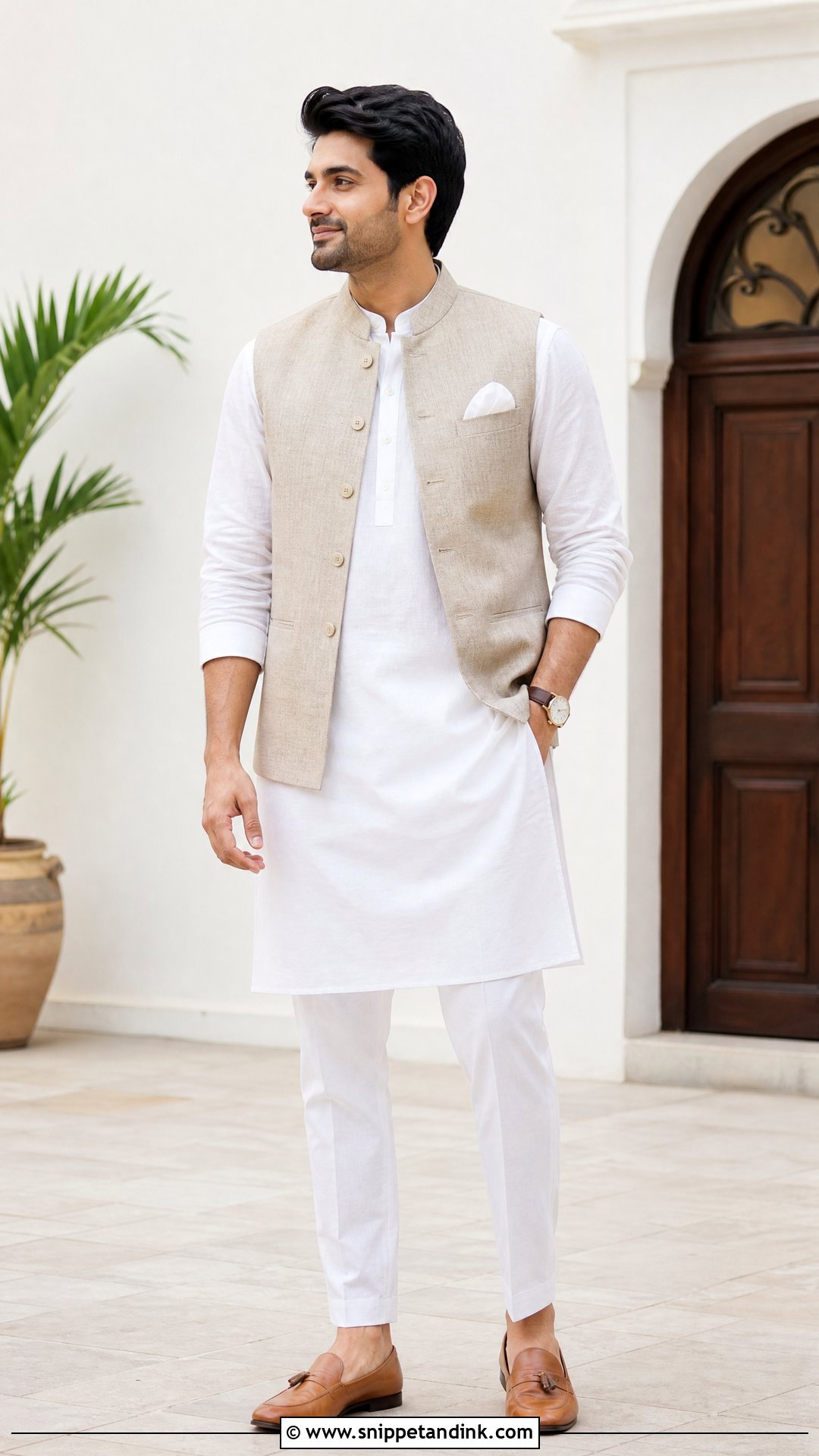
Some pre-wedding events need clothes that look put together without feeling ceremonial. A white cotton-silk kurta with straight pajama trousers is a comfortable base, and a tailored beige waistcoat or Nehru jacket with woven texture and dark buttons gives it structure. The neutral layers let colourful decor or your partner’s outfit lead. Tan loafers or plain juttis, a classic watch and a white pocket square finish it. Two small details make cheap pieces look expensive: sleeves that end at the wrist bone with no rolling, and a collar that sits flat against the neck. Wear it to a welcome lunch, a family gathering or a morning puja.
17. Black Tuxedo Wedding Reception Outfit
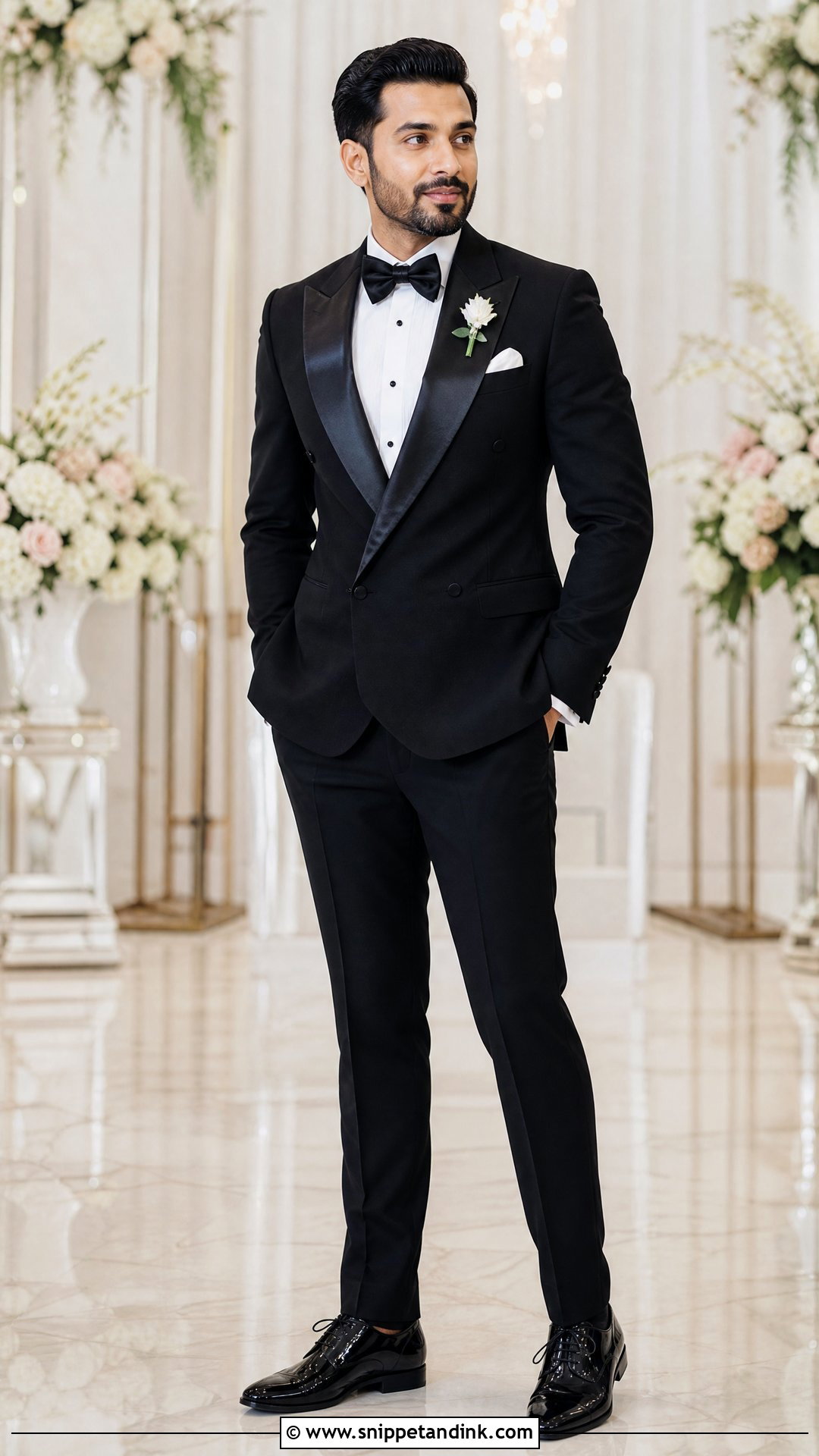
A black tuxedo is the sharpest Western option for a formal reception, and its rules are stricter than people expect. Go single-breasted with satin peak lapels and a jacket that closes without an X of strain lines around the button. Matching trousers, a crisp white dress shirt and a black bow tie are non-negotiable. Patent Oxfords are the traditional shoe; velvet loafers are a more modern choice. A white pocket square and a small lapel flower give it the wedding touch. Leave out the oversized watch, the bright belt and the patterned shirt, because black tie only looks luxurious when nothing interrupts it.
18. White Tuxedo Jacket Reception Outfit
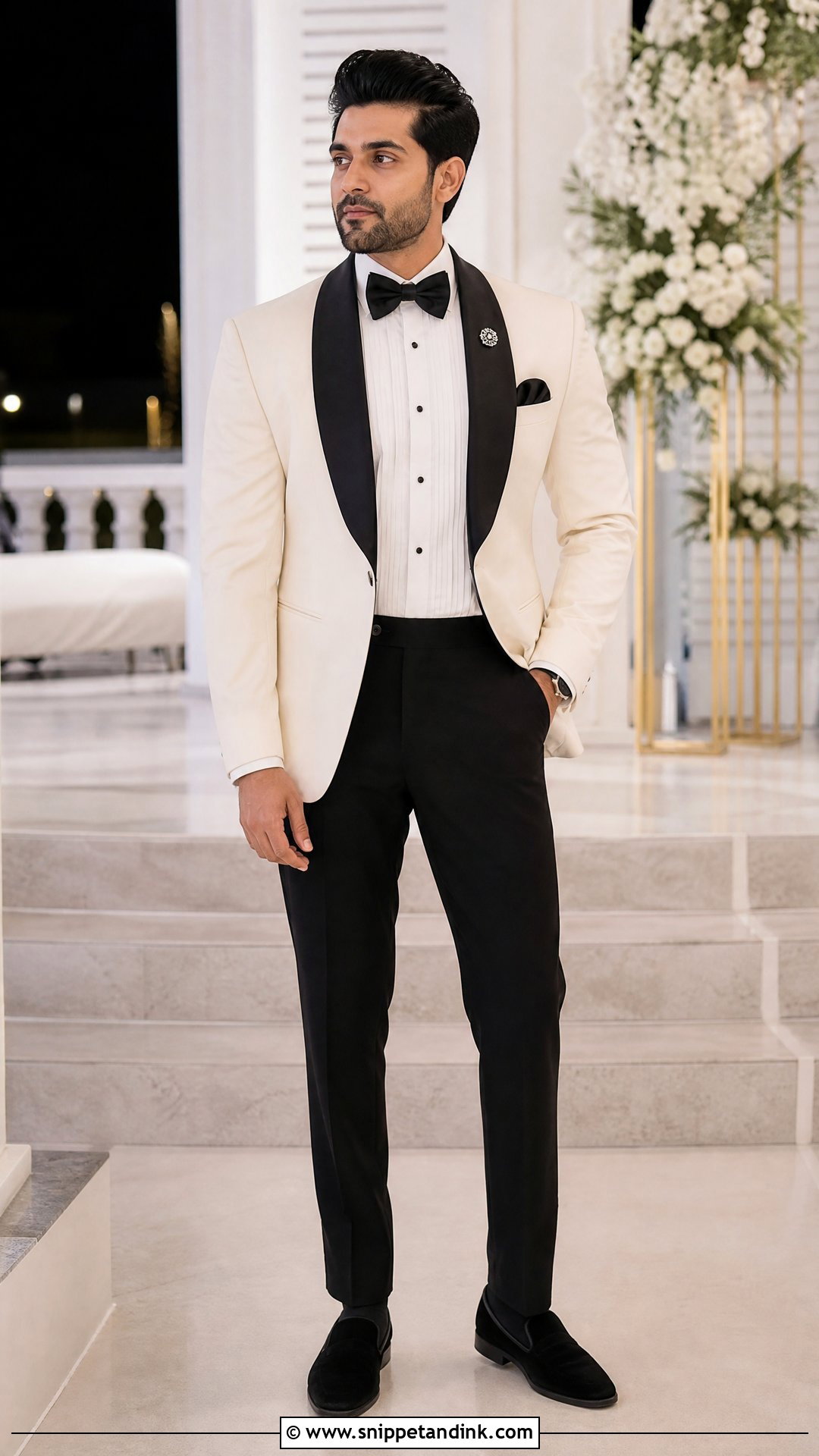
A white dinner jacket keeps black-tie rules while giving you something more distinctive than an all-black tux. Choose ivory or winter white rather than optical white, which looks blue in photos, and pair it with black satin lapels, black tuxedo trousers and a pleated white dress shirt. A black bow tie ties the two halves together, and polished black loafers ground it. One pocket square and one lapel pin are plenty. Fit is unforgiving here: pale fabric adds visual bulk, so the jacket should end close to the hip and sit neat at the shoulders. It suits summer and destination receptions best.
19. Monochrome Ivory Groom Outfit
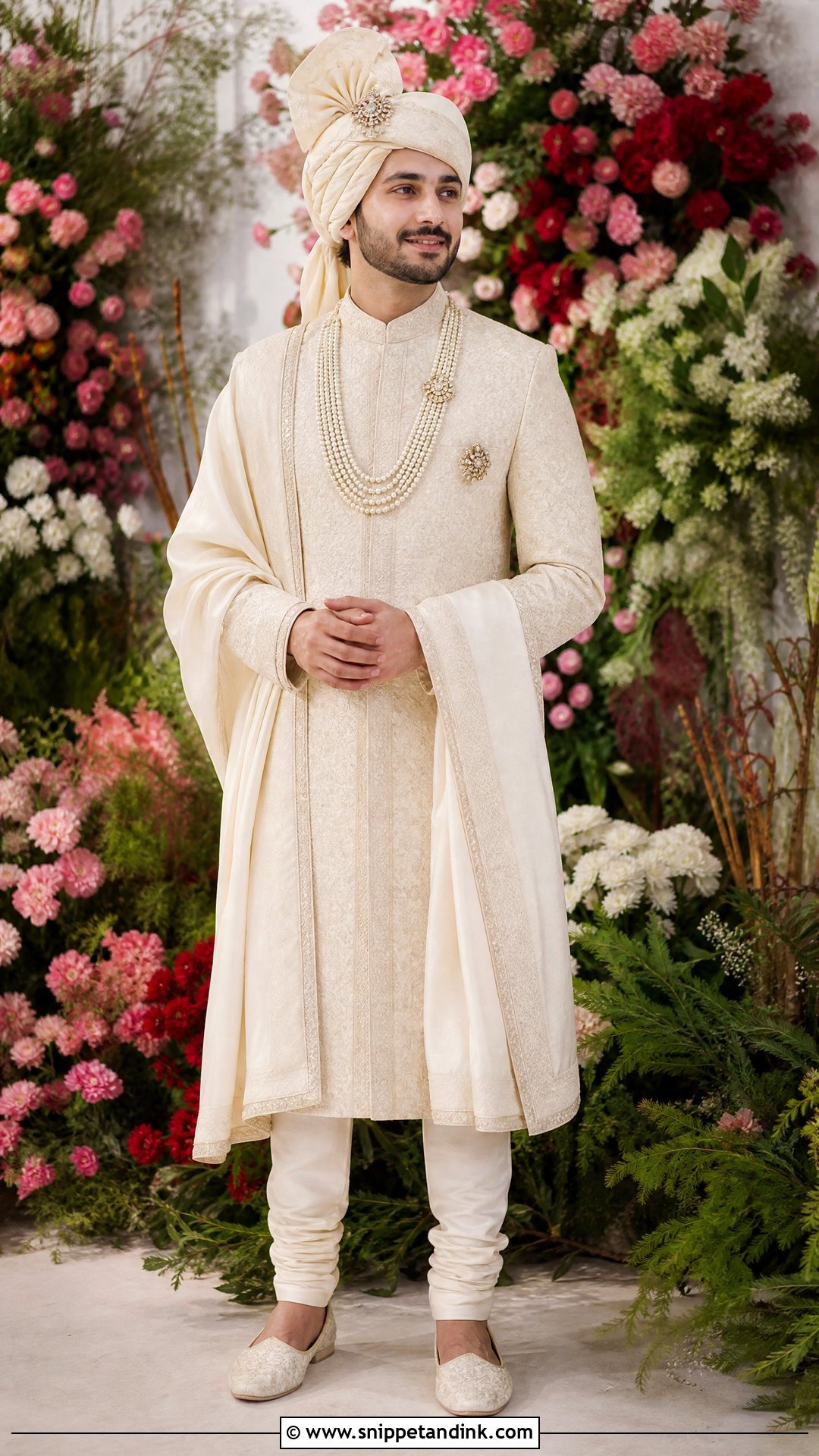
All-ivory relies on texture to stay interesting, and this is where I spend the most time with fabric swatches. An ivory sherwani with tonal threadwork, fabric-covered buttons and a high structured collar sits over matching churidar, an ivory silk stole and cream embroidered juttis. Mix a matte raw silk with slightly lustrous accessories, otherwise the whole outfit goes flat in photos. Pearls, champagne-toned metalwork and a small brooch add definition. The turban can match exactly or sit one shade darker for depth. Ivory from different dye lots rarely matches, so buy the sherwani, churidar and stole from one maker if you can.
20. Charcoal Bandhgala And Black Trousers Outfit
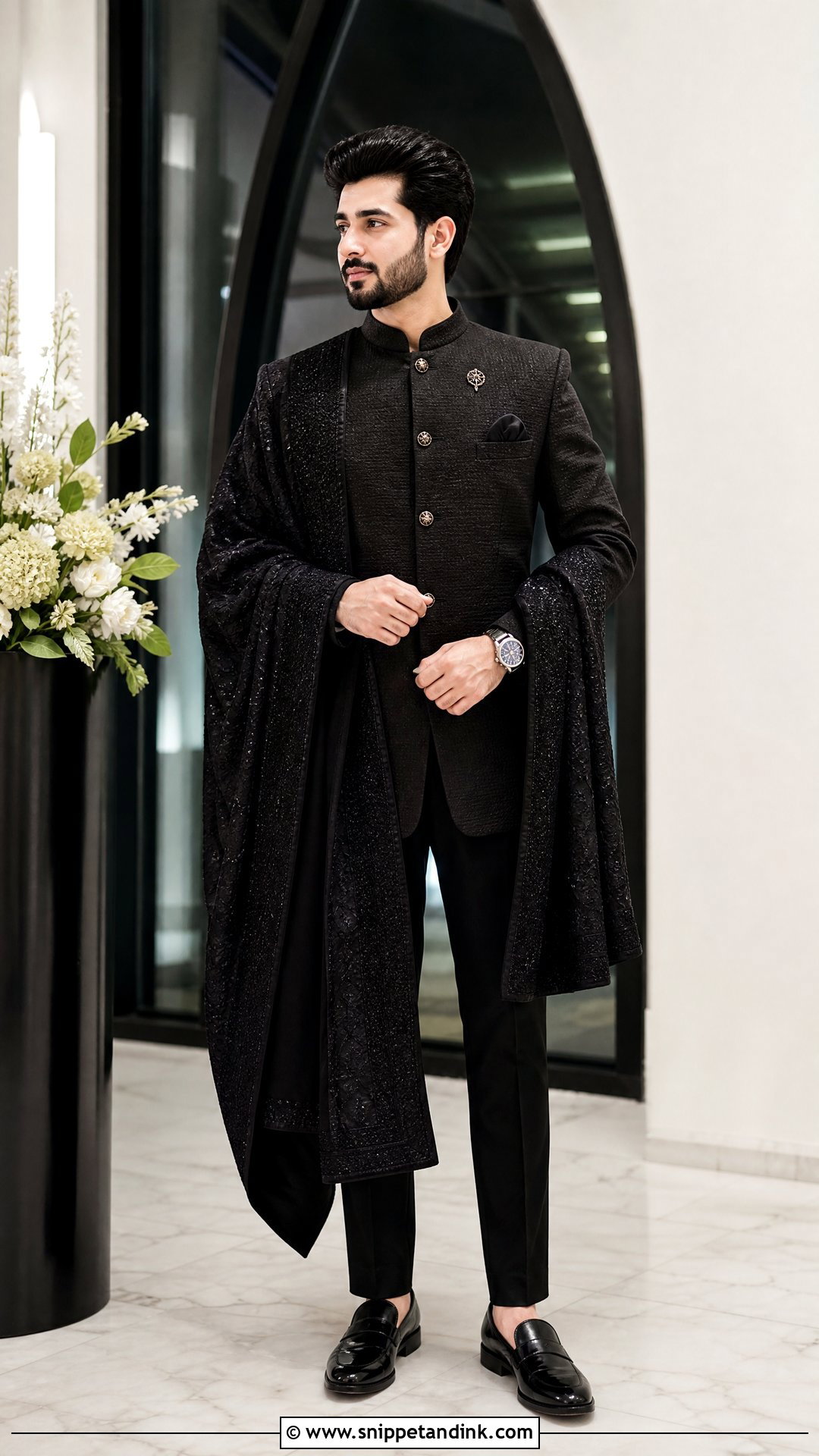
Charcoal sits between formal black and softer grey, and it is kinder than black to most skin tones under warm reception lighting. A textured bandhgala with a close cut, dark metal buttons and minimal embroidery at the collar is the base. Black tapered trousers give subtle tonal contrast and lengthen the leg. Black leather loafers, a silver watch and a charcoal pocket square keep the accessories controlled. In winter, add a black shawl with fine grey embroidery over one shoulder. A small brooch is fine; bright gemstones or mixed metals are not. Wear it to a cocktail reception or a sangeet where you want to look sharp rather than ceremonial.
Planning Five Events Without Looking Like Five Different Grooms
Indian weddings can ask a groom to change four or five times, and the danger is a set of photos where each outfit belongs to someone else. I treat the wardrobe as one story. Pick a single thread that runs through every look: the same metal tone on buttons and brooches, the same shade of ivory, or one recurring accessory such as a watch you love.
From there, map the energy of each event. Haldi and mehendi take the brightest, most washable colours. The ceremony gets the most structured piece and the fullest accessories. The reception is where a bandhgala or tuxedo resets the mood for evening. Lay all the outfits out together on one rail before the final fittings; a clash you’d never notice in separate trials becomes obvious when they hang side by side.
Safa, Stole and Juttis on the Wedding Morning
The small pieces cause more trouble on the day than the sherwani does. A safa tied fresh by an experienced hand sits better than a pre-stitched one, but it takes time, so put it in the morning schedule rather than squeezing it in. If you go pre-stitched, try it on with your haircut finished, because a new cut can change the fit.
New juttis are stiff and the leather rubs at the heel. Wear them around the house for a few evenings beforehand. Pin the stole at the shoulder from underneath with a safety pin so it doesn’t slide each time you bow. I’d also give one person a small kit: safety pins, a few spare buttons, double-sided fashion tape and a lint roller for velvet.
Fit Beats the Famous Name on Your Mood Board
The reason Virat Kohli’s groom looks hold up is that every piece earns its place: cultural detail on top of disciplined tailoring. An ivory sherwani, a fitted bandhgala, a bright Nehru jacket and a classic suit can all get there. Take colour cues from your partner and your venue instead of copying a celebrity from turban to shoes. Match fabric weight to the season, and wear in your footwear before the ceremony, not during it. Most of all, book fittings early enough that the shoulders, sleeves and trouser length can be corrected properly. Once the fit is right, accessories become personality instead of clutter, from pastel day looks to deep evening colours.
You'll Like These Ideas:


Leave a Reply