
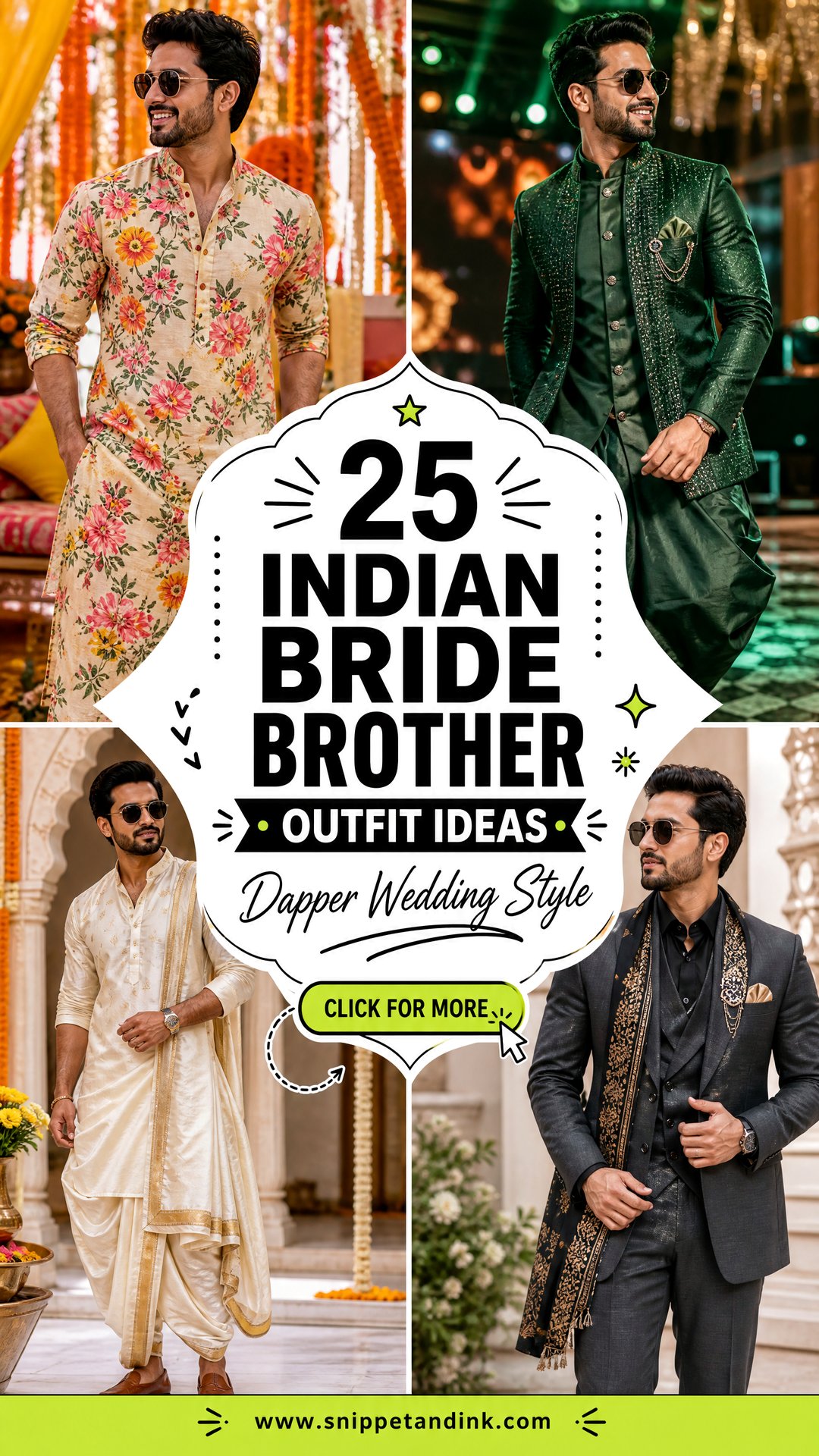
The bride’s brother is one of the busiest men at an Indian wedding. He welcomes the baraat, joins rituals at the mandap, walks beside his sister, stands in half the family portraits and is usually still on his feet when the last guests leave. So when I dress a brother, the brief is always the same: festive, comfortable for a very long day, and clearly not the groom. Right now that means classic Indian menswear with cleaner tailoring, softer colors and good texture: pastel sherwanis in daylight, jewel-tone bandhgalas at night, printed kurtas for the mehendi and Indo-western sets for the sangeet. Fit matters more than any of it. A plain kurta with the right shoulder and sleeve length looks sharper than an expensive sherwani that doesn’t fit.
Dressing for the Rituals He’ll Actually Perform
Before I pick a single outfit with a brother, I ask what he will physically be doing at each function, because the rituals decide more than the color palette. In many North Indian ceremonies he stands at the mandap and pours puffed rice into his sister’s hands during the pheras, which means reaching forward repeatedly. A sherwani that’s tight across the back or long in the sleeve gets in the way, so I check that movement at the fitting.
- Sitting at the mandap: shoes come off and he may sit cross-legged for an hour. Churidar should have enough ease at the knee, and he’ll want clean, plain socks or none at all.
- Welcoming the baraat: if the families exchange garlands or embraces, a stiff collar and heavy brooch can catch. Keep the front simple.
- Wearing a safa: if the family ties turbans for the men, choose the sherwani first and match the safa to it, not the other way round.
- The bidaai: it’s emotional and often outdoors at night. A shawl or stole helps if the temperature drops.
Customs differ widely between communities and families, so ask an elder which roles fall to him before you shop. It saves buying a beautiful outfit he can’t kneel in.
1. Ivory Sherwani For Bride Brother
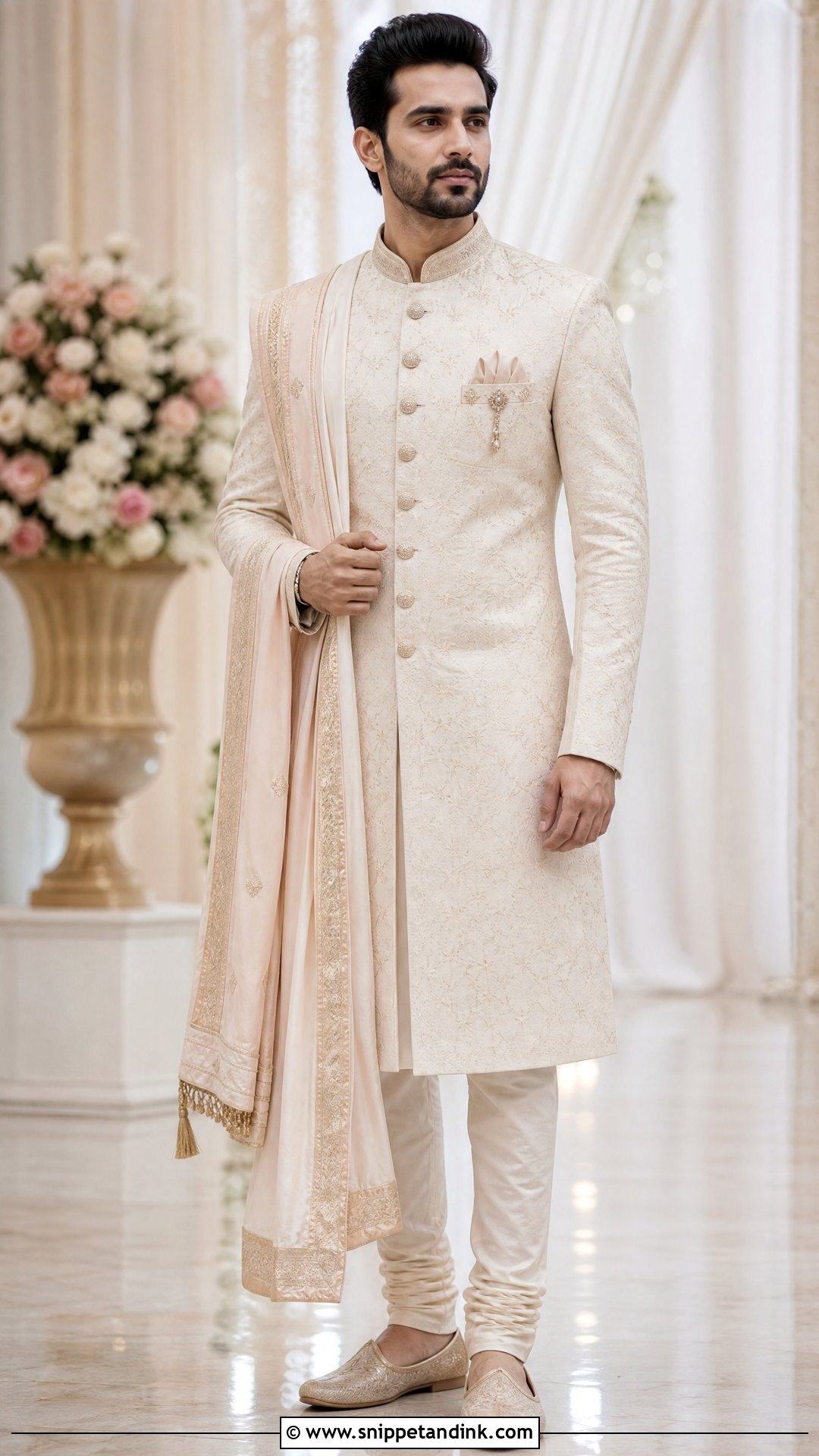
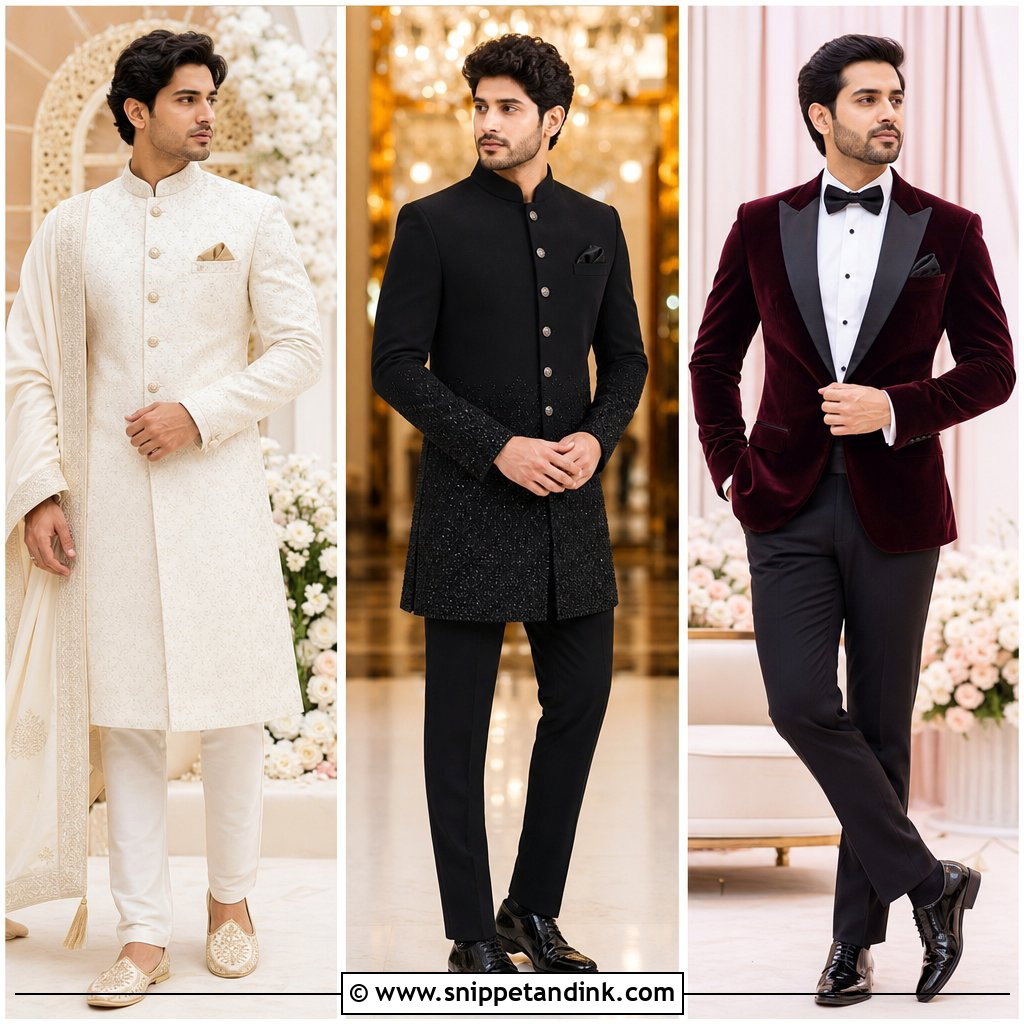
Ivory is the safest ceremonial color for a brother because it looks formal without drifting into groom territory, provided the embroidery stays restrained. Raw silk, brocade or jacquard give it weight. I’d pair it with an ivory churidar or slim trousers in the same tone; a slightly different white looks like a mistake in flash photos. Tan, gold or beige mojaris keep it traditional. A pastel stole can pick up the bride’s palette without matching her outright. A brooch, a watch or a pearl mala is enough jewelry for the pheras and portraits.
2. Pastel Kurta With Nehru Jacket
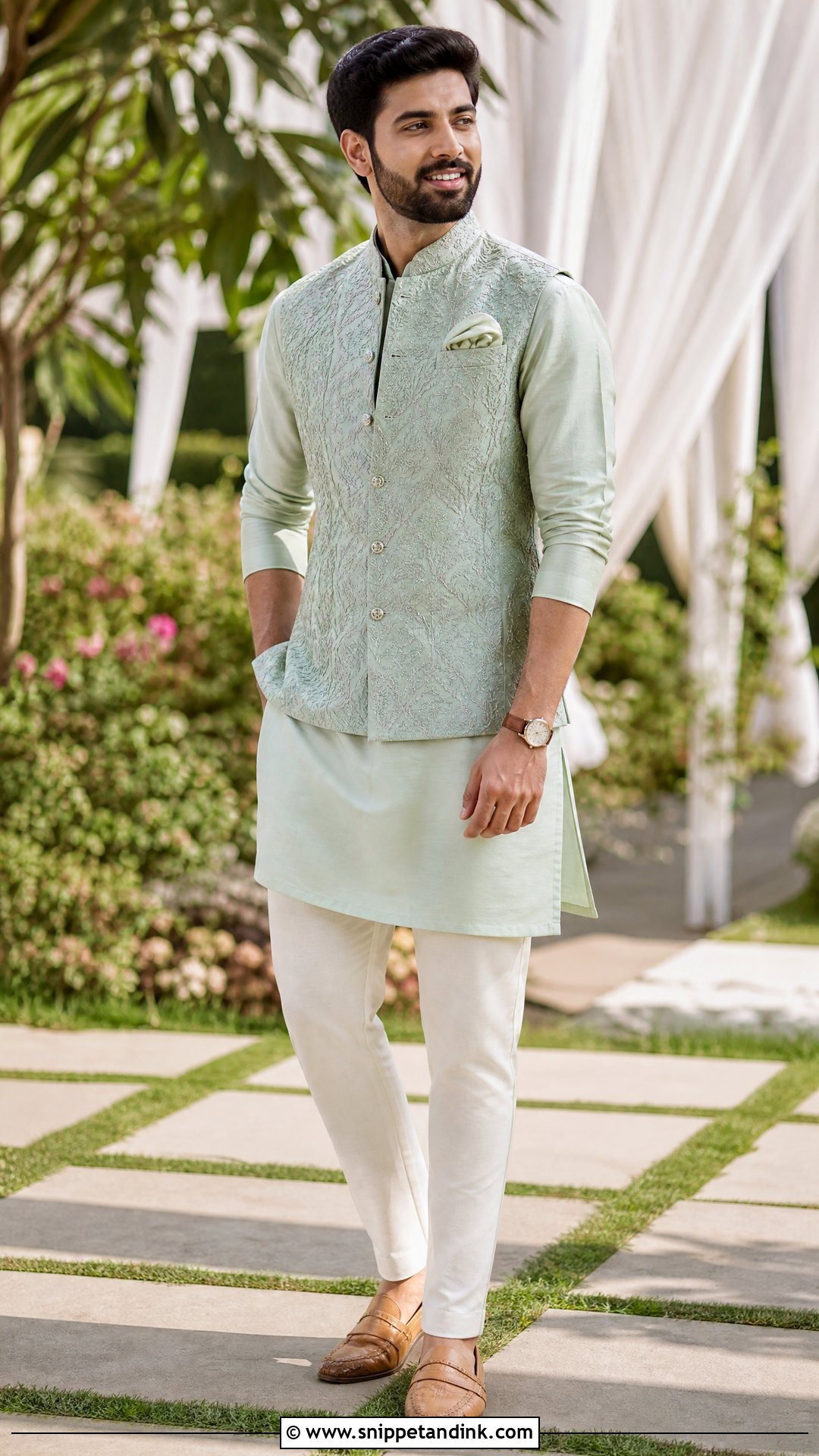
For daytime functions, a pastel kurta under a Nehru jacket is my most-used combination. Mint, powder blue, peach or blush in cotton silk or chanderi stays cool, and a jacket a shade or two darker gives the shoulders structure. White or cream slim pants keep it clean. The jacket also solves a practical problem: it hides the crumpling a light kurta gets after hours of greeting people. Juttis, a pocket square and a slim watch finish it for a haldi, puja or smaller gathering.
3. Black Bandhgala For Reception
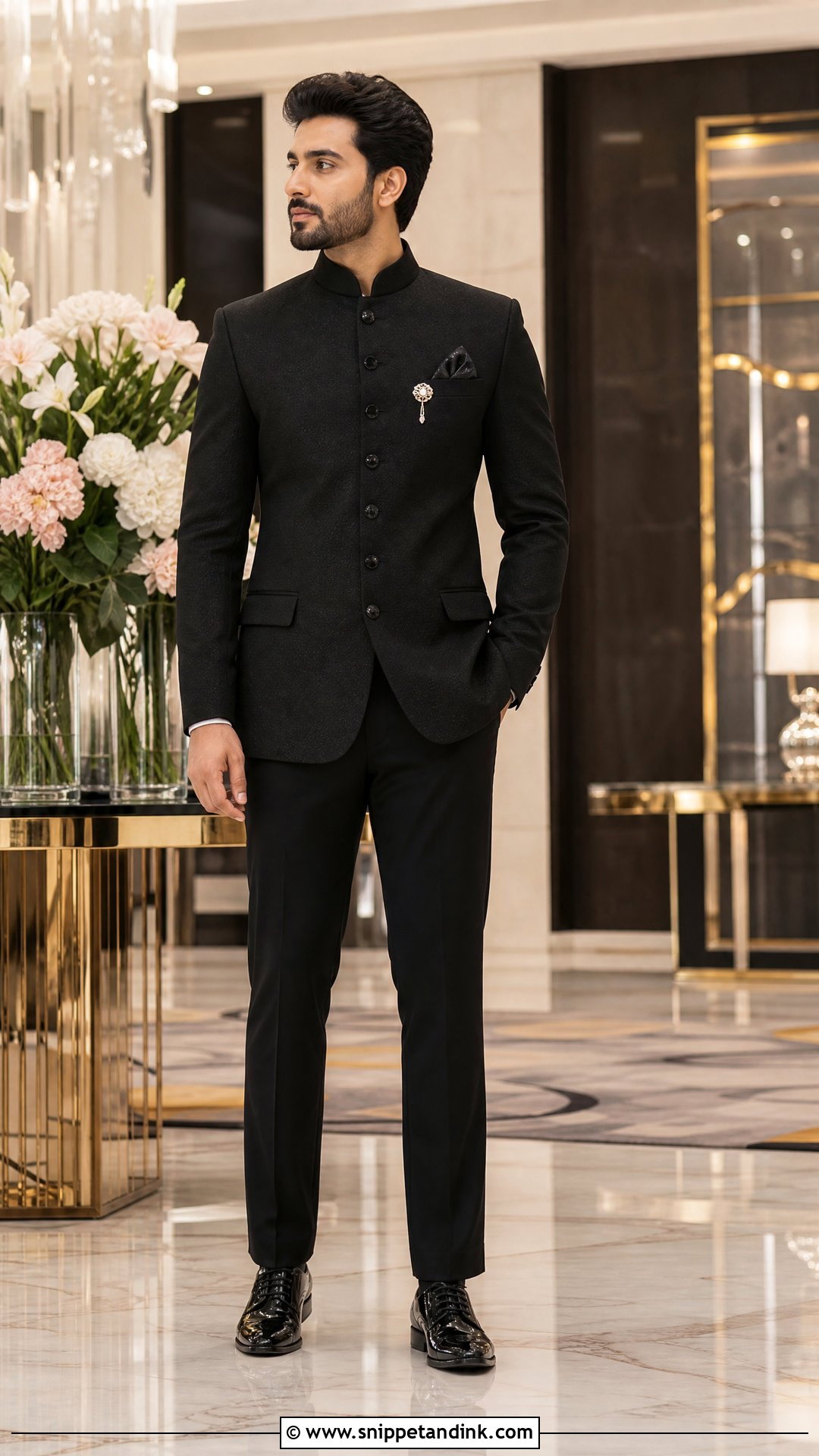
A black bandhgala does the job of a dinner suit while still reading Indian. What separates a good one from a stiff one is the collar: it should sit flat and close at the neck without pressing when he turns his head, so I always have the wearer look over each shoulder at the fitting. A matte finish or tonal embroidery keeps it refined. Tapered black trousers, then patent loafers, velvet slip-ons or polished dress shoes depending on the venue. One pocket square or brooch is plenty. Hotel receptions and formal dinners suit it best.
4. Floral Kurta For Mehendi
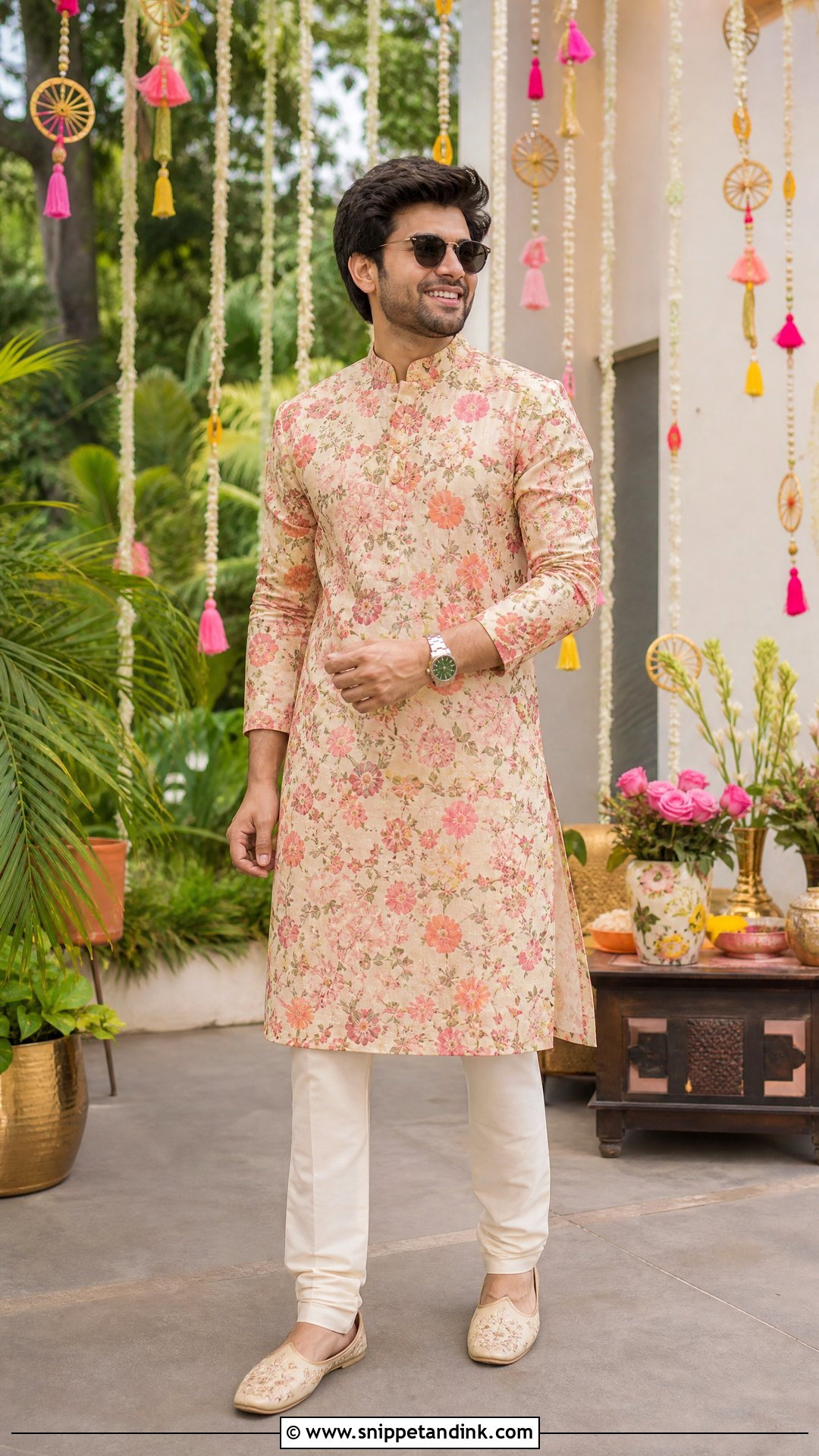
Mehendi is the one event where print really belongs. I steer brothers toward small or medium florals; large blooms tend to look like resort shirts in photos. Cotton silk, muslin or light silk stay comfortable through dancing and outdoor seating. Ivory pants or straight pajamas, with brown sandals, juttis or mojaris. If the print is loud, skip accessories entirely; if it’s soft, a solid Nehru jacket sharpens it. Garden and home mehendis with bright décor are its natural setting.
5. Green Indo Western For Sangeet
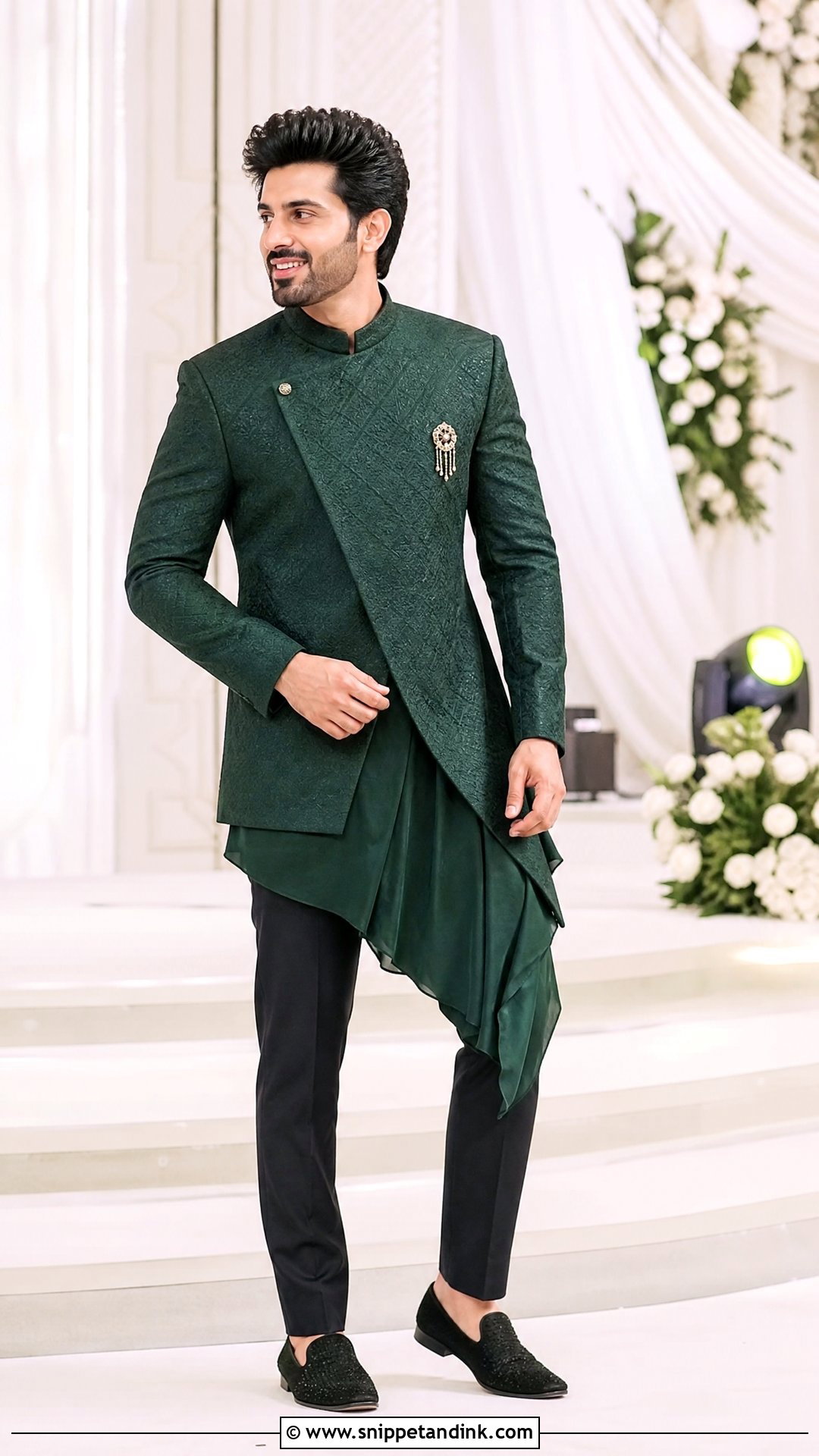
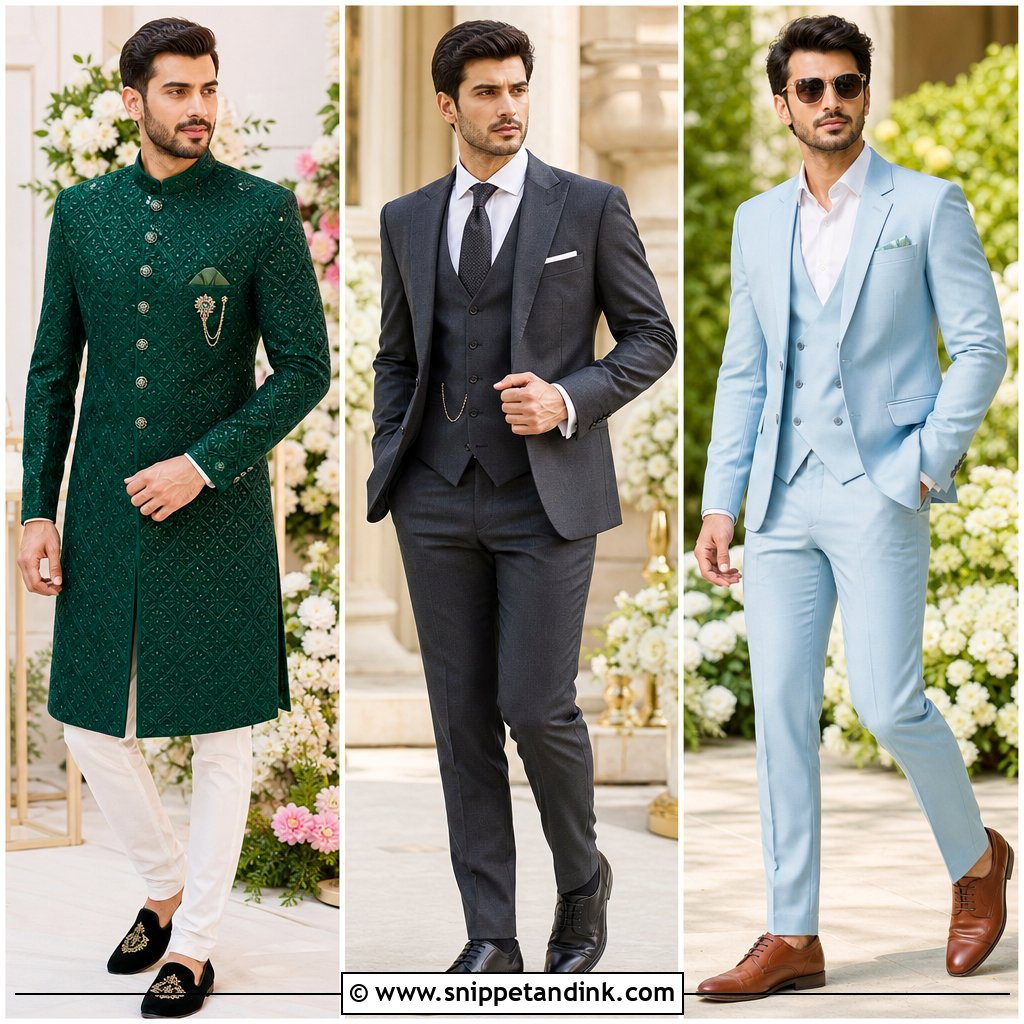
Sangeet calls for something that looks good on a stage and survives a choreographed routine. A green Indo-western outfit in emerald, sage, olive or bottle green, cut as an asymmetric kurta, draped jacket or longline jacket, stands out in group performances. Before the event, I have him do the actual dance moves in it: arms overhead, a deep squat, a spin. Structured jackets often pull across the back on the first big arm movement. Slim trousers or dhoti pants, black, tan or gold footwear, and a brooch or chain finish it.
6. White Chikankari Kurta Set
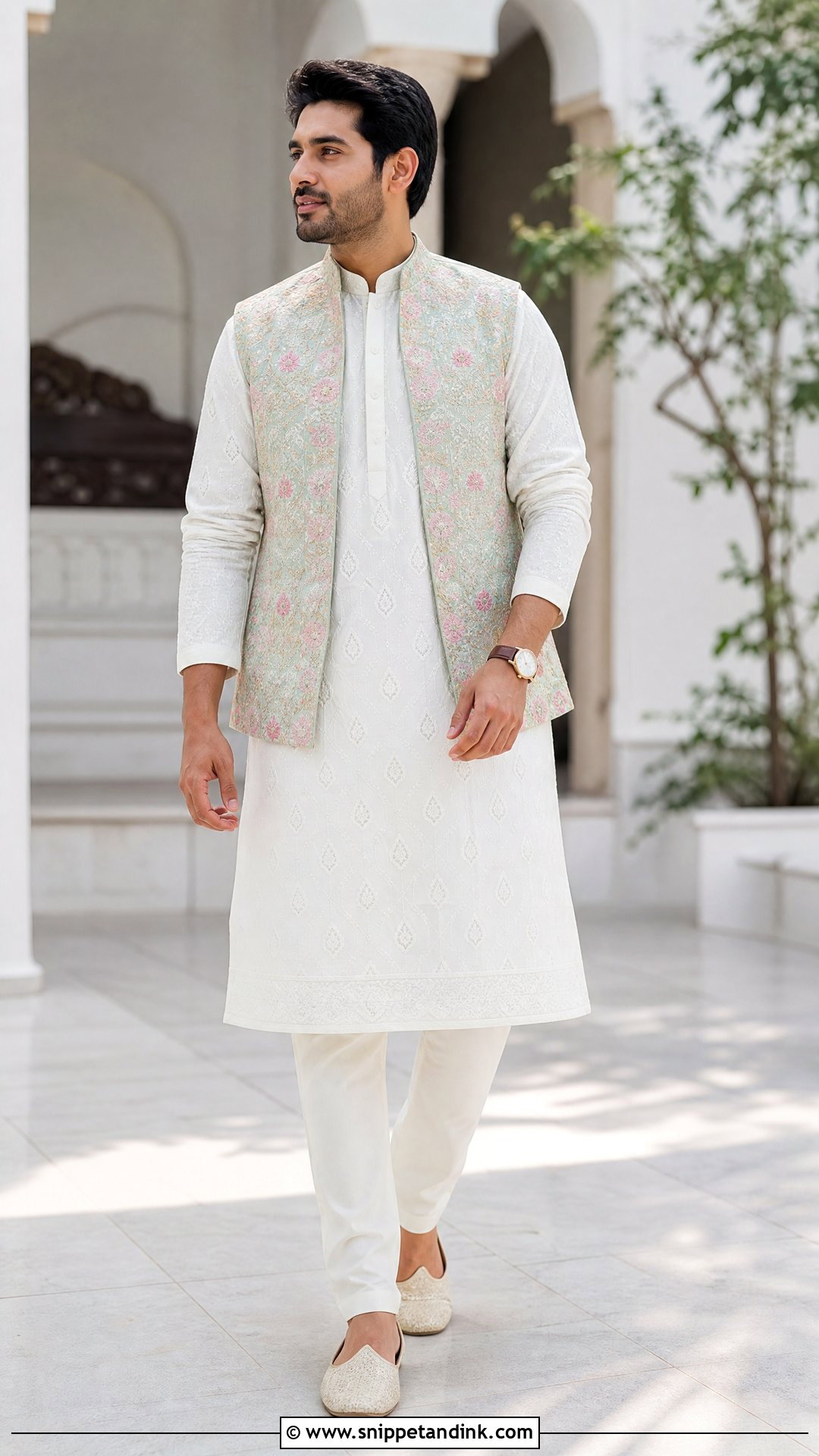
Chikankari is hand embroidery from Lucknow, worked in fine white thread, and it gives a plain white kurta texture without weight. A straight-cut kurta with white, ivory or beige pants works for haldi, morning pujas and poolside functions, and stays breathable in heat. Good chikankari is delicate, so I’d keep it away from turmeric-heavy rituals and wash it gently. A pastel waistcoat or light shawl dresses it up. Tan kolhapuris, cream juttis or embroidered mojaris complete it.
7. Maroon Velvet Bandhgala
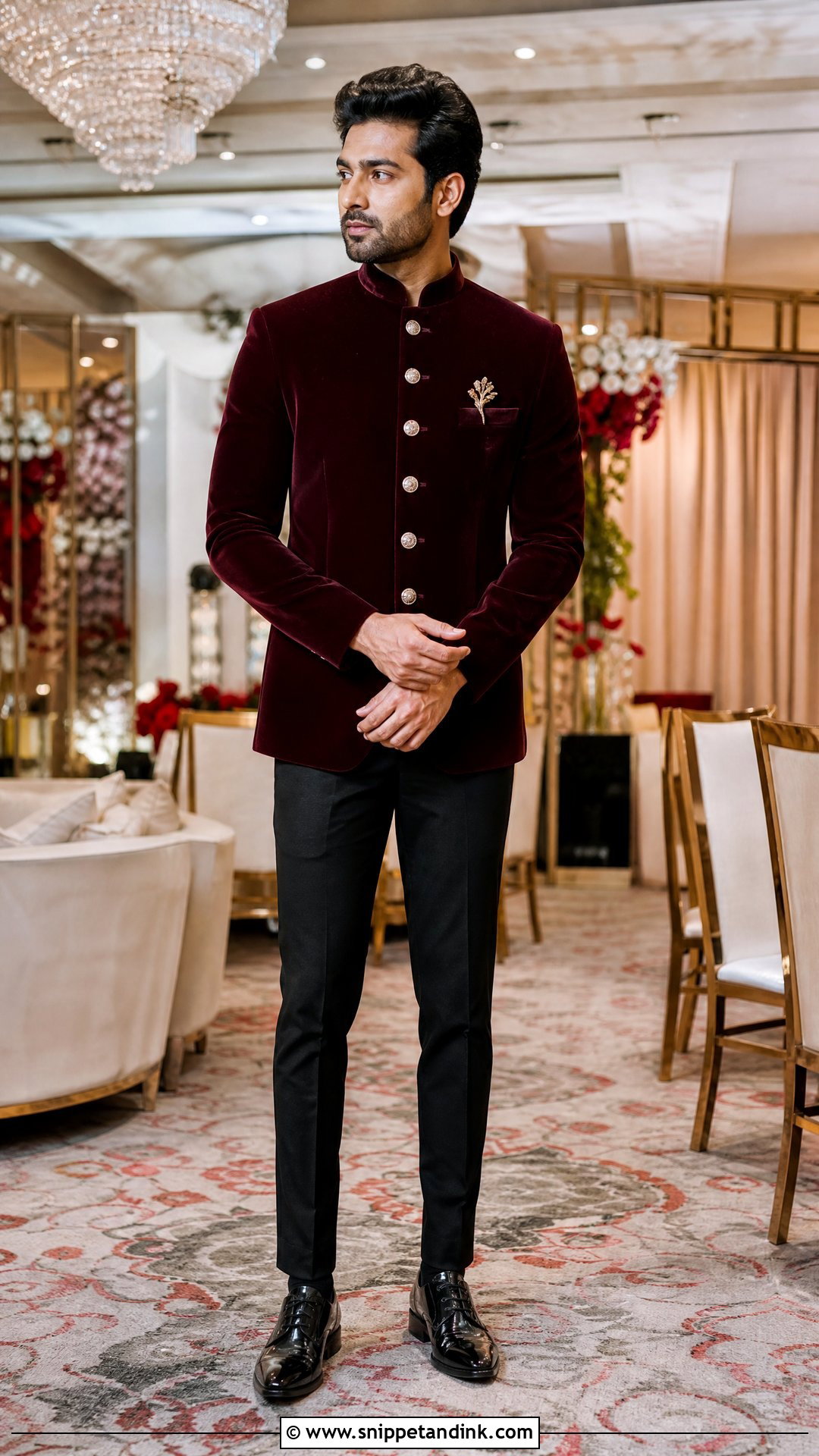
Maroon velvet looks rich under warm venue lighting and belongs to winter evenings and indoor rooms. Because the fabric is already luxurious, keep the cut plain with a clean collar and few seams. Black or matching maroon trousers, black shoes or sleek ethnic slip-ons. Velvet crushes where it’s sat on and leaned against, so it needs a careful steam rather than a hot iron before the event. A small brooch or metallic buttons are enough detail for a reception or sangeet.
8. Yellow Kurta For Haldi
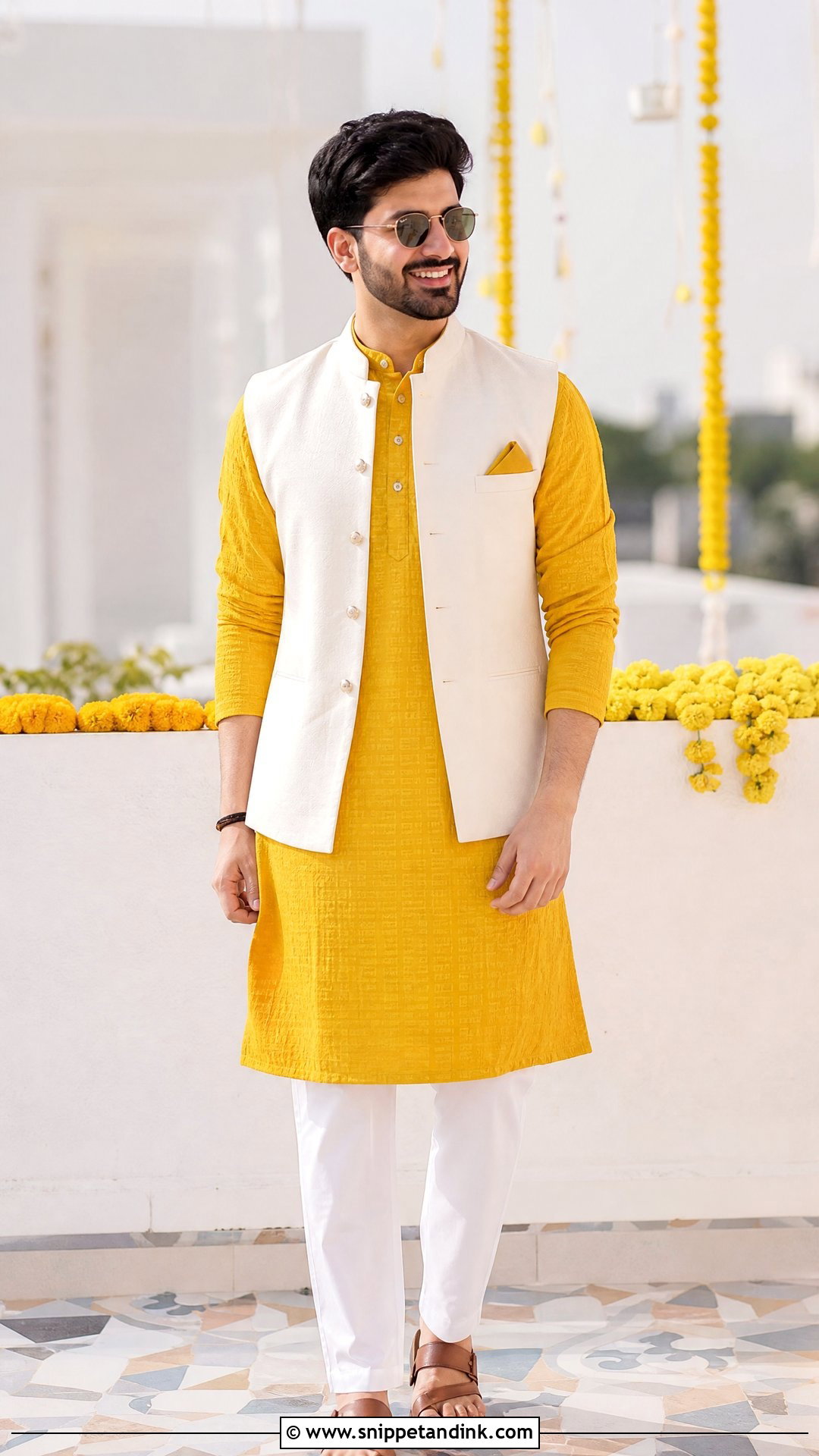
A yellow kurta is the obvious haldi choice, and the shade matters more than people think. Mustard and turmeric tones suit deeper skin; lemon can wash some complexions out. Use cotton, linen blend or silk cotton, since haldi is active and often outdoors, and assume it will be stained, because turmeric paste rarely washes out fully. White pajamas or cream trousers, with sandals or juttis that can be wiped clean. A white Nehru jacket sharpens it for photos taken before the paste comes out.
9. Navy Blue Jodhpuri Suit
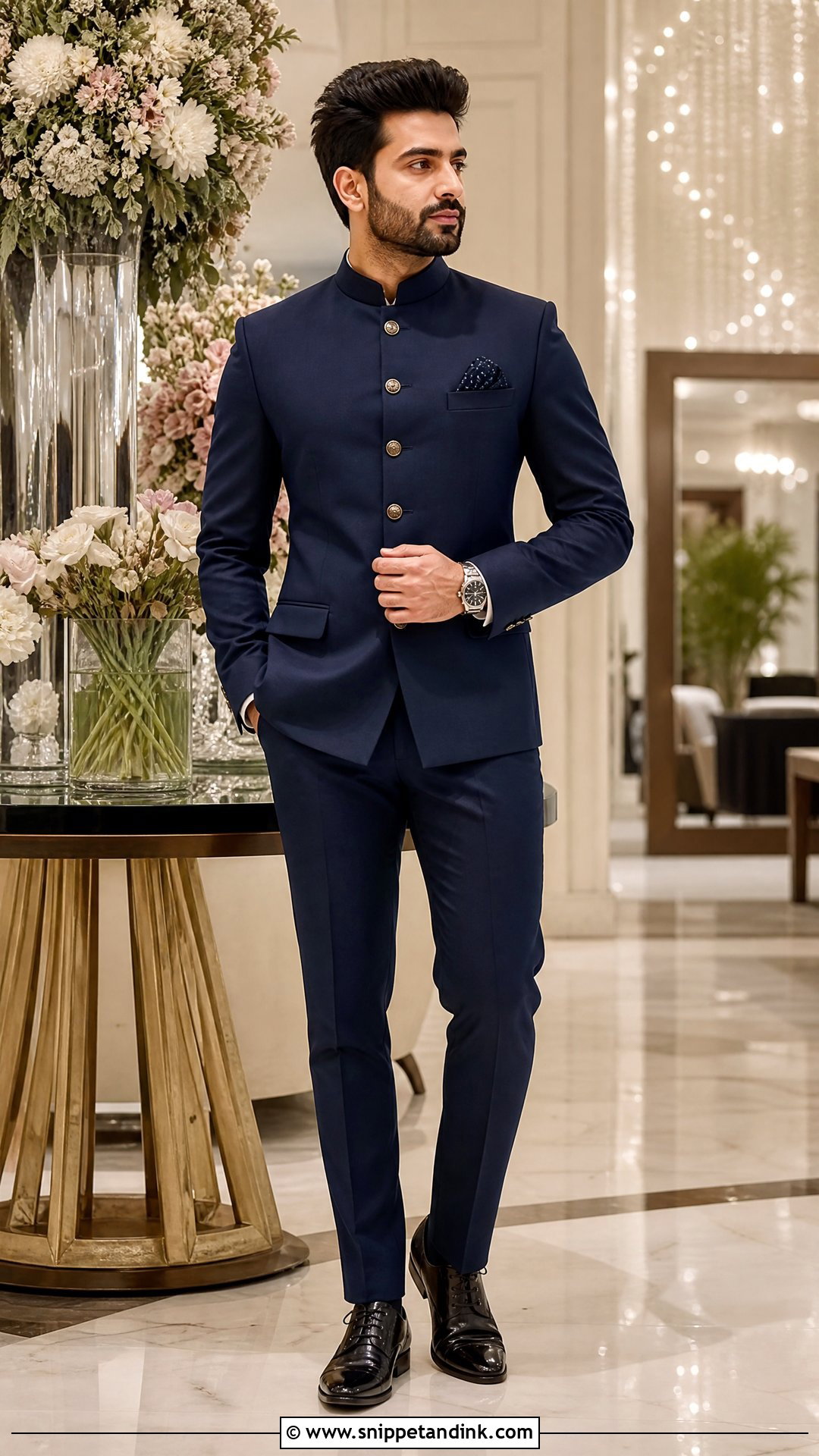
A navy blue Jodhpuri suit suits the brother who likes structured tailoring. It has a suit’s polish with a bandhgala collar, so it reads Indian without any embroidery. I’d keep the buttons simple and the jacket length ending just below the seat; too long and it looks borrowed. Matching trousers, black formal shoes, a pocket square and a watch. Navy is easy to coordinate with almost any wedding palette, which makes it a sensible pick for receptions and engagements with a modern dress code.
10. Printed Bandhani Kurta Set
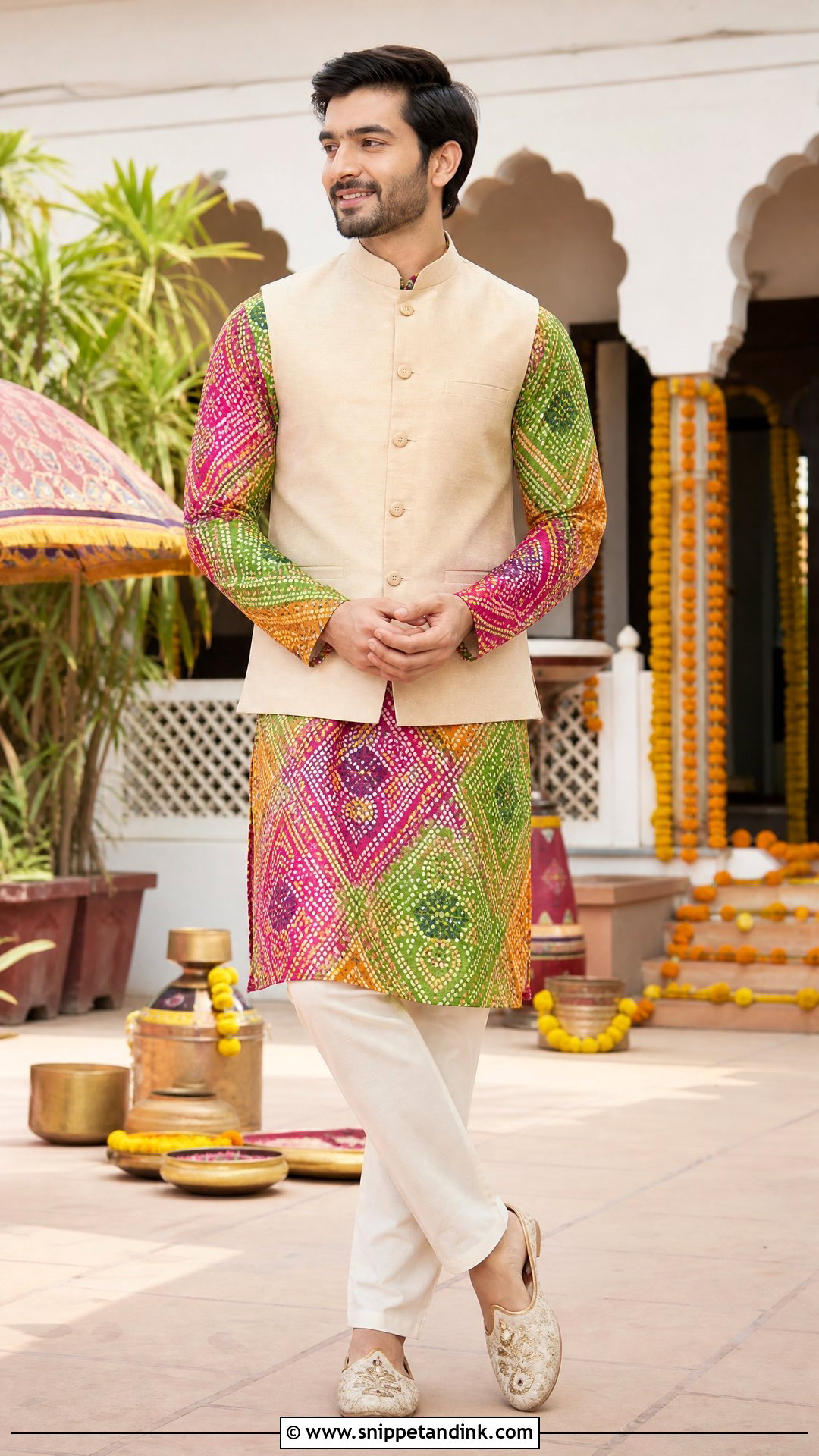
Bandhani is tie-dye from Gujarat and Rajasthan, and it brings regional color to a brother’s wardrobe at weddings from those traditions or wherever the family loves it. Red, yellow, green, blue and ivory all work, depending on the event. Keep the pants plain cream or white so the dots don’t fight another pattern. A light stole for ceremonial moments, or a plain Nehru jacket for a sharper finish. It suits mehendi, garba, welcome lunch or a family puja, and dances well.
11. Champagne Sherwani For Wedding
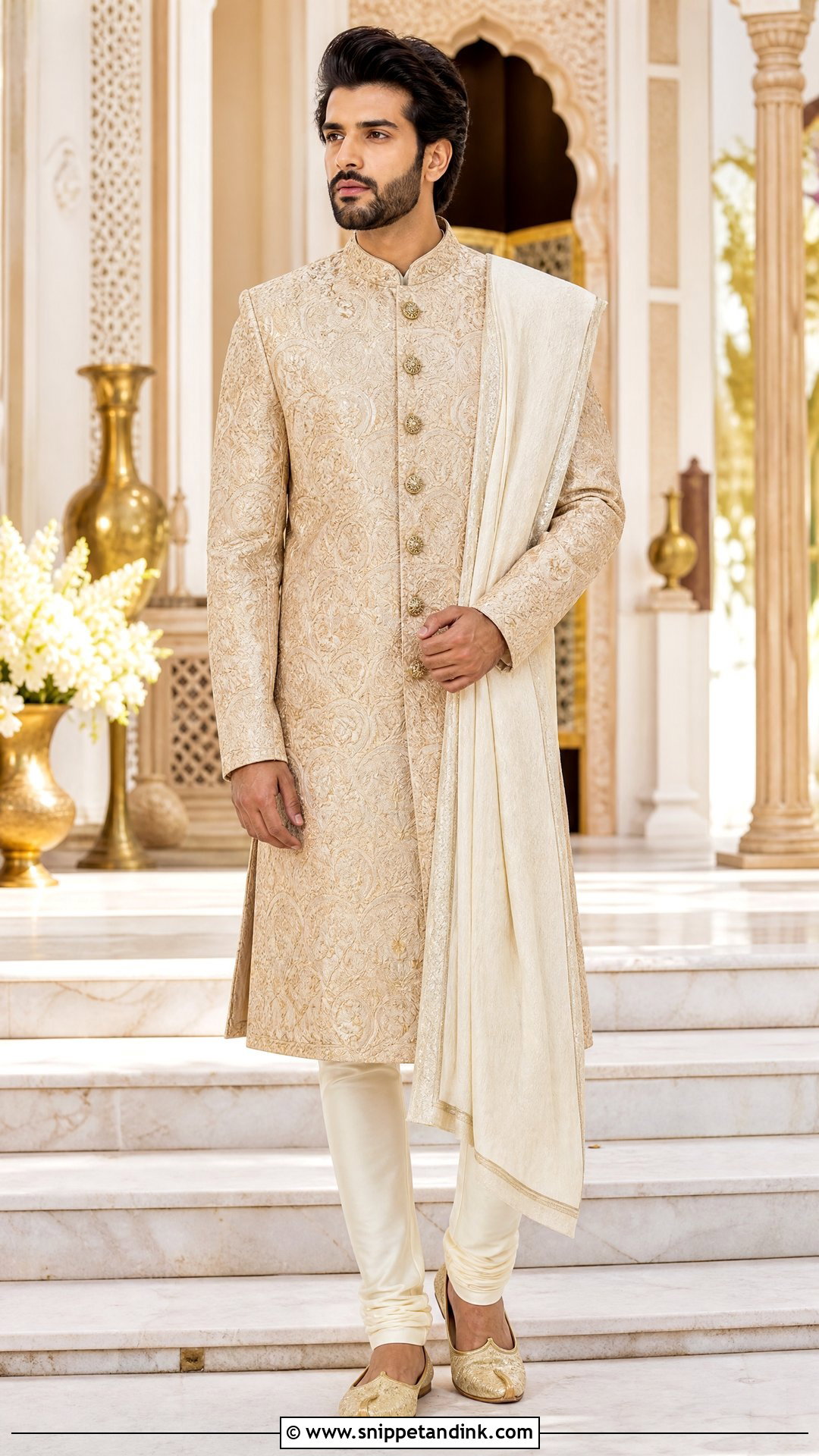
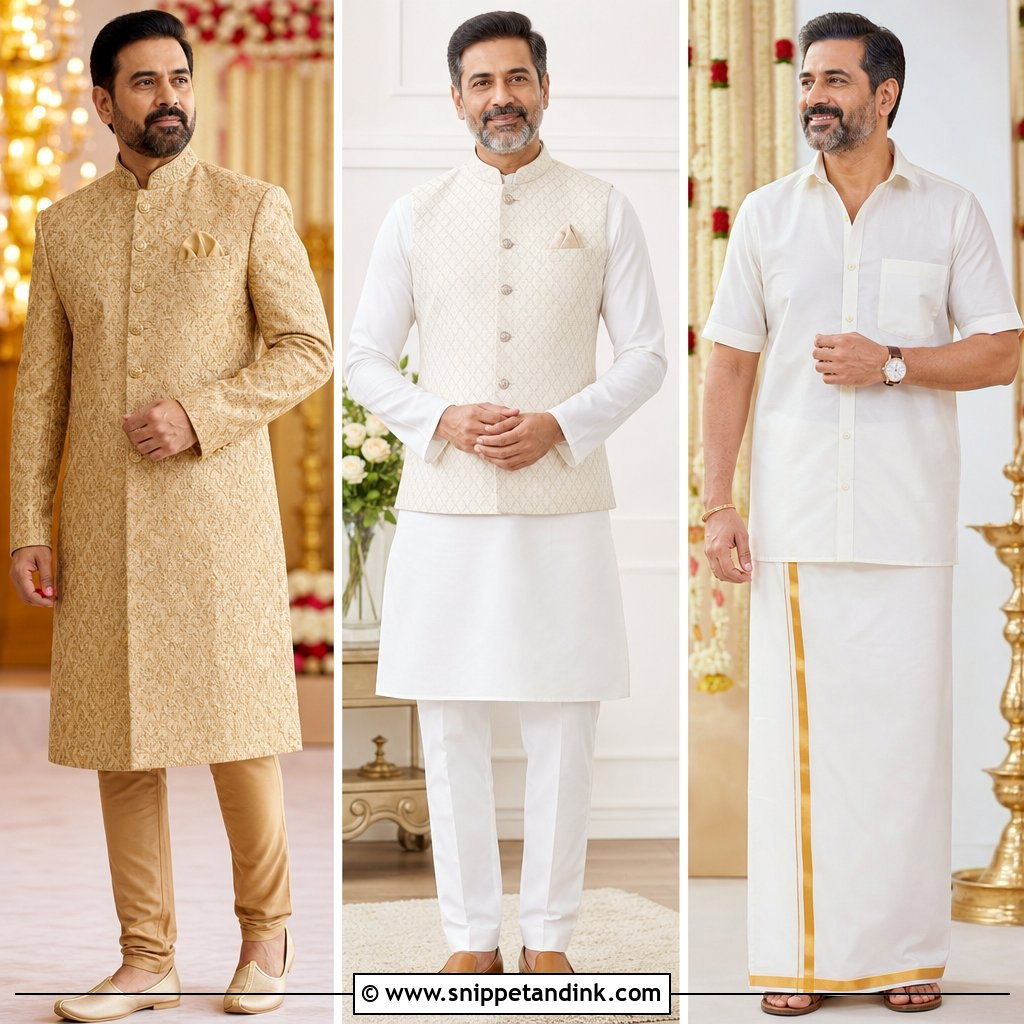
Champagne sits between ivory and gold, so it feels richer than ivory without the shine of metallic gold. Subtle threadwork, pearl accents or tone-on-tone embroidery keep it refined. Cream churidar and beige or gold mojaris suit it, and a stole in ivory, blush or sage adds a second tone. If the embroidery is already busy, skip big accessories. I’d check with the groom’s family first, though: champagne is a popular groom color too, and two men in the same shade at the mandap is avoidable.
12. Cream Kurta With Printed Waistcoat
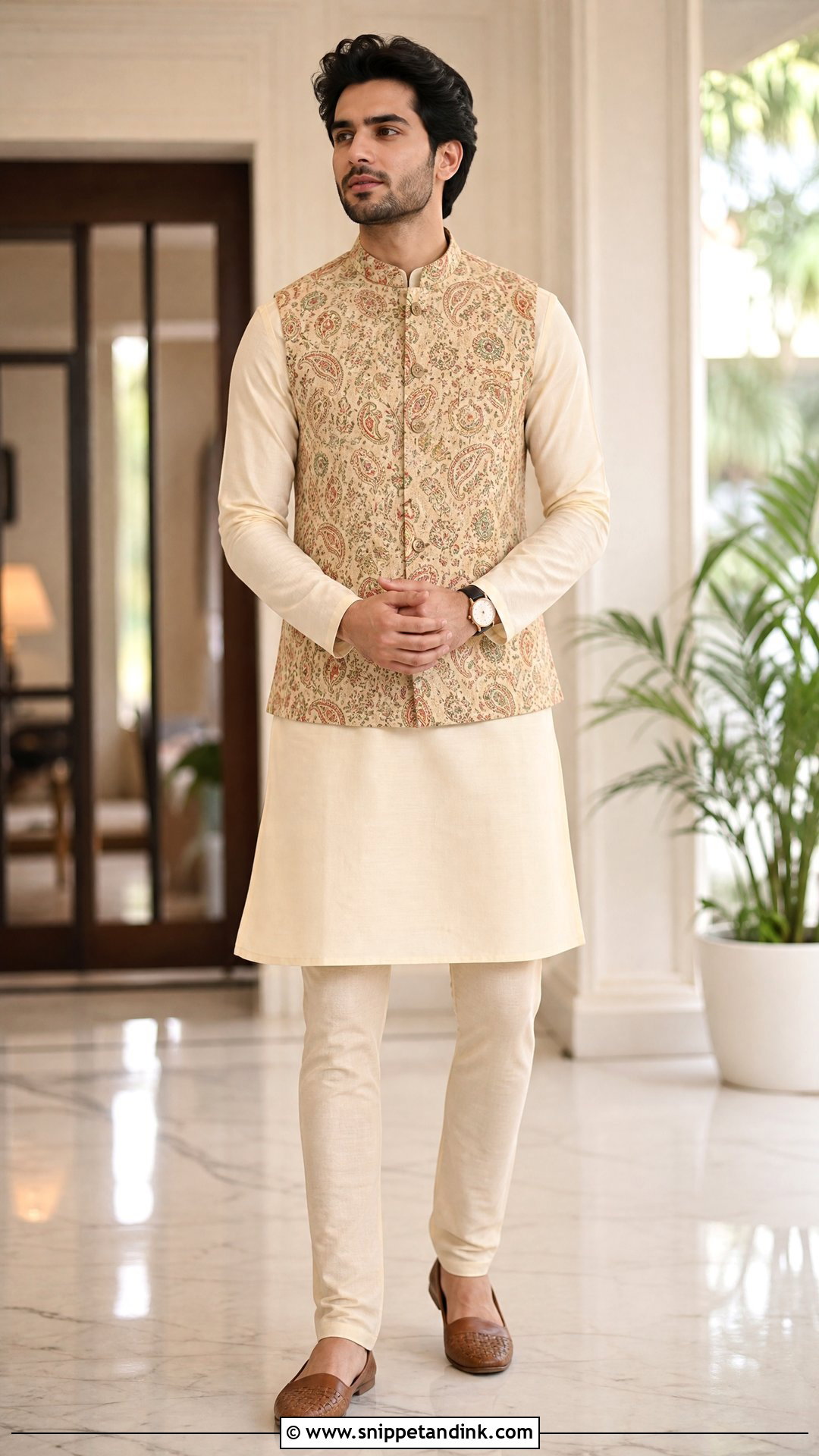
A cream kurta with a printed waistcoat is the outfit I suggest a brother repeats across small functions, swapping only the waistcoat. Block print, paisley, floral or a quiet geometric gives personality; the plain kurta keeps it grounded. Cream, beige or white slim pants with brown juttis, kolhapuris or loafers. The waistcoat should end at the hip bone and button without pulling; a waistcoat that strains across the stomach is the most common fitting problem I see here. Younger brothers especially like it.
13. Teal Sherwani With Stole
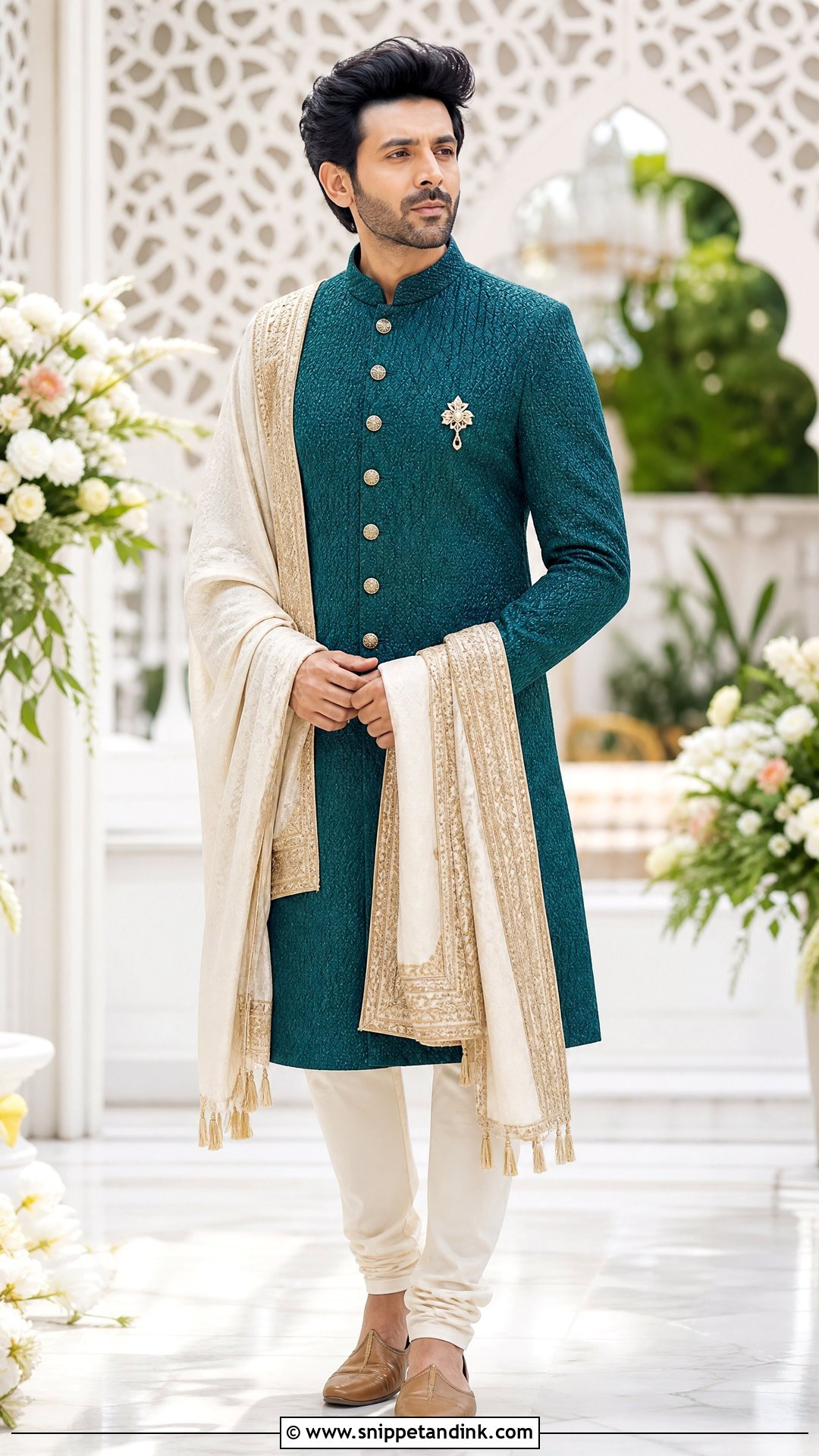
Teal gives color without brightness, and it pairs well with the gold, green or jewel tones many brides wear. Silk, brocade or textured jacquard holds the sherwani shape. Beige, ivory or matching trousers work, and a cream or gold stole makes it ceremonial. Tan, brown or embroidered mojaris, plus a brooch or watch. I check teal under the venue’s lighting if possible, because some teals turn almost green under warm bulbs. Suits the ceremony, engagement or evening portraits.
14. Beige Pathani Suit
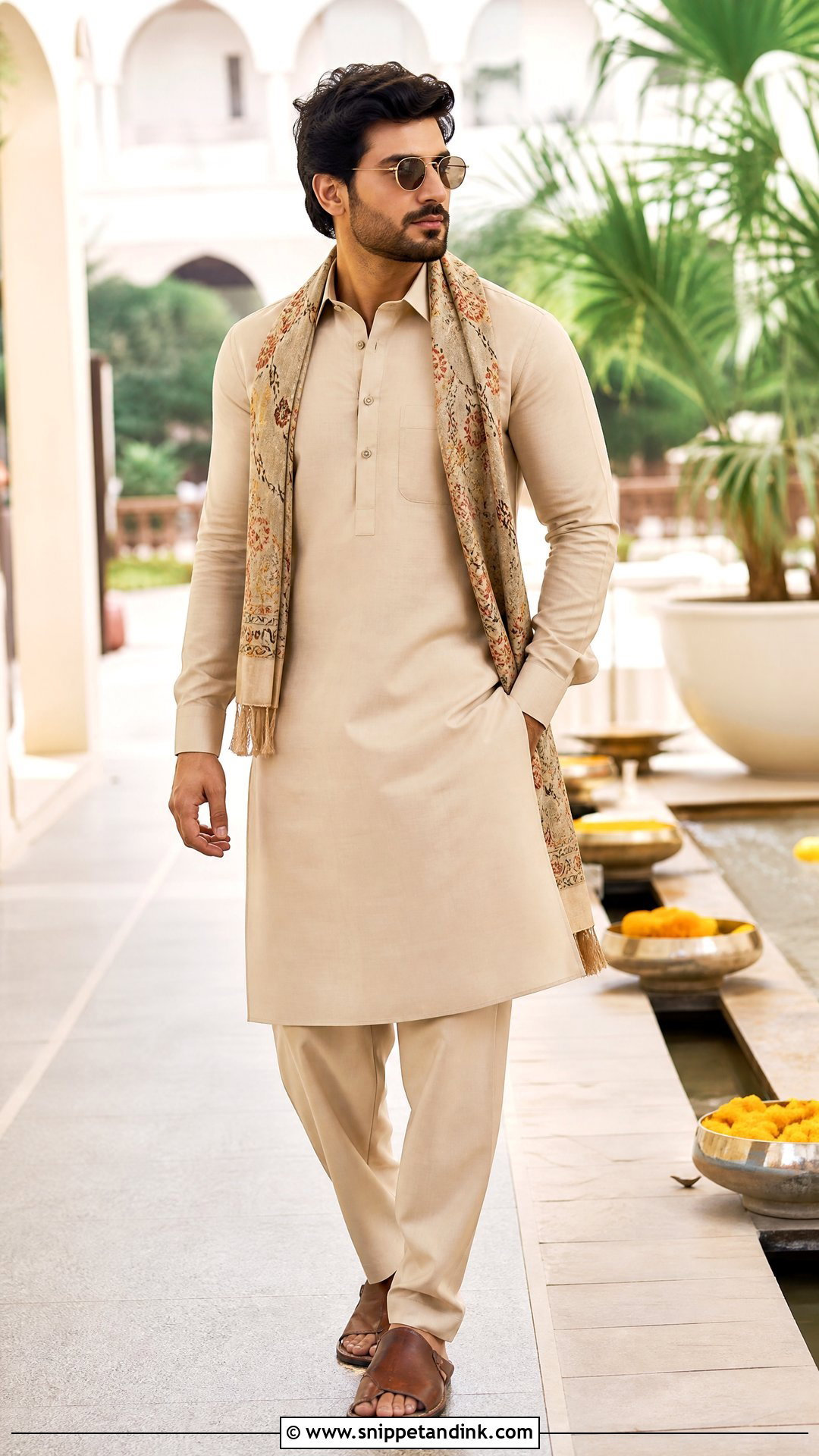
The Pathani suit is about the most comfortable traditional outfit a man can wear for a long day: a loose, collared kurta with straight pants. Beige, sand, stone or taupe keeps it neutral. It still needs tailoring; an off-the-rack Pathani is often cut too wide and looks like loungewear. Leather sandals, juttis or loafers, and a printed scarf or Nehru jacket when he wants it more festive. Welcome events, travel days and casual gatherings suit it, and it gets worn again afterward.
15. Peach Kurta With White Pants
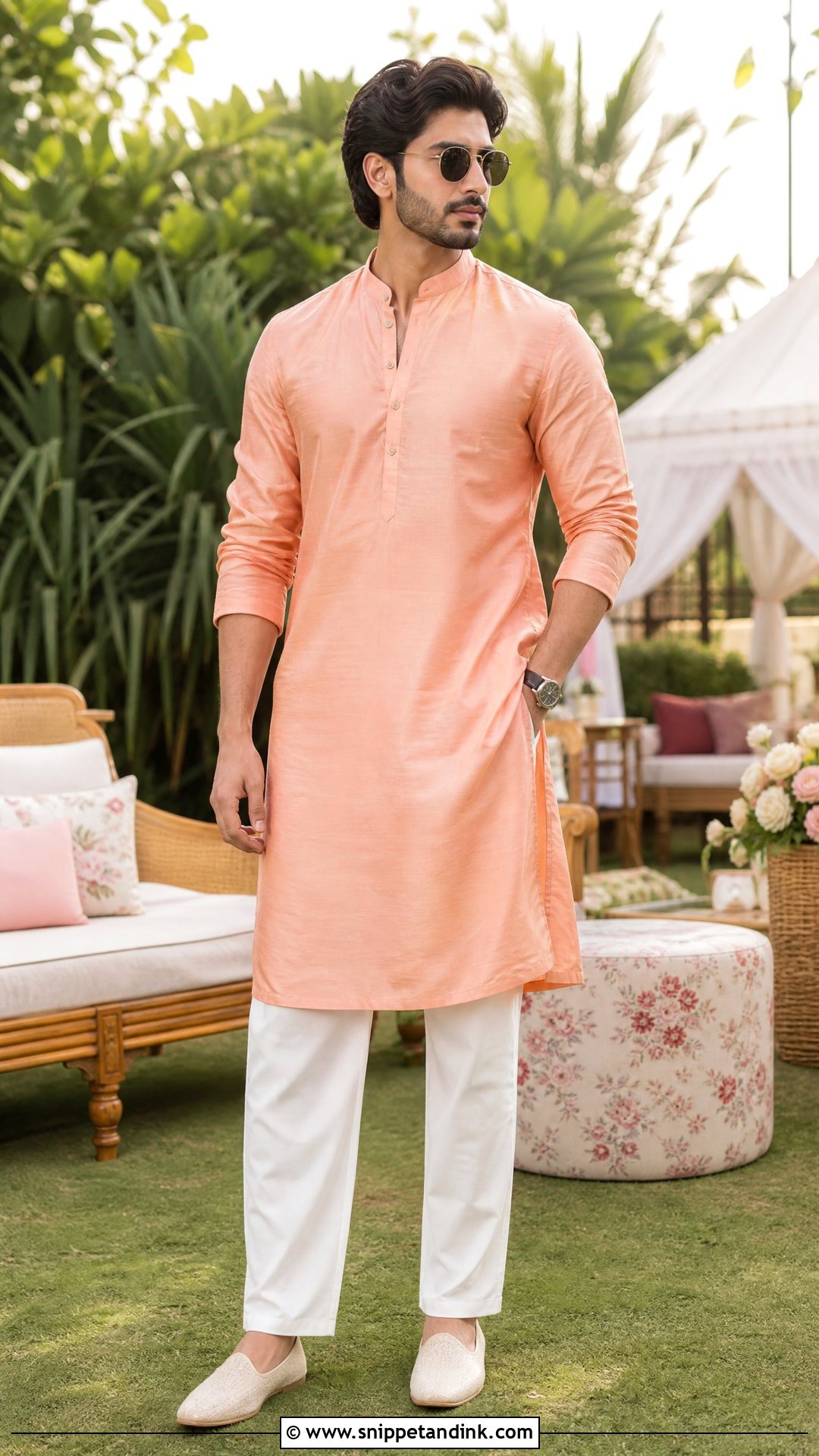
Peach and white is fresh and cheerful for daytime. Silk cotton, chanderi or linen blend with light embroidery at the collar or placket keeps the kurta interesting; white straight pants give a clean contrast. Cream juttis or tan sandals keep it relaxed. Linen blends wrinkle at the elbows and lap, which I tell clients to accept as part of the look rather than fight. A watch, sunglasses outdoors or a small brooch, for mehendi, haldi, brunch or a morning ceremony.
16. Grey Bandhgala With Trousers
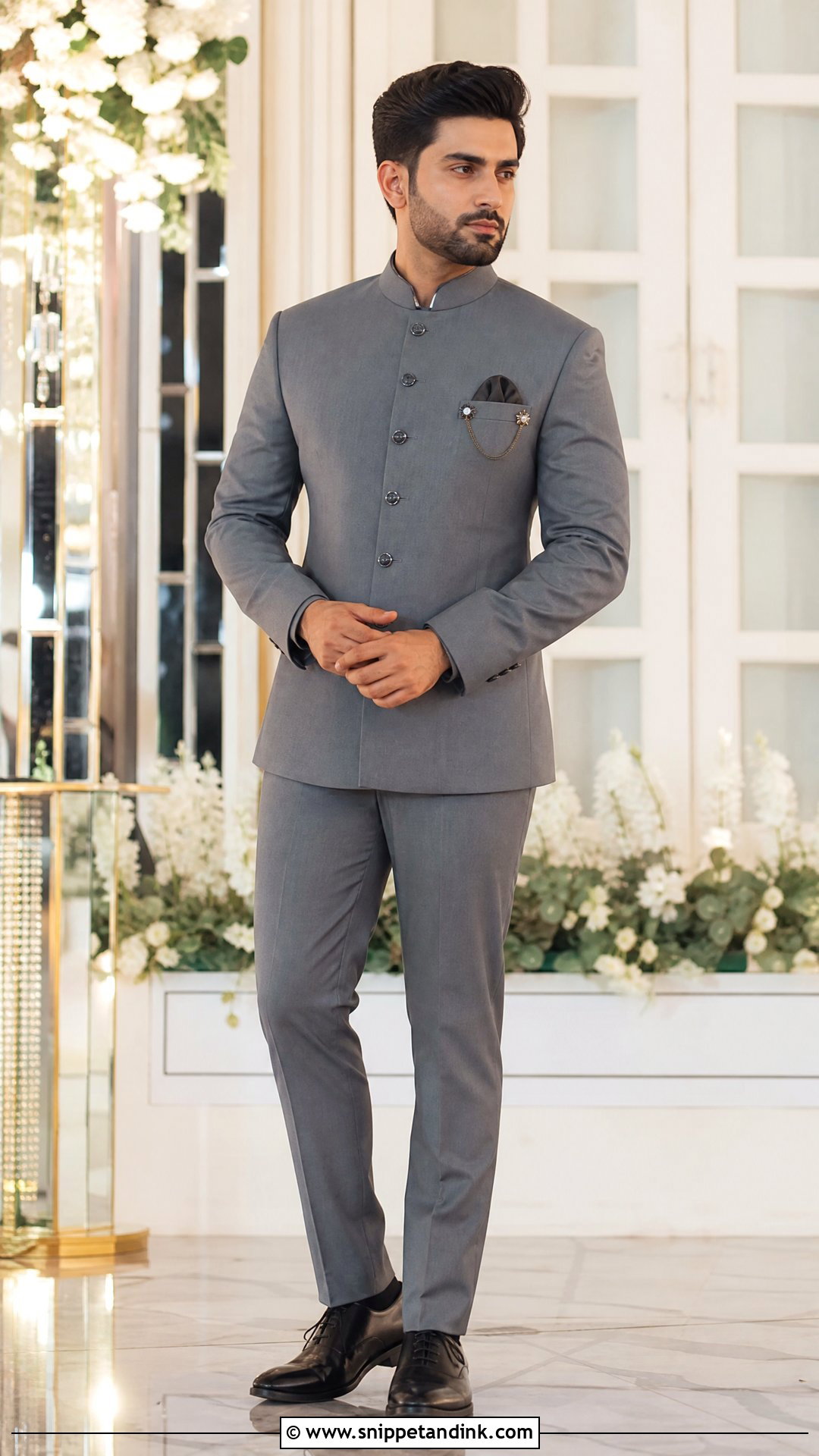
Grey is my answer for brothers who find black too severe and navy too common. Dove or steel grey suits daytime; charcoal reads properly formal after dark. Matching trousers, black or brown formal shoes, and a pocket square, brooch or textured buttons to make it festive. It sits well in minimalist themes and city venues, and suits men who’d rather have sharp tailoring than embroidery at the engagement, reception or a family dinner.
17. Silk Dhoti Kurta Outfit
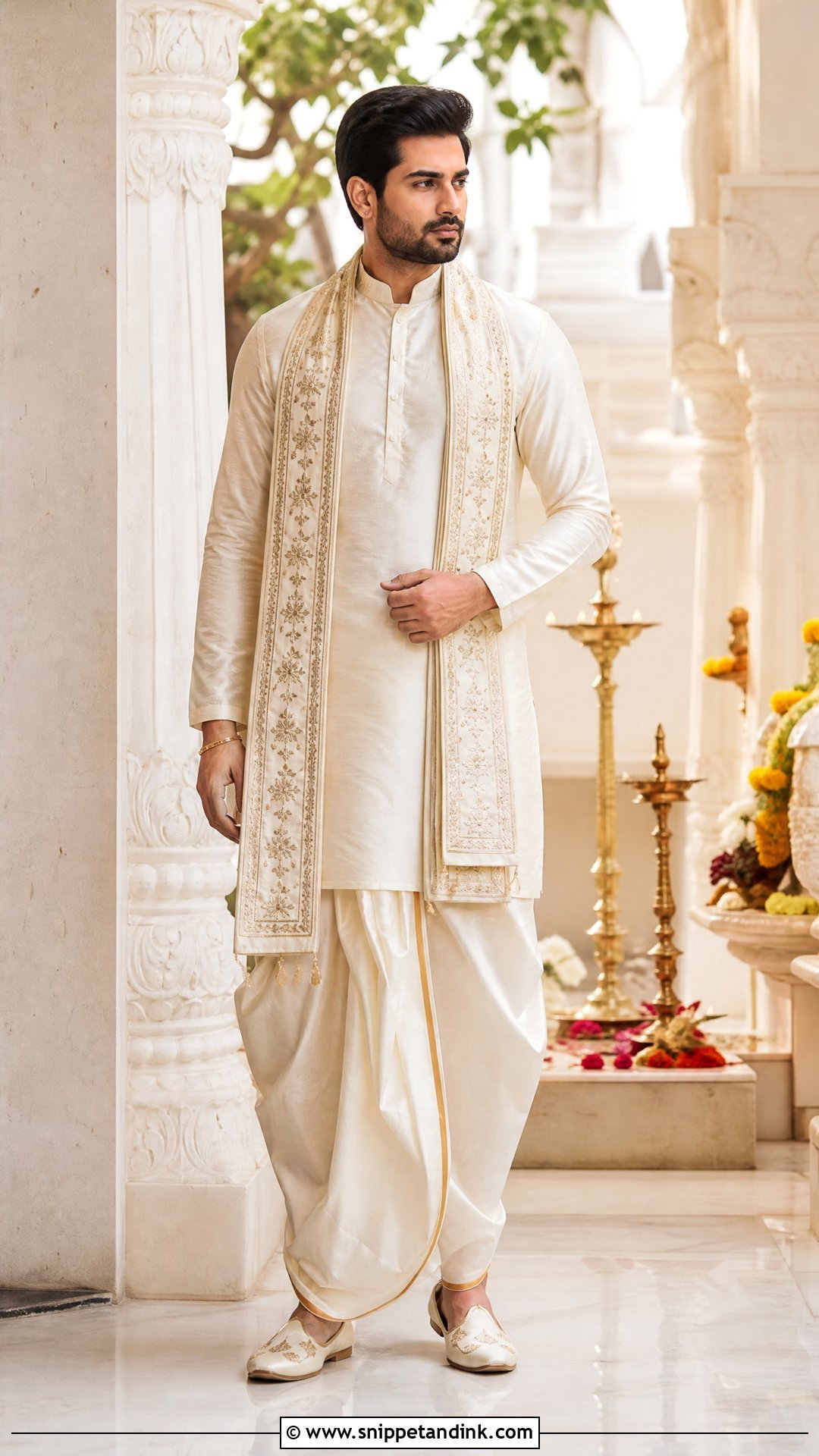
A silk dhoti kurta outfit is the most traditional option here and the one that means most at rituals, temple ceremonies and South Indian weddings. Ivory, cream, gold or pastel silk suits it, with a stole for grace. Unless he has worn a dhoti before, I always recommend a pre-stitched or pre-draped version; a hand-tied dhoti can loosen while sitting through a long ceremony. Mojaris, sandals or traditional slip-ons, and keep accessories minimal so the drape speaks for itself.
18. Royal Blue Indo Western Jacket
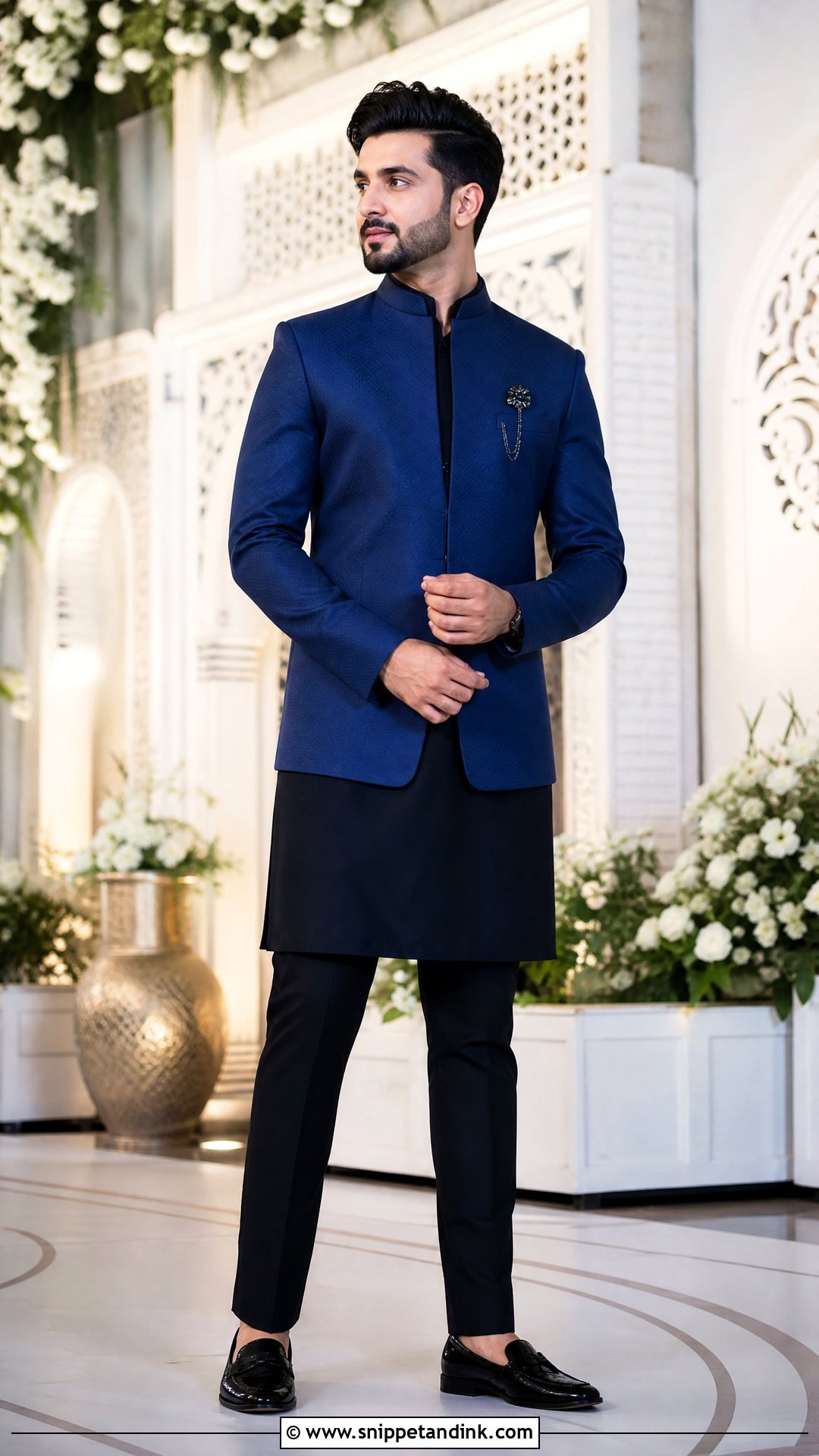
Royal blue reads brightly under stage lights, which is why it does so well at sangeet and reception. A structured jacket with minimal embroidery, metallic buttons or an asymmetric cut goes over a plain kurta or shirt-style inner. Slim black, ivory or matching trousers, with loafers, ethnic slip-ons or dress shoes. Asymmetric jackets often have one hidden fastening inside; make sure he can do it up himself in a hurry between performances. Keep accessories restrained since the jacket is already the statement.
19. Linen Kurta For Day Wedding
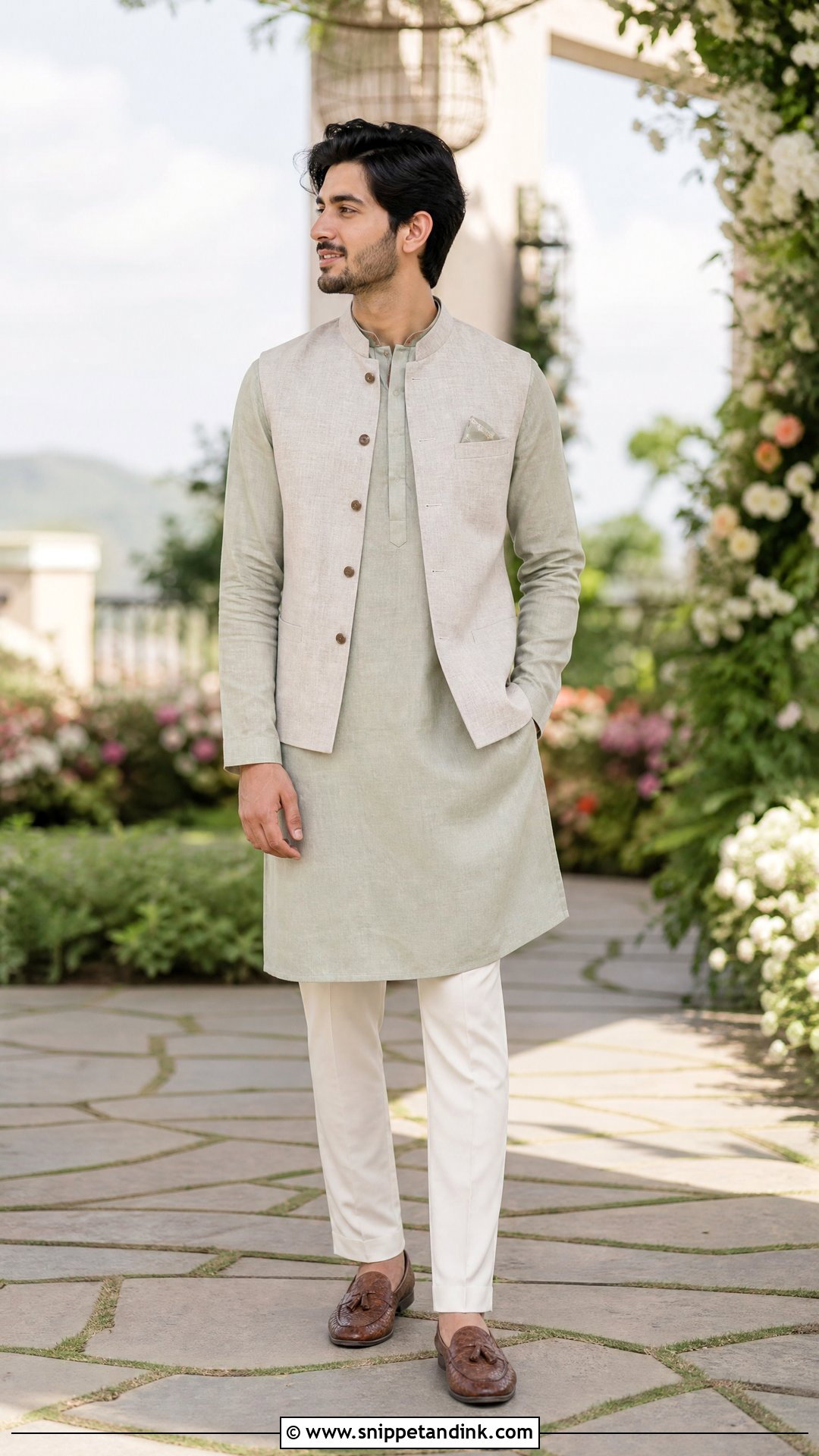
Linen is the right call for heat, outdoor venues and daytime events. Ivory, beige, sage, powder blue or soft grey look clean, with white or cream pants. Brown sandals, woven loafers or simple juttis suit beach and garden settings and summer pujas, and a Nehru jacket dresses it up. Tailoring makes or breaks linen: it should skim the body, because tight linen pulls into creases at every seam within an hour. It also packs well for destination weddings.
20. Gold Sherwani For Bride Brother
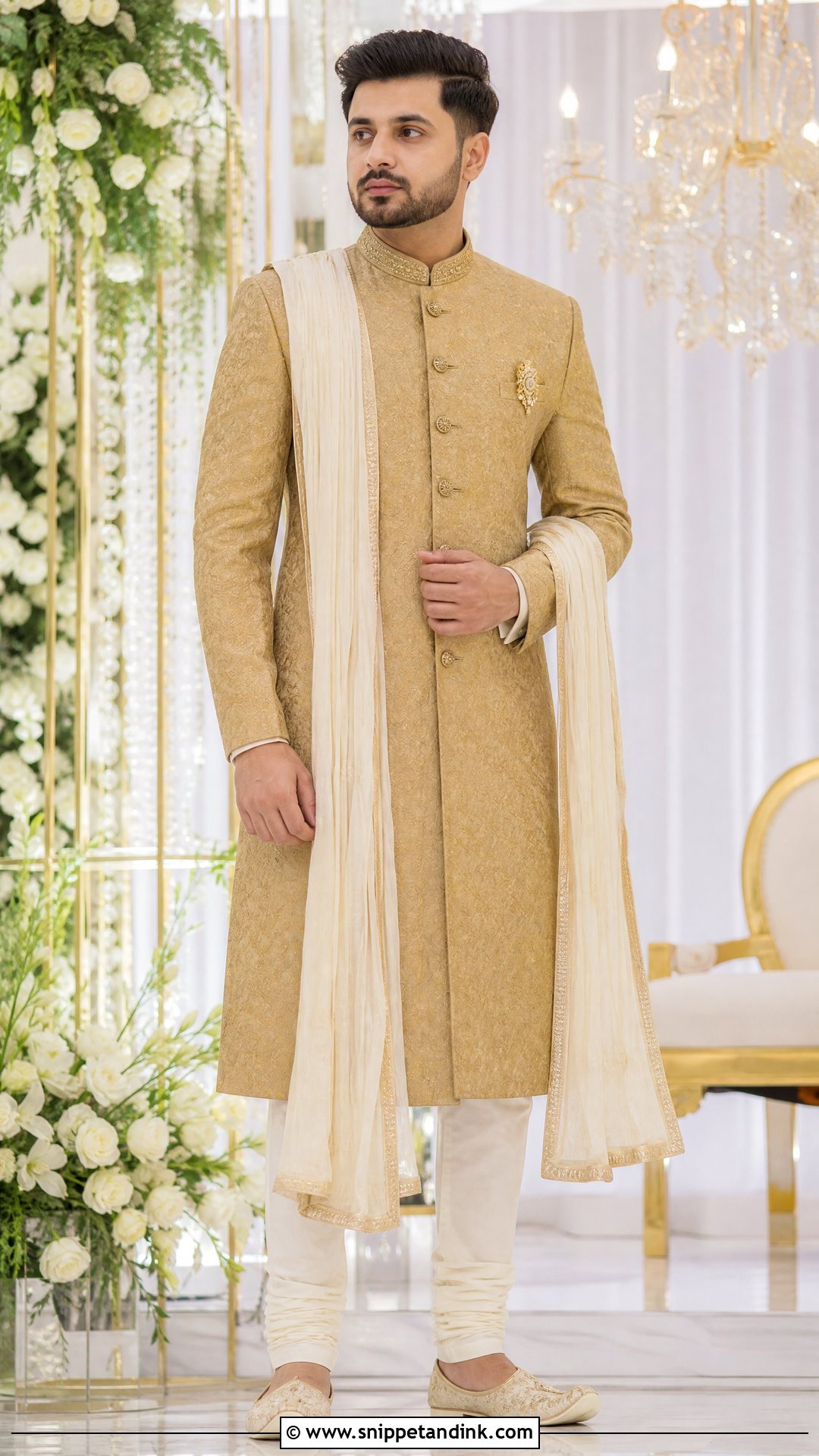
Gold is the outfit most likely to clash with the groom, so I only suggest it once I know what the groom is wearing. If he’s in another color, muted antique gold, champagne gold or beige-gold with tone-on-tone embroidery, jacquard texture or subtle zari works for the main ceremony. Avoid anything very shiny. Cream churidar, elegant mojaris and a plain ivory stole soften it. Keep accessories simple; a brother should look festive, not bridal.
21. Angrakha Kurta With Churidar
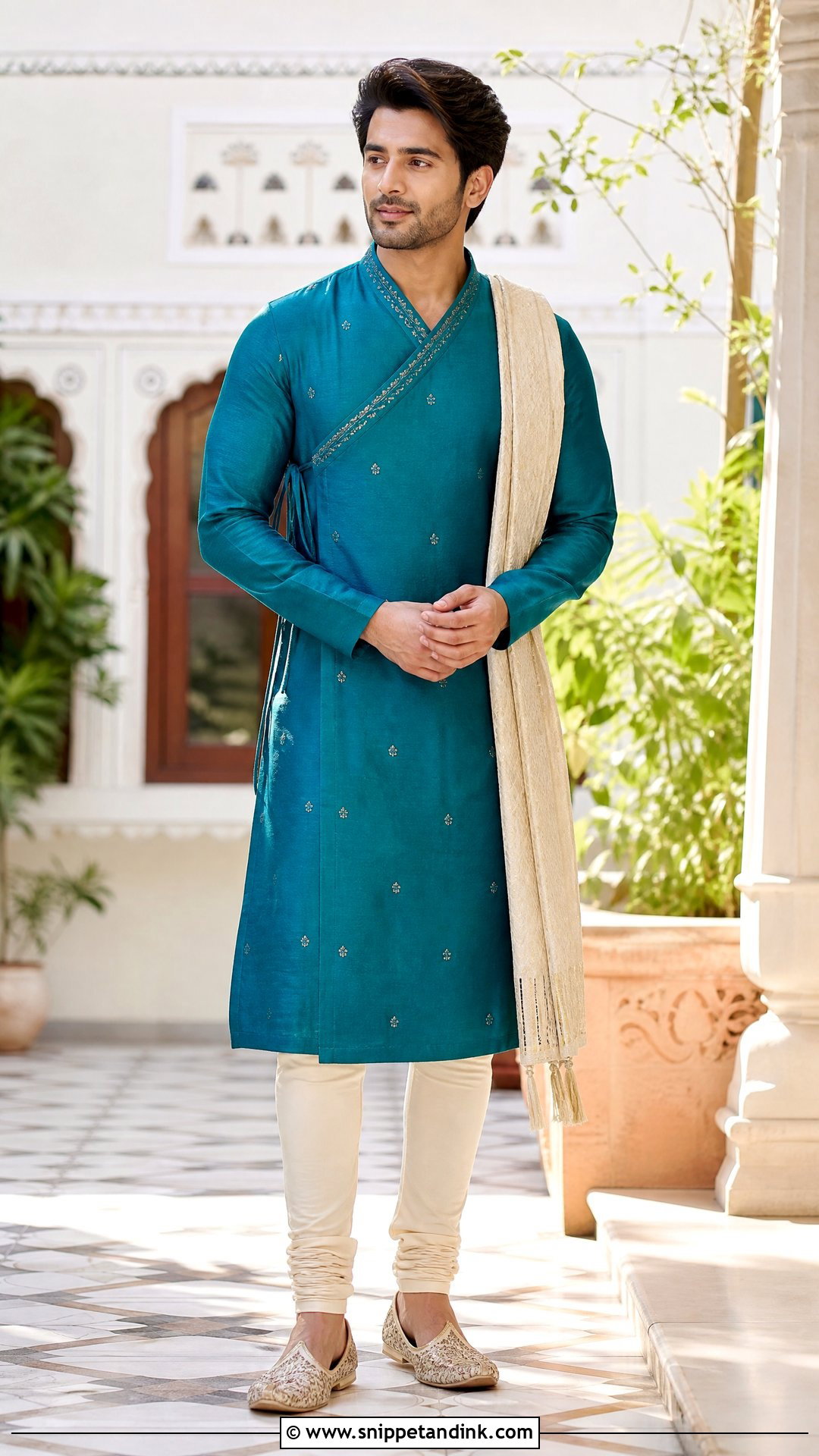
The angrakha’s overlapping front fastens on the side and creates a diagonal line across the chest, which adds shape without needing heavy embroidery. Silk, cotton silk or chanderi in ivory, rust, teal, mustard or pastel blue all suit it. A fitted churidar balances the flowing kurta. The wrap must sit flat, so I allow a little ease across the chest and waist; too tight and the overlap gapes when he sits. Mojaris and a light stole for mehendi, puja, haldi or welcome functions.
22. Brown Brocade Bandhgala
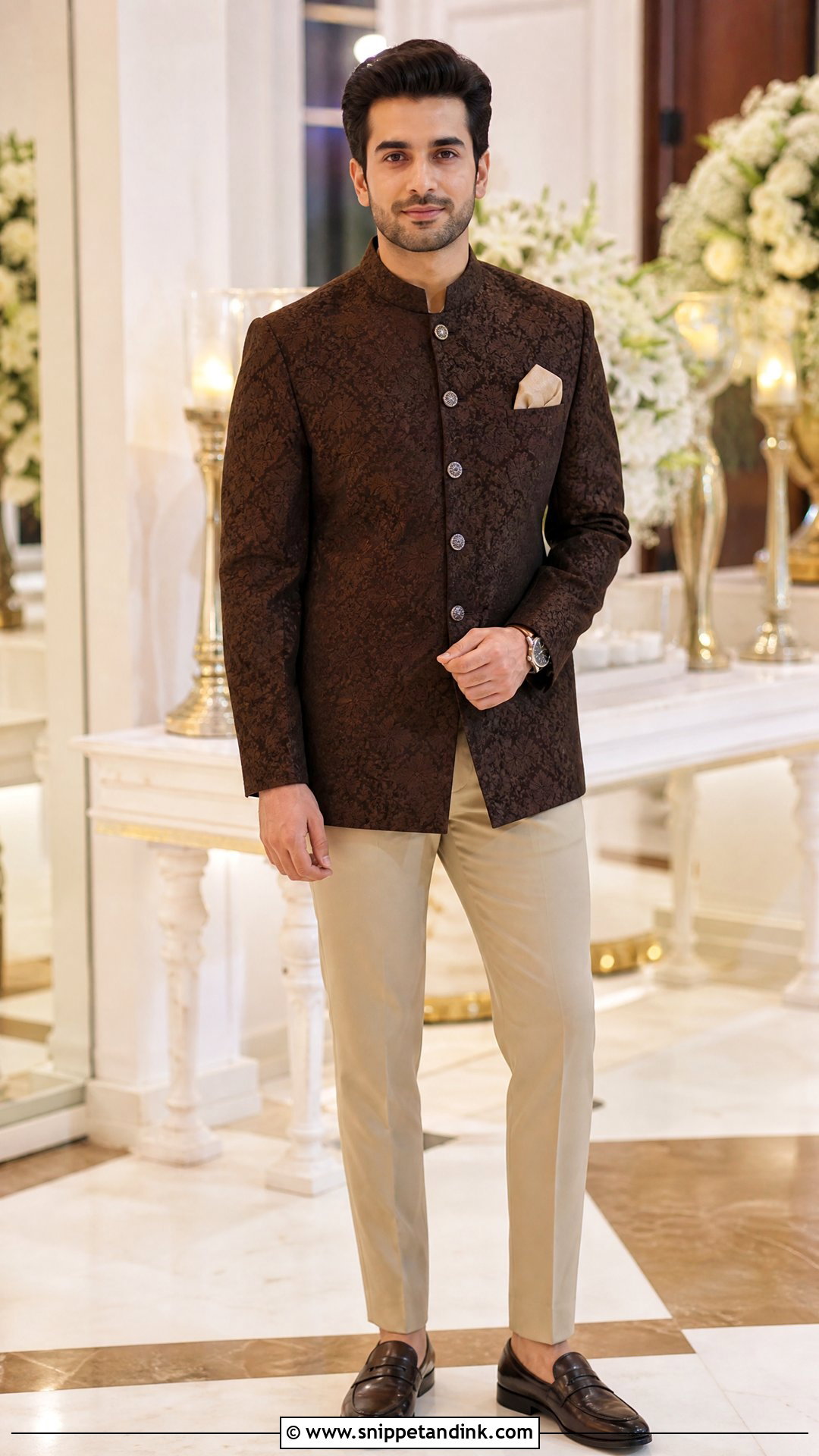
Brown is underused at weddings, and chocolate, bronze, coffee or walnut brocade gives a warm alternative to black, navy and maroon. Brocade adds its own texture, so keep the silhouette fitted and plain. Black, brown or beige trousers set the formality level. Polished loafers or ethnic slip-ons, plus a cream or gold pocket square to brighten it. Brocade is stiff, so allow a fitting to soften the shoulders. It works for receptions, engagements and evening portraits.
23. Pink Kurta With Beige Jacket
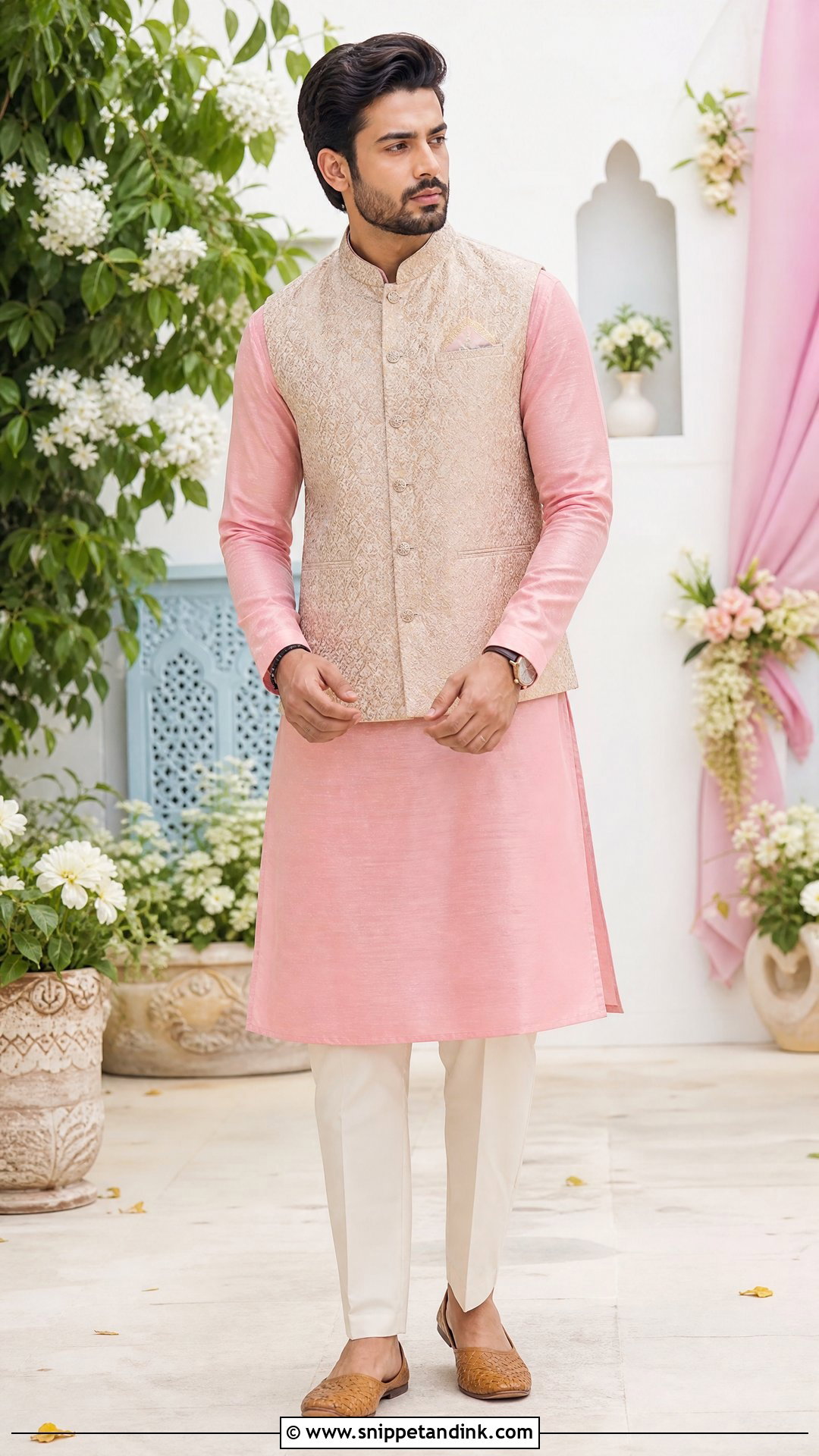
Pink and beige is warm and festive for pre-wedding functions. Soft pink, rose or blush in light threadwork or plain silk, under a beige Nehru jacket in linen, raw silk or jacquard, with white or cream pants. Tan juttis or sandals finish it. Some men hesitate over pink, and I usually suggest the dustier tones first, which read more neutral in photos. It suits mehendi, a family lunch, the ring ceremony and daytime photos with the bride.
24. White Kurta With Embroidered Shawl
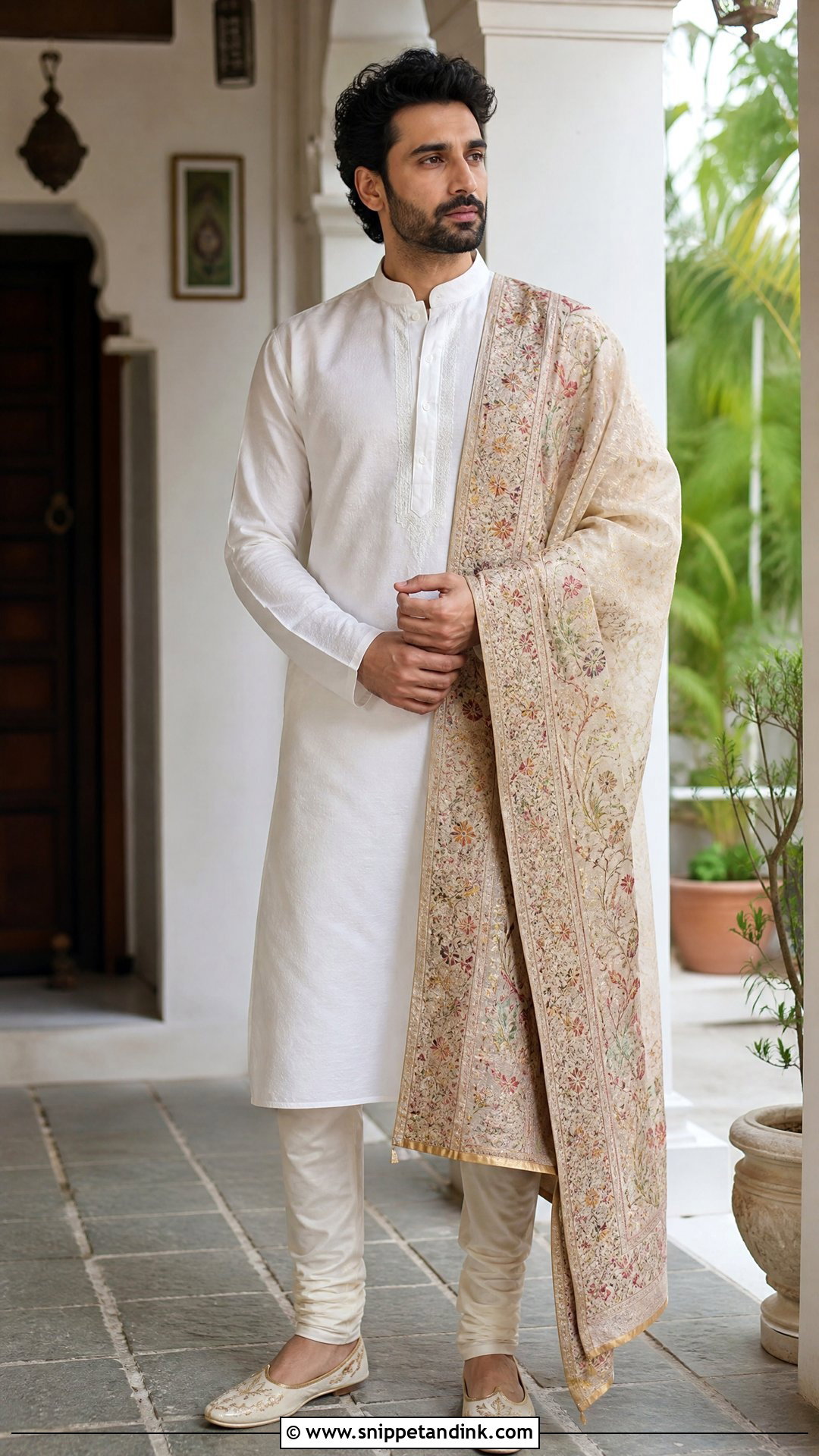
One good shawl can carry a plain white kurta. A crisp white or ivory kurta with slim pants gives a clean base, and a shawl or stole with zari, threadwork, paisley or a worked border makes it wedding-ready instantly. I show brothers how to drape it over one shoulder and pin it underneath so it stays put through bowing at rituals. Cream mojaris, tan sandals or embroidered slip-ons suit pujas, morning rituals and portraits. It’s the right choice for a man who wants one special piece rather than a heavy sherwani.
25. Charcoal Suit With Indian Accessories
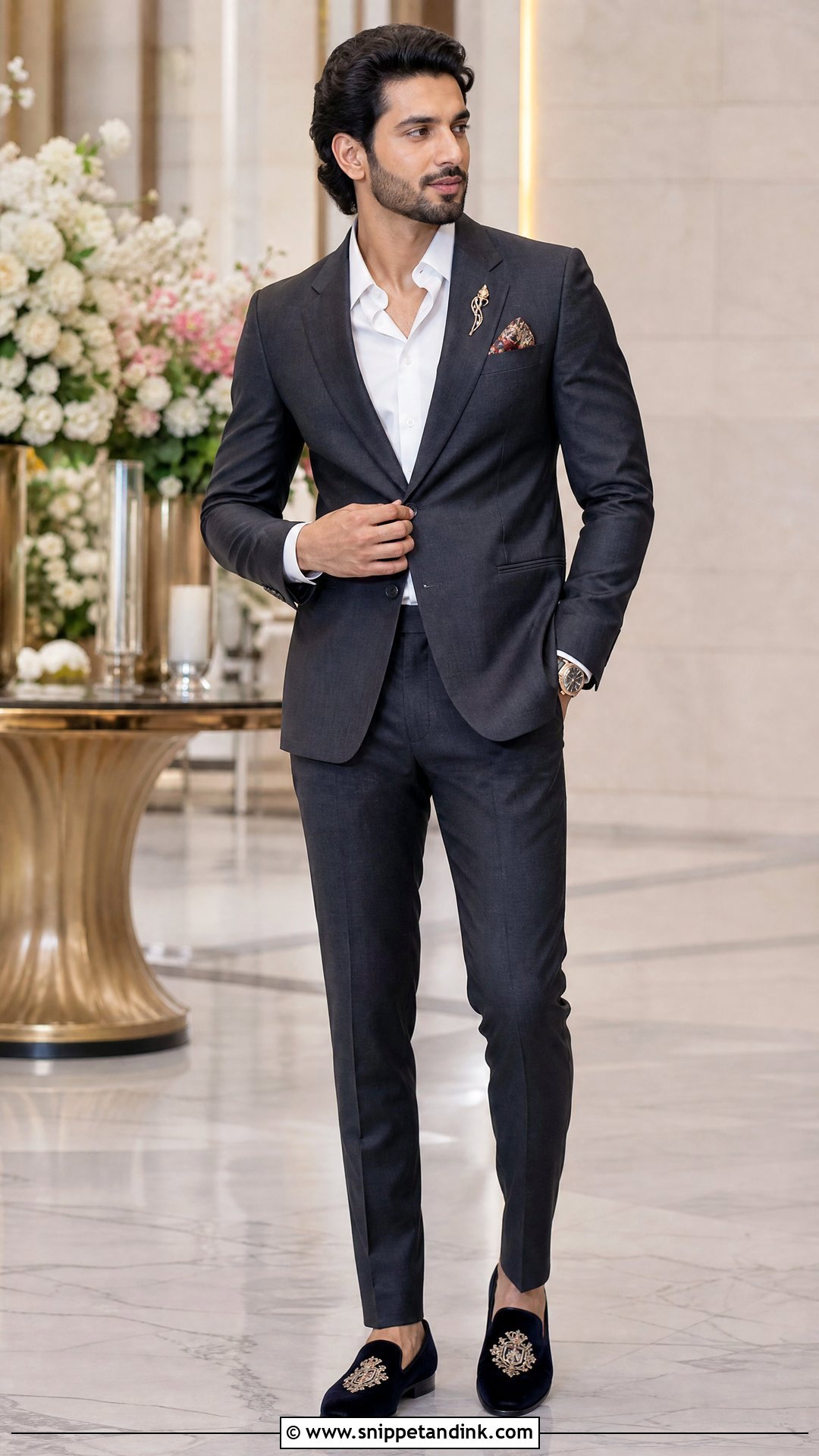
A charcoal suit works for a modern reception or engagement where the dress code leans Western but the family still wants an Indian touch. It needs proper tailoring and a crisp shirt. The Indian element comes from the accessories: a festive pocket square, a brooch, embroidered loafers or a silk stole for family photos. Keep the trousers clean-lined and the shoes polished. Urban and hotel venues and mixed dress codes suit it, and he’ll wear the suit again for years.
Leave Enough Time for a Made-to-Measure Sherwani
Ready-made kurtas and Nehru jackets can be bought a few weeks out and adjusted. A custom sherwani or bandhgala is different. Embroidered pieces often take several weeks to make, and wedding season pushes that longer, so I suggest placing the order at least two to three months ahead and checking the tailor’s own timeline before paying.
Plan for two fittings at minimum. At the first, check the shoulders, collar and jacket length; those are hard to change later. At the second, focus on sleeves (they should end at the wrist bone so a watch shows when he raises his hand) and on the churidar. A proper churidar is cut long so it gathers in soft folds at the ankle; if it’s hemmed to standard trouser length, it looks short as soon as he sits.
Collect everything at least a week before the first function. Try each outfit on with its shoes, stole and accessories, hang them in order of events, and label the bags. Brothers are usually running errands the morning of each event, and having every outfit ready to put on is one less thing to sort out.
He Should Look Like Family, Not Like the Groom
A good outfit for the bride’s brother suits the event, supports the bride’s color story and stays comfortable for long hours. For the main ceremony I lean toward a sherwani; for the reception, a bandhgala or Jodhpuri suit; for mehendi, haldi and rituals, kurtas, Nehru jackets, dhoti sets and prints. Across all of them, fit, breathable fabric, coordinated color and a few considered accessories do the work. He doesn’t need to outshine anyone. He needs to look complete, feel at ease and be ready for whatever the day asks of him.
You'll Like These Ideas:


Leave a Reply