
A lot of brides are told that a cathedral veil means an updo. It doesn’t. Loose hair under a long veil is one of my favorite combinations to style, because the tulle softens the waves and the waves give the veil something to move against. What it does need is a plan: a hidden anchor for the comb, a curl that’s set to last, and a little care with static. Here are 25 hair-down looks I’d do with a cathedral-length veil, from tumbling curls to glass-smooth straight hair, with notes on what each one needs to survive the day.
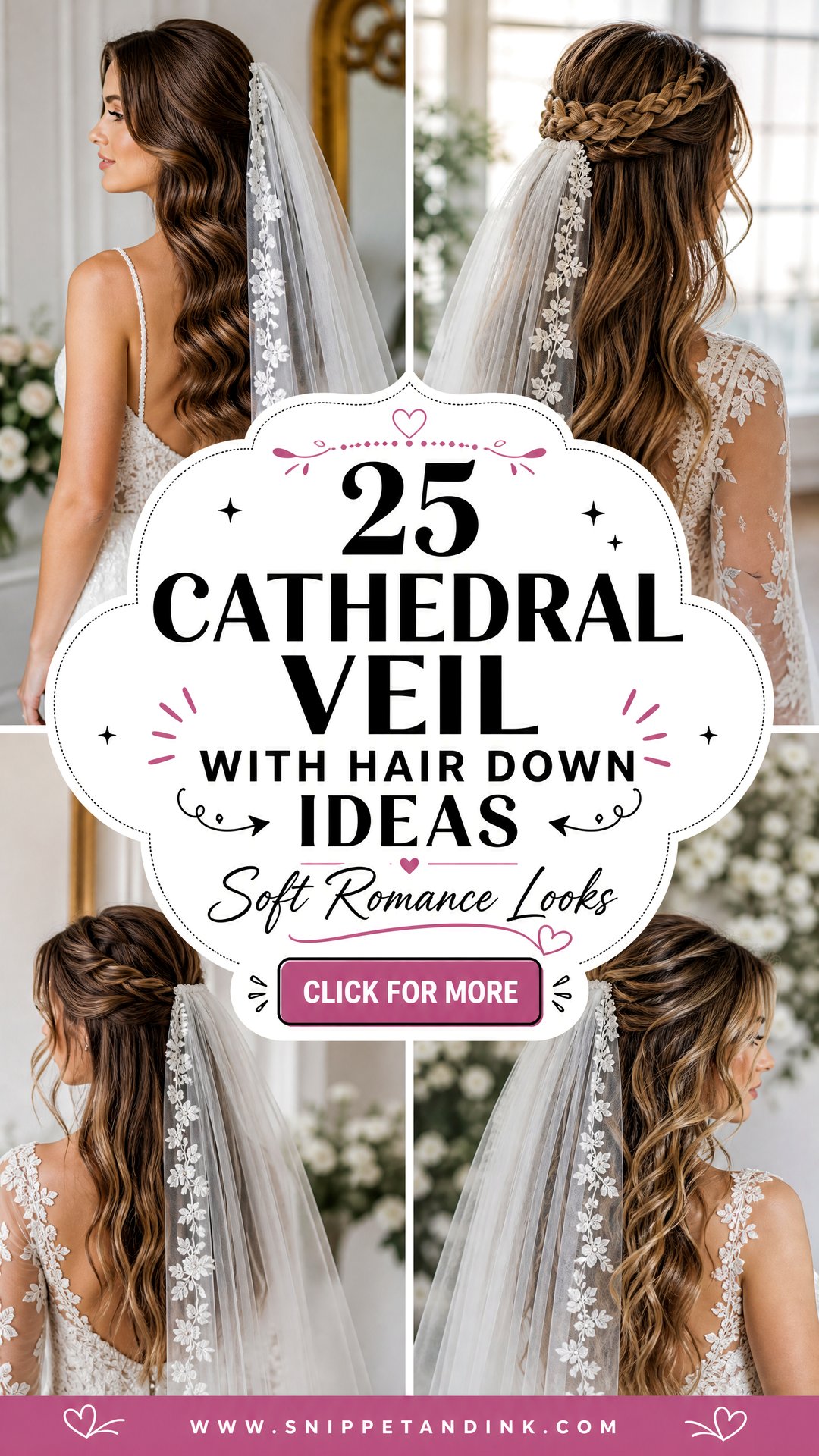
Three Hidden Anchors That Hold a Long Veil in Loose Hair
With an updo, the bun does the holding. When your hair is down, I have to build something the veil comb can push into, and then hide it under the top layer. These are the three I use most, and which one suits you depends on your hair.
- A mini braid: a small section braided flat at the crown and pinned. The strongest grip, and the one I choose for heavy, beaded or lace-edged veils. It suits medium to thick hair.
- A tiny ponytail: a small section gathered with a clear elastic, the comb pushed in just above it. Quick, secure and good for fine hair, which can’t hide a braid as easily.
- A backcombed pad with crossed pins: lightly teased hair at the root, two bobby pins crossed in an X over it. Works on straight hair and suits lighter single-layer tulle.
Whichever anchor you go with, drop the top layer back over it and brush it smooth before the comb goes in. If you can see the anchor from the side, it’s too big or too far forward.
1. Loose Romantic Waves with Cathedral Veil
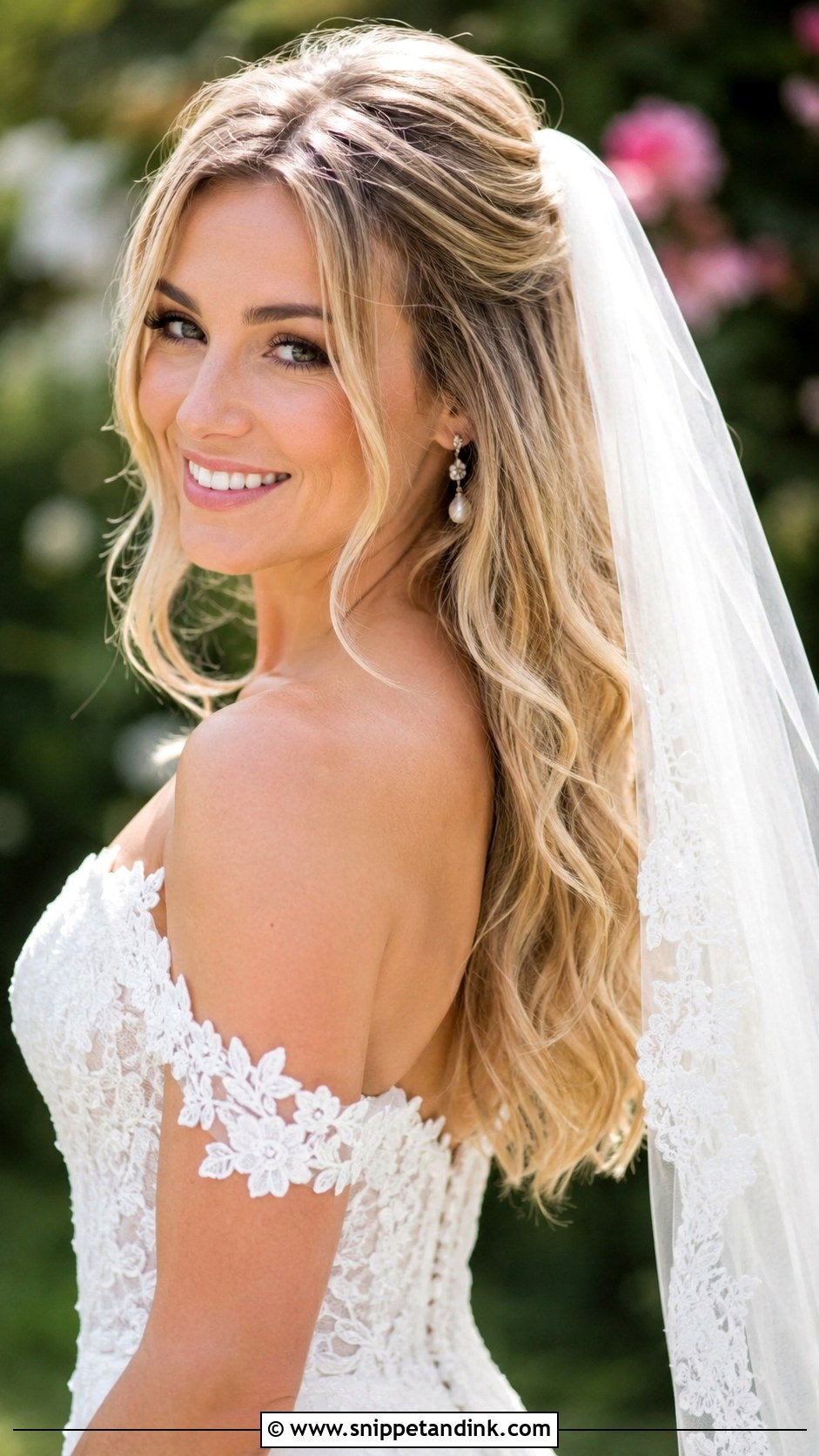
Loose waves are still the look I’m asked for most. I curl in alternating directions so the waves don’t clump into one big ringlet, let every section cool before touching it, and only then brush them out. Under a sheer veil the texture shows through softly. The comb sits high at the crown, held by a tiny hidden braid or a padded section underneath. In a garden or vineyard this looks right at home, and it lasts better than people expect, provided the curls were properly set.
2. Sleek Straight Hair with Cathedral Veil
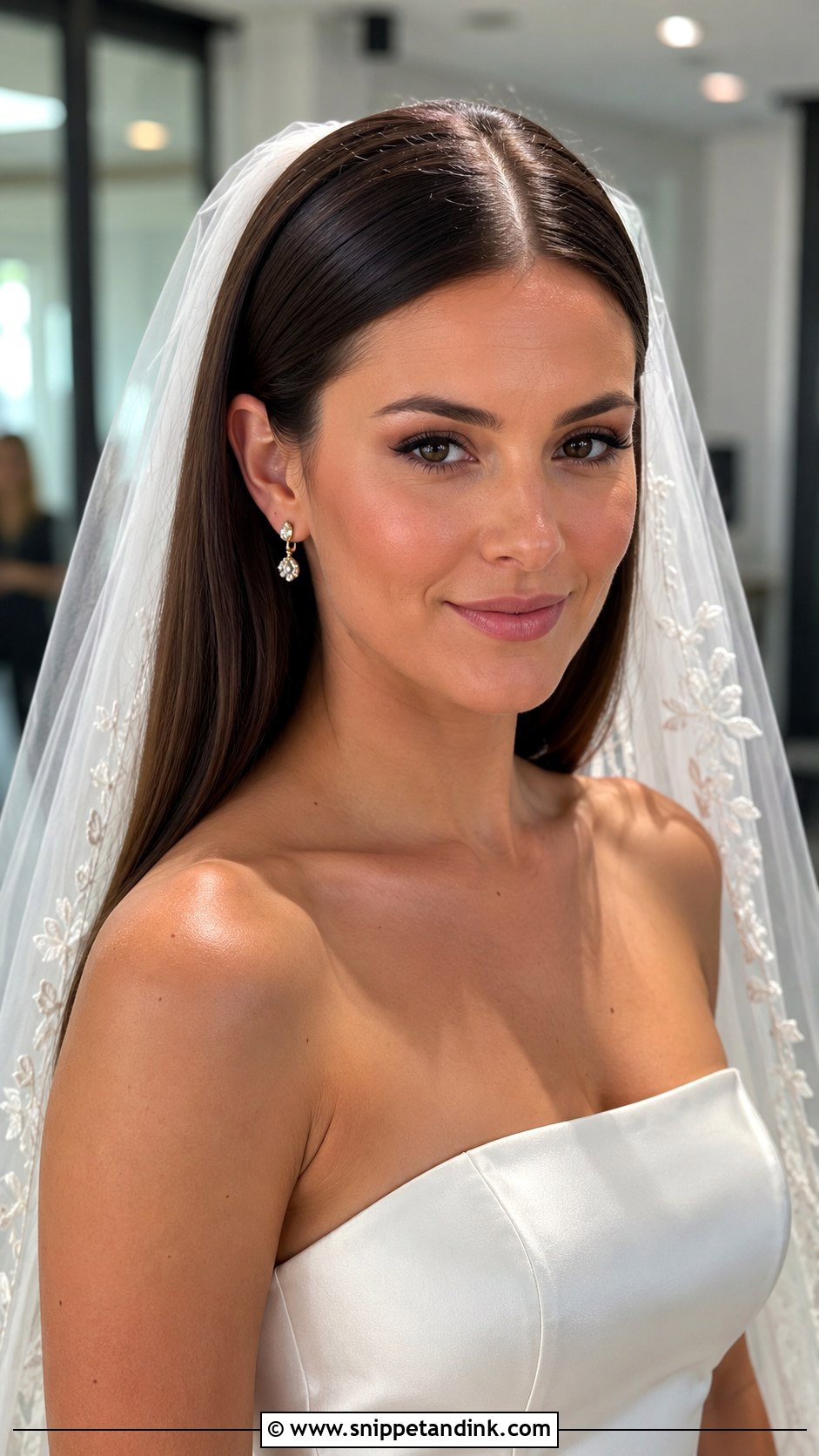
Smooth, straight hair with a long veil is clean and modern, and it shows off healthy, shiny hair better than any curl. It’s also the most slippery base for a comb. I flat-iron in small sections, finish with a few drops of shine serum on the lengths only, and build a little lift at the crown with backcombing so the comb has something to hold. A center part keeps it fresh. If your hair is naturally smooth and thick, this is easier to keep looking crisp all day; fine hair tends to go flat at the roots by evening.
3. Half-Up Half-Down with Cathedral Veil
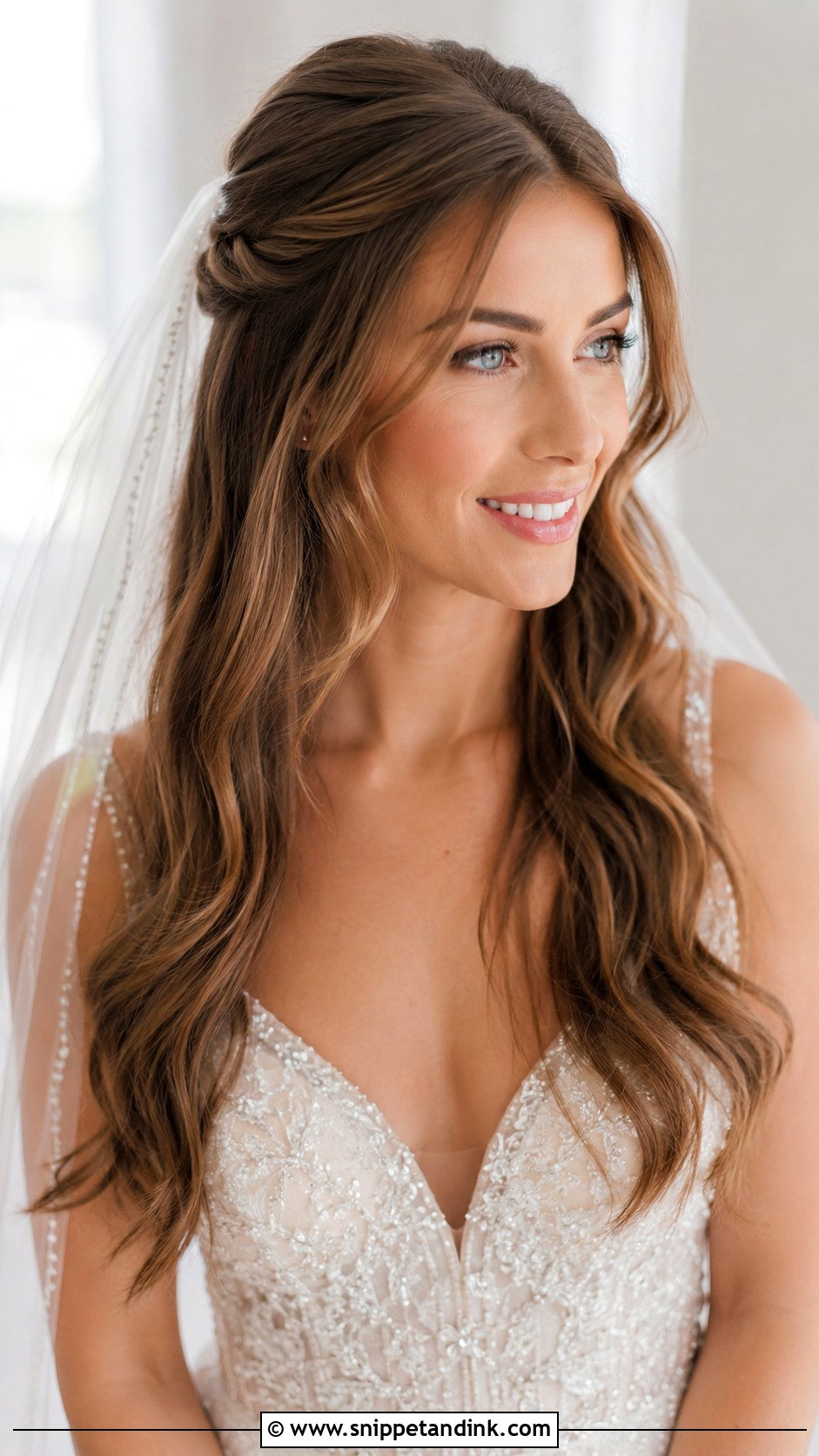
Pulling the top section back gives the comb a firm spot to sit while all your length stays visible. I twist or pin that top section, then slide the veil comb in just above it. Of all the down styles here, this is the most forgiving through hugs and dancing. Leave a couple of face-framing pieces loose at the front. It flatters almost every face shape, and it’s my first suggestion for brides who are nervous about loose hair holding a heavy veil.
4. Hollywood Waves with Cathedral Veil
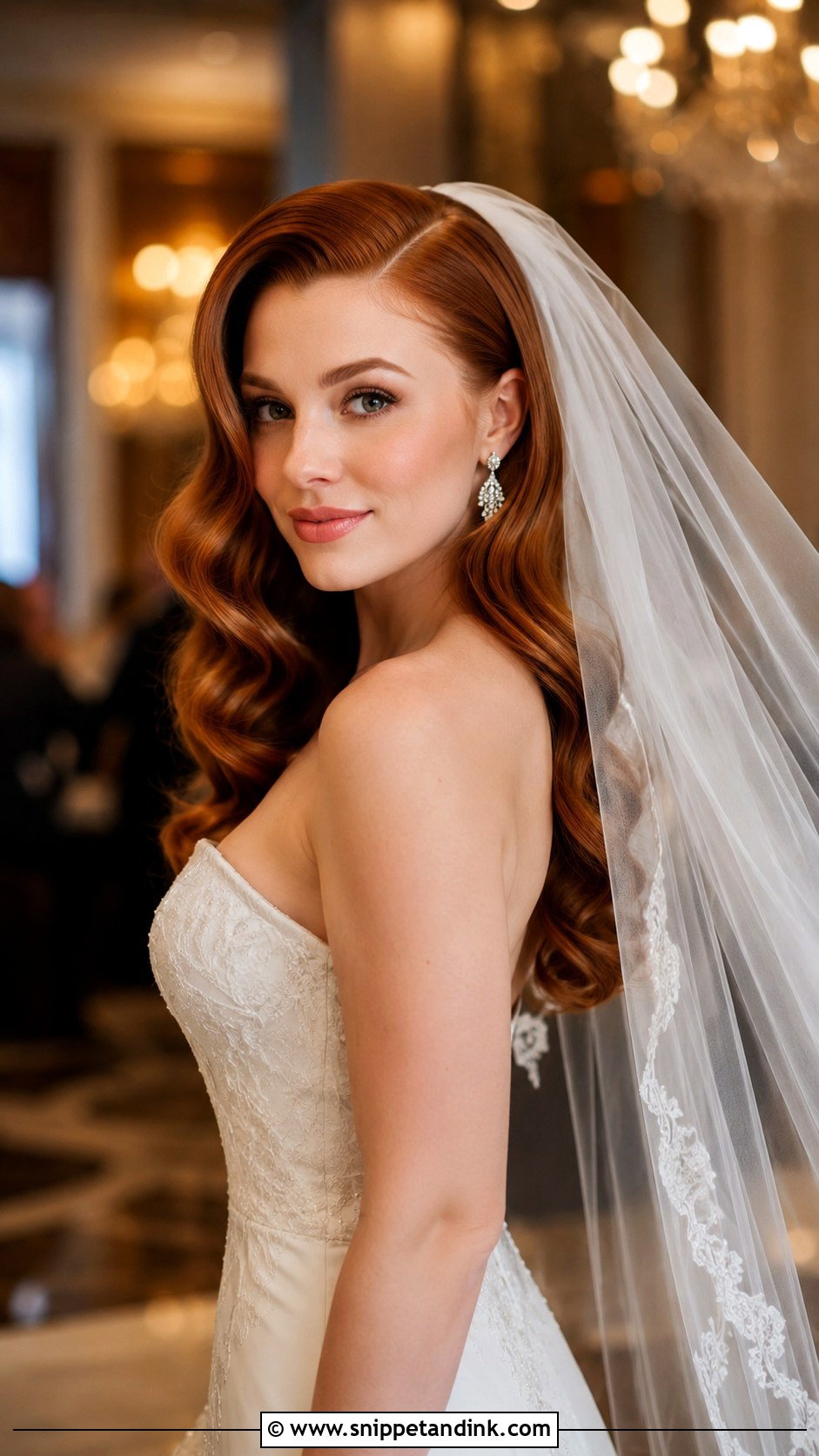
Hollywood waves are deep, defined S-shapes brushed into one glossy surface. I set them with a large barrel, pin each curl to cool, then brush the whole thing out with a soft boar bristle brush until the curls merge into waves. A deep side part adds drama. Under a cathedral veil they look polished and a little vintage, ideal for evening ceremonies, fitted gowns and statement earrings. The catch: these waves rely on everything lying in one direction, so the veil goes on carefully and the bride shouldn’t run her fingers through them.
5. Boho Curls with Mantilla Cathedral Veil
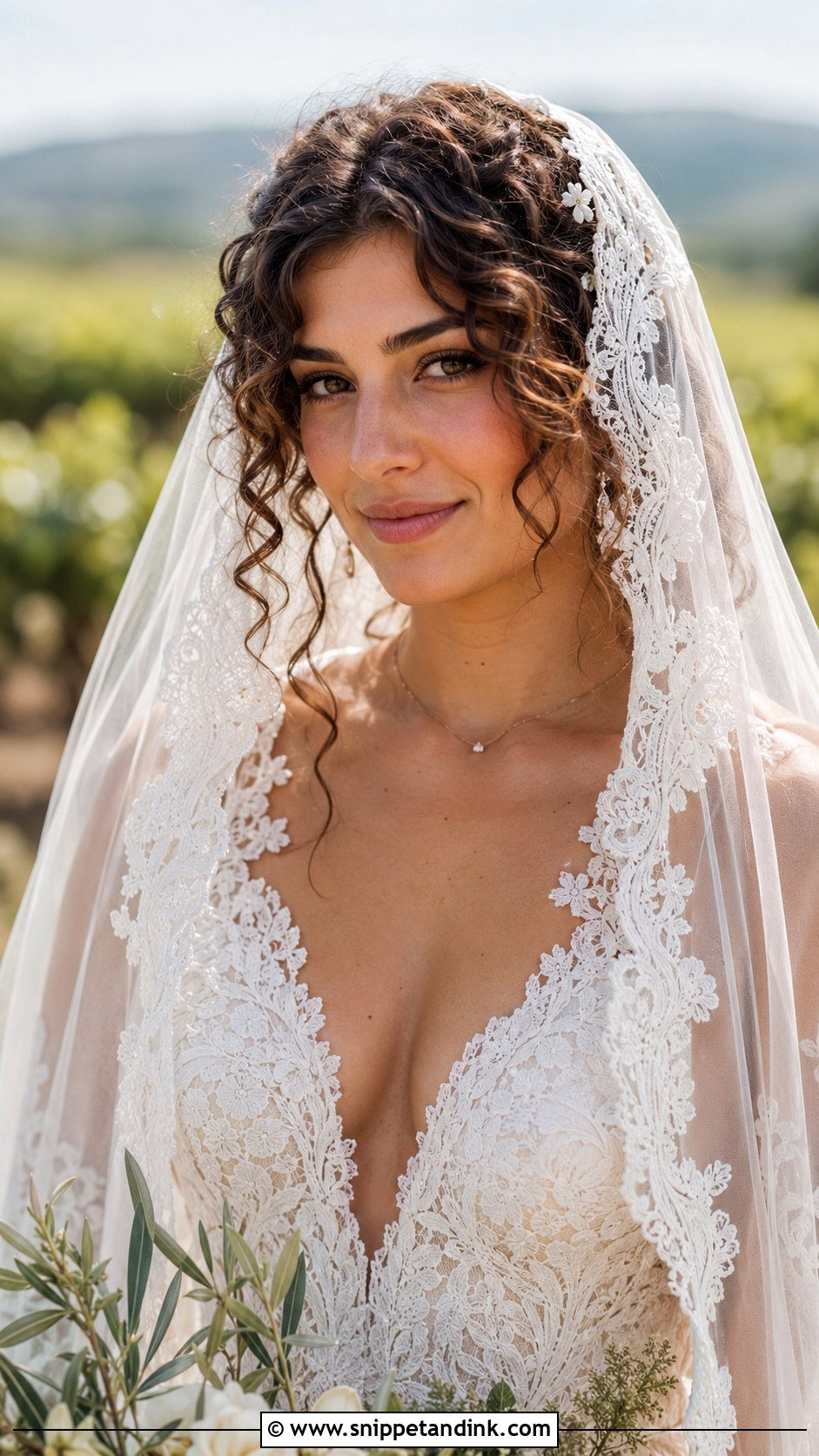
A mantilla drapes lace directly around the face rather than sitting at the back of the head, so it pairs naturally with loose, airy curls. A lace-edged mantilla cathedral veil is usually anchored a little further forward, near the crown, with a comb or pins. I go light on product so curls stay soft under the lace. It suits vineyards, outdoor ceremonies and gowns with lace or beading that the veil’s edge can echo. Tuck a few curls behind one ear to keep them out of the lace.
6. Beachy Waves with Cathedral Veil
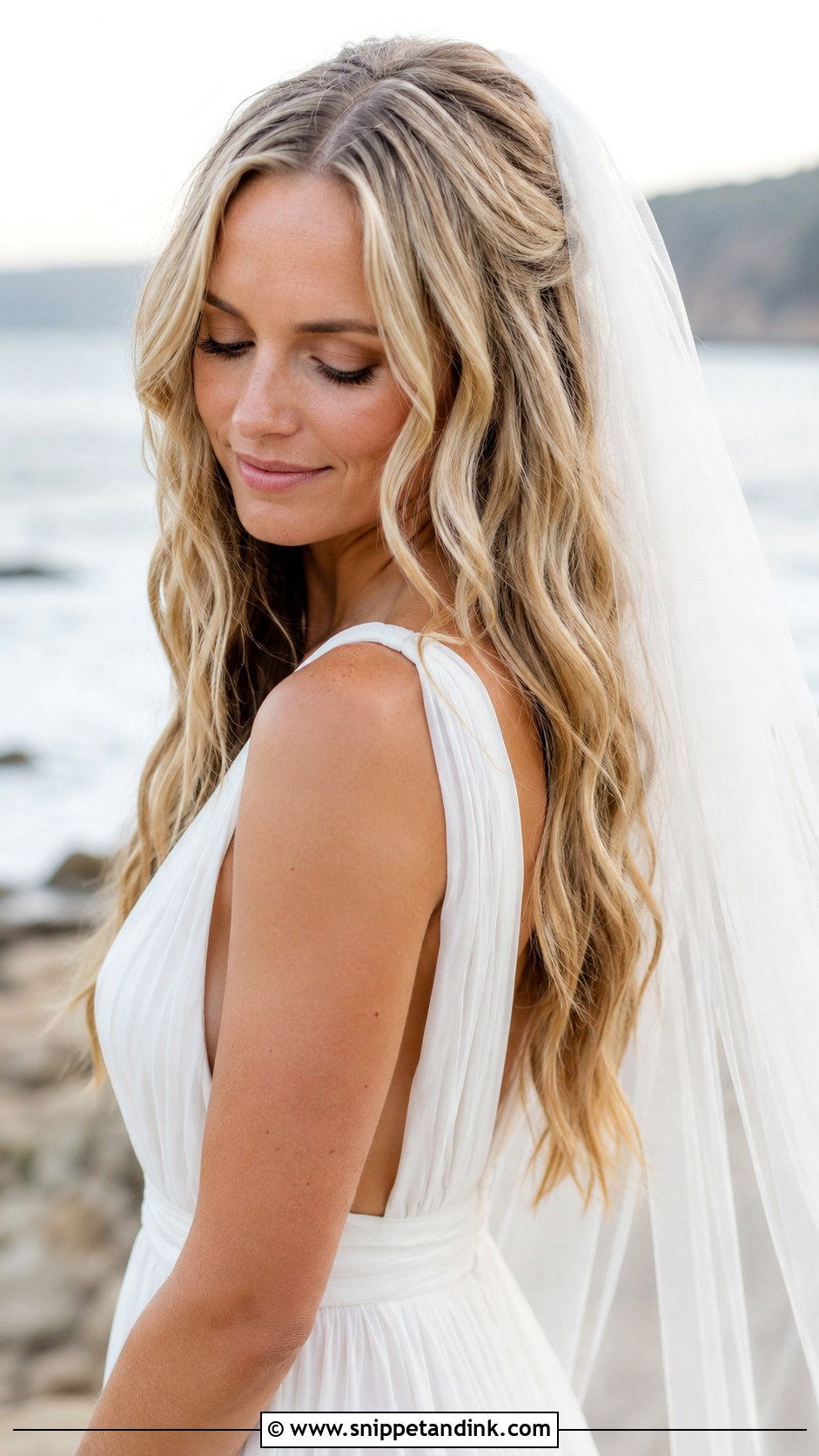
Beachy waves have a looser, slightly imperfect bend with straight ends. I use a curling wand, leave the last inch or two out, and finish with a texture spray, which also gives the comb something to grip at the crown. Coastal and destination weddings are the obvious fit. Salt air and humidity will relax these waves faster than tighter curls, so they’re best for brides whose hair already holds a natural bend.
7. Side-Swept Waves with Cathedral Veil
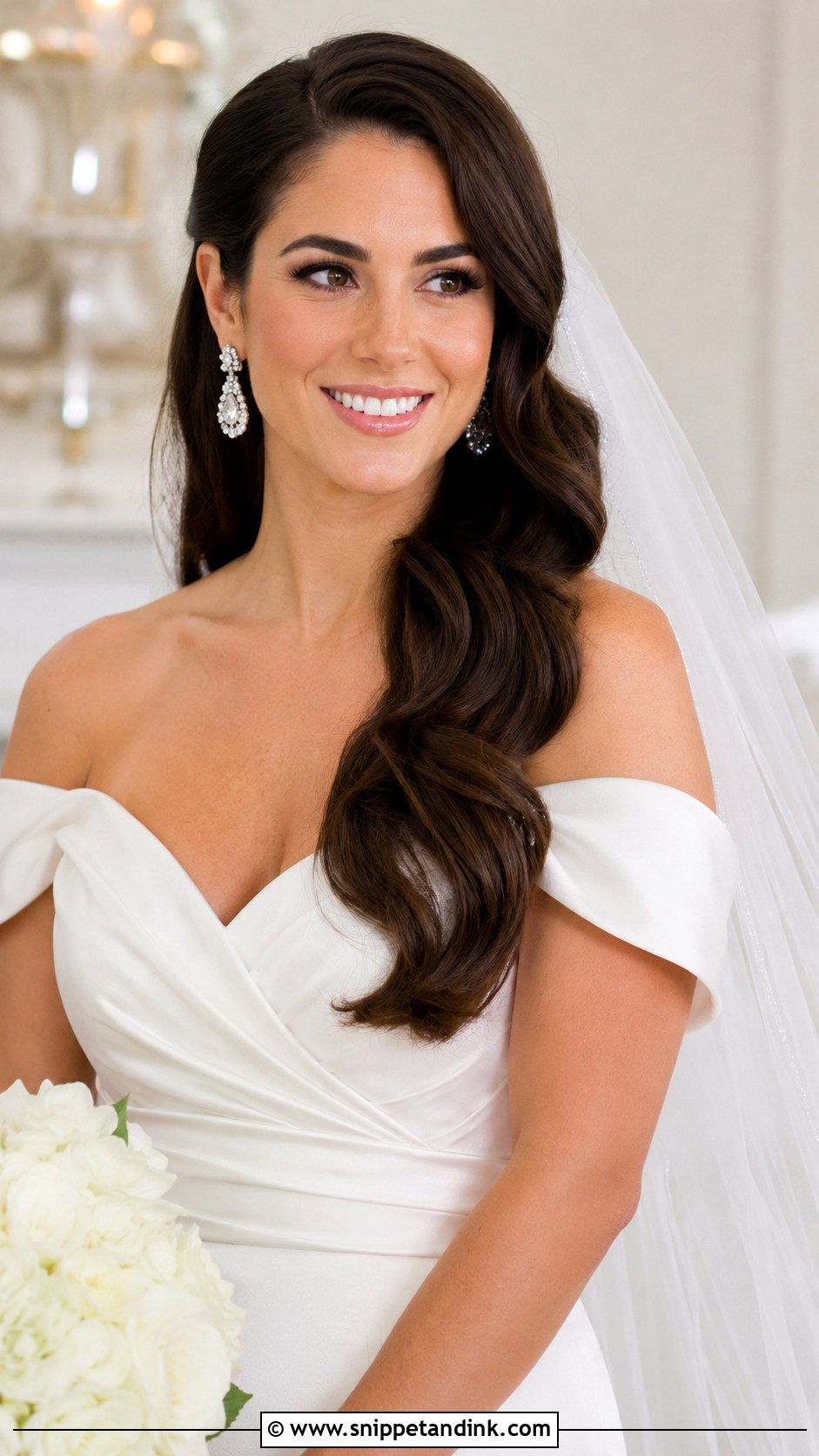
All the waves pinned over one shoulder show off the neck, jawline and earrings on the open side. I curl first, then gather and pin the hair behind one ear with crossed bobby pins hidden under the top layer. The veil goes on the opposite side of the crown so the shape balances. One-shoulder and off-the-shoulder gowns pair well with it. Bouquet arm and hugs will crush the curls on that side, so I set them a touch firmer than usual.
8. Center Part Straight Hair with Cathedral Veil
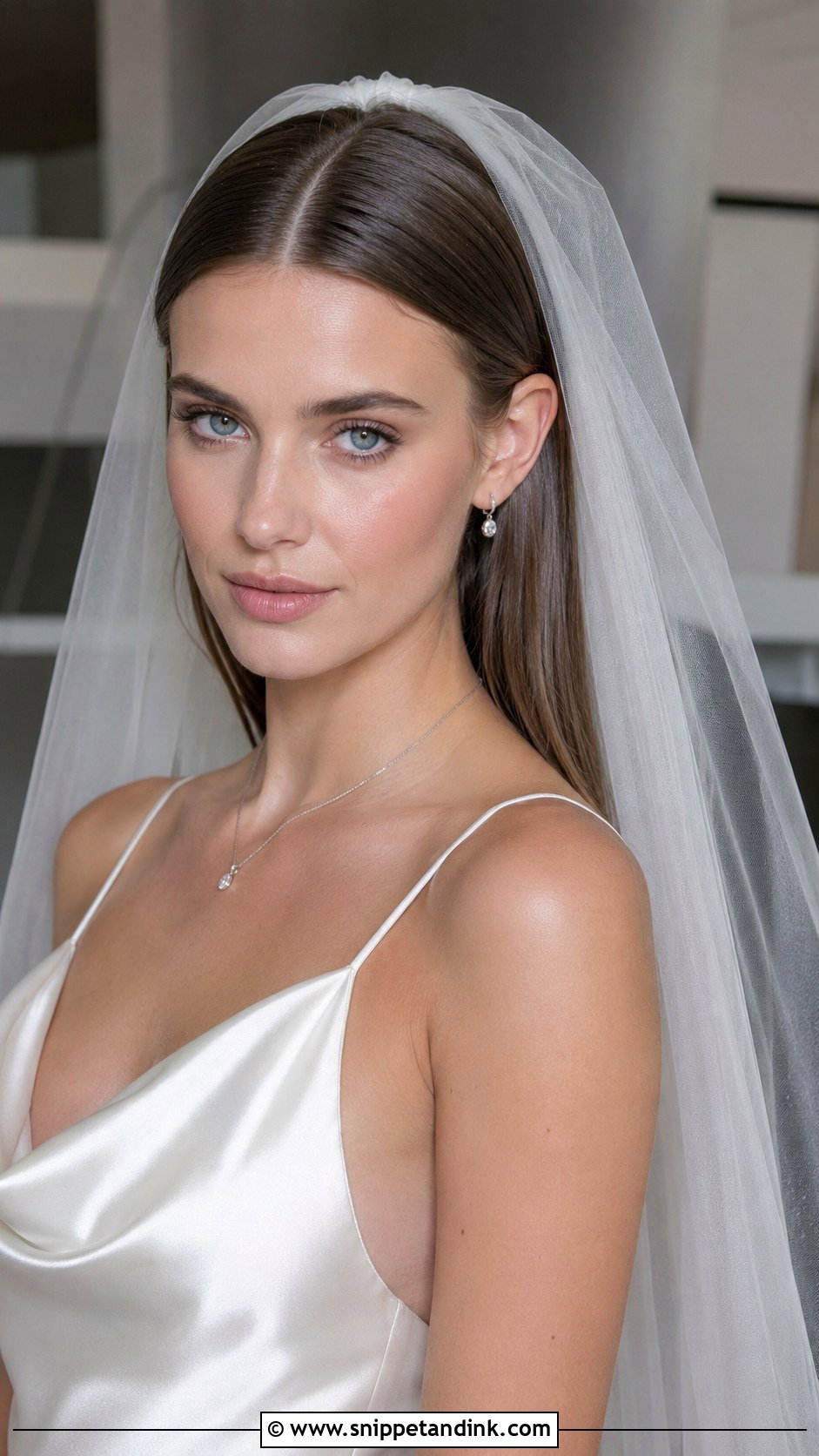
A precise center part with straight, glossy hair is symmetrical and minimal, and it puts all the attention on the face and the veil. I straighten, then cut the part with the tail of a comb while the hair is still warm. The veil sits at the back of the crown. Satin gowns and simple jewelry suit it. Be honest with yourself about symmetry: a center part shows any unevenness in the hairline, and some brides feel more comfortable a few millimeters off-center.
9. Voluminous Curls with Cathedral Veil
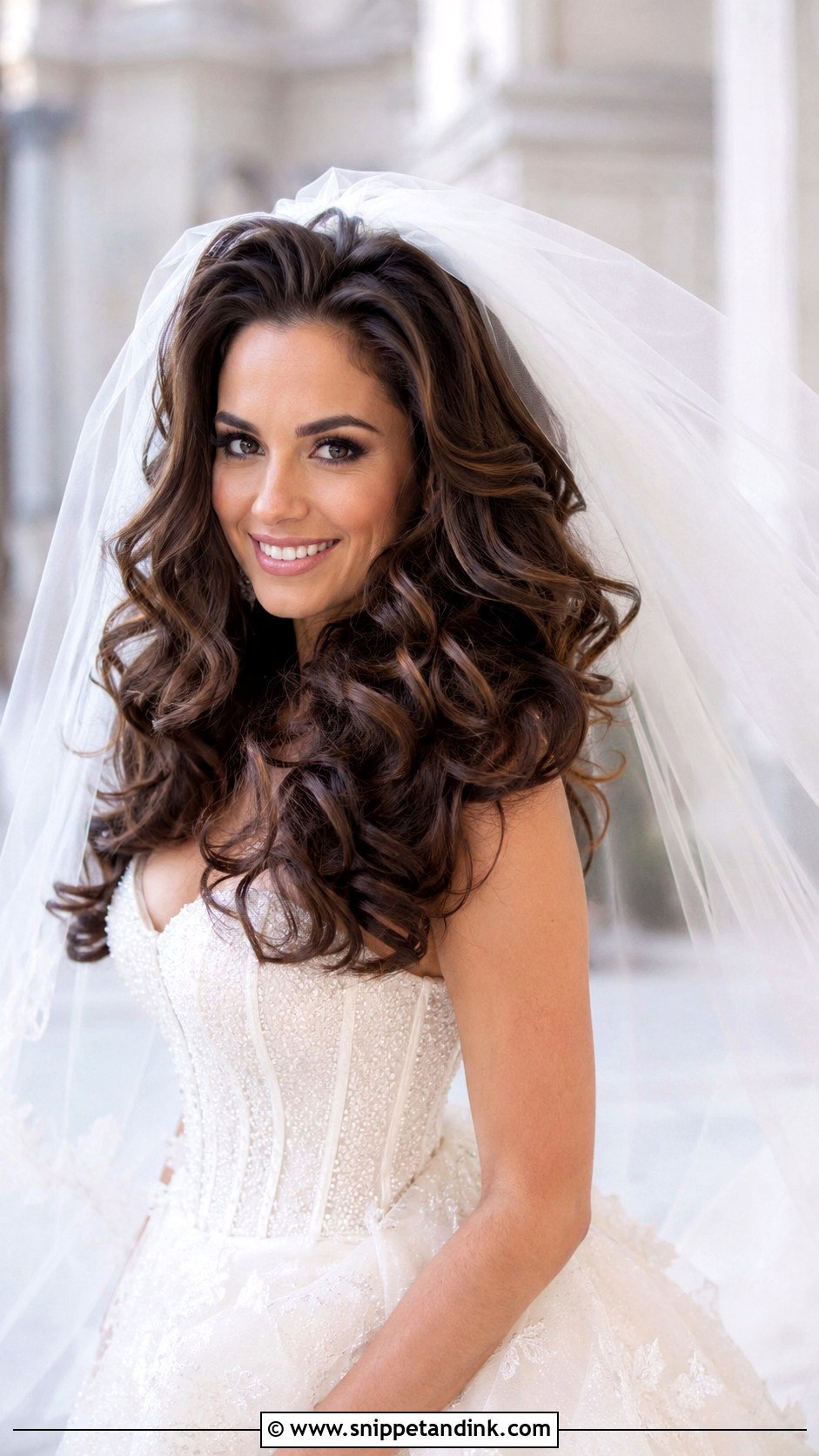
Big, bouncy curls give the most volume of any look here. I set them with large rollers or a wide barrel and backcomb gently at the root for lift. The veil sits high at the crown, held by that backcombed base. Grand venues with high ceilings suit the scale. I use a light-hold spray so the curls stay soft. Volume does drop over a long day, so I tend to build it a little bigger than the bride wants in the morning.
10. Crown Braid with Hair Down and Cathedral Veil
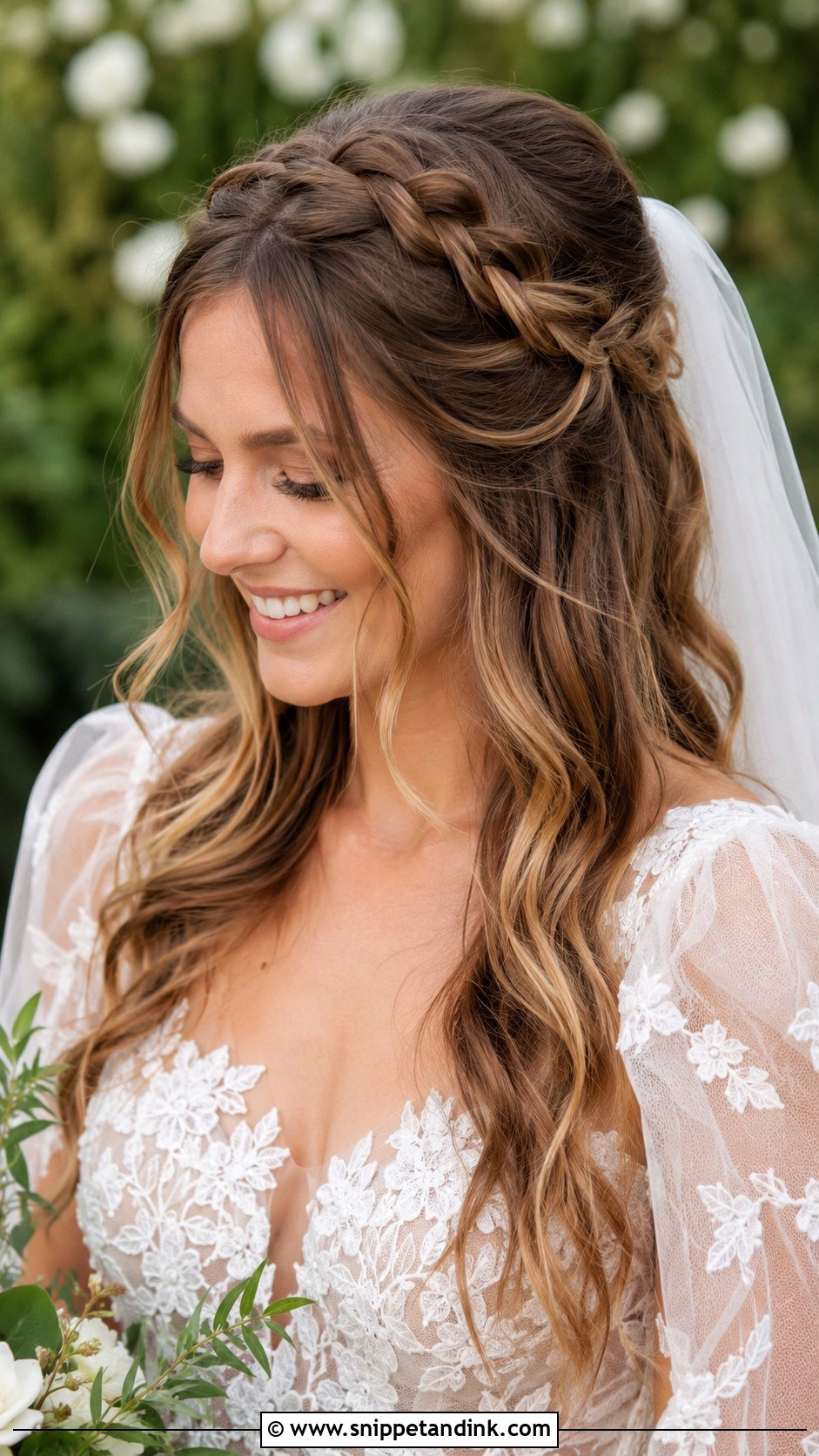
A slim braid across the top of the head acts like a natural headband and gives the comb a solid place to lock in. The rest of the hair stays loose in waves or curls. I braid it as a thin Dutch braid and pancake it just enough to look soft. Garden and boho weddings suit it, and the braid keeps hair off the face. A few strands left loose at the hairline stop it from looking too neat.
11. Twisted Half-Up with Cathedral Veil
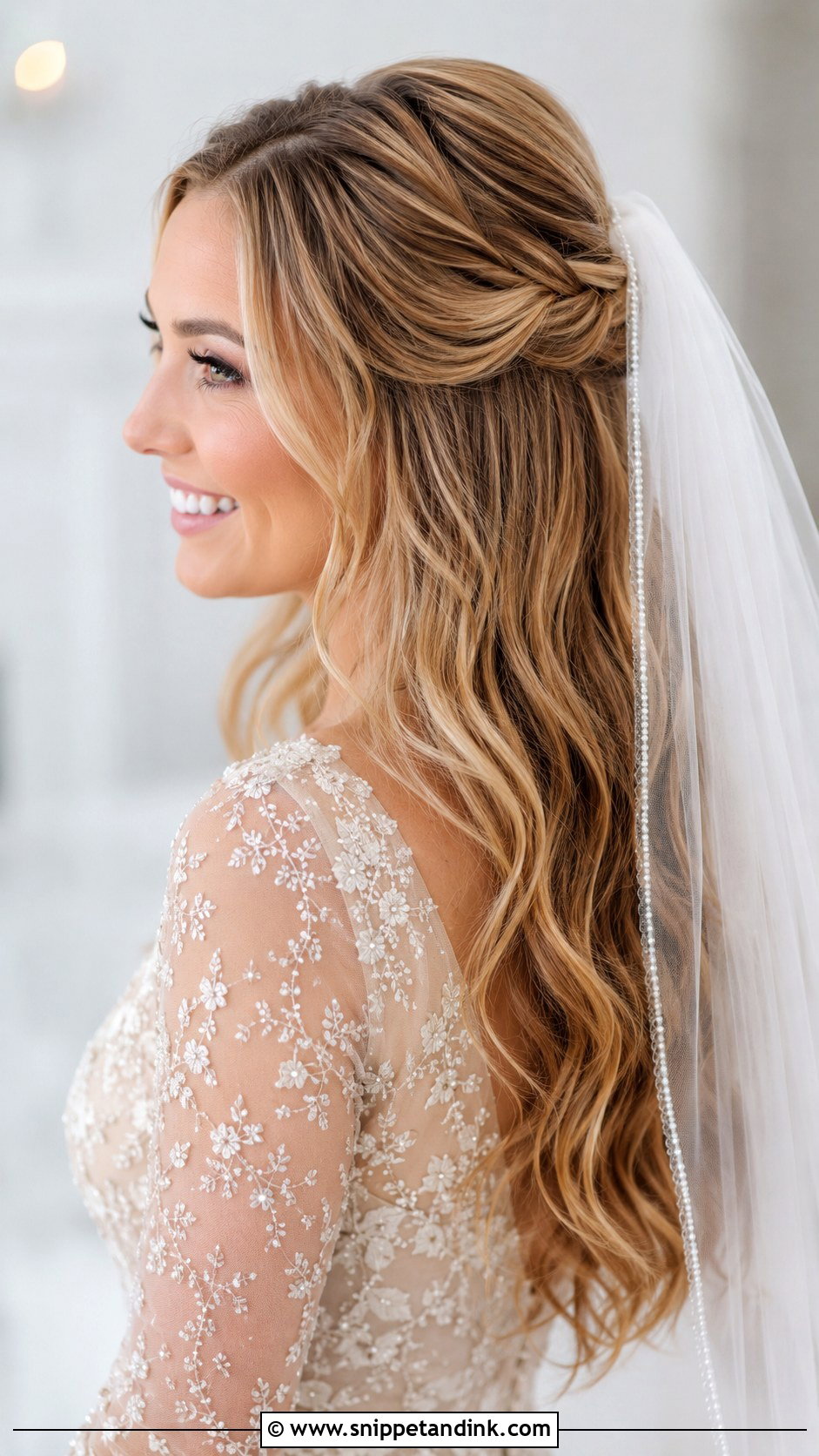
Two front sections twisted back and pinned at the crown keep hair off the face while the rest flows below. The twists add a little dimension and give the comb a secure seat right above where they meet. It works with nearly any gown or venue. I pin the twists with crossed pins so they hold the veil’s weight. This is the style I’d choose for a bride who wants structure without anything that looks like an updo.
12. Deep Side Part Waves with Cathedral Veil
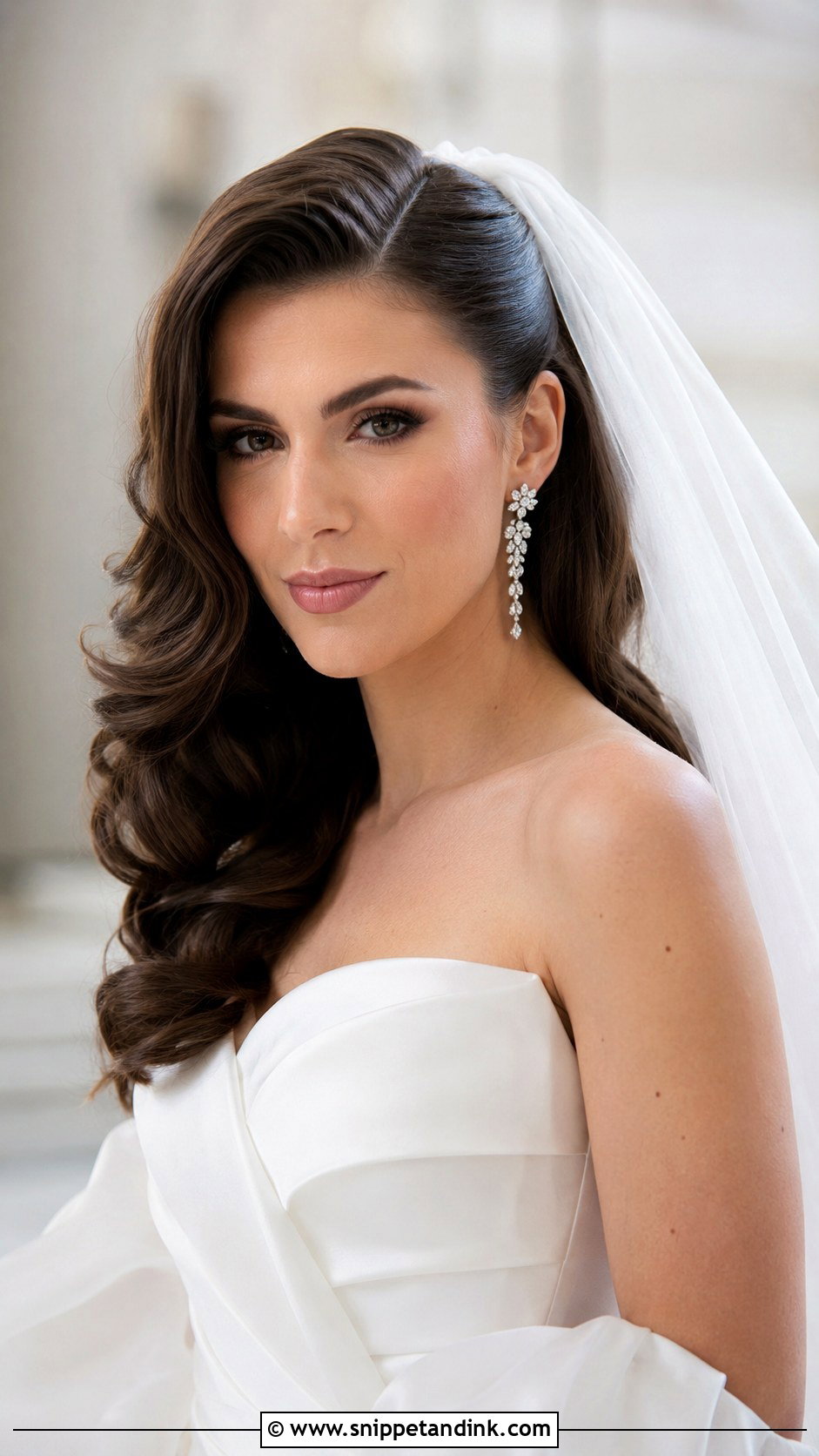
A deep side part sweeps volume across the forehead and gives waves a more glamorous shape. I set the part with heat and a little spray at the root so it doesn’t drift back to center by midday. The veil anchors near the heavier side. It pairs with statement earrings and structured gowns. Most face shapes take a deep part well, and it tends to photograph better from the side of the sweep, so tell your photographer which side is your good one.
13. Long Layered Waves with Cathedral Veil
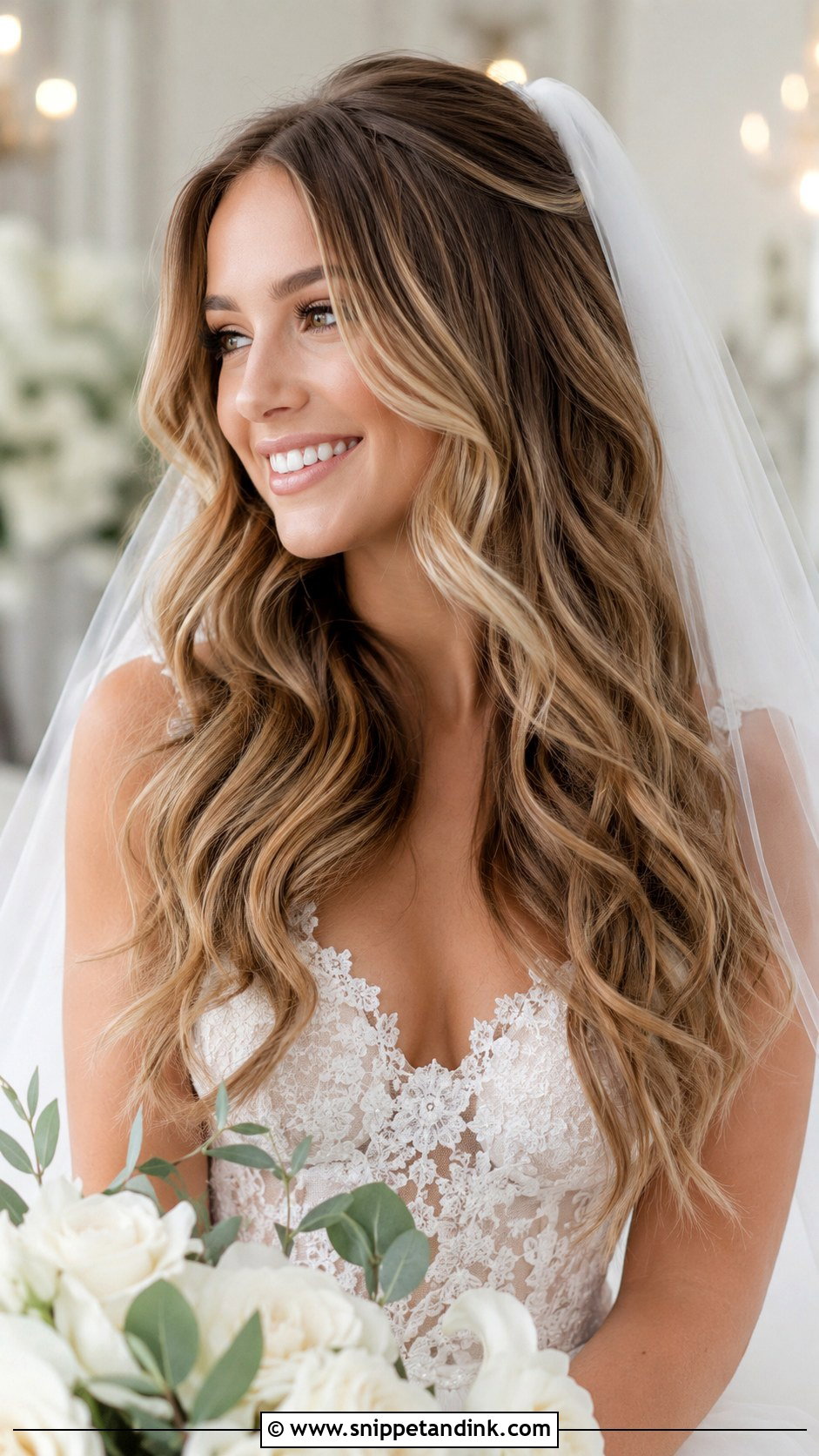
Layered hair already has movement built in, which makes waves look fuller under the veil. I curl each layer in alternating directions, then loosen with my fingers. The cathedral veil sits at the crown. Face-framing layers soften the look. One caution from experience: short top layers can poke through tulle or flip outward under the comb, so I pin those shorter pieces flat under the anchor before the veil goes on.
14. Glossy Blowout with Cathedral Veil
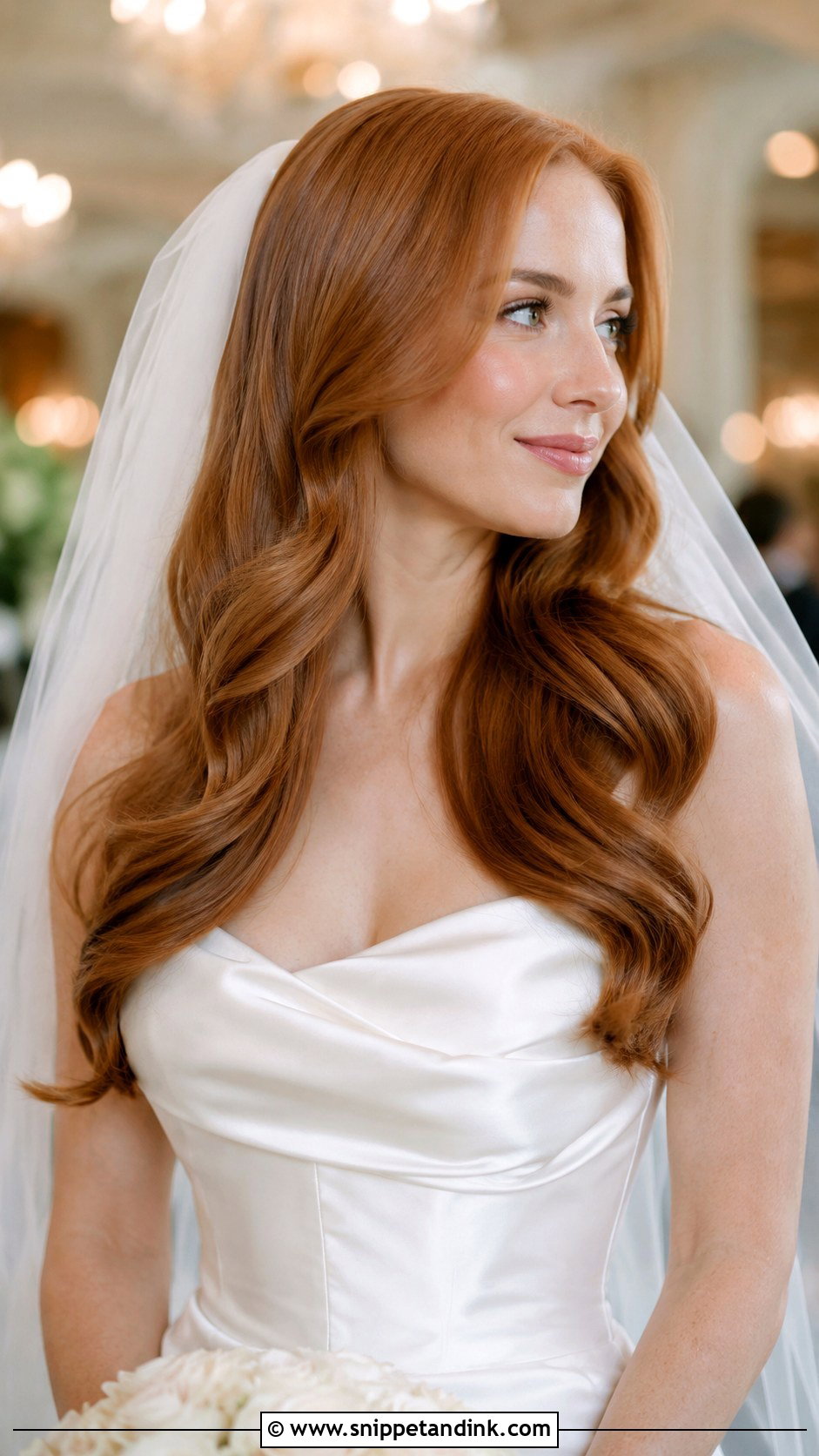
A smooth, bouncy blowout uses a round brush to create soft volume and a swoop at the ends. No tight curls, just polish and shine. I blow-dry in large sections and let each one cool on the brush before releasing it, which is what makes a blowout last. The veil floats over the top. It suits ballrooms and church ceremonies. Humid weather is its enemy; if the forecast is sticky, I add a light set with rollers so the shape holds longer.
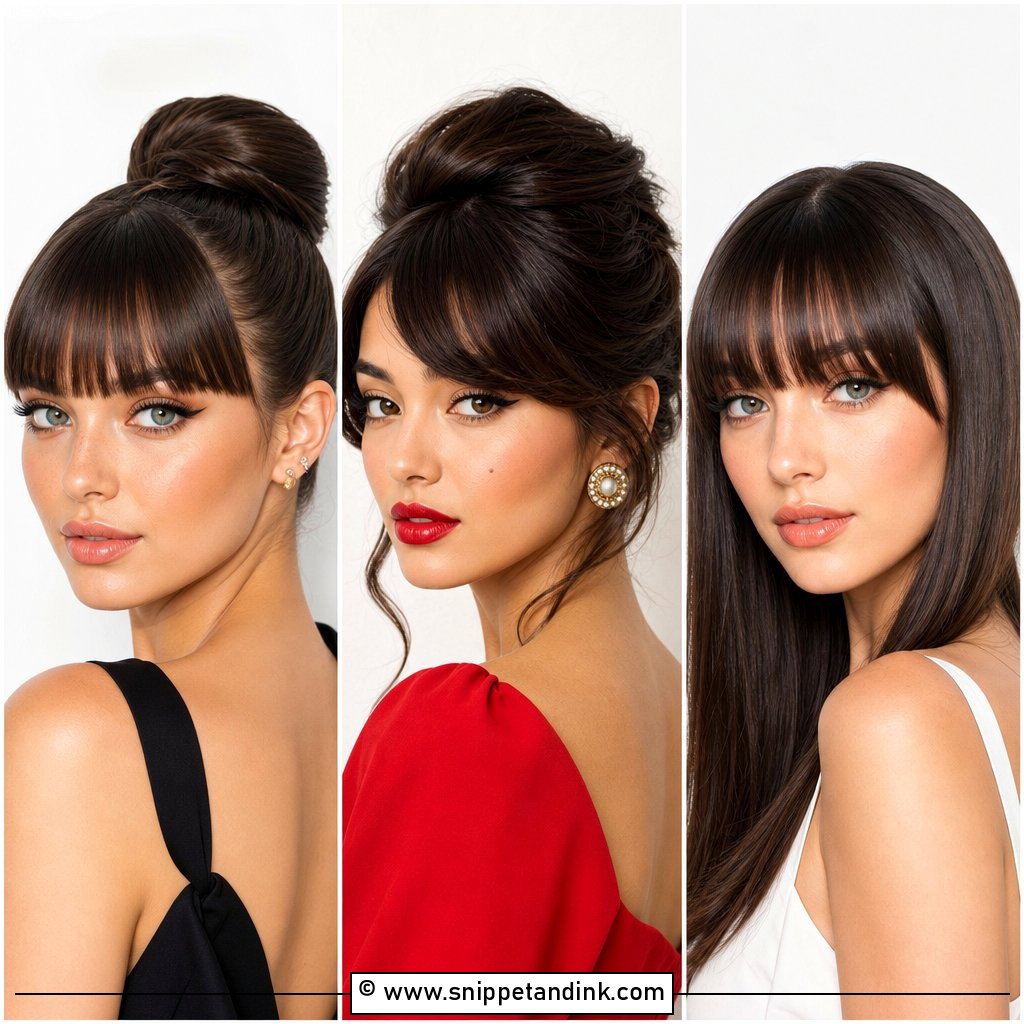
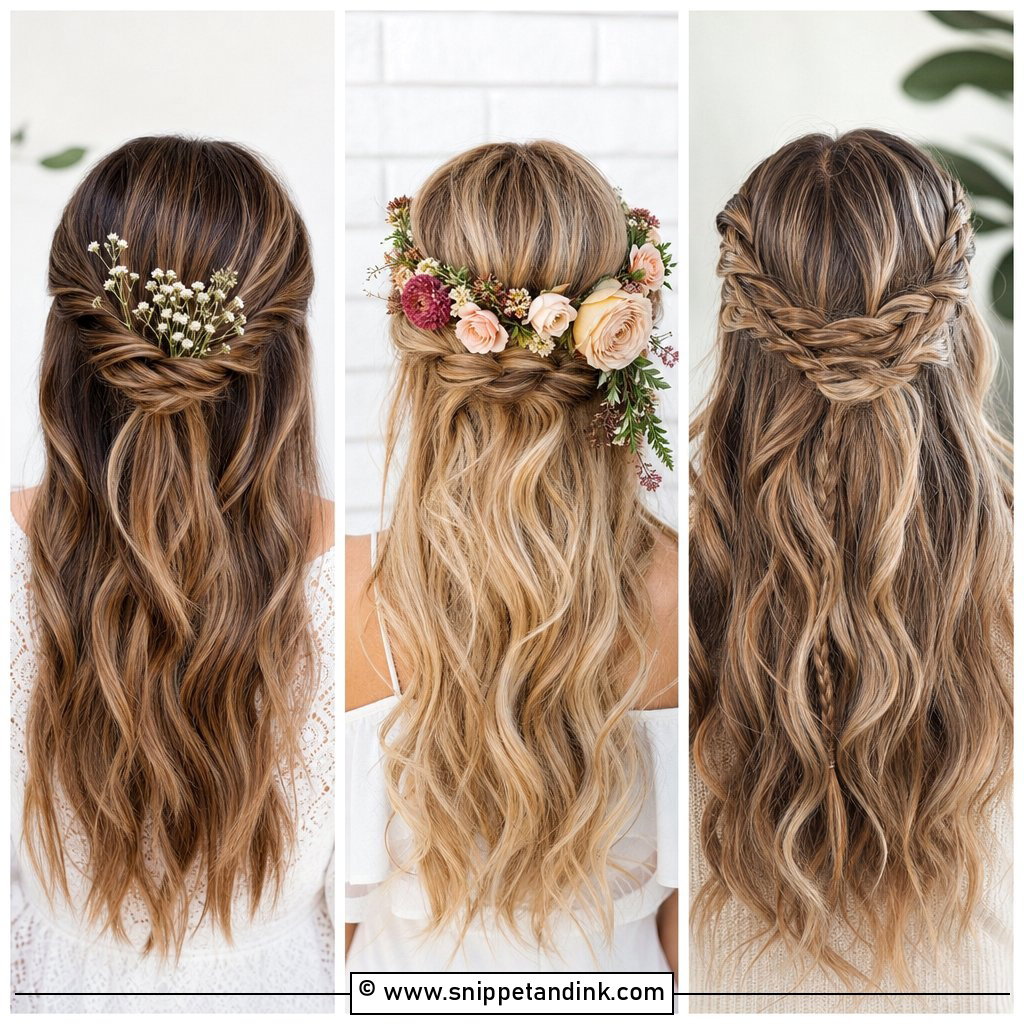
15. Tousled Textured Waves with Cathedral Veil
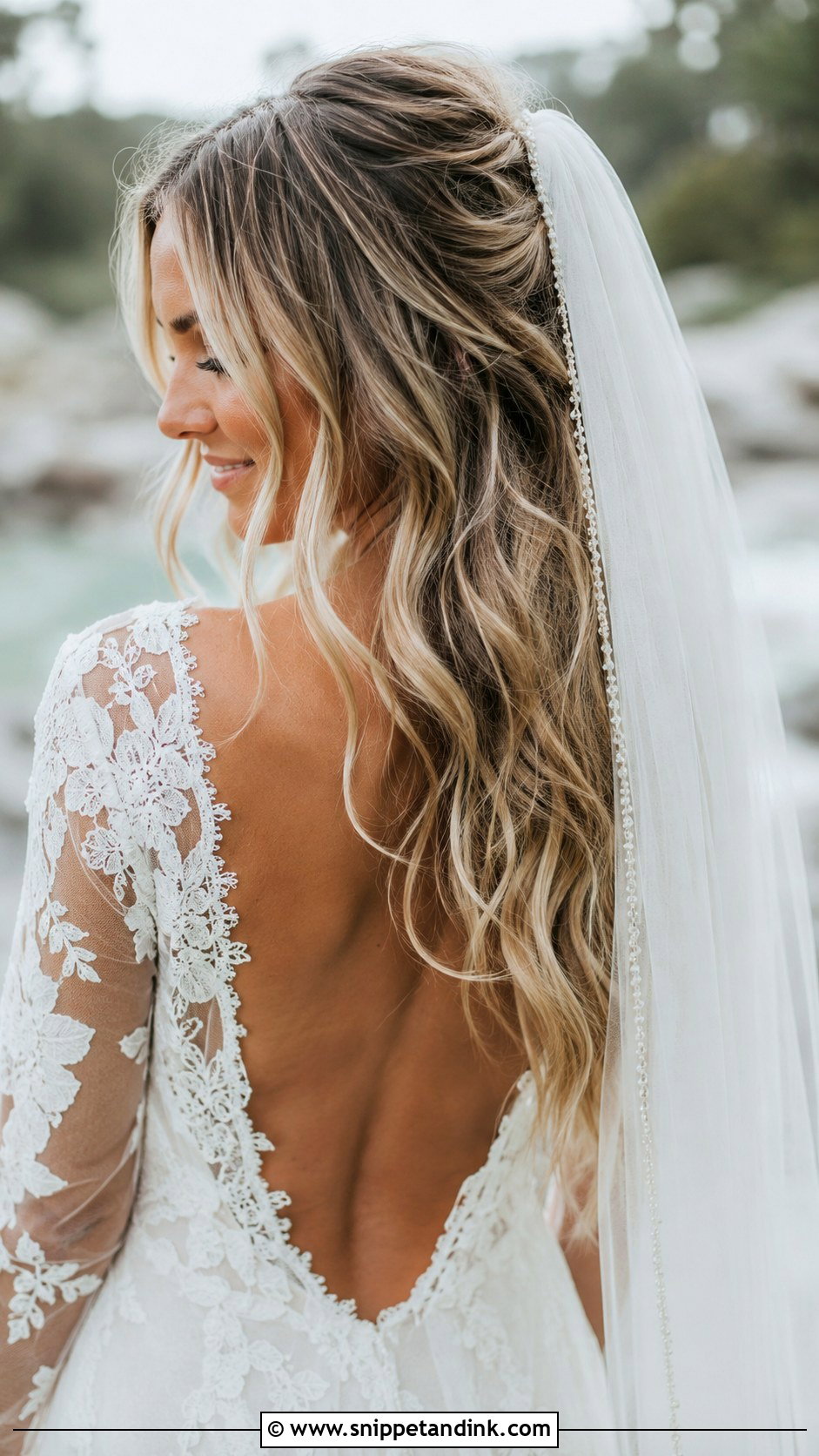
Tousled, scrunched waves are messier on purpose, and that casual texture is what stops a cathedral veil from looking stiff and formal. I work texture spray through damp-ish lengths, scrunch, and leave the ends piecey. The smooth tulle against rough texture is a nice contrast. Outdoor and boho weddings suit it. It’s also the most forgiving style on this list: if a few pieces fall out by the reception, nobody can tell.
16. Braided Half-Up with Cathedral Veil
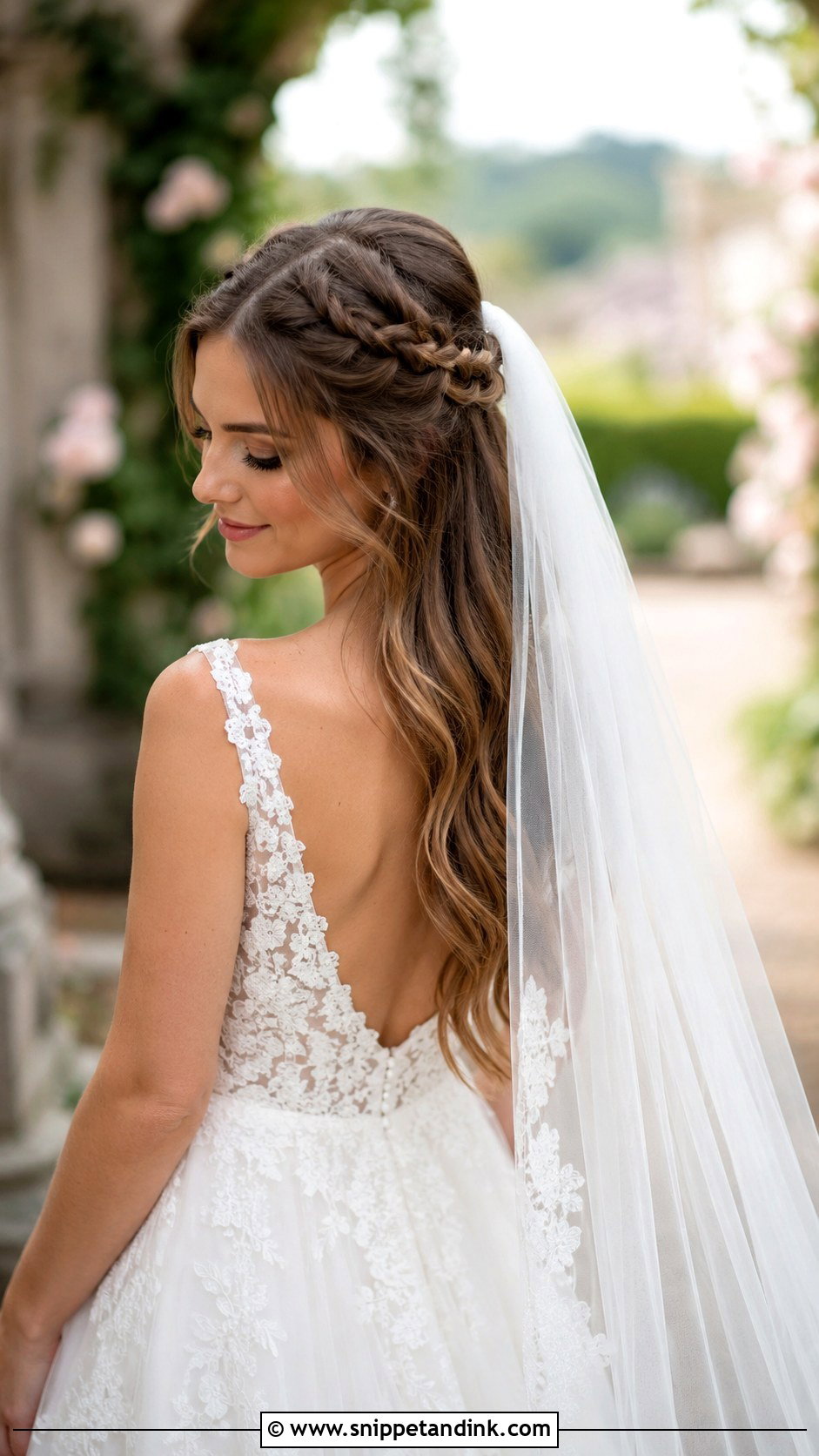
Here the braids are the point, not a hidden anchor. I braid one or two loose plaits from the front sections and pin them where they meet at the back, right where the comb will sit. The rest stays down in soft waves. Pancaking the braids slightly makes them look fuller in photos. Shorter layers slip out of braids, so I smooth a little pomade over the ends before I start.
17. Loose Spiral Curls with Cathedral Veil
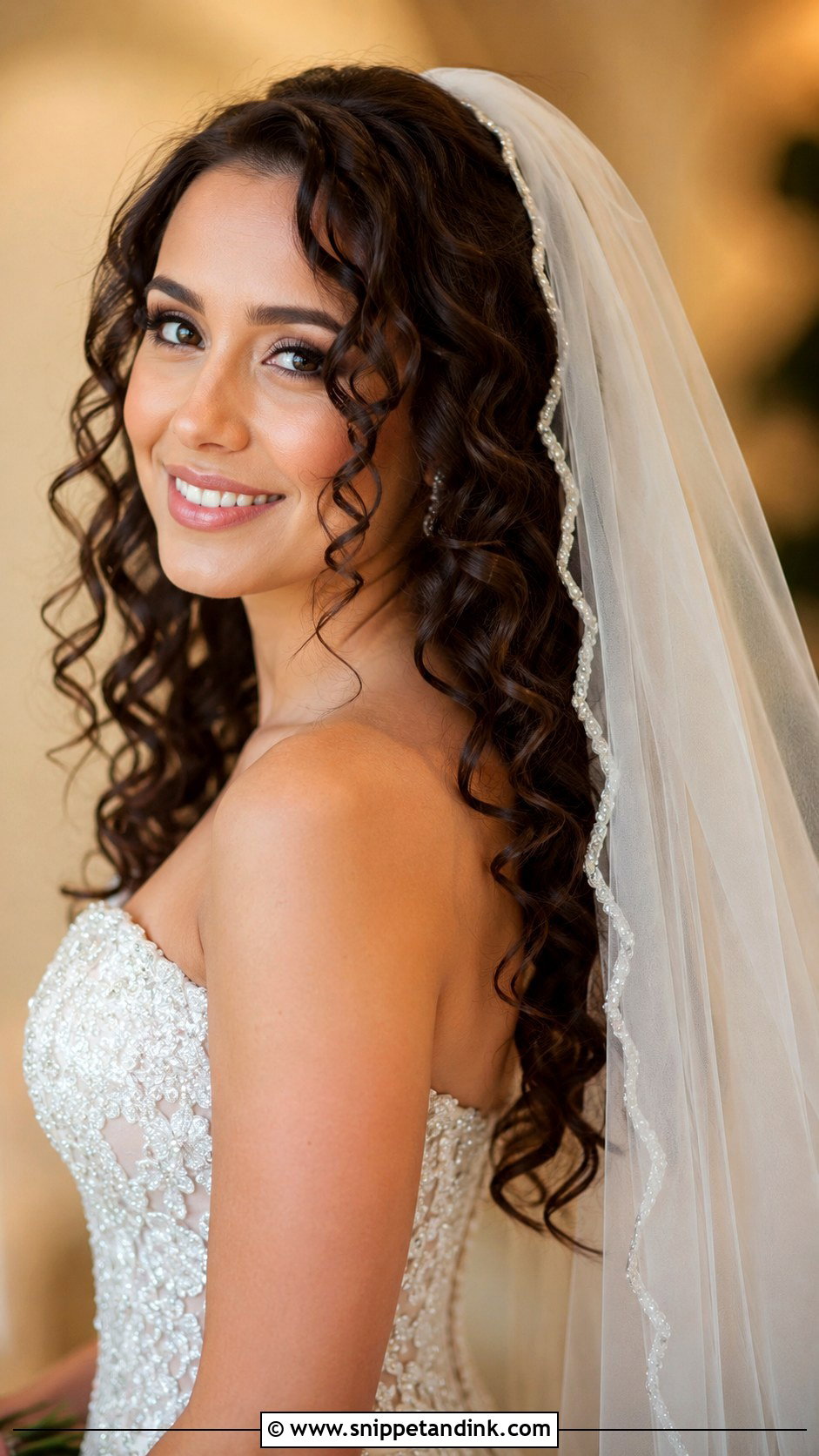
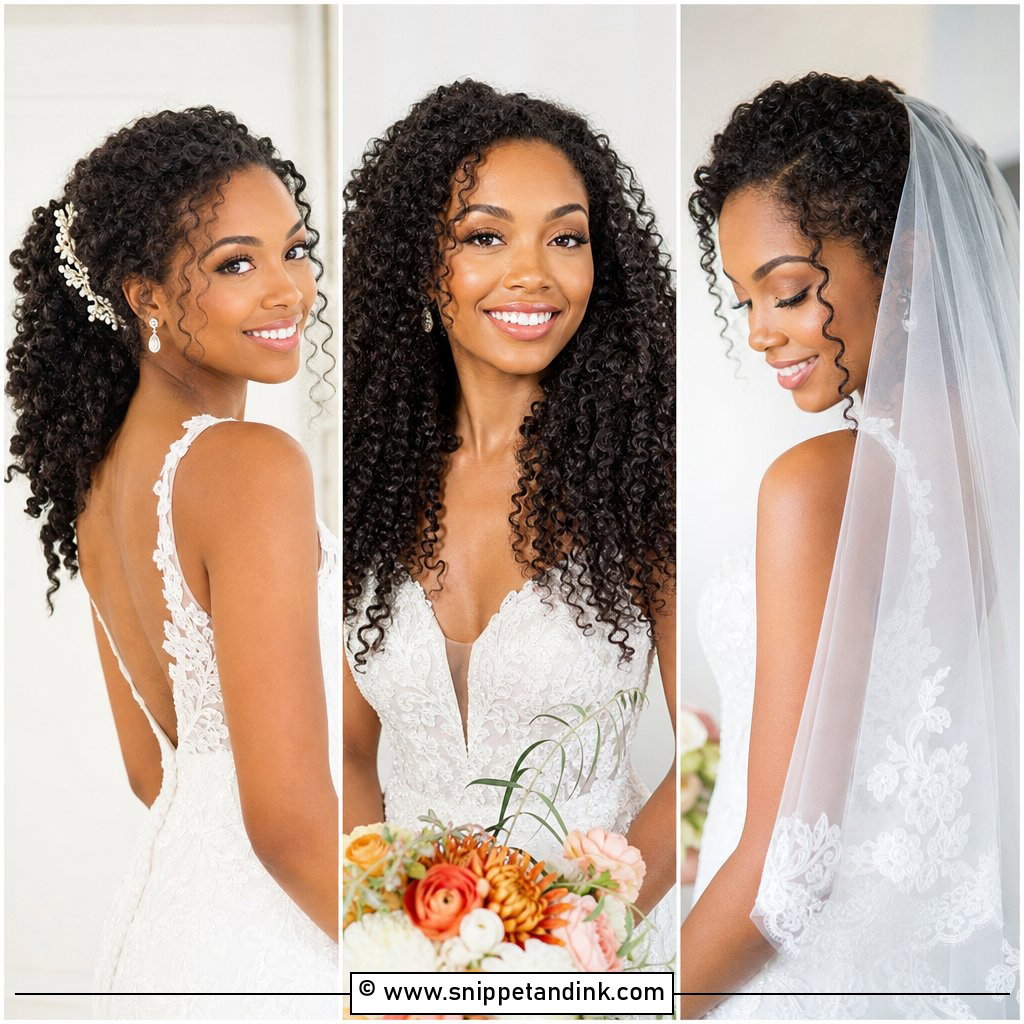
Spiral curls are tighter and more defined than waves. I use a small barrel wand, then separate each curl gently with my fingers. Naturally curly brides can often skip the iron and simply define their own curl with a cream and a diffuser. The veil sits at the crown. Spirals hold their shape longer than loose waves, which is useful for long days, but they can tangle in tulle, so I keep the veil’s back edge free of the curls when she sits.
18. Cathedral Veil Placed Below the Crown
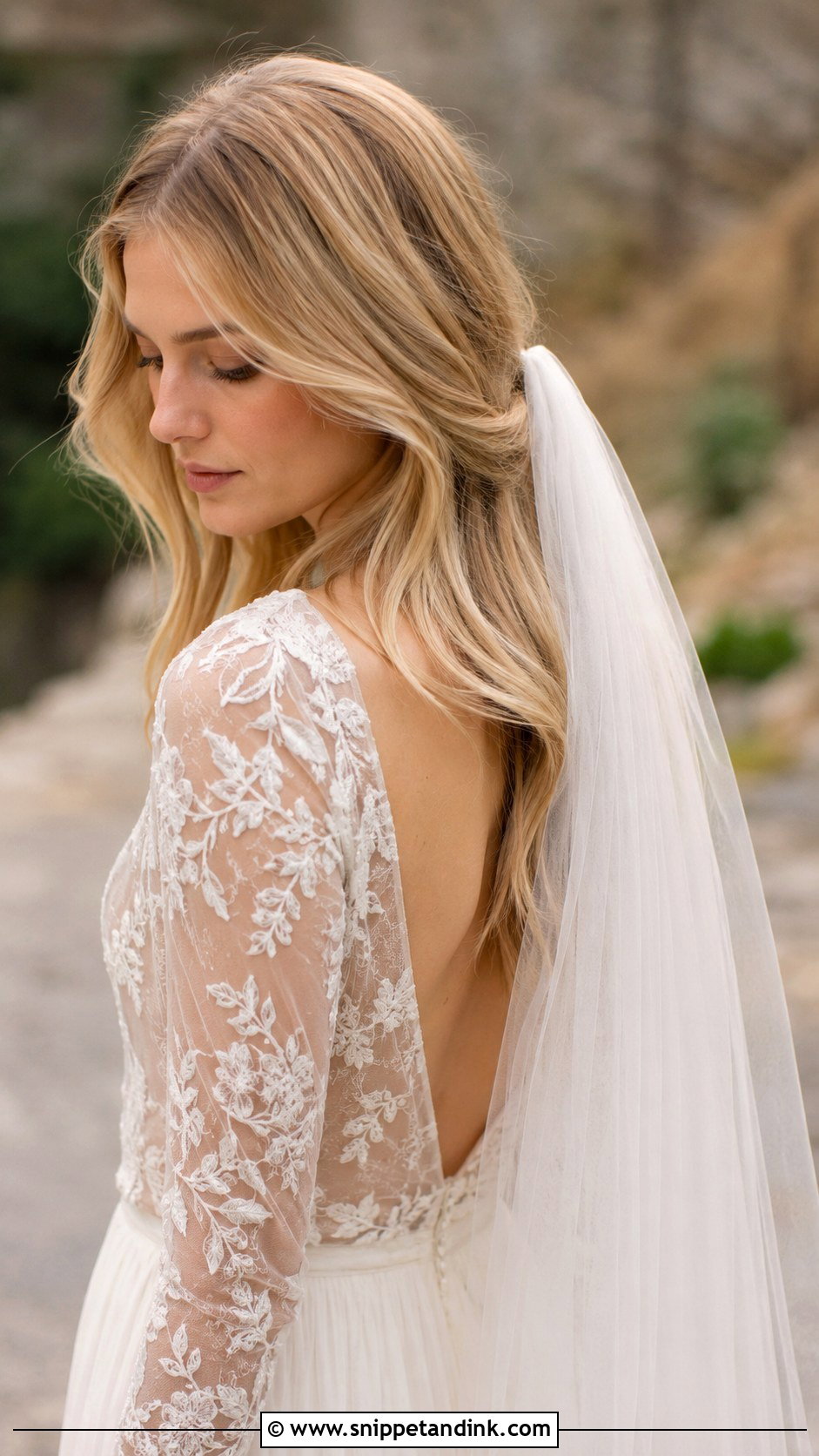
Moving the comb lower, closer to the nape, lets more hair show on top and makes the veil look like it’s flowing out of the waves. I anchor it with a small hidden braid or pinned section at the back of the head. Relaxed, outdoor ceremonies suit it. Lower placement also puts less leverage on the scalp than a crown placement, so it’s more comfortable for brides who get headaches from veils.
19. Lace-Edged Cathedral Veil with Soft Waves
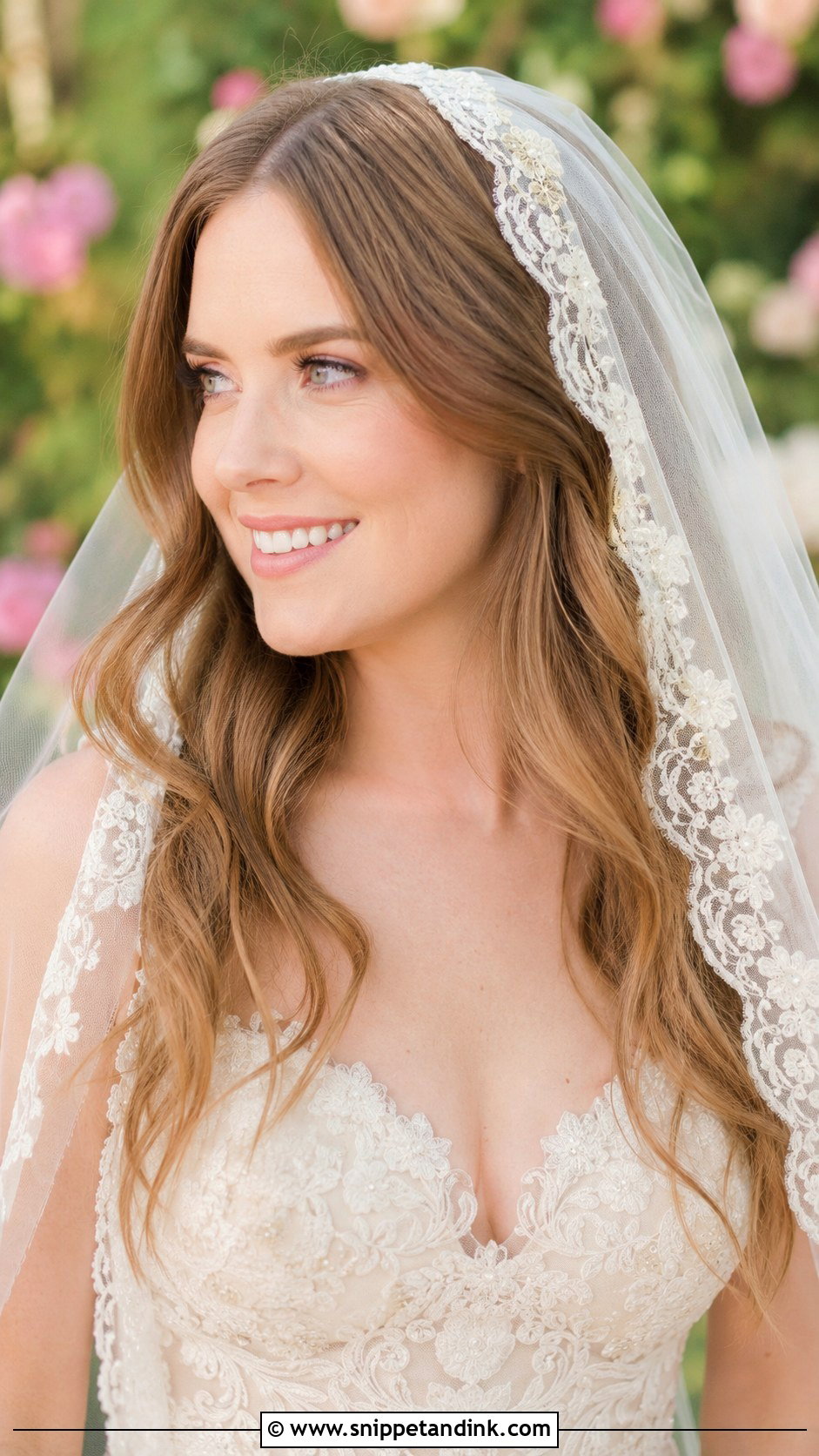
Lace borders are heavier than you’d think, and that changes how I build the hair. The edge drags the veil backward, so the anchor has to be a braid or a pinned section rather than plain loose hair. On top, I keep waves brushed out and soft so the lace is the detail people notice, especially where it echoes lace on the gown. Vintage and garden weddings suit it. A few loose pieces at the face keep it from looking too formal.
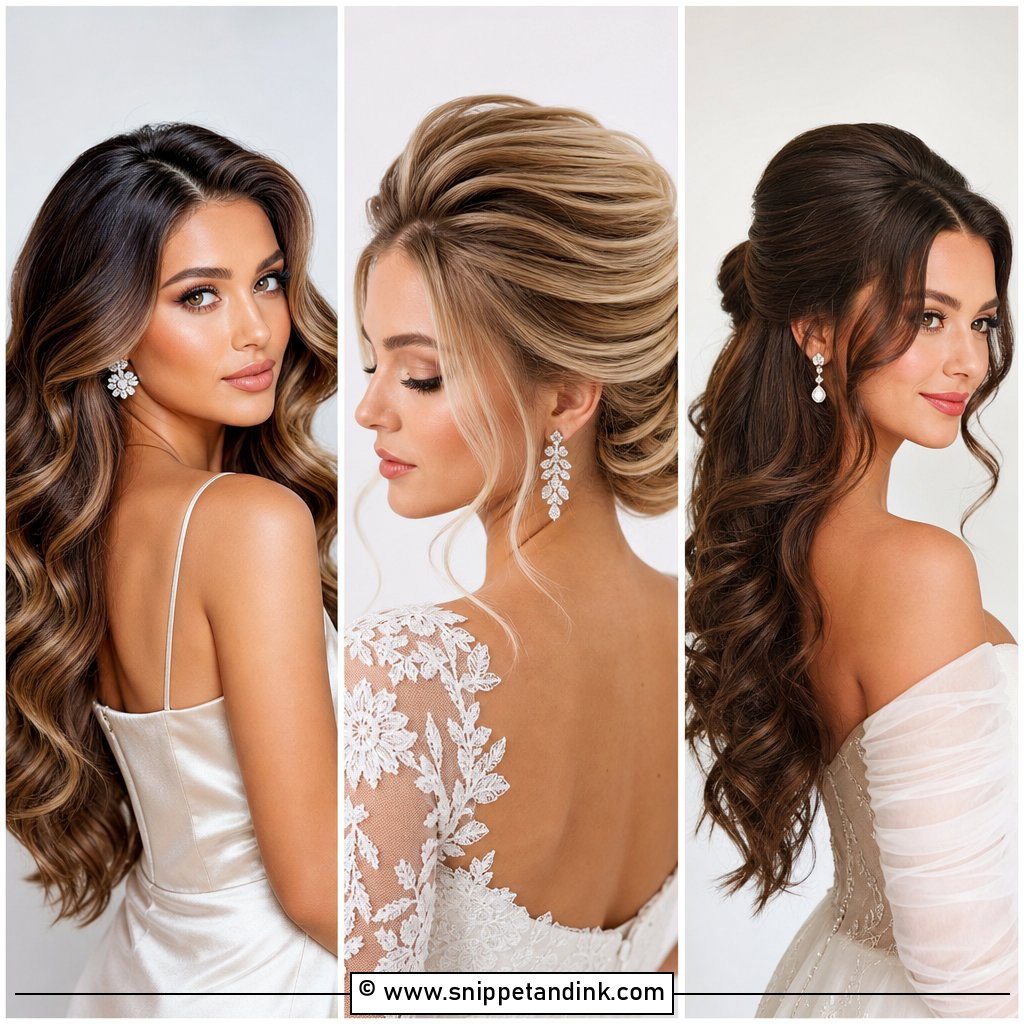
20. Curtain Bangs with Hair Down and Cathedral Veil
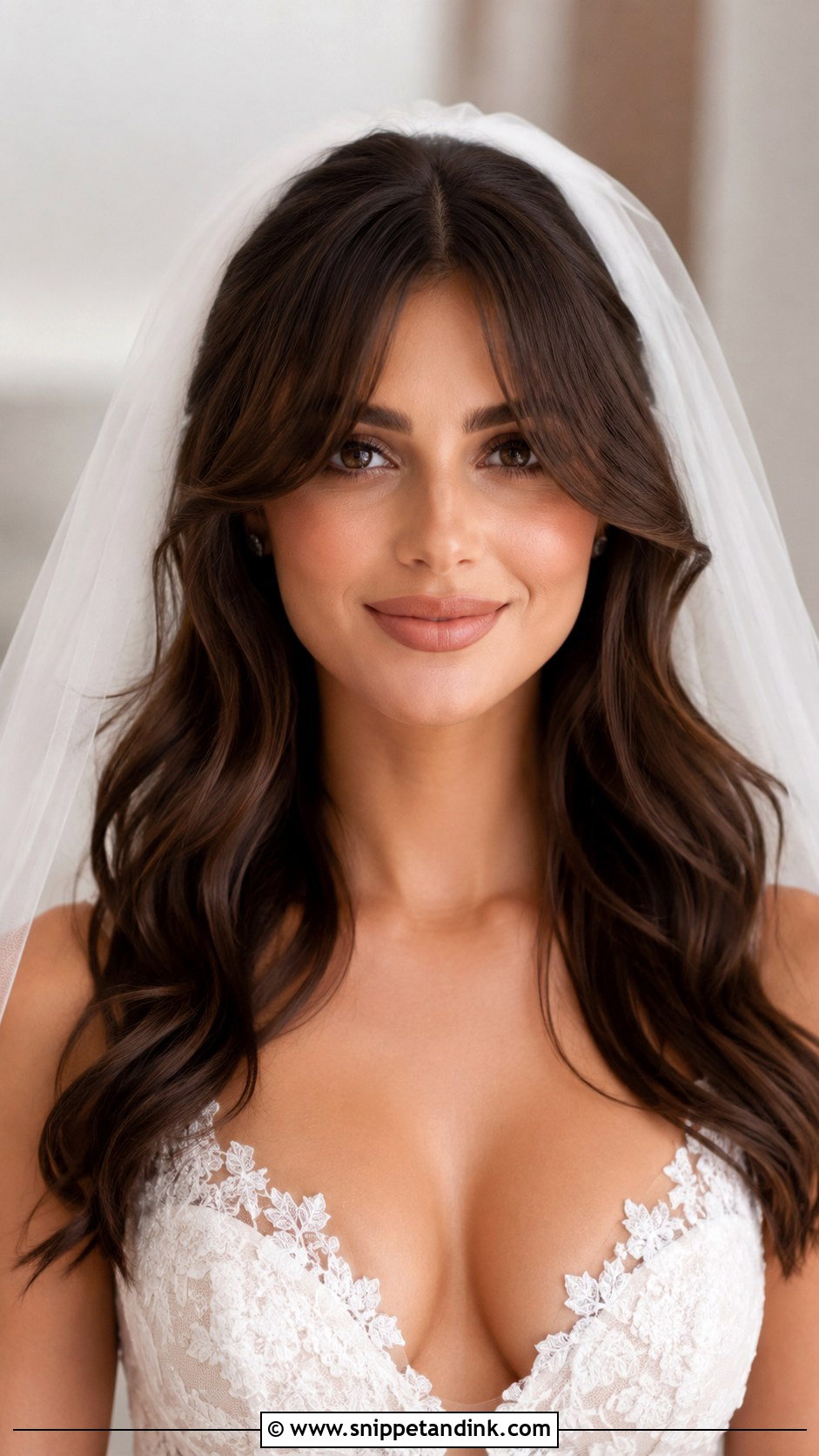
Curtain bangs sweep away from the center and frame the face without hiding it. I blow-dry them with a small round brush, rolling each side away from the face, then style the rest in loose waves with the veil at the crown behind them. They suit most face shapes. If you’re growing out bangs, have them trimmed about two weeks before the wedding so they’ve settled into a natural shape.
21. Pinned-Back Front with Cathedral Veil
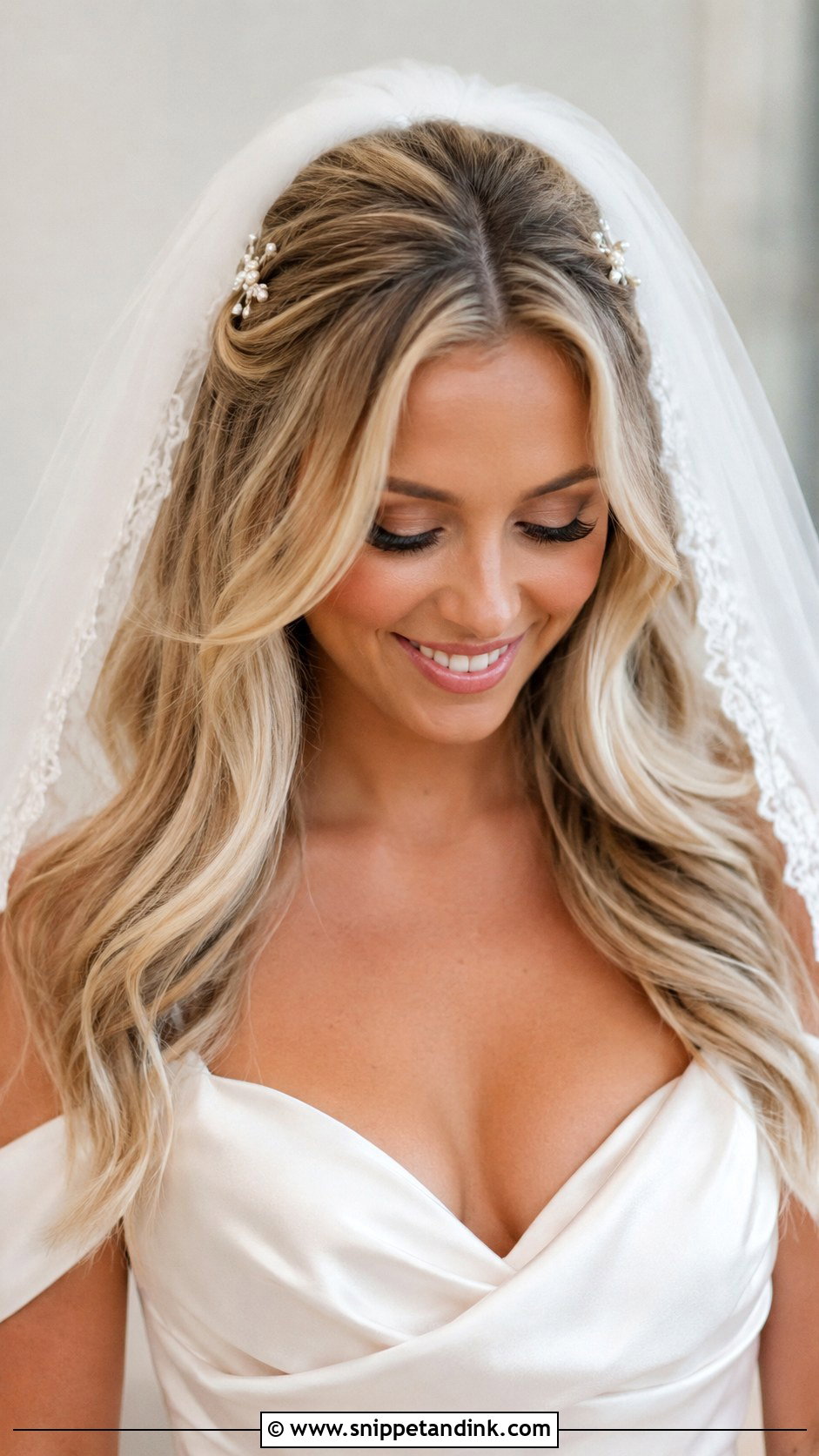
The quietest option here: just the front pieces pinned back so they stay out of your eyes, with nearly all your length left loose. That pinned spot also becomes the veil anchor, which saves building a separate one. Decorative pins can add a little sparkle where the sections meet. Thick hair hides the pins well. On very fine hair I’d use a mini ponytail anchor underneath instead, since a couple of pins alone won’t carry a long veil.
22. Vintage Finger Waves with Cathedral Veil
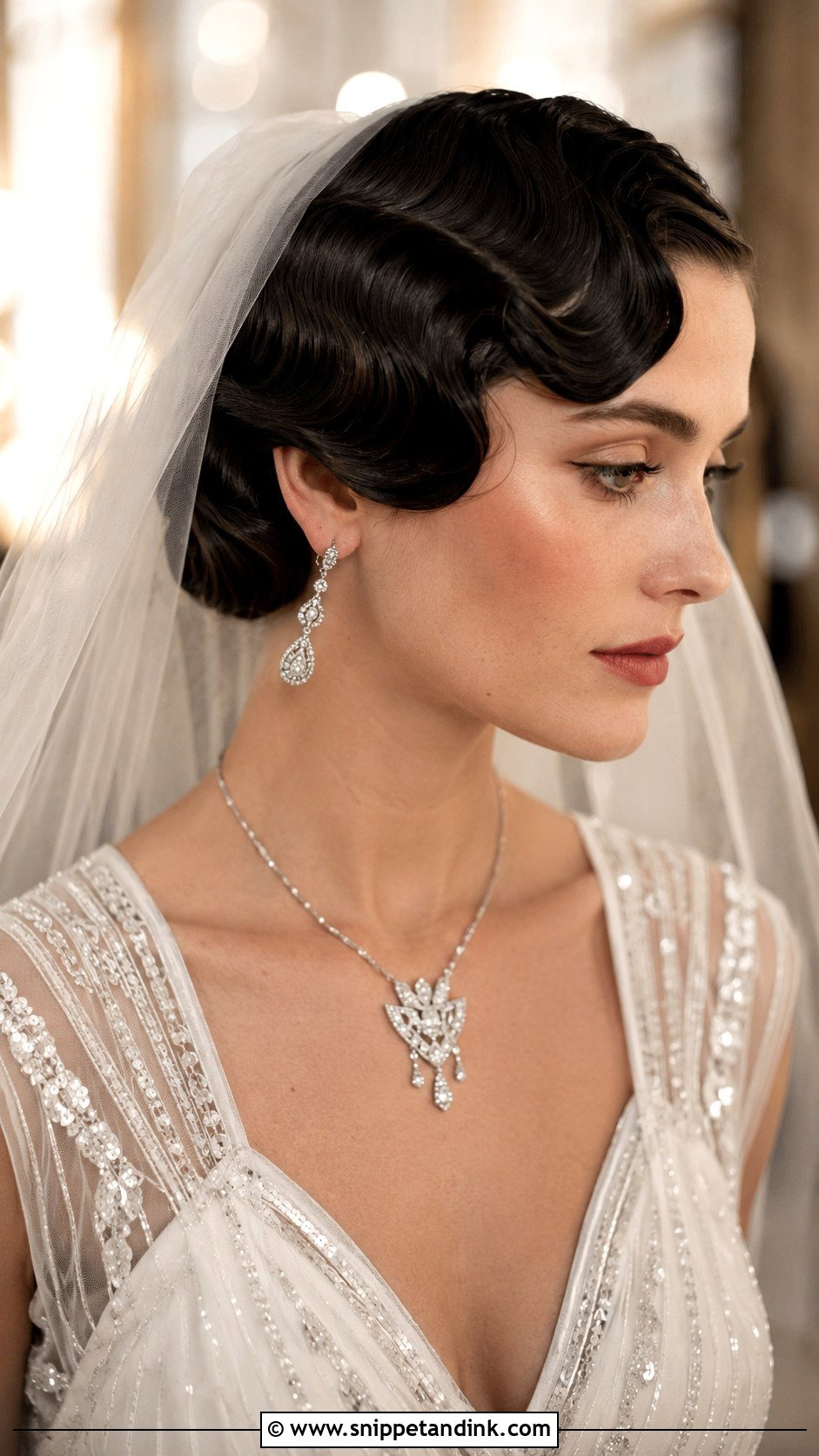
Sculpted vintage finger waves are tight S-shapes set close to the head with gel and a fine comb, then left to dry untouched. With the rest of the length worn down in a soft bend, they give a retro look that still feels bridal. The veil comb goes in behind the waves at the crown, never through them, or the ridges break. Art deco venues and sleek bias-cut gowns suit it. This is a technique to see at a trial first; plenty of stylists rarely do it, and it sits best on shorter or bobbed hair.
23. Bohemian Waves with Braid Detail and Cathedral Veil
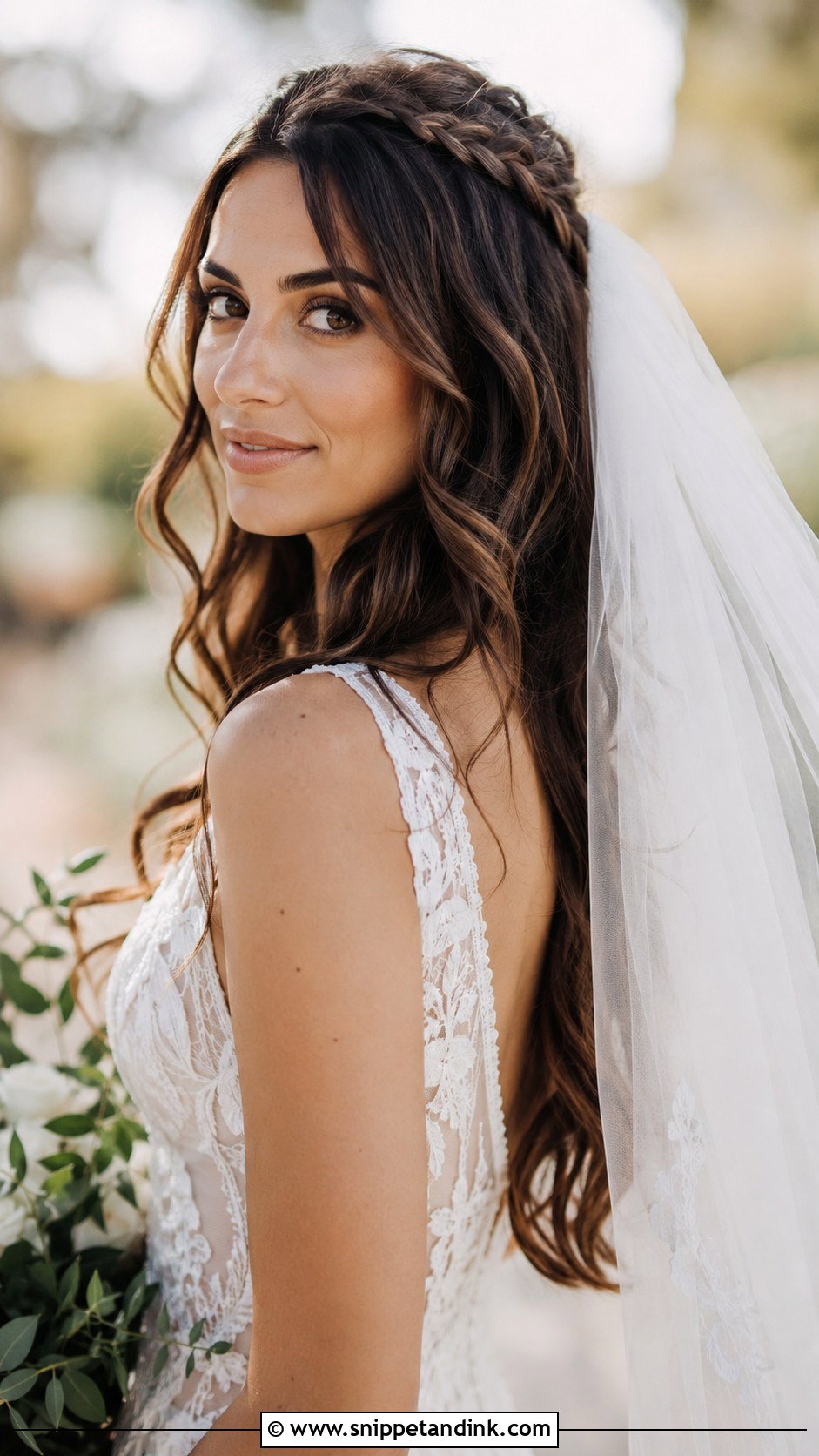
Thin braids threaded through loose waves add a hand-made detail, and they’re much easier to wear than a full braided style. I weave one or two near the face or at the crown, keep the waves airy, and use texture spray so everything has grip. Placed near the crown, the braids also give the comb something to hold. Festival-style and outdoor weddings suit this, and it’s forgiving in wind.
24. Straight Hair with Veil at the Crown
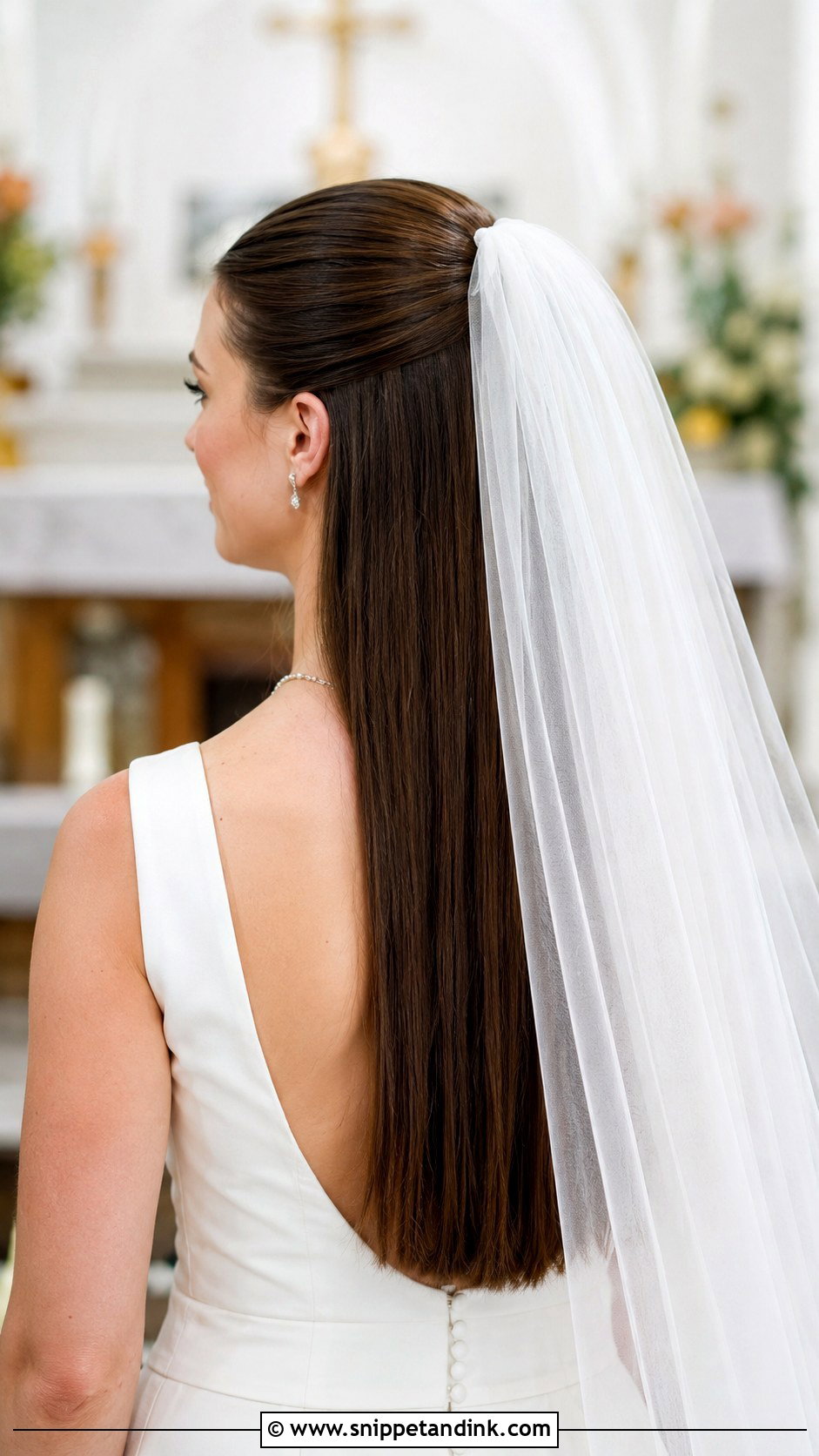
Setting the comb high at the crown over straight hair makes the tallest, most formal silhouette here, with the veil falling from the very top of the head. I straighten until glossy and finish with shine serum on the ends. Church ceremonies suit it. Because a high comb on slippery hair will slide back during the processional, I always build a small backcombed pad with crossed pins under the top layer first.
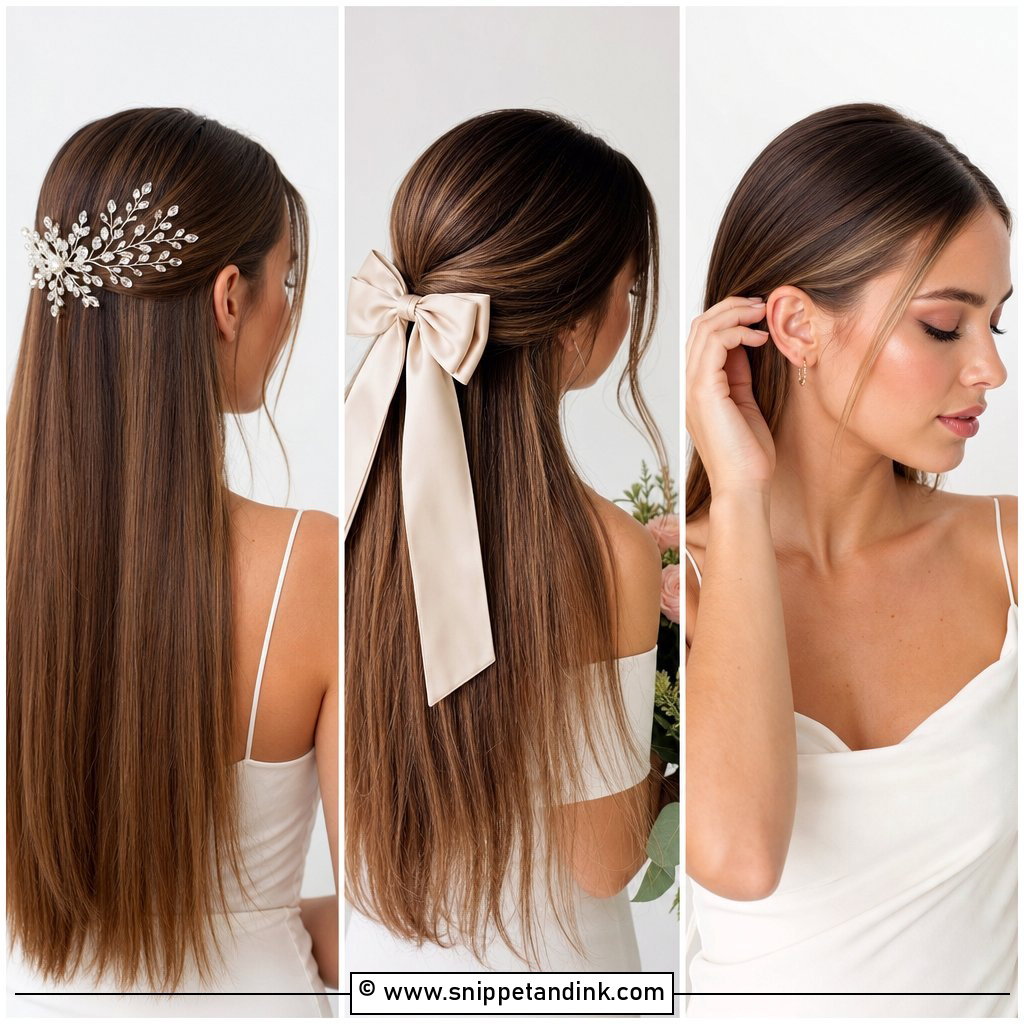
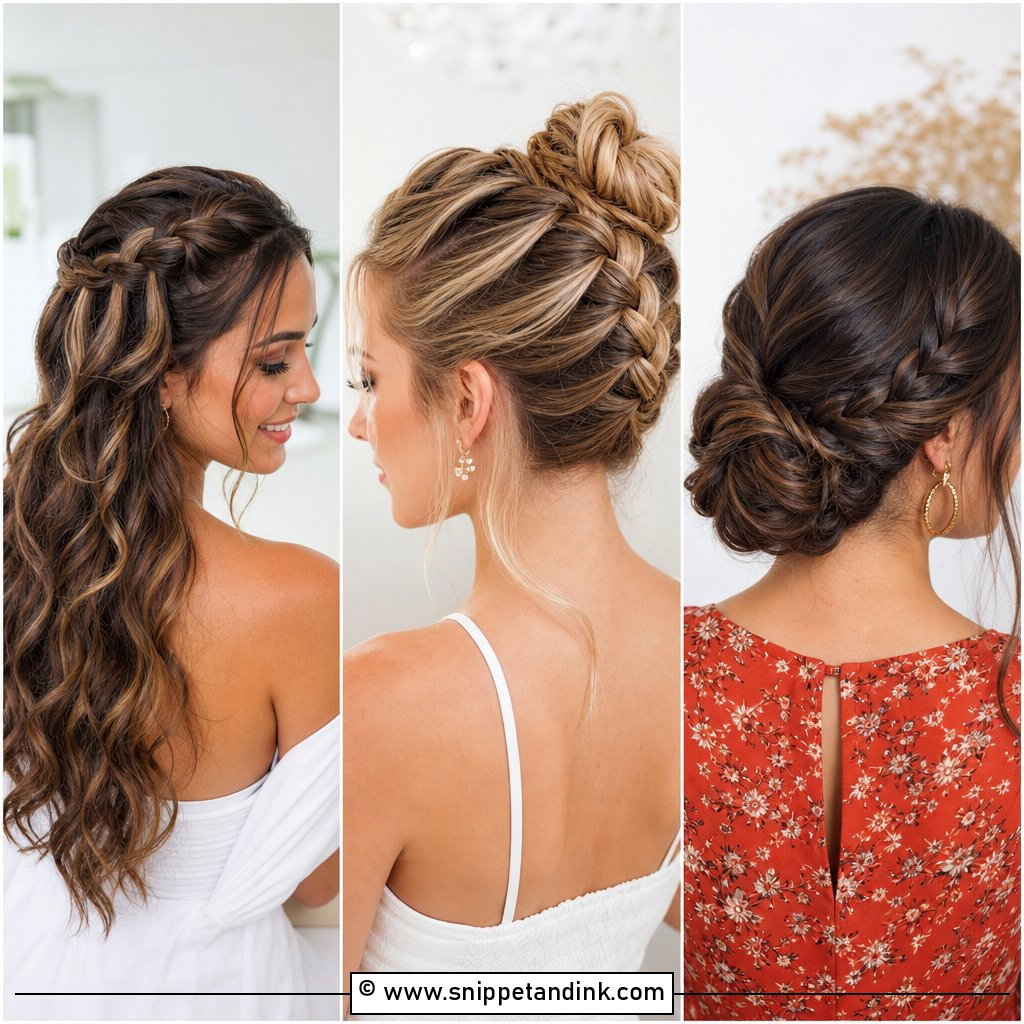
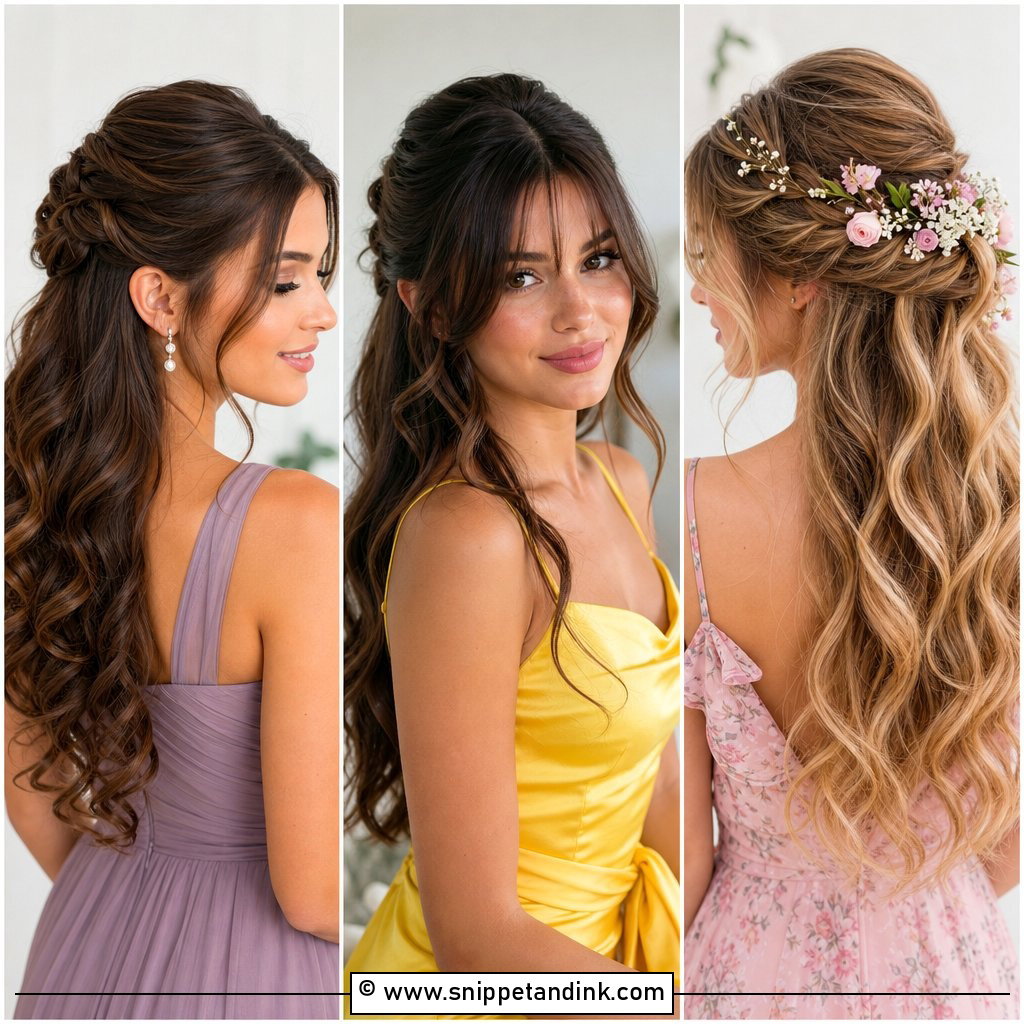
25. Wavy Hair with Floral Cathedral Veil
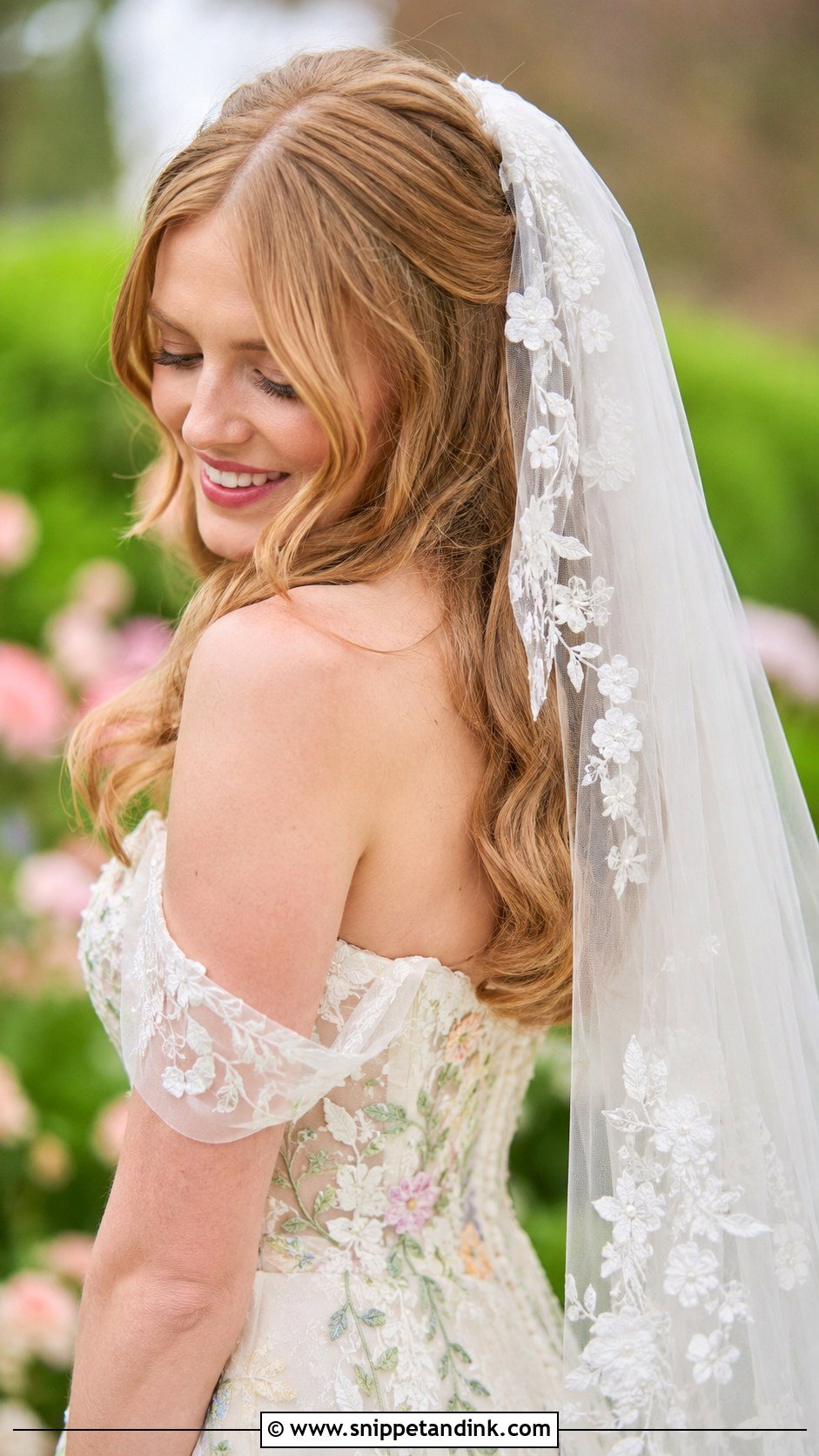
Floral appliqués or embroidery bring color and texture to a long veil, and they add weight too. Gentle, brushed-out waves keep the hair from competing with floral or embroidered details, which can echo the bouquet or the gown. The veil sits at the crown on a braided or pinned anchor. Spring and garden weddings suit it. Check the appliqués near the comb edge; raised ones can catch in the hair when the veil is removed.
Why Waves Drop by the First Dance, and How I Stop It
Loose curls fall for three reasons: they weren’t set properly, the air is humid, or the veil sits on them for hours. Heat shapes the hair, but it’s the cooling that locks the shape in. So I pin every curl up and let it cool completely before brushing anything out, which is the single biggest difference between waves that last and waves that drop by dinner.
- Prep with a light mousse or heat protectant that adds hold, applied to damp hair before drying.
- In humidity, curl slightly tighter than you want; the bend will relax into the shape you asked for.
- Avoid heavy oils on the lengths in the morning. They weigh curls down quickly.
- If the veil comes off after the ceremony, the hair underneath gets a second wind. Ask someone to fluff the roots gently with their fingers.
Static and Snagging Between Tulle and Loose Hair
Tulle and loose hair rub against each other all day, which causes static and small tangles at the back. A light mist of hairspray on the underside of the veil, or a quick pass with an anti-static sheet over the tulle, calms it. Remove earrings with hooks or tiny claws before the veil goes over the hair, or check that they sit well clear of the veil’s edge, because fine tulle catches on them easily. Before you sit down, gather the veil and lift it off the back of your hair so it doesn’t tangle into the curls.
Loose Hair That Still Looks Like Itself at Midnight
Loose hair and a cathedral veil work together as long as the comb has something to grip. A hidden braid, mini ponytail or gentle backcombing gives it that grip, while the rest of your hair stays free. Soft waves, straight hair and boho curls can all carry a long veil. Think about your gown, venue and the weather, and book a trial with the actual veil so your stylist can test the placement and hold. Hair that’s set properly and anchored well will still look like itself at the end of the night.
You'll Like These Ideas:


Leave a Reply