
Half-up braids are what I suggest most often to brides who can’t decide between an updo and wearing their hair down. You’ll see them on bridesmaid boards as much as bridal ones, and for good reason. The braid locks the top section away from your face for vows and photos, while the length stays loose and moving. What changes from one version to the next is how the braid is built, and that matters more than the photo suggests, because each technique grips hair differently.
Thin Hair, Thick Hair and the Braid Each One Can Carry
Braid photos online are often styled on thick hair or with extensions, which is why some brides feel let down at their trial. Before you pick a favorite, match the technique to the hair you actually have.
Fine or thin hair
Look for braids that sit on top of the hair and can be widened: Dutch, pull-through and loosened fishtails. Skip the waterfall and lace braid unless you add clip-ins, because they take only small amounts of hair and can look sparse.
Thick or coarse hair
Almost everything works, but weight is the issue. A heavy half-up section can drag down by evening, so a French braid or braided bun with an anchored base holds better than a loose boho braid.
Layered or shoulder-length hair
Shorter layers escape braids along the way. Rope braids and micro braids handle layers well, since they use small sections, and a texture paste keeps the stray ends in.
1. Wedding Half Up Half Down Fishtail Braid
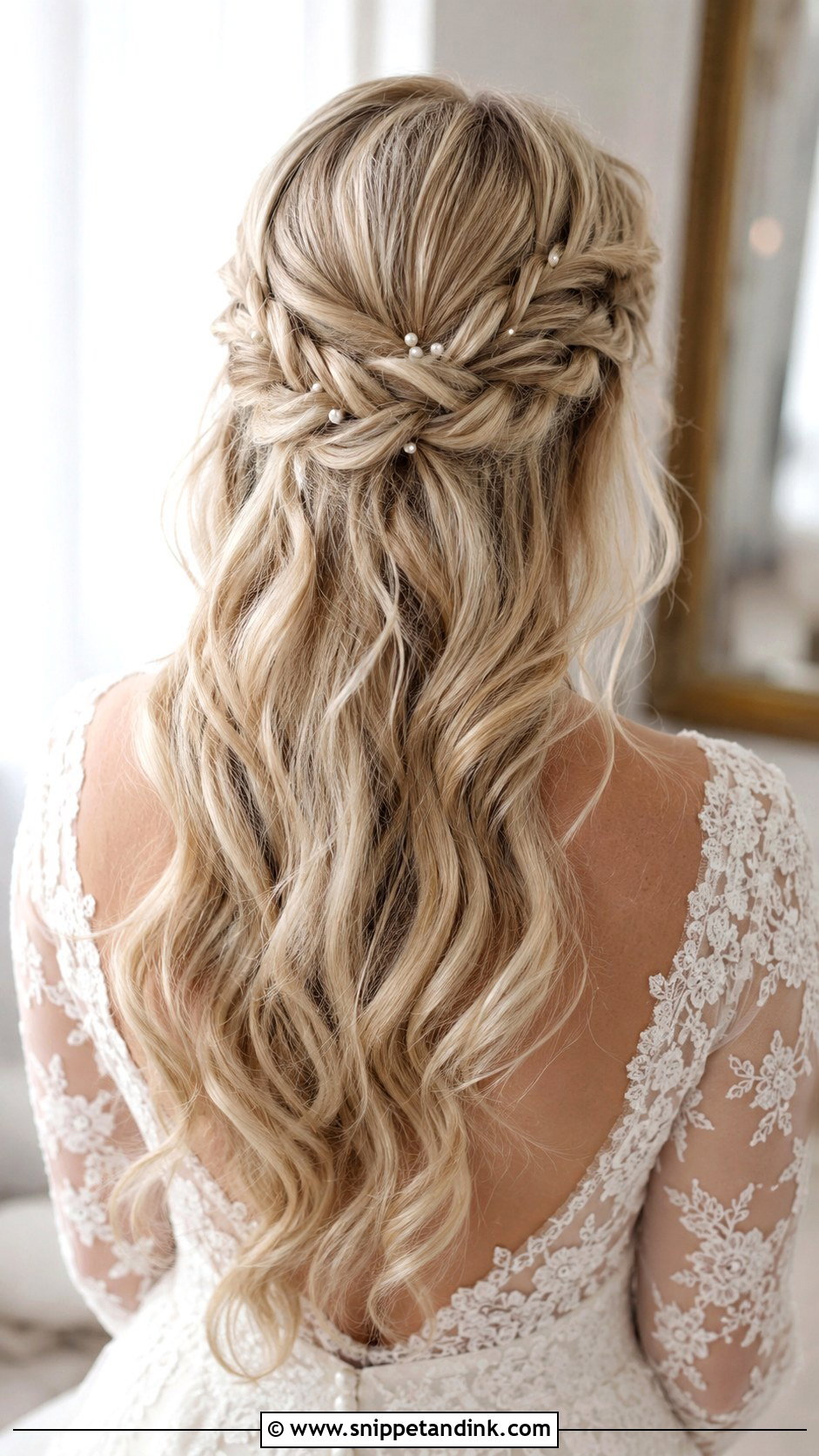
A fishtail takes longer to plait than a three-strand braid, but it holds remarkably well because each tiny crossover traps the hair beside it. I run it across the back like a band and then gently pull the edges out for width; I stop before it gets fuzzy, since an over-pancaked fishtail loses its herringbone pattern in photos. Medium to long hair is needed to show the weave. Honestly, this one needs no accessories at all, though a slim comb at one end tidies the join.
2. Wedding Half Up Half Down French Braid
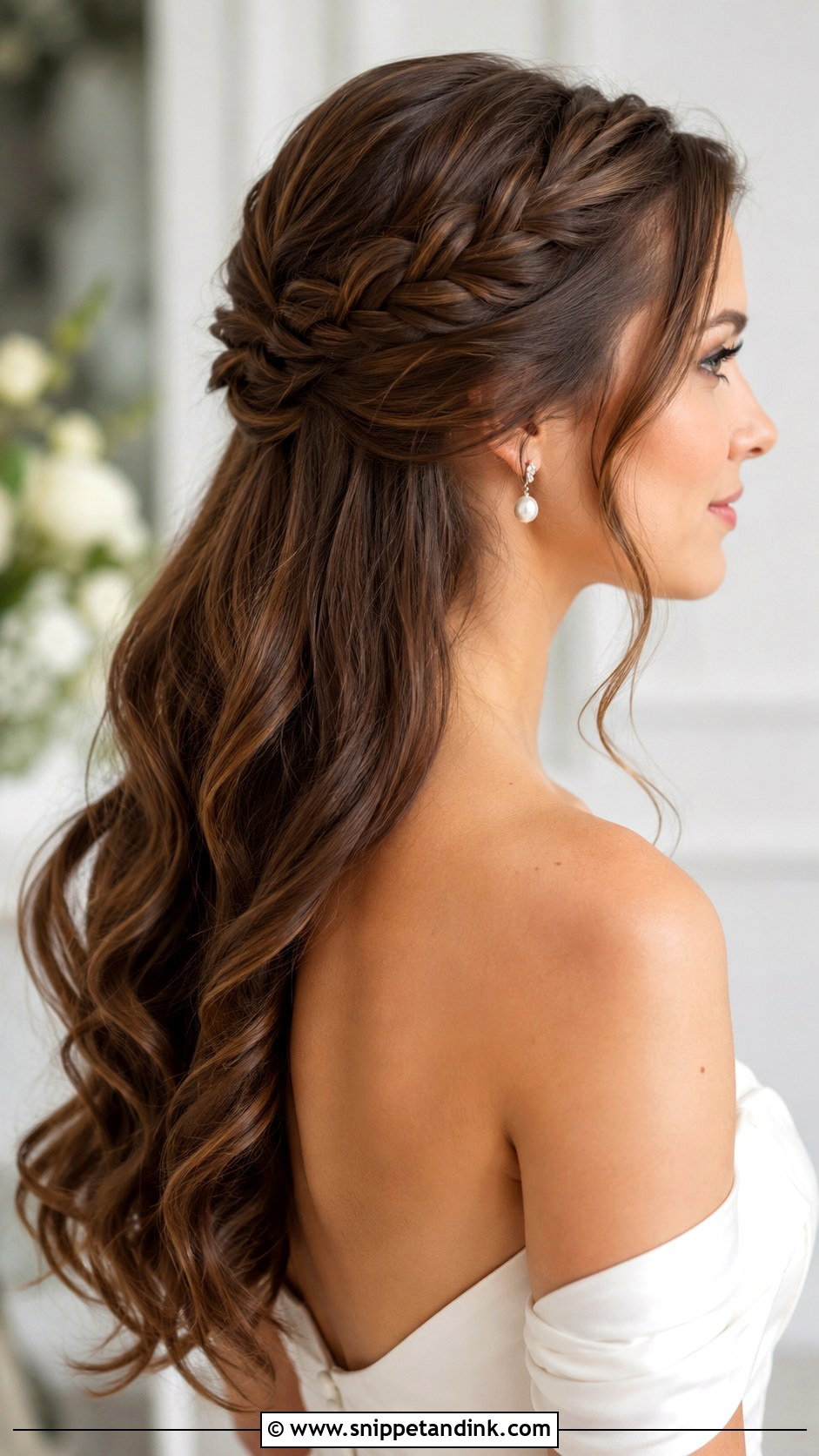
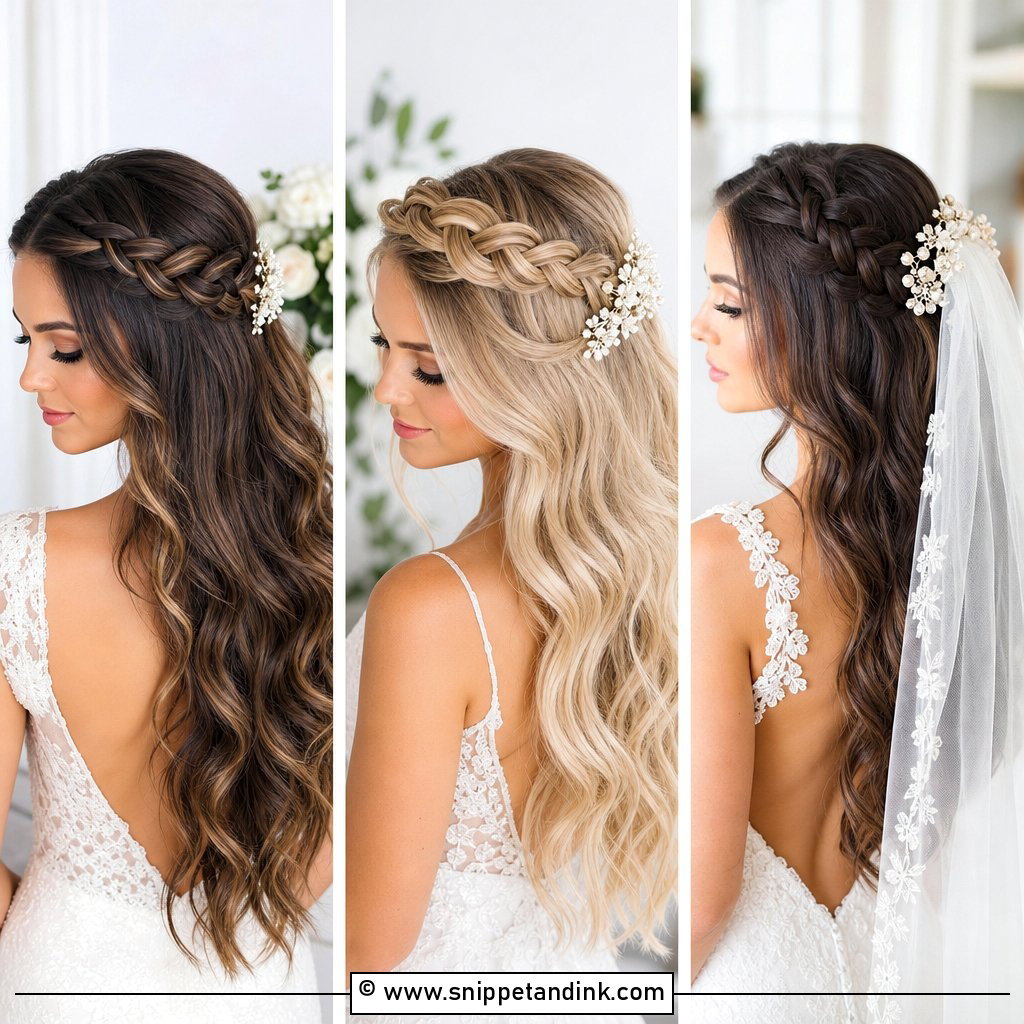
The French braid is the one I trust under a veil. Because it gathers hair inward as it travels from the crown toward the back, it creates a flat, firm ridge that a veil comb can grip without bunching. The front can be smoothed, softly lifted or left with loose pieces, depending on how much of your face you want framed. On very layered hair, shorter pieces can poke out along the braid, so I add a little texture paste before I start.
3. Wedding Half Up Half Down Dutch Braid
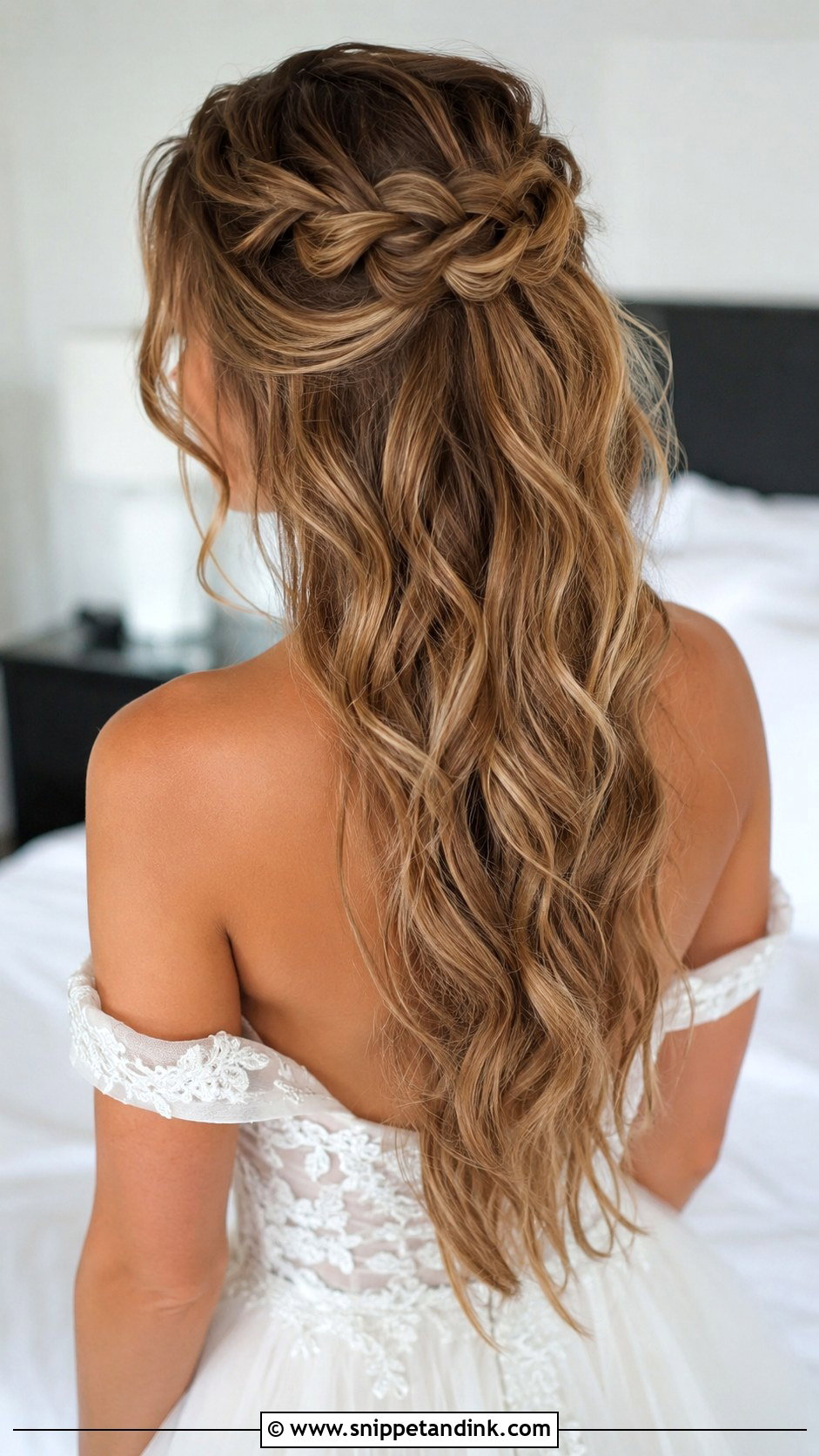
A Dutch braid sits on top of the hair instead of tucking under, so it reads raised and dimensional. That makes it my favorite braid for fine hair: once I widen the loops, it looks twice as thick as the hair it came from. The lengths below can be curled or left in soft bends. For a formal venue, keep the crown smooth and the braid tight; for a garden ceremony, loosen it a little and add a few floral pins along the outer loops.
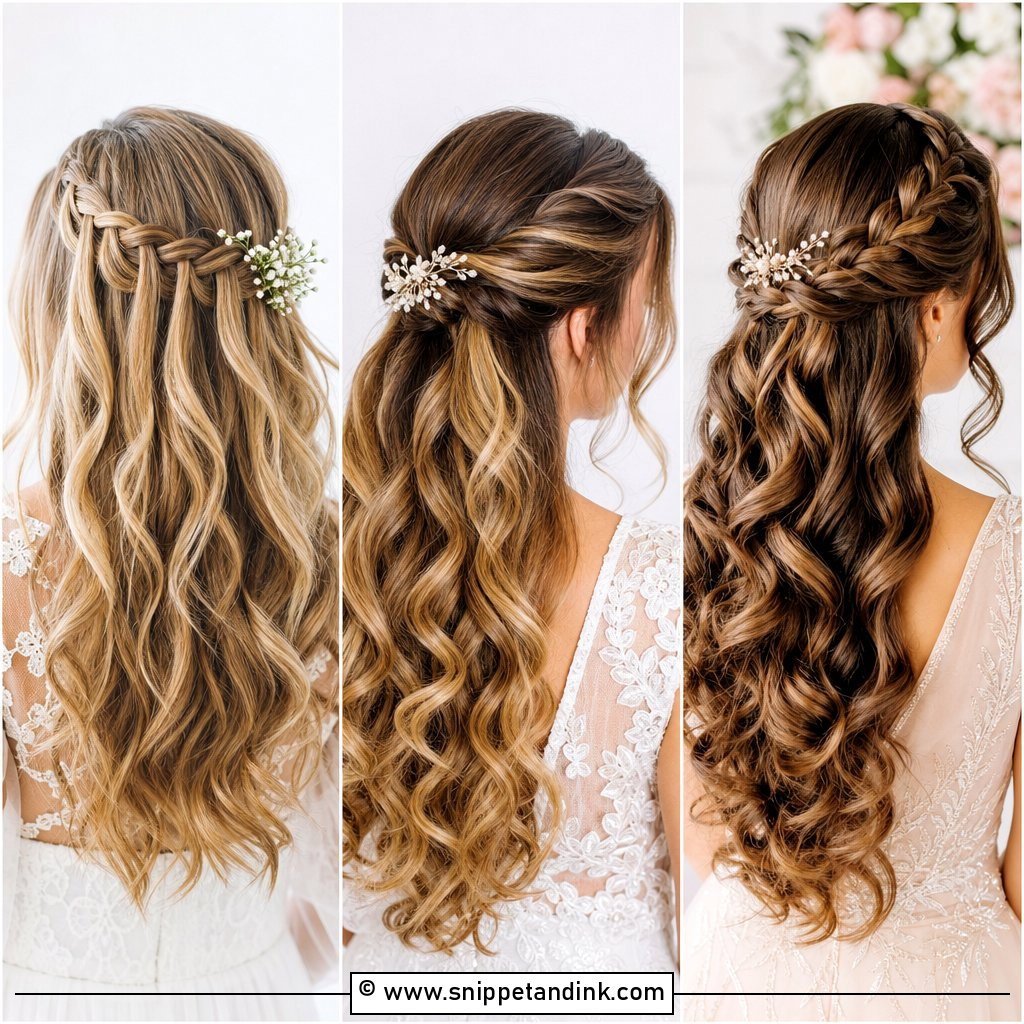
4. Wedding Half Up Half Down Waterfall Braid
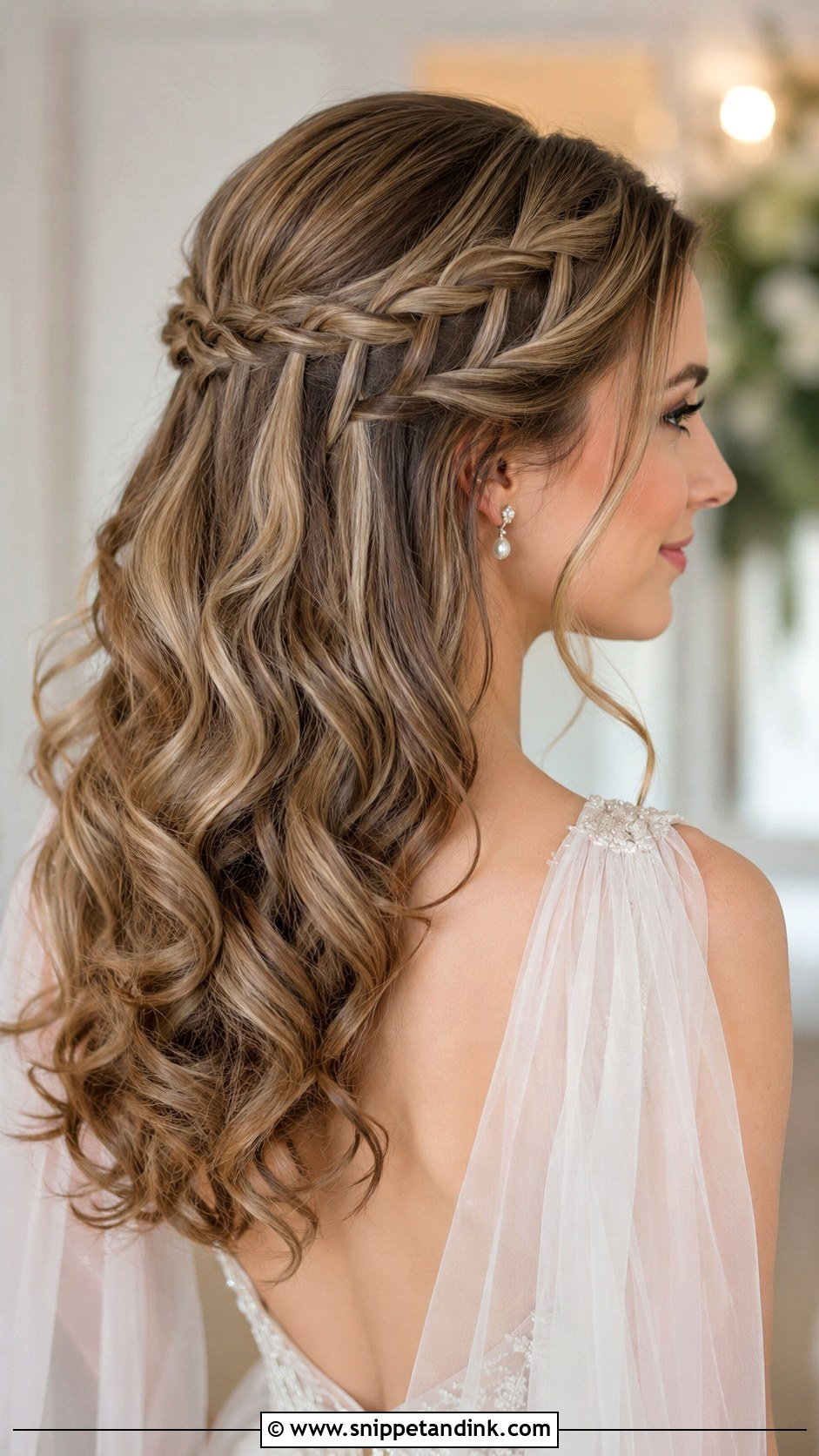
In a waterfall braid, one strand is dropped and a new one picked up at every pass, so the dropped pieces fall through like water. It’s the right braid if you want your hair mostly down with only a band of detail. Balayage and highlights show it off well, because the lighter strands stand out as they fall. The honest drawback is hold: a waterfall carries less tension than a French braid, so I pin it at both ends and avoid hanging anything heavy from it.
5. Wedding Half Up Half Down Crown Braid
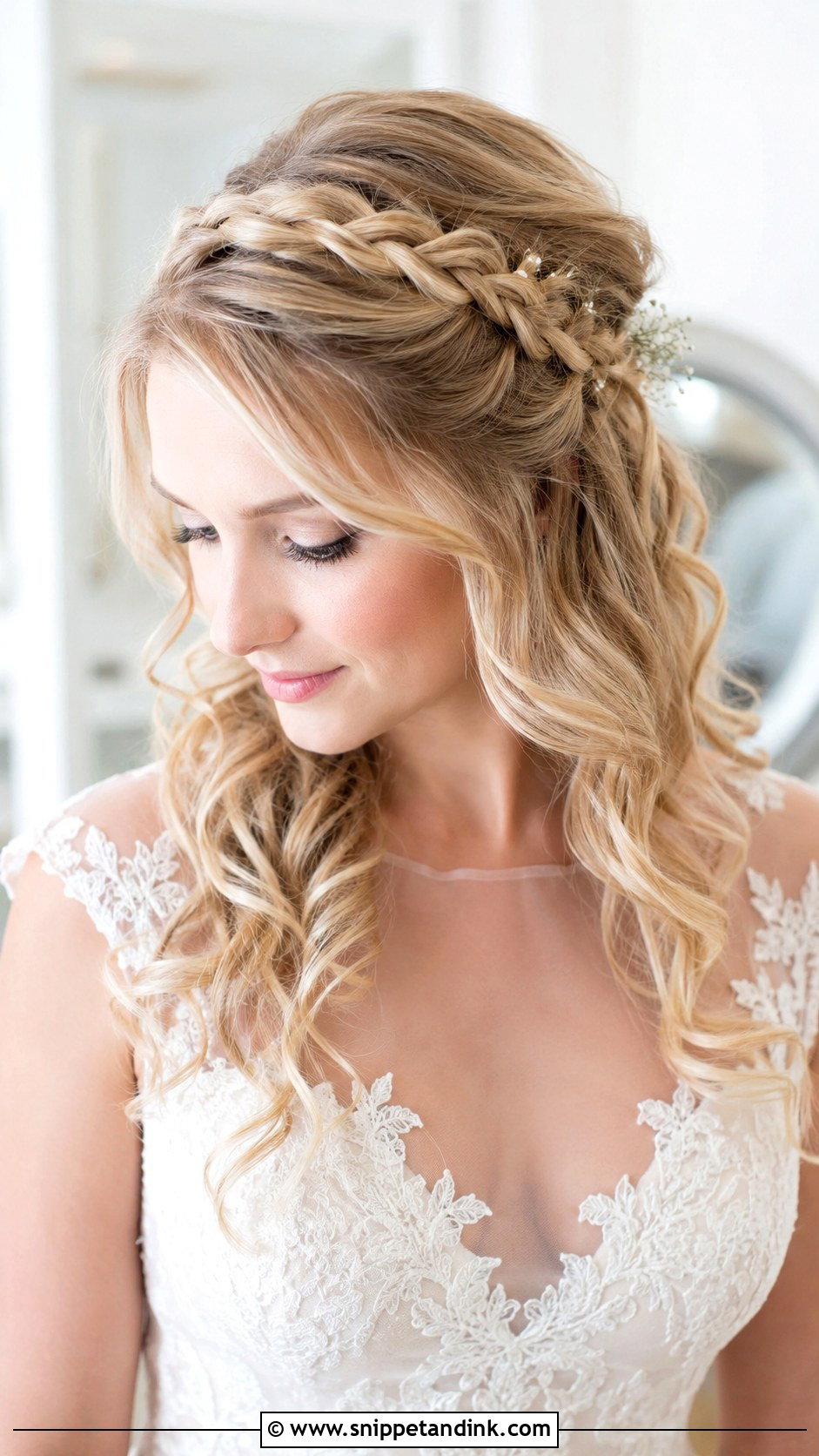
A crown braid wraps the upper section around the head like a gentle halo, and the length stays loose beneath it. I usually braid two sections and pin them over each other at the back, which spreads the weight better than one long braid wrapped all the way around. It balances a round or heart-shaped face nicely, especially with a couple of soft front pieces. Lace dresses and outdoor ceremonies suit it, and it looks finished from every side, which matters in a ceremony where guests see the back of you more than the front.
6. Wedding Half Up Half Down Boho Braid
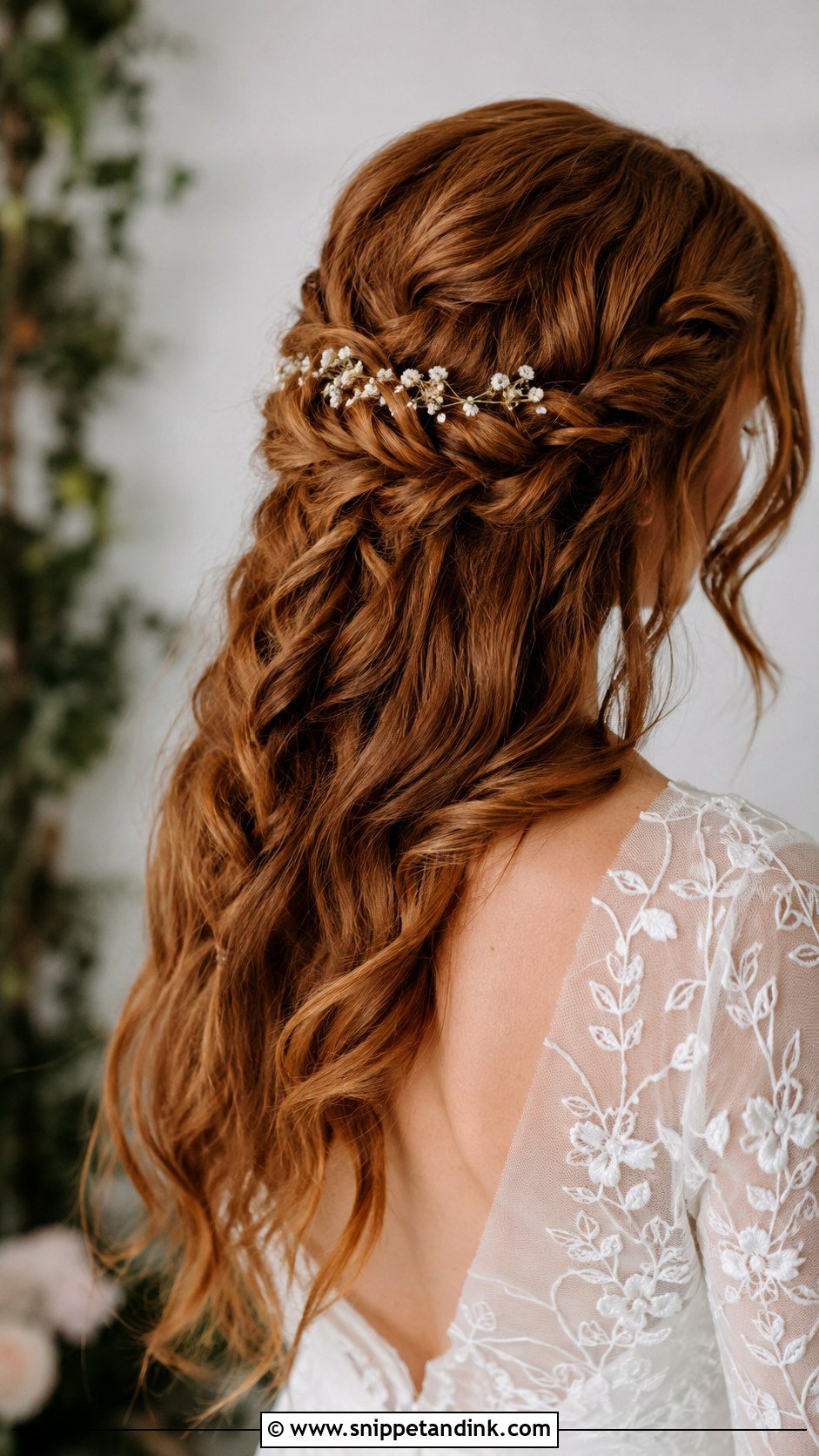
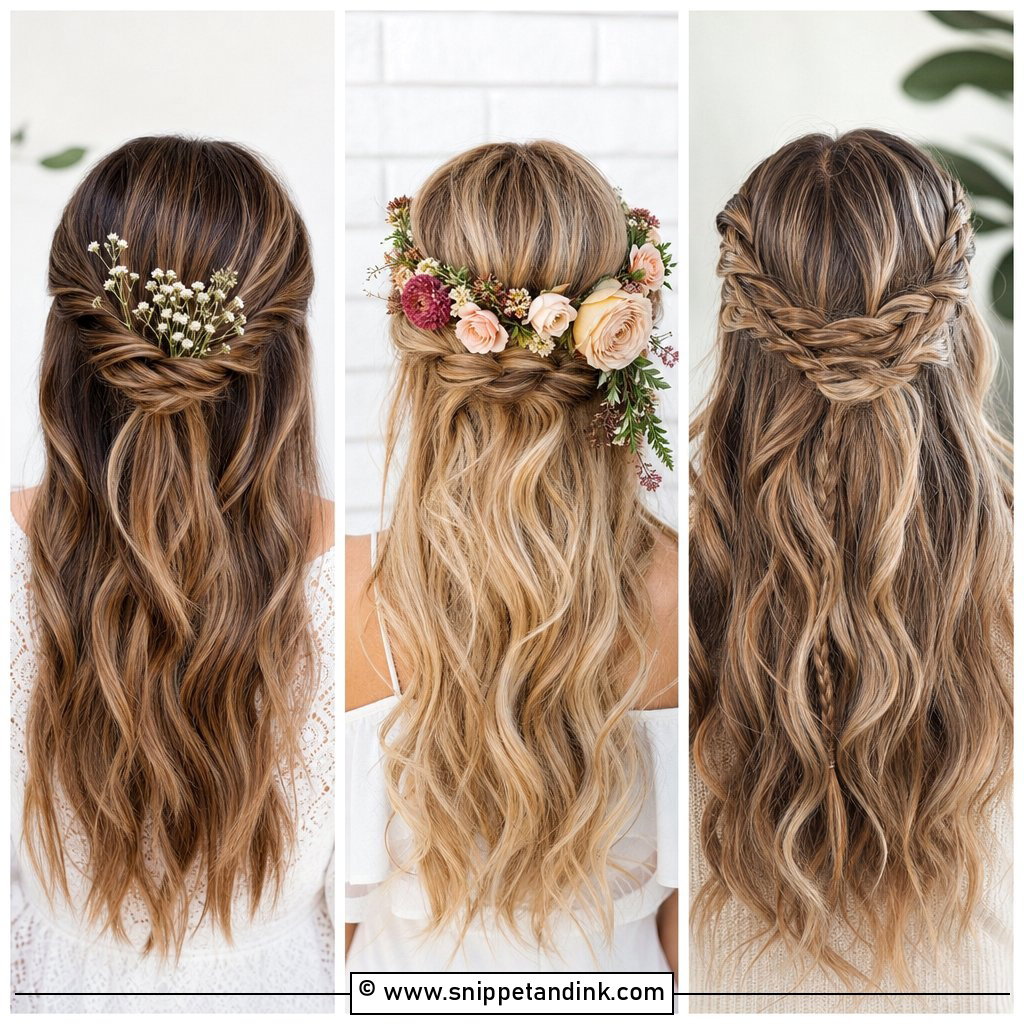
Boho braids are deliberately loose and slightly uneven, mixed with small twists. That looseness is exactly why I secure them more than any other style here. I hide crossed pins under each twist so the braid can look relaxed while the structure stays put. Pair it with airy waves or your natural texture; tight ringlets fight the mood. Dried accents and tiny flowers sit well in the gaps, which makes this a good match for beaches and rustic barns, where wind will test everything you’ve pinned.
7. Wedding Half Up Half Down Side Braid
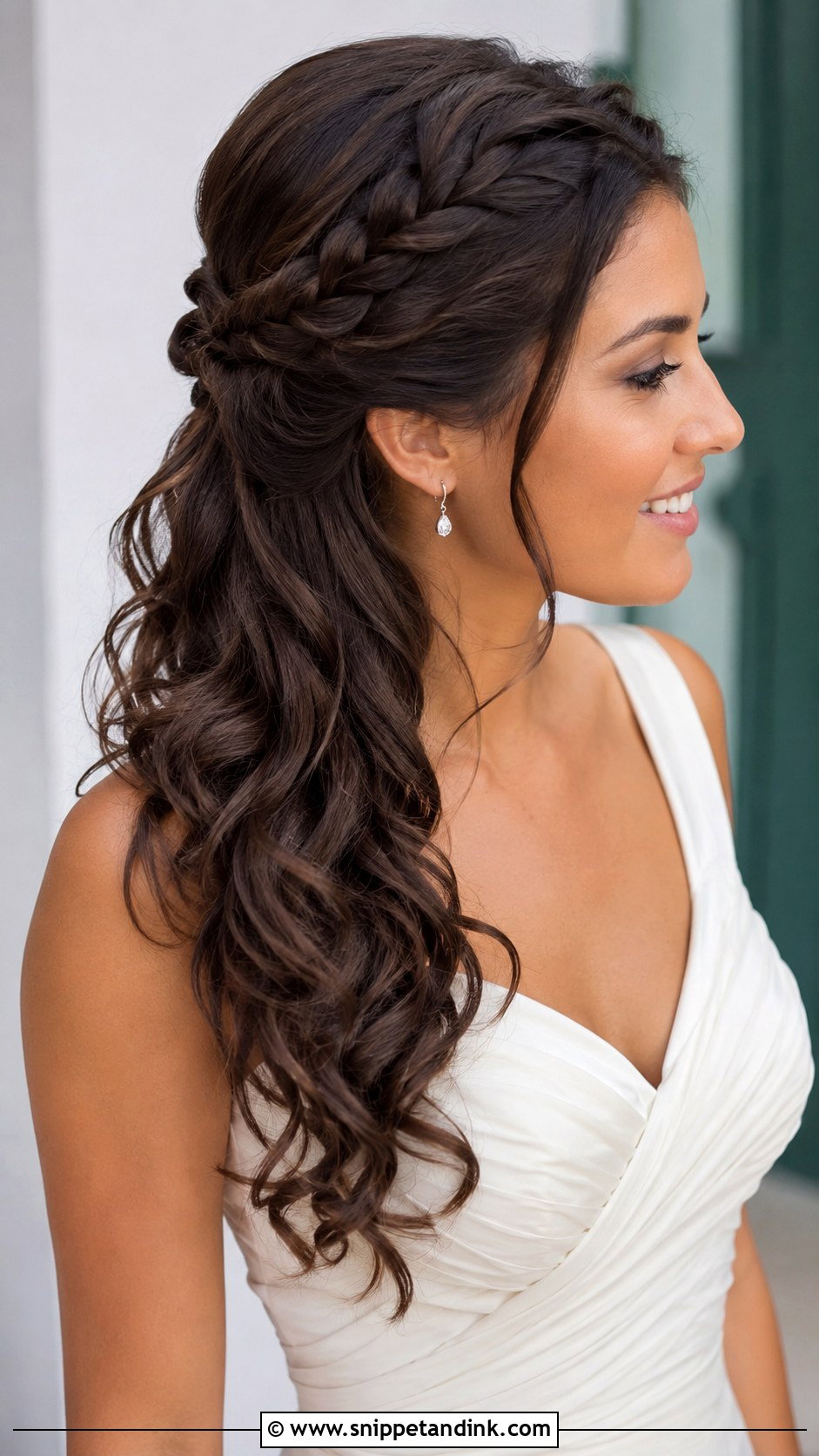
A side braid starts at the hairline, sweeps back along one side and joins the half-up section, giving you a diagonal line that flatters most face shapes. It feels natural if you already part your hair to that side. If you don’t, I set the part during your trial, because hair fights a new part for hours. Curl the loose lengths away from your face, and finish the spot where the braid meets the back section with a small comb or a few pins.
8. Wedding Half Up Half Down Braided Ponytail
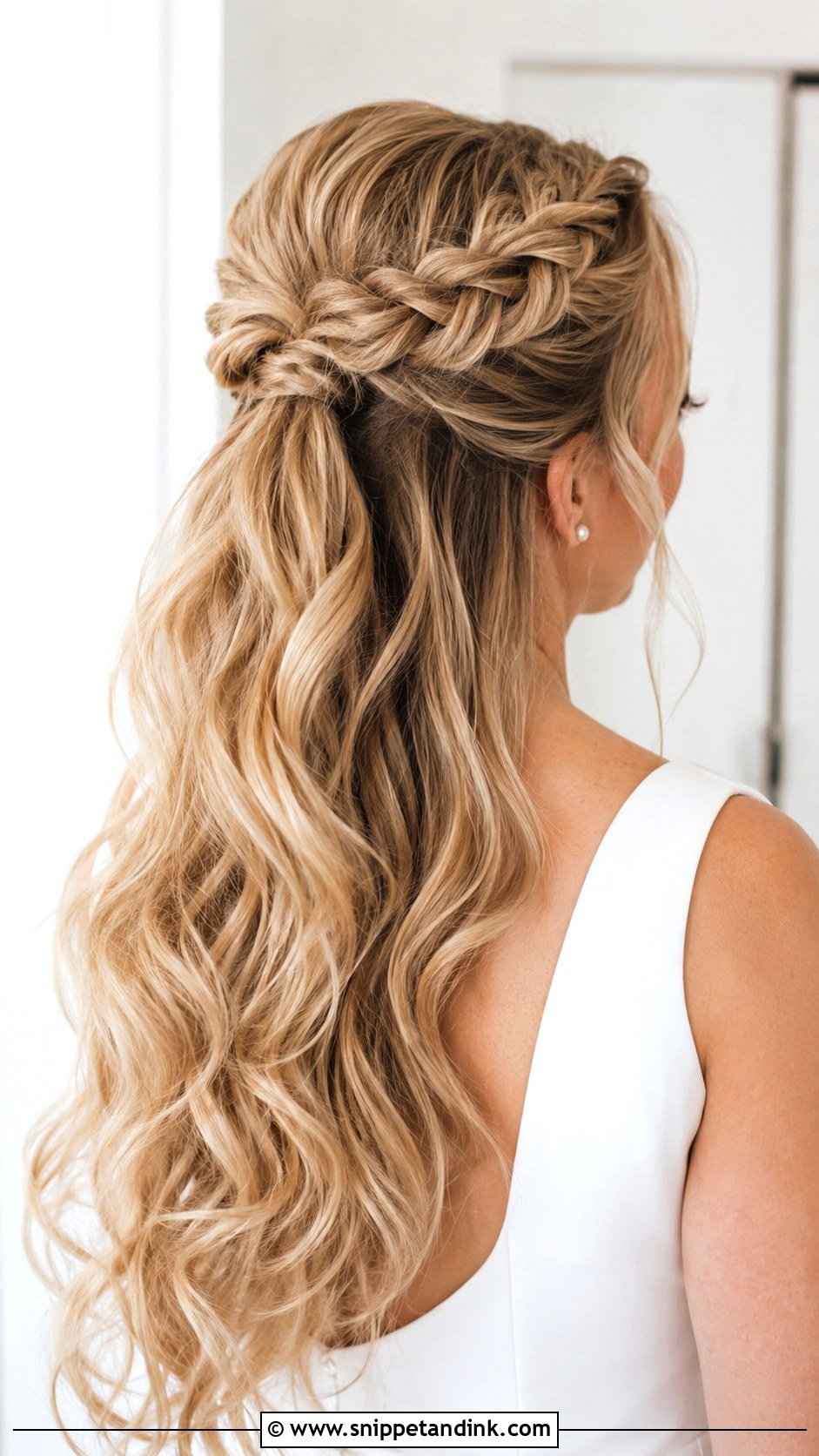
A braided half ponytail gives more lift at the crown than any other style here. I braid the top section, gather it into a soft ponytail, then wrap a strand of the bride’s own hair around the elastic and pin it underneath. Polished or loose, the base is what keeps it secure through a long wedding day. If you have a lot of hair, I’d use two small elastics instead of one, since a single elastic can slide down under the weight by the evening.
9. Wedding Half Up Half Down Braided Bun
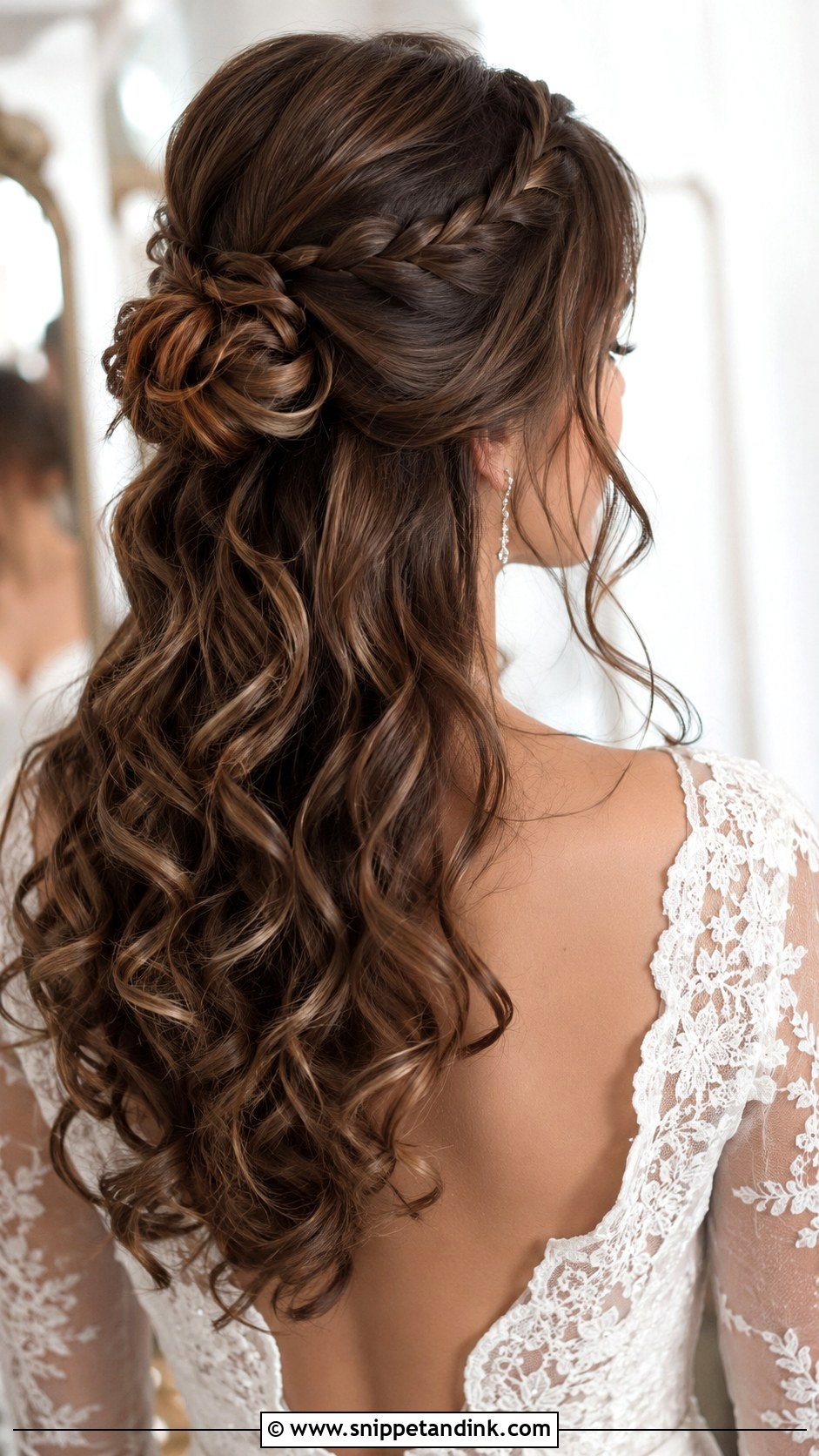
Here the top half is braided and wound into a small bun at the mid-back of the head, while the rest stays down. It’s a step more secure than a pinned braid alone, which makes it a smart choice for a long reception. The bun also gives a veil comb something solid to slide under. I keep the bun small; too large and it starts to look like a separate hairstyle stacked on top of the loose lengths.
10. Wedding Half Up Half Down Pull Through Braid
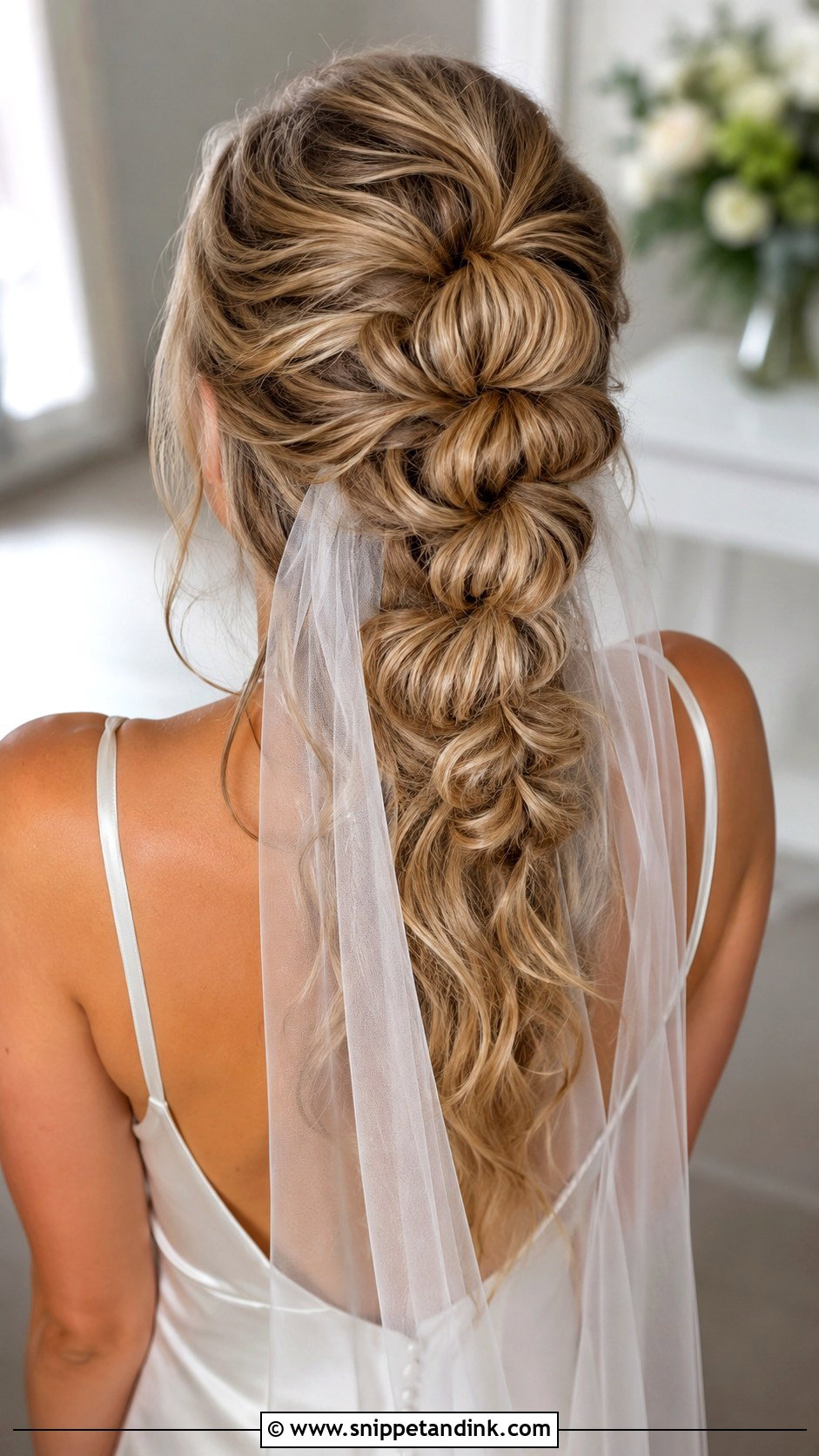
A pull-through braid isn’t braided at all. It’s a series of small ponytails, each split and pulled around the next, which is why it looks so thick. For fine or medium-density hair, it’s the best way I know to fake fullness, and it holds firmly because every section has its own elastic. I use clear elastics and stretch each loop wide before moving on. Simple accessories suit it; anything heavy competes with the volume.
11. Wedding Half Up Half Down Rope Braid
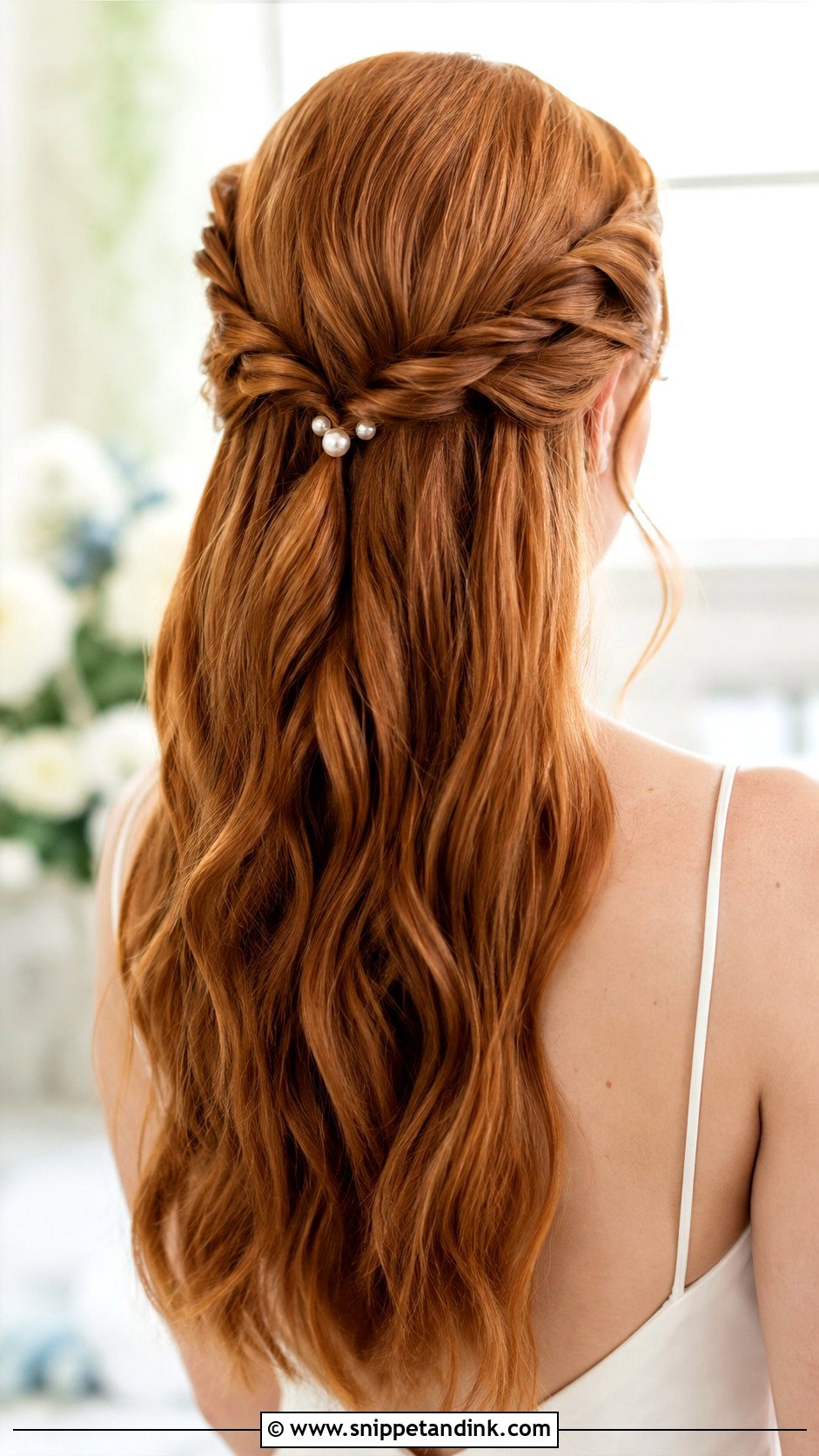
Two sections twisted around each other form the half down rope braid, often worked on both sides and joined at the back. It suits brides who want detail without an intricate pattern. Glossy hair shows the twist best, because each turn reflects light. The catch is that a rope braid can untwist if both strands aren’t turned in the same direction, so I always twist each strand clockwise and wrap them counter-clockwise, then seal the end with a hidden pin.
12. Wedding Half Up Half Down Lace Braid
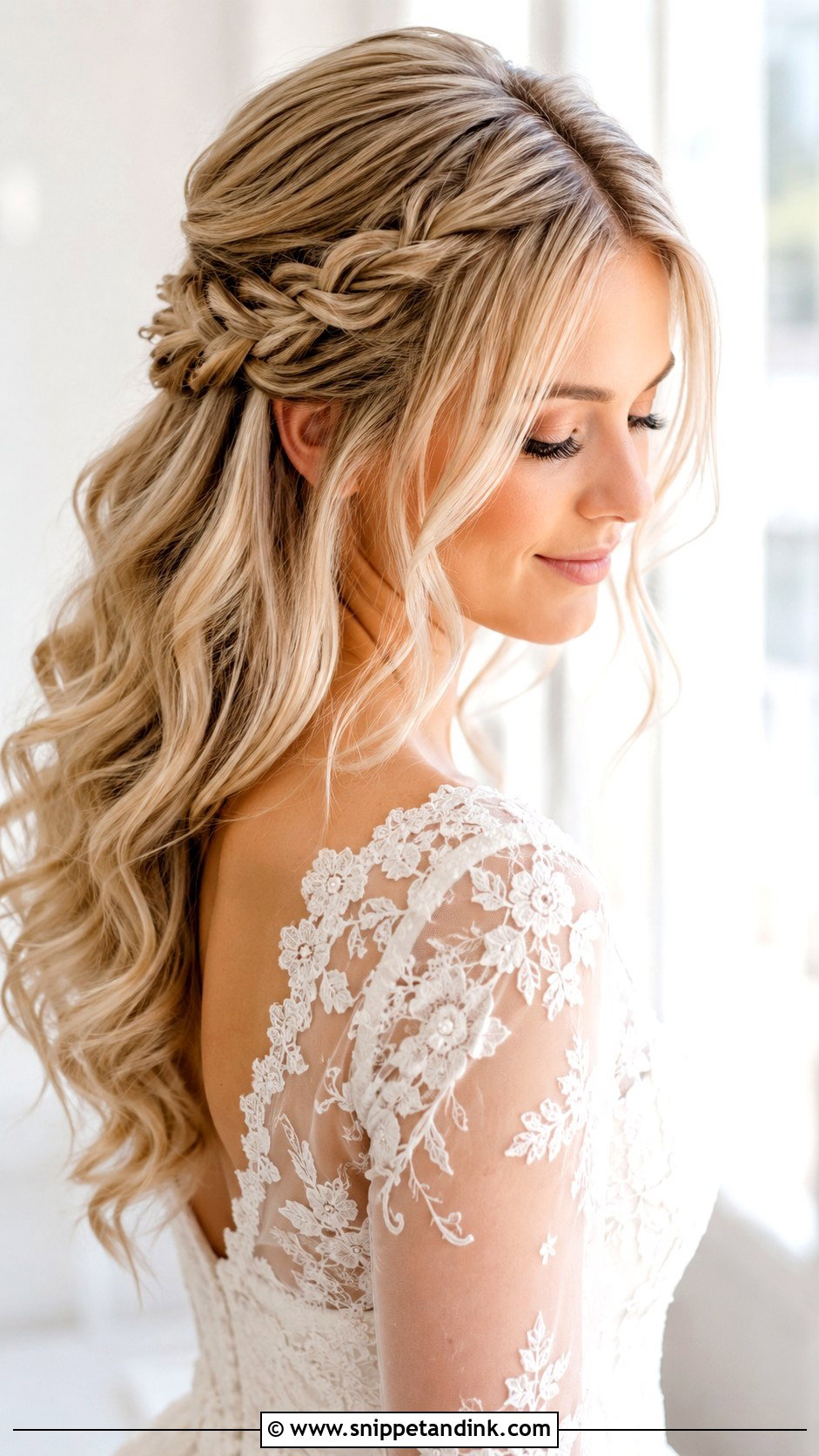
A lace braid only adds hair from one side, so one edge stays smooth and the other looks like fine trim. It’s the most precise way to keep front pieces off the face without pulling them flat. I usually run it along the part side and finish it in a small pinned twist at the back, which keeps the crown neat for a veil. It also makes a lovely bridesmaid option, since it’s polished without drawing attention from the bride.
13. Wedding Half Up Half Down Micro Braids
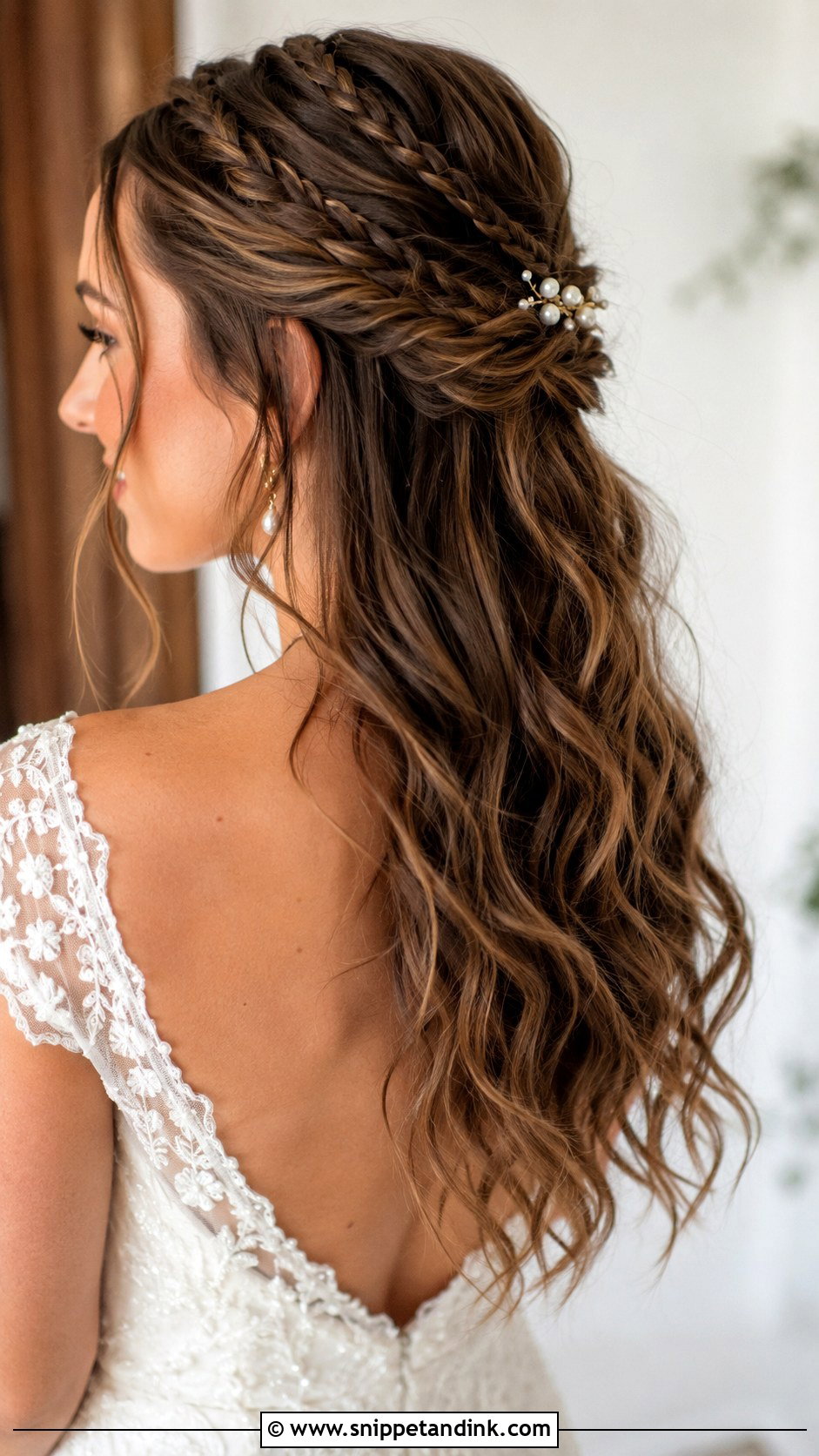
Micro braids are tiny three-strand plaits worked through the top section and pinned back into a half-up shape. Because each braid is so small, they peek through waves rather than dominating them. On very fine hair, I’d add a little dry texture spray first; otherwise the braids slip out of their pins. I tend to place them unevenly for a relaxed look, but a symmetrical set reads more formal. They carry enough detail on their own that pearls are optional.
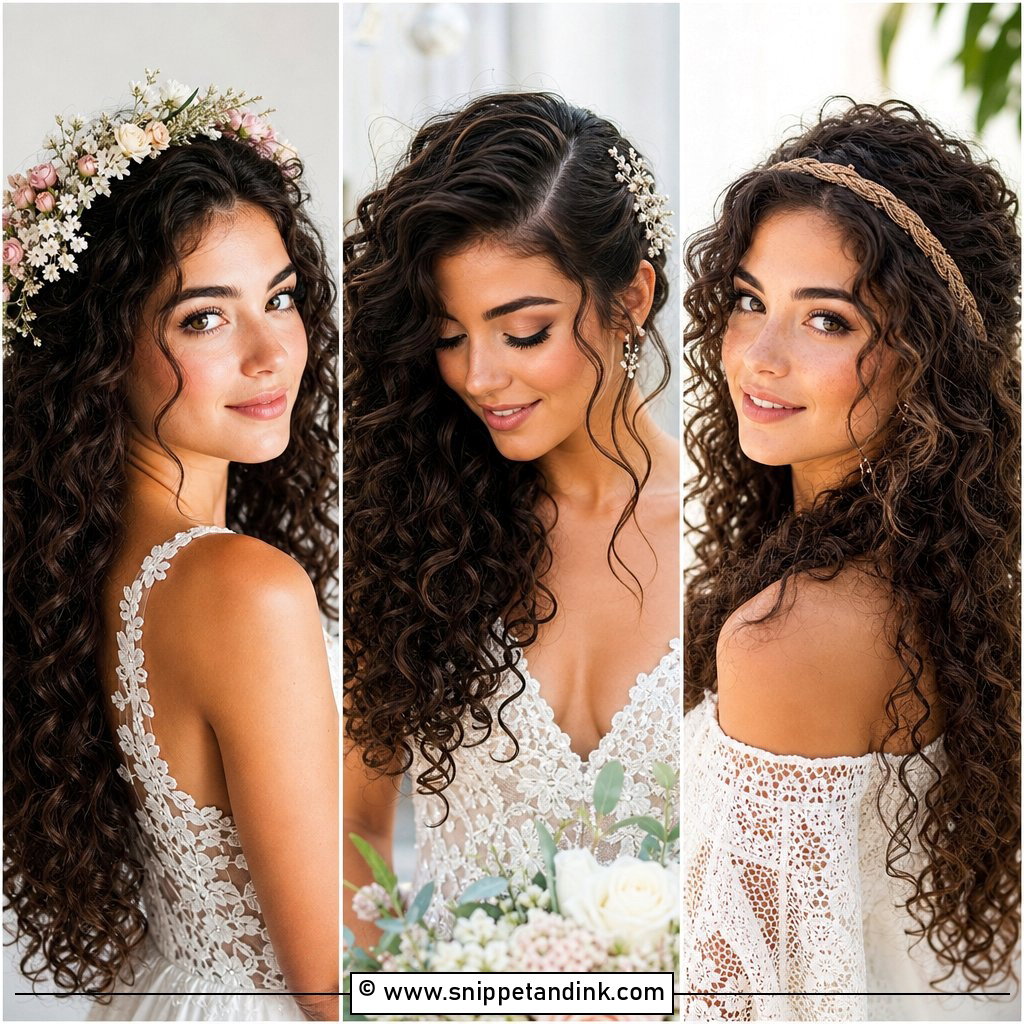
14. Wedding Half Up Half Down Braided Curls
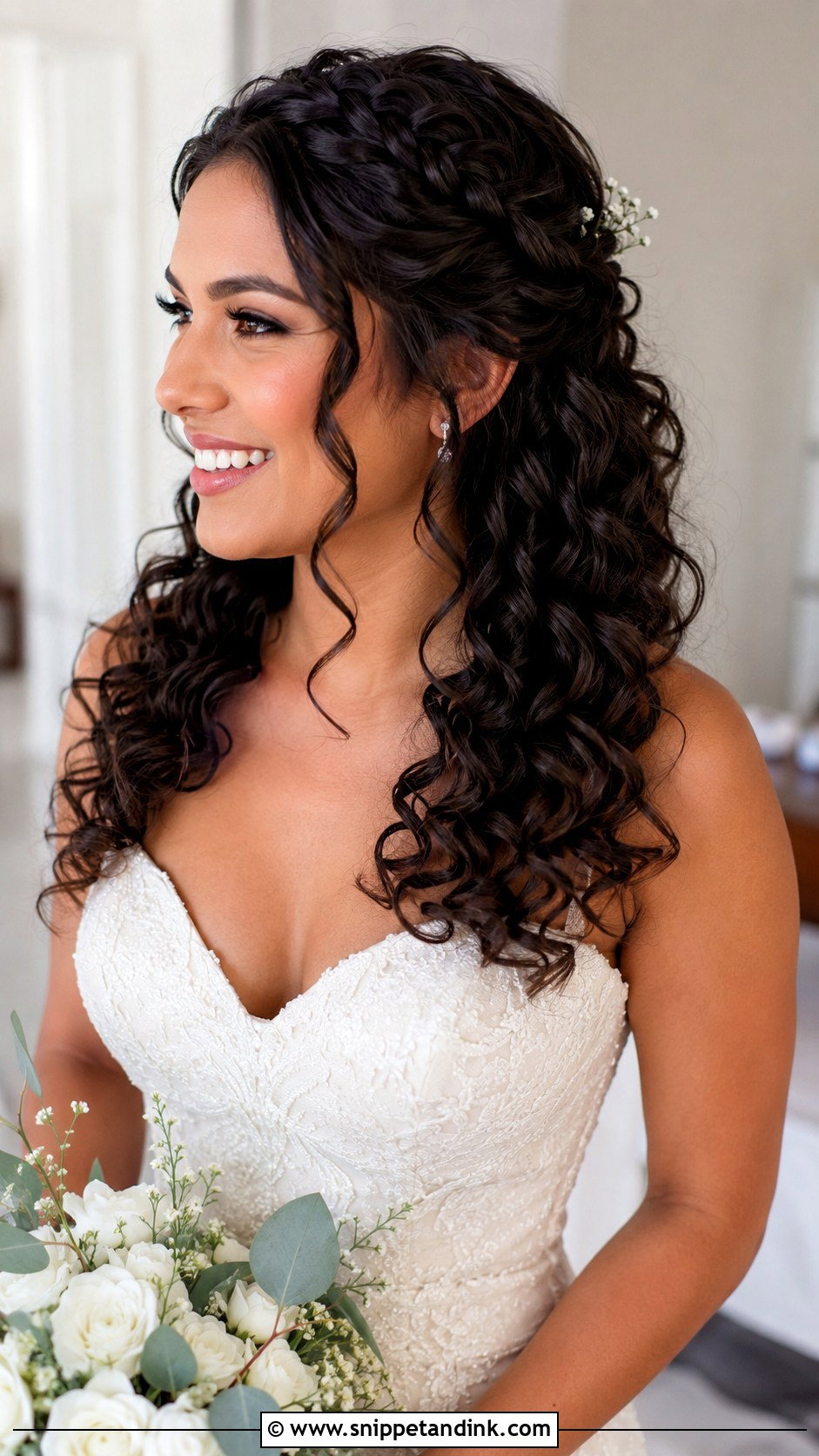
Pairing a braid with full curls gives you volume through the lengths and a clean, open face. The braid does the hard work of holding the top section back, so I pin it securely at the back before I even start curling. I brush the curls lightly for softness, then finish with a mist of flexible hairspray. Medium to long hair suits this best. Short layers can slip out of the braid and fall forward by the time dinner is served.
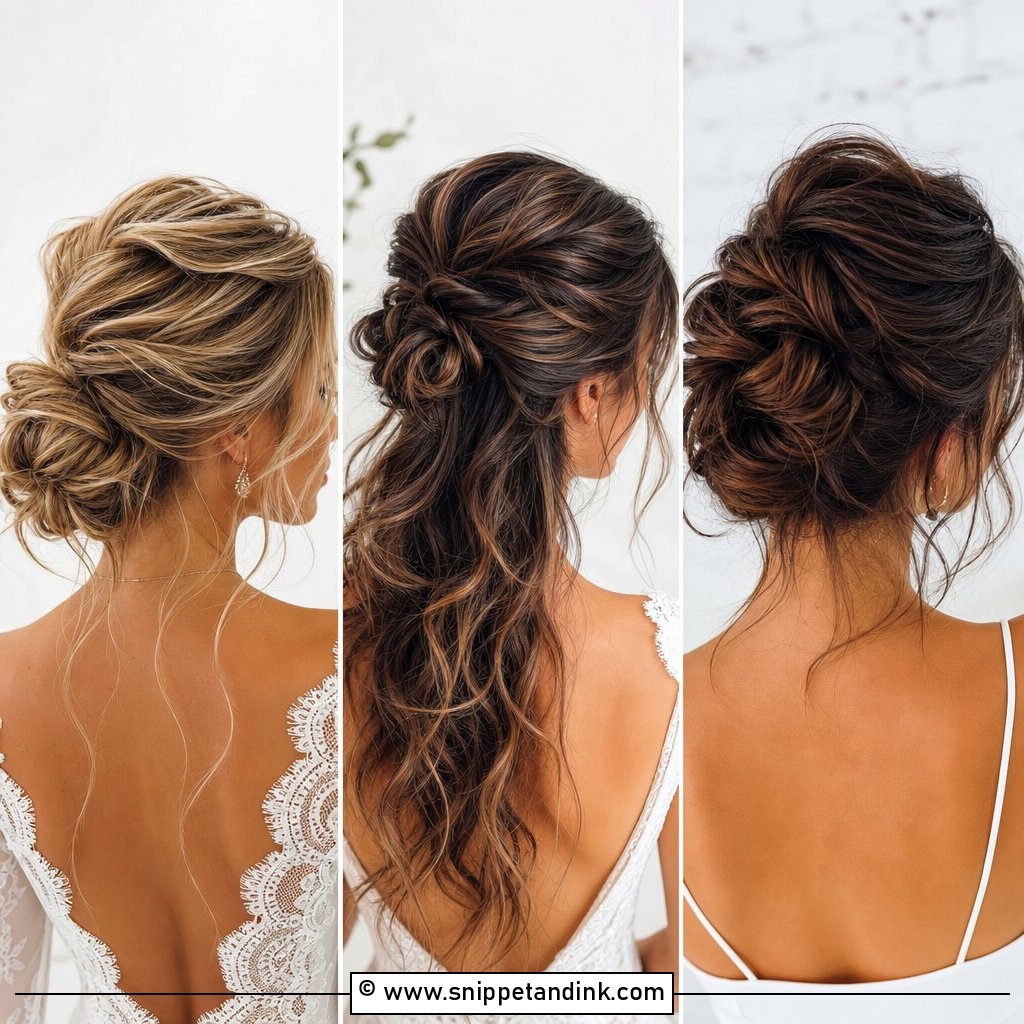
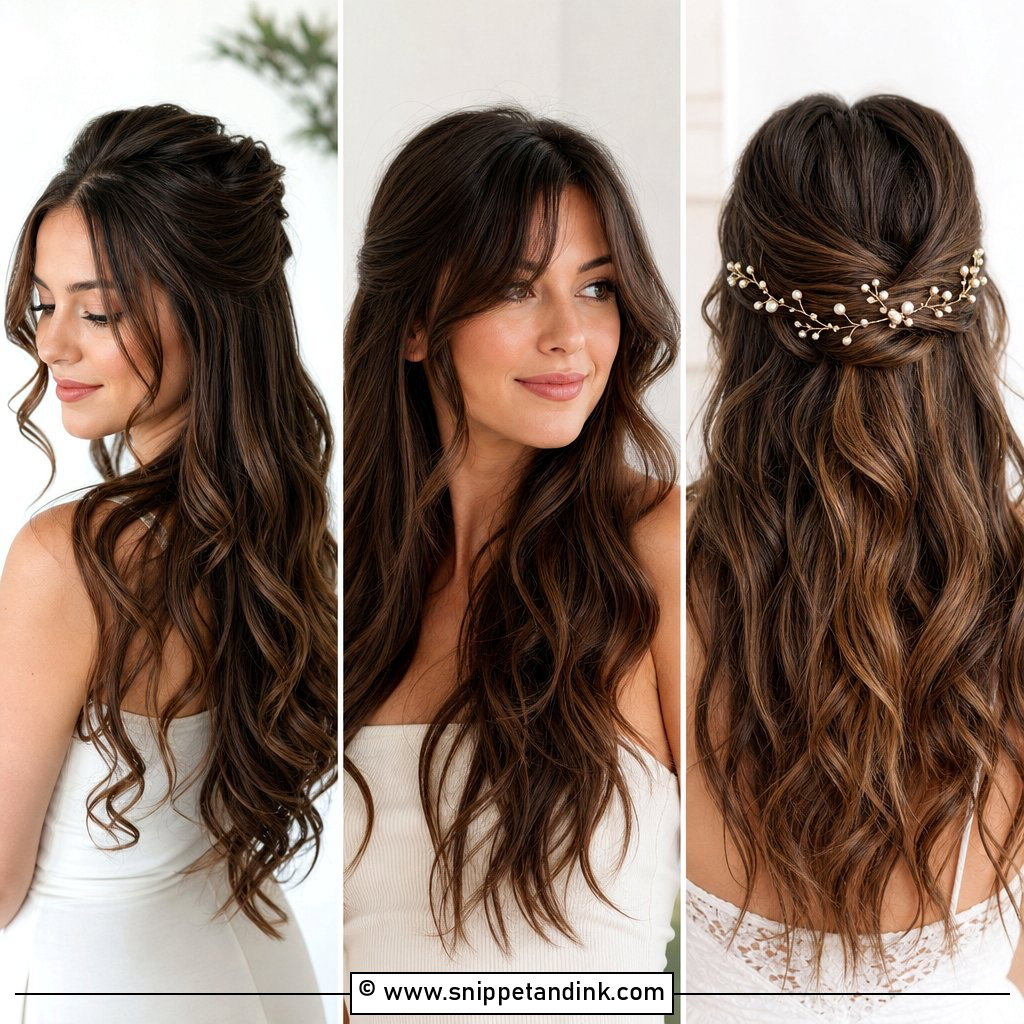
15. Wedding Half Up Half Down Braided Waves
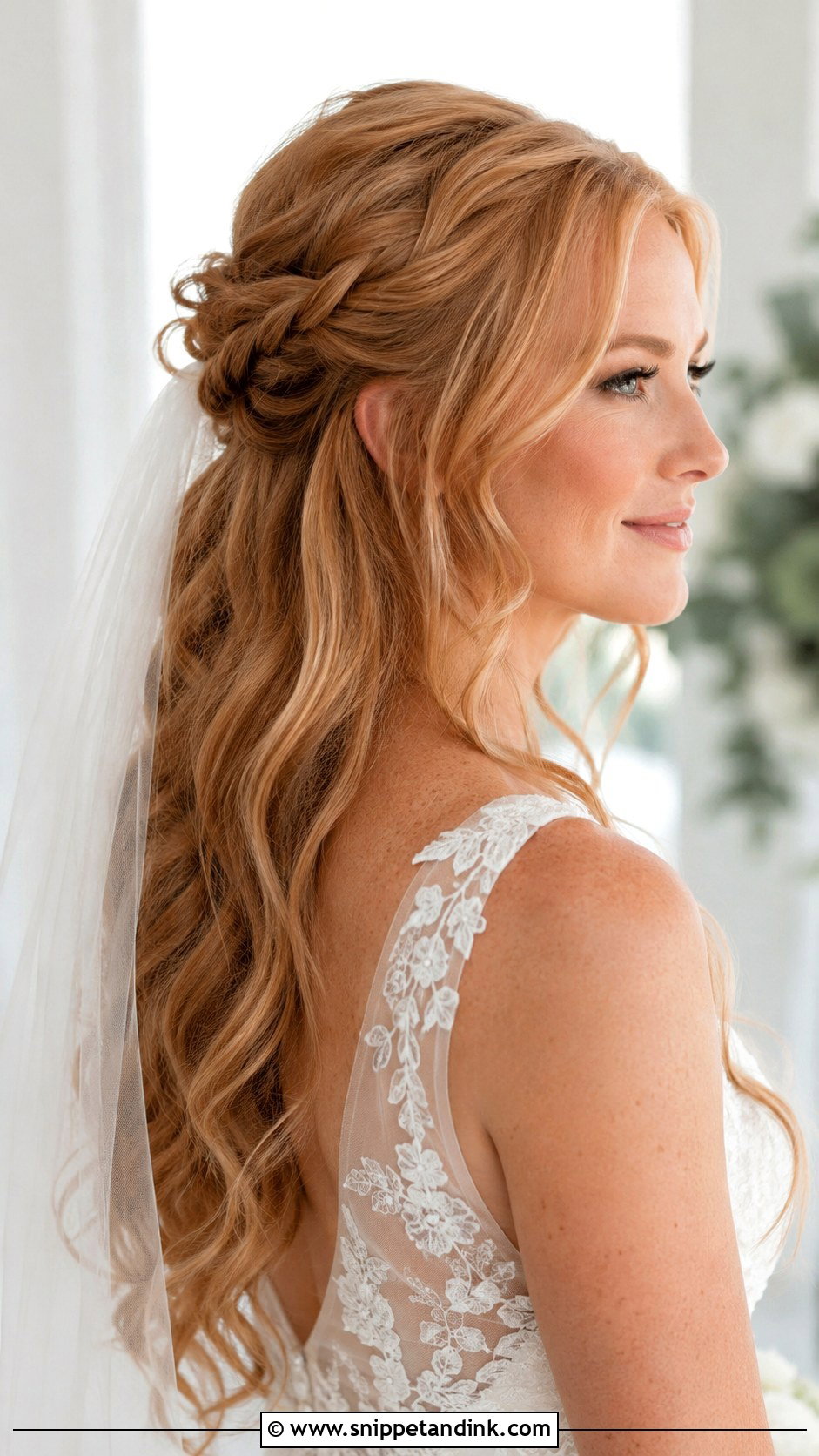
With braided waves, the braid gives structure through the top or sides while the waves stay soft below. It adapts easily, from a simple slip dress to a detailed gown, and it sits well with veils and accessories. Looser, beachier waves suit an outdoor wedding, and smoother, shinier ones suit a formal room. I always add some lift at the crown, because a flat top makes the braid look like it’s pulling the hair down.
Wefts Hidden Under a Fuller Braid
Many of the fullest braids in wedding photos have a little help. Clip-in extensions add thickness to the braid and length to the loose half, and they also give curls more weight to settle into.
- Buy them before your trial, not after, so your stylist can braid with them in and judge the blend.
- Match the color to the ends of your hair, not the roots. If you have balayage, two shades blended together often look more natural.
- Human hair wefts take heat and hold curl like your own hair; synthetic ones can melt under a hot iron.
- Ask your stylist to place them below the half-up section, so the clips sit hidden under the braid instead of near the part.
Wefts also add weight, which is helpful for holding curl but tiring on a sensitive scalp. If you’ve never worn them, wear them for a few hours at home first. If you feel tension at the clips by midday, ask for fewer wefts or a lighter set rather than pushing through on the day. Taking them out after the reception is easy: unclip from the bottom row up, once the braid pins are out.
Your Trial Is Where the Braid Gets Decided
Every braid here keeps your face open and your length free; the differences come down to grip, fullness and how much detail you want behind you. From fishtails and waterfall braids to buns, ropes and waves, the right one depends on your hair density, your veil and your dress. Bring your favorite photos to the trial, but trust what you see in the mirror after an hour of wear. The braid that still looks neat at the end of the trial is the one that will still look neat at the last dance.
You'll Like These Ideas:


Leave a Reply