
A braid is the hardest-working detail in loose wedding hair. It holds the front off your face, gives a veil something to grip and makes the back of your head interesting for the forty minutes your guests spend looking at it. Worn with the rest of the hair down, it adds romance without the commitment of an updo. Braids sit well with veils, pearl pins, fresh flowers, crystal combs and soft face-framing pieces, and they can lean polished or boho depending on how loosely I work them. These fifteen braided styles are the ones I’d show you at a trial, with what each needs to last.
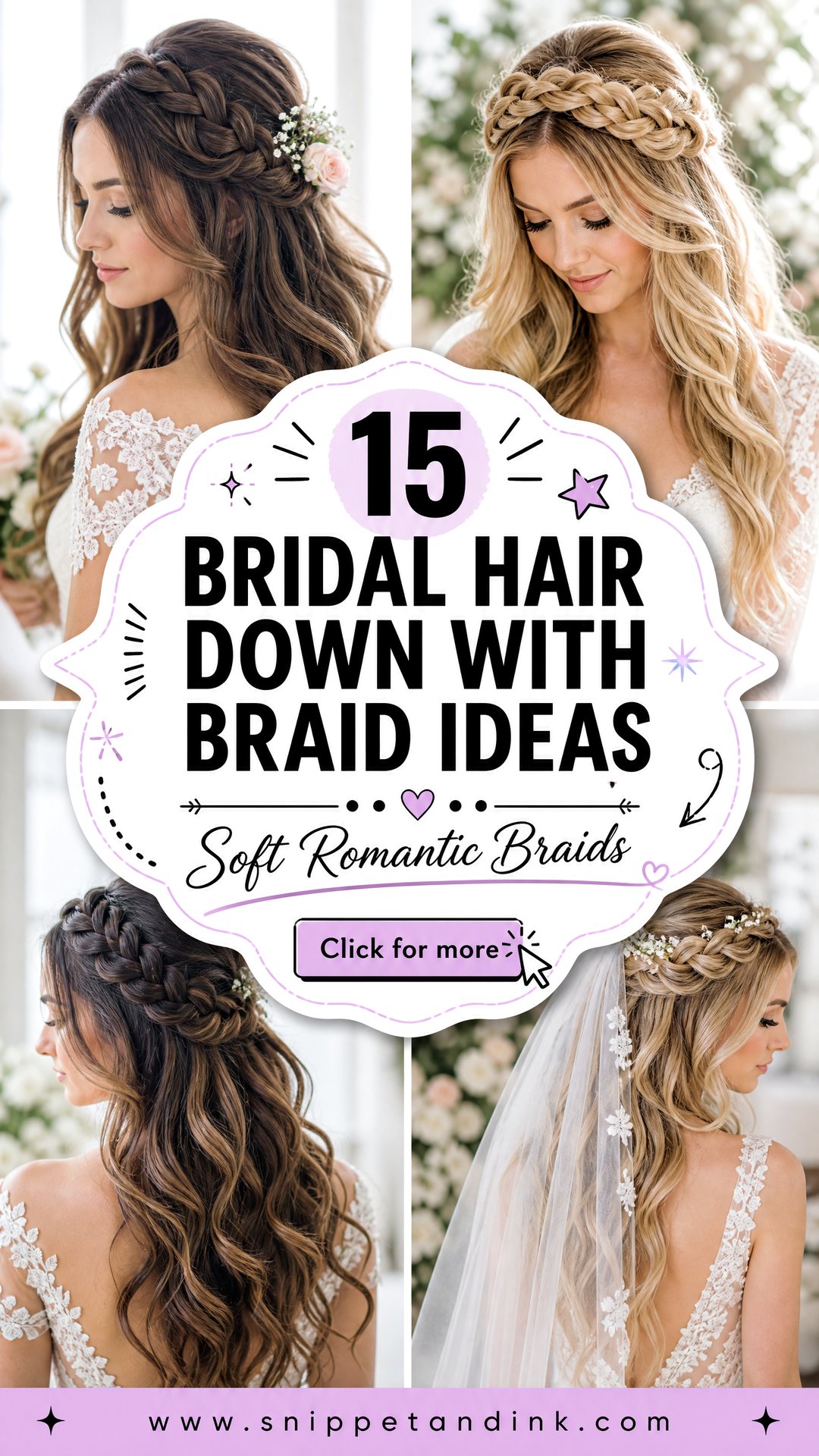
Over, Under or Two Strands? How Each Braid Behaves
Brides often bring me photos of braids without knowing which kind they’re looking at, and the difference matters because each one holds, loosens and photographs differently.
French braid
Strands cross over the middle, so the braid lies flat into the hair. It’s subtle and neat, good if you want the braid to blend in rather than stand out.
Dutch braid
Strands cross under, which pushes the plait up so it sits on top of the hair. It shows clearly in photos and widens well when I pull the loops apart.
Fishtail and waterfall
A fishtail uses two sections and tiny crossing pieces, so it’s detailed but slow to do. A waterfall drops strands as it goes, so it’s the prettiest and the least secure. Both need grippy, textured hair.
Whichever you pick, I braid on hair that was washed the day before or prepped with texture spray, and I pull the loops wider before the ends are secured. Pulling them after the pins go in usually breaks the shape.
1. Half Up Bridal Hair Down With Braid
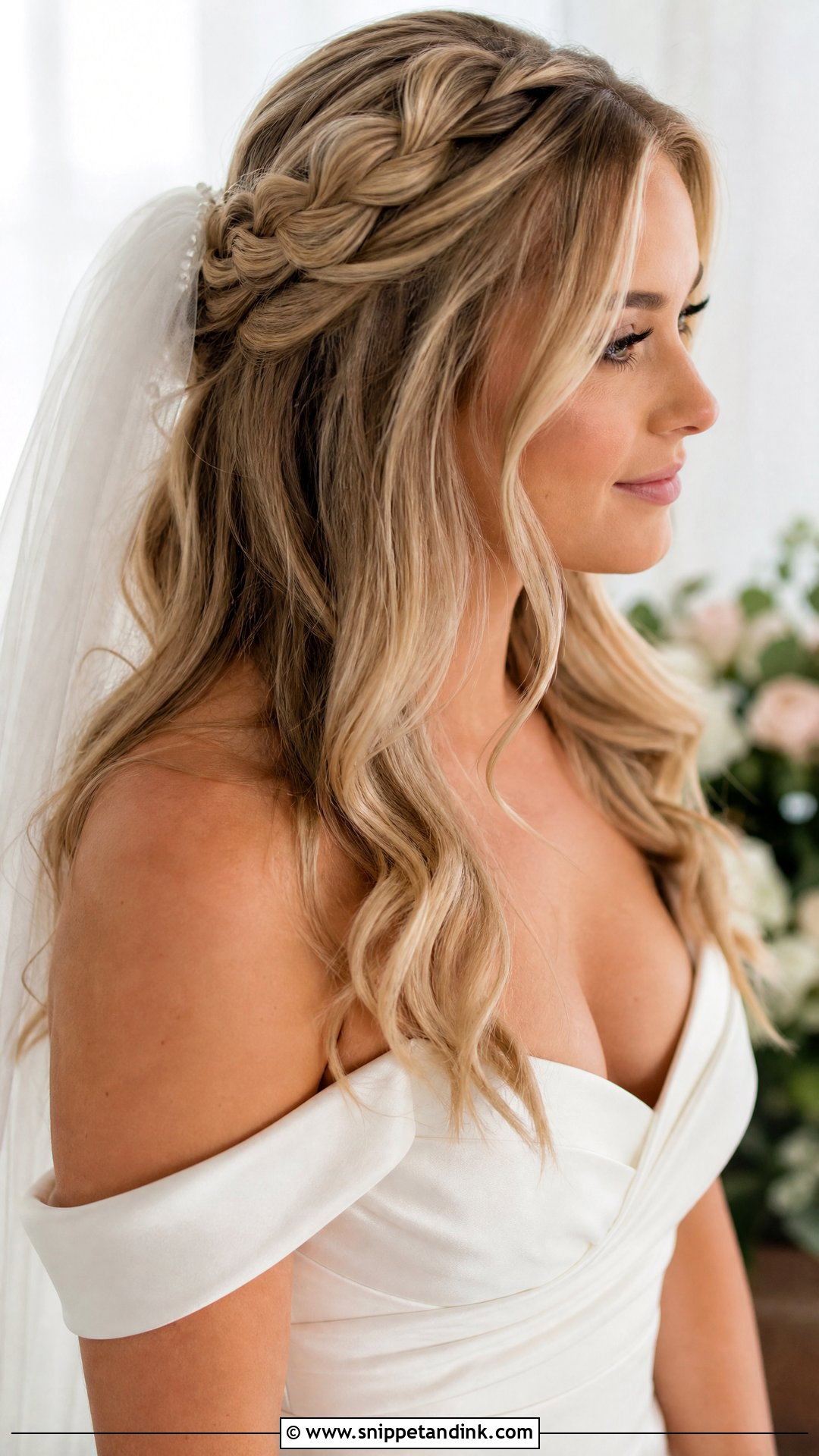
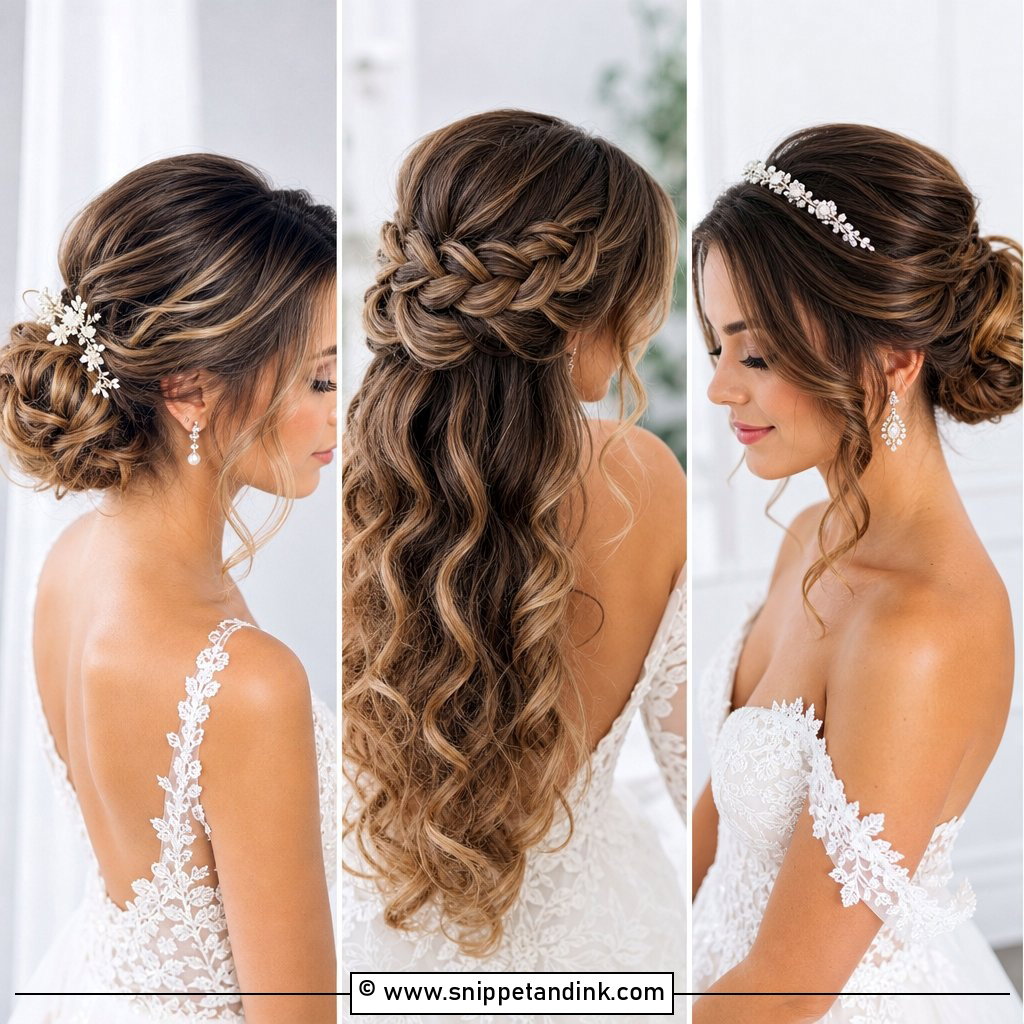
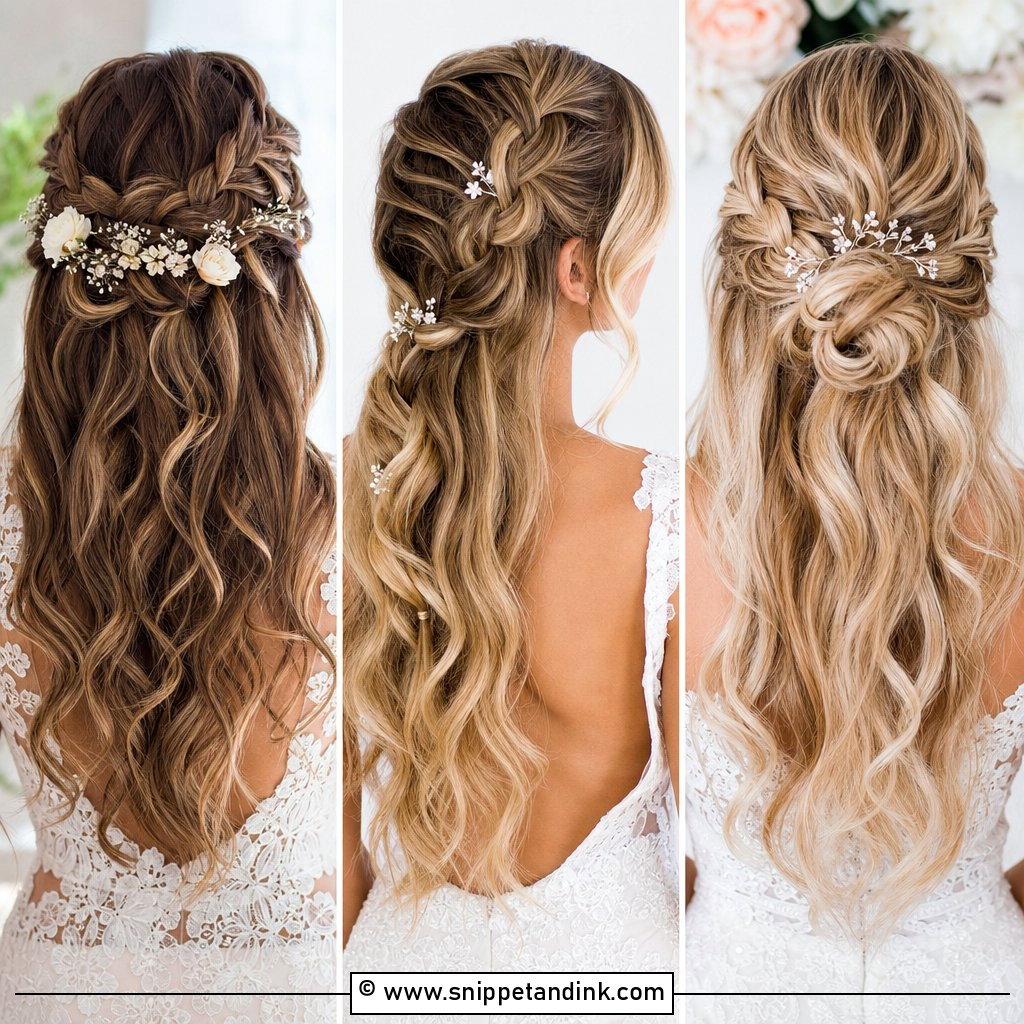
This is the braided look I book most, and with good reason. The top section is braided across the back and pinned, so the face stays clear while the rest falls loose. That braid is more secure than simple pinned waves and gives a veil comb a solid base to slide under. It suits long and medium hair, extensions and natural waves. I keep the crown soft, leave a few face-framing pieces, and brush the curls out until they’re smooth rather than springy. Pin the braid ends under, not just with an elastic, or the tail sticks out by the reception.
2. Bridal Hair Down With Side Braid
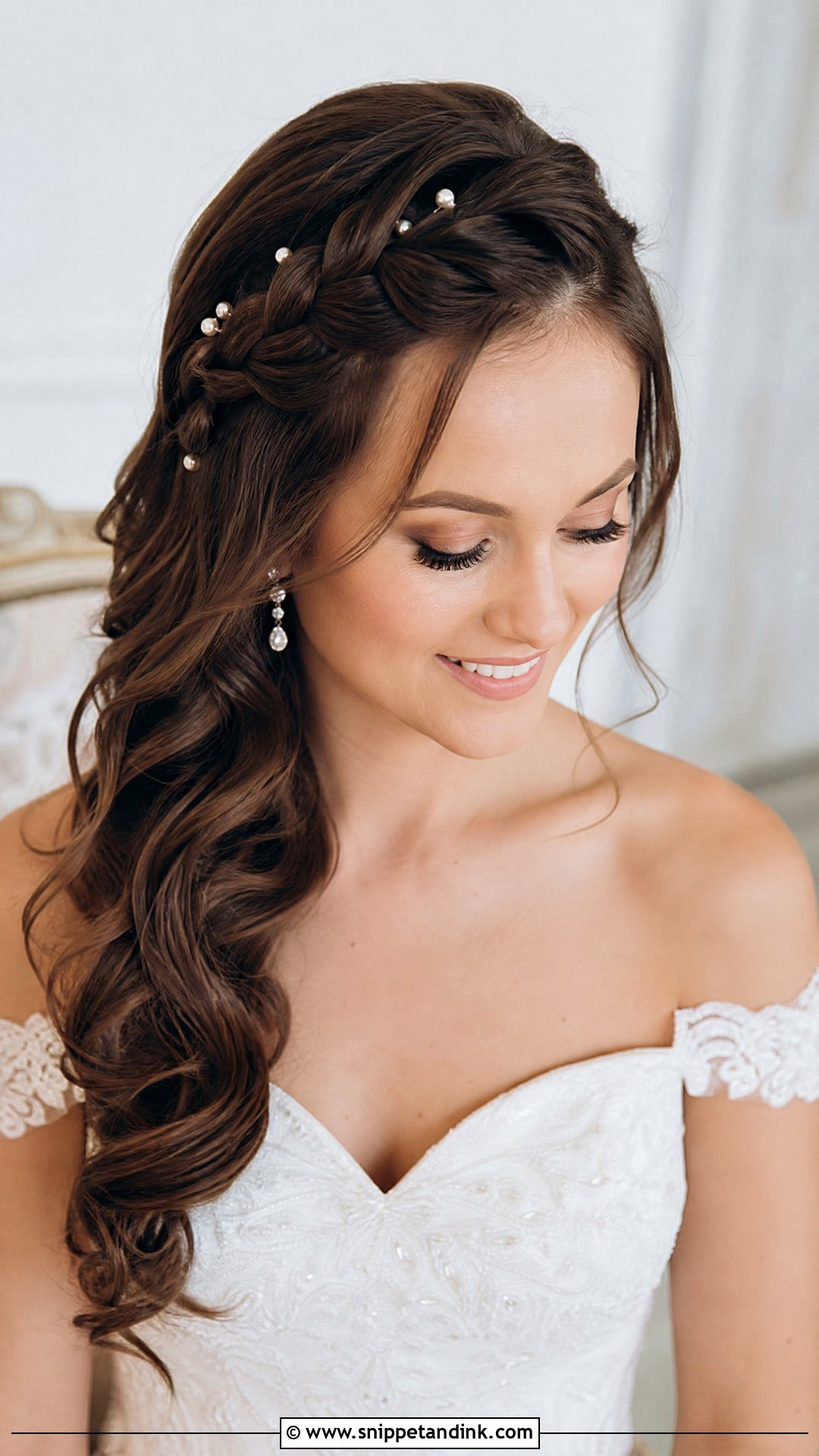
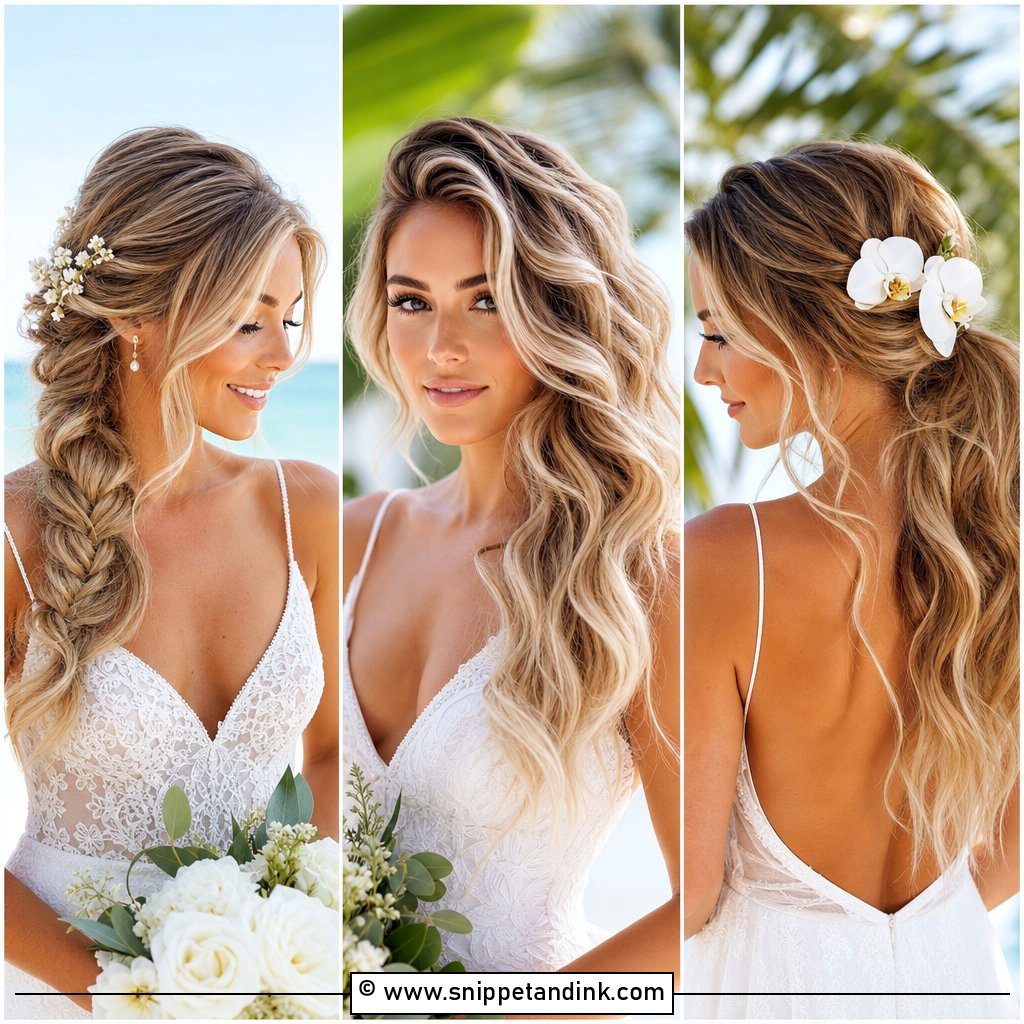
A side braid puts the detail where you can see it in the mirror, at the front. It starts near the part and runs along one side, blending into waves over the shoulder. I like it with one-shoulder gowns and sweetheart necklines, braiding on the side with the bare shoulder so the line follows the dress. It also keeps the hair off your face during vows. Too tight and it looks like gym hair; I braid it firmly and then loosen the outer loops. Pearl pins or tiny flowers along the plait keep it bridal.
3. Bridal Hair Down With Crown Braid
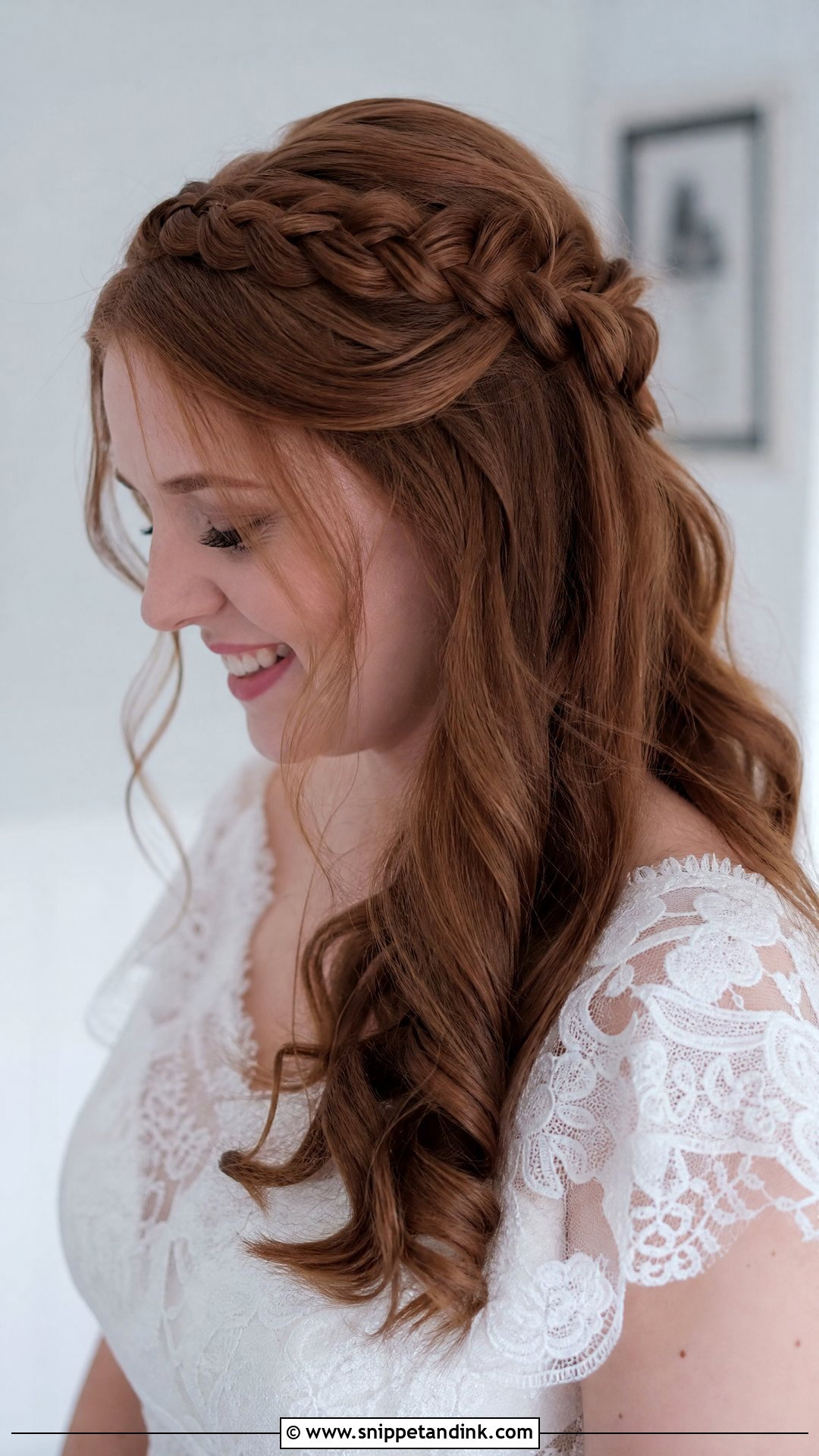
A crown braid has a soft, fairytale feel, but braided tight it can tip into costume. I keep it airy, pulling the loops apart once it’s pinned. It wraps around the head or sits across the crown while the rest falls in waves or natural texture. Outdoors it’s practical, since the controlled top section holds up in a breeze. Floral details or a simple veil suit it, or nothing at all. Heavy hair needs a lot of hidden pins along the braid, so allow your stylist the extra time at the trial.
4. Bridal Hair Down With Fishtail Braid
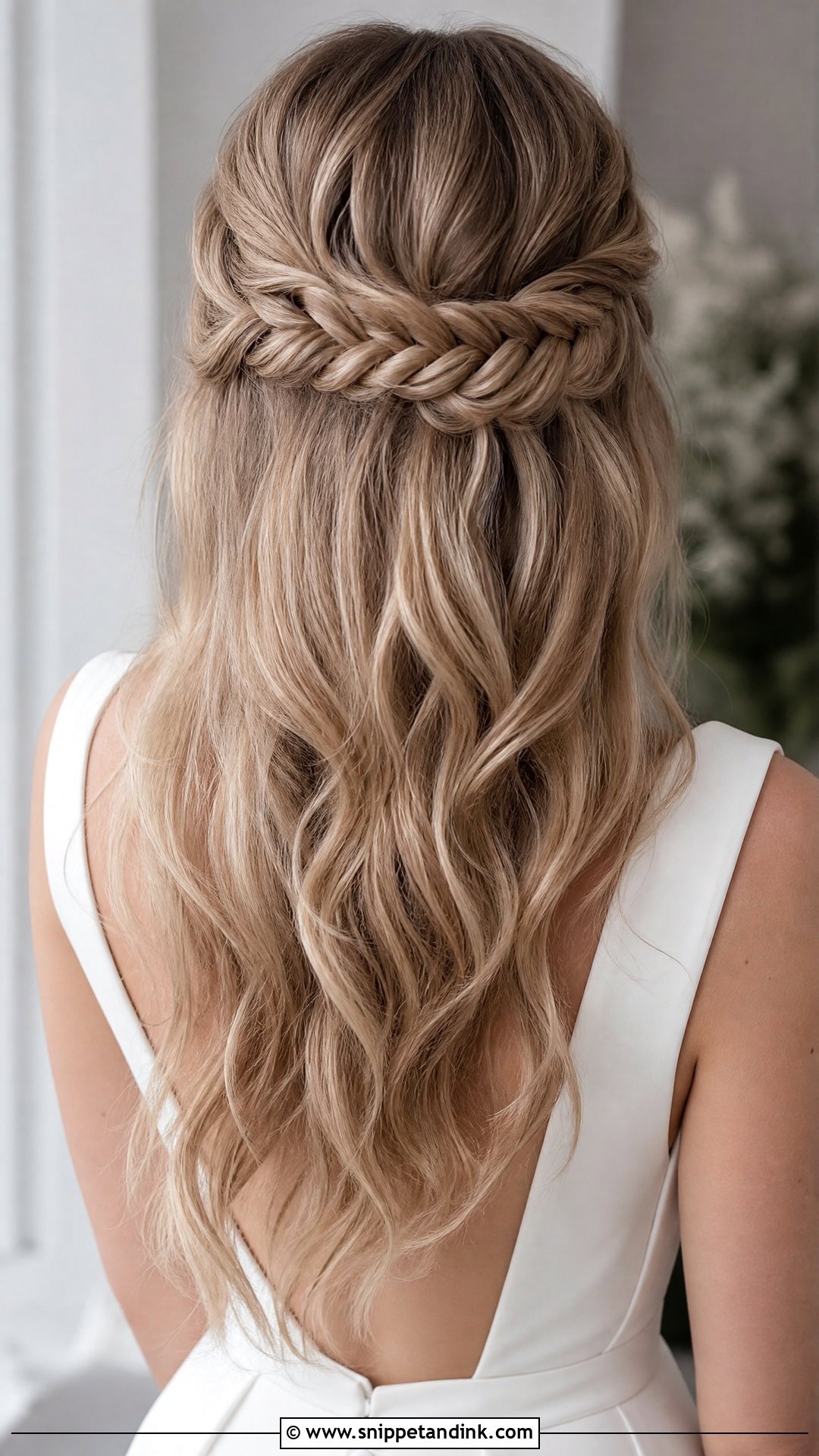
A fishtail is built from two sections instead of three, crossing tiny pieces from the outside of each, which gives that fine woven pattern. It takes longer than a standard braid and needs hair that isn’t slippery, so I prep with texture spray. It works as a half-up braid, a side braid or a small accent woven into waves. The pattern shows best on hair with dimension, such as highlights, balayage or soft brunette ribbons; on solid dark hair it can read as plain texture in photos. Loosen it gently and keep the curls glossy.
5. Bridal Hair Down With Waterfall Braid
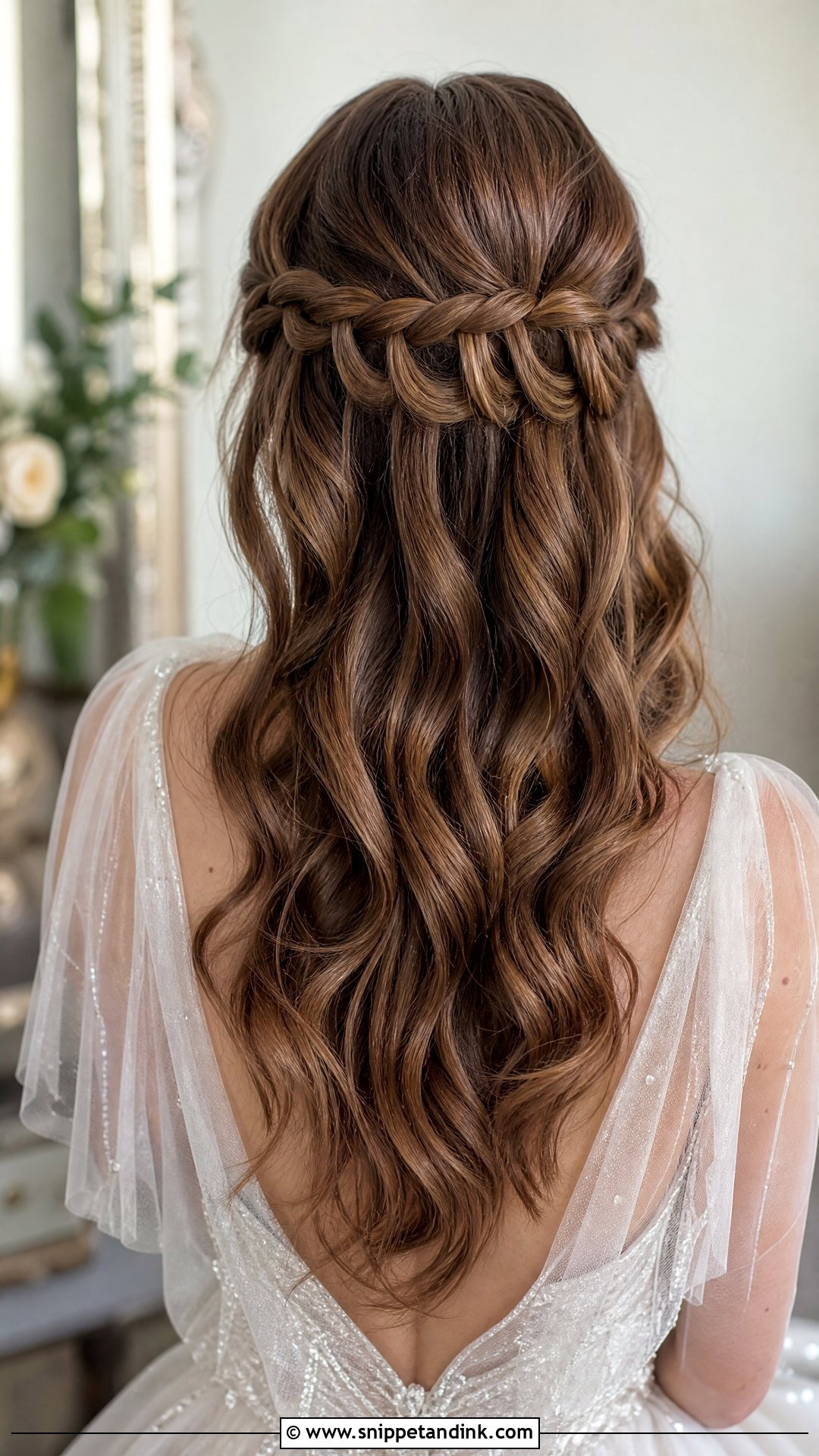
A waterfall braid drops one strand at every cross and picks up a new one, so pieces fall through it like ribbons into the curls below. That dropped section is what makes it delicate, and also what makes it fragile, because nothing is holding those falling pieces. Long hair suits it best. I keep the braid visible but not tight, curl the dropped pieces with the rest of the hair, and use light-hold spray so they move together. If your hair is fine and slippery, ask for a test at the trial, since this one loosens quickest of any braid here.
6. Bridal Hair Down With Boho Braid
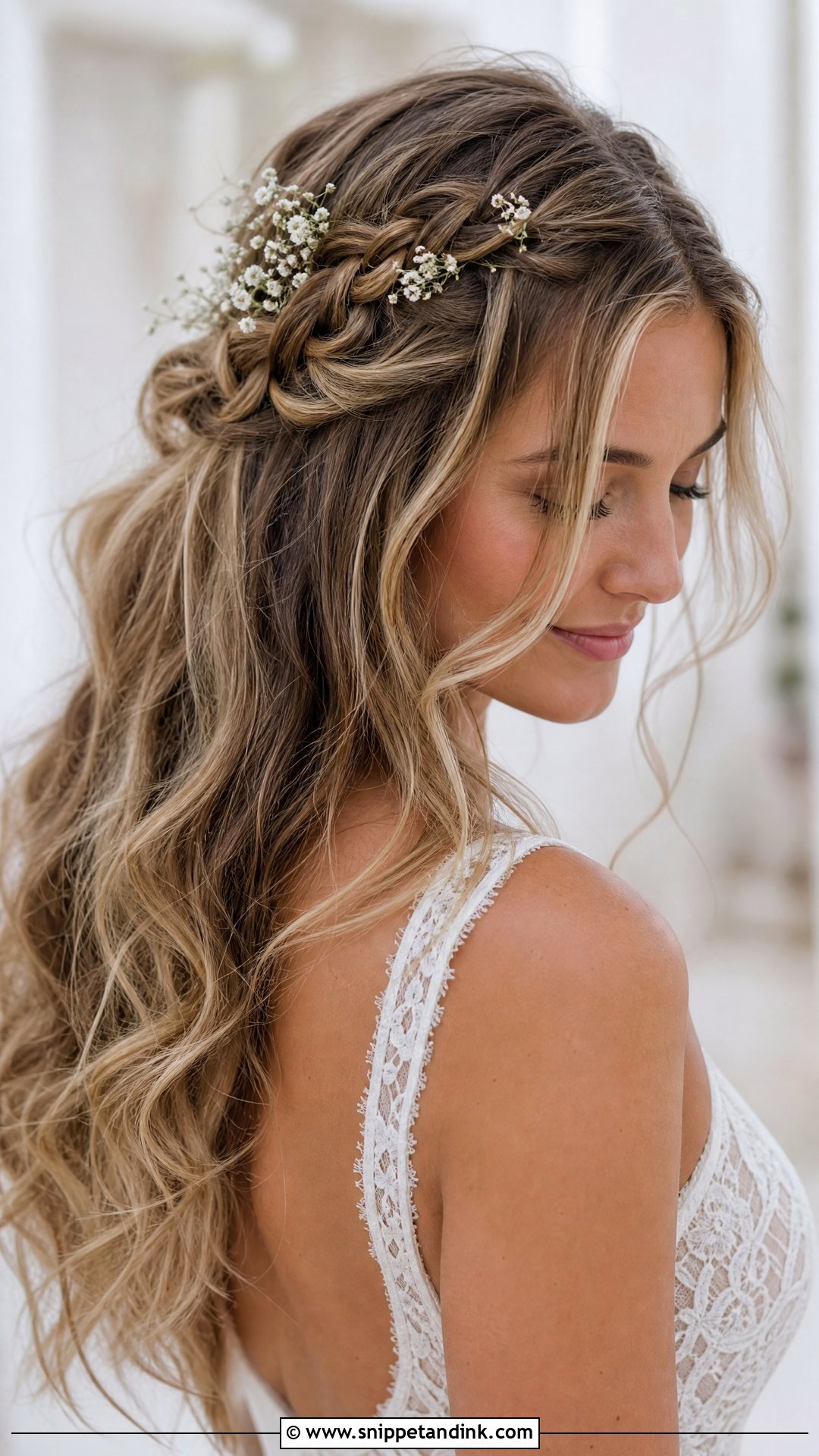
A boho braid is meant to look relaxed, but the undone part has to be planned, otherwise it reads as unfinished by the close-ups. I braid through the crown, side or back with some texture already in the hair, then pull the loops apart so it looks fuller. A few face-framing strands and small floral accents suit lace dresses and warm-weather weddings. The trick is keeping the base secure underneath. Loose on the surface, firm at the scalp, and pinned so it survives an afternoon outside.
7. Bridal Hair Down With Dutch Braid
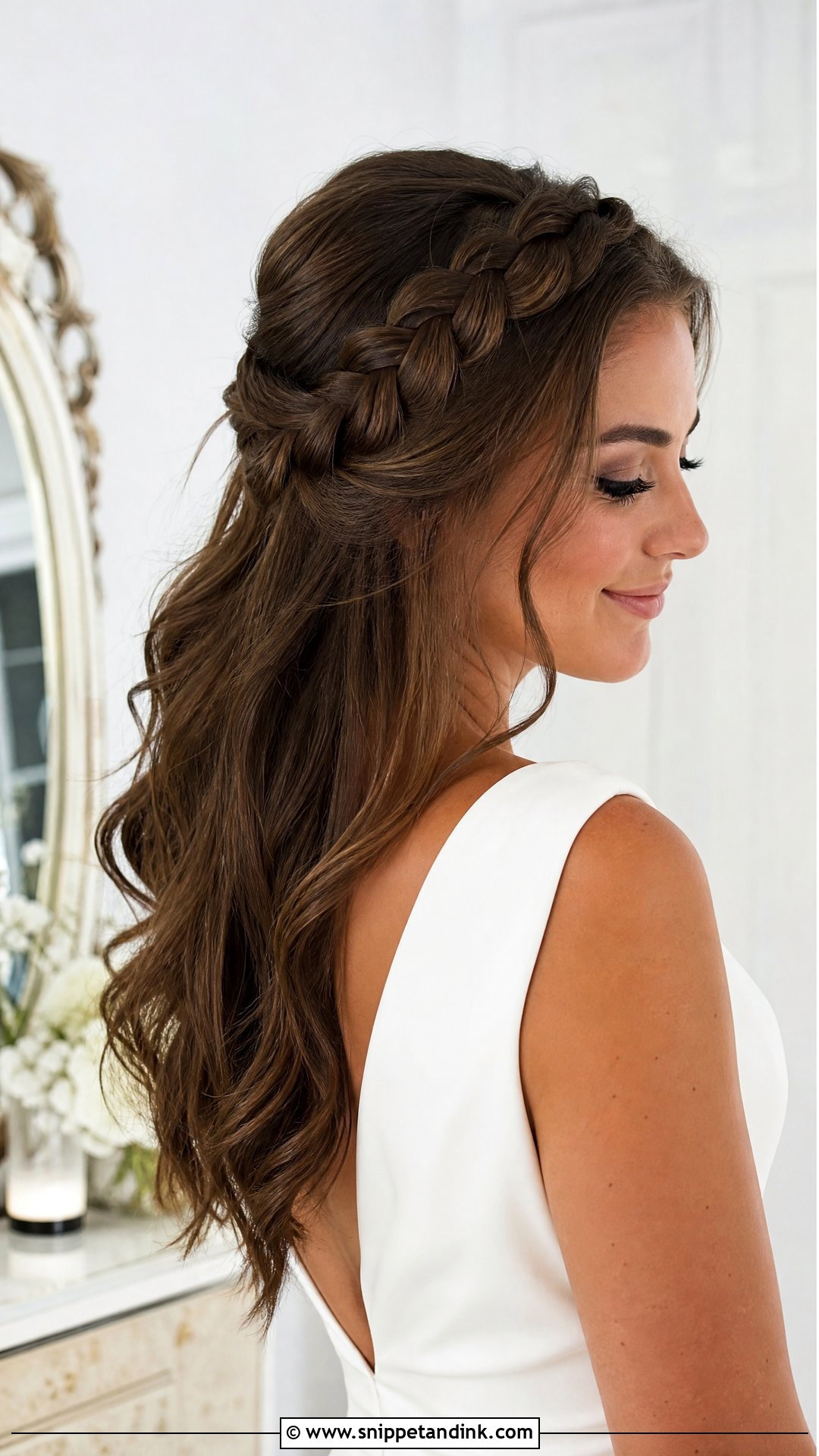
A Dutch braid crosses the strands under instead of over, so the plait sits raised on top of the hair rather than lying flat. That’s why it photographs as a clear feature. It can run across the crown, frame one side or form a half-up detail at the back. Thick, highlighted and textured hair all suit it, because the raised braid adds definition. Keep the loose hair polished so the braid reads intentional. It also locks the front pieces back, which matters if you’ll be outdoors or you can’t stand hair on your face.
8. Bridal Hair Down With Loose Braid
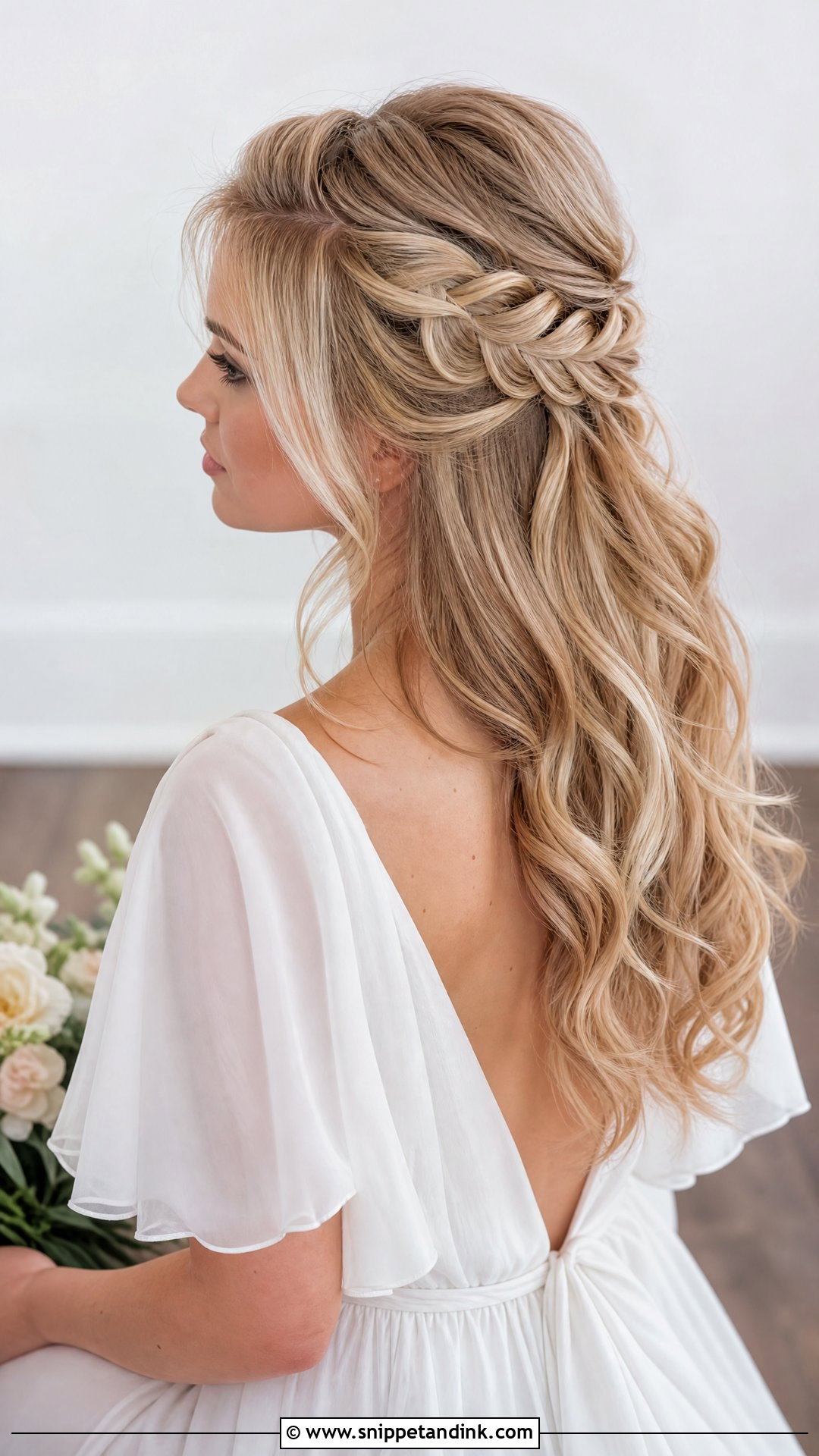
A loose braid has the softness most brides picture when they think of braided hair down. The woven section is pulled apart for volume, whether at the back in a half-up shape or falling to one side among curls. It still gives structure, which is why I suggest it to brides who want a relaxed look but don’t trust loose waves to stay put. It pairs well with waves, curtain pieces and lightweight accessories. Texture spray before braiding gives it grip without weighing down the rest of the hair.
9. Bridal Hair Down With Braided Headband
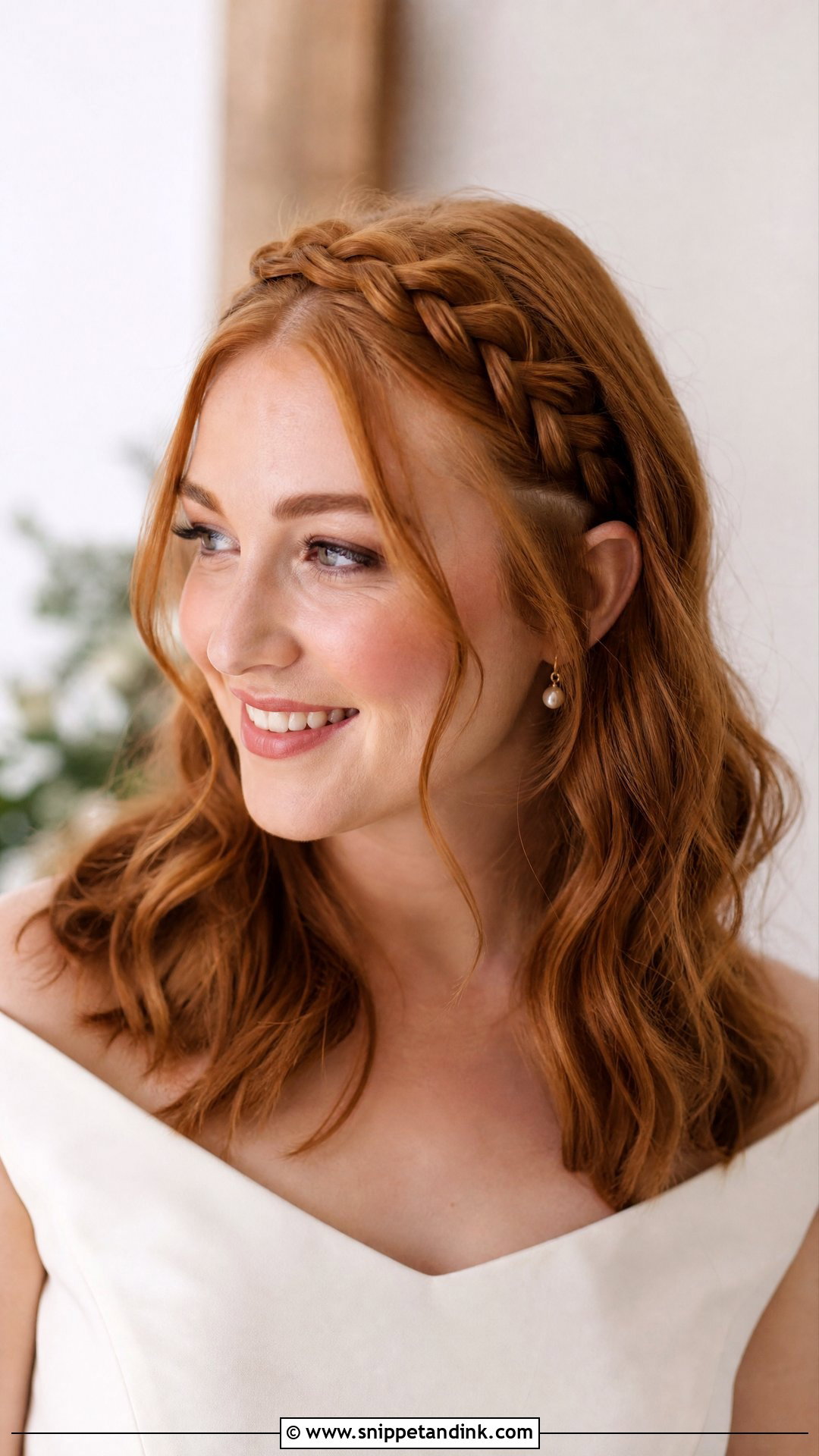
A braided headband frames the face and quietly handles growing-out layers and short front pieces that would otherwise need visible pins. The braid sits across the top or front of the head, and the rest of the hair falls in curls or waves. I start it behind one ear and braid toward the other, pinning the end under the hair so it disappears. It suits simple gowns and delicate lace. A veil can go farther back. Keep the braid smooth along the hairline; any lumps there show in every front-on photo.
10. Bridal Hair Down With Braided Crown And Veil
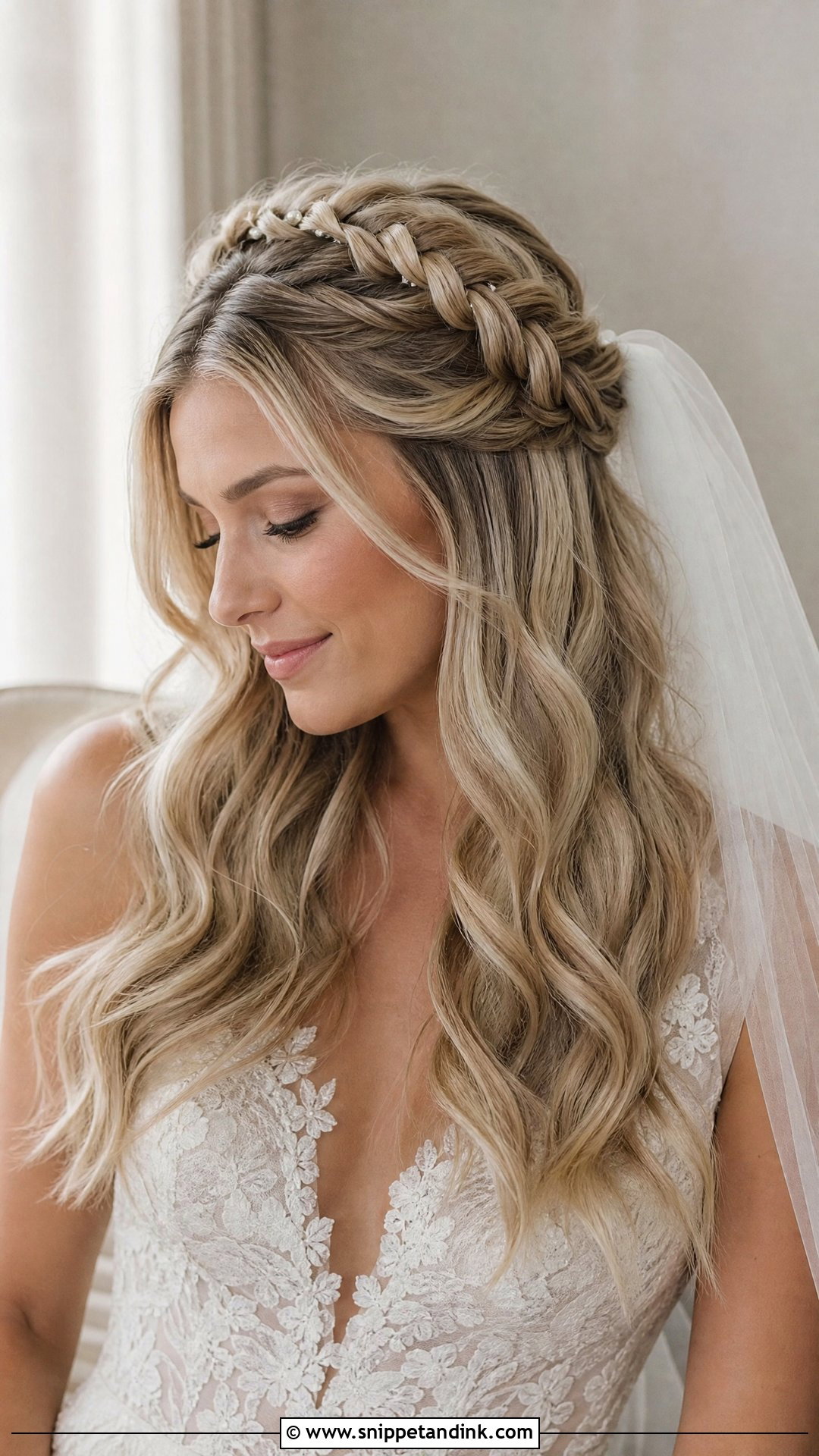
A braided crown under a veil solves the biggest problem with loose hair: the veil has nothing to hold onto. The braid becomes the anchor the comb slides into. That’s especially helpful if your hair stays down for both the ceremony and reception. I place the comb either under or just behind the braid, depending on the weight of the veil and how thick your hair is. Heavy veils go under, so the braid takes the pull. A few soft face pieces keep the front gentle.
11. Bridal Hair Down With Braid And Flowers
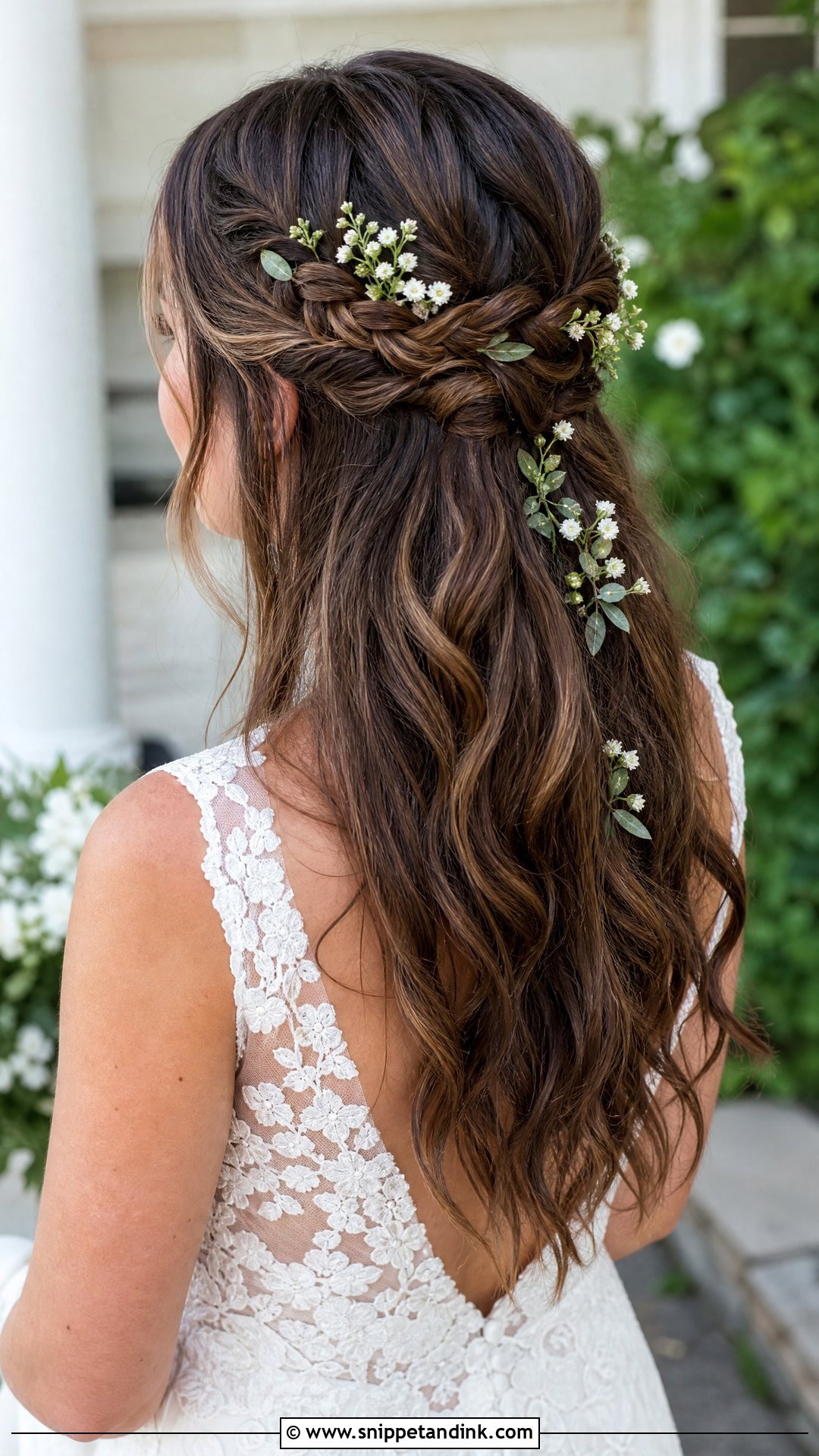
Flowers sit more naturally in a braid than in loose hair, because the woven strands hold the stems for you. Tiny blooms, baby’s breath or soft greenery tuck easily into a half-up, side or crown braid. Keep them small enough that the braid stays visible. I ask brides to put their florist and stylist in touch, so the blooms are wired or picked to last out of water. Garden, beach, rustic and spring weddings suit this, with loose waves below matching the natural feel.
12. Bridal Hair Down With Braid And Pearls
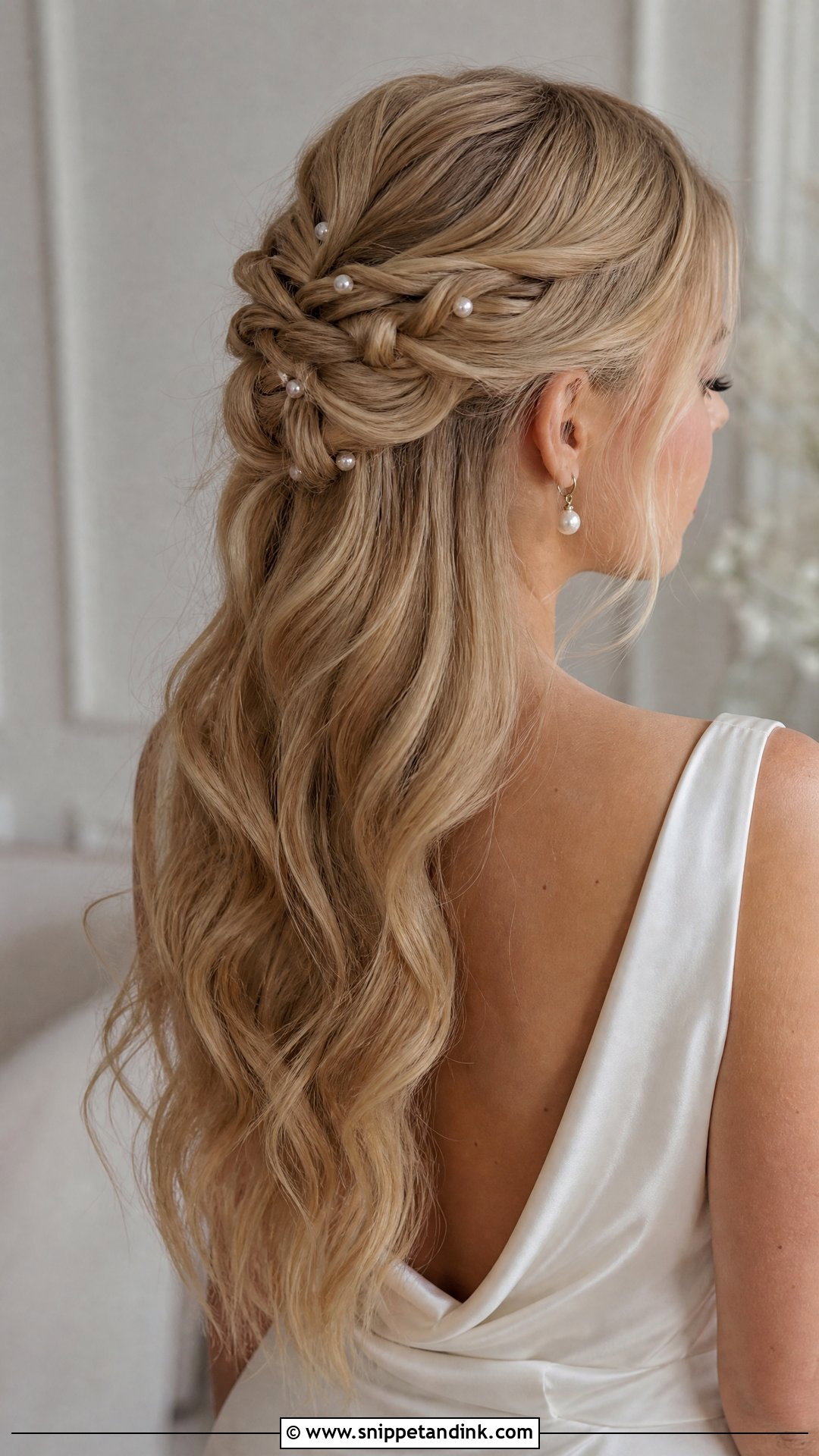
Pearls along a braid catch soft light without the glare of crystals, so they read classic and feminine. They can run along a half-up braid, scatter through a crown braid or pin into a side braid. I push each pearl pin in at an angle, along the direction of the plait, so it hooks into the woven strands rather than sitting on top. Satin gowns, lace and pearl earrings all suit this. Waves underneath keep it from feeling formal, and it works in a ballroom just as well as at outdoor vows.
13. Bridal Hair Down With Braid For Long Hair
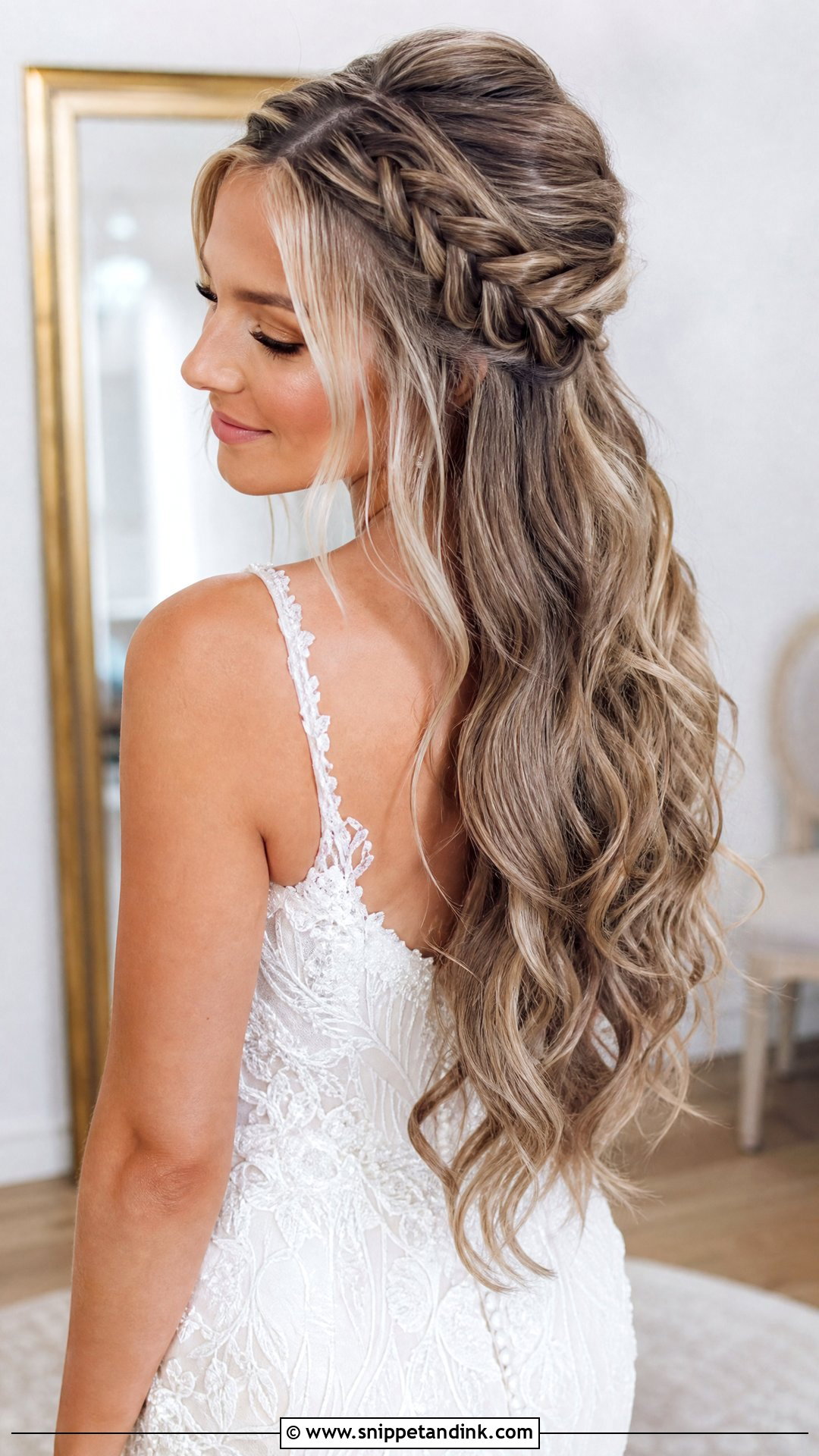
Long hair gives a braid the most room, at the crown, along the side or across the back with curls falling below. It also brings weight, and weight is what loosens a braid by evening. I support long braids with pins every few inches along the underside and prep the curls with a setting spray before heat. Soft layers around the face stop the front feeling heavy. If your hair reaches mid-back or beyond, expect the curls to drop a little, and ask for them set tighter at the start.
14. Bridal Hair Down With Braid For Medium Hair
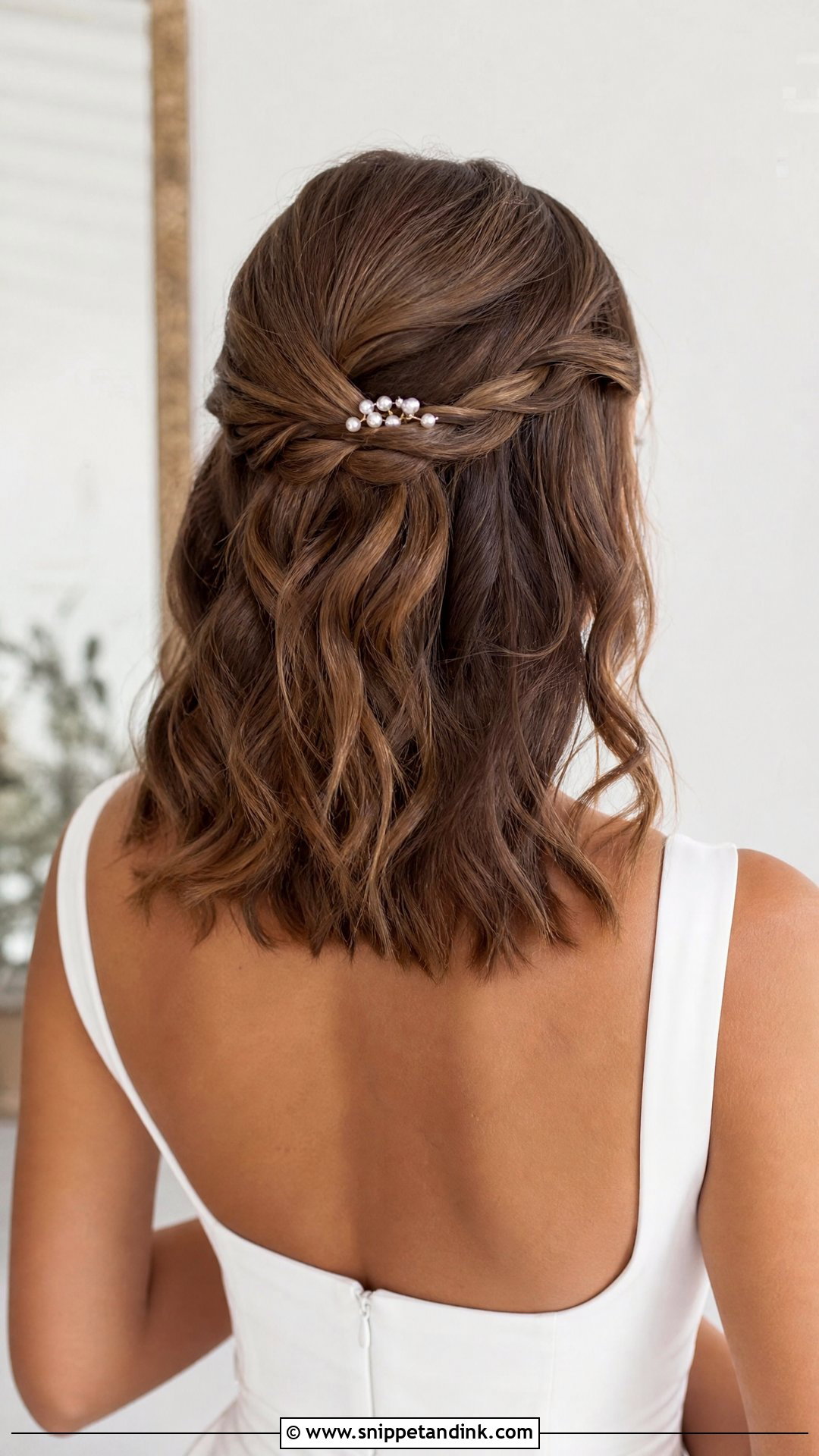
Medium hair can look just as full as longer hair if the braid is placed well. A half-up braid, side braid or braided headband adds detail without needing length, and waves give it volume. Collarbone-length cuts, lobs and shoulder-length layers all suit it. Short layers do tend to pop out of a braid along the way, so I braid on hair with some texture and pin the escapees. For extra fullness, clip-in extensions can go in just under the down section. A small pearl comb or floral pin finishes it.
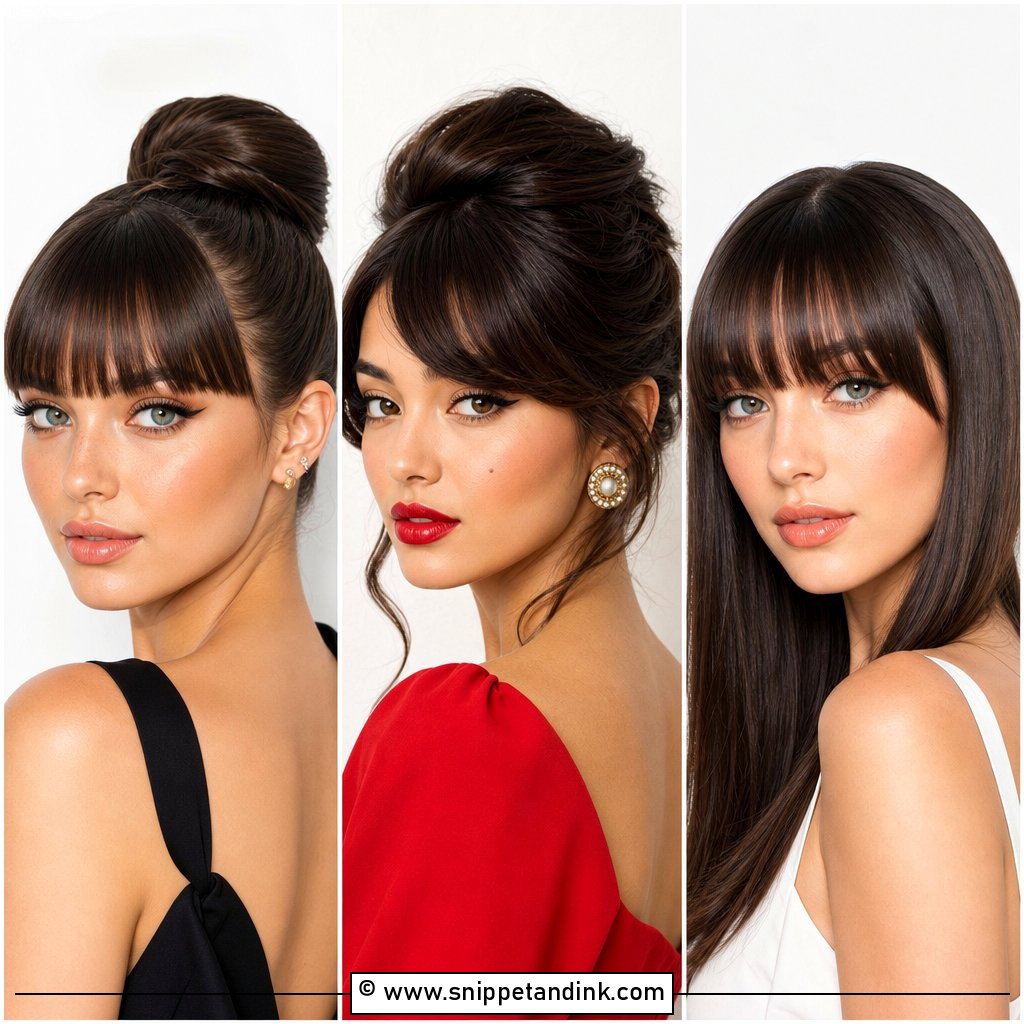
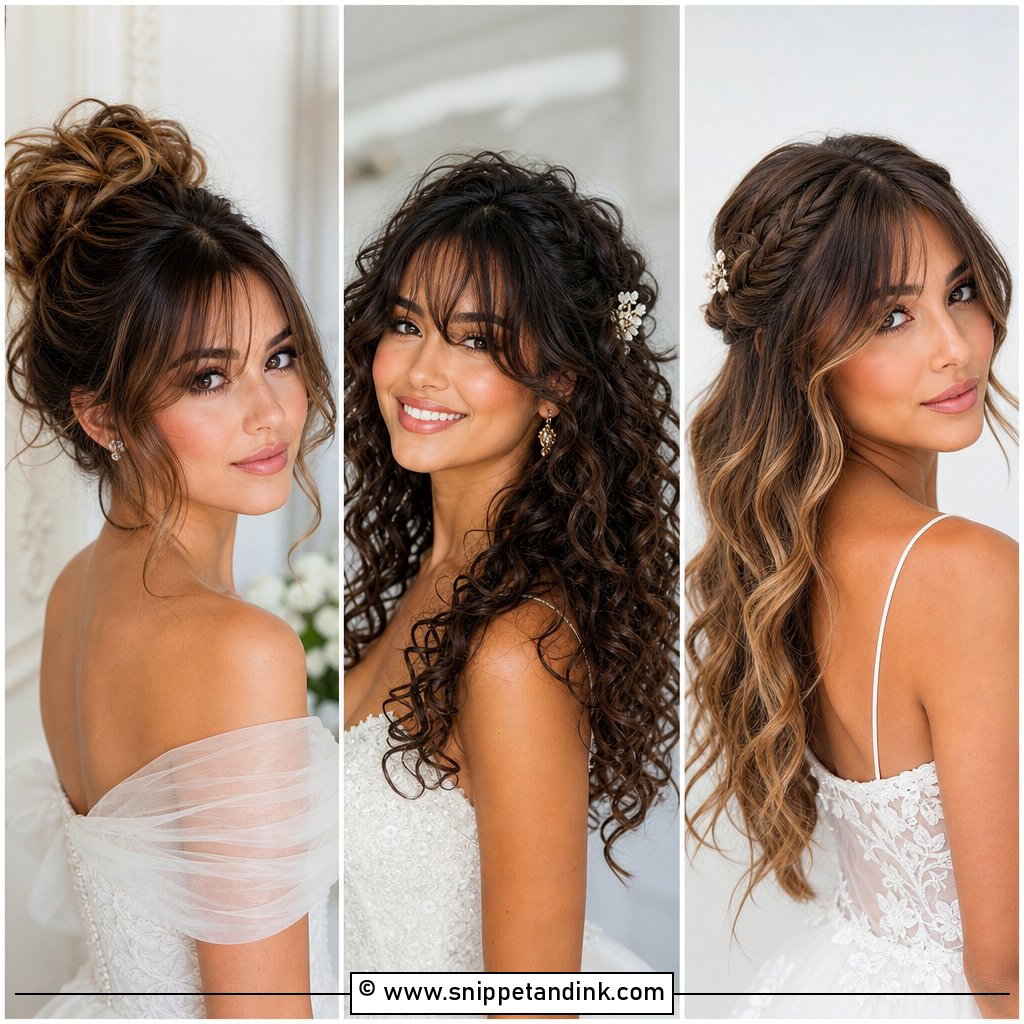
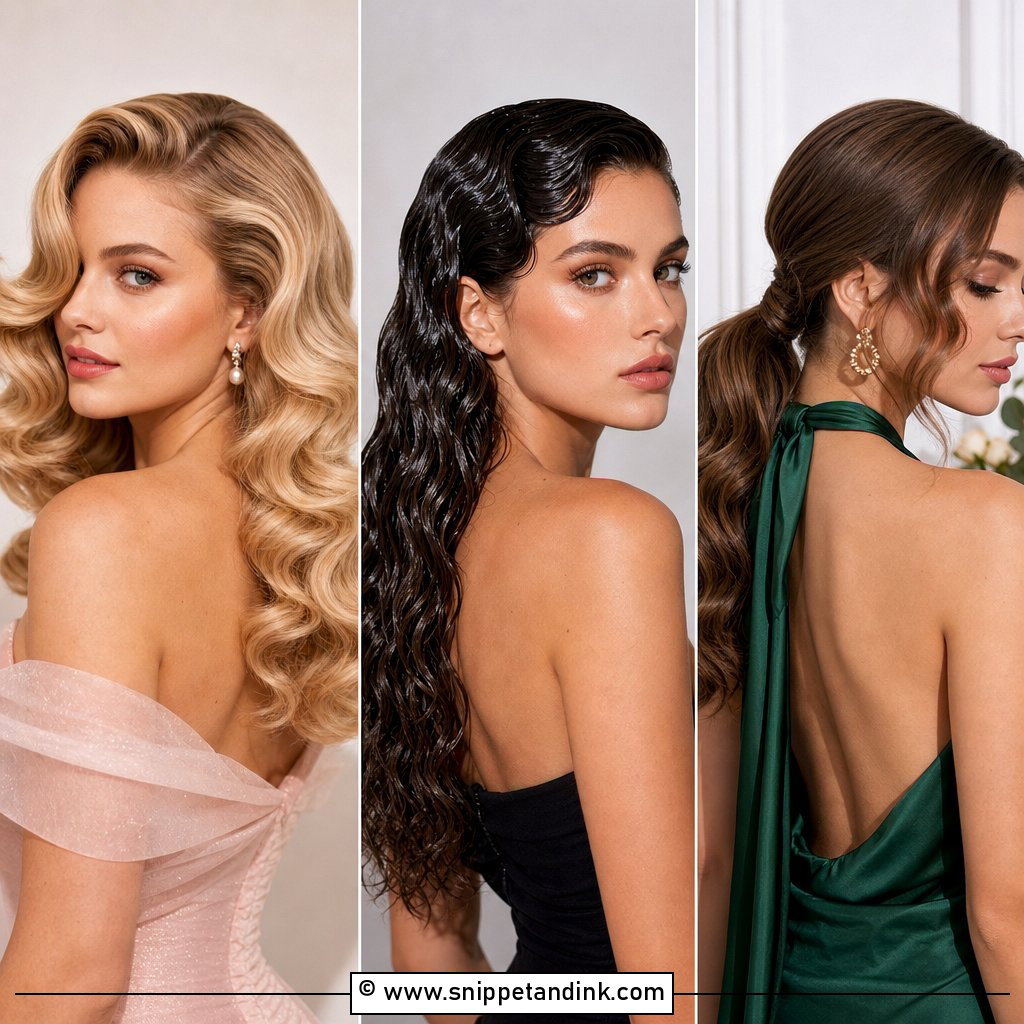
15. Bridal Hair Down With Braid For Curly Hair
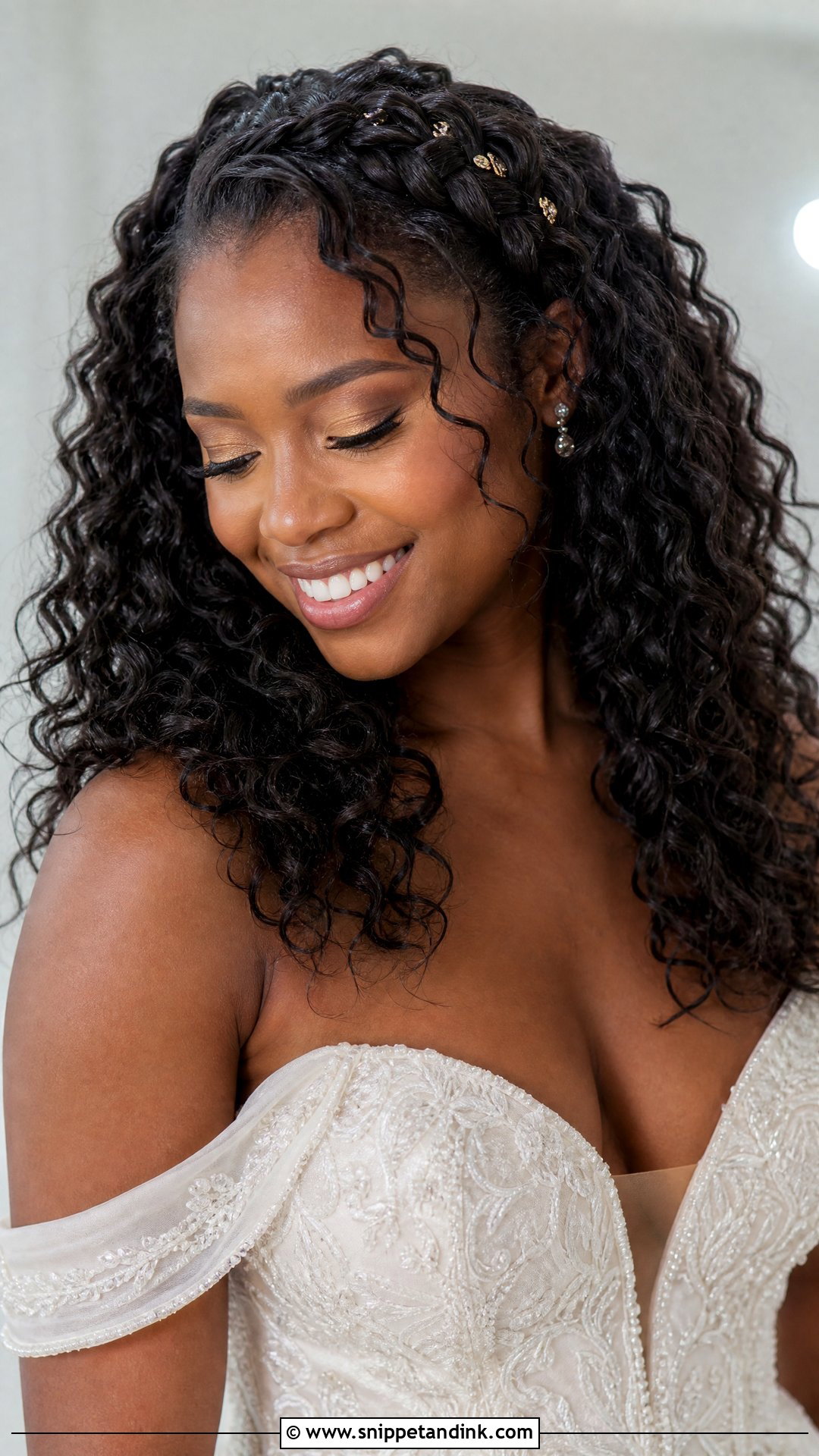
Curly hair braids beautifully, as long as nobody tries to brush it smooth first. I braid it along the crown, one side or as a half-up section, leaving the rest full and defined. Hydrated curls are easier to braid and frizz less, so I work on damp, product-prepped hair and let it dry in place. Braid without pulling tight, or the curls near the braid stretch and lose their shape. Small flowers, pearls or gold pins highlight the braid while the curls stay the main feature.
The Back of Your Head Is What the Room Watches
During the ceremony, your guests see your back for most of it. Your photographer often shoots from behind the officiant, though, which means your partner’s side gets the close-ups. So the braid has to work from more than one angle. Here’s what I check before a bride leaves her chair.
- Take a phone photo from behind and both sides. Braids that look centered in the mirror often drift to one side.
- Check where the veil falls. A sheer veil over a detailed braid softens it; a heavily embroidered edge can hide it completely.
- Look at it seated. Sitting pushes the loose lengths forward and can cover a side braid.
- Ask which side you’ll stand on at the altar, and favor any side braid toward the guests.
Braids also loosen as the evening goes on, especially after dancing. If a loop slips, don’t try to re-braid it. Push it back into shape with a finger, slide one bobby pin through the loop into the base, and mist lightly. It takes a minute and nobody notices.
One Braid, Worn Down, Can Carry the Whole Look
A braid adds hold and detail, while the loose hair keeps the look soft. Crown, fishtail, side, flowers or pearls: there’s a version that suits most dresses, venues and textures. Bring saved photos to your trial, but listen when your stylist talks about your length, layers, weather and veil placement, because those decide which braid will last. The style to book is the one that still looks right in the last photo of the night and still feels like you.
You'll Like These Ideas:


Leave a Reply