
Sleek, straight hair worn down is the quiet option, and I’d argue it’s the most honest one for many brides. If your hair is naturally straight and drops a curl within an hour, forcing waves into it means watching them fall in every candid photo. Straight hair shows off shine, a clean edge at the ends, a veil, a single clip and the neckline of the dress. It works on long, medium, fine and thick hair, on bobs, lobs and layered cuts. The catch is that smooth hair hides nothing, so prep and finishing matter more here than with any curled style. These fifteen looks run from courthouse ceremonies to garden weddings and ballrooms.
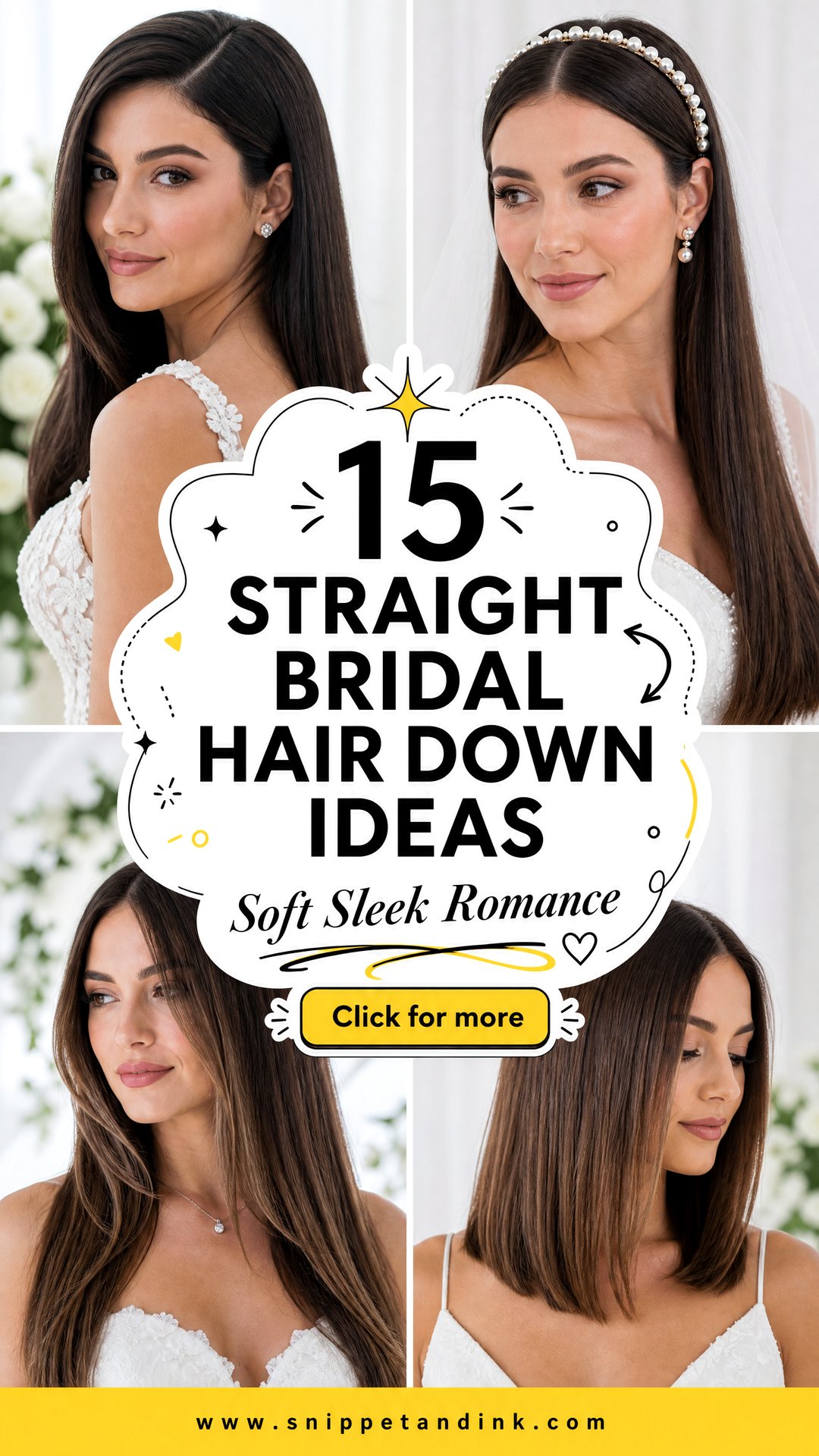
Glassy Hair on the Day Starts Weeks Earlier
Curls hide a lot. Straight hair shows split ends, dull patches, frizz and uneven ends the moment light hits it. The work happens before the wedding morning, and this is the timeline I give brides who want to wear it sleek and down:
- Six to eight weeks out: decide on layers or a new length now, so they have time to settle.
- Four weeks out or more: if you want a smoothing or keratin treatment, test it now. Never try one for the first time just before the wedding, as results vary and some leave the hair limp.
- One to two weeks out: trim the ends and, if you like, a clear gloss treatment for shine.
- The day before or that morning: wash, then use a lightweight conditioner only on the lengths. A heavy mask or oil on the roots leaves straight hair limp and greasy by evening.
Heat without frying the ends
Use a heat protectant every time. Fine or lightened hair needs a lower flat iron setting than thick, coarse hair. Slow, single passes on small sections smooth better than repeated quick passes at a high heat, which leave the ends dry and dull.
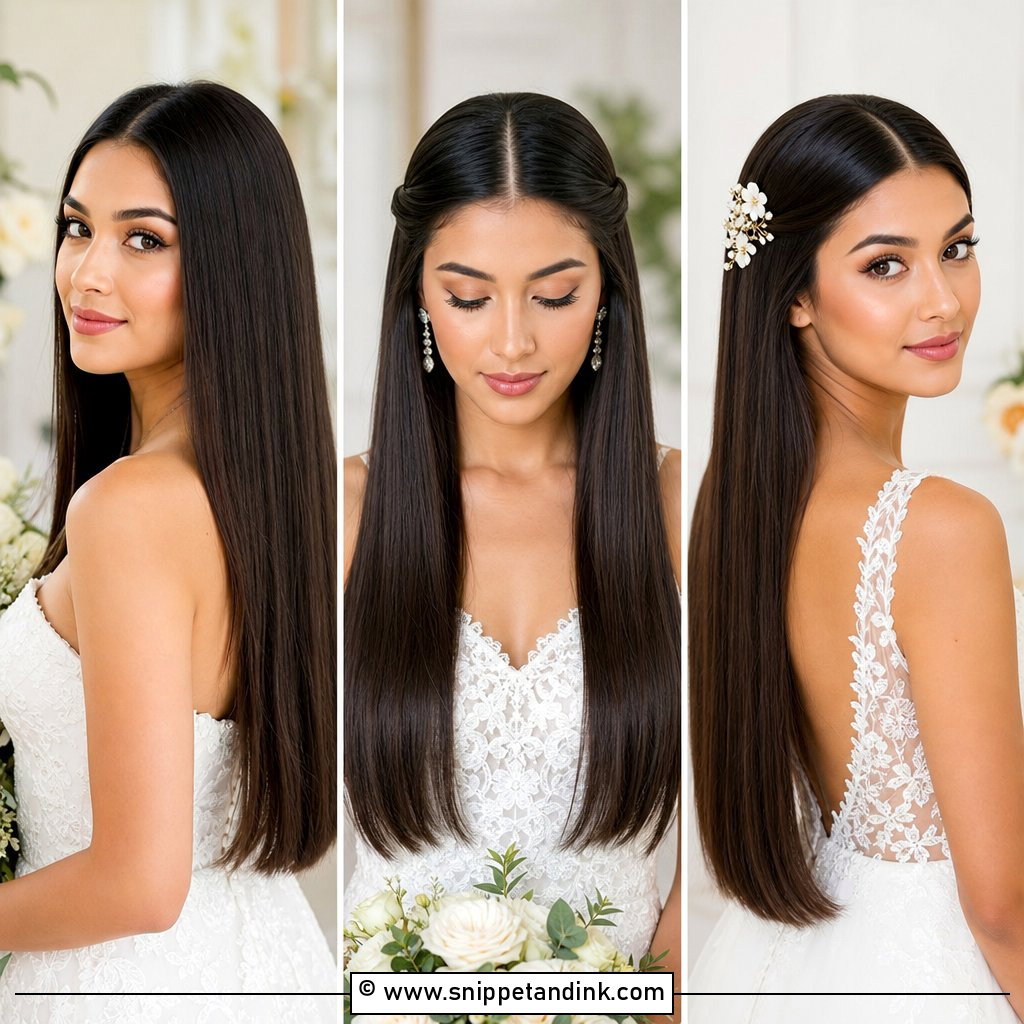
1. Straight Bridal Hair Down With Center Part
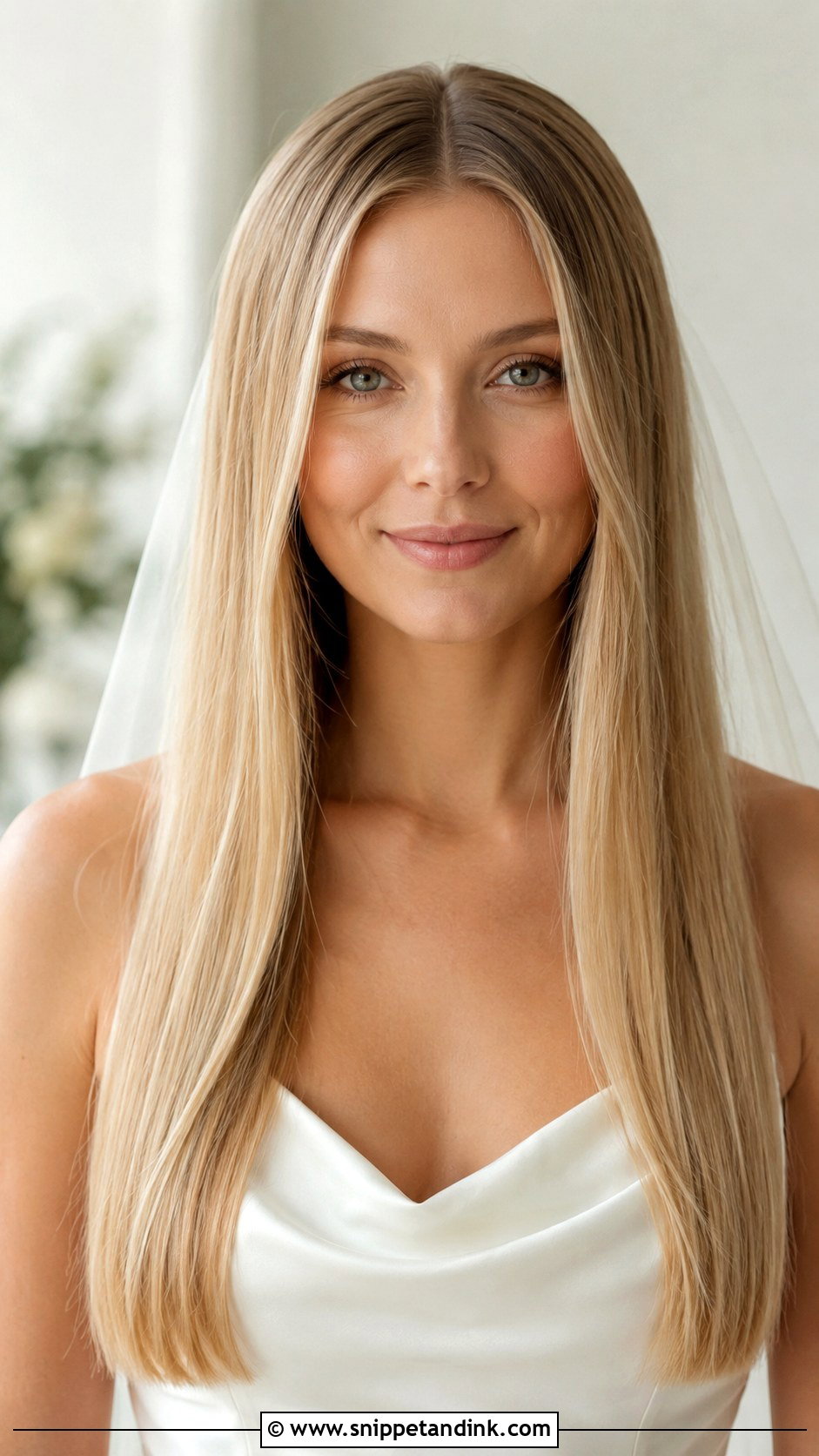
A centre part is the most symmetrical way to wear straight hair, and symmetry photographs calmly. It suits minimalist gowns, satin, square necklines and modern veils. I ask for a glossy blowout with a round brush first, then a few slow passes of the flat iron only where needed, rather than ironing everything flat. That keeps a little body at the root so the hair doesn’t cling to your head. The part has to be dead straight; I set it with the tail of a comb from the hairline back to the crown. A tucked veil or a couple of pearl pins are all it needs.
2. Straight Bridal Hair Down With Side Part
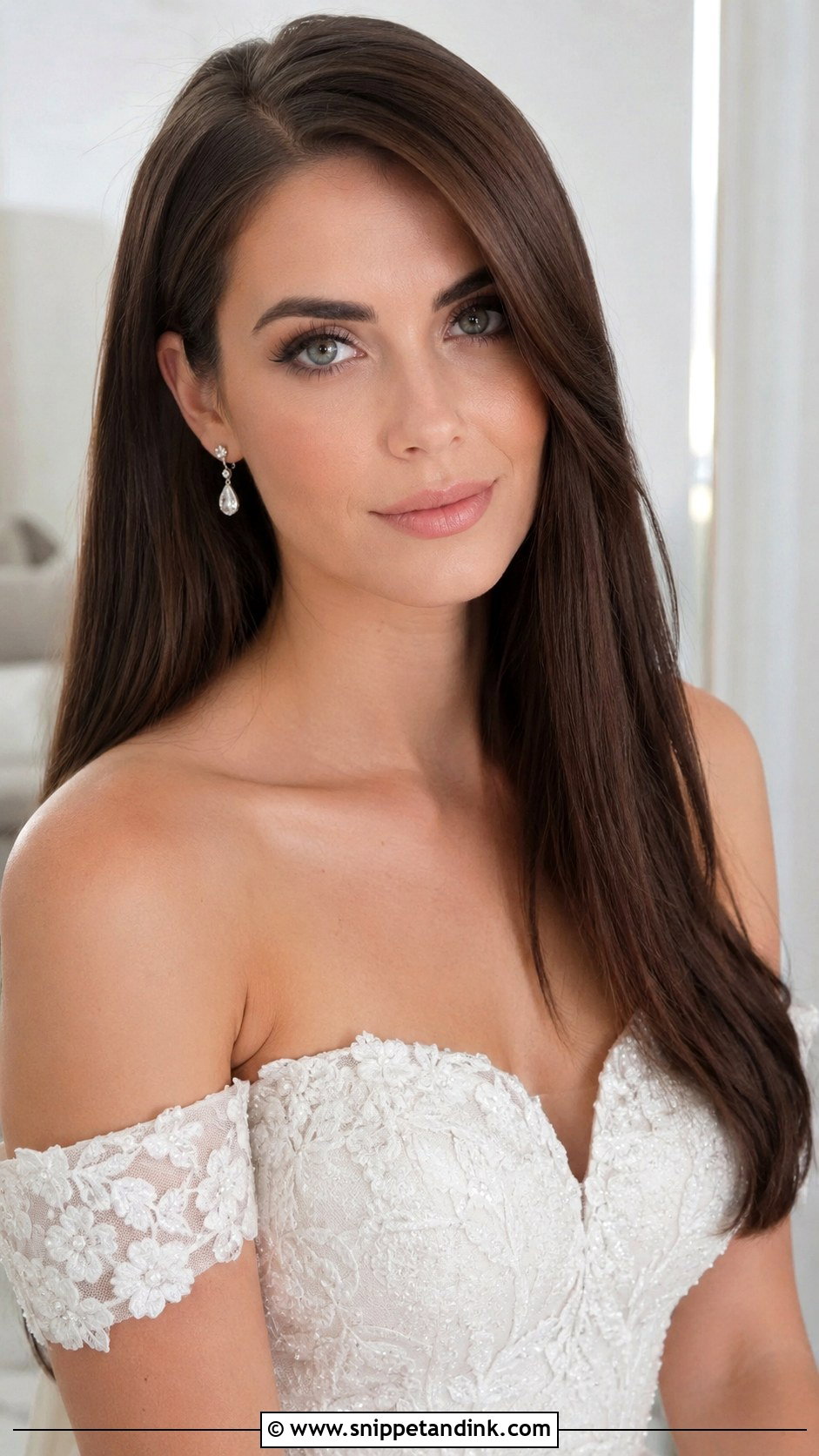
Flip the part to the side and straight hair suddenly has lift and a bit of glamour, with no curls involved. The heavy side sweeps across the forehead or cheekbone, which gives you face-framing in photos. One-shoulder and off-the-shoulder gowns balance well against it, as do statement earrings on the lighter side. Hair trained to part in the middle will try to fall back there, so I blow-dry it in the new direction while it’s still damp. A couple of hidden pins behind the ear and a light shine spray keep it in place through the ceremony.
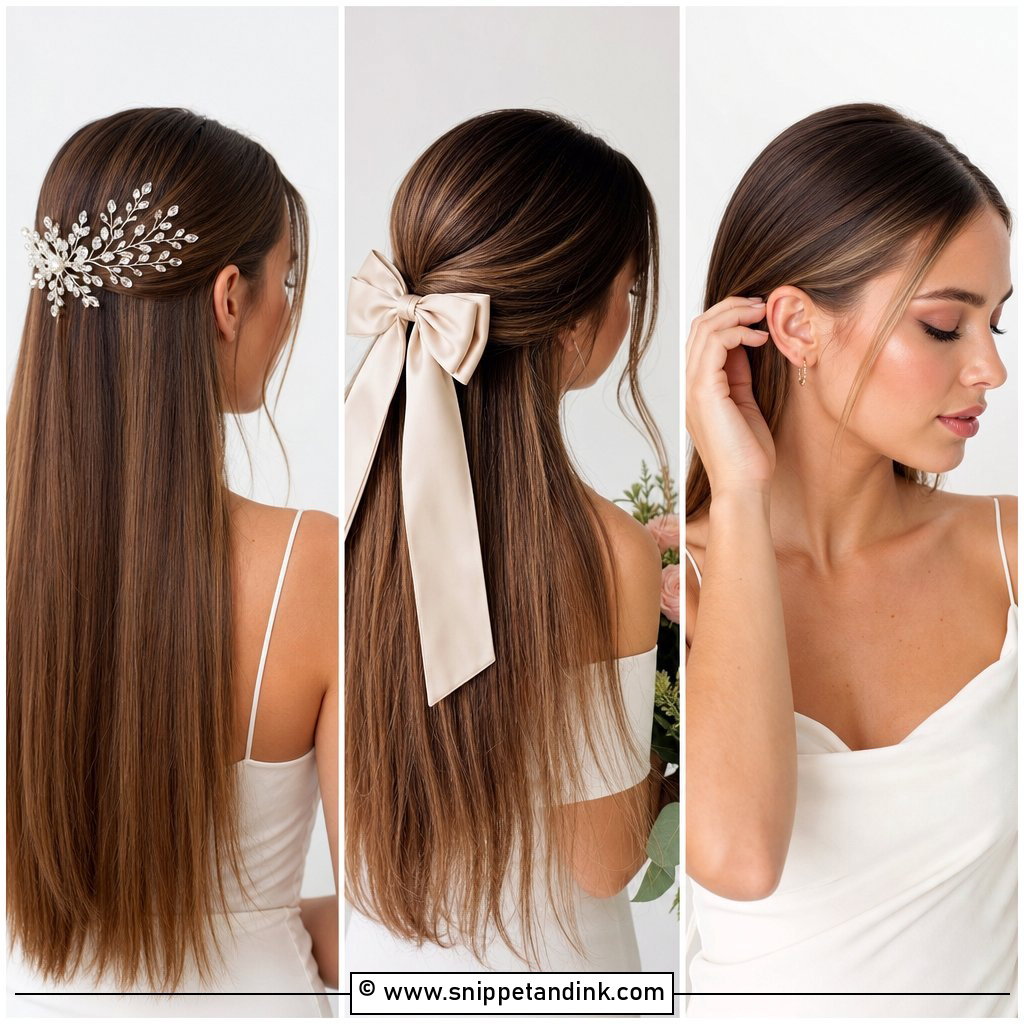
3. Straight Bridal Hair Down With Pearl Headband
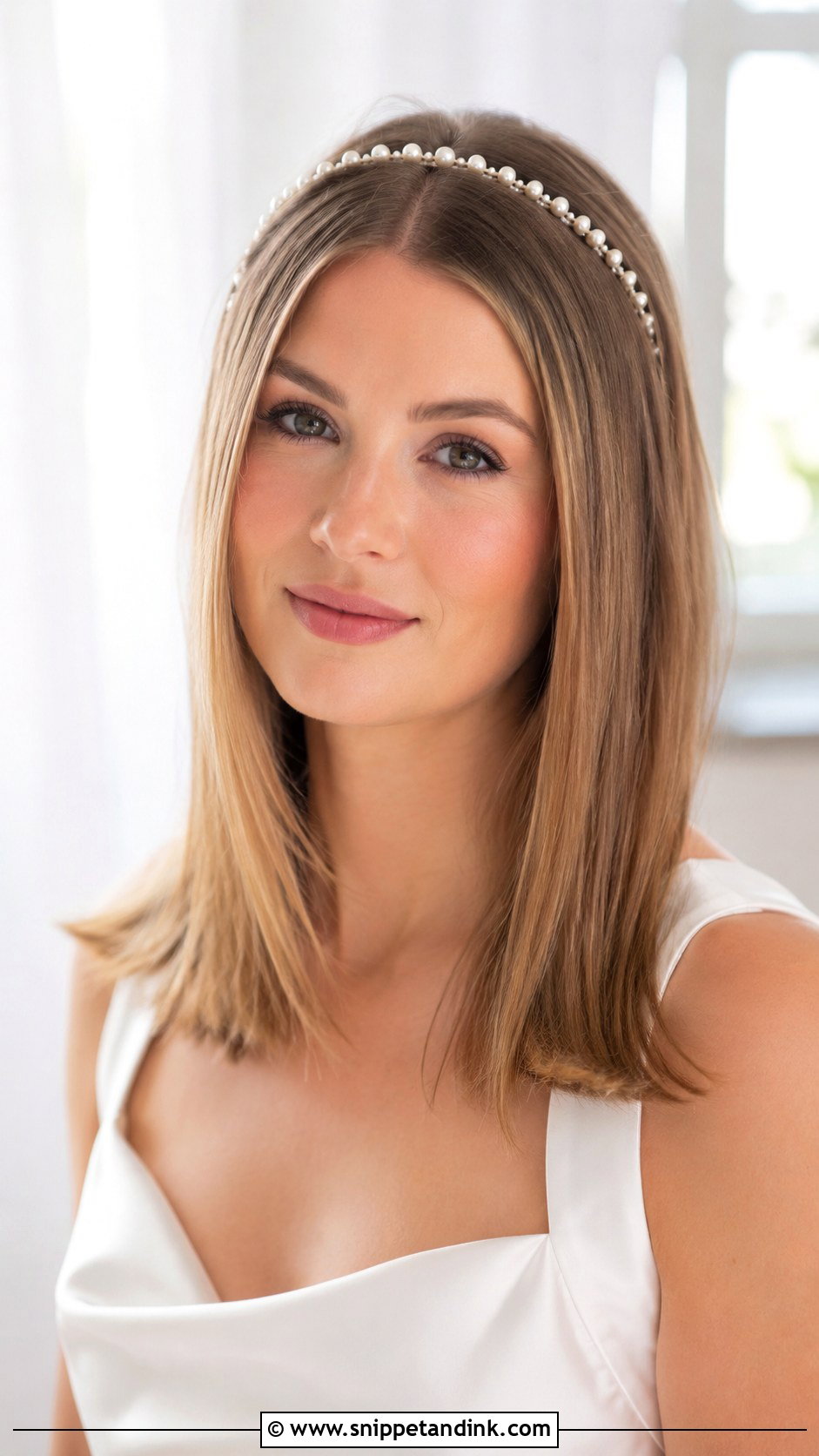
Pearl headbands dress up straight hair without changing its shape at all. A thin band reads delicate; a wide padded band reads fashion. The common complaint is headaches: a rigid band presses behind the ears, and after four hours it hurts. I always tell brides to wear theirs for a full afternoon before the wedding. Keep the crown sleek and bevel the ends slightly under so the length doesn’t look flat. Classic, city and indoor venues suit it, along with pearl earrings or a simple veil.
4. Straight Bridal Hair Down With Veil
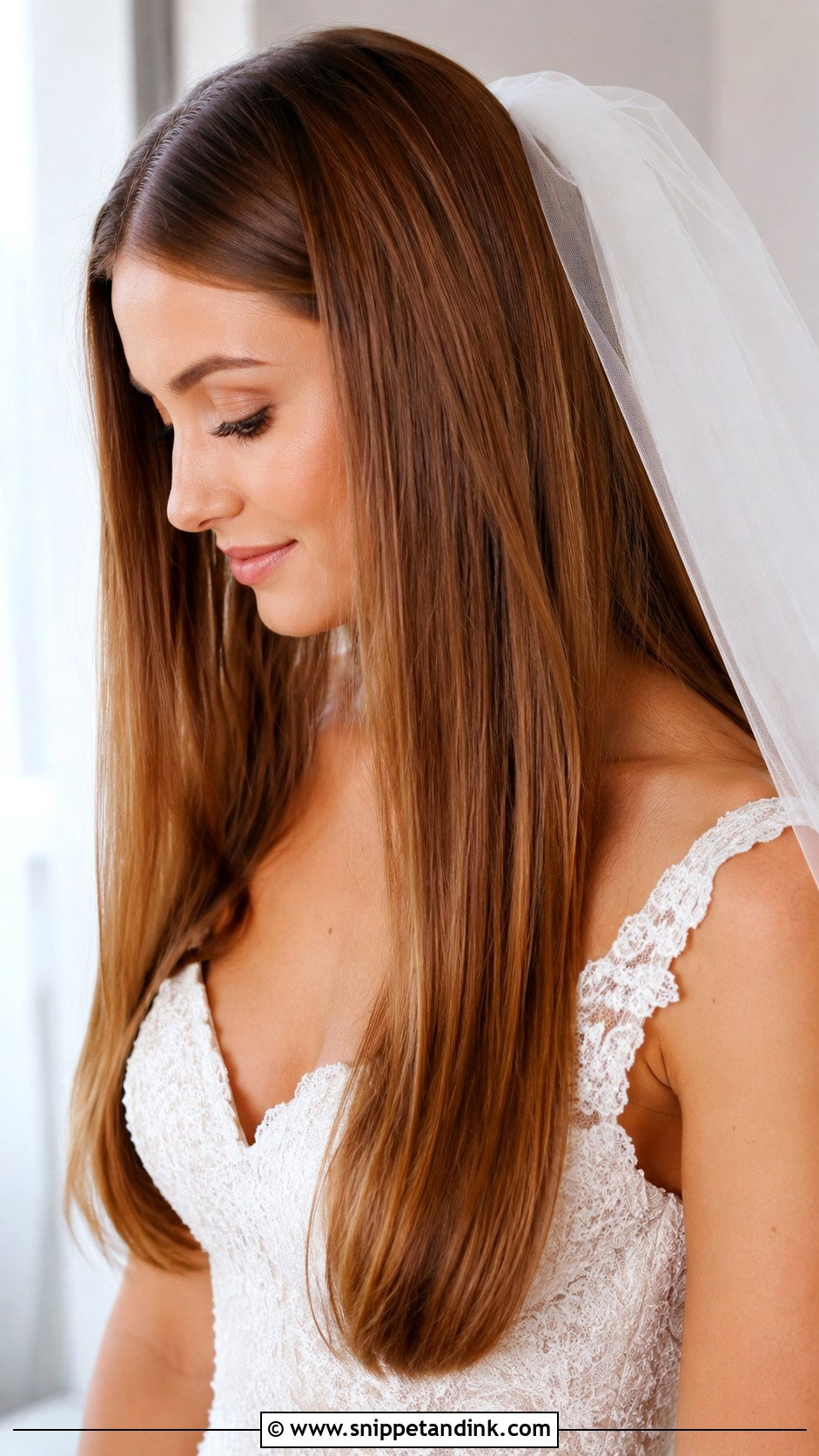
Smooth hair is the easiest base for a veil, because the tulle falls cleanly instead of catching on curls. A comb veil can go at the crown for height, low at the back for softness or into a small pinned section for extra hold. On straight, slippery hair the comb will slide unless it has something to grip, so I always build a tiny hidden anchor of crossed pins or a small backcombed section first. Long hair, blunt ends and subtle face-framing layers all suit this. Use an anti-frizz product before heat on humid days or for outdoor ceremonies.
5. Straight Bridal Hair Down With Tiara
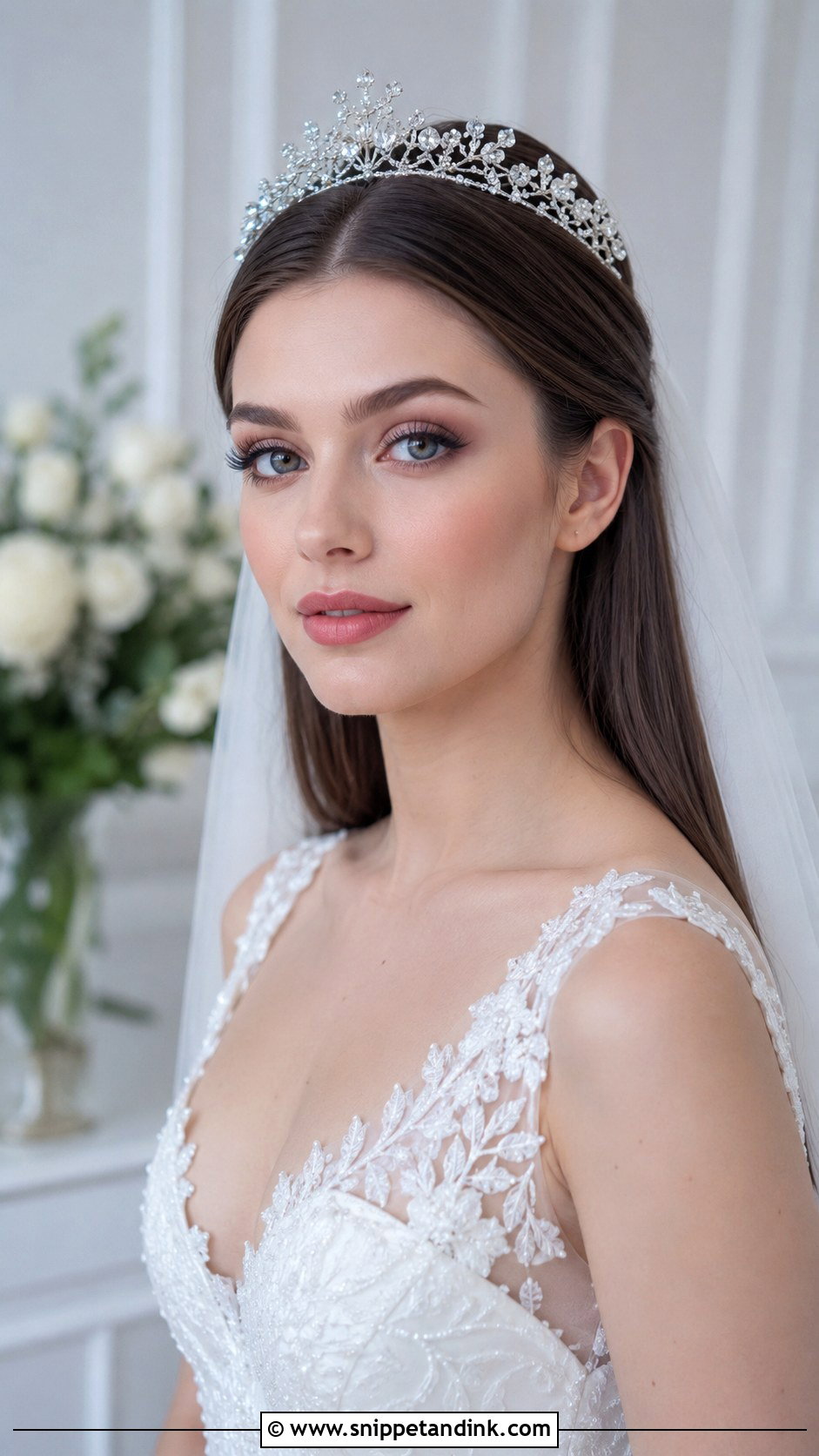
Straight hair with a tiara keeps the look grown-up while the tiara brings the ceremony sparkle. Ball gowns, cathedral veils and formal evening weddings all suit it. A tiara sitting on completely flat hair slips forward and looks pasted on, so I add a little lift at the crown and pin the tiara through its loops into a small backcombed section behind it. Long hair falls behind the shoulders; medium hair can tuck behind the ears. Do check the tiara’s weight at your trial, as a heavy piece can pull on straight hair all day.
6. Straight Bridal Hair Down With Pearl Pins
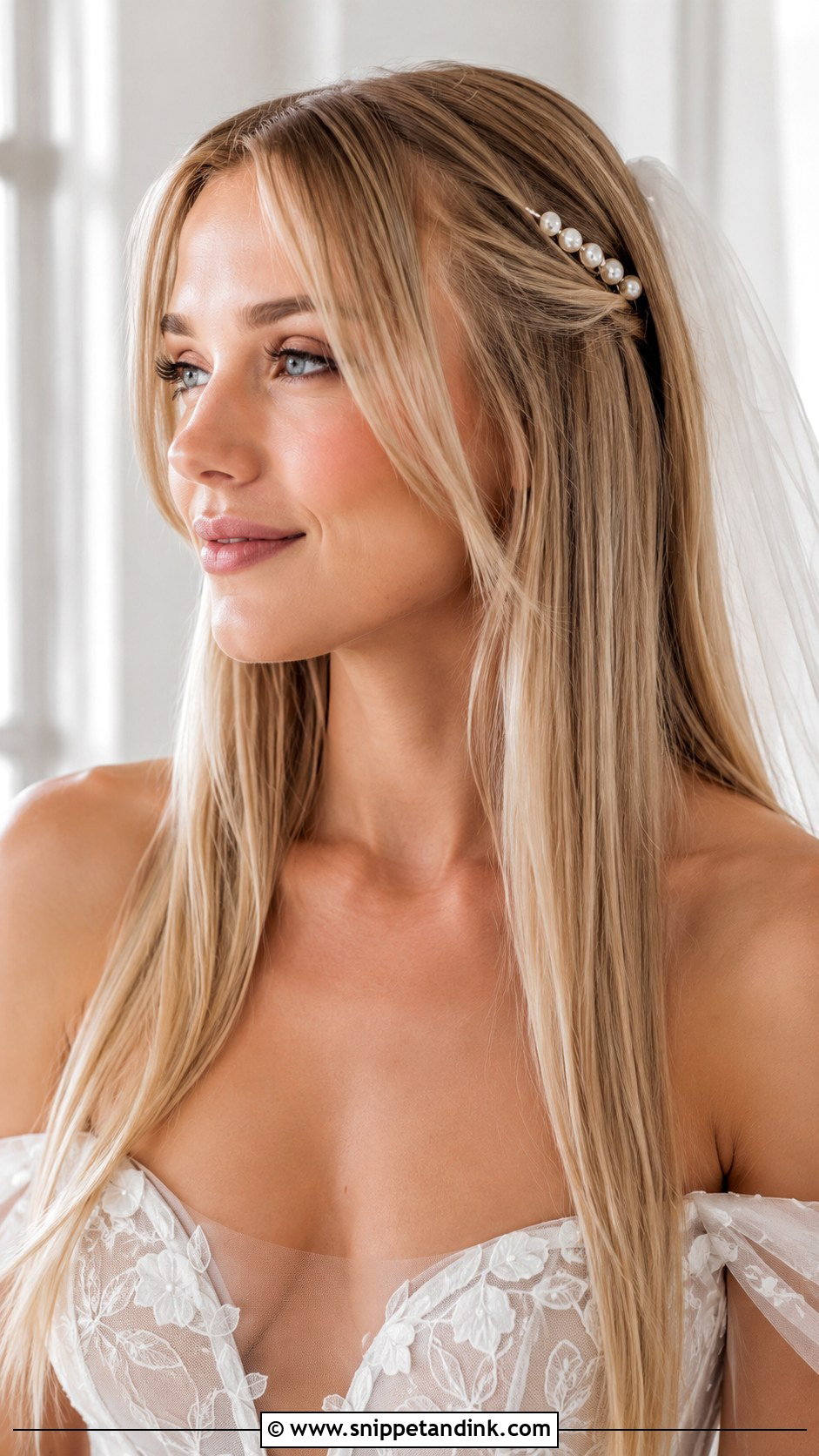
Each pearl pin stands out clearly against a smooth surface, so you need fewer than you’d think. I place them around one side, near a small tuck, or scattered lightly through the back. On sleek hair, decorative pins slide out because they’re designed to look good rather than grip, so I put a plain bobby pin underneath each one, crossed against it. That small step is the difference between keeping all of them and finding two on the dance floor. Keep the crown and ends smooth and match the pins to your jewellery.
7. Straight Bridal Hair Down With One Side Tucked
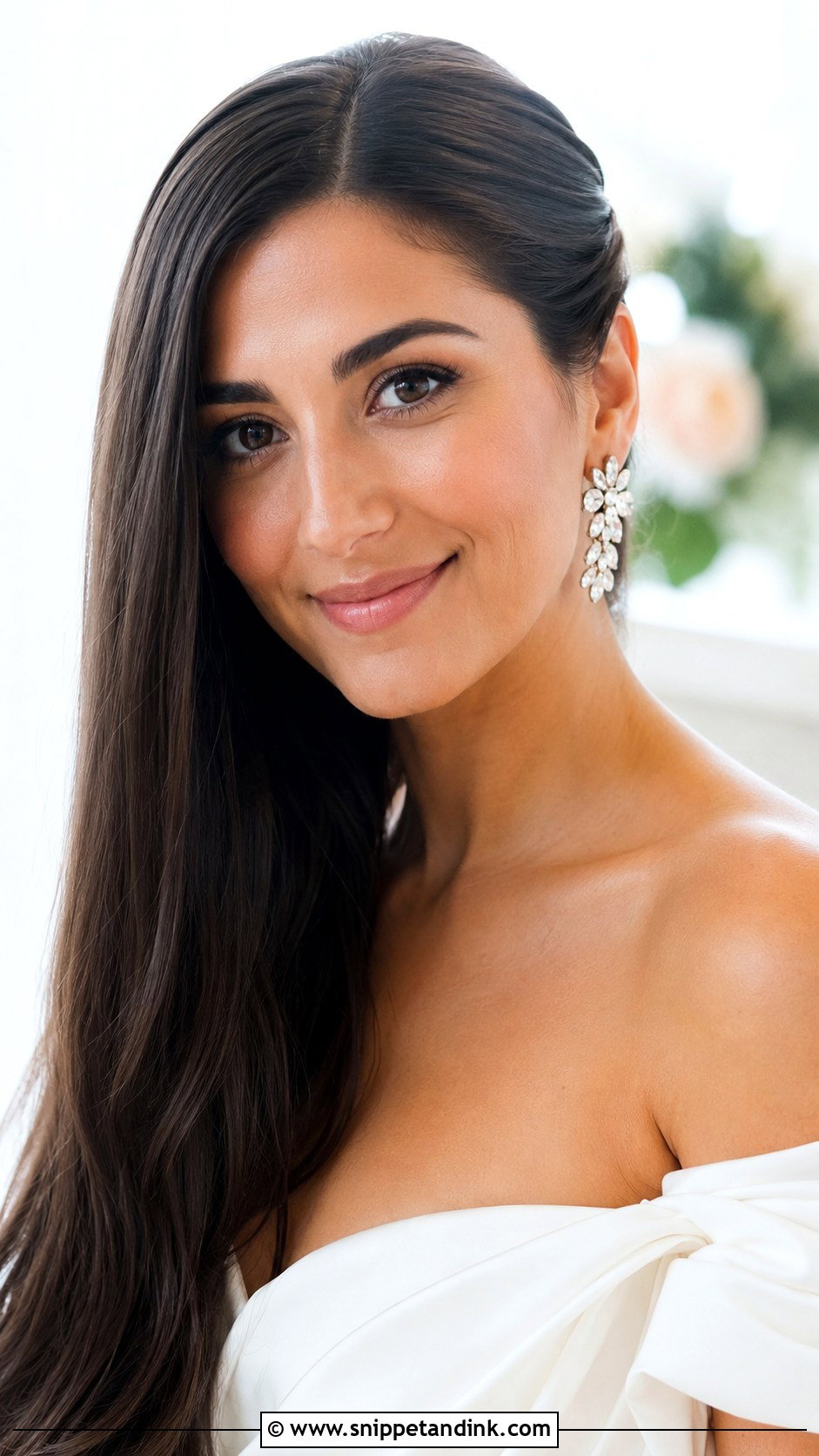
Tucking one side opens that side of the face, shows off an earring and stops hair falling forward when you look down at your vows or the rings. The tuck is held by hidden pins, a pearl clip or a small comb behind the ear. The opposite side stays smooth and loose for contrast. I set the tucked side with a little hairspray on the pins, not on the hair, so it doesn’t get a crunchy patch. Side parts, long layers and medium-length cuts suit it.
8. Straight Bridal Hair Down Half Up
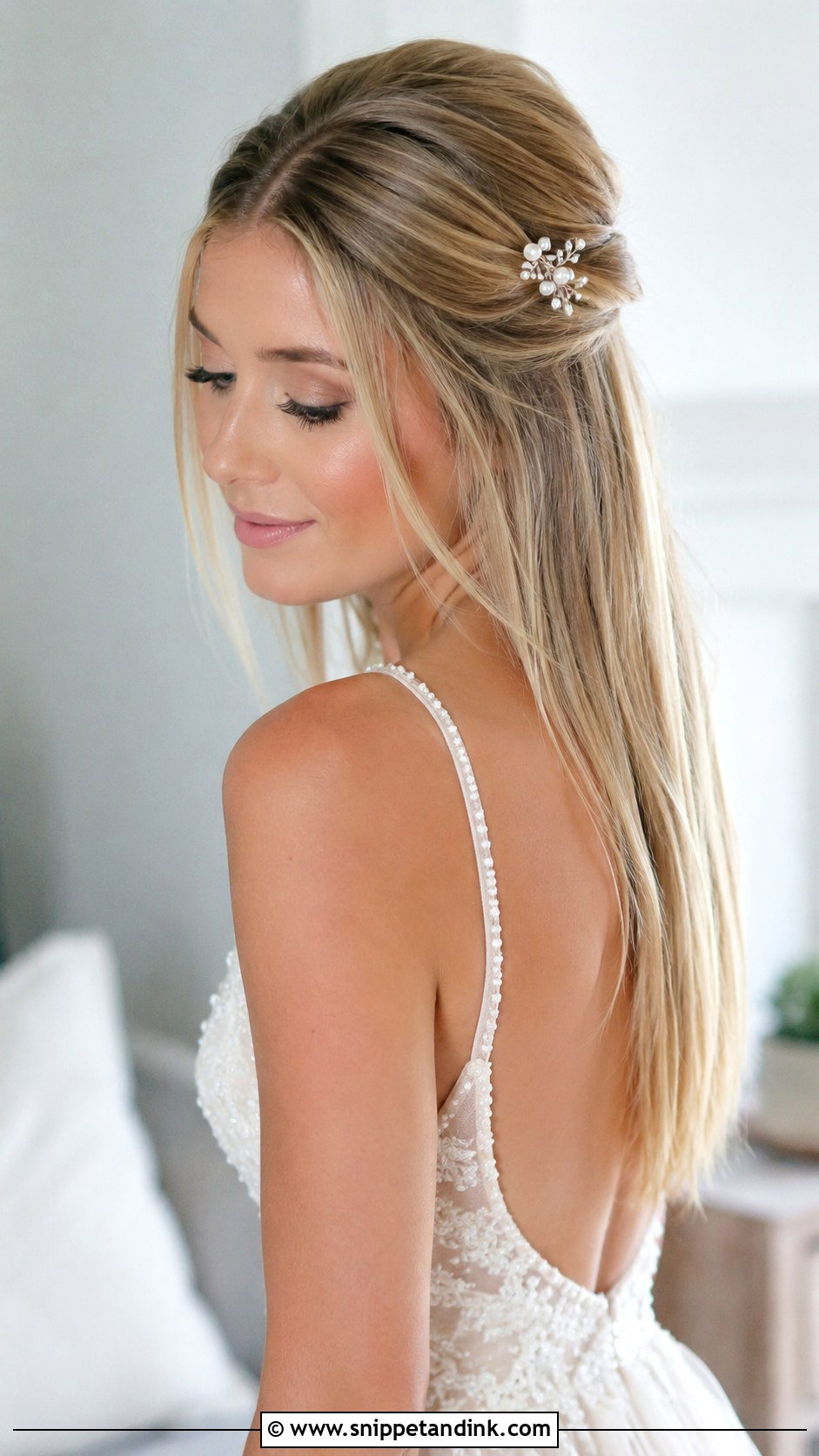
For fine or slippery hair, half up is the version I recommend most. The top section is controlled, which takes pressure off the front all day, and the rest falls straight down the back. That section can be twisted, pinned flat or gathered with a small comb. Fine straight hair needs some grip in that section, so a light dry texture spray before pinning helps it stay up. Kept sleek rather than curled, it looks modern. Veils, bows, pearl pins and simple gowns all pair with it.
9. Straight Bridal Hair Down With Face Framing Layers
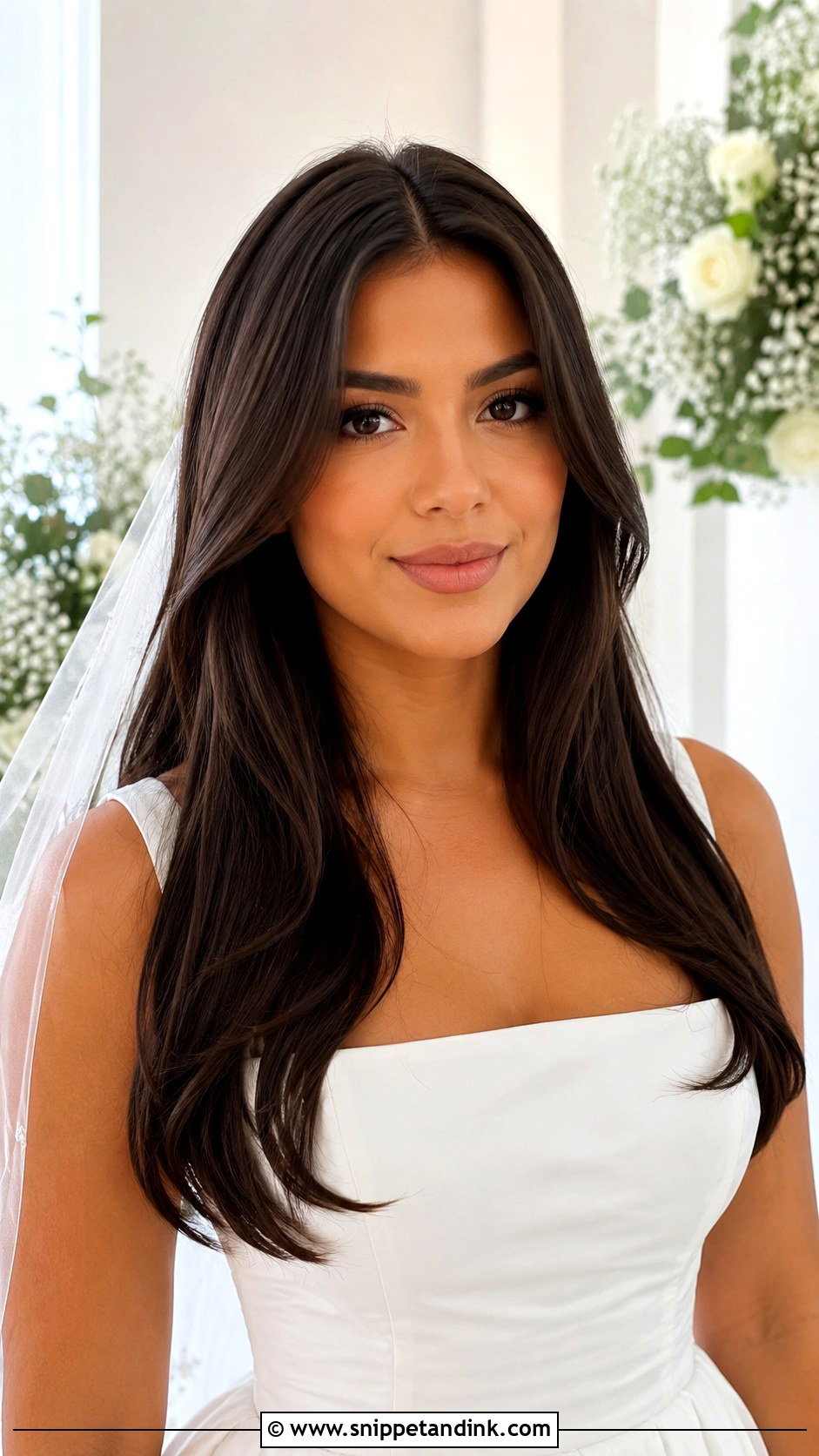
Layers around the face give straight hair shape at the cheeks, jaw and collarbone without needing a single curl. A smooth blowout with a slight bend at the ends sits each layer in place. If you don’t already have these layers, get them cut four to six weeks before the wedding, not the week before, so they settle and you know how they fall. Middle or soft side parts and delicate accessories suit this. A drop of light serum on the ends keeps every piece looking deliberate.
10. Straight Bridal Hair Down With Blunt Ends
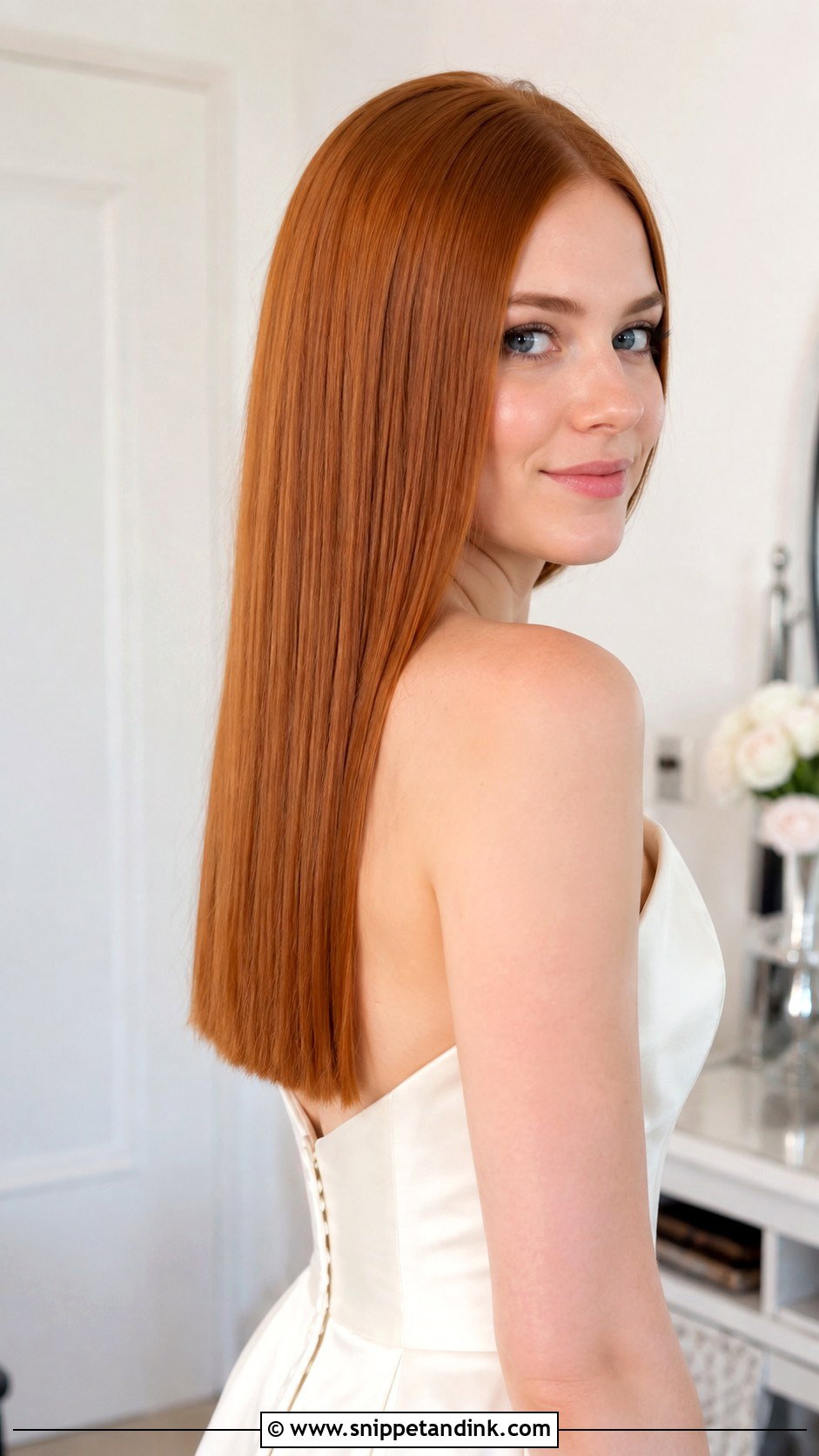
Blunt ends make hair look thicker, which helps a lot with fine or medium-density hair. The style depends on the cut more than the styling. I’d have the ends trimmed a week or two before the wedding, close enough to stay crisp but not so close that a slightly uneven line can’t be corrected. The surface needs to be glossy from roots to tips. A centre part feels editorial; a side part softens it. Simple gowns, structured dresses and minimal makeup suit the clean shape.
11. Straight Bridal Hair Down With Flipped Ends
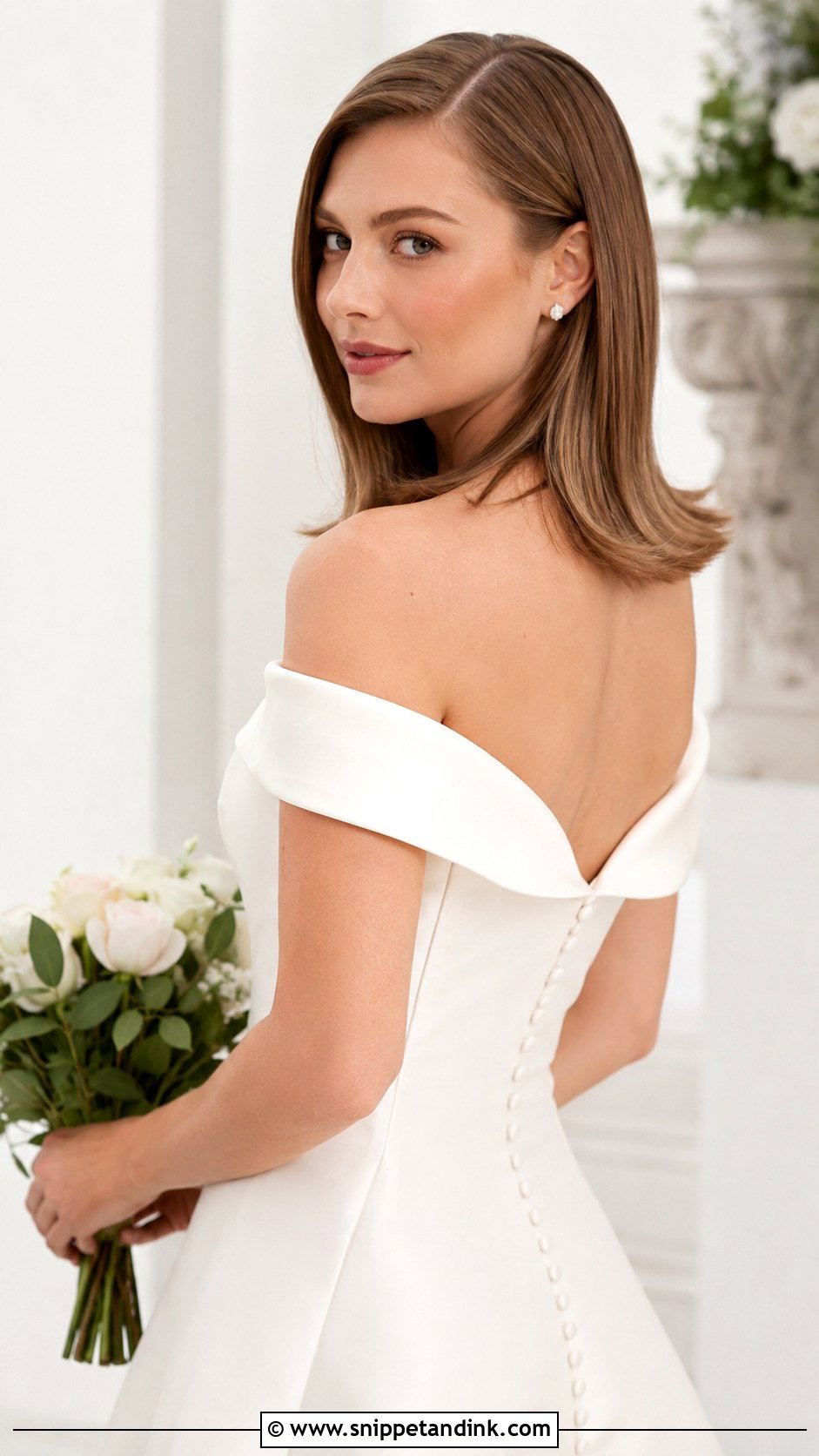
Straight bridal hair with flipped ends has a light vintage feel without going full retro. The top and mid-lengths stay sleek, and the ends turn out or slightly under. I do the flip with a large round brush during the blow-dry and then set it with a few seconds of a flat iron turned at the ends, which holds better than a curling iron on most straight hair. Medium hair, long layers and lobs show it best, with strapless gowns, square necklines or short veils. Finish with a flexible spray so the flip keeps its shape.
12. Straight Bridal Hair Down With Long Layers
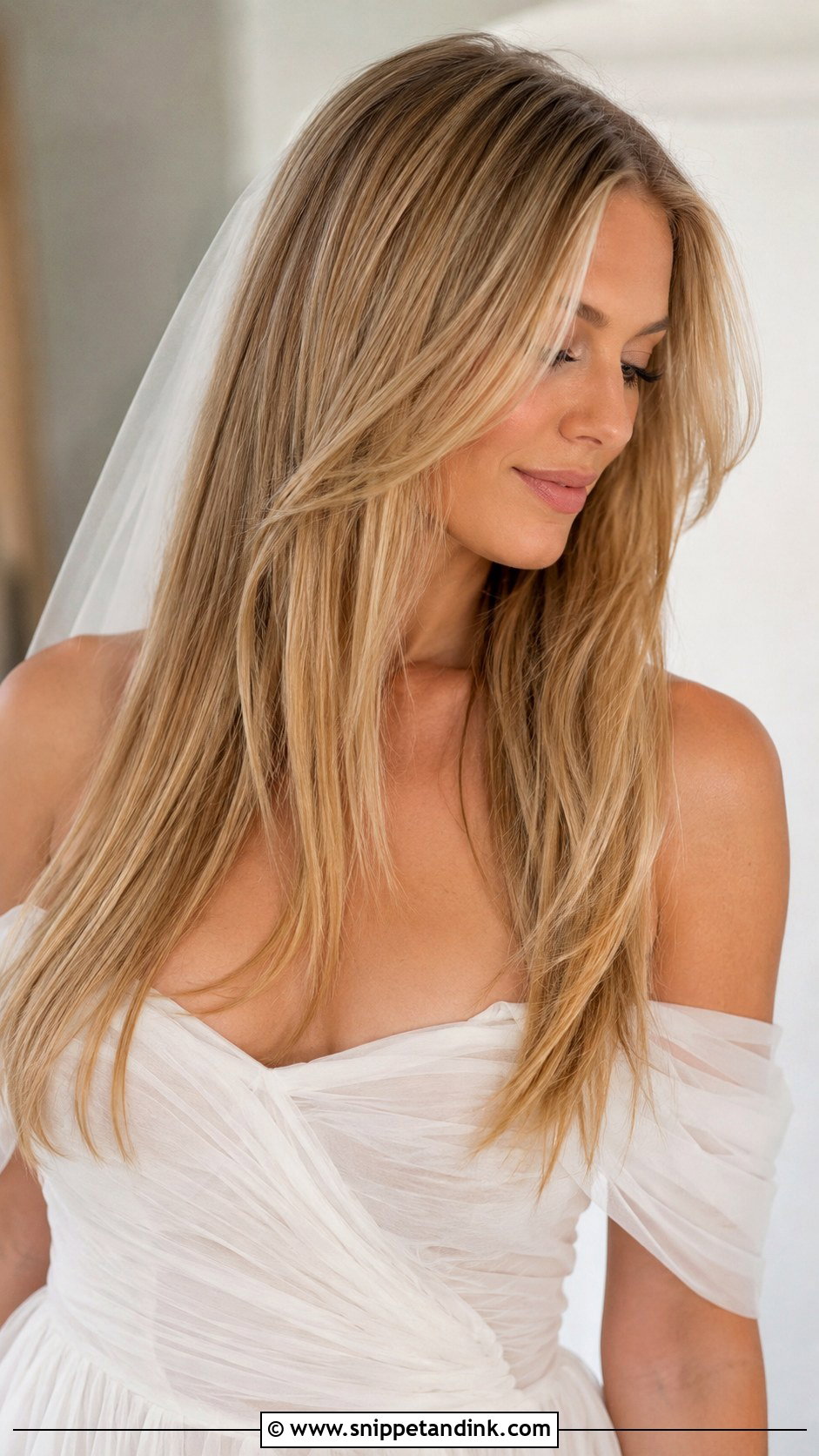
Long hair with no layers can hang heavy and flat, especially on a long day. Long layers add body and movement while keeping the overall look sleek. With a centre part, face-framing pieces and a smooth finish through the lengths, it suits outdoor ceremonies where curls wouldn’t survive the weather. The downside is breeze: layers lift more easily than one length. A couple of hidden pins or a delicate comb keep the front pieces under control.
13. Straight Bridal Hair Down With Bridal Barrette
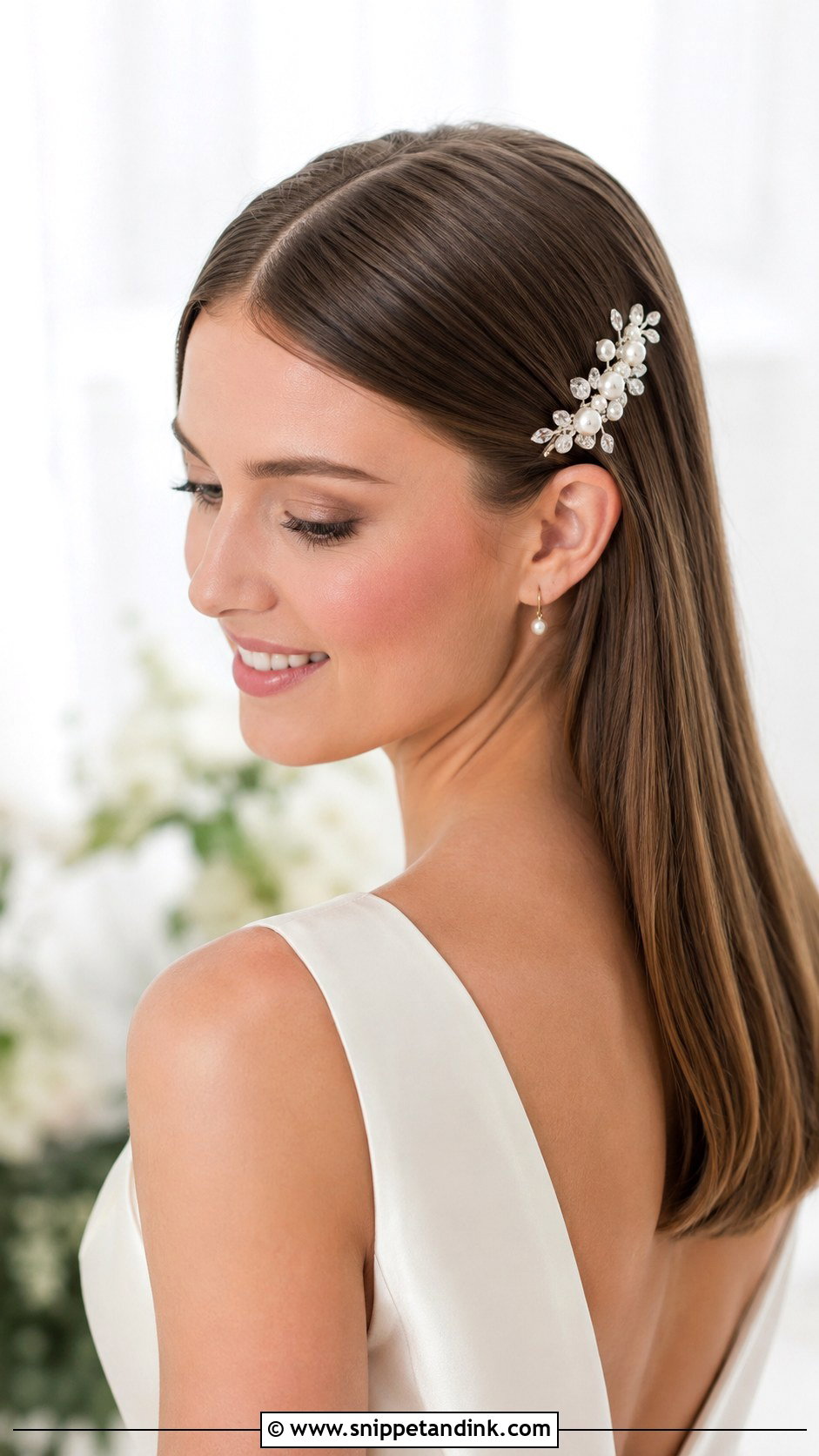
A barrette turns straight hair into a wedding look in a minute, and choosing it is mostly about the mood of the day. Pearl barrettes feel romantic, crystal ones formal, and slim metallic clips modern. I place it just above the ear on one side, which holds hair back while showing off the length. Large barrettes can slip on very smooth hair, so I secure a small section with a hidden elastic or crossed pins and clip the barrette over it. It works on long and medium hair and straight lobs.
14. Straight Bridal Hair Down With Flower Crown
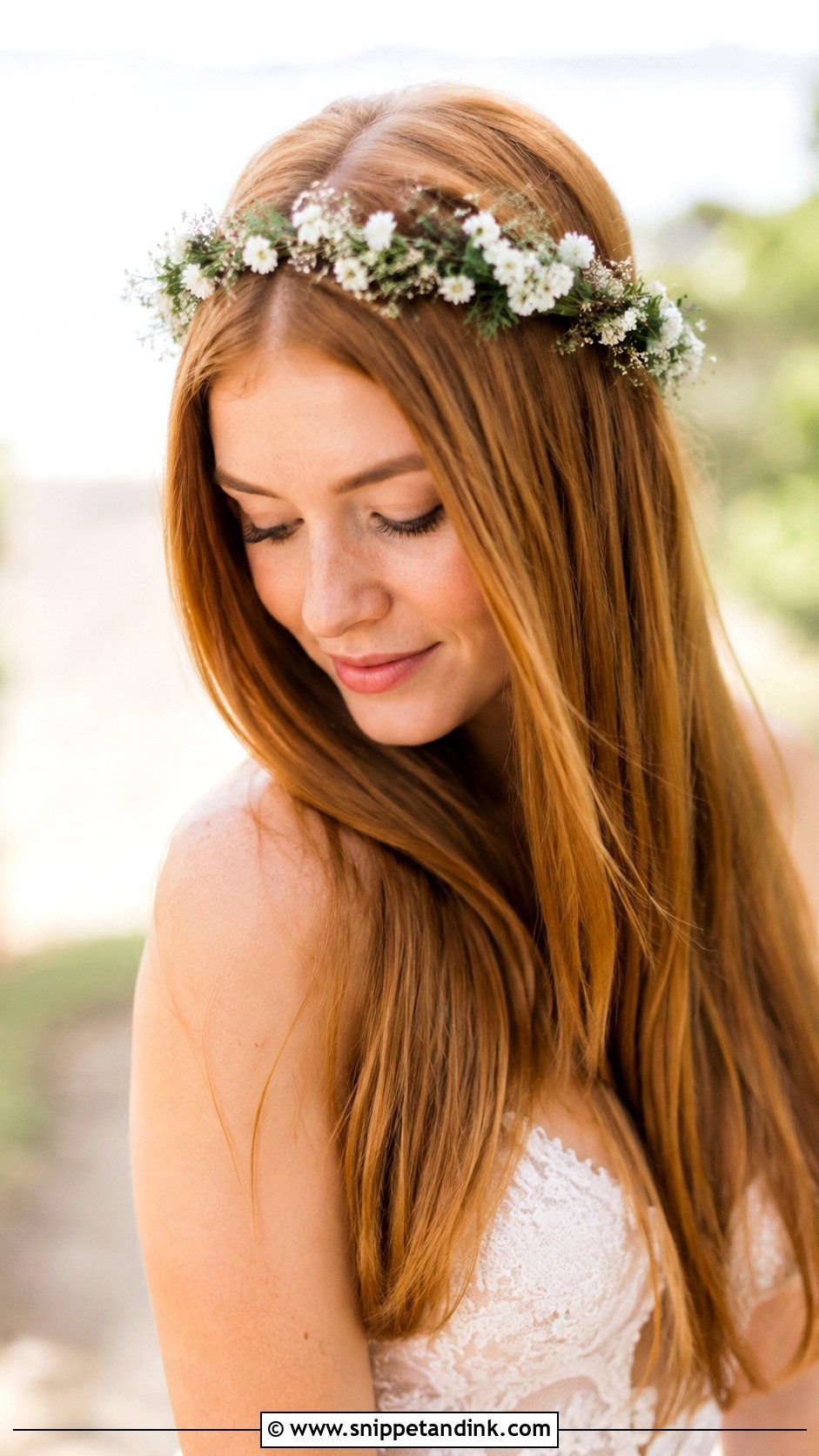
A flower crown on sleek hair keeps the look from getting busy, which suits garden, beach and outdoor weddings. Small blooms read delicate; greenery with tiny flowers reads fresh. The crown also holds the top section in place in a breeze. Give the crown a little volume to sit on; on completely flat hair it slides down toward the forehead. I pin it at four points, through the base of the crown into small sections of hair, so it stays put when you hug people.
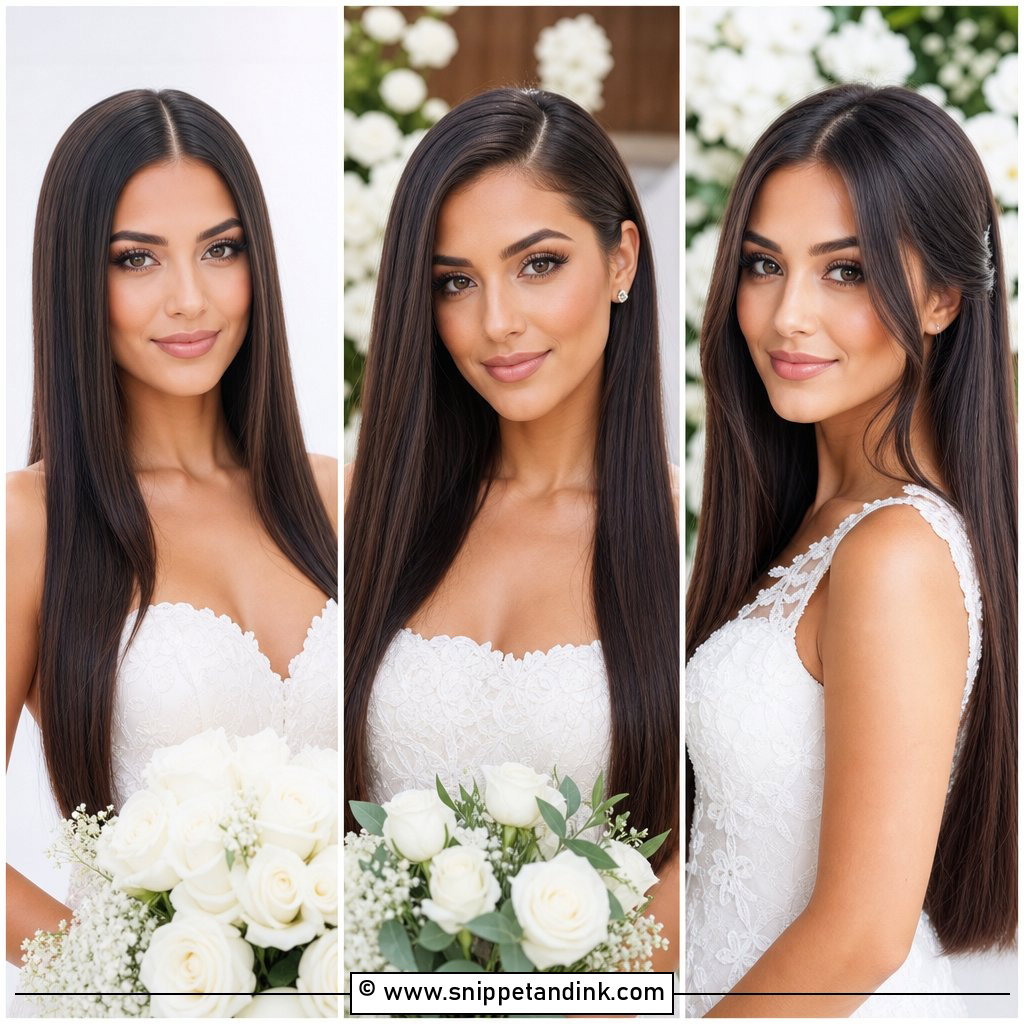
15. Straight Bridal Hair Down Lob
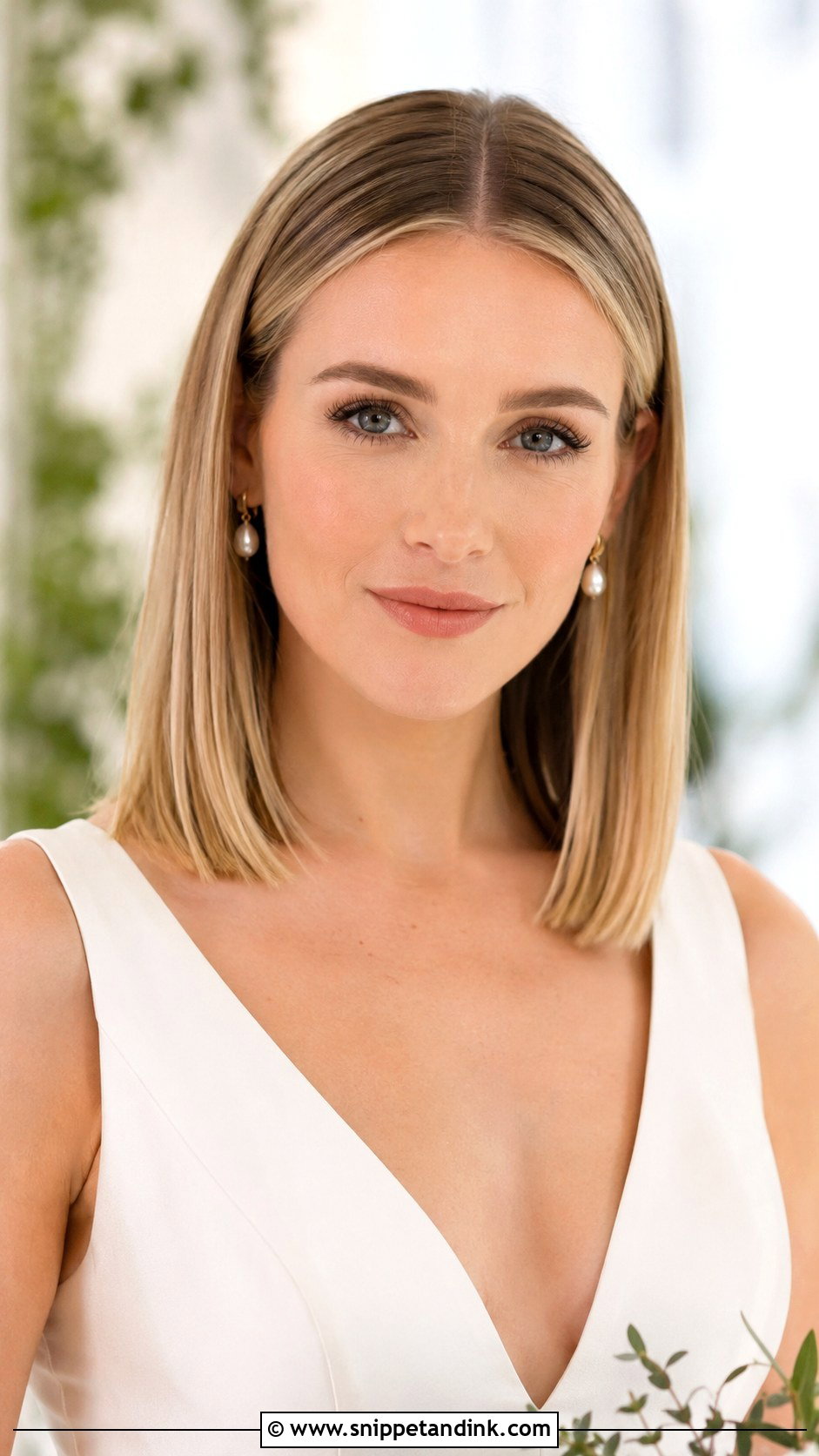
A straight bridal lob is shoulder-length, clean and easy to keep smooth all day. A blunt lob looks sleek and fashion-led; a softly layered one is lighter around the face. Veils, pearl clips, headbands and statement earrings all work with it. The one thing to watch is ends flipping out where they hit the shoulders, so I finish with the ends curved slightly under or sitting just above or below the shoulder line. It frames the neckline neatly and suits many dress shapes.
Static, Oily Roots and Dents: Fixing Sleek Hair by Evening
Straight styles don’t fall the way curls do. They have their own problems, and most show up around the reception. These are the ones I prepare brides for.
- Static under a veil: tulle rubbing on dry hair makes it fly away. A little hand cream rubbed between your palms and smoothed over the surface calms it.
- Oily roots: sleek hair shows oil faster because nothing breaks up the surface. Keep a small dry shampoo or blotting papers in your bridesmaid’s bag and press, don’t rub.
- Dents: tying your hair back while you do makeup or eat leaves a ridge. Use a claw clip, not an elastic, during the day.
- Hair stuck to lip gloss or lipstick: a tucked side or half-up section prevents most of it, which is one reason I suggest those versions for outdoor ceremonies.
If humidity has puffed up the surface, don’t run a brush through it. Smooth a drop of serum over your palms and press it lightly onto the outer layer only.
Sleek, Straight and Still Unmistakably Bridal
Smooth hair can read romantic, formal, modern or classic purely through the part, the accessory, the length and the finish. What doesn’t change is the groundwork: shine, freshly trimmed ends, the right products before heat and a style that suits your dress and venue. If your hair naturally stays straight, lean into it rather than fighting it with curls. Sleek hair worn down is every bit as bridal as an updo, and with a little care it stays polished from the aisle to the last photo.
You'll Like These Ideas:


Leave a Reply