
From behind the camera, a long train is the best prop a couple can bring to a pre-wedding shoot. It fills the frame, it shows wind and movement, and it gives me shapes to compose with on a beach, a palace staircase or a city rooftop. It’s also the hardest thing on set to manage. Below are twenty gowns from white satin to gold embroidery, each with the shoes, hair, jewellery and menswear that sit well beside it, plus how I’d actually photograph the train. Some fabrics fly, some pool, some fight you all afternoon. Knowing which is which before you book a location saves the shoot.
Who Throws the Train, and When
The flying-train shot looks spontaneous and almost never is. It’s a small piece of choreography between the bride, an assistant and me, repeated until one frame works.
- Check the wind first. The fabric should blow away from the bride, not into her face, so I position her with the breeze at her back.
- Give the assistant a clear job. They gather the train, step out of frame and throw it up and back on a count, never sideways into the shot.
- Use a fast shutter. I usually want somewhere around 1/1000 of a second or faster to freeze fabric mid-air, with continuous shooting to catch the peak.
- Plan for many throws. Fabric lands in a different shape every time, and only a handful of attempts will look effortless.
Timing matters as much as technique. Low sun shines through light chiffon and makes it glow, which is why I like the hour before sunset for these shots. At midday, the same throw looks flat and the bride squints.
1. White Satin Long Tail Gown
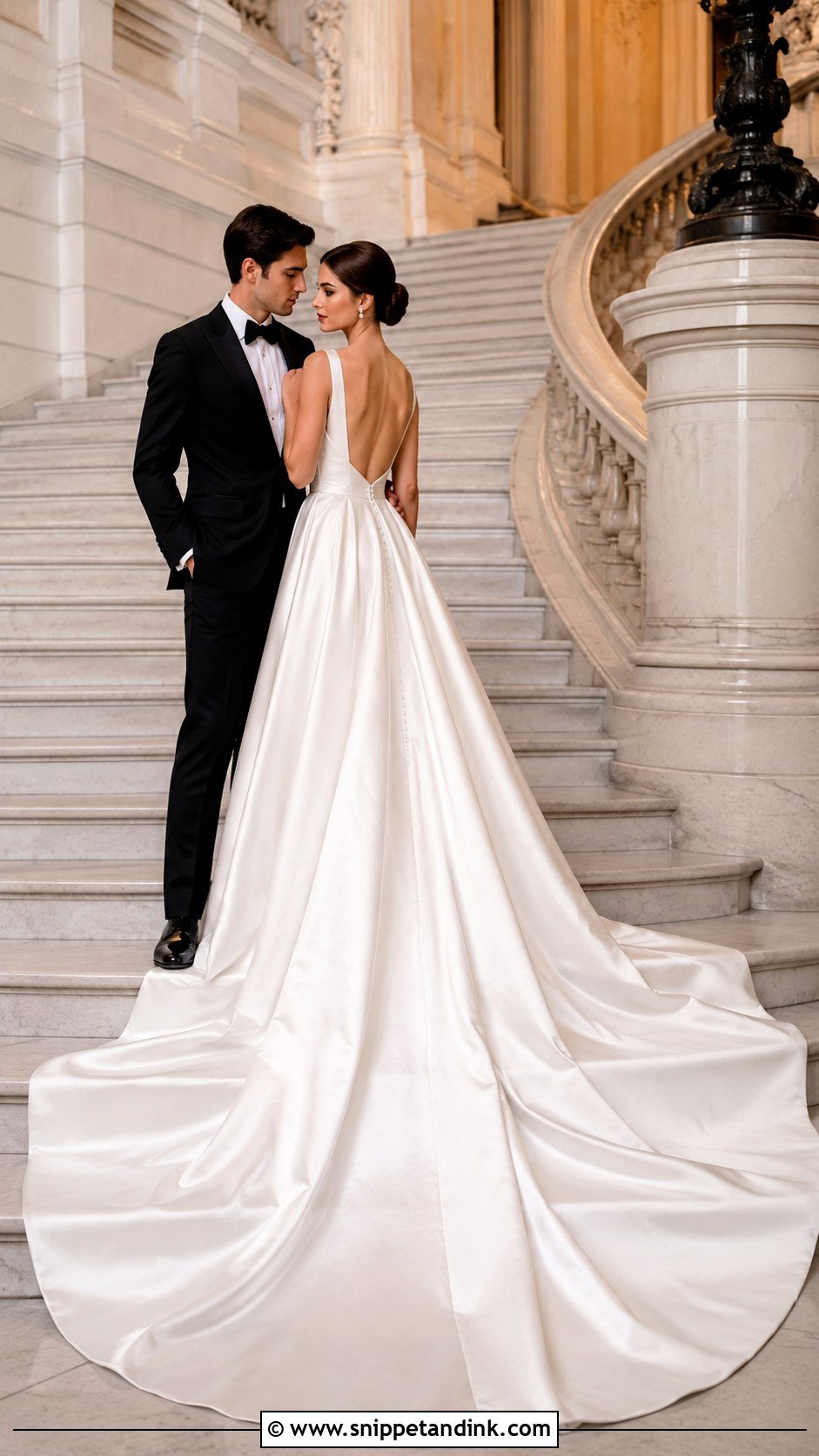
White satin is the easiest gown to light and the easiest to blow out. Its sheen picks up every highlight, so in harsh midday sun the train can lose all detail; I schedule satin for open shade or the hour before sunset. An A-line with a structured bodice and a cathedral train, ivory pumps and pearl drops, with the groom in a classic black tuxedo. On a staircase or marble terrace, I’ll arrange the train in a wide half-circle so the smooth surface catches a gradient of light across it.
2. Red Ruffle Tail Gown
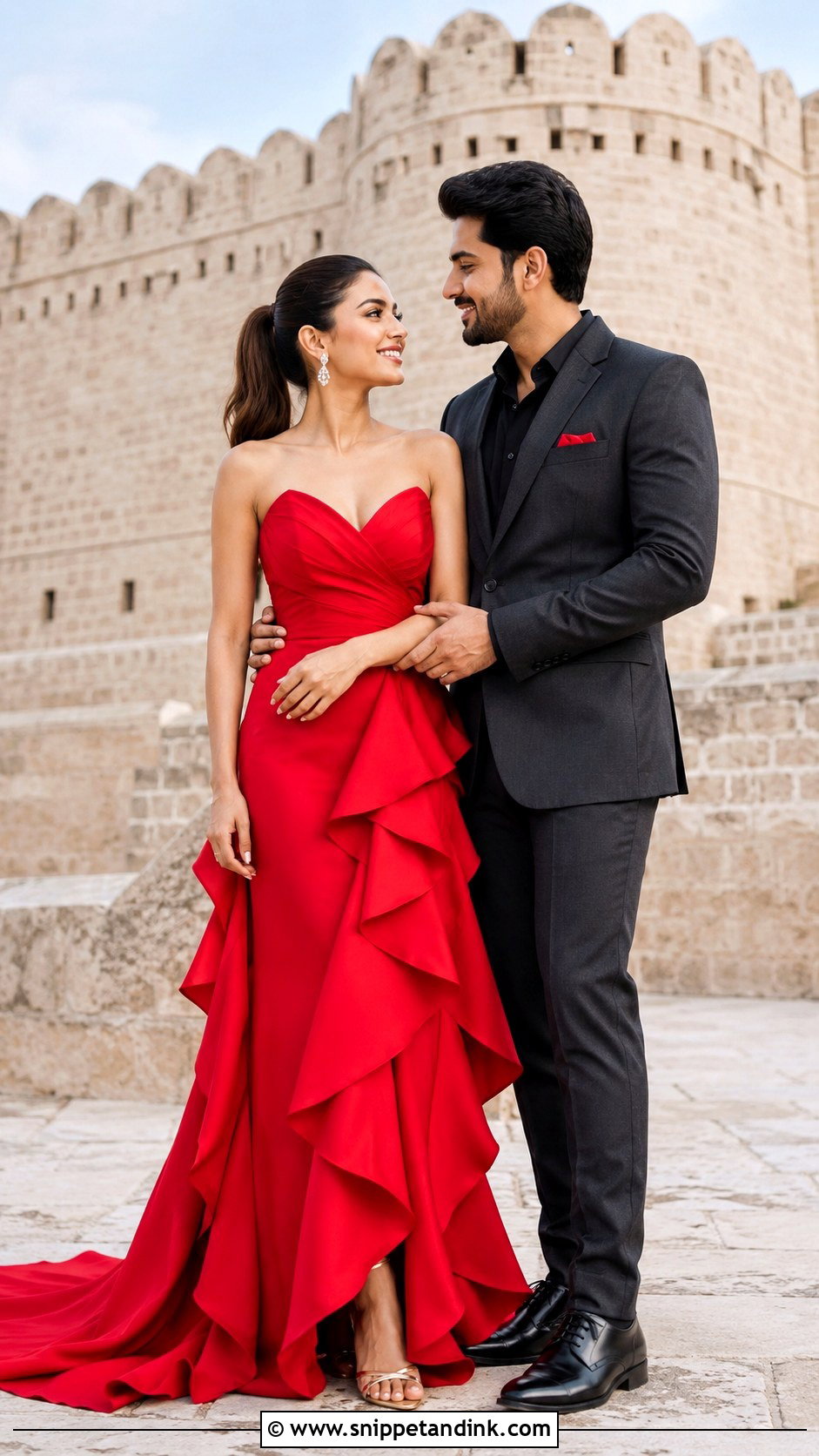
Red ruffles carry energy into a frame like almost nothing else, but they need space. In tight spaces the layers just look crumpled, so I’d save this gown for deserts, stone forts and wide courtyards. A sweetheart or off-the-shoulder neckline balances the volume below, and a sleek ponytail keeps the hair from competing. For motion, an assistant lifts one section of the train just out of frame and lets it drop as I shoot, which keeps the ruffles looking airy rather than flat. The groom works best in charcoal with a red pocket square.
3. Royal Blue Flying Tail Gown
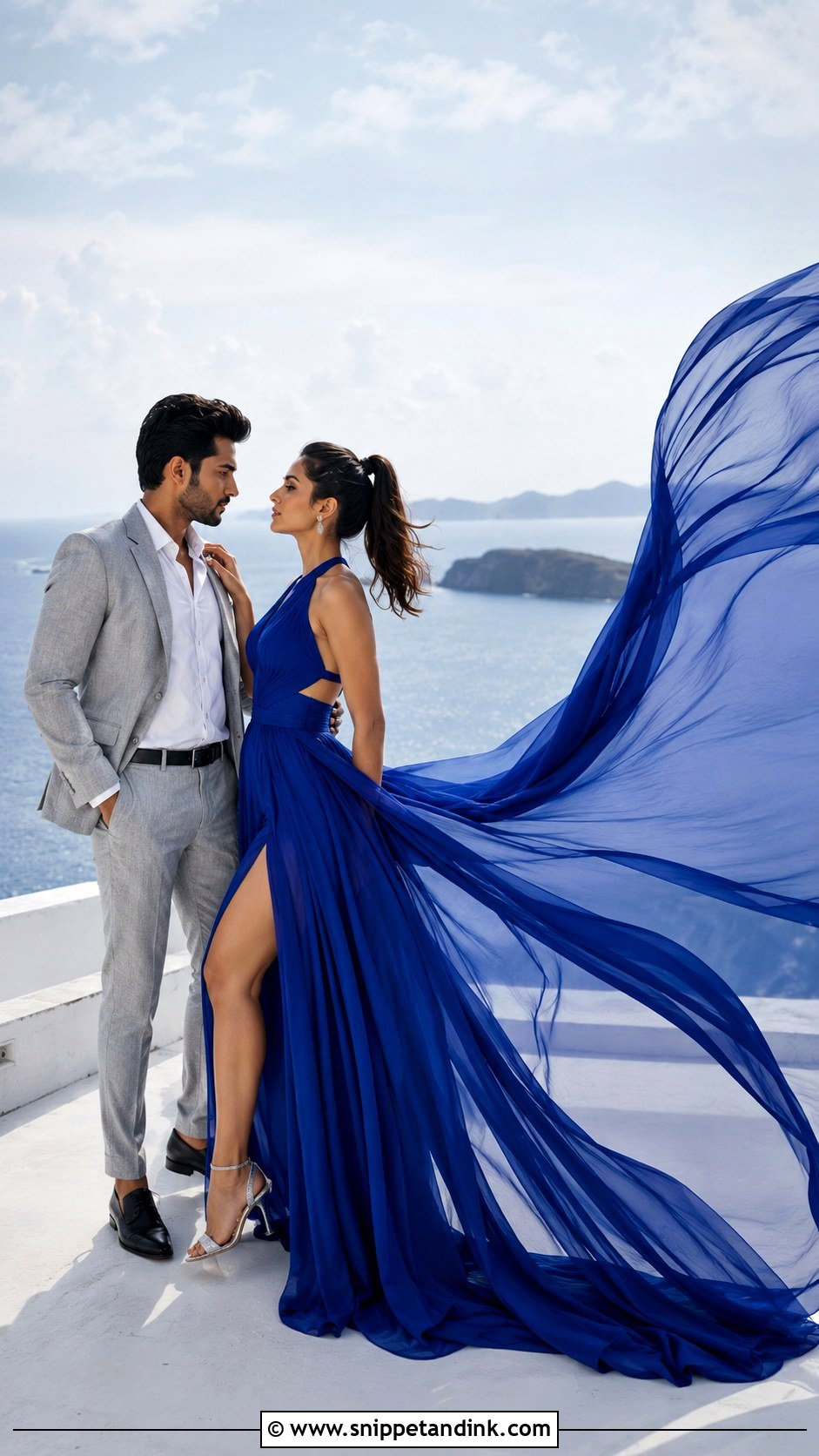
A royal blue flying tail gown only flies if the fabric is light. Chiffon and georgette lift on the first toss; heavier satin barely leaves the ground. I put the bride slightly above the assistant, on a rock or a step, so the fabric has room to fall behind her. Expect a lot of attempts. Most throws land badly, and that’s normal. A secure neckline matters here, because tossing and twisting shifts the bodice. Silver heels, crystal studs and a light grey suit for the groom keep the blue as the strongest colour in the frame.
4. Blush Pink Tulle Tail Gown
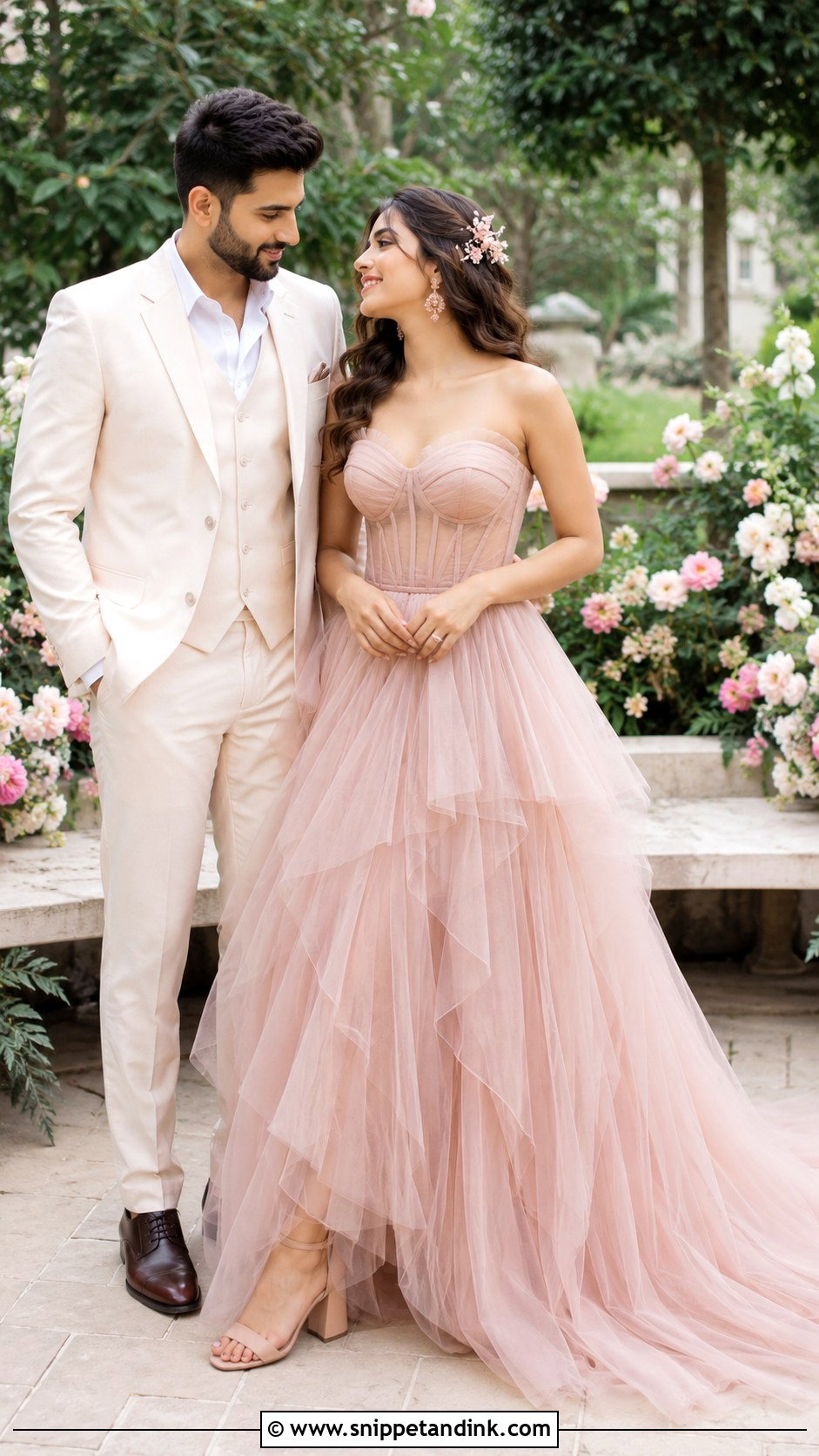
Blush tulle is soft on camera, almost dreamy, but it also wrinkles in transit and shows every crease on a long tiered train. I’d steam it on location if there’s power, or at least shake it out and let it hang for a while. A corset bodice keeps the shape for hours of posing. Nude block heels help on garden paths. Rather than formal poses, I’ll ask the couple to walk and turn near a bench or flower-lined path, letting the layers settle naturally; the groom in beige or light grey keeps the palette gentle.
5. Emerald Green Satin Tail Gown
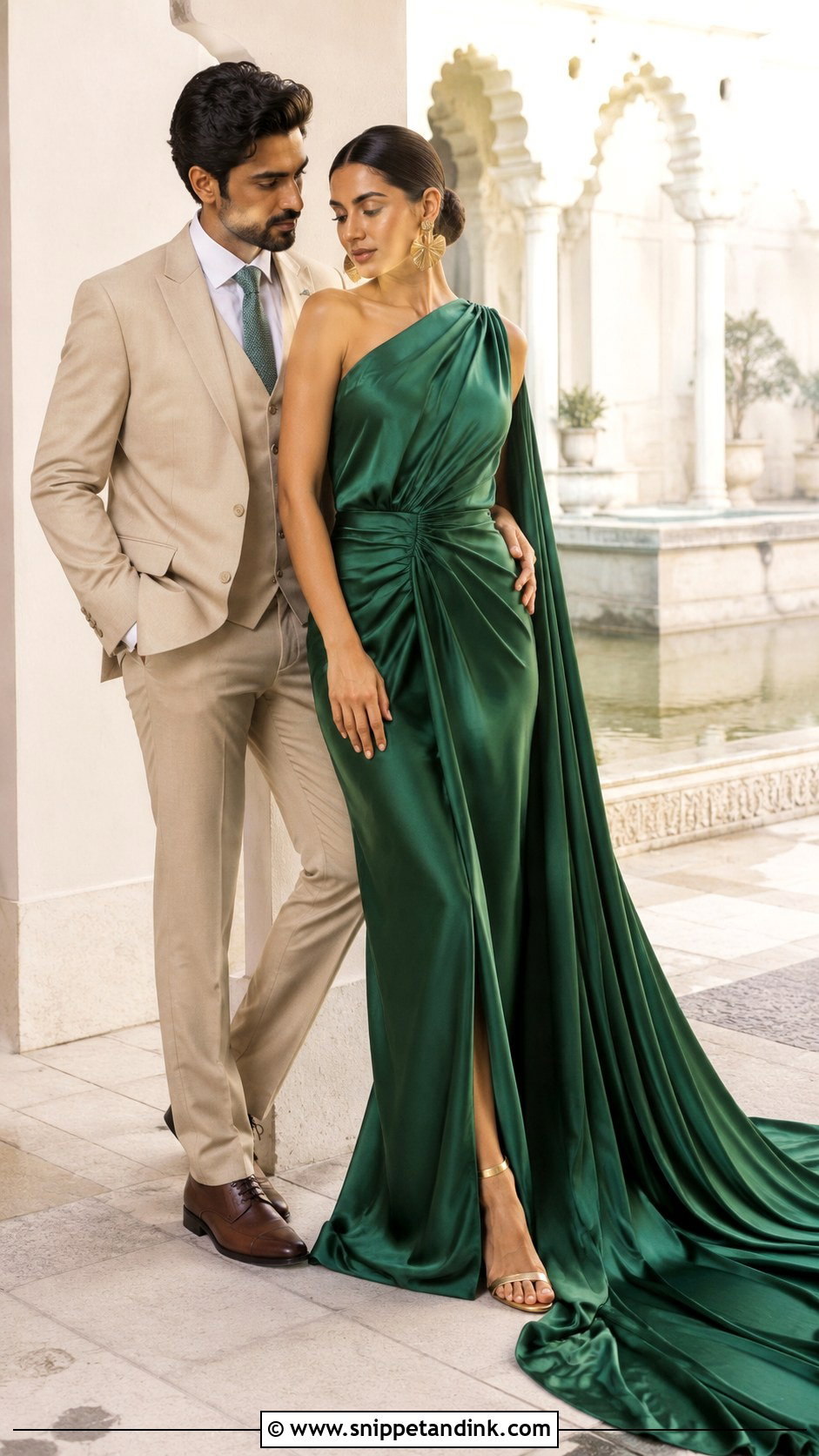
Emerald satin looks richest in shade or soft evening light, where its sheen turns deep rather than glossy. I arrange the train in loose curves rather than a perfect circle. Folds catch light along their edges, and those highlights give full-length shots real depth. A one-shoulder or draped neck, gold ankle-strap heels and a low bun suit it. A forest clearing or a heritage building with stone walls gives green a natural partner; put the groom in beige for daylight or a tuxedo for something formal.
6. Black Sequin Tail Gown
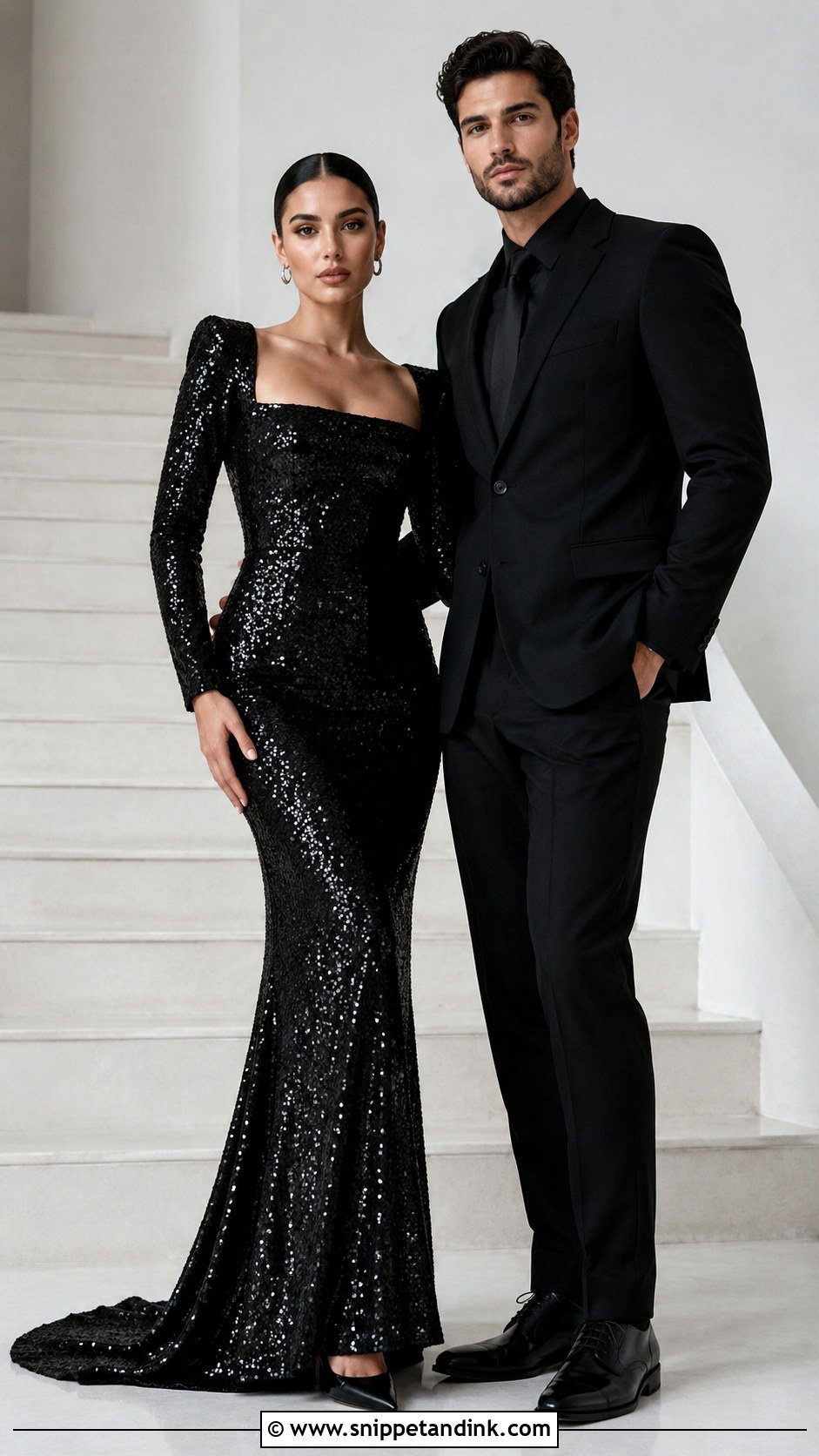
For a modern editorial shoot, black sequins on a long train give strong contrast, but only against a pale background. Shoot a black gown on dark stone and the silhouette disappears. I’d choose a bright studio, a white staircase or pale architecture. Sequins also throw specular highlights, so I light with something soft and large rather than a bare flash. Keep jewellery to silver earrings and hair sleek. A groom in head-to-toe black makes the pair read like a fashion story.
7. Lavender Off Shoulder Tail Gown
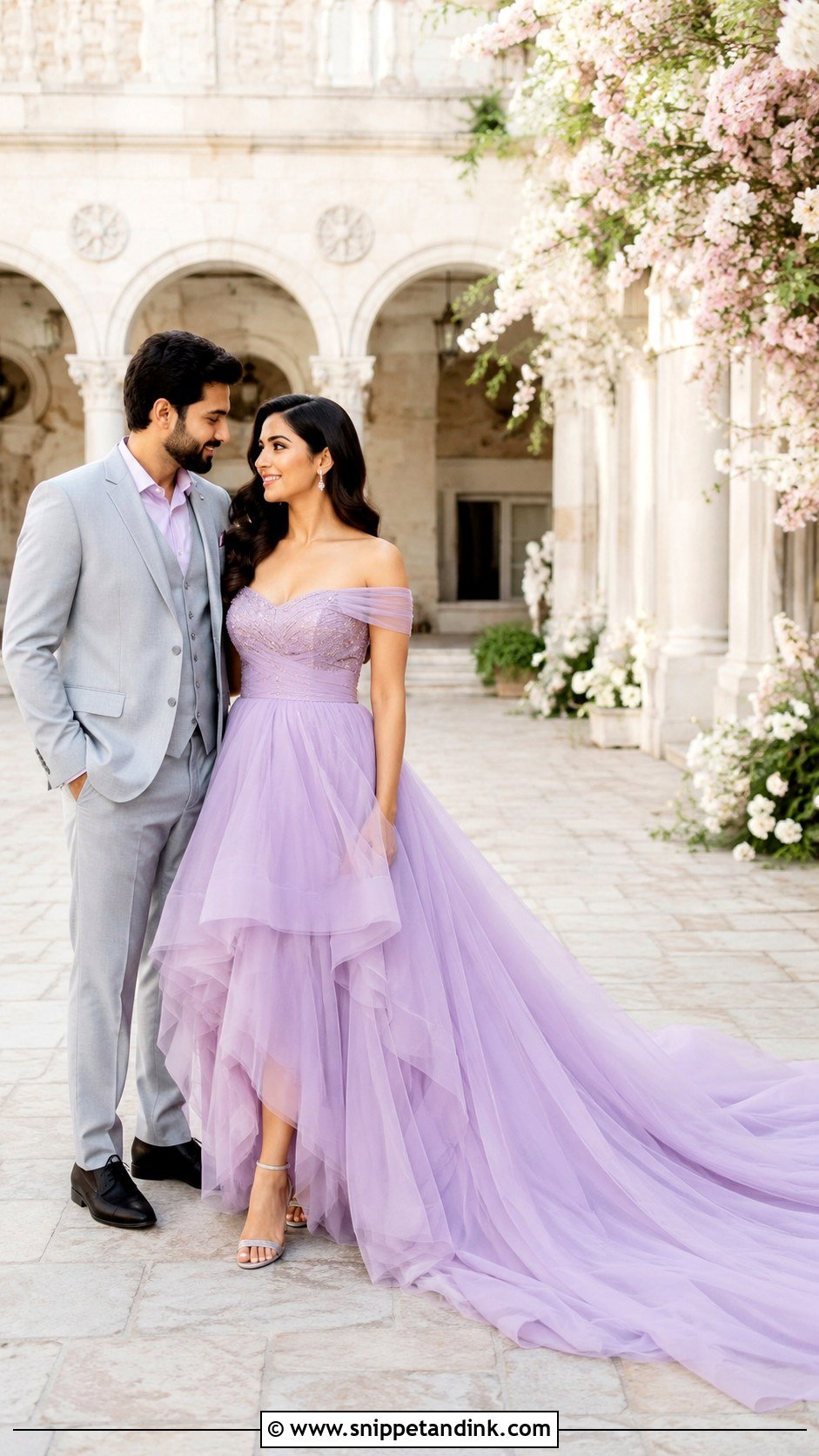
Lavender is one of the hardest colours to photograph accurately. Depending on light and white balance it shifts toward grey or pink, so early morning and soft overcast light are my preference for keeping it true. An off-the-shoulder gown with layered tulle works well. When posing, I angle the bride’s body toward the camera and stretch the train diagonally behind her; a diagonal line reads longer and moves the eye through the frame. Silver sandals and a light grey suit for the groom keep the palette cool.
8. Champagne Corset Tail Gown
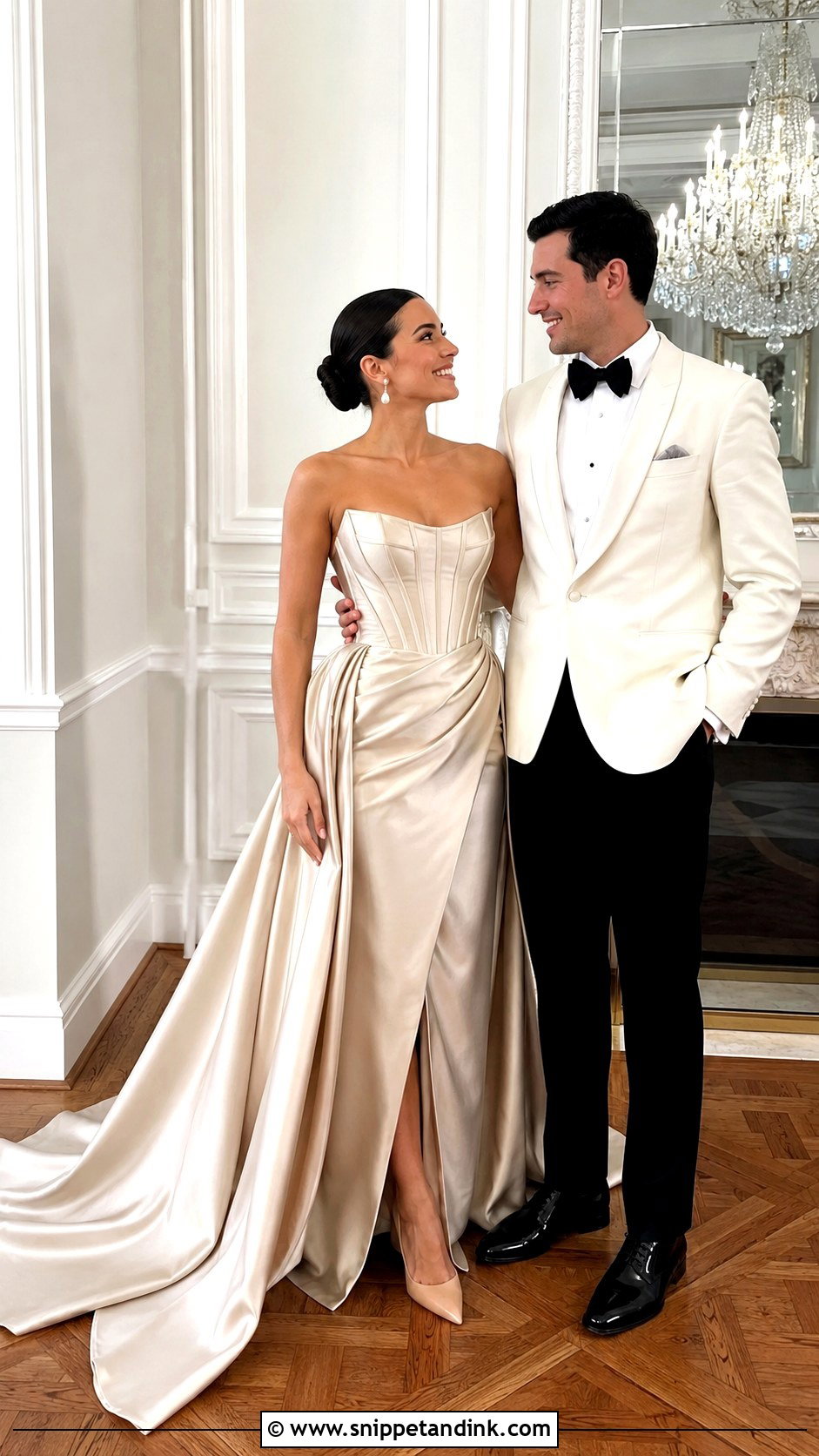
Champagne is warmer than white and much kinder to a lot of skin tones in photographs, especially in golden light. A boned corset bodice with a detachable train is a smart choice for a shoot: I photograph with the full train on a ballroom floor or ornate hallway, then remove it for walking and close-up shots. Two looks, one dress, no changing room needed. Pearl earrings and a polished bun keep the bodice visible. The groom coordinates nicely in a cream dinner jacket.
9. Floral Applique Tail Gown
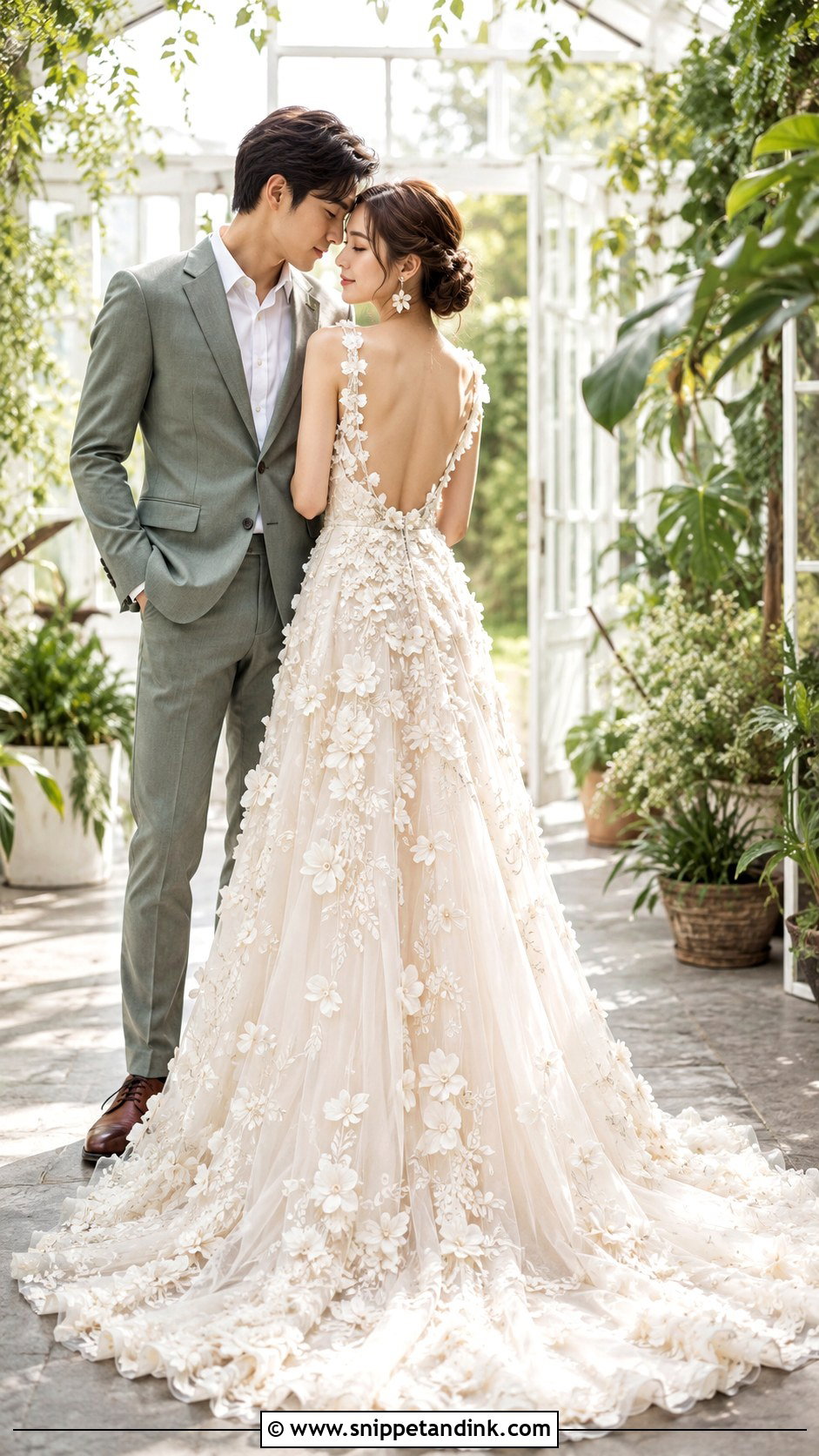
Floral appliqués are made for close-ups. I always plan at least a few detail frames of the bodice, shot with soft side light so the petals cast small shadows and look three-dimensional. Then pull back for full-length shots showing the scatter across the train. Skip a big bouquet, since it covers exactly what makes this gown special. A braided low bun with a few small flowers, ivory pumps and a groom in sage or tan suit a greenhouse or garden terrace.
10. One Shoulder Cape Tail Gown
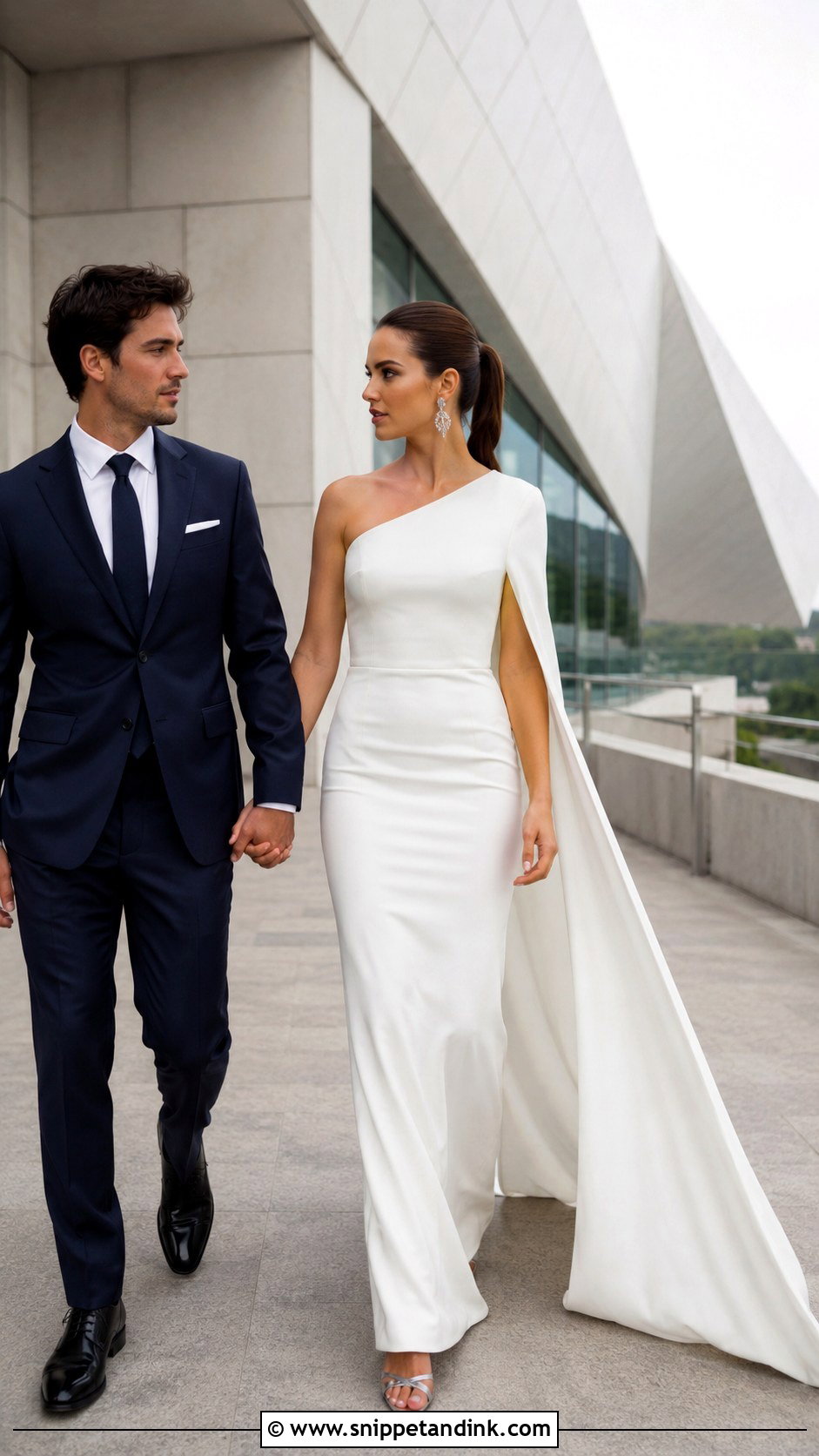
A cape panel from one shoulder gives clean movement without the bulk of a ball gown. Rooftops, museum steps and long stone corridors suit its sharp lines. For motion, I have the bride walk slowly toward me while an assistant behind her lets the cape go a beat after she starts moving; it trails out naturally without any staged pose. Keep hair in a sleek ponytail so the shoulder shows, add one statement earring, and dress the groom in sharp tailoring.
11. Mermaid Lace Tail Gown
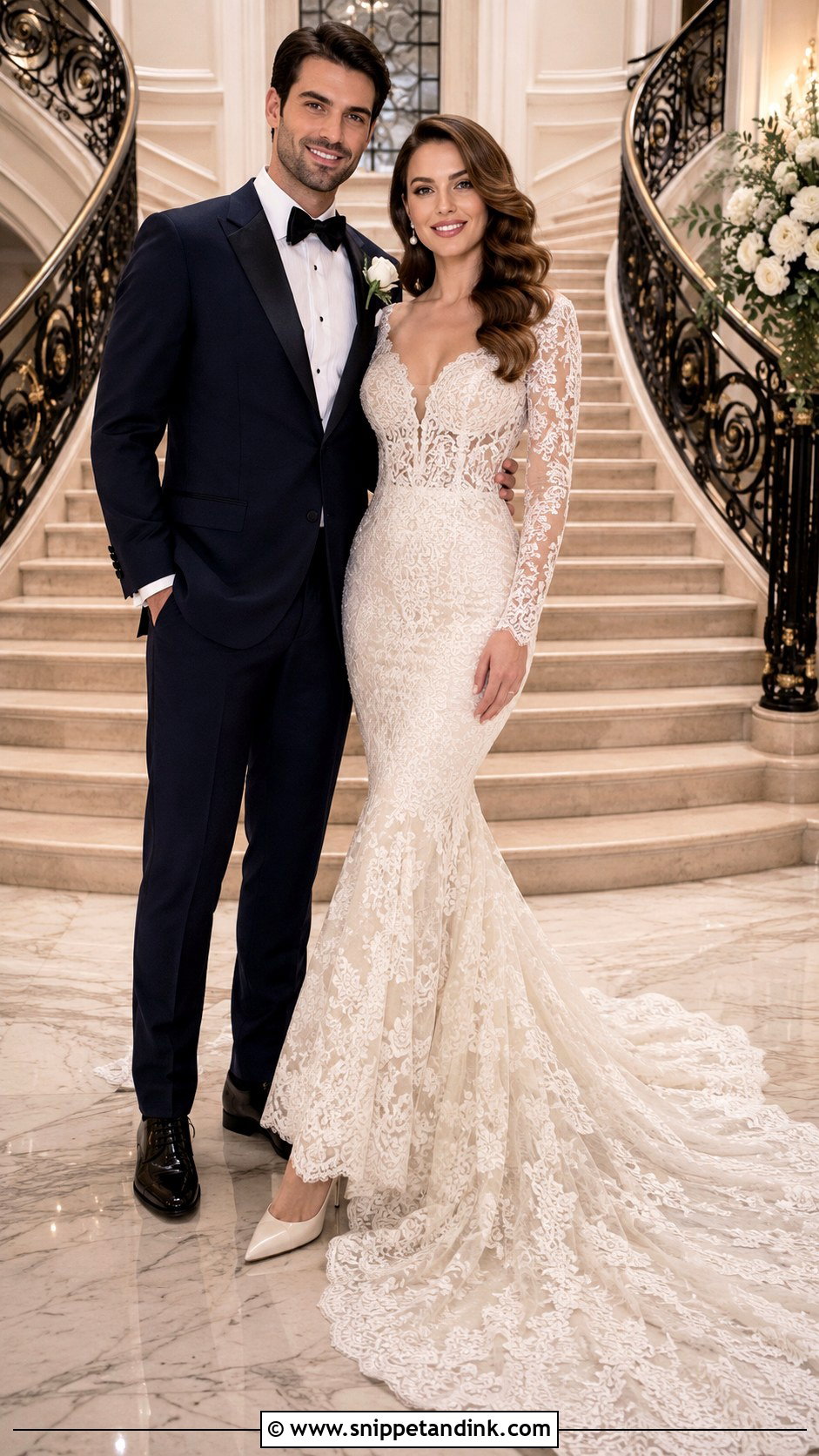
A lace mermaid hugs the body before the train opens, so it photographs best in poses that show the whole shape: standing, slightly turned, on a grand staircase or under arches. It also restricts movement. Practise sitting, walking and turning in it beforehand, because short steps and planned poses are the reality. Check that the lace pattern runs continuously from bodice to tail; a mismatched seam shows in a wide frame. Pearl drops, Hollywood waves and a tuxedo or navy suit for the groom.
12. Yellow Chiffon Tail Gown
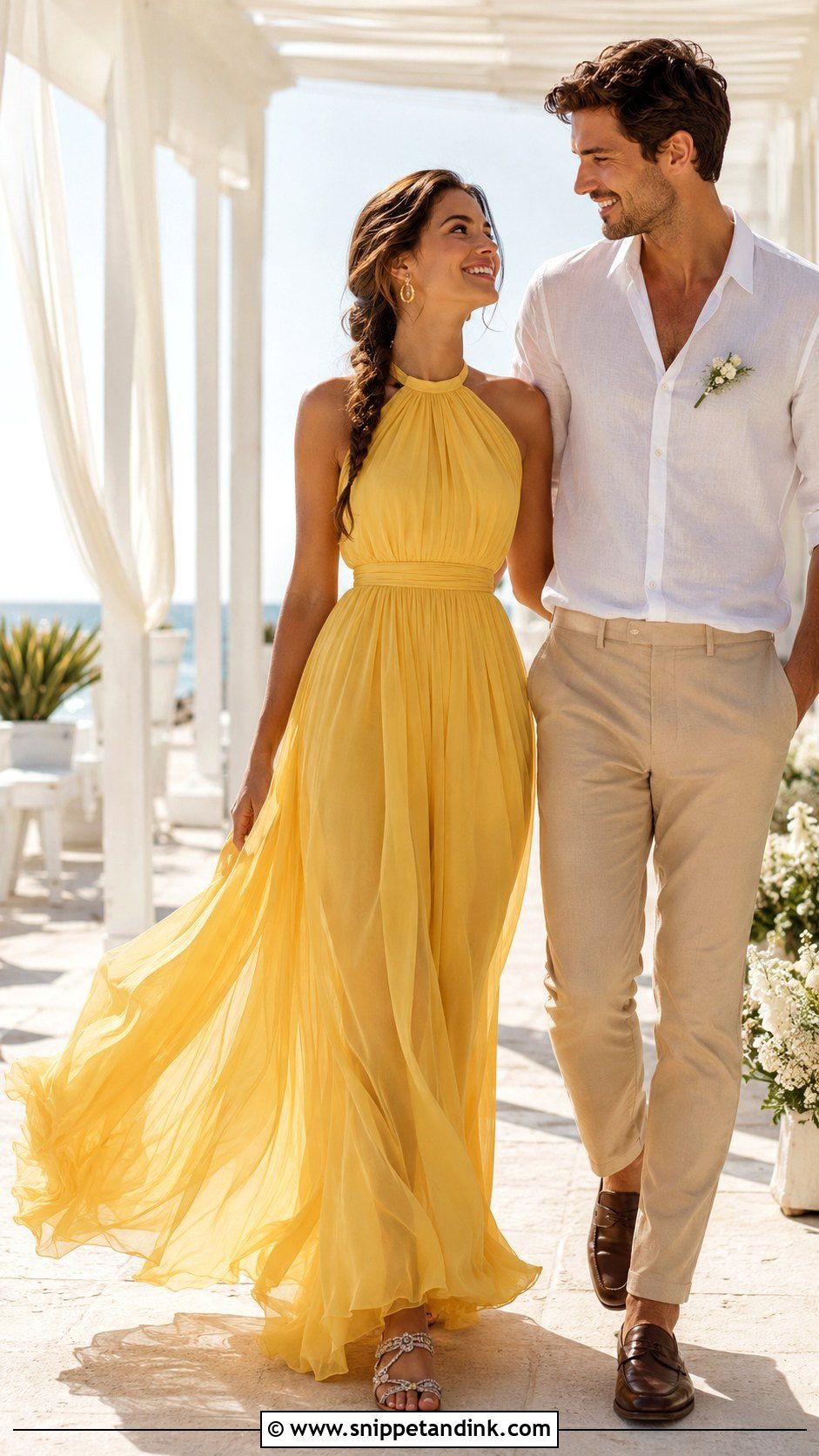
Bright yellow chiffon is a gift on a beach or open field: it glows when backlit by low sun. Flat sandals or block heels make walking on grass and sand possible. Yellow can reflect onto skin, so I watch the faces in close-ups and keep the couple slightly turned toward the light. Spinning and wind-assisted shots work naturally here. Gold hoops and loose curls, with the groom in a white shirt and tan trousers, keep it relaxed.
13. Burgundy Velvet Tail Gown
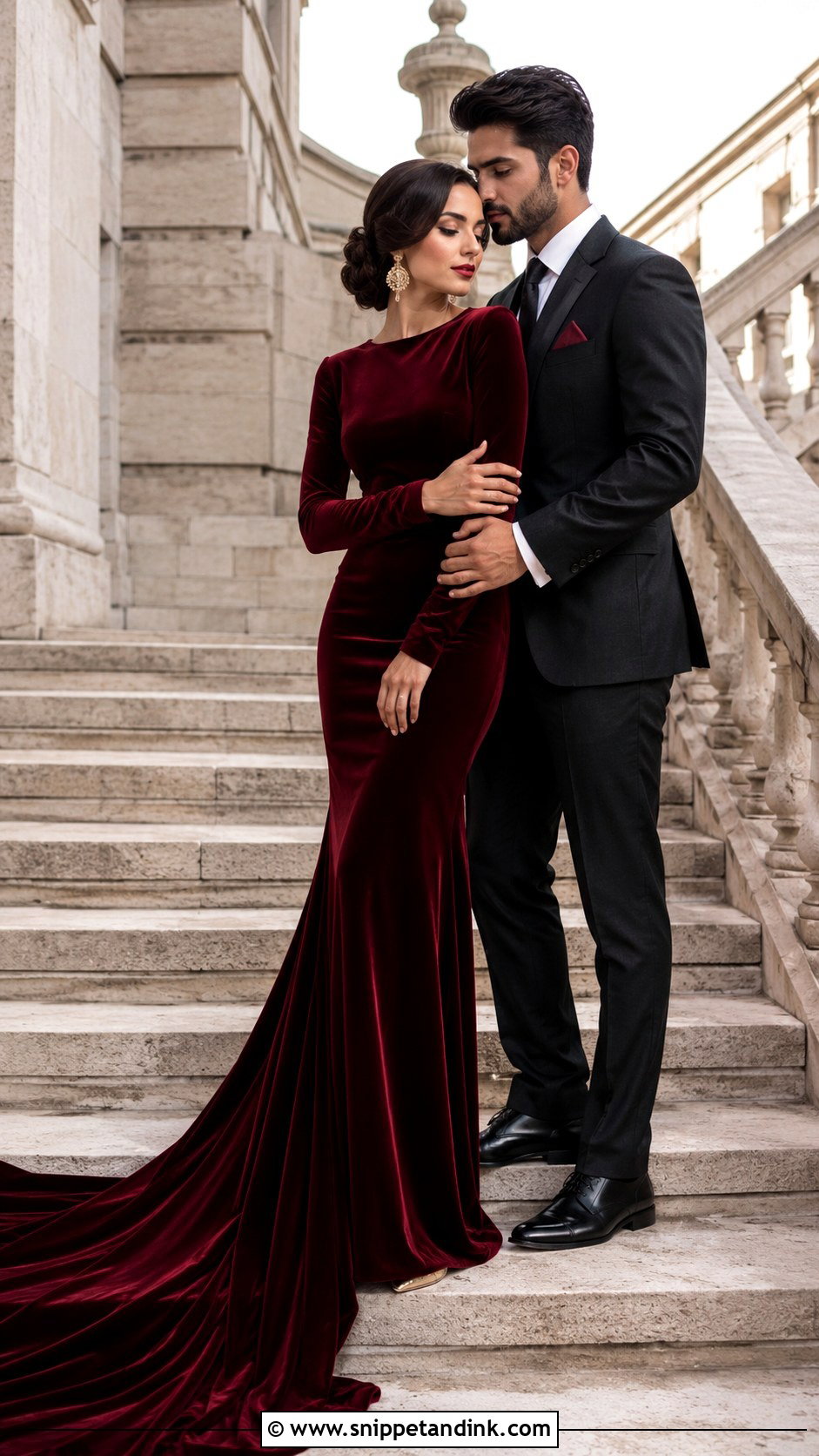
A burgundy velvet tail gown absorbs light, which is both its beauty and its difficulty. In dim interiors, dark velvet loses all definition and turns into a flat shape. I light it brightly and evenly, often with a reflector to lift the shadows. A smooth extended train is easier to arrange than many layers. Gold pumps, vintage earrings and a side-parted bun, with the groom in black and a burgundy pocket square, suit a stone palace or formal hall.
14. Silver Glitter Tail Gown
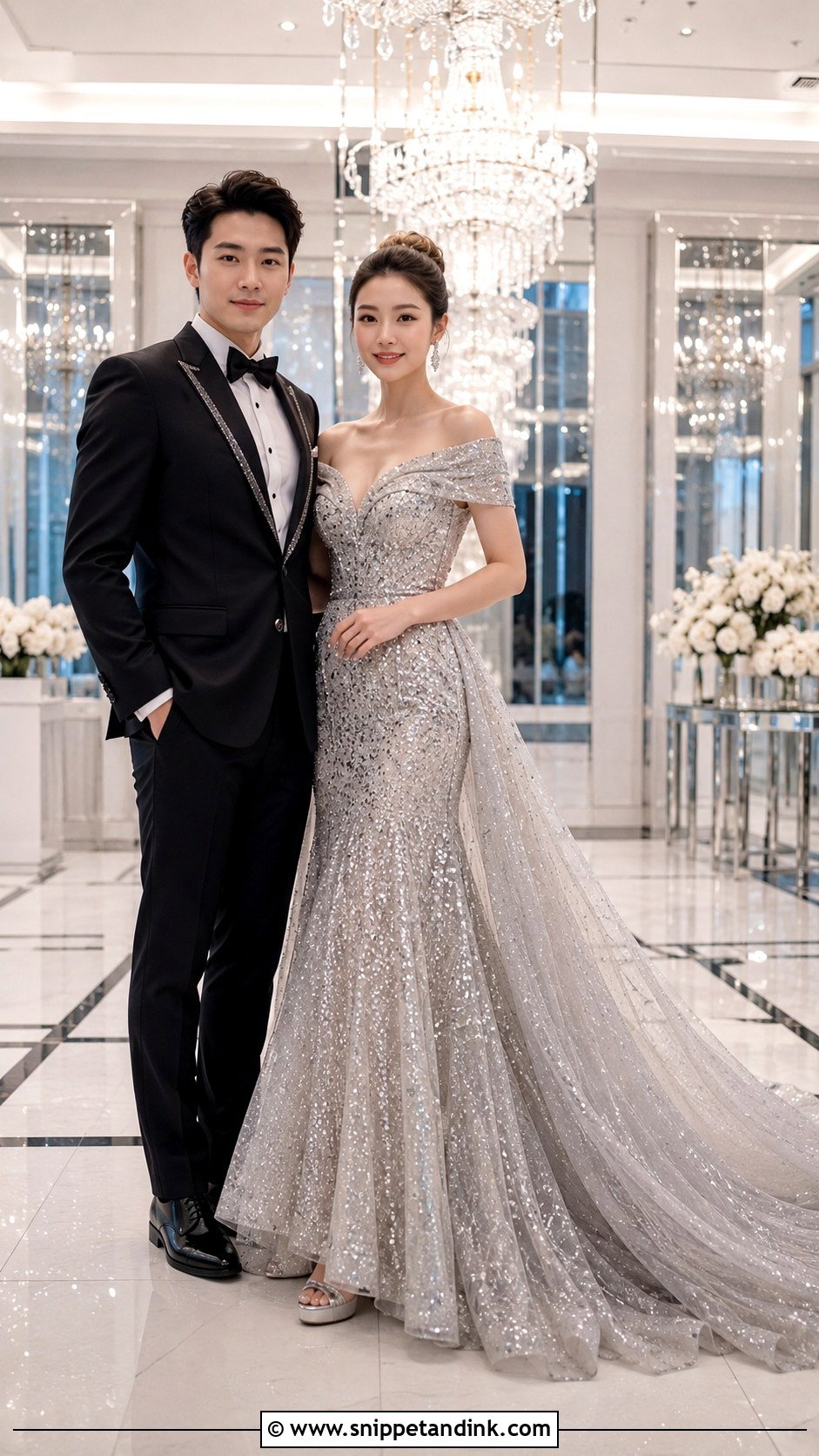
Glitter tulle sparkles on camera only with the right light. Coloured gels or busy party lighting turn silver into odd shades, so I use soft, direct light and keep the white balance neutral. A structured A-line or trumpet silhouette with glitter across the train suits mirrored corridors and bright studios. Simple standing poses work best here; movement blurs the shimmer. Silver heels and crystal drops for her, a black tuxedo for him.
15. Pastel Blue Layered Tail Gown
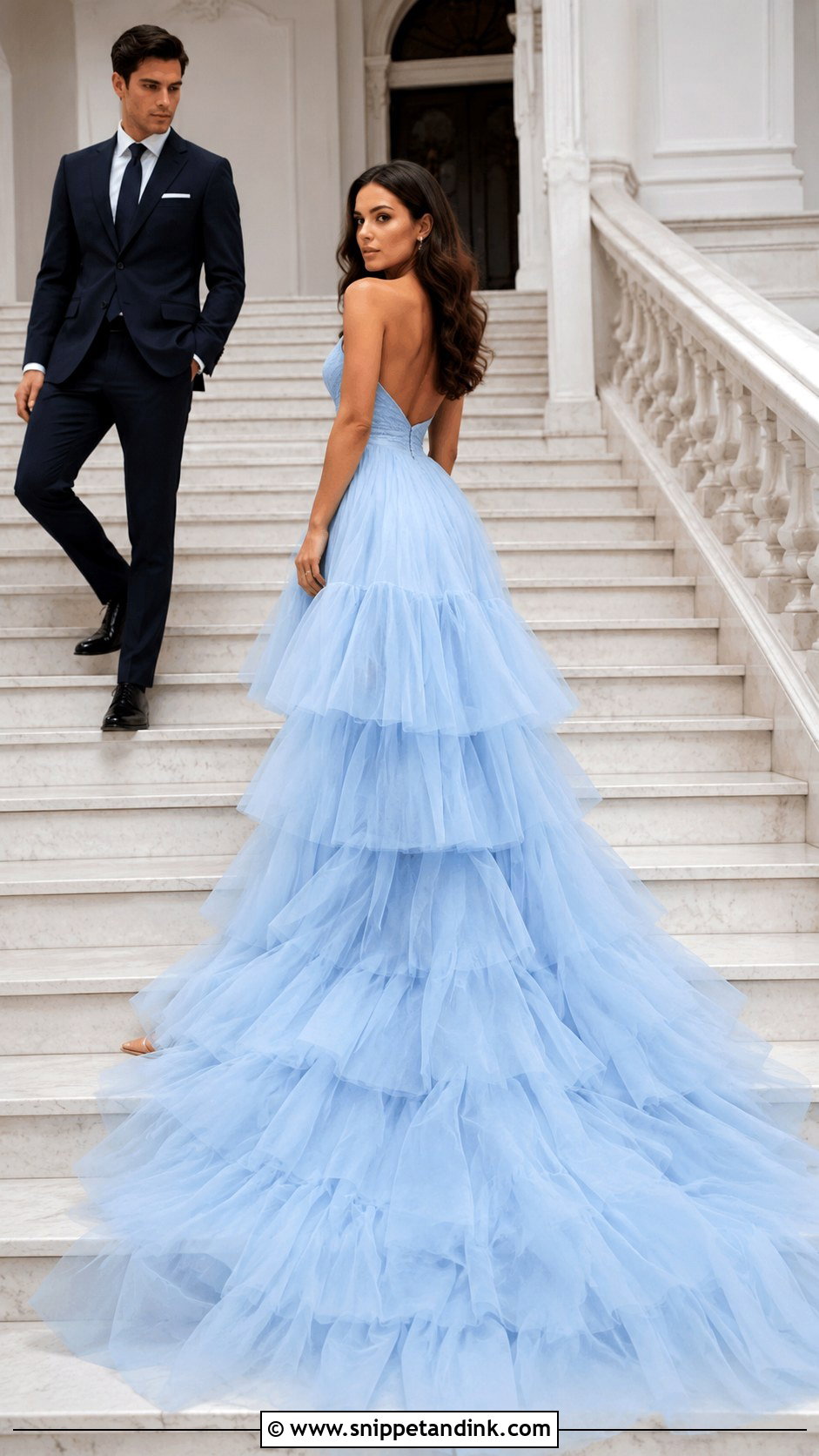
Pastel blue reads fresh in bright, airy frames. I’d pick white staircases, lakeside decks and pale floral settings, and keep exposure slightly bright. On steps, I arrange the train in loose layers spilling down, which shows the tiered construction from top to bottom. A layered tulle gown with a slightly dropped waist suits a half-up hairstyle and a pearl hairpin. The groom can wear navy, light grey or cream.
16. Ombre Purple Tail Gown
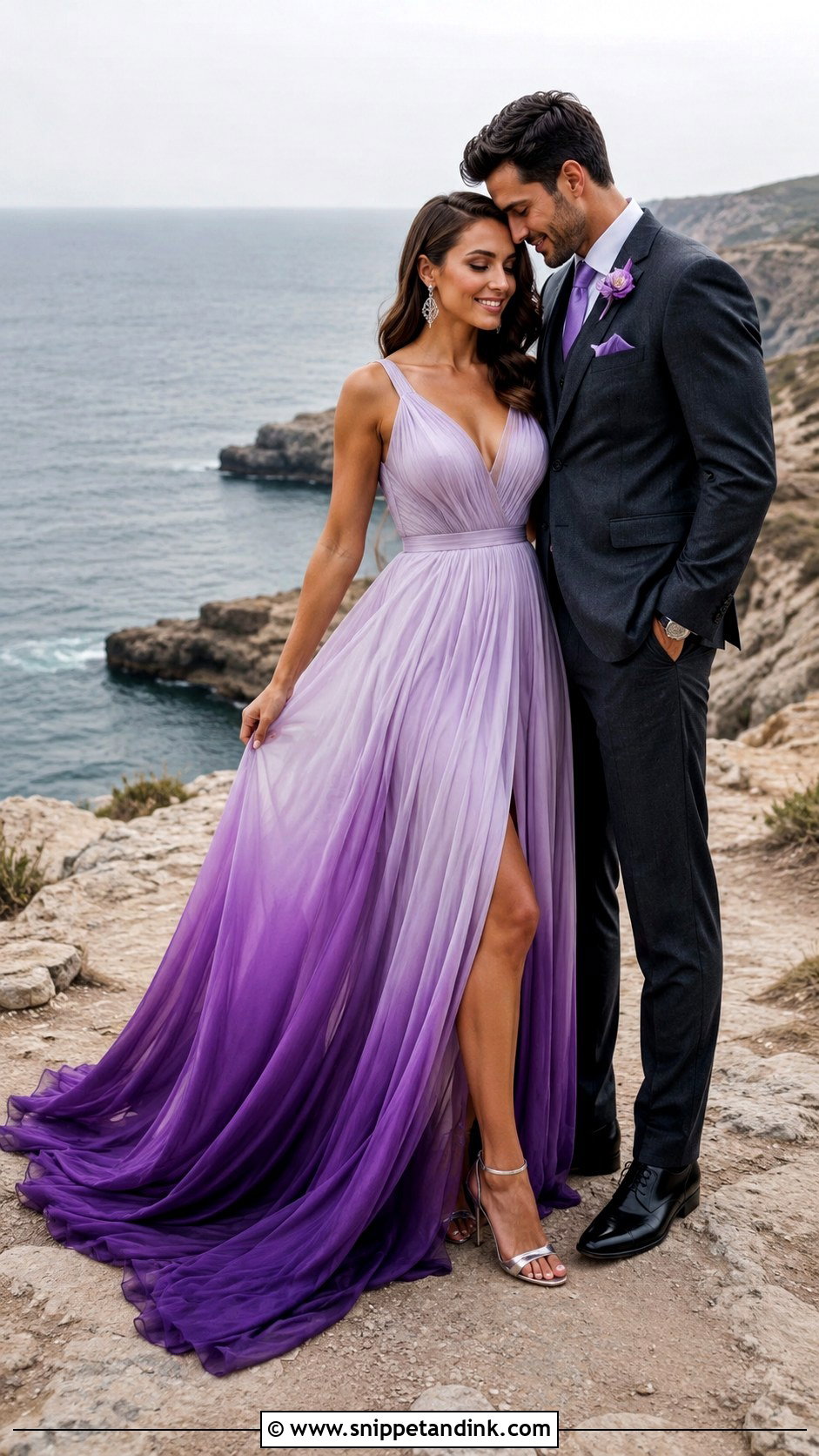
Ombre shows best when the whole gradient is visible, so I spread the train fully for wide shots and use walking poses for closer ones. A gown fading from pale lilac at the bodice to plum along the train looks best against neutral cliffs, pale sand or a plain studio. Chiffon, organza and layered tulle carry the colour change smoothly. Silver sandals, crystal earrings and a smooth ponytail keep attention on the shift in tone; a charcoal suit with a lavender tie works for the groom.
17. Ivory Detachable Tail Gown
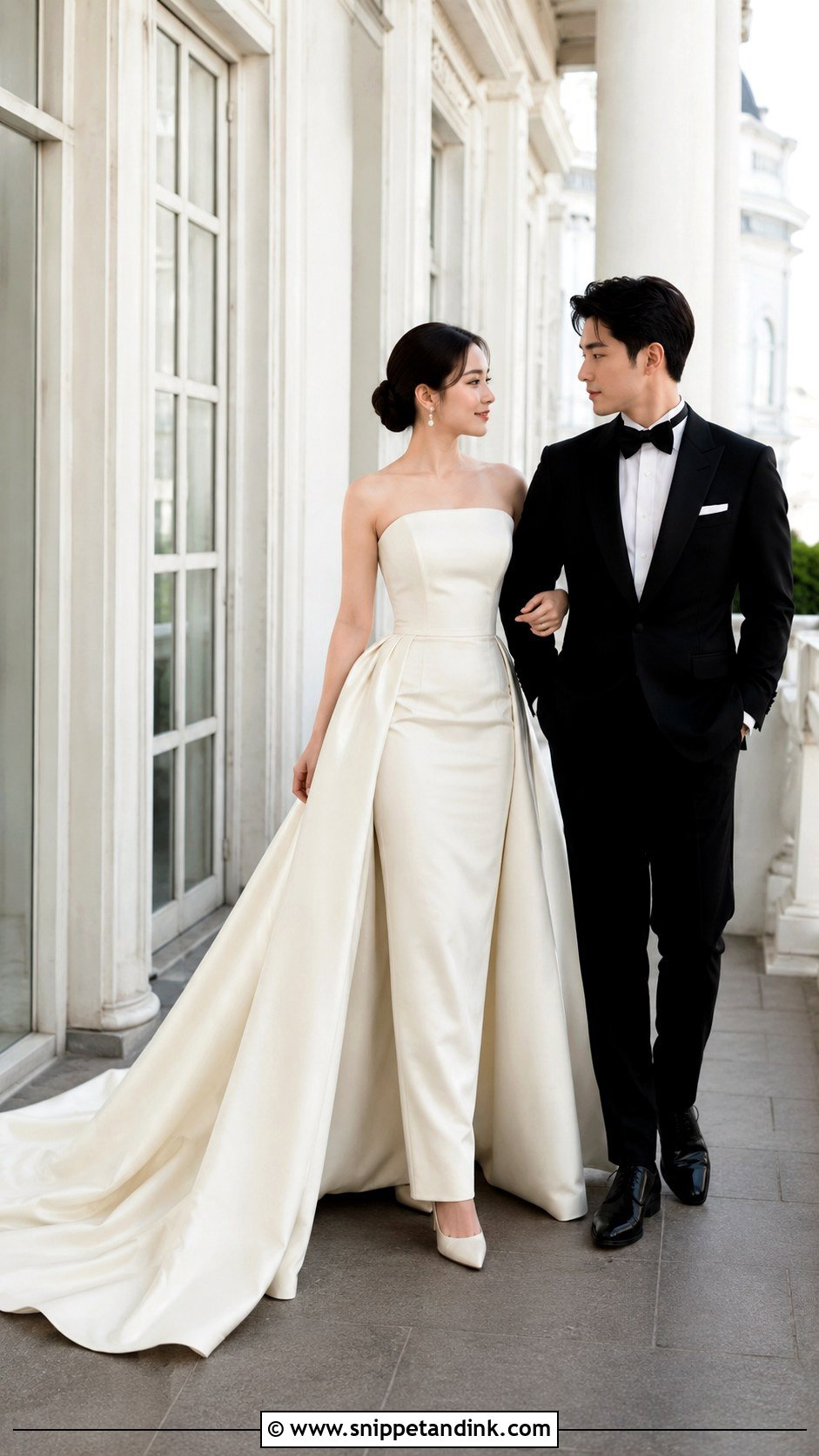
A detachable tail is my favourite thing to see arrive on a shoot day, because it gives me two silhouettes in one session. Start with a fitted column or mermaid, then attach a voluminous overskirt or cathedral train at the waist for the grand staircase shots. Then take it off for walking pictures and close couple portraits. Test the fastenings at home: hooks that fiddle in a living room become a fifteen-minute delay on a windy terrace. A slim belt can hide the join.
18. Peach Pleated Tail Gown
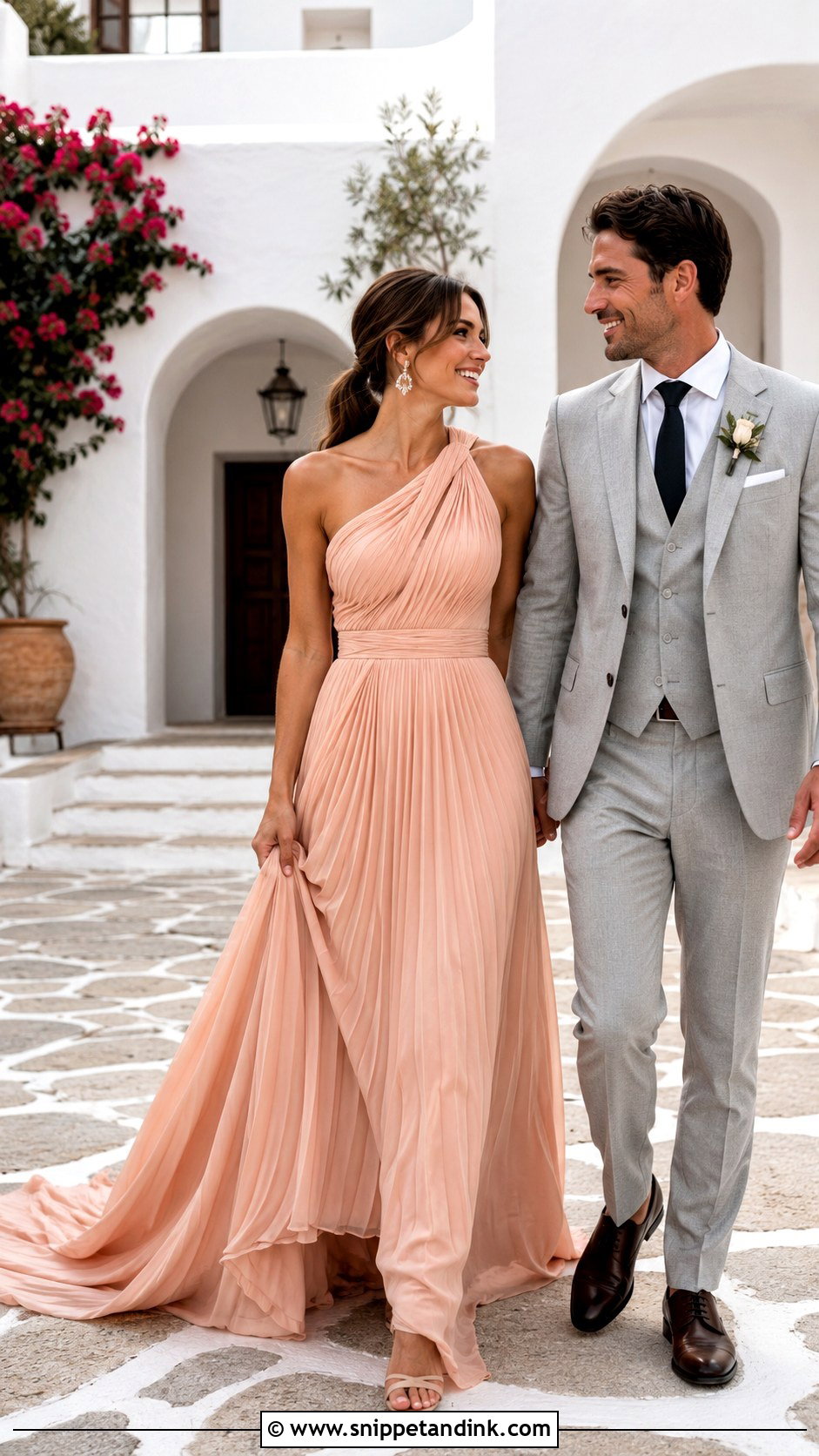
Accordion pleats open as you turn and close as you stand still, so peach pleating comes alive with gentle turning and walking. Bright daytime light flatters the warm colour. I keep movements slow; a fast spin flares pleats into a shape that looks bulky in stills. A wrap or softly draped bodice, nude sandals and rose-gold earrings suit it. Mediterranean-style white walls and garden terraces give a calm background, and the groom in cream or tan with a peach pocket square completes the palette.
19. Fuchsia High Slit Tail Gown
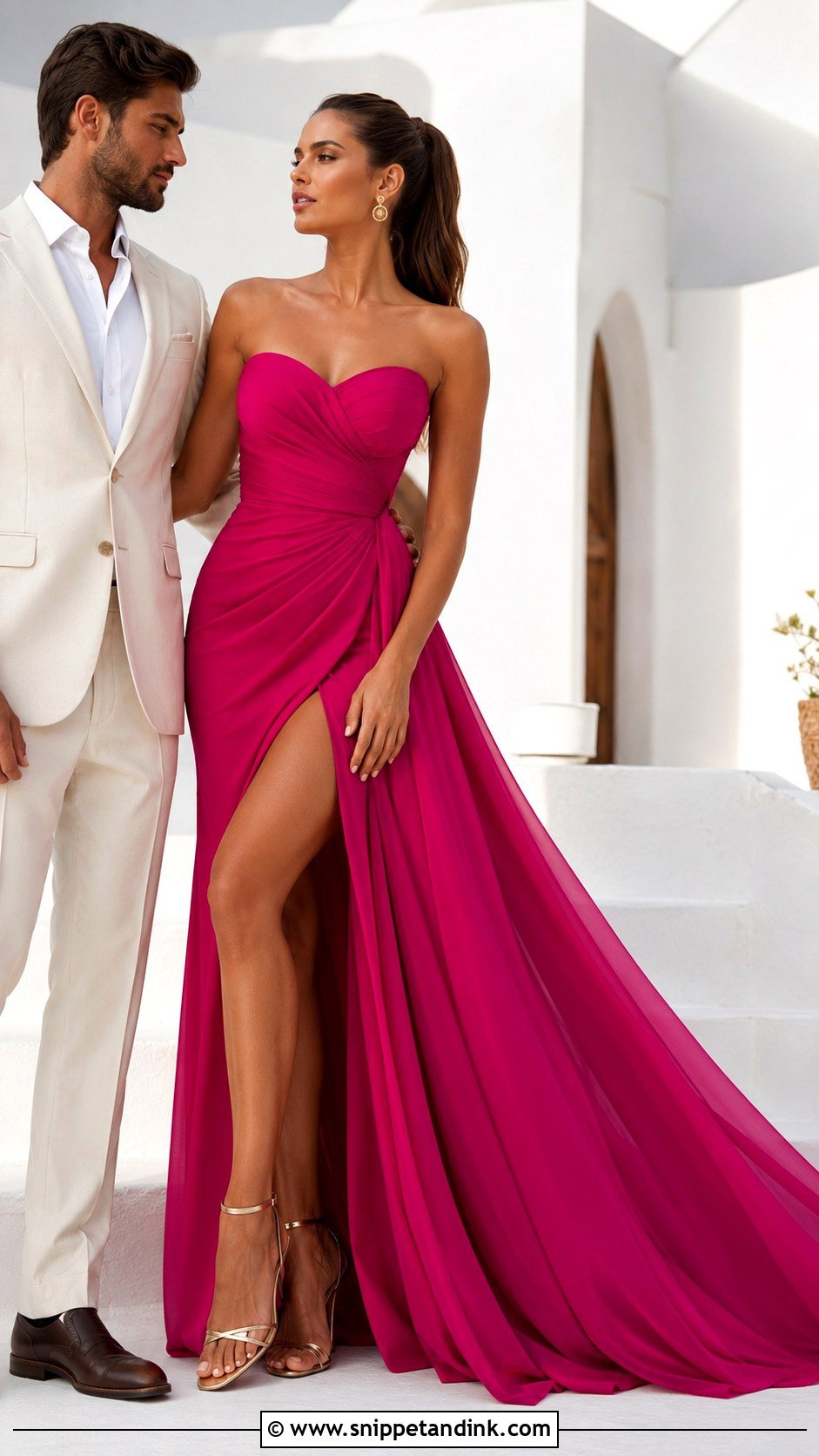
A high slit in fuchsia makes a strong fashion statement, and it needs practice. Before the shoot, walk in the gown in front of a mirror to learn how the slit falls, so it opens gracefully instead of unexpectedly. A secure bodice is non-negotiable. White architecture or desert sand make the colour vivid; I’d avoid green backgrounds, which fight with it. Metallic sandals stay visible during walking poses, and a sleek ponytail balances the strong colour.
20. Gold Embroidered Tail Gown
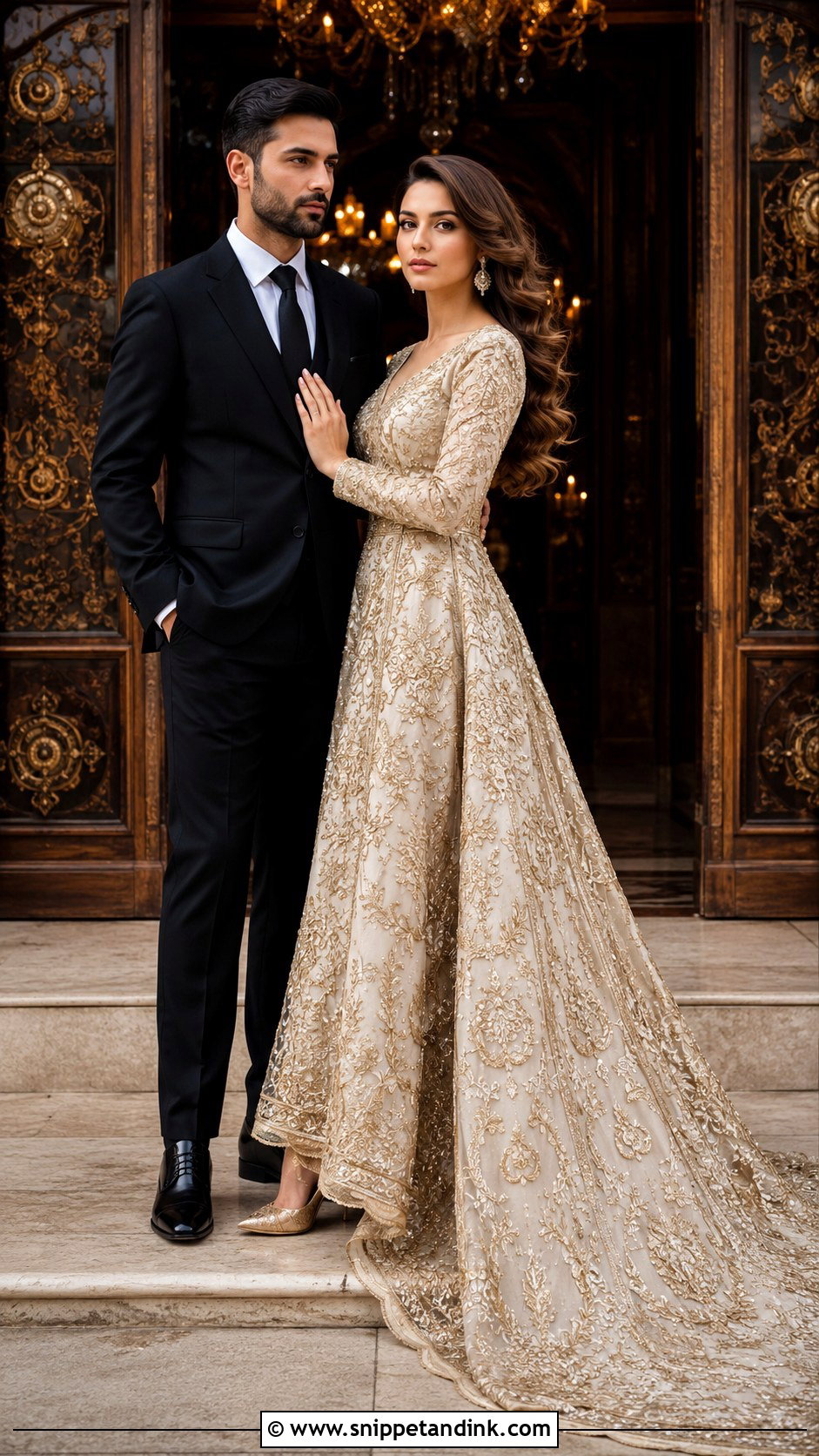
Gold embroidery needs balanced, directional light to show its relief. Flat light makes metallic threadwork look like printed fabric, while soft side light reveals every stitch. Before each full-length frame I check that the train is arranged evenly, since embroidered trains crease and fold awkwardly. A structured bodice supports the weight. Gold heels, drop earrings and a bun suit carved doorways and grand halls; a black band-collar suit or cream formal jacket for the groom works well.
Renting a Tail Gown Instead of Buying One
Many couples rent a shoot gown, often through the studio or a dedicated rental shop, and it makes sense for a dress you’ll wear for a few hours. A few checks make a rental work on camera.
- Inspect the hem and train in daylight. Rental trains pick up grey edges and small tears that show clearly in wide shots.
- Ask how the fit is adjusted. Lace-up backs and clips can take a gown in a long way, and clips are hidden easily if the pose is front-facing.
- Agree on what happens with sand, grass stains or water damage before you shoot near them.
- Try it on with the shoes you’ll pose in. Rental trains are often cut for a particular heel height, and a hem that’s too long shows as a crumpled pool at the front.
What I bring to protect the train on location
A clean sheet to lay the train on while we reposition, clips for fit adjustments, a garment bag for the car, safety pins and, if there’s power nearby, a handheld steamer. On dusty or sandy ground, the train stays bundled in someone’s arms until the moment I’m ready to shoot, then goes straight back up.
Match the Train to the Ground You’re Shooting On
The gown that photographs best is the one that suits your location, season and the movement you want. Light chiffon belongs in breezy outdoor places; satin, velvet, lace and embroidery suit formal settings where the train can rest. Think about the train’s weight, length and how it attaches before committing. Comfortable shoes, secure tailoring and simple accessories make posing easier for hours. I’d coordinate with your partner through a shared colour detail rather than matching outfits, and test walking, turning and sitting in the gown before the day.
You'll Like These Ideas:


Leave a Reply