
A dress shoot goes well or badly long before the camera comes out. When I style a bride for portraits, I’m thinking about how her gown’s fabric will catch light, which accessories will read in a full-length frame, and which settings flatter that particular silhouette. A fitted satin dress sharpens up in a minimal space; a lace ball gown wants room and a bit of history around it. The ideas below cover classic portraits, modern editorial shots, outdoor scenes and quieter moments, each with the styling details I’d sort out first.

Which Settings Flatter Which Silhouette
Before I suggest a location, I look at the dress. The same backdrop that makes one gown look grand can swamp another or make it look plain. As a starting point:
- Ball gowns and long trains need floor space and height: staircases, grand houses, wide garden paths.
- Sheath and column dresses want clean lines behind them: city streets, galleries, studios, courthouse steps.
- A-line chiffon and soft tulle move well outdoors: beaches, fields, rooftops with a light breeze.
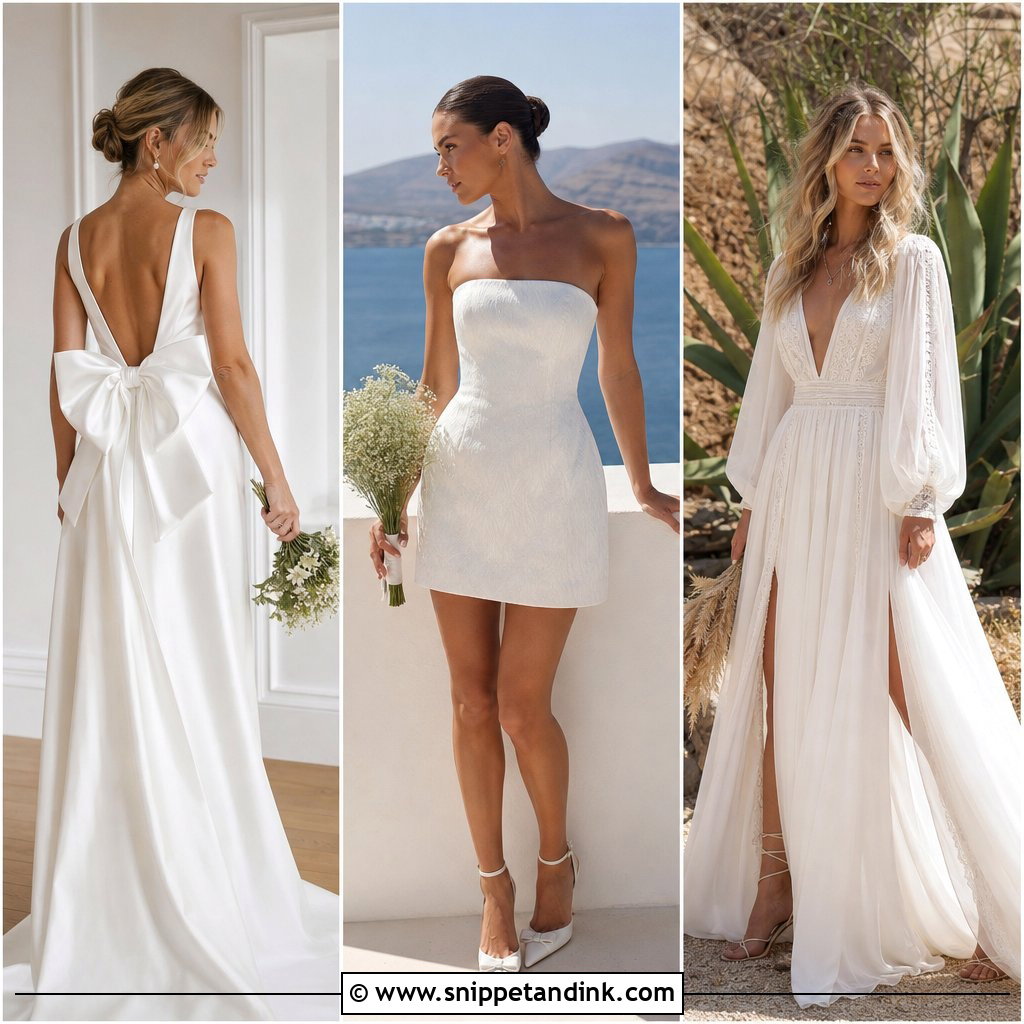
- Short dresses and bridal suits look sharpest where shoes and legs are on show: pavements, steps and studio floors.
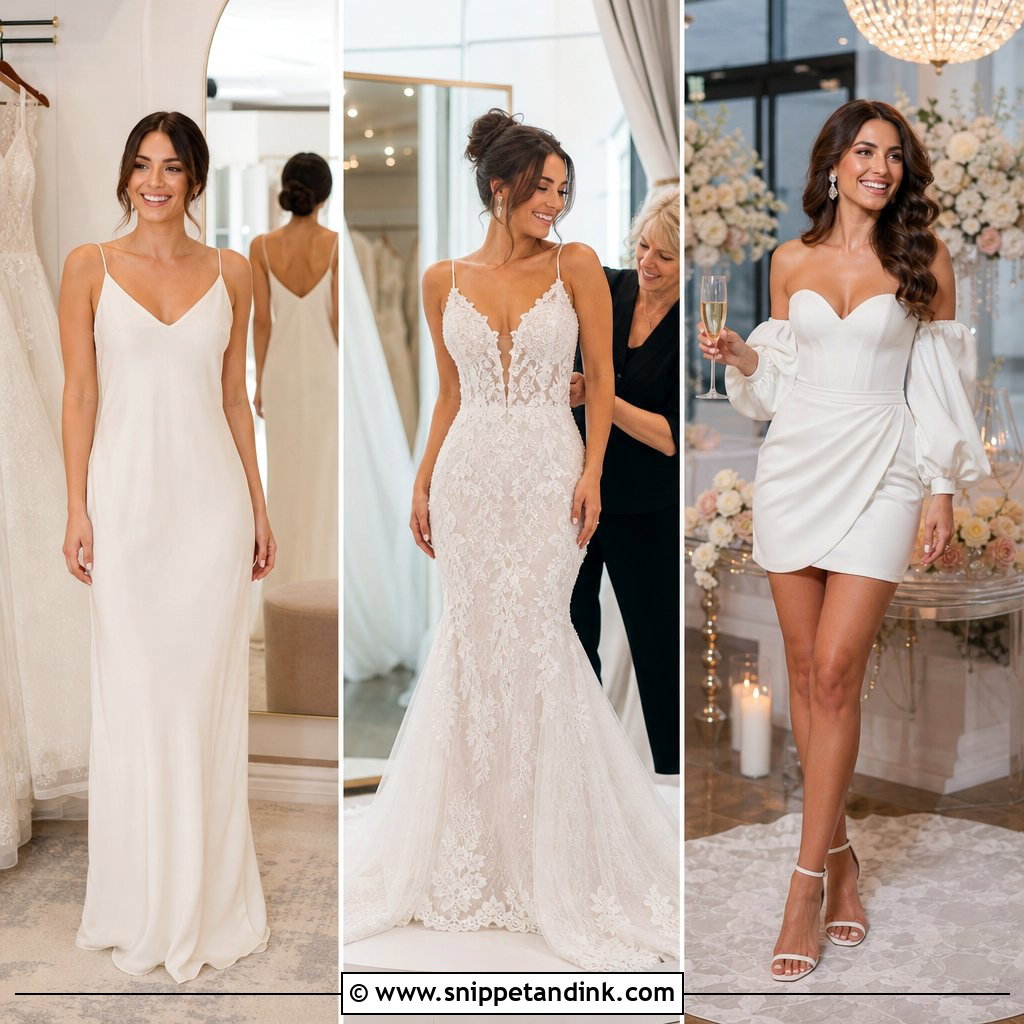
- Heavily beaded or lace gowns reward close, side-lit spaces like windows and bridal suites, where the texture can be seen.
None of this is a rule. A sleek satin gown in a wildflower meadow can look striking if that contrast is the point. Just make it a choice, not an accident.
1. Wedding Dress Staircase Photoshoot
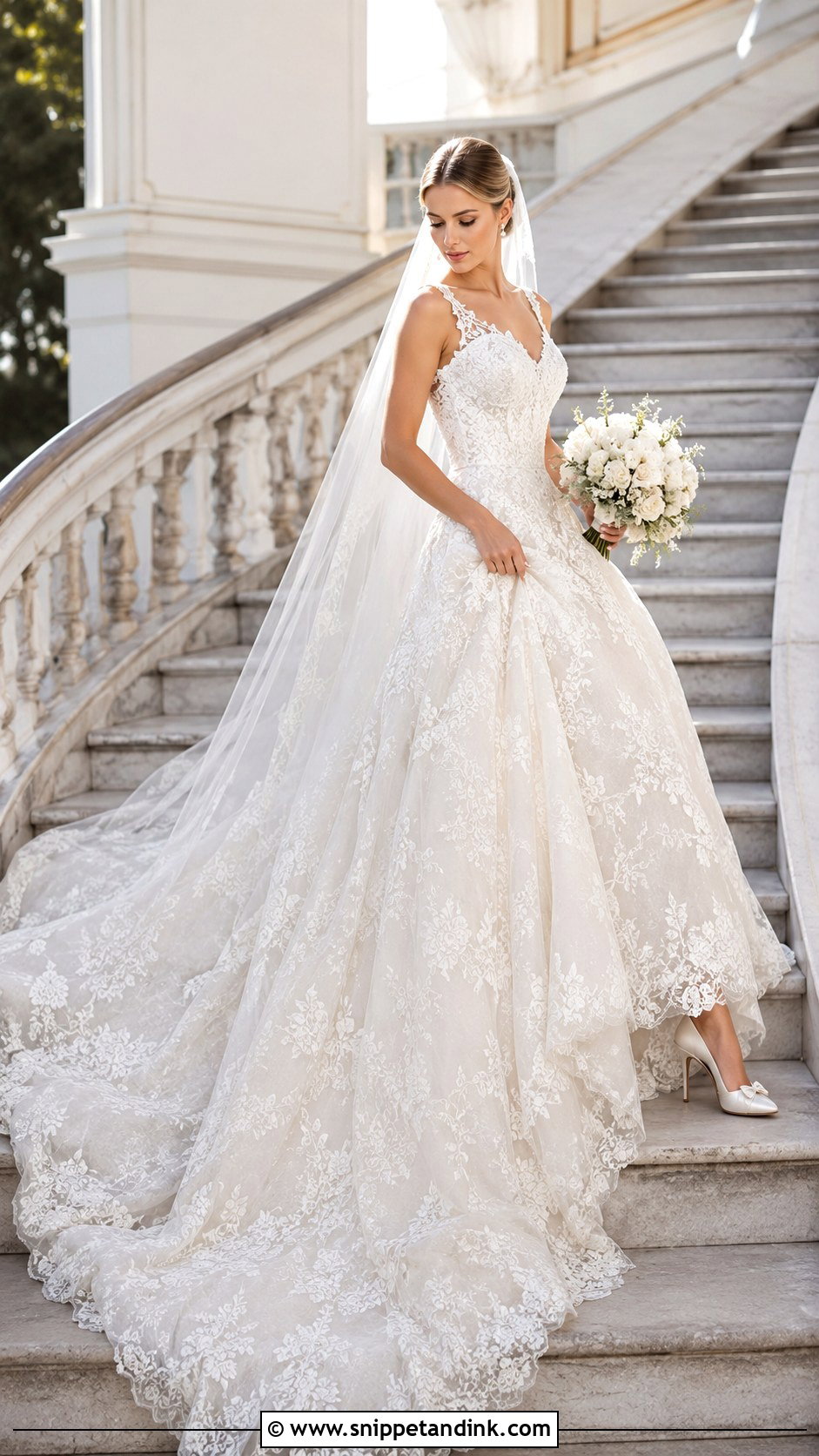
Ball gowns and cathedral trains are made for stairs, because the steps let fabric fall in tiers. Before the shoot I’ll have the bride practise walking down holding the front of her skirt; most have never done it in a full petticoat, and the hesitation shows in photos. Halfway down with a slight turn and the bouquet held low keeps the bodice clear. A seated pose on a wide step also works if the skirt is fanned out by someone else, since sitting into crinoline without help tends to push the hoop up at the front.
2. Wedding Dress Window Light Photoshoot
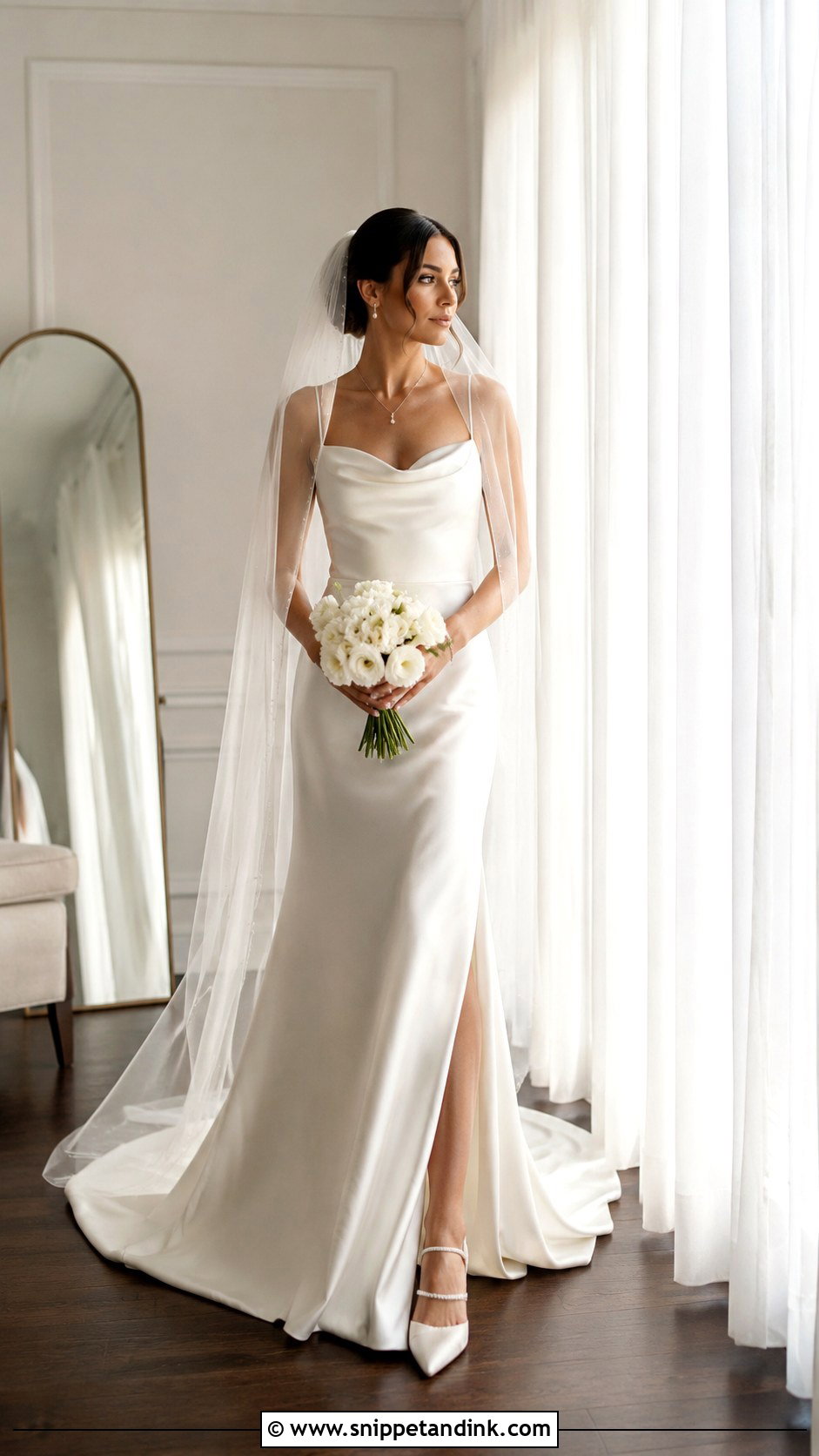
Window light is kind to texture, so I save it for gowns with something to show: lace, beading, a structured neckline. The bride stands close to the glass, body turned partly toward it, with one hand touching the veil and the other on her skirt or bouquet. My job before she steps in is the room: suitcases, garment bags and coffee cups go out of sight, and I move any brightly coloured chair that might reflect a tint onto the white fabric.
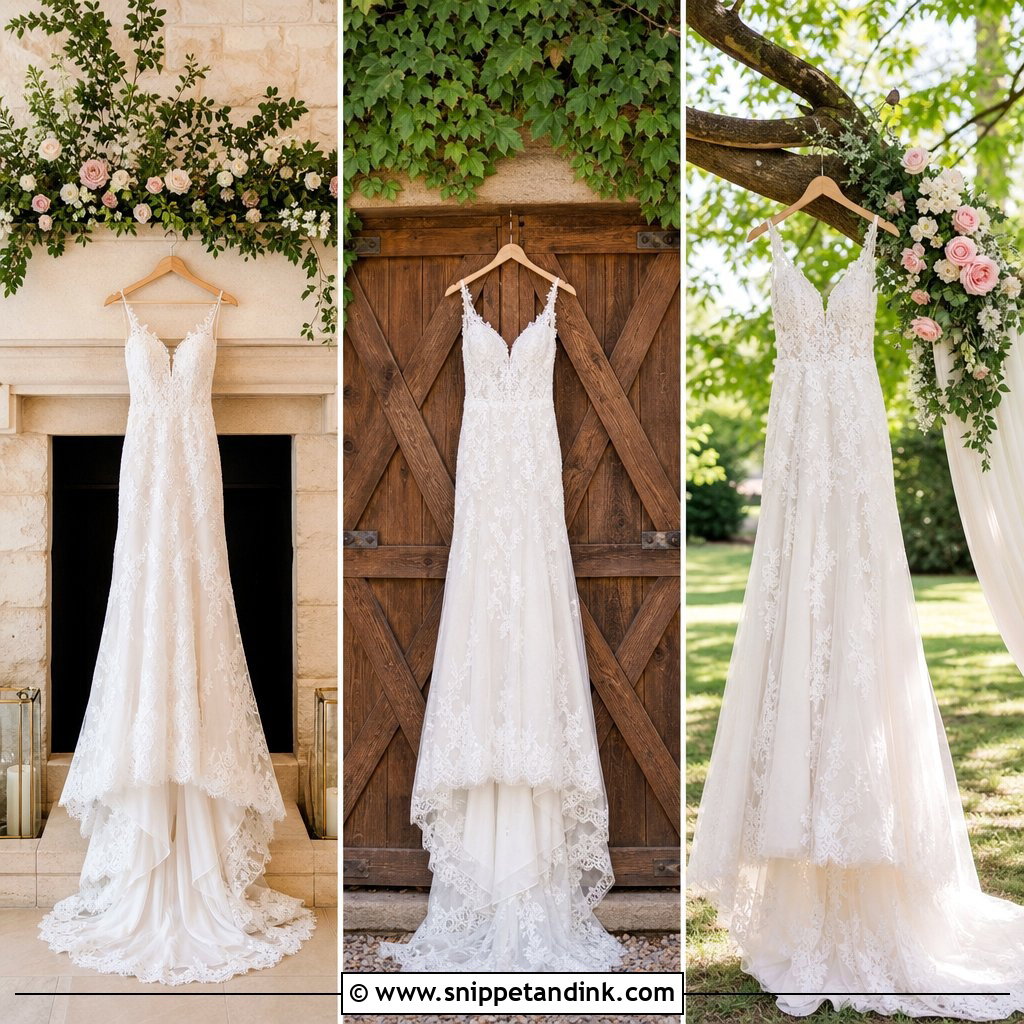
3. Wedding Dress Garden Photoshoot
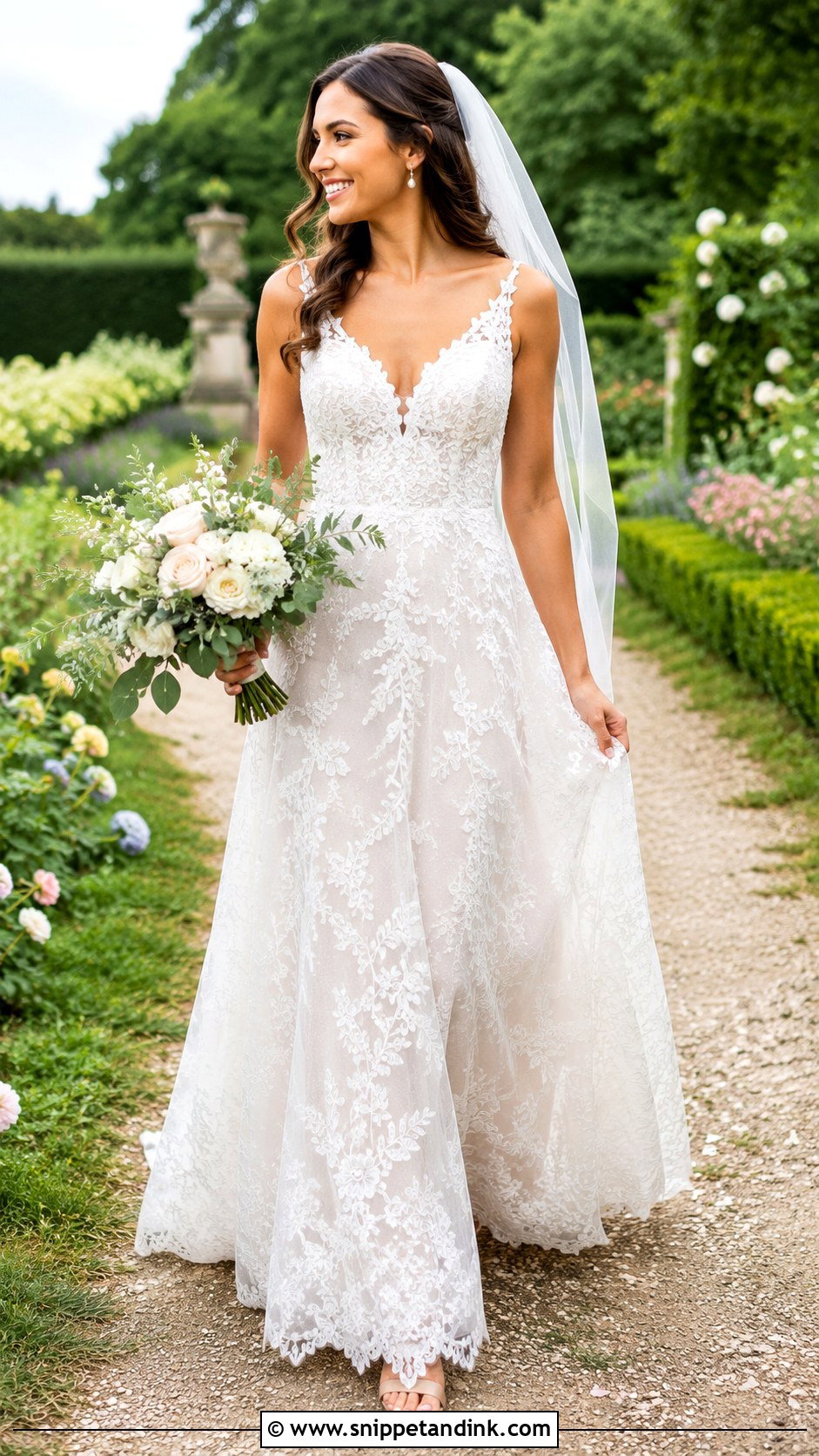
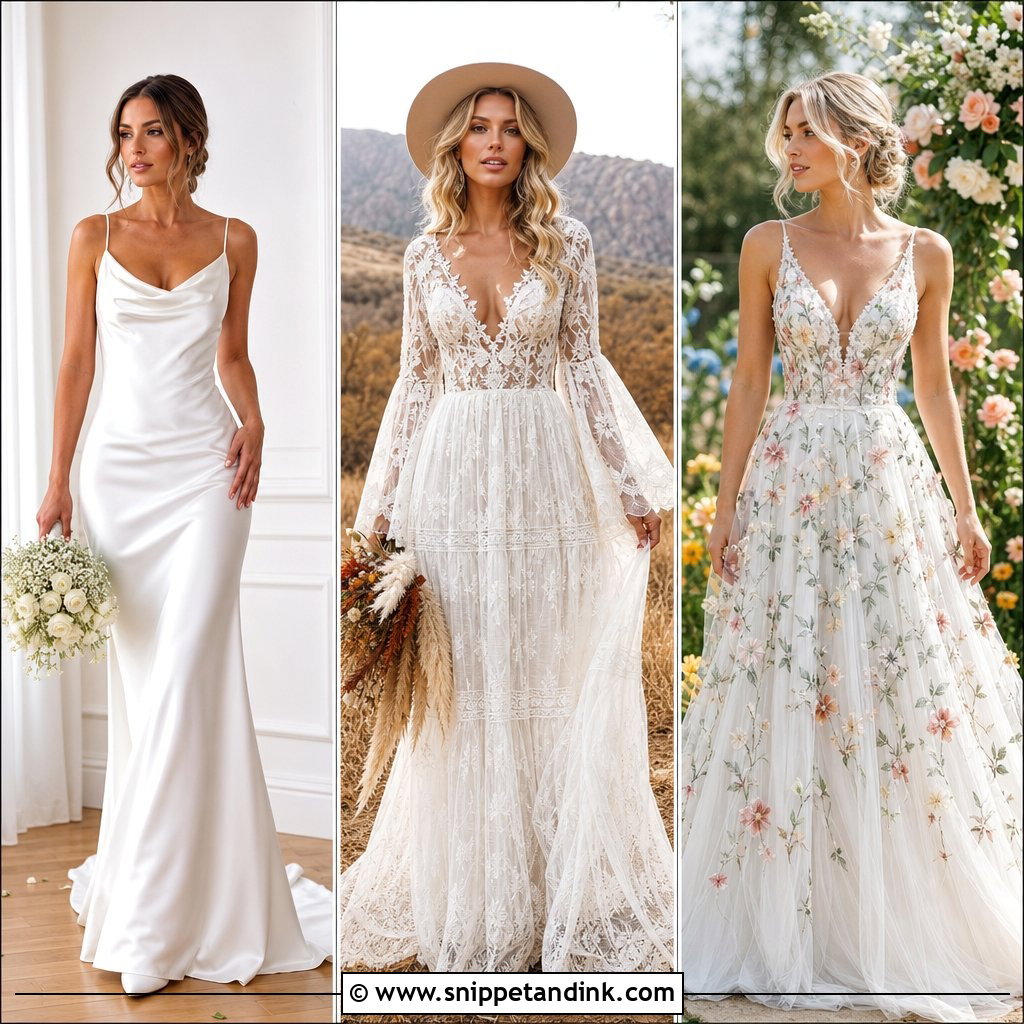
Floral lace and tulle feel at home among greenery, and loose hair or a soft low bun suits the setting. The styling trap is the bouquet: pick blooms that echo the garden too closely and they vanish into the hedge behind her. I’d rather see a bouquet with one colour that isn’t in the background. Practically, low block heels sink less into lawn than stilettos, and bright shade keeps the ivory of the dress from turning yellow in direct sun.
4. Wedding Dress Beach Photoshoot
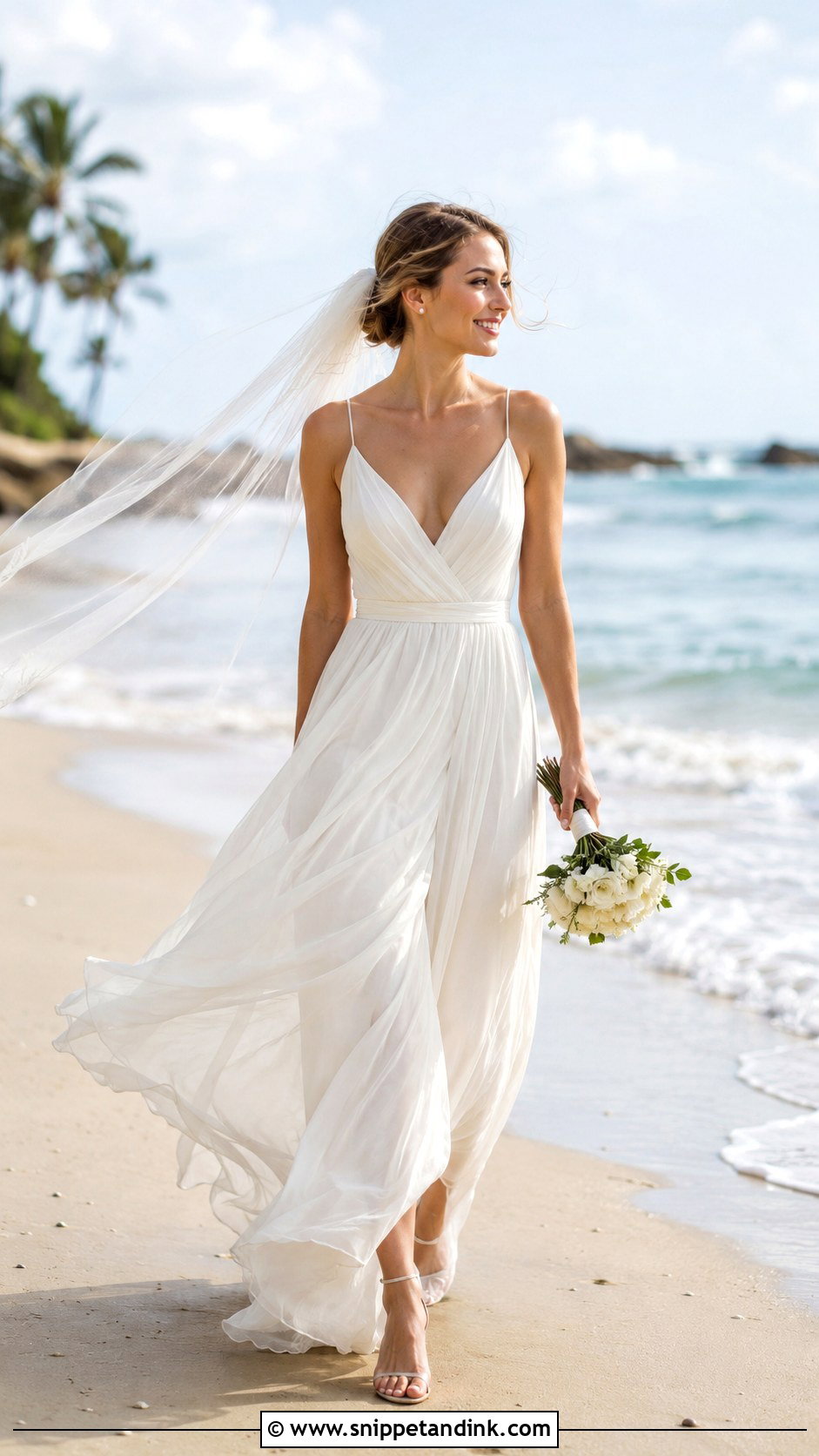
Beach gowns should be light enough to move and short enough in the train not to drag a kilo of wet sand. Chiffon, silk crepe and simple lace all behave well near water. Bare feet or flat sandals look natural; heels sink and make every step awkward. A long veil can catch the breeze in a striking way, though I keep a few extra pins in my kit because sea wind can pull a comb out of fine hair. For poses, walking along the shoreline and a glance over the shoulder suit most brides, and holding the skirt just clear of the sand protects the hem.
5. Wedding Dress City Street Photoshoot
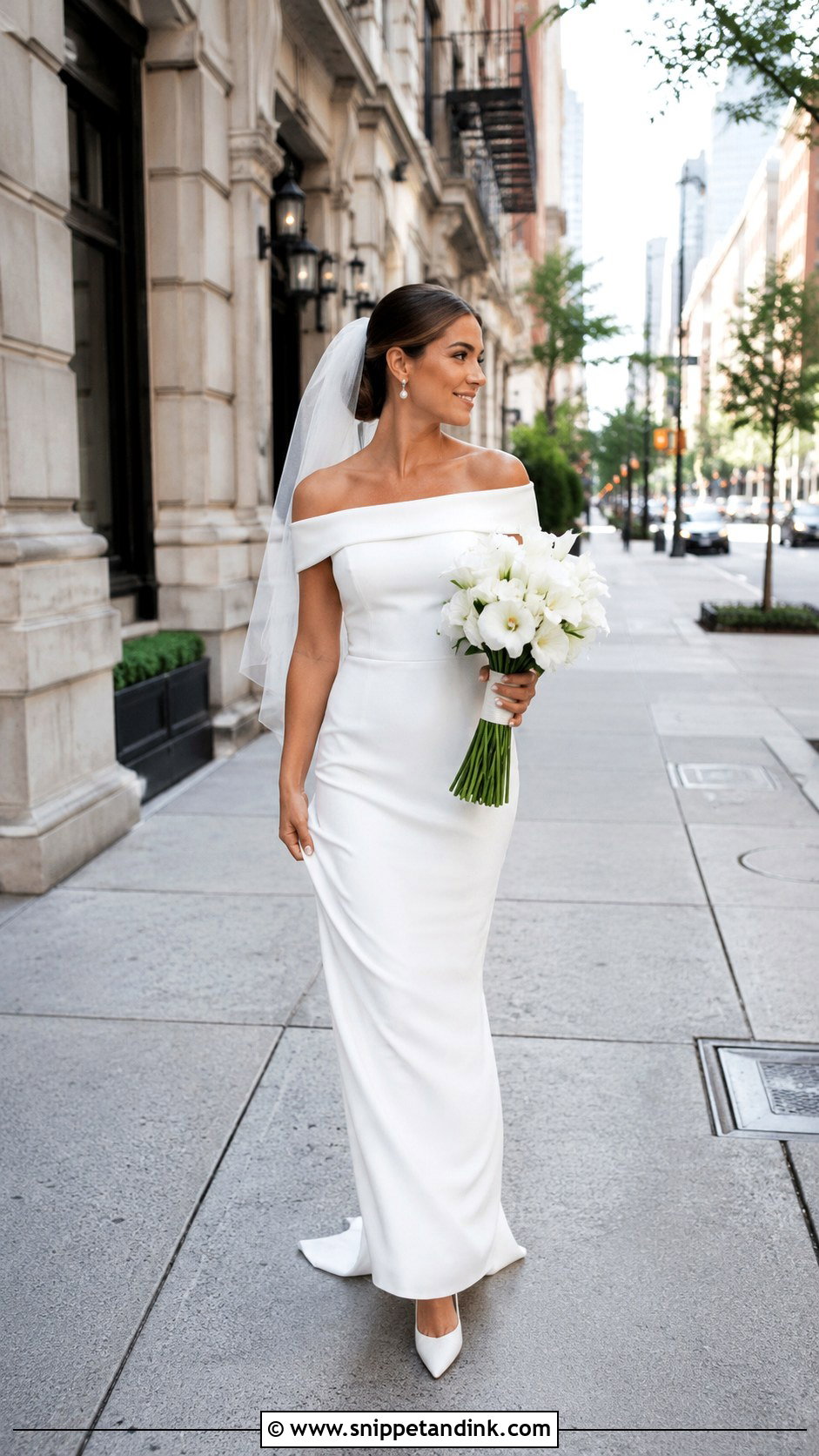
A city shoot is where I let a bride lean into fashion. Sleek satin, mini dresses, column gowns and bridal suits have the clean lines that hold their own against buildings. Shoes matter more here than anywhere else, because every frame is full length on a plain pavement. Sunglasses, a structured bouquet or a hand in a pocket all look natural in this setting, though pockets only work if the dress actually has them; a fake pocket pose pulls the skirt out of shape.
6. Wedding Dress Veil Toss Photoshoot
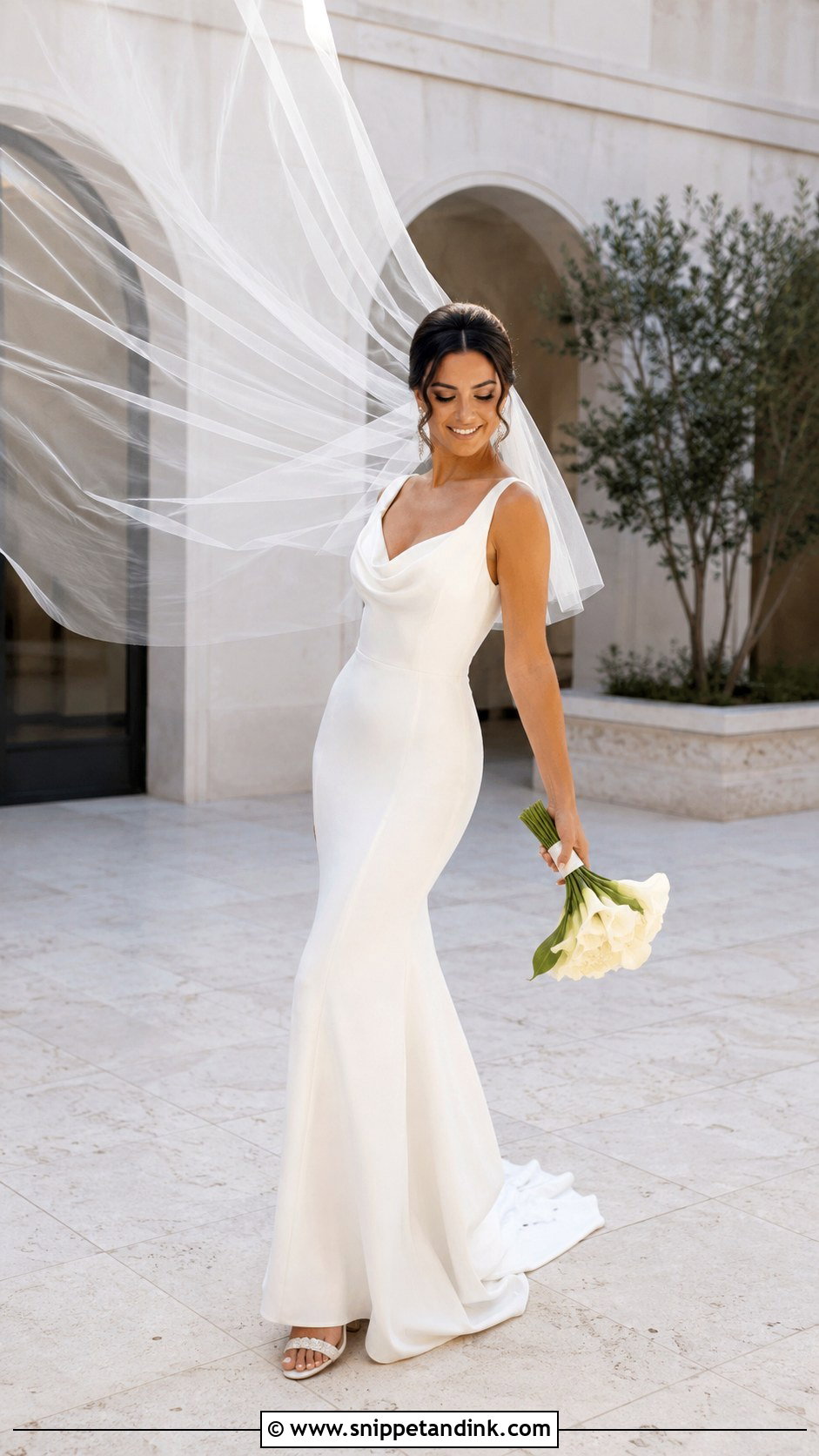
The veil toss needs a helper and a veil with some length, ideally chapel or longer. I teach the helper to gather the veil from the bottom edge, step back and release upward, then move out of frame quickly. The bride’s part is easy: stand still, shoulders down, look at the camera or the ground. Veils with heavy beaded edges fall fast and flat, so for those I tell brides to expect more attempts. Keep the bouquet simple so the frame stays about fabric in the air.
7. Wedding Dress Train Photoshoot
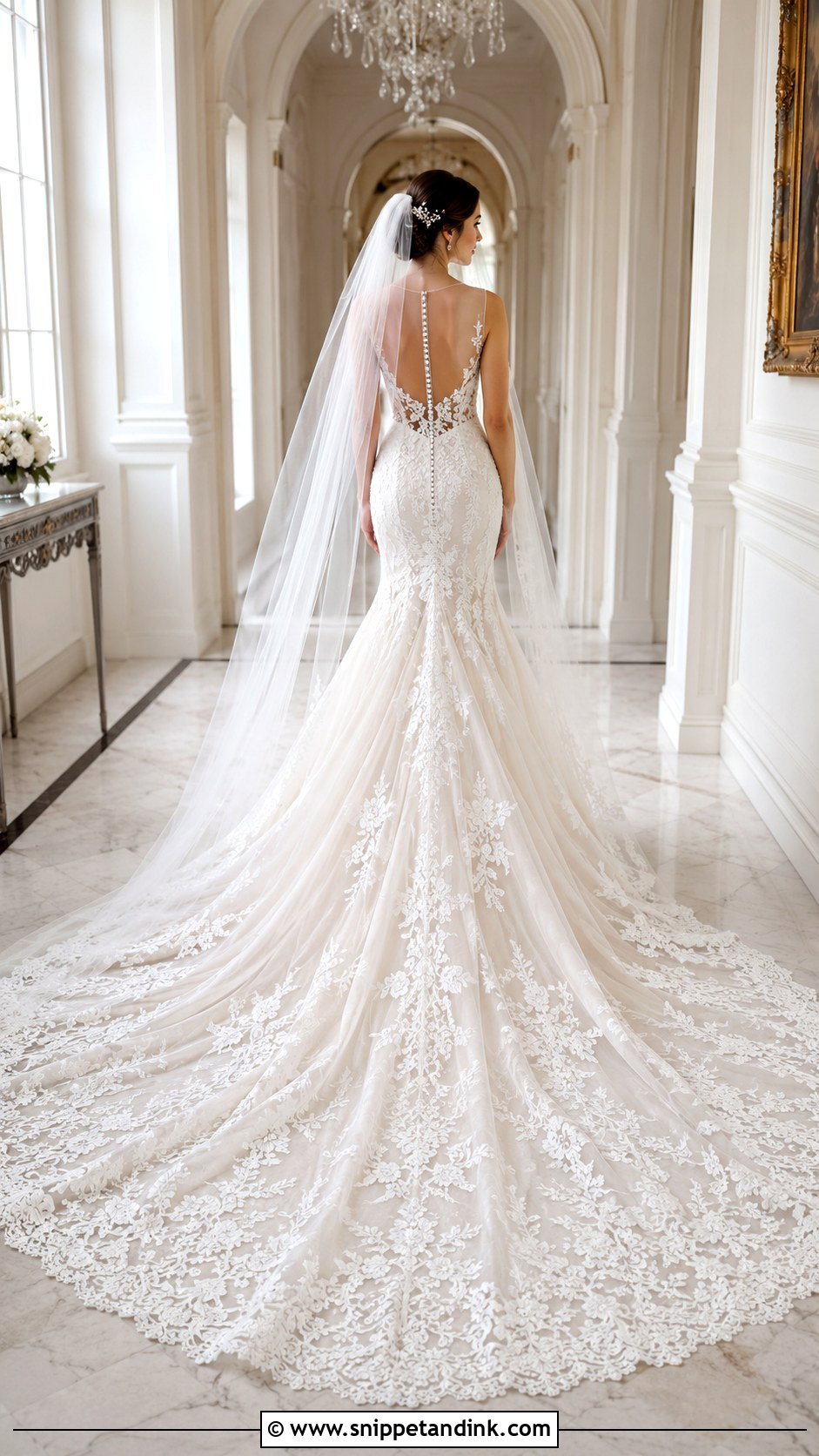
Back details only photograph well when the train is laid out evenly. I fan it from the centre seam outward and check that the lining isn’t flipped under at one corner, which happens constantly after a bride walks. Buttons, lace panels and low backs all need the bouquet moved out of the way, either held in front of her body or dropped to one side. She can stand still, look back or walk away from the camera. If the dress was custom made, this is the frame her dressmaker will want.
8. Wedding Dress Mirror Photoshoot
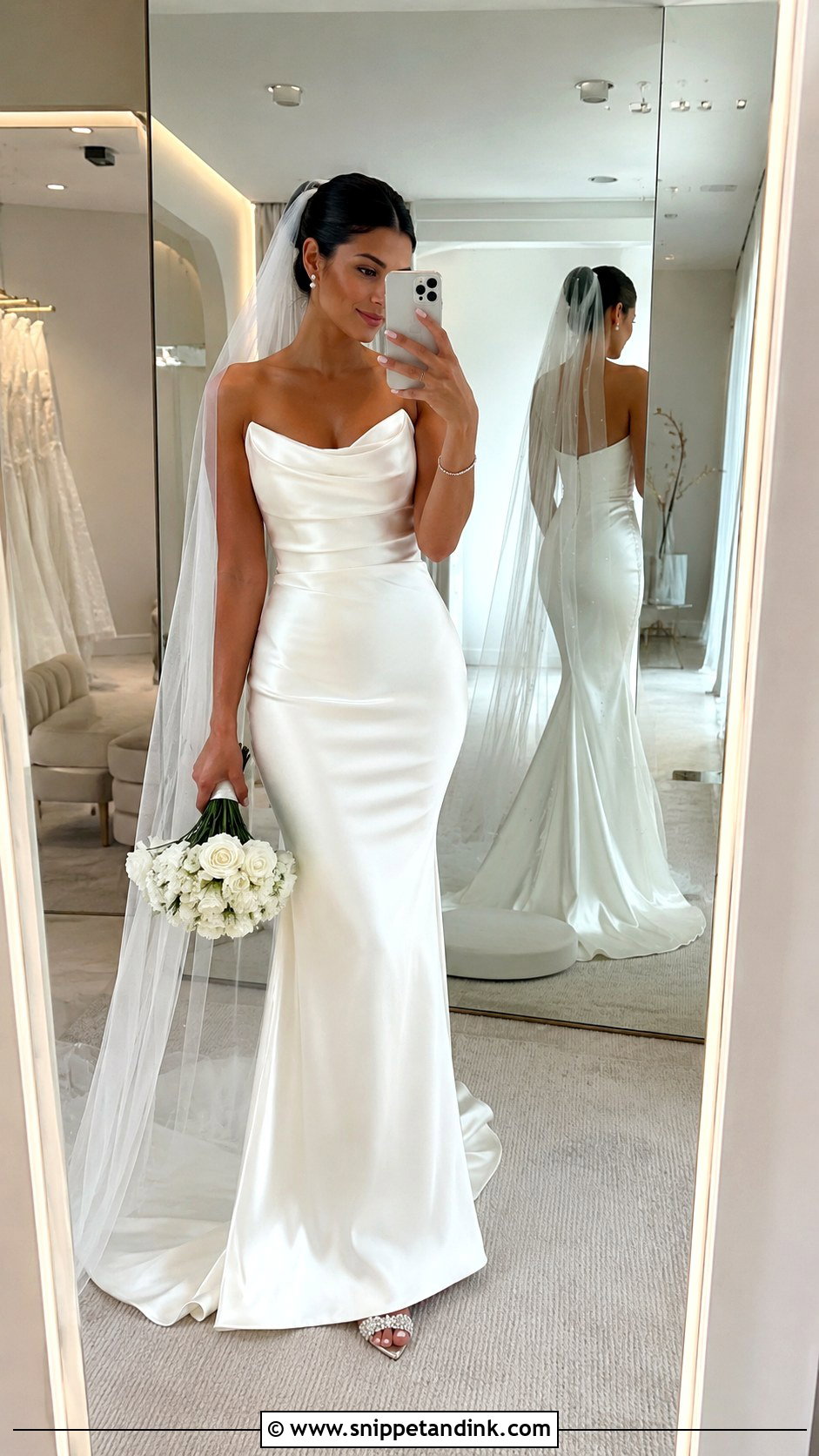
Mirror shots work when the whole look is finished: earrings in, shoes on, veil pinned. A half-dressed mirror frame looks like a work in progress. I give the bride a small task here, such as fastening an earring or smoothing her waist, because it relaxes her hands. Tall freestanding mirrors near a window are easiest. I always do a sweep of the reflection before shooting; mirrors catch the mess behind the photographer that nobody notices in the room.
9. Wedding Dress Bouquet Photoshoot
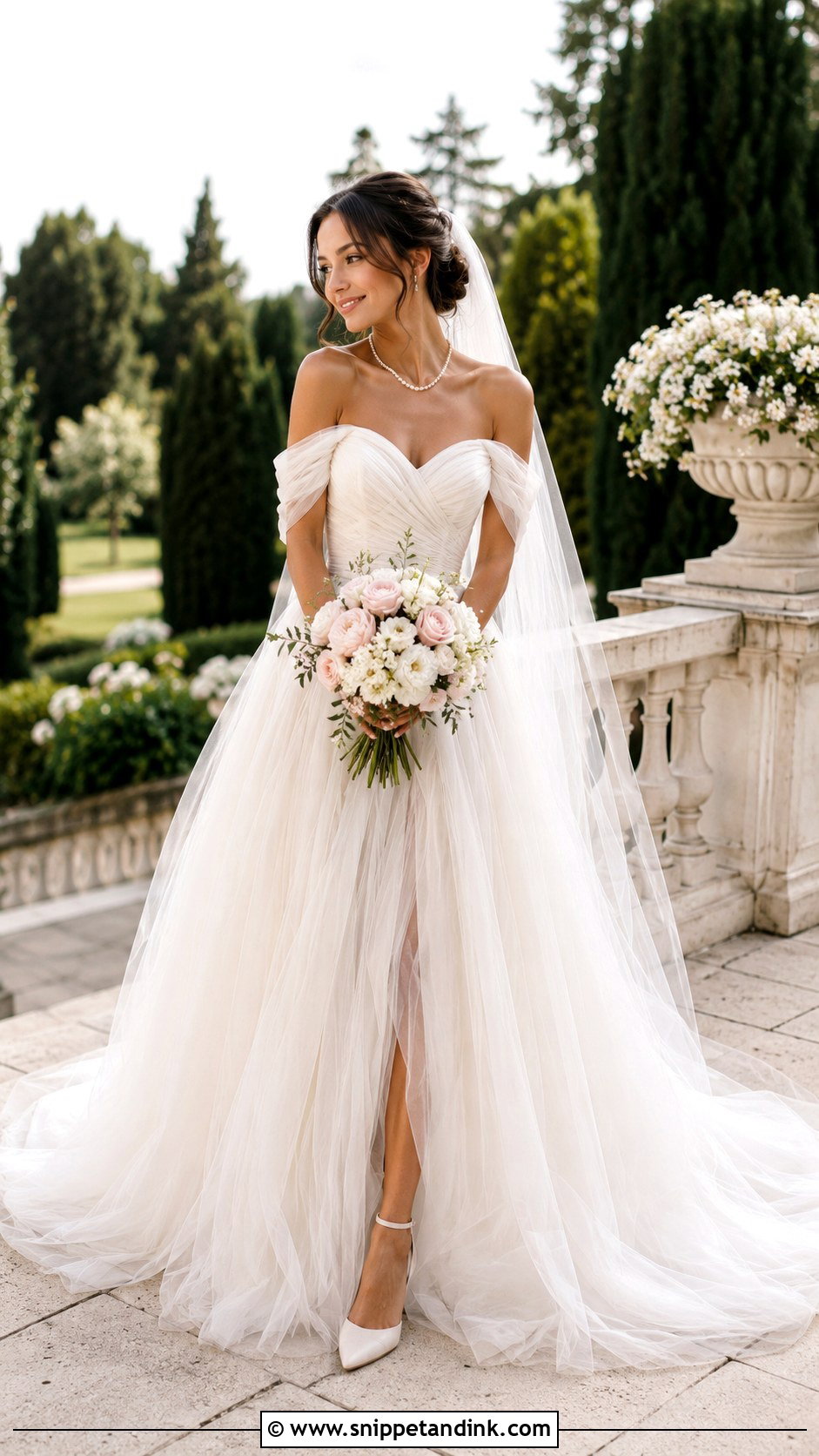
I style the bouquet around the dress, not the other way round. Held at the belly button it hides the waist, so I ask brides to drop it lower or carry it to the side if the bodice is detailed. A small, structured posy suits a fitted crepe gown; a loose garden bouquet sits better with soft tulle. If the flowers are heavy, I suggest resting the stems against the hip between frames, because tired arms creep the bouquet higher with every shot.
10. Wedding Dress Sitting Photoshoot
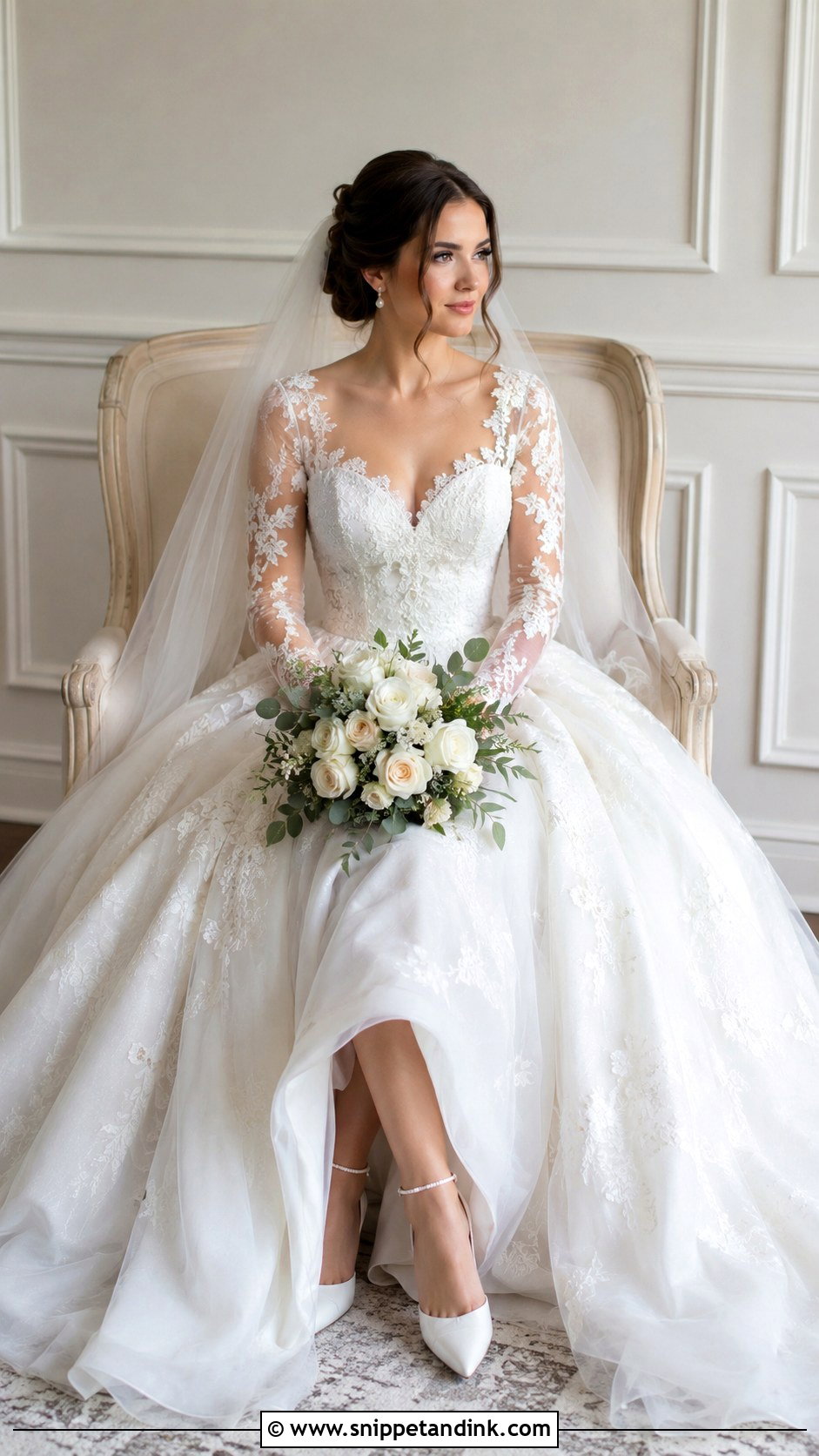
Seated portraits need fabric management. For fitted dresses, I have the bride perch near the front of the seat, back straight, knees angled to one side, so the skirt doesn’t bunch at the lap. For fuller gowns I spread the skirt around her and tuck any visible petticoat edge back under. Satin creases where it folds at the hip, so I keep seated shots for later in the session. A bouquet in her lap or set beside her finishes the frame.
11. Wedding Dress Walking Photoshoot
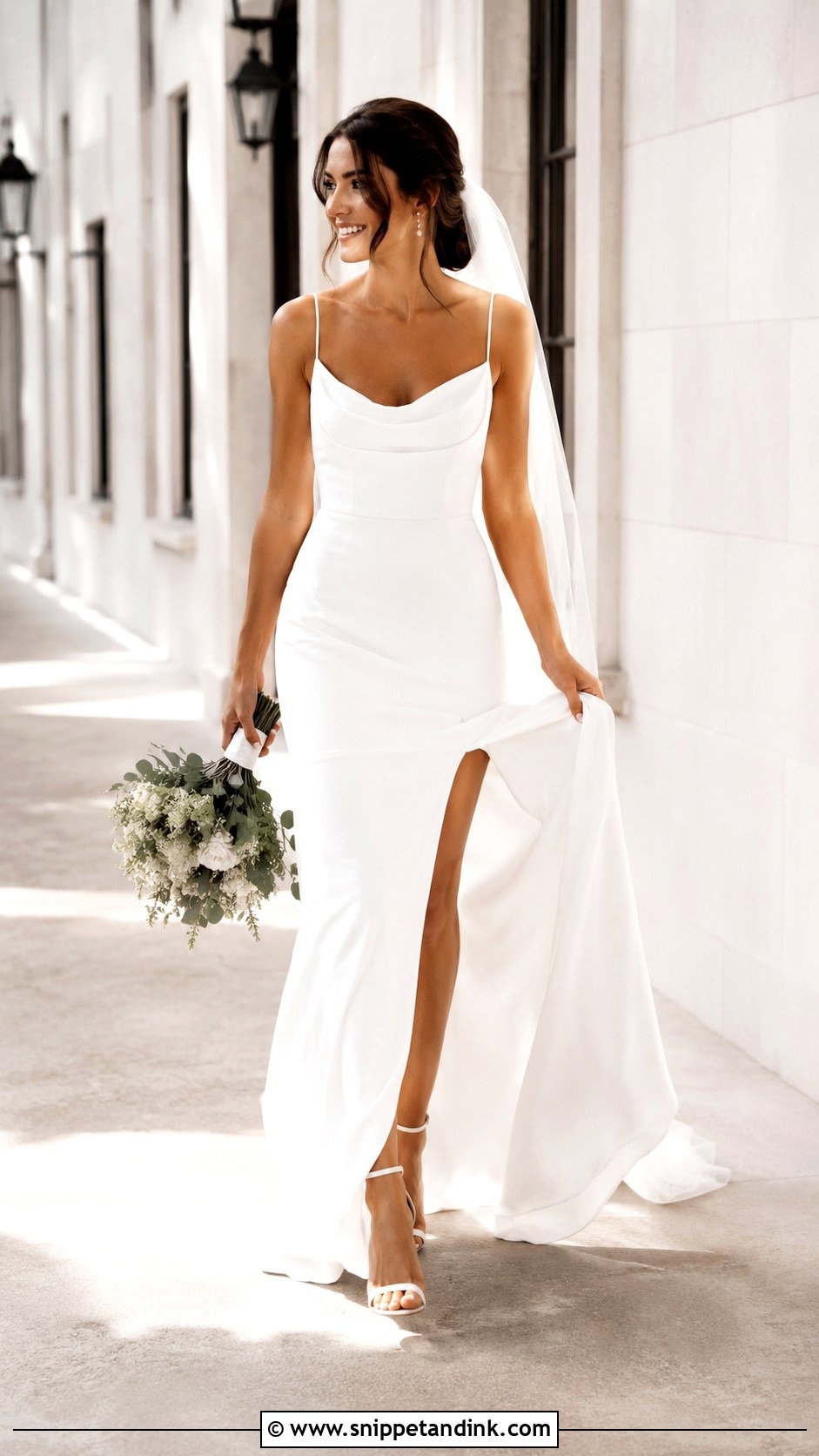
Walking is my go-to for brides who say they hate posing. Movement takes the stiffness out of the shoulders, and the dress does half the work. I ask for slow steps with her gaze just past the camera. Full skirts need one hand holding the front; lightweight fabric can be left to swing. With shorter dresses or a front slit, the shoes show with every step, which is another reason to choose them for looks as well as comfort.
12. Wedding Dress Back Pose Photoshoot
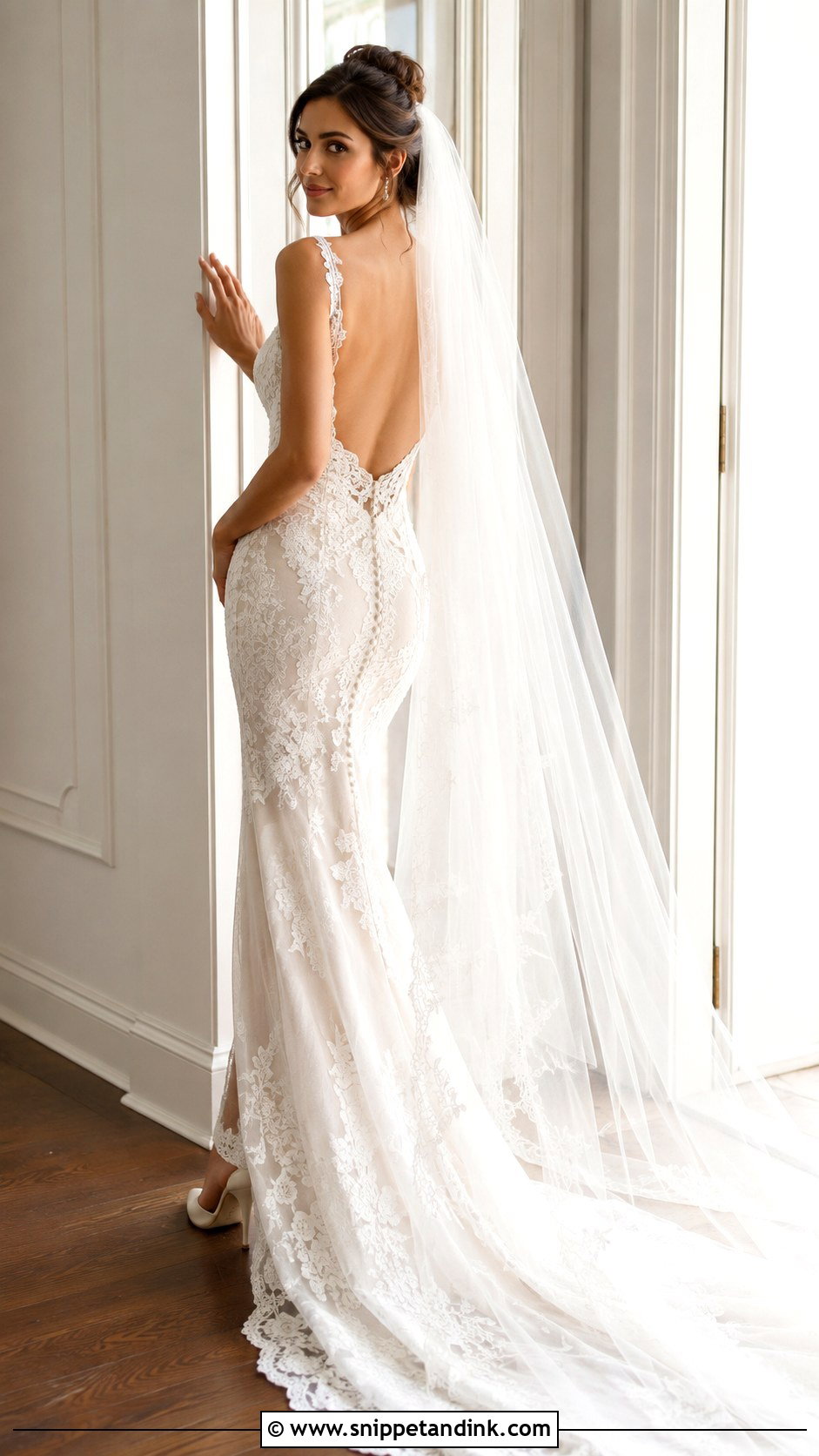
A back pose is worth planning if the dress has lace, buttons, a bow or sheer panels. The bride can stand facing a window, doorway or garden with her face turned slightly to the camera. Before I step back, I check three things: the train is smooth, the veil comb sits straight, and there’s no bra strap or shapewear edge peeking out. It’s also the best angle for an updo and statement earrings, so I tell the hairstylist this shot is coming.
13. Wedding Dress Bridal Suite Photoshoot
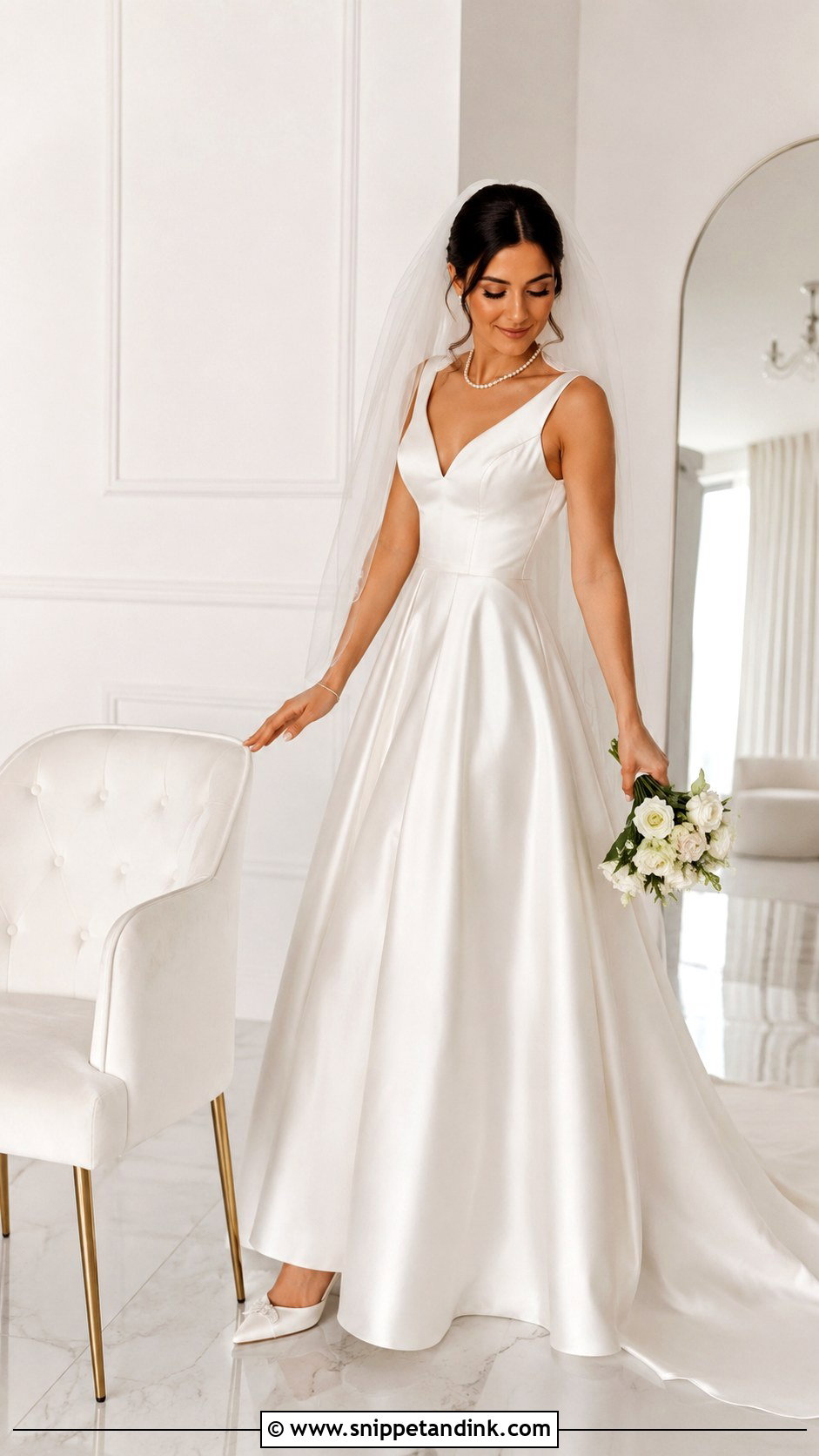
The bridal suite is the easiest place for quiet, finished portraits, but only if someone tidies it. I pick the corner with the best light, clear it completely, and bring in just the shoes, perfume, jewellery and veil. She can sit on a chair edge, adjust a bracelet or hold her bouquet by the window. I like doing this right after she’s dressed, before hugs and car rides add creases to the skirt.
14. Wedding Dress Courthouse Photoshoot
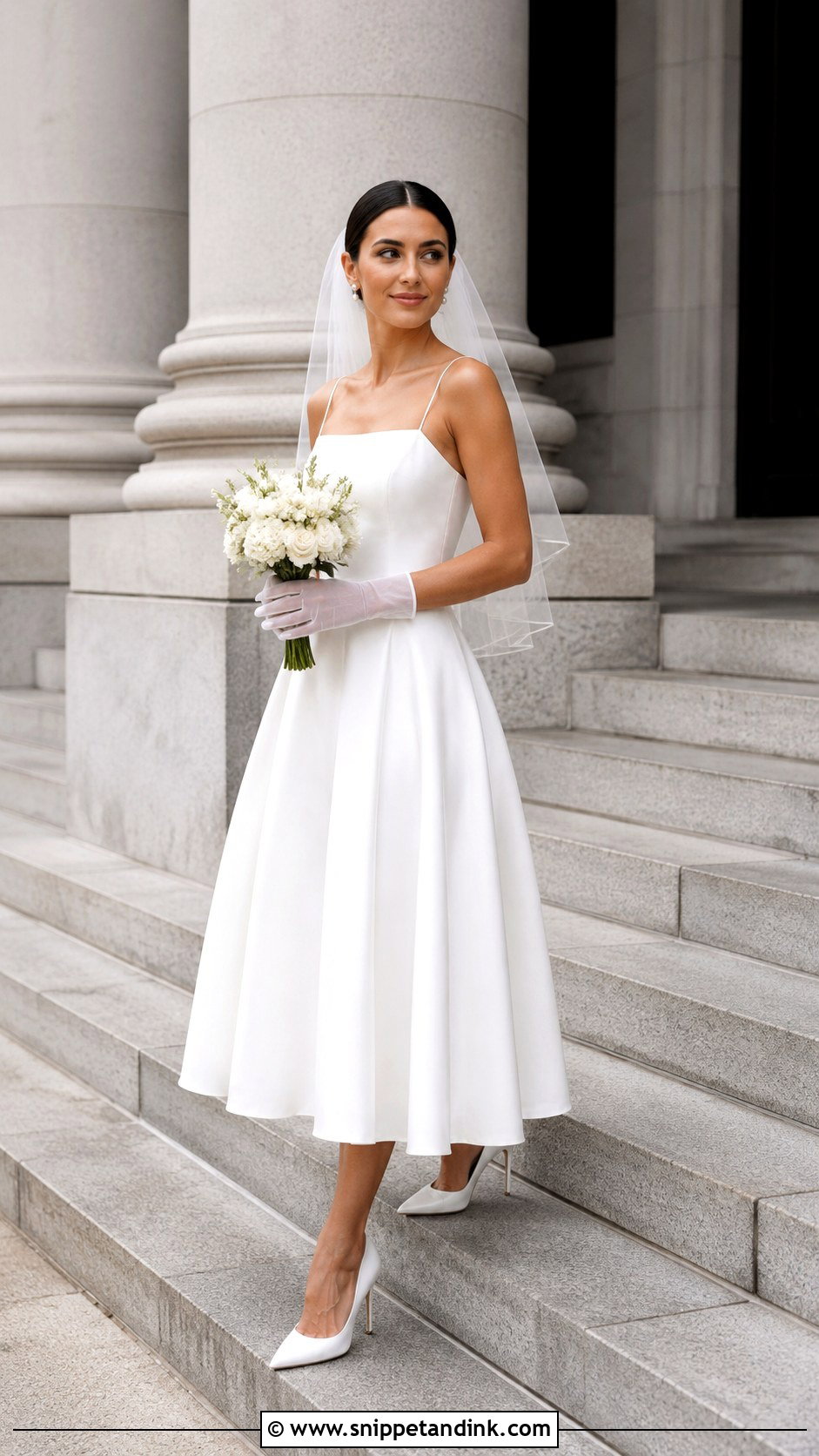
Courthouse portraits suit sharp, simple outfits: midi dresses, column gowns, bridal suits, short veils, gloves, pearls and pointed heels. Stone steps and columns frame them well. I keep the styling deliberately pared back, because a big tulle skirt on narrow courthouse stairs tends to look out of place and gets stepped on by other people. Elopements and civil ceremonies fit this idea well, and sunglasses or a small bouquet make good props.
15. Wedding Dress Editorial Studio Photoshoot
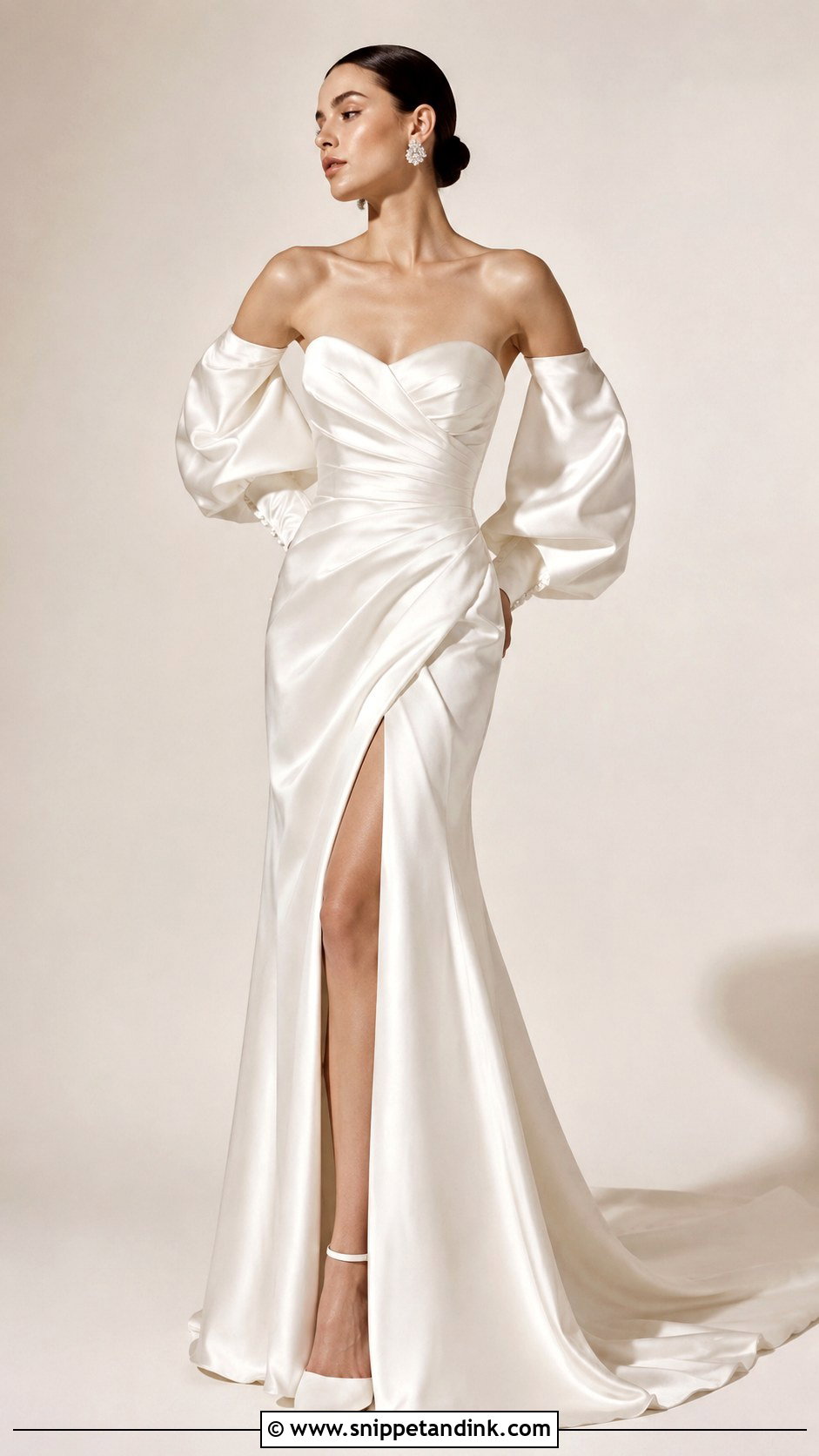
A studio backdrop hides nothing. Every wrinkle, uneven hem and lint speck shows against plain white or grey, so I steam the dress on set rather than at home and keep a lint roller in my pocket. Sculptural gowns, big bows, detachable sleeves, capes and bridal separates all come into their own here. Posture carries the frame: tall spine, slight turn, weight on the back foot. Shoes are seen in full, so pick a pair that finishes the line of the dress.
16. Wedding Dress Flower Field Photoshoot
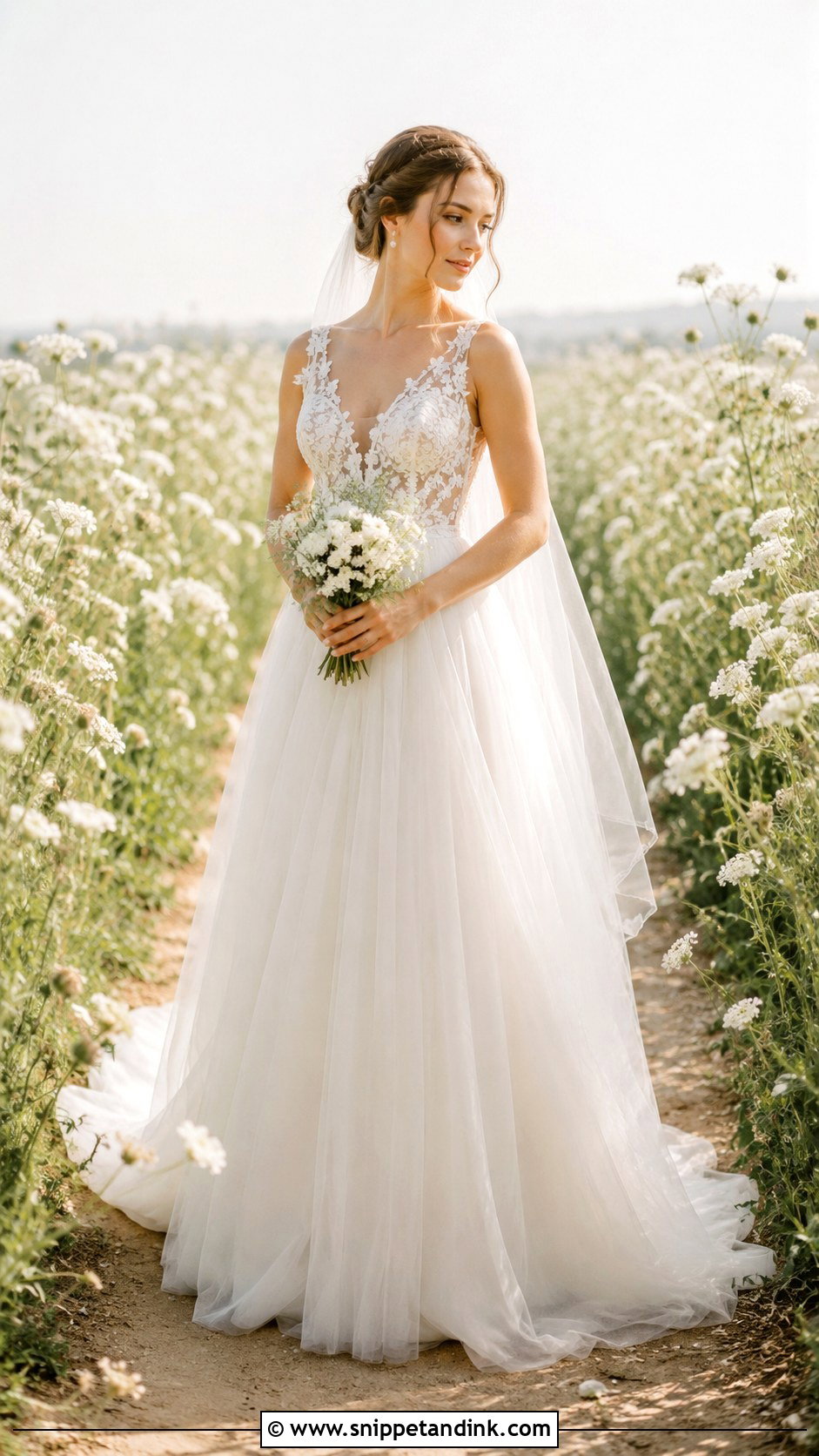
Flower fields look easy in pictures, but the reality is uneven ground, pollen and bees. Flowing gowns, off-shoulder necklines and flutter sleeves suit the setting. I’d steer you away from light silk or a long train here, because grass seeds and pollen stain delicate fabric, and cleaning them out is slow. Walking a narrow path with the skirt lifted gently works better than standing deep in the flowers. Flat shoes or low block heels hidden under the hem save ankles.
17. Wedding Dress Museum Photoshoot
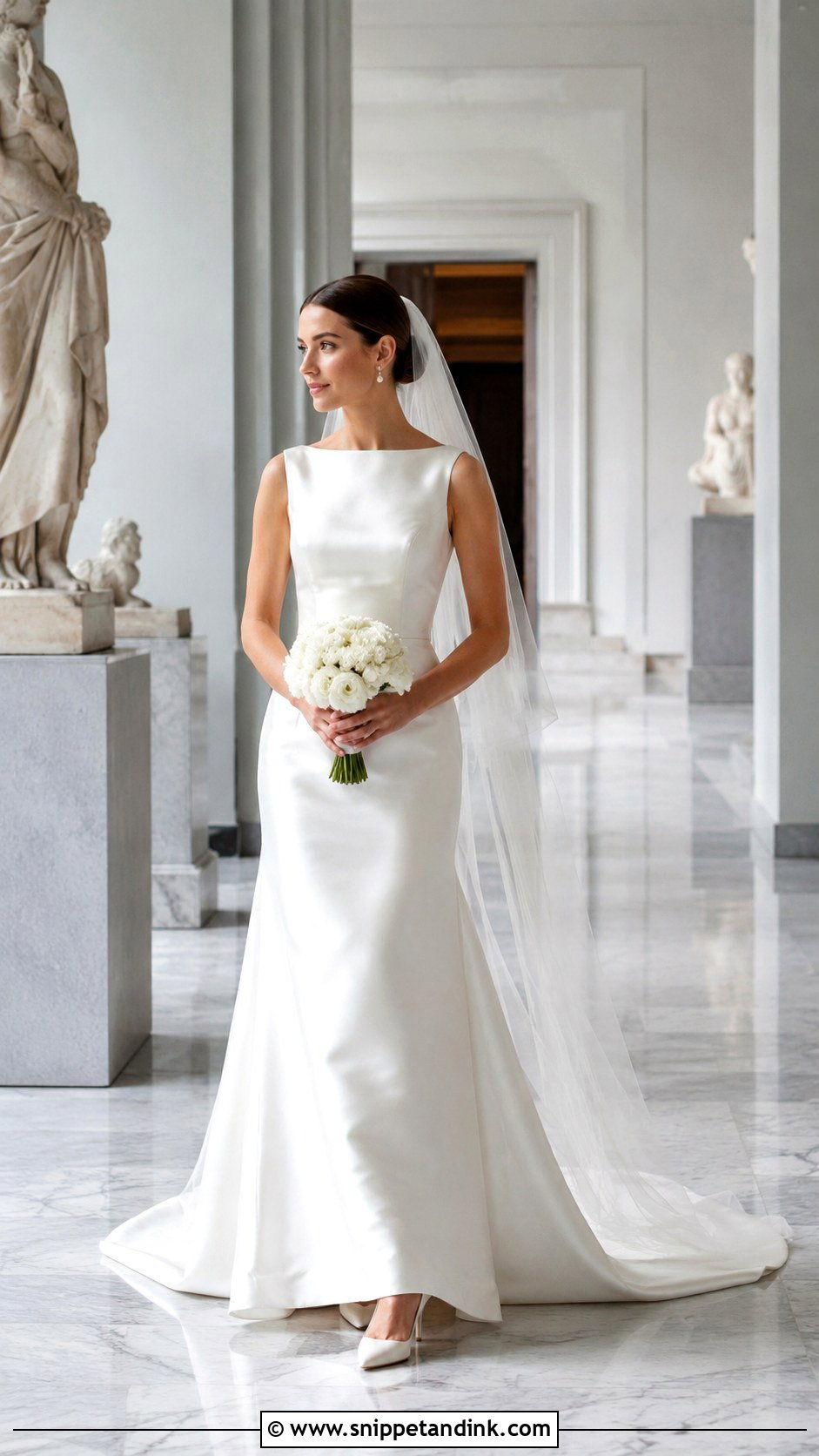
Museums and galleries give a gown clean walls, marble floors and grand staircases, which suits architectural shapes and sleek satin. Most require booking and many limit tripods and lights, so I check access rules weeks ahead. Pearls and a sleek updo match the setting well. Skip the bouquet for a more editorial frame, or keep it small. Polished shoes matter, because marble reflects whatever is on your feet.
18. Wedding Dress Rooftop Photoshoot
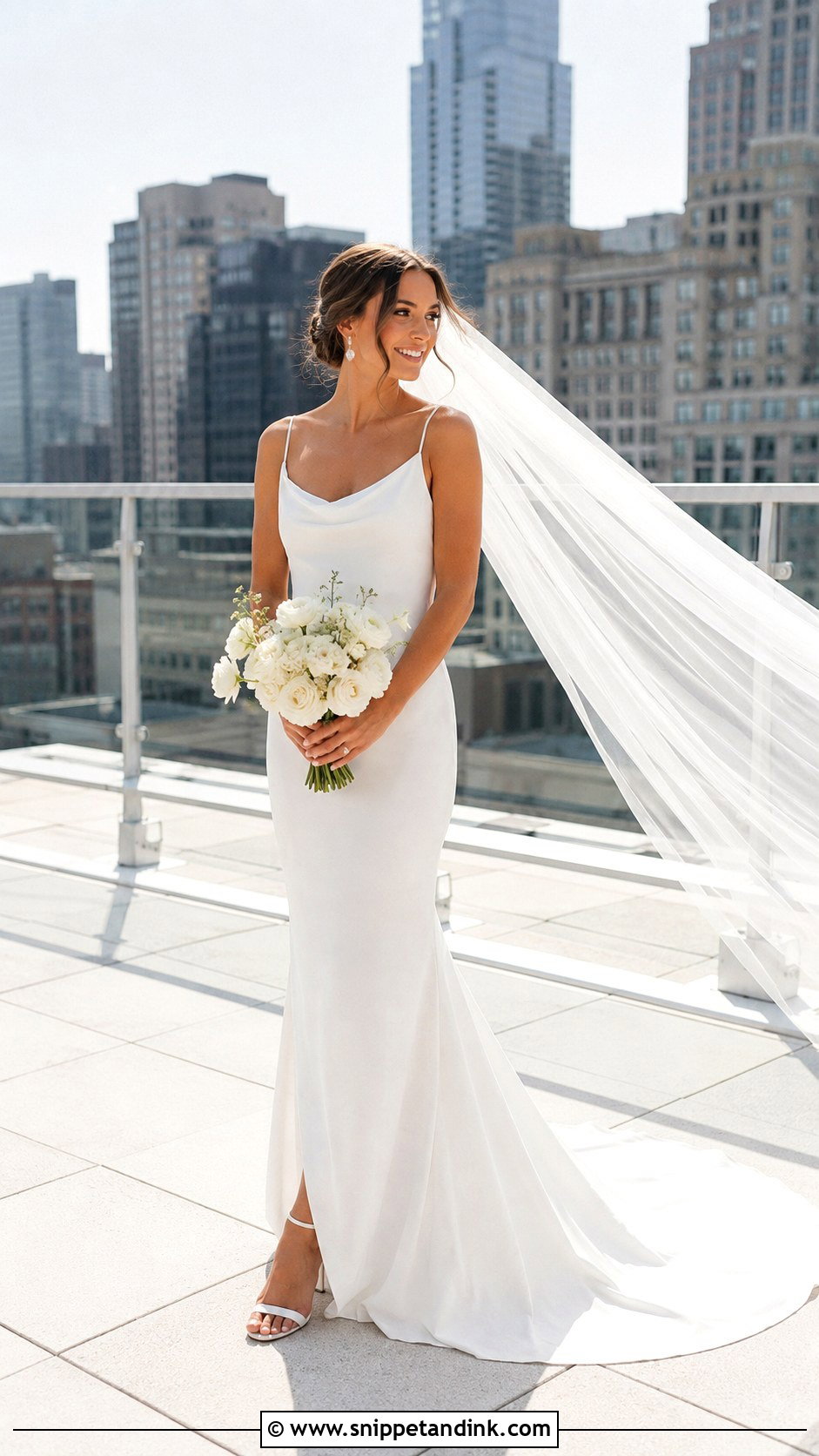
Rooftops add wind, height and a skyline. Crepe, chiffon and dresses with a slit move nicely up there; voluminous tulle can turn into a sail. I pin veils more firmly for rooftop shoots and keep the bride away from railings when the wind picks up. A sleek bouquet and minimal earrings let the city carry the background. Timing for late afternoon helps, but the dress should still look white, not orange, so the photographer usually adds fill light as the sun drops.
19. Wedding Dress Mansion Photoshoot
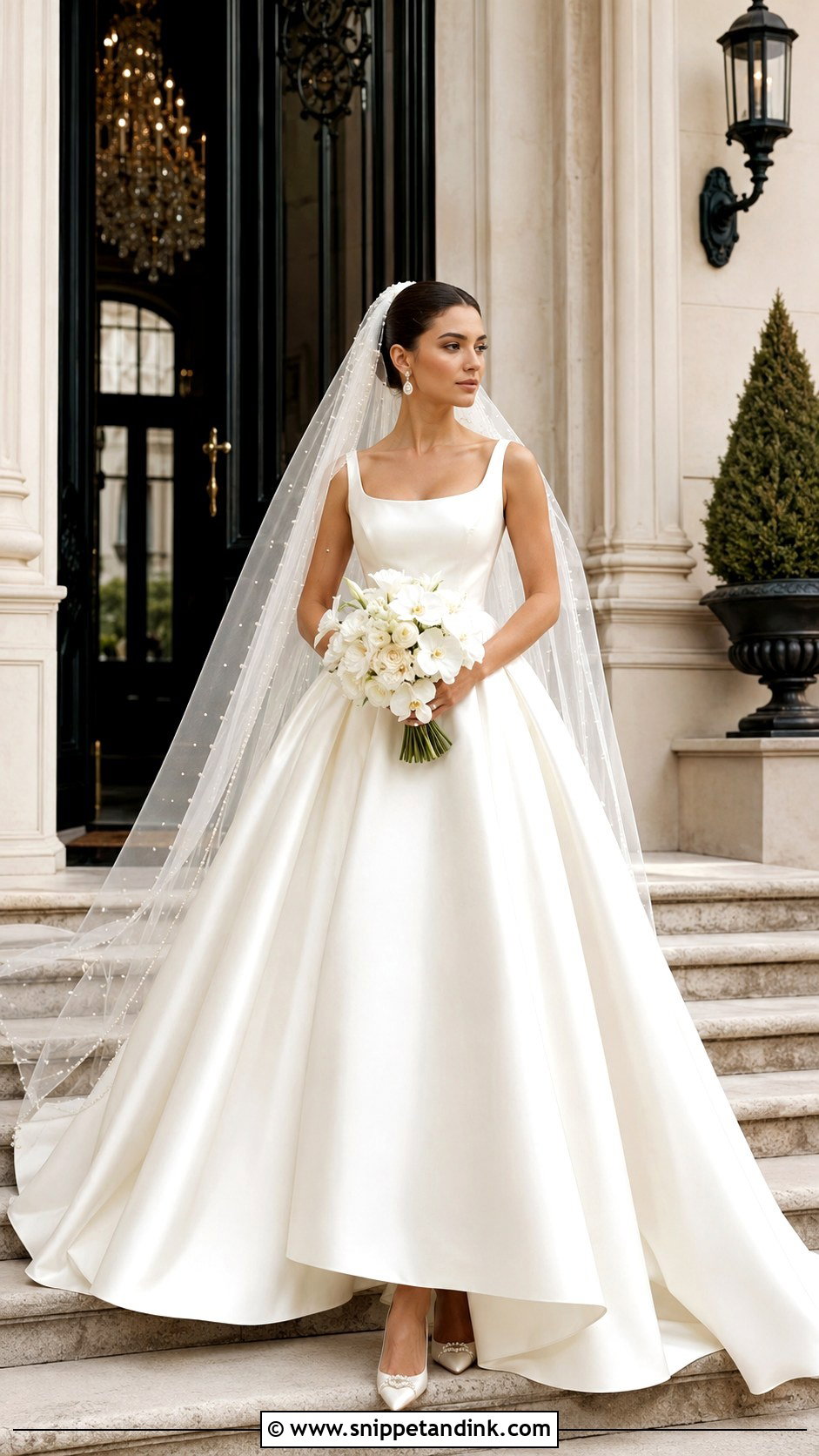
Grand houses suit classic gowns: lace, long trains, pearl veils, satin ball gowns and structured bodices. The doors, chandeliers and arched windows bring a sense of occasion. I watch for antique chairs, which can snag lace, and old floors that leave dust on a white hem. Standing at the entrance, sitting on a period chair or walking a hallway with the train behind her all work. Refined jewellery and a soft bouquet are enough; anything heavier competes with the room.
20. Wedding Dress Black And White Photoshoot
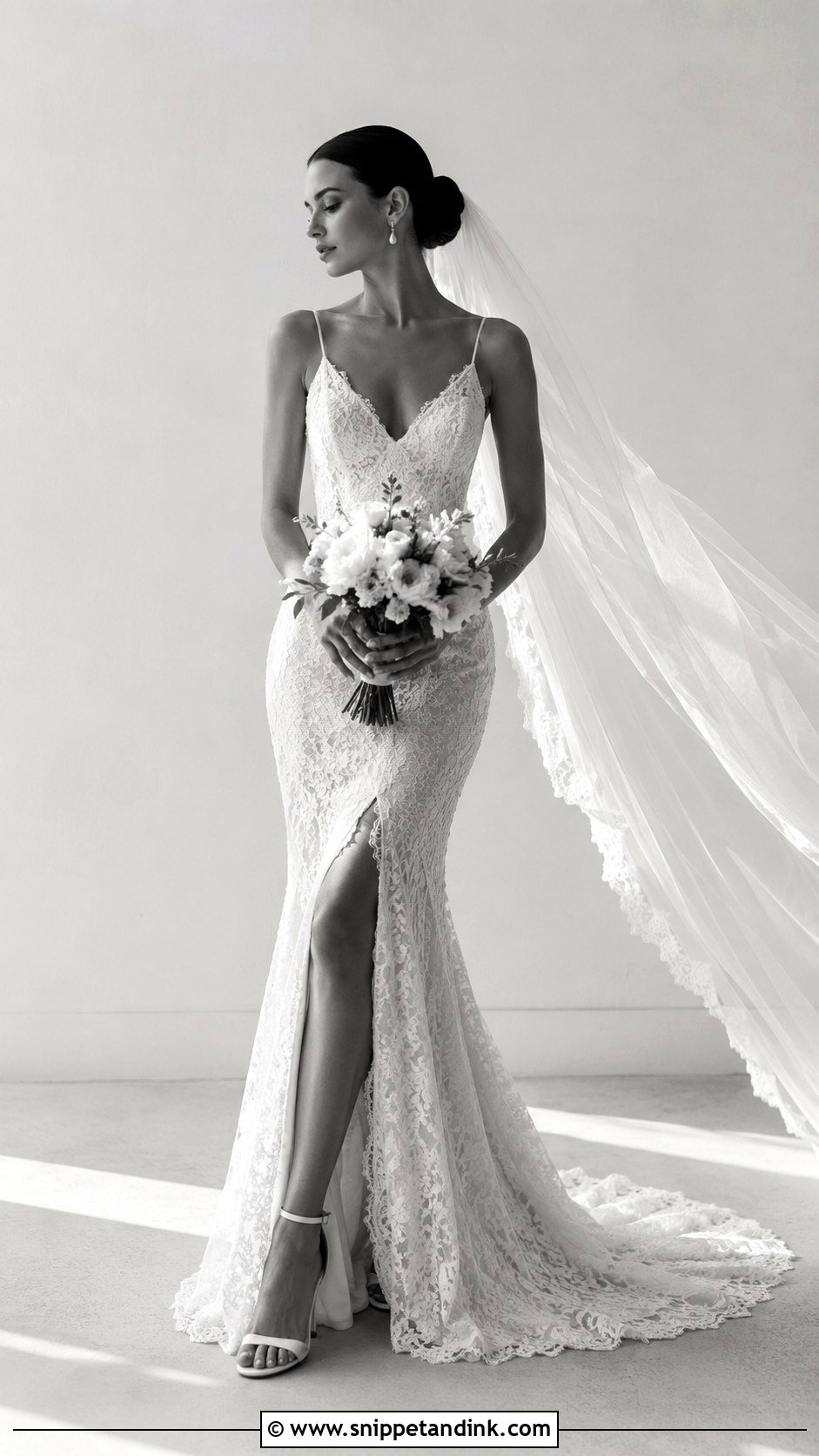
Black and white turns the dress into shape and shadow. Pleats, gloves, veils and dramatic silhouettes look strong; plain fabrics can look flat unless the light has contrast. Without colour, the pose carries more weight, so I give the bride slow movements like touching the veil or turning toward the window. I like having a few of these in every gallery, because they help when a background colour clashes with the dress.
21. Wedding Dress Close Up Detail Photoshoot
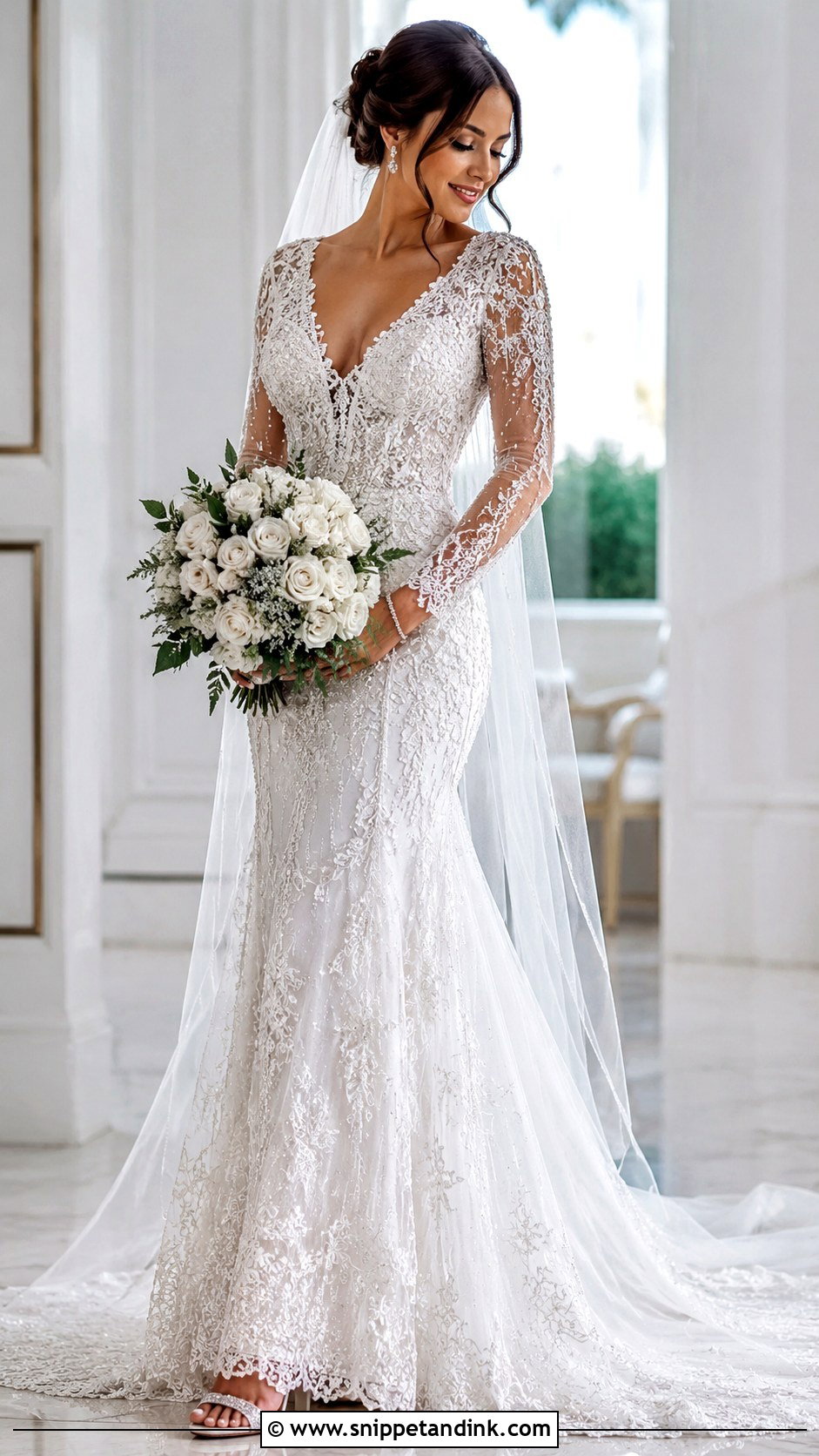
Detail shots preserve the work that went into the dress: lace sleeves, pearl buttons, embroidery, a bow at the waist. I lay out the jewellery, shoes and gloves on a clean surface while she’s in hair and makeup. I prefer details with her hands in them, such as fastening a glove or adjusting the veil edge, because they look lived in rather than catalogued. Accurate colour matters, so these are shot in daylight, never under warm room lamps.
22. Wedding Dress First Look Photoshoot
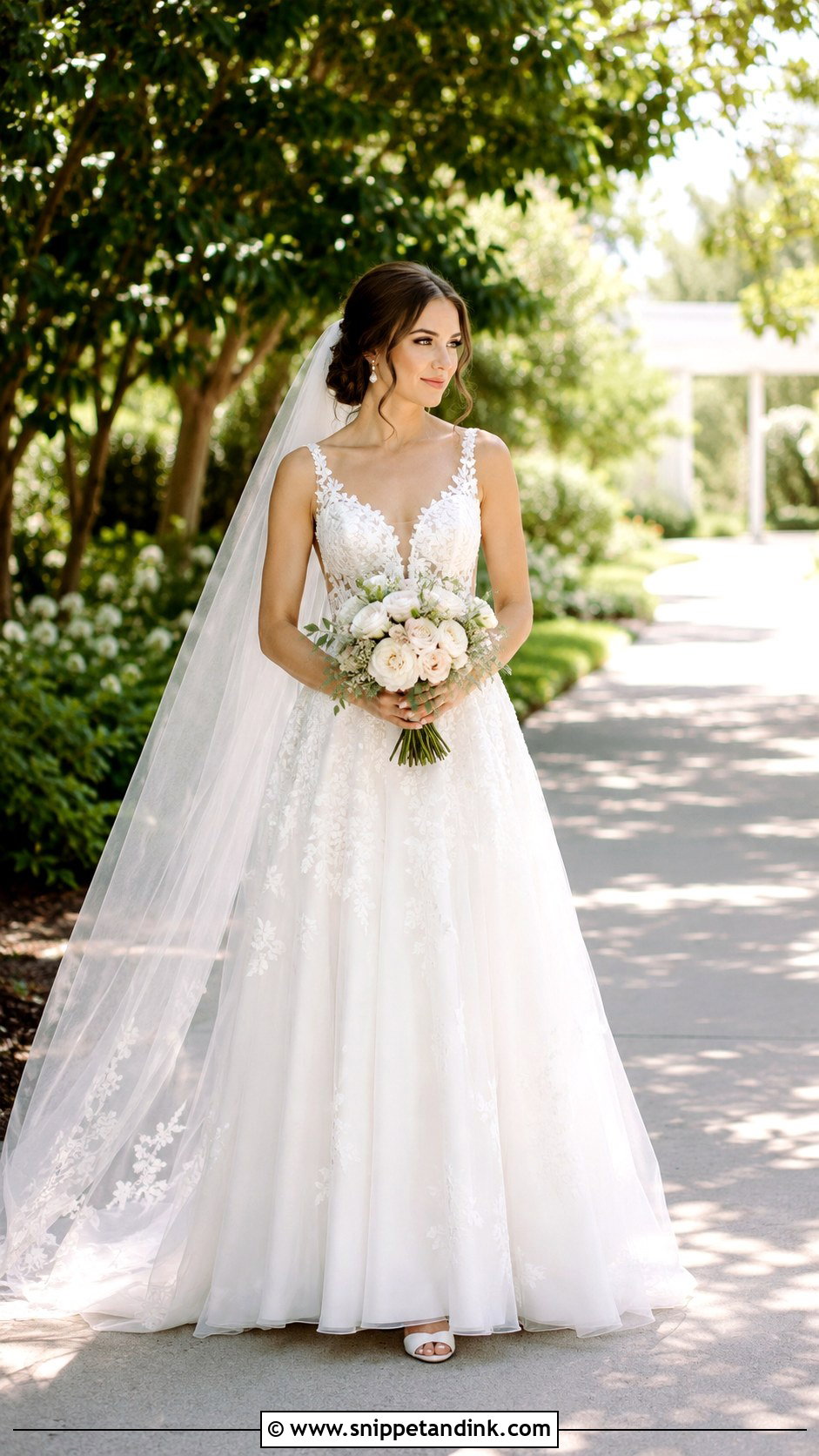
The first look is the one moment I can’t restyle once it starts. Before the reveal I fan the train, settle the veil, check the bouquet sits low enough to show the bodice, and move her into even light. Then I step out of the way. A private room, quiet garden corner or venue balcony keeps the moment between the two people, and keeping onlookers out of the background leaves the reaction as the subject.
23. Wedding Dress Sunset Photoshoot
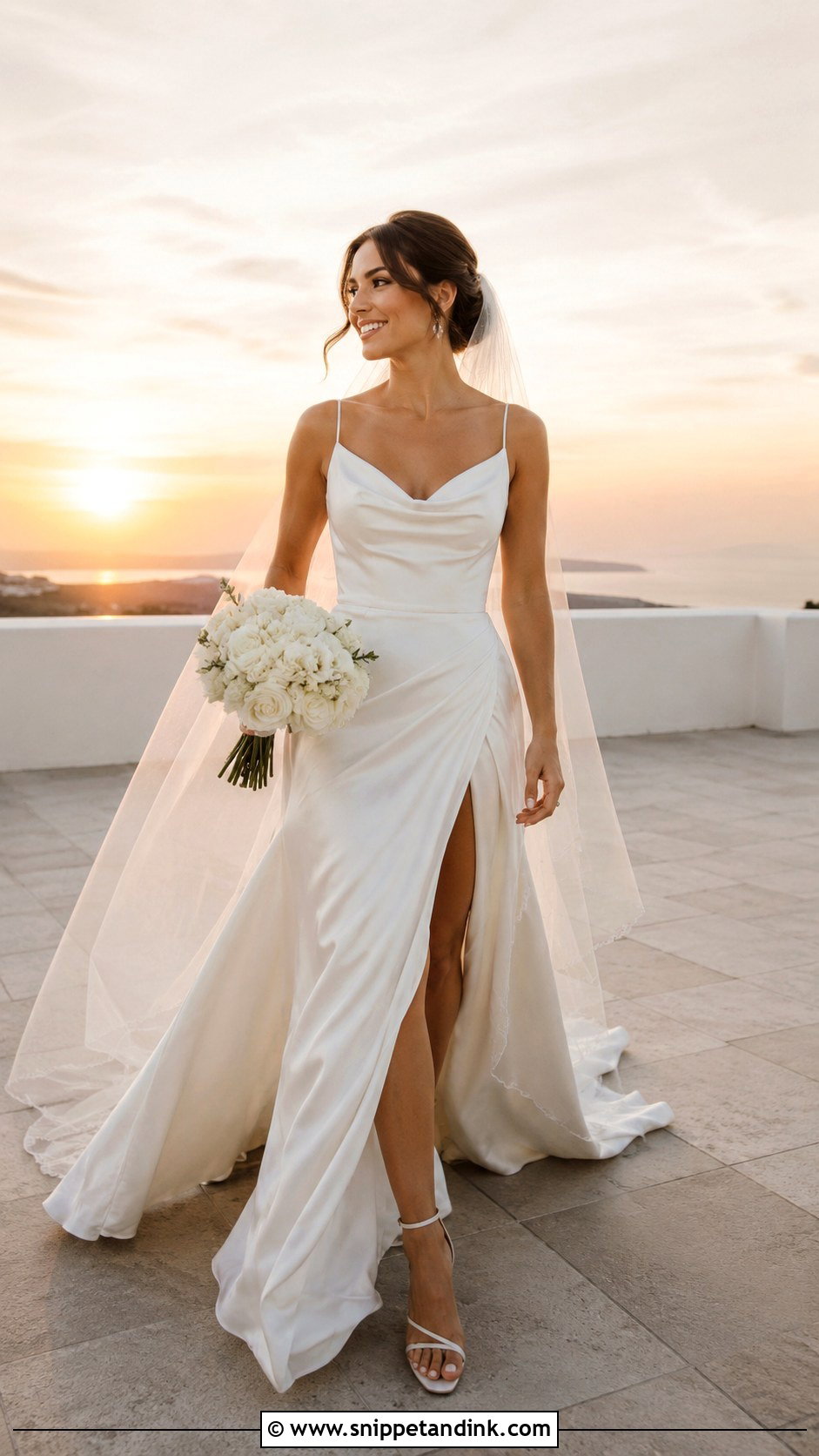
Sunset shoots give warm light and a relaxed bride, usually after the ceremony when nerves have gone. Lightweight fabrics glow; satin picks up the colours of the sky. The danger is a dress that looks peach or grey because the light is too low. I’d plan this for the hour before sunset rather than the minutes after. Keep accessories quiet, because the background is already doing a lot.
24. Wedding Dress Reception Entrance Photoshoot
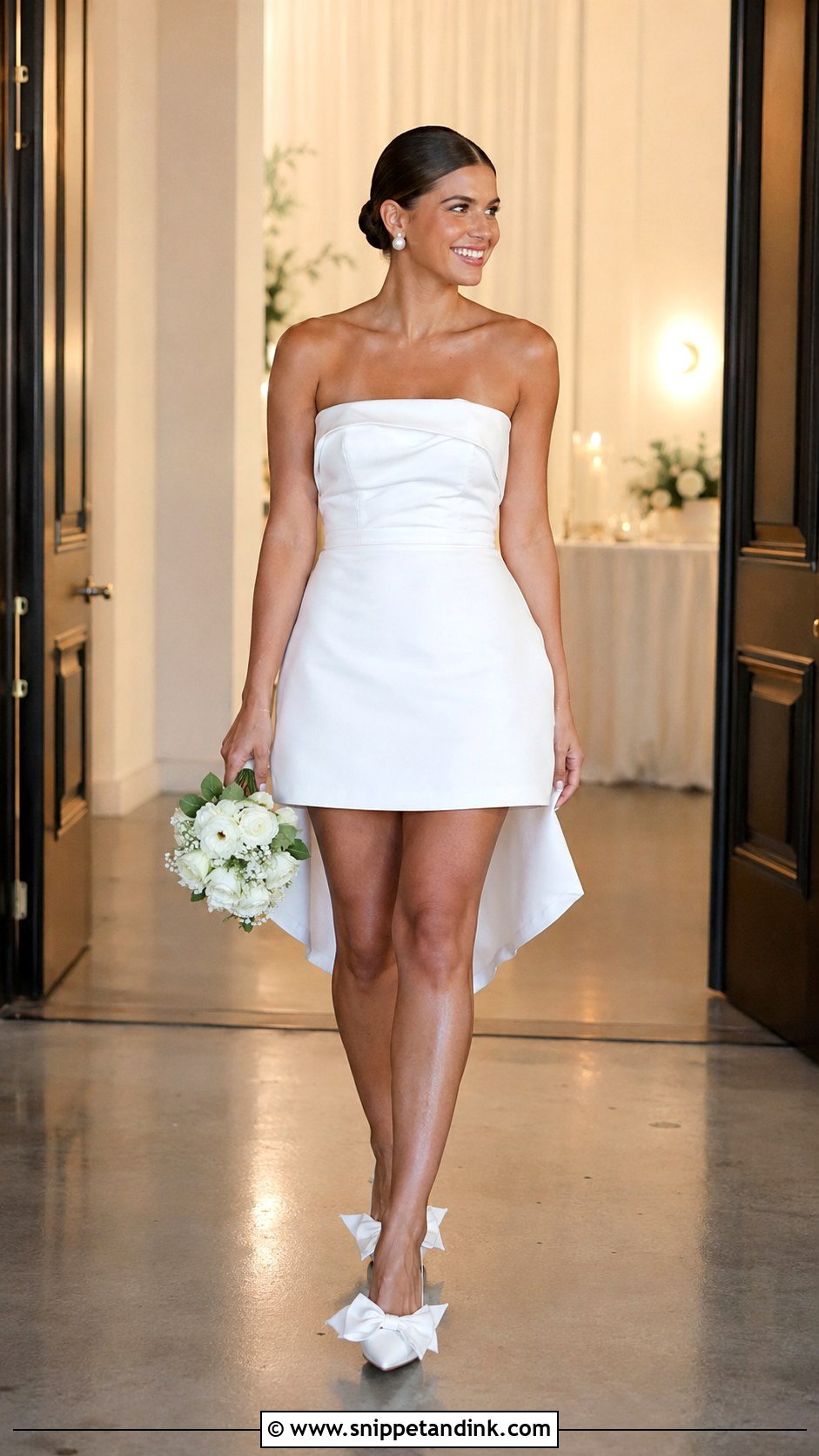
Reception entrances show the dress in its party form. This is when the bustle goes up, the veil comes off, and sometimes a second dress or statement shoes appear. I check the bustle loops before she walks in, since a half-fastened bustle drags on one side and shows in every frame. A confident walk, a turn or a laugh with the bouquet all capture the energy of the room, and the venue’s lighting should be bright enough at the doorway for the gown to read.
25. Wedding Dress After Wedding Photoshoot
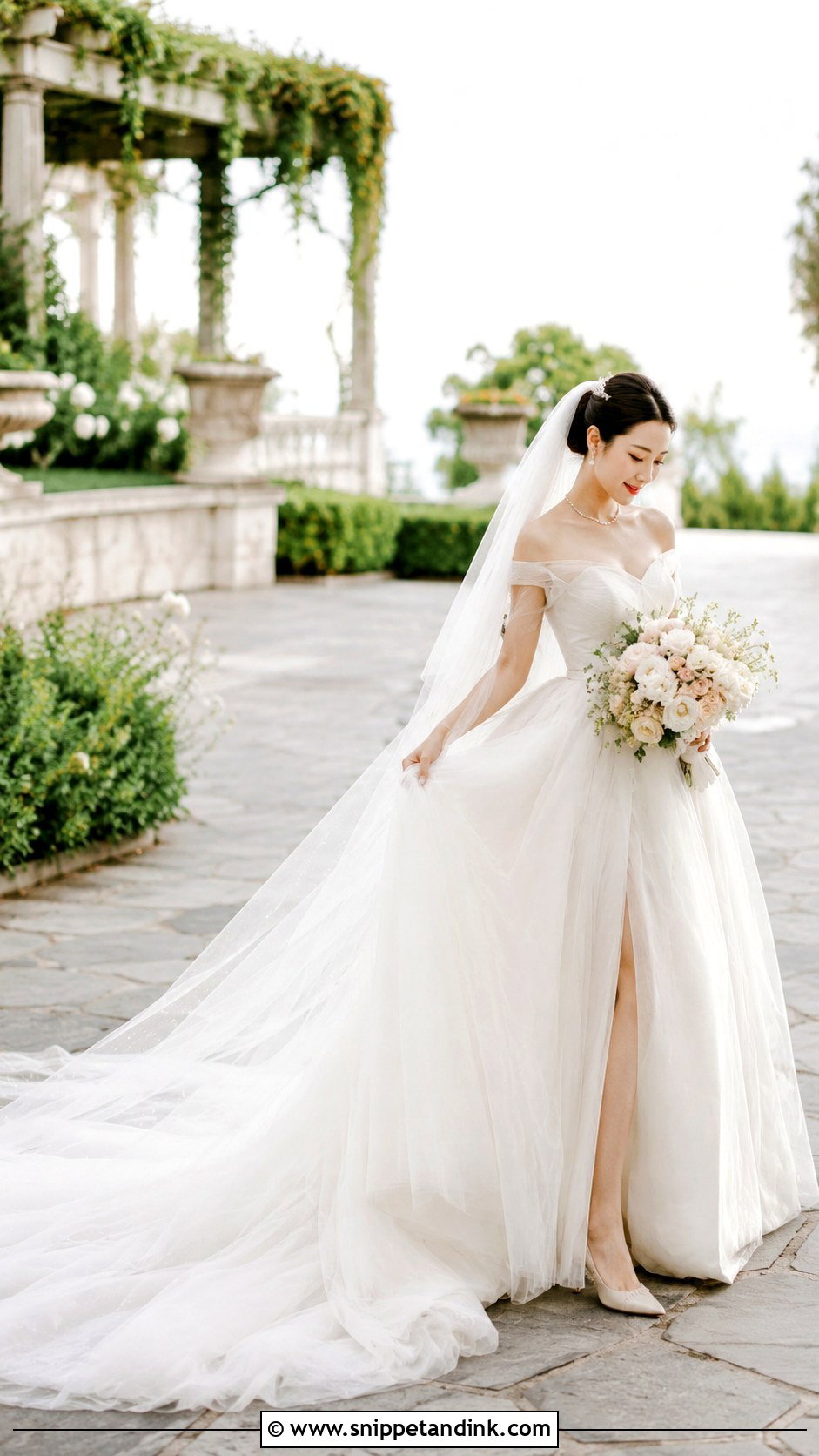
An after wedding photoshoot takes the clock out of the equation. With no ceremony waiting, you can travel to a beach, field, museum or a place that means something to you and try the dramatic veil and train shots that didn’t fit the day. It’s also a good backup when the weather was miserable. Hair and makeup can be redone properly. The only real catch is the dress, which should be clean and pressed again before it goes back on, and that is worth planning for.
What Camera Light Reveals Under a White Dress
This is the part of my job brides thank me for afterwards. Strong light, especially backlight and flash, exposes things the mirror at the fitting never showed. Some fabrics are more forgiving than others, but I check these on every bride:
- Shapewear edges and bra bands that ridge through thin satin or crepe. A smooth, no-seam nude slip or built-in cups solve most of it.
- Underwear colour. White shows through white; a shade close to your skin tone disappears.
- See-through skirts. Unlined tulle and chiffon become transparent with the sun behind you, so I hold the skirt up to a window at the final fitting to check.
- Strap marks and tan lines on the shoulders and back, which strapless and open-back gowns put on full display.
Bring the actual undergarments you’ll wear to the last fitting, and stand by a bright window in them. Fixing a visible line takes minutes at that stage and is nearly impossible on the day.
Getting the Gown to a Second Shoot in One Piece
After wedding sessions are wonderful, but the dress has already done a long day. I’d book the shoot within a week or two and leave professional cleaning until afterwards, unless the hem is badly marked. Spot clean only with plain water on a white cloth, since rubbing makeup or wine can set the stain.
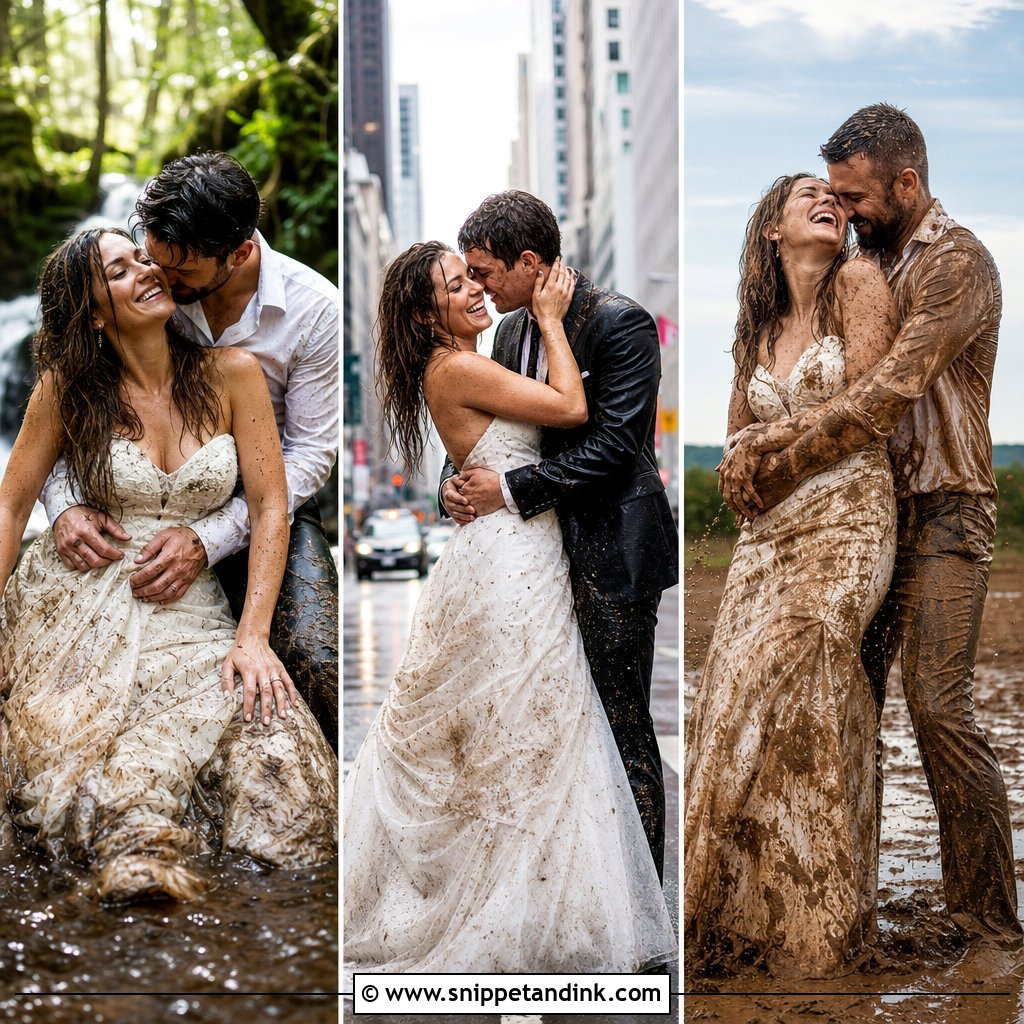
To transport it, hang it in a breathable cotton garment bag rather than plastic, stuff the bodice and sleeves lightly with acid-free tissue, and lay it flat across the back seat instead of folding it in a boot. Steam it on location, never iron it in a hotel room. If the plan involves water, mud or anything messy, accept that the dress may not come back clean, and decide that before the day rather than in the middle of a river.
The Shots That Suit Your Gown, Not Someone Else’s
A good dress shoot starts with the gown itself: its shape, its fabric and how it moves. Stairs suit a dramatic train, gardens soften lace and tulle, streets sharpen a sleek dress, and a bridal suite catches the quiet details before the day speeds up. Pick a handful of these ideas that match your dress and the way you like to be photographed, prepare the outfit properly, and let your photographer build the rest around real moments.
You'll Like These Ideas:


Leave a Reply