
A gown for a pre-wedding photo session lives a harder life than a wedding dress. You’ll wear it for hours, climb in and out of a car, walk on gravel or sand, and change spots three or four times. So when I style one, I care as much about fabric, weight and fastenings as about the silhouette. Below are twenty gowns, from ball gowns and mermaids to satin columns, colored tulle and vintage lace, with notes on who each one suits, what to check at the fitting and where it can let you down.
Rent, Borrow or Wear the Real Dress Early?
The first question I ask a bride planning a pre-wedding shoot is whether she wants to wear her actual wedding dress. Some do, and it’s a lovely way to get more use from it. But there are real costs. Hems pick up grass, soil and sand that don’t always come out, a shoot before the final fitting can stretch seams that were just adjusted, and the reveal on the day loses some of its surprise.
For most brides I’d suggest a second gown. A few routes work:
- Renting is cheapest, but rental gowns usually can’t be cut, so fit has to come from clips, temporary basting and the right undergarments. Try it on well ahead and ask exactly what alterations the rental allows.
- Buying a sample or pre-owned gown gives you freedom to alter, and you can resell it afterward.
- Borrowing from a sister or friend works when the fit is close. Agree in advance who pays for cleaning and any repairs.
- A simpler ready-to-wear gown, bought in a size that fits your largest measurement and taken in elsewhere, often looks better than a stretched rental.
Whichever route you take, plan the shoes first. Heel height decides the hem, and a hem cut for flats will drag in heels.
1. Pre Wedding Ball Gown
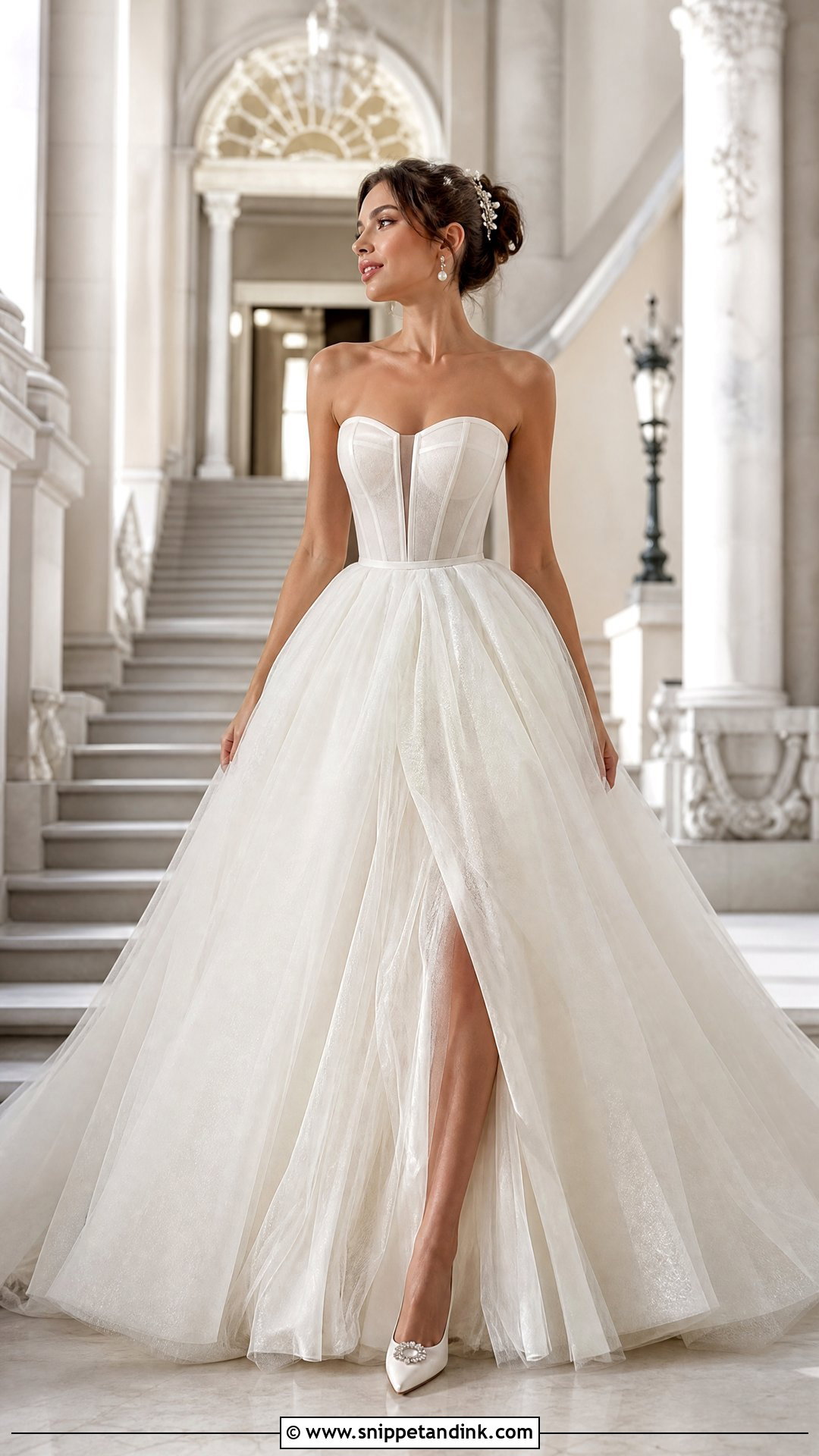
Nothing says formal portrait like a ball gown, and nothing is harder to move around in. A structured bodice with a defined waist over a full tulle, organza or satin skirt balances broad shoulders and gives shape to a straighter figure. The weight sits on your waist, so I always check that the bodice has a waist stay, an inner grosgrain band that carries the skirt so the boning doesn’t dig in. Ivory or soft white suits historic interiors and manicured gardens. Pointed heels, pearl earrings and a hair comb are enough; the skirt does the rest. Practice walking and turning at home, because a full skirt folds awkwardly if you pivot on one foot.
2. Pre Wedding Mermaid Gown
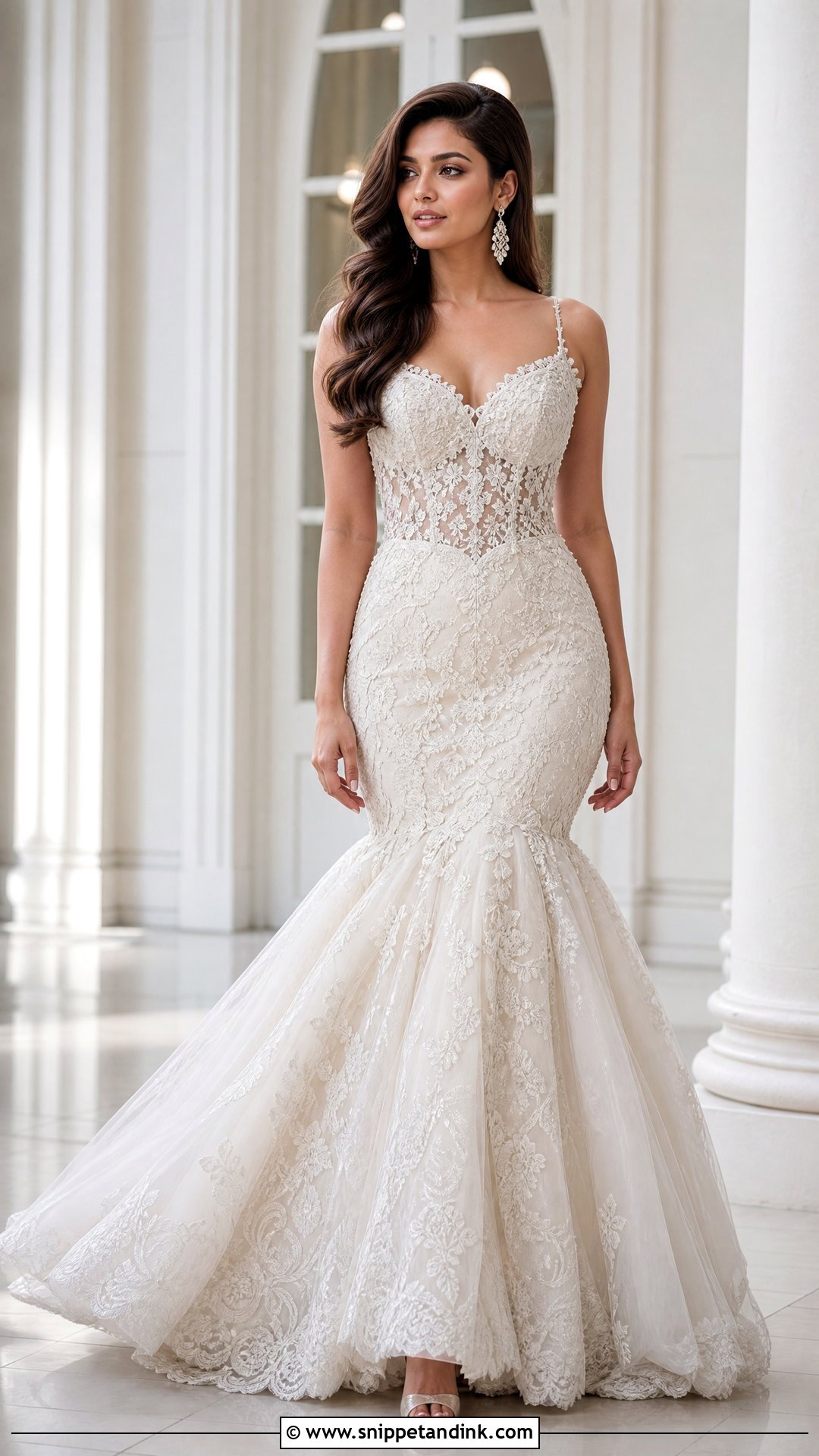
A mermaid gown follows the body through the waist and hips before widening near the knee. The knee is the critical point. If the flare starts too high, you lose the shape; too low, and you’ll shuffle and won’t manage steps at all. For a shoot with stairs or uneven ground, I’d choose stretch crepe or lined lace over rigid satin. A sweetheart or off-the-shoulder neckline softens the fitted line, and long sleeves add coverage. Keep the bouquet compact so it doesn’t hide the bodice. Sit, walk and climb a step in it at your fitting, and have the hem taken up a touch if it bunches at the floor.
3. Pre Wedding A-Line Gown
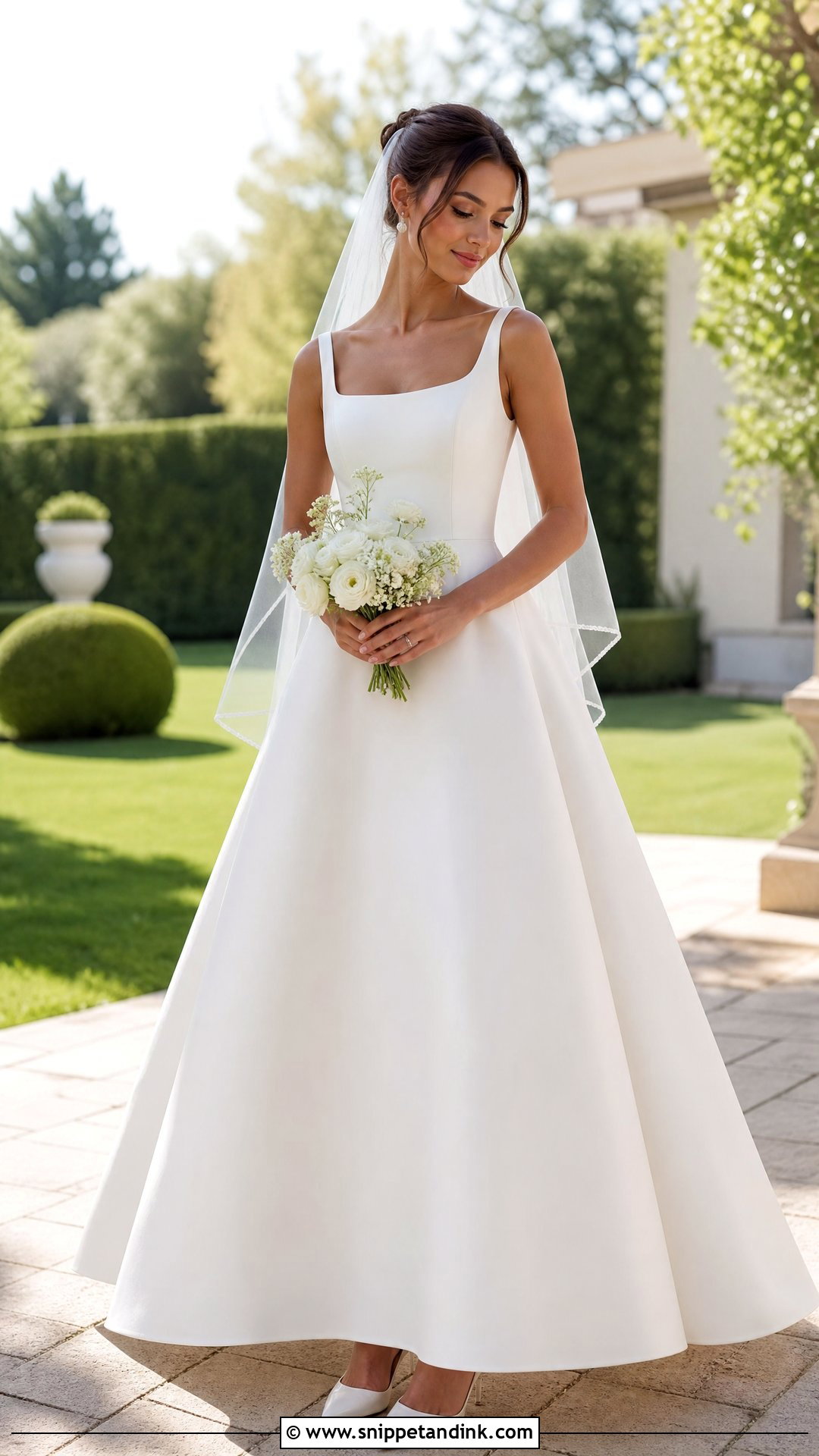
An A-line is the gown I recommend most to brides who aren’t sure what they want. It fits through the bodice and widens gradually from the waist, so it moves easily and suits almost any figure. Chiffon makes it light and floaty; satin or mikado gives the skirt more body and holds its shape on a windy day. Pair ivory with pointed pumps, small drop earrings and a medium-length veil. On a petite frame, I’d raise the waistline slightly to lengthen the legs. Taller women can carry a wider skirt or a longer train without it overwhelming them.
4. Pre Wedding Satin Column Gown
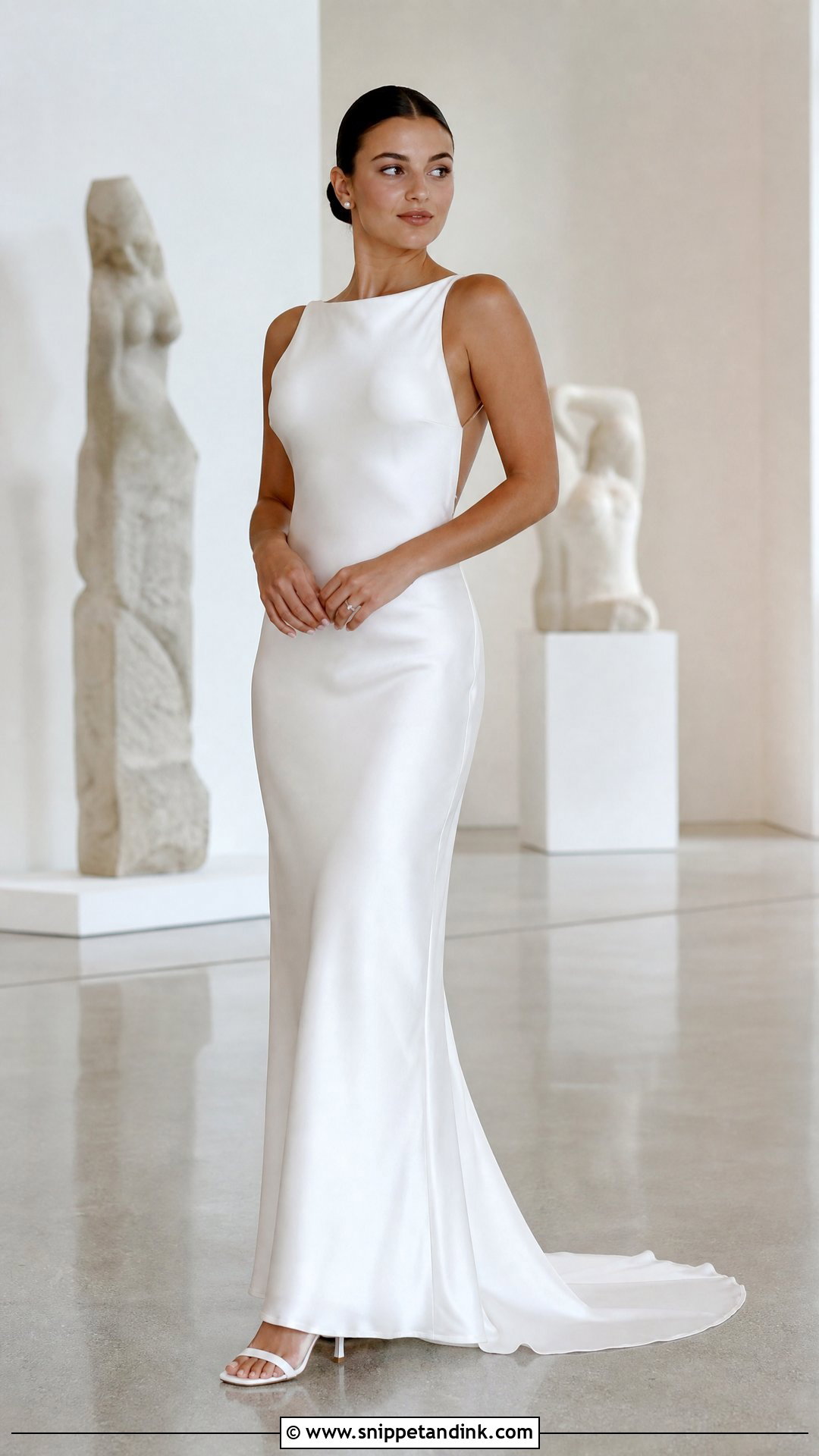
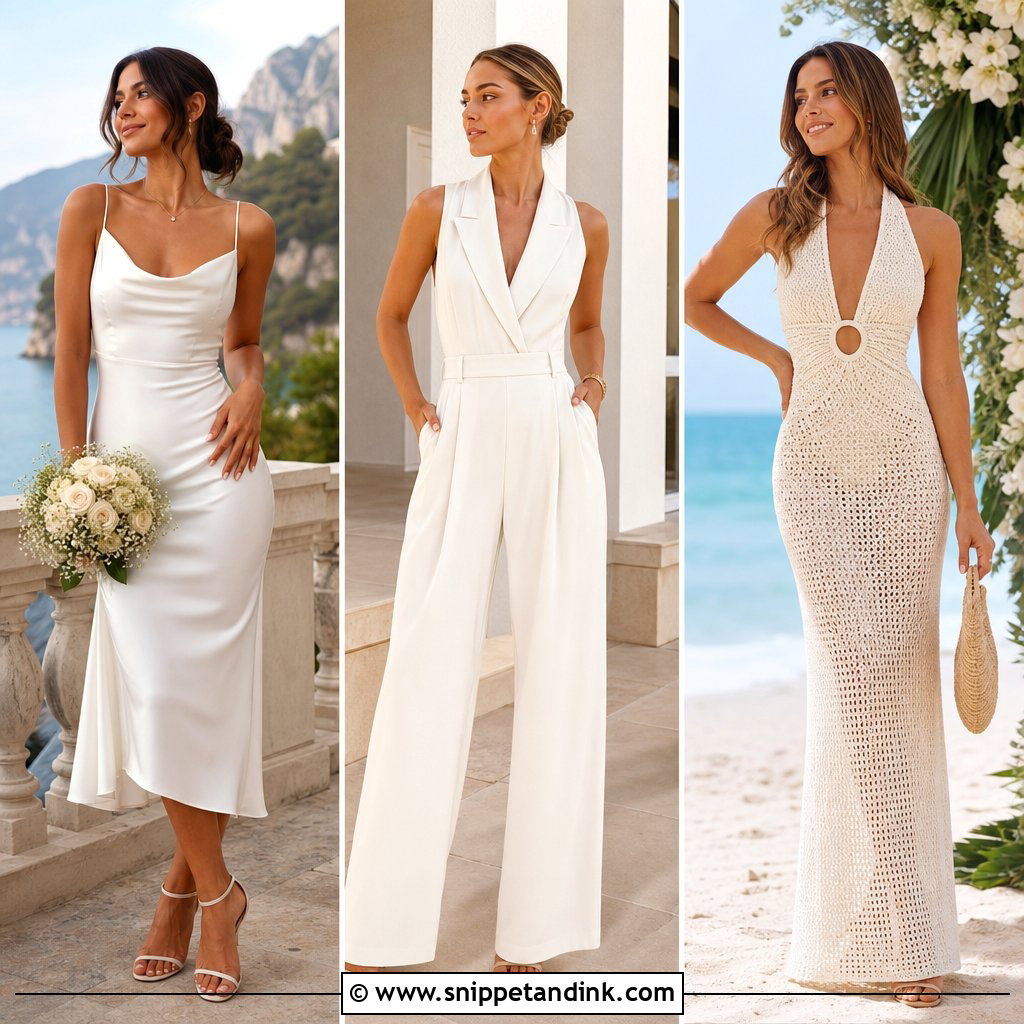
Satin is unforgiving, and that is the first thing I tell anyone who falls for a column gown. It shows every line underneath, so smooth, edge-free, properly fitted undergarments are not optional, and you should check the fit in daylight before the day. A column falls close to the body without the flare of a mermaid. Bias-cut versions move fluidly but cling more; structured versions hold a sharper line. Slingback heels, pearl studs and a neat bun suit it. Satin also creases where you sit, mostly across the lap, so I steam it again after any car journey. Modern hotels, galleries and plain studios suit the clean shape.
5. Pre Wedding Lace Gown
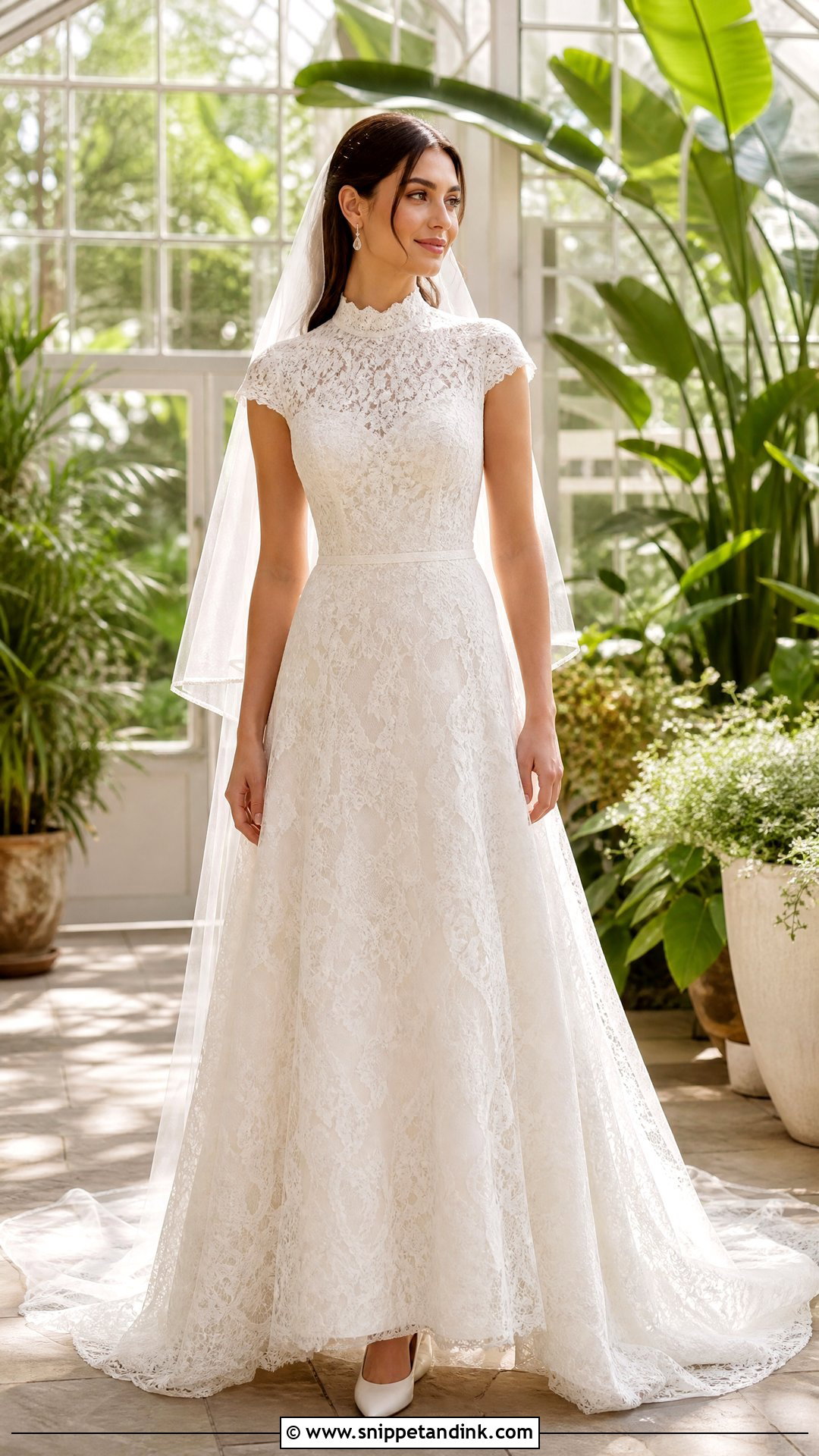
Lace carries enough detail that you barely need jewelry. Floral lace feels soft and garden-like, geometric lace reads modern, and Chantilly is fine and light with a vintage feel. A fitted bodice over an A-line skirt balances structure and movement. The lining is where lace gowns succeed or fail: I match it to the bride’s skin tone, or to the coverage she wants, because a lining that’s too pale or too dark shows through every gap in the pattern. Closed-toe heels, pearl drops and a narrow-edged veil. Keep the bouquet small and tonal so it doesn’t fight the lace.
6. Pre Wedding Long Sleeve Gown
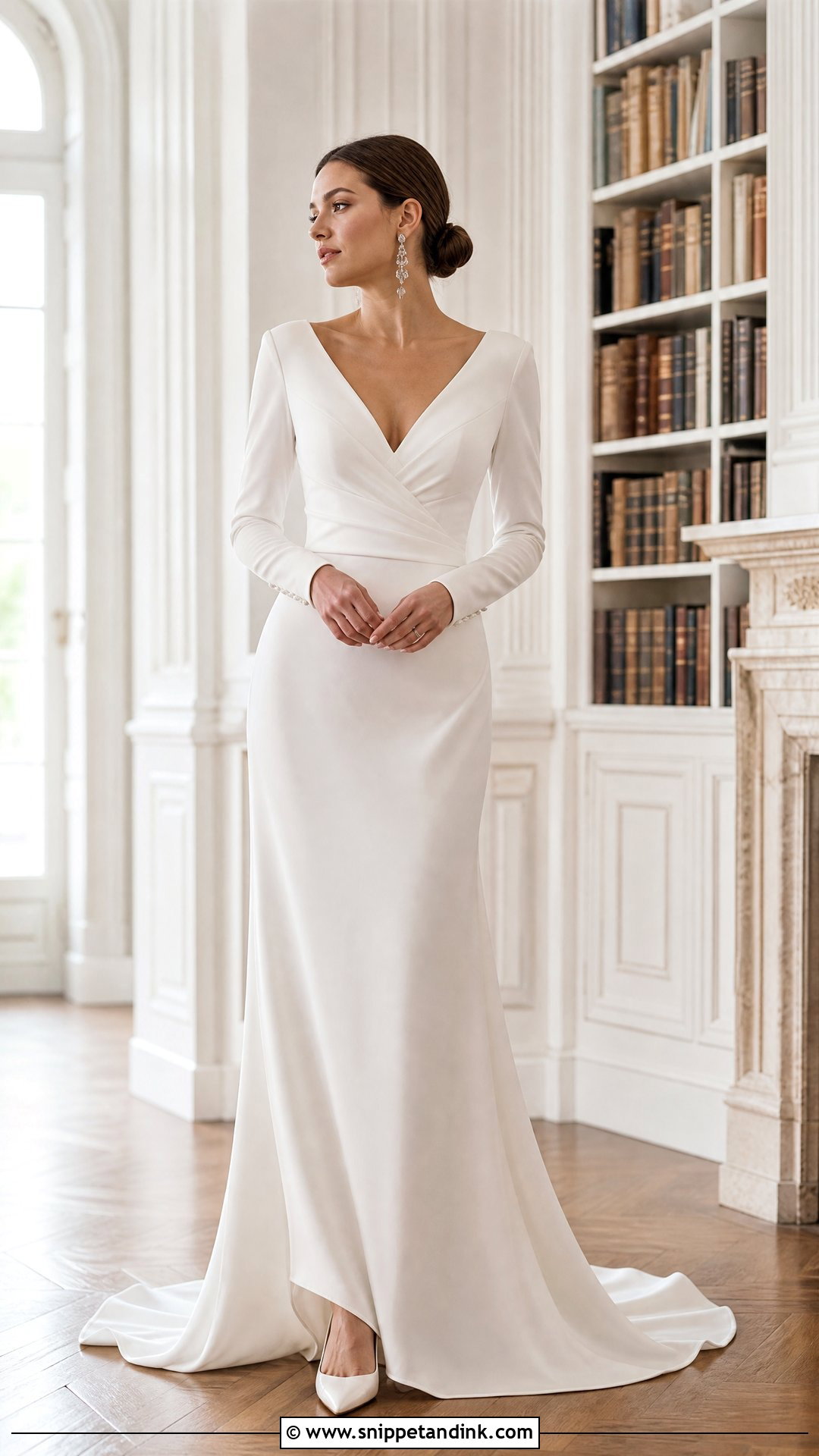
Long sleeves suit cooler seasons, formal locations and brides who simply don’t want strapless. Fitted lace sleeves feel romantic; sheer ones feel lighter; smooth crepe looks minimal. Balance the coverage with an open back or soft V-neck. The fitting test here is your arms. Raise them, hug someone, bend your elbows. A sleeve set too tight at the armhole pulls the whole bodice up when you lift your arms, and that pulling and creasing at the shoulder is the most common fault I see on sleeved gowns. Pointed pumps and long earrings lengthen the outline.
7. Pre Wedding Off Shoulder Gown
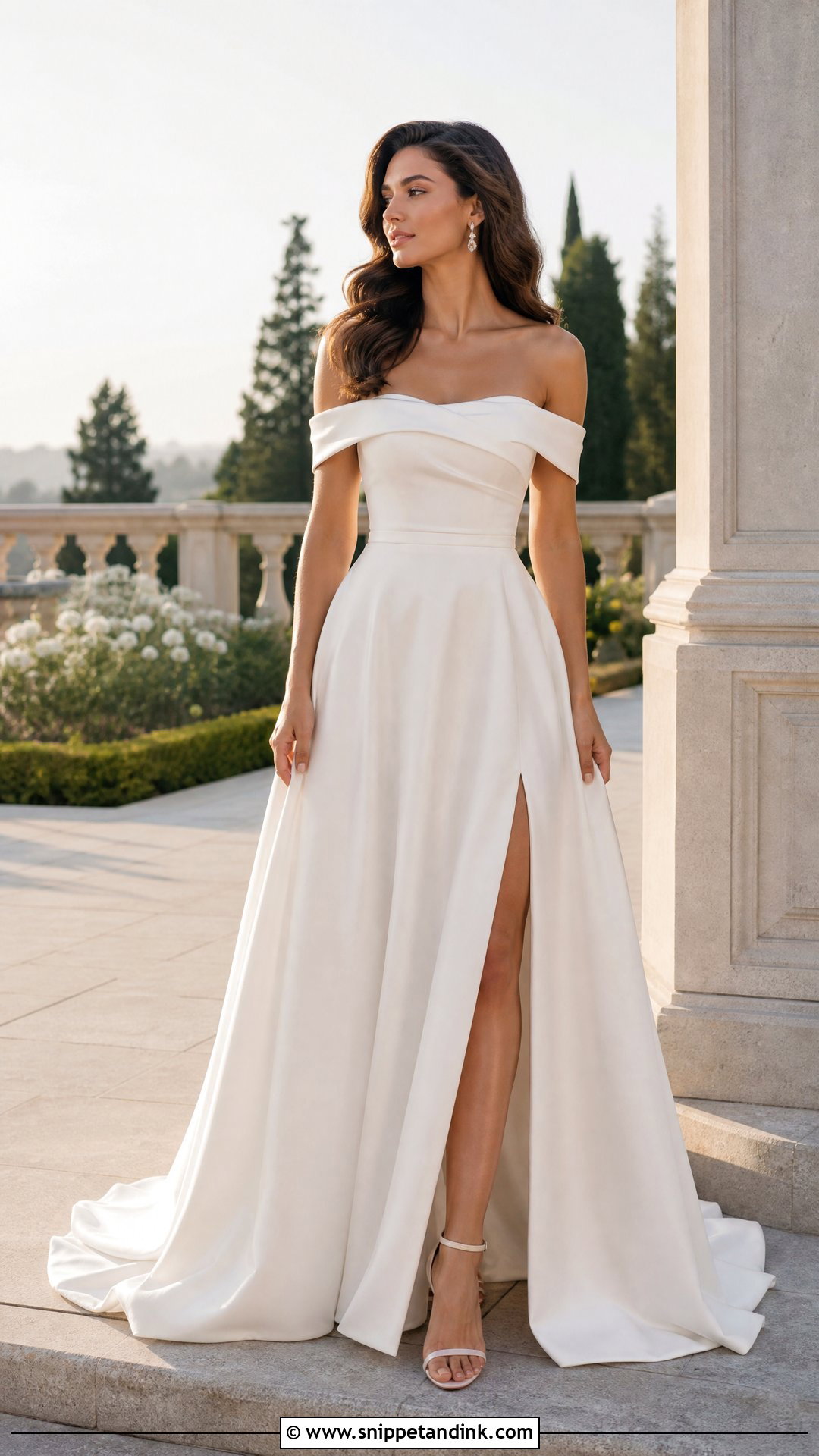
An off-shoulder neckline frames the collarbones and suits close portraits and full-length ones alike. A folded satin neckline looks polished, while lace sleeves feel more delicate. Here’s what goes wrong: the neckline slips as you move, or it pins your arms so you can’t lift them past your waist. Test different arm positions in the shop. Ask the seamstress to add silicone grip tape inside the band and have fashion tape in your bag. Short drop earrings and no necklace, since a chain crowds the open neckline. Loose waves pushed behind the shoulders keep the line clear.
8. Pre Wedding Square Neck Gown
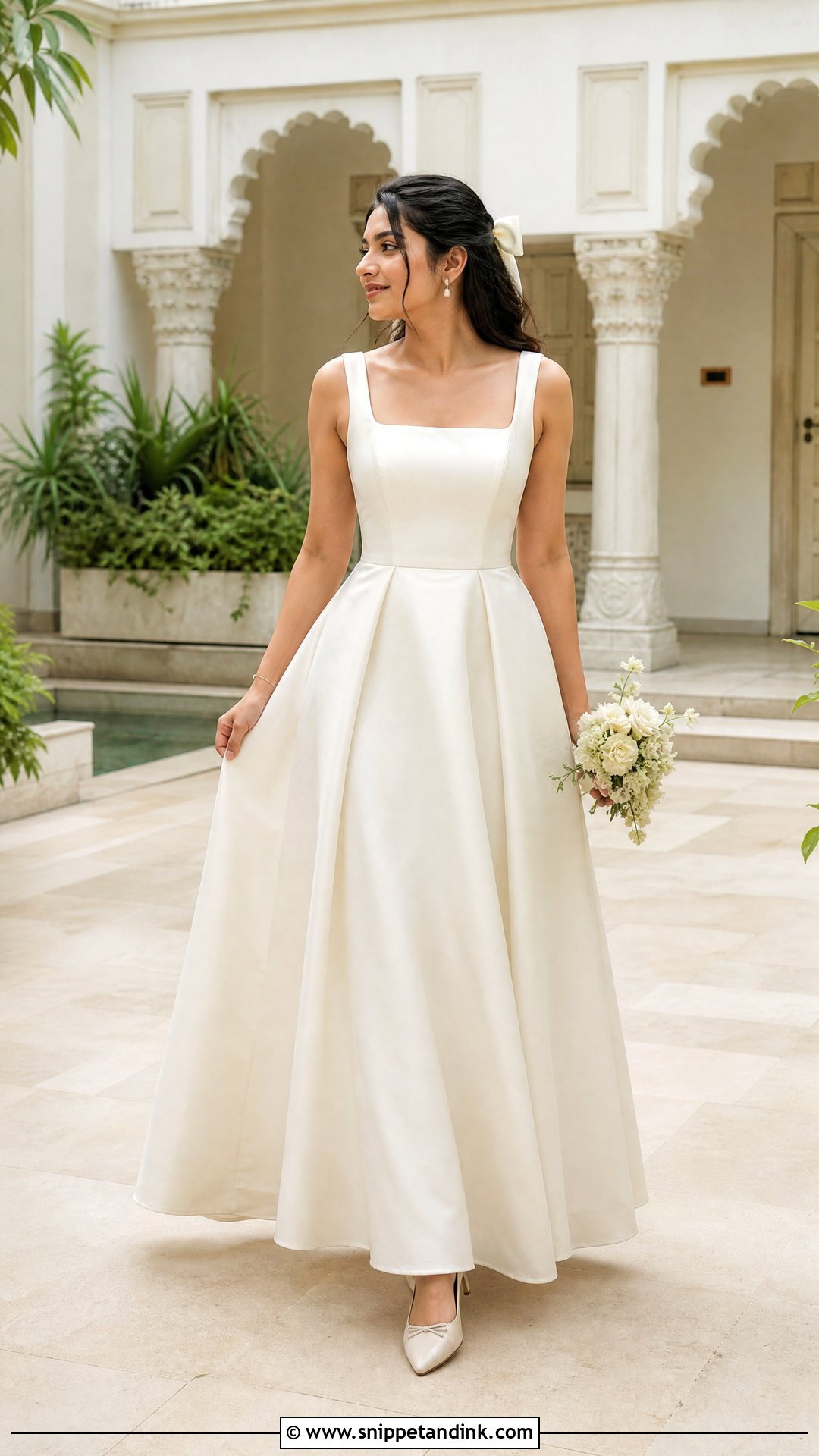
A square neckline gives a structured, clean look and frames the neck neatly. It pairs well with wide straps, fitted sleeves or a corset-style bodice. Bust size changes how I fit it. Fuller busts need secure internal support and wider straps, or the straight edge cuts across and flattens. On a smaller bust, light seaming or a gently structured bodice adds shape without padding that looks obvious. An A-line skirt keeps it traditional, a straight satin skirt makes it modern. Pearl earrings, low pointed heels and a ribbon in a half-up style suit the shape.
9. Pre Wedding Corset Gown
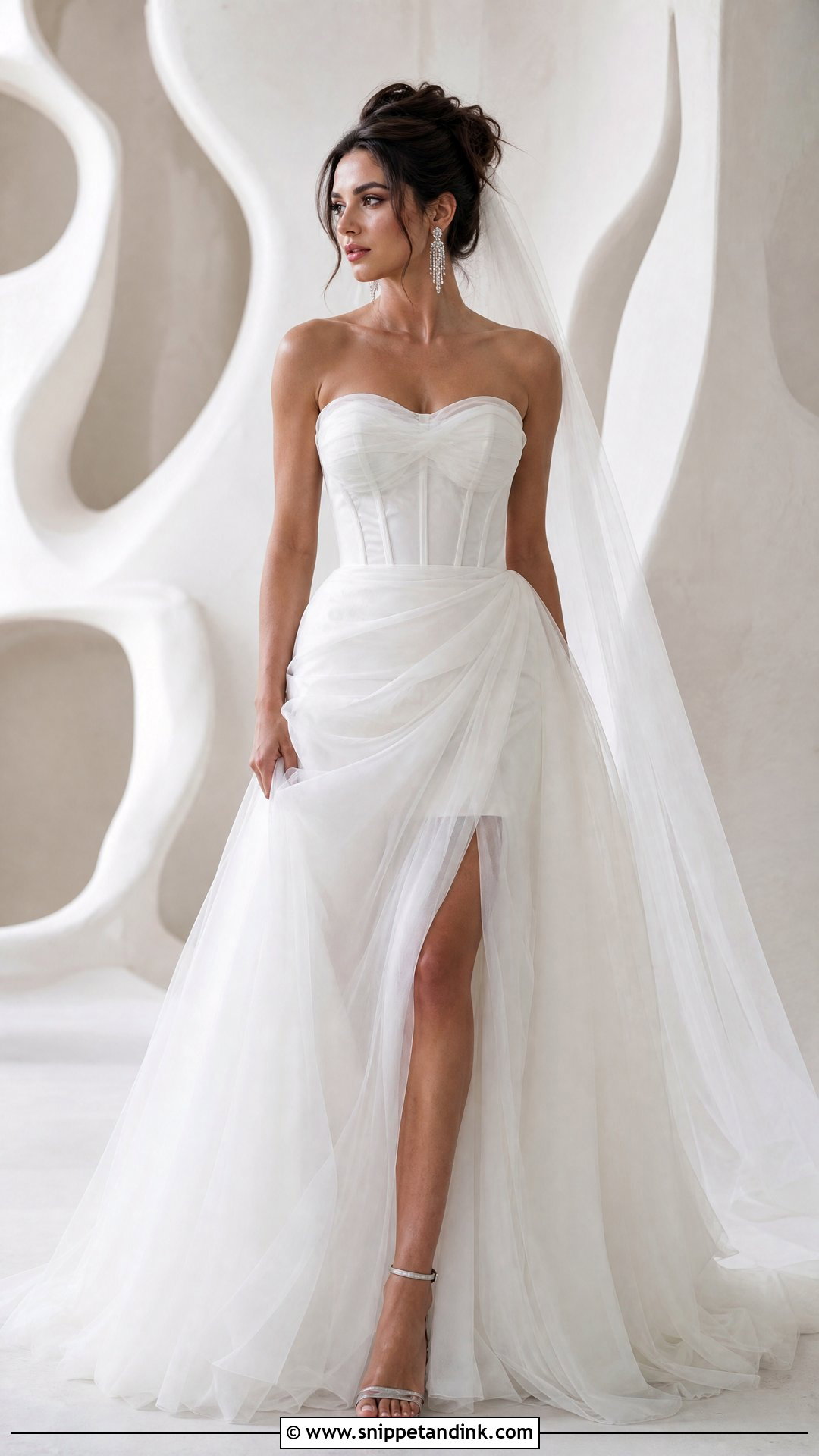
Corset gowns are everywhere right now, and quality varies hugely. I look inside first: proper boning, supportive cups and a comfortable lining matter far more than how the bodice looks on the hanger. A corset top over a flowing tulle or satin skirt sets structure against softness, and it suits editorial studio sessions and grand halls. Fit it so it feels secure while you can still breathe, laugh and sit. For more coverage, choose an opaque lining, higher neckline or a detachable bolero cut from the same fabric. Slim heels, crystal earrings and a gathered updo finish it.
10. Pre Wedding Chiffon Gown
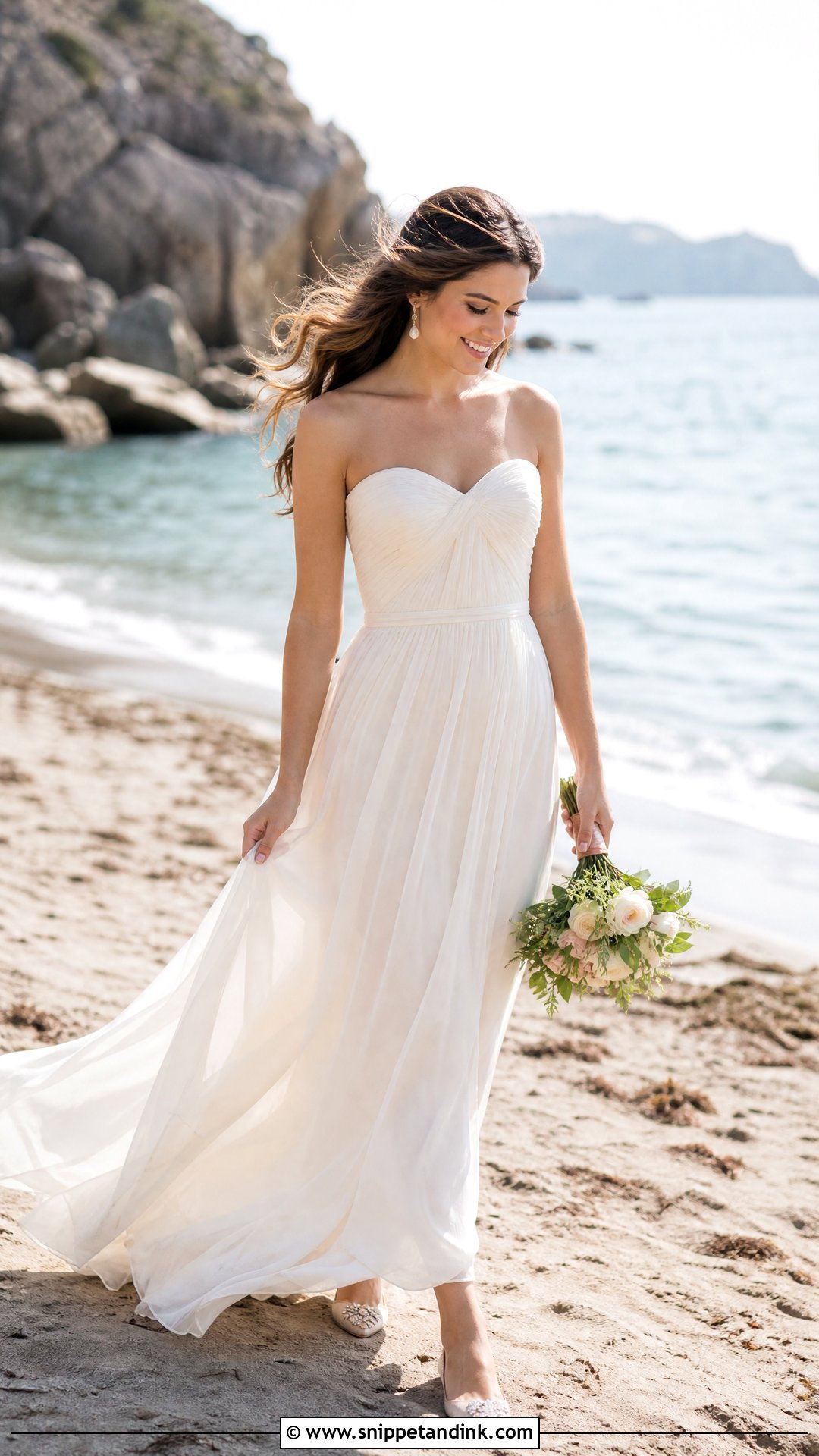
Chiffon is the outdoor fabric. It’s light, it moves in a breeze, and it doesn’t weigh you down on a long walk to the next spot. A gathered bodice and flowing A-line skirt keep it airy. Check for a full lining, because unlined chiffon turns see-through in strong sun. Block heels or embellished flats are kinder than stilettos on grass or sand. I’d skip a long train if the ground is uneven or damp; chiffon picks up dirt and moisture quickly at the hem. Bring a clean sheet to stand on and a handheld steamer, since chiffon creases in the car.
11. Pre Wedding Tulle Gown
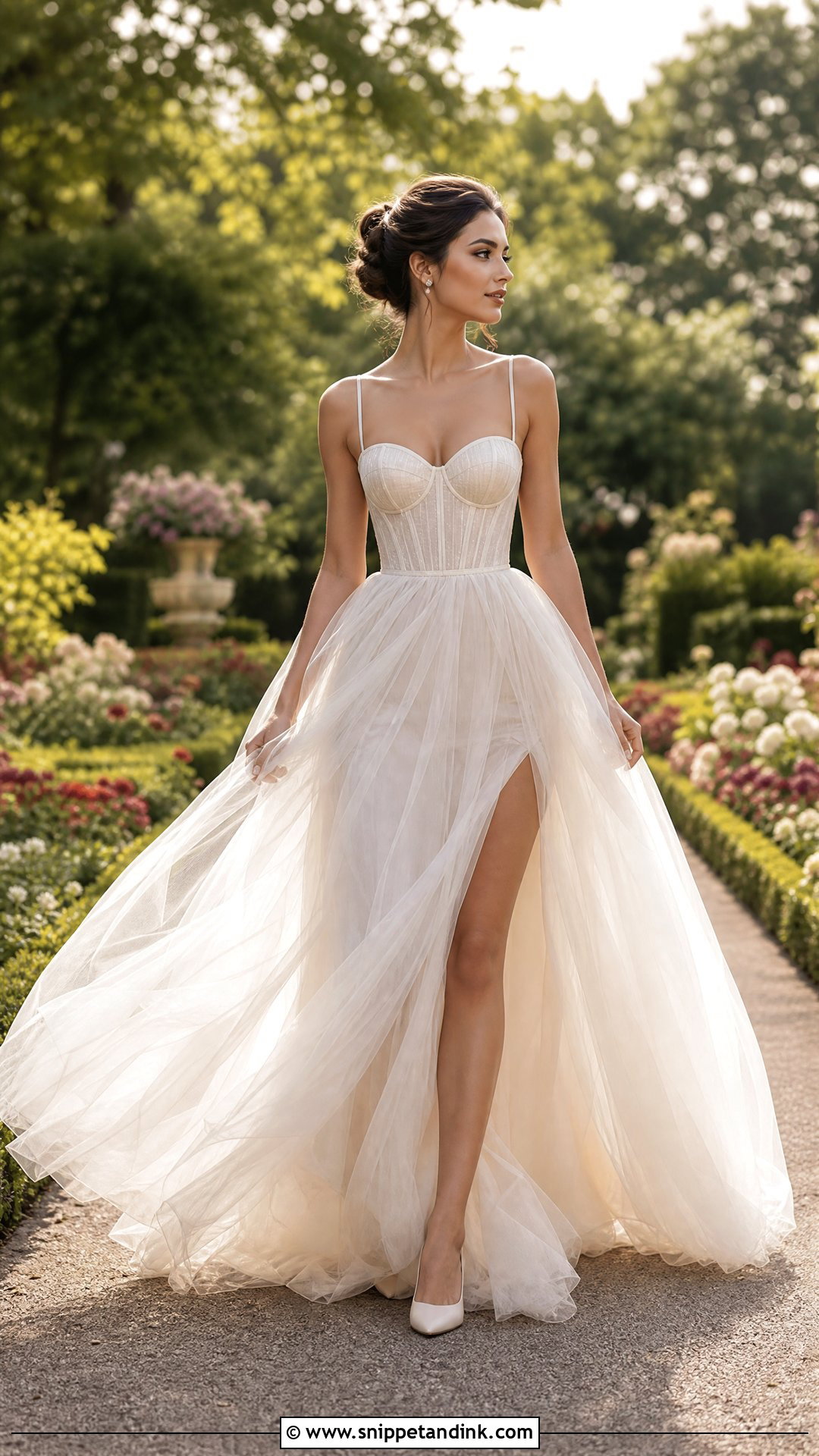
Tulle gives volume without much weight, which is why it’s so popular for skirts. A fitted bodice over a soft tulle skirt defines the waist while skimming the hips, and that suits a wide range of figures. Plain tulle stays understated; scattered floral appliqués add dimension. Tulle catches on everything, though: bark, brambles, jewelry, the heel of your shoe. Ask for walking, spinning, and seated poses to show off the skirt, but check the layers for snags and debris between locations. Steam each layer separately before the session; steaming the top layer alone leaves the under-layers crushed.
12. Pre Wedding Floral Appliqué Gown
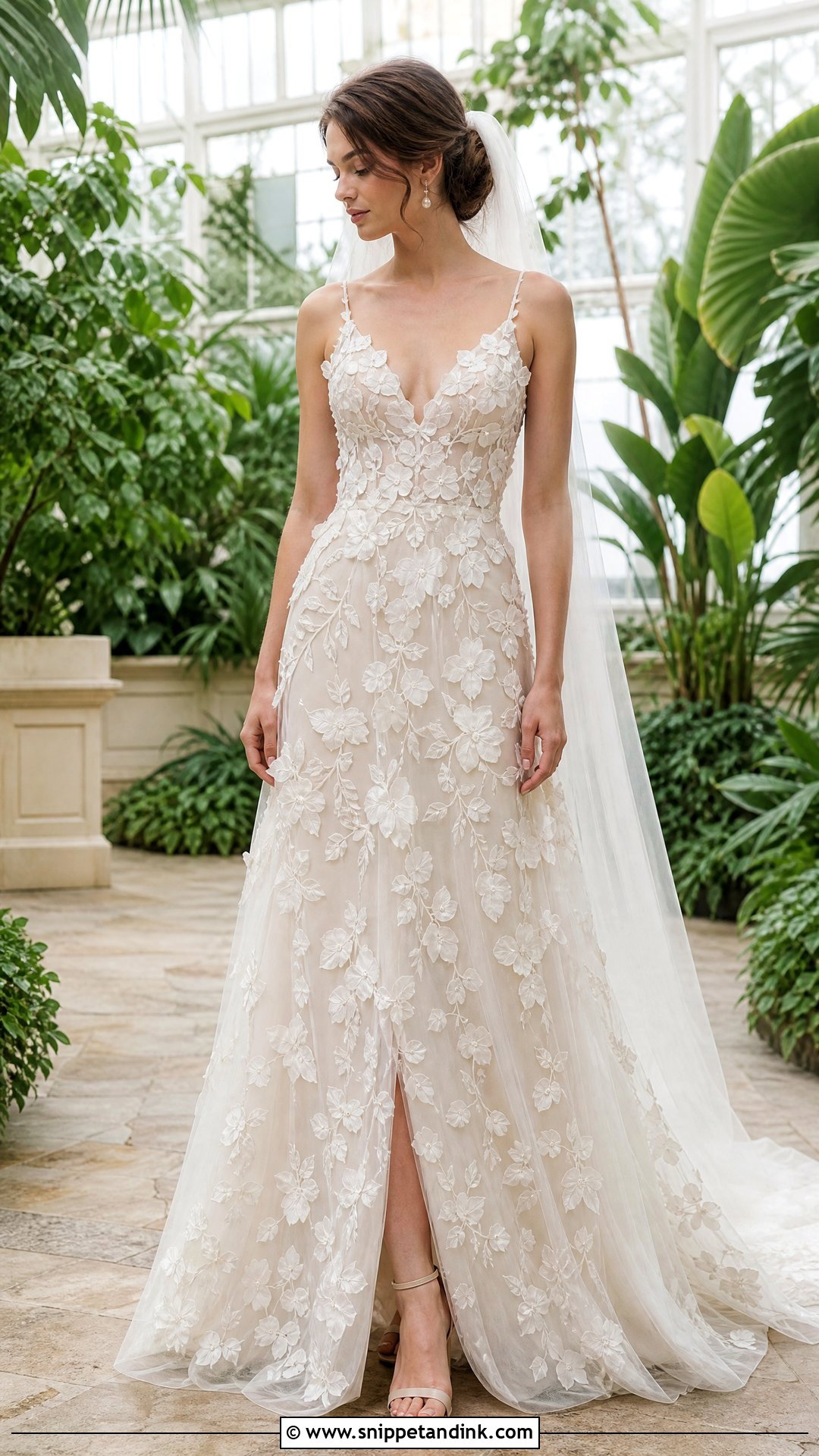
Three-dimensional flowers on a gown look softest when they’re concentrated at the bodice and thin out across the skirt. Scale matters. Small flowers feel delicate; oversized ones look bold and more fashion-led. Keep everything else plain: neutral heels, small pearl earrings, a loose low bun, and a veil without beading so the texture shows. Before the day I go over every appliqué and restitch any loose edge, because a half-attached flower snags and lifts the first time you brush past a hedge. Conservatories, orchards and botanical gardens suit the theme.
13. Pre Wedding Cape Gown
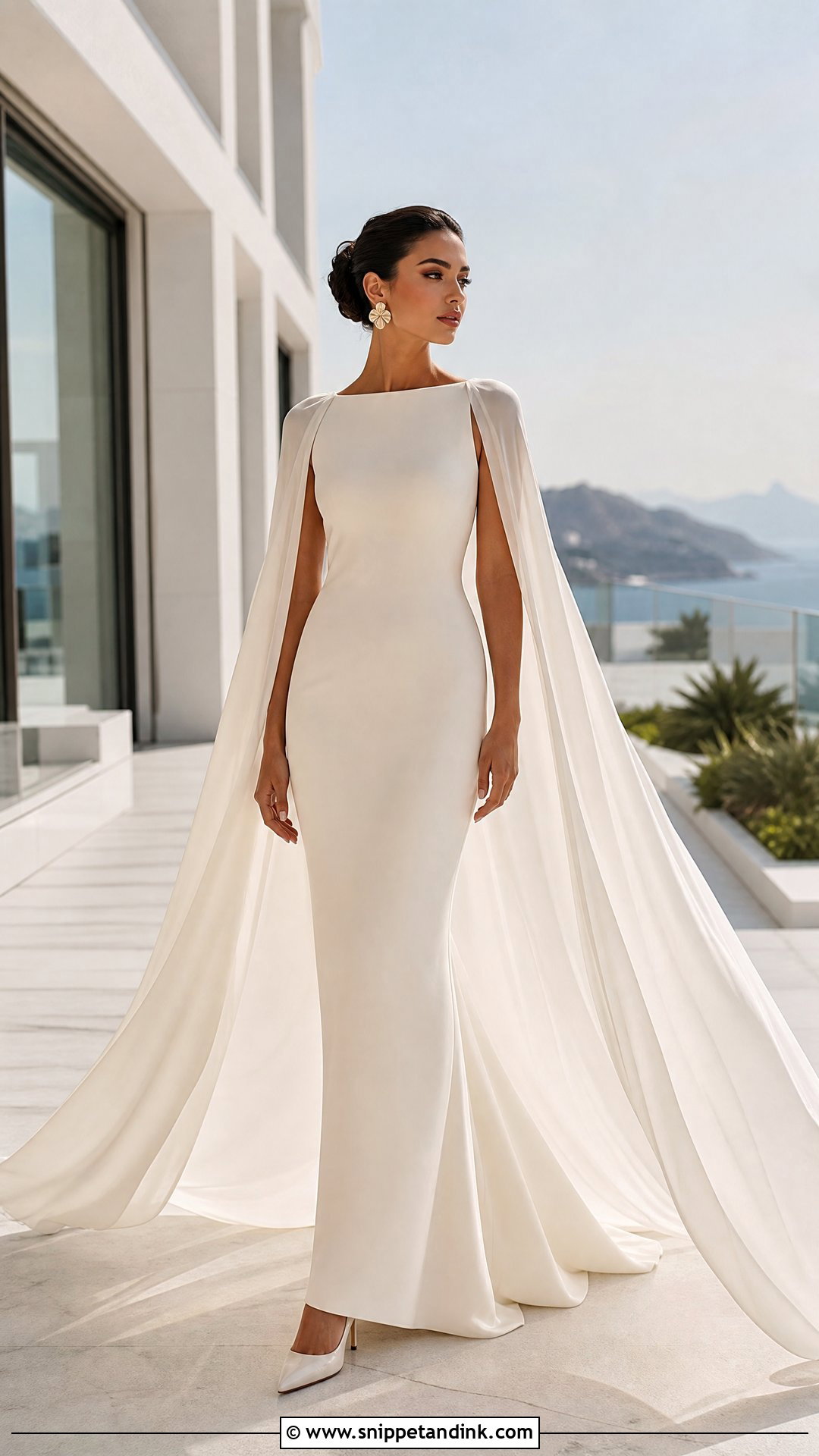
A cape gives movement and drama without a veil. Start with a clean column, sheath, or A-line gown, then add a detachable cape in chiffon, tulle or light organza. Floor-length capes look dramatic in open landscapes; shorter ones are easier in a city or a studio. Keep the neckline clean so the cape drops smoothly from the shoulders. Wind is the problem outdoors. I attach capes with hidden snaps or small loops at the shoulder seam, and carry clips. Take some shots without it too; you get a second look without a full change.
14. Pre Wedding Detachable Overskirt Gown
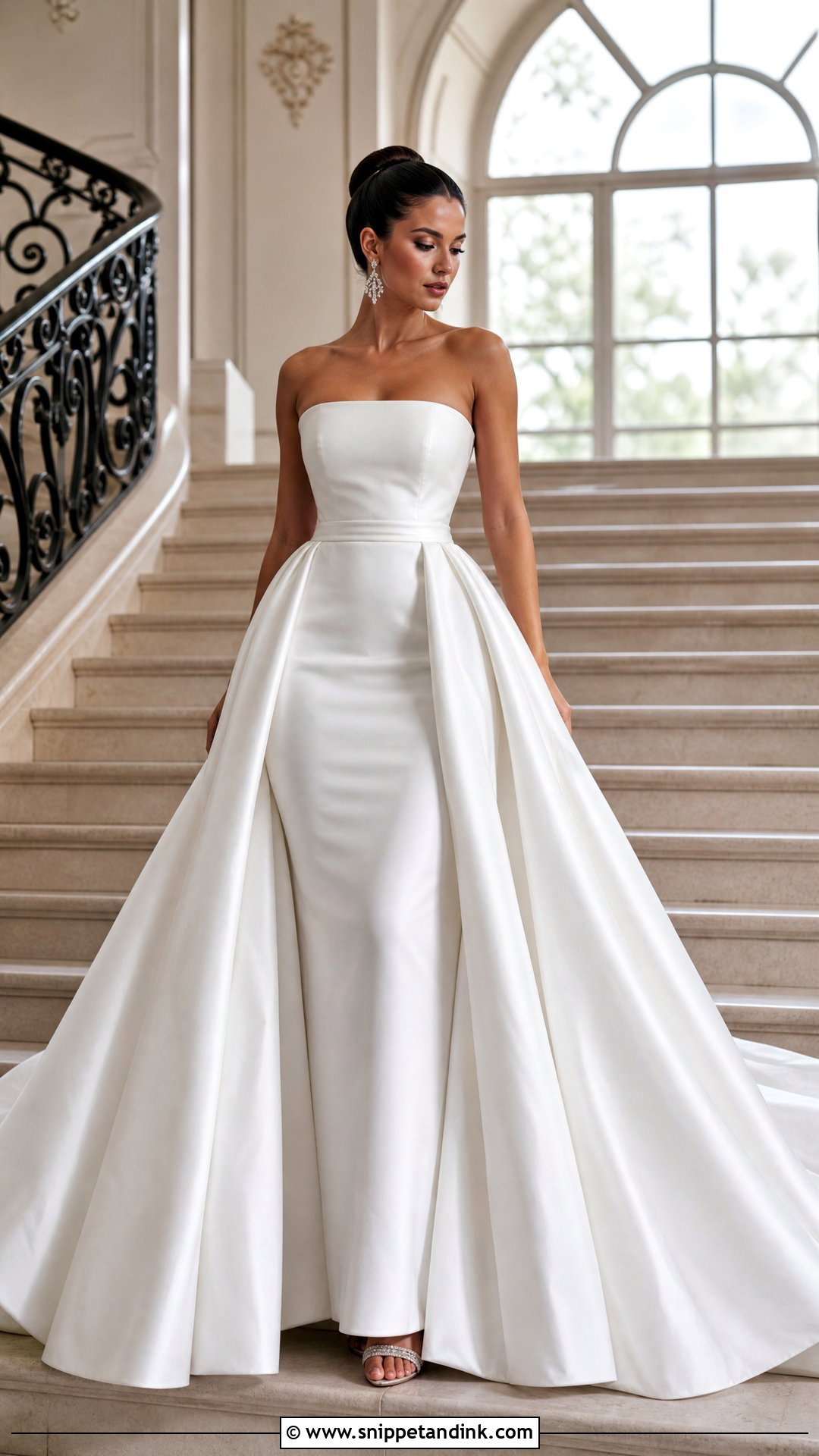
A detachable overskirt turns one gown into two. Start with a column, sheath or mermaid base, add a full tulle or satin overskirt for the formal shots, then remove it for walking and closer frames. The two pieces must match in color and waistline, which sounds obvious, but ivory from different mills rarely matches exactly. Avoid a bulky belt unless it hides the fastening. Practice taking the skirt off and putting it back on at home; hooks and snaps are fiddly the first time, and you don’t want to learn them on a windy terrace. Have someone along to arrange the train.
15. Pre Wedding Blush Gown
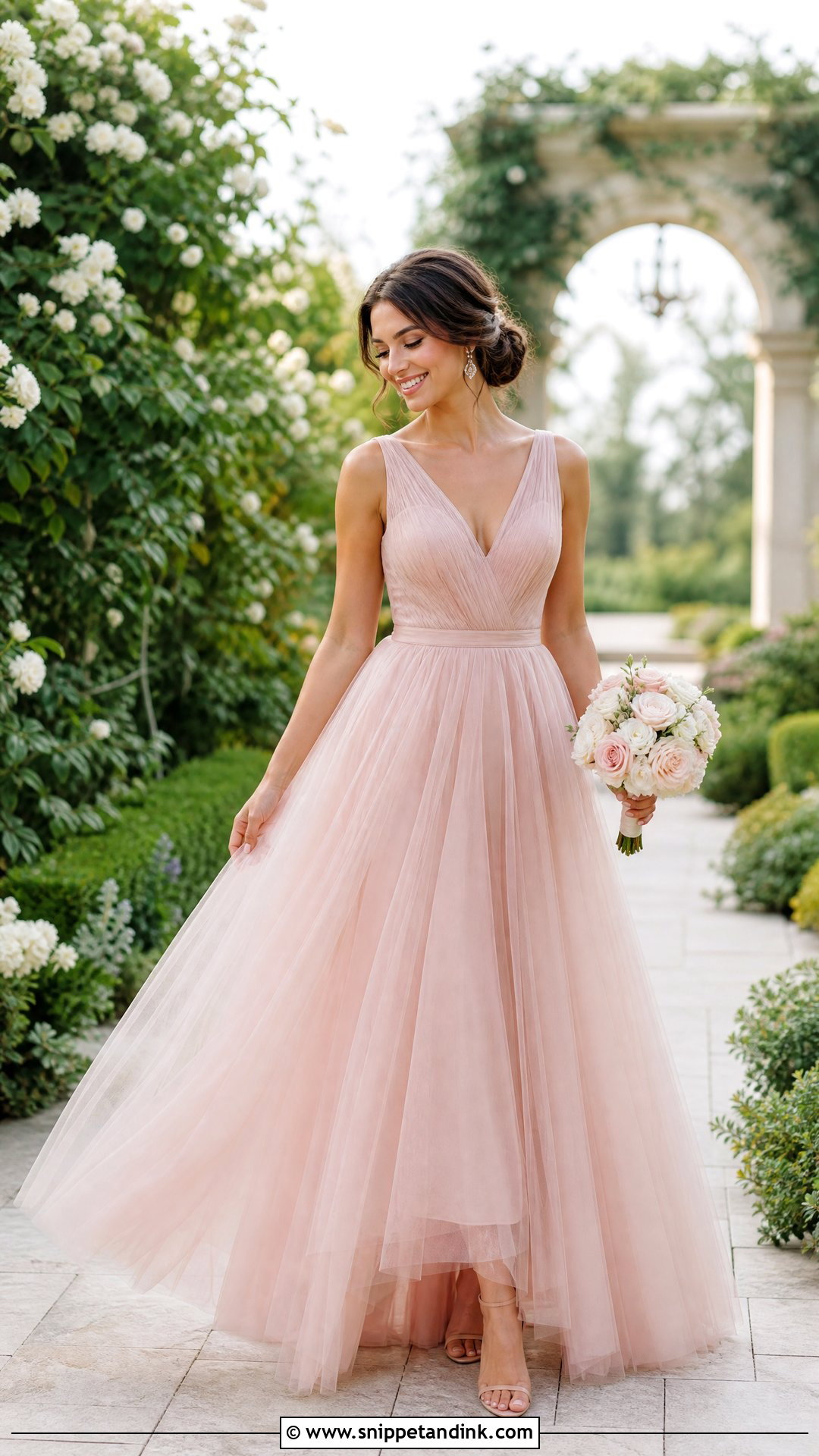
Blush feels bridal and warmer than white. Pale rose, champagne blush and nude-pink are the usual tones. A tulle A-line feels romantic, while sleek satin looks modern. The shade has to suit your skin, so hold the fabric against your face in daylight and again indoors. Some blushes wash out fair skin to beige, while others turn distinctly pink beside olive or deeper tones. A matching lining keeps the color even across layers. Nude heels, rose-gold earrings and a bouquet of cream and muted pink. Keep accessories quiet so the color stays the point.
16. Pre Wedding Blue Gown
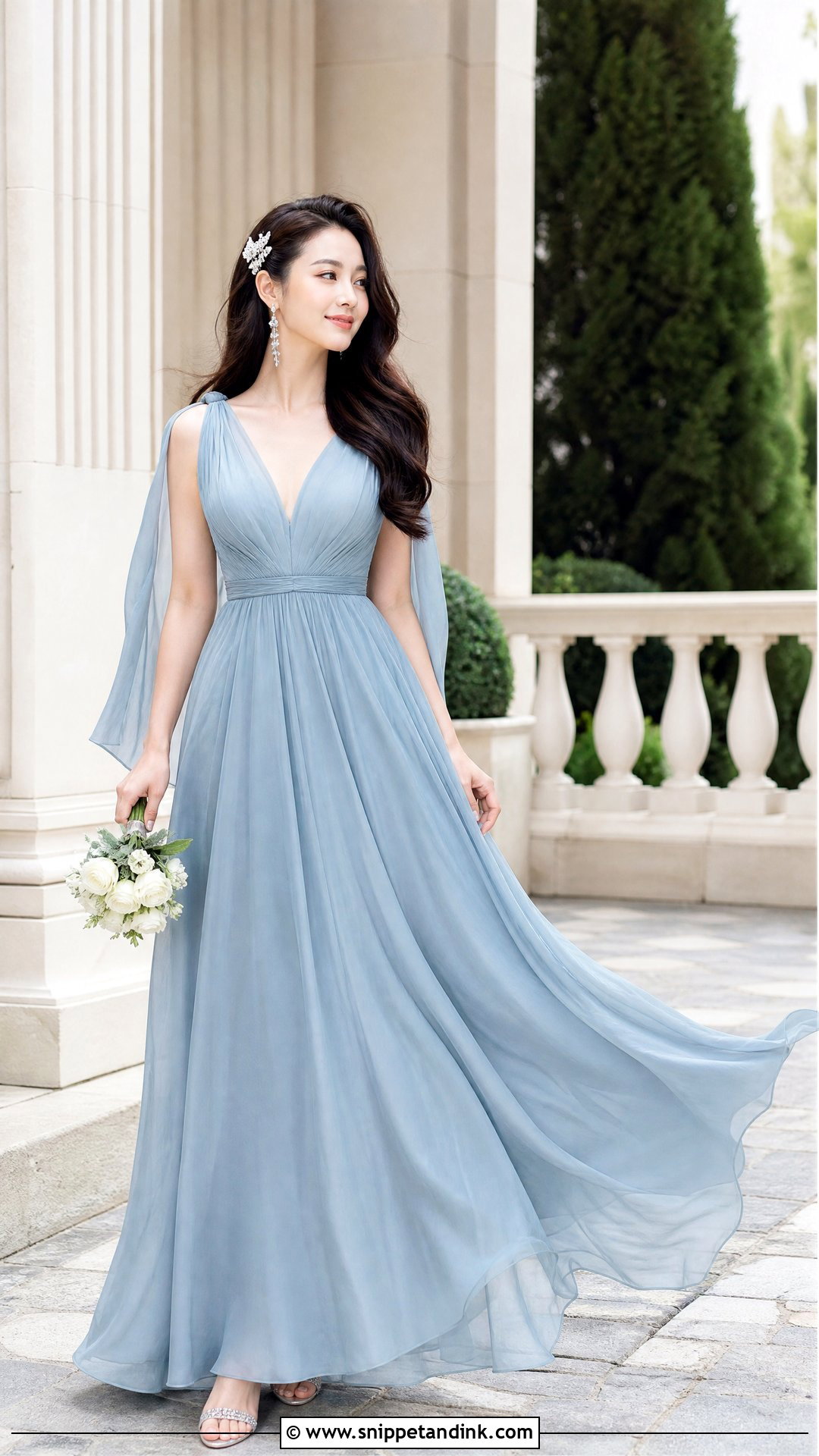
A pale blue gown is a gentle step away from white without feeling bold. Dusty blue, mist blue and soft grey-blue look best beside stone, greenery and plain backdrops. Choose flowing chiffon for something airy or a structured ball gown for more impact. Blue is a tricky dye, and under different lighting it can shift toward grey or lavender, so I always look at a fabric swatch in the setting’s light before ordering. Silver heels, crystal earrings and a small white bouquet. Avoid adding several other strong colors around it.
17. Pre Wedding Champagne Gown
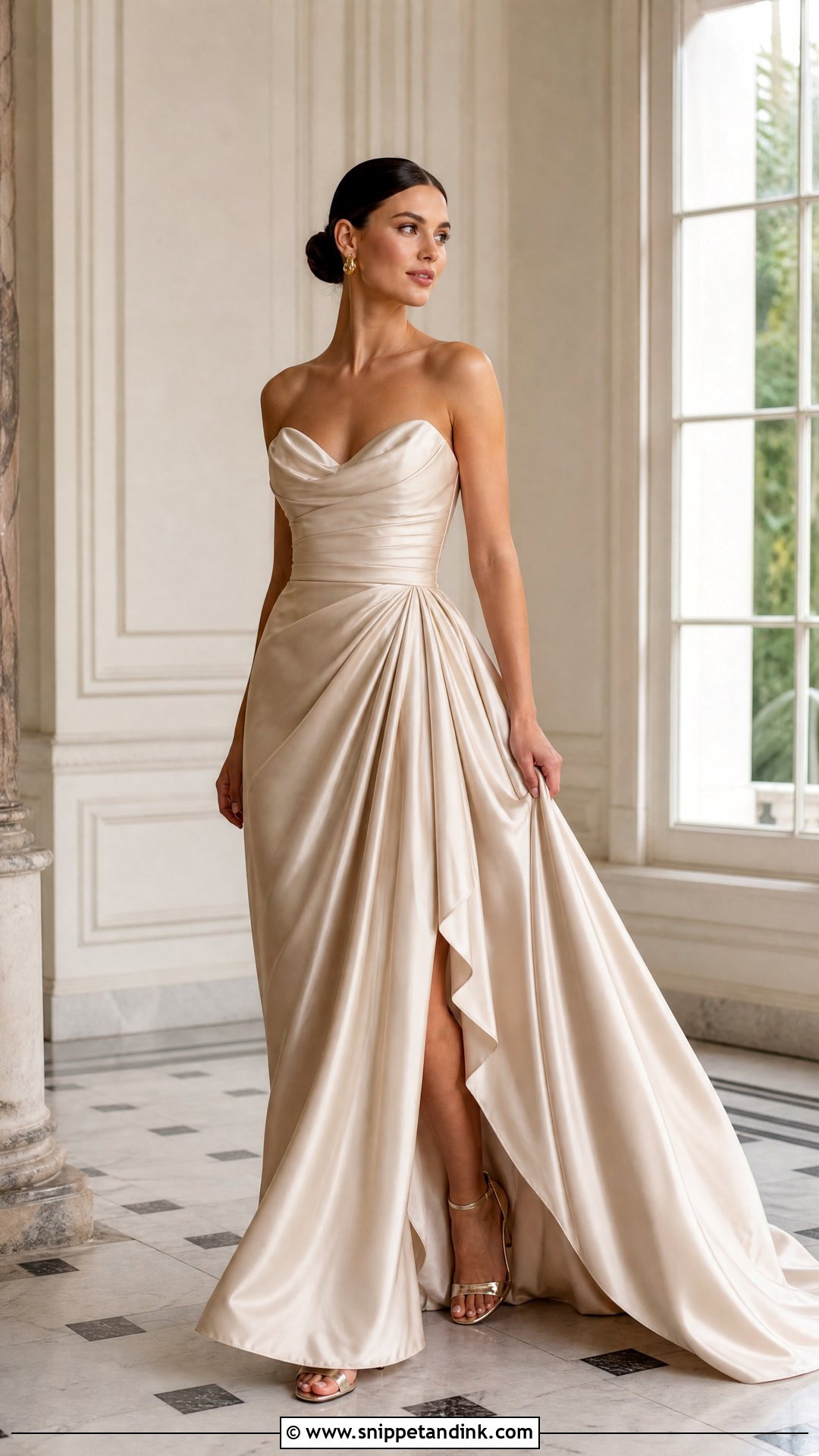
Champagne makes lace, beading and satin detail show up more than bright white does, because the warmer base gives the texture contrast. Shades run from pale cream to a soft beige-gold, and I pick the depth by complexion; deep champagne can look muddy against very fair skin. A fitted bodice with a flowing skirt keeps it elegant without stiffness. Nude or metallic heels, gold earrings and ivory flowers suit it. Compare it with your partner’s outfit before the day. A very bright white shirt next to deep champagne makes the gown look darker than it is.
18. Pre Wedding Minimalist Crepe Gown
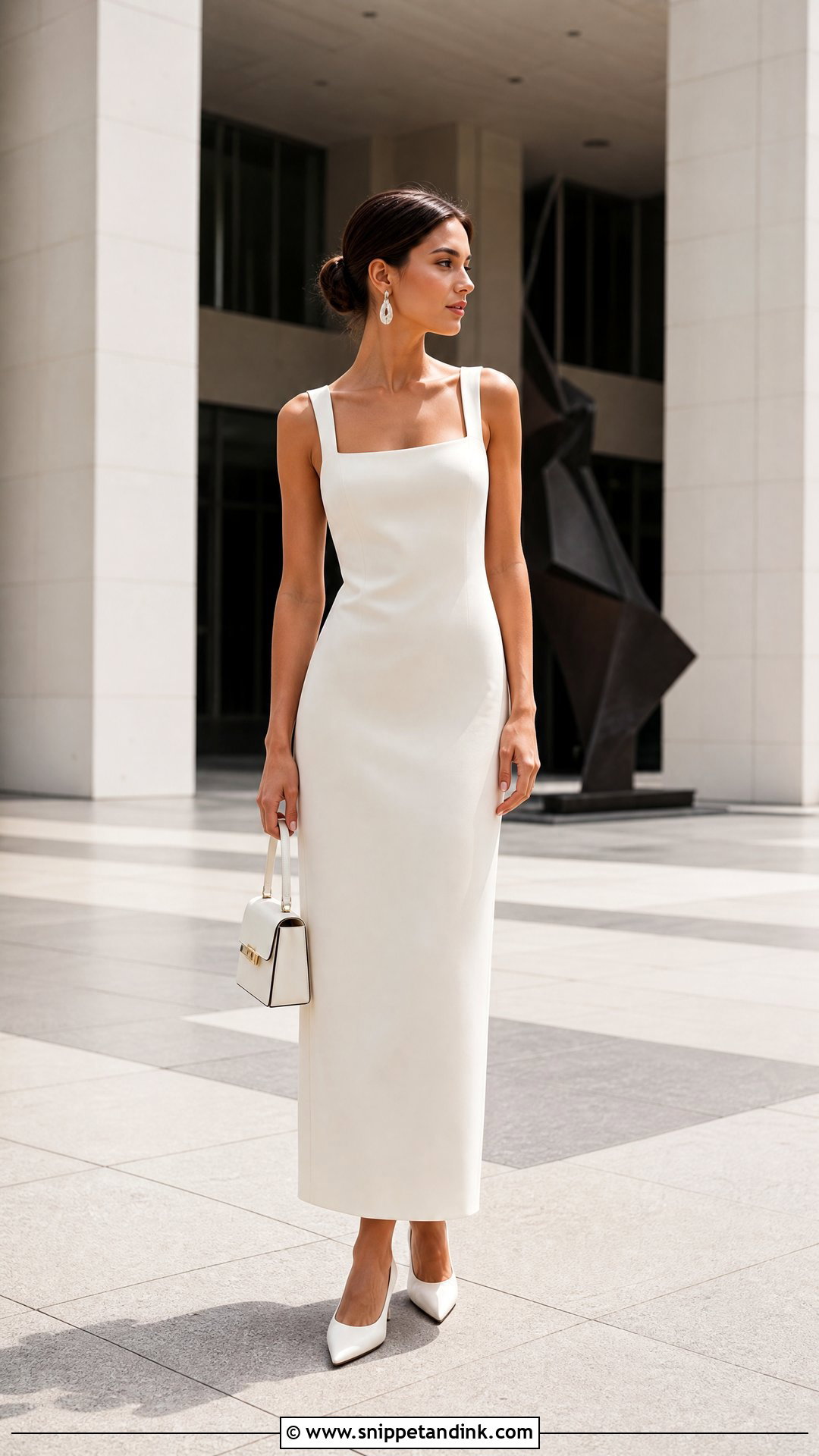
With crepe, the tailoring is the decoration. A sheath, column or fit-and-flare with a square neck, high neck or open back depends entirely on fit, because there’s no embellishment to distract from a wrinkle across the waist or hips. I’d budget for at least two fittings. Smooth, edge-free undergarments are a must, and check the gown in daylight. Pointed pumps, sculptural earrings, sleek hair and natural makeup keep it modern. A long plain veil, a detachable bow or satin gloves lets you change the look partway through without a new outfit.
19. Pre Wedding High Neck Gown
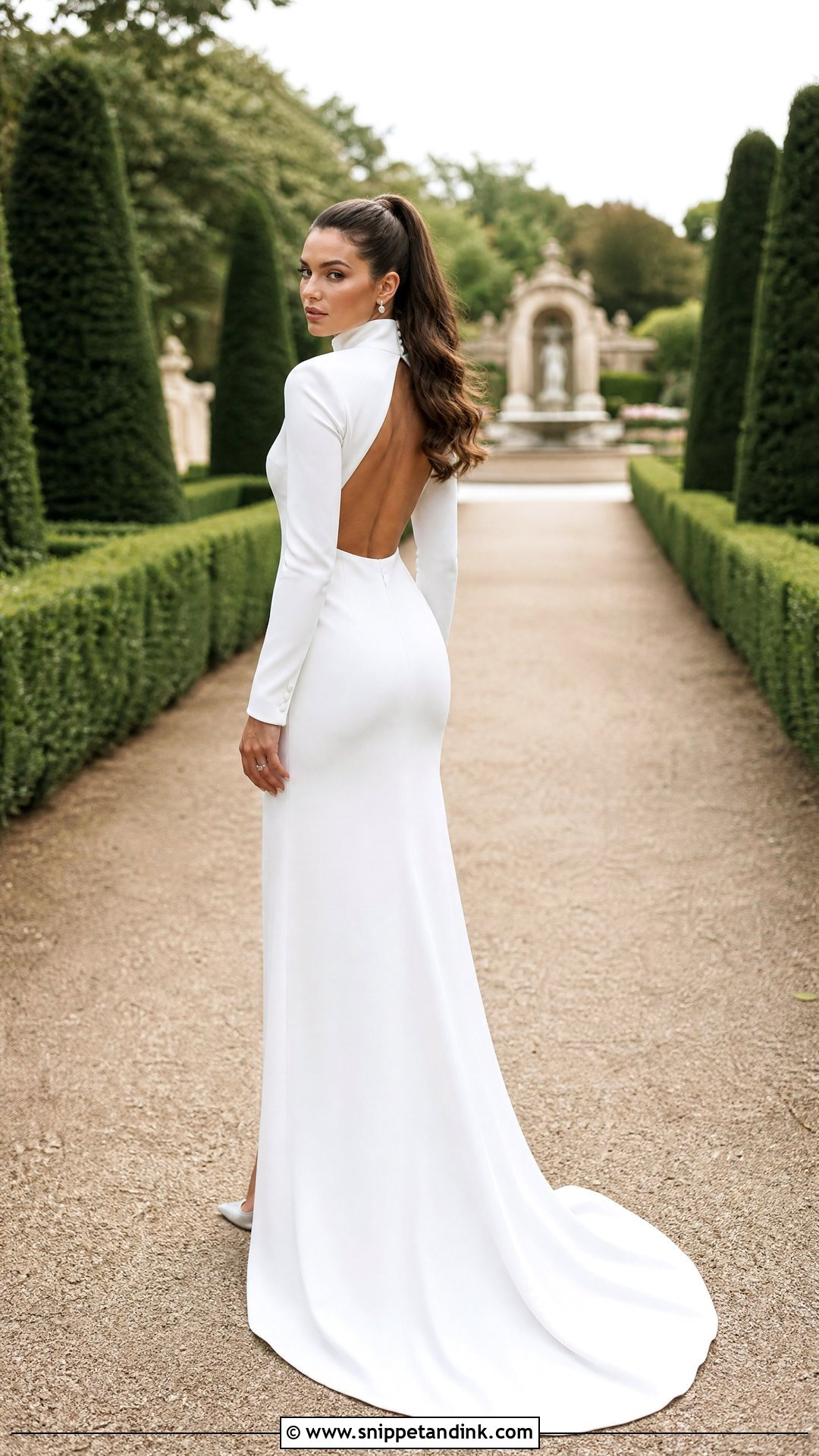
A high neck can look classic, modest or very fashion-led depending on the fabric. Sheer lace feels romantic; smooth crepe or satin looks sharper. Balance the covered front with fitted sleeves, an open back or a softer skirt. Small earrings only, and skip the necklace. The fit test: turn your head side to side and look down. A collar that’s even slightly tight creases, rides up and gets uncomfortable over a long session, so I ask for a fraction more room at the neck than the bride thinks she needs. A neat bun or high ponytail keeps the neckline clear.
20. Pre Wedding Vintage Gown
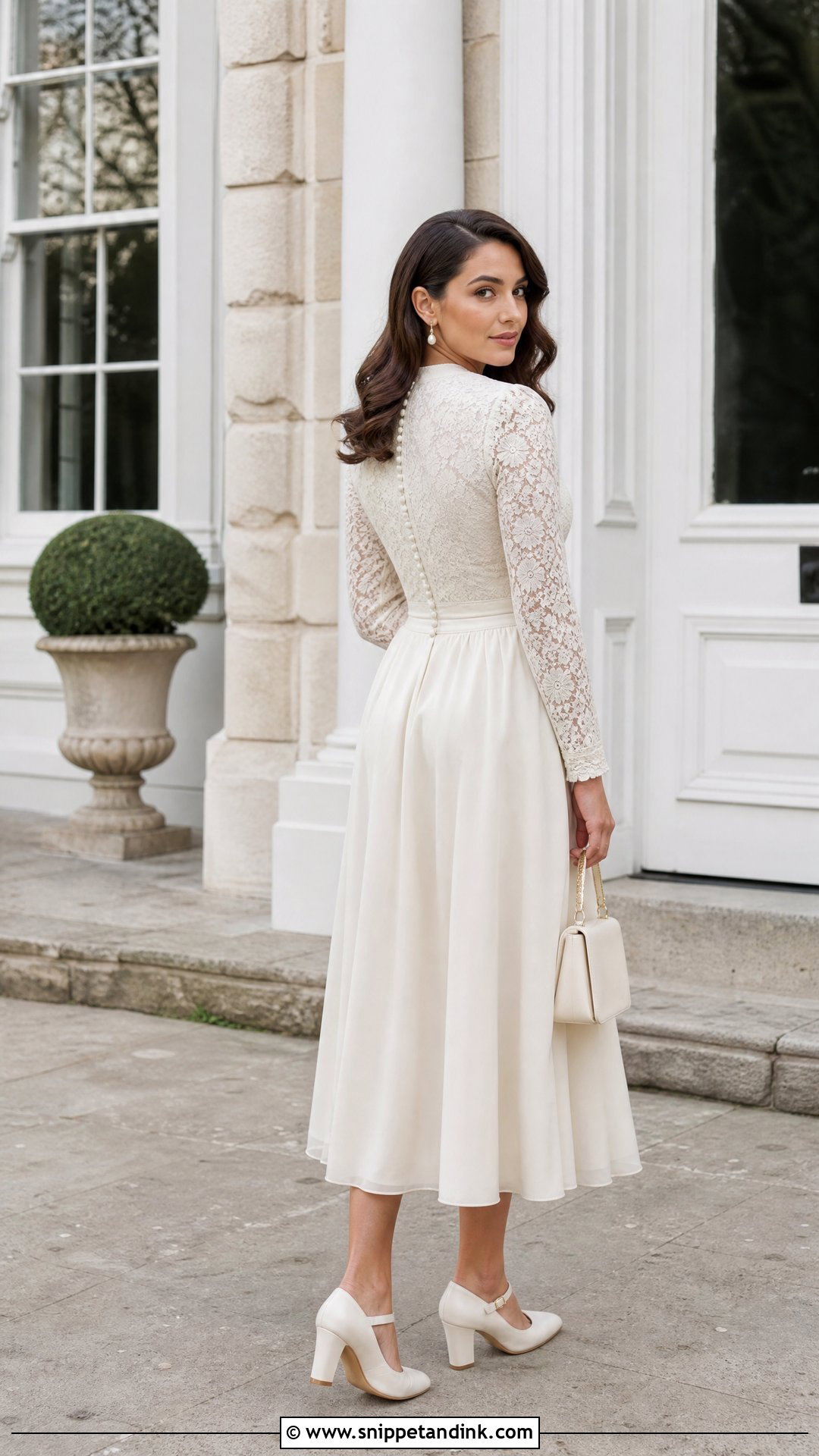
Vintage-inspired works best when you pick one or two period details, lace sleeves, covered buttons, a defined waist or a draped satin skirt, rather than all of them. Mary Jane heels, pearl earrings and a small structured bag complete it, with brushed waves or a low chignon. If you’re wearing a real vintage gown, have it inspected first for weak seams, discoloration and fragile closures; old silk can split along stress points. A restored family gown carries real meaning. Keep alterations subtle and reversible where possible, so the original character survives and the fit is still comfortable.
Getting a Gown Through Three Locations in One Day
A shoot usually means several stops, and every car ride is a chance for creases and stains. This is the routine I follow on the day:
- Travel in the gown only if you must. For short hops, sit on a clean sheet and gather the skirt forward over your lap, never tucked under you.
- Bustle or loop up any train between locations so it never touches pavement or a car floor.
- Carry a handheld steamer, a lint roller, a white chalk stick for small marks on ivory, and fashion tape.
- Keep a pair of flat shoes for walking between spots and change into heels only where you’ll stand.
- Hold the skirt up and forward when crossing grass; wet grass stains a hem green in a few steps.
Afterwards, hang the gown inside out in a breathable cotton bag and get it to a cleaner within a week or two. Sweat and invisible sugar stains from drinks can turn yellow over time even when you can’t see them yet, and that matters most if this gown is also the one you’re getting married in.
A Gown You Can Walk, Sit and Climb In
The right gown suits your personality and the place, weather and mood of the session. You now have romantic, classic, modern, colored and vintage options to compare. Judge them on fit, movement, fabric and comfort, not on a single posed picture. Do a full run-through with shoes, accessories, hair and undergarments before the day. Good alterations can make an affordable gown look expensive. Above all, choose a dress you can move in and feel like yourself in, because that ease shows in how you stand and smile.
You'll Like These Ideas:


Leave a Reply