
The tail is what makes a mermaid gown: a close fit from bust to knee, then a flare and a sweep of train behind you. It is also the part that decides how your day feels. Flare height, fabric weight, train length and the support built inside the bodice all change how easily you walk, sit and dance, and how the gown reads on camera. Below are twenty tail styles, from scalloped lace and heavy Mikado to pearls, ruffles and detachable trains. With each one I’ve added what I’d check in the fitting room and how I’d style it, so you can judge the dress on more than the hanger.
Sample Sizes, Bridal Sizing and Ordering a Tail Gown
Most salons carry samples in one or two sizes, so a fitted gown is often clipped onto you or left open at the back. That’s normal, but it means you’re judging a mermaid tail on a dress that isn’t sitting where it will. I ask the consultant to clip the hips and waist properly before a bride looks in the mirror, because a loose sample flares too high and gives a false picture.
Bridal sizing usually runs smaller than high-street sizing, and gowns are ordered by your largest measurement, with the rest taken in later. Don’t be thrown by the number. A few practical points:
- Order from measurements taken by the salon, not your usual dress size.
- Ask what the standard production time is for that designer and whether rush fees apply; timing varies a lot between brands.
- Ask what alterations typically cost for a mermaid cut in that shop, since fitted gowns often need more work than looser shapes.
- If you can, try a sample in your size or one size down to see the flare at its true height.
1. Lace Mermaid Tail Wedding Dress
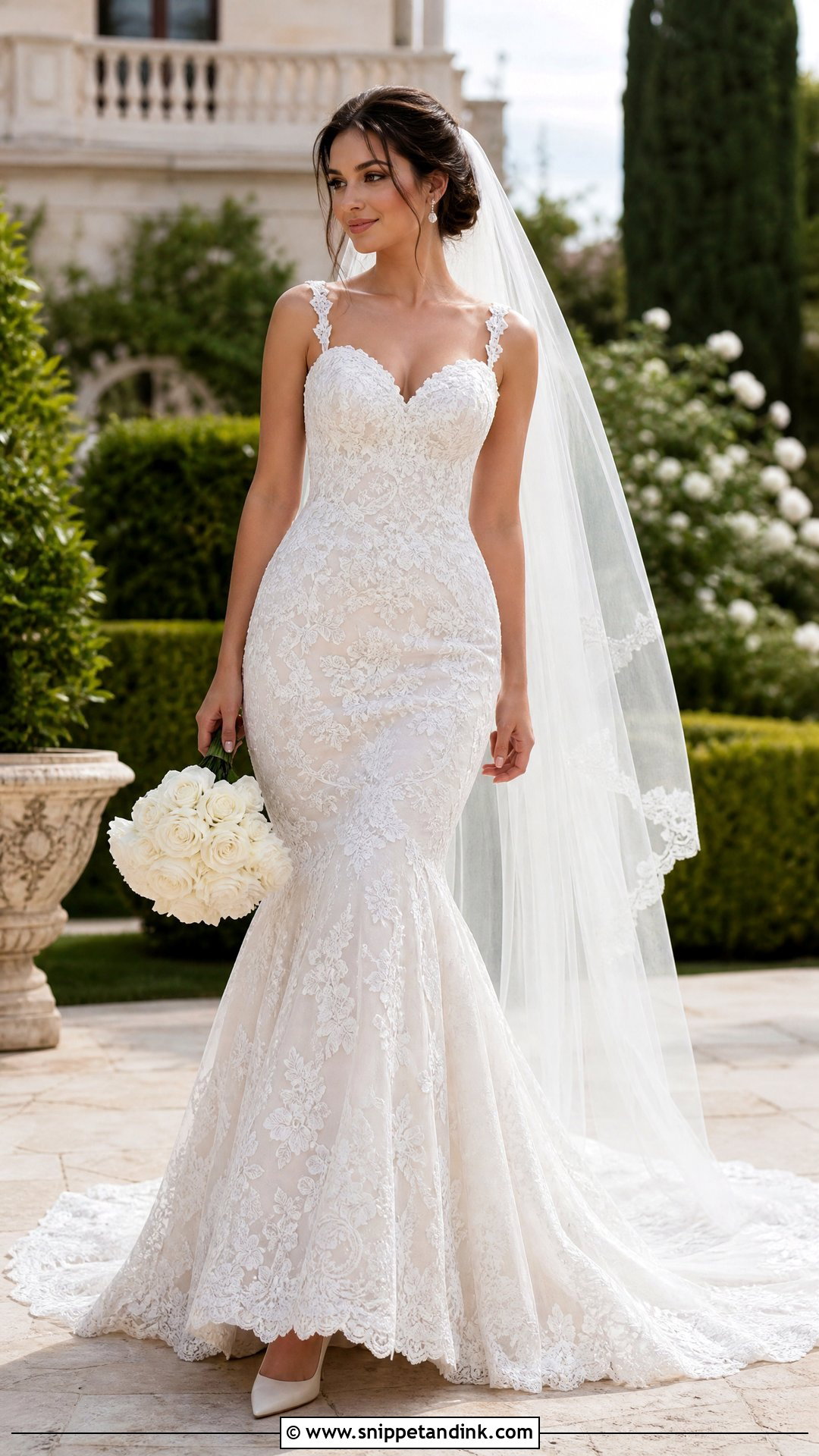
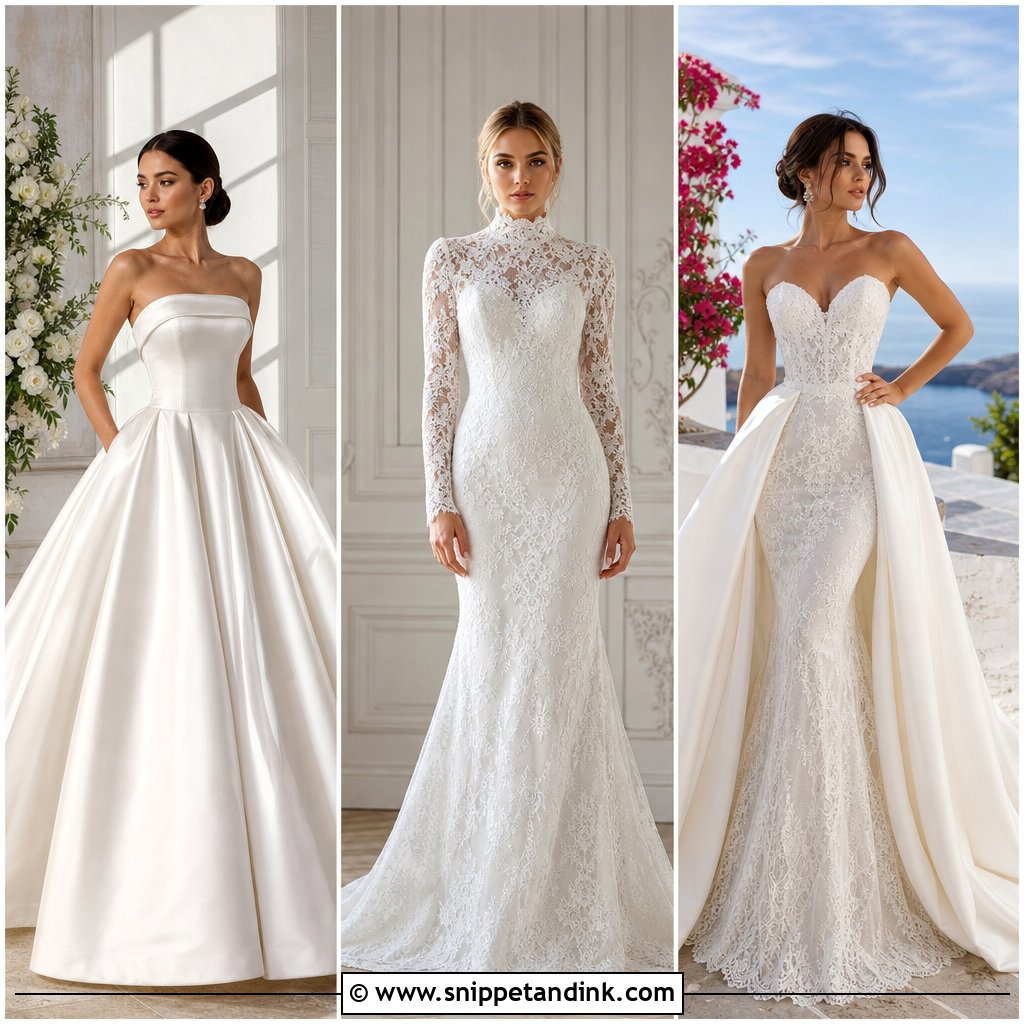
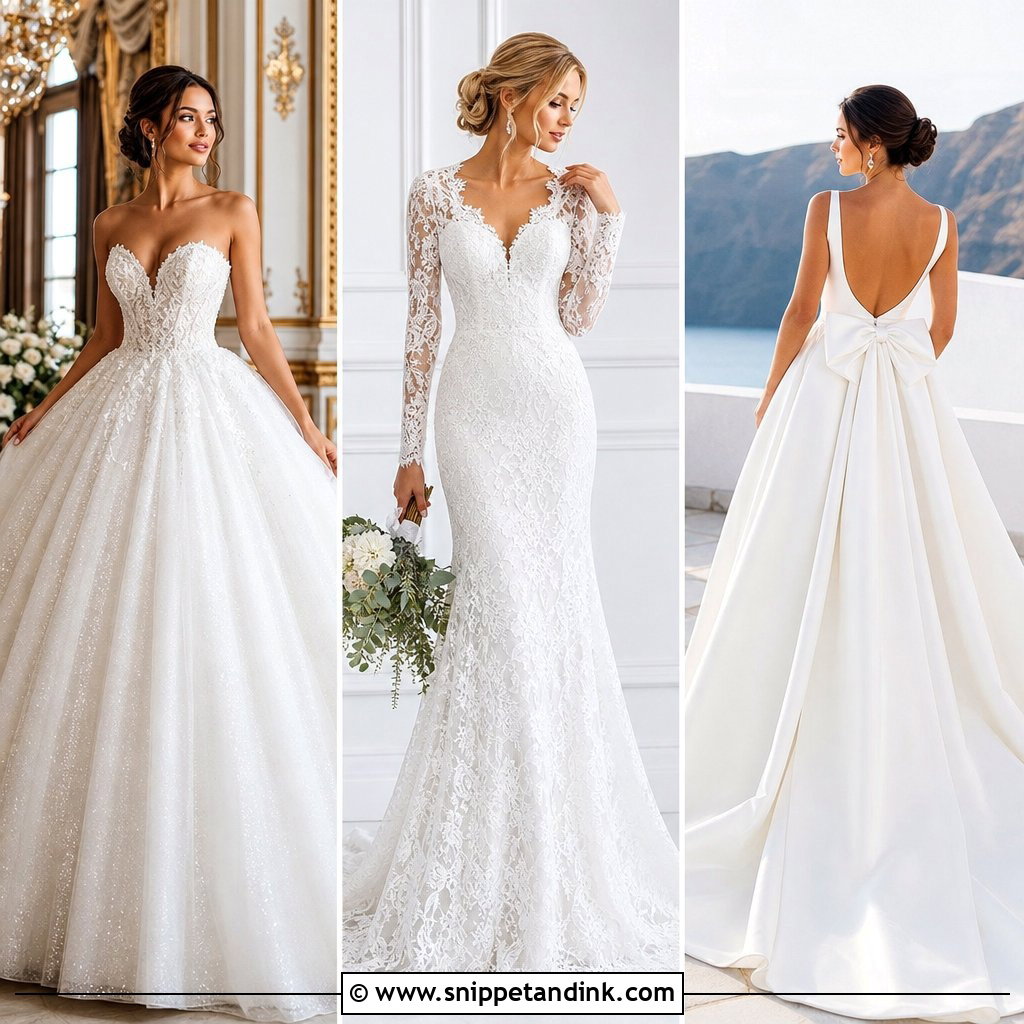
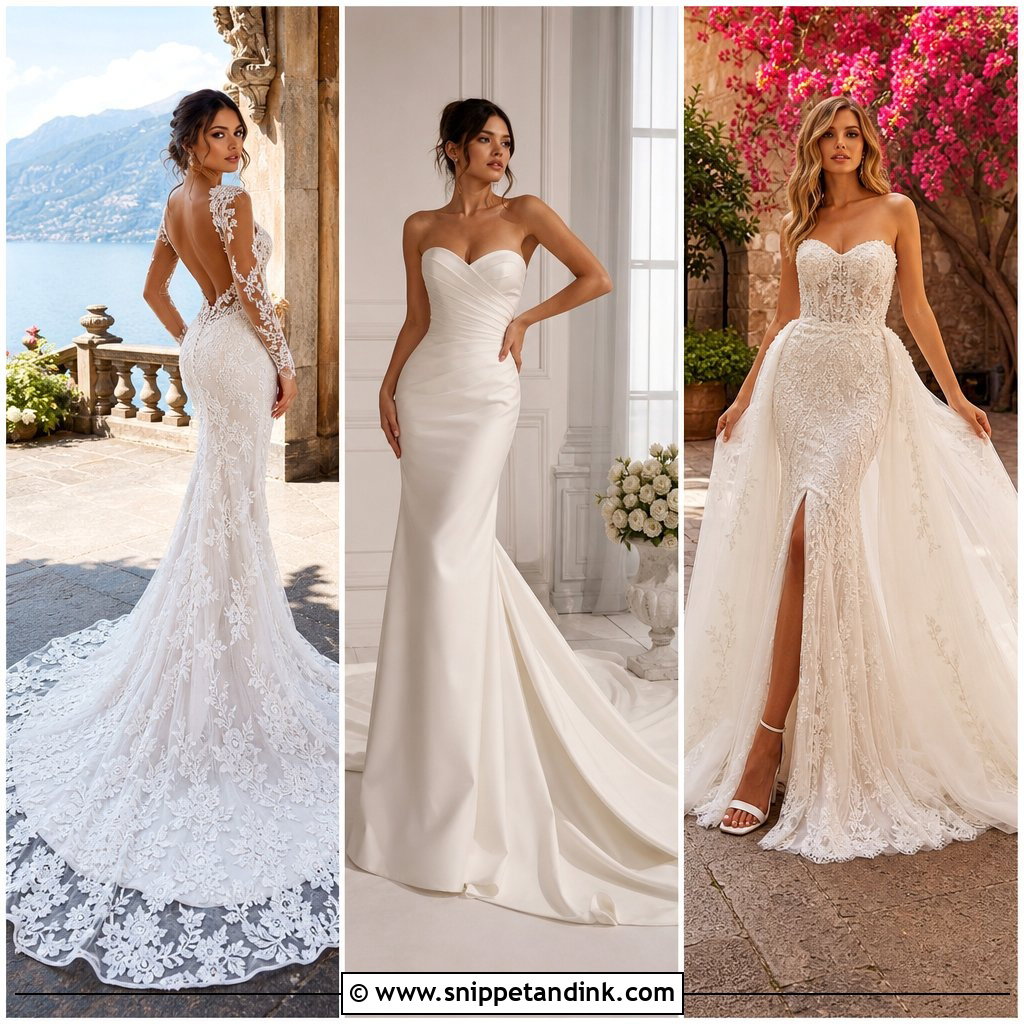
Floral lace over an ivory lining is the most forgiving fabric on a fitted body, because the pattern hides small seam adjustments. I like a sweetheart neck with thin straps for security and the lace running all the way down to a scalloped train, so the back looks as finished as the front. Heavy corded lace is stiffer than it looks, though, so practise sitting in it. Pearl drops, a fingertip veil and pointed ivory pumps keep it classic. A bustle placed beneath the flare tucks the scallops away neatly for the reception.
2. Satin Mermaid Tail Wedding Dress
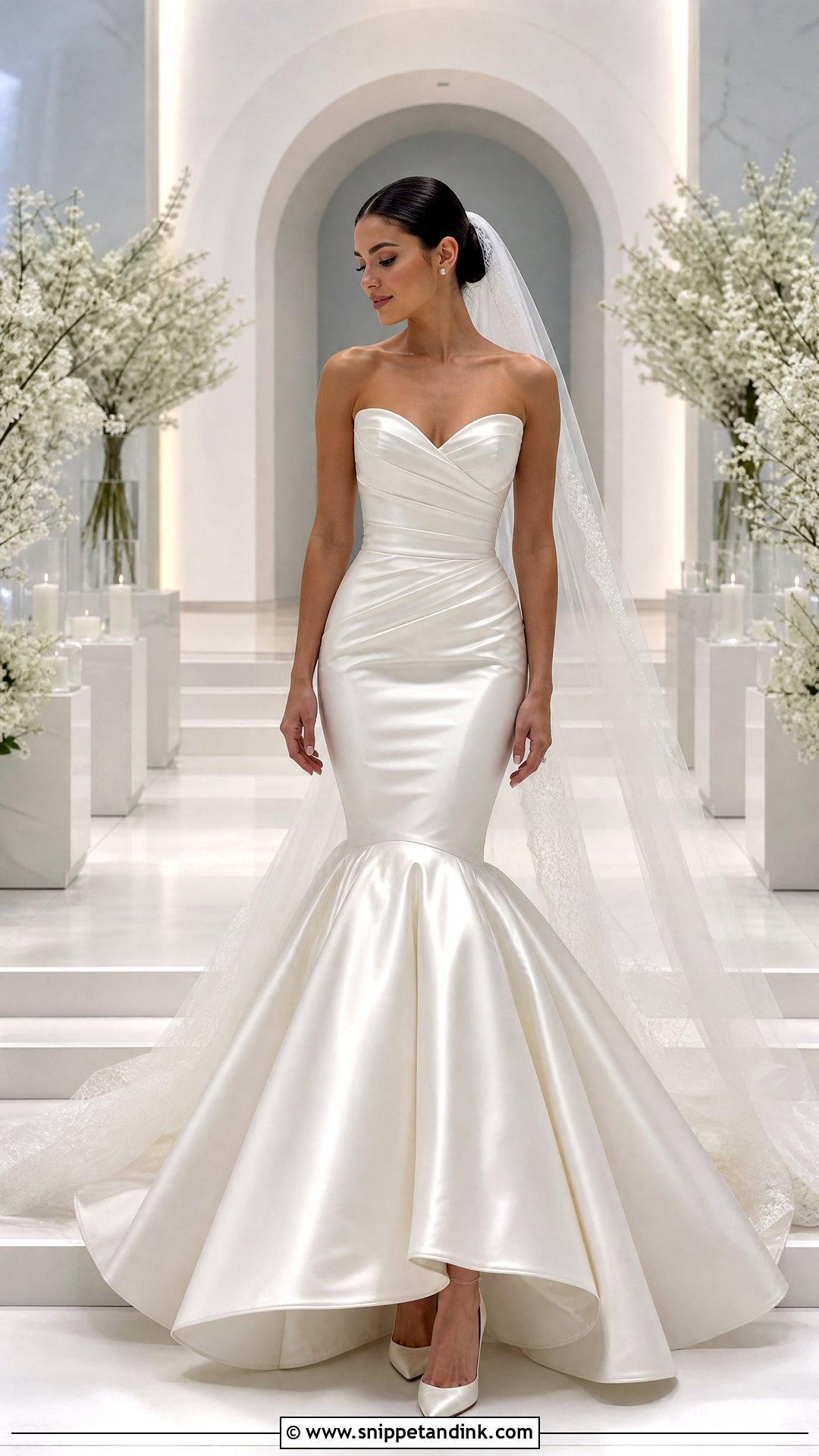
Satin is the honest fabric. Every wrinkle and every alteration shows, so tailoring has to be precise. I prefer a strapless bodice with light draping through the waist and hips, which softens the shine and disguises small fit changes. No beading is needed; the curve of the flare is the detail. Crystal studs, a sleek low bun and a cathedral veil suit it. Ask the salon how they want it steamed and carried home, since satin creases where it’s folded and marks under a hot iron.
3. Long Sleeve Mermaid Tail Wedding Dress
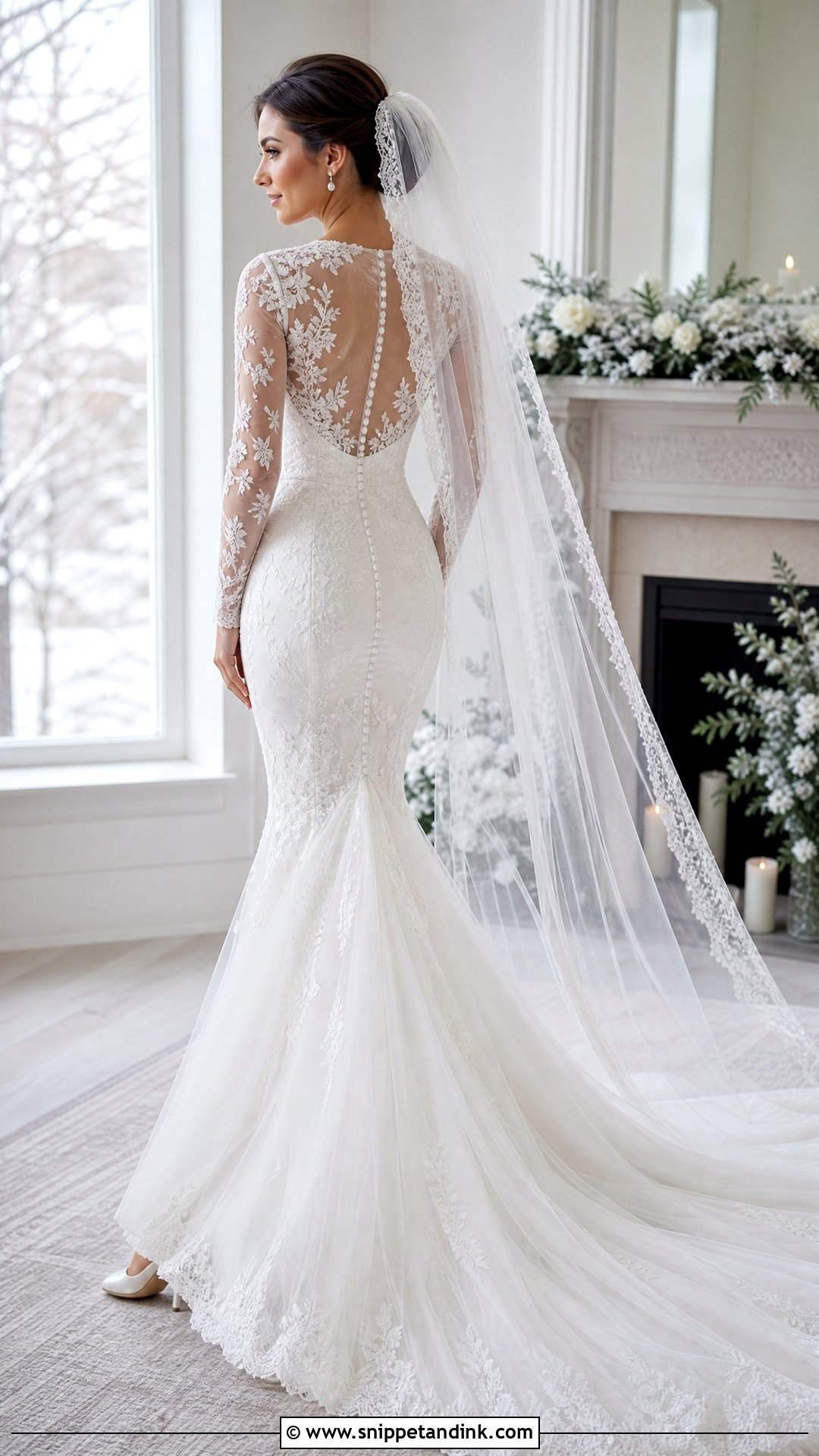
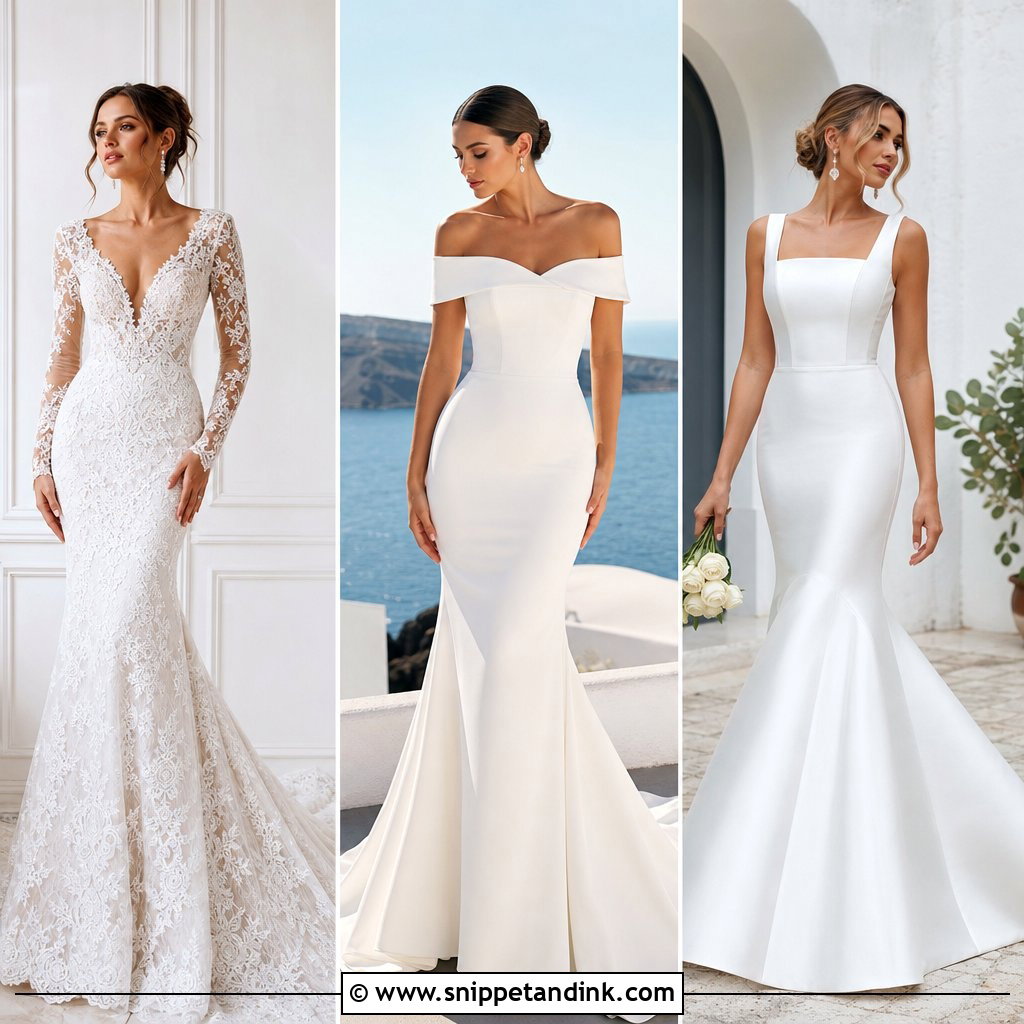
Sheer lace sleeves keep a winter bride warm without making a fitted gown look heavy, especially when the skirt below is soft tulle. Covered buttons down the back add a lot for very little. My fitting check is simple: hug me. If the sleeves bind at the elbow or pull at the armhole, they’re too tight; if they wrinkle when your arm hangs, they’re too loose. A low chignon, small pearl earrings, closed-toe heels and a lace-edged cathedral veil echo the sleeves without repeating them.
4. Off Shoulder Mermaid Tail Wedding Dress
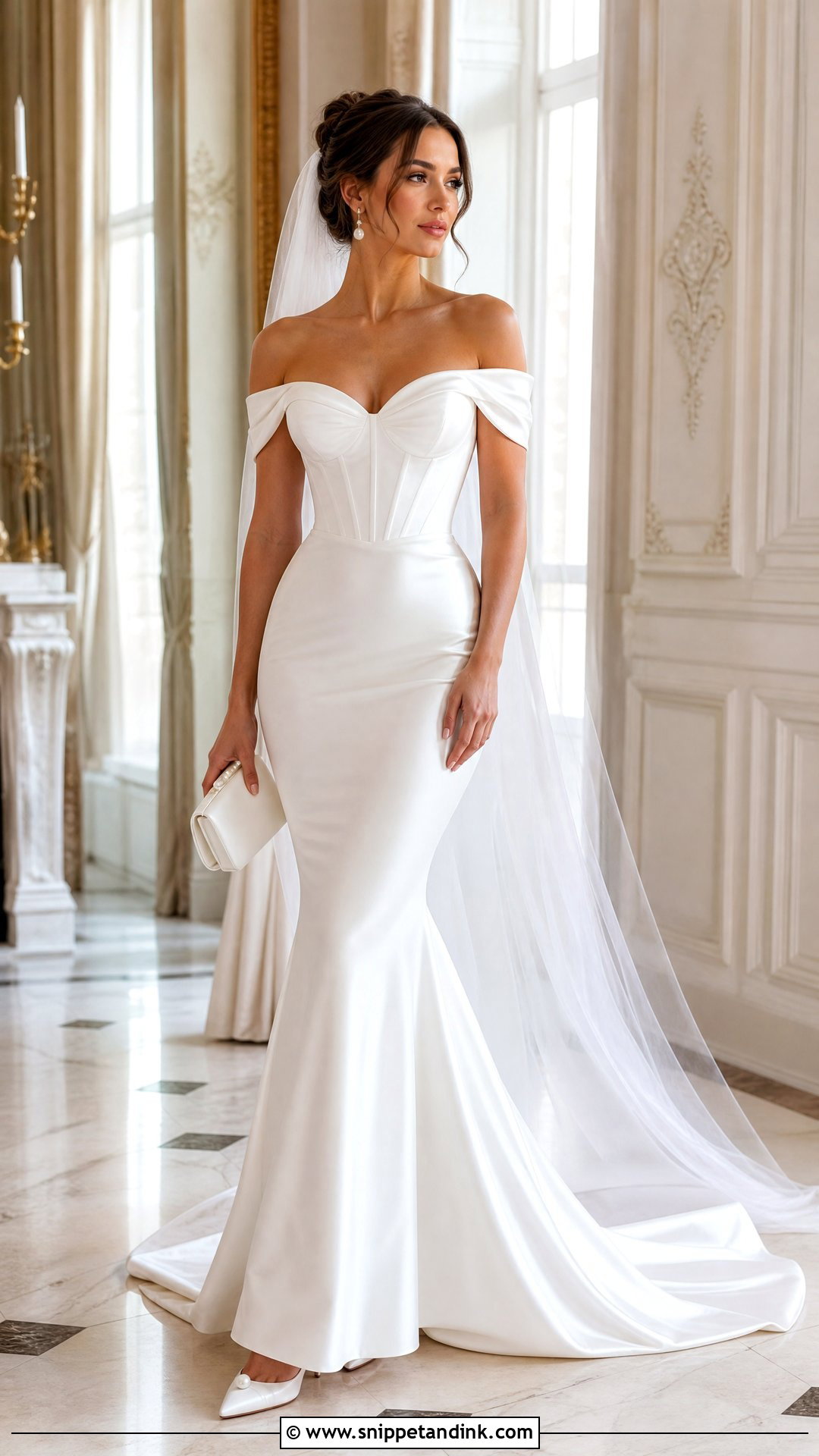
Off-shoulder bands either sit still or creep, and the corset underneath decides which. A well-fitted corseted bodice holds the neckline down so the bands don’t ride toward the neck when you lift your arms. Draped satin bands feel formal; lace sleeves feel more traditional. I ask brides to raise both arms, sit and walk a few steps, then I watch the bands. A delicate pendant, pearl earrings, a smooth updo and a plain chapel veil let the collarbone frame the look.
5. Strapless Mermaid Tail Wedding Dress
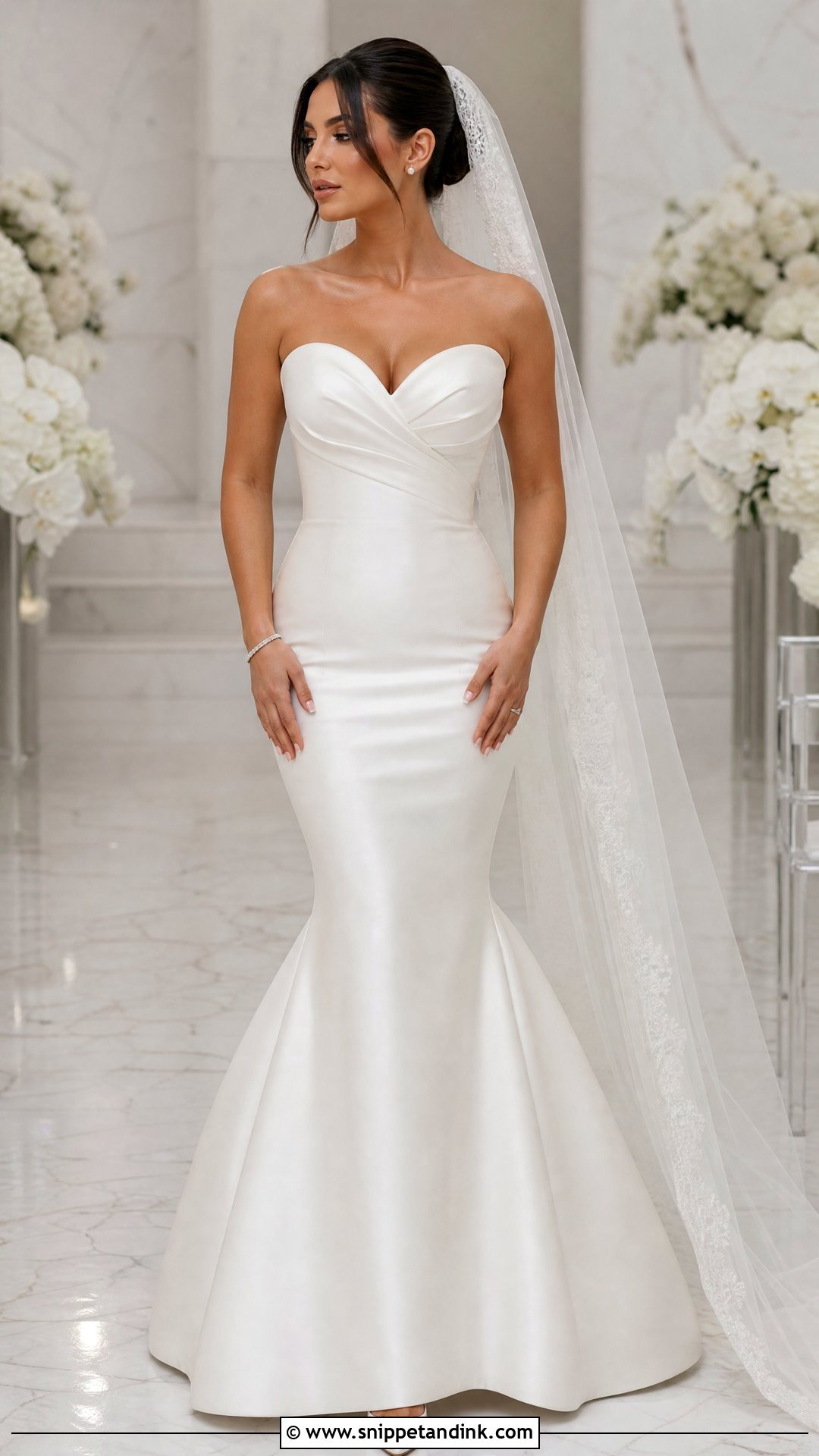
Strapless is the most adaptable top on a mermaid tail, and the hardest to make truly secure. A sculpted sweetheart or soft curve shapes the bust while internal boning holds the waist. The hidden pieces matter even more: a waist stay that takes the strain off the zip, and cups placed for your body, not the sample. Those two details stop the constant tugging-up I see at so many receptions. Mikado or heavy satin keeps the flare crisp. Swap the cathedral veil for a crystal comb after the ceremony.
6. Sweetheart Mermaid Tail Wedding Dress
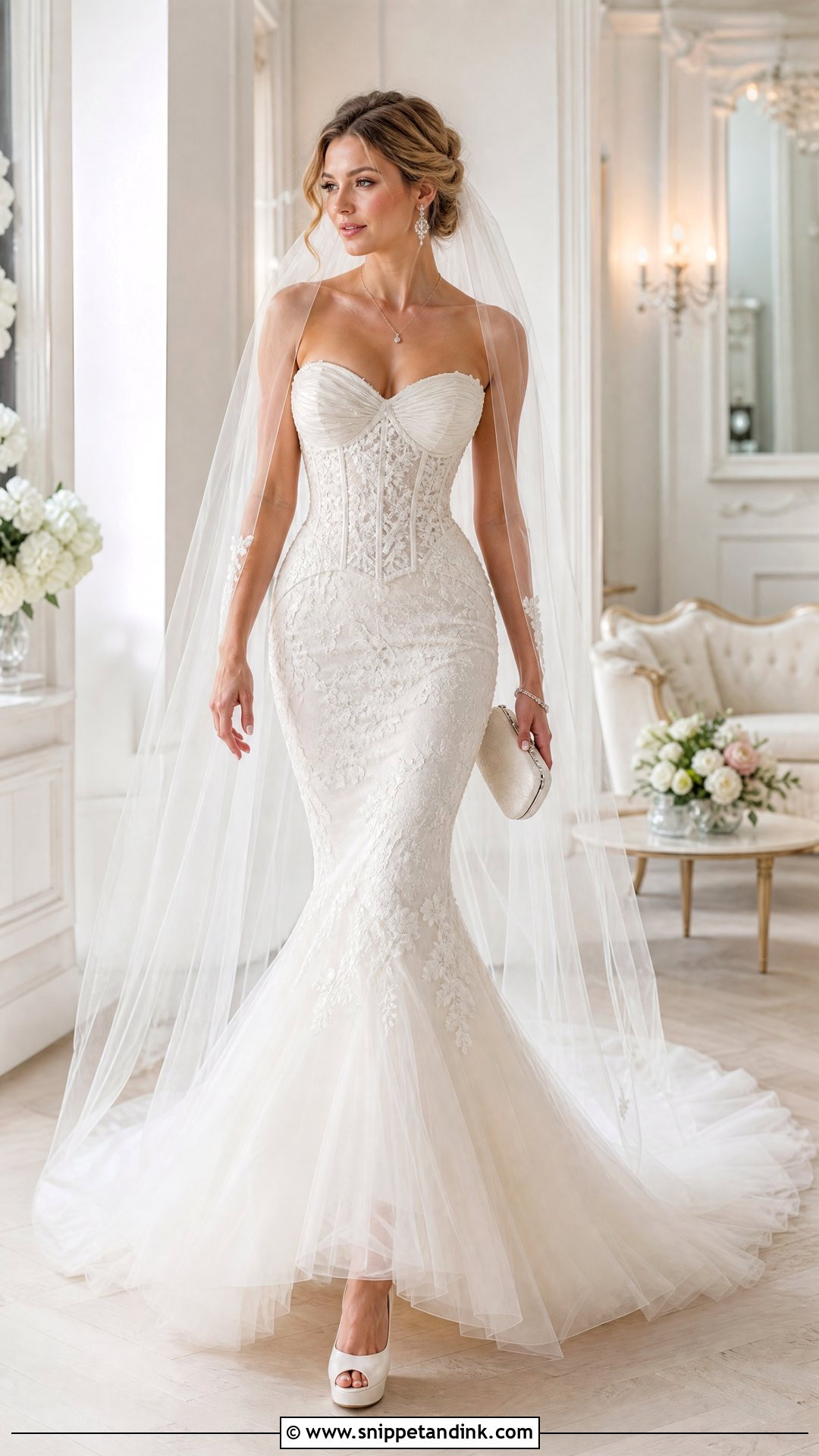
Of all the necklines here, the sweetheart pairs most naturally with a tail because its curves repeat the shape of the flare. Gentle ruching or embroidered lace along the edge adds interest without fuss. I set the flare just above the knee for a traditional effect, with layered tulle so the tail moves when you walk. Adding cups changes how the neckline sits, so I re-check it from the front and both sides after they go in. A fine pendant, crystal earrings and a loose low bun suit it.
7. Square Neck Mermaid Tail Wedding Dress
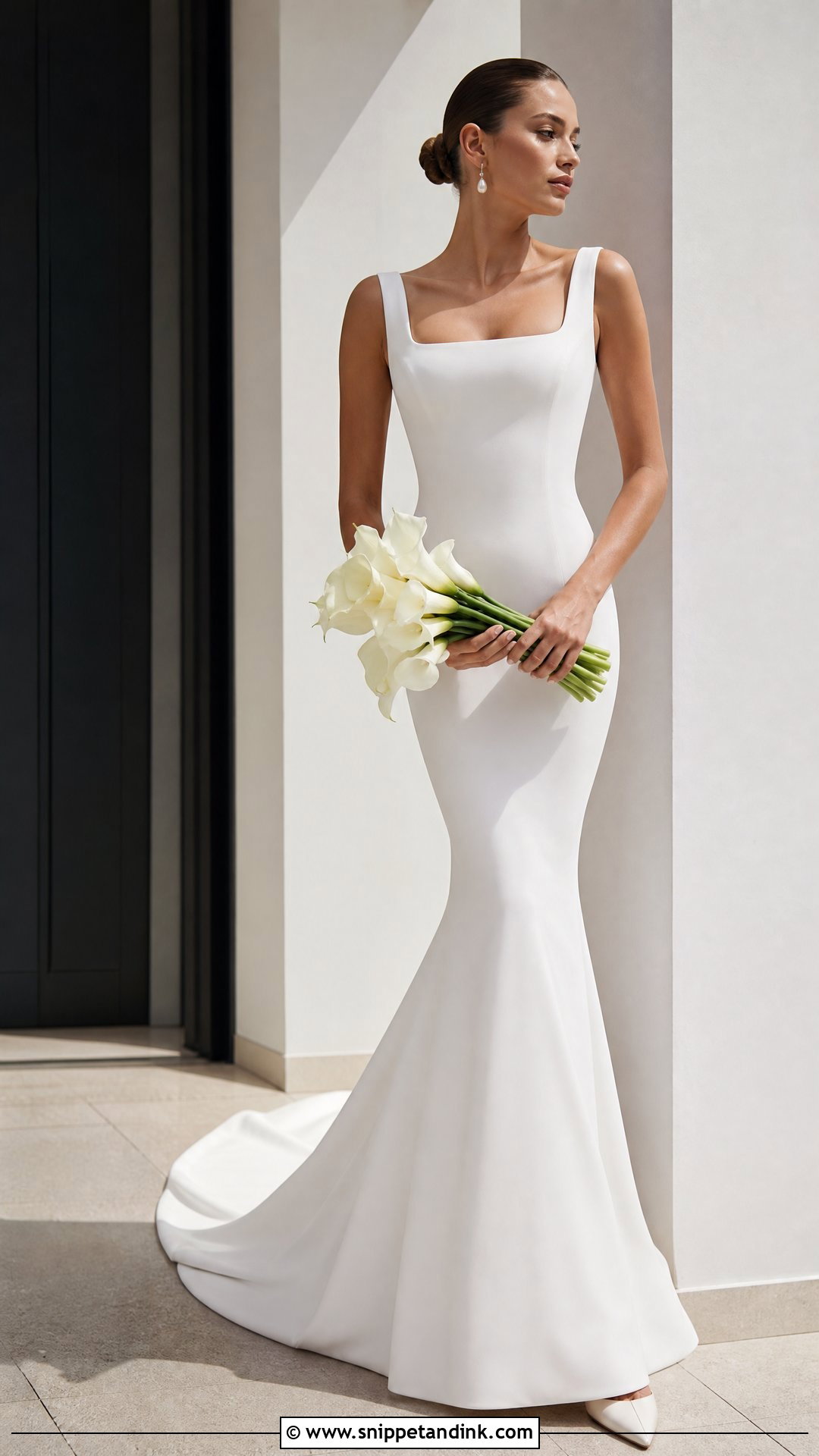
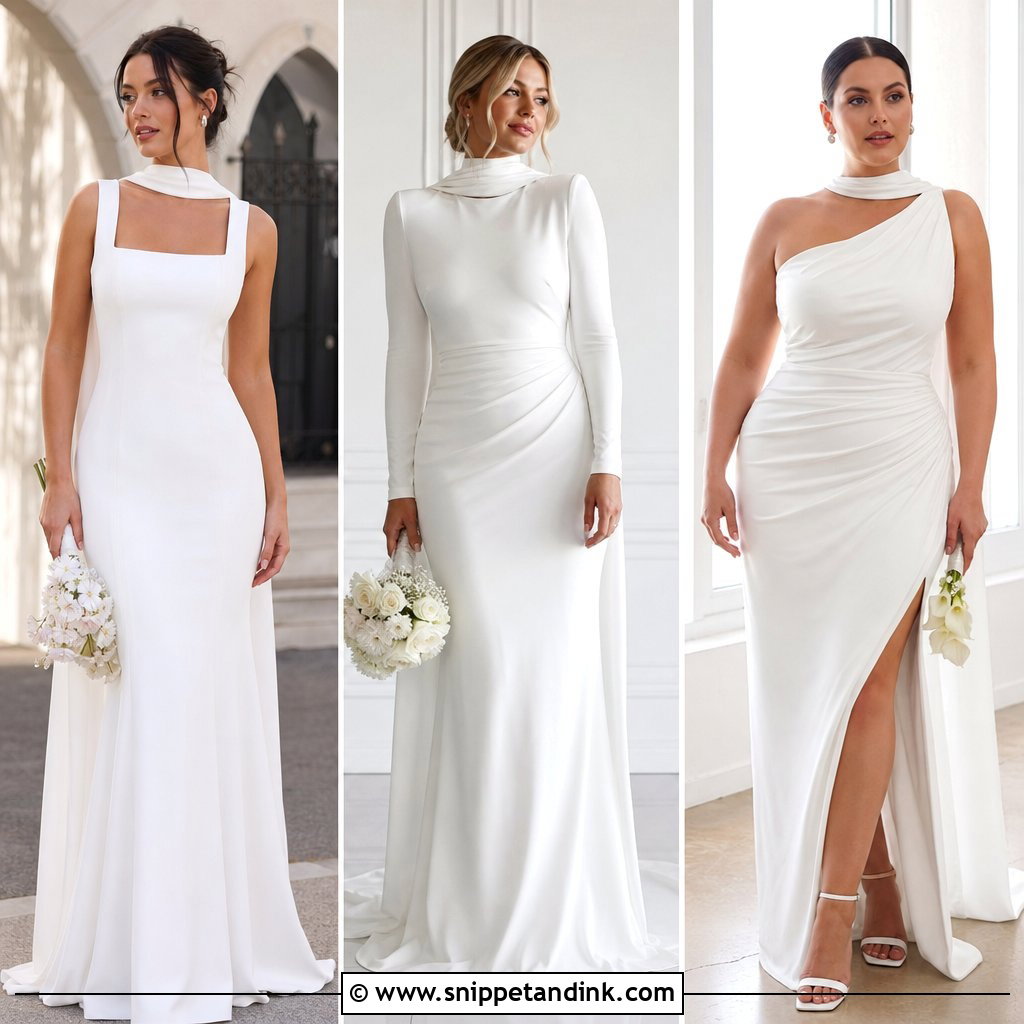
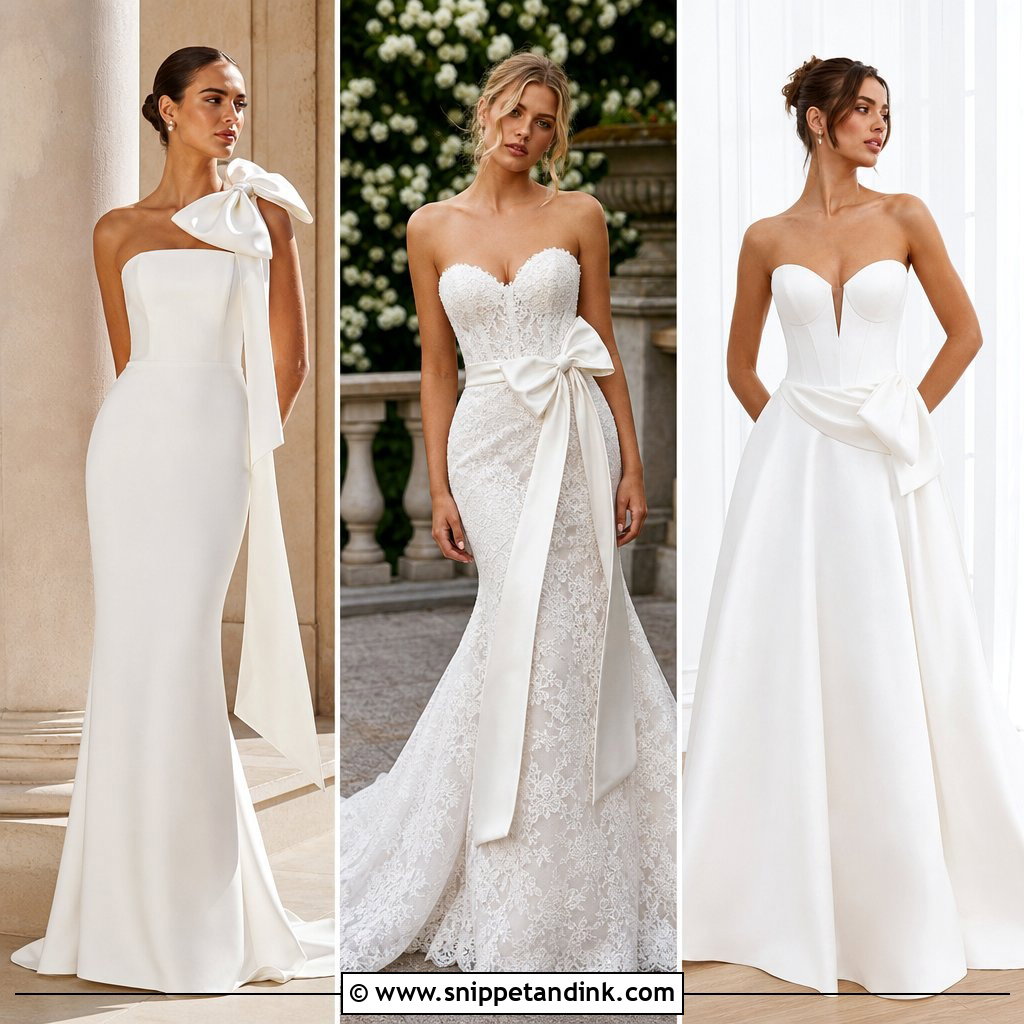
Matte crepe with a square neck and wide straps is about as clean as bridal gets. The straps add support and balance a long, sharply cut train. Covered back buttons are the only decoration it needs. I’d style it with pearl drops, a sleek bun and a short tulle veil or a hair bow, and a bouquet of calla lilies that matches the straight lines. Watch the neckline at fittings: when you reach forward, it should stay flat, not gape at the corners.
8. Halter Neck Mermaid Tail Wedding Dress
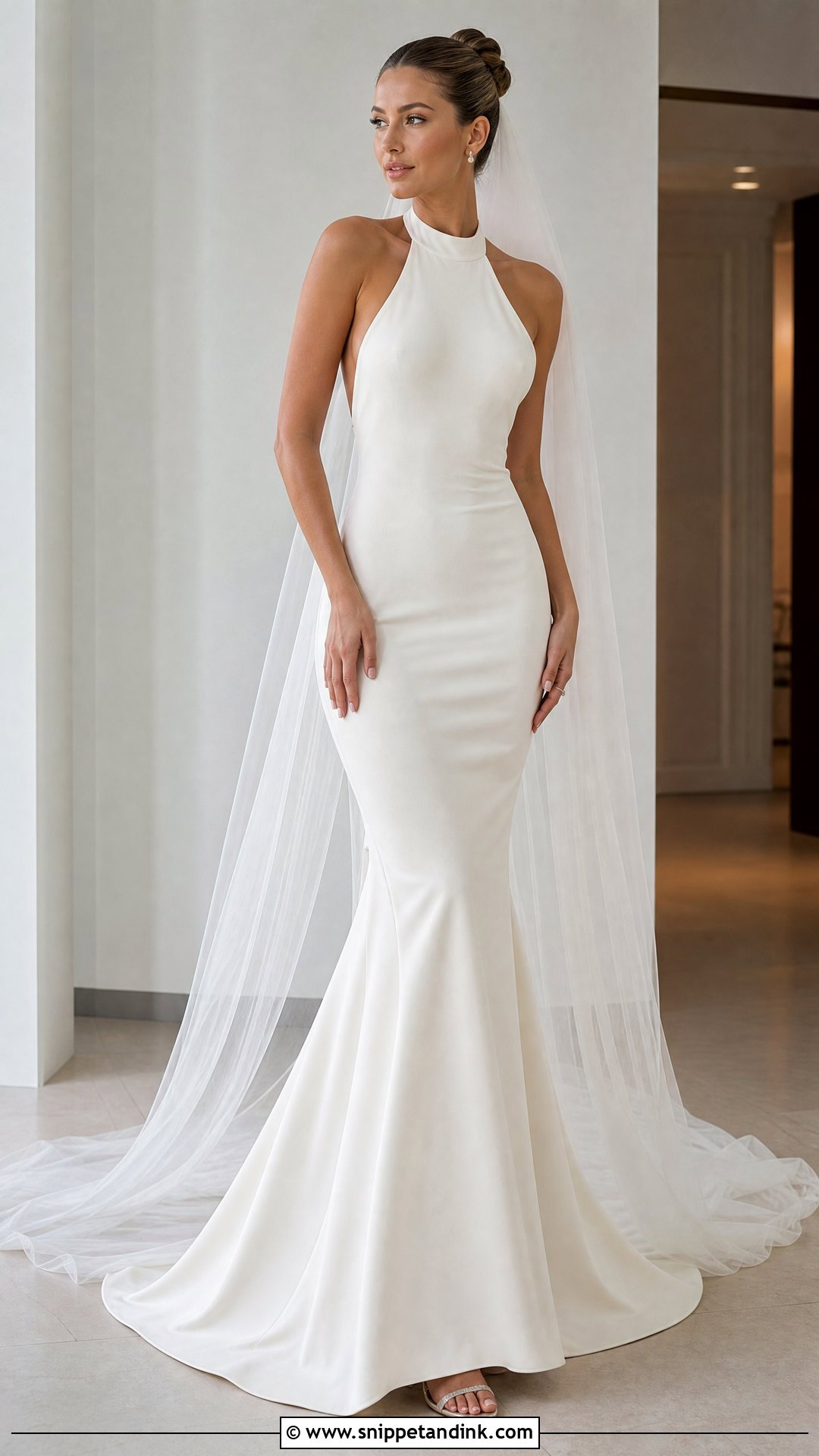
A halter neck mermaid tail wedding dress lifts the eye to the shoulders and makes the whole figure look longer, especially with a low flare. Smooth satin or crepe keeps it sleek; beaded lace suits an evening wedding. An open back balances the covered front. The halter itself is my main concern, since too much tension on the neck strap becomes a headache by mid-afternoon. The bust should be supported by the bodice, not hung from the neck. No necklace; small earrings, metallic sandals and a veil under the bun.
9. Corset Mermaid Tail Wedding Dress
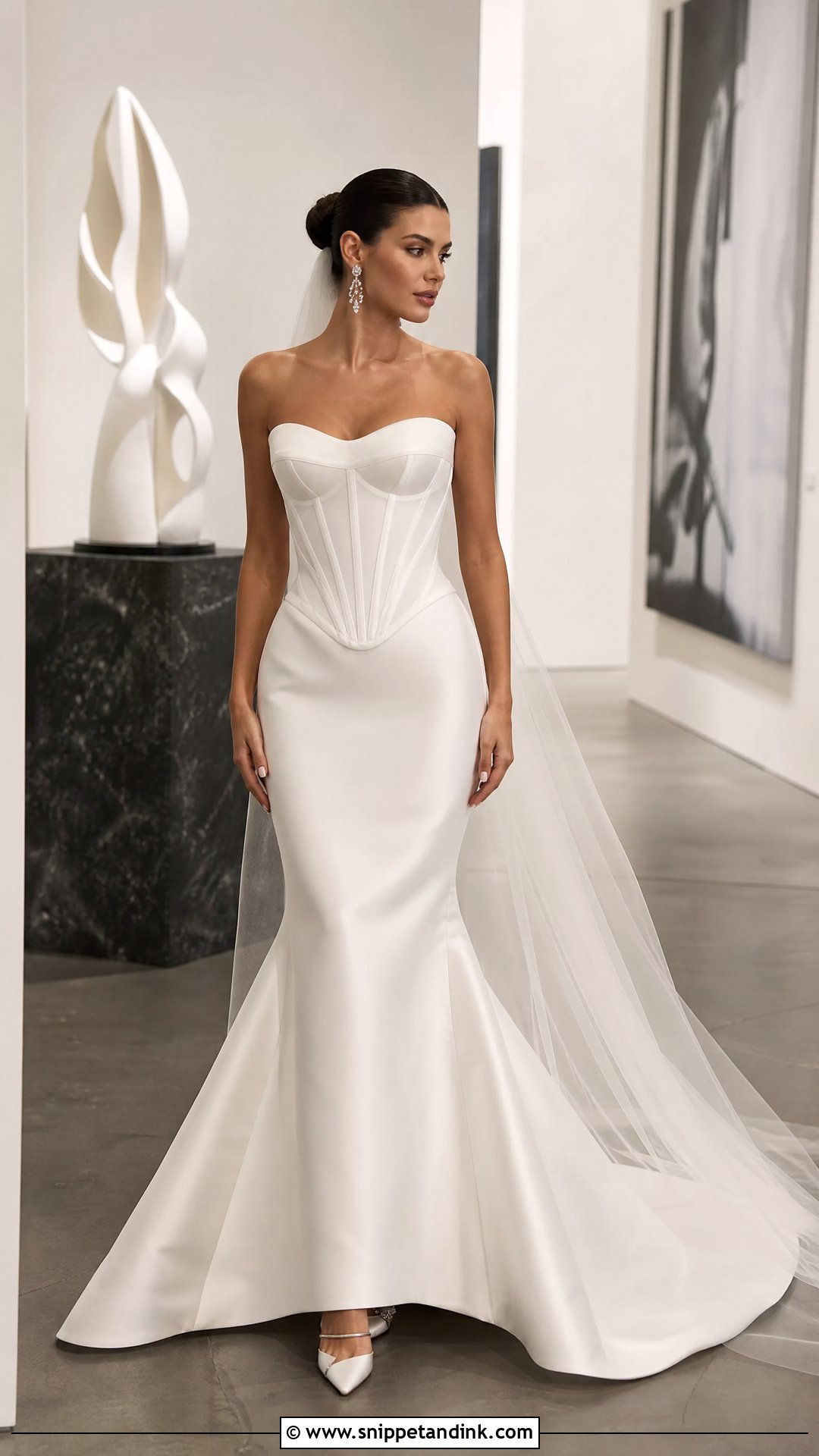
Exposed boning looks fashion-led, and pairing it with a plain satin or Mikado tail keeps it from tipping into costume. A basque-style point lengthens the bodice and smooths the transition into the skirt. Corsets should support, not squeeze, so I have brides breathe in deeply, sit and bend before anything is pinned. If the sheer panels between bones feel too revealing under bright light, a matching lining or modesty panel can be added. Crystal drops, slingback heels and a sheer cathedral veil complete it.
10. Beaded Mermaid Tail Wedding Dress
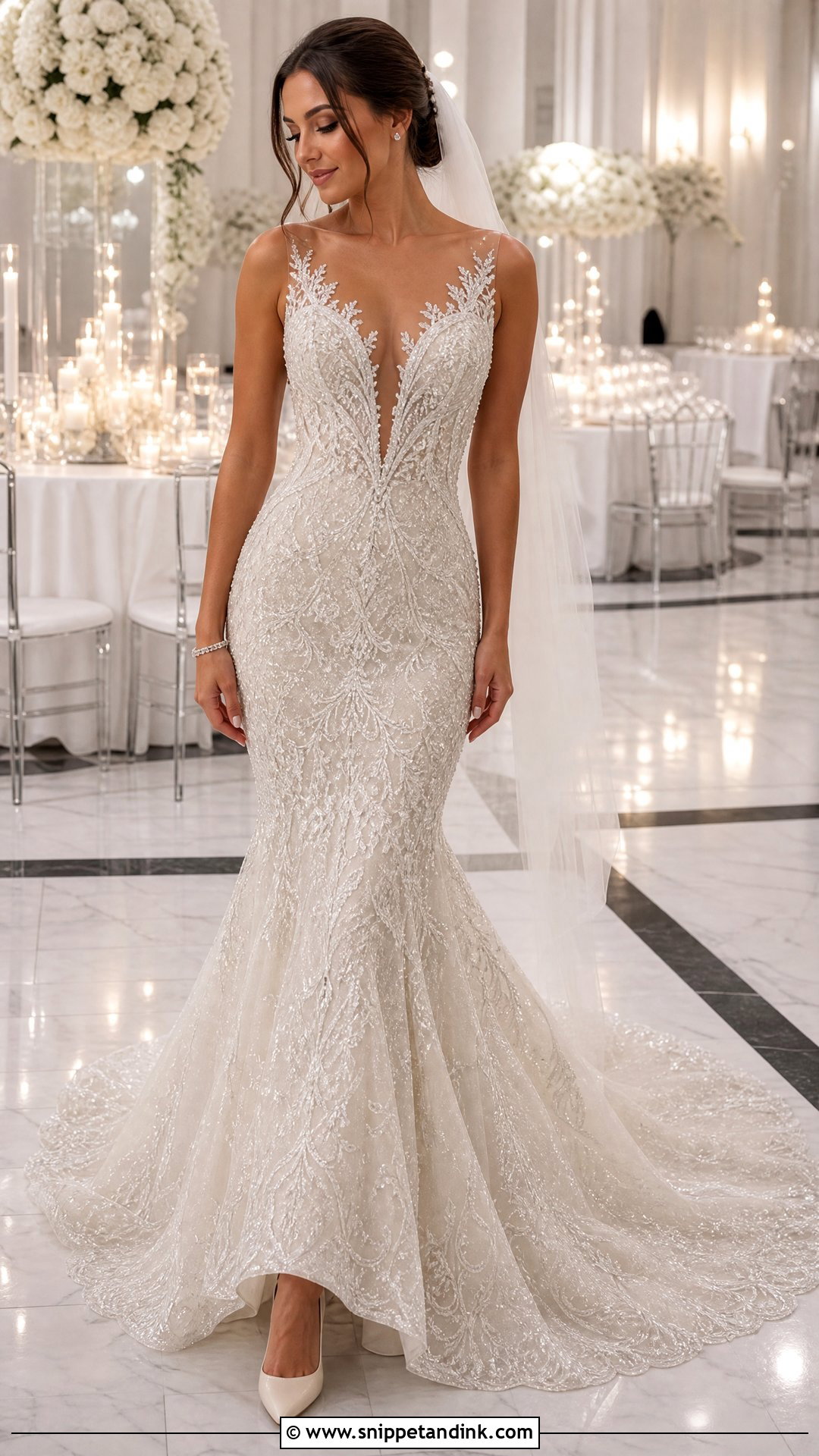
Sparkle on a tail gown catches light as the skirt moves, which looks wonderful in an evening ballroom. Tonal pearls, crystals or sequins over lace give depth without hiding the cut. A plunge with an illusion insert adds drama but stays secure. Weight is the trade-off: a fully beaded gown can be heavy, so I look for reinforced straps, a firm waist and a strong bustle if you plan to dance. After every fitting, check for loose threads, since a single dangling bead can catch your veil or snag a chair.
11. Pearl Mermaid Tail Wedding Dress
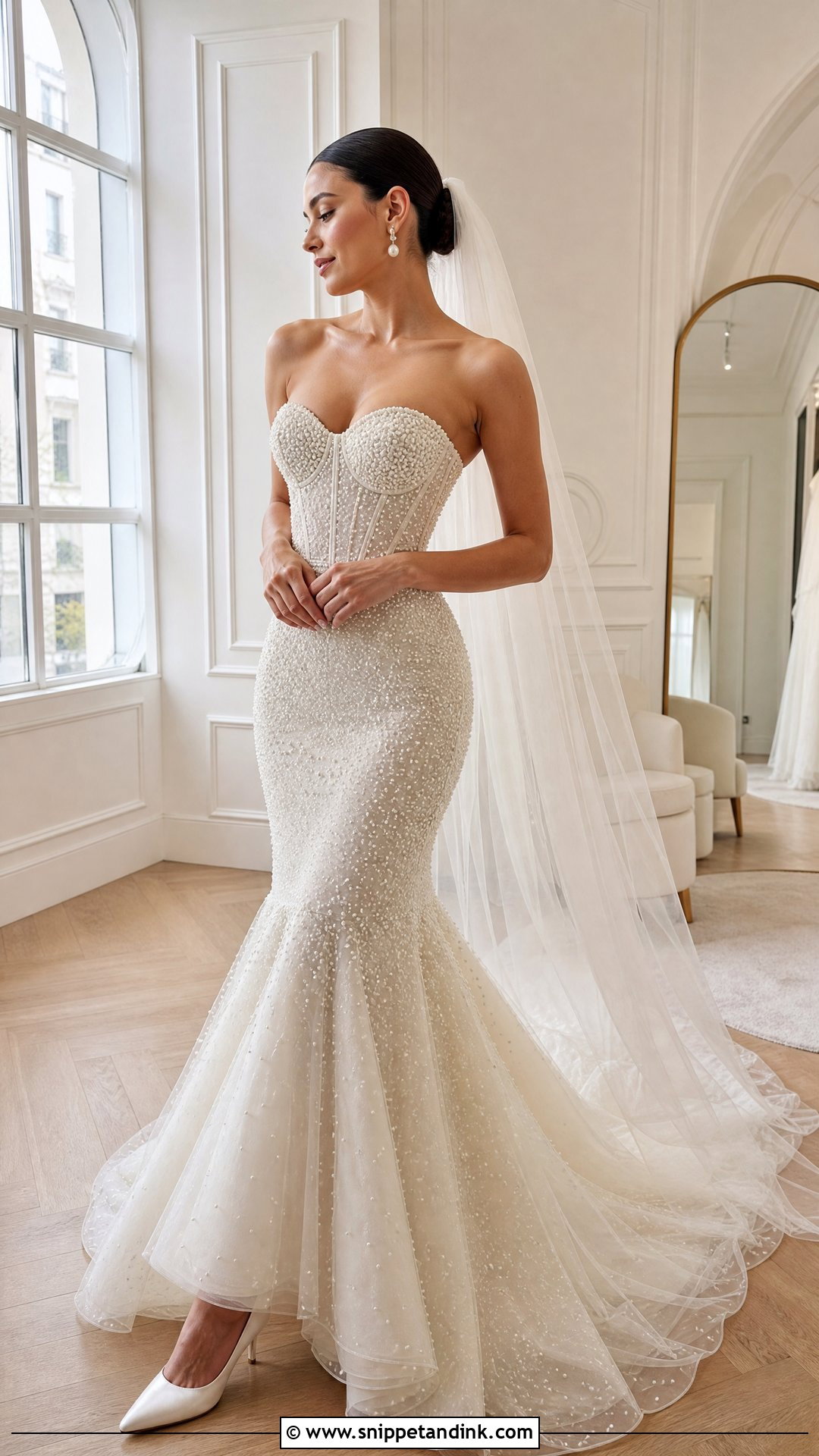
Pearls can cover the whole gown or just trace the corset, neckline and train. Over a fitted ivory lining with a layer of sheer tulle they look soft and slightly raised. I keep jewellery to pearl studs and the veil plain, because pearl-trimmed tulle snags easily on a pearl bodice. Pearls add weight in places you don’t expect, so the bodice needs strong support and the bustle points need reinforcing where pearls extend onto the train.
12. Floral Applique Mermaid Tail Wedding Dress
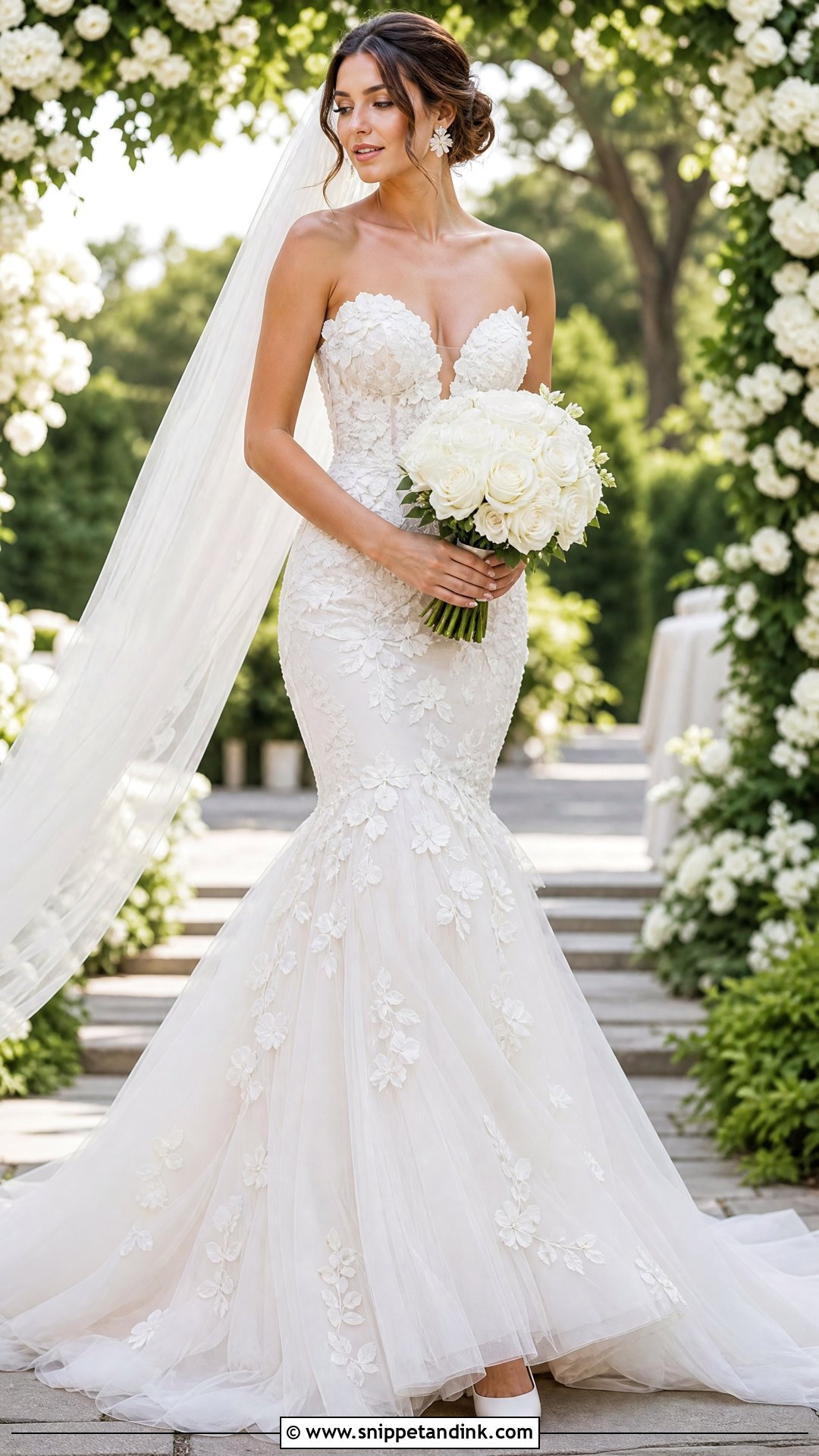
Appliqué flowers clustered at the bodice and scattered lightly down the skirt keep the waist defined and the tail airy. Lining colour changes how strongly the pattern shows: ivory blends, nude makes each flower pop. I look closely at every appliqué that crosses a seam during alterations, because those are the ones that end up folded or curling. Secure any loose petals before the wedding. A plain tulle veil, floral studs and a loose updo stop the look from becoming too busy.
13. Detachable Overskirt Mermaid Tail Wedding Dress
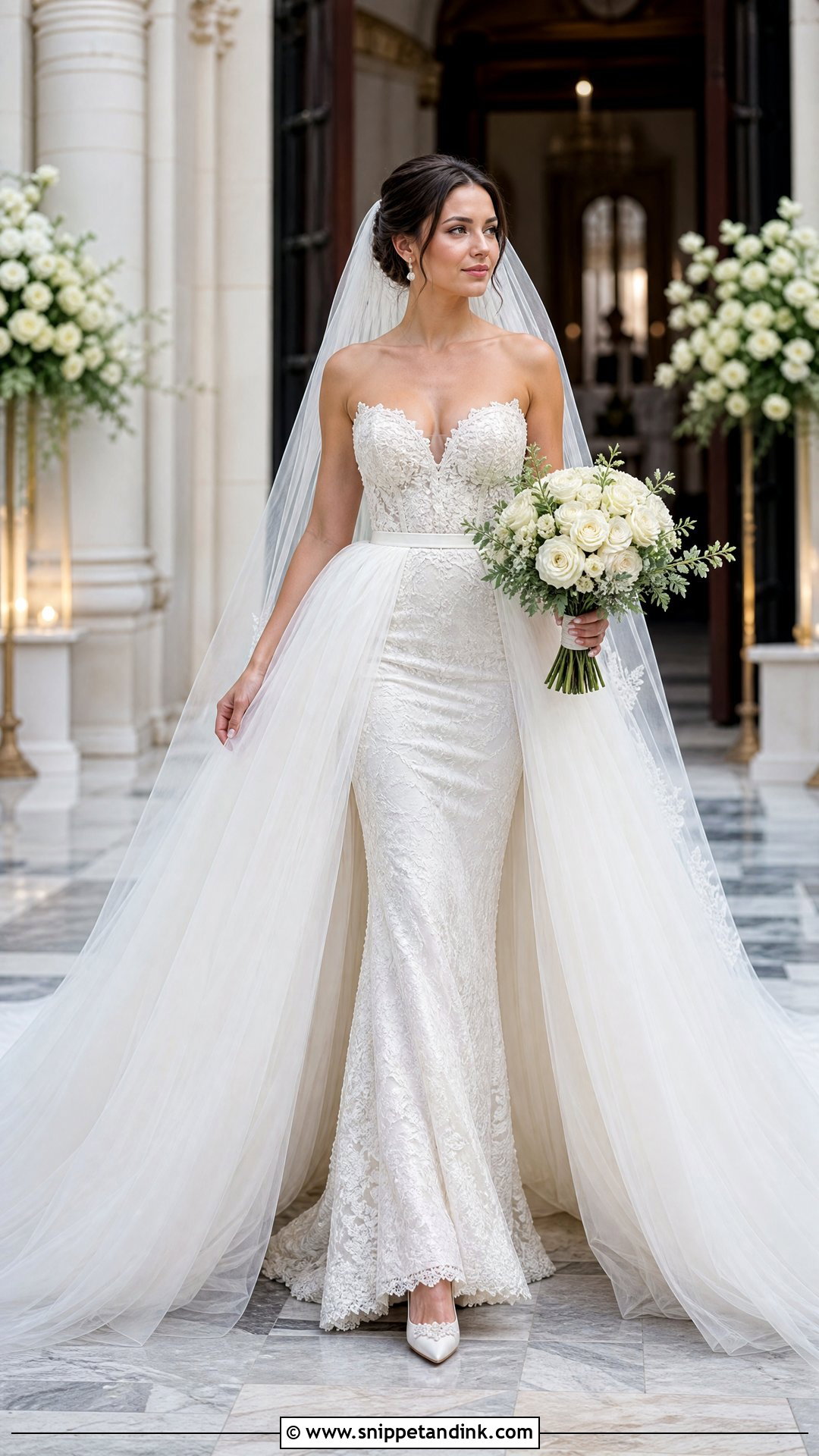
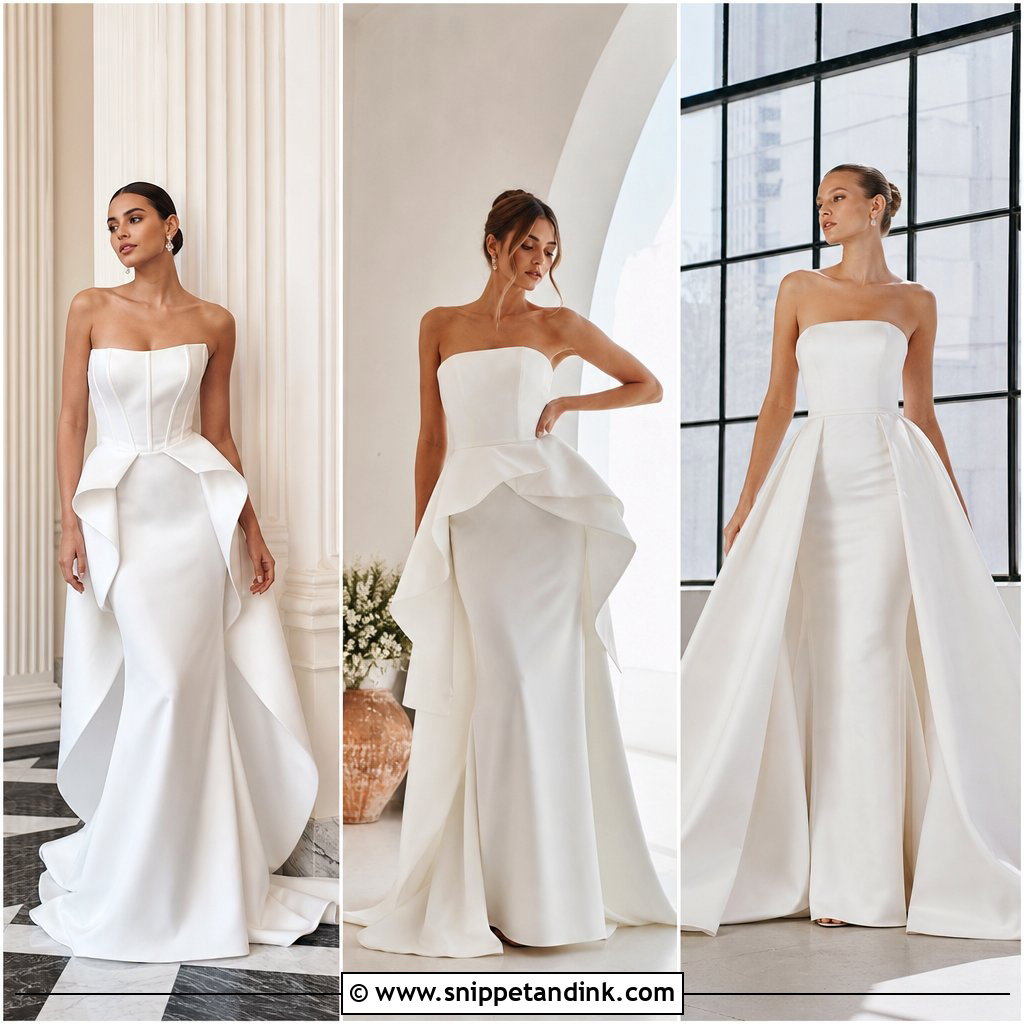
Two silhouettes, one dress. The voluminous tulle or satin overskirt gives a full ceremony look, then comes off to reveal the fitted tail for the party. I prefer overskirts that attach at the natural waist or along a hidden basque seam, so no fastener shows as a bump. Swap pearl earrings for statement ones when the skirt comes off, and the reception look feels new. Practise removing it with the attendant who’ll actually help, and plan where the overskirt will be stored once it’s off.
14. Detachable Train Mermaid Tail Wedding Dress
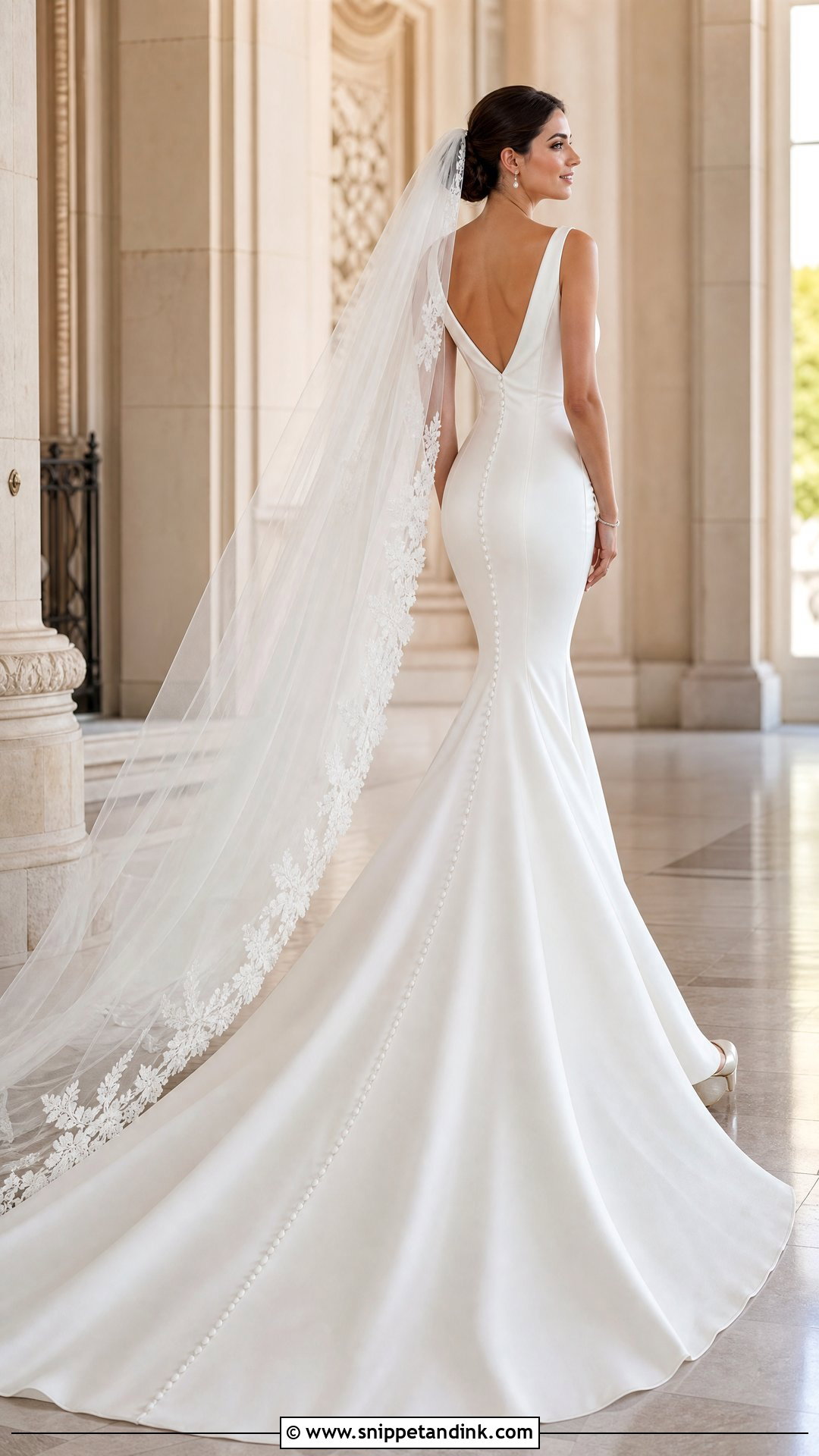
A detachable train mermaid tail wedding dress gives a long ceremony entrance without the fuss of a complicated bustle later. The train clips on at the back waist and runs past the hem. Match matters most: hold the train and gown together in daylight, because a slightly different ivory shows instantly. I trust concealed hooks or strong snaps over decorative ties. Walk and turn in it at fittings, and take a short phone video of the removal so your attendant can follow it on the day.
15. Ruffle Mermaid Tail Wedding Dress
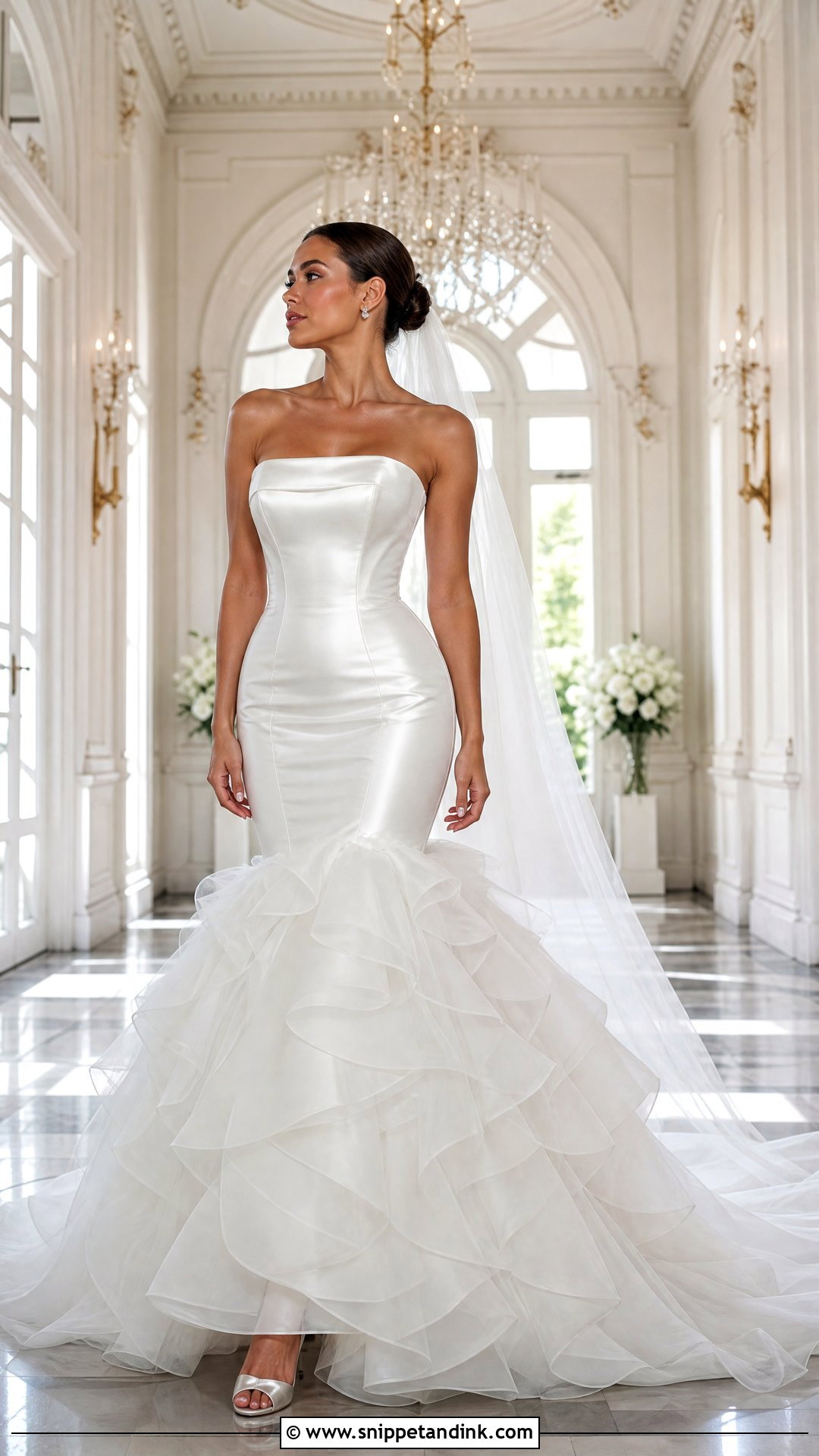
Ruffles add volume and movement, but they also add width. Before committing, think about aisle width, the car and how you’ll sit at the head table. A strapless satin corset flowing into organza or tulle ruffles from just above the knee keeps the top clean. Soft graduated layers feel romantic; sculpted waves look more formal. I always ask for a bustle with several attachment points so the weight spreads evenly and the ruffles aren’t crushed in one spot.
16. Minimalist Crepe Mermaid Tail Wedding Dress
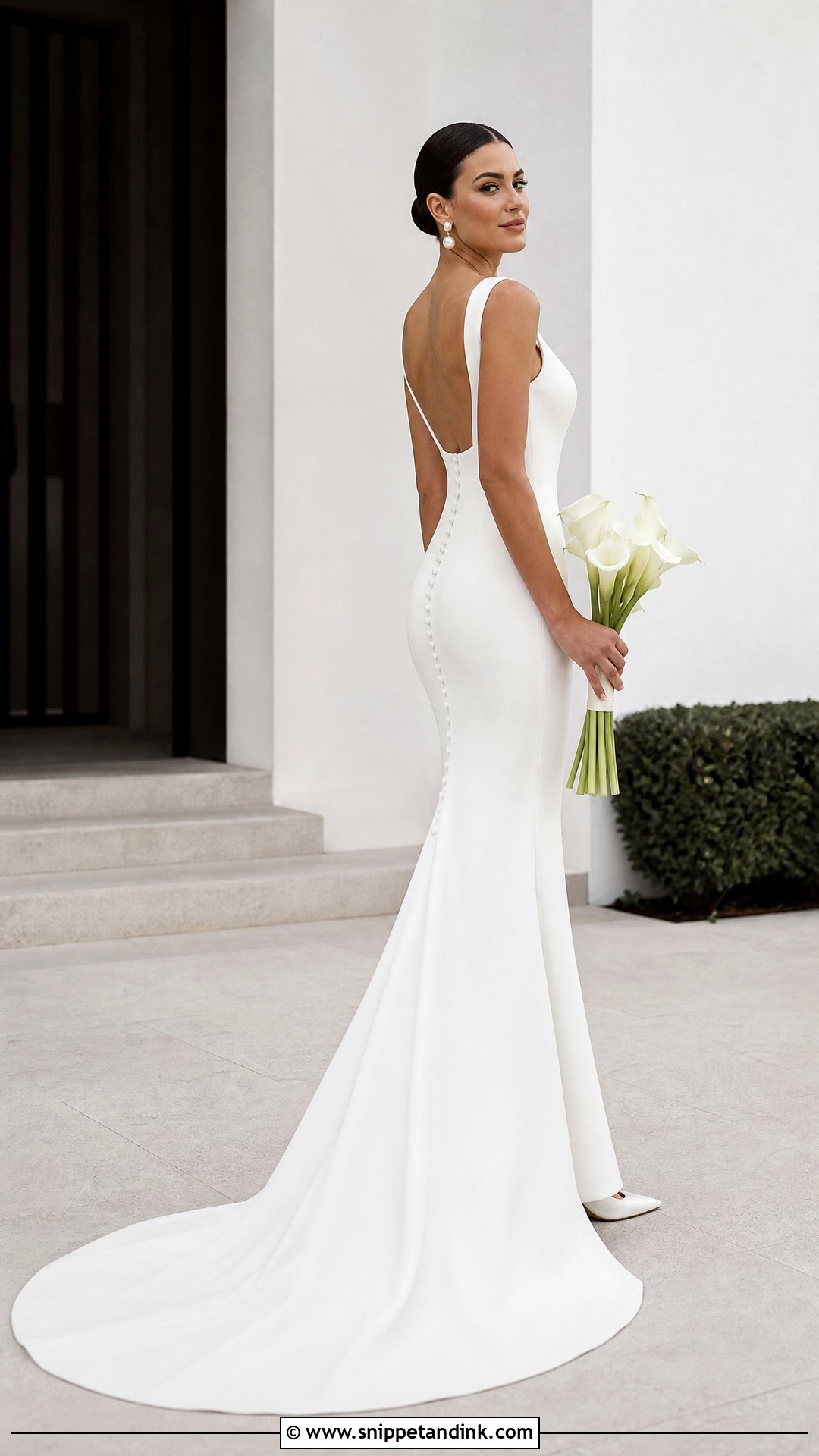
Plain crepe proves a fitted gown doesn’t need decoration. Matte fabric and well-placed seams shape the bodice, waist and hips, and a low back with covered buttons plus a long train gives the ceremony its moment. Crepe clings, though, so smooth foundations are essential and alterations must be precise. I check the hem last: it should skim the floor without collapsing under the flare. Sculptural pearl earrings, pointed pumps and calla lilies keep the look modern.
17. Mikado Mermaid Tail Wedding Dress
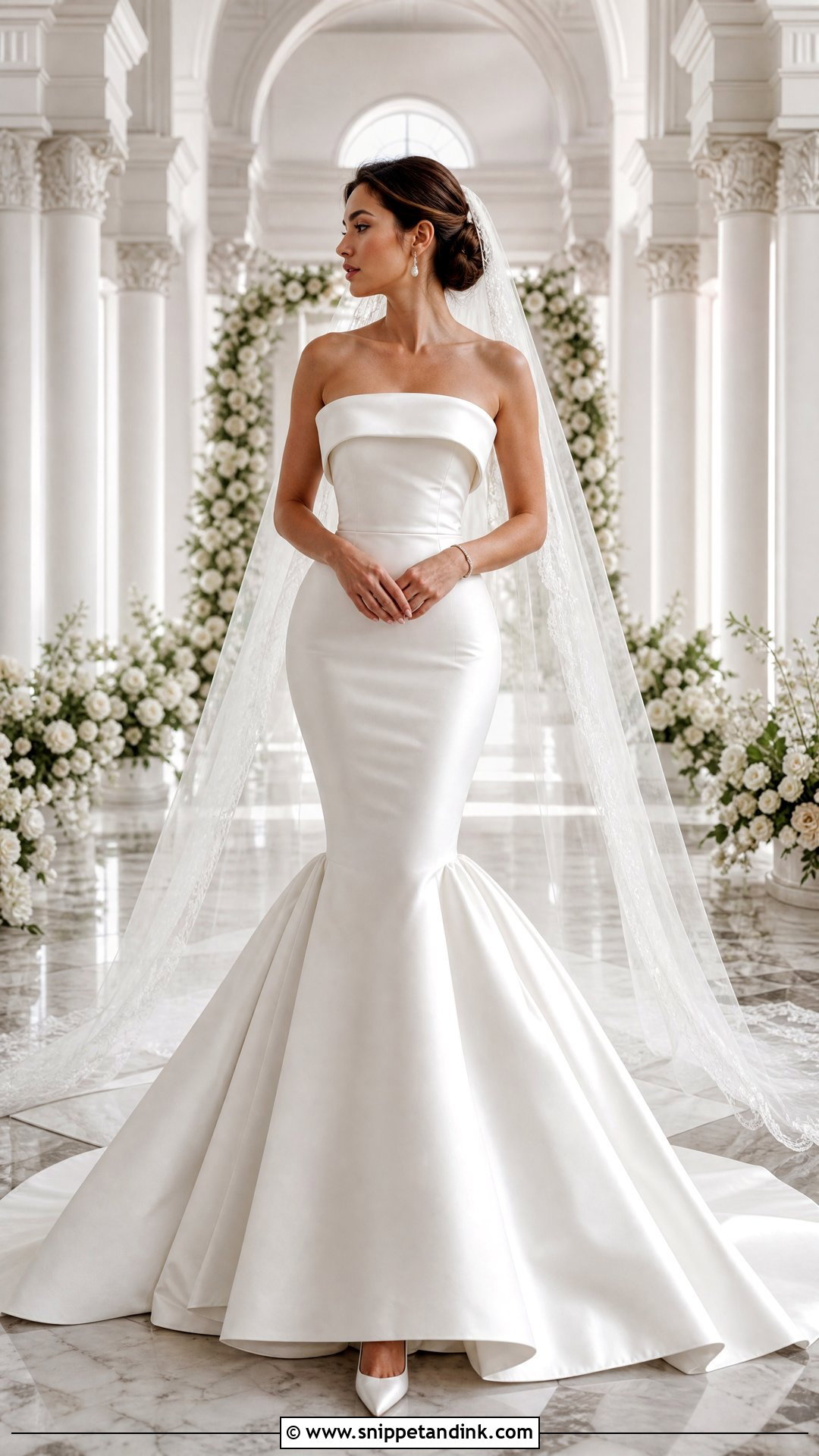
Mikado holds a sharp flare at the knee better than almost any bridal fabric. Pick one statement detail only, such as a folded neckline, a back bow or covered buttons. Because Mikado is heavier than softer fabrics, the gown needs balanced internal support and a sturdy bustle. I have brides walk across carpet and hard floor at fittings to see how the skirt moves on each. Watch the hips, zip and back closure after alterations, since stiff fabric puckers when seams are moved.
18. Illusion Back Mermaid Tail Wedding Dress
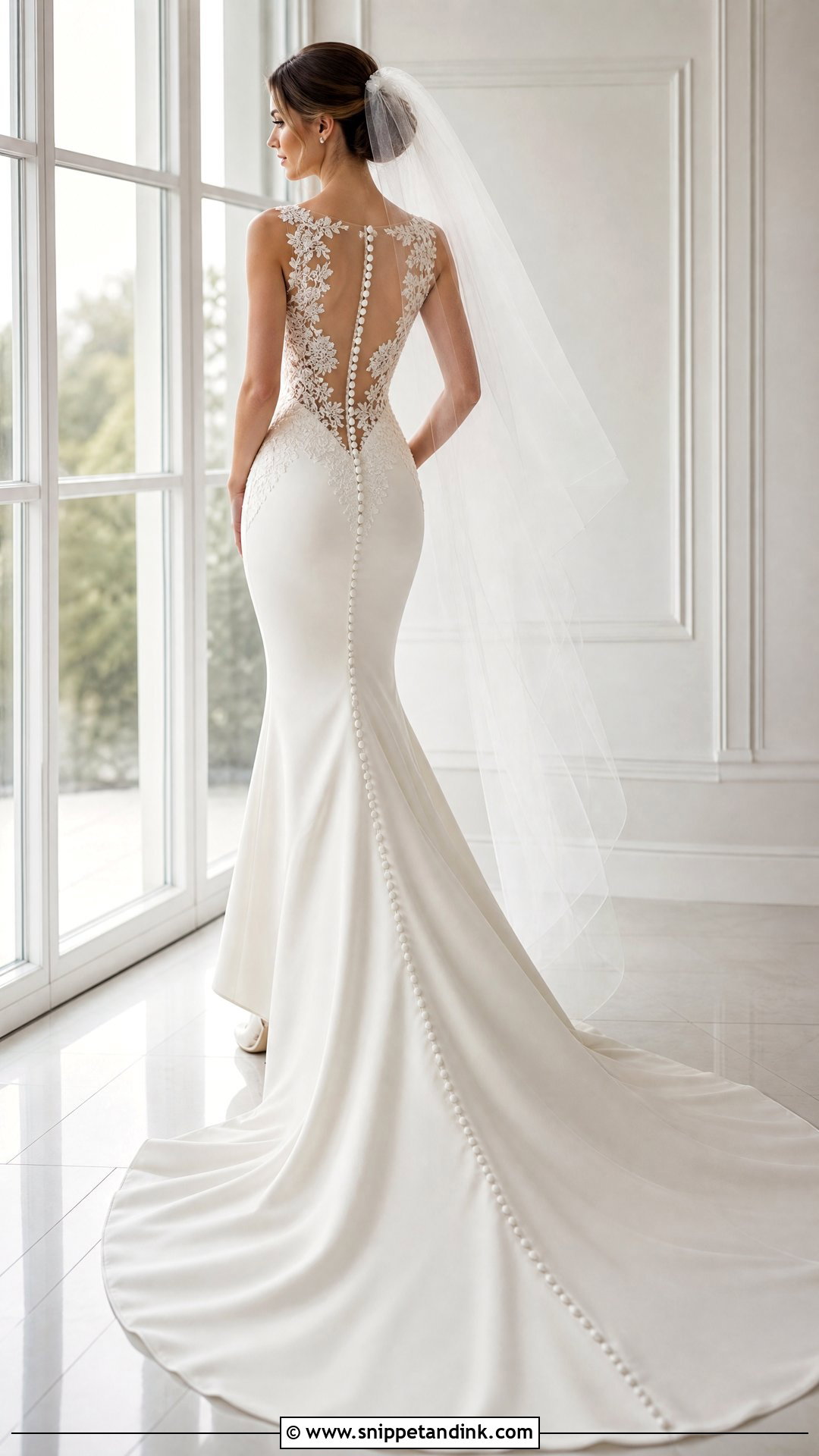
An illusion back lets lace, buttons or beadwork float across the skin, and it needs a front strong enough to hold the bodice on its own. The mesh should match your skin and lie flat, with no ripples. I check it three ways: in daylight, under indoor light and with a camera flash, which can make mismatched mesh glow. Then raise your arms and sit to make sure no support panels or undergarments peek through. An updo or side-swept waves and a veil below the hair keep the back on view.
19. Open Back Mermaid Tail Wedding Dress
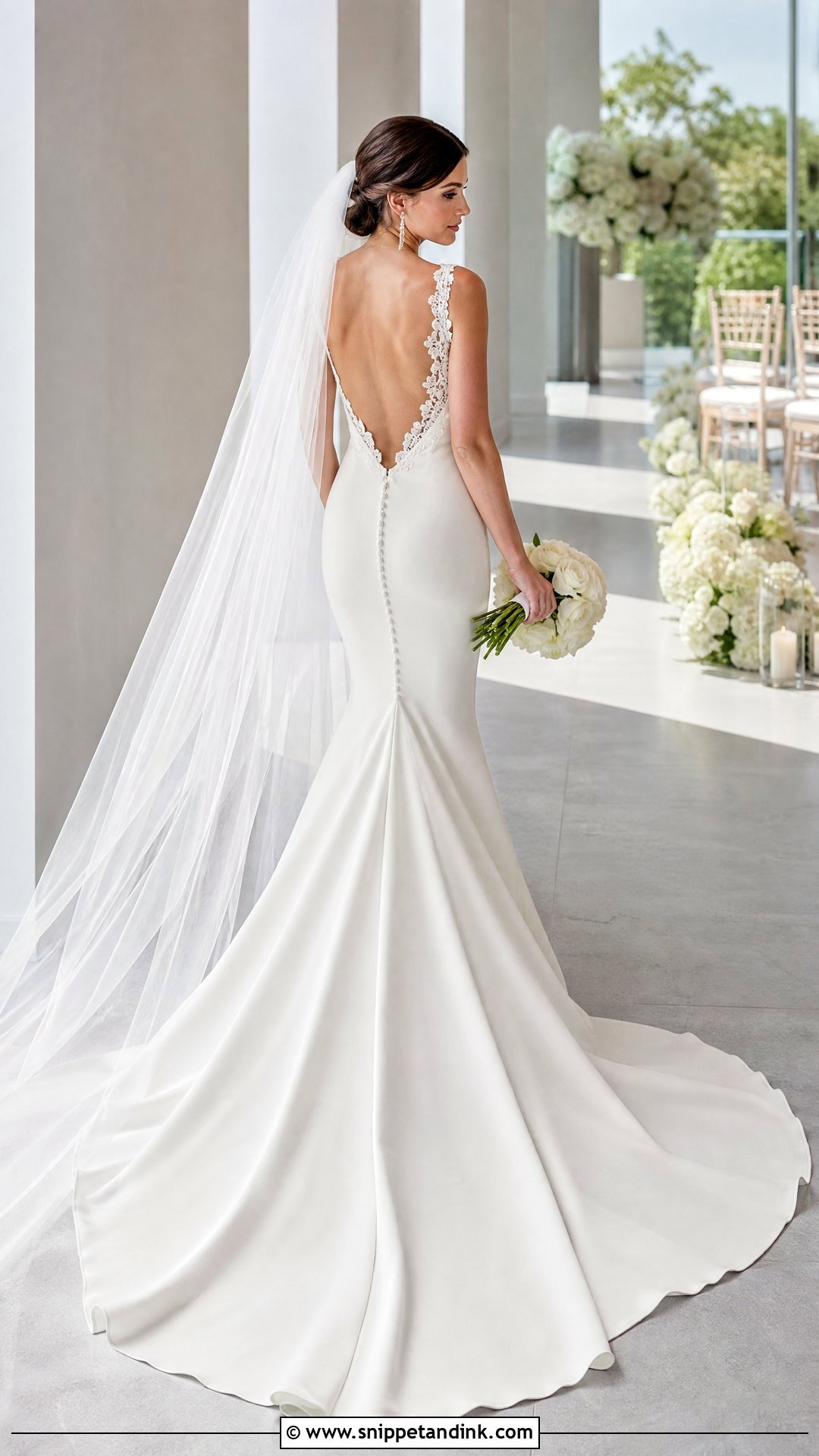
A low open back gives the front an elegant calm while the back carries the drama. Crepe or satin looks clean; lace edging softens the opening. Covered buttons running toward the train finish it. Backless designs need hidden support, so I ask about built-in cups, boning at the sides and body tape. Lean forward and sit during alterations, and watch the back edge; it should stay flat, not roll or gape. Drop earrings, a low bun and a veil under the hair complete it.
20. Plus Size Mermaid Tail Wedding Dress
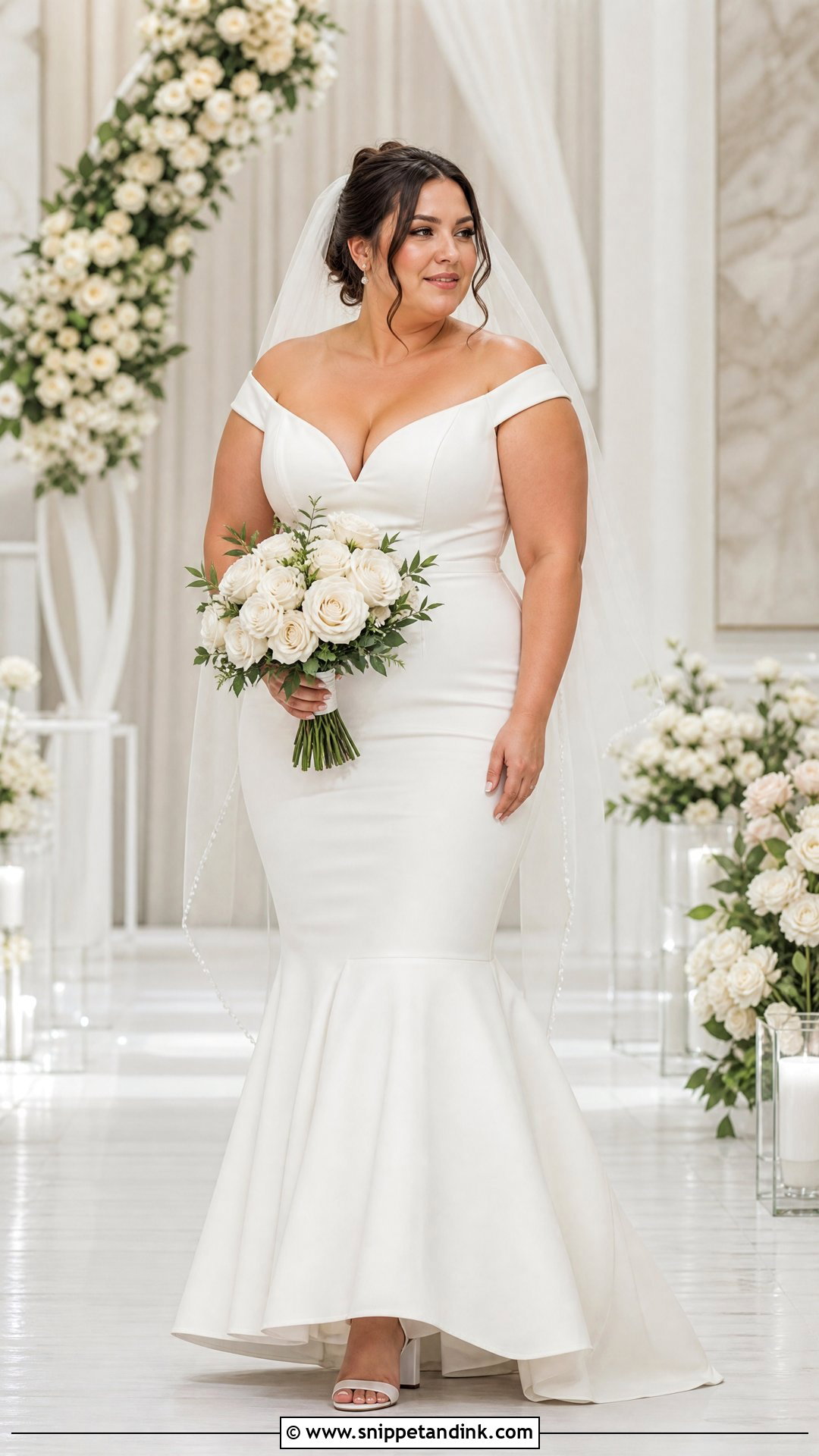
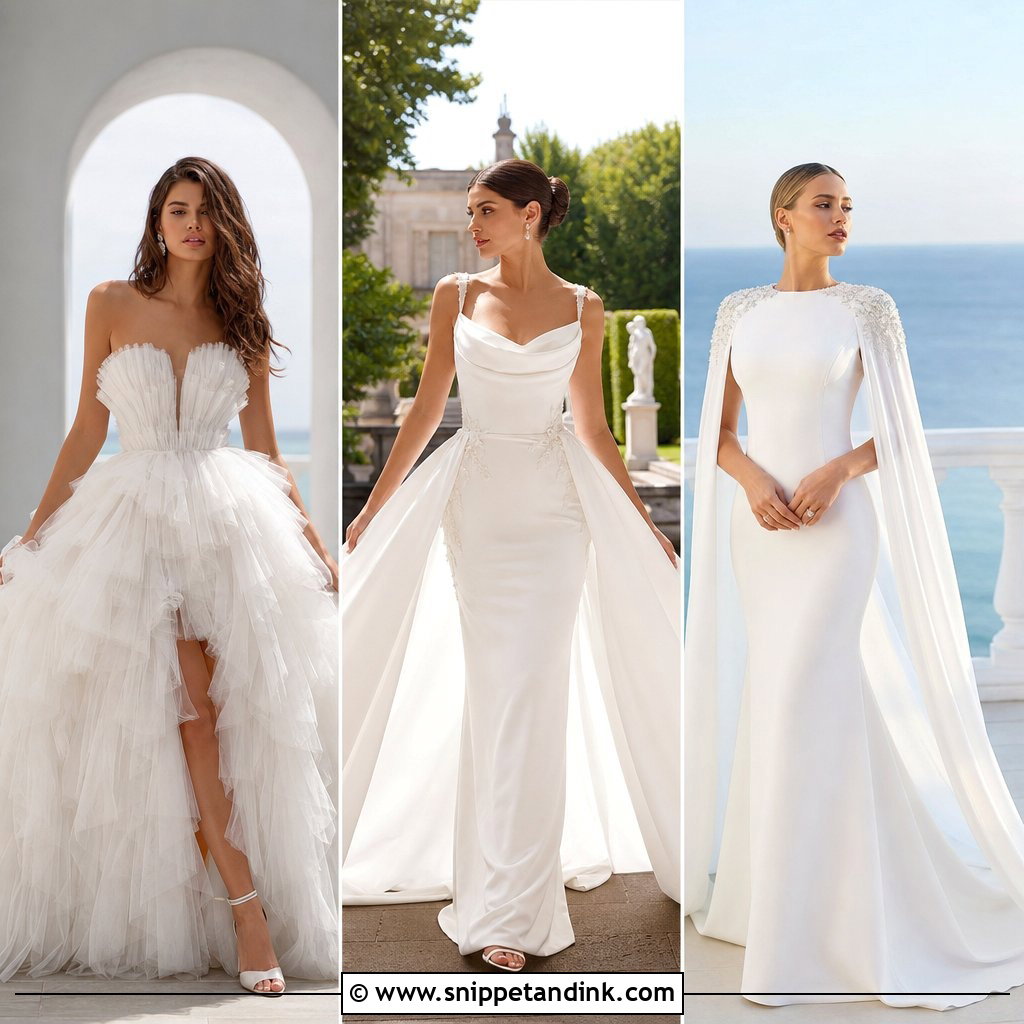
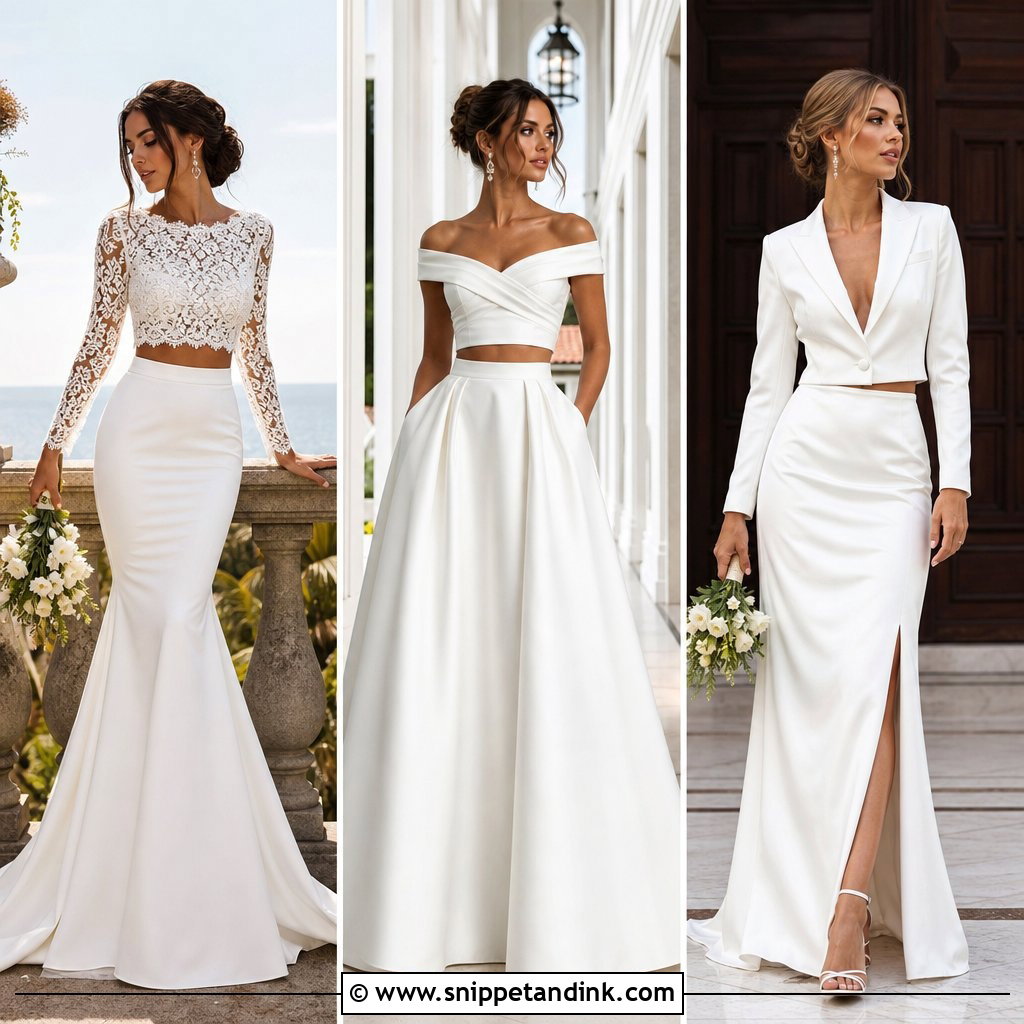
Curves and a mermaid tail work well together when the structure is right. A corseted bodice, wide straps or an off-shoulder neckline gives security without limiting movement. Stretch crepe smooths; patterned lace softens seam lines. I often place the flare slightly above the knee on curvier brides, which leaves more room to walk without losing the shape. Work with a seamstress experienced in bridal construction, and sit, walk and dance at every appointment. Supportive block heels, pearl earrings and a fingertip veil finish it.
Dinner, the Bathroom and the Dance Floor in a Mermaid Tail
The hours after the ceremony are where a fitted gown either works or doesn’t. Sitting is the first test: slide forward to the front of the chair, and let the bustled train fall behind you rather than sitting on it. A slightly higher seat at the head table is easier than a low sofa.
For the bathroom, plan on a helper. Gathering a fitted skirt and train upward is far easier with a second pair of hands, and some brides wear a simple gown-holding slip that bunches the skirt in front. It sounds unglamorous, but asking about it at your final fitting saves a lot of stress.
Arranging the tail for photos
A tail looks best fanned out and flat behind you, and it rarely lands that way on its own. Ask one attendant to be in charge of the train: lift it slightly, let it float down and smooth the edges before each portrait. On grass or stone, a clean sheet to stand on during formal photos keeps the hem from picking up marks before the reception.
Support, Movement and a Tail You Can Manage
A mermaid tail is drama you wear for hours, so judge it on how it supports you and moves with you as much as on the detail. Lace, satin, crepe, Mikado, pearls, appliqués and detachable pieces all create very different brides. While shopping, focus on neckline security, flare height, fabric weight and how the train will be handled after the ceremony. Bring your real shoes and undergarments to fittings and test sitting, walking and raising your arms. Good tailoring makes even an elaborate fitted gown feel natural. Keep accessories in support of the dress, and go with the tail you feel confident turning around in.
You'll Like These Ideas:



Leave a Reply