
The pre-wedding functions are where a bride gets to play. The wedding outfit tends to follow tradition, but haldi, mehndi, engagement, cocktail, and sangeet outfits can be lighter, brighter and far more personal. Each event also asks something practical of the clothes: turmeric paste at the haldi, hours of wet henna at the mehndi, dancing at the sangeet. When I plan these wardrobes, I start with what you’ll be doing at each event and only then pick colours. The twenty looks below run roughly in the order the functions usually happen.
Save the Heaviest Work for the Wedding Itself
A common mistake I see is a bride wearing her most embellished outfit to the engagement or sangeet, then arriving at the wedding in something that looks similar. Guests and photos notice when the main day doesn’t stand apart.
I plan the pre-wedding wardrobe as a build-up. Haldi and mehndi are the lightest: cotton, georgette, prints, simple jewellery. Sangeet and cocktail get more sparkle and drama. The wedding outfit carries the heaviest embroidery and most important jewellery. The reception can then go a different direction again.
Colour works the same way. If your wedding lehenga is red, avoid red for the sangeet and engagement. Different colours for each event also give your album variety. Write out the events and the planned colour for each on one page before you buy anything, so you can see repeats.
Budget follows the same logic. If money is tight, I’d spend on the wedding outfit and the sangeet, which get the most photos, and keep the haldi and mehndi pieces simple. Separates like a silk skirt, a crop top or a kurta set can also be restyled for later family weddings, which a heavy bridal lehenga rarely is.
1. Yellow Floral Lehenga For Haldi
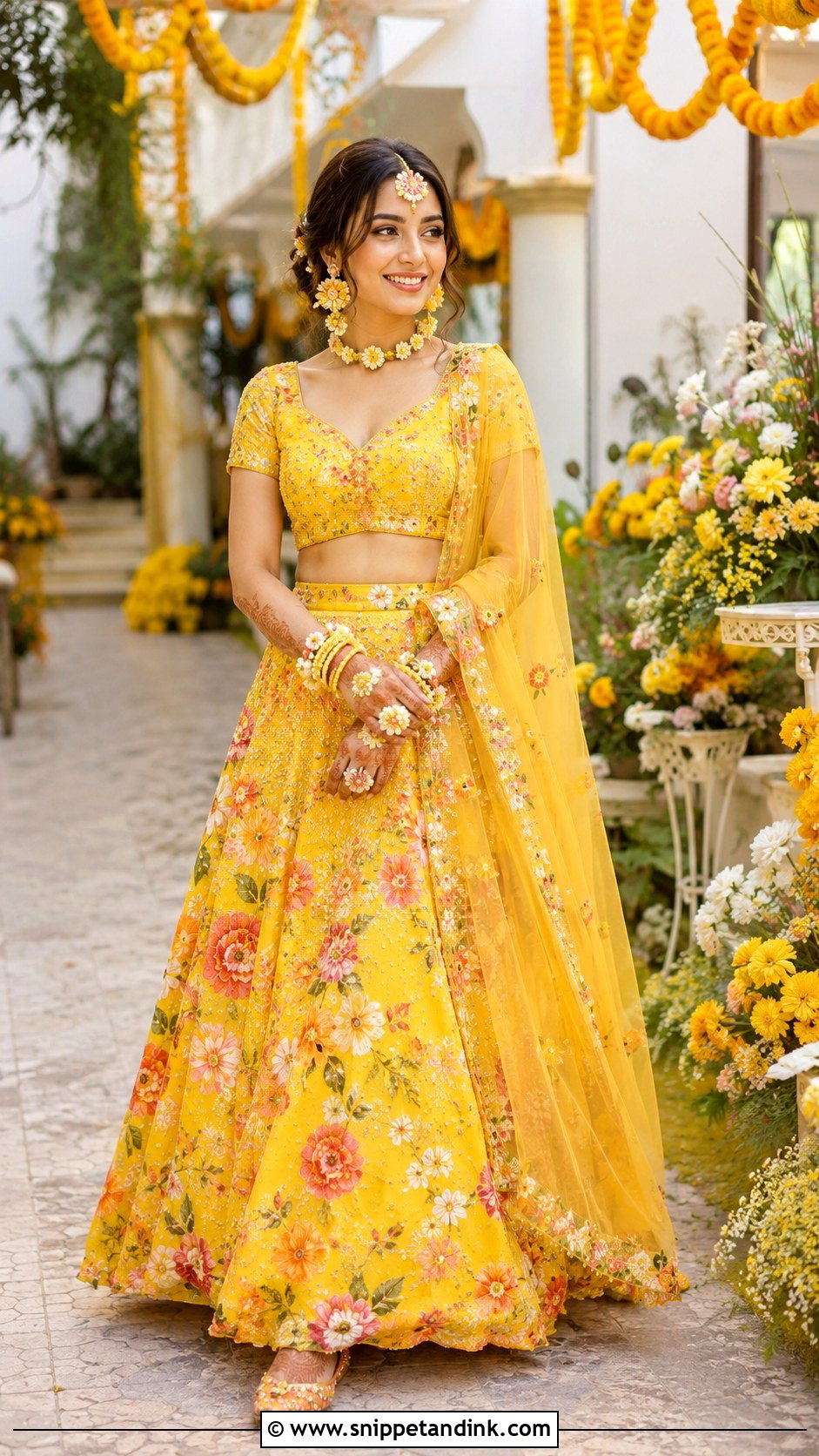
Haldi is the one function where I tell brides not to wear anything precious. Turmeric stains fast and deep, so a yellow floral lehenga in lightweight georgette or soft cotton makes more sense than silk or heirloom handwork. Small floral prints hide splashes well. A fitted short-sleeve blouse keeps your arms free for the paste. Floral jewellery and a delicate maang tikka suit the mood, and a loose braid with fresh flowers holds up when people start throwing haldi.
2. White And Yellow Saree For Haldi
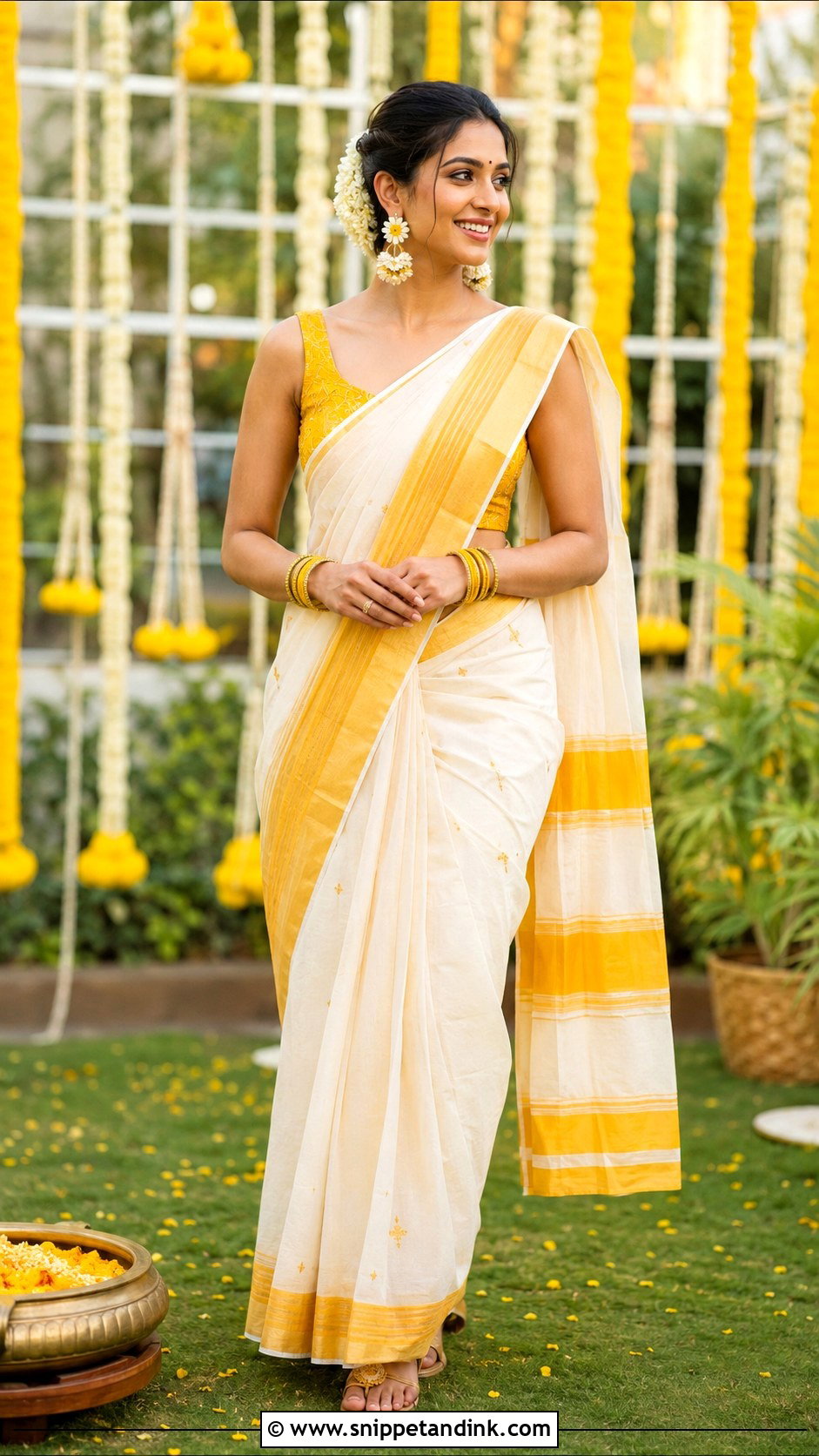
A white saree with a yellow border and a mustard or marigold blouse looks crisp in morning light. Cotton-silk, linen or light organza hold their shape and breathe. White will stain, though; I’d only suggest it if your haldi is a gentler, at-home ritual rather than a full paste fight. Hidden pins keep the drape in place while you greet people. Yellow glass bangles, a bindi and gold flat sandals complete it, with white flowers in a neat bun.
3. Mustard Sharara Set For Haldi
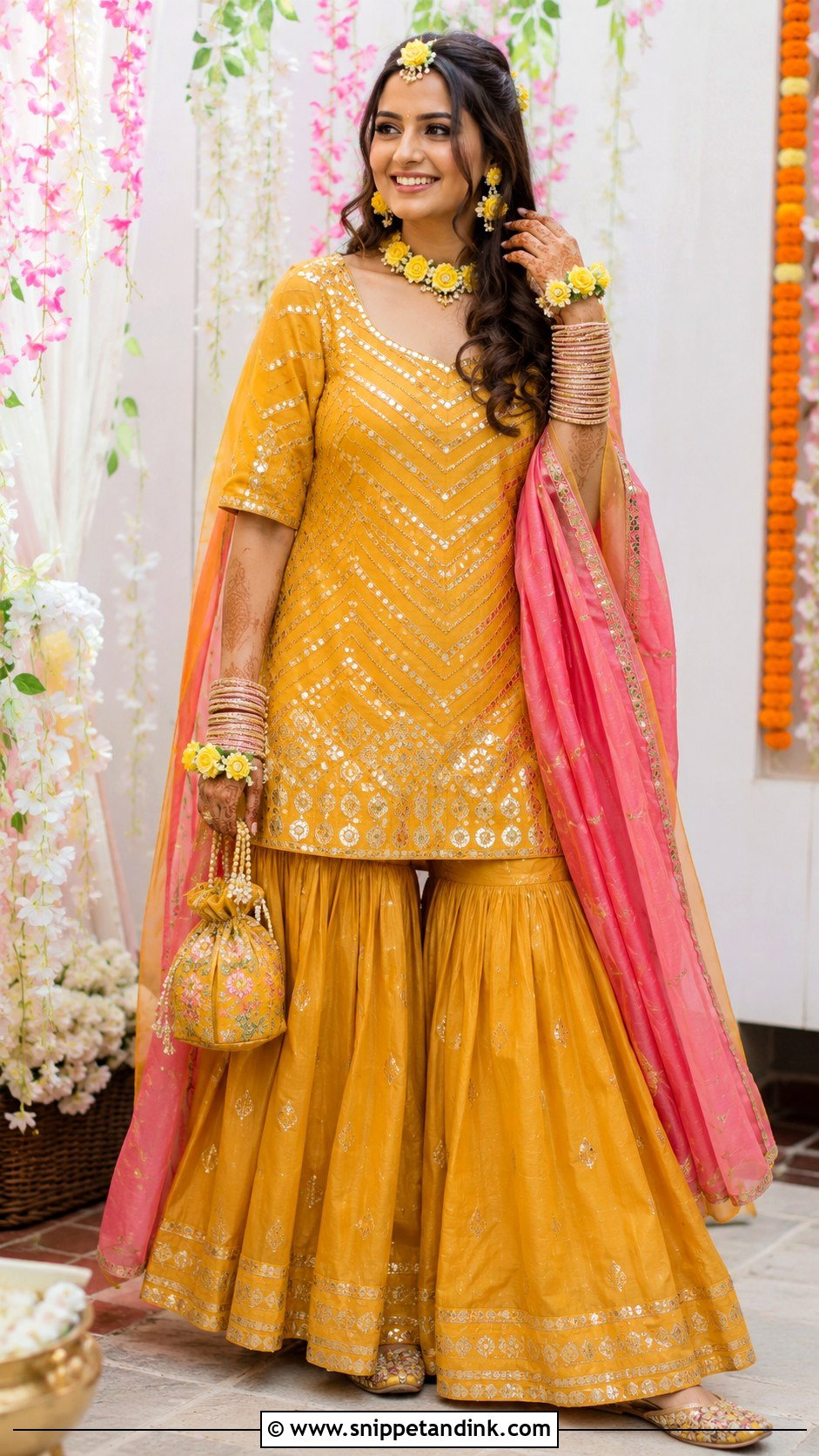
A mustard sharara set is easier than a lehenga at a lively haldi. Separate pants let you sit cross-legged on a low stool, which is how many brides receive the paste, without bunching a skirt underneath you. A short kurti with light gota patti or mirror work keeps it festive. A sheer dupatta in orange or contrasting pink adds colour. Structured shoulders on the kurti stop the flowing pants from overwhelming a petite frame in photos.
4. Green Mirror Work Lehenga For Mehndi
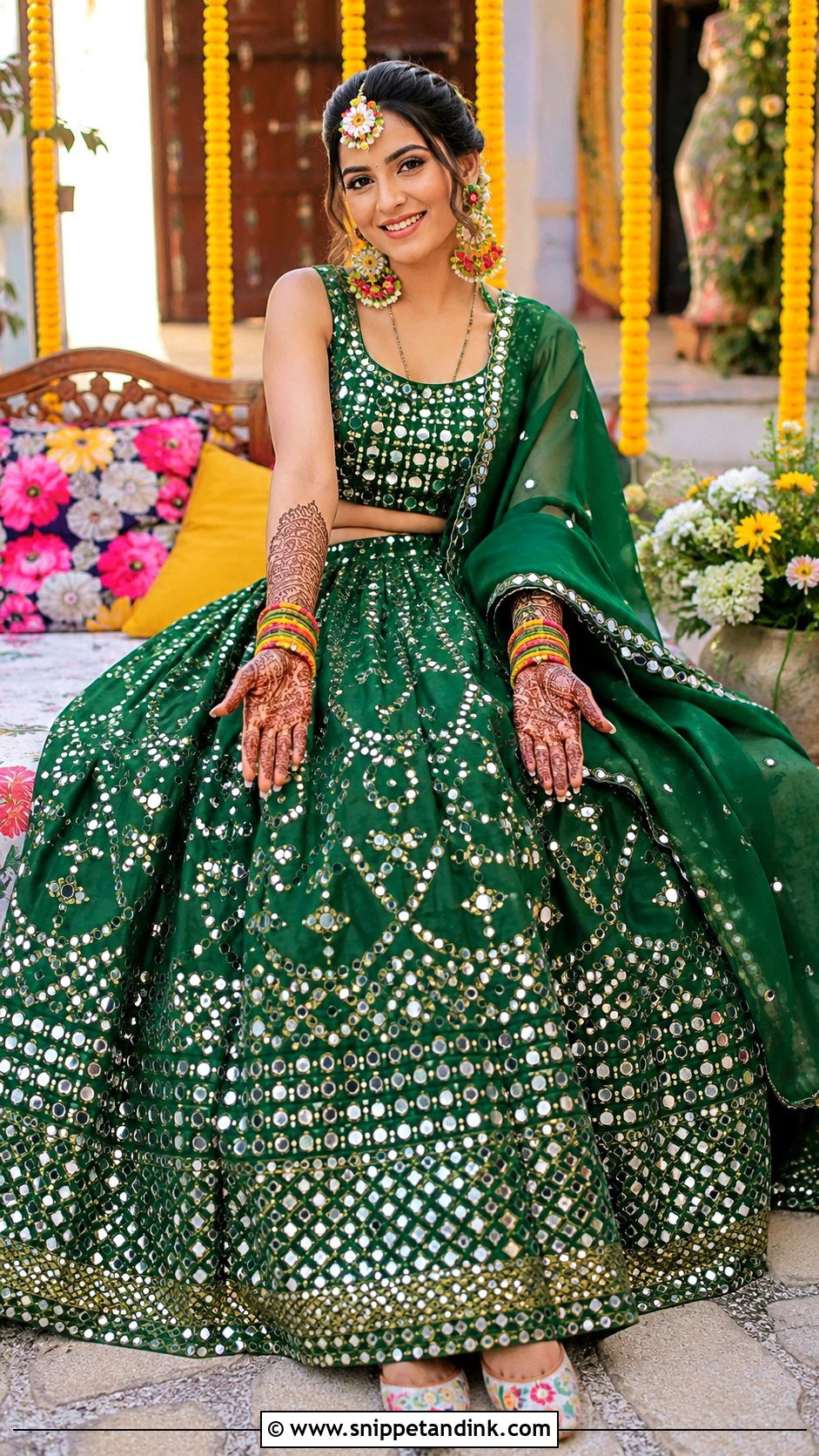
The mehndi bride sits still for hours with wet henna on her hands, forearms and often her feet, so sleeve length is the first thing I check. A short-sleeve or sleeveless blouse keeps fabric off the paste. An emerald, parrot green or teal lehenga with lightweight mirror detail gives sparkle without weight, and a lighter skirt is more comfortable when you’re seated for so long. Secure the dupatta at the waist or one shoulder before the artist starts; you won’t be able to adjust it later. A side braid with tiny flowers keeps hair off the wet design.
5. Multicolor Bandhani Lehenga For Mehndi
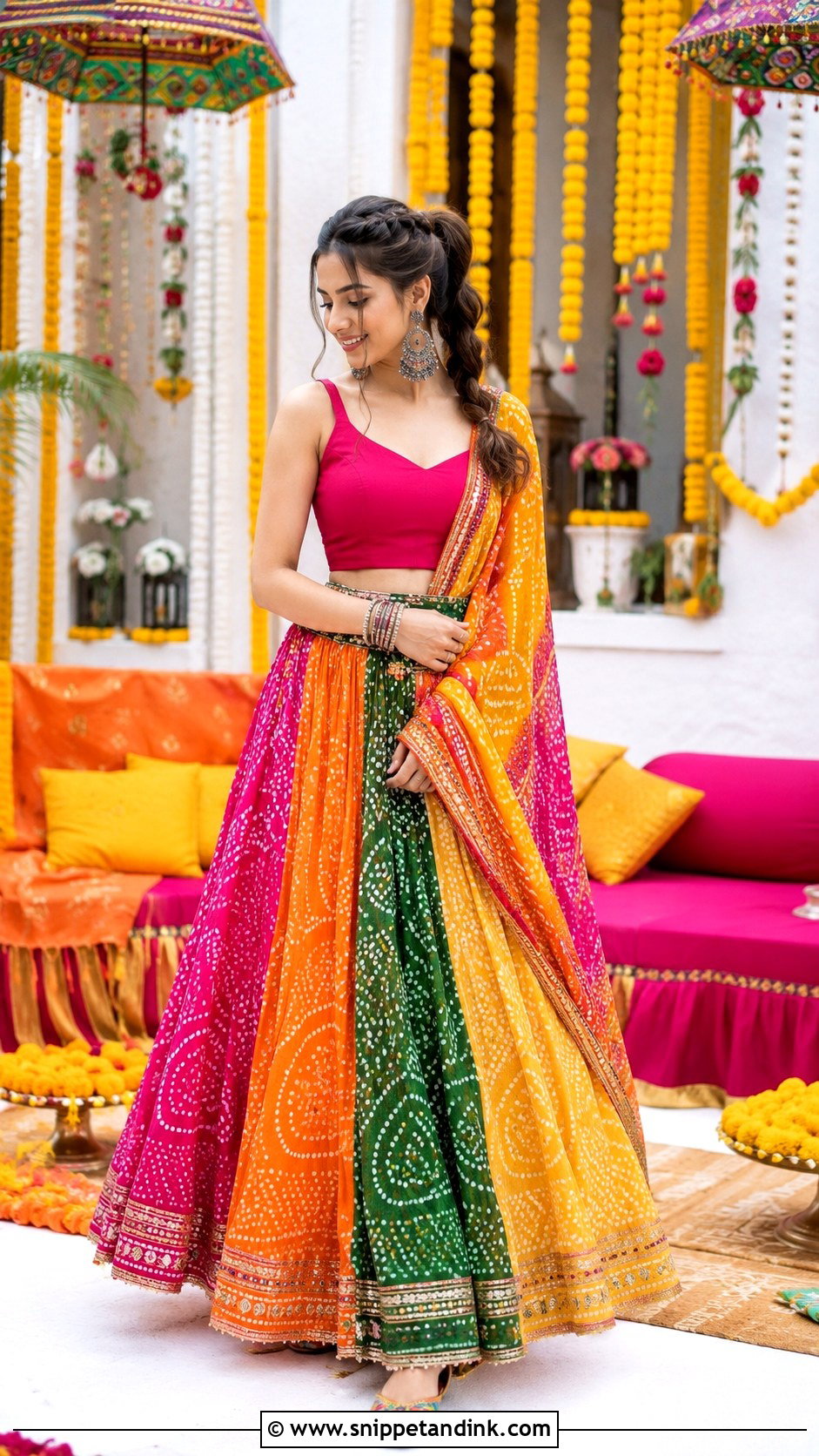
Bandhani’s dotted tie-dye suits a mehndi, and its busy pattern hides any henna smudges. Choose a flared lehenga in pink, orange, green and yellow, balanced with a solid blouse. Pin the dupatta on one shoulder before the henna goes on, and drape it around the elbows only once your hands are dry. Take off rings and hand chains first, because they block the design and stain where they sit. Oxidised silver earrings and a braided ponytail keep the look relaxed.
6. Floral Print Anarkali For Mehndi
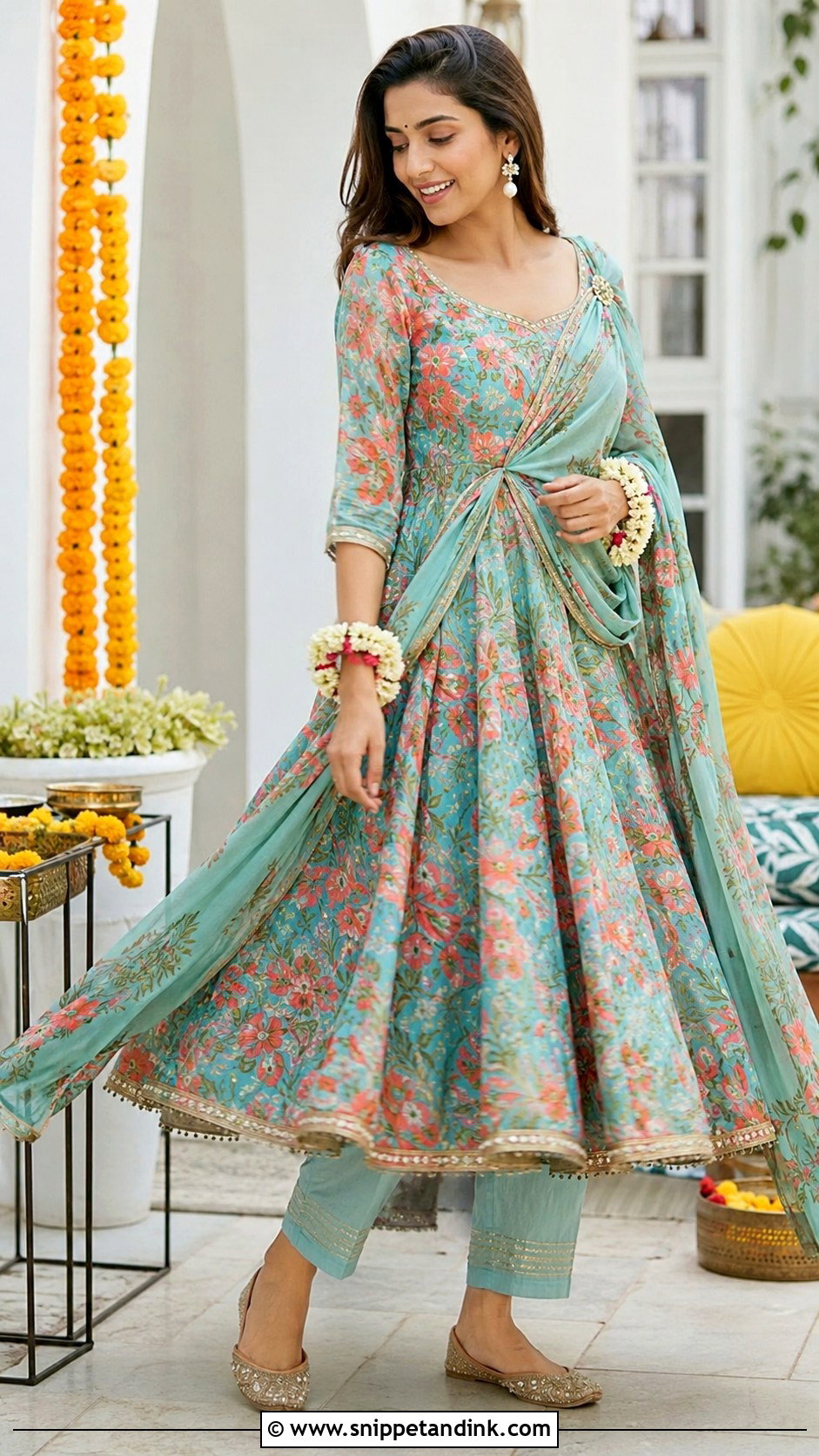
For a smaller home mehndi, a floral print Anarkali is lighter than a lehenga and just as festive. Calf or floor length in green, coral, pink or turquoise, with slim pants or churidar. Pin the dupatta behind the shoulders so your forearms stay clear. If you’re having henna on your feet as well, a calf-length Anarkali is easier, since a floor-length hem will drag across wet paste on your ankles. Pearl drops and fresh makeup are all it needs.
7. Rani Pink Gharara For Mehndi
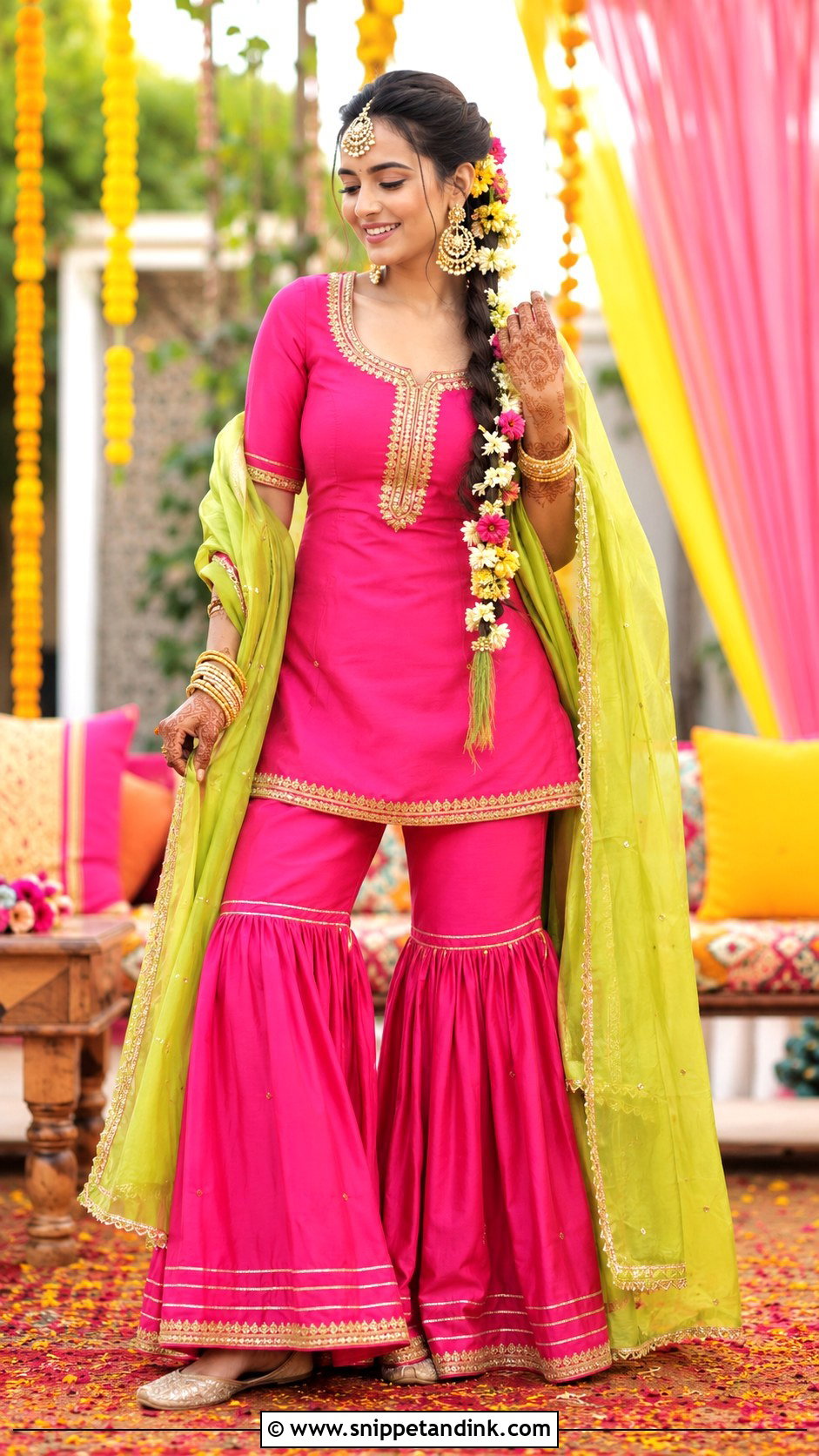
A rani pink gharara is for the bride who wants to dance at her own mehndi once the henna is dry. The flared pants give strong colour and plenty of movement. Gold gota borders and small mirrors add sparkle without heavy embellishment. Keep the kurti fitted through the shoulders and torso; the pants already carry all the volume. Chandbali earrings, a small maang tikka and flat metallic juttis suit it. A sleek braid with flowers keeps hair out of the way.
8. Navy Sequin Lehenga For Sangeet
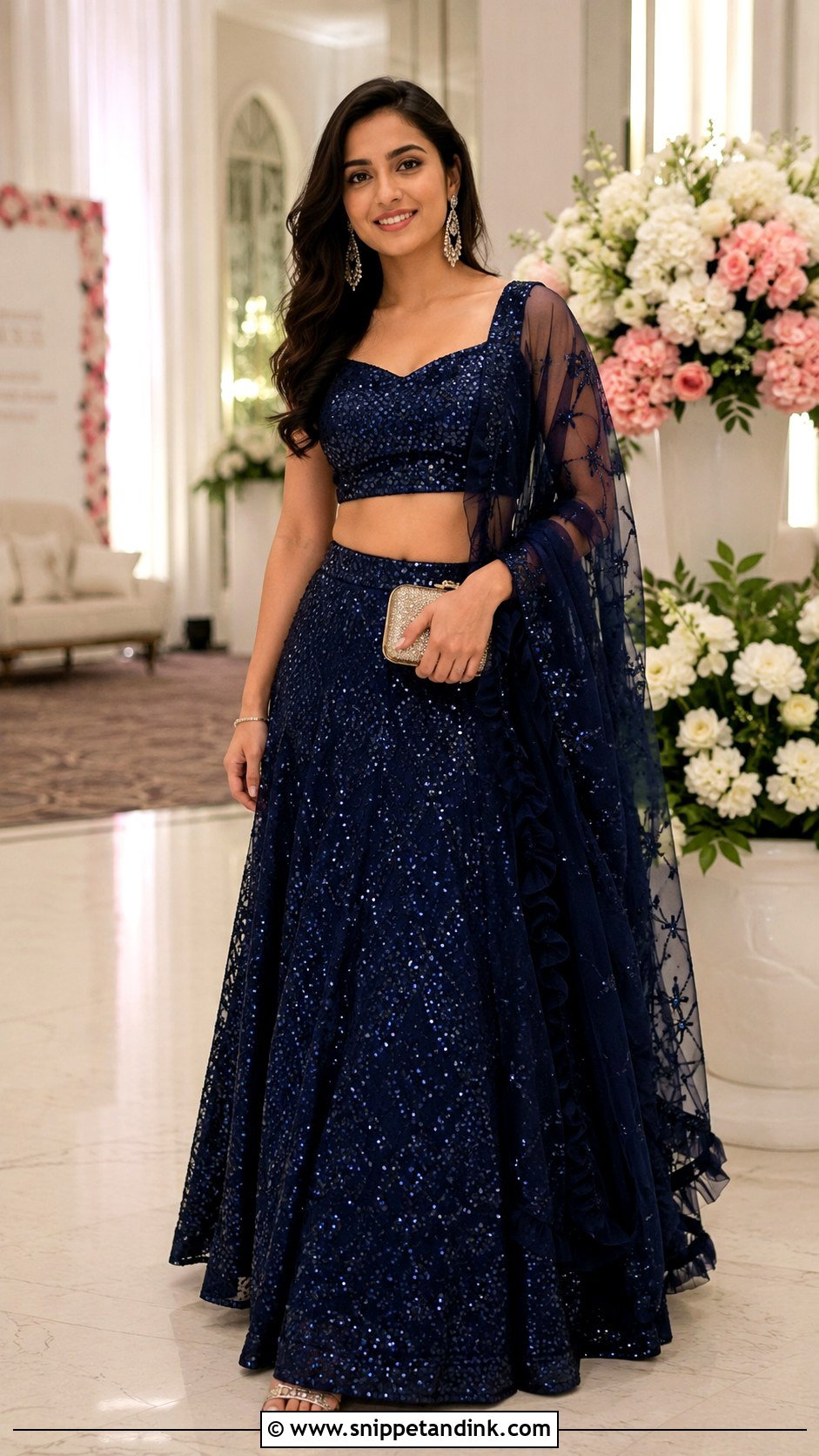
Navy sequins look rich under evening lights and are simpler to style than a full bridal lehenga. A fluid skirt with scattered sequins, a supportive blouse and a light dupatta pinned for dancing is the formula. Silver, gunmetal or tonal navy embellishments keep it polished. Skip the necklace if the blouse neckline is ornate. Sequins weigh more than they look, so I check that the waistband is wide enough to spread that weight. Walk, sit and raise your arms in it at home before the night.
9. Cape Blouse Lehenga For Sangeet
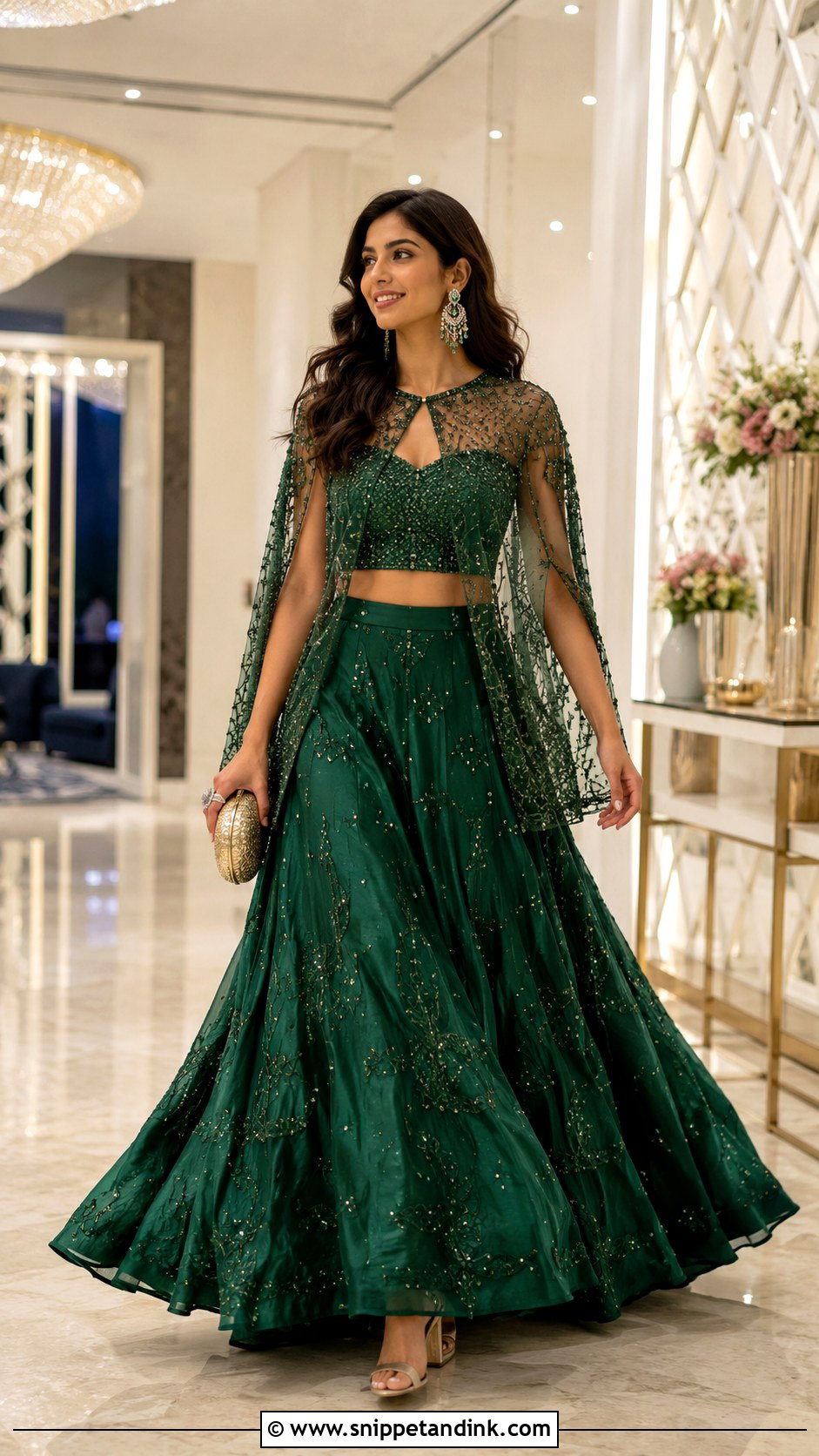
A cape blouse attaches the drape to the blouse itself, so there’s no dupatta to lose mid-performance. Pair a sheer embroidered cape with a flared skirt in wine, emerald, plum or sapphire. The cape should end near the waist or upper thigh; longer than that and it hides the skirt. Skip heavy necklaces next to an embellished cape neckline. At the fitting, I have brides do their sangeet choreography arm movements, because a cape stitched too tightly at the shoulder restricts the arms.
10. Pre-Draped Saree For Sangeet
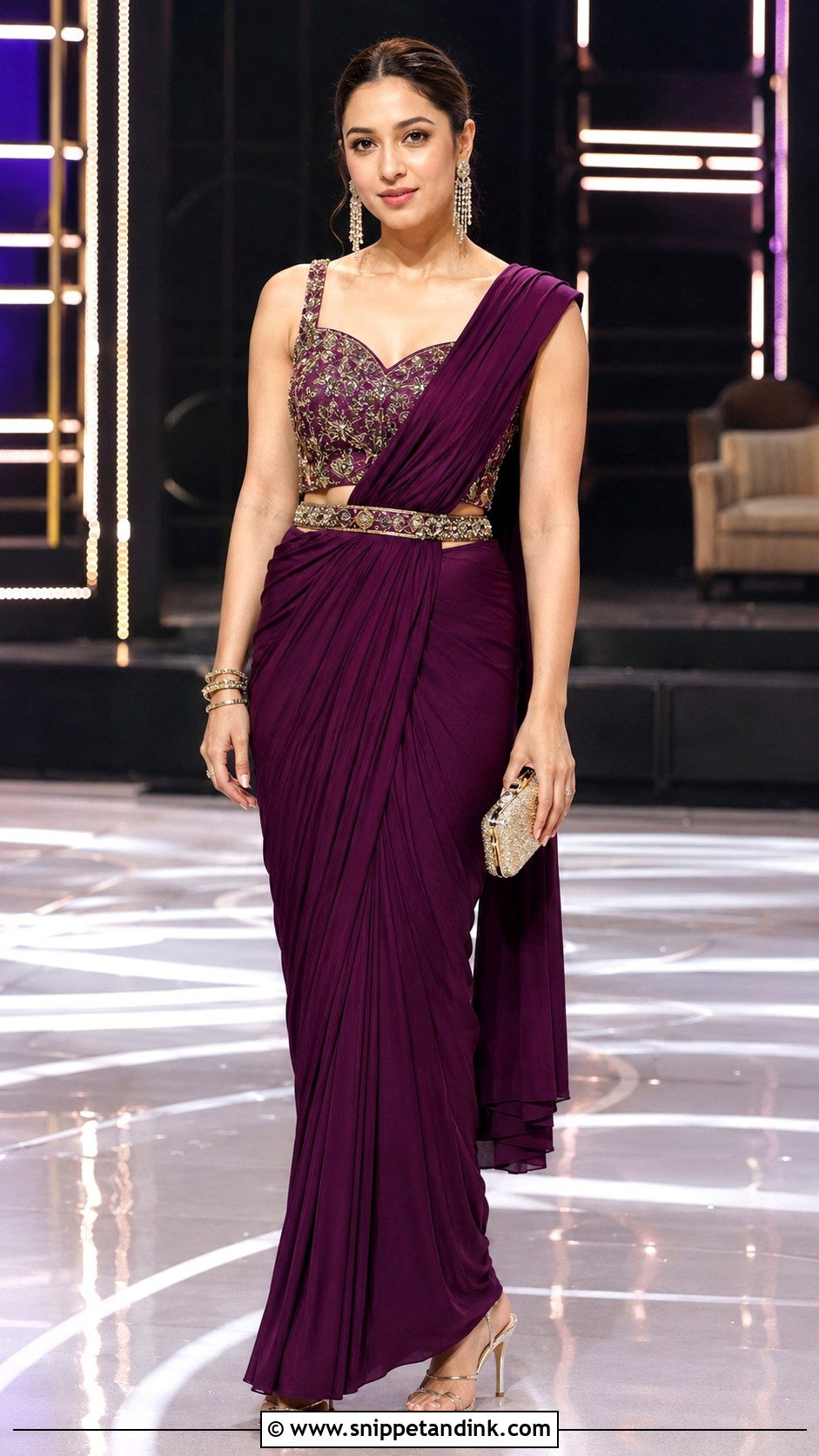
A pre-draped saree is stitched to stay put, which makes it one of the few saree styles I’d trust for a choreographed sangeet routine. Soft jersey, crepe or lightweight georgette move best. Pair it with an embroidered blouse with supportive straps or sleeves, and a belt to stop the drape shifting. Medium heels with ankle support beat stilettos. The fit should skim without gripping the knees. Practise stairs and sitting before the event.
11. Embroidered Anarkali Gown For Sangeet
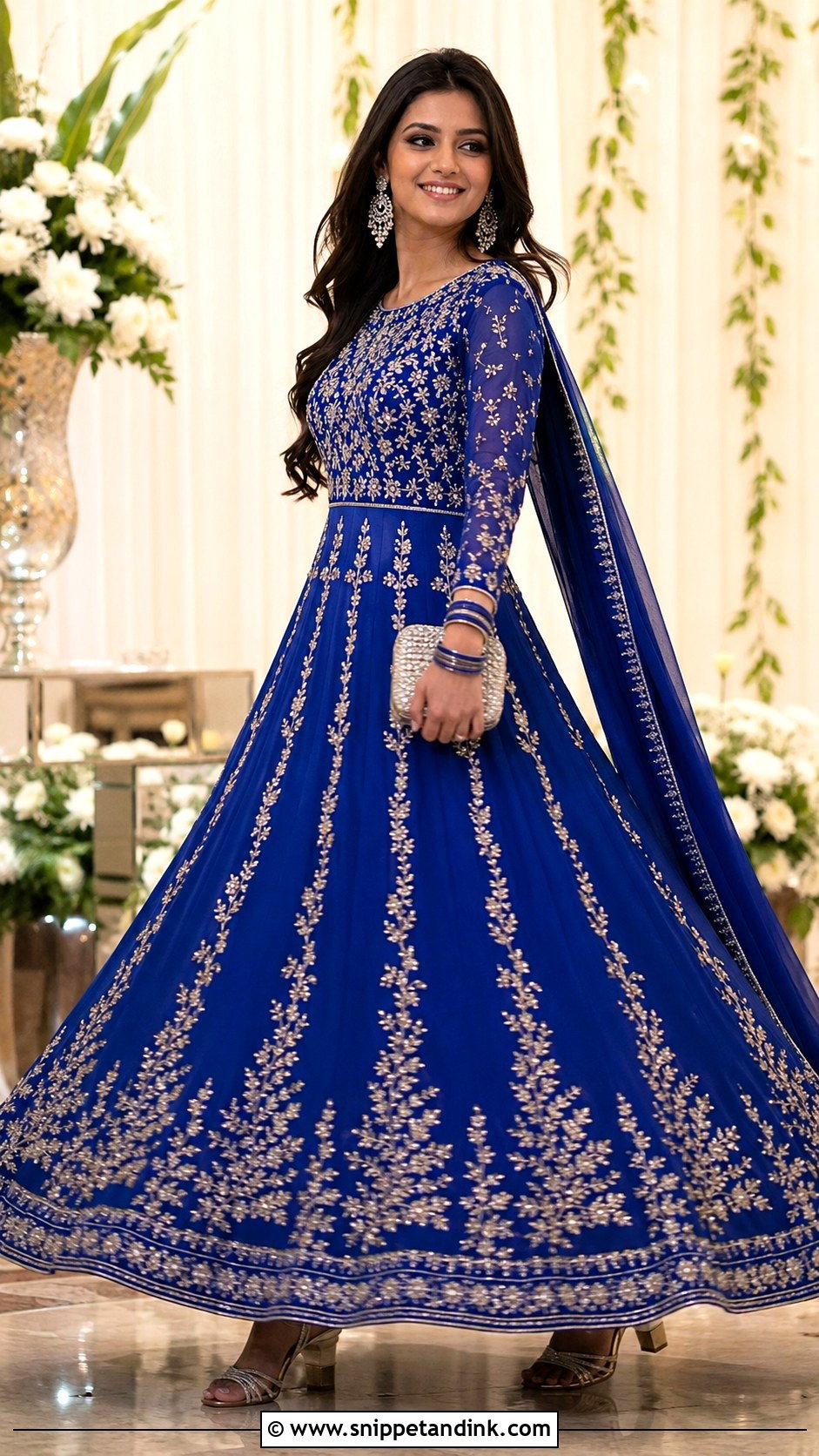
An embroidered Anarkali gown is the simplest one-piece sangeet option. A fitted bodice with supportive lining and a wide skirt that swings when you dance. Deep green, royal blue, burgundy and magenta suit evening, with silver or gold embroidery. With a high neckline, skip the necklace and wear a maang tikka instead. A tailor can make the front hem slightly shorter than the back, which stops you treading on it while keeping the full length behind.
12. Metallic Skirt Set For Cocktail Party
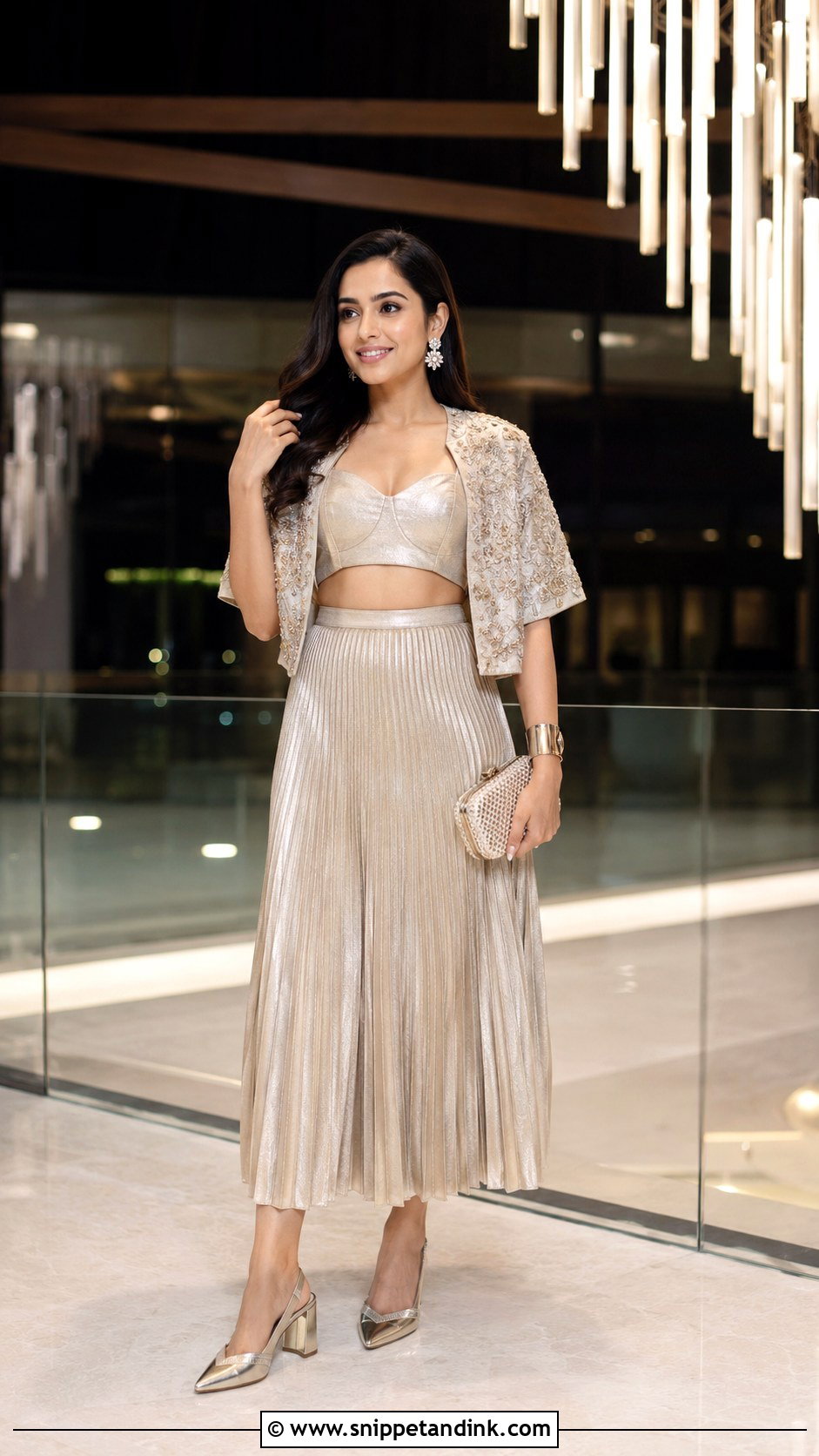
A metallic Indo-Western skirt set is where the cocktail party gets to feel different from everything else. Silver, pewter, champagne or bronze pleated skirt with a structured crop top or corset-style blouse. An embroidered cropped jacket adds coverage. Stick to one metal tone in your jewellery; mixing silver and gold next to a metallic skirt looks unplanned. The hem should clear your shoes completely, because pleated metallic fabric catches easily.
13. Embroidered Saree Gown For Cocktail Party
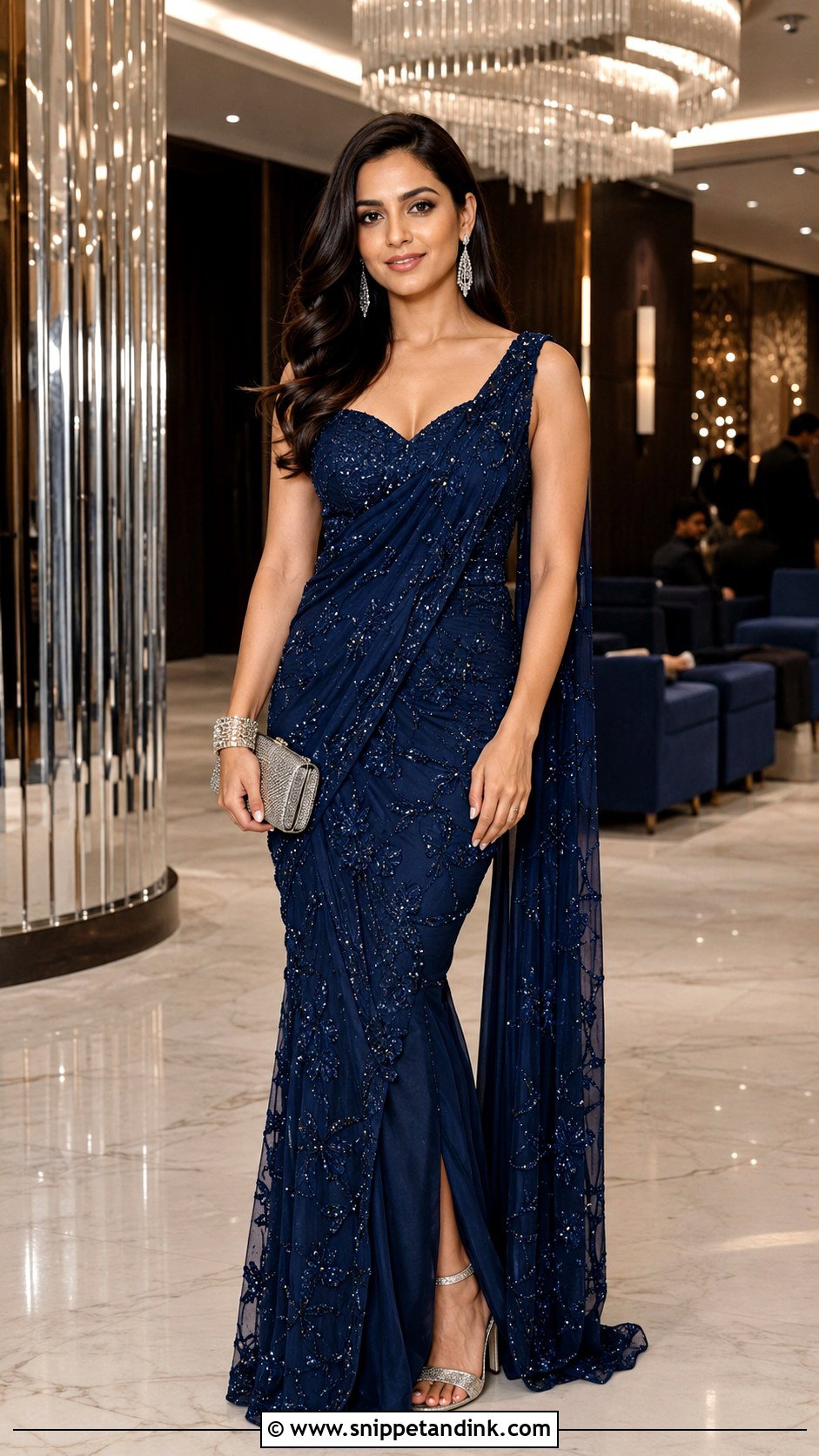
A saree gown with a built-in pallu suits a busy cocktail evening. You can mingle, sit and move without readjusting anything. Black, midnight blue, deep plum or charcoal with placed beadwork read as formal. If the neckline is simple, a delicate pendant works; if it’s embroidered, leave it bare. Since the outfit is already dramatic, I keep the makeup balanced and choose one focus, eyes or lips.
14. Embroidered Pantsuit For Cocktail Party
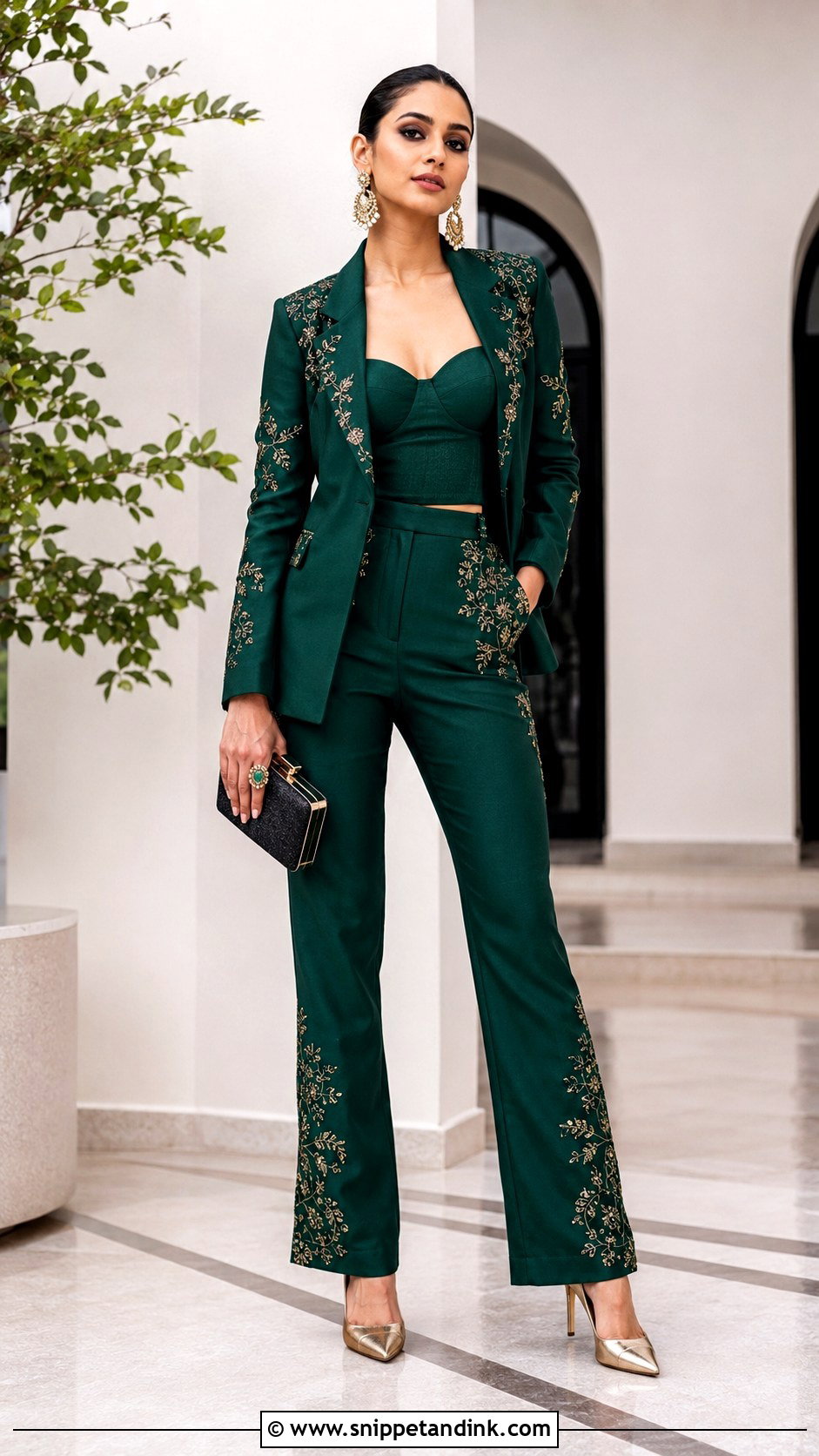
An embroidered pantsuit is the most practical cocktail outfit on this list and still looks considered. High-waisted trousers, a fitted top and a structured blazer with subtle zari, bead or threadwork. Emerald, burgundy, navy and deep purple suit the evening. The trouser hem should just touch the top of your shoes. Wear the blazer closed for a sharper line or open to show the embroidered top. It suits a cocktail party with an Indo-Western dress code.
15. Pastel Organza Lehenga For Engagement
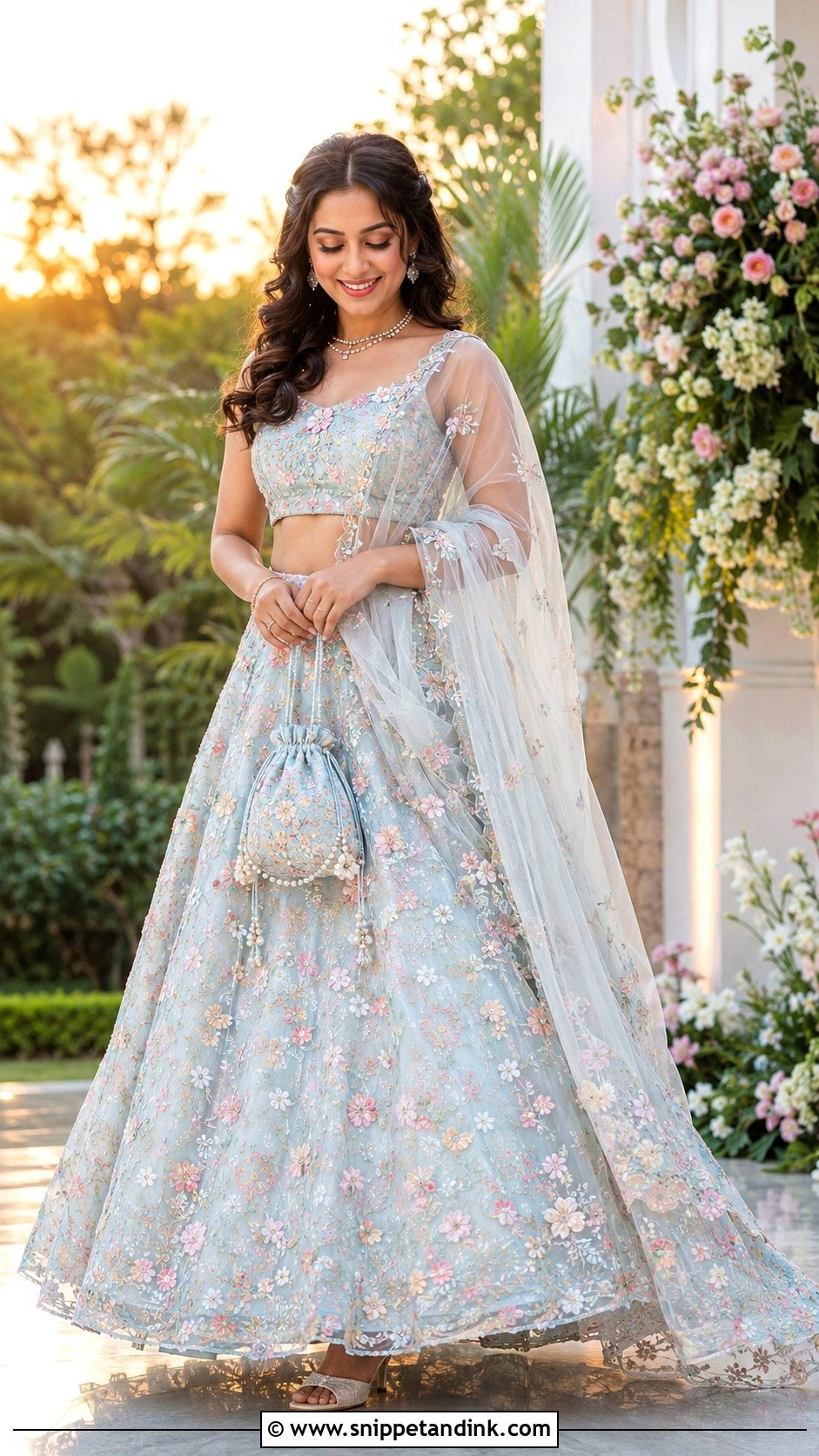
Organza is crisp, and a full organza lehenga can feel scratchy at the waist after a few hours. For an engagement, I’d ask for a smooth inner lining and a little extra room at the waistband. Blush, powder blue, lavender, mint or peach with floral embroidery at the hem and blouse suit daylight or a sunset venue. A sheer dupatta adds movement. One statement necklace with smaller earrings looks more refined than several equally elaborate pieces.
16. Silk Saree With Statement Blouse For Engagement
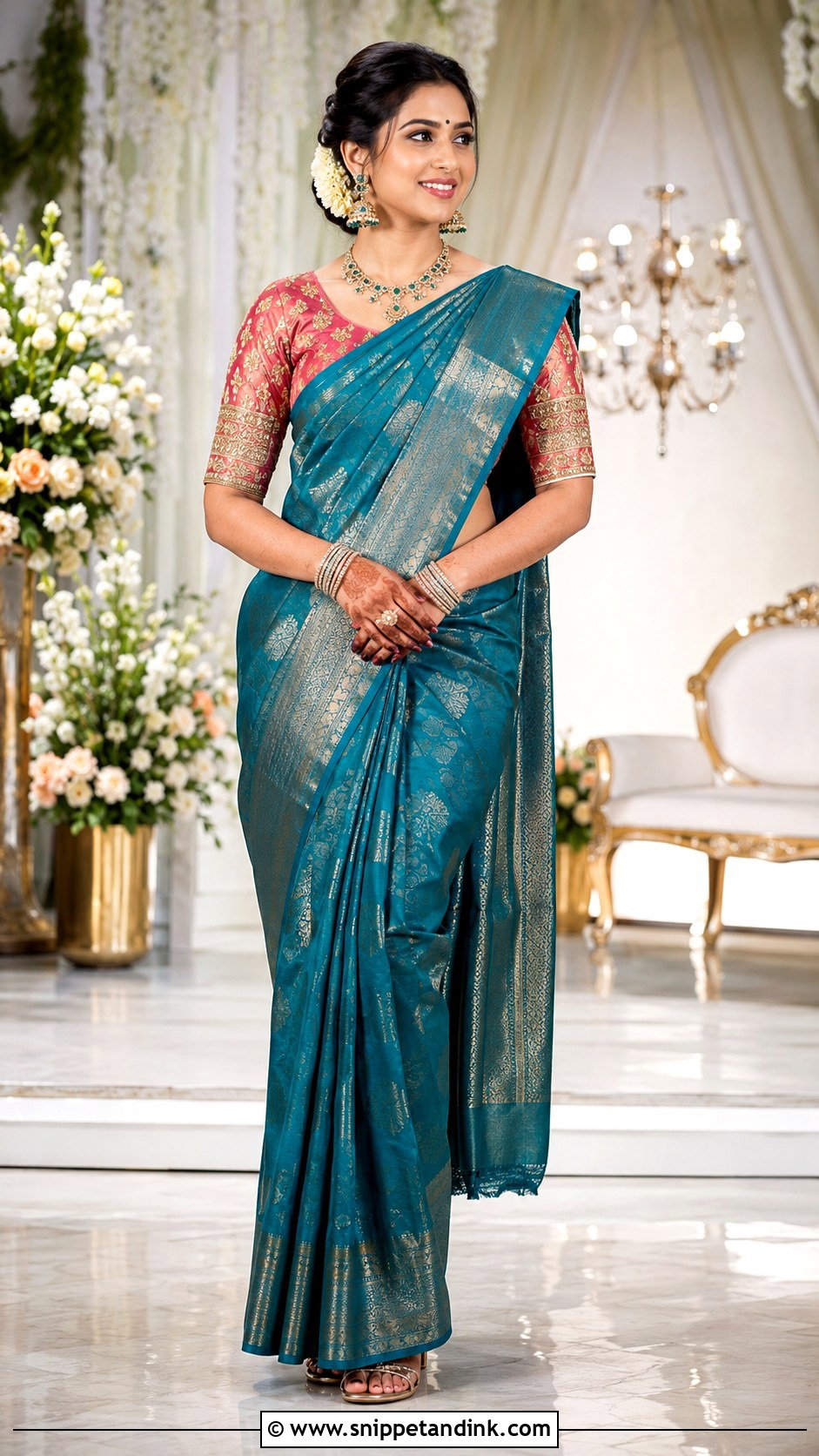
At a ring ceremony, your hands and blouse are in focus in almost every photo. That’s why I like a silk saree with a statement blouse here: embroidered sleeves, a detailed back or a contrasting neckline. Jewel tones, pastels or dual-tone silks all work. Pin the pleats and pallu securely for greetings and the ring exchange. If the saree has a broad woven border, keep the blouse detailing focused rather than covering every surface. A bun with flowers finishes it.
17. Peplum Sharara Set For Engagement
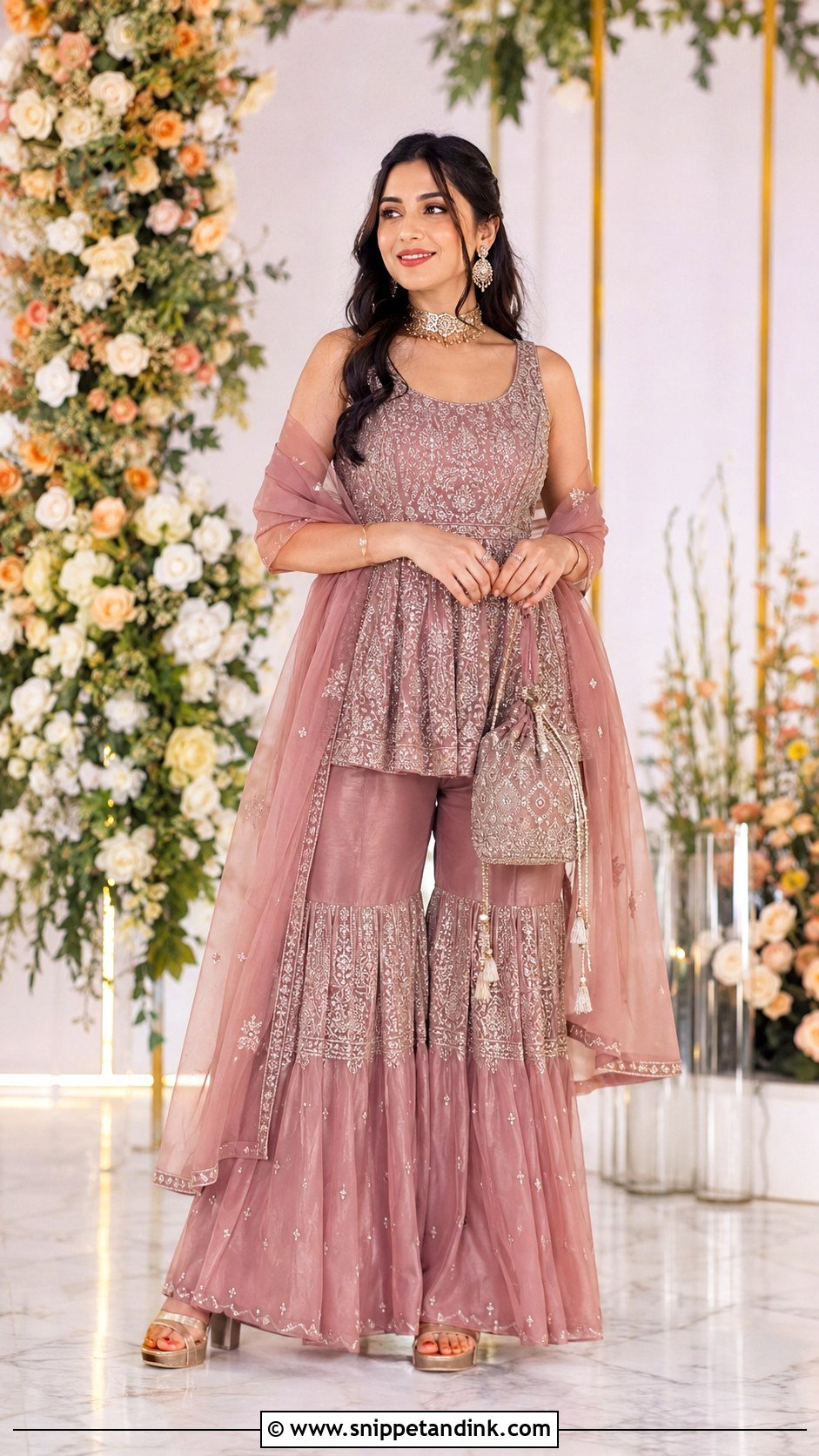
Peplum length is the whole trick with a peplum sharara. If the peplum ends at the widest part of your hips, it adds bulk exactly there. A little longer or shorter fixes it. The top should be fitted and end below the natural waist, with sharara pants in the same colour. Champagne, dusty rose, sage, teal and deep red all suit it. Add a sheer dupatta for a traditional engagement, or skip it for an Indo-Western finish.
18. Champagne Chikankari Lehenga For Roka
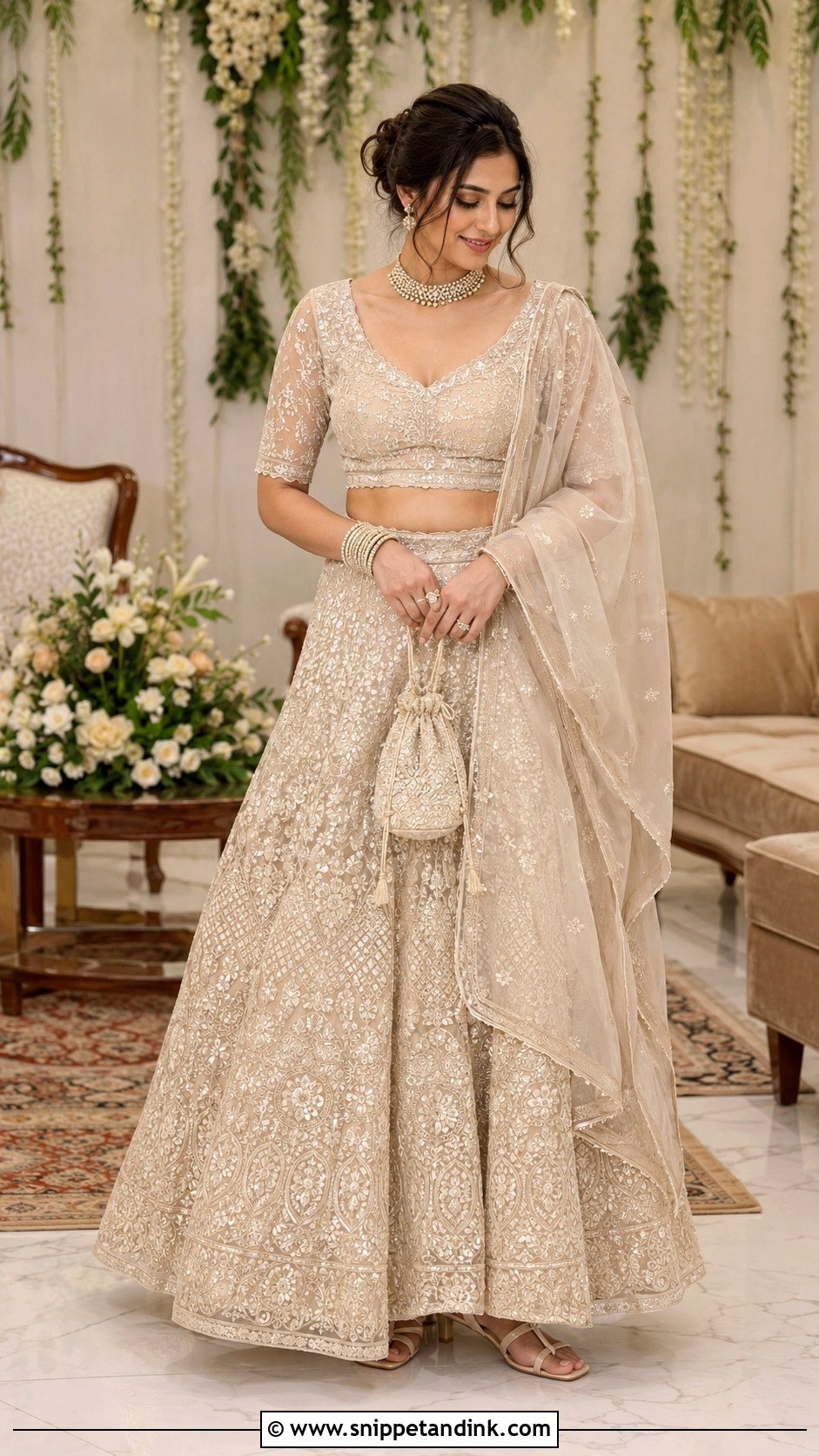
Champagne is a tricky colour. It can look warm gold in candlelight and flat beige under fluorescent tubes, so I always check it in both before choosing makeup and jewellery. As a chikankari lehenga for a roka or small family event, it’s understated and refined. Tonal threadwork and subtle sequins keep it light. Choose a blouse lining close to your skin tone or the lehenga colour so the fine embroidery shows. Pearls and a delicate choker suit it.
19. Banarasi Skirt And Blouse For Pre Wedding Puja
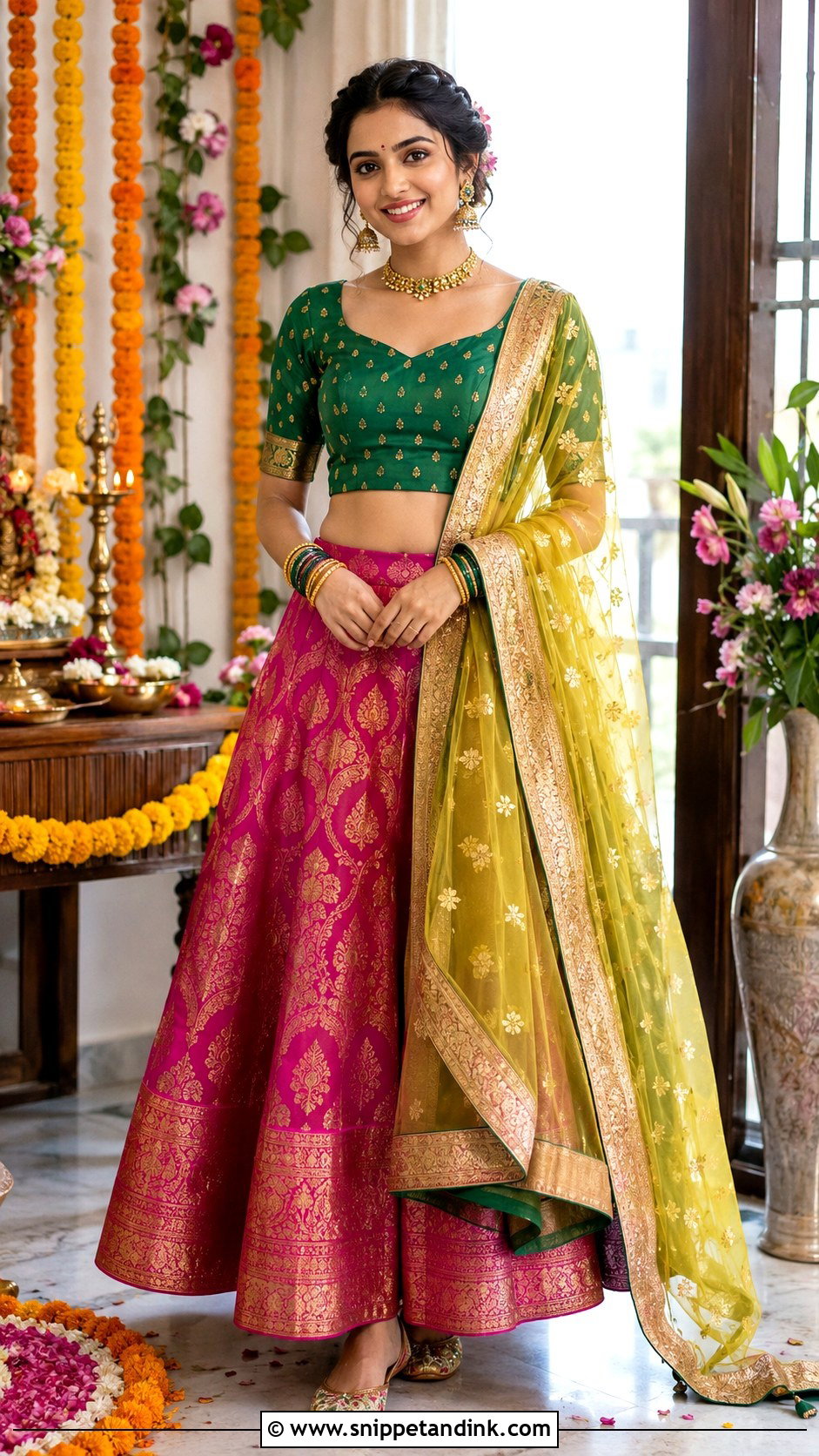
Floor seating is common at a pre-wedding puja, and a stiff can-can under a Banarasi skirt makes that awkward. I’d choose a softer inner layer and a waistband that isn’t too tight. A woven silk skirt in magenta, green, red or royal blue with a plain or lightly embroidered blouse respects the occasion. A contrasting dupatta with a gold border drapes over one shoulder. Traditional jhumkas, glass bangles and a bindi complete it.
20. Printed Palazzo Kurta For Pre Wedding Lunch
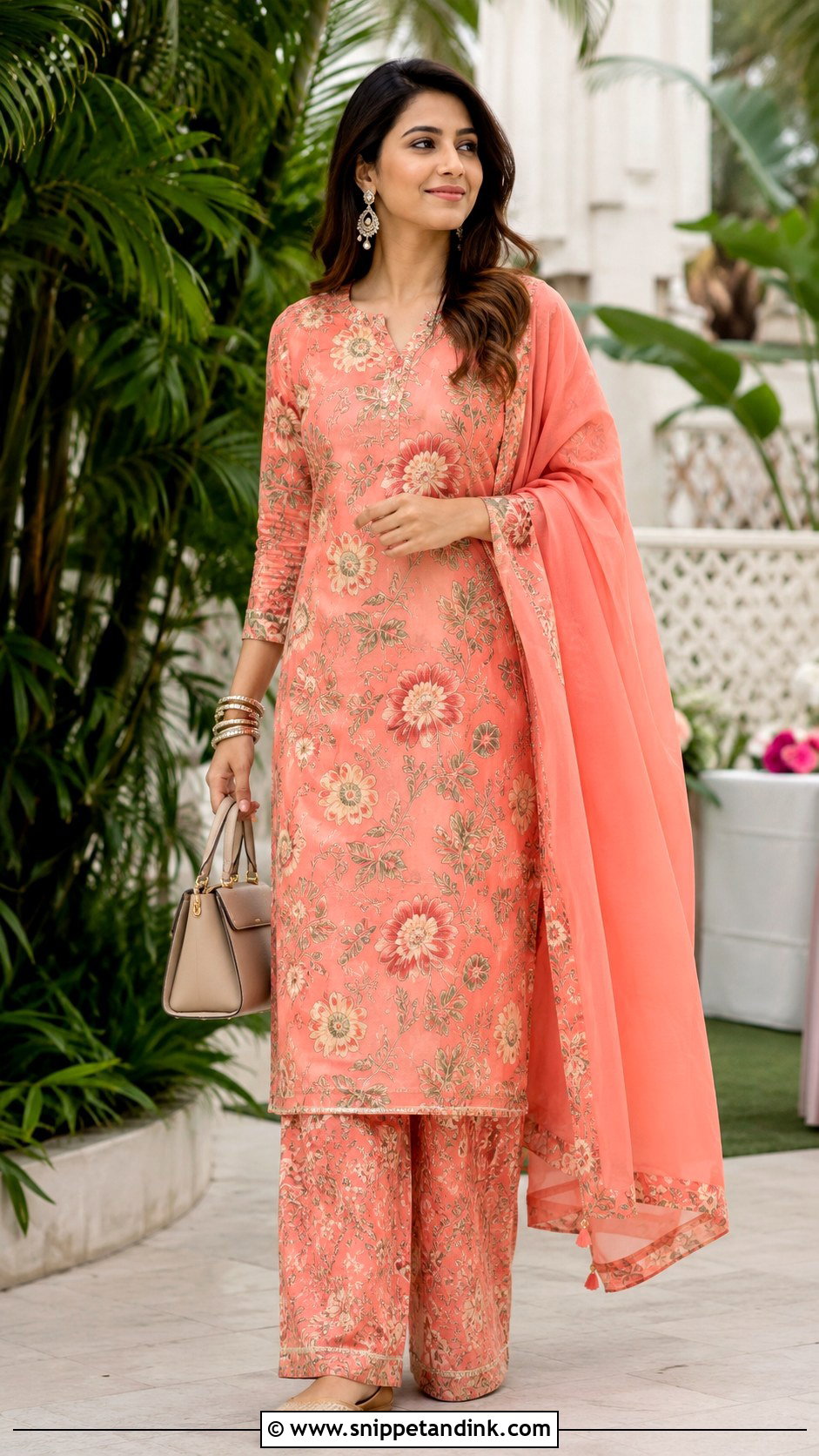
A printed palazzo and kurta set suits a relaxed lunch, welcome event or family gathering. Floral, paisley or block prints in cotton, chanderi or silk blends look polished and stay cool. A plain dupatta with a printed border stops it from looking busy. Shape the waist through tailoring rather than a tight belt. This is the set you’ll actually wear again after the wedding, with solid basics.
Haldi and Henna: Order of Events Affects What You Wear
These two functions interact more than people expect. A fresh henna stain darkens over the first day or two, and soaking it in water or scrubbing it early can lighten the colour. Haldi involves wet paste and often a bath afterwards.
That’s why many families hold the haldi before the mehndi. If yours is scheduled after, keep the turmeric off your hands and feet and avoid scrubbing them when you wash it off. Either way, plan the outfits around it:
- Haldi outfit: washable, inexpensive or something you’re happy to stain permanently.
- Mehndi outfit: short or no sleeves, a lighter skirt, and a dupatta pinned before the artist starts.
- Day after mehndi: loose sleeves or sleeveless again, since you’ll want to avoid friction on the stain while it darkens.
- Feet: if you’re having henna on your feet, wear open sandals for the next day’s function, not closed juttis.
Have a friend help you dress for the mehndi before the henna starts. Once the paste is on, you won’t be able to fix a slipping strap or open a hook.
Different Events, Different Demands on Your Clothes
Each function asks for something different. Haldi needs washable fabric, mehndi needs bare forearms, sangeet needs a secure fit for dancing, and the cocktail party is your chance at something structured and modern. Engagements and family rituals usually call for more traditional silk. Whatever you wear, test it sitting, walking and with your arms up. Comfortable shoes, sensible jewellery and a hairstyle that holds will let you enjoy each event rather than fixing your outfit.
You'll Like These Ideas:


Leave a Reply