
A good gown wasted on one straight-on pose against a plain wall is something I try hard to avoid. The portraits that work tie the dress to a place, a light and a movement that suit how the fabric behaves. A long train comes alive on a beach, sequins sing under clean studio light, ball gowns need a staircase, and sleek satin looks sharp against city architecture. The twenty shoots below cover birthdays, milestones, fashion content and bridal portraits alike. For each one I’ve noted the poses I’d try first, how I’d handle the light and what tends to go wrong on location.

Reading the Light Before You Pick a Location
People choose a location first and think about light later. I do it the other way round, because the same gown can look rich at one hour and flat at another in the same spot.
- Low sun, the hour after sunrise or before sunset: warm, soft and directional. Best for chiffon, tulle and anything that should glow from behind.
- Overcast sky: even, soft light with no harsh shadows. Excellent for satin and white gowns, which can blow out in direct sun.
- Midday sun: hard light from above, deep eye shadows. I only shoot in it under a covered walkway, in open shade or with a diffuser.
- Indoor window light: soft from one side. Ideal for velvet and lace, as long as you face the window rather than stand with your back to it.
I check sunset times and the sun’s direction for the exact date with an app before booking. A beach facing east gets its best light at dawn, not dusk. Wind matters too: it moves chiffon nicely and ruins carefully set hair, so I tell clients with flowing gowns to choose a low, secure hairstyle.
1. Red Flying Gown Beach Photoshoot
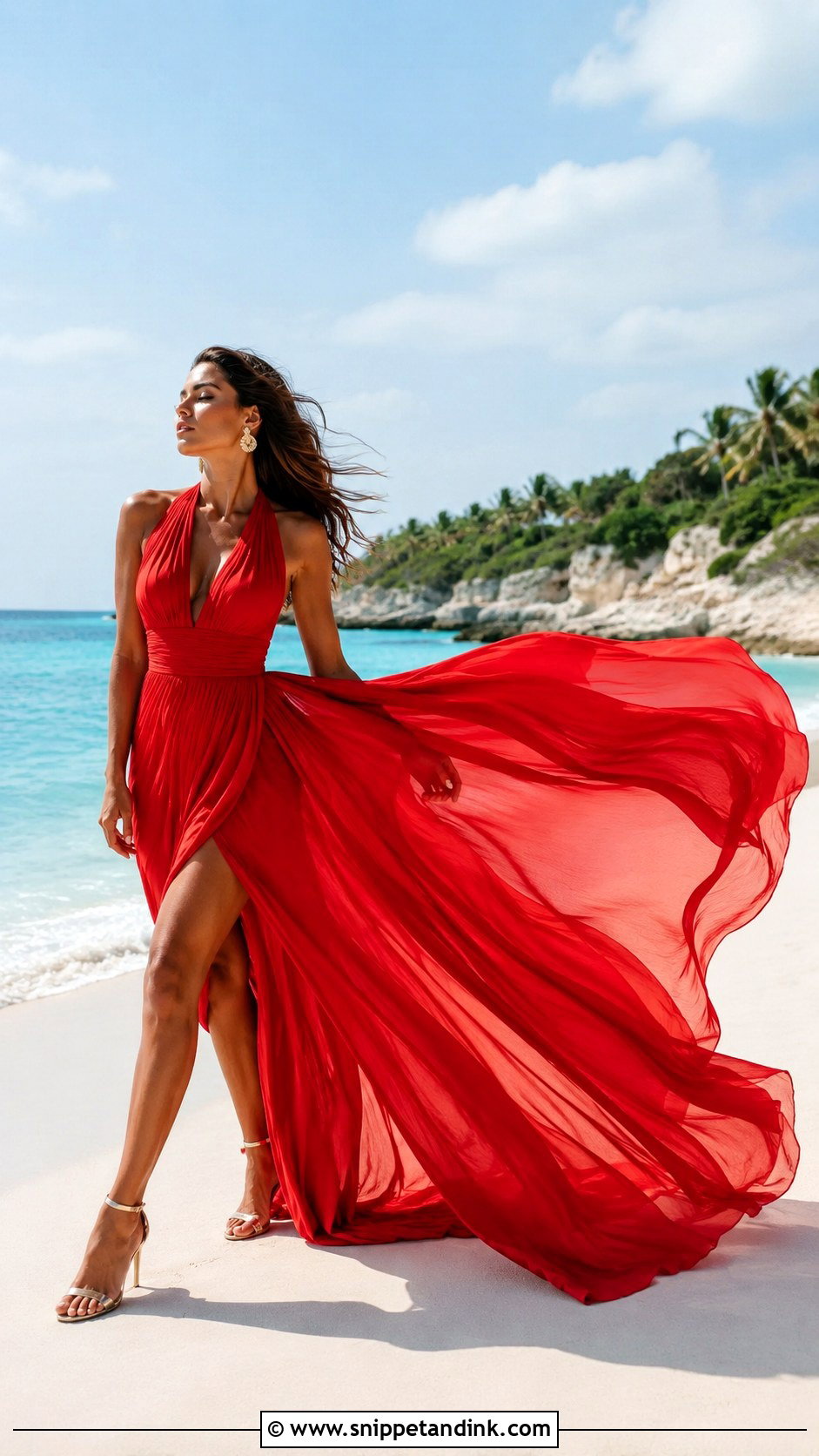
The flying red gown on a beach depends almost entirely on the person throwing the train. I want a fitted bodice and a long chiffon train, light enough to catch air and stay up for a fraction of a second. Start with the subject standing slightly turned from the camera, then move into walking shots and wide frames with the fabric in the air. Wind direction matters more than anything: the train should blow away from the face, so I position the subject with the breeze at her back. Hair swept back stays manageable, and small gold earrings are plenty. Early morning gives quiet light and an empty beach; late afternoon is warmer. Bring flats for the sand and a clean sheet for the hem.
2. Black Gown City Rooftop Photoshoot
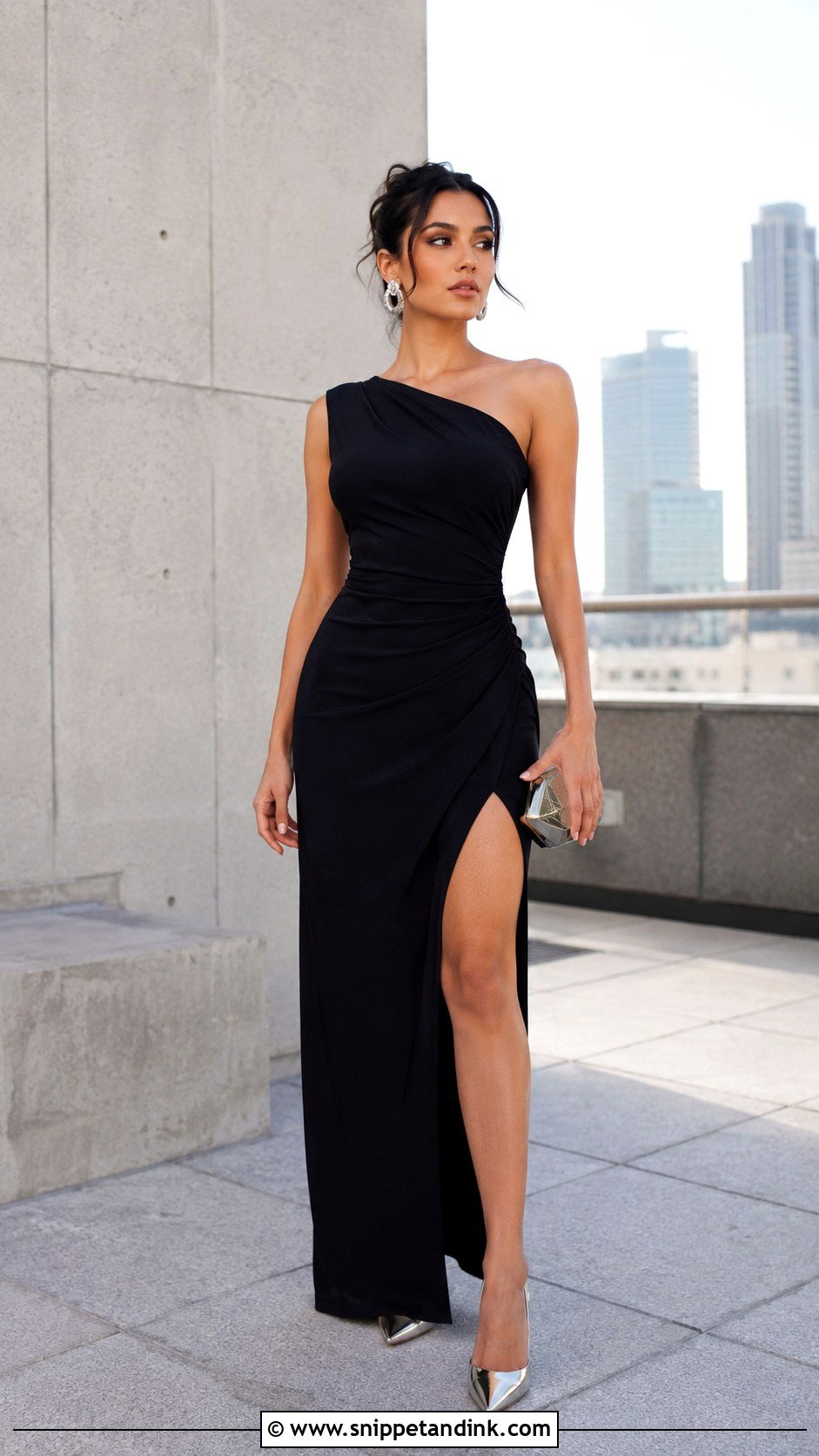
Rooftops give a black gown photoshoot its graphic, city feel, but black fabric loses detail fast in bright sky. I expose for the dress and let the skyline go slightly lighter, or wait until the sun drops behind a building. A sleek gown with an asymmetric neckline and a thigh slit works well, with pointed pumps and silver earrings. A low bun keeps the neckline clear. Pose against plain railings or concrete, away from vents and cables. I shoot slightly low for presence, while keeping the whole hem in frame. Confirm access and permission before you book, because many rooftops don’t allow shoots.
3. White Satin Gown Studio Photoshoot
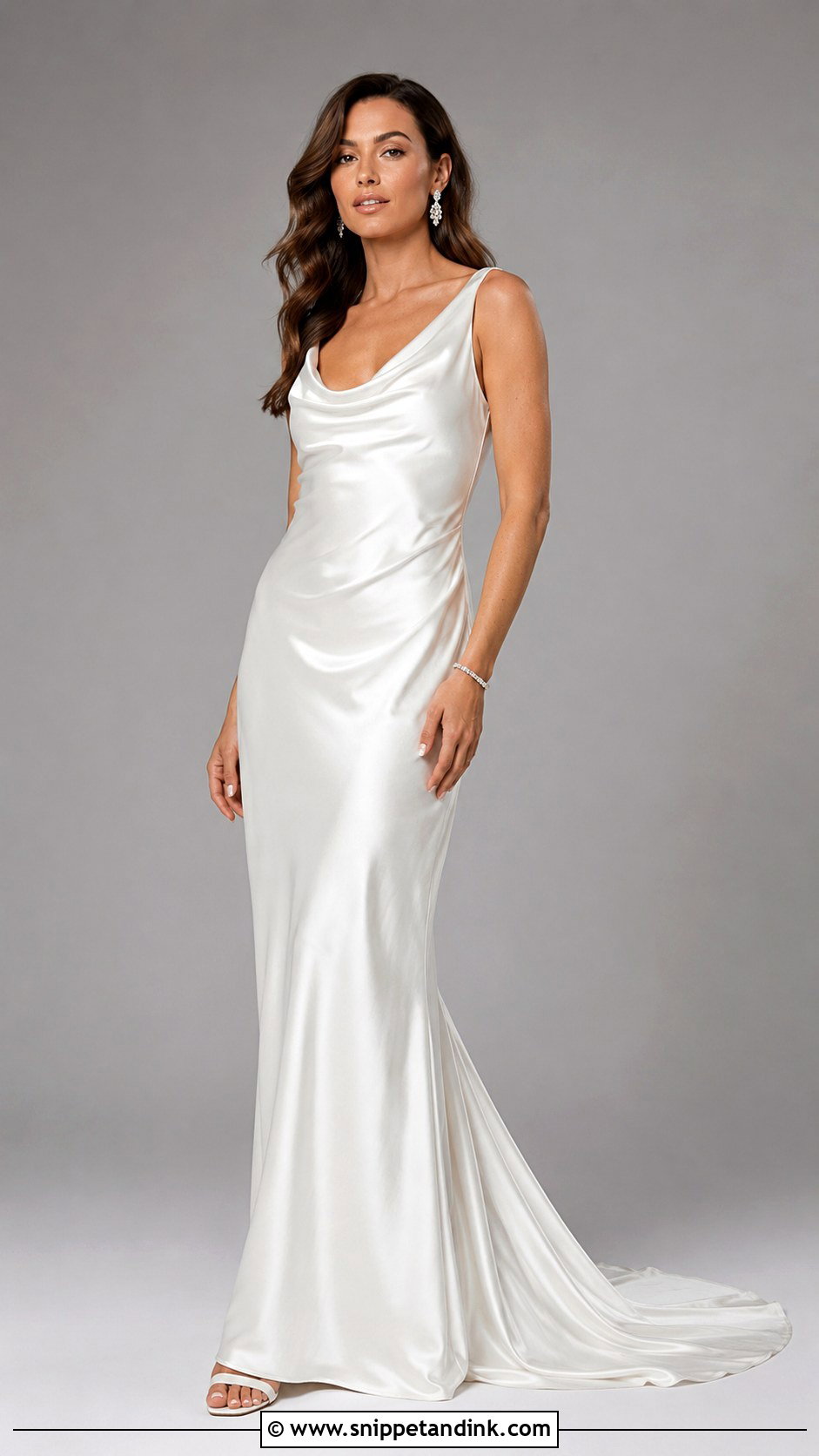
Satin is the hardest fabric I photograph, because every crease and bump shows as a bright line. In a studio I use large, soft light sources and keep them slightly to the side, which defines the drape without hot spots. A bias-cut gown with a cowl neckline suits a grey, cream or white background. Crystal earrings and ivory heels keep it clean. Shoot front, side and back, and arrange the train with care between frames. A low cube adds a seated option, though satin creases quickly when you sit, so I save seated shots for last. Finish with close portraits of the neckline and jewelry.
4. Emerald Gown Garden Photoshoot
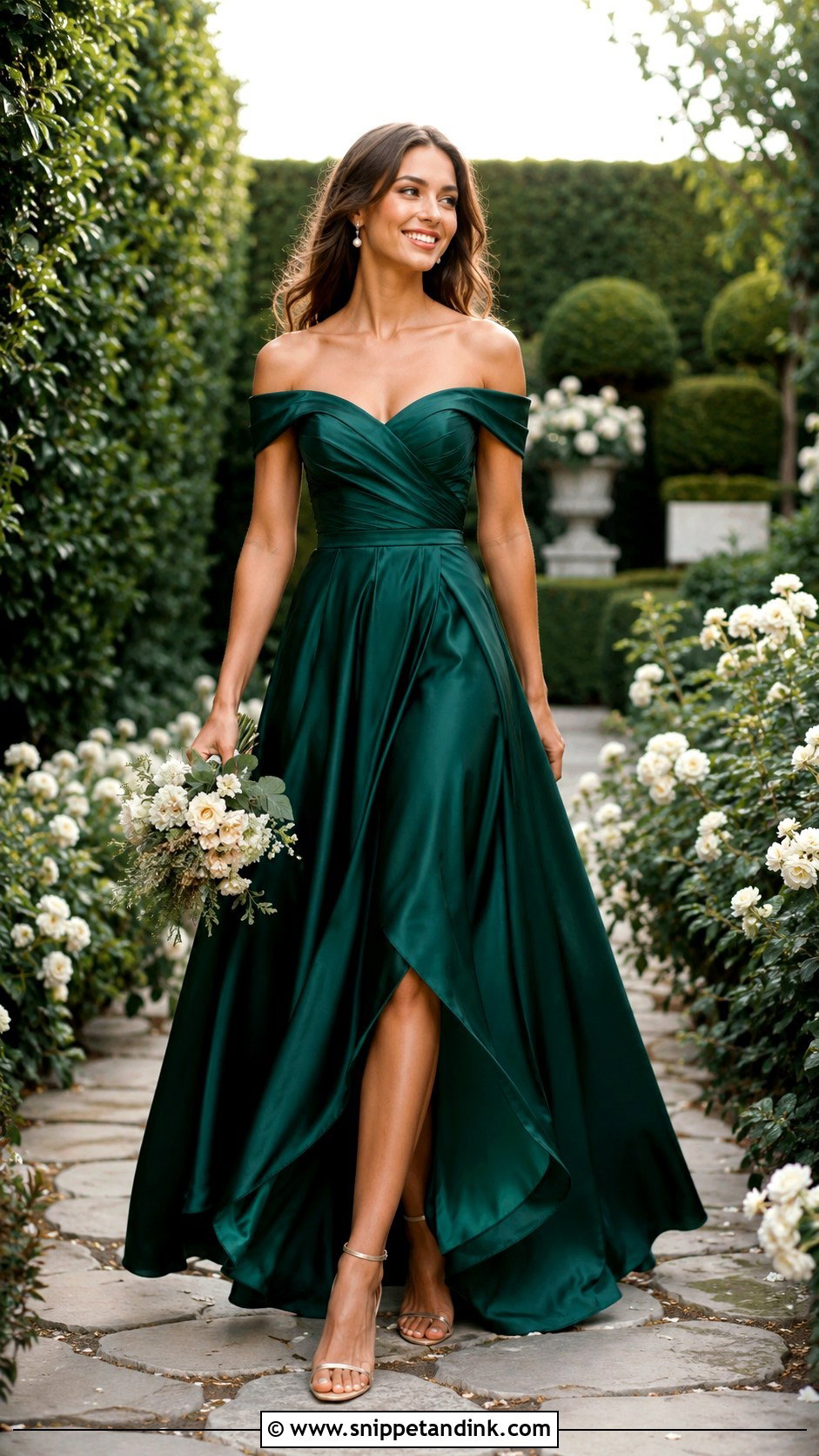
Deep emerald fabric against hedges risks blending into the greenery, so I place the subject against stone paths, pale flowers or an archway instead of a solid wall of leaves. An off-the-shoulder A-line gown keeps the shape readable. Champagne heels, pearl drops and a small neutral bouquet are enough. Walking with the skirt held lightly, a turn from the side and a relaxed stand under an arch all work. Trees create patchy light on the face, and a small reflector fixes that quickly. Skip extra floral props, since the garden already supplies them.
5. Blue Ball Gown Staircase Photoshoot
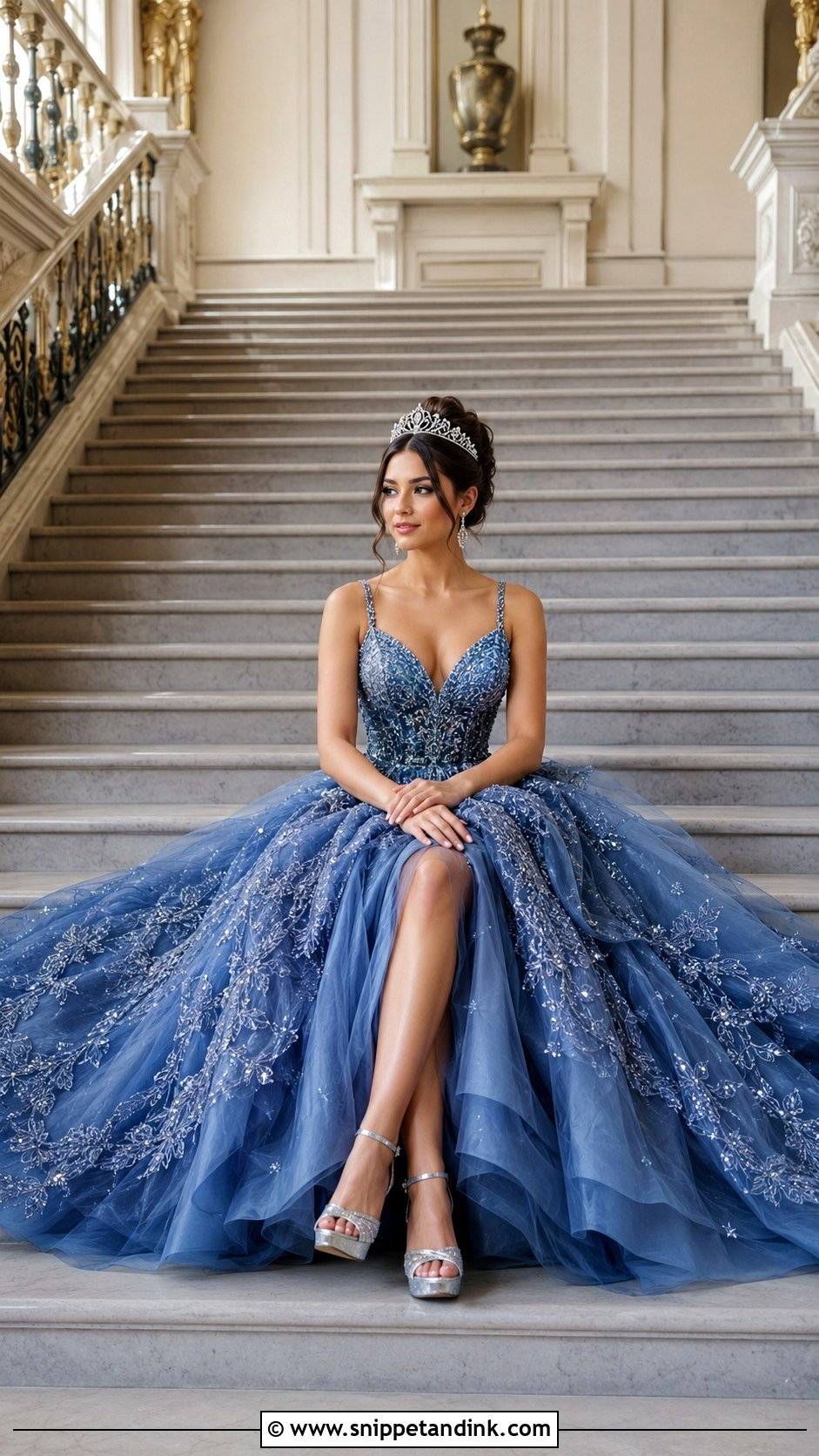
A staircase shows the full scale of a blue ball gown, but only if the skirt is arranged properly. I spread it evenly across several steps and check from the camera position before every frame, because one fold out of place shows. Start with a seated pose, torso tall and hands soft, then a standing shot at the base and a walking frame from below. A slight turn defines both waist and skirt better than facing straight on. Silver heels, a small tiara and drop earrings finish it. Choose broad, clean steps and safe railings, and make sure there’s room to back up.
6. Gold Sequin Gown Theater Photoshoot
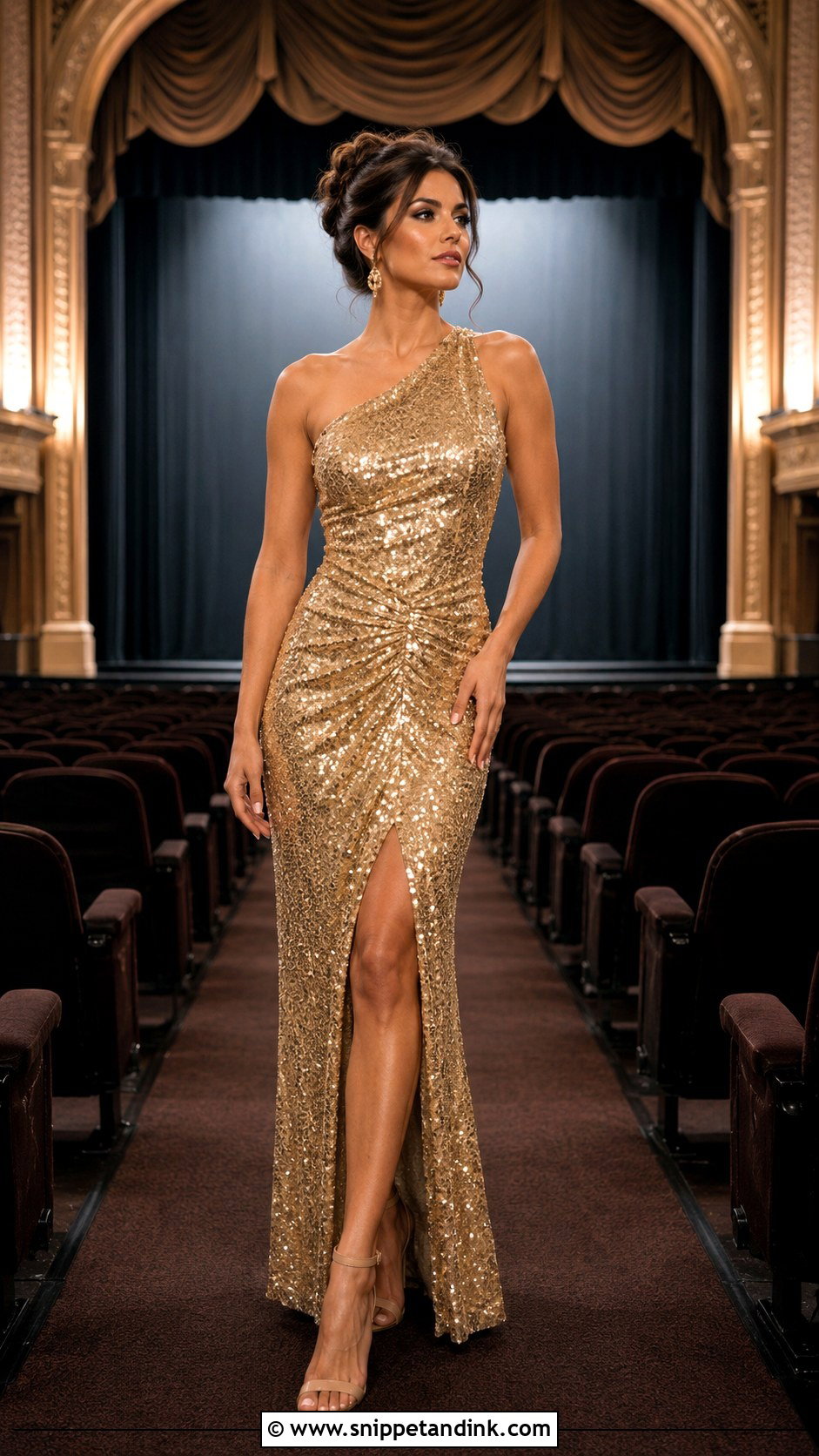
Empty theatres give gold sequins exactly what they need: dark surroundings and controlled light. I choose a long-sleeve or one-shoulder gown with a smooth lining, then use a single focused light to make the sequins sparkle without the whole frame going busy. Movement should be slow; fast turns blur sequins into streaks. Shoot a full-length in the centre aisle, one near the stage edge and a seated frame with the skirt arranged around the legs. A red lip adds contrast, neutral eyes keep it balanced. Get written approval from the venue in advance, and leave big props at home.
7. Pink Tulle Gown Flower Field Photoshoot
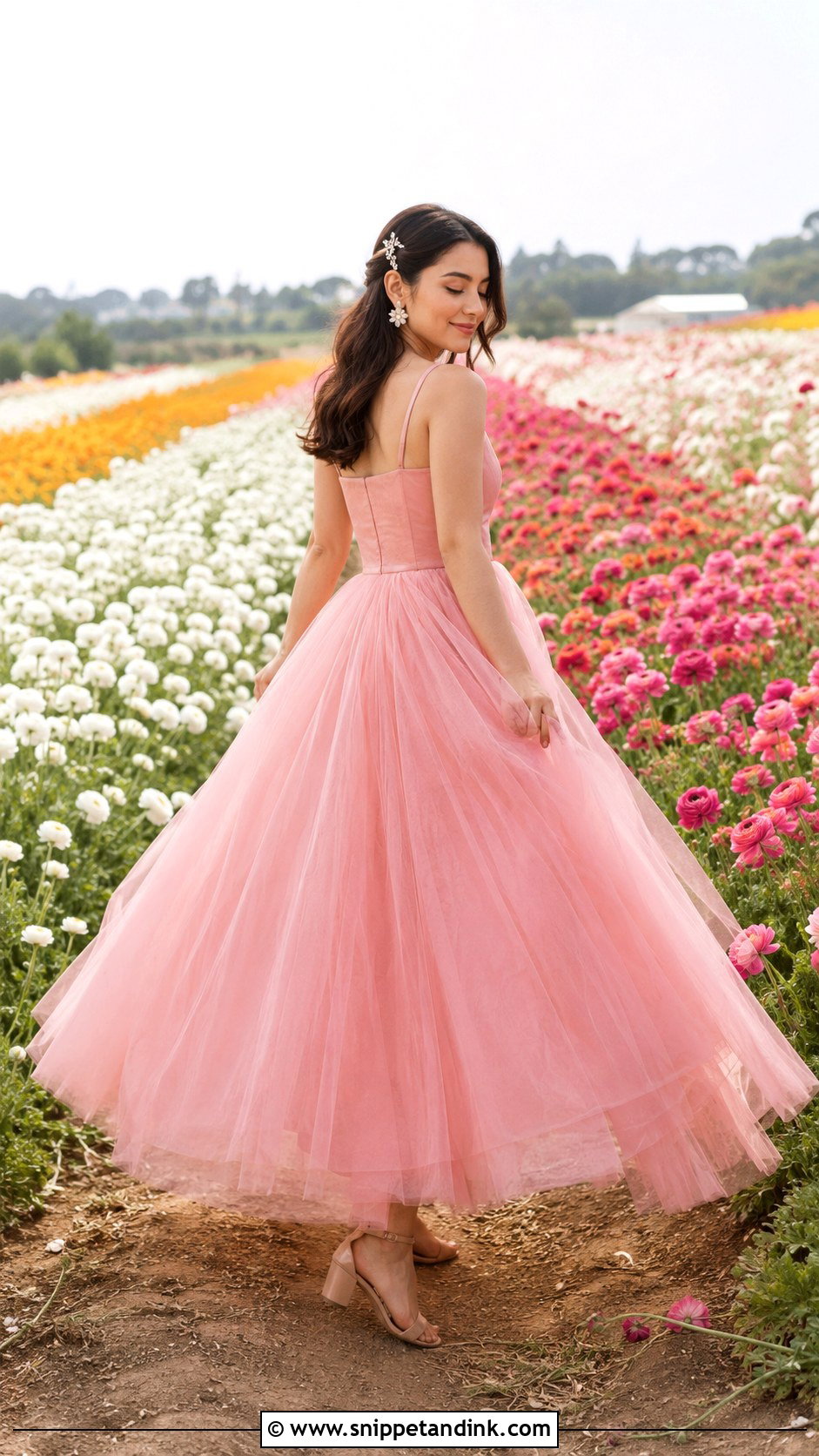
Pink tulle in a flower field is soft and playful, but the flowers should complement the dress, not match it, or the gown vanishes. I look for fields in contrasting shades and shoot with a longer lens to blur the blooms behind. A strapless or square-neck ball gown with movable volume works best, worn with block heels for uneven ground. Walk only on the paths between rows and use gentle turns to move the skirt. A blanket protects tulle for seated shots. Get permission from the owner, follow their rules on picking and equipment, and keep the bouquet small.
8. Purple Gown Castle Photoshoot
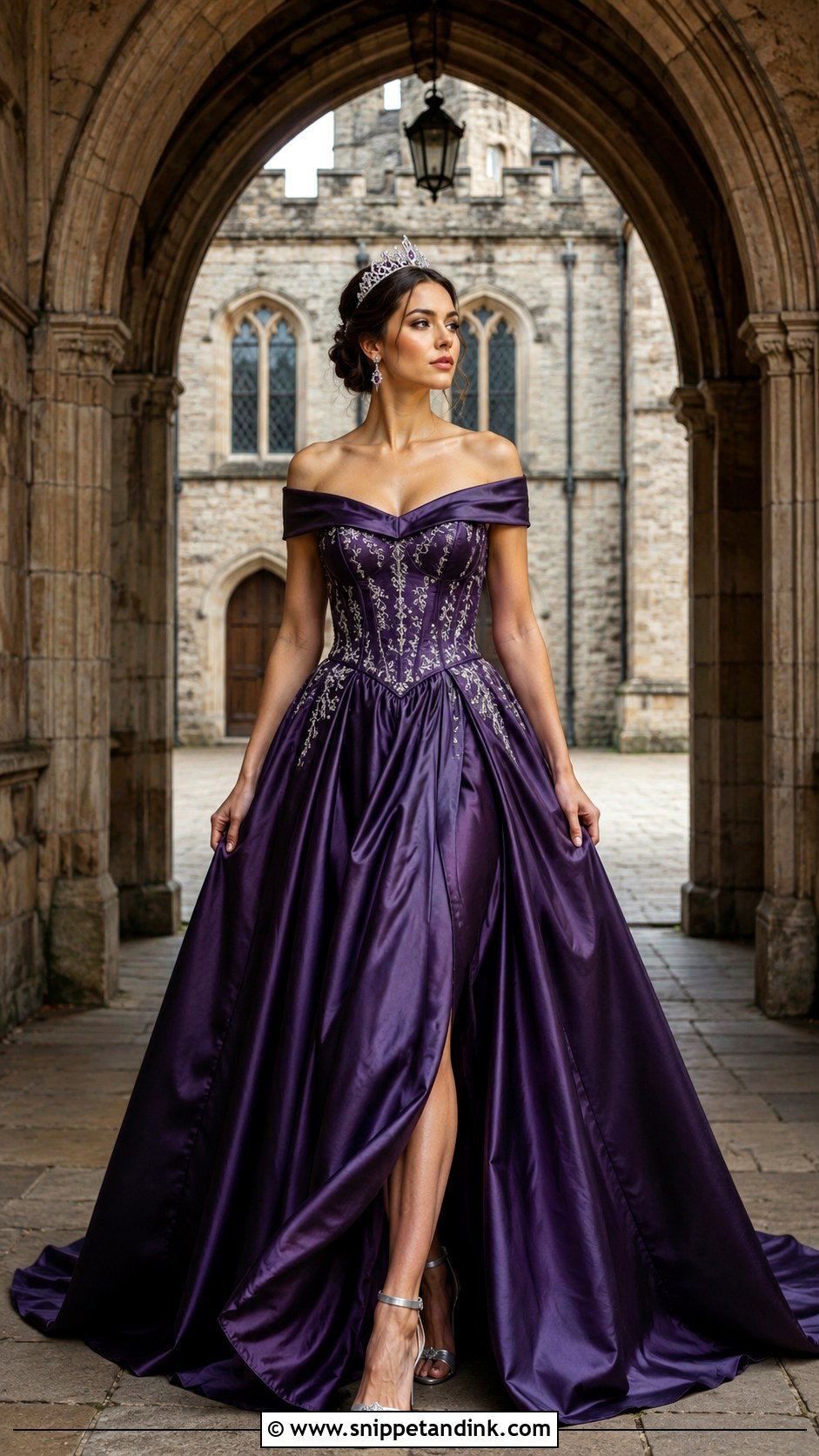
Castle stone swallows light, so I move the subject several feet away from the walls and let the gown catch open sky rather than shadow. A regal purple off-the-shoulder gown with a corset bodice and subtle embroidery suits the setting, with silver heels, a small crown and a half-up hairstyle. Archway walks, a look back over the shoulder and a stand on a terrace all work. I shoot wide first to establish the place, then closer for bodice and accessories. If a castle isn’t available, a historic mansion or stone courtyard reads much the same in photos.
9. Silver Gown Mirror Photoshoot
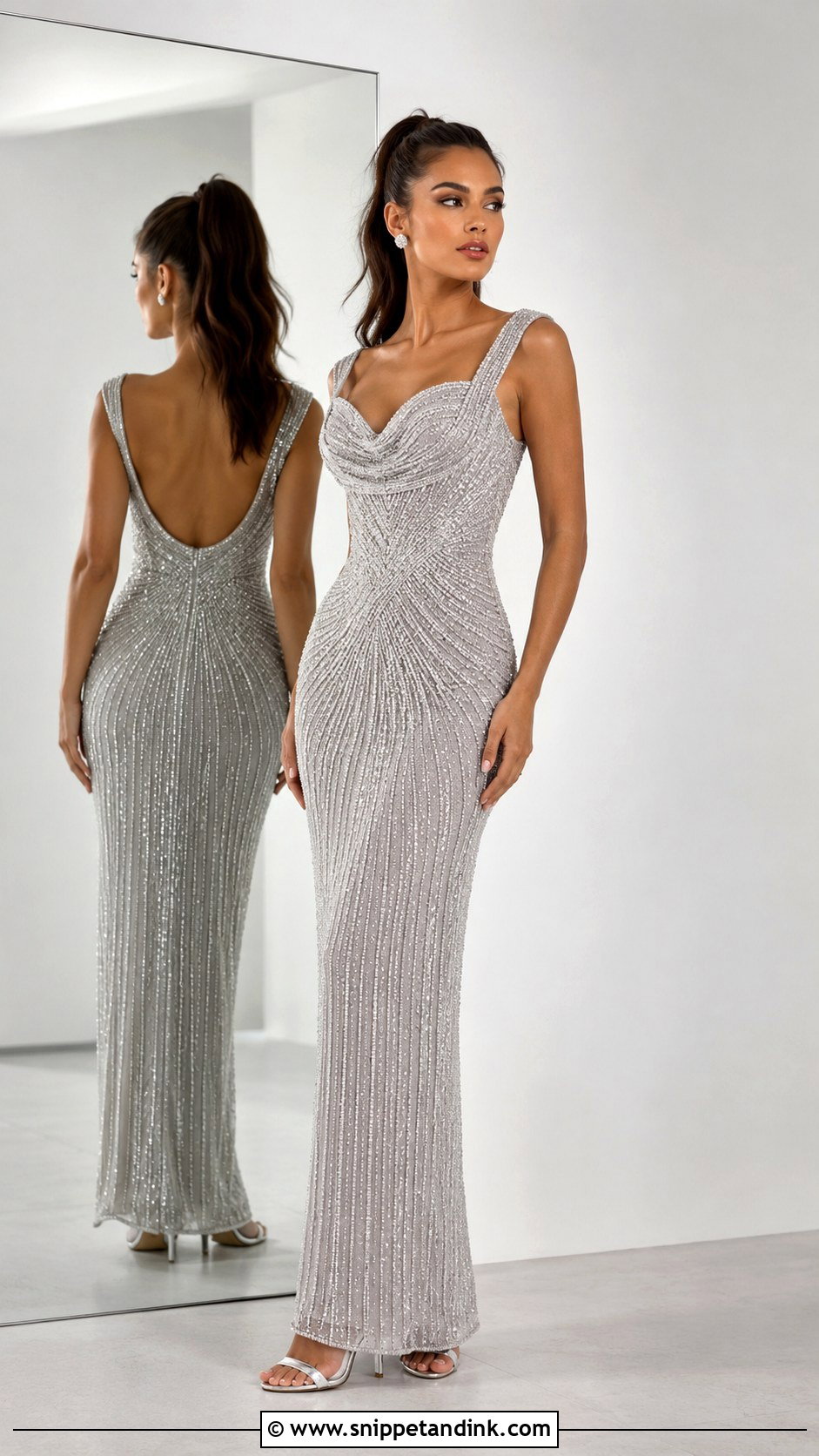
A single large mirror beside the subject works better in a silver gown photoshoot than a room full of them. Every extra mirror shows my lights, my camera or me, and the viewer can’t tell what’s real. A column gown with a low back or metallic beading, silver sandals and a high ponytail suit the modern feel. Angle the body so the mirror shows the back while the camera sees the front. Small actions, like adjusting an earring or glancing at the reflection, help. I check every frame edge and use neutral white light to keep the silver from turning yellow.
10. Burgundy Velvet Gown Library Photoshoot
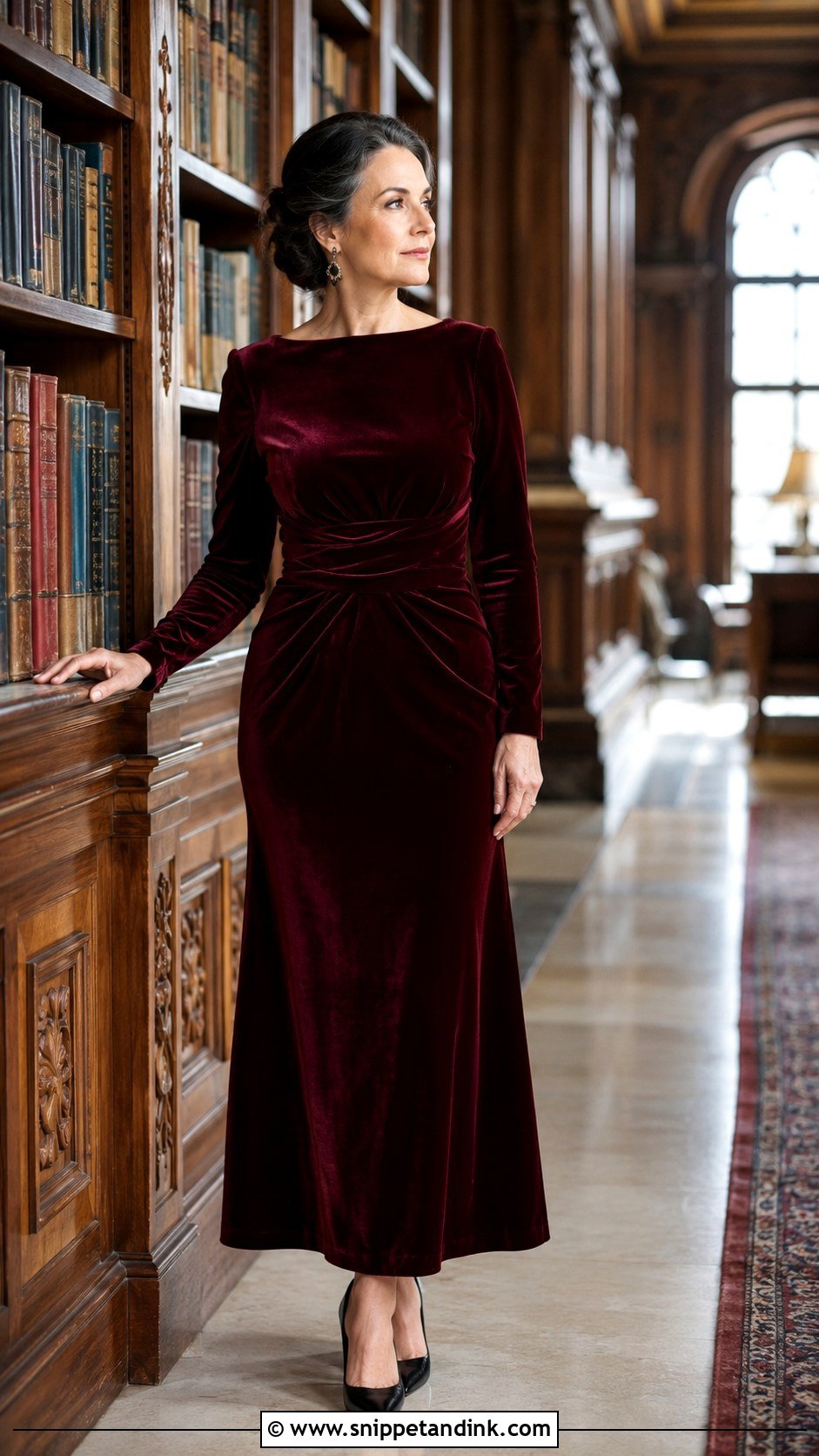
Velvet absorbs light, and in a library with dark wood it can disappear into the background. I always test exposure before the first real frame and place the subject near a window or reading table for directional light. A burgundy gown with long sleeves and a flared skirt pairs well with black pumps, antique-style earrings and a neat chignon. One closed book is the only prop needed. Try a seated pose with the skirt to one side, a walk between shelves and a profile for the neckline. Get permission, keep equipment off walkways and never lean props against rare books.
11. Yellow Chiffon Gown Desert Photoshoot
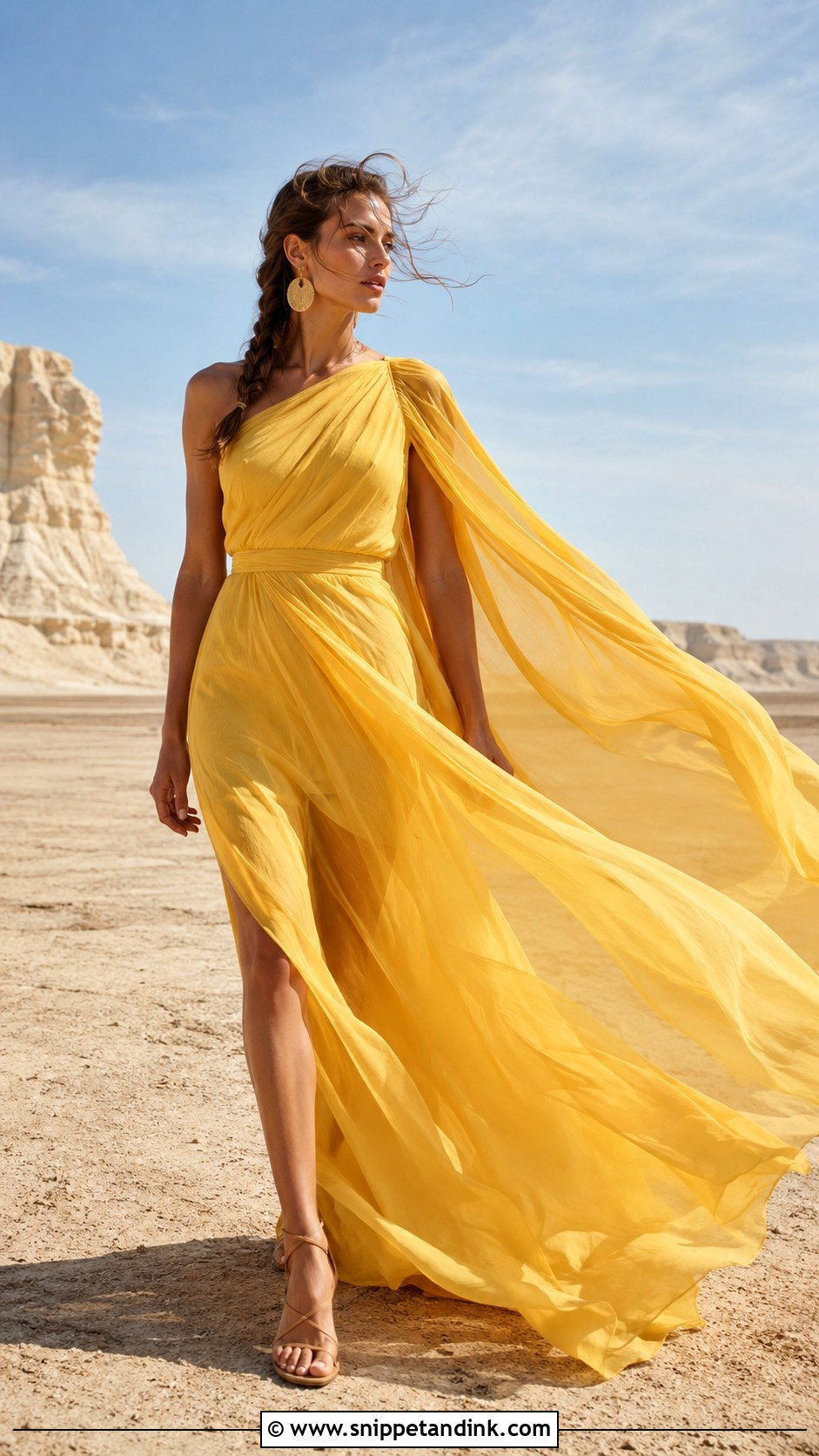
Yellow chiffon looks bright against neutral desert sand, and the fabric moves with even a light breeze. Wide frames show the contrast between gown, sky and ground. I shoot early or late, when the sun is low and the heat is bearable; midday desert light flattens everything and is dangerous. A halter or cape-style gown, tan sandals and a loose braid suit the place. Walks across flat ground, a lifted skirt and slow turns work well. Avoid unstable rocks and sharp plants. Pack water, sunscreen, a ground cover and an assistant to handle the hem.
12. Floral Gown Greenhouse Photoshoot
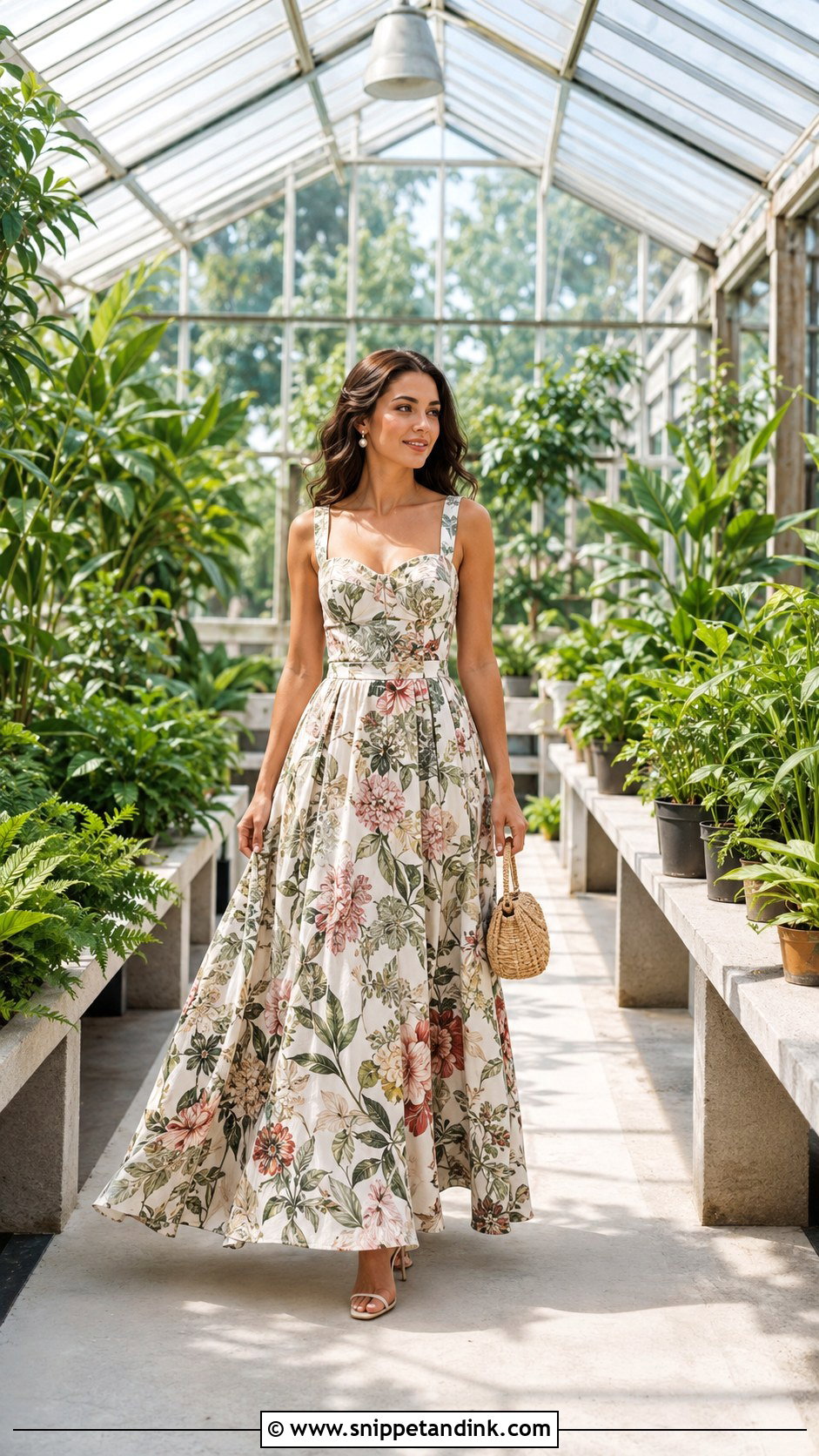
Greenhouses filter light through glass, which makes it soft and even, the most forgiving light in this list. A floor-length floral gown with a fitted bodice needs a print big enough to read in full-body photographs, since tiny prints turn to noise at that distance. Pale heels, pearl earrings and a relaxed updo keep it calm. I use the central walkway as a leading line and shoot a slow walk, a profile beside a planting table and a centred portrait. Floors are often wet near watering areas, so watch the hem. Confirm the photography rules and stay out of visitors’ way.
13. Black Mermaid Gown Architectural Photoshoot
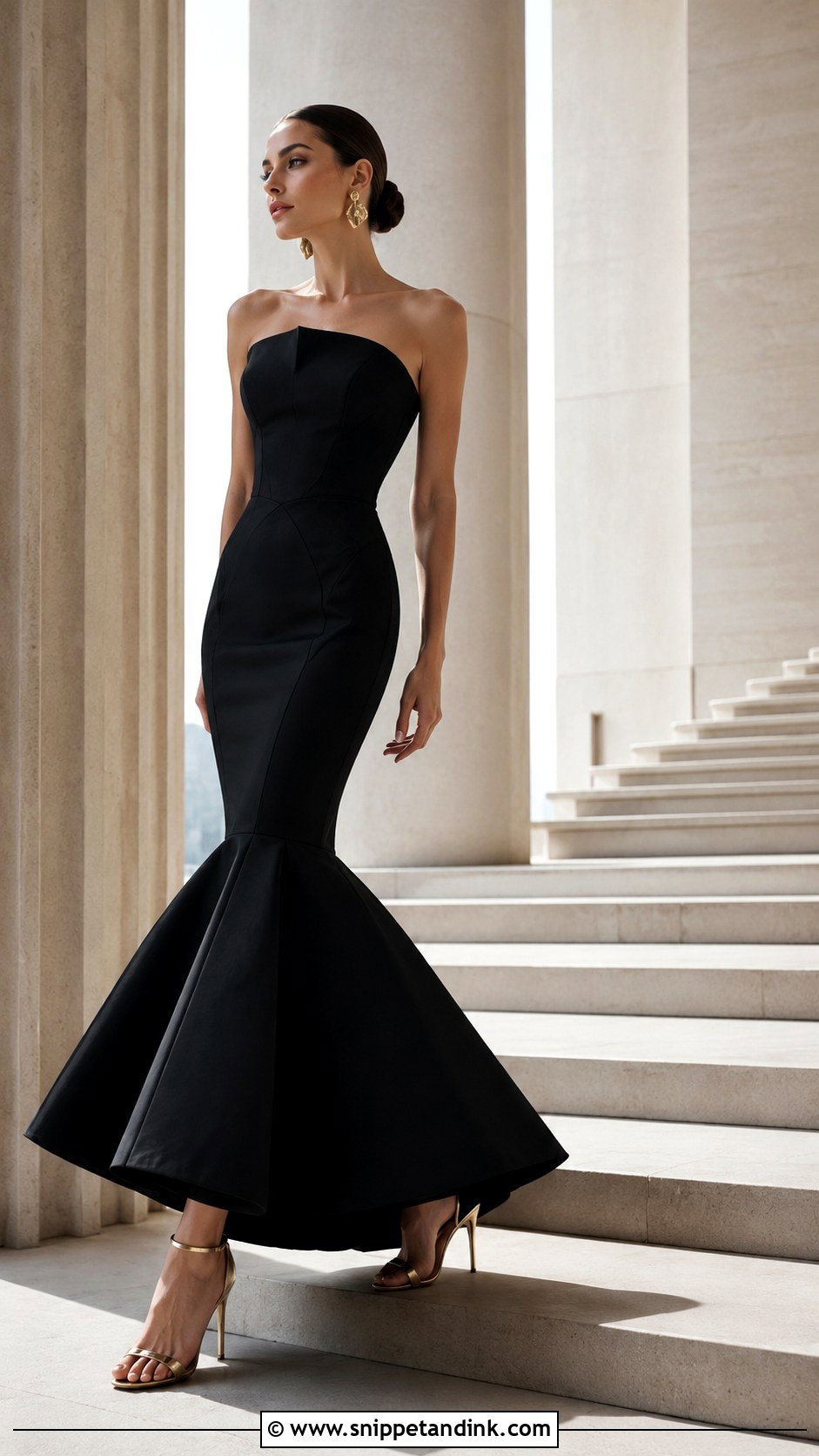
Fitted mermaid gowns show posture more than any other shape. Before I take a frame, I ask the subject to lengthen the spine, drop the shoulders and put one foot slightly forward, which defines the silhouette instantly. A structured neckline and a flare near the knees, black or metallic heels and a sleek bun suit clean columns and pale stone. Shoot straight on, three-quarter and profile before adding movement, then take short steps for walking frames. A low angle shows the flare, but too low distorts proportions. Clear bags and coats out of the background first.
14. Ivory Cape Gown Museum Photoshoot
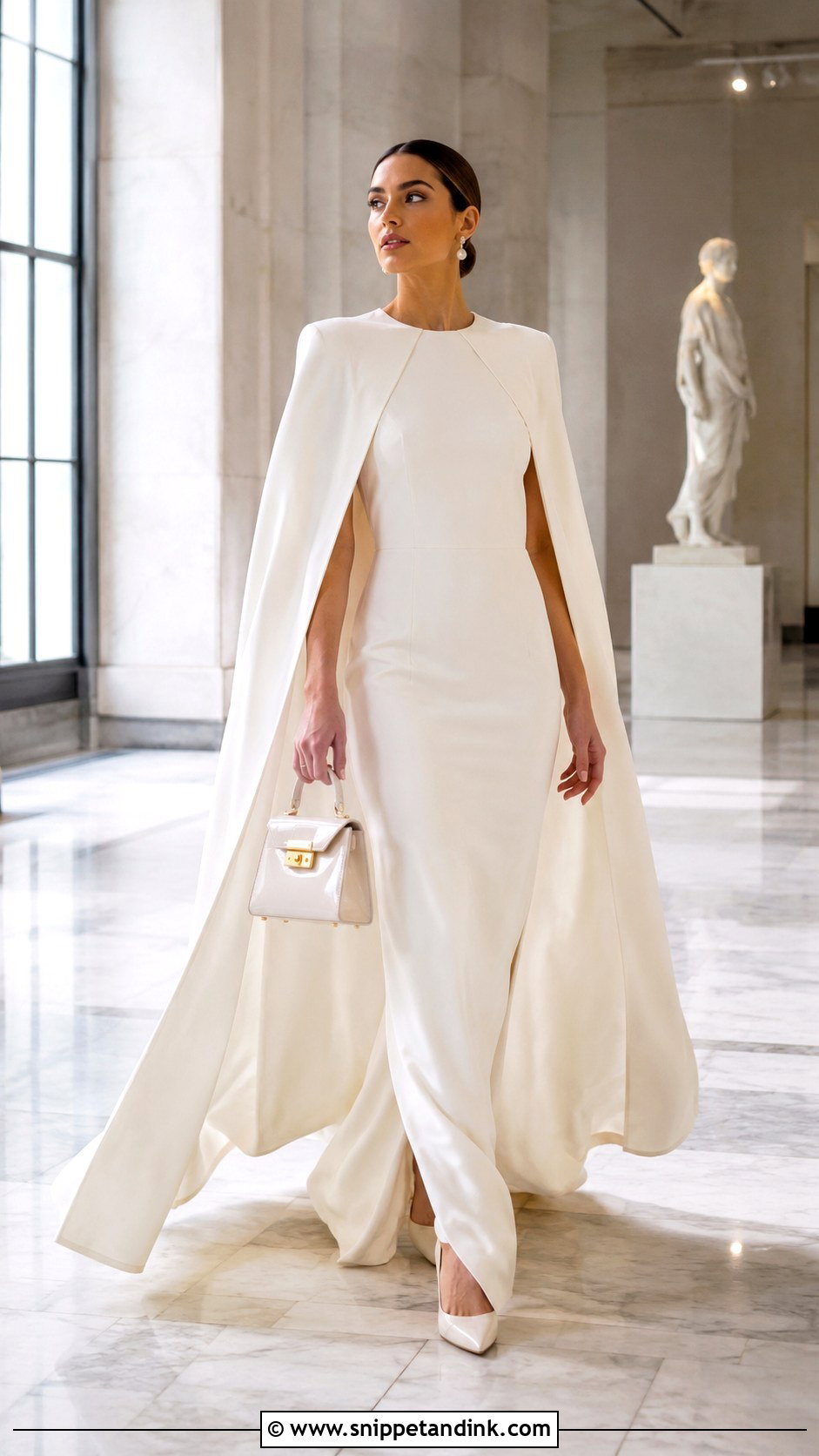
Ivory against marble can merge, so I look for a wall or staircase a shade darker than the gown. A streamlined dress with an attached cape that falls close to the body photographs more cleanly than a cape that spreads wide. Ivory pumps, pearl earrings and a mini bag keep it polished, with smooth hair or a low bun. Photograph the cape from behind, from the side and in motion. Many museums restrict professional equipment or charge a fee, so contact them early. A modern gallery or hotel lobby with permission can look almost the same.
15. Red Satin Gown Vintage Car Photoshoot
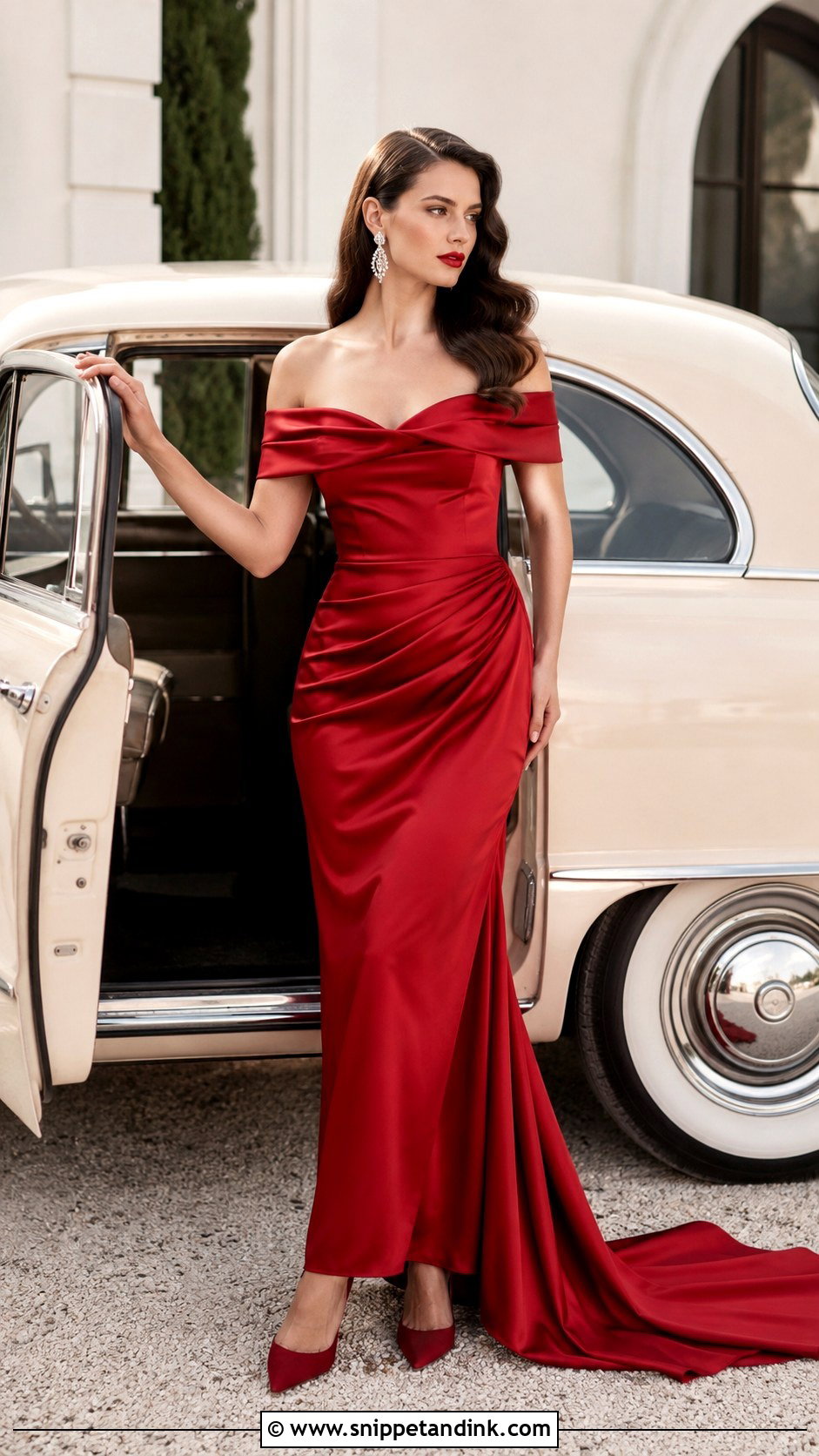
A vintage car gives a red satin gown shape and a story without building a set. I prefer a neutral, black or cream car so the red stays the focus. Pose beside the door, lean lightly near the side panel or stand a few feet in front for a full-length. A seated shot in the open doorway works if the owner agrees and the gown is arranged carefully. Car paint and chrome reflect everything, including me, so I move around until reflections are clean. Never sit on the bonnet or rest shoes on paintwork. Side-parted waves and crystal earrings finish it.
16. Pastel Blue Gown Lakeside Photoshoot
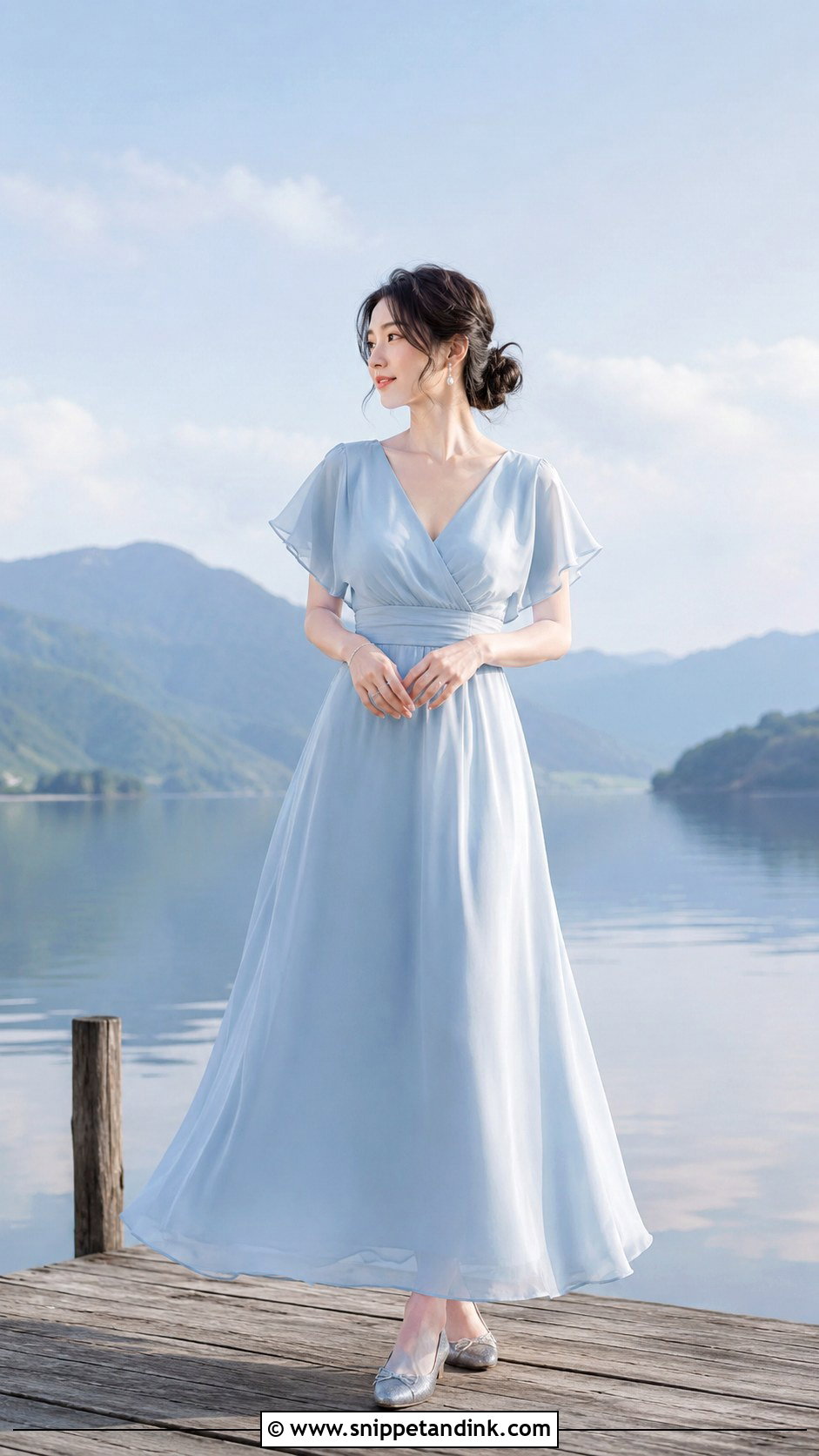
Still water reflects a pastel blue gown, which gives symmetry if I shoot low and safely from the bank. A soft A-line dress with flutter sleeves or light beading suits calm water. Silver flats and pearls work well, and a low bun stays tidy. Pose on a stable dock or a level shoreline, never on wet rocks. Start with a full-length facing the water, then a side view and a walk with the skirt slightly lifted. Keep the train out of the water unless that’s the idea. Bring a towel, spare shoes, insect repellent and a light wrap.
17. Orange Ruffle Gown Sunset Photoshoot
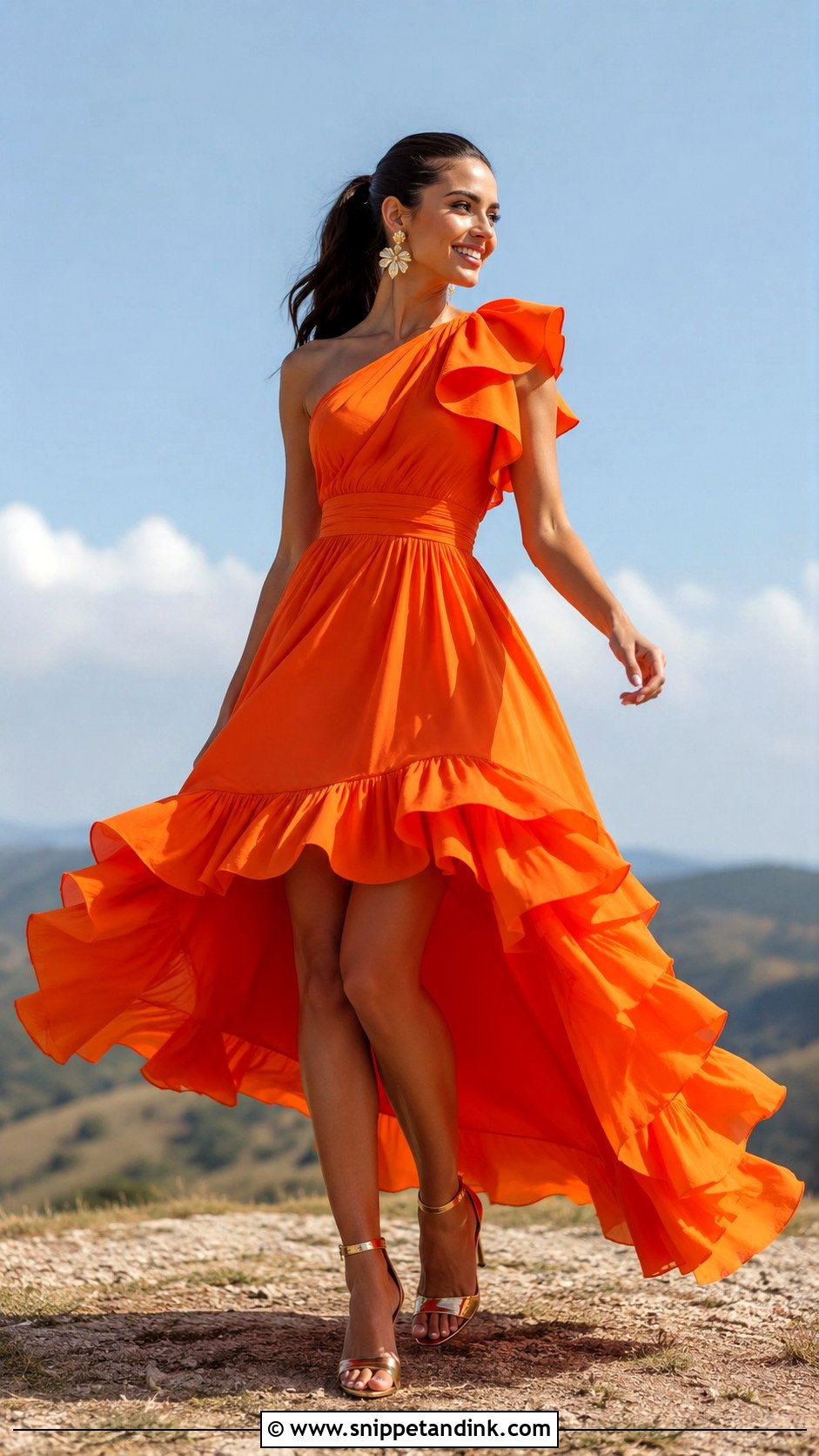
Sunset light changes by the minute, so I shoot the detailed, still portraits first while there’s enough light for the ruffles, then move into walks and skirt sweeps as the sky turns. An orange one-shoulder gown with tiers or a high-low hem pairs with gold sandals, big earrings and a slick ponytail. Keep the face turned toward the light so it doesn’t drop into shadow. Ruffles are already busy, so skip props and patterned accessories. An assistant arranging layers between frames saves a lot of editing time.
18. Green Gown Forest Photoshoot
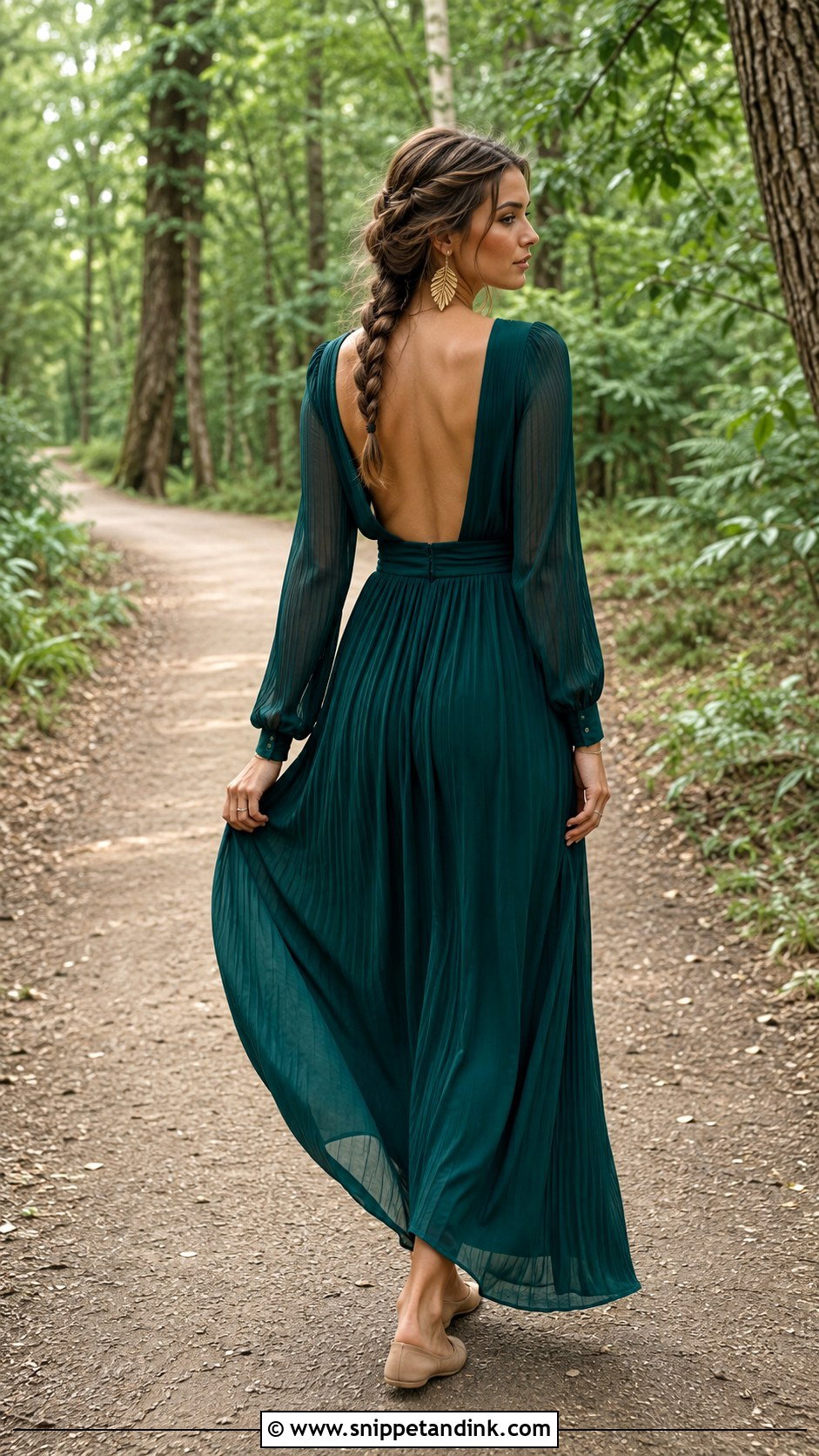
Green in a green forest only works if the shade is different from the leaves. I suggest sage, mint or deep teal, and I’d hold the gown up against the foliage before committing. A pleated skirt, long sleeves and an open back add detail without heavy embellishment. Neutral flats and a soft braid suit the trail. Find a wide clearing with room for the skirt, and stand where filtered light reaches the face evenly; dappled sun across the cheeks is unflattering. Walk toward the camera, look over a shoulder or hold a little of the skirt. Avoid mud and dense plants.
19. White Feather Gown Editorial Photoshoot
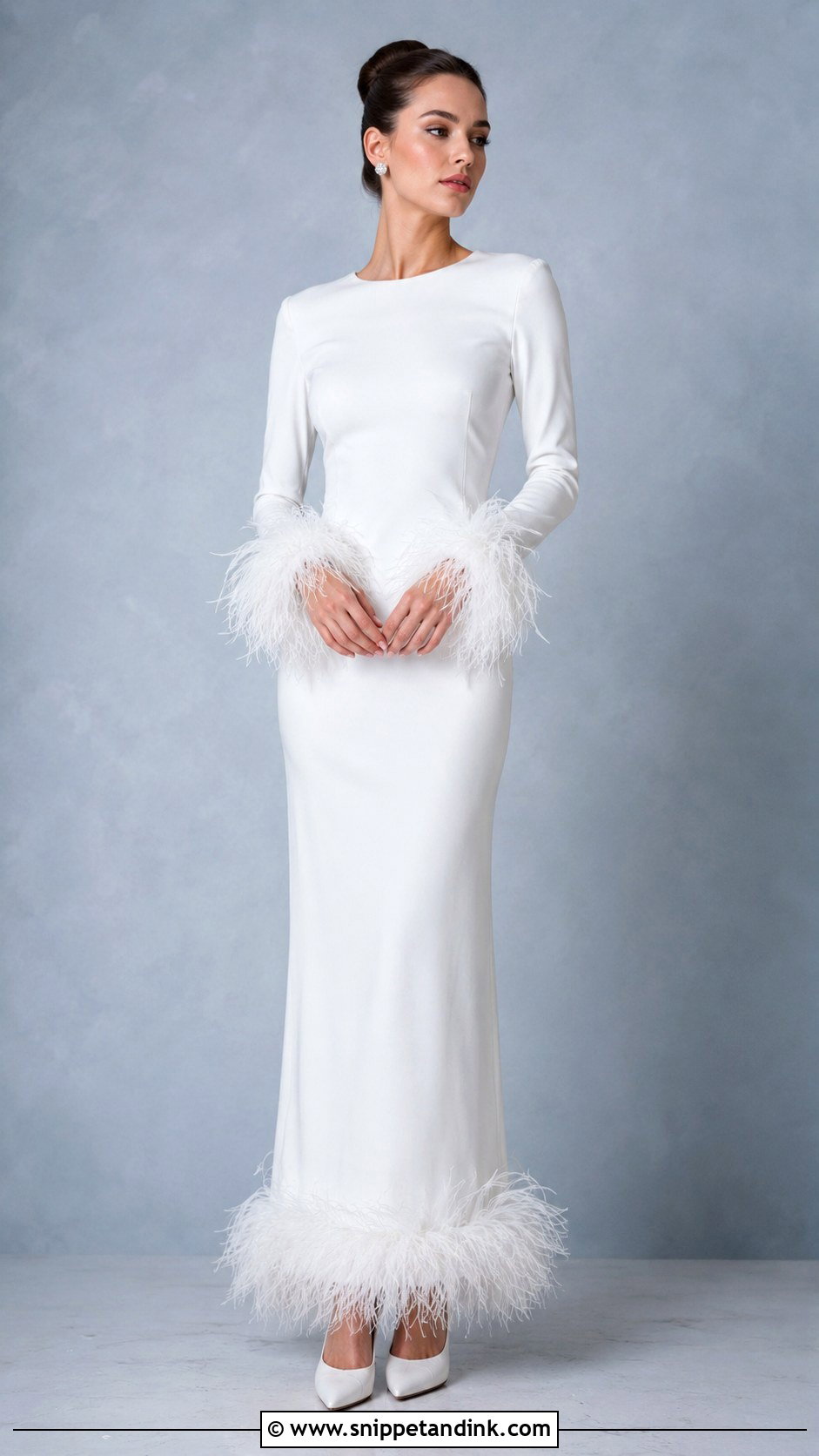
Feathers photograph best with texture-revealing light, so in the studio I use bright diffused light from the side to separate each plume. A streamlined white gown with feathers at the neckline, cuffs or hem works better than full coverage, which becomes a white blob. A pale grey or soft blue background keeps the gown from merging into the set. Strong standing poses, side profiles and a slow step toward the camera show both shape and movement. Keep hands away from the feathered areas. I check the floor between frames, because loose feathers show up everywhere.
20. Plus Size Sequin Gown Studio Photoshoot
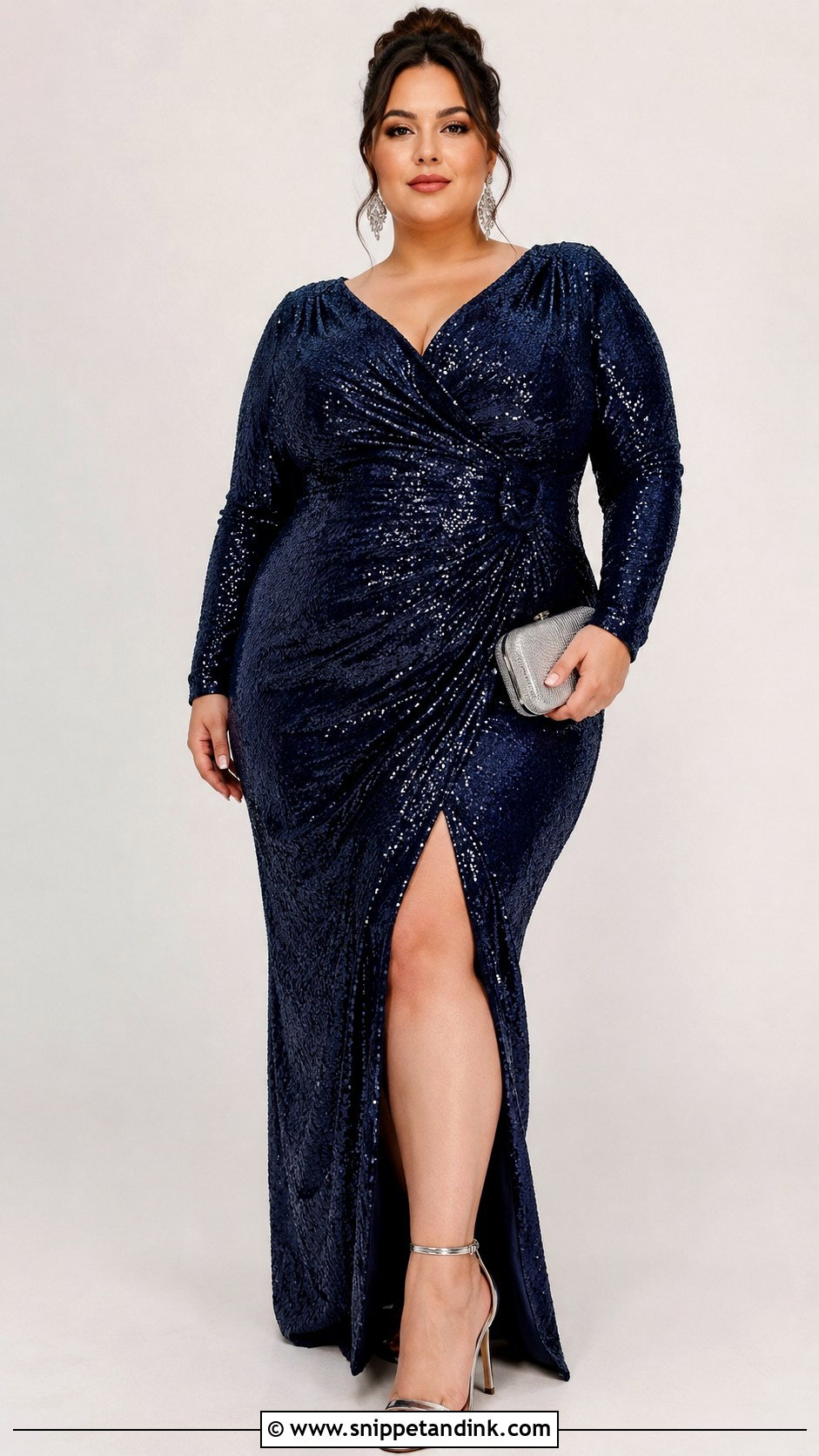
A sequin gown in a studio is a celebration portrait that doesn’t need props, and I direct plus size clients the same way I direct anyone: specifically, kindly and often. The gown needs supportive construction, a comfortable lining and a neckline that stays put. Metallic heels, bold earrings and a sleek clutch complete it. I ask for a slight turn of the body, one foot forward and arms away from the torso. Shoot full-length from natural height first, then try lower angles or seated poses. Soft light from the front and side controls reflections. Confidence grows when the gown fits and the direction is clear.
Throwing a Train Without Losing the Shot
Those images of fabric floating in the air come from timing, not luck. Here is the routine I use with an assistant:
- The assistant gathers the train from the end, standing behind and slightly to one side, out of frame.
- On a count of three, they throw the fabric up and away, then step back quickly.
- I shoot a burst at a fast shutter speed so the fabric freezes sharply.
- The subject holds the pose and looks where we agreed, not back at the train.
- We repeat several times; most attempts need small adjustments before one works.
Throw with the wind, never against it, or the train wraps around the subject’s face.
What Goes in My Location Bag for a Gown Shoot
Small things cut more shoots short than bad weather does. I pack spring clamps to tighten a loose gown at the back, a clean sheet or groundsheet, flat shoes, safety pins, fashion tape, a lint roller, blotting papers and a handheld steamer if the venue has power. An umbrella doubles as shade on hot days. Carry the gown in a breathable bag and dress at the location if you can; it arrives with far fewer creases.
Shot List, Light and One Clear Idea
The shoots that work best tie dress, accessories, pose, place and light into one idea. Start by looking at the gown’s shape and fabric: chiffon wants movement, while velvet, satin, sequins and structured ball gowns need more controlled posing and careful light. Pack comfortable shoes, a clean cover for the train and a small touch-up kit. I write a short shot list covering front, back, side, walking, seated and detail frames, so nothing gets missed when the light changes. Pick a concept that feels like you, and the camera will follow.


Leave a Reply