
A tiara changes how I build the whole hairstyle, not just the finish. It’s a rigid piece of metal sitting on a curved head, so the hair underneath has to give it something to grip and a shape to follow. Cascading curls, a sleek low bun or a braided crown can all carry one, and so can nearly every length and texture, but each needs a slightly different foundation. Below are twenty tiara looks, from loose and bohemian to polished and classic, with notes on what I do to keep each one sitting straight from the aisle to the last dance.
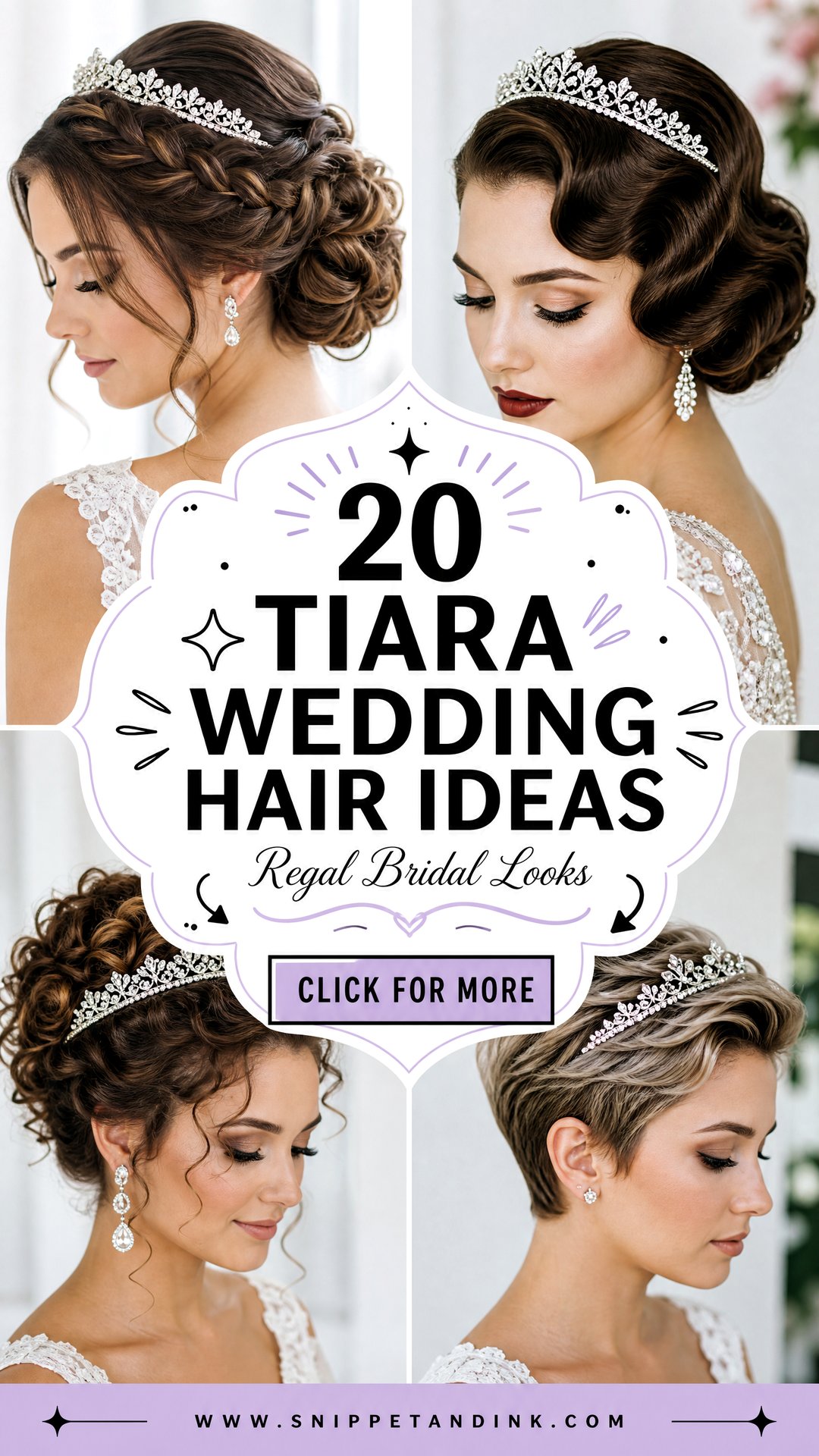
Anchoring a Tiara So It Stays Level All Day
Most tiaras I’m handed fall into three kinds: a band with a small loop at each end, a band with built-in combs, or a headband-style frame that tucks behind the ears. Each sits differently, so I ask brides to bring the actual piece to the trial, not a photo of it.
How I secure it
- Build a base first. A little backcombing at the crown, smoothed over, gives combs and pins something to bite into.
- Crisscross two bobby pins in an X through each end loop. One pin slides; two locked together hold.
- Match the pin color to the hair, not to the tiara.
- For a heavier piece, I attach a short loop of clear elastic to each end so it can be pinned at the back as well.
When the hair fights back
Freshly washed, silky hair is the most slippery, so I ask fine-haired brides to wash the day before and arrive with dry hair. Thick, coarse hair holds pins easily but can push a light tiara up and out, and a few extra pins behind the band settle it. If the tiara gives you a headache at the trial, it will on the day too. A little padding under the combs or a lighter piece is the fix.
1. Loose Waves With a Delicate Tiara
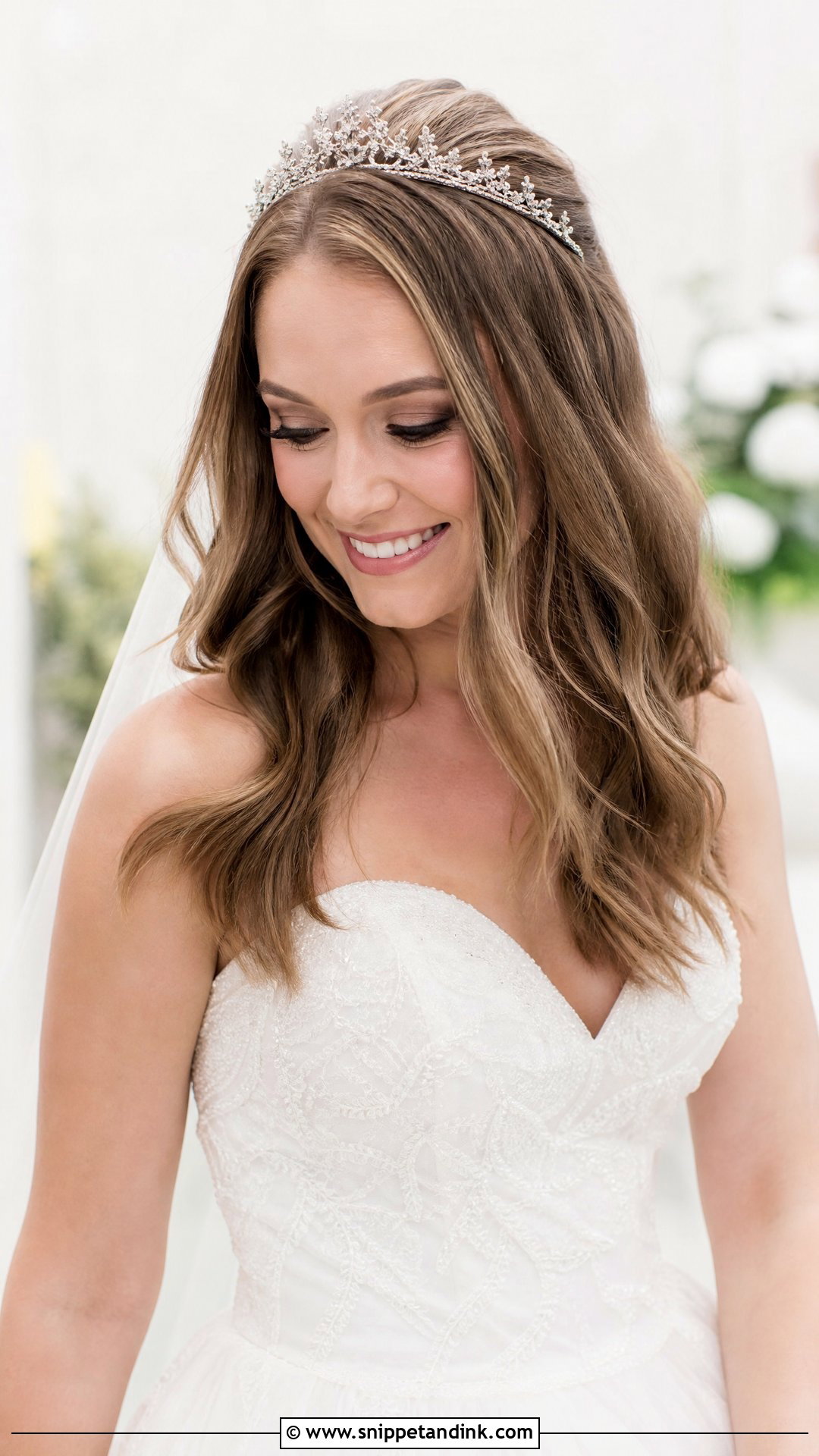
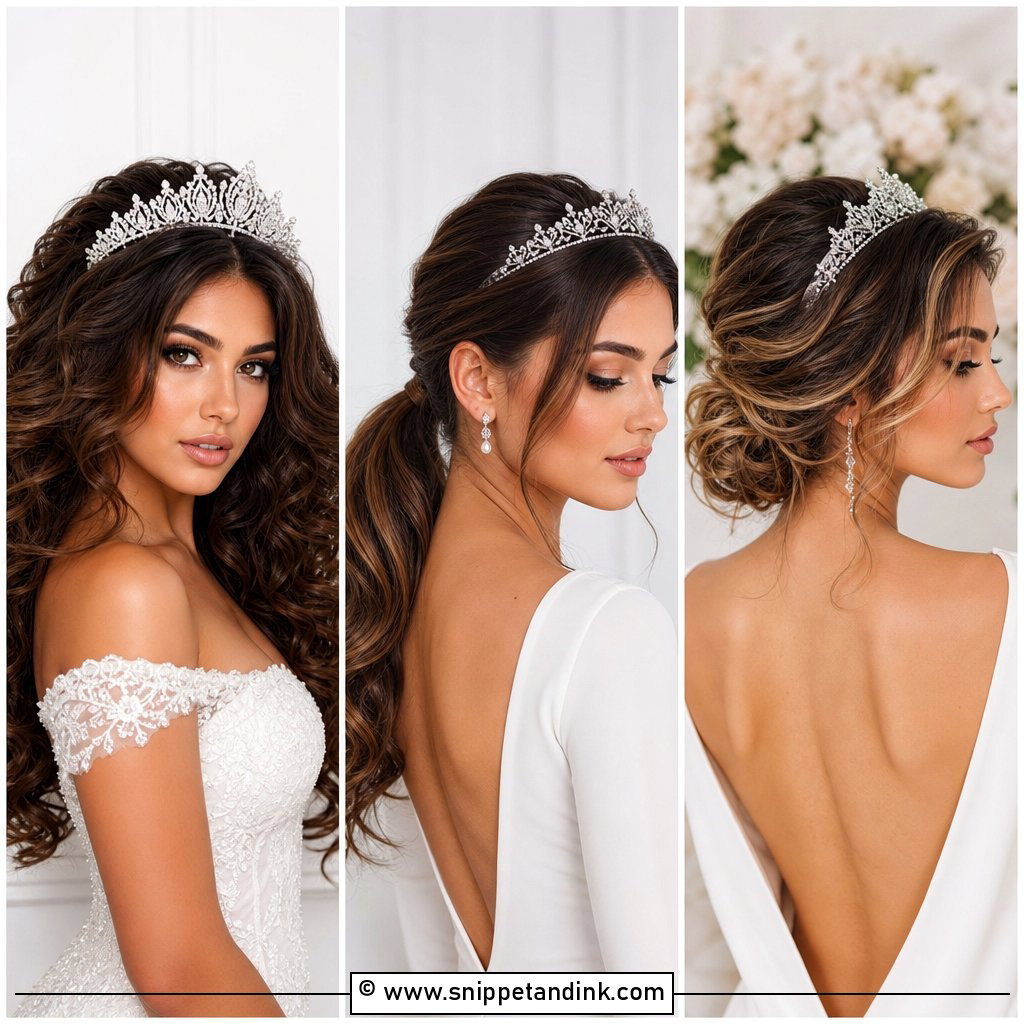
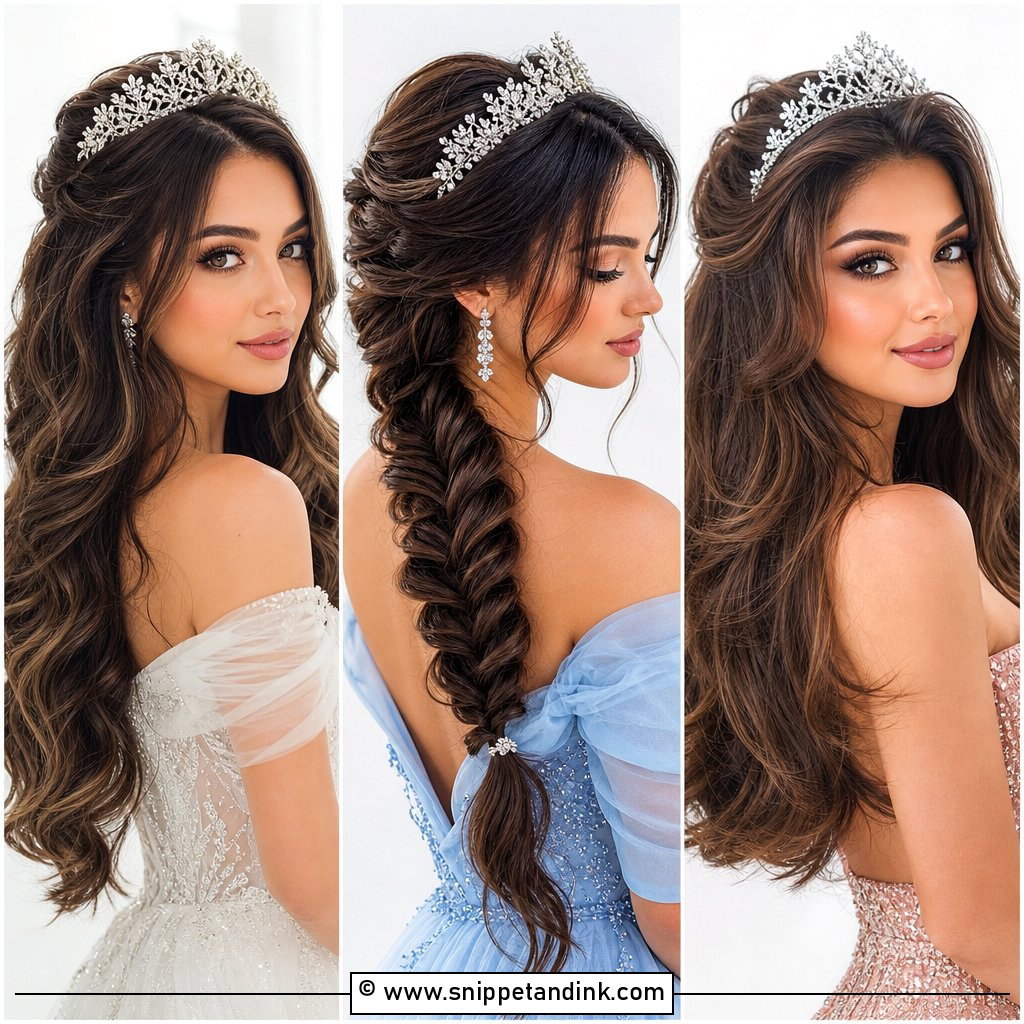
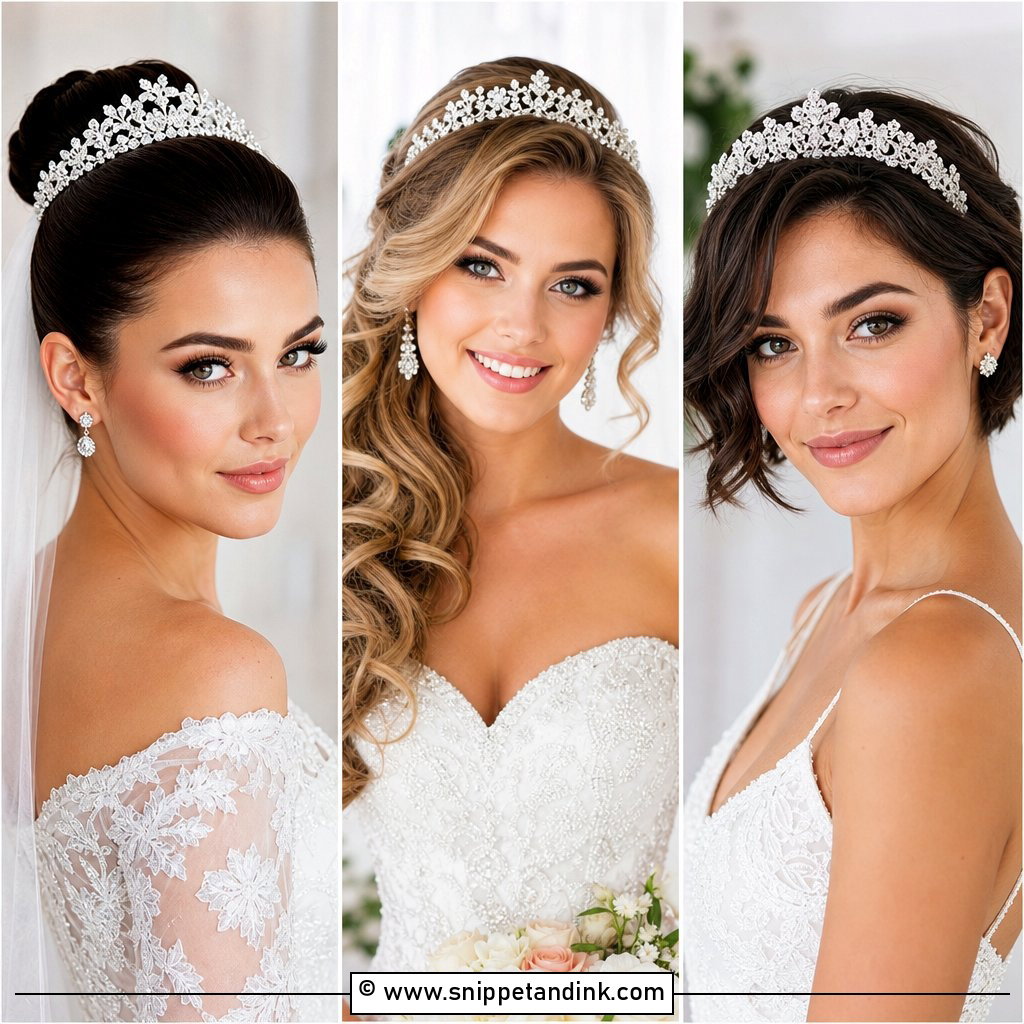
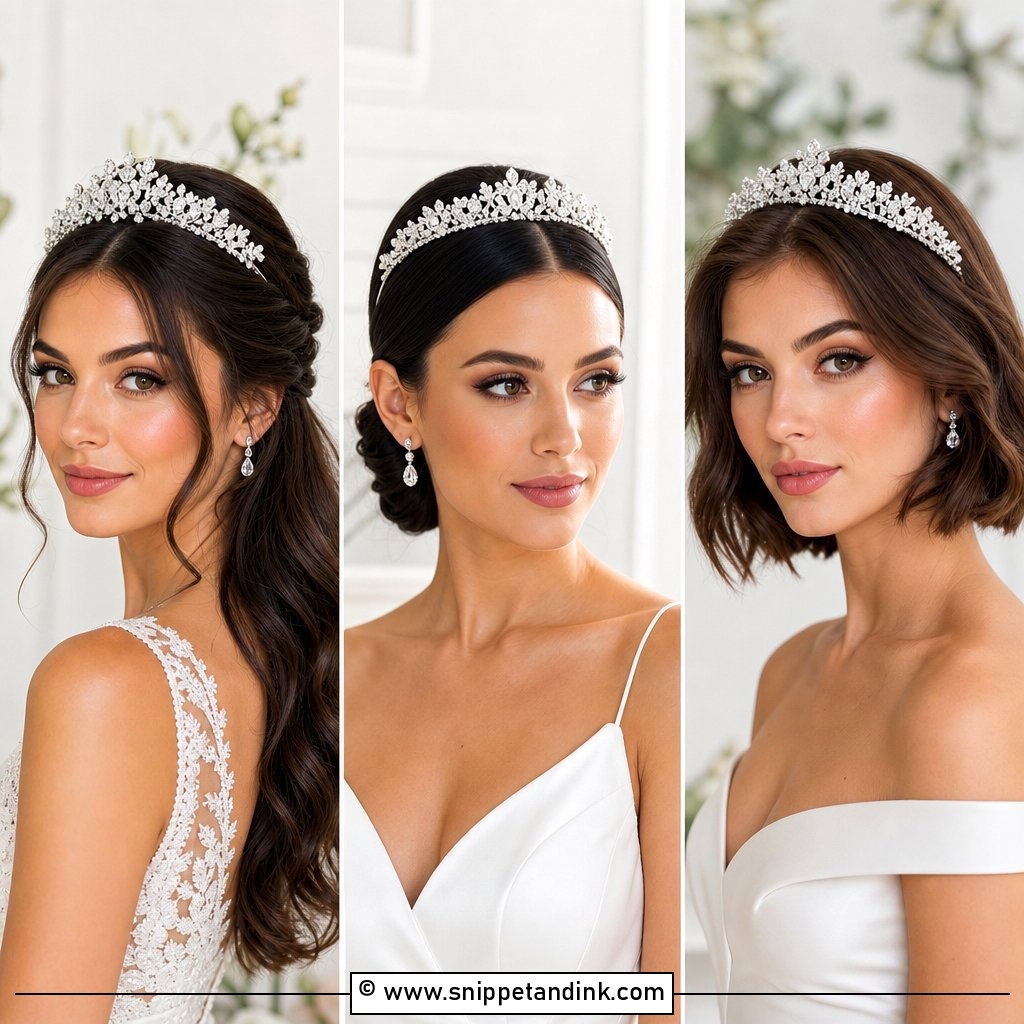
Loose waves are the hardest down style to hold a tiara in, because there’s no structure behind it. I solve that by pinning a small, flat section at the crown first and fixing the tiara into it, then letting the waves fall over the pins. Curl in large sections, let them cool fully, then brush them out so the texture is soft rather than ringlety. A slim band suits this better than a tall one, which looks top-heavy over loose hair. On a humid beach day expect the waves to drop a little, though loose waves with a sparkling tiara still look right as they relax.
2. Low Bun With a Classic Tiara
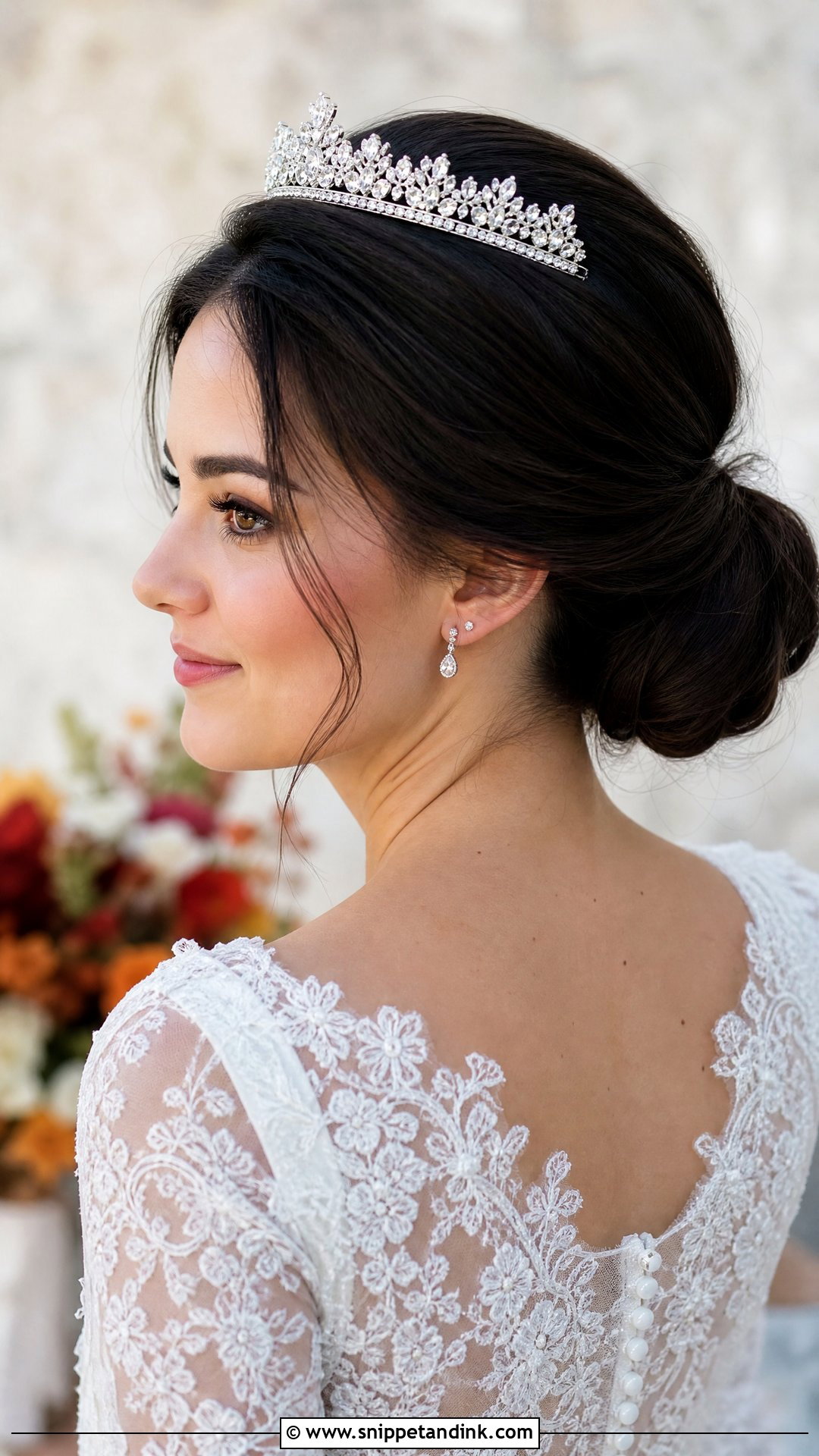
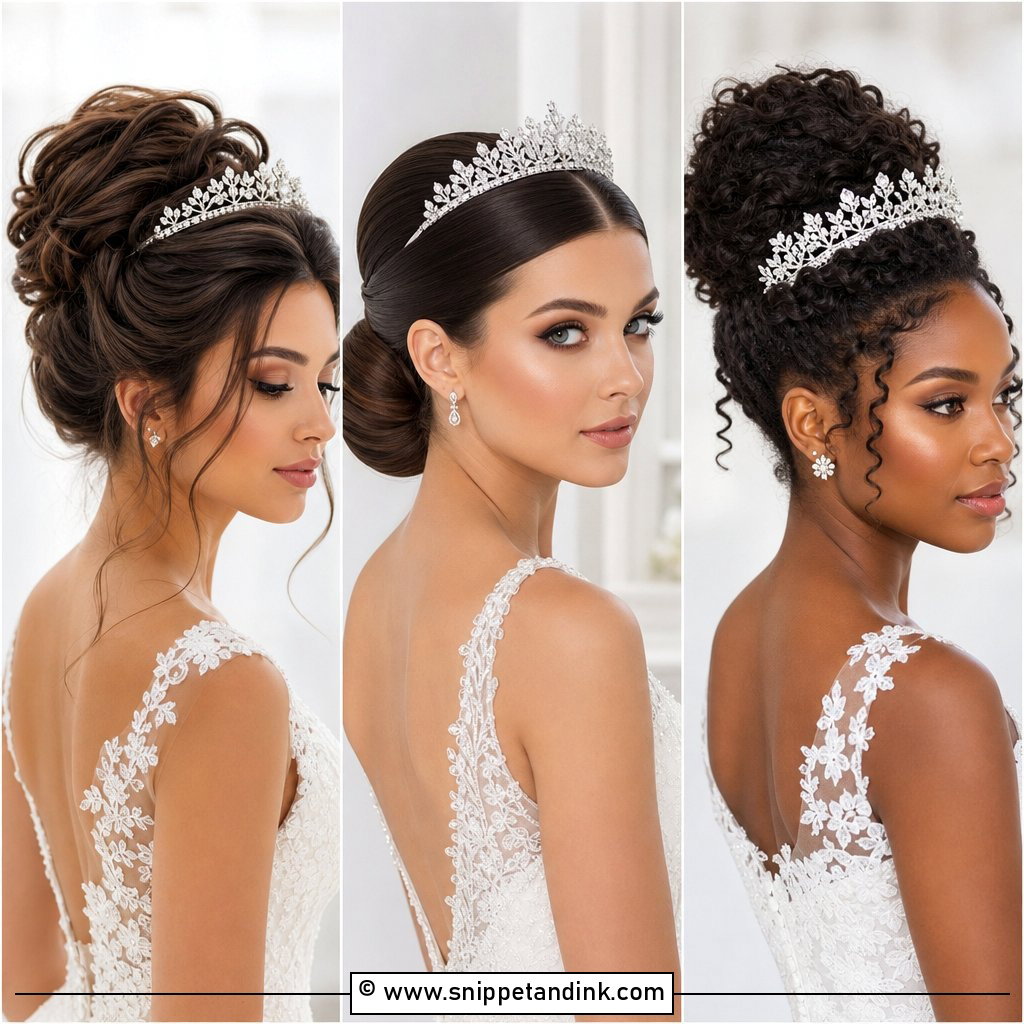
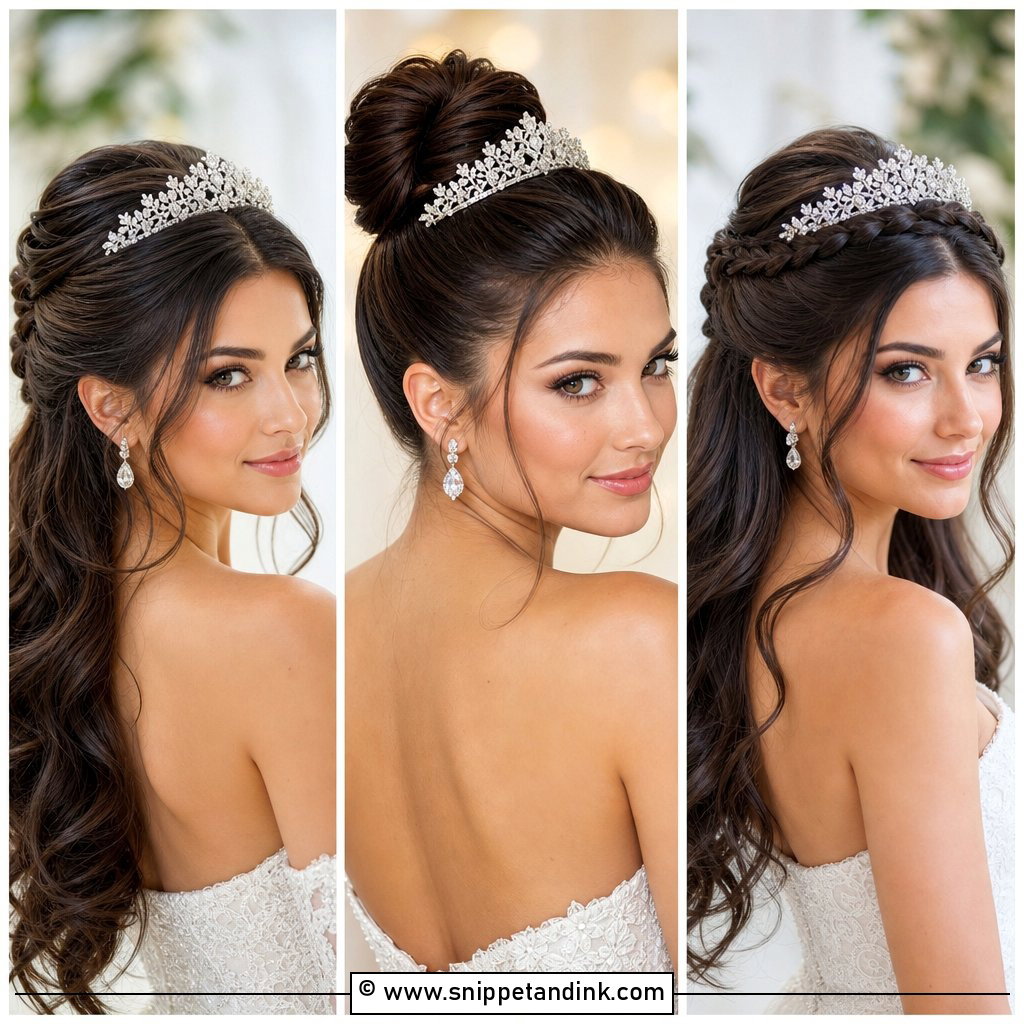
This is the combination I’d call the safest. The bun gives the back of the tiara a natural stop, and a smooth, tight base means the combs have something firm to bite into. I place the tiara a finger or two behind the hairline so it reads as a crown rather than a headband. It suits church ceremonies and black tie, and it survives the dance floor because nothing’s loose. If your hair is very fine or slippery, I’ll add texture spray to the roots first, or the bun and the tiara will both creep.
3. Half-Up Half-Down With a Tiara
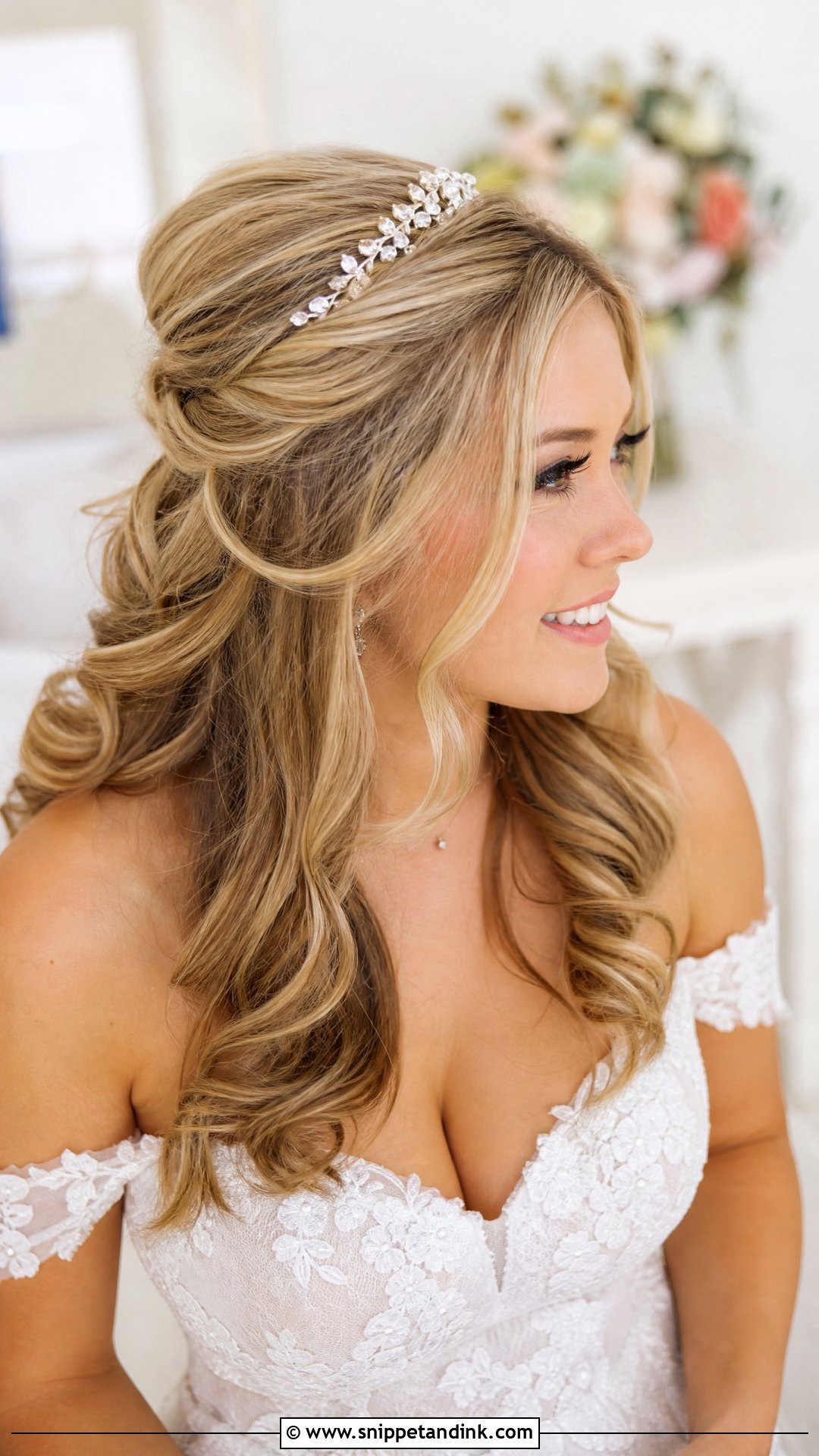
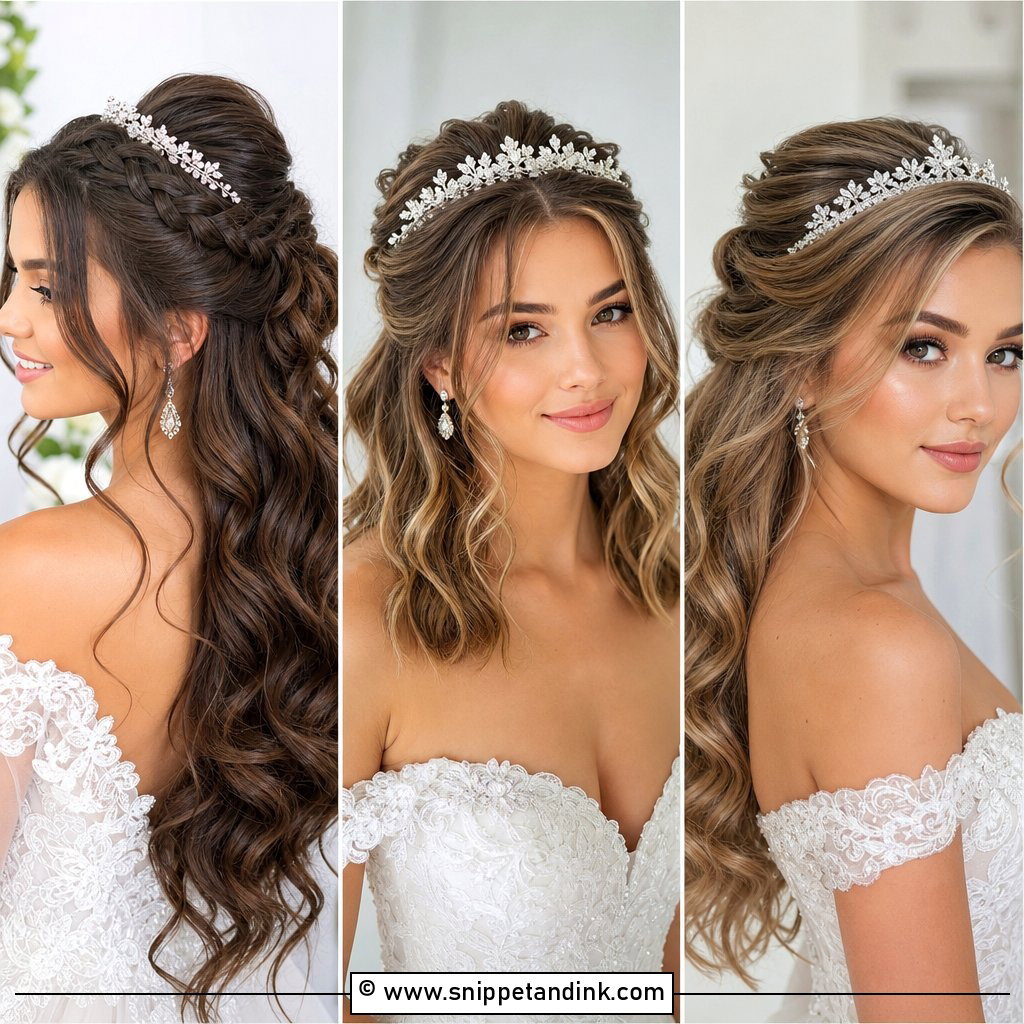
Half-up is the answer for the bride who can’t decide, and the pinned top section doubles as an anchor. I build that section with a little backcombing underneath so it has grip, then set the tiara along the line where the pulled-back hair meets the crown. Curls through the lower lengths add volume. It works with most face shapes and with a veil, which can slide in just beneath the twist. On shoulder-length hair the down part can look thin, so I keep the top section smaller there.
4. Crown Braid With a Tiara
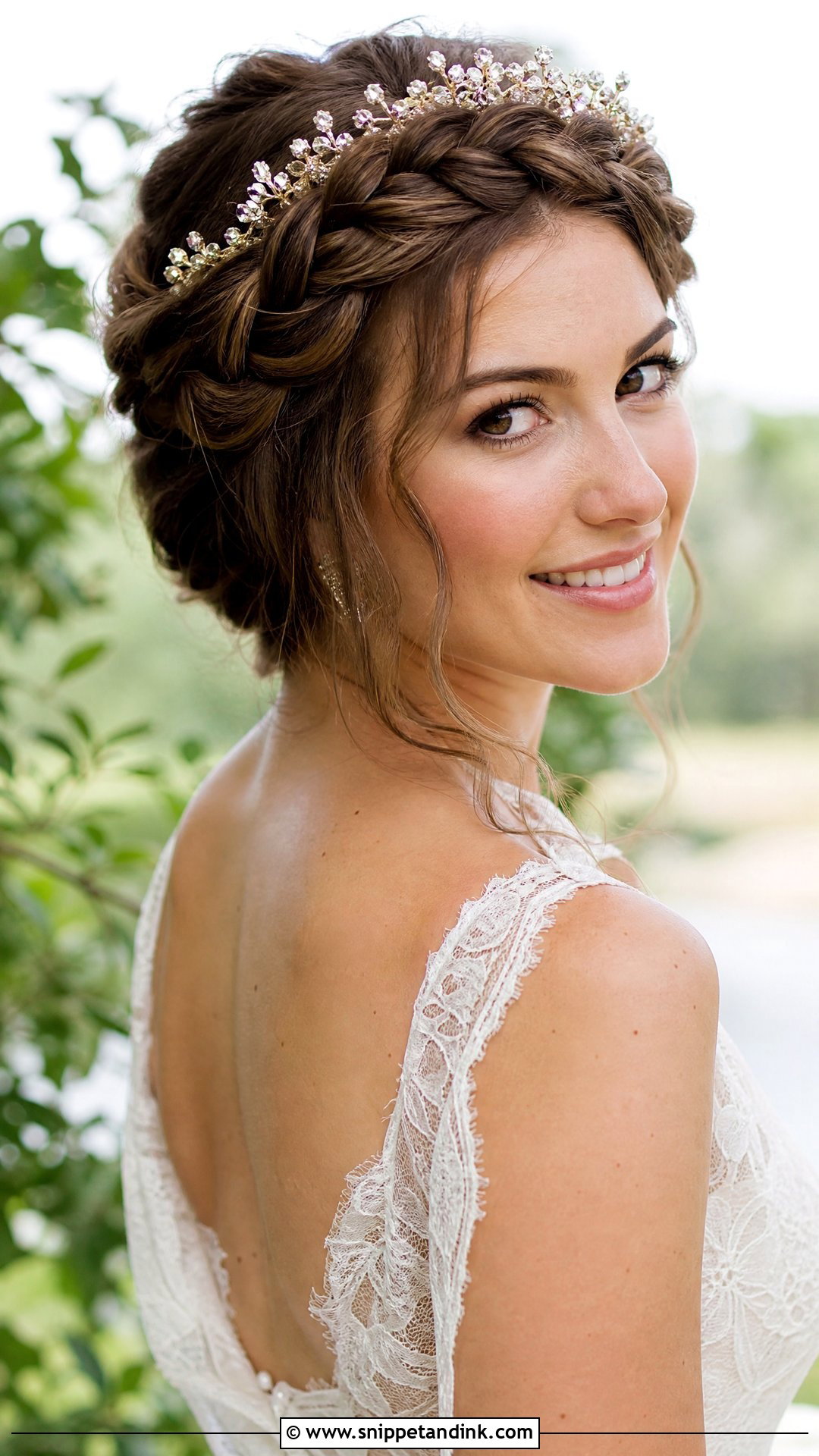
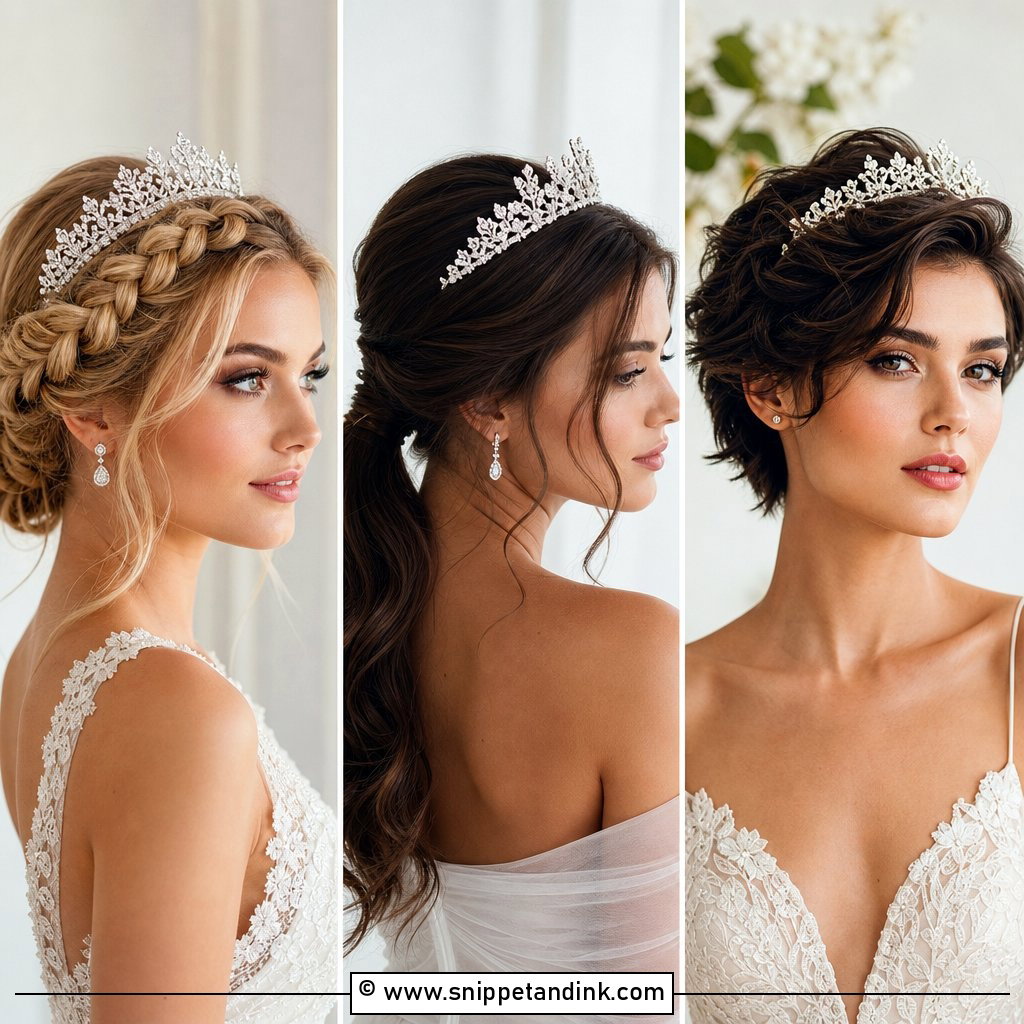
A crown braid already traces the path a tiara takes. I braid around the head, tuck the ends into a small bun or under the braid itself, and rest the tiara just in front of the braid, where it’s supported from behind. Every crossover gives a pin something to hook into, so this is one of the most secure options on the list. Rustic and boho weddings suit it, and it holds through a long day. On very fine or heavily layered hair, short pieces poke out of the braid, and I’d add clip-in hair to thicken it. The crown braid and tiara pairing looks best with a delicate band rather than a tall piece.
5. Voluminous Curls With a Tiara
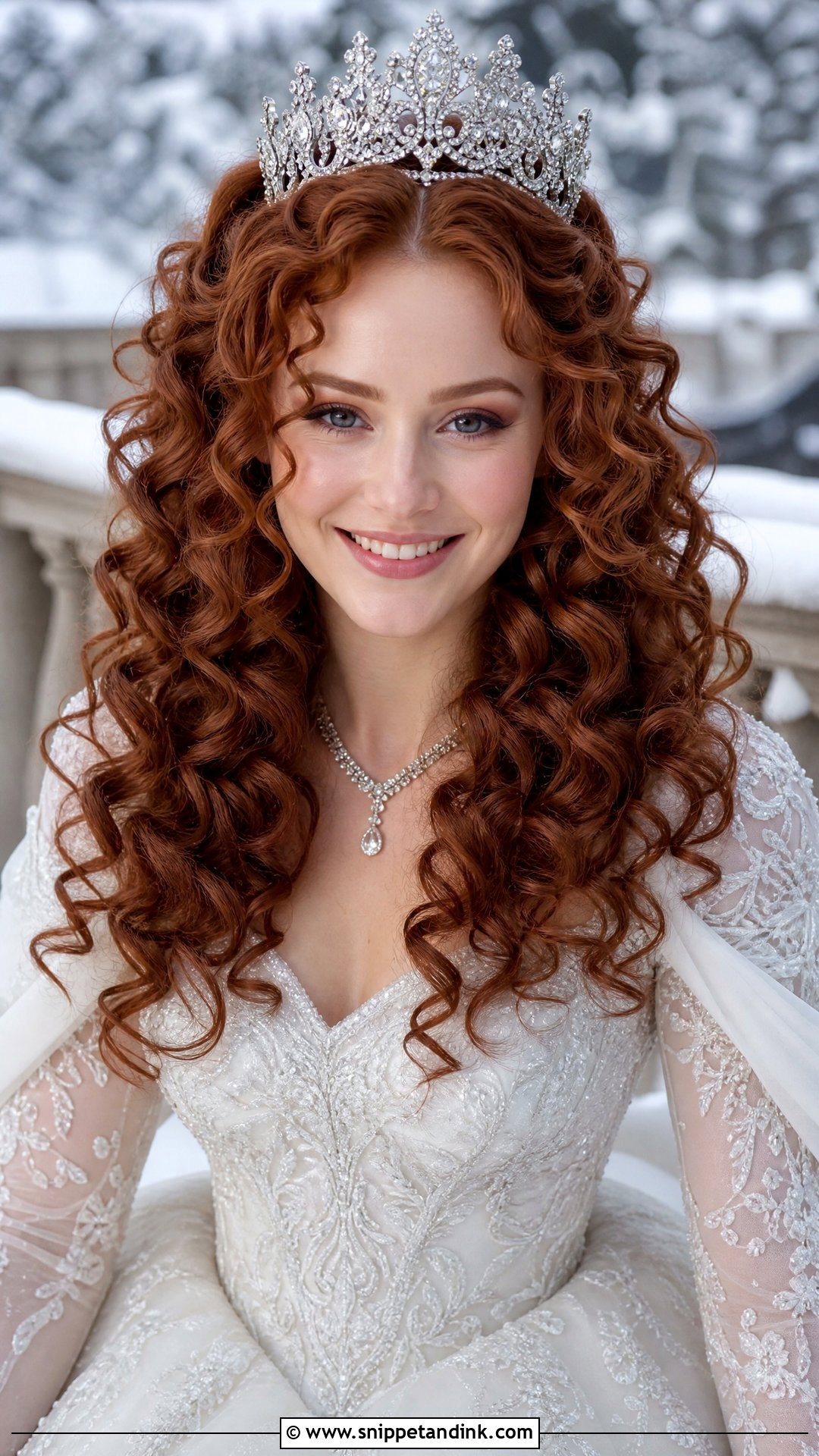
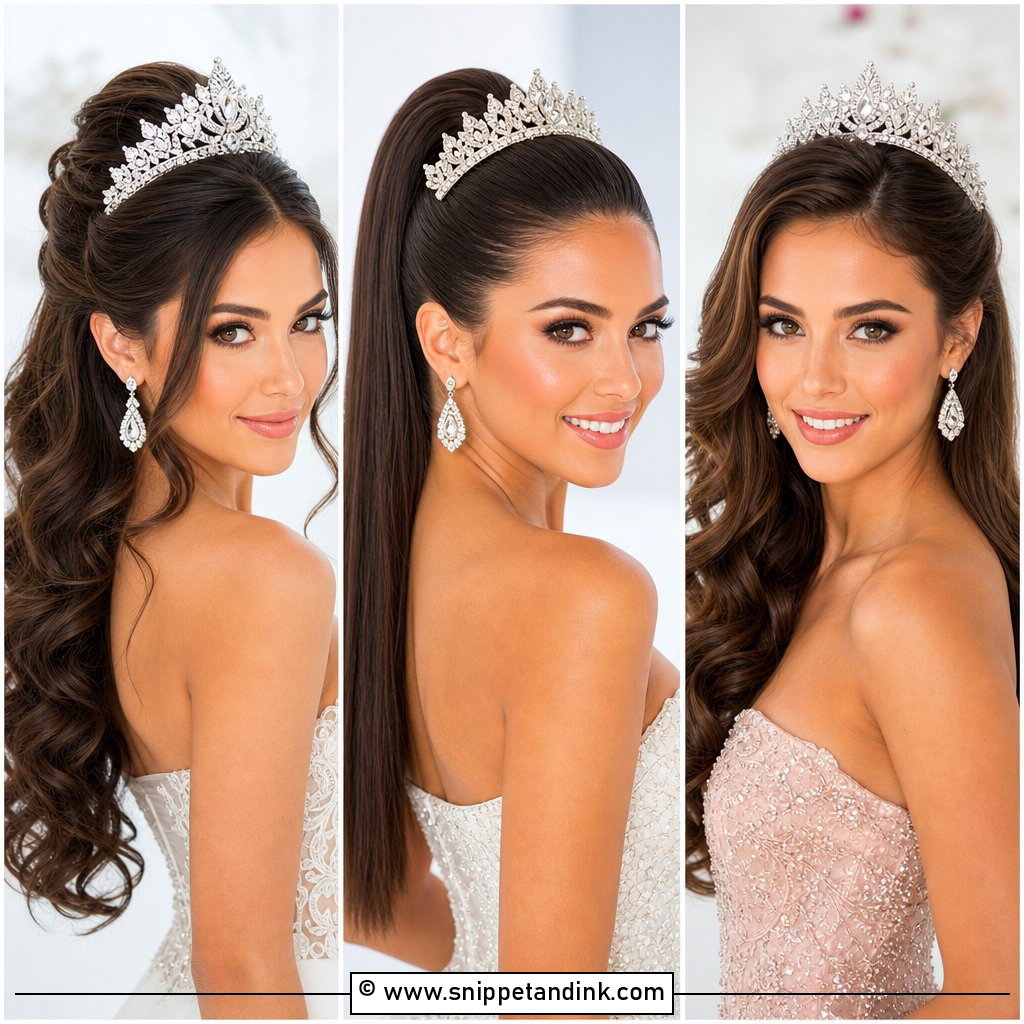
Big curls and a statement tiara make the most dramatic look here, and the heaviest to hold. I set the curls with a strong-hold product, pin each one while hot so it cools in shape, and only brush out at the very end. Volume at the crown lifts the tiara, so the piece needs its combs or loops pinned well into a backcombed base. Long hair and ballroom venues suit it. I wouldn’t choose it for a humid outdoor wedding, because voluminous curls lose their spring in damp air and a heavy tiara on relaxed curls tips forward.
6. French Twist With a Tiara
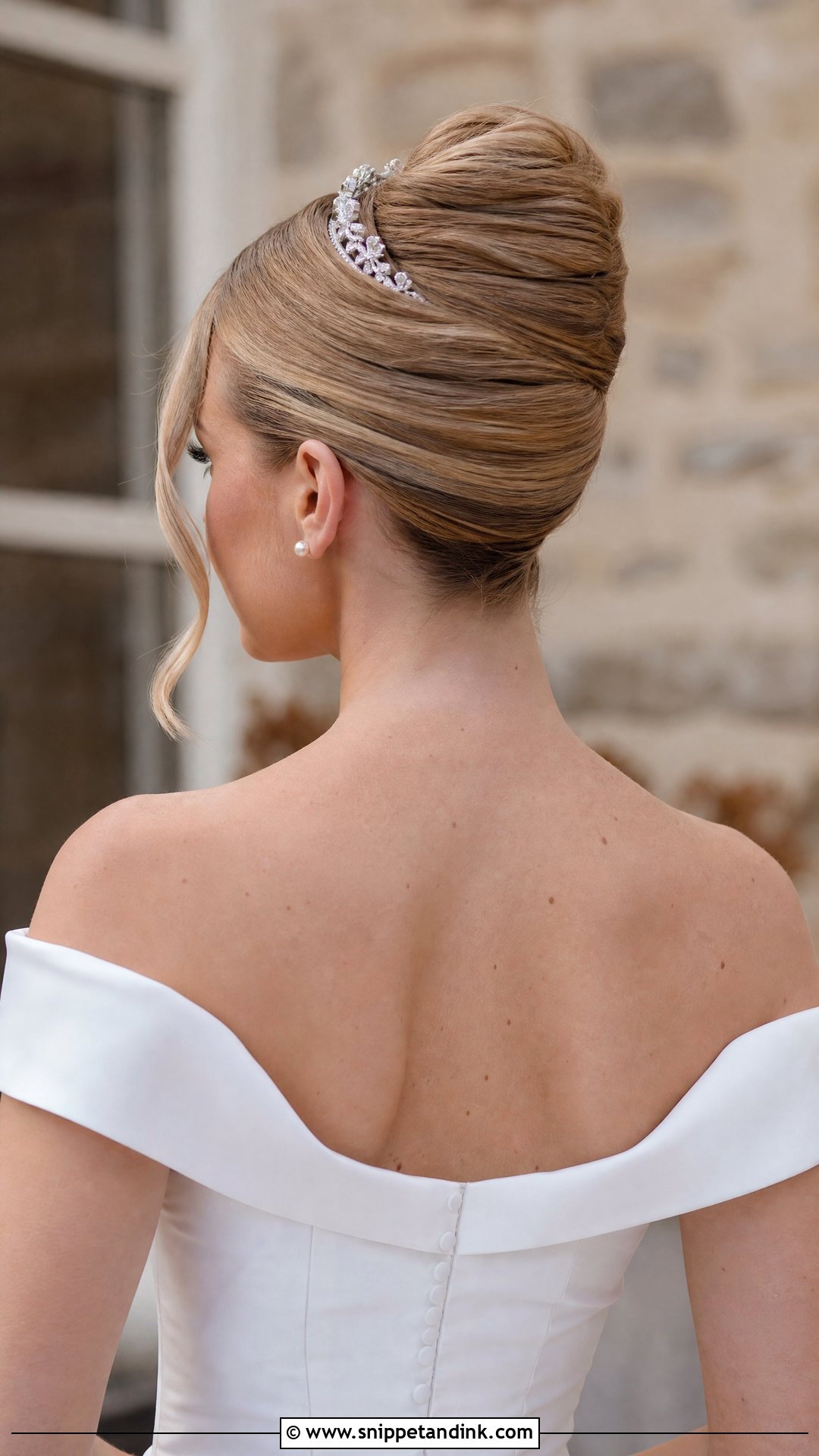
A French twist rolls the hair vertically up the back of the head, leaving a smooth, clean crown for the tiara. I prep with smoothing cream and a little hold before twisting, and the pins go in along the seam where they won’t show. A slim tiara along the crown adds just enough sparkle; anything tall competes with the clean line. A cathedral veil pins neatly just under the top of the twist. Very thick hair can make the roll bulky, so I sometimes thin the underneath section before twisting.
7. Messy Bun With a Tiara
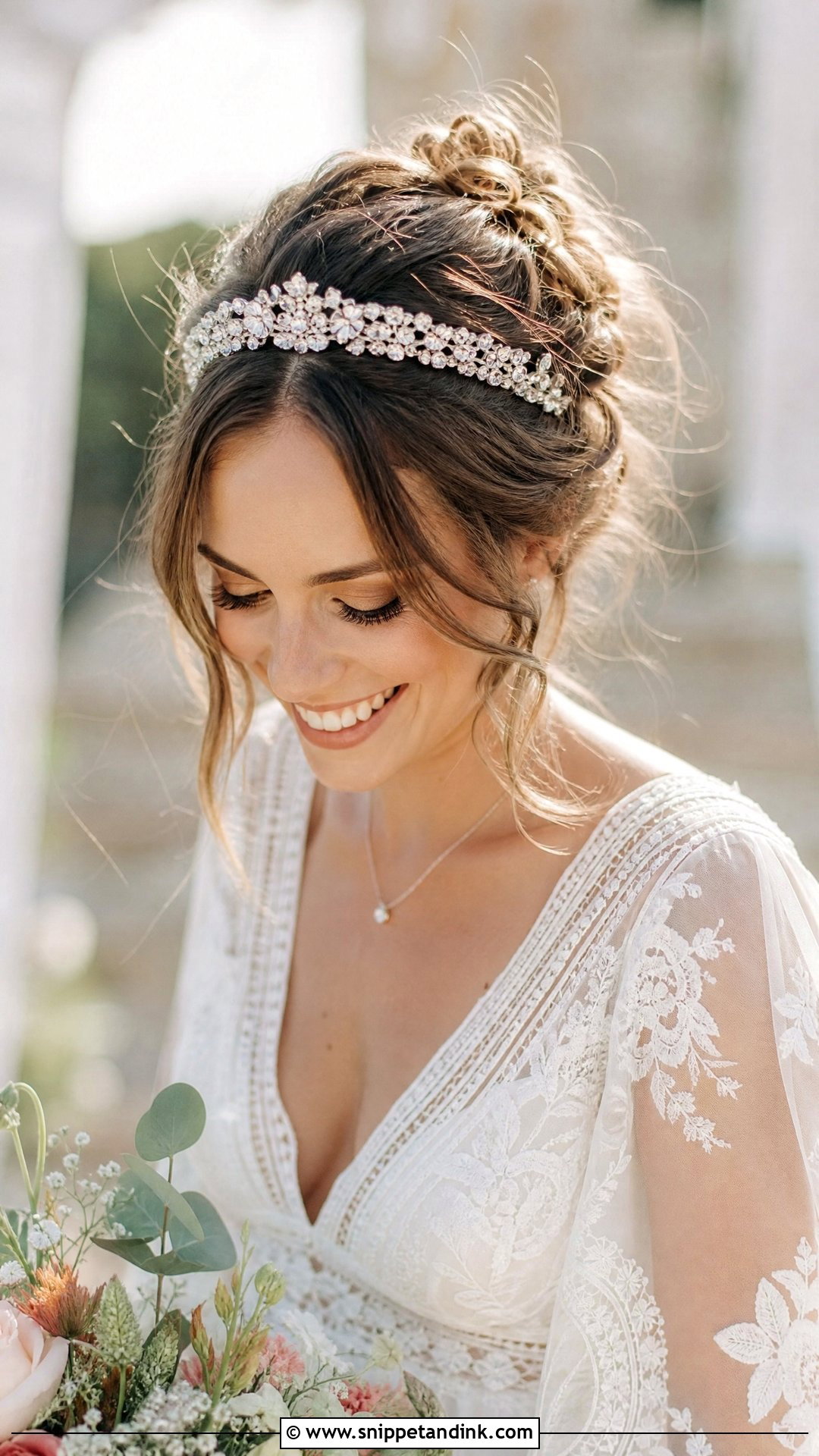
A messy bun only looks messy. Underneath, I build it from pinned sections so it won’t collapse by the speeches, then loosen the surface and pull out a few tendrils at the temples. The tiara adds the structure the bun doesn’t have, which is why the pairing works. Sit the bun high for height, or low if you’ll wear a veil. Outdoor weddings, flowing gowns and soft makeup go well with it. One warning: freshly washed, silky hair won’t hold this texture, so wash the day before rather than the morning of.
8. Sleek Ballerina Bun With a Tiara
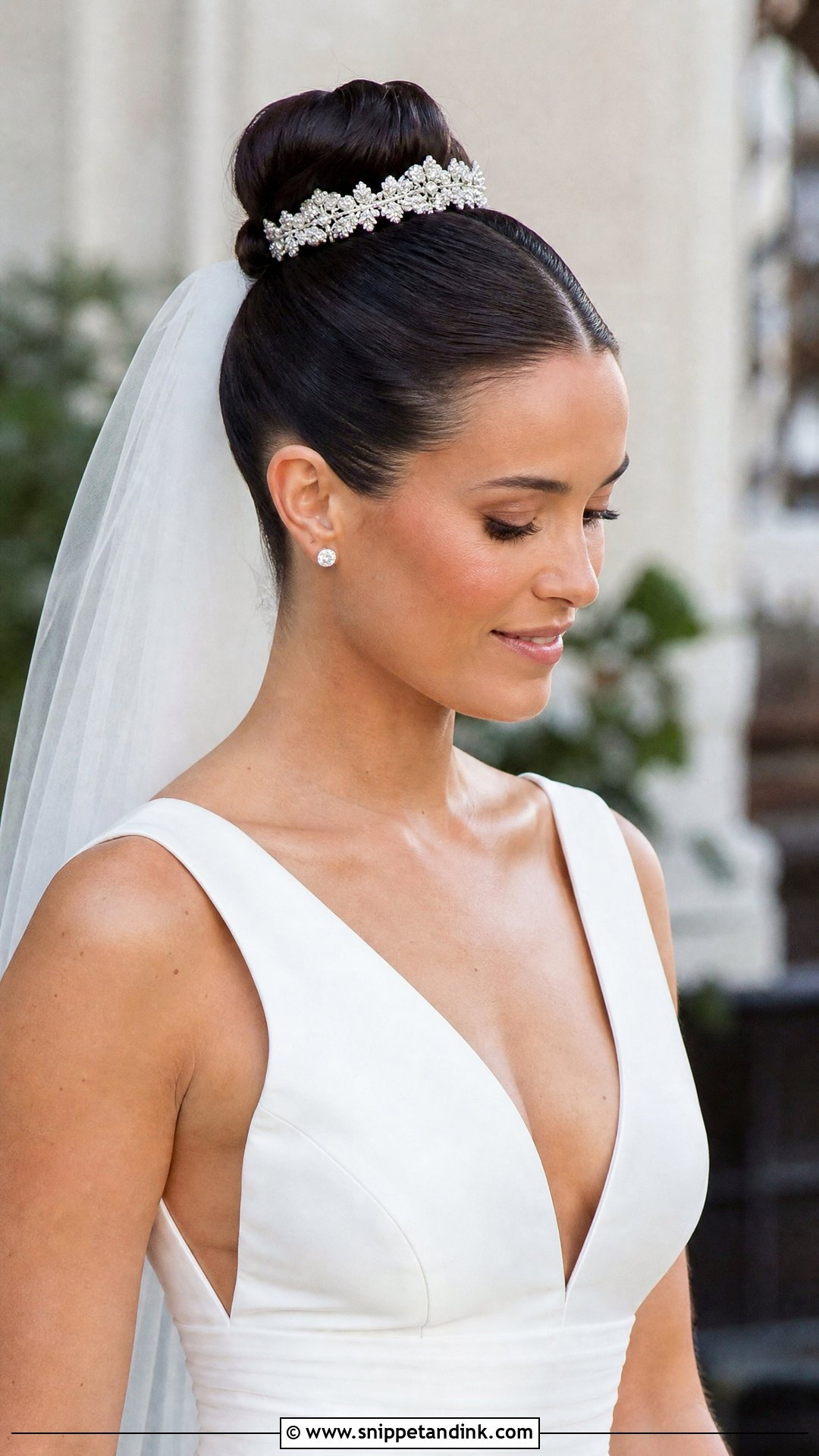
The sleek ballerina bun exposes everything, the hairline, the part and every flyaway, so prep matters more than styling. I use a fine-tooth comb, a little gel and a soft brush to smooth the sides, then wrap the bun tightly. The tiara sits in front of the bun as the only decoration, delicate or bold depending on how detailed the dress is. I’m honest with anyone who has a strong cowlick or a thinner hairline at the front: slicked styles show it, and a soft side part may suit you better.
9. Side-Swept Curls With a Tiara
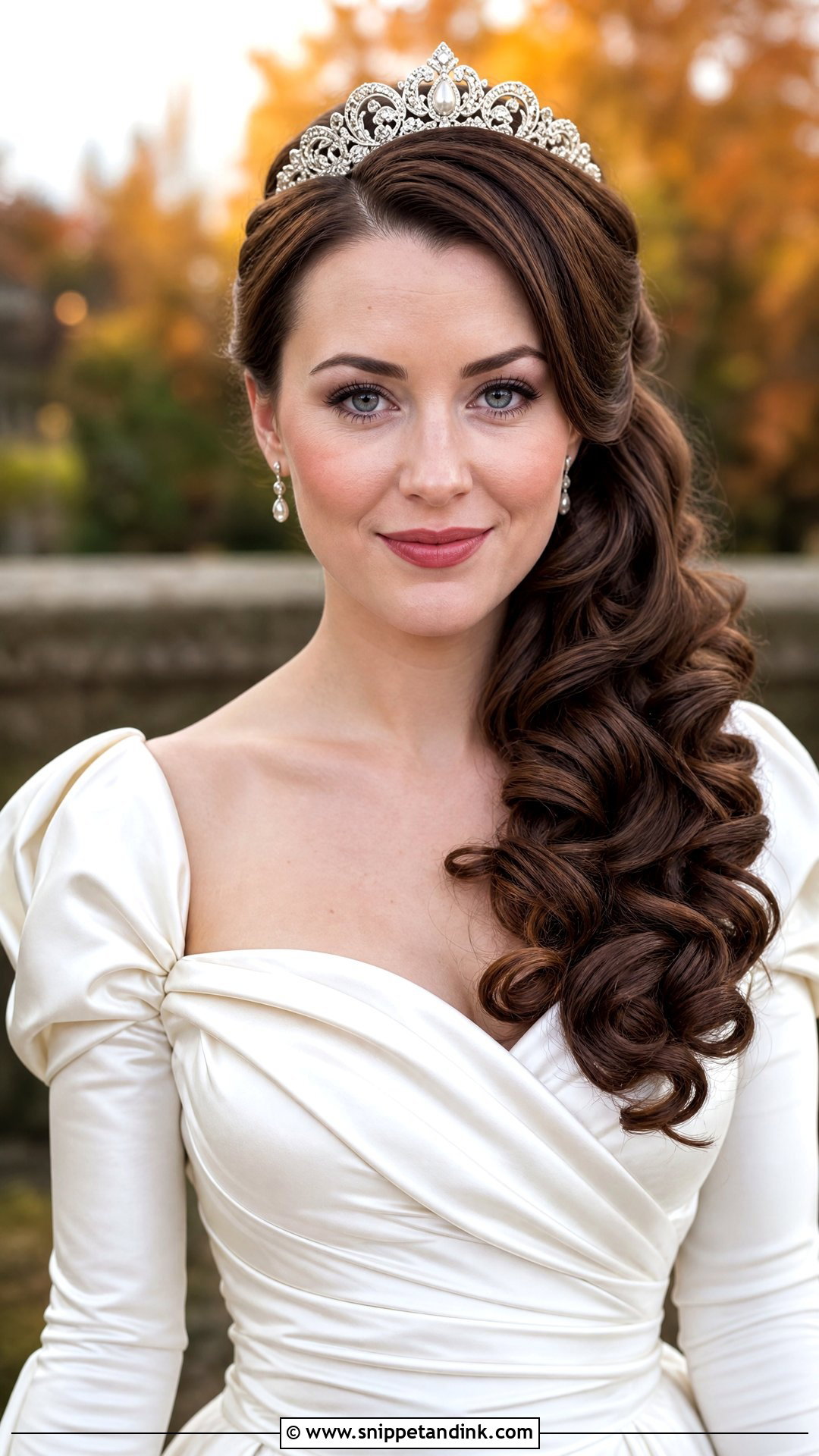
Side-swept curls are pure Old Hollywood, and the tiara’s job is to balance the asymmetry. I curl, pin the curls toward one shoulder with crisscrossed pins hidden behind the ear, and set the tiara level along the crown so the sparkle evens out the weight. Long hair suits it, and it shows off a statement earring or a bare shoulder on the open side. The pinned side tends to loosen when you hug people, so I hide extra pins along the nape. Save this one for an evening reception with a red-carpet mood.
10. Bridal Blowout With a Tiara
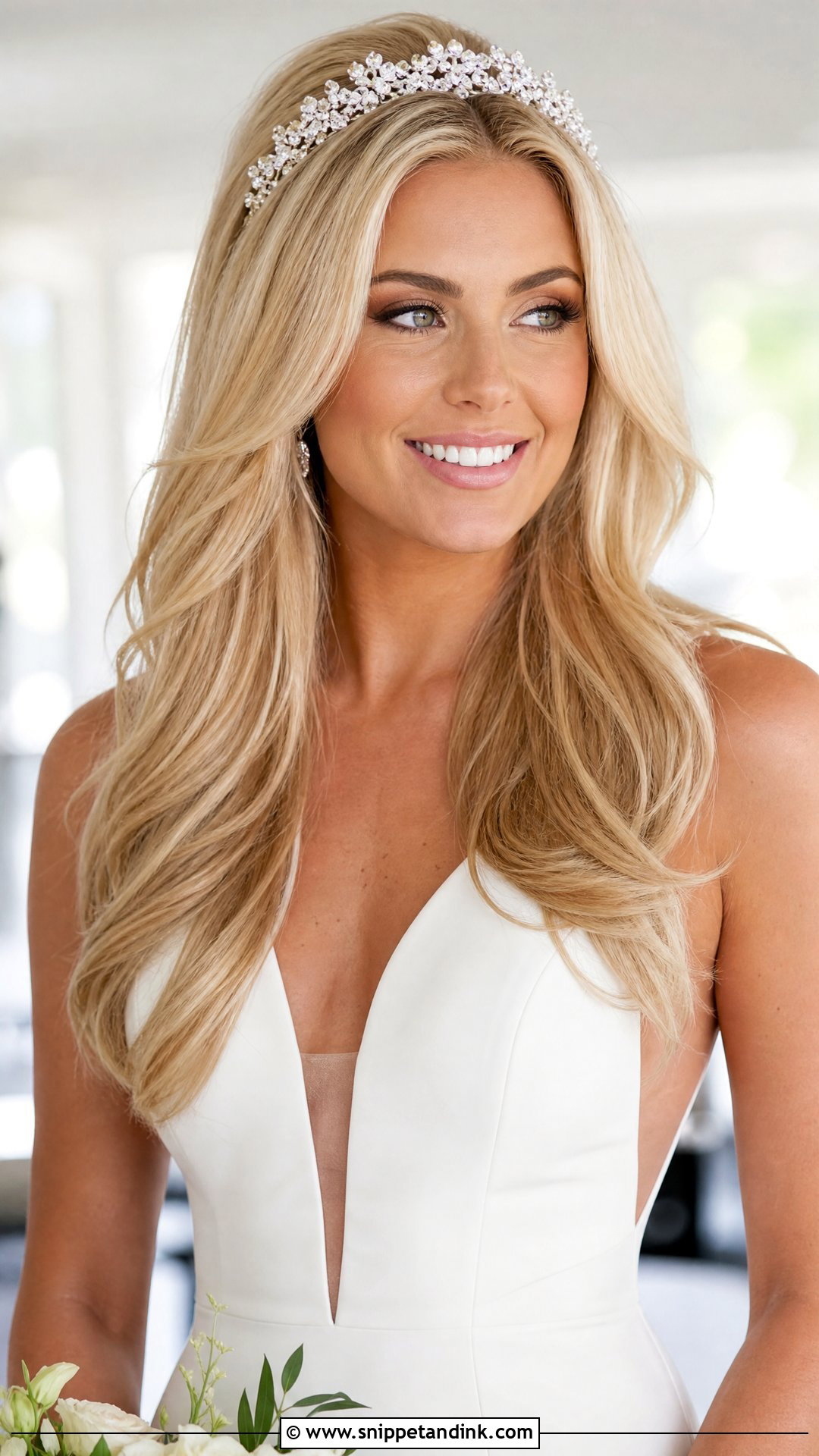
Down hair with a tiara needs more planning than people expect. A voluminous bridal blowout is smooth and bouncy, but smooth hair is slippery, so I build a small hidden base at the crown, a few backcombed sections pinned flat, before placing the tiara. A round brush and a hot dryer create the bounce, and a cool shot at the end helps it last. Naturally straight or wavy hair suits this best. If your hair drops its shape within an hour, a blowout won’t last a full day, and I’d steer you toward a half-up instead.
11. Braided Updo With a Tiara
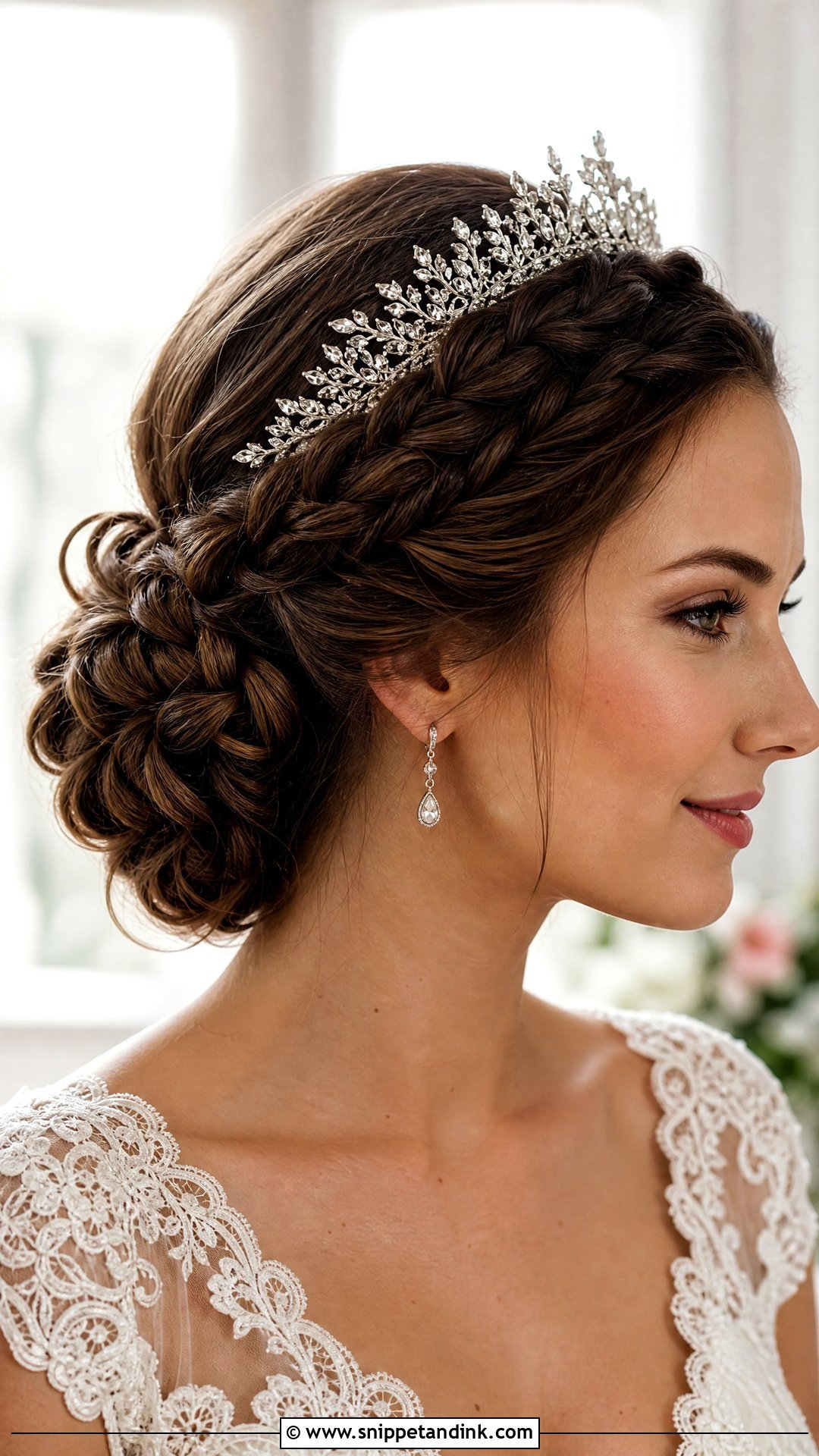
Braids woven into a low or twisted bun give texture, and every crossover in a braid is a place to hide a pin. I tuck the tiara’s ends right into the braided section so the frame sits snug and partly behind the texture. Boho, rustic and garden weddings suit it, and thick, long hair that grips braids firmly is ideal. On fine hair I pancake the braids, gently pulling the edges wider, so they look fuller. It holds for hours, which matters when the day runs well into the evening.
12. Slicked-Back Updo With a Tiara
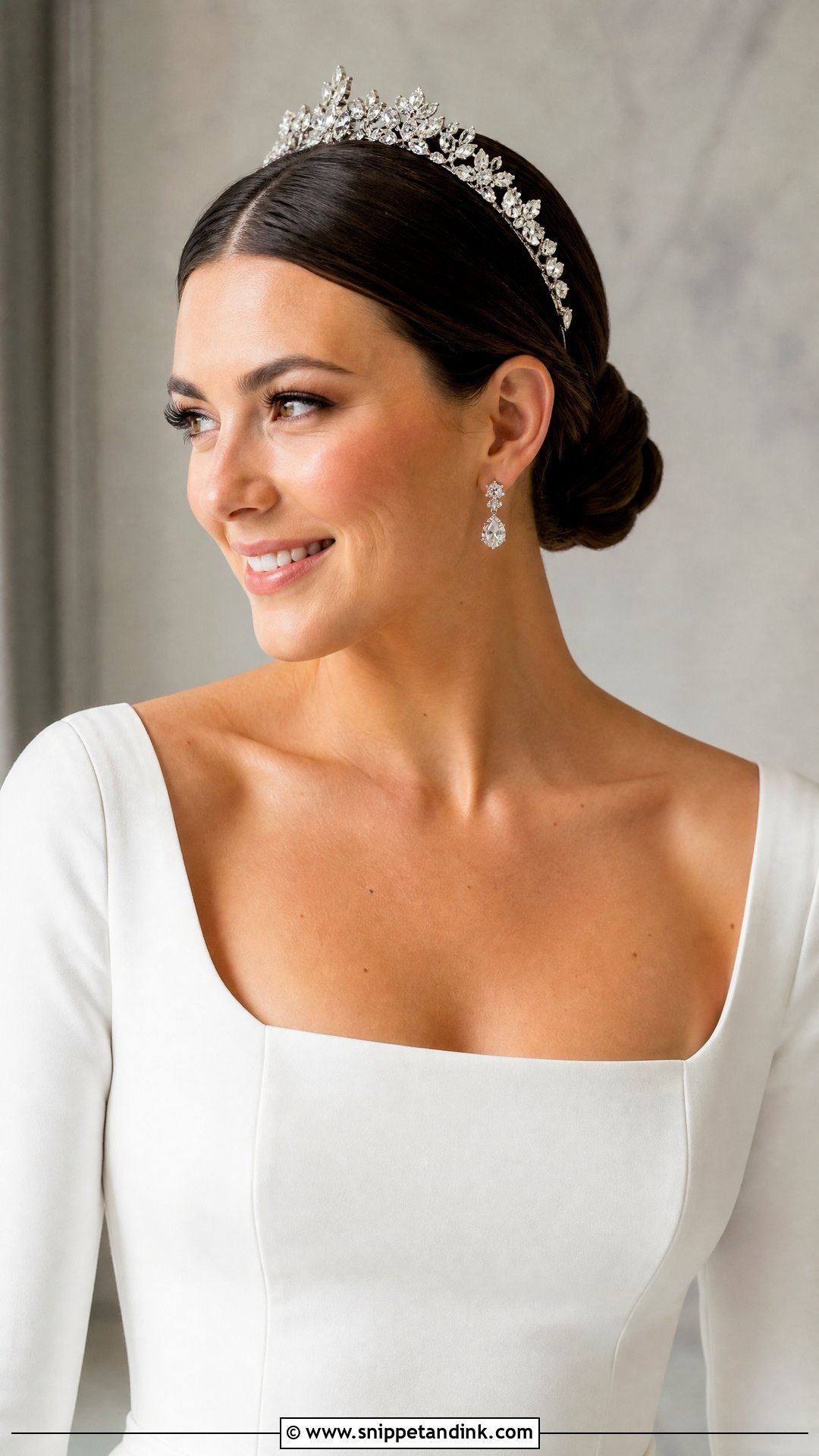
A center part and a slicked-back updo pull every strand off the face, leaving the tiara, your skin and your makeup on full view. I smooth the hair with gel and a boar bristle brush, then gather it into a low knot or twist that stays tight and glossy, and the tiara goes just behind the part for an editorial finish. City weddings and minimal gowns suit it. It isn’t forgiving, though. An uneven hairline, a part that won’t lie flat or hair that frizzes in humidity will all show, so test this one in real weather if you can.
13. Tousled Half-Up With a Tiara
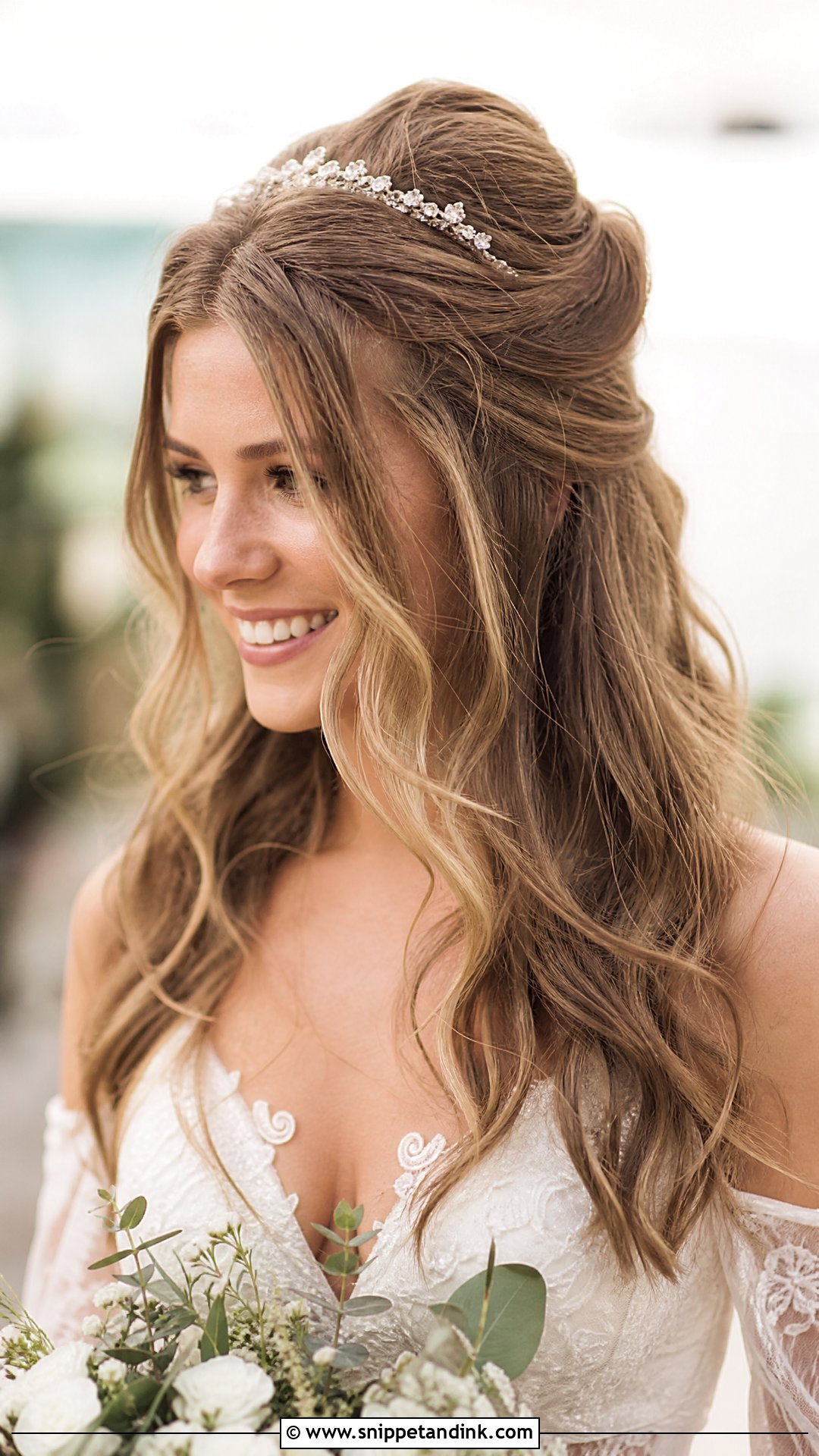
Think of this as the relaxed cousin of number three. I tease the crown slightly for soft height, pin the top section loosely, and leave textured waves below, with the tiara set where the half-up section begins. Because the hair is deliberately undone, the pins hide under the teased section, where they grip without showing. A few face-framing pieces soften the edges. For heavy, straight hair I work texture spray through the lengths, or the waves will be gone before the portraits.
14. Vintage Finger Waves With a Tiara
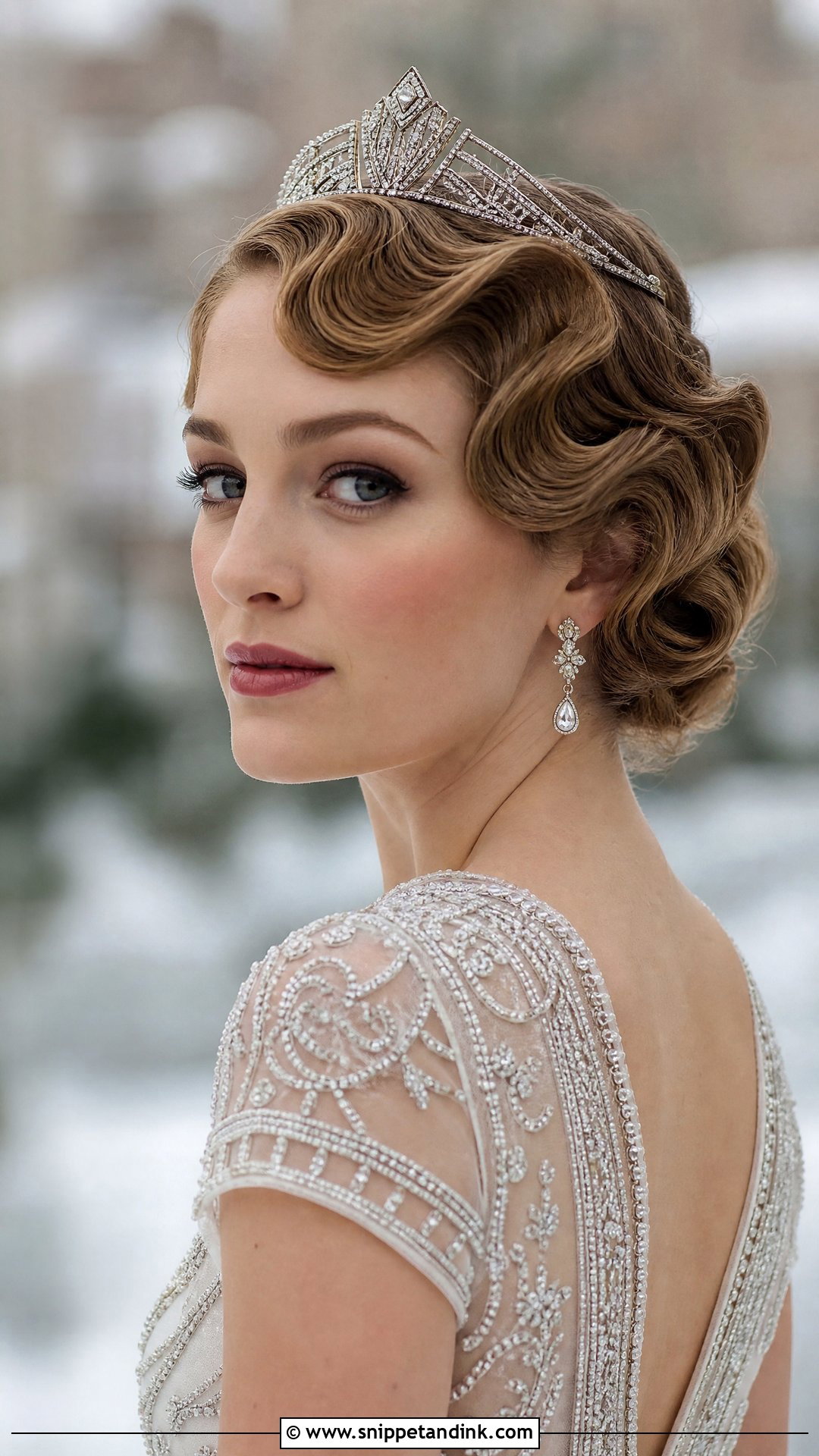
Finger waves are sculpted S-shapes set close to the head, and they’re one of the few styles here that suit short to medium hair best. I shape them with setting lotion and clips while the hair is wet, then let them dry completely before a single clip comes out. A delicate Art Deco tiara matches the period; anything chunky hides the wave pattern. This is slow work, often the longest appointment of the morning, so I schedule it first. For a bride who loves 1920s glamour, nothing else on the list gets closer.
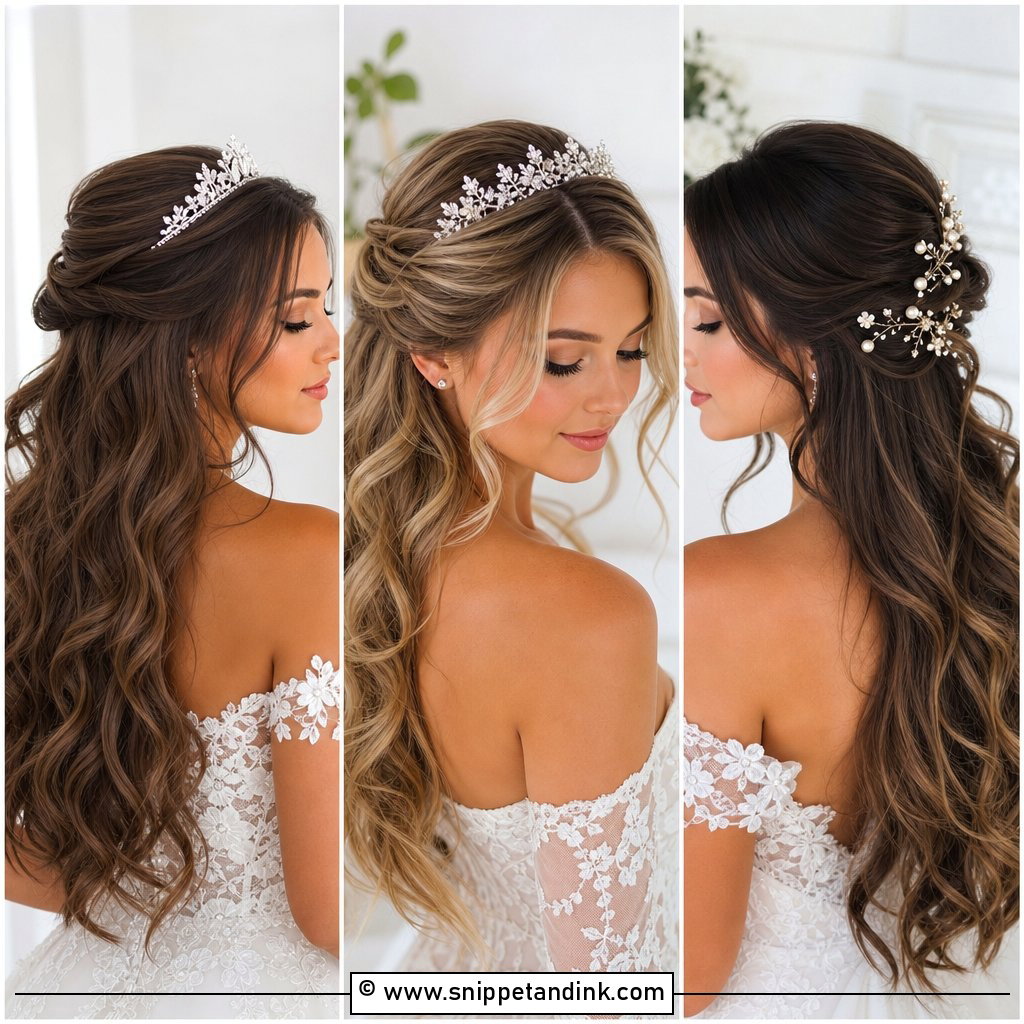
15. Low Chignon With a Tiara
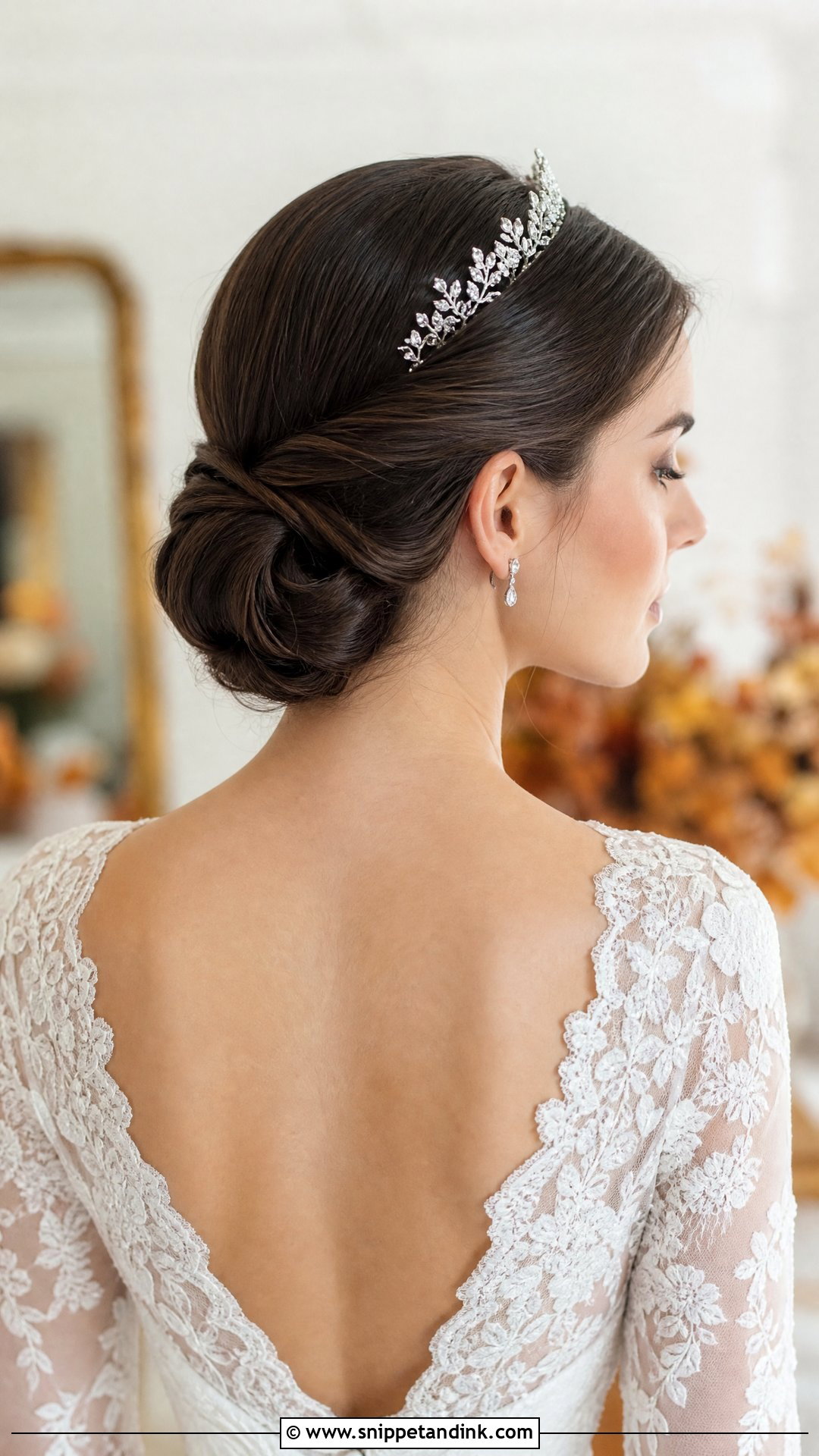
The low chignon is my default suggestion when a bride wants classic, secure and quiet. The hair is twisted into a smooth knot at the nape, which keeps the crown clear for a tiara and the neck clear for earrings and a veil. It holds from ceremony to reception without touch-ups, because nothing hangs loose. On layered hair the shorter pieces try to escape the knot, so I pin them under before twisting. A formal or traditional wedding is where it shines.
16. Boho Waves With a Tiara
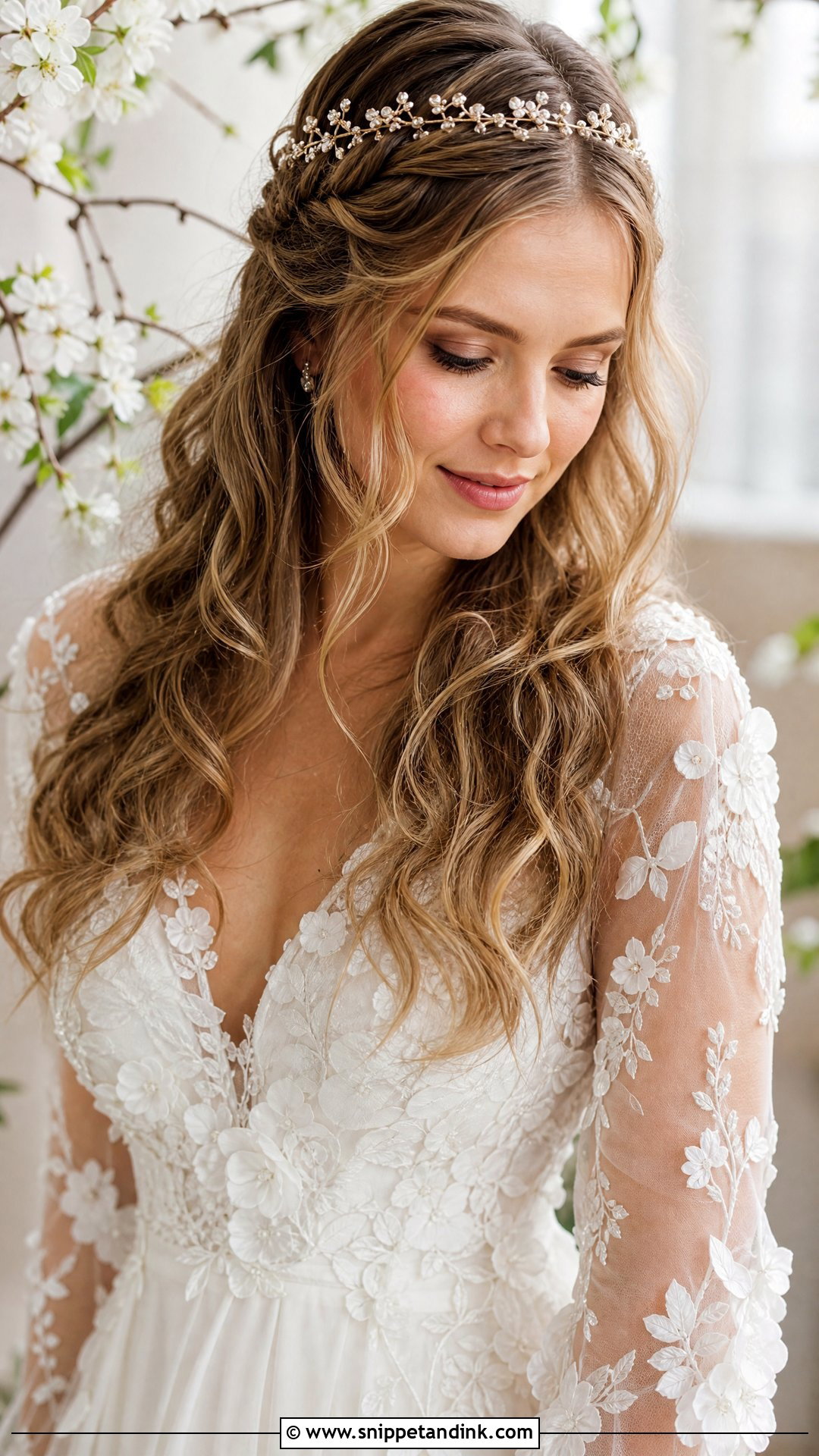
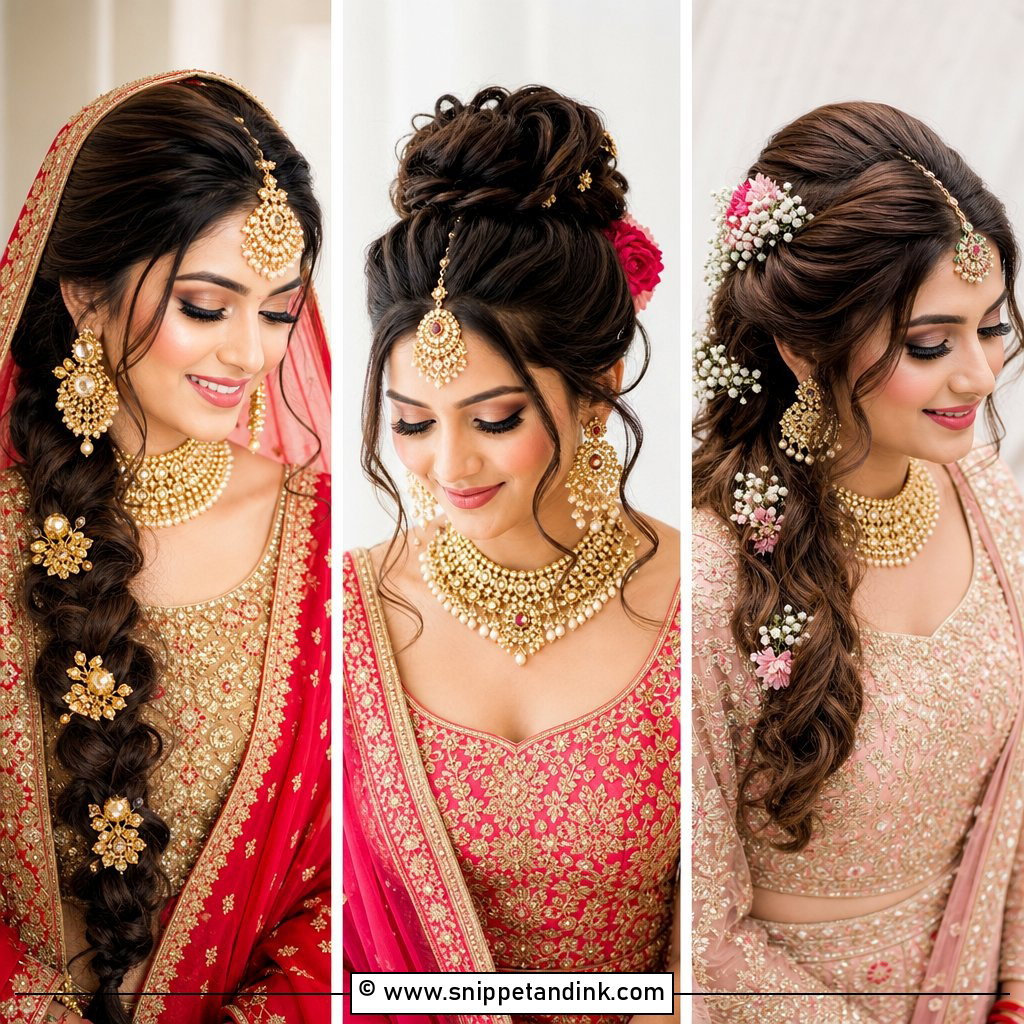
Loose, lived-in waves with a few braids or twists threaded through make up this look, and boho waves paired with a tiara call for a lighter, nature-inspired piece such as a leafy vine or a slim wire band. I use the small braids as hidden anchors for the tiara’s ends. Outdoor, garden and festival-style weddings suit it, and it can share space with a flower crown if the tiara sits in front. Fresh flowers wilt against warm hair, so if you add them, ask your florist for hardy blooms.
17. High Ponytail With a Tiara
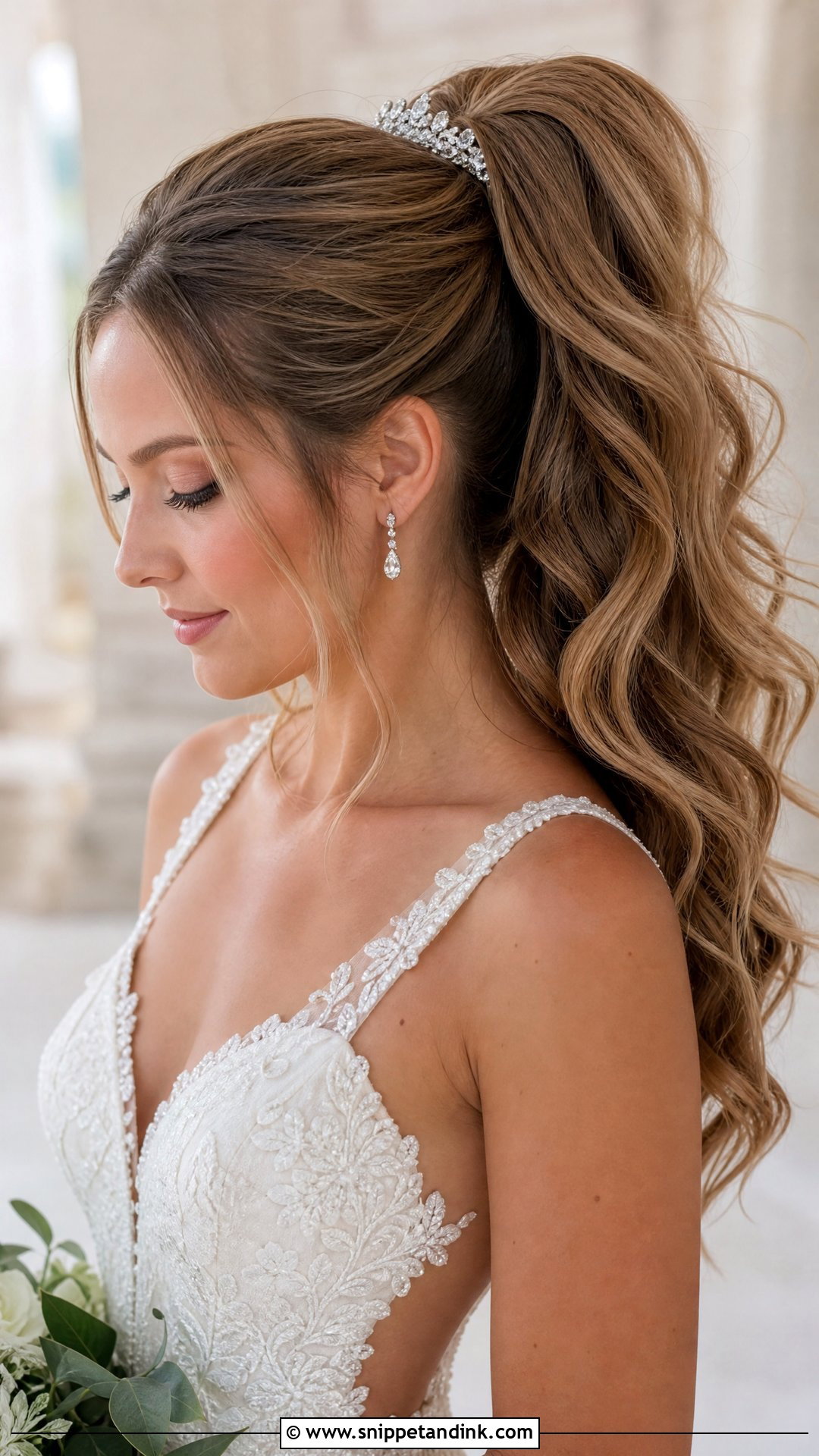
A high ponytail with a tiara is bold and modern, and it lifts the whole silhouette. I smooth the base tightly, secure it with an elastic, wrap a strand around to hide it, then curl or straighten the length. The tiara goes just in front of the ponytail base. It keeps you cool in hot weather because your neck stays clear. The honest drawback is that a tight high ponytail can give some people a headache after many hours, and a heavy tiara adds to the pressure, so choose a light piece and wear the pair at home for an afternoon first.
18. Curly Updo With a Tiara
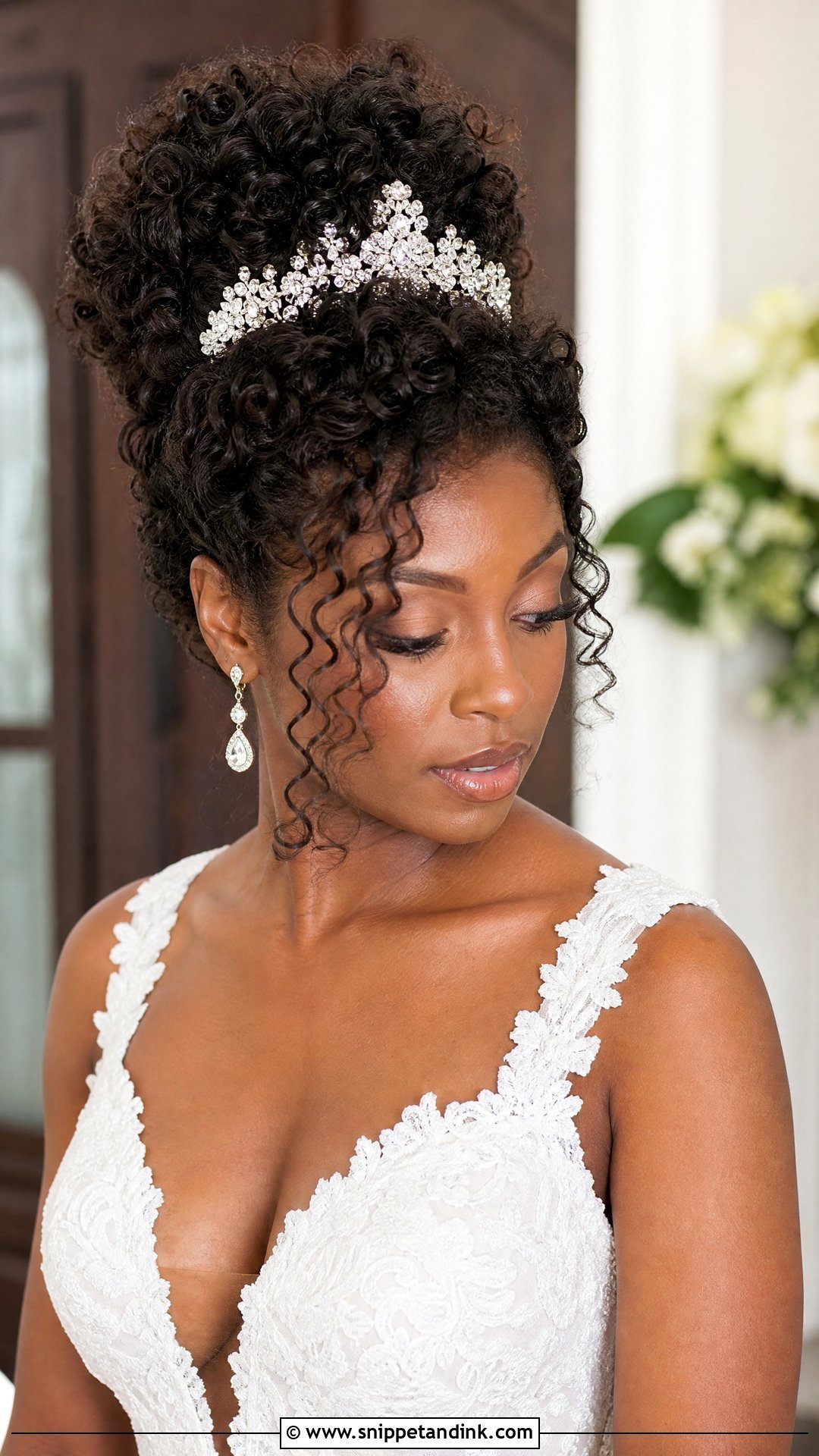
Natural curls and coils give a tiara plenty of grip, which makes this one of the most secure combinations here. I gather the curls into a soft, full updo with pins that match the hair color and leave a few coils loose around the face. The tiara’s combs get worked gently into the texture rather than forced in. I avoid heavy brushing, which breaks up curl definition, and use a leave-in conditioner and a light gel to keep the pattern intact. It feels regal at formal and traditional weddings alike.
19. Pinned Back Pixie With a Tiara
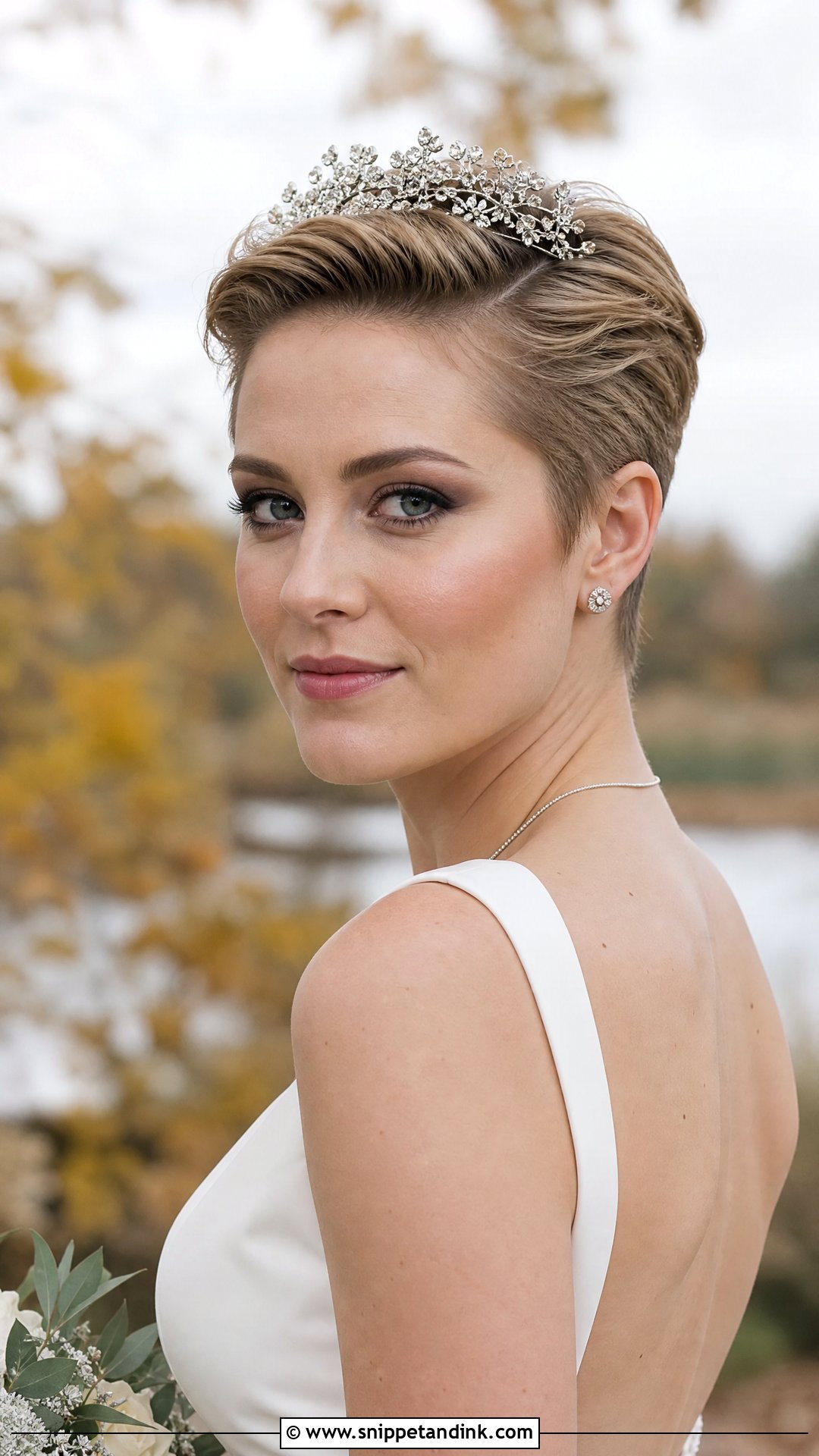
Short hair carries a tiara well. I add texture and some volume, sweep the front back slightly to make room, then secure the tiara with small pins crisscrossed through its end loops. On very short hair, a tiara with a headband-style frame or side combs is easier to hold than a free-standing band. It frames the face and shows off bone structure, and statement earrings suit it. If your cut is cropped close at the sides, get it trimmed a week or two before the wedding, not the day before, so the edges have softened.
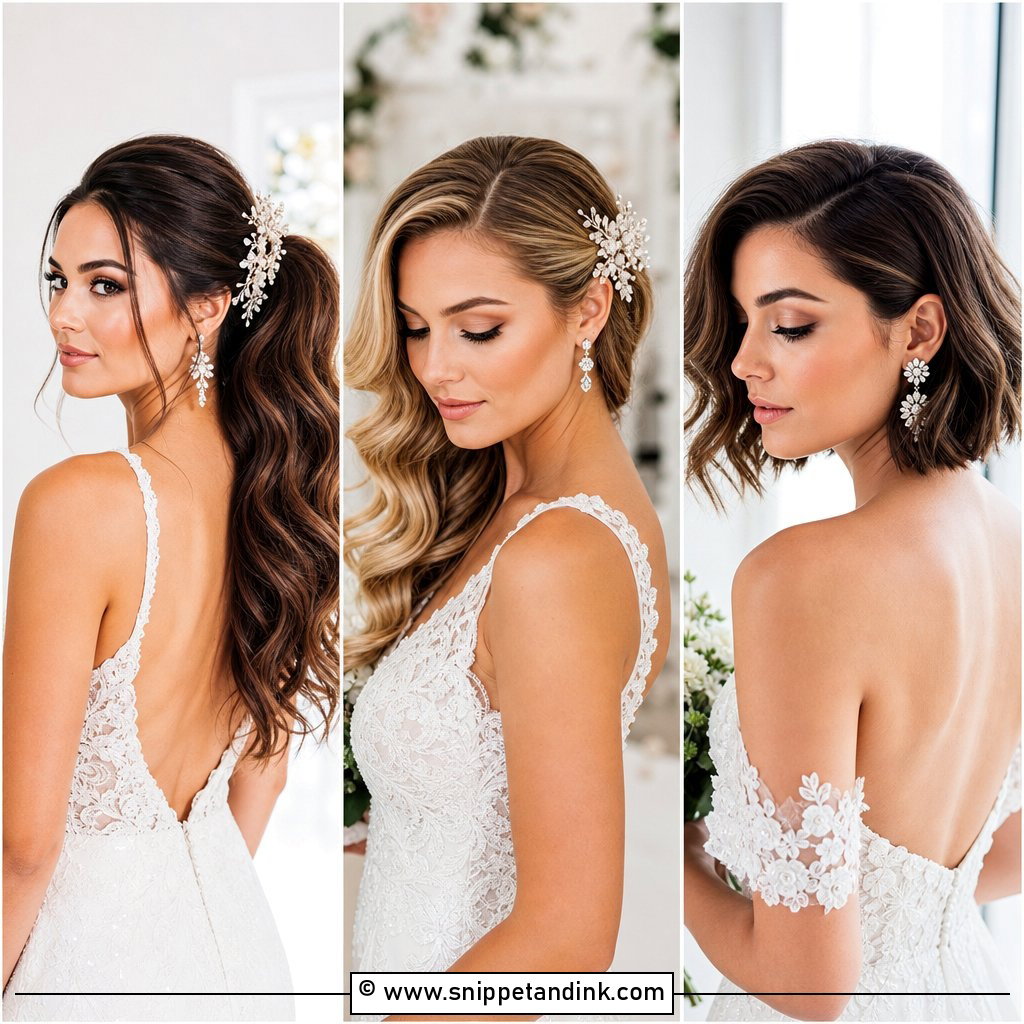
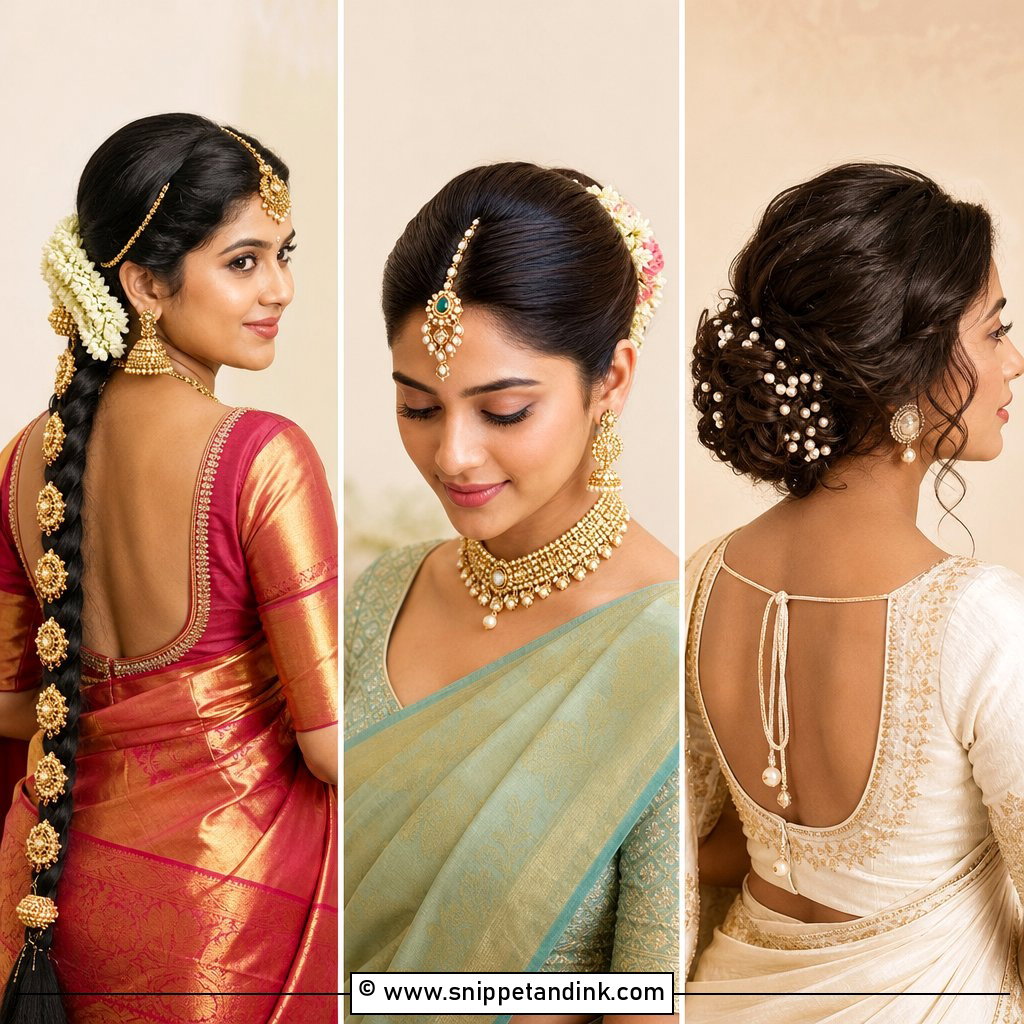
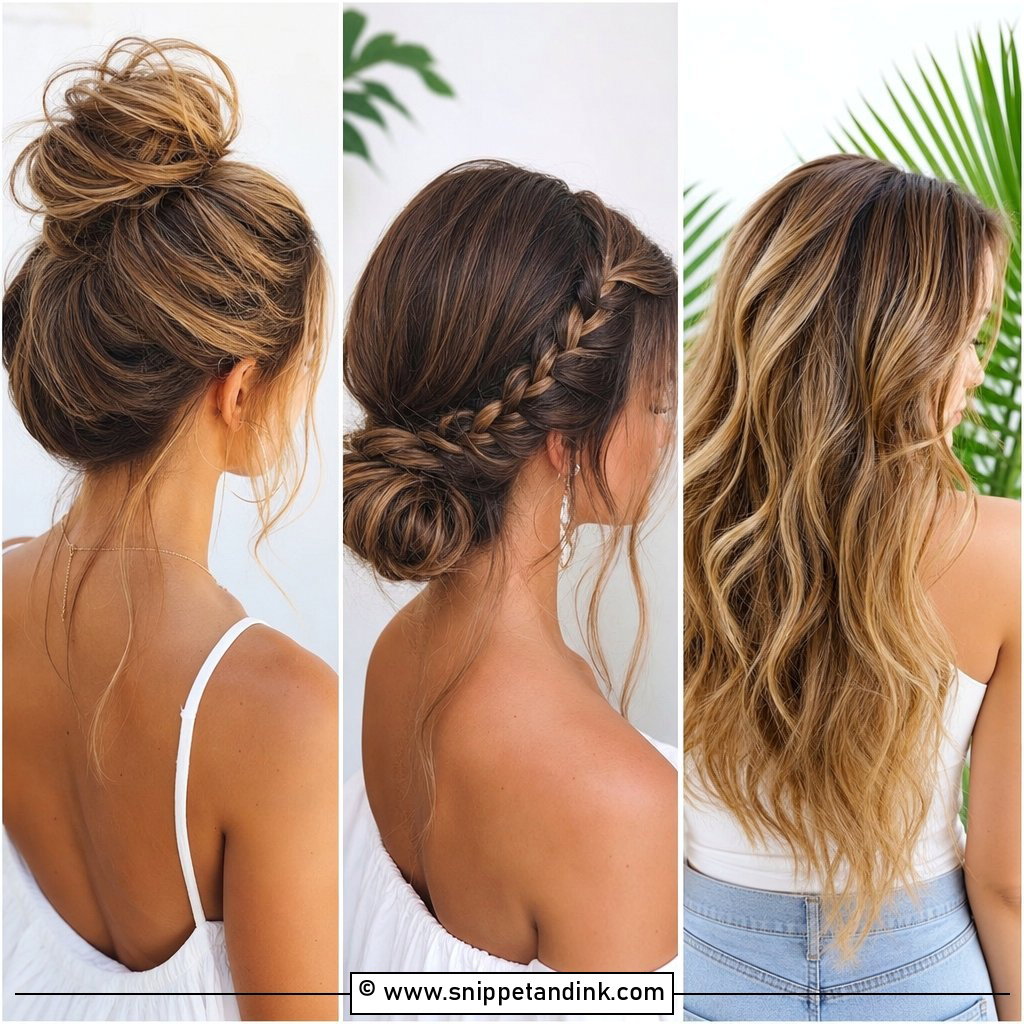
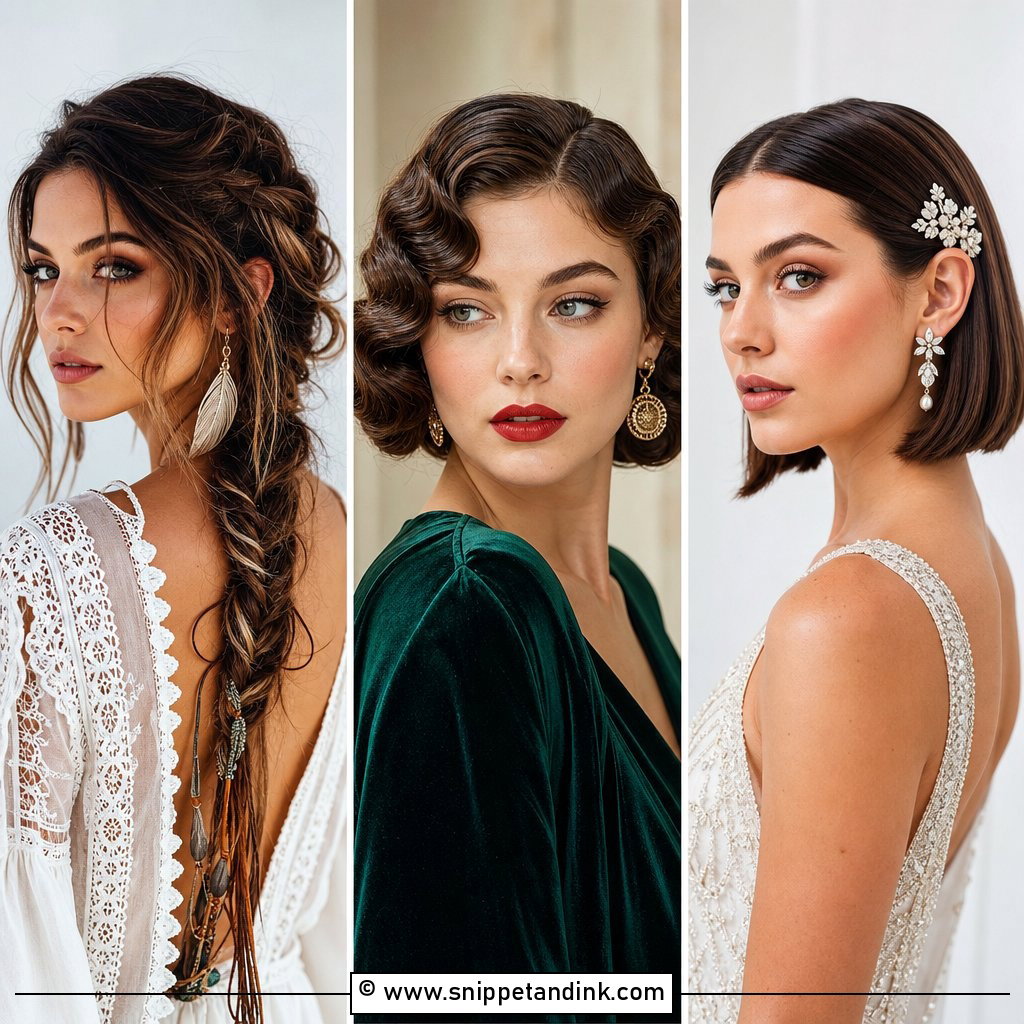
20. Romantic Updo With Face-Framing Tendrils
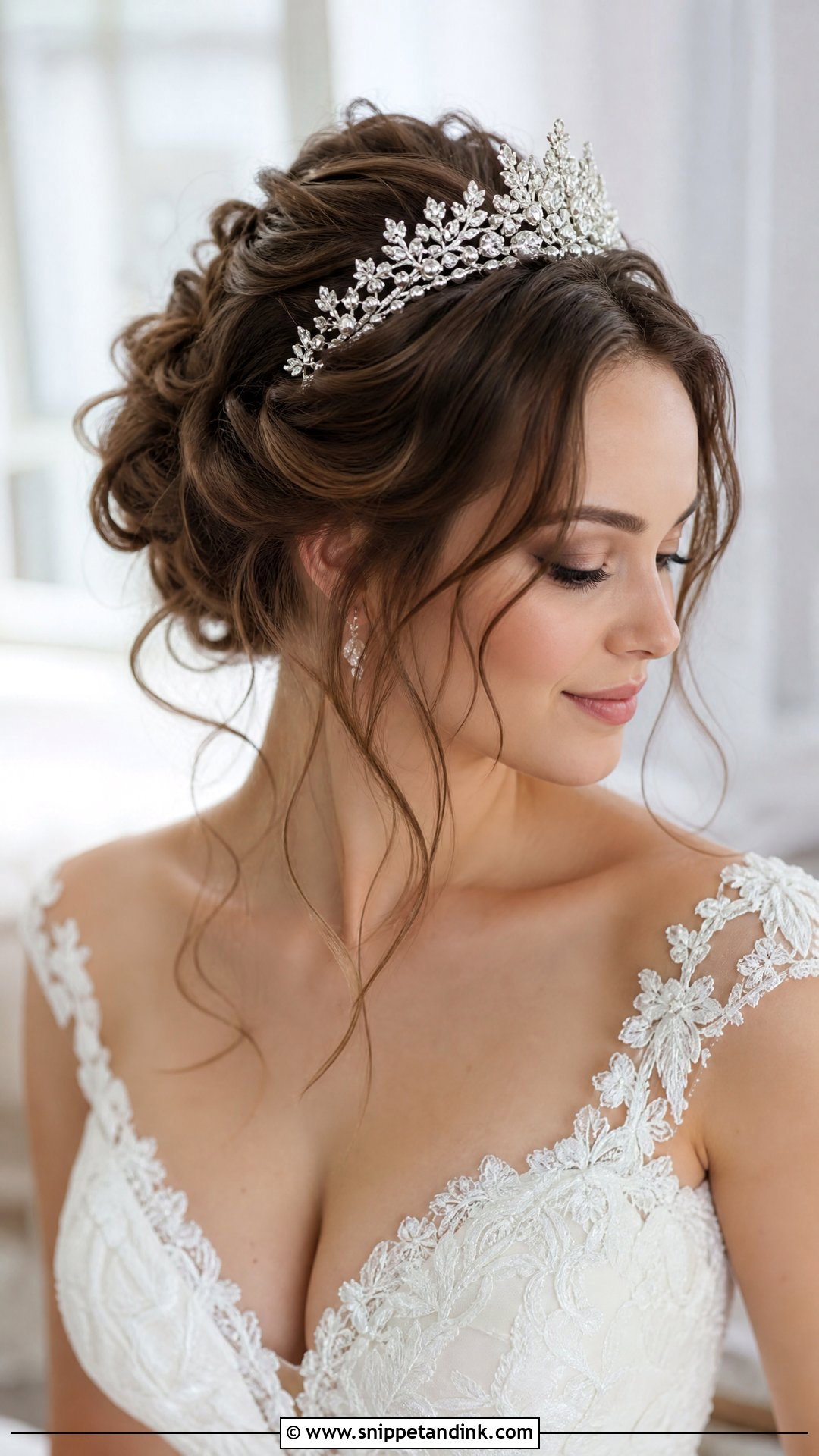
A soft, textured updo with loose pieces at the temples and cheeks is what many brides picture when they say romantic. Tendrils are trickier than they look. Cut too short or curled too tight, they look like they escaped, so I curl them separately, loosely, and away from the face. The tiara crowns the updo and balances the soft edges. Most face shapes suit it. If you’ll be outdoors in humidity, I curl the tendrils a touch tighter, since they’ll relax over the day.
Silver, Gold or Crystal Against Your Hair Color
A tiara reads differently depending on the hair it sits in. Silver and clear crystal shine against dark hair and can almost vanish into platinum blonde, while gold warms brunettes and redheads. Scale matters as much as metal. A tall tiara on a petite bride, or over a heavily beaded bodice, can overwhelm, and a thin band disappears into very voluminous hair. I usually suggest matching the metal to your earrings or engagement ring, and choosing the simpler tiara if the dress is already busy.
Where the Veil Goes Once the Tiara Is On
The tiara goes in first and the veil second. I place the veil comb behind the tiara, usually at the crown or tucked just under a bun, so the tiara stays in front and the veil falls from behind it. For a down style, the comb slides into the same hidden base that holds the tiara.
Plan for the moment the veil comes off. If it’s pinned separately, a bridesmaid can lift it out after the ceremony without loosening the tiara, which is why I never pin the two together, even when it looks tidier.
Pin It, Test It, Then Forget It
A tiara look works when the hair suits your dress, your venue and how you want to feel. Loose waves, a sleek low bun and boho braids each fit a different bride. Whichever you pick, secure the tiara with crisscrossed bobby pins through its end loops or with built-in combs, and treat hairspray as a finish, not glue. Book a trial with the actual tiara and keep it on for a few hours afterward. That one test will tell you more about comfort and hold than any photo.
You'll Like These Ideas:



Leave a Reply