
Wearing your hair down is the choice I see brides second-guess most, usually because someone has told them down styles never last. They can, if the set underneath is built properly. Down hair moves as you walk, frames the face in close-ups and can be shaped to suit every face shape once the part and the volume are placed for you. It also gets along with veils, fresh flowers and hair jewelry. Below are the down styles I’m asked for most, from sculpted glamour waves to braided half-up looks, with notes on how each one behaves over a long day and who it really suits.
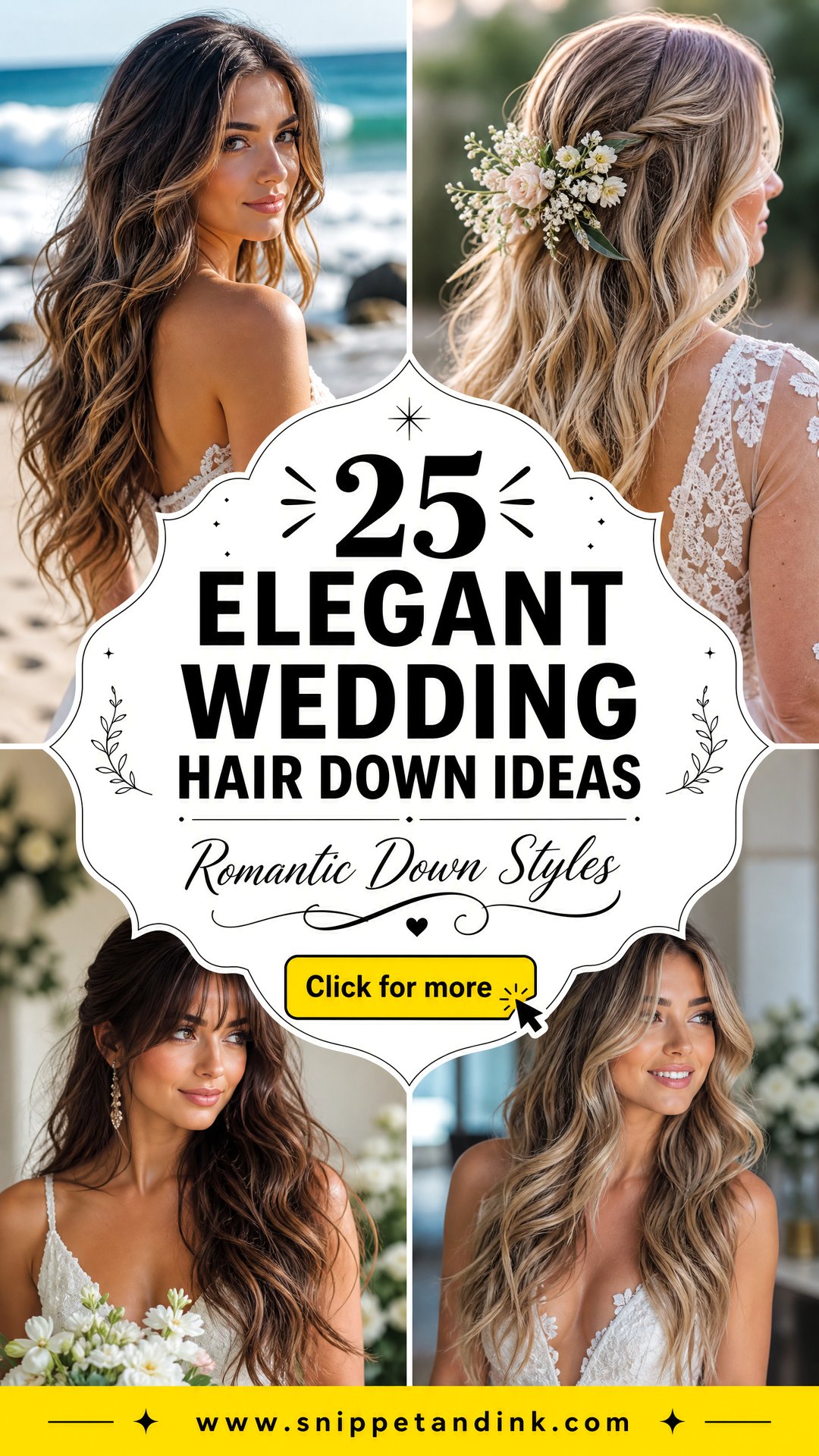
Why Worn-Down Hair Drops, and How I Set It to Hold
Down styles have a reputation for falling flat, and the cause is usually the prep rather than the hair. Heat reshapes the hair’s temporary bonds, and moisture from humidity, sweat or a steamy bathroom undoes them. So my whole job is to set the curl properly and keep moisture away from it. Here’s how I prepare a bride for a down style:
- Wash the day before or that morning, and arrive with hair completely dry. Squeaky-clean, slippery hair is harder to set; a little natural grip helps, unless your scalp gets oily quickly.
- Skip rich conditioning masks the night before. They leave hair silky and soft, the opposite of what a curl needs.
- Mousse or a setting spray goes on the roots and mid-lengths before any heat touches the hair.
- Every curl is pinned up to cool. Letting a hot curl drop under its own weight loosens it before it has set.
- Brush-out happens last, after makeup and just before the dress.
Do all of that, and a wave that looks a touch too tight at eleven in the morning will look exactly right at the reception.
1. Hollywood Glamour Waves
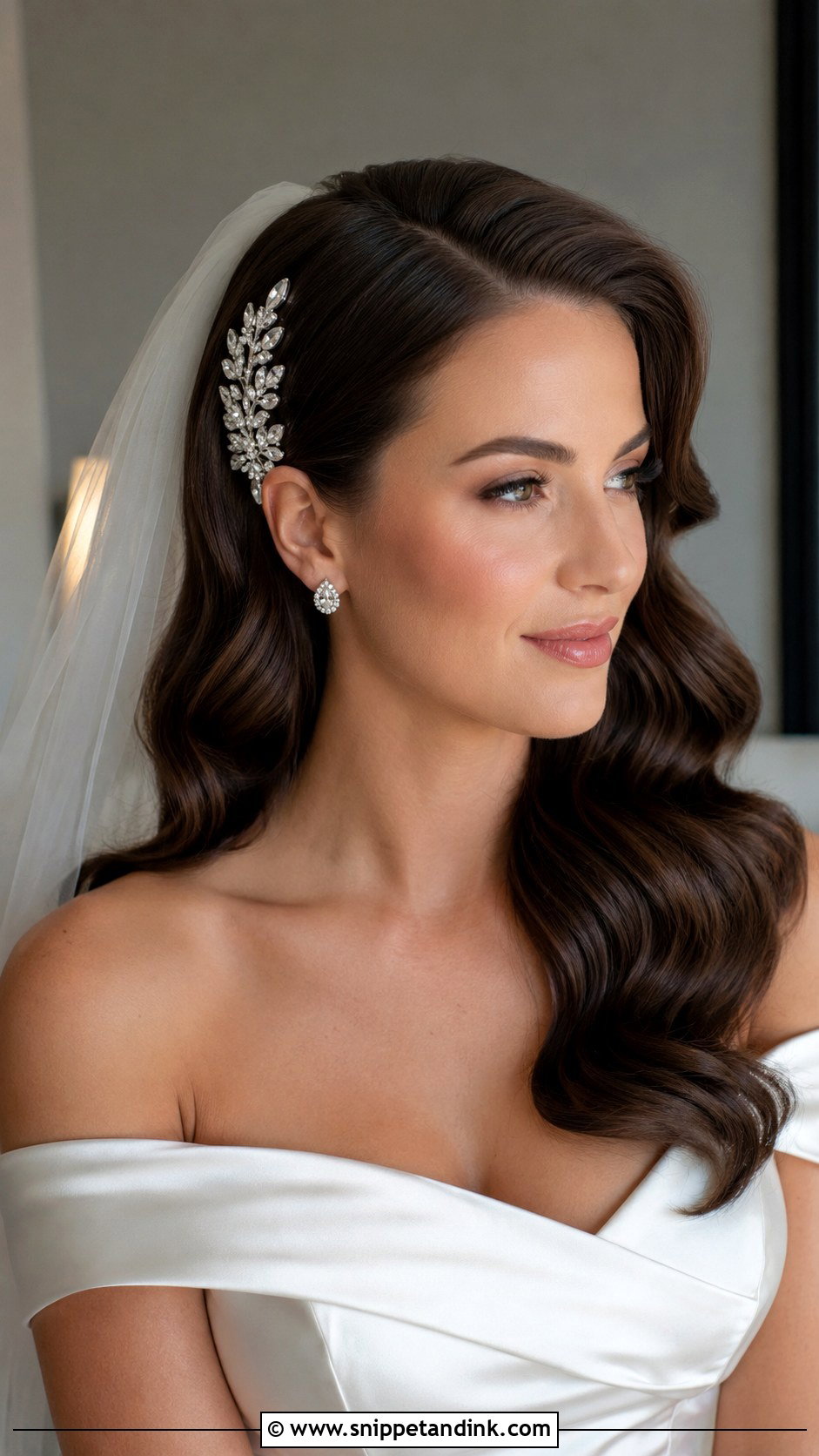
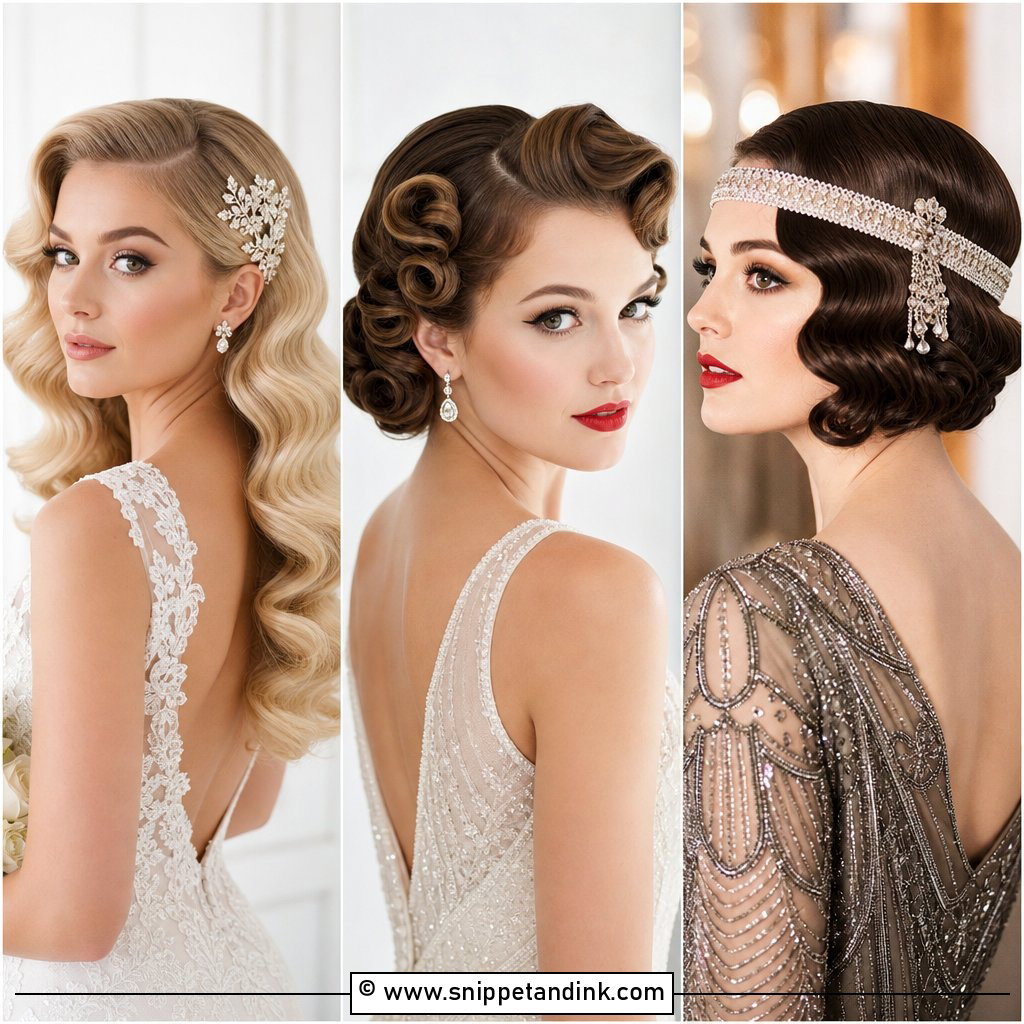
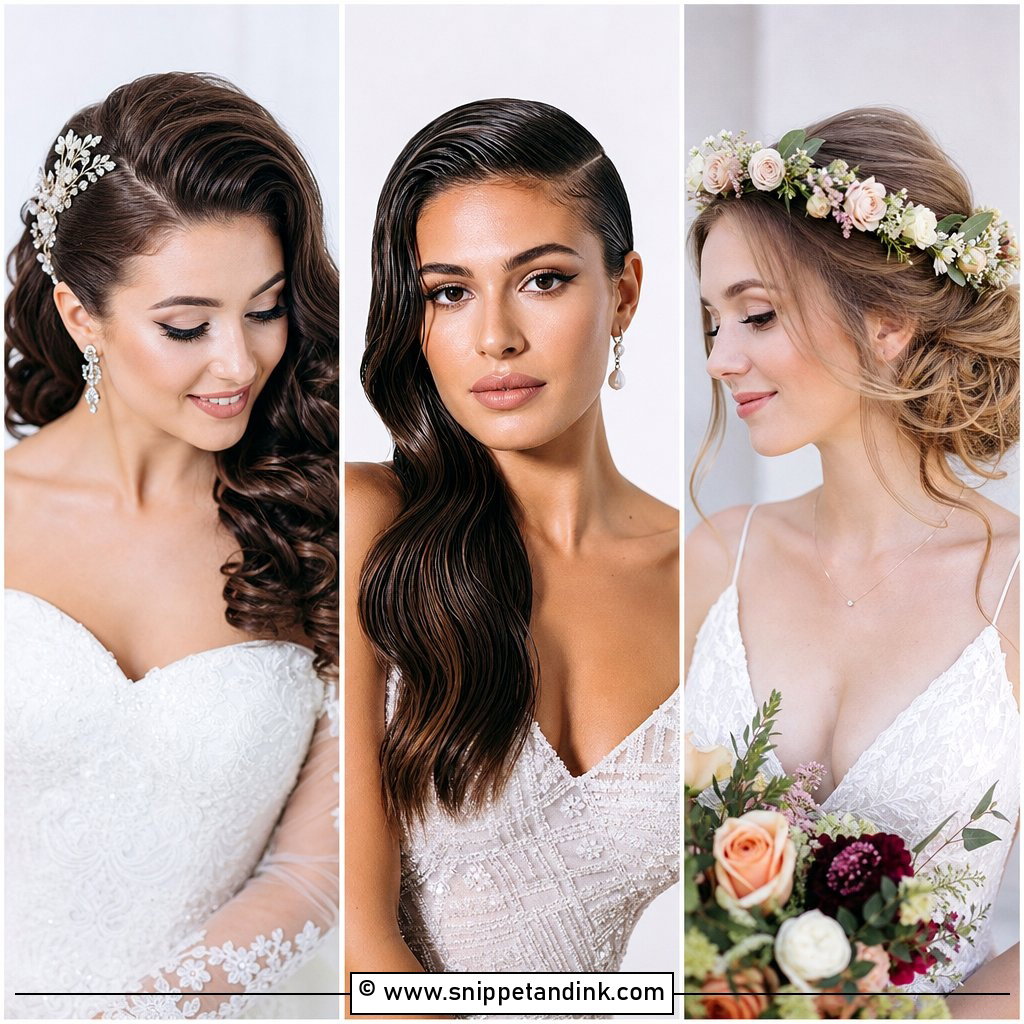
Glamour waves are a set, not a curl. I curl every section in the same direction, away from the face, pin each one to cool, then brush the whole head out with a boar bristle brush until the curls merge into one continuous wave. Skip the brushing and you get ringlets; skip the cooling and the wave flattens before dinner. A deep side part and a clip at the temple finish it. It belongs in a ballroom with a satin gown and a strong lip, though I’d hesitate on heavily layered hair, because short layers break the ridge.
2. Loose Romantic Curls
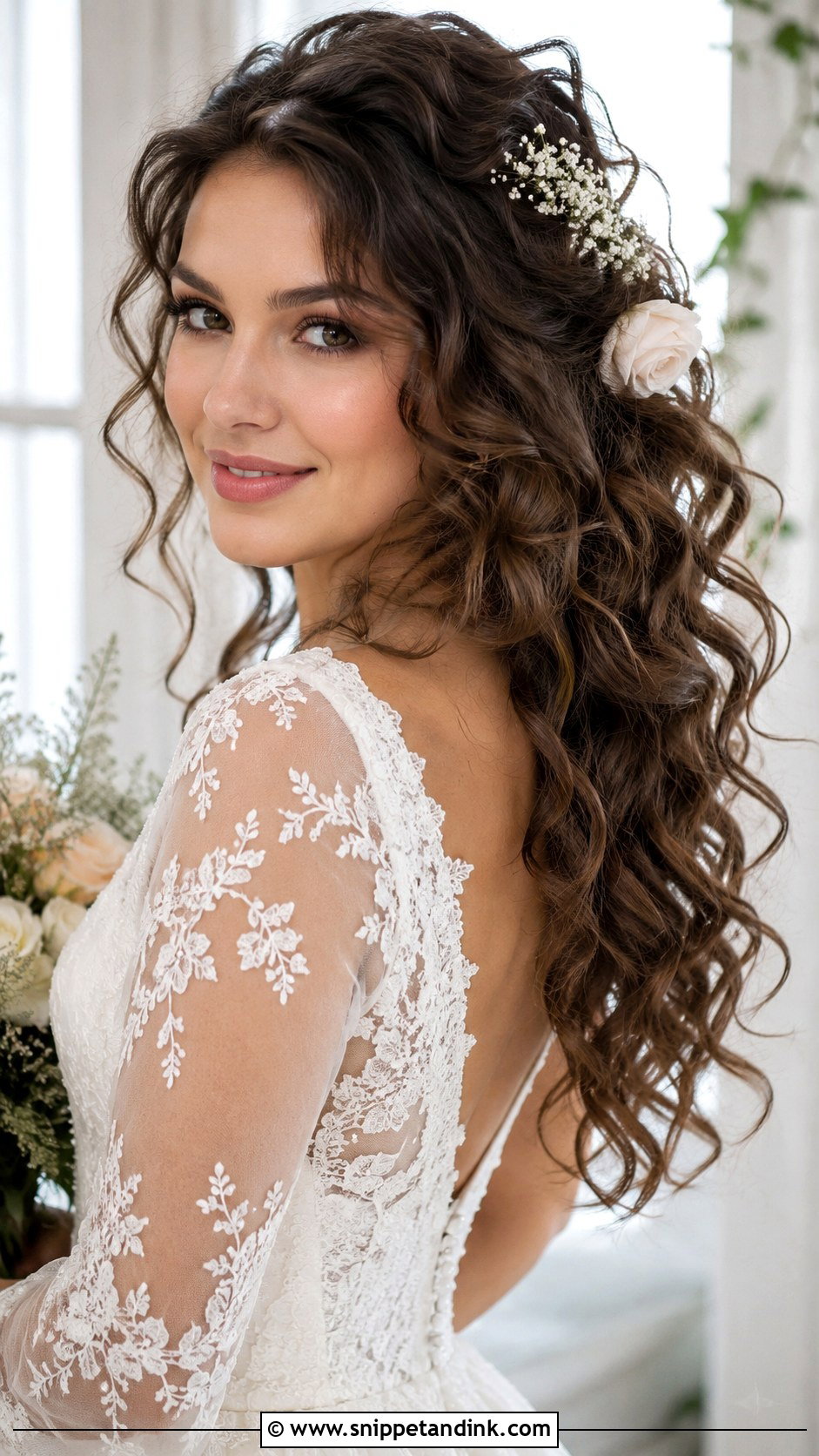
Alternating the curl direction is what stops loose curls from clumping into one solid mass at the back. I wrap one section toward the face, the next away, and only break them apart with my fingers once they’ve fully cooled. A flexible spray keeps them soft to the touch. Curls always relax over the day, so I set these a little tighter than a bride wants to see at the mirror; by the first dance they’ve settled into the shape she asked for. A long veil or a few floral pins suit them at a garden ceremony.
3. Sleek Straight Hair
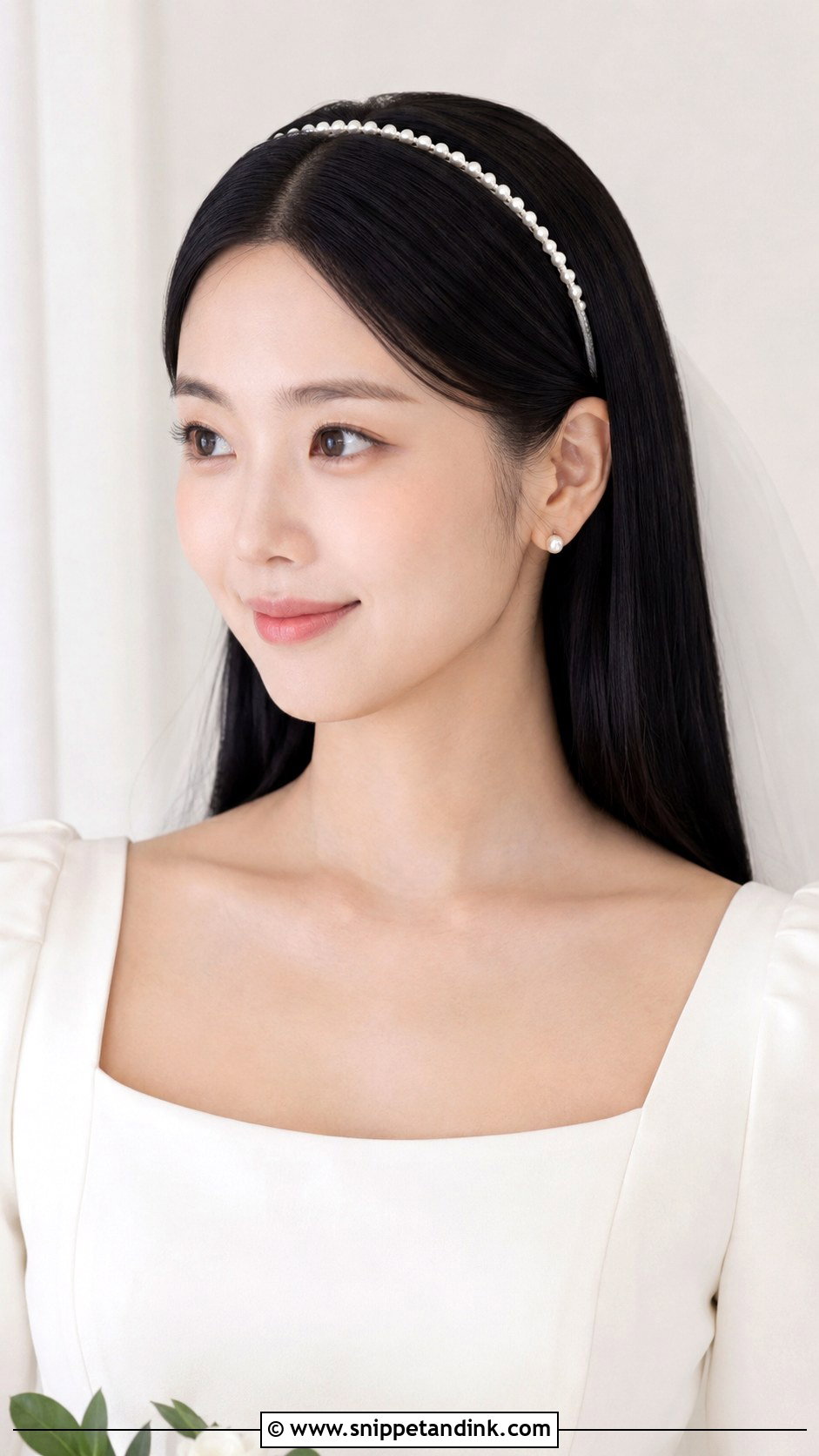
Glass-straight hair looks simple and leaves nowhere to hide. Frizz, a kink at the part or a dent from a hair tie all show in close-ups, so I blow-dry it smooth with a paddle and round brush before the flat iron ever touches it, then add serum to the ends only. Serum near the roots goes greasy under reception lights. It suits naturally straight or relaxed hair best. On curly or coily hair a straight finish can revert in humidity within hours, which is worth knowing before an outdoor summer wedding. Structured gowns and bold earrings are its best company.
4. Beach Waves
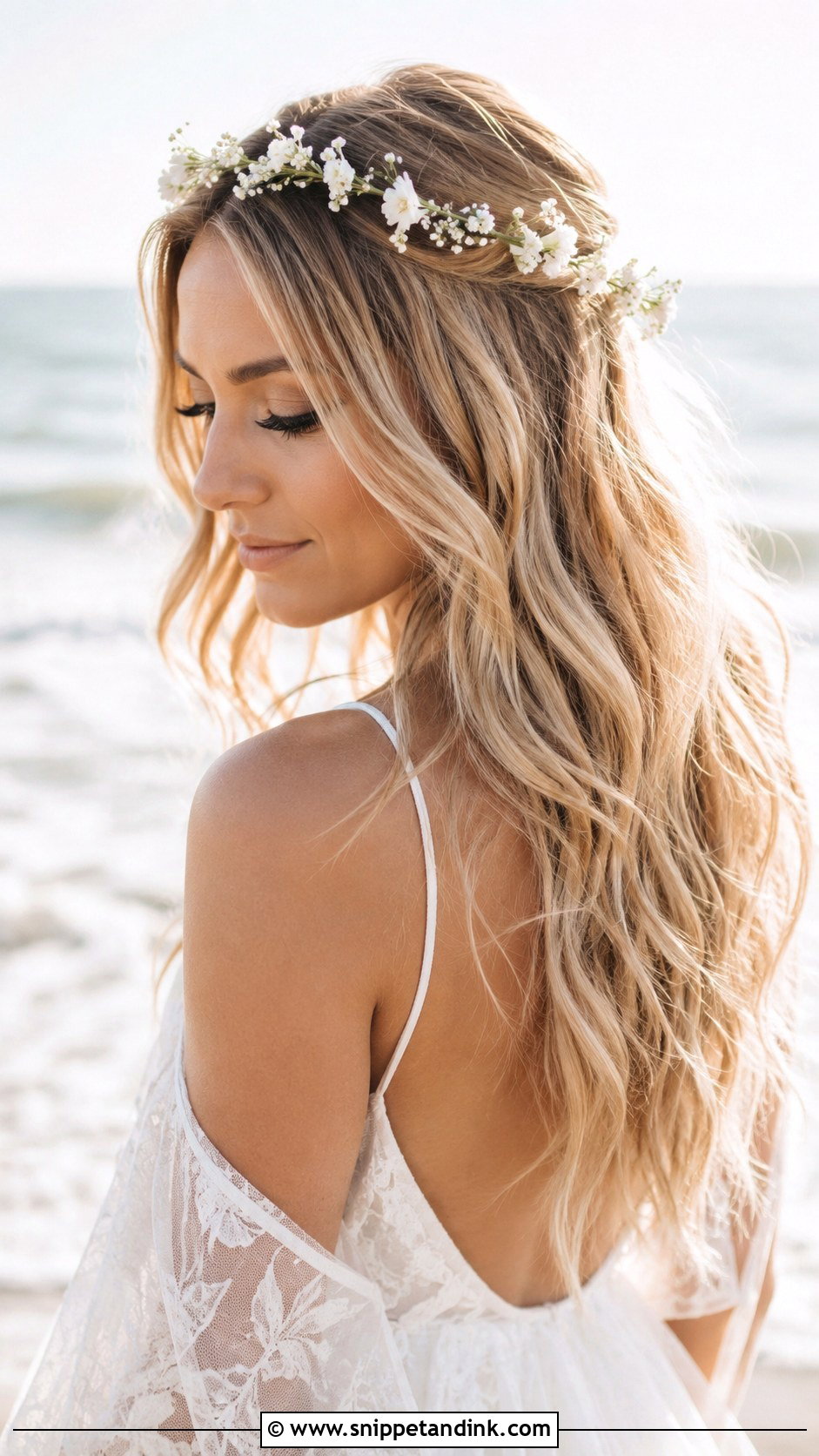
Leaving the last inch or two straight is what keeps beach waves from looking like a formal curl. I wrap sections flat around a wide wand rather than twisting them, and finish with a texture spray instead of heavy sea salt, which can feel gritty and dull the color in photos. On a beach, wind is a bigger problem than sun. I’d pin a couple of front pieces behind the ears so they don’t stick to lip gloss during the vows. A flower crown or two gold pins suits the relaxed mood.
5. Half-Up Half-Down
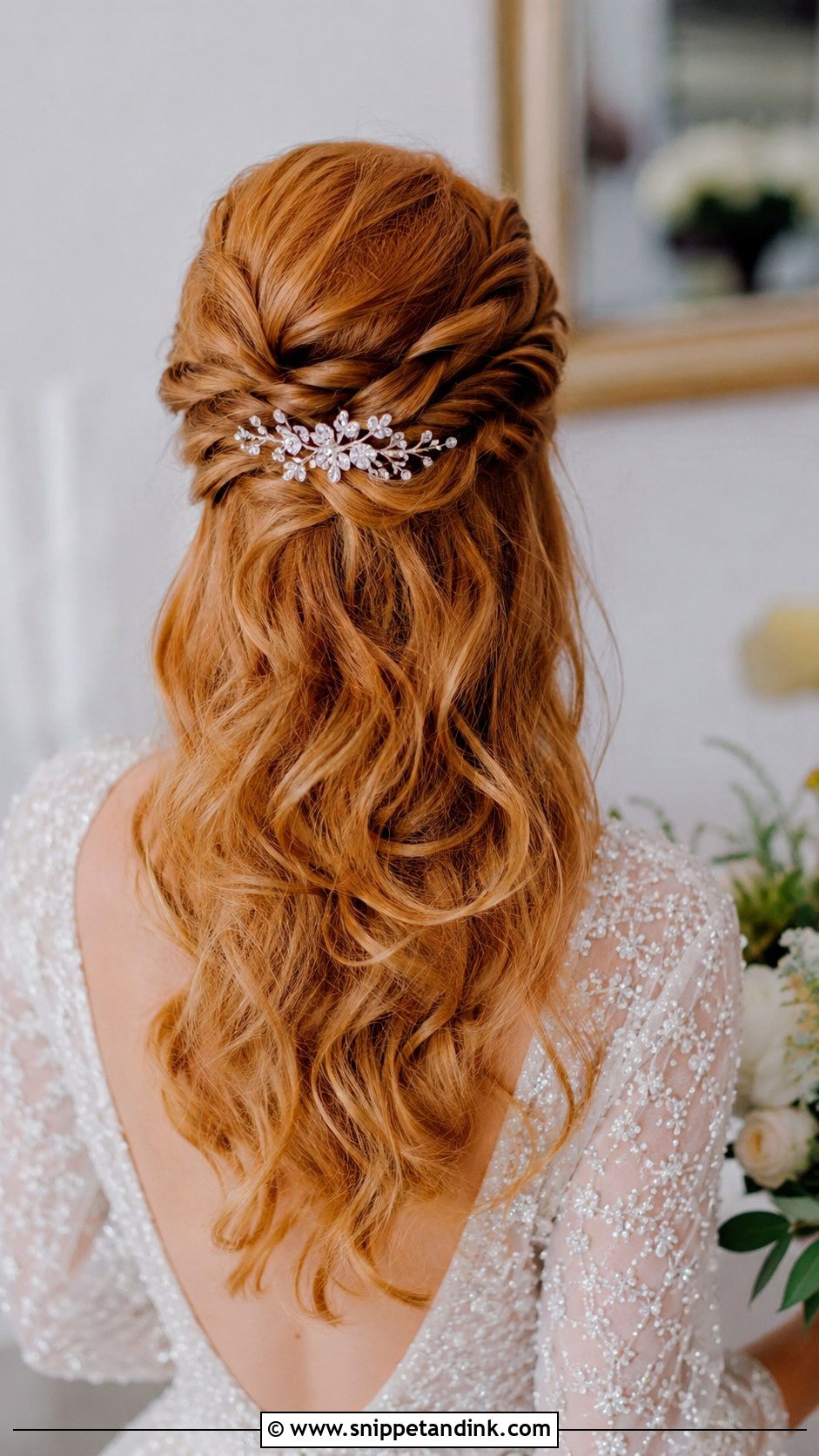
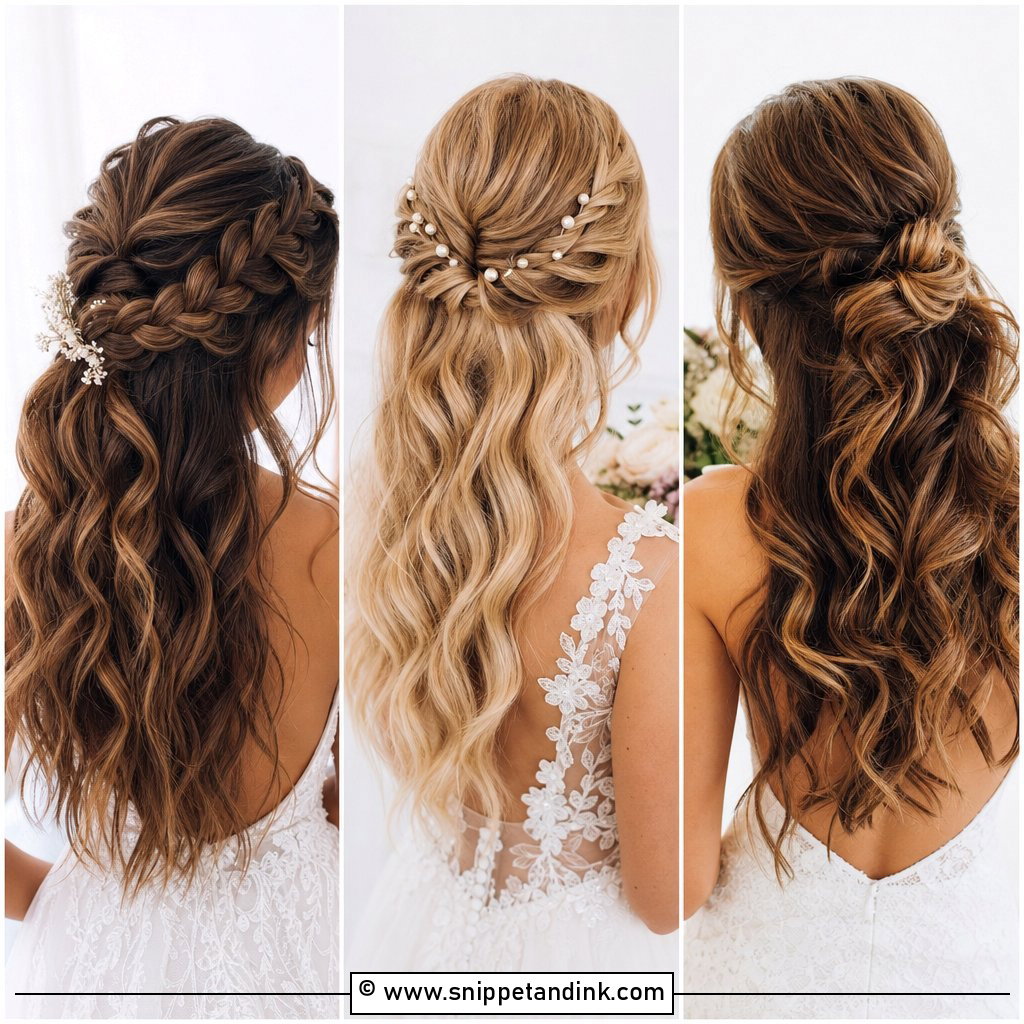
Half-up is my most-booked compromise for brides who can’t choose. The top section is secured at the crown, which keeps hair off the face for close-ups and gives a veil comb something solid to grip. I build that anchor with a small hidden ponytail or crisscrossed bobby pins, because pins in loose hair alone slip within the hour. The crown itself can be twisted, braided or knotted, with a jeweled clip or fresh flowers over the anchor point. Nearly any neckline works, though a very high neck can crowd the lengths at the back.
6. Waterfall Braid
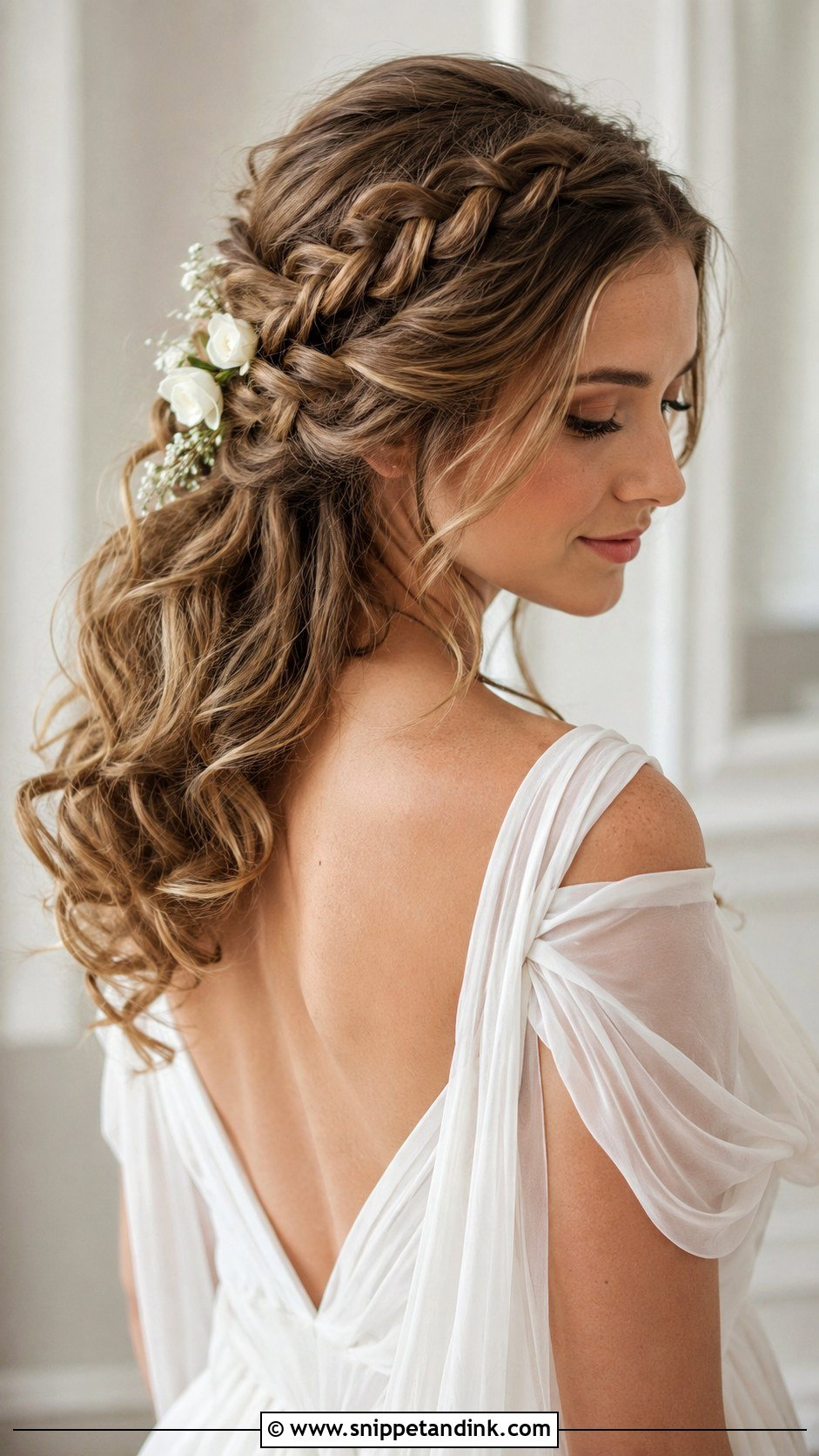
A waterfall braid drops one strand at each pass and picks up a new one, so the loose hair below shows through it. I start at one temple and run it across the back just above the occipital bone, the bump at the back of the head, because braids placed lower slide down as you move. It shows up best on hair with some dimension or highlights; on very dark, single-tone hair the pattern can vanish in photos. Soft waves underneath and a few small flowers complete it.
7. Side-Swept Curls
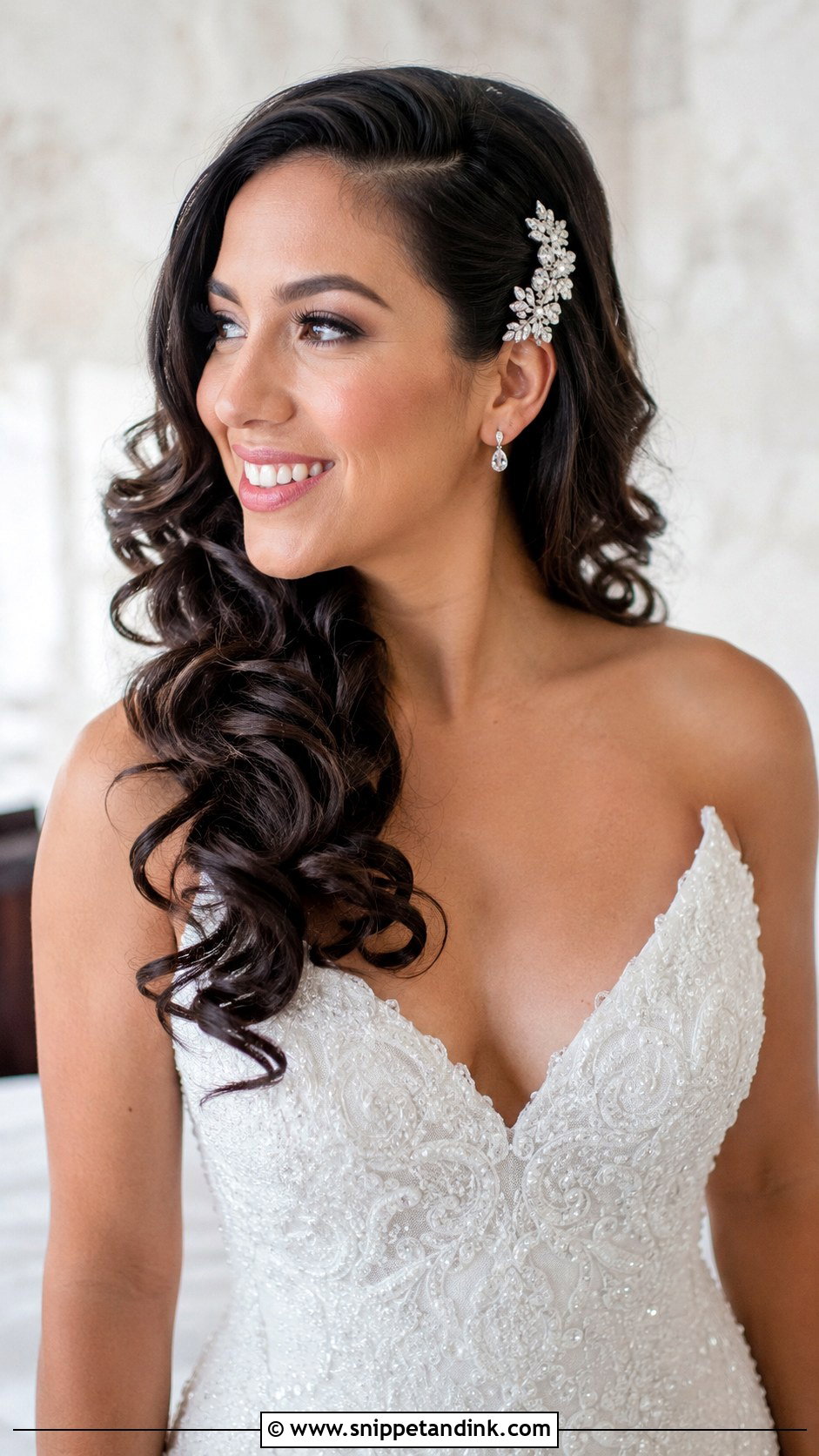
Moving all the volume over one shoulder shows off earrings and an open back, but it needs a strong anchor. I crisscross bobby pins in a vertical line behind the ear on the far side, hidden under a curl, so the hair can’t drift back to center while you dance. Expect to have it re-fluffed once if you’ll be hugging a lot of guests on that side. A sparkly comb over the pins works at formal and relaxed weddings alike.
8. Boho Waves With Flowers
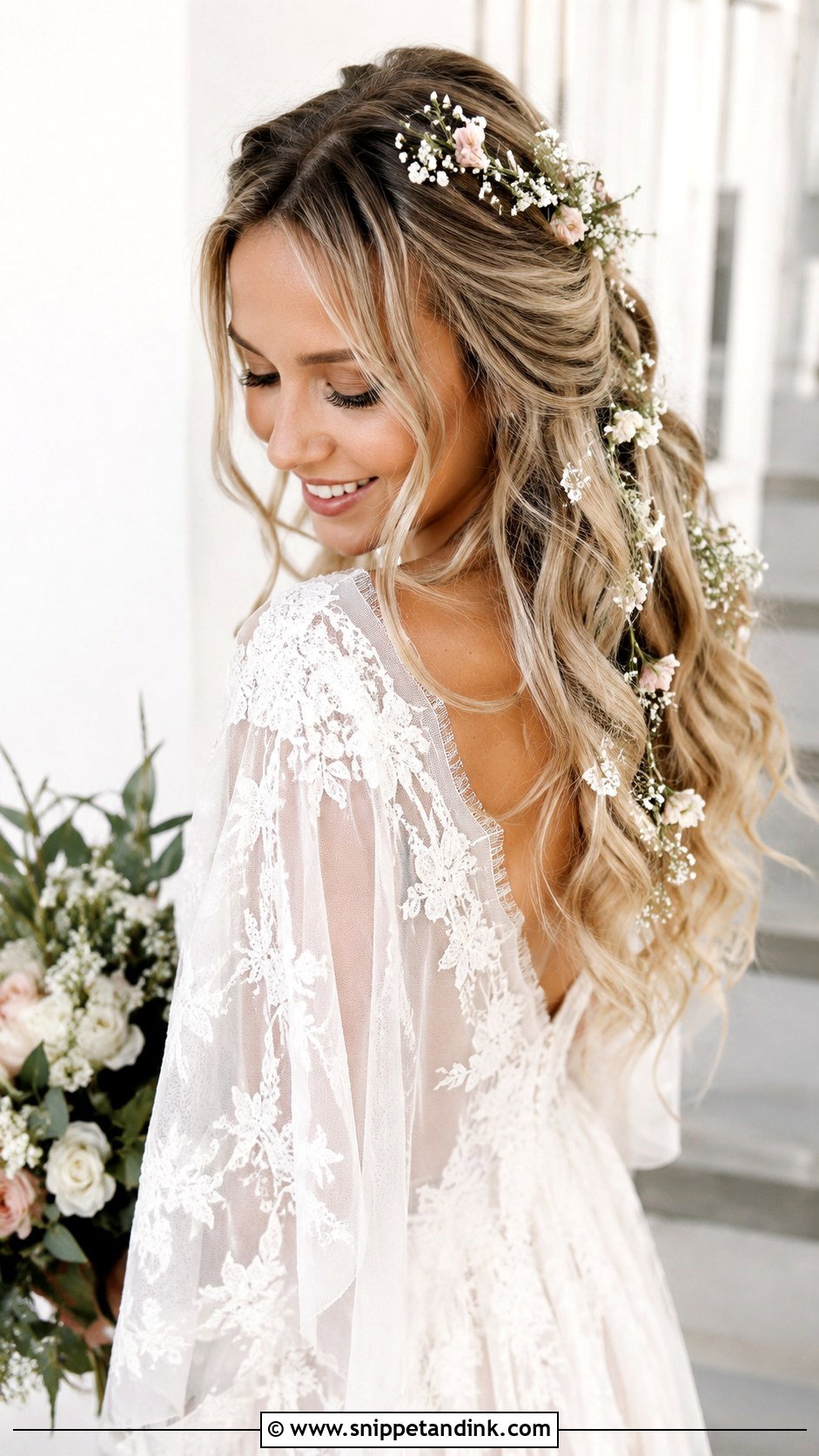
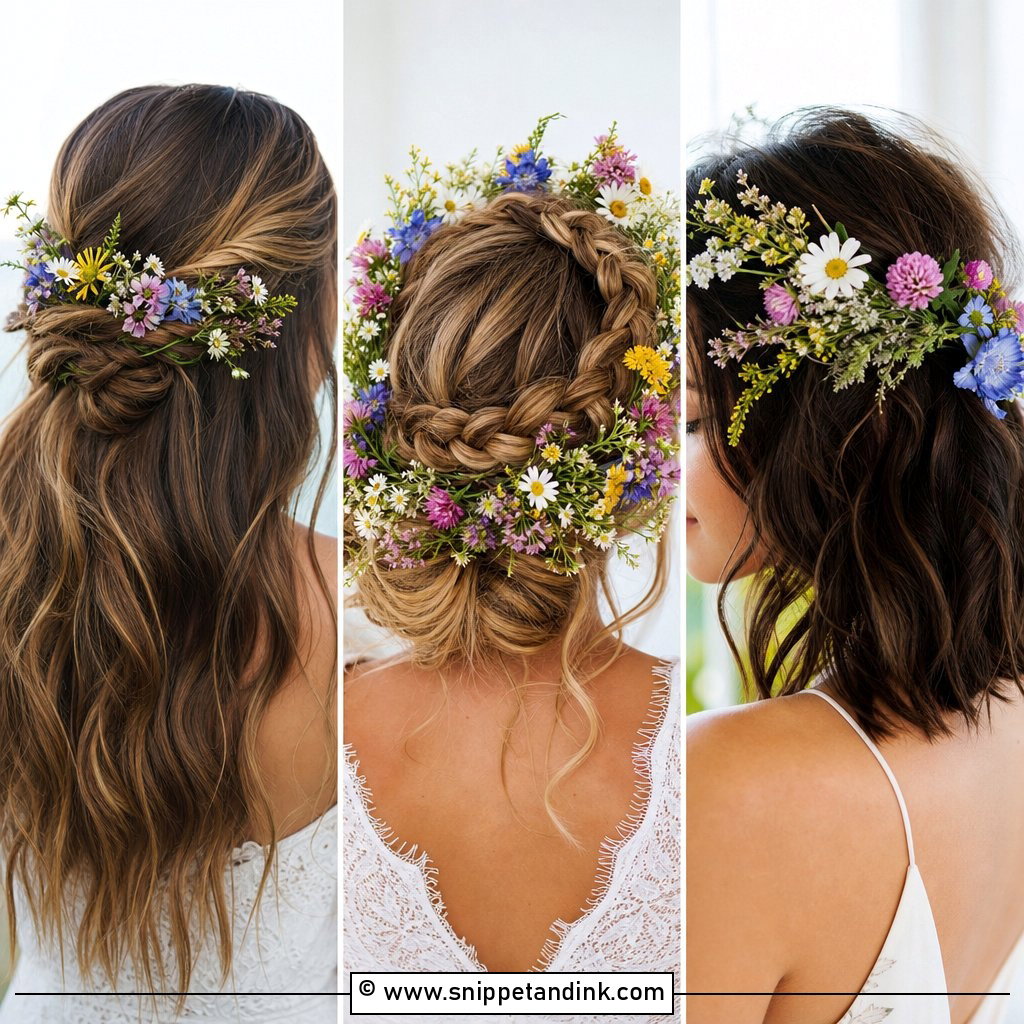
Flowers woven through soft waves should look grown rather than placed. I lean on sturdy stems: baby’s breath around the crown and small spray roses last far longer out of water than delicate blooms like sweet peas, which can wilt within an hour. Dried flowers are lighter again and won’t brown. The waves stay loose, but I still set them with heat so they survive the open air. Meadow ceremonies and flowing bohemian gowns are where this look feels most at home.
9. Deep Side Part Waves
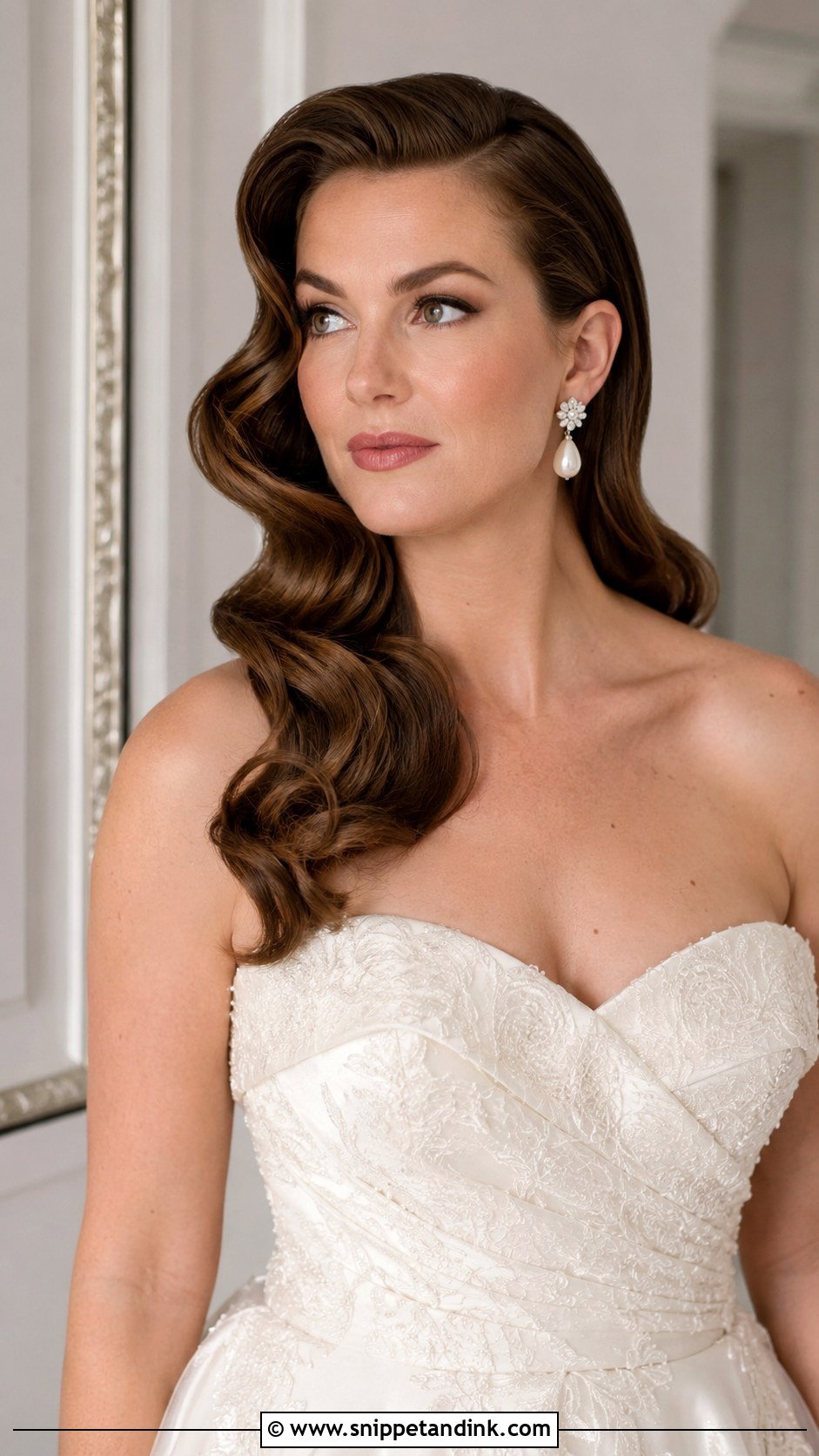
A deep side part lifts the roots on the heavy side and makes fine hair look noticeably thicker, which is why I reach for it so often with thin hair. I set the part with a tail comb while the hair is still slightly damp; a part created after curling never sits as cleanly. The lengths are curled into smooth, polished waves for a vintage gown and bold accessories. One honest note: if you’re a habitual hair-pusher, the heavy side will bother you by evening, so we can pin it back discreetly behind the ear.
10. Twisted Crown With Loose Hair
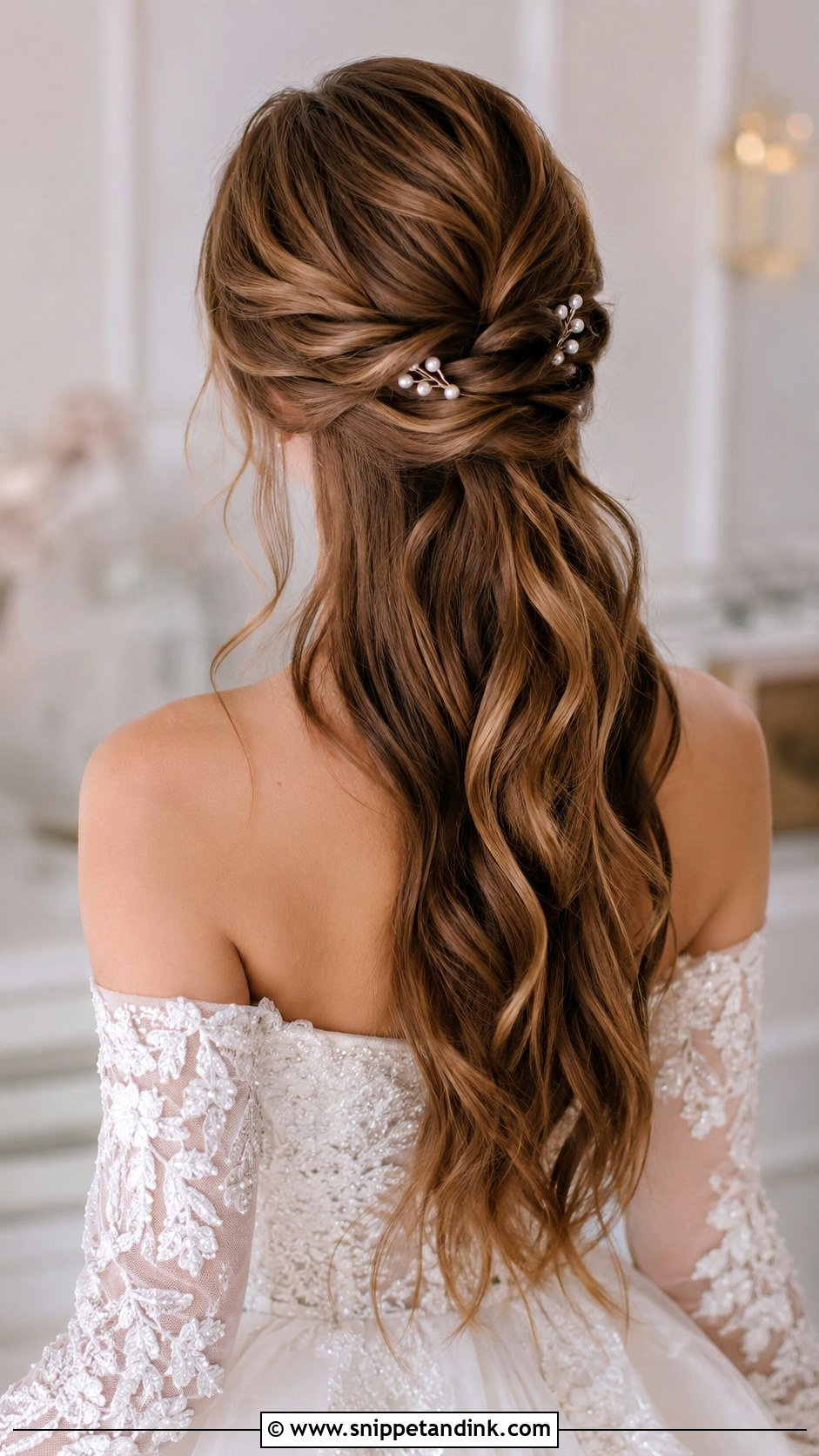
Two small twists meeting at the back make a halo that keeps hair out of your eyes without committing to an updo. I join them with a small clear elastic hidden under a pin, then add pearl pins or tiny flowers along the twists. Twists loosen faster than braids, so I mist each one before pinning and use a matte texture spray on silky hair to give it grip. A veil sits neatly just below the meeting point. It works on most hair types and suits a fairytale theme.
11. Curtain Bangs With Long Waves
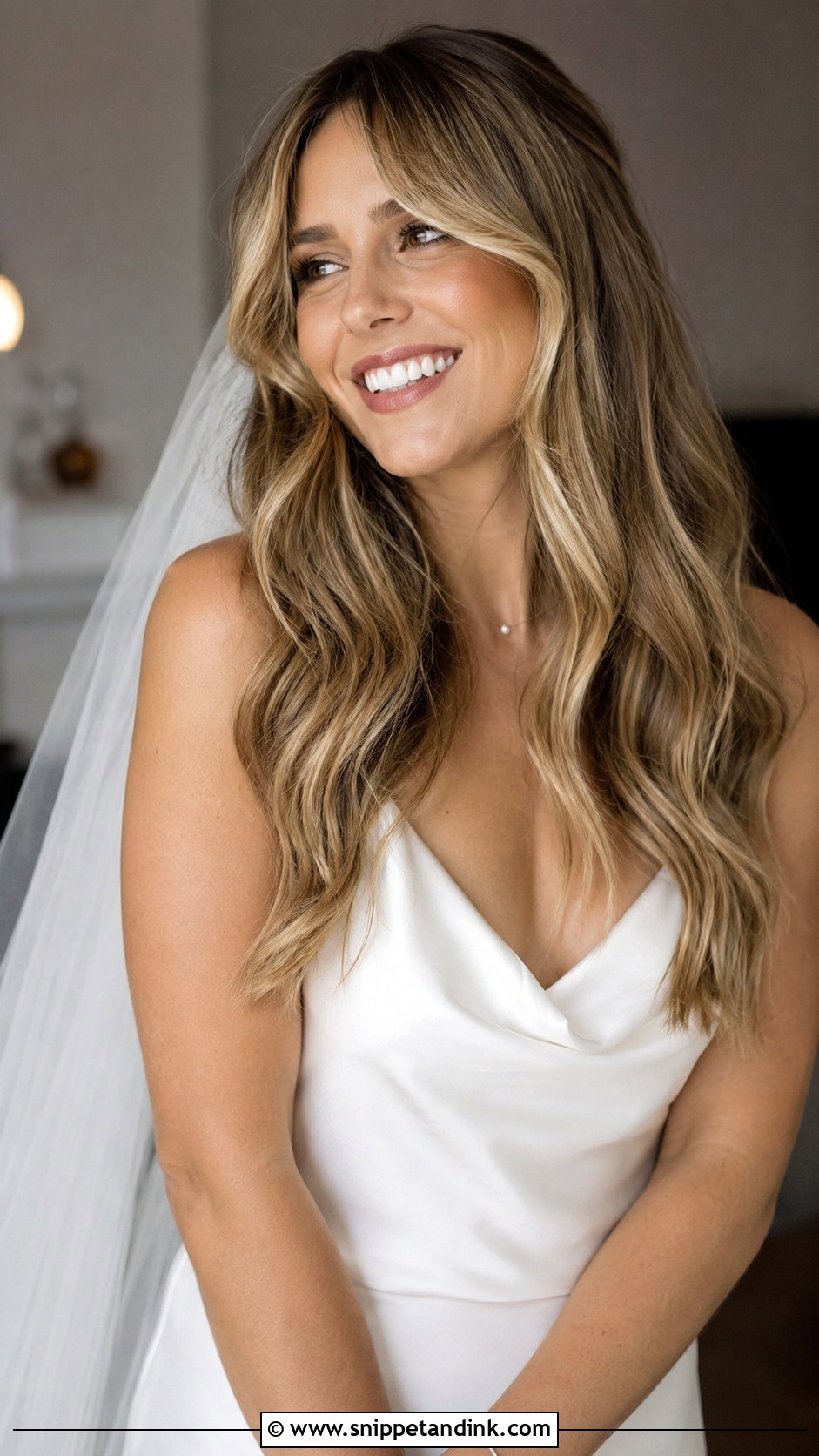
Curtain bangs need to be cut at least a couple of weeks before the wedding so they’ve settled; a fresh cut almost always sits shorter and stiffer than planned. I style them with a medium round brush, blowing each side back and away from the face, then curl the long waves separately. Cowlicks at the hairline are the real enemy, and I’d want to see yours at the trial before committing. Modern and boho gowns both suit the look, and the bangs soften the face in close-ups.
12. Voluminous Bouncy Blowout
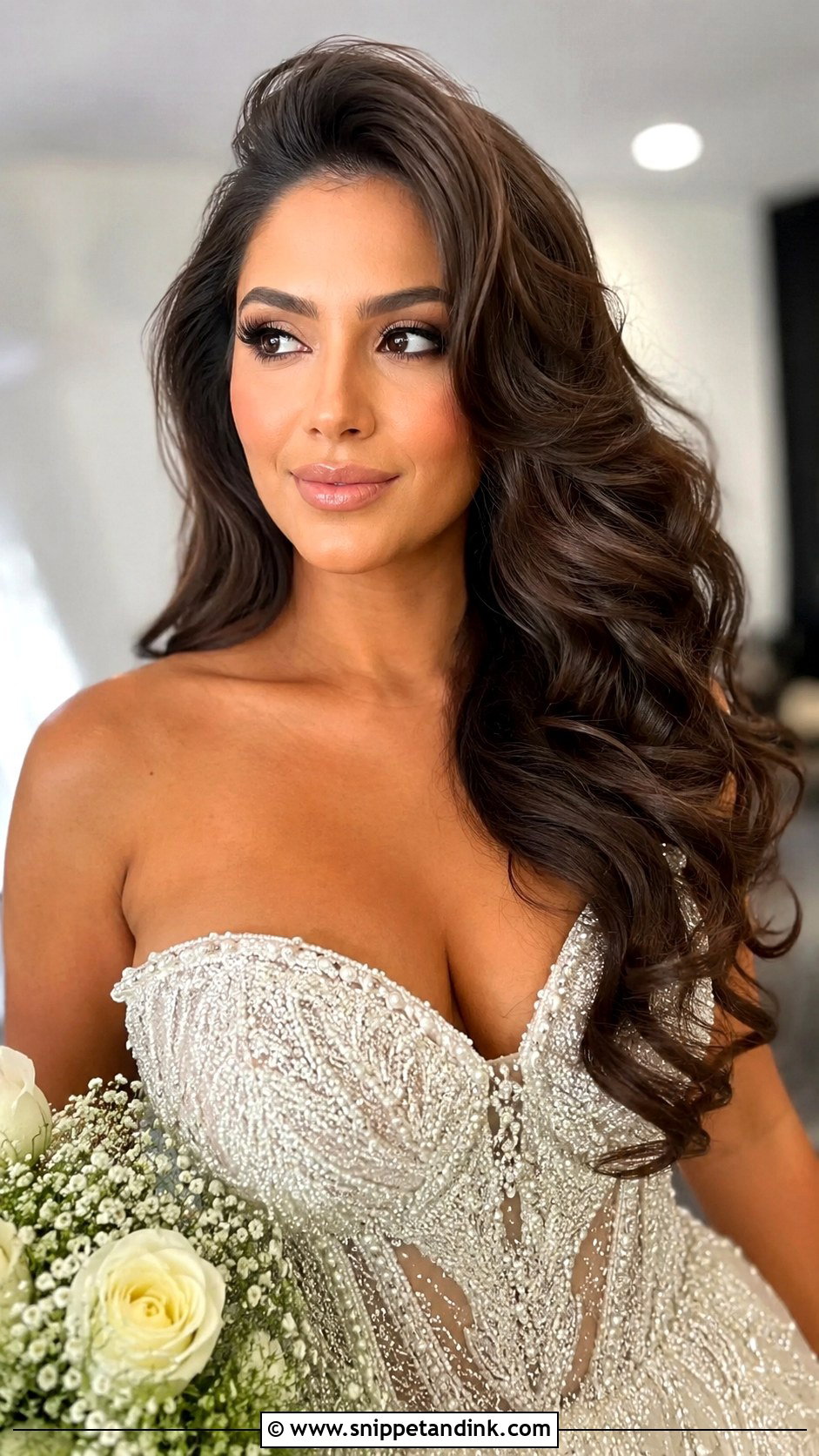
A voluminous bouncy blowout is built with a round brush and then set in large velcro or hot rollers while it cools. That time in rollers is what gives it swing for hours rather than minutes. Medium to thick hair holds the shape best. Very fine hair needs mousse at the roots and may need a few clip-in wefts to reach that red-carpet fullness. Statement gowns match the energy, and shine spray goes on last, lightly.
13. Soft Waves With Veil
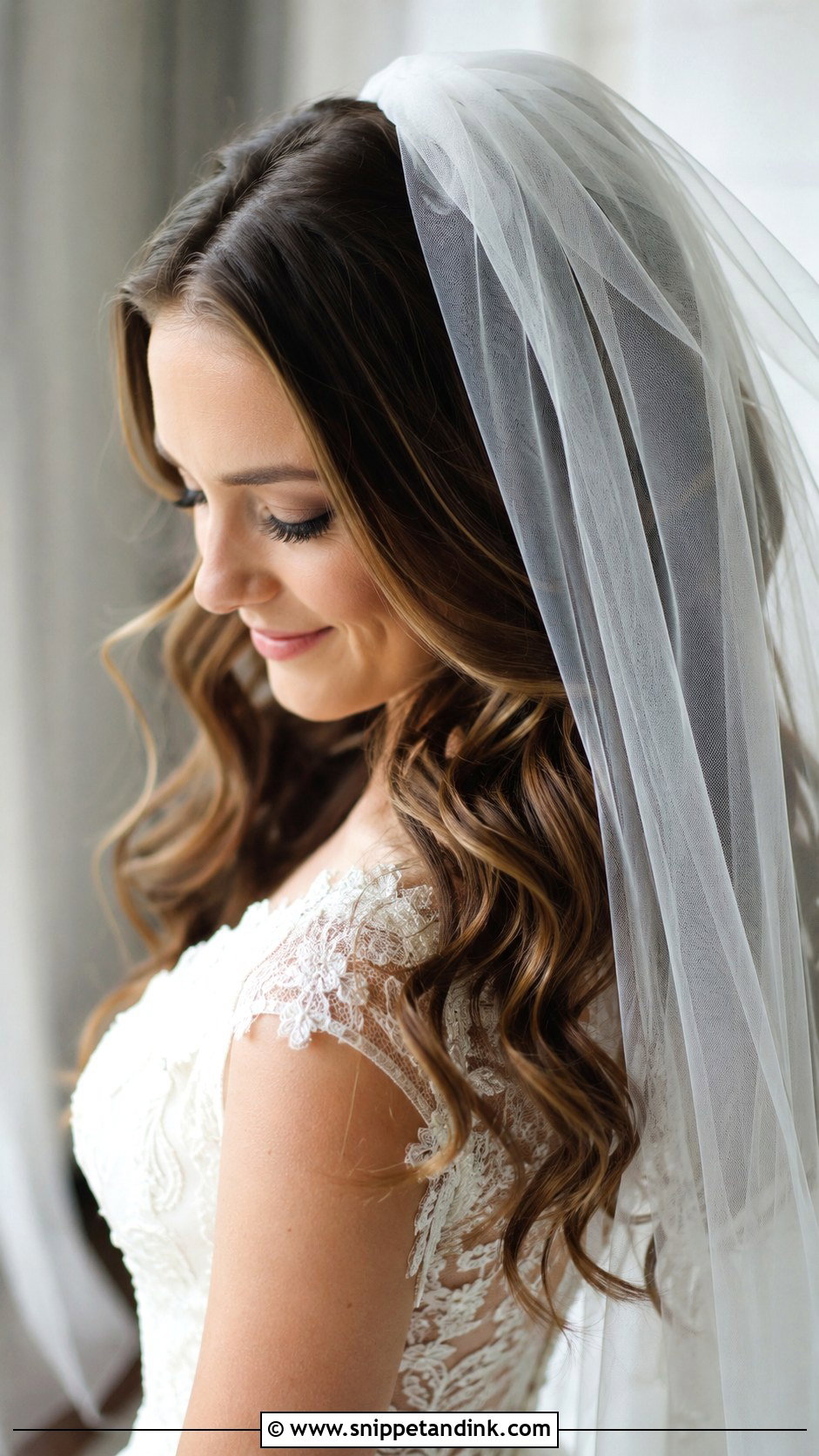
Veils and waves get along well, provided the comb has something to hold. I tuck a few crisscrossed pins under the crown where the veil will sit, then slide the comb in over them so it stays put without dragging the waves flat. Curls that sit beneath the veil get pressed by its weight, so I curl that area slightly tighter. When the veil comes out at the reception, a quick lift at the crown with a teasing comb gives you a second look for the evening.
14. Pinned Back Waves
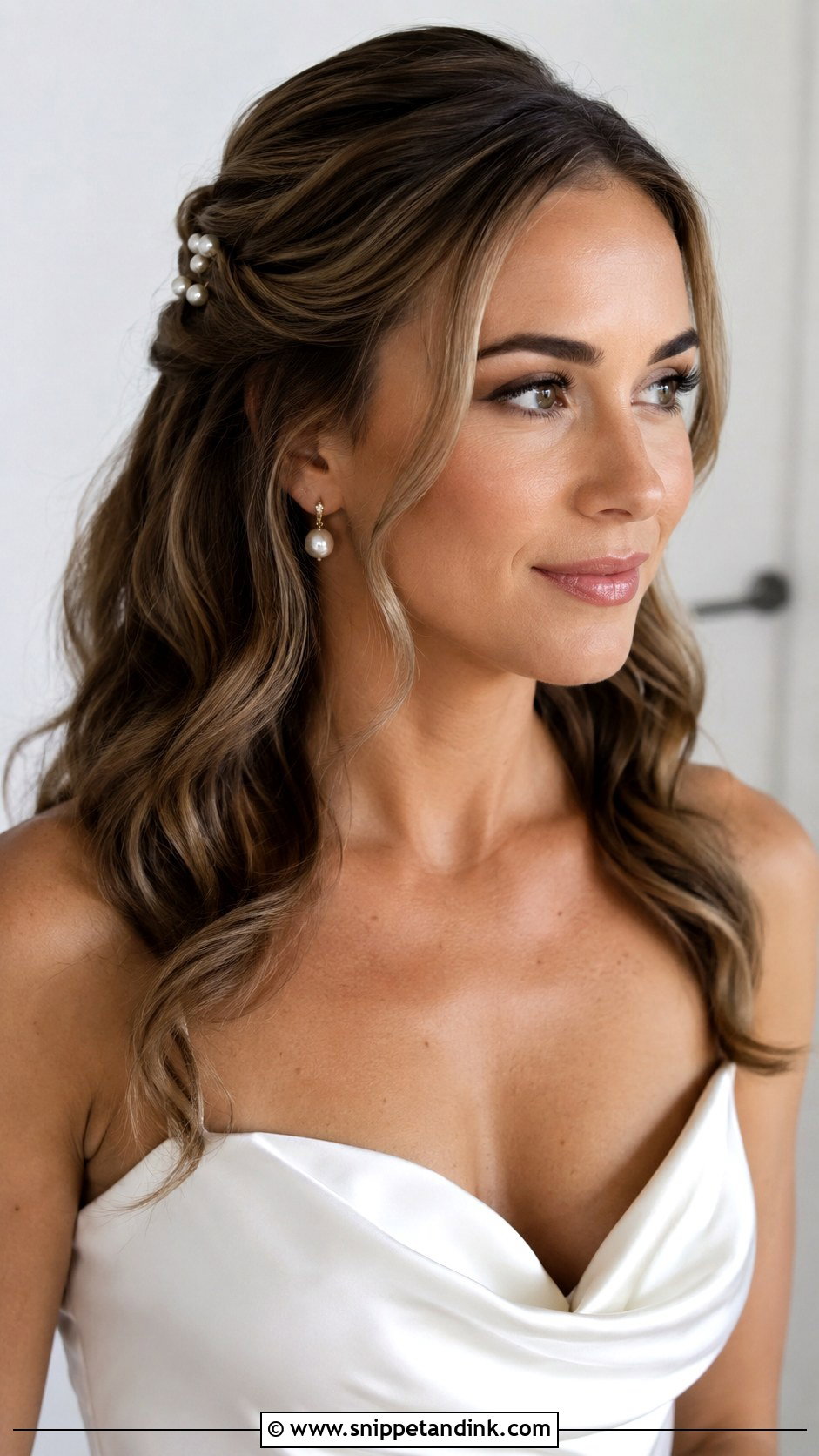
Pulling a slim section back behind each ear is the simplest way to keep down hair tidy while you eat, hug and dance. I take it from just above the ear, twist it once and secure it with two crossed pins, then cover those with pearl or jeweled slides. It’s a quiet look, which makes it a good match for a dress that already has a lot going on. Veils and floral pieces sit with it easily.
15. Vintage Finger Waves
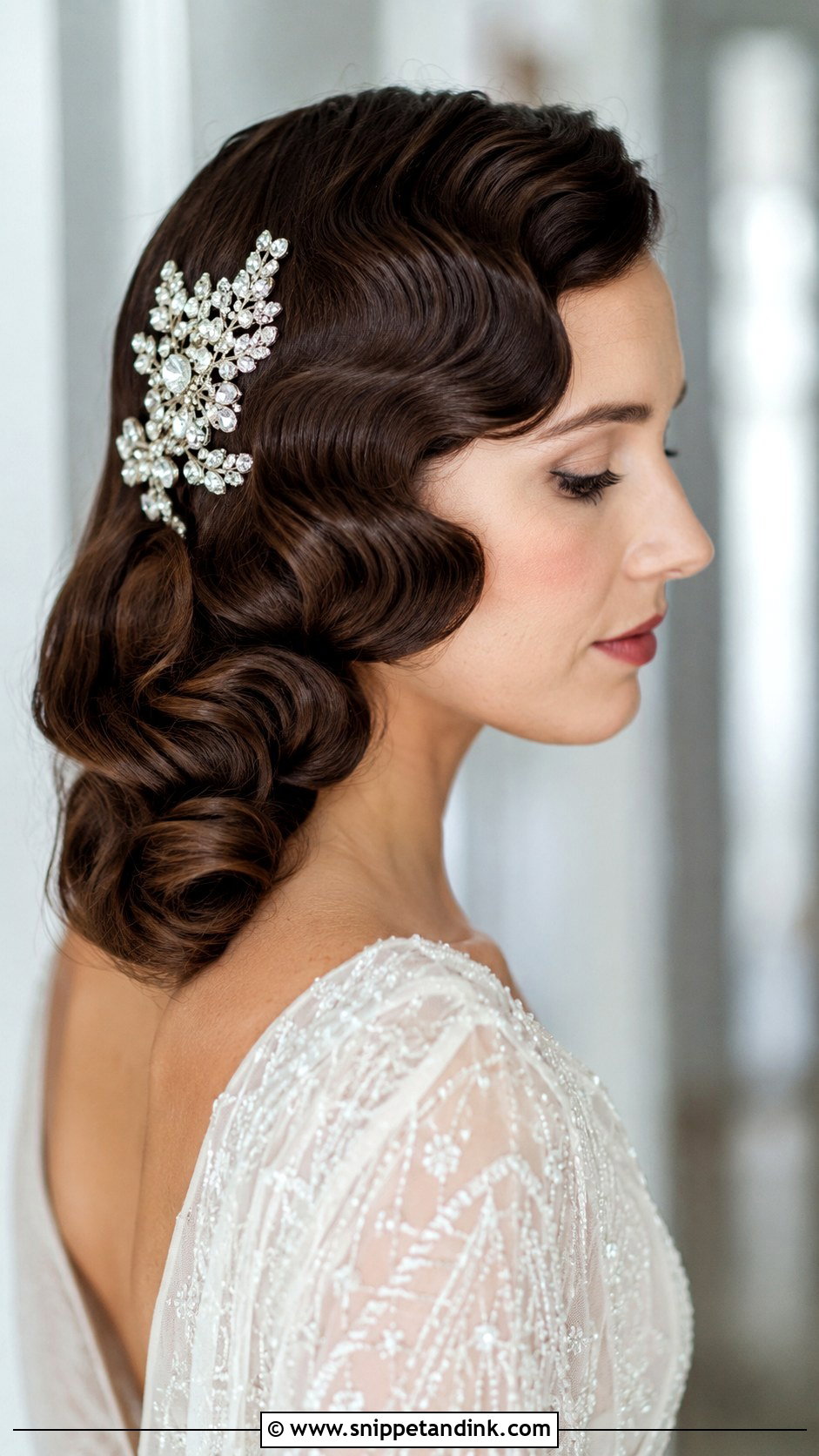
Proper vintage finger waves are sculpted with setting lotion, a fine comb and clips, then left to dry completely, ideally under a hooded dryer. I’d only book them with a stylist who can show you finger waves they’ve done, because pushing the ridges in evenly takes practice. The waves sit close to the head and blend into soft curls or smooth lengths. Blunt-cut hair to the shoulder gives the cleanest result. Art deco weddings, sleek gowns and a sparkly comb or feather piece complete the period feel.
16. Tousled Textured Waves
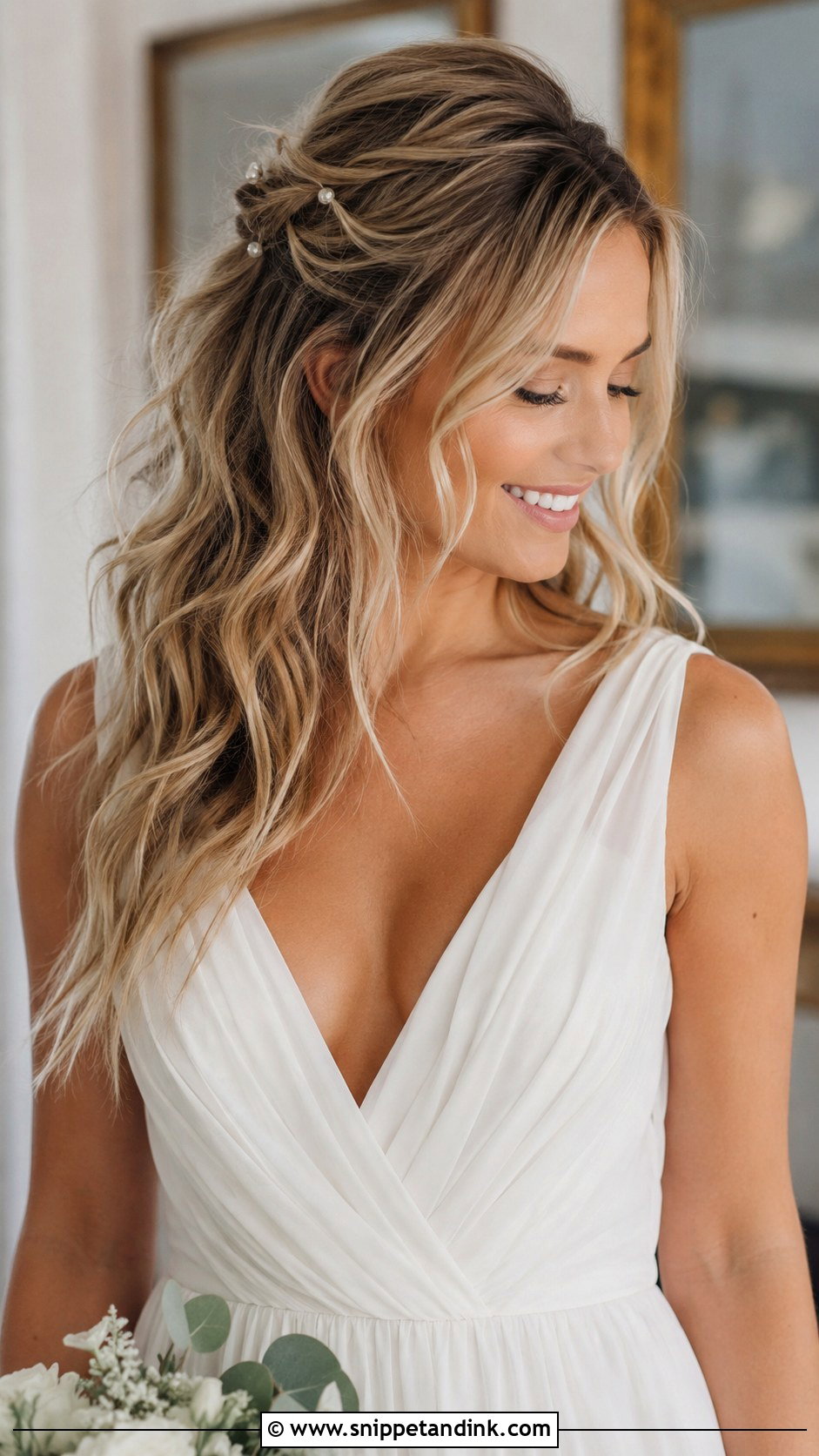
Tousled waves still need a proper set underneath, otherwise undone turns into flat by mid-afternoon. I curl with a wand, let everything cool, then break it up with texture spray and my fingers, leaving the ends a little piecey. Rustic and intimate weddings suit it, and so do brides who don’t want to feel overly styled. Keep accessories minimal; a few pins or blooms at most.
17. Long Braided Half-Up
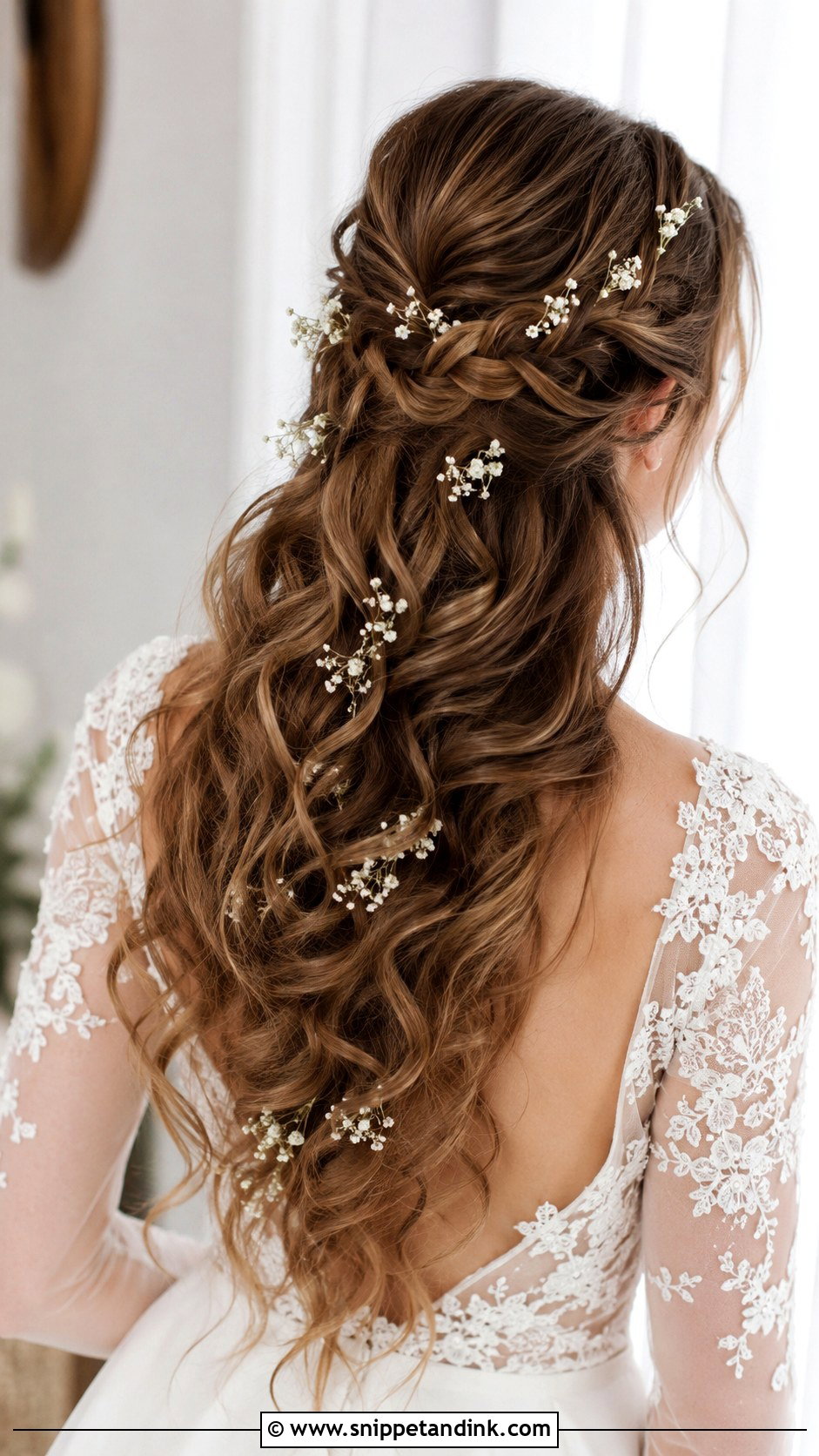
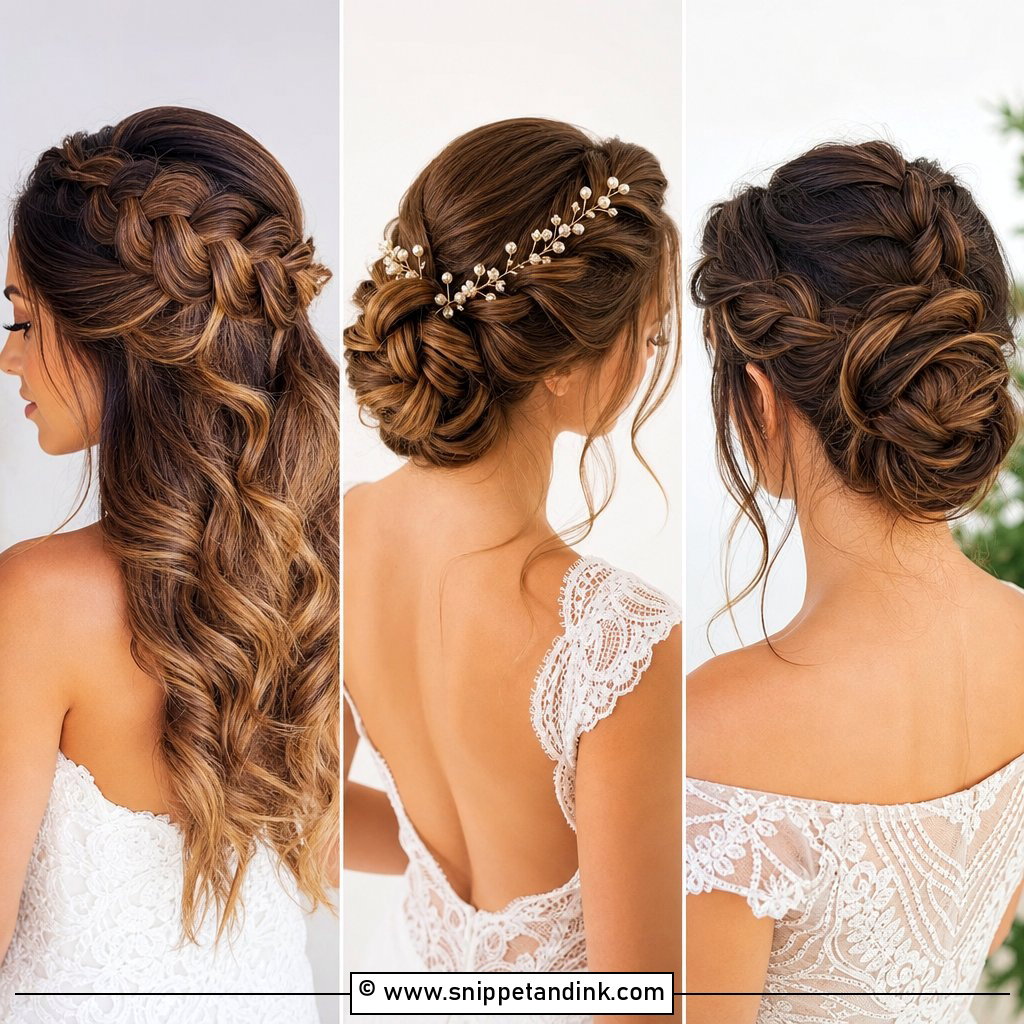
A long braided half-up gathers the crown into a braid while the rest falls free. A fishtail shows texture best, a three-strand braid is quicker and sturdier, and a rope braid holds well on silky hair. I pancake the braid, gently pulling its edges to widen it, only after it’s secured, never before. Tiny flowers or pearl pins along it add detail. Very short layers can poke out of a braid, so I keep a little texture paste on hand for those.
18. Center Part Sleek Waves
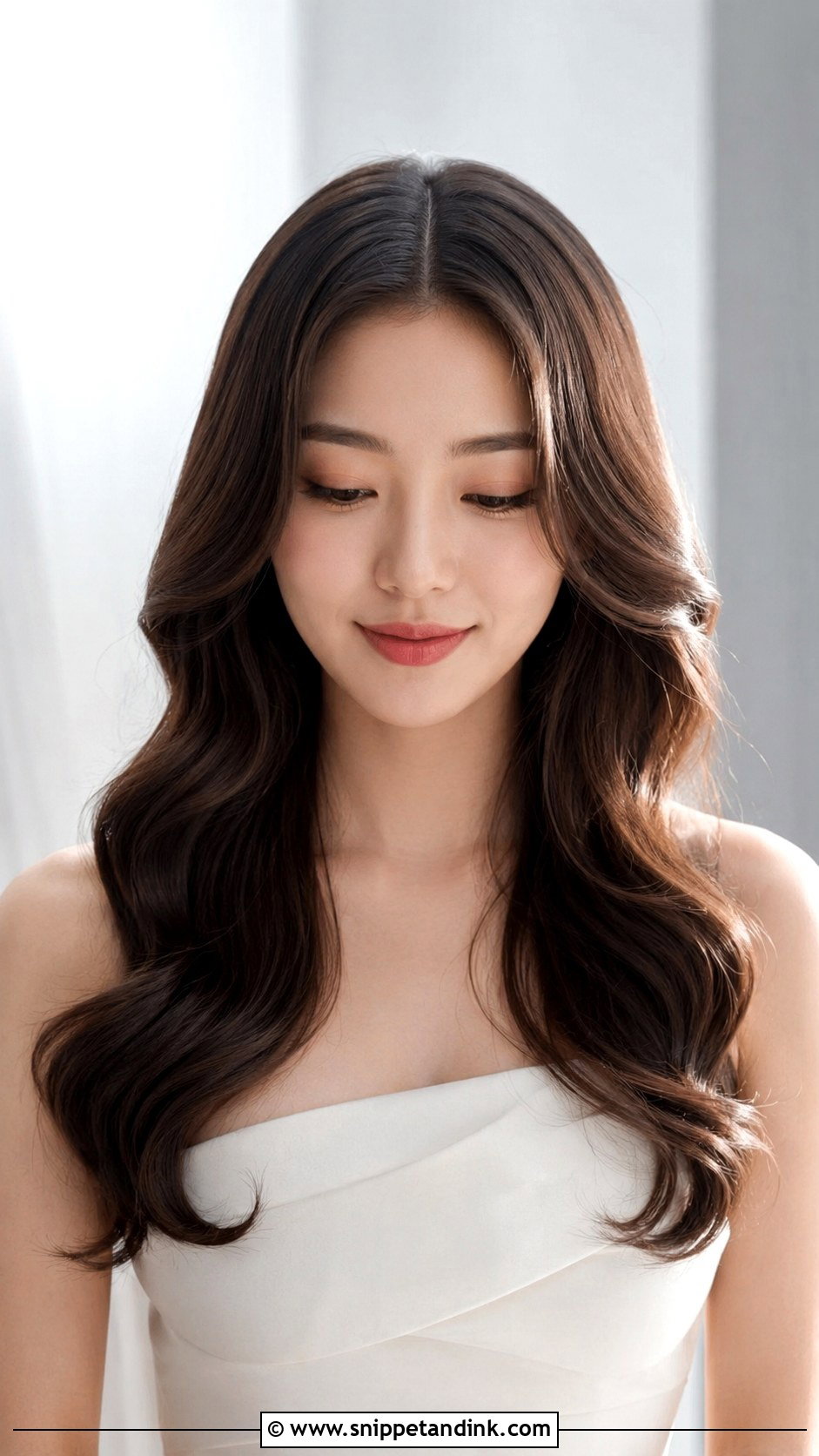
A center part demands symmetry, so I check it against the bridge of the nose at the trial; a part that’s slightly off shows instantly in straight-on portraits. The crown stays smooth while the lengths get soft waves, which gives a pleasing contrast of texture. Oval and heart-shaped faces suit it most. Pair it with a simple gown and fine jewelry, and keep shine serum on the ends so the roots don’t go flat.
19. Crown Volume With Loose Curls
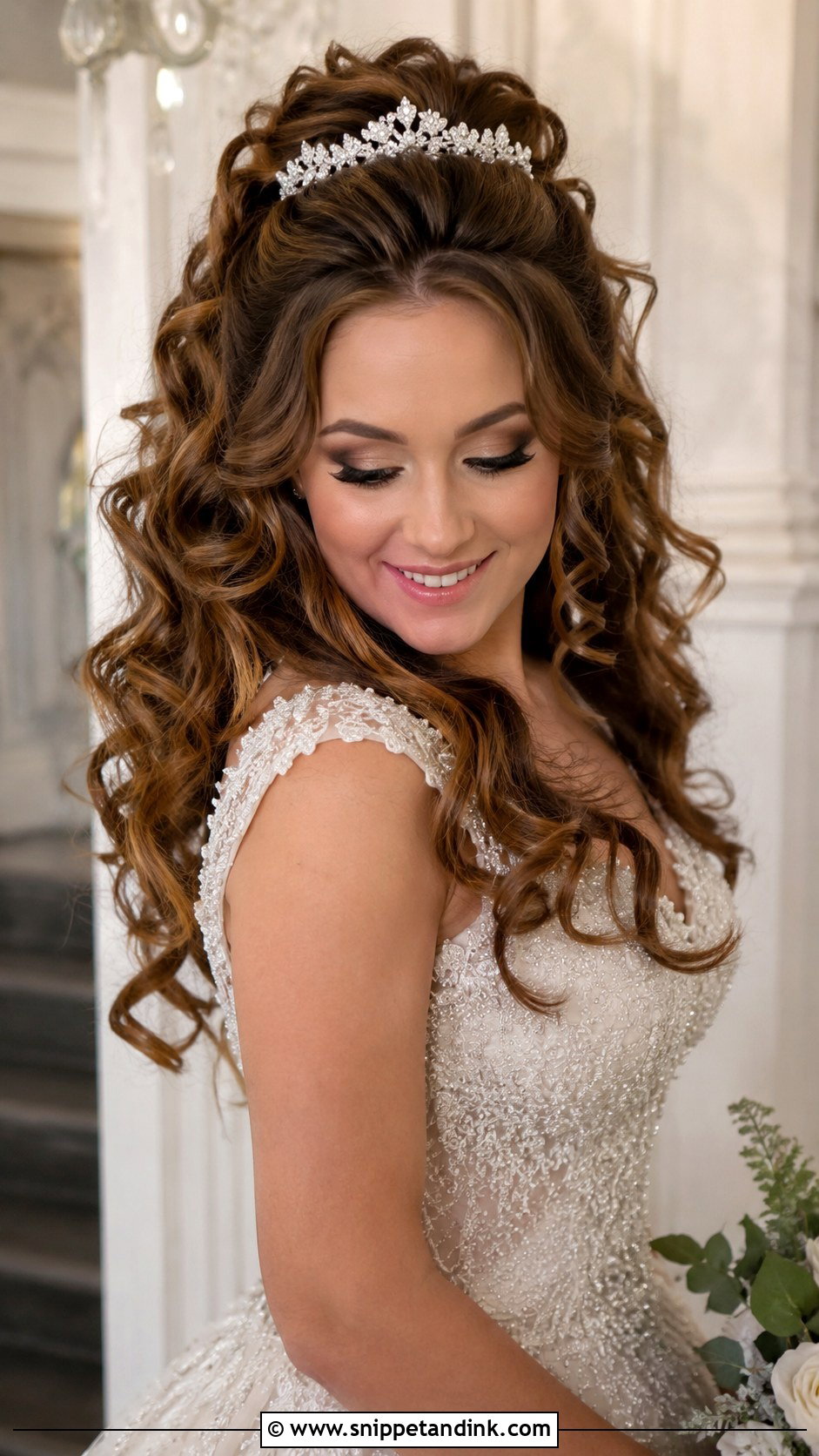
Lift at the crown makes the face look longer, which helps round and square face shapes. I backcomb small horizontal sections at the root, smooth the top layer over so the teasing never shows, and lock it with a firm spray before the curls below are set. A tiara or statement comb sits naturally at the front edge of that height. On very fine hair the backcombing does more work than any product, so ask for it at the trial and check how it looks a few hours later.

20. Flower Crown With Waves
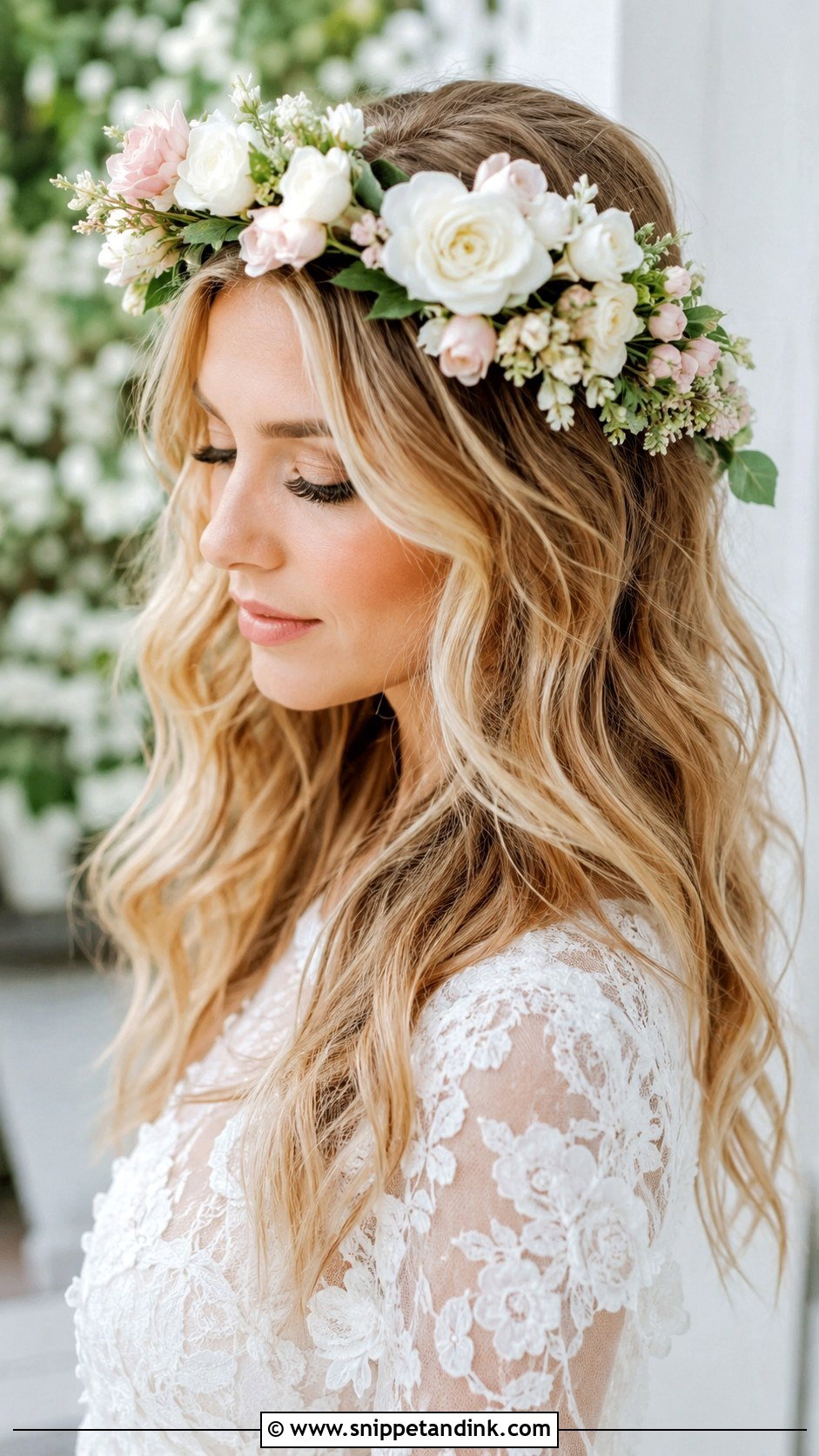
A flower crown paired with flowing waves should be light enough to forget about. Fresh crowns on wire weigh more than people expect, while silk or dried versions are lighter and won’t wilt in the sun. I anchor the crown with bobby pins slid through its base on each side and at the back. Matching the blooms to the bouquet ties the look together, and the waves underneath stay soft. Garden ceremonies and airy gowns suit it best.
21. Glossy Straight Hair With Headband
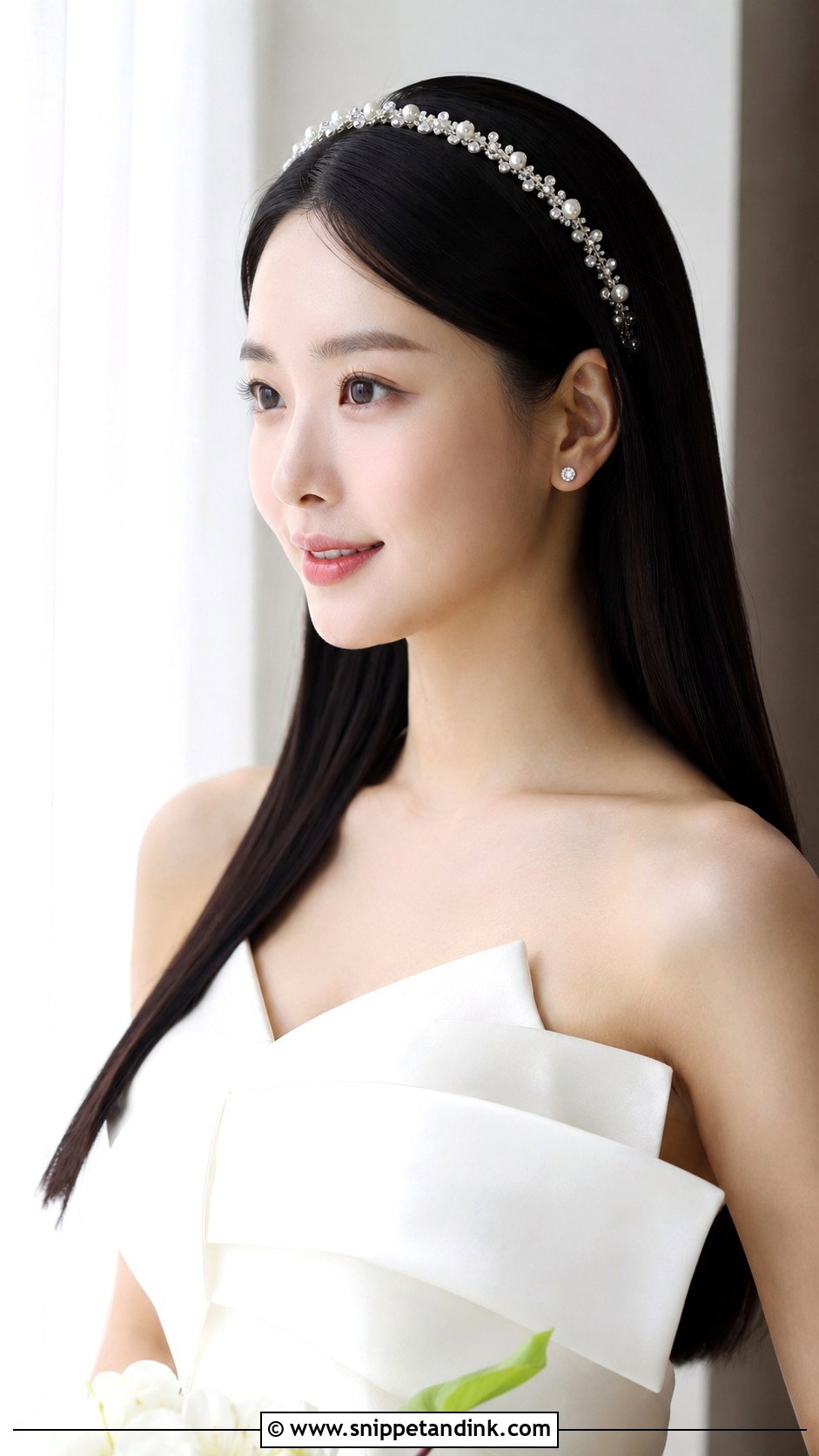
A jeweled headband on glossy straight hair is a sharp, modern pairing, but headbands can pinch behind the ears after a few hours. I bend the arms slightly to fit the bride’s head and add a pin under each end so it can’t slide forward. The hair underneath is blown smooth and flat-ironed until it reflects light. Minimal gowns, contemporary venues and statement earrings are its natural setting.
22. Soft Curls With Pearl Pins
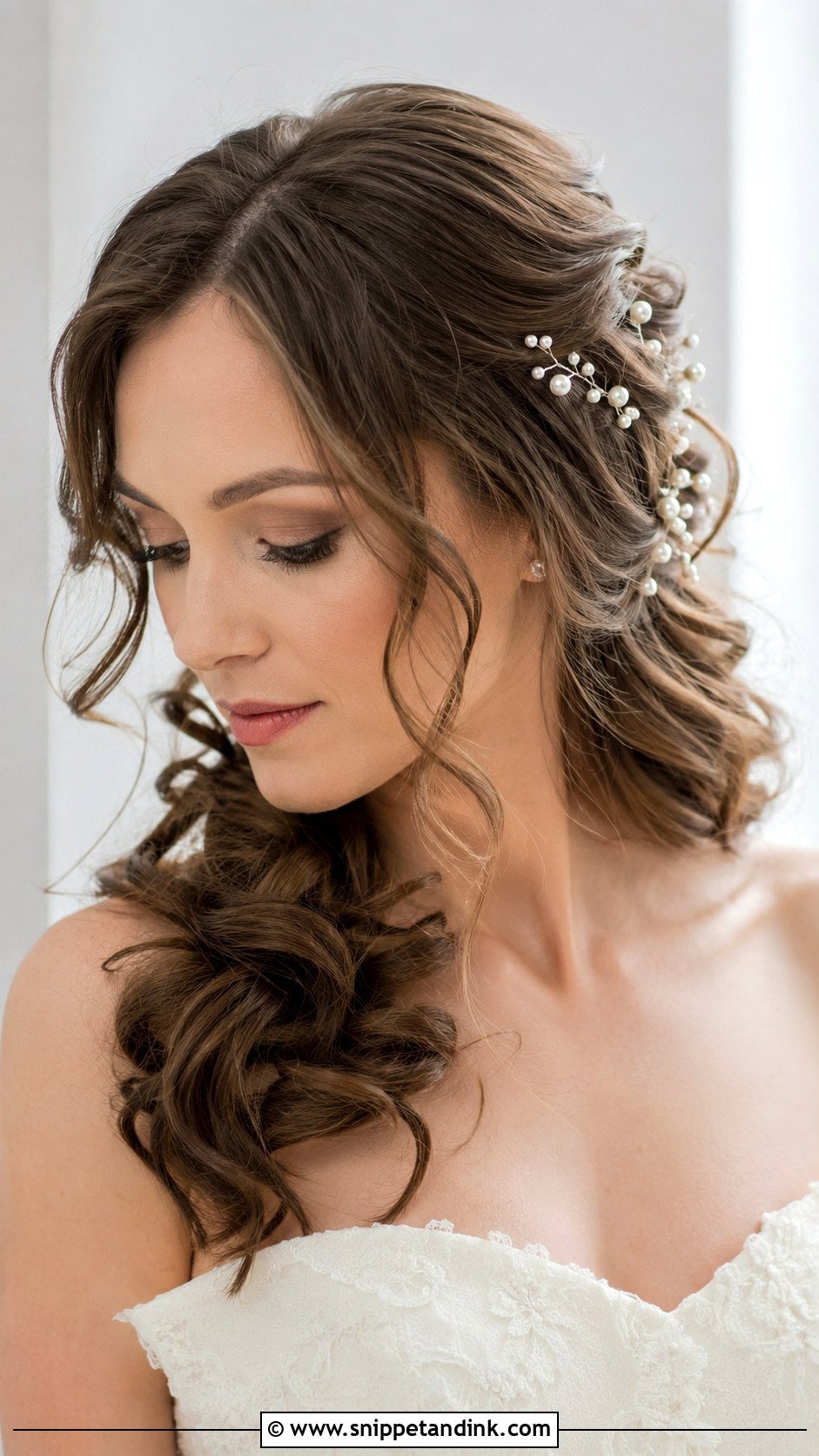
Pearl pins are the most forgiving accessory I use. They hide the working pins underneath and can be moved during the day if a curl shifts. I scatter them in an uneven pattern, weighted toward one side, because a neat grid looks rigid in photos. Loosely set curls give them something to nestle into, and they work with or without a veil.
23. Long Layered Waves
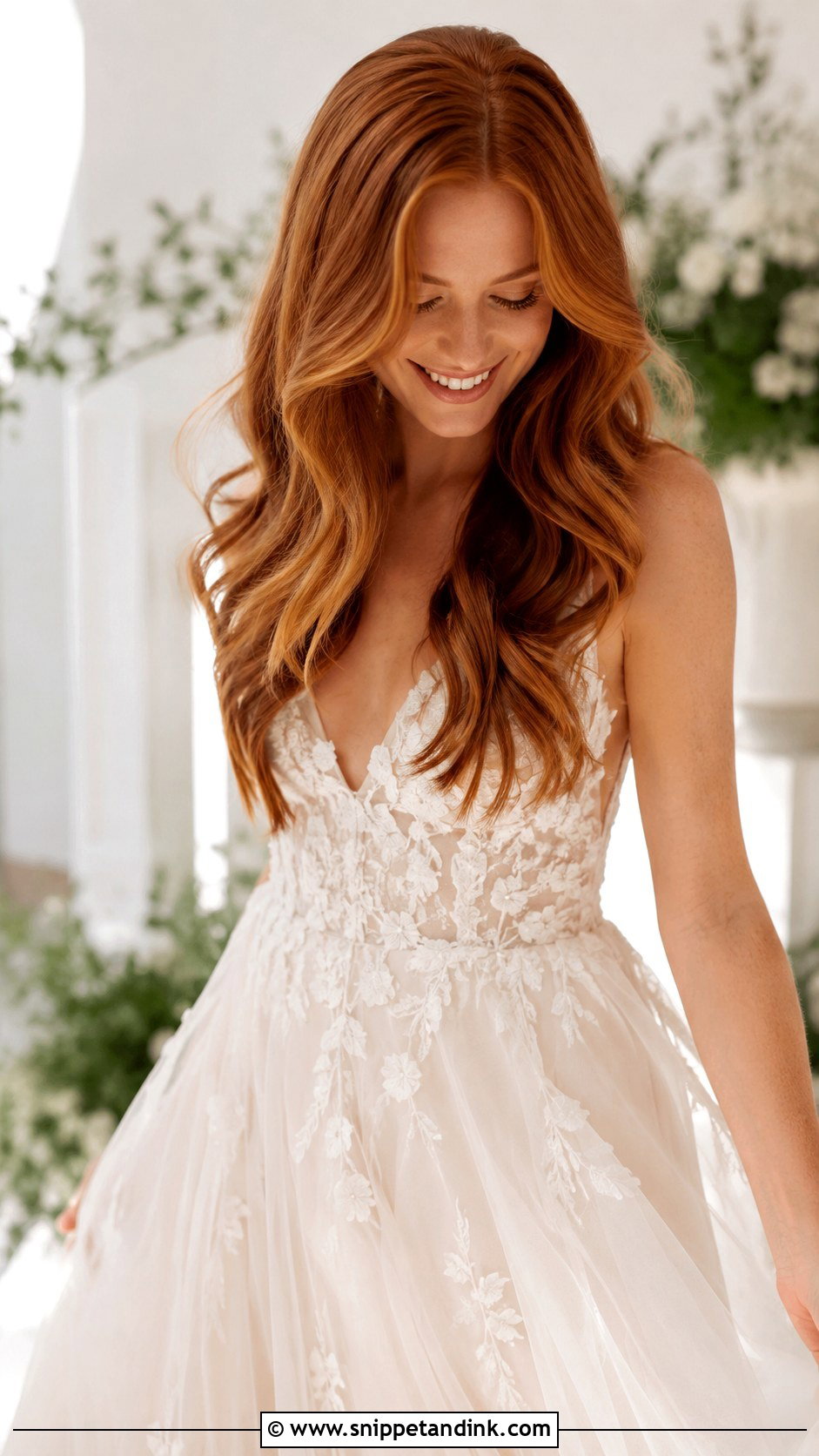
Layers give long hair movement, but they also mean curls end at different heights, which can look choppy if each layer isn’t curled to match. I curl the face-framing pieces away from the face and blend the rest so the waves flow as one. If you want a trim, have it a couple of weeks ahead rather than a few days before. This shape suits most hair types and gives natural volume without extensions.
24. Bridal Hair With Side Tuck
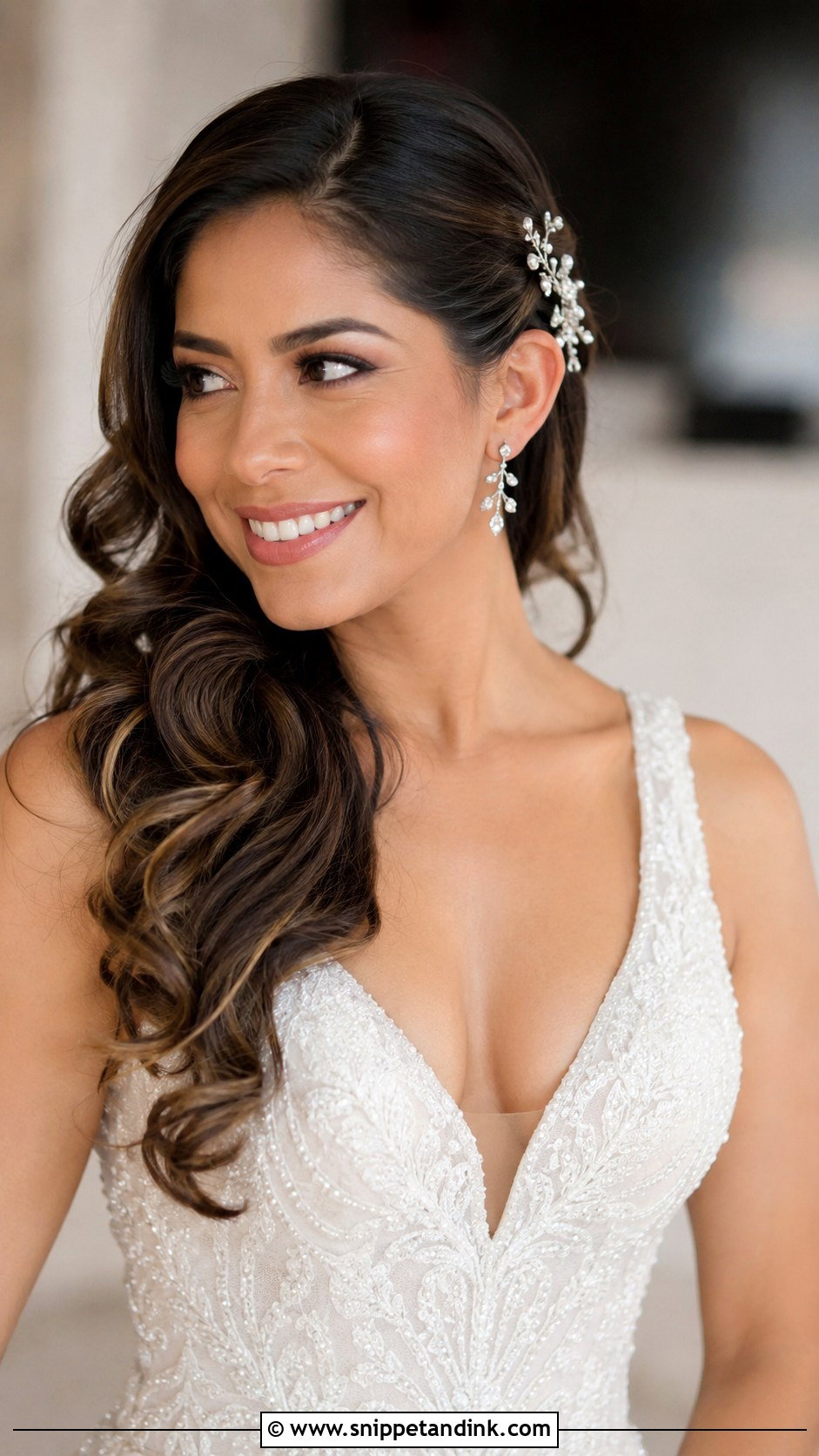
Tucking one side behind the ear gives a clean asymmetry that shows off earrings and the neckline. I tuck it, hide two crisscrossed pins behind the ear, then place a decorative pin over them. The other side stays full with loose curls. It’s quieter than a full side sweep and far less likely to slide, so it’s a good pick for brides who plan to dance most of the night.
25. Ethereal Wavy Hair With Tiara
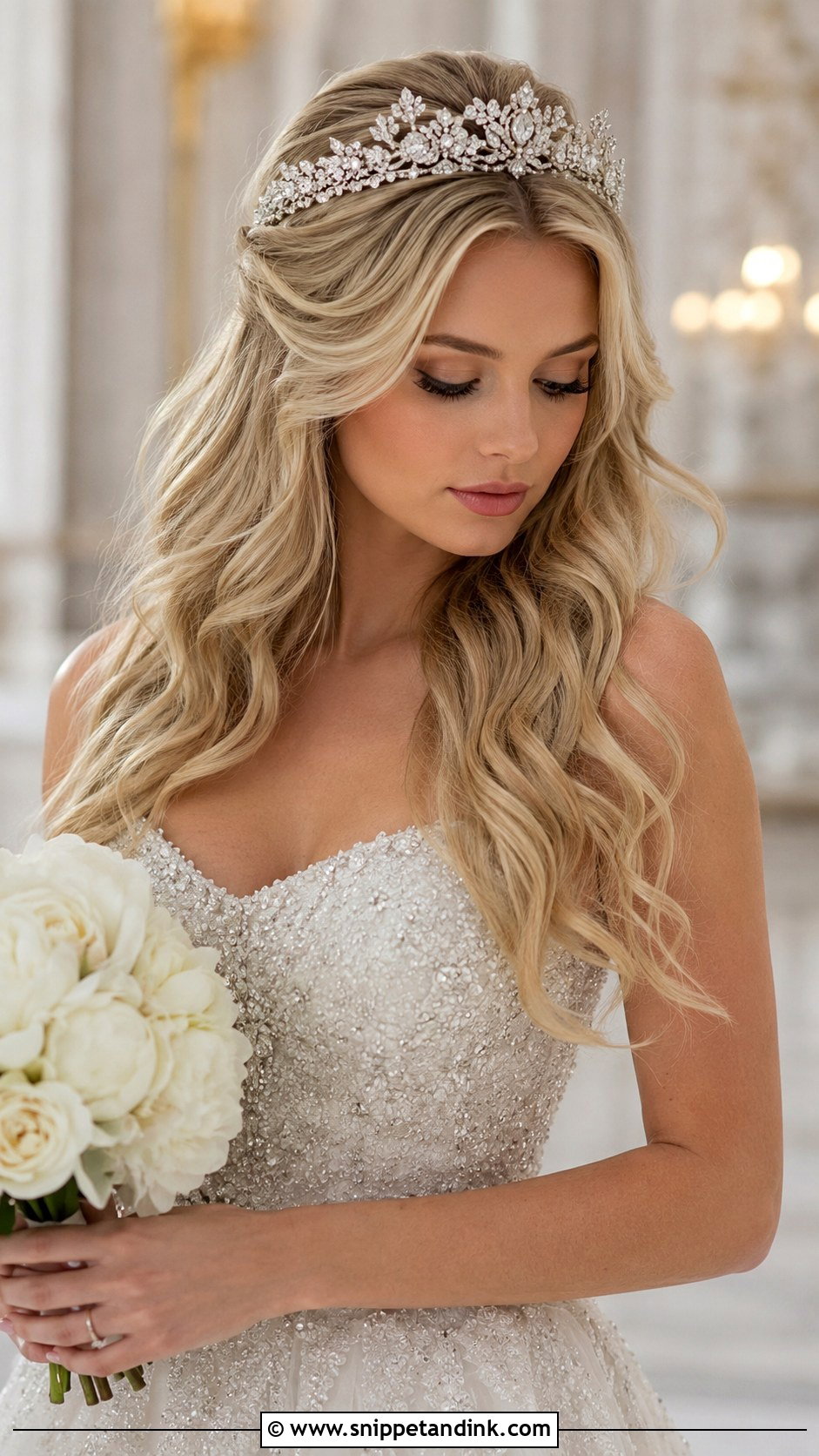
A tiara needs a foundation. I tease a little at the crown and pin the tiara’s combs or loops through crossed pins underneath, so its weight rests on that structure instead of on the waves, which would otherwise flatten under it. Soft waves keep the result romantic rather than pageant. Ballroom gowns and formal receptions suit it. Bring the tiara itself to your trial, because the band’s shape and weight change how it sits on every head.
Fine, Coily or Very Thick: Adjusting the Plan
Fine hair
Fine hair usually holds a curl well but runs out of volume. I’d consider a few clip-in wefts matched to your color, placed below the crown where a part won’t reveal them. A deep side part and some root teasing do the rest.
Curly and coily hair
Natural texture is often the strongest down style of all, defined with a curl cream and gel, diffused, then shaped with a pick. A silk press gives straight lengths but can revert in humidity, so for an outdoor summer wedding I’d plan the textured version, or a shape that still looks intentional if it puffs a little.
Very thick hair
Weight pulls curls out, and a full head of hair down can feel hot on the neck by the afternoon. I curl in smaller sections and often pin some bulk back invisibly from underneath. If your venue runs warm, trial a half-up version too.
Rescuing Waves That Relax Before the Speeches
Even well-set curls soften as the day goes on. Give your maid of honor a mini flexible hairspray, a few bobby pins matched to your color, blotting papers and a compact mirror; that covers most problems. If the front pieces fall, twist them around a finger, pin them flat for ten minutes while you’re seated for dinner, then release. Short on time? Tuck one side behind the ear with a decorative pin and the change reads as a new look rather than a fix. I wouldn’t bring a hot tool to the venue unless your stylist is staying, because rushed touch-ups with heat tend to make curls frizz rather than revive.
How Your Down Style Should Feel at Hour Eight
Down hair is softer and more personal than most updos, and with a proper set it lasts well into the evening. Glamour waves, waterfall braids, flower crowns and sleek straight styles all have their place, and your hair type, venue and gown will point you toward two or three of them. Book a trial, then wear the style for the rest of that day to see how it holds before you decide. The right one is the style you forget about while you’re enjoying yourself.
You'll Like These Ideas:




Leave a Reply