
Indian wedding hair is rarely one style. Over a few days a bride may need something she can sit still in for hours of henna, something that survives a sangeet dance floor, a ceremony look built around regional jewelry, and a reception change. Each region also brings its own ornaments, and those ornaments decide where the hair has to sit. I’ve gathered 25 Indian wedding hair ideas here for brides, bridesmaids and guests, from South Indian braids and Punjabi parandas to Bengali and Maharashtrian buns, curls and pearl details, with notes on how each one is built and which event it belongs to.
Regional Ornaments Set the Rules for Where the Hair Sits
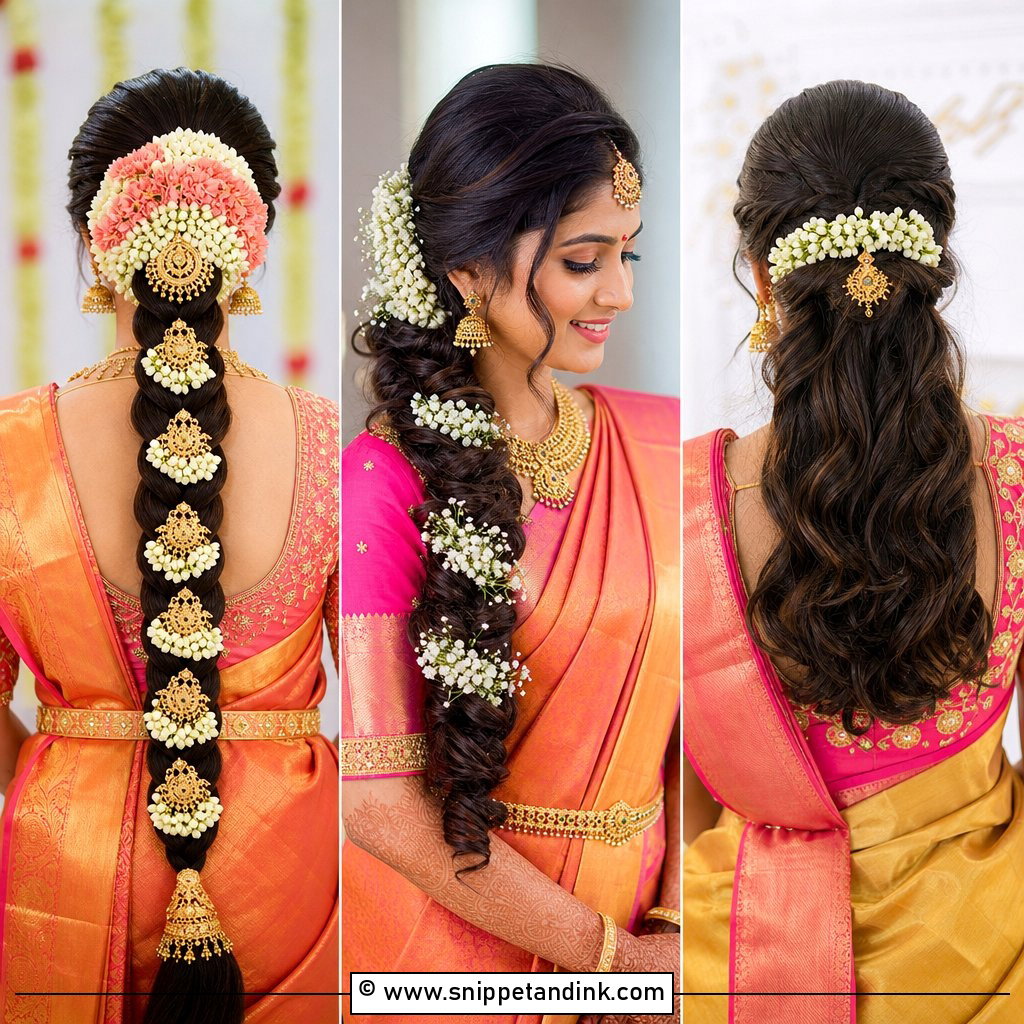
Several of the styles below are tied to a region, and the traditional ornaments are what make them work. Before I choose a style with a bride, I ask what she’ll be wearing on her head, because each piece needs its own kind of foundation.
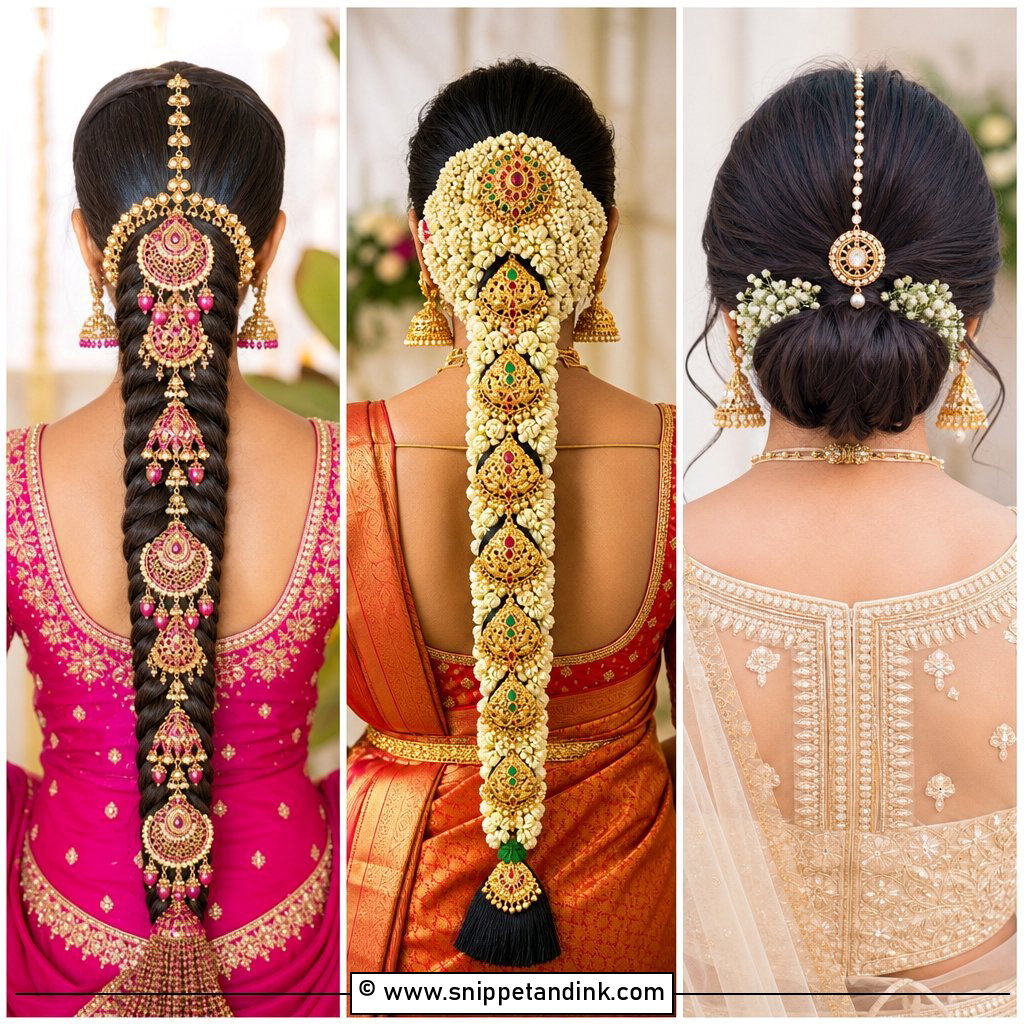
- Jada billalu (South Indian): gold pieces fixed down the length of a long braid. The braid has to start firm at the crown to carry the weight, and many brides add a braid extension for length.
- Paranda (Punjabi): a tasseled cord braided into the hair. Decide on it before braiding begins, since it is woven in, not added after.
- Shola mukut (Bengali): a crown worn on top of the head. The bun stays low and compact so the mukut and veil sit properly.
- Mundavalya (Maharashtrian): strings of pearls tied across the forehead. A smooth hairline and a low bun keep the strings flat.
Bring the real pieces to your trial if you can. Family ornaments are often heavier than modern versions, and the difference changes how the hair needs to be built.
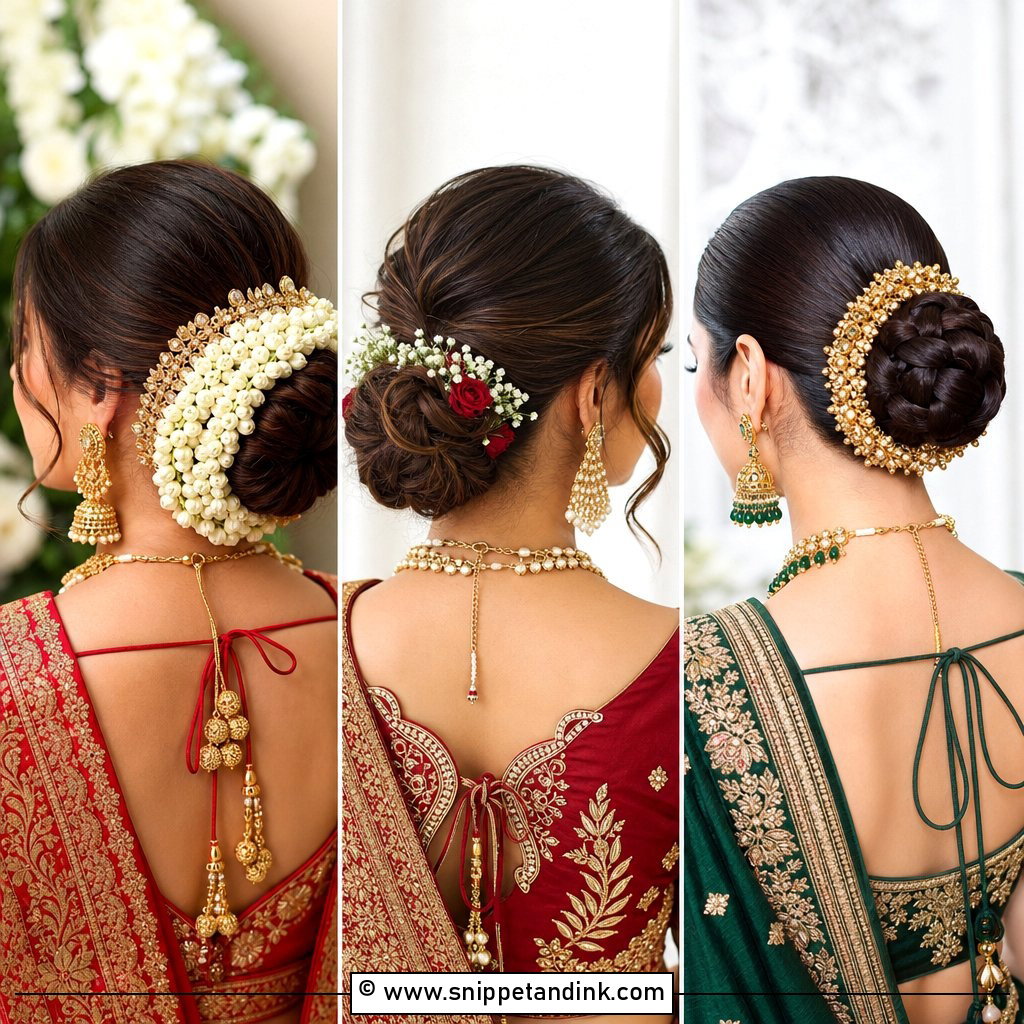
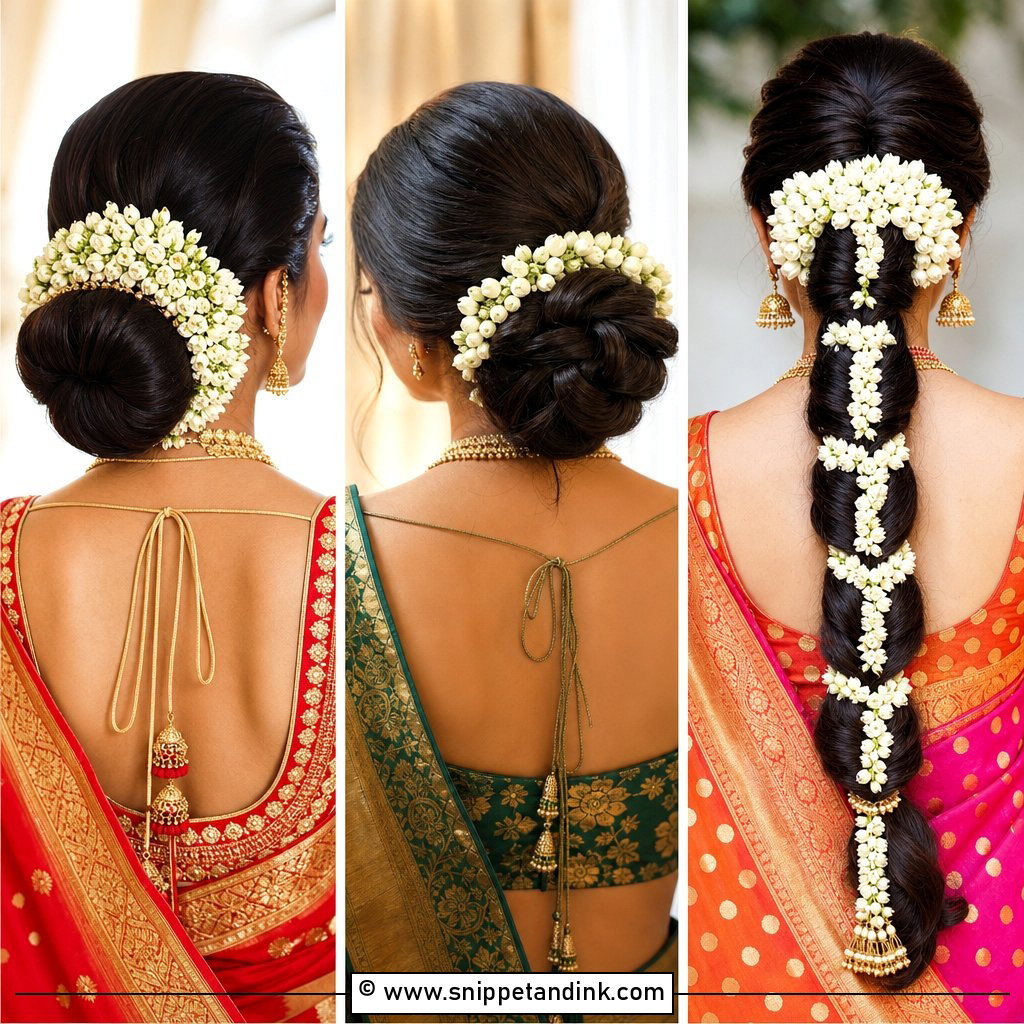
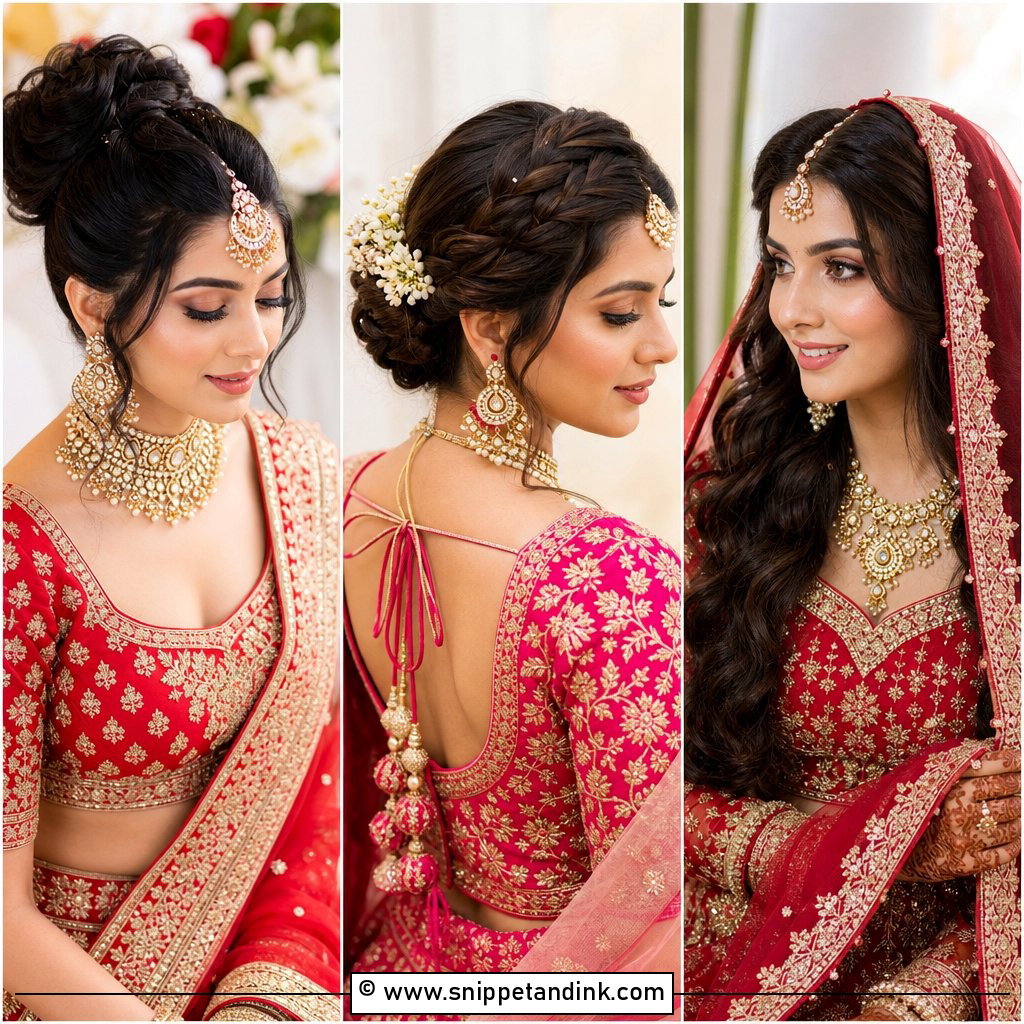
1. Floral Bun for Indian Bride
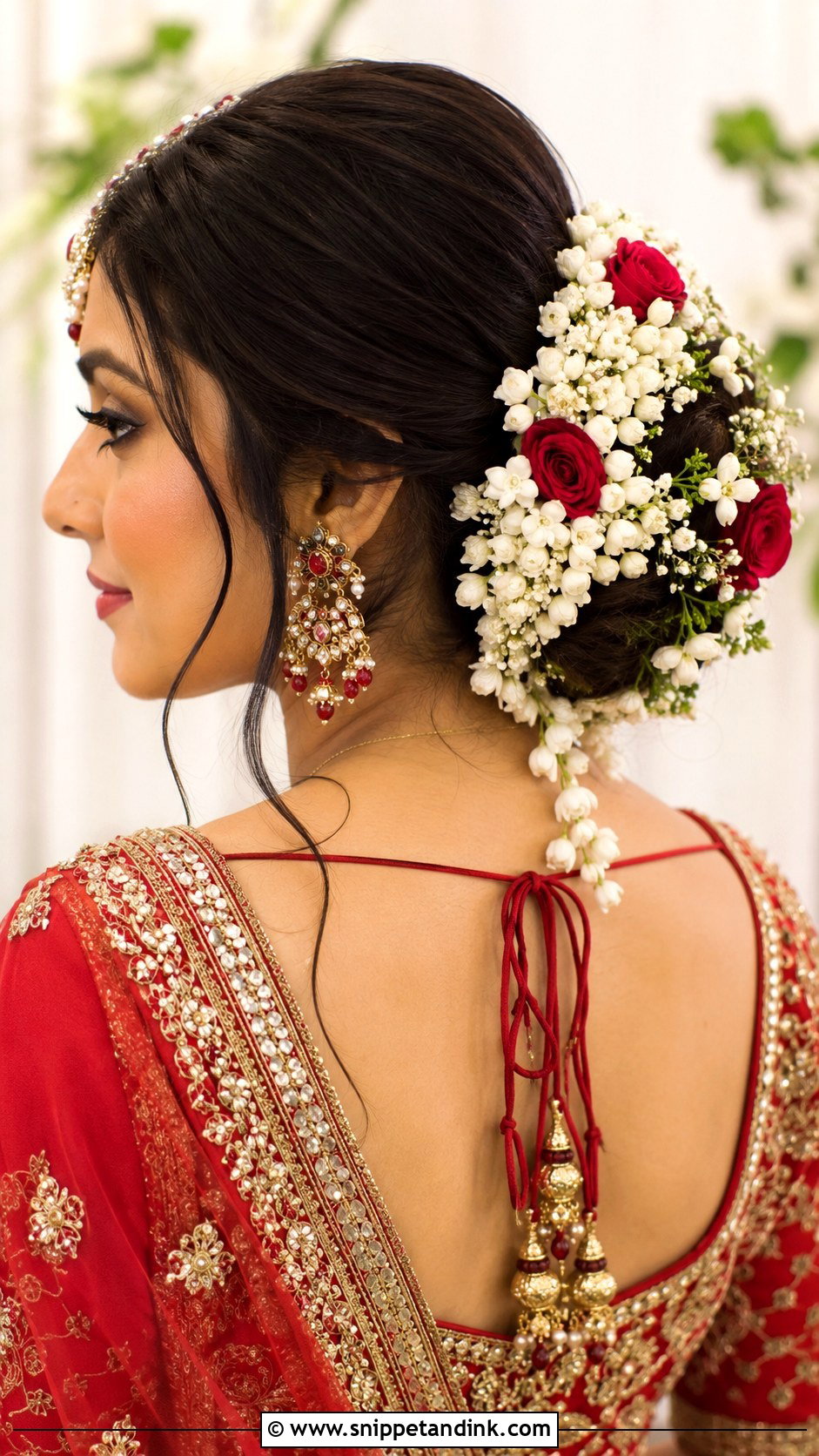
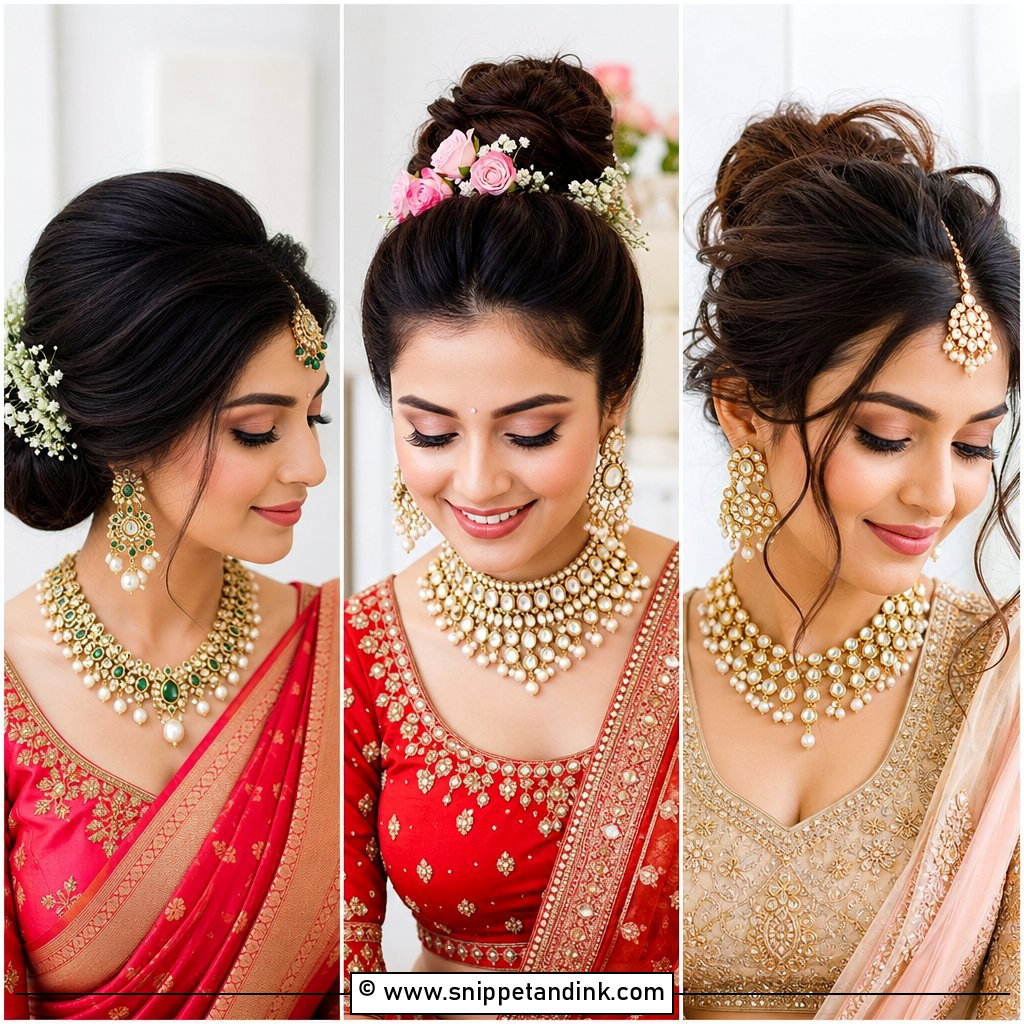
Fresh jasmine or roses wrapped around a soft, voluminous bun at the nape is the classic ceremony choice, and it suits a heavy lehenga with big earrings. You can keep it sleek or leave a few tendrils for softness, and a maang tikka completes it. The flowers carry real weight once there are several strands, so I build the bun around a firm base and pin the flowers into it rather than over it. Red and gold outfits show off the white jasmine best.
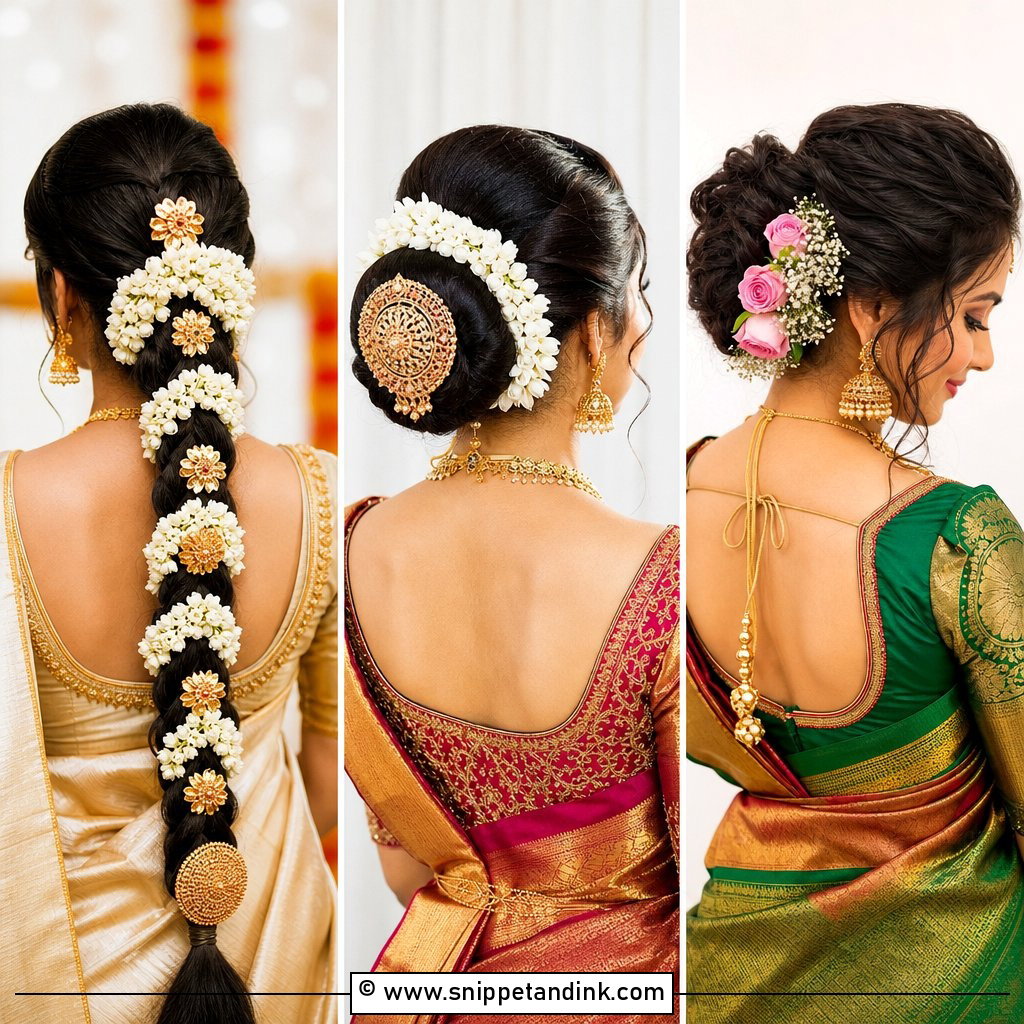
2. Traditional South Indian Braid
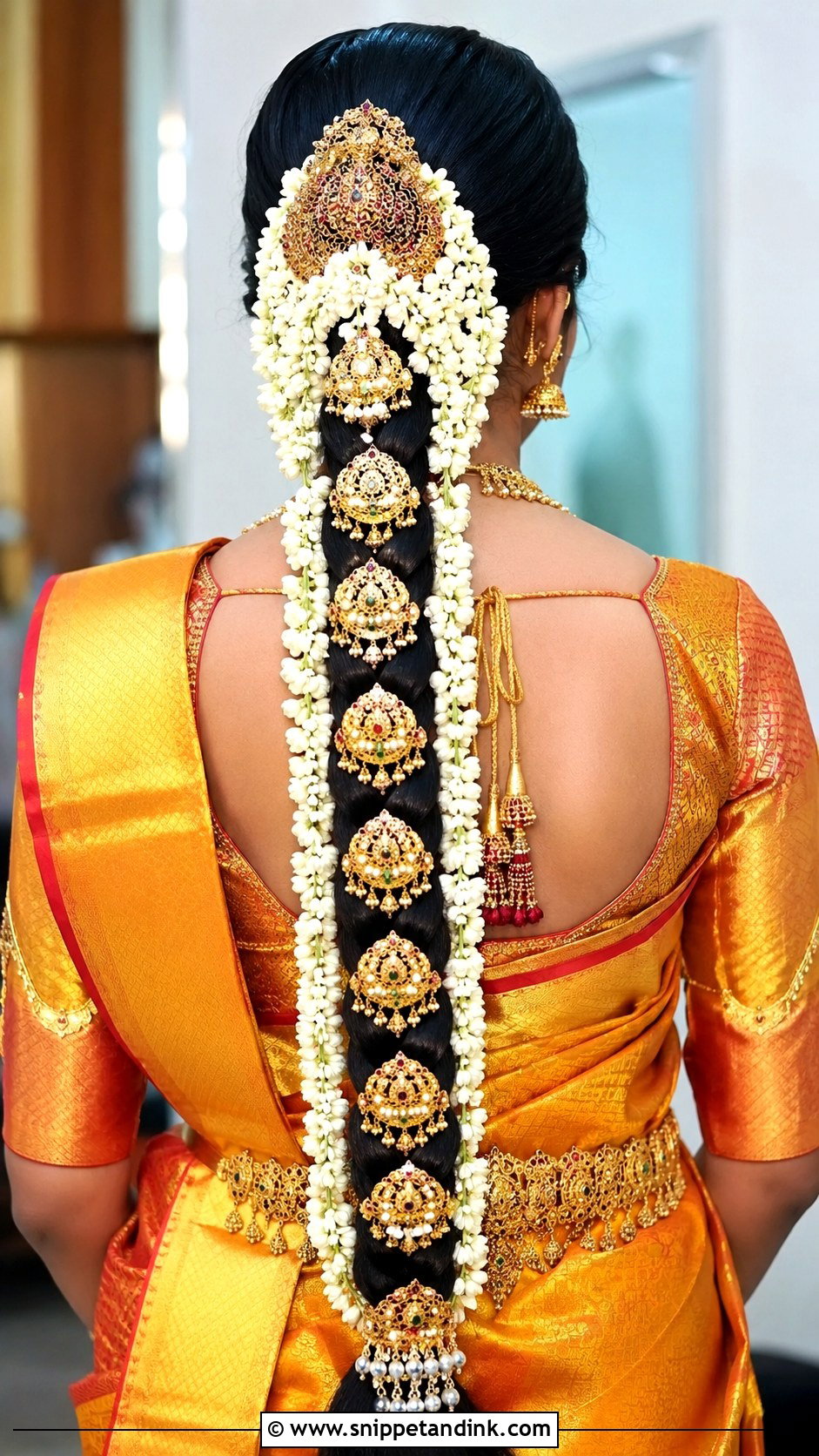
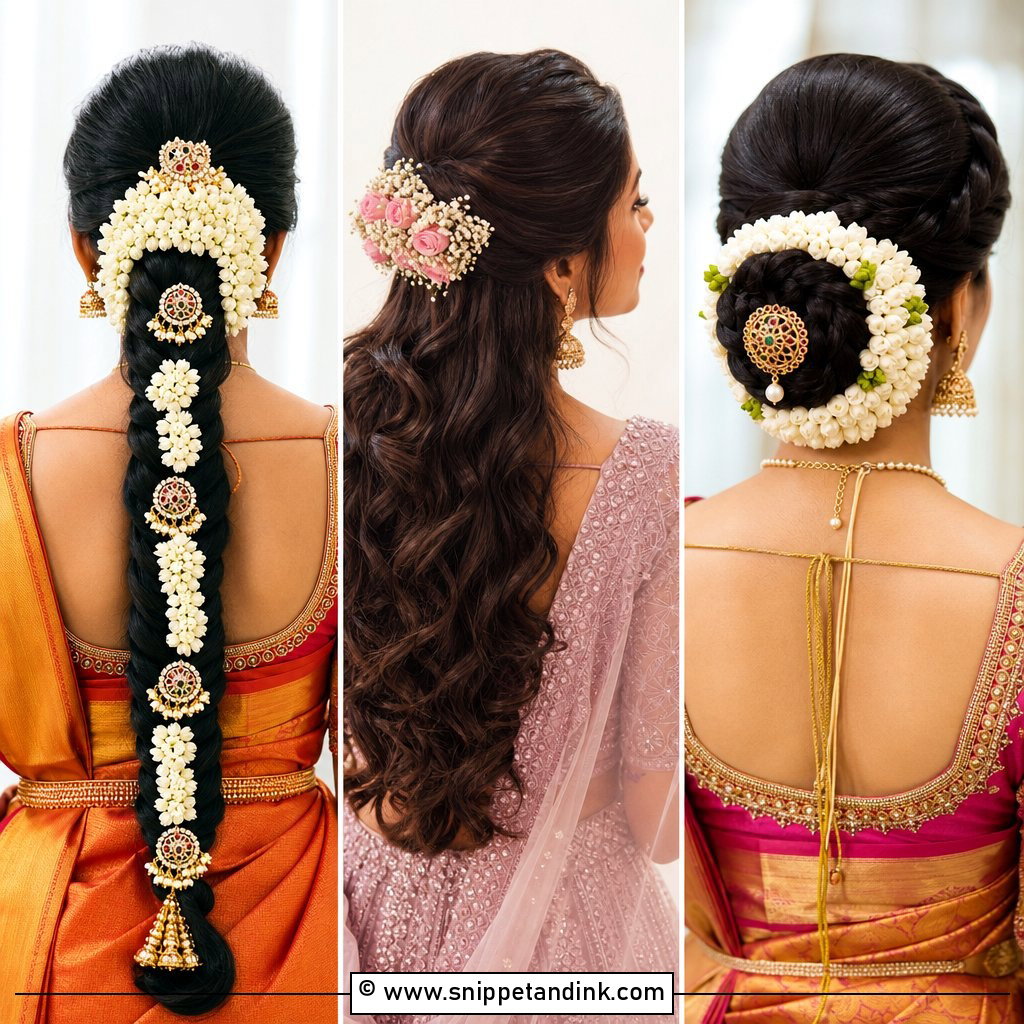
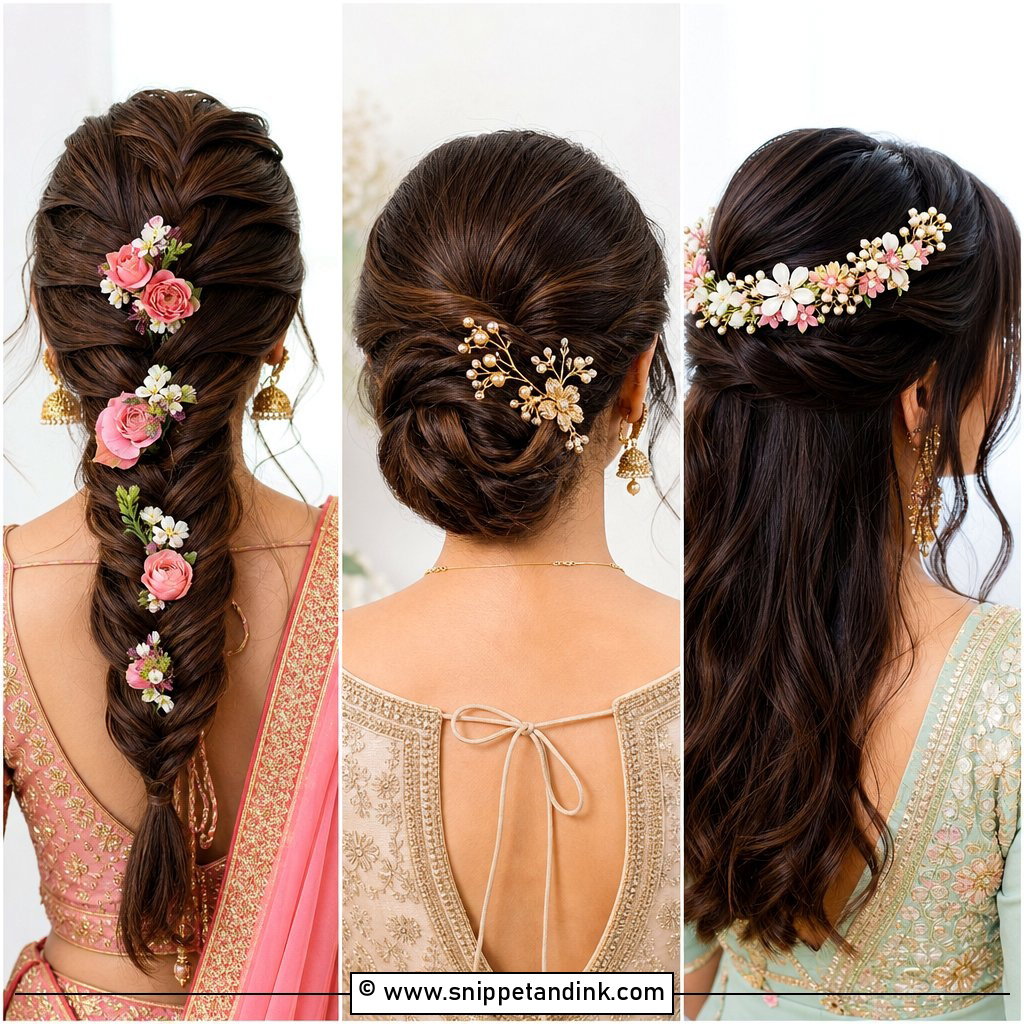
A long, thick braid down the back, decorated with jasmine garlands and gold ornaments called jada billalu, is the look most South Indian brides grow up picturing with a silk Kanjeevaram saree. Temple jewelry along the hairline frames it. The jada is a series of gold pieces running down the braid, and it is heavy, so the braid needs to start firmly at the crown, often over a padded base, to carry it without dragging the hair back from the forehead. For brides without waist-length hair, I add a matching braid extension, which is completely normal for this style. It suits muhurtham ceremonies and morning rituals.
3. Punjabi Braided Bun With Paranda
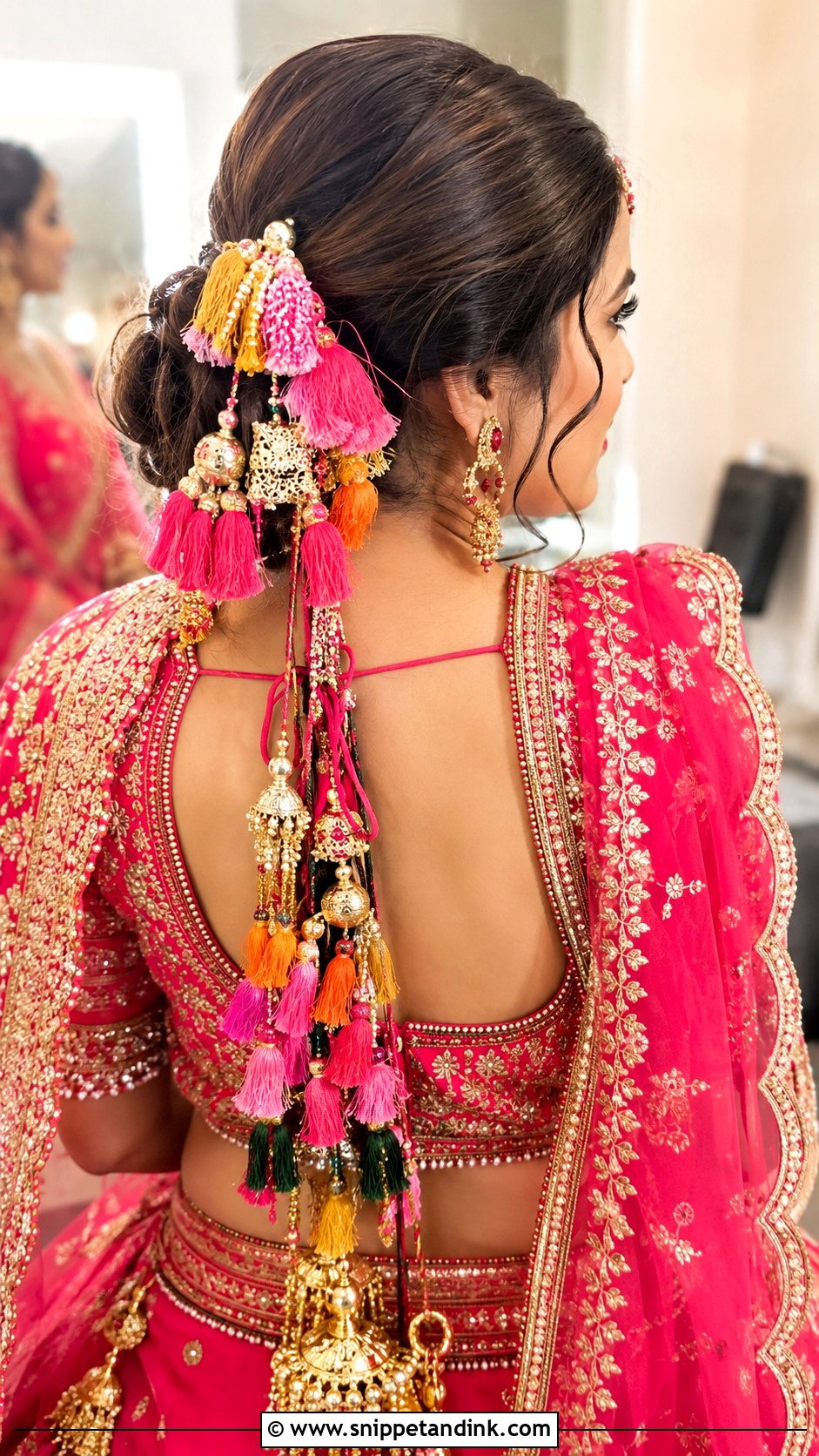
A Punjabi braided bun sits low at the nape, woven from a braid and coiled into a neat knot, while a paranda, the colorful tasseled cord, hangs down for movement. Brides often add a maang tikka and kalire to finish the Punjabi look. The paranda is traditionally braided into the hair, so the decision on where it falls has to be made before the braid starts, not after. Bright lehengas and heavy dupattas suit it, and the braid texture holds well when the dhol starts.
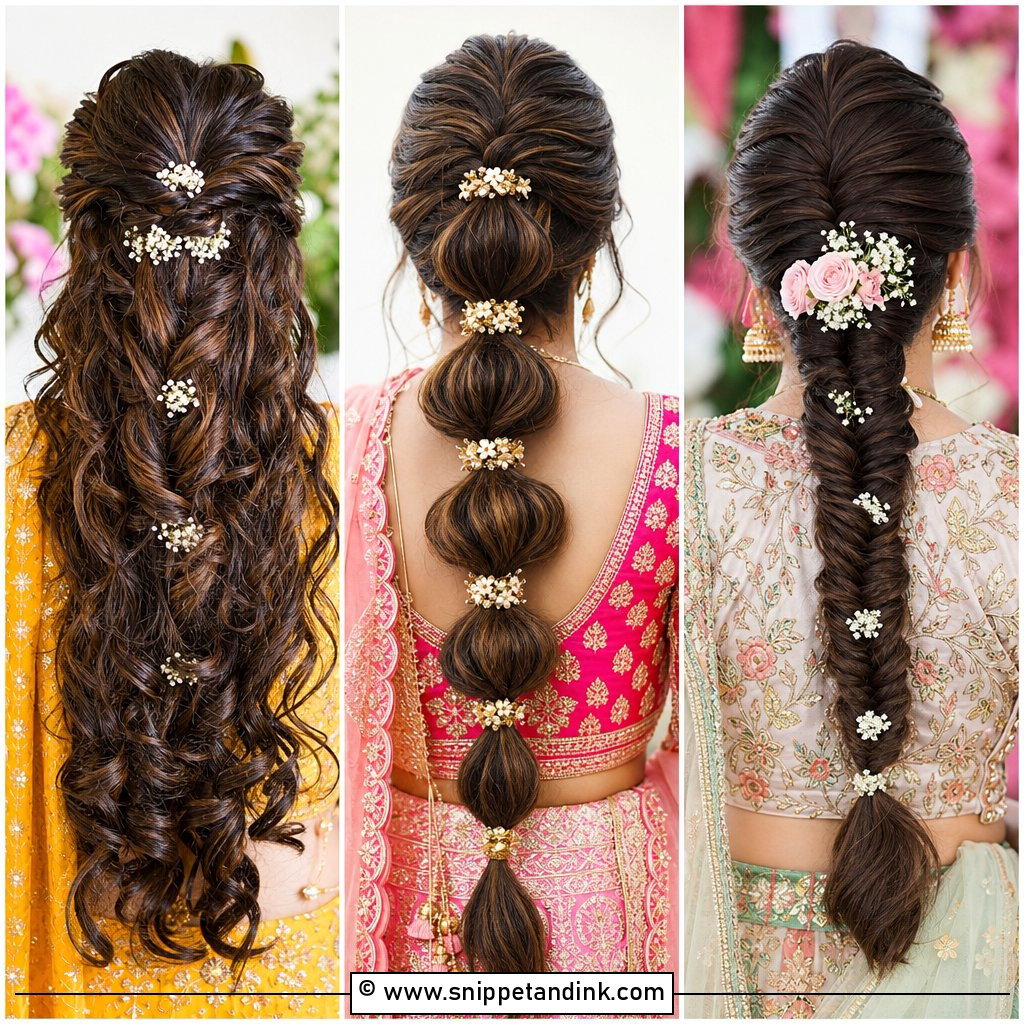
4. Open Hair With Soft Curls
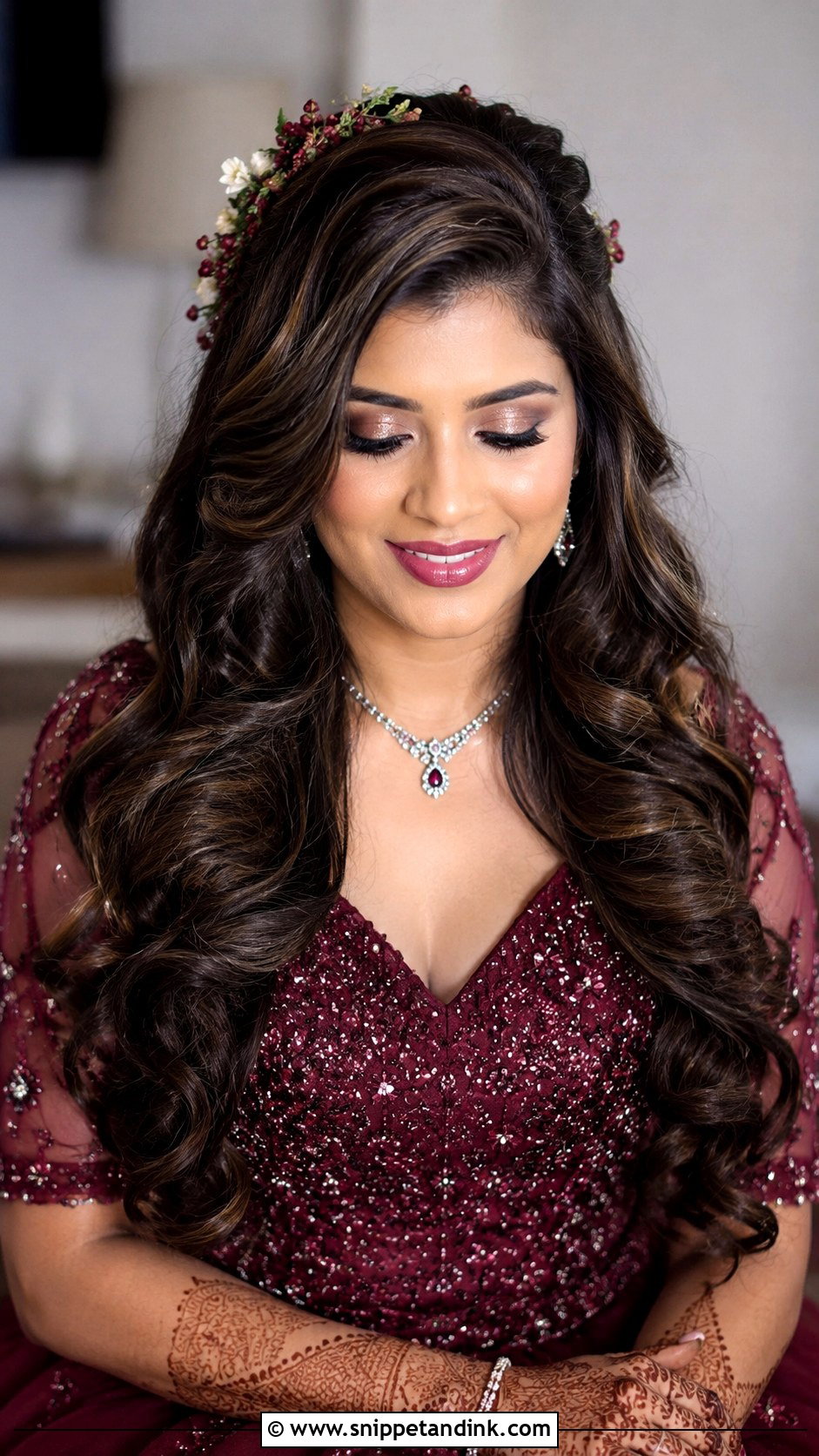
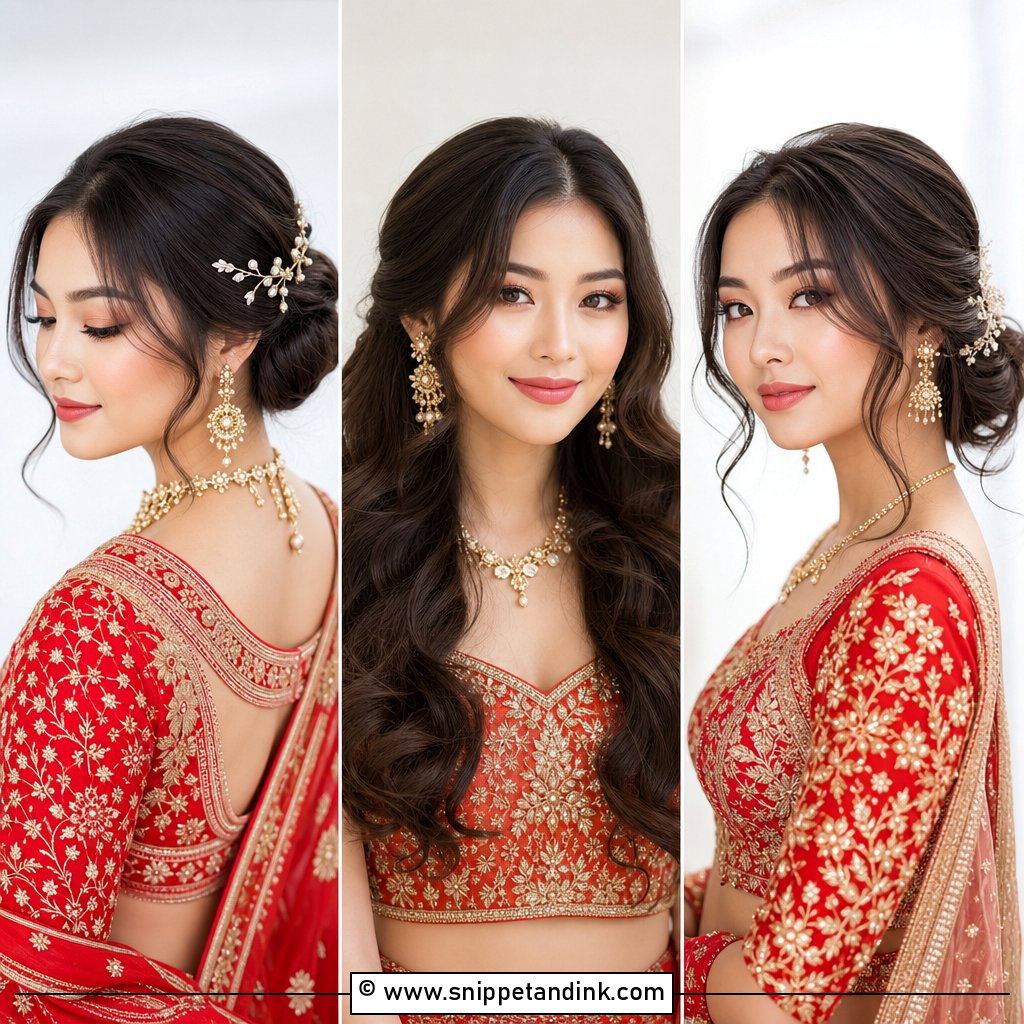
Big, soft curls falling over the shoulders bring a red-carpet feel, and parting them to one side adds a little drama. Reception evenings suit it best, with a small accessory or a few flowers near the crown. It works with lehengas and gowns alike. Open curls carry no structure of their own, so they are at the mercy of heat and humidity. I curl in small sections, pin each curl to cool, and brush it out only at the end. Spray to hold, and the curls will still have movement late into the night.
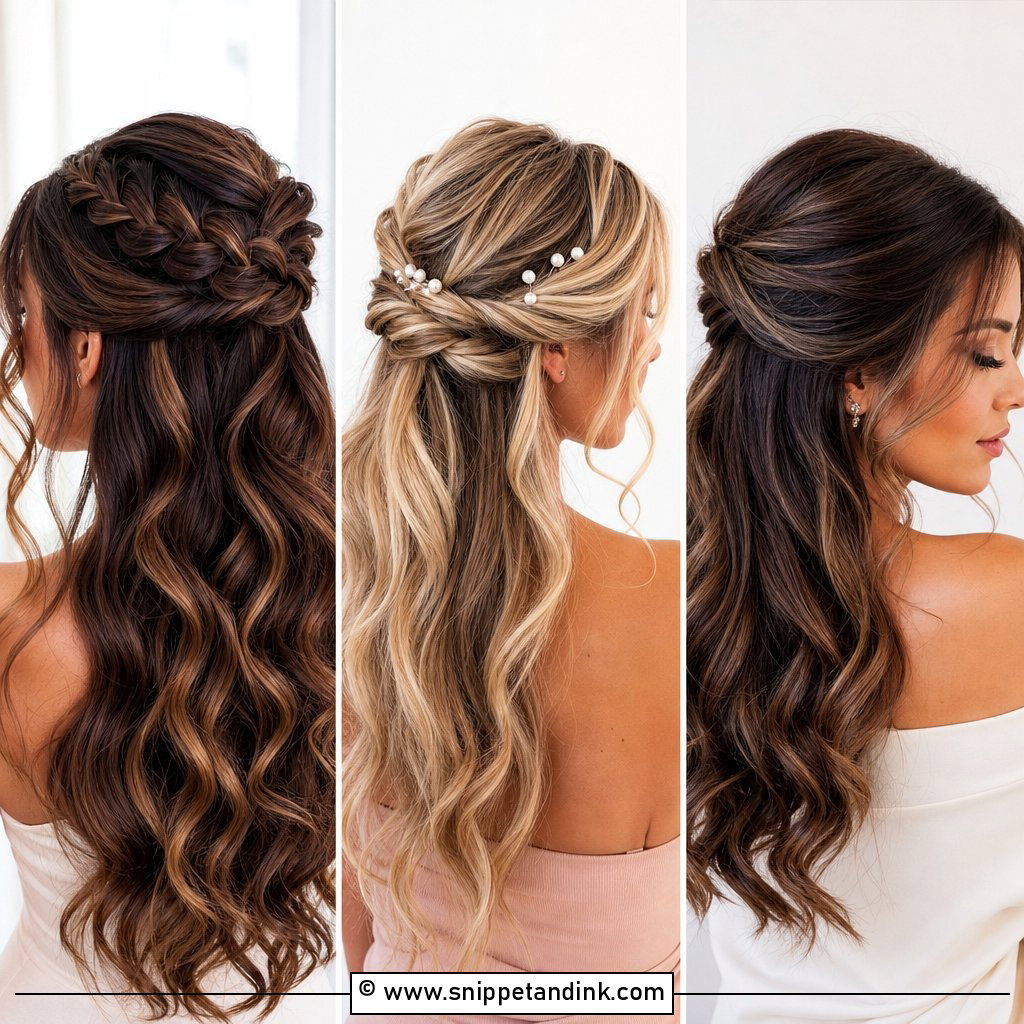
5. Half Up Half Down Bridal Hair
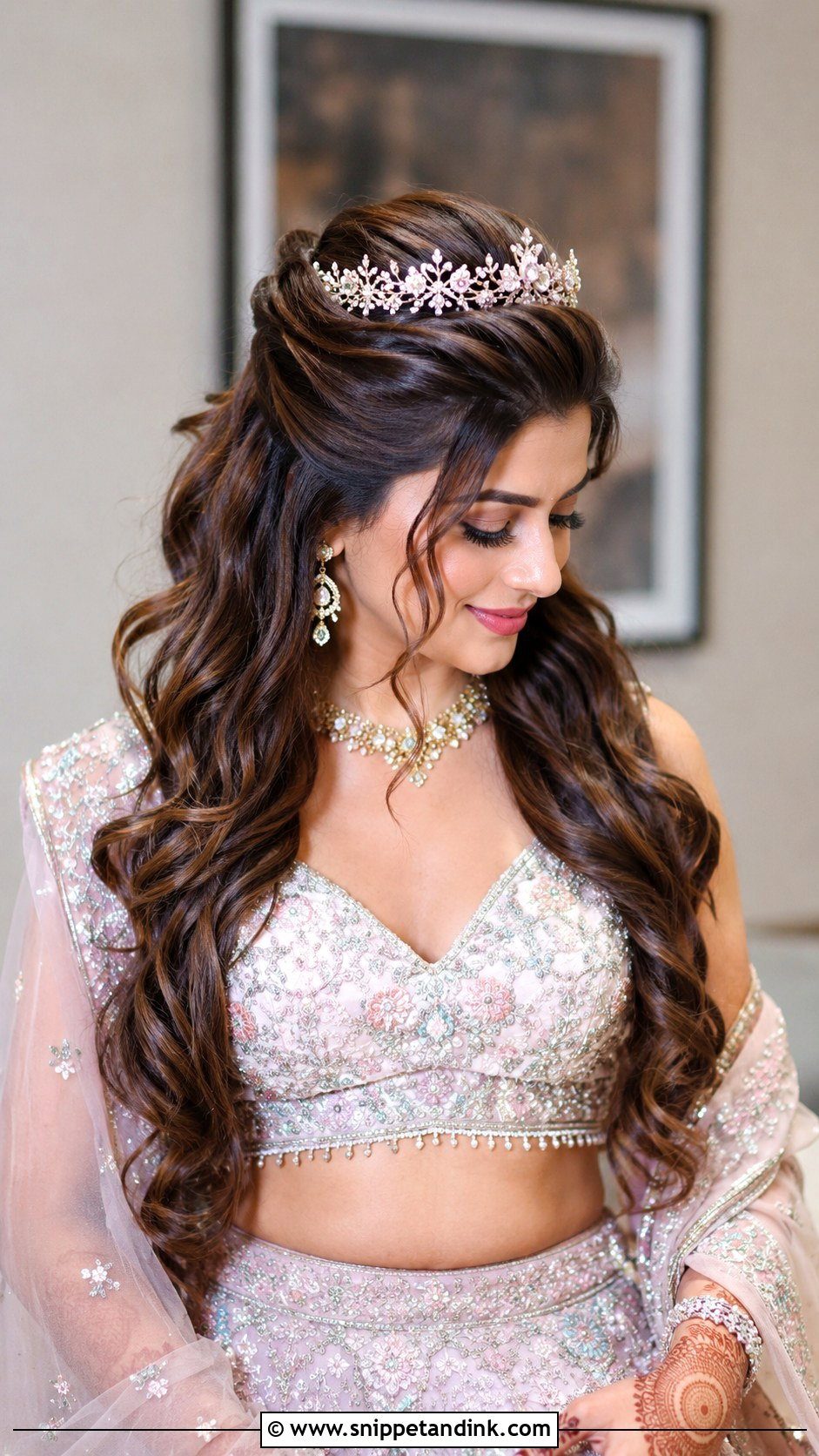
The top section pulls back into a twist or small bun while the rest falls in loose waves, mixing polish with movement. It suits brides who want to show their length, and a jeweled accessory or fresh blooms at the crown finish it. It works for sangeet or reception and with lighter daytime outfits. What I check first is the weight of the accessory, since the top section is only a small amount of hair and a heavy piece pulls it down. Lighter pieces, or a small hidden braid as an anchor, solve that.
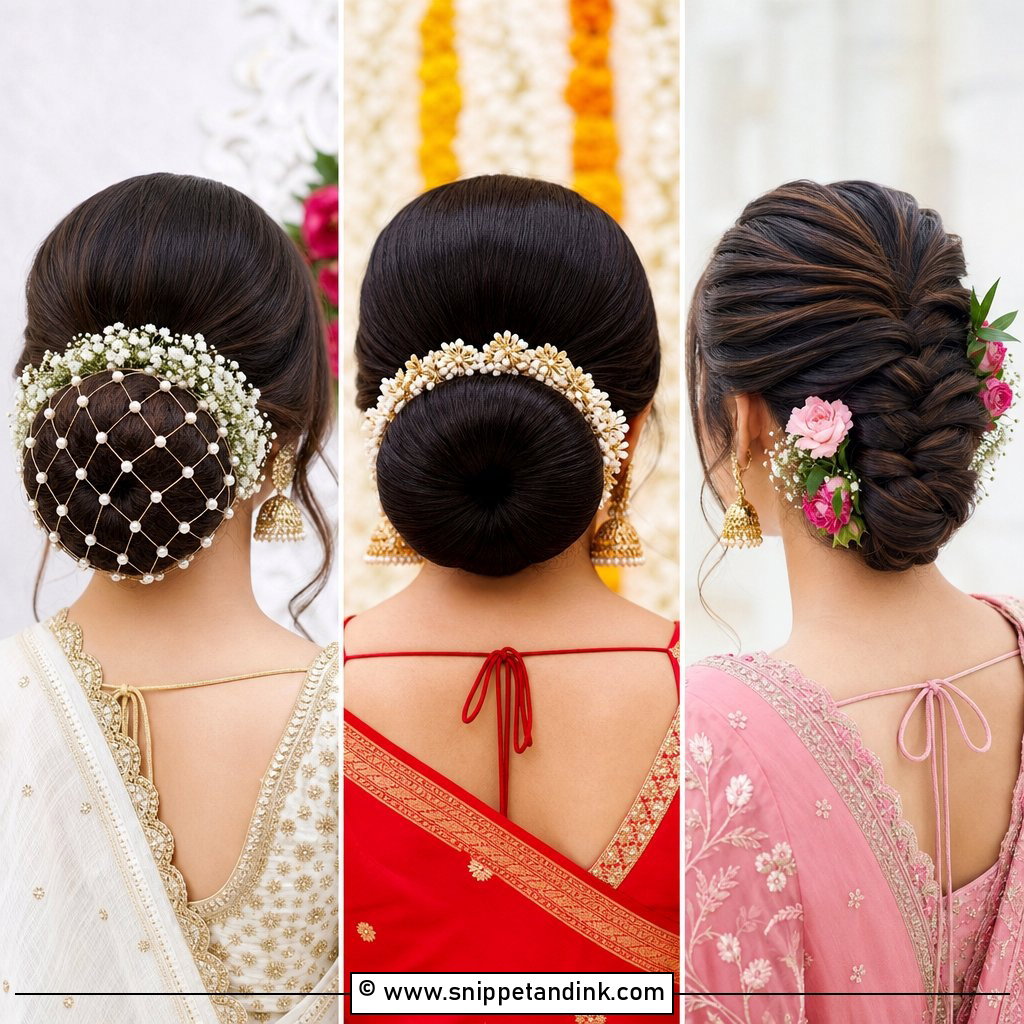
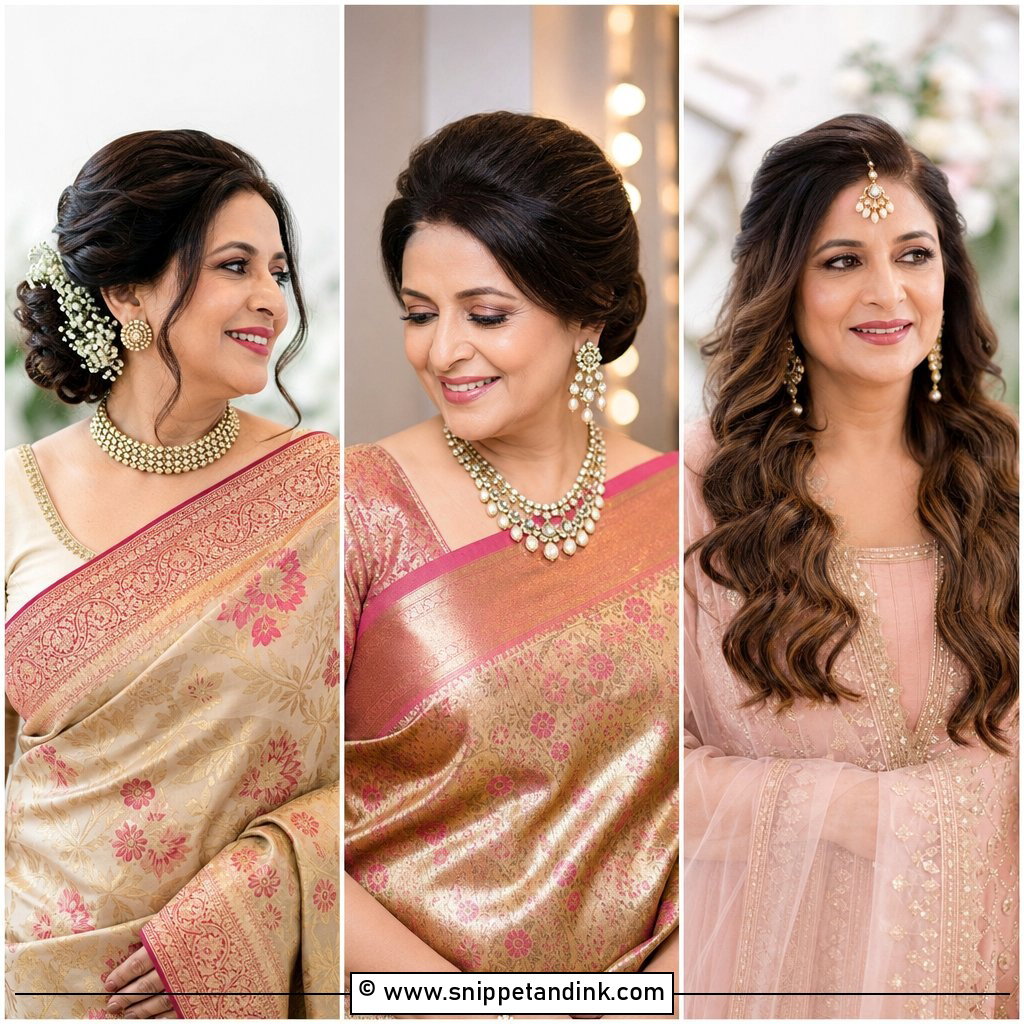
6. Maang Tikka Bun Hairstyle
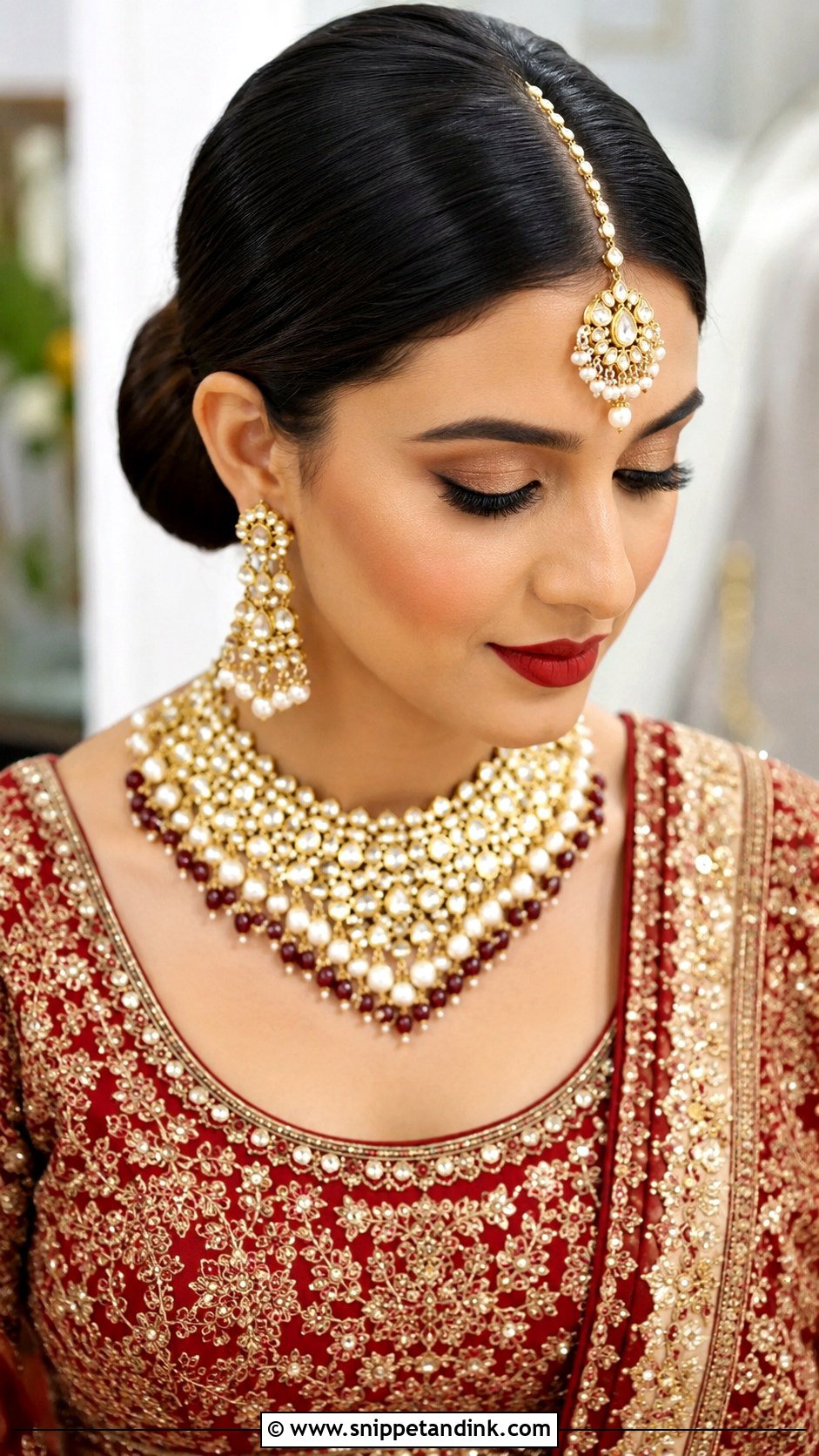
A sleek bun, high or low, with a maang tikka resting on the center parting keeps all the attention on the face. It shows off statement earrings and a heavy necklace and belongs at traditional ceremonies. You can keep the bun plain or add pearls and gajra. The tikka needs somewhere solid to hook, so I always pin a small anchor of hair at the crown under the top layer before smoothing everything back. Without it, the tikka slides off-center by the second ritual.
7. Messy Braid for Mehendi
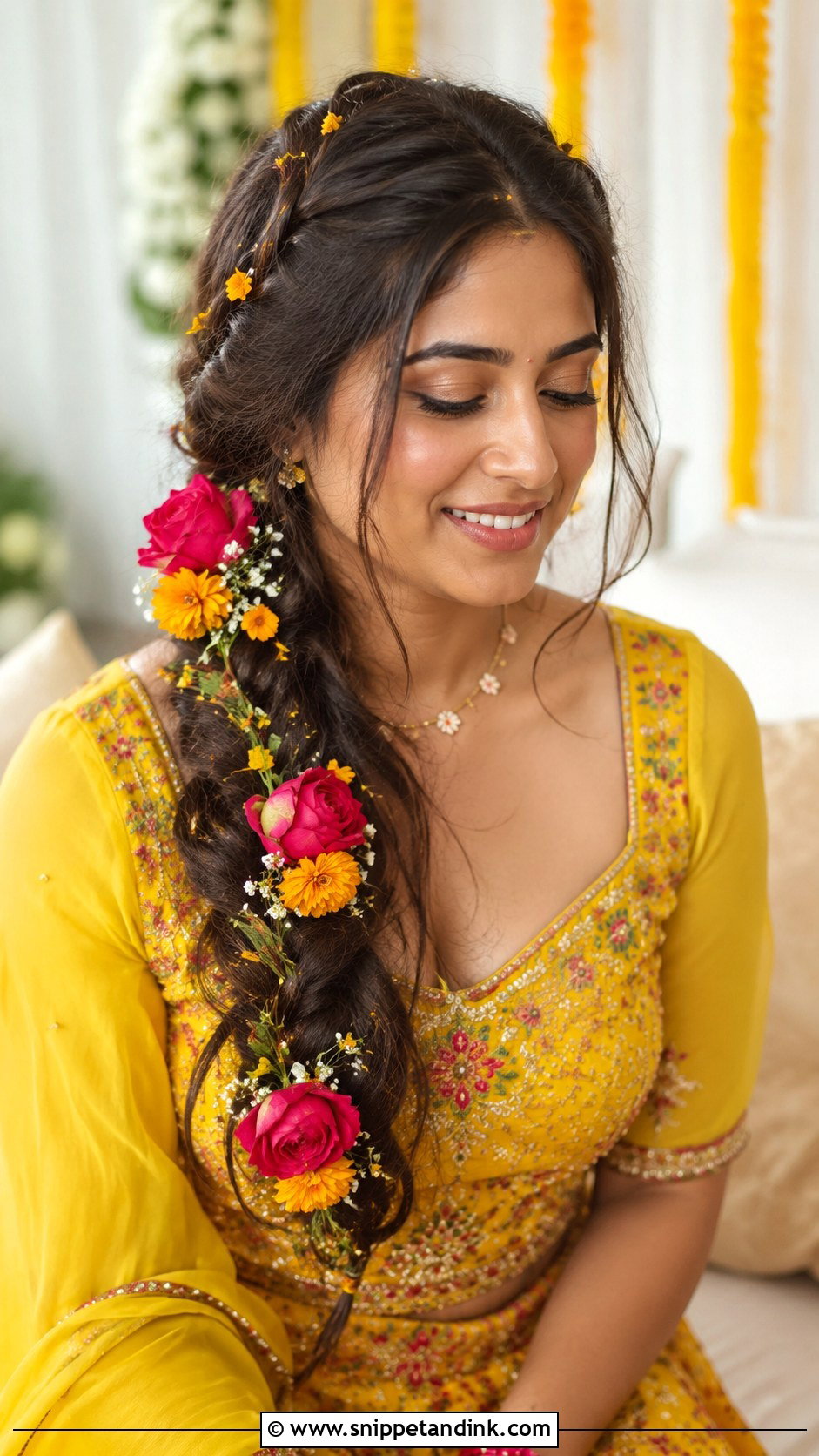
Mehendi means sitting still for hours with wet henna on both hands, unable to touch your hair. A messy braid suits that perfectly: loose, softly pulled apart and comfortable to lean back in. Small marigolds or roses woven in look right with bright mehendi outfits, and the braid can drape over one shoulder. Get it fully pinned and sprayed before the henna artist starts, because nobody can fix it once your hands are covered.
8. Rose Bun With Gajra
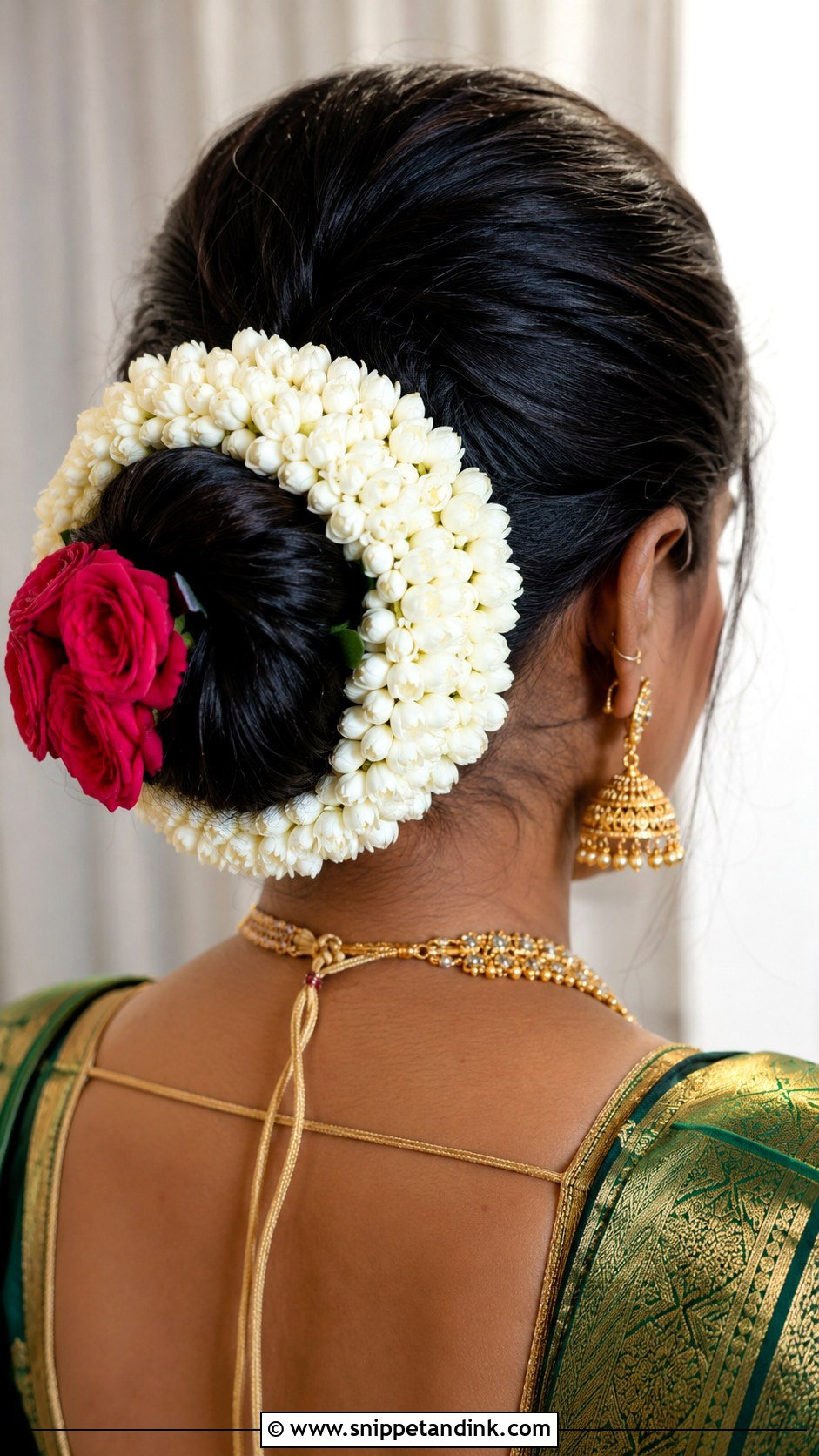
Jasmine strands coil around a soft bun, with a single fresh rose for color. The fragrance lasts through the day, and the look suits South and West Indian weddings with silk sarees and gold jewelry. A maang tikka adds sparkle. One rose seems simple, but a full-size bloom is heavy for its size; I wire the stem short and push it into the bun at an angle so it sits against the hair, not on top of it.
9. Fishtail Braid for Sangeet
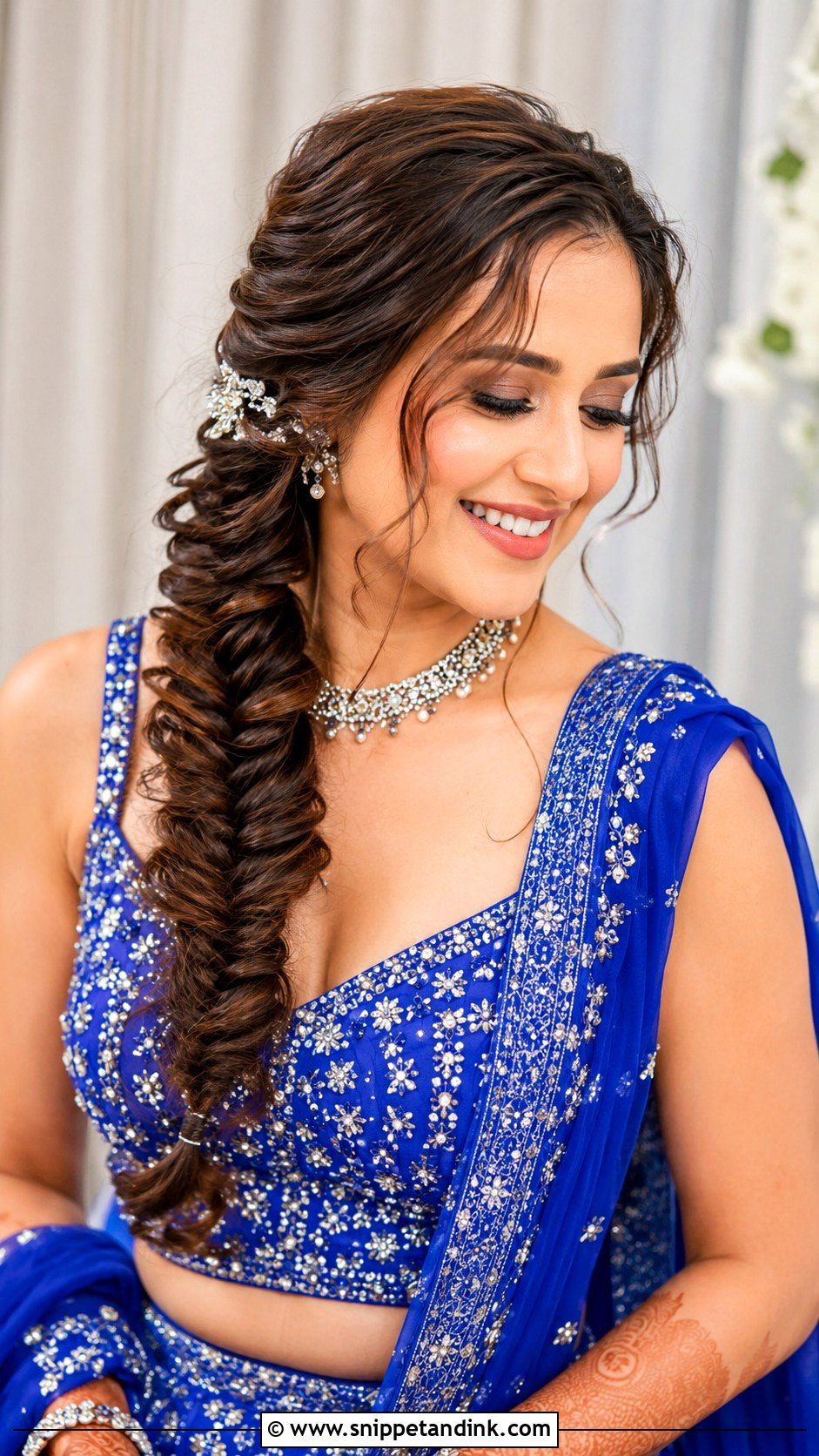
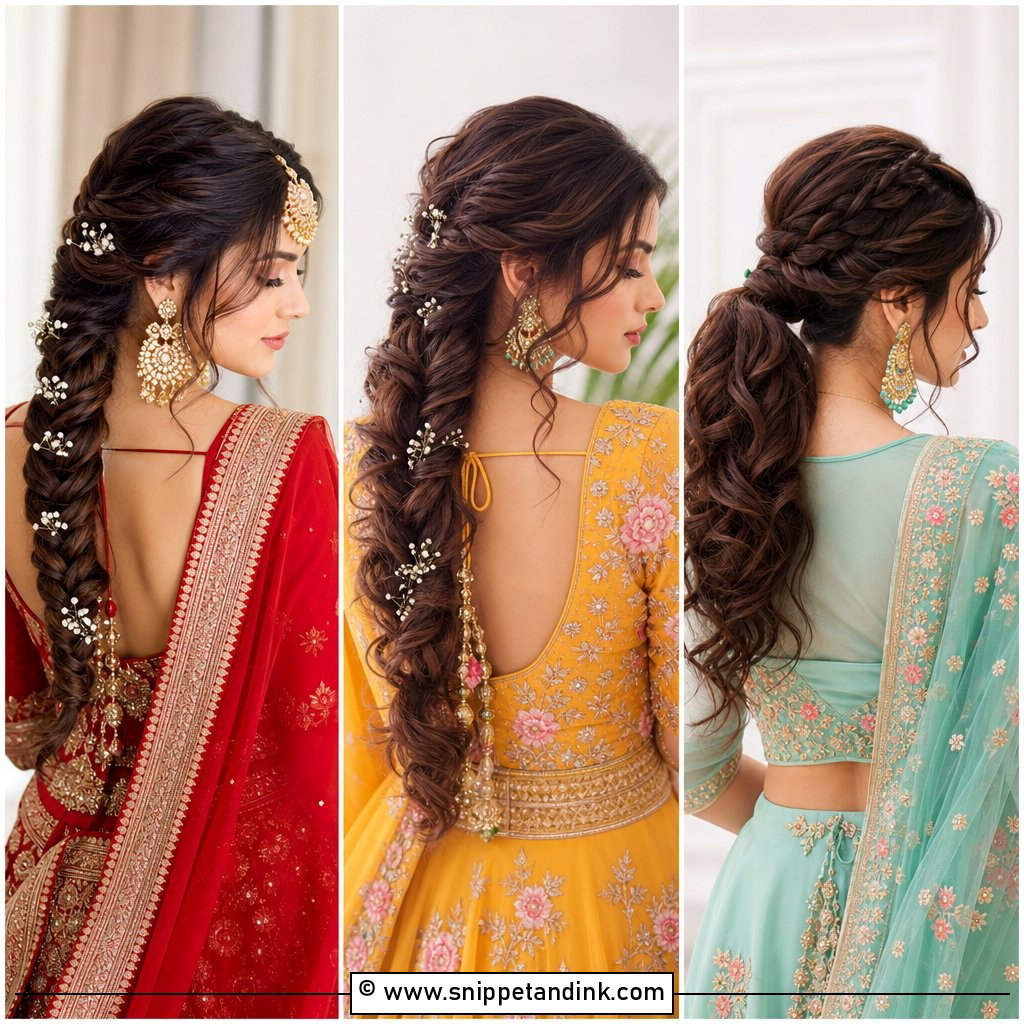
Sangeet is about music and dancing, and a fishtail braid is one of the few styles that looks better after a night of movement. The braid’s tight crossing pattern keeps everything secure, whether it falls over one shoulder or down the back. Pull the edges slightly loose for softness and add small flowers or a sparkly clip for festive shine. It works with bright lehengas and flowy outfits, for brides and bridesmaids alike. Secure the end with a small clear elastic and a pin tucked inside, since the tail is where fishtails unravel.
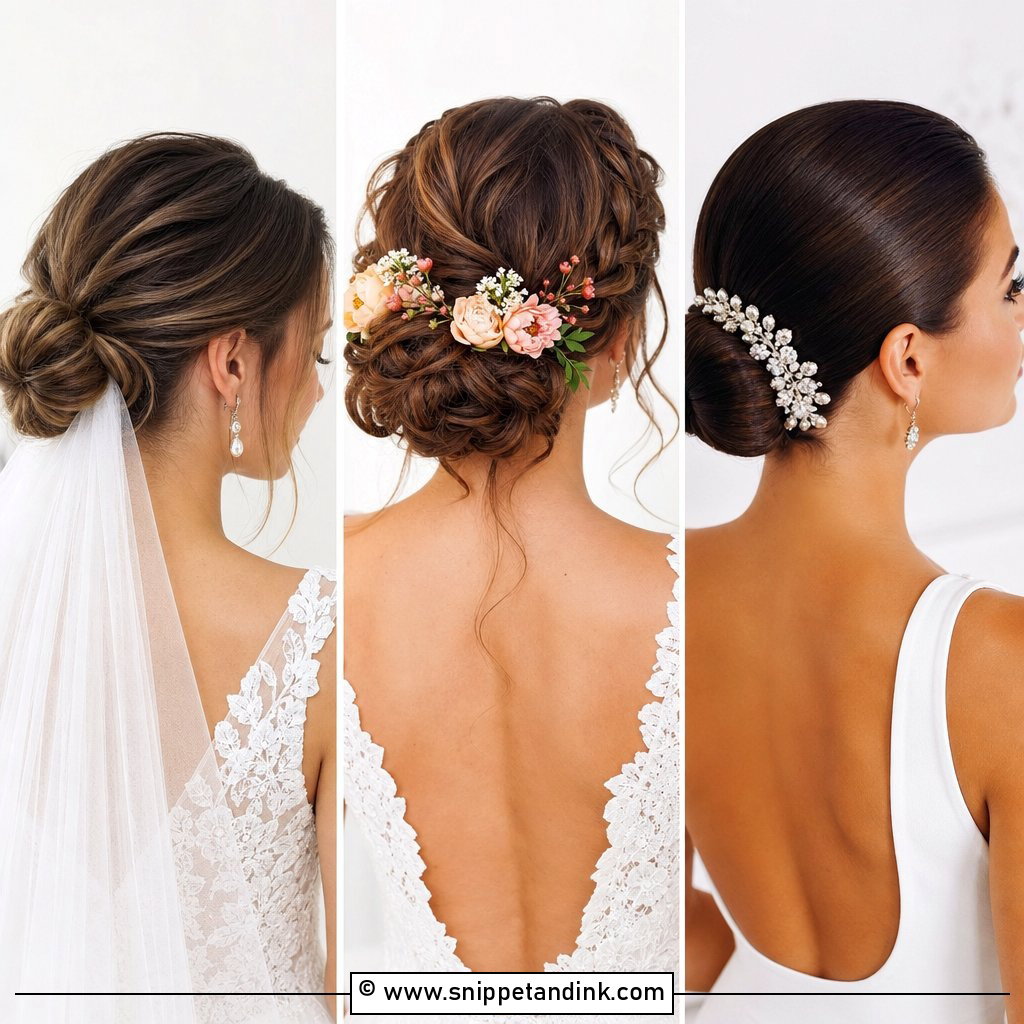
10. Pearl Embellished Bun
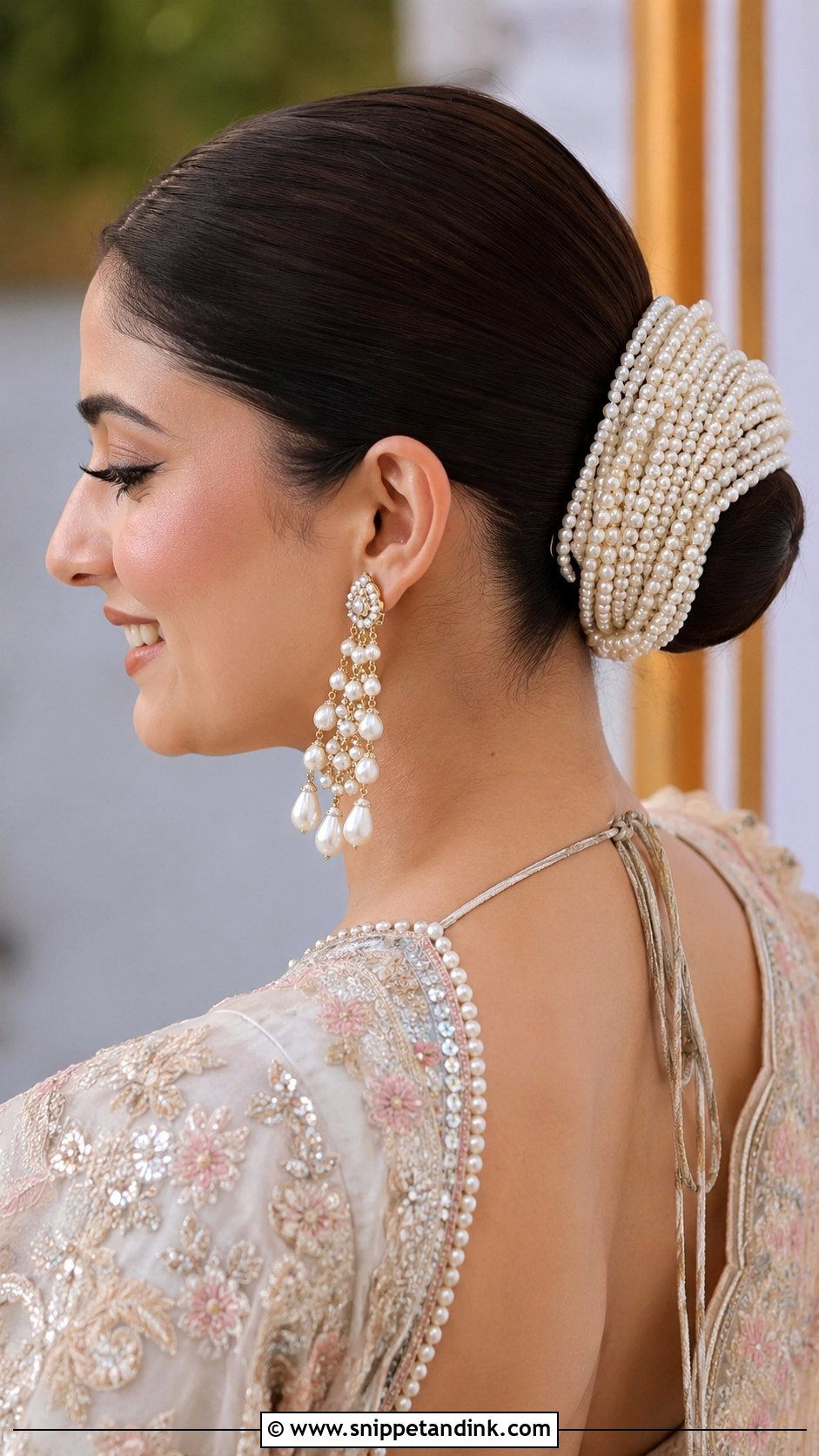
Tiny pearl strands wrapped around a smooth bun catch light without the weight of heavy flowers. It suits pastel and ivory outfits, Christian-Indian fusion weddings and receptions, especially with pearl drop earrings. Pearl strands slip on smooth hair, so I thread each end onto a long hairpin and slide it under a section of the bun rather than wrapping the strand around the outside. It reads quieter than florals, and nothing wilts.
11. Side Swept Curls With Hair Accessory
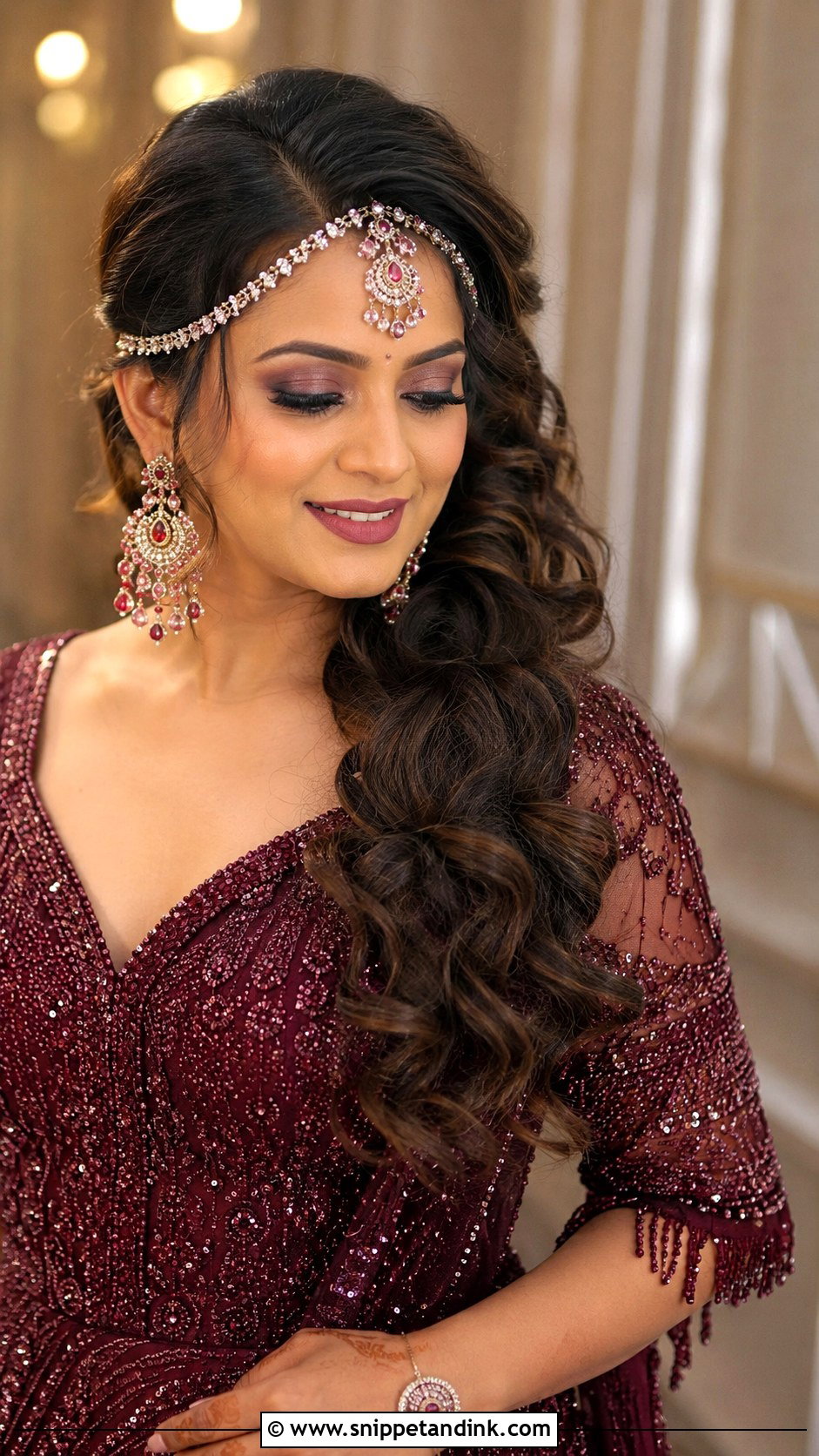
All the hair sweeps to one shoulder in loose, full waves, with a jeweled accessory or matha patti adding sparkle along the crown. It is a reception look that shows off the neckline and earrings, and the curls can be soft or tight. It suits gowns and modern lehengas. The pinned side carries all the tension, so I hide crossed pins behind the ear. If the matha patti is heavy, its side chain needs anchoring on both sides even though the hair is swept to one, or it pulls crooked.
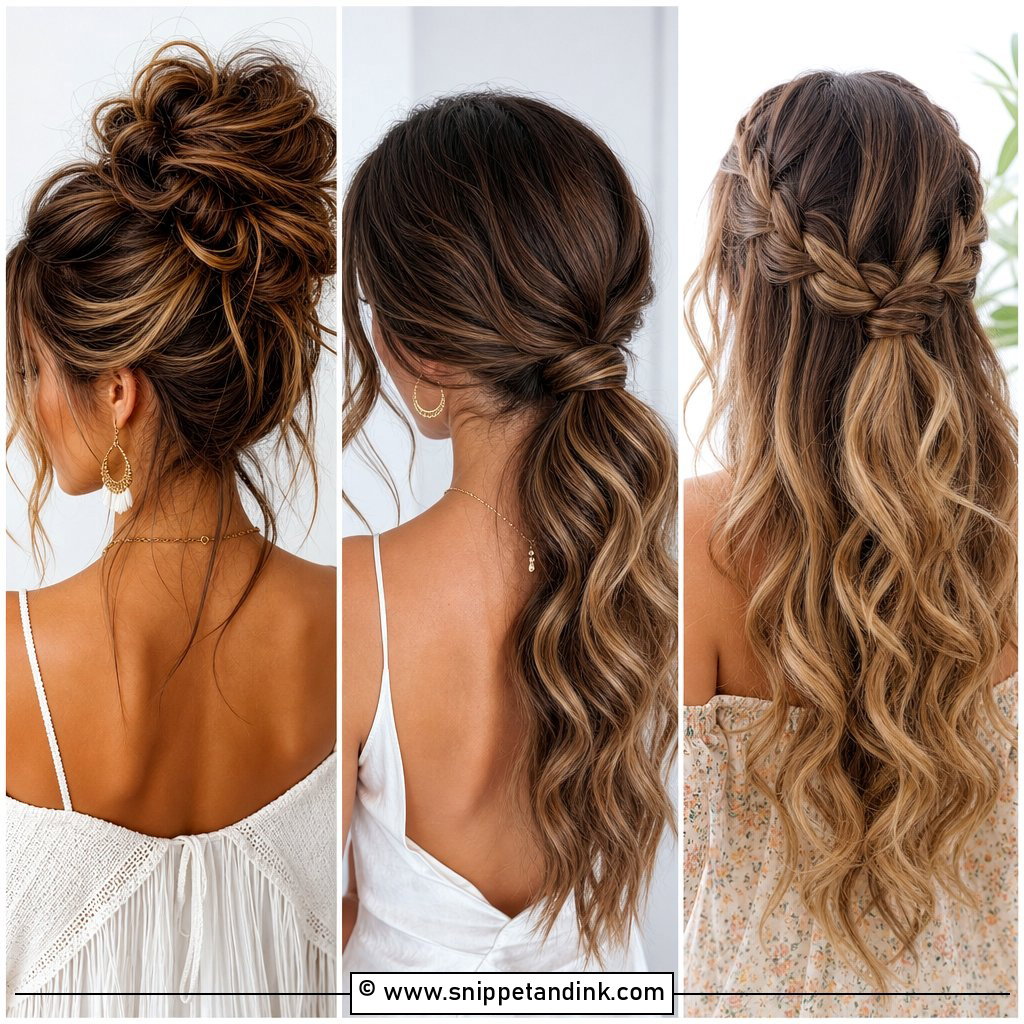
12. Floral Crown Braid
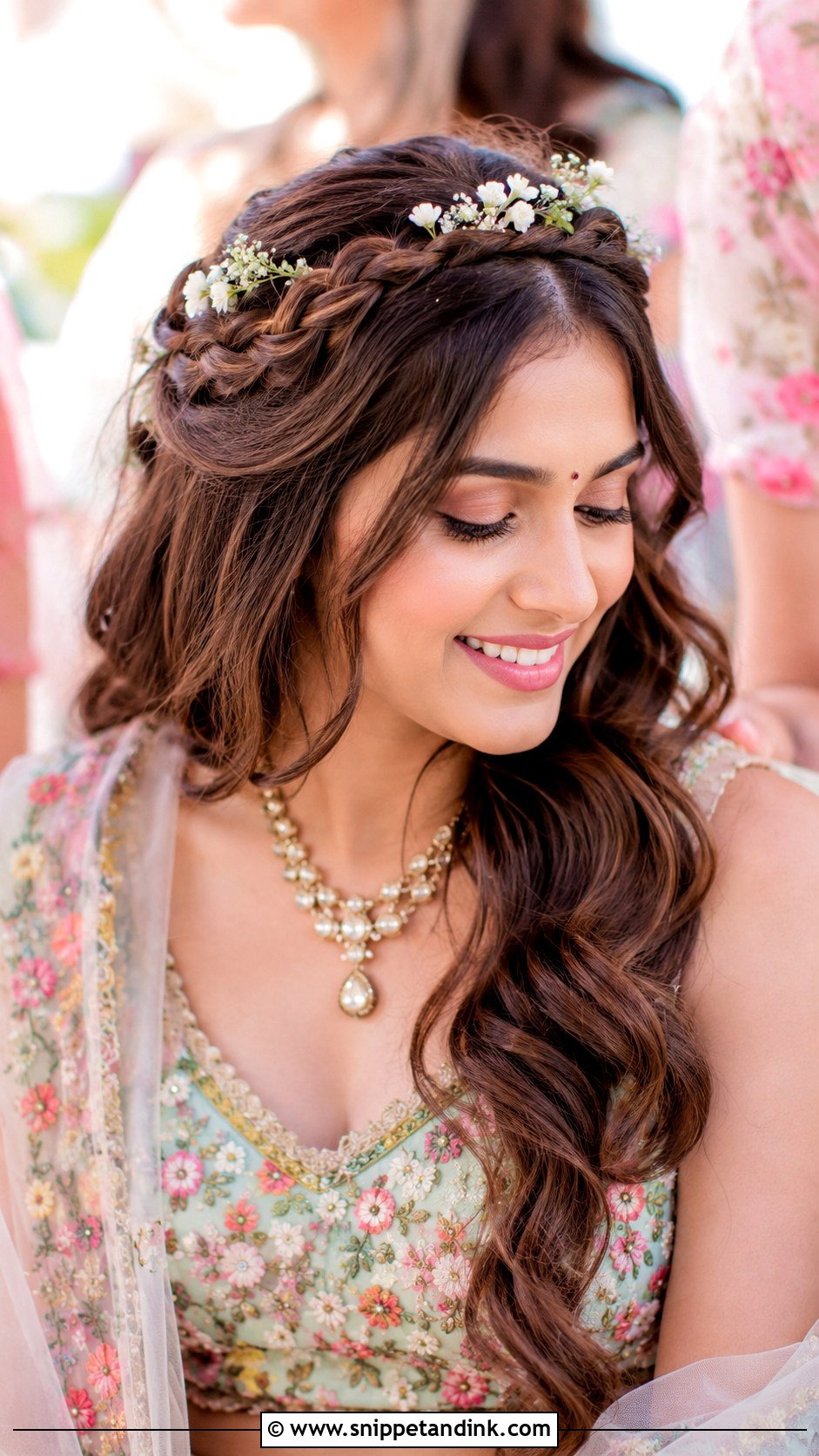
A braid circles the crown with small flowers and greenery woven through, while the rest of the hair falls in soft waves. Mehendi and outdoor daytime events suit it, with floral or pastel outfits. It needs medium to long hair to complete the circle. Greenery like baby’s breath and small leaves wilts slower than most blooms, which matters when the crown sits in direct sun for hours.
13. Sleek Low Bun for Reception
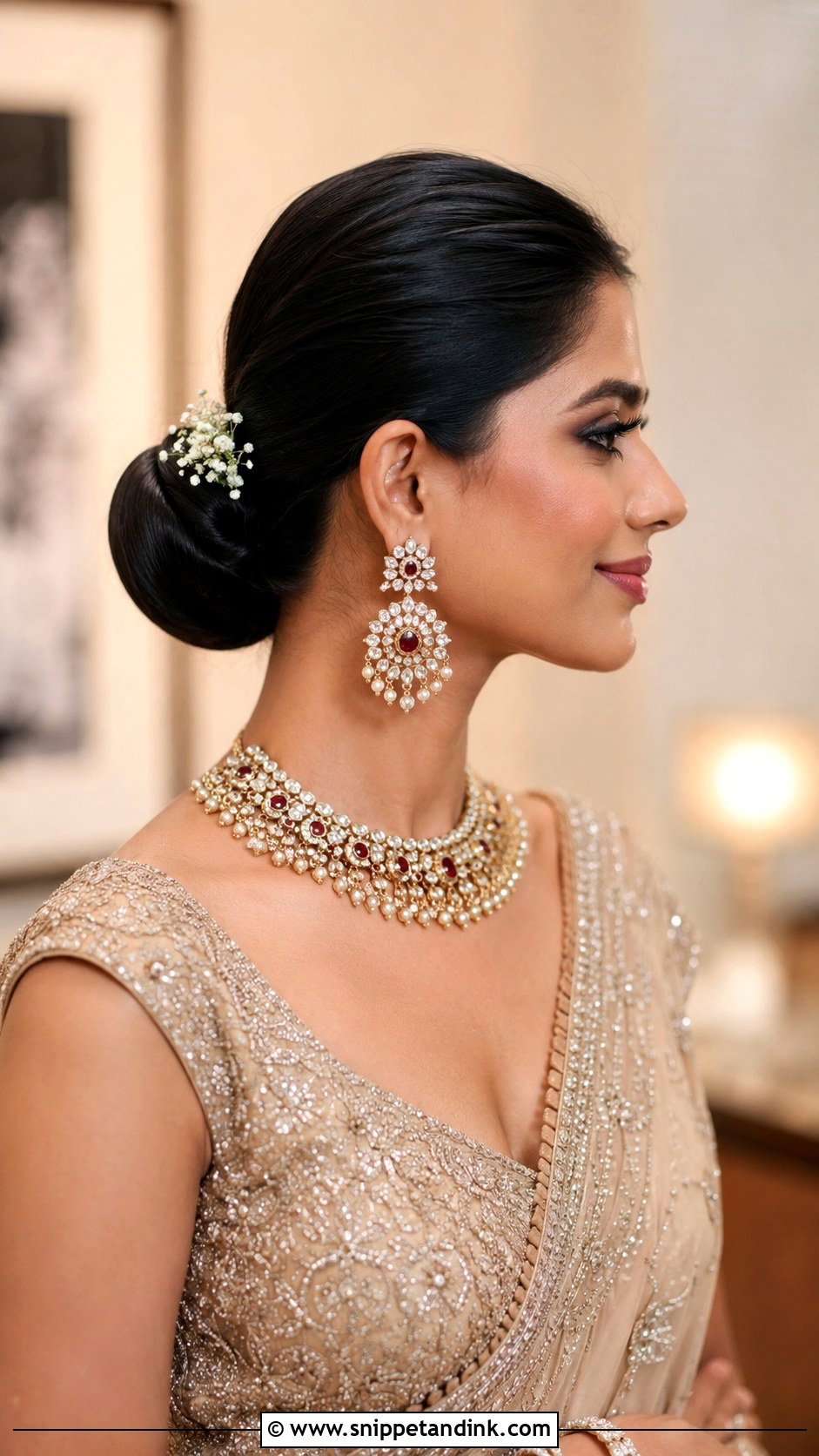
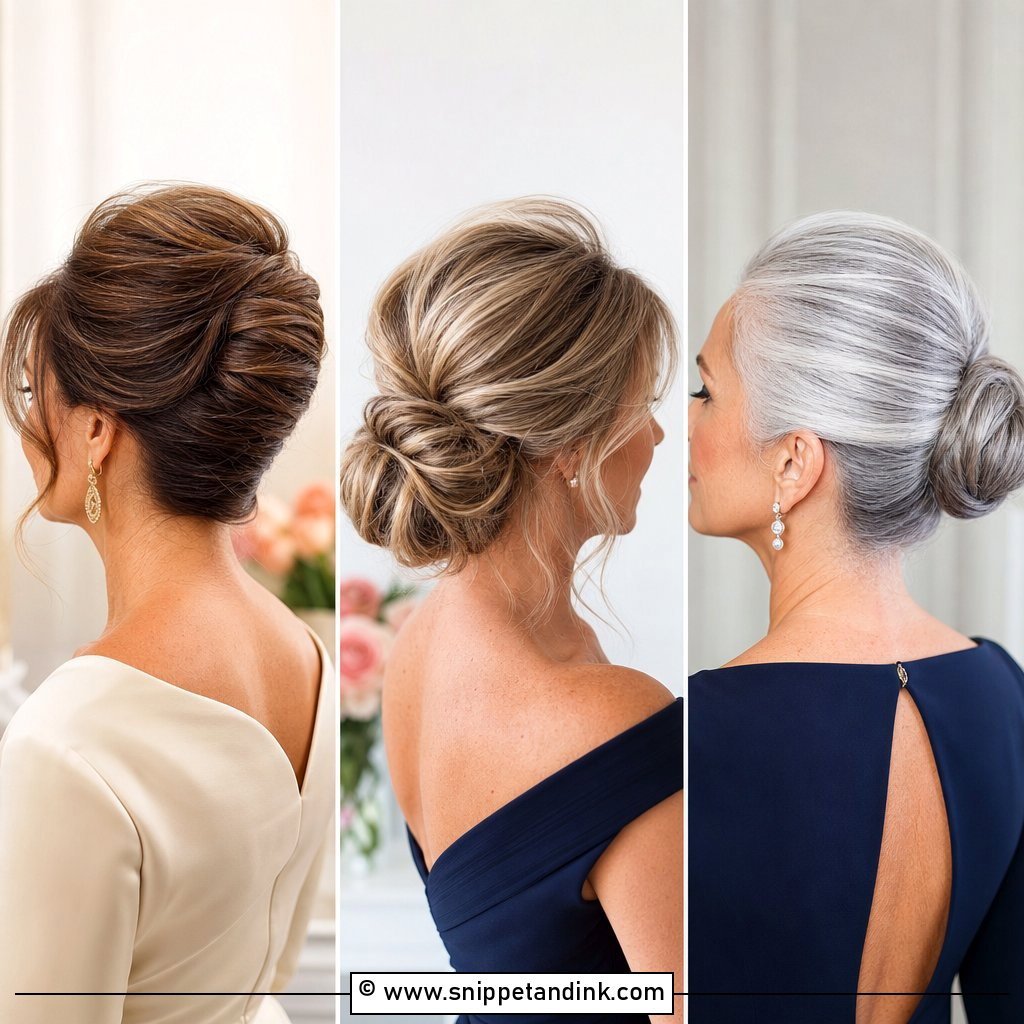
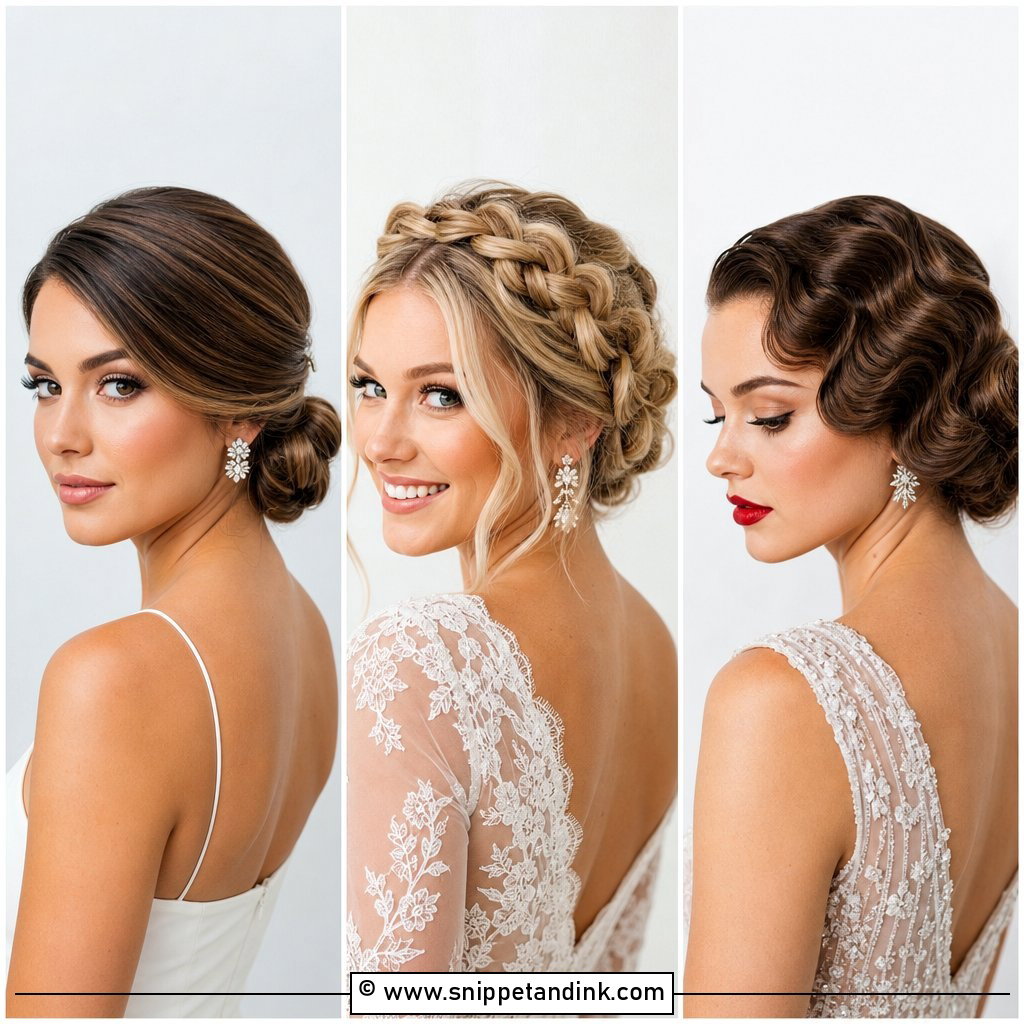
The hair pulls back smooth into a neat bun at the nape, letting jewelry and outfit carry the look. Brides choose it for receptions where they want a clean, refined line with a saree gown or structured lehenga. You can add a subtle accessory or keep it bare. It flatters most faces, but it shows every flaw, so I blow-dry the hair flat first and smooth it into the elastic while it is still warm. It stays put all evening.
14. Braided Bun With Fresh Jasmine
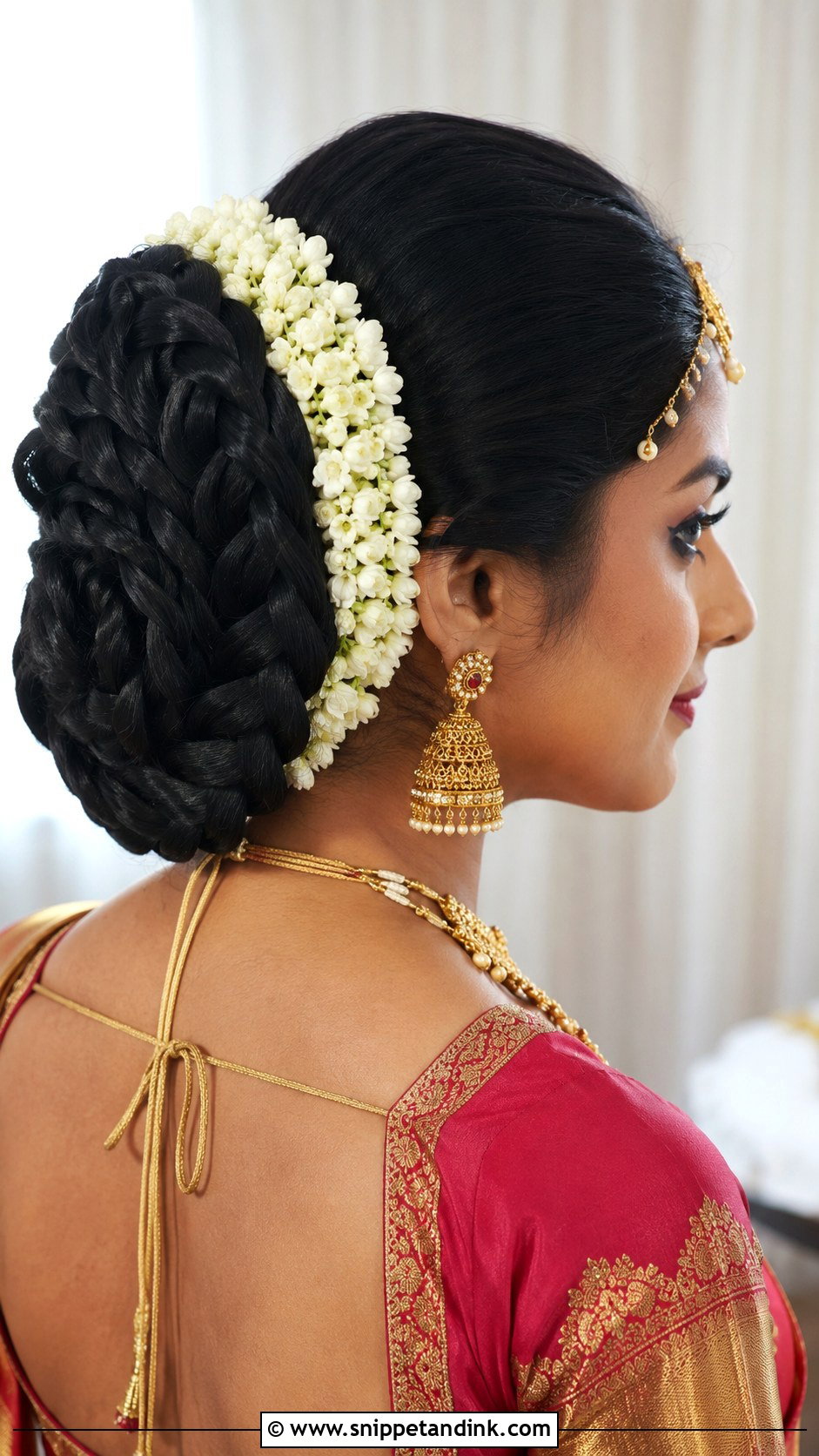
A braid coiled into a textured bun and wrapped in jasmine is a South Indian favorite with silk sarees and temple jewelry. The white flowers stand out against dark hair, and the scent follows the bride all day. Add a maang tikka or jada for extra detail. Braided buns are among the sturdiest styles because pins grip the braid, which makes this a dependable choice for a long muhurtham.
15. Wavy Hair With Matha Patti
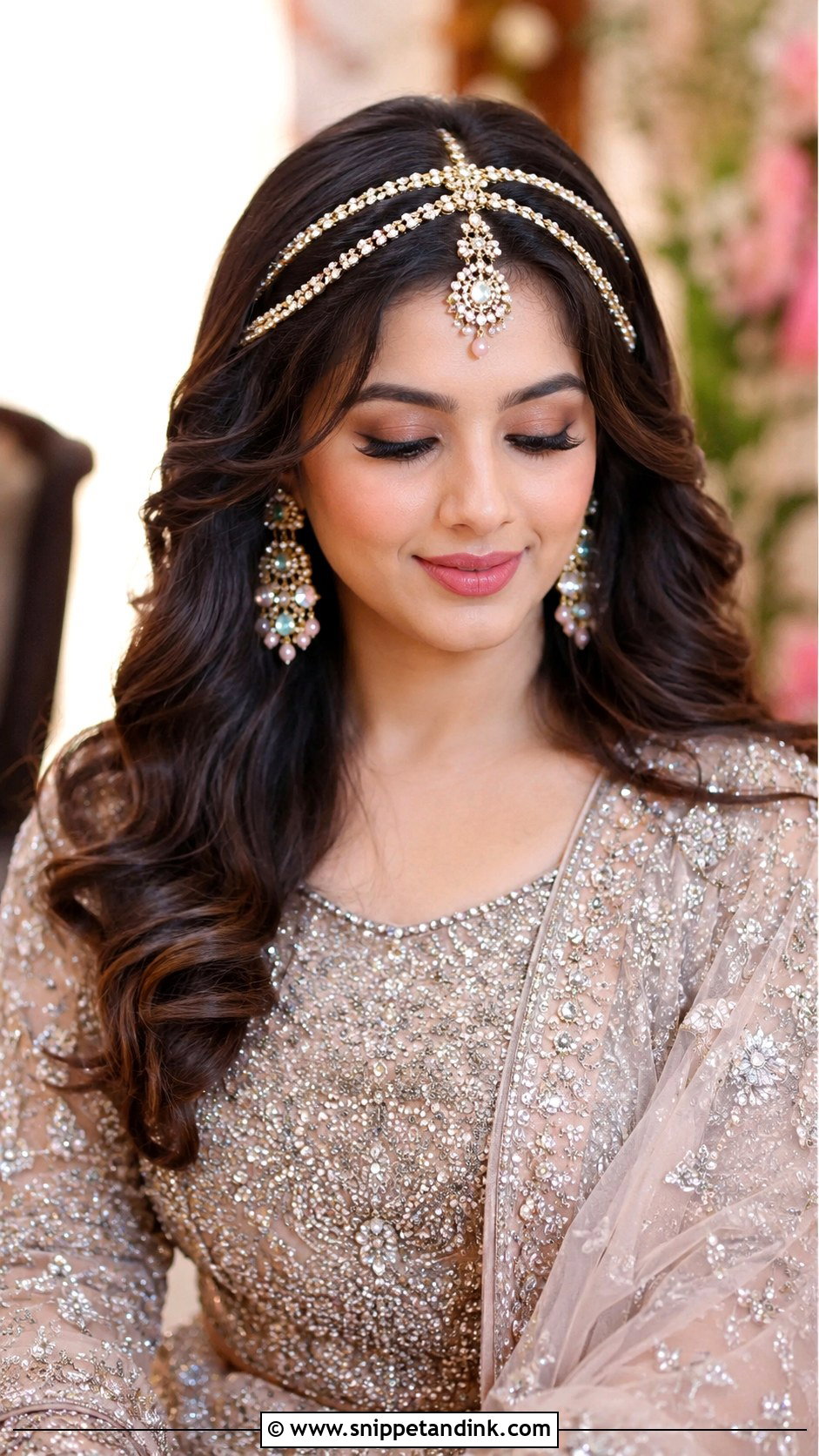
Open waves with a matha patti framing the forehead mix tradition with a looser modern style. It suits receptions and sangeets, with heavy lehengas and big earrings. The matha patti is the challenge: on open hair its chains have nothing to clip into. I pin small anchor sections at the crown and at each side, under the top layer, so the side chains and center piece stay level. A few small pins hold the waves around it.
16. Twisted Updo for Bridesmaids
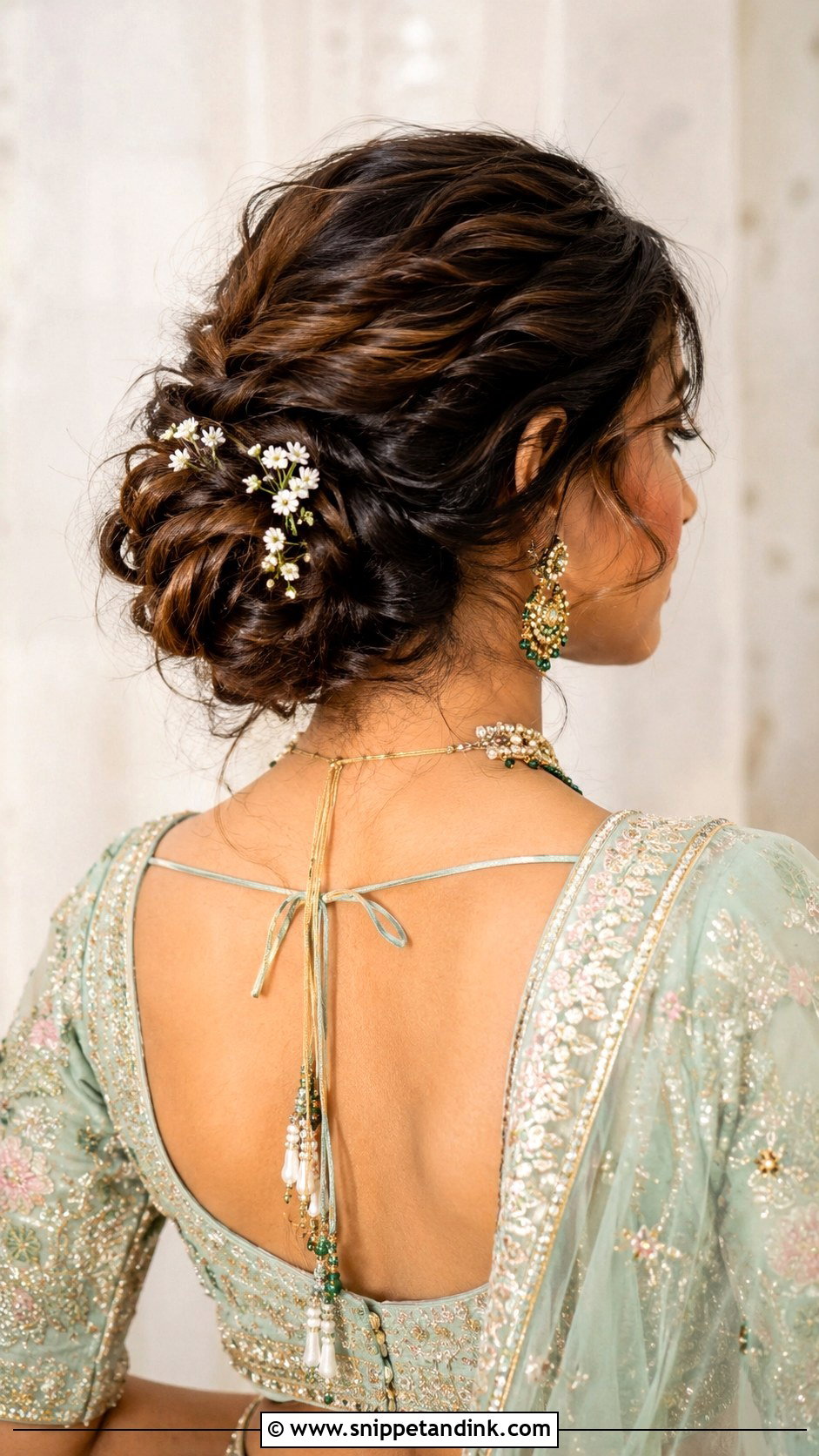
Soft twists gathered into a loose, textured bun keep bridesmaids polished without making them look like the bride. Small flowers or a delicate clip add color, and it works with coordinated bridesmaid lehengas. Twisted updos adapt to many hair lengths and textures, which is useful when the group is mixed. For group shots, agree whether everyone’s bun sits at the same height; it looks far tidier in a lineup.
17. Curly Ponytail With Flowers
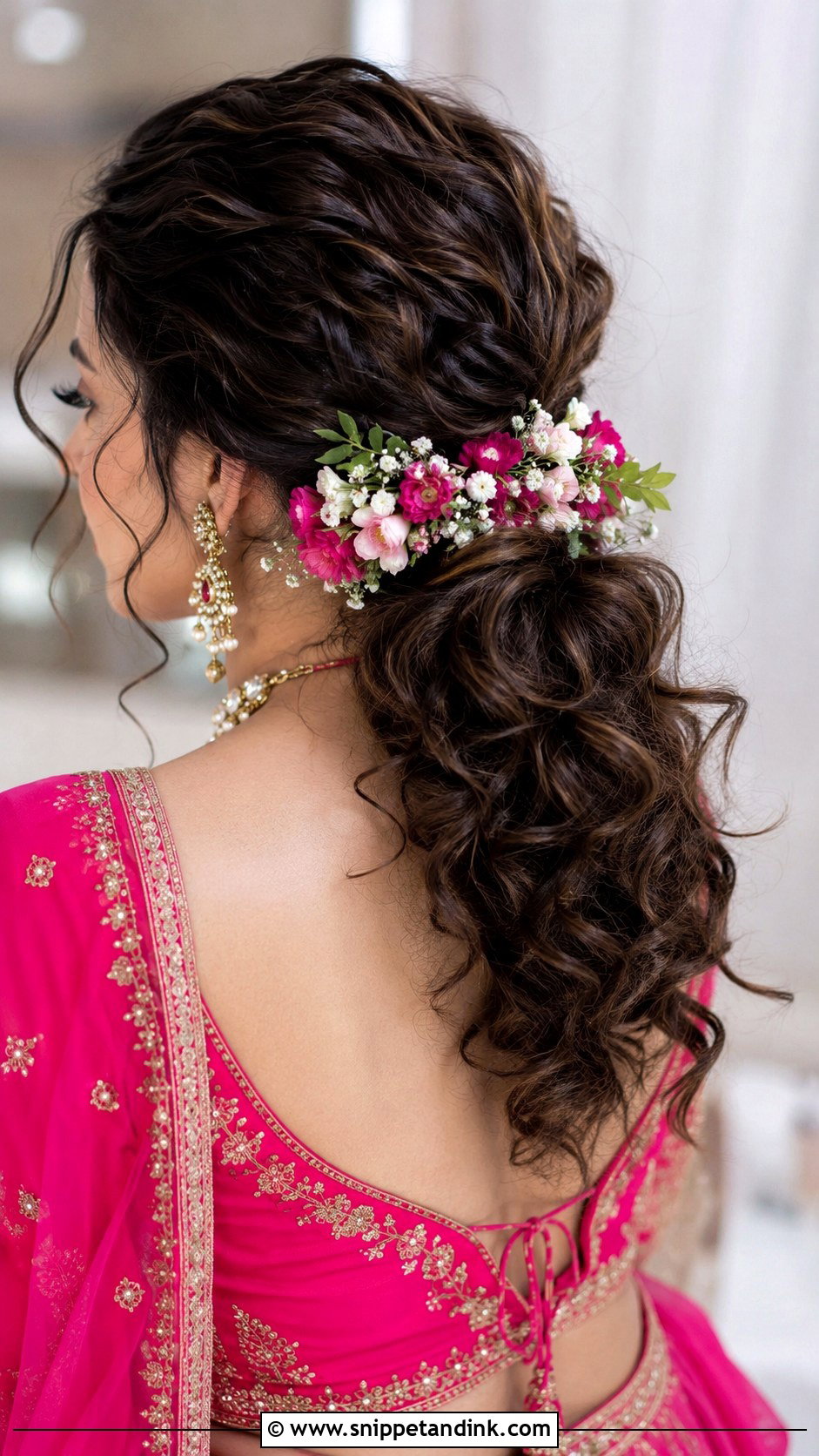
A high or low ponytail gathers the curls, with fresh flowers wrapped around the base. It suits sangeet or mehendi and keeps hair secure while dancing. Bright, lively outfits pair well with it, and a little teasing at the crown adds height. Curly hair should be gathered with your fingers rather than brushed, or the curls turn to frizz. Two elastics at the base support the weight of thick hair.
18. Bengali Bridal Bun
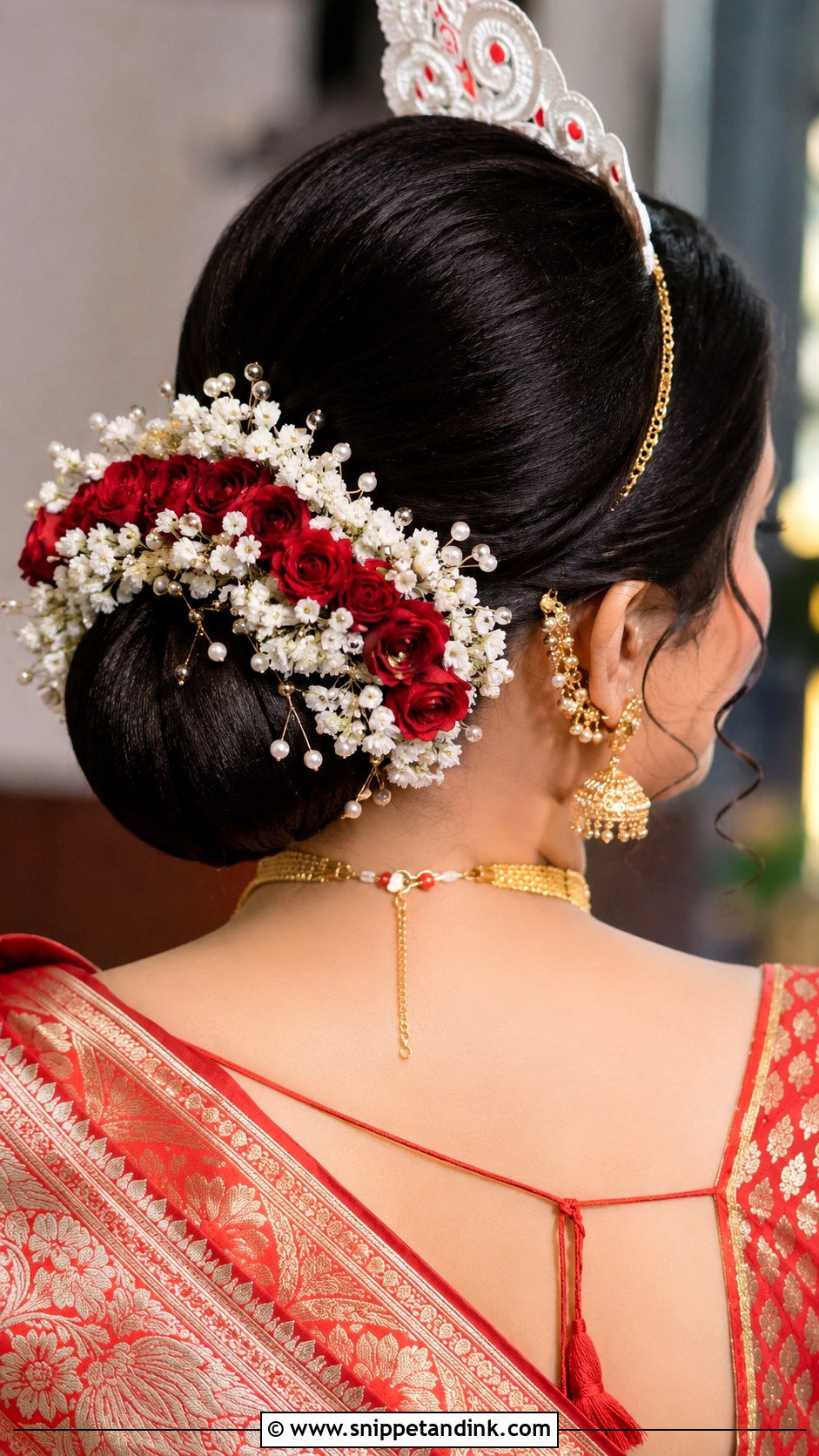
The Bengali bridal bun is a sleek, rounded bun low at the nape, often decorated with white and red flowers or pearls, and it belongs with the red and white Bengali saree. The shola mukut sits on top of the head, so the bun has to stay low and compact to leave room for the crown and the veil drawn over it. It stays secure through long rituals, and a strand of pearls or jasmine softens it.
19. Loose Braid With Pearl Strands
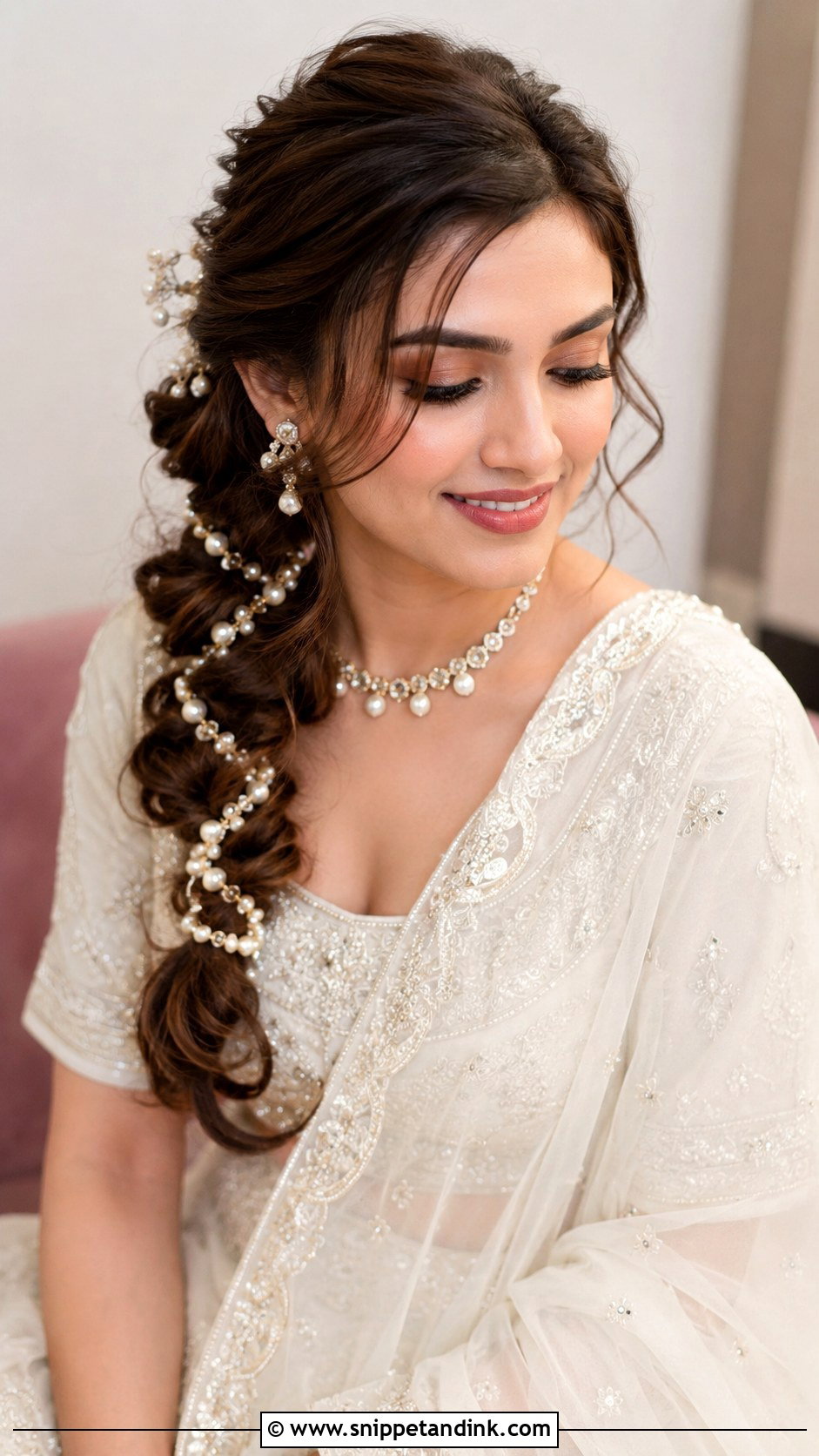
A loose braid threaded with pearl strands drapes over one shoulder, with a light touch of shine. Receptions and intimate events suit it, with pastel and ivory outfits. Long hair carries the pearls best. I weave the strand in as one section of the braid, rather than wrapping it on afterward, so it stays in the plait when you move. Pull the braid slightly loose at the end for texture.
20. Voluminous Blowout for Reception
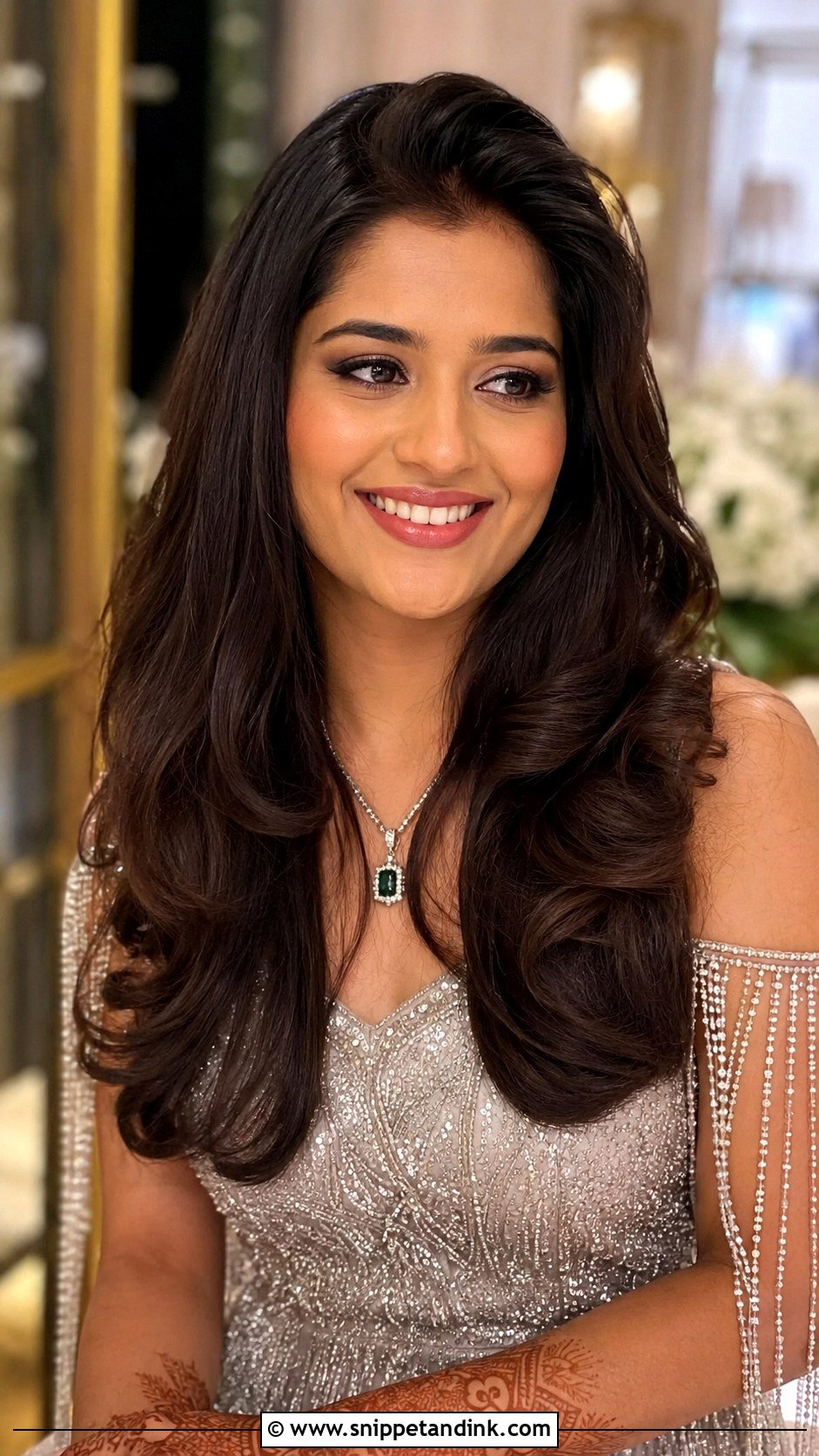
A blowout gives big body and bounce with a smooth, shiny finish. It’s a reception style that looks good with modern gowns and saree drapes, parted center or side, plain or with a sparkly clip. Volume is built at the roots on damp hair with mousse and a round brush; a blowout styled only on dry hair falls flat within a few hours. In humidity it is the first style to drop, so keep it for air-conditioned evening venues.
21. Maharashtrian Bridal Bun With Mundavalya
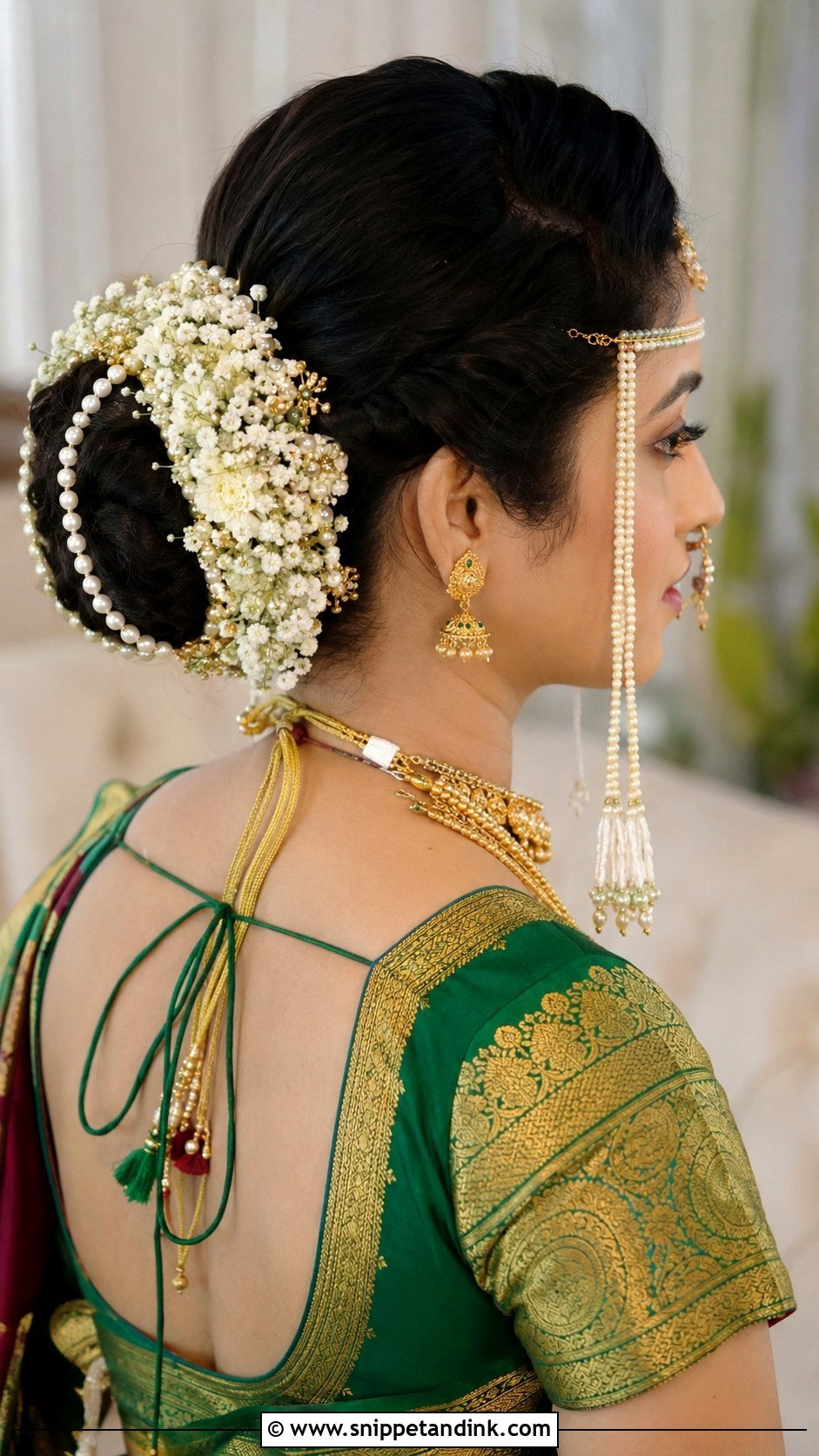
The Maharashtrian bridal bun is a neat bun at the nape, decorated with fresh flowers and pearls, worn with the Nauvari saree and the mundavalya, the strings of pearls tied across the forehead. The bun shows off the nath and statement jewelry. Because the mundavalya ties around the head, I keep the hairline smooth and the bun low, so the strings sit flat and the knot doesn’t push them out of place. Gajra adds softness.
22. Boho Waves With Hair Vine
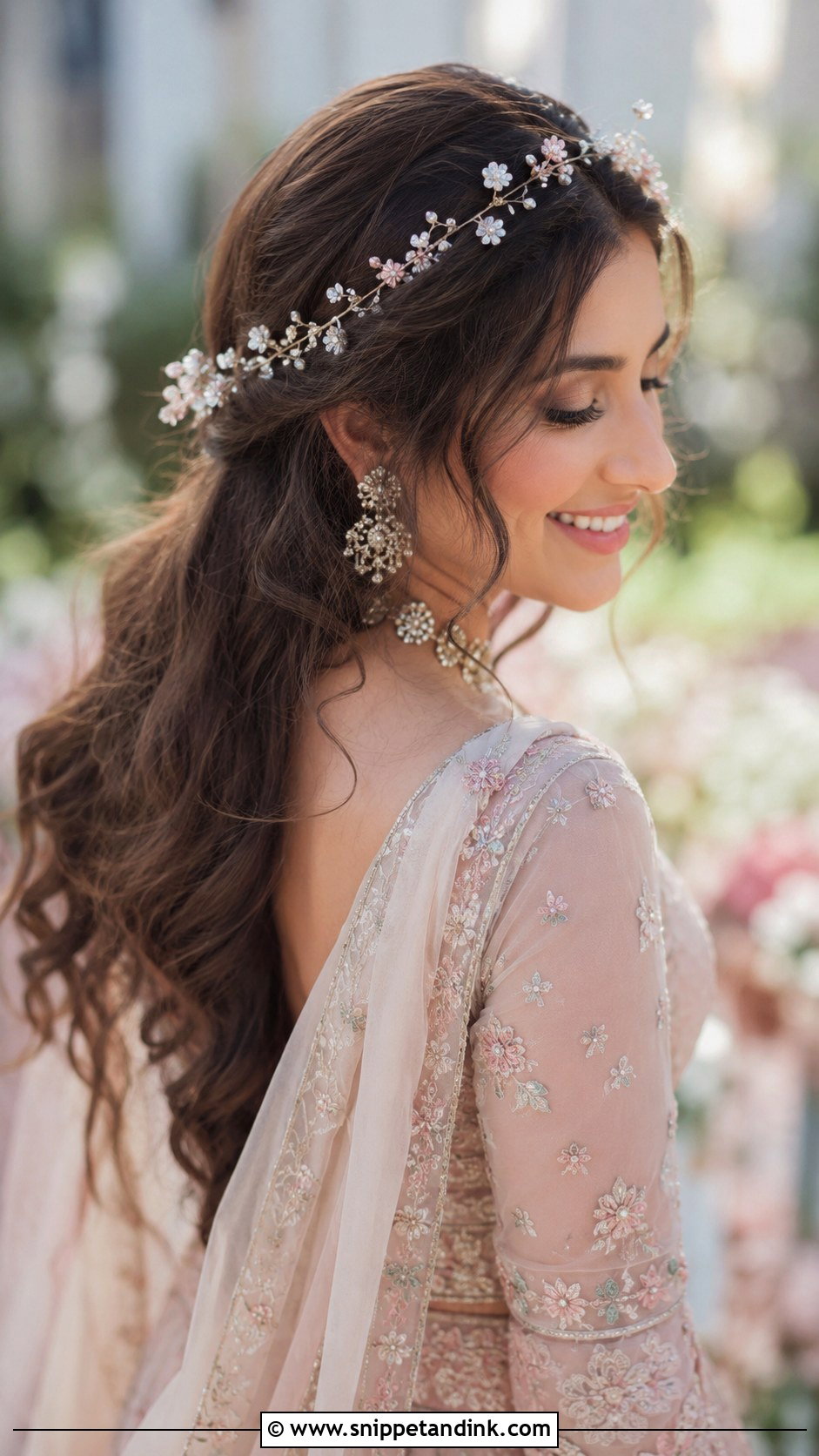
Loose, undone waves with a delicate hair vine woven through suit outdoor and daytime weddings. The vine adds shimmer without weight. You can leave the hair fully down or pull a small section back, and it goes with flowy pastel outfits. A hair vine is bendable wire, so I shape it around the head before pinning and anchor it with small pins at both ends and in the middle; otherwise it slides as the waves move.
23. Bun With Kalire and Flowers
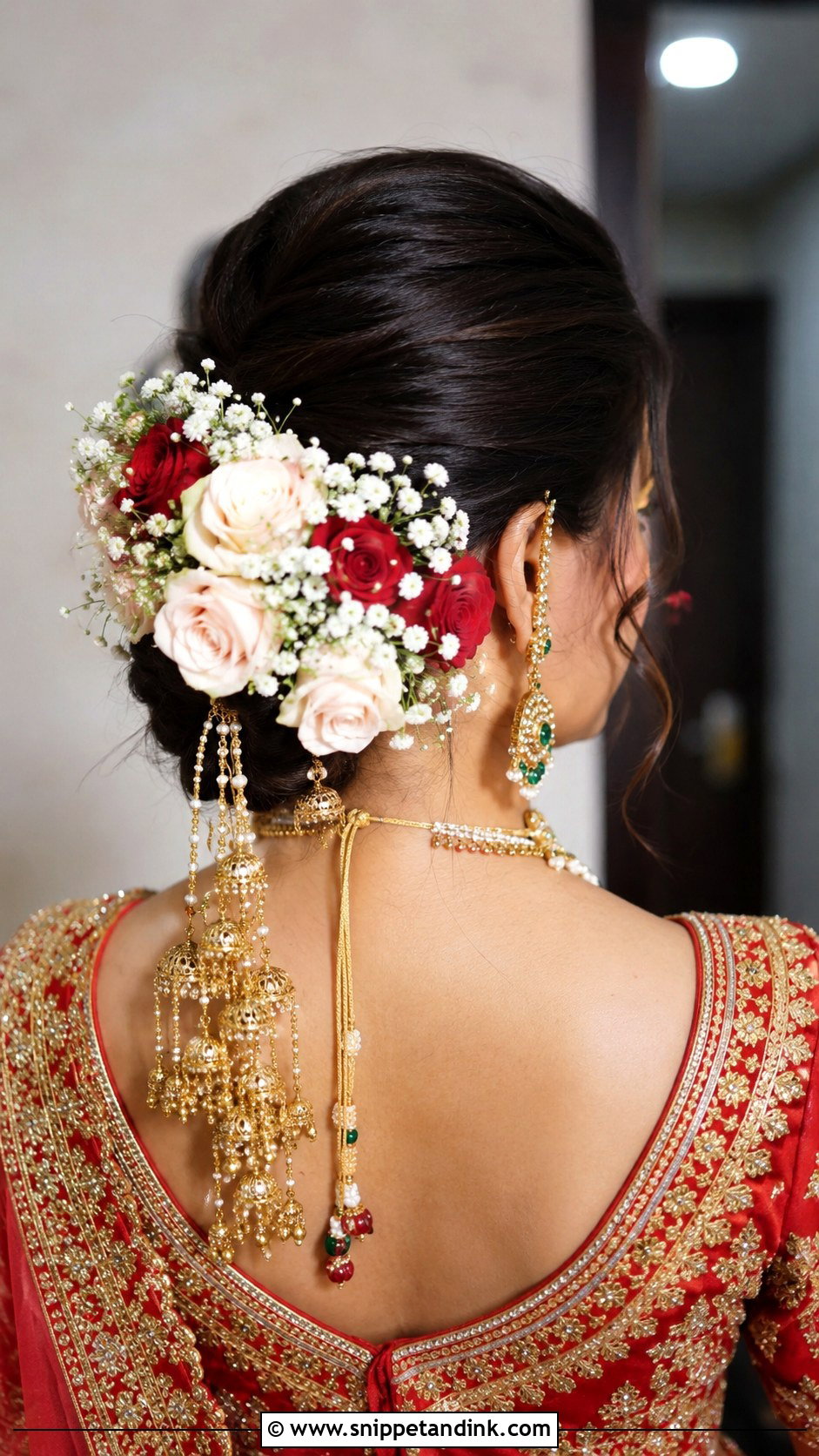
A soft bun decorated with fresh blooms and small kalire-style danglers borrows from the Punjabi tradition of kalire, which are usually tied to the bride’s chooda. The movement and color feel festive at the wedding ceremony with bright lehengas and heavy jewelry. Pins need to grip each dangling piece individually, since loose ornaments swing and tangle with earrings. A maang tikka adds sparkle.
24. Sleek Straight Hair With Center Part
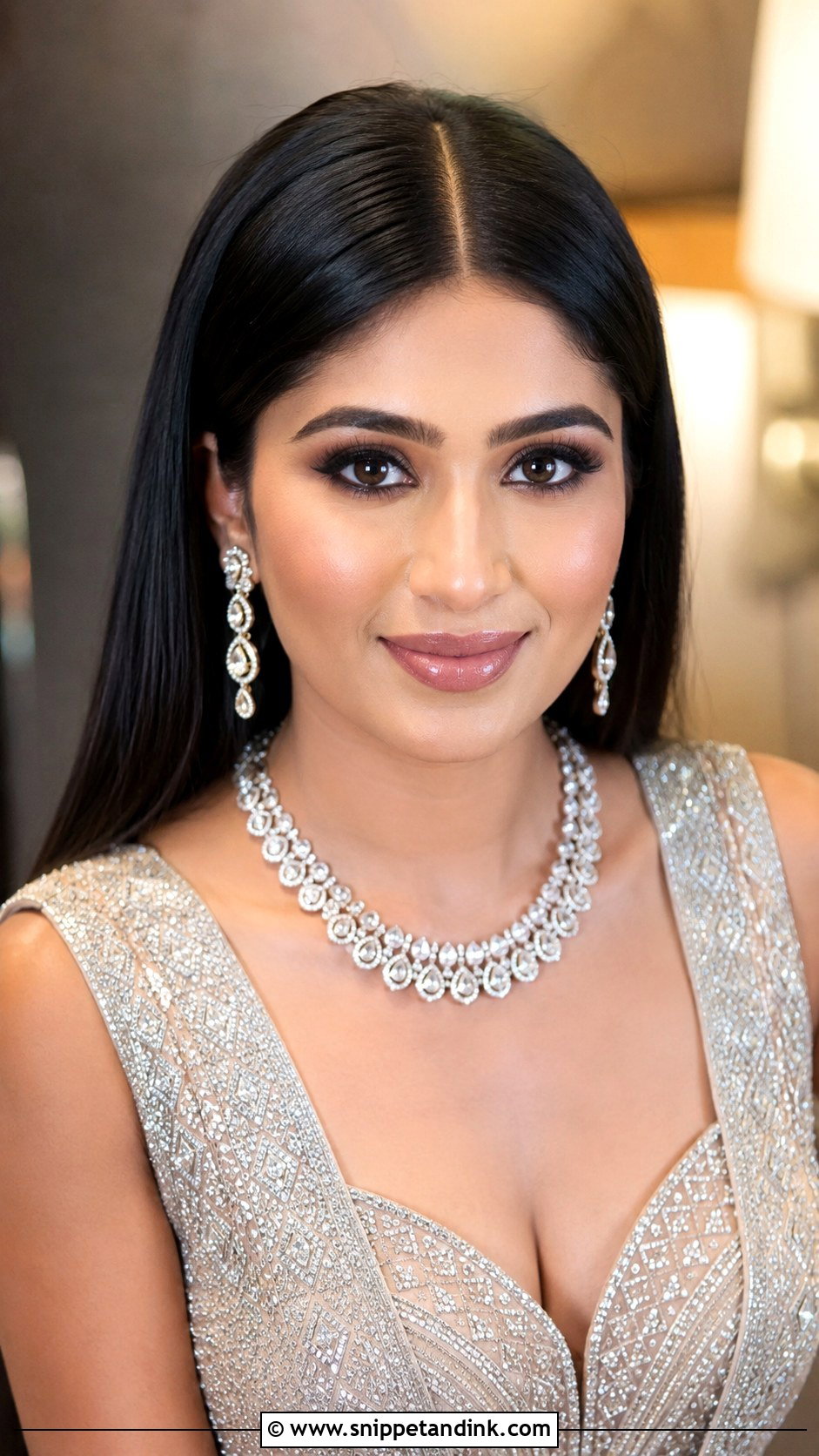
Smooth, shiny hair with a clean center part is the most minimal option here. It suits receptions and contemporary events with structured gowns and modern lehengas, and it lets jewelry and neckline take over. Keep it bare or add a subtle accessory. The part needs to be perfectly straight, so I comb it with a tail comb. Heat protection matters, since every strand passes under a hot iron, and anti-humidity spray keeps frizz away in warm weather.
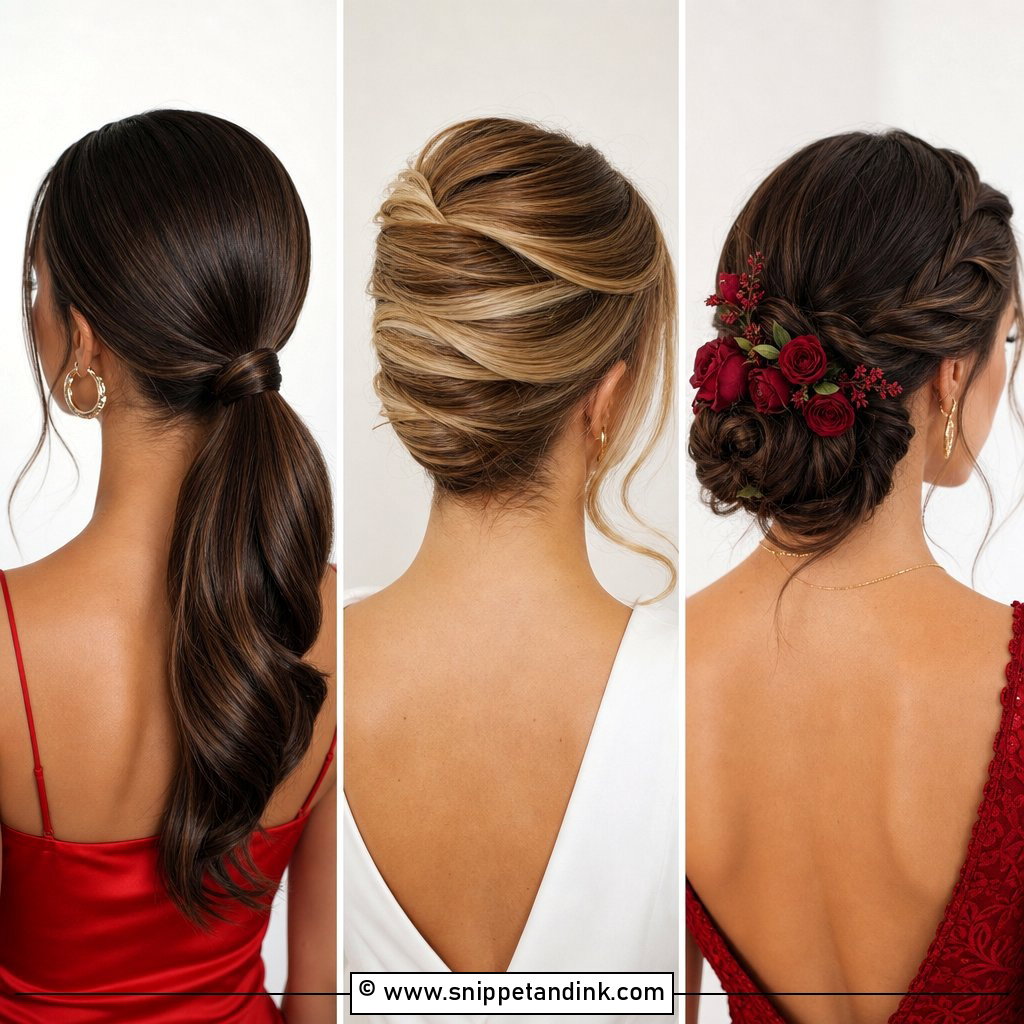
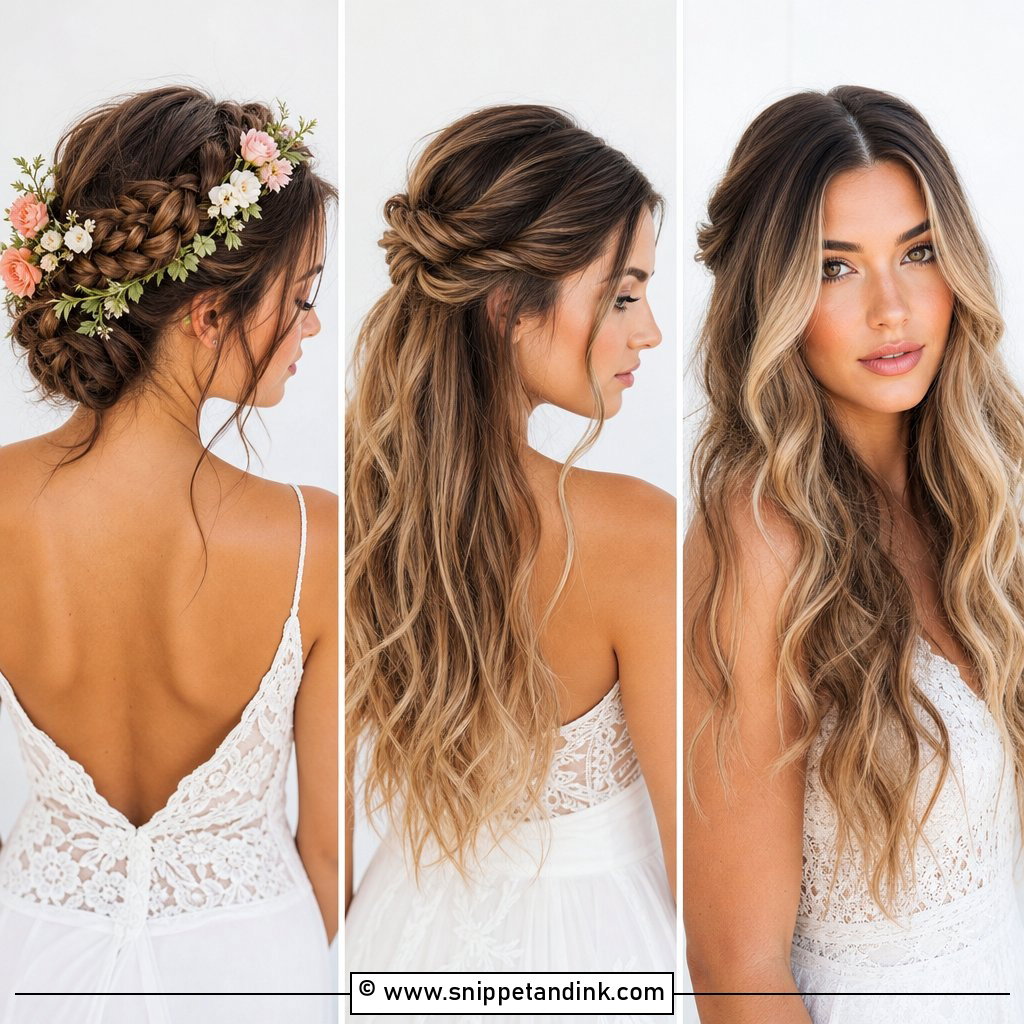
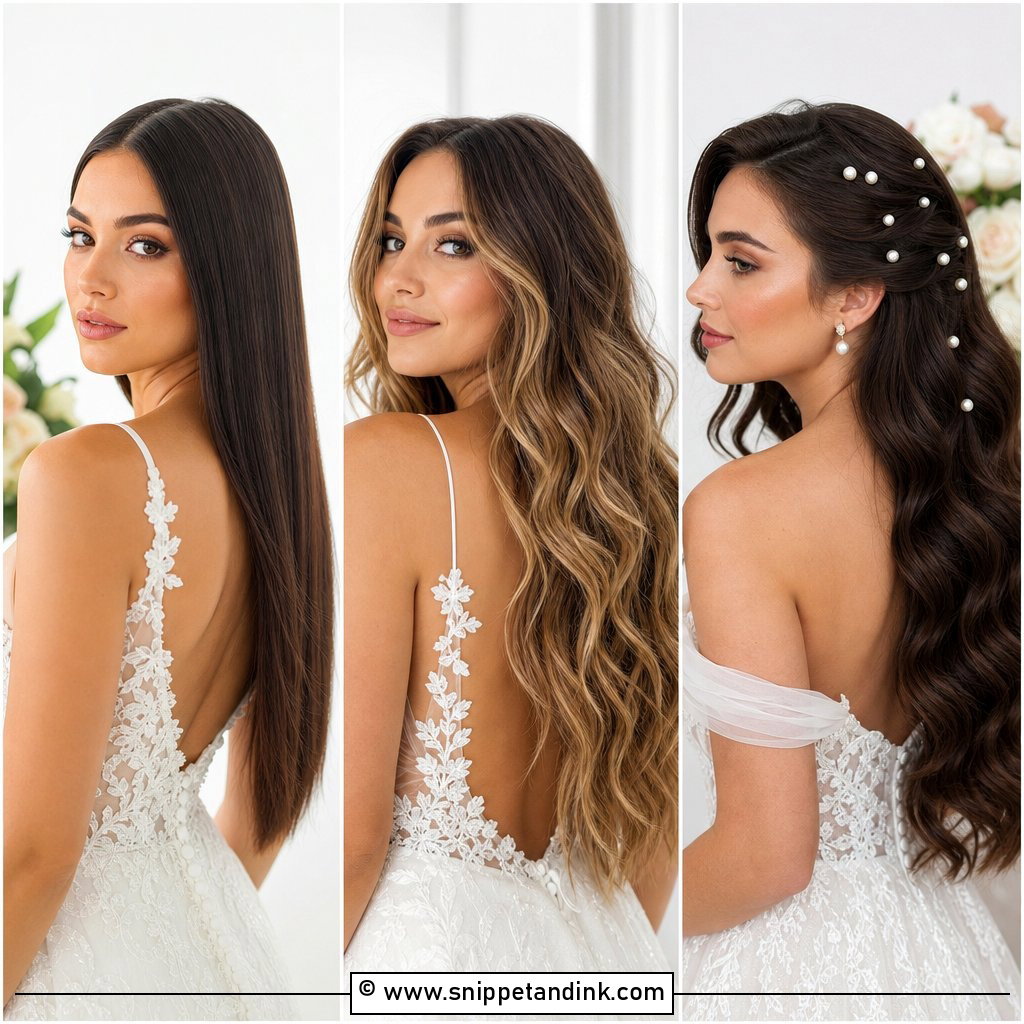
25. Floral Updo With Veil
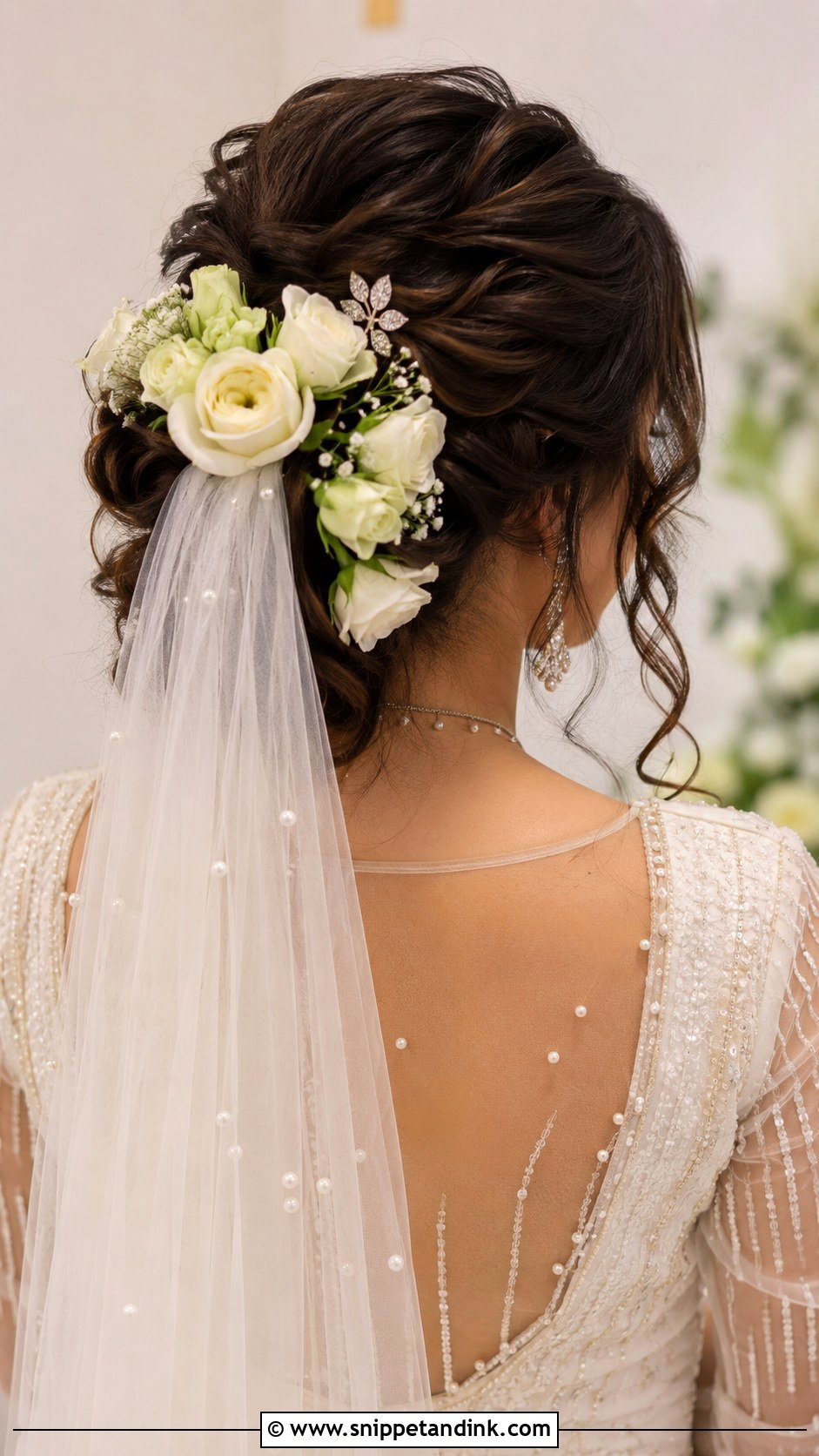
A soft, textured updo decorated with fresh flowers, paired with a veil, suits fusion weddings and Christian-Indian ceremonies. The updo keeps everything secure all day, and pearls or a jeweled clip can add sparkle. The veil comb needs a solid anchor, so I place it under the bun rather than into the flowers, where it crushes them. Decide whether the veil comes off for the reception; the flowers should still look complete without it.
Changing Hair Between the Pheras and the Reception
Many brides want a traditional bun for the ceremony and open curls or a blowout for the reception. That change is possible, but it takes more time than people expect and the hair underneath won’t behave like freshly styled hair.
- Take out every pin carefully, then remove the flowers and ornaments before loosening the bun. Pulling the bun first tangles pins into the hair.
- Brush out gently from the ends up; hairspray and backcombing make hair knot easily.
- Expect kinks from the elastic and pins. Curls or waves hide them; sleek straight hair does not, unless you have time for a full blow-dry or a wash.
- Plan around 45 minutes to an hour with a stylist, and longer if you need to wash out heavy product.
If time between events is short, a half-up style or a sleek low bun is far easier to rework than a complete restyle, and both still look different from the ceremony look.
Keep fresh flowers from the ceremony out of the reception look. By evening they have softened and browned at the edges, and they shed petals into freshly curled hair. A new set of blooms, or pearl and jeweled pins, keeps the second look feeling new.
Your Jewelry Should Decide the Hair, Not the Other Way Round
From South Indian braids to open curls, the styles here give you options for every event and every role, whether bride, bridesmaid or guest. Florals, pearls and regional jewelry all need different foundations, so think about the pieces first and the style second. A relaxed braid for mehendi, a festive bun for the wedding and waves for the reception is a sensible sequence. Bring your jewelry to your trial, test how each style feels after a couple of hours, and you’ll go into each function knowing your hair will hold.
You'll Like These Ideas:


Leave a Reply