
Most brides arrive at a trial with a photo of the back of someone’s head. That’s a start, but the back is the part you’ll never see on the day. A good bridal style has to flatter your face, sit right against your neckline, carry the weight of a veil, and still be standing after hugs, dancing and whatever the weather decides to do. I’ve grouped twenty ideas here, from low buns and braids to ponytails, curls and options for short cuts, with notes on how each one actually behaves once it’s pinned. Pick two or three that suit your hair as it really is, not as it looks in the photo, and bring those to your trial.
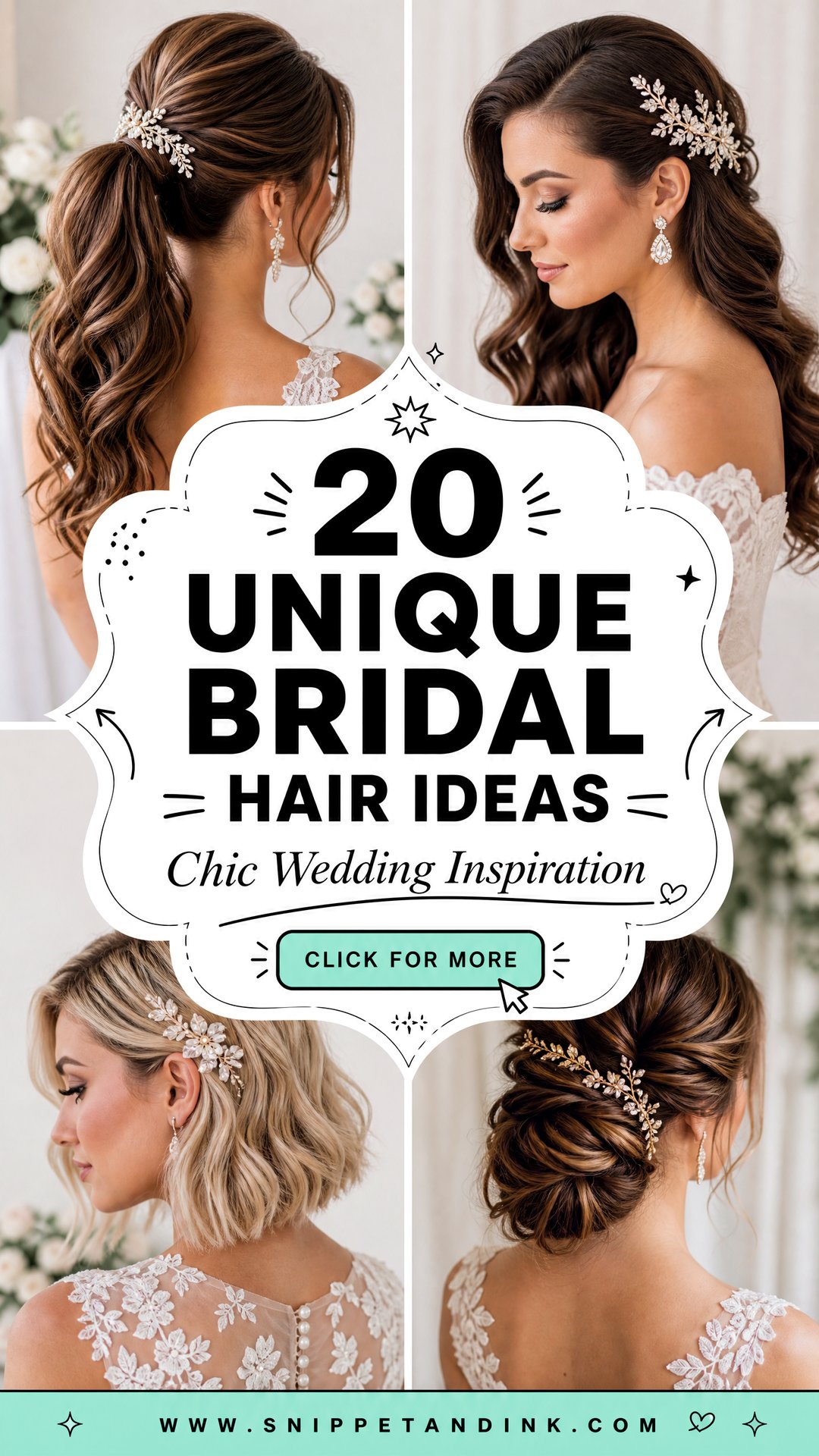
Your Hair Density Narrows This List Faster Than Your Dress Does
Before I look at a bride’s photos, I gather her hair into a ponytail with my hand and feel how thick it is at the band. That one check tells me more than the dress does. A ponytail about the width of a thumb is fine hair, and fine hair needs texture, padding or a few clip-ins for any updo to look full from the back. A ponytail as thick as a broom handle is dense hair, and dense hair needs fewer, firmer pins and more time to cool between sections, or the curls sag under their own weight.
Length matters next. Most updos here need hair past the shoulders to wrap and pin. Chin-length hair is better suited to waves, a bob finish or a half-up with a clip-in. Then texture: straight, silky hair resists grip, so I prep it with a dry texture spray. Curly and coily hair already holds a shape, and my job is to keep the pattern intact rather than iron it out.
- Fine and straight: textured updo, braided updo, crown braid, half-up with a hidden base.
- Thick and wavy: low chignon, side swept waves, low ponytail with two elastics.
- Curly or coily: curly updo, natural curls, twisted updo.
- Above the shoulders: short waves, bob finish, pearls or a small comb.
1. Bridal Low Chignon
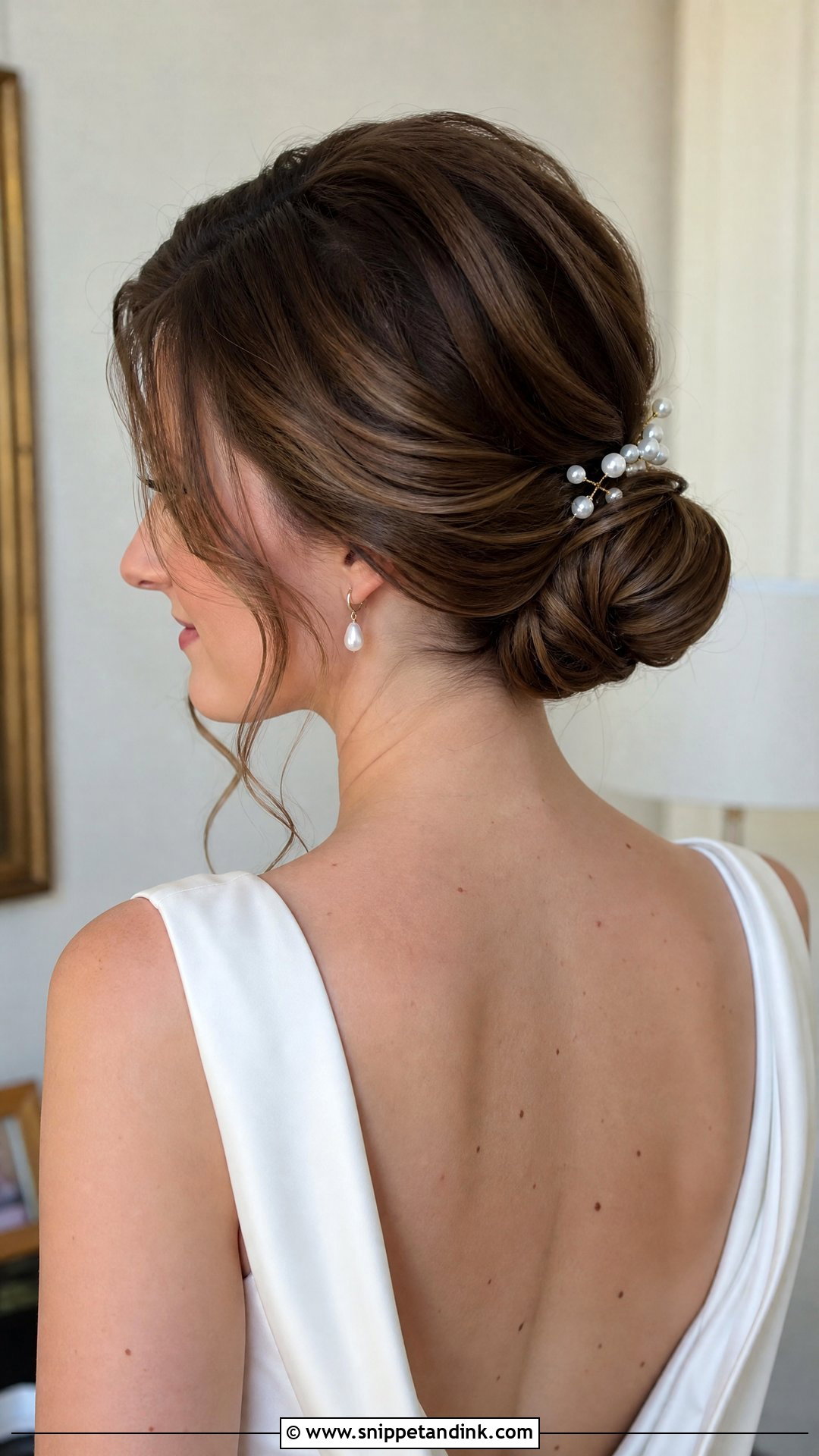
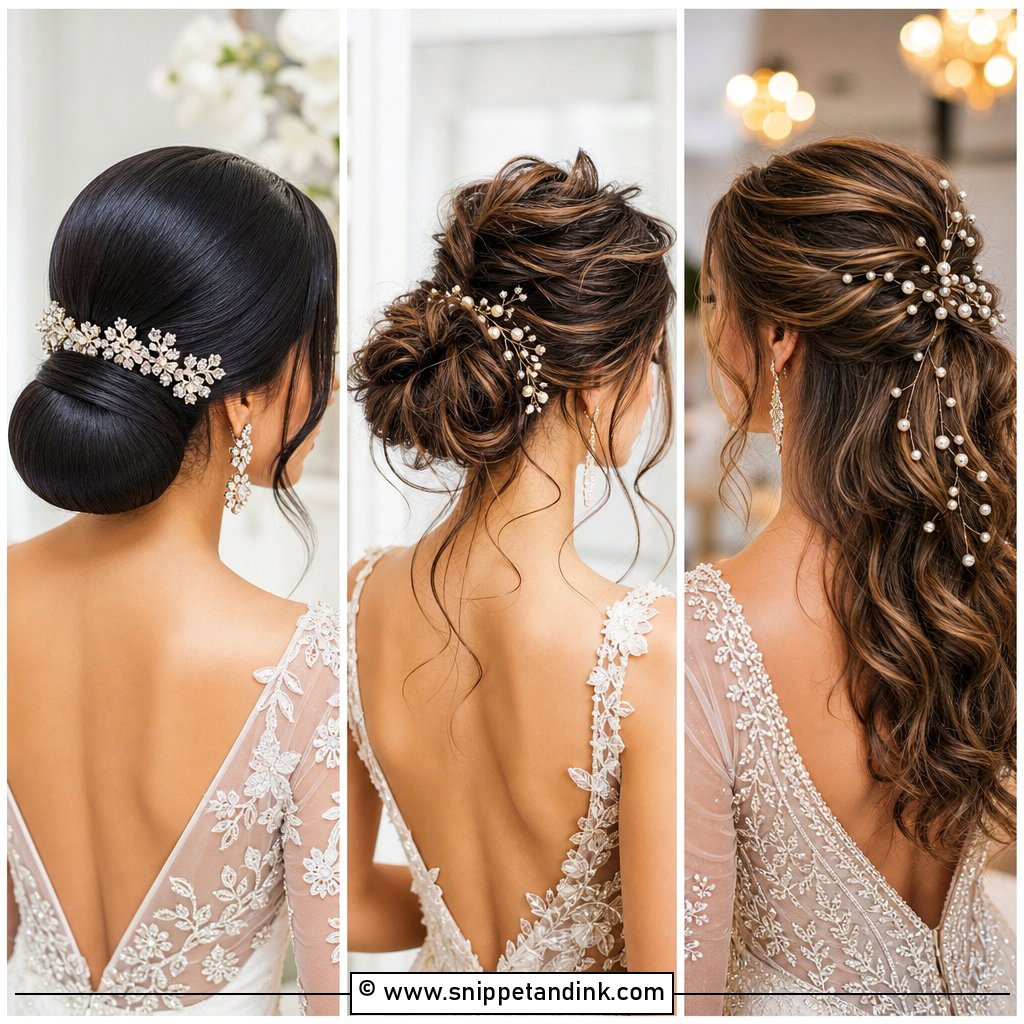
The low chignon is the style I reach for most when a bride can’t decide, because it rarely looks dated in photos ten years later. It sits at the nape, which leaves the crown free for a veil comb or a row of pearl pins. I build it on a small hidden ponytail or a pair of crossed pins so the weight isn’t hanging off loose hair. Soft lift at the crown reads romantic; a smooth crown suits a sleek crepe gown. Because the neckline stays open, it works with strapless, off-shoulder and high necks alike, and it keeps hair off your skin on a hot afternoon.
2. Bridal Half Up Half Down Hair
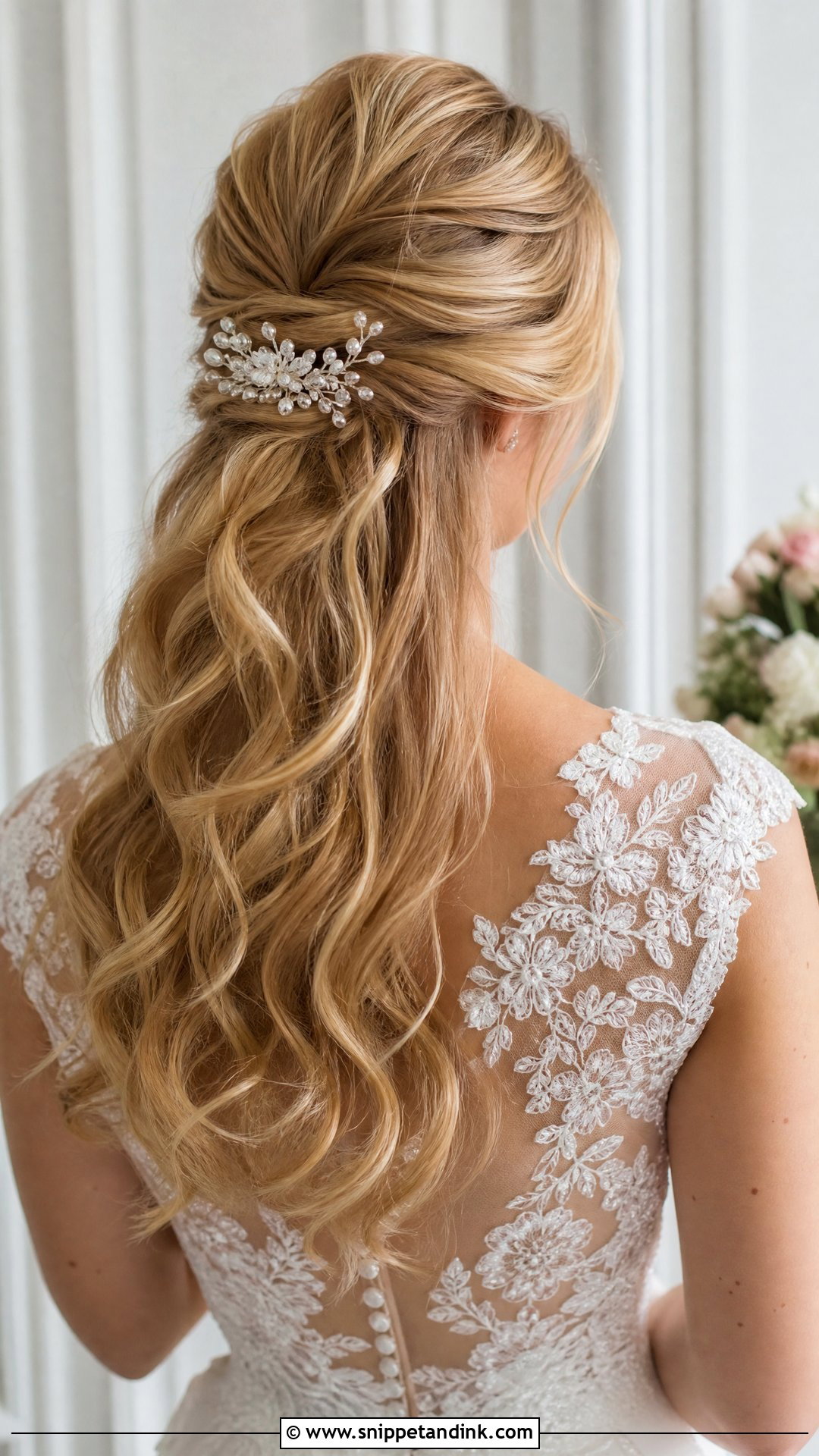
Half up, half down gives you movement around the shoulders and a secure section on top to anchor a veil or comb. That anchor matters more than people expect. I always build a small hidden base under the top section, because a veil pinned into a loose twist will slide by the speeches. The top can be twisted, braided or simply lifted; the lengths can be waved or smoothed. Long layers and face-framing pieces suit it best. The weak spot is humidity: the down section is the first part to lose shape, so on a muggy day I set those curls tighter than you think you want.
3. Bridal Hollywood Waves
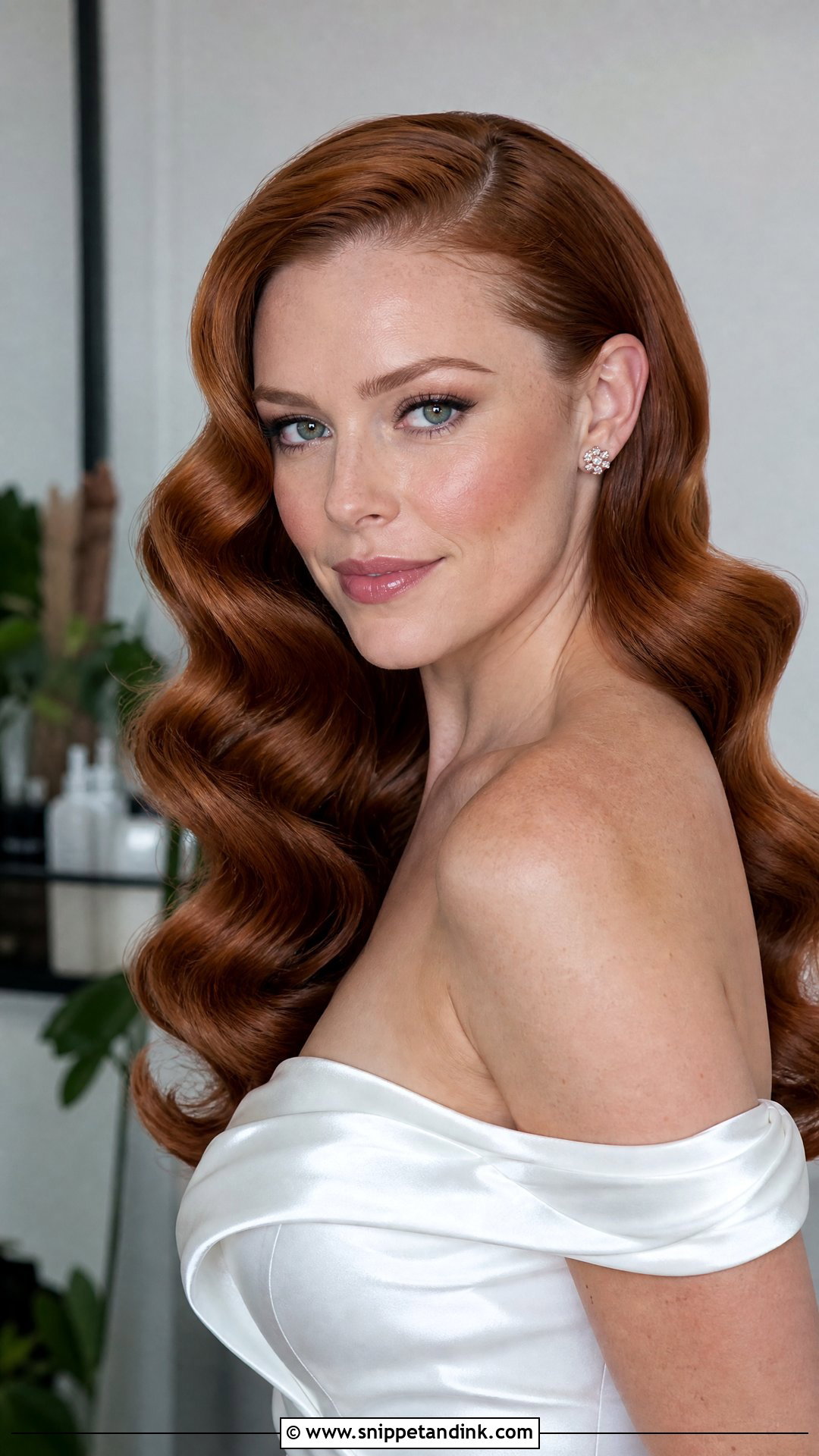
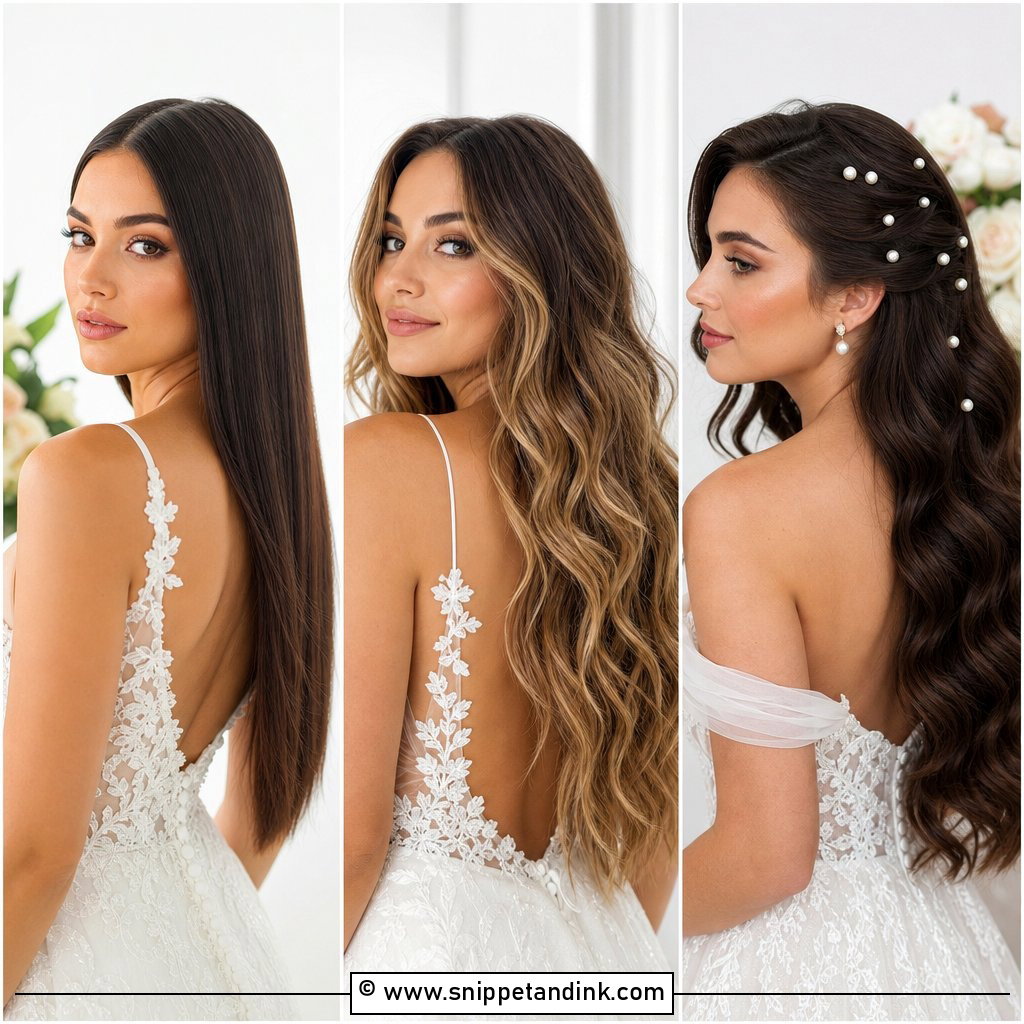
Hollywood waves are one continuous S-shape brushed out of set curls, not loose beachy pieces. Getting them right is mostly prep: a heat protectant with some grip, curls all wound in the same direction, pin-clipped while they cool, then brushed through with a boar bristle brush until the waves link up. They suit a deep side part, a satin gown and a fairly clean makeup look. Medium to long hair holds the pattern best, and extensions can add extra fullness if your ends are thin. I’d steer very fine, flat hair away from this one in a humid climate, since the pattern collapses faster than any other down style.
4. Bridal Sleek Bun
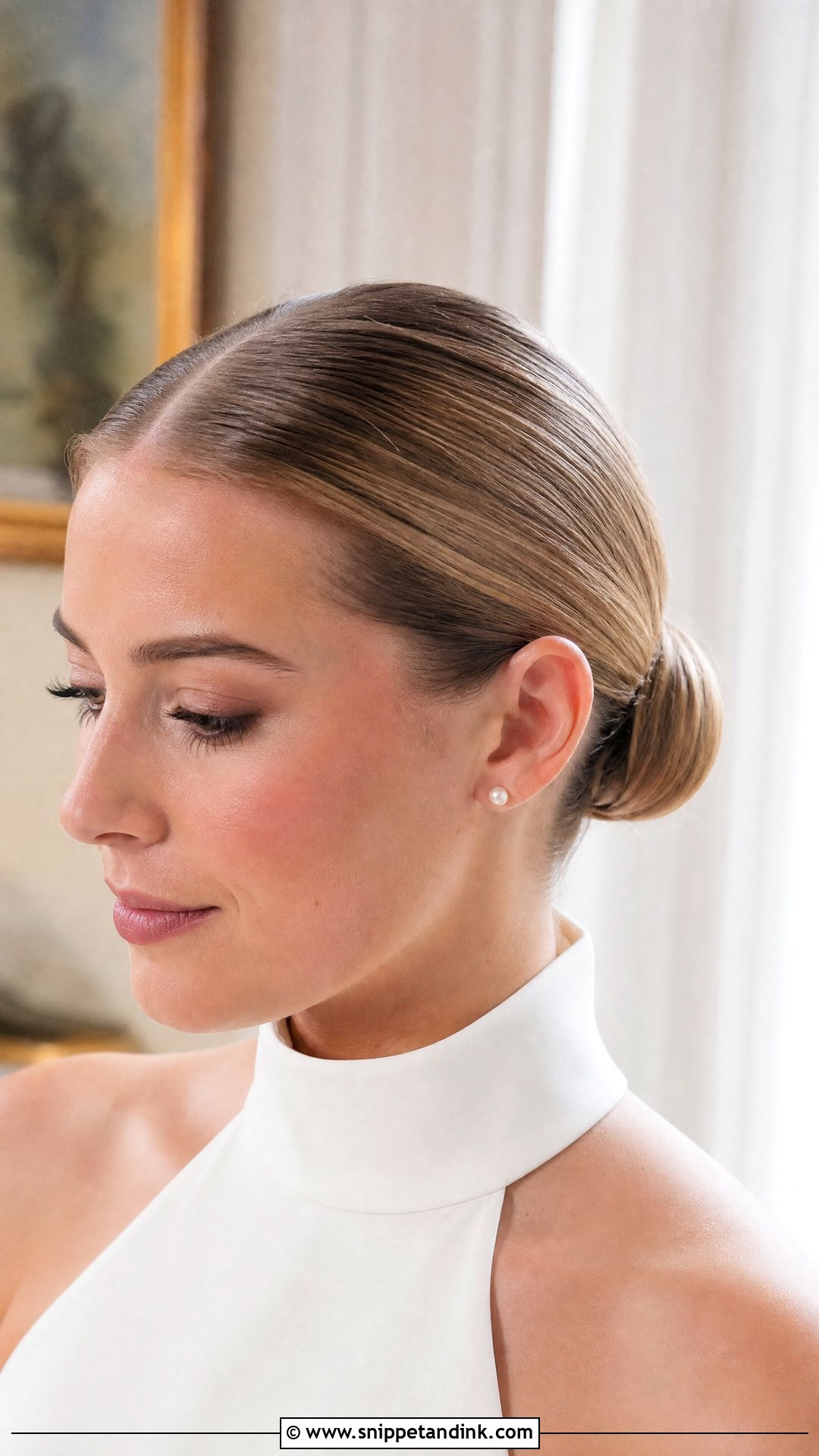
A sleek bun is honest: it shows every bump, so the work is all in the brushing and the parting. It pulls everything off the face and hands the attention to your earrings, makeup and veil. Low reads classic, high reads more fashion. Straight, wavy and relaxed hair smooth down easily; very curly hair can do it too, but I’d plan on a blowout the day before and a gel at the hairline rather than fighting the texture with heat that morning. Structured gowns, high necks and long sleeves all sit well with it, and it’s the style least likely to need a touch-up between the ceremony and the last dance.
5. Bridal Textured Updo
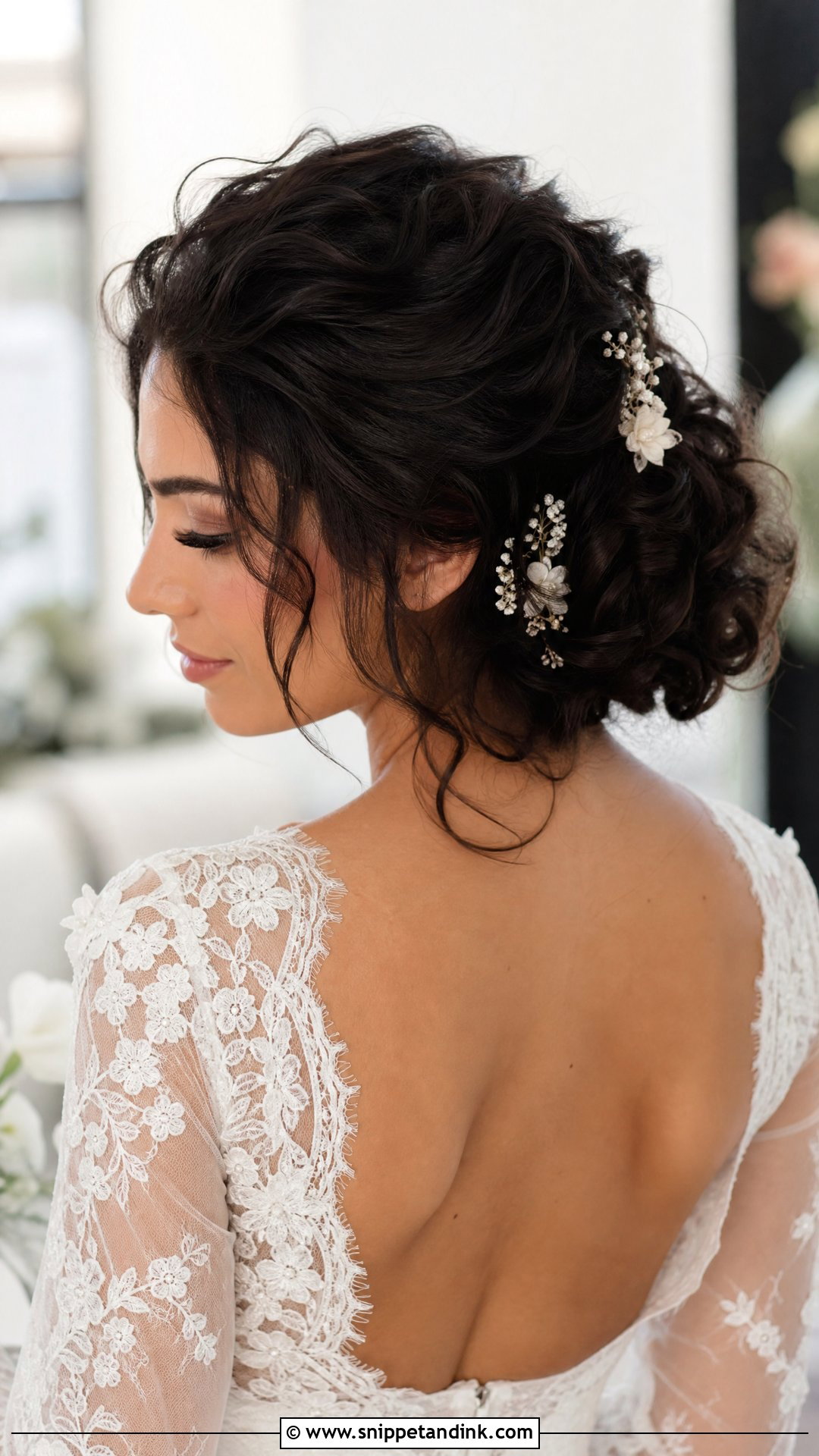
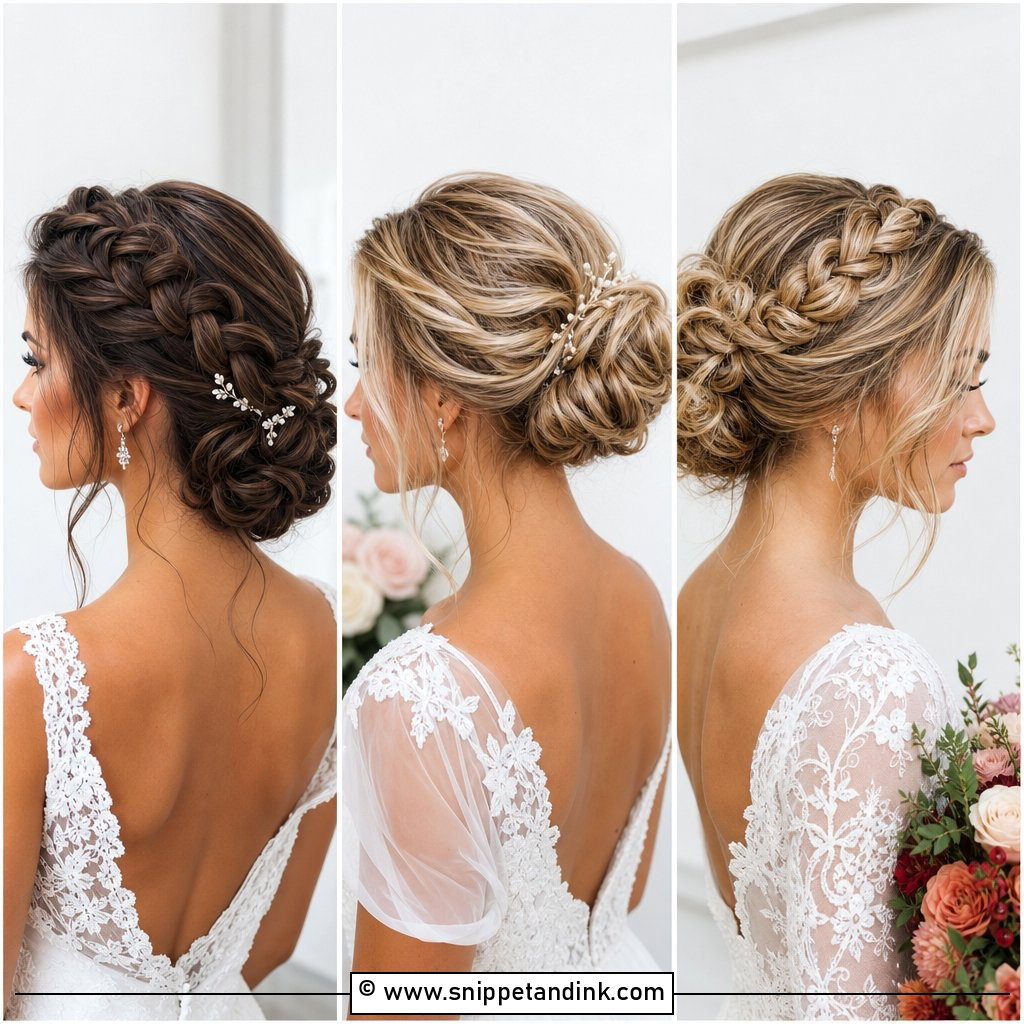
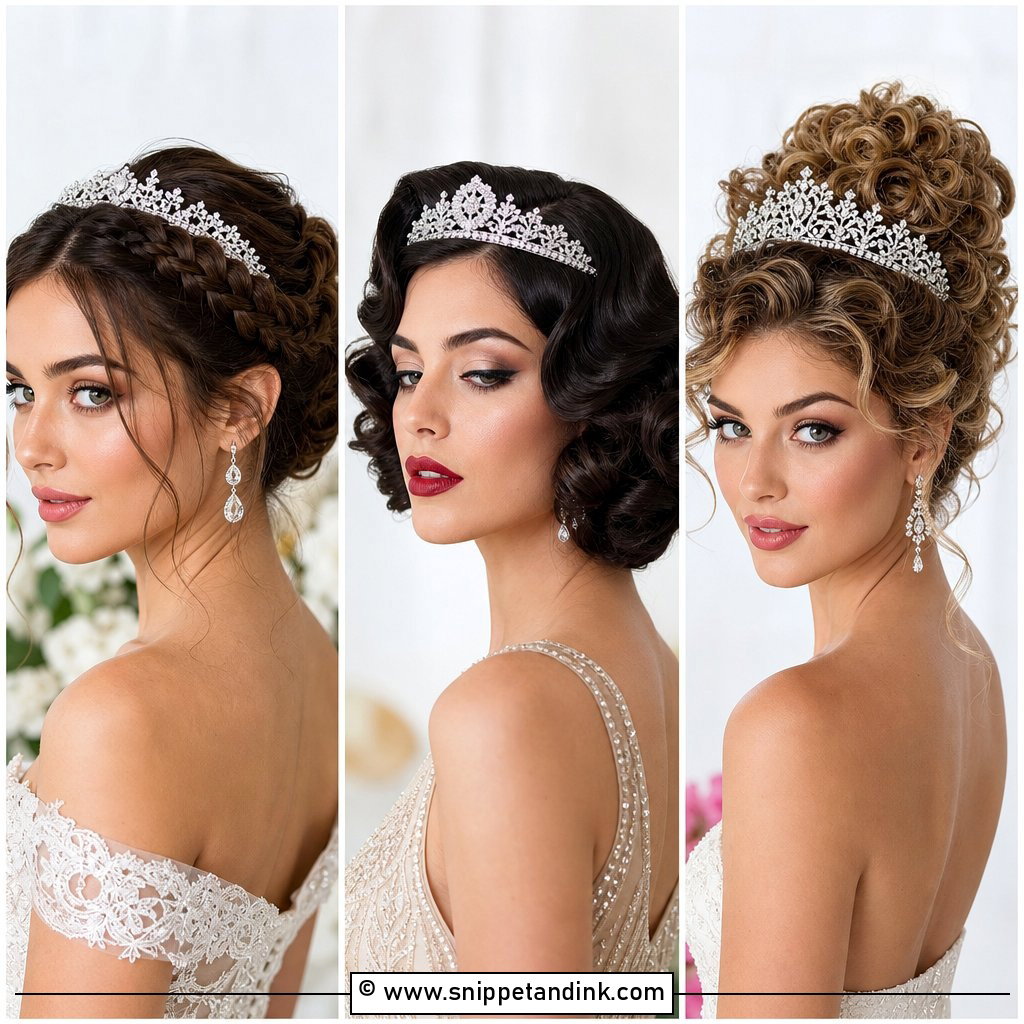
A textured updo trades polish for shape. Instead of a tight bun, I build it from curled and twisted sections pinned loosely so you can see the movement in each piece. This is my go-to for fine hair, because the texture spray and backcombing underneath make a small amount of hair look much fuller. Layered cuts work too, since short pieces can be tucked into the twists rather than poking out of a smooth surface. Leave out two soft pieces at the front if you like a romantic outline. A lace gown or a garden setting suits it, and a veil tucks neatly underneath the shape.
6. Bridal Braided Updo
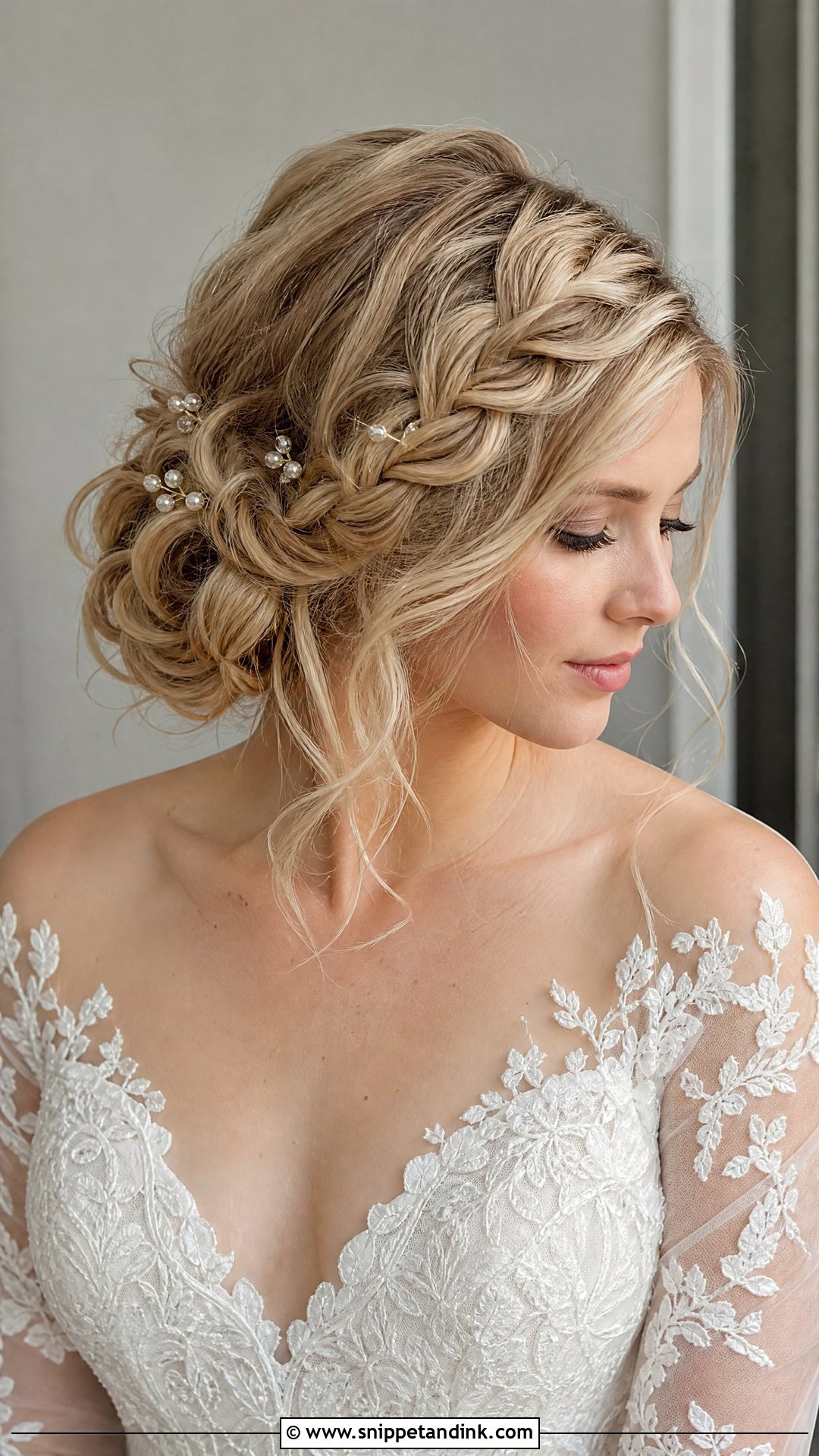
Braids add detail on their own, which is handy if you’d rather skip a large hairpiece. The braid can wrap around a bun, cross over the crown or melt into a low gathered shape. Wavy, curly and textured hair grip a braid well and give the updo real depth from the back. Once it’s plaited I pull the edges out with my fingertips, a technique called pancaking, so it looks fuller and less like a school plait. Outdoor ceremonies, boho gowns and open backs all pair well with it, since the back of your head is on view for the whole aisle walk.
7. Bridal Ponytail
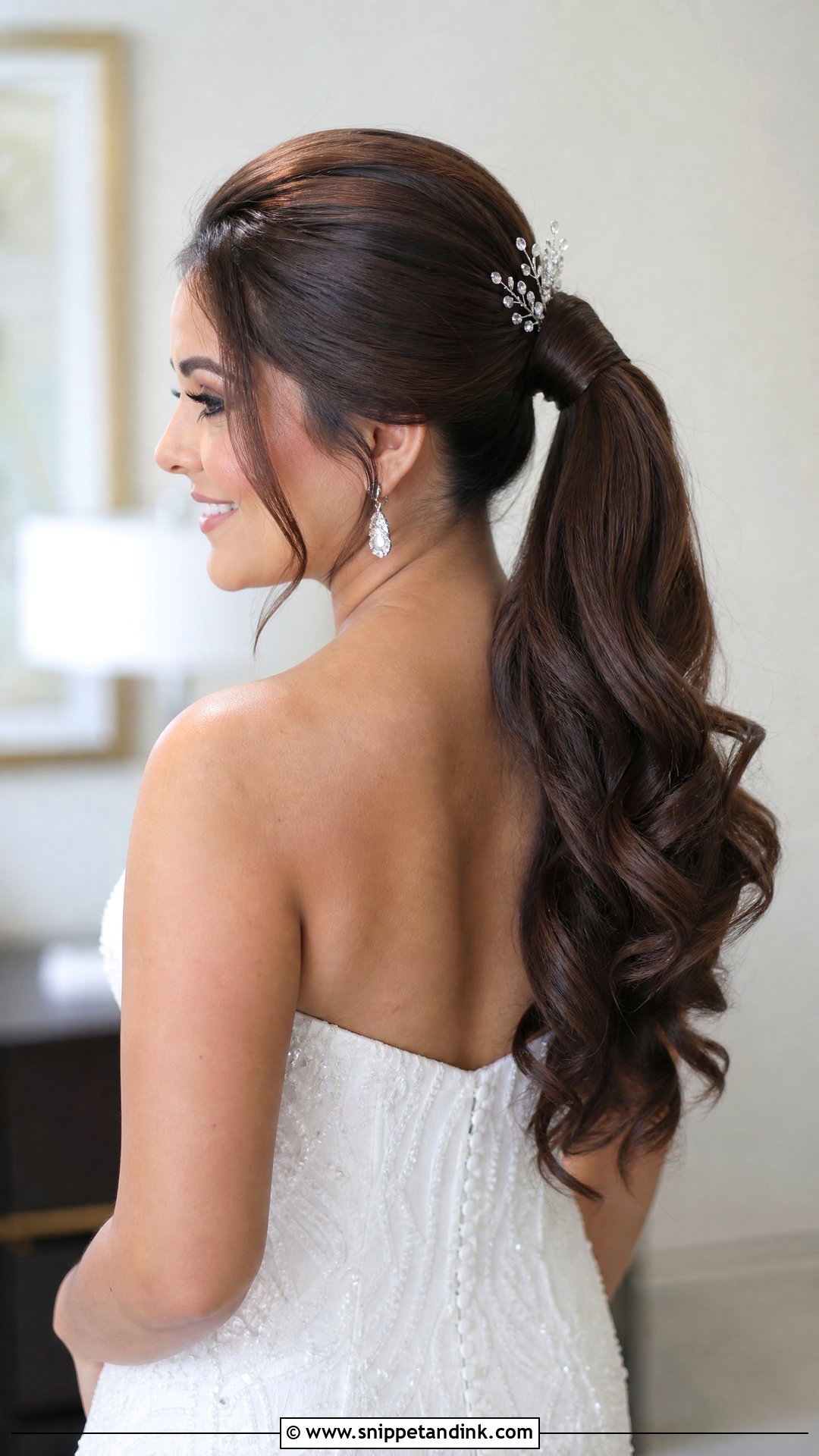
A ponytail looks simple, which is exactly why it needs care. What makes it bridal is a polished crown, a section of hair wrapped around the elastic to hide it, and enough body through the length that it doesn’t hang limp by dinner. High and sleek feels modern; low with curls feels softer. It keeps hair off your face without committing to a bun, and it’s comfortable to dance in. Veils can sit above or below the band. I often suggest it as a second look for the reception, because I can convert a half-up style into a ponytail in about ten minutes.
8. Bridal Loose Waves
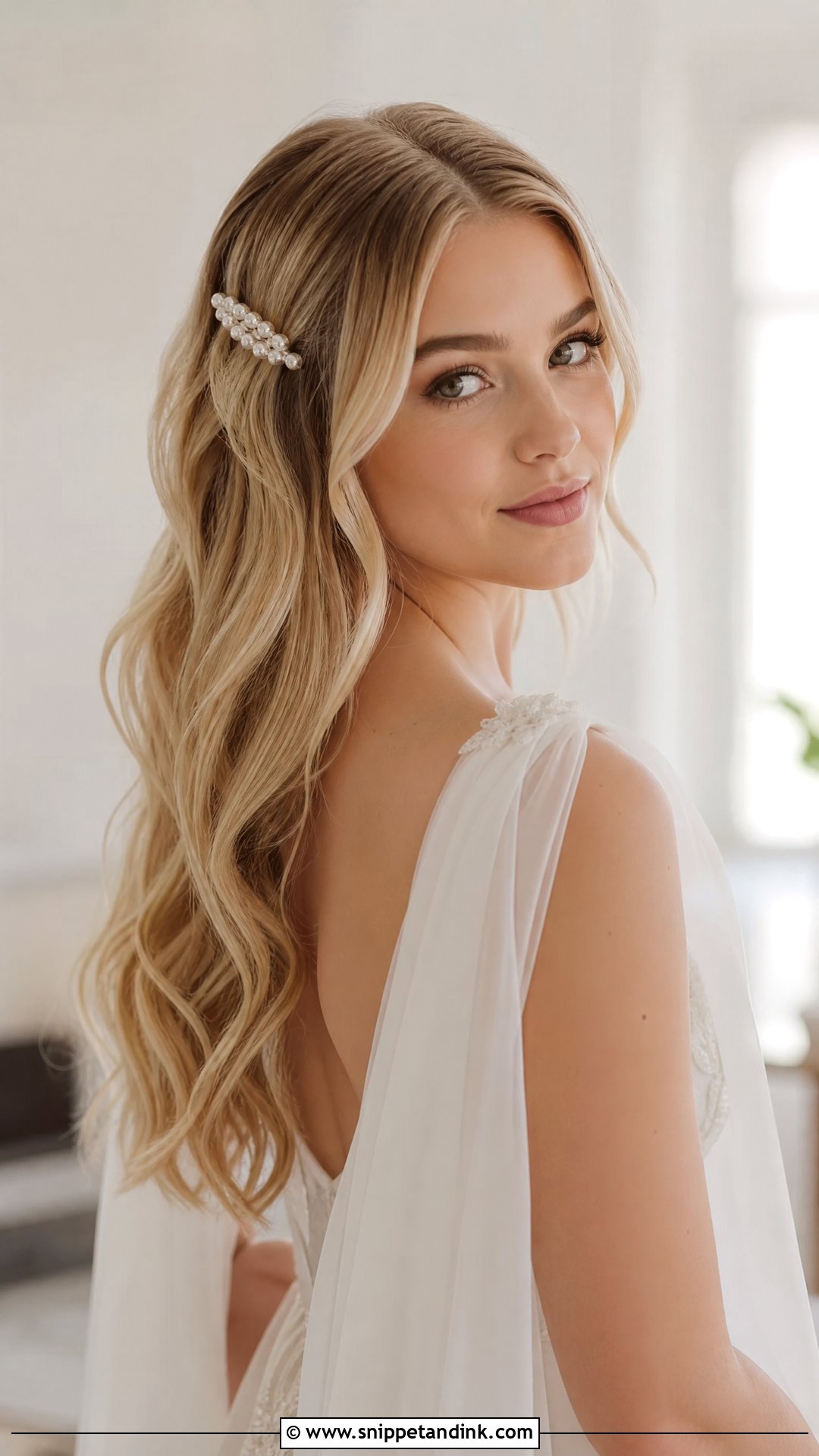
Loose waves are for the bride who wears her hair down most days and would feel strange in an updo. The aim is smooth bends with shine, not tousled beach texture. The order matters: I curl tightly, let every section cool completely, and only then brush the curls out into waves. If you skip the cooling, the waves fall out before the ceremony is over. Layered hair shows the movement around the face especially well. A small braid, a few pearl pins or a floral comb can add bridal detail without taking over.
9. Bridal Curly Updo
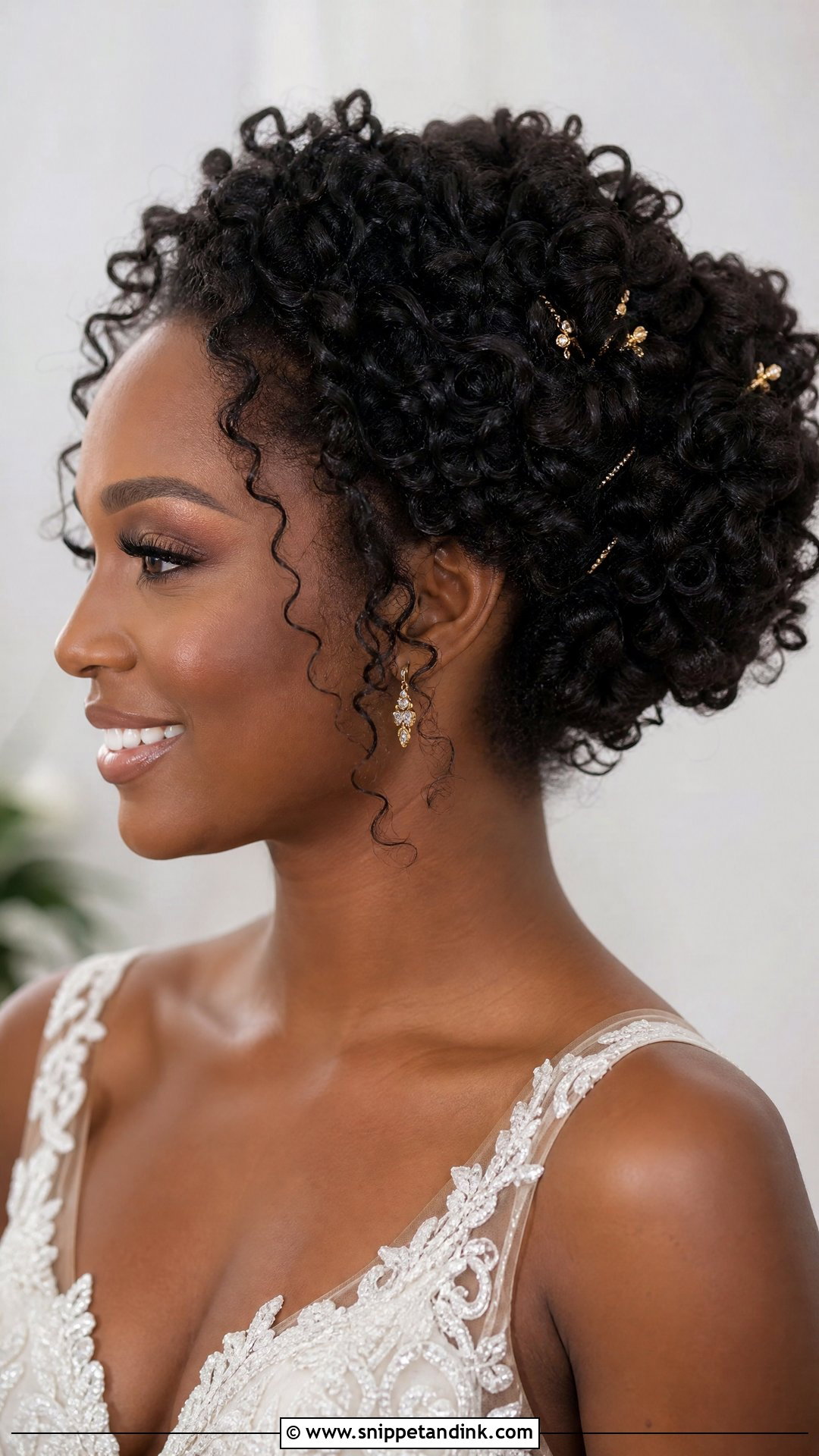
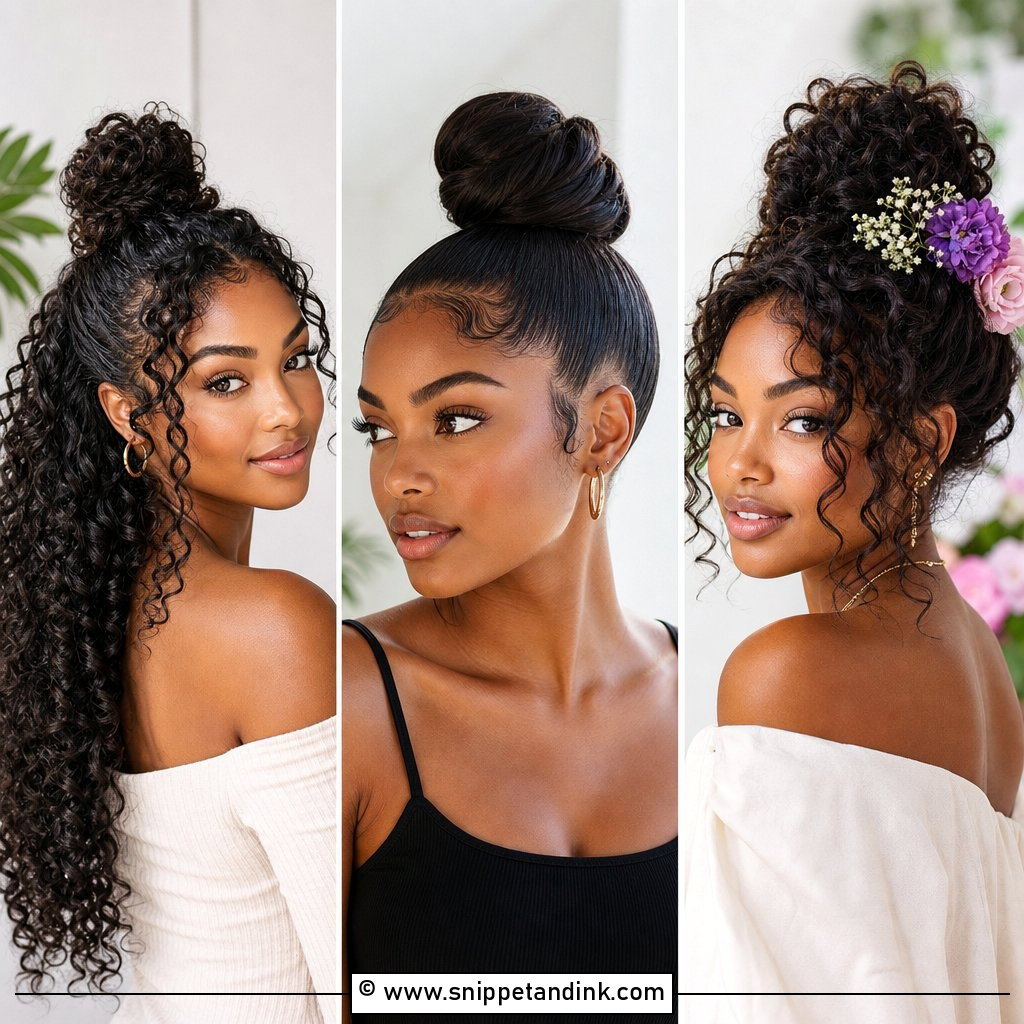
A curly updo should keep your curls looking like your curls. Rather than brushing the pattern smooth, I gather defined curls and pin each cluster where it falls, so the bounce stays visible. It can sit low, mid-height or a little higher depending on the dress and veil. The prep starts the night before: a proper wash, a leave-in and a defining product, then air-drying or diffusing so the pattern is set before I touch it. Skip heavy hairsprays here; they turn coils crunchy and dull in photos. A couple of curls left free near the temples keeps the face soft.
10. Bridal Crown Braid
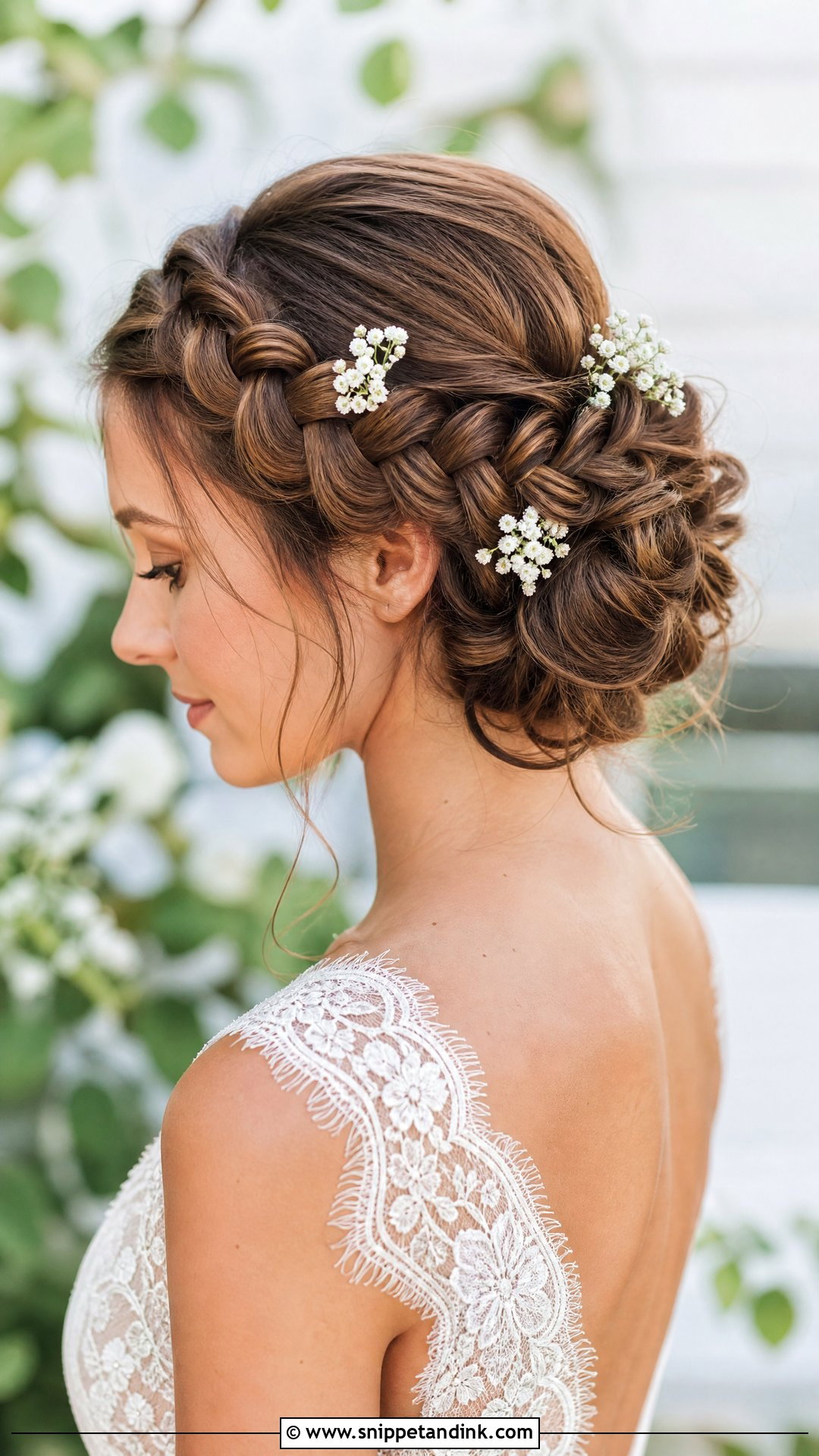
A crown braid wraps the head and holds itself in place, so it’s one of the sturdiest styles I do for outdoor weddings. Lace gowns and floaty fabrics suit it well, and it can be full and textured or smoother and neater. You can leave waves loose at the back or tuck everything into the braid for a full updo. Because the hair is locked into the plait, it copes well in breezy settings where loose sections would whip across your face. Very short layers can stick out of it, though, so if your hair is above the shoulders I’d add a small clip-in piece. Keep any pins or pearls small; the braid is the feature.
11. Bridal Side Swept Waves
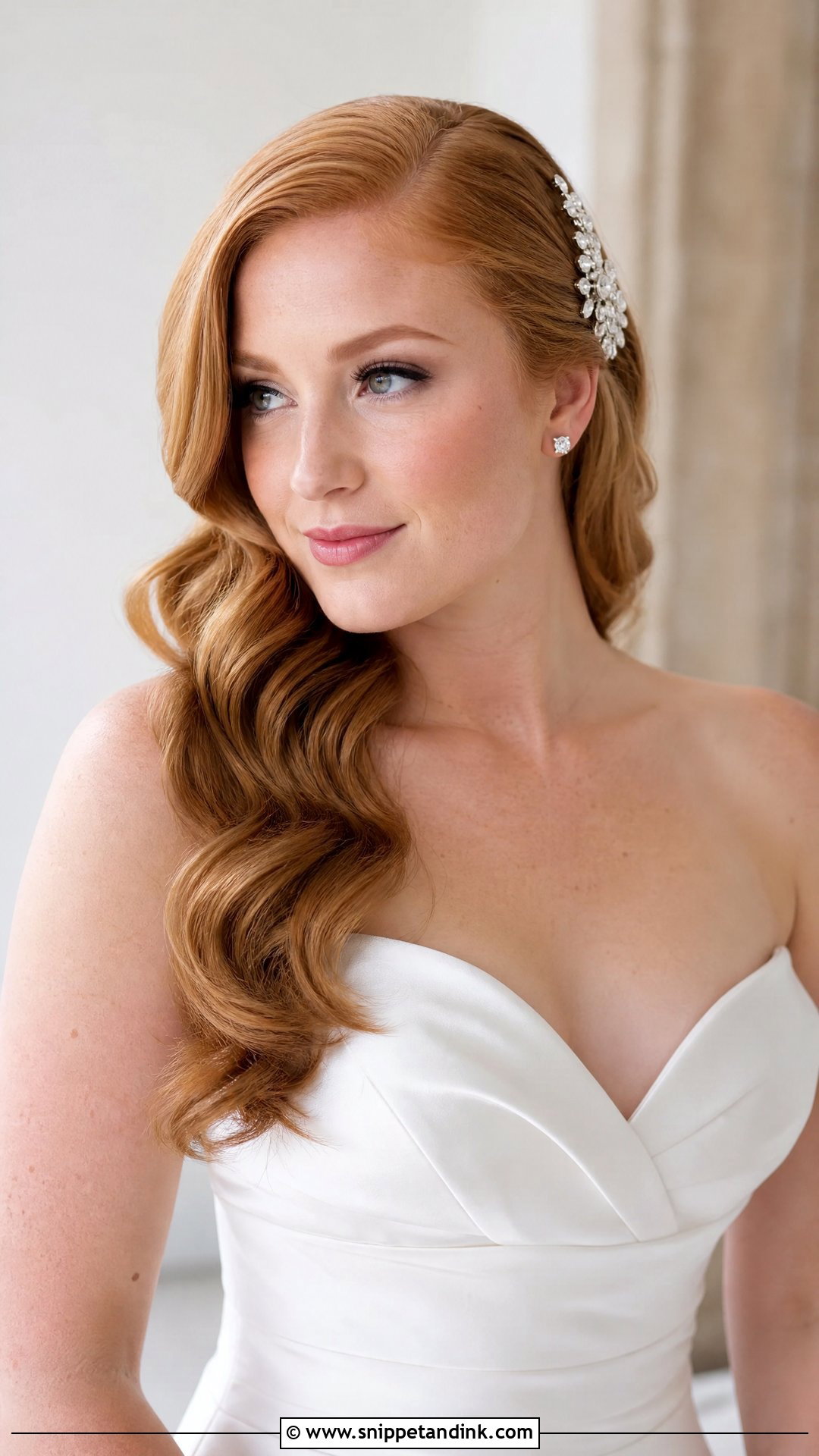
Side swept waves bring all the hair over one shoulder, which gives a clean diagonal line in photos and pairs naturally with one-shoulder or strapless gowns. The hidden work is on the other side: I pin a row of crossed bobby pins behind the ear to stop the weight pulling back toward the centre. A comb or barrette can cover them. The waves need a firm set so they don’t flatten against your shoulder after a few hours. This look also shows off balayage and highlights well. One thing to plan for: whoever stands on your swept side in photos will see mostly hair, so think about which side faces your partner at the altar.
12. Bridal Messy Bun
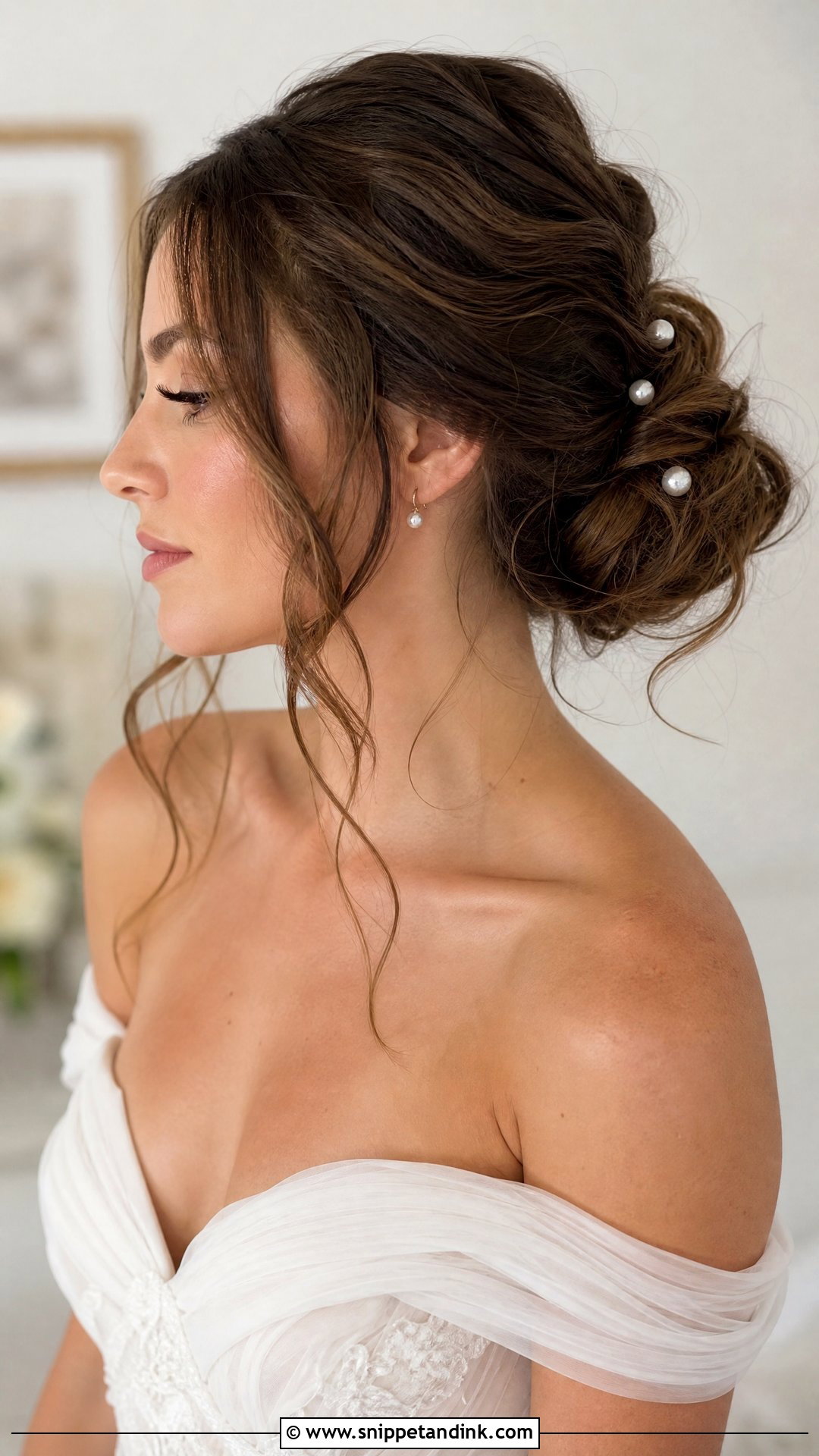
The messy bun is the hardest style on this list to get right, because it has to look relaxed while being pinned securely. I set curls first, gather the bun loosely, then pull out pieces one at a time and pin them where they fall. It can sit low or higher for a lighter, more playful feel. It keeps hair off your neck without the stiffness of a formal updo, and veils, pearl pins or a few flowers all sit well in it. I check it in a hand mirror from the side and back, because a bun that looks balanced from the front can be lopsided from the aisle.
13. Bridal Low Ponytail
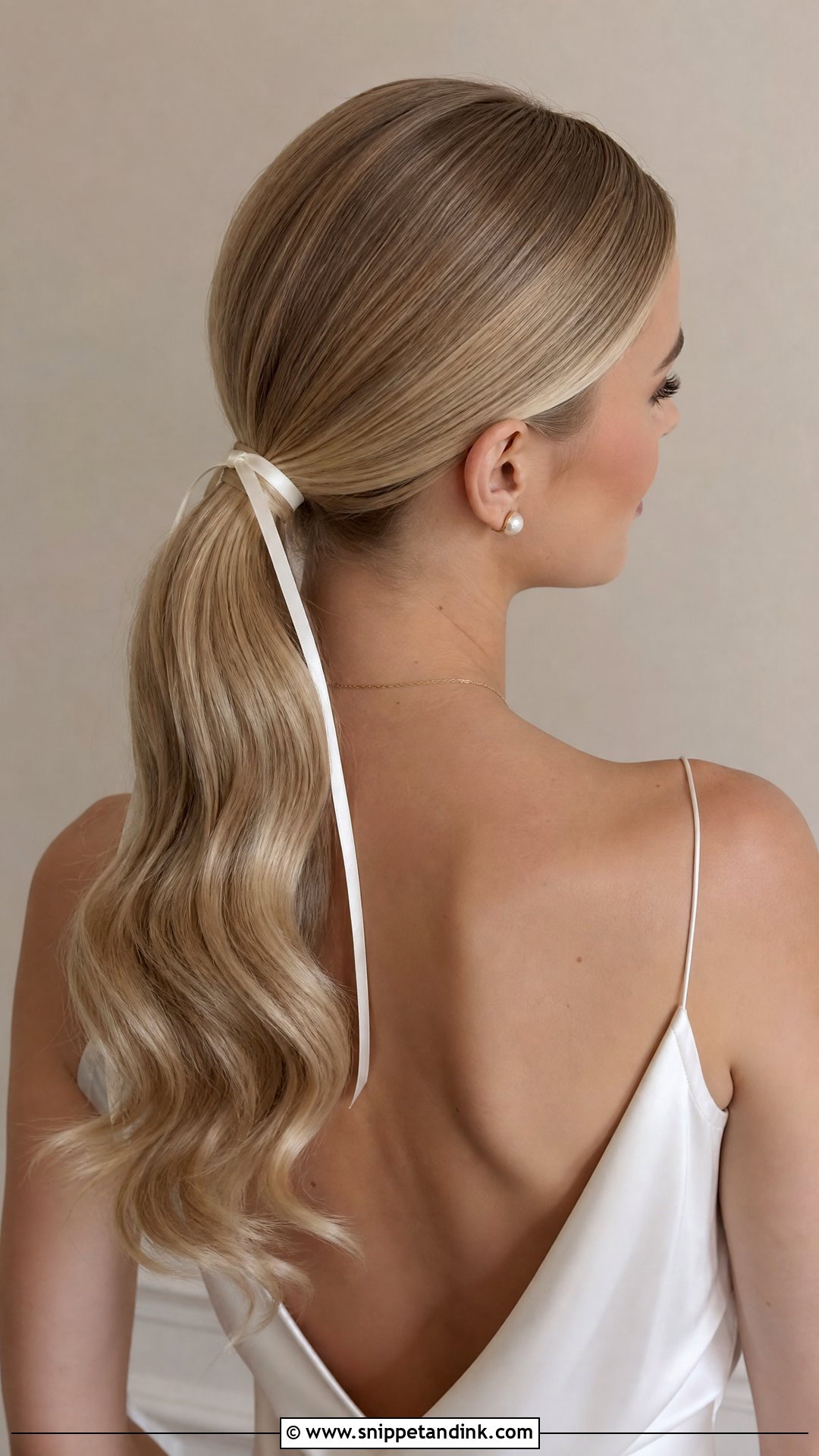
A low ponytail sits at the nape, so it’s comfortable to lean back in a car or a chair and easy to pair with a veil, bow, ribbon or pearl clip. The front can be sleek with a centre part, lifted at the crown or softly waved. The length can be curled or left smooth to suit the dress. I secure it with two elastics, one tight and one over it, because a single band tends to slip down on silky hair by the evening. It suits satin gowns and simple silhouettes, and it’s one of the lowest-maintenance styles you could wear all day.
14. Bridal Bun With Veil
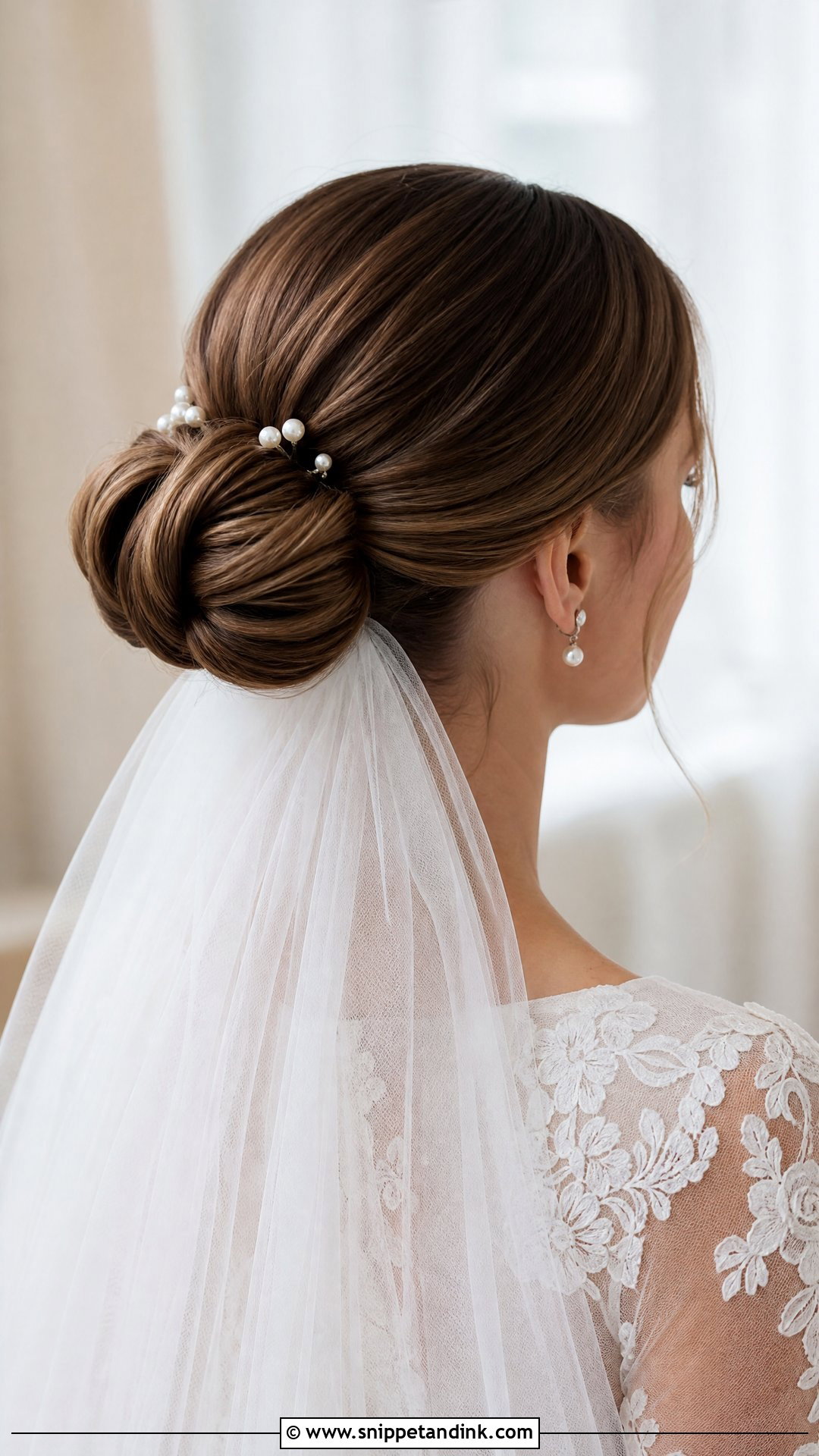
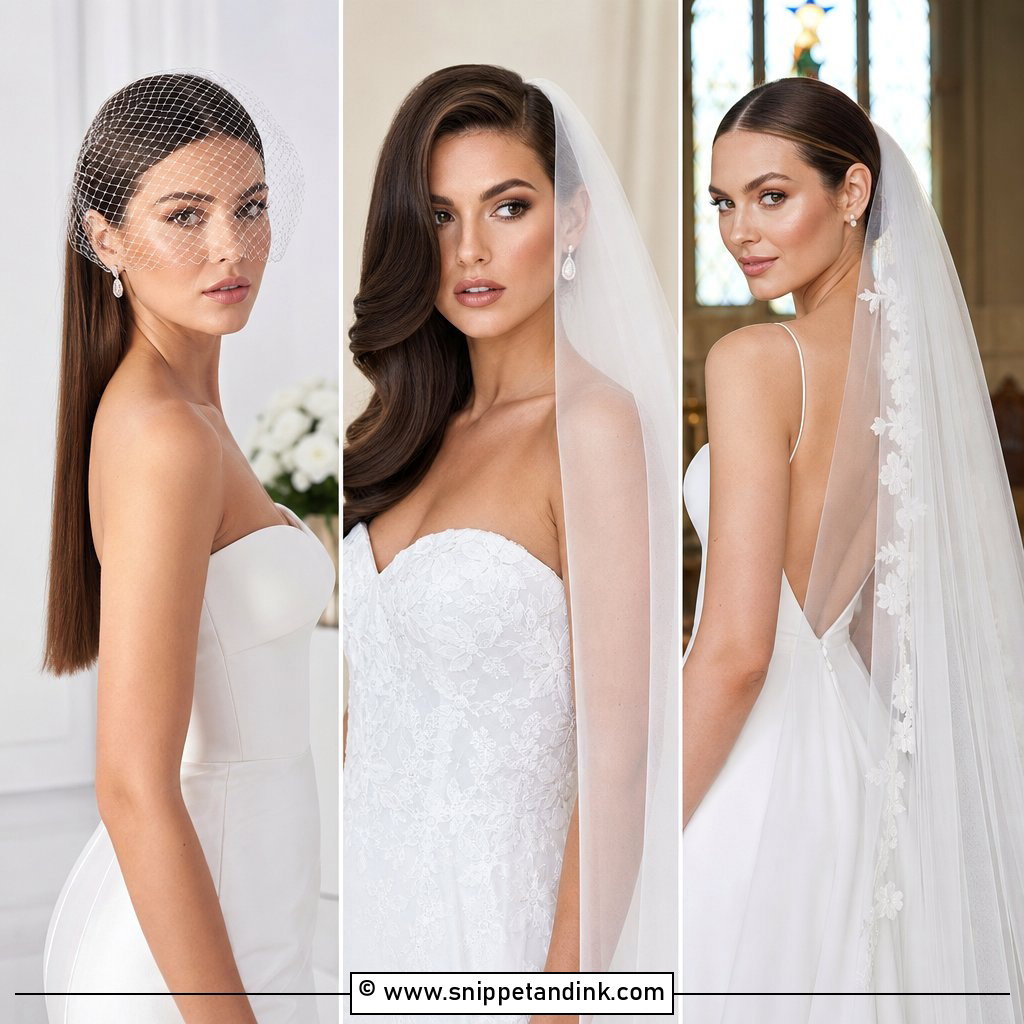
A bun gives a veil the firmest base you can build, which is why it’s still the most common pairing I’m asked for. The bun can be low, mid-height, twisted, braided or sleek. A veil placed above it looks more traditional and gives more height; a veil tucked underneath feels softer and more current. Heavy cathedral veils need a bun with real density, so on fine hair I add a padding ring or a clip-in. Please bring the veil to your trial. Testing the comb’s angle and the pins under it is the only way to know it won’t tug or tilt during the ceremony.
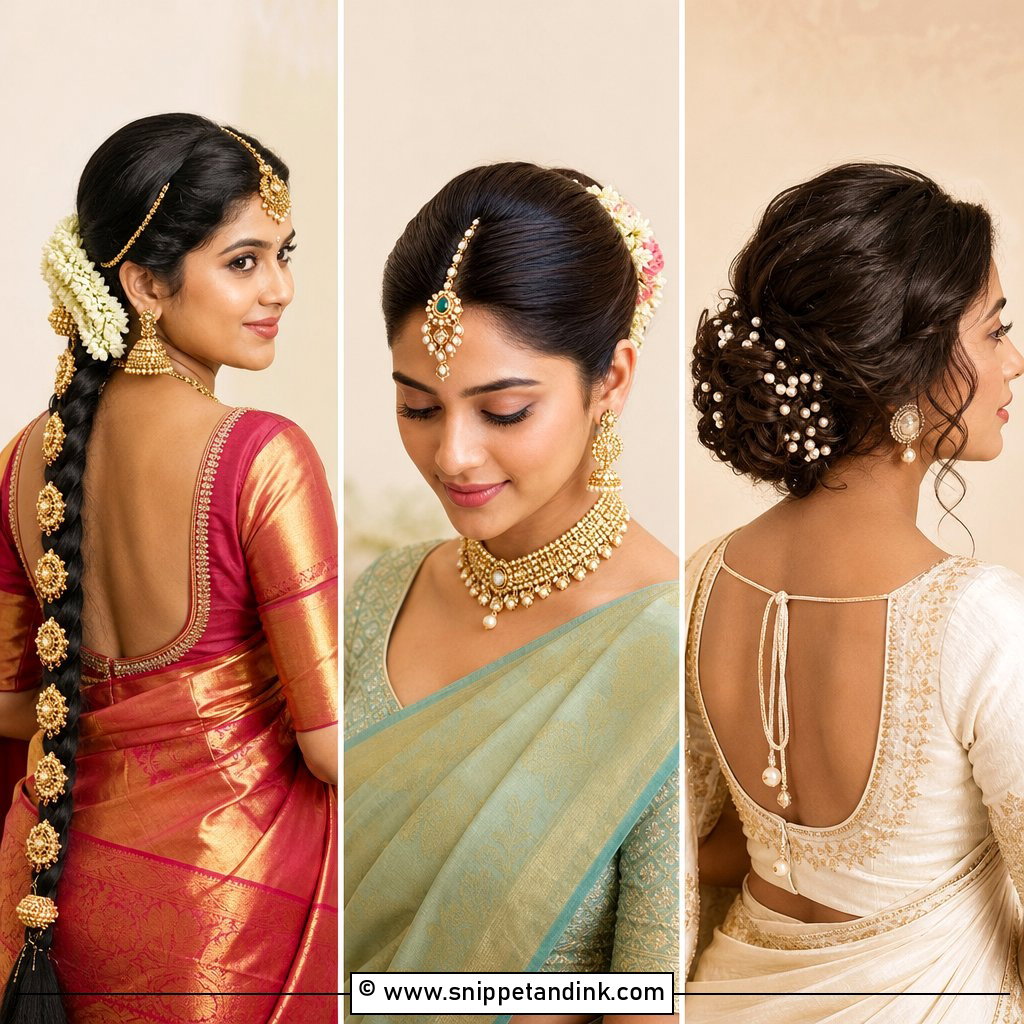
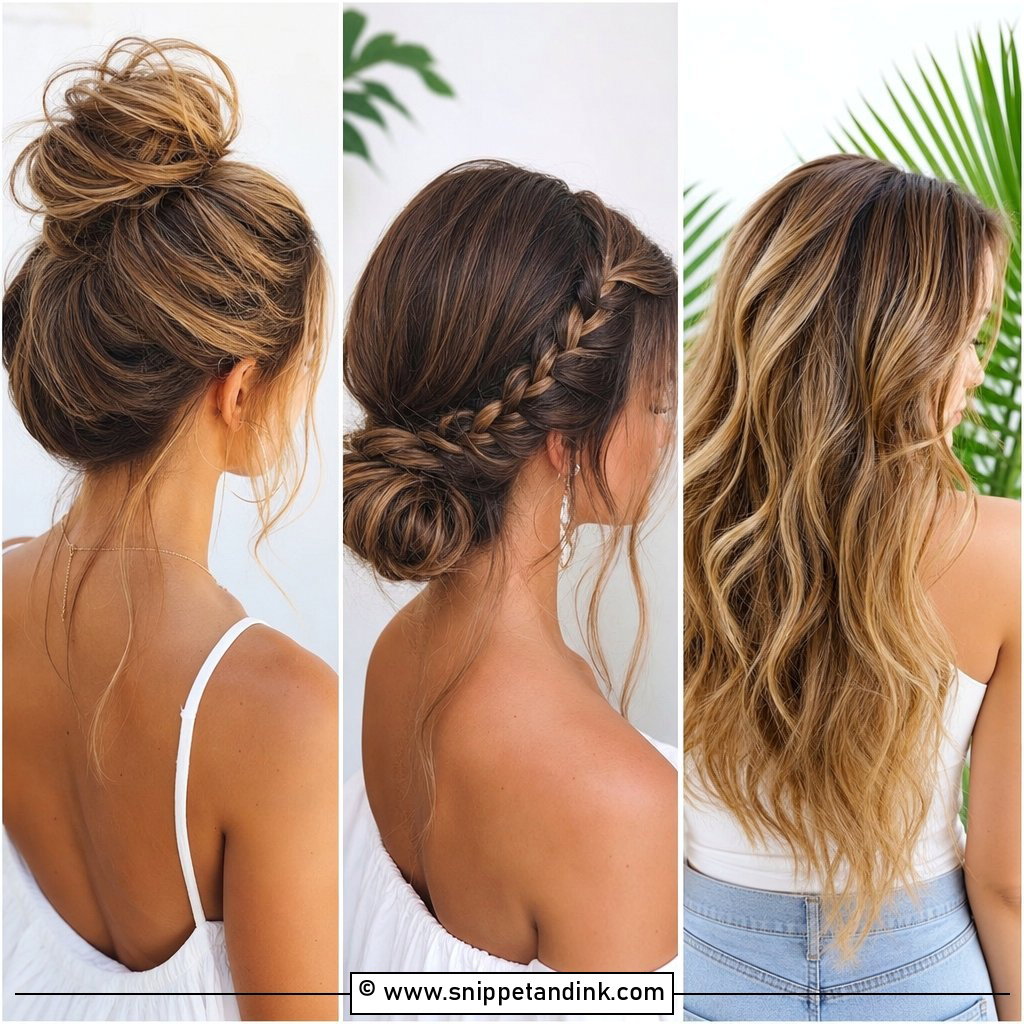
15. Bridal Short Hair Waves
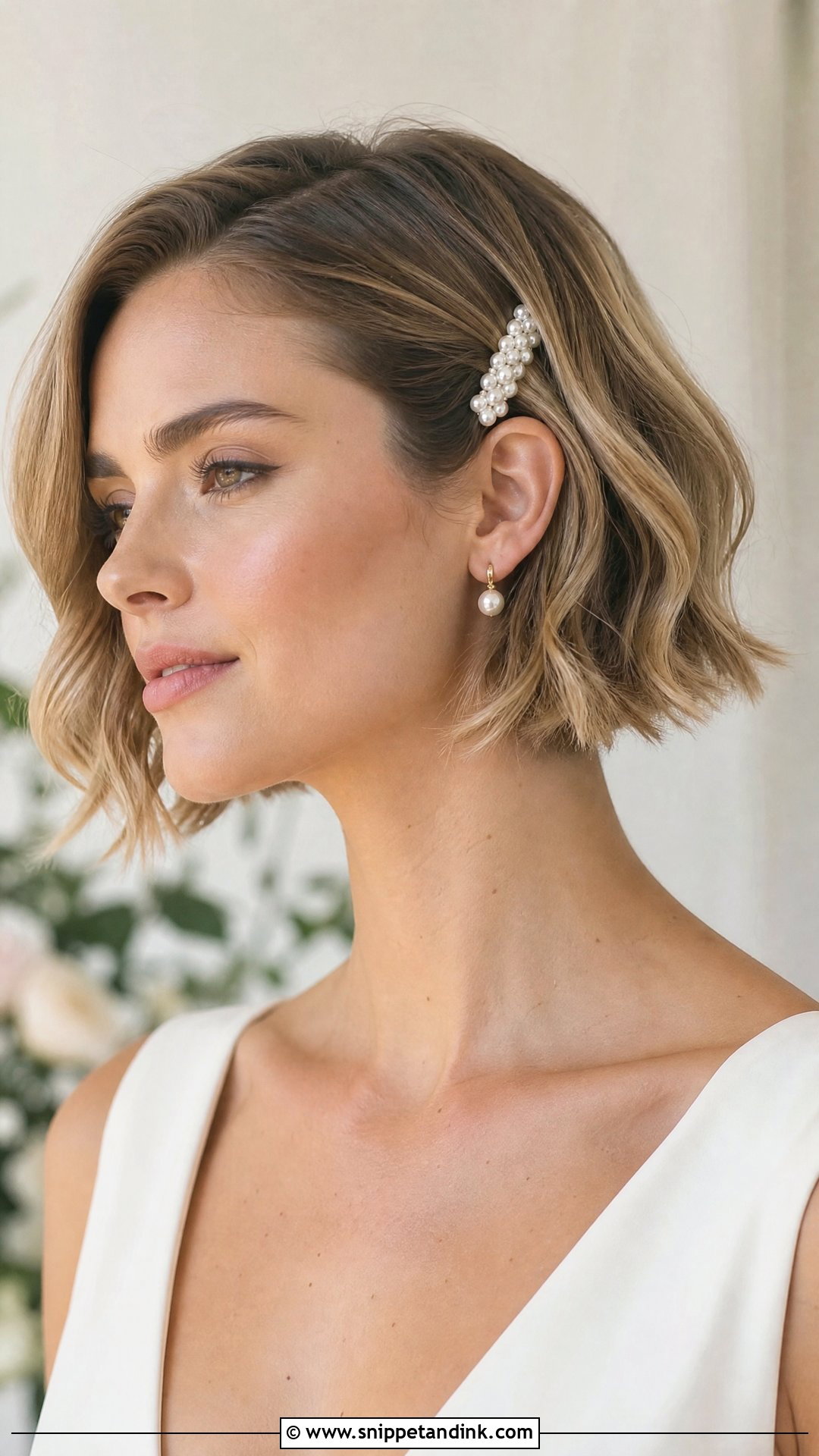
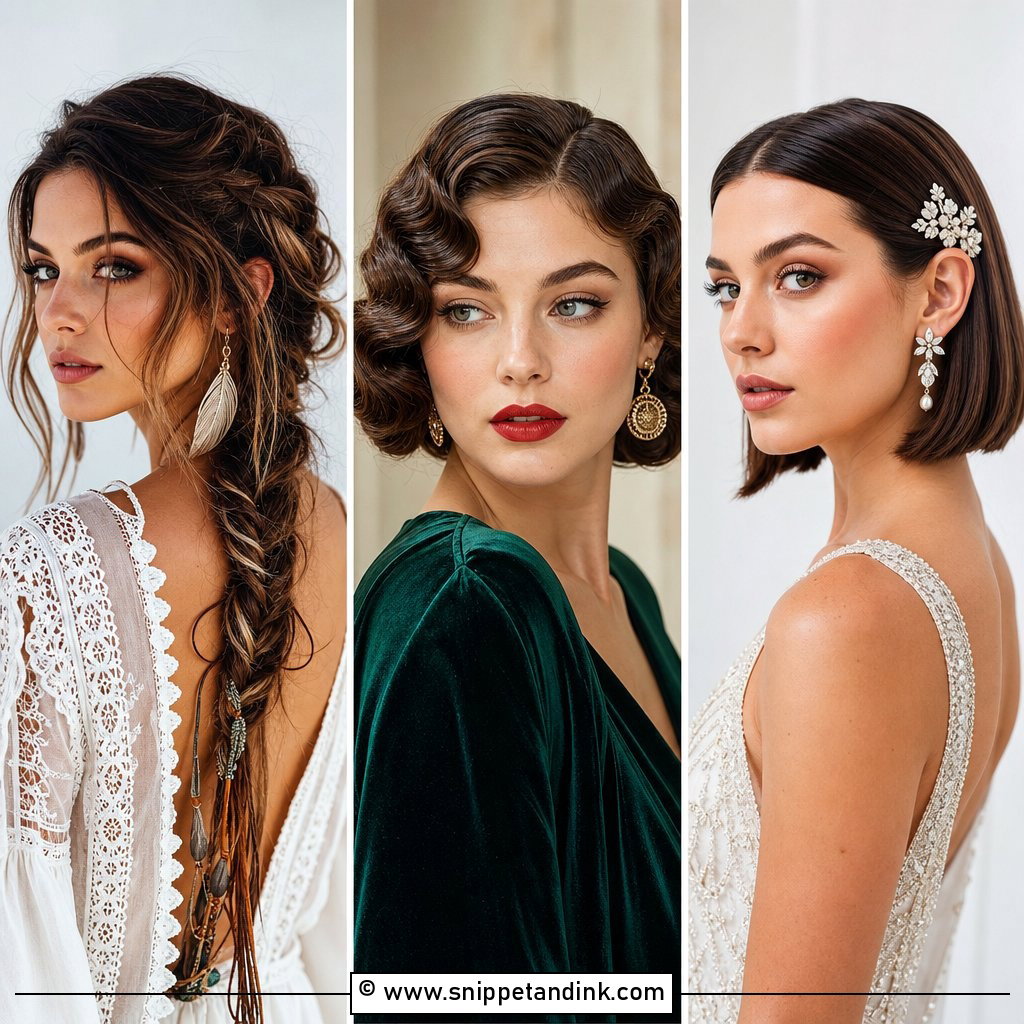
Bobs, lobs and shoulder-length cuts don’t need extensions to look bridal. A shorter haircut just needs the right wave size: on short hair I use a smaller iron than I would on long hair, because the bends relax as they fall and a big barrel leaves the ends looking flat. Soft movement around the jaw flatters the cheekbones, and a side part reads more formal. A pearl clip, a small comb, a headband or a short veil all work. Ask your stylist to curl the ends away from your face so they don’t tangle with earrings.
16. Bridal Bob Hair
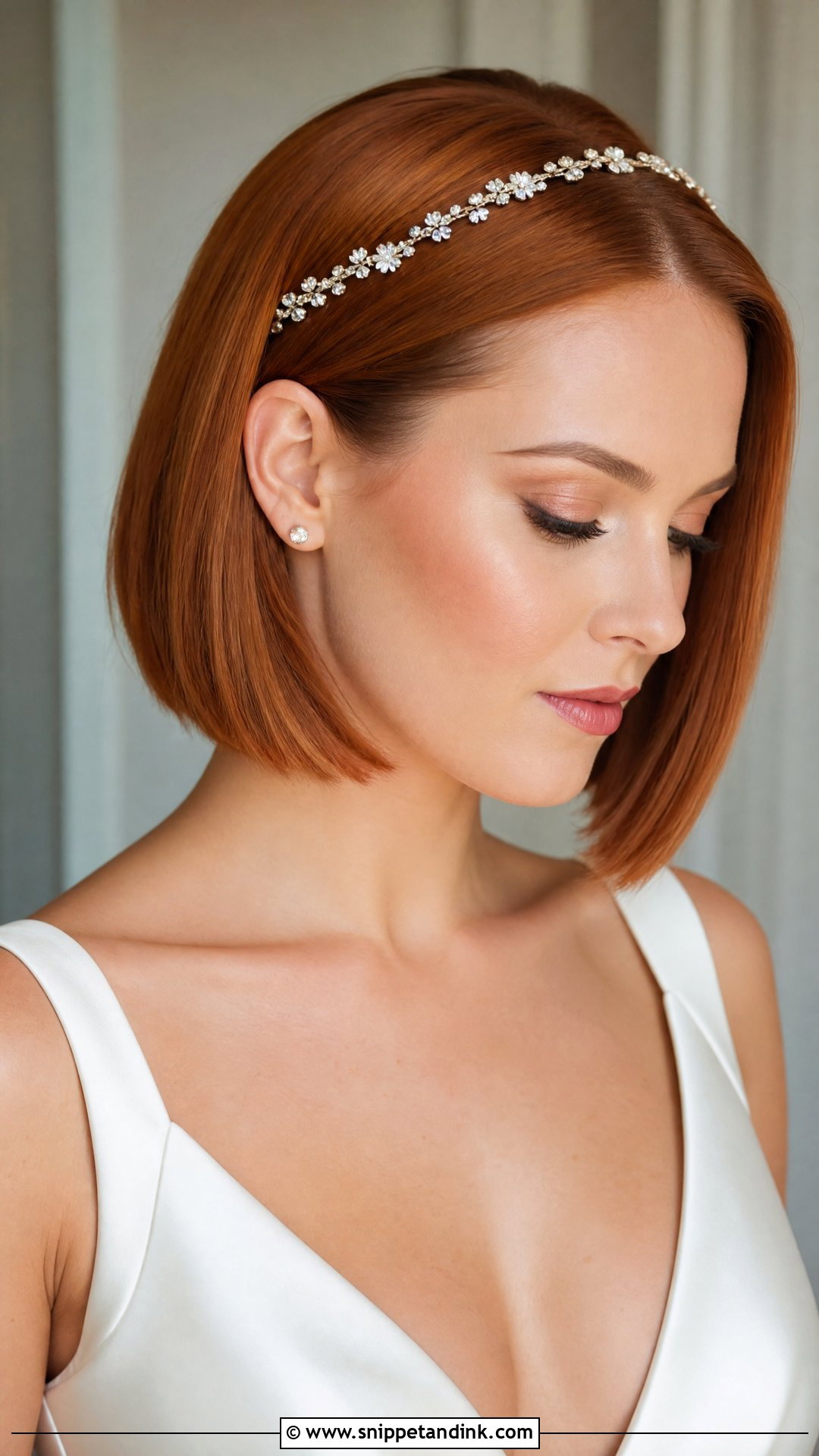
Bridal bob hair lives or dies on the cut and the shine. A blunt bob looks sharp smoothed straight and tucked behind one ear; a waved bob feels lighter and softer. Short hair puts earrings, a bold lip and the neckline front and centre. A veil can attach with a small comb, or swap it for pearl pins or a slim headband. Book the trim about one to two weeks before the wedding. Any later and the line can look too blunt in close-ups; any earlier and the ends start to fray.
17. Bridal Natural Curls
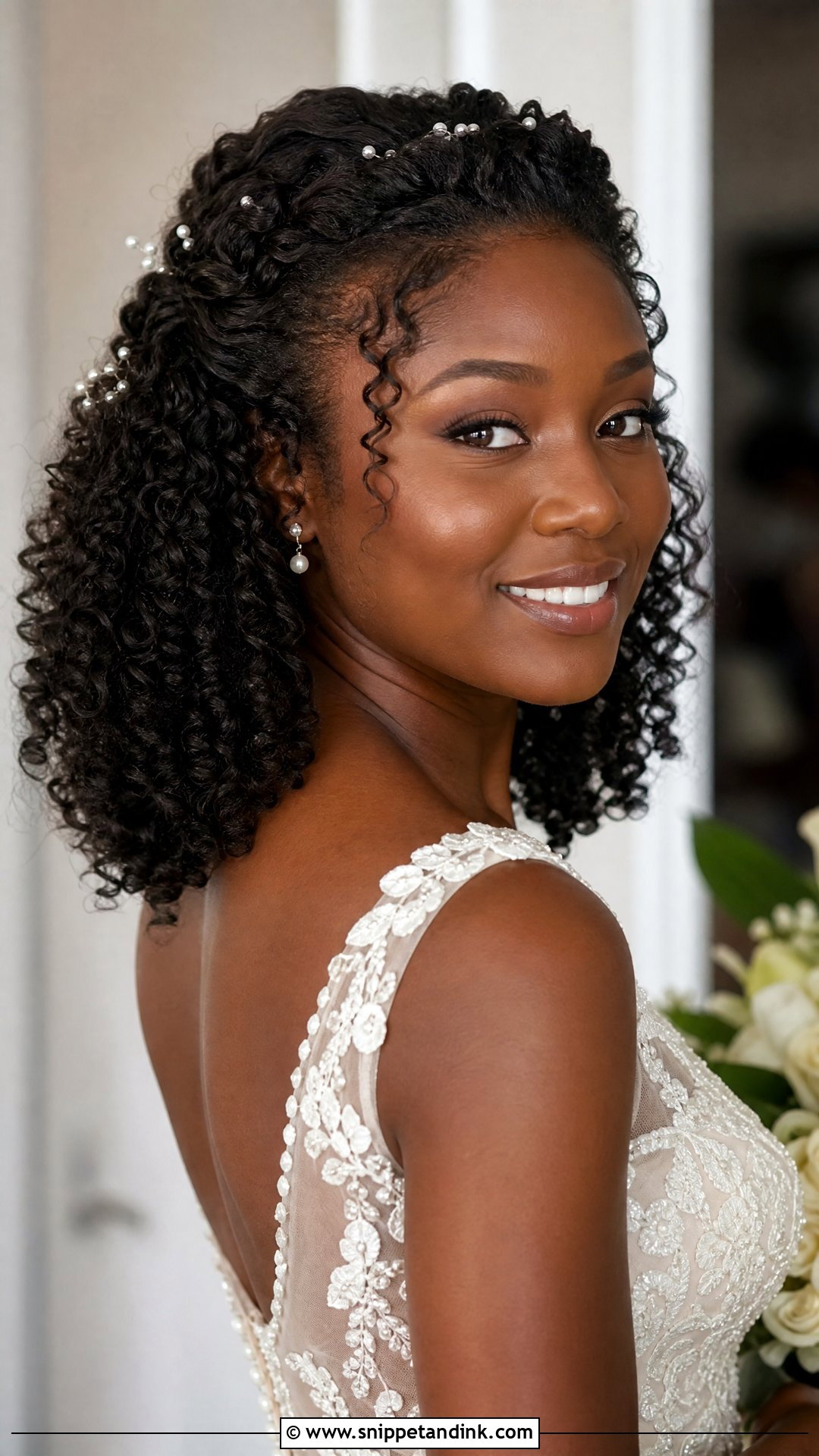
Natural curls need hydration and definition more than they need styling. I want curls washed, conditioned and defined with your usual products before the morning, because a curl pattern that’s been disturbed can’t be fixed in an hour. From there you can wear them down, pinned to one side, half up or gathered into a soft updo. If you have a curl specialist you trust, ask her which products she’d use for hold without weight, and use the same ones at your trial. Pearls or small floral pins can sit in the curls, but the pattern itself should stay the main feature.
18. Bridal Twisted Updo
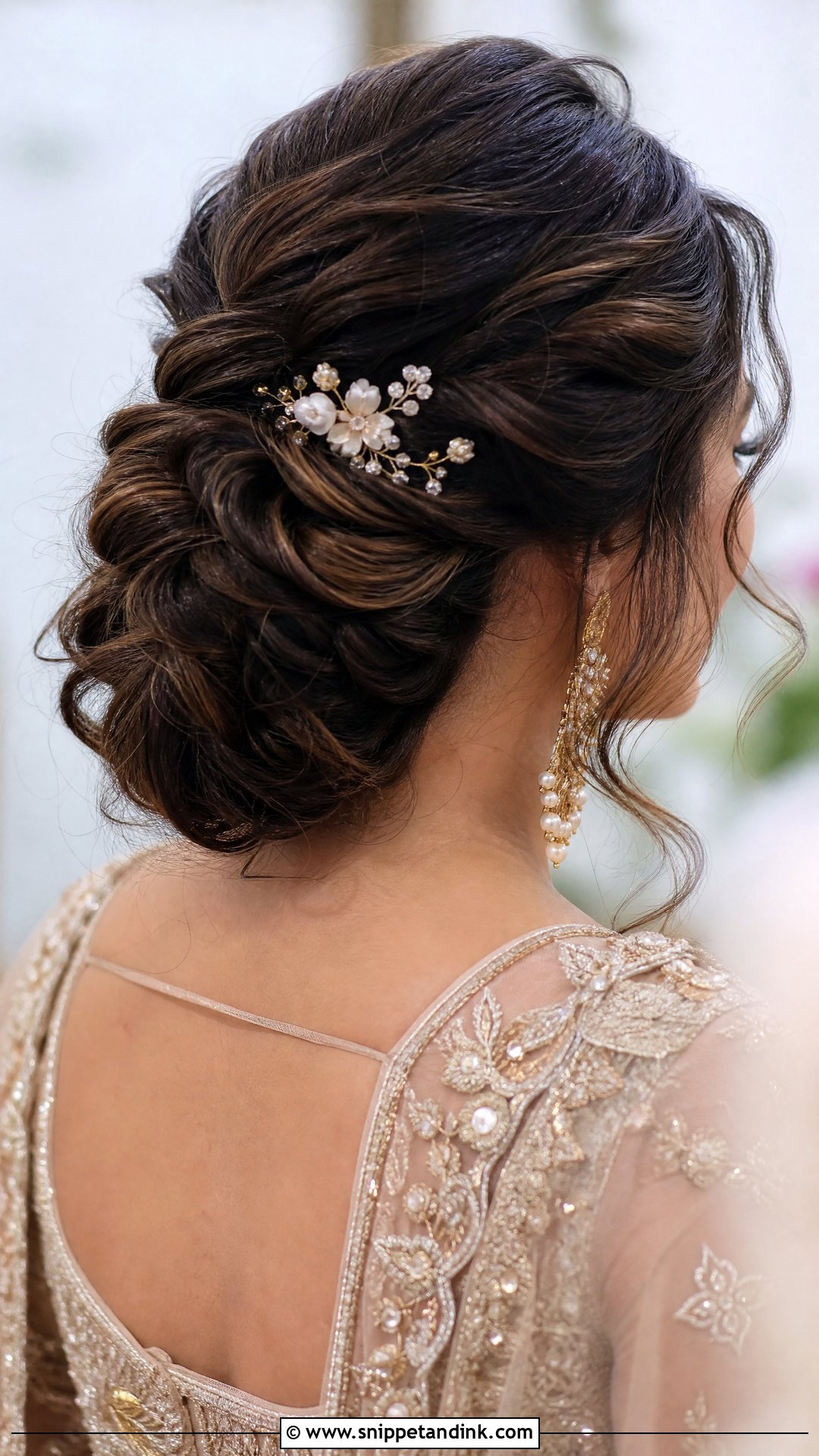
A twisted updo is softer and quicker than a braided one. Rather than weaving three strands, I twist individual sections and pin them into a low or mid-height shape, which builds dimension without much fussy detail. It shows off balayage or highlighted pieces well, because each twist catches the colour change. It needs medium or long hair; anything shorter than the shoulders pops out of the twists. The pinned sections lock into each other underneath, so it holds better than it looks. Lace gowns, cap sleeves and floral accessories sit well with it.
19. Bridal High Bun
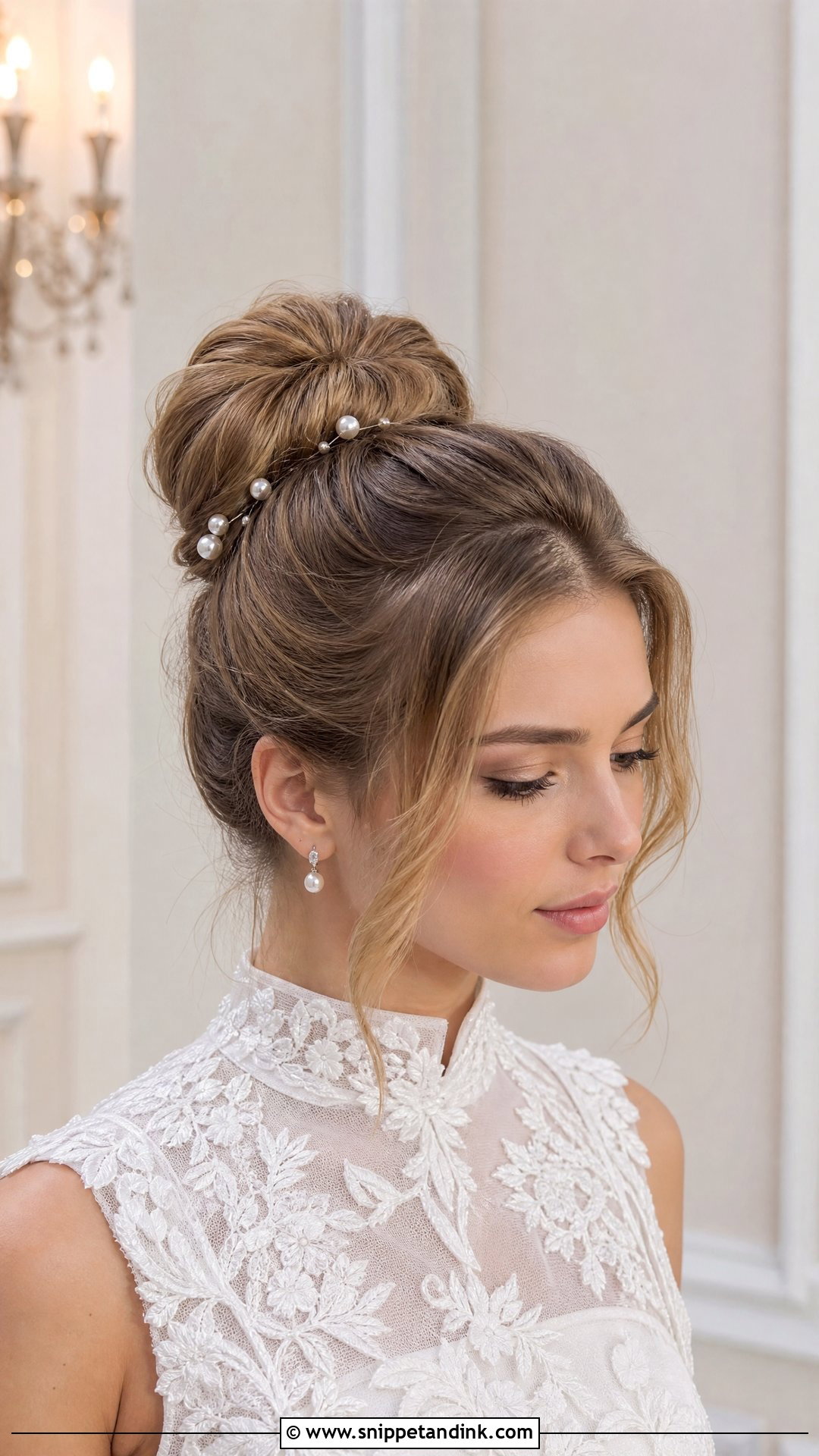
A high bun lifts everything off the neck, which is why I suggest it for high collars, detailed bodices and open backs. Sleek gives a ballet feel; textured is gentler. It pairs with statement earrings and long veils, but test the veil placement properly: a comb pushed into the base of a high bun can tip the whole shape forward. It lengthens the face and neck in photos. If you’re worried it looks severe, leave the front softly waved or pull out two thin strands at the temples.
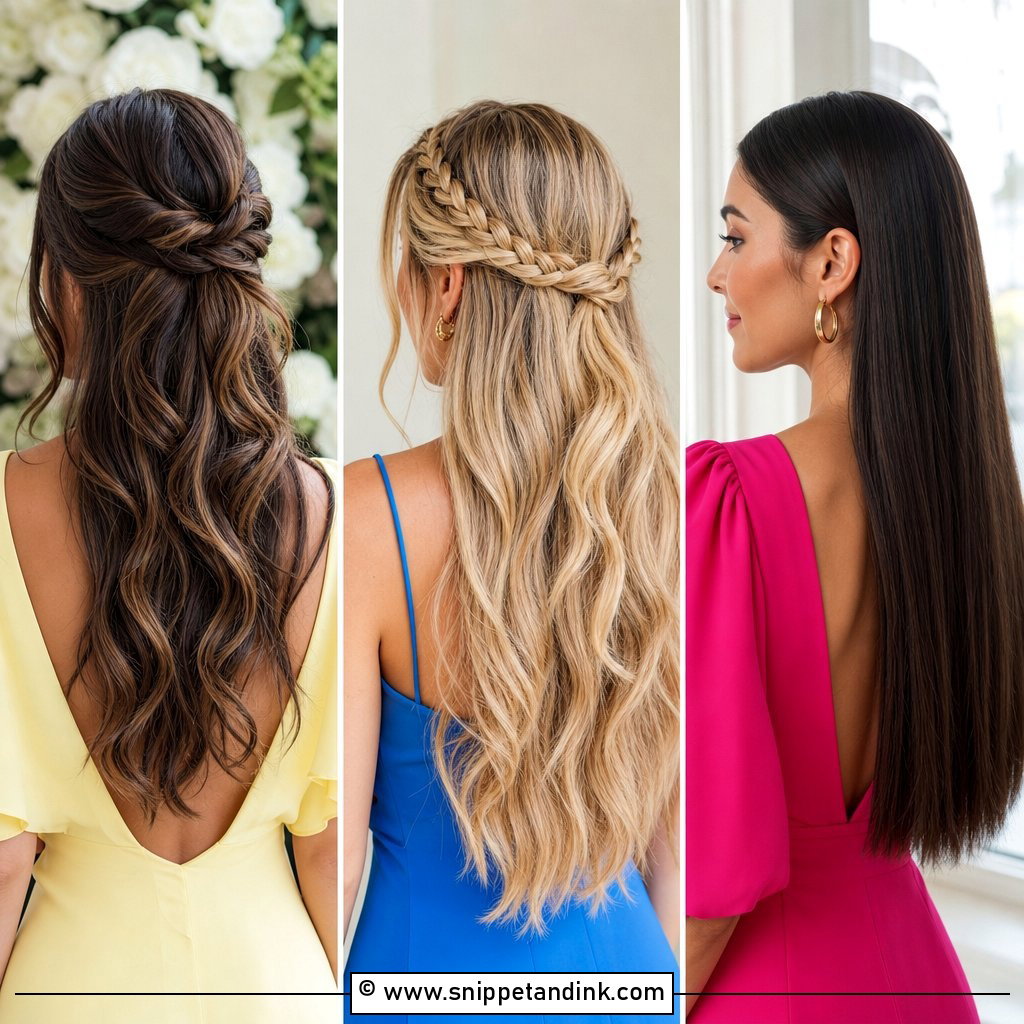
20. Bridal Pearl Hair
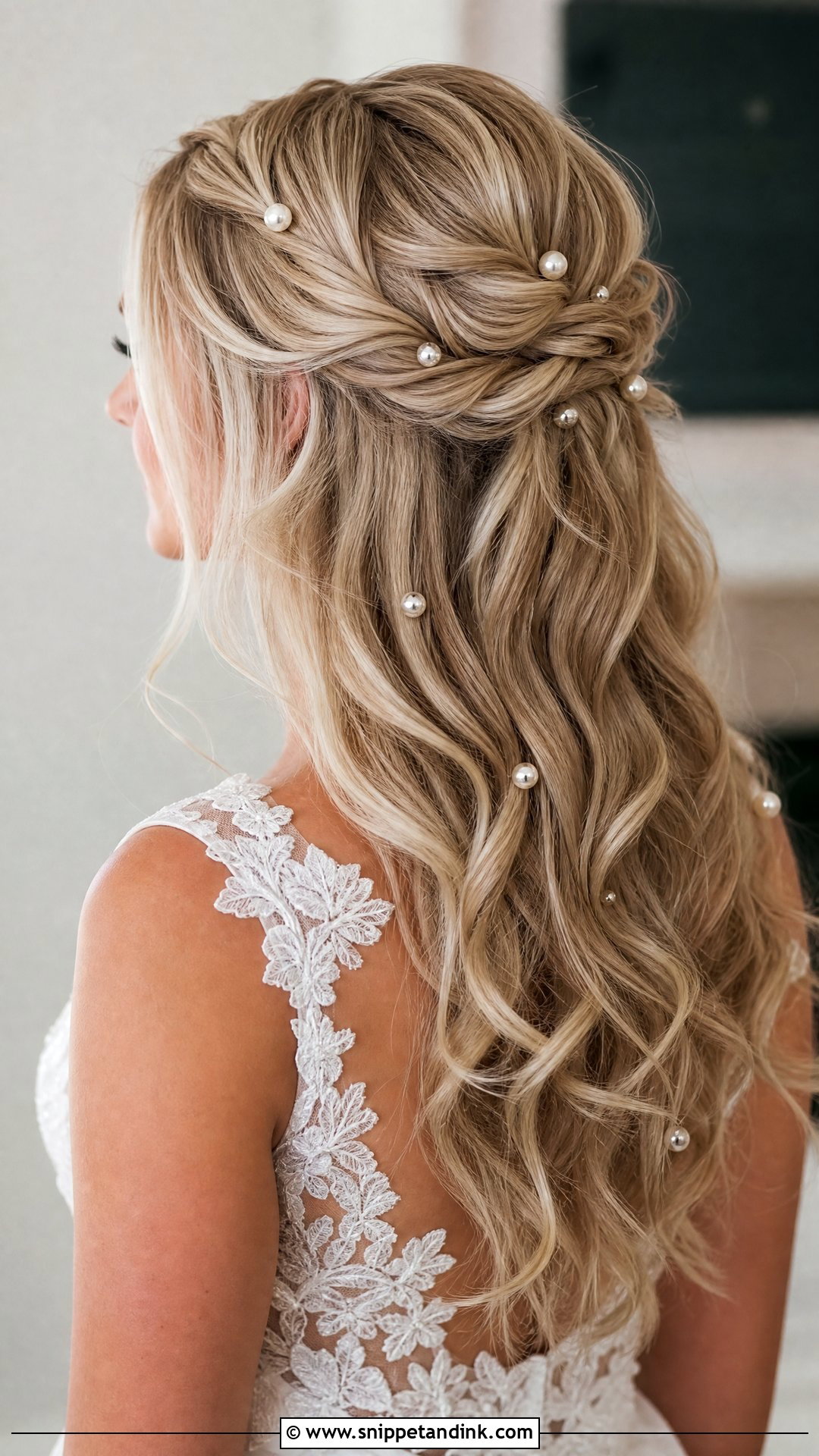
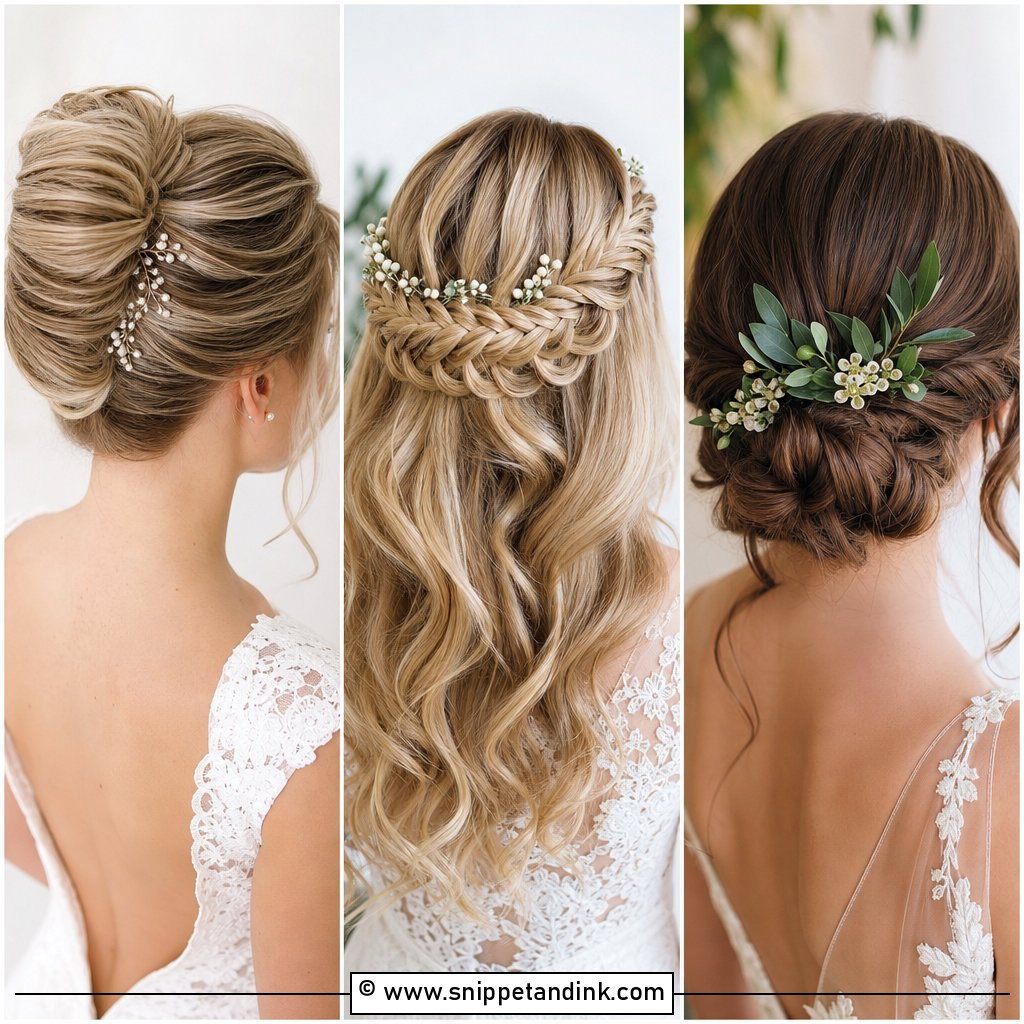
Pearls are the simplest way to make an everyday style read as bridal. They can be scattered through waves, tucked into a low bun, set along a braid or placed around a half-up section. My rule is one clear placement, because pearls scattered everywhere look busy from a distance. They suit lace, satin, a plain veil and soft makeup, and they’re a good choice if flowers would wilt in the heat. Pearl pins with a small grip slide out of very silky hair, so on freshly washed hair I add a mini bobby pin behind each one.
Colour Two Weeks Out, Washing the Night Before
Hair behaves best on the day when nothing new has happened to it recently. Colour should be done about two weeks out, so the tone settles and the scalp isn’t sensitive when I pin. A gloss or toner can go on a few days before if you want extra shine. Any big cut belongs at the trial stage, not the week before, because a fresh cut often has short pieces that won’t reach the bun.
Washing is where most brides go wrong. Squeaky clean hair from that morning is too slippery to hold curls or pins. I’d rather you wash the evening before, dry it fully and leave out heavy conditioner and oils, unless your hair is curly, in which case follow your normal wash day so the pattern is set. Skip new masks or treatments in the final week. You don’t want to discover a reaction three days out.
What Holds Until the Last Dance, and What Needs a Touch-Up
After a long day, pinned styles nearly always outlast down styles. Buns, braids and twisted updos lock their weight in with pins, so they look much the same at midnight as at noon. Loose waves and Hollywood waves lose their shape gradually, and faster in humidity or if you keep pushing them behind your ears. Half-up styles sit in the middle: the top stays put while the lengths relax.
If you choose a down style, ask a bridesmaid to carry a small kit:
- Six or eight bobby pins in your hair colour.
- A travel hairspray with flexible hold.
- A small brush or wide comb for waves, never a fine-toothed comb.
- A clear elastic, so a collapsing down style can become a low ponytail in two minutes.
That last item has saved more evenings than any spray. A loose low ponytail with the old waves running through it looks deliberate, and nobody at the reception will know it was a rescue.
Bring Two Photos and One Honest Sentence to the Trial
The easiest decision comes from looking at your whole outfit, not one inspiration photo. Think about your neckline, your length and natural texture, the forecast, where the veil sits and how you usually wear your hair. A secure bun suits a hot summer ceremony; waves suit a bride who rarely wears her hair up. Half-up sits in between. Narrow it to two options, bring them both to the trial, and wear the winner for a few hours afterwards before you commit.
You'll Like These Ideas:


Leave a Reply