
A Punjabi bride’s hair has a harder job than most. It has to hold a heavy dupatta in place through the Anand Karaj, give the maang tikka a firm parting to sit on, stay clear of jhumkas, and then often be restyled for a reception a few hours later. When I plan Punjabi bridal hair, I start with the dupatta’s weight and the day’s schedule, and only then think about the look. The fifteen styles below run from ceremony buns to paranda braids and sangeet ponytails, with notes on where each one actually holds up.
Four Laavan, a Heavy Dupatta and a Bun That Stays Put
At the Anand Karaj, your head stays covered, you sit on the floor in front of the Guru Granth Sahib, and you stand and walk four laavan with your partner. That rhythm of sitting, rising and walking is what tests ceremony hair. I plan for it in three ways.
- The bun sits low enough that you can bow your head comfortably without the dupatta tipping forward.
- I pin the dupatta at four points: two at the crown, one each side above the ears. Pins go into the bun’s core and the backcombed base, never just through loose surface hair.
- The maang tikka goes on before the dupatta, with its hook pinned under the parting so the fabric can’t pull it sideways.
Ask someone to tug the dupatta gently from behind at your trial. If the bun shifts, it needs a stronger base. If the dupatta slips but the bun holds, the pins are placed too shallow.
1. Punjabi Bridal Bun With Dupatta
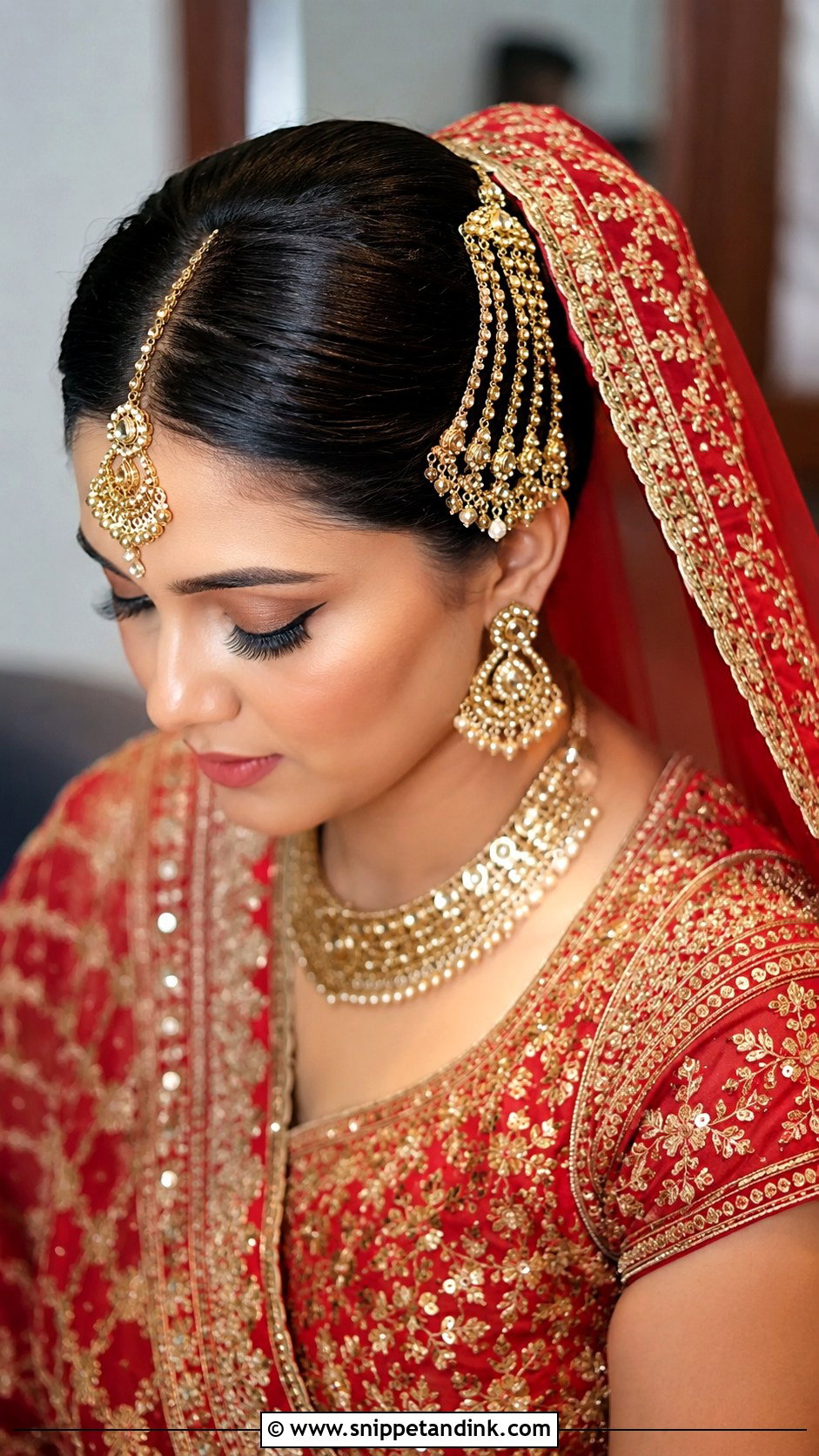
For the ceremony itself, a Punjabi bridal bun under the dupatta is still the style I trust most. I part it in the centre, smooth it flat, and set the bun low to mid-height so the dupatta falls over it and drapes down the back rather than tenting upward. The bun needs a firm core, because every dupatta pin goes into it. Too much height and the dupatta slides off the slope; too little structure and the pins pull at the scalp within an hour.
2. Punjabi Bridal Paranda Braid
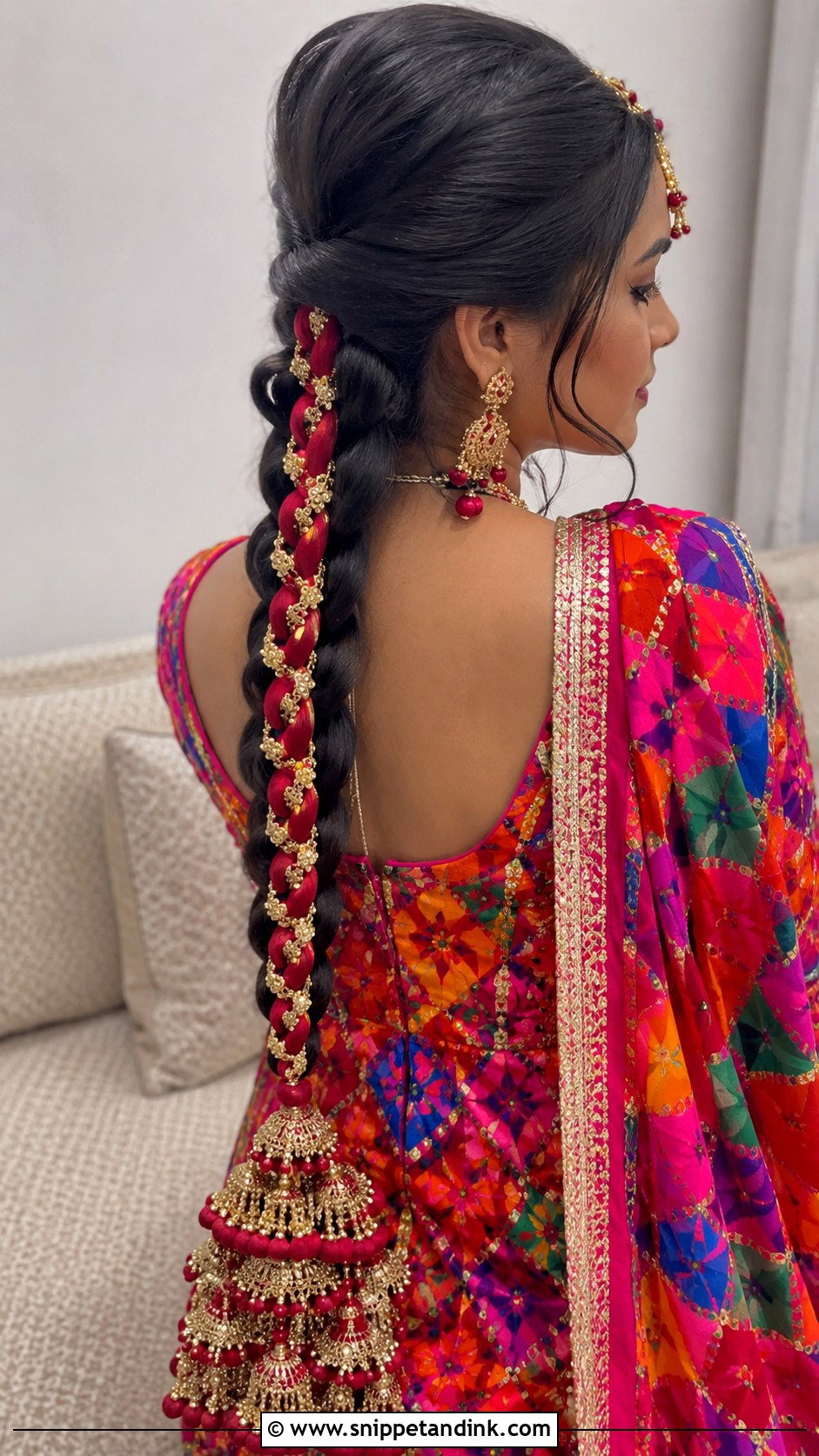
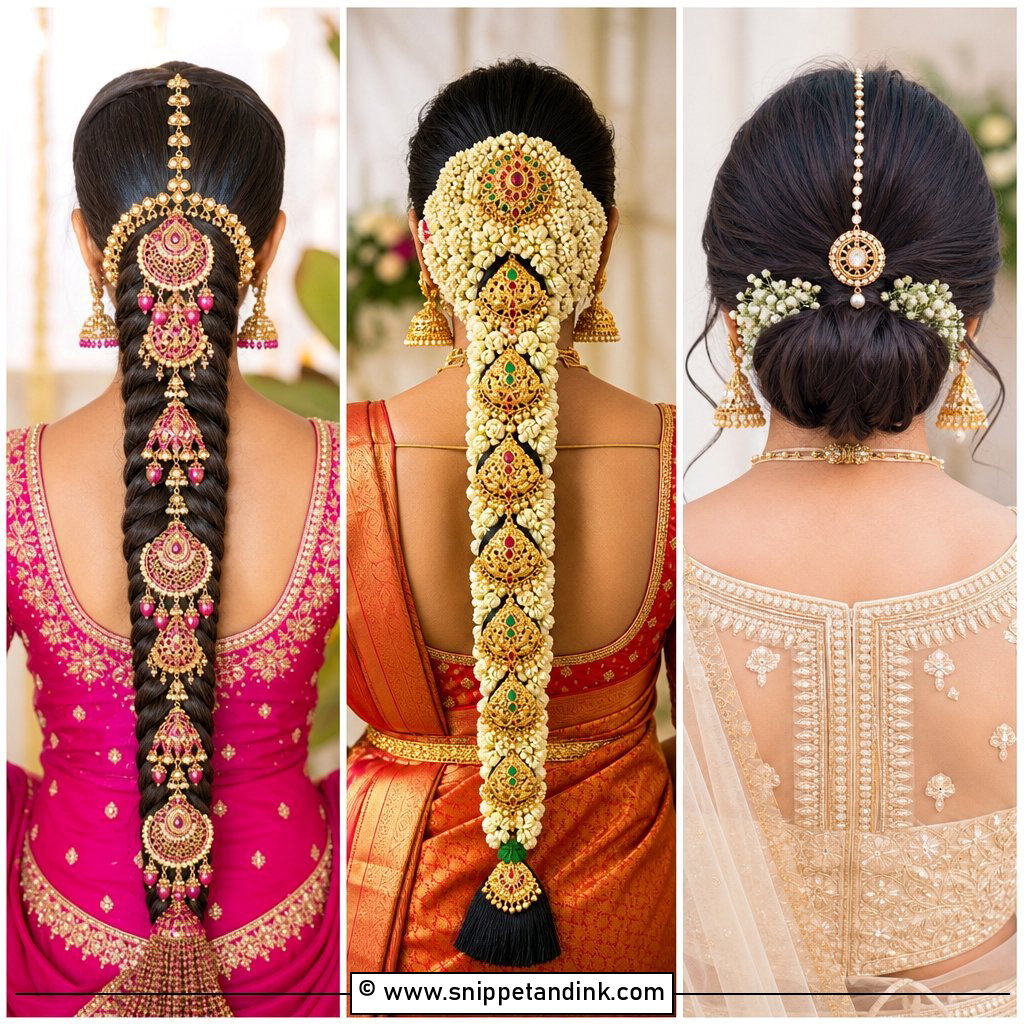
Nothing says Punjabi bride quite like a Punjabi bridal paranda braid. I weave the paranda in from about halfway down, so its cords carry the braid’s length and its tassels swing at the end. Heavy gota or bead parandas can weigh a surprising amount, and on fine hair that weight pulls the braid thin; clip-in extensions underneath give it body. Match the paranda to the outfit’s embroidery thread rather than the base fabric, and it looks deliberate. It’s my favourite for the mehndi and jaggo.
3. Punjabi Bridal Low Bun With Gajra
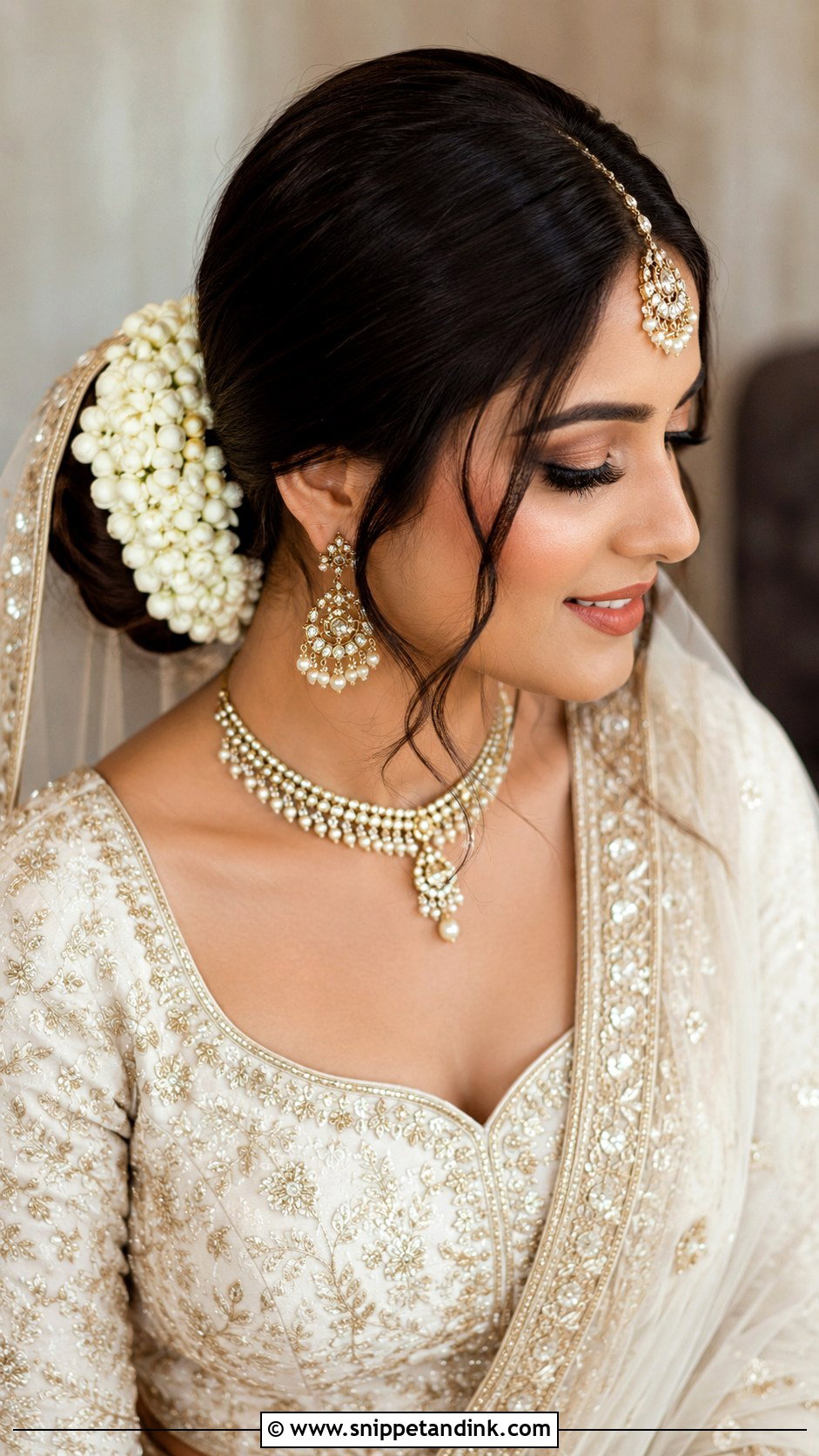
Fresh jasmine wrapped around a low bun brings a scent that guests remember. I keep the crown smooth, gather the hair at the nape, and pin the gajra on in two or three loops with U-pins through the string. Jasmine browns at the edges in heat, so I ask brides to keep the gajra wrapped in a damp cloth in the fridge until it goes on, and to put it on last. It sits well with gold or pearl jewellery and a red or ivory dupatta, and a couple of fine pieces at the temples keep it gentle.
4. Punjabi Bridal Fishtail Braid
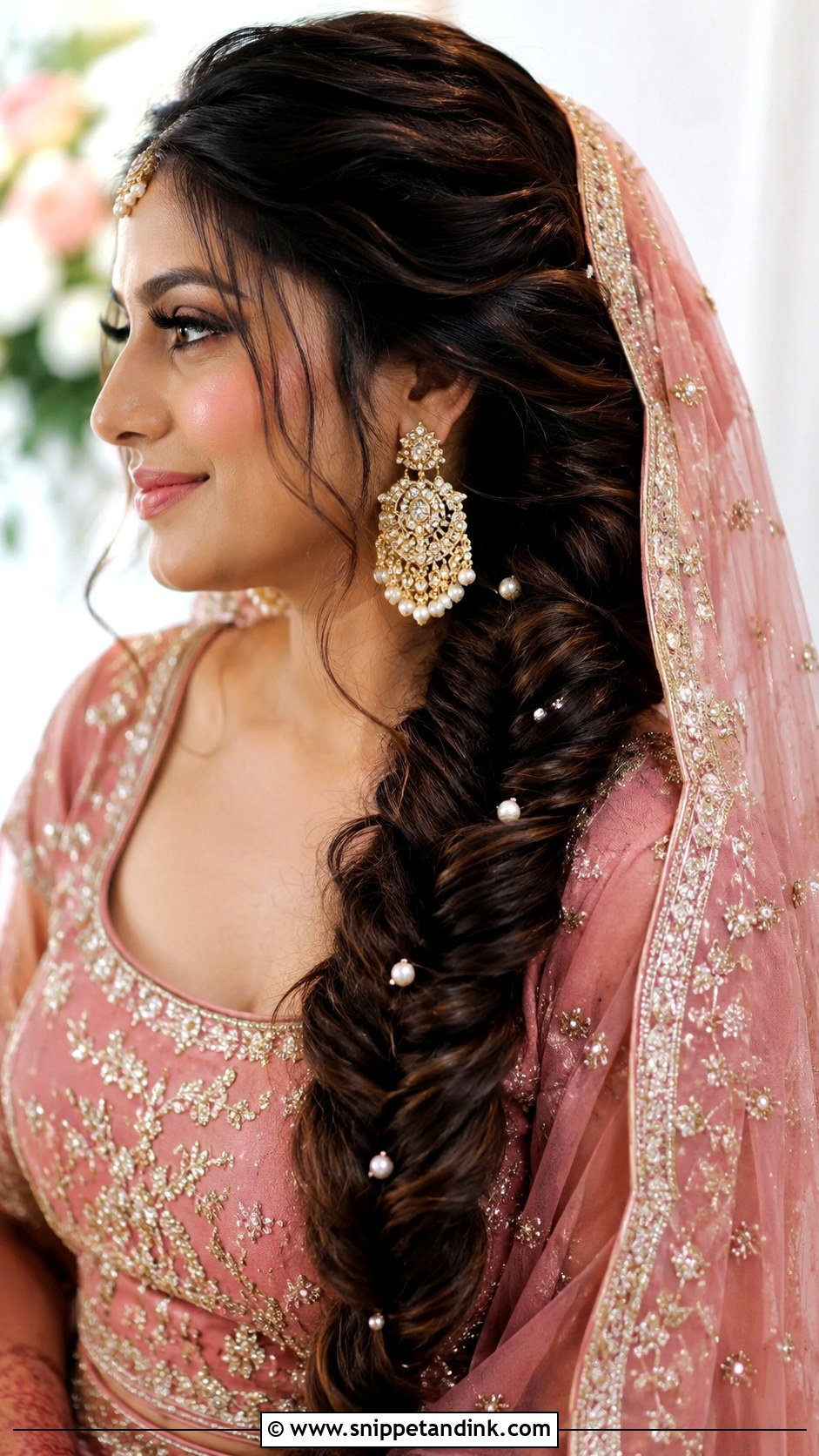
A fishtail braid gives you detail without committing to a bun, and it carries a lot more texture than a three-strand. I braid it slightly loose and pancake the edges once it’s tied, which makes it look nearly twice as thick. It falls down the back or over one shoulder depending on where your jewellery sits. A slim paranda or a few gold pins finish it. I’d keep it for the mehndi, jaggo or reception, when the dupatta is lighter, because a ceremony dupatta has nowhere to pin.
5. Punjabi Bridal Sleek Center Part Bun
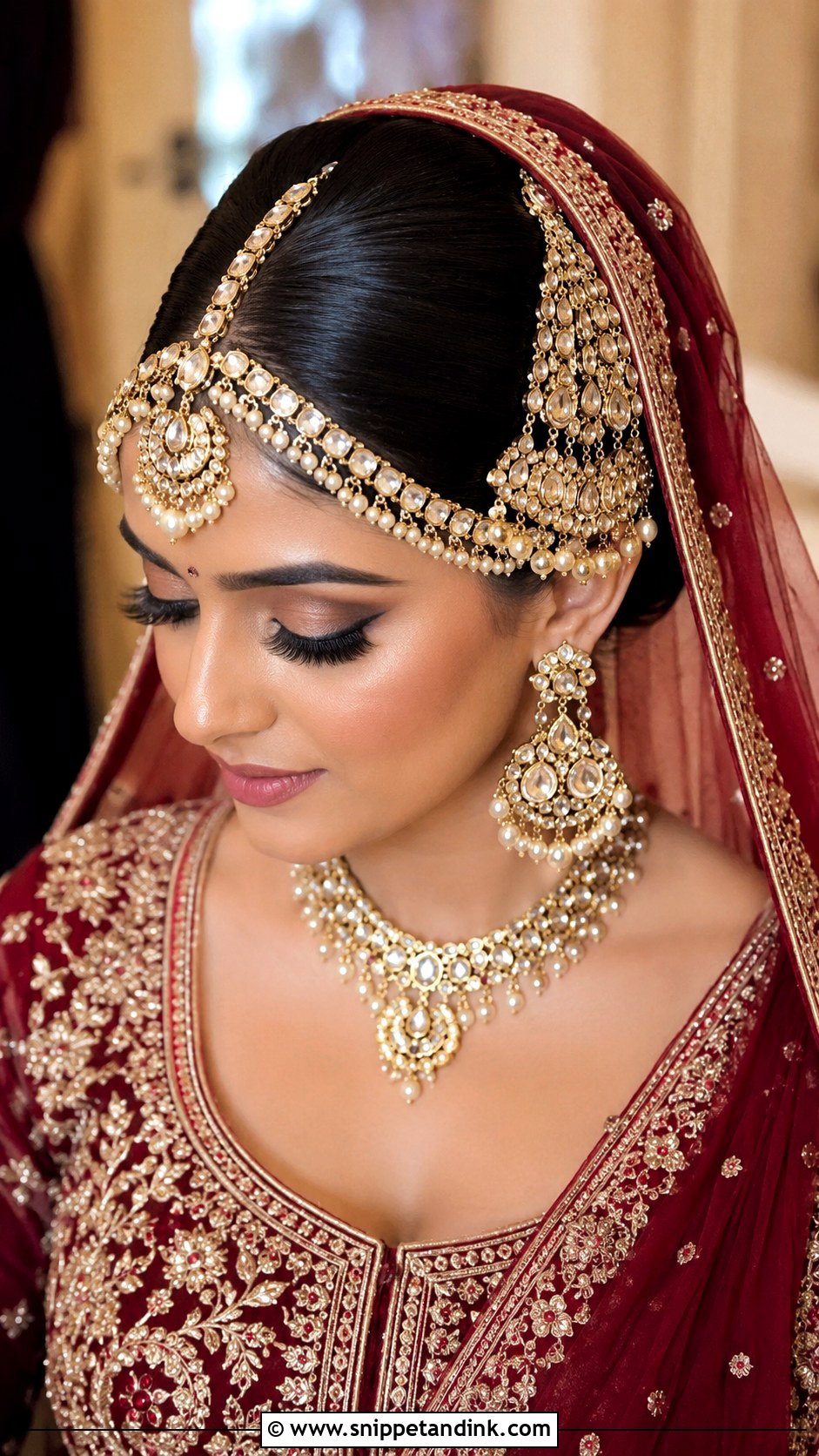
A glossy centre-part bun is the most regal look in the list, and it’s built for heavy jewellery. The straight parting gives the maang tikka a precise line to sit on, and with a matha patti it frames the forehead evenly. I smooth the hair with a firm gel or wax stick rather than spray alone, because the dupatta rubs the top all day and spray-only finishes frizz by the doli. It suits bold makeup and deep lips, and it’s the style I’d choose for formal portraits after the laavan.
6. Punjabi Bridal Braided Bun
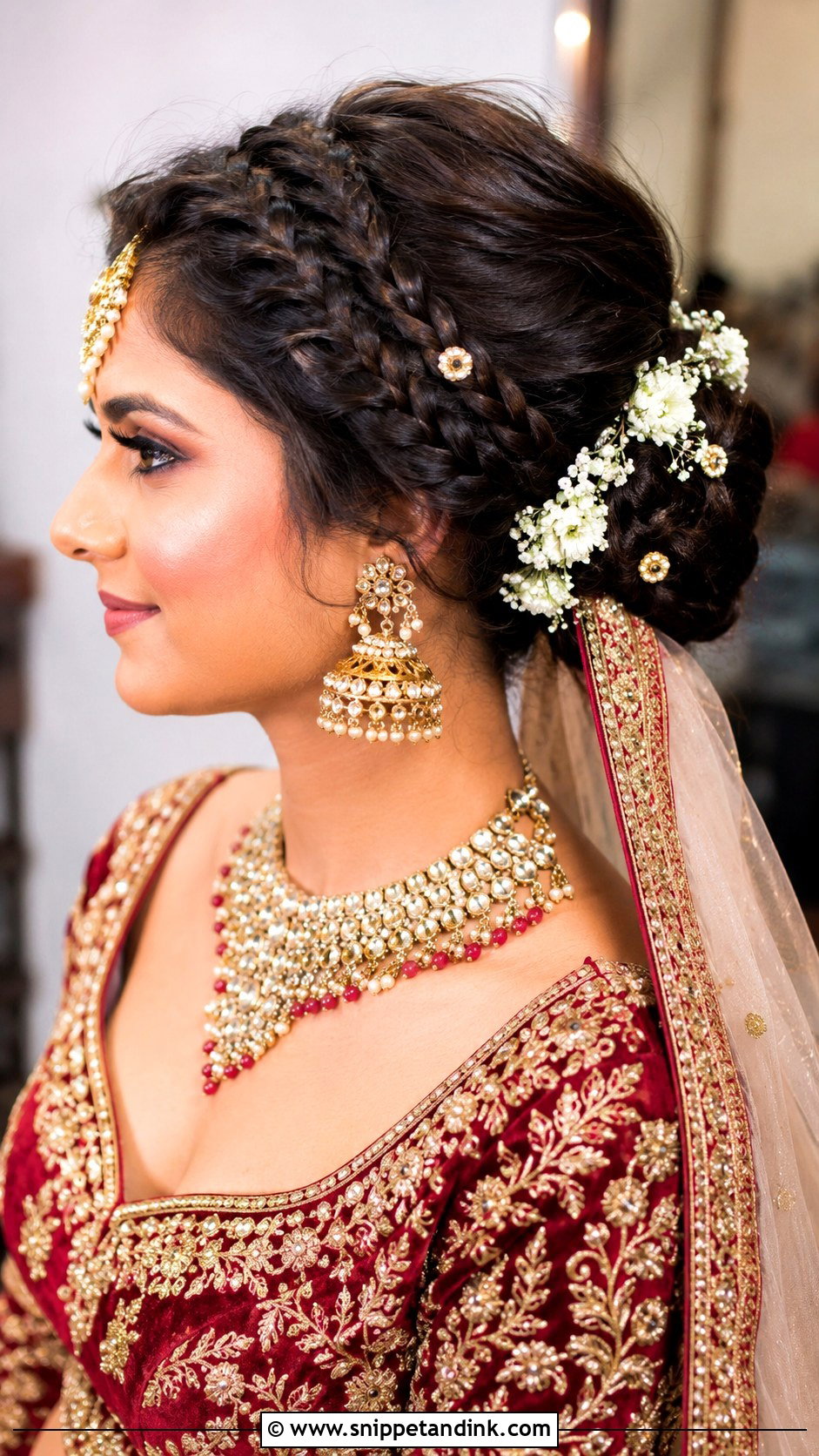
Braiding sections into the bun gives the classic shape more detail, especially in the parts guests see around the dupatta edges. I take one or two braids from the sides and wrap them round the base, which also adds bulk on medium hair. Pearls, gold pins or tiny kundan pieces slot neatly into the braid gaps. This one works for thick hair, medium hair and extension-supported hair. It holds very securely, so I recommend it to brides with a long day ahead.
7. Punjabi Bridal Side Braid
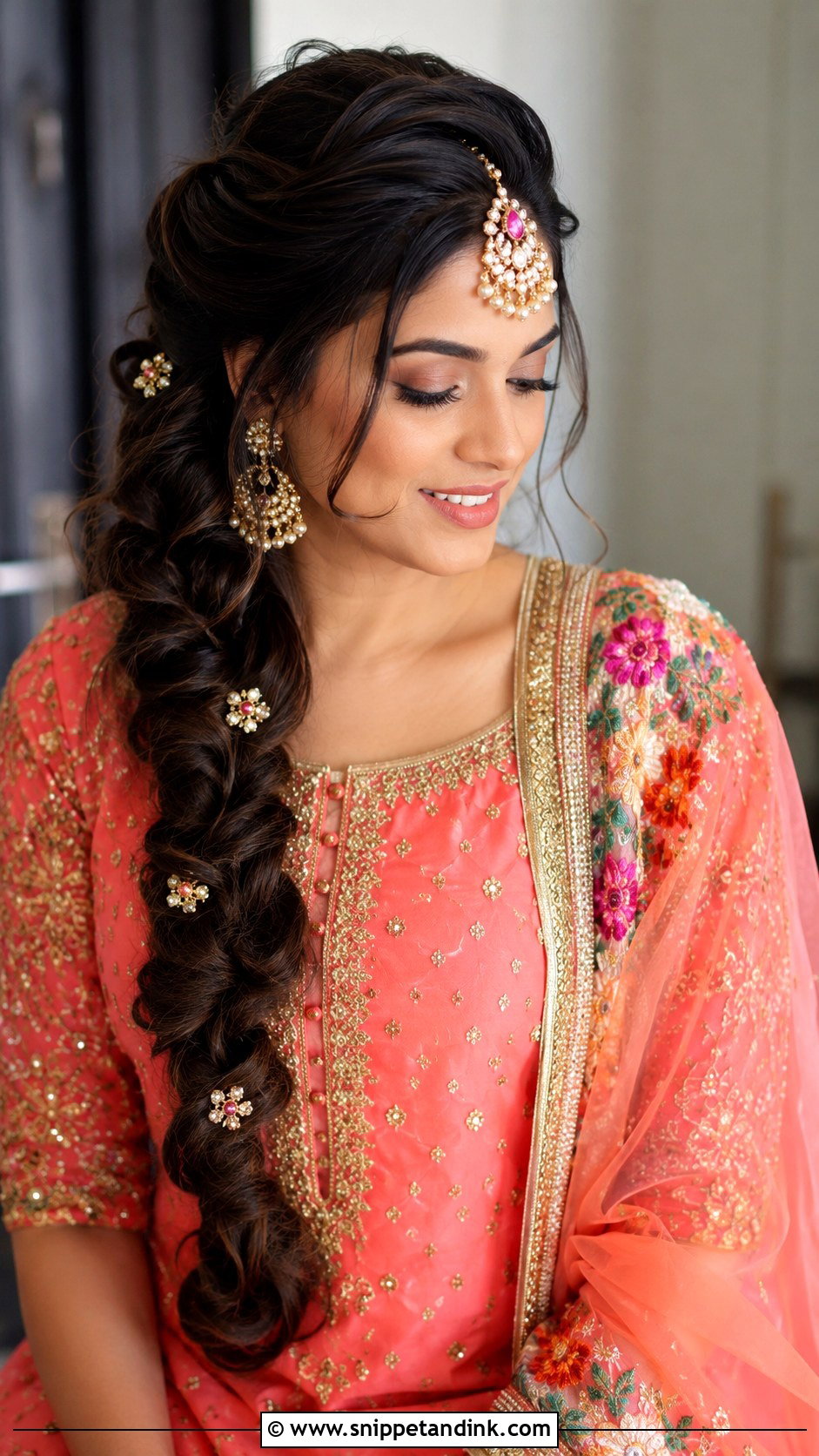
A side braid falls into the front of every photo, so it shows the blouse neckline and the dupatta border together. Choose the side carefully: whichever shoulder faces the camera during the main moments should carry it. I’d go loose and textured, with a few flowers or hair jewels pushed into the plaits. It suits a mehndi, sangeet or daytime function, and it’s comfortable to sit in. Add a touch of lift at the crown so the head doesn’t look flat above it.
8. Punjabi Bridal High Bun
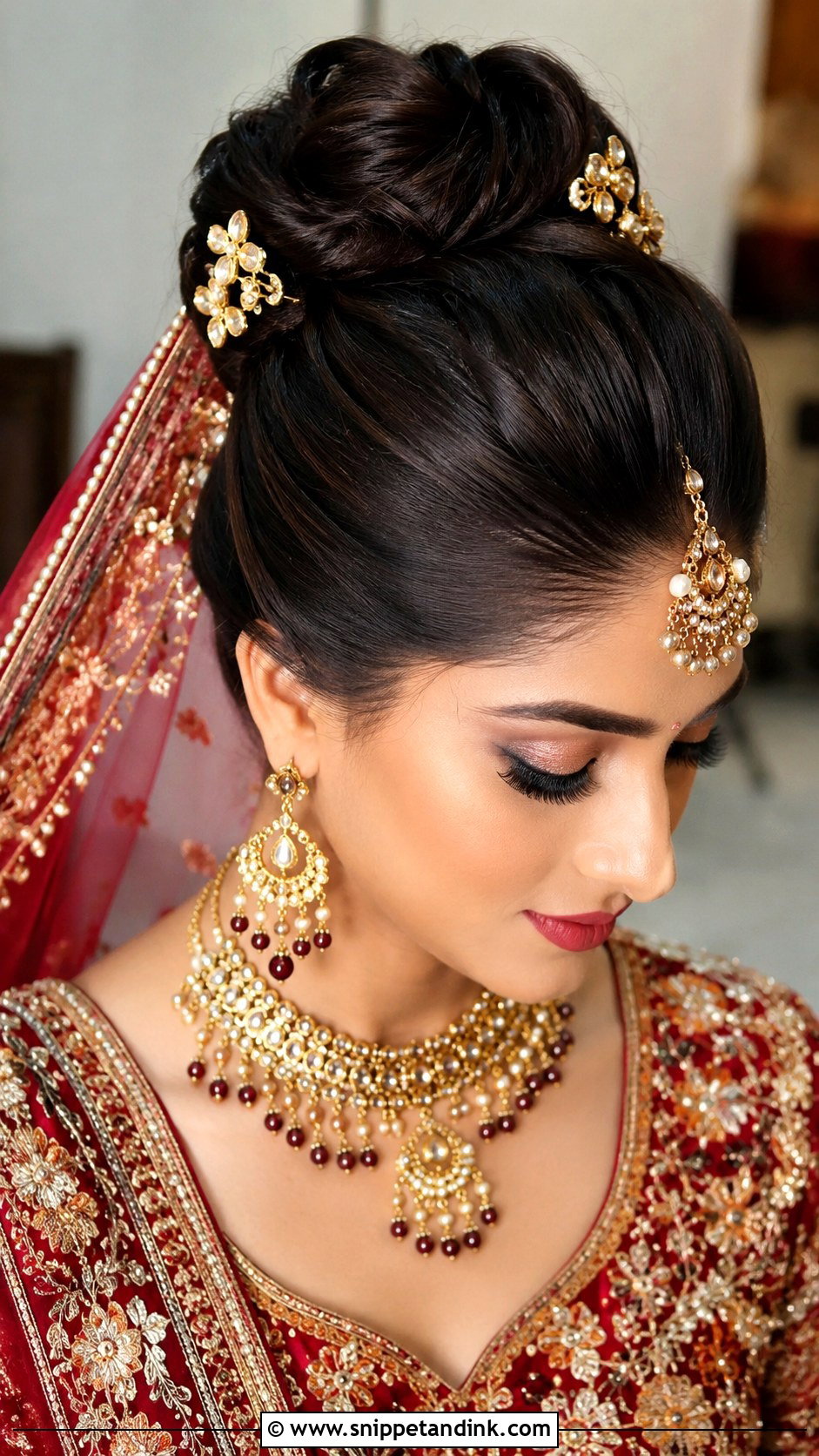
When the dupatta is very heavy, I sometimes move the bun higher, because it gives me a solid ledge to pin to. The lifted shape suits a full matha patti, layered necklaces and heavily embroidered lehengas. The trade-off is that a high bun lifts the dupatta off the back of the head, so the drape changes; try it at your trial with the real dupatta. On a round face I keep height at the crown modest and leave soft pieces near the ears.
9. Punjabi Bridal Open Curls
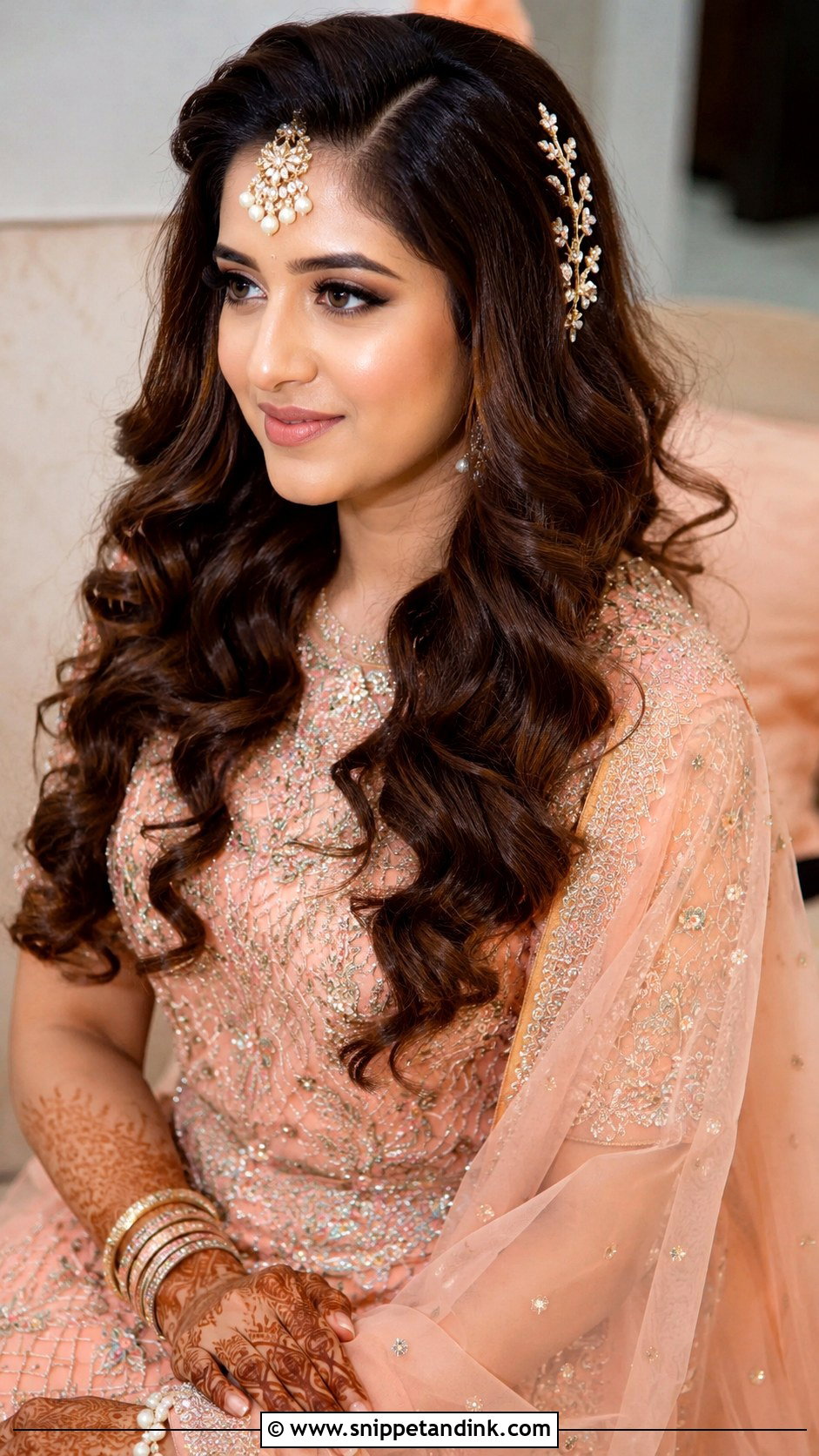
Open curls belong to the reception or engagement, when the dupatta is light, draped on one shoulder or gone. A side or centre part both work; a centre part lines up better with a maang tikka. Punjabi hair is often thick and heavy, and heavy hair drops curls faster than you’d expect, so I set each curl pinned in a loop until it cools and use a strong setting spray. Expect looser curls by the last dance either way. A passa or jewelled pins keep the look bridal.
10. Punjabi Bridal Half Up Hairstyle
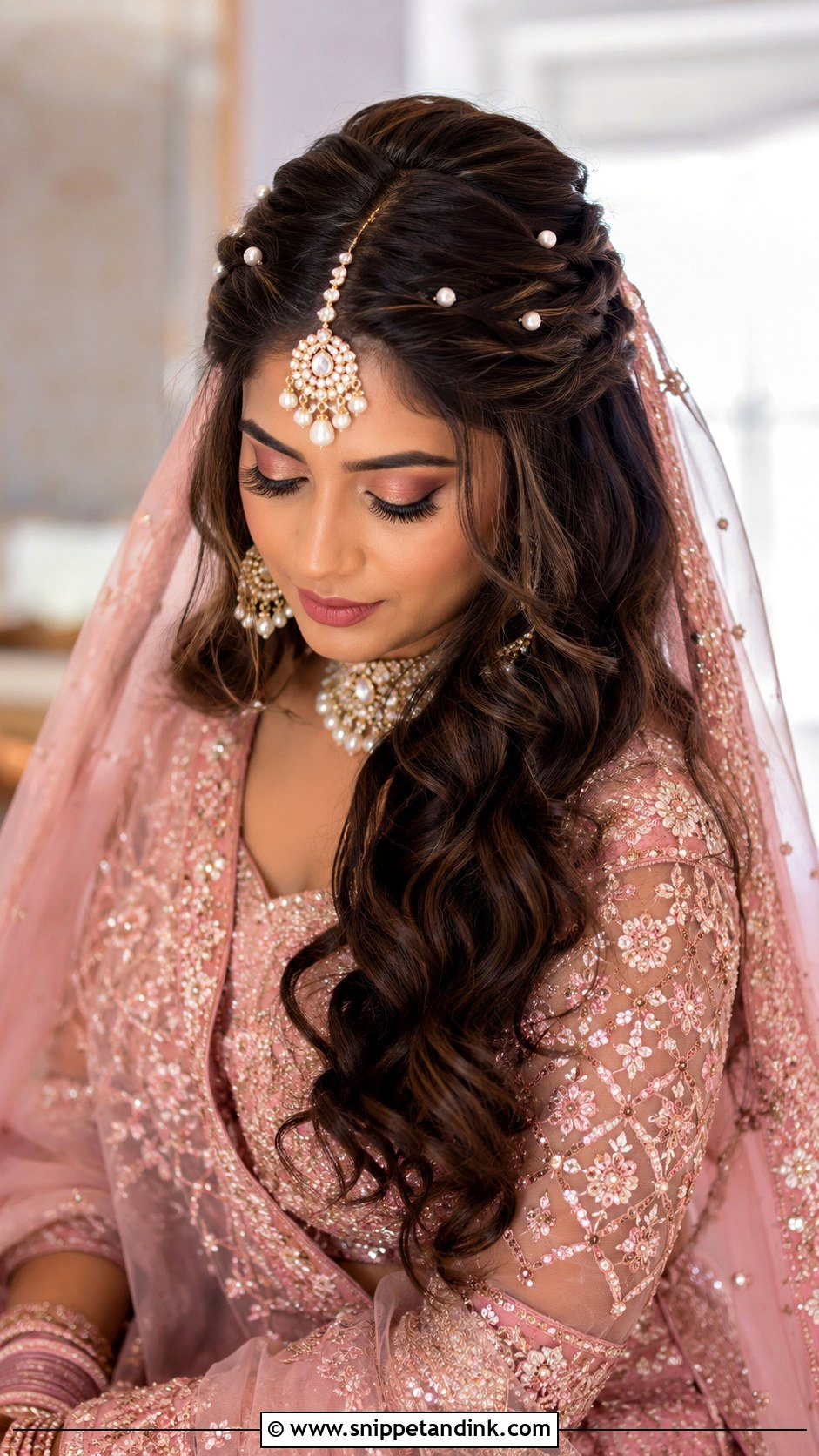
Half up sits between a bun and open hair. I pin the top section back firmly, with a small backcombed base, so a tikka and even a light dupatta have something to grip, while the length falls in curls. Twists, small braids or pearls in the pinned section add detail. It’s good for a reception, ring ceremony or sangeet. On medium-length hair it gives shape without asking a short length to form a big bun.
11. Punjabi Bridal Bubble Braid
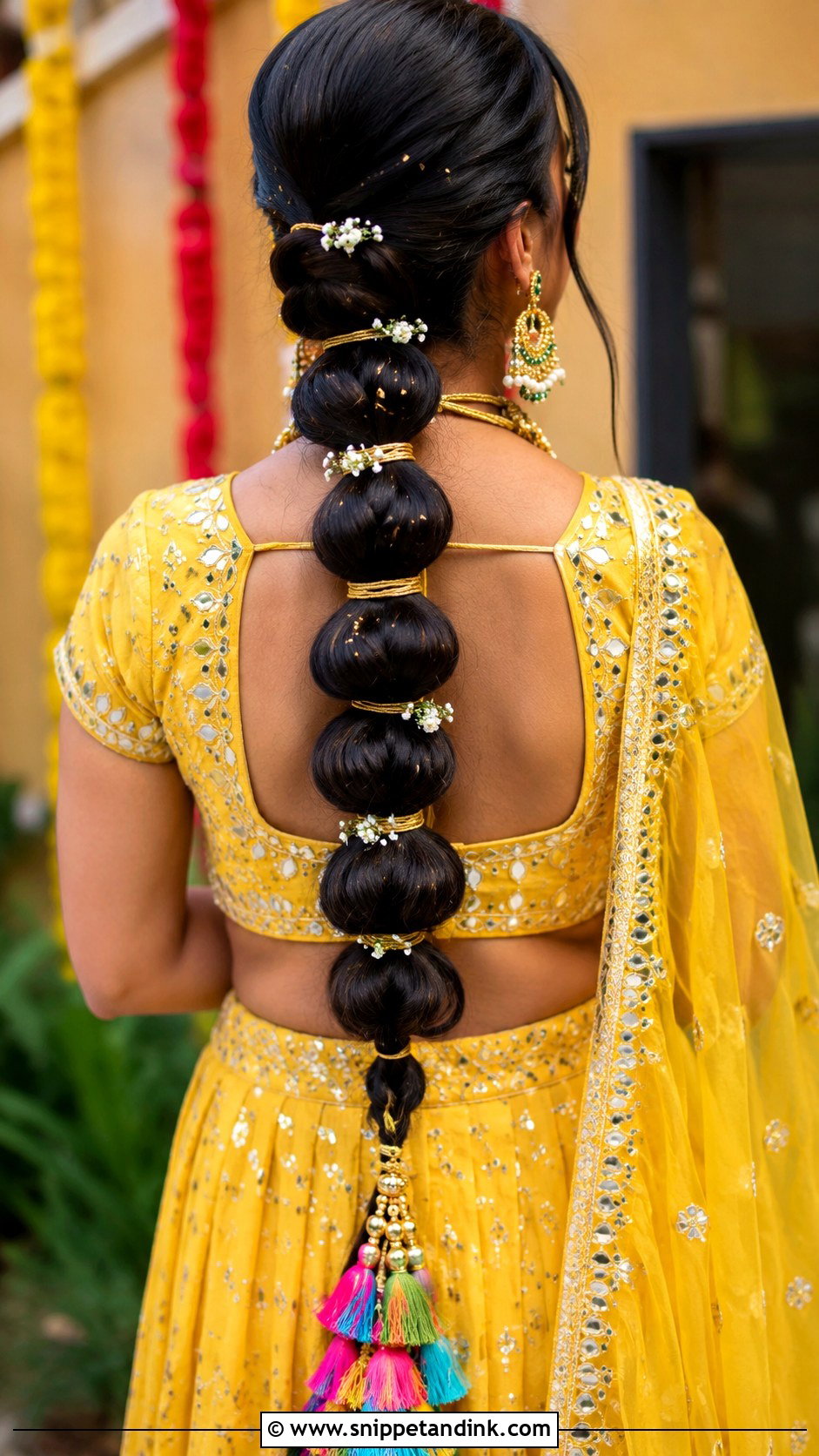
Bubble braids are the fun option for pre-wedding events. I make a long ponytail, then add hidden elastics every few inches and gently pull each section out into a round bubble. Fine hair gets small, flat bubbles, so I’d add a clip-in ponytail if yours is thin. It stays tidy during the haldi and jaggo, and a paranda tail or gota pieces make it unmistakably Punjabi. It looks especially good with bright outfits, mirror work and phulkari.
12. Punjabi Bridal Messy Bun
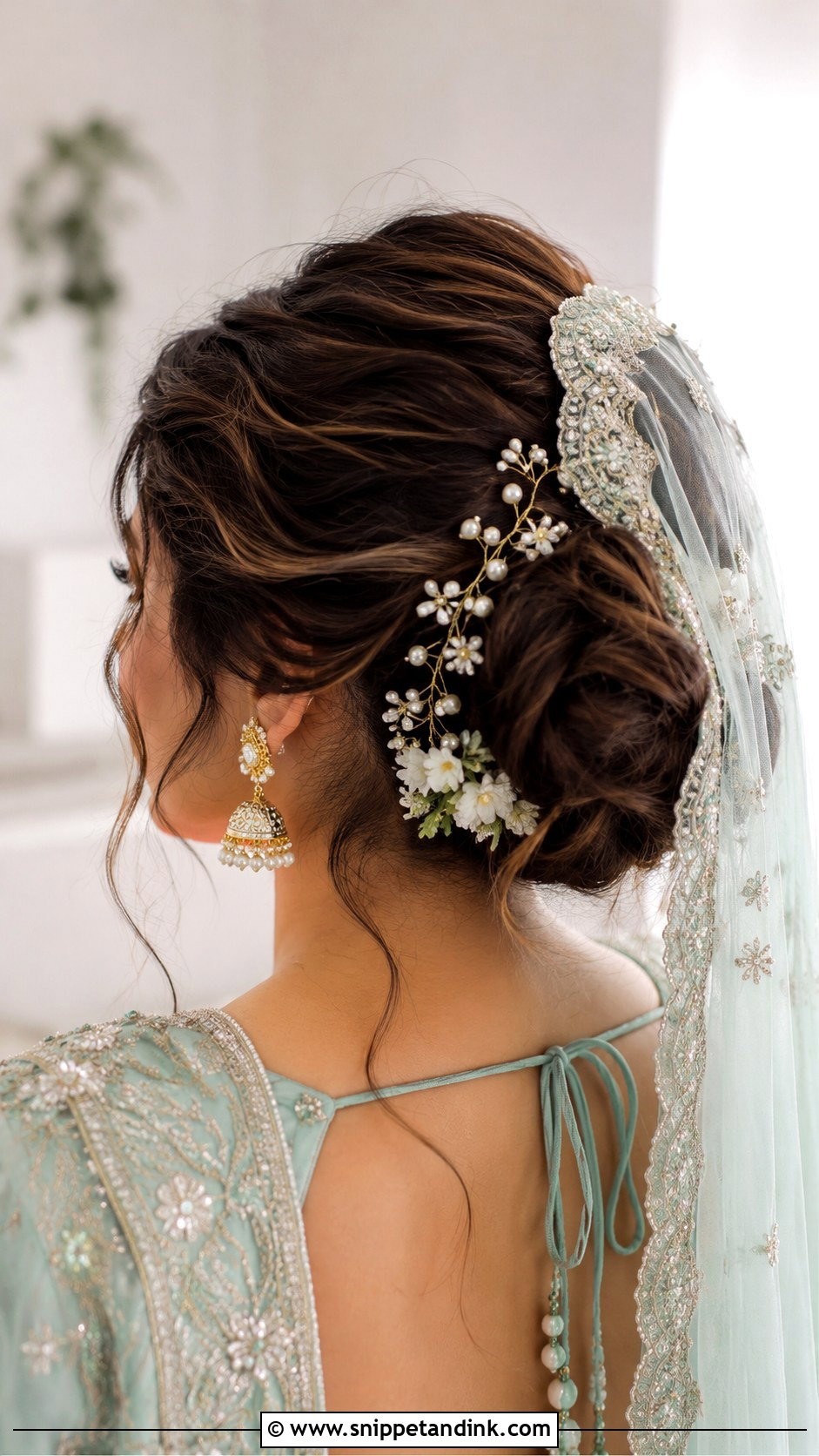
A messy bun is never actually messy. I build a firm, tightly pinned core first, then pull out the surface texture and a few pieces around the face afterwards. Brides who dislike sleek hair often love this. With pastel lehengas, floral jewellery and a lighter dupatta it feels relaxed. Just remember that loose texture hides pins badly, so a heavy dupatta needs that firm inner bun, or it’ll drag the whole thing sideways.
13. Punjabi Bridal Ponytail
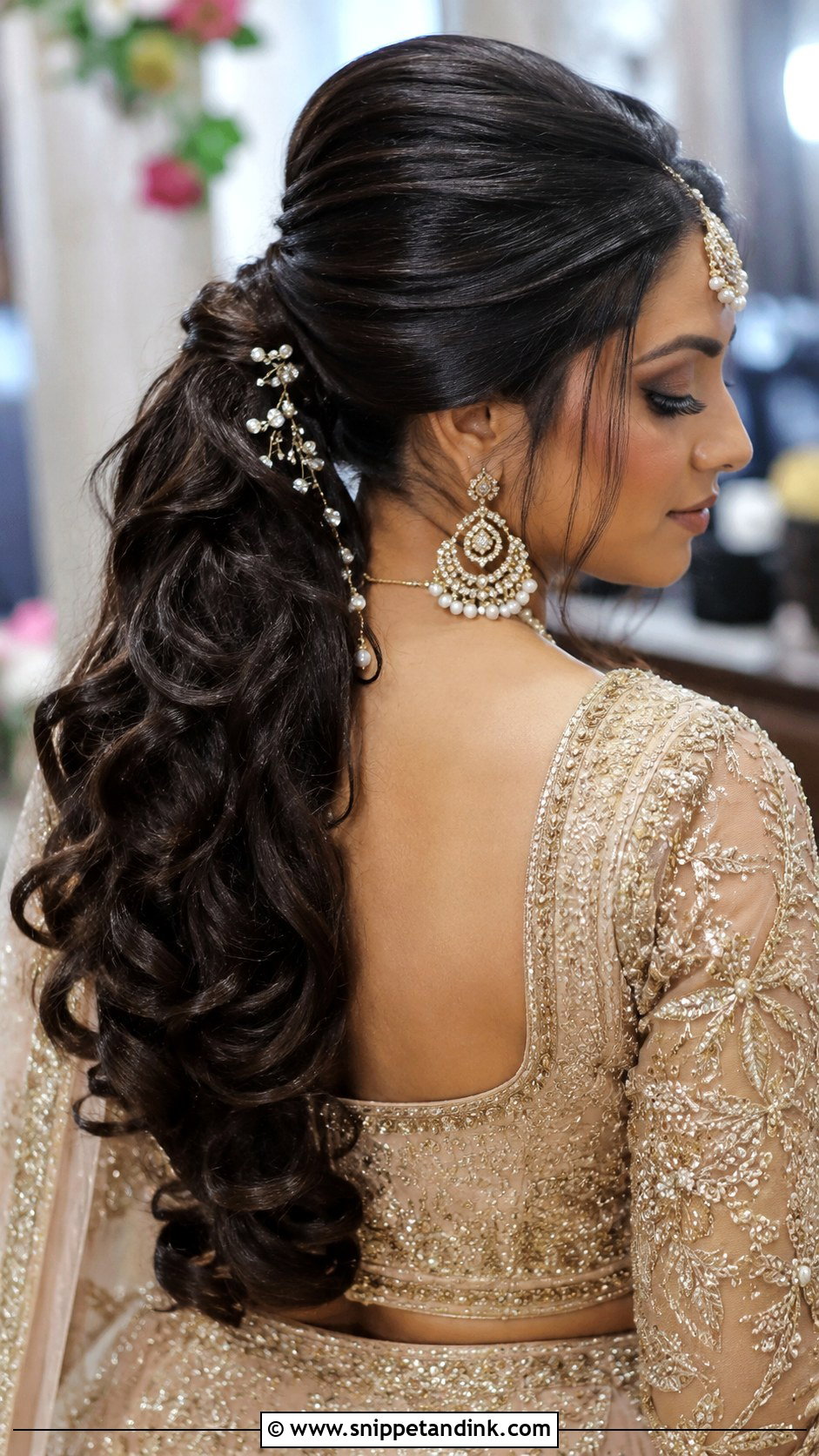
A ponytail is the easiest style to dance in, which is why I suggest it for the sangeet and reception. I smooth the front, lift the crown, and tie it high enough that the curled length clears the shoulder. Wrapping a strand around the base hides the elastic; jewelled pins or a maang tikka make it bridal. It pairs well with modern lehengas, shararas and gowns. Long, heavy ponytails can pull at the scalp after a few hours, so I secure the base with crossed pins as well as the band.
14. Punjabi Bridal Floral Braid
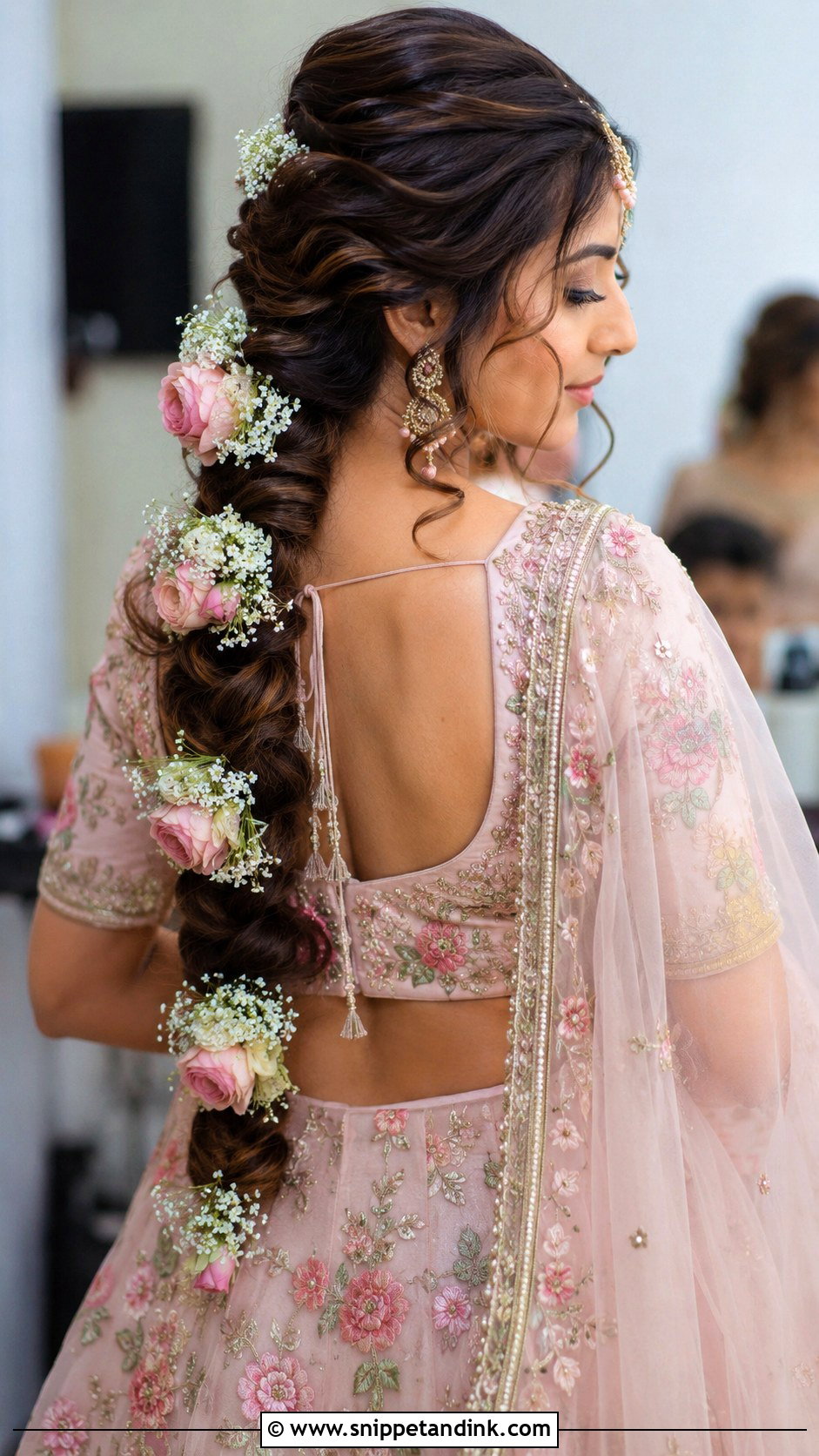
A floral braid works well for daytime mehndi and garden events, where fresh roses, jasmine or baby’s breath look at home. I wire smaller blooms into pins first, then push them into the braid gaps, which keeps them from sliding down. It pairs with pastel outfits, yellow haldi looks, pink lehengas and floral jewellery. Leave visible braid between the flowers; covering it completely turns it into a garland. A little crown volume and soft curls at the face finish it.
15. Punjabi Bridal Reception Waves
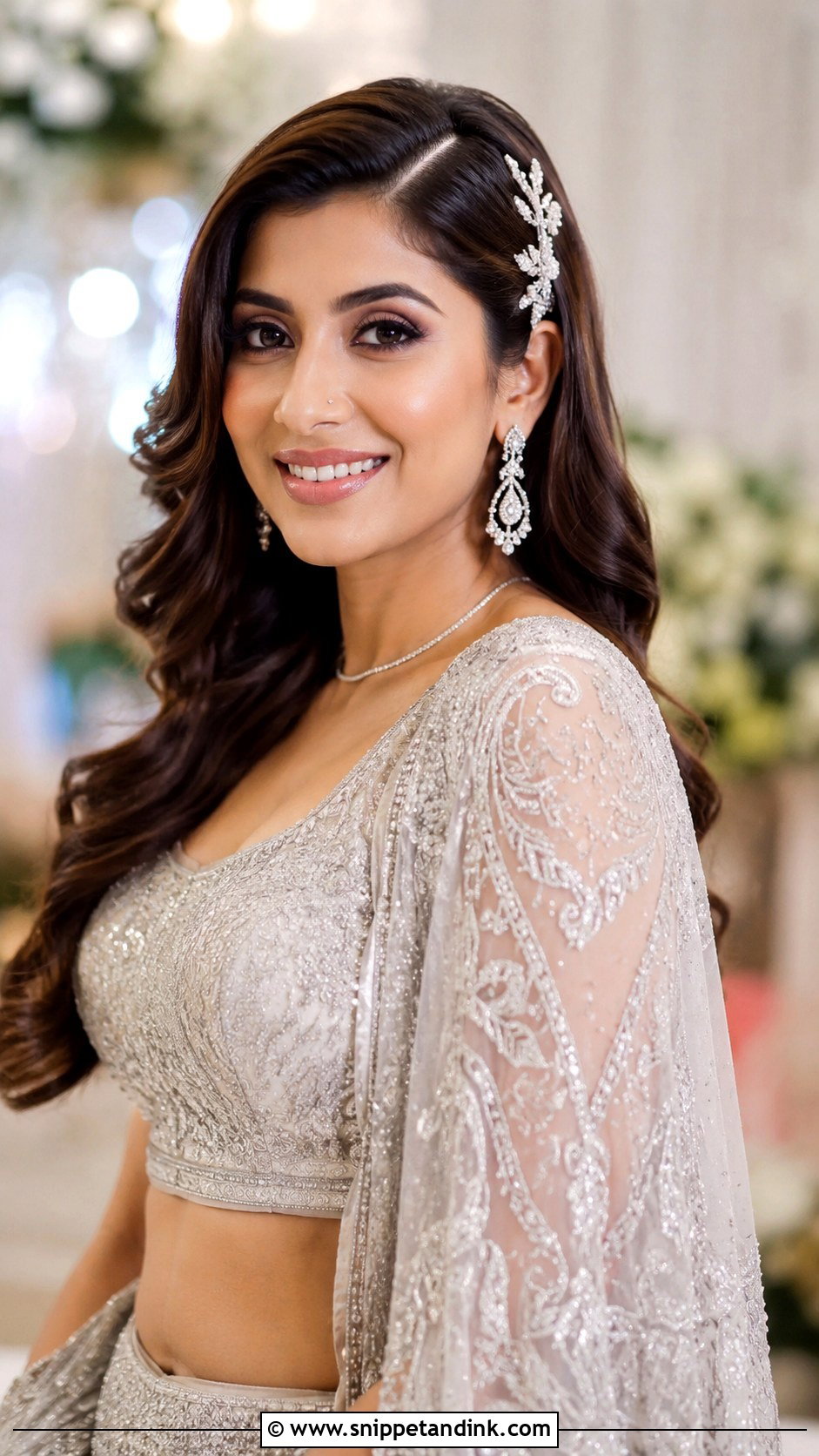
Reception waves are where many brides finally let their hair down after the ceremony bun. I aim for glossy, defined waves, not beachy texture, because the reception lights flatten anything soft. A side part reads dramatic; a centre part sits better with a tikka. With little or no dupatta, the waves stay on show, so they look striking with reception lehengas, gowns and lighter jewellery. If the switch has to happen in under an hour, ask your stylist to set the curls under the ceremony bun from the morning.
Switching Styles Between the Doli and the Reception
Many brides go from a ceremony bun to open waves in the evening, often with only an hour or so to spare. The change goes faster when it’s planned from the morning.
- Ask for the lengths to be curled and set before they’re pinned into the ceremony bun. Taken down hours later, they fall into soft waves.
- Count the pins as they come out of the bun; a heavy ceremony dupatta can need far more than you’d guess, and a missed one tangles as you brush.
- Dry shampoo at the roots revives hair that’s been flattened under fabric all day.
- If the reception is the same evening and close by, book your stylist to stay rather than redoing it yourself.
Your Real Dupatta and Jewellery Belong at the Trial
Photos of a dupatta can’t tell your stylist how heavy it is, how slippery the fabric is, or how far the border embroidery reaches. Bring the dupatta, the maang tikka, any matha patti or passa, and your earrings. Heavy jhumkas sometimes need a sahara chain hooked into the hair, and that changes where the bun can sit. Wear the finished look for an hour, sit on the floor once, and stand up again. You’ll learn more from that hour than from any number of reference pictures.
Ceremony Buns, Paranda Nights and Reception Waves
Each event in a Punjabi wedding asks something different of your hair. Keep the firm, low or centre-part bun for the ceremony and its heavy dupatta, bring out the paranda for the jaggo or mehndi, and save open curls, ponytails and waves for the lighter functions. Book a trial with the actual dupatta and jewellery, mention extensions early if your hair is fine, and give your stylist the full timetable so the changes are planned rather than rushed.
You'll Like These Ideas:



Leave a Reply