
A crown changes how a bride carries her head. The moment it goes on, shoulders drop back and the chin lifts, and that posture is half of why these looks read as regal. The other half is engineering. A tiara or pearl band needs a base that grips it, and the hairstyle underneath decides whether it stays level through a veil removal, a dozen hugs and a first dance. Below are 20 crowned styles I’d happily build, from braided halos to low chignons, with notes on which hair each one suits and where the crown has to sit to stay put.
How a Tiara Is Actually Fixed Into Hair
Most crowns and tiaras come with one of two fittings: small combs on the inside of the band, or little loops at each end for pins. Combs grip best when they slide into a braid, a twist or a teased section, not into smooth loose hair, where they simply slip. Loops need bobby pins crossed through them in an X so the band can’t shift forward or back.
The first thing I do with a new headpiece is weigh it in my hand. A light pearl band can sit on almost any style. A tall crystal tiara with heavy stones needs a structured base underneath, which is why so many of the styles below are braids or buns. If your tiara has no combs or loops at all, a jeweller or the shop can usually add them.
- Prep hair the day before with a wash, and skip heavy conditioner at the roots; second-day hair grips pins better.
- Bring the real crown and the real veil to the trial, not a stand-in.
- Ask your stylist to shake your head gently at the end of the trial. If the crown moves, it needs another anchor.
1. Braided Crown Updo With Tiara
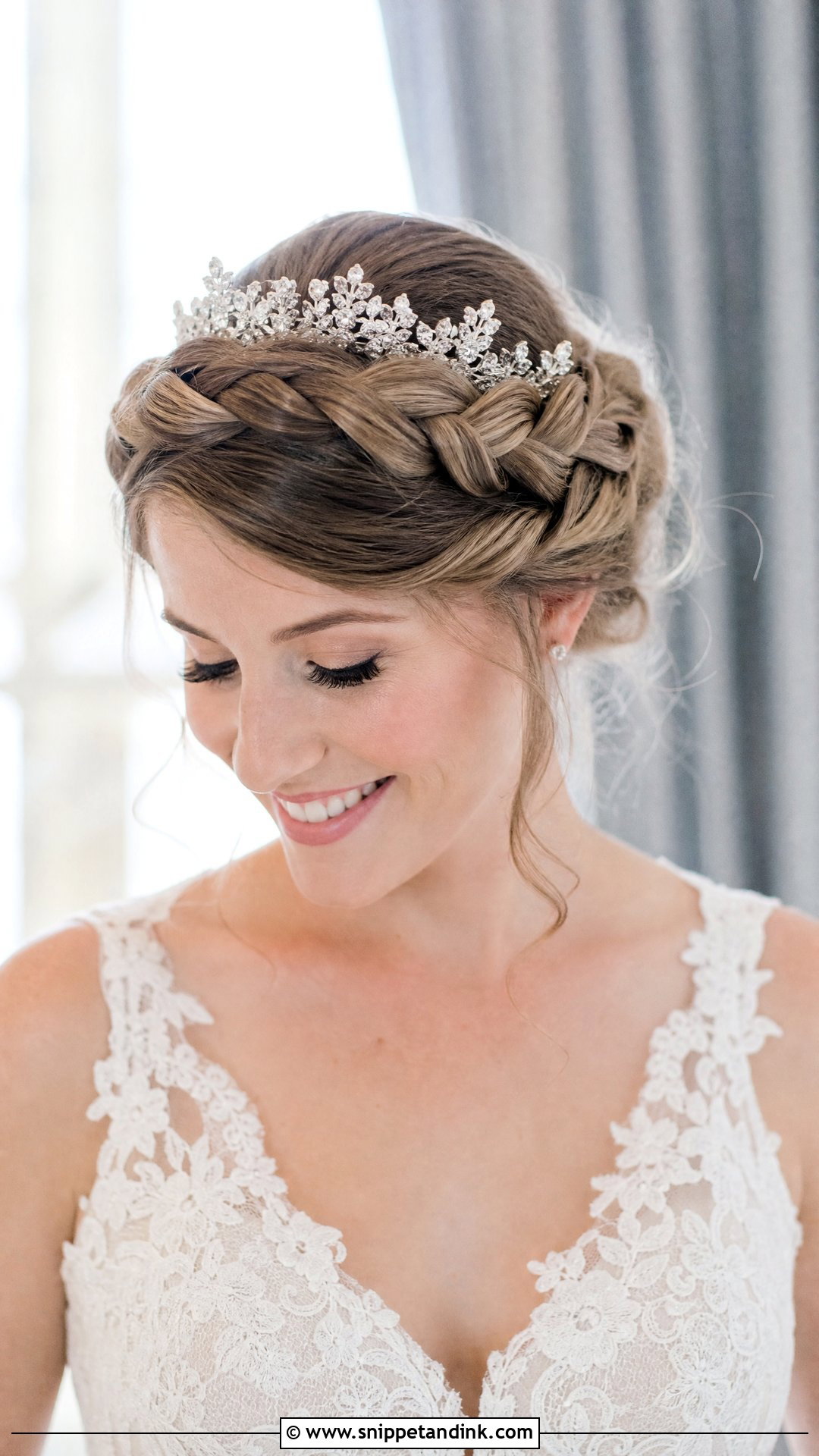
A braid wrapped around the head gives a delicate sparkling tiara something to bite into, which is why I reach for this combination with heavier pieces. I slide the tiara combs under the braid rather than into loose hair, then cross two bobby pins over each comb so the band can’t rock forward. Pearls or small crystal pins woven through the plait pick up the same shine. On very fine hair I braid in a little texture spray first, otherwise the braid looks thin next to the metal.
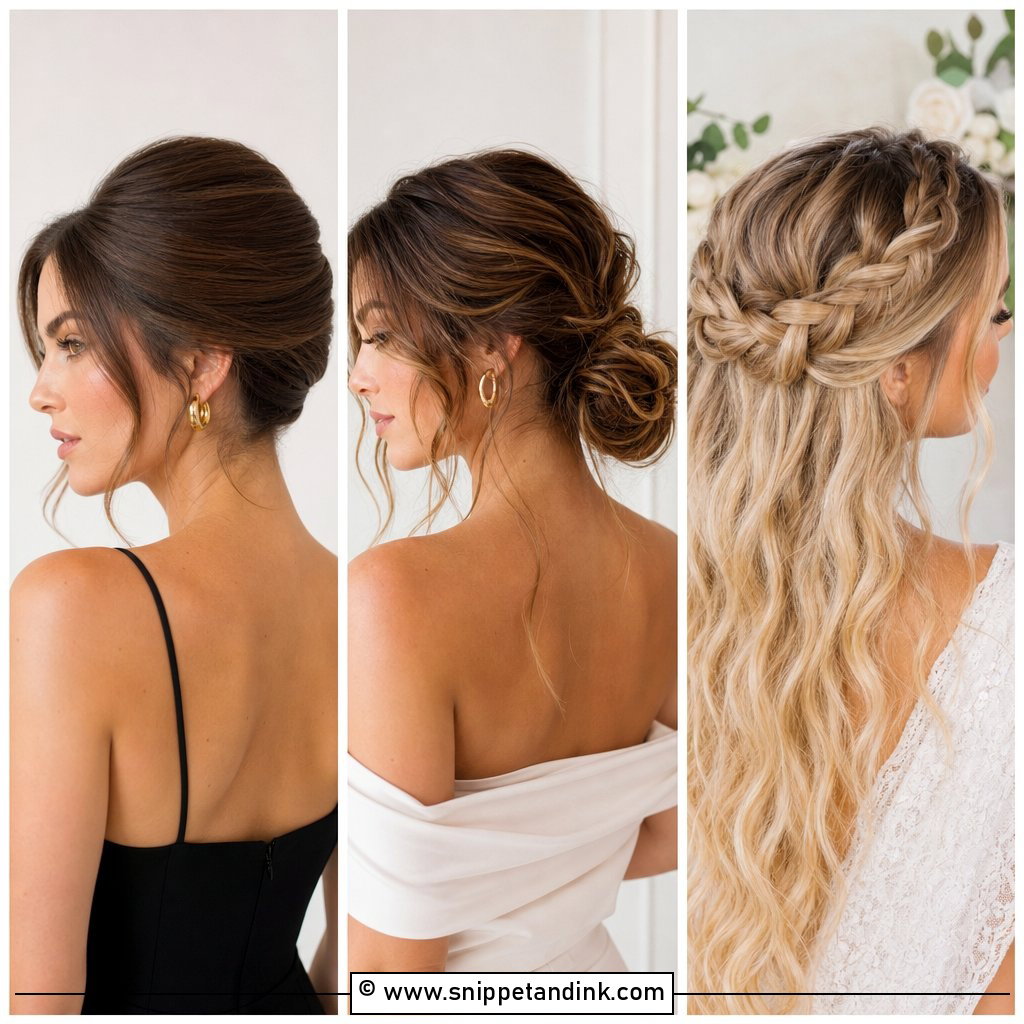
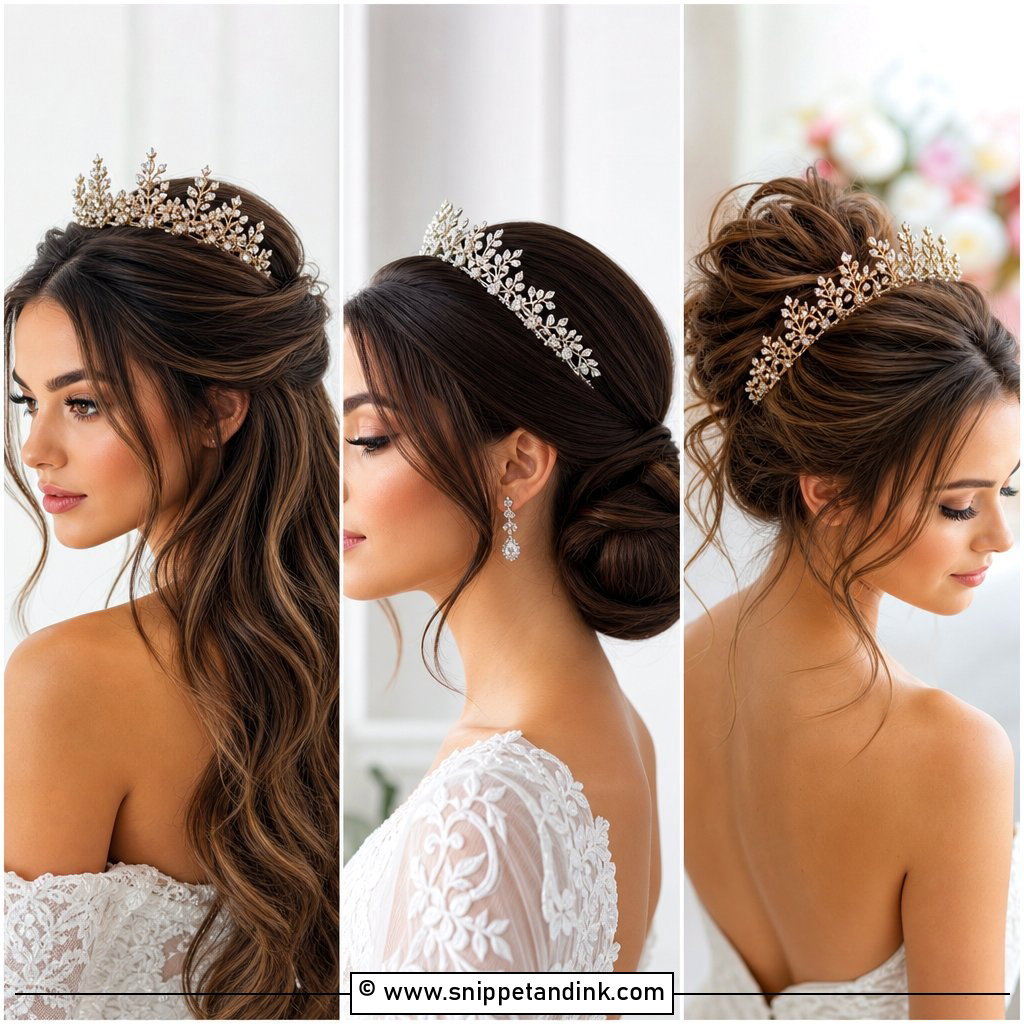
2. Half Up Half Down With Crown
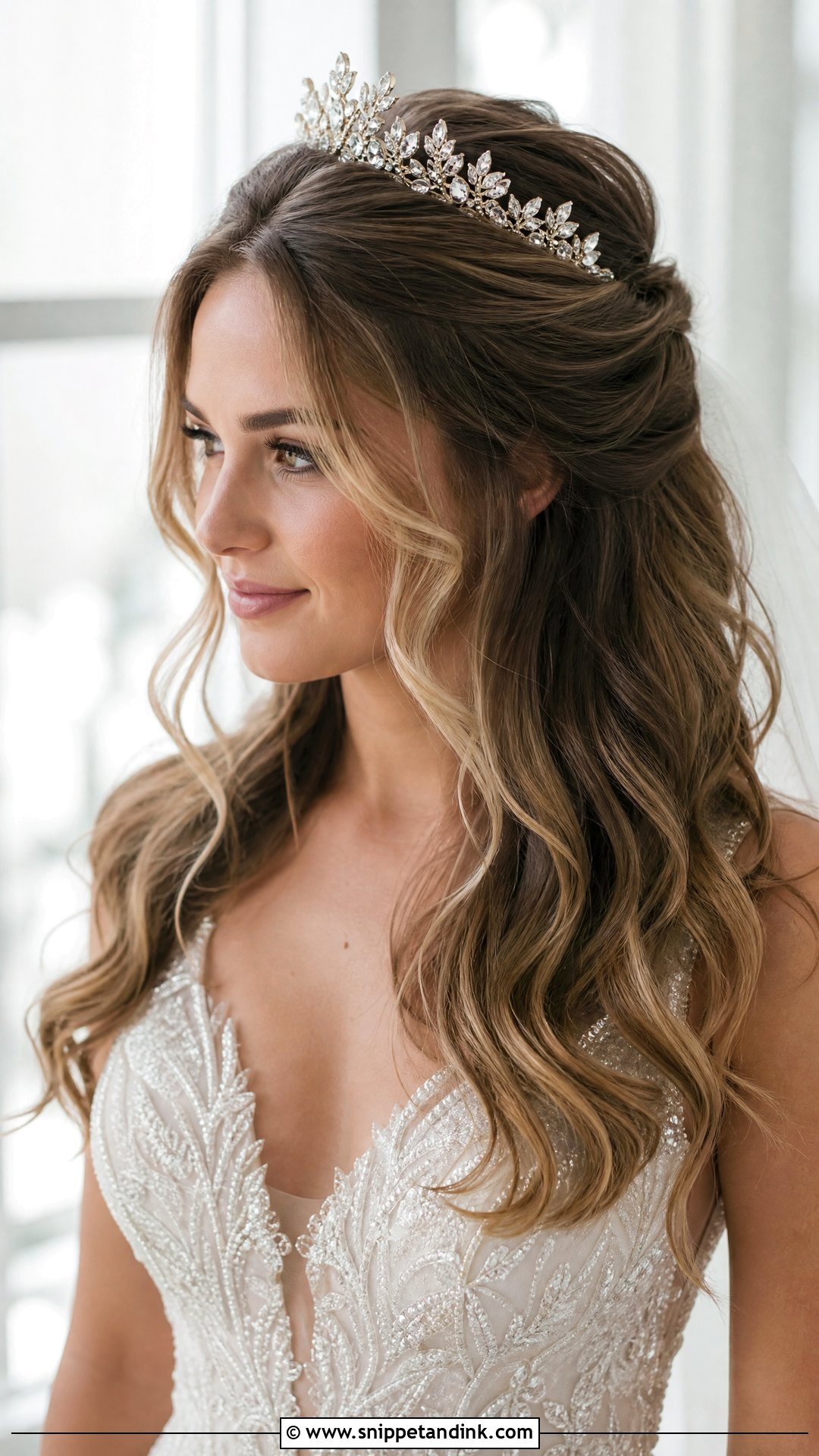
Half up styles carry a crown well because the pinned top section becomes the anchor point. I tease the roots at the crown lightly, smooth over them and pin a small tiara just in front of that lift so it doesn’t slide back into the curls. Medium to long hair is best here, since the loose lengths need enough weight to hang in waves rather than flip out. Humid outdoor ceremonies are the risk: the down section loses curl first, so I set it in pin curls until just before you dress.
3. Low Bun With Pearl Crown
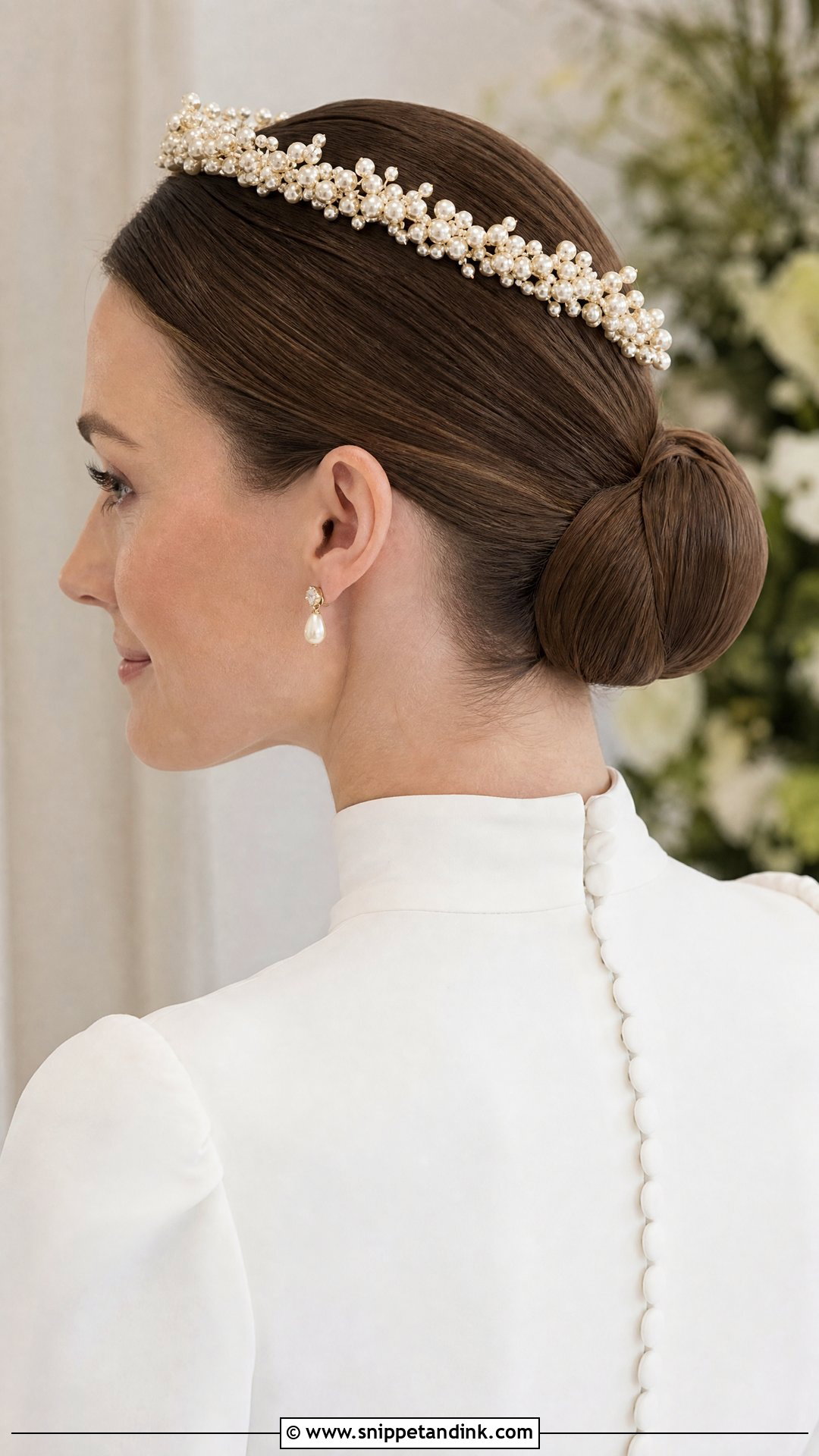
A low chignon at the nape and a pearl crown above it is about as reliable as bridal hair gets. Smoothing everything back keeps the neckline clear for statement earrings, and it sits comfortably under a high collar too. I set the bun with an elastic base and U-pins so it holds its shape for twelve hours. The one thing I check at the trial is distance: the pearl band should sit two or three fingers above the bun, or the two pieces start to look like one lump in profile.
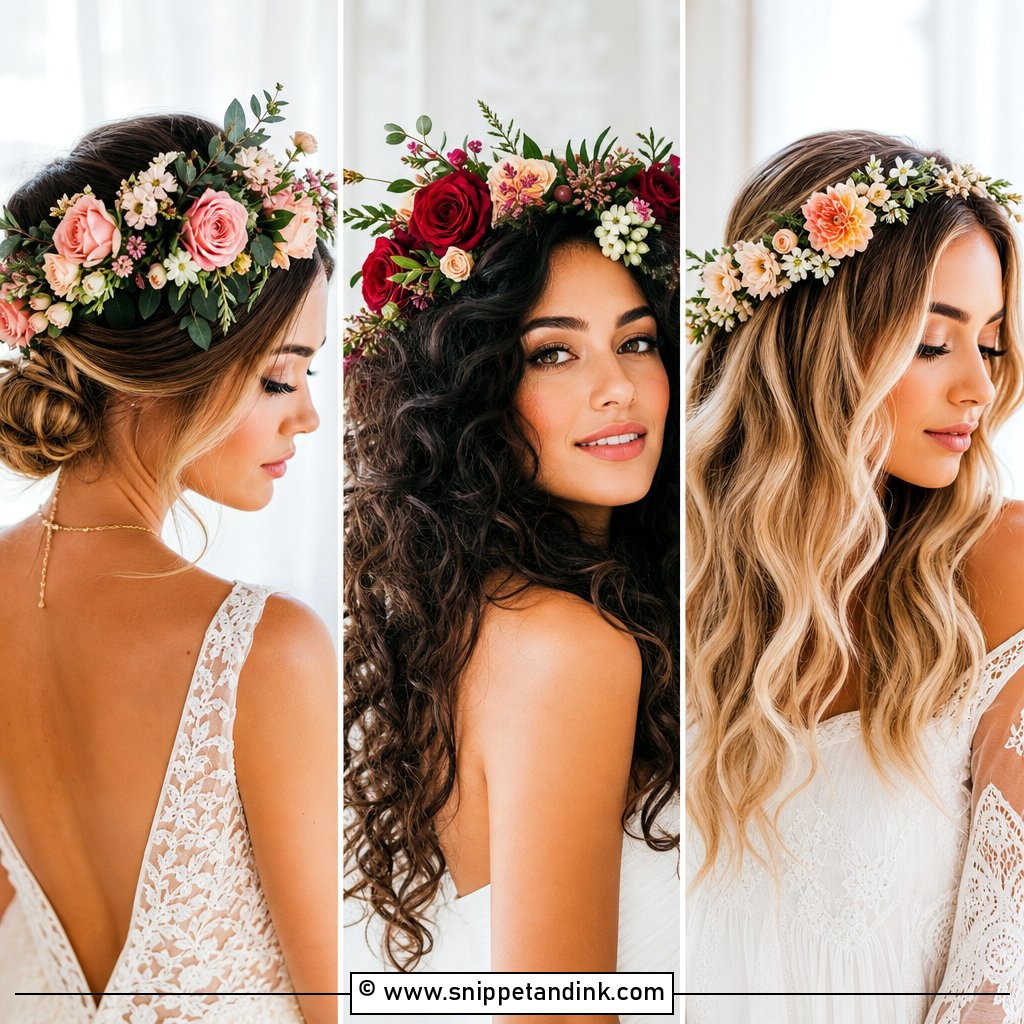
4. Boho Braid Crown With Flowers
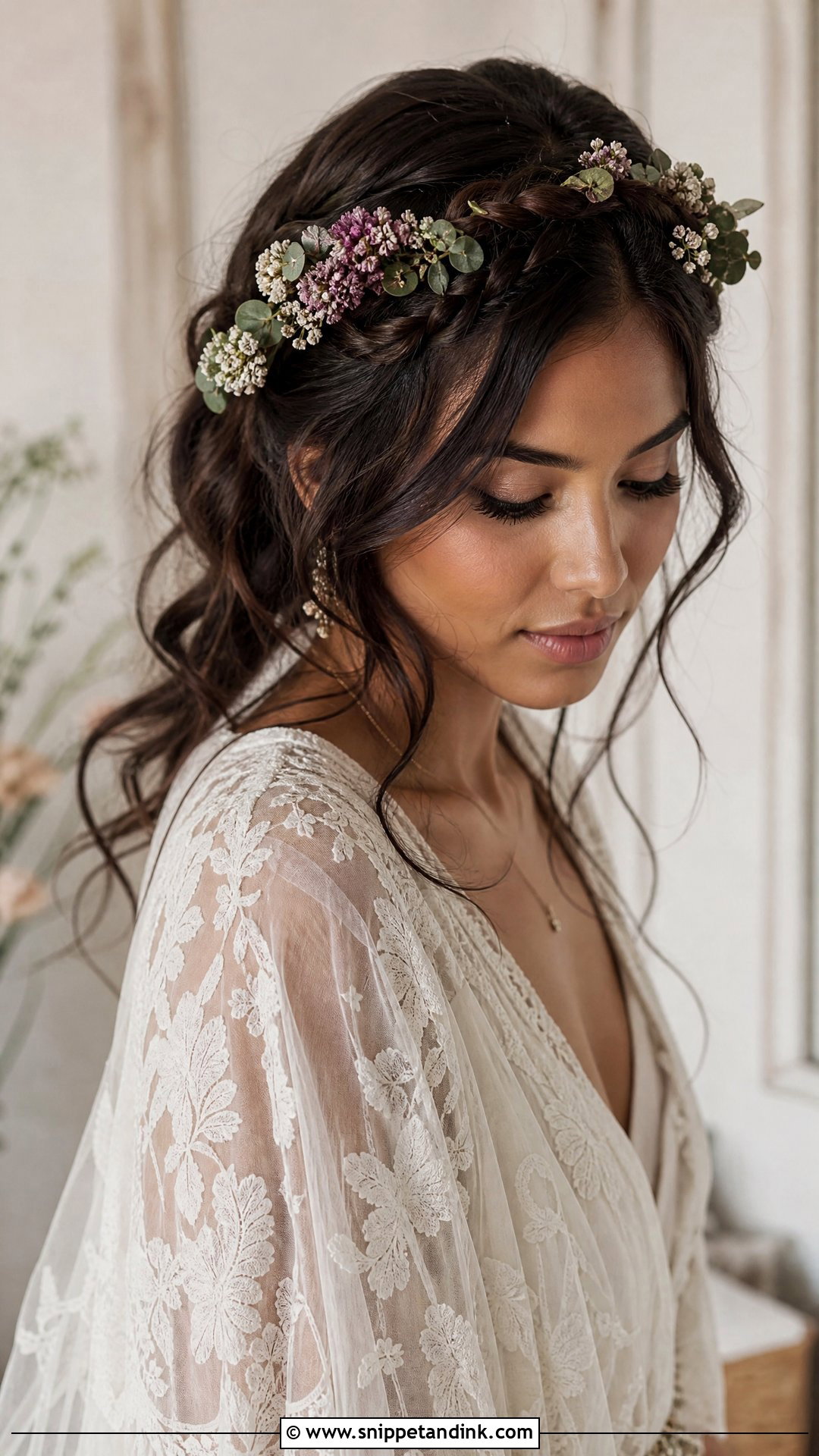
Braids threaded with fresh blooms are a garden-wedding favourite, but flowers are the weak link. Real stems wilt in heat, so I ask the florist for small, sturdy heads like spray roses, waxflower and ruscus, wired and taped, and I tuck them in last. Loose tendrils framing your face keep the plaits from looking severe. For a barefoot beach ceremony, keep the flowers small and few; wind takes the big ones first.
5. Side Swept Curls With Crown
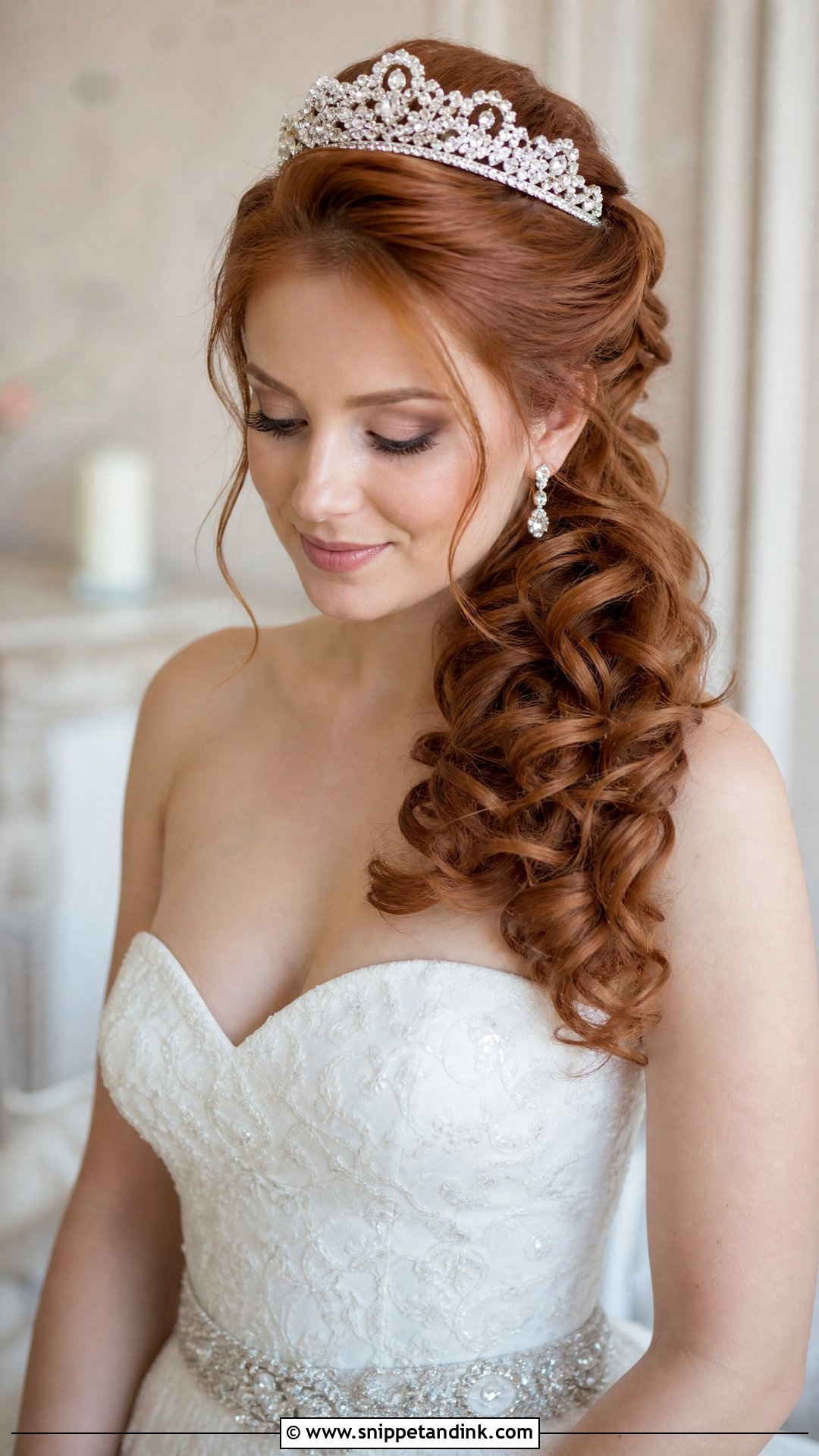
Sweeping curls over one shoulder throws the weight of the style to one side, so the crown has to balance it. I place the tiara slightly toward the opposite side of the part to even out the silhouette. Strapless and one-shoulder gowns suit it, since the curls get to rest on bare skin rather than fight a neckline. Pin the gathered side firmly behind the ear with crossed pins, because a side sweep slowly migrates forward during the reception if it isn’t locked.
6. Twisted Crown Braid Halo
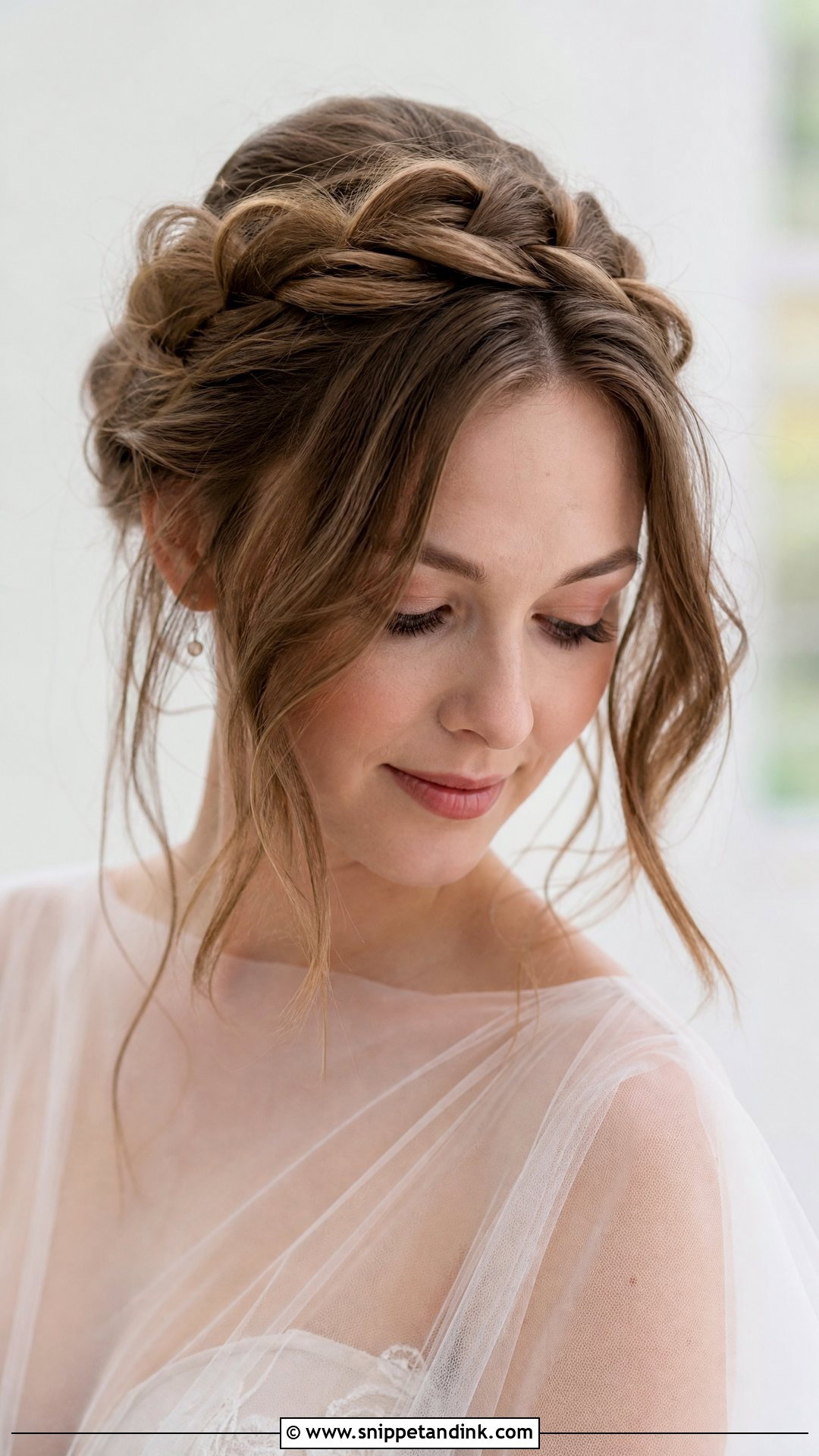
Twists are gentler than braids and faster to build, which makes them my choice for brides whose hair is layered. Each twisted section is pinned flat as it travels around the head, so shorter layers get caught instead of poking out of a plait. It can stand alone or carry a small tiara. A few loose face-framing pieces soften the outline, and because twists flex when you move, it’s one of the more comfortable crowned styles to dance in.
7. Sleek Ballerina Bun With Tiara
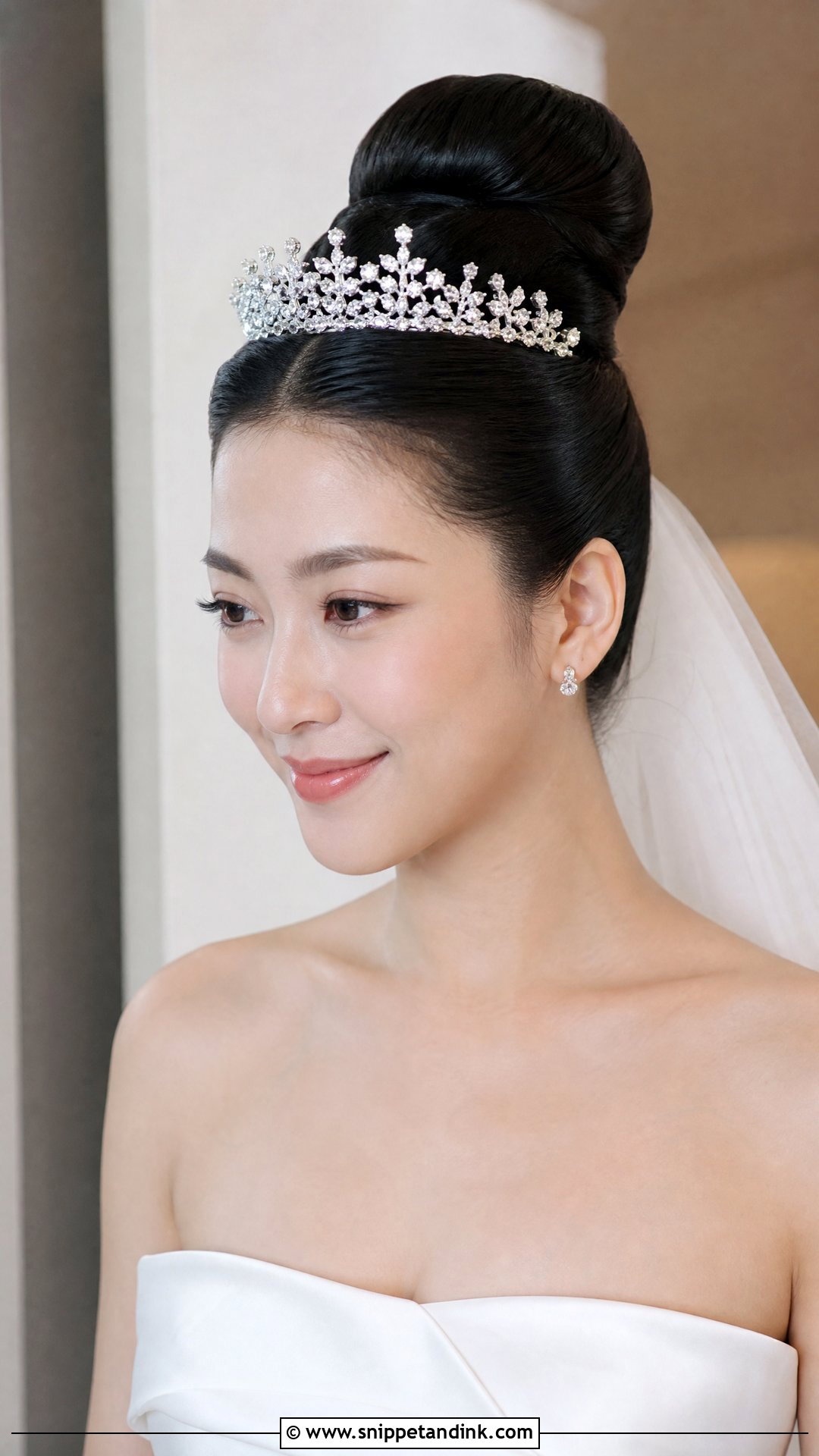
A high ballerina bun is uncompromising: every bump shows. I smooth the hair wet, set it with a light gel, and wrap the bun around a doughnut or a thick section of hair before placing the tiara directly in front. That placement adds height and stretches the neck in photos. Skip it if you have a sensitive scalp or plan to wear the bun for fourteen hours; a tight high pull can give you a headache by the speeches.
8. Loose Waves With Floral Crown
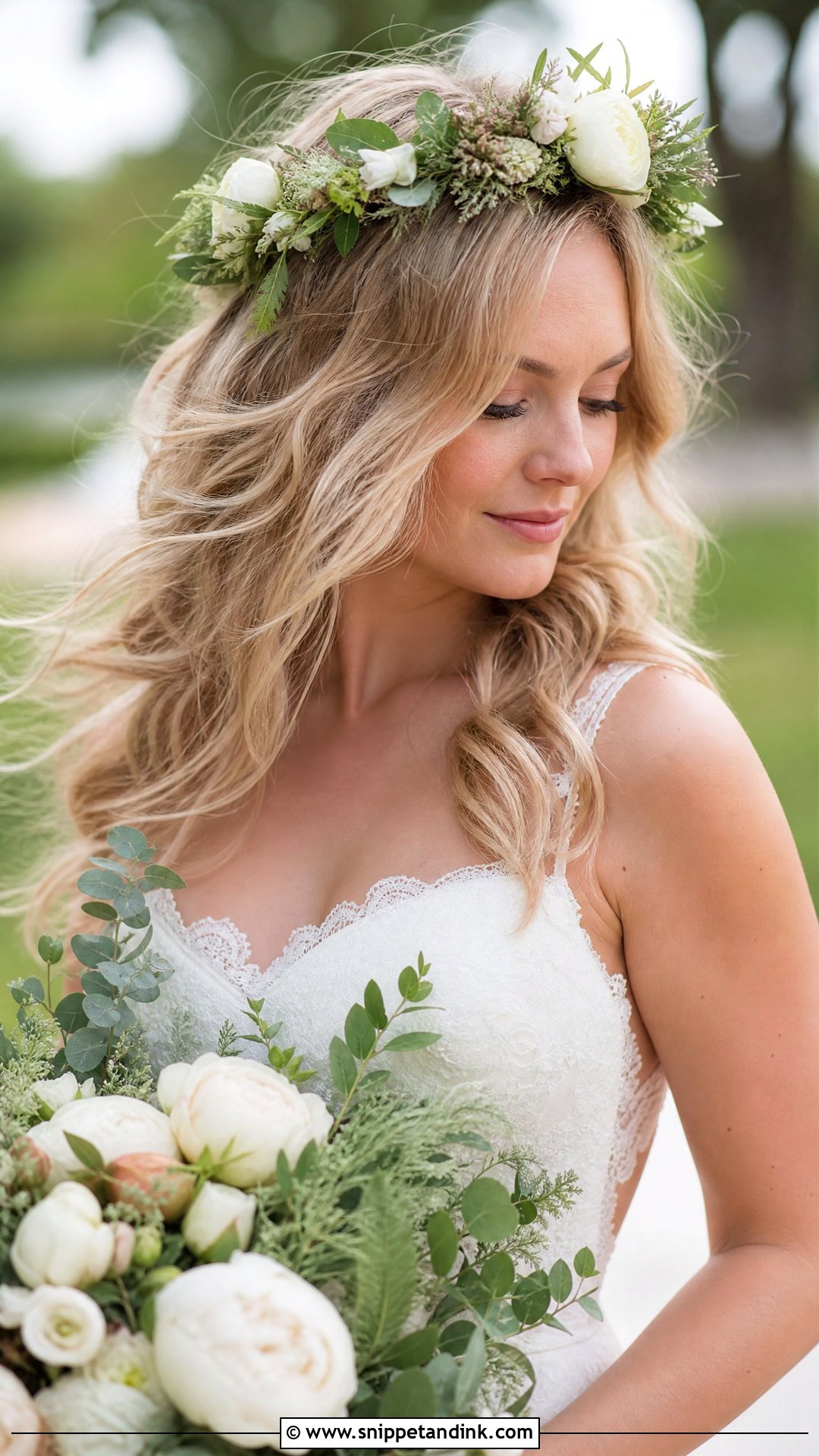
Loose waves under a flower crown is the most relaxed look on this list, and the least forgiving in weather. Waves on fine hair drop within a few hours in humidity, so I curl with a larger iron, pin each curl to cool, and brush out at the last minute. The crown rests on top, held by two pins hidden underneath on each side. Spring and summer blooms suit it, and it works best on medium to long hair that already has some movement.
9. Crown Braid With Low Bun
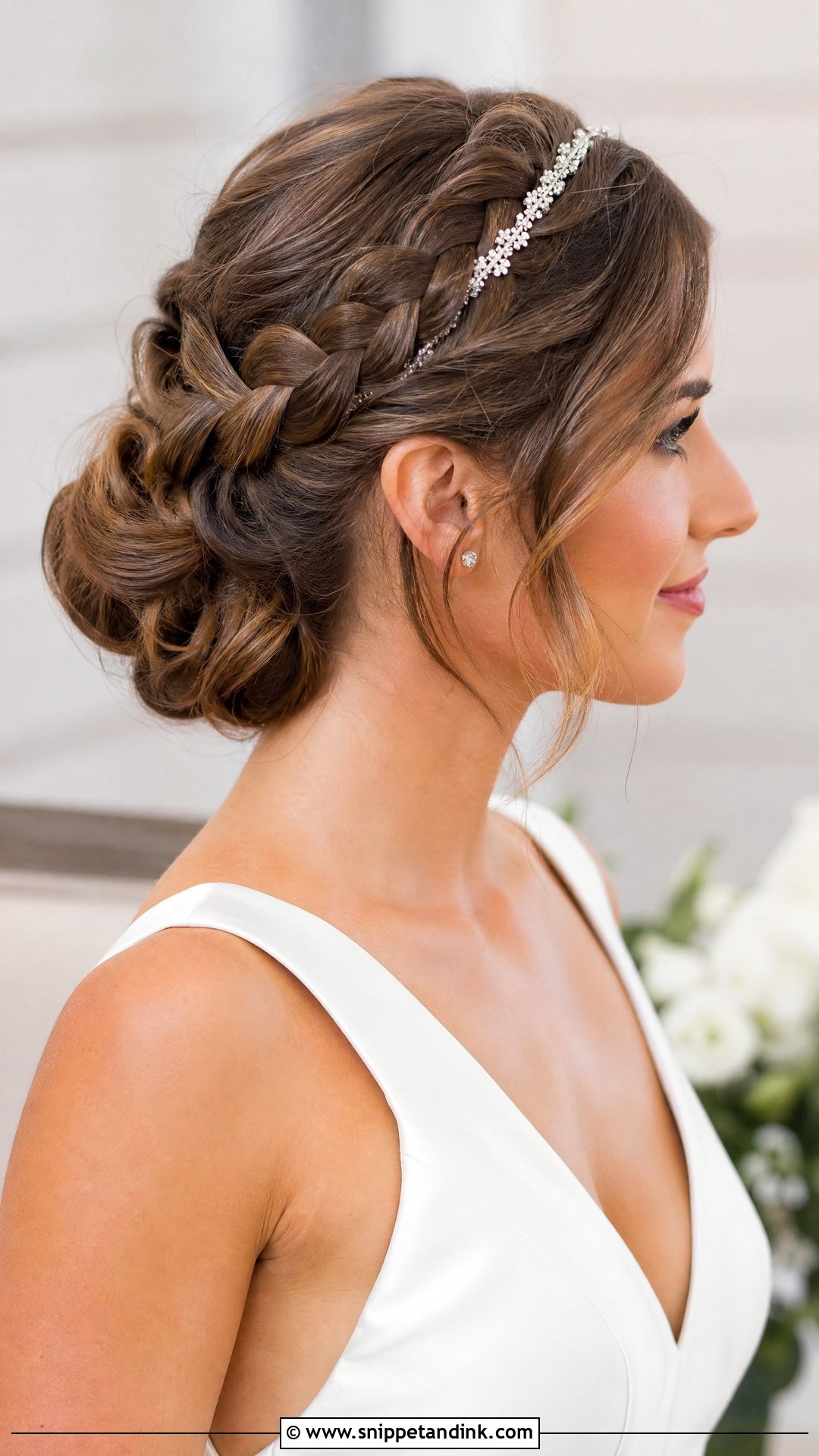
Pairing a crown braid with a low bun divides the job: the braid carries the headpiece, the bun carries the bulk of the length. That split means nothing sits under strain, so the style still looks tidy after the dancing. A thin headband or tiara slides in along the braid line, and a veil comb fits neatly above the bun. It’s the version I suggest when a bride wants a braid but has too much hair for a halo on its own.
10. Vintage Updo With Crystal Crown
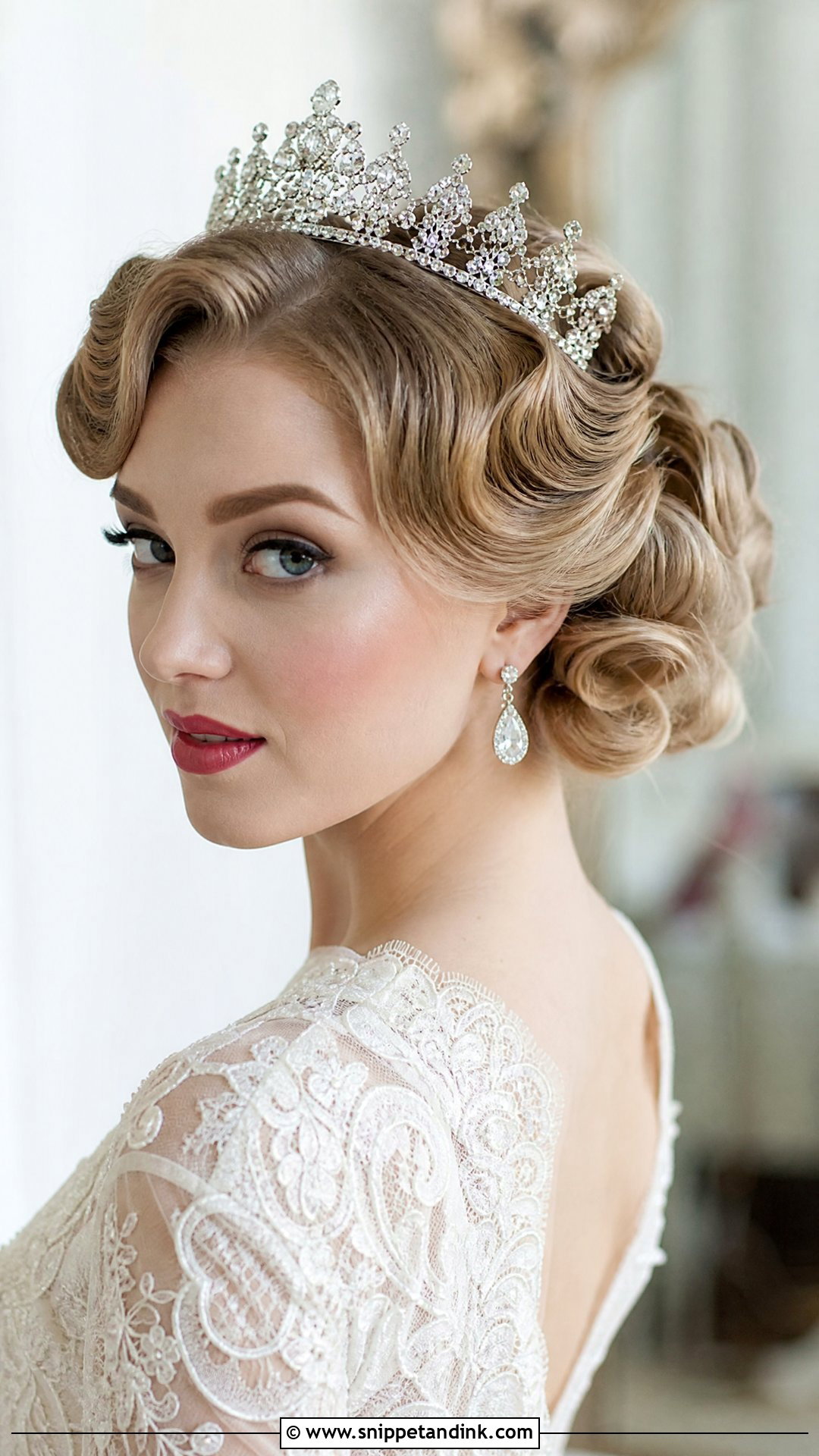
Finger waves and rolled sections need a set, not just a curling iron, so I start this one earlier than any other style on the day. The crystal crown sits behind the front wave so it doesn’t flatten the ridge. Lace gowns and drop earrings suit the period feel, and black-tie venues give it the right setting. Be honest about your hair’s memory at the trial; very silky straight hair often won’t hold a sculpted wave without a lot of product.
11. Boho Crown With Loose Tendrils
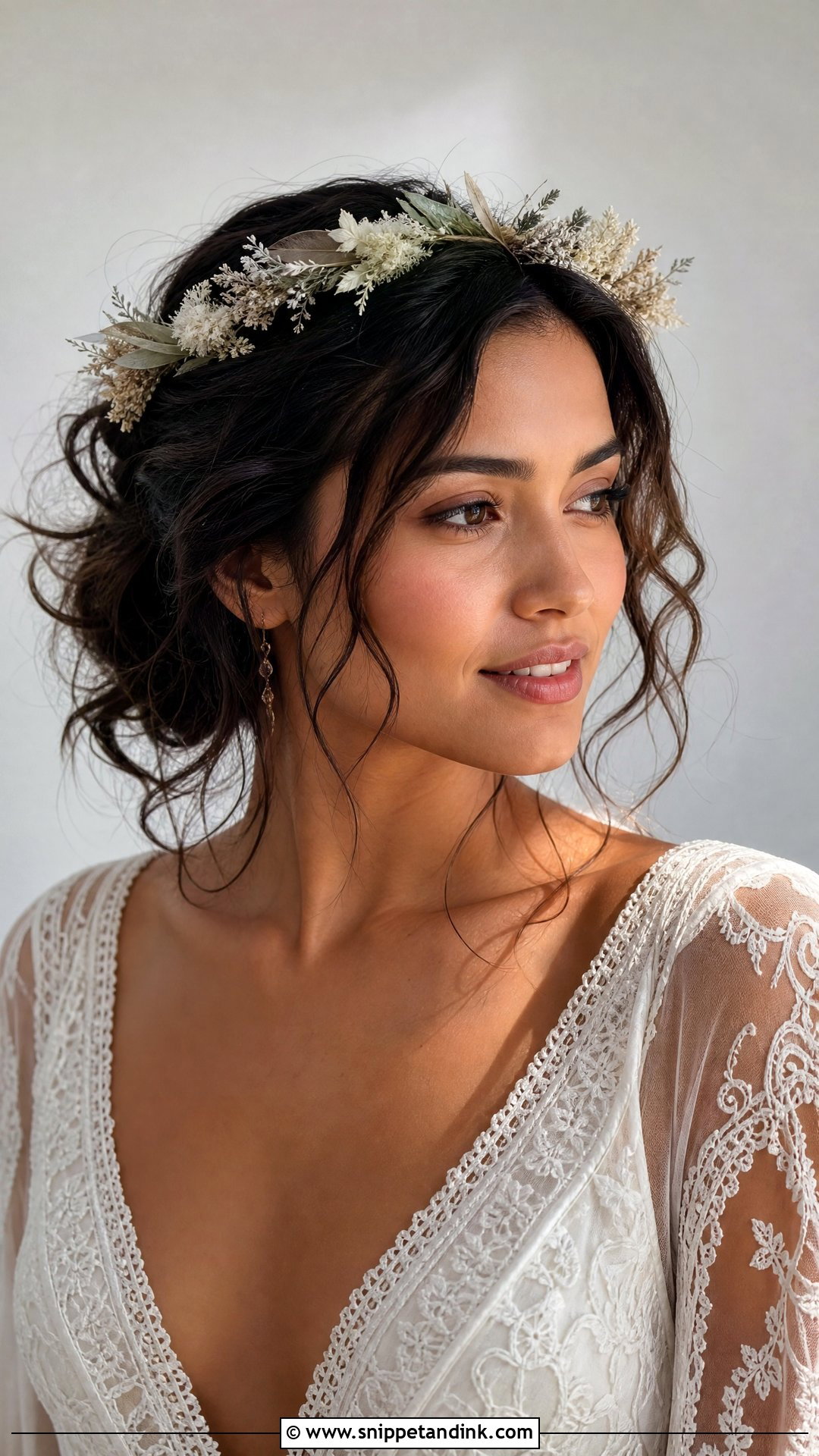
This is the undone cousin of the crown braid. I build a loose twisted or braided band, then pull out tendrils around the face and nape after it’s pinned, not before, so they land where they flatter. Wavy and textured hair is the natural match because the loose bits already have movement. On straight hair, I wave the tendrils with a small wand or they hang limp. Tiny flowers are optional; plenty of brides prefer it plain.
12. Sleek Low Ponytail With Tiara
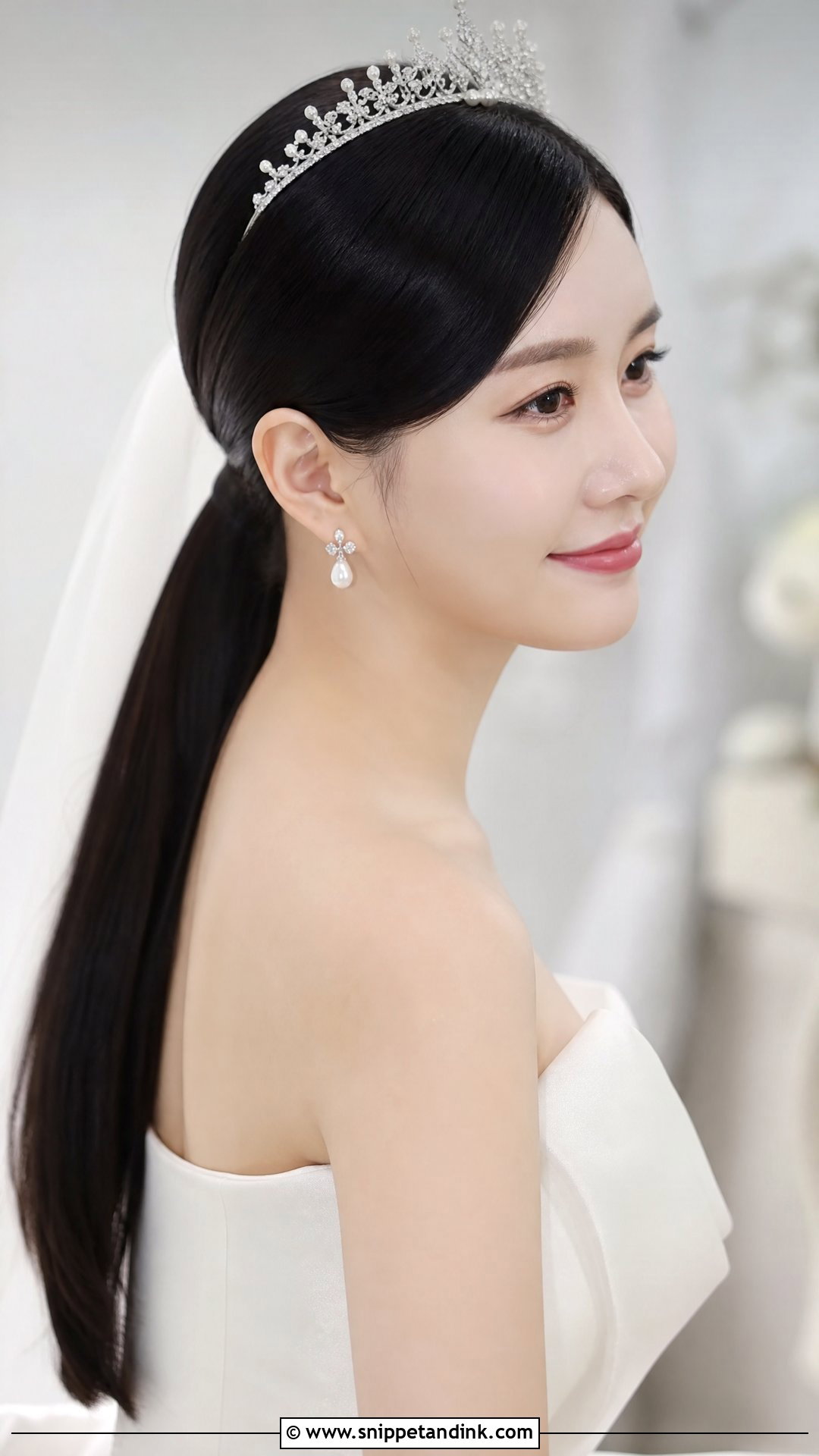
A sleek low ponytail with a tiara is quick to style and holds well, since there’s no updo to collapse. The work is in the finish. I smooth the hair with a boar bristle brush, secure with a hidden elastic, then wrap a strand around the base to cover it. The tiara sits at the crown, pinned through its loops. Long, thick hair gives the swingy tail this look needs; thin hair can benefit from a clip-in ponytail piece matched at the trial.
13. Curly Updo With Floral Crown
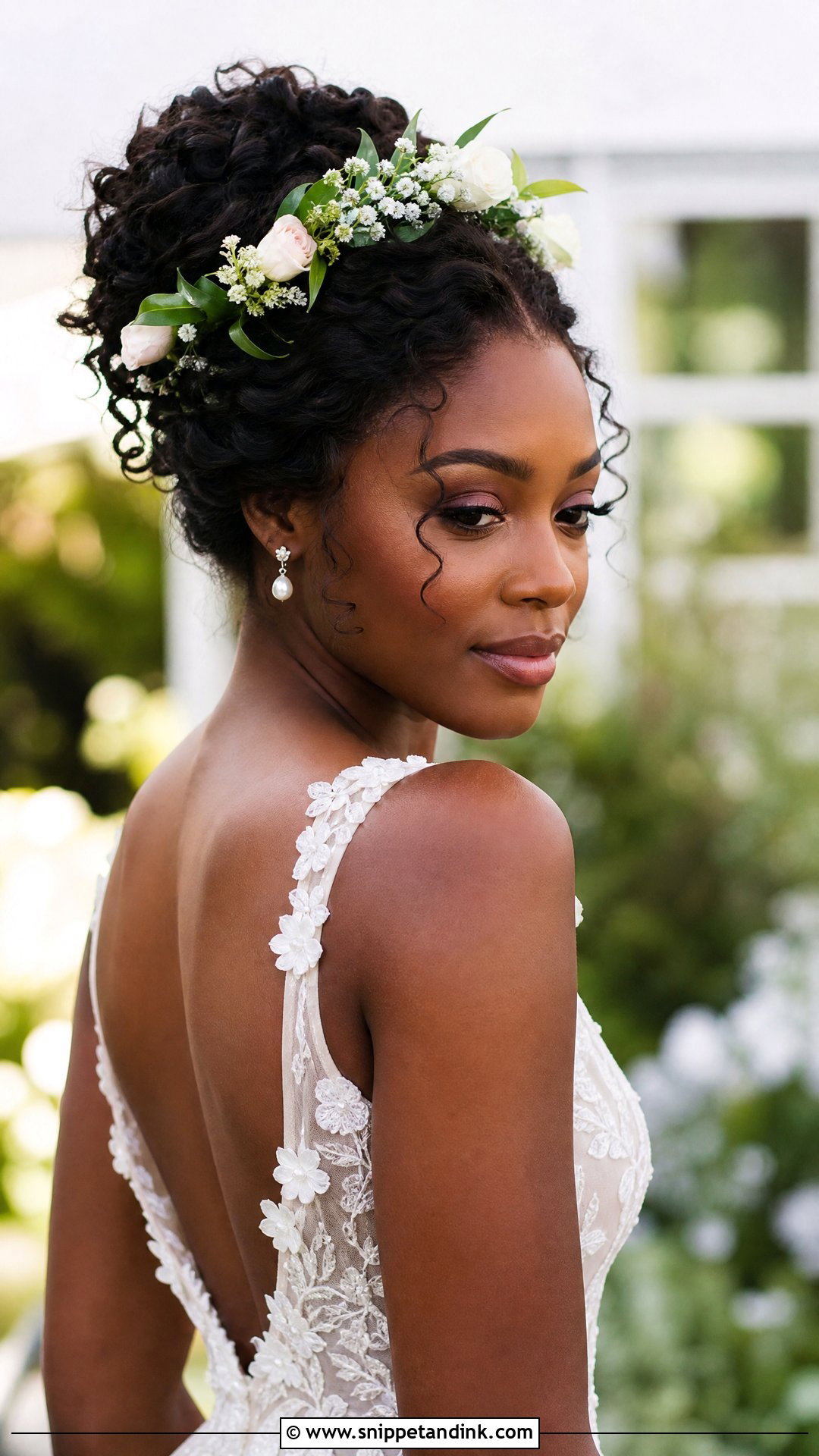
Curly and coily hair has built-in volume, so a crowned updo needs almost no padding. I work with the curl pattern rather than against it: define on damp hair, let it dry fully, then gather and pin in sections with large open pins that won’t flatten the coils. Flowers sit in the curls rather than on top of them. Leave a few defined pieces at the hairline to frame the face. Dry hair holds far better here, so don’t wash it the morning of the wedding.
14. Braided Halo With Veil
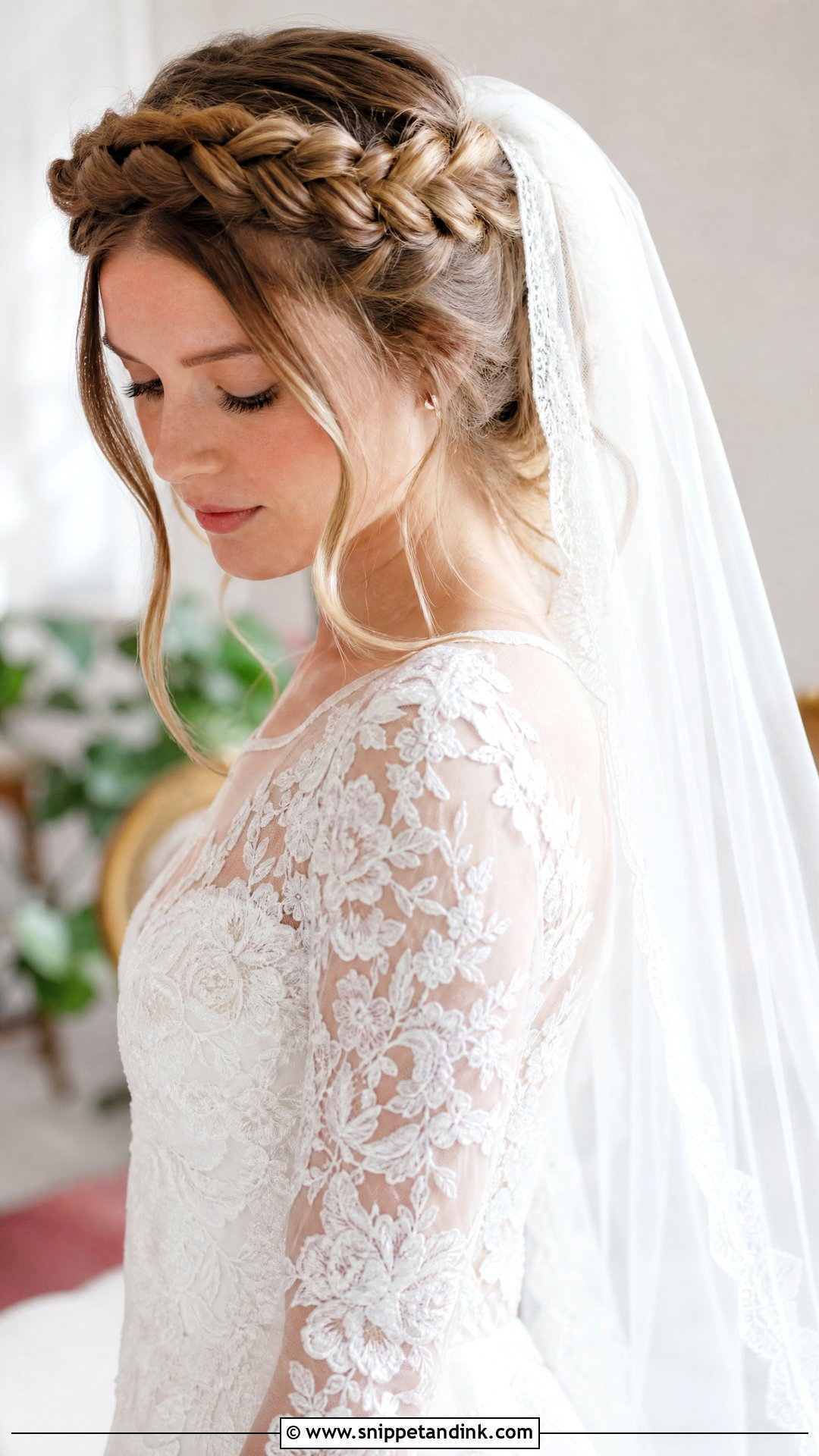
A braided halo is the most secure base I know for a veil. The comb slides beneath the braid at the back, and the braid takes the weight, so even a long cathedral veil doesn’t drag the style down. I check the veil length before plaiting, because a heavier veil wants the comb lower on the braid. Small pearls or crystals can be pinned along the halo. You need at least shoulder-length hair; shorter lengths can’t travel all the way around.
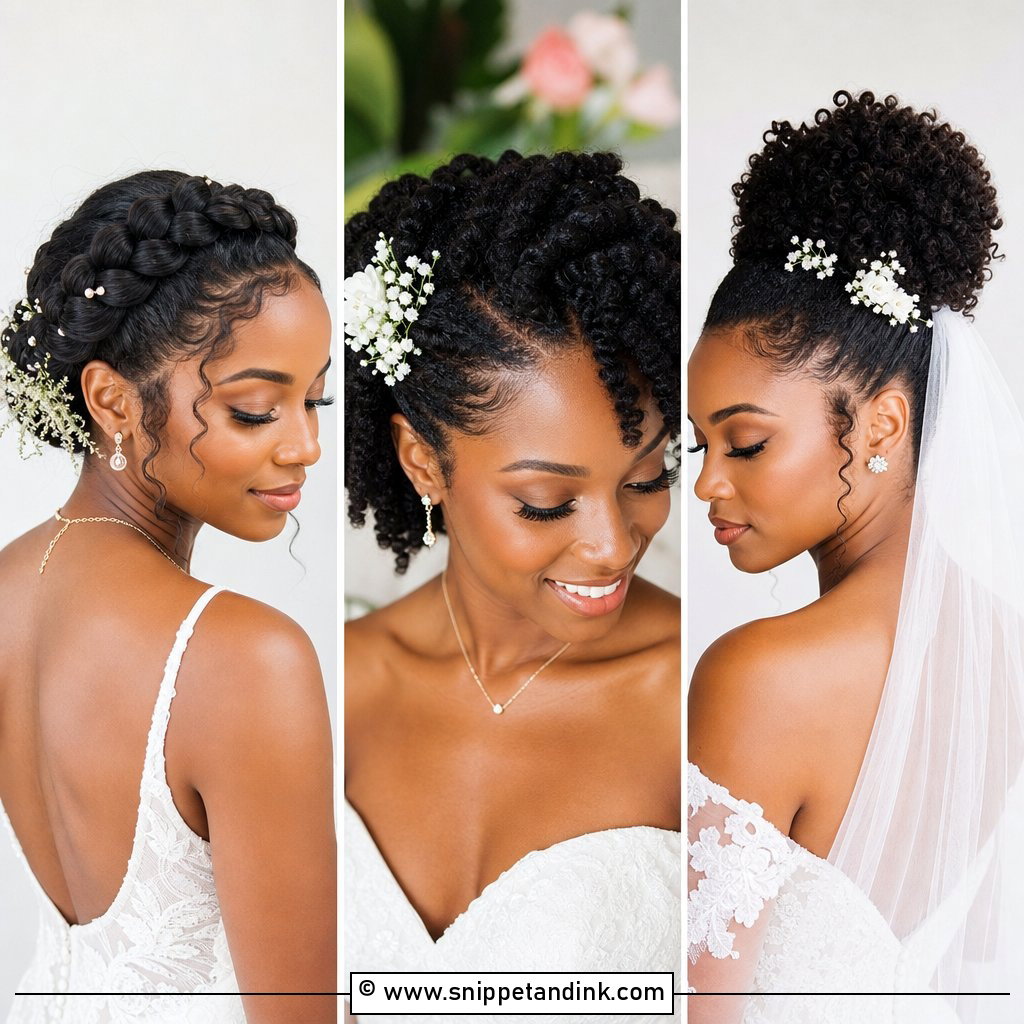
15. Soft Chignon With Pearl Crown
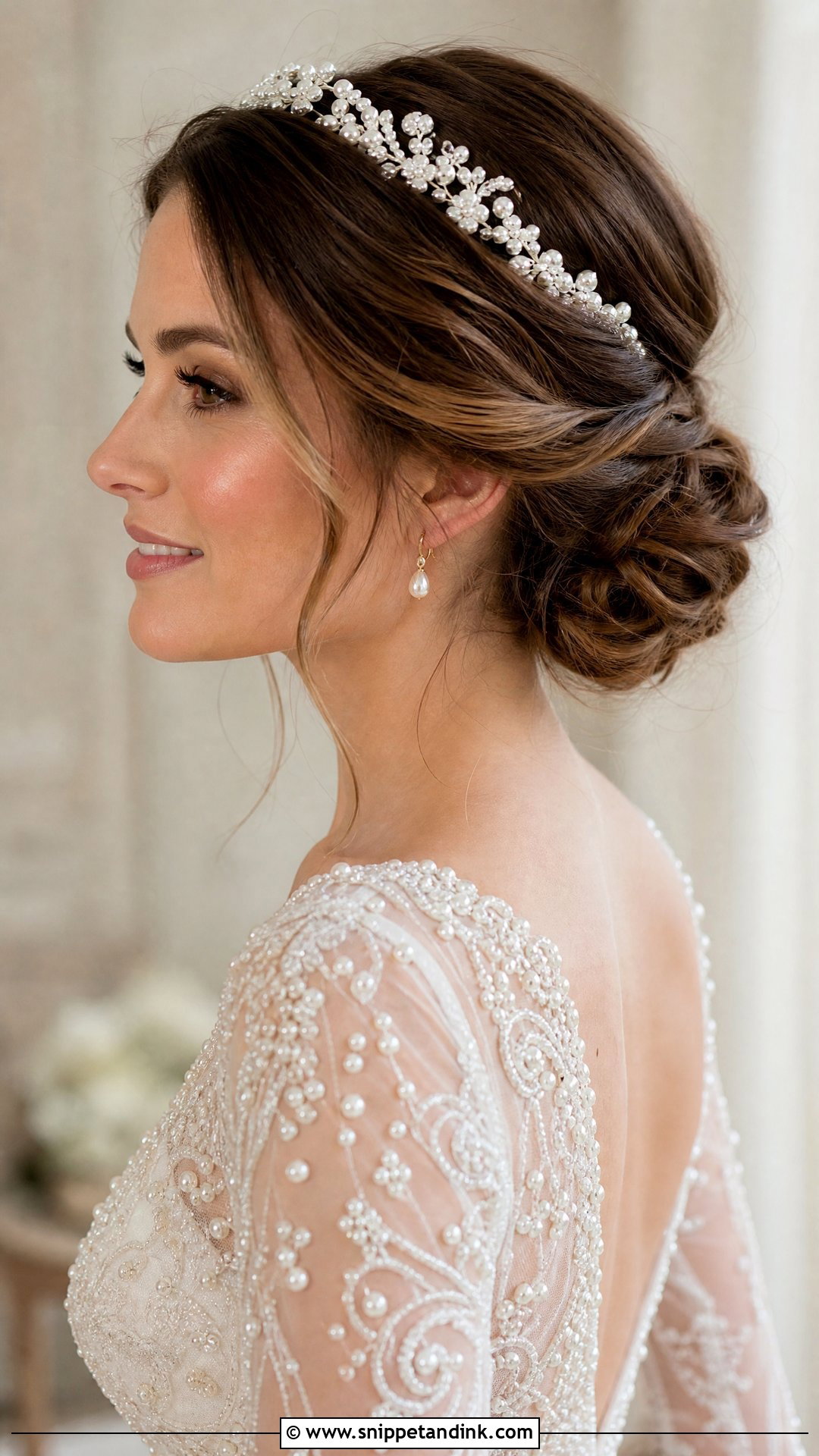
A loose chignon is softer than a tight bun because the hair is gathered, not wrapped, so some texture shows through. I prep with a light curl so the strands have something to grip, then pin the chignon in loops. The pearl crown rests above with enough space that it doesn’t press into the soft sections. Face-framing tendrils finish it. It pairs naturally with pearl earrings and a classic veil, and suits most gown shapes.
16. Bohemian Fishtail Crown Braid
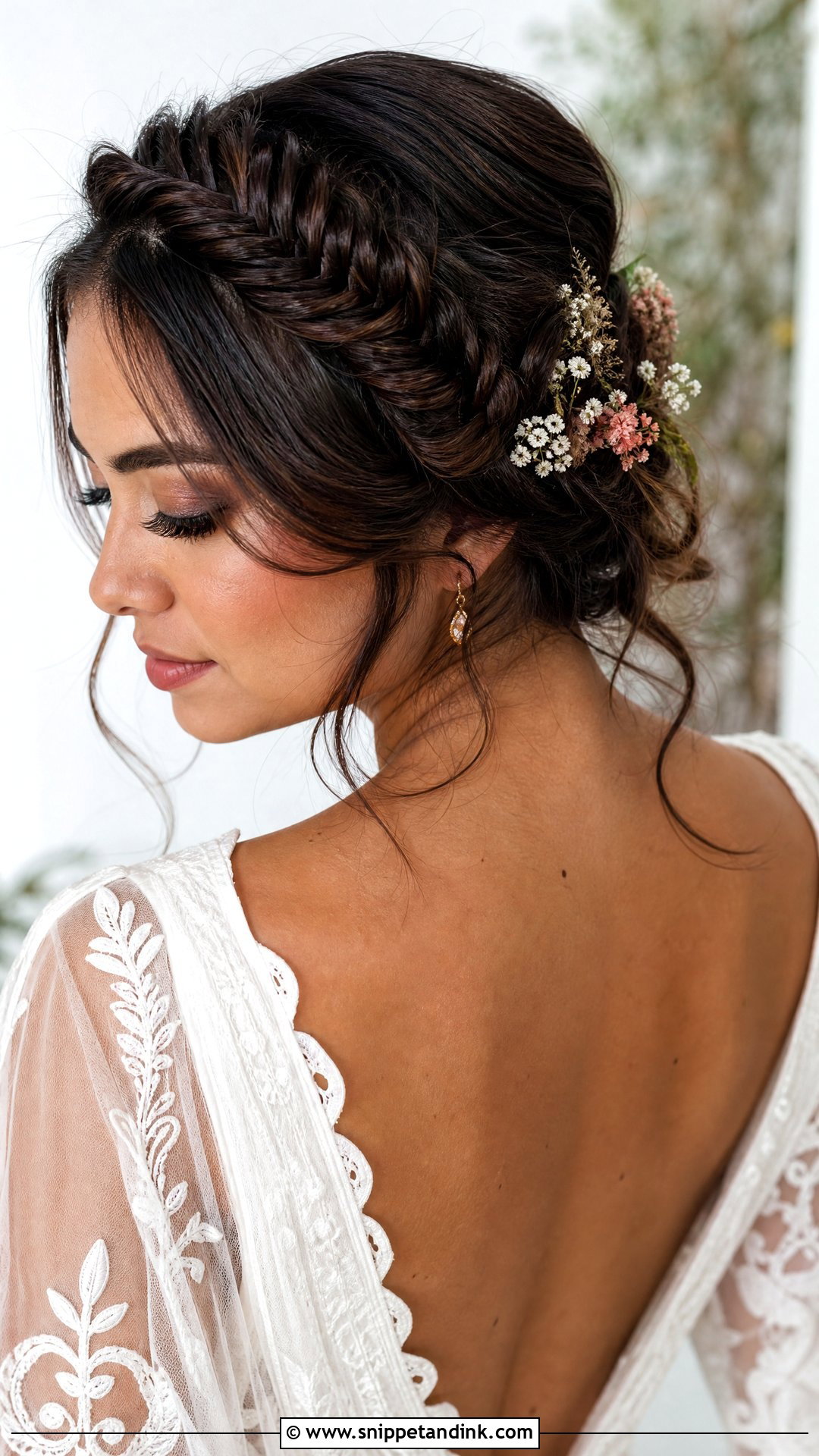
The bohemian fishtail crown braid takes longer than a three-strand braid, and the texture is the reward. Fishtails show every strand, so I prep with dry texture spray and pancake the braid gently once it’s pinned to widen it. Long hair with some grit holds it best. Tiny blooms can be tucked into the weave for an outdoor ceremony. On slippery hair, expect a few strands to escape by evening; that’s part of the look, not a failure.
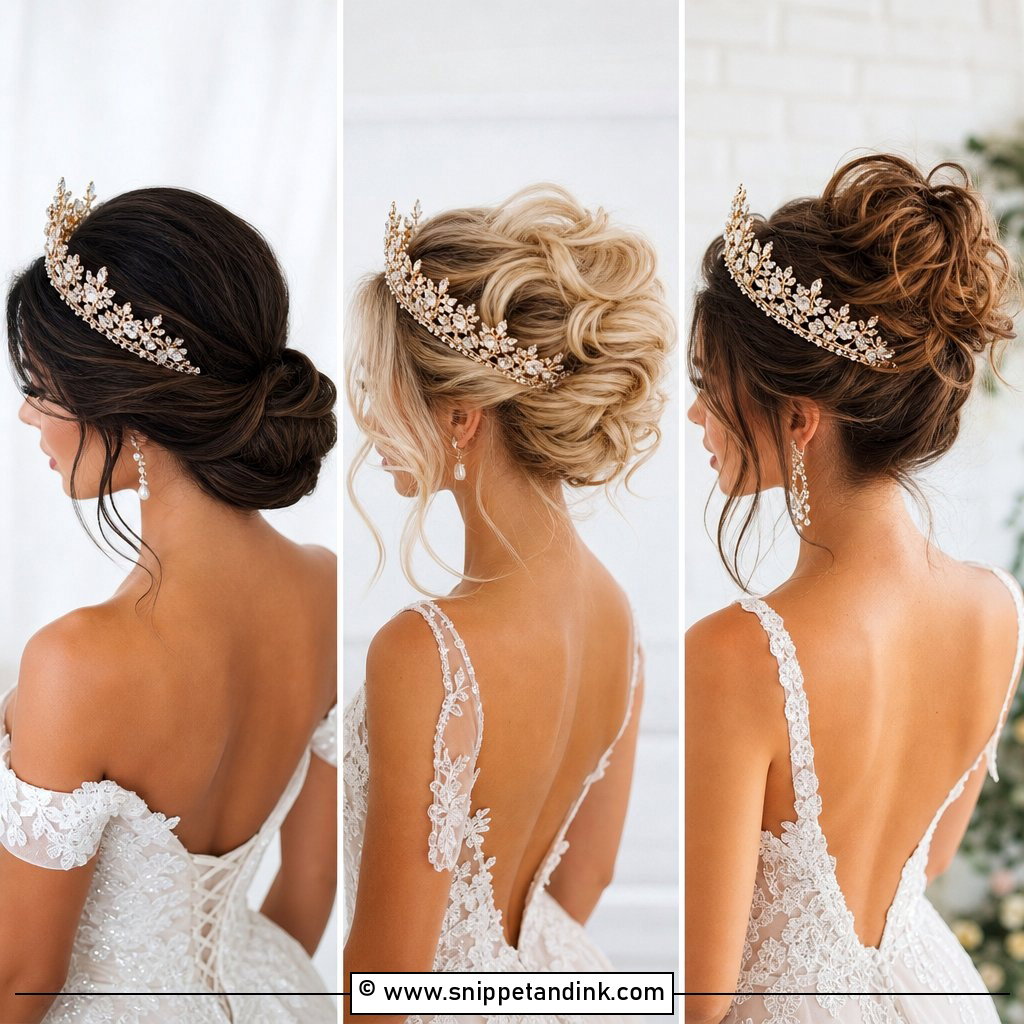
17. Glamorous Updo With Statement Crown
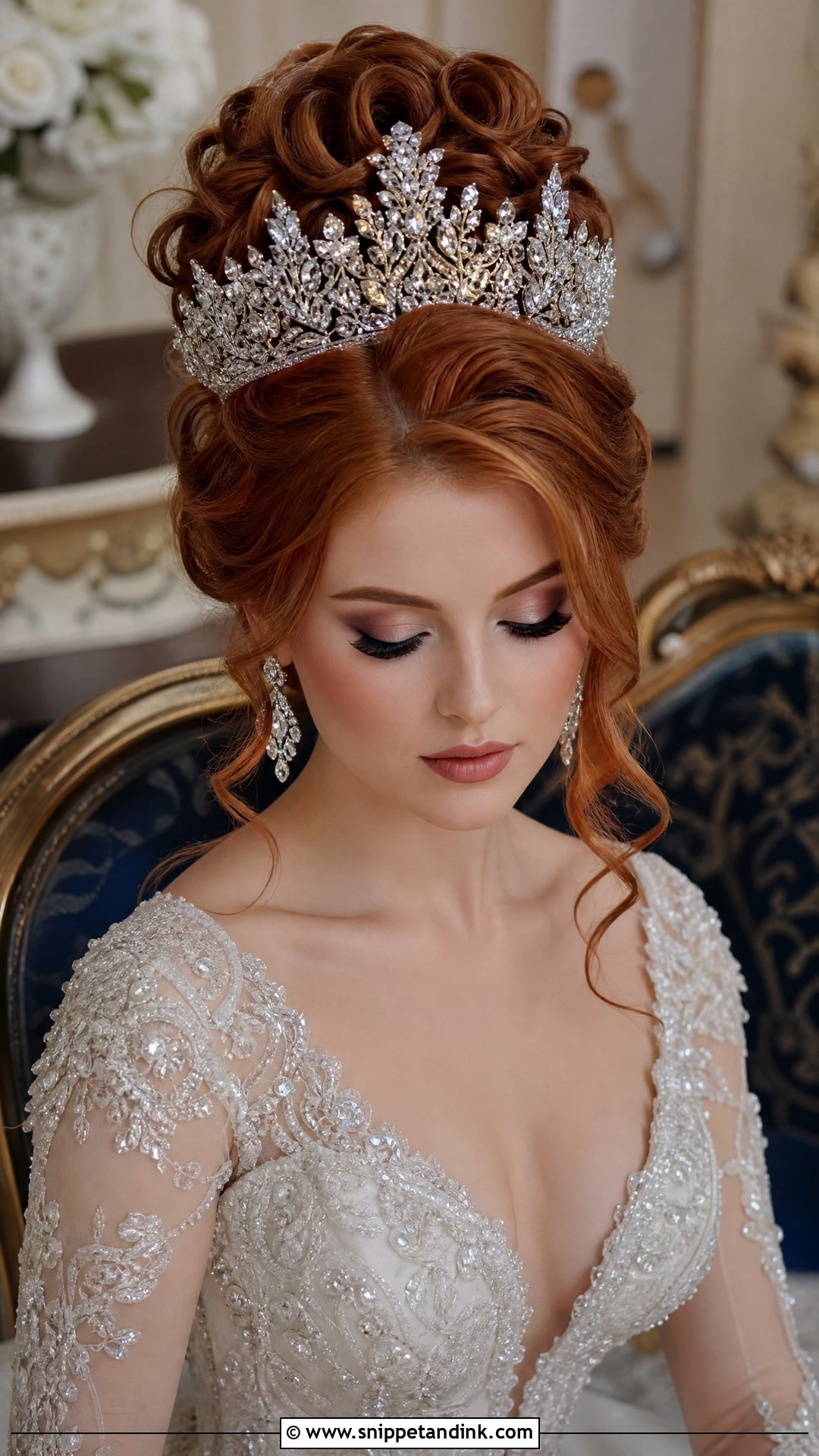
A tall structured updo can carry a large crown that would swamp a smaller style. Make a bold entrance with it, but plan the anchoring carefully. Heavy crowns need combs on both sides plus crossed pins, and I add a padded base so the band doesn’t press into the scalp. Ballroom and formal venues suit it. Keep the earrings in proportion so the crown stays the focus.
18. Half Up Braided Crown With Curls
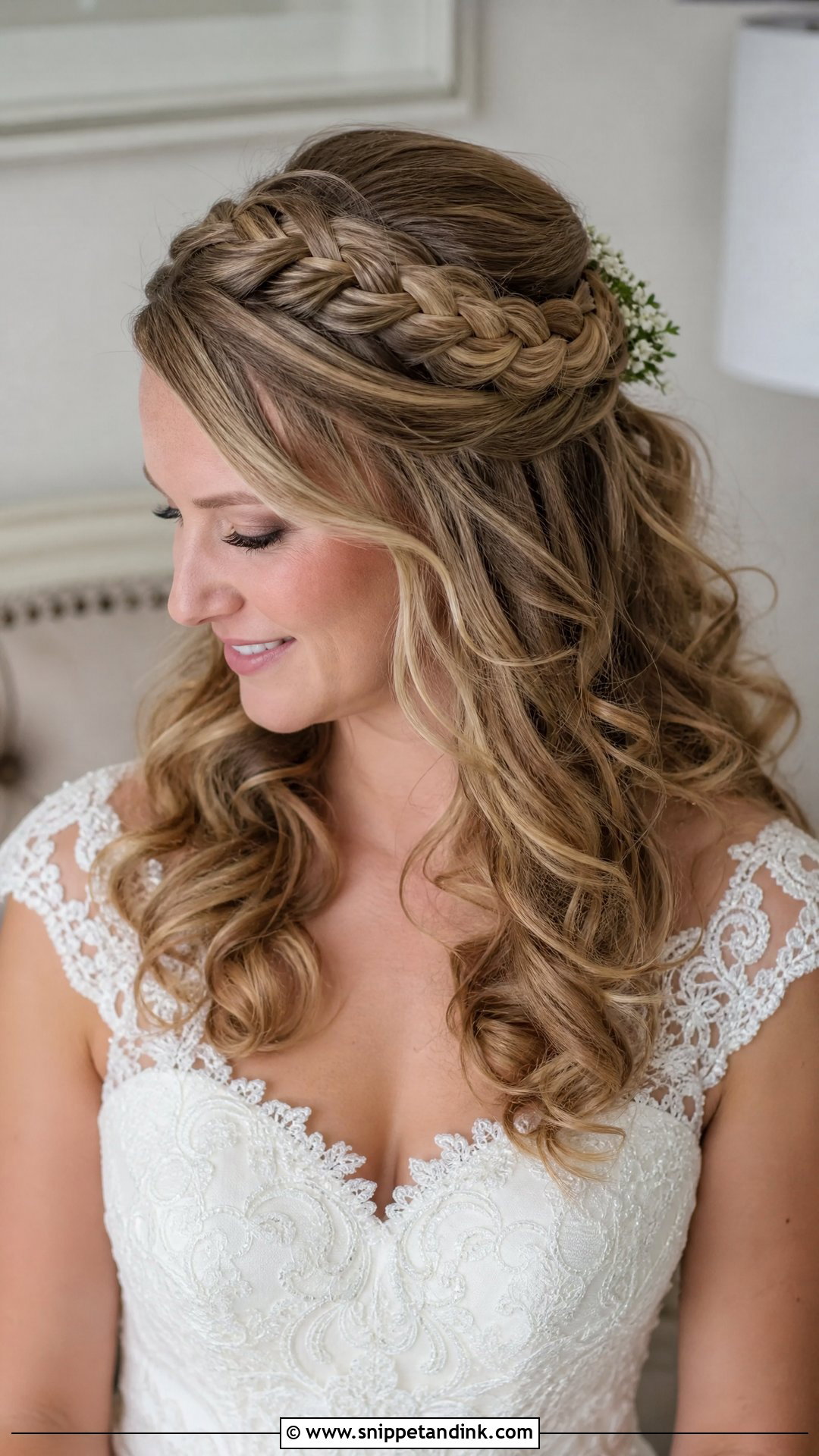
Half up with a braid across the top gives the structure of a crown braid while leaving length on the shoulders. The braid runs ear to ear and is pinned flat, so it frames the face from the front and from the side. Curls below need setting spray and some time to cool. Small flowers or a delicate tiara can sit just behind the braid. Medium hair works if it reaches past the shoulders; anything shorter won’t curl enough to look intentional.
19. Modern Twisted Updo With Crown
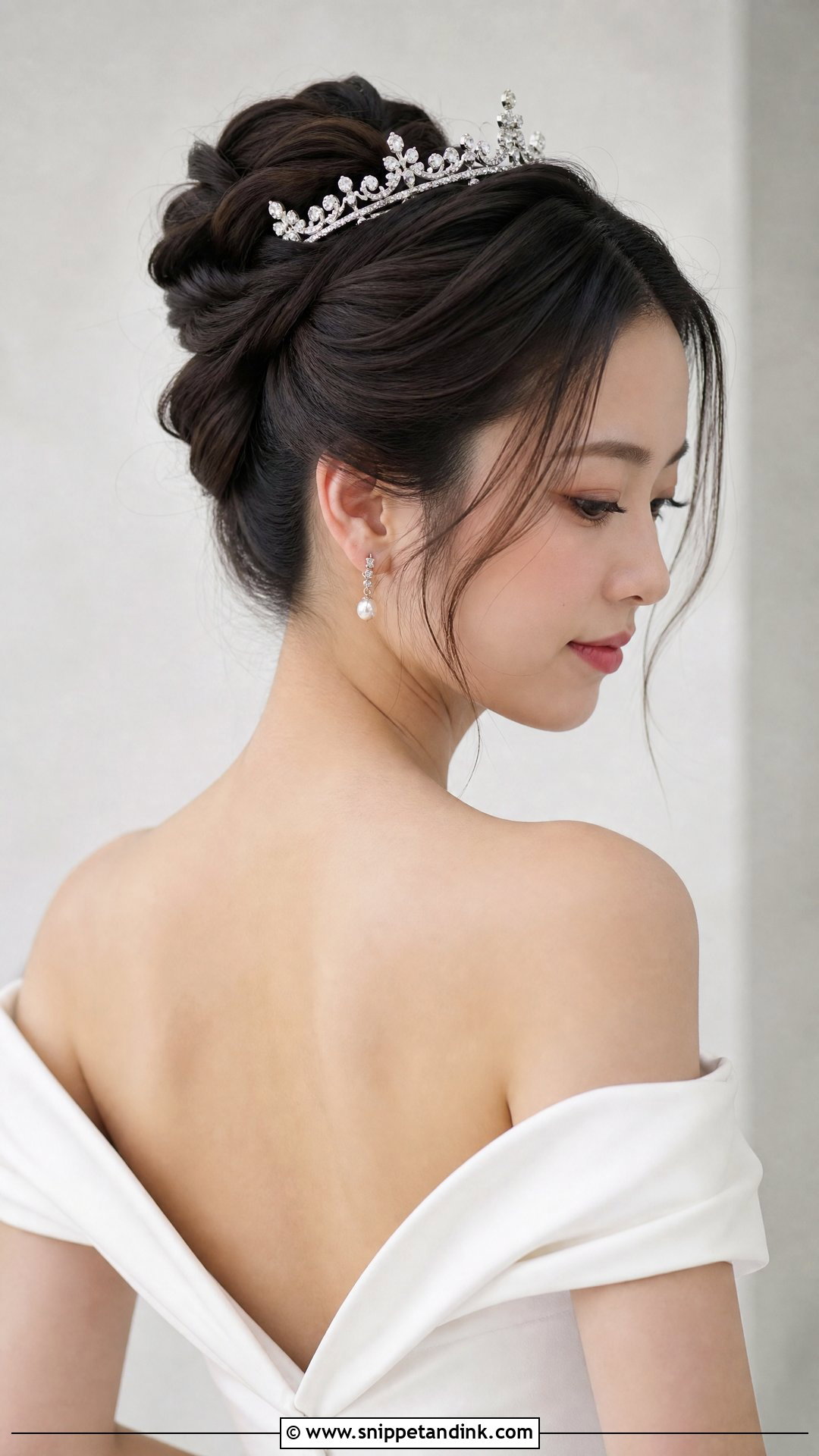
Twisting sections and pinning them into a sculpted shape gives a modern updo clean lines with some depth. Each twist is set separately, so the style holds its outline well into the night. The crown sits at the front and should be minimal to suit the geometry; a heavy ornate piece fights the clean shape. Sleek gowns and bold earrings sit well with it. Fine hair needs volume powder at the roots first, or the twists look thin.
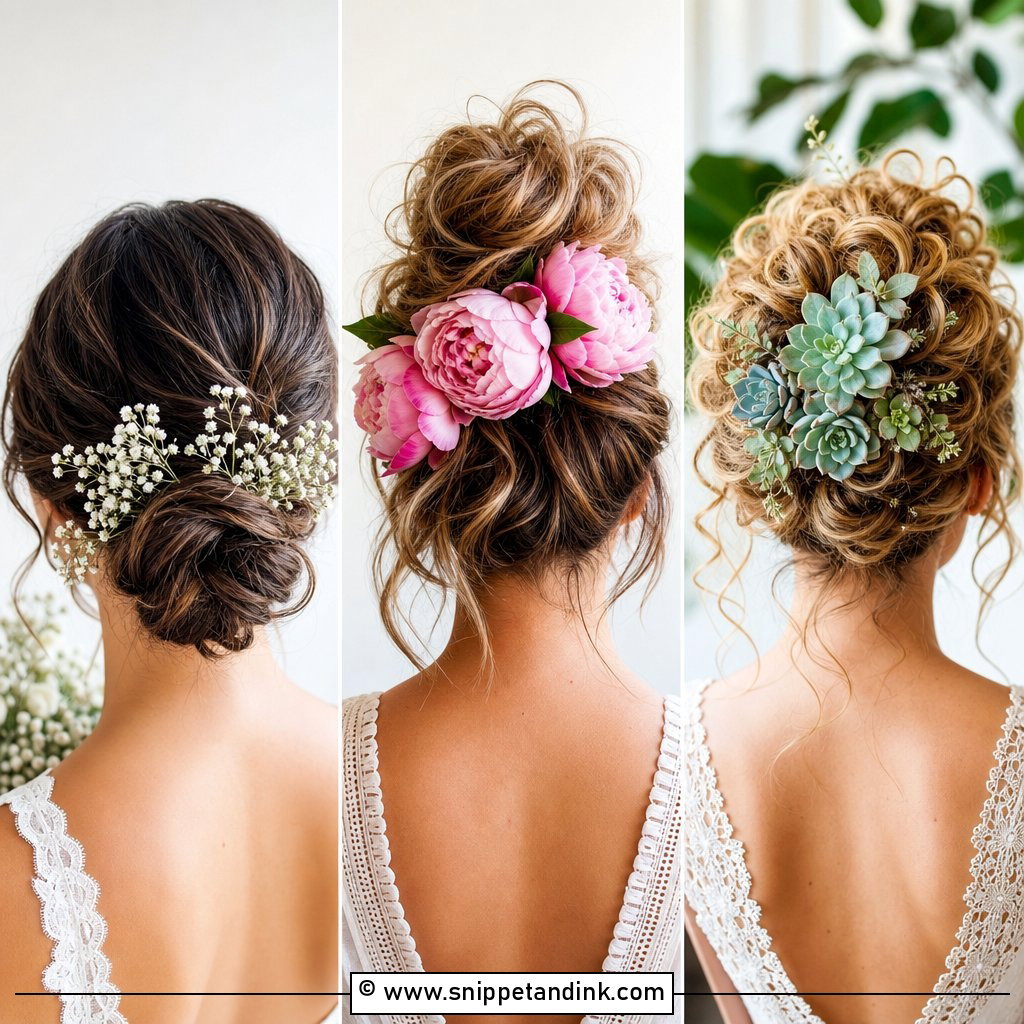
20. Reverse Crown At The Back
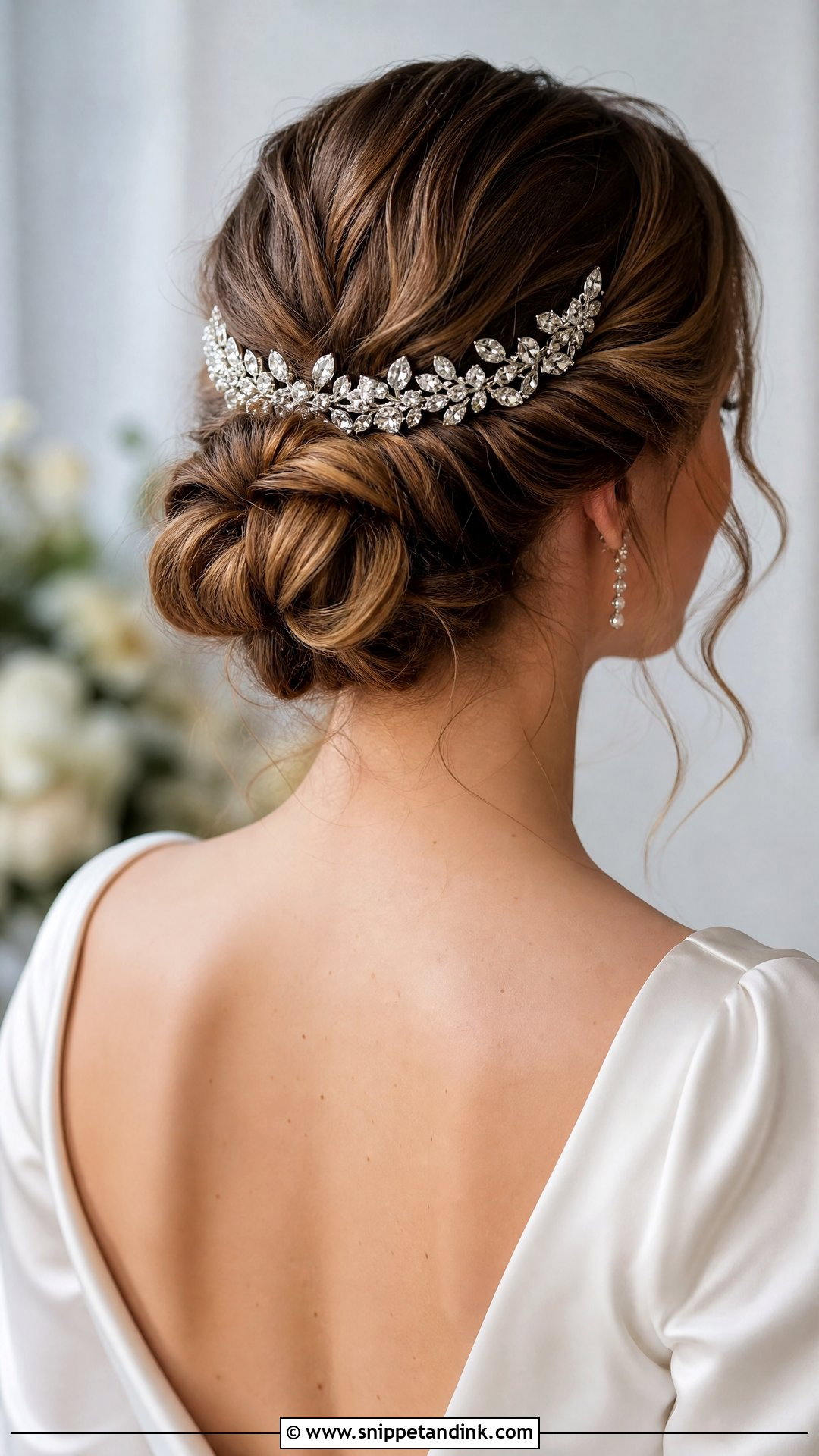
Placing the tiara at the back, wrapped around a bun or twist, is my favourite trick for a bride who wants sparkle but not a crown at her hairline. Guests see it as you walk away down the aisle and in every photo from behind. Low buns and chignons make the best base. Plan the veil first, since the comb goes either above or below the tiara and can’t sit on top of it. It’s a quiet, unusual placement and suits most face shapes.
Hour Eight Under a Heavy Crown
A crown that feels fine at the mirror can ache by dinner. The pressure comes from combs pushed tightly against the scalp, and from tight elastics under the style. When I fit a heavier piece, I make sure the band rests on hair, not skin, and I leave a little give in the pins behind each ear.
Plenty of brides take the crown off for the reception. Plan for it at the trial, so your stylist builds a style that still looks finished without it. A braided halo or a twisted updo looks complete on its own; a plain smooth bun can look empty once the sparkle is gone. Ask a bridesmaid to keep a small pouch for the crown and spare pins.
Removing it without damage
Take the pins out first, then lift the crown straight up and backward. Pulling it forward drags the combs through the style and catches hair. If a comb tangles, loosen it by wiggling it side to side rather than tugging.
Matching the Crown to Your Hair Type
- Fine hair: choose light pearl or wire bands and styles with braids or teasing for grip.
- Thick hair: almost any crown works, but avoid very tight high buns that pull on the scalp all day.
- Curly or coily hair: work with the natural volume and use open pins that won’t crush the curl.
- Layered hair: twists catch short layers better than plaits.
- Short hair: a slim band or a crown at the back of a small twist is more realistic than a full halo.
Where Your Crown Sits Says More Than the Crown Itself
The look you end up loving will be the one where the crown, the hair underneath and the gown work as one. Braids give the firmest grip, low buns the calmest outline, half up styles the most movement. If you’re drawn to fairytale princess vibes or something spare and modern, bring the actual headpiece and veil to your trial, test it with your head turned and tilted, and let your stylist adjust the placement until it stops moving. Then wear it with your shoulders back.
You'll Like These Ideas:




Leave a Reply