
The hairstyles that still look right in wedding albums decades later are rarely the most complicated ones. They’re the ones built properly for the hair in the chair, the dress and the length of the day. Below are twenty classic bridal styles I’m asked for over and over, from a low chignon to finger waves and a crown braid. For each one I’ve added what I actually check before I start, who it suits, and where it tends to fail, so you can take a shortlist to your own stylist with realistic expectations.
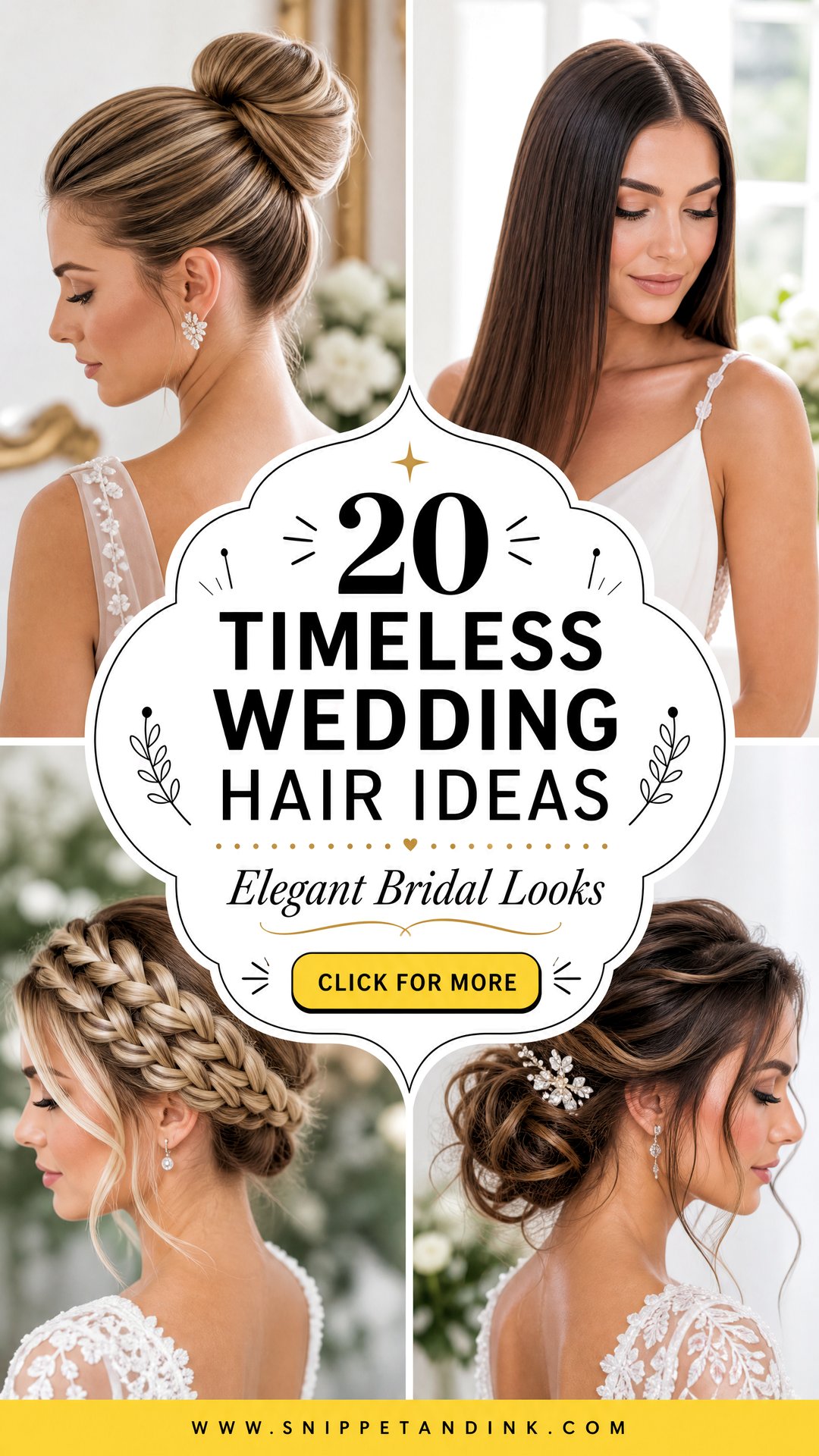
Reading the Neckline and Veil Before You Settle on a Style
When a bride shows me her saved photos, the first thing I ask for is a picture of her dress, from the front and the back. The neckline and the veil limit what will work more than face shape does.
- High necks and lace collars: an updo or a sleek bun keeps hair from catching on embroidery and hiding the detail.
- Open or low backs: hair worn up or swept to one side keeps the back visible in ceremony photos.
- Strapless and sweetheart: almost anything works, including hair down.
- One-shoulder: gather the hair on the strap side so the bare shoulder stays open.
- Long veils: decide whether the comb sits above or below the bun, since that changes where the bun goes.
Bring your veil to the trial, not just a photo of it. Its weight and comb size make a real difference to how I build the base.
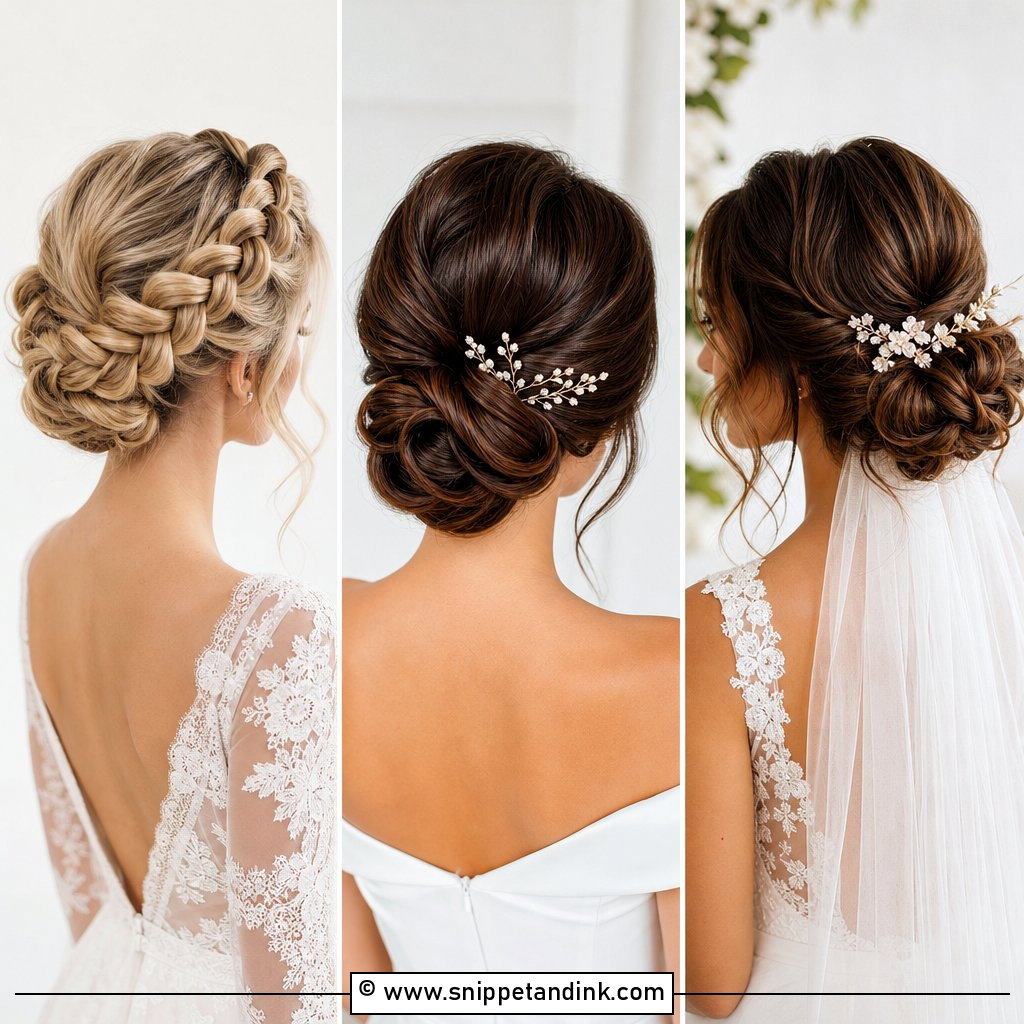
1. Low Chignon Bun
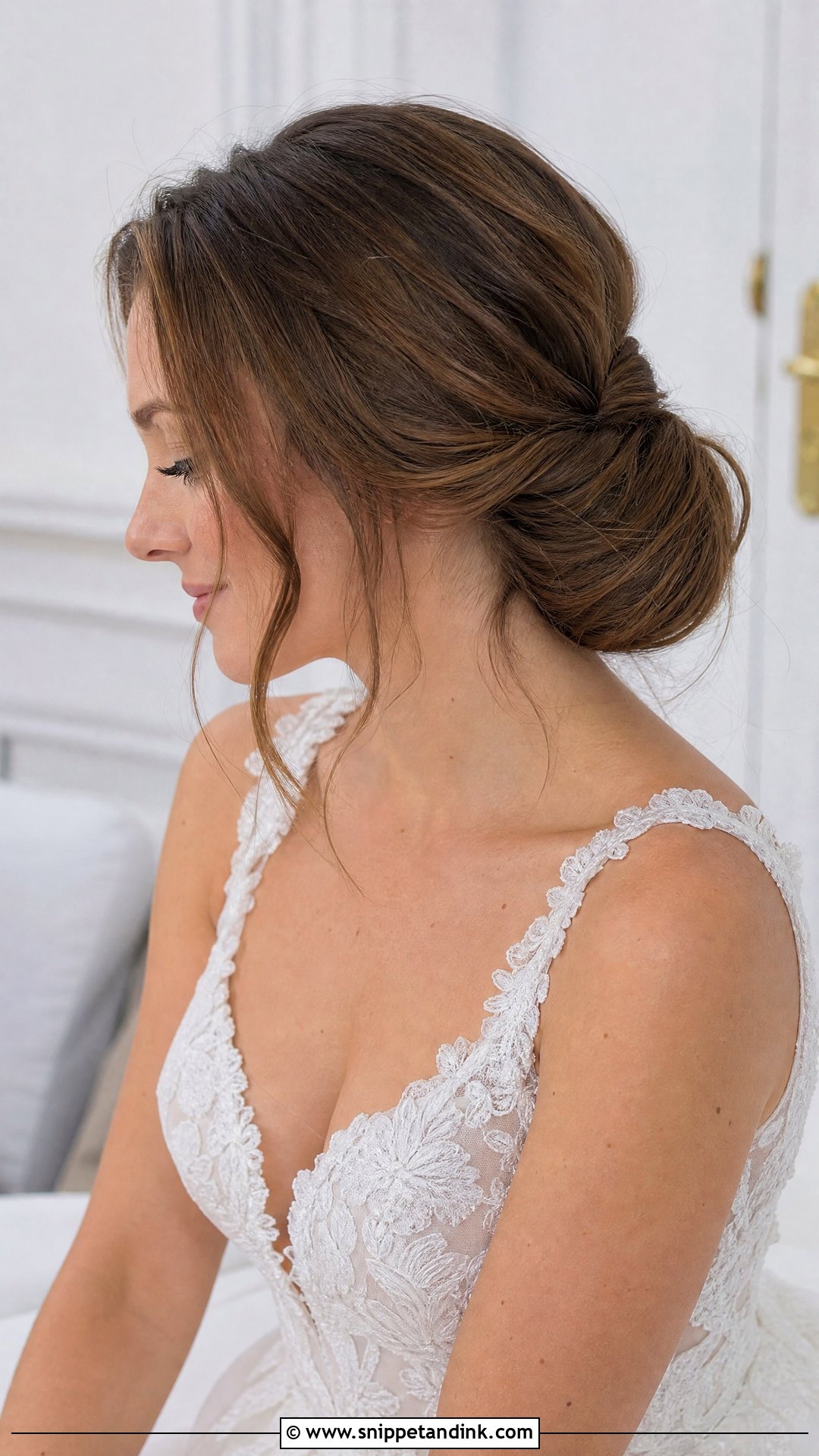
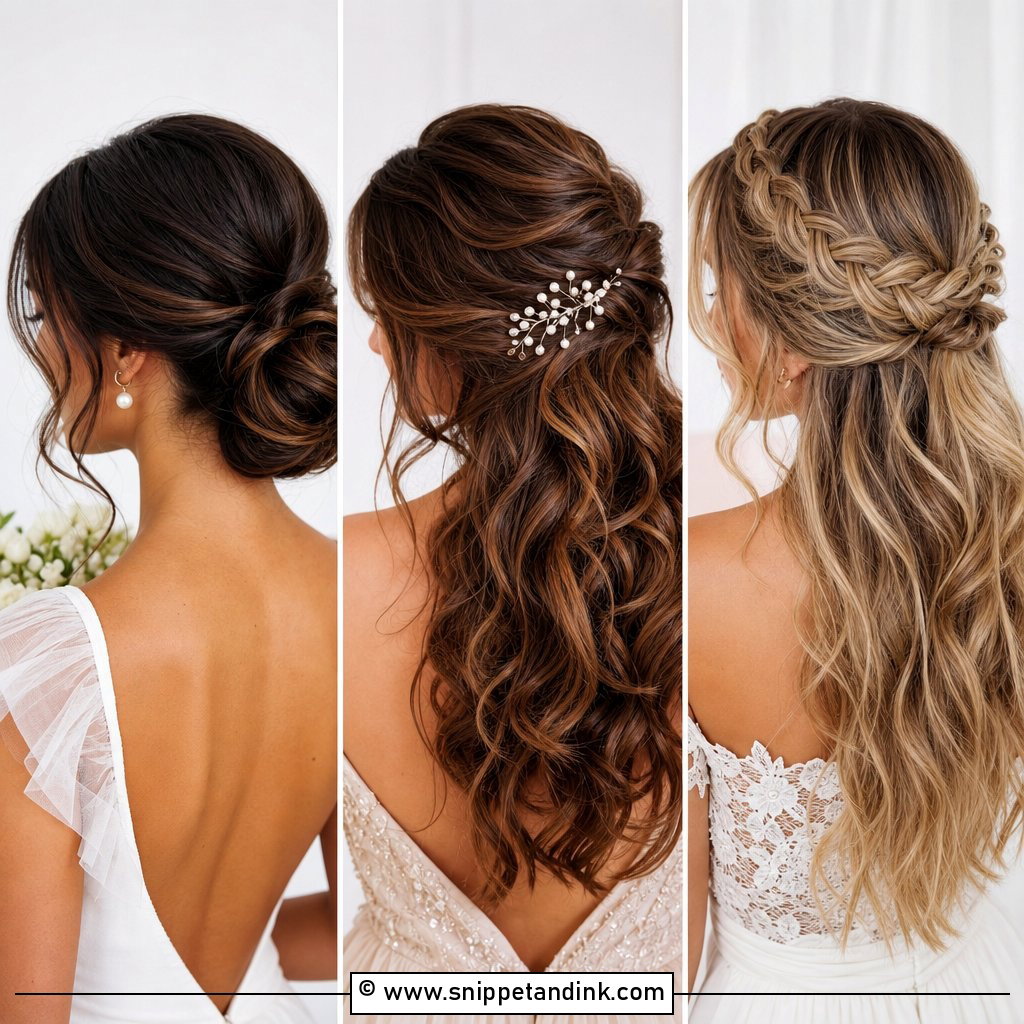
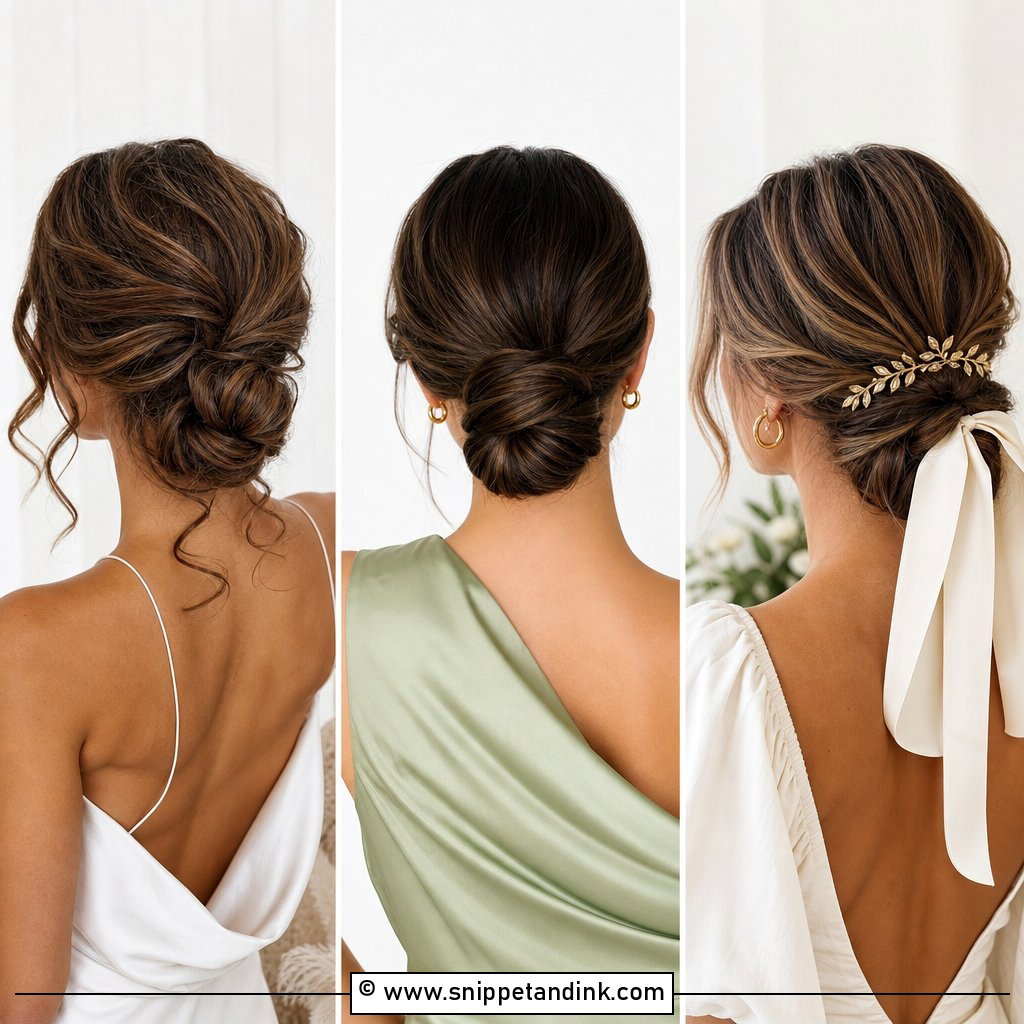
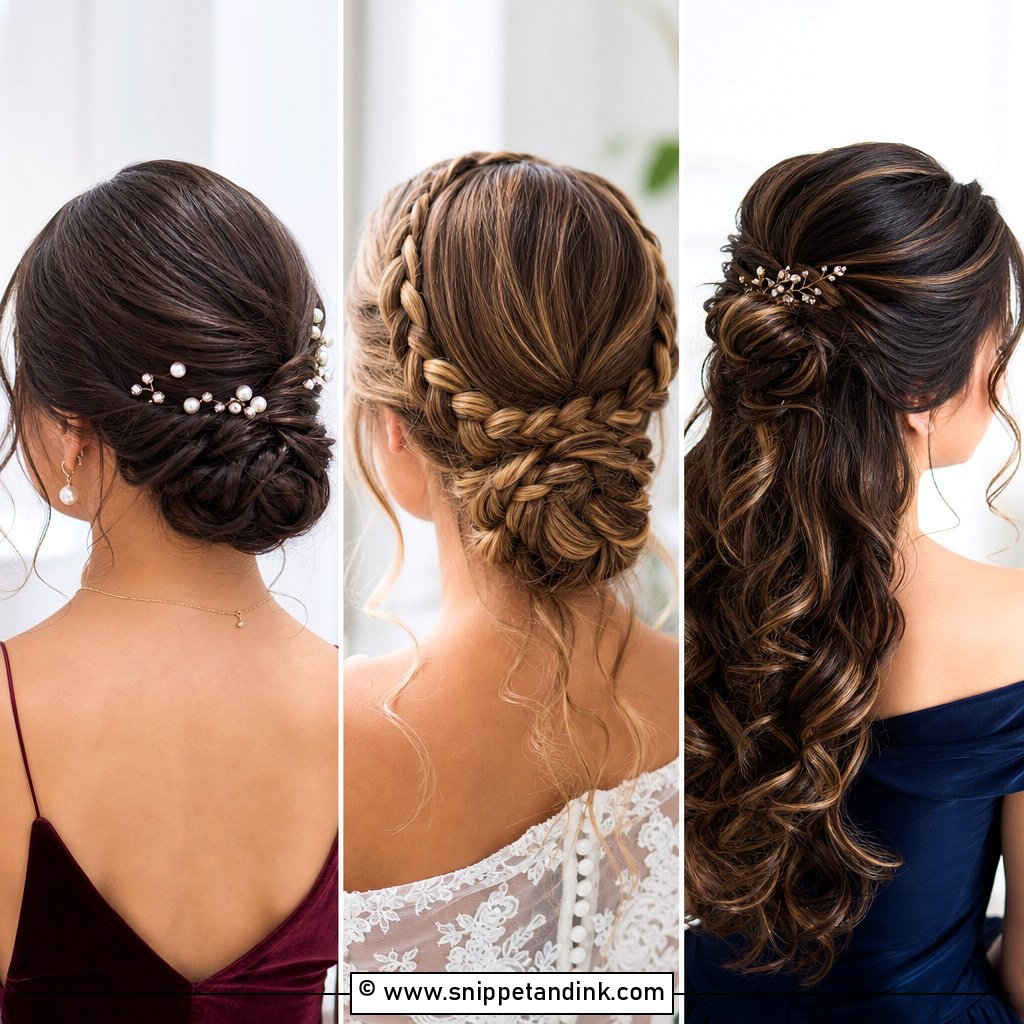
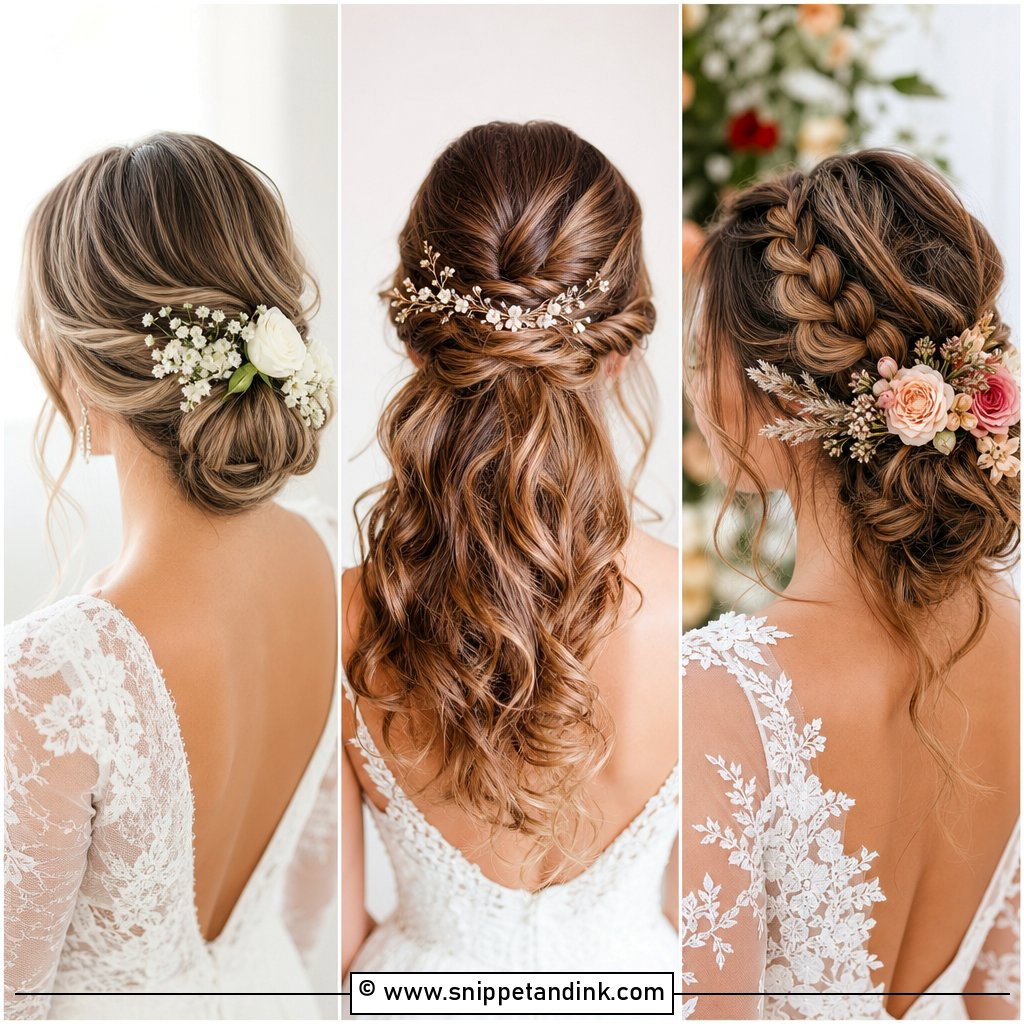
If I had to name one style that suits almost every bride, it’s the low chignon. It sits at the nape, so a veil comb slides in right above it and a tiara doesn’t fight it. I build it on a small hidden ponytail or a padded base so the pins have something solid to grip, which is why it lasts from ceremony to last dance. Worn sleek it feels formal; with a few strands loosened at the temples it softens. The one bride I’d steer away from it is someone with very short layers at the nape, which will escape by the evening unless we plan for them.
2. Classic French Twist
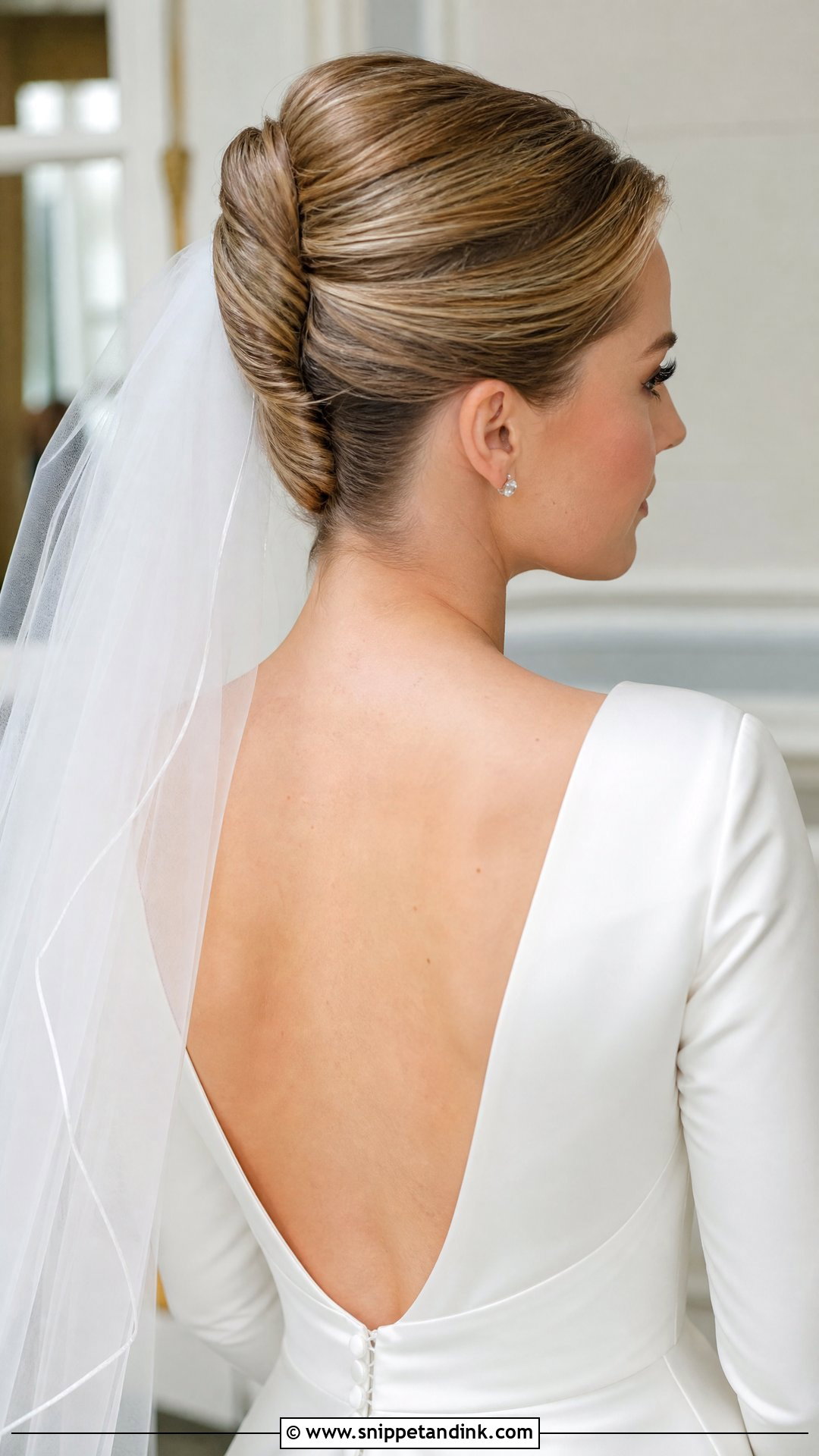
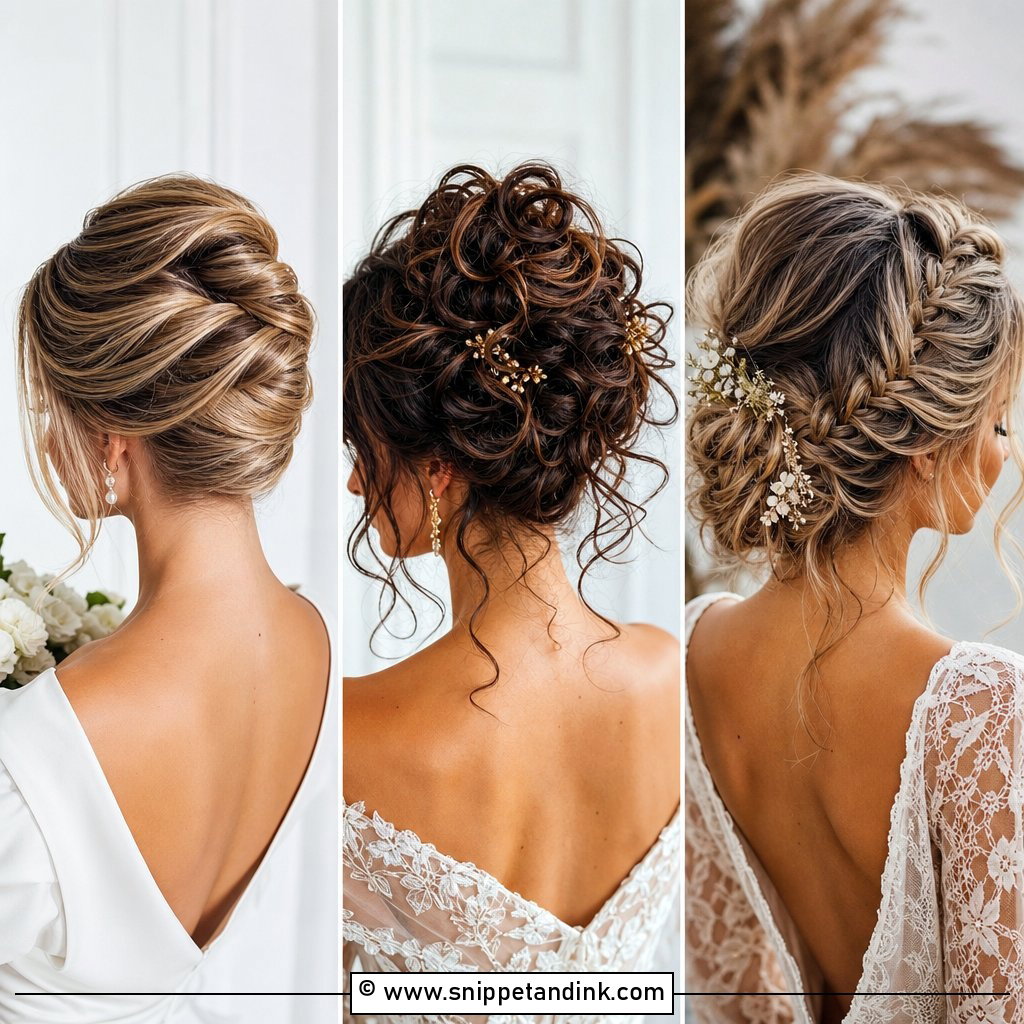
A French twist is a vertical roll pinned up the back of the head, and it lives or dies on the pinning. I cross-pin the base with bobby pins before I ever roll, then hide the seam with long hairpins pushed in at an angle. Adding soft volume at the crown and a little texture keeps it from looking dated. It needs at least shoulder-length hair; shorter than that and the ends poke out of the roll. Statement earrings and a fingertip veil sit naturally beside it.
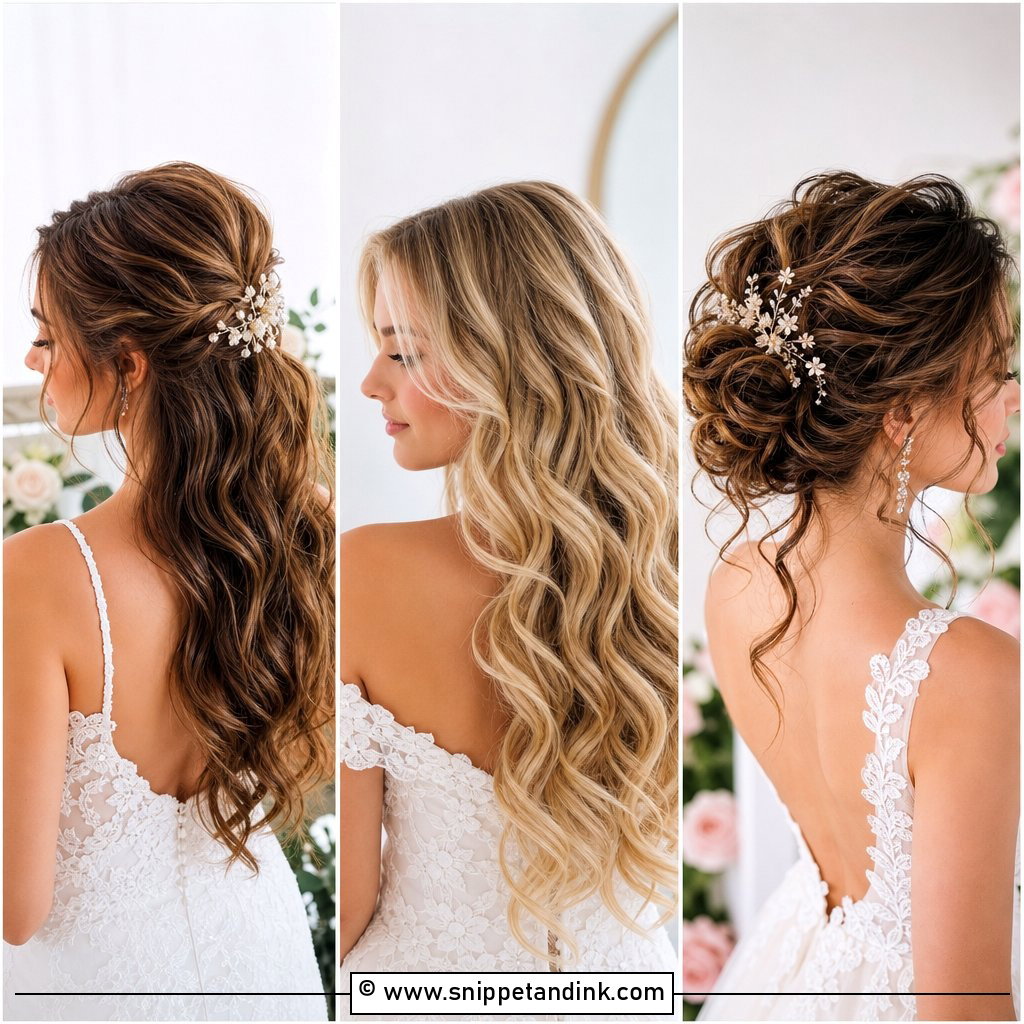
3. Half-Up Half-Down With Soft Waves
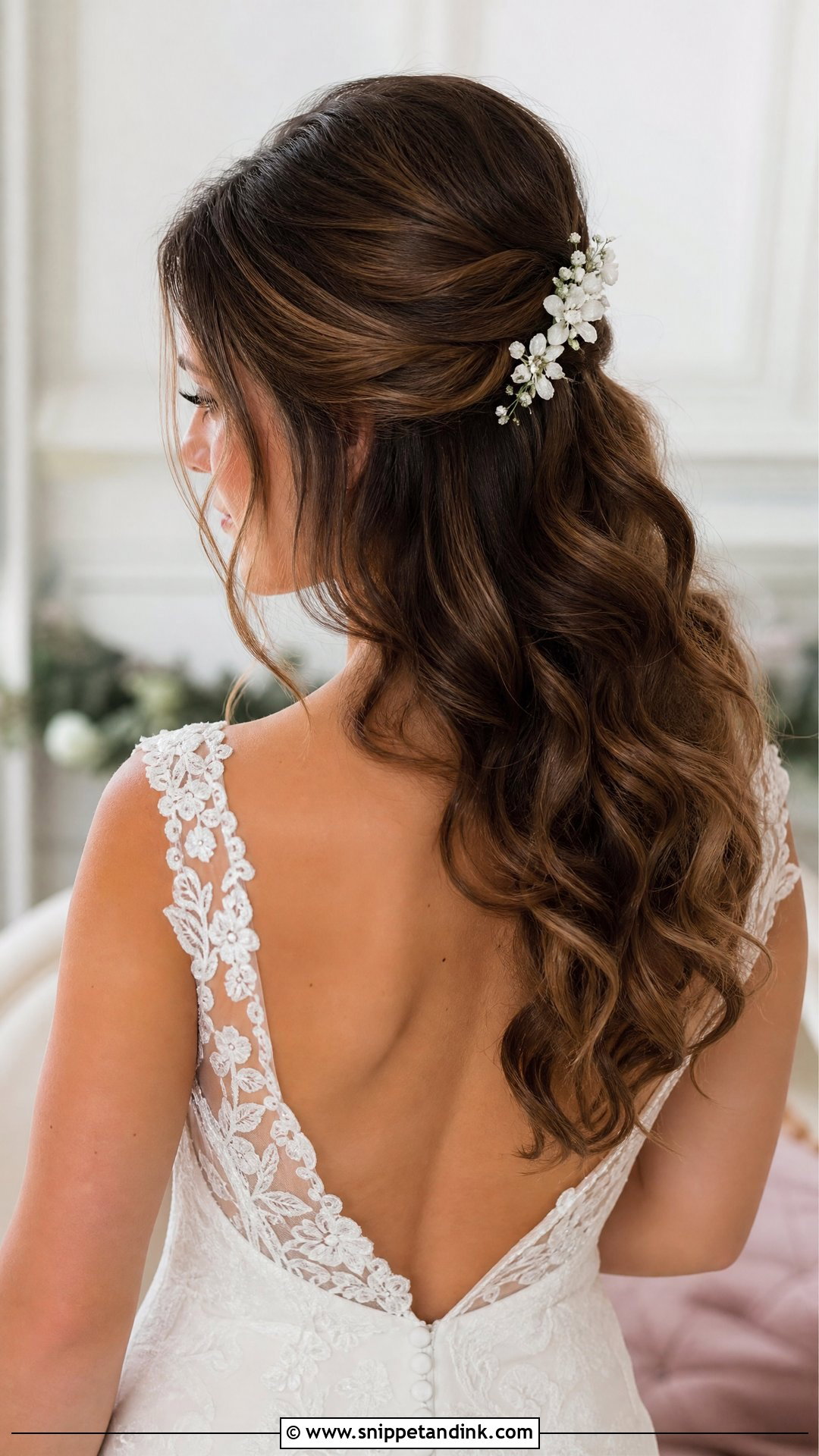
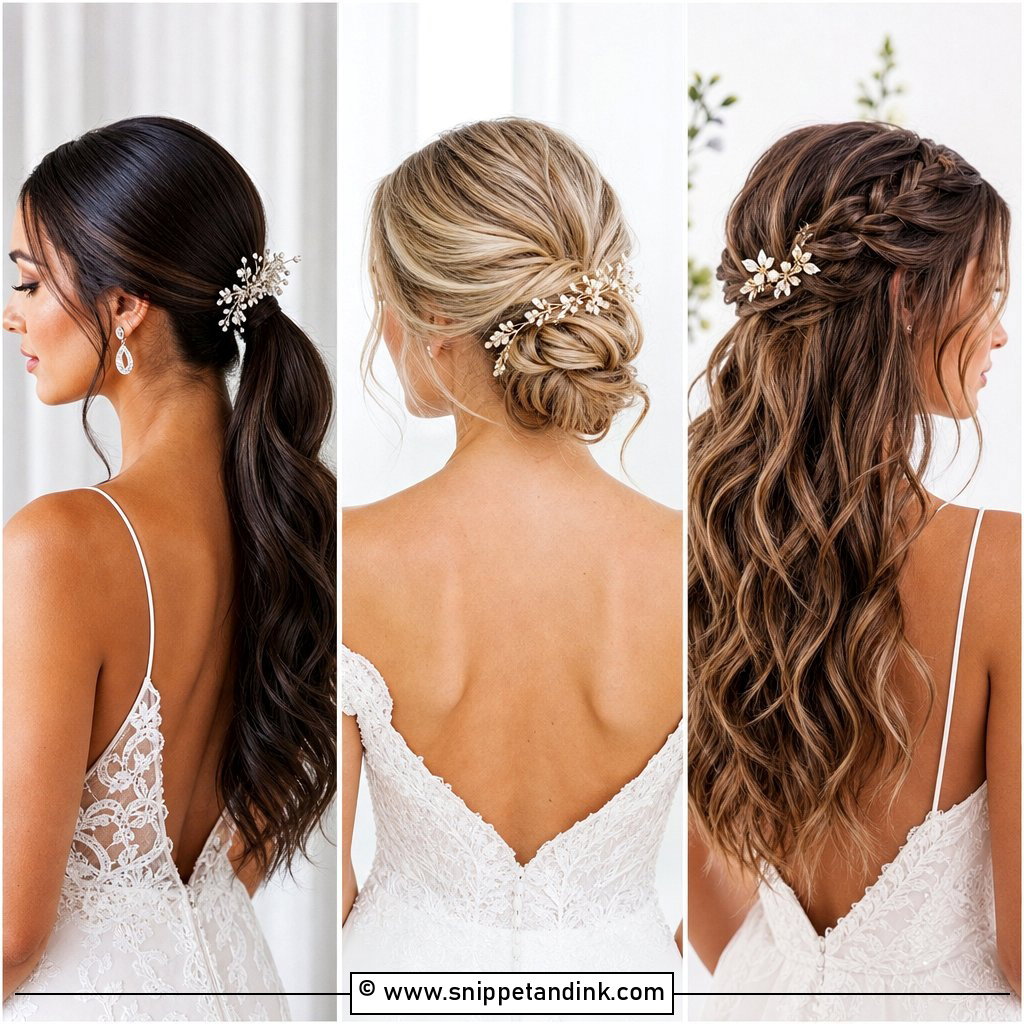
Half-up, half-down is the answer when a bride can’t choose, since the top section is secured and soft waves fall over the shoulders. It suits most lengths and face shapes, and a veil tucks right under the pinned section. The honest weak spot is the down part: in humidity, curls on fine hair can fall flat within a couple of hours. I curl with a smaller iron than the finished wave I want, let every curl cool pinned in a loop, and only then brush it out. Add light lift at the crown, then a floral crown, clips or a veil.
4. Hollywood Glamour Waves
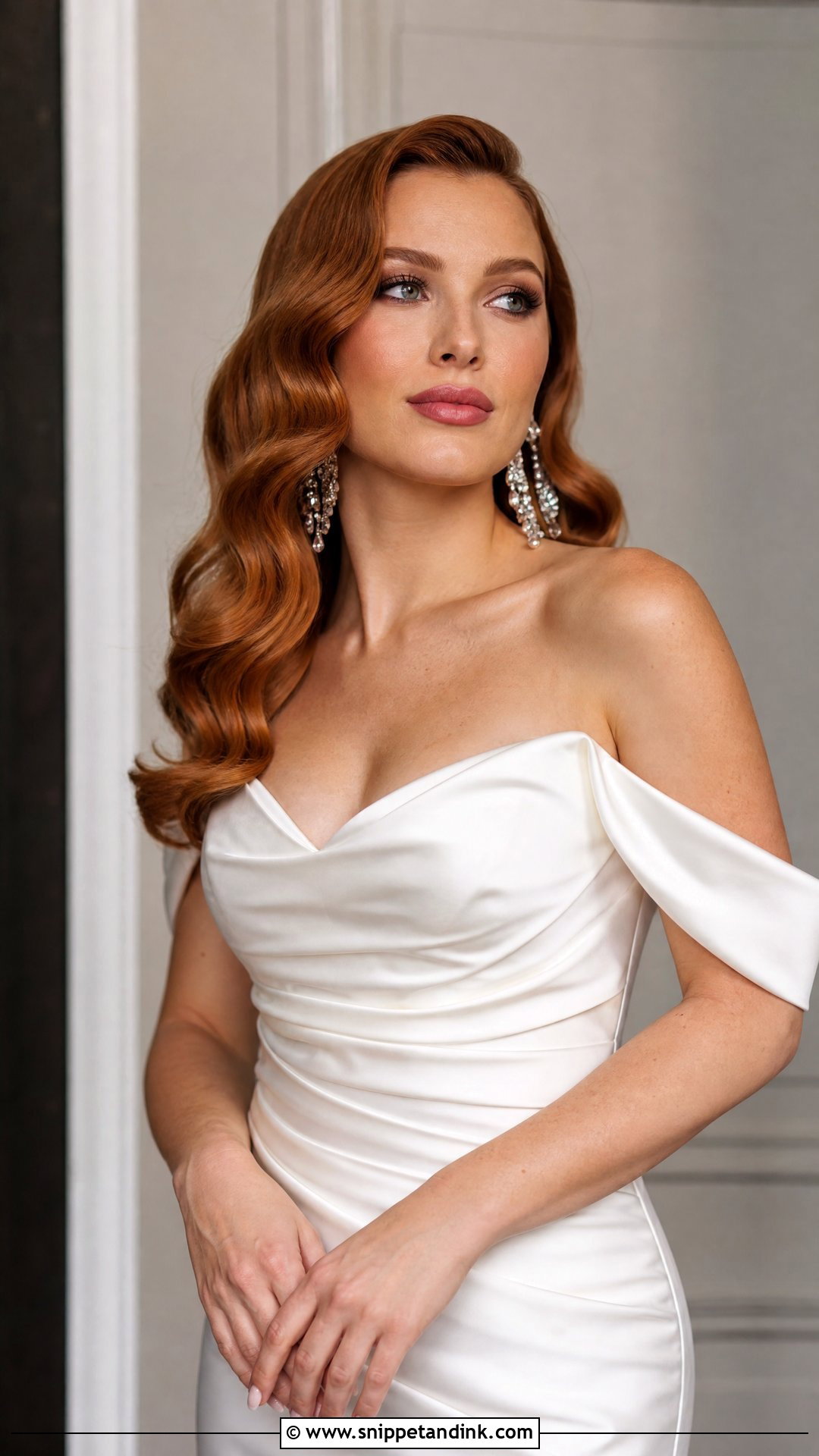
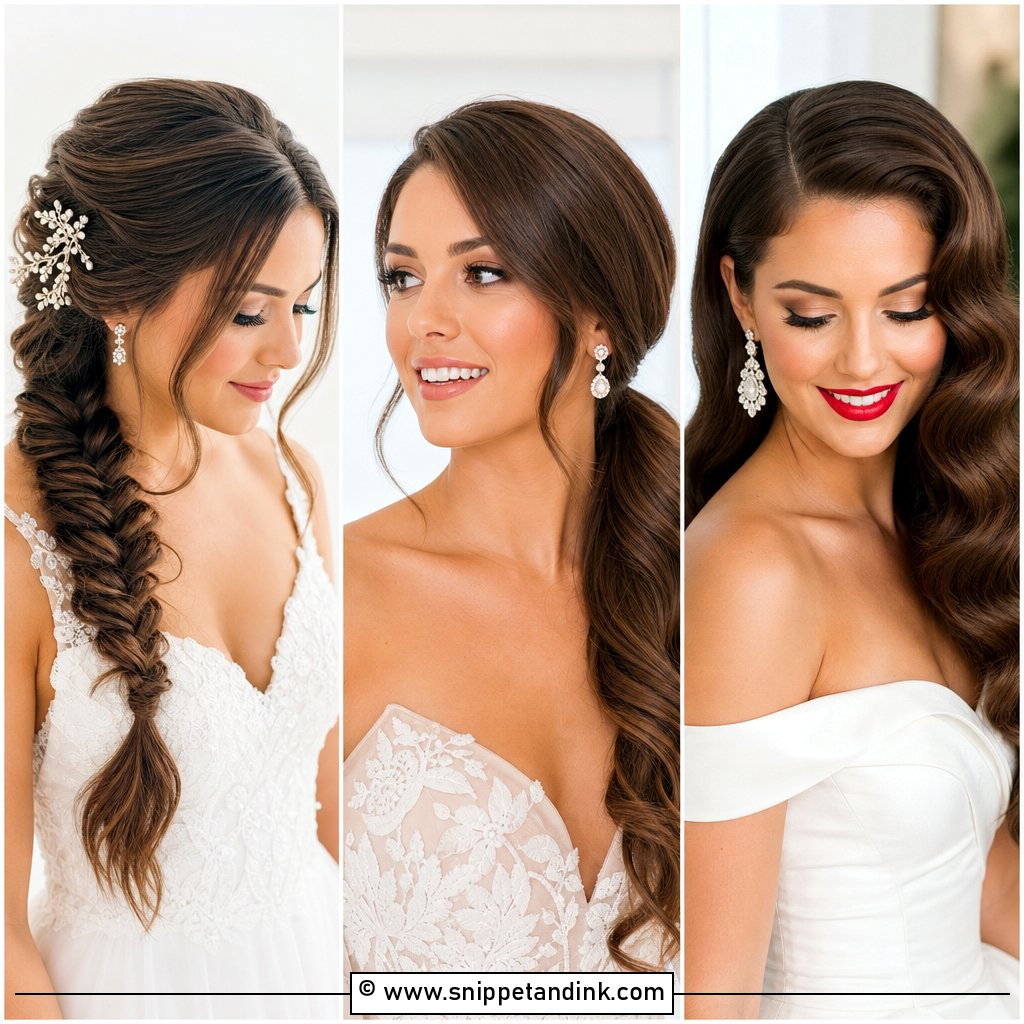
Hollywood waves start as uniform curls set in the same direction with a large barrel, which are then brushed out and pressed into one sculpted S-shape. The brushing is where most attempts go wrong; too early and the wave collapses, too late and it stays as separate ringlets. A deep side part suits it best. Medium to long hair works, and fitted gowns with a strong lip make the most of it. This is a look that needs real hold, so I set it with spray at each stage rather than all at the end.
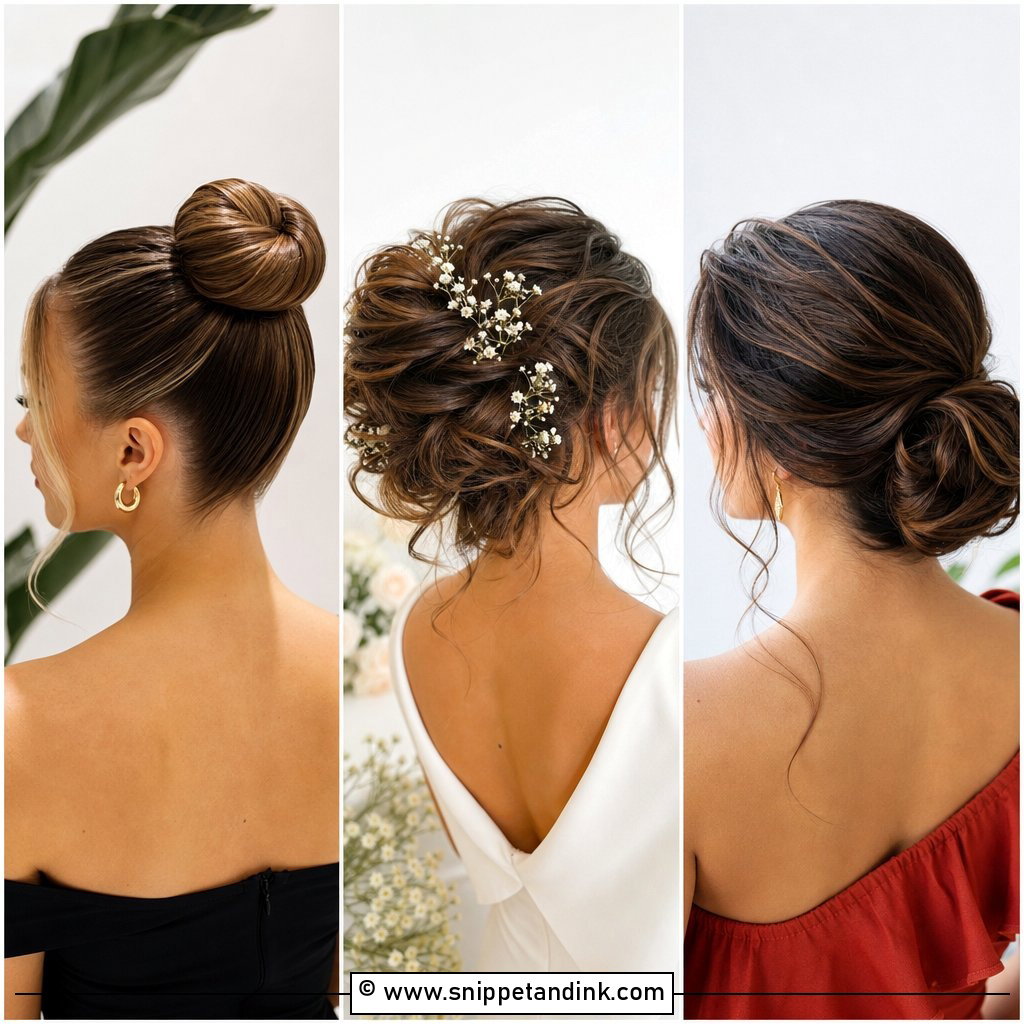
5. Sleek Low Bun
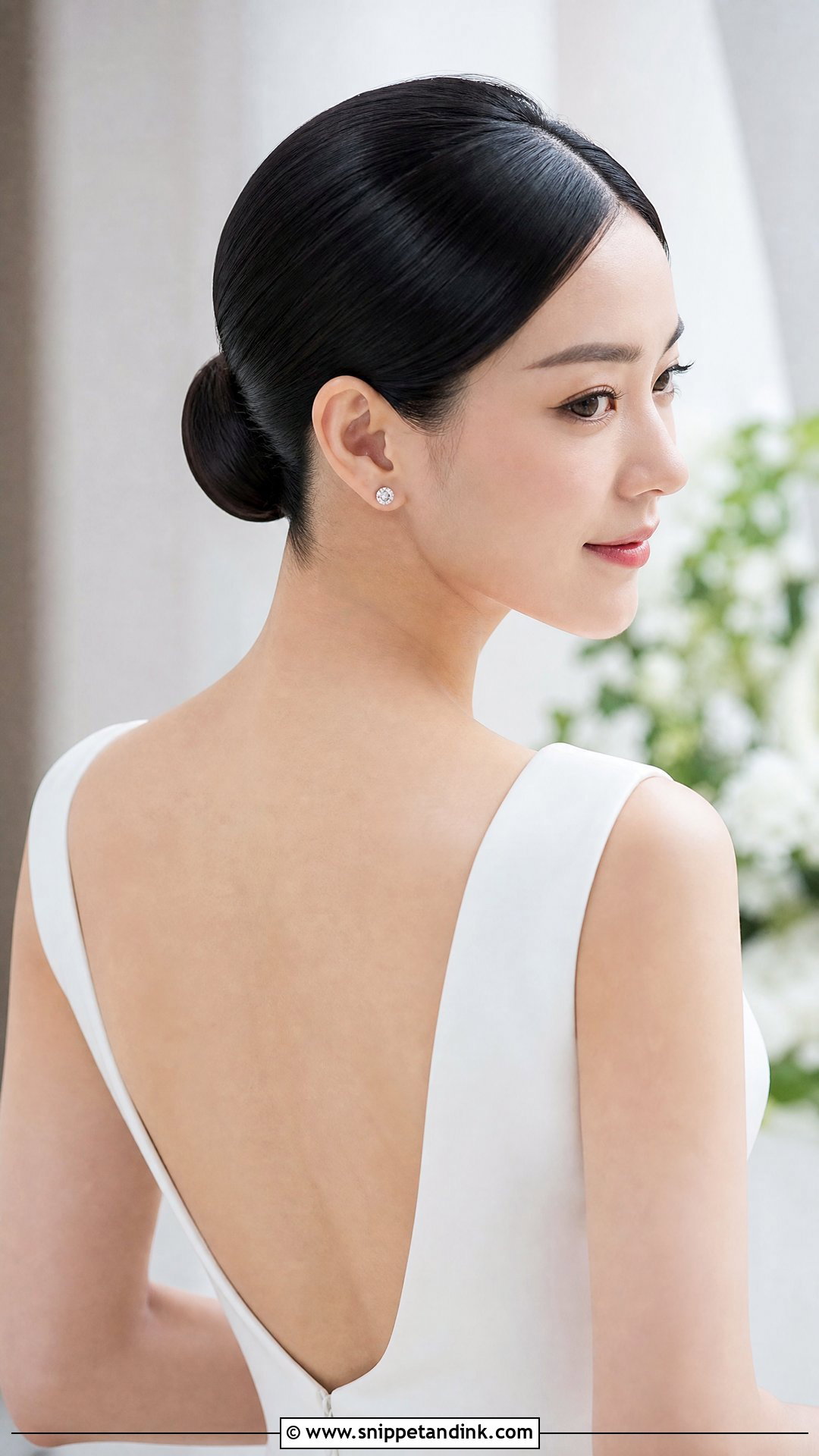
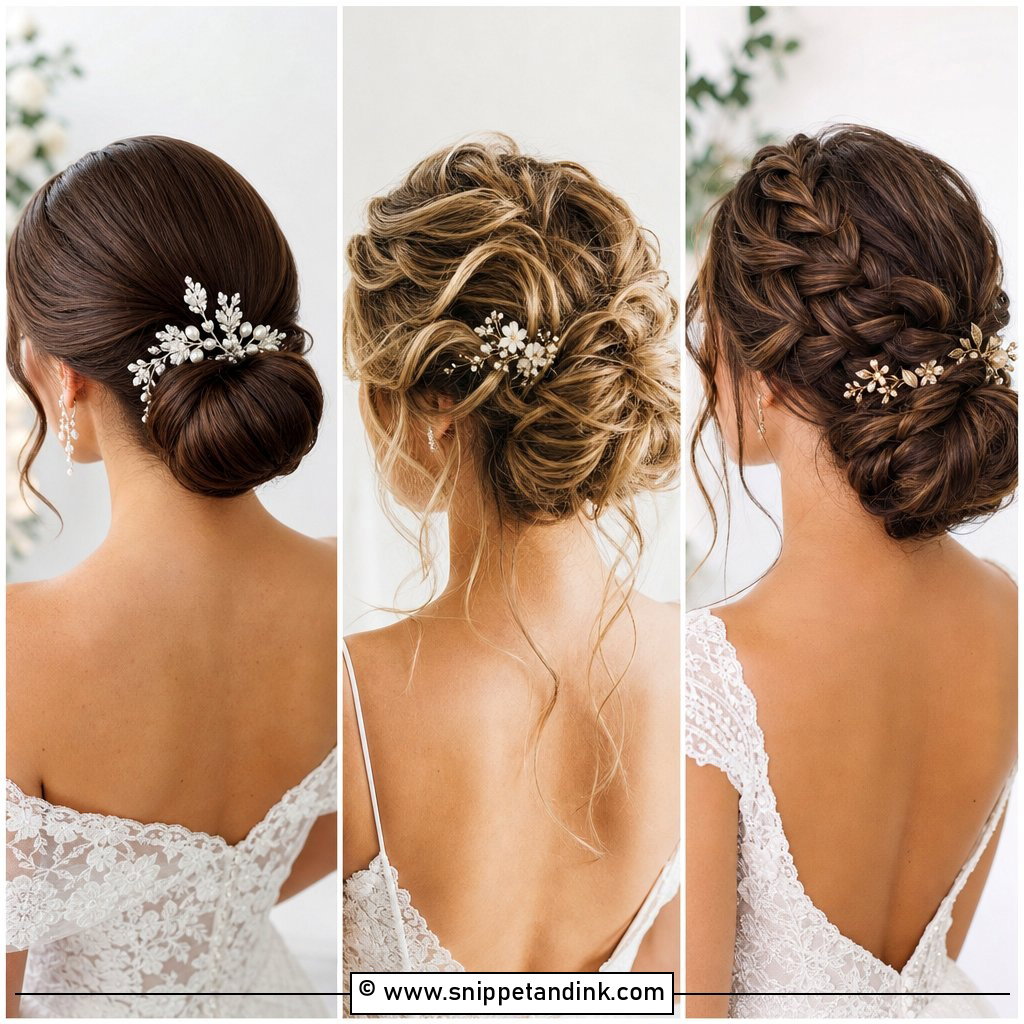
A sleek low bun is clean and minimal, with every strand smoothed to a tight knot at the nape so the face and earrings take over. It’s comfortable on hot days since the neck stays bare. The real challenge is flyaways and baby hairs at the hairline; I smooth them with a small toothbrush and a little gel or wax, not hairspray, which leaves crunchy shine on camera. Center or side part depends on your face. Expect it to look exactly the same at midnight as at noon.
6. Romantic Loose Curls
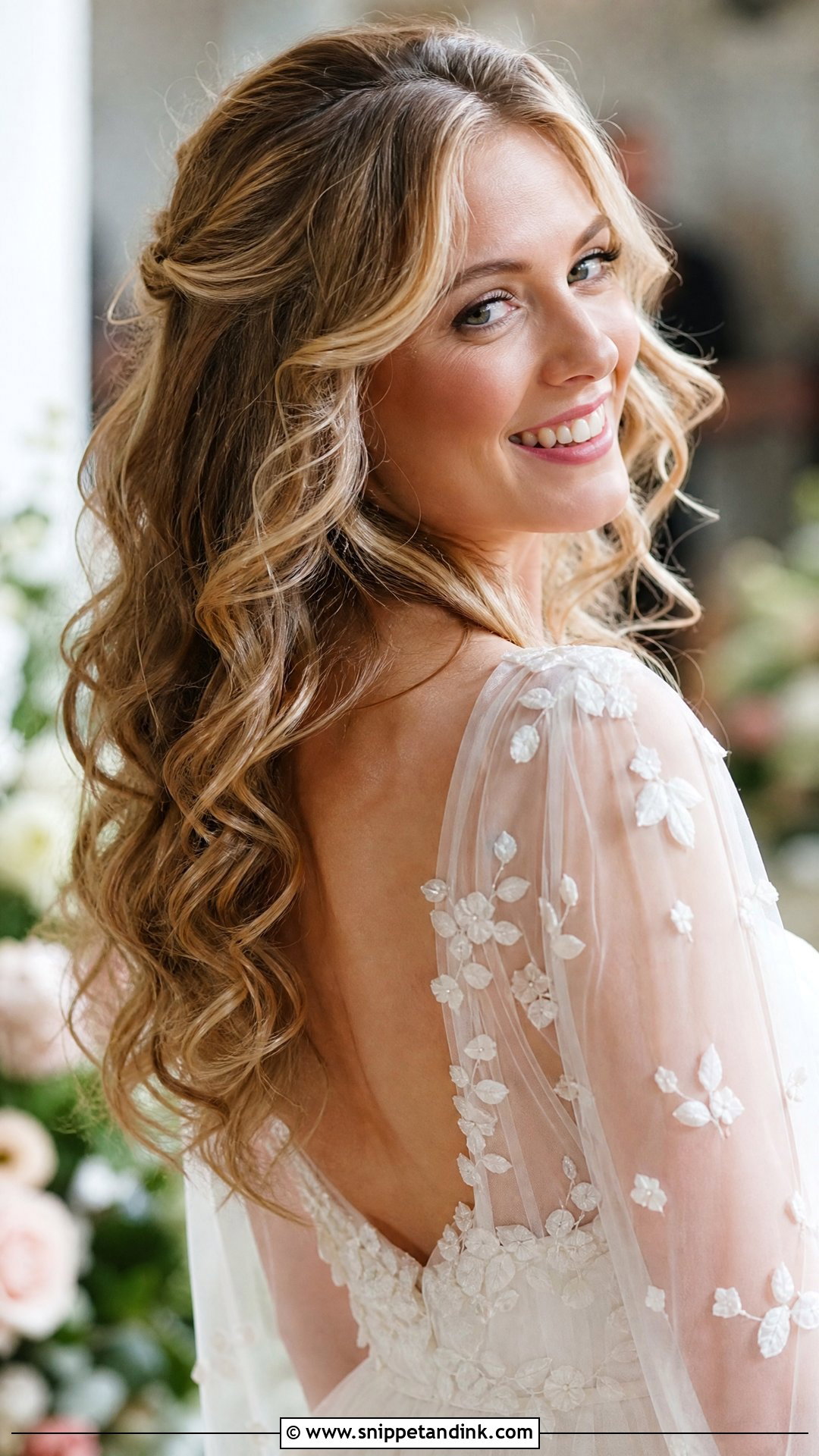
Loose curls should look as if your hair just moves that way, with light bends and bounce rather than set ringlets. Achieving that soft result still takes structure underneath. I prep with a texturizing or volume product, curl in alternating directions and break the curls up with fingers after they’ve cooled. Flexible-hold spray keeps them moving. Garden ceremonies and relaxed receptions suit them. If your hair drops a curl within an hour normally, tell your stylist at the trial so they can plan for it.
7. Bridal Ponytail
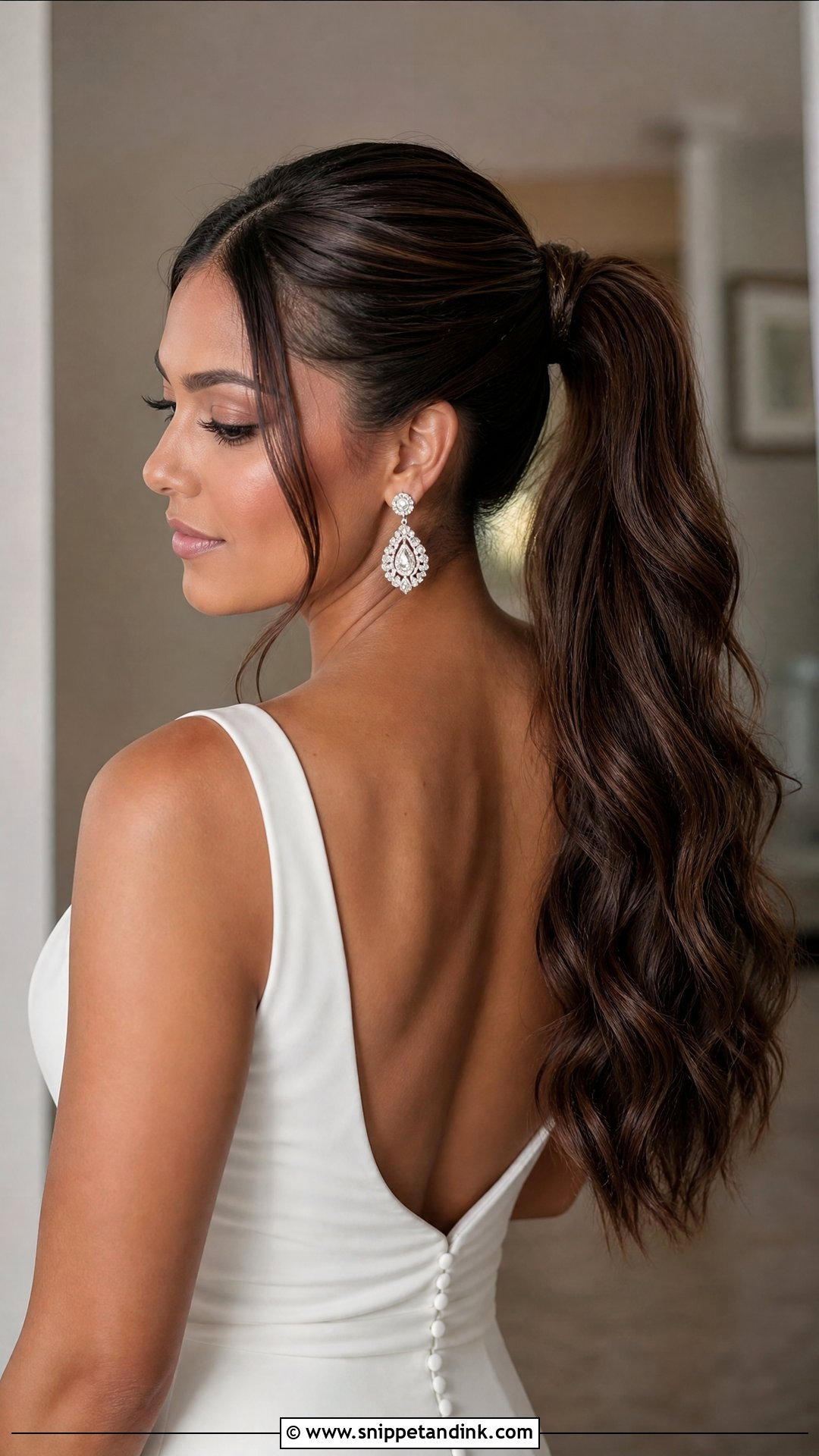
The bridal ponytail keeps length and movement while getting hair off the face. It can be sleek and high or low and textured. For a clean finish I wrap a small section around the base to hide the elastic and pin it underneath. A high pony is heavier on the scalp than it looks, so I build it on two elastics stacked a little apart to spread the weight, otherwise it starts to ache by the reception. Face-framing pieces soften it for a romantic gown.
8. Braided Updo
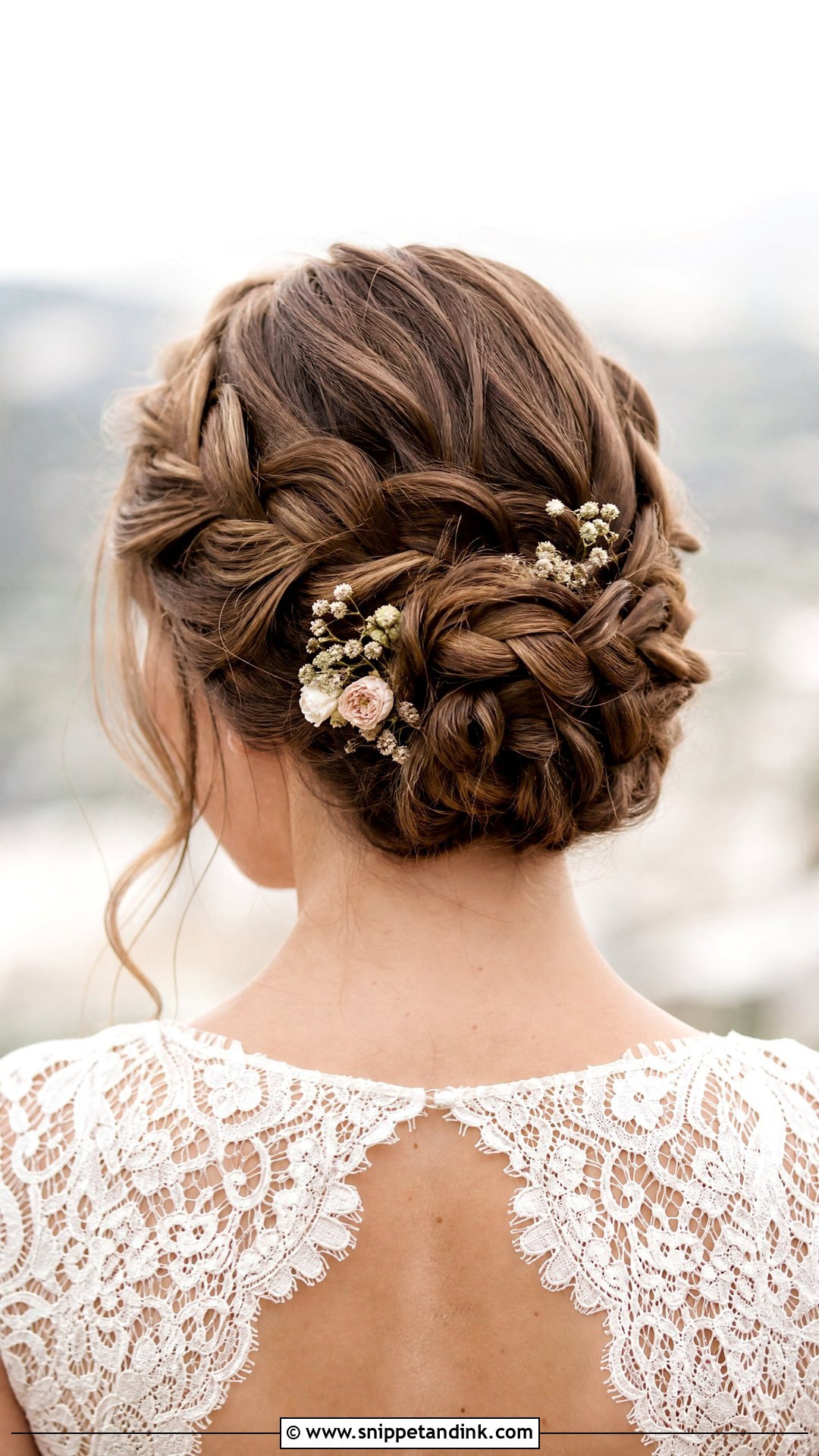
Braids add detail and texture that hold up over a very long day, which is why I like them for outdoor and rustic venues. A woven crown, a bun wrapped in a braid or a braided side style all work. I pancake the braid by gently pulling the outer loops wider, which makes thinner hair look fuller. Tiny flowers and pins tuck neatly into the woven sections. Very short layers can poke out of the braid, so I sometimes plan a few small hidden clips to catch them. It’s a unique, handcrafted feel that photographs well from behind, where guests watch you during the ceremony.
9. Ballerina Bun
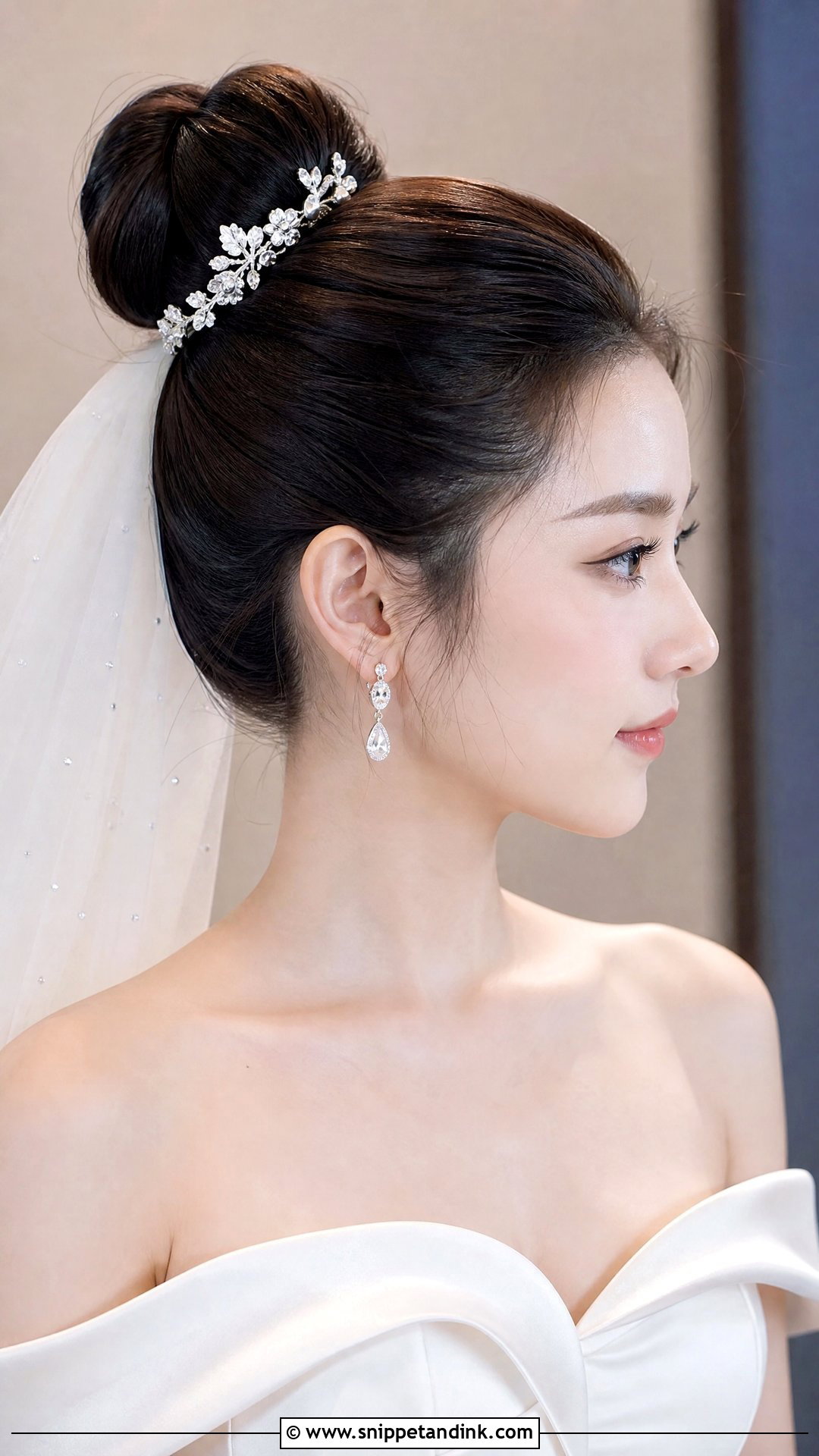
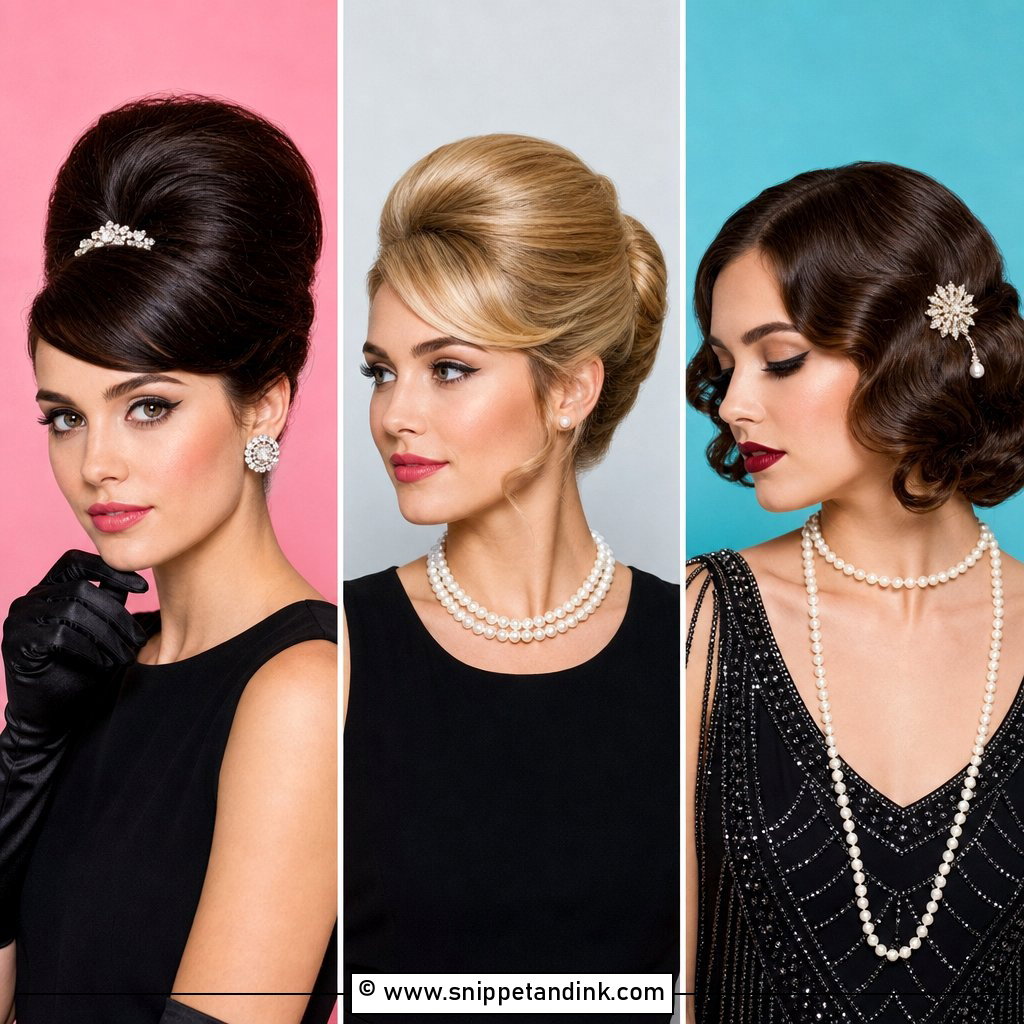
A ballerina bun sits high on the crown or midway up, round and neat, and it lengthens the neck immediately. I’d make sure your veil plan suits it; a high bun pushes a veil comb lower, so it usually sits under the bun, not on top. Slick it back for a modern look or tease the base for softer volume. It’s very secure for dancing. A small pin or a single bloom adds a bridal note.
10. Vintage Finger Waves
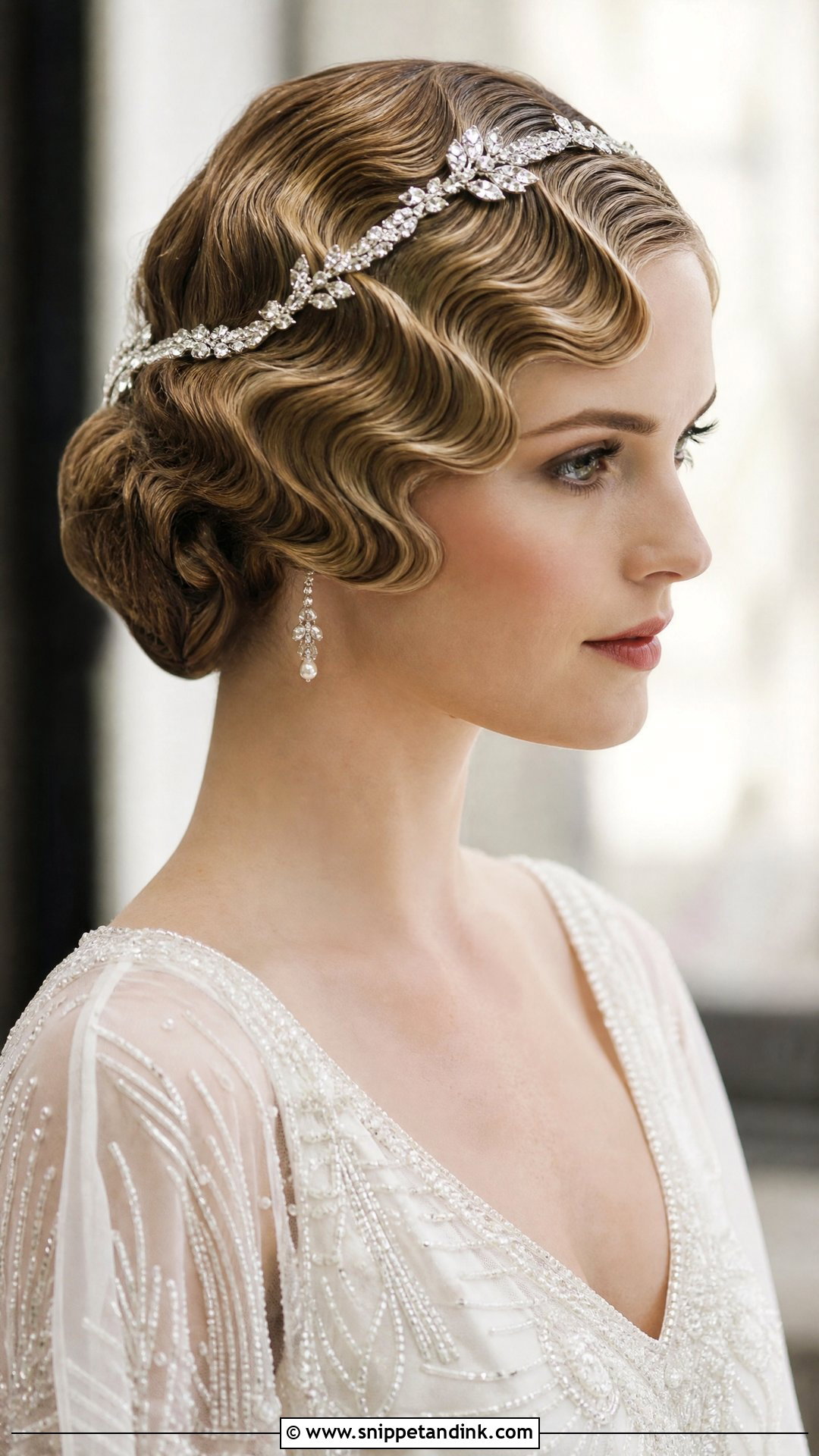
Finger waves are the 1920s S-pattern pressed close to the head, and they suit short hair best, including bobs and pixie cuts. They can be set wet with gel and combs or created with a flat iron and pin curls. It’s precision work, so I’d choose a stylist who can show photos of finger waves they’ve done, not just loose waves. A jeweled headpiece or vintage-inspired veil completes the period look. If your hair is very thick, warn your stylist early, because waves take longer to set and may need a little more product.
11. Floral Crown With Down Hair
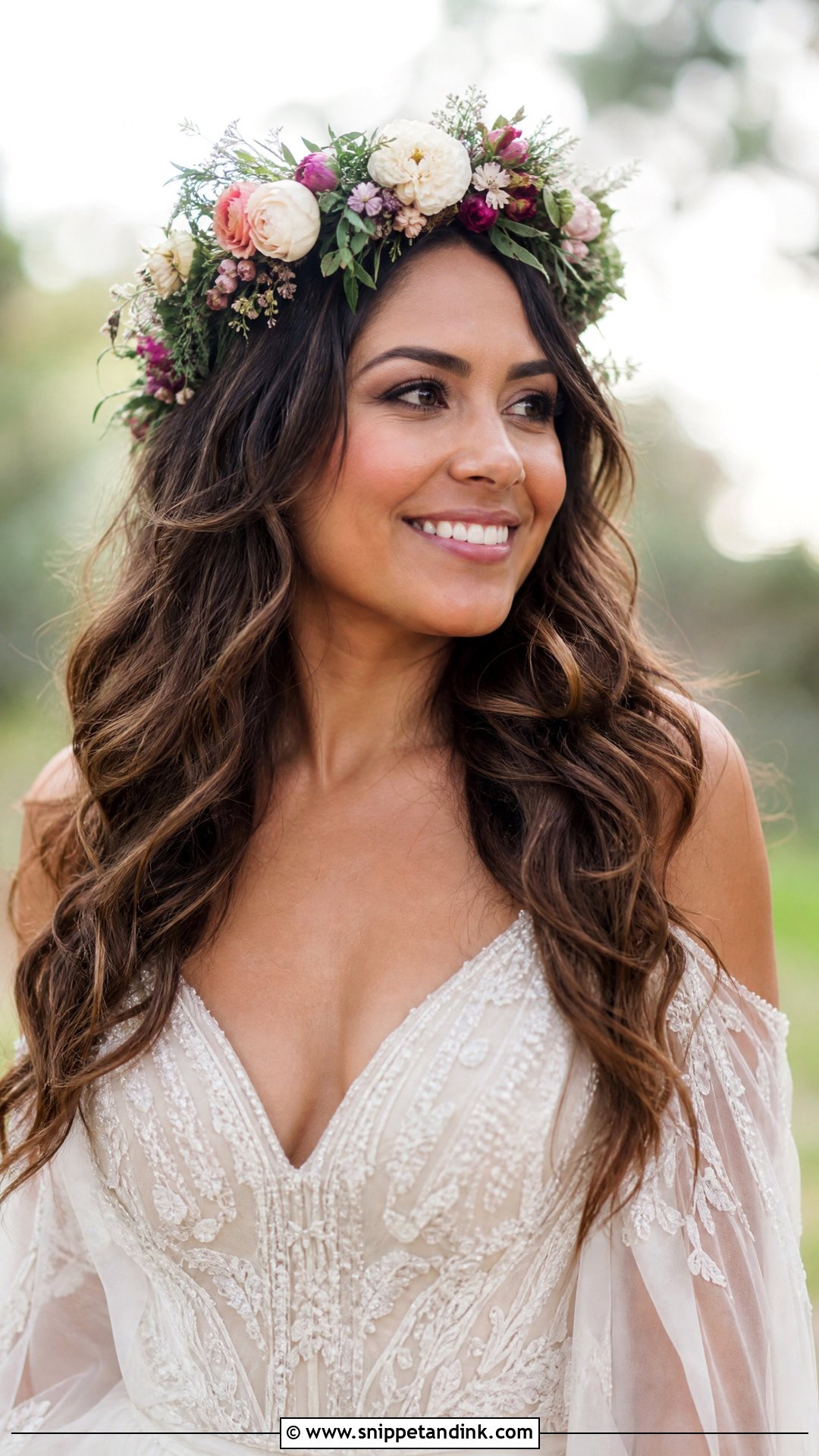
A floral crown over loose hair is the most relaxed style on this list. This romantic, bohemian look sits over waves or straight hair, and it works best at gardens, beaches and outdoor ceremonies. Ask your florist to build the crown on a wire base wrapped in floral tape, then I pin it through at four points so it doesn’t slide forward. Fresh blooms wilt in heat; hardy flowers or dried ones last better. Matching the bouquet ties the look together.
12. Side-Swept Updo
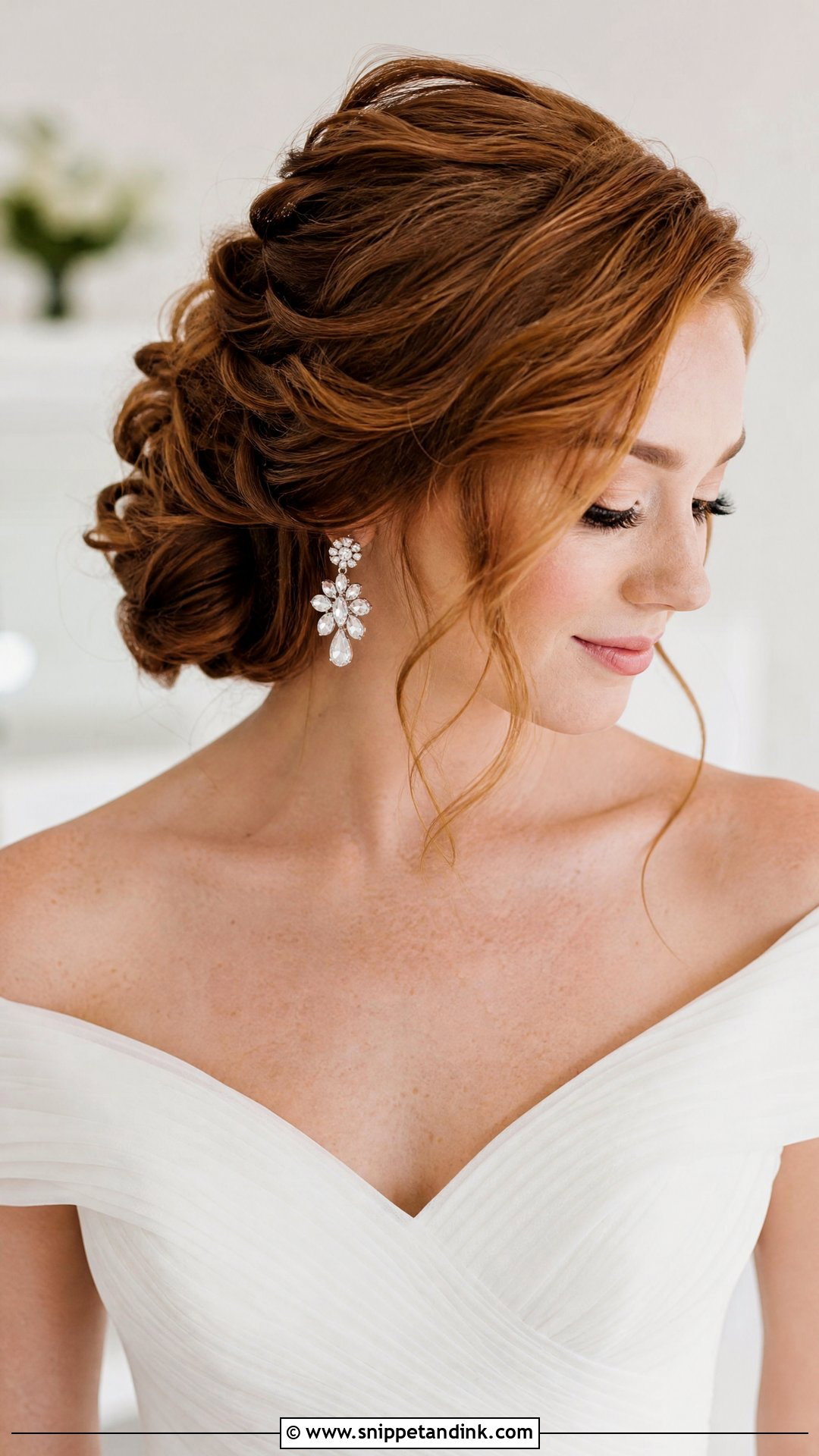
Gathering the hair to one side opens up the opposite shoulder and gives a graceful asymmetry. A low side bun or a cascade of pinned curls are the usual versions. I pin heavily on the side the hair travels toward, because gravity pulls everything down and over in a long day. It suits off-shoulder and one-shoulder gowns especially, and earrings on the exposed side get full attention. A few loose tendrils frame the face. Think about which side your partner will stand on; that’s usually the side I sweep away from.
13. Sleek Straight Hair Down
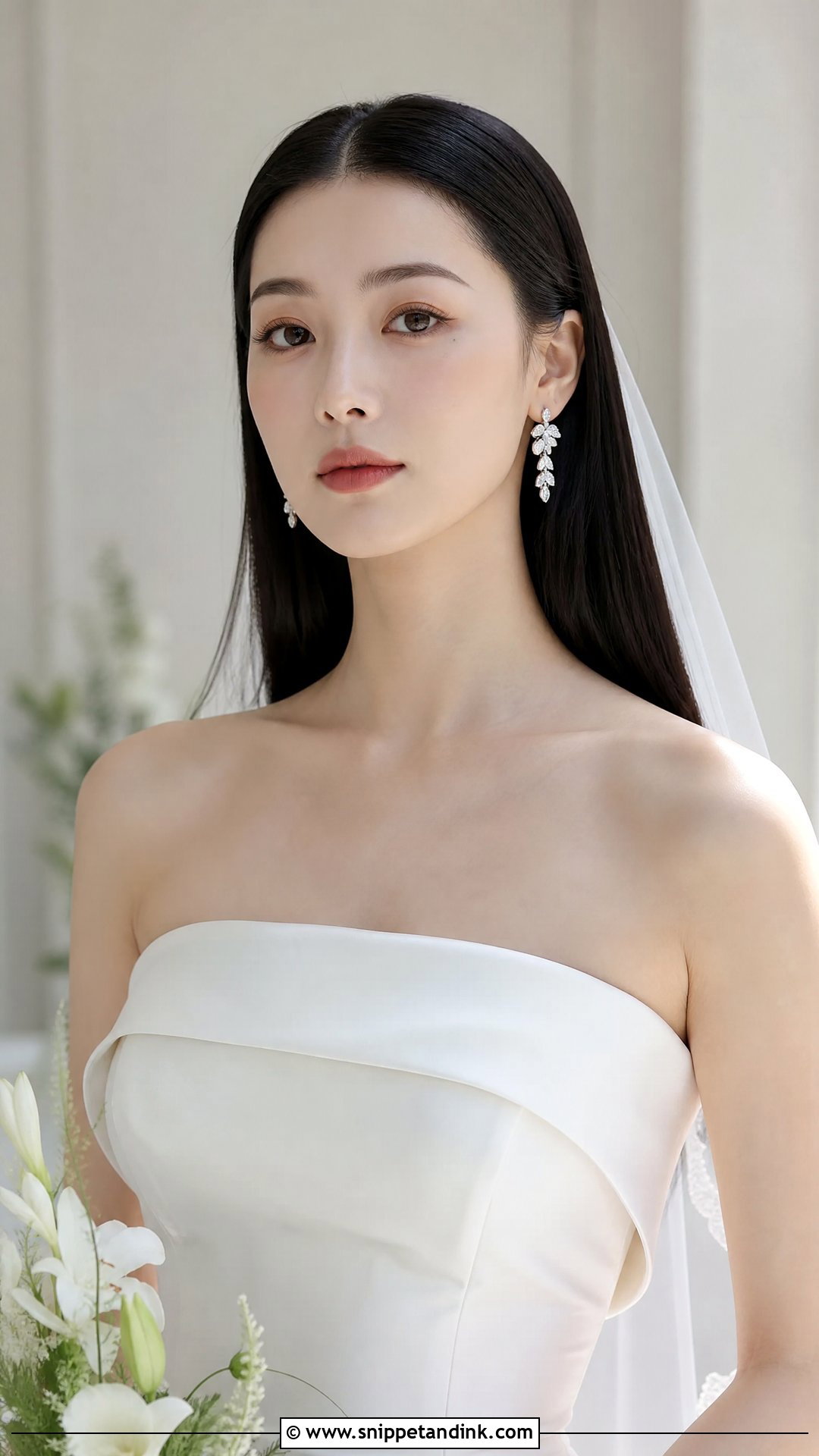
Sleek, straight hair worn down feels modern and clean. The finish comes from preparation: a smoothing blow-dry with a round brush, then a flat iron in small sections, with a drop of serum only on the ends. The trap is humidity, which can puff straightened hair in minutes outside, so for an outdoor summer ceremony I’d have an anti-humidity spray and a small flat iron on standby. A sharp center or side part keeps it crisp. Long and medium lengths suit it best.
14. Textured Messy Bun
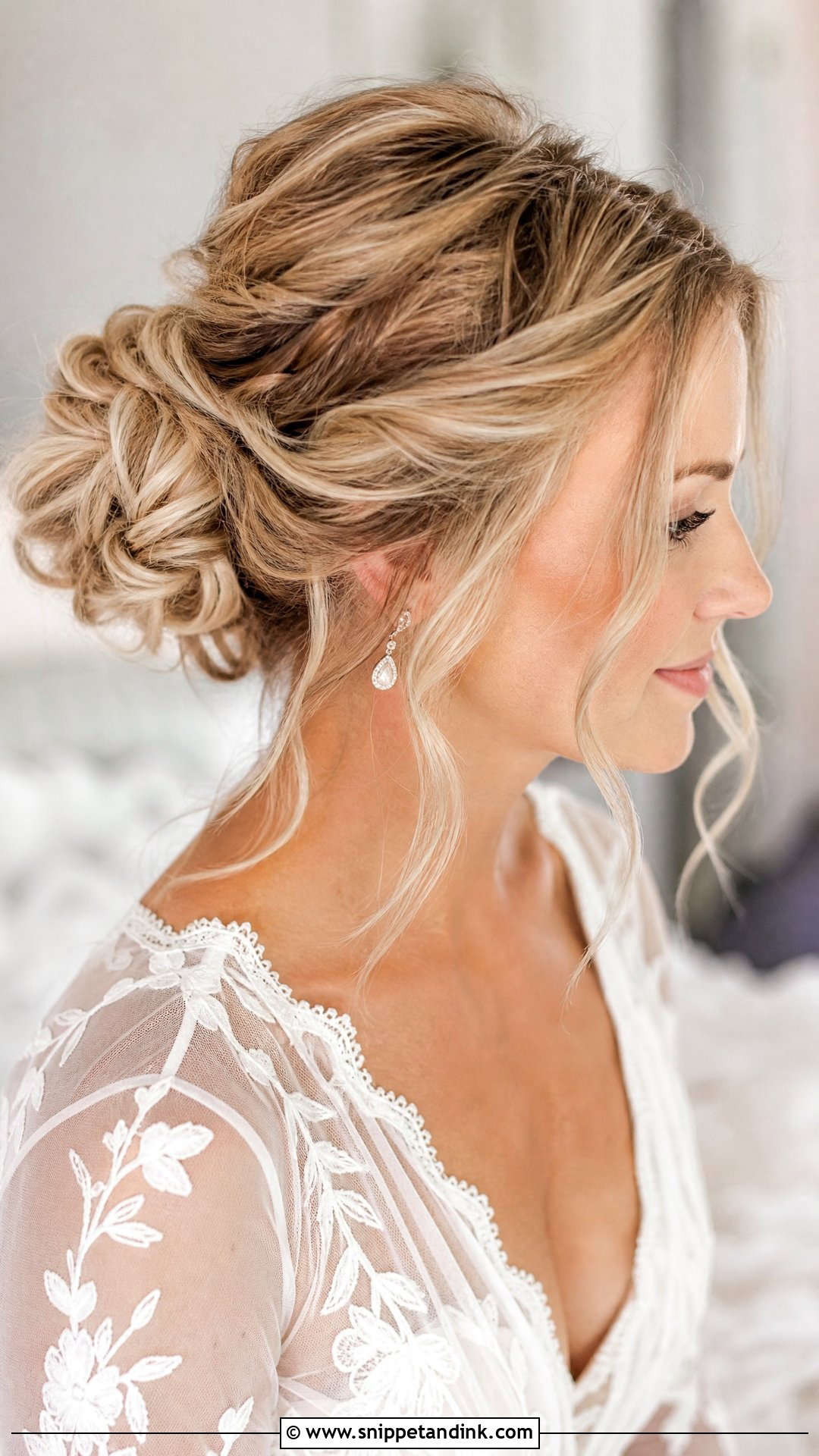
A textured messy bun is built rather than thrown together. I curl the hair first, roughen it with texture spray, then gather it loosely and pin piece by piece so the undone parts are placed on purpose. Pulling out a few face-framing strands softens it. It suits boho venues, flowing gowns and natural makeup. Very silky hair resists this look; it needs grit, so don’t wash it the morning of the wedding.
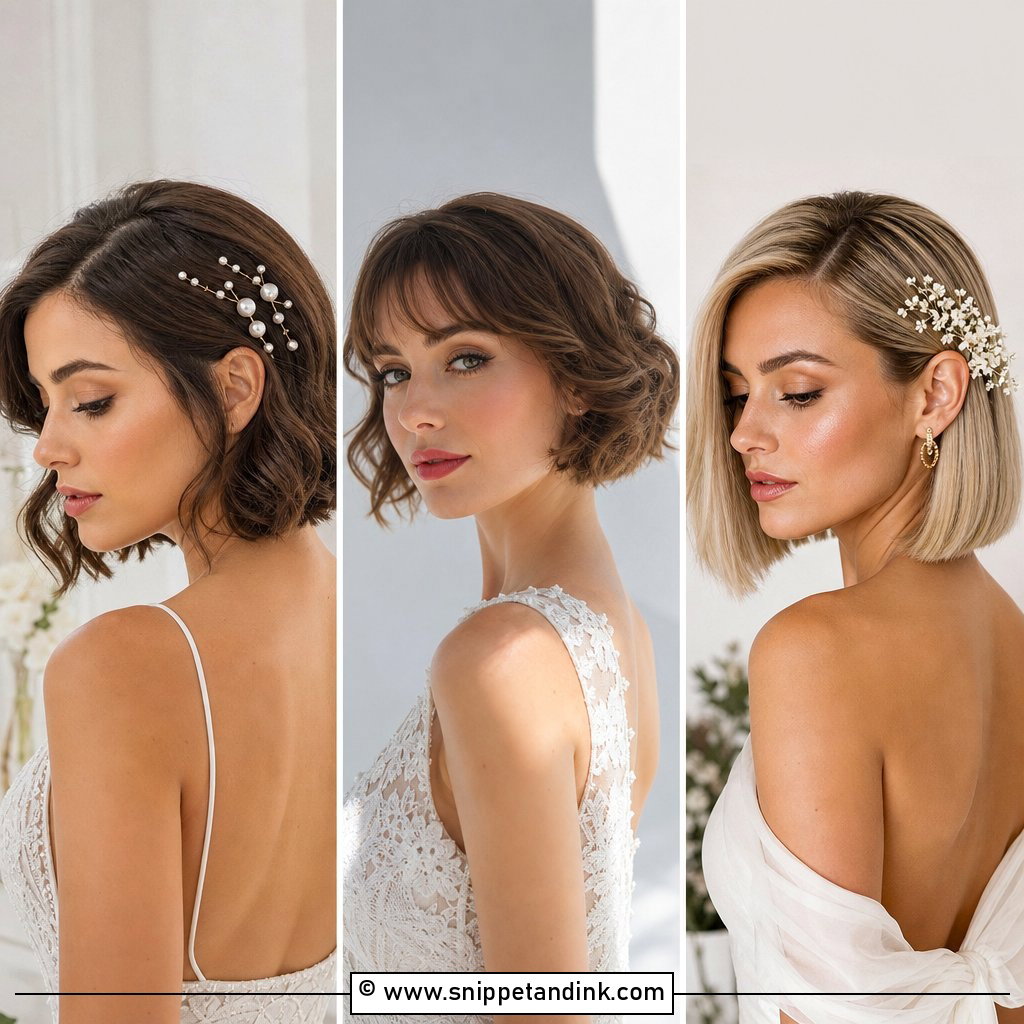
15. Crown Braid
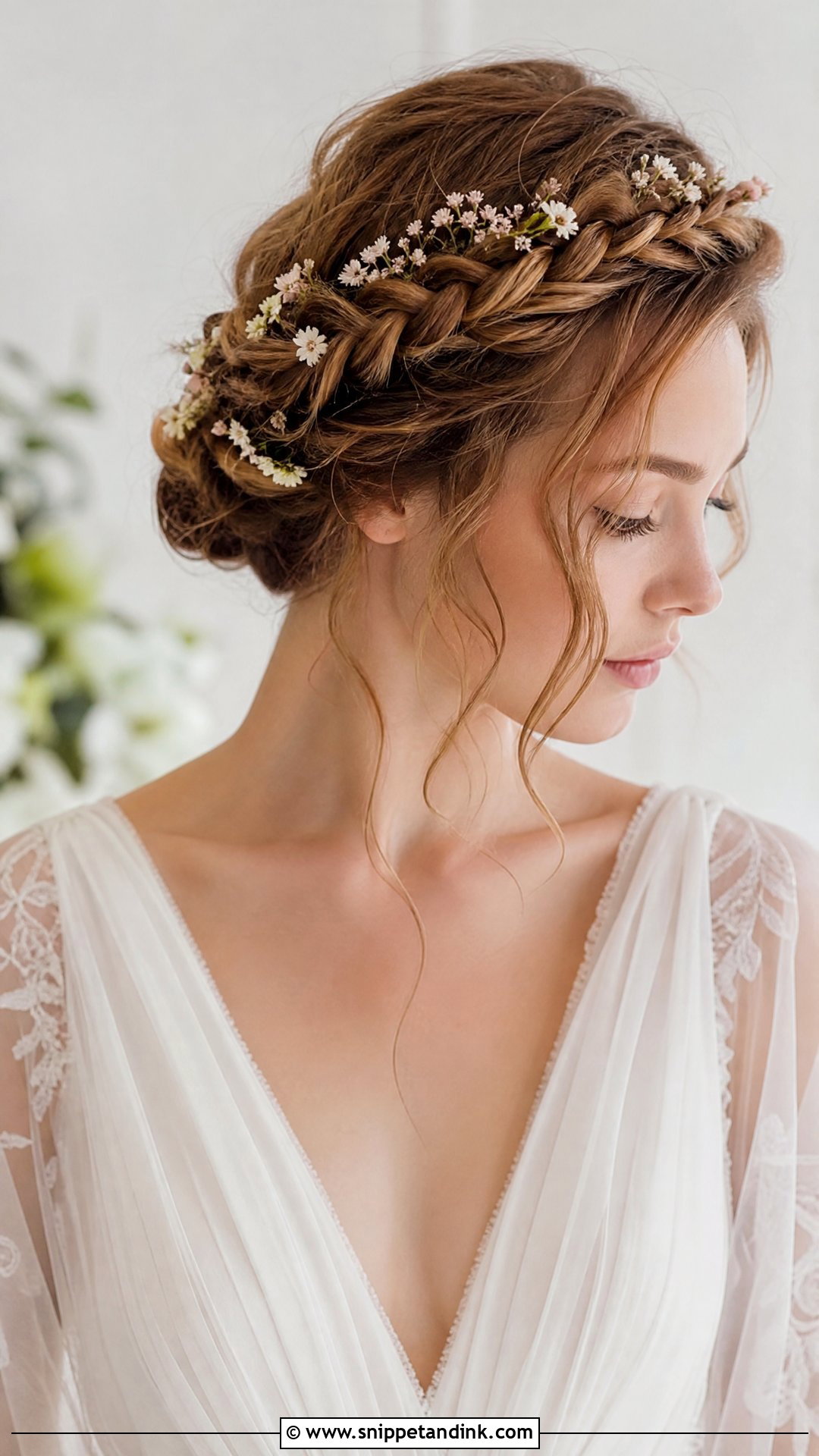
A crown braid circles the head like a halo and keeps hair completely off the face and neck, which makes it one of the most comfortable choices for warm weather. You need medium to long hair to reach all the way around; shorter hair can be done as two braids meeting at the back. I pin each section of the braid as it goes, not just at the end, so it doesn’t slip. Tuck tiny flowers or pins into the weave. It suits outdoor and rustic celebrations.
16. Loose Updo With Face-Framing Tendrils
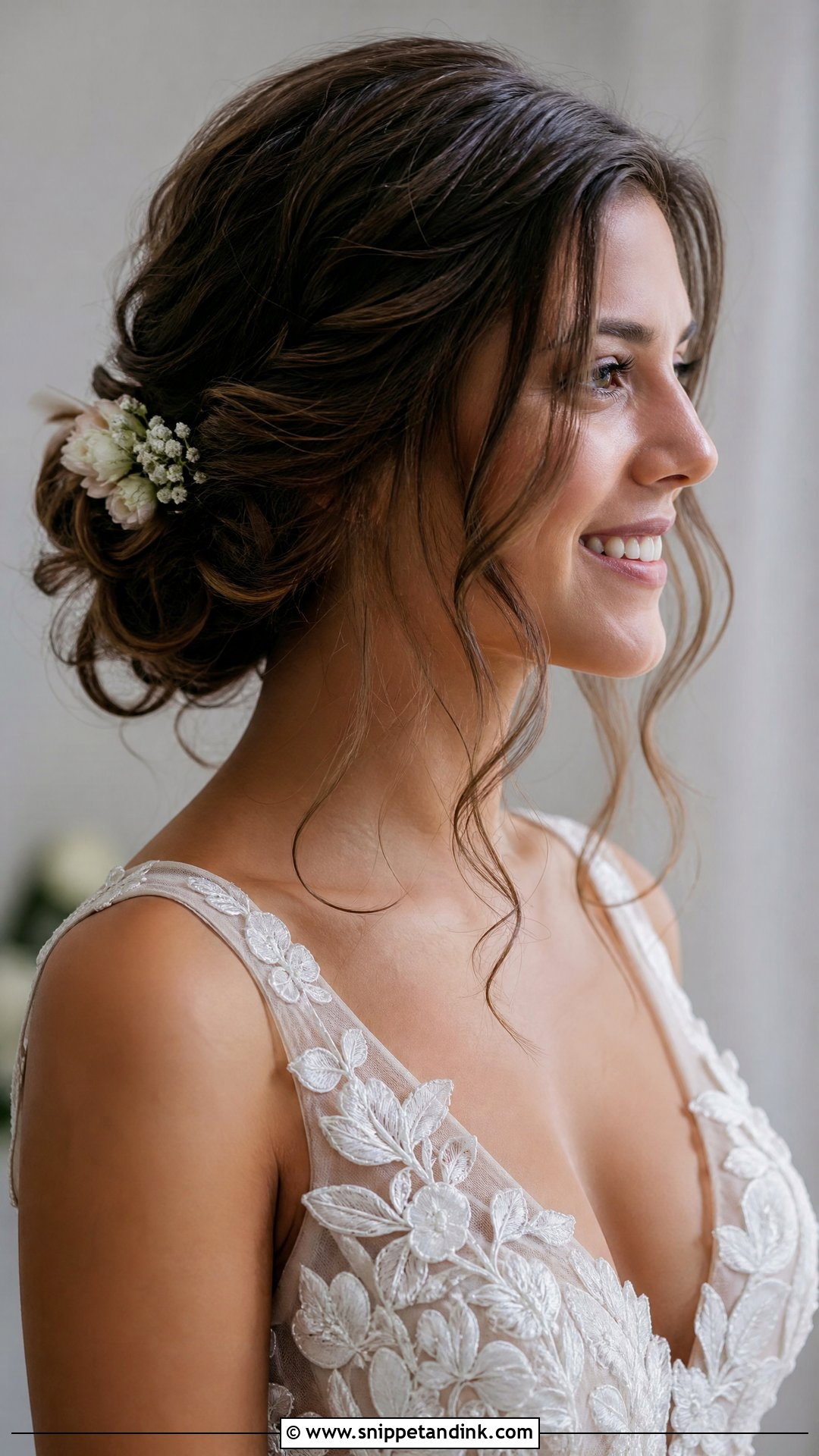
A loose updo with tendrils gathers most of the hair into a relaxed bun or twist while leaving fine strands around the face. Tendrils are where it gets tricky; too thick and they look accidental, too straight and they look limp. I take them thin, curl them separately, and leave them until the very end so they don’t flatten while the rest of the style is built. Veils, floral pins and sparkly accessories all sit well. Most lengths and textures can wear it.
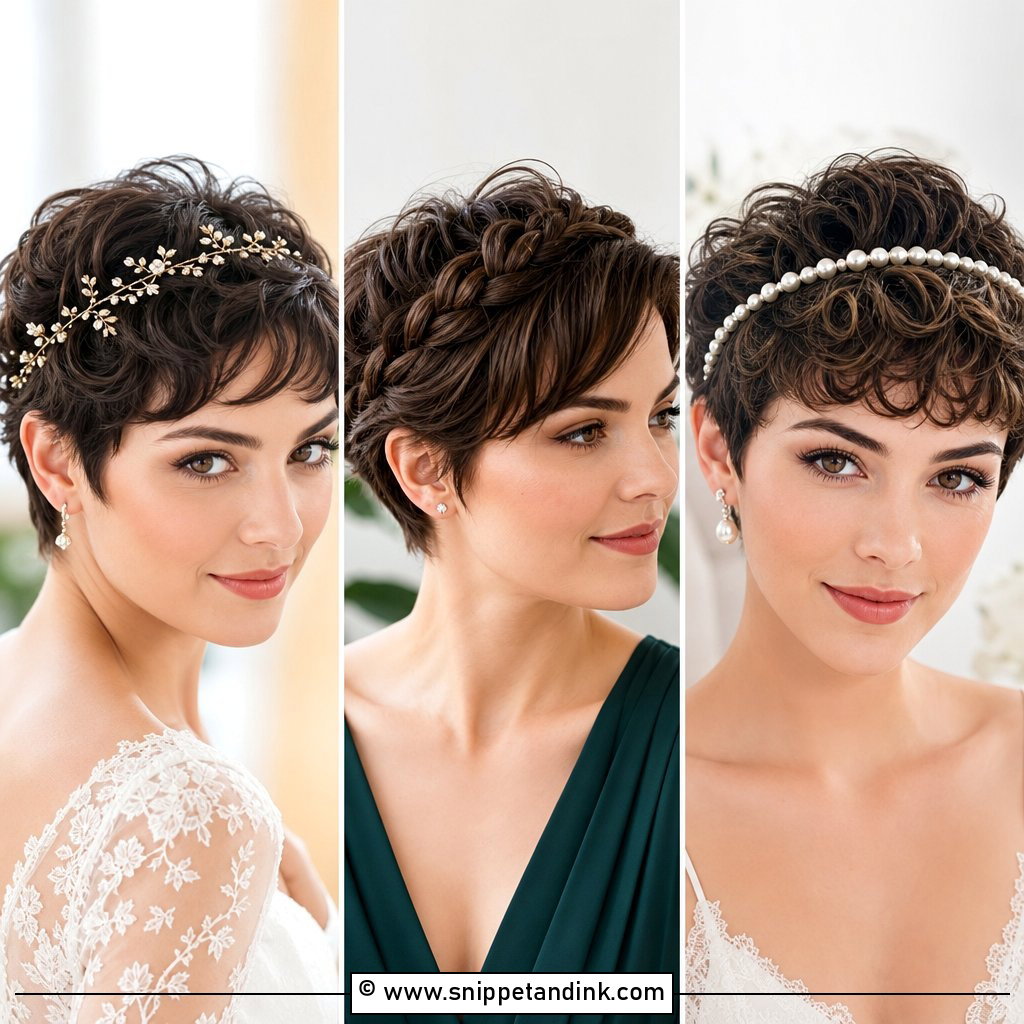
17. Pixie Cut Bridal Style
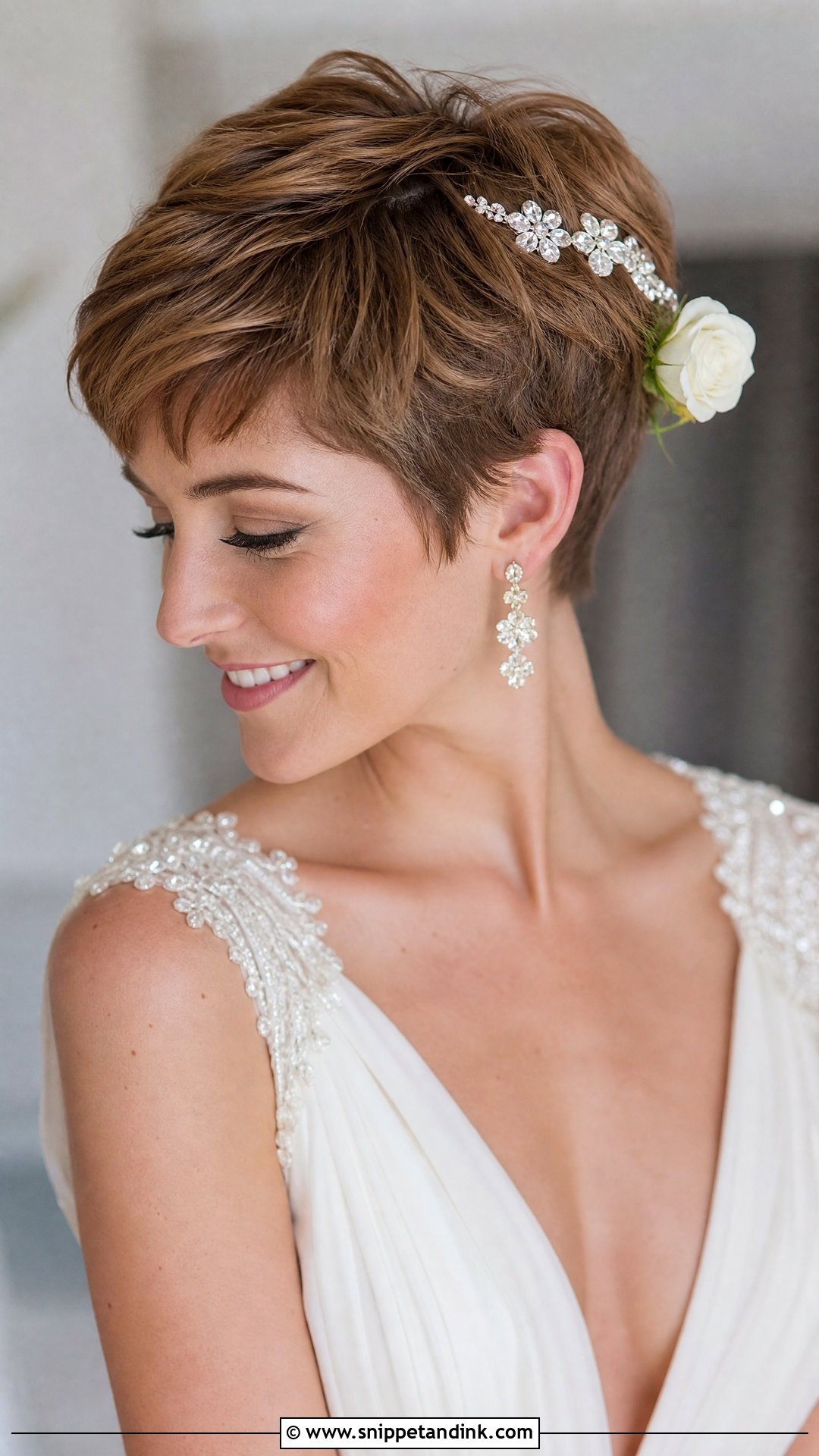
Short hair can carry a wedding look just as well, and the pixie cut proves it. Hairpins, a slim headband or fresh flowers behind one ear dress it up. Texture and volume add dimension; a sleek version looks sharp. Timing a trim matters: I suggest a cut about a week to ten days before the wedding, so the lines soften but haven’t grown out. A short veil on a small comb anchors best into the thicker hair at the crown.
18. Boho Waves With Center Part
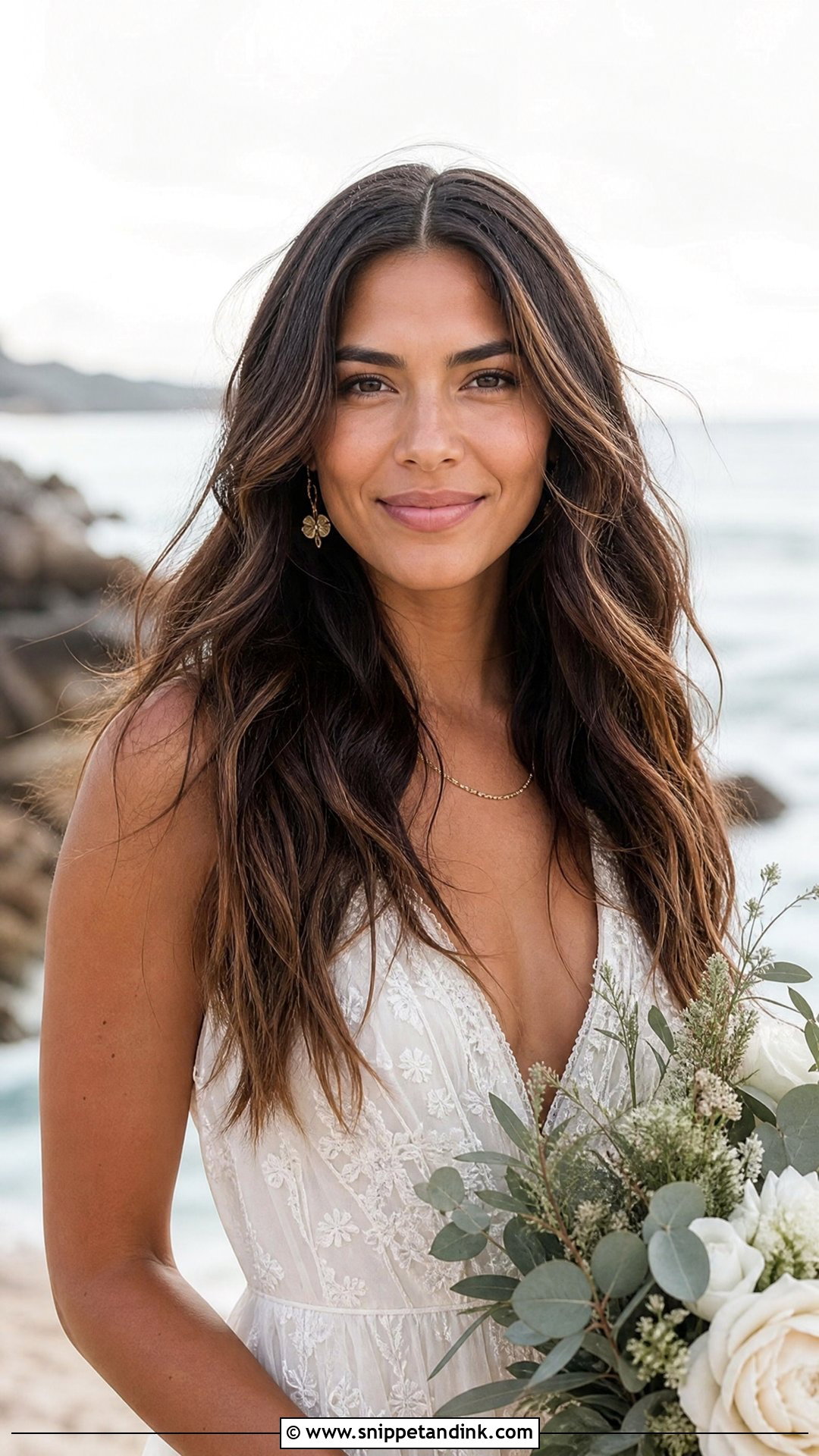
Boho waves with a center part fall loosely around the face and shoulders and feel laid back. They’re done with a flat iron twisted through the hair or a large wand, then broken up with fingers. Beach, garden and festival-style weddings suit them. Delicate gold accessories or a flower crown fit the mood. Because these waves are meant to look loose, they’ll relax further through the day, so I make them a little tighter in the morning than you want them at dinner.
19. Vintage Updo With Hair Accessories
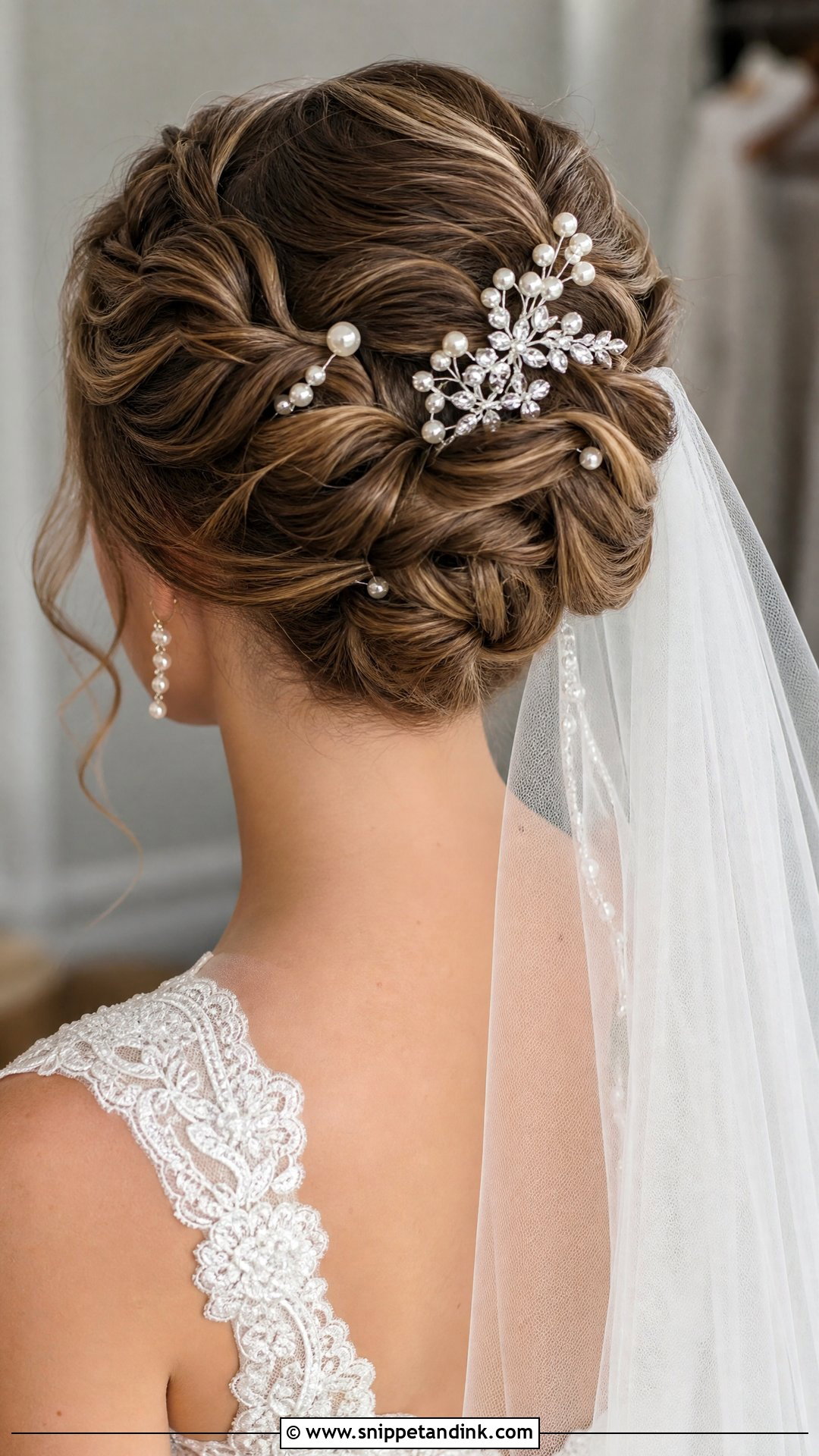
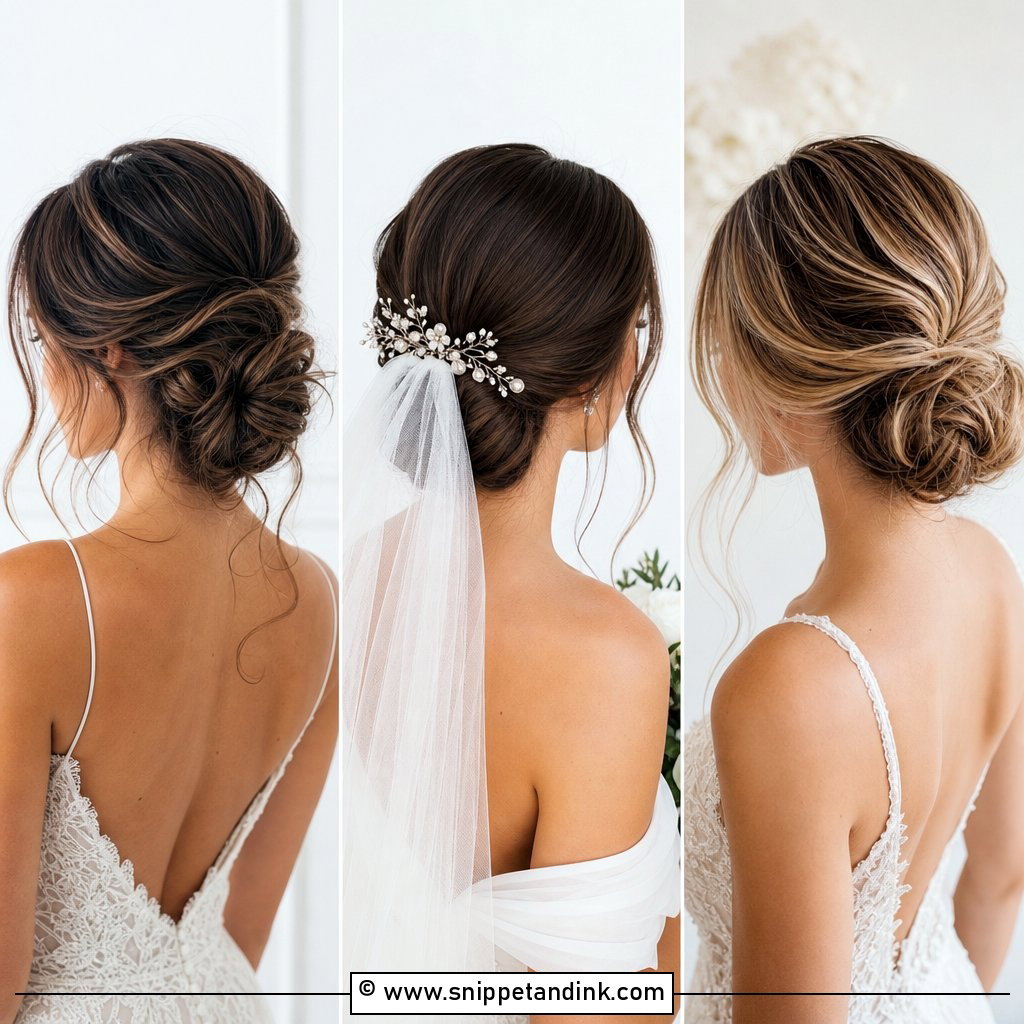
A vintage updo is a classic twisted or pinned bun finished with jeweled combs, pearl pins or a hairpiece. The accessories give the look its personality. Pick metals that match your earrings and necklace. I place accessories last and secure each one with crossed bobby pins under it, because combs alone often slide out of silky hair. It sits well with lace gowns and traditional veils, and medium to long hair gives enough to work with.
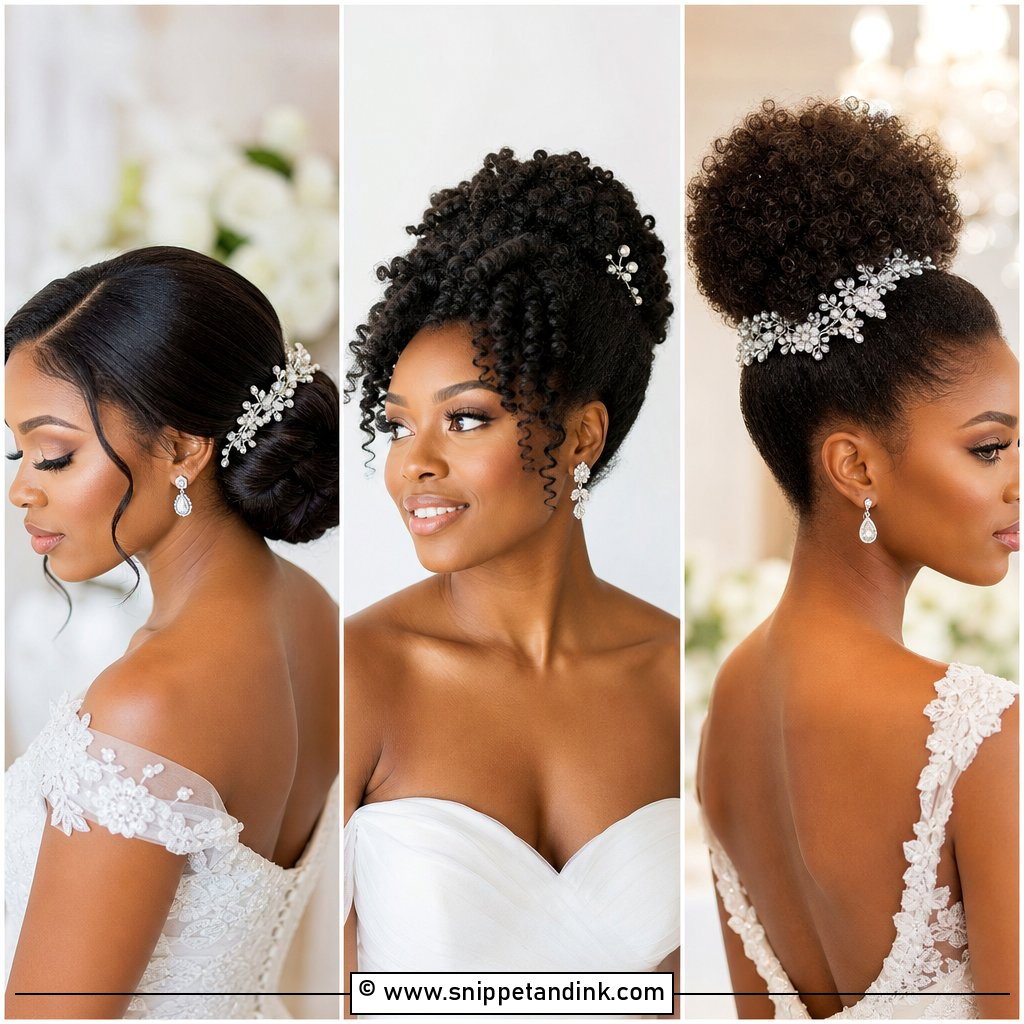
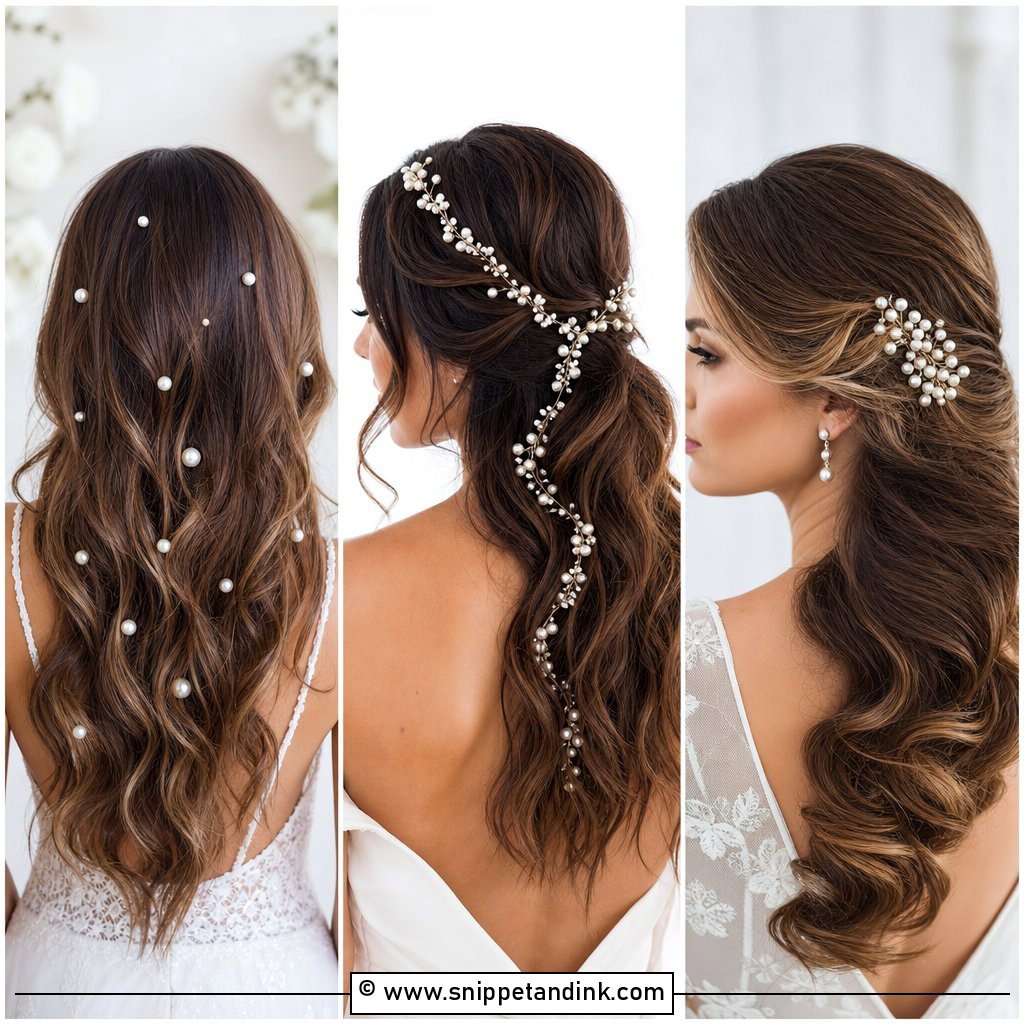
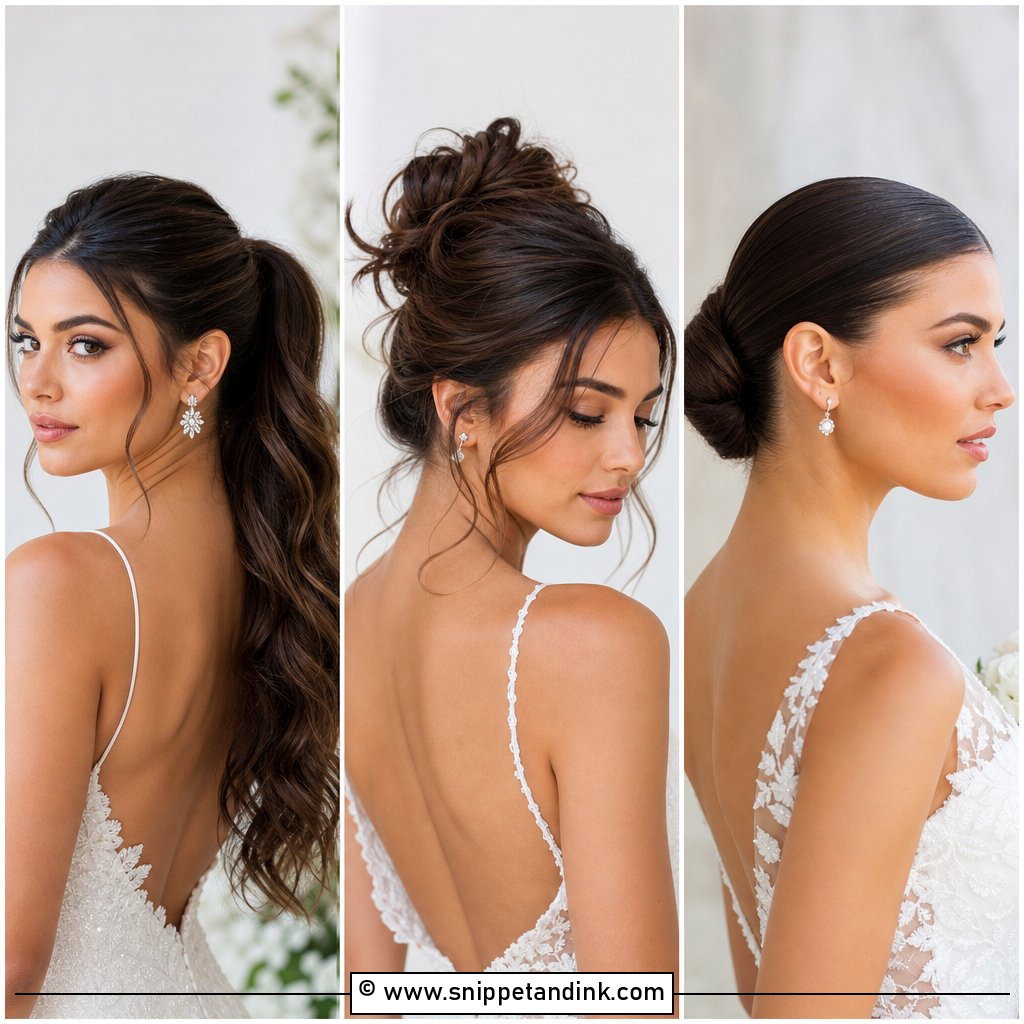
20. Low Bun With Center Part
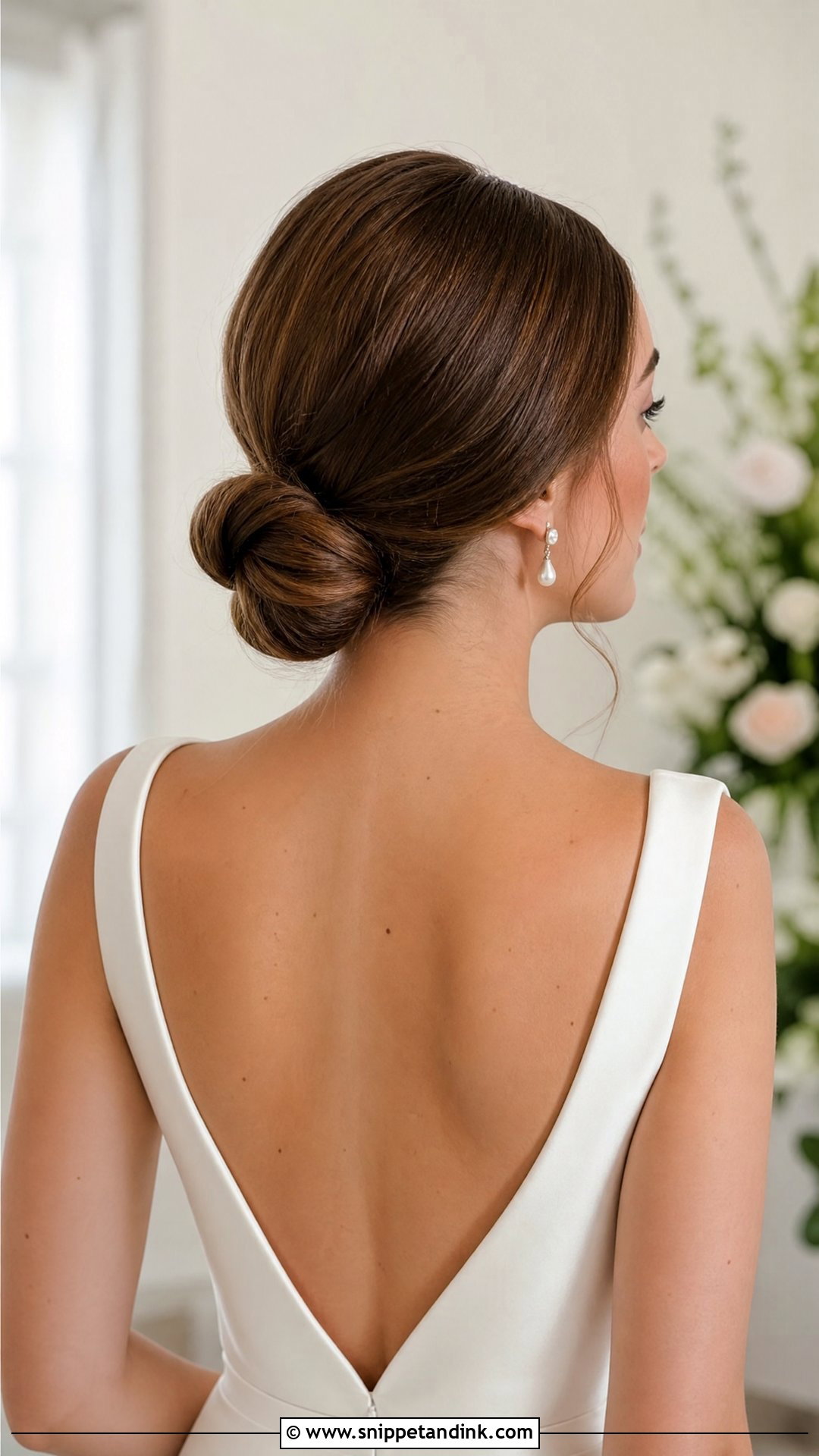
A low bun with a center part frames the face symmetrically, so it’s worth checking at the trial that your natural parting really sits in the middle; forcing a part against a cowlick tends to flip by afternoon. I smooth the hair into a soft knot at the nape, either polished or lightly textured. Sleek gowns, statement earrings and simple veils pair naturally. It stays put through dancing.
The Morning Itself: Chair Time and Getting Dressed Without Ruining It
A bridal style usually takes me around an hour to an hour and a half, a bit less for something sleek and more for braids and pinned curls. Bridesmaids need about forty-five minutes each. I like the bride to be in the chair after most of the party, so the style is the freshest when photos start.
- Wash your hair the day before unless your stylist says otherwise; very clean hair is slippery and pins slide out.
- Skip conditioner at the roots and leave oils off entirely that morning.
- Wear a button-front shirt so nothing pulls over your head once the hair is finished.
- Step into the dress, rather than lifting it over your head, and have someone hold the veil until the end.
When Curls Drop or Pins Loosen Halfway Through the Night
Even a well-built style can shift after hours of hugging and dancing. A small kit in a bridesmaid’s bag solves most of it: a few bobby pins in your hair color, a travel hairspray and a slim comb.
If loose waves fall flat, I’d turn them into a half-up style with two crossed pins at the back, which looks deliberate. If a bun loosens, push pins back in at an angle toward the scalp rather than straight down. And when the veil comes off, take it out slowly, supporting the hair under it with your other hand, so the comb doesn’t drag the style with it.
Your Dress and Your Hair Type Should Decide This, Not Pinterest
From chignons and French twists to loose curls and crown braids, any of these styles can look classic if it’s suited to the bride wearing it. Start with your dress, your venue and the hair you actually have, then book a trial with your stylist. Bring photos of styles you like and, if you can, a photo of one you don’t. A trial is the time to change things, and good preparation means your hair will still feel like you at the last dance.
You'll Like These Ideas:


Leave a Reply