
An updo does a surprising amount of work on a wedding day. It frames your face, holds the veil, shows off the neckline you spent months choosing, and has to come through photos, hugs, dancing and at least one round of happy crying. What brides ask me for now is softer and more personal than the lacquered shapes of a decade ago: low buns that move a little, sleek chignons, braided crowns, twisted texture and a few loose pieces at the face. Ballroom or barefoot beach, the right one depends on your dress, your texture and how long you’re happy to have pins in your scalp.
Most of an Updo Happens Before the First Pin Goes In
Pins don’t hold hair; texture does. Silky, freshly conditioned hair is lovely to touch and miserable to put up, because every pin slides straight back out. That’s why I talk so much about grip, and why the prep you do at home matters almost as much as what I do on the day.
- Follow your stylist’s wash instructions exactly. Some want hair washed the night before, some want it a day older, and very fine hair sometimes needs it fresh.
- Skip heavy conditioner, oils and shine serum on the last wash. Shine can be added at the end; slip can’t be taken away.
- Keep any colour appointment a week or two ahead so the tone has settled and the hair isn’t extra slippery from the gloss.
- If your hair is very fine, ask whether a little padding or a few clip-in wefts would give the bun the body in your reference photo.
- Bring every hair accessory to the trial, including the veil, so the structure is built around where they’ll sit.
1. Classic Bridal Chignon
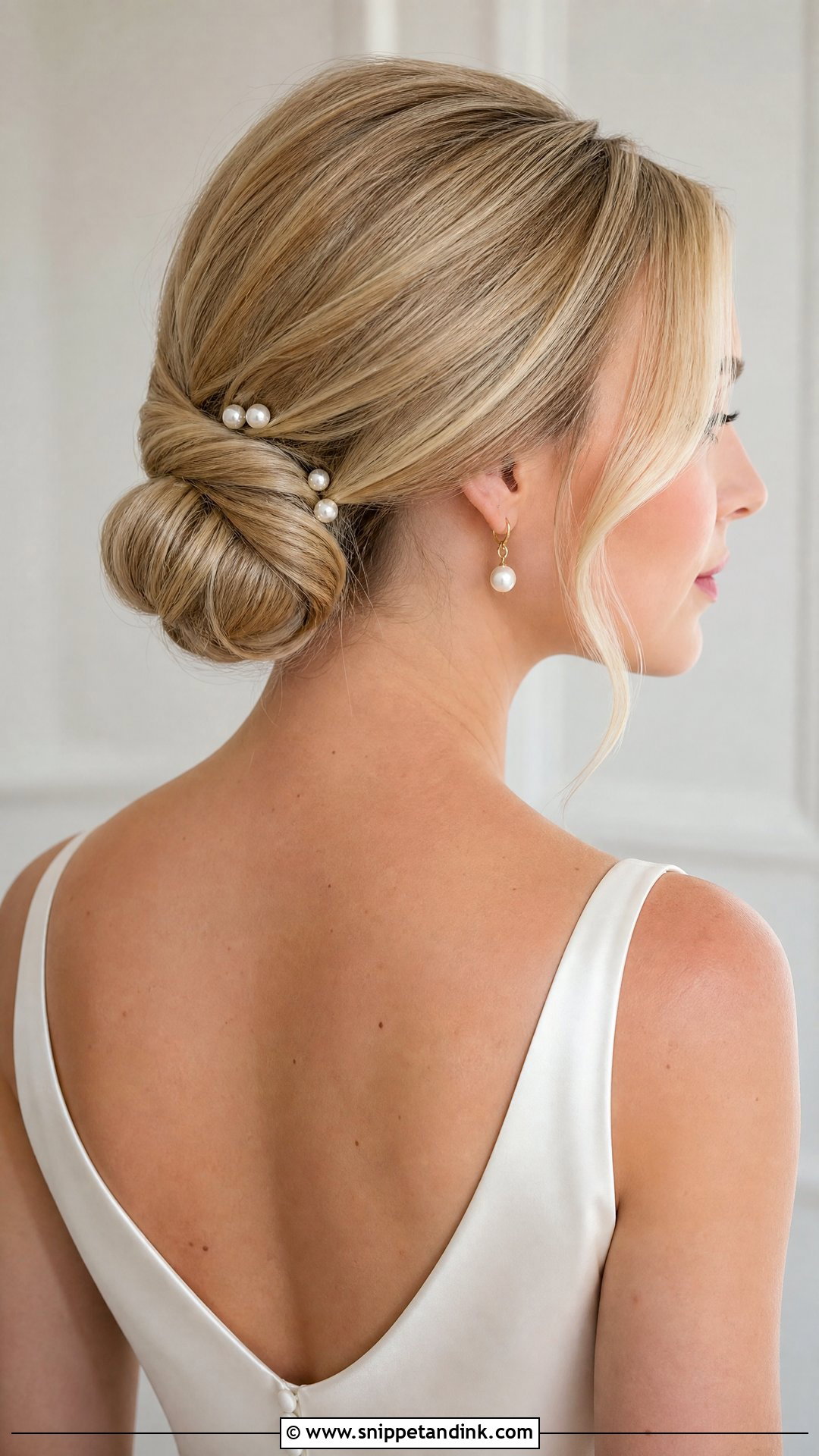
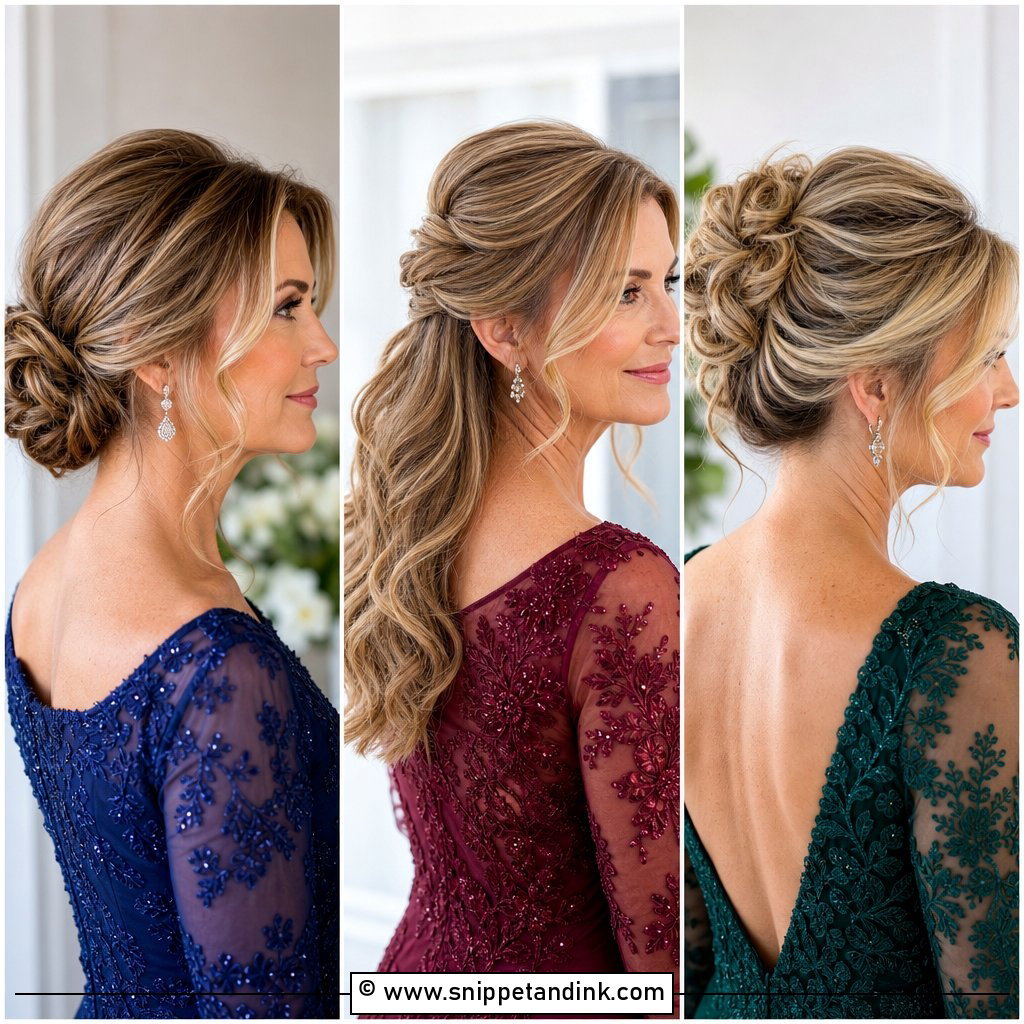
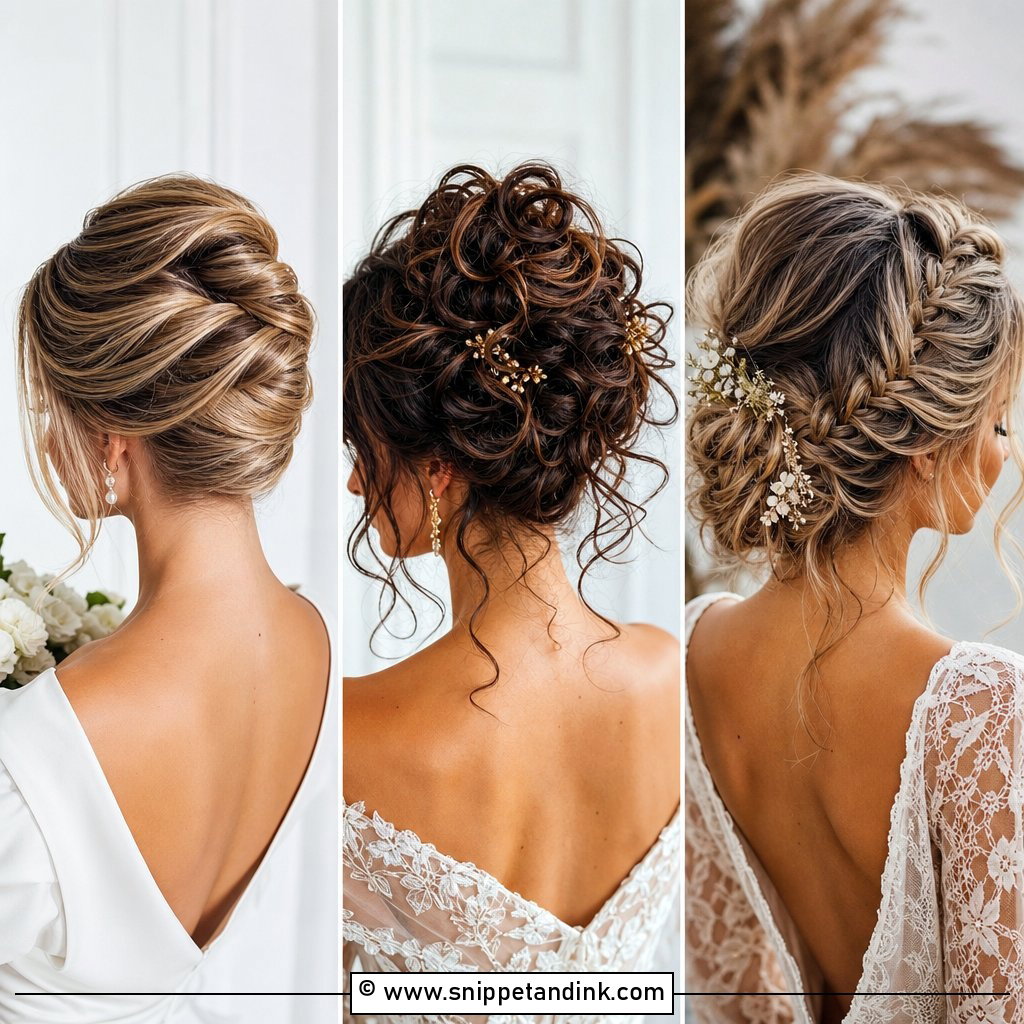
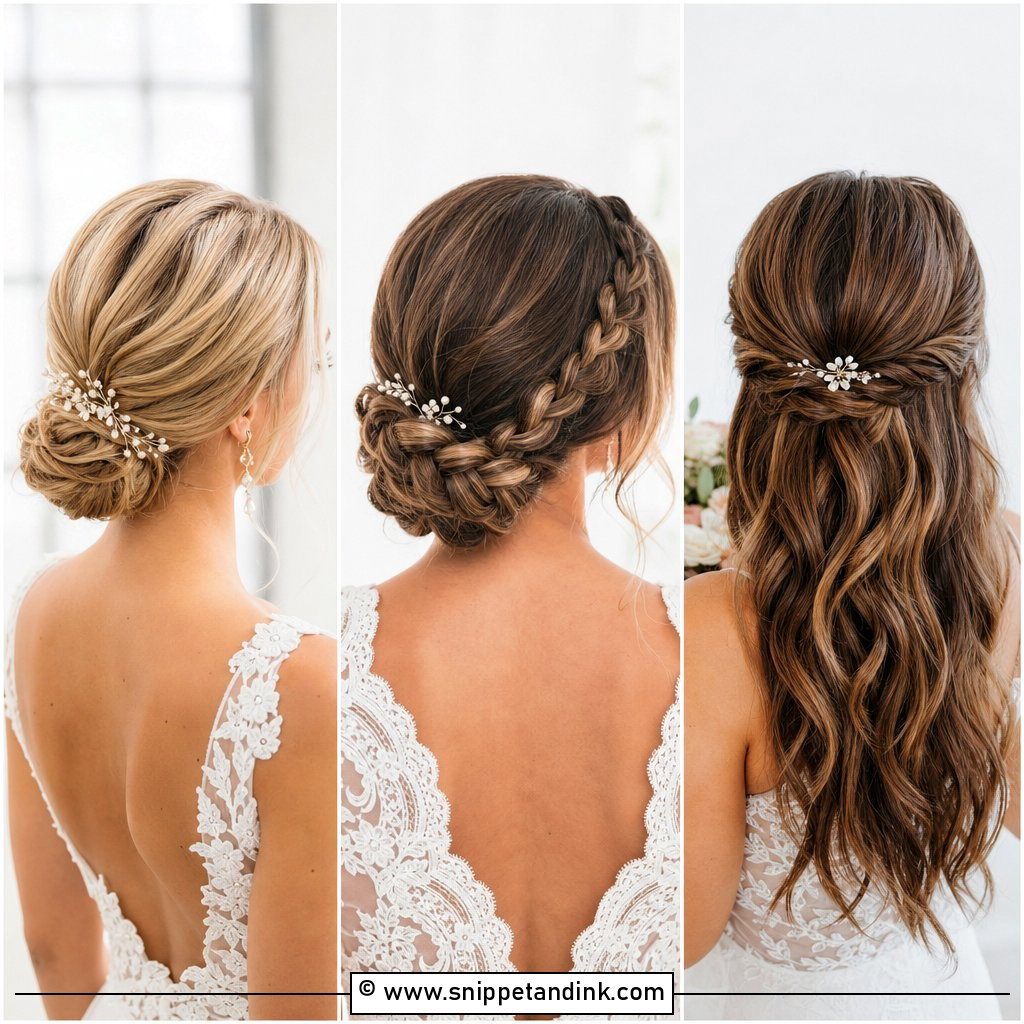
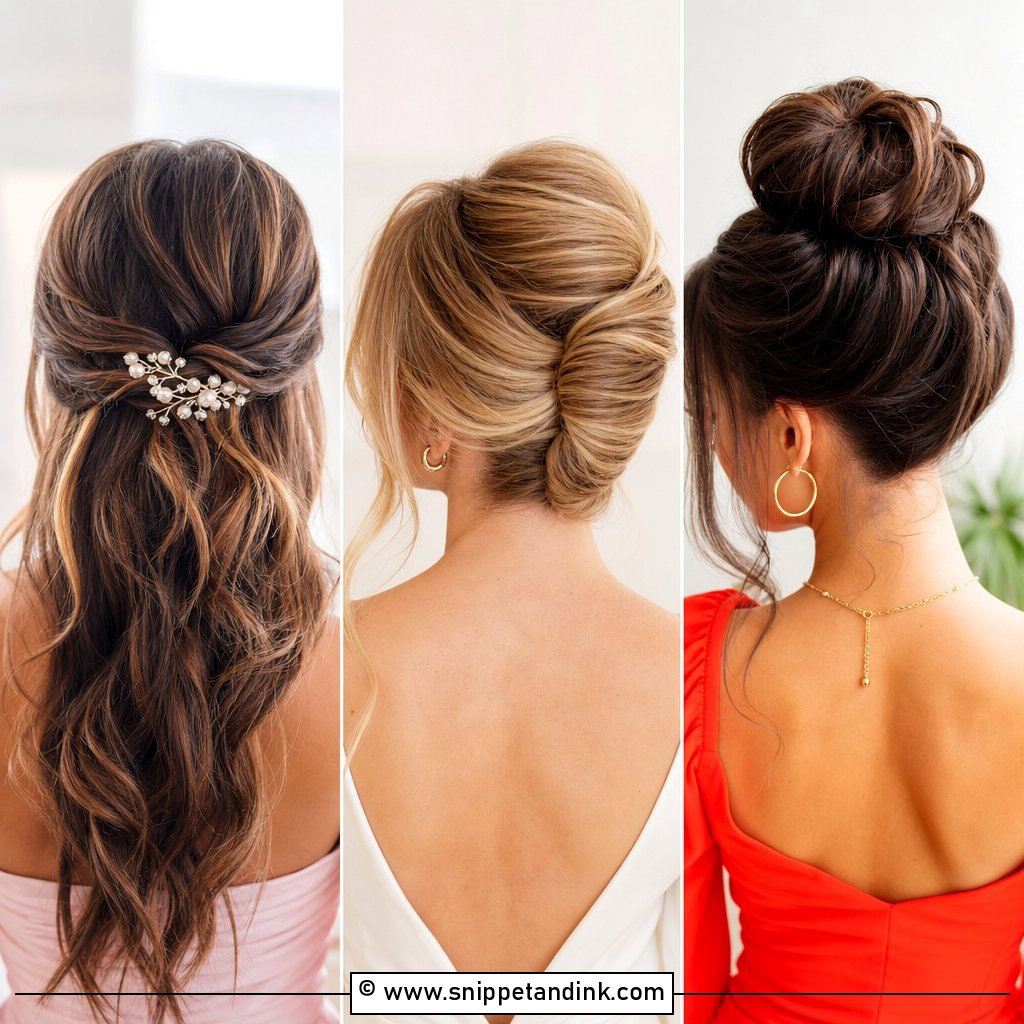
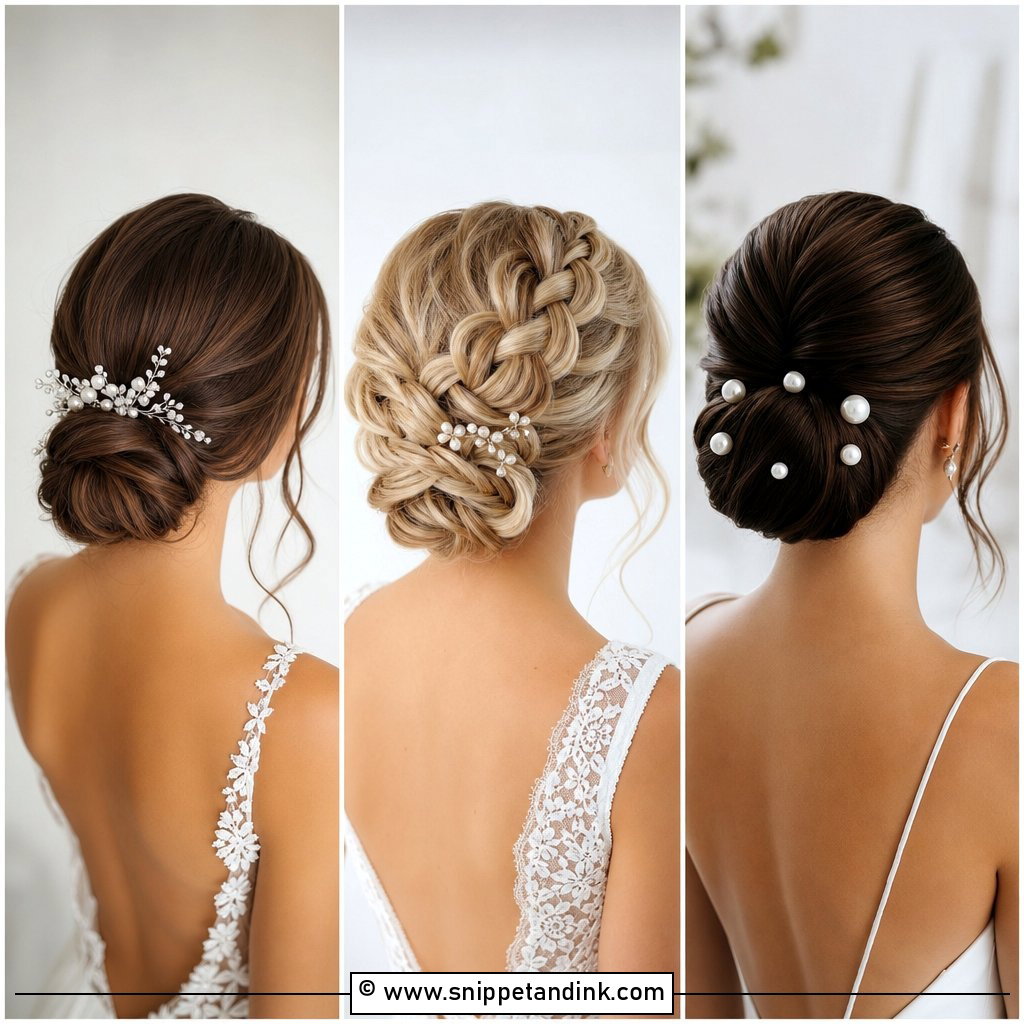
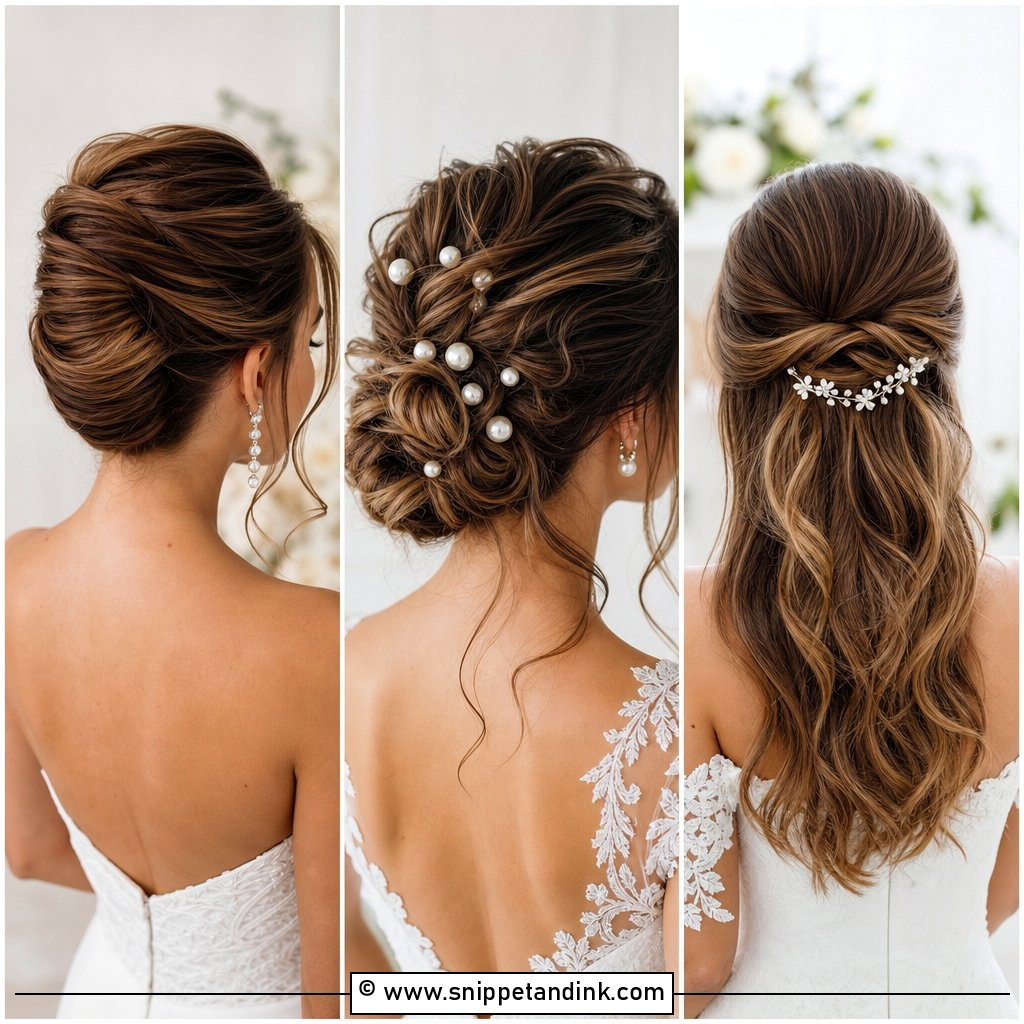
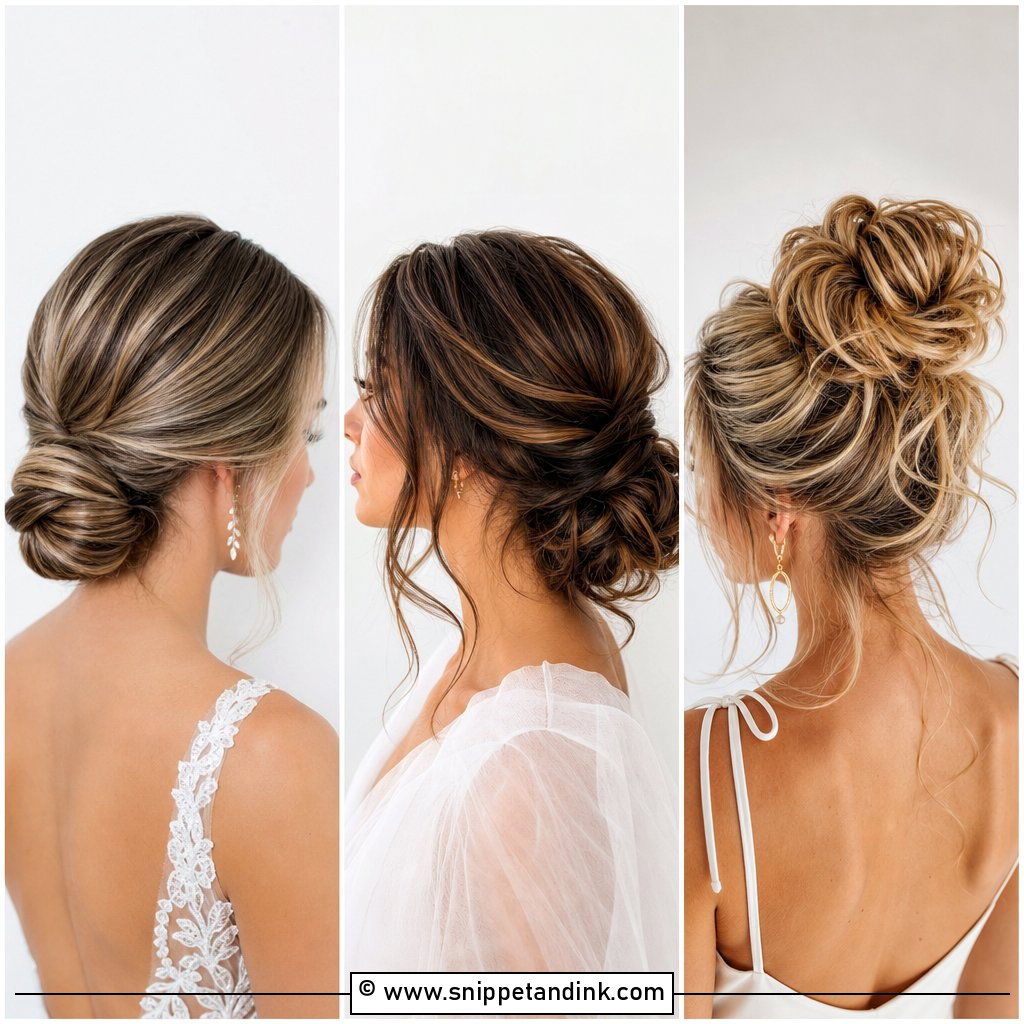
Gathered low at the nape and shaped into a smooth, rounded knot, the chignon is the updo I’d call the safest bet in this collection. It looks graceful from every angle and gets out of the way of your neckline, earrings and any back detail. Veils, pearl pins, satin and lace all sit well with it. Where it goes wrong is volume: too flat on top and it looks severe, too much and it looks dated. I aim for a gentle lift at the crown and decide on face pieces with you at the trial, not before.
2. Low Bridal Bun
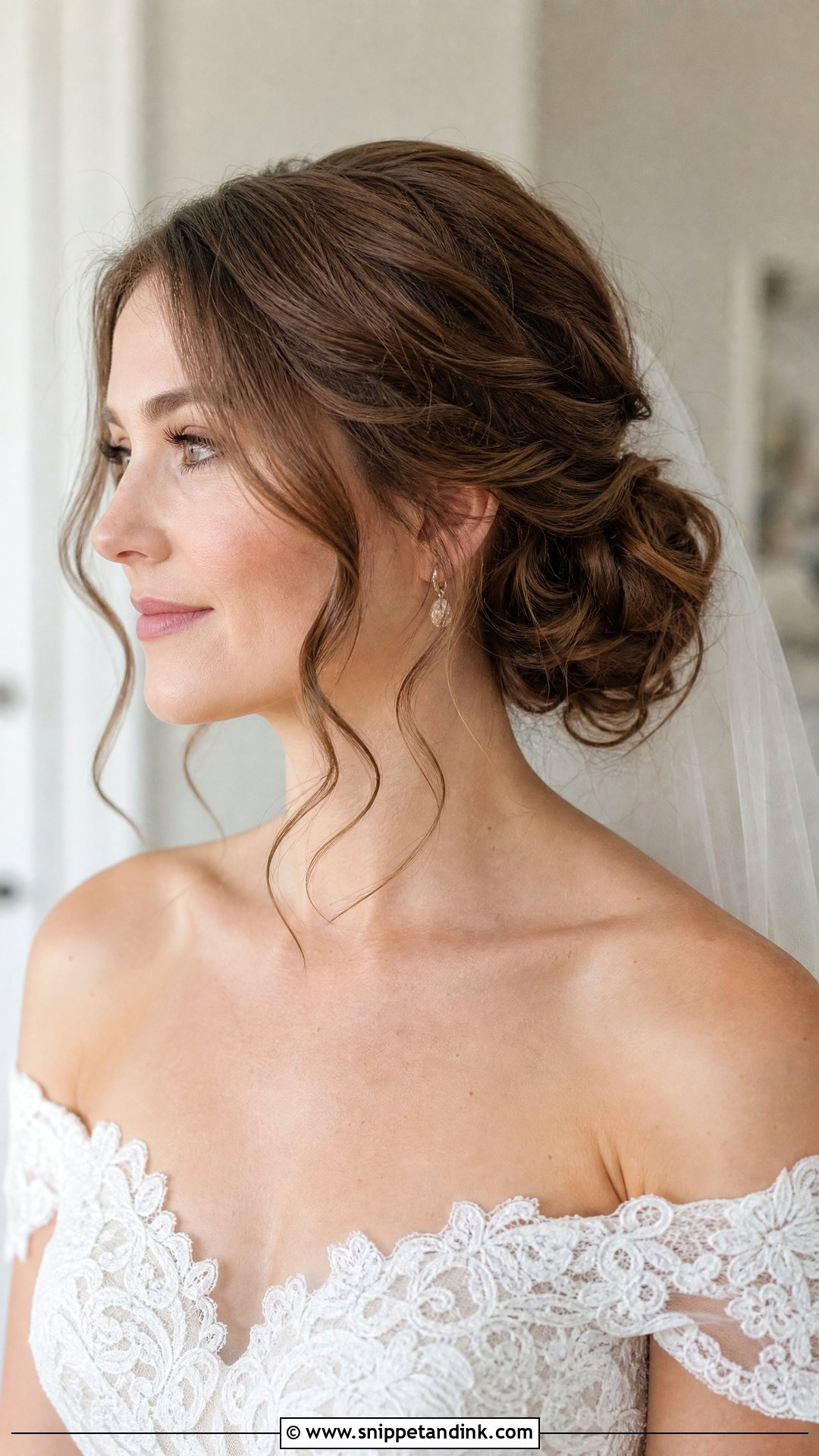
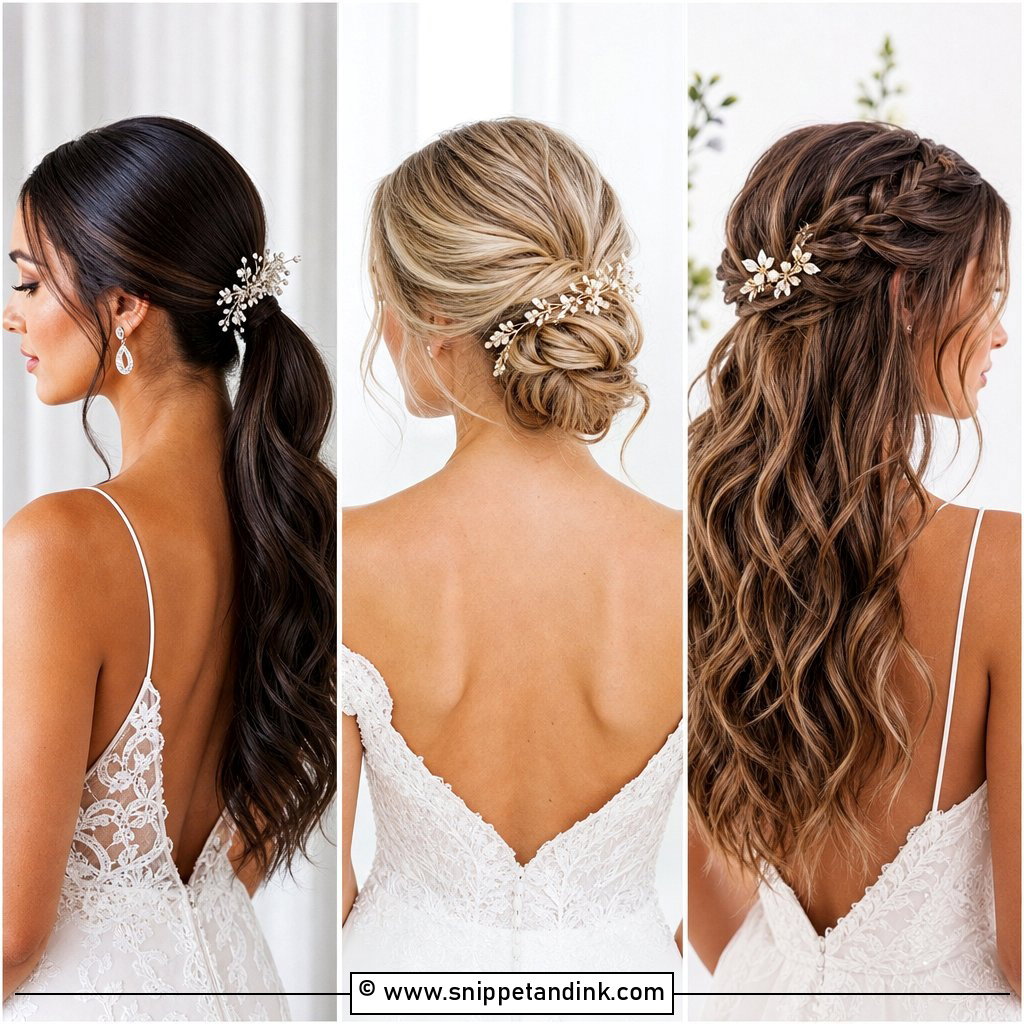
Softer and less sculpted than a chignon, a low bun can carry texture, loose bends and a few pieces around the face. Sitting near the nape, it’s comfortable over a long day and pairs easily with a veil or comb. It adapts to almost any hair: fine hair gets a hidden pad, thick hair gets split into two sections so it doesn’t bulge. Smooth it for a polished room; pull a little air into it for a garden.
3. Sleek Bridal Updo
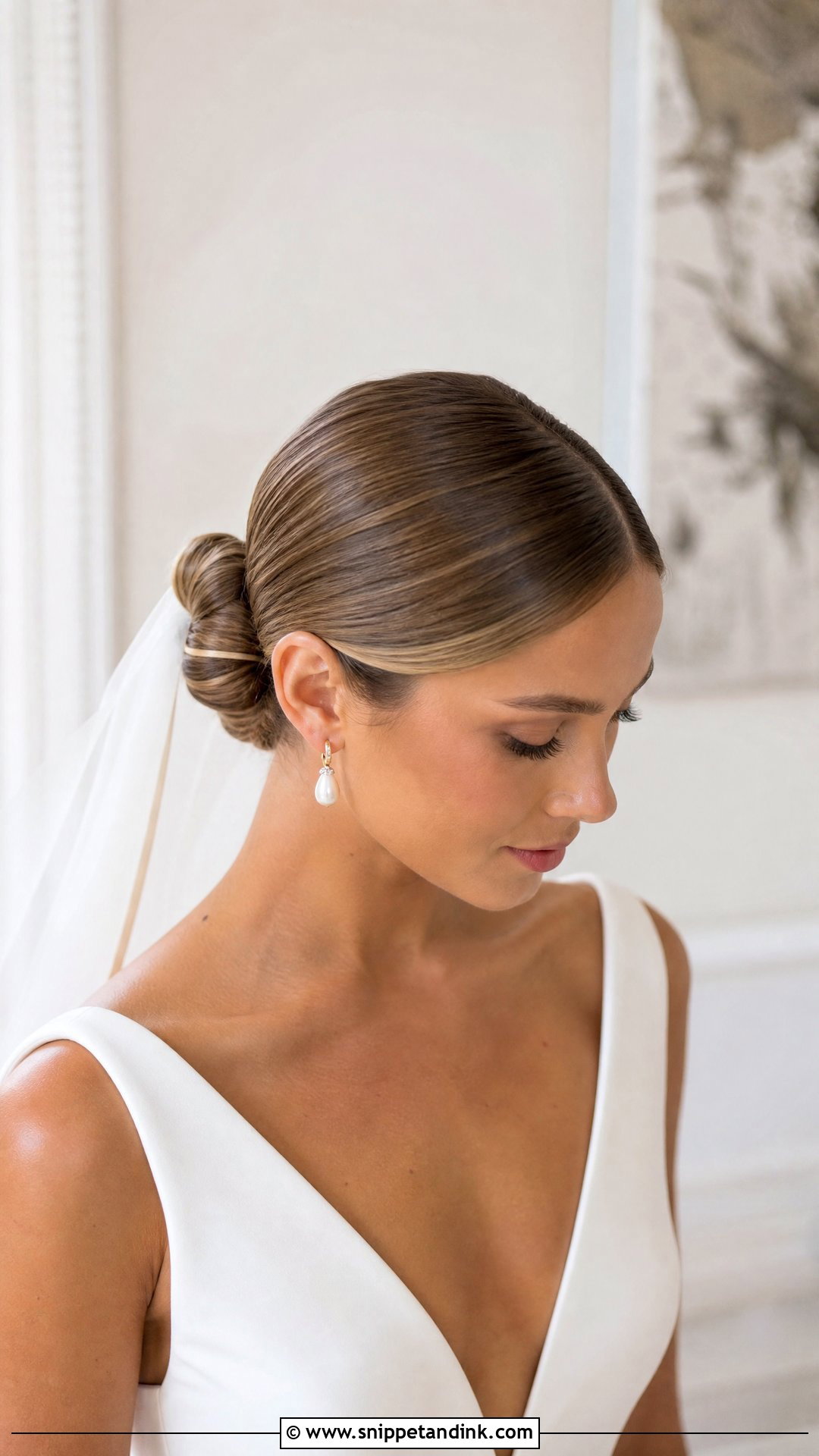
Sleek is precision work. Every section is brushed back with controlled shine, then pinned into a neat bun or knot, and any bump at the crown shows. It suits minimal gowns, high necklines, structured dresses and big earrings. With so little flyaway texture, the face is the whole focus in close-ups. I work in small sections with a smoothing cream and a boar bristle brush, then set the surface with a light mist. Centre part reads fashion-forward; a soft side part is more classic. Naturally curly hair can get there too, but it needs a smoothing blow-dry first.
4. Textured Bridal Updo
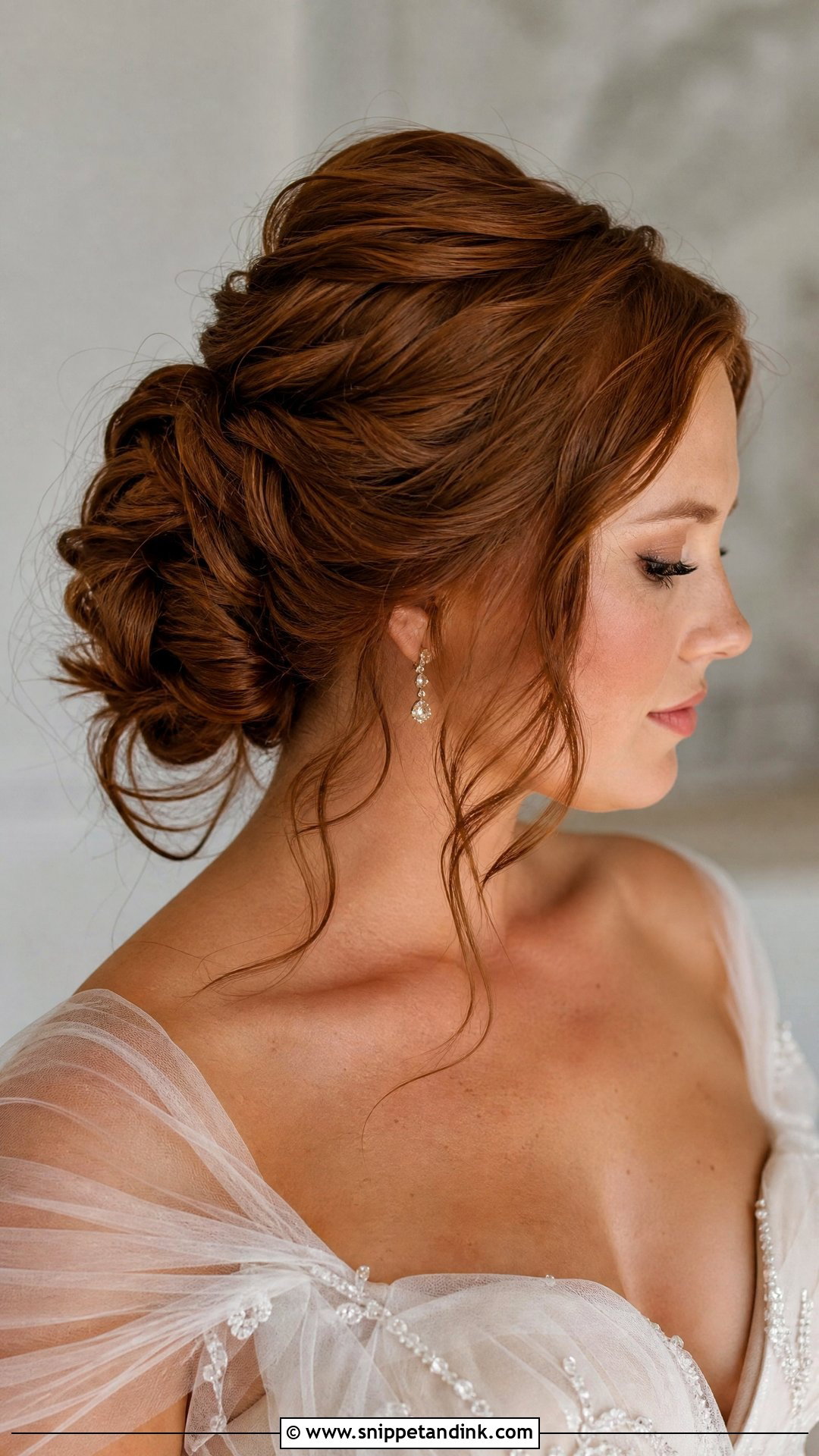
Curling or waving first, then pinning into a soft shape, gives an updo visible dimension. That helps fine hair look fuller and gives thick hair a romantic finish. Barns, gardens and relaxed formal celebrations suit it. The balance to strike is soft, not messy, and I get there by building a firm pinned base, then teasing out only the top layer at the end. Add face-framing tendrils and a bit of crown volume, and it will still hold at the reception.
5. Braided Bridal Updo
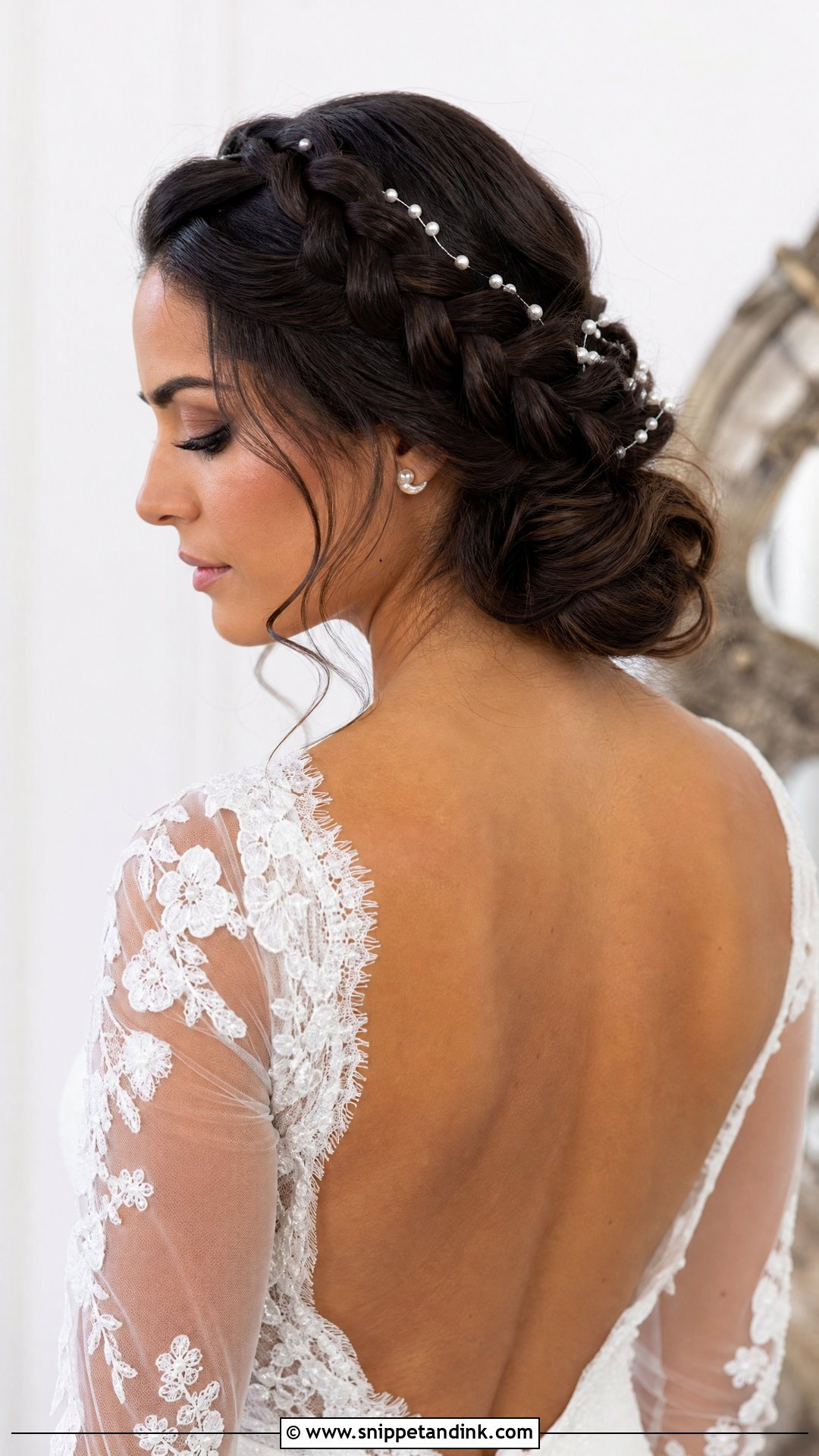
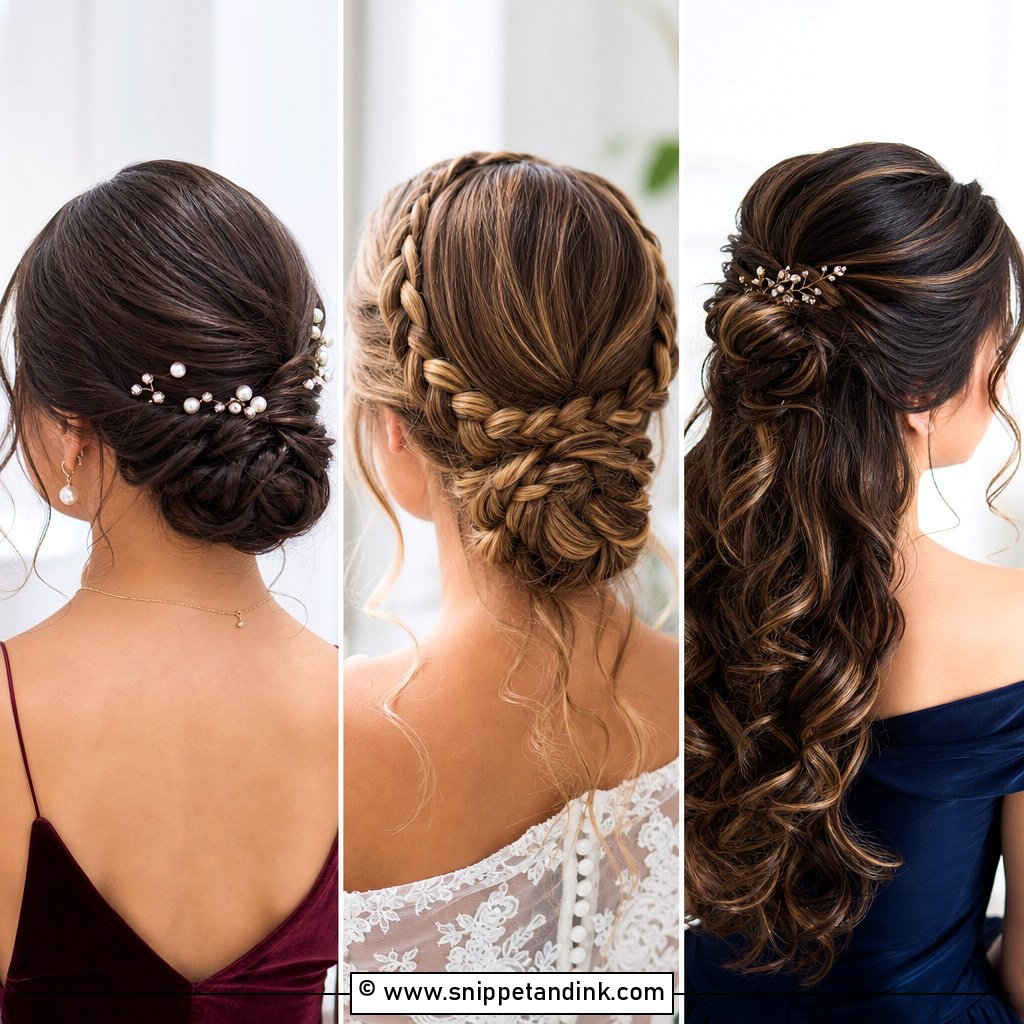
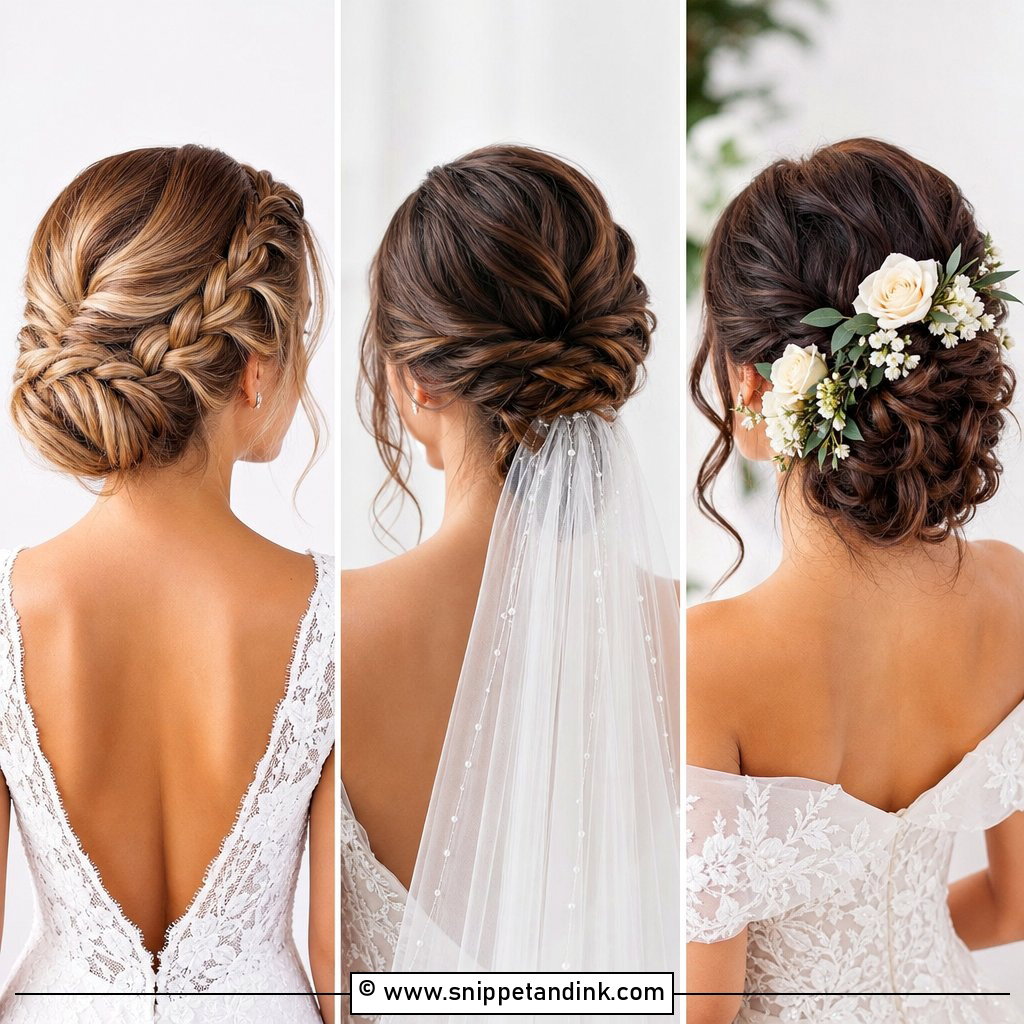
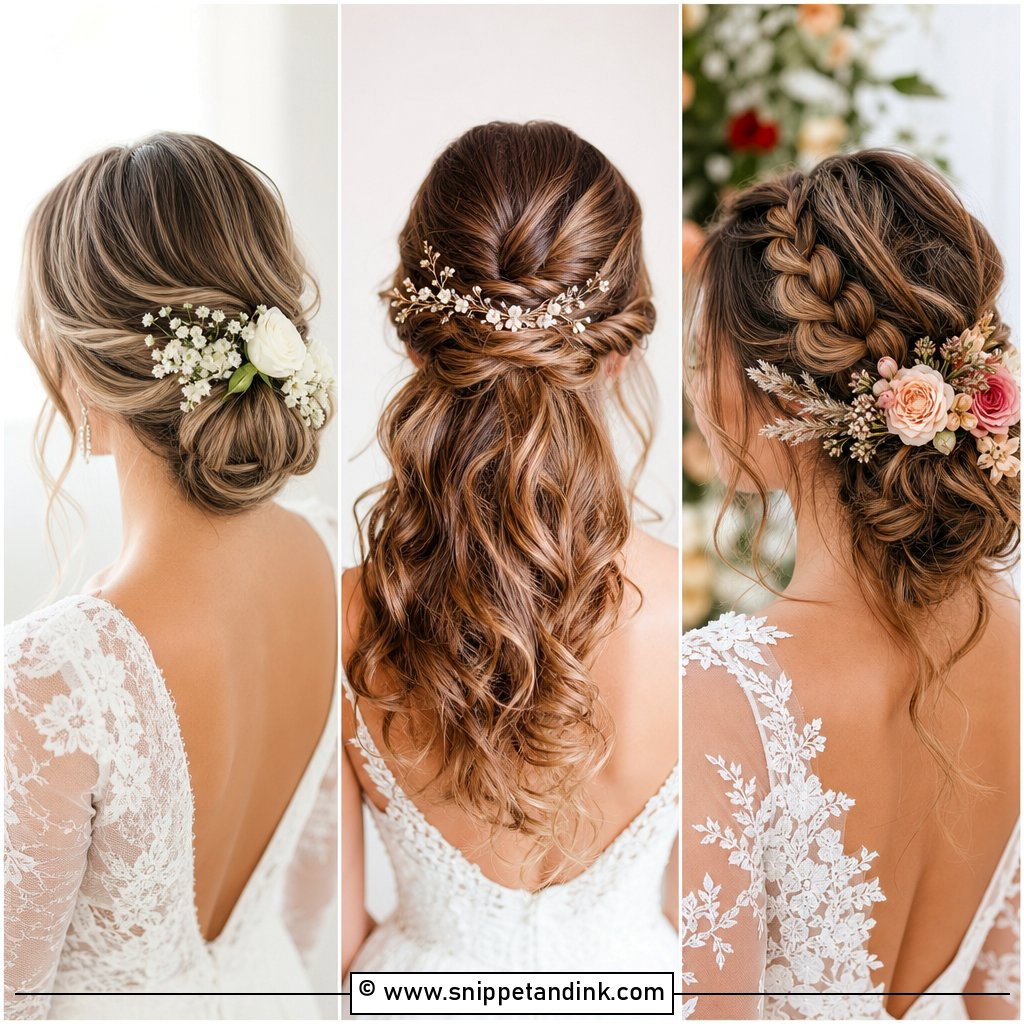
Braids give an updo detail and grip at once. The braid can wrap a bun, run along one side or frame the crown before disappearing into the pinned shape. If your dress is plain or you’re skipping accessories, the braid becomes the decoration. It’s practical too: braiding catches shorter layers that would otherwise slip out by afternoon. Loose, pulled-apart braids feel softer; tighter ones look polished. I’d add pearls or tiny flowers only along the braid line, not scattered at random.
6. Messy Bridal Bun
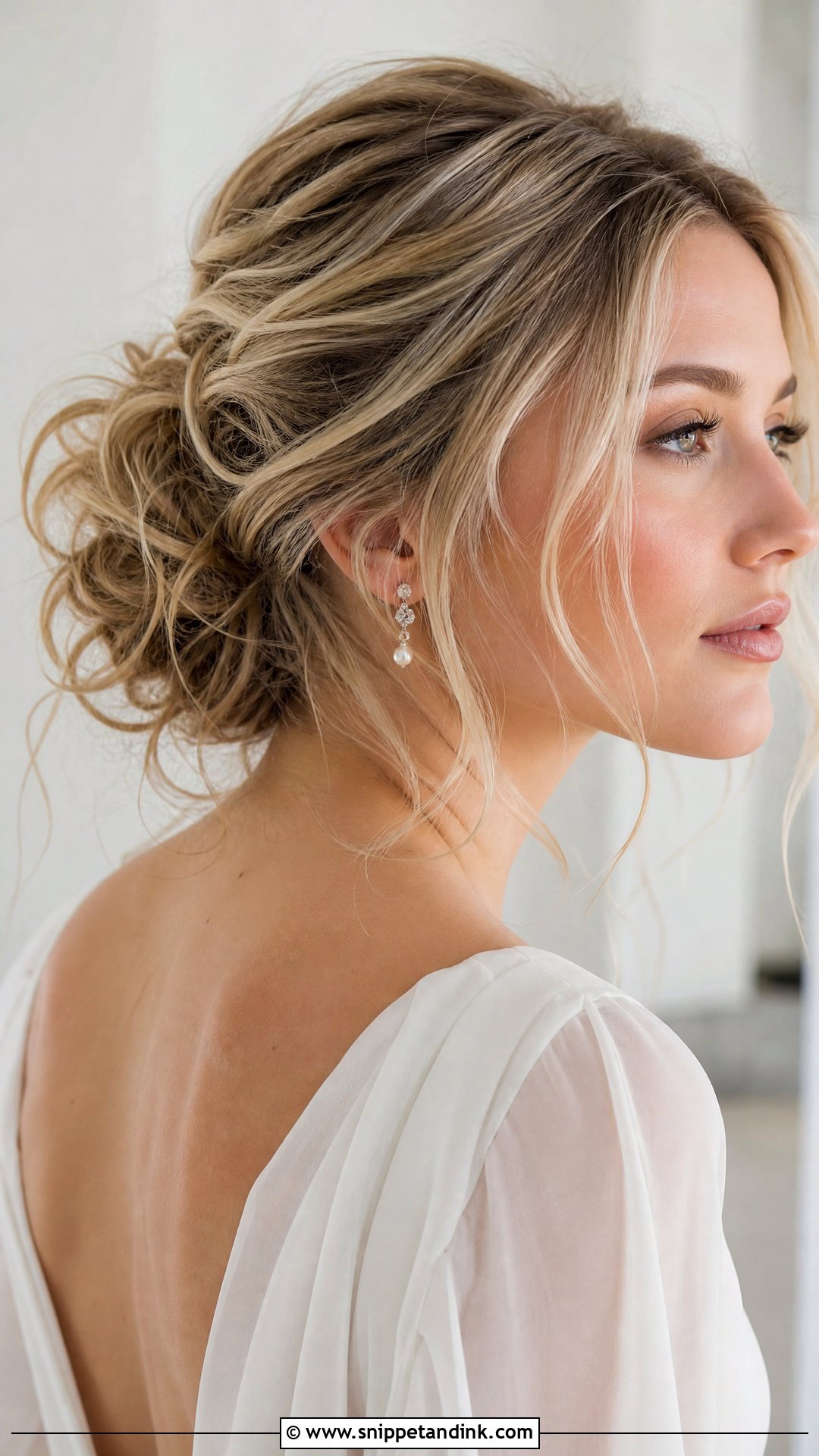
The word messy scares people, and it should be taken with a pinch of salt. A good messy bun is built just as carefully as a sleek one; the texture is added on top. Loose bends and airy volume give it a modern shape while keeping hair off your shoulders. It can sit low, mid-height or slightly to one side. It suits wavy hair naturally, since the bends add depth without much curling. I keep the front tidier than the back, which is what stops it looking accidental in photos.
7. High Bridal Bun
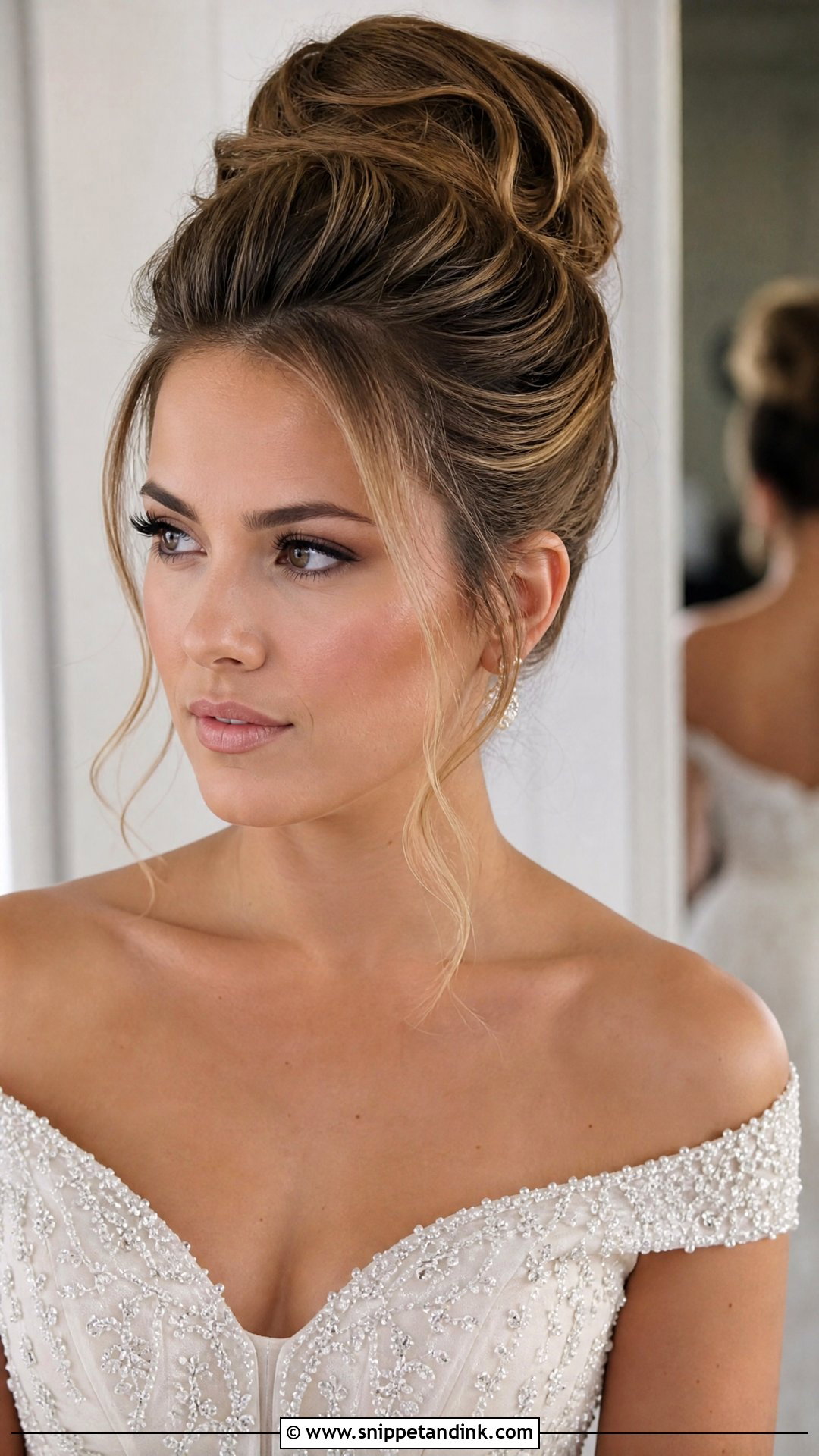
Height draws the eye upward and lengthens the neck, which is why a high bun suits high necklines, dramatic sleeves and detailed bodices. It reads regal without needing a heavy headpiece. Sleek or textured both work. The question I always raise first is the veil, because a high bun limits where the comb can sit; usually it goes just under the bun. If your hair is long and thick, expect more weight on the scalp, and test it for a couple of hours before deciding.
8. Side Bridal Updo
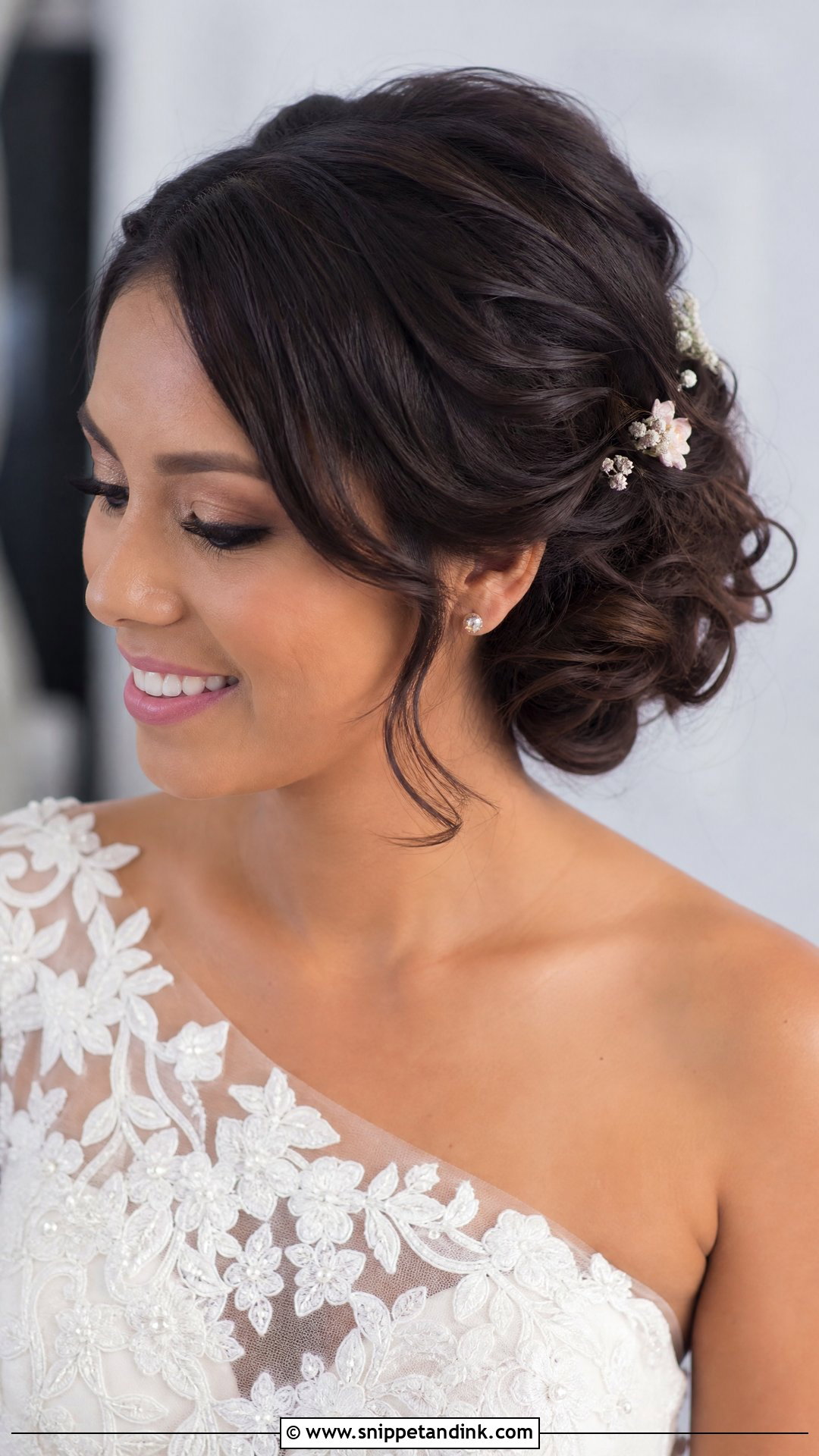
Gathering the hair low on one side makes the updo visible in front-facing portraits, which most updos aren’t. The shape is easy to see from the front, with curls, twists or a little braiding at the gathered side. It suits one-shoulder and off-the-shoulder necklines and shows off lace on the open side. The risk is lopsidedness, so I keep the bun close to the nape rather than behind the ear, where it can look heavy. A few loose strands on the other side even it out.
9. Curly Bridal Updo
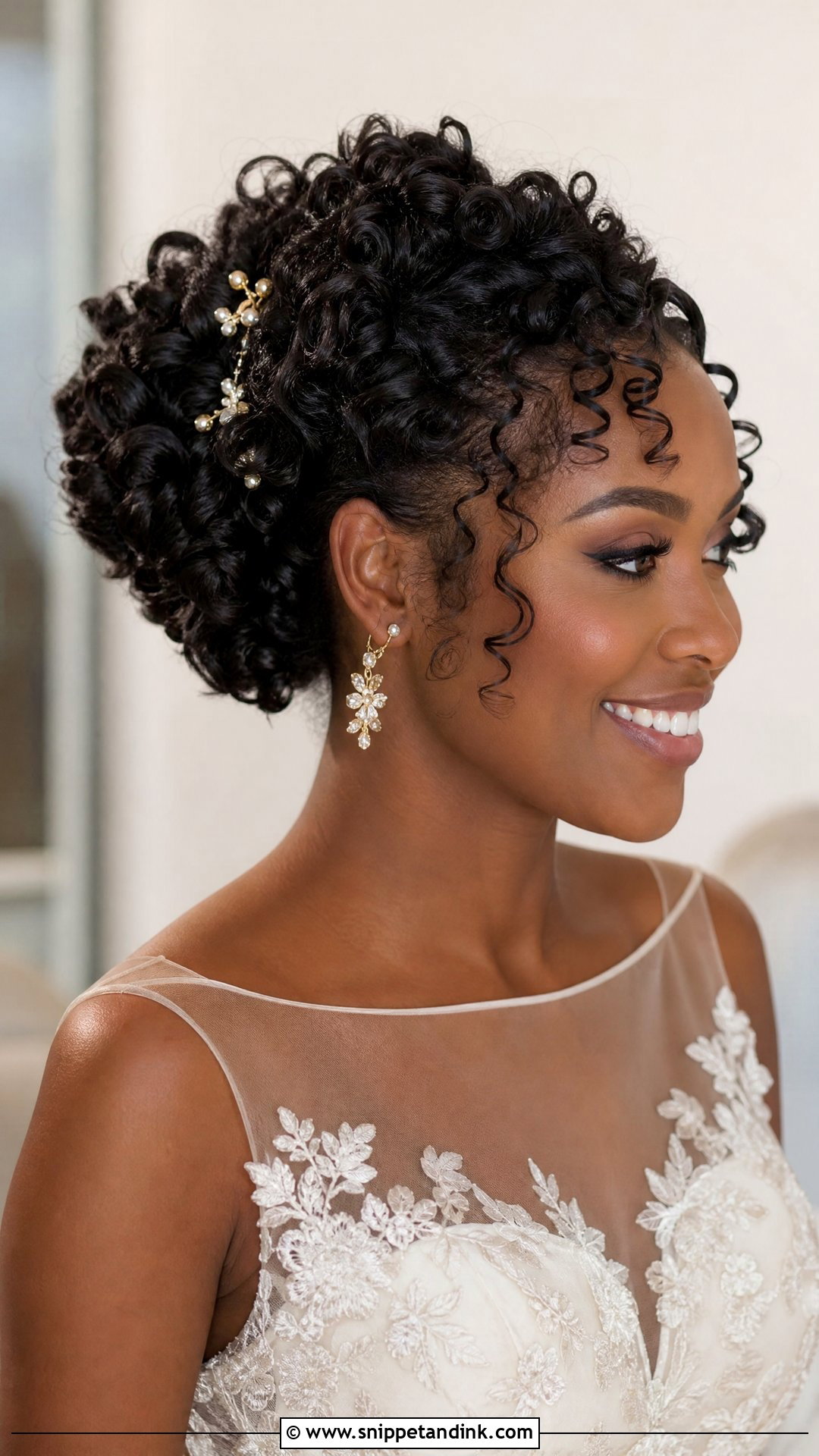
Natural curls make some of the best updos, because they already have the volume and grip that straight hair has to be given. I pin them into a soft shape that keeps the bounce and definition, low, high or around the crown. Prep starts days before: deep hydration and your usual definition routine, so the curls arrive at their best. I never brush curls out for an updo; I shape them with fingers and pin through the curl, not across it. Use pins only where needed so the texture stays the focus.
10. Twisted Bridal Updo
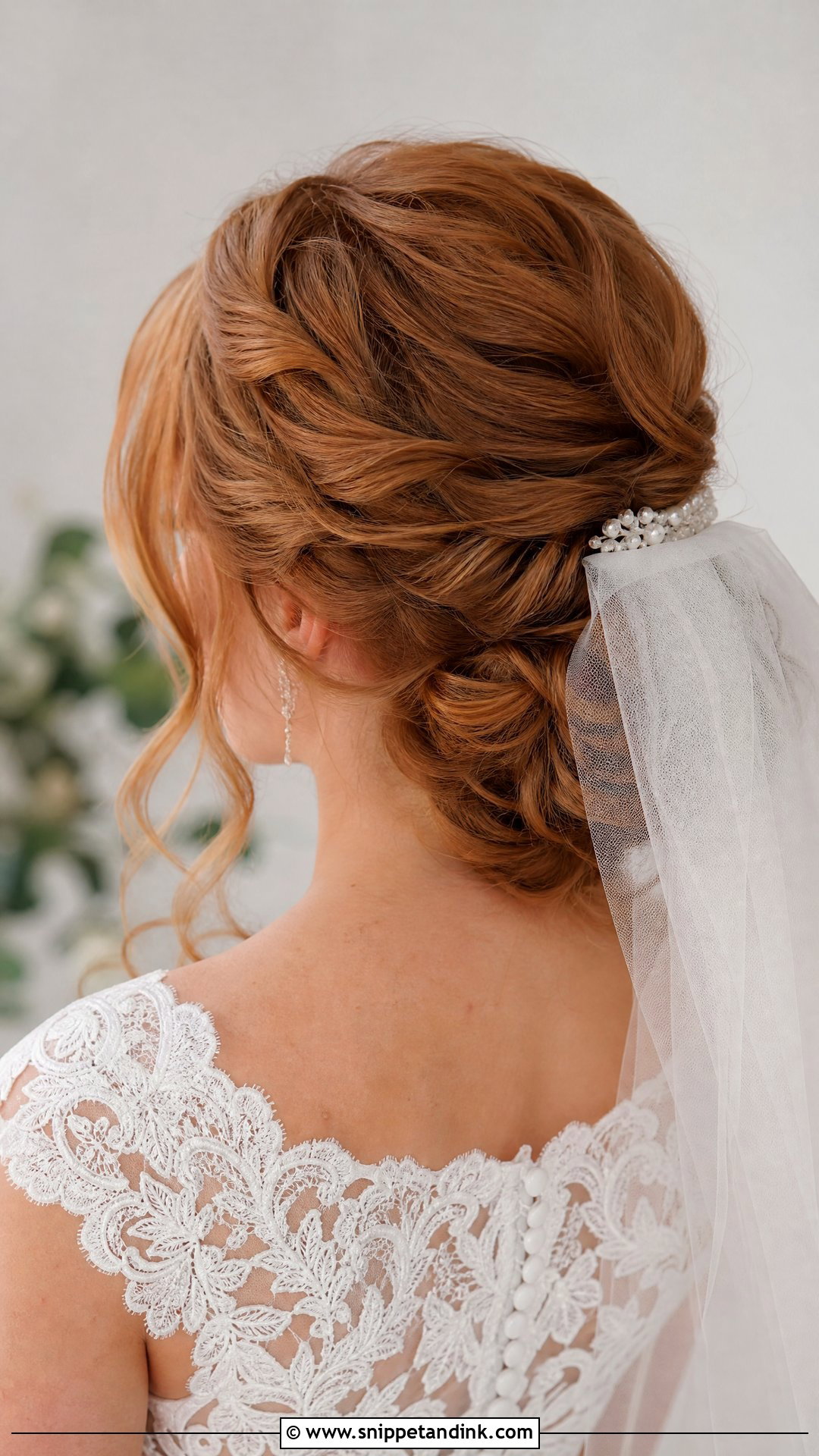
Twists are the quiet alternative to braids. Sections are softly twisted and pinned into a bun or gathered shape, adding movement without looking busy. They also control shorter layers and add fullness at the crown. I find twists hold far better on hair that’s been lightly waved first, as the bends lock into each other. Medium and long hair suit it best. Veils, combs and pearl pins all sit securely in the twisted sections.
11. Boho Bridal Updo
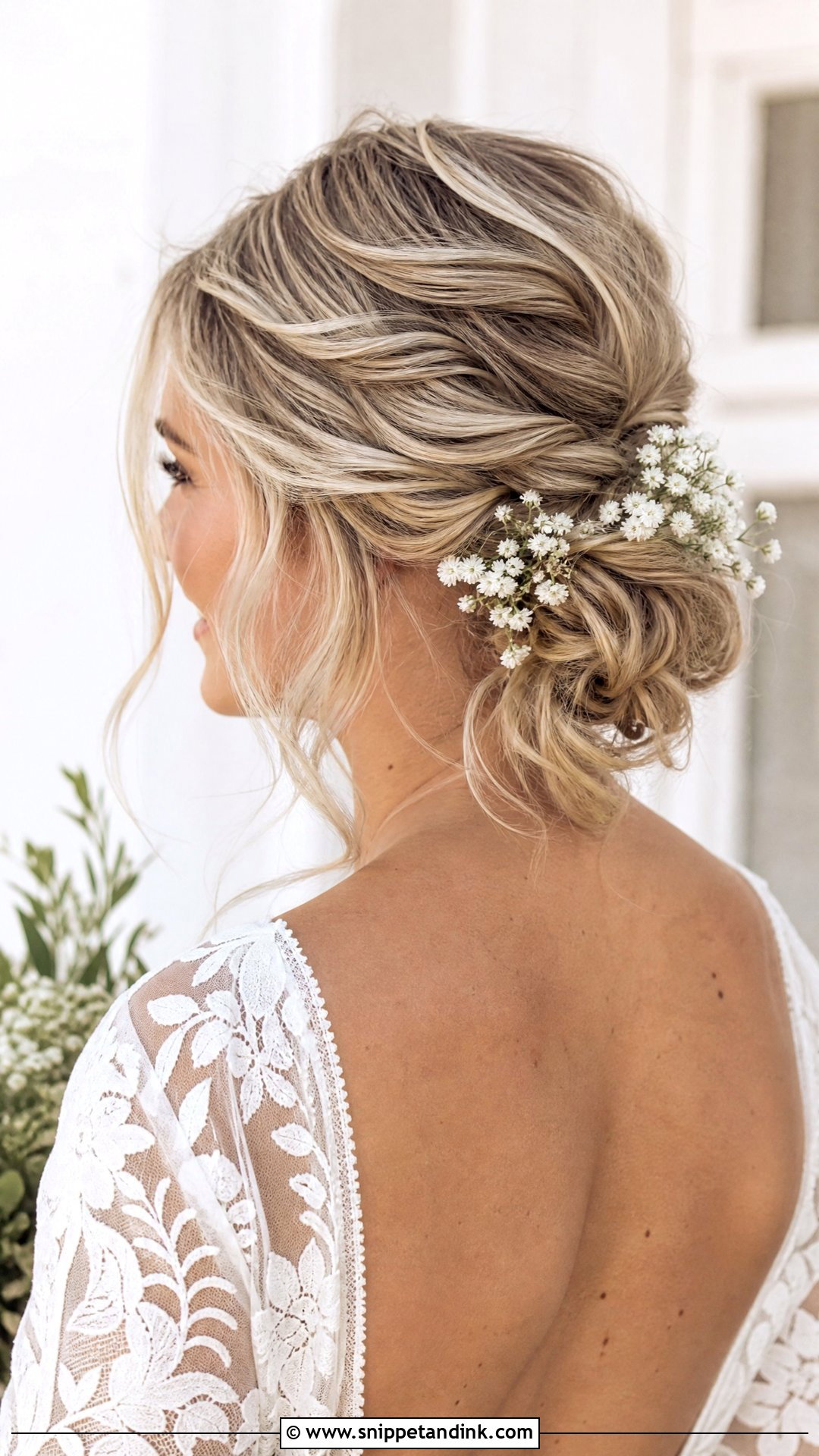
Boho is about softness: loose waves, a low bun, small twists or braids and gentle face pieces. Outdoor and beach ceremonies, lace and chiffon all sit comfortably with it. What people don’t see is how much structure is hiding underneath; without it, wind and humidity flatten the style within hours. I finish with small flowers, a few pearls or a delicate vine, and I keep accessories light. Too many and the soft shape gets crowded.
12. Vintage Bridal Updo
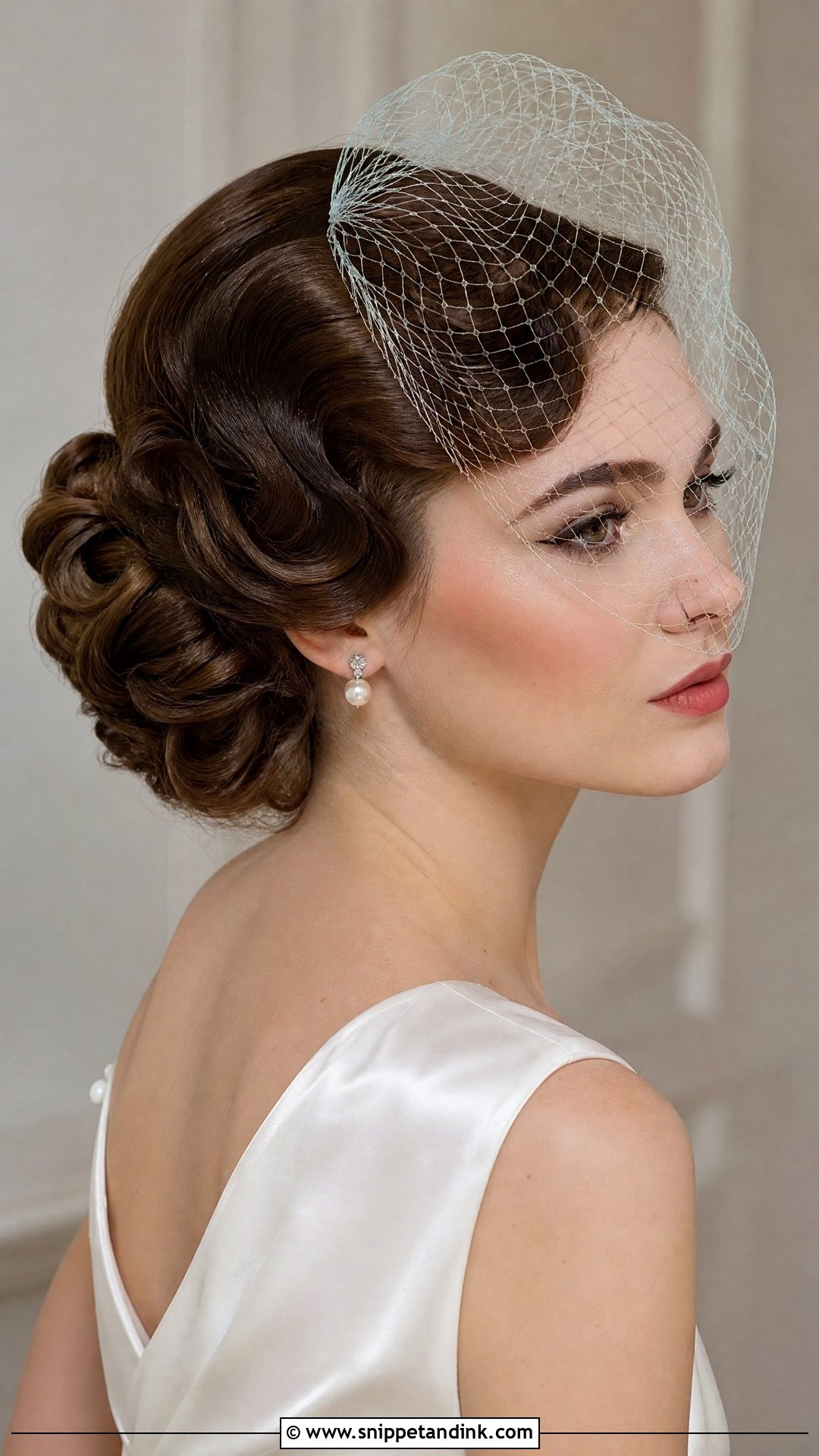
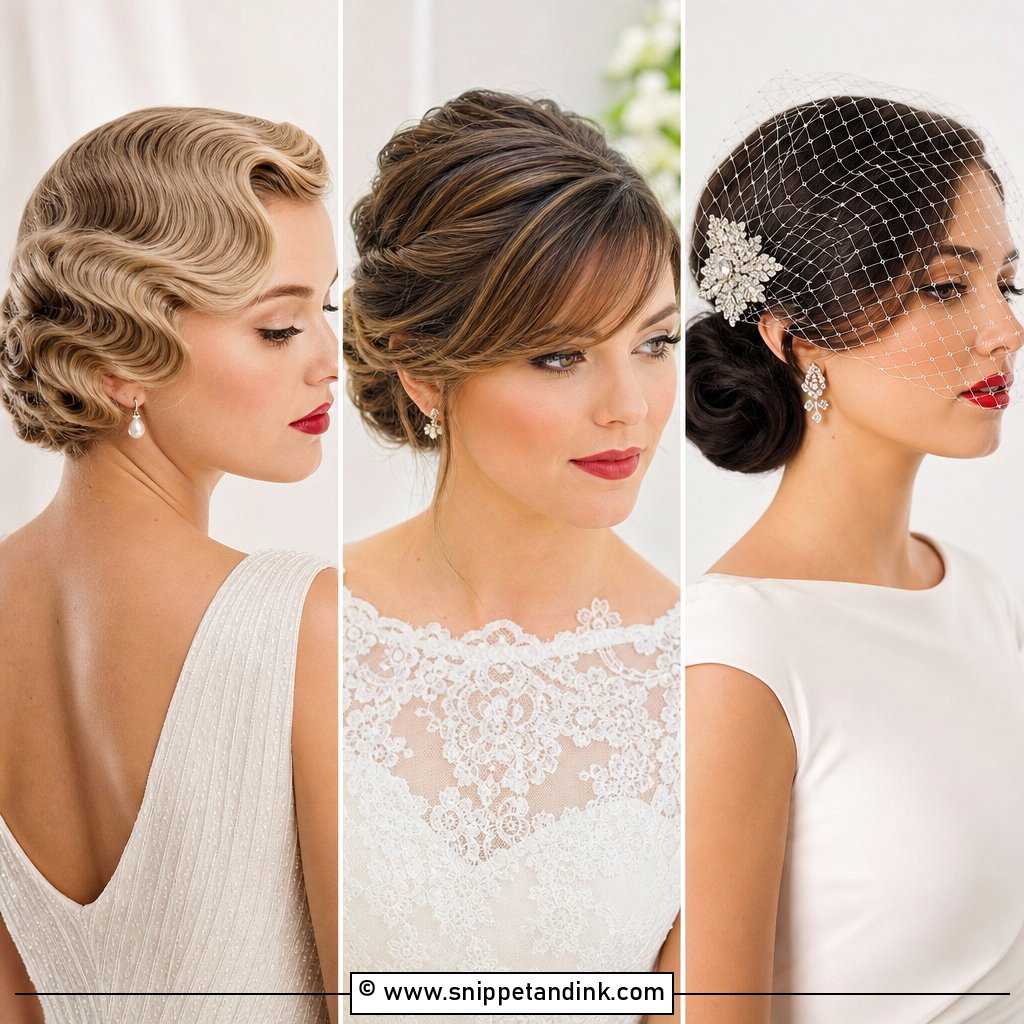
A vintage updo leans on technique more than any other here: sculpted waves, rolled sections, pin curls or a polished low shape. It belongs with satin, lace sleeves and classic makeup. The finish is more controlled than a messy bun, but I keep it soft around the face so it doesn’t look like a costume. A side part adds drama. Pair it with pearl earrings, a birdcage veil or a single comb, and resist adding more.
13. Pearl Bridal Updo
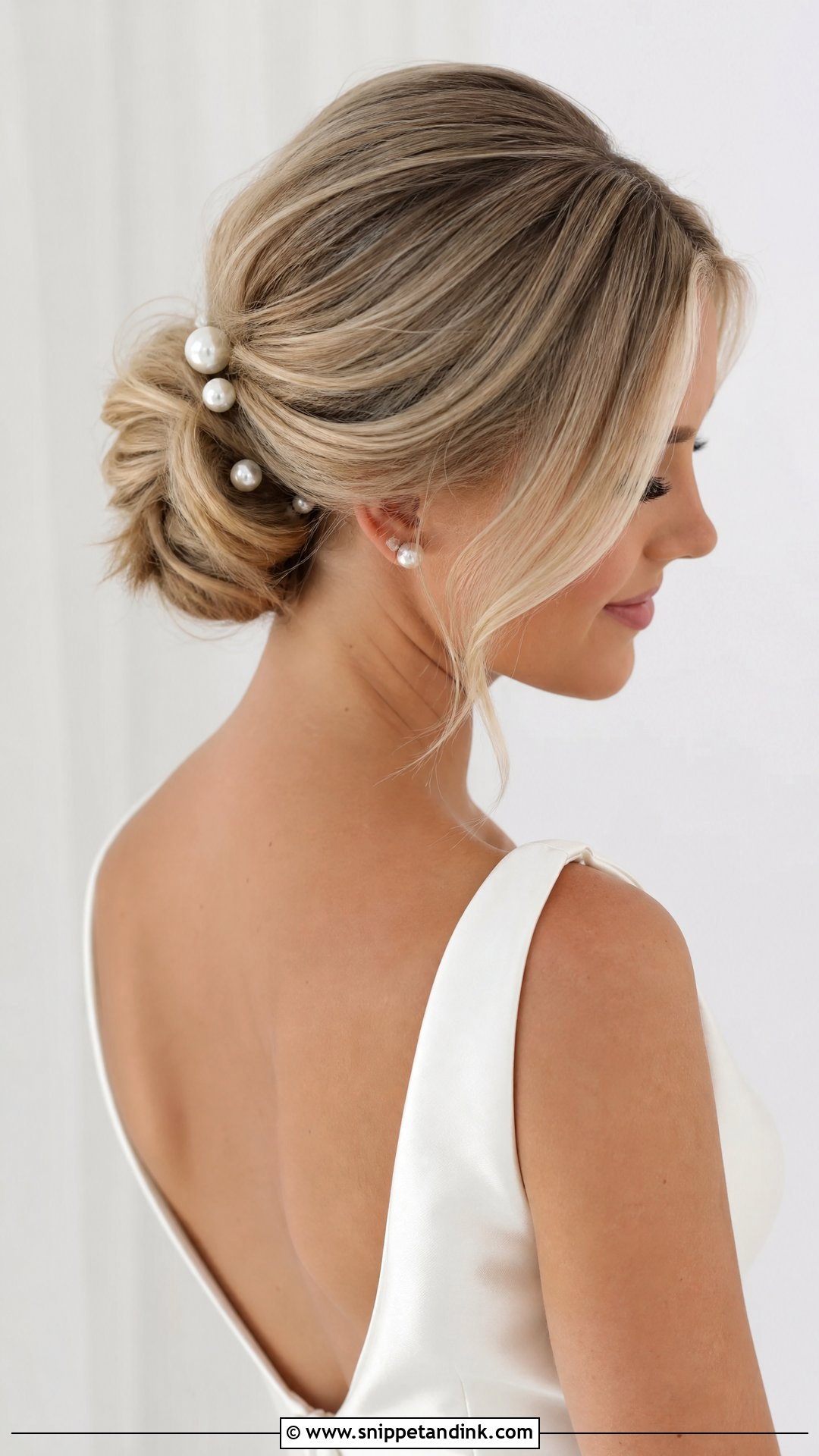
Pearls give any updo, from a chignon to a twisted bun, a finishing detail. They make most sense if your dress has pearl buttons, beading or soft satin. I place them with intention: a small cluster around the bun, a pearl comb above the veil or a line through a braid. Scattering dozens looks busy. Check that the pearl tone matches your earrings and the dress white, since ivory pearls look yellow against bright white fabric.
14. Floral Bridal Updo
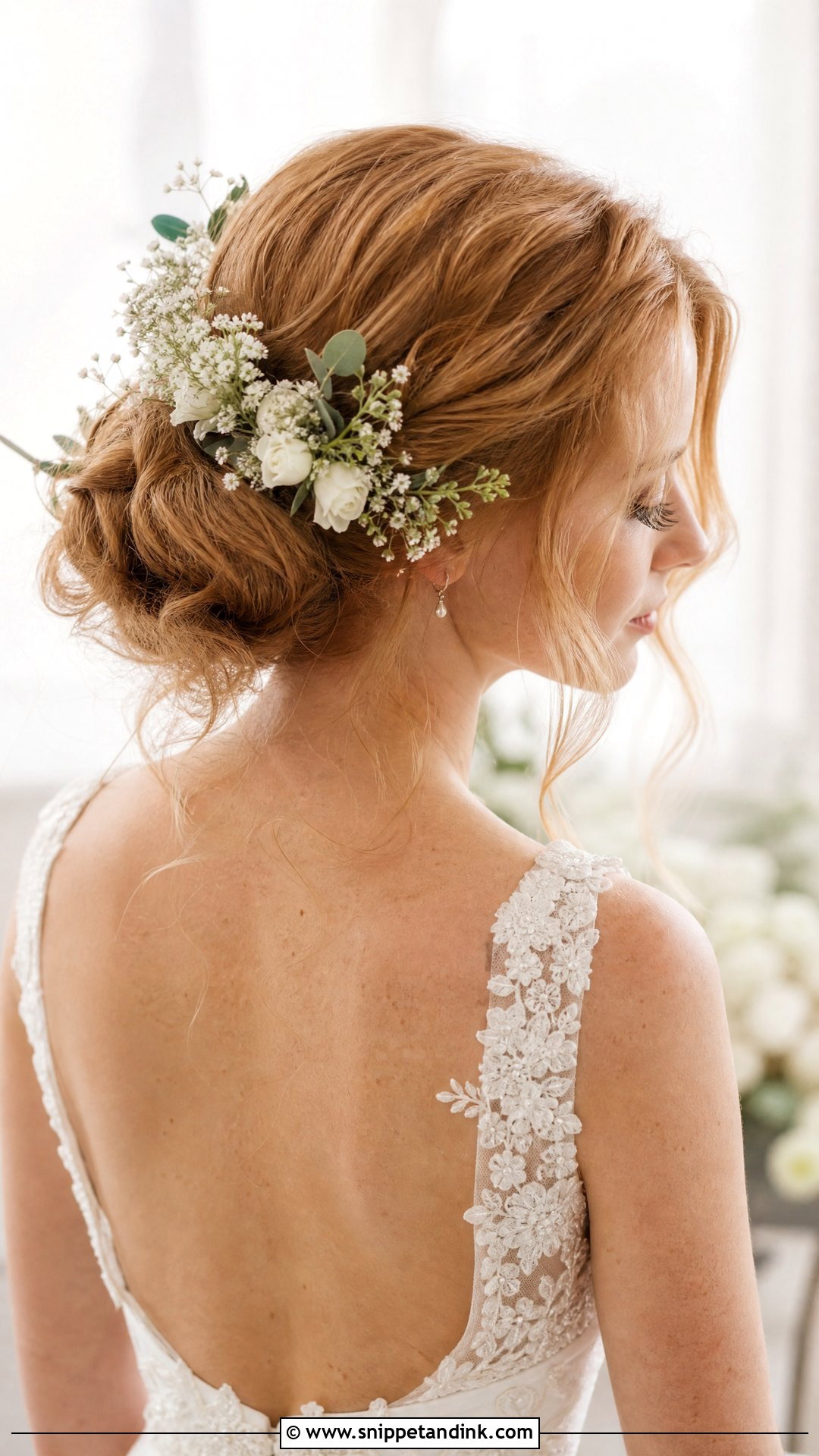
Real, dried or silk flowers each behave differently in hair. Fresh blooms look the most natural but wilt in heat, so spring and early summer are kinder to them; dried and silk last all day. A low bun with small white flowers reads classic, a textured updo with greenery feels more organic. Proportion matters most. Oversized pieces overpower, and tiny ones get lost in photos. I ask brides to put me in touch with their florist so the flowers arrive wired and ready to pin, not loose on a stem.
15. Veil Bridal Updo
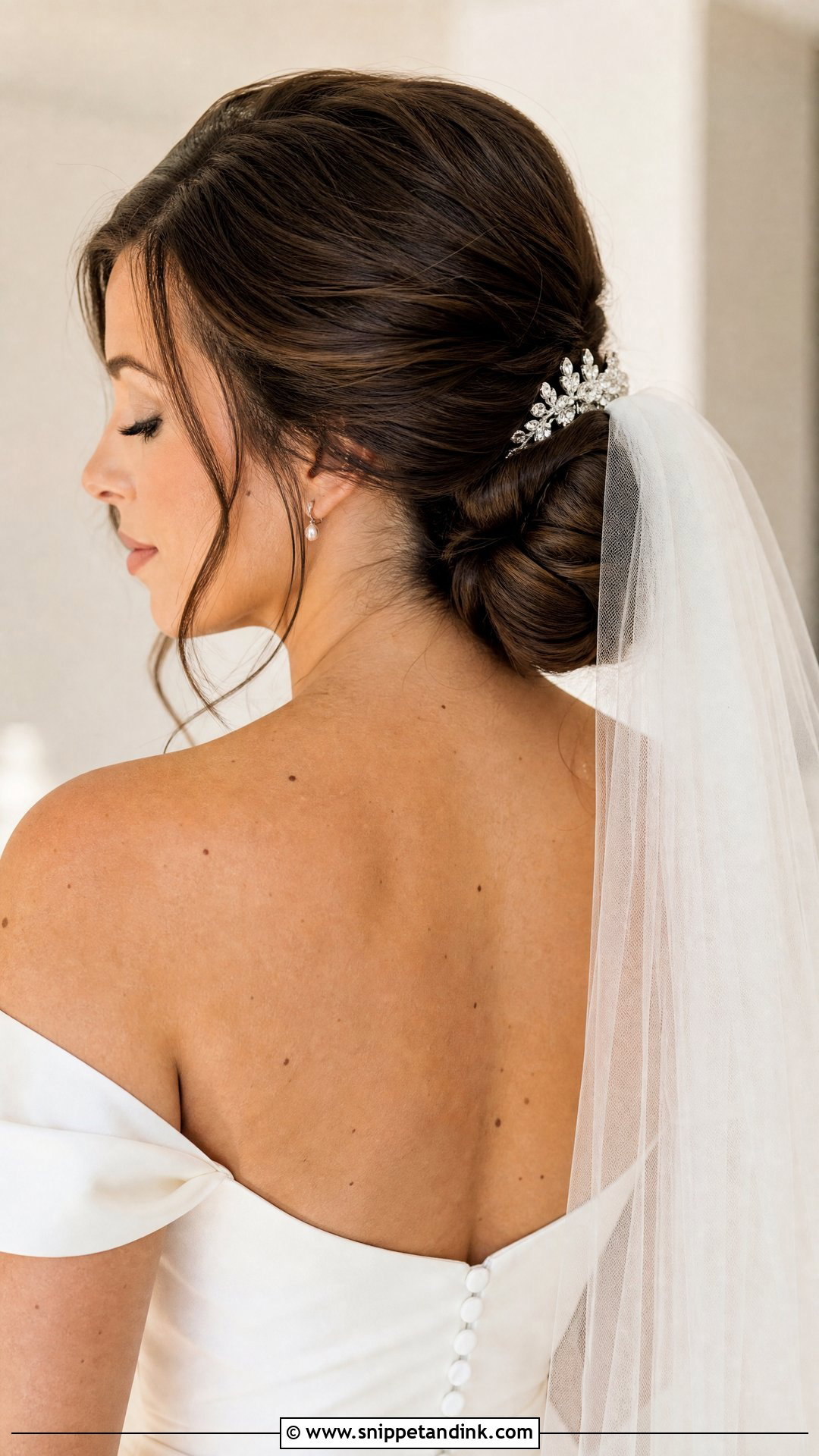
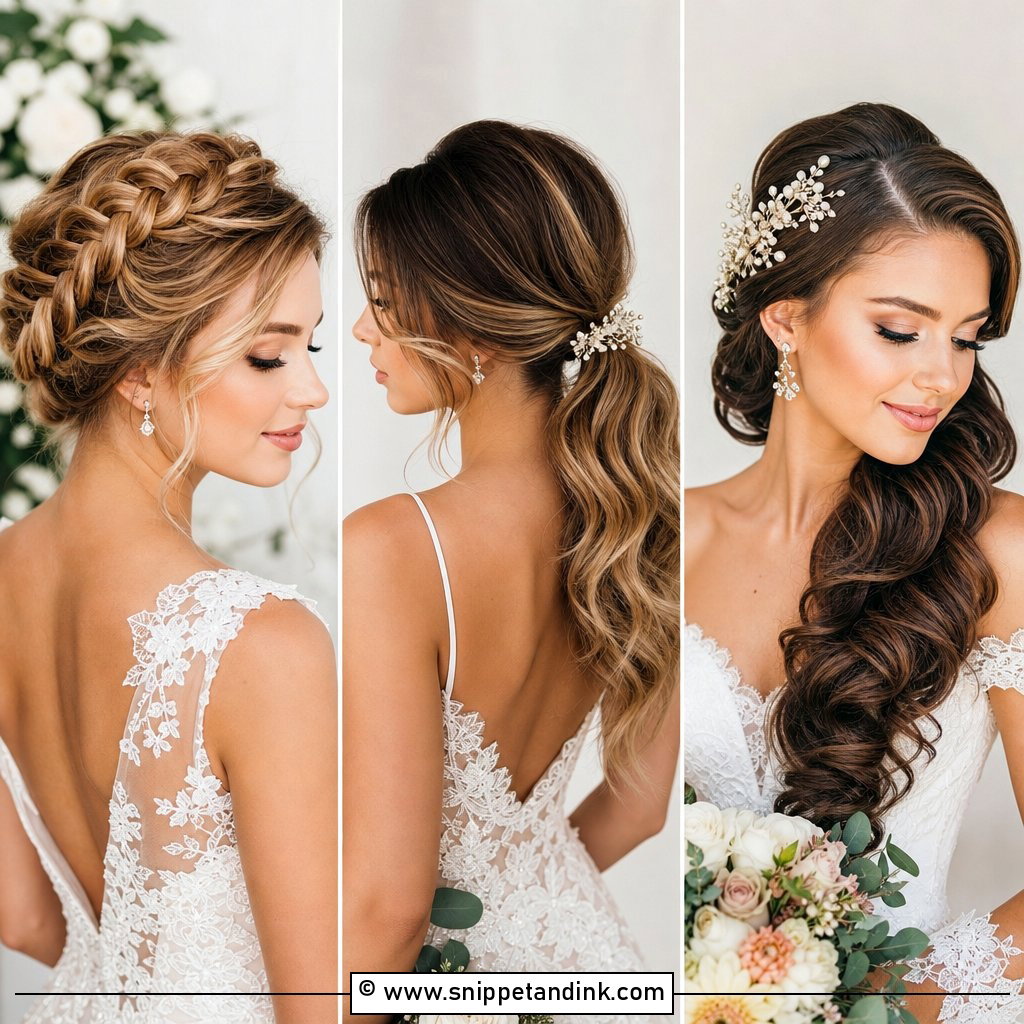
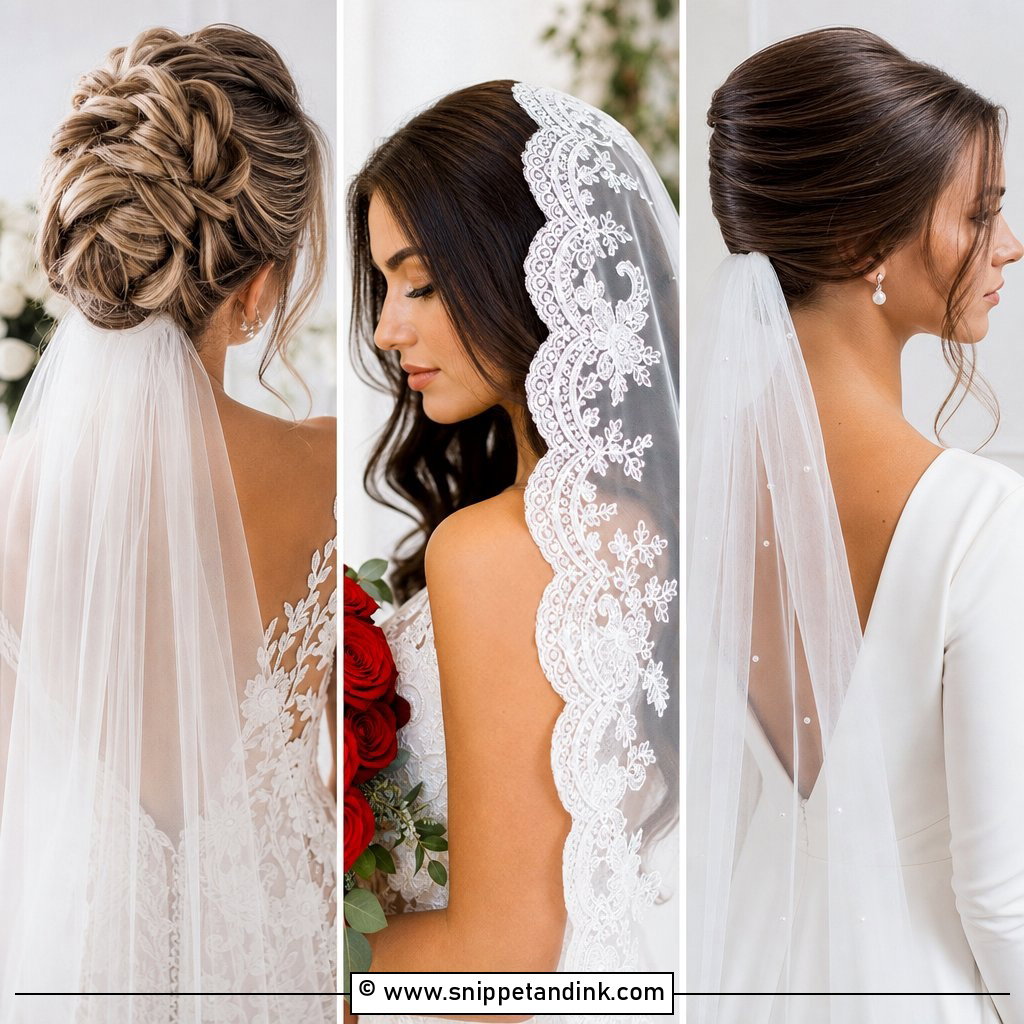
Every updo needs to answer two questions: does it hold the veil, and does it still look finished once the veil comes off? Low buns, chignons, twisted and textured buns all give pins and combs a secure base. Bring your actual veil, or one with a similar comb, to the trial so I can test placement and weight. I check it from the front, side and back, then take the veil out and look again. If the hair looks incomplete without it, we adjust before the day, not after the ceremony.
The Ceremony View Is the Back of Your Head
Here’s something easy to overlook: for most of the ceremony, your guests see your updo from behind. You’ll check the front in the mirror a hundred times and the back maybe once. That’s where stray pins glint, where a bun sits slightly crooked, and where the veil comb either looks neat or leaves a visible gap.
A five-minute check at the trial
- Ask someone to film a slow circle around your head in daylight, then watch it on your phone at full size.
- Look for bobby pins that catch the light. Pins matched to your hair colour disappear; silver ones on dark hair don’t.
- Check the veil from behind and in profile. A comb set too high can lift the hair around it.
- Turn your head sharply left and right. If anything moves, it will move more by the time you’re dancing.
It feels fussy, but this is the angle in your processional and vow photos. Fixing it at the trial takes minutes. Noticing it in the album is permanent.
Pin It for the Dress, Not the Photo
The right updo suits the whole picture, not just the inspiration photo you saved months ago. Your neckline, veil, accessories, texture, venue and weather all have a say, as does how much hair you want around your face. A sleek chignon looks at home in a ballroom; a textured bun or braided updo is happier in a garden. Book the trial, have someone photograph it from every side, and wear a top with a neckline close to your dress so you see the real proportions. If it feels secure and still looks like you, stop searching.
You'll Like These Ideas:


Leave a Reply