
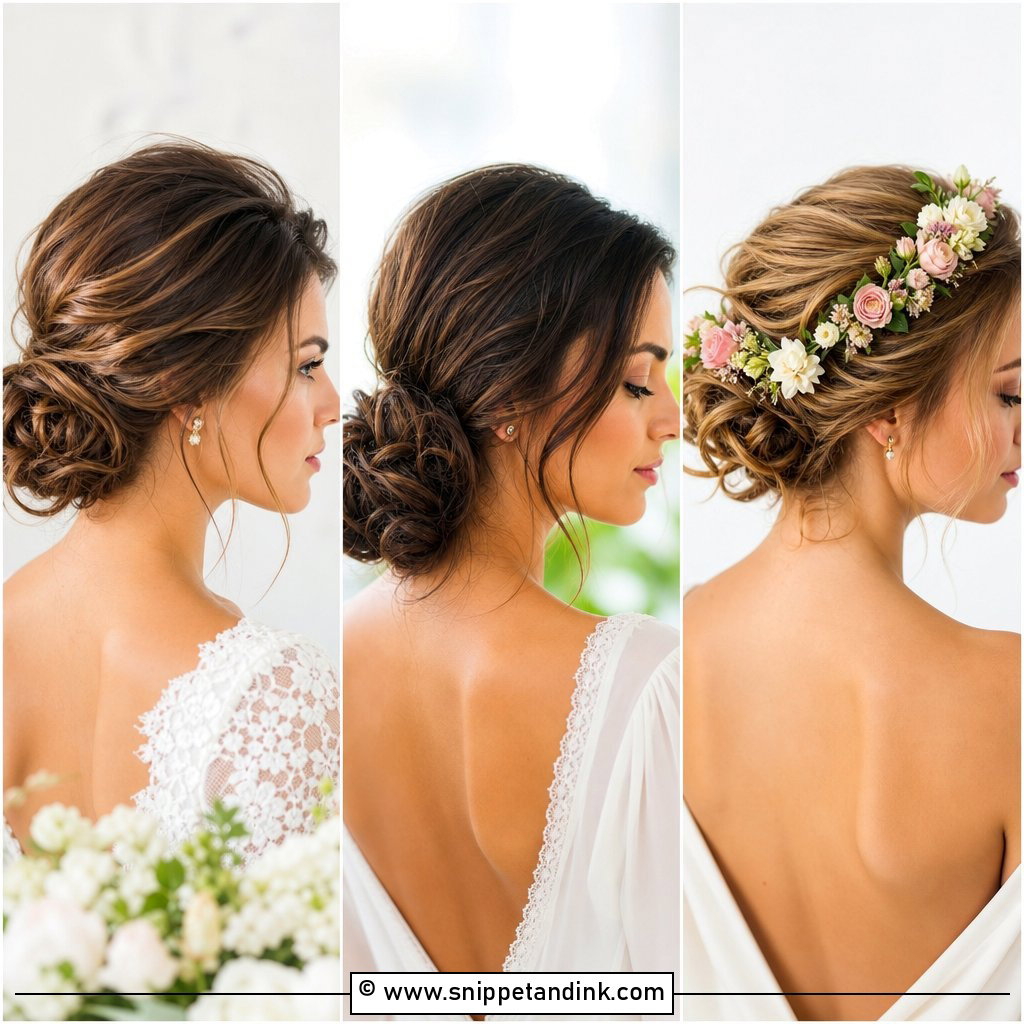
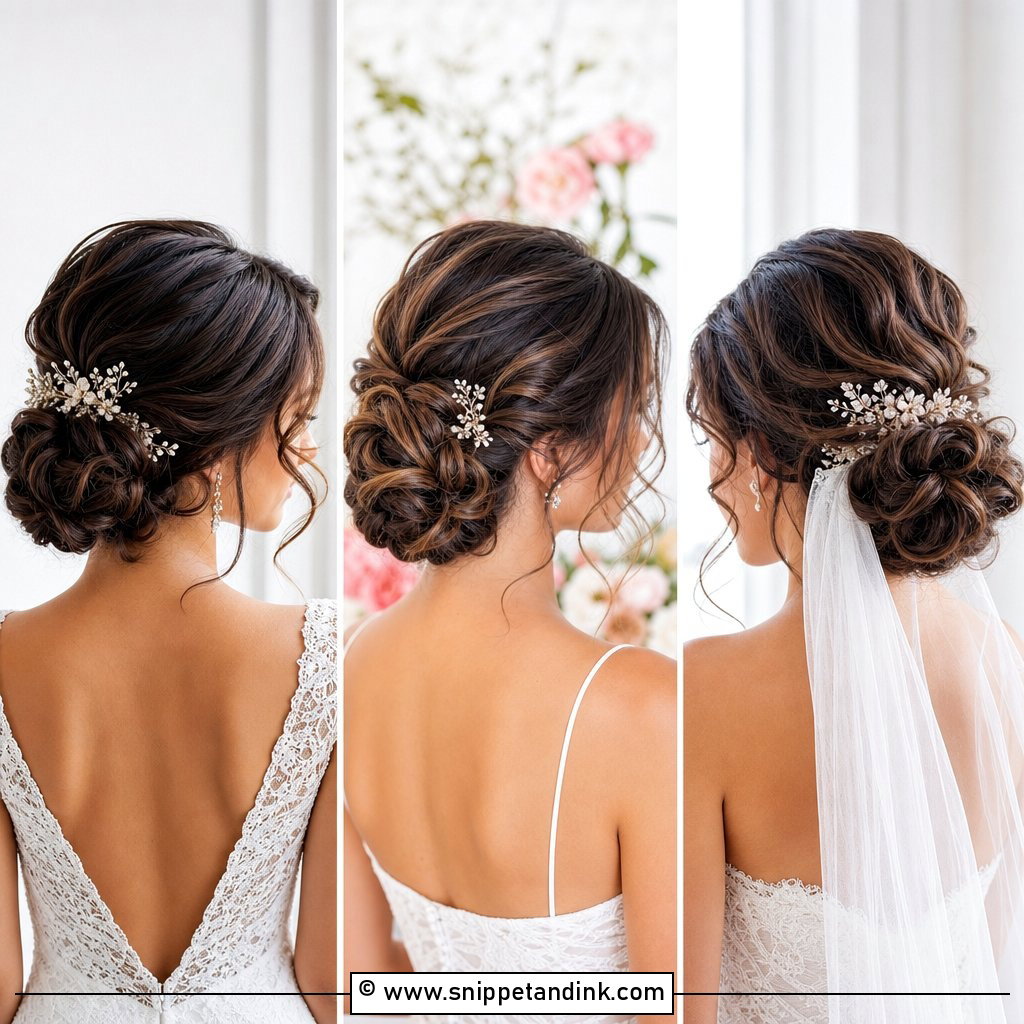
If a bride can’t decide, I usually end up building a low bun, and she rarely regrets it. It leaves the neckline clear, gives a veil something solid to sit on, and looks the same in the tenth year of the album as it did on the day. It’s also the most adaptable style I do. The same basic shape can be glossy and sharp, loosely curled, braided or decorated with pearls and flowers. Each look below is a complete style, so pay attention to the back and side views as well as the front, because that’s what your guests watch during the ceremony.
How Long Each Bun Takes in the Chair
Brides often schedule hair as if every bun took the same time. They don’t, and the morning timeline depends on it.
- A sleek or classic bun on hair that’s already smooth is the quickest style here.
- Curled, textured or wavy buns take longer, because every section has to be set and cooled before I pin it.
- Braids, layered builds for long hair and anything with extensions add more time again.
- Flowers, pearls and veil placement come at the end, and they shouldn’t be squeezed into the last five minutes.
Arrive with your hair clean and completely dry, washed the day before or that morning, depending on what your stylist asks for. Skip conditioner at the roots and any heavy oil. Wear a button-up shirt so the finished style never has to go over your head.
I prefer to do the bride’s hair late in the schedule so it’s freshest for photos, but not last; that leaves a buffer if a bridesmaid runs over.
1. Classic Low Bun Bride Hair
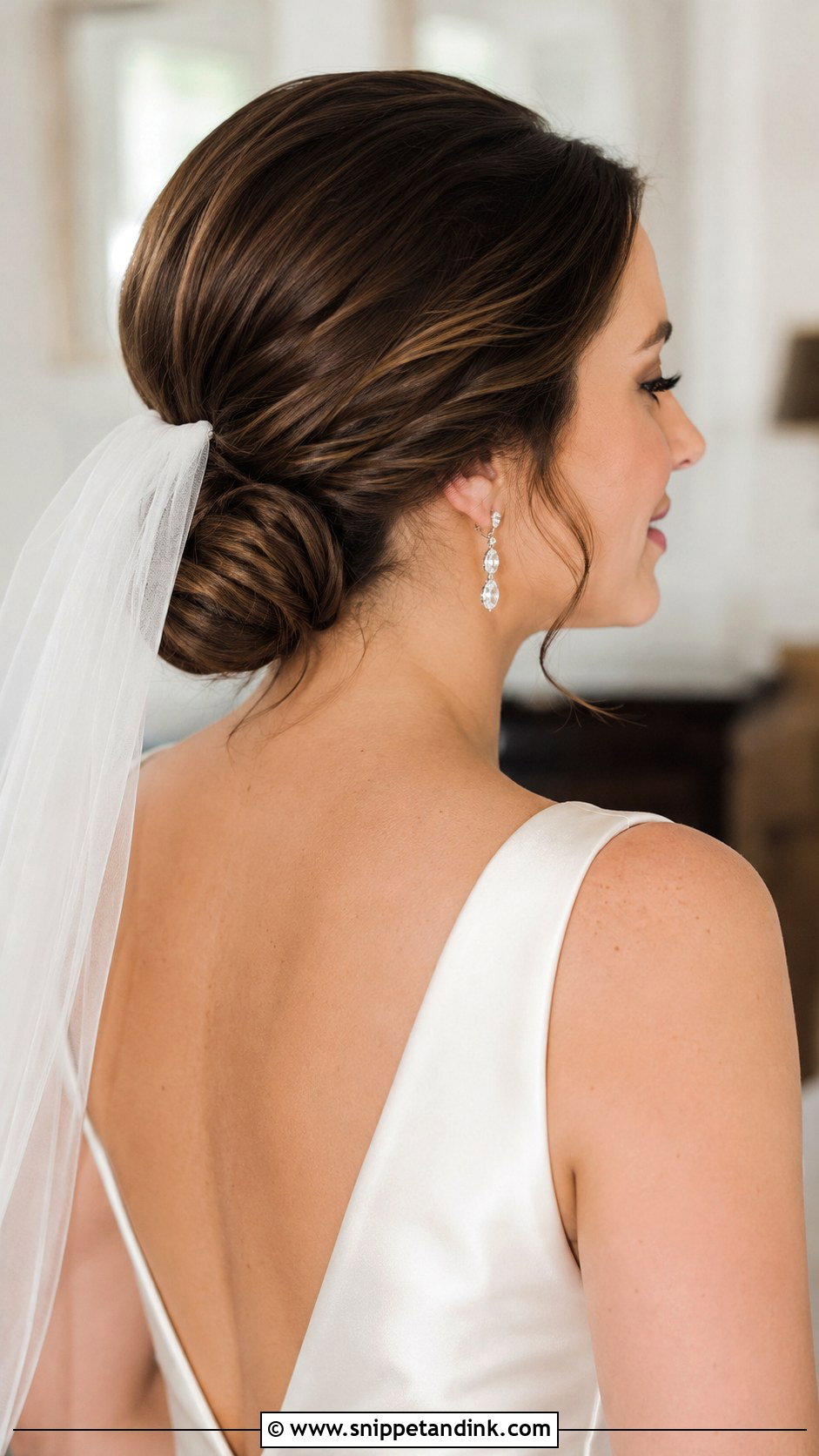
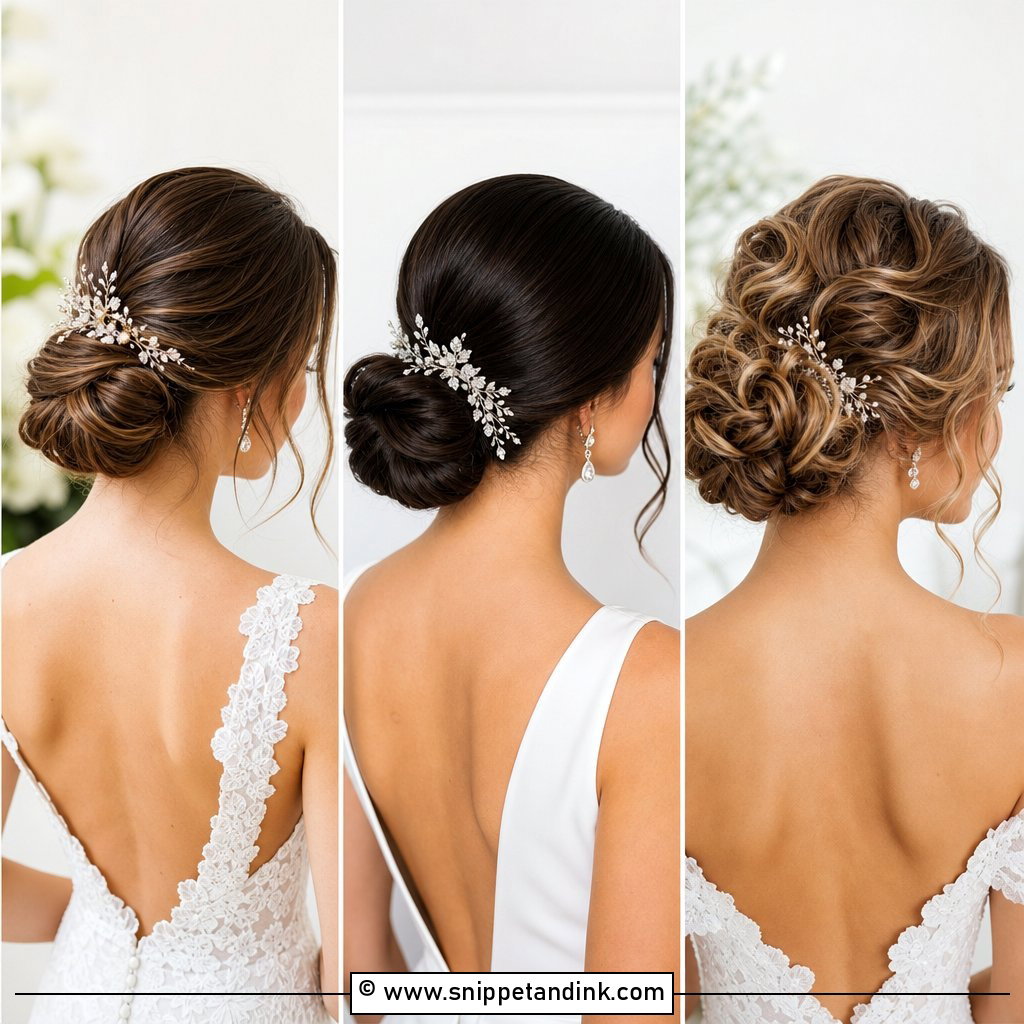
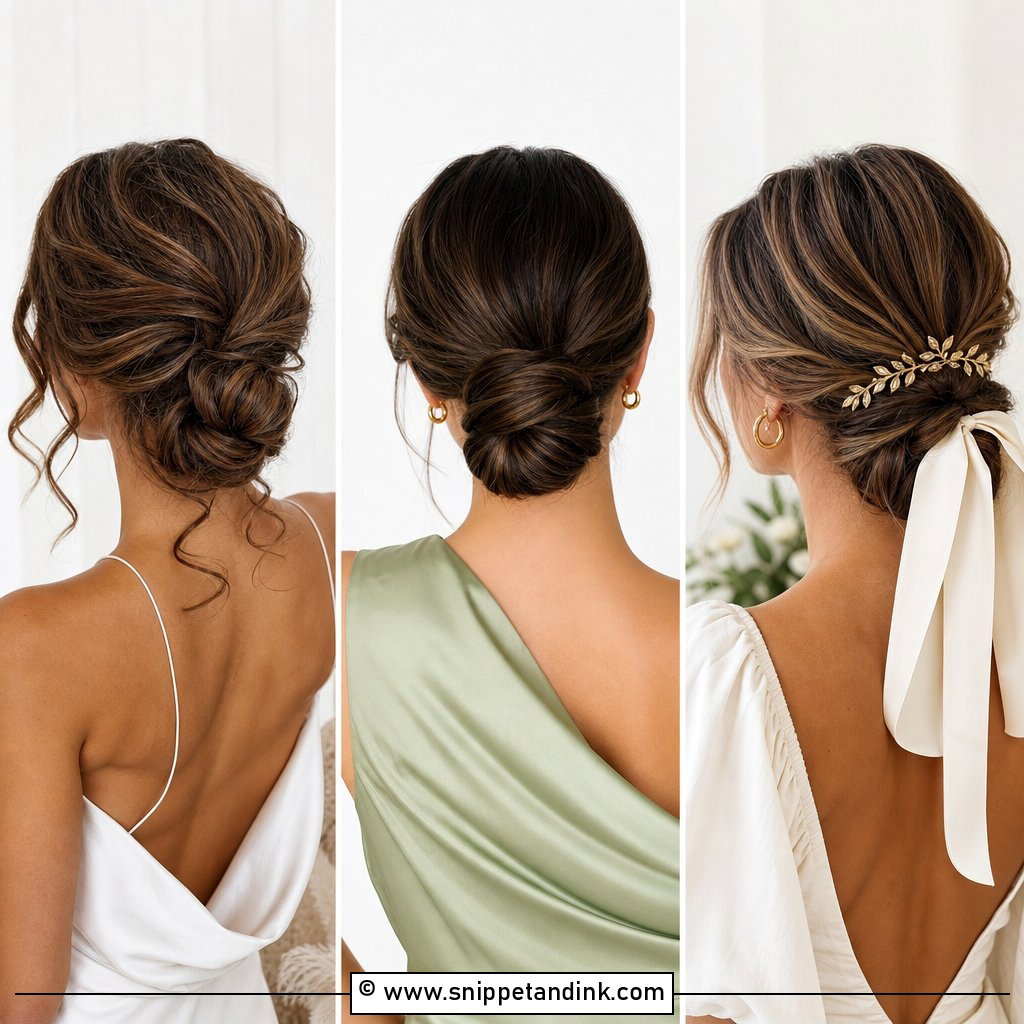
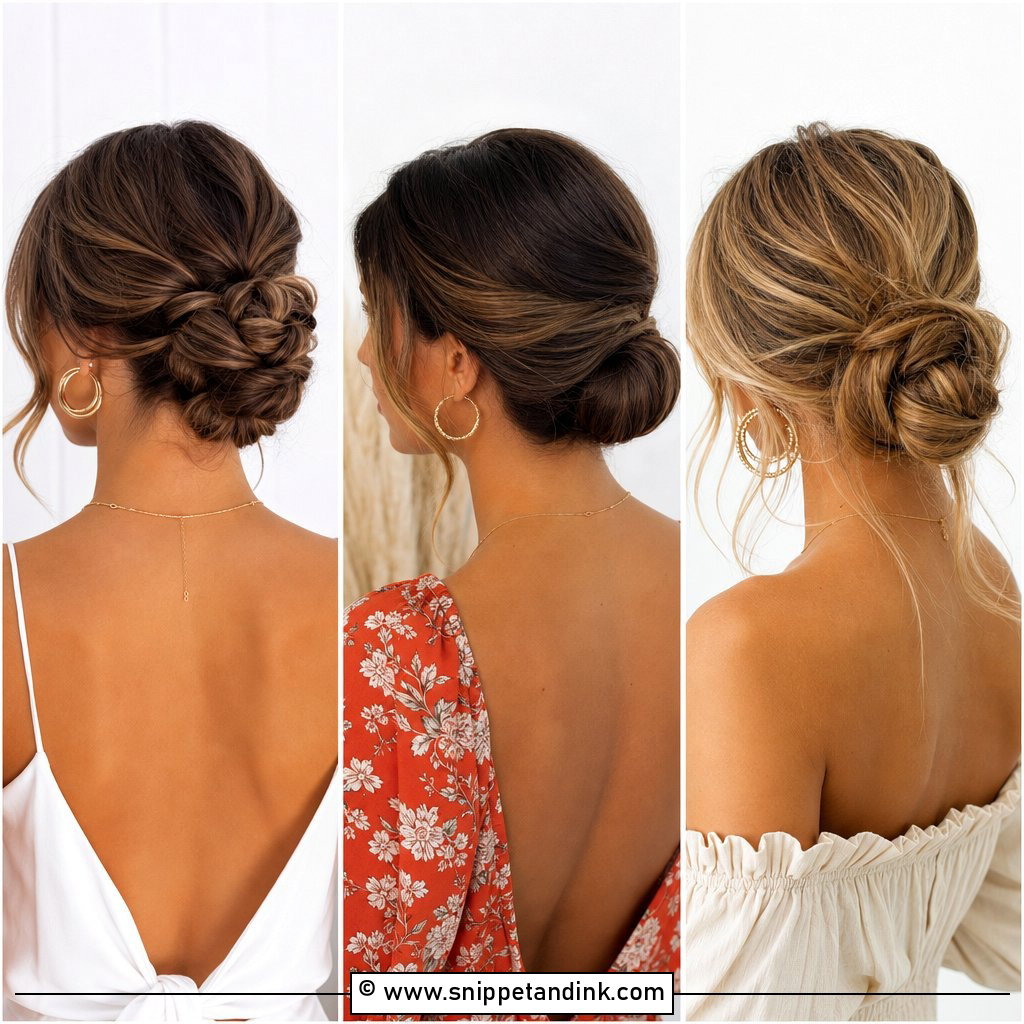
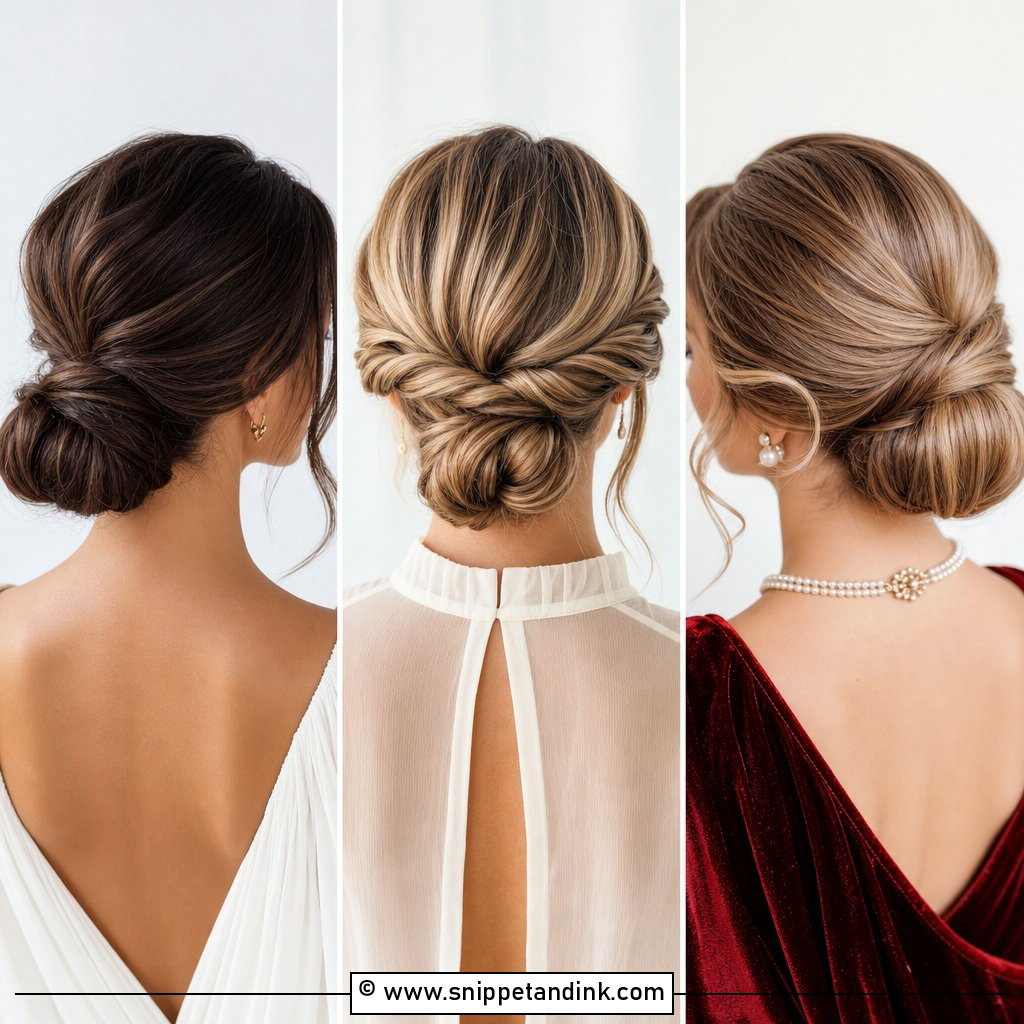
The classic version is smoothed back to the nape and wrapped into a neat bun with a little rounded volume, and it rarely dates. It shows the neckline on strapless, square neck, bateau and long-sleeve gowns, and takes a veil, pearl pins, a comb or nothing at all. What I aim for is a hold that’s secure but still moves when you hug someone. I build the bun around an elastic base and cross-pin it, then use a flexible spray rather than a heavy lacquer, so it doesn’t feel like a helmet at the reception.
2. Sleek Low Bun Bride Hair
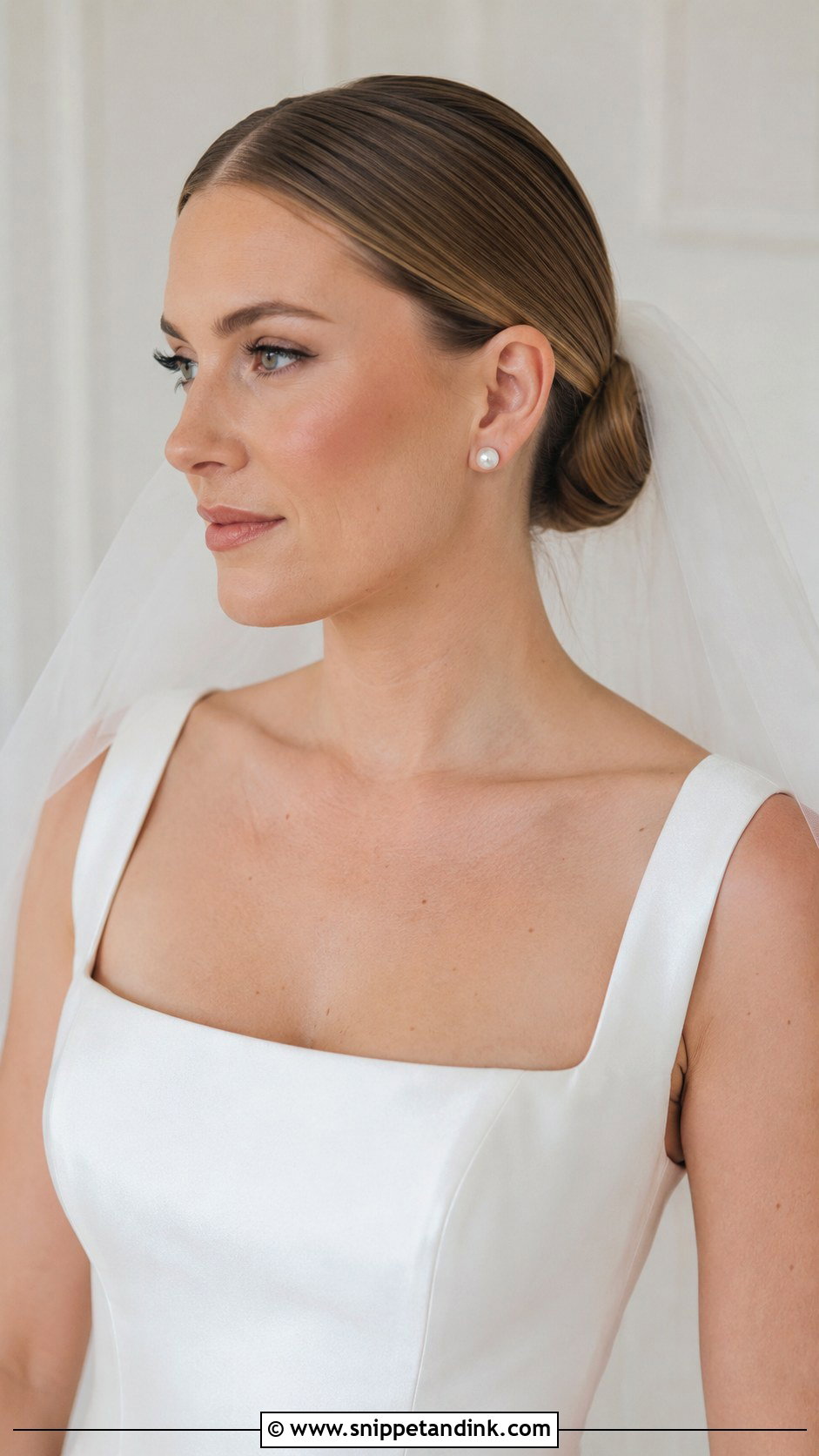
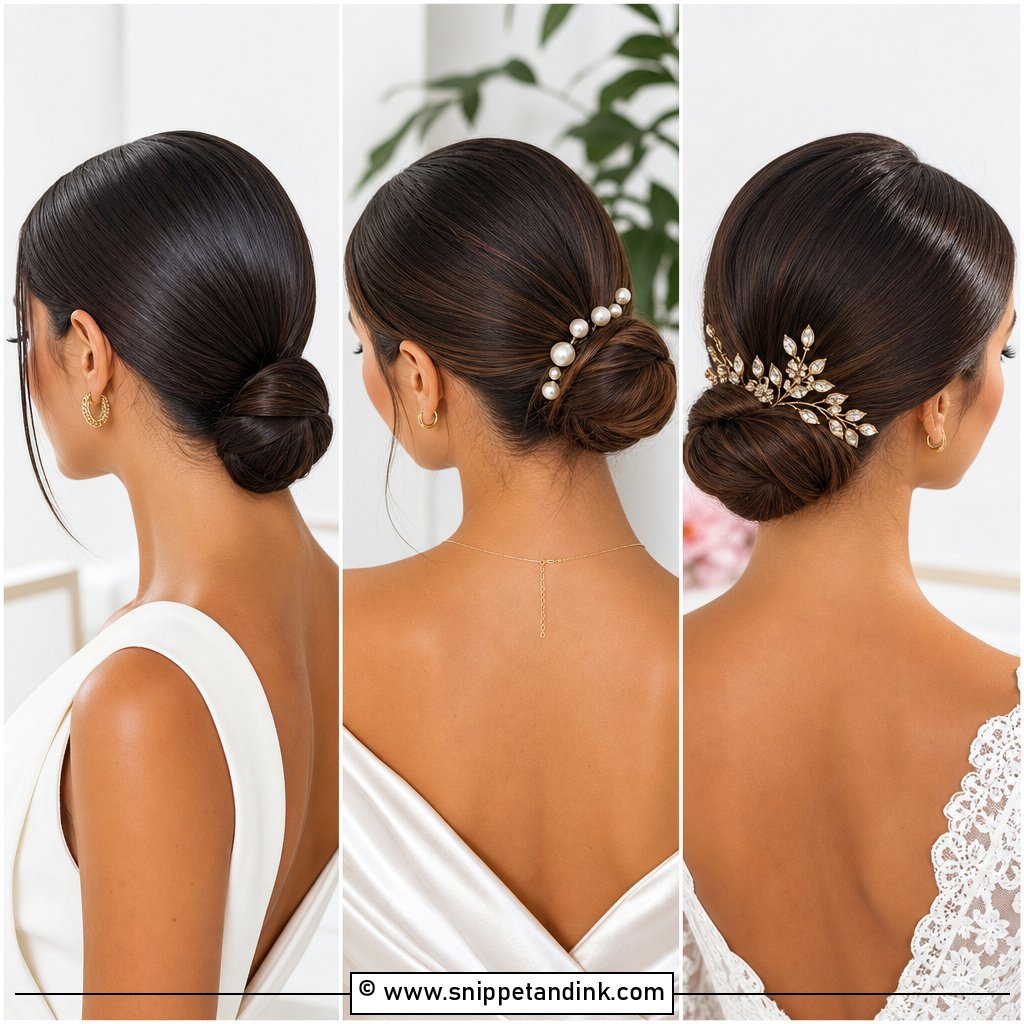
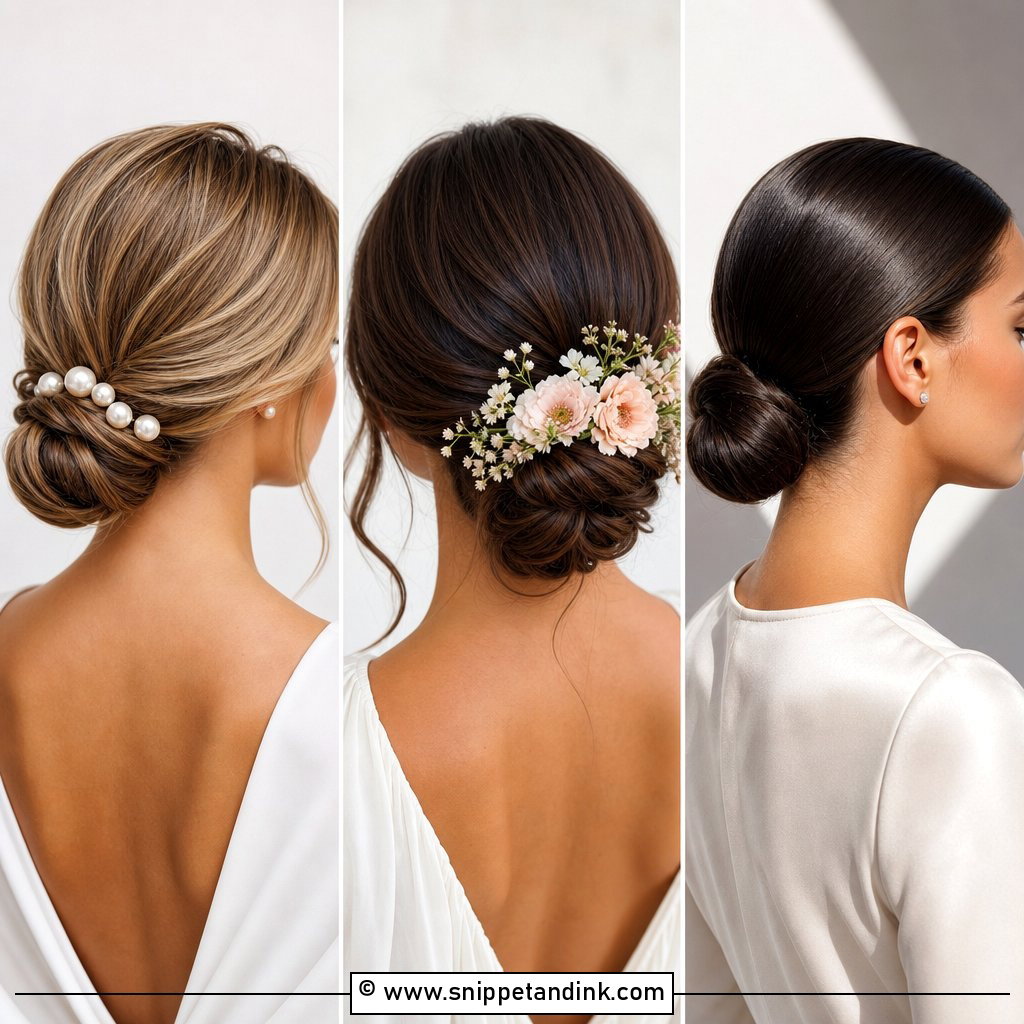
Sleek needs smooth hair before the bun begins. I blow-dry the whole head straight first, even if the bun hides most of it, because any kink at the crown shows under a high shine finish. Then it’s parted in the centre or swept straight back, brushed close to the head and set into a compact coil at the nape. It suits minimal dresses, satin and structured necklines. To stop it looking severe, I leave the bun slightly rounded rather than flat, and a veil tucked just above it softens the line.
3. Textured Low Bun Bride Hair
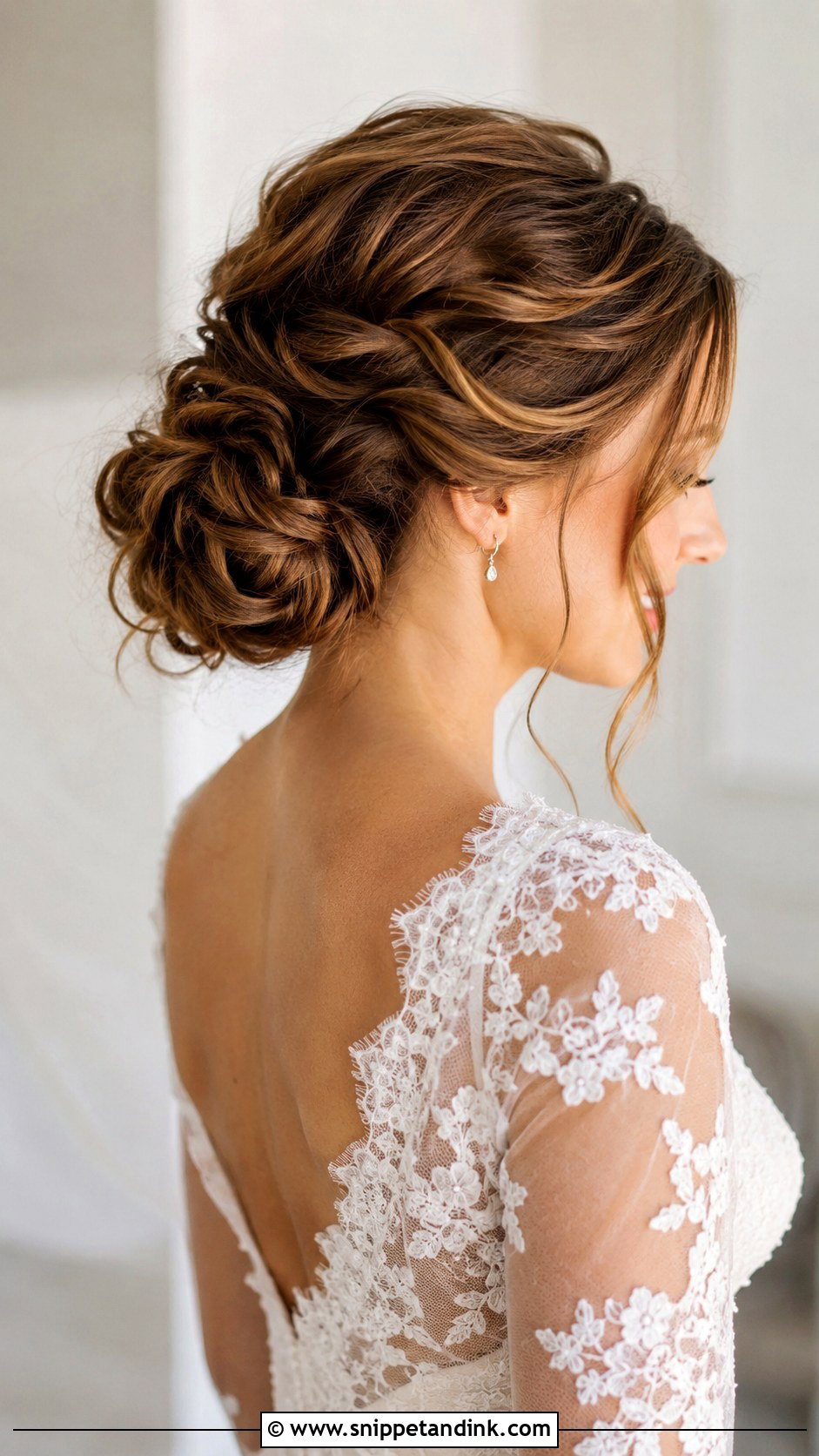
A textured bun is forgiving outdoors, which is the main reason I recommend it for garden and field weddings. A breeze lifts a strand and it simply blends into the movement already there. The hair is waved first, then gathered loosely and pinned in twisted sections so it looks airy but is anchored underneath. Lace, floral appliqué, soft tulle and relaxed makeup suit it. A few face-framing pieces around the cheeks and temples soften it further, though I keep them short of the lip line so they don’t stick to lip colour.
4. Low Chignon Bride Hair
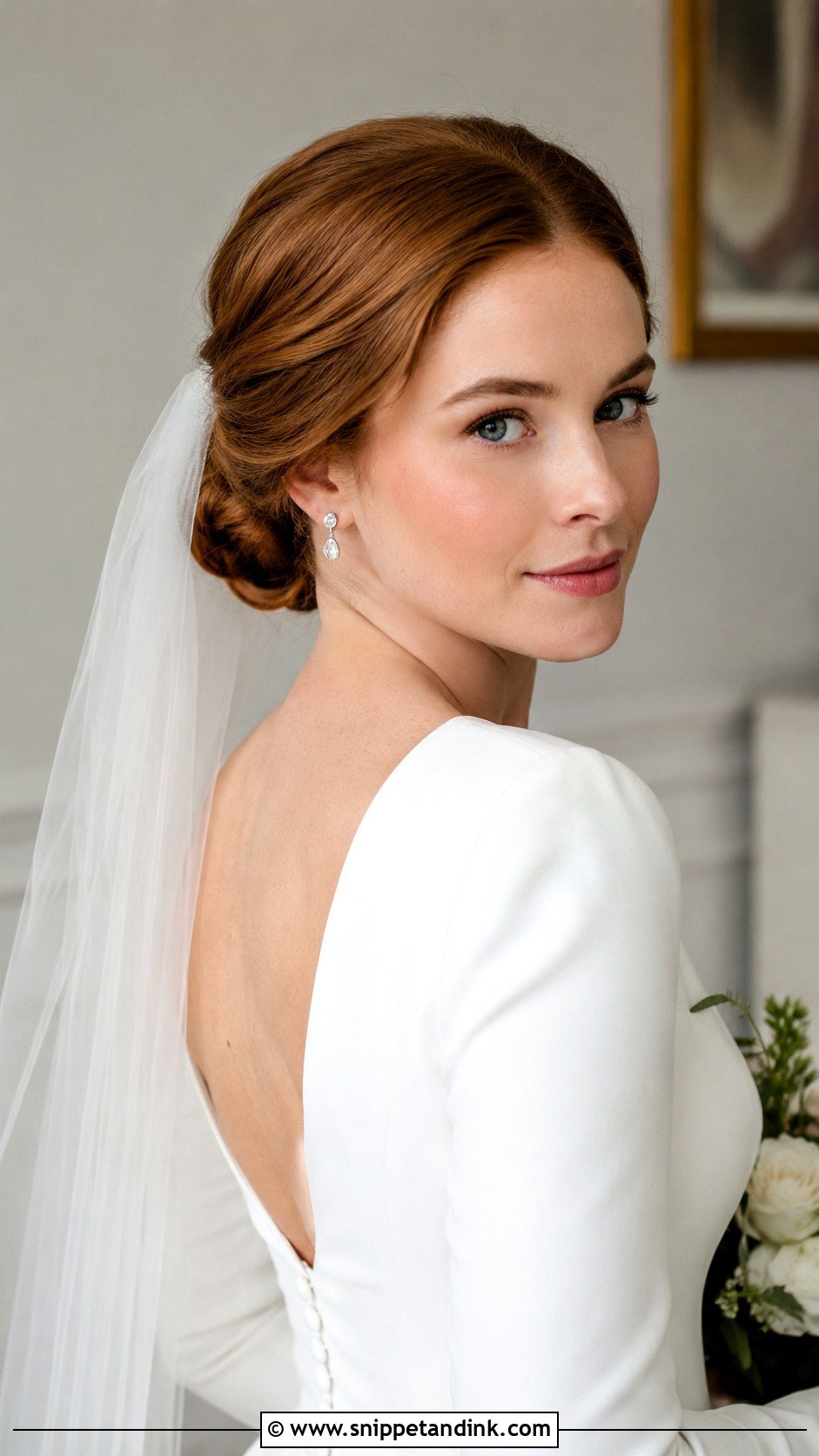
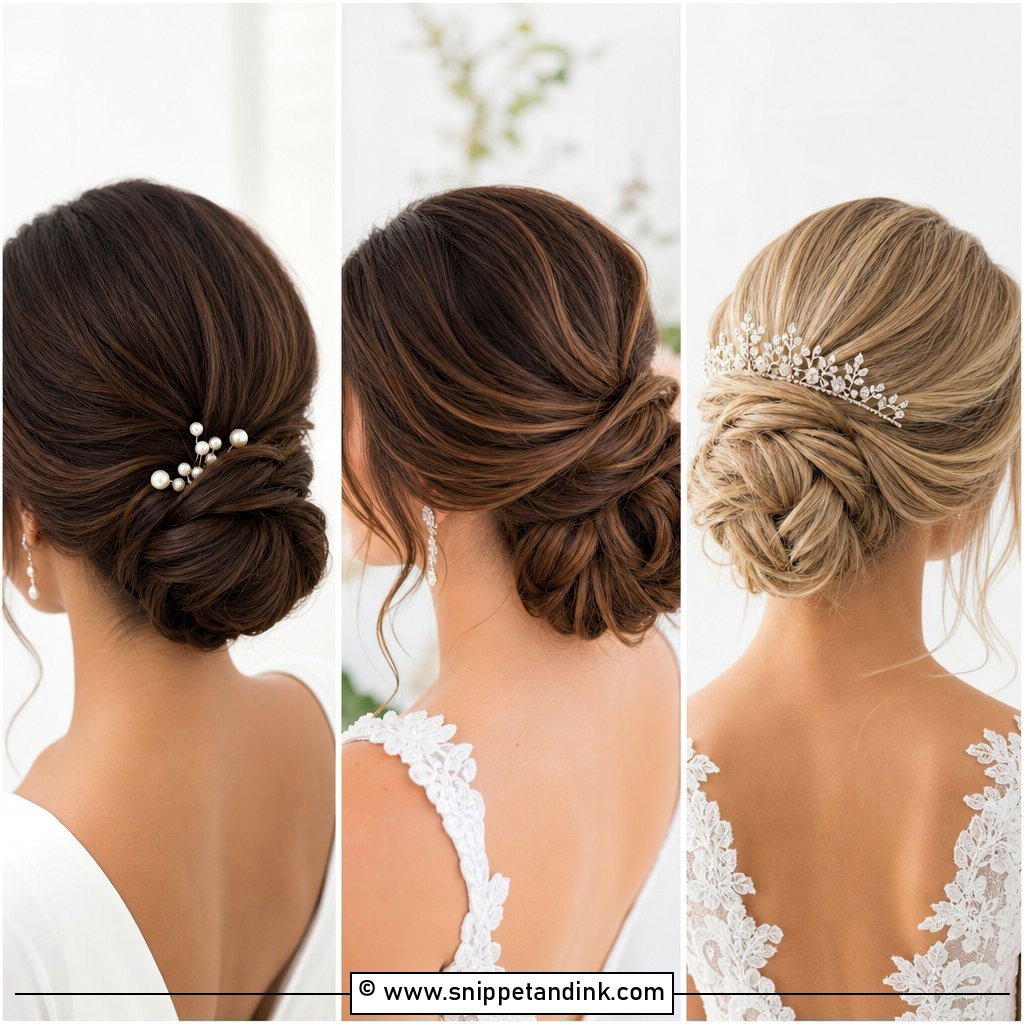
A chignon is a bun with more tailoring, usually rolled or tucked into a neat shape at the nape. It feels formal, which is why traditional ceremonies and church weddings so often feature it. Smooth, lightly twisted or softly textured all work. Its real advantage is as a veil base: it gives the comb a firm anchor without adding height at the crown. Fine hair can struggle to make the full rounded shape you see in photographs, so I add a little padding or a few matched extensions inside the roll.
5. Messy Low Bun Bride Hair
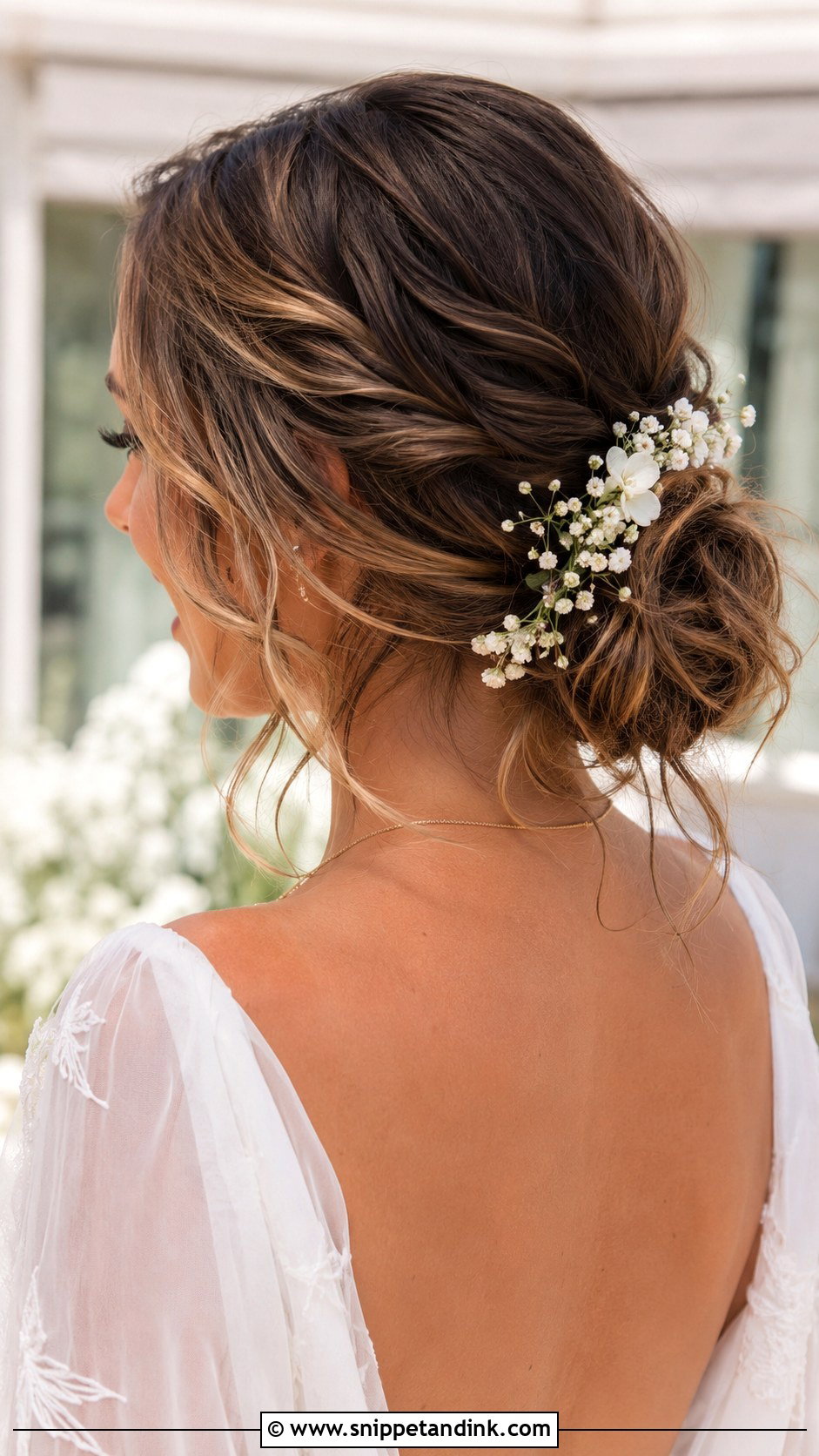
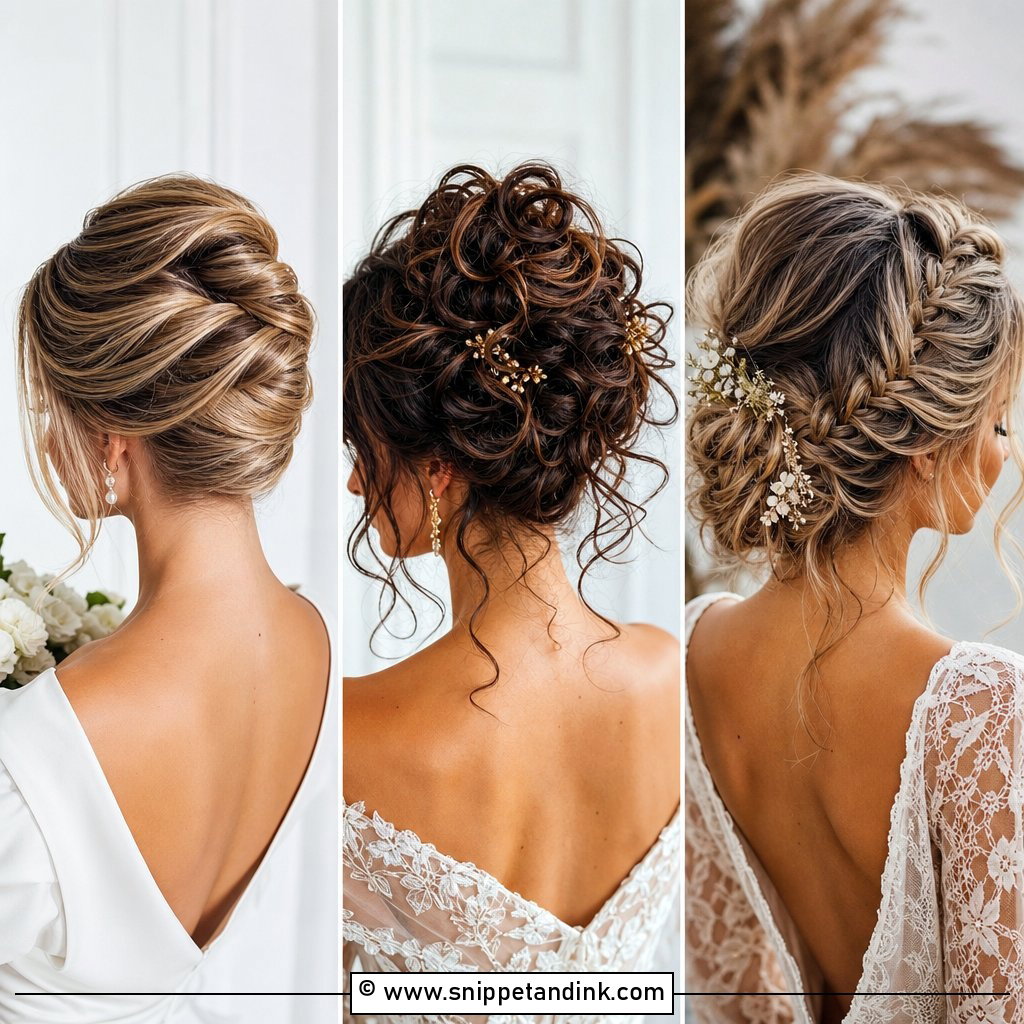
Messy is a finish, not a method. Underneath that loose, lived-in surface, the bun is pinned as firmly as any sleek one. I curl or wave the hair first, then pull out texture and a few wispy pieces once the base is secure. Without that set, the style just looks flat and unplanned by mid-afternoon. Barns, beaches and garden venues suit it, and floral pins, pearls or a light veil give it a bridal finish without stiffening the movement.
6. Braided Low Bun Bride Hair
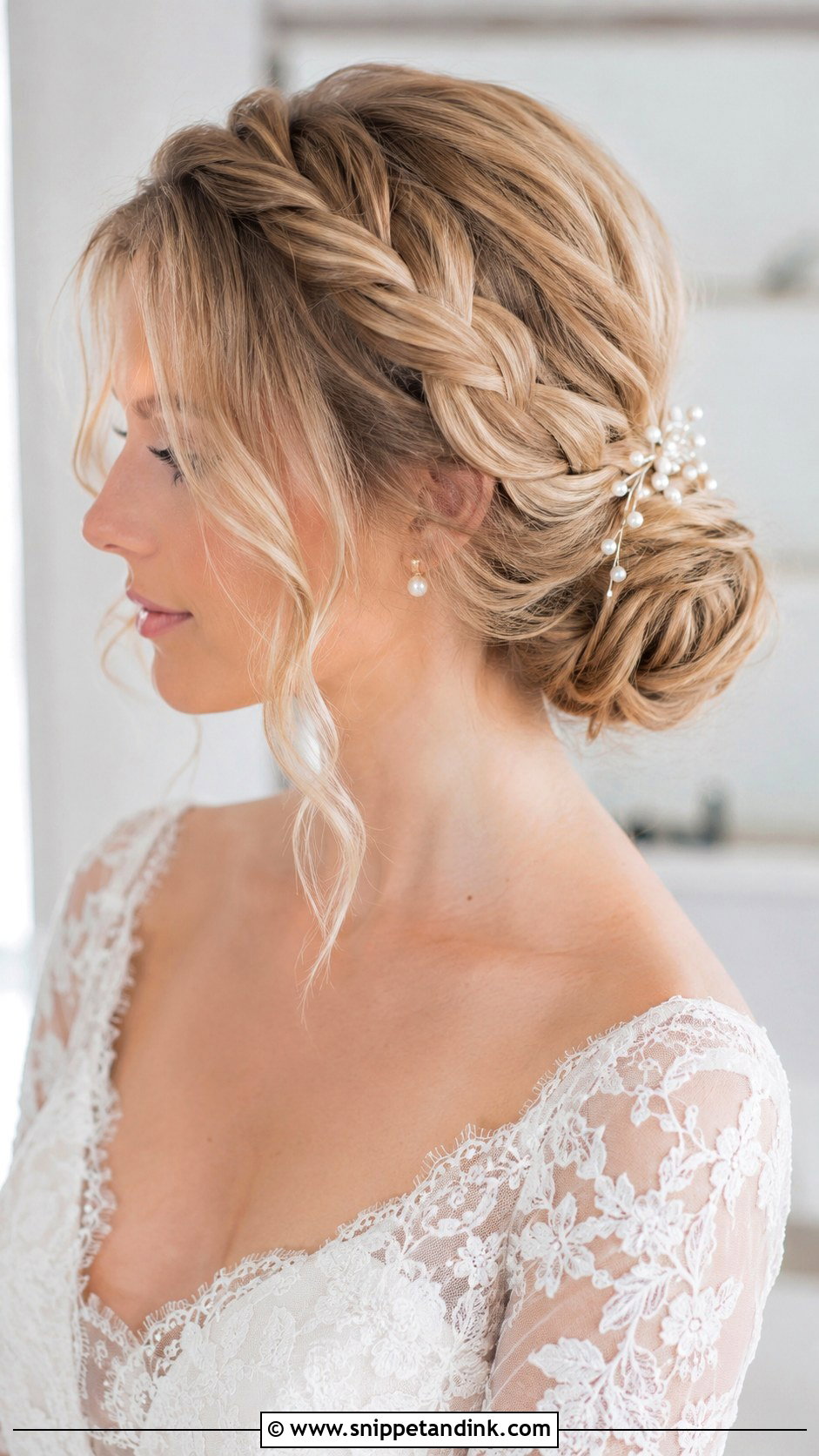
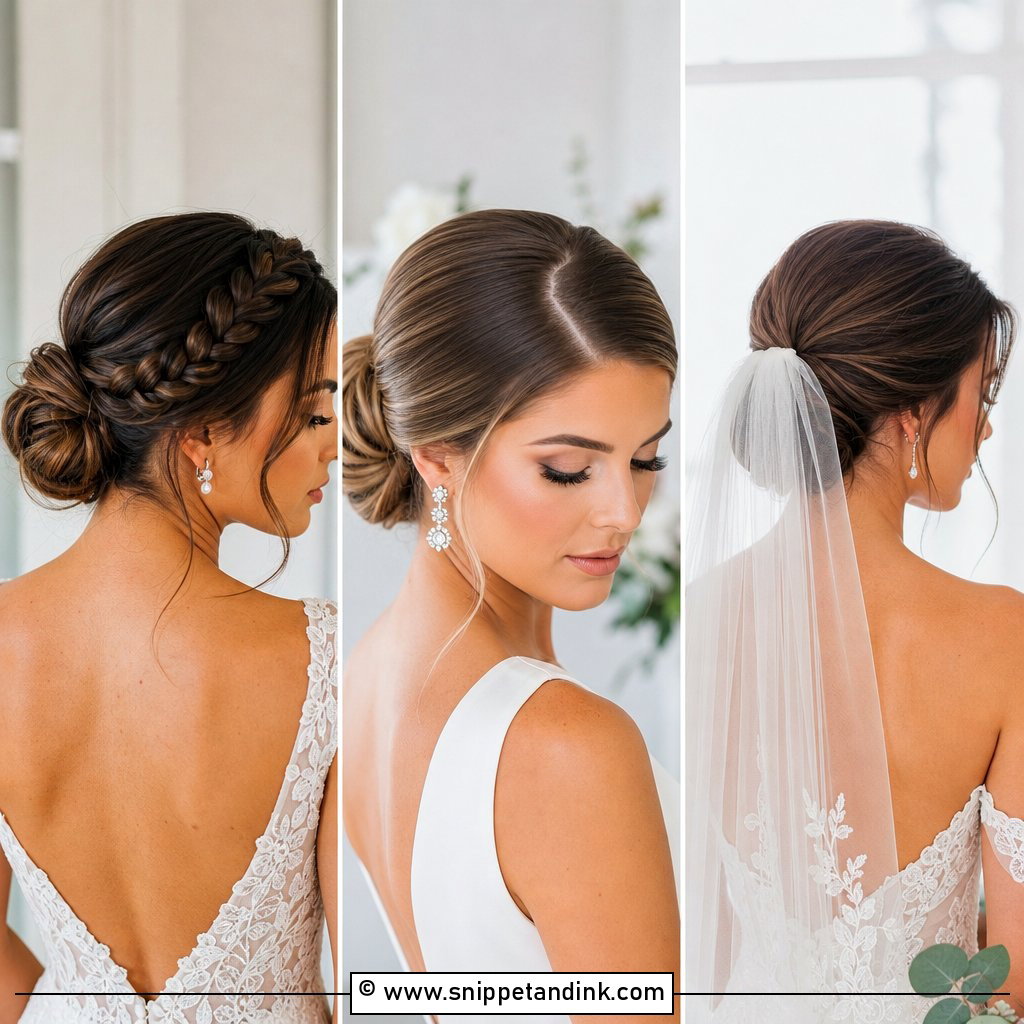
I reach for braids partly for looks and partly for control. A braid running through the side sections or wrapped into the bun locks in shorter layers that would otherwise fall out by the first dance. It can cross the crown, wrap the bun or just add detail on one side. Simple dresses suit it, because the braid gives texture from front and back. I loosen each plait gently after pinning so it reads soft rather than tight and narrow. Small pins, flowers or pearls set into the braid draw the eye to it.
7. Side Part Low Bun Bride Hair
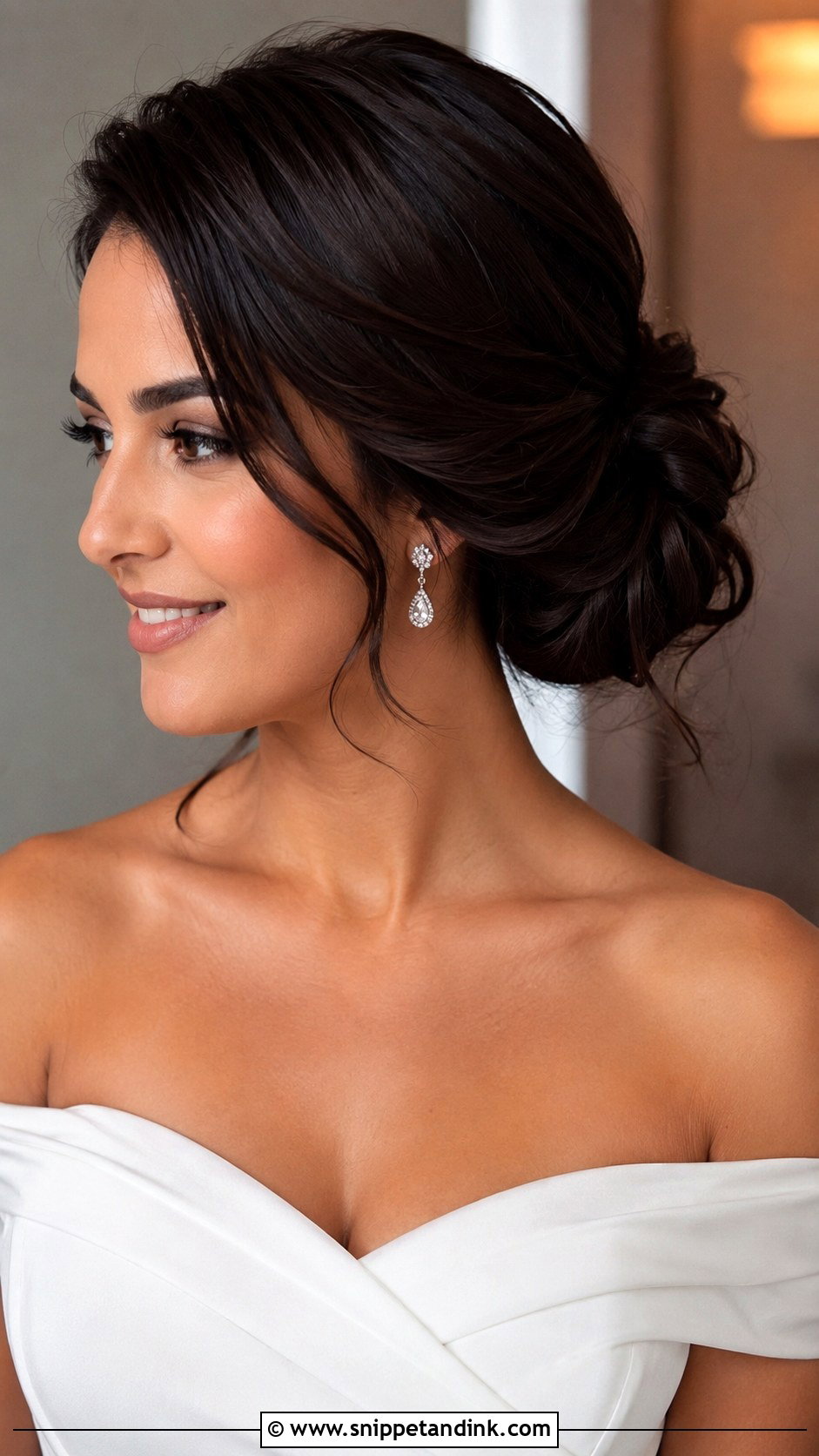
A side part frames the face softly and feels more personal than a centre one. It can be sleek, waved or swept low across the forehead. The trick is following your natural part or something close to it; fight your growth pattern and the hair lifts back by evening. One-shoulder and off-the-shoulder gowns pair well with it, as does vintage styling. The bun can sit centred or shifted slightly to the side, and I keep the crown soft and the part side smooth so the shape stays balanced.
8. Middle Part Low Bun Bride Hair
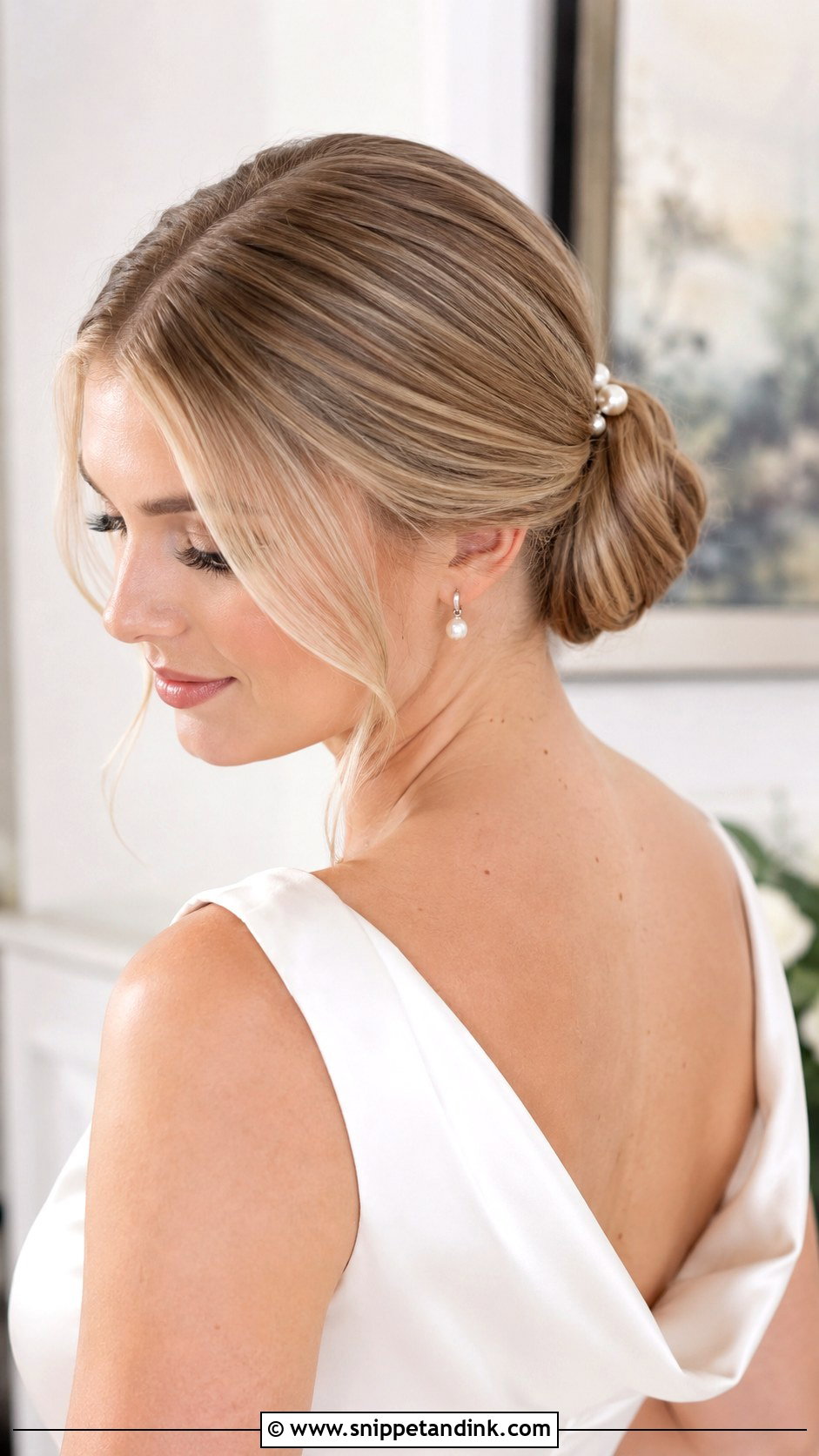
Symmetry is the whole appeal of a centre part, and it’s unforgiving of a wobbly line. I set the part with a tail comb, then check it straight on and from above. Sleek, it reads high-fashion; waved, it looks romantic. Simple gowns, pearl studs, square necklines and long veils suit it. If a centre part feels too sharp on you, ask for a touch of root lift at the front or two soft face pieces. The part stays precise, the bun stays rounded, and the combination looks wedding-ready rather than editorial.
9. Low Bun Bride Hair With Veil
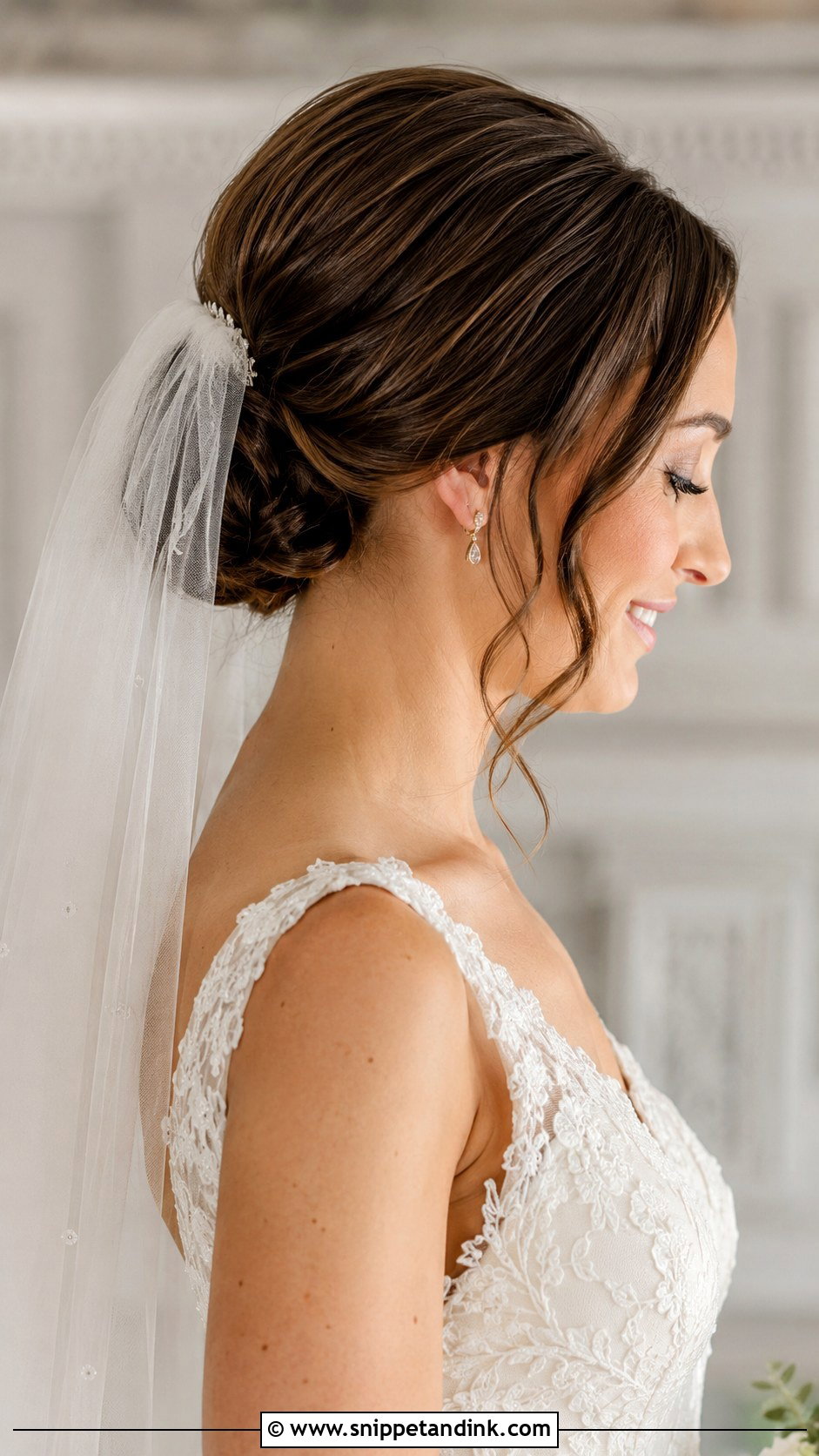
A bun is the most secure base a veil can have. Worn above the bun, the veil looks traditional; tucked below it, it drapes softer and comes out more easily for the reception. It works with cathedral, chapel, fingertip, and blusher veils, and the front can be sleek, waved or loosely pulled back. Please bring your actual veil to the trial, or one with the same comb. I need to feel its weight, check how it sits when you turn and work out how to remove it without pulling half the style apart.
10. Low Bun Bride Hair With Pearls
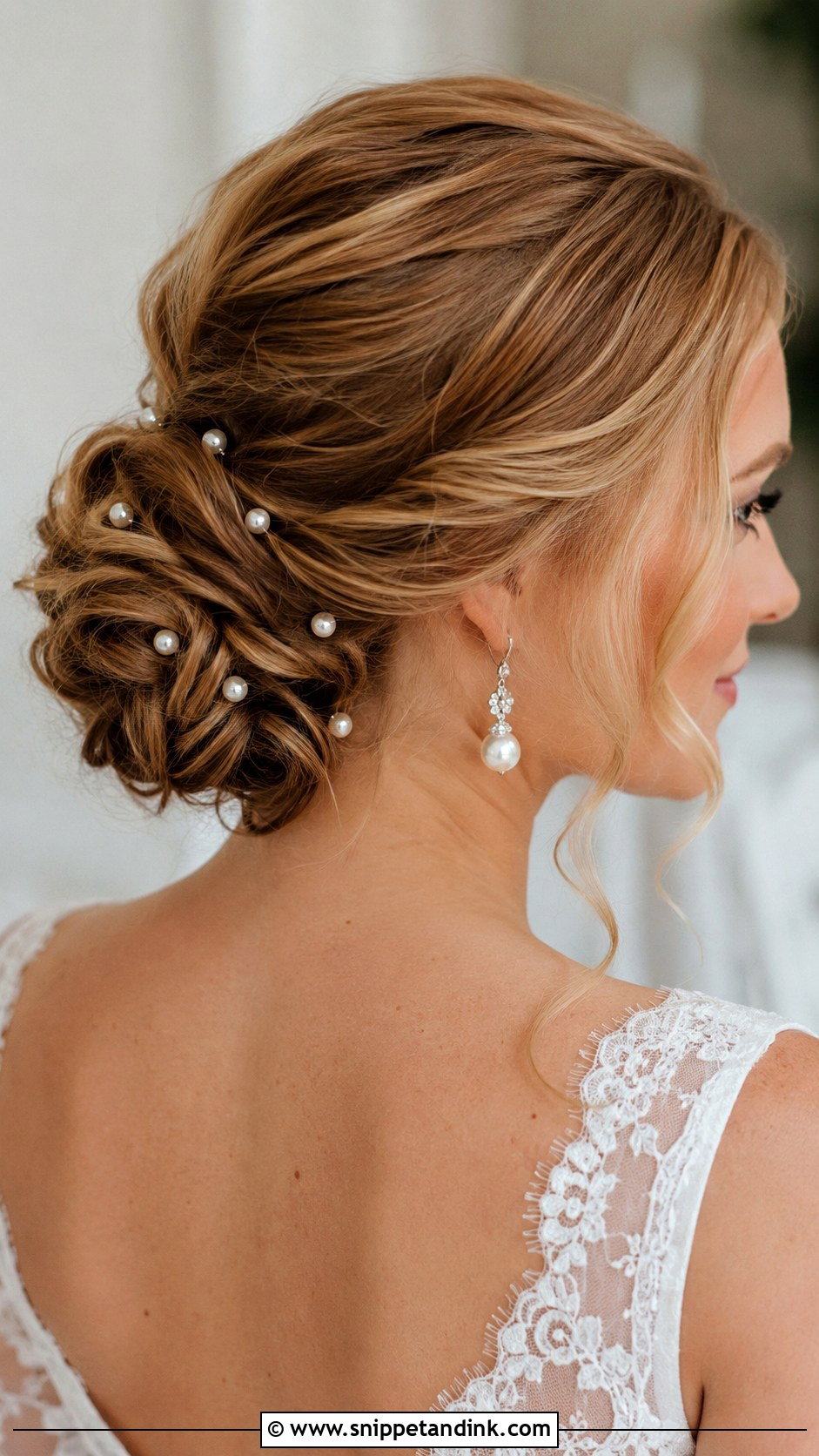
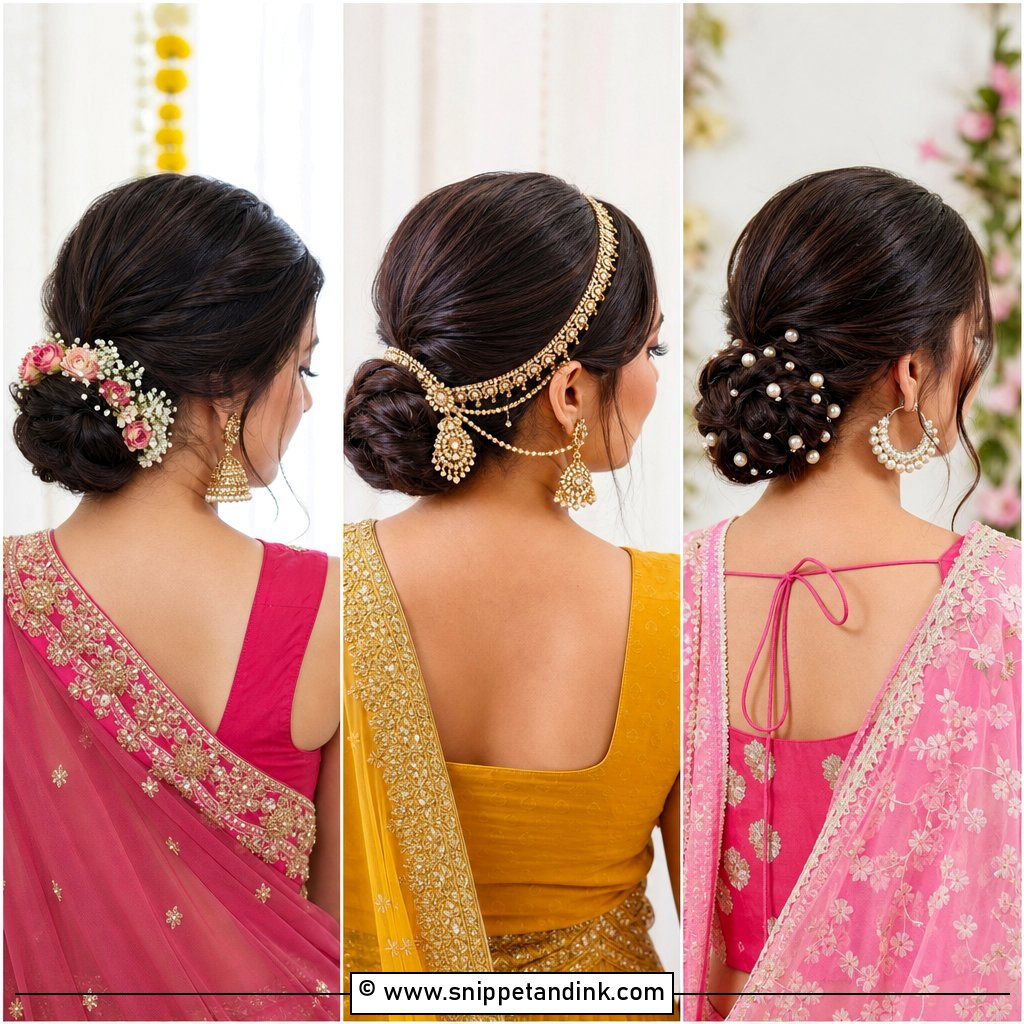
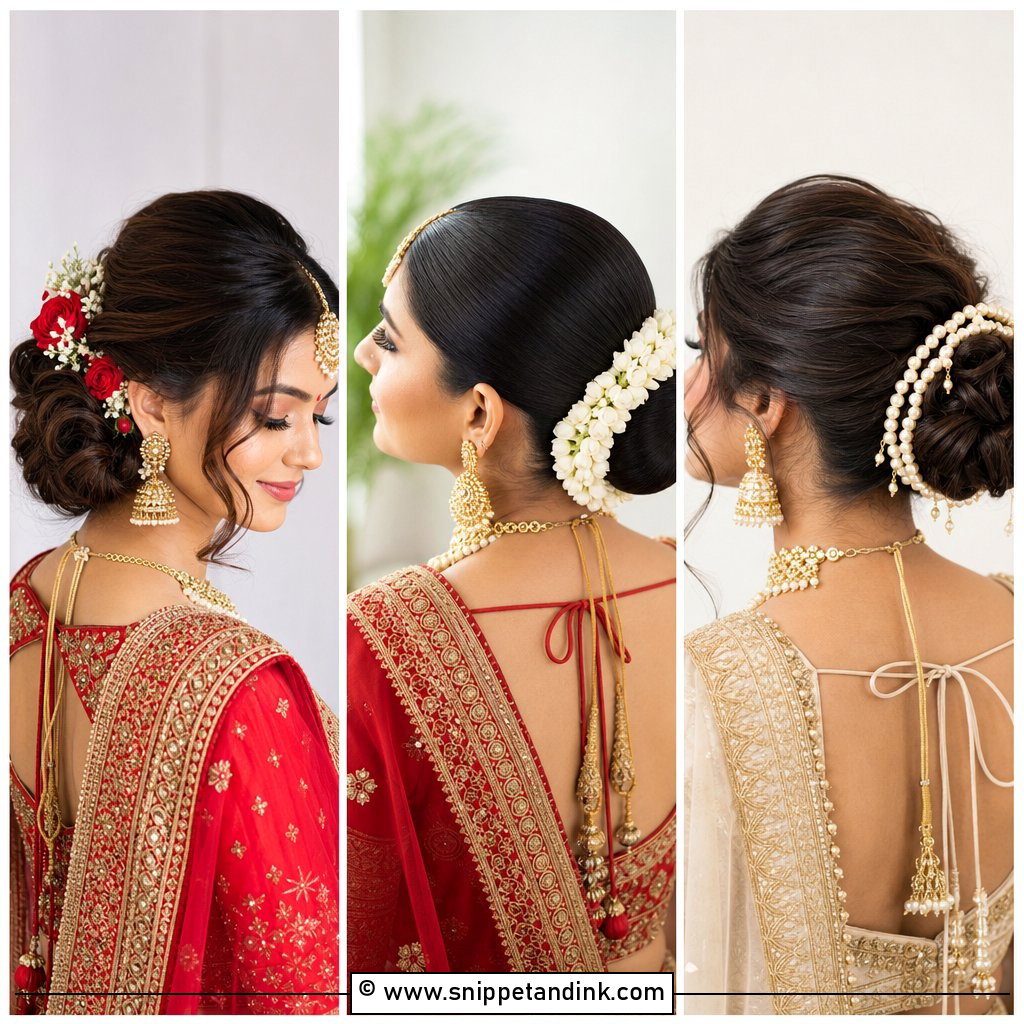
Pearls look best when they’re spaced, not sprinkled. I’ll scatter pearl pins through a textured bun, run them along a braid or group a few on one side, and then step back and check the side and back view. Lace, satin, pearl jewellery and soft makeup sit easily with them. If your dress is heavily beaded, use fewer pins so the hair doesn’t compete. On a simple gown, they add the detail that shows in close-up photos. Pearl pins slide out of silky hair easily, so I hook them into a hidden bobby pin or into the bun itself.
11. Low Bun Bride Hair With Flowers
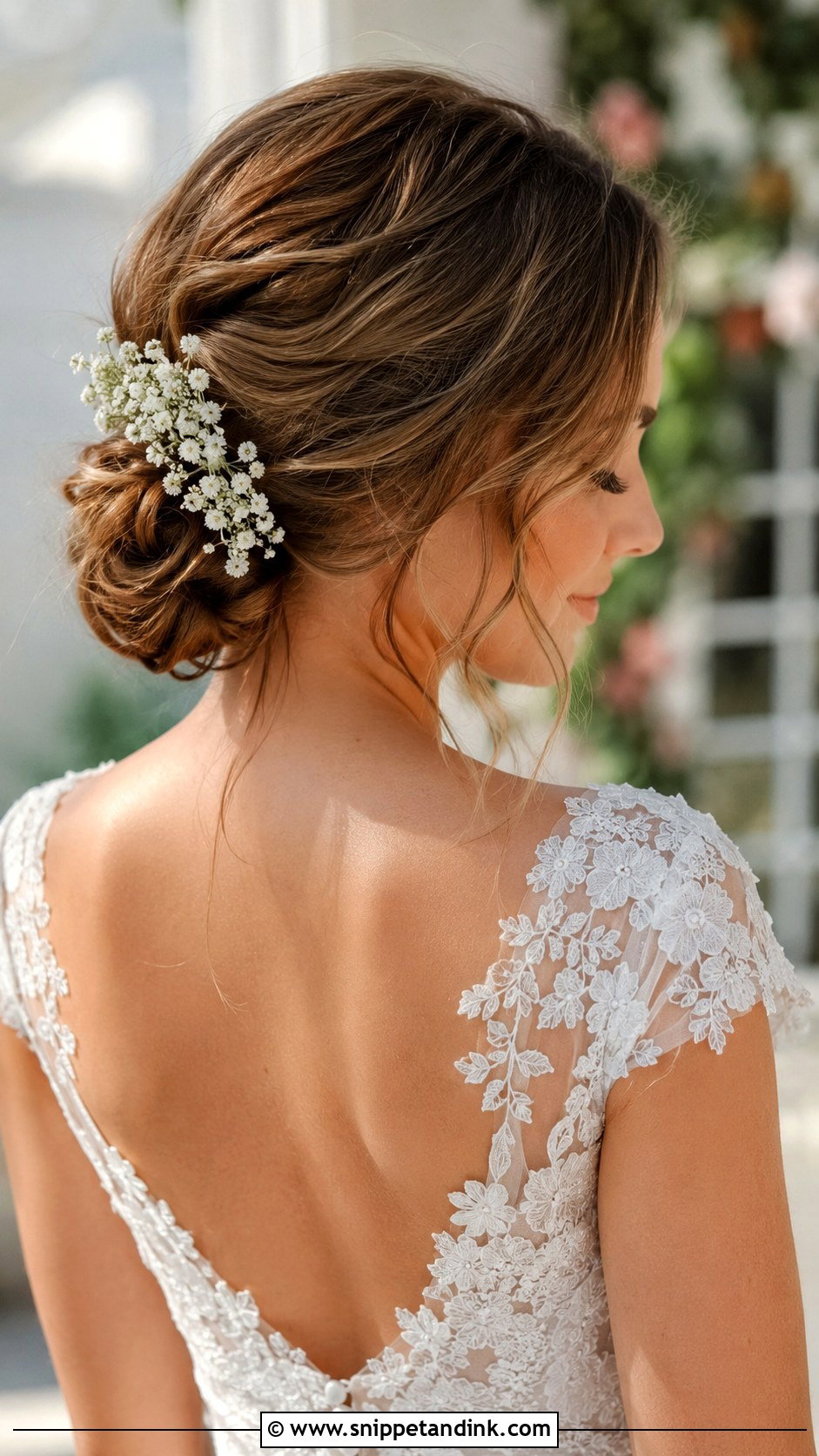
Small flowers tend to look more refined in hair than big blooms, and they’re lighter, so they don’t drag the bun sideways. Baby’s breath, spray roses, jasmine, small orchids and dried flowers all work, tucked around the bun, placed on one side or woven into twists. Dried flowers are the steady option for a hot day because there’s nothing left to wilt. I ask the florist to prepare short, wired or taped stems, and I always finish the bun first and add flowers last, so the hair holds itself and the flowers are only decoration.
12. Curly Low Bun Bride Hair
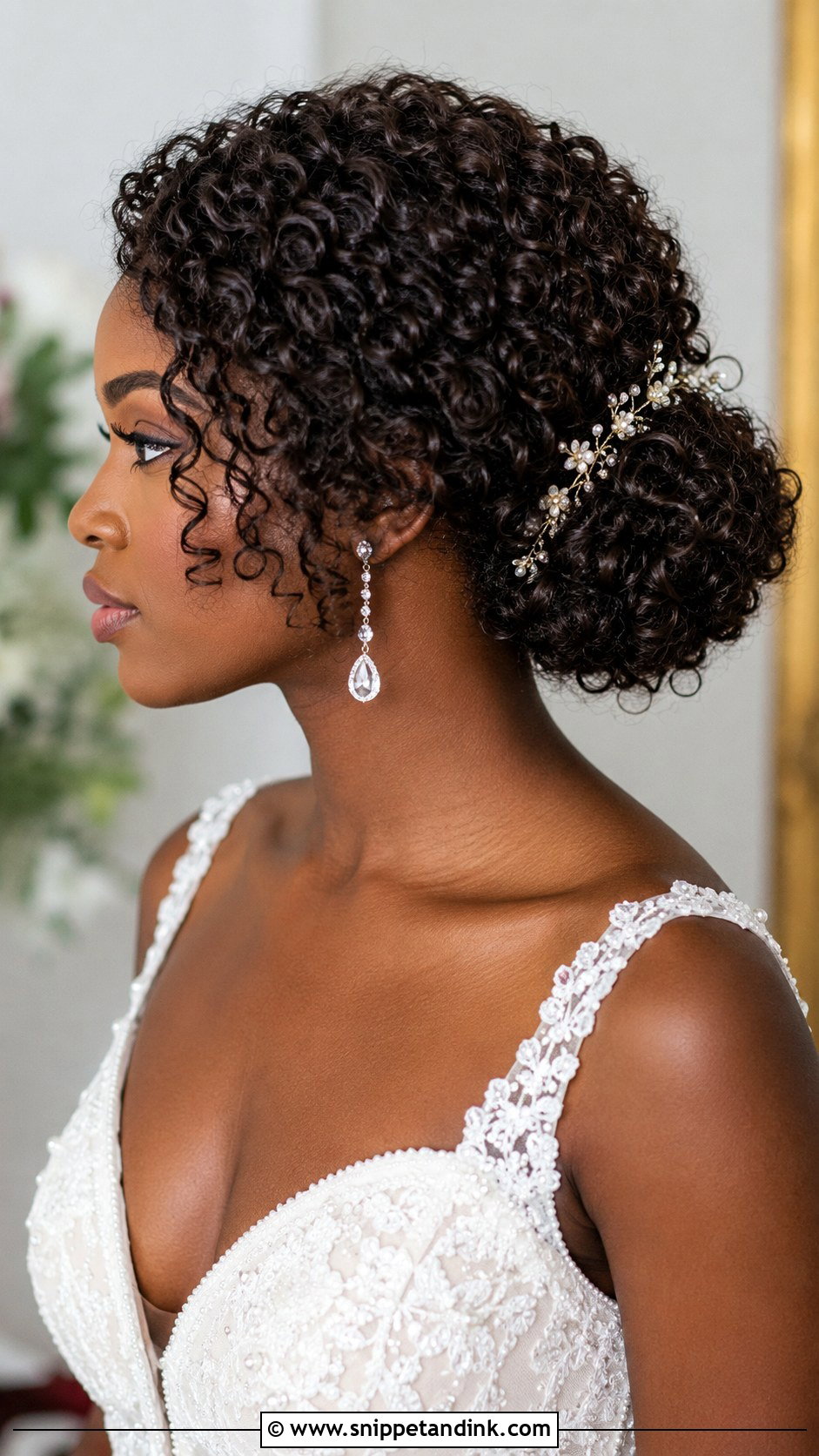
Curly hair makes a beautiful low bun without fighting its pattern. I define the curls first with a styler or cream, then gather them low and pin softly so the curl shape shows through the bun instead of being brushed into frizz. Moisture is the prep that matters most, especially for outdoor or humid weddings. Brushing curls before pinning is the mistake I see most; it breaks the definition and the bun looks fuzzy in photos. Veils, floral pins, jewelled combs and statement earrings all sit well with the volume.
13. Wavy Low Bun Bride Hair
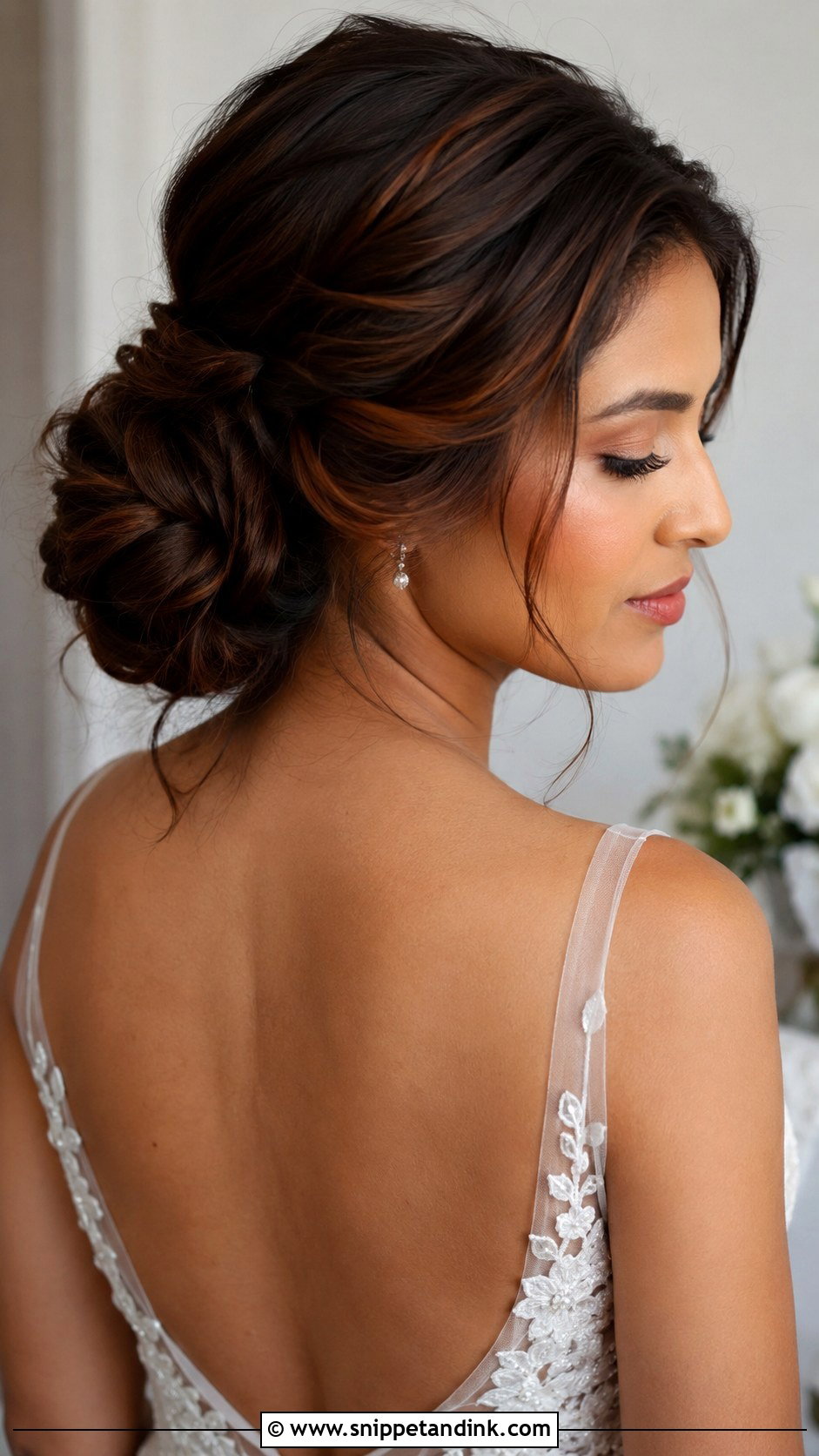
Waving the hair before it goes into the bun adds bulk, which is why this is my usual answer for medium or fine hair that wants a fuller shape. The hair is waved, loosely gathered and pinned so some movement still shows. Front pieces keep a gentle bend and frame the face. Gowns in lace, chiffon, tulle and floral details suit it. In photos, a style with visible waves at the sides and crown looks richer than one smoothed completely into the bun, so I ask brides to resist the urge to tidy it too much.
14. Low Bun Bride Hair For Long Hair
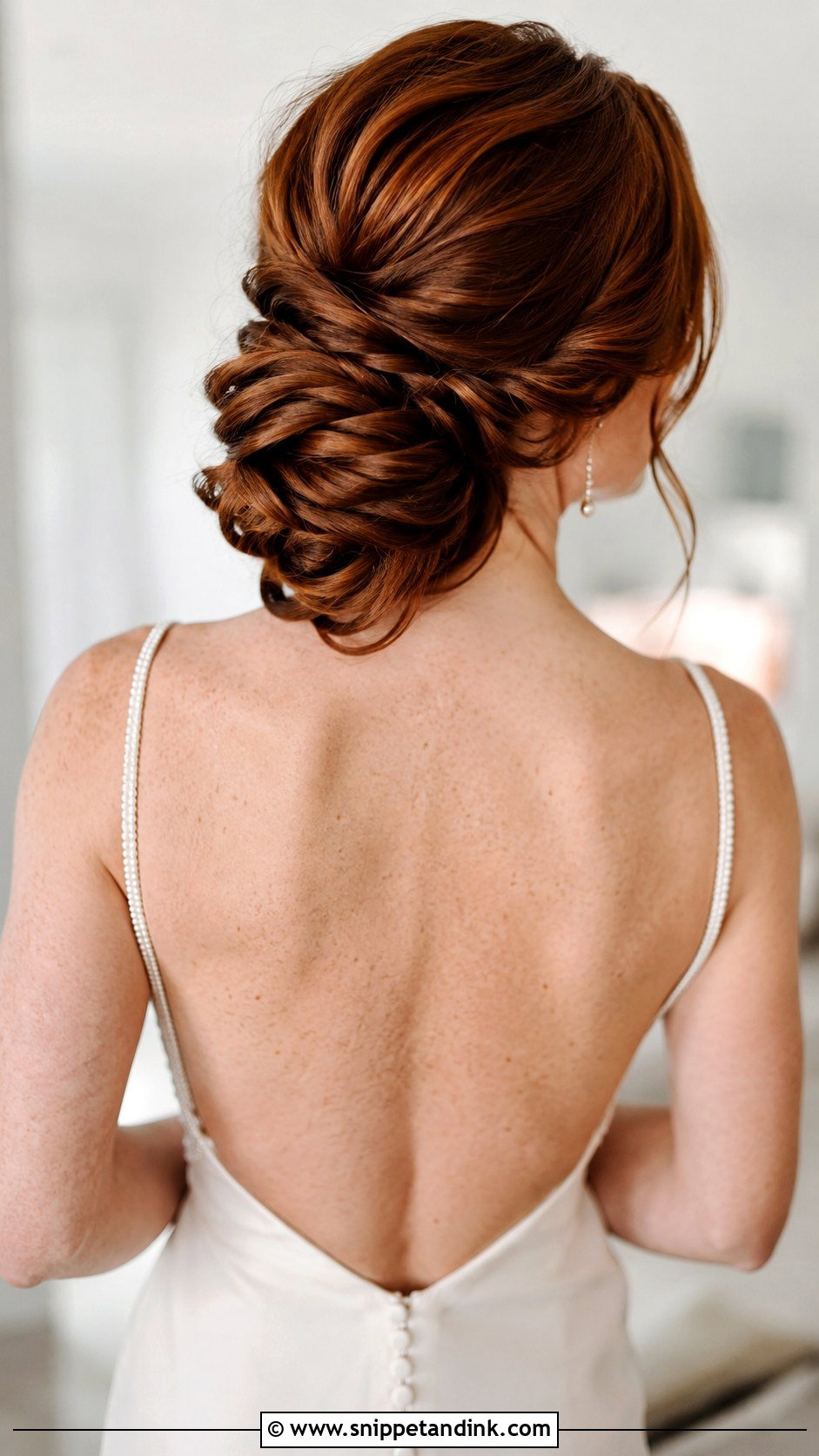
Long hair gives you shape to work with, and weight to manage. A full, sculpted bun from very long hair can drag at the scalp by the evening if it’s twisted up in one go. I build it in layers instead: sections pinned one over another, each anchored separately, so the weight is spread across the back of the head. Twisted, braided, looped or wrapped, it gives a striking back view that pairs well with open backs, long veils and dresses with detailed buttons down the spine.
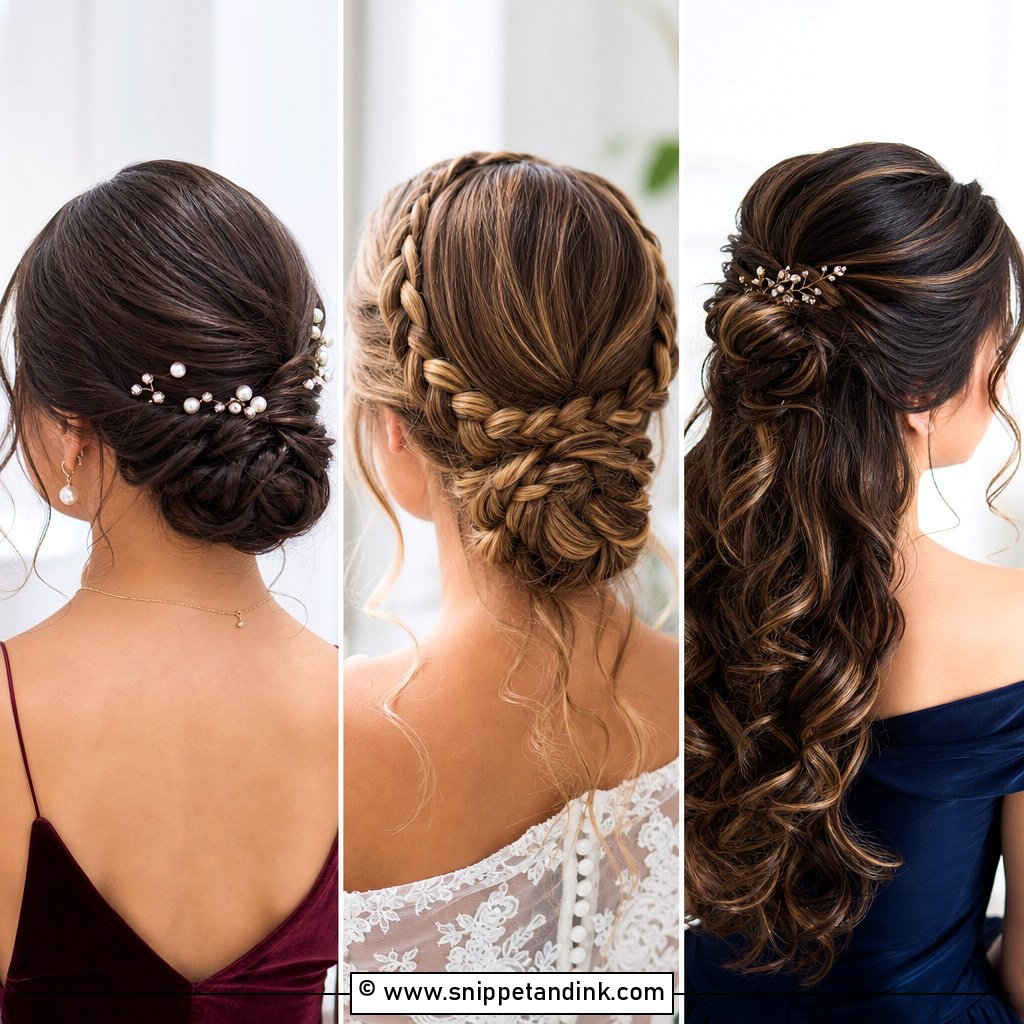
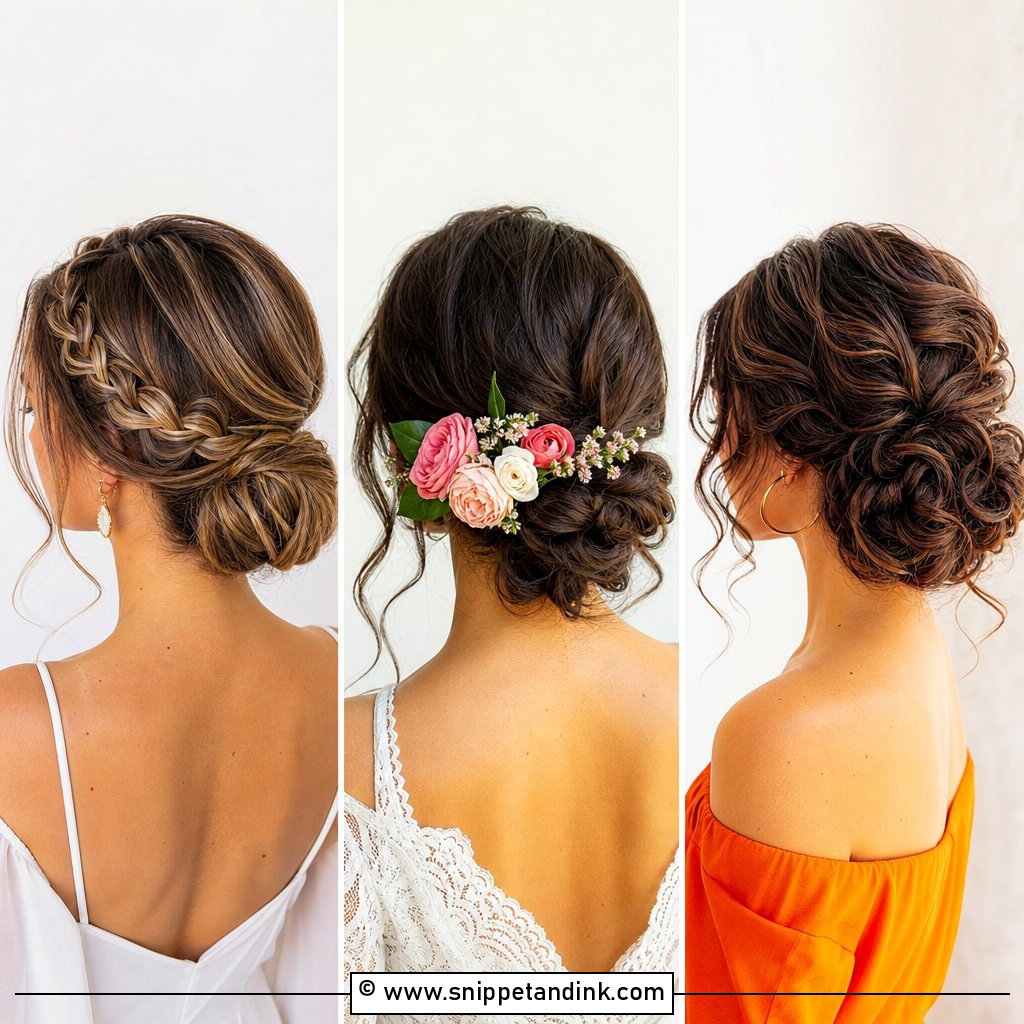
15. Low Bun Bride Hair For Medium Hair
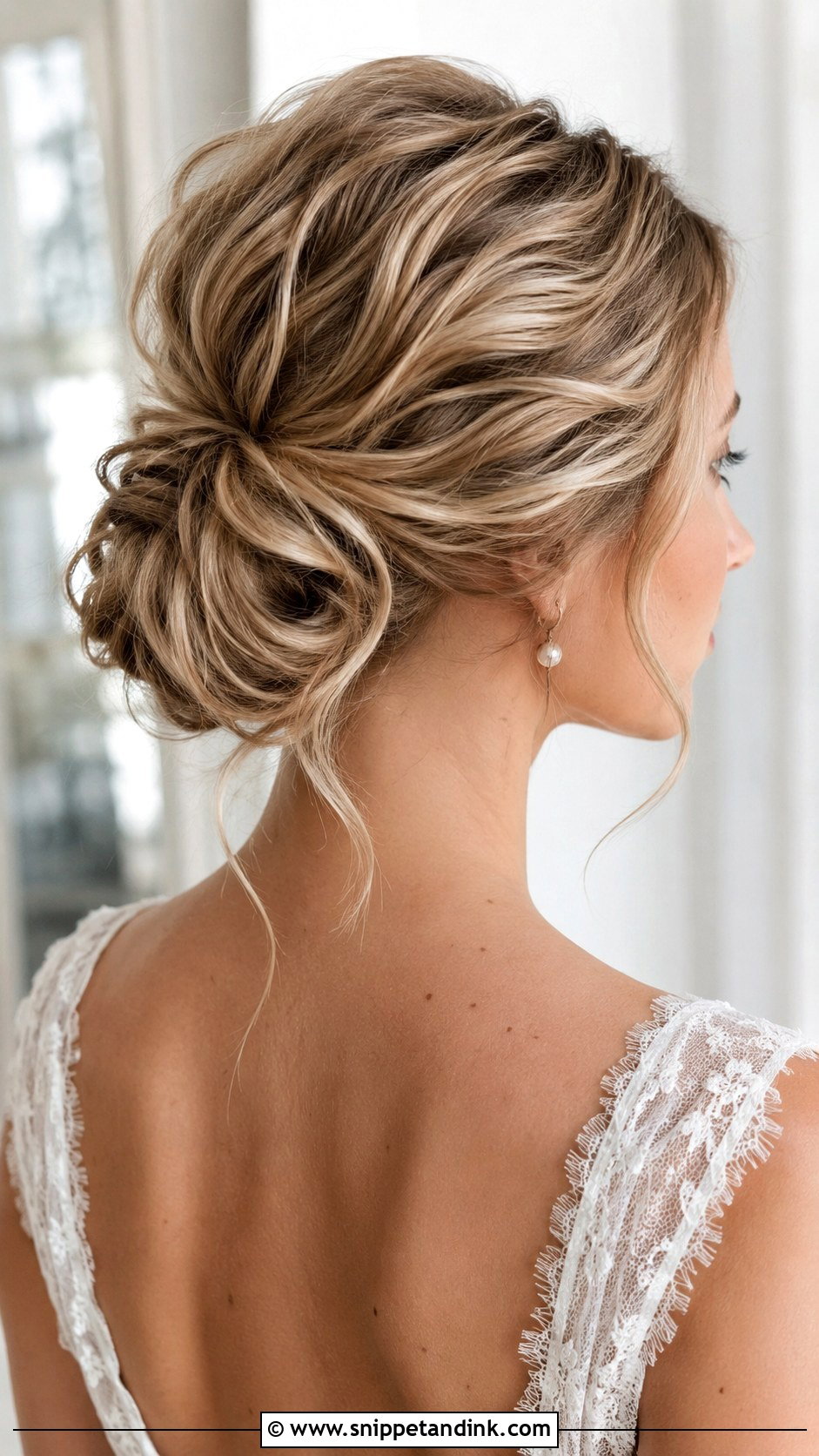
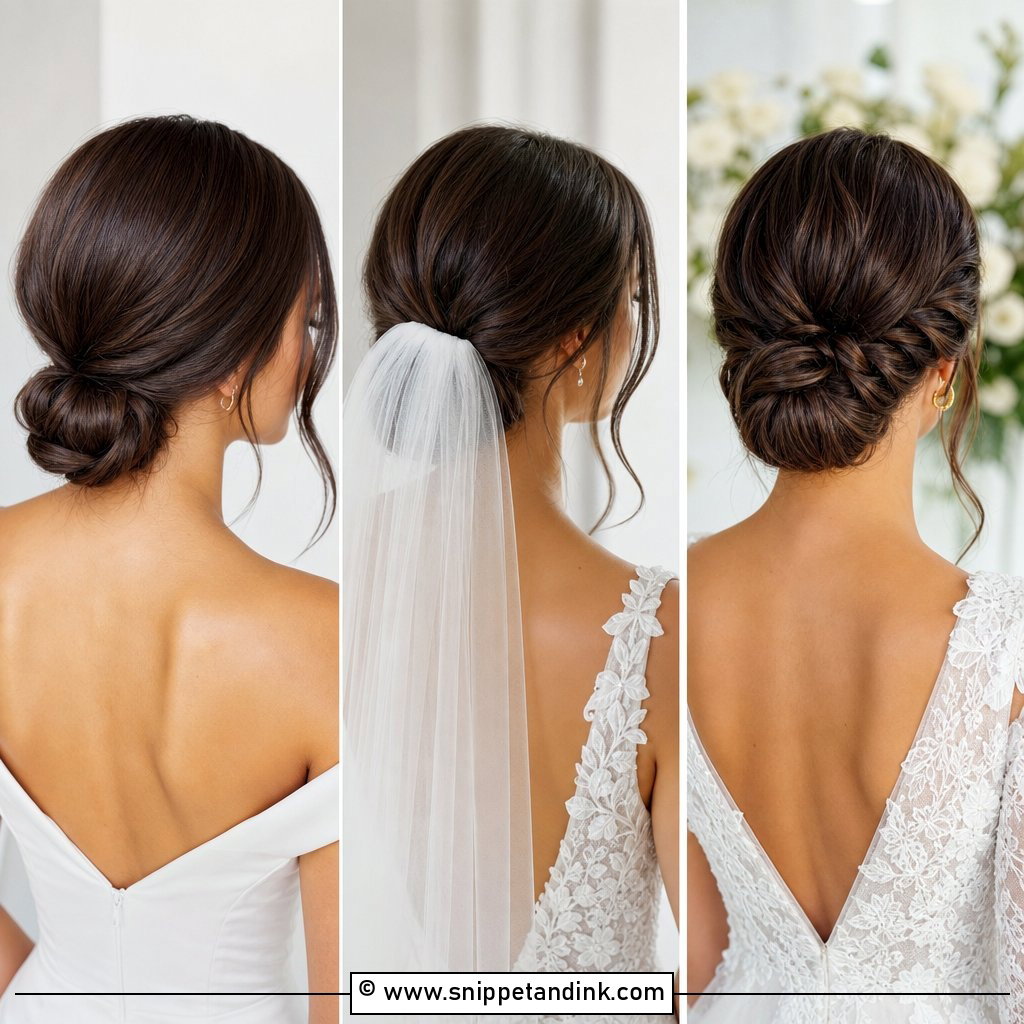
Medium hair can look every bit as full as long hair with a little help. Waves, a touch of backcombing, a small bun form or a few extensions add volume. Instead of one big twist, I build the bun from smaller pinned sections, which also catches the shorter layers that would otherwise fall loose. It’s a practical updo if your hair is around the shoulders. At the trial, ask to see it from every angle with a hand mirror. A small gap at the nape is easy to fix then, and annoying to find in photos later.
16. Low Bun Bride Hair For Thin Hair
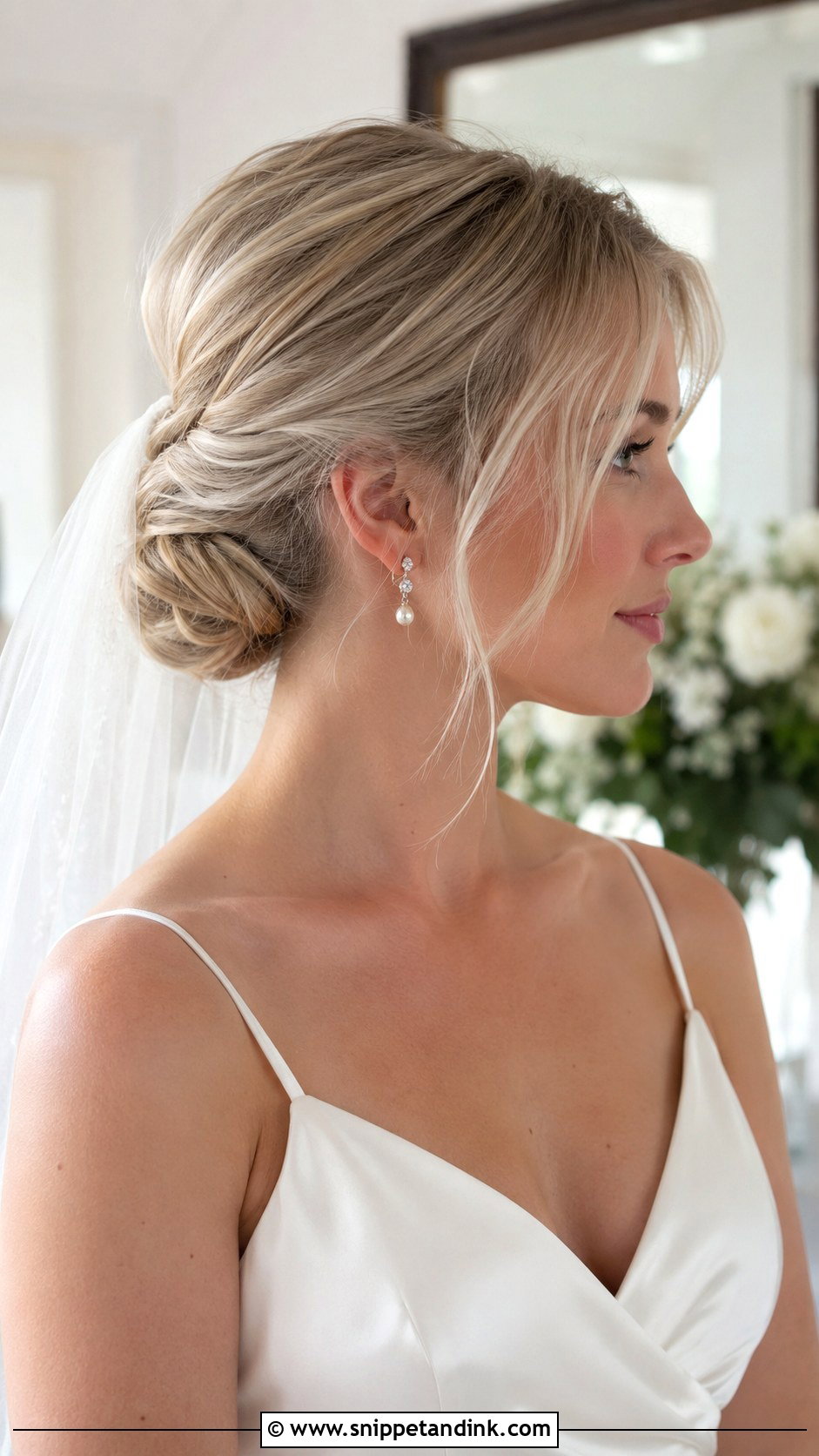
Fine hair needs grip and texture before anything else. I curl it first, tease lightly at the crown and pin in small sections, so each pin has enough hair to hold. A bun form, padding or a few clip-ins create a rounded shape without looking fake. Heavy oils and high-shine sprays are the enemy here; they make fine hair collapse within hours. A soft chignon, textured bun or braided bun all flatter. Keep accessories light, since a heavy comb will pull fine hair loose.
17. Low Bun Bride Hair For Thick Hair
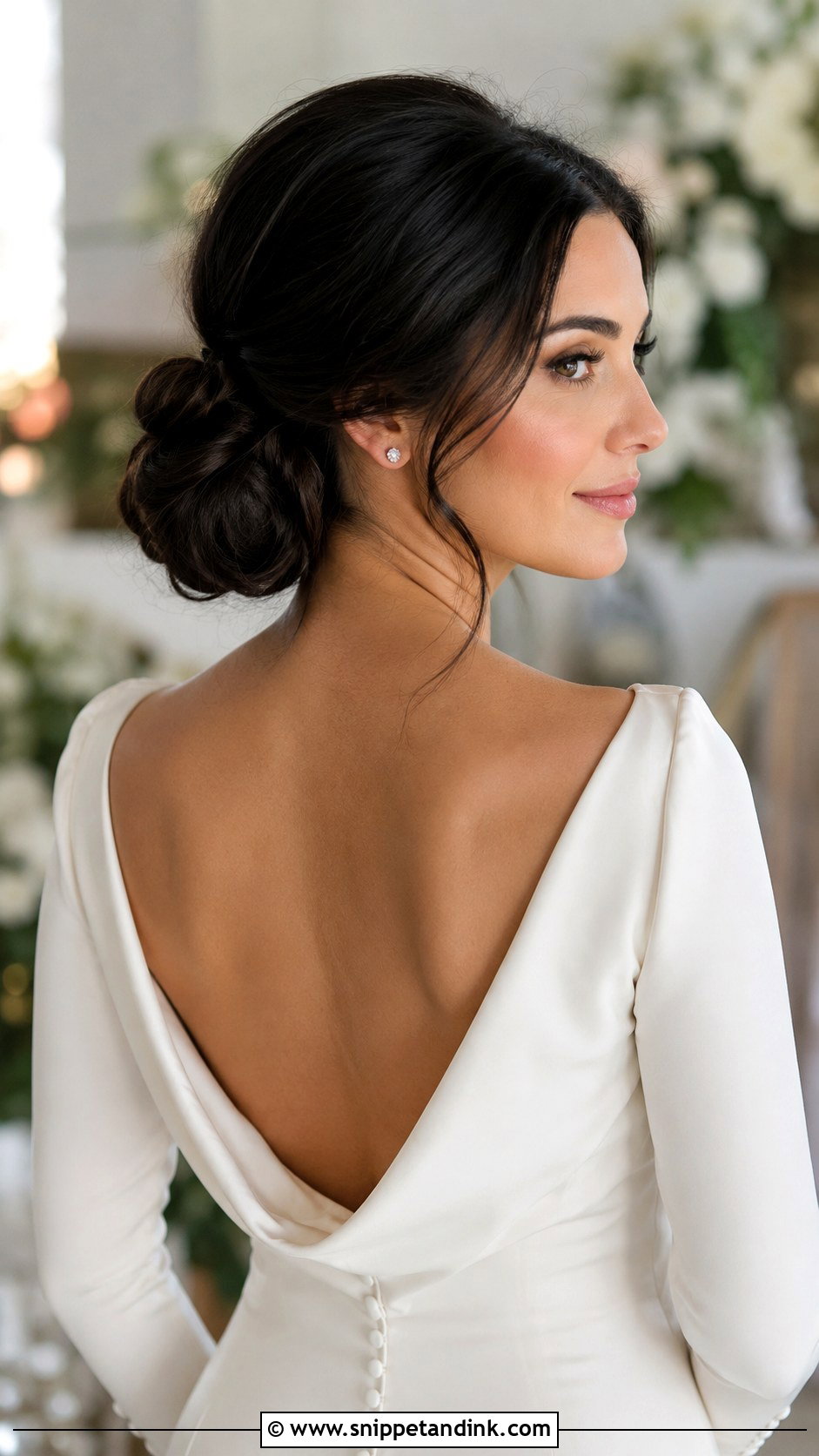
Thick hair holds volume naturally, so it rarely needs backcombing; what it needs is structure. I section carefully and anchor the bun with strong pins, sometimes with an elastic base, and I’ll thin out what goes into the bun by pinning some hair flat underneath. Otherwise the bun gets so large that it pulls on the scalp and sits awkwardly with the veil. A chignon, twist, braid or wrap all suit thick hair. If you’d prefer it softer, ask for controlled texture rather than a bigger bun.
18. Low Bun Bride Hair With Face Framing
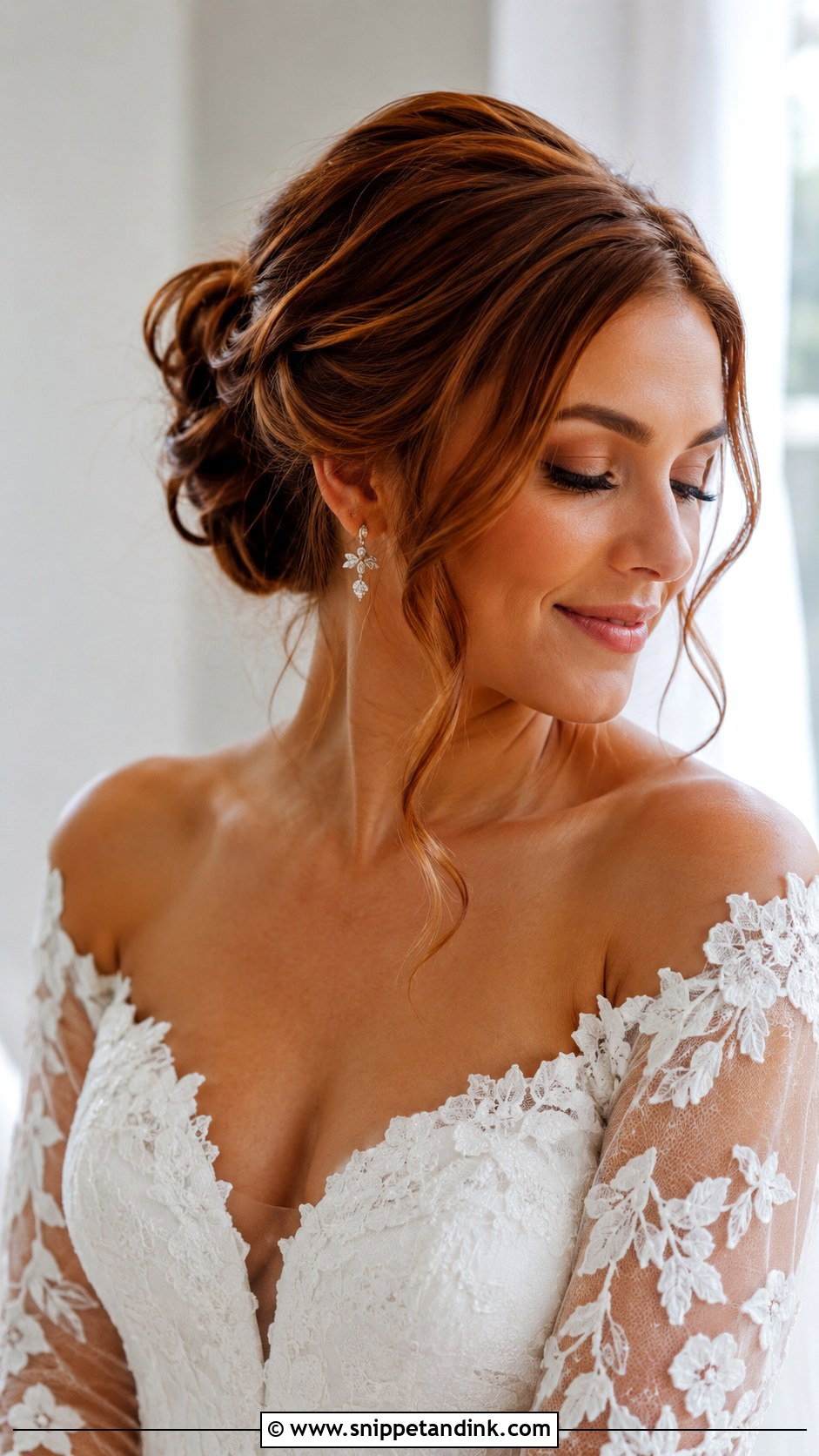
Face framing helps brides who never wear their hair fully back. A few front pieces, curled, waved or lightly bent, soften the line around the cheekbones and jaw while the bun stays low and neat. I pick them carefully, usually two or three on each side, because too many loose strands look like the updo is falling apart in photos. Leave them slightly longer than you think. Curled pieces spring up as they cool, and a strand that sits at the cheekbone in the morning may end up at the eyebrow.
19. Twisted Low Bun Bride Hair
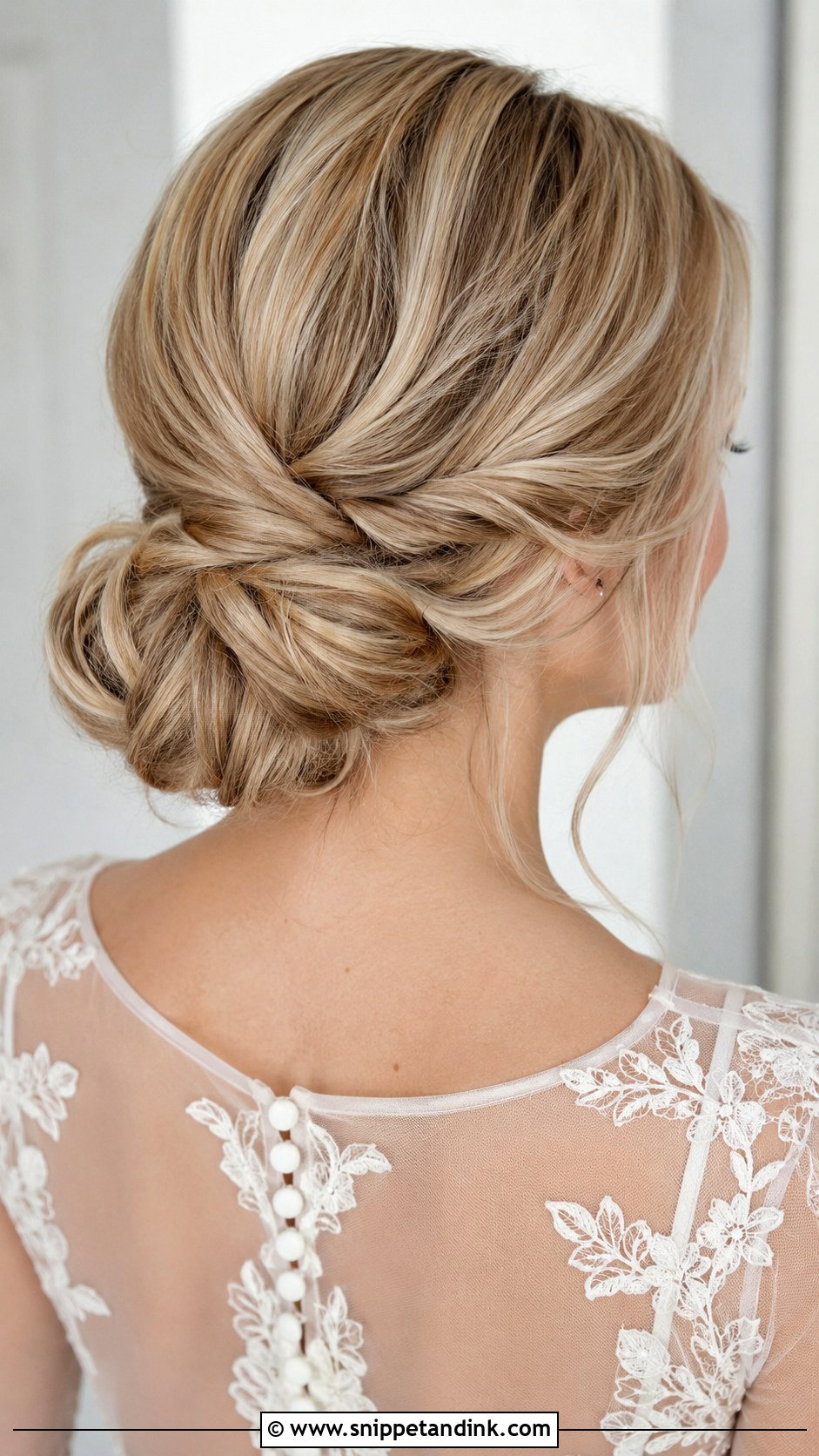
Twists give the woven look of a braid with less bulk. Sections are crossed, rolled and pinned into the bun, so each curve catches light separately. Highlighted or dimensional colour shows this off well, because the contrast picks out every turn. Veils, combs, pins and simple gowns all suit it. I keep the twists slightly lifted from the scalp rather than flat, otherwise they compress during the day and the bun loses its shape against the head.
20. Low Bun Bride Hair With Hair Comb
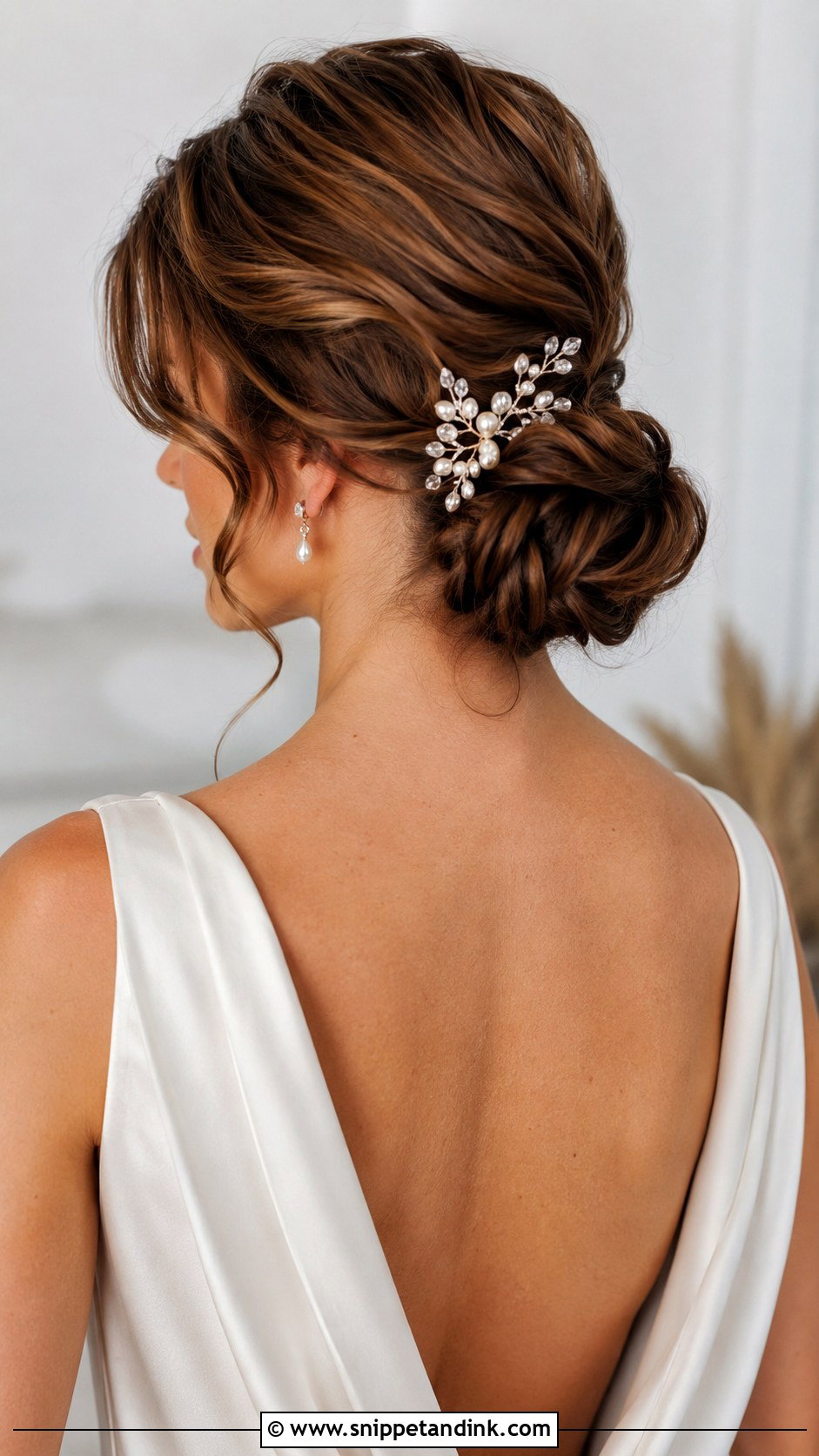
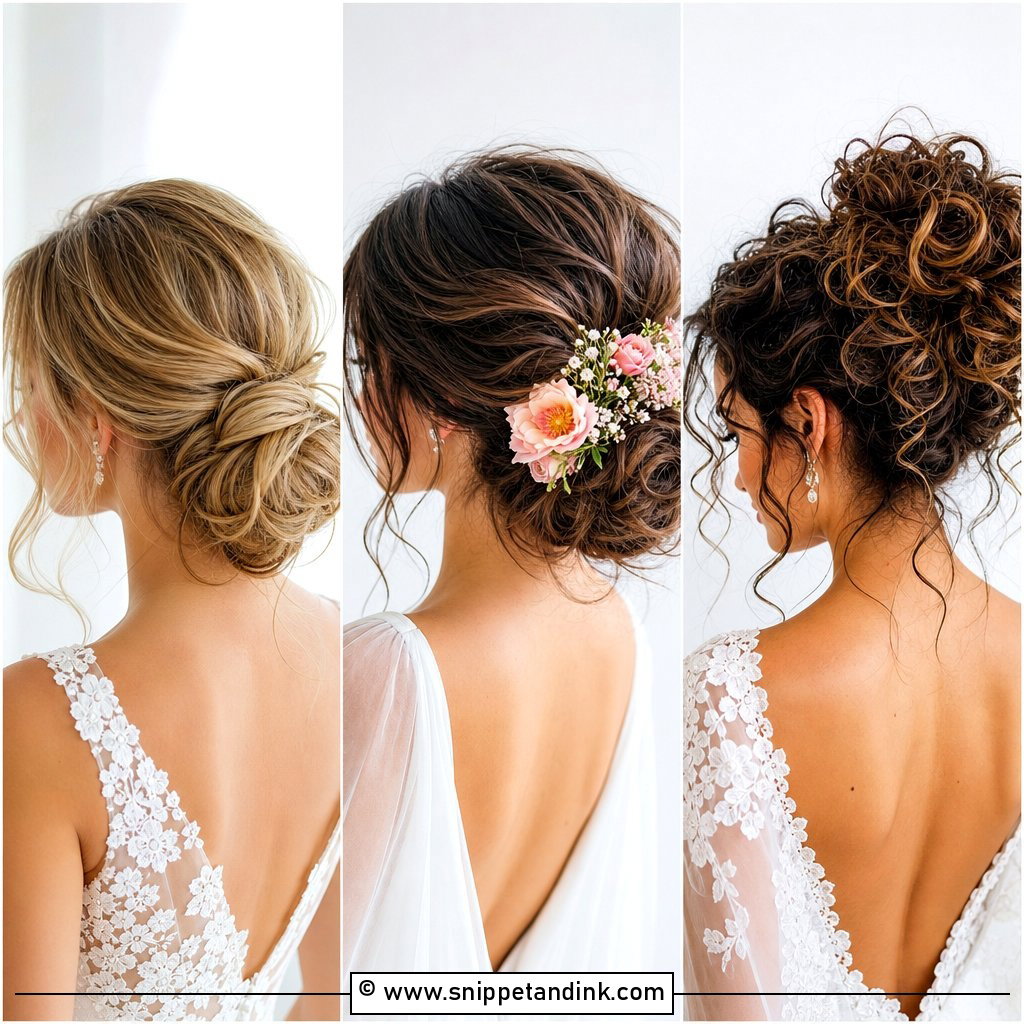
A comb gives the bun one clear focal point, and it’s simpler than a scatter of pins. It can sit above the bun, to one side or just behind an ear. Crystal reads glamorous, pearl classic and floral soft. The style underneath can be sleek, textured, braided or twisted. Bring the comb to your trial, not a photo of it. I need to test its weight, find the angle that suits your profile and anchor it with crossed pins beneath so it stays put when you lean in for a hug.
A Small Repair Kit for the Reception
Even a well-built bun can loosen after hours of hugging, dancing and taking a veil on and off. Most of what goes wrong is a single slipped pin or a piece that’s dropped, and both are easy to fix with the right few things in a clutch.
- Six or eight bobby pins in your hair colour, plus two longer U-pins for the bun itself.
- A travel-size flexible hairspray, not a firm lacquer that leaves a crunchy patch.
- A slim tail comb for tucking a strand back without disturbing the rest.
- Two or three clear elastics in case a braid end works free.
Re-pinning a piece that’s fallen
Don’t push a new pin straight in. Twist the loose piece flat, slide one pin in across it, then a second pin in the opposite direction to form an X. Crossed pins grip each other and hold far better than a single one. Give the kit and these instructions to a bridesmaid, since you won’t be able to see the back of your own head.
Fit the Bun to the Hair You Have on the Day
A low bun earns its place because it does several jobs at once: it stays secure, shows off the neckline and works with nearly every accessory. It can be sleek, soft and airy, or detailed with braids, pearls, flowers and combs. The style that suits you comes down to your hair type, the dress, the venue and how much you want to feel the pins. Save the looks that feel like you, bring them to the trial with your veil and accessories, and judge the result after you’ve moved around in it, not just in the mirror.
You'll Like These Ideas:



Leave a Reply