
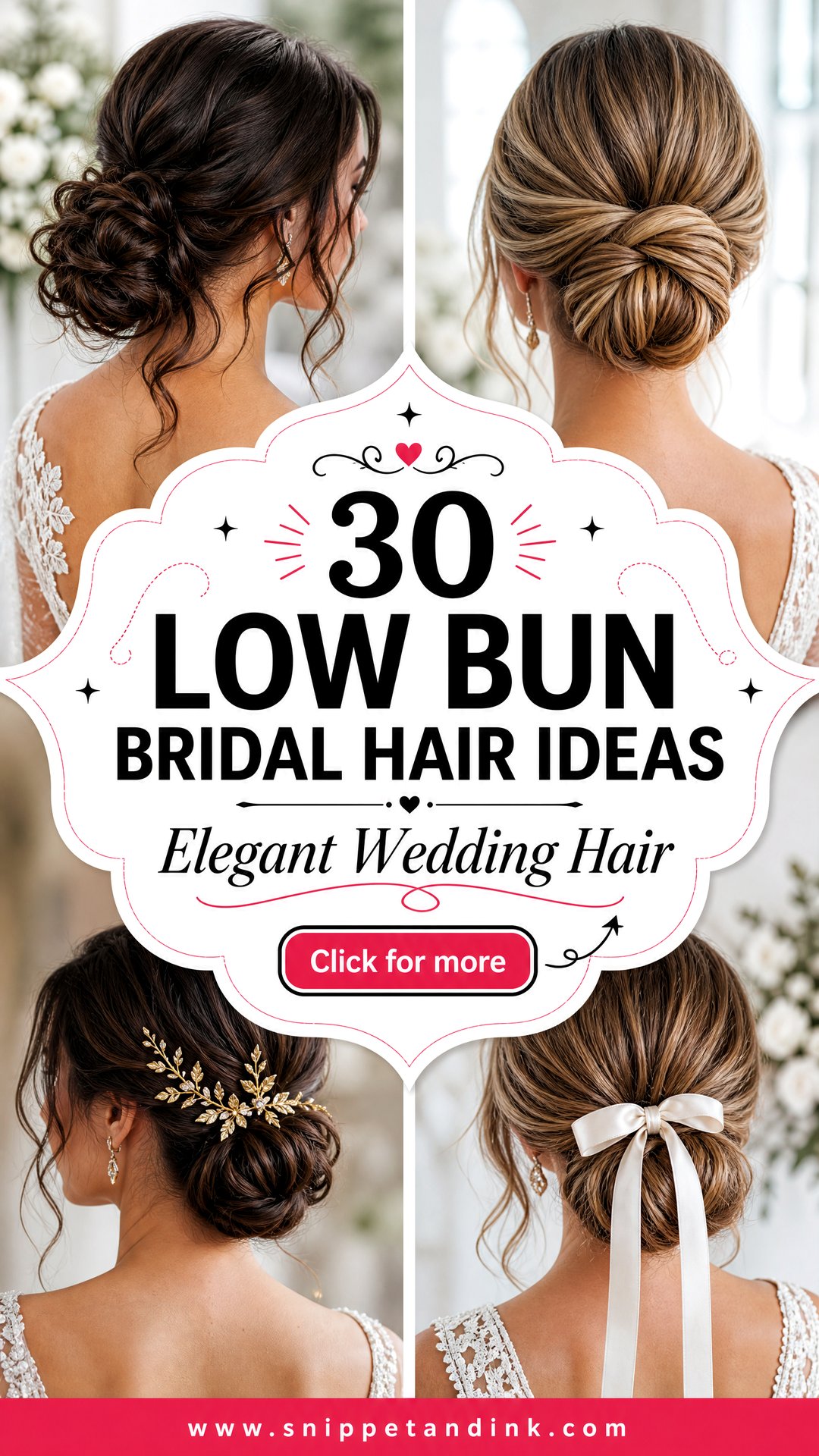
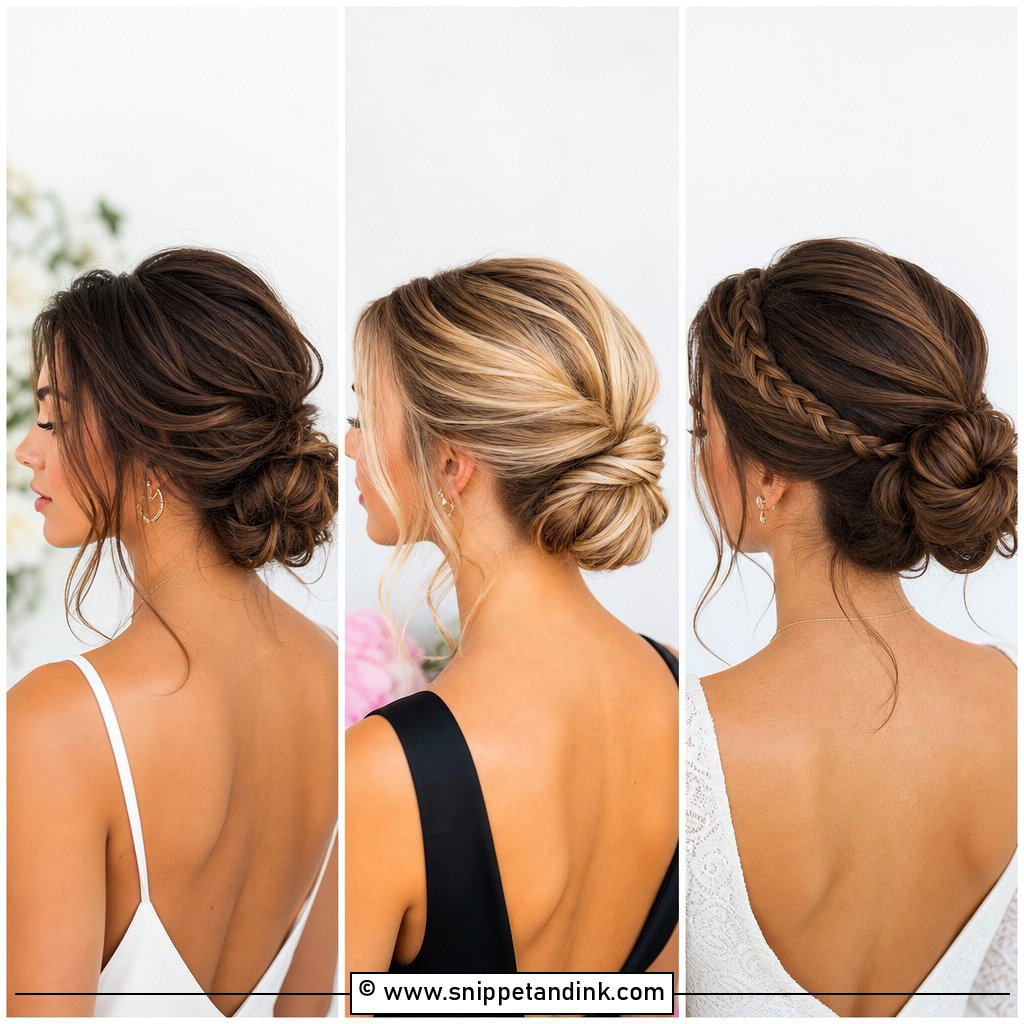
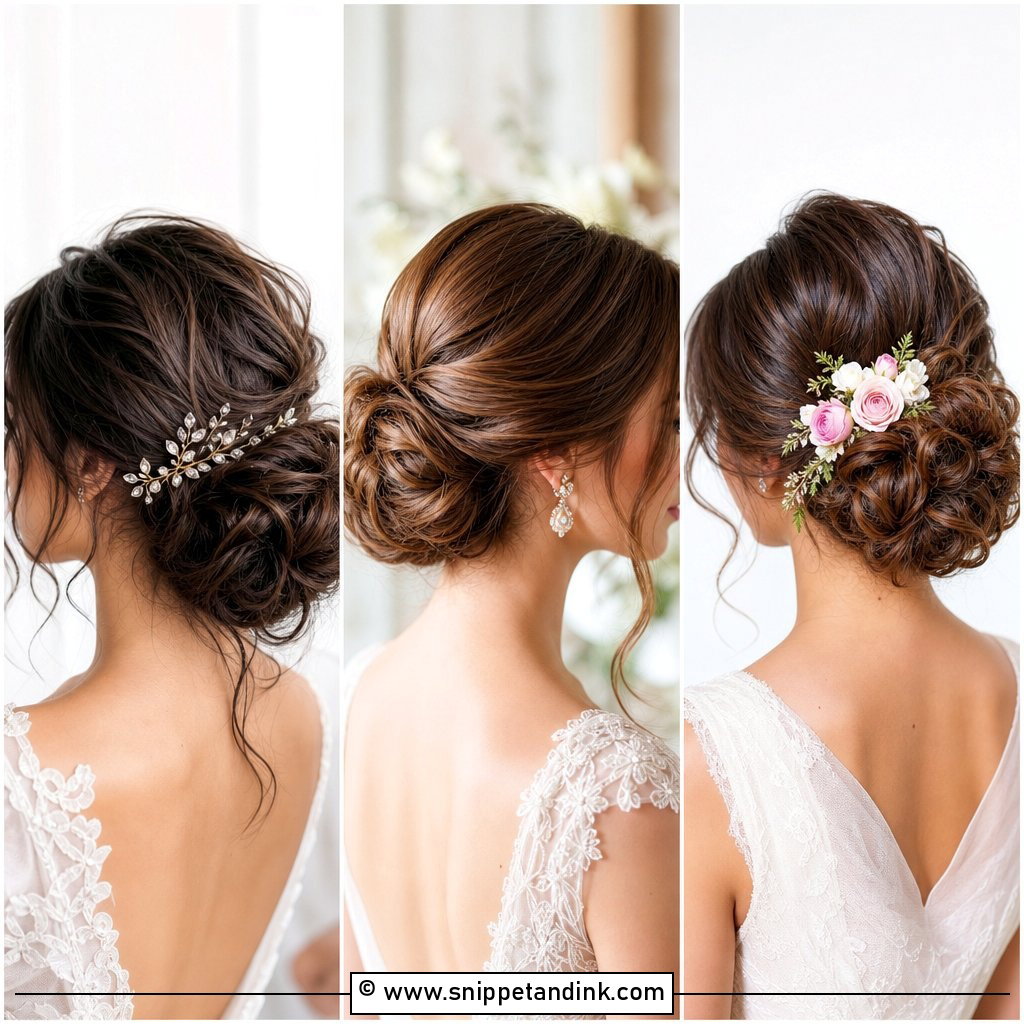
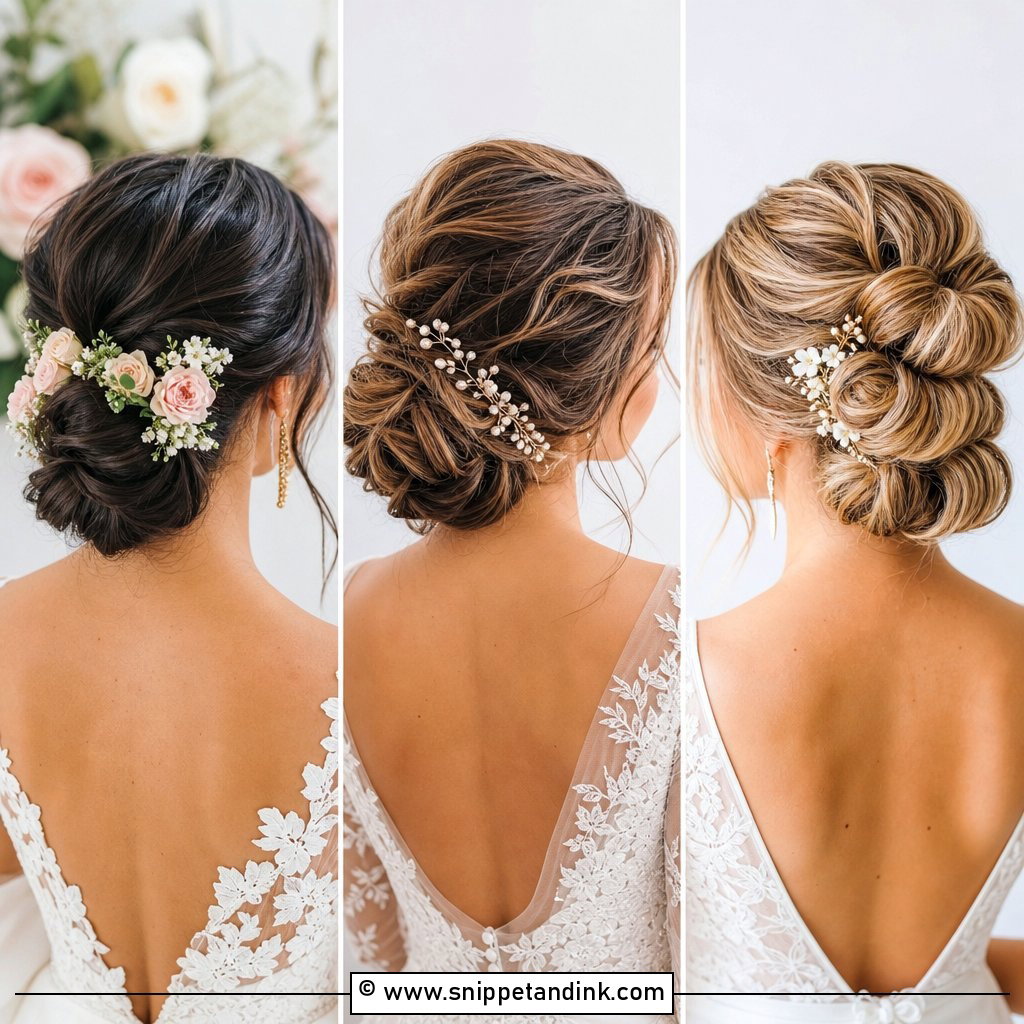
If I had to pick one bridal shape that works for the most people, it would be the low bun. It sits at the nape, out of the way of a veil comb, a tiara or a hood, and it keeps hair off the neck and shoulders through a long, warm day. It also survives hugging, which a high updo often doesn’t. What changes everything is the finish: slicked or loose, braided or twisted, pinned with pearls or tucked with flowers. Below are thirty versions I build regularly, with notes on what each one needs from your hair and what I’d warn you about before you commit.
How High on the Nape Should Your Low Bun Sit?
“Low” covers a range of a few inches, and that range matters more than most brides expect. I decide the exact height after seeing the dress, because the back of the gown and the veil both change where the bun looks right.
- High neckline or a collar: lift the bun slightly so it doesn’t rest on the fabric and get flattened or rub the hair loose.
- Open or low back: keep it right at the nape, which lengthens the neck and frames the back of the dress.
- Long veil: place the bun where the comb can slide into its top edge, so the veil falls straight rather than tilting.
- Short hair or long layers: sit it a little higher so the shortest pieces at the nape actually reach.
Turn sideways in a mirror with your dress or a similar neckline on and look at the profile. That view, more than the front, shows whether the bun is in the right spot.
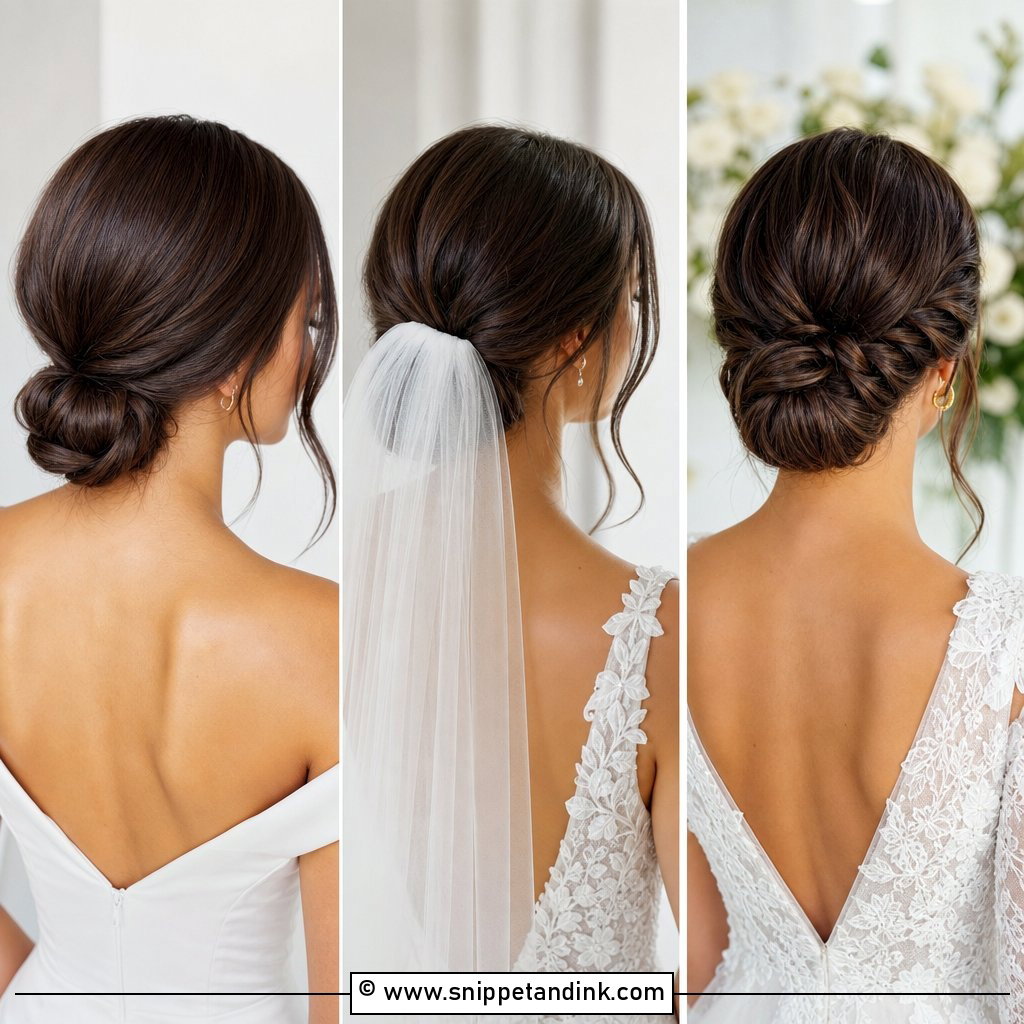
1. Sleek Low Bun With Middle Part
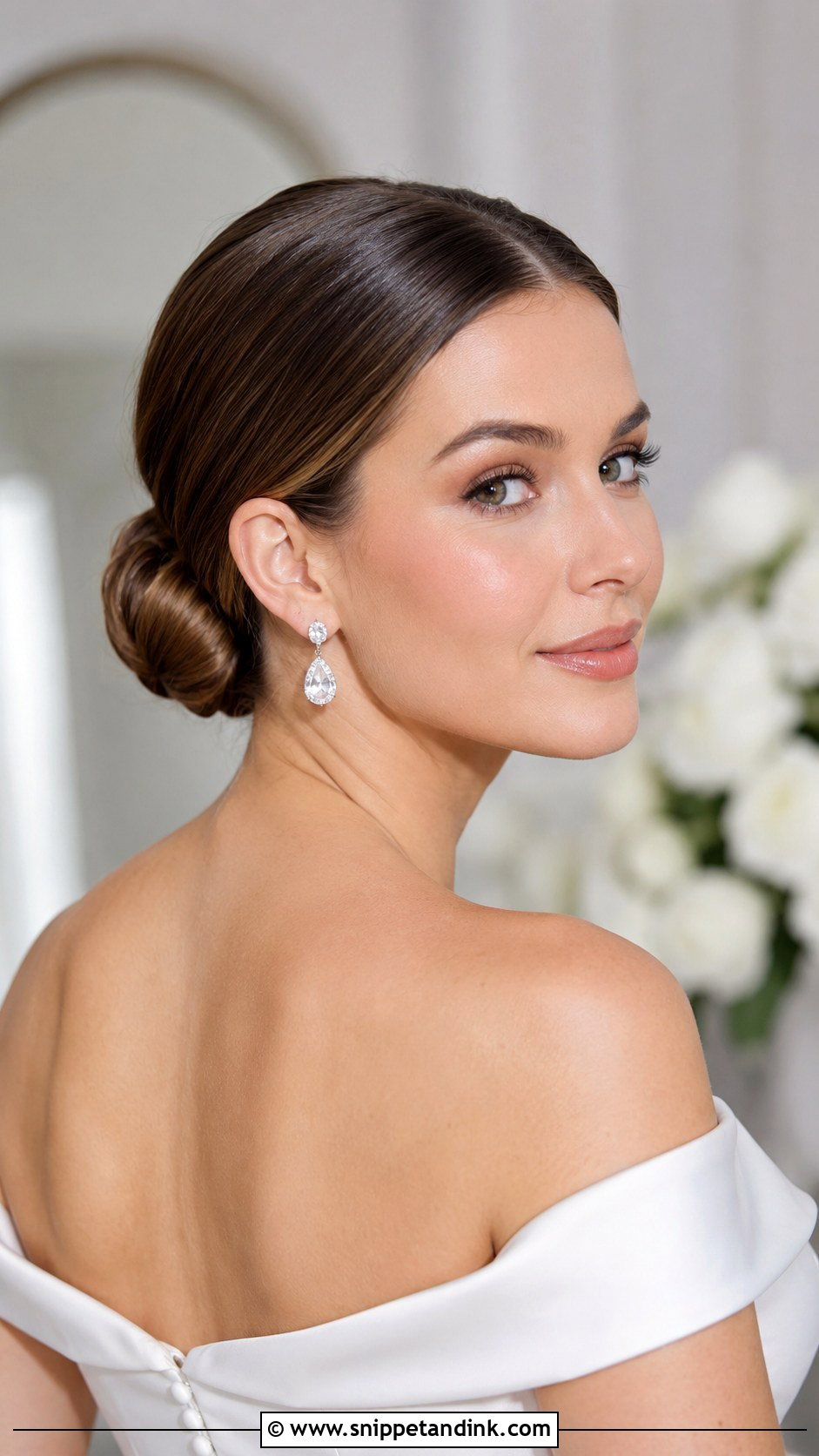
A clean center part, every strand smoothed back, and a tight, structured knot at the nape. It suits oval and square faces and anyone with a strong jaw they want to show off. The honest catch is that a middle part shows every cowlick and any asymmetry in the hairline, so at the trial I check where your hair naturally wants to split before I commit to dead center. I work in a light smoothing cream rather than oil, which looks greasy by evening, and finish with a firm spray. Pair it with statement earrings and an off-the-shoulder neckline and you have an editorial look with nothing to fuss over.
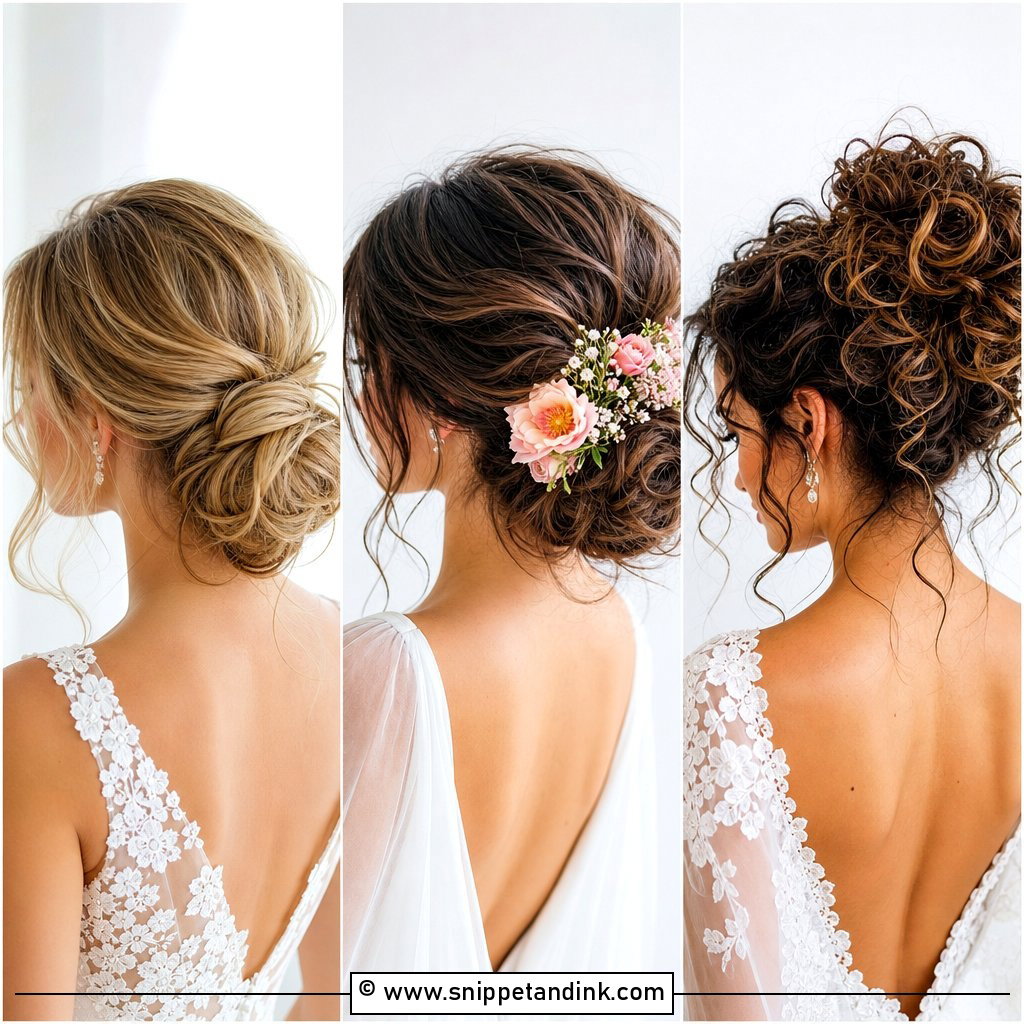
2. Romantic Loose Low Bun
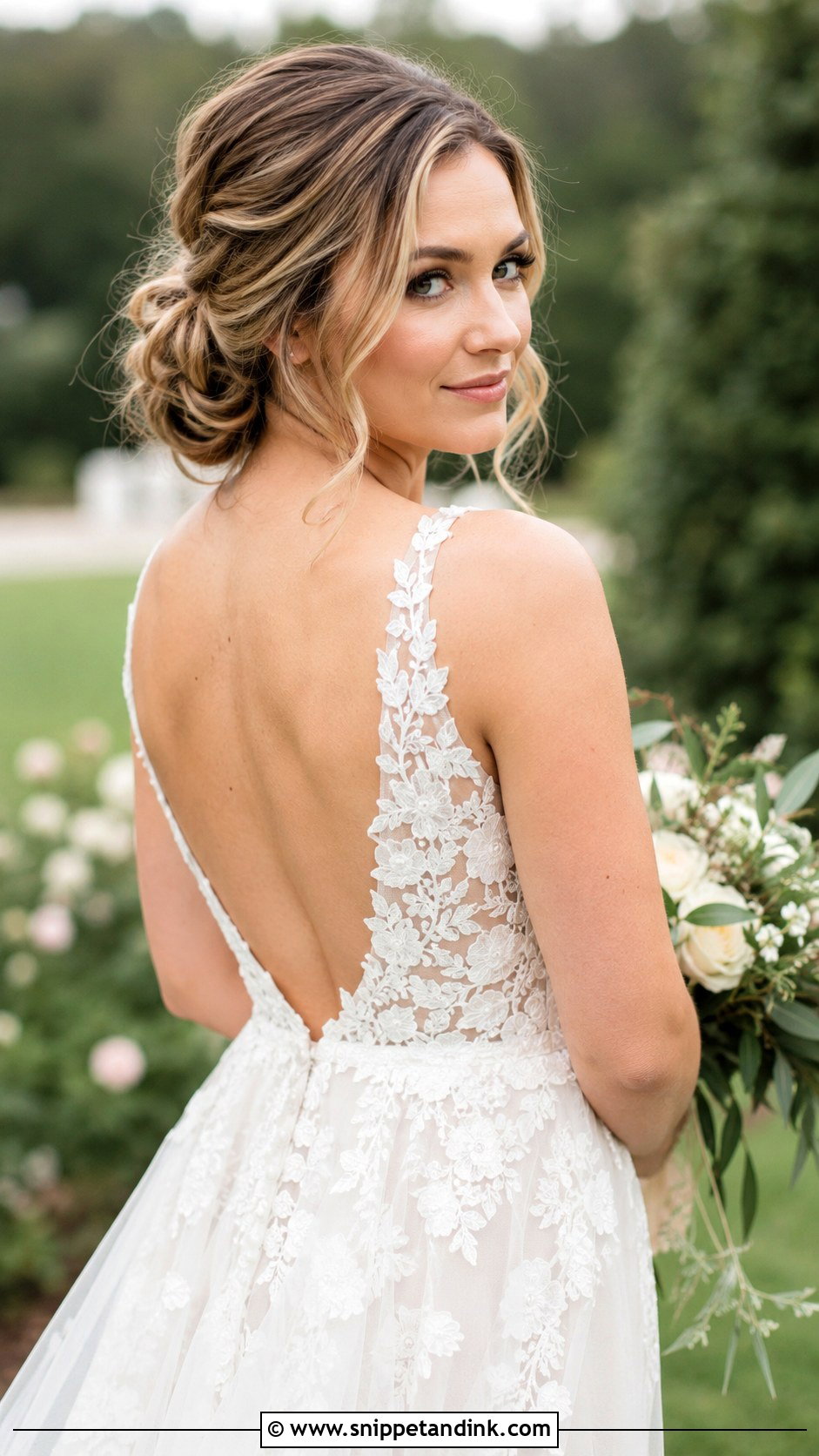
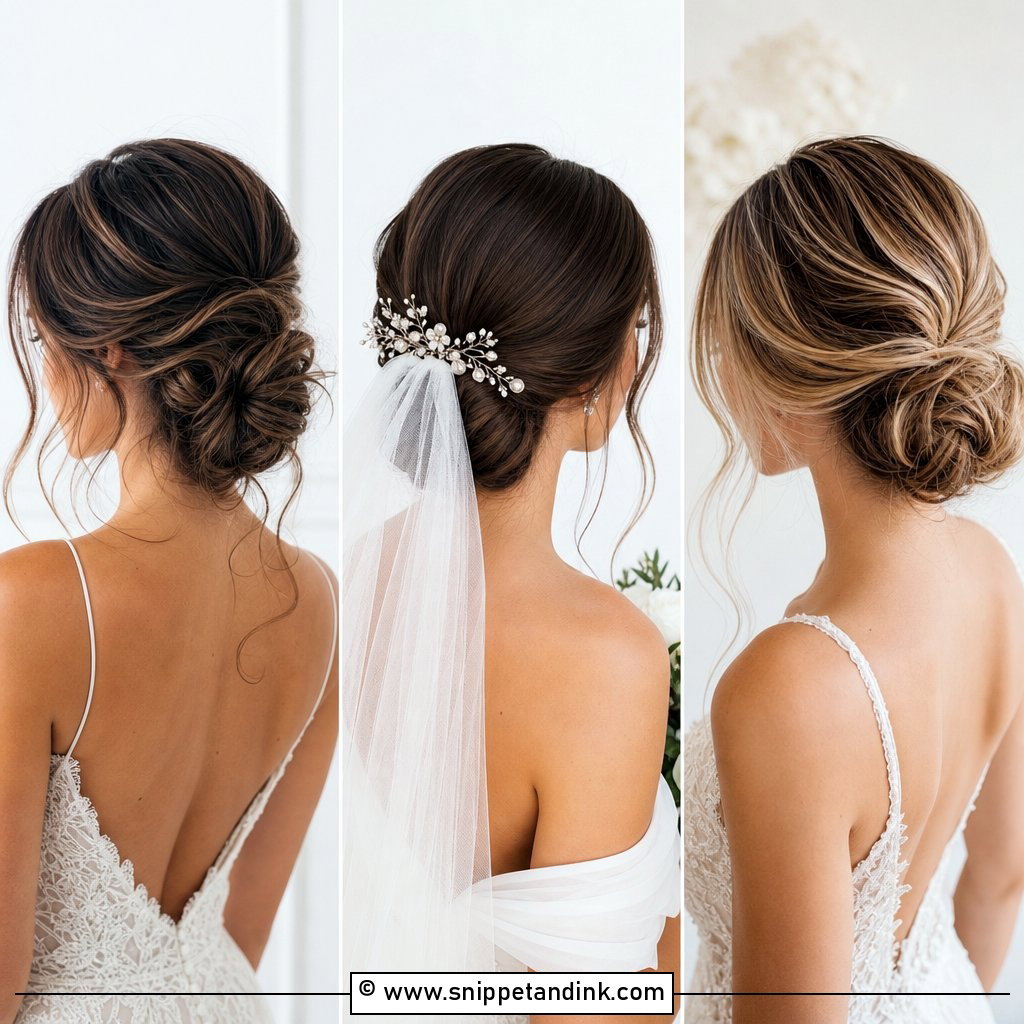
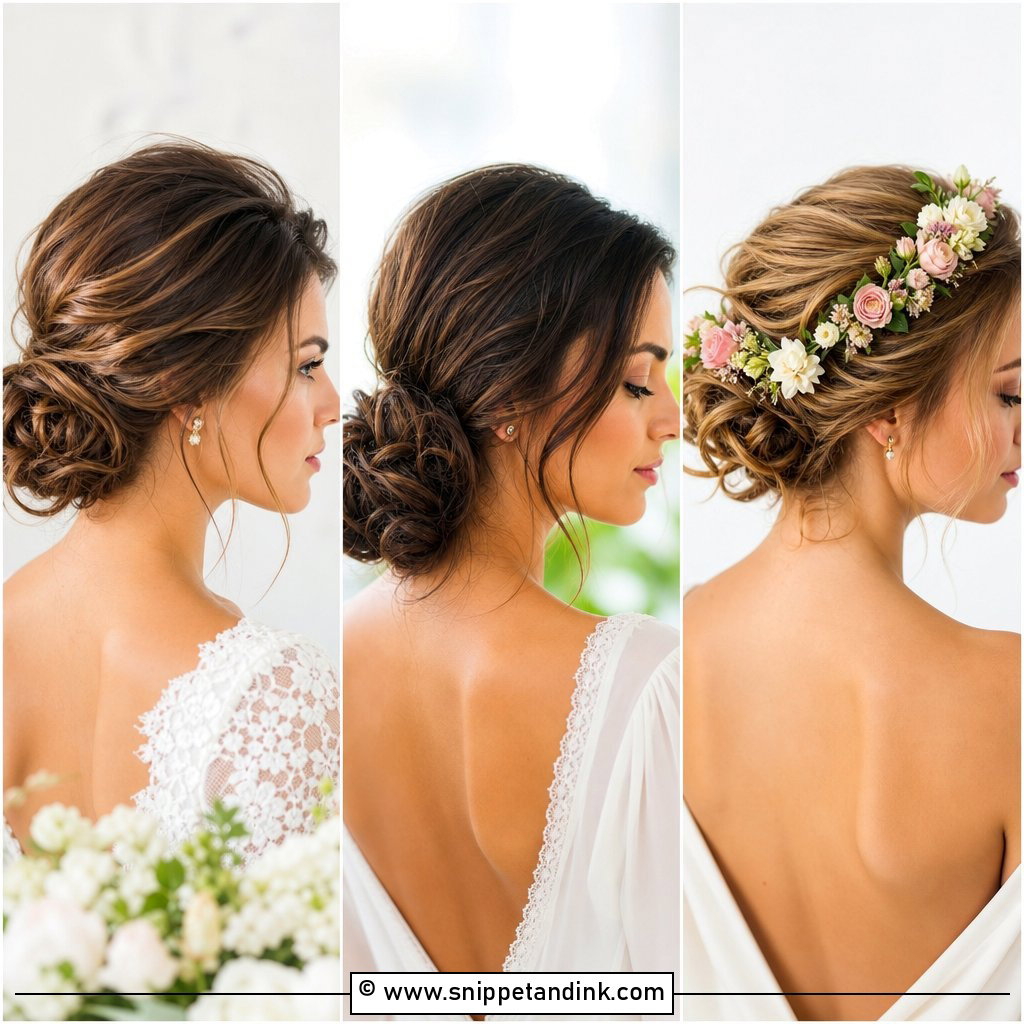
The loose version is built with volume and soft texture, then gently pulled apart so it looks undone. It is much harder to make last than it looks. Soft curls drop fastest in humidity, so for garden or outdoor ceremonies I set every section with a curling iron, pin the curls to cool, and only loosen the bun at the very end. A few face-framing pieces and a light veil or a couple of fresh blooms are all it needs. It flatters most faces and suits flowing, unstructured gowns.
3. Braided Low Bun
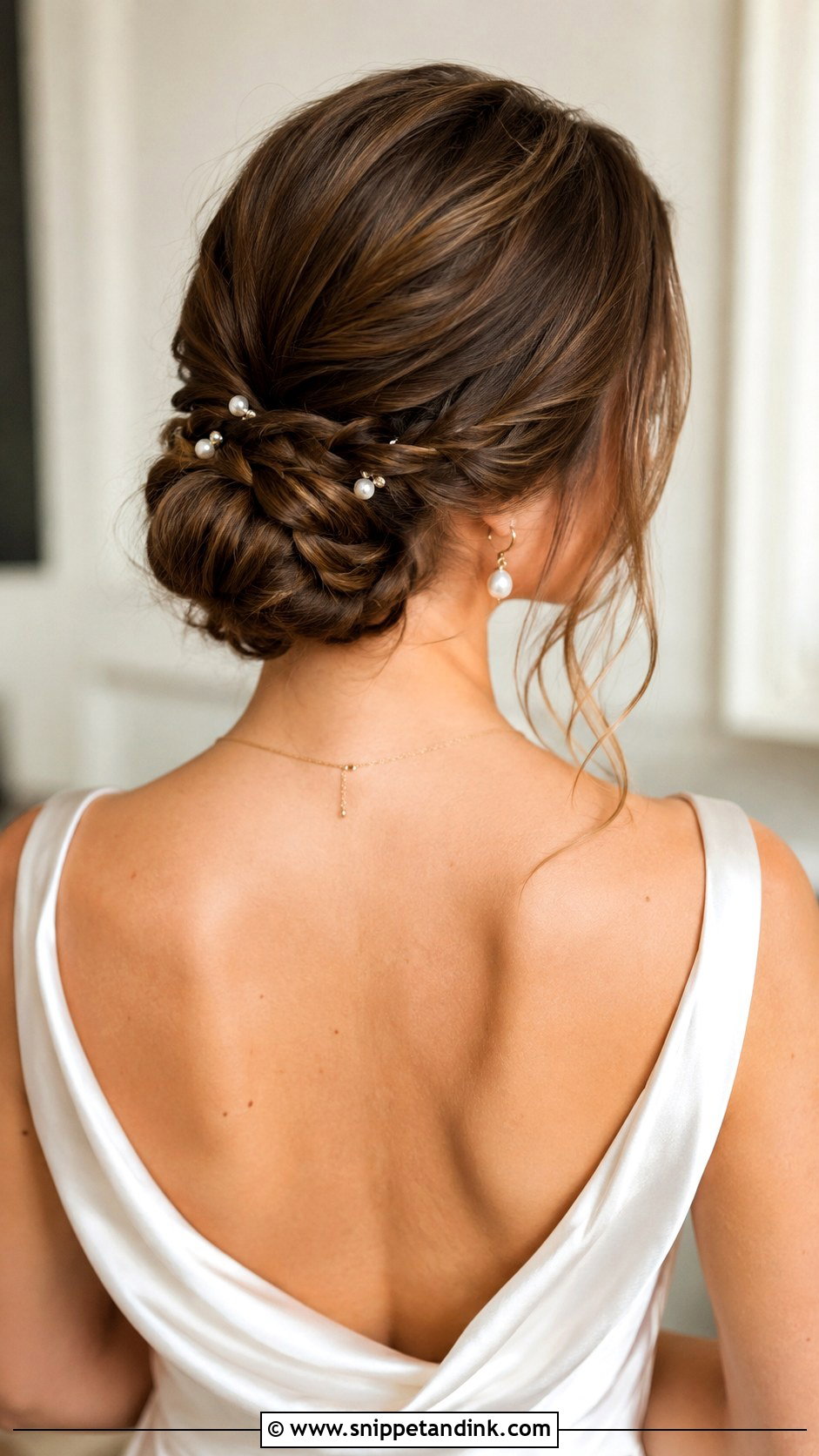
A braid woven into or wrapped around the base of the bun adds detail you can see from the aisle. One braid circling the knot is subtle; several twisted together are much more dramatic. I always braid on hair prepped with texture spray first, because freshly washed, silky hair makes braids slip and lose their shape by the reception. Pearl pins or tiny flowers sit well in the gaps between the braid loops. Most lengths can do a version of this as long as there’s enough length to reach the nape.
4. Low Side Bun
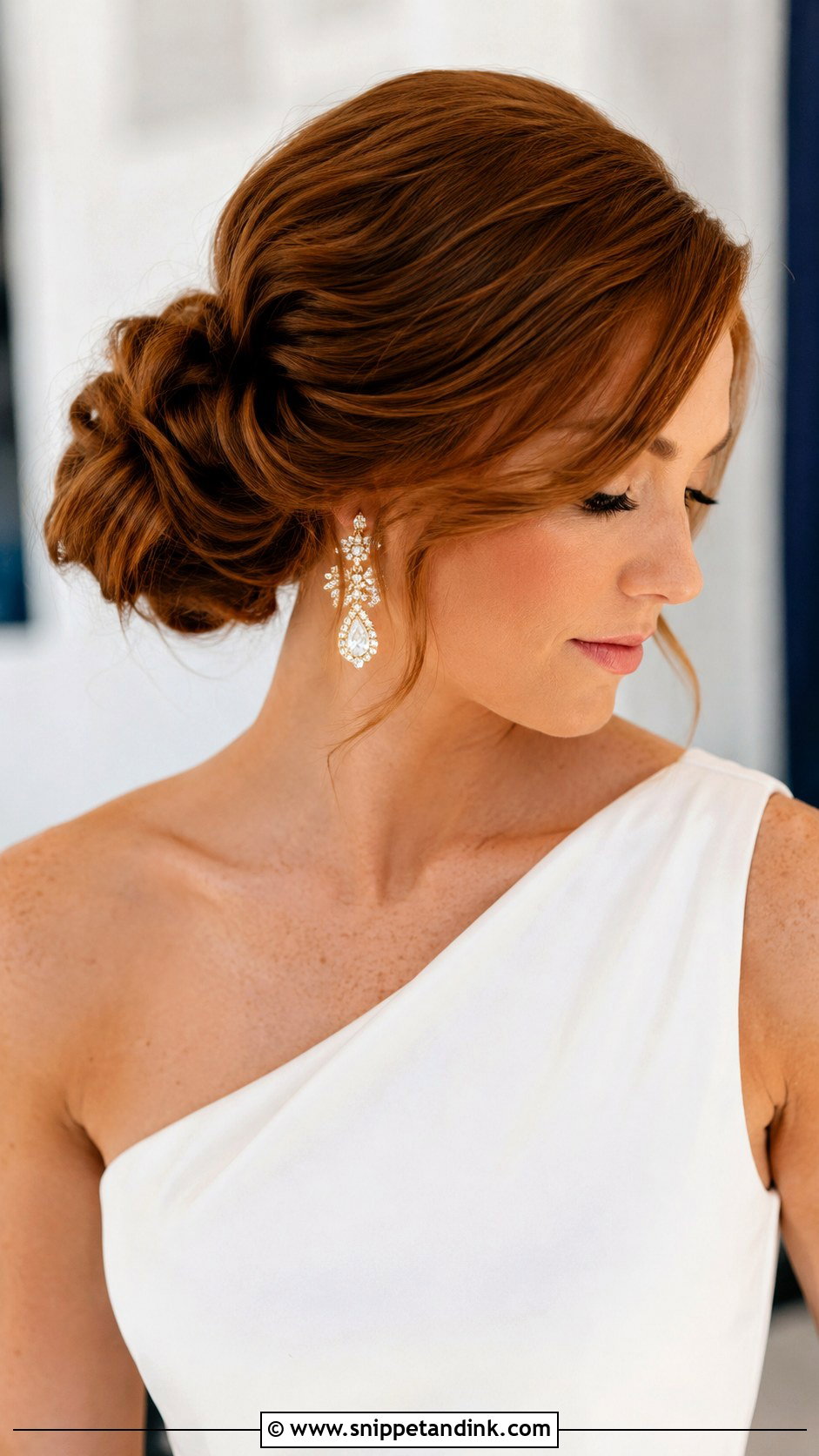
Moving the bun just off center, below one ear, gives a softer outline and shows off a statement earring on the open side. It pairs naturally with a deep side part or side-swept bangs and with one-shoulder gowns, where the bun should sit on the opposite side from the strap. I anchor it a little more firmly than a center bun because the weight pulls to one side. You can wear it sleek or tousled, with a clip or a few flowers near the knot.
5. Low Bun With Face-Framing Tendrils
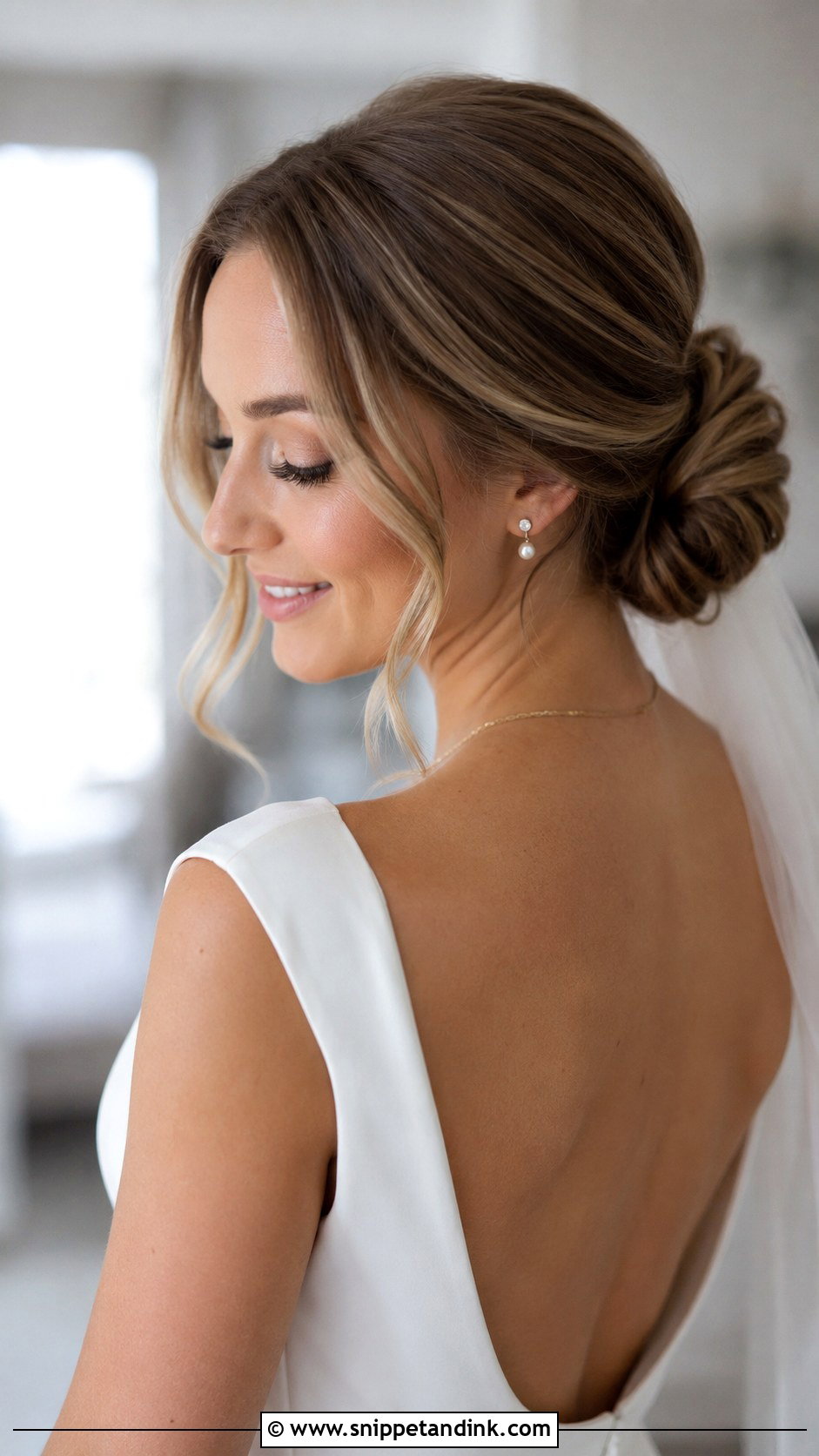
A polished bun at the back with a few soft pieces left out at the temples and cheeks keeps the style from feeling severe. The trick is choosing the right pieces. I pull them from the hairline after the bun is in, not before, so they’re not too thick, and I curl them away from the face so they don’t stick to lip gloss or fall into the eyes. Too many tendrils looks unfinished; two to four is usually plenty.
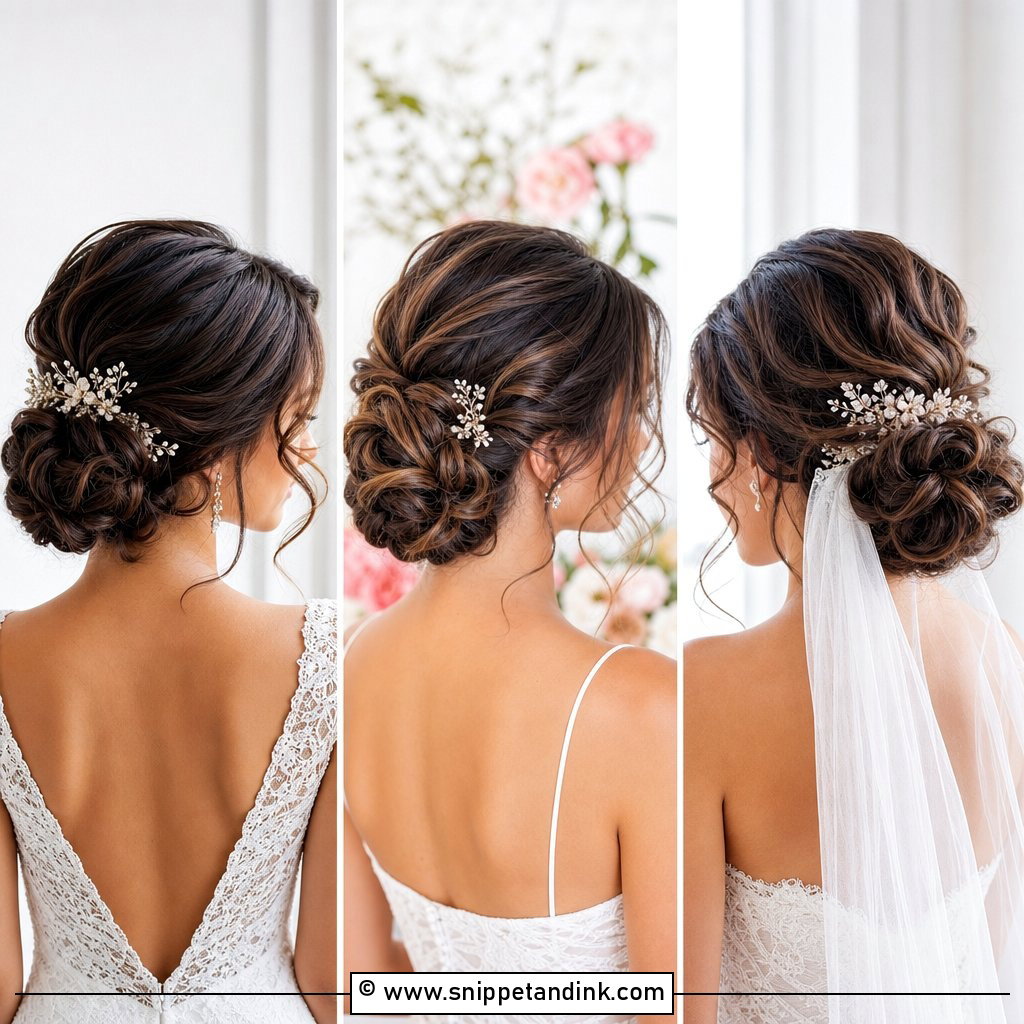
6. Low Bun With Veil
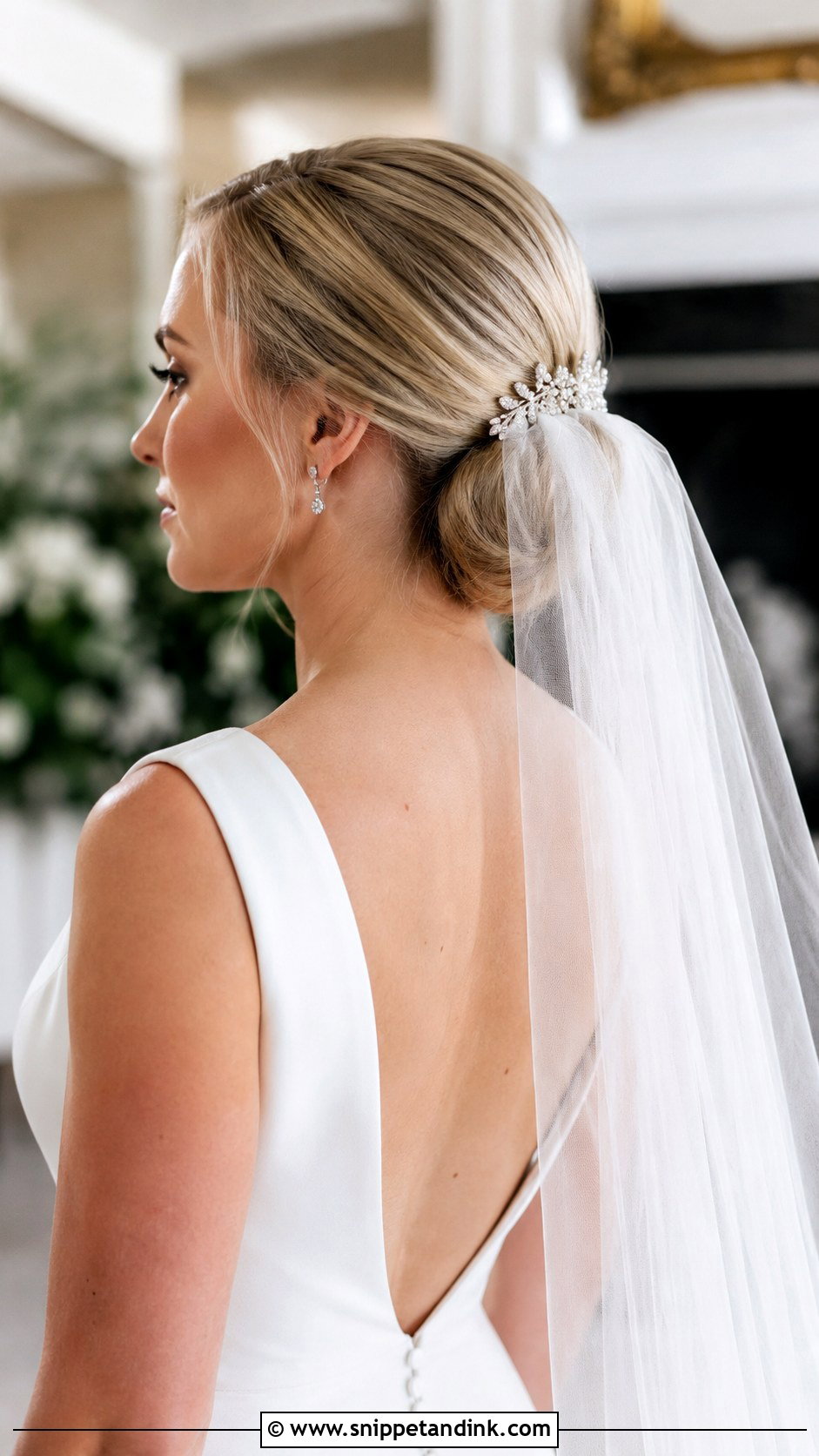
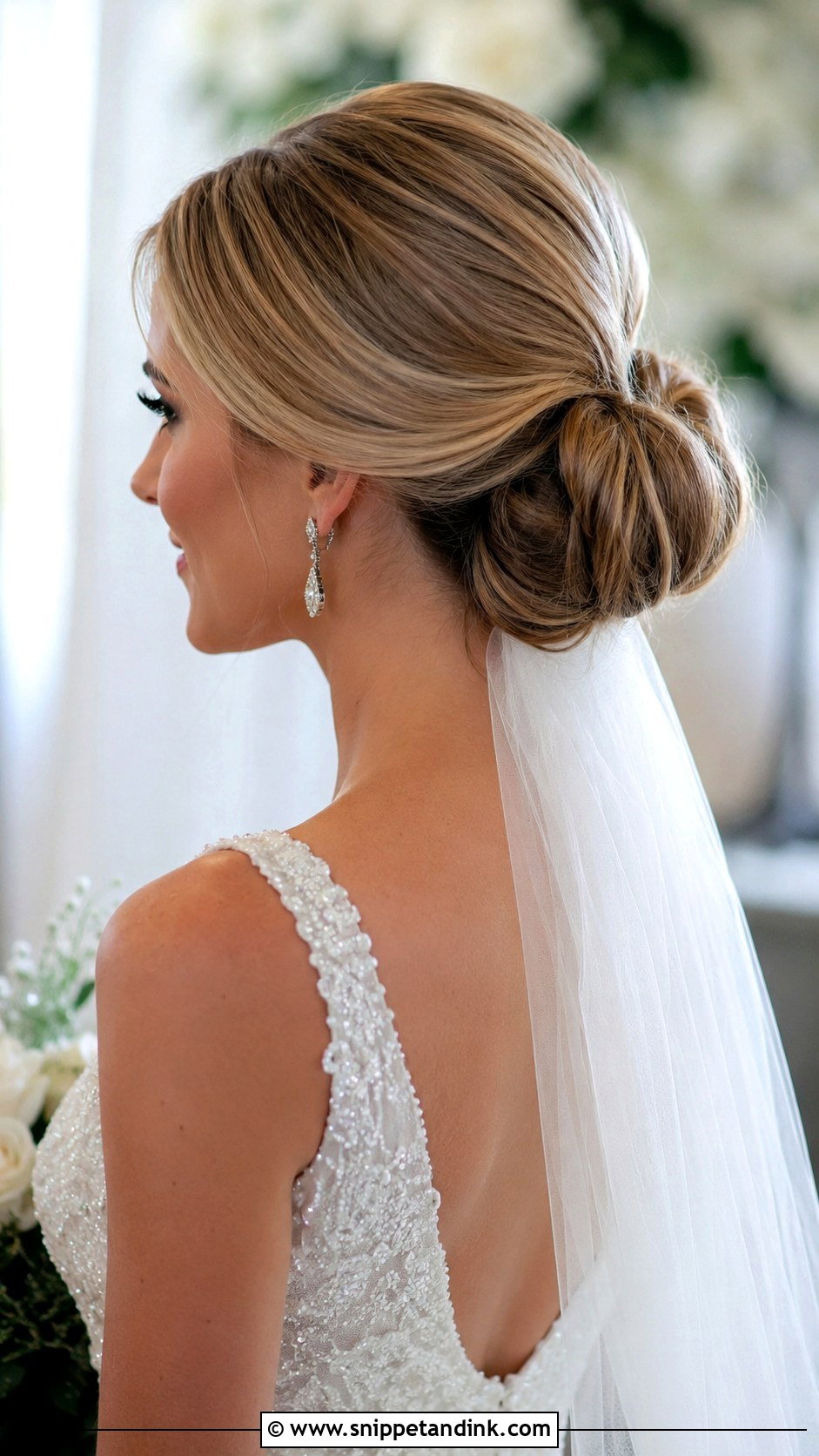
This is where the low bun earns its reputation. Sitting at the nape, it gives a veil comb something solid to grip, so the veil hangs from the right place and doesn’t pull at the crown. I usually slide the comb into the top of the bun, teeth facing down and into the pinned structure, which holds a cathedral length just as well as a short birdcage. When the veil comes off after the ceremony, the hair underneath is still complete for the reception. If you want a jeweled comb at the veil point, bring both pieces to your trial so I can place them together.
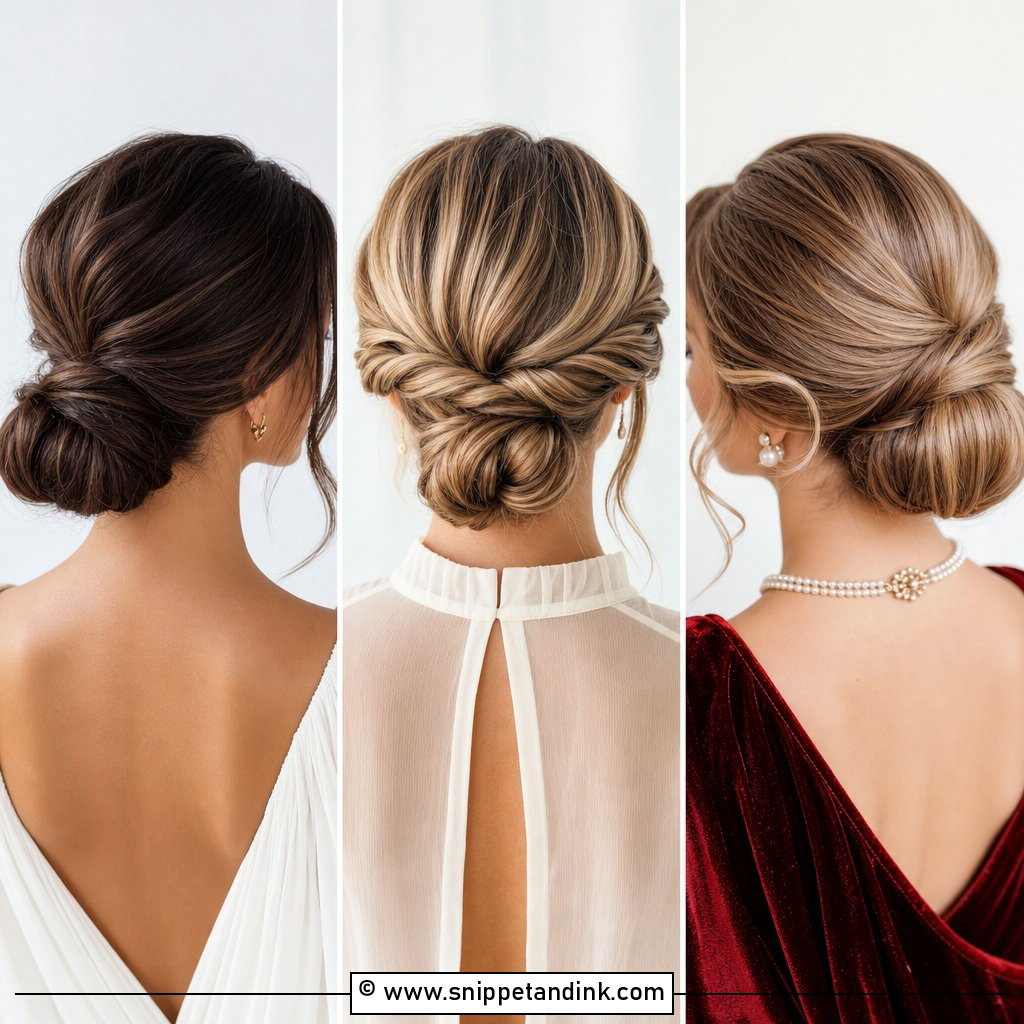
7. Twisted Low Bun
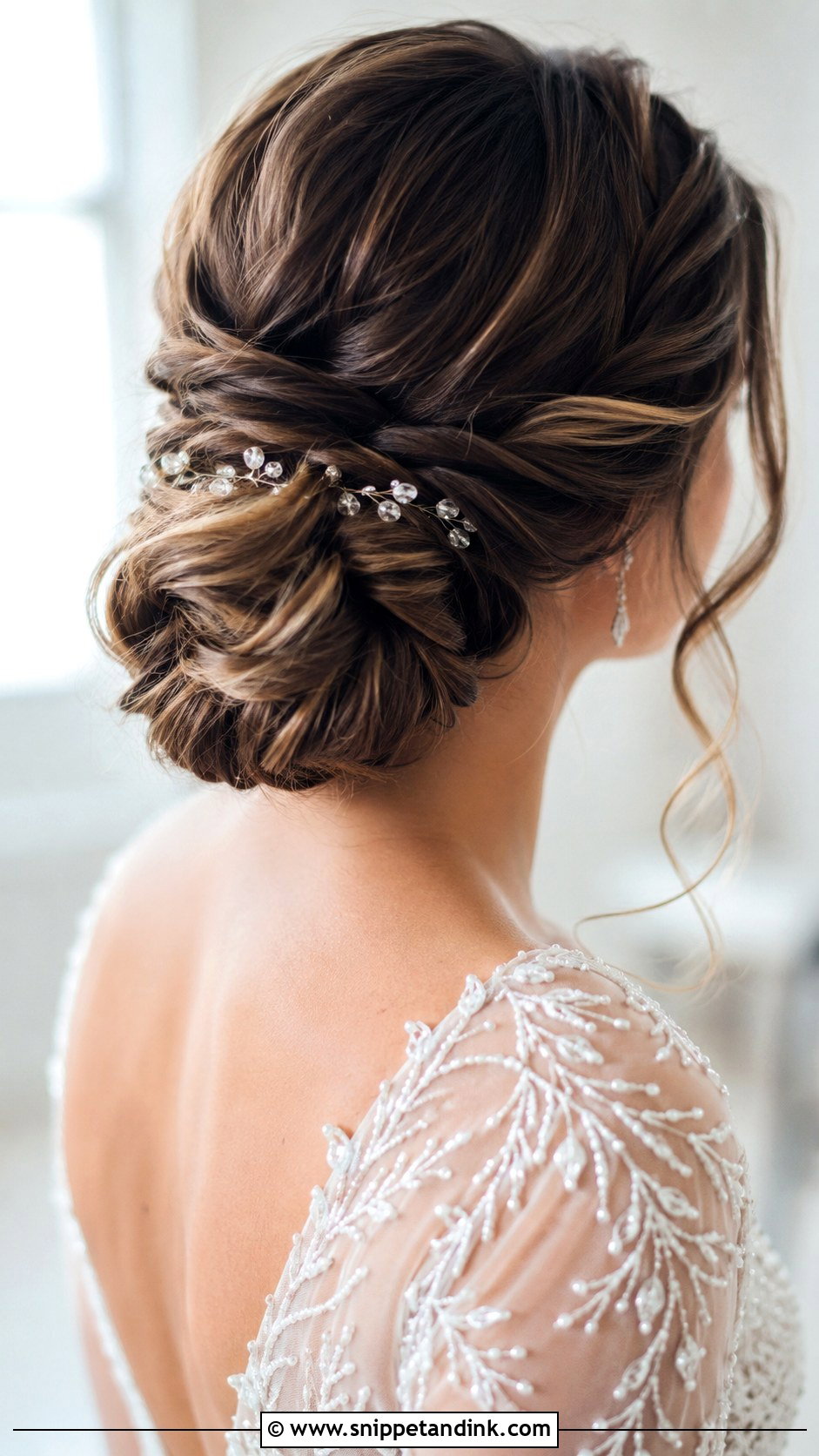
Rope twists give texture without the commitment of full braids. I twist sections and wrap them into the bun, which creates ridges that catch the light in photos. It needs medium to long hair, and twists unravel easily on very straight, slippery hair, so I set them with pins hidden inside each twist rather than just around the outside. Keep it smooth or tug it looser, then tuck a few pearl pins or tiny crystals into the grooves.
8. Low Chignon Bun
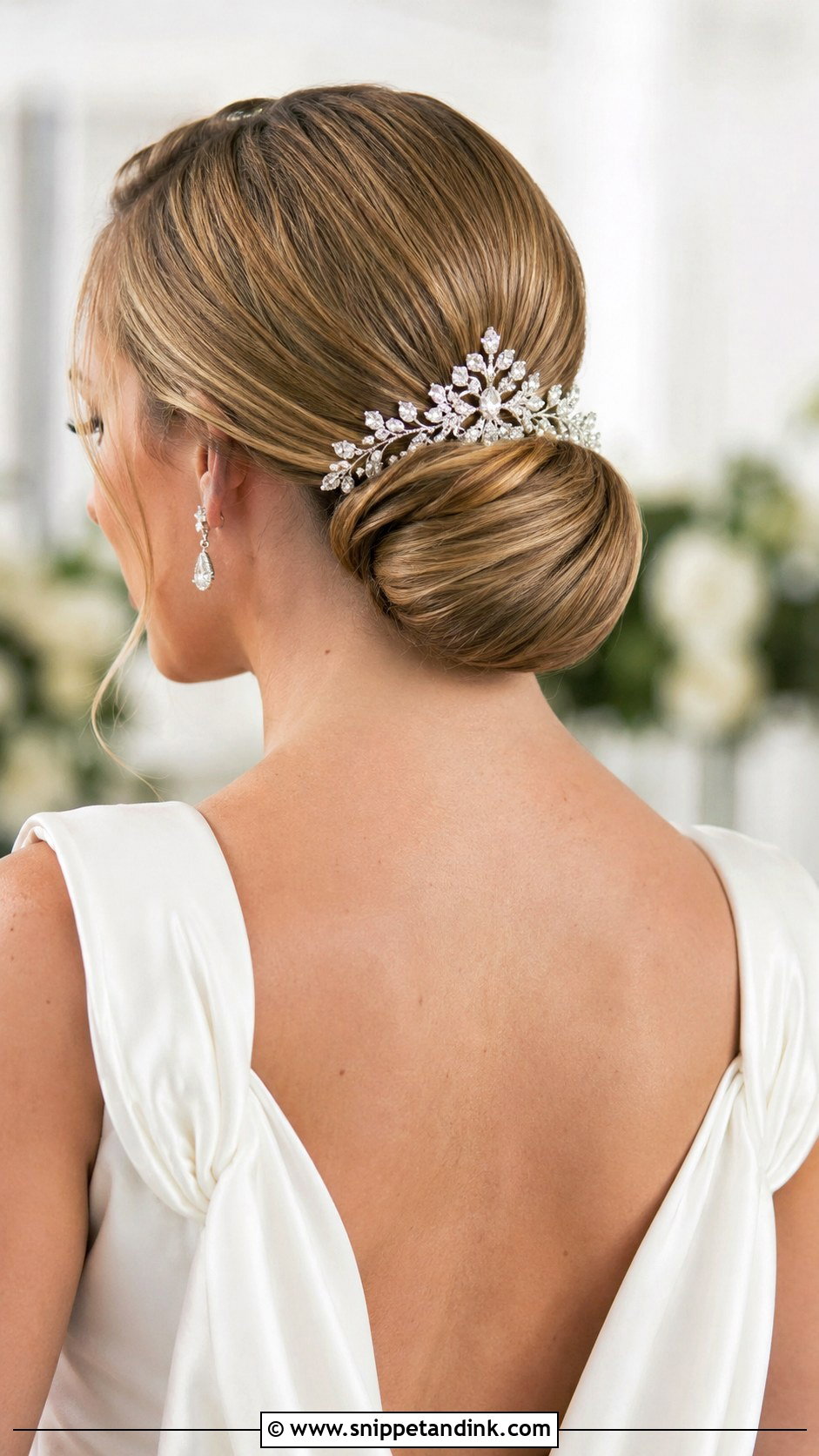
The chignon is the classic ballet knot, a smooth, rounded shape tucked neatly at the nape. Because it’s so clean, the shape of the knot itself matters, and for thinner hair I often build it over a small padding or a hidden rolled section so it doesn’t look flat. Wear it sleek or with soft waves feeding in, and add a jeweled comb or a few hairpins for detail. It suits formal gowns, ballrooms and any bride who wants a style nobody will ever call dated.
9. Low Bun With Pearl Pins
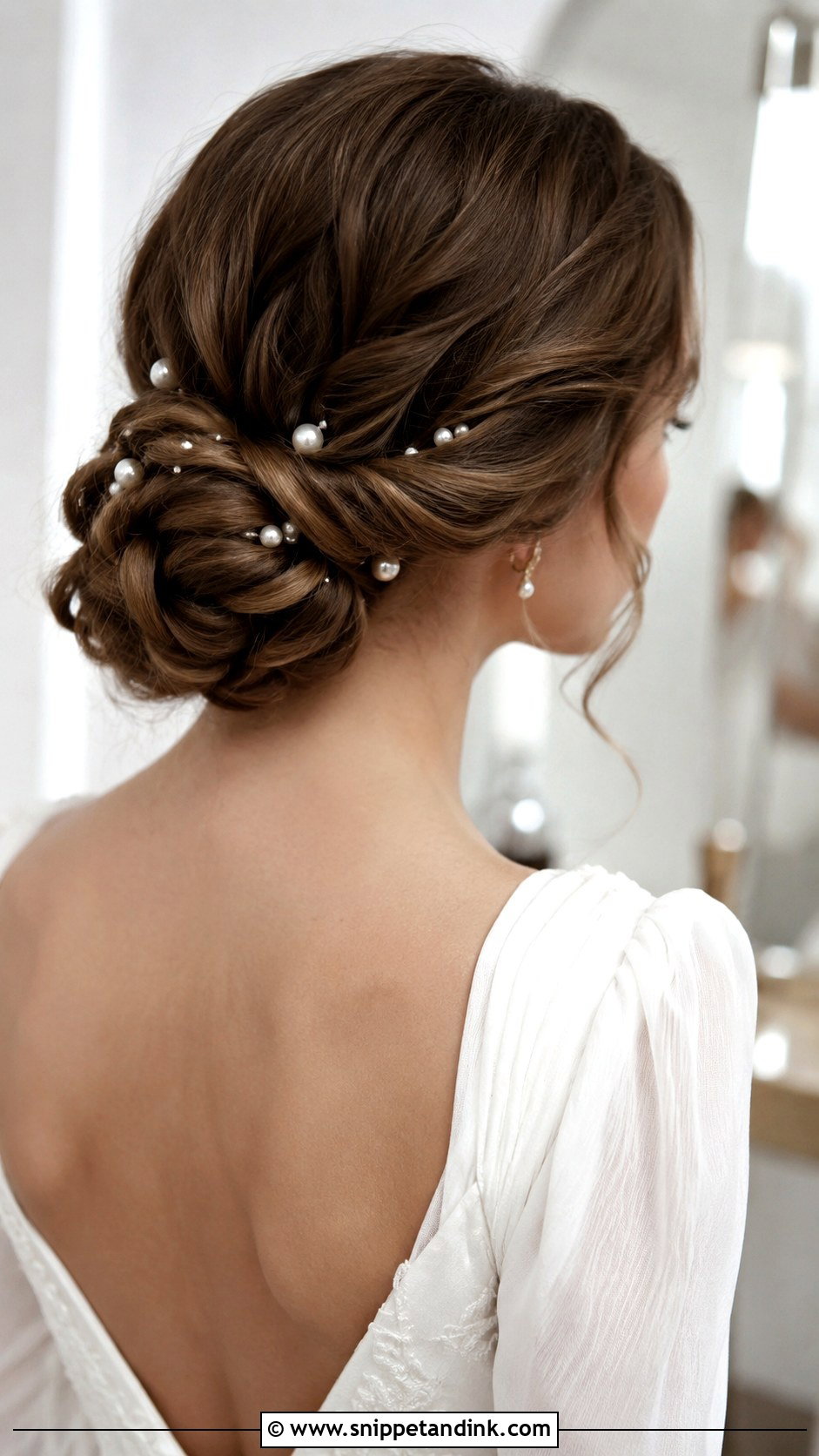
Pearl pins add subtle shine without the glare that crystals can give in flash photography. I either cluster them along one side or scatter them across the bun, and I always place them after the style is fully pinned and sprayed so they don’t shift. Pearls suit almost every skin tone and gown, and they’re especially good with classic and vintage themes. Make sure they’re on proper bobby pins or U-pins. Decorative pins with smooth shafts tend to slide out by the end of the night.
10. Low Bun With Flowers
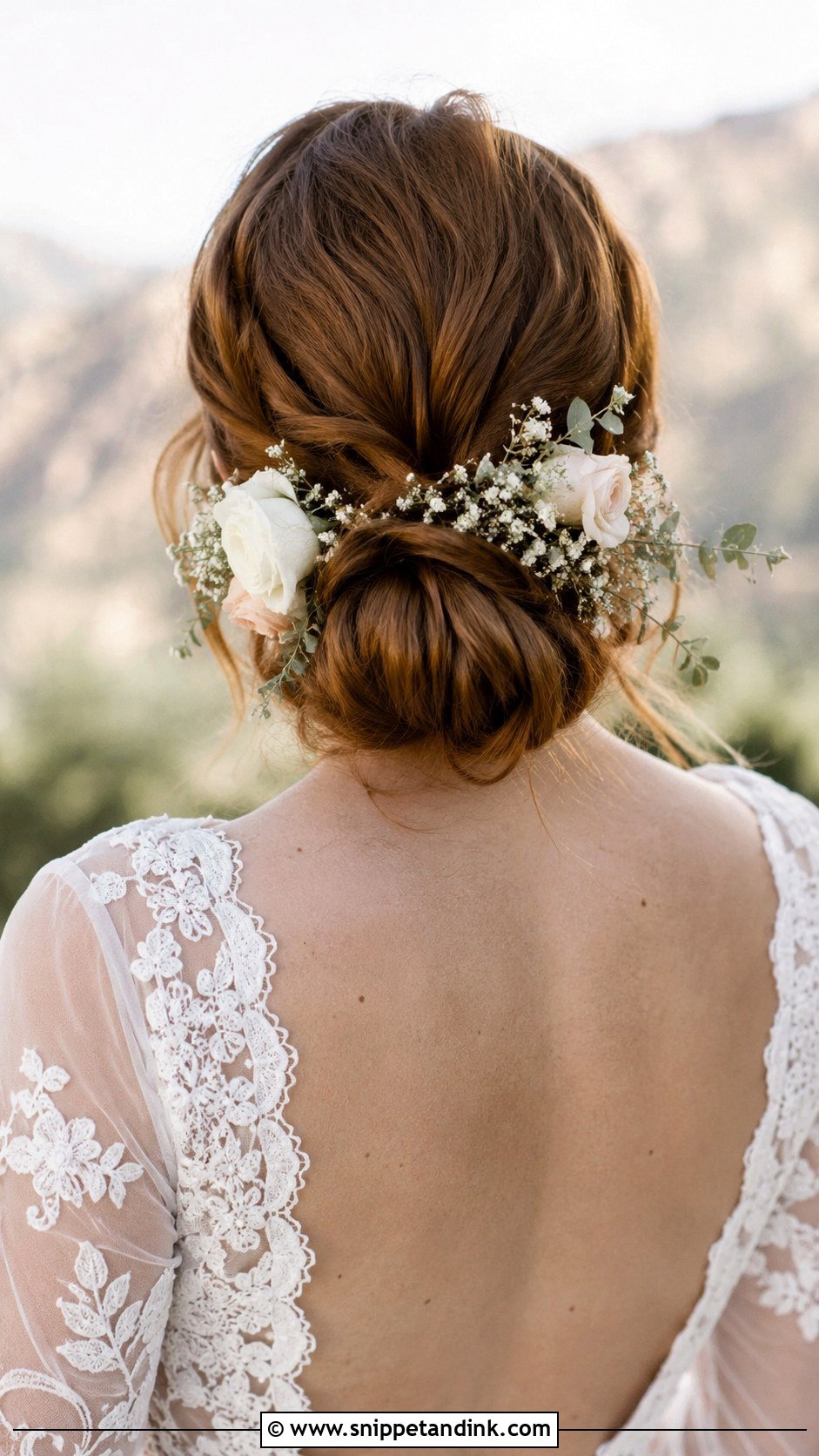
Fresh flowers tucked around the base of the bun or woven through it bring garden charm, especially in spring and summer. The flowers you choose need care: roses and spray roses hold up well, while delicate blooms wilt quickly out of water. Ask your florist to wire and tape the stems, and keep them chilled until I place them. Matching a few blooms to your bouquet ties the look together, and good faux flowers are worth considering if the day is hot and long.
11. Messy Low Bun
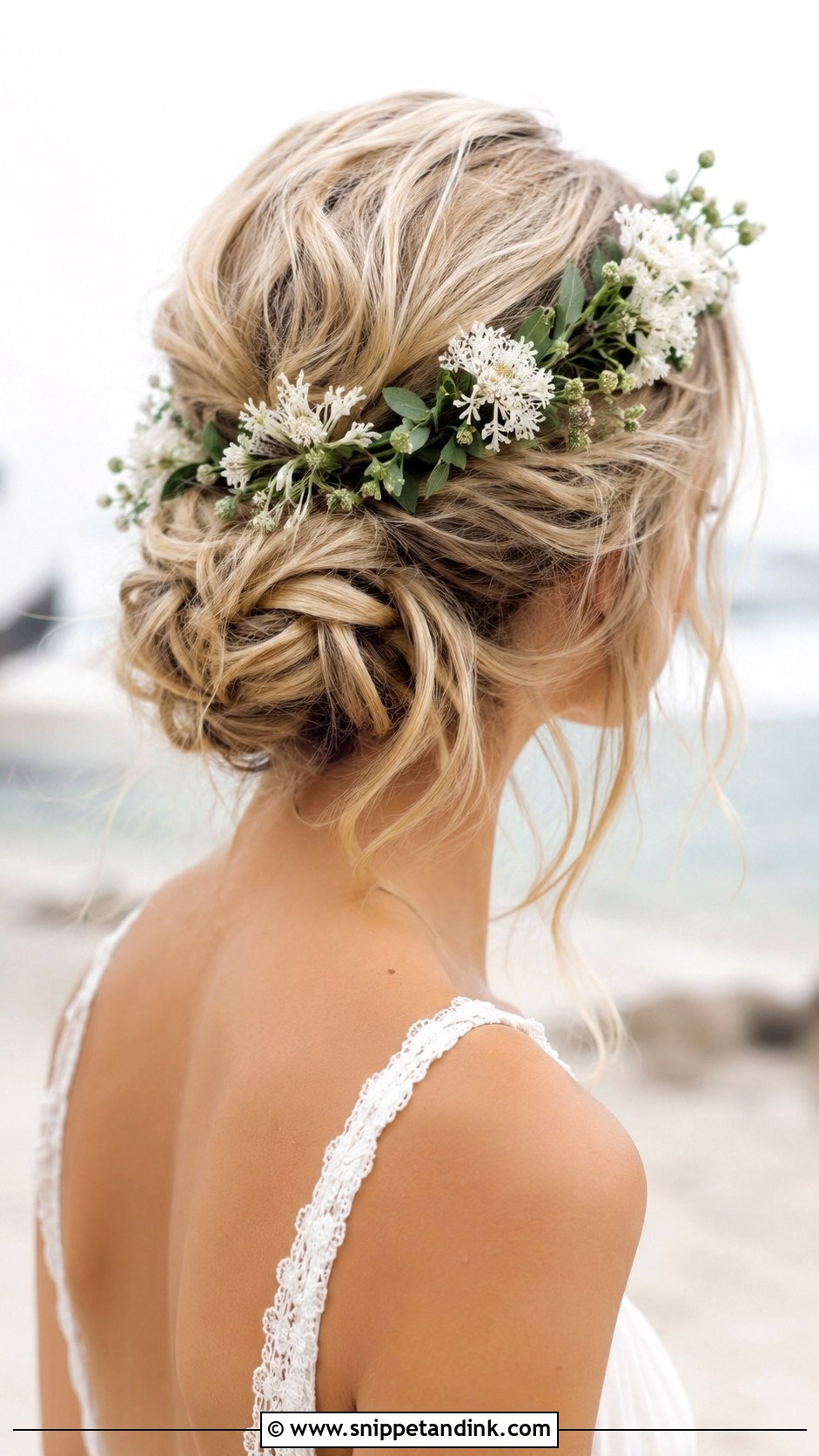
Soft volume, loose strands, a lived-in texture. It’s meant to look casual, but it’s the one I spend the most time on, because it has to look relaxed in photos at ten in the evening and not just collapsed. I build a secure base first, then pull out pieces deliberately. It fits beach weddings and boho dresses, and it pairs nicely with a flower crown or small pins. If your hair is very fine and straight, expect me to use more texture product to get that grip.
12. Sleek Low Bun With Side Part
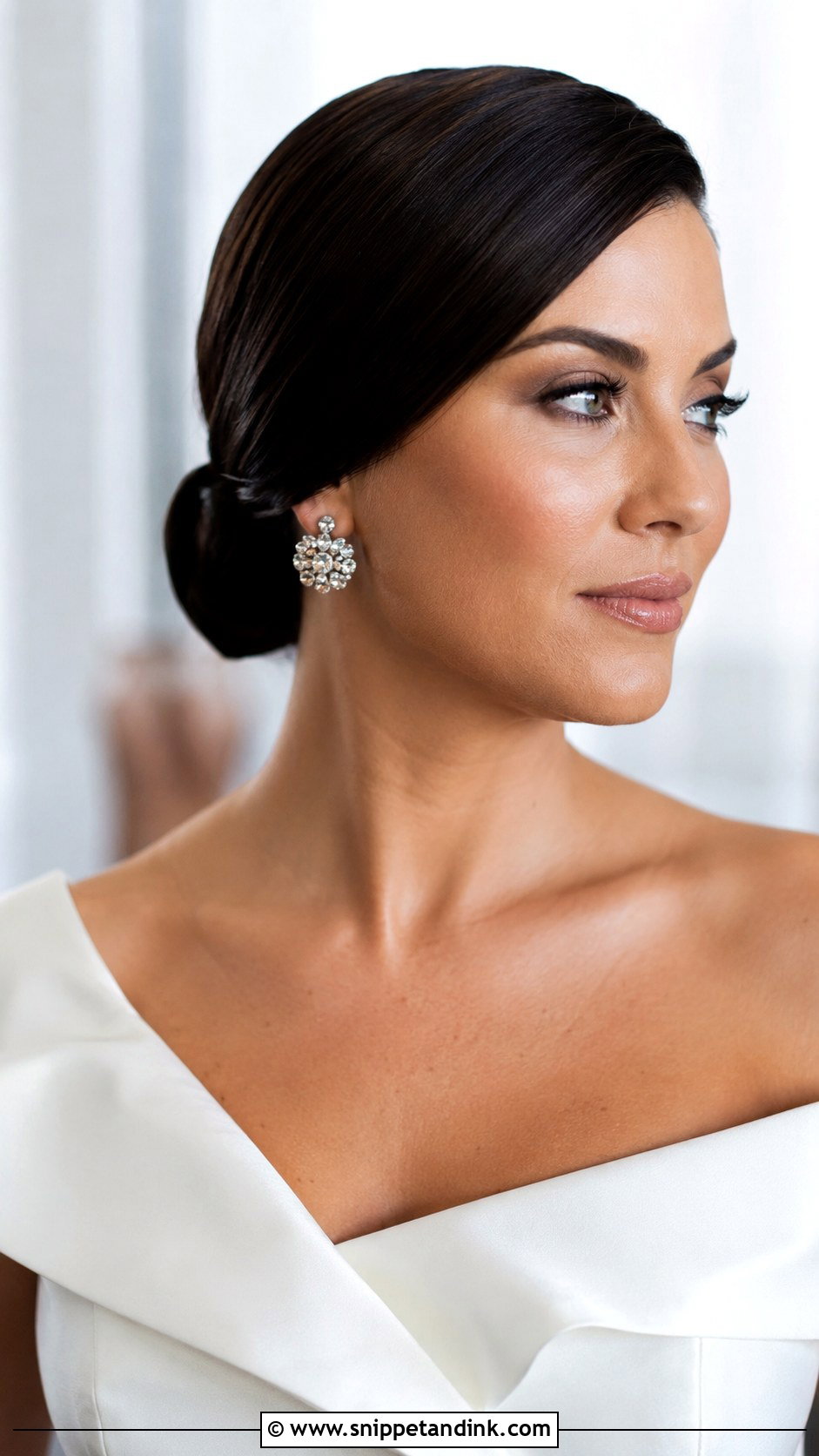
A deep side part and a glossy knot at the nape give an Old Hollywood feel. The sweep draws attention across the eyes and cheekbones, and the asymmetry flatters most faces. The polish depends on prep, so I blow-dry the hair completely smooth first and work in a little shine spray at the end, not the start. Structured gowns and bold jewelry suit it well. Be aware that the deep sweep across the forehead can look heavy on a very small face.
13. Low Bun With Hair Vine
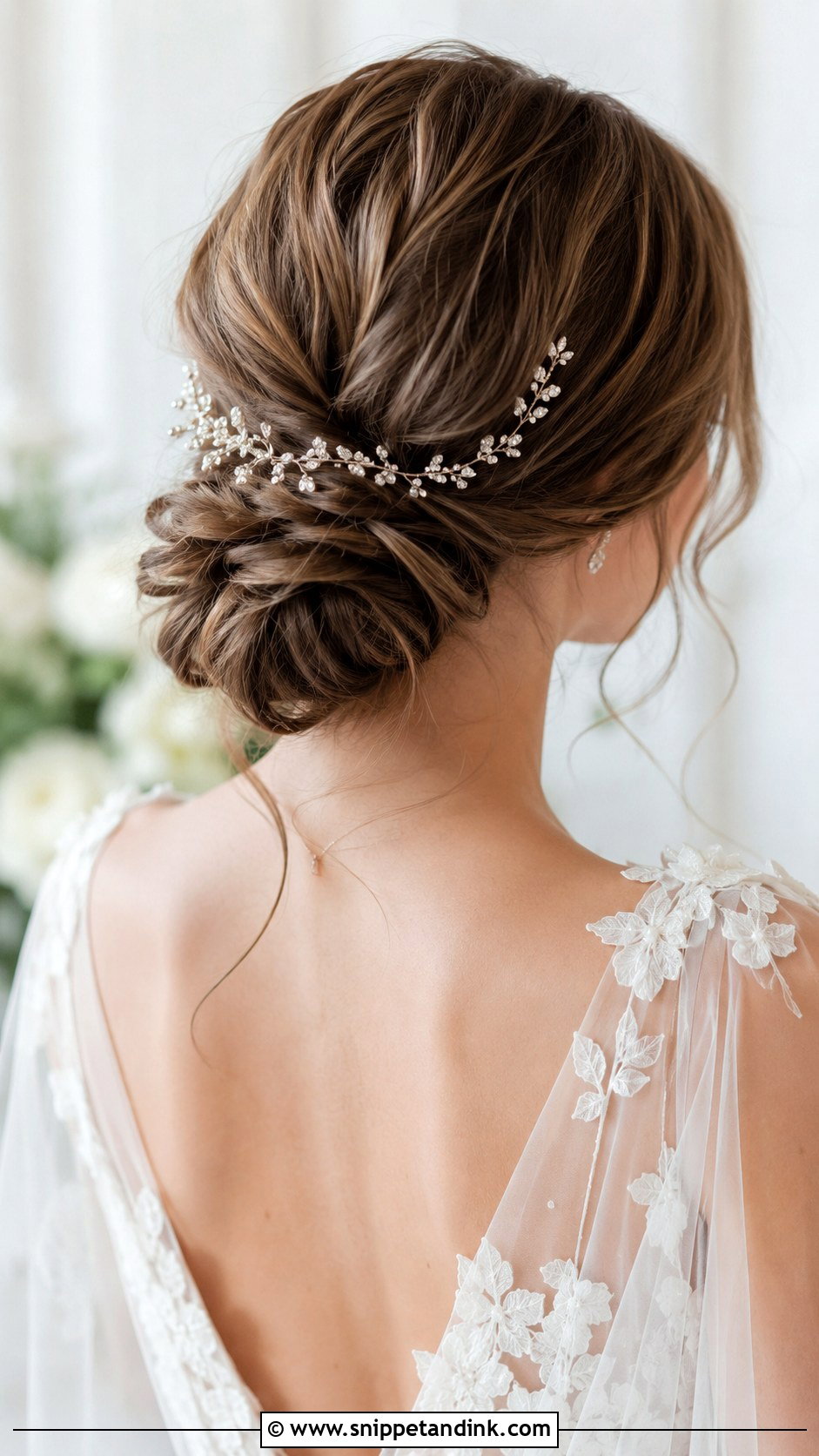
A hair vine is a length of fine wire set with crystals, pearls or leaves, which I bend around the base of the bun or weave through the loops. Because it’s flexible, it follows the shape of the bun rather than sitting on top like a clip. Choose a minimal or art deco style depending on your dress. I secure it with small pins at both ends and every few inches along the length, otherwise it lifts at the edges when you turn your head.
14. Low Bun With Curtain Bangs
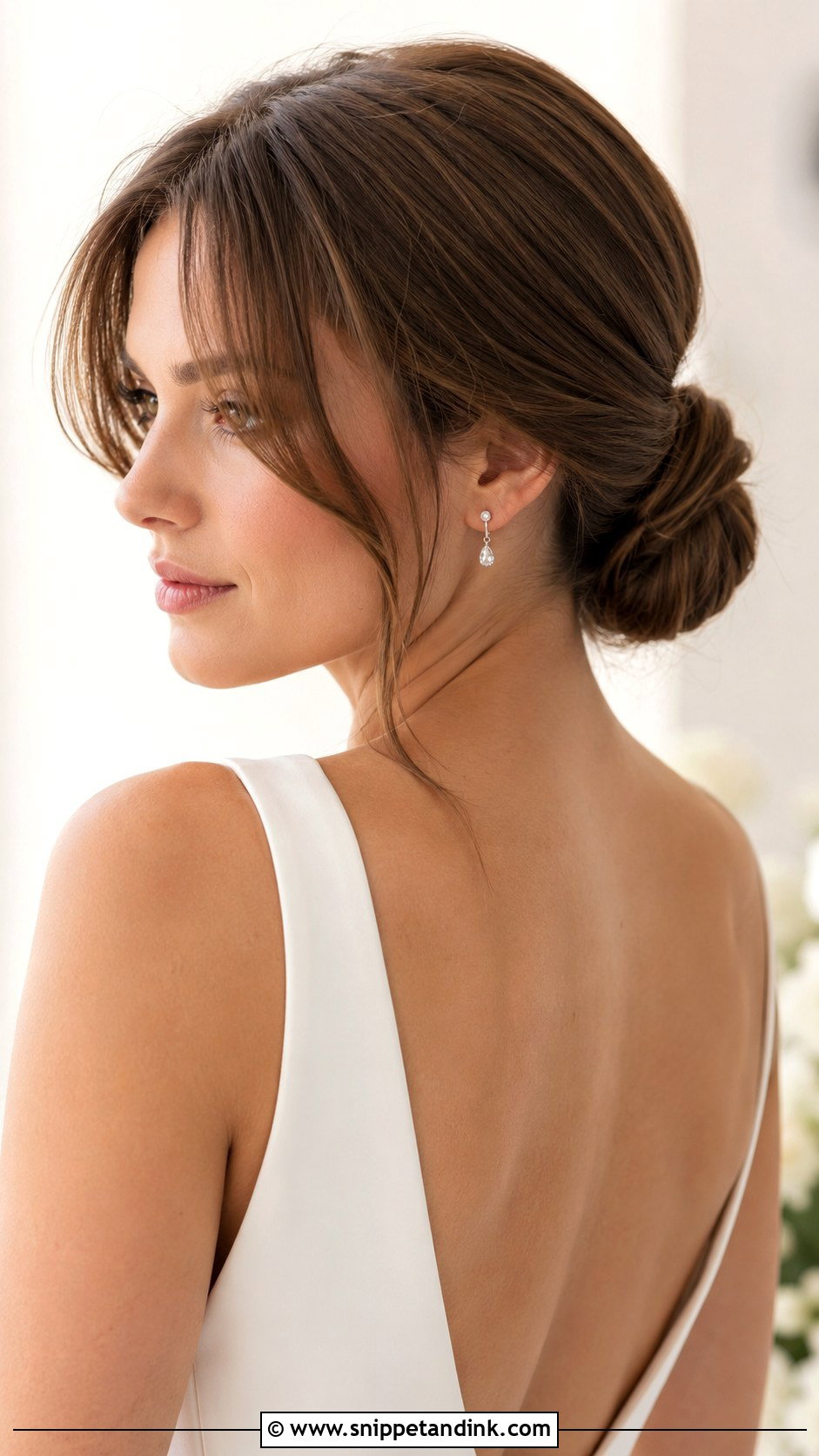
Curtain bangs frame your face and soften the polished bun behind them. They sweep to each side, drawing attention to the eyes and cheekbones, and they’re especially flattering on round and heart-shaped faces. If you don’t already have them, don’t cut them for the first time right before the wedding: give them a few weeks to settle into their natural fall. On the day I set them with a round brush and a little lift at the root so they don’t go flat by the evening.
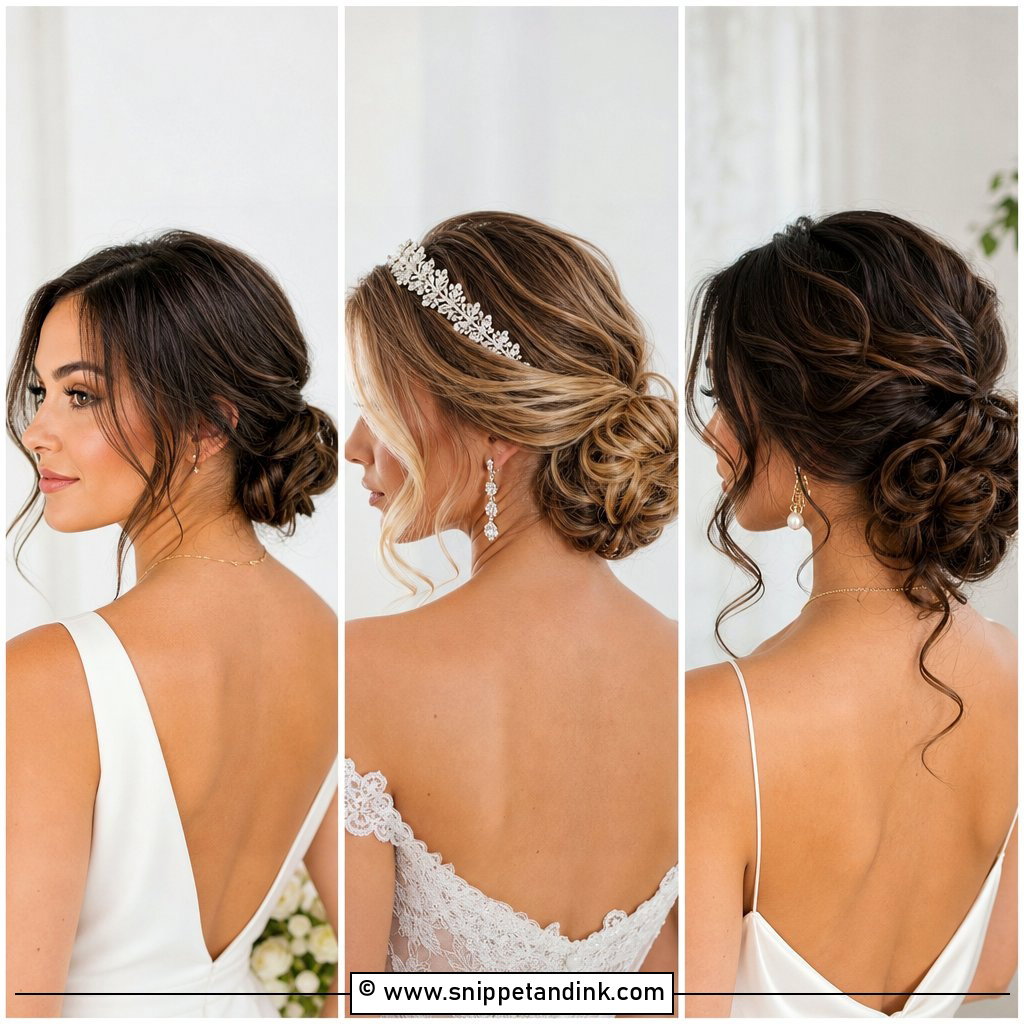
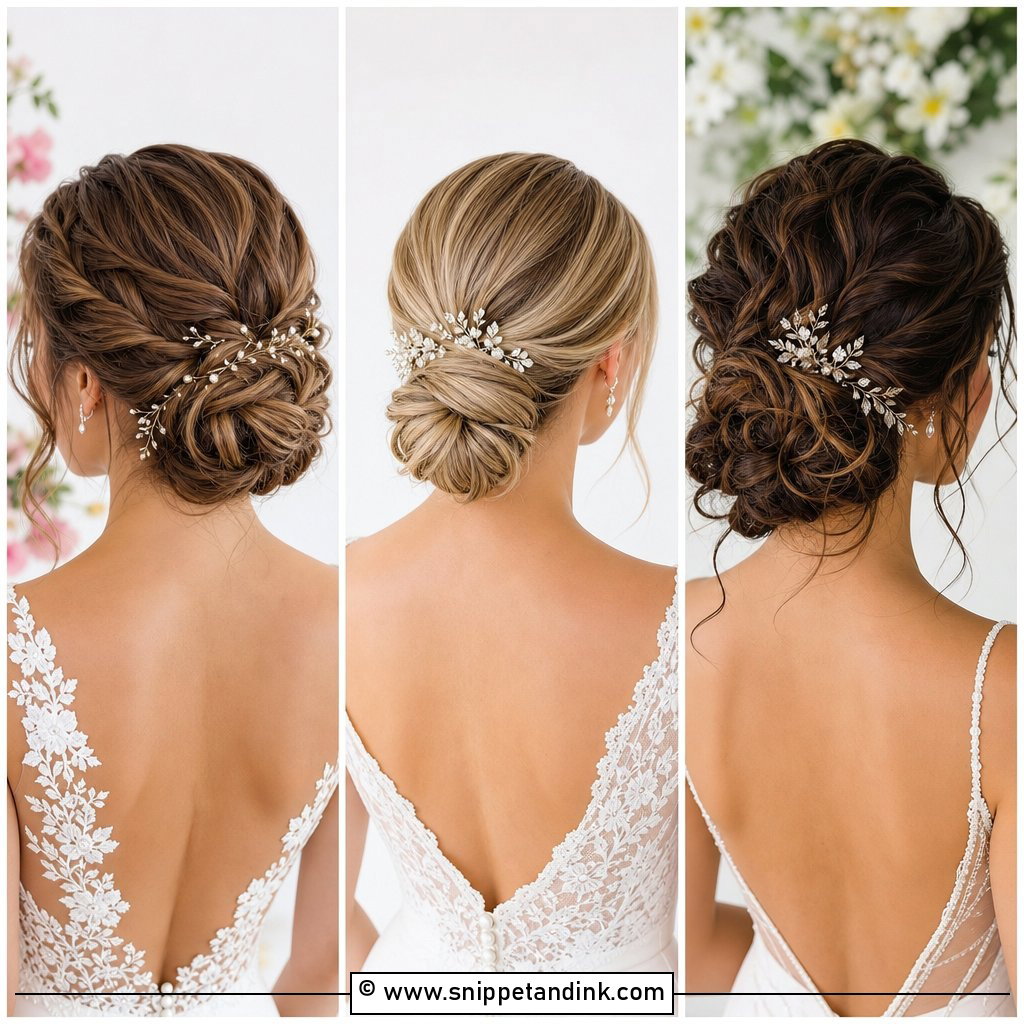
15. Vintage Low Bun
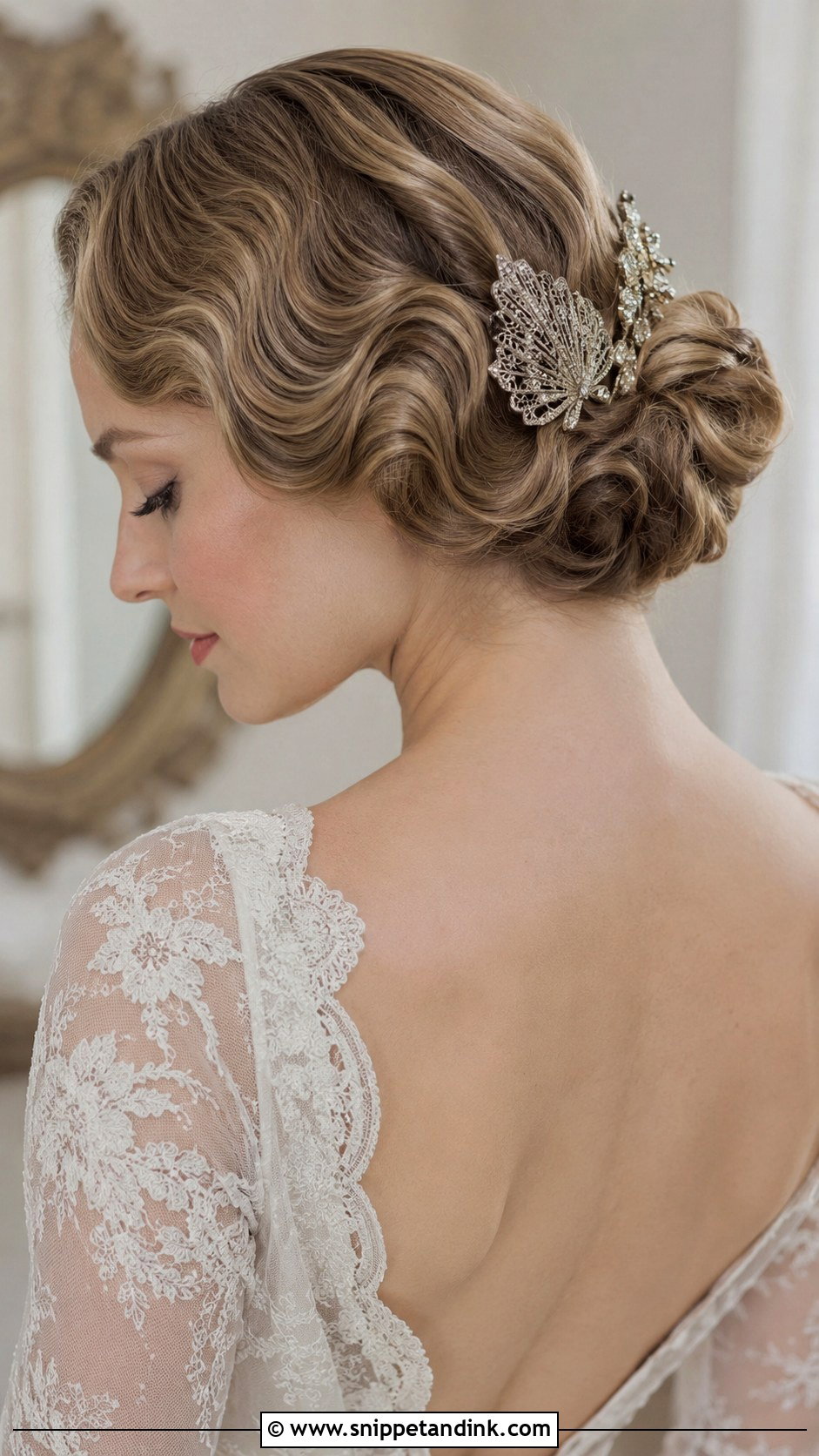
A vintage low bun draws on earlier decades with soft finger waves, sculpted curves and a smooth, rounded knot. The waves need a firm set, so I curl, pin and let them cool fully before brushing them into shape, then clip them in place while they set. Art deco accessories, jeweled combs or birdcage veils complete the look. It works with vintage gowns and themed weddings, though very curly or coarse hair needs more time and heat to hold sculpted waves.
16. Low Bun With Tiara
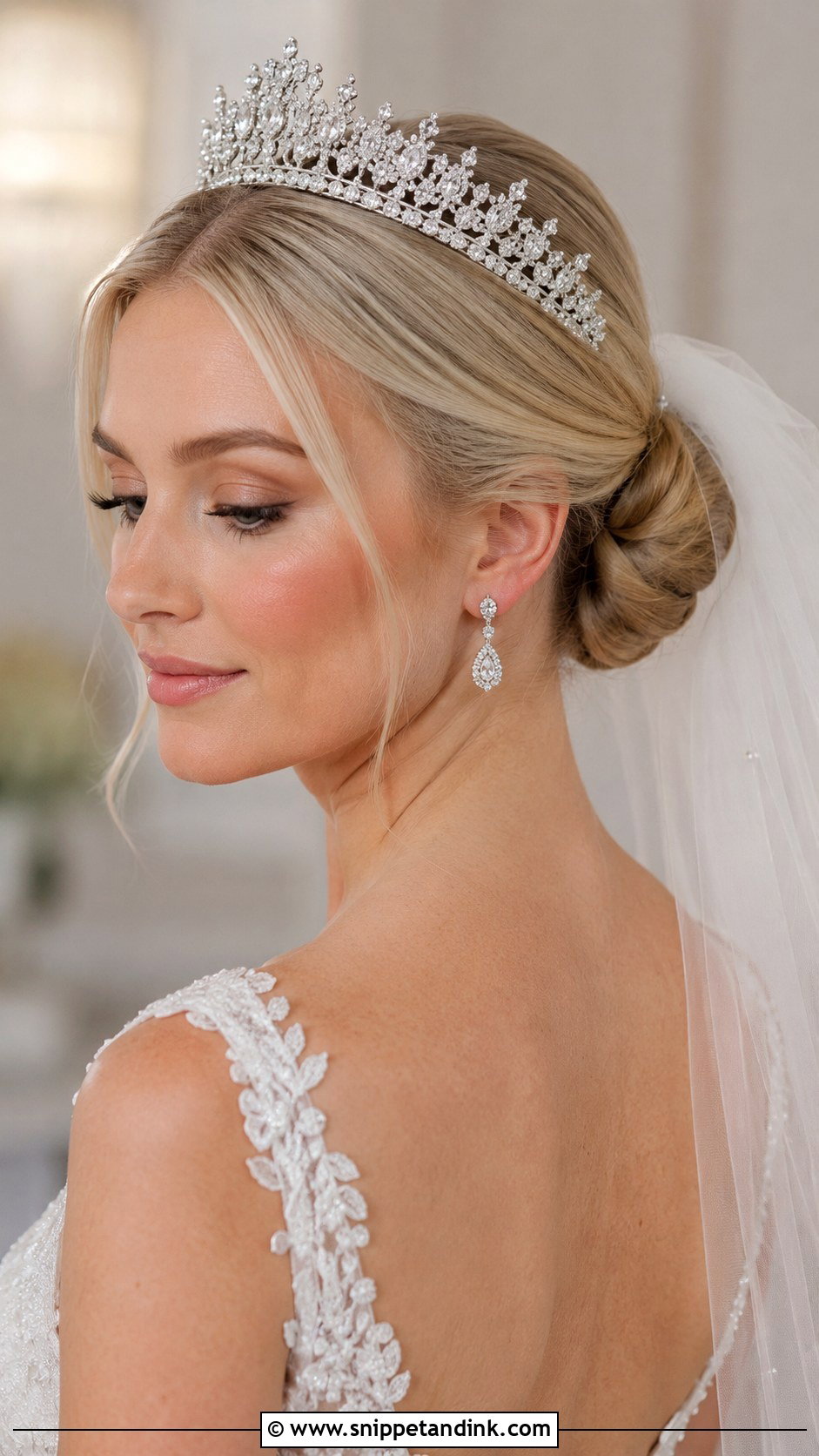
A tiara needs a stable base, and a low bun gives exactly that, keeping the crown balanced instead of top-heavy. I always build some lift at the crown first so the tiara sits on hair rather than pressing flat against the scalp. A delicate band or a statement tiara both work, and a veil can sit just behind it. Bring it to your trial. Tiaras vary in fit and I need to anchor the combs or loops with pins through the hair. It’s the classic choice if you want a princess moment on your wedding day.
17. Low Bun With Headband
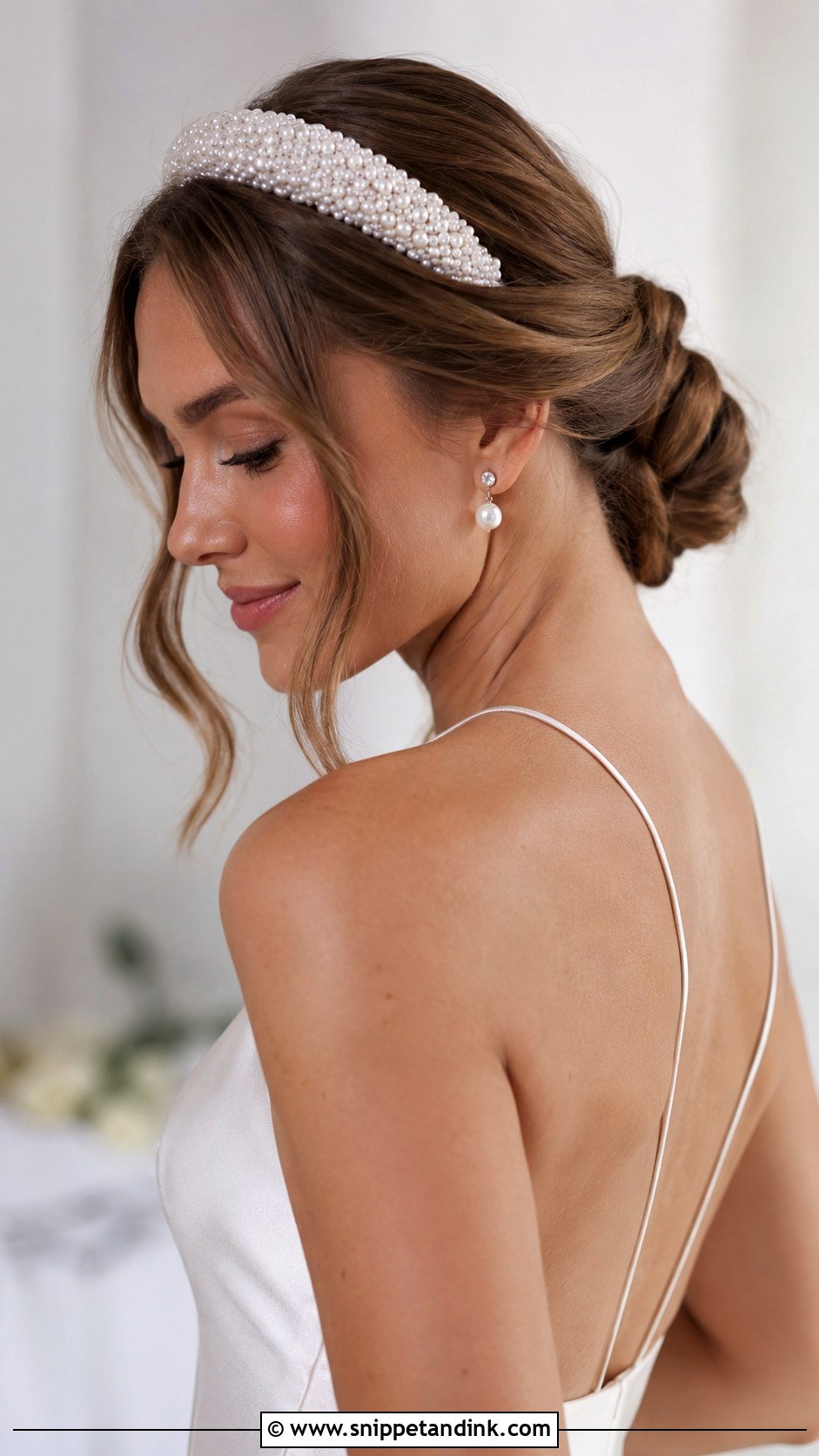
An embellished headband gives a low bun structure and catches flyaways at the hairline. Pearl, crystal and floral designs all suit it. Headbands can press uncomfortably behind the ears after a few hours, so wear yours for an afternoon before the wedding to see how it feels. I usually pin it in place at both sides just behind the ear so it doesn’t slide forward when you hug people.
18. Low Bun With Loose Curls
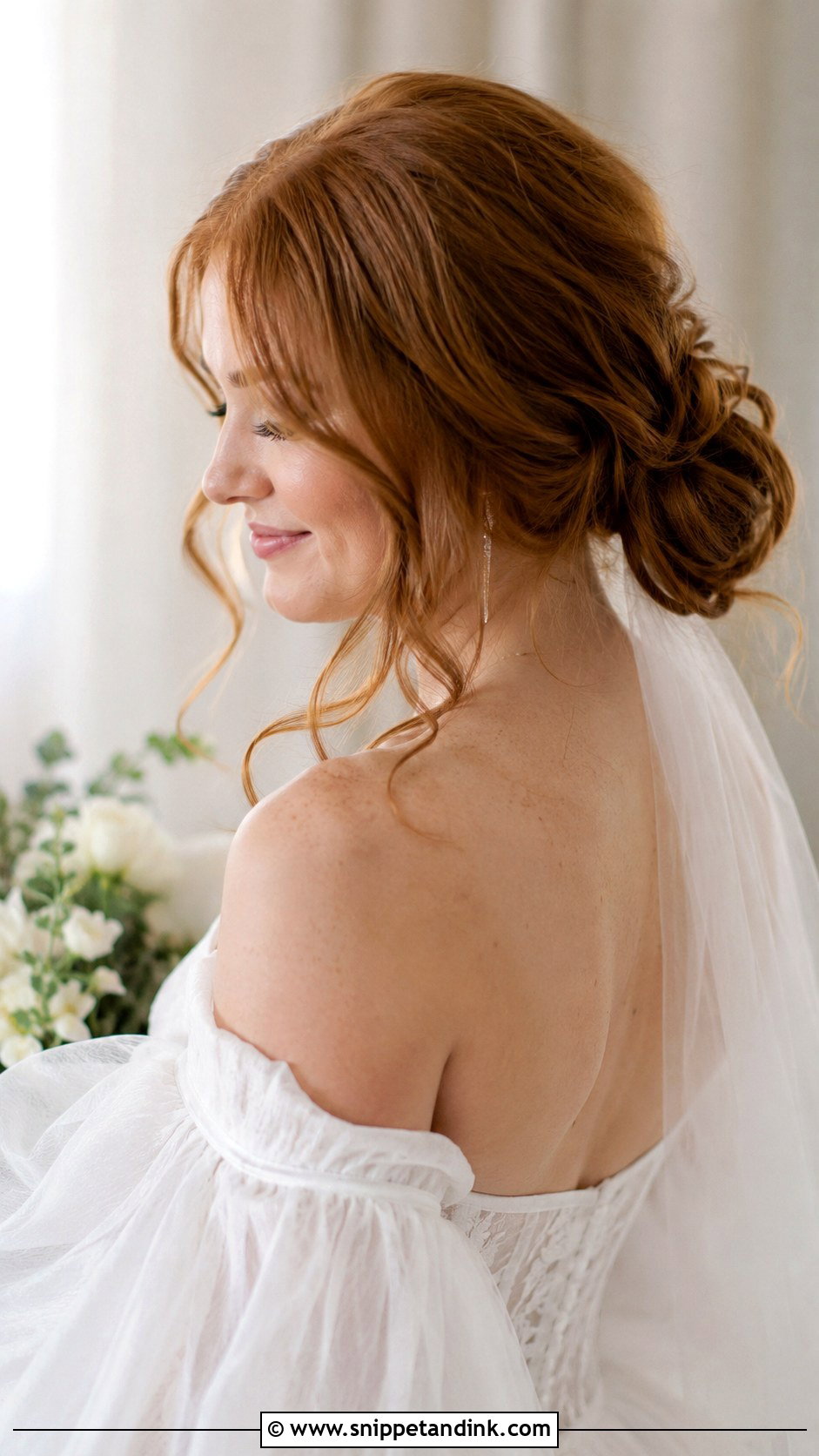
Loose curls around the face and a soft bun behind give a relaxed look with some movement. I curl the hair with a wand before pinning, then leave curled tendrils near the cheeks. In humid weather or for fine hair I set those curls tighter than you’d expect, since they relax and lengthen over the day. Flowing gowns and outdoor ceremonies suit it well.
19. Double Braided Low Bun
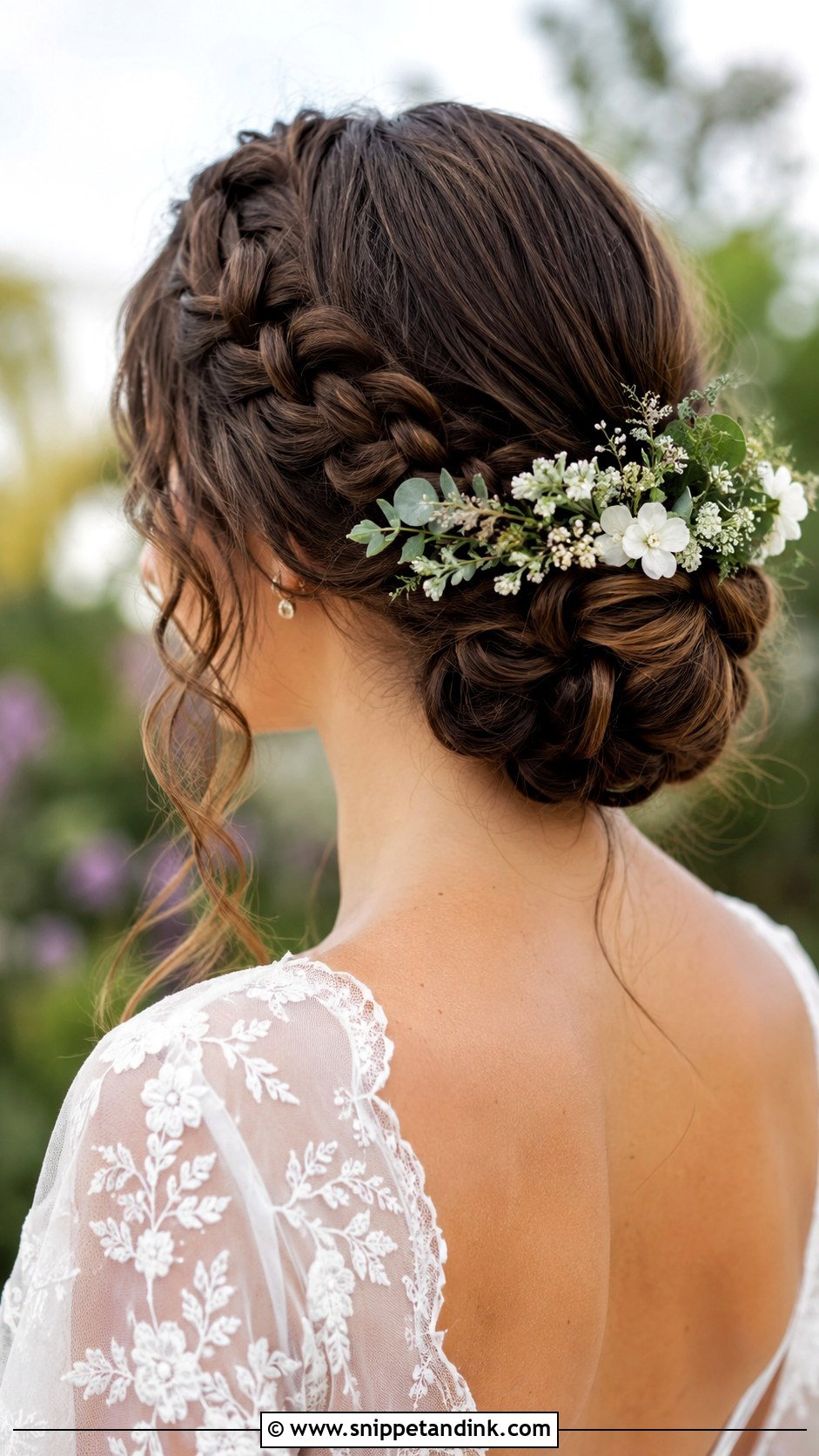
Two braids, one from each side, meet in a full bun at the nape for a lot of texture. Long, thick hair handles this best; shorter or finer hair can have trouble making both the braids and a substantial bun, so I may add a small clip-in piece for volume. Braids can be crisp or pulled loose, and flowers or pearl pins can be woven in. It fits boho, garden and outdoor weddings.
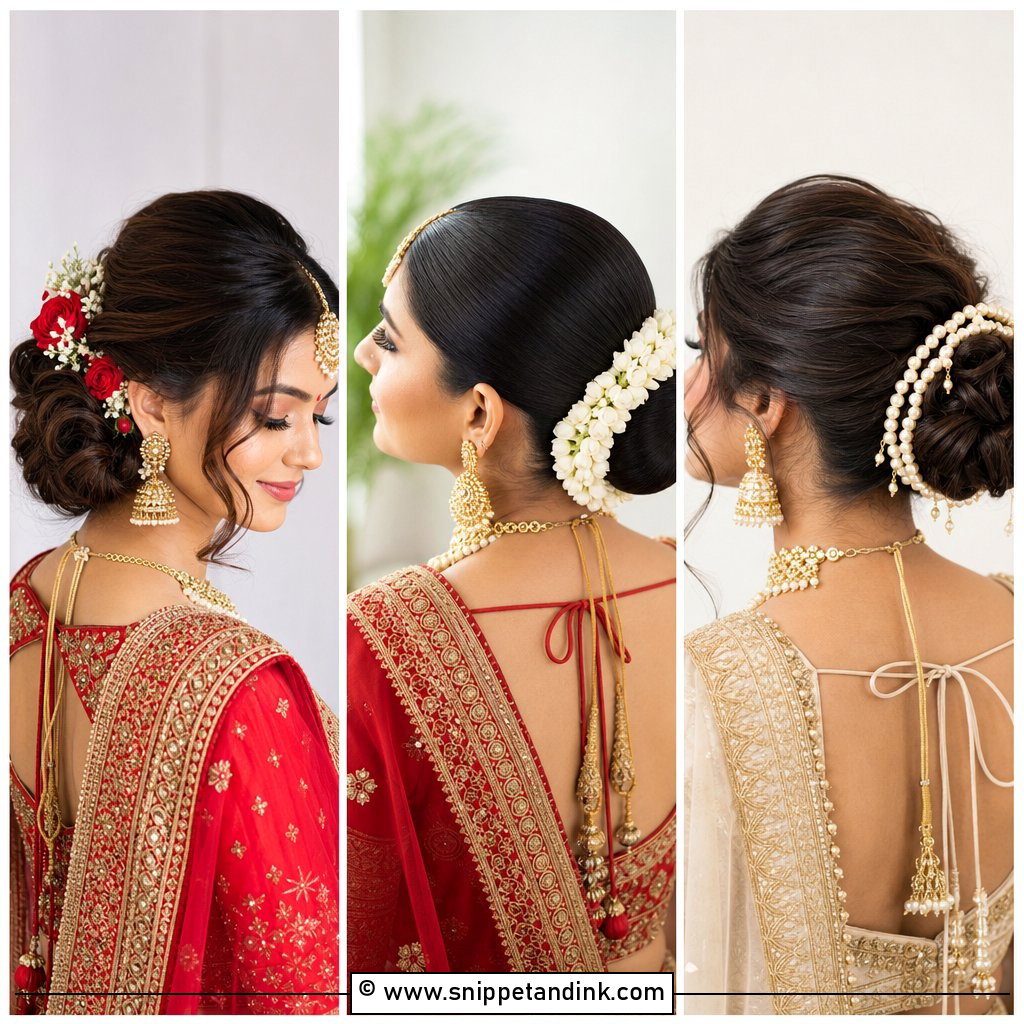

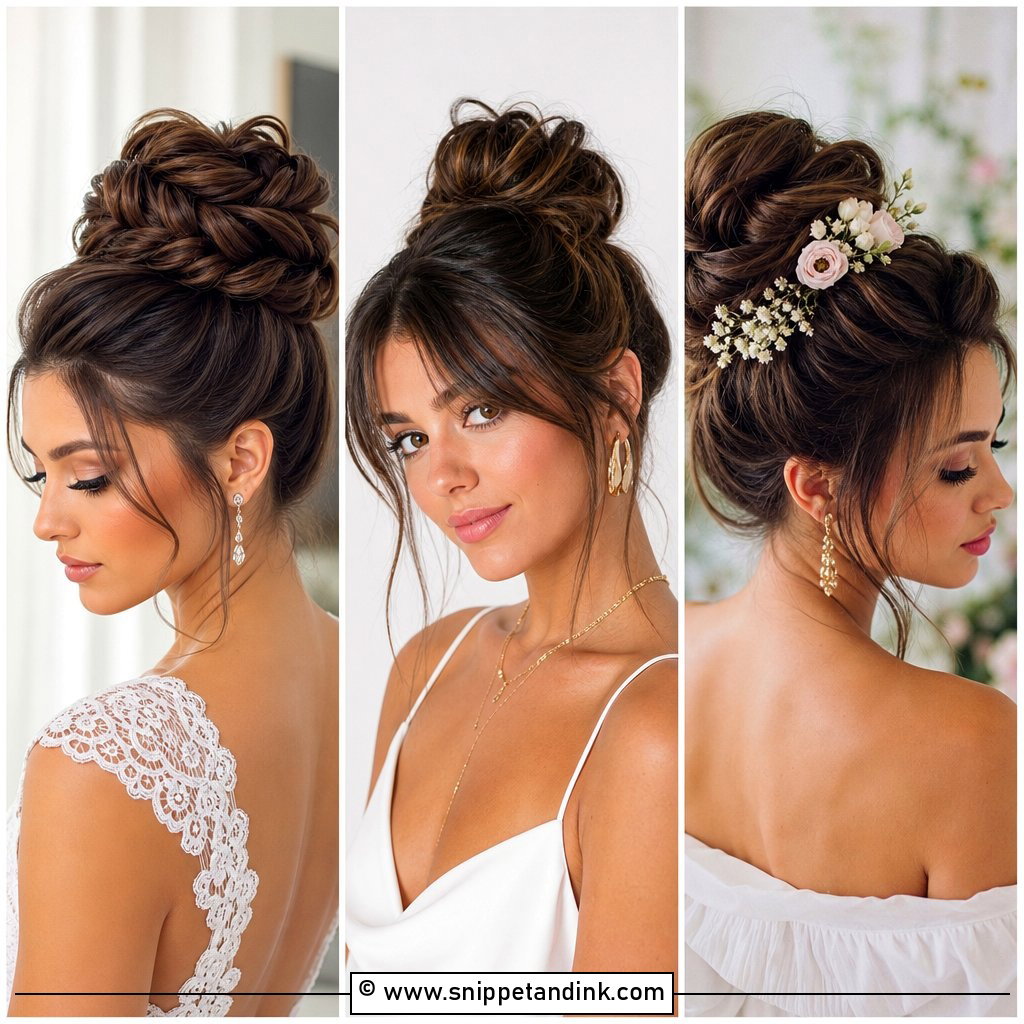
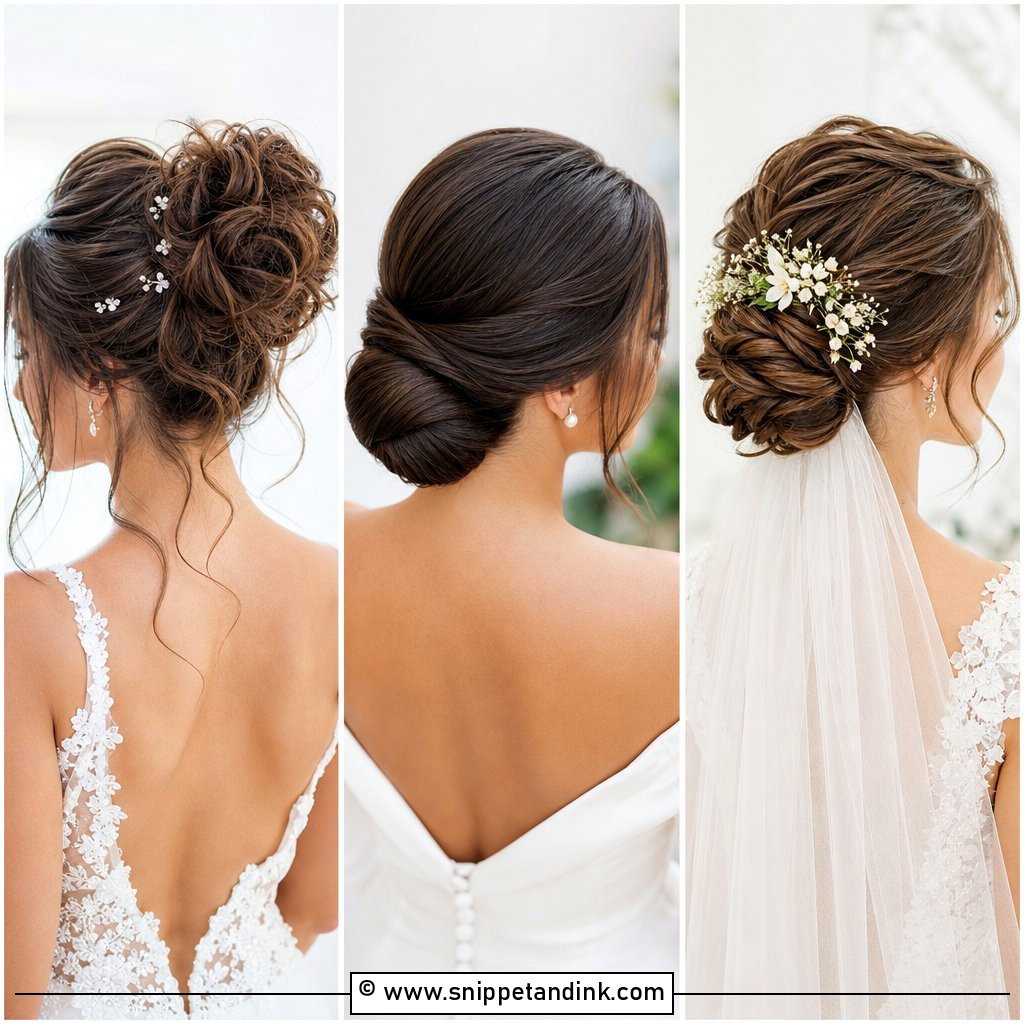
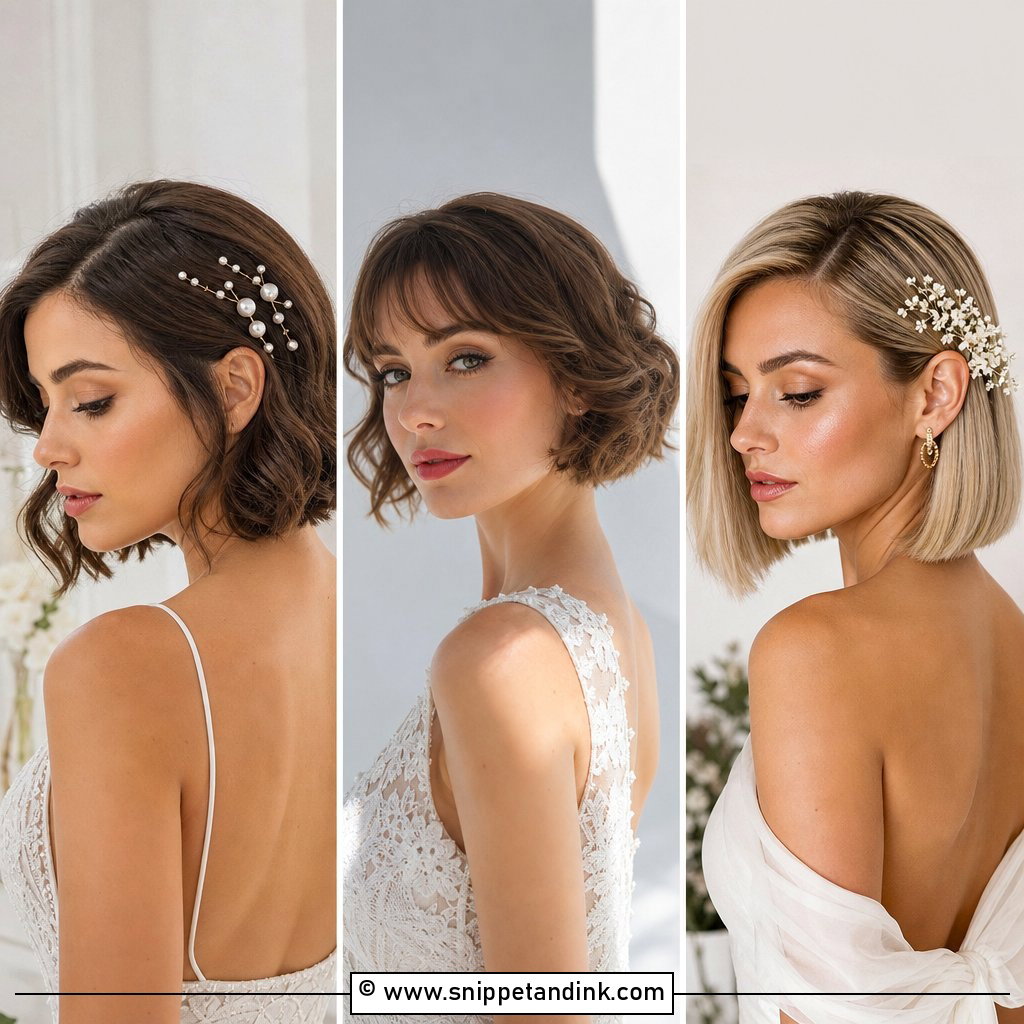
20. Low Bun With Crystal Accents
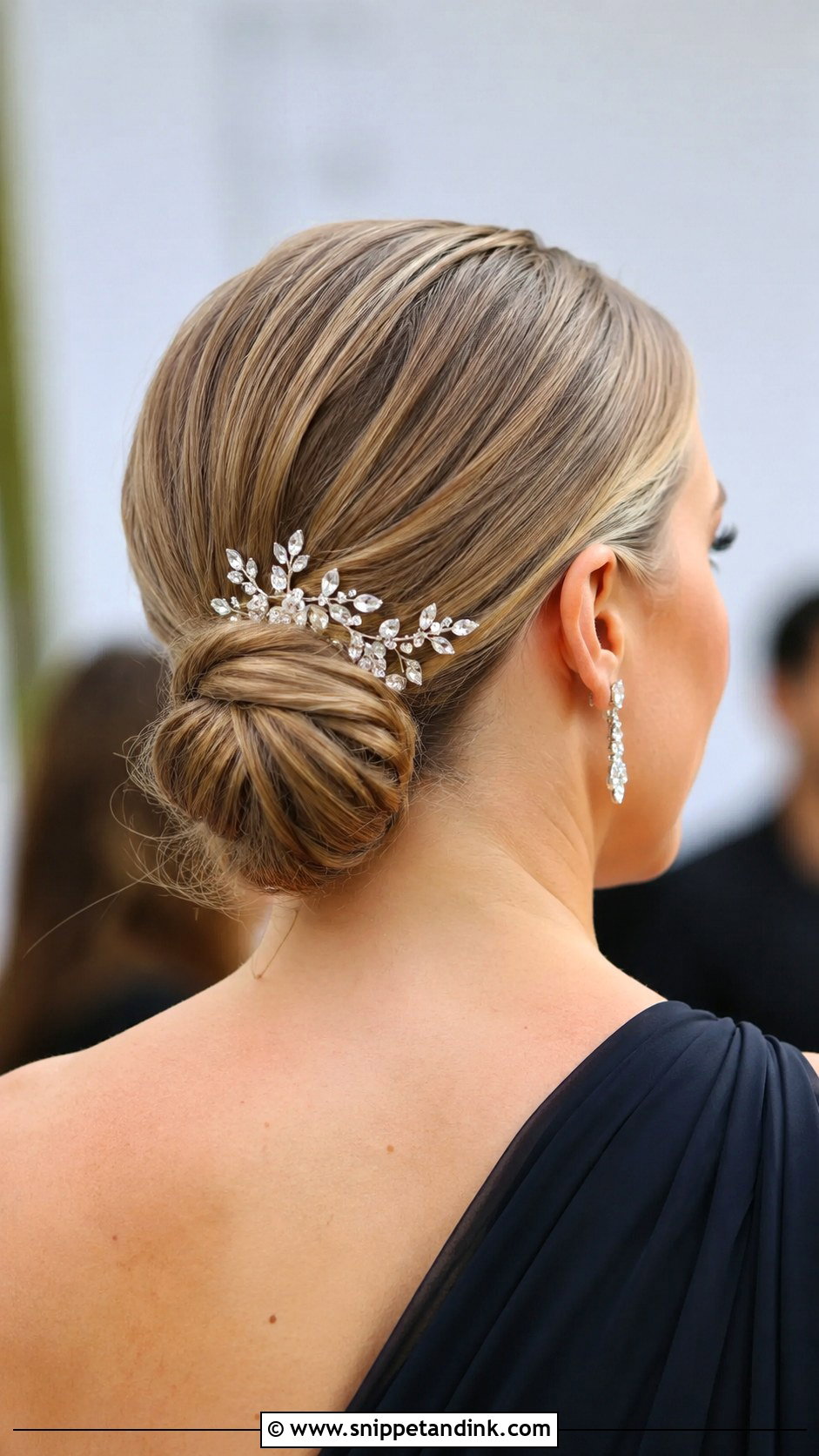
Small crystal pins tucked into the bun shimmer under evening lighting and in flash photography. I either scatter them or cluster them on one side, and I keep them away from the very top of the bun where they can poke through a veil. Evening weddings and formal celebrations suit them best. If you’re also wearing statement jewelry, a smaller number of crystals in the hair keeps everything from competing.
21. Knotted Low Bun
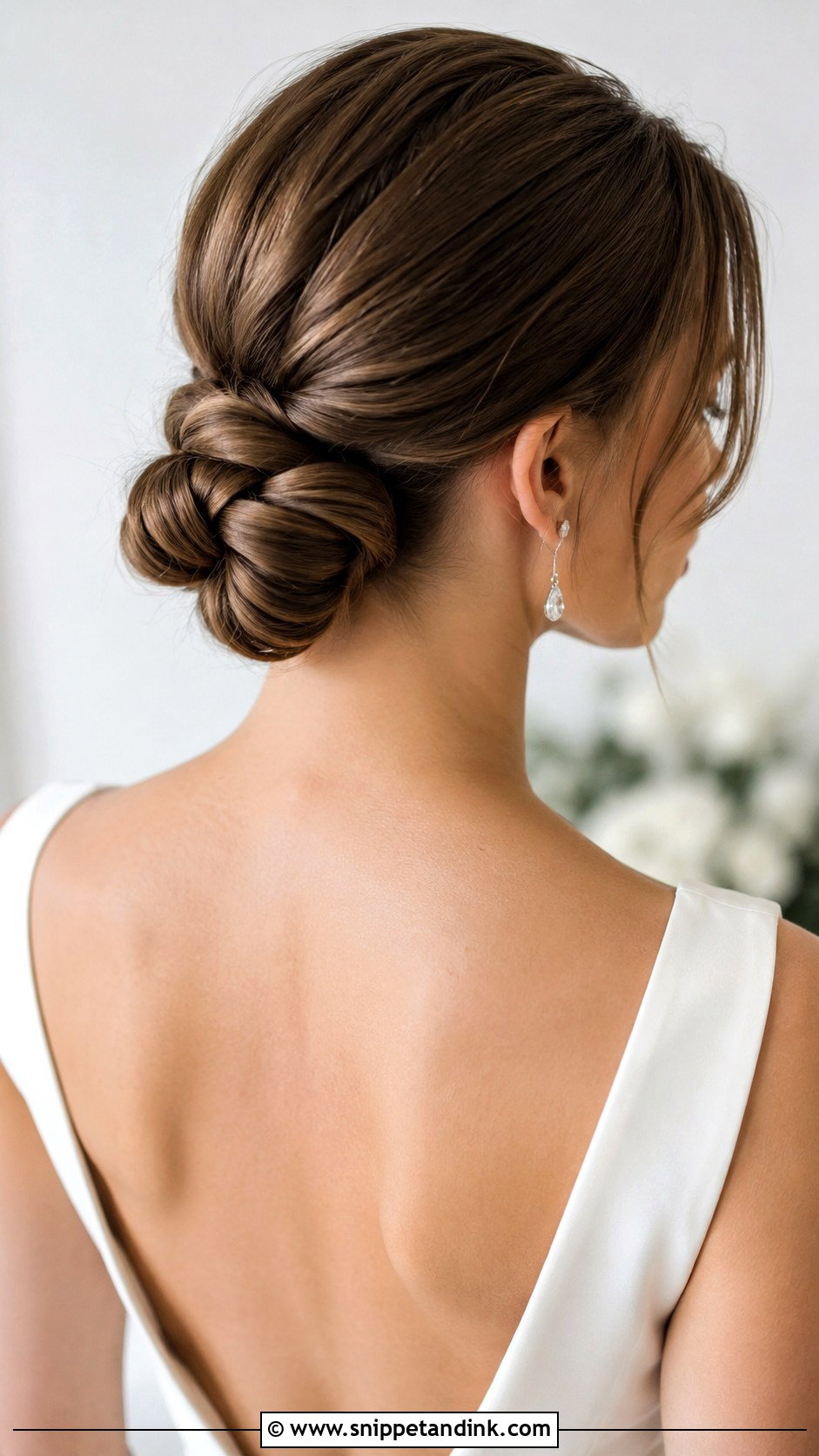
Sections of hair tied into knots and pinned together form a sculptural, textured bun. The knots provide detail on their own, so accessories are optional. This works best on medium-thickness hair; very fine hair makes small, flat knots, while very thick hair can make the shape too heavy. I pin every knot individually because they can slip loose. Simple earrings let the shape stand out.
22. Low Bun With Babys Breath
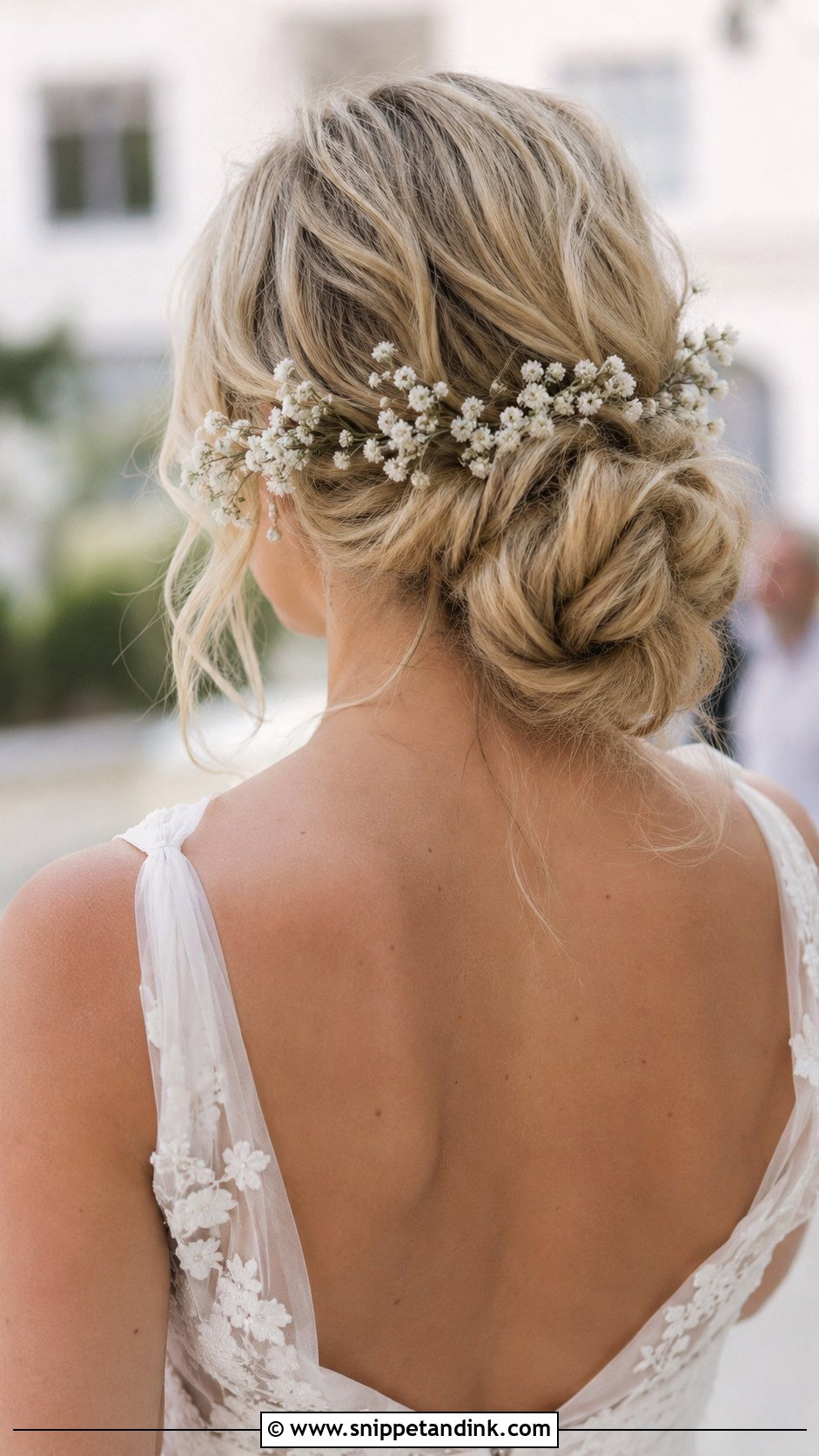
Small white clusters of baby’s breath tucked into a low bun give an airy, garden look. It holds up better out of water than many flowers, which is why I like it for long days and warm weather. Scatter sprigs throughout or cluster them at the base, and ask your florist for small, pre-cut pieces. It shows up clearly against dark hair; on very blonde hair it can disappear in photos, so I group it a bit more densely there.
23. Low Bun With Deep Waves
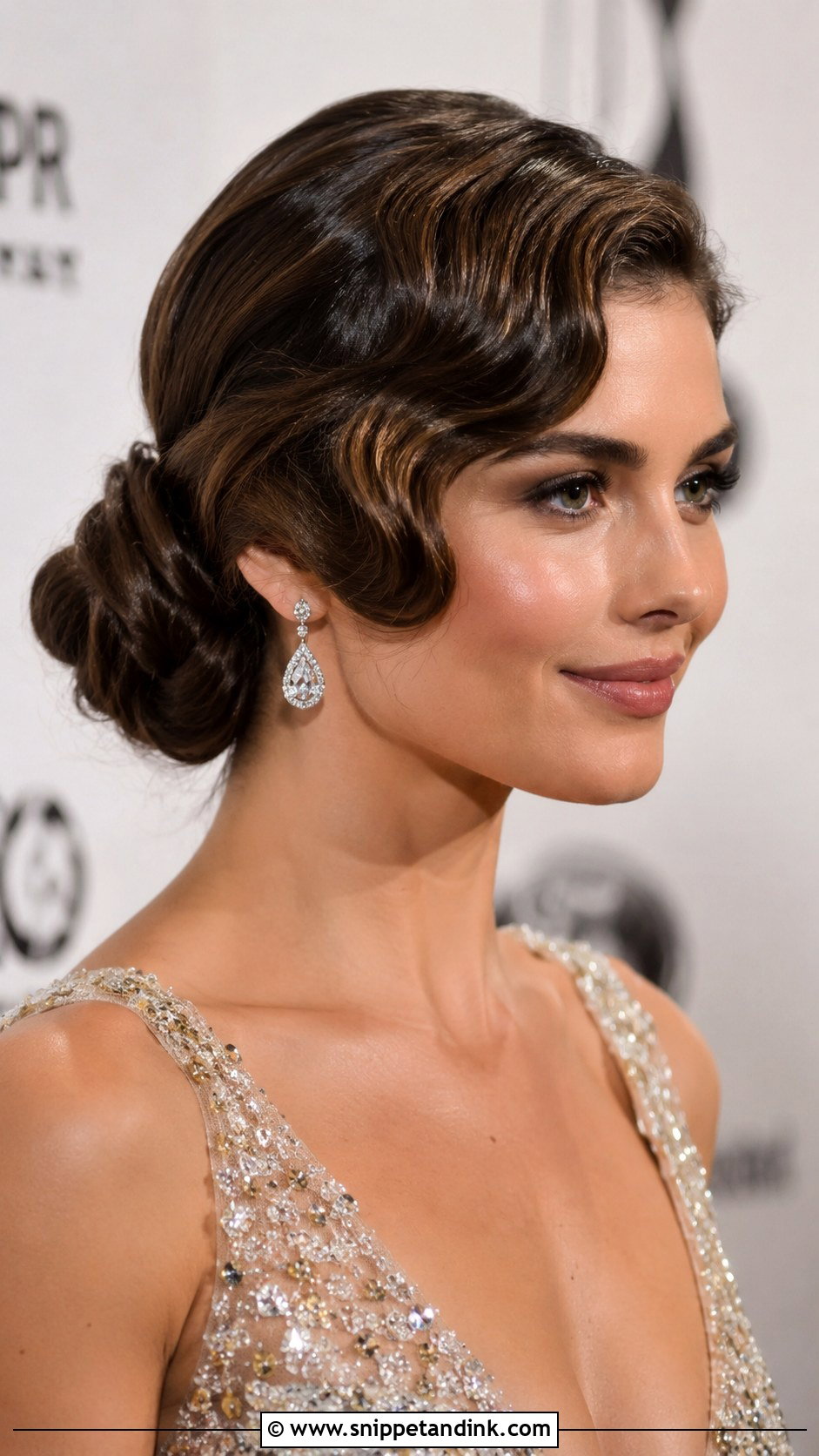
Deep, sculpted waves flowing back into a polished knot give an old-world, evening feel. I create them with a large-barrel curling iron, set and pin each wave to cool, then brush and clip them into a defined pattern. Thick, heavy hair holds this pattern well; fine hair needs more product and a longer set. It suits formal gowns, evening weddings and vintage themes, and pairs well with statement jewelry.
24. Low Bun With Fishtail Braid
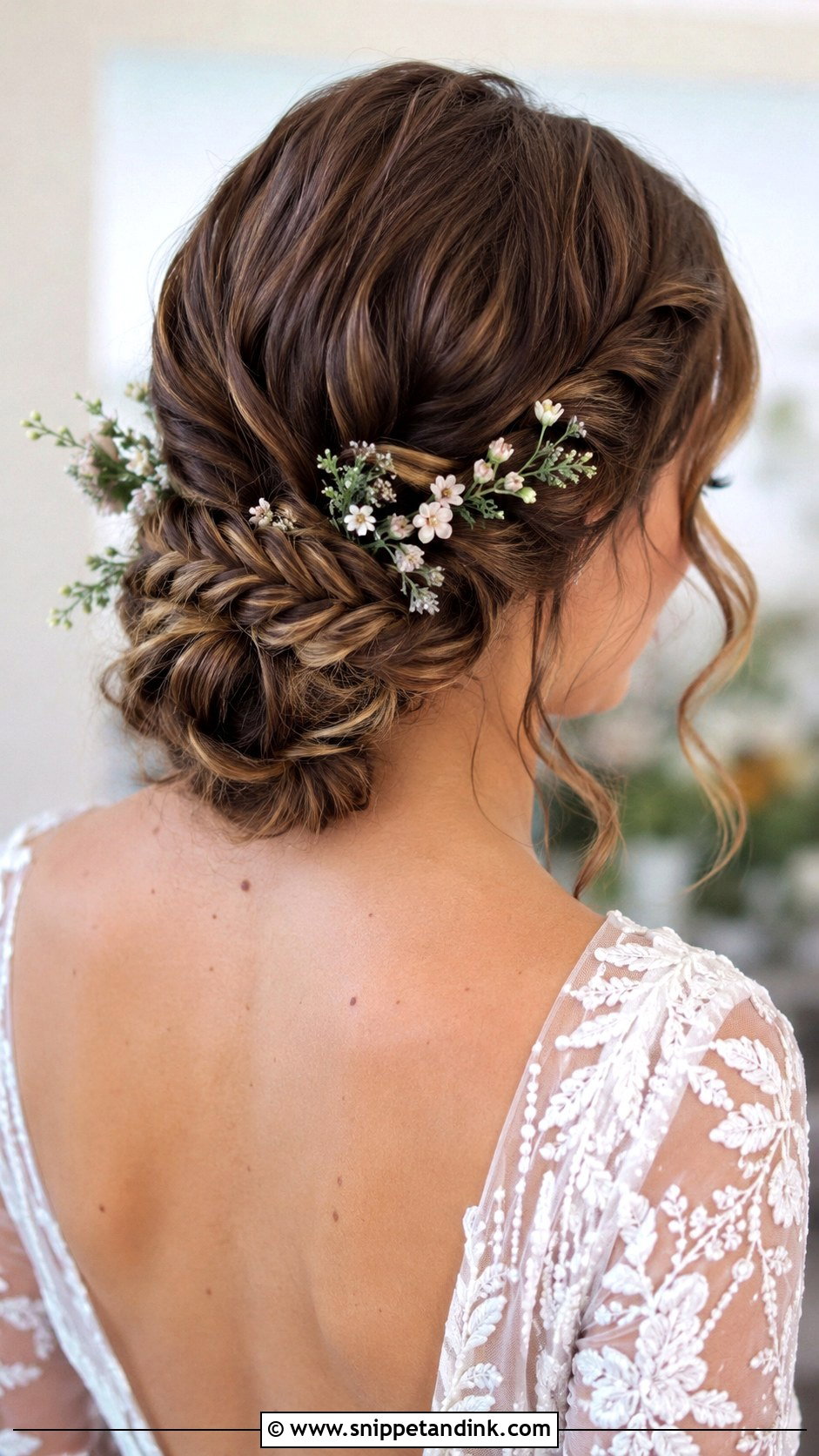
A fishtail braid leading into or wrapped around the bun gives a more intricate texture than a three-strand braid. I braid it tight first and pancake it looser at the end if you want a softer finish. Long, thick hair suits it best. Flowers or pearl pins can be tucked into the braid. It suits boho and garden weddings and looks good from behind during the ceremony.
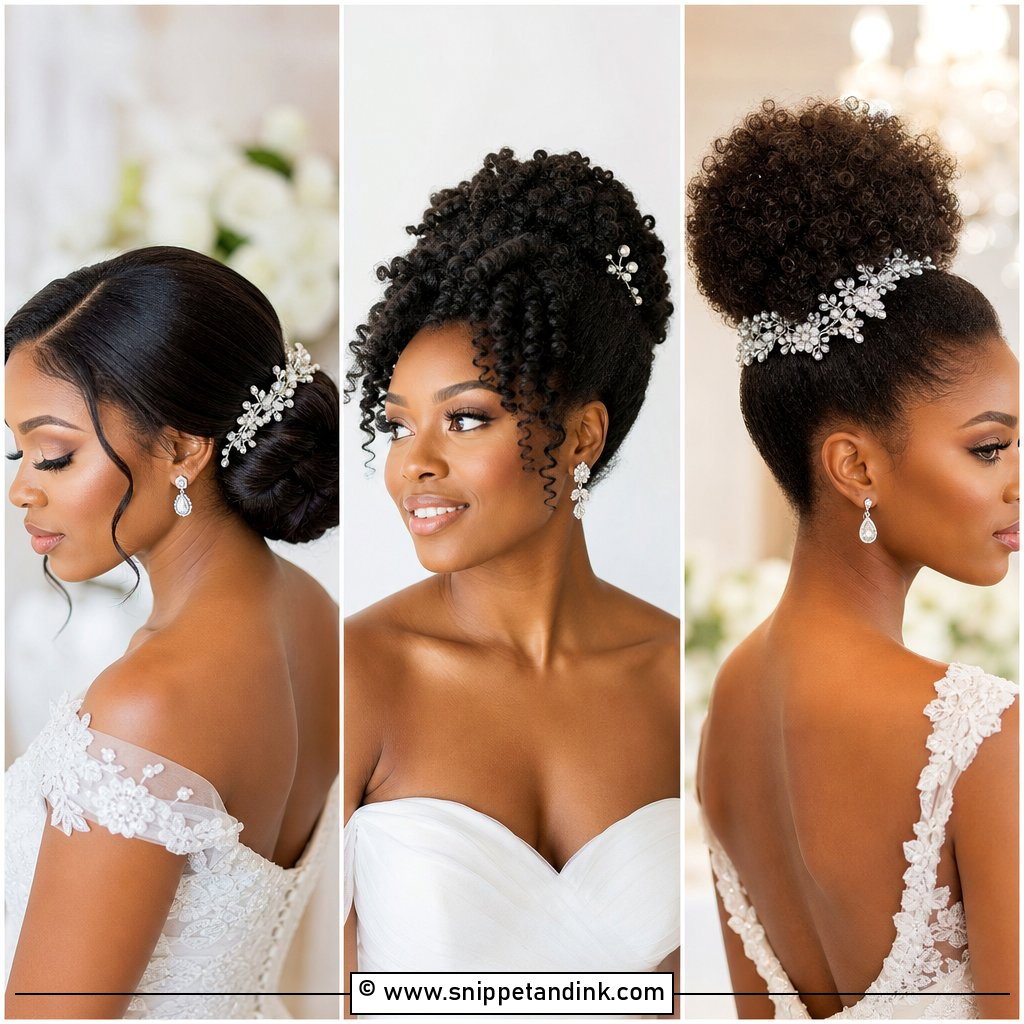
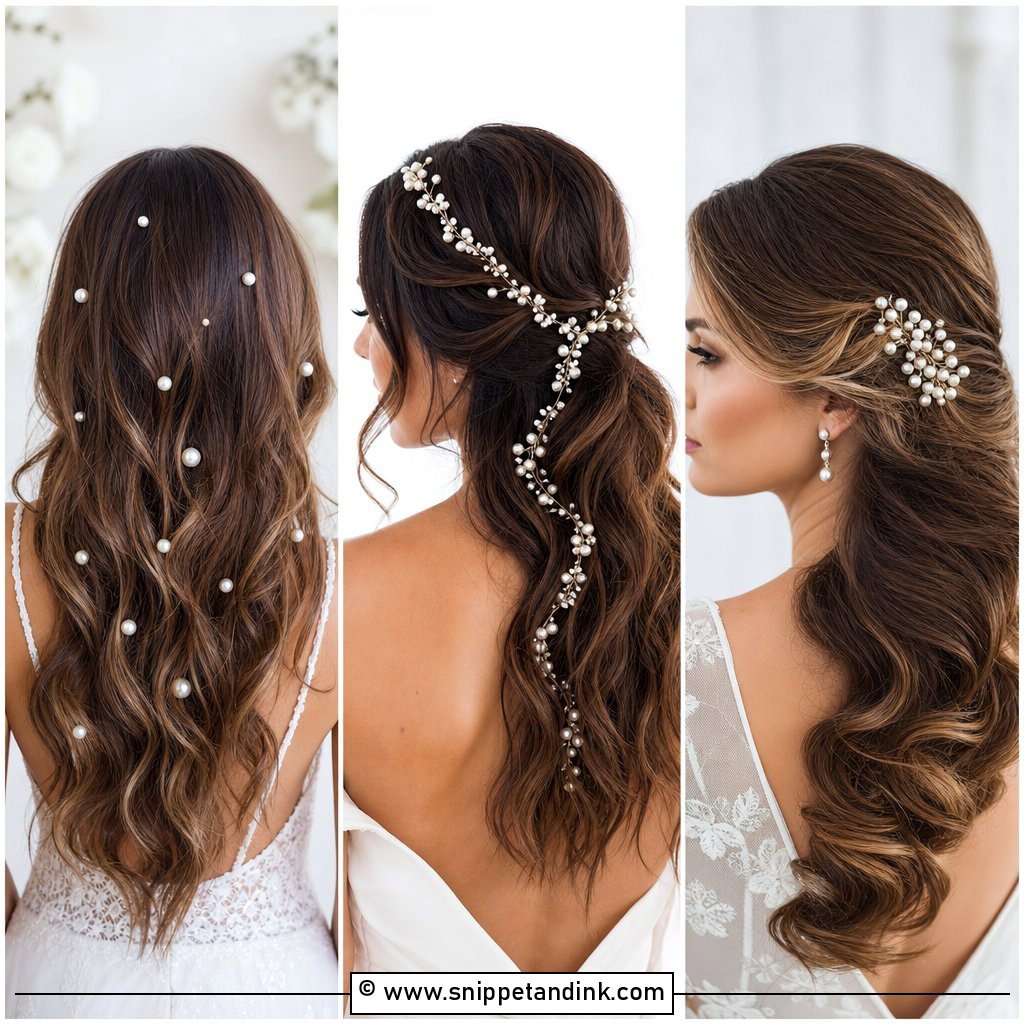
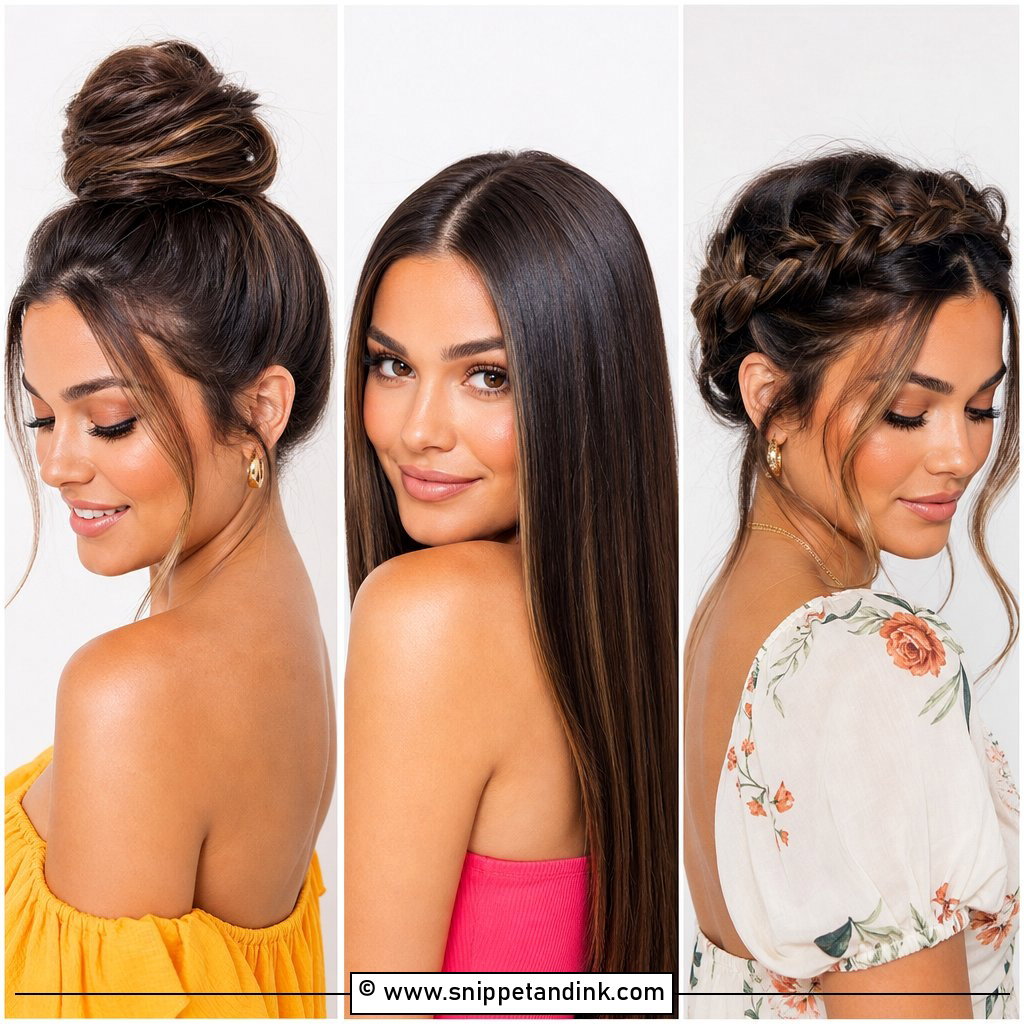
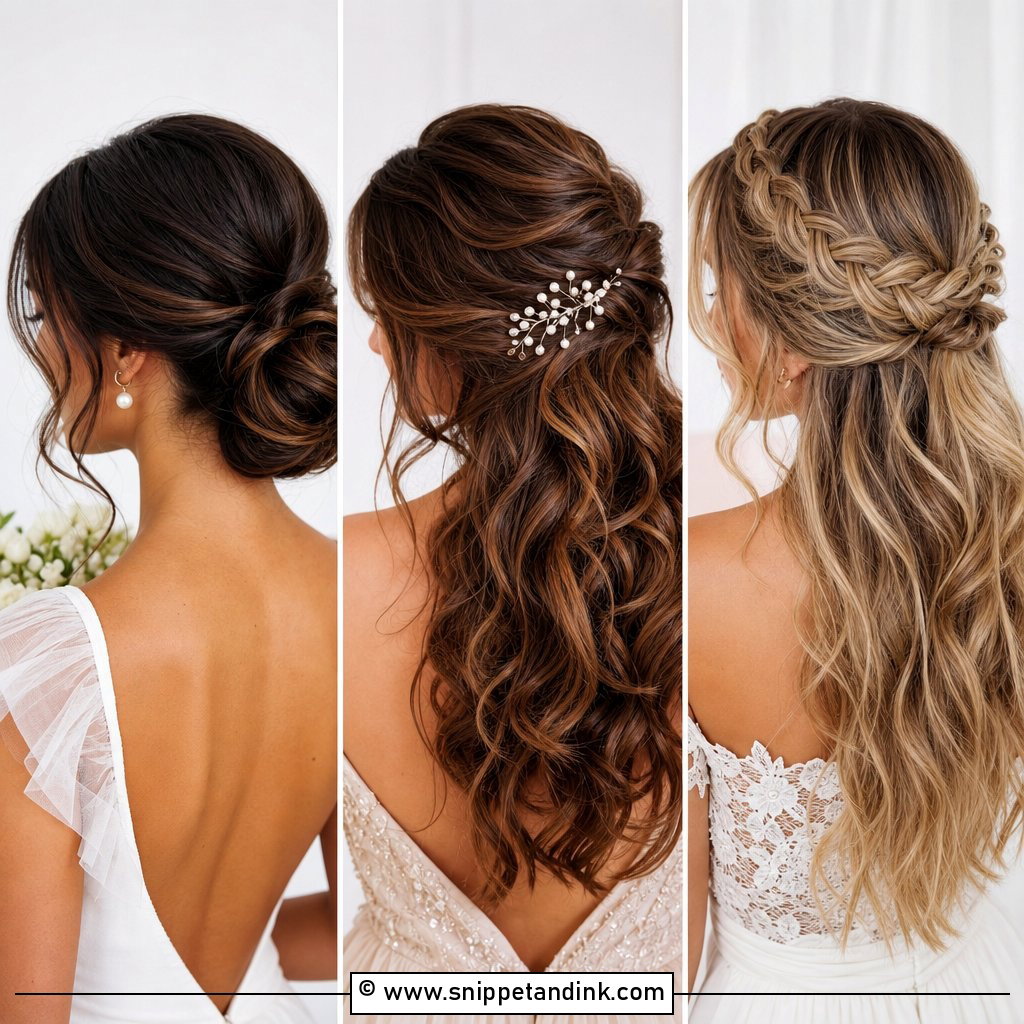
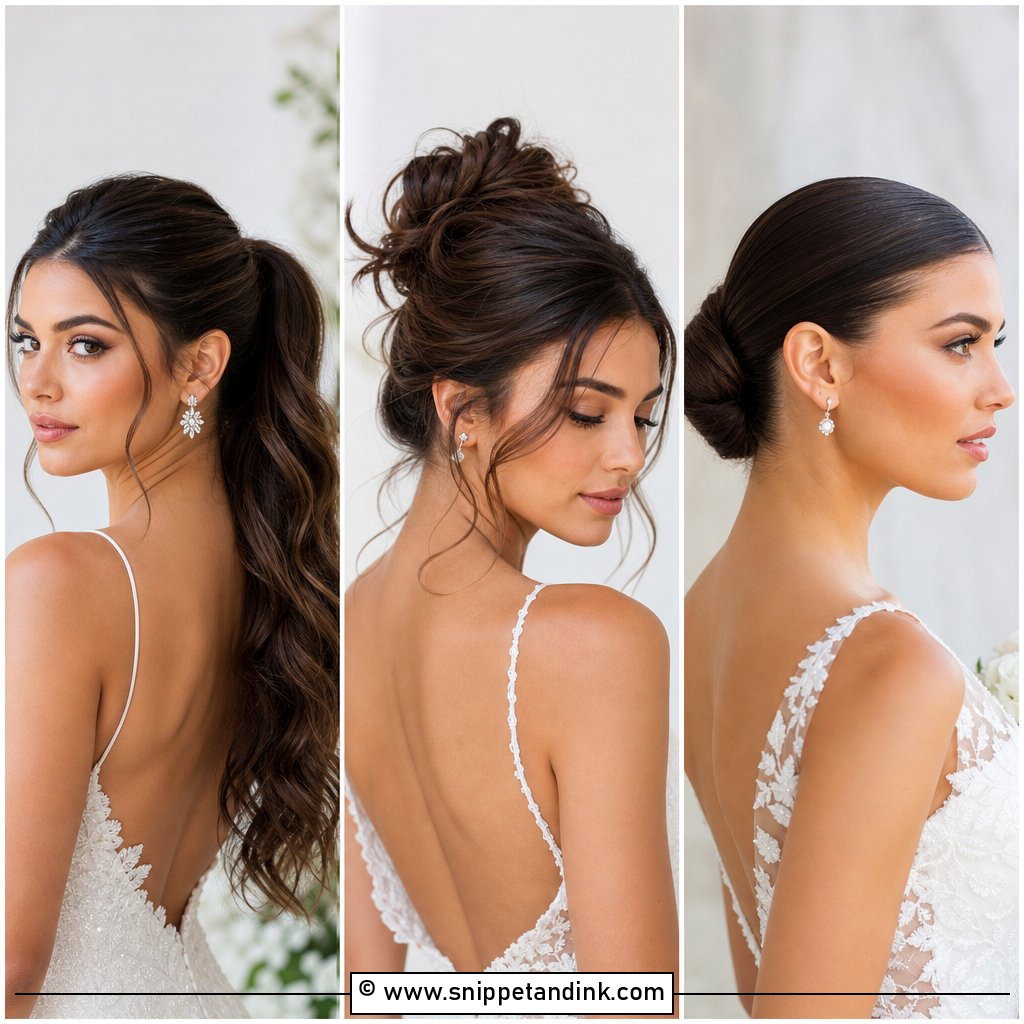
25. Low Bun With Gold Accessories
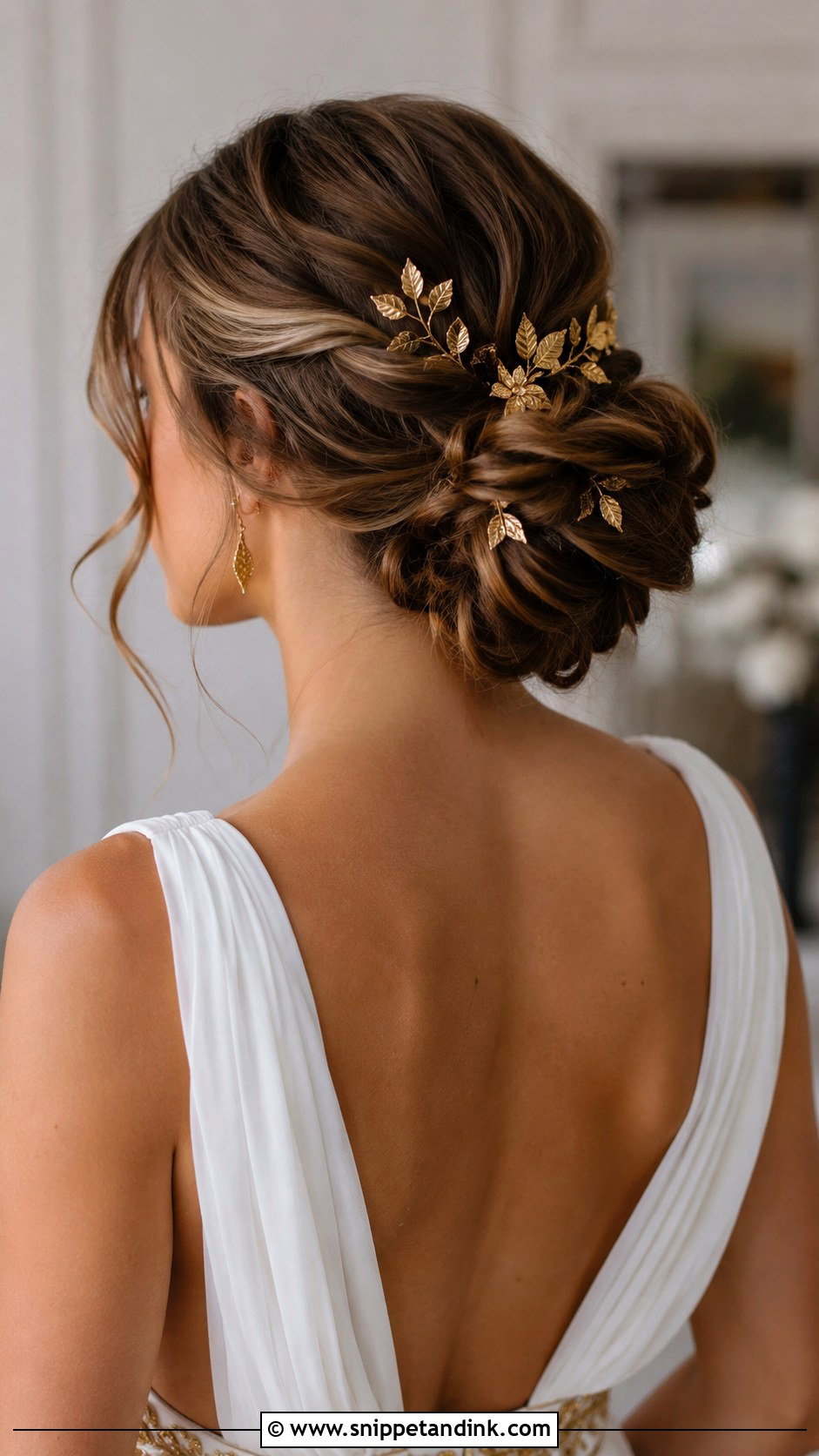
Gold pins, combs or leaf pieces add warmth, especially against warm skin tones and dark or golden hair. Minimal pins and bold statement pieces both work, and gold leaves suit Grecian and nature-themed weddings. I match the gold tone to your jewelry, since rose, yellow and antique gold side by side can look mismatched. Keep other jewelry simple so the accessories have room.
26. Low Bun With Bouffant
A bouffant adds height at the crown, which flows into a low knot at the nape. This style features volume at the crown that lengthens the face and creates a formal outline. I tease the crown gently at the root only, then smooth the top layer over so it looks polished rather than backcombed. It works with tiaras, veils and formal gowns. Fine hair loses this volume fastest, so I set it with a firm spray and sometimes a small hidden padding.
27. Low Bun With Ribbon
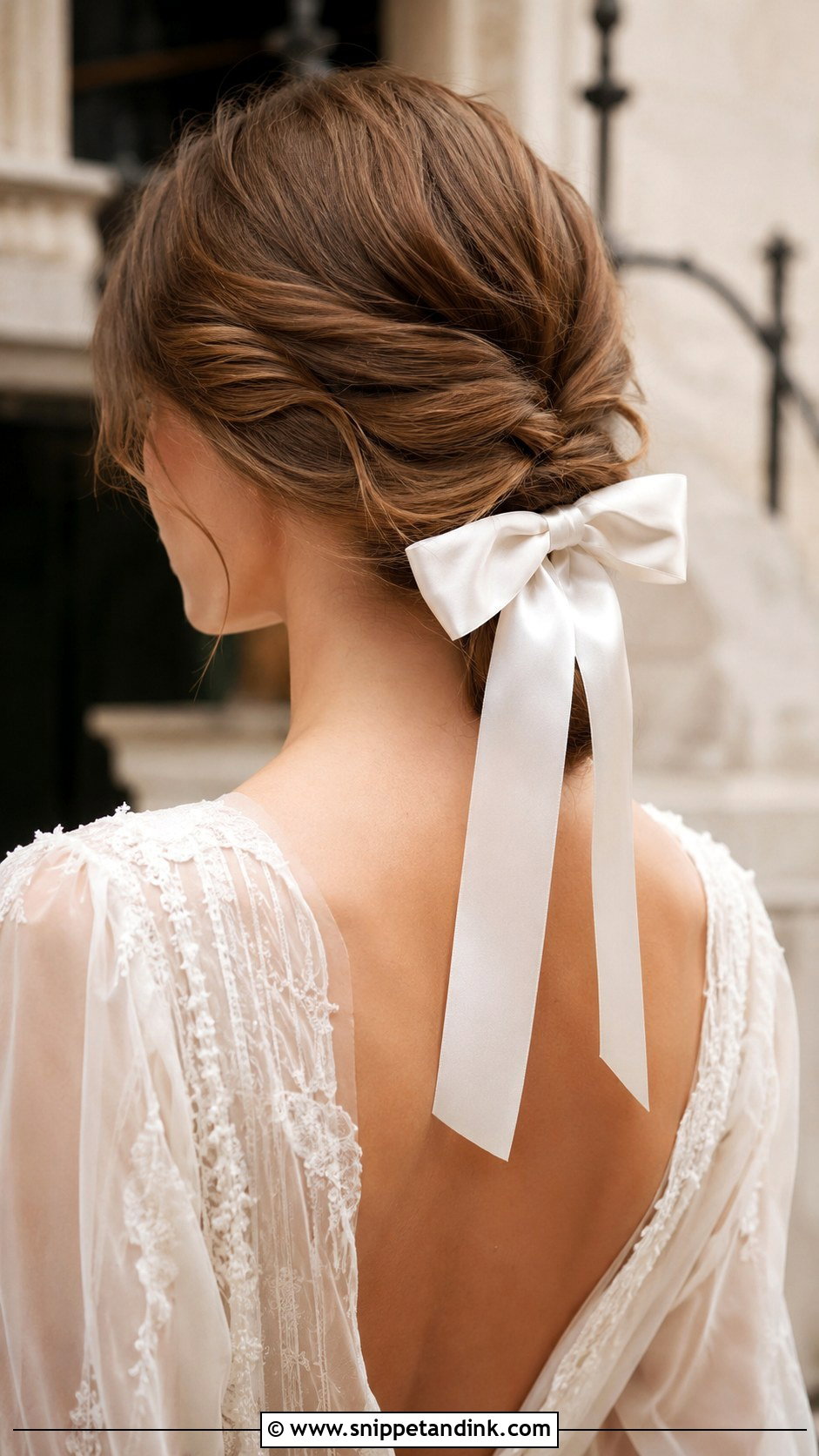
A silk, satin or velvet ribbon tied around the base of the bun or woven through it adds a sweet, personal touch. Neutral or soft colors look the most bridal. Satin is slippery and can loosen, so I pin the knot of the bow in place from underneath. It suits whimsical, vintage and modern weddings. Keep jewelry simple so the ribbon stands out.
28. Low Bun With Wispy Bangs
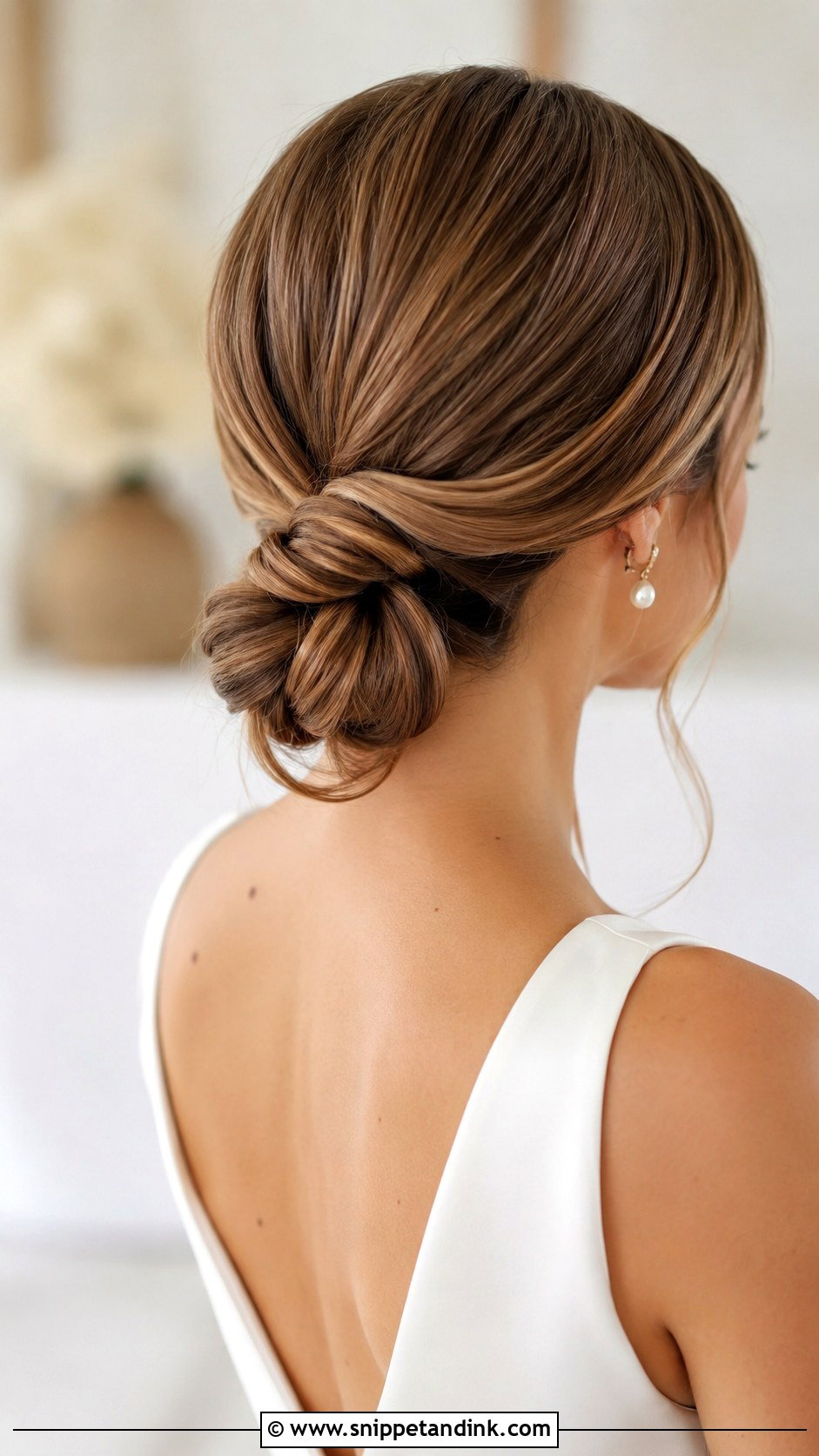
Light, feathery bangs paired with a polished bun look youthful and relaxed. They highlight the eyes and suit round and heart-shaped faces. Wispy bangs separate and stick to the skin in heat, so I set them with a little dry texture spray rather than oil. The bun can be sleek or loose depending on the rest of your look, and it suits both casual and formal weddings.
29. Low Bun With Rhinestone Comb
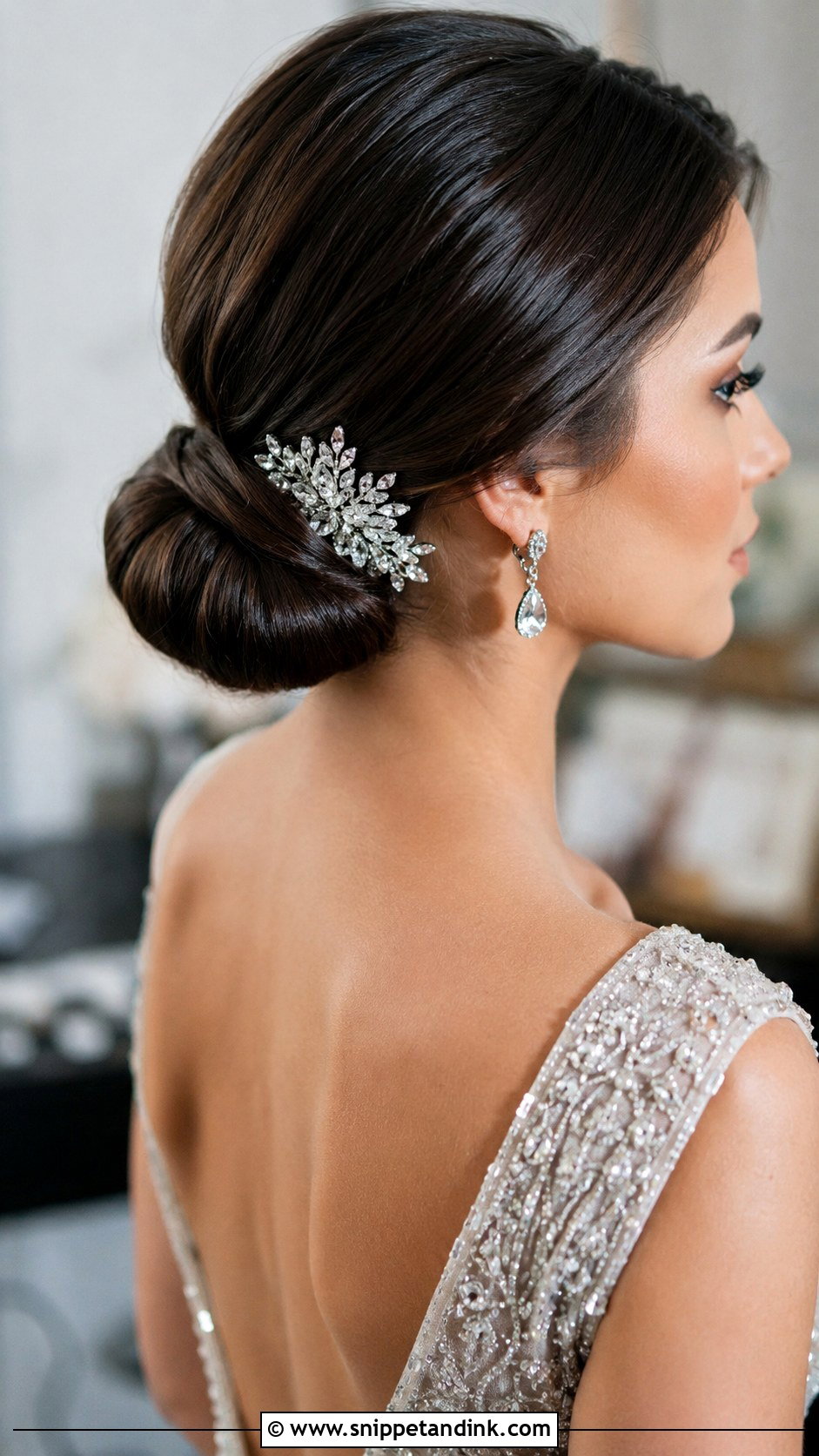
A rhinestone comb tucked beside or behind the bun concentrates sparkle in one piece. The rhinestones catch the light in evening settings, and the comb can also hold your veil in place. I slide the comb in against the direction of the hair and then pin it, since combs alone can work loose with movement. Simple earrings let it stand out. It suits formal and evening weddings.
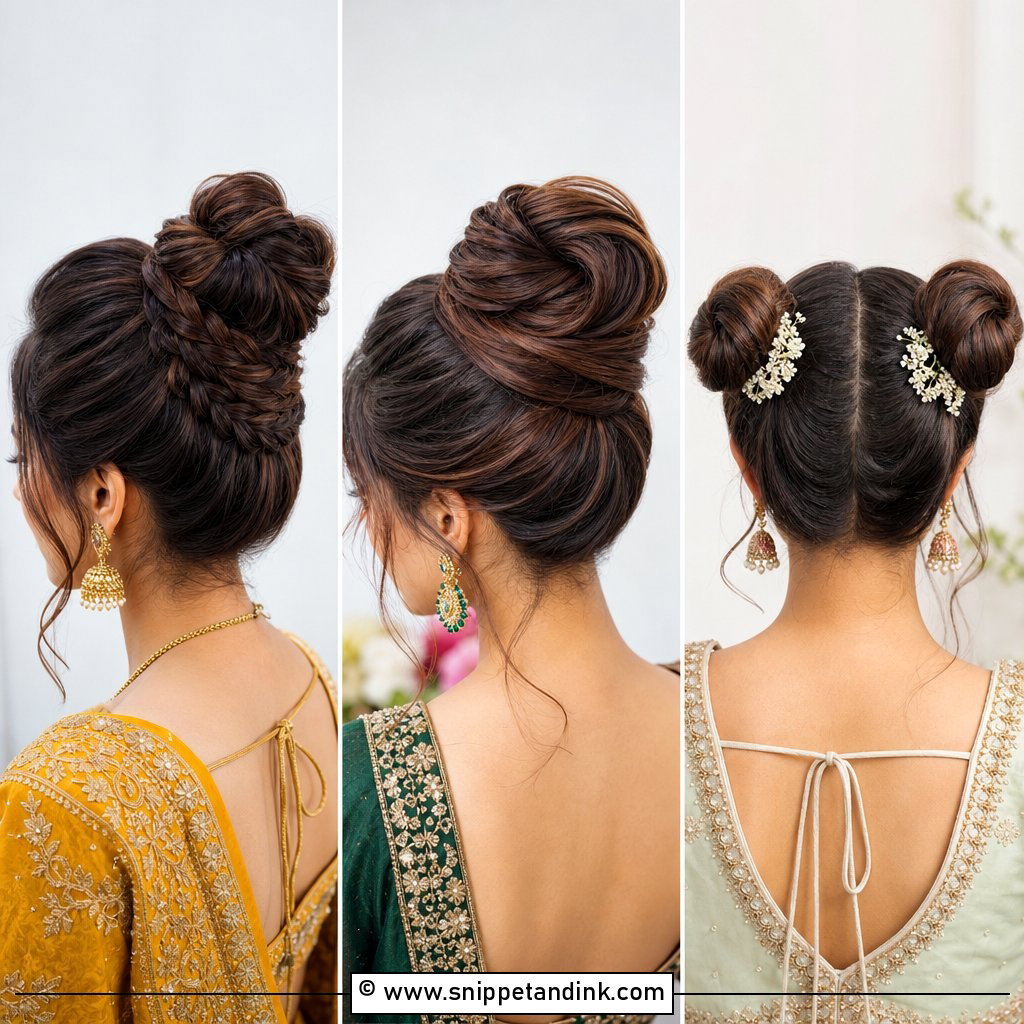
30. Bohemian Low Bun
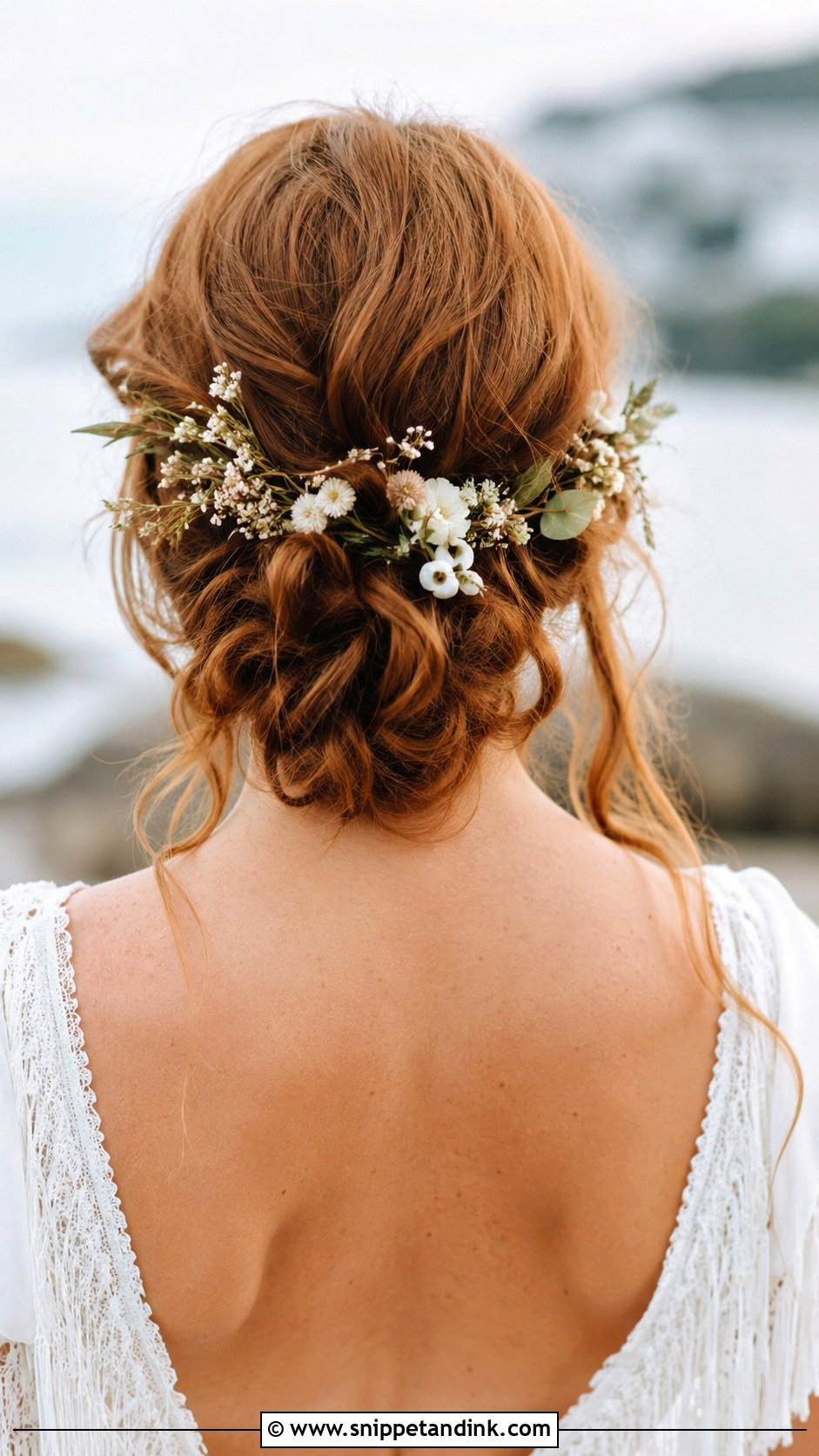
Loose texture, soft braids and twisted sections build a bun that looks relaxed and natural. I pull pieces out around the face for softness and add flowers, leaves or a crown. It fits beach, garden and festival-style weddings, but it needs secure hidden pins because loose styles collapse fastest in wind. Decorate with baby’s breath or wildflowers for an organic finish.
What Holds a Bun Together for Twelve Hours
Most low buns that fall apart do so because of how they were built, not because the hair was difficult. A few things make the biggest difference.
Hair prep
Arrive with hair washed the day before, not the morning of, and fully dry. Freshly washed hair is slippery, and pins slide out of it. I’ll add texture spray or dry shampoo at the roots and through the lengths so everything has grip.
The base and the pins
I start with a secure anchor: a small ponytail or a pair of crisscrossed bobby pins at the nape. Everything else pins into that base. Bobby pins hold flat sections tight against the head; U-shaped pins hold volume without crushing it, so I use both. I spray each section lightly as I go rather than one heavy coat at the end, which makes the hair stiff and still lets the inside slip.
Adjusting for your hair
- Fine or thin hair: a small padding or a hidden rolled section gives the bun body; texture spray is essential.
- Very thick hair: I thin out the bulk by splitting it into two smaller knots, which keeps the bun from feeling heavy and pulling on the scalp.
- Curly or coily hair: I work with the natural texture rather than straightening, and I use extra moisture so the bun stays defined.
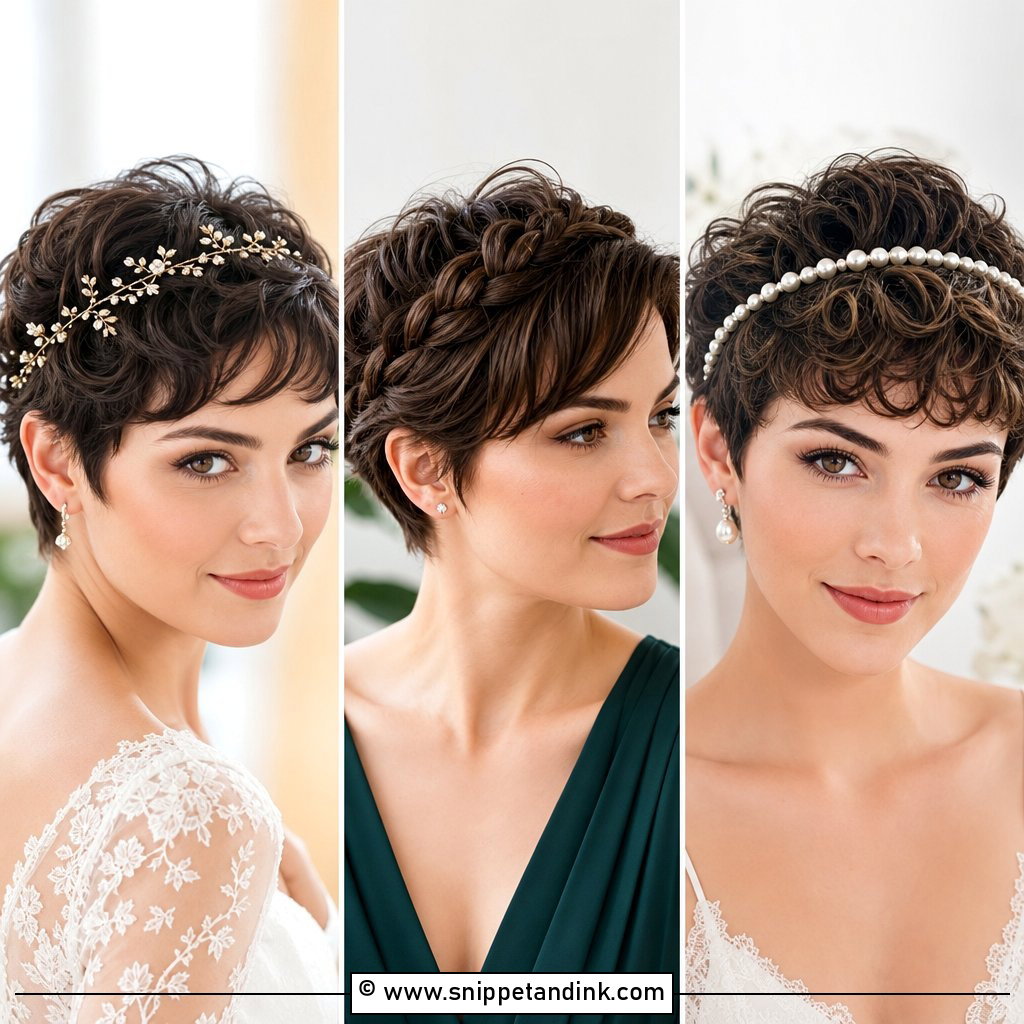
- Short or layered hair: shorter pieces at the nape get pinned up first, and small clip-in pieces can add length where needed.
Bring the Veil, the Earrings and a Photo of the Dress From Behind
A trial is only useful if it’s realistic. Bring your veil or any hairpiece you plan to wear, the earrings, and a photo of the back of your dress. Wear a top with a similar neckline if you can. After the trial, keep the style in for the rest of the day and note when it starts to loosen, and whether any pin is pressing. Those notes help me adjust the build so the version on your wedding day holds up from the ceremony to the last dance.
Your Bun, Your Veil, Your Trial Photos
The low bun is versatile enough to go from sleek and modern to loose and boho, with pearls, flowers, braids or sparkle depending on your dress and venue. It also holds well and stays comfortable through a long day of dancing. Save a few of the styles above that you like most, bring them to your stylist along with photos of your dress and veil, and test the look at a trial so you know exactly how it will wear.
You'll Like These Ideas:


Leave a Reply