
Vintage hair is technique first. Finger waves, victory rolls and a proper beehive were built with setting lotion, pins, rollers and a comb, and they only look right when they’re made the same way now. That’s the part I love. Below are 25 looks spanning the 1920s to the 1970s, from sculpted waves to a bouffant ponytail. With each one I’ve noted the hair it needs, how it’s set, and what tends to happen to it by the end of the night. Pearls, birdcage veils and small florals turn up throughout, because they suit almost every era.
Your Gown’s Decade Should Set the Hairstyle
Vintage hair looks most natural when it comes from the same era as the dress. Mixing a 1950s full skirt with 1920s finger waves can look like two costumes. I ask brides to bring a photo of the gown, especially the neckline and back, before we decide on anything.
- Drop-waist and beaded 1920s dresses: finger waves, faux bob or a curly low bun.
- Bias-cut 1930s satin: S-waves, Marcel waves or a sleek side-parted chignon.
- 1940s tea-length or suits: victory rolls and side rolls.
- 1950s full skirts: pin curl updos and bouffant ponytails.
- 1960s shift dresses: beehives and half-up bouffants.
- 1970s flowing sleeves: feathered or centre-parted waves.
If your dress isn’t tied to one era, choose the hairstyle based on your neckline. High necks want hair up, open backs want a low bun, and strapless gowns can take nearly anything.
Hair length matters as much as the dress. Finger waves and Marcel waves were made for short hair, while victory rolls and pin curl updos need at least shoulder length. If your cut sits between the two, the faux bob and the S-wave are the most forgiving places to start.
1. 1920s Finger Waves for Short Hair
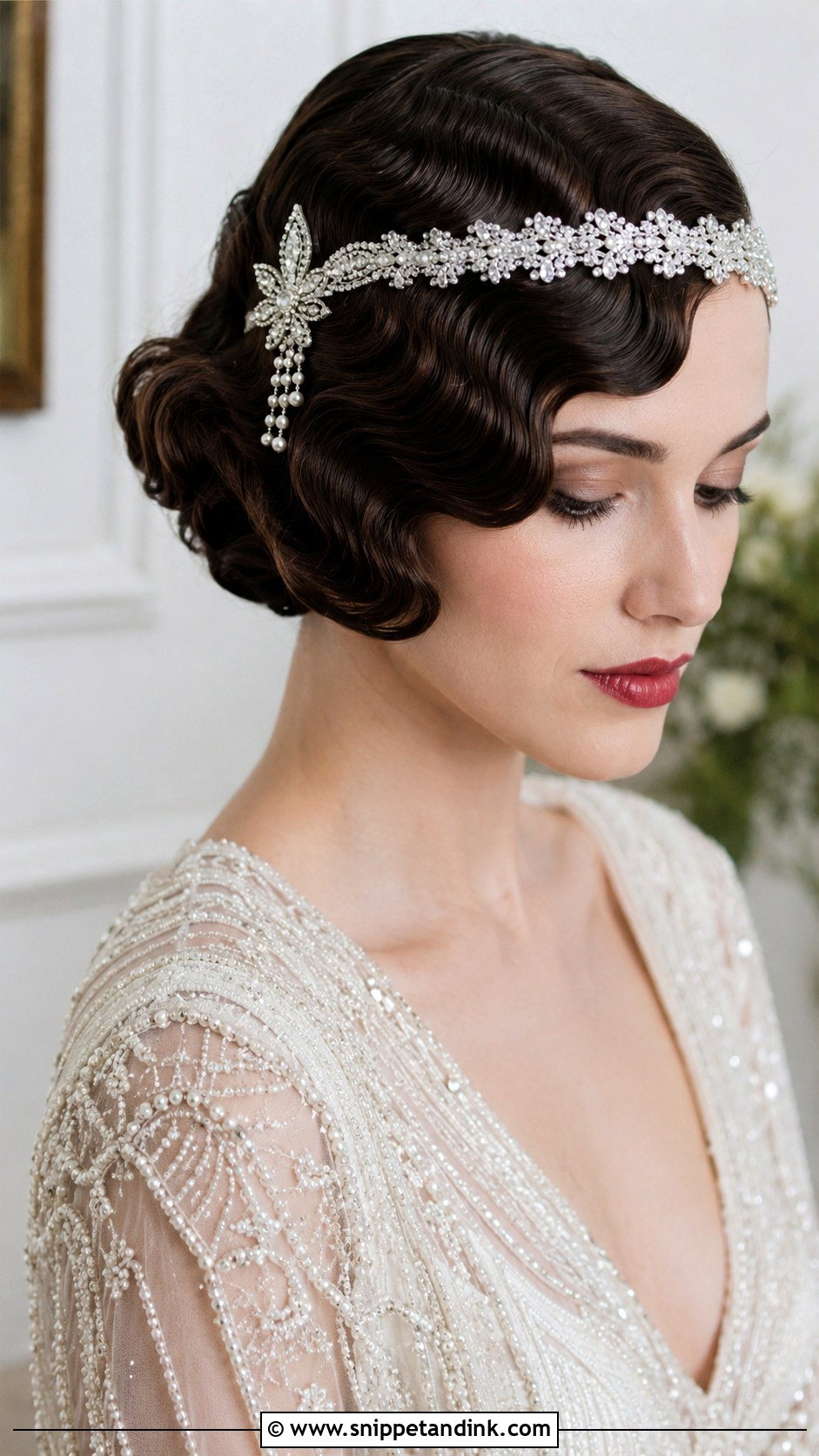
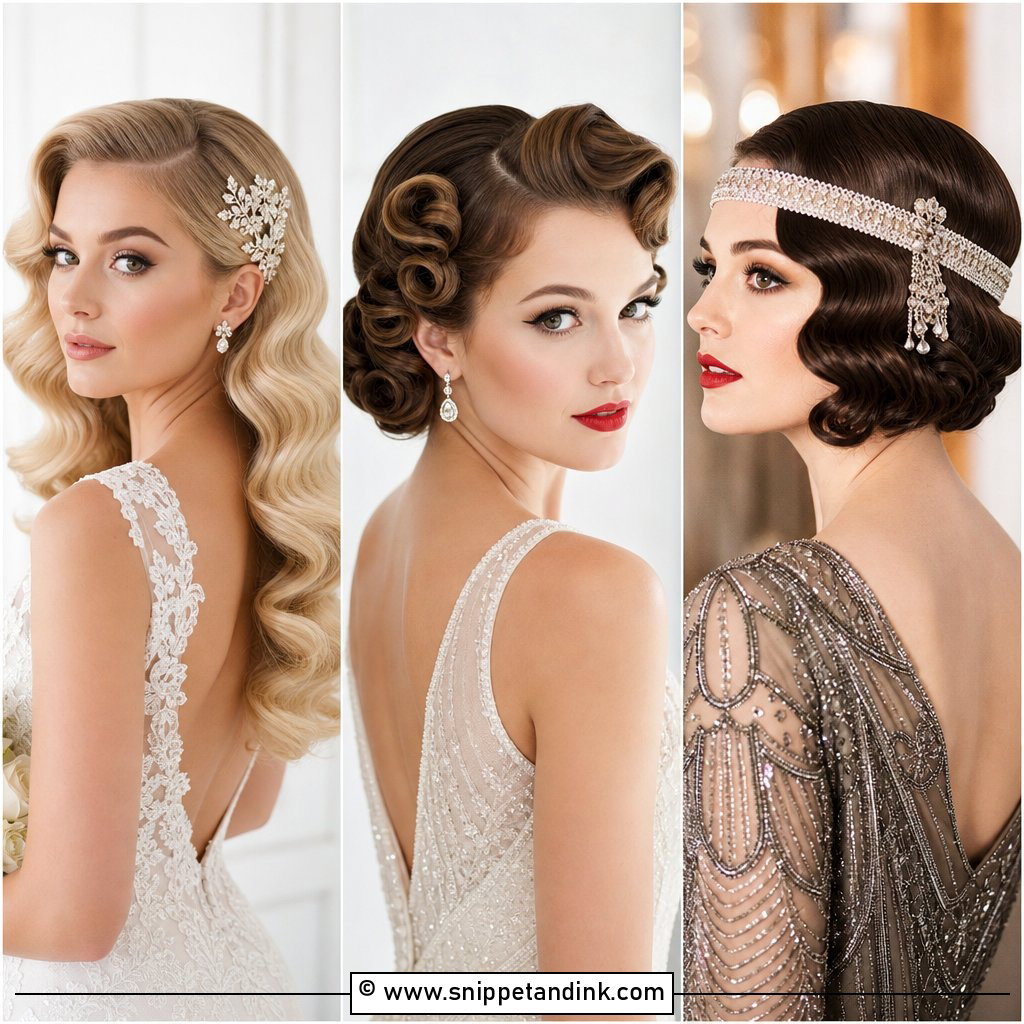
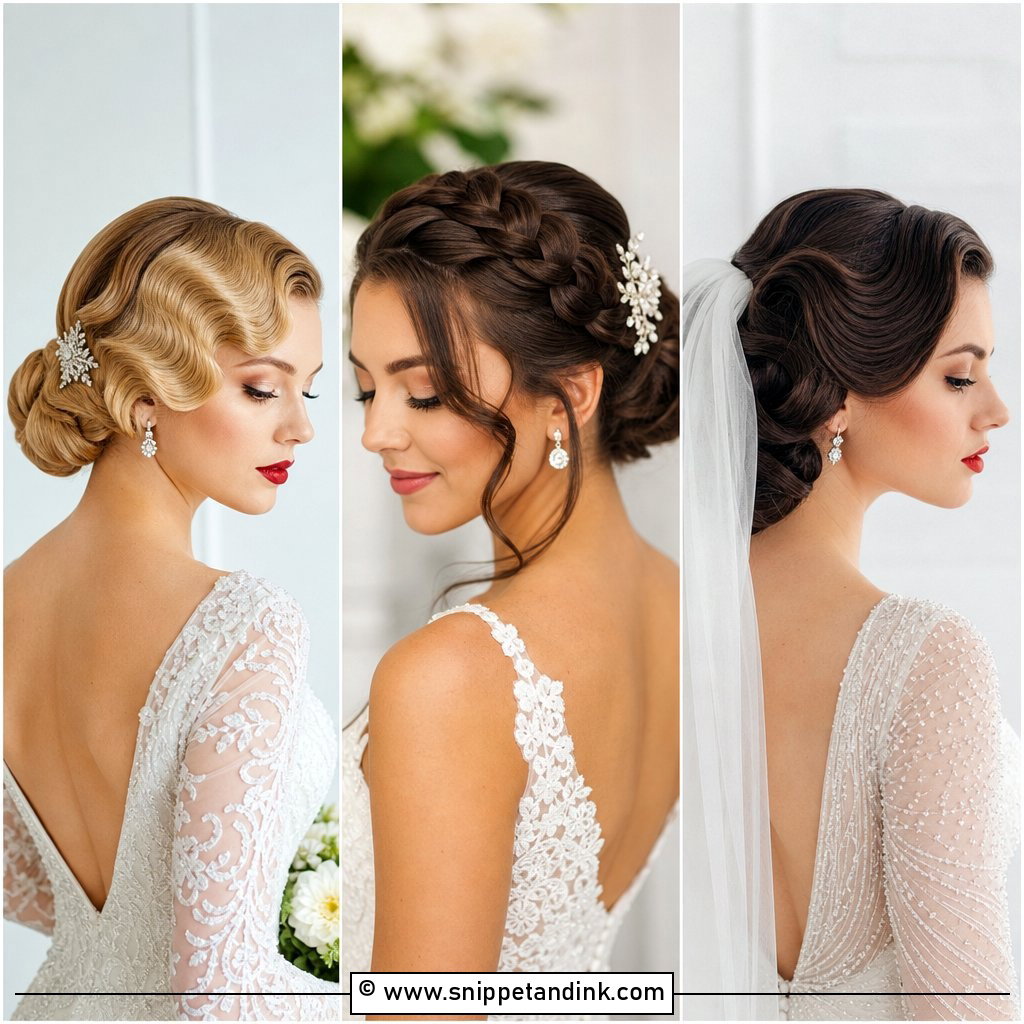
Finger waves are the signature of Great Gatsby glamour, those S-shaped ridges lying flat against the head. They’re formed on damp hair with a setting gel, pressing each ridge with a finger and pushing the next one into place with a comb, then left to dry completely. Short bobs suit them best, and smooth, fine to medium hair holds the ridges most crisply. Very curly hair can do it, but it needs smoothing first. A beaded headband or an Art Deco clip at the side finishes the look. Short hair loses nothing to long hair in this style.
2. Victory Rolls for a 1940s Bride
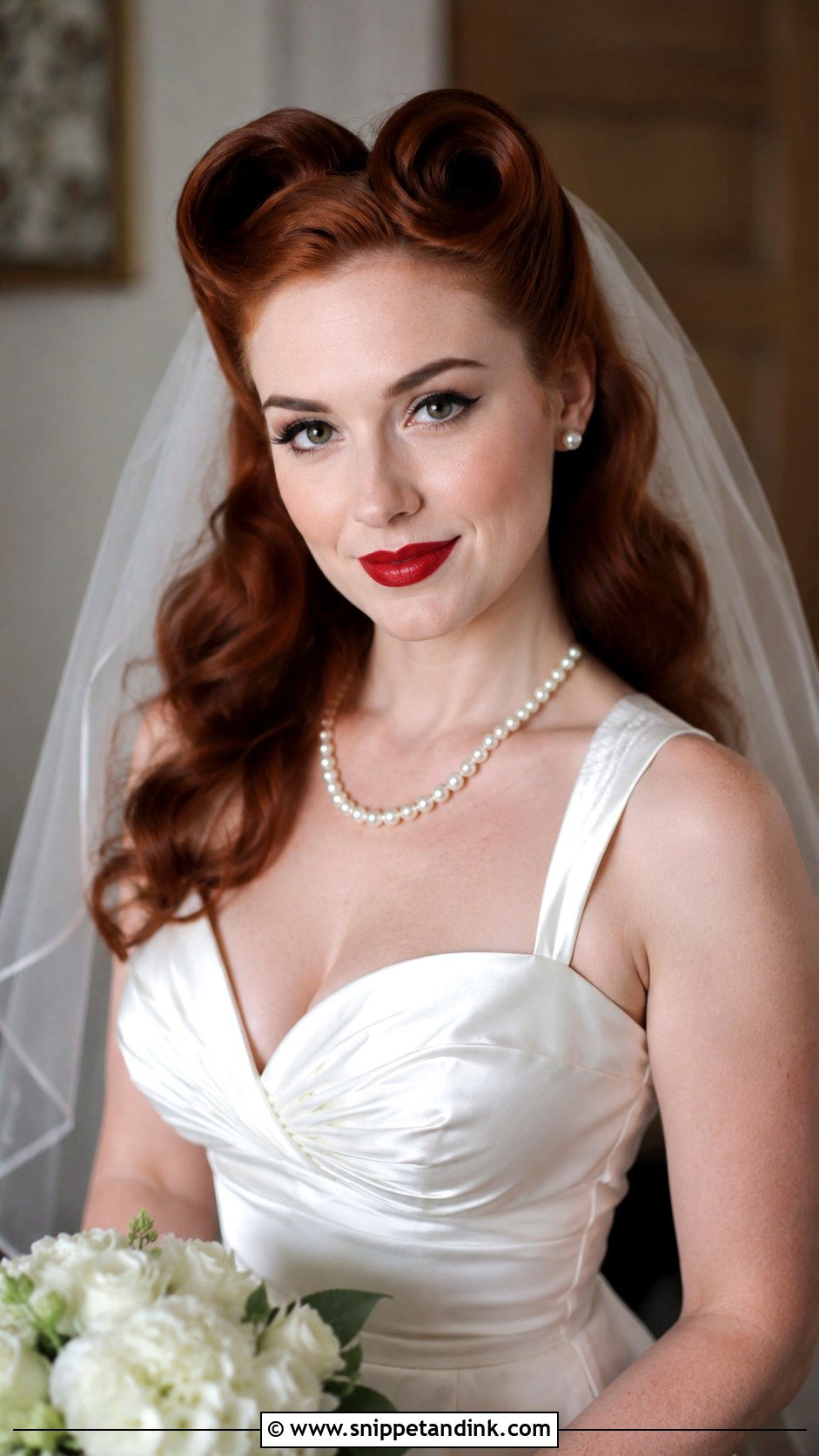
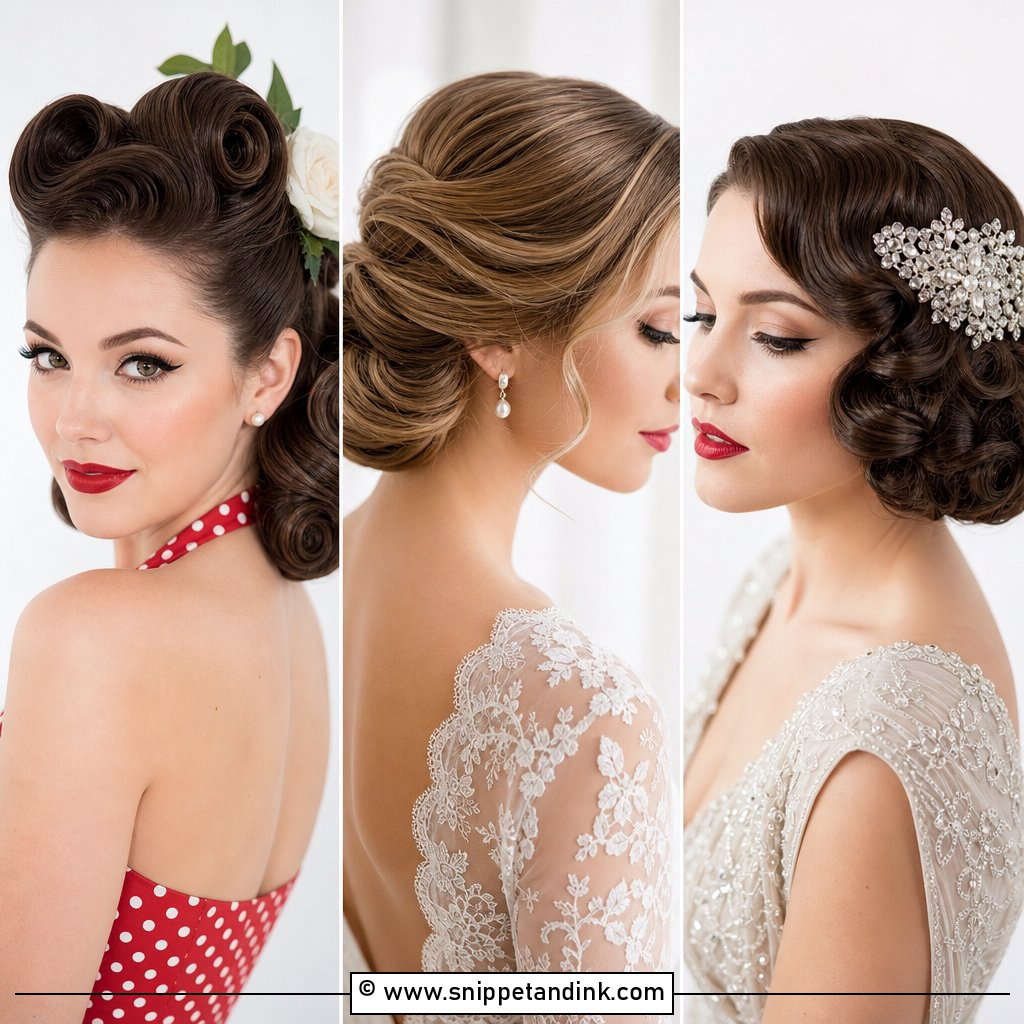
Victory rolls sweep the front sections up and away from the face, roll them over two fingers and pin them toward the crown. They come from the 1940s, and they’re sturdier than they look if they’re set on curled hair first. I use a little backcombing inside each roll so it holds its shape, then pin from underneath. Two matching rolls look classic; a single side roll is softer. Medium to long hair works. Red lipstick and a fitted gown complete the pin-up look.
3. 1950s Pin Curl Updo
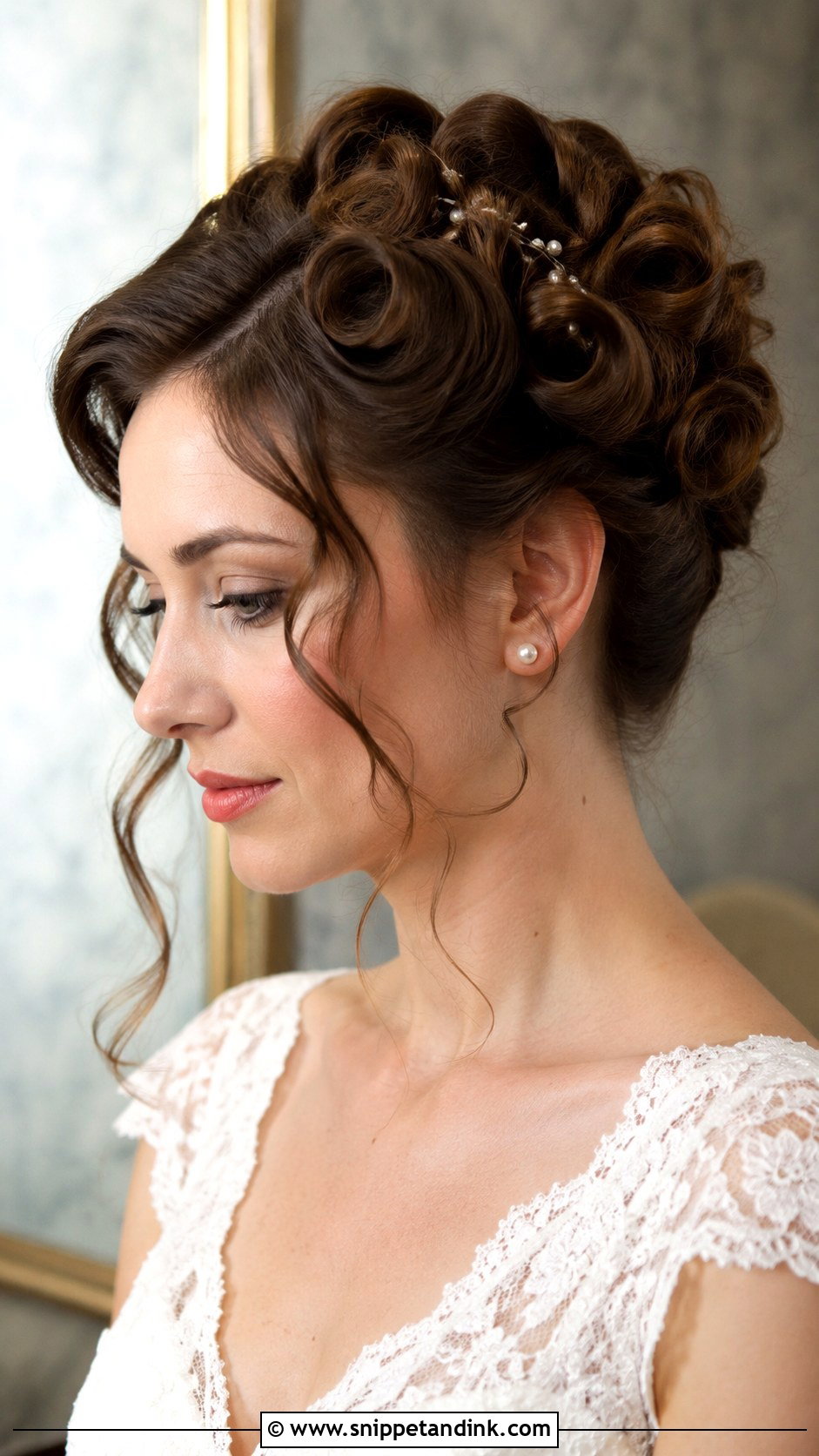
Pin curls are the backbone of 1950s hair. Small sections are coiled flat, pinned with clips and left to set, then brushed out and arranged into an updo. The set is what gives the curl its spring, so a 1950s updo made with a curling tong only drops within hours. Face-framing tendrils soften the front. A jewelled comb or pearl pins add a mid-century touch. Medium-length hair suits it particularly well.
4. Classic 1960s Beehive
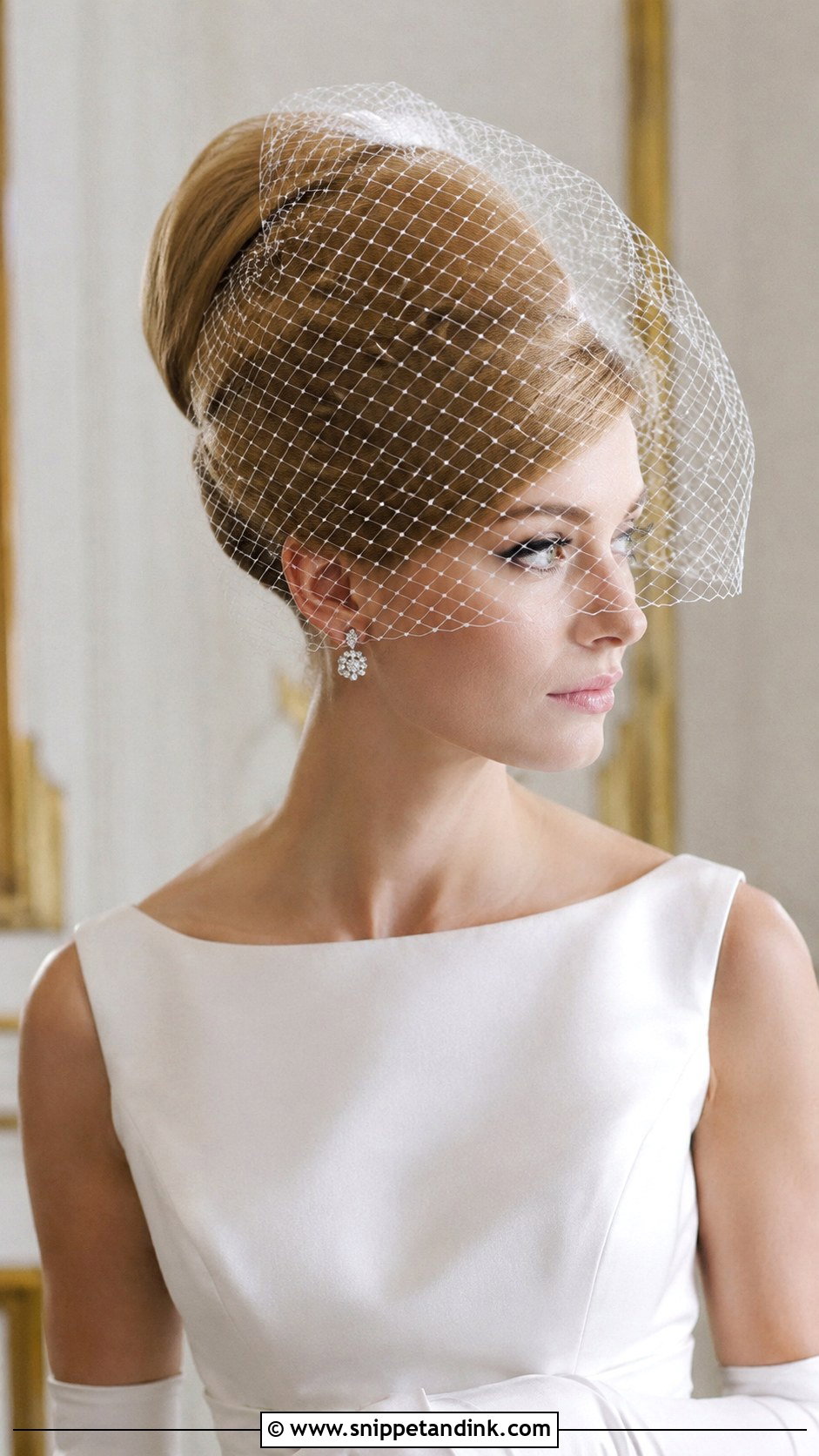
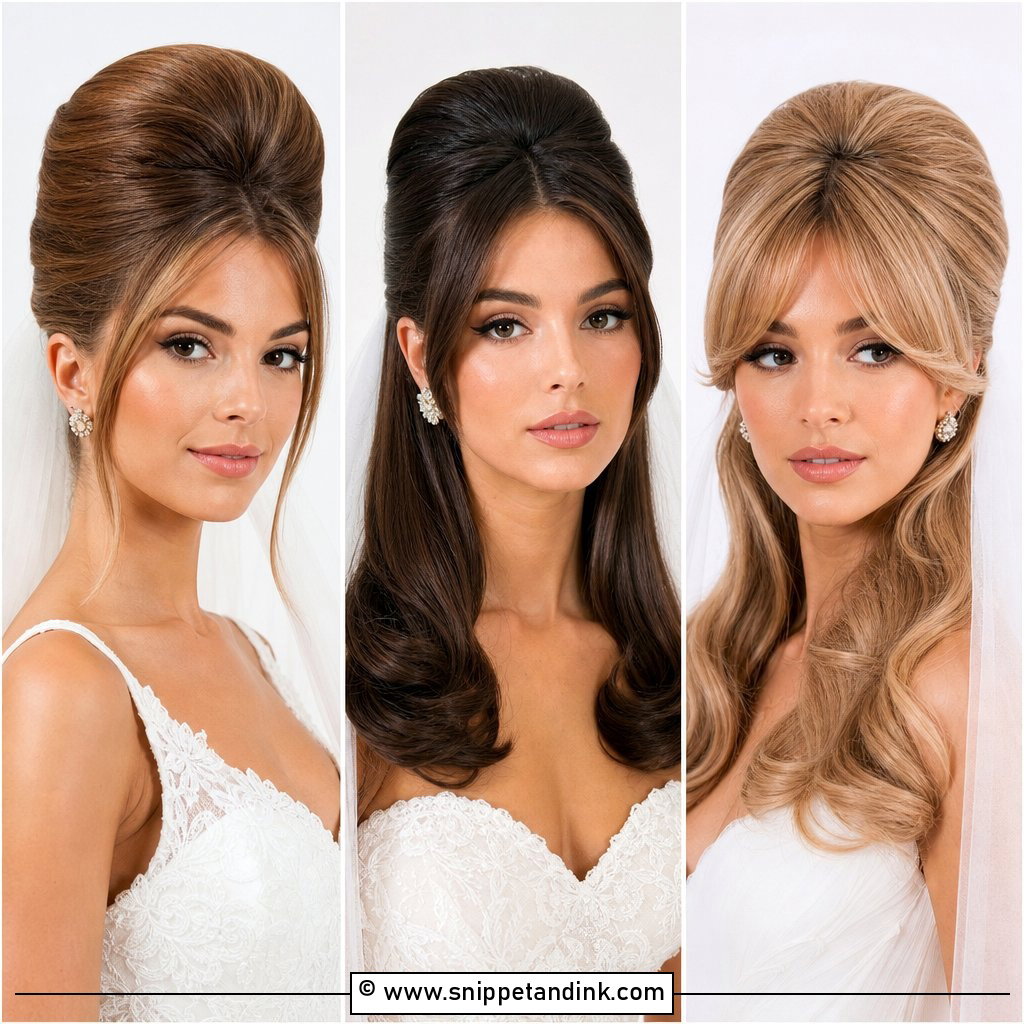
Think Audrey Hepburn and Brigitte Bardot: the beehive piles hair high at the crown for height and a sculpted shape. It’s built with backcombing at the roots in layers, then a smooth top section brushed over it. Fine hair needs more backcombing; very thick hair can get too wide, so I keep the shape narrow at the sides. The smooth surface takes a birdcage veil or a tiara well. Leave a couple of soft strands at the face. Medium to long hair works best.
5. Farrah Fawcett Feathered Waves
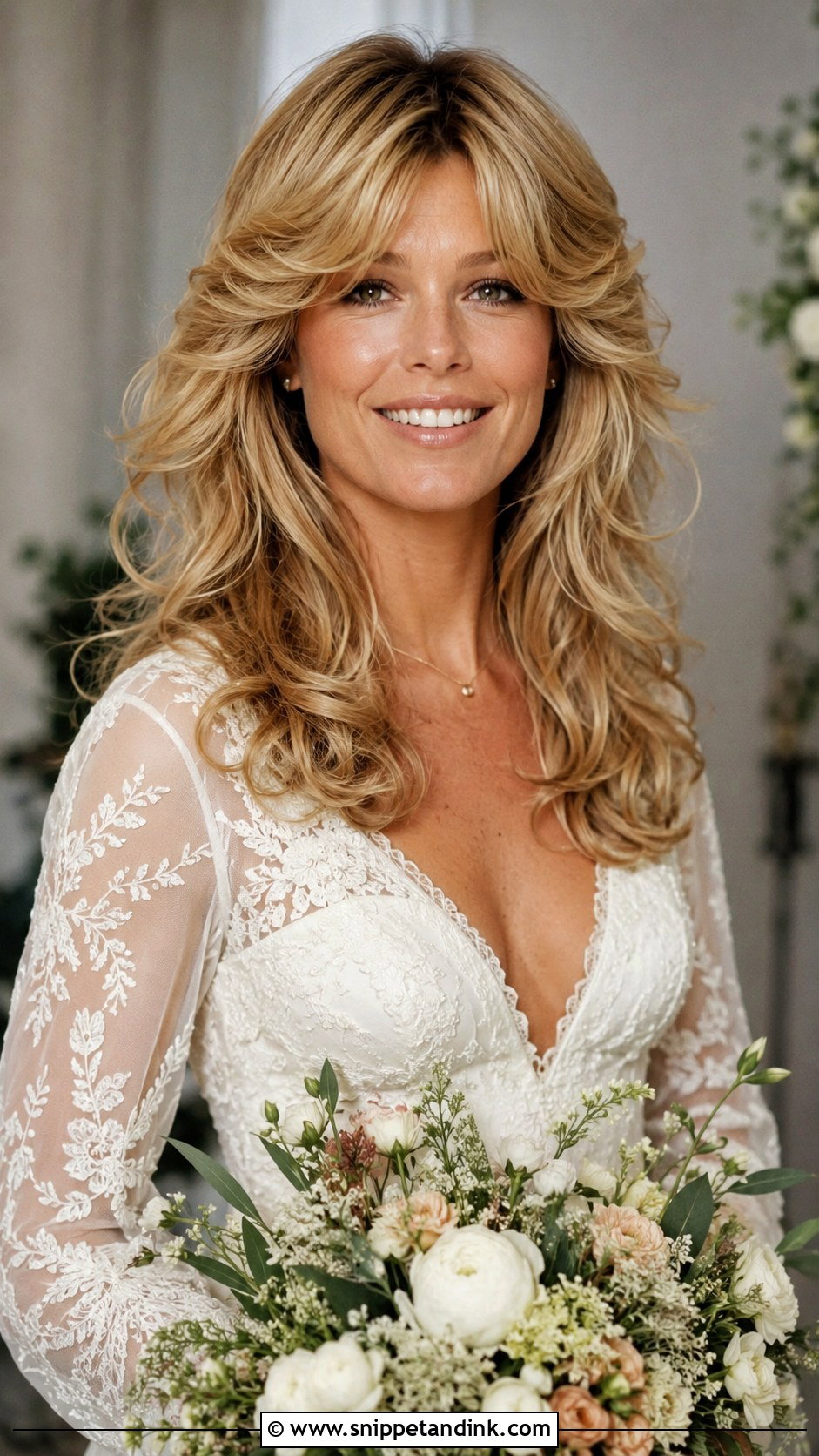
Big, flicked-back Farrah Fawcett feathered waves are pure 1970s. They depend on layers around the face; without them, the flick has nothing to curl. I use a large round brush when blow-drying, then a medium barrel curled away from the face, and brush through to soften. It suits a boho or outdoor wedding and long, layered hair. Fresh flowers or a simple floral crown keep it relaxed. Humidity flattens the flick fastest, so a strong-hold spray matters here.
6. Pearl-Adorned Low Bun
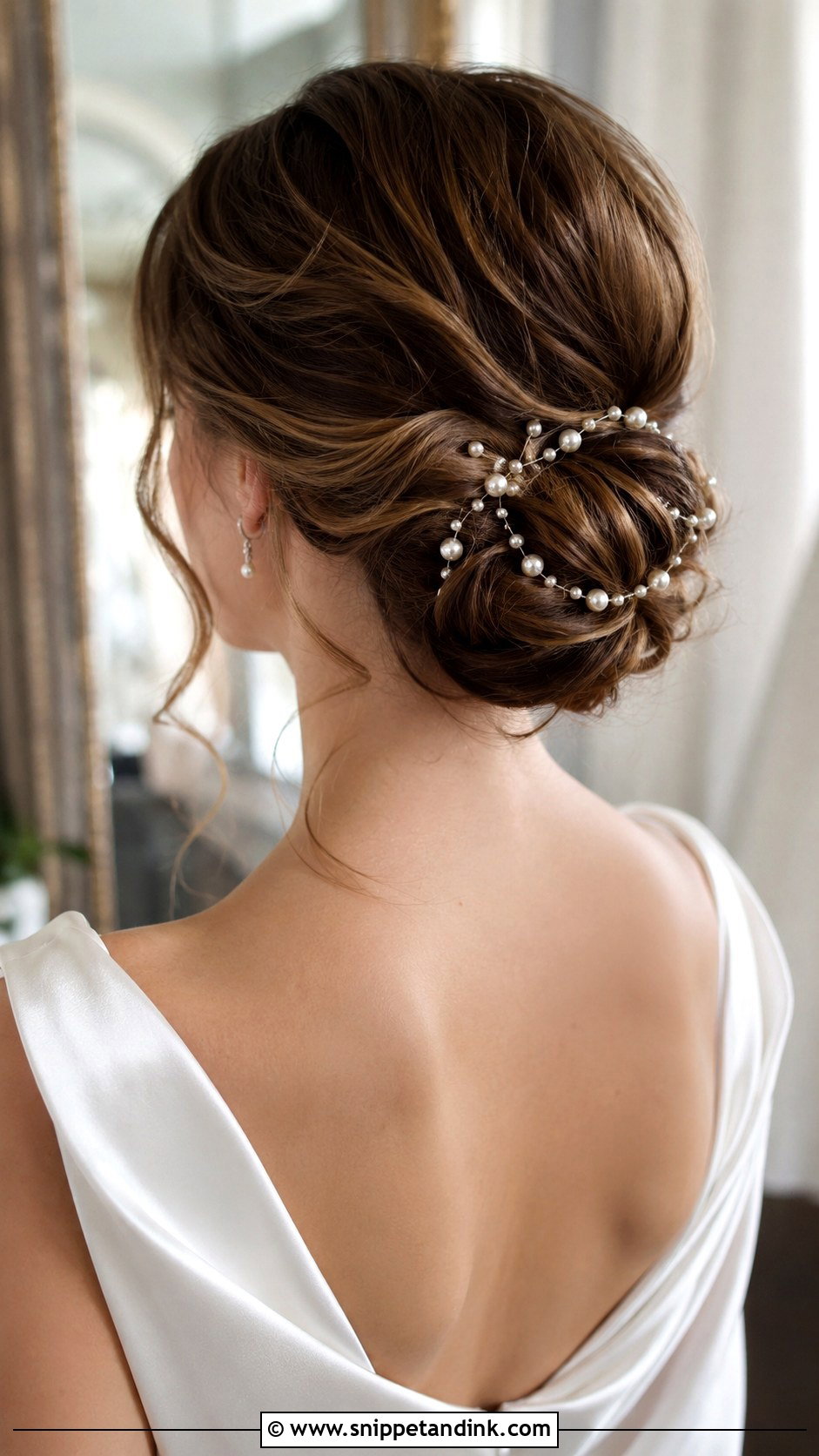
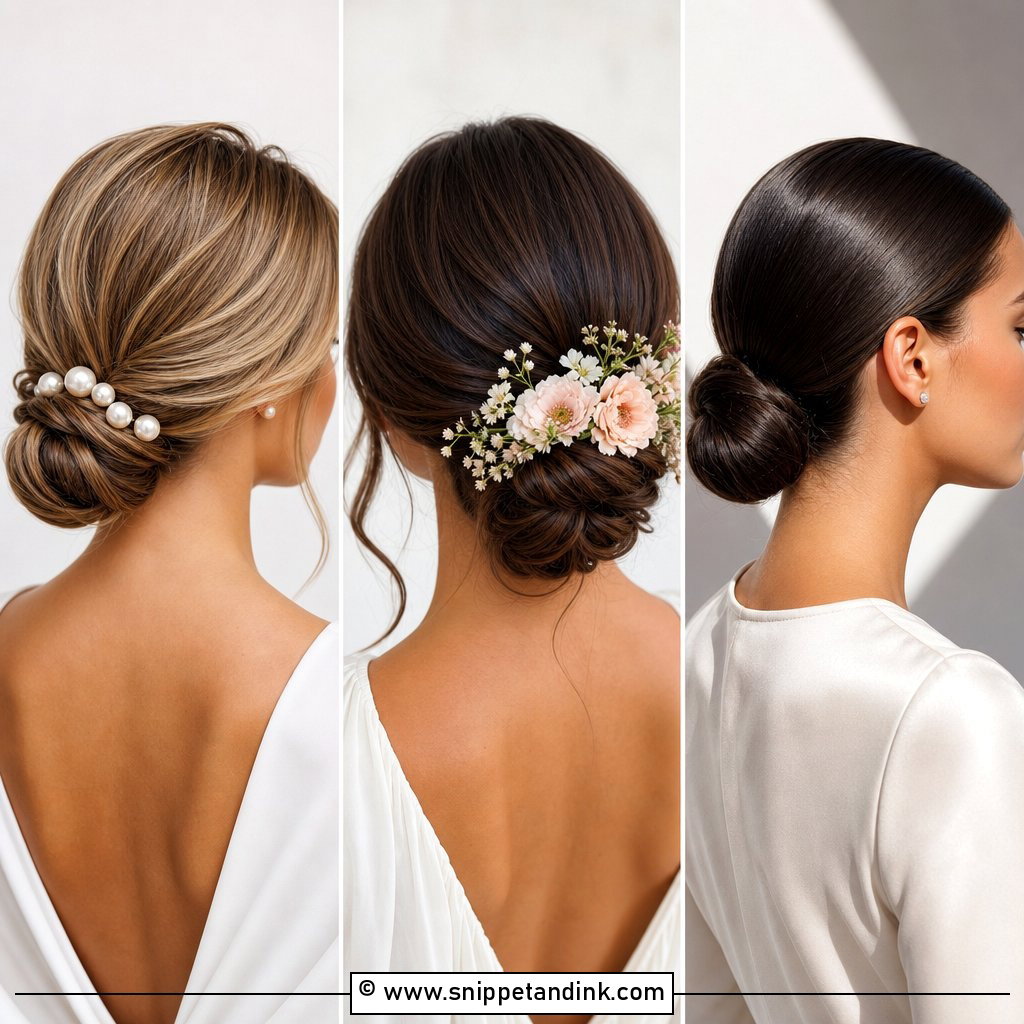
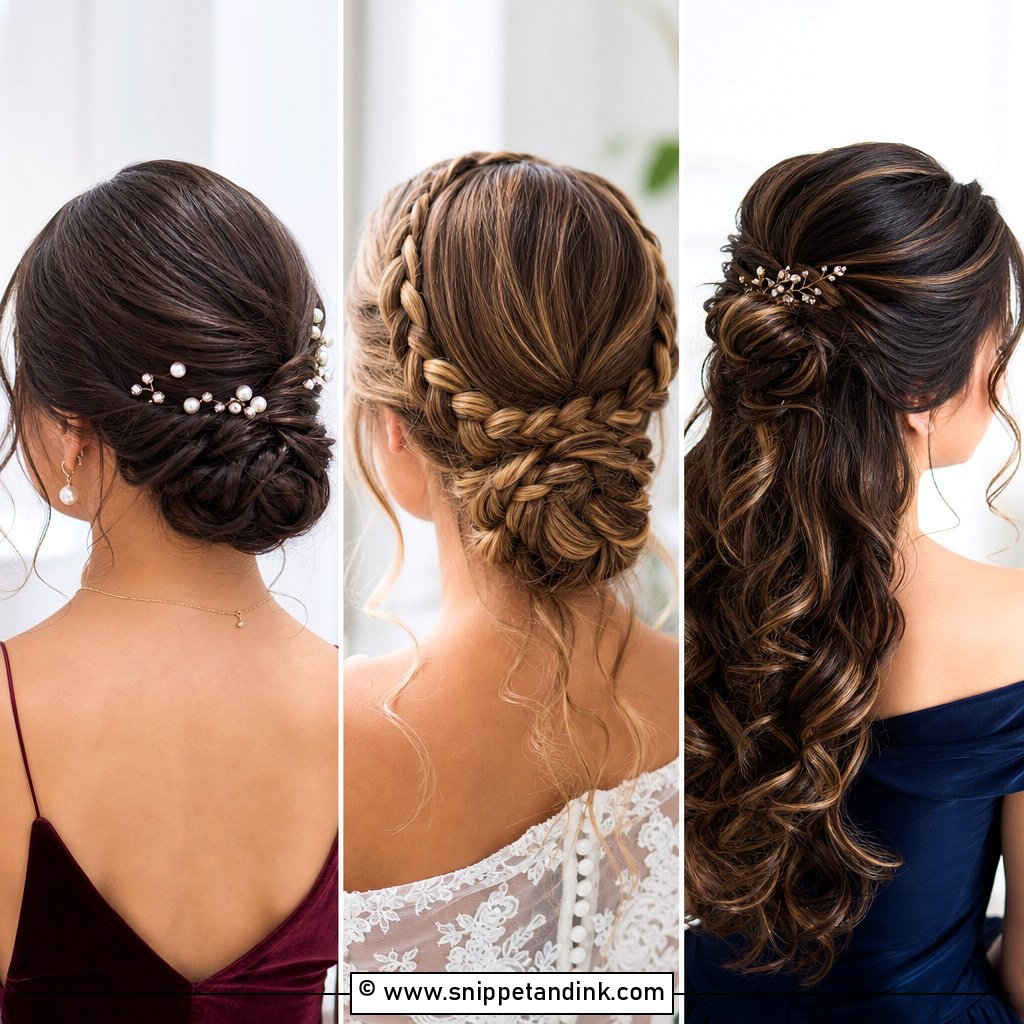
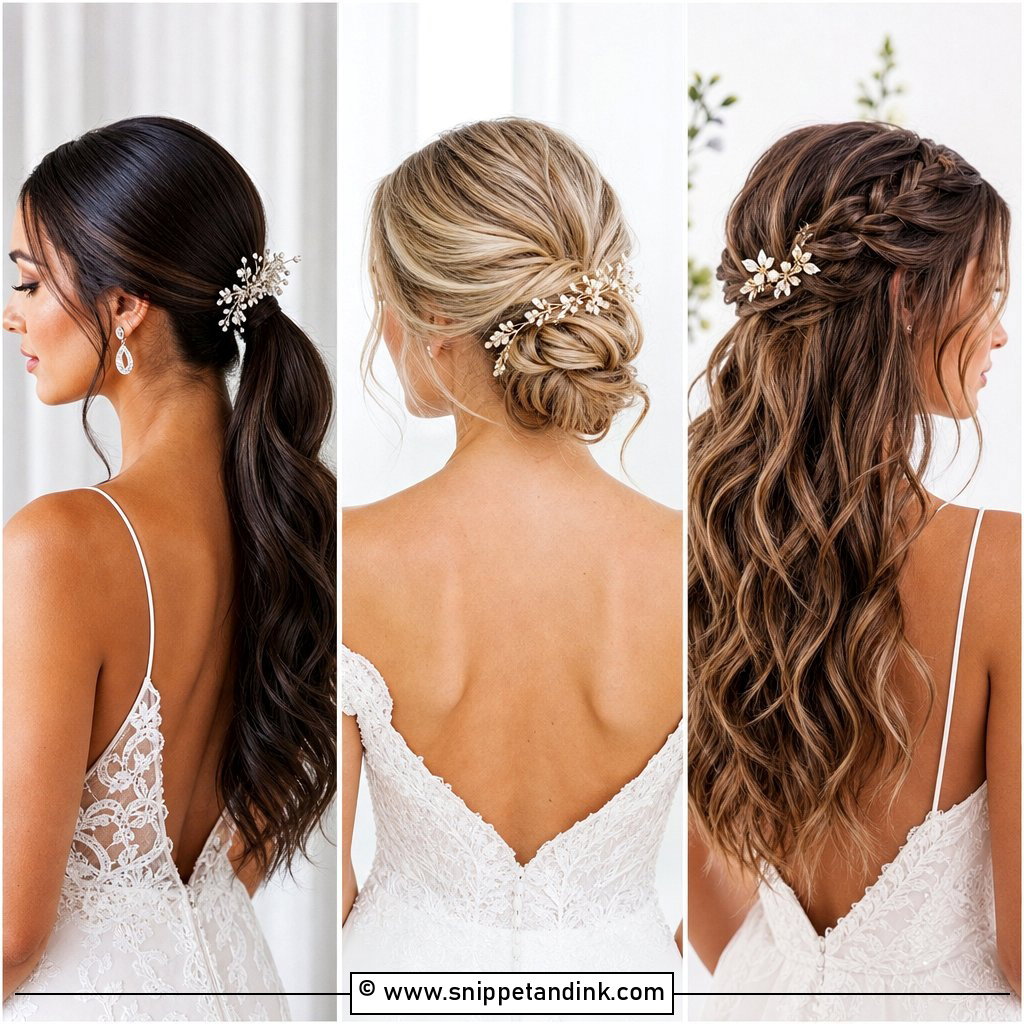
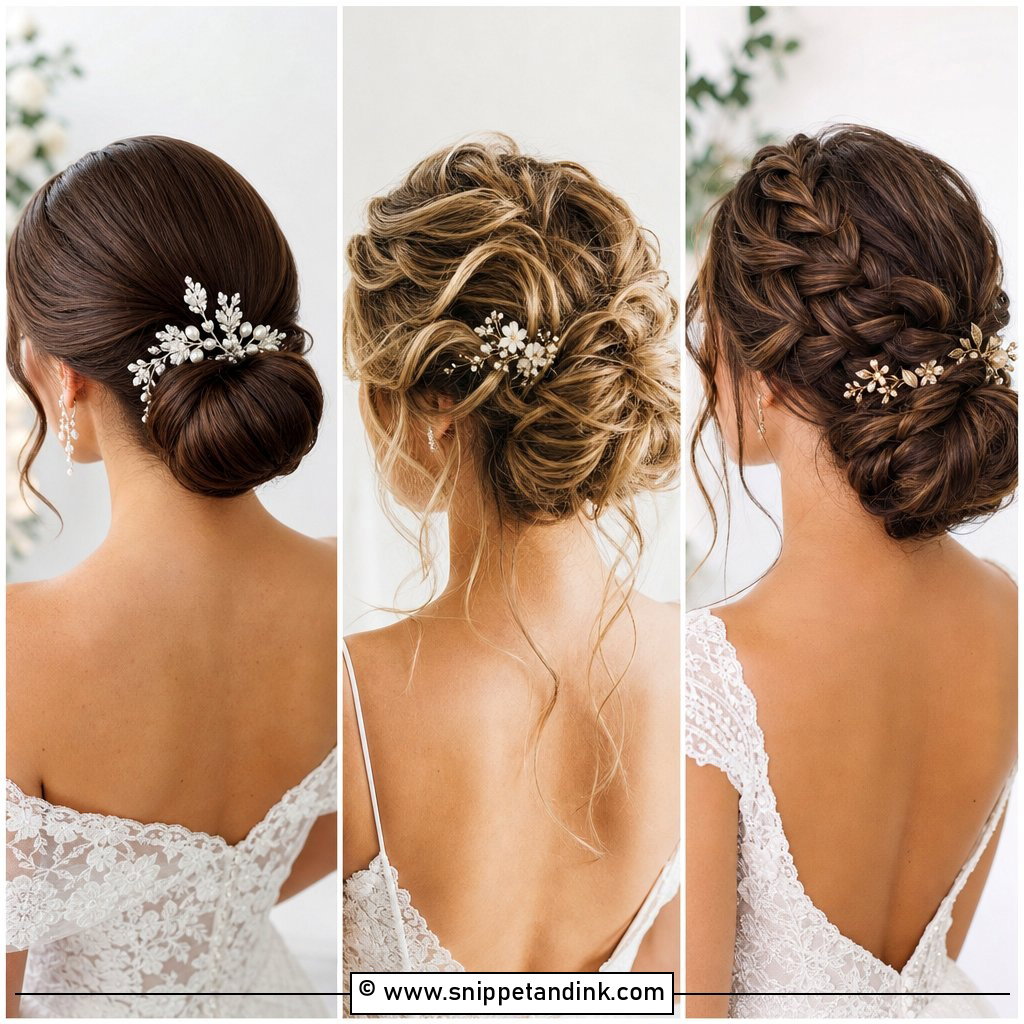
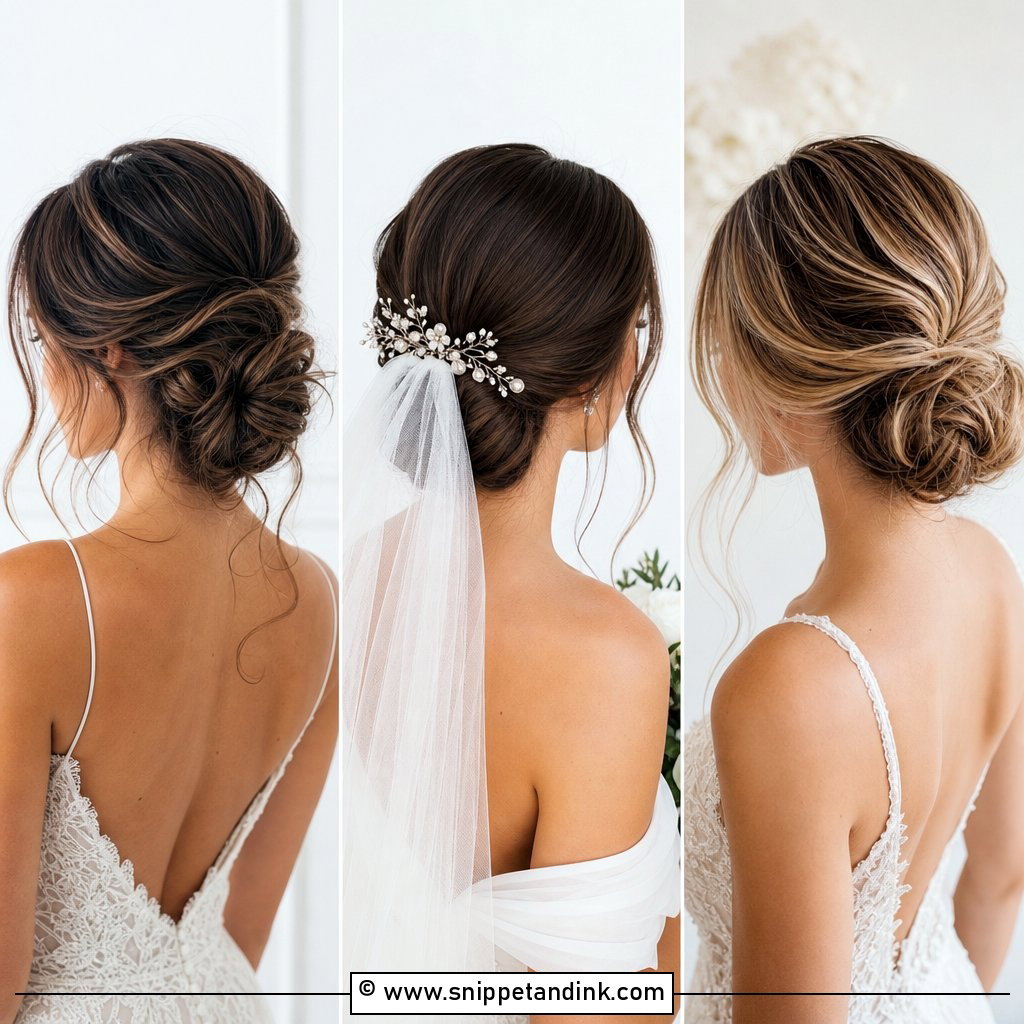
A low bun with strings of pearls woven through is quiet and refined. The pearls usually come on a fine wire or a pearl hair vine, which I pin in place after the bun is set so it follows its shape. Keep the bun sleek for an elegant look or loosen it slightly for softness. Loose tendrils around the face soften it further. Medium to long hair works. It suits almost any vintage dress, which makes it a safe pick if you’re unsure about era.
7. Vintage Bridal Bun with Birdcage Veil
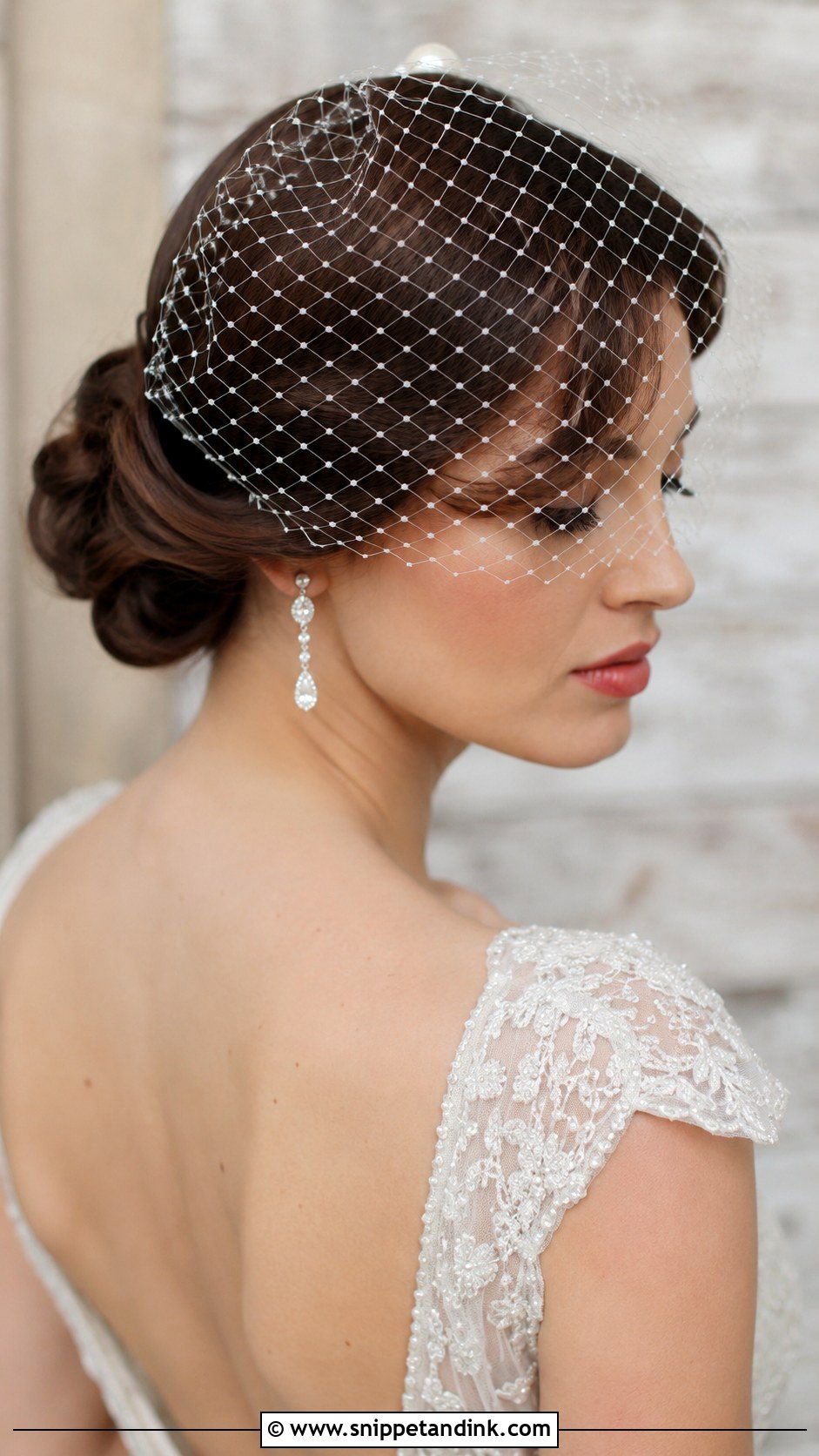
A birdcage veil is the most recognisable vintage accessory, and it needs a firm base to pin into. I build a low, sculpted bun first and attach the veil’s comb to one side, angled so the netting falls just over one eye or across both. Soft waves at the hairline help it sit naturally. Medium to long hair works. I’d suggest it for a smaller ceremony or a city wedding where the veil can be seen up close.
8. Soft Hollywood Waves
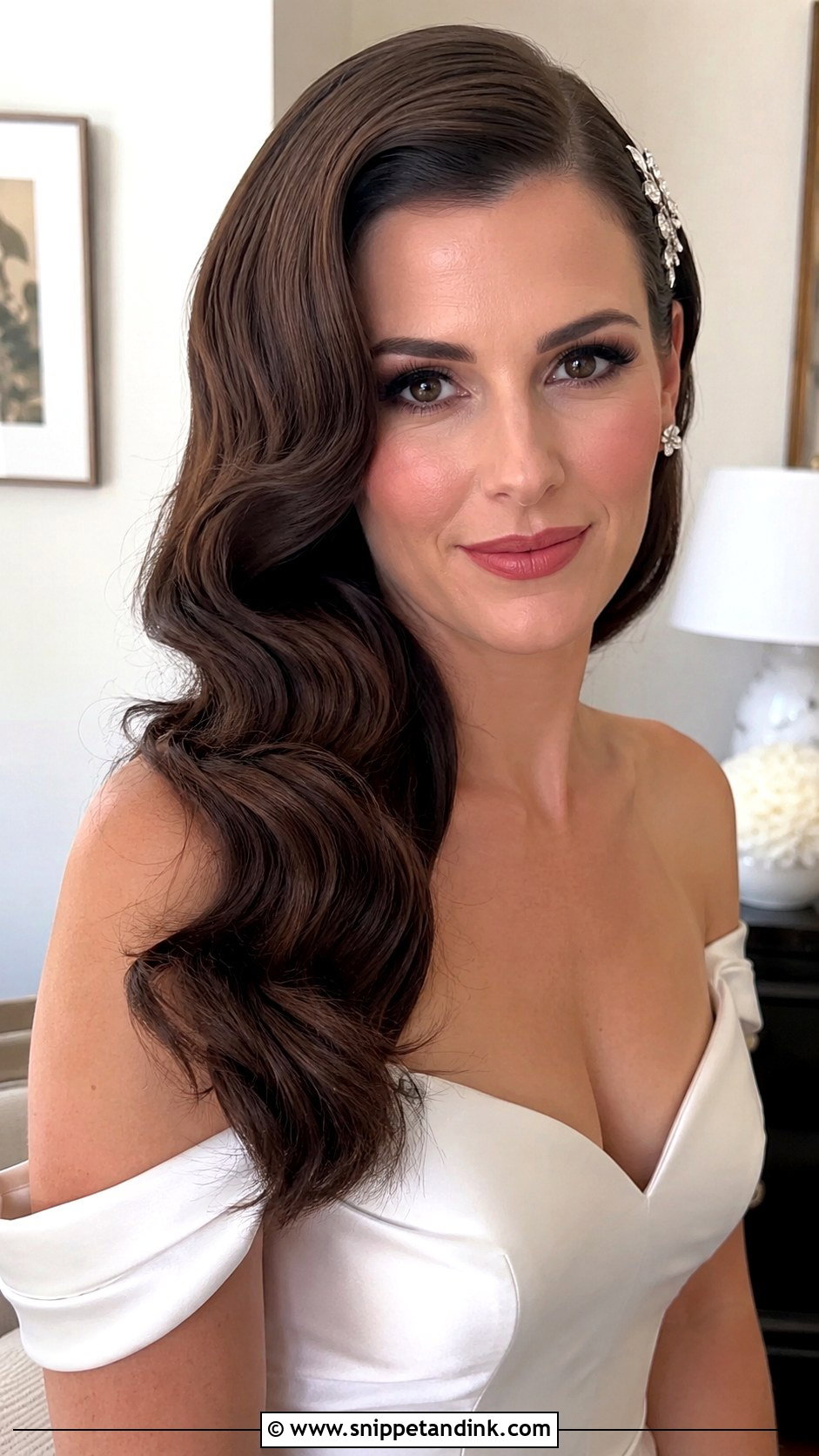
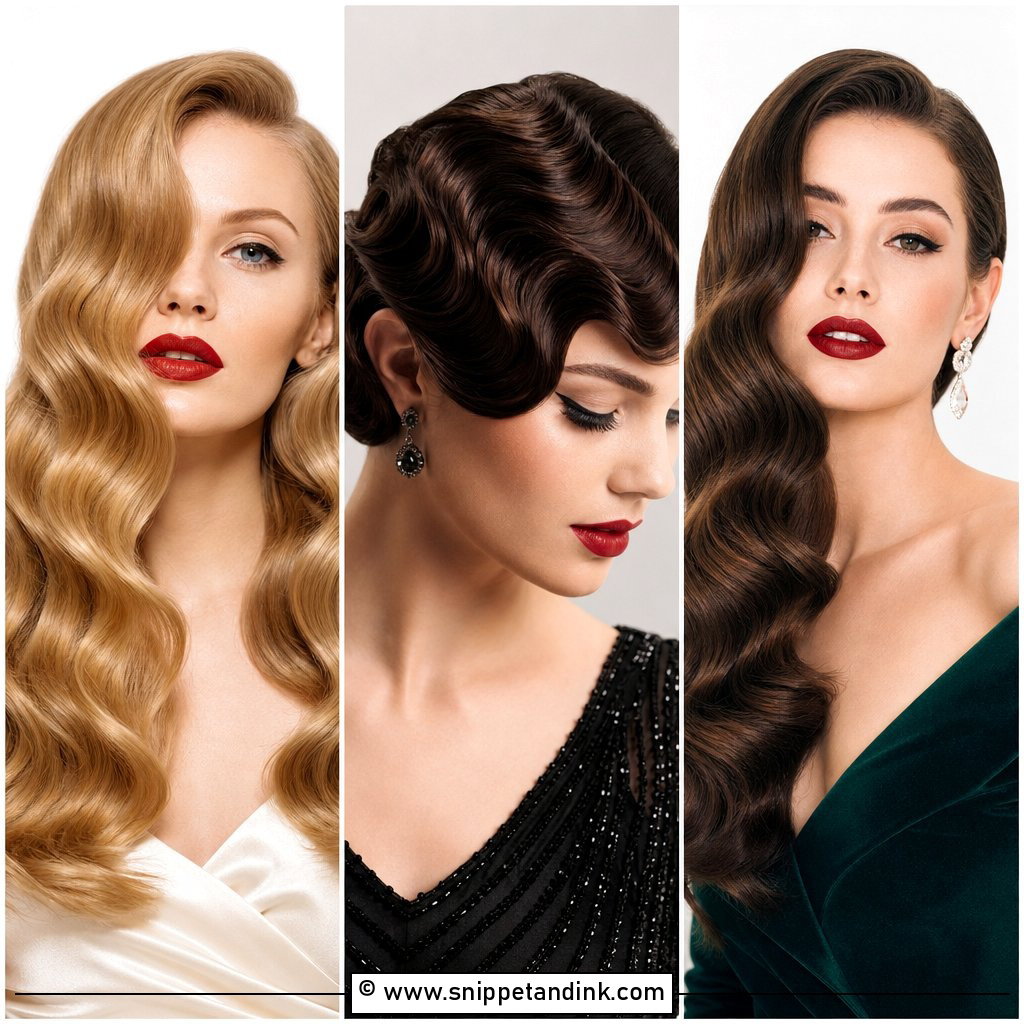
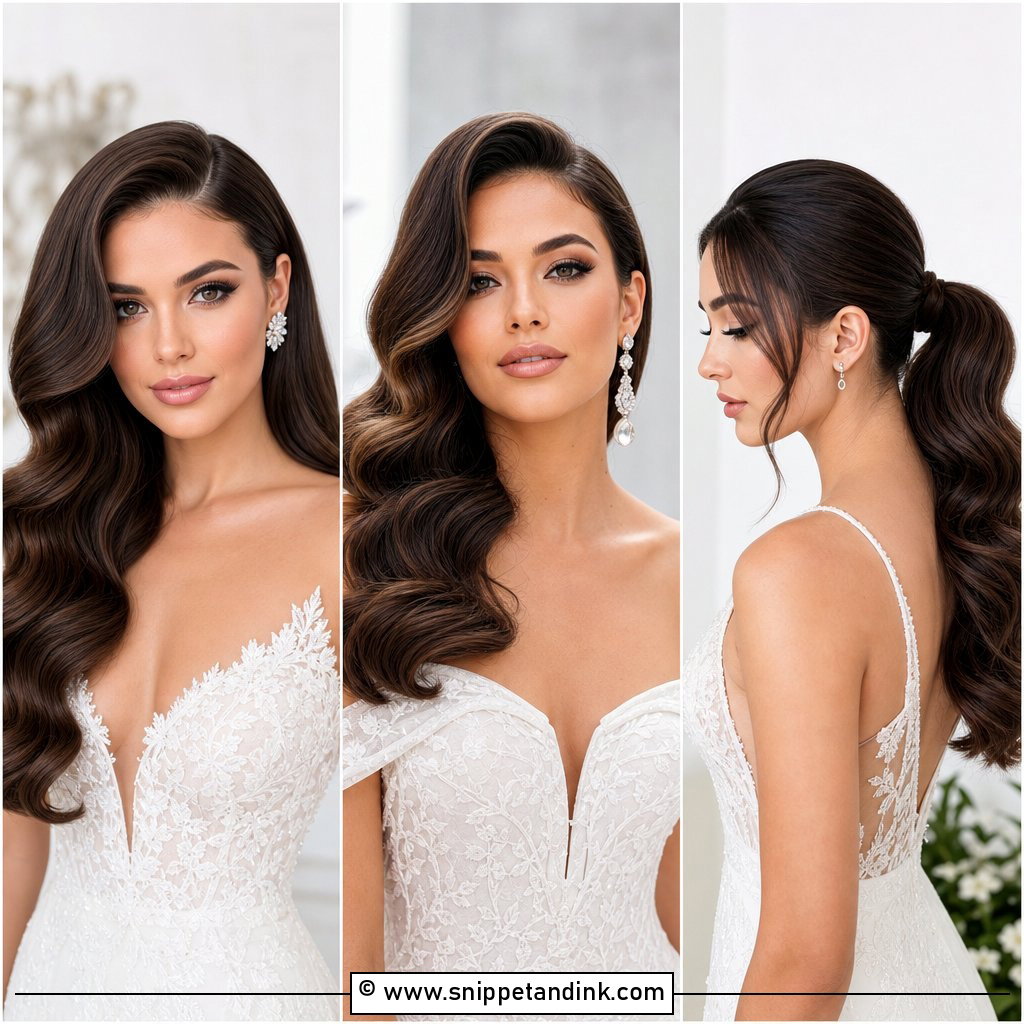
Hollywood waves are deep, glossy waves flowing in one direction, brushed out from tight, uniform curls. The trick is curling every section the same way, then brushing until the curls join into a single wave pattern. A side part adds drama. They need long, thick hair for full impact; fine hair gets the look but with less depth. A sparkling clip at the side is classic. These waves soften over the day, so I set them slightly firmer than you’ll want at the start.
9. 1930s S-Wave Crop
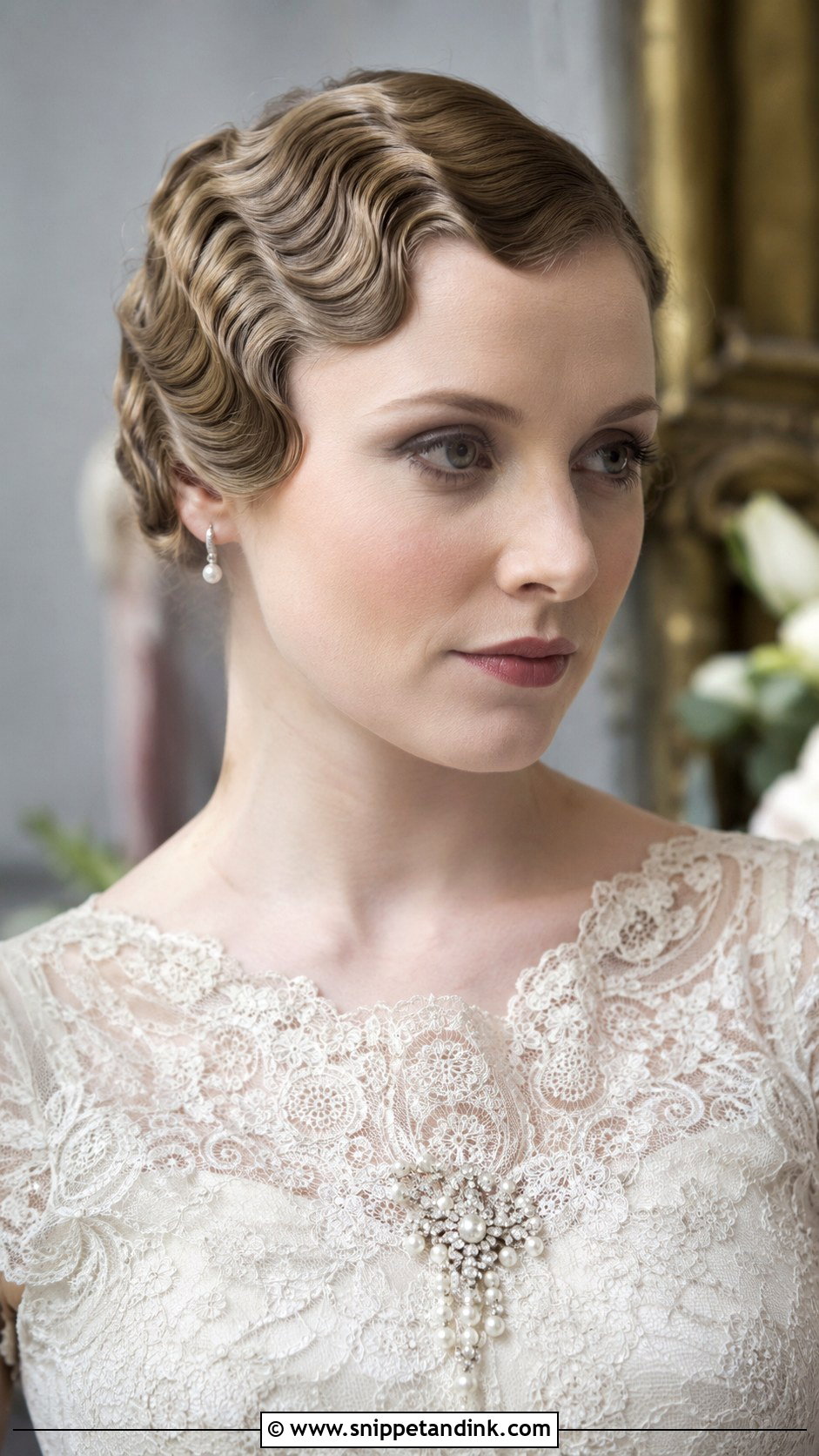
The 1930s S-wave crop shapes short hair into flowing S curves that sit close to the head. It’s softer than a 1920s finger wave and suits a cropped cut perfectly. The waves are set with a curling tool and then pressed into shape with a comb and pins, which come out once the hair cools. A small jewelled pin or flower works best. Fine to medium short hair holds this style well.
10. Braided Crown Updo
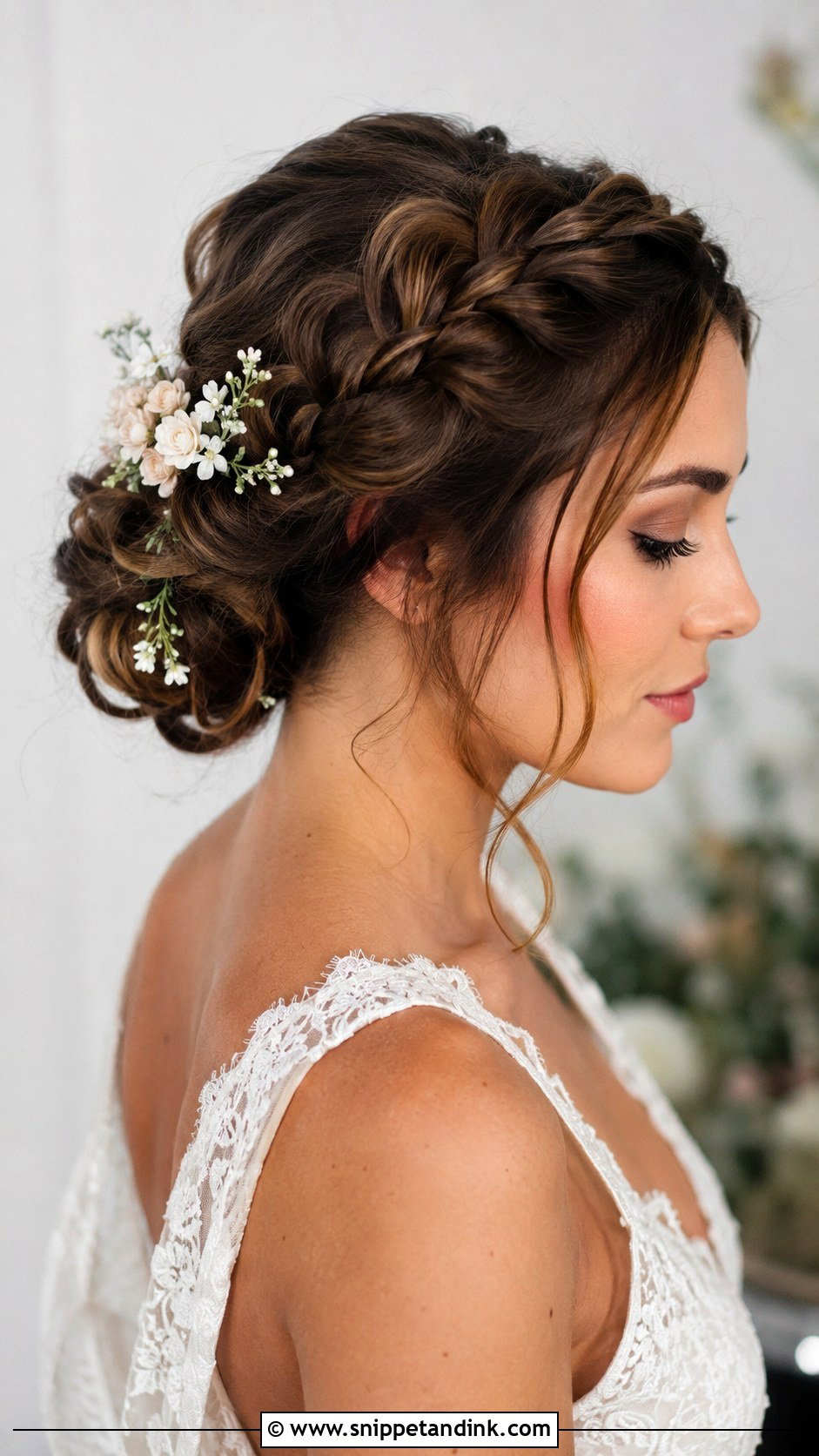
A braided crown wraps around the head with soft volume, giving a garden-party look. Braids aren’t strictly vintage, but they were popular in the 1940s and still suit a vintage tea-length dress. I braid on second-day hair or after a texture spray so the braid grips. Small flowers tucked into the braid suit a rustic wedding. Long, thick hair works best for a full wrap.
11. Gibson Tuck Updo
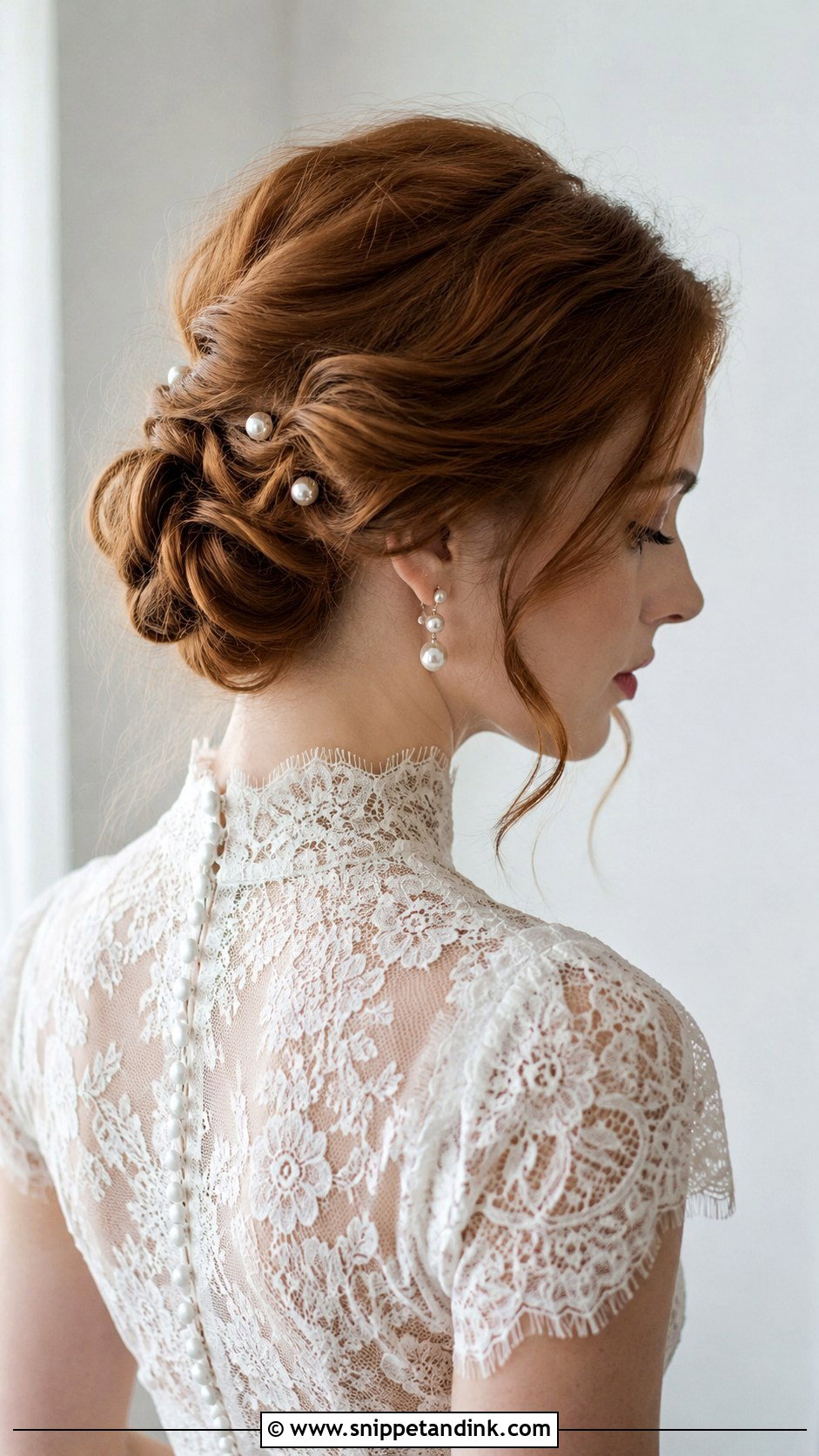
The Gibson tuck rolls the hair into a soft looped bun at the nape and borrows its name from the Edwardian Gibson Girl. The modern version usually rolls the ends under and tucks them into a band, so the roll needs enough length to wrap. I set the hair with large rollers first; flat hair makes a thin, saggy tuck. Pearl pins or a delicate comb suit the smooth shape. Medium to long hair works.
12. Retro Half-Up with Bouffant
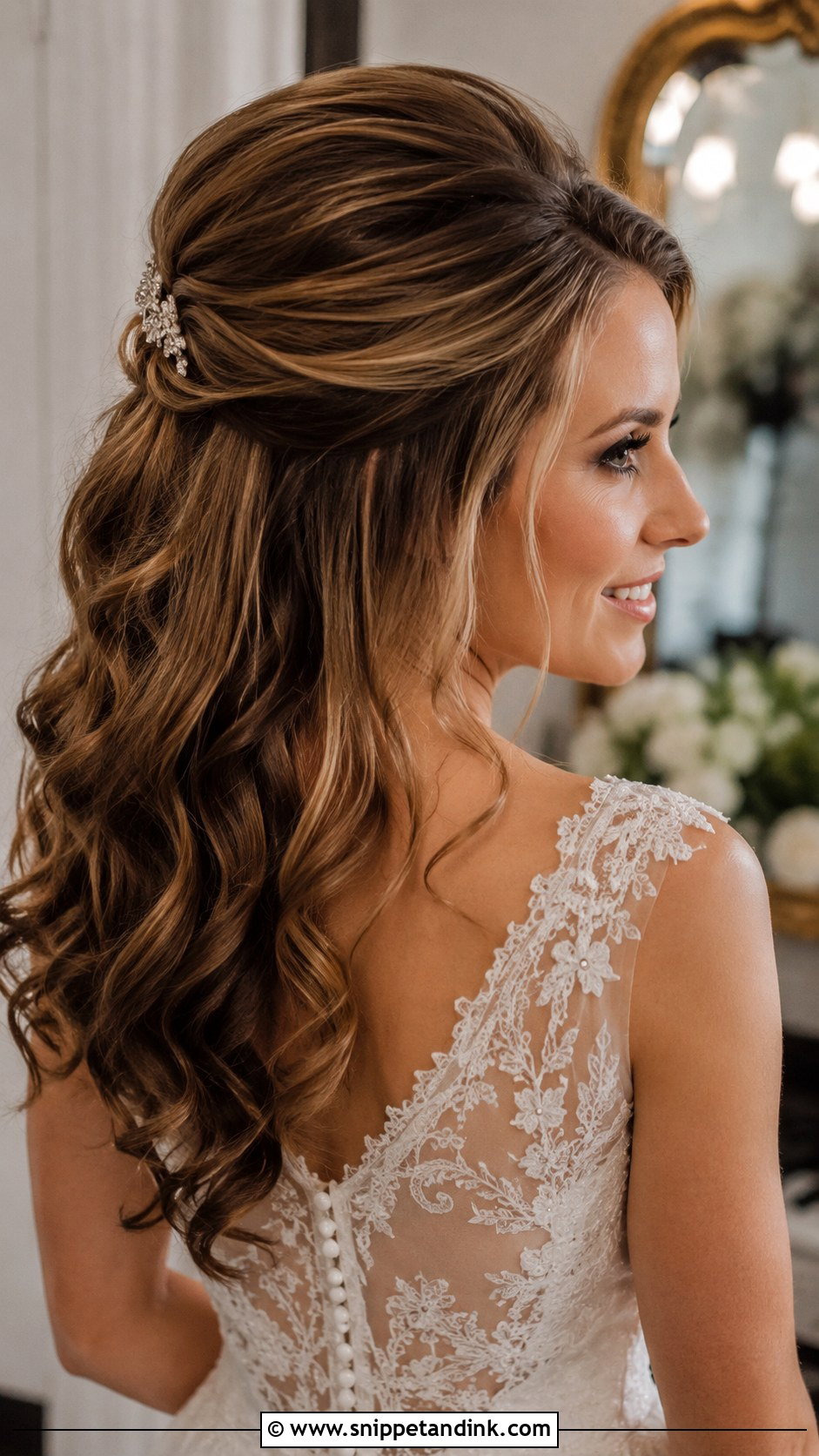
The retro half-up bouffant lifts the crown and leaves the rest loose. The bouffant is backcombed and smoothed, then pinned at the back; the lengths below are curled for softness. Height should sit at the crown, not the forehead, or it looks dated rather than vintage. A jewelled clip or small tiara adds a retro touch. Medium to long hair works best.
13. 1920s Faux Bob
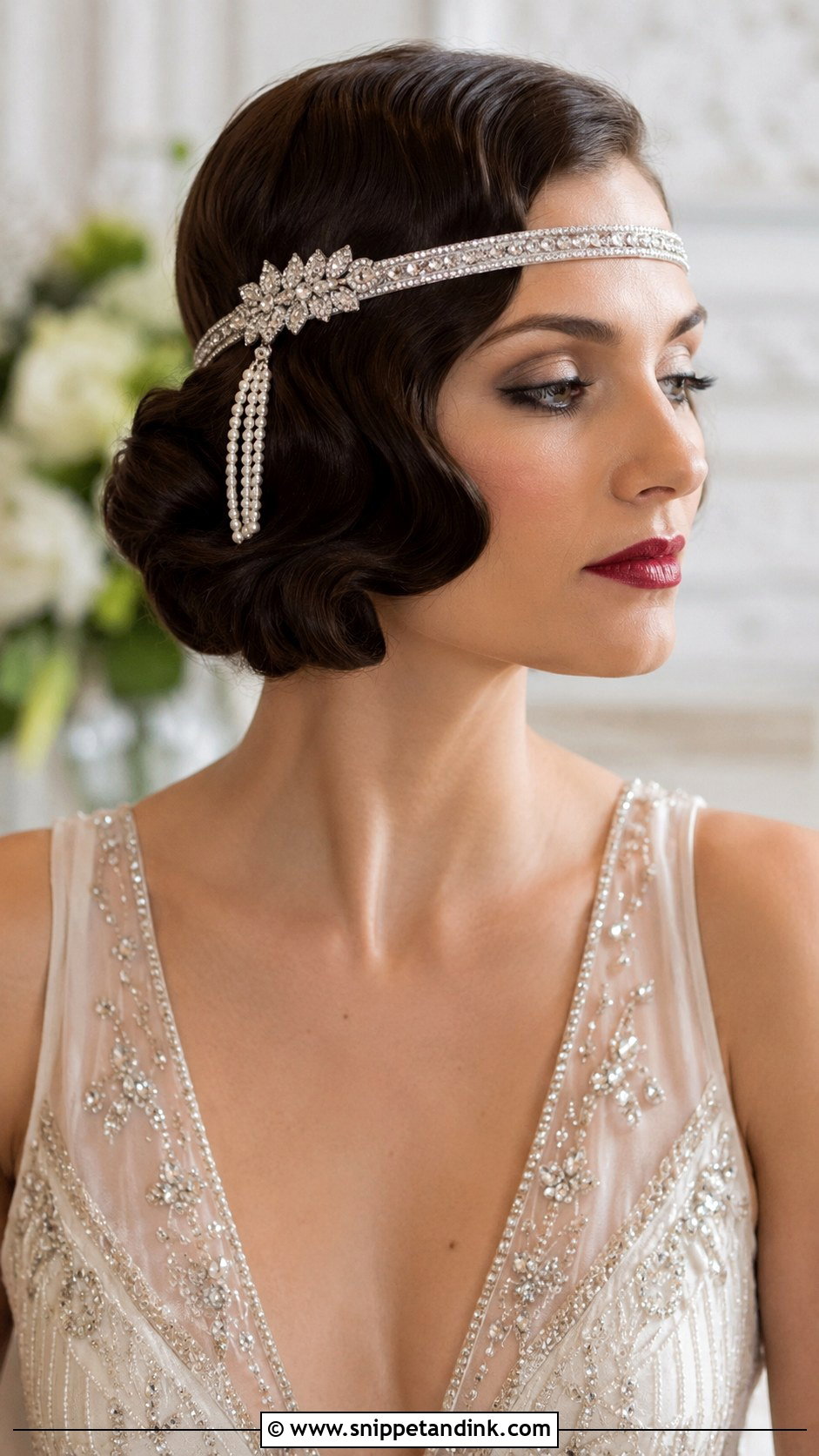
The faux bob is a clever option for brides with long hair who want the flapper look. Long hair is curled, rolled under and pinned at the nape to mimic a short 1920s bob without a cut. Very thick or very long hair makes a bulky roll, so I sometimes braid the ends first and tuck the braid in flat. Pair it with finger waves and a beaded headband. Medium to long hair works best.
14. Vintage Chignon with Side Part
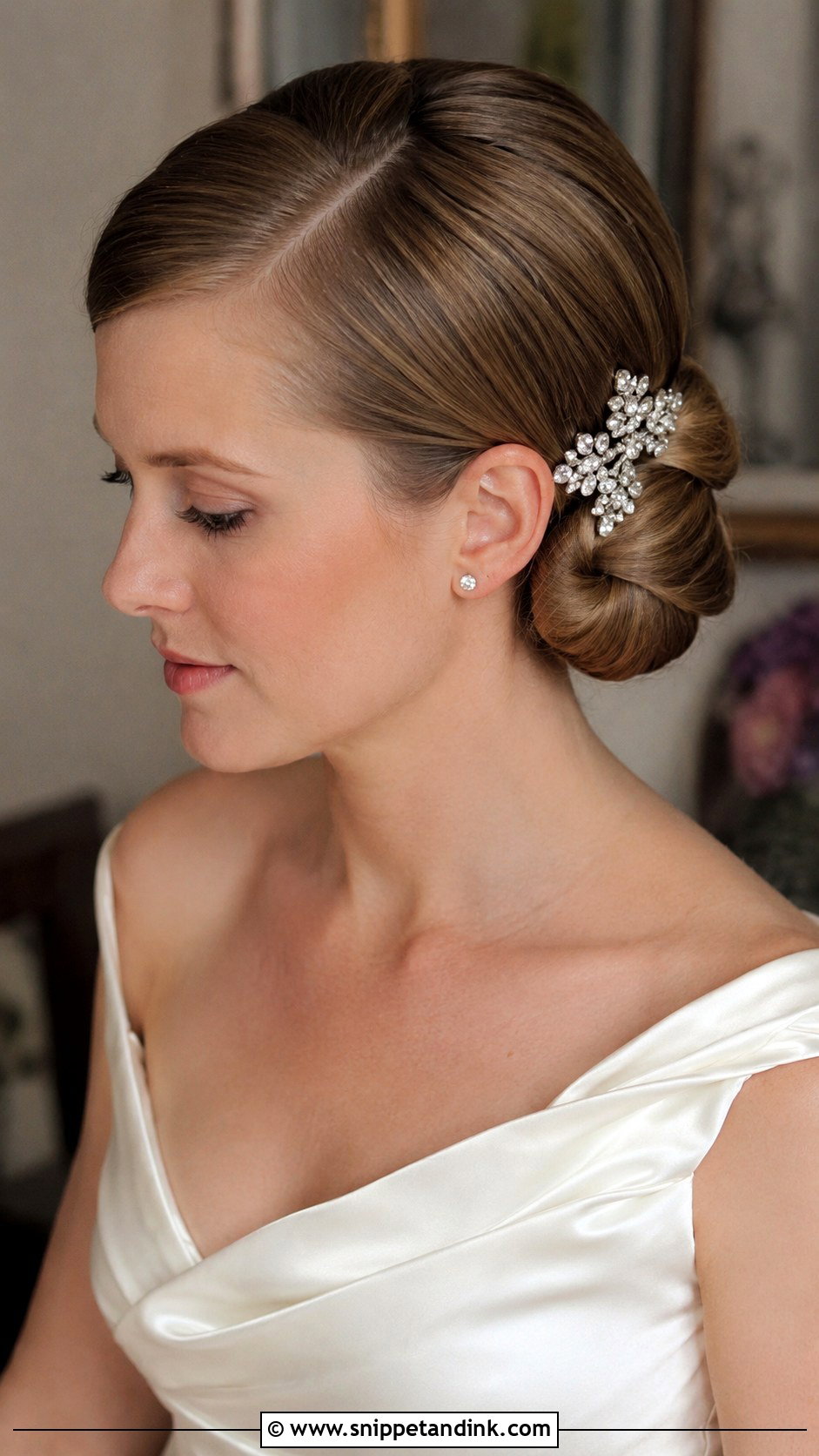
A low twisted chignon with a deep side part is one of the most versatile vintage looks. It sits at the nape and suits both simple and ornate gowns. I twist the hair rather than wrap it into a bun, which gives a cleaner shape. The side part matters; a centre part changes the whole look. Add a jewelled comb or pearl pins. Medium to long hair suits it.

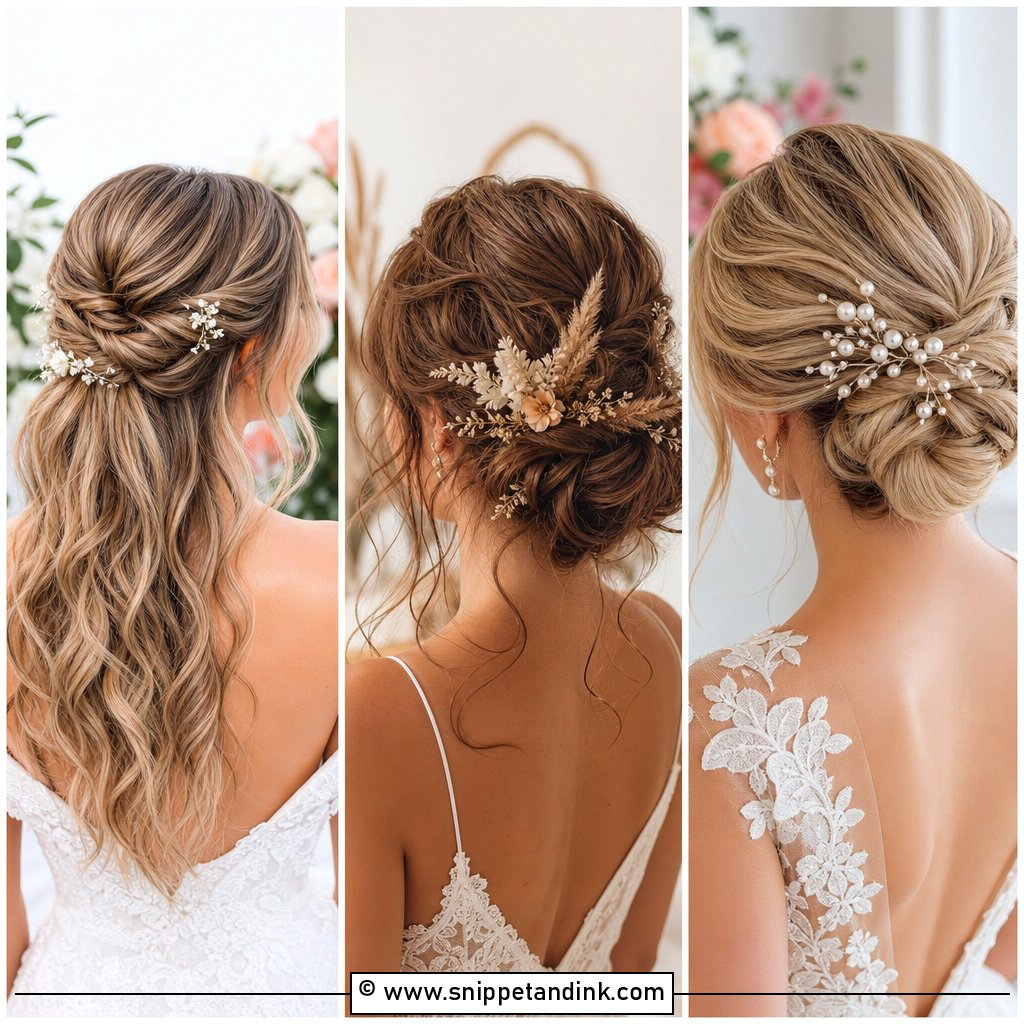
15. Marcel Wave Bob
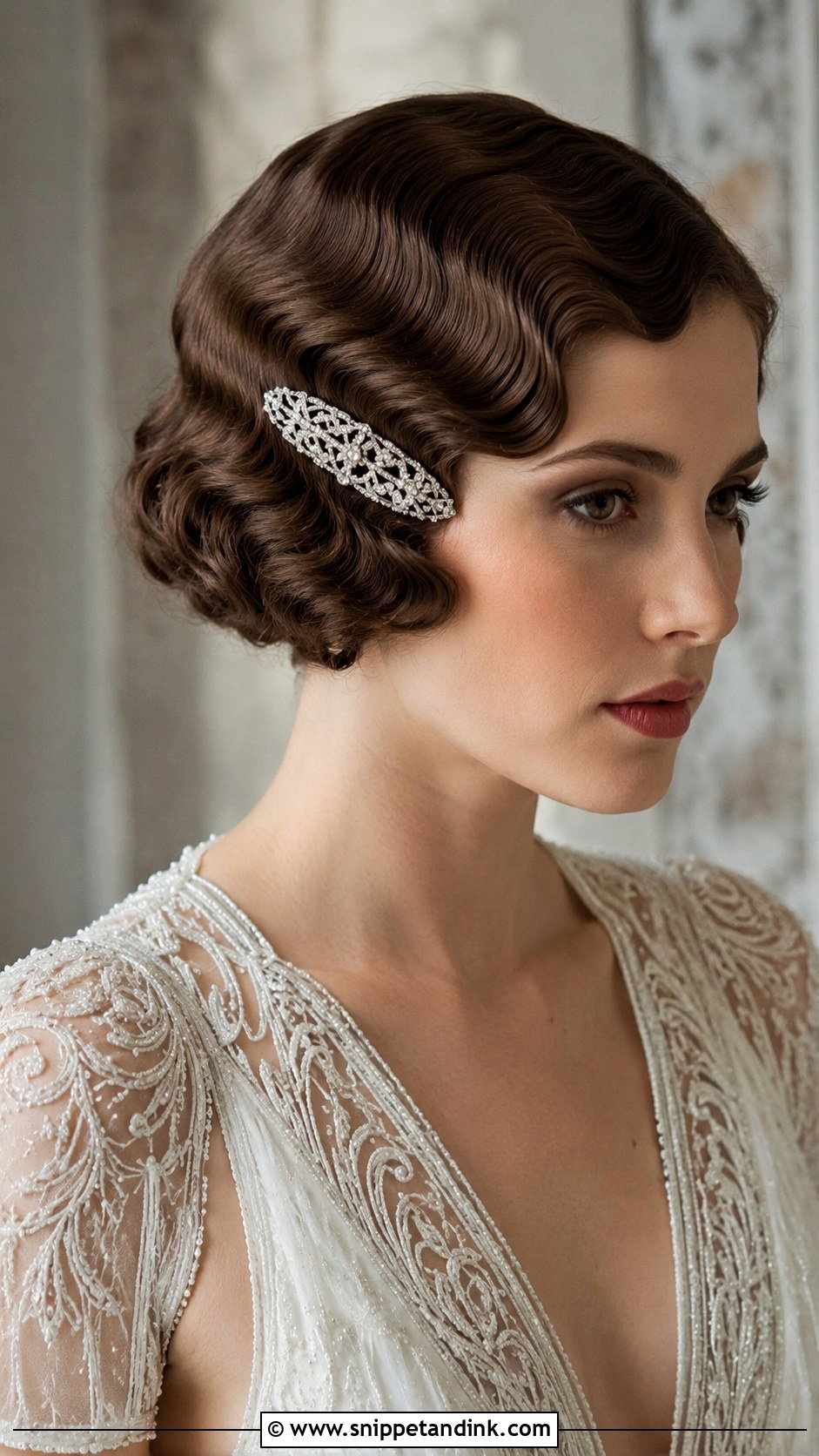
The Marcel wave is named after François Marcel, who created it with heated irons in the late 1800s. It forms deep, regular waves across short hair, and today we get the same result with a modern waving iron. It suits a chin-length bob and frames the face. Smooth, fine to medium short hair holds the waves best. An Art Deco clip or a small headpiece suits the era. The Marcel wave bob is ideal for a 1920s or 1930s dress.
16. Floral Halo Updo
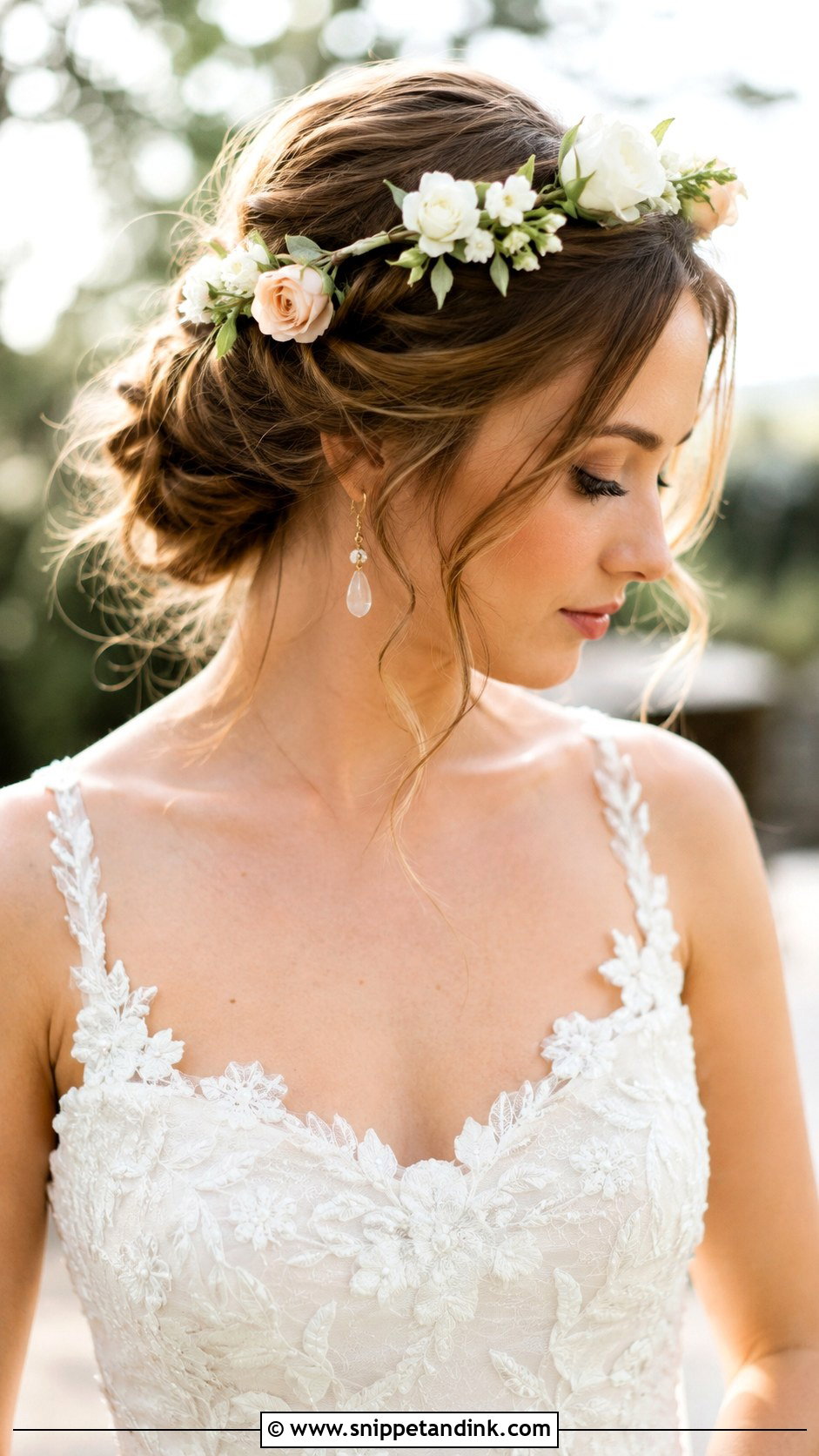
A soft updo with a ring of fresh or silk flowers makes the most whimsical look in this list. Fresh flowers wilt in heat, so for a summer garden wedding I’d use silk flowers in the halo and fresh ones only in the bouquet. Keep the updo simple, since the flowers do the decorating. Loose tendrils soften the face. Medium to long hair works well.
17. 1950s Bouffant Ponytail
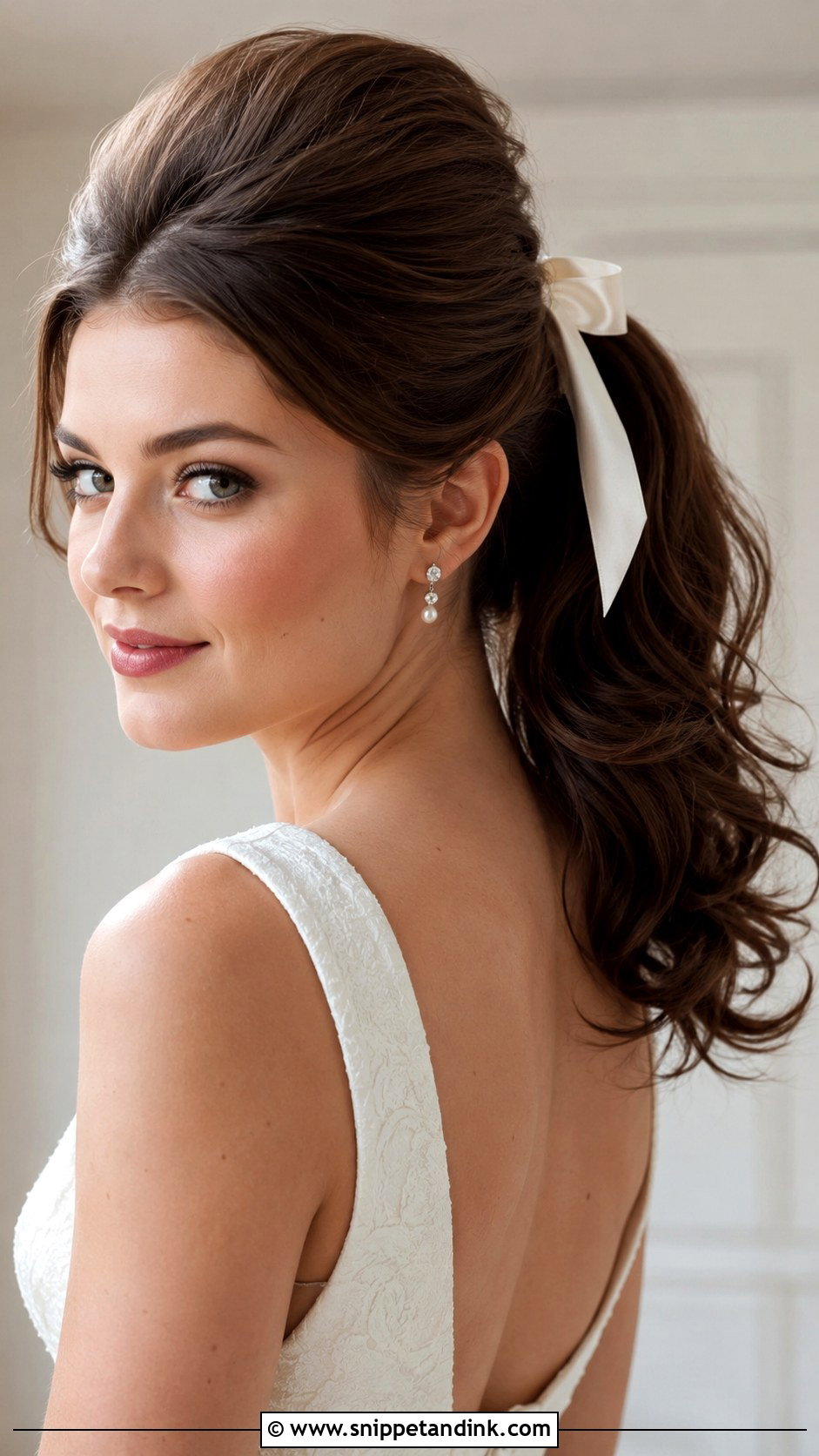
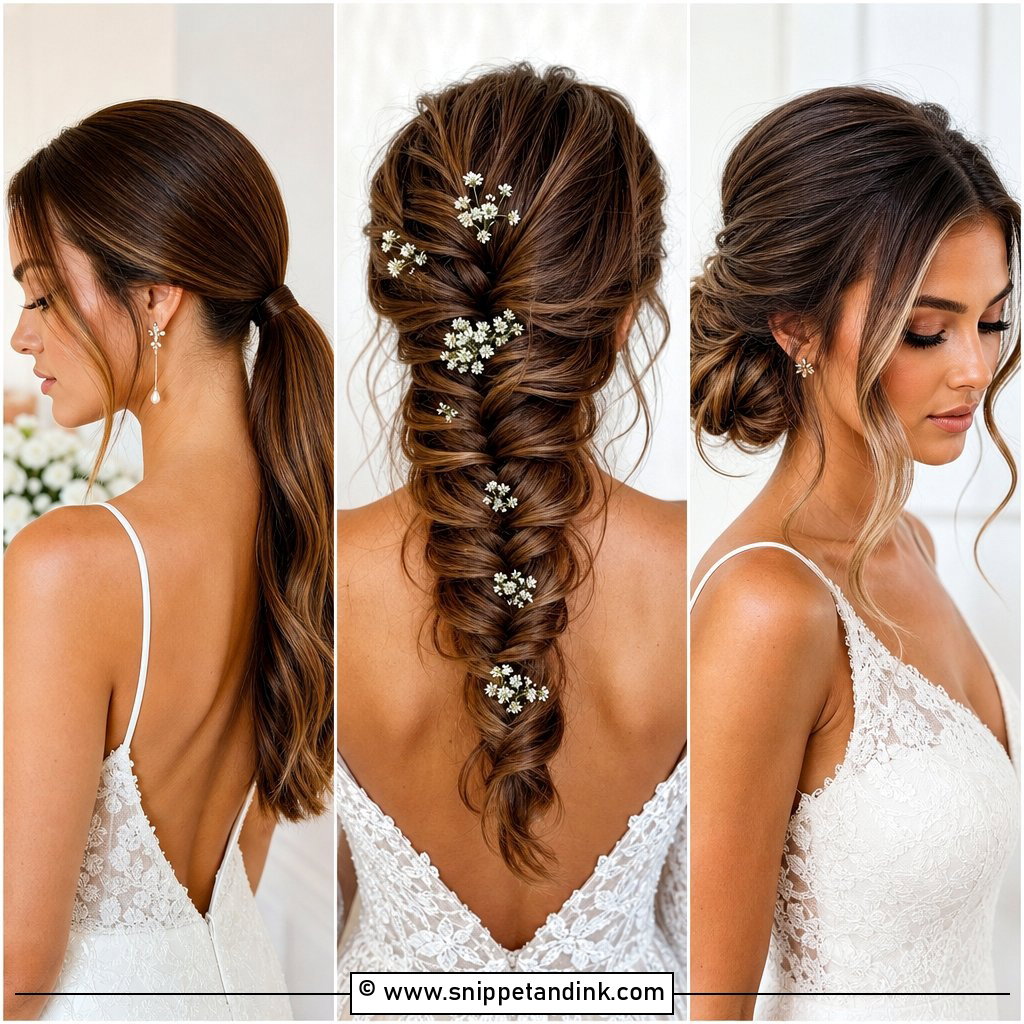
The 1950s bouffant ponytail lifts the crown and sweeps the rest into a high, bouncy pony. A silk ribbon tied around the base hides the elastic and adds a retro touch. I curl the ends with a large barrel so the pony bounces when you walk. High ponytails drop over a long day, so I anchor the base with crossed pins underneath. Medium to long hair works. It’s a playful choice for a relaxed reception.
18. Vintage Curls with Side Sweep
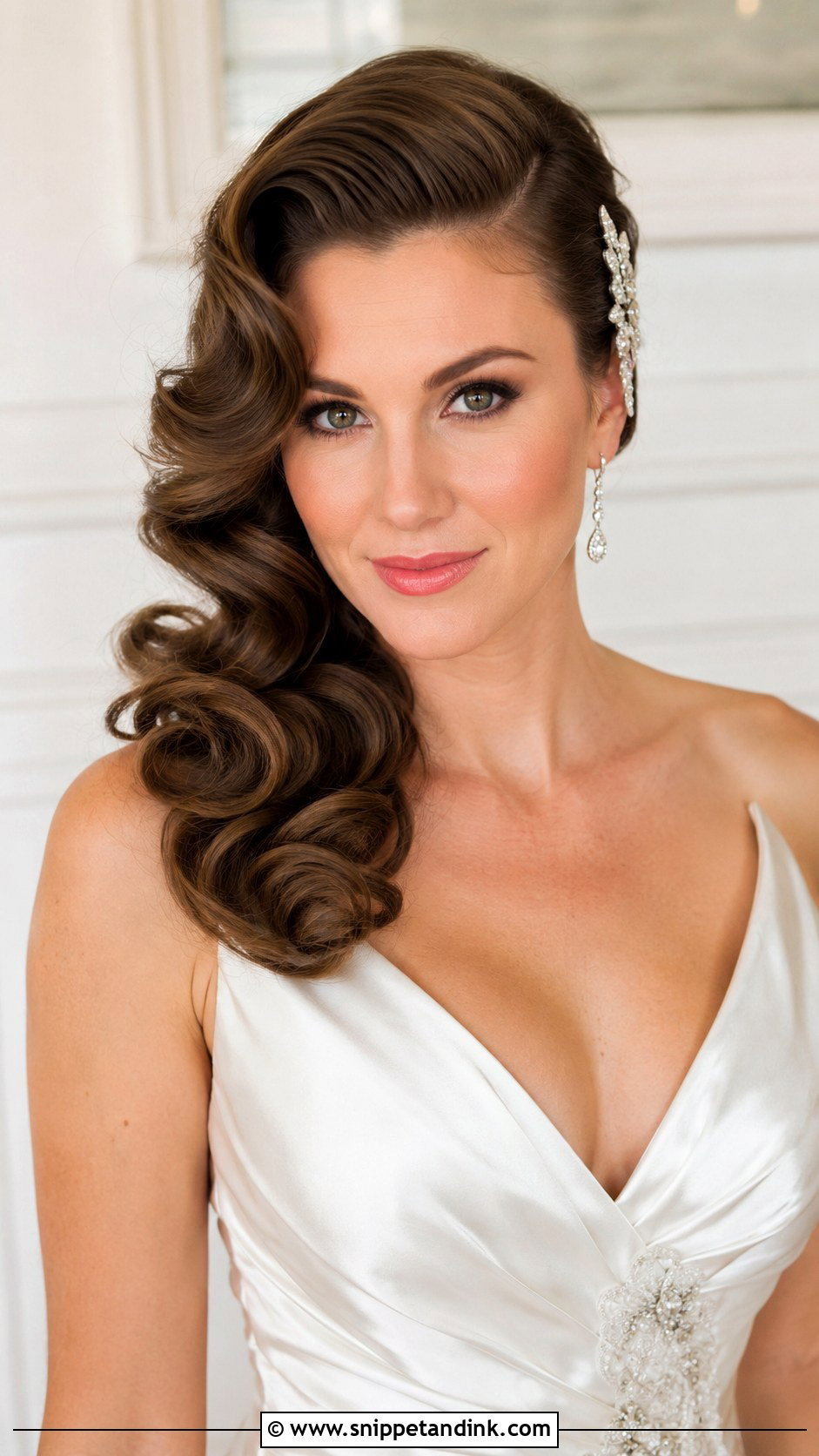
Curls swept to one side cascade over a shoulder and leave the other side of the neck bare. I pin the back securely behind the ear before sweeping, so the curls don’t fall back. It shows off earrings and an open or one-shoulder neckline. A jewelled clip holds the sweep. Long, thick hair gives the most volume. The curls relax over the day, so I’d set them firmly at the start.
19. Edwardian Pompadour Updo
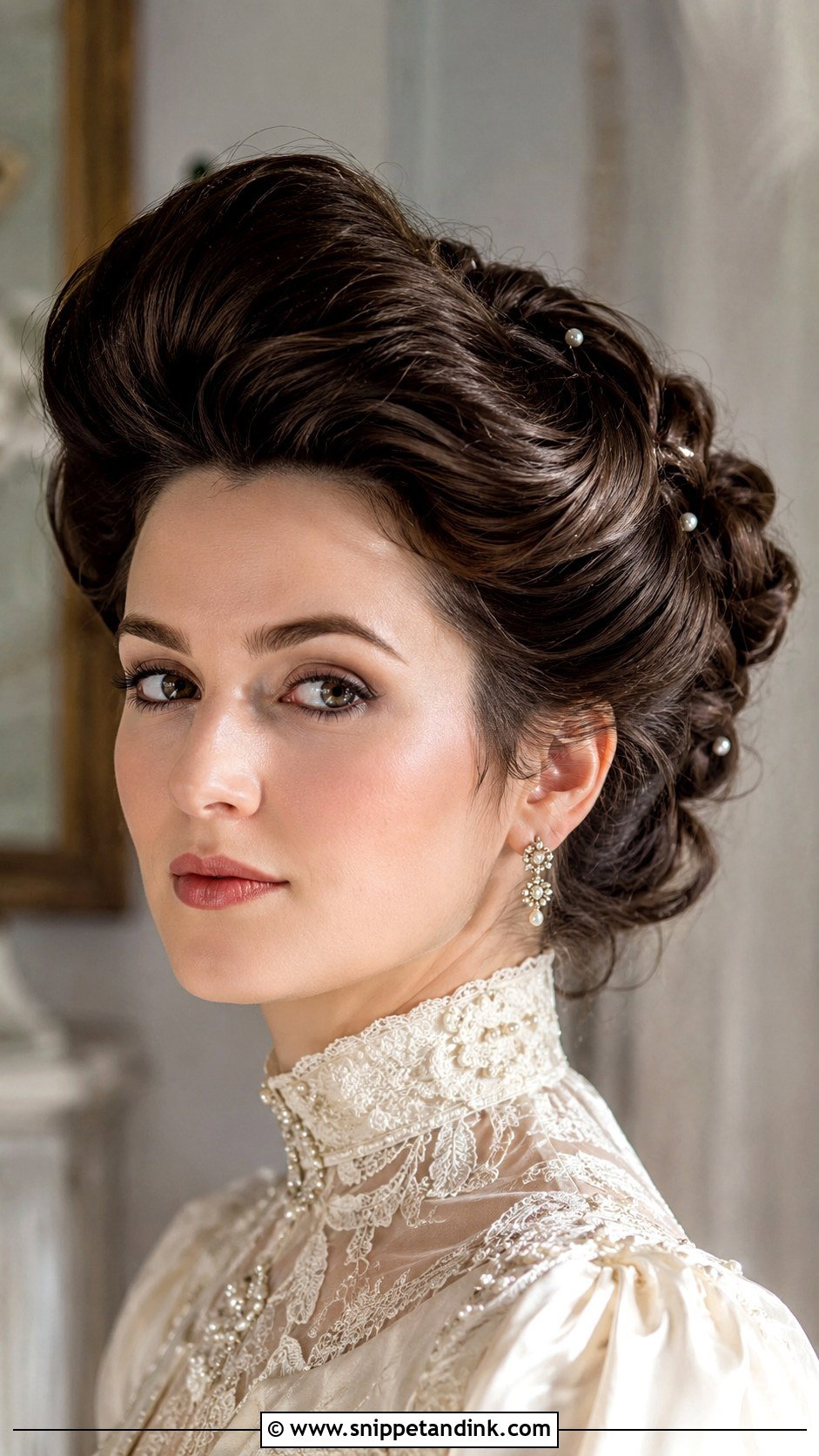
The Edwardian pompadour lifts the front of the hair into a full, rounded shape. Originally it was built over a pad of hair called a rat, and I still use a small padding or backcombing to give it lift. The back stays softly gathered. It suits ornate gowns and historical themes. Pearl pins or a jewelled comb finish it. Medium to long hair works well.
20. 1970s Boho Waves with Center Part
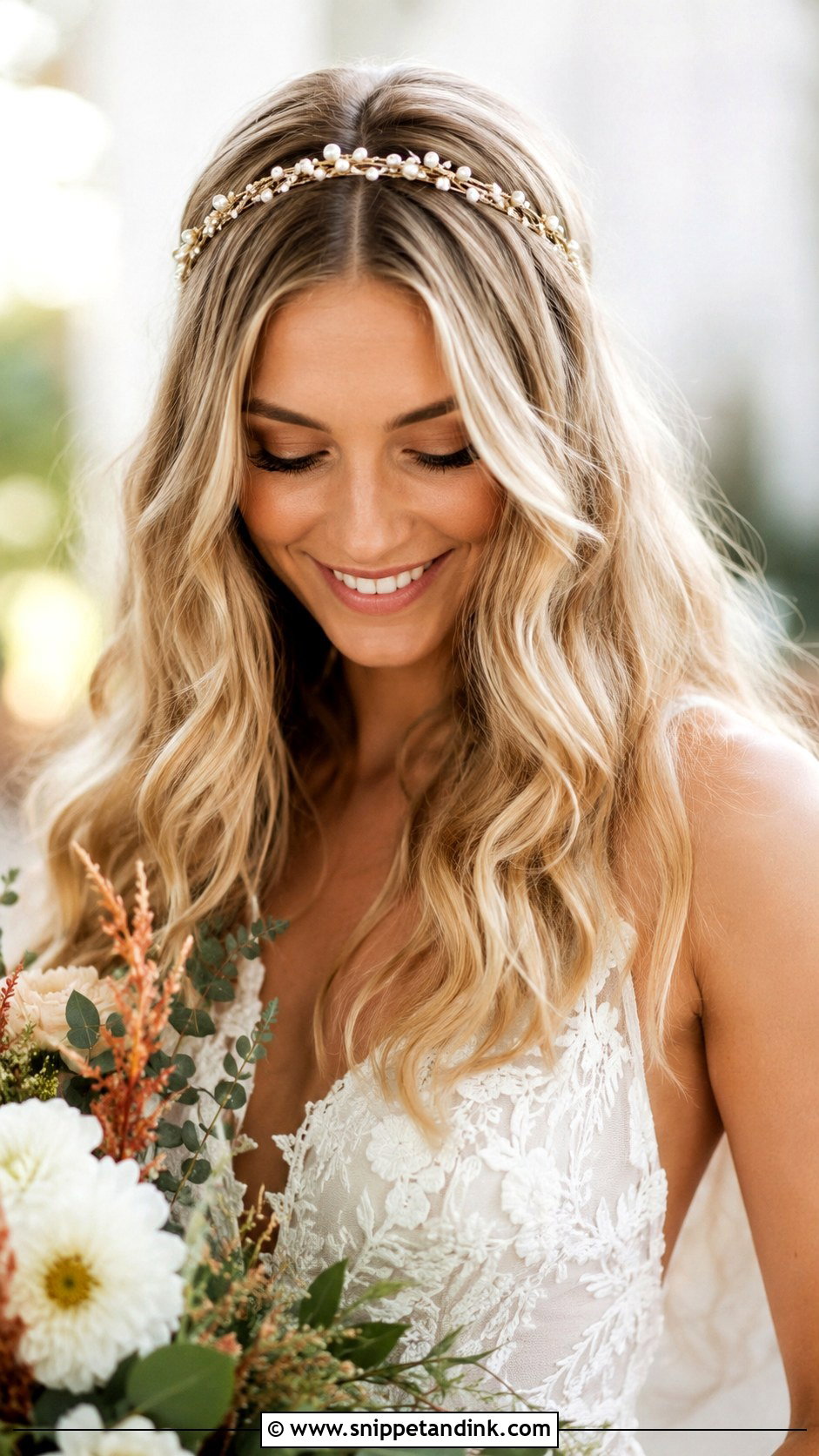
Loose, flowing 1970s waves with a centre part are the most relaxed vintage look. The centre part frames the face symmetrically, which suits balanced features best. I use a large barrel and brush the waves out so they look natural. Small flowers or a delicate headband add charm. Long, layered hair suits it. It works for outdoor and bohemian weddings but drops quickly in humidity, so a light spray is essential.
21. Vintage Updo with Lace Veil
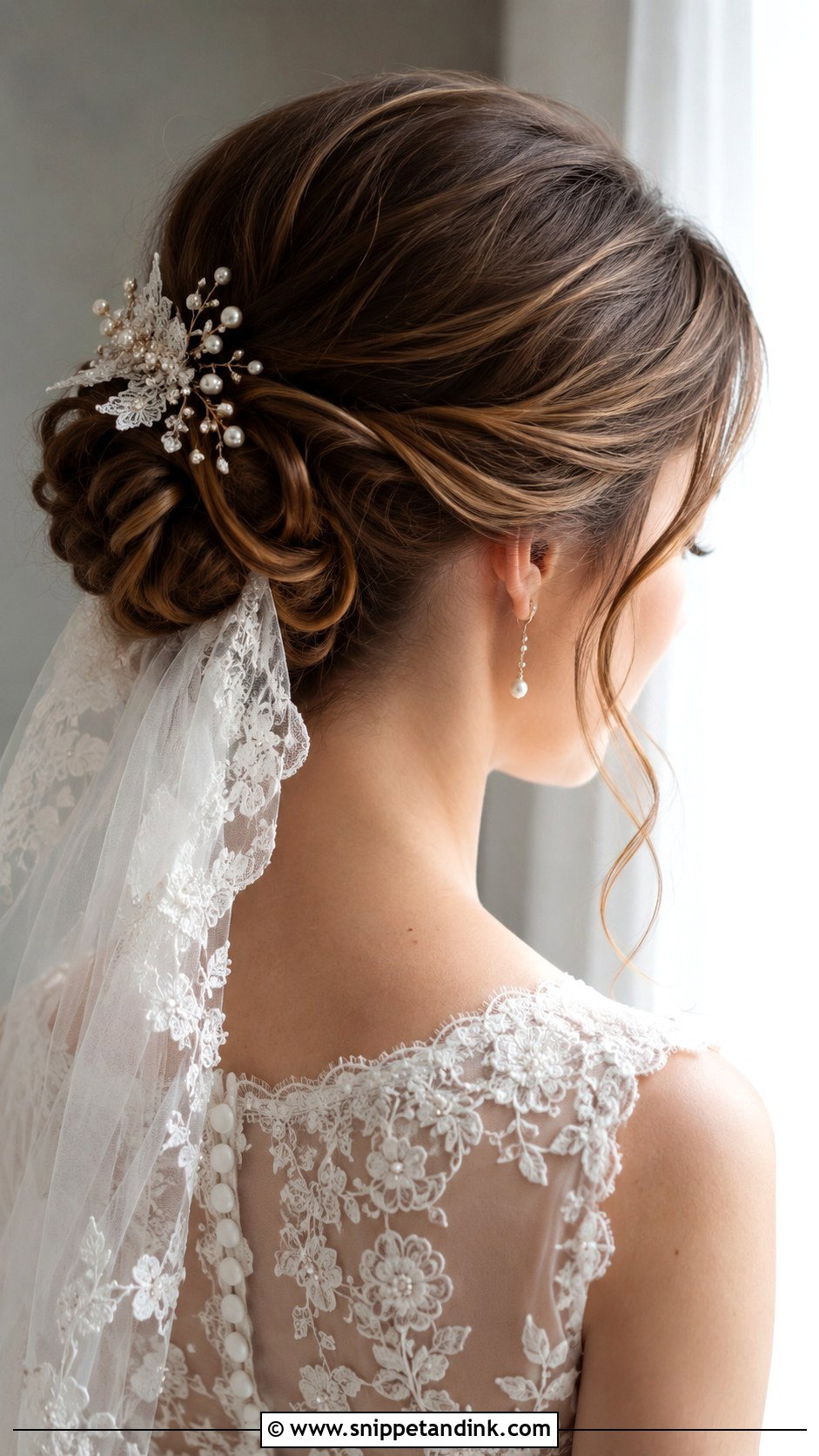
A soft sculpted bun with a lace veil looks like an heirloom. The lace adds texture, so the bun should stay simple. I pin the veil’s comb just above the bun so the lace falls evenly. Pearl pins enhance the vintage feel. Medium to long hair suits this. If your veil is an actual family piece, handle it gently and test the comb at the trial, as old lace tears easily.
22. Glamorous Side Roll Updo
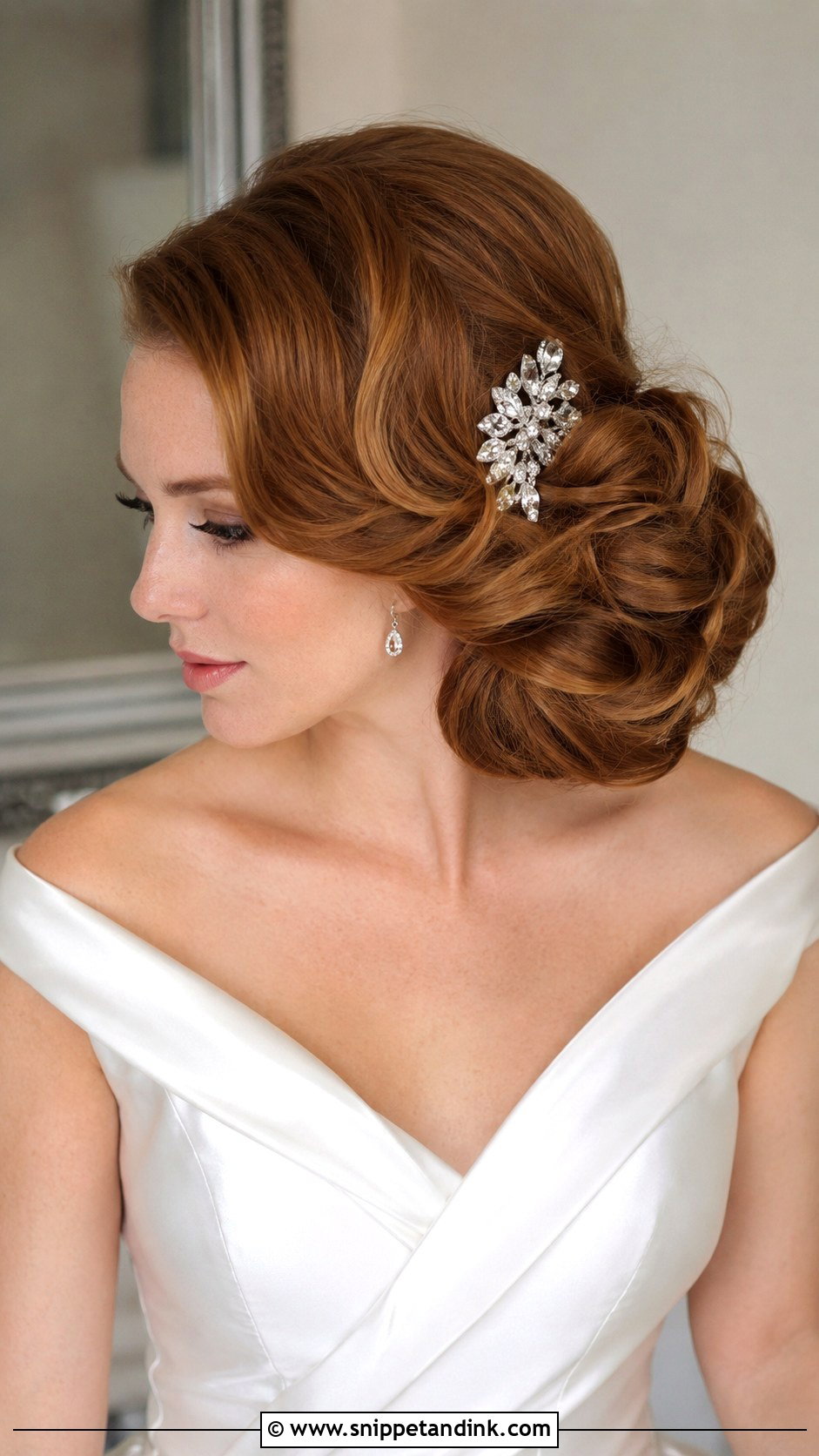
The side roll sweeps hair into one smooth roll along one side. It’s dramatic and suits both modern and classic gowns. I backcomb the inside of the roll for shape and pin it from underneath so no pins show. A jewelled clip at the end of the roll finishes it. Medium to long hair works best. It holds well all day once set.
23. 1920s Curly Low Bun
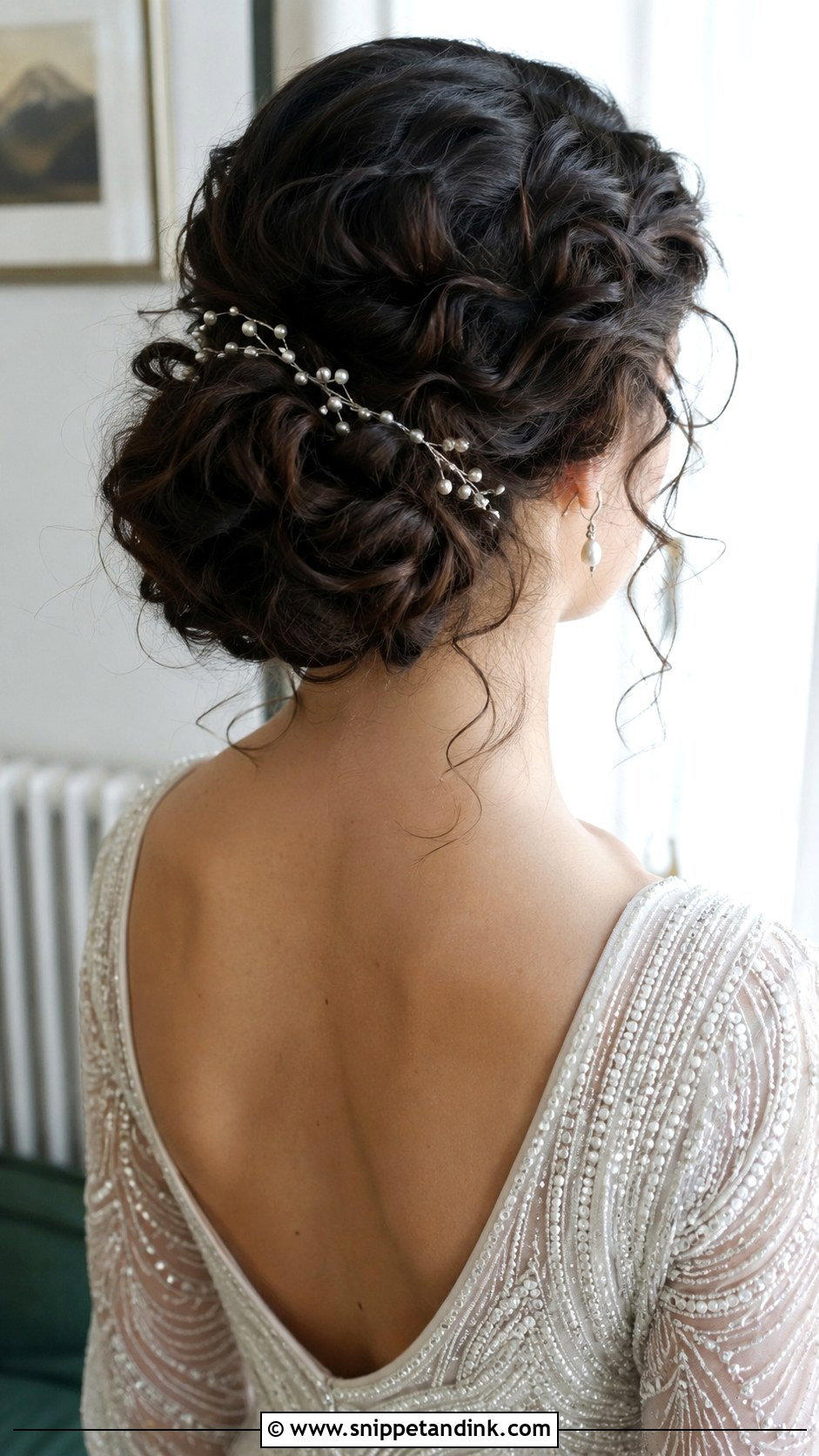
The 1920s curly low bun gathers defined curls into a low bun at the nape. Curls are set first, then pinned loosely so they keep their shape. Strings of pearls or a beaded clip suit the flapper era. Soft tendrils frame the face. Medium to long hair works. If faking a short cut feels like too much, this gives the same era with your length on show.
24. Retro Half-Up Victory Rolls
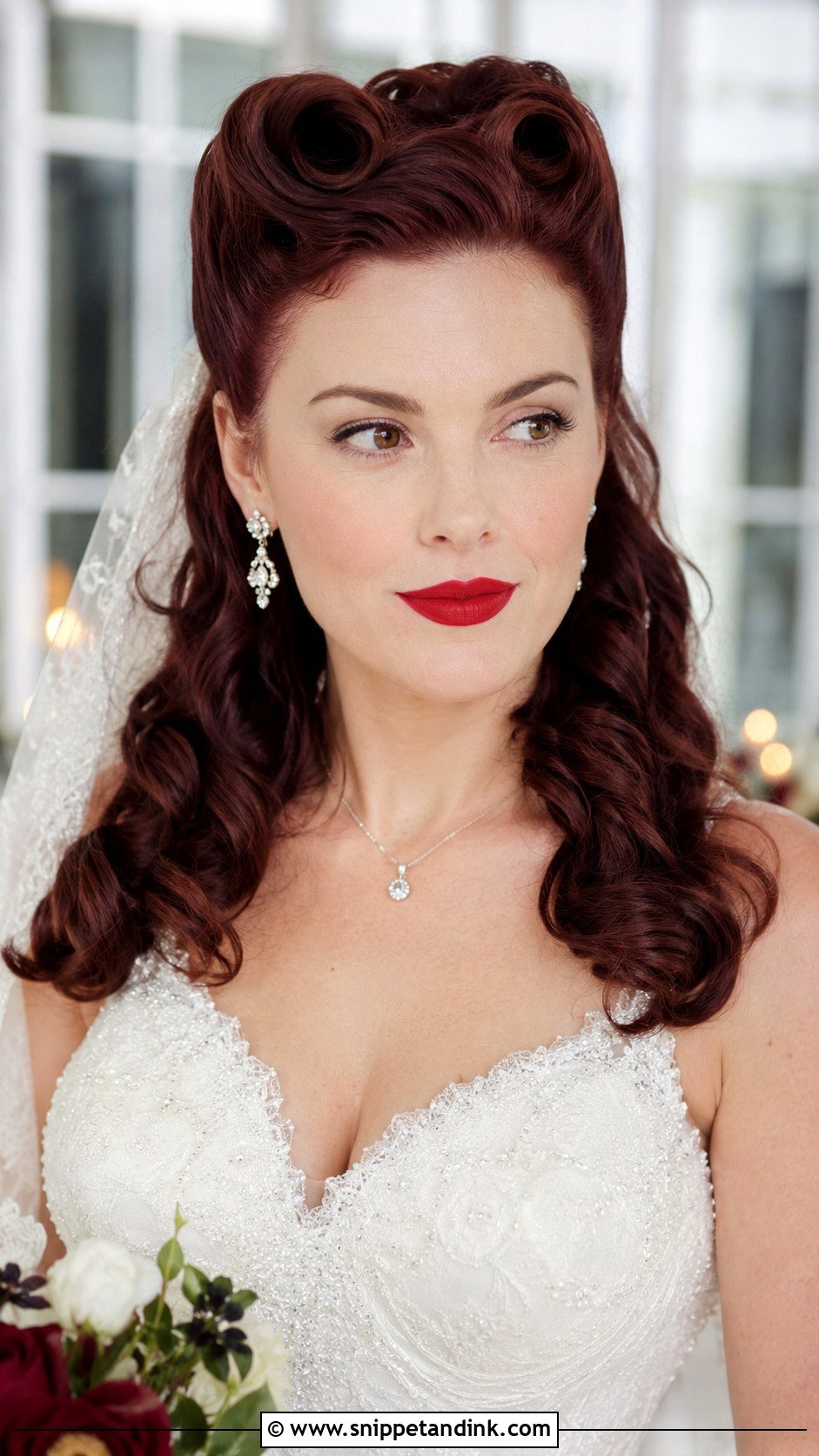
Half-up victory rolls lift the front into sculpted rolls while the rest stays loose. It’s the 1940s answer to wearing your hair partly down. The rolls should be pinned firmly into the crown, and I curl the lower lengths so they don’t look flat. Red lipstick completes it. Medium to long hair suits it.
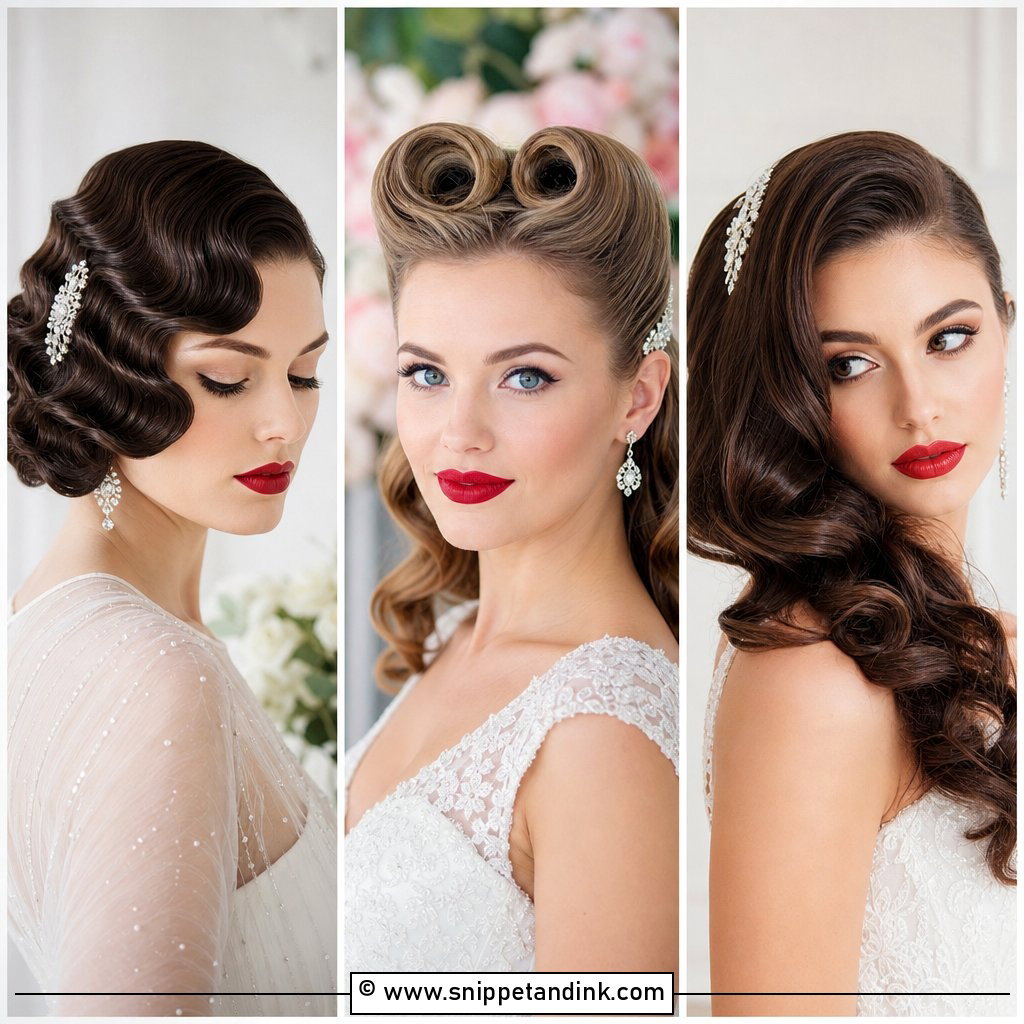
25. Vintage Sleek Bun with Headband
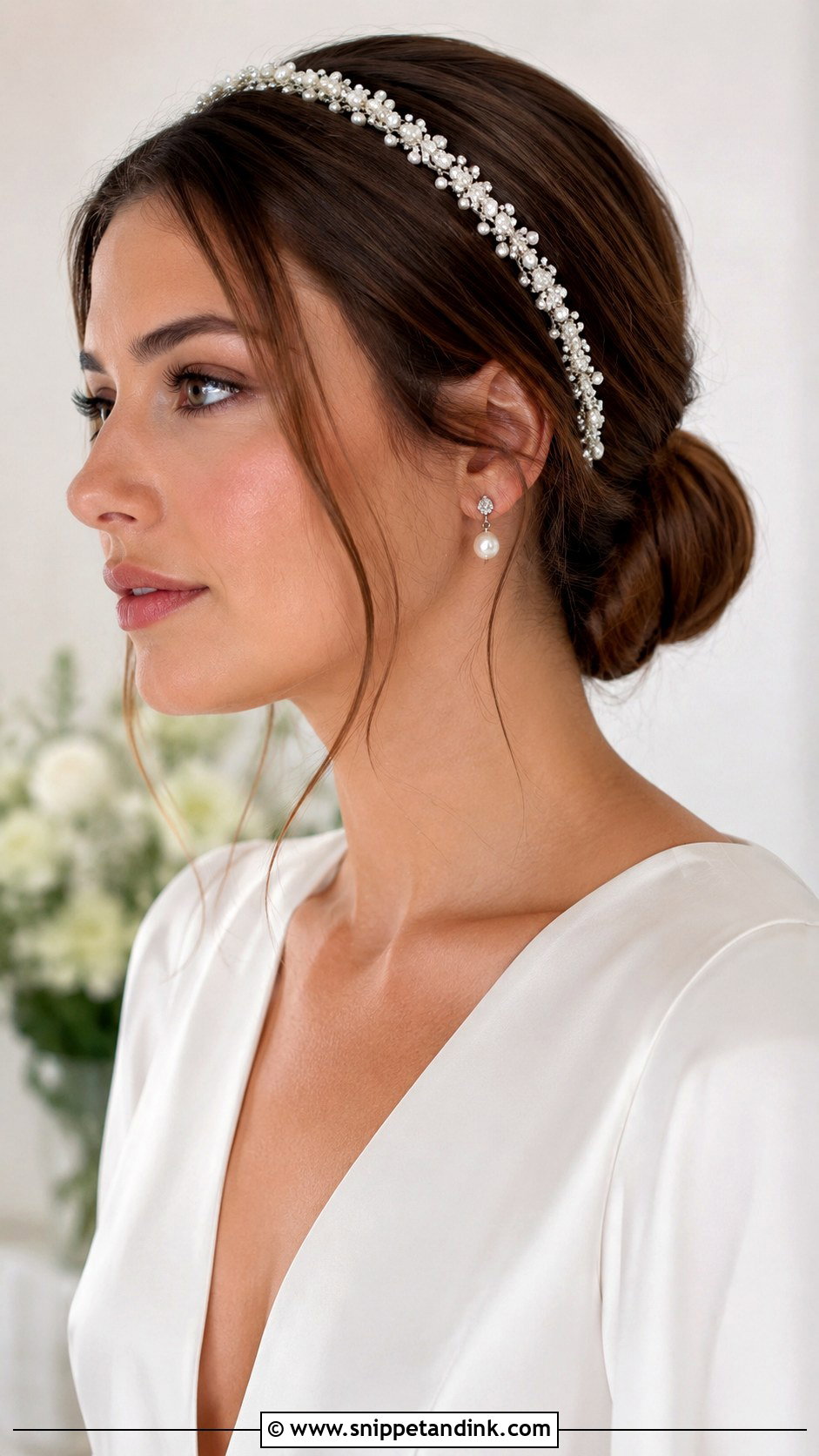
A sleek low bun with a jewelled or beaded headband is understated and polished. I smooth the hair with a fine-tooth comb and a little serum before pinning it, so there are no bumps. The headband adds the vintage character. Soft tendrils can soften the face. Medium to long hair suits it, and it’s the simplest vintage look to keep neat through a long day.
Wet Sets, Pin Curls and Why Vintage Hair Starts the Night Before
Most vintage styles rely on a set: hair shaped while damp or warm, then left to cool or dry before it’s brushed out. A wet set uses setting lotion and rollers or pin curls on damp hair, dried fully. A hot set uses heated rollers or a tong on dry hair, then pins while it cools. Wet sets last longer; hot sets are faster on the morning.
For curly or long-lasting looks, some brides sleep in pin curls the night before, wrapped in a silk scarf. If you do, practise at the trial so you know how tight the curls come out. A brush-out on the morning then shapes them into waves, rolls or an updo.
What softens by the reception
Sculpted waves and rolls relax with heat, humidity and hugging. Keep a small comb, a few matching pins and a travel-size spray in your bag, and ask a bridesmaid to check the back before evening photos. If your venue is humid, ask your stylist for a wet set with a stronger setting lotion.
Plan photos of the finished set early in the day. Sculpted styles look their sharpest in the first two hours, so that’s when I’d schedule close-up portraits.
One Era, One Accessory and a Proper Set
Start with your dress and its decade, then pick a style from the same era. Finger waves, victory rolls, a beehive or a floral halo all suit different gowns and lengths. Add pearls, a lace veil or fresh flowers last. Book a trial, ask for the set method your stylist would use, and live with the look for a few hours before you decide.
You'll Like These Ideas:


Leave a Reply