
An updo is the style I trust most on a long wedding day. It keeps hair off your face through the vows, opens up your neckline, and survives the hugging and dancing far better than anything worn down. What makes one hold isn’t the hairspray. It’s the structure underneath, built from curled or textured hair and pins locked against each other. The 20 updos below run from tight and glossy to soft and loose, and for each one I’ve noted who it suits, what it needs from your hair, and where it usually slips.
Matching Updo Height to the Back of Your Gown
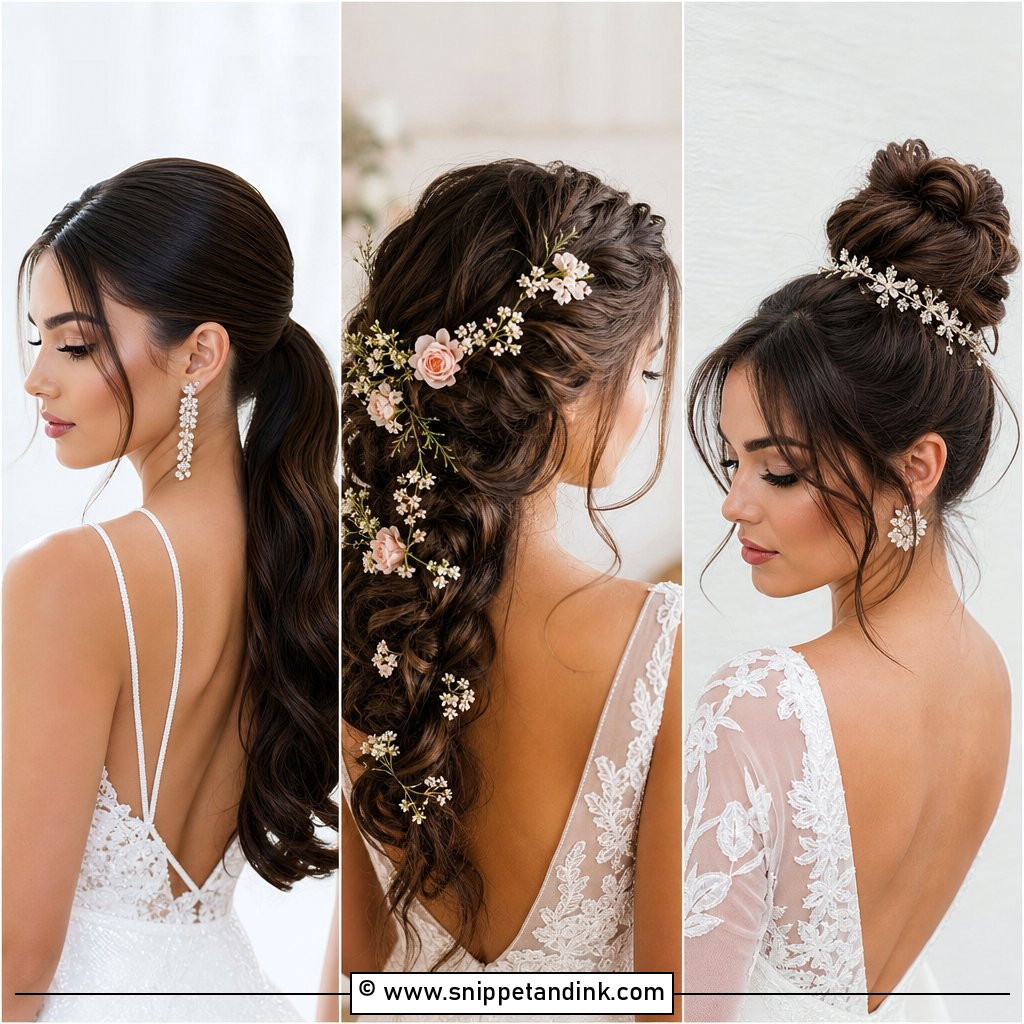
The back of your dress decides more about your updo than your face shape does. Guests spend the whole ceremony looking at the back of your head, and that’s exactly where hair and dress meet.
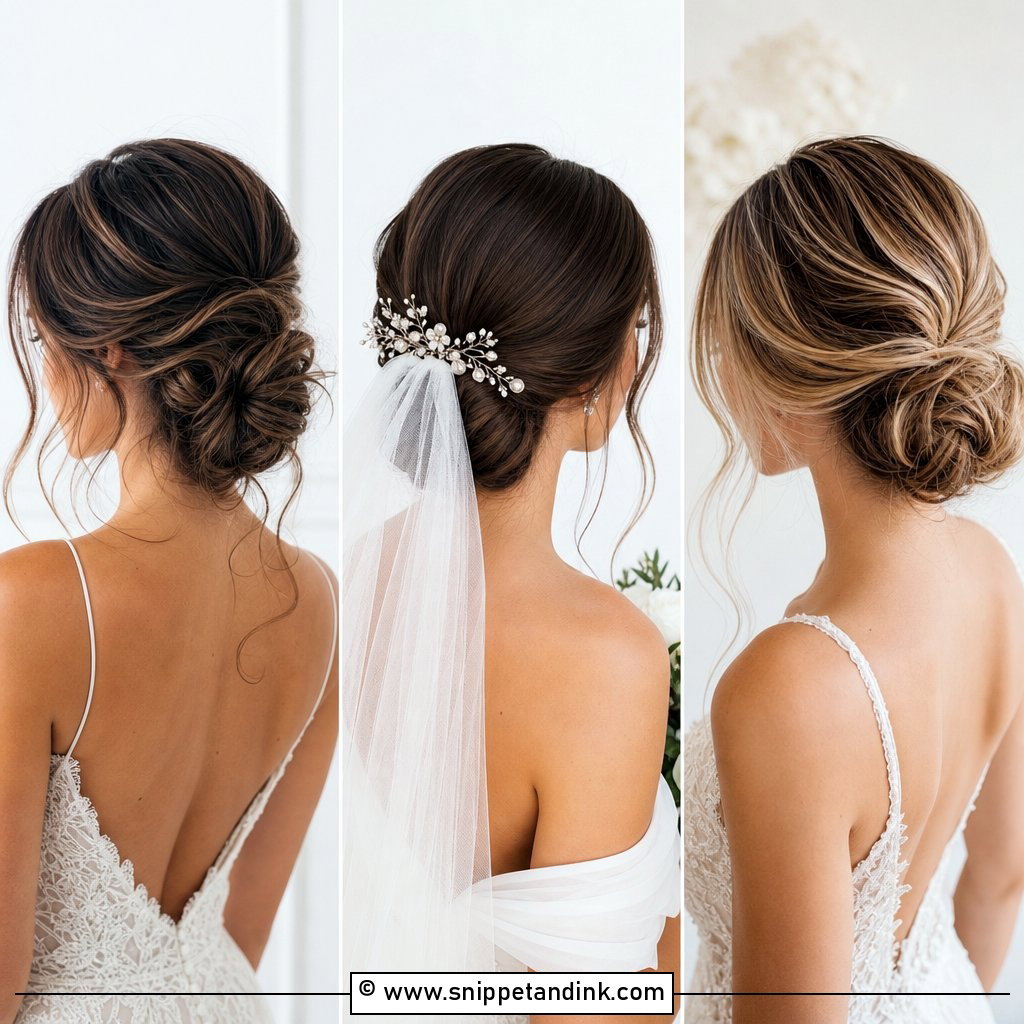
- Open or low backs: a low chignon or side bun keeps the eye travelling down the line of the back. A high bun can look disconnected from all that bare skin.
- High necklines and illusion lace: lift the hair to the crown or mid-head so it isn’t crushed against the collar and the lace stays visible.
- Strapless and sweetheart: nearly anything works, though a low bun with some volume balances bare shoulders.
- Full ballgowns: go for a bigger, firmer shape. A tiny bun can look lost above a wide skirt in full-length photos.
Bring a photo of the back of your dress to the trial and, if you can, wear a top with a similar neckline. The veil’s position follows from the bun’s height, so decide the two together rather than one at a time.
1. Classic Low Chignon Wedding Updo
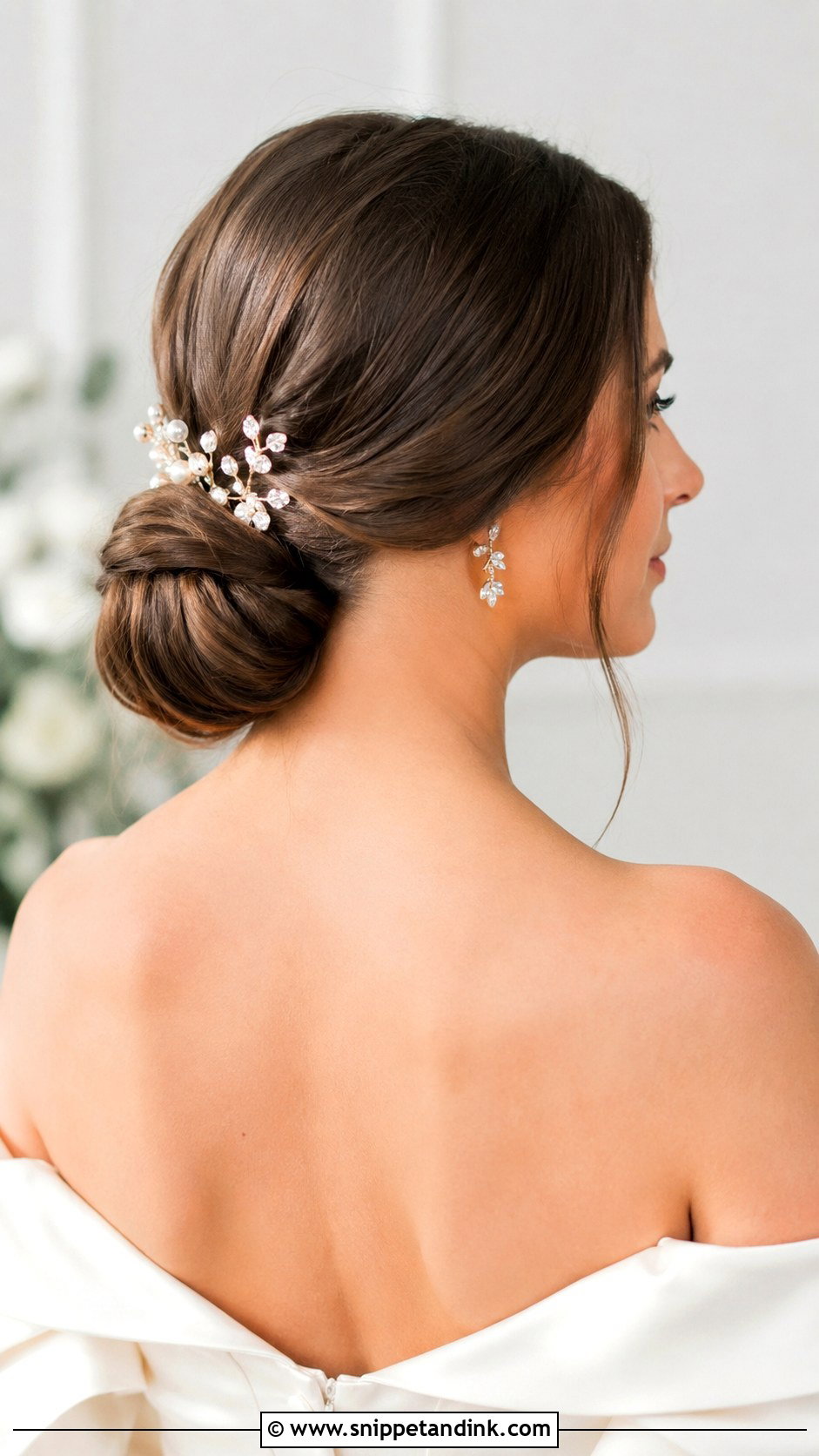
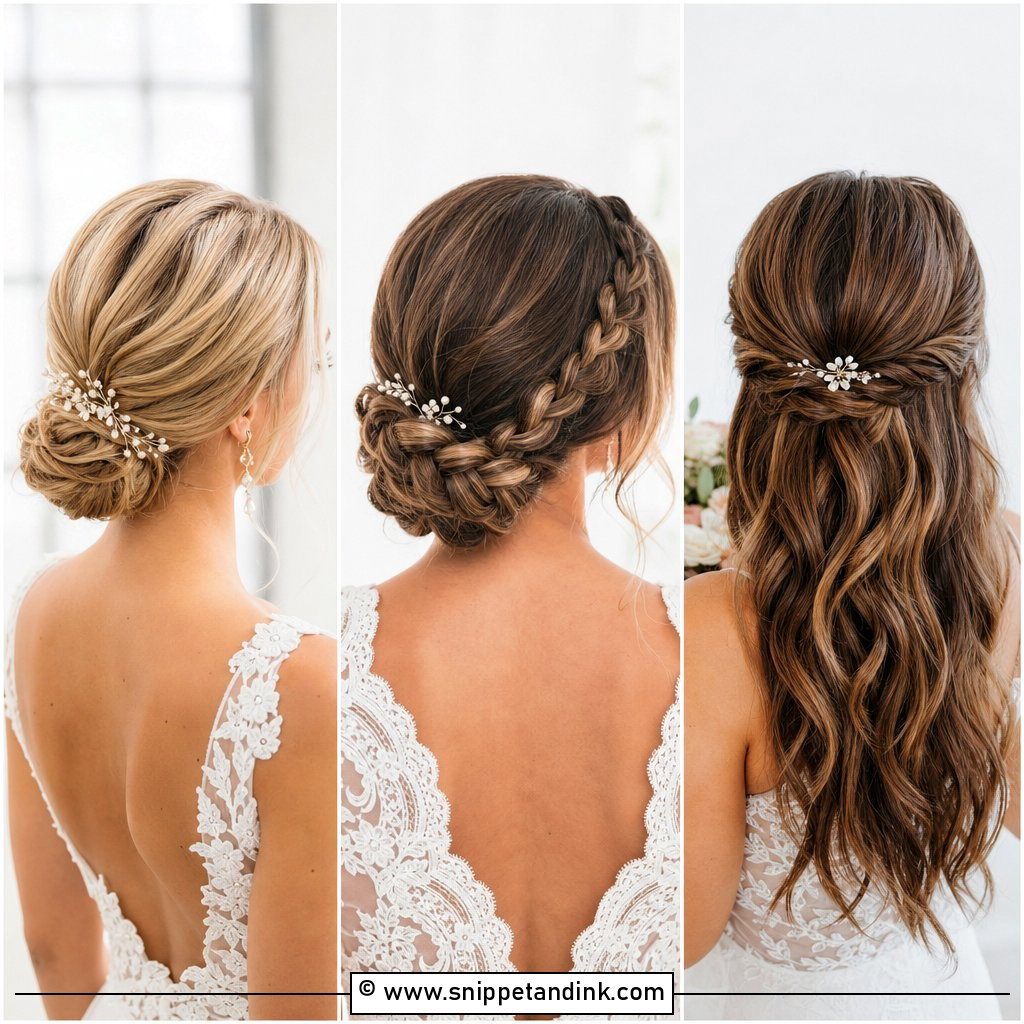
A low chignon gathers everything at the nape and folds it into a rounded knot, which puts almost no strain on the scalp. That’s why it’s my default for brides who get headaches from tight styles. I set the base slightly above the hairline so it doesn’t rub on the collar of a high-necked gown or press against the headrest in the car. A long veil comb tucks in neatly just above it. It flatters most face shapes, works with sweetheart and off-the-shoulder gowns, and looks clean in profile, where so many candid shots are taken.
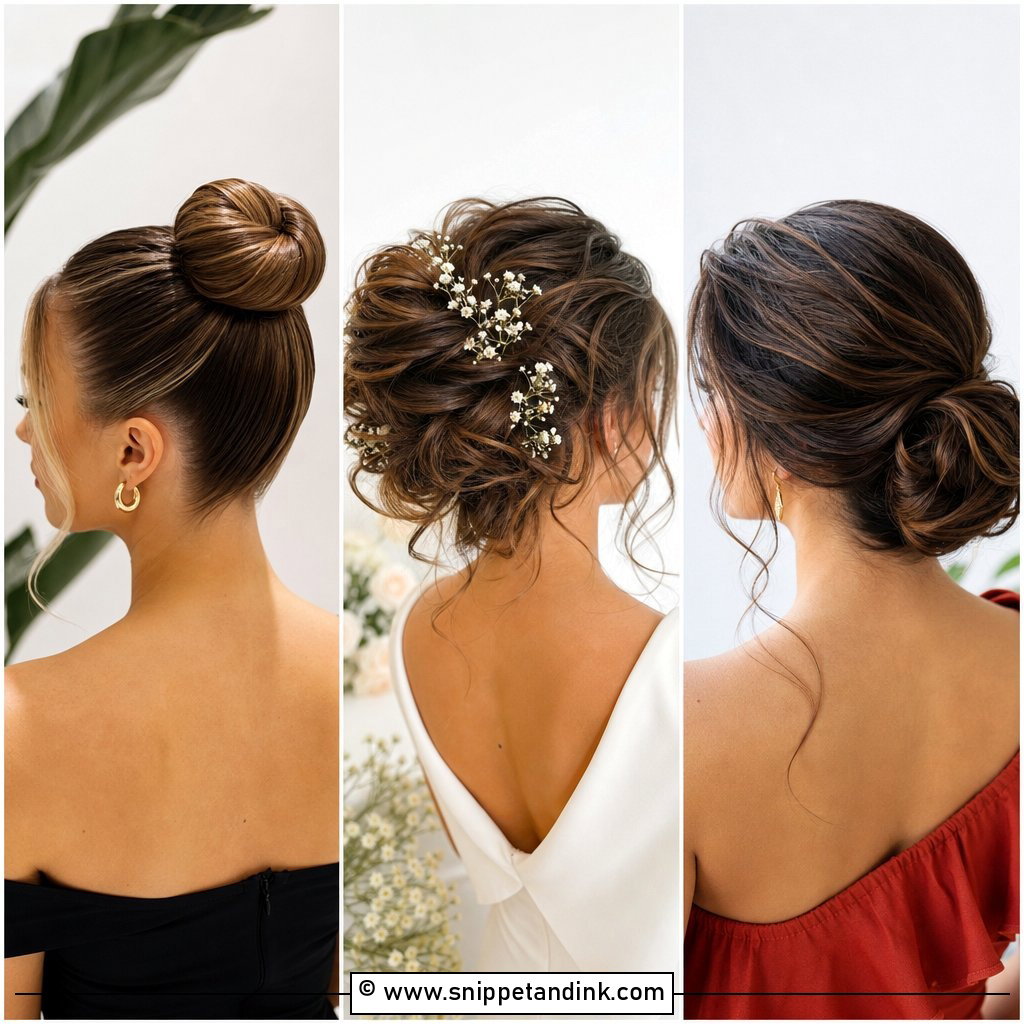
2. Sleek Ballerina Bun With Center Part
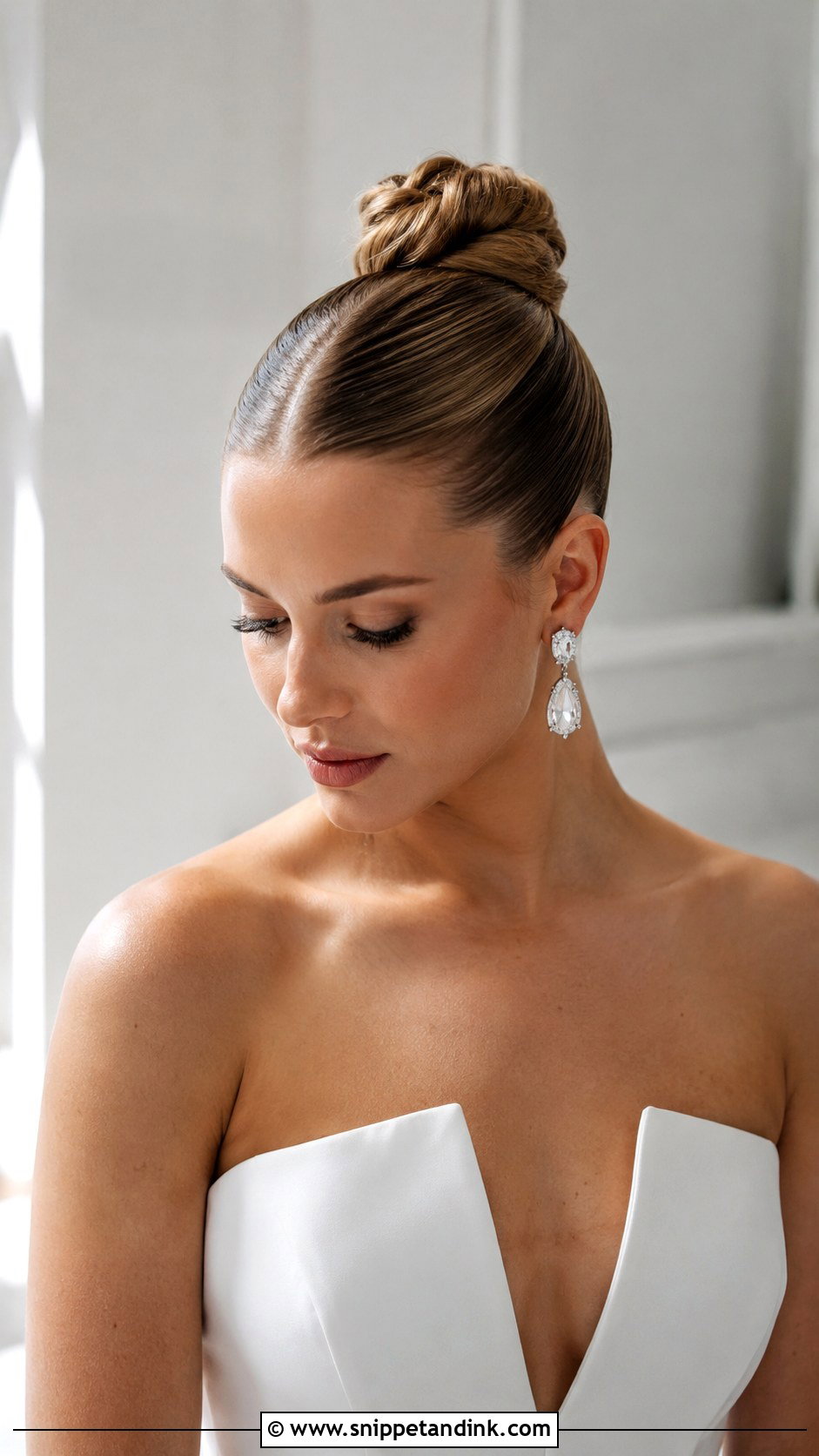
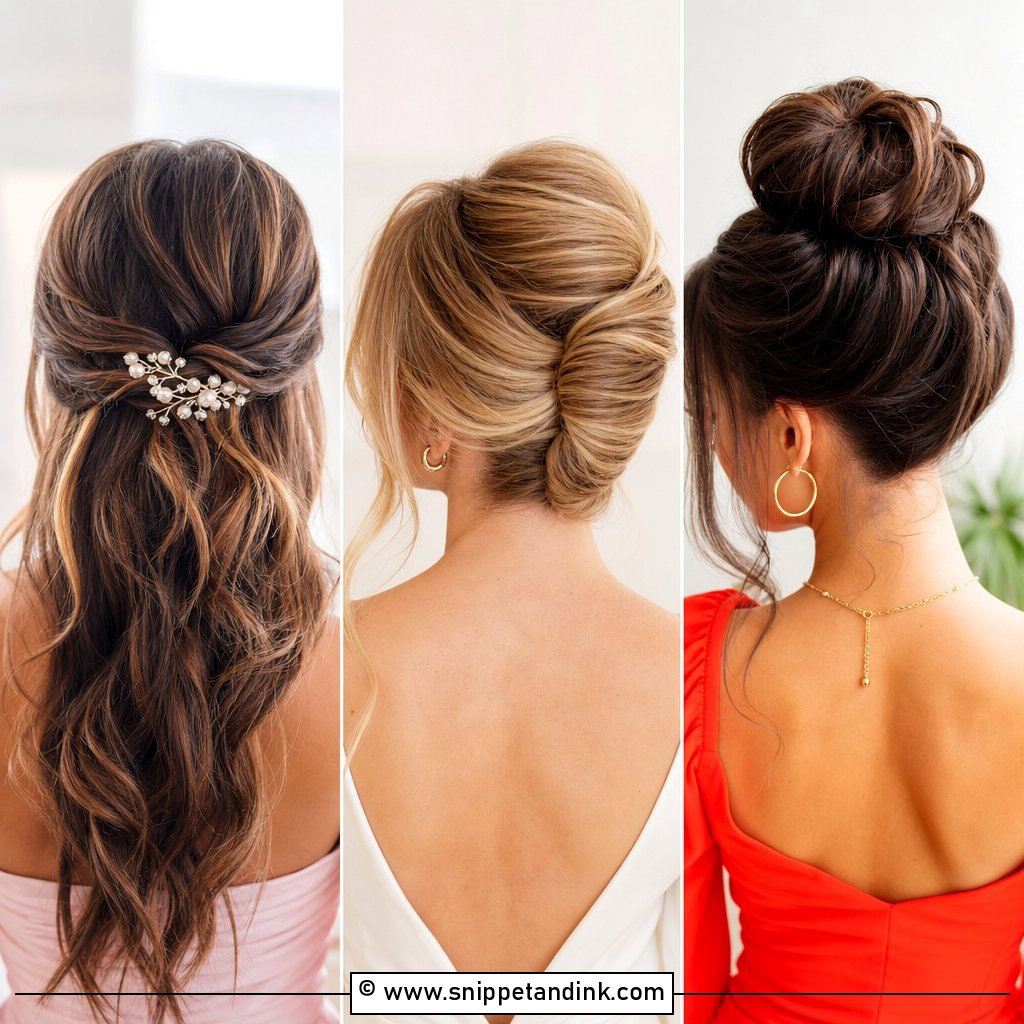
The sleek ballerina bun is pulled back from a clean center part into a smooth, high knot. It’s demanding. Any bump or wobbly part line shows instantly, so I brush it in stages and check the part from straight on before tying anything. It shows off cheekbones and big earrings and sits well with minimal, structured gowns. Very tight high buns can ache by evening, and I always ask about that first. A little shine serum over the surface gives the gloss without making the roots look wet.
3. Romantic Braided Bun Updo
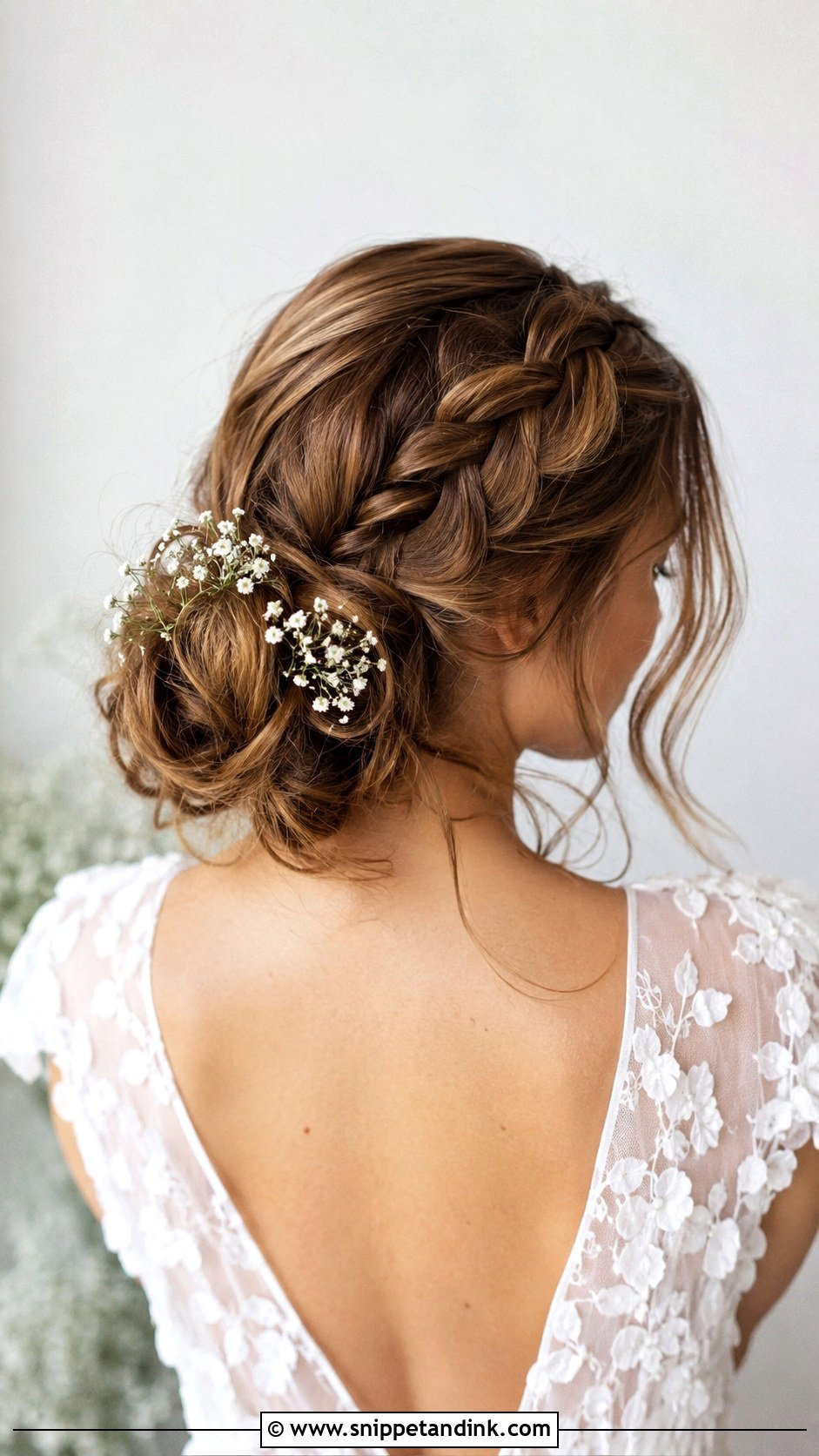
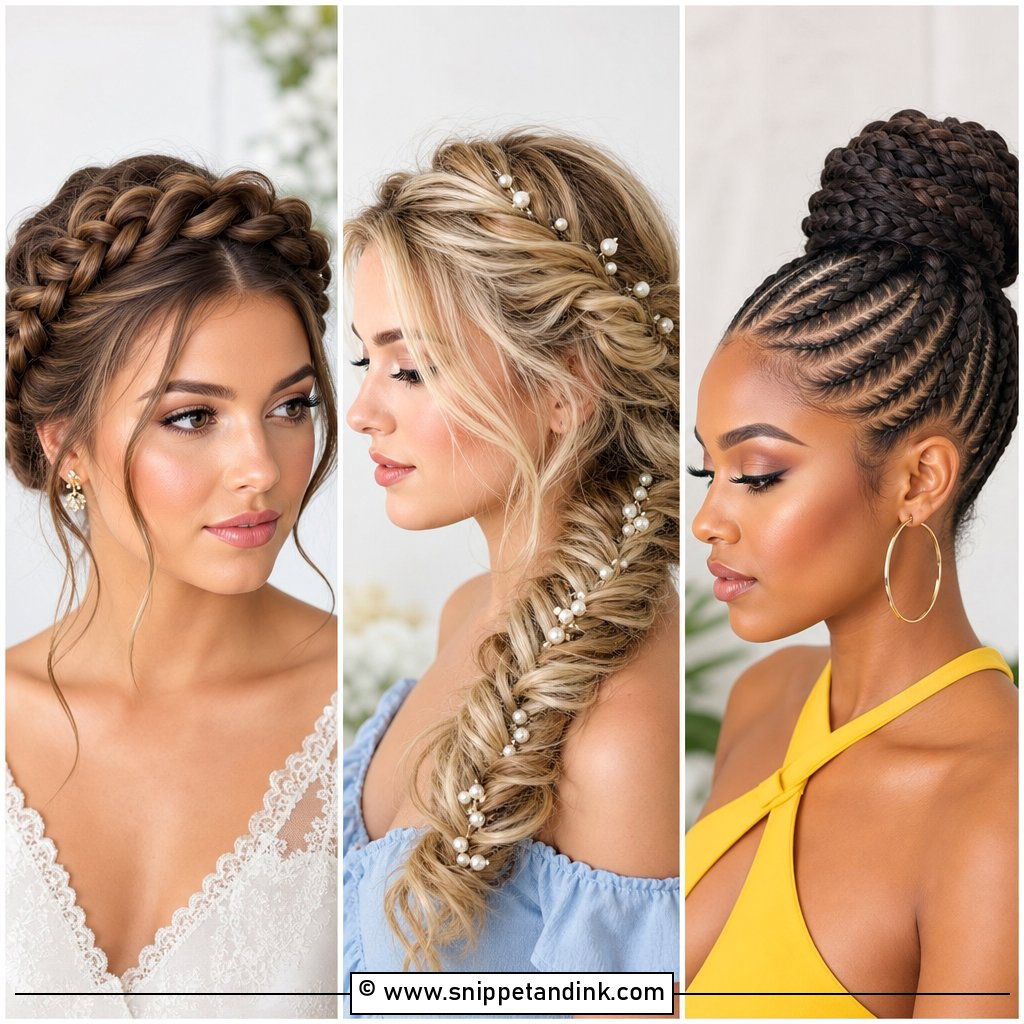
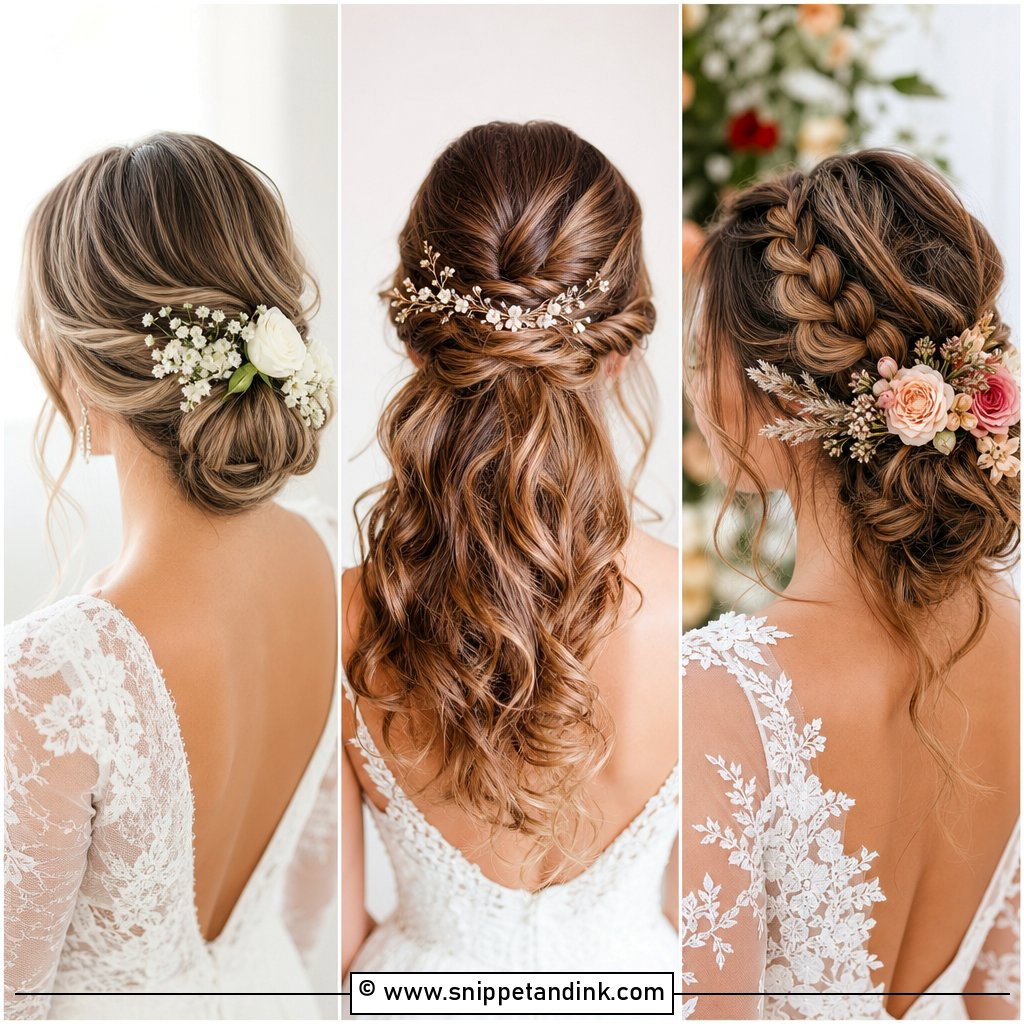
Here a loose braid wraps around a low bun or feeds into it, adding texture that holds up better than plain curls. I braid while the hair still has grip from texture spray, because clean, silky hair braids sloppily and slides apart. Gently pulling the edges of the braid wider makes it look fuller on camera. A few face-framing pieces soften the front. Floral crowns or sprigs of baby’s breath tuck easily into the plait, and baby’s breath copes well out of water through an outdoor ceremony.
4. French Twist Bridal Updo
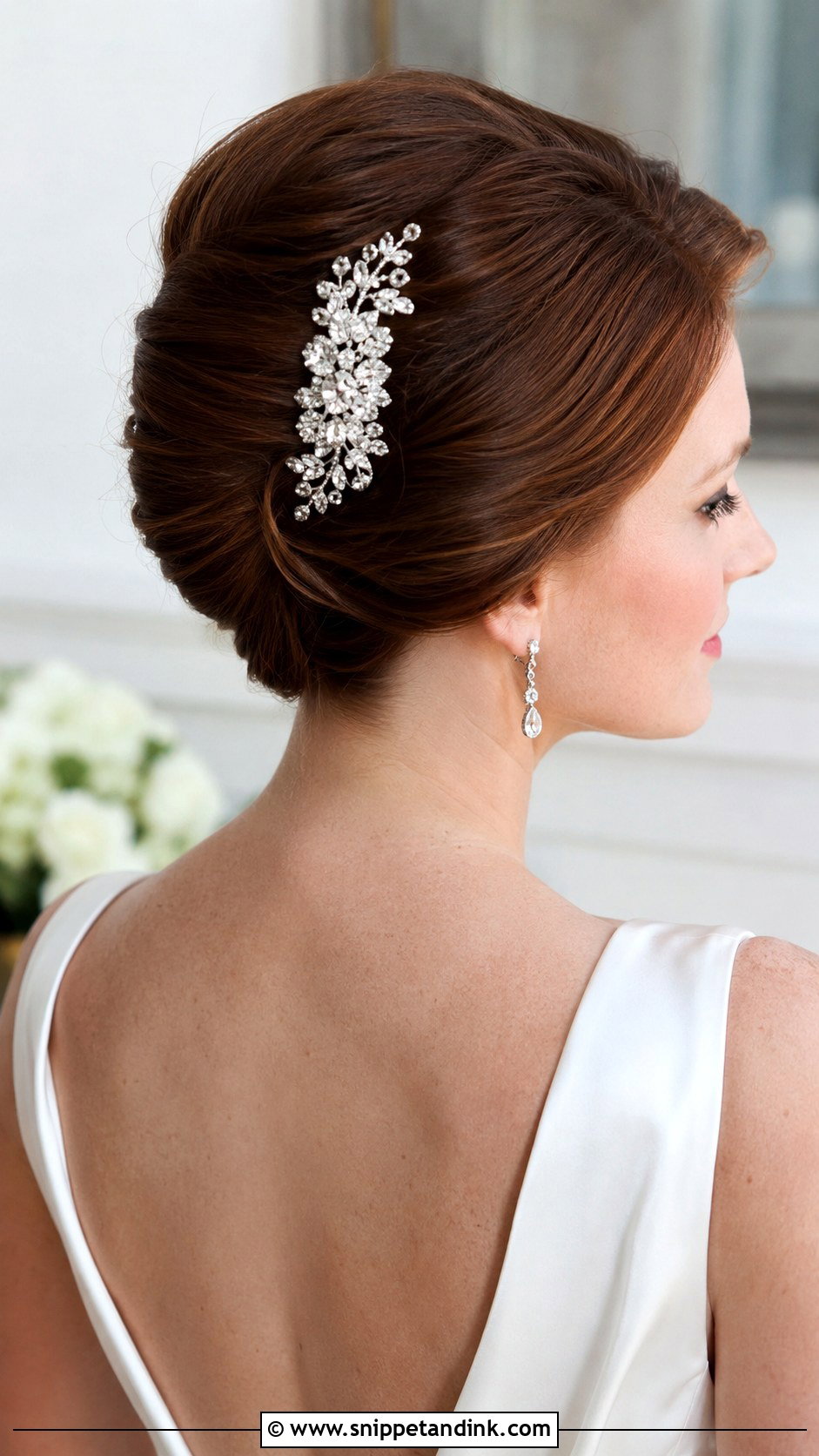
A French twist sweeps the hair to one side, then it’s rolled vertically up the back of the head and pinned along the seam. The secret is a hidden row of crossed bobby pins down the center of the head before rolling; the twist locks onto that row and won’t shift. It needs at least shoulder-length hair and behaves best on medium thickness, since very thick hair makes a bulky roll. I reach for it at black-tie and formal ceremonies. A veil tucked under the roll or a jeweled comb at the side both suit it.
5. Textured Low Bun With Loose Tendrils
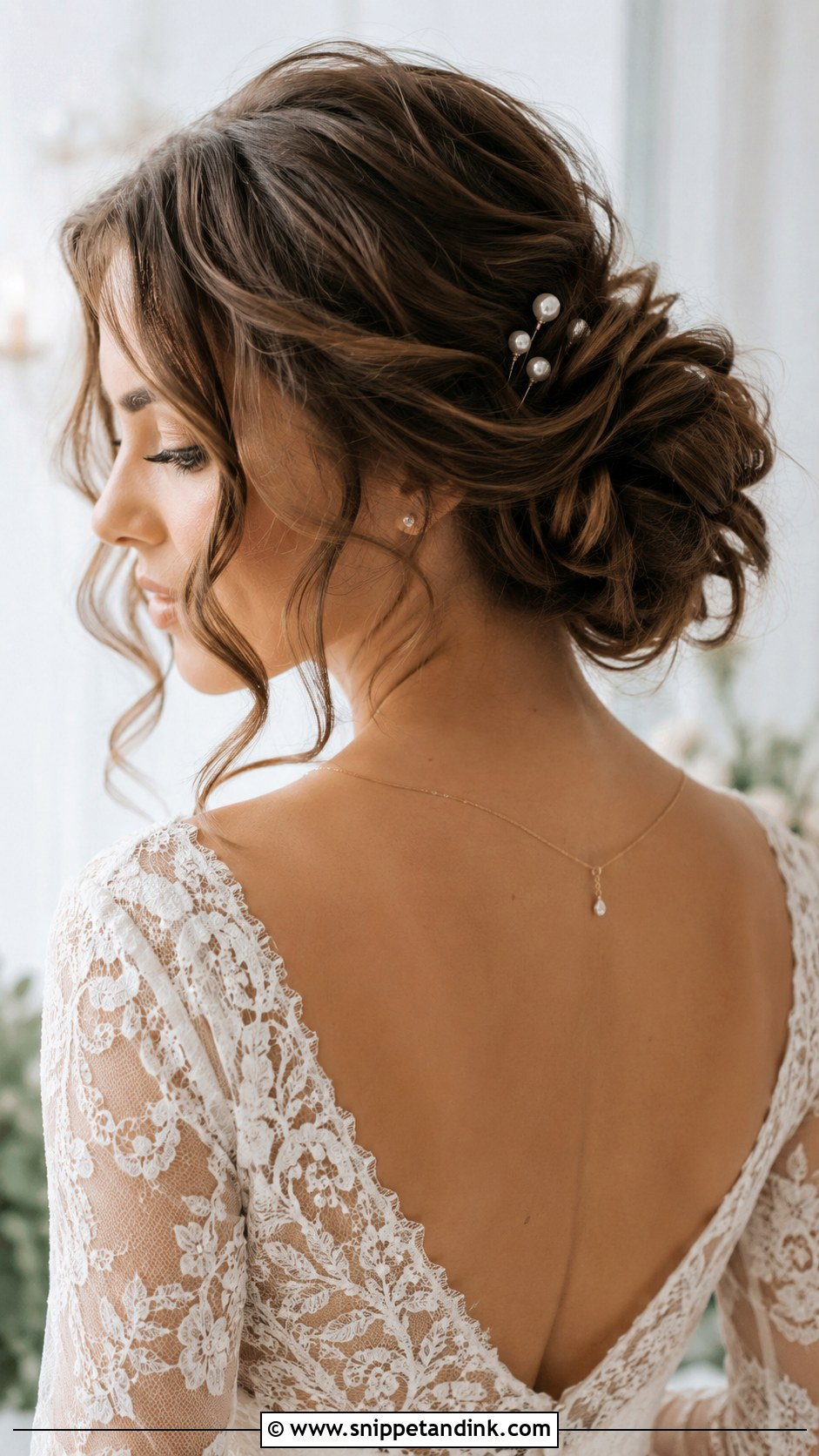
The undone look takes more planning than a sleek one, oddly enough. I curl the whole head first, let it cool, rough it up with fingers and texture spray, pin it into a low bun, and pull a few curled pieces free at the temples and nape. Those tendrils are the weak point. On fine or very straight hair they flatten within hours, so I curl them with a smaller barrel and leave them pinned up until just before the ceremony. Pearls or small flowers suit it, and it sits naturally at a relaxed or boho wedding.
6. Pearl-Adorned Chignon Updo
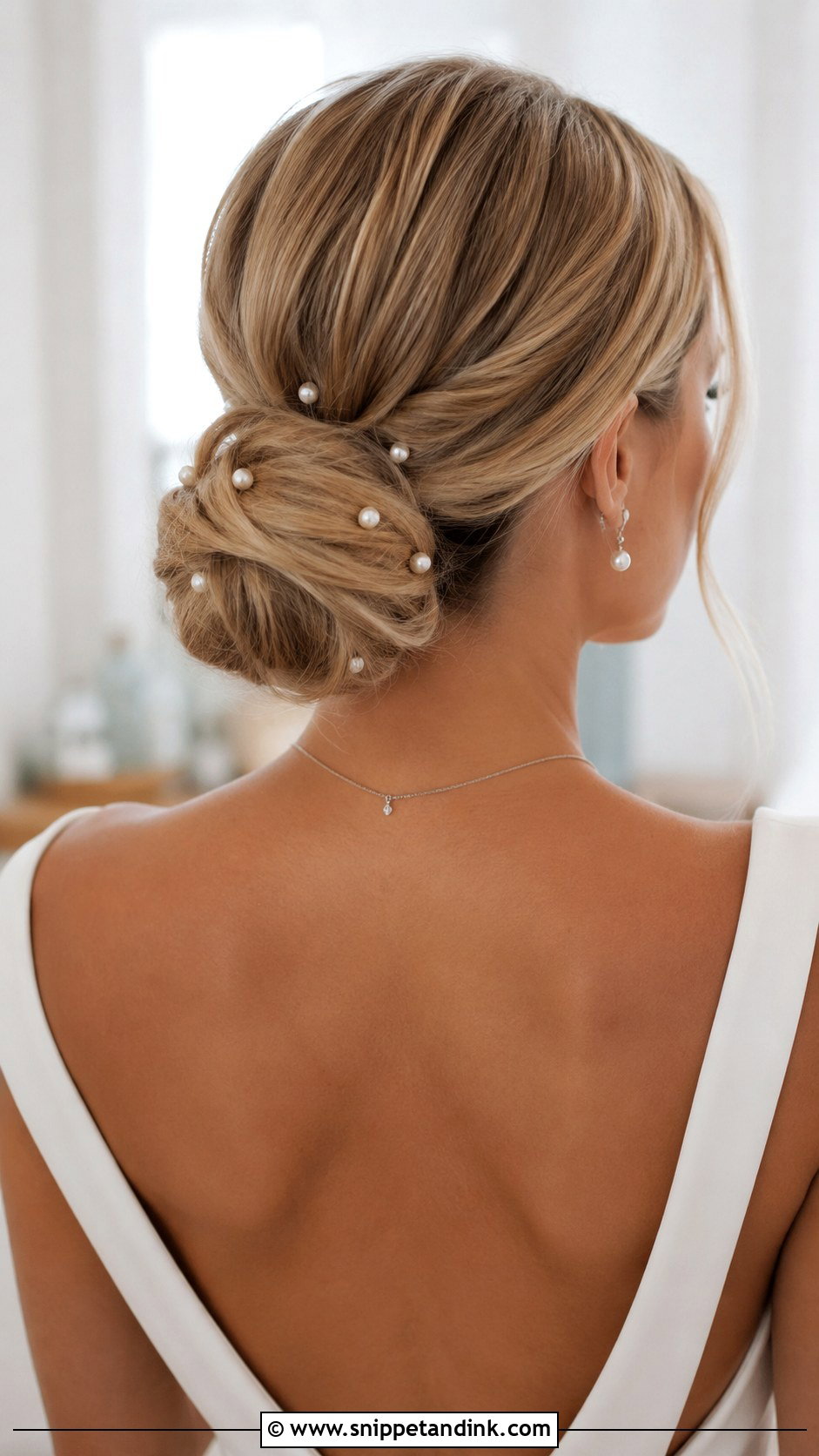
A pearl-adorned chignon is a smooth low bun with pearl pins scattered through it, and placement is the whole skill. I put them where light catches, mostly around the edge of the knot and along any twists, and lock each one into the existing structure rather than into loose hair so none drop on the dance floor. Pearls replace a busy headpiece and suit clean gowns and simple jewelry. Seven to eleven small pins usually look balanced. Many more and it starts to look like a pattern.
7. Braided Crown Updo
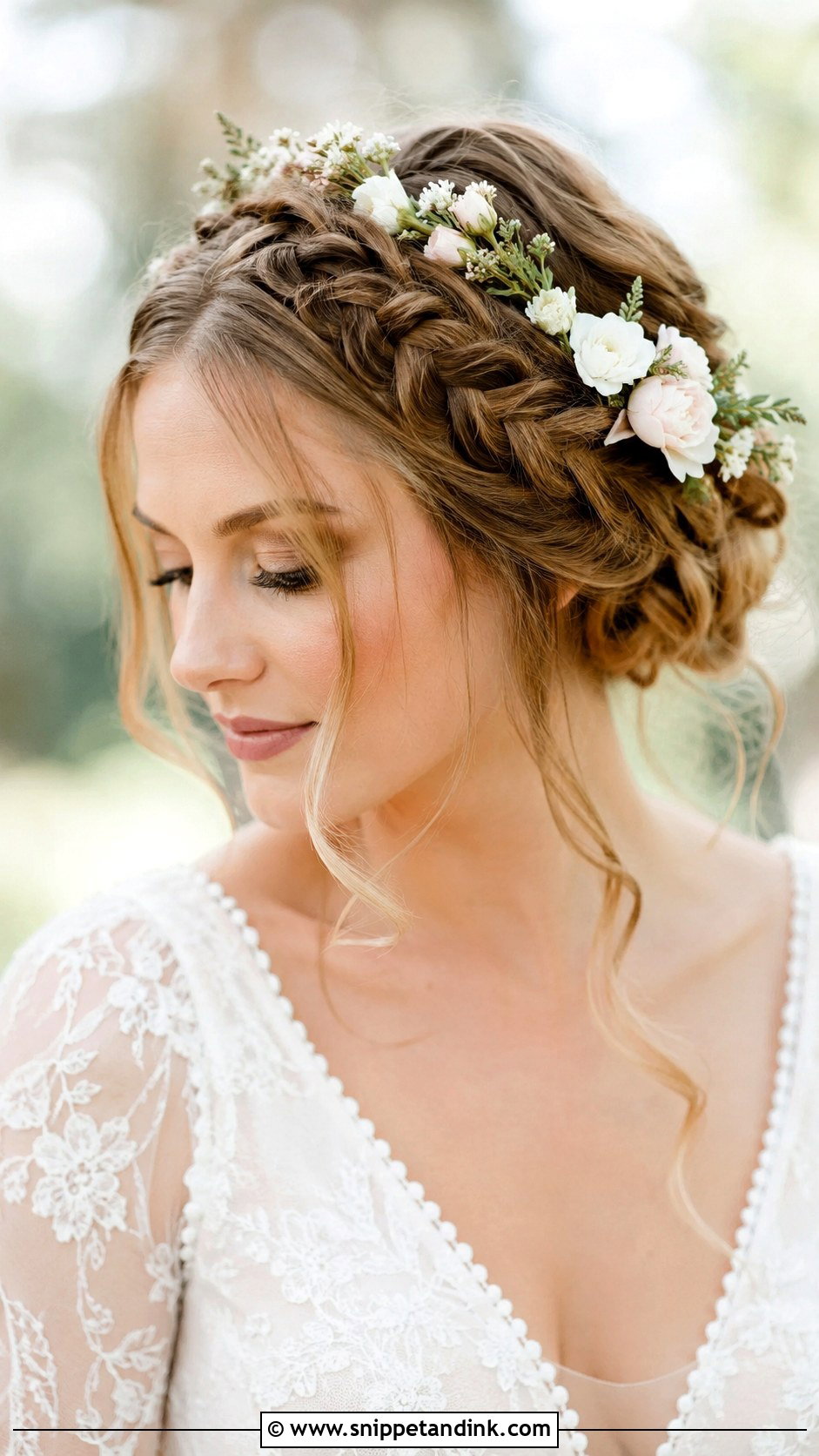
A braided crown runs a braid right around the head and pins it into a halo. It needs real length, since the hair has to reach across the top of the head, so I check that at the consultation and suggest clip-in wefts if it falls short. I often do two Dutch braids from the nape upward and pin them over the top, which holds better than one long braid. Keep it neat for a formal room or loosen it for an outdoor wedding. Fresh flowers tuck in easily, and a veil comb can slide in below the braid at the back.
8. Twisted Updo With Soft Volume
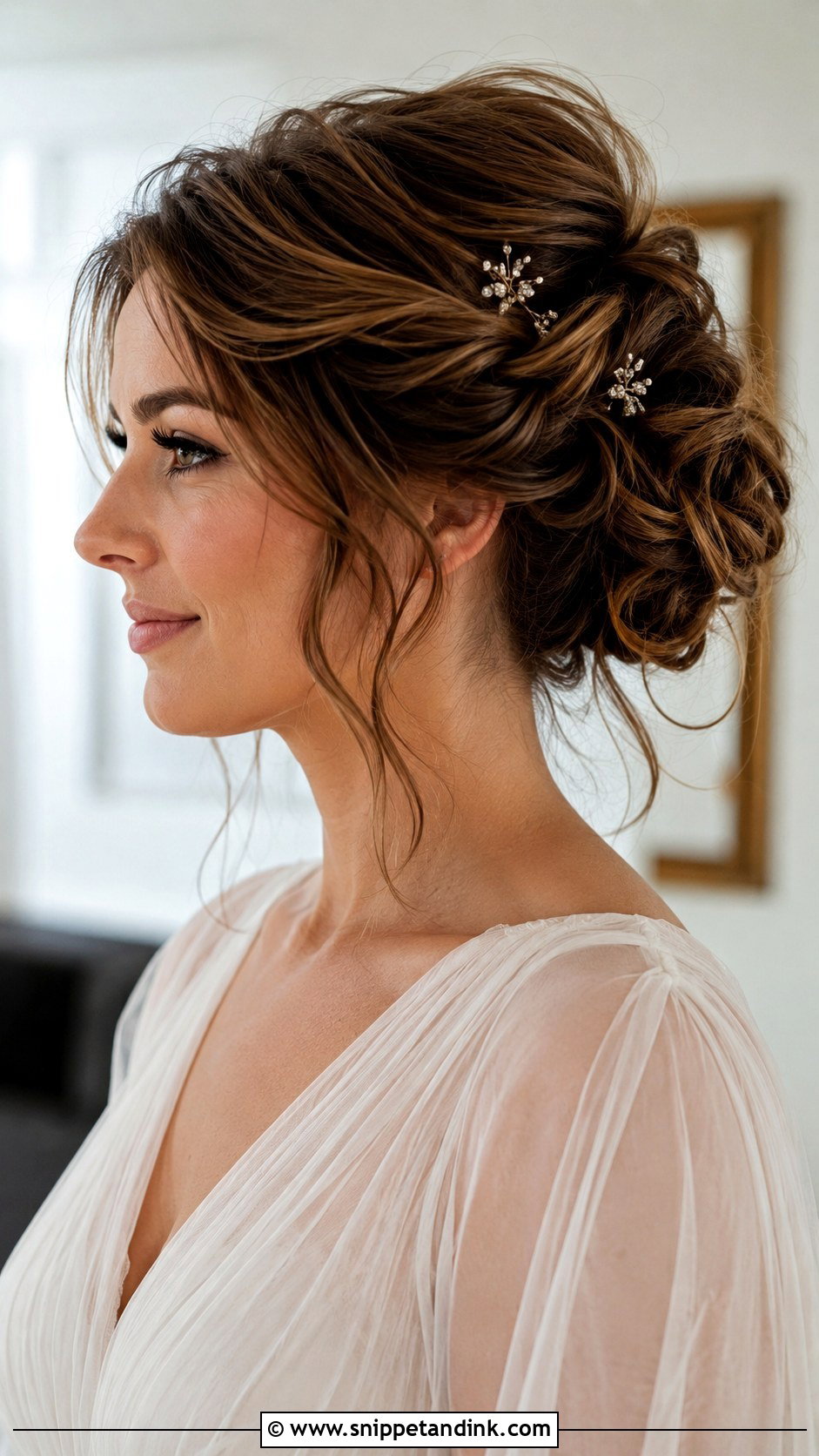
Twisted sections pinned together build volume without any teasing, which makes this one of the kindest updos for medium to long hair. I twist small sections and pin each one across the twist from two directions so it keeps its shape. Soft, not stiff, is the aim, and it suits most face shapes. Leave a couple of wisps out at the front if you like a softer frame. Sparkling pins or a simple comb can sit where the twists meet.
9. Low Floral Bun Updo
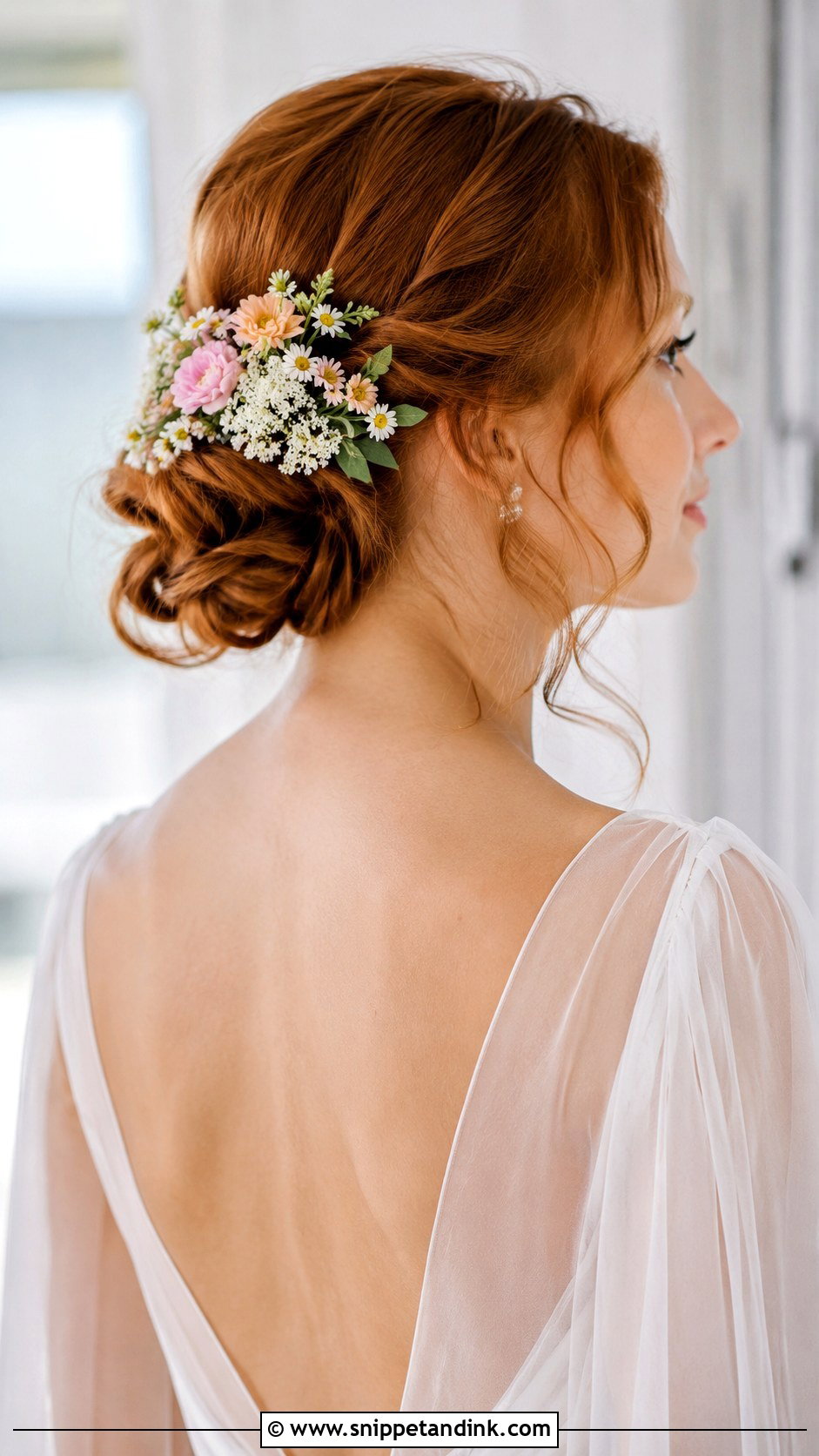
Fresh or dried flowers tucked into a low bun bring color and scent. Dried flowers are the safer option on a hot summer day because they can’t wilt, but they’re brittle, so I place them last. Fresh blooms need to be sturdy: spray roses, waxflower and small orchids last much better out of water than peonies or gardenias. I wire each stem into the bun rather than just pushing it in. Matching the flowers to your bouquet ties the look together, especially at a spring or summer outdoor ceremony.
10. Half-Up Half-Down Curled Updo
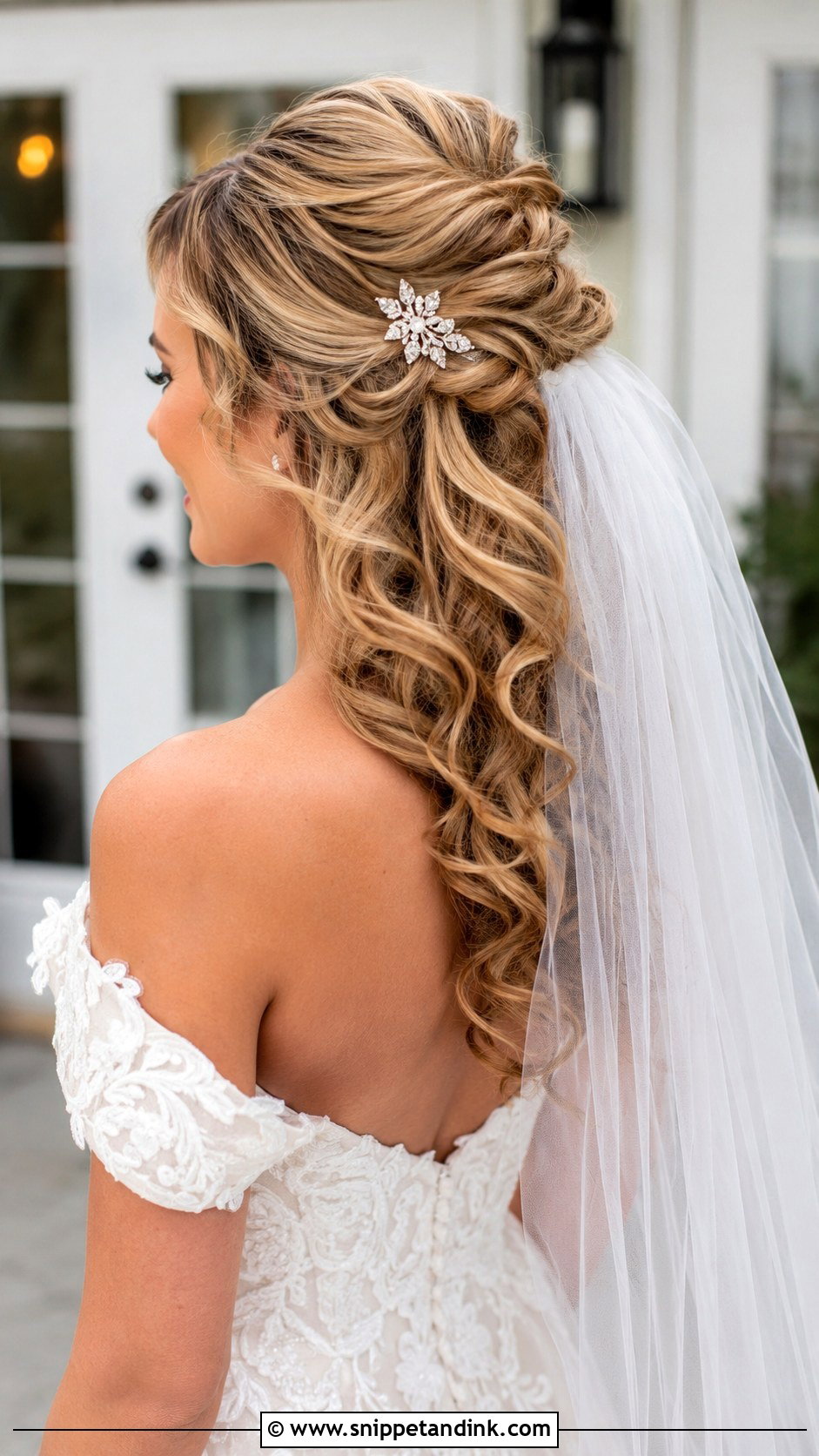
Half-up curls give you length while keeping your face clear. The top section is pinned back and curls fall over your shoulders. What I plan around is the curls themselves, because loose curls drop by the reception, especially in humidity or on fine hair. I set each curl, let it cool pinned up, and spray before releasing it. It shows off long, healthy hair, and a veil anchors well right under the pinned section. A decorative clip or small flowers at the back hide the pins.
11. Sleek Low Bun With Middle Part
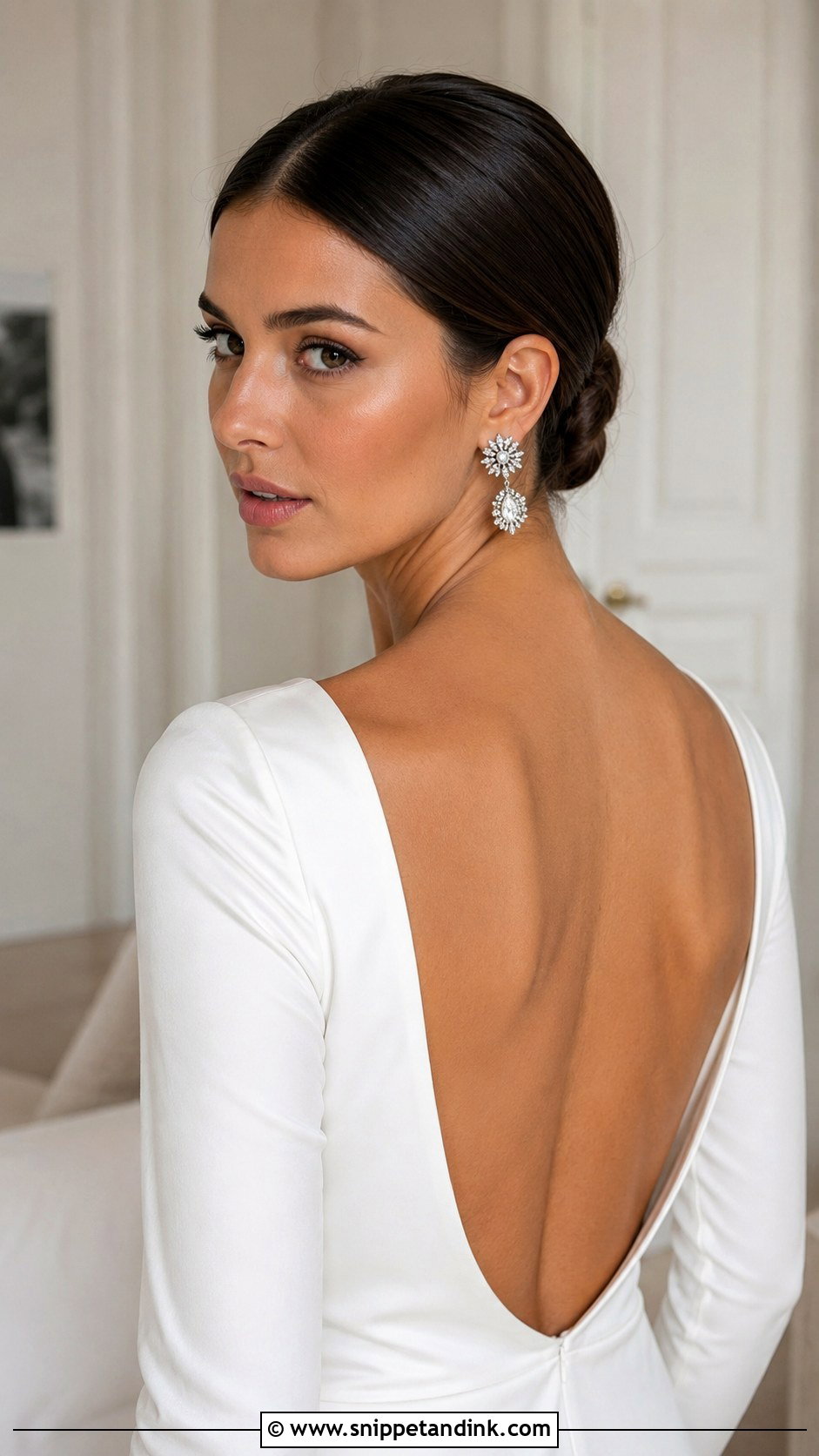
Minimalist brides love this one, and it’s the updo most honest about the condition of your hair. Every frizzy strand and every line of regrowth at the part shows, so if you color your hair, book your root touch-up a week or two before. I smooth the hair back with a boar bristle brush and a light cream and set the bun right at the nape. It sits well with statement earrings and a clean-lined gown. A mist of shine spray at the end, rather than serum, keeps it from looking greasy under flash.
12. Vintage Victory Rolls Updo
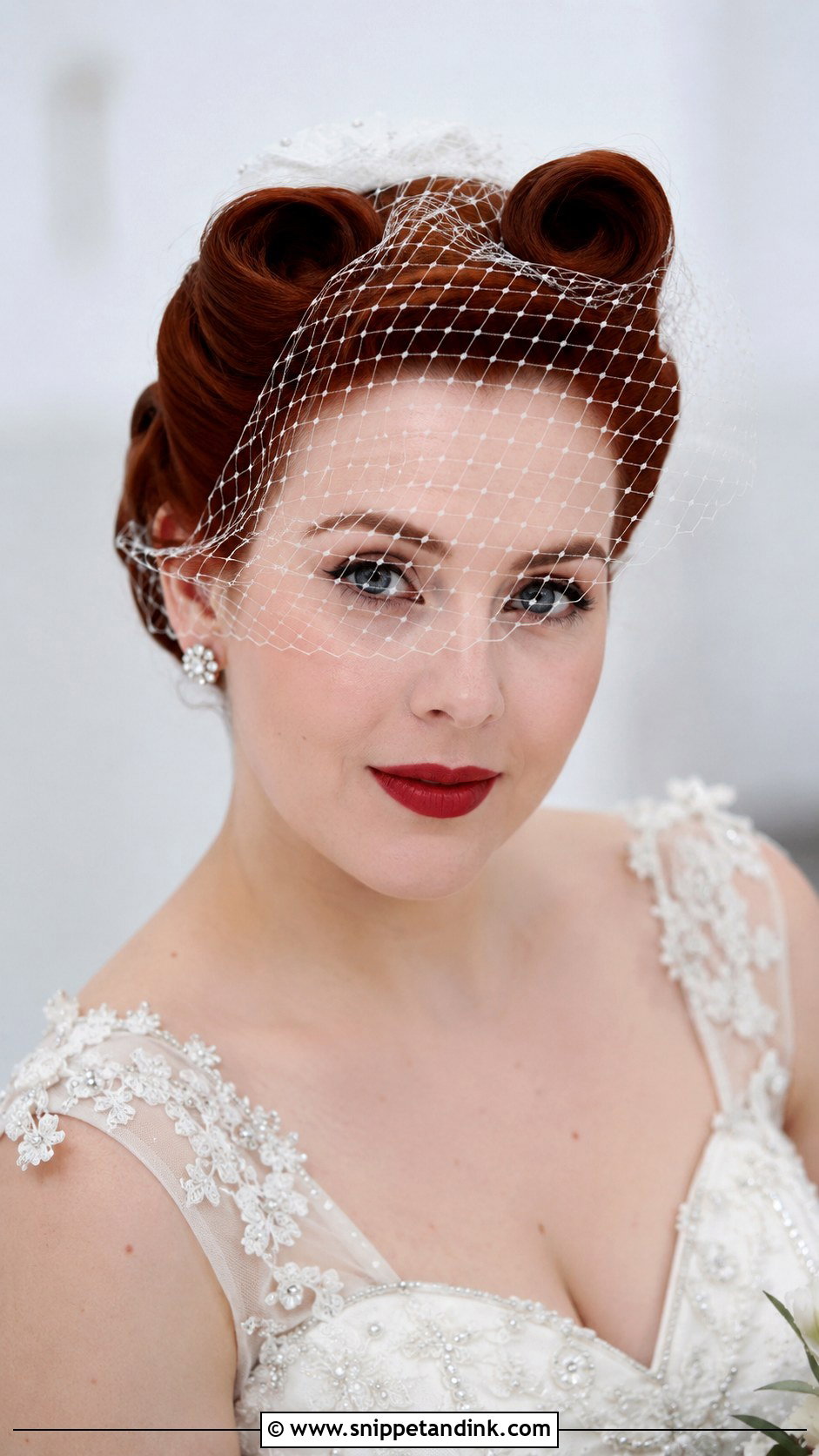
Classic vintage victory rolls are sculpted, barrel-shaped curls rolled and pinned around the crown, straight out of the 1940s. They need a firm set to start. I hot-roll or pin-curl the hair, then roll each section around two fingers and pin through the inside of the roll so it keeps its hollow shape. Fine hair benefits from a little teasing at the base of each roll. They suit a 1940s or 1950s theme, particularly with a birdcage veil or a decorative comb, and the back can be sleek or curled to balance the volume up front.
13. Messy Romantic Updo With Face-Framing Pieces
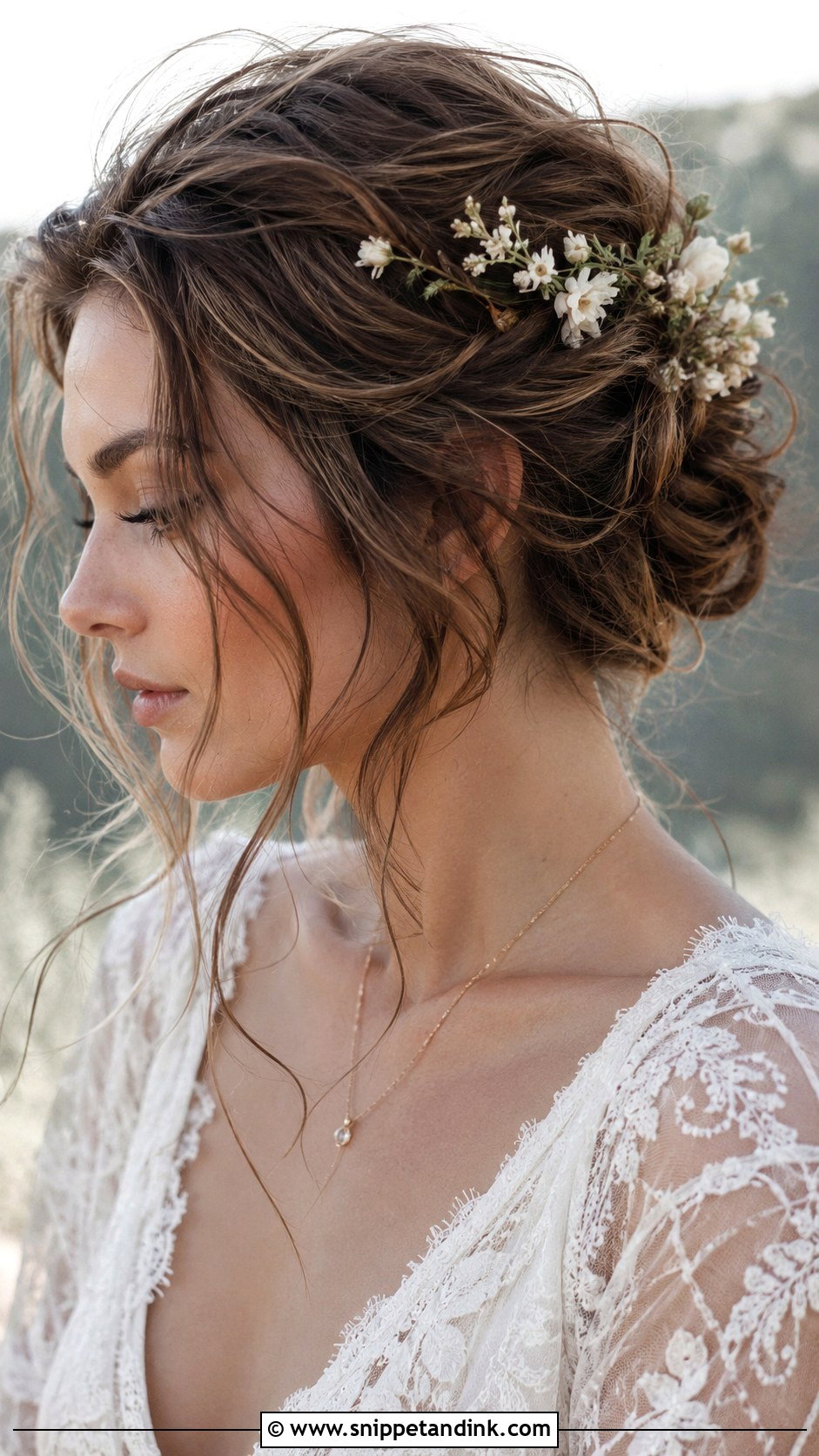
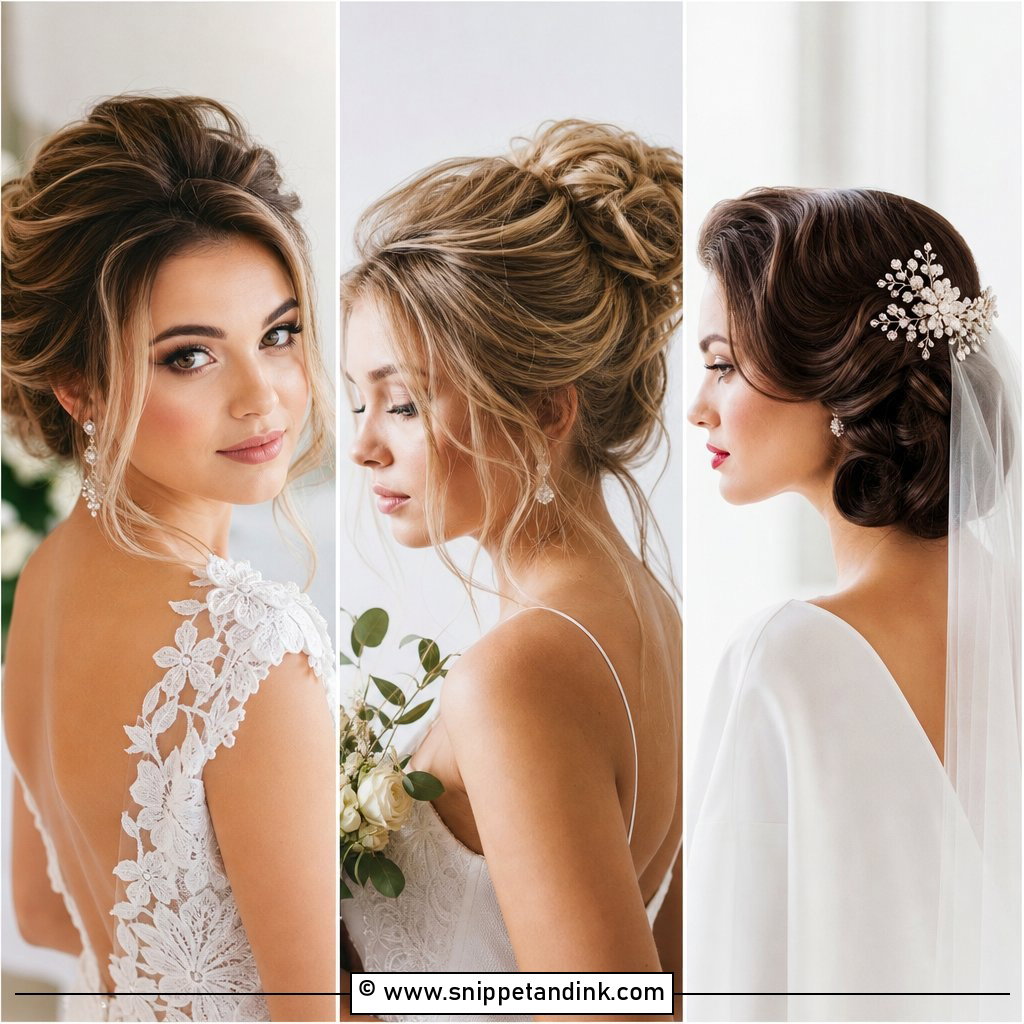
This updo is all about just-tousled beauty, but loose doesn’t mean unstructured. I build a firm base first, usually a hidden ponytail or a few crossed pins, and pin loose curled sections onto it, so the softness sits on something secure. A few face-framing pieces soften the features. It suits boho and outdoor weddings, and floral accents or small pins blend into the texture. On very silky hair every section gets texture spray, or the planned mess becomes a real one by evening.
14. Elegant Side Bun Updo
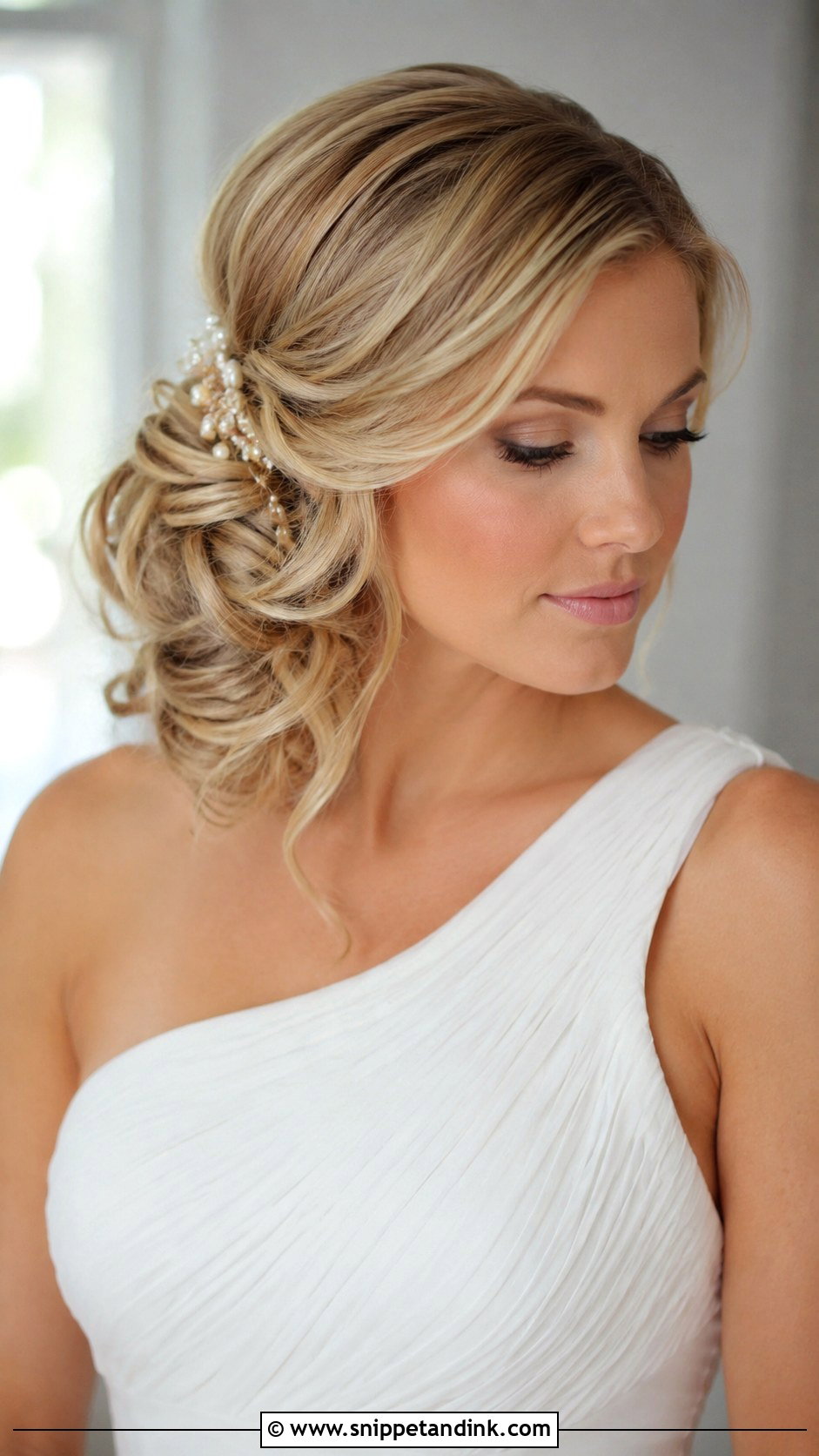
A side bun sits low near one shoulder and leaves the other side open. I sweep everything over, secure a ponytail slightly off-center at the nape, then wrap and pin it into a soft knot. Positioning is the tricky part: too low and the bun catches on your shoulder, especially with a one-shoulder gown. It pairs naturally with one-shoulder and off-the-shoulder necklines and puts earrings on show on the open side. Leave a few curls loose to soften it, or keep it sleek if your dress is structured.
15. Twisted Updo With Hair Vine
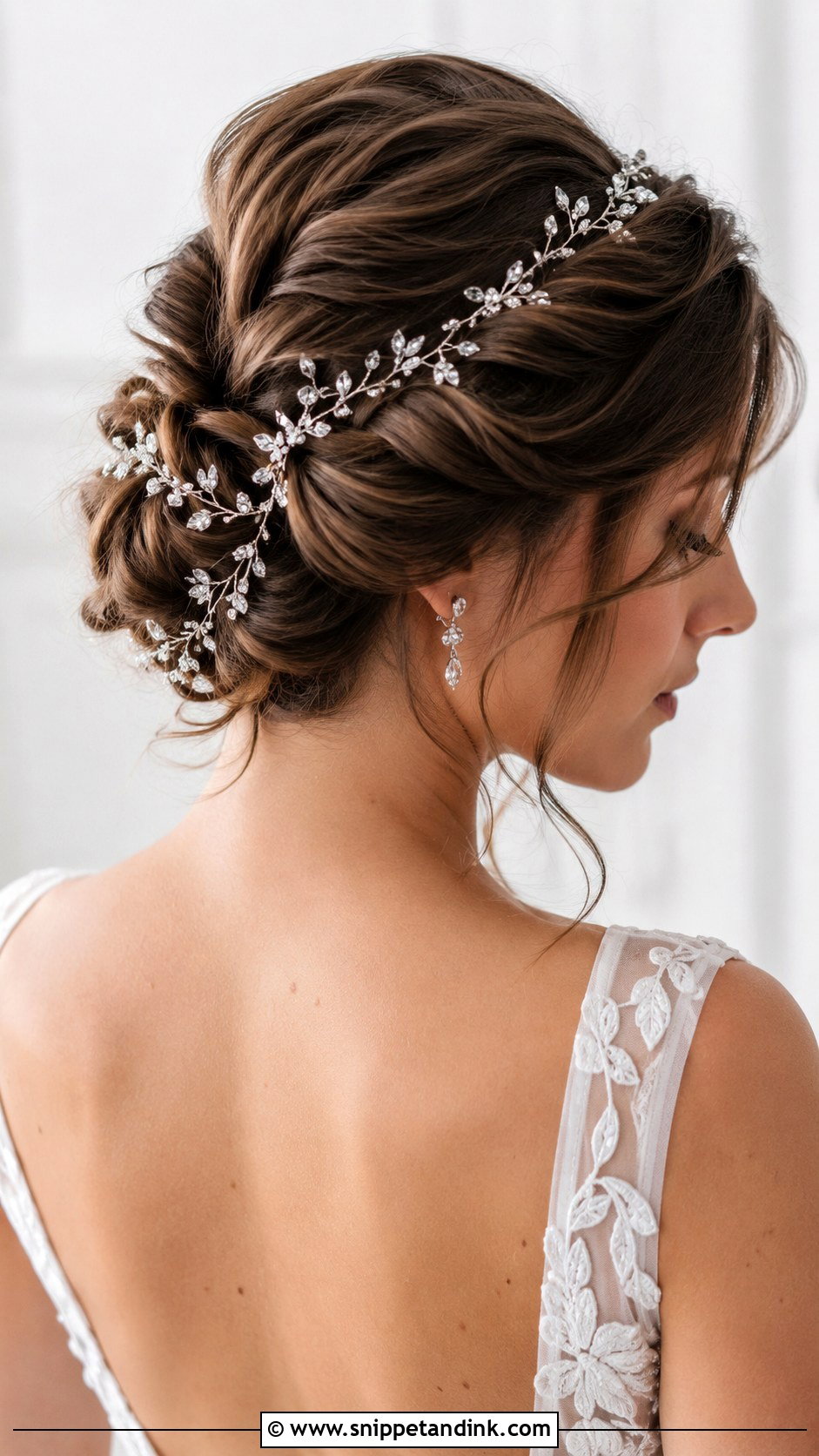
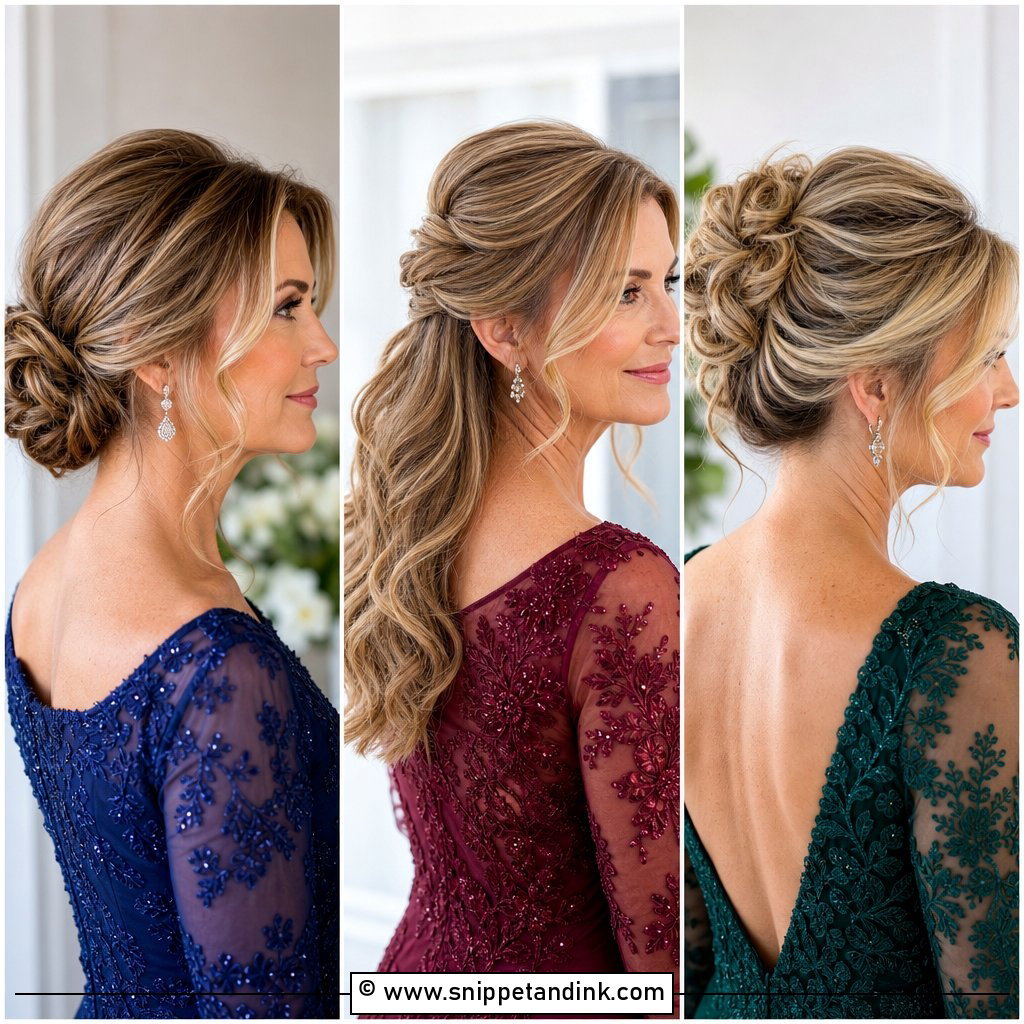
A hair vine is a flexible wire strand of crystals, pearls or metal leaves woven through the twists of an updo. It has to be secured in several places, because a pin at each end alone lets the middle sag. I thread small pins through the vine’s loops every few inches and lock them into the twists. The vine adds shimmer without the weight of a big headpiece and works with modern and classic gowns alike. Try it with your veil at the trial, since a heavy veil comb and a vine can crowd the same spot.
16. Bridal Updo With Statement Veil
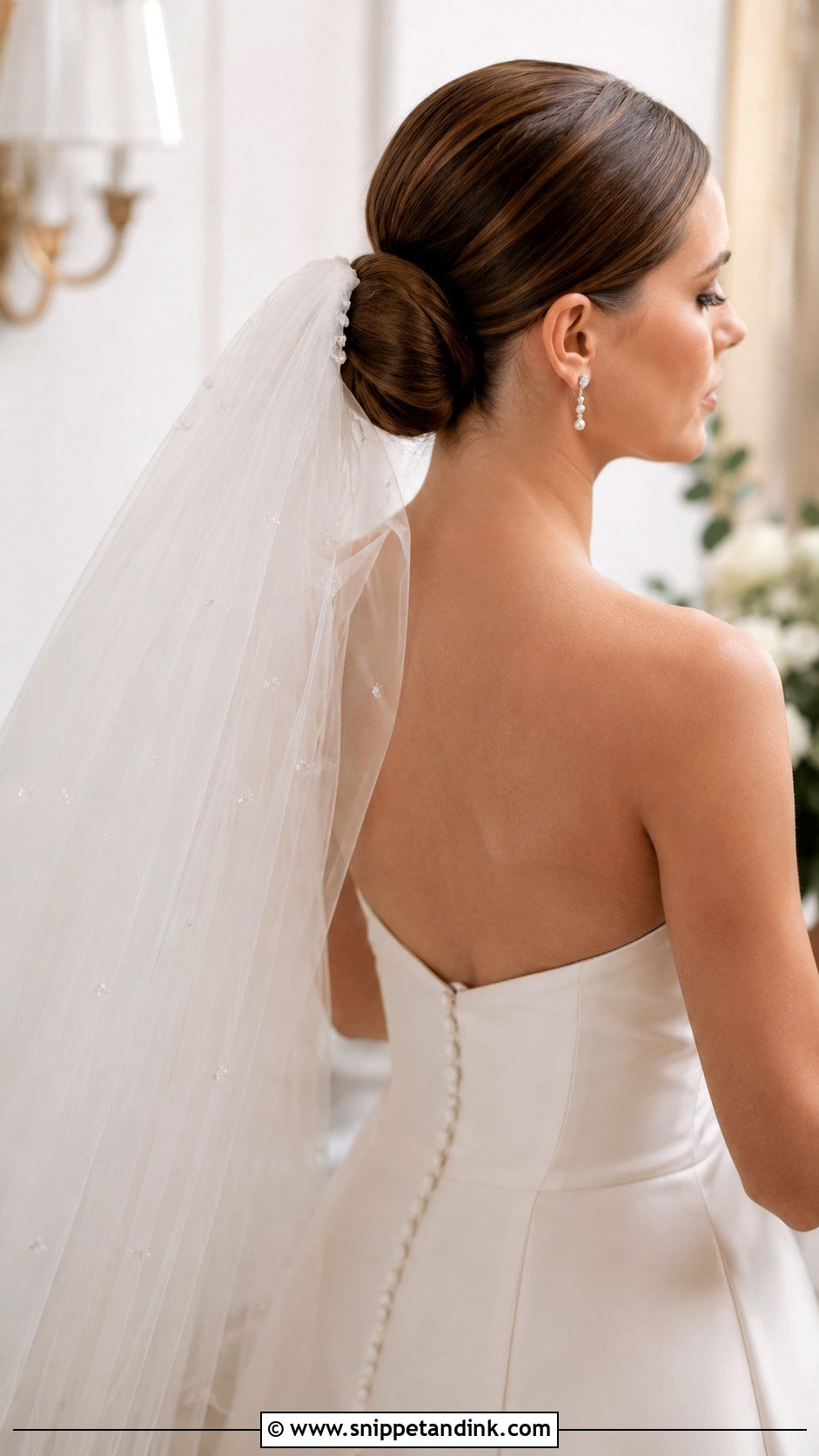
A bun or chignon is the best base for a veil, especially a long, heavy one. Long veils pull backward all day, so I build a firm spot for the comb, a cluster of crossed pins inside the bun where the teeth can grip. Under the bun gives a softer fall; above or in front of it gives more drama. Once the veil comes off for the reception, the updo underneath stays intact. It’s the traditional pairing, at home in formal ceremonies and grand venues.
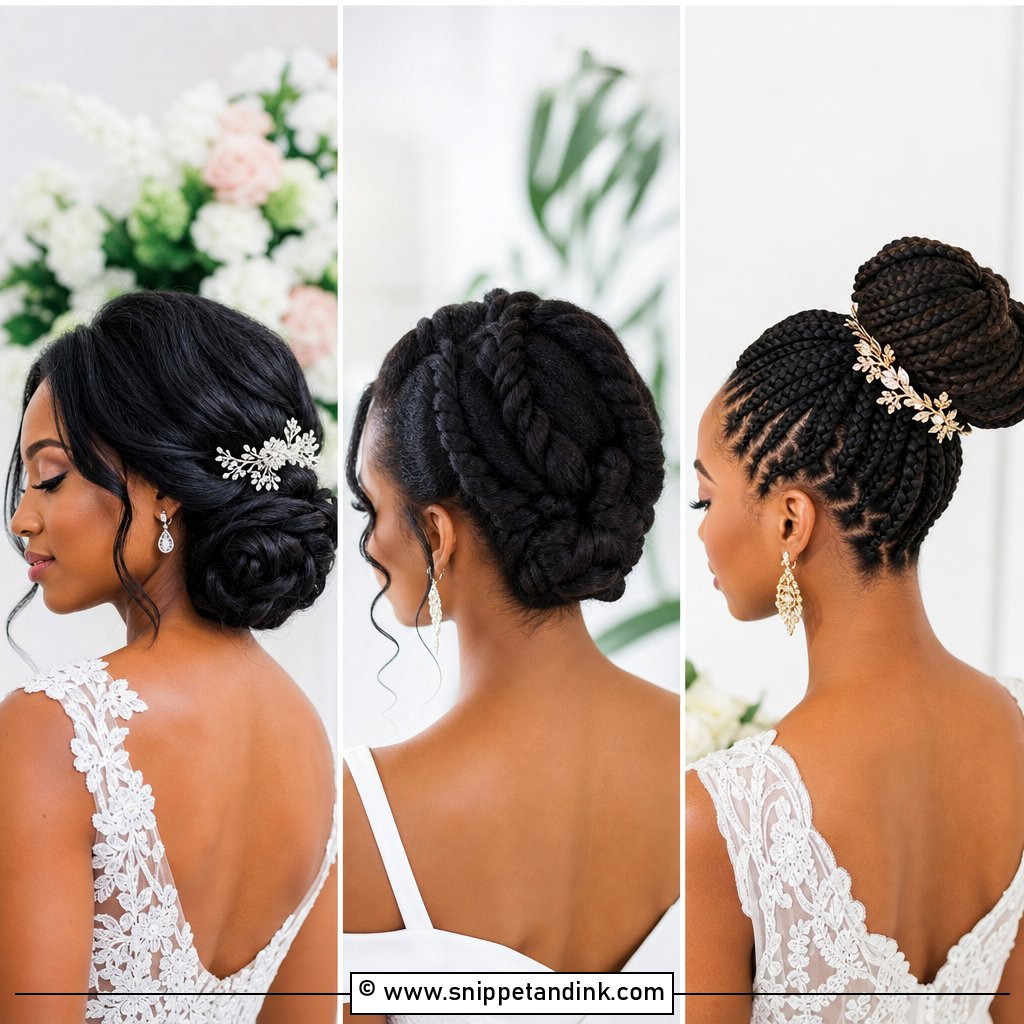
17. Curly Updo for Natural Texture
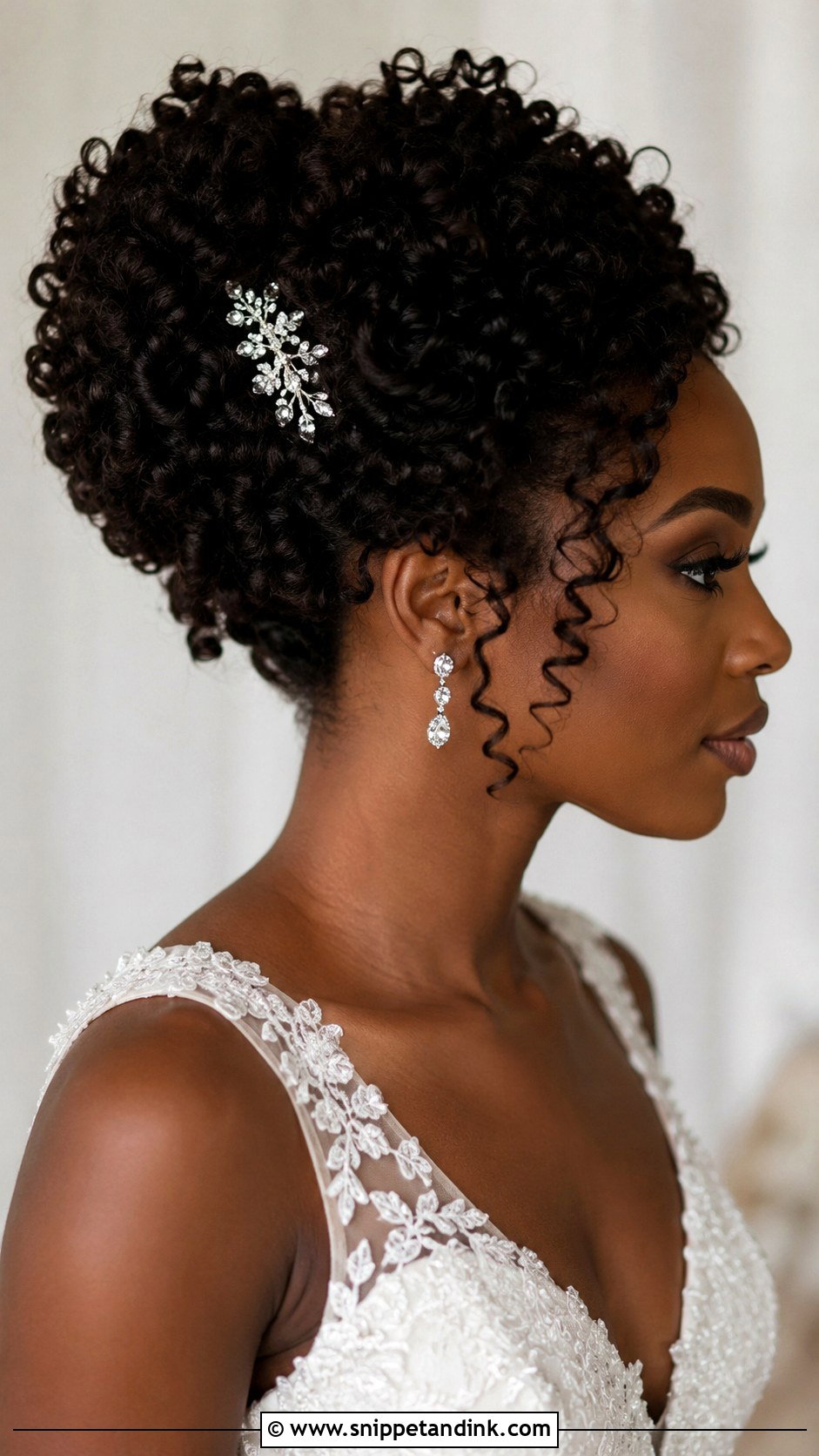
Natural curls give an updo built-in volume, and they hold pins far better than straight hair does. I gather the coils into a full shape without brushing them out, which would turn defined curls into frizz. Stretching the hair slightly first, with a low-heat blow-dry or a braid-out, can make it easier to shape. Moisture matters too: a leave-in and a curl cream keep the coils defined through the day. A sparkling pin or fresh flowers sit well in the curls. This is the look for brides with curly or coily hair who want to look like themselves.
18. Polished Updo With Side Braid
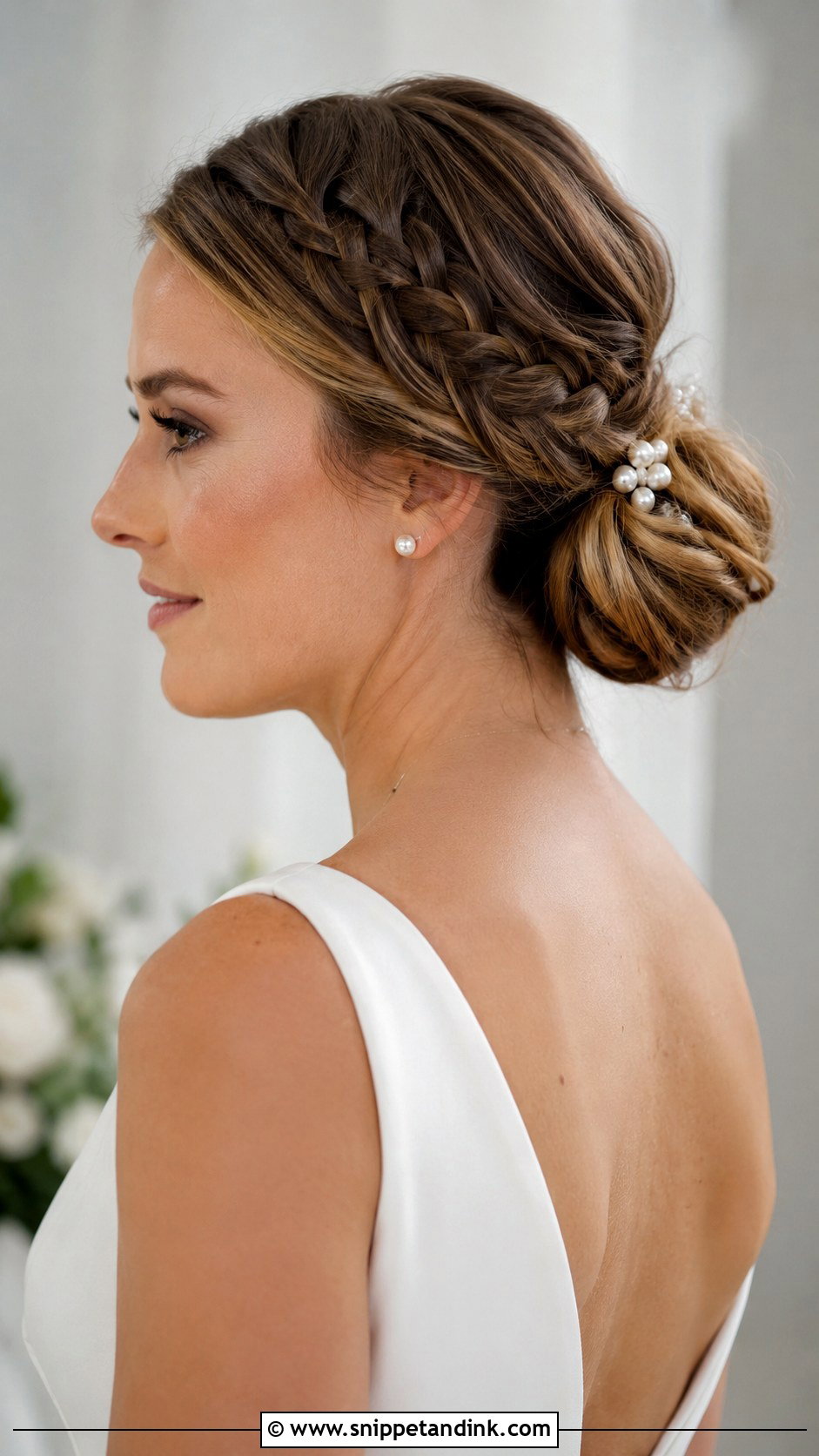
A neat braid runs along one side and feeds into a smooth bun or twist. I prefer a Dutch braid here, with strands crossed under, because it stands up off the head and shows more in photos than a flat French braid. Keep it tight for a formal finish or loosen it slightly for a softer one. Small pins or pearls along the braid add sparkle. On layered hair, short pieces poke out along the plait, so I set them with a dab of pomade.
19. Soft Updo With Curtain Bangs
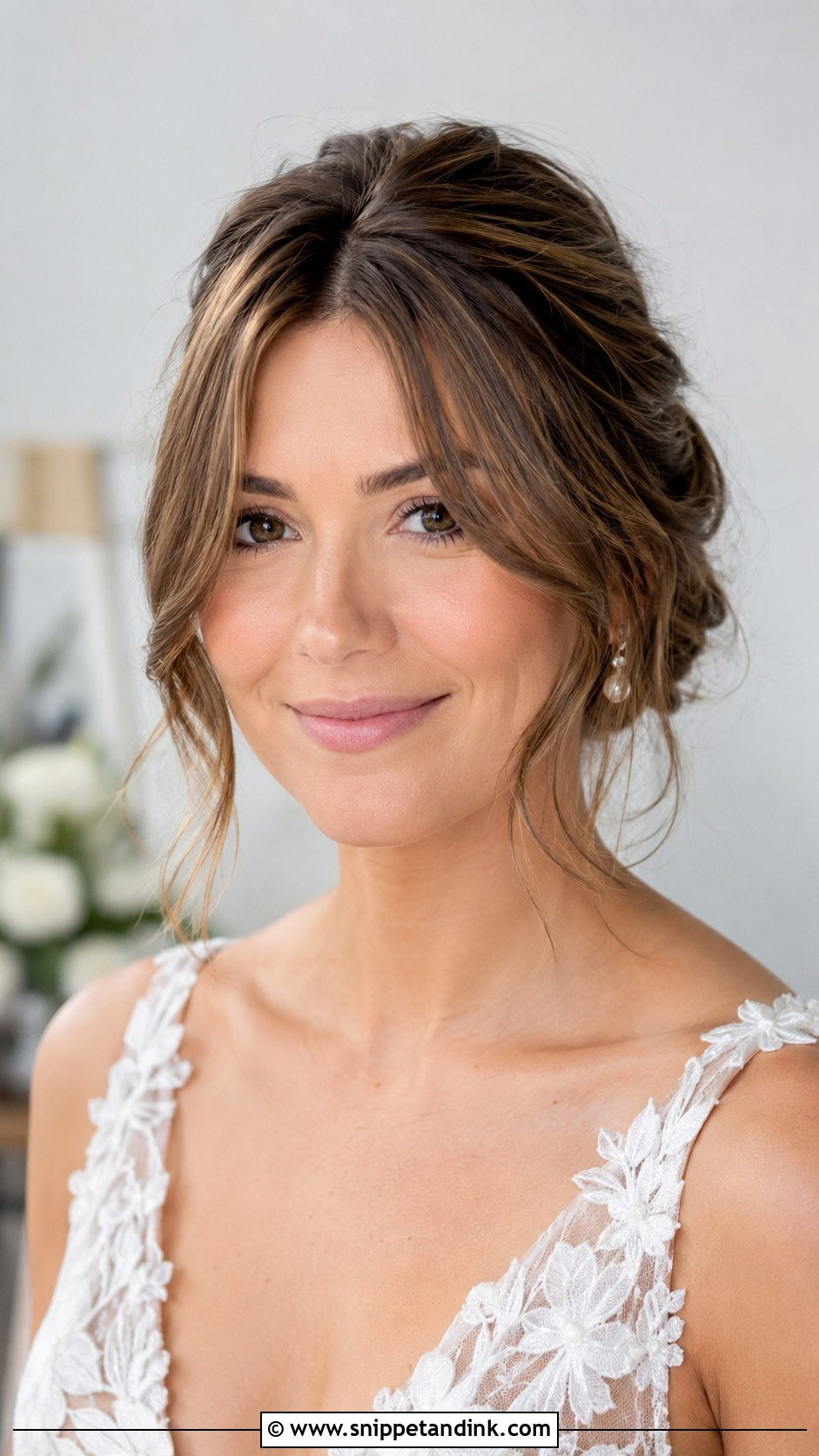
Curtain bangs part down the middle and frame the face while the rest goes up into a relaxed bun or twist. Bangs are the part that misbehaves: they split, flip or go flat. I blow-dry them with a round brush before anything else, then set them in a large velcro roller while the rest of the hair is done. If you’re growing bangs out, have them trimmed a week or two before the wedding, never the day before. The look suits boho and modern themes alike.
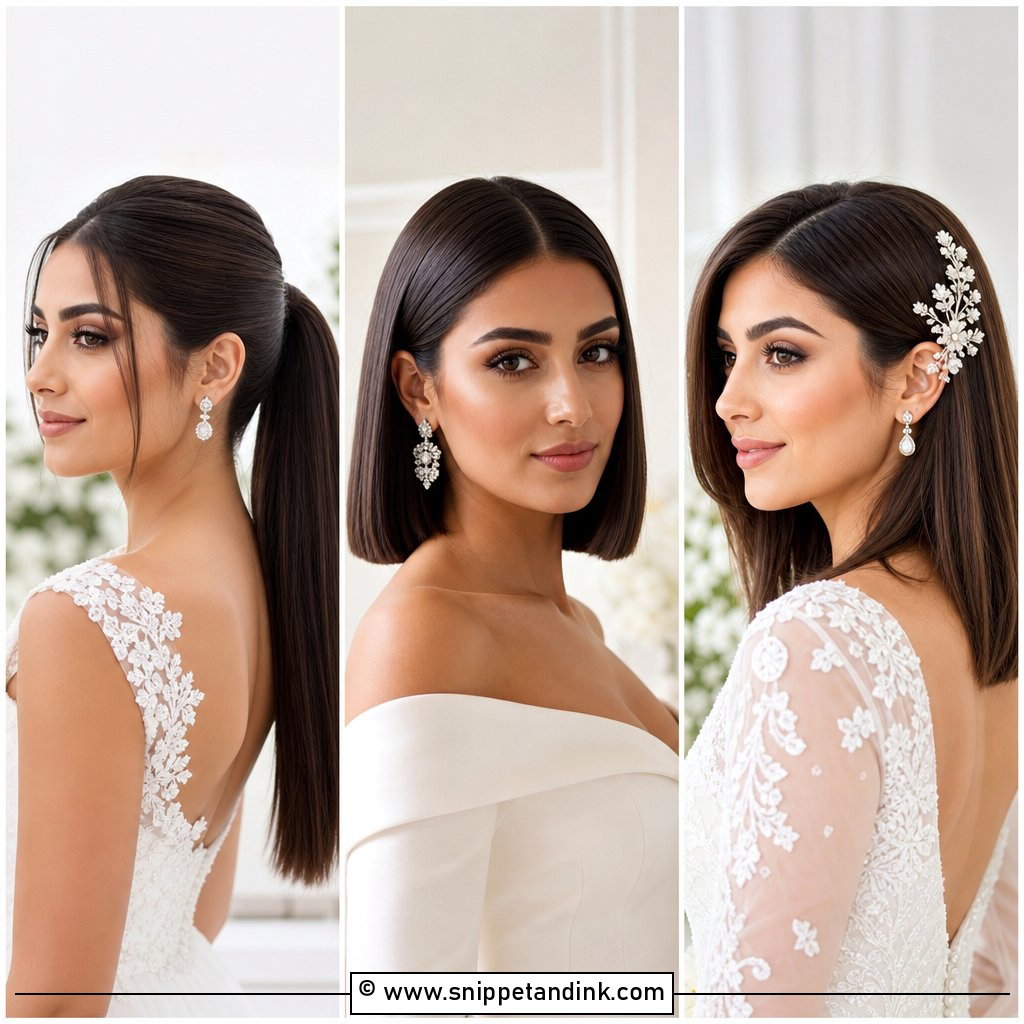
20. Glamorous High Updo With Volume
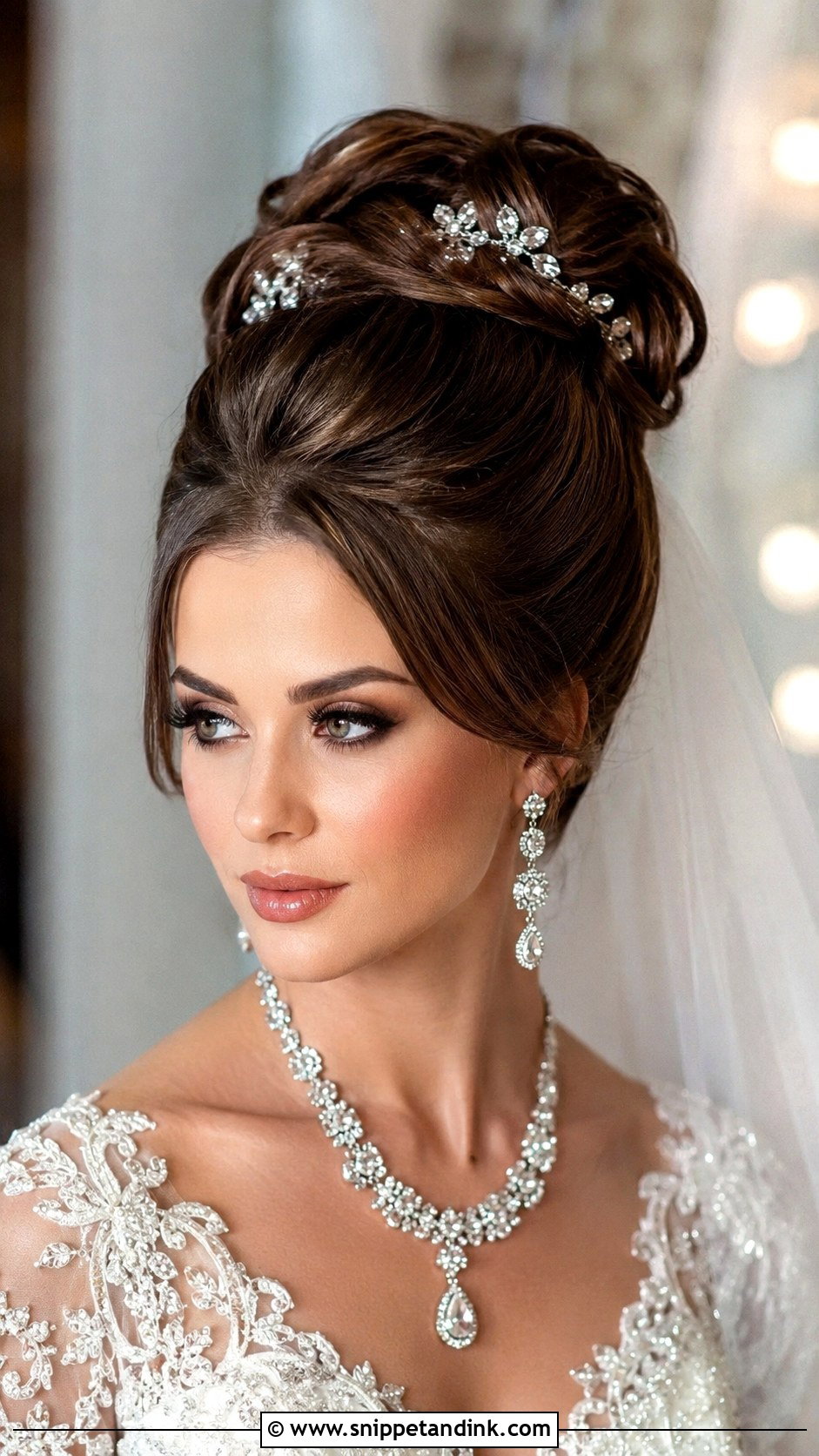
This is the most dramatic look here, gathered high with volume at the crown and pinned into a sculpted shape. It lengthens the neck and shows off statement jewelry, but it also adds height, so if your partner is shorter than you, check how it looks in photos together. I tease at the root for lift, smooth the surface over it, and pin from underneath. A tiara, a comb or crystal pins suit it, and it belongs at formal ceremonies and grand venues.
How Much Length an Updo Actually Needs
Most updos want hair at least to the shoulders. A ballerina bun or a big high updo uses a lot of hair, while a small low chignon or a twisted style can work on a lob. Fine or thin hair can still carry a full style with some help.
- Clip-in wefts color-matched to your hair add bulk inside the bun, hidden from view.
- A hair donut or a little padding underneath gives a high bun its round shape.
- Heavily layered hair needs extra pins and texture spray, because short layers slip out of twists and braids.
- Very thick hair sometimes needs to be split into two smaller buns stacked together, so one big knot doesn’t pull on the scalp.
If you’re growing your hair for the wedding, tell your stylist early. Regular small trims to keep the ends healthy will help an updo more than chasing an extra inch of length.
Getting the Pins Out at the End of the Night
A secure updo can hold dozens of pins, and pulling it apart in a hurry is how brides end up with knots and broken hair. Ask your stylist roughly how many went in, then take it down slowly.
- Lift out the veil comb and any accessories first.
- Feel for pins from the outside in, starting at the top and the bun, and drop them in a dish so you can count them.
- Don’t brush through teased or sprayed hair. Work conditioner or a detangler in with your fingers and loosen knots from the ends upward.
- Too tired to wash it that night? Braid it loosely and wash the next morning, putting conditioner on before shampoo.
What Holds an Updo Up Is What Nobody Sees
The right updo depends less on the photo you saved and more on your hair, your dress and the day itself. Think about how much length and thickness you have, where your veil needs to sit, and how many hours you’ll be wearing it. Bring inspiration photos to your stylist and book a trial, then keep the style in for a few hours afterward: hug someone, sit in a car, take a few selfies. You’ll learn more about how it holds that way than any picture can tell you.
You'll Like These Ideas:


Leave a Reply