
Most brides arrive at a trial with a folder of saved photos and one worry: will that look actually work on my hair? It’s the right question. The twenty styles below range from a sleek low bun to braided crowns and loose Hollywood waves, and each one behaves differently depending on texture, length and how long the day runs. I’ve added notes on what I check before committing to each, who it suits and where it tends to go wrong, so you can walk into your trial already knowing which two or three are worth testing.
Reading Your Texture Before You Shortlist
At a trial, I touch your hair before I look at your photos. Texture decides more than the picture does. A style that holds perfectly on thick, coarse hair can collapse in an hour on fine, silky hair, and the reverse is true too: very thick hair can make a delicate style look heavy.
Fine or silky hair
Grip is the problem. I’ll usually recommend washing the night before rather than the morning of, adding texture spray at the root and choosing pinned or braided styles over loose waves. Twists, Dutch braids and low chignons hold well. Clip-in pieces help braided crowns and half-up braids look full.
Thick or curly hair
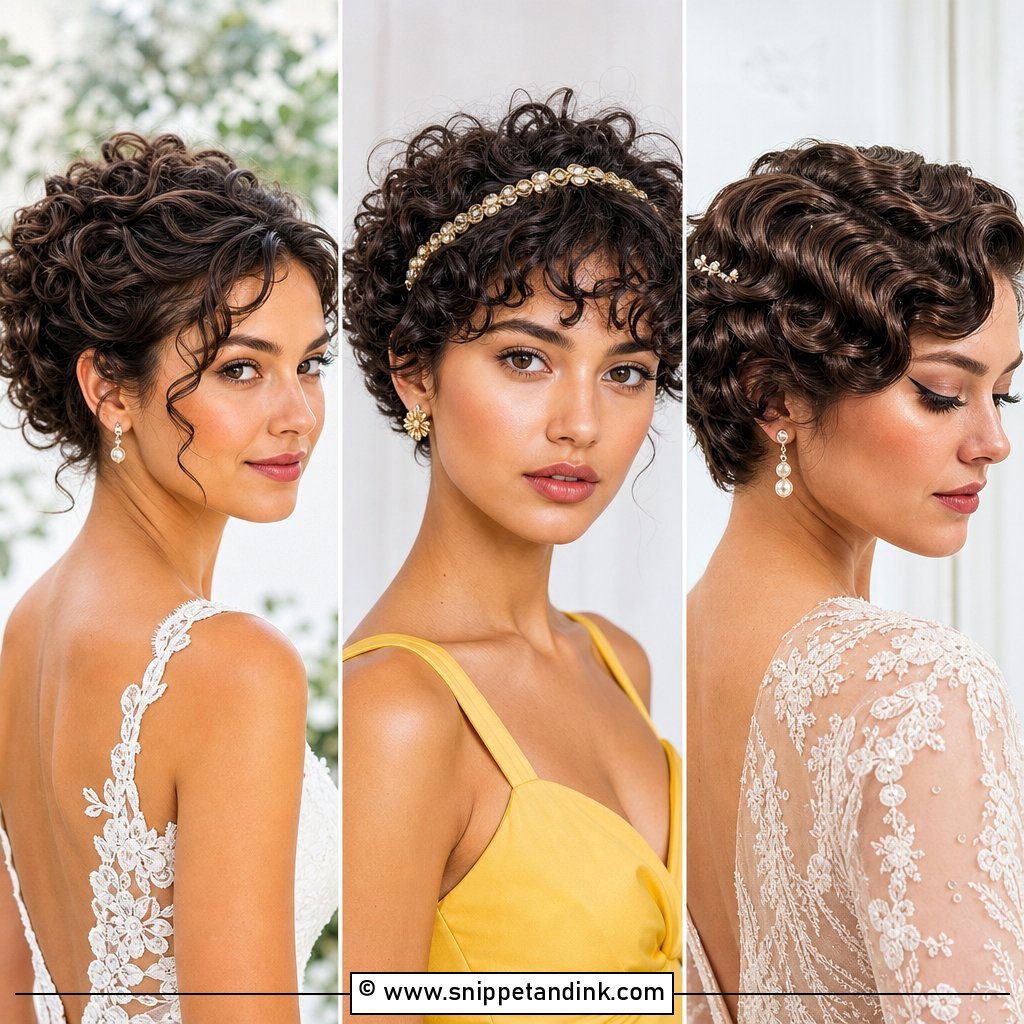
Weight is the problem. Updos need to be split into sections and anchored to a base ponytail, or they pull at the neck. Natural curl is an asset: a tousled updo or curled half-up often looks better left closer to your own pattern than forced smooth.
Shoulder length or shorter
Low buns, twisted updos and pinned-back curls are realistic. Full braided crowns and long fishtails usually need a few clip-ins, so mention that early so your stylist can colour-match them before the trial.
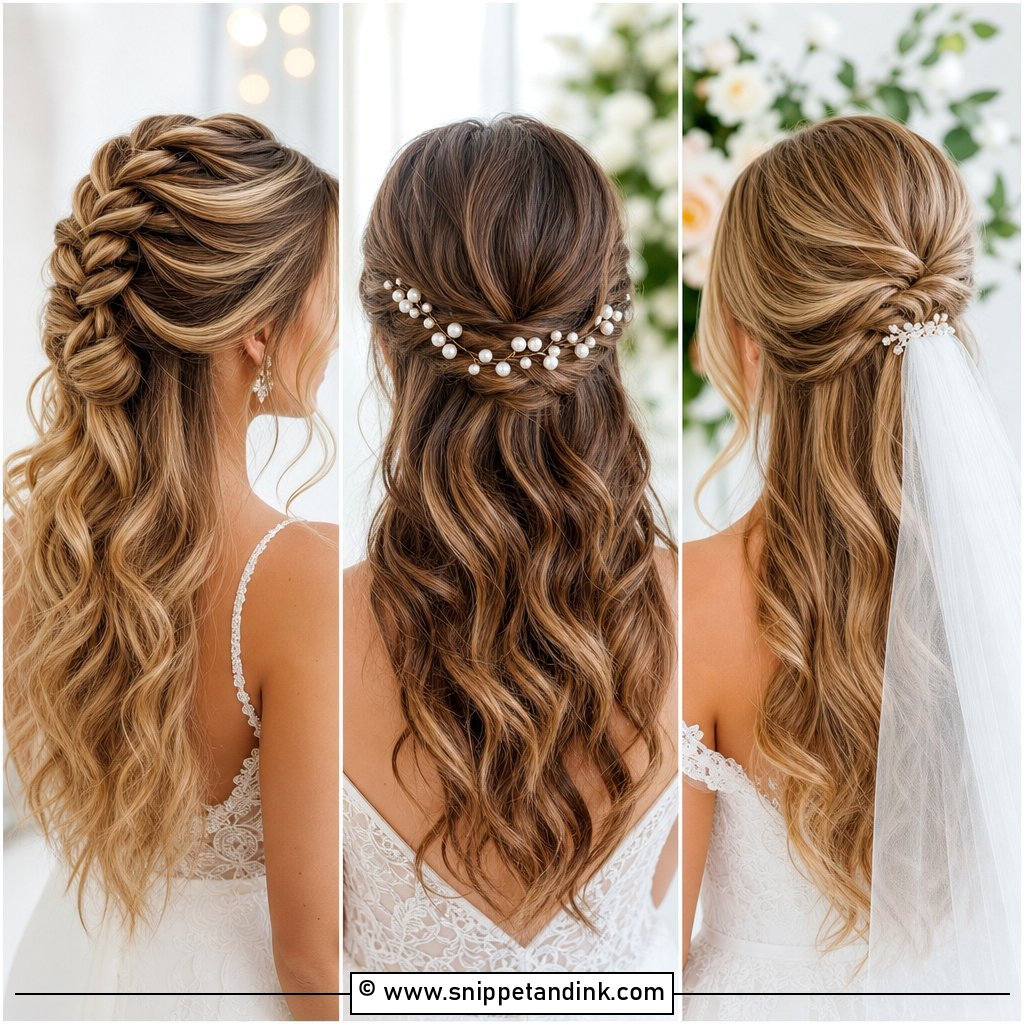
1. Half-Up Half-Down Wedding Hairstyle
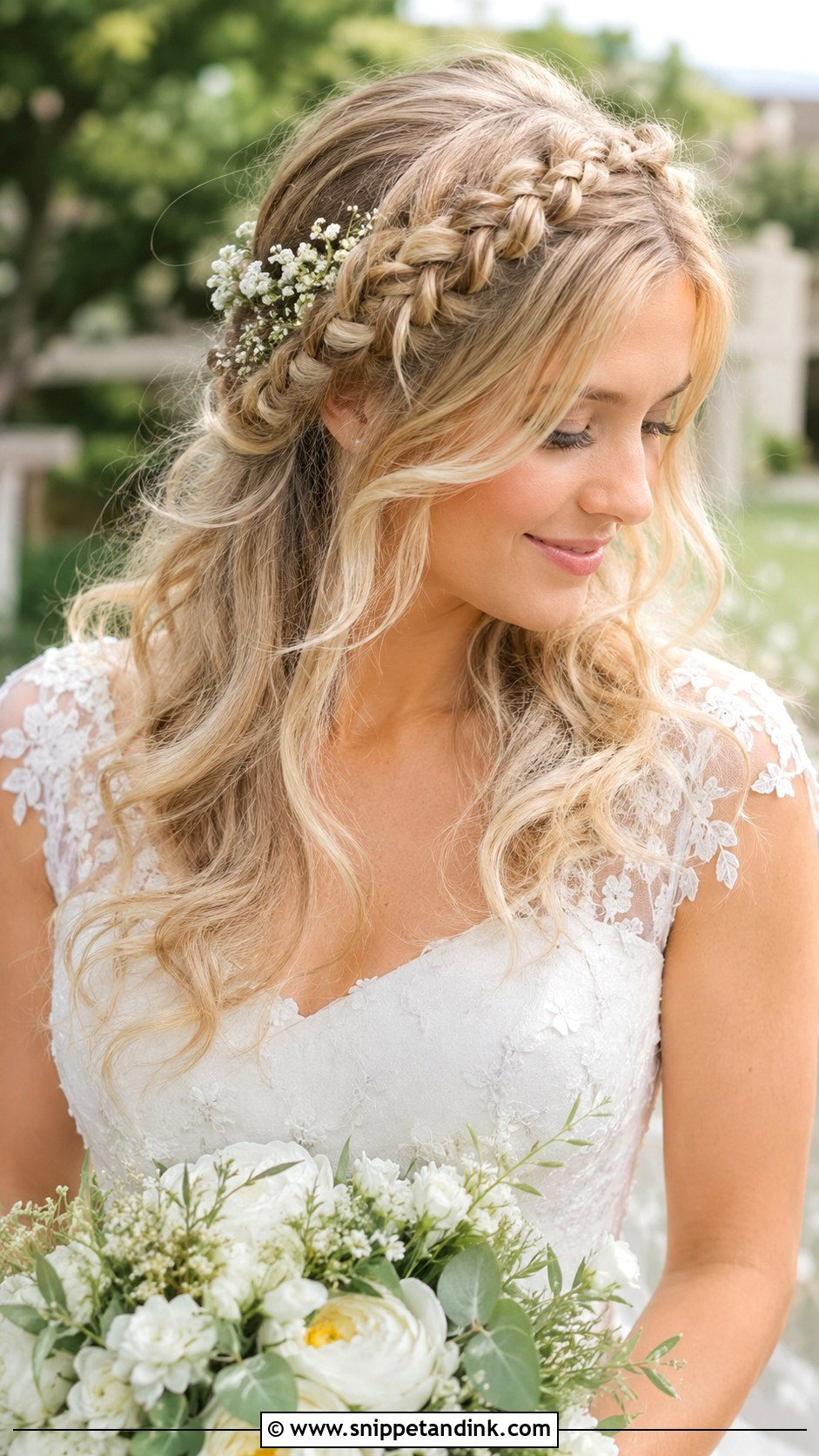
This is the style I’m asked for most, and the one that fails most often by mid-afternoon. The top section goes back into a twist, braid or small bun while the length stays down, so you keep your face clear without losing length in photos. The weak point is the curl in the lower half. On fine or slippery hair I set every curl with a hot tool, pin it while it cools, and only brush it out right before the ceremony. If you’re marrying outdoors in humidity, ask for the top secured with crossed bobby pins rather than a single clip, because the weight of a veil comb will drag a lone clip down.
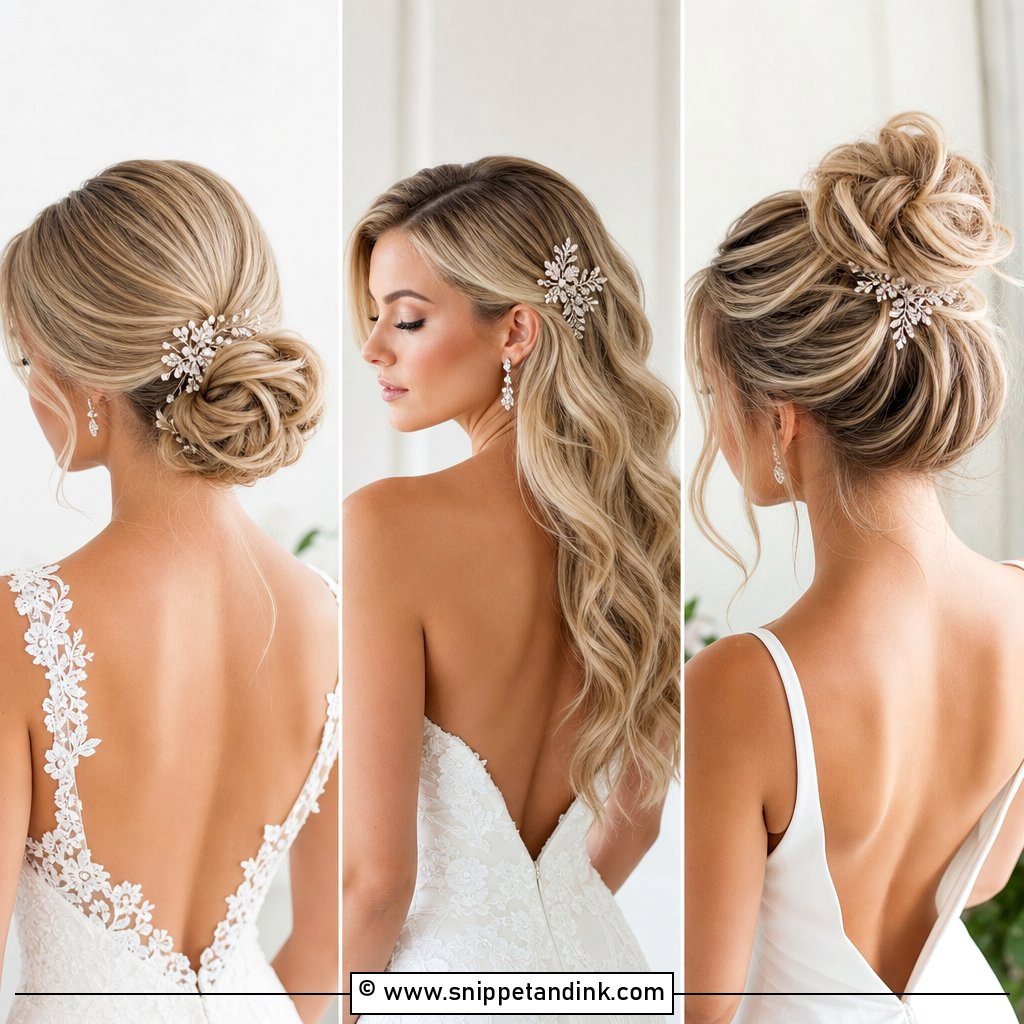
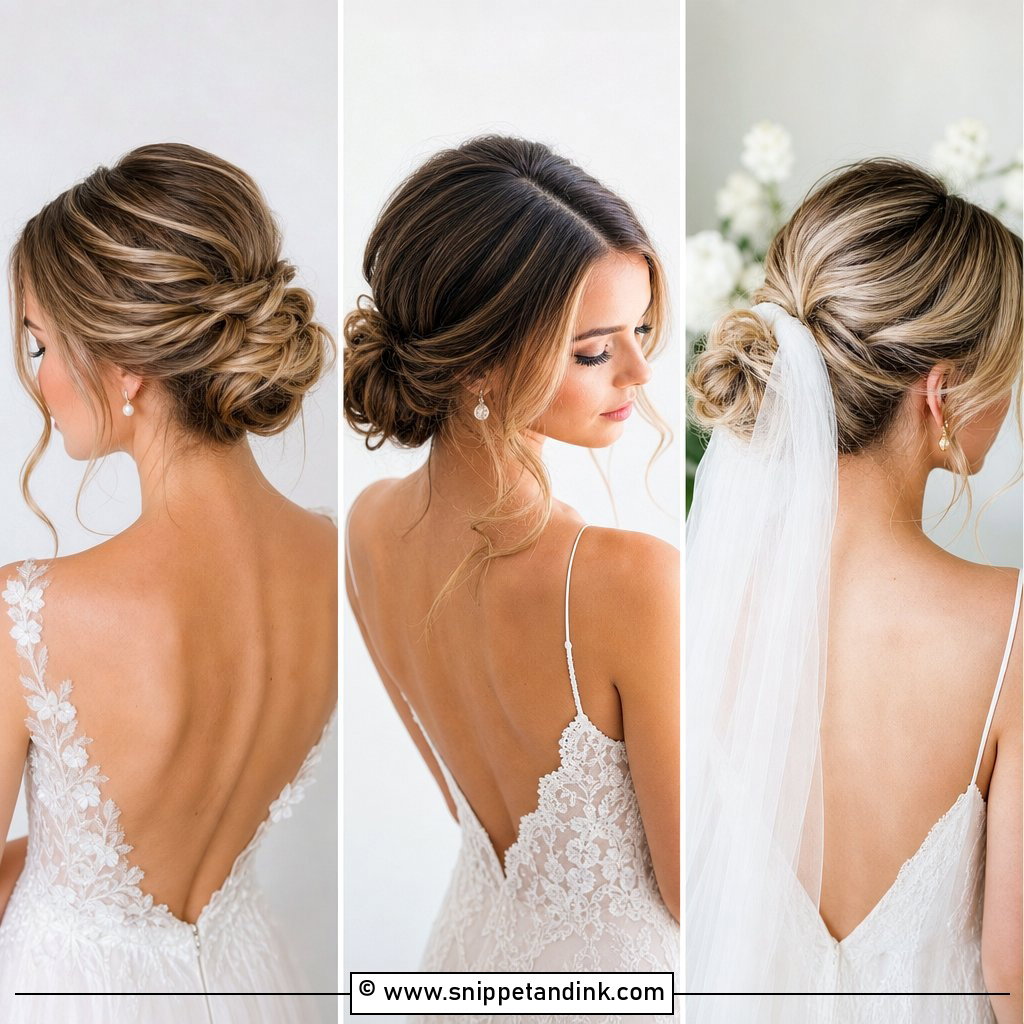
2. Sleek Low Bun Wedding Hairstyle
A low bun lives or dies on the part. A clean center part looks crisp, but it shows every gap, so I check the scalp line under daylight before I commit. I smooth the hair with a light cream rather than heavy gel, which flakes and looks dull under flash. Set it right at the nape and it leaves room for statement earrings and an open neckline. It’s a strong option for long receptions because there’s nothing loose to frizz. Thick hair needs the bun split into two sections first; otherwise it gets so bulky it pulls at the neck by the evening.
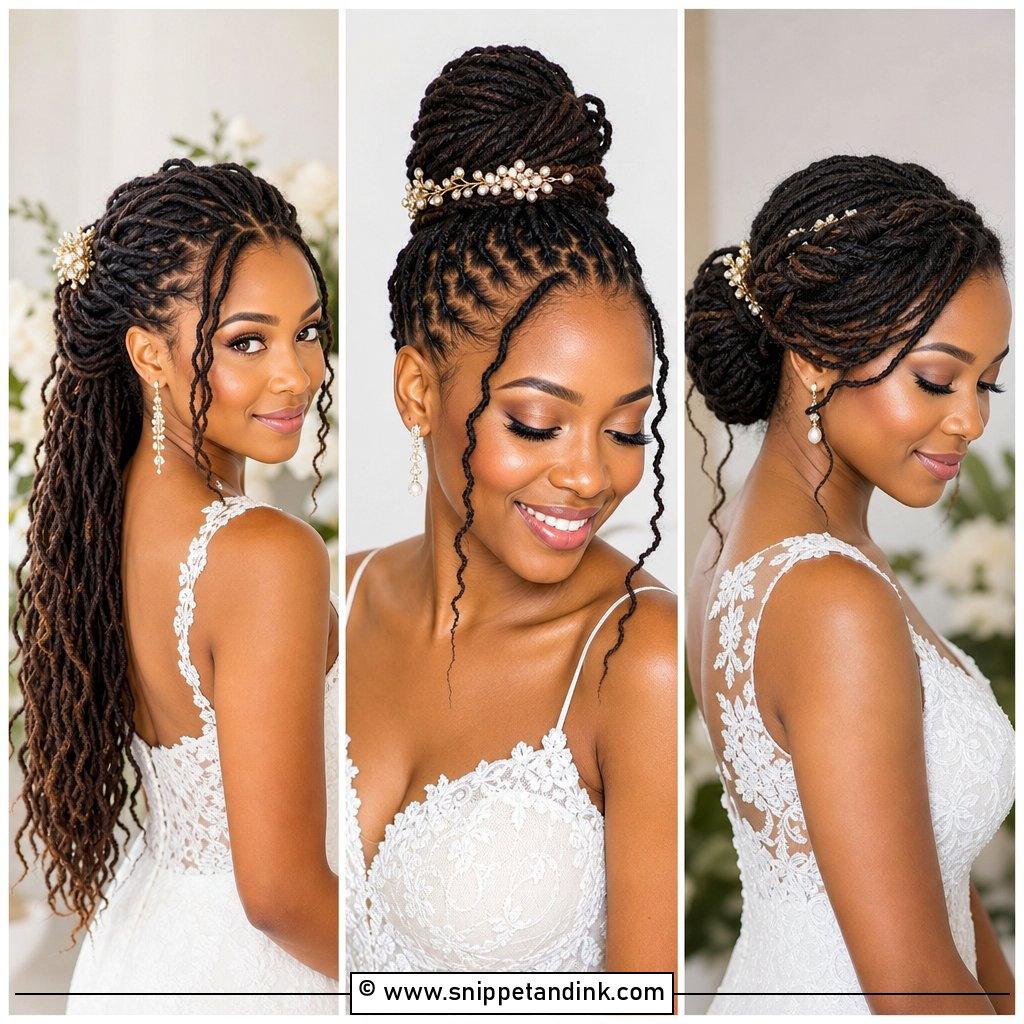
3. Messy High Bun Wedding Hairstyle
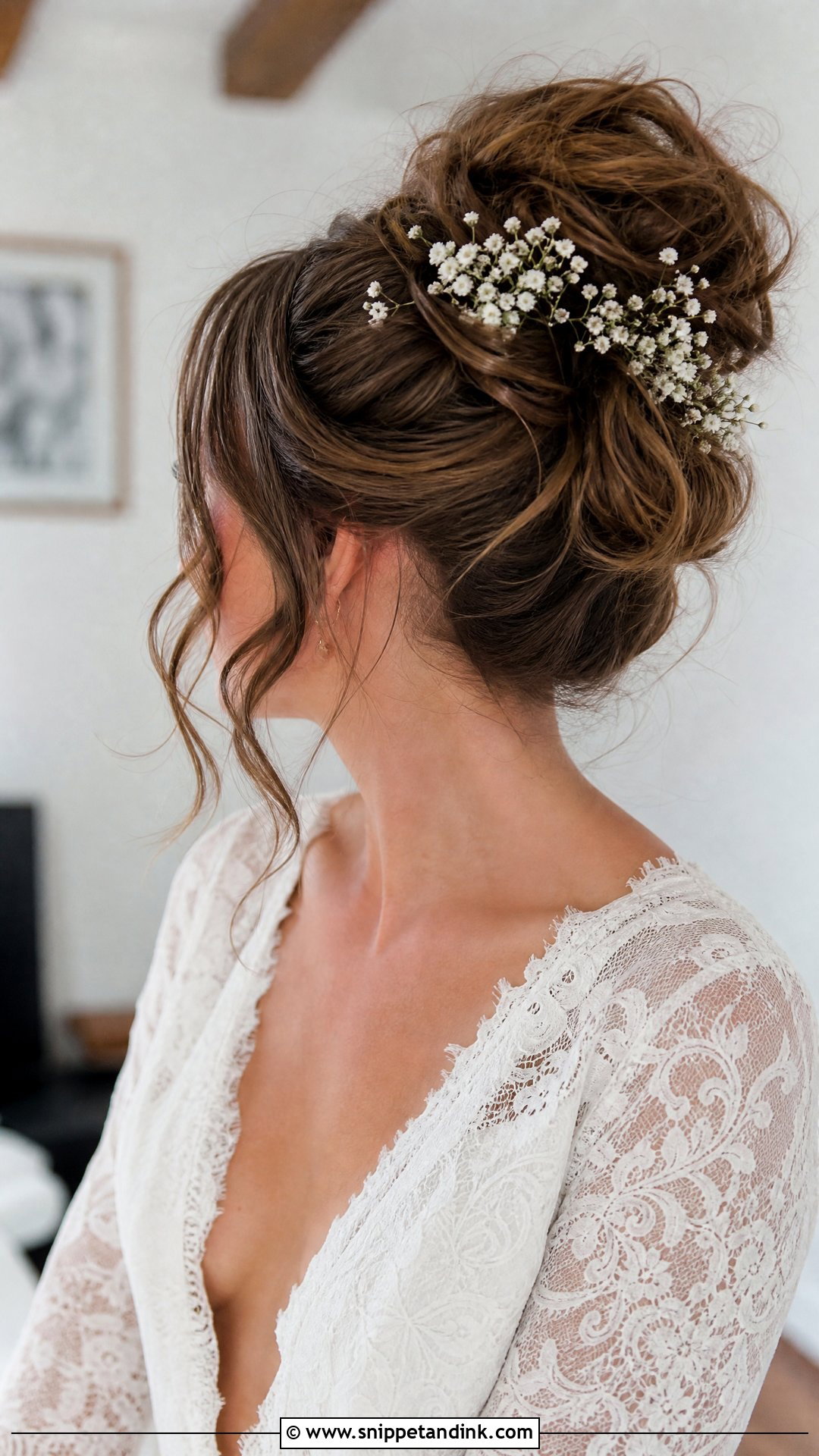
A messy high bun looks casual, but the mess has to be built on purpose. I curl the hair first so the texture has grip, then pin the bun in sections and pull out pieces by hand. That’s how a free-spirited bride ends up with volume that still holds through the dancing. Baby’s breath tucks in well here because the stems slide into the loose sections. The trap is leaving too many face-framing pieces; three or four on each side is plenty, or the whole thing reads unfinished by the speeches.
4. Classic Chignon Wedding Hairstyle
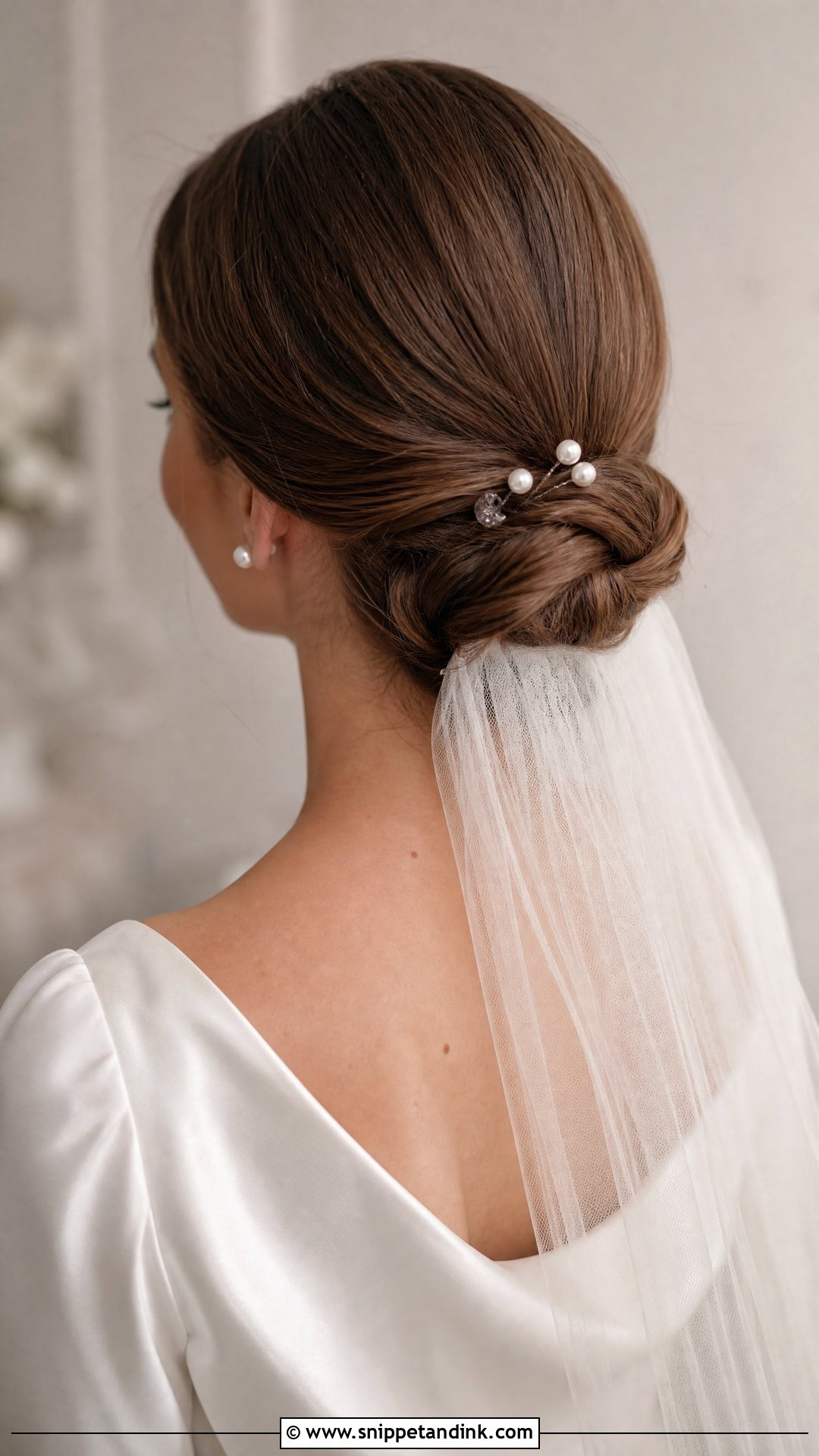
The chignon is my go-to when a bride is wearing a long cathedral veil. The twisted knot sits low and gives the comb something solid to anchor into, which a loose bun can’t do. Medium-to-long hair works best; shorter lengths need a small padded insert to give the knot shape. I’ll keep it smooth for a ballroom or ease out the twist slightly for softness, and a few pearl pins along one side are usually all it needs. If your hair is very heavy, warn your stylist, because the knot will want to drop unless it’s anchored to a small base ponytail underneath.
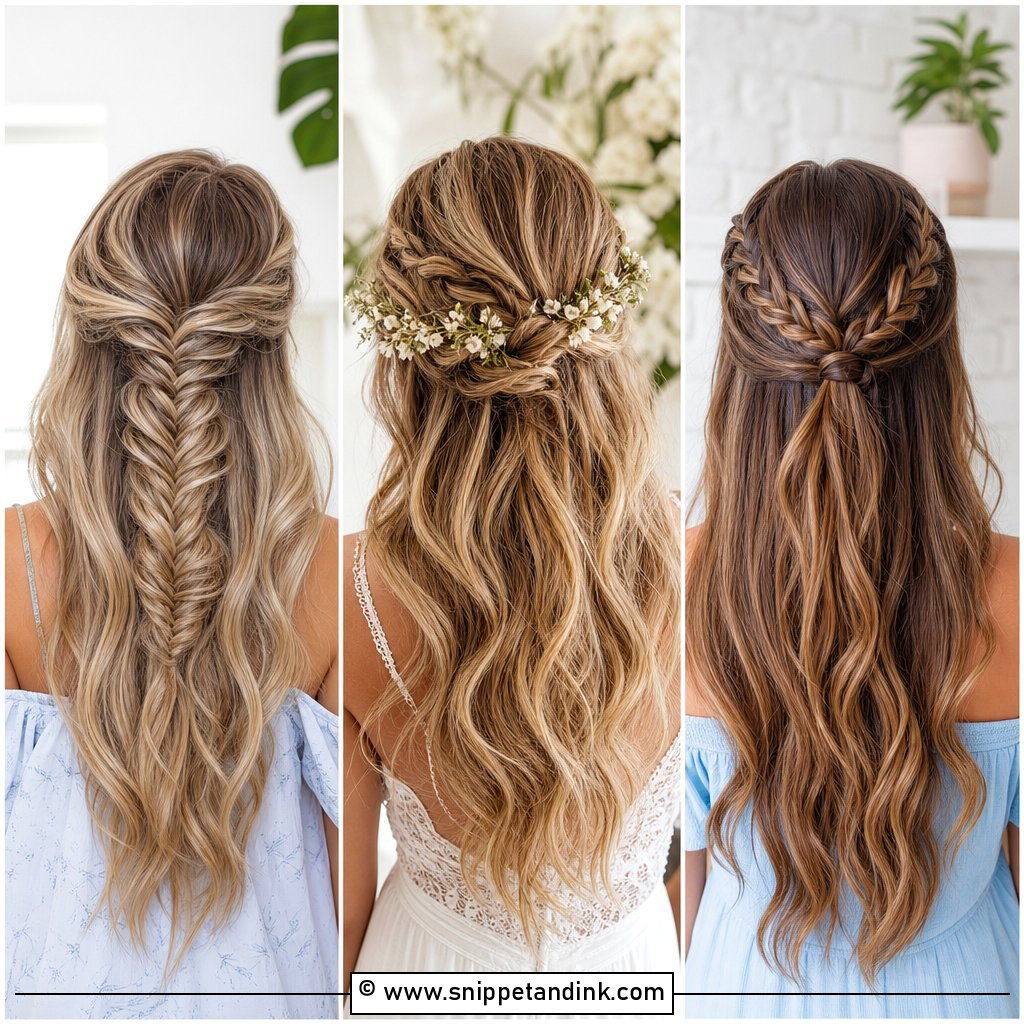
5. Boho Braided Wedding Hairstyle
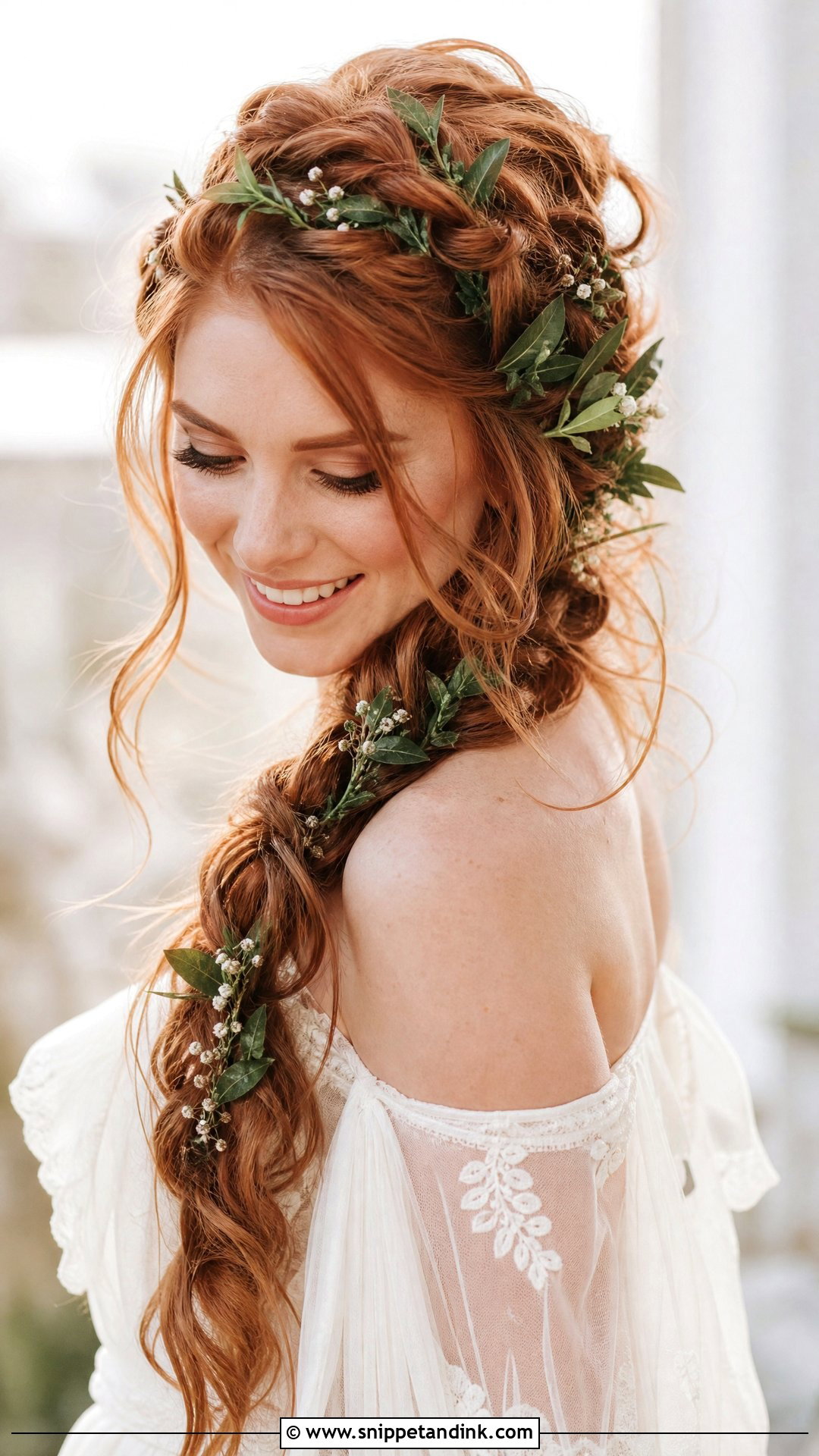
Loose French braids or chunky fishtails run through tousled hair here, and the pieces get pulled out so it looks lived in. I always braid this style slightly tighter than it will finish, then loosen it, because pancaking a braid that was already loose makes it fall apart. Thick or wavy hair holds the shape best. Fine hair can still do it, but I’d add texture spray at the root and accept a slimmer braid. It’s a natural fit for beach and garden ceremonies, and flower crowns or small gold pins sit nicely along the plait.
6. French Twist Wedding Hairstyle
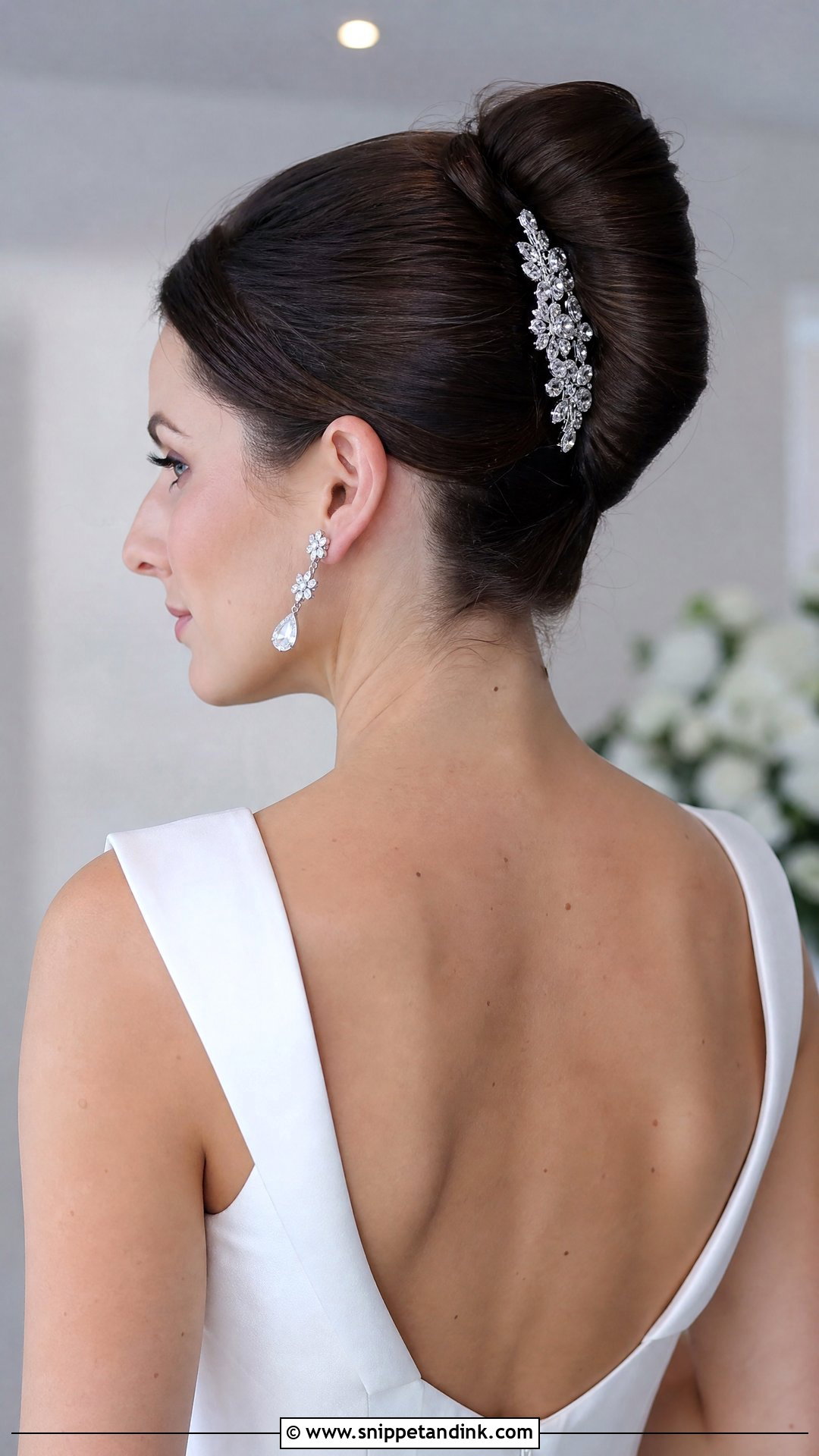
A French twist rolls the hair vertically up the back of the head and tucks the ends inside, so the line of the neck is completely clean. That’s why I suggest it for high-necked or backless gowns where you want the shape of the dress to show. The technique relies on a backcombed base so the pins have something to bite into. Very straight, silky hair resists it; a day-old wash or some dry shampoo helps a lot. A comb or veil slots in at the base without disturbing the roll.
7. Cascading Waves Wedding Hairstyle
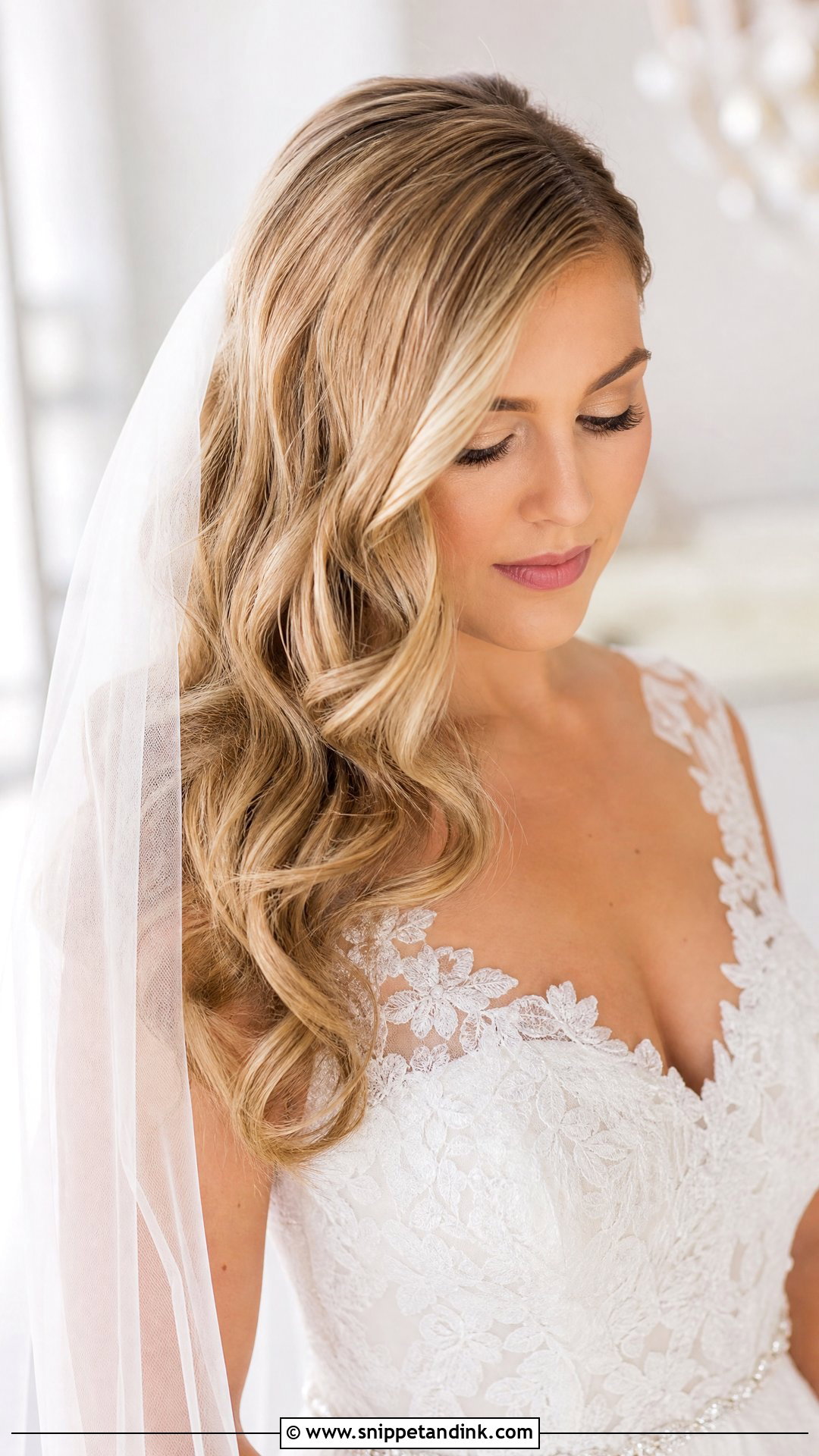
Loose waves worn down are the hardest look to keep intact for ten hours. Natural-looking waves are larger and looser than set curls, which means they relax faster, especially in heat. My fix is to curl tighter than you want, let every section cool fully, and brush out just before you walk. Long hair carries the movement best. Center or side part both work, but decide at the trial, since switching on the morning leaves a dent where the old part sat. A light shine spray at the end, not serum, keeps the ends from going heavy.
8. Fishtail Braid Wedding Hairstyle
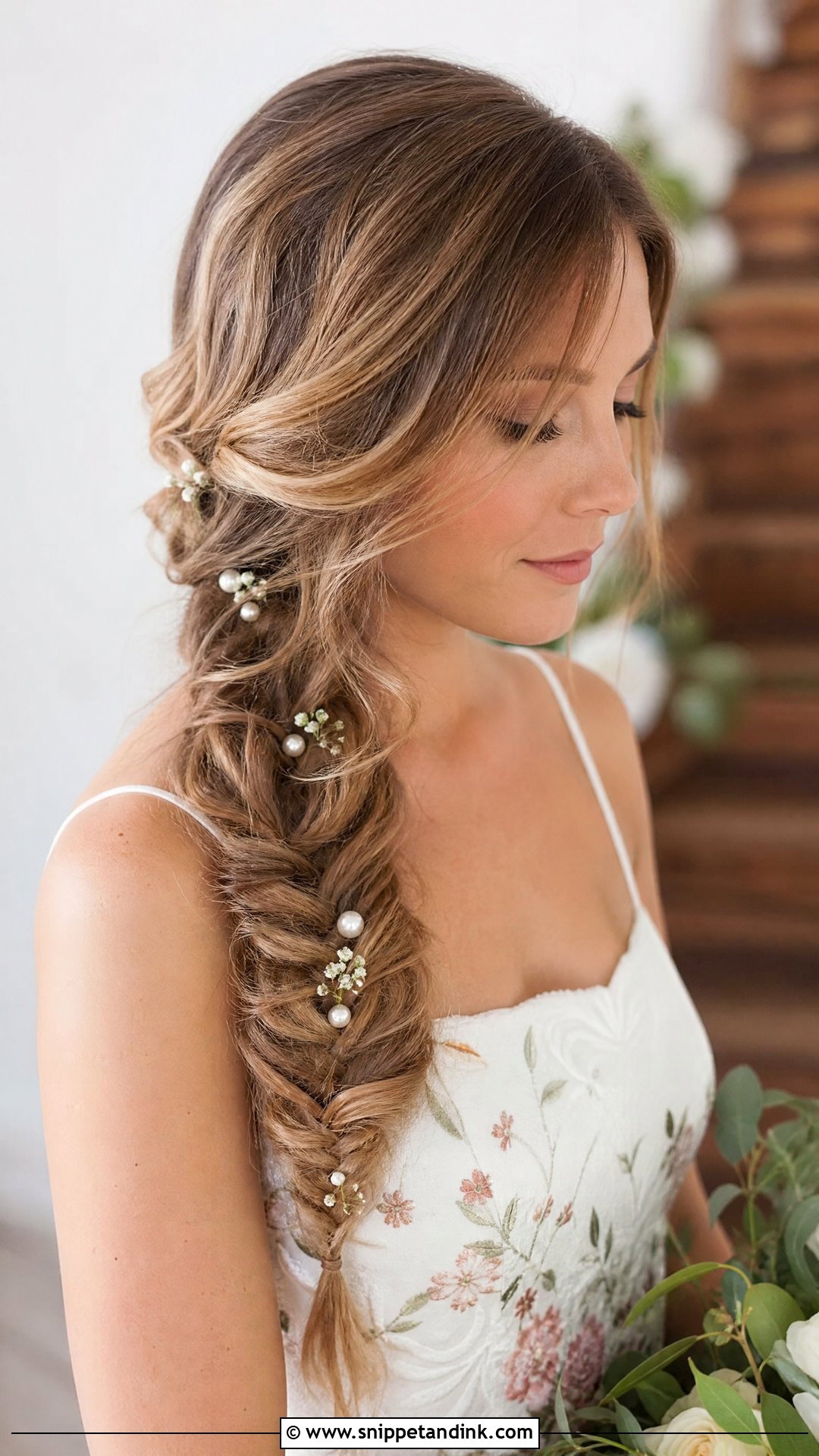
A fishtail takes thin sections and crosses them back and forth into a rope-like pattern, so it looks more detailed than a standard three-strand plait. Worn over one shoulder it’s comfortable and keeps hair away from the back of a dress with buttons. Wrapped into an updo it holds even better. Layered hair is the problem here: short layers poke out along the braid, so I’ll set them with a little wax first. Small pearls or flowers can sit in the loosened sections without extra pins.
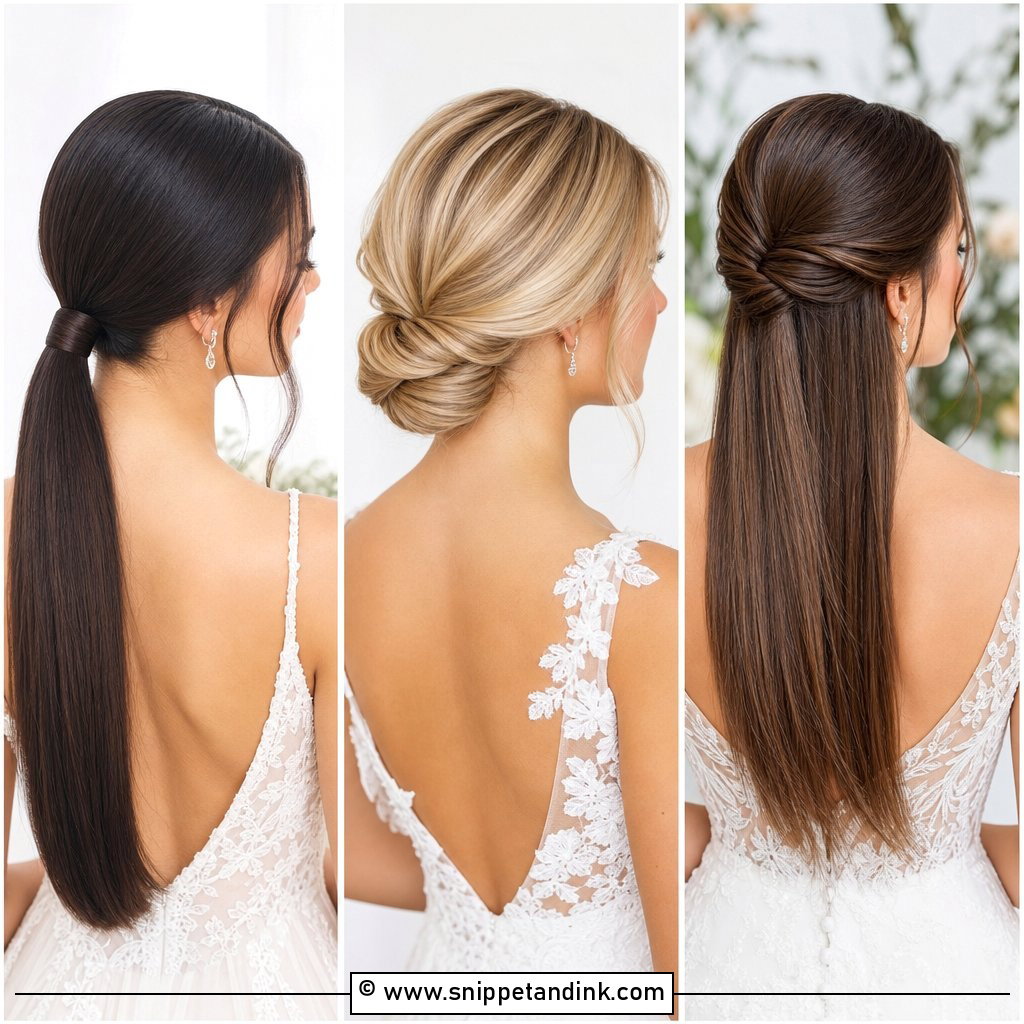
9. Bridal Ponytail Wedding Hairstyle
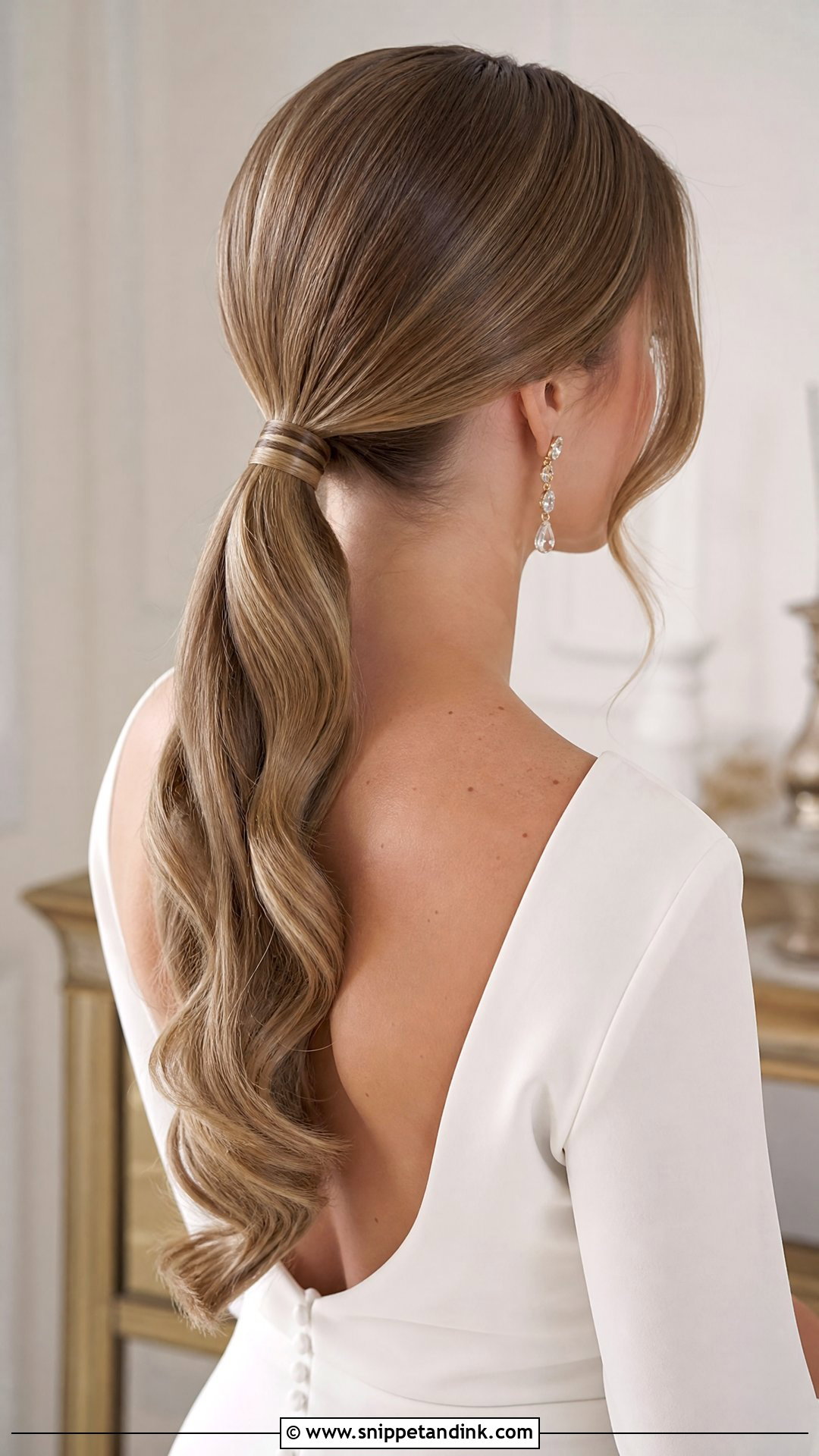
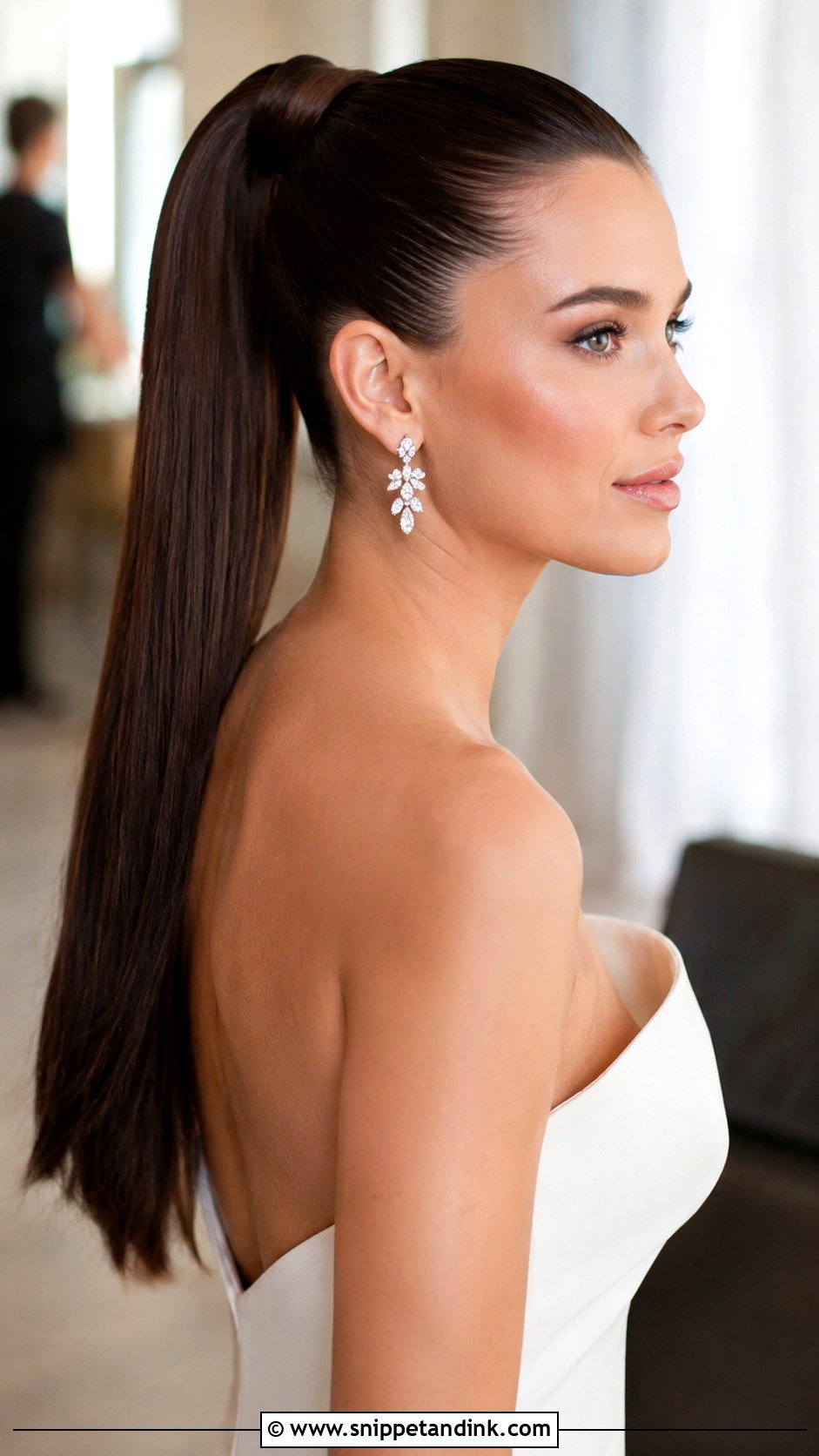
Ponytails are honest. They show every bump, so the brushing at the start matters more than anything else. A high pony reads younger and lifts the face; a low one sits closer to the neck and feels more formal. I hide the elastic with a strand of hair pinned underneath, and on long or heavy hair I use two elastics, one stacked above the other, so it doesn’t sag during the evening. Curl the length if you want movement. Brides who plan to dance hard rarely regret this one.
10. Flower Crown Wedding Hairstyle
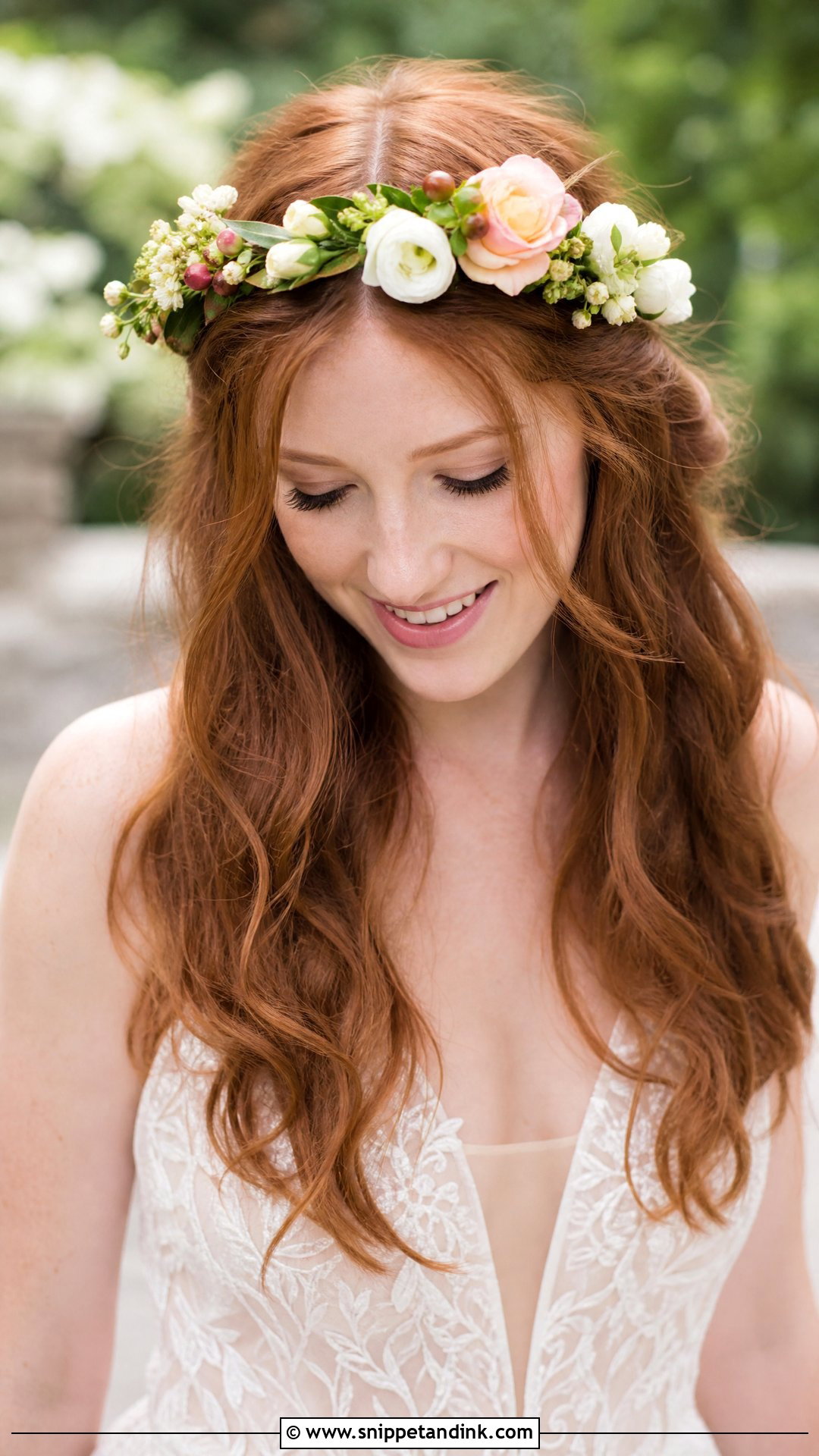
A crown of real or faux flowers circles the head and sits over loose waves, braids or a soft updo. I ask brides to bring the crown to the trial, because a band that fits on its own can slip once the hair is curled and slippery. Small loops of hair pinned under the wire keep it in place. If you match the blooms to your bouquet, talk to your florist about stems that cope out of water; delicate flowers can wilt within a few hours on a warm head. Baby’s breath gives an airy edge, and larger heads read bolder in photos. For fresh blooms woven through the hair rather than a crown, the same rule applies: hardy stems only.
11. Braided Crown Wedding Hairstyle
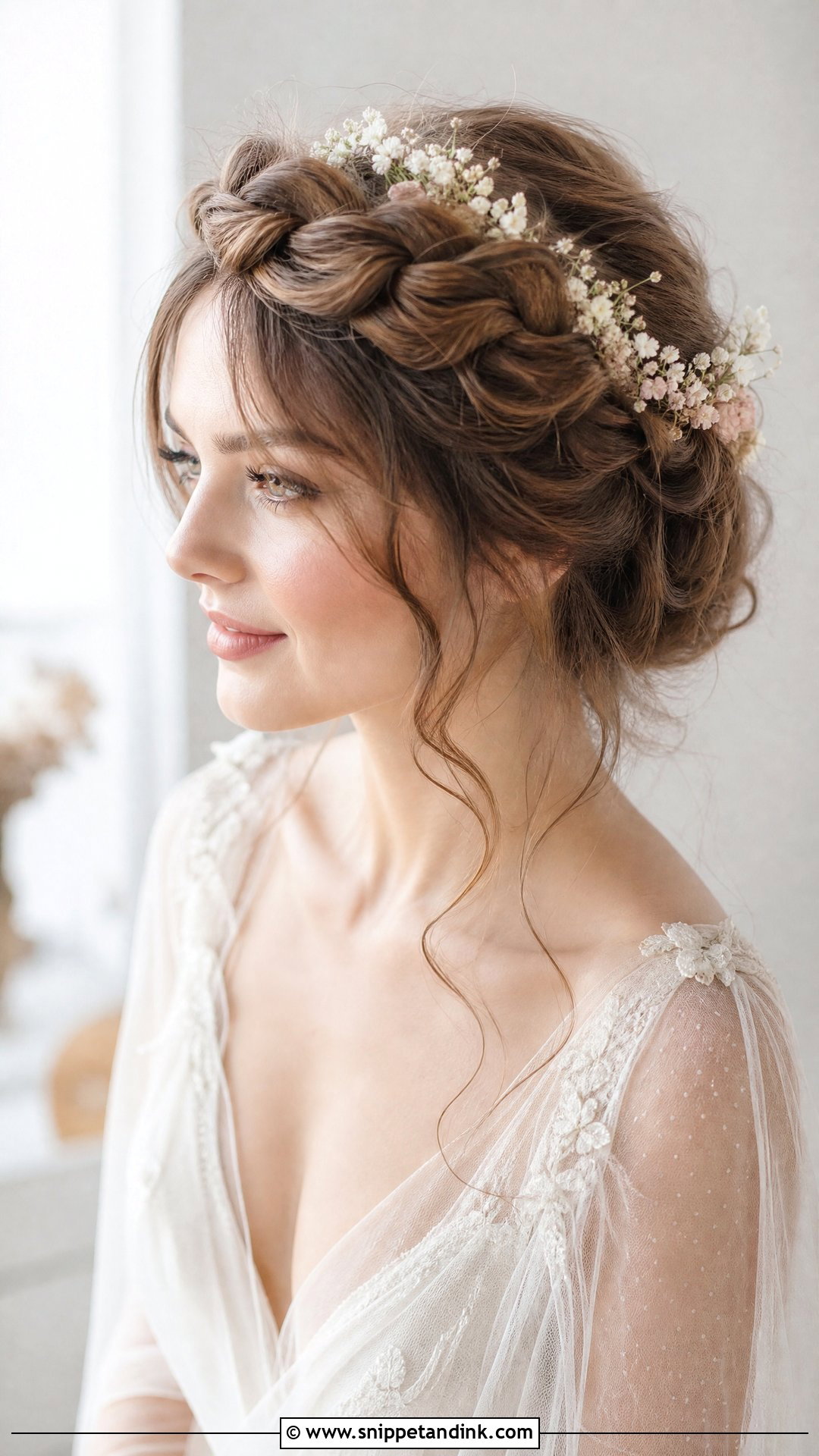
For a softer, goddess-like vibe, a braided crown wraps a plait around the head like a halo. It works over an updo or with the lower half left down. Length is what makes it possible. Shoulder-length hair usually can’t reach all the way around, so I either use two braids that meet at the back or add a clip-in braid for fullness. Tiny flowers or pearls tucked into the braid hold well because the plait grips them. It suits a rustic barn as easily as a formal hall.
12. Vintage Hollywood Waves Wedding Hairstyle
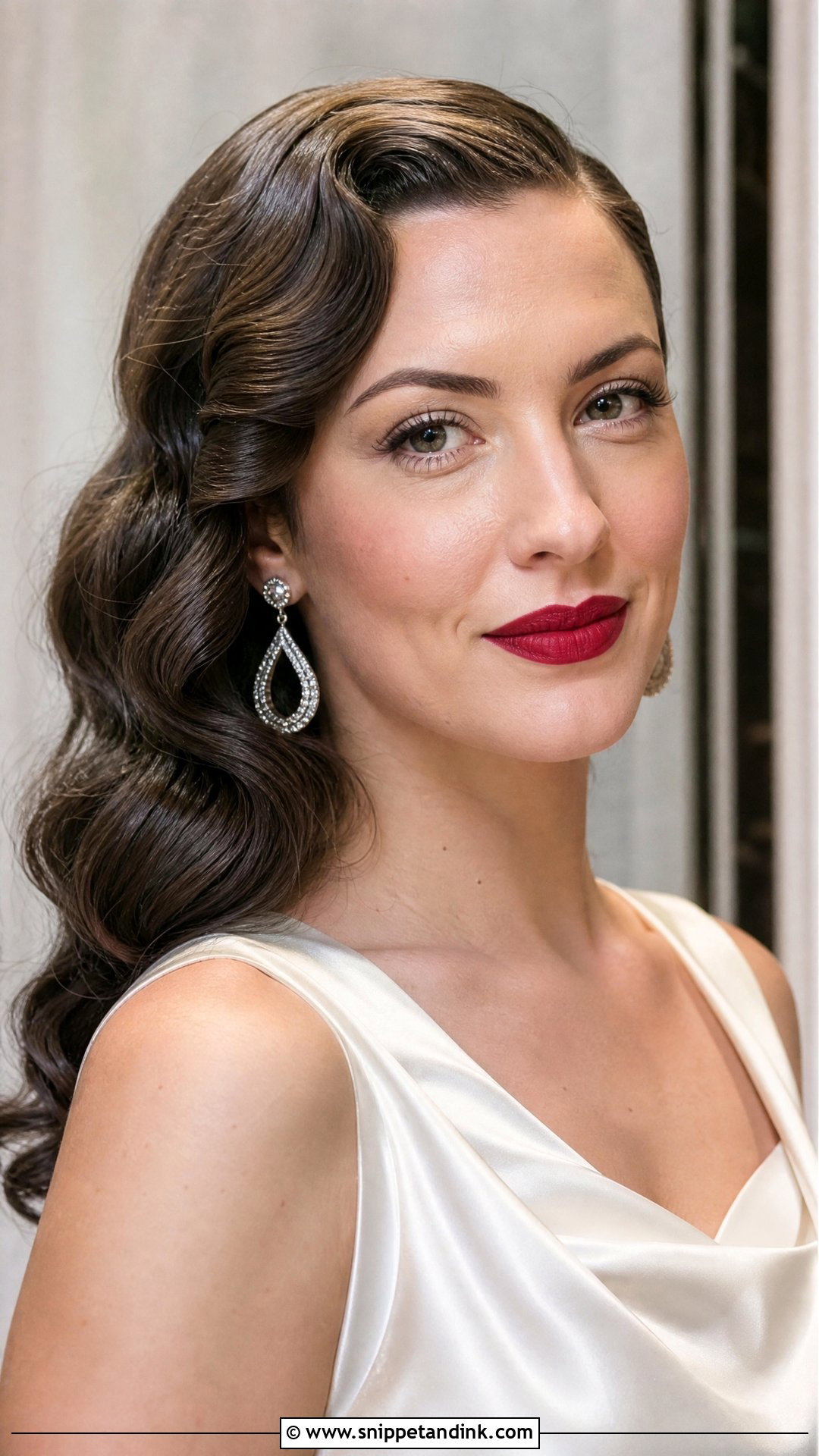
Hollywood waves are a set, not a curl. I roll the hair, let it cool completely, brush it into one smooth S-shape, and pin the crests while I spray. Skip that cooling step and the waves soften into loose curls within an hour. Medium to long hair gives the deepest pattern, and a deep side part is what makes it read as vintage. It pairs naturally with a bold lip and statement earrings. If your venue is outdoors and windy, I’d think twice: one gust undoes the sculpted line and it’s hard to fix without starting again.
13. Twisted Updo Wedding Hairstyle
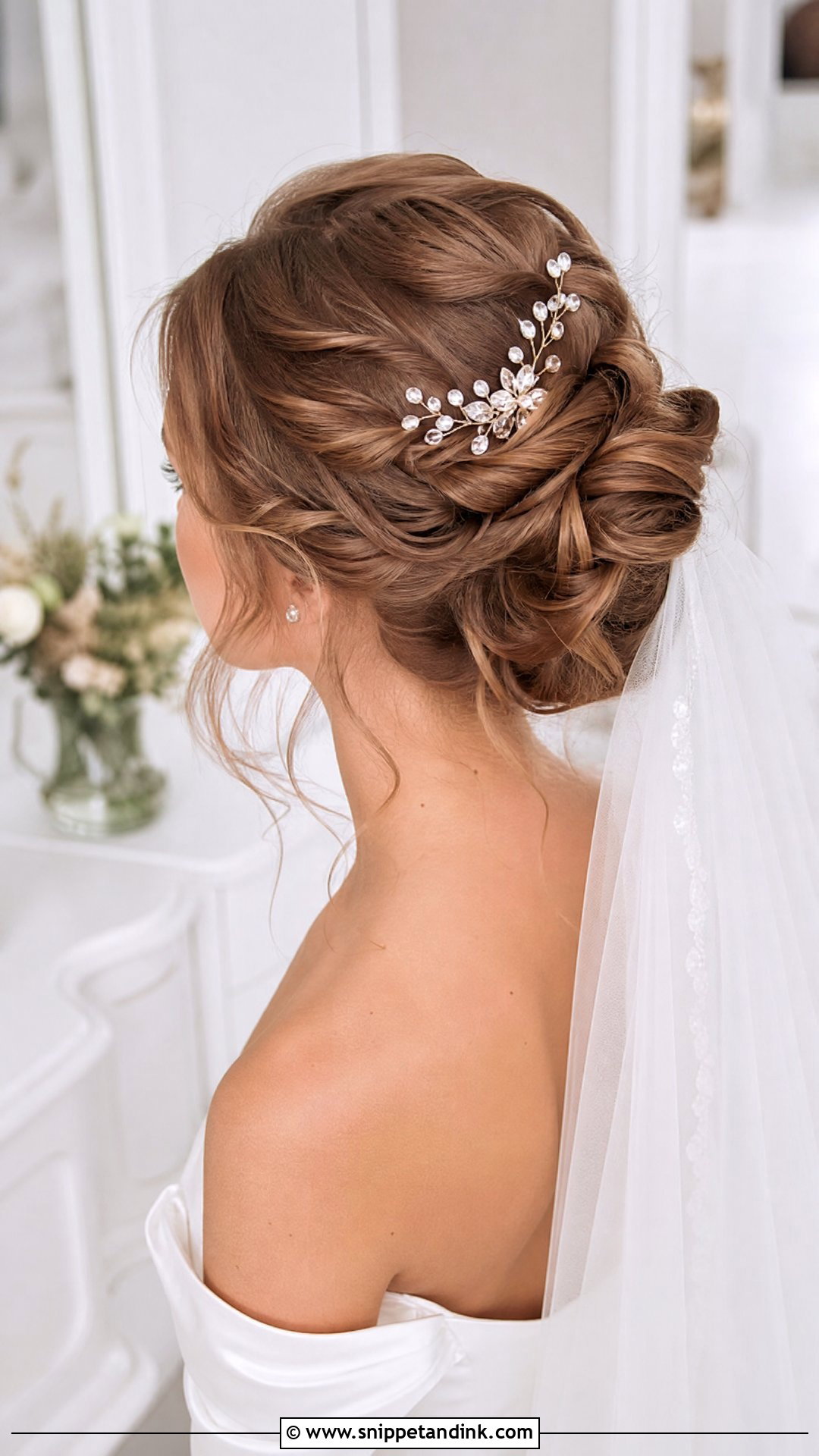
Several soft twists wrap and pin together at the back, giving a textured shape that holds through a long reception. The twists make good anchors for a veil comb or floral pins. I keep the twists firm at the base and loose only at the surface, so the outside looks soft while the structure stays put. It suits almost any dress. The thing I watch is the weight of decorations; once you add combs on both sides, the updo needs a few more pins than you might expect.
14. Low Side Bun Wedding Hairstyle
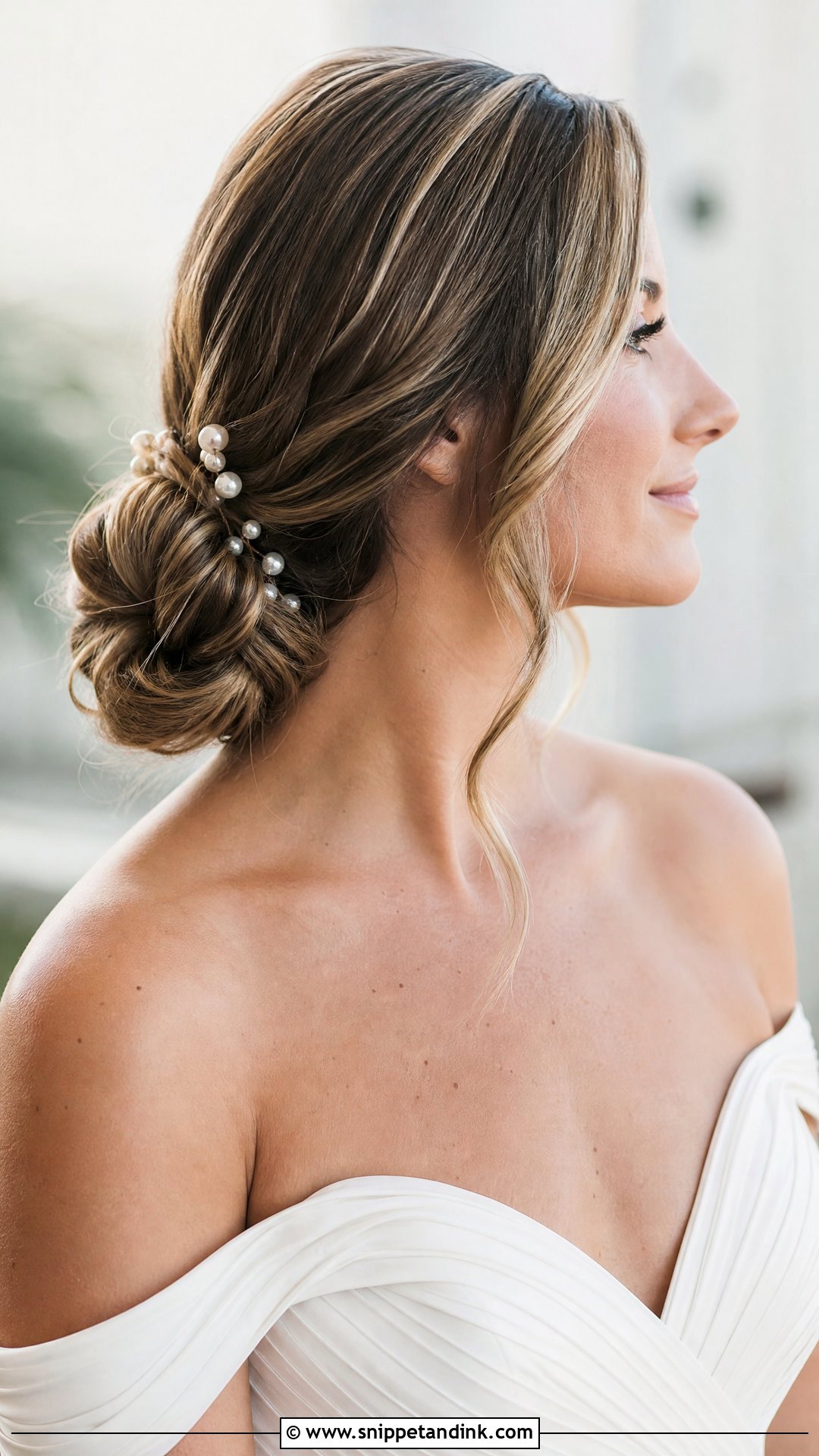
Setting the bun behind one ear changes how the whole face is framed. It’s flattering with an off-the-shoulder or one-shoulder gown, because it balances the bare side. Before we pin it, I ask which side your partner will stand on during the ceremony, since that’s the side most guests and the photographer will see. A few loose tendrils at the front soften it. Pearls or small blooms tucked at the edge of the knot finish it. It’s understated, and it works at a relaxed garden party as well as a black-tie dinner.
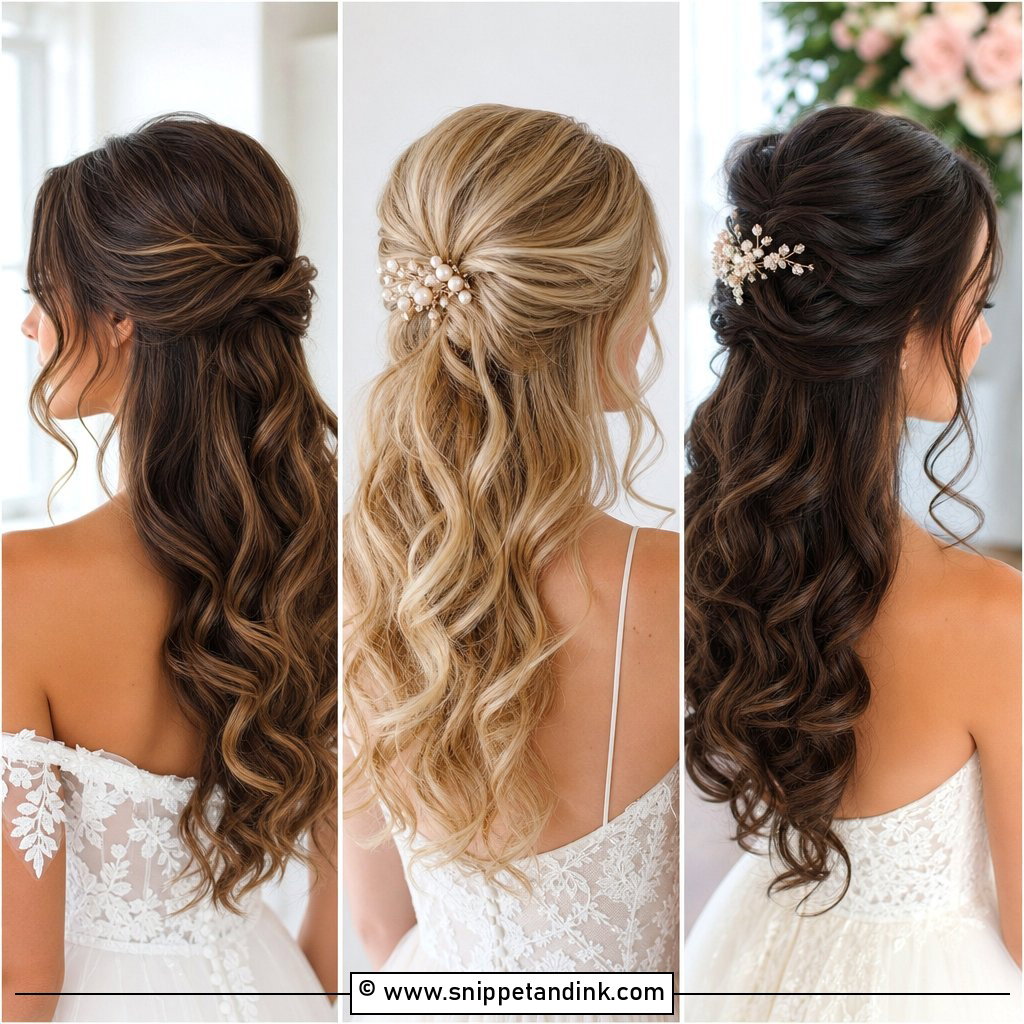
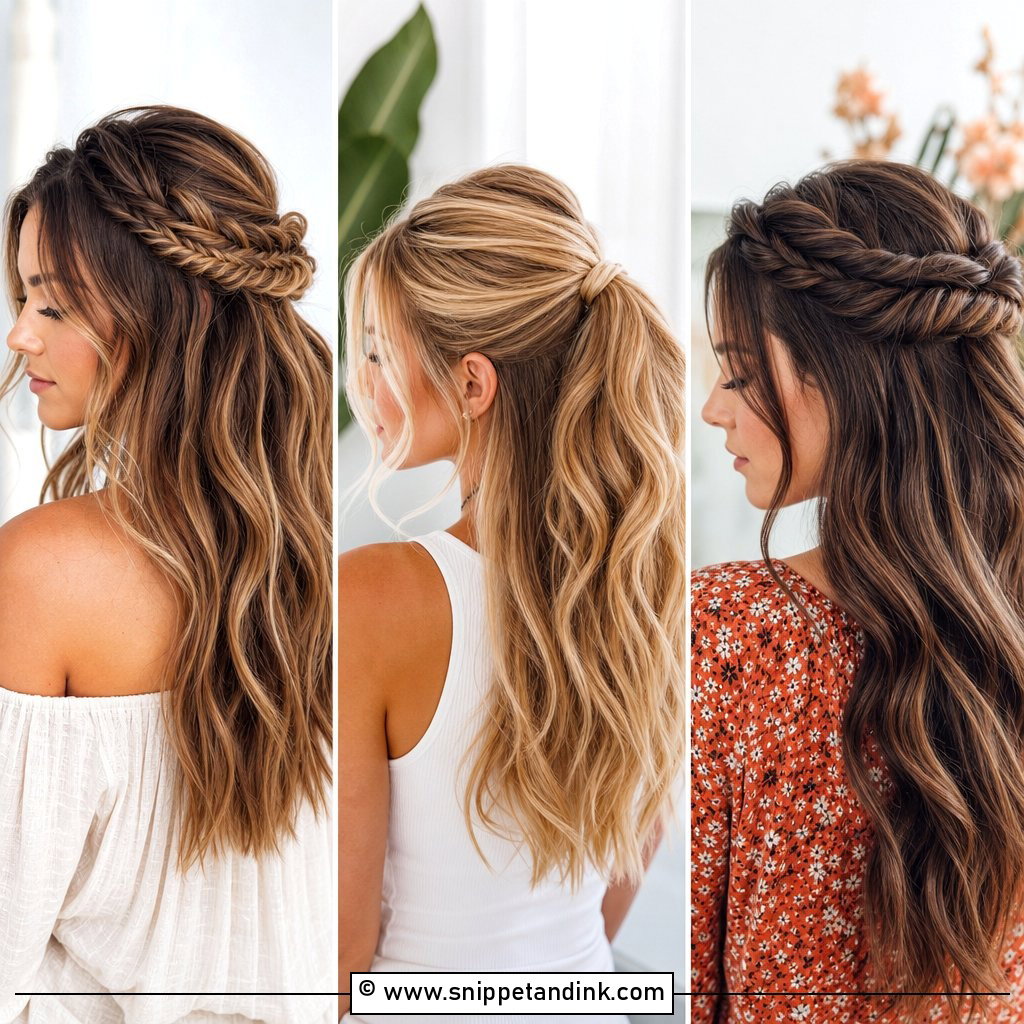
15. Half-Up Braided Wedding Hairstyle
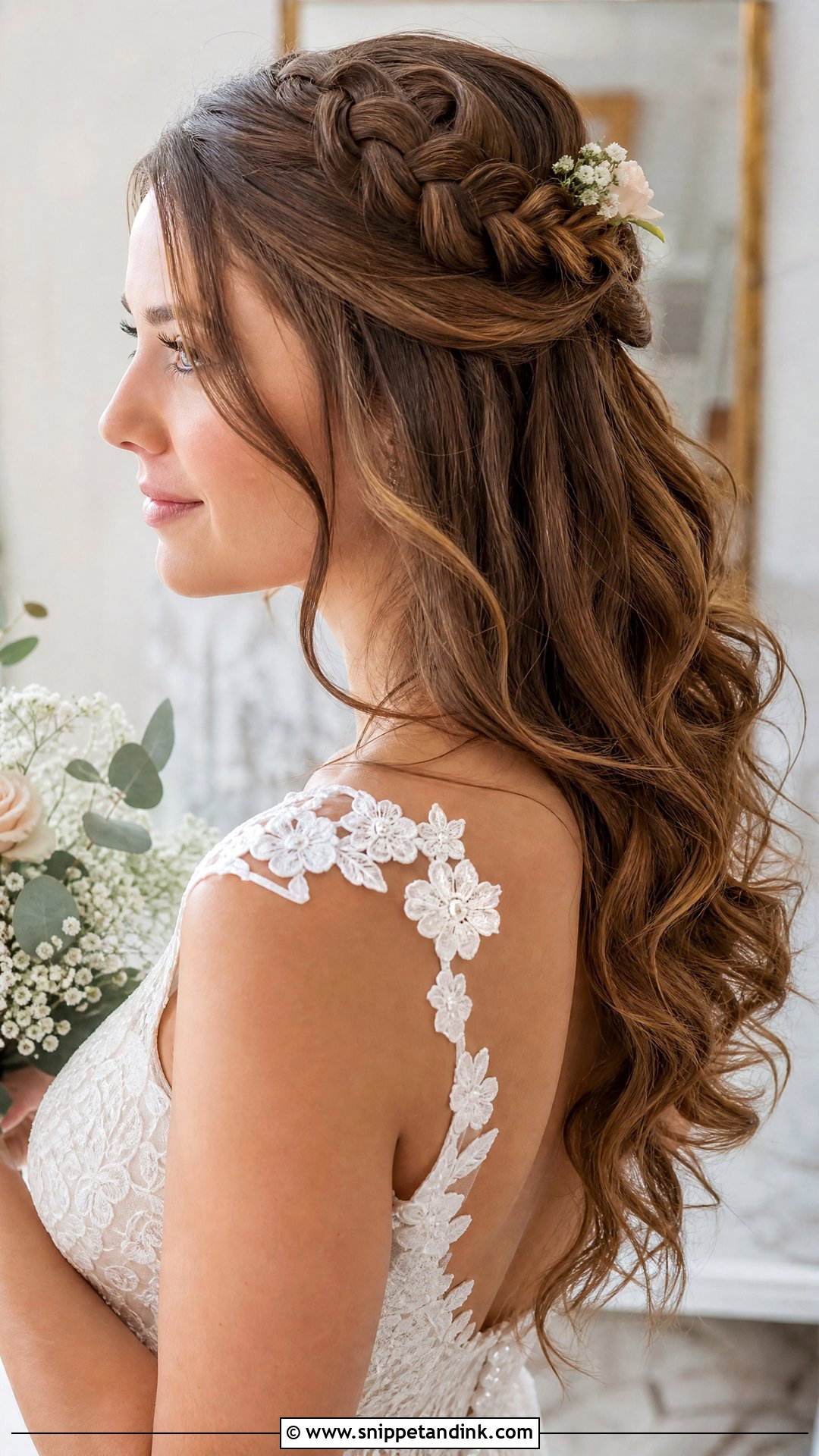
Braiding just the top sections back keeps your face clear while the length stays down in curls or waves. It’s more secure than a plain half-up because the braids grip and won’t slide. Long, thick hair suits it best. On fine hair the braids can look thin, so I’ll pancake them a little and sometimes add a clip-in at the back for body. A sparkly clip or a few small flowers where the braids meet hides the pins.
16. Ballerina Bun Wedding Hairstyle
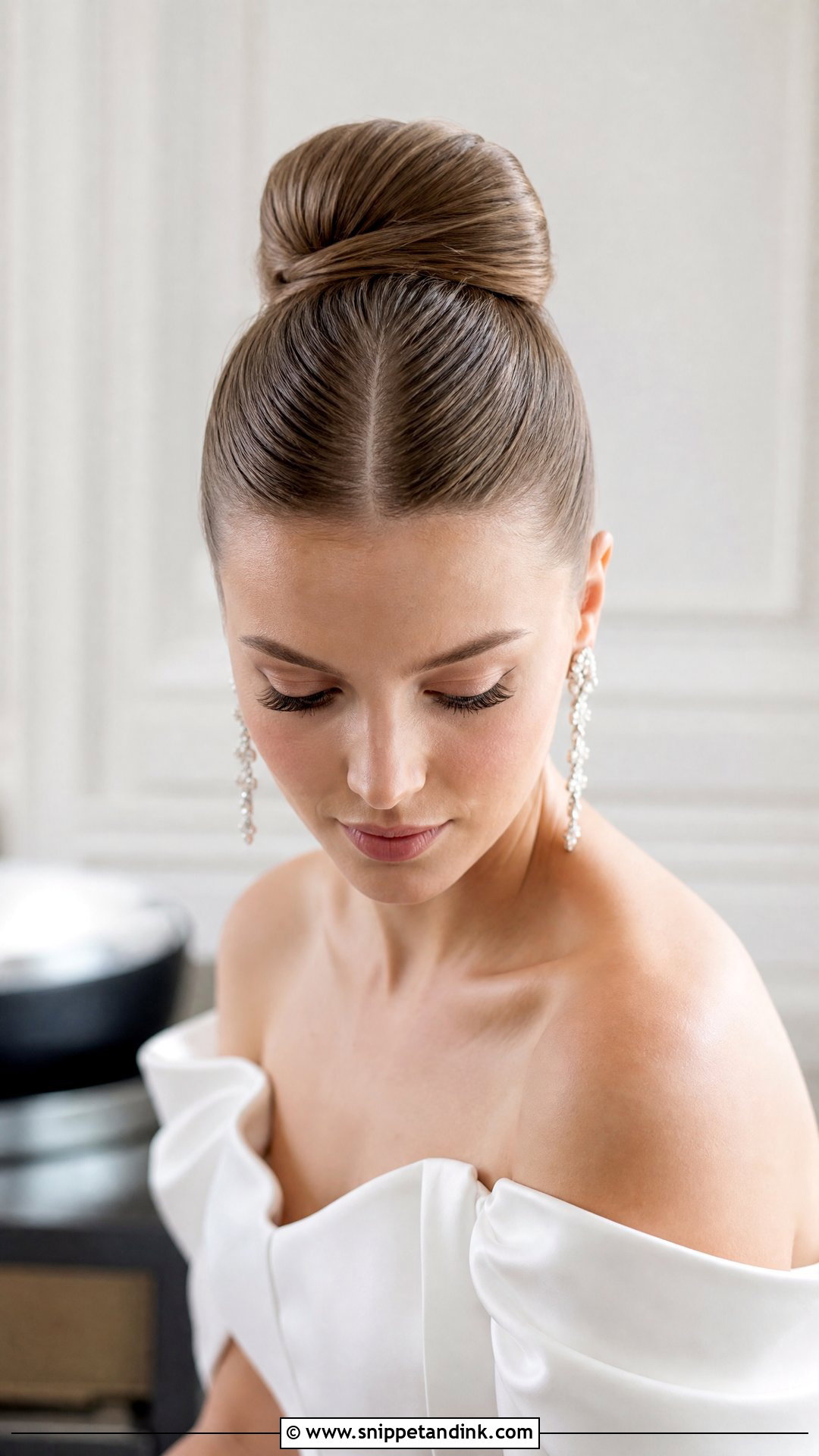
The ballerina bun pulls everything tight and high, usually with a clean center part. Because nothing hangs loose, you stay cool during a summer ceremony and you never have to touch it. I build it on a firm base ponytail and wrap the bun around it so it can’t twist loose. The downside is tension: some brides get a headache by the evening, so I place it a touch lower than a dancer would. Earrings stand out against such a clean shape. It’s a strong pick for a minimalist dress.
17. Tousled Updo With Curls Wedding Hairstyle
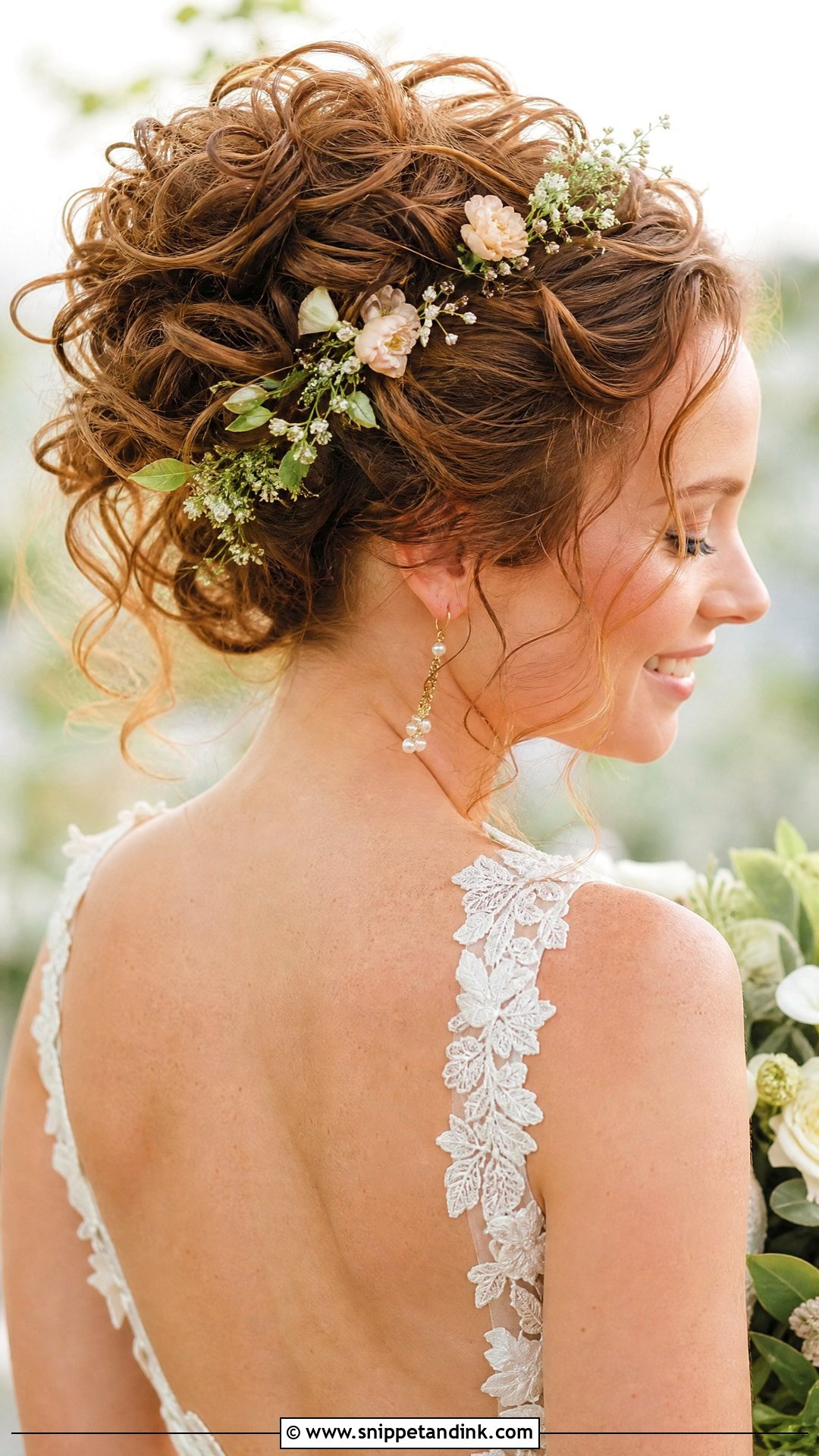
A tousled updo starts with curled hair gathered into a relaxed shape, then I pull out pieces by hand for texture. The structure underneath still needs to be firm; only the surface should look loose. It suits garden and vineyard weddings and takes floral accents easily. The curls give the volume that shows up well in photos. I’d steer brides with very fine, straight hair toward something sleeker unless they’re happy to use a little padding, because the texture flattens quickly without it.
18. Dutch Braid Wedding Hairstyle
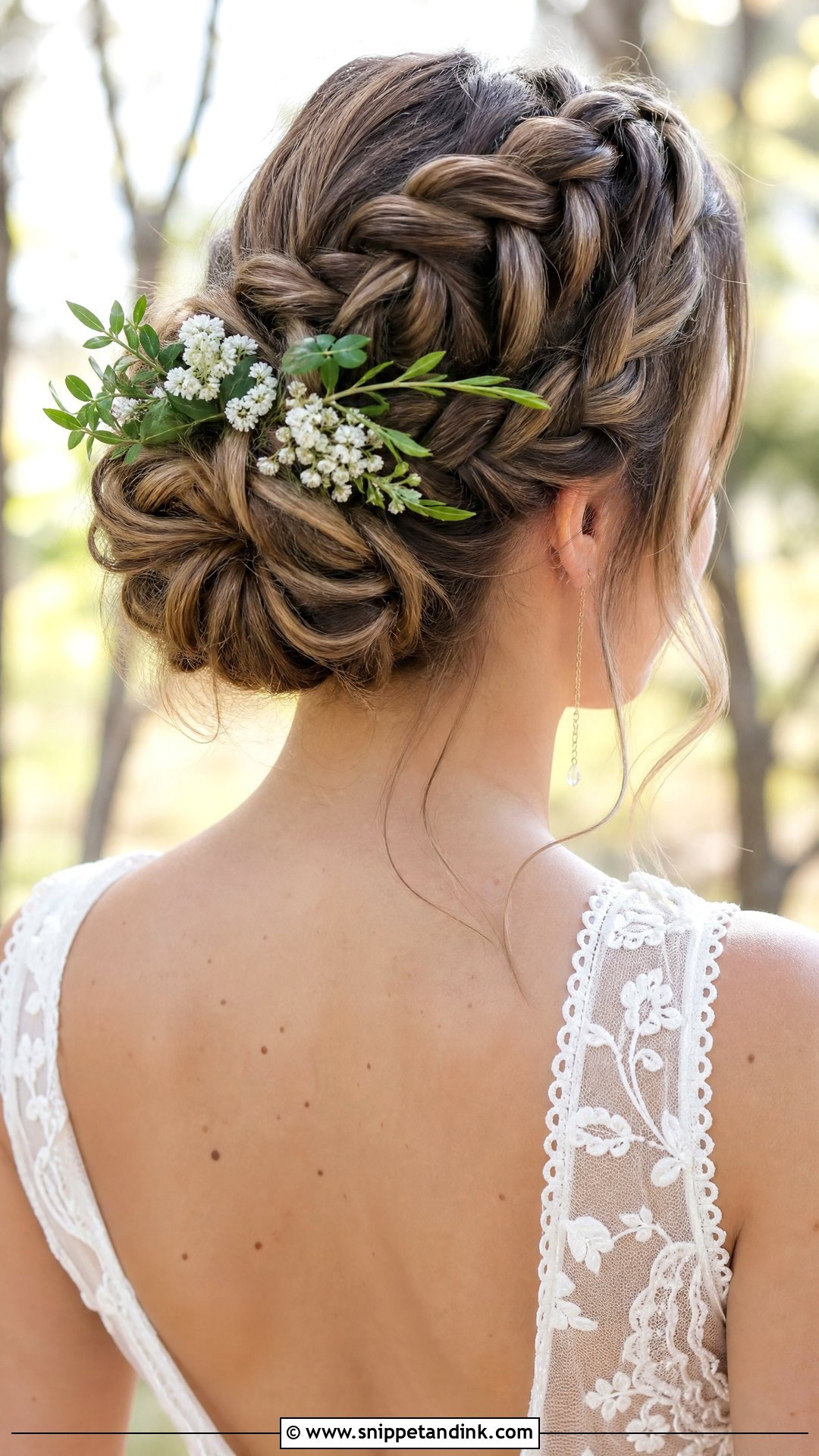
A Dutch braid is plaited under rather than over, so it sits raised on top of the hair. That raised shape reads clearly in photos, even from the back of the aisle. You can wear one, two, or have it wrapped into a bun at the nape. It holds very well, which is why I suggest it for long outdoor days. Small flowers or greenery tucked along the braid add colour. If you wear glasses, check that the arms don’t sit on the braid, which gets uncomfortable after a few hours.
19. Pinned Back Curls Wedding Hairstyle
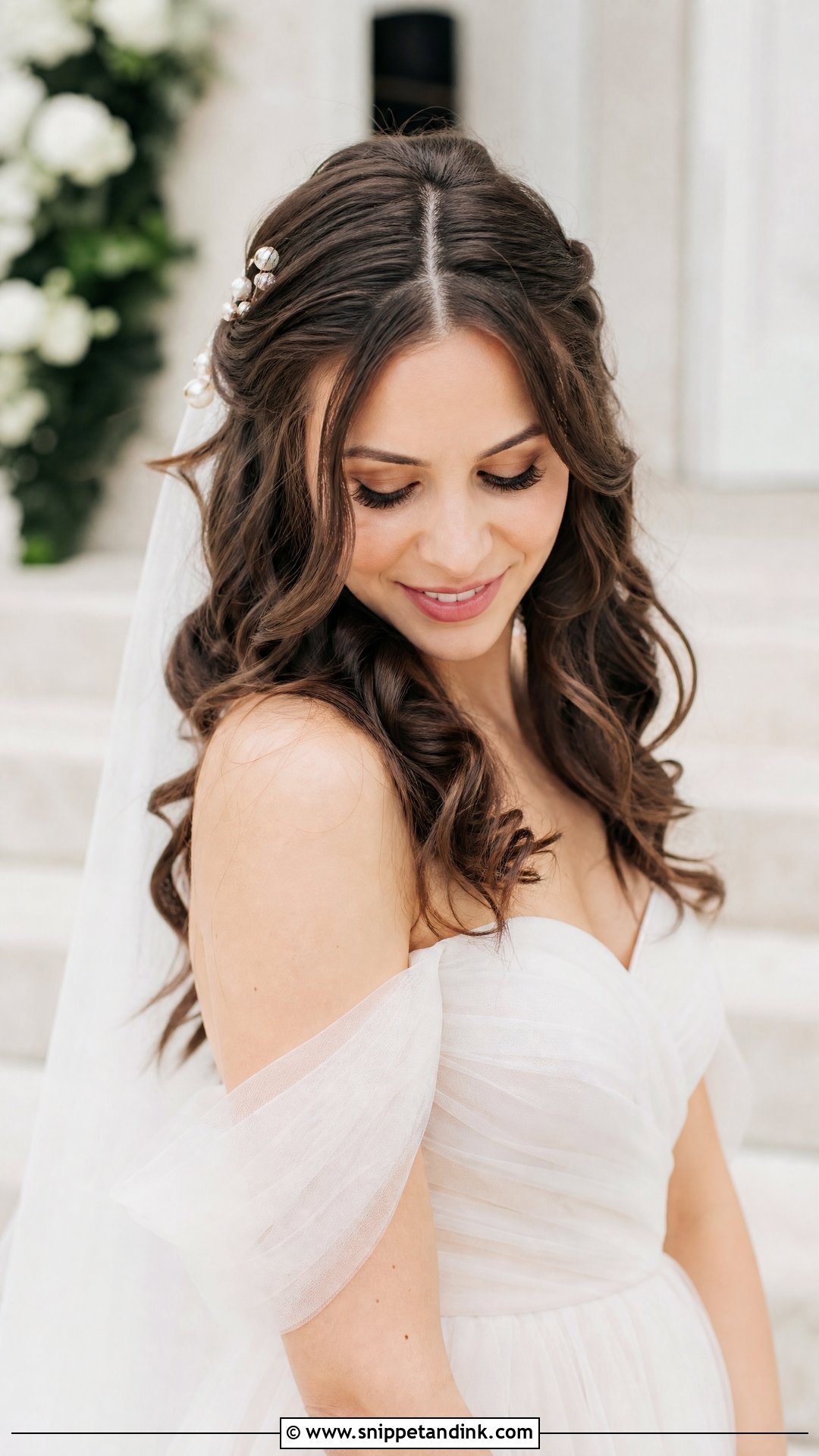
The hair is curled, then the sides are pinned back loosely while the rest falls down the back. It keeps hair out of your face while you sign the register and hug guests. I cross my pins in an X at each side so they don’t slide out of curled hair. Medium to long lengths suit it best. Pearl pins or tiny blooms cover the anchor points, and it sits easily under a veil. It’s one of the gentlest options for brides who don’t want anything pulled tight.
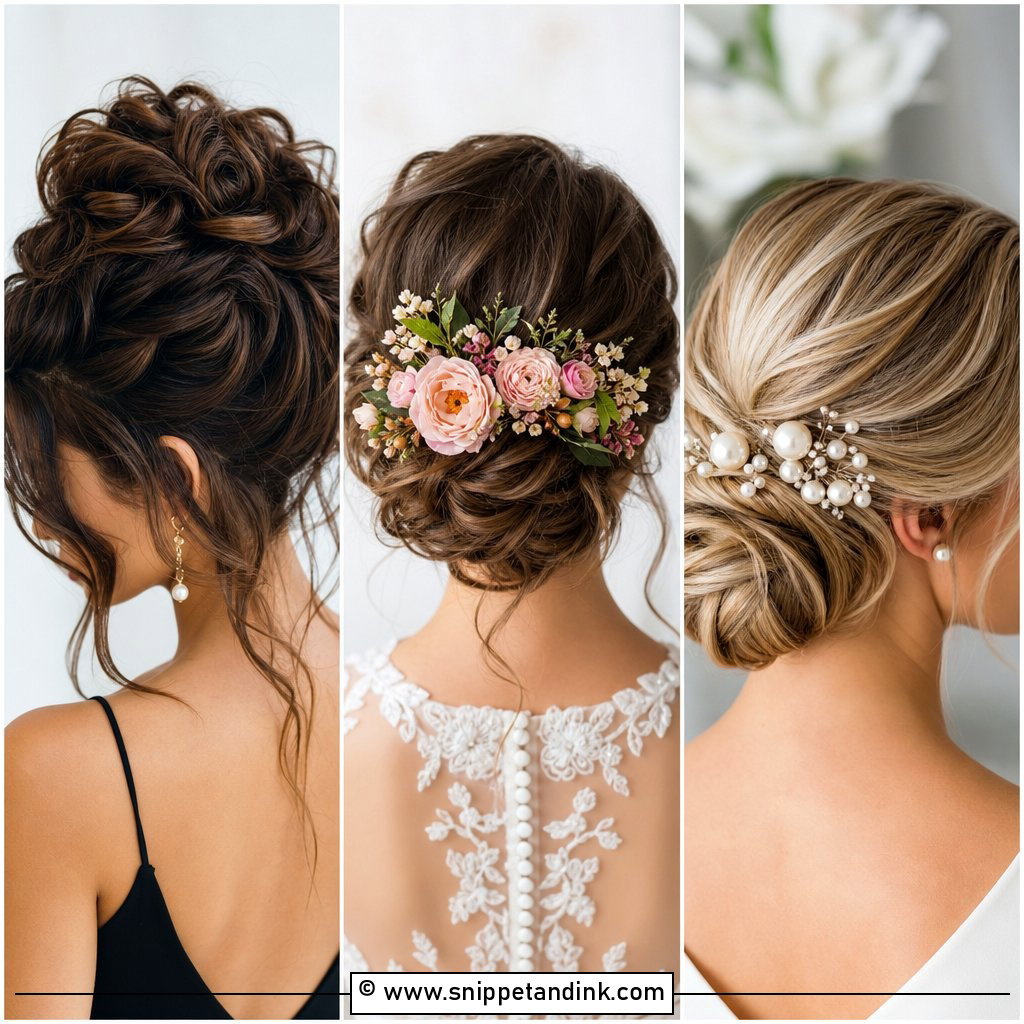
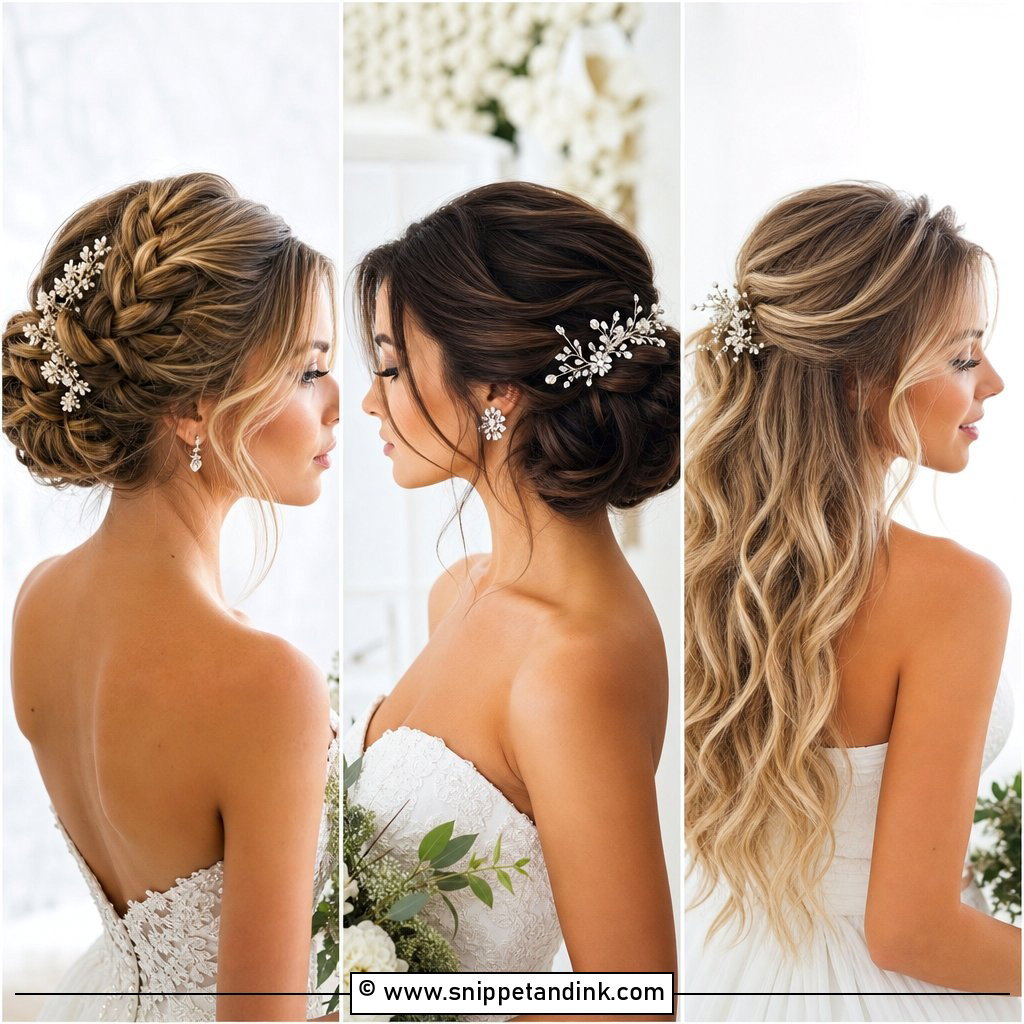
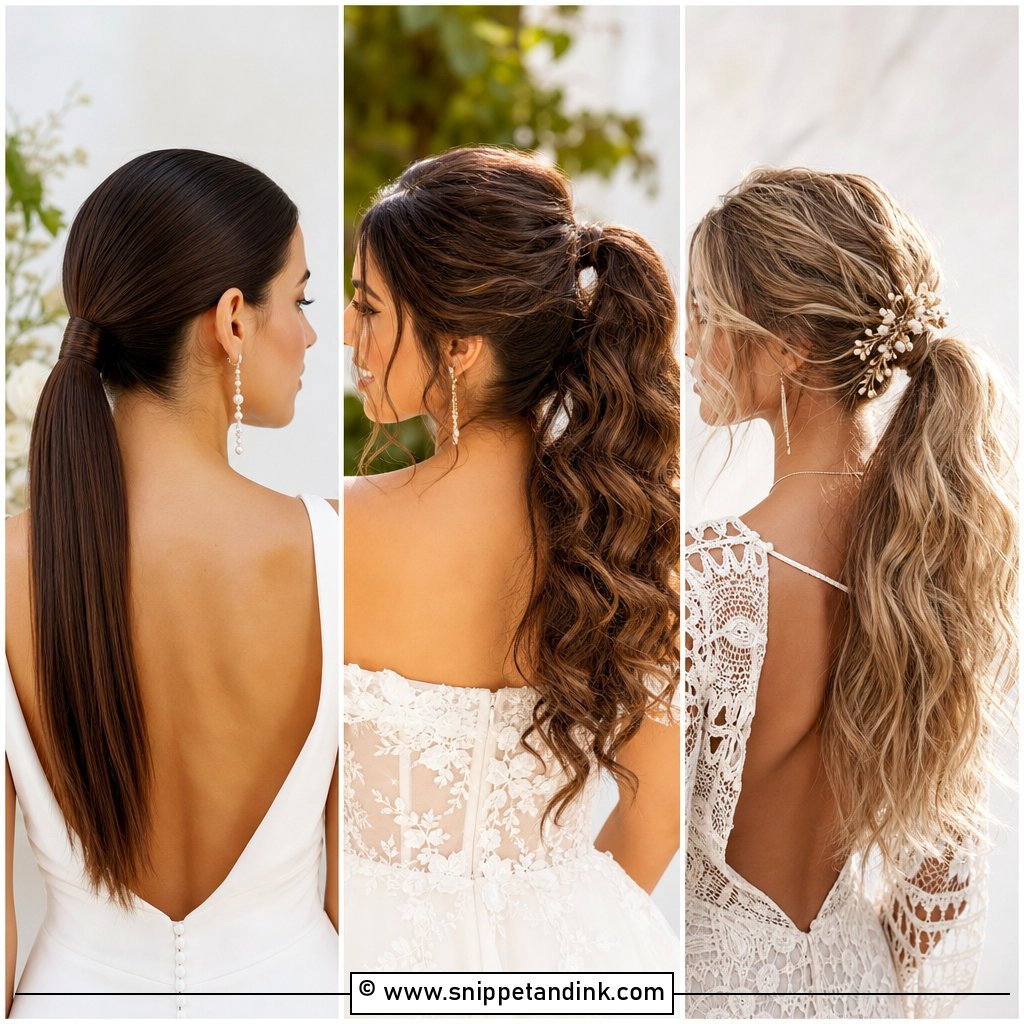
20. Sleek Straight Wedding Hairstyle
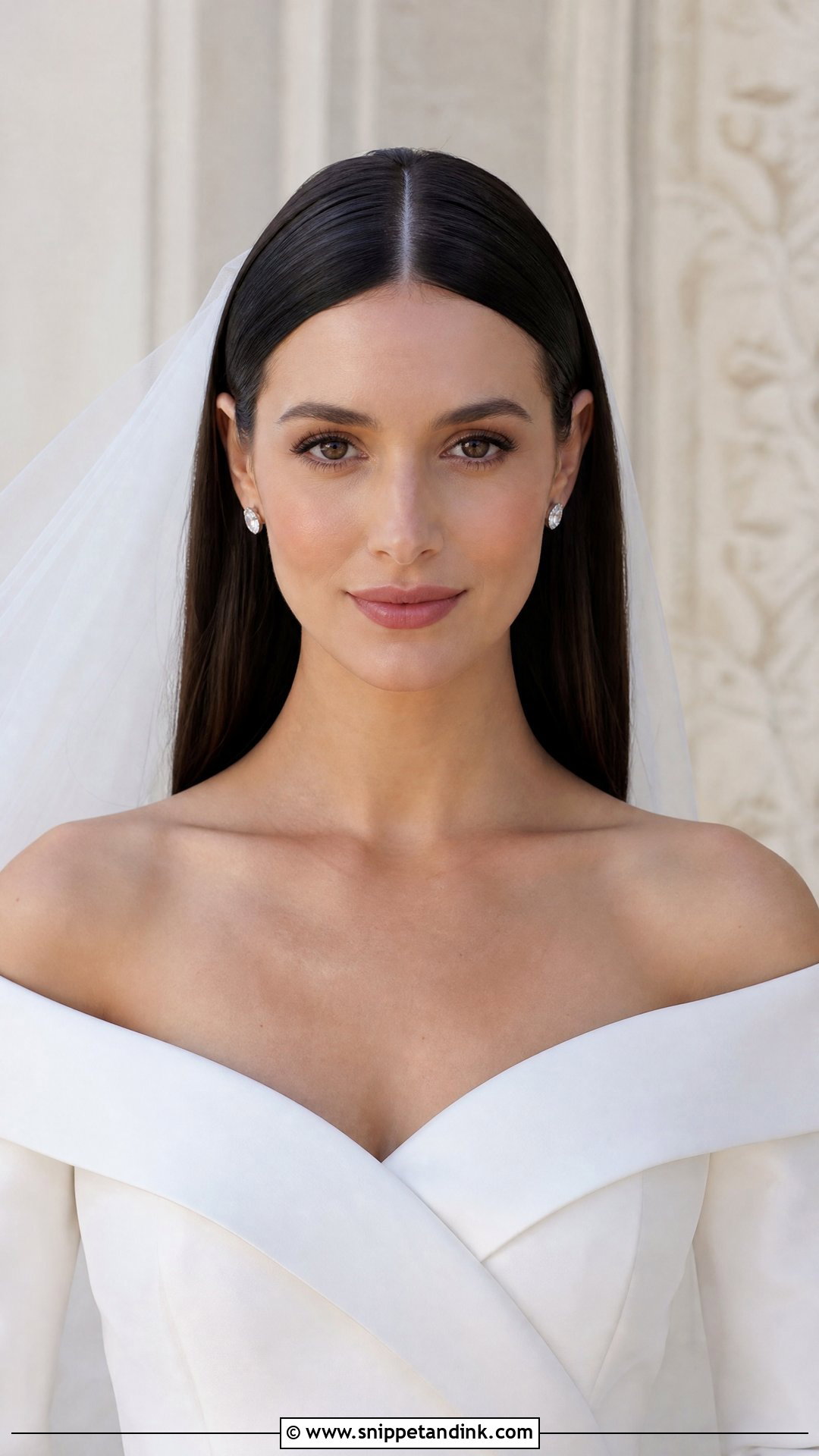
Pin-straight hair looks simple and is surprisingly demanding. Every strand needs to be flat-ironed in thin sections with heat protection, and humidity will undo it faster than almost any other style. It works well with a clean, structured gown and statement jewelry. Center or side part both suit it. A drop of serum on the ends gives shine. I’d only recommend it for indoor venues or naturally straight hair; if your hair frizzes in rain, this isn’t the one.
How These Styles Hold Up From Ceremony to Last Dance
Most of the questions I get after a wedding are about hour eight, not hour one. Here’s roughly how I’d group the looks above by staying power:
- Strongest: sleek low bun, ballerina bun, Dutch braid, French twist, chignon. Structured shapes with nothing loose to drop.
- Middle: twisted updo, braided crown, half-up braided, tousled updo, pinned-back curls. They soften but stay recognisable.
- Most fragile: cascading waves, Hollywood waves, sleek straight hair. These react to humidity, heat and hugs.
If you love one of the fragile looks, plan for it. Ask your stylist to stay for photos, or keep a small kit in your bag: a few bobby pins in your hair colour, a travel-size flexible hairspray, a clear elastic and a fine-tooth comb. Your maid of honour can use the comb to smooth a wave back into place in under a minute.
Questions to Settle at Your Hair Trial
Book the trial when you know your dress neckline and veil length, ideally with both in hand or at least photos of them. Bring your accessories, wear a top with a similar neckline, and take photos from the front, side and back in daylight and with flash. Then ask your stylist a few direct questions: how long the style takes, whether they’ll stay for touch-ups, how the veil will be removed after the ceremony without dragging the hair, and what they’d change if the forecast turns wet.
If something feels tight or heavy during the trial, say so. Discomfort that seems small at noon tends to become a headache by the evening.
Test Two Favorites Before the Morning Itself
Start with your venue, your dress and how your hair actually behaves on an ordinary humid day, then shortlist two or three looks from above. Personal touches like an heirloom comb, fresh flowers or pearl pins can go on almost any of them. Wear the trial version for a full afternoon, not just an hour, and notice what moves or pinches. That afternoon tells you more than any photo, and it’s the best way to arrive on your special day with hair you trust.
You'll Like These Ideas:


Leave a Reply