
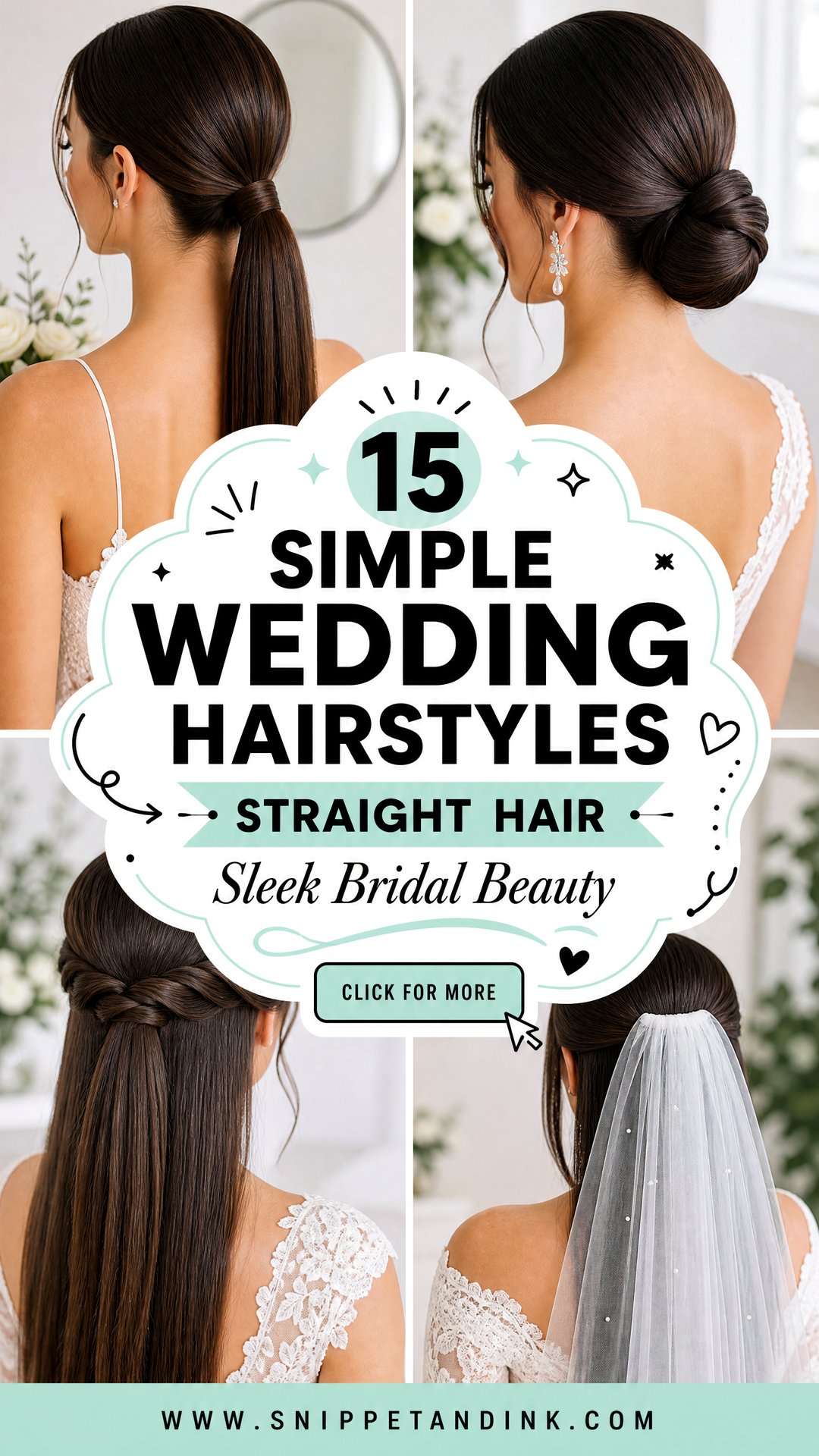
Straight-haired brides often come to me apologizing, convinced they’ll need curls to look bridal. They don’t. Straight hair shows shine, a crisp part and accessories better than any other texture, so a sleek bun, a clean ponytail or glossy hair worn down can look completely finished. The catch is precision: there’s no curl to hide an uneven part or a dent from an elastic. Each style below works for brides, bridesmaids and guests, and I’ve noted the small finishing steps that make the difference on straight hair specifically.
What a Camera Notices on Straight Hair That a Mirror Misses
Straight hair reflects light in long, even bands, which looks gorgeous in photos but also shows things you won’t see in the bathroom mirror. These are the details I check from a step back, with the flash on my phone, before a straight-haired bride leaves the chair.
- Flyaways at the crown. In backlit outdoor photos they glow like a halo of static. A toothbrush with a little spray smooths them down.
- Scalp showing through the part. On fine hair I zigzag the part very slightly at the crown so it doesn’t open into a wide line.
- Oil at the roots. Straight hair shows grease within hours, so serum goes on the lengths only and dry shampoo goes in the kit.
- Elastic dents and pin marks. If the hair will come down later, I tie with snag-free elastics and avoid clipping into wet product.
Static is worse in cold, dry weather and around synthetic veils. A light mist of hairspray on your palms, smoothed over the lengths, calms it without making the hair stiff. Dryer sheets work in a pinch, but test one first, as some leave a scent you won’t want near your face all day.
1. Sleek Low Bun For Straight Hair
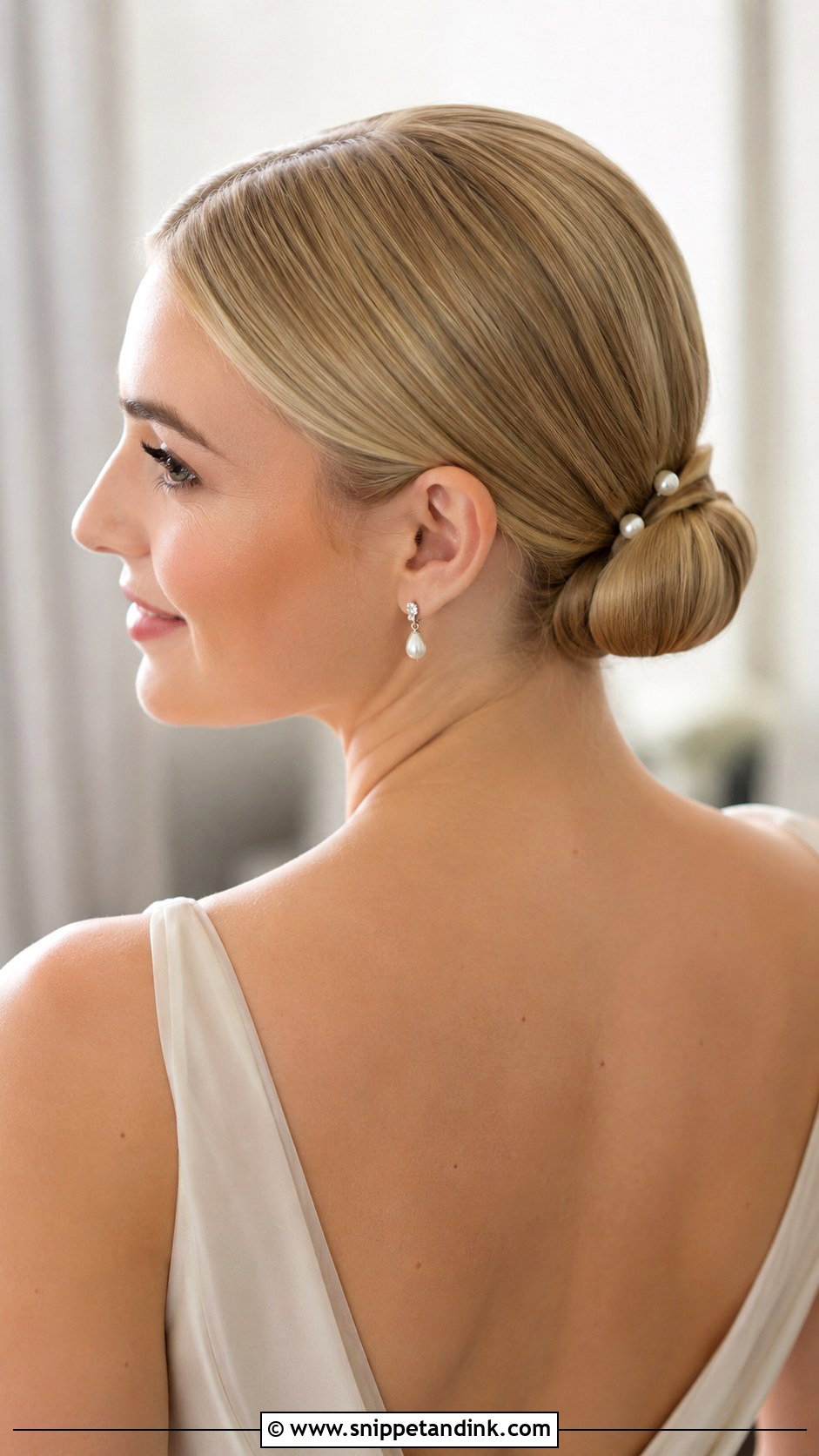
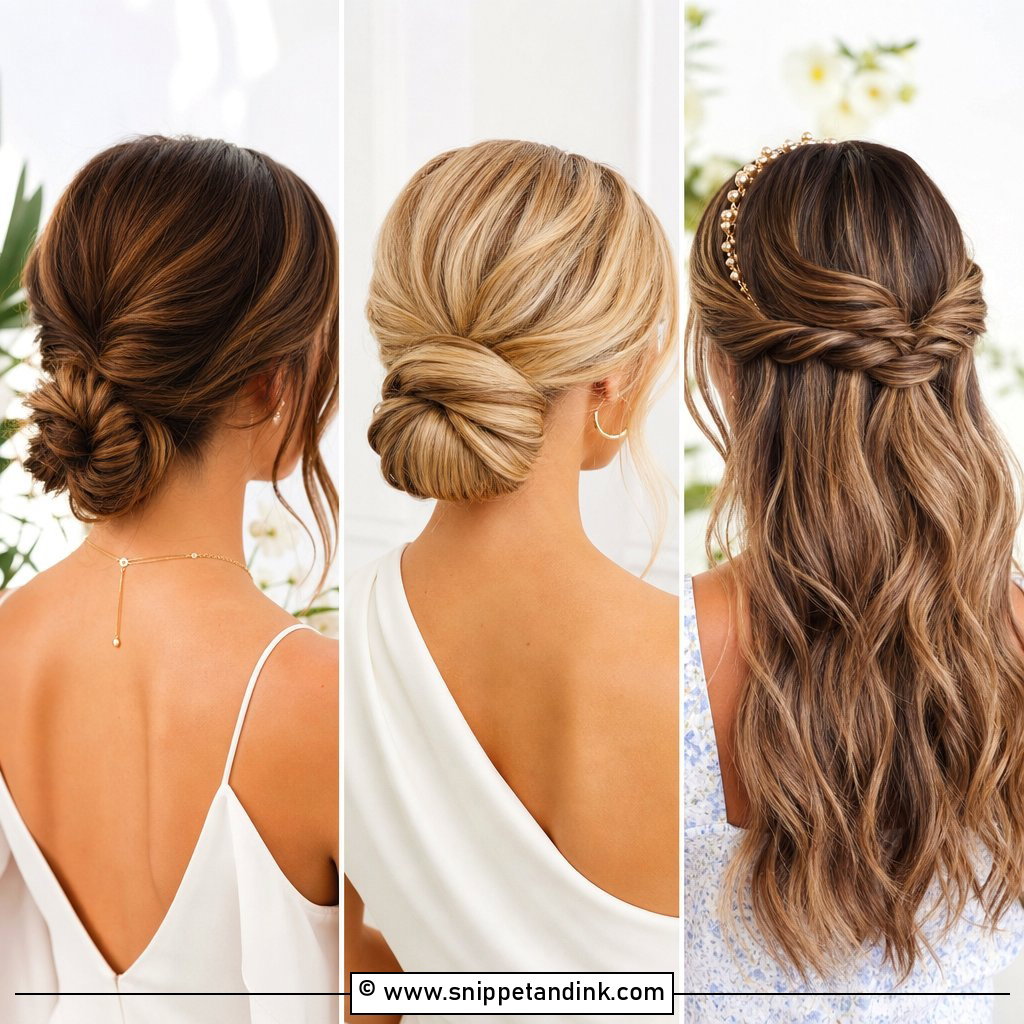
Smooth texture becomes the main feature in a sleek low bun. The hair is parted cleanly, brushed close to the head, gathered at the nape and twisted into a neat bun. It sits naturally with veils, pearl pins, statement earrings and open necklines. I smooth with a cream first and only mist flexible spray once the bun is pinned, since spraying earlier makes the brush drag lines into the hair. Fine straight hair benefits from a small bun form, chosen in your hair color so it can’t peek through.
2. Half Up Straight Wedding Hair
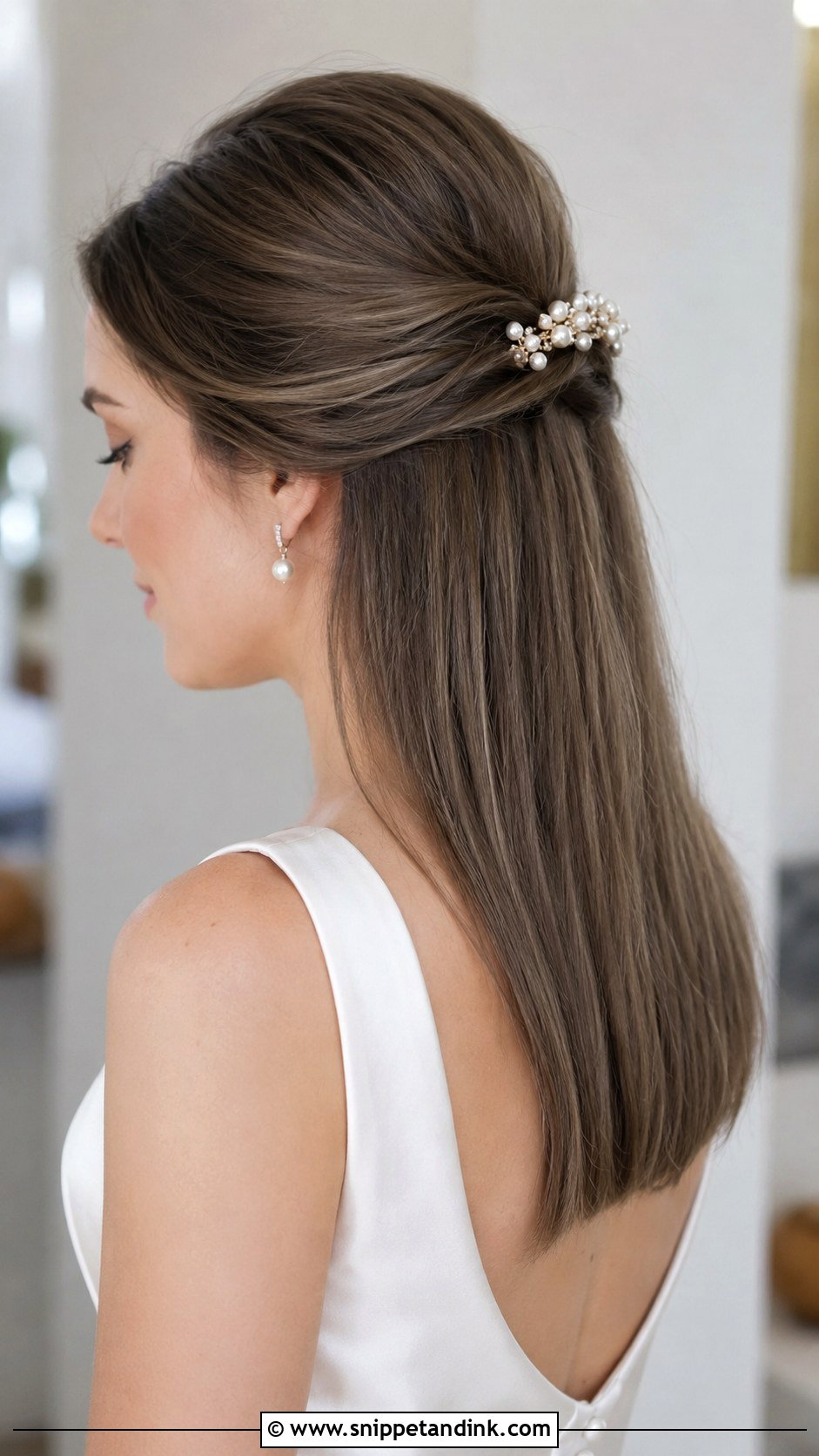
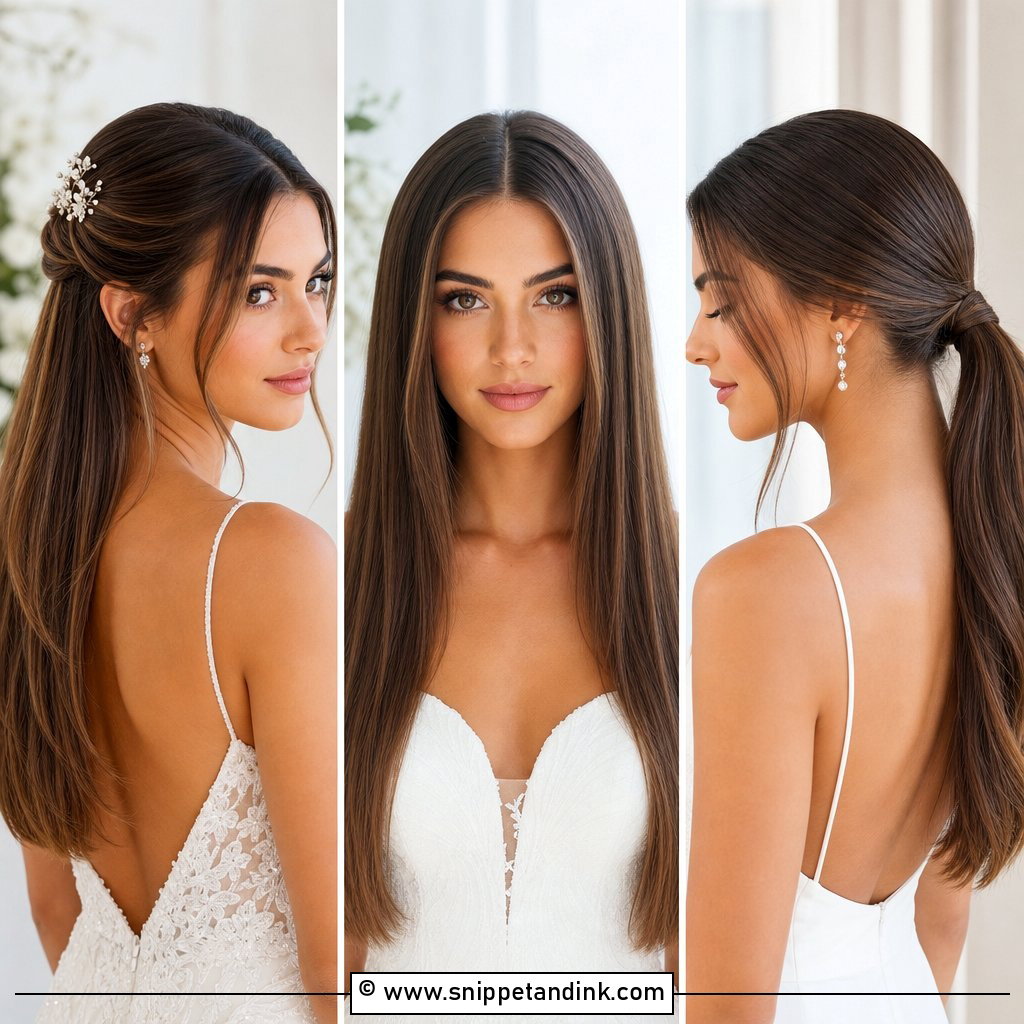
The top section stays lifted and pinned while the lower length falls sleek and straight, which keeps front pieces off your face without putting the hair up. A soft center part looks modern; a side part leans romantic. A small barrette, pearl comb or satin bow covers the join. Straight hair shows where the top was gathered, so I lift the section with a little backcombing underneath; flat-pinned, it leaves a visible ridge. Finish the loose lengths with heat protectant and one flat iron pass through the mid-lengths and ends.
3. Straight Low Ponytail Wedding Hair
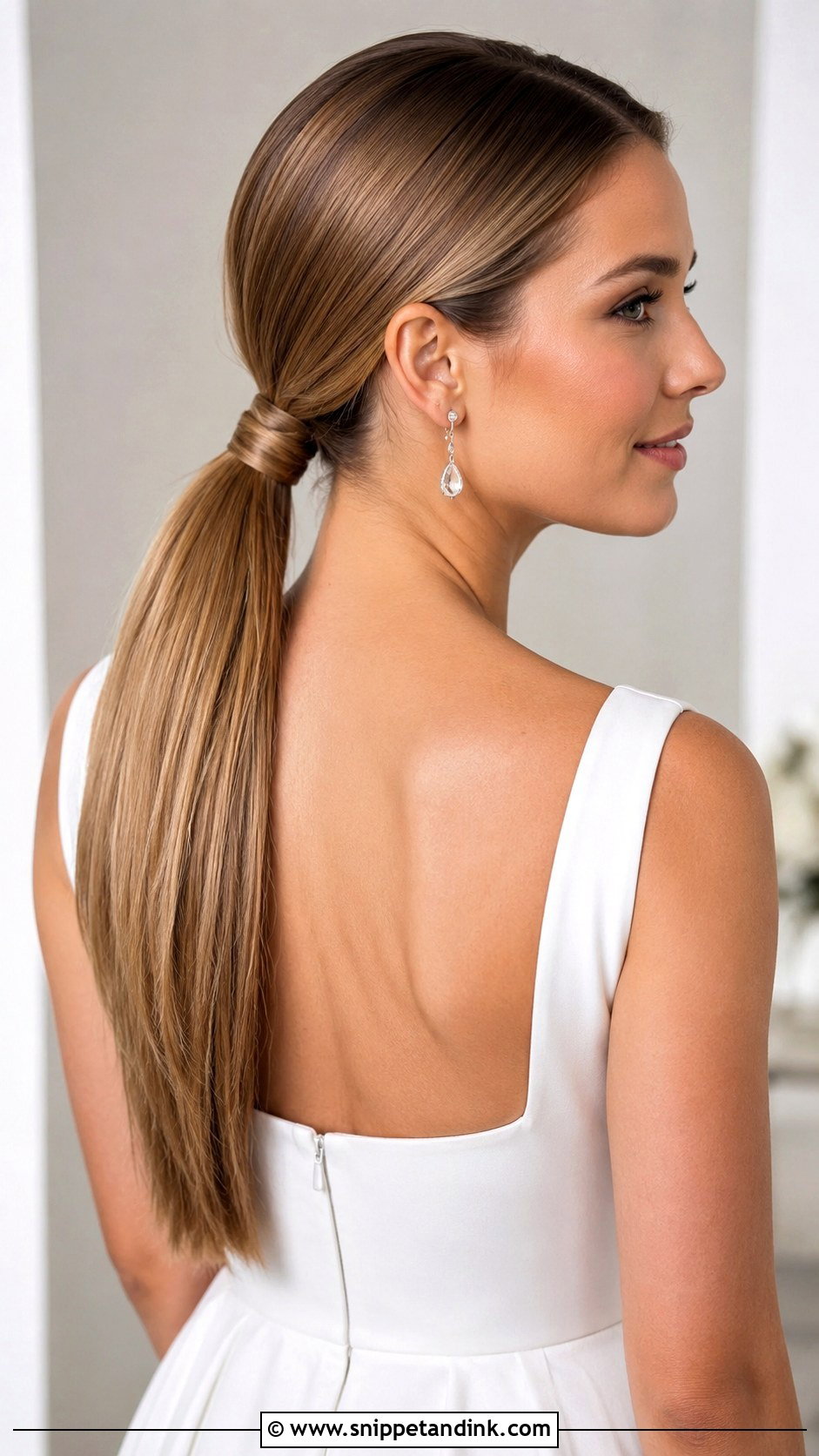
Nothing about a low ponytail is complicated, which is why the finish matters so much. It sits at the nape and falls smoothly down the back, with a strand wrapped around the elastic to hide it. It’s very secure outdoors and pairs well with backless dresses, high necklines and drop earrings. I smooth the crown with a boar bristle brush before tying, and I tie it with a snag-free elastic. Rubber bands leave a kink if you take the ponytail down for the reception.
4. Straight Hair With Pearl Headband
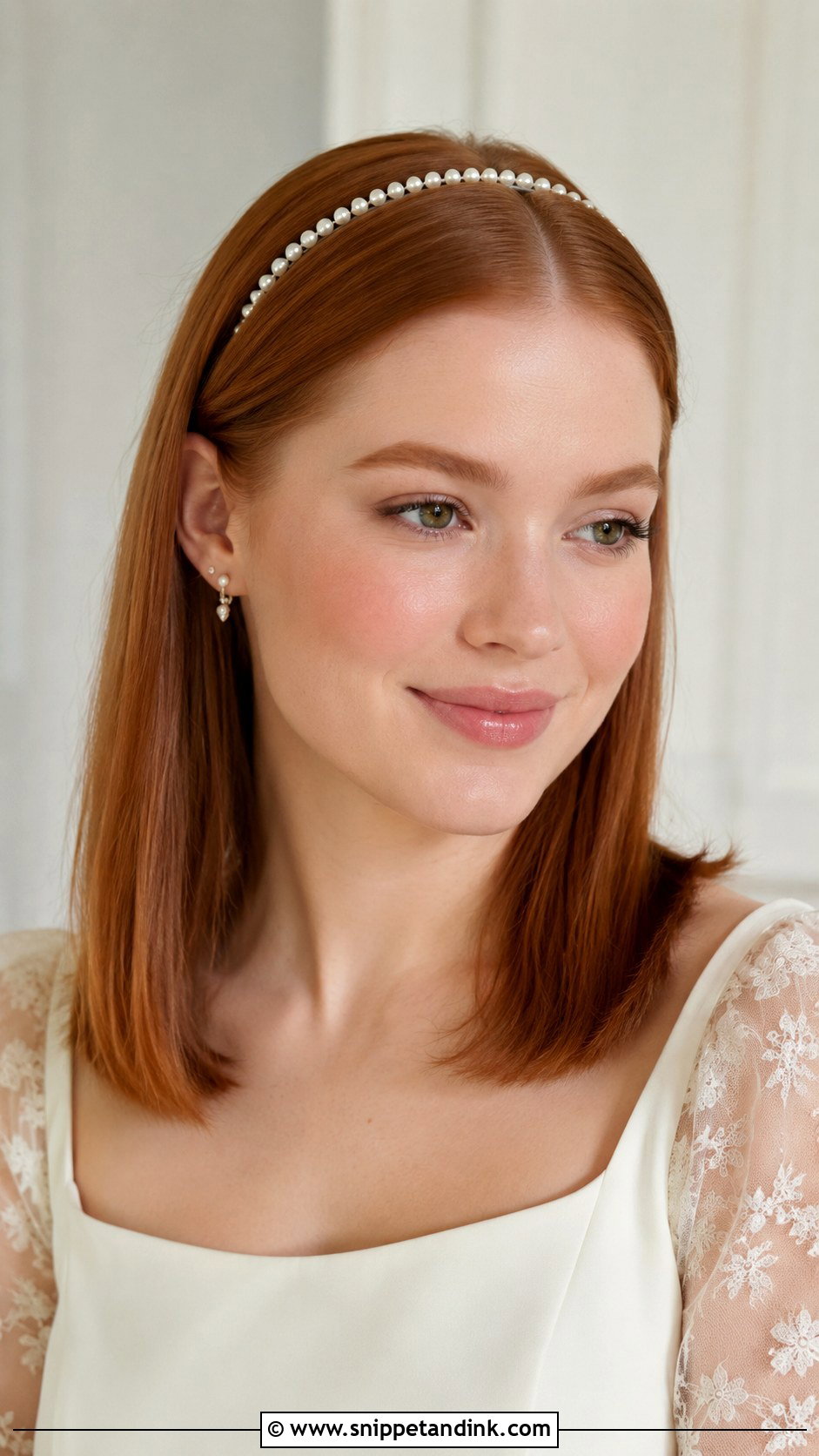
With a pearl headband doing the decorating, the hair can be worn fully down, tucked behind the ears or loosely pulled back. Keep everything else smooth and controlled so the band reads as the focal point. It works on shoulder-length, medium and long hair. A slim band suits minimal dresses; a wider one carries a formal gown. Headbands slide back on slippery straight hair, so I pin a small section flat behind each ear first and slide the band’s ends over those pins.
5. Straight Chignon Wedding Hair
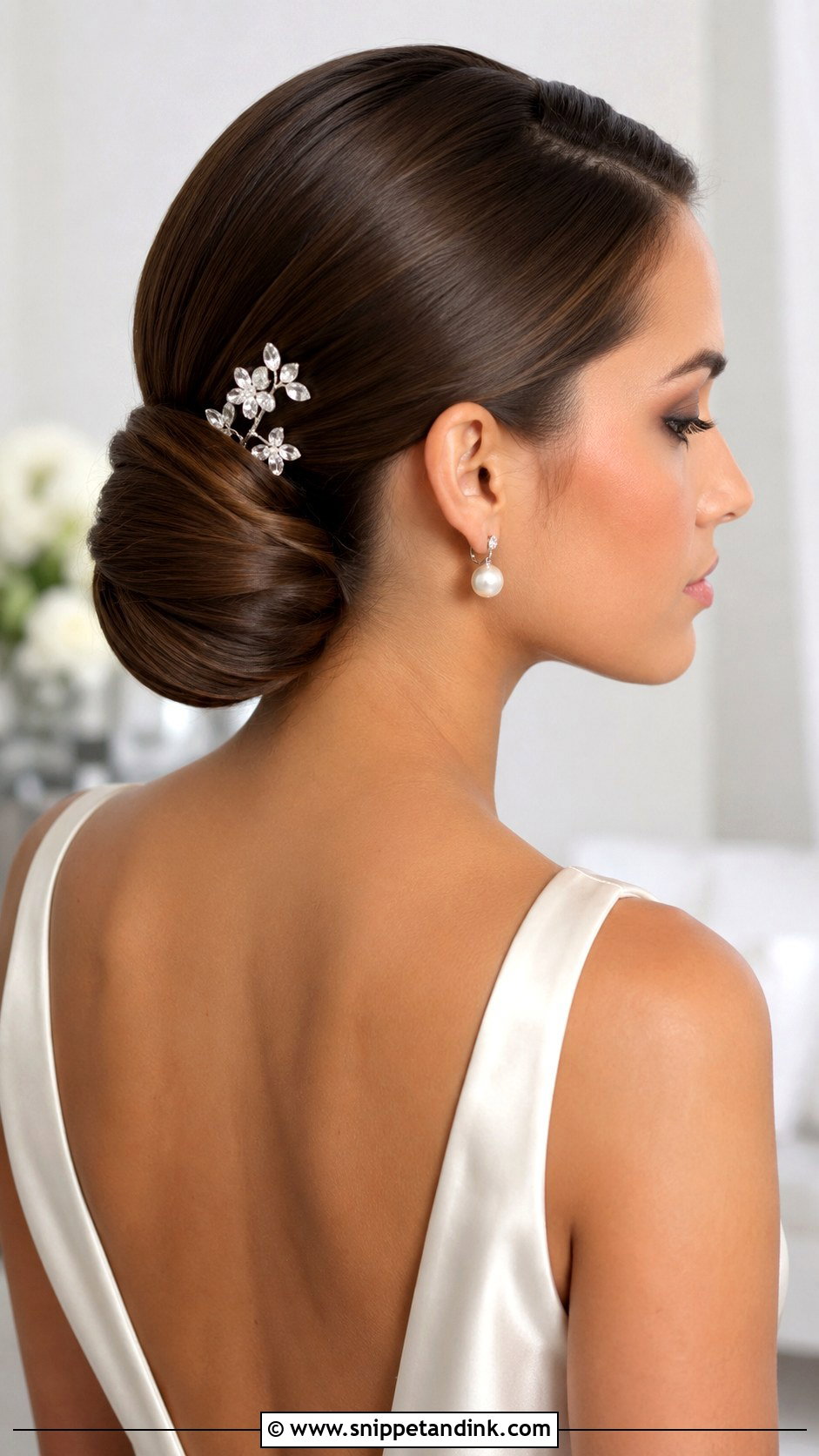
Think of the chignon as a softer, folded cousin of the low bun, set at the nape and lovely from the side. It keeps straight hair controlled all day without feeling tight. Wear the front with a clean part, a couple of face-framing pieces or tucked sections, and run a few pearl or crystal pins along one side if you want detail. Straight hair can look flat in a chignon on camera, so I add a touch of texture spray to the lengths before folding, just enough to give the roll some body.
6. Straight Hair With Side Part
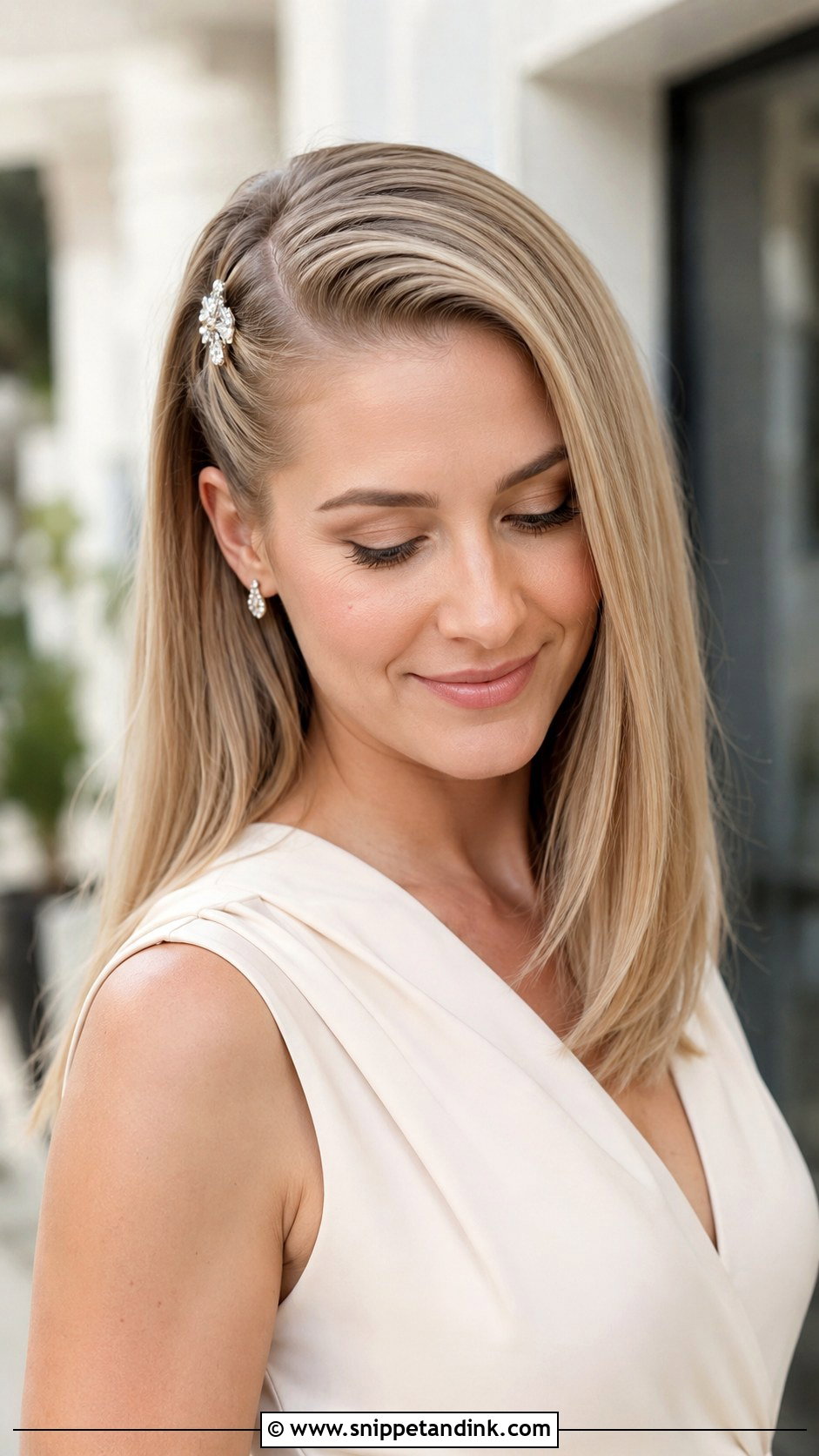
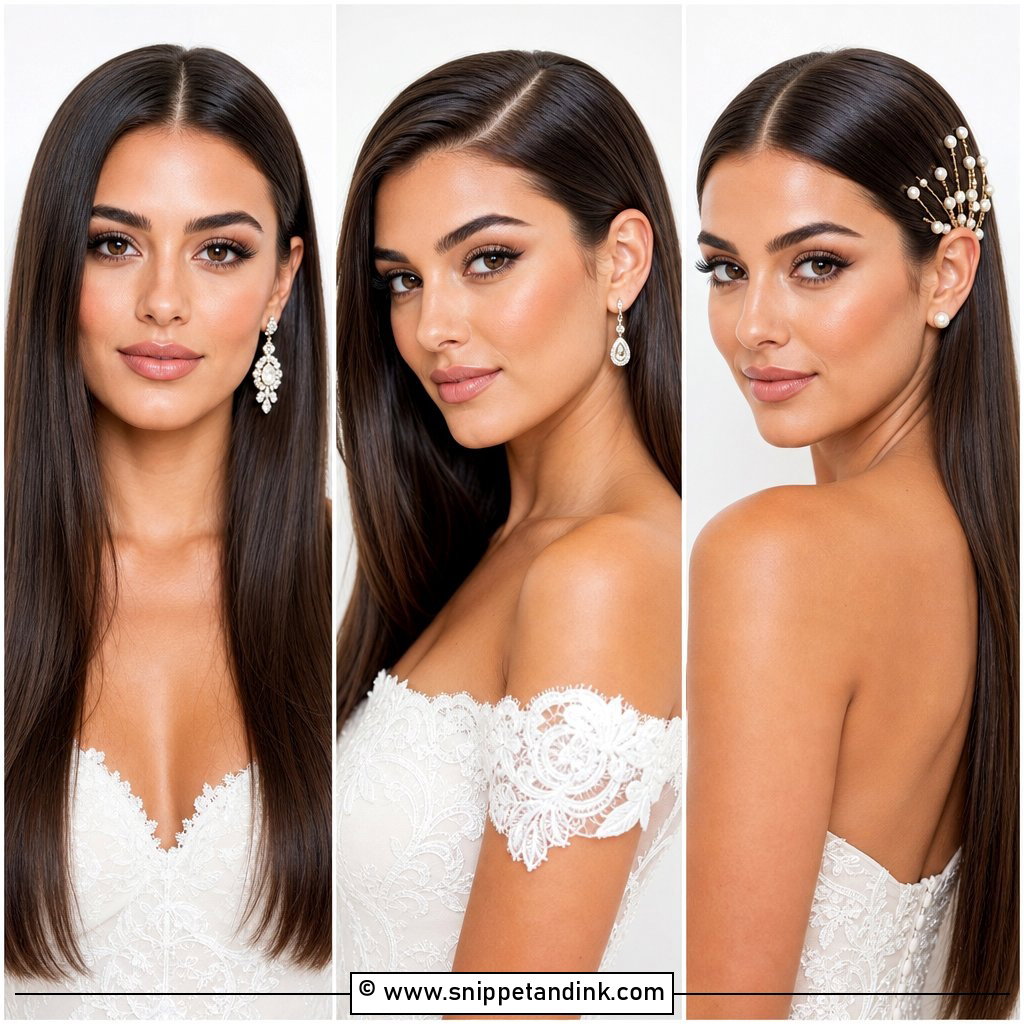
A deep side part frames the face in a single move and sweeps the hair across the forehead. Wear the length down, tuck it behind one ear or pin one side with a decorative clip. It’s an easy dressed-up option for guests and bridesmaids. I smooth with a flat iron and then bend the ends slightly inward so the hair moves instead of hanging straight down like a curtain. If you don’t normally wear a side part, train it for a few days beforehand by parting and pinning it that way, or it’ll keep flipping back.
7. Straight High Ponytail Wedding Hair
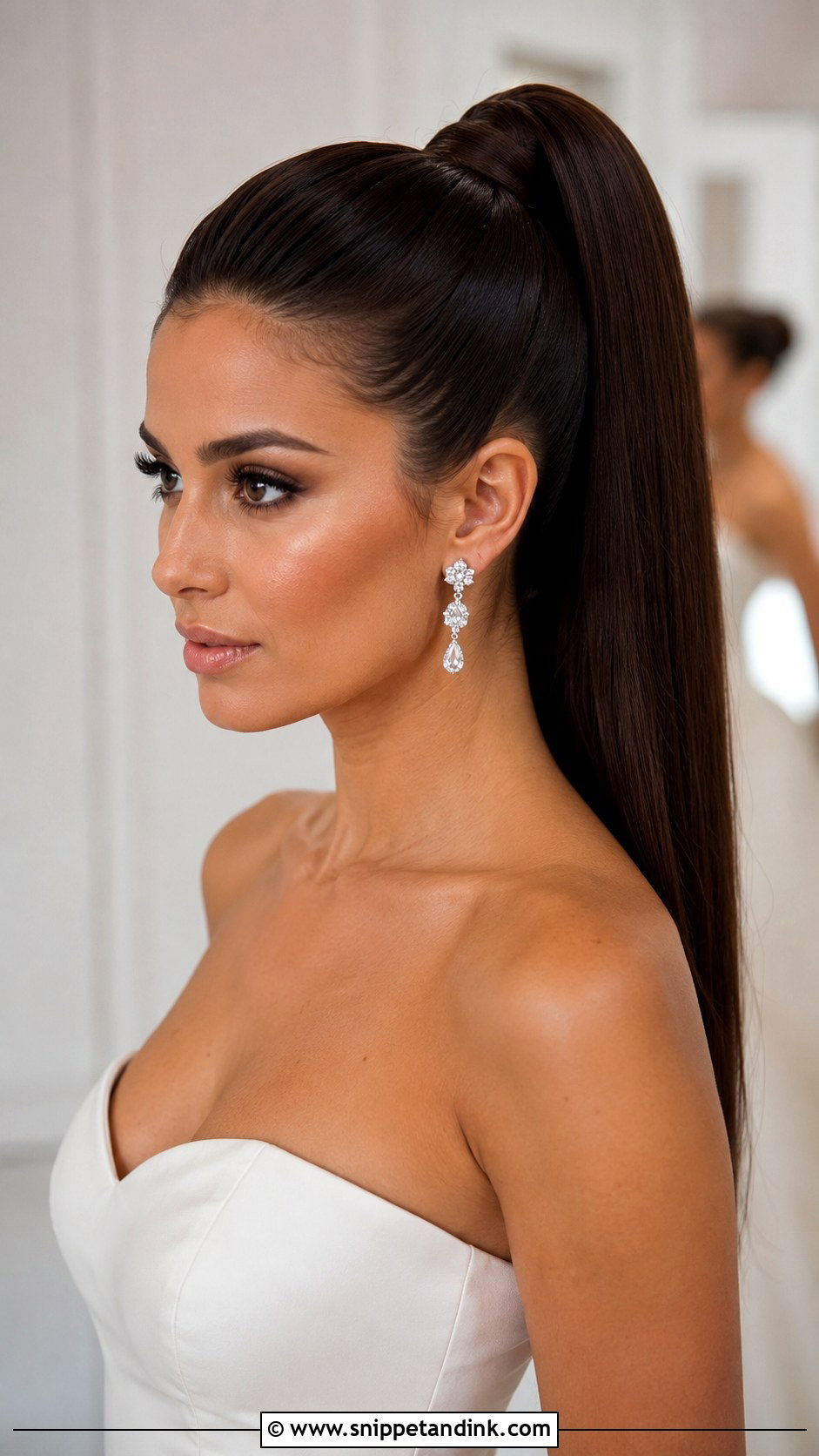
Placed high enough to lift the face but not so high that it pulls, a straight high ponytail looks sleek and modern. Wrap the base with hair and smooth the tail so it falls straight and glossy. Pair it with strapless dresses, simple gowns and bold earrings. Shine spray helps it catch light. I’d steer you away from it if you get headaches from tight styles; wear a test version for a full afternoon first, because a high ponytail that feels fine at noon can ache by the speeches.
8. Straight Hair With Twisted Half Up
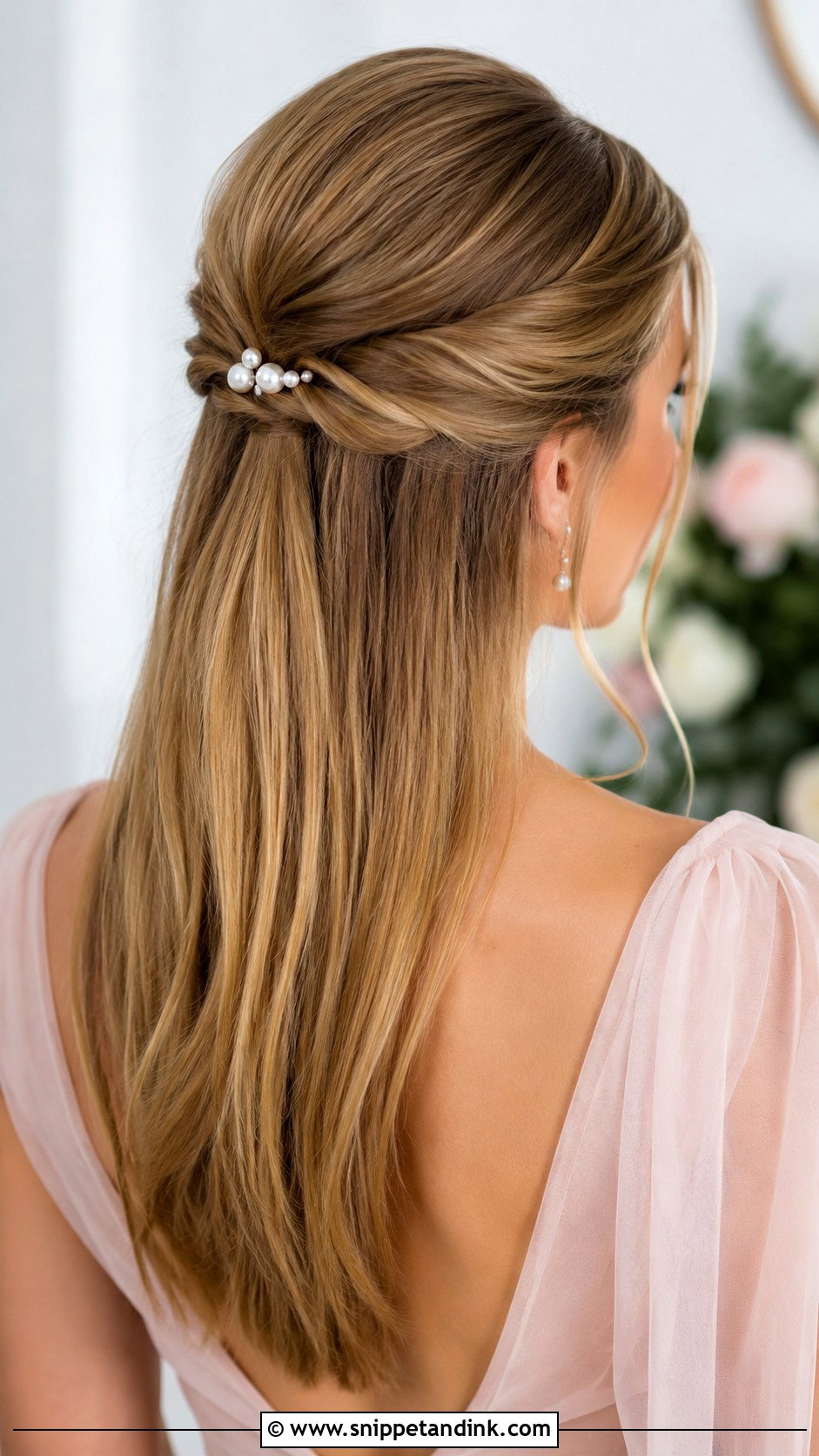
Two front sections are twisted away from the face and pinned together at the back, leaving the rest smooth. The twists add shape at the crown without hiding length, which suits medium and long hair, and small pearl pins slipped through them add a bridal touch. Straight hair tends to untwist, so I twist each section a little tighter than it needs to be and lock it with crossed pins where the two meet. Keep the ends sleek.
9. Straight Wedding Hair With Barrette
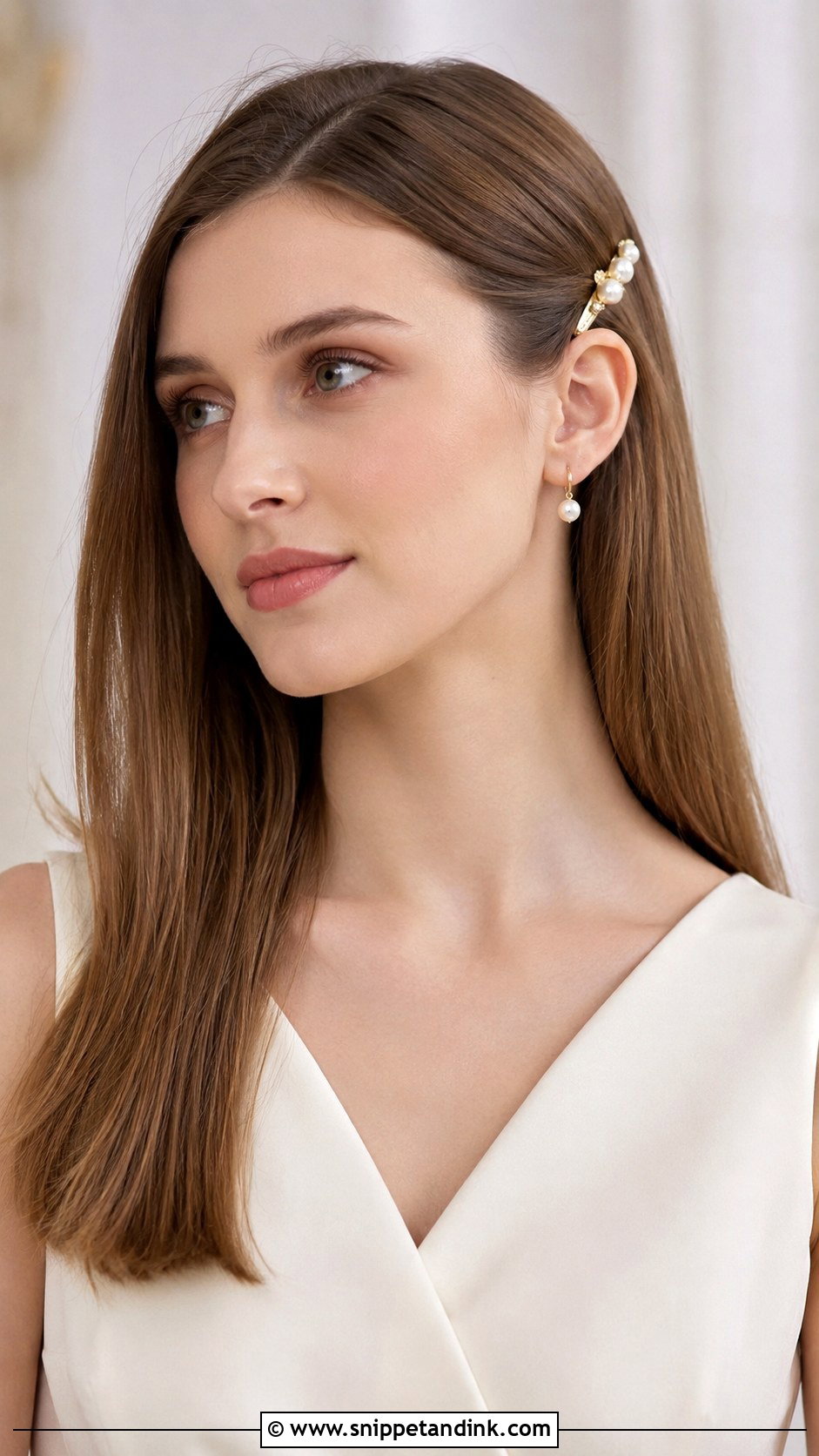
For hair worn down, a barrette is the simplest way to make it look intentional. The hair is styled smooth, then clipped on one side or at the back with a decorative barrette, pearl, crystal, gold or plain metal. Shorter straight hair that can’t hold a bun does very well here. Placement is everything. I clip where the hair naturally falls away from the face, then smooth the flyaways around the part, which on straight hair are always more visible than you expect.
10. Straight Middle Part Wedding Hair
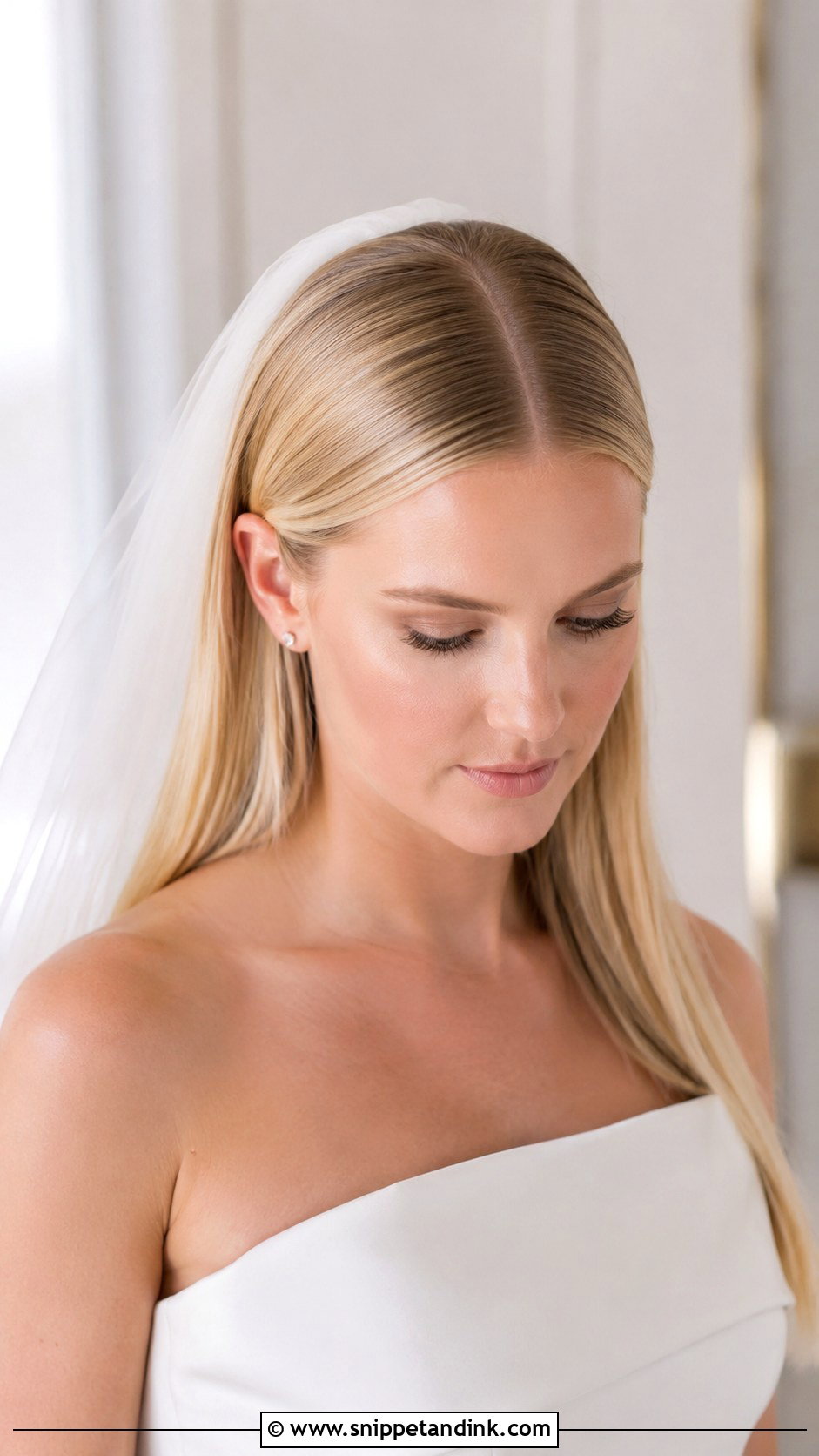
A precise middle part with hair falling evenly on both sides looks modern with almost no styling. That precision cuts both ways: uneven ends and a wobbly part show immediately, so get a trim before the wedding and use a tail comb for the part. Wear it fully down, tucked behind both ears or with a veil at the crown. Minimalist gowns and soft makeup suit it. Work serum through the lengths only so the roots stay fresh rather than oily by evening.
11. Straight Braided Half Up Hair
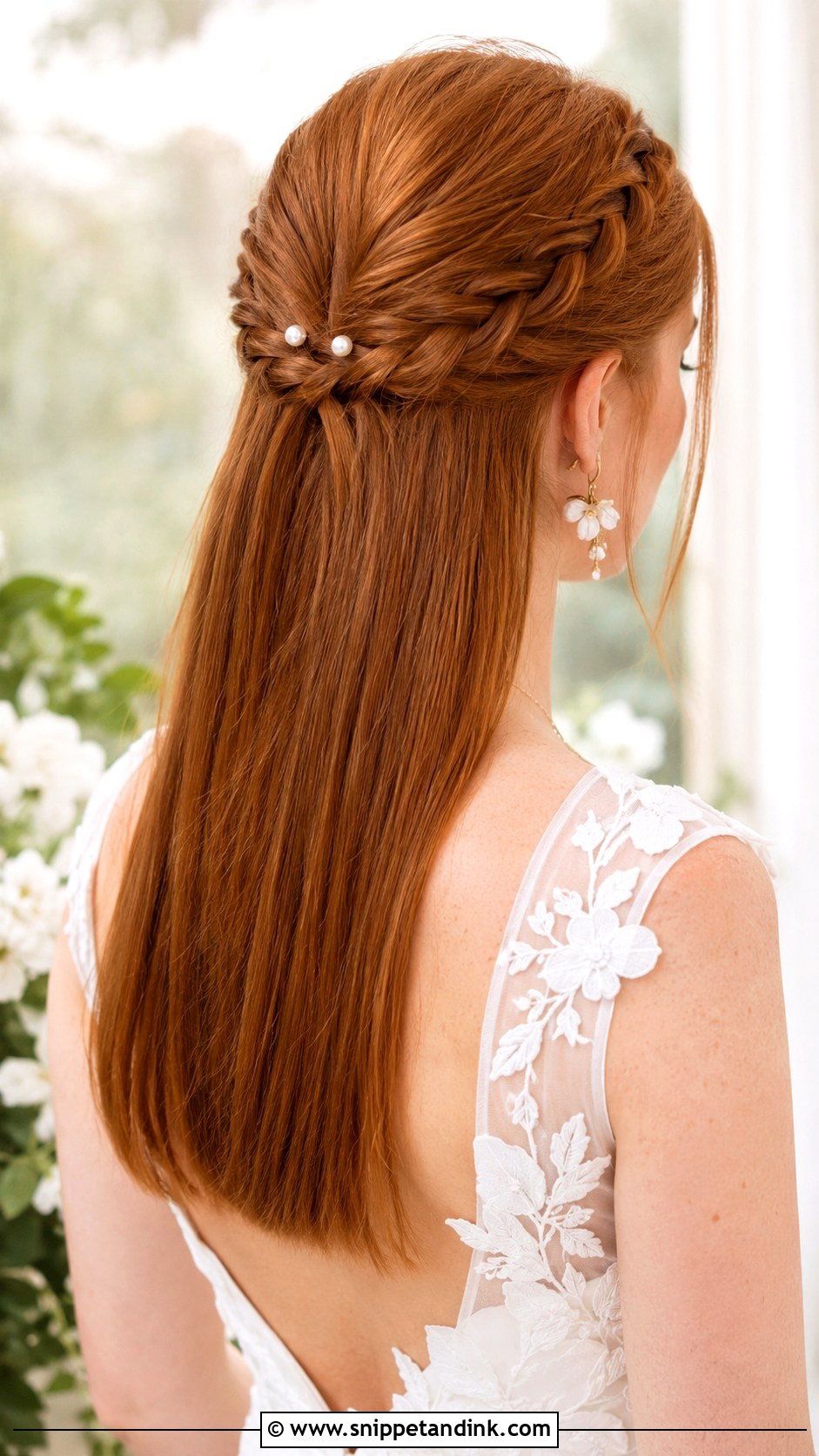
Small braids taken from each side and joined at the back form a soft crown over sleek straight lengths. It’s a practical choice for garden weddings, daytime ceremonies and bridesmaids. Keep the braids slightly loose, secure them with clear elastics and hide the ends under a small clip. On very smooth hair, braids loosen fast as you move. I braid on hair with a little dry texture spray in it, then leave the remaining lengths straight and shiny so the braids stand out.
12. Straight Low Bun With Face Framing
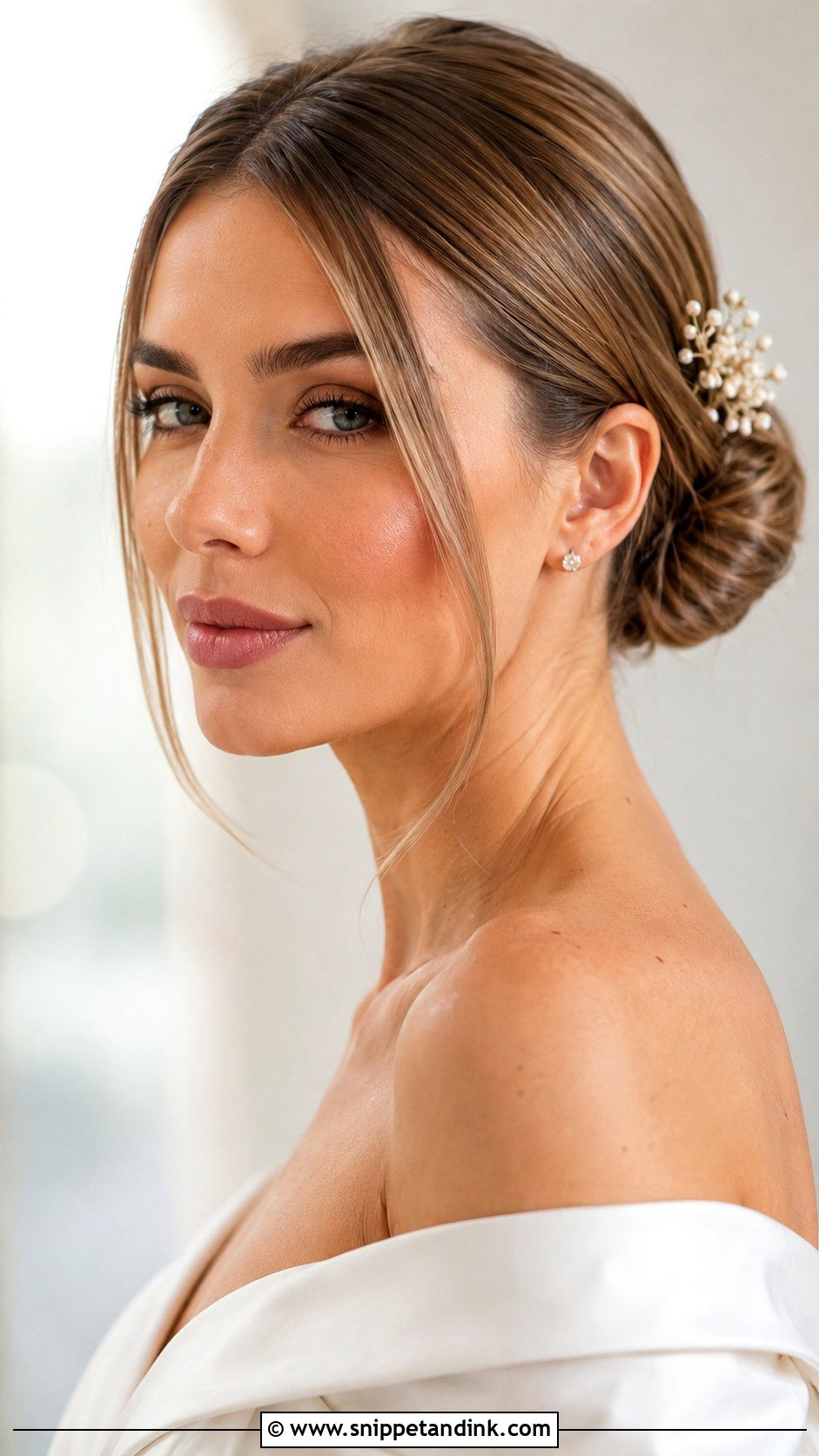
Two slim front sections framing the cheeks or jaw make this low bun feel softer than a fully slicked one. It’s a good compromise if you want an updo but dislike every strand pulled back. The framing pieces should be smooth and lightly shaped so they match the rest, not curled into ringlets. Veils, floral pins and delicate earrings all suit it, and medium hair is long enough for the bun. Cut the framing pieces at your trim, not on the morning, so they settle naturally.
13. Straight Hair With Simple Veil
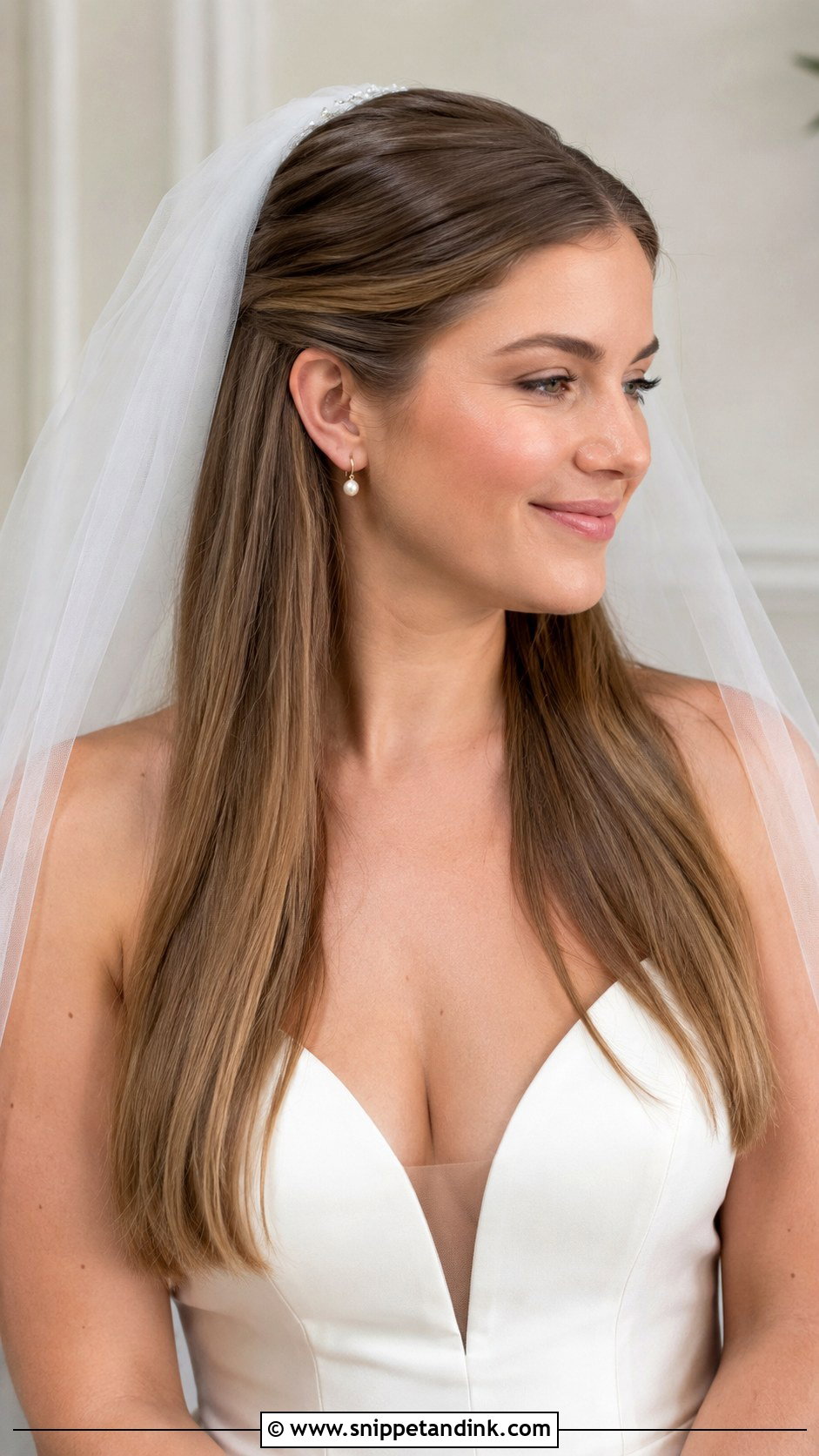
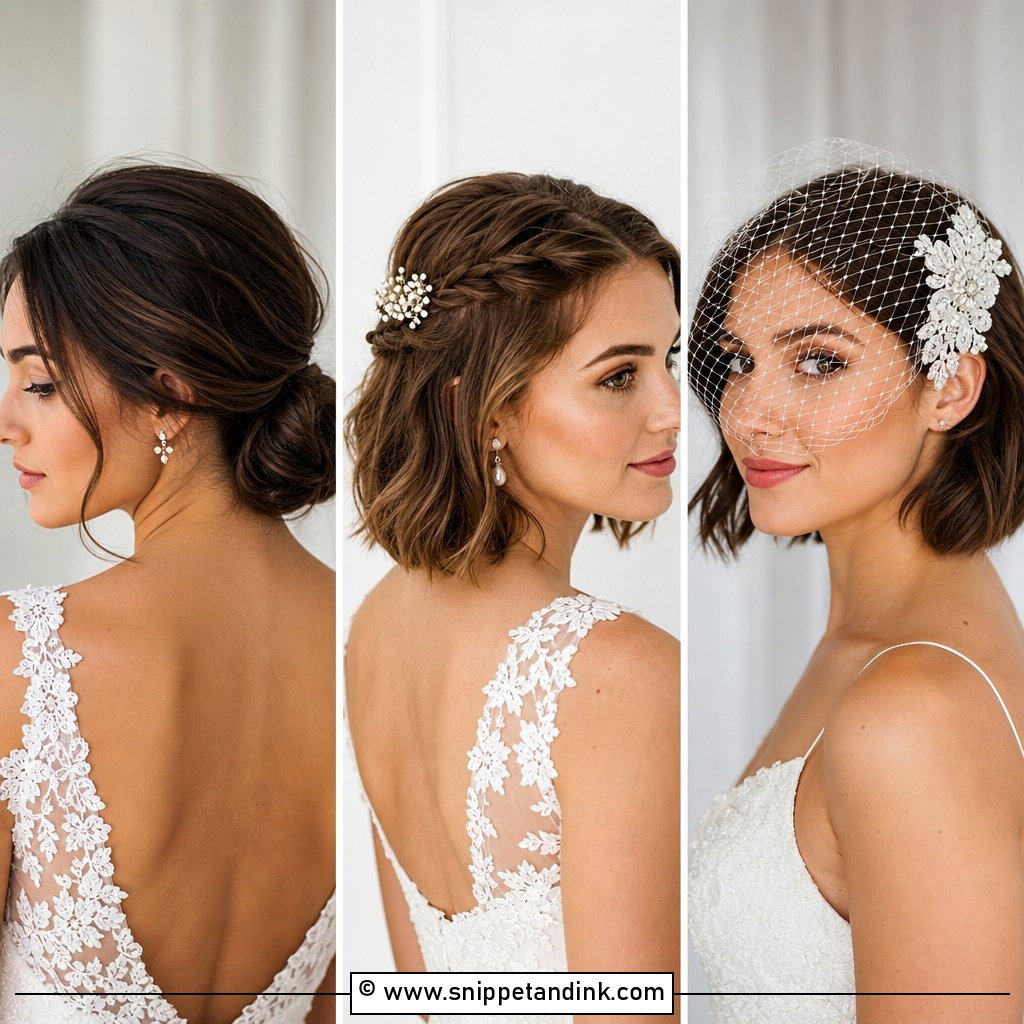
With straight hair, the veil and the hair share attention evenly. Down, half up or in a low bun, any of them can carry a veil depending on your dress and comfort. The easiest version is sleek hair with the veil at the crown or just above the back of the head. Straight hair is slippery, though, so I always build a small hidden anchor, a mini braid or a pinned cross, where the comb will sit. Smooth roots and softly tucked front pieces make the placement look deliberate.
14. Straight Bob Wedding Hair
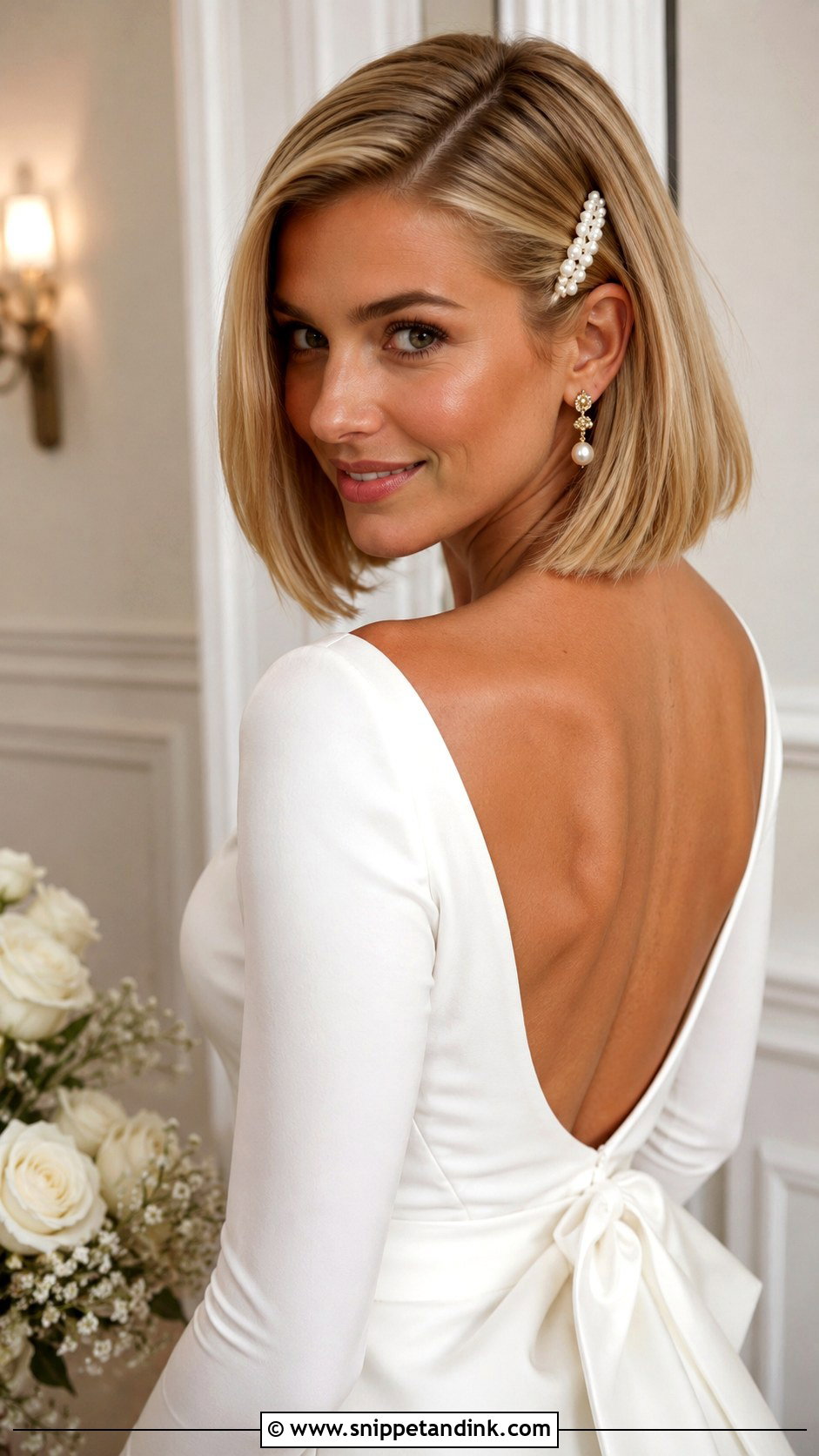
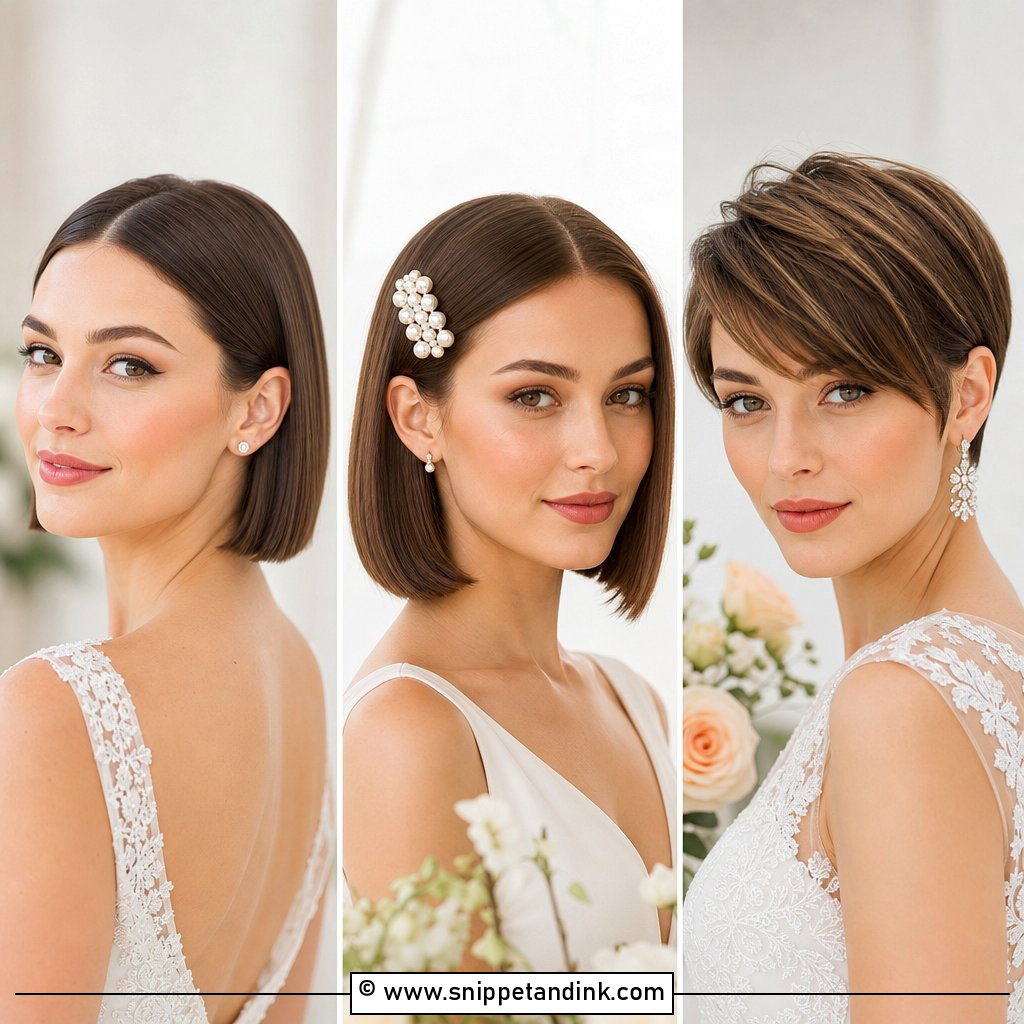
Straight bob wedding hair looks sharp when the ends are clean and the shape is crisp. A blunt bob, a soft angled bob or a shoulder-grazing bob can all be smoothed with polished ends. A side clip, pearl headband or deep side part makes the cut feel more formal, and no extensions or updo are needed. Book the trim close to the wedding, roughly a week or two before, so the line is sharp but not freshly chopped. A light smoothing spray and a flat iron help it sit neatly around the face.
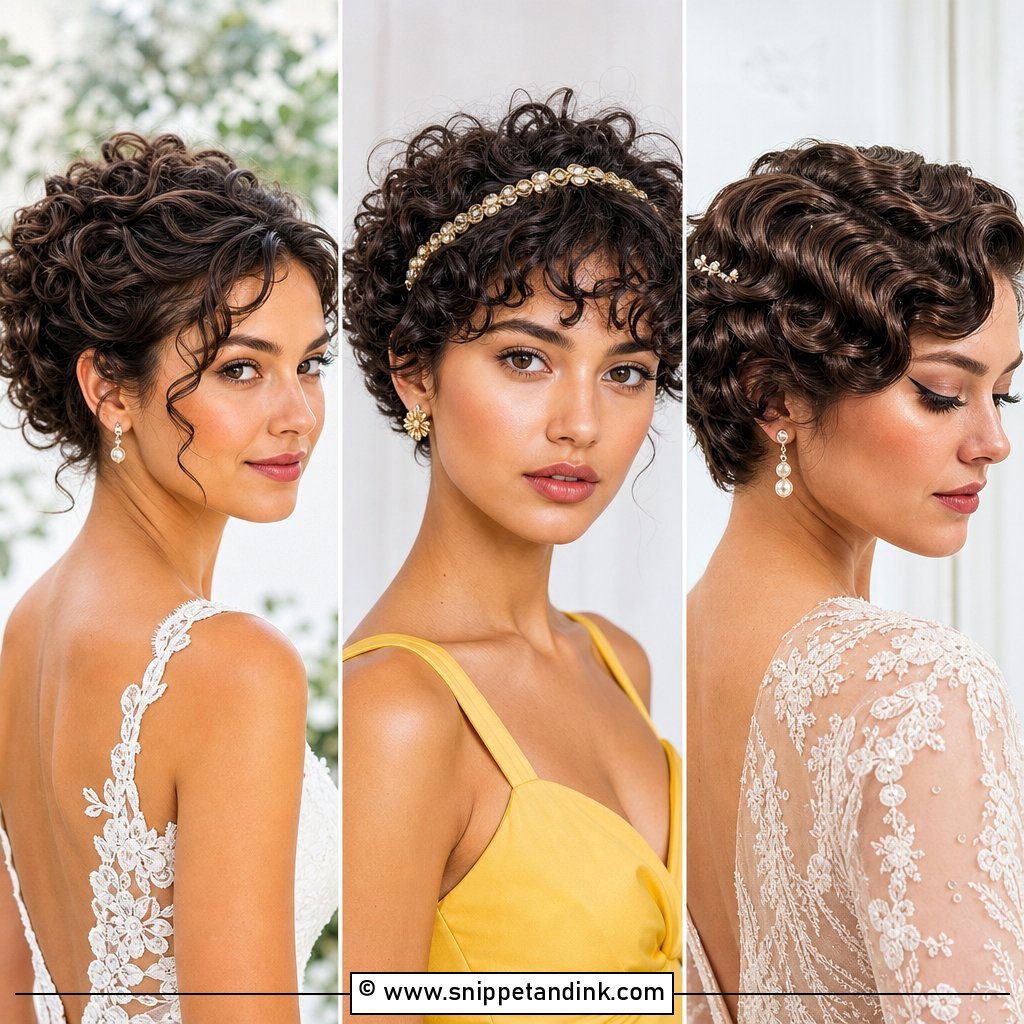
15. Straight Tucked Behind Ears Hair
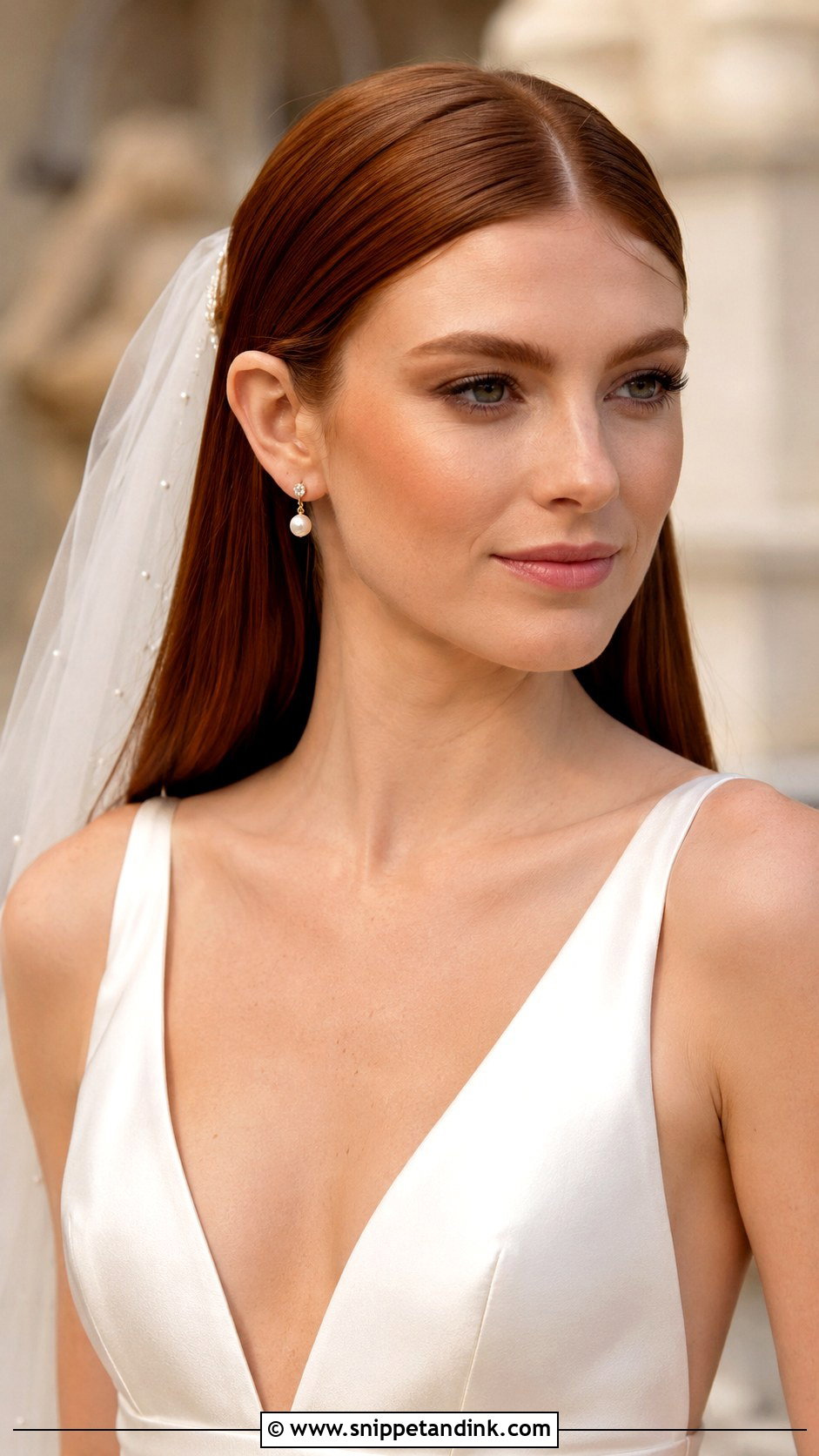
Tucking smooth hair behind both ears puts earrings, makeup and the dress neckline on show. Part it in the center or slightly to the side, style it sleek, then tuck evenly. Straight hair tends to slip forward within the hour, so I secure each tucked section with a hidden pin behind the ear. Keep a little lift at the crown so the head doesn’t look flat in profile. Veils, combs and minimal accessories pair naturally, and a tiny amount of styling cream at the hairline keeps tucked behind ears hair looking clean instead of greasy.
The Last Two Weeks for Straight Hair
Straight styles depend more on the condition of the hair than curls do, because there’s no texture to disguise anything. I give straight-haired brides a short schedule:
- About two weeks out: any color or gloss treatment, so the shade settles and any tone shift can be corrected.
- One to two weeks out: the trim, to clean the ends without leaving a fresh, harsh line.
- The final week: no new shampoos, masks or styling products. Something unfamiliar can leave hair limp or coated on the day.
- The night before or that morning: wash and dry it smooth, then let your stylist add the finishing products.
Humidity affects straight hair differently from curly hair. Curls drop, while straight hair puffs at the hairline and loses its shine. If your venue is humid, ask for a sleek updo or a low ponytail rather than hair fully down, since gathered hair keeps its smoothness far longer.
Straight Hair Asks for Precision, Not Curls
Straight texture brings shine and clean lines on its own, which suits buns, ponytails, half-up looks, bobs, veils and polished down styles. Narrow it down by your neckline, length, the weather and how much movement you want during the day. Fine straight hair needs secure pins and a little lift; thick straight hair needs smoothing and stronger hold. Beyond that, the work is in the details: a clean part, healthy ends and pins nobody can see.
You'll Like These Ideas:


Leave a Reply