
Norse-inspired bridal hair is mostly braiding, and braiding is where I spend half my trial time. The looks below run from a halo braid that sits flat and quiet under a veil to a raised Mohawk plait that is the whole point of the outfit. Some need a lot of length and density, some forgive shoulder-length hair, and a few are really about the beads, cords and pins you thread through them. I’ve added notes on what each one asks of your hair and how it behaves over a long day, so you can bring the right picture to your stylist.
Prepping Hair So Norse Braids Grip and Hold
Braids fail for one of two reasons: the hair is too slippery to grip, or there isn’t enough of it for the style. Both are fixable if you know before the trial, not on the morning.
I ask brides to wash the day before the wedding and skip conditioner on the roots. Freshly washed hair is silky, and silky hair lets pins and small braids slide out. On the day I mist the lengths with a dry texture spray or a little dry shampoo, which gives each strand some grit for the braid to hold onto.
Length matters more for braids than for curls, because plaiting takes up a surprising amount of length. A crown braid that looks easy on hair to the middle of the back can fall short on hair at the collarbone. If you’re under shoulder length, I’d rather add one or two clip-in wefts in your shade, braided right into the plait so the clips are hidden, than stretch your own hair until the braid looks thin.
- Bring a photo of the back of the style, not just the front, since most Norse braids do their work behind you.
- Tell your stylist if you colour your hair before the wedding; fresh colour can make hair slicker for a few days.
- Have your trial at least a month out so there’s time to order extensions if they’re needed.
1. Viking Halo Braid for Brides
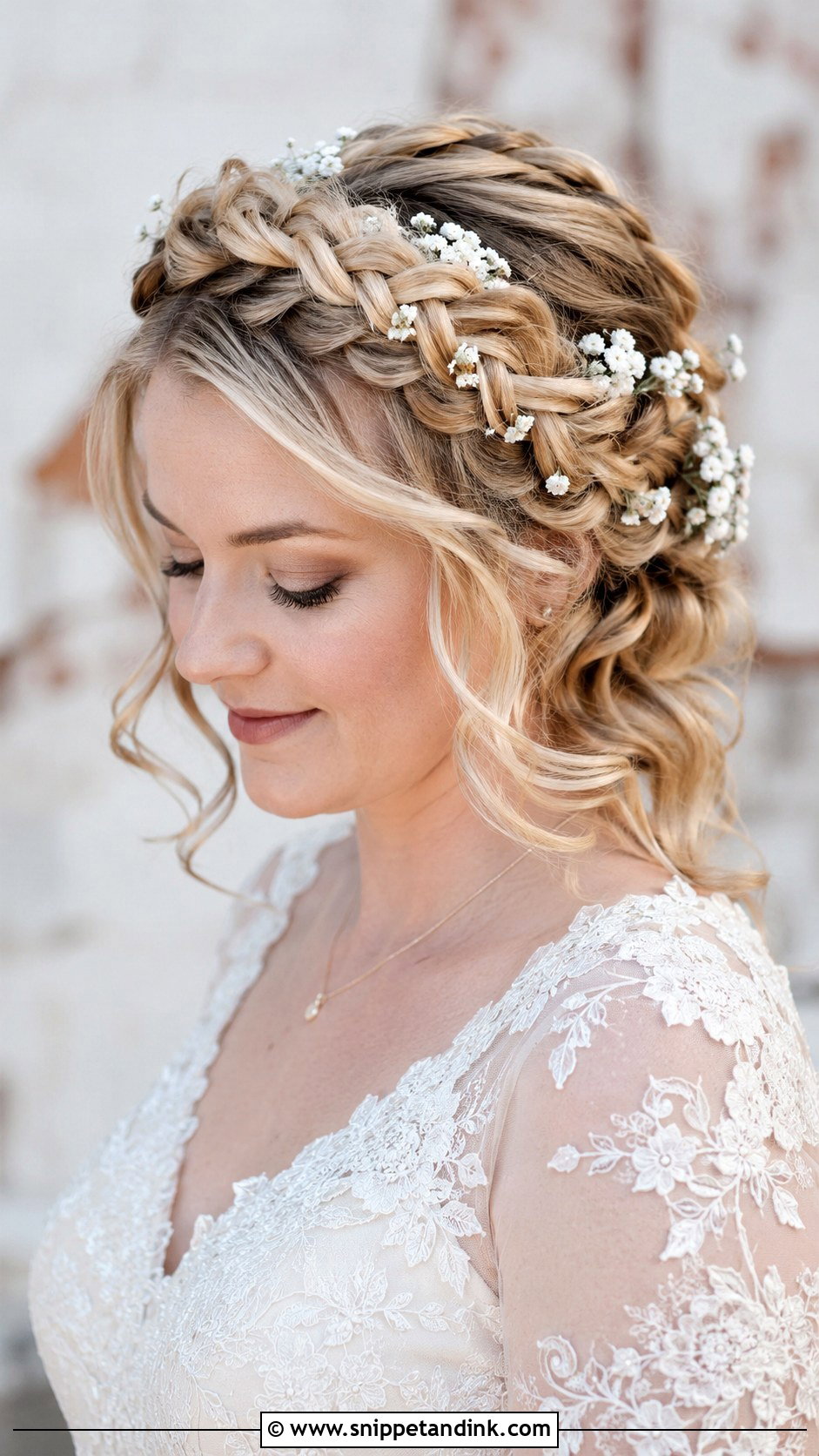
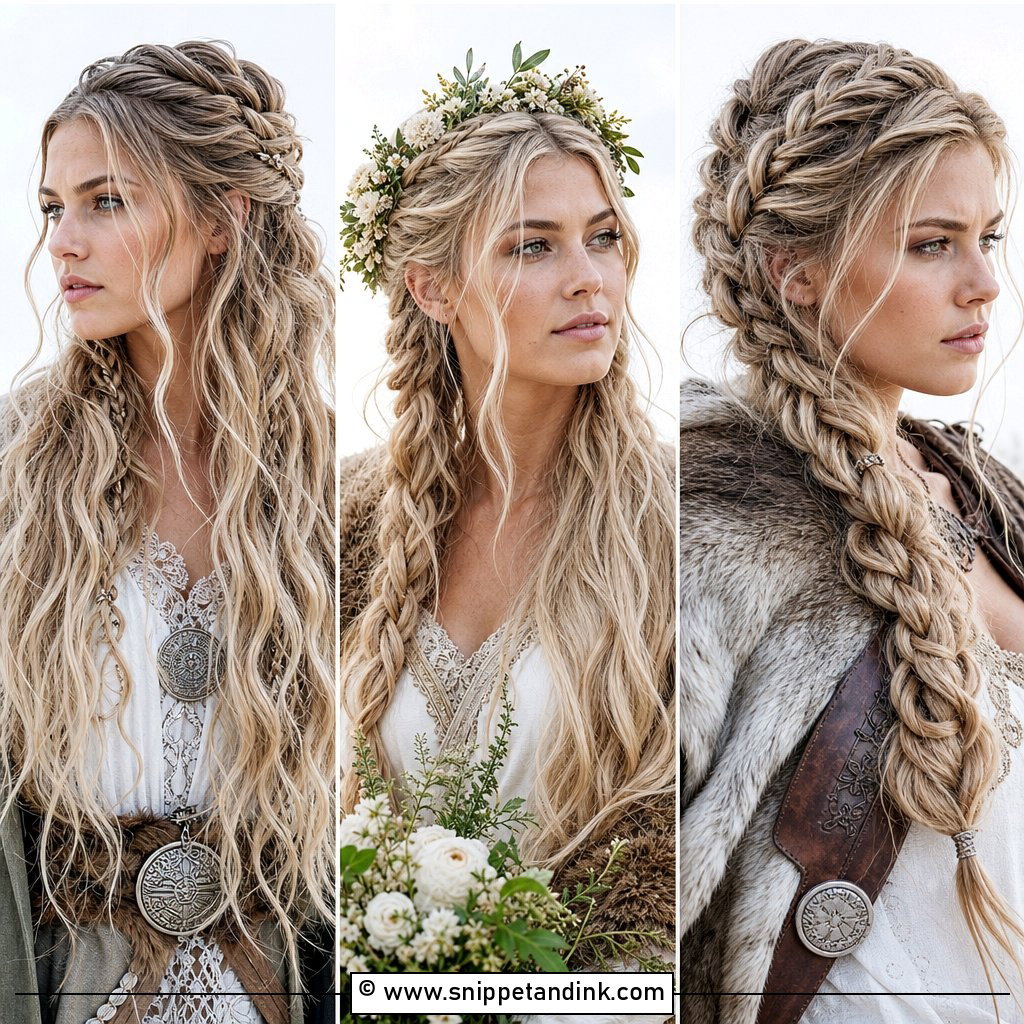
The halo braid starts at one temple, travels along the hairline and circles the crown until the tail tucks under where it began. Because it lies flat, it’s the easiest Norse style to wear with a veil comb or a circlet. The part that decides whether it lasts is the join: I hide the end under the starting point and lock it with two crossed bobby pins rather than one, because a single pin works loose once you start hugging people. It needs hair at least past the shoulders to make a full circle; shorter hair can do a half halo pinned at the back. Small pearls or sprigs tucked into the outer loops sit well here without adding weight.
2. Fishtail Braid Viking Wedding Hairstyle
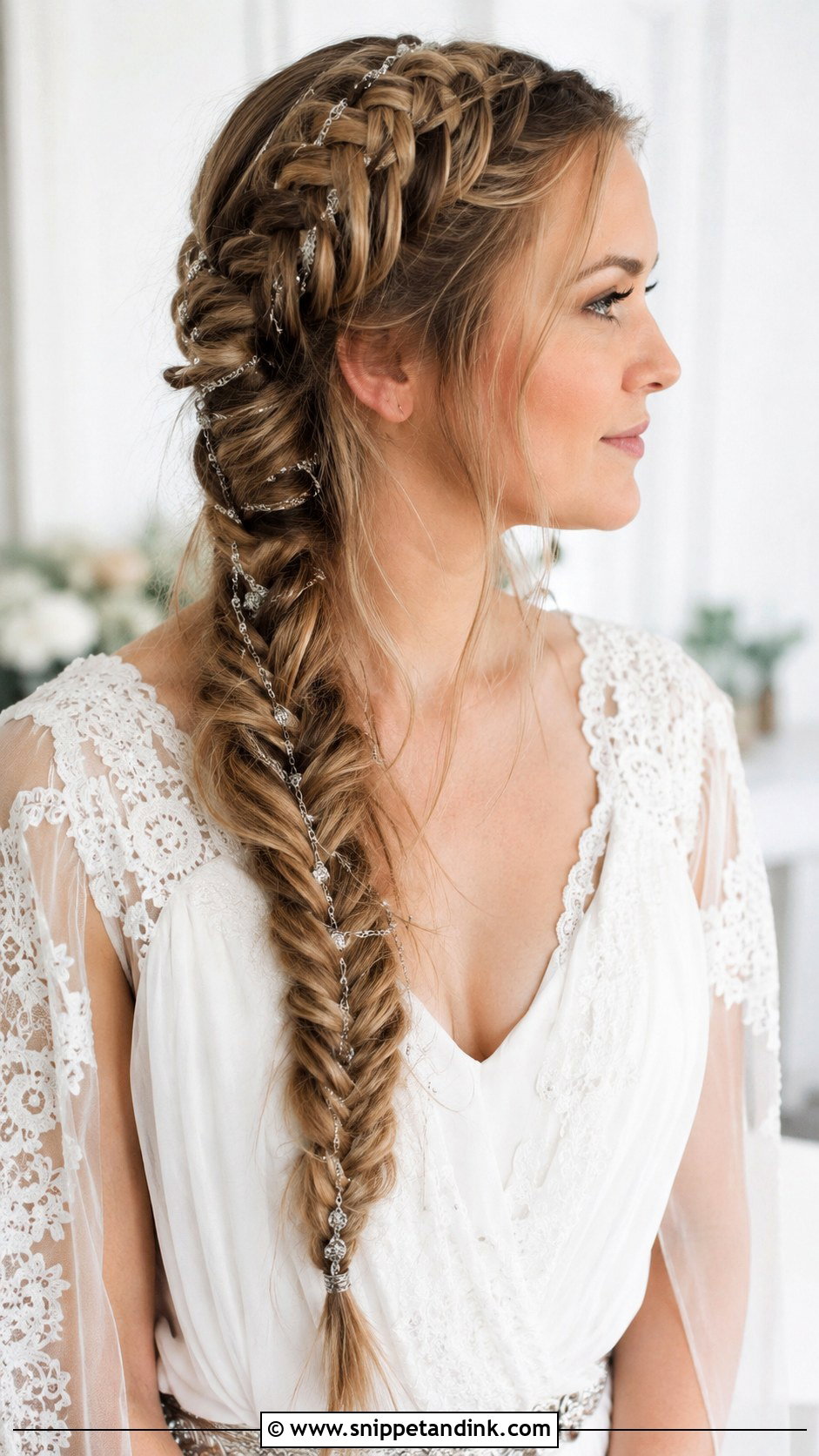
A fishtail looks complicated and isn’t, which is why I teach it to brides planning to redo their own hair the next morning. Two sections, tiny pieces crossed over again and again, and you end up with a dense rope. Worn over one shoulder it shows off length; pancaked out by pulling the edges, it looks fuller than the hair really is. That pulling is also its weak point. Over-pull a fishtail on fine hair and the gaps between the strands show up in close photos, so I stop sooner on fine hair and add a thin leather cord or two silver beads near the tail instead of more volume.
3. Half Up Half Down Viking Bridal Hair
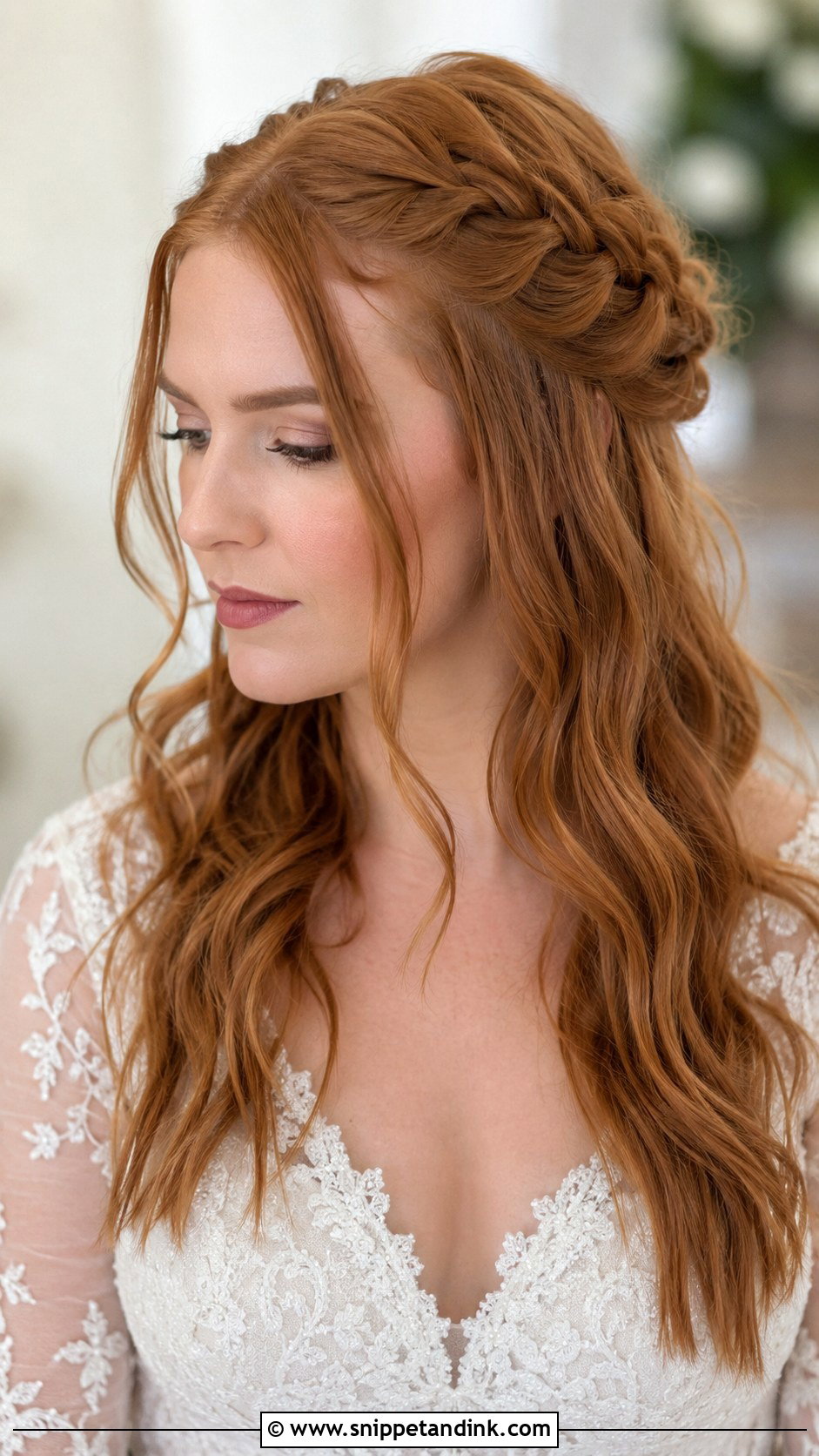
Half up, half down is the compromise I’m asked for most: braids on top for the Norse detail, loose waves underneath for softness. I take a Dutch braid back from each temple and join them at the crown in a twist or small knot, which also hides the elastic. The honest catch is the loose half. On humid days or with very straight hair the waves can drop by the reception, so I set them with a hot tool and pin each curl to cool before brushing out. Runic pins or a few flowers look right pinned at the join where the braids meet.
4. Viking Crown Braid Wedding Style
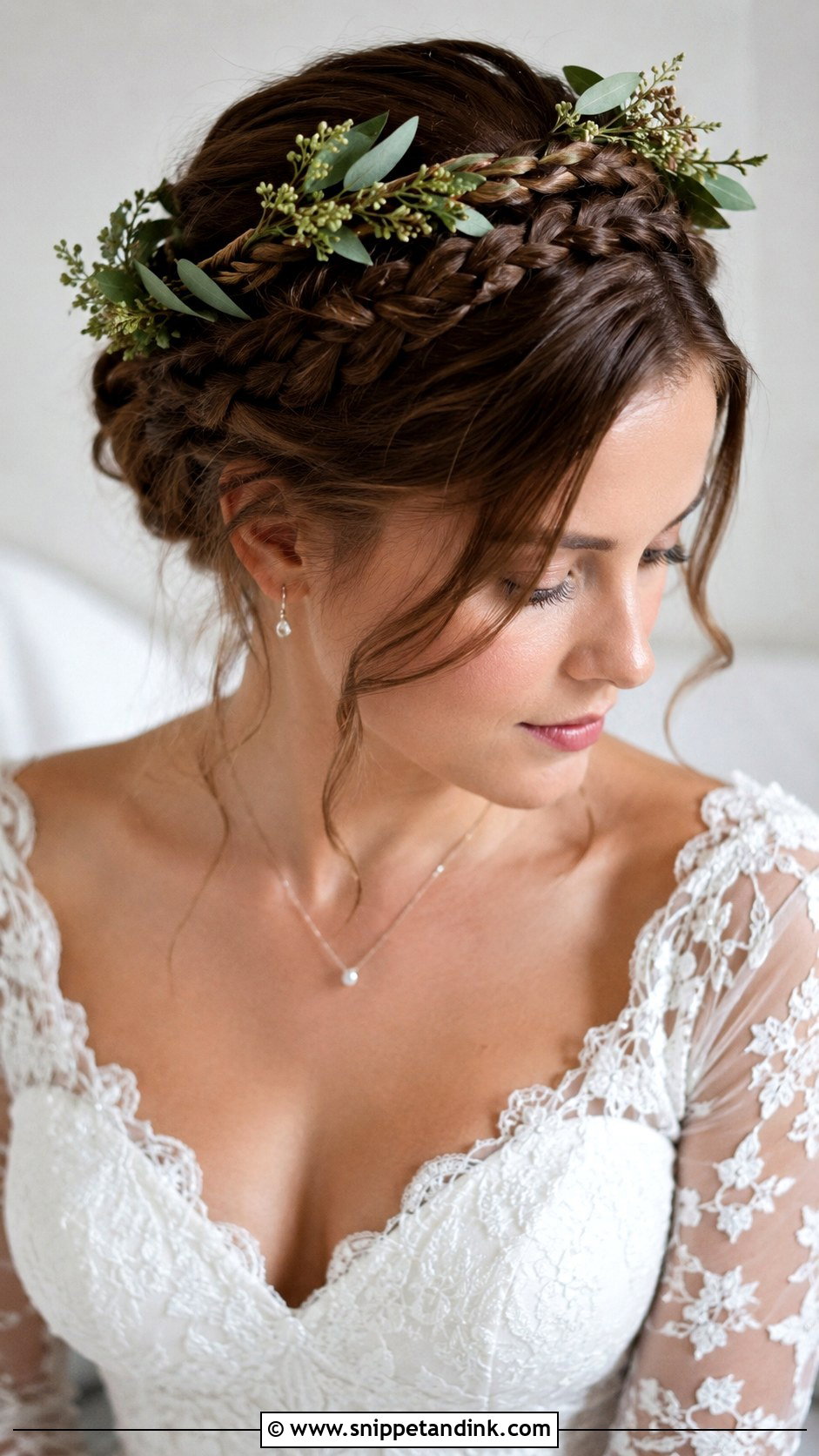
The difference between this and the halo braid is height. Here I braid several thinner plaits and stack them around the top of the head, so the shape sits up like a crown instead of hugging the hairline. That extra structure makes it one of the best Norse styles for a windy, outdoor ceremony, since nothing is left loose to whip around. It does need medium to long hair, and the stacking adds weight, so I anchor every plait with pins pushed in against the direction of the braid. Flowers, greenery or a crystal circlet can go in the gaps between layers.
5. Viking Warrior Braided Ponytail
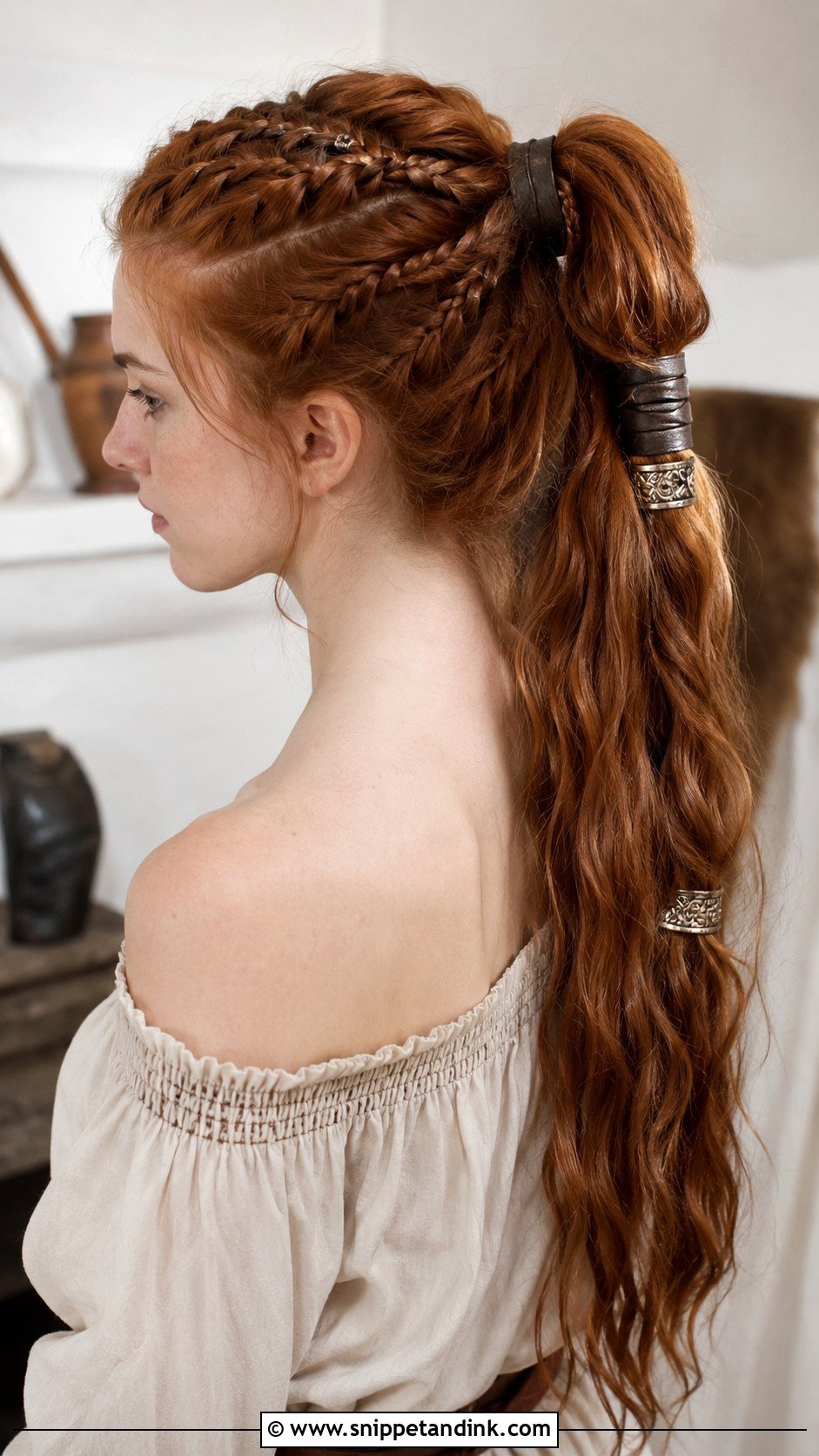
A warrior ponytail is braided tight along the crown and gathered into a high, voluminous ponytail at the back. The braid does the structural work, so the tail can be left straight or curled at the ends. My concern with any high ponytail is headache: if the base is pulled too tight, you’ll feel it by the speeches. I build a small padded base with a few pins under the elastic so the weight sits on more of the scalp. Metal clasps and leather wraps look good on the tail itself, and the high placement shows off earrings and a long neck.
6. Elling Twist Viking Wedding Hairstyle
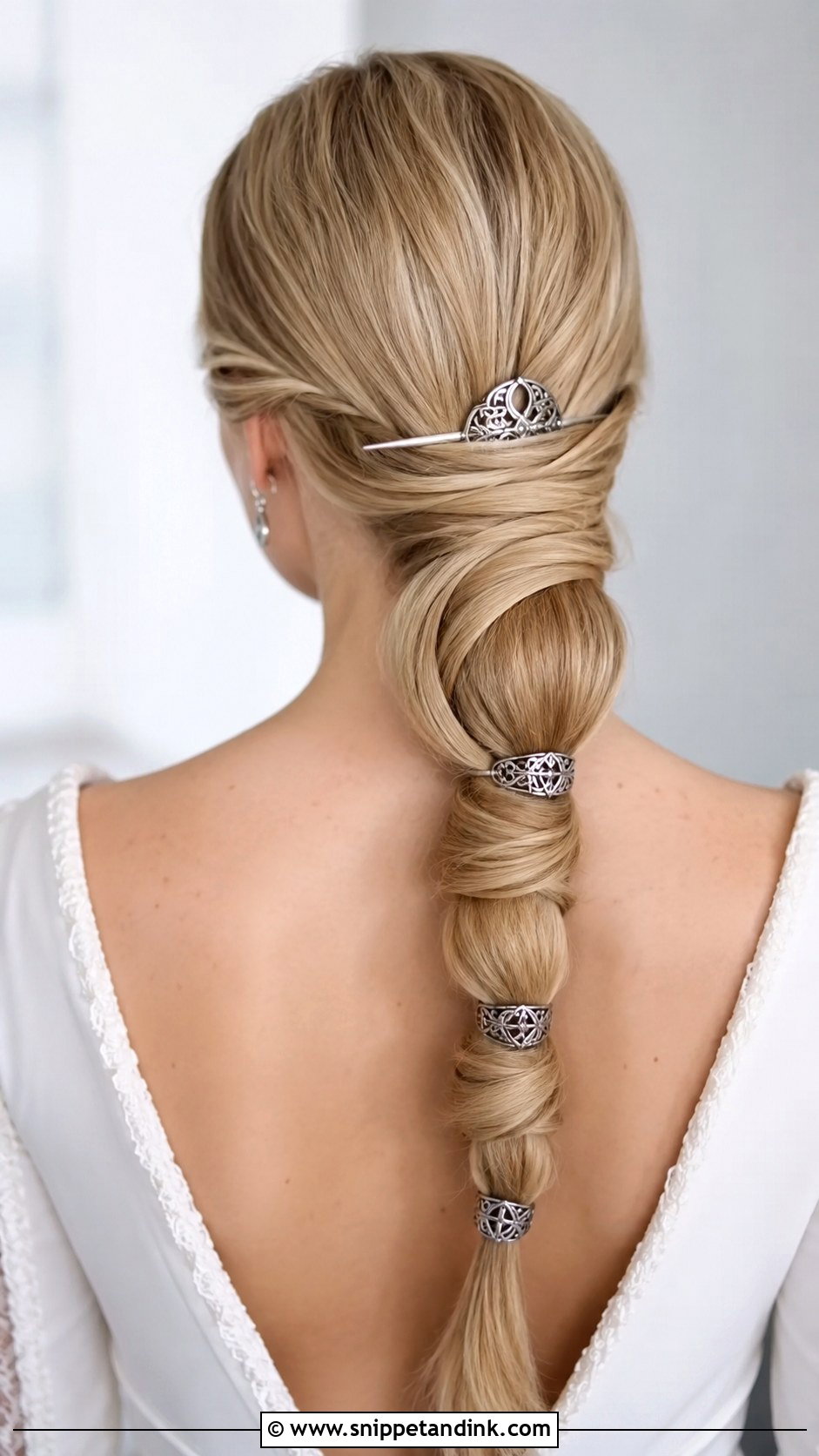
This one is named after the Elling Woman, an Iron Age woman found in a Danish bog whose hair had been arranged in a long, intricate braided knot, so it predates the Viking Age but sits in the same Scandinavian story. For a bride I twist and plait the length into a sculptural, elongated knot that runs down the back of the head. It’s a style that needs a low-back or open-back dress to be seen properly, since all the interest is behind you. I keep decoration to a couple of pins so the shape of the knot stays readable.
7. Side Braided Viking Bridal Look
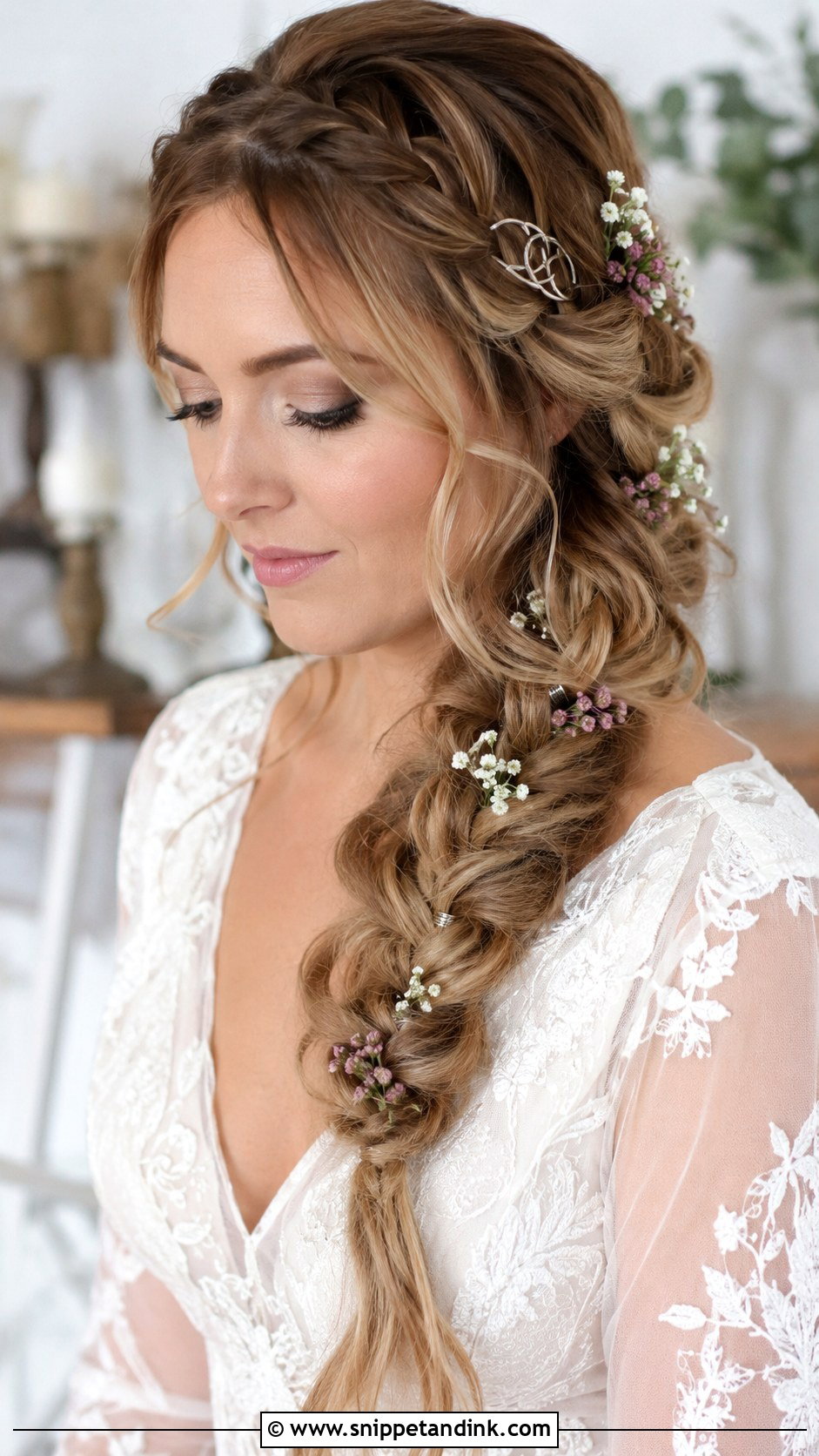
Sweep everything to one side and braid it, and you have the simplest look on this list. The braid type changes the mood: Dutch braids stand up off the hair, French braids lie flatter, and a fishtail gives the finest texture. Before I start I ask which side the photographer will mostly shoot from, because the braid should fall on the side facing the camera at the altar. It’s comfortable all day and suits long, thick hair best; on thin hair I braid in a small clip-in weft so the plait doesn’t taper to a rat’s tail.
8. Viking Twisted Bun Wedding Hairstyle
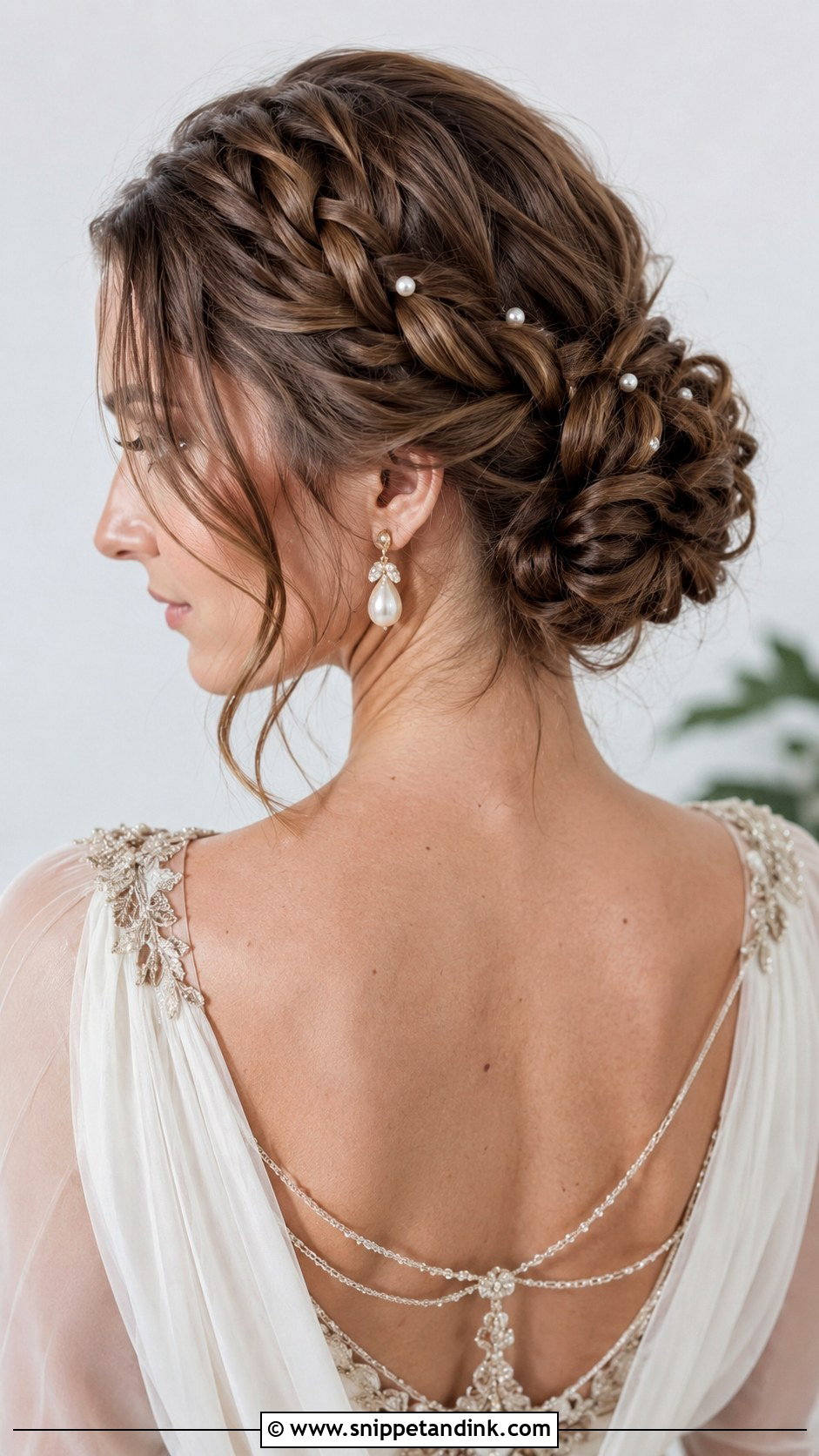
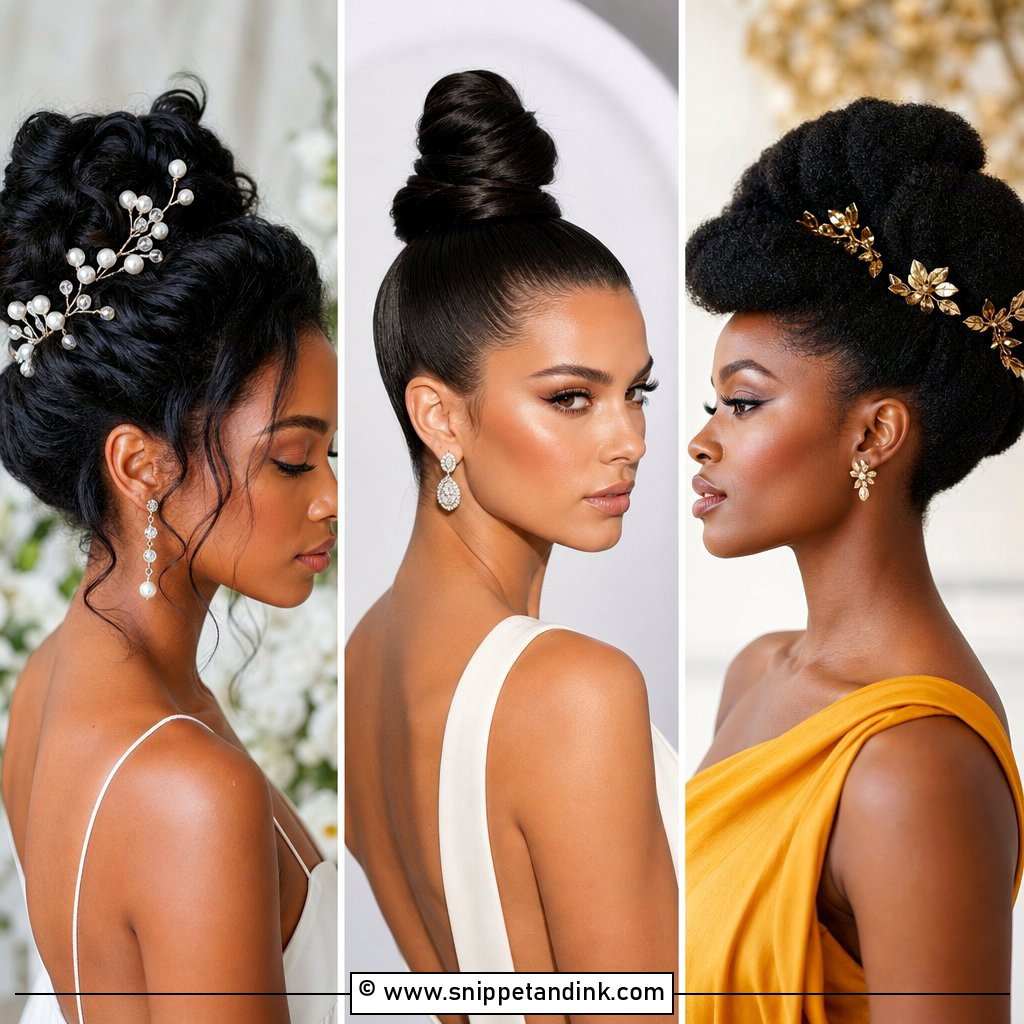
Small braids coiled into a bun give you the texture of braiding with the tidiness of an updo. I braid three or four sections separately, then wrap them around a base ponytail one at a time and pin each coil before adding the next. That order matters, because a bun pinned all at once loosens from the inside as you move. It sits at the nape or the crown depending on your veil and neckline. A few face-framing pieces stop it reading too strict, and pearls or a slim circlet can go in afterwards.
9. Viking Double Dutch Braid Wedding Hair
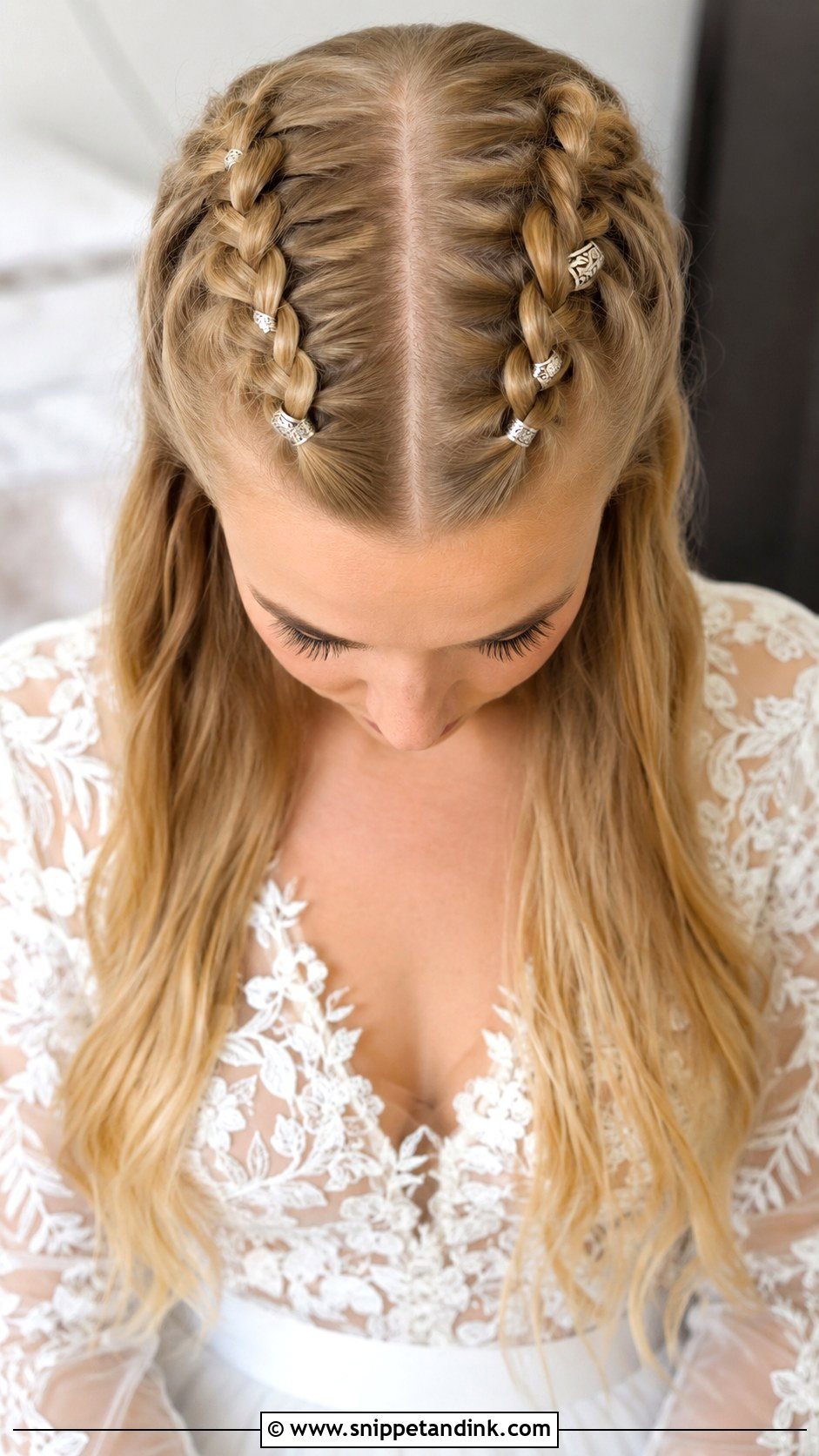
Two Dutch braids, one on each side, raised and close to the scalp, then either joined at the back or carried into a ponytail. Symmetry is everything with this style, so I part with a tail comb and check the parting from above, not just in the mirror. They’re about as secure as wedding hair gets, which makes them a sensible pick for a ceremony on a hillside or a boat. Medium to long hair is needed for the braids to reach the nape. Beads and thin cuffs slide onto the tails easily.
10. Viking Braided Bun Wedding Style
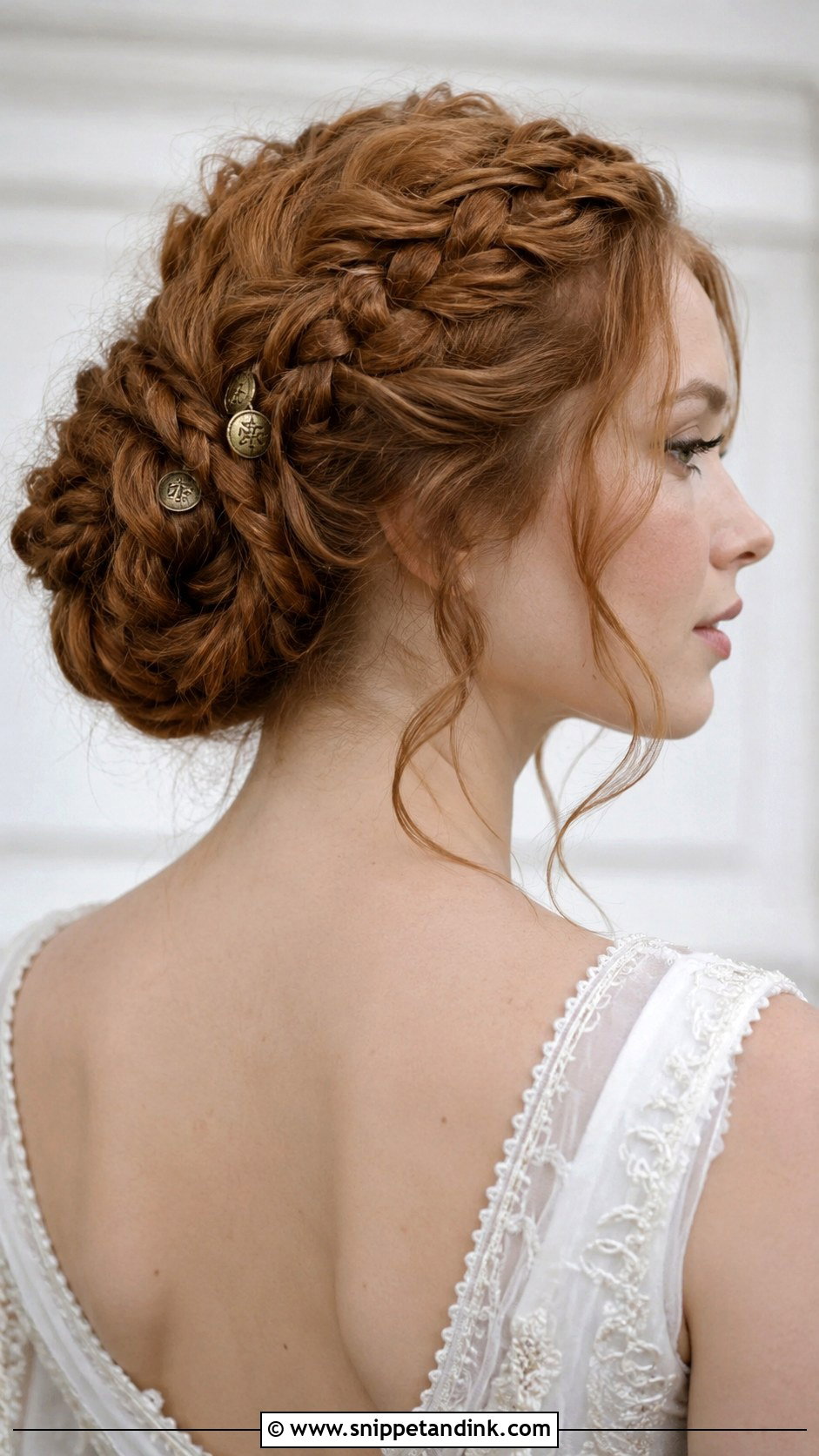
Where the twisted bun uses small separate braids, this one braids the whole length first, usually as a fishtail or French plait, and then coils that single braid into a bun. The result is denser and more sculptural, with one continuous braid you can trace around the coil. It is easier to keep sleek, so I tend to suggest it for a formal evening ceremony. Fine hair makes a small bun this way, and a doughnut-shaped padding underneath, matched to your hair colour, gives it more presence without anyone noticing. Pearls, runic pins or a little greenery tuck into the outer edge of the coil.
11. Viking Goddess Braids for Brides
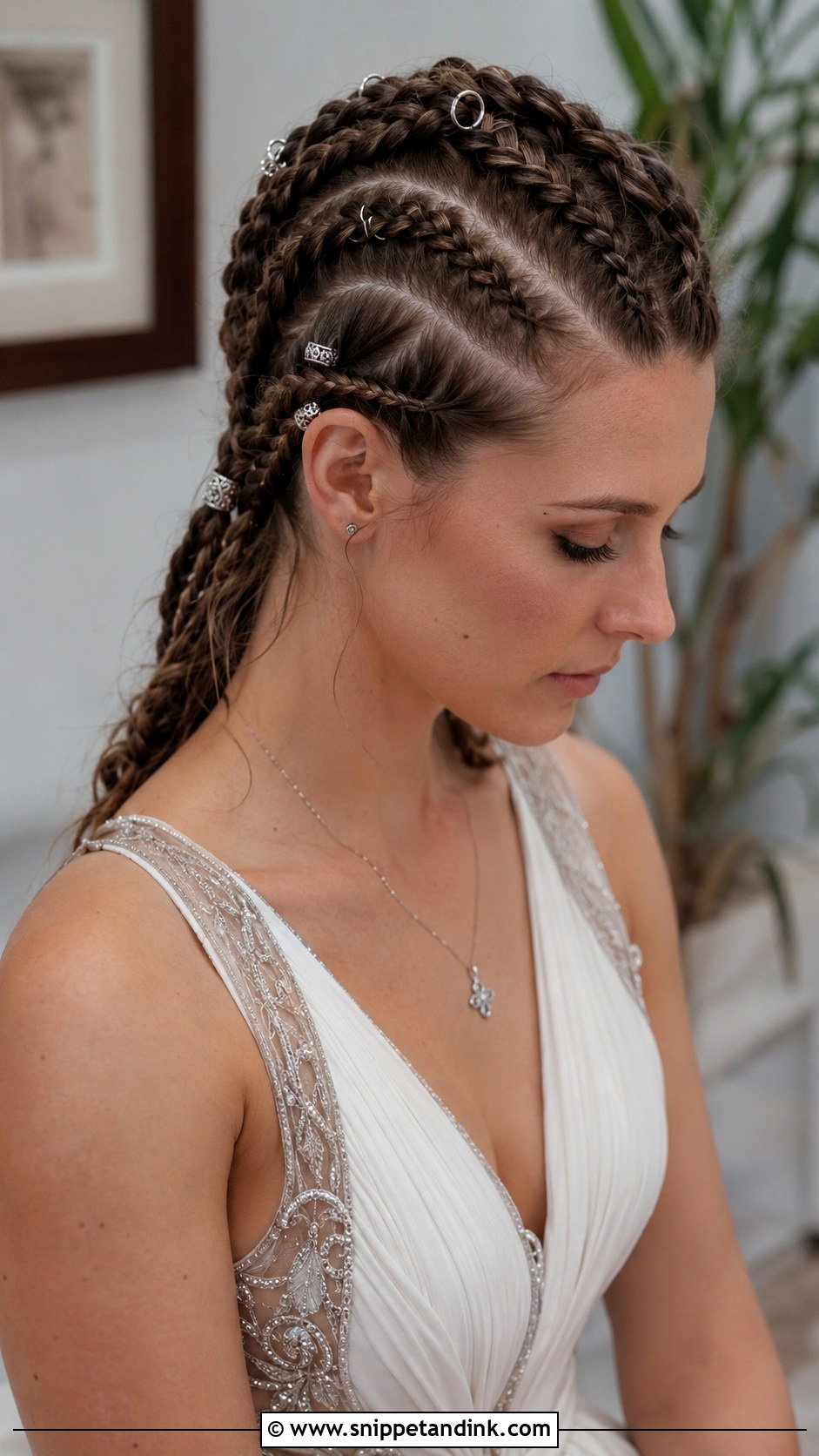
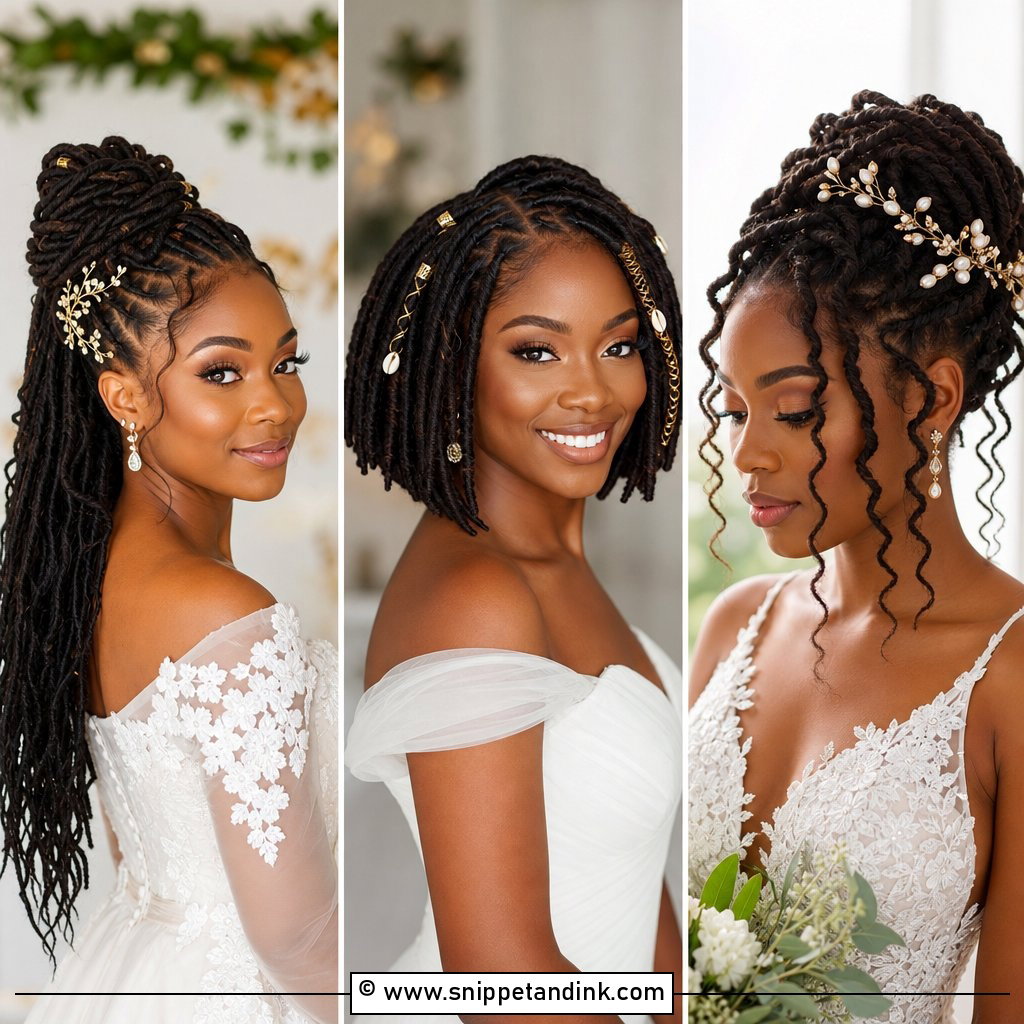
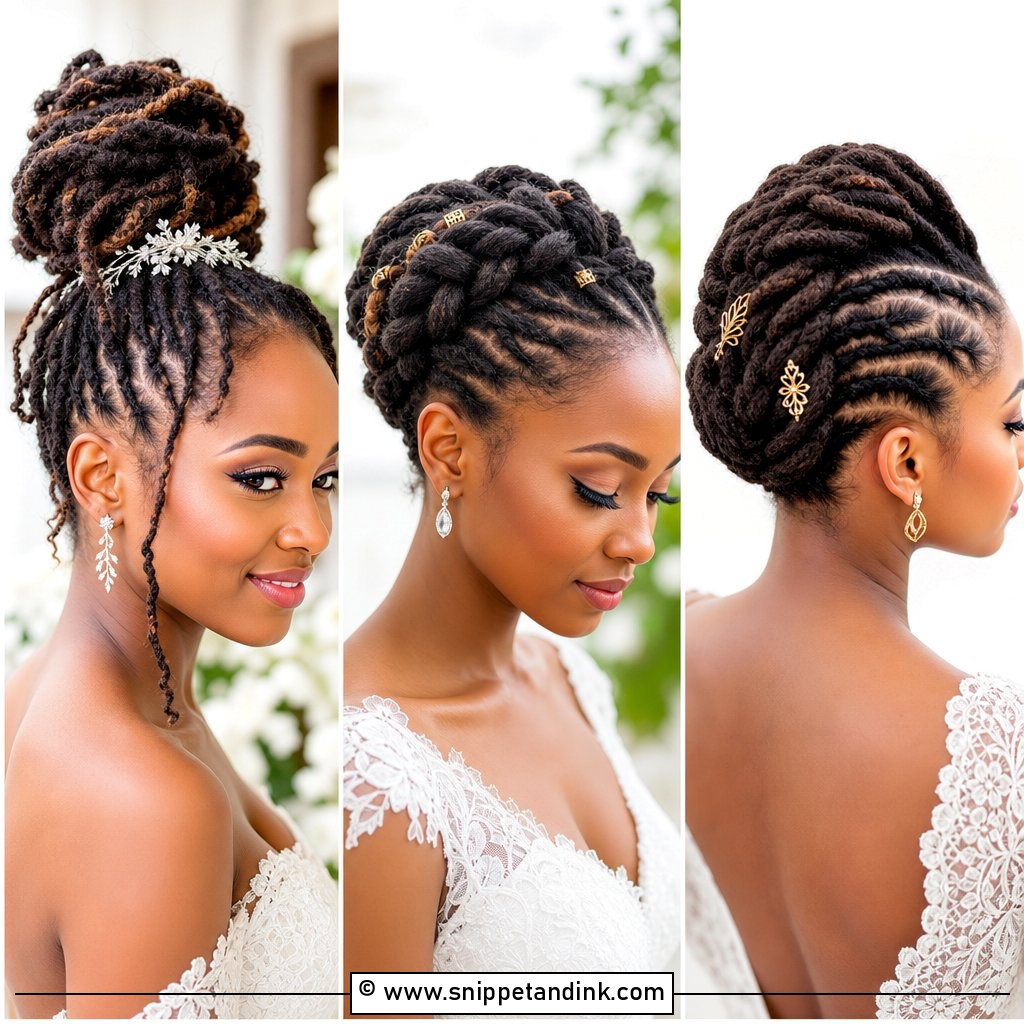
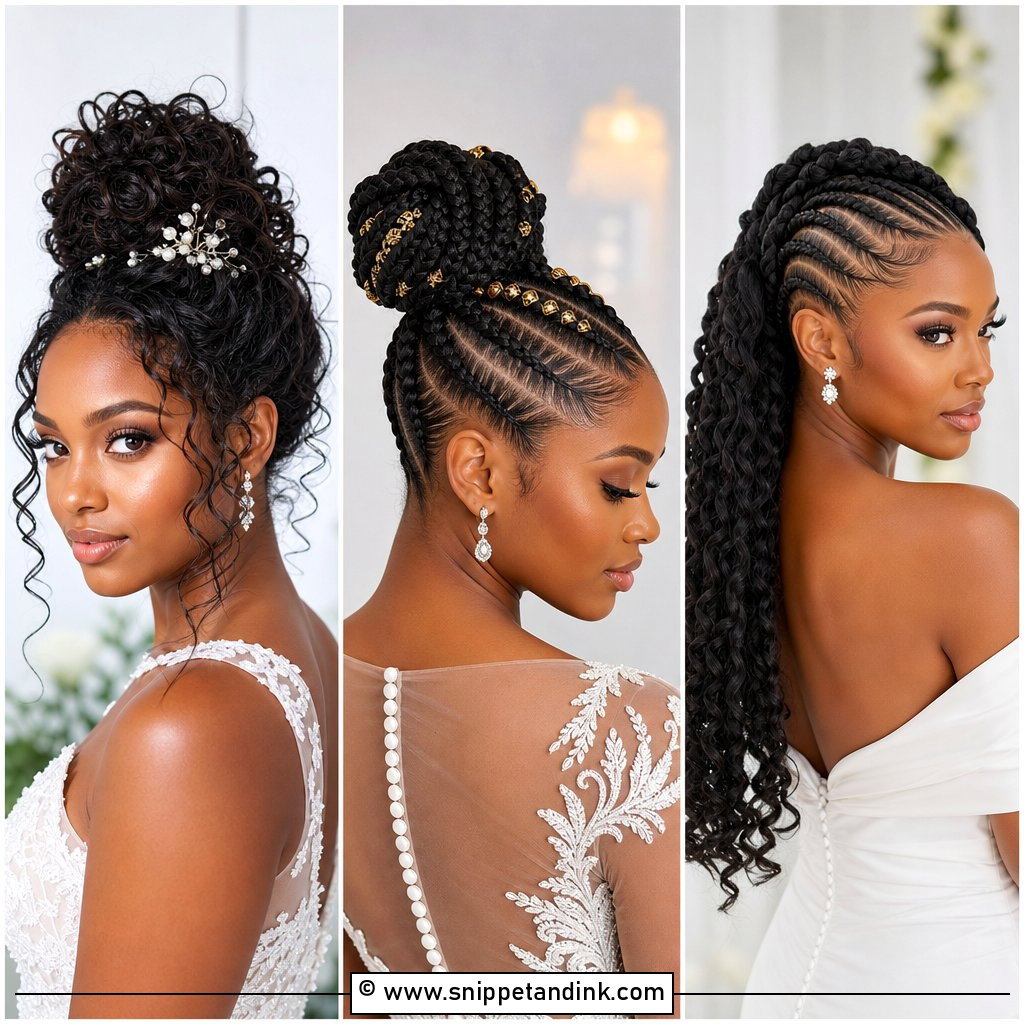
Goddess braids are thick plaits laid along the scalp, larger than standard cornrows, and they can run straight back, to one side or into a crown. On very thick or textured hair they look rich and sit flat for hours; on fine hair they rarely have enough body without added hair. They’re traditionally a protective style with roots in Black hair culture, and they’re best installed by someone who braids textured hair daily, ideally a few days before the wedding so any tenderness at the scalp has settled. Gold cuffs and beads finish them well.
12. Viking Messy Braided Updo Wedding Hair
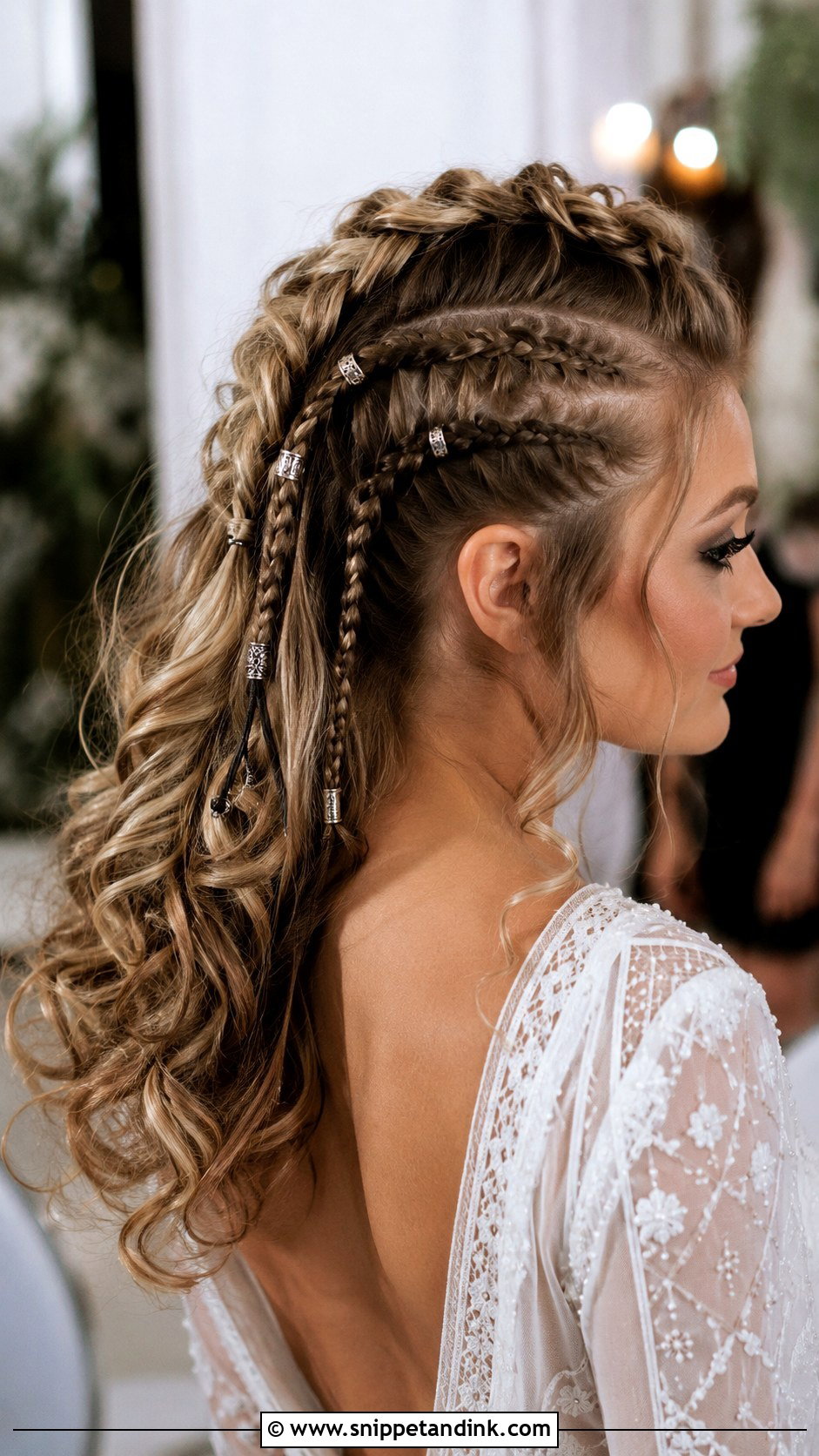
Messy is harder to do on purpose than people expect. I braid several sections loosely, pin them up in an irregular cluster, then pull out pieces around the face and neck so it looks lived in rather than unfinished. The texture hides uneven layers and grown-out colour, which is why I often suggest it for brides between haircuts. Its risk is the opposite of a tight style: by evening it can look genuinely messy, so I finish with a flexible-hold spray and leave a couple of spare pins with whoever is holding your lipstick. Wildflowers and greenery suit its outdoor mood.
13. Viking Cornrow-Inspired Wedding Braids
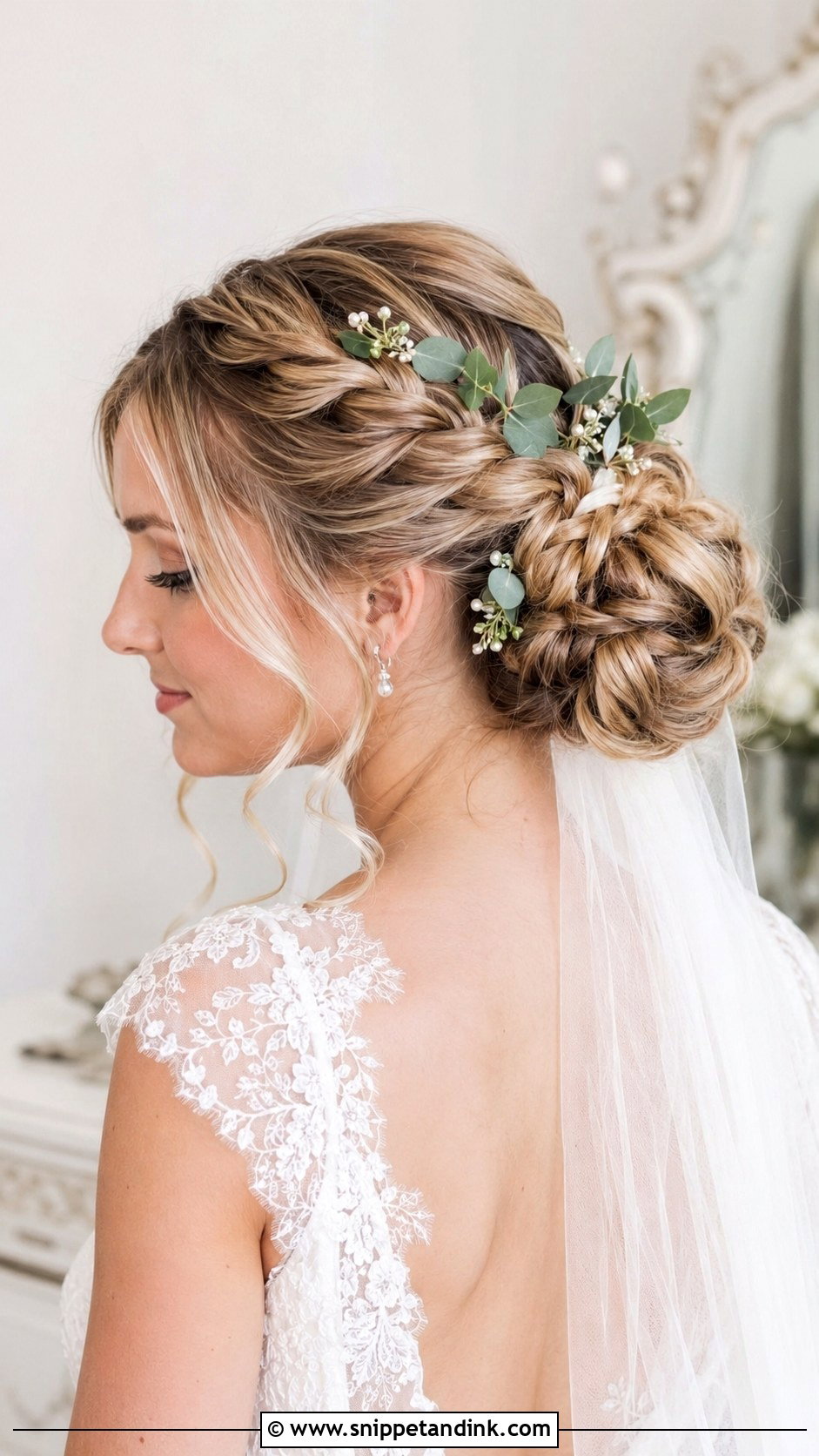
Cornrow-inspired plaits are tight rows braided close to the scalp, run straight back or curved into a pattern. Scalp braiding like this comes from African and Black braiding traditions rather than Norse history, and I think it’s worth saying so plainly if you’re borrowing the technique for a themed look. The rows last all day without a single pin and survive dancing better than almost anything. Tension is the thing I watch: braids pulled too tight at the hairline can damage it, so they should feel snug, never sore. Silver rings or leather cords at the ends add the Nordic touch.
14. Viking Braided Ponytail Wedding Style
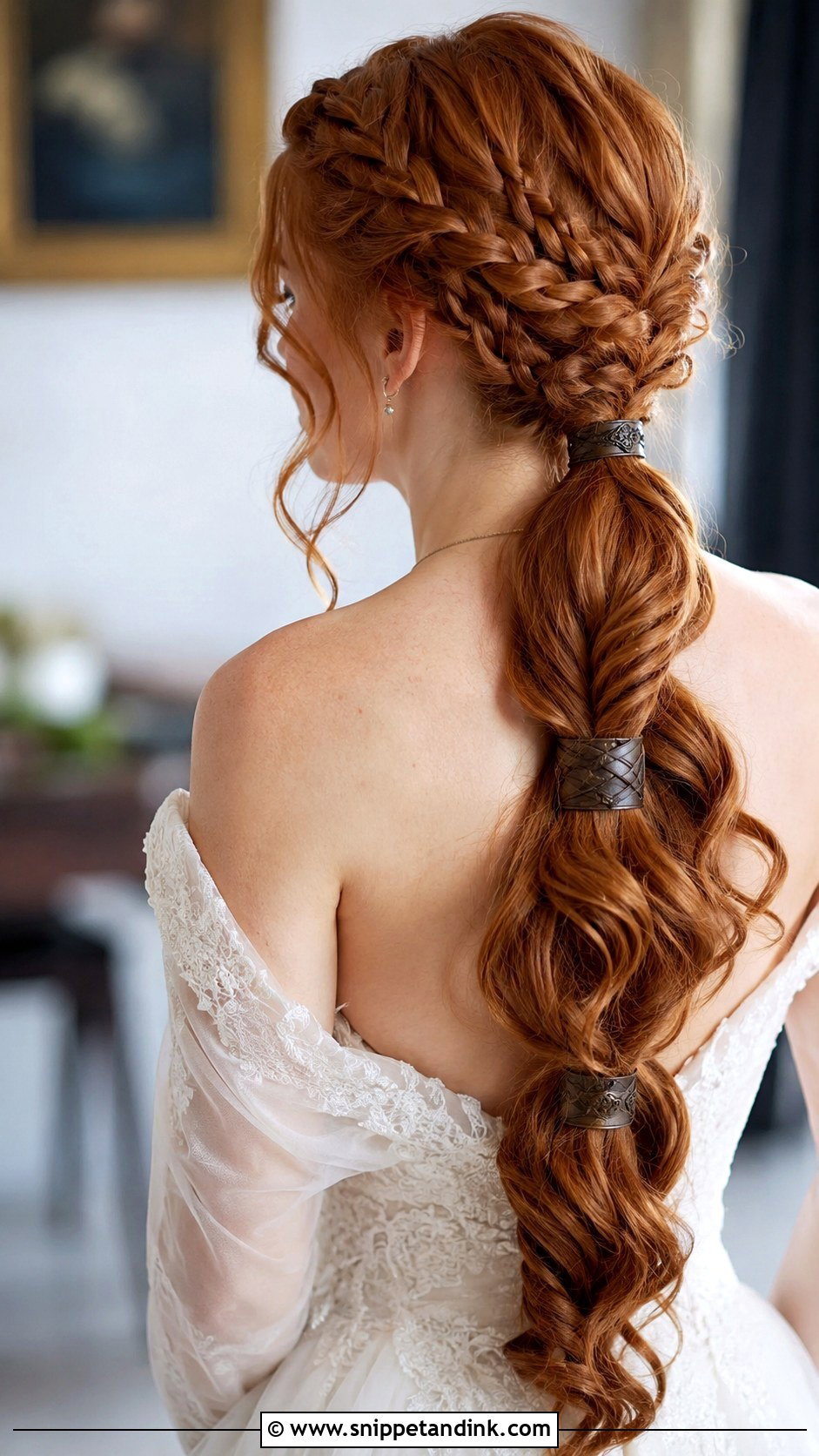
This version keeps the front and crown braided and lets the length swing loose in a ponytail. It moves, which is why I steer brides who plan to dance hard towards it over a pinned updo. The braided top stays neat even if the tail gets tangled. Curl the tail if your hair is straight and heavy, or leave it straight if it already has bend. I wrap the elastic with a strand of your own hair or a leather cord so no band shows in the back shots.
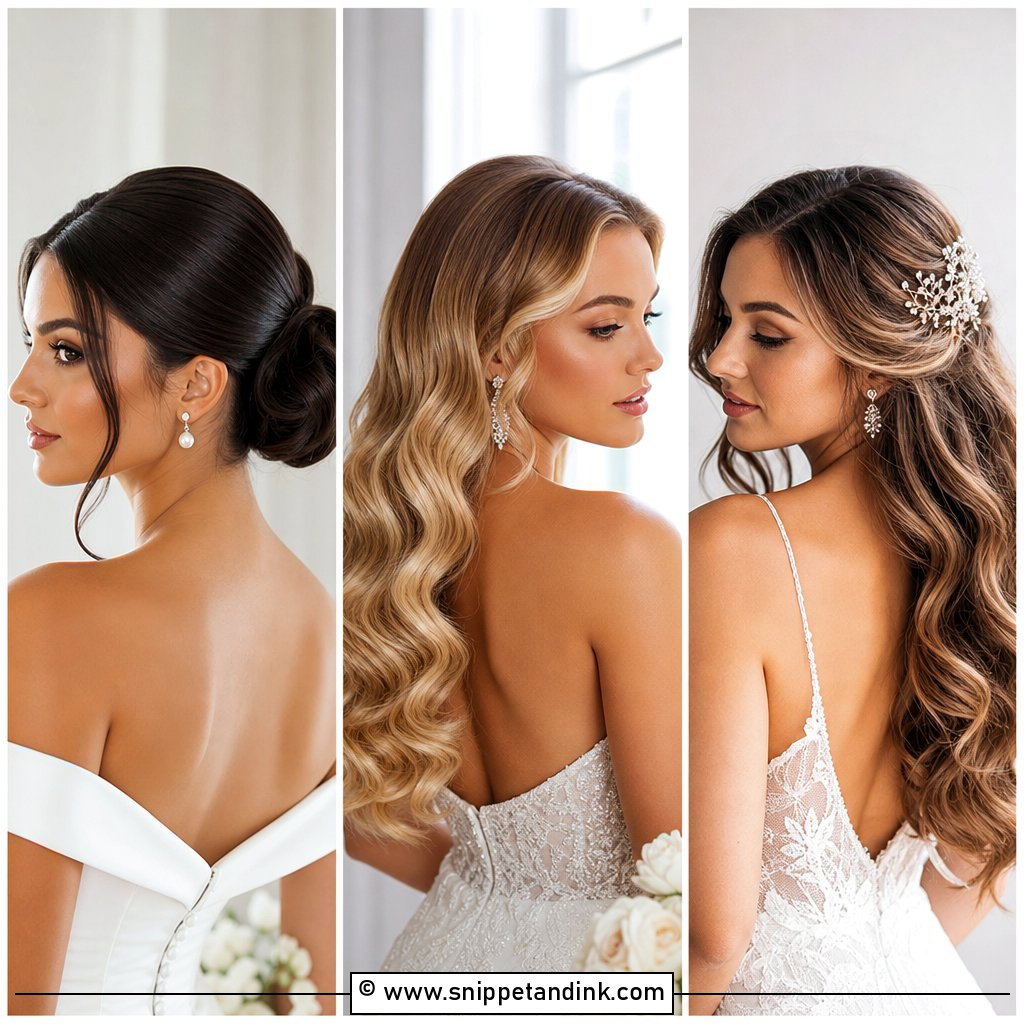
15. Viking Floral Crown Braided Hair
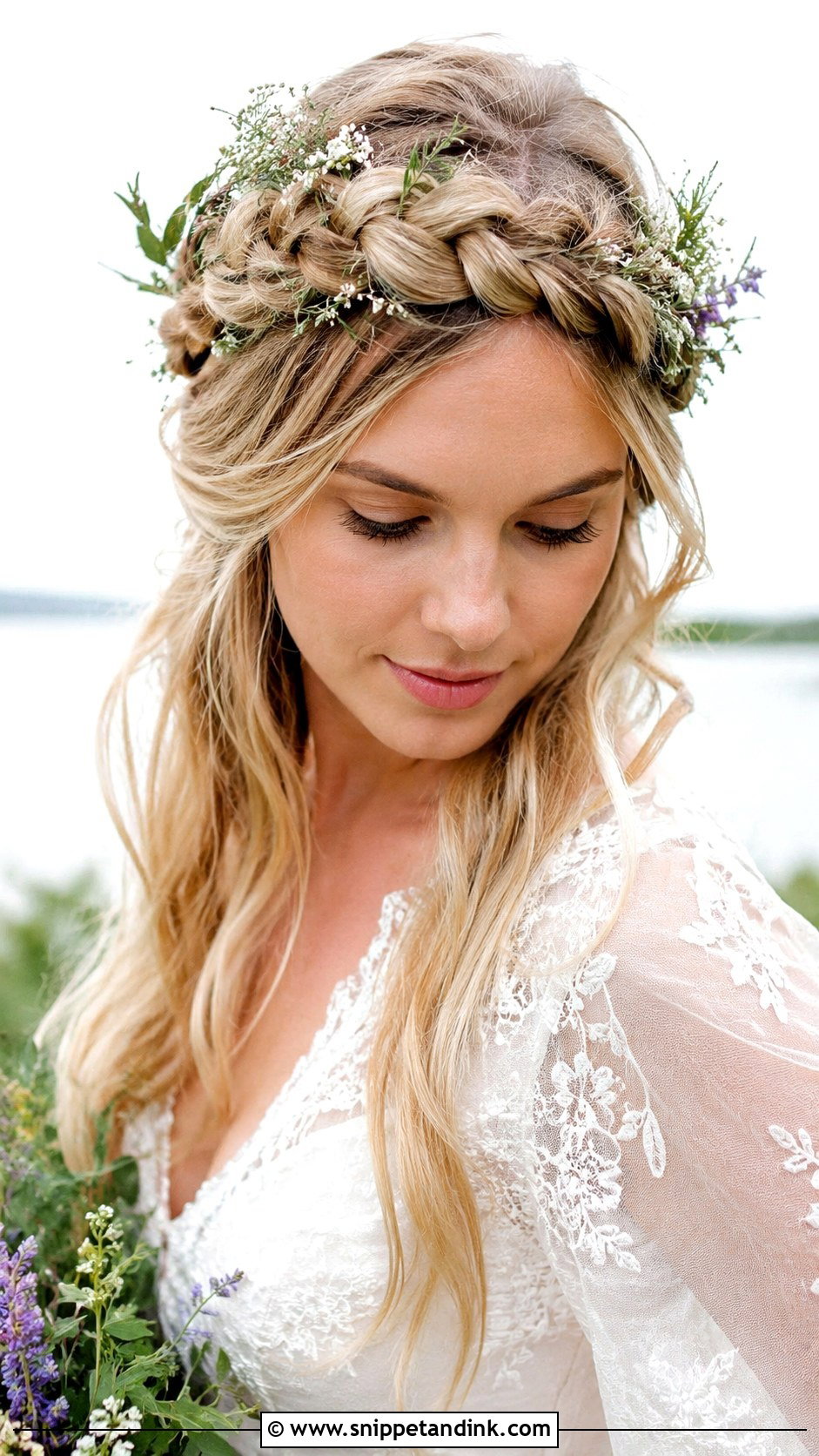
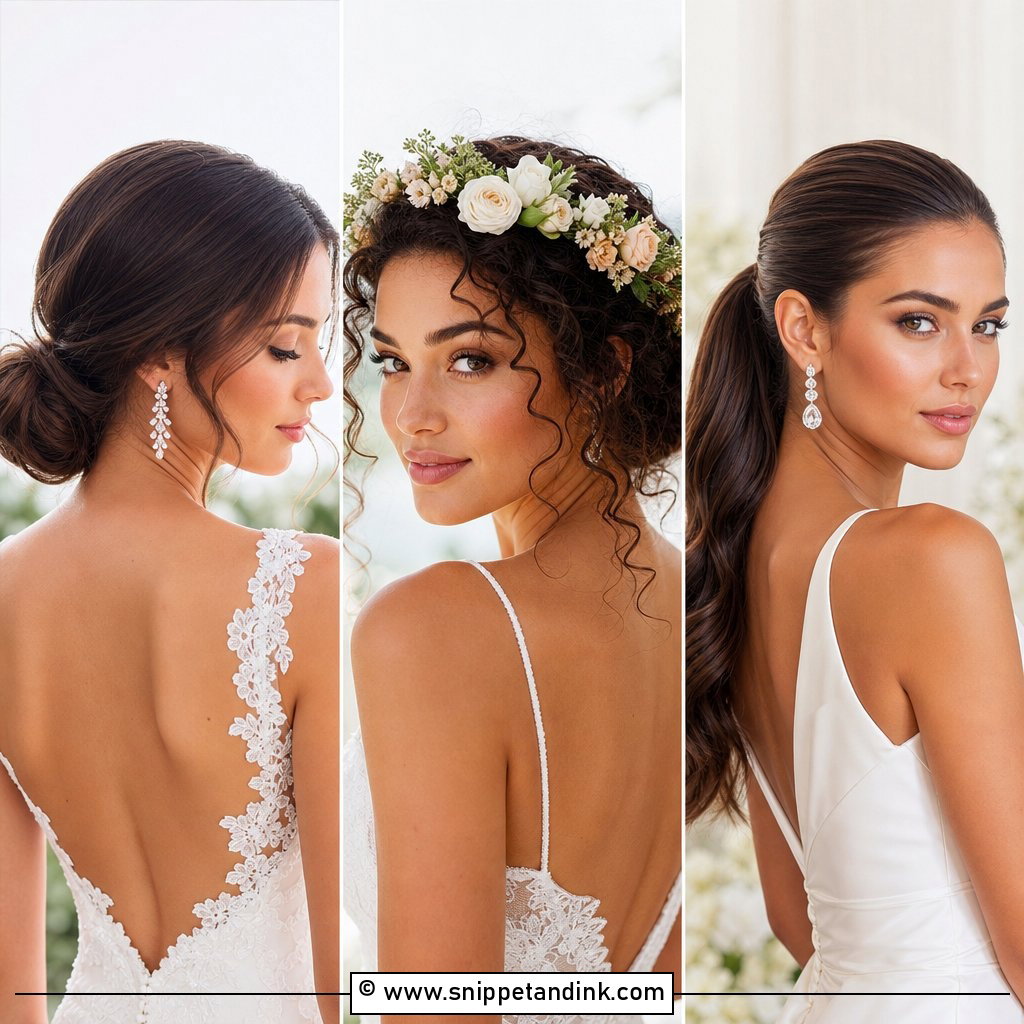
Flowers and braids together are probably the most requested pairing I see for Norse-themed weddings. The braid comes first, whether halo, crown or half up, and the stems go in last, threaded through the outer loops where they’re held without pins. The look frames your face like a goddess, but fresh blooms wilt, so I ask the florist for hardy stems such as waxflower, baby’s breath and eucalyptus, wired and kept cool until the last minute. Soft garden roses tend to brown at the edges by the first dance.
16. Viking Wrapped Braid Updo Wedding Hair
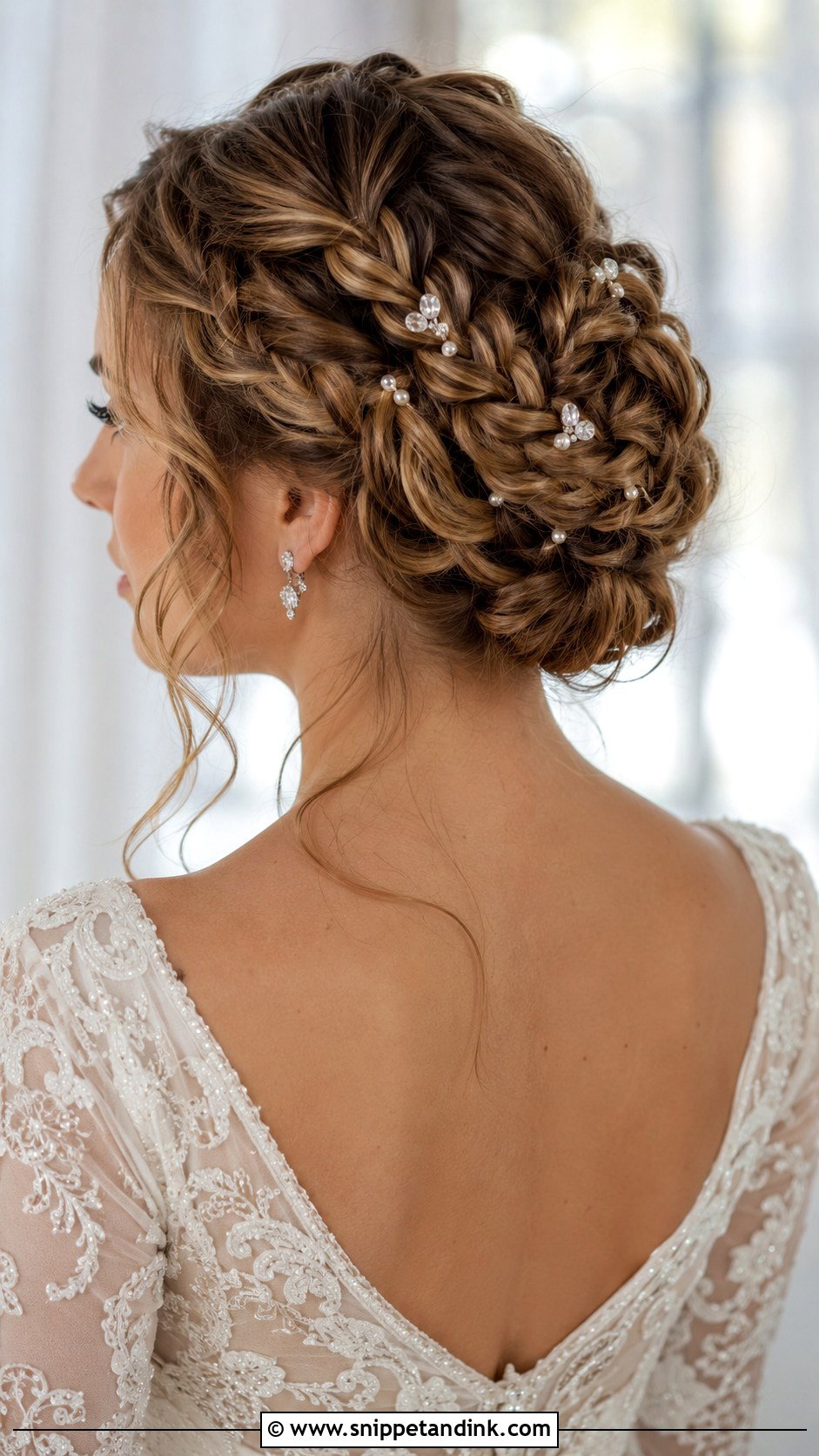
Several braids wrapped around each other and pinned into one sculpted shape: this is the most formal braid on the list. It takes time, often well over an hour in the chair, so I schedule it first in the morning. The wrapped shape holds through a long reception because each braid locks the next, and a few loose tendrils at the temples keep it from looking severe. Pearls or crystal pins catch the light well against its texture.
17. Viking Loose Waves With Braids Wedding Style
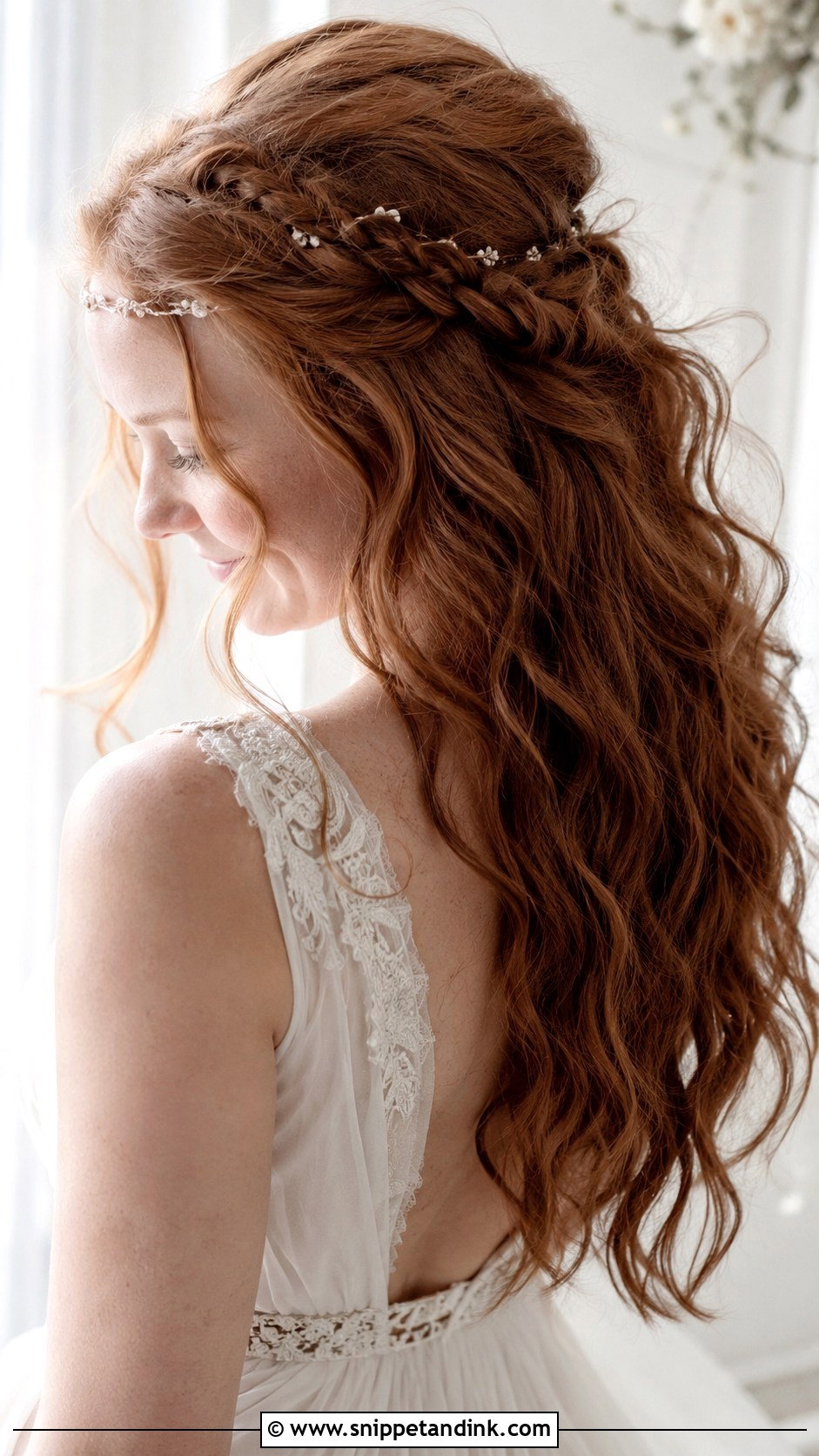
Mostly loose hair with two or three small braids along the sides or crown is the gentlest Norse look here, and it’s the one I’d suggest if you’re unsure about the theme. The braids add detail without changing how you’ll look in photos you’ll show your family in thirty years. Loose hair is also the least predictable over a full day, especially in heat. I pin the accent braids so they cross behind the head, which keeps them in place even if the waves soften. A thin circlet or a few beads is all it needs.
18. Viking Mohawk Braid Wedding Hairstyle
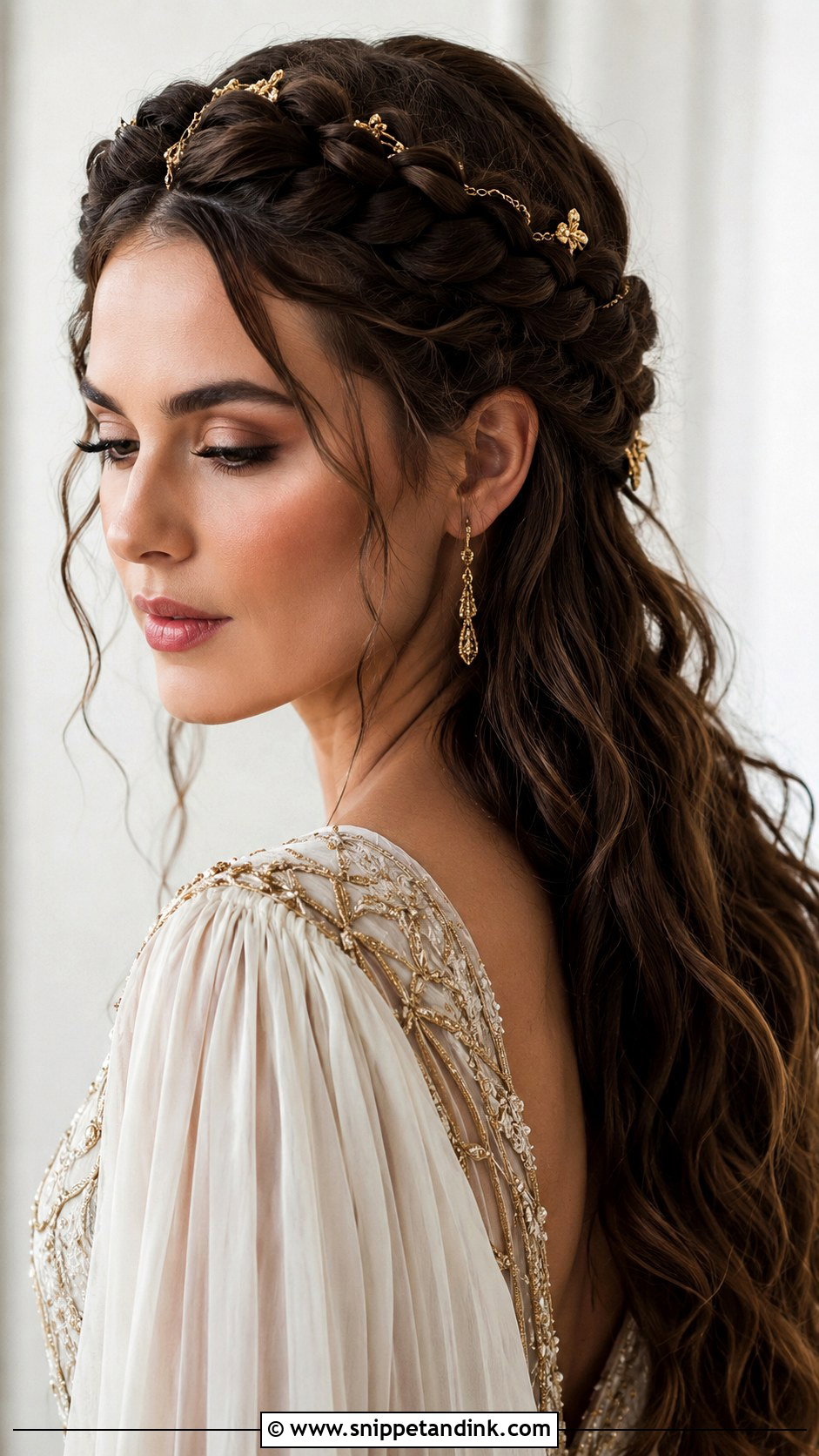
The Mohawk braid runs a raised plait down the centre of the head from forehead to nape, with the sides kept sleek, braided flat or pulled back. It’s the most dramatic choice here and it needs commitment: you can’t hide it under a cathedral veil, and you’ll want the dress and makeup to match its energy. I build height by teasing the centre section lightly before braiding, then lock the sides so they don’t puff out. The central braid with beads or leather wraps gives the photographer something to focus on in close-ups.
19. Viking Knotted Braid Wedding Hair
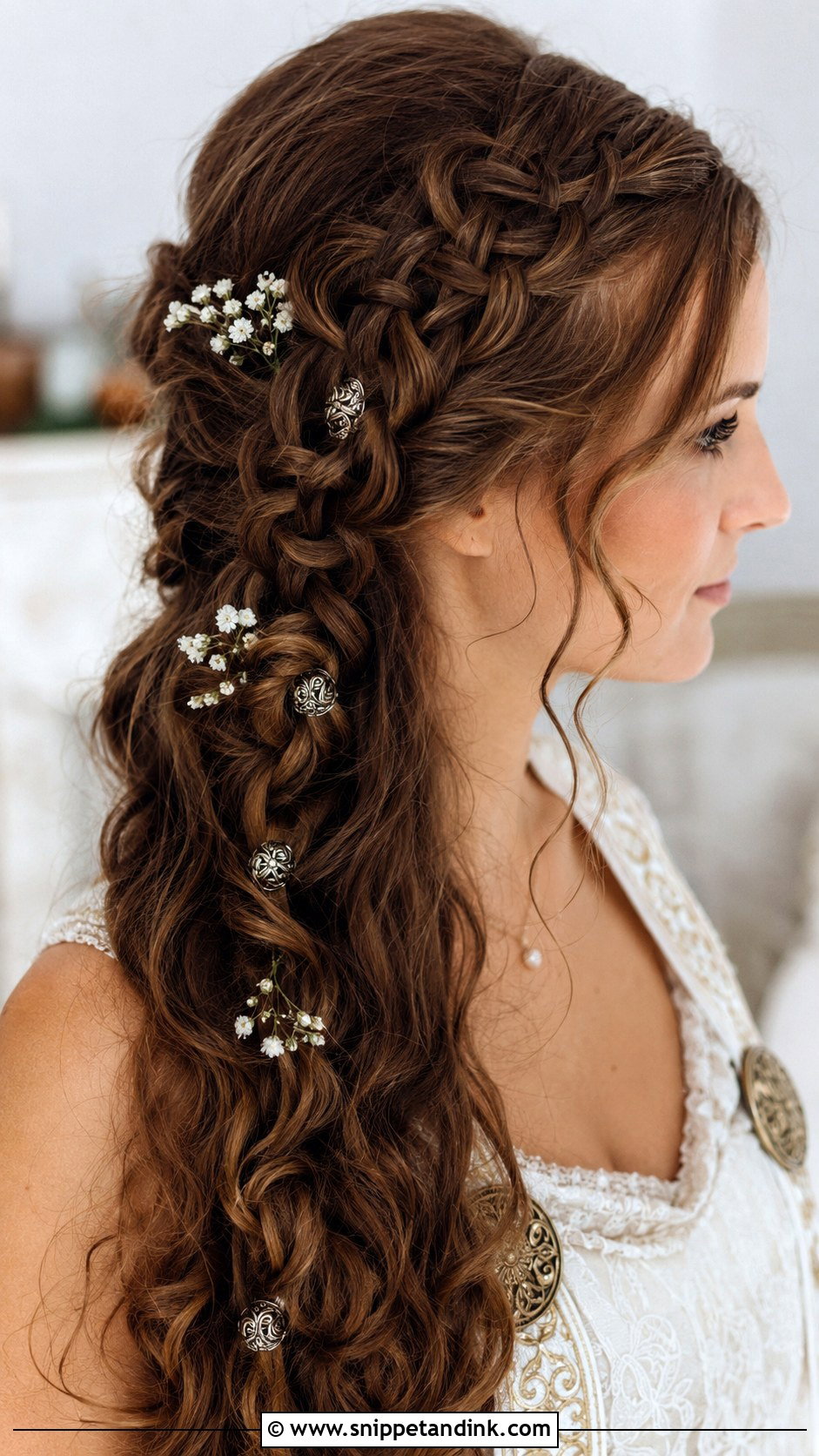
Knotted braids tie or twist sections into a run of decorative knots down the back or to one side. They’re sculptural, closer to rope work than plaiting, and they need long, thick hair because each knot uses a surprising amount of length. On slippery, freshly washed hair the knots slide, so I prep with a texture spray and ask brides to wash the day before, not the morning of. Beads or small rings between the knots break up the pattern and photograph clearly from behind.
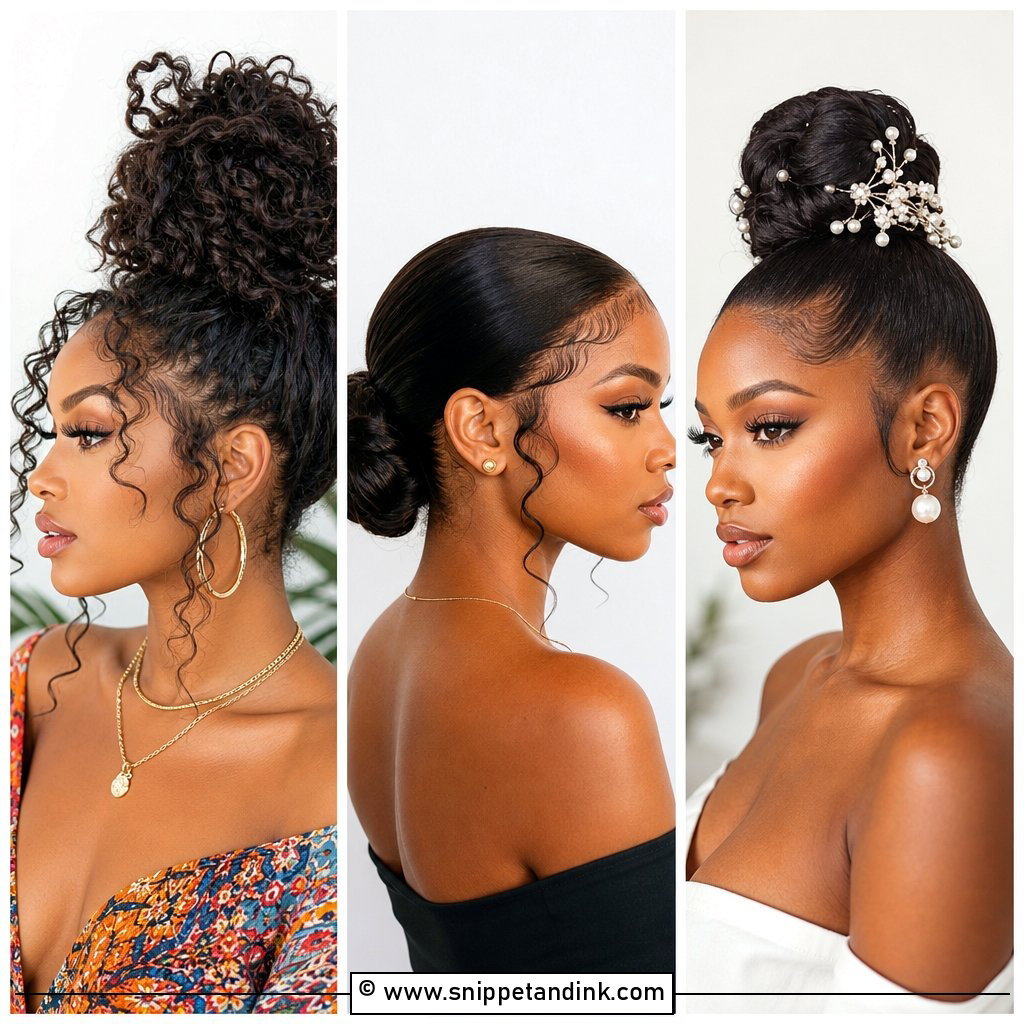
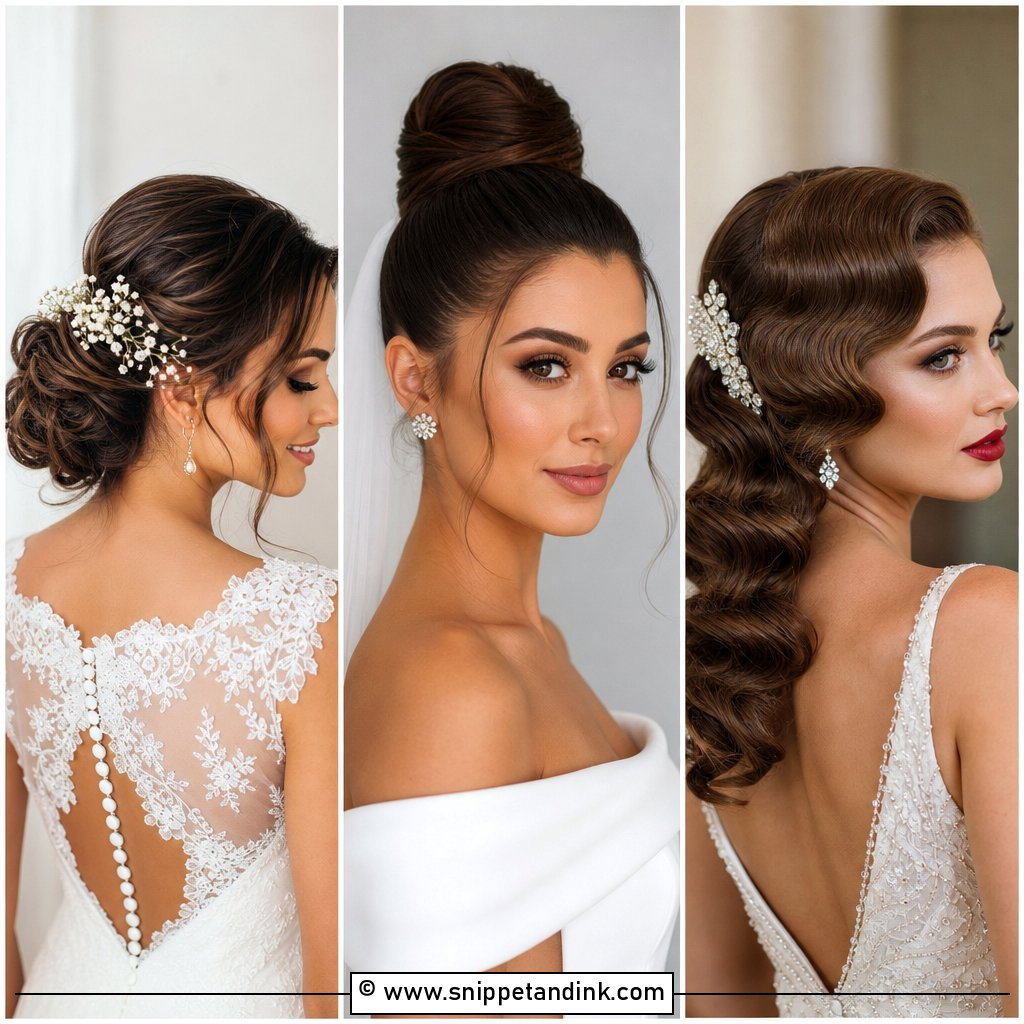
20. Viking Low Braided Bun Wedding Style
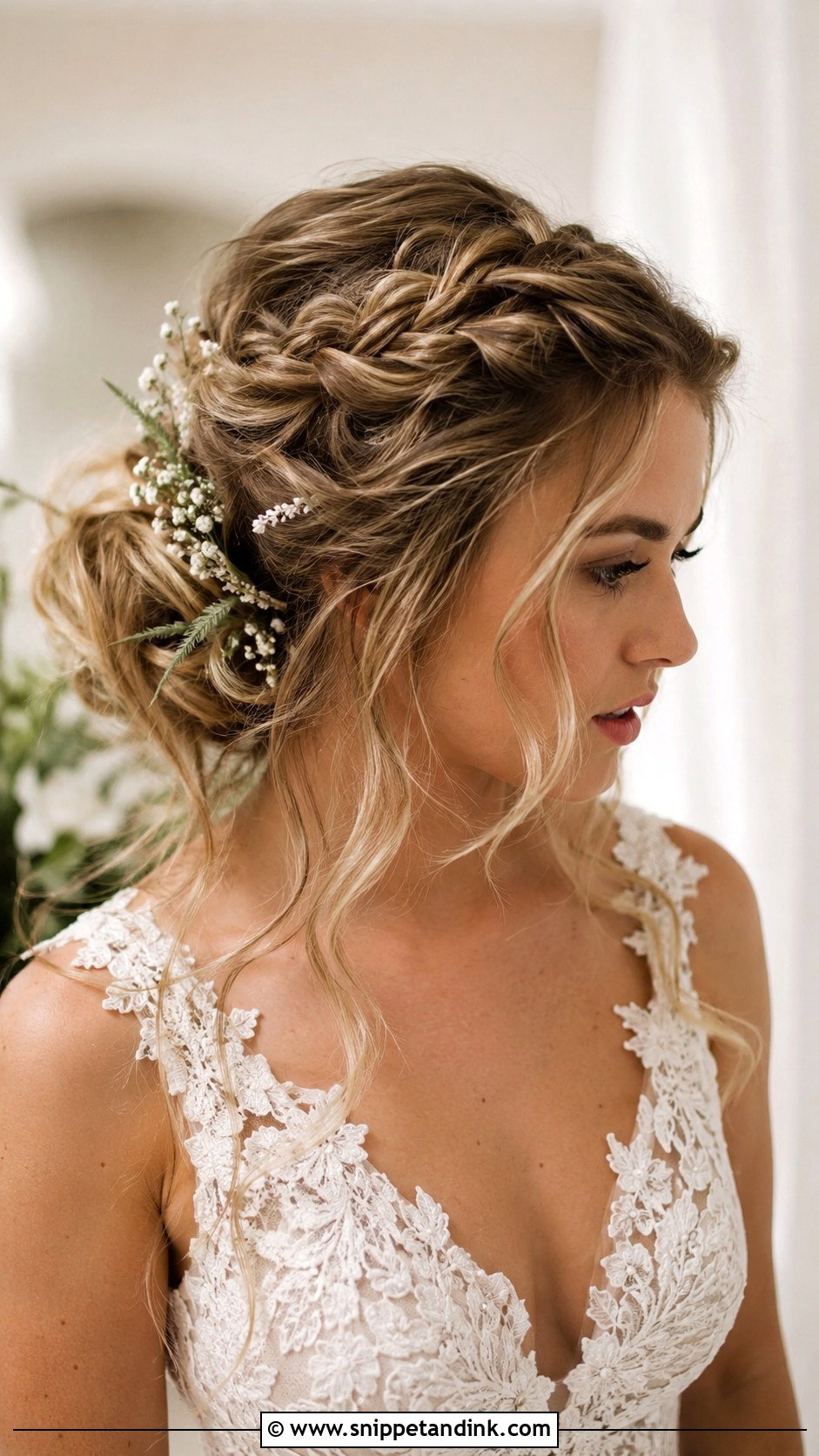
A low braided bun sits at the nape, coiled from several braids, and it’s my default when a bride wants a Norse detail with a long veil. The veil comb slides in just above the bun and the weight of the tulle is supported by the coil underneath. It’s comfortable for hours because nothing pulls at the crown. Runic pins, pearls or a little greenery can be added, and a couple of loose tendrils keep the face soft.
Beads, Cuffs and Leather Without the Drag
The adornments are what make a braid read as Norse rather than simply bridal, and they’re also what most often goes wrong. Metal is heavy. Six or seven solid beads on the end of a fine braid will pull it straight down and slowly loosen the plait above them.
I put the heavier pieces where the braid is thickest and anchored, near the scalp or the base of a bun, and keep the ends for light things like wooden beads, thin leather cord or small hollow rings. Hair cuffs should close snugly; a cuff that spins will slide off during the first dance. If a bead has a wide hole, I wrap a few strands of hair or a dab of clear elastic through it so it stays where I placed it.
Veils, circlets and wind
A circlet and a veil can be worn together, but the circlet goes on last and sits in front of the veil comb, otherwise the veil lifts it off your forehead. Outdoors, a tight crown or double braid will look the same at sunset as it did at noon, while loose waves and half-up styles are the ones the wind rearranges. If your ceremony is on a coast or an open hill, I’d lean towards the structured end of this list.
Match the Braid to Your Hair Before the Theme
Every braid on this list comes down to two questions I ask at a trial: how much hair do you really have, and how hard will the day test it? Thick, long hair can carry the regal halo braids, wrapped updos and knots. Shoulder-length or fine hair is happier in a half-up style, a side braid with a clip-in, or a low bun. Then add the detail last, a few beads, a leather cord or a circlet, and check the weight on your head before the day. Wear the full look for an hour at your trial and you’ll know whether it’s the one to walk in.
You'll Like These Ideas:


Leave a Reply